


matto1233
-
Posts
313 -
Joined
-
Last visited
Content Type
Profiles
Joomla Posts 1
Chicago Cubs Videos
Chicago Cubs Free Agent & Trade Rumors, Notes, & Tidbits
2026 Chicago Cubs Top Prospects Ranking
News
2023 Chicago Cubs Draft Picks
Guides & Resources
2024 Chicago Cubs Draft Picks
The Chicago Cubs Players Project
2025 Chicago Cubs Draft Pick Tracker
2026 Chicago Cubs Draft Pick Tracker
Blogs
Events
Forums
Store
Gallery
Everything posted by matto1233
-
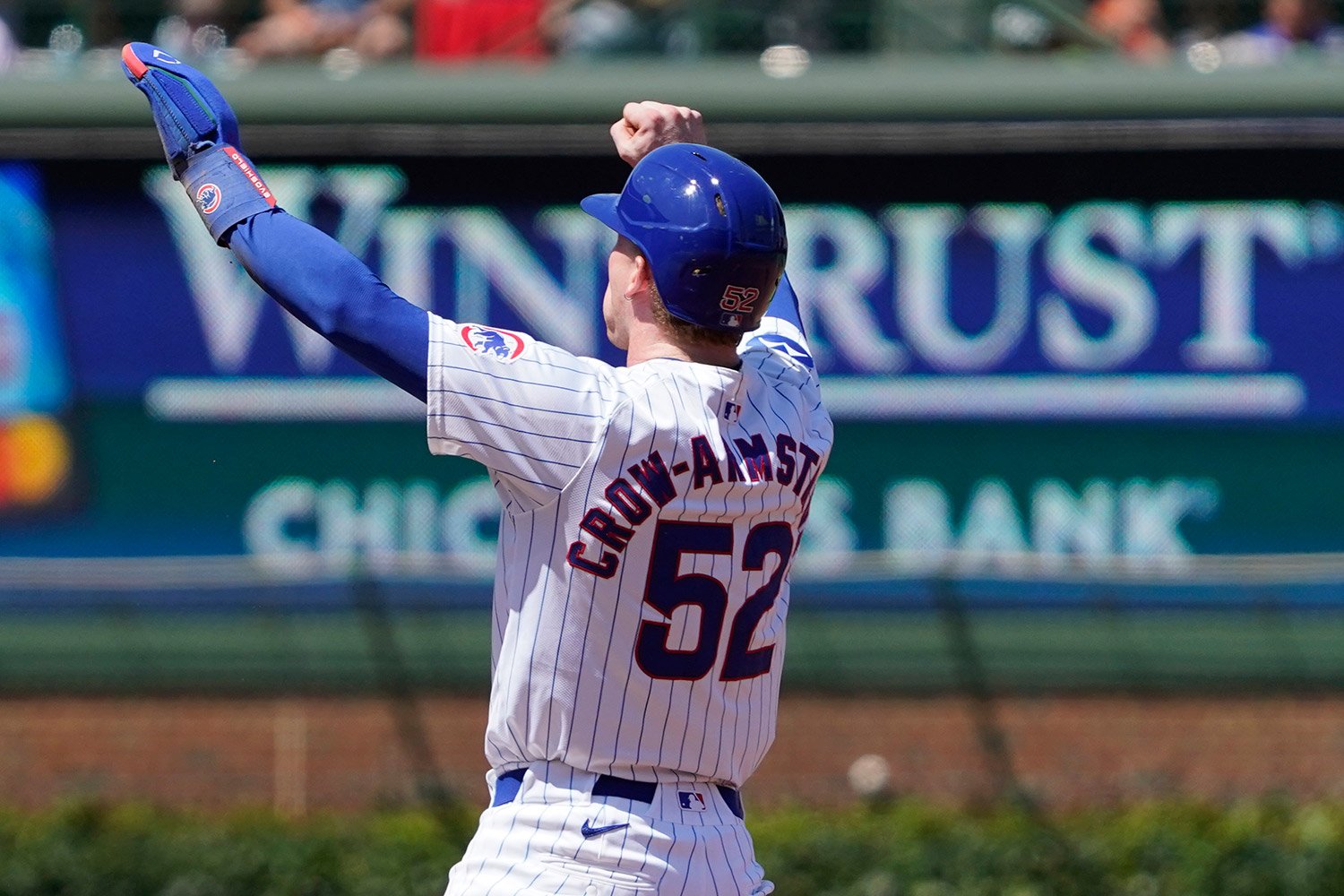 To my mostly untrained eye, Pete Crow-Armstrong's plate appearances seemed different for the former top prospect. More importantly, they seemed different in a good way. He was driving the ball to the outfield much more often. The contact quality from those three games would back up that thought. He had a 92.7 mph average exit velocity and 55.6 percent hard-hit rate, according to FanGraphs. Those are significant improvements on his numbers for the full season: an 88.9 mph average exit velocity and a 36.0 percent hard-hit rate. Admittedly, I haven’t been able to watch a ton of Cubs baseball since. Between the Olympics, an out-of-town trip, and otherwise doing activities that are better for my mental health, I didn’t have a chance to sit down and watch a full Cubs game until the Cleveland series this past week. Of course, I follow closely from afar, and while PCA’s raw numbers don’t back it up quite yet, he has been a different and much better hitter since the season flipped to the second half. K% BB% wOBA xwOBA Exit Velocity PCA First Half 25.9% 4.6% .255 .249 87.3 PCA Second Half 15.7% 2.4% .278 .319 91.6 By xwOBA, he has been a league-average hitter! Not only that, but he has trimmed the strikeout rate considerably, and he is hitting the ball more than 4 mph harder, on average, than he was in the first half. This is a huge development for a guy who has been one of the most valuable defenders in baseball. So, where has he made improvements? If someone is cutting their strikeout rate almost in half and improving contact quality in the process, the first thing I assume is that they are being more selective with their swings. O-Swing % Z-Swing % Contact % First Half 43.4% 72.6% 74.5% Second Half 40.6% 76.9% 77.3% So, he is making better swing decisions, leading to more contact and fewer called strikes. His called strike rate in the first half was 11.5 percent. In the second half, it’s down to 7.4 percent. Not only does swinging at better pitches mean you’ll strike out less, but typically, the balls you put in play will be hit a lot harder, which lines up with what we’re seeing out of PCA here. Let’s take this one step further. Pull% Pull xwOBA Center% Center xwOBA Opposite% Opposite xwOBA First Half 51.7% .348 25.4% .275 22.9% .249 Second Half 36.8% .407 45.6% .417 17.6% .207 To me, this looks like someone making a concerted effort to use the whole field and not just be a dead-pull hitter. Sure enough, on Friday afternoon, Crow-Armstrong launched his fifth home run of the year, and it was to center field: In my writing, I try to stick to statistics and facts. I stay away from hitting and pitching mechanics because, frankly, I am not an expert in that area, and the Cubs employ multiple people who are. If you rewatch that video, try to do so while remembering what PCA’s swing looked like in the first half. Here is a still photo from that home run yesterday (second picture) and another one from one of his first games with the big league club (first picture). Both of these pitches resulted in home runs, for what it’s worth: First, he has a higher leg kick, has adjusted his hand position a bit, and is standing closer to the plate. More significantly, though, is how he has closed off his stance. In the first picture, you can see his back knee behind his front leg. In the second picture, you cannot see the backside of his back leg. To me, this is a clear sign that he is showing more willingness to use the whole field, which is demonstrated in his much better contact quality with center field. Things haven’t always been pretty for Pete Crow-Armstrong this year. He was thrust into a spot on the major league roster out of necessity and, frankly, before his bat was ready for it. Sometimes, players have to develop at the big league level rather than in the minors, and this is what we’re seeing from PCA here. After yesterday’s bomb, his wRC+ in August is up to 138. The raw numbers are slowly starting to back up the increased contact quality. Seeing continued success out of the youngster will be the most important thing for the Cubs over the season's final six weeks, whether playoffs or not.
 -
A couple of weeks back, I was fortunate enough to attend all three Cubs games in Cincinnati. Pete Crow-Armstrong notched two hits in 12 plate appearances, which, in that admittedly small sample size, was good for a brutal 10 wRC+. With that said, is Crow-Armstrong turning a corner at the plate? Image courtesy of © David Banks-USA TODAY Sports To my mostly untrained eye, Pete Crow-Armstrong's plate appearances seemed different for the former top prospect. More importantly, they seemed different in a good way. He was driving the ball to the outfield much more often. The contact quality from those three games would back up that thought. He had a 92.7 mph average exit velocity and 55.6 percent hard-hit rate, according to FanGraphs. Those are significant improvements on his numbers for the full season: an 88.9 mph average exit velocity and a 36.0 percent hard-hit rate. Admittedly, I haven’t been able to watch a ton of Cubs baseball since. Between the Olympics, an out-of-town trip, and otherwise doing activities that are better for my mental health, I didn’t have a chance to sit down and watch a full Cubs game until the Cleveland series this past week. Of course, I follow closely from afar, and while PCA’s raw numbers don’t back it up quite yet, he has been a different and much better hitter since the season flipped to the second half. K% BB% wOBA xwOBA Exit Velocity PCA First Half 25.9% 4.6% .255 .249 87.3 PCA Second Half 15.7% 2.4% .278 .319 91.6 By xwOBA, he has been a league-average hitter! Not only that, but he has trimmed the strikeout rate considerably, and he is hitting the ball more than 4 mph harder, on average, than he was in the first half. This is a huge development for a guy who has been one of the most valuable defenders in baseball. So, where has he made improvements? If someone is cutting their strikeout rate almost in half and improving contact quality in the process, the first thing I assume is that they are being more selective with their swings. O-Swing % Z-Swing % Contact % First Half 43.4% 72.6% 74.5% Second Half 40.6% 76.9% 77.3% So, he is making better swing decisions, leading to more contact and fewer called strikes. His called strike rate in the first half was 11.5 percent. In the second half, it’s down to 7.4 percent. Not only does swinging at better pitches mean you’ll strike out less, but typically, the balls you put in play will be hit a lot harder, which lines up with what we’re seeing out of PCA here. Let’s take this one step further. Pull% Pull xwOBA Center% Center xwOBA Opposite% Opposite xwOBA First Half 51.7% .348 25.4% .275 22.9% .249 Second Half 36.8% .407 45.6% .417 17.6% .207 To me, this looks like someone making a concerted effort to use the whole field and not just be a dead-pull hitter. Sure enough, on Friday afternoon, Crow-Armstrong launched his fifth home run of the year, and it was to center field: In my writing, I try to stick to statistics and facts. I stay away from hitting and pitching mechanics because, frankly, I am not an expert in that area, and the Cubs employ multiple people who are. If you rewatch that video, try to do so while remembering what PCA’s swing looked like in the first half. Here is a still photo from that home run yesterday (second picture) and another one from one of his first games with the big league club (first picture). Both of these pitches resulted in home runs, for what it’s worth: First, he has a higher leg kick, has adjusted his hand position a bit, and is standing closer to the plate. More significantly, though, is how he has closed off his stance. In the first picture, you can see his back knee behind his front leg. In the second picture, you cannot see the backside of his back leg. To me, this is a clear sign that he is showing more willingness to use the whole field, which is demonstrated in his much better contact quality with center field. Things haven’t always been pretty for Pete Crow-Armstrong this year. He was thrust into a spot on the major league roster out of necessity and, frankly, before his bat was ready for it. Sometimes, players have to develop at the big league level rather than in the minors, and this is what we’re seeing from PCA here. After yesterday’s bomb, his wRC+ in August is up to 138. The raw numbers are slowly starting to back up the increased contact quality. Seeing continued success out of the youngster will be the most important thing for the Cubs over the season's final six weeks, whether playoffs or not. View full article
-
Minor league relievers don't get enough press but often become vital pieces in the MLB bullpen down the road. Here are the Cubs' best minor-league relievers of July. Honorable Mention LHP Angel Hernandez - Myrtle Beach Pelicans - 4 G, 0.73 ERA, 0.730 WHIP, 12 ⅓ IP, 4 H, 5 BB, 20 K Hernandez spent the entire 2022 and 2023 seasons with Myrtle Beach to much worse results. After posting a 5.79 ERA in 2022 and a 4.14 ERA in 2023, he started the 2024 season in South Bend, which was borderline disastrous. He gave up 19 earned runs in just 12 ⅔ innings, mostly thanks to a lack of control: the young left-hander walked 23.9 percent of the hitters he faced. This is something he has always struggled with. His walk rate hovered around 18 percent during his past two seasons in Myrtle Beach. Upon returning to the Pelicans in mid-May, his walk rate dropped to 14.2 percent through the end of June, and in July, it went down to 10.87 percent. That’s still high, but not the end of the world for someone who also rocked a 43.48 percent strikeout rate that same month. At 24, he’s old for his league, but perhaps he has finally figured this out, and a promotion is in his future. Top Three Relief Pitchers for July 2024 3. RHP Sam McWilliams - Iowa Cubs - 8 G, 1.64 ERA, 1.273 WHIP, 11 IP, 5 H, 9 BB, 13 K McWilliams, for those unaware, is an incredible story. You should read the Des Moines Register’s full account of it, but in short, he had retired from professional baseball after bouncing around the minor leagues from 2014 through 2022. He was working as a salesman, and when a friend asked him to fill in and play in an exhibition game in the Mexican Pacific League, McWilliams obliged and eventually made his way back to the minor leagues with the Cubs. His full-season numbers aren’t impressive: a 6.67 ERA in 58 innings pitched. A 13.6 percent walk rate hasn’t helped. However, in July, it clicked for McWilliams. He was still walking a lot of hitters, but hitters managed just five hits, all singles, against him in 46 plate appearances. The 32.1 percent strikeout rate for the season suggests that the stuff is there, and in their midseason prospect update, Fangraphs even slapped a 35+ future value on him and ranked him the 33rd-best prospect in the organization. Let’s hope for more months, like July, when it all comes together. 2. LHP Mitchell Tyranski - South Bend Cubs - 7 G, 0.82 ERA, 0.546 WHIP, 11 IP, 4 H, 2 BB, 9 K The Cubs signed the former 12th-round draft pick of the Dodgers in late April and immediately moved him from Myrtle Beach to South Bend after just one appearance. Tyranski had issues limiting walks and home runs in his first couple of months with South Bend, allowing four home runs and a 12.79 percent walk rate. In July, though, the former Michigan State Spartan basically cut all of that out. His walk rate dropped to 5.13 percent, and he did not allow a single home run. Couple that with a still decent 23 percent strikeout rate, and Tyranski had the best month of his brief Cubs tenure. 1. RHP Nick Hull - South Bend Cubs - 7 G, 1.26 ERA, 0.977 WHIP, 14 ⅓ IP, 6 H, 8 BB, 21 K The 2022 draft pick out of Grand Canyon has had a mid-season renaissance for the South Bend Cubs, culminating in a July performance that is probably the best month of his young professional career. Hitters hit just .122 against him, mostly thanks to a 35.59 percent strikeout rate. That bump in strikeout rate is particularly notable because Hull has never been a huge strikeout guy, at least to this extent. Last season, his strikeout rate in Myrtle Beach was 24.4 percent and 16.9 percent in his brief cameo in South Bend. His previous career high for a month was May of 2023 when he struck out roughly 30 percent of the hitters he faced. Congrats to Nick Hull on a great month of July. The elevated strikeout rate is certainly something to monitor for his career going forward. View full article
-
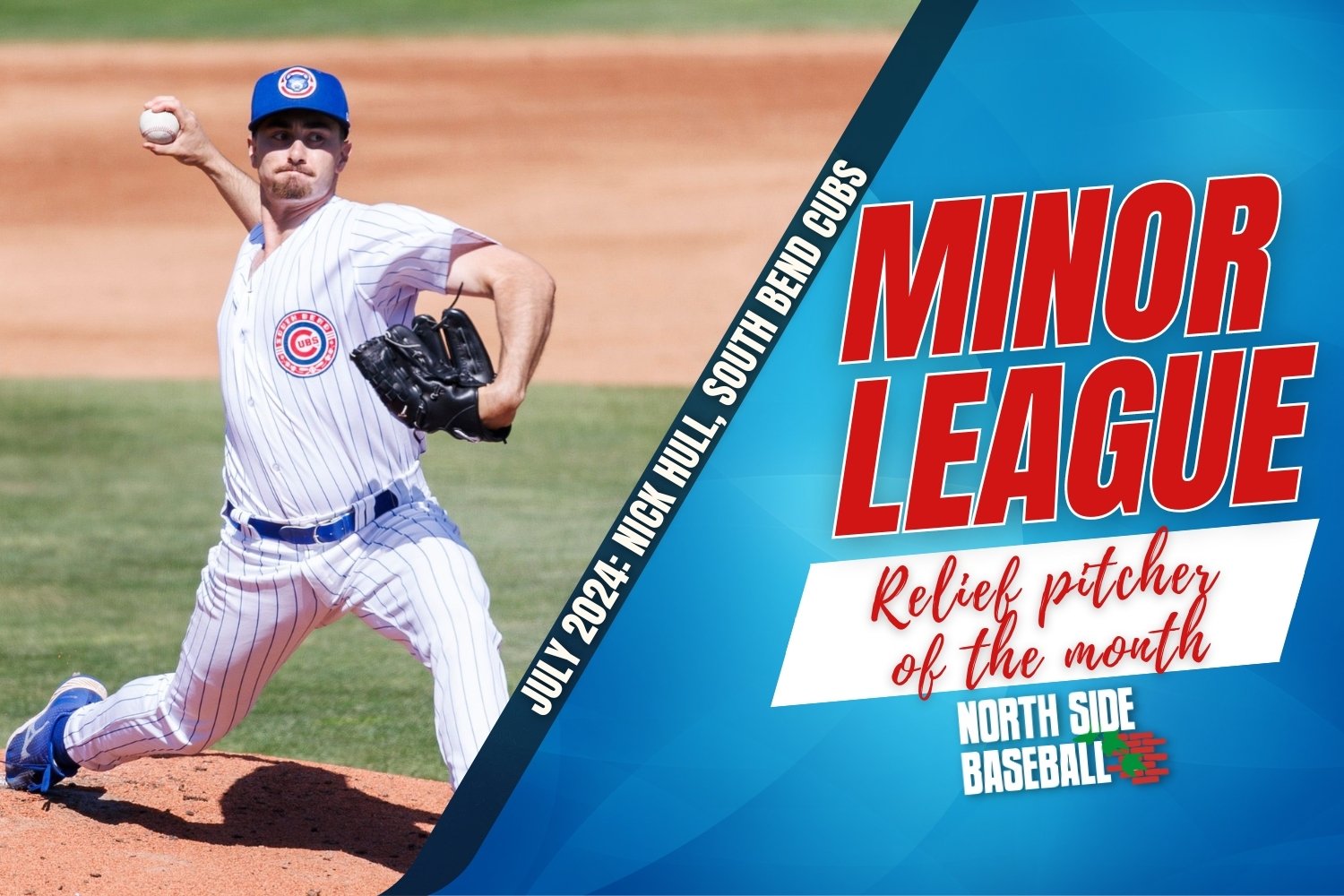 Honorable Mention LHP Angel Hernandez - Myrtle Beach Pelicans - 4 G, 0.73 ERA, 0.730 WHIP, 12 ⅓ IP, 4 H, 5 BB, 20 K Hernandez spent the entire 2022 and 2023 seasons with Myrtle Beach to much worse results. After posting a 5.79 ERA in 2022 and a 4.14 ERA in 2023, he started the 2024 season in South Bend, which was borderline disastrous. He gave up 19 earned runs in just 12 ⅔ innings, mostly thanks to a lack of control: the young left-hander walked 23.9 percent of the hitters he faced. This is something he has always struggled with. His walk rate hovered around 18 percent during his past two seasons in Myrtle Beach. Upon returning to the Pelicans in mid-May, his walk rate dropped to 14.2 percent through the end of June, and in July, it went down to 10.87 percent. That’s still high, but not the end of the world for someone who also rocked a 43.48 percent strikeout rate that same month. At 24, he’s old for his league, but perhaps he has finally figured this out, and a promotion is in his future. Top Three Relief Pitchers for July 2024 3. RHP Sam McWilliams - Iowa Cubs - 8 G, 1.64 ERA, 1.273 WHIP, 11 IP, 5 H, 9 BB, 13 K McWilliams, for those unaware, is an incredible story. You should read the Des Moines Register’s full account of it, but in short, he had retired from professional baseball after bouncing around the minor leagues from 2014 through 2022. He was working as a salesman, and when a friend asked him to fill in and play in an exhibition game in the Mexican Pacific League, McWilliams obliged and eventually made his way back to the minor leagues with the Cubs. His full-season numbers aren’t impressive: a 6.67 ERA in 58 innings pitched. A 13.6 percent walk rate hasn’t helped. However, in July, it clicked for McWilliams. He was still walking a lot of hitters, but hitters managed just five hits, all singles, against him in 46 plate appearances. The 32.1 percent strikeout rate for the season suggests that the stuff is there, and in their midseason prospect update, Fangraphs even slapped a 35+ future value on him and ranked him the 33rd-best prospect in the organization. Let’s hope for more months, like July, when it all comes together. 2. LHP Mitchell Tyranski - South Bend Cubs - 7 G, 0.82 ERA, 0.546 WHIP, 11 IP, 4 H, 2 BB, 9 K The Cubs signed the former 12th-round draft pick of the Dodgers in late April and immediately moved him from Myrtle Beach to South Bend after just one appearance. Tyranski had issues limiting walks and home runs in his first couple of months with South Bend, allowing four home runs and a 12.79 percent walk rate. In July, though, the former Michigan State Spartan basically cut all of that out. His walk rate dropped to 5.13 percent, and he did not allow a single home run. Couple that with a still decent 23 percent strikeout rate, and Tyranski had the best month of his brief Cubs tenure. 1. RHP Nick Hull - South Bend Cubs - 7 G, 1.26 ERA, 0.977 WHIP, 14 ⅓ IP, 6 H, 8 BB, 21 K The 2022 draft pick out of Grand Canyon has had a mid-season renaissance for the South Bend Cubs, culminating in a July performance that is probably the best month of his young professional career. Hitters hit just .122 against him, mostly thanks to a 35.59 percent strikeout rate. That bump in strikeout rate is particularly notable because Hull has never been a huge strikeout guy, at least to this extent. Last season, his strikeout rate in Myrtle Beach was 24.4 percent and 16.9 percent in his brief cameo in South Bend. His previous career high for a month was May of 2023 when he struck out roughly 30 percent of the hitters he faced. Congrats to Nick Hull on a great month of July. The elevated strikeout rate is certainly something to monitor for his career going forward.
 -
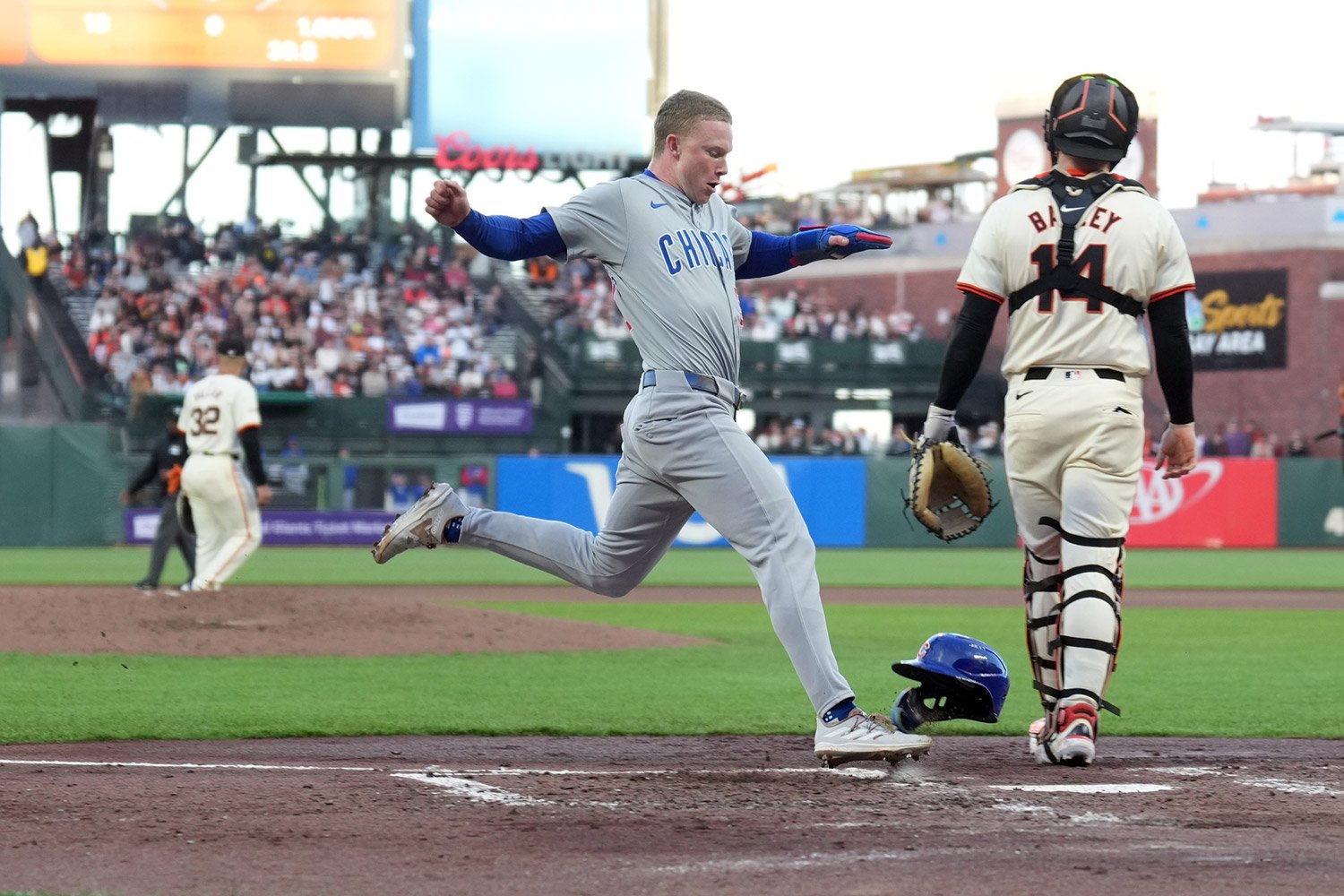 If you’re anything like me, you’ve been watching the Summer Olympics for the past week or so. I’ve found myself enjoying the brief respite from the Cubs continuing to tread water by watching Olympic swimmers who are doing nothing but treading water when they’re in the pool. Of course, there is one obvious Cubs connection here. For those who are unaware, Dansby Swanson’s wife, Mallory Swanson, has scored three goals for the United States women’s national soccer team as they continue their quest for a gold medal. While watching the start of the track and field events, I couldn’t help but wonder how Pete Crow-Armstrong would fare in a sprint against the top talent in the world. PCA is one of the fastest guys in baseball, and watching him sprint around the bases resembles Noah Lyles running 100 meters on a track. Statcast’s sprint speed statistic can do much of the heavy lifting for us here. This stat is listed in feet per second and measured during the player’s fastest one-second window on any individual play. According to Baseball Savant, PCA is fifth in baseball in sprint speed at 30.1 feet per second. Saturday morning was the preliminary and first round of the Olympic men’s 100-meter race. Since he’s the most known American athlete in this event, we’ll continue to use Noah Lyles as a measuring stick. He ran 100 meters in 10.04 seconds, though according to Sports Illustrated and some of his comments after the fact, he may have been holding back somewhat. To Lyles’ credit, his fastest time is much better, at 9.81 seconds. Ok, let’s do some math! One hundred meters is about 328.084 feet. If Crow-Armstrong runs at about 30.1 feet per second, 328.084 divided by 30.1 is 10.90 seconds. PCA would run the 100-meter dash in roughly 10.90 seconds. But hold on, not so fast! Pun intended. You might have noticed in the explanation that Sprint Speed is calculated as a player’s “fastest one-second window.” This is taken directly from the explanation on Baseball Savant. So, by my logic, not only would Noah Lyles still beat Crow-Armstrong by quite a bit in a 100-meter race, but Lyles’ time factors in the time it takes him to hit top speed, while PCA’s time assumes he is running at his top speed the entire time. This might seem picky, but every little bit counts when talking about a race that usually takes about 10 seconds to finish. Statcast also has running splits listed on Baseball Savant. It takes the rookie center fielder about 50 feet to reach his top speed of 30.1 feet per second. At this point, 2.42 seconds have already elapsed, on average. So he would still have about 278 feet to run, and if we assume he runs it at 30.1 feet per second, he would run that final 278 feet in about 9.24 seconds. Add the 2.42 seconds it took him to get to top speed to that, and you get 11.66 seconds. The other factor here is that he might hit a higher top speed than 30.1 feet per second if he knew he was running 100 meters in a straight line rather than shifting directions every 90 feet. But remember that sprint speed is calculated at the player’s fastest one-second window in a given play, so I am comfortable saying that it might help his time, but not by a ton. I’d venture to guess PCA would clock in somewhere in the 11.40-11.60 range on a 100-meter dash. In round one on Saturday, only the slowest finisher recorded a time in that range, and he was so far behind the rest of the field that I’d assume it was an anomaly for him. Of the 69 athletes who completed round one (three were disqualified), he was the only one who recorded a time greater than 11 seconds. So, PCA is fast. Really fast. But he’s nowhere near Olympian level fast. If you were curious, Lyles averaged 32.68 feet per second in his run this morning, significantly faster than Bobby Witt Jr.’s baseball-leading 30.4 feet per second figure. We’ve seen fast players like Terrance Gore stick around and end up on playoff rosters every year with one role: pinch runner. Would anyone bite if Lyles were to make himself available to baseball teams every August to fill the pinch runner role? Given PCA has yet to be caught stealing this season, I just cannot see anyone being able to throw him out. Imagine the viral potential of Noah Lyles pinch running as the winning run in the bottom of the ninth of a playoff game. Alas, it will never happen because Noah Lyles is incredibly successful in a different sport. But a guy can dream. If you tune in to watch any Olympic action, allow this to serve as a reminder of how impressive the physical accomplishments of these athletes are. If you think PCA is fast, Noah Lyles, and anyone else competing in the men’s 100-meter dash, would make him look slow.
 -
Pete Crow-Armstrong is really, really fast. But when compared to the fastest in the world, how fast is he? Image courtesy of © Darren Yamashita-USA TODAY Sports If you’re anything like me, you’ve been watching the Summer Olympics for the past week or so. I’ve found myself enjoying the brief respite from the Cubs continuing to tread water by watching Olympic swimmers who are doing nothing but treading water when they’re in the pool. Of course, there is one obvious Cubs connection here. For those who are unaware, Dansby Swanson’s wife, Mallory Swanson, has scored three goals for the United States women’s national soccer team as they continue their quest for a gold medal. While watching the start of the track and field events, I couldn’t help but wonder how Pete Crow-Armstrong would fare in a sprint against the top talent in the world. PCA is one of the fastest guys in baseball, and watching him sprint around the bases resembles Noah Lyles running 100 meters on a track. Statcast’s sprint speed statistic can do much of the heavy lifting for us here. This stat is listed in feet per second and measured during the player’s fastest one-second window on any individual play. According to Baseball Savant, PCA is fifth in baseball in sprint speed at 30.1 feet per second. Saturday morning was the preliminary and first round of the Olympic men’s 100-meter race. Since he’s the most known American athlete in this event, we’ll continue to use Noah Lyles as a measuring stick. He ran 100 meters in 10.04 seconds, though according to Sports Illustrated and some of his comments after the fact, he may have been holding back somewhat. To Lyles’ credit, his fastest time is much better, at 9.81 seconds. Ok, let’s do some math! One hundred meters is about 328.084 feet. If Crow-Armstrong runs at about 30.1 feet per second, 328.084 divided by 30.1 is 10.90 seconds. PCA would run the 100-meter dash in roughly 10.90 seconds. But hold on, not so fast! Pun intended. You might have noticed in the explanation that Sprint Speed is calculated as a player’s “fastest one-second window.” This is taken directly from the explanation on Baseball Savant. So, by my logic, not only would Noah Lyles still beat Crow-Armstrong by quite a bit in a 100-meter race, but Lyles’ time factors in the time it takes him to hit top speed, while PCA’s time assumes he is running at his top speed the entire time. This might seem picky, but every little bit counts when talking about a race that usually takes about 10 seconds to finish. Statcast also has running splits listed on Baseball Savant. It takes the rookie center fielder about 50 feet to reach his top speed of 30.1 feet per second. At this point, 2.42 seconds have already elapsed, on average. So he would still have about 278 feet to run, and if we assume he runs it at 30.1 feet per second, he would run that final 278 feet in about 9.24 seconds. Add the 2.42 seconds it took him to get to top speed to that, and you get 11.66 seconds. The other factor here is that he might hit a higher top speed than 30.1 feet per second if he knew he was running 100 meters in a straight line rather than shifting directions every 90 feet. But remember that sprint speed is calculated at the player’s fastest one-second window in a given play, so I am comfortable saying that it might help his time, but not by a ton. I’d venture to guess PCA would clock in somewhere in the 11.40-11.60 range on a 100-meter dash. In round one on Saturday, only the slowest finisher recorded a time in that range, and he was so far behind the rest of the field that I’d assume it was an anomaly for him. Of the 69 athletes who completed round one (three were disqualified), he was the only one who recorded a time greater than 11 seconds. So, PCA is fast. Really fast. But he’s nowhere near Olympian level fast. If you were curious, Lyles averaged 32.68 feet per second in his run this morning, significantly faster than Bobby Witt Jr.’s baseball-leading 30.4 feet per second figure. We’ve seen fast players like Terrance Gore stick around and end up on playoff rosters every year with one role: pinch runner. Would anyone bite if Lyles were to make himself available to baseball teams every August to fill the pinch runner role? Given PCA has yet to be caught stealing this season, I just cannot see anyone being able to throw him out. Imagine the viral potential of Noah Lyles pinch running as the winning run in the bottom of the ninth of a playoff game. Alas, it will never happen because Noah Lyles is incredibly successful in a different sport. But a guy can dream. If you tune in to watch any Olympic action, allow this to serve as a reminder of how impressive the physical accomplishments of these athletes are. If you think PCA is fast, Noah Lyles, and anyone else competing in the men’s 100-meter dash, would make him look slow. View full article
-
Dear Pete Crow-Armstrong: Stop Bunting, Dammit
matto1233 replied to matto1233's topic in North Side Baseball Front Page News
Ha - no offense taken. Let me try again. He’s not succeeding at it because it isn’t surprising to anyone. It isn’t surprising to anyone because he’s doing it way too often. He’s doing it way too often because he isn’t performing at the plate. Bunting so often is not helping his performance at the plate, nor is it helping his development. I am sure it can turn into something of a weapon for him, to whatever extent a bunt can be a weapon for an offensive player. But right now, it’s not working, and he needs the reps at the plate. That picture in particular is just an example of how easy he is to defend right now. He’s the winning run in the bottom of the ninth, and the Brewers are defending him as if he were a pitcher at the plate. He’s on pace for 37 bunts per 600 plate appearances. Nobody has done that since Billy Hamilton. He shouldn’t be this desperate at the plate. -
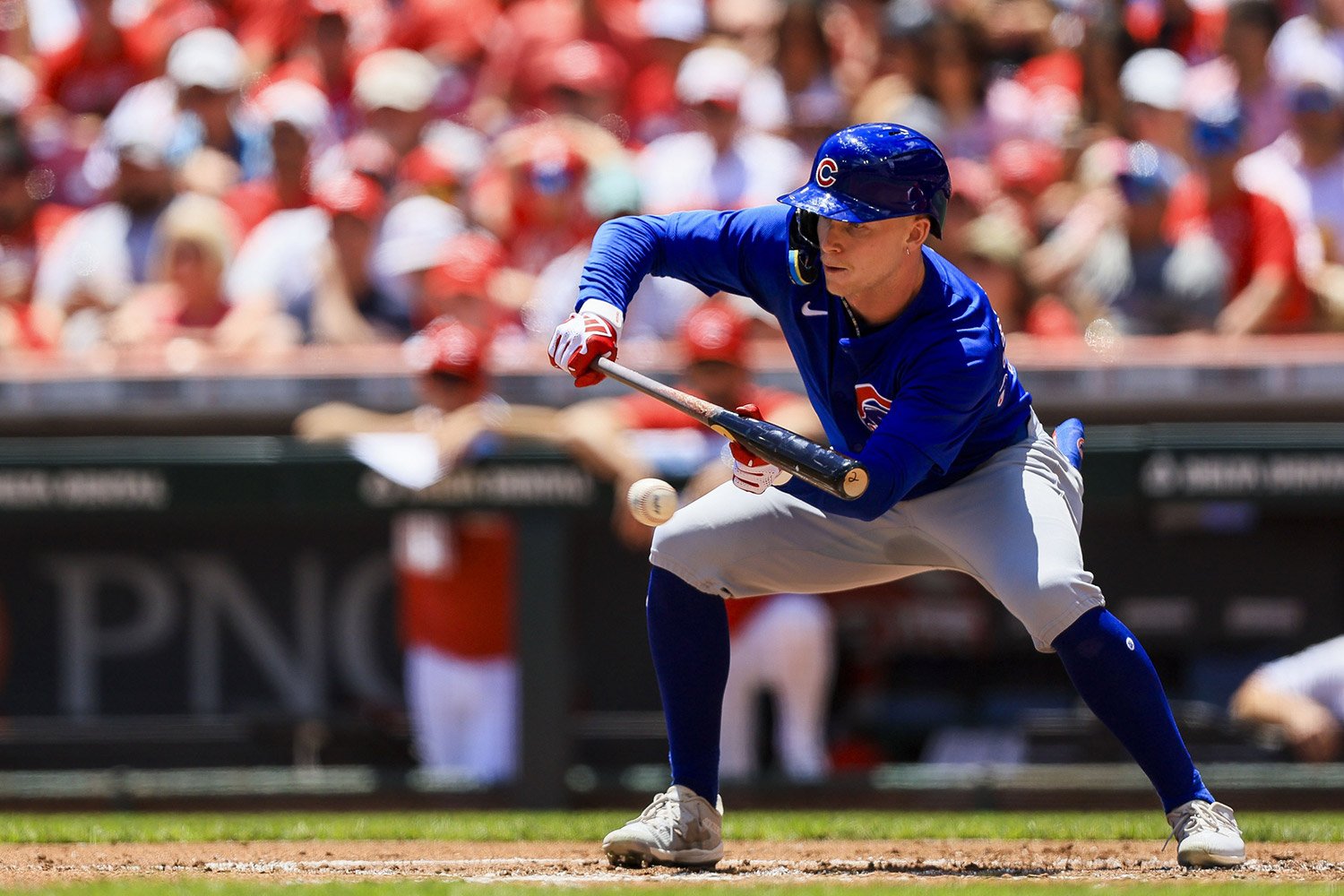 Bunting for a hit is awesome. As someone who grew up as a very undersized but fast baseball player, I have always appreciated the art of a good bunt. You should be trying to get on base any way you can, and something about a professional player laying down a bunt to claw their way to first base never fails to put a smile on my face. Now, as baseball becomes more focused on power and strikeouts rise, I also find myself enjoying the chaotic nature of a bunt for a hit. You might see a perfect bunt placed right where the defenders aren’t. You might see an awesome play by a third baseman to record the out. He also might chuck the ball down the right-field line, resulting in complete bedlam: Pete Crow-Armstrong's Bunt Scores Michael Busch"> This brings me to the bunter in that highlight and the bunter in question: Pete Crow-Armstrong. When does bunting go too far? When is someone bunting too often? Allow me to share a screenshot with you from the Cubs’ 1-0 loss to the Brewers coming out of the All-Star break: PCA was the winning run in the bottom of the ninth inning, yet the Brewers were defending against a bunt. To clarify, he never squared around to bunt in this plate appearance, so perhaps the issue is more about how helpless he has been offensively than him bunting too much. He has hit two ground balls to the opposite field this season, so the Brewers might as well stick Joey Ortiz that close to the plate to defend against a possible bunt because there likely isn’t any other batted ball going that direction. He is way too easy to defend. Part of the reason that bunts are successful is because they are surprising to the defense. The Brewers weren’t going to be surprised here. The Cubs’ rookie center fielder has come to the plate 195 times this season. He’s either struck out, walked, or been hit by a pitch 63 times, so 132 of his plate appearances have resulted in him swinging and making contact with the ball. According to Baseball Savant, he’s bunted 13 times. Almost 10 percent, 9.8 percent, to be precise, of PCA’s balls in play this season have been bunts. On one hand, one could argue that this is great! Crow-Armstrong is incredibly fast, and as I’ve already discussed, I love watching players do anything they can to get to first base, especially when they aren’t a huge home run threat. On the other hand, he’s not very good at it! Four of those 13 bunts have been a sacrifice bunt. He has just two hits on the nine bunts that weren’t recorded as a sacrifice. That would be a .222 batting average and a .222 slugging percentage since you’re setting your ceiling at a single when you attempt to bunt for a hit. Those numbers rank very poorly when you compare them to everyone else who has laid down more than ten bunts so far this year, all stats per Baseball Savant: Player Number of bunts Batting average on bunts Jacob Young 21 .533 Michael Siani 17 .500 Pete Crow-Armstrong 13 .222 Jake McCarthy 11 .375 Johan Rojas 11 .333 Michael A. Taylor 11 .286 Brice Turang 11 .429 Blake Perkins 10 .500 Jose Caballero 10 .375 This list is about what you’d expect. It's not exactly a murderers' row of power hitters, but mostly a list of smaller, quicker guys willing to do whatever it takes just to get to first base so those big power hitters can drive them in. As a matter of fact, Turang and McCarthy are the only two players listed here who have been above league average with the bat this season, and Turang is the only one with the prospect pedigree that PCA does. In a season that has otherwise been devoid of excitement, Pete Crow-Armstrong’s continued development might be one of the only things that will keep bringing me back to my television screen daily. This is a guy who was an above-average hitter at every level in the minor leagues. As fans, we all want to see him swing the bat so we can hopefully see him evolve into at least an average offensive player. Given his elite defense in center field, that might be all he needs to become an All-Star. I know it’s been a struggle for him so far in the majors, and his .222 batting average on his bunts is higher than his season average of .180, but keep in mind, he can’t get anything more than a single on a bunt. He has a .196 wOBA on bunts this year, vs. an overall wOBA of .231. It hasn’t been effective. Are we already at the point where he feels the need to bunt for a hit at the same rate as low-offense players like Michael Siani? At the very least, if he is going to bunt so often, could he at least be better at it?
 -
When executed well, the bunt is one of the most exciting plays in baseball. When not executed well, it's infuriating. Image courtesy of © Katie Stratman-USA TODAY Sports Bunting for a hit is awesome. As someone who grew up as a very undersized but fast baseball player, I have always appreciated the art of a good bunt. You should be trying to get on base any way you can, and something about a professional player laying down a bunt to claw their way to first base never fails to put a smile on my face. Now, as baseball becomes more focused on power and strikeouts rise, I also find myself enjoying the chaotic nature of a bunt for a hit. You might see a perfect bunt placed right where the defenders aren’t. You might see an awesome play by a third baseman to record the out. He also might chuck the ball down the right-field line, resulting in complete bedlam: Pete Crow-Armstrong's Bunt Scores Michael Busch"> This brings me to the bunter in that highlight and the bunter in question: Pete Crow-Armstrong. When does bunting go too far? When is someone bunting too often? Allow me to share a screenshot with you from the Cubs’ 1-0 loss to the Brewers coming out of the All-Star break: PCA was the winning run in the bottom of the ninth inning, yet the Brewers were defending against a bunt. To clarify, he never squared around to bunt in this plate appearance, so perhaps the issue is more about how helpless he has been offensively than him bunting too much. He has hit two ground balls to the opposite field this season, so the Brewers might as well stick Joey Ortiz that close to the plate to defend against a possible bunt because there likely isn’t any other batted ball going that direction. He is way too easy to defend. Part of the reason that bunts are successful is because they are surprising to the defense. The Brewers weren’t going to be surprised here. The Cubs’ rookie center fielder has come to the plate 195 times this season. He’s either struck out, walked, or been hit by a pitch 63 times, so 132 of his plate appearances have resulted in him swinging and making contact with the ball. According to Baseball Savant, he’s bunted 13 times. Almost 10 percent, 9.8 percent, to be precise, of PCA’s balls in play this season have been bunts. On one hand, one could argue that this is great! Crow-Armstrong is incredibly fast, and as I’ve already discussed, I love watching players do anything they can to get to first base, especially when they aren’t a huge home run threat. On the other hand, he’s not very good at it! Four of those 13 bunts have been a sacrifice bunt. He has just two hits on the nine bunts that weren’t recorded as a sacrifice. That would be a .222 batting average and a .222 slugging percentage since you’re setting your ceiling at a single when you attempt to bunt for a hit. Those numbers rank very poorly when you compare them to everyone else who has laid down more than ten bunts so far this year, all stats per Baseball Savant: Player Number of bunts Batting average on bunts Jacob Young 21 .533 Michael Siani 17 .500 Pete Crow-Armstrong 13 .222 Jake McCarthy 11 .375 Johan Rojas 11 .333 Michael A. Taylor 11 .286 Brice Turang 11 .429 Blake Perkins 10 .500 Jose Caballero 10 .375 This list is about what you’d expect. It's not exactly a murderers' row of power hitters, but mostly a list of smaller, quicker guys willing to do whatever it takes just to get to first base so those big power hitters can drive them in. As a matter of fact, Turang and McCarthy are the only two players listed here who have been above league average with the bat this season, and Turang is the only one with the prospect pedigree that PCA does. In a season that has otherwise been devoid of excitement, Pete Crow-Armstrong’s continued development might be one of the only things that will keep bringing me back to my television screen daily. This is a guy who was an above-average hitter at every level in the minor leagues. As fans, we all want to see him swing the bat so we can hopefully see him evolve into at least an average offensive player. Given his elite defense in center field, that might be all he needs to become an All-Star. I know it’s been a struggle for him so far in the majors, and his .222 batting average on his bunts is higher than his season average of .180, but keep in mind, he can’t get anything more than a single on a bunt. He has a .196 wOBA on bunts this year, vs. an overall wOBA of .231. It hasn’t been effective. Are we already at the point where he feels the need to bunt for a hit at the same rate as low-offense players like Michael Siani? At the very least, if he is going to bunt so often, could he at least be better at it? View full article
-
Believe it or not, the Chicago Cubs’ bullpen has been seeing drastically better results since the calendar turned to June. Image courtesy of © Darren Yamashita-USA TODAY Sports From the beginning of the season through the end of May, the Cubs’ bullpen ERA of 4.61 was 27th in baseball. Since then, however, their 2.92 ERA is fourth. It feels like this has gone mostly unrecognized, probably because it hasn’t resulted in more wins, save for that nice little stretch to end the first half of the season. There are multiple reasons for this resurgence. Frankly, the biggest reason might just be plain old luck. FanGraphs said the Cubs’ bullpen FIP before June 1 was 4.14. Afterward, it’s 3.77, which would suggest that the group is not as bad as it was for the first part of the season, but also not as good as it has been lately. Another reason is the emergence of Porter Hodge. The former 13th-round pick was fast-tracked to the big leagues when it was obvious the bullpen needed reinforcements, and since his debut on May 22, his 0.5 FanGraphs WAR is the best amongst the group. He’s pitched to a 2.16 ERA and has a 2.25 xERA and 2.27 FIP to support the good results. According to Baseball Savant, Hodge primarily features a fastball in the mid-90s, and he throws roughly 70 percent of the time. He supplements that with a sweepy slider that he throws the other 30 percent of the time. I wouldn’t say he has swing-and-miss stuff, at least not based on early results: his 11 percent swinging strike rate is 179th among the 330 relievers that have thrown at least ten innings, per Fangraphs. His 27.7 percent strikeout rate is above the league average of 23 percent for a reliever, but not incredibly so. Mason Miller, he is not. Where the rookie reliever really succeeds is on pitches in the strike zone. Five hundred twenty pitchers have thrown at least 200 pitches this season. Hodge has allowed a .206 xwOBA on pitches in the strike zone, which puts him fourth among that group of 520 pitchers. Speaking of Miller, he is one spot above Hodge with a .205 xwOBA allowed on pitches in the zone. Any time you can be compared to arguably the best reliever in baseball, it’s a good sign. This is where Hodge’s fastball shines. He’s allowed a .201 xwOBA on fastballs in the zone, which is eighth in MLB. Matthew Trueblood previously alluded to how difficult Hodge’s fastball would be to hit, which is exactly what is playing out. With very little horizontal movement in addition to some added drop, the rookie out of Salt Lake City has a very unique fastball that is a little similar to someone else we are all familiar with, but at a higher velocity: Player Vertical Movement vs. average (inches) Horizontal movement vs. average (inches) Velocity (mph) Porter Hodge -2 -8 95 Justin Steele -2.9 -6.4 91.7 He isn’t doing it with just the fastball, either. He’s allowed a .225 xwOBA on breaking balls in the zone. That figure is a slightly less sterling 71st in baseball. However, hitters are whiffing at 35 percent of those pitches, which is 14th. The concern with Hodge upon his call-up was whether or not he would throw enough strikes. He was walking 15.8 percent of hitters in AAA this season, and he’s dropped that to a much more manageable 10.8 percent in the big leagues. His zone rate has gone up, but only slightly: he threw 47 percent of pitches in the zone in AAA, and he’s up to 52.5 percent in the majors. Where we’re really seeing a difference is in swing rates. In MLB, hitters are swinging up 67.4 percent of pitches in the zone. In Triple-A, that figure was just 54.4 percent. Hitters aren’t getting results in the zone, so you have to wonder if they’ll just start swinging at those pitches less and make Hodge throw a strike more than once or twice. Regardless, it’s clear that the stuff is there and is big-league caliber. We’ll have to wait and see if the walk rate stays down. But for now, any way you slice it, and anywhere he throws it, hitters just cannot square up Porter Hodge. View full article
-
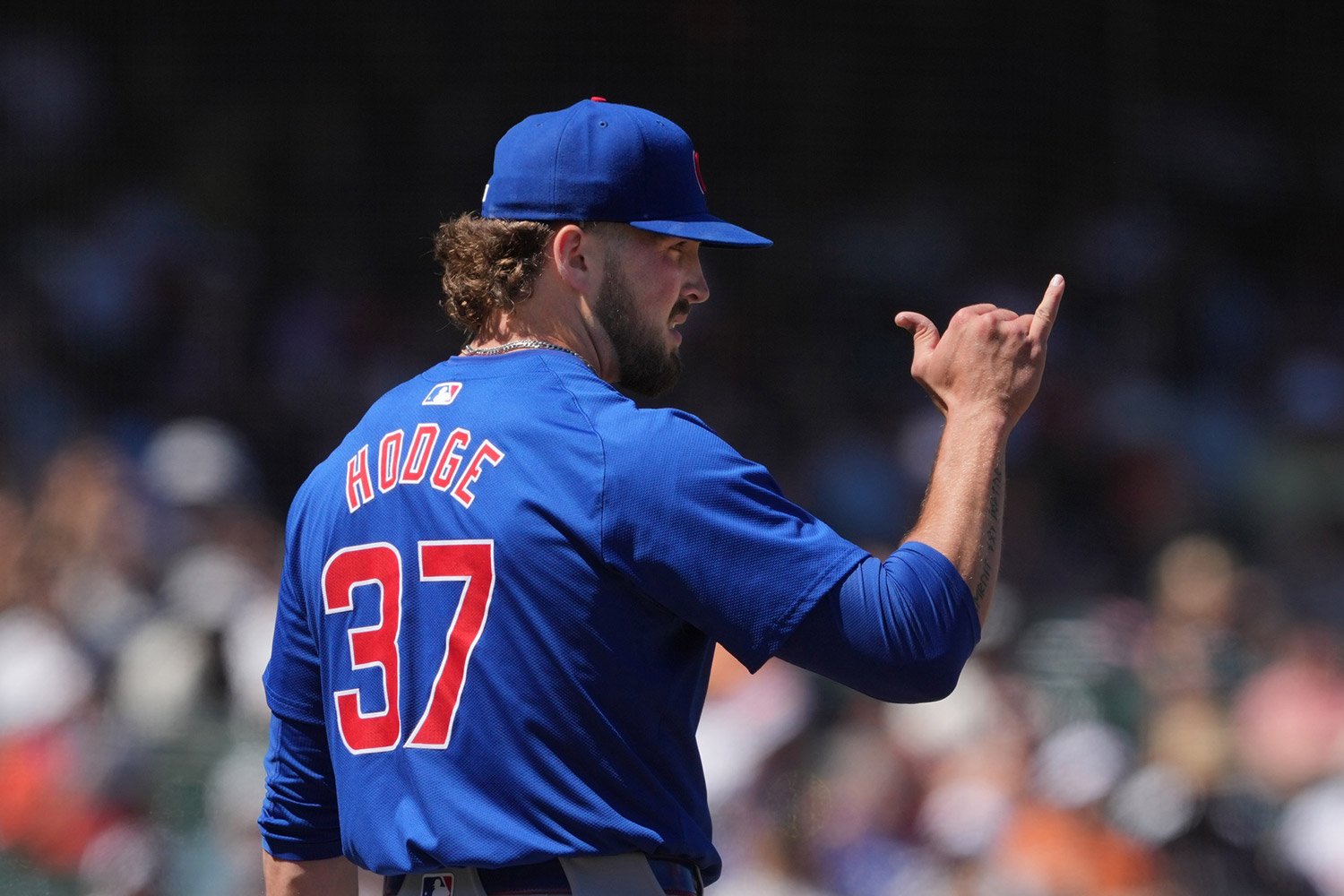 From the beginning of the season through the end of May, the Cubs’ bullpen ERA of 4.61 was 27th in baseball. Since then, however, their 2.92 ERA is fourth. It feels like this has gone mostly unrecognized, probably because it hasn’t resulted in more wins, save for that nice little stretch to end the first half of the season. There are multiple reasons for this resurgence. Frankly, the biggest reason might just be plain old luck. FanGraphs said the Cubs’ bullpen FIP before June 1 was 4.14. Afterward, it’s 3.77, which would suggest that the group is not as bad as it was for the first part of the season, but also not as good as it has been lately. Another reason is the emergence of Porter Hodge. The former 13th-round pick was fast-tracked to the big leagues when it was obvious the bullpen needed reinforcements, and since his debut on May 22, his 0.5 FanGraphs WAR is the best amongst the group. He’s pitched to a 2.16 ERA and has a 2.25 xERA and 2.27 FIP to support the good results. According to Baseball Savant, Hodge primarily features a fastball in the mid-90s, and he throws roughly 70 percent of the time. He supplements that with a sweepy slider that he throws the other 30 percent of the time. I wouldn’t say he has swing-and-miss stuff, at least not based on early results: his 11 percent swinging strike rate is 179th among the 330 relievers that have thrown at least ten innings, per Fangraphs. His 27.7 percent strikeout rate is above the league average of 23 percent for a reliever, but not incredibly so. Mason Miller, he is not. Where the rookie reliever really succeeds is on pitches in the strike zone. Five hundred twenty pitchers have thrown at least 200 pitches this season. Hodge has allowed a .206 xwOBA on pitches in the strike zone, which puts him fourth among that group of 520 pitchers. Speaking of Miller, he is one spot above Hodge with a .205 xwOBA allowed on pitches in the zone. Any time you can be compared to arguably the best reliever in baseball, it’s a good sign. This is where Hodge’s fastball shines. He’s allowed a .201 xwOBA on fastballs in the zone, which is eighth in MLB. Matthew Trueblood previously alluded to how difficult Hodge’s fastball would be to hit, which is exactly what is playing out. With very little horizontal movement in addition to some added drop, the rookie out of Salt Lake City has a very unique fastball that is a little similar to someone else we are all familiar with, but at a higher velocity: Player Vertical Movement vs. average (inches) Horizontal movement vs. average (inches) Velocity (mph) Porter Hodge -2 -8 95 Justin Steele -2.9 -6.4 91.7 He isn’t doing it with just the fastball, either. He’s allowed a .225 xwOBA on breaking balls in the zone. That figure is a slightly less sterling 71st in baseball. However, hitters are whiffing at 35 percent of those pitches, which is 14th. The concern with Hodge upon his call-up was whether or not he would throw enough strikes. He was walking 15.8 percent of hitters in AAA this season, and he’s dropped that to a much more manageable 10.8 percent in the big leagues. His zone rate has gone up, but only slightly: he threw 47 percent of pitches in the zone in AAA, and he’s up to 52.5 percent in the majors. Where we’re really seeing a difference is in swing rates. In MLB, hitters are swinging up 67.4 percent of pitches in the zone. In Triple-A, that figure was just 54.4 percent. Hitters aren’t getting results in the zone, so you have to wonder if they’ll just start swinging at those pitches less and make Hodge throw a strike more than once or twice. Regardless, it’s clear that the stuff is there and is big-league caliber. We’ll have to wait and see if the walk rate stays down. But for now, any way you slice it, and anywhere he throws it, hitters just cannot square up Porter Hodge.
 -
There's nothing wrong with the way the Cubs' third baseman celebrates his accomplishments on the field. But there's a lot wrong with the frequency of those accomplishments, and there might be something wrong with calling him the Cubs' third baseman. Image courtesy of Jeff Curry - USA Today Sports Allow me to get one thing clear before I really jump into this article: I love Christopher Morel. I firmly believe that having professional baseball players act in a manner that clearly shows that they are having fun is important for the growth of the game. Frankly, I wish I derived even 20 percent of the enjoyment from my daily activities than he does from playing baseball. Watching him is a breath of fresh air. On the other hand, as a fan who also enjoys watching his favorite team win baseball games, it’s been a maddening season for the Cubs’ third baseman. He’s been given a full-time defensive home at third base, and is one of the worst defensive players in baseball. His bat, despite showing some potential for major productivity, has regressed to the point where he is below-average overall. Combine all of that, and he’s been worth just 0.1 WAR, according to FanGraphs. Needless to say, this is not the season any of us had in mind after such a positive showing in his first two seasons in the bigs. Many would point to Morel’s expected stats and declare that he is actually having the best offensive season of his young career. By one metric, one would be correct! According to Baseball Savant, his .354 xwOBA is the highest of his career, up from .340 last season, and .321 the year before. That's because xwOBA is a stat that attempts to determine how a hitter should be performing based on exit velocity, launch angle, and in certain instances, sprint speed. Like wOBA (which measures actual performance), an xwOBA of about .320 is considered average. So a .354 xwOBA is quite high, and would put him in the 83rd percentile of hitters. With a wOBA of .303 this season, Morel’s xwOBA marks him as one of the unluckiest hitters in baseball. The -.051 gap between his wOBA and his xwOBA is the third-lowest in all of baseball, per Baseball Savant. So give it some time, and Morel should start putting up better numbers. Right? One potential gap in Baseball Savant’s version of xwOBA is that it doesn’t take spray angle into account. In other words, whether or not the ball was pulled, hit to center field, or hit to the opposite field doesn't factor in. This has been covered pretty extensively in previous writing of mine, but for the uninitiated, not all batted balls are created equal, even after accounting for exit velocity and launch angle. A 370-foot fly ball hit down the line to left field is a home run almost every time. A 370-foot fly ball hit to center field is a routine flyout almost every time. Fortunately for us, Pitcher List does take this into account. Morel’s xwOBA over there is .329, which would still suggest he’s an average-plus hitter and that he has been unlucky when compared to his wOBA. However, it’s a far cry from suggesting he is one of the 40 or so best hitters in baseball, as Baseball Savant’s figure does. This also puts him right on par with last season, when Pitcher List had him with a .328 xwOBA. Morel certainly has made some positive adjustments this season. He is swinging at fewer pitches outside of the zone and striking out a career-low 23.5 percent of the time. Logically, if we go off of Pitcher List’s xwOBA, it’s essentially being canceled out by the fact that he is now hitting 34.5 percent of his balls in play to center field, which is up from 28.3 percent last season. To make it even worse, that’s at the expense of balls being hit to the pull side, which is at 48.4 percent this year, down from 55 percent last year. With all of that out there, it makes me wonder if Morel’s positive adjustments this year really are positive, at all. Sure, he is chasing less outside the zone. He’s also swinging at fewer offerings in the zone, and making contact with more of the pitches outside the zone that he does swing at. I’m wondering if this is what is causing him to pull the ball less, and it also could be the culprit behind his decline in average exit velocity and barrel rate from last year to this year. He just isn’t hitting the ball with the same authority that he did last season. After such a disappointing first half, the second half of this season is do-or-die time for Morel, as a Cub. He was given the third base job this year both out of necessity and out of respect for his potential. It’s not even a decision that I disagreed with. But to this point, it hasn’t worked out. He has responded by being one of the worst defenders in all of baseball, and regressing with the bat as well. According to FanGraphs, the Cubs have gotten -0.1 WAR out of their third basemen this season, which is only better than the lowly Miami Marlins and Chicago White Sox. As that implies, having a black hole like that in the lineup is often disqualifying for playoff hopefuls. To officially conclude this, allow me to give you a blind player comparison to a mystery player, combining stats from the 2021 season through where we are in the 2024 season, and see if you can guess who the mystery player is: Player PA HR wOBA fWAR Christopher Morel 1,250 60 .325 3.1 Mystery Player 1,316 80 .327 3.9 The mystery player is someone we’re all very familiar with: Patrick Wisdom. I don’t think anybody is claiming Wisdom is anything more than a bench bat at this point in his career. Sure, Morel is younger and theoretically has much more room to grow. But given his first half of this season, he just is not a guy that a serious baseball team can deploy at third base full-time, especially in the heart of their batting order. Unless he has a much better showing with the bat, I personally don’t have the appetite to see him try out elsewhere on the diamond, either. I don’t see how he is anything more than a useful bench bat, in the realm of Patrick Wisdom. He has one more half to prove himself. Otherwise, replacing him at the hot corner and in the meat of the lineup needs to be at the top of the Cubs’ to-do list this offseason. View full article
-
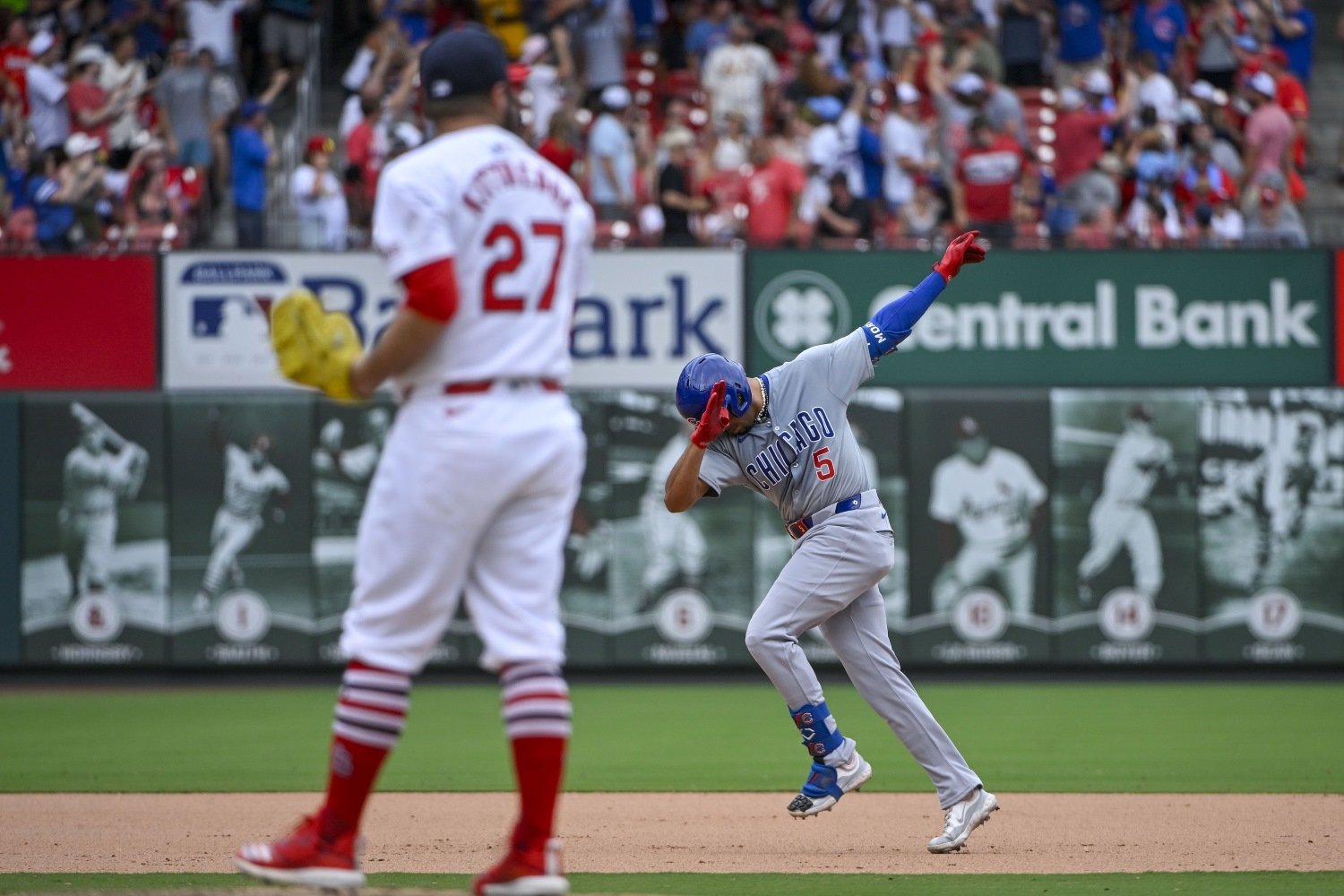 Allow me to get one thing clear before I really jump into this article: I love Christopher Morel. I firmly believe that having professional baseball players act in a manner that clearly shows that they are having fun is important for the growth of the game. Frankly, I wish I derived even 20 percent of the enjoyment from my daily activities than he does from playing baseball. Watching him is a breath of fresh air. On the other hand, as a fan who also enjoys watching his favorite team win baseball games, it’s been a maddening season for the Cubs’ third baseman. He’s been given a full-time defensive home at third base, and is one of the worst defensive players in baseball. His bat, despite showing some potential for major productivity, has regressed to the point where he is below-average overall. Combine all of that, and he’s been worth just 0.1 WAR, according to FanGraphs. Needless to say, this is not the season any of us had in mind after such a positive showing in his first two seasons in the bigs. Many would point to Morel’s expected stats and declare that he is actually having the best offensive season of his young career. By one metric, one would be correct! According to Baseball Savant, his .354 xwOBA is the highest of his career, up from .340 last season, and .321 the year before. That's because xwOBA is a stat that attempts to determine how a hitter should be performing based on exit velocity, launch angle, and in certain instances, sprint speed. Like wOBA (which measures actual performance), an xwOBA of about .320 is considered average. So a .354 xwOBA is quite high, and would put him in the 83rd percentile of hitters. With a wOBA of .303 this season, Morel’s xwOBA marks him as one of the unluckiest hitters in baseball. The -.051 gap between his wOBA and his xwOBA is the third-lowest in all of baseball, per Baseball Savant. So give it some time, and Morel should start putting up better numbers. Right? One potential gap in Baseball Savant’s version of xwOBA is that it doesn’t take spray angle into account. In other words, whether or not the ball was pulled, hit to center field, or hit to the opposite field doesn't factor in. This has been covered pretty extensively in previous writing of mine, but for the uninitiated, not all batted balls are created equal, even after accounting for exit velocity and launch angle. A 370-foot fly ball hit down the line to left field is a home run almost every time. A 370-foot fly ball hit to center field is a routine flyout almost every time. Fortunately for us, Pitcher List does take this into account. Morel’s xwOBA over there is .329, which would still suggest he’s an average-plus hitter and that he has been unlucky when compared to his wOBA. However, it’s a far cry from suggesting he is one of the 40 or so best hitters in baseball, as Baseball Savant’s figure does. This also puts him right on par with last season, when Pitcher List had him with a .328 xwOBA. Morel certainly has made some positive adjustments this season. He is swinging at fewer pitches outside of the zone and striking out a career-low 23.5 percent of the time. Logically, if we go off of Pitcher List’s xwOBA, it’s essentially being canceled out by the fact that he is now hitting 34.5 percent of his balls in play to center field, which is up from 28.3 percent last season. To make it even worse, that’s at the expense of balls being hit to the pull side, which is at 48.4 percent this year, down from 55 percent last year. With all of that out there, it makes me wonder if Morel’s positive adjustments this year really are positive, at all. Sure, he is chasing less outside the zone. He’s also swinging at fewer offerings in the zone, and making contact with more of the pitches outside the zone that he does swing at. I’m wondering if this is what is causing him to pull the ball less, and it also could be the culprit behind his decline in average exit velocity and barrel rate from last year to this year. He just isn’t hitting the ball with the same authority that he did last season. After such a disappointing first half, the second half of this season is do-or-die time for Morel, as a Cub. He was given the third base job this year both out of necessity and out of respect for his potential. It’s not even a decision that I disagreed with. But to this point, it hasn’t worked out. He has responded by being one of the worst defenders in all of baseball, and regressing with the bat as well. According to FanGraphs, the Cubs have gotten -0.1 WAR out of their third basemen this season, which is only better than the lowly Miami Marlins and Chicago White Sox. As that implies, having a black hole like that in the lineup is often disqualifying for playoff hopefuls. To officially conclude this, allow me to give you a blind player comparison to a mystery player, combining stats from the 2021 season through where we are in the 2024 season, and see if you can guess who the mystery player is: Player PA HR wOBA fWAR Christopher Morel 1,250 60 .325 3.1 Mystery Player 1,316 80 .327 3.9 The mystery player is someone we’re all very familiar with: Patrick Wisdom. I don’t think anybody is claiming Wisdom is anything more than a bench bat at this point in his career. Sure, Morel is younger and theoretically has much more room to grow. But given his first half of this season, he just is not a guy that a serious baseball team can deploy at third base full-time, especially in the heart of their batting order. Unless he has a much better showing with the bat, I personally don’t have the appetite to see him try out elsewhere on the diamond, either. I don’t see how he is anything more than a useful bench bat, in the realm of Patrick Wisdom. He has one more half to prove himself. Otherwise, replacing him at the hot corner and in the meat of the lineup needs to be at the top of the Cubs’ to-do list this offseason.
 -
Michael Busch started 2024 red-hot before cooling off. Now we're seeing important adjustments from the Cubs rookie. Image courtesy of © Kamil Krzaczynski-USA TODAY Sports Having missed the start of last Saturday’s win over the Brewers, I was overjoyed when I pulled out my phone to catch myself up on the action. The Cubs were up 2-0! Even better, it was thanks to a Michael Busch home run. Something, in particular, caught my eye about that home run on the Gameday app. Busch got a fastball from Milwaukee starter Tobias Myers, which wasn’t a particularly good one. It’s not covered in the chart below, but it came in at 90.7 mph, according to Baseball Savant. A lot of good hitters would do damage with that pitch up above the belt. What made this particular one so special? Back in May, our own Matthew Trueblood covered the hole in Busch’s swing in relation to his walk-off home run against the Padres. To summarize his fantastic work, after the rookie’s torrid start to the season, pitchers started to adjust their approach. They started hammering the high and outside portion of the strike zone. This is one of the few things responsible for his .170/.259/.277 stretch from April 21 to May 26. Of course, by now, you’ll likely see where I am going with this. That pitch stood out because the Cubs’ rookie homered again on a high and outside pitch. As a matter of fact, this pitch was even higher and further outside than the one against the Padres. What’s even better about this particular home run is that it wasn’t pulled; it was hit to center field. His past three home runs have all been hit to center field. Prior to that, every single one of his home runs had been pulled to right field. Busch’s season can essentially be split into three parts: from the start of the season to April 20 (we’ll call it Part One), from April 20 to May 26 (Part Two), and from May 26 until now (Part Three). After coming out of the gate with a 179 wRC+ through April 20, pitchers adjusted and started throwing to the up and outside portion of the strike zone. Why there? Well, Busch had a 590 wRC+ on anything pulled vs. an 86 wRC+ on balls hit to the center or opposite fields, according to Fangraphs. A glance at Busch’s heat map from this period would support this theory. Stay away from the low and inside portion of the strike zone, where he can get in front of the ball and lift it in the air with an uppercut swing: As Busch tried to adjust to the pitches up and away, he also stopped doing damage on those inside pitches. Instead of launching them into the seats, he started pounding them into the ground. His ground ball rate jumped from 23.9 percent during part one of his season to 44 percent during part two. He continued to do damage when he pulled the ball with a 221 wRC+, but 63.2 percent of those pulled baseballs were on the ground, which is the number of a contact hitter, not a high strikeout, power guy. Besides, he still wasn’t doing much damage on balls hit to the center or opposite field, with just an 82 wRC+ on the two of them combined. During part three of this season, Busch appears to have struck the perfect balance. He seems to be sitting on those outside pitches and looking to do damage on them by driving them to center field, which is the next best thing to pulling them for most hitters. All stats courtesy of FanGraphs: Season Segment Overall wRC+ Pulled wRC+ Center wRC+ Oppo wRC+ Part One 179 590 118 41 Part Two 62 221 41 126 Part Three 159 211 381 91 To combat the increased ground ball rate in part two, Busch has simply stopped swinging as often at those inside pitches that were tying him up, dropping his ground ball rate to a much more manageable 37.7 percent during part three of his season. Compare his swing rates from parts one and two to part three. Charts courtesy of FanGraphs: You see a clear shift in approach from the inside part of the plate to further over the plate. Lastly, if we look at Busch’s wOBA by zone from part three of this season, we see what appears to be a much more balanced approach and certainly much better coverage of the outside part of the plate when you compare it to the segment one chart above. The last chart, I promise: So that’s why seeing the pitch location of Busch’s home run from last Saturday excited me so much. It was thrown to a location where pitchers have been trying to exploit him, and he hit it somewhere where he wasn’t previously doing much damage. Based on the evidence, this seems to be a concerted effort from the young infielder. Michael Busch won’t be Anthony Rizzo. However, all of this leaves me incredibly impressed. Admittedly, I was getting close to writing Busch off after his rough month of May. After all, if the Dodgers are getting rid of someone, that isn’t usually a good sign. But he’s now adjusted to the adjustment and shown that he can succeed in two completely different ways. In what is looking more and more like a lost season for the Cubs, Michael Busch is looking more and more like a keeper. View full article
-
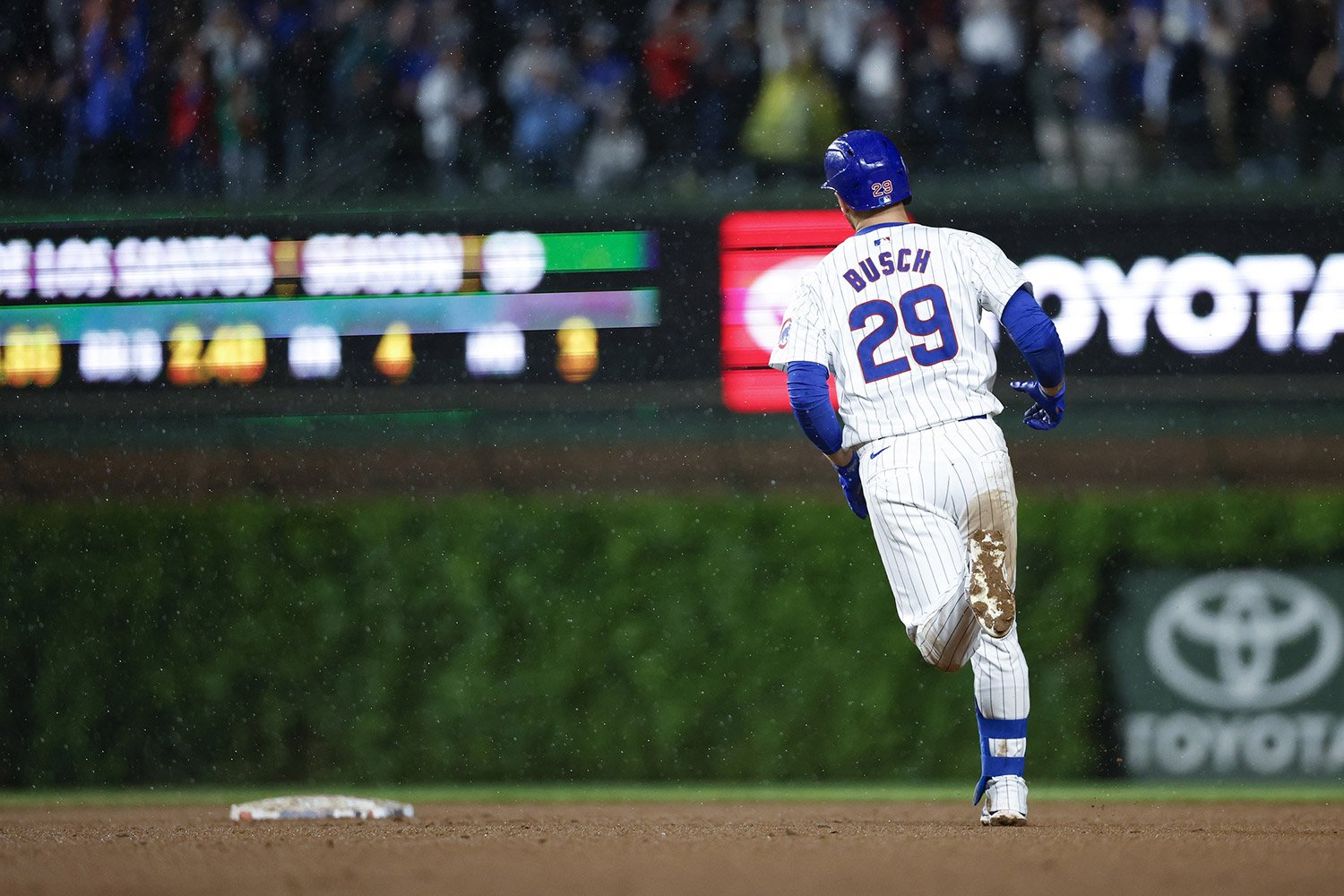 Having missed the start of last Saturday’s win over the Brewers, I was overjoyed when I pulled out my phone to catch myself up on the action. The Cubs were up 2-0! Even better, it was thanks to a Michael Busch home run. Something, in particular, caught my eye about that home run on the Gameday app. Busch got a fastball from Milwaukee starter Tobias Myers, which wasn’t a particularly good one. It’s not covered in the chart below, but it came in at 90.7 mph, according to Baseball Savant. A lot of good hitters would do damage with that pitch up above the belt. What made this particular one so special? Back in May, our own Matthew Trueblood covered the hole in Busch’s swing in relation to his walk-off home run against the Padres. To summarize his fantastic work, after the rookie’s torrid start to the season, pitchers started to adjust their approach. They started hammering the high and outside portion of the strike zone. This is one of the few things responsible for his .170/.259/.277 stretch from April 21 to May 26. Of course, by now, you’ll likely see where I am going with this. That pitch stood out because the Cubs’ rookie homered again on a high and outside pitch. As a matter of fact, this pitch was even higher and further outside than the one against the Padres. What’s even better about this particular home run is that it wasn’t pulled; it was hit to center field. His past three home runs have all been hit to center field. Prior to that, every single one of his home runs had been pulled to right field. Busch’s season can essentially be split into three parts: from the start of the season to April 20 (we’ll call it Part One), from April 20 to May 26 (Part Two), and from May 26 until now (Part Three). After coming out of the gate with a 179 wRC+ through April 20, pitchers adjusted and started throwing to the up and outside portion of the strike zone. Why there? Well, Busch had a 590 wRC+ on anything pulled vs. an 86 wRC+ on balls hit to the center or opposite fields, according to Fangraphs. A glance at Busch’s heat map from this period would support this theory. Stay away from the low and inside portion of the strike zone, where he can get in front of the ball and lift it in the air with an uppercut swing: As Busch tried to adjust to the pitches up and away, he also stopped doing damage on those inside pitches. Instead of launching them into the seats, he started pounding them into the ground. His ground ball rate jumped from 23.9 percent during part one of his season to 44 percent during part two. He continued to do damage when he pulled the ball with a 221 wRC+, but 63.2 percent of those pulled baseballs were on the ground, which is the number of a contact hitter, not a high strikeout, power guy. Besides, he still wasn’t doing much damage on balls hit to the center or opposite field, with just an 82 wRC+ on the two of them combined. During part three of this season, Busch appears to have struck the perfect balance. He seems to be sitting on those outside pitches and looking to do damage on them by driving them to center field, which is the next best thing to pulling them for most hitters. All stats courtesy of FanGraphs: Season Segment Overall wRC+ Pulled wRC+ Center wRC+ Oppo wRC+ Part One 179 590 118 41 Part Two 62 221 41 126 Part Three 159 211 381 91 To combat the increased ground ball rate in part two, Busch has simply stopped swinging as often at those inside pitches that were tying him up, dropping his ground ball rate to a much more manageable 37.7 percent during part three of his season. Compare his swing rates from parts one and two to part three. Charts courtesy of FanGraphs: You see a clear shift in approach from the inside part of the plate to further over the plate. Lastly, if we look at Busch’s wOBA by zone from part three of this season, we see what appears to be a much more balanced approach and certainly much better coverage of the outside part of the plate when you compare it to the segment one chart above. The last chart, I promise: So that’s why seeing the pitch location of Busch’s home run from last Saturday excited me so much. It was thrown to a location where pitchers have been trying to exploit him, and he hit it somewhere where he wasn’t previously doing much damage. Based on the evidence, this seems to be a concerted effort from the young infielder. Michael Busch won’t be Anthony Rizzo. However, all of this leaves me incredibly impressed. Admittedly, I was getting close to writing Busch off after his rough month of May. After all, if the Dodgers are getting rid of someone, that isn’t usually a good sign. But he’s now adjusted to the adjustment and shown that he can succeed in two completely different ways. In what is looking more and more like a lost season for the Cubs, Michael Busch is looking more and more like a keeper.
 -
There isn't much to be excited about right now, but one old friend's revival should bring some joy. Image courtesy of © John Hefti-USA TODAY Sports Amid a stretch where the Cubs have been entirely devoid of joy or positivity, it’s been hard to find something optimistic to write about. Not that everything I write has to be optimistic, but that also makes me, and hopefully you, feel good and helps give me something to look forward to when I turn the game on every day. One small thing that I have found myself clinging to, one because the team sorely needs it, and two because it reminds me of the days when it was a lot more fun to follow the Cubs: Kyle Hendricks is maybe, possibly, back. After putting up a 10.57 ERA in seven starts to begin the season, Hendricks was moved to the bullpen after a May 17 start against Pittsburgh. His first two outings in relief didn’t go a whole lot better: he allowed two runs in two innings in a loss to Atlanta on May 23, and he allowed three runs in 3 ⅔ innings in a loss to Milwaukee six days later. It was clear that Craig Counsell didn’t want to use him in leverage situations, effectively making him a waste of a roster spot. Most fans were ready for him to call it a career in what would have been an uneventful ending for a Cubs legend. Not so fast! Of course, The Professor will not go down without a fight. In three relief outings and two starts since the start of June, Hendricks has a 1.27 ERA, an almost equally as good 2.21 FIP, and has struck out 16 hitters in 21 ⅓ innings pitched. His .242 xwOBA allowed was the lowest in a calendar month since May 2016. Where is this new success coming from? Hendricks has started throwing his curveballs significantly more often. After throwing it just 6.5 percent of the time in April and 8.4 percent in May, his pitch usage in June has jumped to 20.7 percent, the highest in any month of his career, according to Baseball Savant. If it felt like his curveball was slowly being phased out of his repertoire, that’s because it was. After throwing it a career-high 16.7 percent of the time in 2020, when he received votes for the Cy Young Award, it slowly declined to be used only 3.5 percent last season. His curveball usage over the past month is particularly impressive: he’s used it consistently in almost any count. Compare his pitch selection in June of this year to 2020. In 2020, his curveball usage was pretty confined to when he was ahead in the count. However, This month, he has used it consistently across all counts save for 3-0 and 3-1. Of course, as evidenced by his overall results this month, this has worked wonderfully! Hitters have a -47 wRC+ against his curveball, according to FanGraphs. They hit it into the ground 66.7 percent of the time, chased it 28.3 percent, and swung and missed it 12.1 percent. Those are all career-highs for Hendricks with his curveball. Hitters will surely adjust. Once they become more aware of needing to account for a fourth pitch from Hendricks, I am sure they will start to hit it better than they have. As we’re all aware, the veteran right-hander isn’t exactly someone who relies on nasty stuff. It’s not exactly an unhittable curveball. With all that said, we can still take a step back and appreciate the wonder of Kyle Hendricks. Eventually, he will retire. But today is not that day. He’s innovated and found another way to keep succeeding. Despite existing in the era of velocity and nasty, bat-missing breaking balls, Kyle Hendricks, against all odds, persists with the 87-mph fastball and a 14th percentile strikeout rate. View full article
-
 Amid a stretch where the Cubs have been entirely devoid of joy or positivity, it’s been hard to find something optimistic to write about. Not that everything I write has to be optimistic, but that also makes me, and hopefully you, feel good and helps give me something to look forward to when I turn the game on every day. One small thing that I have found myself clinging to, one because the team sorely needs it, and two because it reminds me of the days when it was a lot more fun to follow the Cubs: Kyle Hendricks is maybe, possibly, back. After putting up a 10.57 ERA in seven starts to begin the season, Hendricks was moved to the bullpen after a May 17 start against Pittsburgh. His first two outings in relief didn’t go a whole lot better: he allowed two runs in two innings in a loss to Atlanta on May 23, and he allowed three runs in 3 ⅔ innings in a loss to Milwaukee six days later. It was clear that Craig Counsell didn’t want to use him in leverage situations, effectively making him a waste of a roster spot. Most fans were ready for him to call it a career in what would have been an uneventful ending for a Cubs legend. Not so fast! Of course, The Professor will not go down without a fight. In three relief outings and two starts since the start of June, Hendricks has a 1.27 ERA, an almost equally as good 2.21 FIP, and has struck out 16 hitters in 21 ⅓ innings pitched. His .242 xwOBA allowed was the lowest in a calendar month since May 2016. Where is this new success coming from? Hendricks has started throwing his curveballs significantly more often. After throwing it just 6.5 percent of the time in April and 8.4 percent in May, his pitch usage in June has jumped to 20.7 percent, the highest in any month of his career, according to Baseball Savant. If it felt like his curveball was slowly being phased out of his repertoire, that’s because it was. After throwing it a career-high 16.7 percent of the time in 2020, when he received votes for the Cy Young Award, it slowly declined to be used only 3.5 percent last season. His curveball usage over the past month is particularly impressive: he’s used it consistently in almost any count. Compare his pitch selection in June of this year to 2020. In 2020, his curveball usage was pretty confined to when he was ahead in the count. However, This month, he has used it consistently across all counts save for 3-0 and 3-1. Of course, as evidenced by his overall results this month, this has worked wonderfully! Hitters have a -47 wRC+ against his curveball, according to FanGraphs. They hit it into the ground 66.7 percent of the time, chased it 28.3 percent, and swung and missed it 12.1 percent. Those are all career-highs for Hendricks with his curveball. Hitters will surely adjust. Once they become more aware of needing to account for a fourth pitch from Hendricks, I am sure they will start to hit it better than they have. As we’re all aware, the veteran right-hander isn’t exactly someone who relies on nasty stuff. It’s not exactly an unhittable curveball. With all that said, we can still take a step back and appreciate the wonder of Kyle Hendricks. Eventually, he will retire. But today is not that day. He’s innovated and found another way to keep succeeding. Despite existing in the era of velocity and nasty, bat-missing breaking balls, Kyle Hendricks, against all odds, persists with the 87-mph fastball and a 14th percentile strikeout rate.
 -
With the Chicago Cubs continuing to lose games, and mostly in completely gut-wrenching fashion, it’s hard to consider the idea of them buying at the trade deadline. But according to most reports, that’s still the plan, and Jed Hoyer’s job status might not be able to afford to do anything other than buying and attempting to make the playoffs, anyway. Still, context does matter. The Cubs, ideally, are a team on the upswing. No matter how you feel about the current major league roster, they have what FanGraphs rates as the best farm system in baseball. In a perfect world, the future is brighter, perhaps as soon as next season. Maybe that’s wishful thinking. Maybe it’s reality. This all got me thinking: Is there anyone out there that the Cubs could trade for, which might help them this season but also for next year or years beyond? Miguel Amaya and Yan Gomes have combined to be worth -1.4 Fangraphs WAR so far this year, and there aren’t many internal options for improvement, depending on your opinion of Moises Ballesteros and how close to the majors he really is. Let’s look at two guys who could fortify this year’s team, but also for future seasons, at the Cubs’ biggest position of need. Danny Jansen Let’s address the obvious up front: Jansen is a free agent at the end of this season. Acquiring him won’t necessarily be a move for future seasons unless you fully plan on paying him this offseason. All that said, I absolutely believe that Jansen will be available, and with the current state of the Cubs’ depth chart at catcher, they have to show interest. Jansen, who turned 29 earlier this season, has been one of the better catchers in baseball since the 2021 season. Much of that value comes from the offensive side of the ball, where he elevates the ball a lot. He has had over a 50 percent fly-ball rate in the past three seasons, while the major league average has come in at about 37 percent: this, plus his low strikeout rate, results in many long balls. While he isn’t exactly Yadier Molina behind the plate, Jansen isn’t a slouch, either. According to Baseball Savant, he has been a little below average in throwing runners out over the past four seasons, and he is about average as a pitch framer. He really excels in blocking pitches, as Baseball Savant estimates he has saved seven runs since 2021, which is tied for fifth in all of baseball. I know most probably won’t jump at the proposition of trading for a catcher who will soon be 30 in what is starting to feel like a lost season, especially when you have to pay him this offseason to keep him. But the fact is that the catching situation has to be rectified, and Jansen is the closest thing to an easy solution. Getting him in-house this season could build that relationship while getting a feel for how he fits with the team and the pitching staff. Alejandro Kirk Another Toronto Blue Jay! Except this time, he’s younger, at 25 years old, and won’t be a free agent until after the 2026 season. Naturally, this also means he would cost significantly more to acquire. Your own personal taste for acquiring Kirk probably depends on what you think of him as a hitter. He was an above-average hitter in both 2021 and 2022 because he hit the ball hard, though a high ground ball rate kept his slug down. Last year, his hard-hit rate dropped, which resulted in a decrease in production, and now, this year, he is suddenly hitting the ball in the air much more than usual. wRC+ Hard Hit % FB% GB% 2022 129 45.0% 30.8% 50.0% 2023 96 38.3% 30.1% 50.2% 2024 70 38.4% 36.4% 41.4% You’d think an elevated fly ball rate would be a good thing, particularly at the expense of his ground ball rate. Unfortunately, per FanGraphs, he has a -14 wRC+ on fly balls, thanks to a lousy 8.3 percent pull rate. Still, Kirk’s ability to put the ball in play (11.2 percent strikeout rate for his career) coupled with a good eye at the plate (10.6 percent walk rate) suggest that the backbone of a solid hitter is here. Regardless, this all ignores where his real value lies, which is his defense. According to Baseball Savant, he has been worth four catcher framing runs above average, which is top five in all of baseball. He has also caught 29 percent of would-be base stealers, which would certainly be a major upgrade from Miguel Amaya’s three percent caught stealing rate. Assuming the Blue Jay looks to sell, I’d have to believe both of these guys would be available. Given the state of the rest of their roster, they’d likely look for major league-ready players or something close to it. What would you all be willing to give up? View full article
-
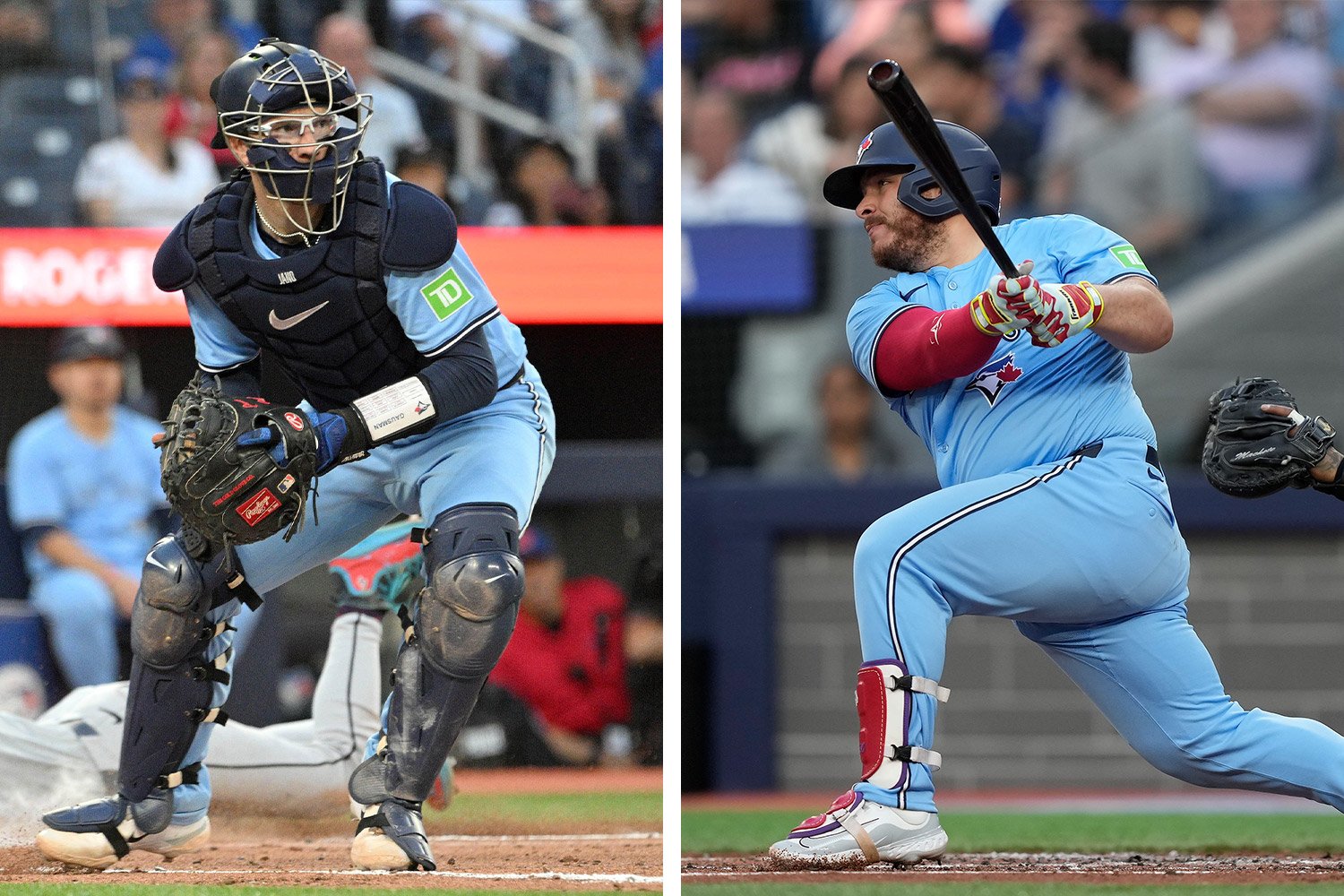 Still, context does matter. The Cubs, ideally, are a team on the upswing. No matter how you feel about the current major league roster, they have what FanGraphs rates as the best farm system in baseball. In a perfect world, the future is brighter, perhaps as soon as next season. Maybe that’s wishful thinking. Maybe it’s reality. This all got me thinking: Is there anyone out there that the Cubs could trade for, which might help them this season but also for next year or years beyond? Miguel Amaya and Yan Gomes have combined to be worth -1.4 Fangraphs WAR so far this year, and there aren’t many internal options for improvement, depending on your opinion of Moises Ballesteros and how close to the majors he really is. Let’s look at two guys who could fortify this year’s team, but also for future seasons, at the Cubs’ biggest position of need. Danny Jansen Let’s address the obvious up front: Jansen is a free agent at the end of this season. Acquiring him won’t necessarily be a move for future seasons unless you fully plan on paying him this offseason. All that said, I absolutely believe that Jansen will be available, and with the current state of the Cubs’ depth chart at catcher, they have to show interest. Jansen, who turned 29 earlier this season, has been one of the better catchers in baseball since the 2021 season. Much of that value comes from the offensive side of the ball, where he elevates the ball a lot. He has had over a 50 percent fly-ball rate in the past three seasons, while the major league average has come in at about 37 percent: this, plus his low strikeout rate, results in many long balls. While he isn’t exactly Yadier Molina behind the plate, Jansen isn’t a slouch, either. According to Baseball Savant, he has been a little below average in throwing runners out over the past four seasons, and he is about average as a pitch framer. He really excels in blocking pitches, as Baseball Savant estimates he has saved seven runs since 2021, which is tied for fifth in all of baseball. I know most probably won’t jump at the proposition of trading for a catcher who will soon be 30 in what is starting to feel like a lost season, especially when you have to pay him this offseason to keep him. But the fact is that the catching situation has to be rectified, and Jansen is the closest thing to an easy solution. Getting him in-house this season could build that relationship while getting a feel for how he fits with the team and the pitching staff. Alejandro Kirk Another Toronto Blue Jay! Except this time, he’s younger, at 25 years old, and won’t be a free agent until after the 2026 season. Naturally, this also means he would cost significantly more to acquire. Your own personal taste for acquiring Kirk probably depends on what you think of him as a hitter. He was an above-average hitter in both 2021 and 2022 because he hit the ball hard, though a high ground ball rate kept his slug down. Last year, his hard-hit rate dropped, which resulted in a decrease in production, and now, this year, he is suddenly hitting the ball in the air much more than usual. wRC+ Hard Hit % FB% GB% 2022 129 45.0% 30.8% 50.0% 2023 96 38.3% 30.1% 50.2% 2024 70 38.4% 36.4% 41.4% You’d think an elevated fly ball rate would be a good thing, particularly at the expense of his ground ball rate. Unfortunately, per FanGraphs, he has a -14 wRC+ on fly balls, thanks to a lousy 8.3 percent pull rate. Still, Kirk’s ability to put the ball in play (11.2 percent strikeout rate for his career) coupled with a good eye at the plate (10.6 percent walk rate) suggest that the backbone of a solid hitter is here. Regardless, this all ignores where his real value lies, which is his defense. According to Baseball Savant, he has been worth four catcher framing runs above average, which is top five in all of baseball. He has also caught 29 percent of would-be base stealers, which would certainly be a major upgrade from Miguel Amaya’s three percent caught stealing rate. Assuming the Blue Jay looks to sell, I’d have to believe both of these guys would be available. Given the state of the rest of their roster, they’d likely look for major league-ready players or something close to it. What would you all be willing to give up?
 -
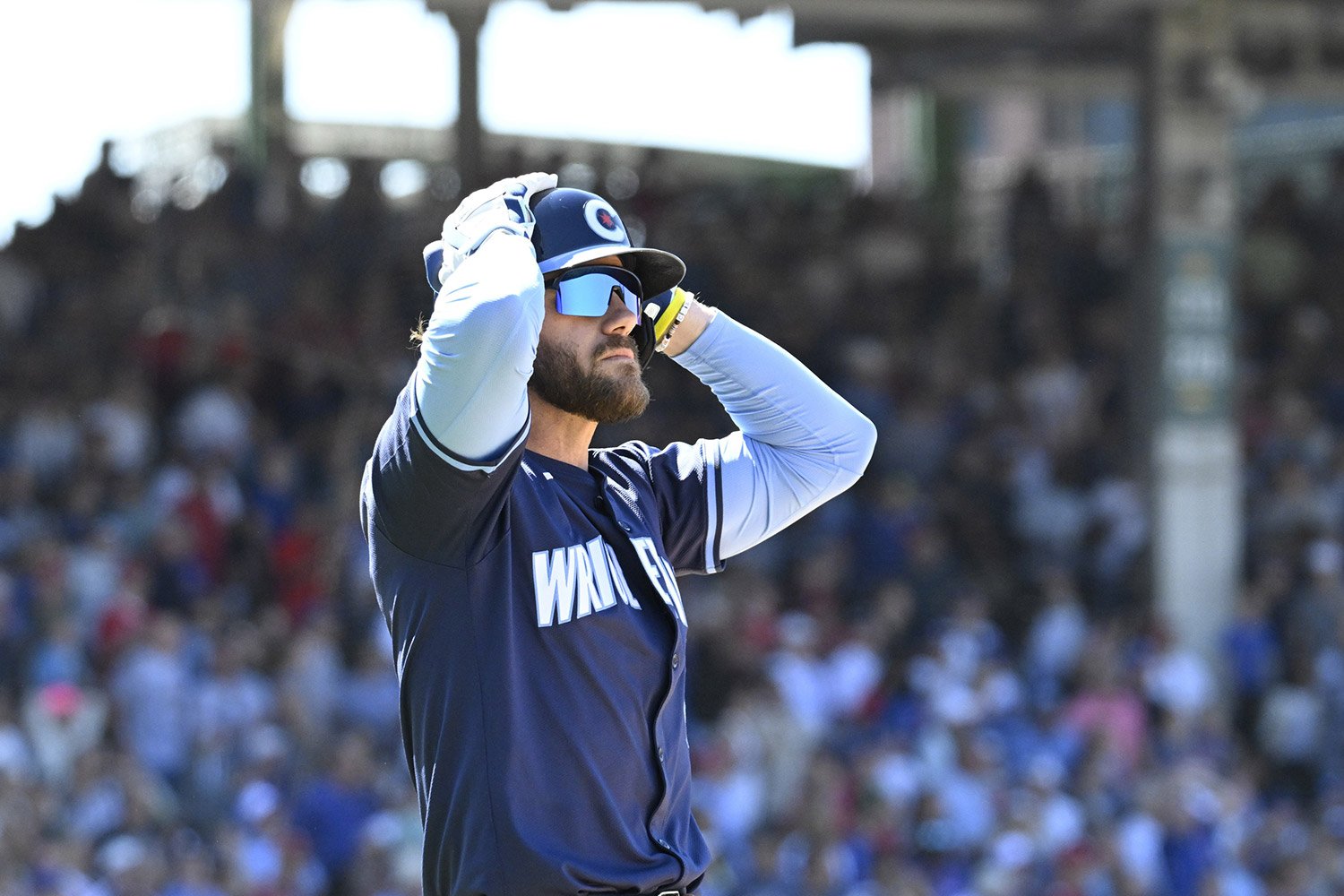 The Cubs haven’t been blowing anybody out, but they haven’t exactly been getting blown out, either. Every game seems winnable, only for us all to watch the bullpen blow something like a 2-1 lead late or for the offense to continually fail to come up with any kind of big hit on the rare occasion that they get runners on base to begin with. Literally, as I typed that paragraph, Seiya Suzuki and Ian Happ led off the bottom of the second inning against the Cardinals with singles, only for the next three hitters to go strikeout, fly out, strikeout. That’s just the way it’s been going lately for the Cubs. However, this is mostly the same group of guys that put together an above-average offense for the Cubs just last season. What gives? Well, according to FanGraphs, there is one obvious thing: the Cubs are 29th in baseball in line drive rate. The only team below them, the Miami Marlins, are 28th in baseball in total runs scored. I could point to that, declare that is the issue, and move on, but there’s more than one way to skin a cat when it comes to hitting in baseball. After all, the team that is 28th in line drive rate, the Kansas City Royals, is fifth in baseball in runs scored. So clearly, it isn’t much of an issue for them. Before I get much further, let me explain something about batted balls. As evidenced by the Royals, not hitting line drives isn’t, by itself, a bad thing. You probably already know this, but just in case, typically, line drives get guys on base from a batted ball standpoint. Fly balls result in home runs the most often but are also converted to outs most often. Ground balls are somewhere in between, but generally, the worst of the three unless you’re prime Billy Hamilton. You hope they find a hole, but typically, it’ll just be a single or, if you’re lucky, a double or triple down the line. Here are the league-wide stats on each type of batted ball so far this season: Batting Average Slugging Percentage Homeruns Groundballs .242 .266 0 Fly balls .207 .608 2,115 Line Drives .695 .890 46 Back to the Cubs, who, as a reminder, are 28th in line drive rate. You’d think this would lead to a low batting average, and it has. They are 27th in baseball in batting average. The good news? They’re fifth in fly ball rate! So, while they might not be hitting for a high average, they surely hit a ton of home runs. Right? Wrong! As you most likely know since you’re reading a Cubs article on a Cubs website, the Cubs are 20th in MLB in home runs, and with 67 of them, they are a far cry from the Yankees and Orioles at the top of the list, who both have over 100. Even worse, since that extremely arbitrary date of April 27, the Cubs are 24th in baseball in home runs. They are 25th in baseball in wRC+ on fly balls this season. Hitting so many balls in the air has not been a profitable venture for the Cubs. Let me explain another thing about batted balls that you likely already know: not all fly balls are created equal! Ideally, you want to hit a fly ball to the pull side for two main reasons. The most obvious is that the fence is shorter over there than it is to center field. Second, because the bat has more time to pick up speed when you pull the ball, balls hit to the pull side are usually hit harder than those hit to the opposite field. Here are the baseball-wide stats on fly ball location so far this season: Batting Average Slugging Percentage Home runs Pulled .402 1.371 1,413 Center .167 .442 466 Opposite .119 .274 236 So, back to the Cubs this year. They’re hitting a lot of fly balls. But they aren’t hitting a lot of home runs, nor are they particularly productive on those fly balls. If you’ve been following to this point, you’ve probably come to the correct conclusion: a whole lot of those fly balls that the Cubs are hitting aren’t pulled or even to center field. 42.3 percent of them, to be precise, are hit to the opposite field, which is third in baseball and just 0.4 percentage points behind the Washington Nationals, who lead the way. If you’re curious who the biggest offenders of this are, I am glad you asked. I’ll limit this table to the active roster, minus David Bote, since he has such a small sample size: Player Fly Ball Rate Fly Ball wRC+ Pulled % Center % Oppo % Mike Tauchman 44.2% 52 8.3% 36.1% 55.6% Miguel Amaya 32.4% 38 25.7% 22.9% 51.4% Nico Hoerner 32.5% -21 14.1% 39.1% 46.9% Yan Gomes 45.3% 45 8.3% 45.8% 45.8% Patrick Wisdom 70.2% 124 30.3% 24.2% 45.5% Ian Happ 39.2% 103 24.2% 30.6% 45.2% Michael Busch 43.7% 154 23.1% 34.6% 42.3% Dansby Swanson 29.9% 202 20.5% 38.6% 40.9% Cody Bellinger 51.6% 85 40.6% 24.0% 35.4% Christopher Morel 39.6% 174 33.3% 33.3% 33.3% Seiya Suzuki 49.6% 153 21.0% 48.6% 32.3% Pete Crow-Armstrong 36.5% -21 43.5% 26.1% 30.4% Mike Tauchman and the catching situation stick out like a sore thumb here, and while most people wouldn’t say Tauchman has been the issue with the offense, he does have just a 76 wRC+ since the start of May. It’s also not a coincidence that the consensus three best hitters on the team, Bellinger, Morel, and Suzuki, are towards the bottom of this list. One other thing that isn’t captured on that chart but stuck out to me is that from the start of the season to April 26, Michael Busch was hitting just 29.9 percent of his fly balls to the opposite field. Since then? Fifty-six percent of them have been hit to the opposite field, and just 12 percent have been hit to the pull side, which might help explain some of his struggles. To recap, the Cubs aren’t hitting for average because they aren’t hitting many line drives. Thus, they have struggled to string hits together and score runs. They’re instead hitting a lot of fly balls, but they aren’t getting the home run output that a team typically would since they are not hitting them to the pull side. It’s been a lot of lazy fly balls to the opposite field. All of this results in a team struggling to score runs and nothing but a miserable watching experience for us fans.
 -
I won’t mince words with you: the Chicago Cubs are really hard to watch right now. With a starting rotation that has the seventh-best ERA in the major leagues, they are in every game. But with a bullpen ERA that is 25th and an offense that is 28th in runs scored since April 27, every game is an unwatchable, torturous slog. The Cubs haven’t been blowing anybody out, but they haven’t exactly been getting blown out, either. Every game seems winnable, only for us all to watch the bullpen blow something like a 2-1 lead late or for the offense to continually fail to come up with any kind of big hit on the rare occasion that they get runners on base to begin with. Literally, as I typed that paragraph, Seiya Suzuki and Ian Happ led off the bottom of the second inning against the Cardinals with singles, only for the next three hitters to go strikeout, fly out, strikeout. That’s just the way it’s been going lately for the Cubs. However, this is mostly the same group of guys that put together an above-average offense for the Cubs just last season. What gives? Well, according to FanGraphs, there is one obvious thing: the Cubs are 29th in baseball in line drive rate. The only team below them, the Miami Marlins, are 28th in baseball in total runs scored. I could point to that, declare that is the issue, and move on, but there’s more than one way to skin a cat when it comes to hitting in baseball. After all, the team that is 28th in line drive rate, the Kansas City Royals, is fifth in baseball in runs scored. So clearly, it isn’t much of an issue for them. Before I get much further, let me explain something about batted balls. As evidenced by the Royals, not hitting line drives isn’t, by itself, a bad thing. You probably already know this, but just in case, typically, line drives get guys on base from a batted ball standpoint. Fly balls result in home runs the most often but are also converted to outs most often. Ground balls are somewhere in between, but generally, the worst of the three unless you’re prime Billy Hamilton. You hope they find a hole, but typically, it’ll just be a single or, if you’re lucky, a double or triple down the line. Here are the league-wide stats on each type of batted ball so far this season: Batting Average Slugging Percentage Homeruns Groundballs .242 .266 0 Fly balls .207 .608 2,115 Line Drives .695 .890 46 Back to the Cubs, who, as a reminder, are 28th in line drive rate. You’d think this would lead to a low batting average, and it has. They are 27th in baseball in batting average. The good news? They’re fifth in fly ball rate! So, while they might not be hitting for a high average, they surely hit a ton of home runs. Right? Wrong! As you most likely know since you’re reading a Cubs article on a Cubs website, the Cubs are 20th in MLB in home runs, and with 67 of them, they are a far cry from the Yankees and Orioles at the top of the list, who both have over 100. Even worse, since that extremely arbitrary date of April 27, the Cubs are 24th in baseball in home runs. They are 25th in baseball in wRC+ on fly balls this season. Hitting so many balls in the air has not been a profitable venture for the Cubs. Let me explain another thing about batted balls that you likely already know: not all fly balls are created equal! Ideally, you want to hit a fly ball to the pull side for two main reasons. The most obvious is that the fence is shorter over there than it is to center field. Second, because the bat has more time to pick up speed when you pull the ball, balls hit to the pull side are usually hit harder than those hit to the opposite field. Here are the baseball-wide stats on fly ball location so far this season: Batting Average Slugging Percentage Home runs Pulled .402 1.371 1,413 Center .167 .442 466 Opposite .119 .274 236 So, back to the Cubs this year. They’re hitting a lot of fly balls. But they aren’t hitting a lot of home runs, nor are they particularly productive on those fly balls. If you’ve been following to this point, you’ve probably come to the correct conclusion: a whole lot of those fly balls that the Cubs are hitting aren’t pulled or even to center field. 42.3 percent of them, to be precise, are hit to the opposite field, which is third in baseball and just 0.4 percentage points behind the Washington Nationals, who lead the way. If you’re curious who the biggest offenders of this are, I am glad you asked. I’ll limit this table to the active roster, minus David Bote, since he has such a small sample size: Player Fly Ball Rate Fly Ball wRC+ Pulled % Center % Oppo % Mike Tauchman 44.2% 52 8.3% 36.1% 55.6% Miguel Amaya 32.4% 38 25.7% 22.9% 51.4% Nico Hoerner 32.5% -21 14.1% 39.1% 46.9% Yan Gomes 45.3% 45 8.3% 45.8% 45.8% Patrick Wisdom 70.2% 124 30.3% 24.2% 45.5% Ian Happ 39.2% 103 24.2% 30.6% 45.2% Michael Busch 43.7% 154 23.1% 34.6% 42.3% Dansby Swanson 29.9% 202 20.5% 38.6% 40.9% Cody Bellinger 51.6% 85 40.6% 24.0% 35.4% Christopher Morel 39.6% 174 33.3% 33.3% 33.3% Seiya Suzuki 49.6% 153 21.0% 48.6% 32.3% Pete Crow-Armstrong 36.5% -21 43.5% 26.1% 30.4% Mike Tauchman and the catching situation stick out like a sore thumb here, and while most people wouldn’t say Tauchman has been the issue with the offense, he does have just a 76 wRC+ since the start of May. It’s also not a coincidence that the consensus three best hitters on the team, Bellinger, Morel, and Suzuki, are towards the bottom of this list. One other thing that isn’t captured on that chart but stuck out to me is that from the start of the season to April 26, Michael Busch was hitting just 29.9 percent of his fly balls to the opposite field. Since then? Fifty-six percent of them have been hit to the opposite field, and just 12 percent have been hit to the pull side, which might help explain some of his struggles. To recap, the Cubs aren’t hitting for average because they aren’t hitting many line drives. Thus, they have struggled to string hits together and score runs. They’re instead hitting a lot of fly balls, but they aren’t getting the home run output that a team typically would since they are not hitting them to the pull side. It’s been a lot of lazy fly balls to the opposite field. All of this results in a team struggling to score runs and nothing but a miserable watching experience for us fans. View full article
- 2 replies
-
- 1
-

-
- michael busch
- mike tauchman
- (and 2 more)
-
 Believe it or not, we are significantly closer to the 2024 MLB Trade Deadline than we are removed from Opening Day. While the Cubs aren’t quite where they’d like to be, they find themselves just a half-game out of the last playoff spot going into Wednesday’s action, thanks to a whole lot of mediocrity in the National League. I sure don’t have a lot of faith in this current iteration of the Cubs to make a run in the postseason, but as we all saw with the Diamondbacks last year, if you can get into the playoffs, you can certainly get hot and make a run. With the trade deadline just seven short weeks away, the Colorado Rockies are one of a few teams who will definitely be sellers, though they have surprised us all before. What players do they have that might interest the Cubs? The most obvious, hand-in-glove fit, would be Elías Díaz. The Rockies’ catcher was named an All-Star last season for the first time in his career, and was even named the Most Valuable Player in the Midsummer Classic, though I would caution anyone against getting too excited about that. Díaz made it into the All-Star Game purely because every team has to have one representative, which is still a silly rule. He finished the 2023 season with a negative WAR of -0.2, and an 81 wRC+, according to FanGraphs. As a reminder, 100 is considered an average wRC+. To give Díaz credit, he is off to a much better start this season, with a 109 wRC+ and 1.4 WAR. However, those numbers seem to me to be heavily supported by some good fortune. His Barrel% and hard-hit rate are both down from last year, and his .350 BABIP would be a career-best mark. Thus, his .344 wOBA far outpaces his .285 xwOBA, where about .320 is considered average, suggesting that he is still a below-average hitter. He has thrown out 11 of 37 potential base stealers, though, which is something the Cubs have come under fire for recently. Miguel Amaya has thrown out just five of 43 base stealers. Yan Gomez has thrown out three of 21, and as our own Matthew Trueblood has recently pointed out, it’s even worse than that: five of those instances of caught stealing were pickoffs, and not actual throws by the catcher. According to Baseball Savant, Díaz has been worth two runs above average when it comes to throwing runners out. Gomes has been worth zero, and Amaya has been worth -4. With all of that said, I am not actually sure Díaz would be a great fit. Like Gomes, he is a free agent this offseason, so it doesn’t solve for anything in the medium term. I am not convinced he’ll be sufficiently better than either Gomes or Amaya to justify either designating Gomes for assignment and eating the money that the Cubs owe him, getting playing time over Amaya (who probably does have a future with the Cubs and needs to continue getting reps for development), or rostering three catchers. But I could probably be convinced. Elsewhere on the Rockies’ roster is Ryan McMahon, who is an interesting fit if the Cubs decide that they have seen enough of Christopher Morel at third base. The Rockies’ third baseman has hit 20 or more home runs in every full big-league season since he debuted, though park-neutral stats rate him as roughly an average hitter. He would certainly be an upgrade defensively, as he is fourth among third basemen in Outs Above Average and Defensive Runs Saved since 2019, per FanGraphs. The pop from the left side of the plate would be nice, as would a third baseman whose presence wouldn’t elevate my heart rate every time the ball was hit that way. With all of that said, he is probably a utility guy on a good team. He does have some experience playing both second and first base. I feel like the Cubs have the type of roster where they could utilize him well as a late-inning defensive replacement or platoon player. He is much closer to average as a hitter against righties (95 wRC+) than against lefties (78 wRC+). Alas, he is paid like a starter, and would be a longer-term investment: he is under contract for three more seasons (and $44 million) after this one. Unfortunately, the Rockies are pretty thin in the bullpen, but they do have a couple of pieces that could be interesting to the Cubs. Victor Vodnik has pitched to a 2.68 ERA so far this year, mostly thanks to a high ground-ball rate and low home run rate. Nick Mears strikes out 26.7 percent of hitters he faces, but also walks 12.2 percent of them, so you’d have to take the good with the bad. They also have Kris Bryant, who is an interesting buy-low/change-of-scenery guy who is on a bad contract and could probably be had for very little. Kidding! I am kidding. I promise.
 -
The Chicago Cubs need help. They need multiple pieces of help. As they teeter on the verge of becoming sellers themselves, though, there remain a couple of surefire sellers who have pieces that might help the North Siders turn things around. One such team is one of the most familiar cellar-dwellers in baseball. Image courtesy of © Kirby Lee-USA TODAY Sports Believe it or not, we are significantly closer to the 2024 MLB Trade Deadline than we are removed from Opening Day. While the Cubs aren’t quite where they’d like to be, they find themselves just a half-game out of the last playoff spot going into Wednesday’s action, thanks to a whole lot of mediocrity in the National League. I sure don’t have a lot of faith in this current iteration of the Cubs to make a run in the postseason, but as we all saw with the Diamondbacks last year, if you can get into the playoffs, you can certainly get hot and make a run. With the trade deadline just seven short weeks away, the Colorado Rockies are one of a few teams who will definitely be sellers, though they have surprised us all before. What players do they have that might interest the Cubs? The most obvious, hand-in-glove fit, would be Elías Díaz. The Rockies’ catcher was named an All-Star last season for the first time in his career, and was even named the Most Valuable Player in the Midsummer Classic, though I would caution anyone against getting too excited about that. Díaz made it into the All-Star Game purely because every team has to have one representative, which is still a silly rule. He finished the 2023 season with a negative WAR of -0.2, and an 81 wRC+, according to FanGraphs. As a reminder, 100 is considered an average wRC+. To give Díaz credit, he is off to a much better start this season, with a 109 wRC+ and 1.4 WAR. However, those numbers seem to me to be heavily supported by some good fortune. His Barrel% and hard-hit rate are both down from last year, and his .350 BABIP would be a career-best mark. Thus, his .344 wOBA far outpaces his .285 xwOBA, where about .320 is considered average, suggesting that he is still a below-average hitter. He has thrown out 11 of 37 potential base stealers, though, which is something the Cubs have come under fire for recently. Miguel Amaya has thrown out just five of 43 base stealers. Yan Gomez has thrown out three of 21, and as our own Matthew Trueblood has recently pointed out, it’s even worse than that: five of those instances of caught stealing were pickoffs, and not actual throws by the catcher. According to Baseball Savant, Díaz has been worth two runs above average when it comes to throwing runners out. Gomes has been worth zero, and Amaya has been worth -4. With all of that said, I am not actually sure Díaz would be a great fit. Like Gomes, he is a free agent this offseason, so it doesn’t solve for anything in the medium term. I am not convinced he’ll be sufficiently better than either Gomes or Amaya to justify either designating Gomes for assignment and eating the money that the Cubs owe him, getting playing time over Amaya (who probably does have a future with the Cubs and needs to continue getting reps for development), or rostering three catchers. But I could probably be convinced. Elsewhere on the Rockies’ roster is Ryan McMahon, who is an interesting fit if the Cubs decide that they have seen enough of Christopher Morel at third base. The Rockies’ third baseman has hit 20 or more home runs in every full big-league season since he debuted, though park-neutral stats rate him as roughly an average hitter. He would certainly be an upgrade defensively, as he is fourth among third basemen in Outs Above Average and Defensive Runs Saved since 2019, per FanGraphs. The pop from the left side of the plate would be nice, as would a third baseman whose presence wouldn’t elevate my heart rate every time the ball was hit that way. With all of that said, he is probably a utility guy on a good team. He does have some experience playing both second and first base. I feel like the Cubs have the type of roster where they could utilize him well as a late-inning defensive replacement or platoon player. He is much closer to average as a hitter against righties (95 wRC+) than against lefties (78 wRC+). Alas, he is paid like a starter, and would be a longer-term investment: he is under contract for three more seasons (and $44 million) after this one. Unfortunately, the Rockies are pretty thin in the bullpen, but they do have a couple of pieces that could be interesting to the Cubs. Victor Vodnik has pitched to a 2.68 ERA so far this year, mostly thanks to a high ground-ball rate and low home run rate. Nick Mears strikes out 26.7 percent of hitters he faces, but also walks 12.2 percent of them, so you’d have to take the good with the bad. They also have Kris Bryant, who is an interesting buy-low/change-of-scenery guy who is on a bad contract and could probably be had for very little. Kidding! I am kidding. I promise. View full article
-
I think this is really interesting. Personally, I think that everyone wants every starting pitcher to be an “ace,” when in reality, there are maybe 10-15 of those in MLB at any given time. The fact is that a starting pitcher that can consistently post 3ish WAR seasons, a guy one would traditionally call a mid-rotation starter, is still one of the 30 or so best pitchers in baseball. Case in point - Marcus Stroman is 31st in fWAR for pitchers over the past five years.
- 3 replies
-
- 1
-
-
- jordan wicks
- javier assad
- (and 4 more)
-
Cubs Minor League Relief Pitcher of the Month: May 2024
matto1233 posted an article in Minor Leagues
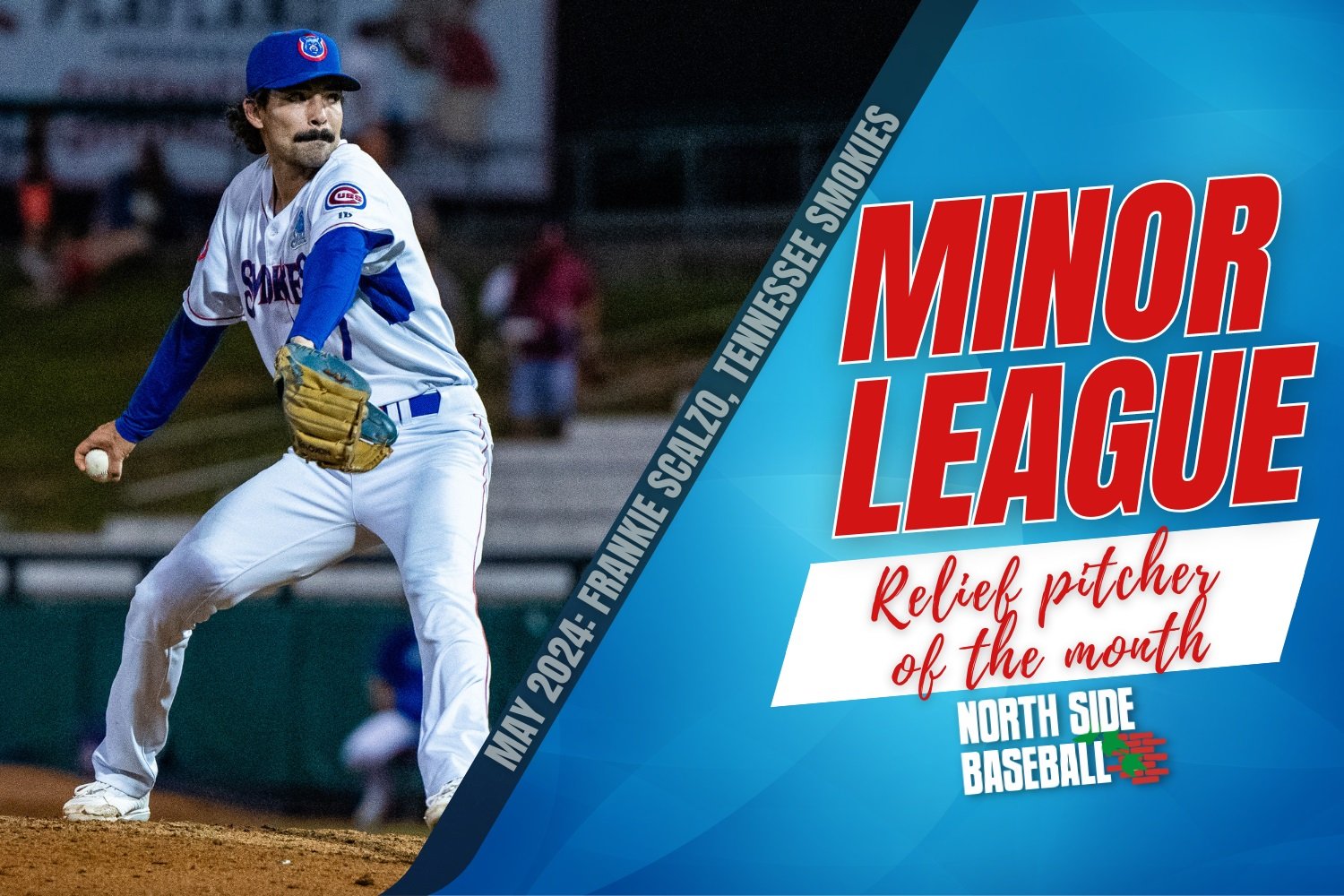 We believe that it is appropriate to let people know when relief pitchers do their job well. Seemingly, relief pitchers only get talked about when they blow a save or have a rough outing. Honorable Mention RHP Ethan Roberts - ACL Cubs/Tennessee Smokies/Iowa Cubs - 7 G, 0.00 ERA, 0.91 WHIP, 7 2/3 IP, 3 H, 4 BB, 9 K Only having 7 2/3 IP is keeping Roberts in the honorable mention section, but it certainly is worth mentioning: Ethan Roberts is back. In case you have forgotten, after making the Cubs’ Opening Day roster in 2022, Roberts got into nine games for the team that year before succumbing to Tommy John Surgery. After one scoreless appearance for the ACL Cubs, and then one scoreless appearance for the Tennessee Smokies, Roberts is now at AAA with the Iowa Cubs, where he has struck out nine batters in six innings pitched. Top Three Relief Pitchers for May 2024 3. RHP Nico Zeglin - Myrtle Beach Pelicans - 6 G, 2.84 ERA, 0.947 WHIP, 12 ⅔ IP, 10 H, 2 BB, 18 K Zeglin pitched the past two seasons in the Independent Leagues before the Cubs signed him to a minor league contract in April. So far, the early returns have been fantastic. At age 24, Zeglin is old for Class A ball, but we’ll have to see how long he sticks around. His strikeout to walk ratio is 12th among 196 Carolina League pitchers with at least 10 innings pitched, and his 63.9% ground ball ratio is fourth. Striking a lot of guys out, walking few, and keeping the ball on the ground is a great recipe for success in a reliever. 2. RHP Fraimin Marte - ACL Cubs - 6 G, 0.96 ERA, 0.75 WHIP, 9 1/3 IP, 5 H, 2 BB, 12 K Marte is a 22-year-old in Rookie ball for the Cubs, but I try not to exclude people based on prospect status, and his performance is certainly worthy of an inclusion here, in my opinion. Anyone that is striking out a good number of guys while walking so few out of the bullpen is going to get attention. We’ll see if it sticks for Marte, or what his future is with the Cubs, but he absolutely deserves his flowers for the numbers that he posted this past May. 1. RHP Frankie Scalzo, Jr. - Tennessee Smokies - 9 G, 0.00 ERA, 0.48 WHIP, 10 1/3 IP, 4 H, 1 BB, 6 K Congrats to Scalzo for winning both the April and the May award for Minor League Relief Pitcher of the Month. The guy just refuses to allow a run, as he is now up to 20 ⅔ IP on the season without an earned run allowed. Scalzo was a 14th round pick out of Grand Canyon in 2021, and made his way to Class AA after pitching to a 2.31 ERA in Class High A last season. The thing that absolutely fascinates me about Scalzo is that he has had this rung of success without striking a ton of guys out. His 18.4 percent strikeout rate is one of the lowest in the Southern League, but he allowed just a .114 batting average against him in May and he walked only one opposing hitter. Independent of his pitching, his mustache is an 80 on the 20-80 scouting scale.

