


matto1233
-
Posts
313 -
Joined
-
Last visited
Content Type
Profiles
Joomla Posts 1
Chicago Cubs Videos
Chicago Cubs Free Agent & Trade Rumors, Notes, & Tidbits
2026 Chicago Cubs Top Prospects Ranking
News
2023 Chicago Cubs Draft Picks
Guides & Resources
2024 Chicago Cubs Draft Picks
The Chicago Cubs Players Project
2025 Chicago Cubs Draft Pick Tracker
2026 Chicago Cubs Draft Pick Tracker
Blogs
Events
Forums
Store
Gallery
Everything posted by matto1233
-
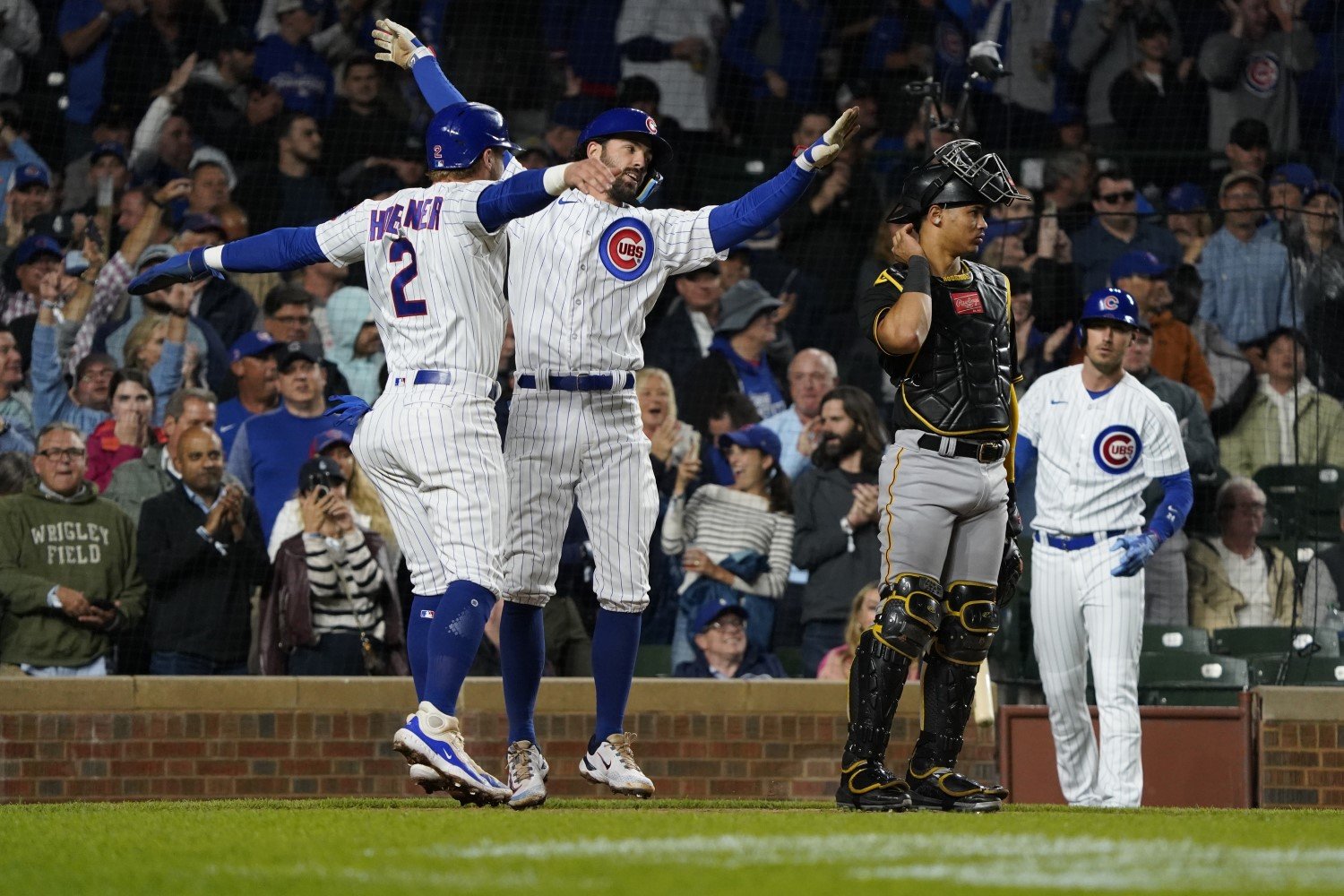 A couple of weeks ago, ZiPS projections officially went live for your 2024 Chicago Cubs. For the uninitiated, ZiPS projections are a way of projecting a player’s future performance by utilizing recent adjusted stats, to compare them to a past player of a similar age and position, created by Dan Szymborski. For more information, you can read the 2024 introduction here. Note that ZiPS is simply a baseline for a player. Plenty of players will significantly outperform a projection, and plenty of players will dramatically underperform them. What ZiPS provides is the most realistic performance for a player. You can also check out the Cubs projections here. Let’s take a look at what these projections might be telling us for the upcoming season, and for the rest of the offseason, for the North Siders. Dansby Swanson and Nico Hoerner are legitimate cornerstones in the middle of the infield. ZiPS projects the Cubs’ middle infield to combine for 8 WAR, with Swanson contributing 4.1 of that and Hoerner chipping in 3.9. A lot of that value comes from the defensive side of the ball, which is typically much more difficult to project. Hoerner is projected for just a 98 OPS+, and Swanson comes in at 104, but regardless, the Cubs should feel comfortable at these two positions for the coming season, and (given the contract status of each player) several more after that. Are we 100% certain the Cubs need to re-sign Cody Bellinger? Ok, I am not really going to argue that the Cubs shouldn’t be re-signing Cody Bellinger. I am all for them spending money on improving the team, and Bellinger would do that, hands down. What I am saying, though, is that Bellinger is projected for 2.7 WAR, a 108 OPS+, and just 19 home runs in 544 plate appearances. Pete Crow-Armstrong is projected for an 88 OPS+, but because of the defensive value, comes in at 1.7 WAR in 531 plate appearances. With the recent acquisition of Michael Busch to play some first base, I think it’s safe to say that Crow-Armstrong won’t be getting 531 plate appearances if Bellinger comes back. If the Cubs only have a certain amount of money left to spend, Matt Chapman figures to cost less money; wouldn’t block one of the Cubs top prospects from getting playing time; and has not produced less than Bellinger’s projected 2.7 WAR since his rookie season in 2017. ZiPS sees the free agent third-baseman producing 3.6 WAR, 25 home runs and a 117 OPS+. Look, Chapman is not without his warts. He is older than Bellinger and had a rough close to his 2023 season. But his batted-ball data was better than Bellinger’s, and ZiPS seems to support that he might be a better investment. Just a little food for thought. Busch deserves an everyday job, and should contribute right away. ZiPs is plenty bullish on the Cubs’ newest top-100 prospect. The projection system thinks Busch will be the fifth-most valuable position player on the team, with 2.5 WAR and a 111 OPS+. I think that if the Cubs could lock that type of production in now from a rookie, they absolutely would. ZiPS loves the Shota Imanaga signing. On the other side of the runs ledger, the newest member of the Cubs' rotation is projected to strike out 25.6 percent of opposing batters, pitch to the tune of a 117 ERA+, and add 2.9 WAR over 137 innings pitched. Friendly reminder: one WAR on the open market is typically valued at roughly $9-10 million. Getting almost three WAR out of someone who will earn $10 million this year would be an absolute steal for the Cubs. Justin Steele is projected to take a step back - but that’s ok. The Cubs’ ace has a projection of 2.9 WAR and a 114 ERA+, one season after contributing 4.9 WAR and a 146 ERA+. The innings are definitely a factor here, as ZiPS is projecting Steele’s WAR in 153 ⅓ innings, rather than the 173 ⅓ that he threw in 2023. As Szymborski notes, however, ZiPS typically deflates projections for pitchers. For reference, 2023 American League Cy Young Award winner Gerrit Cole is projected for 3.8 WAR, down from 5.2 last year. Also, both Steele and Imanaga are right outside of the top 10 in WAR for National League pitchers, where Steele finished fourth last season. The Cubs absolutely have a solid 1-2 punch in their rotation. Some reliability in the bullpen would be nice. Outside of Albert Alzolay, Julian Merryweather, and Luke Little(!), no other relief pitcher projects to have an average or better ERA+. And while Little’s projection has me excited, forgive me if I don’t want to rely on a rookie with 6 ⅔ major-league innings to his name. The group projects for 2.9 WAR as a whole, which is fourth in the NL Central, ahead of only the Cincinnati Reds. Alzolay alone projects to provide almost half of that WAR, at 1.2. Fortifying the bullpen with some reliable arms before the season starts is a must. What has you most excited from these projections? What has you most concerned? Does it color your opinions on what the team should do next? Discuss in the comments, while we wait to see what the team does to augment their projected win total.
 -
With spring training coming into sight on the horizon of this winter, it's projection season, baby. Let's look into one system's take on the Cubs. Image courtesy of © David Banks-USA TODAY Sports A couple of weeks ago, ZiPS projections officially went live for your 2024 Chicago Cubs. For the uninitiated, ZiPS projections are a way of projecting a player’s future performance by utilizing recent adjusted stats, to compare them to a past player of a similar age and position, created by Dan Szymborski. For more information, you can read the 2024 introduction here. Note that ZiPS is simply a baseline for a player. Plenty of players will significantly outperform a projection, and plenty of players will dramatically underperform them. What ZiPS provides is the most realistic performance for a player. You can also check out the Cubs projections here. Let’s take a look at what these projections might be telling us for the upcoming season, and for the rest of the offseason, for the North Siders. Dansby Swanson and Nico Hoerner are legitimate cornerstones in the middle of the infield. ZiPS projects the Cubs’ middle infield to combine for 8 WAR, with Swanson contributing 4.1 of that and Hoerner chipping in 3.9. A lot of that value comes from the defensive side of the ball, which is typically much more difficult to project. Hoerner is projected for just a 98 OPS+, and Swanson comes in at 104, but regardless, the Cubs should feel comfortable at these two positions for the coming season, and (given the contract status of each player) several more after that. Are we 100% certain the Cubs need to re-sign Cody Bellinger? Ok, I am not really going to argue that the Cubs shouldn’t be re-signing Cody Bellinger. I am all for them spending money on improving the team, and Bellinger would do that, hands down. What I am saying, though, is that Bellinger is projected for 2.7 WAR, a 108 OPS+, and just 19 home runs in 544 plate appearances. Pete Crow-Armstrong is projected for an 88 OPS+, but because of the defensive value, comes in at 1.7 WAR in 531 plate appearances. With the recent acquisition of Michael Busch to play some first base, I think it’s safe to say that Crow-Armstrong won’t be getting 531 plate appearances if Bellinger comes back. If the Cubs only have a certain amount of money left to spend, Matt Chapman figures to cost less money; wouldn’t block one of the Cubs top prospects from getting playing time; and has not produced less than Bellinger’s projected 2.7 WAR since his rookie season in 2017. ZiPS sees the free agent third-baseman producing 3.6 WAR, 25 home runs and a 117 OPS+. Look, Chapman is not without his warts. He is older than Bellinger and had a rough close to his 2023 season. But his batted-ball data was better than Bellinger’s, and ZiPS seems to support that he might be a better investment. Just a little food for thought. Busch deserves an everyday job, and should contribute right away. ZiPs is plenty bullish on the Cubs’ newest top-100 prospect. The projection system thinks Busch will be the fifth-most valuable position player on the team, with 2.5 WAR and a 111 OPS+. I think that if the Cubs could lock that type of production in now from a rookie, they absolutely would. ZiPS loves the Shota Imanaga signing. On the other side of the runs ledger, the newest member of the Cubs' rotation is projected to strike out 25.6 percent of opposing batters, pitch to the tune of a 117 ERA+, and add 2.9 WAR over 137 innings pitched. Friendly reminder: one WAR on the open market is typically valued at roughly $9-10 million. Getting almost three WAR out of someone who will earn $10 million this year would be an absolute steal for the Cubs. Justin Steele is projected to take a step back - but that’s ok. The Cubs’ ace has a projection of 2.9 WAR and a 114 ERA+, one season after contributing 4.9 WAR and a 146 ERA+. The innings are definitely a factor here, as ZiPS is projecting Steele’s WAR in 153 ⅓ innings, rather than the 173 ⅓ that he threw in 2023. As Szymborski notes, however, ZiPS typically deflates projections for pitchers. For reference, 2023 American League Cy Young Award winner Gerrit Cole is projected for 3.8 WAR, down from 5.2 last year. Also, both Steele and Imanaga are right outside of the top 10 in WAR for National League pitchers, where Steele finished fourth last season. The Cubs absolutely have a solid 1-2 punch in their rotation. Some reliability in the bullpen would be nice. Outside of Albert Alzolay, Julian Merryweather, and Luke Little(!), no other relief pitcher projects to have an average or better ERA+. And while Little’s projection has me excited, forgive me if I don’t want to rely on a rookie with 6 ⅔ major-league innings to his name. The group projects for 2.9 WAR as a whole, which is fourth in the NL Central, ahead of only the Cincinnati Reds. Alzolay alone projects to provide almost half of that WAR, at 1.2. Fortifying the bullpen with some reliable arms before the season starts is a must. What has you most excited from these projections? What has you most concerned? Does it color your opinions on what the team should do next? Discuss in the comments, while we wait to see what the team does to augment their projected win total. View full article
- 7 replies
-
- 2
-

-
- dansby swanson
- nico hoerner
- (and 5 more)
-
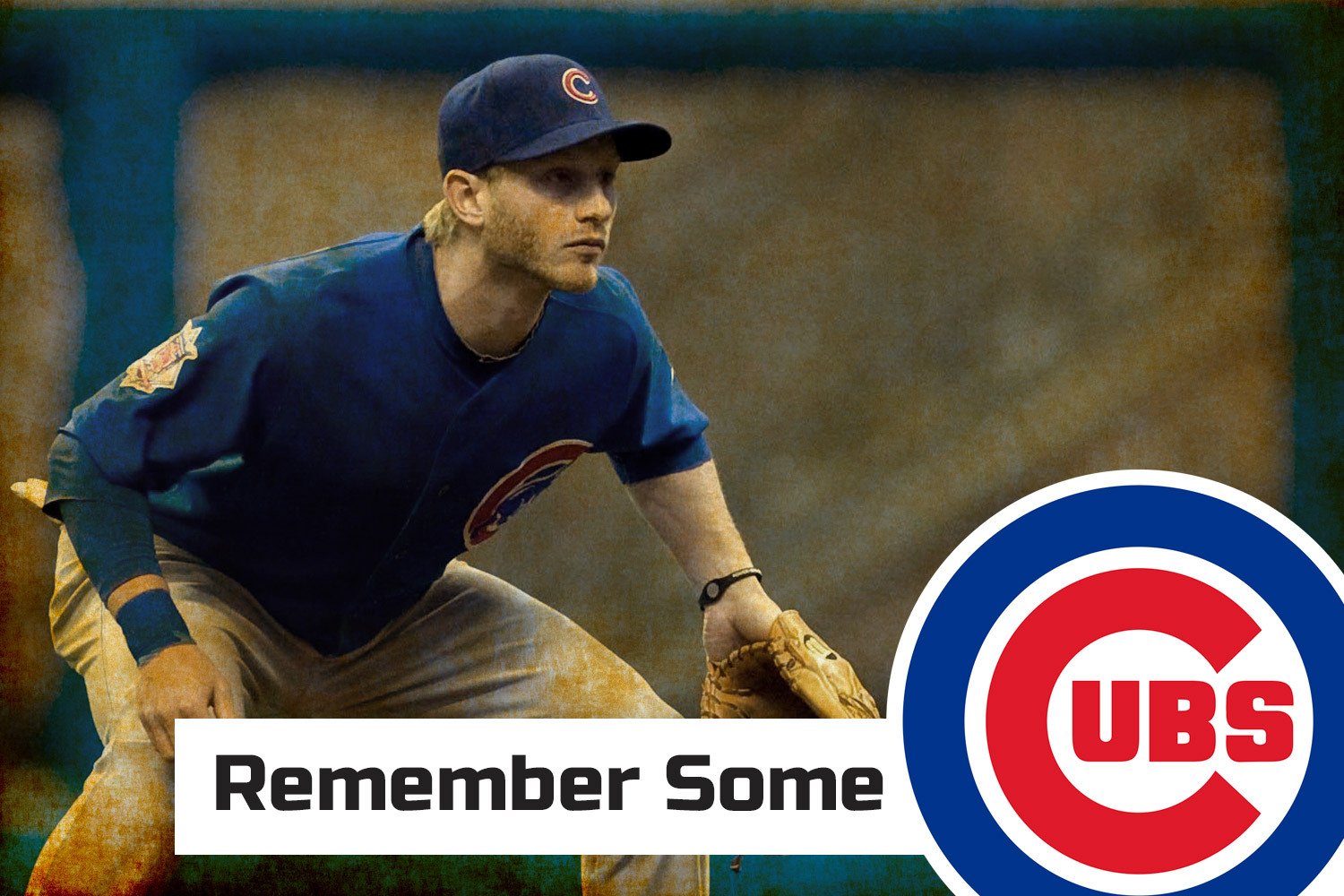 The 2008 Chicago Cubs demonstrated just how fun a baseball season can be when everything goes right. Geovany Soto broke out as the team’s starting catcher and won the National League Rookie of the Year Award. Aramis Ramirez, Alfonso Soriano and Derrek Lee provided steady production and star power toward the top of the lineup. Ryan Dempster’s move to the starting rotation worked out, as he made the All-Star team and finished sixth in the National League Cy Young Award voting. Jim Edmonds was picked up off of the scrap heap and produced a team-high 135 OPS+ (minimum 100 plate appearances). Mark DeRosa hit 21 home runs and solidified himself as a fan favorite. Despite all of those players, it was the 5’9” utility infielder who led the team’s position players in WAR at Baseball Reference. That’s right: in just 284 plate appearances, Mike Fontenot tied with Soto for the most WAR on the 97-win 2008 Chicago Cubs, at 3.3. Michael Eugene Fontenot was born on June 9, 1980, in Louisiana. After hitting .556 with 13 home runs during his senior season at Salmen High School, he was drafted in the 21st round of the 1999 MLB Draft, but he opted to attend Louisiana State University instead of beginning his professional career. This ended up being a wise decision for the small infielder. As a freshman, Fontenot was the everyday second baseman. He hit .353 and broke the LSU freshman record for home runs, with 17. For the curious: this has since been broken by Dylan Crews, who hit 18 home runs during his freshman season in 2021. Crews, notably, was picked second overall by the Washington Nationals in the 2023 MLB Draft. After winning the College World Series with LSU in 2000, and a stellar sophomore season, Fontenot was taken 19th overall in 2001 by the Baltimore Orioles. He would go on to play three minor-league seasons for the Orioles before being traded to the Cubs in the offseason between 2004 and 2005. In hindsight, Jim Hendry deserves a ton of credit for getting something substantial (Fontenot and Jerry Hairston Jr.) in exchange for Sammy Sosa, in a February trade wherein he seemed to have no leverage whatsoever. Fontenot would go on to make his major-league debut in 2005, though it wasn’t until 2007 when he established himself on the roster. Following an injury to Ramírez, Fontenot was made the team’s starting second-baseman, reuniting him with former LSU teammate Ryan Theriot, the starting shortstop. In June of that year, Fontenot hit .397, though his production for the season cratered thereafter, as he hit just .214 the rest of the way. His flash-in-the-pan performance in June was enough for the Cubs to keep him around as a utility player for the 2008 season, and that paid off handsomely. As a frequent pinch-hitter and the second baseman when DeRosa slid out to right field, Fontenot hit .305/.395/.514, which earned him the moniker Little Babe Ruth, as coined by Ron Santo. As we already said, he led the team in WAR at Baseball Reference. At Fangraphs, his 3.1 WAR was fourth among the Cubs position-player group, behind Ramírez, DeRosa, and Soriano. Given that Fontenot had about half the plate appearances of those guys, this is still impressive. His 134 wRC+ bested everybody else who amassed at least 100 plate appearances, other than Edmonds. No matter how many times I have verified that stat, I still have a hard time believing it was true. Mike Fontenot and Jim Edmonds were, statistically, the Cubs' two best hitters in 2008. On a club loaded with stars who spent half a decade or more making eight-figure salaries for the Cubs, two guys who I think people often forget were even on that team were indispensable. (Side note: shoutout to Micah Hoffpauir, who had 80 plate appearances and produced a 143 wRC+ that year. He won’t get his own column, so consider this note a remembrance of him.) Given his production in a part-time role in 2008, Fontenot was awarded the everyday second base job for the Cubs in 2009, but he was never able to match the production he had that magical summer. Despite a decent start to the season, he would finish the year with a batting line of .236/.301/.377. Fontenot resumed his utility duties in 2010, until he was eventually traded to the Giants for Evan Crawford in August of that season. Of course, Fontenot won a World Series later that year with the Giants, and he would go on to play small parts of two more seasons: one with the Giants in 2011, and one with the Phillies in 2012. After playing the 2013 and 2014 seasons in the minor leagues with the Tampa Bay Rays, Fontenot finished playing professional baseball. Mike Fontenot, despite his size, is not an underdog story. He was a first-round draft pick, after all. He does, in my opinion, represent what many, myself included, love about baseball. The fact that a 5’9” utility infielder can have one magical season, and be one of the best hitters on a 97-win team filled with All-Stars, shows that no matter how many numbers are crunched, and how much analysis happens, sometimes, in baseball, randomness occurs. Call it luck, or call it a short-lived prime, but the 2008 Cubs--one of the best Cubs teams of this century--would not have been who they were without Mike Fontenot. What are your favorite memories of Fontenot?
 -
In our running series on not-quite random Cubs of yesteryear, it's time to tackle one half of the late 2000s Cubs' Cajun Connection up the middle. Image courtesy of © Matt Marton-USA TODAY Sports The 2008 Chicago Cubs demonstrated just how fun a baseball season can be when everything goes right. Geovany Soto broke out as the team’s starting catcher and won the National League Rookie of the Year Award. Aramis Ramirez, Alfonso Soriano and Derrek Lee provided steady production and star power toward the top of the lineup. Ryan Dempster’s move to the starting rotation worked out, as he made the All-Star team and finished sixth in the National League Cy Young Award voting. Jim Edmonds was picked up off of the scrap heap and produced a team-high 135 OPS+ (minimum 100 plate appearances). Mark DeRosa hit 21 home runs and solidified himself as a fan favorite. Despite all of those players, it was the 5’9” utility infielder who led the team’s position players in WAR at Baseball Reference. That’s right: in just 284 plate appearances, Mike Fontenot tied with Soto for the most WAR on the 97-win 2008 Chicago Cubs, at 3.3. Michael Eugene Fontenot was born on June 9, 1980, in Louisiana. After hitting .556 with 13 home runs during his senior season at Salmen High School, he was drafted in the 21st round of the 1999 MLB Draft, but he opted to attend Louisiana State University instead of beginning his professional career. This ended up being a wise decision for the small infielder. As a freshman, Fontenot was the everyday second baseman. He hit .353 and broke the LSU freshman record for home runs, with 17. For the curious: this has since been broken by Dylan Crews, who hit 18 home runs during his freshman season in 2021. Crews, notably, was picked second overall by the Washington Nationals in the 2023 MLB Draft. After winning the College World Series with LSU in 2000, and a stellar sophomore season, Fontenot was taken 19th overall in 2001 by the Baltimore Orioles. He would go on to play three minor-league seasons for the Orioles before being traded to the Cubs in the offseason between 2004 and 2005. In hindsight, Jim Hendry deserves a ton of credit for getting something substantial (Fontenot and Jerry Hairston Jr.) in exchange for Sammy Sosa, in a February trade wherein he seemed to have no leverage whatsoever. Fontenot would go on to make his major-league debut in 2005, though it wasn’t until 2007 when he established himself on the roster. Following an injury to Ramírez, Fontenot was made the team’s starting second-baseman, reuniting him with former LSU teammate Ryan Theriot, the starting shortstop. In June of that year, Fontenot hit .397, though his production for the season cratered thereafter, as he hit just .214 the rest of the way. His flash-in-the-pan performance in June was enough for the Cubs to keep him around as a utility player for the 2008 season, and that paid off handsomely. As a frequent pinch-hitter and the second baseman when DeRosa slid out to right field, Fontenot hit .305/.395/.514, which earned him the moniker Little Babe Ruth, as coined by Ron Santo. As we already said, he led the team in WAR at Baseball Reference. At Fangraphs, his 3.1 WAR was fourth among the Cubs position-player group, behind Ramírez, DeRosa, and Soriano. Given that Fontenot had about half the plate appearances of those guys, this is still impressive. His 134 wRC+ bested everybody else who amassed at least 100 plate appearances, other than Edmonds. No matter how many times I have verified that stat, I still have a hard time believing it was true. Mike Fontenot and Jim Edmonds were, statistically, the Cubs' two best hitters in 2008. On a club loaded with stars who spent half a decade or more making eight-figure salaries for the Cubs, two guys who I think people often forget were even on that team were indispensable. (Side note: shoutout to Micah Hoffpauir, who had 80 plate appearances and produced a 143 wRC+ that year. He won’t get his own column, so consider this note a remembrance of him.) Given his production in a part-time role in 2008, Fontenot was awarded the everyday second base job for the Cubs in 2009, but he was never able to match the production he had that magical summer. Despite a decent start to the season, he would finish the year with a batting line of .236/.301/.377. Fontenot resumed his utility duties in 2010, until he was eventually traded to the Giants for Evan Crawford in August of that season. Of course, Fontenot won a World Series later that year with the Giants, and he would go on to play small parts of two more seasons: one with the Giants in 2011, and one with the Phillies in 2012. After playing the 2013 and 2014 seasons in the minor leagues with the Tampa Bay Rays, Fontenot finished playing professional baseball. Mike Fontenot, despite his size, is not an underdog story. He was a first-round draft pick, after all. He does, in my opinion, represent what many, myself included, love about baseball. The fact that a 5’9” utility infielder can have one magical season, and be one of the best hitters on a 97-win team filled with All-Stars, shows that no matter how many numbers are crunched, and how much analysis happens, sometimes, in baseball, randomness occurs. Call it luck, or call it a short-lived prime, but the 2008 Cubs--one of the best Cubs teams of this century--would not have been who they were without Mike Fontenot. What are your favorite memories of Fontenot? View full article
-
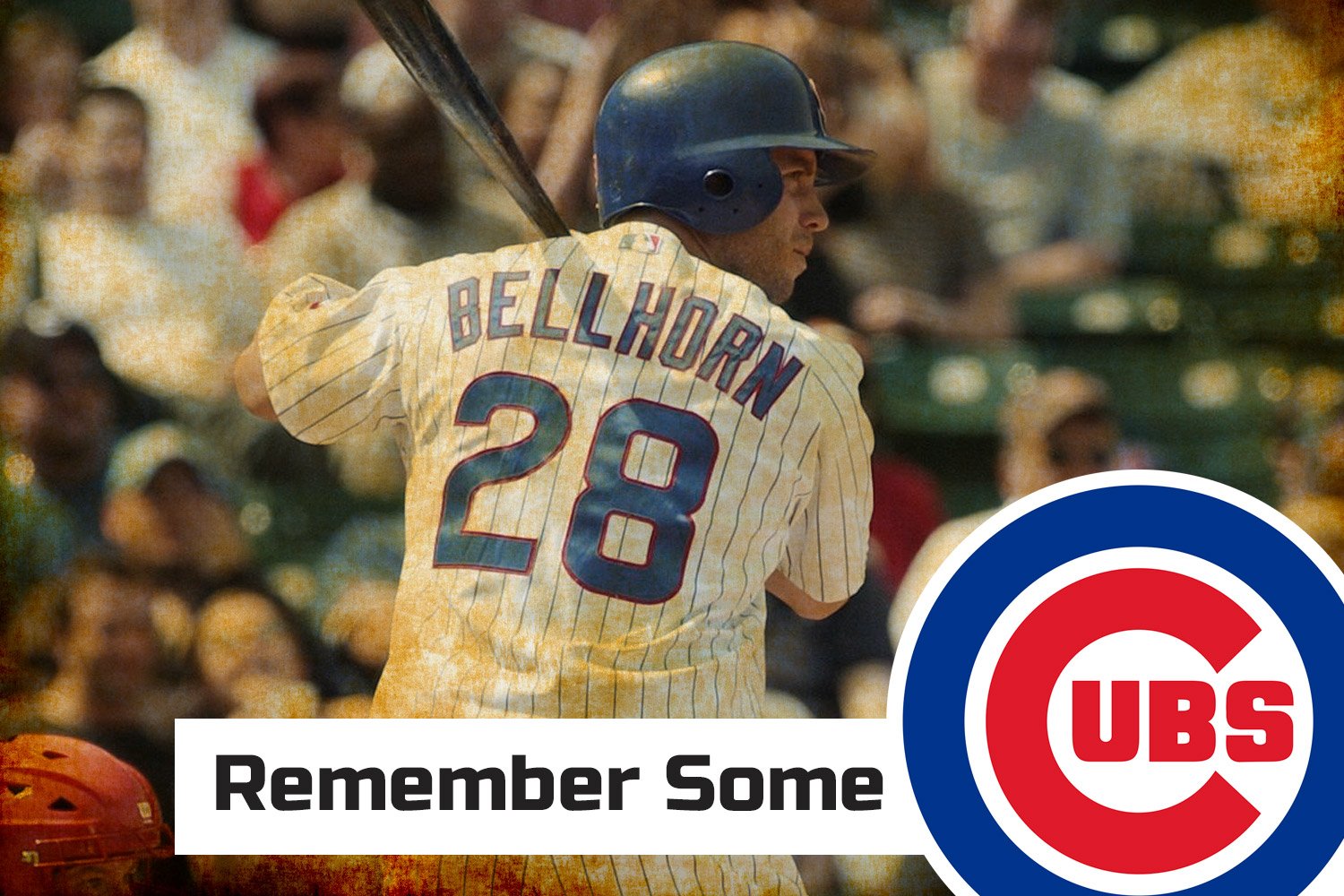 The date was August 29, 2002, and the Cubs were in Milwaukee for what was, essentially, a battle for last place in the National League Central. Mark Bellhorn stepped to the plate in the top of the fourth inning, facing lefthander Andrew Lorraine. Bellhorn, hitting right-handed, hit a home run to deep left-center field, plating Alex Gonzalez and staking the Cubs to a lead. But the rally didn’t stop there. Lorraine was chased from the game just six hitters later, replaced by the right-handed Jose Cabrera. Thus, Bellhorn came back up to the plate, with two outs and two on, in the same inning. Being a switch-hitter, he took this plate appearance from the left side of the plate. Miraculously, Bellhorn did it again, hitting a home run to deep right field, giving the Cubs a nine-run lead and making baseball history at the same time. There have been many instances in baseball history in which a player has hit two home runs in the same inning. It has happened 60 times, to be precise. On this day, however, Bellhorn became just the second player ever to hit a home run from each side of the plate in the same inning, joining Carlos Baerga, who did so in 1993. Kendrys Morales has since done the same feat, and they are still the only three players to accomplish that feat. This is both the beauty of Mark Bellhorn, and the beauty of baseball: On any random day, in any random game between two teams that are a combined 61 games below .500, you can witness history, from a player that would only go on to hit 69 home runs for his entire career. It's a nice thing. Bellhorn was drafted out of Auburn University by the Oakland Athletics in the second round of the 1997 MLB Draft. Despite performing well in most of his minor-league action, he hit only .198/.296/.316 in sporadic playing time at the major-league level from 1997-2001. He was unceremoniously traded to the Cubs on November 2, 2001, for a young minor leaguer named Adam Morrissey, who would never appear in the major leagues. He started the 2002 season with the Cubs at the big-league level, and thanks to his ability to play multiple positions, he found himself filling in as a utility player for much of the early season. The versatile defender appeared in games at all infield positions, as well as two innings in left-field, for the Cubs that season. Bellhorn really seized his opportunity to become a full-time player, with home runs on back-to-back days on April 11 and 12, and never looked back. His .258/.374/.512 batting line was good for a 135 wRC+ on the season, a figure that was second on the Cubs behind Sammy Sosa and 31st in all of baseball, according to FanGraphs. Unfortunately for Cubs fans, Bellhorn failed to live up to his 2002 season the following year. His power cratered and he hit only .209/.341/.317 in 173 plate appearances, before being traded to the Rockies. He eventually ended up with the Boston Red Sox for the 2004 season, where he regained his old form and became a postseason legend, helping the hungry Red Sox end their 86 year World Series Championship drought with clutch home runs in both the ALCS and World Series. Afterward, following three very unsuccessful seasons for the Red Sox, Yankees, Padres, and Reds, Bellhorn returned to the minors for good, before eventually retiring in 2009. In some ways, Bellhorn was a bit before his time. From 2002 to 2004, his 27.4-percent strikeout rate was second-worst in baseball. On the flip side, though, his 14.7-percent walk rate was 15th, and when you factor in the home runs, his 45.3-percent three-true-outcome rate was fifth. If Bellhorn was around today, maybe he would have been appreciated just a little bit more. Even at the time, though, he was a cult favorite in the Windy City.
 -
It's the most wonderful time of the year: Remember Some Cubs season. Are you ready to walk down memory lane with the guy who (briefly) made Augie Galan relevant again? Image courtesy of North Side Baseball & Brock Beauchamp The date was August 29, 2002, and the Cubs were in Milwaukee for what was, essentially, a battle for last place in the National League Central. Mark Bellhorn stepped to the plate in the top of the fourth inning, facing lefthander Andrew Lorraine. Bellhorn, hitting right-handed, hit a home run to deep left-center field, plating Alex Gonzalez and staking the Cubs to a lead. But the rally didn’t stop there. Lorraine was chased from the game just six hitters later, replaced by the right-handed Jose Cabrera. Thus, Bellhorn came back up to the plate, with two outs and two on, in the same inning. Being a switch-hitter, he took this plate appearance from the left side of the plate. Miraculously, Bellhorn did it again, hitting a home run to deep right field, giving the Cubs a nine-run lead and making baseball history at the same time. There have been many instances in baseball history in which a player has hit two home runs in the same inning. It has happened 60 times, to be precise. On this day, however, Bellhorn became just the second player ever to hit a home run from each side of the plate in the same inning, joining Carlos Baerga, who did so in 1993. Kendrys Morales has since done the same feat, and they are still the only three players to accomplish that feat. This is both the beauty of Mark Bellhorn, and the beauty of baseball: On any random day, in any random game between two teams that are a combined 61 games below .500, you can witness history, from a player that would only go on to hit 69 home runs for his entire career. It's a nice thing. Bellhorn was drafted out of Auburn University by the Oakland Athletics in the second round of the 1997 MLB Draft. Despite performing well in most of his minor-league action, he hit only .198/.296/.316 in sporadic playing time at the major-league level from 1997-2001. He was unceremoniously traded to the Cubs on November 2, 2001, for a young minor leaguer named Adam Morrissey, who would never appear in the major leagues. He started the 2002 season with the Cubs at the big-league level, and thanks to his ability to play multiple positions, he found himself filling in as a utility player for much of the early season. The versatile defender appeared in games at all infield positions, as well as two innings in left-field, for the Cubs that season. Bellhorn really seized his opportunity to become a full-time player, with home runs on back-to-back days on April 11 and 12, and never looked back. His .258/.374/.512 batting line was good for a 135 wRC+ on the season, a figure that was second on the Cubs behind Sammy Sosa and 31st in all of baseball, according to FanGraphs. Unfortunately for Cubs fans, Bellhorn failed to live up to his 2002 season the following year. His power cratered and he hit only .209/.341/.317 in 173 plate appearances, before being traded to the Rockies. He eventually ended up with the Boston Red Sox for the 2004 season, where he regained his old form and became a postseason legend, helping the hungry Red Sox end their 86 year World Series Championship drought with clutch home runs in both the ALCS and World Series. Afterward, following three very unsuccessful seasons for the Red Sox, Yankees, Padres, and Reds, Bellhorn returned to the minors for good, before eventually retiring in 2009. In some ways, Bellhorn was a bit before his time. From 2002 to 2004, his 27.4-percent strikeout rate was second-worst in baseball. On the flip side, though, his 14.7-percent walk rate was 15th, and when you factor in the home runs, his 45.3-percent three-true-outcome rate was fifth. If Bellhorn was around today, maybe he would have been appreciated just a little bit more. Even at the time, though, he was a cult favorite in the Windy City. View full article
-
Look, we're all rooting for Pete Crow-Armstrong or Owen Caissie to be the best redheaded outfielder of the 21st century for the Cubs. Let's just get clear on the fact that they do have a standard to meet. With so much buzz around Shohei Ohtani and Yoshinobu Yamamoto this offseason, the continued globalization of baseball has been obvious. Ohtani and Yamamoto, who came to MLB via Japan’s professional baseball league, Nippon Professional Baseball (NPB), are joined in free agency by Shōta Imanaga, who is also hoping to become an MLB star. Most probably remember Matt Murton for his sensational MLB debut season in 2005, or for his fiery red hair. What many may not know, or have forgotten, is that after his MLB career fizzled in 2009, Murton made the jump to NPB and became a star in Japan. Matthew Henry Murton was born on October 3, 1981, and was drafted into Major League Baseball by the Boston Red Sox in the supplemental portion of the first round of the 2003 draft. After steady production in his first year or so in the minor leagues, the outfielder was traded to the Cubs in the 2004 deal that is, perhaps, more famously known as the Nomar Garciaparra trade. What is funny in retrospect about the Garciaparra trade is that Murton actually produced more than double the WAR that Garciaparra did for the Cubs, according to both FanGraphs and Baseball Reference. [Ed. note: I'm glad you can laugh about this. "Funny" is not the word this 1989 baby would use for that turn of events.] Murton got the call to the big leagues in July 2005, after hitting for a .343 average across the two highest levels of the minors to that point in the season. He continued hitting for a high average with the Cubs, as he went on to hit .441 that July, and he finished the year with a .321/.386/.531 slash line. His emergence earned him the everyday job in left field for the 2006 season. He continued his steady performance, to the tune of a .297/.365/.444 slash line, and his 2.8 WAR was actually good for third among the position players for what was an otherwise dismal Cubs team, according to FanGraphs. With the additions of Cliff Floyd and Alfonso Soriano heading into the 2007 season, Murton was relegated to part-time duty, and was sent down to Triple A after not producing much for the first few months.. However, upon his recall in July, he hit .310/.375/.543 to close out the year, and proved to be a valuable platoon partner with the left-handed hitting Floyd in right field for a division-winning team. In a crucial late-season game against the Brewers, he hit a huge home run. Alas, that was about it for Murton in a Cubs uniform. With Kosuke Fukudome heading to the Cubs the following season, and the completely random emergence of Reed Johnson and Jim Edmonds, Murton didn’t see the field much in 2008, and was a throw-in to a July trade with the Oakland Athletics for Rich Harden. Murton only got 31 plate appearances the rest of that year for the Athletics, and made his way to the Colorado Rockies for the 2009 season, where he again saw very little playing time. This led him to the Hanshin Tigers of NPB, where he became a legend. Not only was Murton one of the best players in NPB during his first season over there in 2010, he broke the single-season hits record, previously held by Ichiro. He finished his first season there with 214 hits and a .349 batting average. Shogo Akiyama has since broken this record, with 216 hits in the 2015 season. The outfielder enjoyed five more fruitful seasons in Japan after 2010, before attempting an unsuccessful MLB comeback with the Cubs in 2016, and then the Tigers in 2017. After that, Murton called it quits for good. Murton was a high-contact player in his time in MLB, as he struck out in just 14.1 percent of his plate appearances for his career. That can be a valuable player, but Murton didn’t add a ton of power, and for someone who was relegated to a corner outfield spot, power hitting is a must. Thus, he struggled to make a major impact in MLB. But through perseverance and a willingness to give it a go somewhere else, Murton was still able to make an impact on baseball somewhere else in the world. That is a great and noteworthy accomplishment. [Ed. note: As was that homer in 2007. I was at that game. It was nuts.] View full article
-
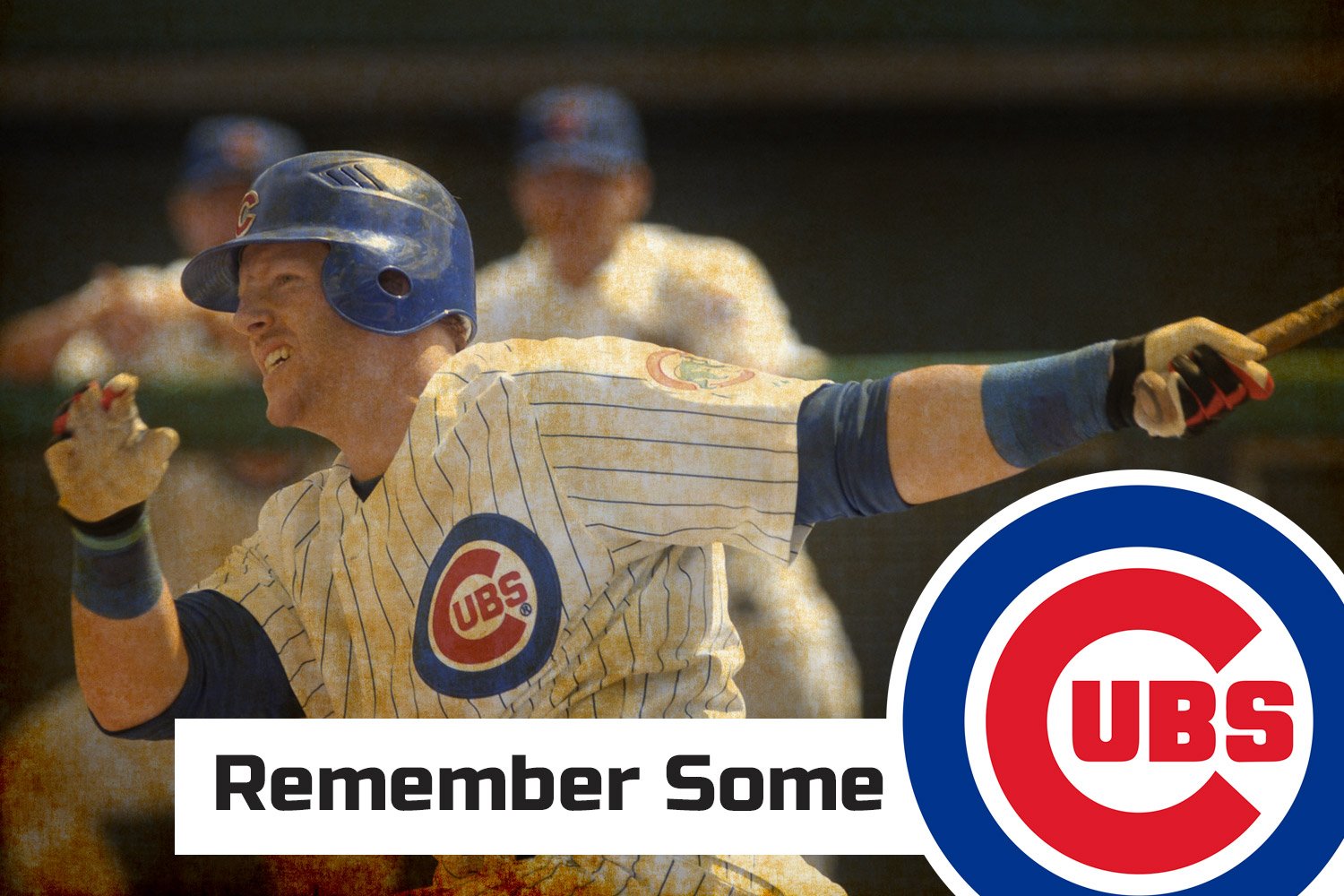 With so much buzz around Shohei Ohtani and Yoshinobu Yamamoto this offseason, the continued globalization of baseball has been obvious. Ohtani and Yamamoto, who came to MLB via Japan’s professional baseball league, Nippon Professional Baseball (NPB), are joined in free agency by Shōta Imanaga, who is also hoping to become an MLB star. Most probably remember Matt Murton for his sensational MLB debut season in 2005, or for his fiery red hair. What many may not know, or have forgotten, is that after his MLB career fizzled in 2009, Murton made the jump to NPB and became a star in Japan. Matthew Henry Murton was born on October 3, 1981, and was drafted into Major League Baseball by the Boston Red Sox in the supplemental portion of the first round of the 2003 draft. After steady production in his first year or so in the minor leagues, the outfielder was traded to the Cubs in the 2004 deal that is, perhaps, more famously known as the Nomar Garciaparra trade. What is funny in retrospect about the Garciaparra trade is that Murton actually produced more than double the WAR that Garciaparra did for the Cubs, according to both FanGraphs and Baseball Reference. [Ed. note: I'm glad you can laugh about this. "Funny" is not the word this 1989 baby would use for that turn of events.] Murton got the call to the big leagues in July 2005, after hitting for a .343 average across the two highest levels of the minors to that point in the season. He continued hitting for a high average with the Cubs, as he went on to hit .441 that July, and he finished the year with a .321/.386/.531 slash line. His emergence earned him the everyday job in left field for the 2006 season. He continued his steady performance, to the tune of a .297/.365/.444 slash line, and his 2.8 WAR was actually good for third among the position players for what was an otherwise dismal Cubs team, according to FanGraphs. With the additions of Cliff Floyd and Alfonso Soriano heading into the 2007 season, Murton was relegated to part-time duty, and was sent down to Triple A after not producing much for the first few months.. However, upon his recall in July, he hit .310/.375/.543 to close out the year, and proved to be a valuable platoon partner with the left-handed hitting Floyd in right field for a division-winning team. In a crucial late-season game against the Brewers, he hit a huge home run. Alas, that was about it for Murton in a Cubs uniform. With Kosuke Fukudome heading to the Cubs the following season, and the completely random emergence of Reed Johnson and Jim Edmonds, Murton didn’t see the field much in 2008, and was a throw-in to a July trade with the Oakland Athletics for Rich Harden. Murton only got 31 plate appearances the rest of that year for the Athletics, and made his way to the Colorado Rockies for the 2009 season, where he again saw very little playing time. This led him to the Hanshin Tigers of NPB, where he became a legend. Not only was Murton one of the best players in NPB during his first season over there in 2010, he broke the single-season hits record, previously held by Ichiro. He finished his first season there with 214 hits and a .349 batting average. Shogo Akiyama has since broken this record, with 216 hits in the 2015 season. The outfielder enjoyed five more fruitful seasons in Japan after 2010, before attempting an unsuccessful MLB comeback with the Cubs in 2016, and then the Tigers in 2017. After that, Murton called it quits for good. Murton was a high-contact player in his time in MLB, as he struck out in just 14.1 percent of his plate appearances for his career. That can be a valuable player, but Murton didn’t add a ton of power, and for someone who was relegated to a corner outfield spot, power hitting is a must. Thus, he struggled to make a major impact in MLB. But through perseverance and a willingness to give it a go somewhere else, Murton was still able to make an impact on baseball somewhere else in the world. That is a great and noteworthy accomplishment. [Ed. note: As was that homer in 2007. I was at that game. It was nuts.]
 -
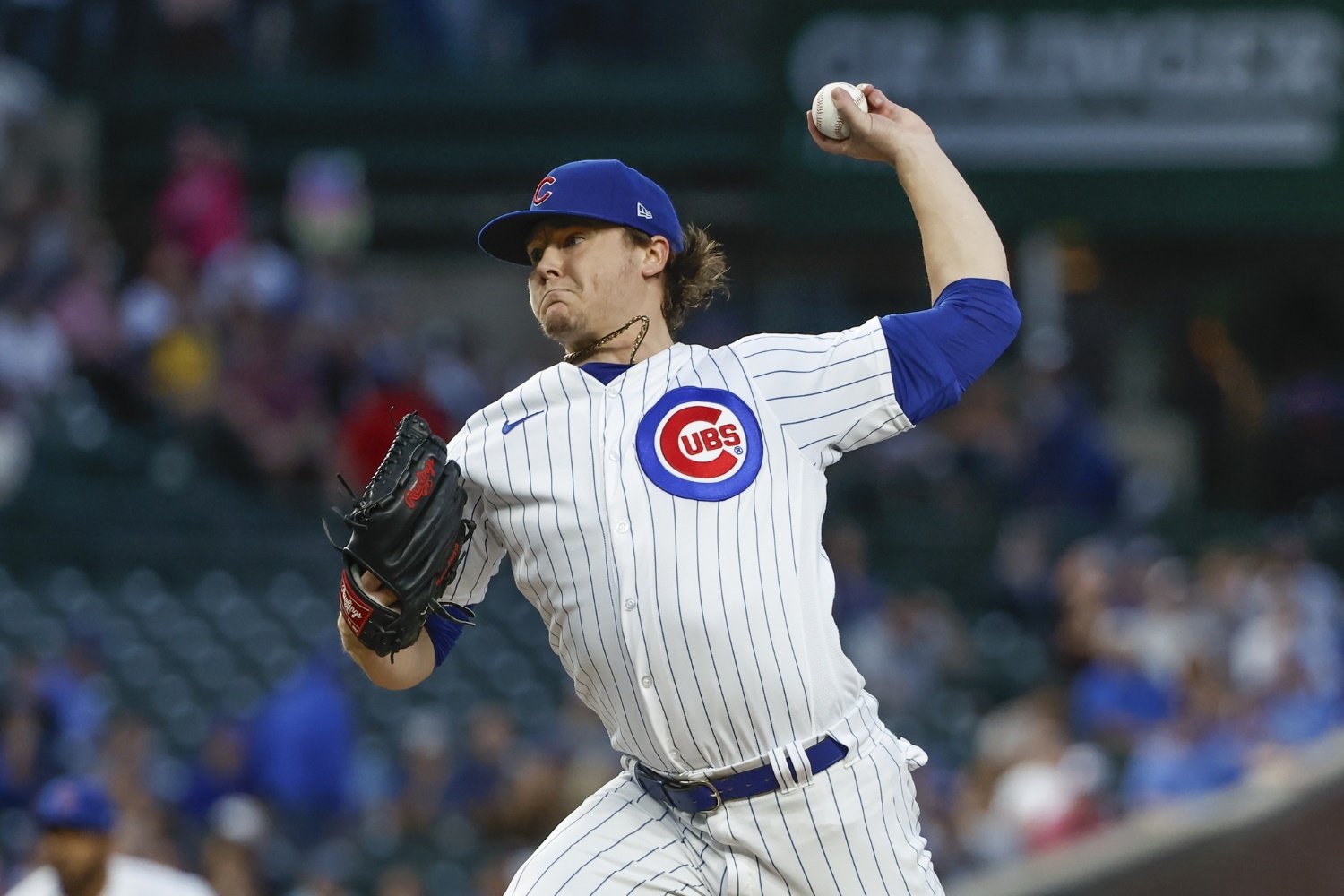 Despite an impressive close to his 2022 season, you’d be hard-pressed to find anyone who straight-facedly predicted that Justin Steele would receive Cy Young Award votes in 2023. Sure, he showed that he could have big-league success, but his two-pitch arsenal and lack of elite stuff left many skeptical that his 0.98 ERA in the second half would carry over into the next season. Yet, here we are. Steele cut his walk rate in half, while holding steady in almost every other important statistic en route to finishing fifth in the voting for the National League Cy Young Award. Does this make him a bona fide ace, or did we just witness the best season of the left-hander’s career? Let’s start by taking a look at the numbers behind what was, essentially, a tale of two halves for the Mississippian. Split IP HR/9 K% BB% AVG WHIP BABIP FIP xFIP First Half 91.1 0.39 22.01% 5.16% 0.230 1.06 0.286 2.84 3.86 Second Half 82.0 1.10 27.30% 4.89% 0.272 1.29 0.353 3.22 2.72 Stats Courtesy of FanGraphs Results-wise, this looks like two completely different pitchers. One doesn’t strike a ton of guys out, but manages contact well, giving up just 0.39 HR/9. The .230 batting average against is supported by the good, but not completely unsustainable, .286 BABIP. The second-half pitcher strikes out a lot more opponents, but doesn’t seem to manage contact quite as well. As a reminder, Steele is a truly unique pitcher. According to pitch-tracking data at FanGraphs, Steele was the only qualified pitcher in all of baseball last year to throw only two pitches more than five percent of the time. Some came close: Spencer Strider and Patrick Corbin are mostly fastball and slider pitchers, like Steele, though they at least mix in a changeup to opposite-handed hitters. With Steele, whether you are a righty or a lefty, you know you’re getting a fastball or a slider. Steele succeeds with that arsenal by pitching inside to righties with the fastball, which really behaves like a high-velocity cutter, and then burying the slider down and in to put hitters away. What makes that so tough to hit is that both of those pitches look so similar, yet behave so differently and come in at such different velocities that the hitter typically doesn’t know whether the pitch will break out of the strike zone or stay right in the meat of it, until it’s too late. All of this is to say that a lot of Steele’s success, and lack of hard contact, hinges on his ability to control the fringes of the strike zone. If he leaves a fastball out over the plate, where the hitter doesn’t have to wonder if it’ll break out of the zone, it’s going to get hit. And it goes without saying that a slider (from any pitcher) that is left out over the plate is going to get hit. With that in mind, let’s take a look at Steele’s pitch locations in the first half, compared to the second half: I certainly do not proclaim myself to be a genius; it also doesn’t take a genius to see what is going on there. In the second half, Steele left far too many pitches out over the middle of the plate, where hitters could swing much more freely, rather than nibbling in that fringe area just outside the strike zone. This helps explain the jump in batting average and homers from the first half to the second half, both of which are supported by his hard-hit rate going from 20.9 percent in the first half, to 35.5 percent in the second half. Come September, when every game was a must-win situation for the Cubs, Steele’s Zone rate, per FanGraphs, was 50.8%. That was his highest for any month this season, and would have led all of baseball for the full season. Coincidentally, this was also his worst month of the season by ERA, with a mark of 4.91. This also, in part, explains the jump in strikeouts. Pitching in the zone more often means more strikes, which means more strikeouts. It’s simple math, at that point. Unfortunately, for a pitcher like Steele, sometimes the margin between good and average in baseball is razor-thin, and since he doesn’t have great, raw, swing-and-miss type stuff, the jump in strikeouts, as a result of pitching in the strike zone more often, also coincided with much louder contact. Are his relative struggles late in the season a blip on the radar, or a sign of things to come? If I am being honest, I came away from this exercise more confident in Steele’s projection going forward than I was beforehand. Despite the jump in ERA, Steele’s 2.23 xFIP in September suggests that he may have been the victim of some bad batted-ball luck. His 3.86 xFIP in the first half suggests that he might have gotten lucky to achieve those results. Instead, I’ll pose another question: have we witnessed two different versions of Justin Steele that can both be effective? We’ve seen one who strikes fewer guys out, but limits hard contact and walks so that it becomes very difficult to string several runs together; and one who gives up harder contact, but limits walks and gets enough strikeouts to balance things out. From a raw results perspective, we may not see another season for Justin Steele like this past one. His 30 starts were an unprecedented workload for him, and it’s so difficult for someone without overpowering stuff to pitch to a 3.06 ERA. At the same time, though, Steele’s second-half issues seem very correctable to me. If he can get back to pounding the edges of the zone like he did in the first half, he can become that guy again. Alternatively, he can keep filling up the strike zone like he did in the second half, and we can hope that his luck evens out. Either way, I look forward to seeing what 2024 brings for the ace of the Chicago Cubs.
 -
The Cubs' ace southpaw had a fascinating, two-act 2023 season. Comparing and contrasting his first- and second-half selves can help us understand the whole and feel out the right expectations for 2024. Image courtesy of © Kamil Krzaczynski-USA TODAY Sports Despite an impressive close to his 2022 season, you’d be hard-pressed to find anyone who straight-facedly predicted that Justin Steele would receive Cy Young Award votes in 2023. Sure, he showed that he could have big-league success, but his two-pitch arsenal and lack of elite stuff left many skeptical that his 0.98 ERA in the second half would carry over into the next season. Yet, here we are. Steele cut his walk rate in half, while holding steady in almost every other important statistic en route to finishing fifth in the voting for the National League Cy Young Award. Does this make him a bona fide ace, or did we just witness the best season of the left-hander’s career? Let’s start by taking a look at the numbers behind what was, essentially, a tale of two halves for the Mississippian. Split IP HR/9 K% BB% AVG WHIP BABIP FIP xFIP First Half 91.1 0.39 22.01% 5.16% 0.230 1.06 0.286 2.84 3.86 Second Half 82.0 1.10 27.30% 4.89% 0.272 1.29 0.353 3.22 2.72 Stats Courtesy of FanGraphs Results-wise, this looks like two completely different pitchers. One doesn’t strike a ton of guys out, but manages contact well, giving up just 0.39 HR/9. The .230 batting average against is supported by the good, but not completely unsustainable, .286 BABIP. The second-half pitcher strikes out a lot more opponents, but doesn’t seem to manage contact quite as well. As a reminder, Steele is a truly unique pitcher. According to pitch-tracking data at FanGraphs, Steele was the only qualified pitcher in all of baseball last year to throw only two pitches more than five percent of the time. Some came close: Spencer Strider and Patrick Corbin are mostly fastball and slider pitchers, like Steele, though they at least mix in a changeup to opposite-handed hitters. With Steele, whether you are a righty or a lefty, you know you’re getting a fastball or a slider. Steele succeeds with that arsenal by pitching inside to righties with the fastball, which really behaves like a high-velocity cutter, and then burying the slider down and in to put hitters away. What makes that so tough to hit is that both of those pitches look so similar, yet behave so differently and come in at such different velocities that the hitter typically doesn’t know whether the pitch will break out of the strike zone or stay right in the meat of it, until it’s too late. All of this is to say that a lot of Steele’s success, and lack of hard contact, hinges on his ability to control the fringes of the strike zone. If he leaves a fastball out over the plate, where the hitter doesn’t have to wonder if it’ll break out of the zone, it’s going to get hit. And it goes without saying that a slider (from any pitcher) that is left out over the plate is going to get hit. With that in mind, let’s take a look at Steele’s pitch locations in the first half, compared to the second half: I certainly do not proclaim myself to be a genius; it also doesn’t take a genius to see what is going on there. In the second half, Steele left far too many pitches out over the middle of the plate, where hitters could swing much more freely, rather than nibbling in that fringe area just outside the strike zone. This helps explain the jump in batting average and homers from the first half to the second half, both of which are supported by his hard-hit rate going from 20.9 percent in the first half, to 35.5 percent in the second half. Come September, when every game was a must-win situation for the Cubs, Steele’s Zone rate, per FanGraphs, was 50.8%. That was his highest for any month this season, and would have led all of baseball for the full season. Coincidentally, this was also his worst month of the season by ERA, with a mark of 4.91. This also, in part, explains the jump in strikeouts. Pitching in the zone more often means more strikes, which means more strikeouts. It’s simple math, at that point. Unfortunately, for a pitcher like Steele, sometimes the margin between good and average in baseball is razor-thin, and since he doesn’t have great, raw, swing-and-miss type stuff, the jump in strikeouts, as a result of pitching in the strike zone more often, also coincided with much louder contact. Are his relative struggles late in the season a blip on the radar, or a sign of things to come? If I am being honest, I came away from this exercise more confident in Steele’s projection going forward than I was beforehand. Despite the jump in ERA, Steele’s 2.23 xFIP in September suggests that he may have been the victim of some bad batted-ball luck. His 3.86 xFIP in the first half suggests that he might have gotten lucky to achieve those results. Instead, I’ll pose another question: have we witnessed two different versions of Justin Steele that can both be effective? We’ve seen one who strikes fewer guys out, but limits hard contact and walks so that it becomes very difficult to string several runs together; and one who gives up harder contact, but limits walks and gets enough strikeouts to balance things out. From a raw results perspective, we may not see another season for Justin Steele like this past one. His 30 starts were an unprecedented workload for him, and it’s so difficult for someone without overpowering stuff to pitch to a 3.06 ERA. At the same time, though, Steele’s second-half issues seem very correctable to me. If he can get back to pounding the edges of the zone like he did in the first half, he can become that guy again. Alternatively, he can keep filling up the strike zone like he did in the second half, and we can hope that his luck evens out. Either way, I look forward to seeing what 2024 brings for the ace of the Chicago Cubs. View full article
-
In today's world of race horses, it's hard to remember the years when more starting pitchers were plow horses. Today, let's look back on one of the Cubs' steady steeds of yesteryear. Before I get too far into this article, there is one confession I’d like to make. I am 28 years old. My earliest memories as a Cubs fan are something like Sammy Sosa hitting home runs, the 2003 playoff run, and then everything thereafter. However, in an effort to expand this series beyond “Remember Some Cubs Exclusively From the 21st Century,” I have been scouring Baseball Reference for some interesting Cubs to write about from the many years of Cubs baseball that happened before I became a fan. Of course, I know all about the Ron Santo and Ernie Banks types. But we all remember those guys. I’d much prefer to examine players that people really might have forgotten about, or just don’t know as much about. The other night, I stumbled on Steve Trachsel, and while I knew who he was, I had never done much of a deep dive into his statistics or his life. I now believe him to be, maybe, one of the most average pitchers to ever put on a Cubs uniform. Stephen Christoper Trachsel was born on Halloween, 1970, in California. Raised in California his whole life, Trachsel went to Fullerton College, and eventually Long Beach State University for one year in 1991. He played only one season there, but was a key hurler in their run to the College World Series. Given the soft-tossing nature of his pitching, Trachsel didn’t wow many scouts, but his performance in college eventually led to him being drafted in the eighth round of the 1991 MLB Draft by the Cubs. He didn’t have to wait very long to make his major-league debut in September of 1993, but it wasn’t until 1994 when Trachsel became a full-time fixture in the Cubs’ rotation. From 1994 through 1998, Trachsel made 183 starts for the Cubs and had a 4.35 ERA. Herein lies the beauty of Trachsel. My calling him one of the most average pitchers to ever put on a Cubs uniform isn’t an insult. There is value in someone who can average 30 starts and almost 200 innings per year over half a decade. The bittersweet beauty is that this type of pitcher is now a relic of the past, confined to the virtual baseball museums of FanGraphs and Baseball Reference, only waiting for someone to stumble upon the exhibit. Fangraphs has statistics that they refer to as “+Stats.” It can be difficult to look at a player’s stats from over 20 years ago and figure out if they were actually good or not. Baseball changes dramatically over time. Thus, the way that players play (and accumulate stats) changes as well. For example, Trachsel’s 6.5 strikeouts per nine innings over those six seasons with the Cubs would have been better than only three qualifying pitchers in 2023 (Patrick Corbin, Miles Mikolas, and Jordan Lyles, if you’re curious). His K/9+, though, was 97, with 100 being average. So his strikeout rate was just slightly below average, despite looking incredibly unimpressive to the modern eye. +Stats give us an easy way to take a look at any player from any era and figure out how they stacked up against their peers from that point in time. Anyway, Trachsel was almost exactly league-average in every single +Stat from 1994 to 1999. I already listed his 97 K/9+. He also had a 96 BB/9+. Opponents batting average? That sits right at 100. WHIP? That is right at 99. ERA+? You guessed it: 99. In baseball in 2023, you don’t see players with such average numbers throwing over 200 innings, year in and year out. A number like that is reserved for aces like Justin Verlander and Max Scherzer. Gerritt Cole and Miles Mikolas are the only pitchers to have thrown 200 or more innings in each of the past two seasons. Neither hit that figure in 2021. Trachsel did it for four seasons in a row, from 1996 through 1999. In addition to eating innings, Trachsel was also known for taking an incredibly long time between pitches, prompting Cliff Floyd to say that he “always hated facing him. He takes too damn long.” He was one of the handful of players who have been tagged with the sobriquet “the Human Rain Delay”. I’m sure he would have loved the pitch clock. After his stint with the Cubs, Trachsel had a rough season with Tampa Bay and Toronto, before eventually ending up with the Mets, where he started 160 games over six seasons and pitched to a 103 ERA +, because some things never change. Trachsel started the 2007 season with Baltimore and then came back to the Cubs to make three subpar September starts, before ending his career with Baltimore in 2008. Over the past few days, I’ve found myself wondering what Trachsel would look like if he were pitching in 2023. Would he be more effective if teams limited his times through the order, like we saw the Cubs do with similarly soft-tossing Kyle Hendricks this season? Would he even have been given much of a chance, given the lack of overpowering stuff and subpar FIP? Regardless, all we can do now is reflect on what he provided, and while he was never elite, Trachsel was a fixture in the Cubs’ rotation for much of the 1990s. He was given the start in the one-game playoff of 1998 against the San Francisco Giants, and took a no-hitter into the seventh inning as the Cubs clinched a playoff spot. For that, he’ll forever be etched into Cubs lore. View full article
-
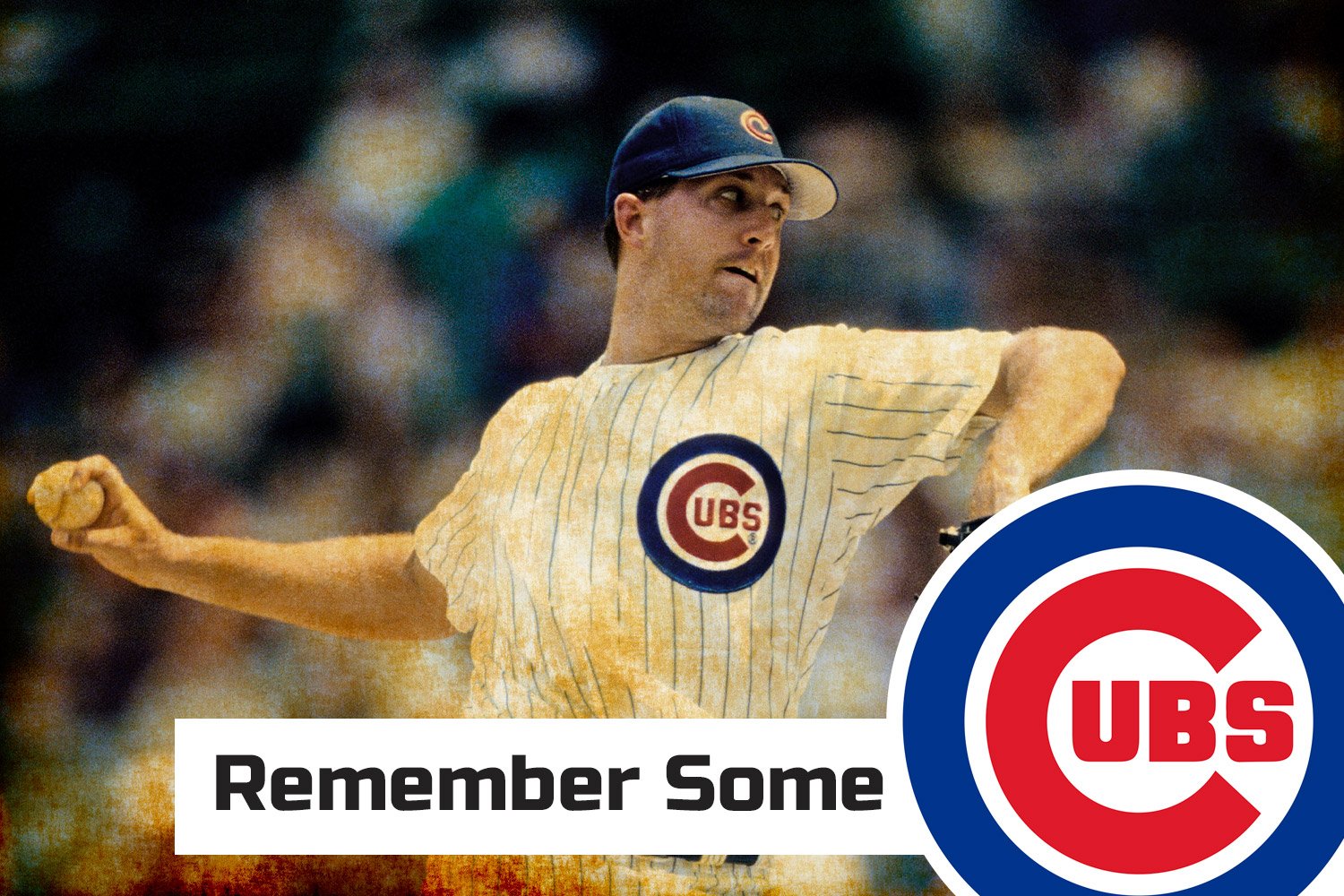 Before I get too far into this article, there is one confession I’d like to make. I am 28 years old. My earliest memories as a Cubs fan are something like Sammy Sosa hitting home runs, the 2003 playoff run, and then everything thereafter. However, in an effort to expand this series beyond “Remember Some Cubs Exclusively From the 21st Century,” I have been scouring Baseball Reference for some interesting Cubs to write about from the many years of Cubs baseball that happened before I became a fan. Of course, I know all about the Ron Santo and Ernie Banks types. But we all remember those guys. I’d much prefer to examine players that people really might have forgotten about, or just don’t know as much about. The other night, I stumbled on Steve Trachsel, and while I knew who he was, I had never done much of a deep dive into his statistics or his life. I now believe him to be, maybe, one of the most average pitchers to ever put on a Cubs uniform. Stephen Christoper Trachsel was born on Halloween, 1970, in California. Raised in California his whole life, Trachsel went to Fullerton College, and eventually Long Beach State University for one year in 1991. He played only one season there, but was a key hurler in their run to the College World Series. Given the soft-tossing nature of his pitching, Trachsel didn’t wow many scouts, but his performance in college eventually led to him being drafted in the eighth round of the 1991 MLB Draft by the Cubs. He didn’t have to wait very long to make his major-league debut in September of 1993, but it wasn’t until 1994 when Trachsel became a full-time fixture in the Cubs’ rotation. From 1994 through 1998, Trachsel made 183 starts for the Cubs and had a 4.35 ERA. Herein lies the beauty of Trachsel. My calling him one of the most average pitchers to ever put on a Cubs uniform isn’t an insult. There is value in someone who can average 30 starts and almost 200 innings per year over half a decade. The bittersweet beauty is that this type of pitcher is now a relic of the past, confined to the virtual baseball museums of FanGraphs and Baseball Reference, only waiting for someone to stumble upon the exhibit. Fangraphs has statistics that they refer to as “+Stats.” It can be difficult to look at a player’s stats from over 20 years ago and figure out if they were actually good or not. Baseball changes dramatically over time. Thus, the way that players play (and accumulate stats) changes as well. For example, Trachsel’s 6.5 strikeouts per nine innings over those six seasons with the Cubs would have been better than only three qualifying pitchers in 2023 (Patrick Corbin, Miles Mikolas, and Jordan Lyles, if you’re curious). His K/9+, though, was 97, with 100 being average. So his strikeout rate was just slightly below average, despite looking incredibly unimpressive to the modern eye. +Stats give us an easy way to take a look at any player from any era and figure out how they stacked up against their peers from that point in time. Anyway, Trachsel was almost exactly league-average in every single +Stat from 1994 to 1999. I already listed his 97 K/9+. He also had a 96 BB/9+. Opponents batting average? That sits right at 100. WHIP? That is right at 99. ERA+? You guessed it: 99. In baseball in 2023, you don’t see players with such average numbers throwing over 200 innings, year in and year out. A number like that is reserved for aces like Justin Verlander and Max Scherzer. Gerritt Cole and Miles Mikolas are the only pitchers to have thrown 200 or more innings in each of the past two seasons. Neither hit that figure in 2021. Trachsel did it for four seasons in a row, from 1996 through 1999. In addition to eating innings, Trachsel was also known for taking an incredibly long time between pitches, prompting Cliff Floyd to say that he “always hated facing him. He takes too damn long.” He was one of the handful of players who have been tagged with the sobriquet “the Human Rain Delay”. I’m sure he would have loved the pitch clock. After his stint with the Cubs, Trachsel had a rough season with Tampa Bay and Toronto, before eventually ending up with the Mets, where he started 160 games over six seasons and pitched to a 103 ERA +, because some things never change. Trachsel started the 2007 season with Baltimore and then came back to the Cubs to make three subpar September starts, before ending his career with Baltimore in 2008. Over the past few days, I’ve found myself wondering what Trachsel would look like if he were pitching in 2023. Would he be more effective if teams limited his times through the order, like we saw the Cubs do with similarly soft-tossing Kyle Hendricks this season? Would he even have been given much of a chance, given the lack of overpowering stuff and subpar FIP? Regardless, all we can do now is reflect on what he provided, and while he was never elite, Trachsel was a fixture in the Cubs’ rotation for much of the 1990s. He was given the start in the one-game playoff of 1998 against the San Francisco Giants, and took a no-hitter into the seventh inning as the Cubs clinched a playoff spot. For that, he’ll forever be etched into Cubs lore.
 -
Some very interesting rumors popped up during the holiday week. As the Cubs seek to upgrade their starting rotation, they might have options beyond the elite free agents who have already been widely discussed. There's a trade possibility out there every bit as tantalizing. The recent news of Marcus Stroman opting out of his contract with the Cubs to become a free agent has opened up one rotation spot for 2024 that the Cubs did not expect to have. Justin Steele will be back, as will Kyle Hendricks and Jameson Taillon, but after those three, the Cubs figure to have two rotation spots open for any offseason acquisition (along with Drew Smyly, Jordan Wicks, and Javier Assad, among others) to fill. The Cubs figure to be in on guys like Yoshinobu Yamamoto, but after that, the crop of potential top-of-the-rotation free-agent pitchers gets thin quickly. Aaron Nola is already off the board, Blake Snell is probably the most polarizing two-time Cy Young Award winner ever, and Sonny Gray is 34 years old. Ken Rosenthal of The Athletic reported last week that the Blue Jays are “open to moving” Alek Manoah, and that has me wondering if the Cubs can find some rotation help elsewhere. After pitching to a 2.60 ERA in over 300 innings in his first two seasons in the majors, Manoah had a disastrous 2023, wherein he posted a 5.87 ERA and walked over 14 percent of the hitters he faced. Manoah was optioned to the minor leagues on two separate occasions, and according to Blue Jays General Manager Ross Atkins, he received an injection to combat shoulder soreness in October. After the 2022 season, Manoah was viewed by many as a potential regression candidate. His 2.24 ERA was exceptional, but his .244 BABIP, 3.31 xERA, and 3.35 FIP all suggested he wasn’t quite as good as that topline number suggested. Despite all of that, I don’t think anyone expected him to be so bad in 2023 that he would require a couple of trips to the minor leagues. Trying to find a singular reason that Manoah was so bad is a difficult task: everything was broken. According to FanGraphs, his Barrel percentage jumped from 5.4 percent in 2022 to 9.0 percent in 2023. He lost one mile per hour of velocity on his fastball, from averaging 93.9 miles per hour to 92.9. A drop in velocity is particularly damaging when you don’t have a high-velocity fastball to begin with, and is going to result in fewer swings and misses. Sure enough, his swinging strike percentage on fastballs dropped from 11.8 percent to 9.4 percent, per FanGraphs. Unfortunately, that was far from Manoah’s only issue in 2023. As mentioned above, his walk rate exploded, which is supported by the drop in pitches in the strike zone. He also lost some horizontal movement on his slider, which likely contributed to the decrease in his swings outside of the zone: O-Swing % Z-Swing % Swing % O-Contact % Z-Contact % Contact % Zone % 2022 34.70% 69.20% 49.40% 64.10% 86.40% 77.40% 42.70% 2023 29.20% 70.80% 45.40% 67.20% 89.00% 80.40% 38.80% Cliffs Notes version: Manoah had worse stuff, threw fewer strikes, induced hitters to chase less often, and got hit harder when they did swing. Again, everything was broken. So which version of Manoah can we expect going forward, and what might it take for the Cubs to acquire him? If Manoah was truly hurt in 2023, it would certainly help explain the drop in velocity, the change in pitch movement, and the loss of control. Then again, if he was hurt that badly, he shouldn’t have been pitching at all. Clearly, he wasn’t helping the team a ton when he did. This all makes Manoah an interesting reclamation project. He’ll be just 26 years old by Opening Day, and is under team control through 2027. Given that he is just one year removed from receiving Cy Young votes, he isn’t going to cost nothing. The Blue Jays are competing now and would require some Major League-ready players. With the potential departure of Whit Merrifield and Matt Chapman, it certainly feels like Christopher Morel would fit better in Toronto than he currently does in Chicago. How much is too much for someone that could contend for a Cy Young Award, but could also end up in the Minor Leagues by the end of May? Is Morel, coming off a much better season but plainly with a lower ceiling than Manoah has, a reasonable cost? Tell us what you think of the possibility that the Cubs could be the ones to restore Manoah to ace status. View full article
-
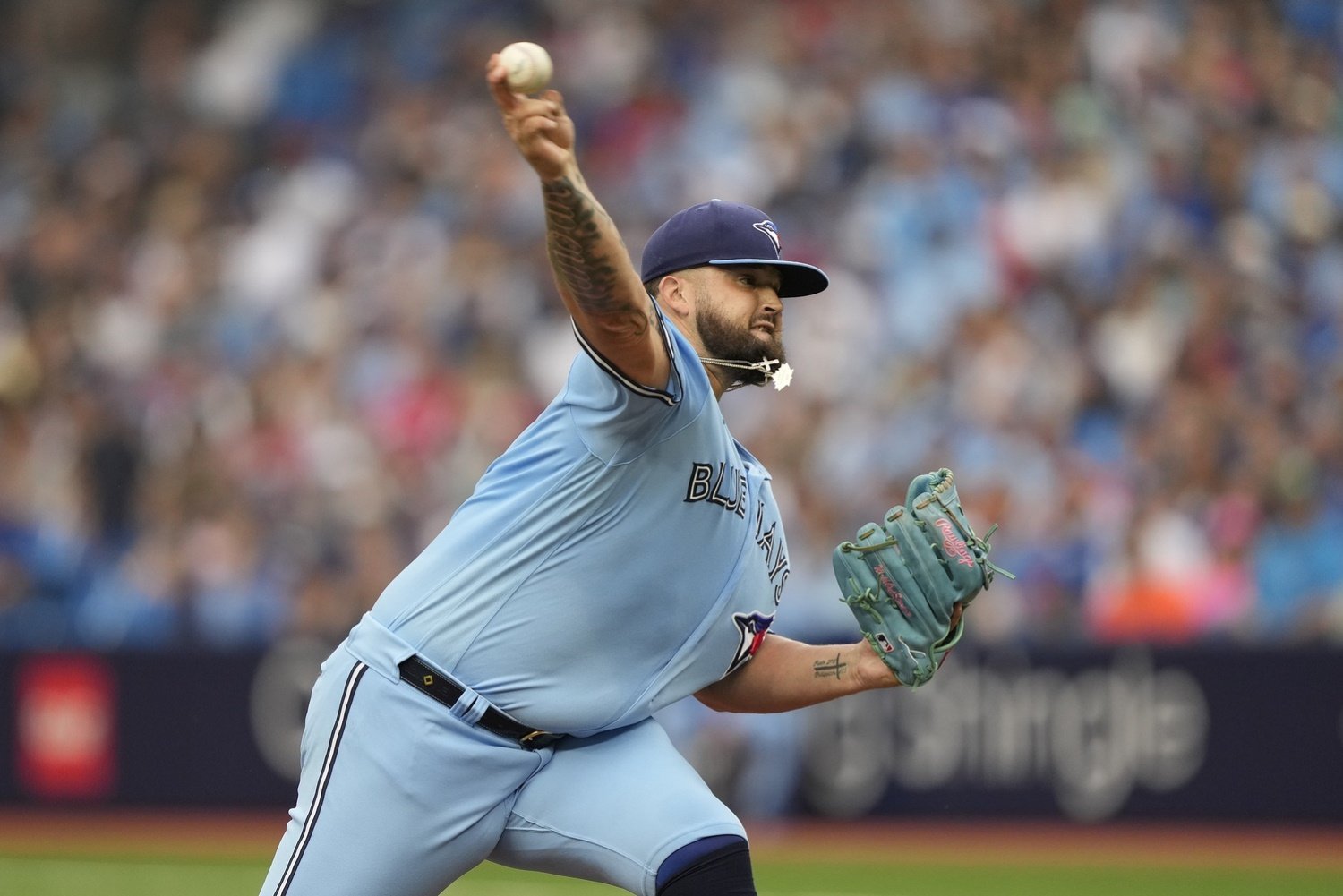 The recent news of Marcus Stroman opting out of his contract with the Cubs to become a free agent has opened up one rotation spot for 2024 that the Cubs did not expect to have. Justin Steele will be back, as will Kyle Hendricks and Jameson Taillon, but after those three, the Cubs figure to have two rotation spots open for any offseason acquisition (along with Drew Smyly, Jordan Wicks, and Javier Assad, among others) to fill. The Cubs figure to be in on guys like Yoshinobu Yamamoto, but after that, the crop of potential top-of-the-rotation free-agent pitchers gets thin quickly. Aaron Nola is already off the board, Blake Snell is probably the most polarizing two-time Cy Young Award winner ever, and Sonny Gray is 34 years old. Ken Rosenthal of The Athletic reported last week that the Blue Jays are “open to moving” Alek Manoah, and that has me wondering if the Cubs can find some rotation help elsewhere. After pitching to a 2.60 ERA in over 300 innings in his first two seasons in the majors, Manoah had a disastrous 2023, wherein he posted a 5.87 ERA and walked over 14 percent of the hitters he faced. Manoah was optioned to the minor leagues on two separate occasions, and according to Blue Jays General Manager Ross Atkins, he received an injection to combat shoulder soreness in October. After the 2022 season, Manoah was viewed by many as a potential regression candidate. His 2.24 ERA was exceptional, but his .244 BABIP, 3.31 xERA, and 3.35 FIP all suggested he wasn’t quite as good as that topline number suggested. Despite all of that, I don’t think anyone expected him to be so bad in 2023 that he would require a couple of trips to the minor leagues. Trying to find a singular reason that Manoah was so bad is a difficult task: everything was broken. According to FanGraphs, his Barrel percentage jumped from 5.4 percent in 2022 to 9.0 percent in 2023. He lost one mile per hour of velocity on his fastball, from averaging 93.9 miles per hour to 92.9. A drop in velocity is particularly damaging when you don’t have a high-velocity fastball to begin with, and is going to result in fewer swings and misses. Sure enough, his swinging strike percentage on fastballs dropped from 11.8 percent to 9.4 percent, per FanGraphs. Unfortunately, that was far from Manoah’s only issue in 2023. As mentioned above, his walk rate exploded, which is supported by the drop in pitches in the strike zone. He also lost some horizontal movement on his slider, which likely contributed to the decrease in his swings outside of the zone: O-Swing % Z-Swing % Swing % O-Contact % Z-Contact % Contact % Zone % 2022 34.70% 69.20% 49.40% 64.10% 86.40% 77.40% 42.70% 2023 29.20% 70.80% 45.40% 67.20% 89.00% 80.40% 38.80% Cliffs Notes version: Manoah had worse stuff, threw fewer strikes, induced hitters to chase less often, and got hit harder when they did swing. Again, everything was broken. So which version of Manoah can we expect going forward, and what might it take for the Cubs to acquire him? If Manoah was truly hurt in 2023, it would certainly help explain the drop in velocity, the change in pitch movement, and the loss of control. Then again, if he was hurt that badly, he shouldn’t have been pitching at all. Clearly, he wasn’t helping the team a ton when he did. This all makes Manoah an interesting reclamation project. He’ll be just 26 years old by Opening Day, and is under team control through 2027. Given that he is just one year removed from receiving Cy Young votes, he isn’t going to cost nothing. The Blue Jays are competing now and would require some Major League-ready players. With the potential departure of Whit Merrifield and Matt Chapman, it certainly feels like Christopher Morel would fit better in Toronto than he currently does in Chicago. How much is too much for someone that could contend for a Cy Young Award, but could also end up in the Minor Leagues by the end of May? Is Morel, coming off a much better season but plainly with a lower ceiling than Manoah has, a reasonable cost? Tell us what you think of the possibility that the Cubs could be the ones to restore Manoah to ace status.
 -
I appreciate the suggestion and have added both to my list! As a slightly younger fan, I’ve been doing a lot of clicking through Baseball Reference to try to find some even older players that were interesting so we can expand this series beyond “Remember Some Cubs from only the past decade and a half.” Thus, I will take any and all recommendations. Small teaser: I will have one coming soon on a Lieber-ish pitcher that came before Lieber. I find the trips into obscurity to be more fun and interesting. Of course, we all remember Rizzo from the 14 and 15 seasons, but even I was shocked to recall how much Coghlan had truly contributed, and it’s only been eight or so years!
-
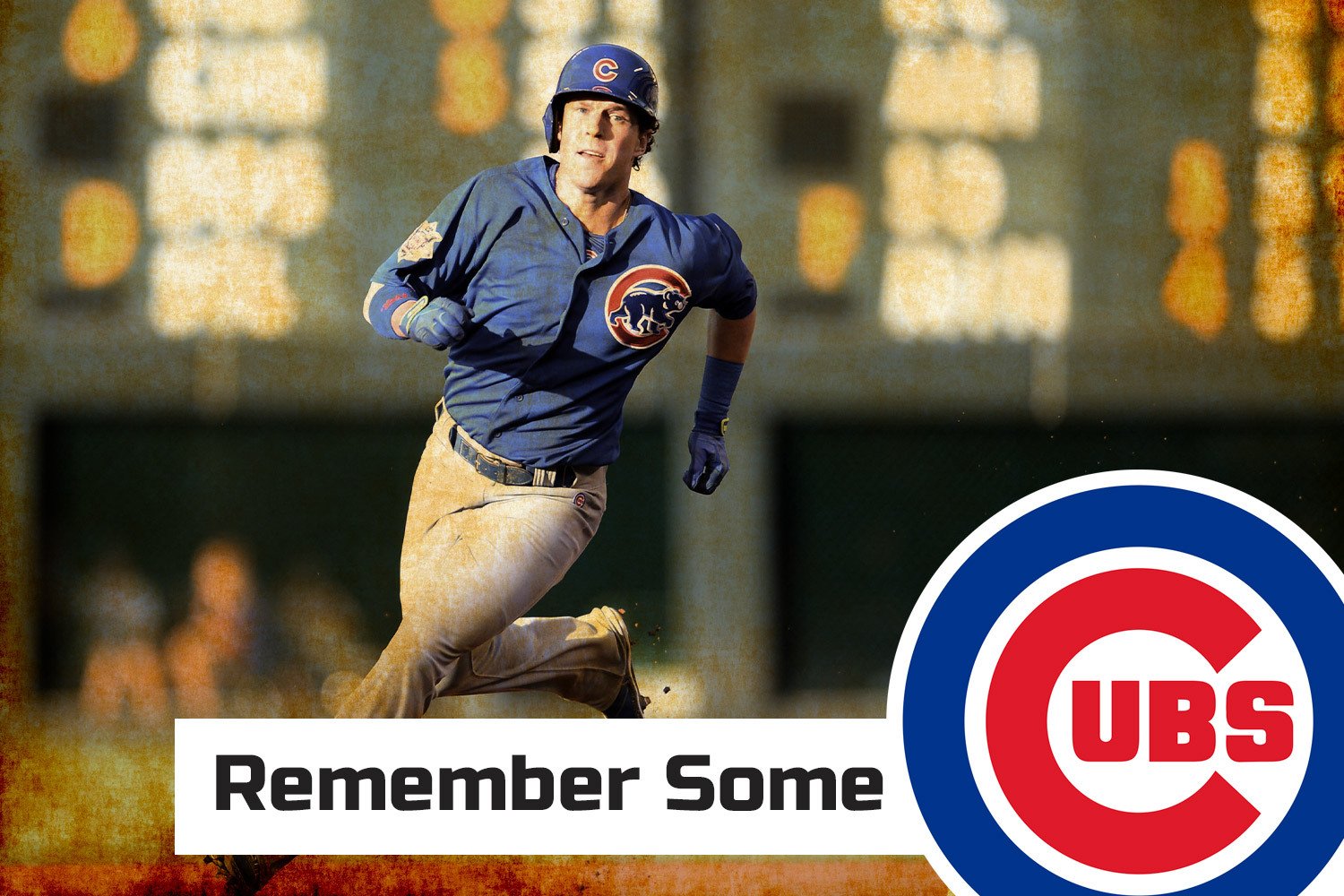 There are very few examples in baseball history that illustrate the whimsy of awards voting (particularly in the period before analytics was at the forefront of everyone’s minds) like Chris Coghlan's Rookie of the Year win in 2009. Despite posting less WAR (per FanGraphs) than multiple players, including future MVP Andrew McCutchen and the Cubs’ own Randy Wells, Coghlan won the National League award, likely because of his .321 batting average. Although he was the 36th overall pick and a standout player in the SEC at Ole Miss, Coghlan never found himself ranked on any top prospect boards. He played in the Futures Game in 2007, but even with that, his emergence in 2009 was a surprise to many. Sure enough, to say things fizzled out a bit for Coghlan after that would be an understatement. In over 1,000 plate appearances with the Marlins over the next four seasons, Coghlan hit just 12 home runs and had a .242 batting average. This poor offensive performance, plus the lack of defensive value, led to Coghlan being non-tendered by the Marlins after the 2013 season. The Cubs signed him to a minor-league contract before the 2014 season with very little fanfare. Amid all of the hype and excitement of the major-league debuts of all sorts of top prospects over the 2014 and 2015 seasons for the Cubs, Coghlan was one of the lone, stable veterans of the group. In 935 plate appearances, Coghlan hit .266/.346/.447, often finding himself hitting near the top of the lineup. He worked patient at-bats, drew walks, and generally was a very productive player. According to FanGraphs, Coghlan had the fourth-most WAR among offensive players for the 2014 Cubs, and the third-most in the 2015 season. Only Kris Bryant and Anthony Rizzo finished with a higher WAR than Coghlan during the Cubs’ coming-out party that second year. While Bryant, Rizzo, Addison Russell, Jorge Soler, and Kyle Schwarber rightly got so much hype during that season, there was Coghlan, quietly producing in the middle of the lineup and helping the Cubs make the playoffs for the first time since 2008. After the signing of Jason Heyward and the decision to bring Dexter Fowler back that offseason, the Cubs were looking at a starting outfield of Kyle Schwarber, Dexter Fowler, and Jason Heyward--not to mention, they still had Jorge Soler on the roster, and Ben Zobrist had the versatility to move into an outfield corner if necessary. Coghlan was the odd man out, and thus was traded unceremoniously to the Oakland Athletics for Aaron Brooks, who never pitched in a big league game for the Cubs. The news of that trade broke just minutes before Theo Epstein and Fowler made their dramatic entrance at the team's spring-training complex. However, as some may recall, that was not all for Coghlan in a Cubs uniform. With Schwarber out for the season (or, as we know now, until the World Series) with a knee injury, the Cubs traded Arismendy Alcantara to the Athletics for Coghlan in June. He never quite regained his previous form, but he still hit a slightly above-average .252/.391/.388 line in 128 plate appearances for the Cubs the rest of that glorious year. While he would only end up receiving three plate appearances in the entire series, Coghlan was the World Series Game One starter for the Cubs in right field, which is a trivia question I think many Cubs fans would get wrong. Obviously, Coghlan has a World Series ring with the Cubs, but really, it’s his production in the two years beforehand that he should be remembered for. Coghlan would go on to play in just 36 games for the Toronto Blue Jays in the 2017 season, where he was perhaps better known for this slide than his overall batting line of .200/.299/.267, and he never played in the major leagues again. Only 14 other players who won the Rookie of the Year Award went on to post a lower career WAR than Coghlan's. All of this is to say that Coghlan, likely, is one of the most forgotten Rookies of the Year in MLB history. But he shouldn’t be remembered for that award, at least not by Cubs fans. I fear that many have forgotten him, but for two seasons, he helped usher in a new era of Cubs baseball--one that would lead to the first World Series win in over 100 years. He posted 5.5 WAR over those two seasons, and was one of their most valuable position players and one of their best and most consistent hitters during a period when the younger guys got all of the hype. He even started Game One of the World Series for them. For all of that, we should not forget him.
 -
The next time you watch the final out of the 2016 World Series, watch closely, to see who the first player to reach the dogpile around the mound is. Better yet, look at the famous still frame of the legendary infield in ecstatic entanglement, and peep the face that just creeps in on the right edge of the frame. Image courtesy of Brock Beauchamp There are very few examples in baseball history that illustrate the whimsy of awards voting (particularly in the period before analytics was at the forefront of everyone’s minds) like Chris Coghlan's Rookie of the Year win in 2009. Despite posting less WAR (per FanGraphs) than multiple players, including future MVP Andrew McCutchen and the Cubs’ own Randy Wells, Coghlan won the National League award, likely because of his .321 batting average. Although he was the 36th overall pick and a standout player in the SEC at Ole Miss, Coghlan never found himself ranked on any top prospect boards. He played in the Futures Game in 2007, but even with that, his emergence in 2009 was a surprise to many. Sure enough, to say things fizzled out a bit for Coghlan after that would be an understatement. In over 1,000 plate appearances with the Marlins over the next four seasons, Coghlan hit just 12 home runs and had a .242 batting average. This poor offensive performance, plus the lack of defensive value, led to Coghlan being non-tendered by the Marlins after the 2013 season. The Cubs signed him to a minor-league contract before the 2014 season with very little fanfare. Amid all of the hype and excitement of the major-league debuts of all sorts of top prospects over the 2014 and 2015 seasons for the Cubs, Coghlan was one of the lone, stable veterans of the group. In 935 plate appearances, Coghlan hit .266/.346/.447, often finding himself hitting near the top of the lineup. He worked patient at-bats, drew walks, and generally was a very productive player. According to FanGraphs, Coghlan had the fourth-most WAR among offensive players for the 2014 Cubs, and the third-most in the 2015 season. Only Kris Bryant and Anthony Rizzo finished with a higher WAR than Coghlan during the Cubs’ coming-out party that second year. While Bryant, Rizzo, Addison Russell, Jorge Soler, and Kyle Schwarber rightly got so much hype during that season, there was Coghlan, quietly producing in the middle of the lineup and helping the Cubs make the playoffs for the first time since 2008. After the signing of Jason Heyward and the decision to bring Dexter Fowler back that offseason, the Cubs were looking at a starting outfield of Kyle Schwarber, Dexter Fowler, and Jason Heyward--not to mention, they still had Jorge Soler on the roster, and Ben Zobrist had the versatility to move into an outfield corner if necessary. Coghlan was the odd man out, and thus was traded unceremoniously to the Oakland Athletics for Aaron Brooks, who never pitched in a big league game for the Cubs. The news of that trade broke just minutes before Theo Epstein and Fowler made their dramatic entrance at the team's spring-training complex. However, as some may recall, that was not all for Coghlan in a Cubs uniform. With Schwarber out for the season (or, as we know now, until the World Series) with a knee injury, the Cubs traded Arismendy Alcantara to the Athletics for Coghlan in June. He never quite regained his previous form, but he still hit a slightly above-average .252/.391/.388 line in 128 plate appearances for the Cubs the rest of that glorious year. While he would only end up receiving three plate appearances in the entire series, Coghlan was the World Series Game One starter for the Cubs in right field, which is a trivia question I think many Cubs fans would get wrong. Obviously, Coghlan has a World Series ring with the Cubs, but really, it’s his production in the two years beforehand that he should be remembered for. Coghlan would go on to play in just 36 games for the Toronto Blue Jays in the 2017 season, where he was perhaps better known for this slide than his overall batting line of .200/.299/.267, and he never played in the major leagues again. Only 14 other players who won the Rookie of the Year Award went on to post a lower career WAR than Coghlan's. All of this is to say that Coghlan, likely, is one of the most forgotten Rookies of the Year in MLB history. But he shouldn’t be remembered for that award, at least not by Cubs fans. I fear that many have forgotten him, but for two seasons, he helped usher in a new era of Cubs baseball--one that would lead to the first World Series win in over 100 years. He posted 5.5 WAR over those two seasons, and was one of their most valuable position players and one of their best and most consistent hitters during a period when the younger guys got all of the hype. He even started Game One of the World Series for them. For all of that, we should not forget him. View full article
-
Today, we continue our offseason series highlighting and reminiscing about some favorite Cubs of yesteryear. This installment is about one of the most charismatic, versatile, and (it can't be ignored) handsome members of two division-winning Cubs clubs. Image courtesy of Brock Beauchamp In many ways, Mark DeRosa was always the versatile athlete that he would come to be known for in his professional baseball playing career. He was both a baseball and football star while growing up in New Jersey–so much so that he would go on to start at both quarterback and shortstop for the University of Pennsylvania. Drafted by the Atlanta Braves in the seventh round of the 1996 MLB Draft, DeRosa made his MLB debut in 1998. He was mostly a utility player for the Braves until 2004, when he was given the starting third base job out of spring training. After watching him hit just .239/.293/.320 and tear his ACL in September, the Braves declined to offer DeRosa a contract, making him a free agent. DeRosa played as a stopgap for the Texas Rangers in 2005, and finally had his breakout in 2006, becoming a full-time player and hitting .296/.357/.456. This led to the Cubs signing him to a three-year, $13-million contract as a part of their spending spree in the offseason between 2006 and 2007. Thus began the legend of Mark DeRosa in Chicago. He played an integral role on Cubs teams that won back-to-back division titles in 2007 and 2008. In those two campaigns, he hit .289/.373/.451, with 31 total home runs. DeRosa started most often at second base for those Cubs teams, but in a lot of ways, he was Ben Zobrist before Ben Zobrist. In addition to the keystone, DeRosa appeared in games at third base, right field, left field, first base, and even shortstop. I have a confession to make: Because I was an impressionable middle-school kid at the time, those Cubs teams hold a very special place in my heart. Sure, I have memories of 2003, and of Sammy Sosa blasting home runs onto Waveland Avenue, but 2007 and 2008 was the first time the Cubs were good at a point when I was also old enough to appreciate and absorb them. In retrospect, I recall DeRosa being both a fan favorite, and the heart and soul of those Cubs teams. It seemed he was almost everybody’s favorite player–my grandma included. I am not ashamed to admit that my online video game username, that I still use to this day, includes the number ‘7’ because of DeRosa. But was he actually good? Or did the much younger version of me simply appreciate the way he played baseball and latch onto him for different, unknown reasons that only kids can understand? Across the 2007 and 2008 seasons, DeRosa was fourth on the Cubs in overall WAR, according to FanGraphs. His 6.6 WAR trailed only Alfonso Soriano, Aramis Ramirez, and Ted Lilly. He produced more WAR than both Derrek Lee and Carlos Zambrano, who were rightly viewed as cornerstone players of that era. He was a vital piece of those teams. However, after those two seasons, that would be it for DeRosa in a Cubs uniform. He was traded to Cleveland that offseason for a package that included Chris Archer, and things just weren’t quite the same in Chicago. The Cubs disappointed in 2009, as they failed to make the playoffs, leaving many wondering if DeRosa was the glue that held everything together. But things weren’t quite the same for DeRosa, either. He still proved himself a valuable player in 2009, but after being traded to the Cardinals at the trade deadline, he hit just .228/.291/.405. While he would go on to play four more seasons for the Giants, Nationals, and Blue Jays, he racked up just 538 plate appearances in those seasons, and hit .227 with eight home runs in that time. Now, you’ll find DeRosa as a studio analyst with MLB Network. He was the manager for Team USA in the 2023 World Baseball Classic, leaving many to wonder if managing a big-league team might be in his future. DeRosa was the perfect player for the Cubs, at the perfect time. He contributed two-thirds of his 10.1 career FanGraphs WAR in just two seasons with the Cubs, and the Cubs won the division in both of those seasons. We’ll never know what would have happened had the Cubs kept him around for the 2009 season. Here is something that we do know: Chris Archer, who was the headline piece coming back to the Cubs in the trade that sent him away, was eventually traded to Tampa Bay for Matt Garza. Garza was eventually traded to the Texas Rangers for Mike Olt, Justin Grimm, and Carl Edwards Jr. Grimm and Edwards would both go on to record very important outs out of the bullpen in the 2016 playoffs for the Cubs. So in a roundabout way, DeRosa was still contributing to the Cubs and helping them win a World Series in 2016. That, alone, should make us remember him even more fondly, and makes me feel validated in my childhood appreciation of him. View full article
-
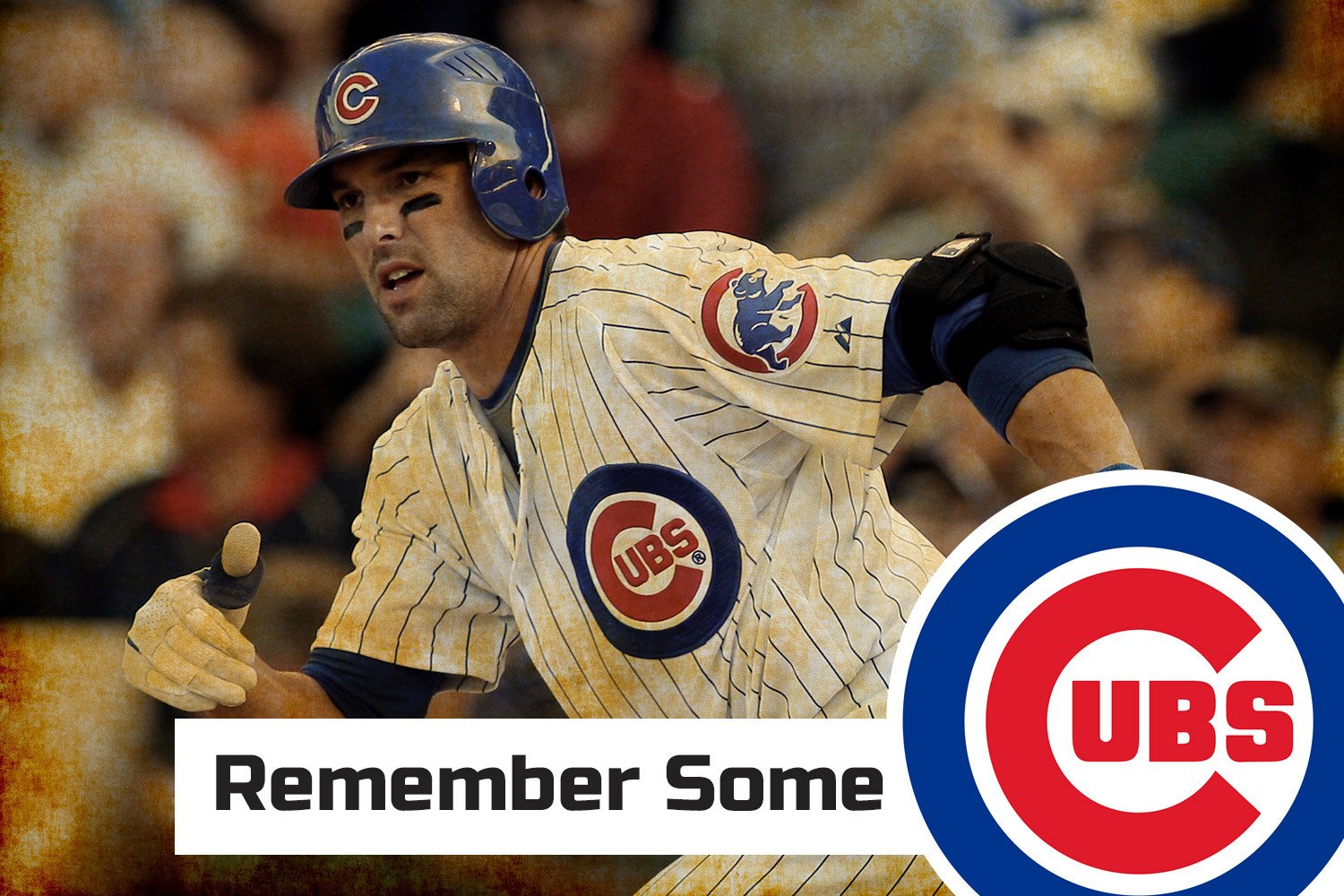 In many ways, Mark DeRosa was always the versatile athlete that he would come to be known for in his professional baseball playing career. He was both a baseball and football star while growing up in New Jersey–so much so that he would go on to start at both quarterback and shortstop for the University of Pennsylvania. Drafted by the Atlanta Braves in the seventh round of the 1996 MLB Draft, DeRosa made his MLB debut in 1998. He was mostly a utility player for the Braves until 2004, when he was given the starting third base job out of spring training. After watching him hit just .239/.293/.320 and tear his ACL in September, the Braves declined to offer DeRosa a contract, making him a free agent. DeRosa played as a stopgap for the Texas Rangers in 2005, and finally had his breakout in 2006, becoming a full-time player and hitting .296/.357/.456. This led to the Cubs signing him to a three-year, $13-million contract as a part of their spending spree in the offseason between 2006 and 2007. Thus began the legend of Mark DeRosa in Chicago. He played an integral role on Cubs teams that won back-to-back division titles in 2007 and 2008. In those two campaigns, he hit .289/.373/.451, with 31 total home runs. DeRosa started most often at second base for those Cubs teams, but in a lot of ways, he was Ben Zobrist before Ben Zobrist. In addition to the keystone, DeRosa appeared in games at third base, right field, left field, first base, and even shortstop. I have a confession to make: Because I was an impressionable middle-school kid at the time, those Cubs teams hold a very special place in my heart. Sure, I have memories of 2003, and of Sammy Sosa blasting home runs onto Waveland Avenue, but 2007 and 2008 was the first time the Cubs were good at a point when I was also old enough to appreciate and absorb them. In retrospect, I recall DeRosa being both a fan favorite, and the heart and soul of those Cubs teams. It seemed he was almost everybody’s favorite player–my grandma included. I am not ashamed to admit that my online video game username, that I still use to this day, includes the number ‘7’ because of DeRosa. But was he actually good? Or did the much younger version of me simply appreciate the way he played baseball and latch onto him for different, unknown reasons that only kids can understand? Across the 2007 and 2008 seasons, DeRosa was fourth on the Cubs in overall WAR, according to FanGraphs. His 6.6 WAR trailed only Alfonso Soriano, Aramis Ramirez, and Ted Lilly. He produced more WAR than both Derrek Lee and Carlos Zambrano, who were rightly viewed as cornerstone players of that era. He was a vital piece of those teams. However, after those two seasons, that would be it for DeRosa in a Cubs uniform. He was traded to Cleveland that offseason for a package that included Chris Archer, and things just weren’t quite the same in Chicago. The Cubs disappointed in 2009, as they failed to make the playoffs, leaving many wondering if DeRosa was the glue that held everything together. But things weren’t quite the same for DeRosa, either. He still proved himself a valuable player in 2009, but after being traded to the Cardinals at the trade deadline, he hit just .228/.291/.405. While he would go on to play four more seasons for the Giants, Nationals, and Blue Jays, he racked up just 538 plate appearances in those seasons, and hit .227 with eight home runs in that time. Now, you’ll find DeRosa as a studio analyst with MLB Network. He was the manager for Team USA in the 2023 World Baseball Classic, leaving many to wonder if managing a big-league team might be in his future. DeRosa was the perfect player for the Cubs, at the perfect time. He contributed two-thirds of his 10.1 career FanGraphs WAR in just two seasons with the Cubs, and the Cubs won the division in both of those seasons. We’ll never know what would have happened had the Cubs kept him around for the 2009 season. Here is something that we do know: Chris Archer, who was the headline piece coming back to the Cubs in the trade that sent him away, was eventually traded to Tampa Bay for Matt Garza. Garza was eventually traded to the Texas Rangers for Mike Olt, Justin Grimm, and Carl Edwards Jr. Grimm and Edwards would both go on to record very important outs out of the bullpen in the 2016 playoffs for the Cubs. So in a roundabout way, DeRosa was still contributing to the Cubs and helping them win a World Series in 2016. That, alone, should make us remember him even more fondly, and makes me feel validated in my childhood appreciation of him.
 -
As we wait for the dam to break and some free agents to start finding new homes, let's stop to consider what retaining one who has already been a Cub--twice--would look like. Image courtesy of © David Kohl-USA TODAY Sports When the Chicago Cubs made their big trade-deadline move by acquiring Jeimer Candelario from the Washington Nationals for a couple of prospects, I thought it would be a great opportunity for Candelario to have an early audition with the team before his impending free agency. By bringing him into the fold a few months early, you can reap the rewards of having his bat in the lineup down the stretch, and get a feel for how he would mesh in the clubhouse. Of course, to this point, the results have not been quite as expected. While Candelario’s overall wRC+ with the Cubs was above-average at 106, this was skewed by a very hot first week. His absence from the lineup was felt in early September, as he spent time on the injured list with a back injury. He posted just 0.2 WAR for the Cubs in 41 games. From August 7 to the end of the season, his batting line was a meager .172/.258/.362. So what happened? Prior to becoming a Cub, Candelario was in the midst of a career year. His .258/.342/.481 line was only bested by the one he posted in the abbreviated 2020 season. He was hitting for power, taking his walks, and laying off of pitches outside of the strike zone–the thing he failed to do in his rough 2022 season, which ultimately led to his release by the Tigers. The thing about Candelario as a hitter is that there isn’t really one skill that he has consistently done at an elite level. He can hit the ball hard, but he doesn’t do it consistently or spectacularly enough to be an exit-velocity darling. He gets on base, but not quite like Juan Soto. He strikes out a bit more than most would prefer, but not as often as Christopher Morel or Patrick Wisdom. Put all of that into a pot, mix it up a bit, and the result is a hitter with a career 102 wRC+. His batted-ball profile doesn’t jump off the page, either. For his career, 26.2 percent of his batted balls have been line drives, 41.1 percent have been ground balls, and 32.6 percent have been fly balls. In 2023, 20 percent of batted balls in baseball were line drives, 42.5 percent were ground balls, and 37.5 percent were fly balls. As with most other things, he is right about average. Reasonably, we can split Candelario’s time with the Cubs into three phases: the honeymoon (August 1-6), the pre-injury (August 7-September 10), and the post-injury (September 27-October 1). The honeymoon phase did the heavy lifting as far as his batting line was concerned (314 wRC+), the pre-injury phase brought that batting line back down to earth (62 wRC+), and the post-injury maintained his roughly league-average production (91 wRC+). Given that the pre-injury phase is the biggest sample size we have, it’s the one most likely to leave a sour taste in the mouth of Cubs fans. And it has. If the Cubs were to bring Candelario back, how much should that period factor into his contract? Who is the real Jeimer Candelario? Going back up a few paragraphs, recall that Candelario has put 41.1 percent of his balls in play on the ground for his career. During his pre-injury phase with the Cubs, he hit 54.4 percent of his balls on the ground, according to FanGraphs. The league as a whole recorded a 35 wRC+ on ground balls in 2023–hence, his drop in production. I think that this has two possible explanations: Candelario was hurt for much of that period of time, resulting in him pulling off of the baseball and pounding it into the ground much more often. The Cubs thought they could tap into more of Candelario’s power by having him pull more fly balls, and it backfired. In his pre-injury phase, 41.7 percent of Candelario’s fly balls were pulled. He has only pulled more than 30 percent of his fly balls once in his career, and that was way back in 2018, when he did it 30.8 percent of the time, per FanGraphs. To put a bow on all of this, while Candelario’s reunion with the Cubs didn’t go quite as either side had hoped, the numbers tell us that there is a likely explanation for it. He has enough of a history of being an average hitter with upside that I feel confident in saying that if he can get healthy over the offseason and return to the approach he has had his whole career, he will return to being that guy in 2024. I am a bit surprised that there has been so little chatter around Candelario and the Cubs this offseason. When the trade was made, we heard so much about how happy he was to be a Cub again, and how happy the Cubs were to have him back. He probably won’t consistently be the three-win player he has been in the past, but to me, he is a pretty good bet to be a league-average hitter (or better) going forward–not to mention, he has defensive value at two positions the Cubs need to fill. He certainly isn’t going to completely change anyone’s lineup, but he can add quality depth, and he would be a nice consolation prize for anyone who misses out on the big targets this offseason. View full article
-
 When the Chicago Cubs made their big trade-deadline move by acquiring Jeimer Candelario from the Washington Nationals for a couple of prospects, I thought it would be a great opportunity for Candelario to have an early audition with the team before his impending free agency. By bringing him into the fold a few months early, you can reap the rewards of having his bat in the lineup down the stretch, and get a feel for how he would mesh in the clubhouse. Of course, to this point, the results have not been quite as expected. While Candelario’s overall wRC+ with the Cubs was above-average at 106, this was skewed by a very hot first week. His absence from the lineup was felt in early September, as he spent time on the injured list with a back injury. He posted just 0.2 WAR for the Cubs in 41 games. From August 7 to the end of the season, his batting line was a meager .172/.258/.362. So what happened? Prior to becoming a Cub, Candelario was in the midst of a career year. His .258/.342/.481 line was only bested by the one he posted in the abbreviated 2020 season. He was hitting for power, taking his walks, and laying off of pitches outside of the strike zone–the thing he failed to do in his rough 2022 season, which ultimately led to his release by the Tigers. The thing about Candelario as a hitter is that there isn’t really one skill that he has consistently done at an elite level. He can hit the ball hard, but he doesn’t do it consistently or spectacularly enough to be an exit-velocity darling. He gets on base, but not quite like Juan Soto. He strikes out a bit more than most would prefer, but not as often as Christopher Morel or Patrick Wisdom. Put all of that into a pot, mix it up a bit, and the result is a hitter with a career 102 wRC+. His batted-ball profile doesn’t jump off the page, either. For his career, 26.2 percent of his batted balls have been line drives, 41.1 percent have been ground balls, and 32.6 percent have been fly balls. In 2023, 20 percent of batted balls in baseball were line drives, 42.5 percent were ground balls, and 37.5 percent were fly balls. As with most other things, he is right about average. Reasonably, we can split Candelario’s time with the Cubs into three phases: the honeymoon (August 1-6), the pre-injury (August 7-September 10), and the post-injury (September 27-October 1). The honeymoon phase did the heavy lifting as far as his batting line was concerned (314 wRC+), the pre-injury phase brought that batting line back down to earth (62 wRC+), and the post-injury maintained his roughly league-average production (91 wRC+). Given that the pre-injury phase is the biggest sample size we have, it’s the one most likely to leave a sour taste in the mouth of Cubs fans. And it has. If the Cubs were to bring Candelario back, how much should that period factor into his contract? Who is the real Jeimer Candelario? Going back up a few paragraphs, recall that Candelario has put 41.1 percent of his balls in play on the ground for his career. During his pre-injury phase with the Cubs, he hit 54.4 percent of his balls on the ground, according to FanGraphs. The league as a whole recorded a 35 wRC+ on ground balls in 2023–hence, his drop in production. I think that this has two possible explanations: Candelario was hurt for much of that period of time, resulting in him pulling off of the baseball and pounding it into the ground much more often. The Cubs thought they could tap into more of Candelario’s power by having him pull more fly balls, and it backfired. In his pre-injury phase, 41.7 percent of Candelario’s fly balls were pulled. He has only pulled more than 30 percent of his fly balls once in his career, and that was way back in 2018, when he did it 30.8 percent of the time, per FanGraphs. To put a bow on all of this, while Candelario’s reunion with the Cubs didn’t go quite as either side had hoped, the numbers tell us that there is a likely explanation for it. He has enough of a history of being an average hitter with upside that I feel confident in saying that if he can get healthy over the offseason and return to the approach he has had his whole career, he will return to being that guy in 2024. I am a bit surprised that there has been so little chatter around Candelario and the Cubs this offseason. When the trade was made, we heard so much about how happy he was to be a Cub again, and how happy the Cubs were to have him back. He probably won’t consistently be the three-win player he has been in the past, but to me, he is a pretty good bet to be a league-average hitter (or better) going forward–not to mention, he has defensive value at two positions the Cubs need to fill. He certainly isn’t going to completely change anyone’s lineup, but he can add quality depth, and he would be a nice consolation prize for anyone who misses out on the big targets this offseason.
 -
 In the wake of the news that the Chicago Cubs have fired David Ross and are bringing in Craig Counsell as their manager, I have a confession to make: I have always been skeptical of the overall value that a manager brings to a baseball team. Don’t get me wrong, there are definitely times where I strongly disagree with a managerial move, and it gets me upset. However, I just don’t think that the decision-making ability of the perceived top manager in baseball is all that much better than the perceived worst manager in baseball--even if that's what Ross was, which is doubtful. Not to mention, managers also have to manage egos, personalities, and maintain a good vibe in the clubhouse. None of this can be measured in any concrete way, with any concrete numbers. Maybe, in a best case scenario, it adds a win or two. Funny enough, had the Chicago Cubs won a game or two more, they would have been playing playoff baseball, and we probably wouldn’t even be having this conversation! So maybe they are onto something here. Besides, if there’s one guy in baseball that I am confident will bring more value to the table than Ross did, it’s Counsell. A lot has already been said about Counsell’s ability to win one-run baseball games, and to overperform the run differential of the Brewers teams that he managed. Some might consider that to be luck, though I would counter that he has done this for long enough that it does warrant some sort of examination of what he was doing in Milwaukee. In a 2016 article at FiveThirtyEight, Rob Arthur found that there is a correlation between winning one-run games, and the quality of your bullpen. The better the bullpen a team has, the higher a likelihood there is that they will win a one-run contest. On the surface, this makes sense. With better pitchers pitching late in games, you’re more likely to hold on to that precious, minuscule lead. So, how much of the Brewers success can we attribute to Counsell, and how much should we attribute it to having a lights-out bullpen? It turns out, having Josh Hader, Corey Knebel, and Devin Williams helps in winning close games. A lot. Even then, since Counsell took over full-time in 2016, the Brewers have the seventh-best bullpen WAR in baseball, according to FanGraphs. Admittedly, this was lower than I would have thought. The Chicago White Sox are one spot ahead of them, yet are 28th in baseball in winning percentage in one-run games during that time. And despite the positive relationship between bullpen performance and winning one-run games, the relationship is still a fairly weak one. So maybe there is something to Counsell’s magic, after all. Given all of this, and given his time in Milwaukee, if there is one thing we know Counsell excels at, it is being able to manage a bullpen. In order to maximize his known strengths, it is imperative that the Cubs give him a similar arsenal of pitchers to work with to the one he had in Milwaukee. I am not saying that they need to replicate Williams and Hader (though Hader is a free agent), but rather that they need to invest real money in the bullpen, while continuing to churn out young pitchers in the minor leagues. Craig Breslow came into the Cubs organization almost five years ago, and was eventually asked to overhaul the pitching development. The new pitching infrastructure that we had been hearing so much about finally started showing some major-league results over the past couple of seasons, with Justin Steele, Javier Assad, and Jordan Wicks all having a major impact. Breslow is gone now, but there is no reason the Cubs can’t continue to build off of what he put in place. While the credit is not all his, the Brewers developed several shutdown relievers at the big-league level while Counsell was in charge. That, in my opinion, is absolutely worth something. It is a great sign to see the Cubs flex their big-market muscles and go get a manager like Counsell, who is now the highest-paid manager in baseball. Clearly, they think he is worth a lot. But the work doesn’t stop there. We’ve seen what Counsell can do with a good bullpen. If they want this move to pay off, the Cubs absolutely have to keep investing money into reliable big-league relief arms and the pitching infrastructure throughout the organization.
 -
The arrival of the Cubs' new manager has us all trying to read tea leaves about their plans for the winter. One way in which the change in leadership materially matters, though, is that it might increase the importance of the relief corps to a new high. Image courtesy of © Stephen Brashear-USA TODAY Sports In the wake of the news that the Chicago Cubs have fired David Ross and are bringing in Craig Counsell as their manager, I have a confession to make: I have always been skeptical of the overall value that a manager brings to a baseball team. Don’t get me wrong, there are definitely times where I strongly disagree with a managerial move, and it gets me upset. However, I just don’t think that the decision-making ability of the perceived top manager in baseball is all that much better than the perceived worst manager in baseball--even if that's what Ross was, which is doubtful. Not to mention, managers also have to manage egos, personalities, and maintain a good vibe in the clubhouse. None of this can be measured in any concrete way, with any concrete numbers. Maybe, in a best case scenario, it adds a win or two. Funny enough, had the Chicago Cubs won a game or two more, they would have been playing playoff baseball, and we probably wouldn’t even be having this conversation! So maybe they are onto something here. Besides, if there’s one guy in baseball that I am confident will bring more value to the table than Ross did, it’s Counsell. A lot has already been said about Counsell’s ability to win one-run baseball games, and to overperform the run differential of the Brewers teams that he managed. Some might consider that to be luck, though I would counter that he has done this for long enough that it does warrant some sort of examination of what he was doing in Milwaukee. In a 2016 article at FiveThirtyEight, Rob Arthur found that there is a correlation between winning one-run games, and the quality of your bullpen. The better the bullpen a team has, the higher a likelihood there is that they will win a one-run contest. On the surface, this makes sense. With better pitchers pitching late in games, you’re more likely to hold on to that precious, minuscule lead. So, how much of the Brewers success can we attribute to Counsell, and how much should we attribute it to having a lights-out bullpen? It turns out, having Josh Hader, Corey Knebel, and Devin Williams helps in winning close games. A lot. Even then, since Counsell took over full-time in 2016, the Brewers have the seventh-best bullpen WAR in baseball, according to FanGraphs. Admittedly, this was lower than I would have thought. The Chicago White Sox are one spot ahead of them, yet are 28th in baseball in winning percentage in one-run games during that time. And despite the positive relationship between bullpen performance and winning one-run games, the relationship is still a fairly weak one. So maybe there is something to Counsell’s magic, after all. Given all of this, and given his time in Milwaukee, if there is one thing we know Counsell excels at, it is being able to manage a bullpen. In order to maximize his known strengths, it is imperative that the Cubs give him a similar arsenal of pitchers to work with to the one he had in Milwaukee. I am not saying that they need to replicate Williams and Hader (though Hader is a free agent), but rather that they need to invest real money in the bullpen, while continuing to churn out young pitchers in the minor leagues. Craig Breslow came into the Cubs organization almost five years ago, and was eventually asked to overhaul the pitching development. The new pitching infrastructure that we had been hearing so much about finally started showing some major-league results over the past couple of seasons, with Justin Steele, Javier Assad, and Jordan Wicks all having a major impact. Breslow is gone now, but there is no reason the Cubs can’t continue to build off of what he put in place. While the credit is not all his, the Brewers developed several shutdown relievers at the big-league level while Counsell was in charge. That, in my opinion, is absolutely worth something. It is a great sign to see the Cubs flex their big-market muscles and go get a manager like Counsell, who is now the highest-paid manager in baseball. Clearly, they think he is worth a lot. But the work doesn’t stop there. We’ve seen what Counsell can do with a good bullpen. If they want this move to pay off, the Cubs absolutely have to keep investing money into reliable big-league relief arms and the pitching infrastructure throughout the organization. View full article
-
That’s a good one! I did consider him for candy corn, but ultimately Happ won out since we’ve all seen Suzuki be really good now, it’s just a matter of if he can always be good. So, I like the Sour Patch Kids comparison!
-
It's no longer Cubs baseball season, but it's spooky season. Let's celebrate it by finding the candy that best matches some of the key players from this year's Cubs. Image courtesy of © Benny Sieu-USA TODAY Sports If there’s one positive to the Chicago Cubs not making a deep playoff run this season, it’s the fact that I can enjoy my Halloween without having to fret through nine innings of a World Series game. I’ll certainly still tune in to watch the Rangers and Diamondbacks battle each other, but seeing that I don’t have a rooting interest, I don’t have to worry about the combination of Halloween candy and Cubs playoff baseball giving me an ulcer. To officially get us all in the Halloween mood, I thought I would do something a little bit fun and different: if we had to compare Cubs players to Halloween candy, what Halloween candy would each be? Obviously, I can’t do every player–that would take way too long. But here are some that I thought had the perfect Halloween candy counterpart. Let us know what you think in the comments! Kyle Hendricks - Hershey’s Bar Here’s the thing about Hersey’s bars: nobody is overly excited to get them, yet if you’re just looking for some chocolate on Halloween night, it will always get the job done. Who fits that description better than Kyle Hendricks? Seeing that he is the longest-tenured Cub, I shouldn’t have to go into much detail. But I am still not sure people outside of Chicago know how good Hendricks really is. He doesn’t wow you with a high-velocity fastball, or a nasty breaking ball. He just gets the job done, day-by-day and year-by-year. Exactly like a Hersehy’s bar. Dansby Swanson - Twix The whole is greater than the sum of its parts. You can get chocolate, caramel, or even cookies (my mom still hands out miniature Keebler cookies, I believe) from a lot of other options on Halloween night. But when you combine all of those things into a Twix bar, you have what makes an elite Halloween candy. Swanson combines roughly average hitting, elite defense, and very good baserunning to create what was the 18th-best player in baseball per Fangraphs WAR. None of his skills necessarily jump off the page at you, but when you put them all together, he is one of the better players in baseball. Christopher Morel - Sour Skittles I know some people who really love Sour Skittles. Personally, I have never been able to get over the sourness of them. But similar to a Warhead, once you get through the sourness, you find that the candy itself is actually pretty good. I can’t imagine any other Chicago Cub brings both the sweet and the sour like Morel. He brought the sweet, with what turned out to be the most memorable moment of the 2023 season, for me: his walkoff home run against the White Sox in August. He also hit that homer in the middle of a month in which he hit .149 and struck out 37 percent of the time. He’ll look completely lost one at-bat, and then in the next one, he’ll hit a 450-foot bomb. You just gotta get through the sour to get to the sweet. Ian Happ - Candy Corn Ah, the most controversial of Halloween candy. Ask one person their opinion of candy corn, and they’ll tell you it’s their favorite candy. Ask another person, and they will tell you it is absolutely disgusting. I happen to fall in the latter group. There is a reason it’s only sold during one season of the year. Ian Happ feels like the type of player that is most polarizing among Cubs fans. Ask one Cubs fan what they think of him, and they might think he’s terrible. Ask another, and they might think he is very good. I think he is a well above-average player whom I will happily continue to see play left field for the Cubs for what they are paying him. So he’s not quite my candy corn, but he certainly might be someone else’s. Nico Hoerner - Baby Ruth I’ll admit, I struggled the most with this one, but after thinking about it for a pathetic amount of time (given how silly this exercise is), I am certain Baby Ruth is the best option here. Baby Ruth has all sorts of ties to the past. The name of the candy bar itself is (according to some) tied to baseball legend Babe Ruth. A Baby Ruth bar played a pivotal role in Chunk getting Sloth to help him rescue his friends in the 1980s classic The Goonies. On top of that, it doesn’t seem to me that Baby Ruths are as prominent now as they used to be. In the case of Nico Hoerner, he plays baseball like they used to, and there aren’t as many players that play the game like he does in MLB anymore. He steals bases. He rarely strikes out. He doesn’t hit for much power. In many ways, he is a blast from the past–just like a Baby Ruth. Justin Steele - Reese’s Peanut Butter Cup Finally, the exemplar of Halloween candy is reserved for Justin Steele. You can’t have Halloween without Reese’s Peanut Butter Cups. Every year, I find myself falling over myself to make sure I get my hands on whatever version of Reese’s they are making this time. Will they be shaped like a ghost? A pumpkin? Made with white chocolate? Why do they all taste so different anyway? Love them or hate them, you don’t have Halloween without Reese’s. You also don’t have the Chicago Cubs without Justin Steele. Yes, he broke down toward the end of the season, but the Cubs would have found themselves nowhere near a playoff spot had Steele not been so dominant for the first 90 percent of the campaign. The Cubs relied on him every five days to go out and win them a baseball game, and he did that far more often than not. And every time, I found myself falling over myself to make sure I tuned in. View full article
- 2 replies
-
- 1
-
-
- nico hoerner
- dansby swanson
- (and 3 more)
