


Matthew Trueblood
-
Posts
2,485 -
Joined
-
Last visited
-
Days Won
2
Content Type
Profiles
Joomla Posts 1
Chicago Cubs Videos
Chicago Cubs Free Agent & Trade Rumors, Notes, & Tidbits
2026 Chicago Cubs Top Prospects Ranking
News
2023 Chicago Cubs Draft Picks
Guides & Resources
2024 Chicago Cubs Draft Picks
The Chicago Cubs Players Project
2025 Chicago Cubs Draft Pick Tracker
2026 Chicago Cubs Draft Tracker: Picks & Bonuses
Blogs
Events
Forums
Store
Gallery
Everything posted by Matthew Trueblood
-
There are good vibes all over Cubdom right now. In particular, the players can be heard praising the fans at Wrigley Field after every fresh new victory. Alas, there's a bit of tension between perception and reality, there. Image courtesy of © David Banks-USA TODAY Sports Firstly, let's be clear: I don't wish to question or impugn the authenticity or enthusiasm of anyone who has attended Cubs games at Wrigley Field recently. The crowds have been lively, and the team has given them ample opportunities to stand, roar, and sing. They've done it with all the gusto the playoff race demands of them. The fans are doing their jobs. That said, we need to reconcile the lacuna that exists between the encomiums lavished on the fans by announcers, players, coaches, and each other, and the pesky number at the bottom of every box score. Here are the official attendance figures for the Cubs' last five home games--last week's series against the Brewers, and the first two games of their current set with the Giants: Monday, Aug. 28: 35,097 Tuesday, Aug. 29: 33,294 Wednesday, Aug. 30: 31,769 Monday, Sep. 4: 39,452 Tuesday, Sep. 5: 28,684 Those are highly respectable numbers, compared to how most teams draw for weekday contests just before and after most students' school terms begin. Obviously, the penultimate one is much inflated by the fact that it was Labor Day, but it's still a great number, and the others are fine. Compare them, though, to a very similar set of contests in 2007: Tuesday, Aug. 28: 40,884 Wednesday, Aug. 29: 40,512 Thursday, Aug. 30: 40,790 Monday, Sep. 3: 41,070 Tuesday, Sep. 4: 37,834 That was a weeknight series against the Brewers, and the first two of a set starting Labor Day against the Dodgers. Obviously, that year, that meant the team's chief rival in the division, and then a big, well-traveled West Coast fan base coming in on a holiday. It's as close to apples-to-apples as such comparisons can be, although the apples aren't exactly the same variety. The attendance drop is huge, and it's not a lie. It's not fake. The crowds recently at Wrigley have been plenty enthusiastic, and the new lights there certainly bring them into clearer focus for both players and cameras than they were in the past, but it's an irrefutable fact that they are also markedly smaller. (For what it's worth, by my less scientific reckoning, they're also less loud, despite the many players who have talked about how loud they are. I suspect the ambient ballpark noise, including much louder stadium sound over improved speakers, is being baked into that discussion in a way that doesn't really reflect fan engagement.) Over the decade and a half between this season and that one, the Ricketts family has bought the team, and they have massively overhauled the fan experience at Wrigley Field, to the detriment of all but the richest and most powerful. That's by design. The attendance figures are lower, not because fans are less excited about the team, but because the owners have consciously remade their park to let fewer of them in, and to ensure that whoever does get in has already paid so much that they'll gladly fork over the exorbitant secondary costs associated with the experience. Were the 2007 Cubs, fresh off a winter spending spree and with a new manager at the helm, a bit better-marketed than this year's team? Sure. Are Cubs fans now, inevitably, a bit less hungry for a champion (and thus less deliriously devoted to a team with some chance of becoming one)? Yes. Still, I don't think the fact that there are fewer fans in the stands reflects those realities, or that it mirrors broader trends in baseball's overall attendance or in America's economy. I don't think there's a whole lot more to this story than the bleakest and most infuriating facts: The owners of this team want the ballpark experience to be reserved for those who will pay an astronomical sum for it. They've succeeded in crafting the most profitable version of a good team, at the expense of the version that would be the most fun or best serve the community of which a good team should be such a delightful part. They stand to gain handsomely, though, by continuing to sell the fans on the idea that Wrigley is every bit the communal experience between players and fans that it has ever been, so count on continuing to hear the crowds trumpeted on Marquee as mind-blowing and special. I don't want to bicker about whether the players are imagining things when they say the atmosphere at Clark and Addison is electric. I think many of them, having only been in professional baseball since about 2015 or later, simply don't have a frame of reference for what big baseball crowds used to look like. The Ricketts' model is not their own. Most of the league is doing this. Few owners care to invite or encourage a broad swath of their fan base into their parks anymore. Having made all of their expenditures back before the first click of a turnstile (thanks to real estate investments, TV rights deals, and the appreciation of their franchise), they don't court in-person fan experiences as a way to build their brand and engender generational loyalty. They just maximize the supply-and-demand equation in their own favor. Thus, there are vanishingly few places and few occasions where a large crowd that looks like the community of which it is ostensibly a part can really gather--and most of the time, even when they do, it's at a modern park that ensures a certain remove from the players. It's great that Justin Steele and Nico Hoerner find Wrigley Field to be a thrilling place to play in 2023. I think Carlos Zambrano and Ryan Theriot would find it a bit less exhilarating. You can choose whether to believe that Wrigley Field's renovations under its new stewards have diminished it or not. You can choose whether to believe that the fans who regularly attend are, in some measure, fundamentally changed, because they're selected and cultivated differently. I wish to cleave only to the assertion that Wrigley Field is as it is--whatever it is--solely because the Ricketts family wants it that way. In some measure, that has always been the privilege of team owners. Now, though, it feels much more like their place, and less like a place the fans have made and defined for themselves. View full article
-
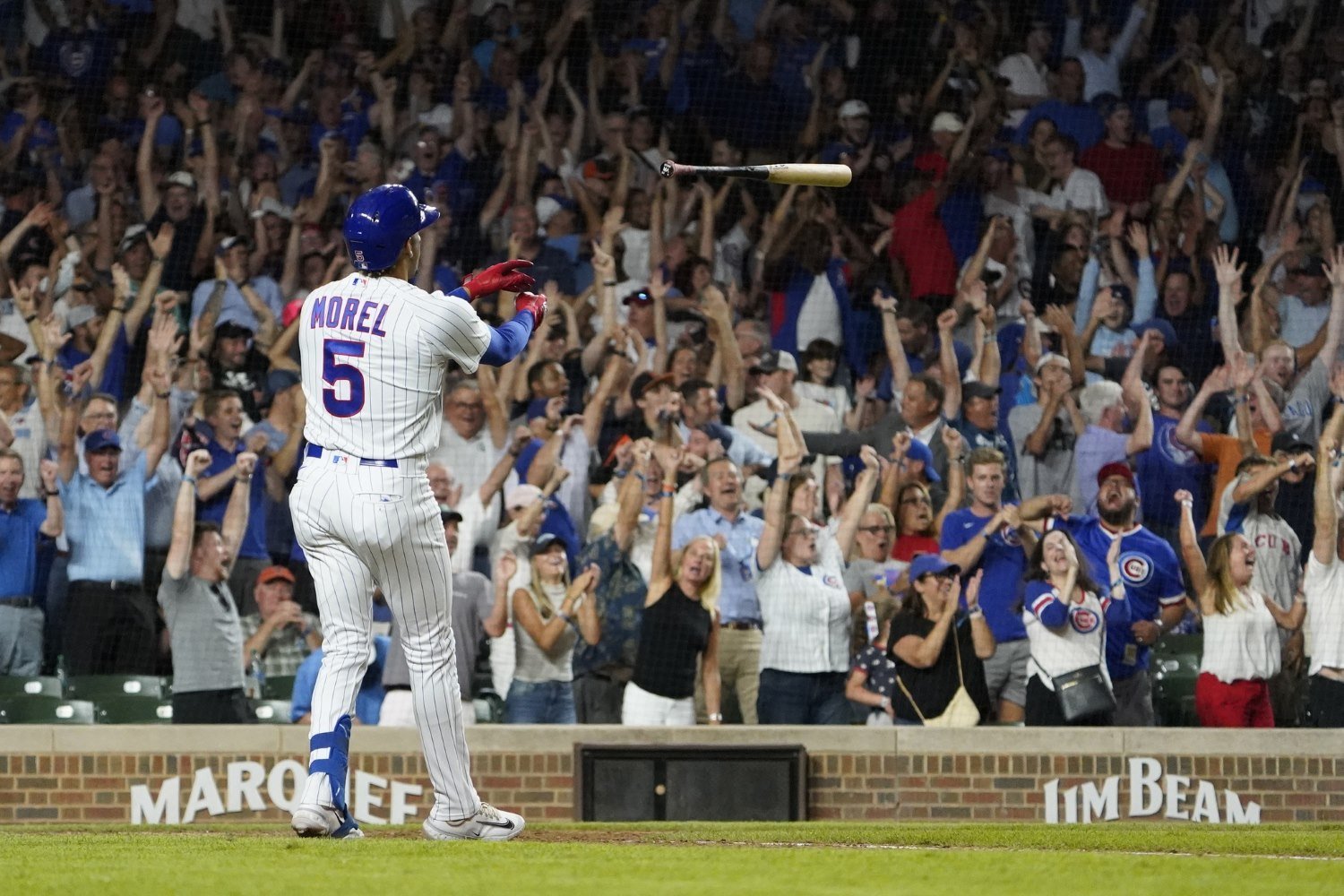 In sports, it's common to see perfectly good teams (who everyone knew to be good all along) talk incessantly about how no one ever believed in them. Unearned indignation is the one performance-enhancing drug no one has banned yet. If and when the 2023 Chicago Cubs achieve something significant enough to elicit those champagne-soaked "I told you so"s, though, they'll have come by them more honestly. I've lost count of the number of times I've considered this team to be on the ropes, or even struggling to climb up off the very canvas. At the bare minimum, they reached that kind of crisis point: On May 17, when they lost their fifth straight game by blowing a 6-1 lead in the final two innings in Houston. They'd lost by a combined score of 27-4 in their last two games in Minnesota, and the finale of a sweep at the hands of the defending champions seemed to confirm Chicago's unreadiness for serious contention. On May 28, when the surging young Reds swept them at Wrigley Field on Memorial Day weekend. The Cubs fell to a new low-water mark of eight games below .500, and into last place in the NL Central. On June 8, when the Angels completed yet another sweep of the drain-circling Cubs. That pushed Chicago to 10 games below .500, and seven games into their 10-game West Coast road trip, they had scored a total of 16 runs. On July 3, when the Cubs went to Miller Park needing to at least split a four-game series with the Brewers and lost the first contest 8-6, thanks to a five-run bullpen implosion over Milwaukee's final two turns at bat. That widened the Crew's division lead to seven games, and the Cubs fell to 38-45. More than halfway through the season, they were slogging toward a win total in the high 70s. On July 17, when the Nationals won the first game of a three-game set at Wrigley. That made three losses in four games coming out of the All-Star break, for a Cubs team that needed to turn a corner immediately or be disassembled at the trade deadline a fortnight later. Drew Smyly was well into his blue period, and that game was an especially maddening, typical loss. They fell behind, tried to come back, and were insufficient, multiple times. It felt, at that moment, like a microcosm of the season. Had any of these turned out to be the final blow they all had the potential to be, the front office would have ended up selling off impending free agents (and maybe others) at the end of July. David Ross's future with the team would be highly uncertain--and even that might be a euphemism. Some subset of the players who make up this roster are locked in for the long run, and would have been even if things had turned sour, but much of the surrounding picture might have changed, and the team might have faced another year or more of rebuilding. At the very least, those are five points at which the risk of 2023 falling irretrievably through the cracks was very real. Every time, though, the team met that challenge. On each of the first three occasions, Marcus Stroman took the ball the next day and did something dazzling. He wasn't just a stopper; he was a momentum-changer. The game immediately following the collapse in Houston was a Friday night in Philadelphia, and Stroman allowed only one run in six innings. On Memorial Day, after that ominous Cincinnati sweep, he one-hit the formidable Rays before a roaring Wrigley crowd. Deep in that desperate road trip, after the Anaheim debacle, he went 6 2/3 innings and allowed just two runs in a bounceback win against the Giants. At some point, Stroman went from being a one-man solution to one of the team's problems, as he lost the supernal command of his sinker and slurve he showed early on and tried to pitch through mounting discomfort in his hip. That only underscores another way in which the team has been astoundingly resilient, though. When Cody Bellinger went down for a month, it cleared the path that Mike Tauchman followed back to the big leagues, and Tauchman became an invaluable role player. In answer to Stroman's Memorial Day gem and subsequent injury, Justin Steele was every bit as good on Labor Day. The day after that miserable loss in Milwaukee, on the holiday that subdivides the unofficial summer of which Memorial and Labor Days are the bookends, the Cubs blew another four-run lead. That time, though, they miraculously froze the Brewers there, and then Ian Happ and Miguel Amaya made a pair of extraordinary defensive plays to win the game in extra innings. The day after they slipped to the very brink of irrelevance with that loss to the Nationals, they trailed again, as late as the sixth inning. but Seiya Suzuki struck a game-tying two-run homer, and then the Cubs scored 14 more times before the end of the night. The team hasn't just responded to every threat; they've done it with a tenacity and on a scale that seemed unthinkable a moment before it happened. They've looked ill-prepared, or overmatched, and then within an inning or two, they've flipped that script. Suddenly, the other team mishandles a ground ball, or throws a hair wildly. Suddenly, it's the Cubs batters who can't miss when someone hangs a slider. Since they escaped the last of the crises enumerated above, the Cubs have been the best team in baseball. Since the All-Star break, only the Dodgers (33-15) and Orioles (33-16) have better records than Chicago's 33-17, and both of those teams came right out of the break streaking. Once that kind of corner is turned, a team acquires the privilege of defining a crisis differently. They haven't been in serious danger of coming undone at any point in the last seven weeks, but there have been moments... August 16 at Wrigley, when the White Sox (having won the previous night) threatened to hand the Cubs a third straight loss at the front end of what they'd hoped would be a soft spot in their schedule. That was the night when an improbable escape by Michael Fulmer set up even more improbable home-run heroics from Nick Madrigal and Christopher Morel. Back-to-back walkoff losses this past weekend in Cincinnati, when the bullpen was understandably tired but the offense was less understandably bootless. Not only did the seemingly invincible Adbert Alzolay take a tough loss, but the team wasted truly brilliant pitching performances by Hayden Wesneski, Javier Assad, and even Smyly, and they then trailed three different times Sunday, when a loss would have meant limping out of town with only a one-game lead on the Reds--a lead rendered imaginary by the Reds owning the tiebreaker between them. Instead, they scored 10 runs in the final two innings to make a nailbiter into a laugher. Tuesday night. Apparently, this is going to be a regular thing now. The Cubs had to come back from down 3-0 and 6-4, but they not only did so, but made the game nigh comfortable in the end. Suzuki had another two-run game-tying smash. Morel had another crowd-detonating three-run homer. The Cubs are 10-4 in their last 14 games, and three of those four losses were one-run games on the road that came within a few inches of being wins. They're 13-5 in their last 18. They're 22-11 since the start of August, and 32-14 since that outburst against the Nationals that turned out to be the final time they really faced failure. The Brewers have played stellar ball themselves, with a 28-19 record since the break that has stymied the Cubs' designs on the division lead so far. No matter. The sheer relentlessness of this team won't necessarily push them past Milwaukee, or deep into October, but it's already made this the most resilient team in Cubs history. They've overcome greater adversity than did any team helmed by Joe Maddon, Lou Piniella, or Dusty Baker, so even if they don't go as far as a couple of those teams did, they have proved themselves in a way none of those groups did. The brutal length and intensity of a big-league season sometimes demands that both players and fans stop defining success or failure based on what anyone else does. The Cubs keep winning series, and winning games they look like they're about to lose. Whatever else other clubs do, they're having the best kind of success August and September can offer, and August and September sometimes offer a purer, more lasting memory of success than October can, anyway. This is far from the best Cubs team in recent memory, and rooting for them hasn't always been fun, by traditional definitions. Yet, they've written a phenomenal story already, and Tuesday night was further evidence that it's not nearly over.
 -
It's becoming irresistible. No matter how rational one tries to remain, this Cubs team has begun to insist upon its excellence. Get on board, or get run over. Image courtesy of © David Banks-USA TODAY Sports In sports, it's common to see perfectly good teams (who everyone knew to be good all along) talk incessantly about how no one ever believed in them. Unearned indignation is the one performance-enhancing drug no one has banned yet. If and when the 2023 Chicago Cubs achieve something significant enough to elicit those champagne-soaked "I told you so"s, though, they'll have come by them more honestly. I've lost count of the number of times I've considered this team to be on the ropes, or even struggling to climb up off the very canvas. At the bare minimum, they reached that kind of crisis point: On May 17, when they lost their fifth straight game by blowing a 6-1 lead in the final two innings in Houston. They'd lost by a combined score of 27-4 in their last two games in Minnesota, and the finale of a sweep at the hands of the defending champions seemed to confirm Chicago's unreadiness for serious contention. On May 28, when the surging young Reds swept them at Wrigley Field on Memorial Day weekend. The Cubs fell to a new low-water mark of eight games below .500, and into last place in the NL Central. On June 8, when the Angels completed yet another sweep of the drain-circling Cubs. That pushed Chicago to 10 games below .500, and seven games into their 10-game West Coast road trip, they had scored a total of 16 runs. On July 3, when the Cubs went to Miller Park needing to at least split a four-game series with the Brewers and lost the first contest 8-6, thanks to a five-run bullpen implosion over Milwaukee's final two turns at bat. That widened the Crew's division lead to seven games, and the Cubs fell to 38-45. More than halfway through the season, they were slogging toward a win total in the high 70s. On July 17, when the Nationals won the first game of a three-game set at Wrigley. That made three losses in four games coming out of the All-Star break, for a Cubs team that needed to turn a corner immediately or be disassembled at the trade deadline a fortnight later. Drew Smyly was well into his blue period, and that game was an especially maddening, typical loss. They fell behind, tried to come back, and were insufficient, multiple times. It felt, at that moment, like a microcosm of the season. Had any of these turned out to be the final blow they all had the potential to be, the front office would have ended up selling off impending free agents (and maybe others) at the end of July. David Ross's future with the team would be highly uncertain--and even that might be a euphemism. Some subset of the players who make up this roster are locked in for the long run, and would have been even if things had turned sour, but much of the surrounding picture might have changed, and the team might have faced another year or more of rebuilding. At the very least, those are five points at which the risk of 2023 falling irretrievably through the cracks was very real. Every time, though, the team met that challenge. On each of the first three occasions, Marcus Stroman took the ball the next day and did something dazzling. He wasn't just a stopper; he was a momentum-changer. The game immediately following the collapse in Houston was a Friday night in Philadelphia, and Stroman allowed only one run in six innings. On Memorial Day, after that ominous Cincinnati sweep, he one-hit the formidable Rays before a roaring Wrigley crowd. Deep in that desperate road trip, after the Anaheim debacle, he went 6 2/3 innings and allowed just two runs in a bounceback win against the Giants. At some point, Stroman went from being a one-man solution to one of the team's problems, as he lost the supernal command of his sinker and slurve he showed early on and tried to pitch through mounting discomfort in his hip. That only underscores another way in which the team has been astoundingly resilient, though. When Cody Bellinger went down for a month, it cleared the path that Mike Tauchman followed back to the big leagues, and Tauchman became an invaluable role player. In answer to Stroman's Memorial Day gem and subsequent injury, Justin Steele was every bit as good on Labor Day. The day after that miserable loss in Milwaukee, on the holiday that subdivides the unofficial summer of which Memorial and Labor Days are the bookends, the Cubs blew another four-run lead. That time, though, they miraculously froze the Brewers there, and then Ian Happ and Miguel Amaya made a pair of extraordinary defensive plays to win the game in extra innings. The day after they slipped to the very brink of irrelevance with that loss to the Nationals, they trailed again, as late as the sixth inning. but Seiya Suzuki struck a game-tying two-run homer, and then the Cubs scored 14 more times before the end of the night. The team hasn't just responded to every threat; they've done it with a tenacity and on a scale that seemed unthinkable a moment before it happened. They've looked ill-prepared, or overmatched, and then within an inning or two, they've flipped that script. Suddenly, the other team mishandles a ground ball, or throws a hair wildly. Suddenly, it's the Cubs batters who can't miss when someone hangs a slider. Since they escaped the last of the crises enumerated above, the Cubs have been the best team in baseball. Since the All-Star break, only the Dodgers (33-15) and Orioles (33-16) have better records than Chicago's 33-17, and both of those teams came right out of the break streaking. Once that kind of corner is turned, a team acquires the privilege of defining a crisis differently. They haven't been in serious danger of coming undone at any point in the last seven weeks, but there have been moments... August 16 at Wrigley, when the White Sox (having won the previous night) threatened to hand the Cubs a third straight loss at the front end of what they'd hoped would be a soft spot in their schedule. That was the night when an improbable escape by Michael Fulmer set up even more improbable home-run heroics from Nick Madrigal and Christopher Morel. Back-to-back walkoff losses this past weekend in Cincinnati, when the bullpen was understandably tired but the offense was less understandably bootless. Not only did the seemingly invincible Adbert Alzolay take a tough loss, but the team wasted truly brilliant pitching performances by Hayden Wesneski, Javier Assad, and even Smyly, and they then trailed three different times Sunday, when a loss would have meant limping out of town with only a one-game lead on the Reds--a lead rendered imaginary by the Reds owning the tiebreaker between them. Instead, they scored 10 runs in the final two innings to make a nailbiter into a laugher. Tuesday night. Apparently, this is going to be a regular thing now. The Cubs had to come back from down 3-0 and 6-4, but they not only did so, but made the game nigh comfortable in the end. Suzuki had another two-run game-tying smash. Morel had another crowd-detonating three-run homer. The Cubs are 10-4 in their last 14 games, and three of those four losses were one-run games on the road that came within a few inches of being wins. They're 13-5 in their last 18. They're 22-11 since the start of August, and 32-14 since that outburst against the Nationals that turned out to be the final time they really faced failure. The Brewers have played stellar ball themselves, with a 28-19 record since the break that has stymied the Cubs' designs on the division lead so far. No matter. The sheer relentlessness of this team won't necessarily push them past Milwaukee, or deep into October, but it's already made this the most resilient team in Cubs history. They've overcome greater adversity than did any team helmed by Joe Maddon, Lou Piniella, or Dusty Baker, so even if they don't go as far as a couple of those teams did, they have proved themselves in a way none of those groups did. The brutal length and intensity of a big-league season sometimes demands that both players and fans stop defining success or failure based on what anyone else does. The Cubs keep winning series, and winning games they look like they're about to lose. Whatever else other clubs do, they're having the best kind of success August and September can offer, and August and September sometimes offer a purer, more lasting memory of success than October can, anyway. This is far from the best Cubs team in recent memory, and rooting for them hasn't always been fun, by traditional definitions. Yet, they've written a phenomenal story already, and Tuesday night was further evidence that it's not nearly over. View full article
-
Tonight, Watch Whether Kyle Hendricks Finds the Fastball's Edge Early
Matthew Trueblood posted an article in Cubs
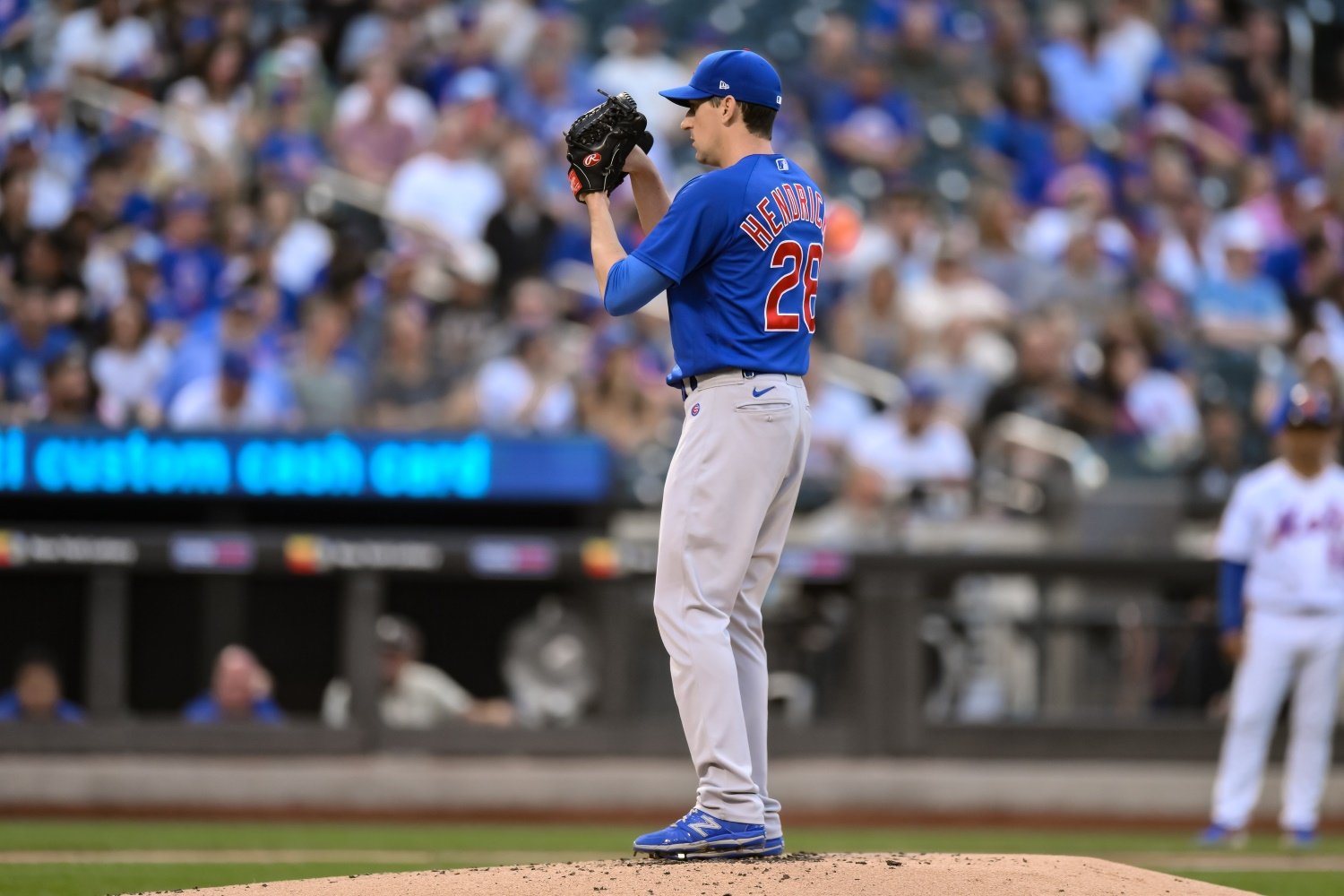 It's not as though Kyle Hendricks has ever had as wide a margin for error as most pitchers enjoy. With his relatively simple pitch mix and lack of velocity, he needs to have good movement and location to get opponents out consistently. He's more dependent on the former (and less so on the latter) than most fans believe, but everyone understands that when Hendricks lacks command of either his sinker or his changeup, he's in for a long day. For the most part, Hendricks has thrived this season, and his mistakes have been within that narrow margin. Since the All-Star break, though, he's struggled significantly with commanding his fastball to its desired location on the third-base side of home plate, and it's put the team in early holes that could be avoided. They could be, that is, if Hendricks can by some means break the pattern. First, a clarifying note: As I've written often, Hendricks's changeup has long since become (basically) two different pitches, and the difference between them has never been more stark. He's also been increasingly reliant on that pitch (well, those pitches) to both lefties and righties this year. That has increased the importance of distinguishing his four-seam fastball from his sinker. He throws the former in conjunction with his fading changeup, to left-handed batters, and the latter as a pair with the cut-change he uses against righties. For the purposes of this quick study and presentation, though, I'm lumping the two fastballs together. There's a good and simple reason for this. I want to talk specifically about location, and while he pairs his pitches differently, Hendricks is pretty consistent in aiming for that outside edge to lefthanders (and the inside one to righties) with his heat. That's where both pitches set up their partner changeup varietal best. Thus, we can safely examine them as a group, without breaking things out by specific fastball type or handedness. Here's where Hendricks's four-seamers and sinkers have gone in Innings 3 and 4 of his starts this year. You can see him missing on some occasions; coming over the plate to fool hitters or steal a strike on others; and teasing the corners to induce chases at still others, but it's pretty clear that Hendricks is trying to paint that corner most of the time, right? Look how well he does it late in his starts, from the fifth frame onward. That's why they call him Professor. He's clinical. He's careful. He's precise. Alas, early in games, that same refinement is not at all in evidence. Here are his locations in Innings 1 and 2 of starts this season. These heat maps are made of objective data, but they can invite some subjective readings. To lend greater clarity to the problem, then, consider these less negotiable facts: Hitters have a .395 weighted on-base average (wOBA) against Hendricks's fastballs in the first two innings, and a .350 mark thereafter; and They're batting .293/.341/.440 against Hendricks in his first 25 pitches of outings in 2023, but for the rest of his appearances, they run an OPS just south of .600. Simply put, for whatever reason, Hendricks has trouble locking in the command of his fastballs prior to his starts this year. He's only walked 20 batters for the campaign, but half of those have come within the first two innings, and nine of them within that first 25-pitch window. Wildness, even if it be comparatively mild, is a problem for Hendricks, because any batter who reaches base might wreak havoc on the bases and augment the opponents' hope of another hit. Hendricks once controlled the running game well, but no longer, and he has had to yield to more pulled contact in order to get more weak contact on the ground this year. The Cubs offense has, by and large, provided sufficient margin for error to make up for the fact that Hendricks has gotten into an unusual number of jams and given up a few too many early runs. Like any success Hendricks finds without command of the fastball, though, that state of affairs feels fragile. He's been good, but needs to be even better in order to sustain anywhere near the results he and the team have enjoyed recently. That might mean a new approach to the pre-game bullpen work, if Hendricks is idiosyncratic that way. It might mean leaning more on his changeups early. He's used the fastballs about 62 percent of the time through two innings, then 58 percent of the time in the third and fourth, and it's come all the way down to 51 percent thereafter. If Hendricks is going to scuffle with finding that edge, he might need to swap a few of those early fastballs in for sharper changeups--even if it means that he's less effective later. At this time of year, surely, David Ross will be proactive with his starting pitchers, anyway. Hendricks is a savvy veteran, more than capable of this type of adjustment. The Cubs must be aware of the problem: it shows up in even a relatively cursory watch of the early portions of Hendricks's outings. The question is whether this is an unchangeable aspect of aging, and of his body turning ever so slightly and slowly away from his craft, or whether it's something more easily identified and corrected.
 -
For the Cubs' most tenured starting pitcher, command is everything. This year, he's having a hard time pinning it down to begin games. Image courtesy of © John Jones-USA TODAY Sports It's not as though Kyle Hendricks has ever had as wide a margin for error as most pitchers enjoy. With his relatively simple pitch mix and lack of velocity, he needs to have good movement and location to get opponents out consistently. He's more dependent on the former (and less so on the latter) than most fans believe, but everyone understands that when Hendricks lacks command of either his sinker or his changeup, he's in for a long day. For the most part, Hendricks has thrived this season, and his mistakes have been within that narrow margin. Since the All-Star break, though, he's struggled significantly with commanding his fastball to its desired location on the third-base side of home plate, and it's put the team in early holes that could be avoided. They could be, that is, if Hendricks can by some means break the pattern. First, a clarifying note: As I've written often, Hendricks's changeup has long since become (basically) two different pitches, and the difference between them has never been more stark. He's also been increasingly reliant on that pitch (well, those pitches) to both lefties and righties this year. That has increased the importance of distinguishing his four-seam fastball from his sinker. He throws the former in conjunction with his fading changeup, to left-handed batters, and the latter as a pair with the cut-change he uses against righties. For the purposes of this quick study and presentation, though, I'm lumping the two fastballs together. There's a good and simple reason for this. I want to talk specifically about location, and while he pairs his pitches differently, Hendricks is pretty consistent in aiming for that outside edge to lefthanders (and the inside one to righties) with his heat. That's where both pitches set up their partner changeup varietal best. Thus, we can safely examine them as a group, without breaking things out by specific fastball type or handedness. Here's where Hendricks's four-seamers and sinkers have gone in Innings 3 and 4 of his starts this year. You can see him missing on some occasions; coming over the plate to fool hitters or steal a strike on others; and teasing the corners to induce chases at still others, but it's pretty clear that Hendricks is trying to paint that corner most of the time, right? Look how well he does it late in his starts, from the fifth frame onward. That's why they call him Professor. He's clinical. He's careful. He's precise. Alas, early in games, that same refinement is not at all in evidence. Here are his locations in Innings 1 and 2 of starts this season. These heat maps are made of objective data, but they can invite some subjective readings. To lend greater clarity to the problem, then, consider these less negotiable facts: Hitters have a .395 weighted on-base average (wOBA) against Hendricks's fastballs in the first two innings, and a .350 mark thereafter; and They're batting .293/.341/.440 against Hendricks in his first 25 pitches of outings in 2023, but for the rest of his appearances, they run an OPS just south of .600. Simply put, for whatever reason, Hendricks has trouble locking in the command of his fastballs prior to his starts this year. He's only walked 20 batters for the campaign, but half of those have come within the first two innings, and nine of them within that first 25-pitch window. Wildness, even if it be comparatively mild, is a problem for Hendricks, because any batter who reaches base might wreak havoc on the bases and augment the opponents' hope of another hit. Hendricks once controlled the running game well, but no longer, and he has had to yield to more pulled contact in order to get more weak contact on the ground this year. The Cubs offense has, by and large, provided sufficient margin for error to make up for the fact that Hendricks has gotten into an unusual number of jams and given up a few too many early runs. Like any success Hendricks finds without command of the fastball, though, that state of affairs feels fragile. He's been good, but needs to be even better in order to sustain anywhere near the results he and the team have enjoyed recently. That might mean a new approach to the pre-game bullpen work, if Hendricks is idiosyncratic that way. It might mean leaning more on his changeups early. He's used the fastballs about 62 percent of the time through two innings, then 58 percent of the time in the third and fourth, and it's come all the way down to 51 percent thereafter. If Hendricks is going to scuffle with finding that edge, he might need to swap a few of those early fastballs in for sharper changeups--even if it means that he's less effective later. At this time of year, surely, David Ross will be proactive with his starting pitchers, anyway. Hendricks is a savvy veteran, more than capable of this type of adjustment. The Cubs must be aware of the problem: it shows up in even a relatively cursory watch of the early portions of Hendricks's outings. The question is whether this is an unchangeable aspect of aging, and of his body turning ever so slightly and slowly away from his craft, or whether it's something more easily identified and corrected. View full article
-
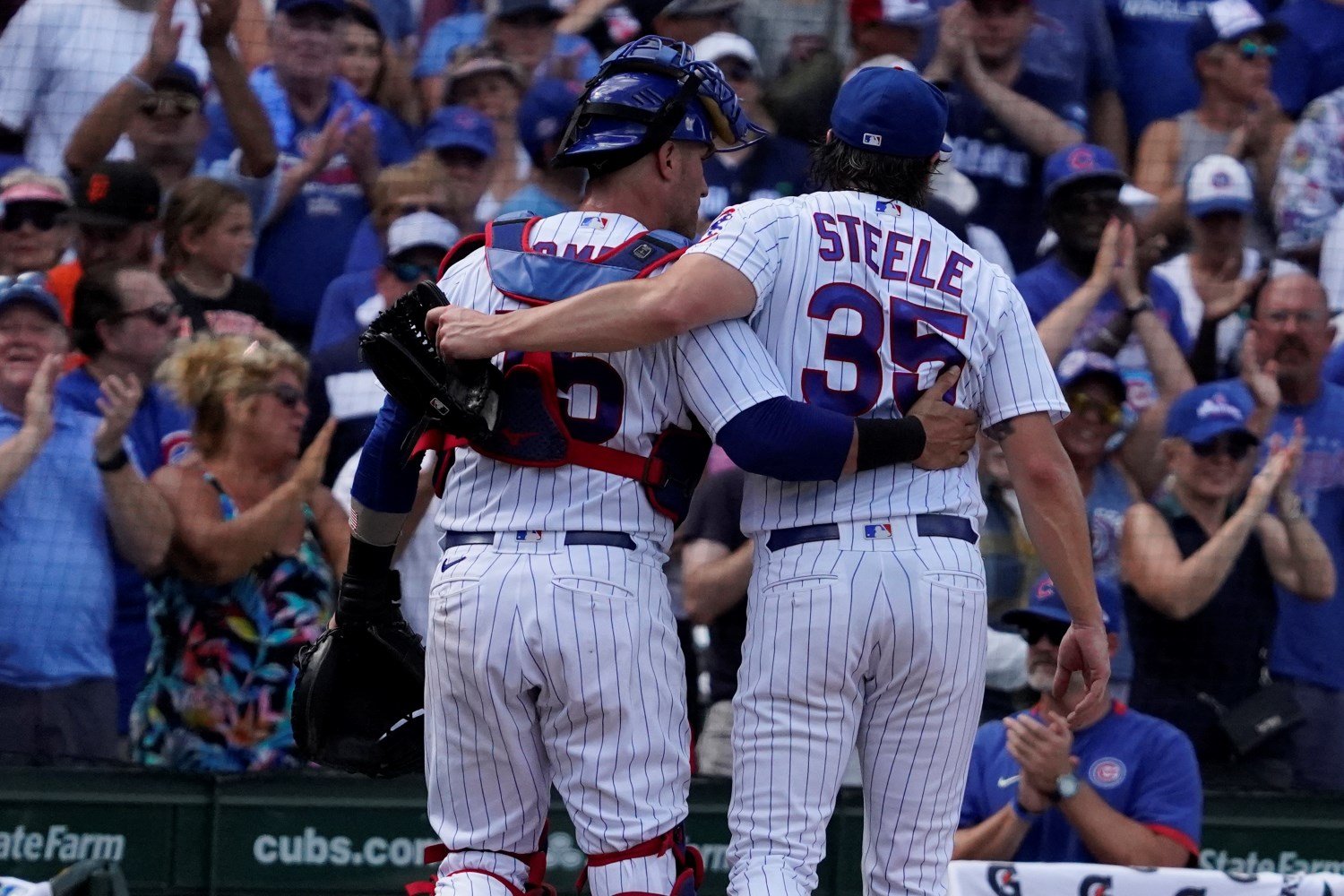 It's strange to think of Justin Steele as a pitcher dependent on deception and command. He's not as young as we tend to imagine, but he's sufficiently new on the scene to feel like a young arm. He hits 95 miles per hour, occasionally, and his cutter sits just south of 92 on average. His secondary weapon is a slider. For as long as there have been radar guns, guys who can throw 95 have been power pitchers, and the slider has been the breaking ball of choice for power pitchers. The game has changed, though--perhaps even more radically than we can conceptualize as we watch each season slowly unfold. Steele's heat, which is under 92 miles per hour 57.3 percent of the time, is as tepid (based on pure velocity) as that of Kyle Hendricks was a decade ago, when the young twirler was sitting right around 90 miles per hour. Average Fastball Velocity Among Pitchers Who Threw 200+ Fastballs, 2008-23, Selected Seasons Season 25th %ile FB Vel. 50th %ile FB Vel. 75th %ile FB Vel. 100th %ile FB Vel. 2008 89.6 91.3 93.1 98.2 2013 90.7 92.4 94 100 2018 91.3 93 94.7 100.5 2023 92.5 94.1 95.7 101.7 The proliferation of guys who throw triple-digit fastballs has been well-covered, but it's harder to notice that what was a healthily above-average fastball 10 years ago is now almost precisely the median one. Needing to hump up a bit to touch 93, which is Steele's situation, used to mark a pitcher as roughly average. Now, it makes them solidly below-average, and they need to do something else very well in order to be a useful pitcher. Obviously, Steele has now put the question of his utility well out of reach, and is closer to being the best pitcher in baseball than he is to being a fifth starter. That transformation has been extraordinary, particularly in light of his inability to overwhelm people with sheer stuff. Steele has come to grips with the fact that movement and command are the keys to his success, and as a result, he's remade himself on the fly. Little has really changed in Steele's game this year, from a macro perspective. He's slashed his walk rate, which is notable, but it's tempting to view that as merely an improvement, rather than the result of a conscious and substantial adjustment. He's still mostly throwing two pitches: a cutter (which some algorithms persist in calling a four-seam fastball, but which is very much a true cutter) and a slider. He's hitting the zone more with both of them than he has in the past, but again, one could fool oneself into seeing that as a factor of improved mechanics or repetition of his delivery. That's not it. Rather, Steele has made some major and multi-layered tweaks to the way he attacks hitters, including slightly reshaping that fastball. By embracing the cutting action of it (and giving up on the idea that it's a cut-ride four-seamer, taking the ride out of it in a steady progression), he's consistently hit the inner half of the plate (to right-handed batters) with the pitch more and more often--especially the upper part of the strike zone to that side. Doing that, alone, is valuable. It's hard to overstate how much hitters hate when a pitcher can locate anything hard to their glove side (inside to opposite-handed batters, away from same-handed ones) and above the belt. Jacob deGrom throws so hard that his fastball would be good no matter how it moved or where he put it, but the reason that he's unhittable (when he's healthy) is that he can command his heat to that portion of the strike zone. It's very tough for hitters to see and square up. Steele has taken it further than that, though. To see how, let's start by breaking down his approach into the one he uses against right-handed hitters, and the one he employs against lefties, and by comparing those approaches in 2022 with the same in 2023. Against righties, Steele spent 2022 trying to work from up and away (with that fastball, still acting more like a four-seamer then) to low and in (with the slider). In 2023, while he's become even more dependent on that fastball, he's allowed its natural cut to become its defining characteristig. He's inside more often, and the slider works in a more purely vertical contrast with the cutter. Notice that Steele hasn't missed above the zone or away from righties nearly as often this year, nor as badly. Naturally, he's missed more often inside against them, and down, but fewer of his misses have been with the fastball (or cutter, as we know it to really be), and those balls that miss in and down on righties have to pass through the hitting zone in the eyes of the hitter. For precisely that reason, he's getting more swings, and especially more chases, this year. Against lefties, Steele can be a very different, somewhat more traditional pitcher. Instead of having to work fearlessly inside without the margin for error afforded by great velocity, he can live on the outer half. Last year, though, he was imprecise in his efforts to do so. He worked, in a mirrored version of that same way as to righties, from up and in to low and away, without much intentional variation. This year, he's been much more of an equal-opportunity visitor of the outer edge, working up and away with the cutter more comfortably, and inviting lefties to see that pitch out over the plate and chase it even off the edge. The flattening out of his fastball into a true cutter, and his mental adjustment to use it that way in relationship to his slider (even if he prefers to still call it a four-seamer, at least in public), has made Steele much tougher to handle. because his mistakes are less likely than ever to be in hittable areas of the zone. Worse yet (for his overmatched opponents), Steele can so brilliantly locate when he gets into this mental groove that he does have access to the outer third of the plate against righties. He just doesn't go there until he has the batter thoroughly set up. Here's a heat map of where Steele has pitched to righties before the count reaches two strikes this year. Inside, inside, inside, is the drill. The two distinct loci of greatest frequency (the larger, redder one up high where he throws the cutter, and the smaller one down low where the sliders go) show how good his command is on that side of the plate. Now, look at where Steele gets his whiffs against righties. He just violates the cues a hitter uses to attack every other pitcher they see in a given week. He comes inside when they look away, and he goes away when they look inside. His ball has unusual movement, and he's worked to ensure that that movement is well-disguised. The ball comes out of his hand with fairly well-mirrored spin, and then seam-shifted wake effects steer the cutter into a deceptively flat arc and give the slider more sweep and less depth than would be expected. Their movement is, really, converging, but the effect so confounds the hitter that they might as well be diverging sharply. He actually releases his cutter a touch lower and a touch further toward first base than his slider. This is new, and the latter fact is decidedly not normal. Even if a hitter can spot a slight difference in his release point, therefore, they're likely to wind up baffled. Steele's command and control aren't as fine as those of Greg Maddux or Cliff Lee, for whom cutters were a way of overmatching hitters they could not overpower. His repertoire doesn't have the depth or the versatility of a pitcher like Roy Halladay, who could both sink and cut the fastball in addition to some nasty secondary stuff. Still, while he's operating at this high a level, Steele is that caliber of pitcher. With Monday's outing, he put himself at the front of any conversation about this year's NL Cy Young Award. That's a testament to his talent, his mentality, and the open-mindedness that allowed him to change from a strikeout maven with an upside curtailed by control problems into a strike thrower who knows how to get outs against all types of hitters, even late in games and under playoff pressure.
 -
In a world full of stuff monsters and velocity gone wild, the Cubs have found one of the most unlikely ace-caliber finesse pitchers in recent memory. Image courtesy of © David Banks-USA TODAY Sports It's strange to think of Justin Steele as a pitcher dependent on deception and command. He's not as young as we tend to imagine, but he's sufficiently new on the scene to feel like a young arm. He hits 95 miles per hour, occasionally, and his cutter sits just south of 92 on average. His secondary weapon is a slider. For as long as there have been radar guns, guys who can throw 95 have been power pitchers, and the slider has been the breaking ball of choice for power pitchers. The game has changed, though--perhaps even more radically than we can conceptualize as we watch each season slowly unfold. Steele's heat, which is under 92 miles per hour 57.3 percent of the time, is as tepid (based on pure velocity) as that of Kyle Hendricks was a decade ago, when the young twirler was sitting right around 90 miles per hour. Average Fastball Velocity Among Pitchers Who Threw 200+ Fastballs, 2008-23, Selected Seasons Season 25th %ile FB Vel. 50th %ile FB Vel. 75th %ile FB Vel. 100th %ile FB Vel. 2008 89.6 91.3 93.1 98.2 2013 90.7 92.4 94 100 2018 91.3 93 94.7 100.5 2023 92.5 94.1 95.7 101.7 The proliferation of guys who throw triple-digit fastballs has been well-covered, but it's harder to notice that what was a healthily above-average fastball 10 years ago is now almost precisely the median one. Needing to hump up a bit to touch 93, which is Steele's situation, used to mark a pitcher as roughly average. Now, it makes them solidly below-average, and they need to do something else very well in order to be a useful pitcher. Obviously, Steele has now put the question of his utility well out of reach, and is closer to being the best pitcher in baseball than he is to being a fifth starter. That transformation has been extraordinary, particularly in light of his inability to overwhelm people with sheer stuff. Steele has come to grips with the fact that movement and command are the keys to his success, and as a result, he's remade himself on the fly. Little has really changed in Steele's game this year, from a macro perspective. He's slashed his walk rate, which is notable, but it's tempting to view that as merely an improvement, rather than the result of a conscious and substantial adjustment. He's still mostly throwing two pitches: a cutter (which some algorithms persist in calling a four-seam fastball, but which is very much a true cutter) and a slider. He's hitting the zone more with both of them than he has in the past, but again, one could fool oneself into seeing that as a factor of improved mechanics or repetition of his delivery. That's not it. Rather, Steele has made some major and multi-layered tweaks to the way he attacks hitters, including slightly reshaping that fastball. By embracing the cutting action of it (and giving up on the idea that it's a cut-ride four-seamer, taking the ride out of it in a steady progression), he's consistently hit the inner half of the plate (to right-handed batters) with the pitch more and more often--especially the upper part of the strike zone to that side. Doing that, alone, is valuable. It's hard to overstate how much hitters hate when a pitcher can locate anything hard to their glove side (inside to opposite-handed batters, away from same-handed ones) and above the belt. Jacob deGrom throws so hard that his fastball would be good no matter how it moved or where he put it, but the reason that he's unhittable (when he's healthy) is that he can command his heat to that portion of the strike zone. It's very tough for hitters to see and square up. Steele has taken it further than that, though. To see how, let's start by breaking down his approach into the one he uses against right-handed hitters, and the one he employs against lefties, and by comparing those approaches in 2022 with the same in 2023. Against righties, Steele spent 2022 trying to work from up and away (with that fastball, still acting more like a four-seamer then) to low and in (with the slider). In 2023, while he's become even more dependent on that fastball, he's allowed its natural cut to become its defining characteristig. He's inside more often, and the slider works in a more purely vertical contrast with the cutter. Notice that Steele hasn't missed above the zone or away from righties nearly as often this year, nor as badly. Naturally, he's missed more often inside against them, and down, but fewer of his misses have been with the fastball (or cutter, as we know it to really be), and those balls that miss in and down on righties have to pass through the hitting zone in the eyes of the hitter. For precisely that reason, he's getting more swings, and especially more chases, this year. Against lefties, Steele can be a very different, somewhat more traditional pitcher. Instead of having to work fearlessly inside without the margin for error afforded by great velocity, he can live on the outer half. Last year, though, he was imprecise in his efforts to do so. He worked, in a mirrored version of that same way as to righties, from up and in to low and away, without much intentional variation. This year, he's been much more of an equal-opportunity visitor of the outer edge, working up and away with the cutter more comfortably, and inviting lefties to see that pitch out over the plate and chase it even off the edge. The flattening out of his fastball into a true cutter, and his mental adjustment to use it that way in relationship to his slider (even if he prefers to still call it a four-seamer, at least in public), has made Steele much tougher to handle. because his mistakes are less likely than ever to be in hittable areas of the zone. Worse yet (for his overmatched opponents), Steele can so brilliantly locate when he gets into this mental groove that he does have access to the outer third of the plate against righties. He just doesn't go there until he has the batter thoroughly set up. Here's a heat map of where Steele has pitched to righties before the count reaches two strikes this year. Inside, inside, inside, is the drill. The two distinct loci of greatest frequency (the larger, redder one up high where he throws the cutter, and the smaller one down low where the sliders go) show how good his command is on that side of the plate. Now, look at where Steele gets his whiffs against righties. He just violates the cues a hitter uses to attack every other pitcher they see in a given week. He comes inside when they look away, and he goes away when they look inside. His ball has unusual movement, and he's worked to ensure that that movement is well-disguised. The ball comes out of his hand with fairly well-mirrored spin, and then seam-shifted wake effects steer the cutter into a deceptively flat arc and give the slider more sweep and less depth than would be expected. Their movement is, really, converging, but the effect so confounds the hitter that they might as well be diverging sharply. He actually releases his cutter a touch lower and a touch further toward first base than his slider. This is new, and the latter fact is decidedly not normal. Even if a hitter can spot a slight difference in his release point, therefore, they're likely to wind up baffled. Steele's command and control aren't as fine as those of Greg Maddux or Cliff Lee, for whom cutters were a way of overmatching hitters they could not overpower. His repertoire doesn't have the depth or the versatility of a pitcher like Roy Halladay, who could both sink and cut the fastball in addition to some nasty secondary stuff. Still, while he's operating at this high a level, Steele is that caliber of pitcher. With Monday's outing, he put himself at the front of any conversation about this year's NL Cy Young Award. That's a testament to his talent, his mentality, and the open-mindedness that allowed him to change from a strikeout maven with an upside curtailed by control problems into a strike thrower who knows how to get outs against all types of hitters, even late in games and under playoff pressure. View full article
-
Why the Cubs Called Up Alexander Canario Instead of Pete Crow-Armstrong
Matthew Trueblood posted an article in Cubs
 The easiest explanation for the Cubs' choice to call up Alexander Canario instead of Pete Crow-Armstrong to start September is that Canario is already on their 40-man roster. Adding Canario doesn't cost them a spot on that reserve list, and although they have that room at the moment, there will be some shuffling ahead as they try to keep their pitching staff as close to full strength as possible down the stretch. In truth, though, the reasons run a little deeper than that. For one thing, there's a little bit more flexibility when it comes to finding playing time for a right-handed batter than there is for a lefty right now. Mike Tauchman has hit a bit of a wall recently, but he remains a trusted and useful on-base threat against right-handed pitching. No one is nudging Cody Bellinger out of the lineup, and Seiya Suzuki has been the hottest hitter on the team for the last few weeks. Meanwhile, Christopher Morel has much more glaring flaws (and a lower floor when he's slumping) than Tauchman, and Patrick Wisdom's weaknesses are so easy for opposing teams to exploit that it's hard to trust him with any high-leverage plate appearances. Wisdom is a good entry point for a discussion about what makes Canario uniquely well-suited to fill a role on this roster, in the short term. Somewhat surprisingly, this above-average offense (overall) is the third-worst in MLB against four-seam fastballs, according to expected weighted on-base average (xwOBA). Wisdom is one of the exemplars of the problem. He's hitting .187 against four-seamers this year, and whiffing on 37.2 percent of the swings he takes against that pitch, according to Brooks Baseball. Statcast classifies pitches slightly differently, so the exact numbers are different, but Wisdom has the 10th-highest whiff rate in the league against four-seamers, out of 209 qualifying batters. Now that Statcast captures the action at Triple-A stadia, we can compare that directly to what Canario has done against four-seamers. Admittedly, the sample is small, and four-seamers in the minors are not the same as those he'd see in the majors, but Canario is hitting .417 and slugging .833 against four-seam fastballs this year in Iowa. He's whiffed on 29.4 percent of his swings against them, and you can count on that figure rising when he has to face big-league heat, but he's capable of doing big damage against that pitch. This is one reason why he hangs in very well against right-handed pitchers; they can't easily slip the heater by him. Crow-Armstrong is a different hitter than Wisdom or Canario. They both, to varying degrees, rely on power to generate their offensive value, whereas Crow-Armstrong better commands the strike zone. He doesn't have gaudy numbers against four-seamers, but whiffs on just over 20 percent of them at Triple A. Again, that would rise in MLB, but the main reason why Canario fits better than Crow-Armstrong at the moment is that he can hit (and hit for power) against that four-seamer. The Cubs need reliable power, and they specifically need it against that offering, Thus, Canario is a good fit. Nor is he without defensive value. Until now, the Cubs' only real option when facing left-handed pitching has been to use Bellinger in center field, with Jeimer Candelario moving to first base and Nick Madrigal at third. Now, they could conceivably keep Bellinger at first, using Canario in center and either playing Candelario at third or putting Madrigal there and letting Candelario be the DH. Canario can also spell both Ian Happ and Suzuki in the corners, where he's more than the merely adequate defender he is in center. The coming fortnight will be grueling, with 14 games in 13 days. Canario can help ensure that the anchors of the lineup remain fresh when it's over and there's still another two weeks of crucial games to play. Later in the month, if Crow-Armstrong gets hot, Tauchman continues to struggle, or Morel reasserts himself as an everyday designated hitter, we could see Canario and Crow-Armstrong swapped--especially if the waters are relatively smooth on the pitching side and the team doesn't need to burn further 40-man spots on the staff. Crow-Armstrong's speed and defense could have a major impact in the postseason, too, so calling him up for the final fortnight at the expense of Miles Mastrobuoni or Wisdom could make sense, even if Canario sticks. Right now, though, the team needs most what Canario does best. That, and the fact that Canario was better than Crow-Armstrong over the final week of August, made it relatively easy to call up the man the team got for Kris Bryant, rather than the one they got for Javier Baez.
 -
The time has come to expand rosters for the final month of MLB's season. The Cubs didn't turn to their top prospect, though, bypassing him for one who better fits their short-term needs. Image courtesy of © Jamar Coach/News Sentinel / USA TODAY NETWORK The easiest explanation for the Cubs' choice to call up Alexander Canario instead of Pete Crow-Armstrong to start September is that Canario is already on their 40-man roster. Adding Canario doesn't cost them a spot on that reserve list, and although they have that room at the moment, there will be some shuffling ahead as they try to keep their pitching staff as close to full strength as possible down the stretch. In truth, though, the reasons run a little deeper than that. For one thing, there's a little bit more flexibility when it comes to finding playing time for a right-handed batter than there is for a lefty right now. Mike Tauchman has hit a bit of a wall recently, but he remains a trusted and useful on-base threat against right-handed pitching. No one is nudging Cody Bellinger out of the lineup, and Seiya Suzuki has been the hottest hitter on the team for the last few weeks. Meanwhile, Christopher Morel has much more glaring flaws (and a lower floor when he's slumping) than Tauchman, and Patrick Wisdom's weaknesses are so easy for opposing teams to exploit that it's hard to trust him with any high-leverage plate appearances. Wisdom is a good entry point for a discussion about what makes Canario uniquely well-suited to fill a role on this roster, in the short term. Somewhat surprisingly, this above-average offense (overall) is the third-worst in MLB against four-seam fastballs, according to expected weighted on-base average (xwOBA). Wisdom is one of the exemplars of the problem. He's hitting .187 against four-seamers this year, and whiffing on 37.2 percent of the swings he takes against that pitch, according to Brooks Baseball. Statcast classifies pitches slightly differently, so the exact numbers are different, but Wisdom has the 10th-highest whiff rate in the league against four-seamers, out of 209 qualifying batters. Now that Statcast captures the action at Triple-A stadia, we can compare that directly to what Canario has done against four-seamers. Admittedly, the sample is small, and four-seamers in the minors are not the same as those he'd see in the majors, but Canario is hitting .417 and slugging .833 against four-seam fastballs this year in Iowa. He's whiffed on 29.4 percent of his swings against them, and you can count on that figure rising when he has to face big-league heat, but he's capable of doing big damage against that pitch. This is one reason why he hangs in very well against right-handed pitchers; they can't easily slip the heater by him. Crow-Armstrong is a different hitter than Wisdom or Canario. They both, to varying degrees, rely on power to generate their offensive value, whereas Crow-Armstrong better commands the strike zone. He doesn't have gaudy numbers against four-seamers, but whiffs on just over 20 percent of them at Triple A. Again, that would rise in MLB, but the main reason why Canario fits better than Crow-Armstrong at the moment is that he can hit (and hit for power) against that four-seamer. The Cubs need reliable power, and they specifically need it against that offering, Thus, Canario is a good fit. Nor is he without defensive value. Until now, the Cubs' only real option when facing left-handed pitching has been to use Bellinger in center field, with Jeimer Candelario moving to first base and Nick Madrigal at third. Now, they could conceivably keep Bellinger at first, using Canario in center and either playing Candelario at third or putting Madrigal there and letting Candelario be the DH. Canario can also spell both Ian Happ and Suzuki in the corners, where he's more than the merely adequate defender he is in center. The coming fortnight will be grueling, with 14 games in 13 days. Canario can help ensure that the anchors of the lineup remain fresh when it's over and there's still another two weeks of crucial games to play. Later in the month, if Crow-Armstrong gets hot, Tauchman continues to struggle, or Morel reasserts himself as an everyday designated hitter, we could see Canario and Crow-Armstrong swapped--especially if the waters are relatively smooth on the pitching side and the team doesn't need to burn further 40-man spots on the staff. Crow-Armstrong's speed and defense could have a major impact in the postseason, too, so calling him up for the final fortnight at the expense of Miles Mastrobuoni or Wisdom could make sense, even if Canario sticks. Right now, though, the team needs most what Canario does best. That, and the fact that Canario was better than Crow-Armstrong over the final week of August, made it relatively easy to call up the man the team got for Kris Bryant, rather than the one they got for Javier Baez. View full article
-
Absolutely cursed season. The worst, the worst, the worst. Although there were also like 15 awesome things about it. We might have to do a whole yearlong series in 2024 remembering the chaos and the rollercoaster of 2004.
-
You’re thinking of an earlier collection of Rangers pitching prospects, including Thomas Diamond, Edinson Volquez, and John Danks: DVD. They had a new batch of higher-regarded guys by the time in question here, including Martin Pérez, but Hendricks was (to use one good example) 43rd in the *Rangers system alone* entering that year, according to Rangers uber-prospect expect Jamey Newberg.
-
For reasons both valid and laughable, "luck" became the focal point of a taut, high-stakes series between the Cubs and Brewers this week. It's a serendipitous occasion to celebrate one of the great lucky breaks in Cubs history. Image courtesy of © Matt Marton-USA TODAY Sports The 2012 Cubs were a moribund bunch. They started 3-11. They were, at various points, 15-32, and 24-48. By July 23, they were 38-56. That team was built to be taken apart, and on that date, Theo Epstein and Jed Hoyer went about trying to perform that demolition. They agreed to a trade to send impending free agent Ryan Dempster to the Atlanta Braves, in exchange for coveted pitching prospect Randall Delgado. It was a big story, and it looked like the next big step forward for a team that had just installed their rookie first baseman, Anthony Rizzo, and signed slugging Cuban prospect Jorge Soler as an international free agent. Then, the deal collapsed, under the weight of Dempster's five-and-10 rights. Because of Dempster's service time and seniority with the club, he had to approve the trade, and he didn't. He later denied that that was the shape of the situation, but it was. Gone was the Cubs' shot at the highly-touted Delgado. A week later, they traded lower-wattage starter Paul Maholm to Atlanta, but got a lesser haul in return. Instead of the Braves, Dempster eventually landed with the Rangers. The Cubs and Texas slapped together a deal just five minutes before the trade deadline, and instead of Delgado (a consensus top-50 prospect in the game entering 2012), the Cubs collected two lower-caliber prospects, years away from the big leagues. Undersized third baseman Christian Villanueva was, at least, 100th on Baseball America's Top 100 list prior to that year, but soft-tossing fellow Class A player Kyle Hendricks was drawing no buzz whatsoever. On Tuesday, Hendricks softly tossed six innings of one-run ball in the Cubs' biggest win since Game 5 of the 2017 NLDS--a game he also started. Before that, he'd been the starting pitcher the night they won the National League pennant for the first time since 1945, and the starting pitching the night they won the World Series for the first time since 1908. Hendricks has been a delightful surprise, from his rookie year of 2014 to this resurgent season, coming just when he looked to be in danger of fading away. On Wednesday, he was everything the Cubs needed, keeping the Brewers so off-balance that they whiffed on, stared at, or mishit even several pitches right down the middle. Keep in mind that, to any given hitter, Hendricks is largely a two-pitch pitcher. He might sneak the occasional sinker in against a lefty, and he still theoretically has his big-breaking curveball, but he's largely focused on throwing his four-seamer and changeup against lefties, and his sinker and cut-change (treated as the same pitch as his lefty changeup by pitch classifiers, but really distinct) against righties. Here's his pitch usage against right-handed batters, by season. And here's the same chart for lefties. Here, with those in mind, is his pitch movement scatter plot for Wednesday's game. The fading changeups below the sinker cluster are the ones he threw to lefties. The ones bunched next to the sinkers but toward the glove side are the ones he threw to righties. The result is that, while the velocity gap between his fastballs and his changeups is shrinking over time, batters still have to deal with a reasonably significant movement differential. Righties have a much smaller one with which to contend, which is why he gets a higher whiff rate against lefties than against righties, but the lateral orientation of his movement contrast against righties means that they generate weaker contact against him than lefties do. Indeed, though his strikeout rate is the lowest it's ever been, he's also inducing the lowest average exit velocity of his career. With a fastball under 90 miles per hour and no real third pitch against any hitter, he shouldn't be able to continue having such success, but through brilliant sequencing and good command, he does. There's also luck involved. We have to admit, and even embrace that. Hendricks's approach means plenty of balls in play, which means that luck can intercede in lots of places. He's more than usually reliant on good pitch framing by his catcher, too. None of this diminishes the genius or the validity of his career. It's just a fact that necessarily informs any account thereof. When Hendricks pitched 7 1/3 innings in Game 6 of the NLCS and became the second pitcher ever (after Don Larsen) to start a playoff game in which his team faced the minimum number of batters, he needed some good luck, and he needed the awesome defense the team had arrayed behind him. People bristle when you remind them that luck exists in baseball. When you point out specific places in which it's played a heavy role, they act as though you'd stabbed them in that place. It's akin to the reaction of certain people who enjoy White, straight, male, and other forms of privilege, when the fact that those systemic privileges play a large part in shaping our lives comes up. It hits us, whether we be fans of a team that has had some good luck or members of a demographic that has had something a little more sinister on its side, like an accusation--like an invalidation of something we love, and which we desperately want to feel is fully earned. The breakthrough insight is this: luck is everywhere. So is privilege. No one succeeds (or fails) in life based solely on their own merit or their own diligence. We are all interdependent, and we are all subject to the vagaries of chance. That's not debatable. It also doesn't need to make us so insecure. Good and bad luck can collide and create chaos within a particular moment. A person who enjoys one type of privilege and gains handsomely from it in one setting can be on the wrong side of that divide and be damaged by the absence of privilege in another setting. What we all need to do is get away from the idea that our lives are our own, and that everything that happens must be through some purposeful, individual agency. When we treat what comes to us in life less preciously, less like something we won in a vacuum, we can better appreciate and understand our place in the world around us. The Brewers have been lucky in close games this year. That doesn't mean that Craig Counsell isn't an excellent in-game manager (he is), or that his superiority to David Ross in that regard isn't one reason for the Brewers leading the Cubs in the standings (it is). Using the fact of the Brewers' luck as some denigration of their success badly misses the mark, because it covers up the fact that every team needs luck (in addition to several other things) to compete for a playoff berth. If Ryan Dempster hadn't refused the first trade destination the Cubs found for him, the team wouldn't even have the pitcher who has racked up more WAR for them than any hurler since Carlos Zambrano. That's about as lucky as you can get. It doesn't make Hendricks's wonderful career or heroic outing Wednesday any less real or any less valid, though. Nor does the fact that the Cubs' winning hit was an infield single off the leg of Joel Payamps render their victory somehow illegitimate. The Brewers have gotten their wins in different ways than the Cubs have, and their luck is taking a different shape than the Cubs' this year, but it's silly to argue that either team has been luckier than the other, and lobbing calumnies back and forth based on the premise that they might have been betrays a misunderstanding of the enormous role luck plays in our lives--but especially in baseball. View full article
-
The Cubs Got Very Lucky the Day Ryan Dempster Turned Down the Braves
Matthew Trueblood posted an article in Cubs
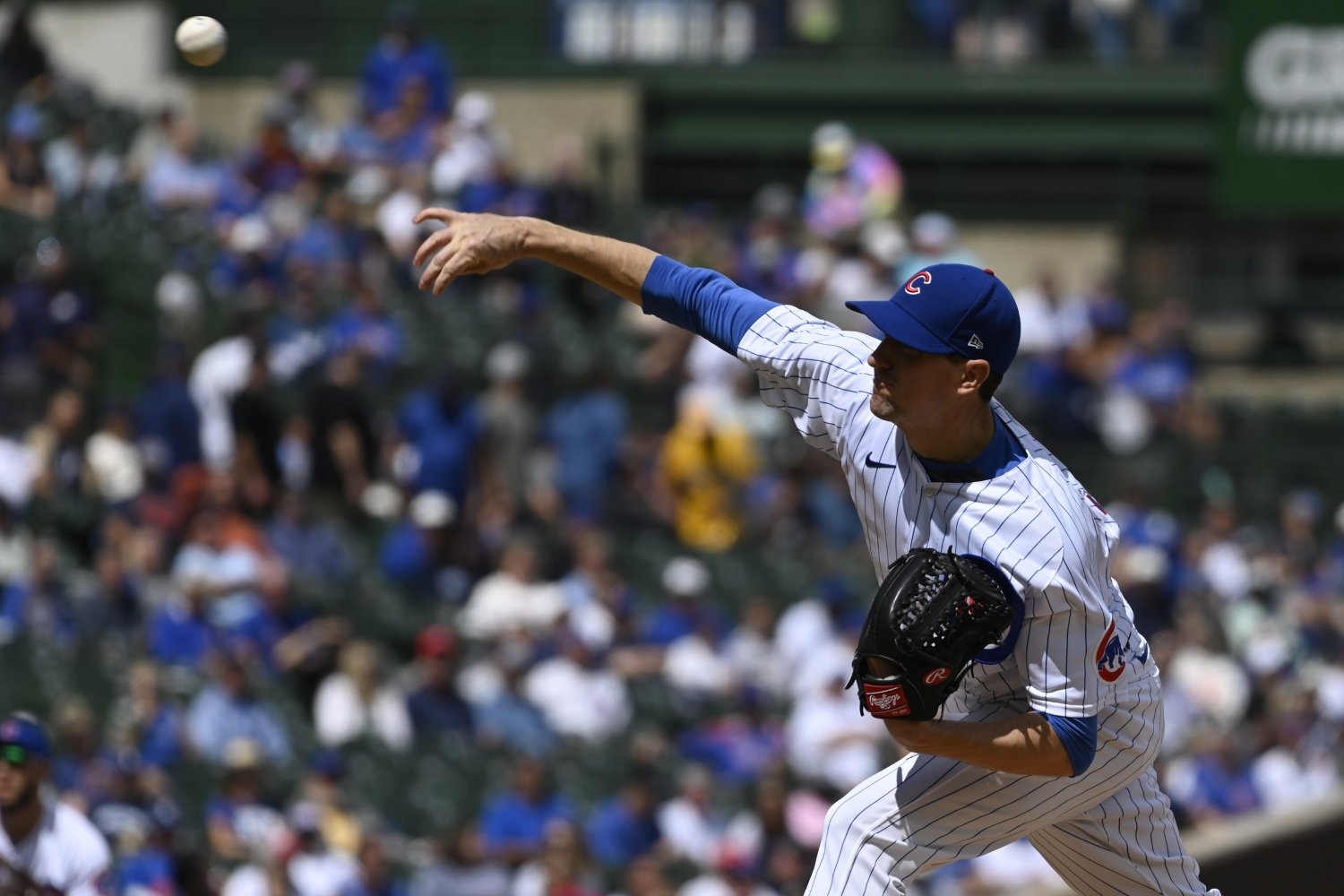 The 2012 Cubs were a moribund bunch. They started 3-11. They were, at various points, 15-32, and 24-48. By July 23, they were 38-56. That team was built to be taken apart, and on that date, Theo Epstein and Jed Hoyer went about trying to perform that demolition. They agreed to a trade to send impending free agent Ryan Dempster to the Atlanta Braves, in exchange for coveted pitching prospect Randall Delgado. It was a big story, and it looked like the next big step forward for a team that had just installed their rookie first baseman, Anthony Rizzo, and signed slugging Cuban prospect Jorge Soler as an international free agent. Then, the deal collapsed, under the weight of Dempster's five-and-10 rights. Because of Dempster's service time and seniority with the club, he had to approve the trade, and he didn't. He later denied that that was the shape of the situation, but it was. Gone was the Cubs' shot at the highly-touted Delgado. A week later, they traded lower-wattage starter Paul Maholm to Atlanta, but got a lesser haul in return. Instead of the Braves, Dempster eventually landed with the Rangers. The Cubs and Texas slapped together a deal just five minutes before the trade deadline, and instead of Delgado (a consensus top-50 prospect in the game entering 2012), the Cubs collected two lower-caliber prospects, years away from the big leagues. Undersized third baseman Christian Villanueva was, at least, 100th on Baseball America's Top 100 list prior to that year, but soft-tossing fellow Class A player Kyle Hendricks was drawing no buzz whatsoever. On Tuesday, Hendricks softly tossed six innings of one-run ball in the Cubs' biggest win since Game 5 of the 2017 NLDS--a game he also started. Before that, he'd been the starting pitcher the night they won the National League pennant for the first time since 1945, and the starting pitching the night they won the World Series for the first time since 1908. Hendricks has been a delightful surprise, from his rookie year of 2014 to this resurgent season, coming just when he looked to be in danger of fading away. On Wednesday, he was everything the Cubs needed, keeping the Brewers so off-balance that they whiffed on, stared at, or mishit even several pitches right down the middle. Keep in mind that, to any given hitter, Hendricks is largely a two-pitch pitcher. He might sneak the occasional sinker in against a lefty, and he still theoretically has his big-breaking curveball, but he's largely focused on throwing his four-seamer and changeup against lefties, and his sinker and cut-change (treated as the same pitch as his lefty changeup by pitch classifiers, but really distinct) against righties. Here's his pitch usage against right-handed batters, by season. And here's the same chart for lefties. Here, with those in mind, is his pitch movement scatter plot for Wednesday's game. The fading changeups below the sinker cluster are the ones he threw to lefties. The ones bunched next to the sinkers but toward the glove side are the ones he threw to righties. The result is that, while the velocity gap between his fastballs and his changeups is shrinking over time, batters still have to deal with a reasonably significant movement differential. Righties have a much smaller one with which to contend, which is why he gets a higher whiff rate against lefties than against righties, but the lateral orientation of his movement contrast against righties means that they generate weaker contact against him than lefties do. Indeed, though his strikeout rate is the lowest it's ever been, he's also inducing the lowest average exit velocity of his career. With a fastball under 90 miles per hour and no real third pitch against any hitter, he shouldn't be able to continue having such success, but through brilliant sequencing and good command, he does. There's also luck involved. We have to admit, and even embrace that. Hendricks's approach means plenty of balls in play, which means that luck can intercede in lots of places. He's more than usually reliant on good pitch framing by his catcher, too. None of this diminishes the genius or the validity of his career. It's just a fact that necessarily informs any account thereof. When Hendricks pitched 7 1/3 innings in Game 6 of the NLCS and became the second pitcher ever (after Don Larsen) to start a playoff game in which his team faced the minimum number of batters, he needed some good luck, and he needed the awesome defense the team had arrayed behind him. People bristle when you remind them that luck exists in baseball. When you point out specific places in which it's played a heavy role, they act as though you'd stabbed them in that place. It's akin to the reaction of certain people who enjoy White, straight, male, and other forms of privilege, when the fact that those systemic privileges play a large part in shaping our lives comes up. It hits us, whether we be fans of a team that has had some good luck or members of a demographic that has had something a little more sinister on its side, like an accusation--like an invalidation of something we love, and which we desperately want to feel is fully earned. The breakthrough insight is this: luck is everywhere. So is privilege. No one succeeds (or fails) in life based solely on their own merit or their own diligence. We are all interdependent, and we are all subject to the vagaries of chance. That's not debatable. It also doesn't need to make us so insecure. Good and bad luck can collide and create chaos within a particular moment. A person who enjoys one type of privilege and gains handsomely from it in one setting can be on the wrong side of that divide and be damaged by the absence of privilege in another setting. What we all need to do is get away from the idea that our lives are our own, and that everything that happens must be through some purposeful, individual agency. When we treat what comes to us in life less preciously, less like something we won in a vacuum, we can better appreciate and understand our place in the world around us. The Brewers have been lucky in close games this year. That doesn't mean that Craig Counsell isn't an excellent in-game manager (he is), or that his superiority to David Ross in that regard isn't one reason for the Brewers leading the Cubs in the standings (it is). Using the fact of the Brewers' luck as some denigration of their success badly misses the mark, because it covers up the fact that every team needs luck (in addition to several other things) to compete for a playoff berth. If Ryan Dempster hadn't refused the first trade destination the Cubs found for him, the team wouldn't even have the pitcher who has racked up more WAR for them than any hurler since Carlos Zambrano. That's about as lucky as you can get. It doesn't make Hendricks's wonderful career or heroic outing Wednesday any less real or any less valid, though. Nor does the fact that the Cubs' winning hit was an infield single off the leg of Joel Payamps render their victory somehow illegitimate. The Brewers have gotten their wins in different ways than the Cubs have, and their luck is taking a different shape than the Cubs' this year, but it's silly to argue that either team has been luckier than the other, and lobbing calumnies back and forth based on the premise that they might have been betrays a misunderstanding of the enormous role luck plays in our lives--but especially in baseball.
 -
 With Shohei Ohtani headed for the open market at the end of this season, the Angels tried everything they could think of to get themselves over the hump and showcase Ohtani in October for the first time. Being the Angels, they failed miserably. Thus, on Tuesday, news broke that they've put six players on waivers: pitchers Lucas Giolito, Dominic Leone, Reynaldo Lopez, and Matt Moore; and outfielders Randal Grichuk and Hunter Renfroe. Any team can now claim those players, and of those who claim each, that player will be awarded to the team with the worst record. The Cubs are, alas, far from the driver's seat, then, but they have a decent spot in the line of contenders who might step up to this particular feeding trough. A lot of talent just became available, for nothing but money, and how much pause the money involved will give to each of the teams involved will be a fascinating insight into how teams value the chance of claiming a Wild Card berth under the still-new playoff format. The Cubs' position is somewhat fraught, but perhaps less so than has been generally assumed. By all accounts, the team does not want to spend beyond the lowest threshold of the competitive balance tax bracket this year, so that they're not treated as tax payers next year or as repeat payers in 2025 and beyond. The soundness of the decisions they've made with that in mind until now can be debated, but it makes ample sense to stick to that stance at this point. No one on the list above can effect so great a difference in their chances of either reaching the playoffs or having success there that it's worth altering long-term franchise plans, especially given how hard it can be to onboard a new player in the modern game. Still, I'm not sure there's any actual dilemma here. The same thing that mutes the value of these potential acquisitions somewhat (the fact that there's only one month left in the season) also limits the amount still owed to any of them. Giolito will cost $1.9 million or so for the balance of the campaign. Moore will cost just under $1.4 million. Renfroe is the most expensive of the group, and is only owed another $2.2 million or so. According to both Roster Resource (housed at FanGraphs) and Cot's Contracts (at Baseball Prospectus), the Cubs' current CBT tax figure is $227.7 million. That means they can spent as much as another $5 million and still sneak in under the threshold, which is set at $233 million. Our outside estimates of teams' CBT figures are inexact, and because of bonuses and escalators that could still come into play, it's better to guess that the Cubs really only have $2 million or so in wiggle room. Even then, though, either Giolito or Moore could fit under the line. Lopez will only make about $630,000 the rest of the way, and Leone will be cheaper still. The team could put in claims on two of these four without seriously risking being on the wrong side of the line at the end of the year. Obviously, it's unlikely that more than one player the Cubs want gets to them in the line, at this stage. The Diamondbacks, Red Sox, Reds, Marlins, Twins, and Giants all have reason to want at least one of the group, and all of them have priority over the Cubs. That just means, though, that the Cubs need to be aggressive in making some claims, without overbalancing and ending up saddled with salaries that would cause them rules-based headaches for years to come. Let's talk about the guy who should be the priority for them, even though that changes only whether and whom else they also claim. After Justin Steele's masterful but lengthy performance Tuesday night, and in light of the fact that the Reds are now two full games behind the Giants, it's a safe bet that the Cubs will use the upcoming off day in their calendar to push Steele back to start on Labor Day against San Francisco. That's going to require them to find a sixth starter for at least one turn through the rotation, but because of the doubleheader in Cincinnati Friday, that was going to be necessary anyway. In an ideal world, the team would have a sixth starter more than once down the stretch, because that might allow them to skip Jameson Taillon if he continues to struggle, and it should also help them restrict the sheer volume of innings Steele accumulates by the end of the year. Giolito would solve several problems at once, then. He'd also be a fairly familiar addition, even if his only connection to the Cubs is an accident of geography. If nothing else, he's not going to get lost or overwhelmed navigating the city during his brief stay with the club. Lengthening the rotation would only be part of the benefit of landing Giolito, of course. His numbers have been disappointing over the last year and change, but he still has both a slider and a changeup that he can comfortably throw against righties and lefties alike, and he still misses bats with both pitches. He would take pressure off of Jordan Wicks and Javier Assad, as well as Steele, and could very plausibly start a playoff game if the Cubs get that far. While the value of Giolito is obvious, the injury that shelved Michael Fulmer makes it equally easy to see why Lopez or Moore would be a boon to the bullpen. Moore seems especially appealing, since Brandon Hughes still isn't all that close to re-joining the roster, but he's not just a matchup lefty, either. He manages contact so well with his changeup that he could slot right in alongside Julian Merryweather and Mark Leiter Jr. as part of the Cubs' setup corps. So could Lopez, but in order for that to work, the Cubs would have to fix the walk rate that has nearly trebled from 2022 to 2023. Lopez's fierce fastball-slider combo would make them even more overpowering, though, in terms of stuff, and would certainly reduce the short-term pressure on guys like Daniel Palencia and Jose Cuas. It's wildly unlikely that any of these three get as far as the Cubs. The Reds and Giants have glaring needs in the rotation, The Diamondbacks and Twins have similarly clear ones in the bullpen. Unless a bunch of teams get squeamish about a late-season change to their bottom line, the Cubs will be lucky even to snatch up Leone, the slider monster whose fastball command comes and goes too often for him to be more than a serviceable middle reliever. Thus, they should make claims aggressively. If they were to land all of Giolito, Moore, and Lopez, it would probably push them over the CBT threshold, and that would be frustrating. On the other hand, it would provide the kind of impact none of them can impart alone. Consider this potential October staff: Justin Steele Lucas Giolito Kyle Hendricks Javier Assad Adbert Alzolay Matt Moore Julian Merryweather Reynaldo Lopez Mark Leiter Jr. Jordan Wicks Jose Cuas Michael Fulmer Jameson Taillon This group doesn't include the untrustworthy Drew Smyly or Hayden Wesneski. It's a credible rotation, even for a playoff team, and that's without Marcus Stroman. This group, supported by a very good collection of position players, could make a deep postseason run. That would be worth violating the tax threshold and accepting the unanticipated costs that come with that. Of course, we can never know whether successfully claiming them all actually will pay off that way. We can only say that the probabilities of all that would increase with their arrivals. On that basis, the Cubs should claim each of these guys, and take whatever small steps are necessary to accommodate them if they happen to win one or more waiver period.
 -
The Angels aren't having a fire sale. This is more of a Facebook Marketplace post that says "Free, if you pick it up." Jed Hoyer needs to be in the car right now, with Carter Hawkins riding along and messaging the seller. Image courtesy of © Jerome Miron-USA TODAY Sports With Shohei Ohtani headed for the open market at the end of this season, the Angels tried everything they could think of to get themselves over the hump and showcase Ohtani in October for the first time. Being the Angels, they failed miserably. Thus, on Tuesday, news broke that they've put six players on waivers: pitchers Lucas Giolito, Dominic Leone, Reynaldo Lopez, and Matt Moore; and outfielders Randal Grichuk and Hunter Renfroe. Any team can now claim those players, and of those who claim each, that player will be awarded to the team with the worst record. The Cubs are, alas, far from the driver's seat, then, but they have a decent spot in the line of contenders who might step up to this particular feeding trough. A lot of talent just became available, for nothing but money, and how much pause the money involved will give to each of the teams involved will be a fascinating insight into how teams value the chance of claiming a Wild Card berth under the still-new playoff format. The Cubs' position is somewhat fraught, but perhaps less so than has been generally assumed. By all accounts, the team does not want to spend beyond the lowest threshold of the competitive balance tax bracket this year, so that they're not treated as tax payers next year or as repeat payers in 2025 and beyond. The soundness of the decisions they've made with that in mind until now can be debated, but it makes ample sense to stick to that stance at this point. No one on the list above can effect so great a difference in their chances of either reaching the playoffs or having success there that it's worth altering long-term franchise plans, especially given how hard it can be to onboard a new player in the modern game. Still, I'm not sure there's any actual dilemma here. The same thing that mutes the value of these potential acquisitions somewhat (the fact that there's only one month left in the season) also limits the amount still owed to any of them. Giolito will cost $1.9 million or so for the balance of the campaign. Moore will cost just under $1.4 million. Renfroe is the most expensive of the group, and is only owed another $2.2 million or so. According to both Roster Resource (housed at FanGraphs) and Cot's Contracts (at Baseball Prospectus), the Cubs' current CBT tax figure is $227.7 million. That means they can spent as much as another $5 million and still sneak in under the threshold, which is set at $233 million. Our outside estimates of teams' CBT figures are inexact, and because of bonuses and escalators that could still come into play, it's better to guess that the Cubs really only have $2 million or so in wiggle room. Even then, though, either Giolito or Moore could fit under the line. Lopez will only make about $630,000 the rest of the way, and Leone will be cheaper still. The team could put in claims on two of these four without seriously risking being on the wrong side of the line at the end of the year. Obviously, it's unlikely that more than one player the Cubs want gets to them in the line, at this stage. The Diamondbacks, Red Sox, Reds, Marlins, Twins, and Giants all have reason to want at least one of the group, and all of them have priority over the Cubs. That just means, though, that the Cubs need to be aggressive in making some claims, without overbalancing and ending up saddled with salaries that would cause them rules-based headaches for years to come. Let's talk about the guy who should be the priority for them, even though that changes only whether and whom else they also claim. After Justin Steele's masterful but lengthy performance Tuesday night, and in light of the fact that the Reds are now two full games behind the Giants, it's a safe bet that the Cubs will use the upcoming off day in their calendar to push Steele back to start on Labor Day against San Francisco. That's going to require them to find a sixth starter for at least one turn through the rotation, but because of the doubleheader in Cincinnati Friday, that was going to be necessary anyway. In an ideal world, the team would have a sixth starter more than once down the stretch, because that might allow them to skip Jameson Taillon if he continues to struggle, and it should also help them restrict the sheer volume of innings Steele accumulates by the end of the year. Giolito would solve several problems at once, then. He'd also be a fairly familiar addition, even if his only connection to the Cubs is an accident of geography. If nothing else, he's not going to get lost or overwhelmed navigating the city during his brief stay with the club. Lengthening the rotation would only be part of the benefit of landing Giolito, of course. His numbers have been disappointing over the last year and change, but he still has both a slider and a changeup that he can comfortably throw against righties and lefties alike, and he still misses bats with both pitches. He would take pressure off of Jordan Wicks and Javier Assad, as well as Steele, and could very plausibly start a playoff game if the Cubs get that far. While the value of Giolito is obvious, the injury that shelved Michael Fulmer makes it equally easy to see why Lopez or Moore would be a boon to the bullpen. Moore seems especially appealing, since Brandon Hughes still isn't all that close to re-joining the roster, but he's not just a matchup lefty, either. He manages contact so well with his changeup that he could slot right in alongside Julian Merryweather and Mark Leiter Jr. as part of the Cubs' setup corps. So could Lopez, but in order for that to work, the Cubs would have to fix the walk rate that has nearly trebled from 2022 to 2023. Lopez's fierce fastball-slider combo would make them even more overpowering, though, in terms of stuff, and would certainly reduce the short-term pressure on guys like Daniel Palencia and Jose Cuas. It's wildly unlikely that any of these three get as far as the Cubs. The Reds and Giants have glaring needs in the rotation, The Diamondbacks and Twins have similarly clear ones in the bullpen. Unless a bunch of teams get squeamish about a late-season change to their bottom line, the Cubs will be lucky even to snatch up Leone, the slider monster whose fastball command comes and goes too often for him to be more than a serviceable middle reliever. Thus, they should make claims aggressively. If they were to land all of Giolito, Moore, and Lopez, it would probably push them over the CBT threshold, and that would be frustrating. On the other hand, it would provide the kind of impact none of them can impart alone. Consider this potential October staff: Justin Steele Lucas Giolito Kyle Hendricks Javier Assad Adbert Alzolay Matt Moore Julian Merryweather Reynaldo Lopez Mark Leiter Jr. Jordan Wicks Jose Cuas Michael Fulmer Jameson Taillon This group doesn't include the untrustworthy Drew Smyly or Hayden Wesneski. It's a credible rotation, even for a playoff team, and that's without Marcus Stroman. This group, supported by a very good collection of position players, could make a deep postseason run. That would be worth violating the tax threshold and accepting the unanticipated costs that come with that. Of course, we can never know whether successfully claiming them all actually will pay off that way. We can only say that the probabilities of all that would increase with their arrivals. On that basis, the Cubs should claim each of these guys, and take whatever small steps are necessary to accommodate them if they happen to win one or more waiver period. View full article
- 15 replies
-
- 1
-

-
- lucas giolito
- matt moore
- (and 3 more)
-
 Game 5 of the 2017 NLDS between the Cubs and Nationals remains one of the wildest postseason contests of the last decade. It was draining, it was bizarre, and it was a fitting end to a slog of a series between two good teams who couldn't quite get in sync. The Cubs held on to win, and because of the mounting intensity and chaos of the game, they celebrated it with the relief and exuberance usually reserved for winning bigger prizes. It's a good thing they did so celebrate, though, in hindsight, because that's the last time the Cubs won a truly huge game. Since then, they've had big wins, but only in games whose meaning all laid in making some future games matter. They had a few dramatic wins in the second half of 2018, when it looked like they might win a third straight division title, but as that team came undone, they missed all their good chances to put away the Brewers over the final week. Then, they lost Game 163 against Milwaukee. Then, they lost the Wild Card Game against the Rockies. In 2019, the struggling Cubs surged just enough to force a four-game showdown with the division-leading Cardinals at Wrigley Field, when they were still within a few games of them. St. Louis swept the series. In 2020, the team limped to a meaningless division title in the lifeless, pandemic-marred, shortened season, and then they were swept in the unserious Wild Card Series against the Marlins. In 2021 and 2022, the closest they came to playing games of serious consequence was when they visited the Brewers at the end of June 2021. By then, they'd lost three straight games to the Dodgers, but they were still close to first place, and the championship core was trying to hang on for one last run. The Brewers not only swept that series, but had that infamous comeback win to cap it, after the Cubs jumped out to a 7-0 lead. It was the end of that version of the team. Since that night in Washington, then, the Cubs have only won enough to force genuinely big games. The wins that set up those games are, by definition, important in themselves, but winning just enough to get to big games and then relentlessly losing them engenders nothing but misery in a fan base. It's fundamentally unfulfilling. Playing just well enough to juice the stakes of a game and then being utterly unable to meet that challenge is the kind of small, moral victory the Cubs need to move beyond. The 2015 And Beyond core was supposed to permanently rescue Cubdom from that kind of mode, but within five years, the franchise fell back into it. That's why what Justin Steele and company just did is so important. That's why, as ugly and lucky and underwhelming as Tuesday night's 1-0 win was, it was vital. The Cubs have another big win for the mental treasuries of their most devoted fans. They didn't quail before the opportunity to do big things, the way they have in each previous chance. They didn't make bad misplays or get antsy at the plate and waste at-bats, as they seemed to do as recently as Monday night. The Brewers remain, rightfully, heavy favorites to win the NL Central, and winning Tuesday night only set the stage for a game Wednesday afternoon in which the starting pitching matchup favors Milwaukee but the Cubs need another victory. Still, this win was an inflection point. It marks the acceleration of the Cubs' return to contention, beyond the surly counterweight of recent failures and frustrations. They won't win them all, but the North Siders are a team that can win at least some of the must-win games again. That's a lot of fun.
 -
It was great that the Cubs earned their way to this moment--that they fought to stay in the NL Central race long enough to make a late-August series against the Brewers matter. Not until Tuesday night, though, did they break through the wall that blocked their way forward. Image courtesy of © Kamil Krzaczynski-USA TODAY Sports Game 5 of the 2017 NLDS between the Cubs and Nationals remains one of the wildest postseason contests of the last decade. It was draining, it was bizarre, and it was a fitting end to a slog of a series between two good teams who couldn't quite get in sync. The Cubs held on to win, and because of the mounting intensity and chaos of the game, they celebrated it with the relief and exuberance usually reserved for winning bigger prizes. It's a good thing they did so celebrate, though, in hindsight, because that's the last time the Cubs won a truly huge game. Since then, they've had big wins, but only in games whose meaning all laid in making some future games matter. They had a few dramatic wins in the second half of 2018, when it looked like they might win a third straight division title, but as that team came undone, they missed all their good chances to put away the Brewers over the final week. Then, they lost Game 163 against Milwaukee. Then, they lost the Wild Card Game against the Rockies. In 2019, the struggling Cubs surged just enough to force a four-game showdown with the division-leading Cardinals at Wrigley Field, when they were still within a few games of them. St. Louis swept the series. In 2020, the team limped to a meaningless division title in the lifeless, pandemic-marred, shortened season, and then they were swept in the unserious Wild Card Series against the Marlins. In 2021 and 2022, the closest they came to playing games of serious consequence was when they visited the Brewers at the end of June 2021. By then, they'd lost three straight games to the Dodgers, but they were still close to first place, and the championship core was trying to hang on for one last run. The Brewers not only swept that series, but had that infamous comeback win to cap it, after the Cubs jumped out to a 7-0 lead. It was the end of that version of the team. Since that night in Washington, then, the Cubs have only won enough to force genuinely big games. The wins that set up those games are, by definition, important in themselves, but winning just enough to get to big games and then relentlessly losing them engenders nothing but misery in a fan base. It's fundamentally unfulfilling. Playing just well enough to juice the stakes of a game and then being utterly unable to meet that challenge is the kind of small, moral victory the Cubs need to move beyond. The 2015 And Beyond core was supposed to permanently rescue Cubdom from that kind of mode, but within five years, the franchise fell back into it. That's why what Justin Steele and company just did is so important. That's why, as ugly and lucky and underwhelming as Tuesday night's 1-0 win was, it was vital. The Cubs have another big win for the mental treasuries of their most devoted fans. They didn't quail before the opportunity to do big things, the way they have in each previous chance. They didn't make bad misplays or get antsy at the plate and waste at-bats, as they seemed to do as recently as Monday night. The Brewers remain, rightfully, heavy favorites to win the NL Central, and winning Tuesday night only set the stage for a game Wednesday afternoon in which the starting pitching matchup favors Milwaukee but the Cubs need another victory. Still, this win was an inflection point. It marks the acceleration of the Cubs' return to contention, beyond the surly counterweight of recent failures and frustrations. They won't win them all, but the North Siders are a team that can win at least some of the must-win games again. That's a lot of fun. View full article
-
Losing Patience Has Cost the Cubs Offense a Bit Recently
Matthew Trueblood posted an article in Cubs
 This week's series at Wrigley Field matches the two teams who have seen more pitches per plate appearance this year than any others in MLB. The Cubs are even more of a patient, grind-it-out offense than the Brewers, though. Whereas Milwaukee's tendency toward running deep counts stems partially from their vulnerability to swings and misses, the Cubs whiff at a below-average rate as a team. No, in the place of the power they're missing, this team has done its best work when it has battled opposing pitchers to a stalemate, forcing opponents to use up their bullpen or getting great looks at a starter the third time through the lineup. This group of position players accomplishes the indispensable but difficult task of gathering, transmitting, and utilizing information gleaned from long early plate appearances admirably, and it pays off. Lately, though, that's not happening as much. See that cluster on the far right of the graph? That's the Cubs' last eight games, coming into Monday night's contest. It was a stretch in which the team didn't swing at fewer than 49 percent of the pitches they saw in any contest, easily the longest such streak of their season. All eight of those games are among the 37 in which the team has swung the most this year. As we well know, swing rate is a highly imperfect measurement of approach at the plate. Seiya Suzuki is having the best month of his career partially because he's swinging more often. He's more decisive up there. Still, it's hard not to read this as the accumulating impact of some hitters trying to make things happen in the stultification of the late summer. A decade-old study did demonstrate that plate discipline frays as the season wears on, and the Cubs aren't in any position to be the exception to that rule. They've been on edge and trying to survive, then surge, ever since the All-Star break. They're in the middle of a long stretch without an off day, and the cluster of games discussed above were mostly a long road trip through losing towns. Nonetheless, the Cubs have to get back to their consistent, sound team approach. They cut down their swing rate on Monday night, but it availed nothing, because they still looked tired, anxious, and overeager. They hit far too many Brewers pitches right into the ground, trying to get back what was lost when Jameson Taillon gave up four first-inning runs. It was irrational, but you could see the team trying to hack their way out of that hole. They weren't taking enough pitches to get into good counts, and thus, their swings weren't sufficiently aggressive. By the time they smoothed out that approach, they were too far behind even to make a game of it and put serious pressure on Craig Counsell's bullpen. Despite the atrocious numbers lefties have put up against Corbin Burnes this year, Mike Tauchman needs to be atop the batting order Tuesday night. Hopefully, he can set the tone, the way he has for much of the time since he claimed the leadoff spot. Jeimer Candelario probably also needs to be elevated, belatedly, to the second spot in the batting order, where his patience can further force the Brewers' hand, while Nico Hoerner's more aggressive approach needs to be reserved for when there's traffic on the bases near the bottom of the order. It's not a magical salve, but to generate offense the way they will need to against the better competition ahead, the Cubs have to recover their patience at bat.
 -
The hot bats in the Cubs lineup have overheated a bit lately. At precisely the wrong time, this team is losing touch with its offensive identity. Image courtesy of © David Banks-USA TODAY Sports This week's series at Wrigley Field matches the two teams who have seen more pitches per plate appearance this year than any others in MLB. The Cubs are even more of a patient, grind-it-out offense than the Brewers, though. Whereas Milwaukee's tendency toward running deep counts stems partially from their vulnerability to swings and misses, the Cubs whiff at a below-average rate as a team. No, in the place of the power they're missing, this team has done its best work when it has battled opposing pitchers to a stalemate, forcing opponents to use up their bullpen or getting great looks at a starter the third time through the lineup. This group of position players accomplishes the indispensable but difficult task of gathering, transmitting, and utilizing information gleaned from long early plate appearances admirably, and it pays off. Lately, though, that's not happening as much. See that cluster on the far right of the graph? That's the Cubs' last eight games, coming into Monday night's contest. It was a stretch in which the team didn't swing at fewer than 49 percent of the pitches they saw in any contest, easily the longest such streak of their season. All eight of those games are among the 37 in which the team has swung the most this year. As we well know, swing rate is a highly imperfect measurement of approach at the plate. Seiya Suzuki is having the best month of his career partially because he's swinging more often. He's more decisive up there. Still, it's hard not to read this as the accumulating impact of some hitters trying to make things happen in the stultification of the late summer. A decade-old study did demonstrate that plate discipline frays as the season wears on, and the Cubs aren't in any position to be the exception to that rule. They've been on edge and trying to survive, then surge, ever since the All-Star break. They're in the middle of a long stretch without an off day, and the cluster of games discussed above were mostly a long road trip through losing towns. Nonetheless, the Cubs have to get back to their consistent, sound team approach. They cut down their swing rate on Monday night, but it availed nothing, because they still looked tired, anxious, and overeager. They hit far too many Brewers pitches right into the ground, trying to get back what was lost when Jameson Taillon gave up four first-inning runs. It was irrational, but you could see the team trying to hack their way out of that hole. They weren't taking enough pitches to get into good counts, and thus, their swings weren't sufficiently aggressive. By the time they smoothed out that approach, they were too far behind even to make a game of it and put serious pressure on Craig Counsell's bullpen. Despite the atrocious numbers lefties have put up against Corbin Burnes this year, Mike Tauchman needs to be atop the batting order Tuesday night. Hopefully, he can set the tone, the way he has for much of the time since he claimed the leadoff spot. Jeimer Candelario probably also needs to be elevated, belatedly, to the second spot in the batting order, where his patience can further force the Brewers' hand, while Nico Hoerner's more aggressive approach needs to be reserved for when there's traffic on the bases near the bottom of the order. It's not a magical salve, but to generate offense the way they will need to against the better competition ahead, the Cubs have to recover their patience at bat. View full article
- 4 replies
-
- 1
-
-
- ian happ
- seiya suzuki
- (and 2 more)
-
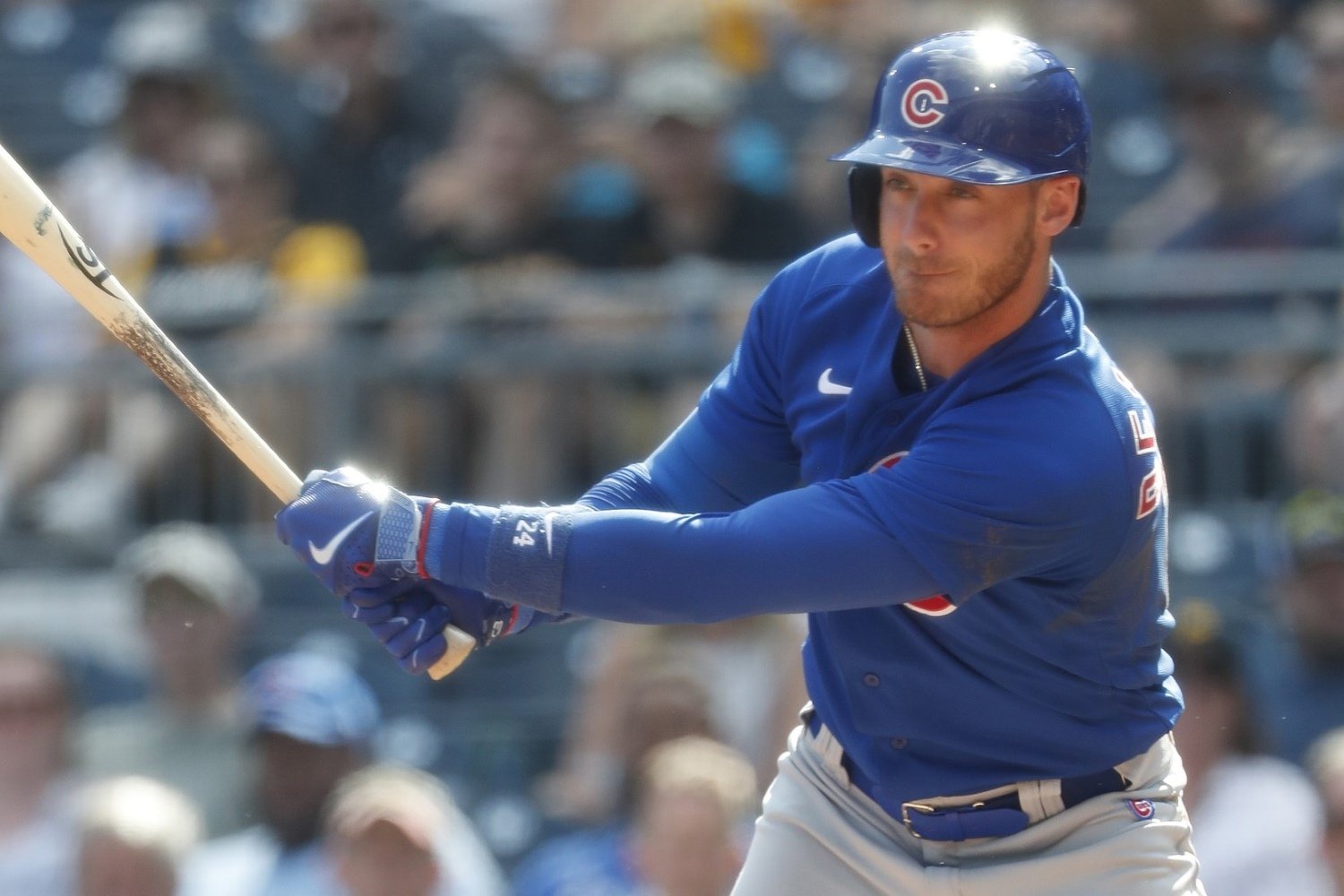 It's not too much to say that this is the biggest series the Cubs have played at Wrigley Field since September 2019, when they hosted the Cardinals with a chance to catch them in the fight for the NL Central. They'd lost the two games prior thereto, but they still only lagged St. Louis by three games, and they welcomed the Cards for a four-game weekend set. We all remember how that turned out. In the most heartbreaking turn for the team since the demise of the 2008 team in the NLDS, the Cards swept the hosts, putting an unofficial but very real end to both Joe Maddon's tenure with the team and the Cubs' hopes of milling their half-decade of success into a real dynasty. It was brutal. Fear not: this series has no such potential. Even if the Brewers put the seal on their division title by sweeping the Cubs, it wouldn't be the end of the Cubs' chances to reach the playoffs. More importantly, whereas that 2019 team was playing under the clouds of the previous year's failure to finish off the Brewers and the winter of bad feelings and no spending by ownership, this team has already met their expectations for the season, and the welcome heartburn welling up in Cubs fans has been hard-earned by this resilient, talented team. Secure in the knowledge that the pressure will not exceed the pleasure, then, let's look at this exciting matchup in greater detail. The Starting Pitchers To open this set, each team will send the starter about whom they feel the least certainty, at least out of the three who will take the hill on each side this week. For the Cubs, that means Jameson Taillon, whose hot streak from mid-July through the trade deadline has given way to some inconsistency over his last few starts. Still, he's a few important notches better than he was early in the campaign. He'll have to be careful with the Brewers' lineup, which is heating up at just the wrong time and which includes some dangerous left-handed hitters in Christian Yelich, Sal Frelick, Rowdy Tellez, Brice Turang, and the switch-hitting Carlos Santana. Still, Taillon has rediscovered his talent, and should keep the Cubs in the contest. Milwaukee will send out recent Cubs alumnus Wade Miley, whose 2023 alongside Lake Michigan has been a rough sketch of the 2022 he passed just a bit further down the shore. His ERA (3.18) is almost identical to the one he had with the Cubs last year (3.16), but he's made 17 starts already--eight more appearances than he managed last season. Even so, injuries and the ravages of age are his constant companions. When he's been on the mound, he's been his usual self, with that cutter-heavy approach that keeps his splits fairly neutral. He still limits hard contact fairly well, but his strikeout rate keeps trending down, and is now well below league-average. His ground-ball rate has also sagged this year, so the best play would seem to be to get some right-handed slug into the lineup and try to clear the fences against him. With the fly ball-oriented Taillon on the mound, this might be the game in which David Ross sneaks Patrick Wisdom into the lineup at first base, with Jeimer Candelario at third, Christopher Morel at DH, and both Mike Tauchman and Nick Madrigal on the bench to start. On Tuesday night, the series's marquee matchup takes place. That's when Justin Steele takes the ball, in search of his 15th win, with Corbin Burnes toeing the slab for the Brewers. Even a year ago, it would have been a little bit nuts to think of this as an even match, but at the moment, that might be the case. Steele is tiring as we near the end of the season, and has allowed a home run in four of his last five starts. That's not good. When he's going well, Steele keeps the ball in the park. Still, he's gutted out strong efforts almost every time. Burnes has been much more uneven this year. In July, he was not only his usual self, but the best pitcher in baseball. He allowed an OPS of .387 for the month. That's not an OBP, or even a slugging average. Combine the two, for batters facing Burnes in July, and you're still under .400. Both before and since then, though, he's been inconsistent. Sometimes much too reliant on his famous cutter, Burnes has run into occasional trouble with home runs, and he's walking far more batters than he does when he's on top of his game. Despite the excellent spin he imparts on just about everything, the arsenal Burnes is using lately just doesn't faze right-handed batters that much. On the season, they have a .709 OPS against him, including 14 home runs in 314 plate appearances. That sounds a bit humble, but remember that it bakes in stretches during which he was going a lot better than he is right now. For that matter, compare it to how lefties have hit against him this year: a .493 OPS, and a 28-percent strikeout rate. He's a reverse-splits guy right now, and the Cubs' best matchups against him are likely to be Dansby Swanson (who's 7-13 with two homers against Burnes in his career, already), Nico Hoerner, and the red-hot Seiya Suzuki. Still, expect to see Tauchman in the lineup for that one, because he, Candelario, and Ian Happ all have the patience to take advantage of the high walk rate Burnes has allowed to lefties this year. Tuesday night's matchup might favor the Cubs, then, but Wednesday's will be the sternest test. Brandon Woodruff so dominated the Padres Friday night that he looked not only fully recovered from the shoulder trouble that sidelined him for half the season, but restored to his Cy Young-caliber best. Woodruff is hard on the Cubs anyway, and if he's operating at that level again Wednesday, Kyle Hendricks's margin for error will be virtually nil. Woodruff's big quirk is that, with two strikes, he goes to the fastball to put hitters away. Of the 167 pitchers who have thrown at least 1,000 pitches with two strikes since the start of 2021, Woodruff uses the fastball in those counts more often than all but three. When Cubs batters fall behind in the count, they need to sit on the fastball. If they whiff on an offspeed pitch, so be it. The payoff is in looking for the heat in an offspeed count and hitting ir hard somewhere. Who's Hot, and Who's Not To be honest, most of the Brewers lineup is hitting well right now. That's how a team wins eight straight games. The Cubs will probably see all 13 hitters on the Milwaukee roster during this series, in some capacity, and in this rivalry, it's always the guy you don't expect who comes up with the big hit. Thus, let's leave Yelich and William Contreras alone for the moment, and talk about the supporting cast for the Crew. Right now, the quartet of rookie hitters who have often energized the Brewers offense this year is struggling mightily. Over the last two weeks, even as the team has surged, these four have hit the rocky section of Adjustment Avenue. Growing Pains Player PA AVG OBP SLG Andruw Monasterio 44 0.154 0.25 0.179 Brice Turang 43 0.256 0.326 0.256 Joey Wiemer 13 0.083 0.154 0.083 Sal Frelick 30 0.185 0.267 0.222 Meanwhile, though, a cadre of veterans who had been in slumps until that point have suddenly rediscovered their stroke--especially their power. Back on Track Player PA AVG OBP SLG Willy Adames 51 0.326 0.392 0.543 Carlos Santana 54 0.271 0.352 0.583 Mark Canha 44 0.324 0.409 0.459 Tyrone Taylor 39 0.303 0.41 0.545 This doesn't mean the Cubs can afford not to take Turang, Monasterio, Frelick, or Wiemer seriously. All four have their redeeming offensive virtues, and when any of them get on base, they become a threat to steal a base. It's just that the bigger, more established names are the ones who have recently been doing damage. In tough spots, when it's an option, Ross might want to order that those guys be pitched around, to go after the rookies instead. The Battle of the Bullpens With two days off last week and a couple of relatively easy wins mixed in, the Brewers come to town with their bullpen as fresh as they could possibly hope for it to be. Fifth starter Adrian Houser departed Sunday's game after just two innings, and could land on the injured list, but stalwart long man Bryse Wilson ate four innings and kept the Brewers in the game long enough for them to effect a comeback. Then, they added on so admirably that they didn't even need to use their suite of high-leverage relievers. Devin Williams and Joel Payamps have each pitched just once in the last four days. Milwaukee's superb relief depth is starting to show through. They've helped former Cubs project Trevor Megill finally figure it out, and while Megill is probably down for Monday night after throwing 32 pitches to close out Sunday's win, he'll be a factor in this series. So will rookie flamethrower Abner Uribe, who lacks consistency right now but might have the best pure stuff in the National League. That's not to mention rubber-armed middle relievers Hoby Milner and Elvis Peguero. The Cubs can't count on any comebacks against this group. By contrast, the Cubs' pen feels awfully thin right now. Michael Fulmer is on the IL, and Adbert Alzolay, Julian Merryweather, and Mark Leiter Jr. have borne a heavy workload lately. Thank goodness for Javier Assad and Keegan Thompson, who saved the pen Sunday and gave the more trusted arms a breather ahead of this crucial set. That Drew Smyly is now a permanent part of the pen also helps, though Ross has only used him in low-leverage spots so far. After Thompson's dazzling two innings in his first appearance since being exiled to Des Moines early in the summer, it will be interesting to see whether he re-enters the team's circle of trust. If he could be his 2022 self down the stretch, it would give the relief corps a huge and needed boost. Who's Next? A really good season, which is what this one has become for the Cubs, is filled with heroes. Some guys have their defining moment, and others simply step in and stop a gap at a vital time. We've seen that heroic turn for Morel and Yan Gomes at the plate, and for Marcus Stroman and Fulmer and Leiter and Alzolay on the mound, and for Happ and Tauchman in the field. In order for the team to come back and win the NL Central, they need the next hero to emerge this week. Any end-of-season hype video has to include some clips of big hits and big plays from the few games right in front of us. That we even get the chance to see whether or not that happens, though, means Ross's charges have done a wonderful job over the last month and change. The Cubs' playoffs start tonight.
- 4 comments
-
- 2
-
-
- jameson taillon
- justin steele
- (and 2 more)
-
As we preview three games against the division-leading Brewers at Wrigley Field, don't fail to stop and appreciate the fact that the Cubs have come this far. This will be fun. Image courtesy of © Charles LeClaire-USA TODAY Sports It's not too much to say that this is the biggest series the Cubs have played at Wrigley Field since September 2019, when they hosted the Cardinals with a chance to catch them in the fight for the NL Central. They'd lost the two games prior thereto, but they still only lagged St. Louis by three games, and they welcomed the Cards for a four-game weekend set. We all remember how that turned out. In the most heartbreaking turn for the team since the demise of the 2008 team in the NLDS, the Cards swept the hosts, putting an unofficial but very real end to both Joe Maddon's tenure with the team and the Cubs' hopes of milling their half-decade of success into a real dynasty. It was brutal. Fear not: this series has no such potential. Even if the Brewers put the seal on their division title by sweeping the Cubs, it wouldn't be the end of the Cubs' chances to reach the playoffs. More importantly, whereas that 2019 team was playing under the clouds of the previous year's failure to finish off the Brewers and the winter of bad feelings and no spending by ownership, this team has already met their expectations for the season, and the welcome heartburn welling up in Cubs fans has been hard-earned by this resilient, talented team. Secure in the knowledge that the pressure will not exceed the pleasure, then, let's look at this exciting matchup in greater detail. The Starting Pitchers To open this set, each team will send the starter about whom they feel the least certainty, at least out of the three who will take the hill on each side this week. For the Cubs, that means Jameson Taillon, whose hot streak from mid-July through the trade deadline has given way to some inconsistency over his last few starts. Still, he's a few important notches better than he was early in the campaign. He'll have to be careful with the Brewers' lineup, which is heating up at just the wrong time and which includes some dangerous left-handed hitters in Christian Yelich, Sal Frelick, Rowdy Tellez, Brice Turang, and the switch-hitting Carlos Santana. Still, Taillon has rediscovered his talent, and should keep the Cubs in the contest. Milwaukee will send out recent Cubs alumnus Wade Miley, whose 2023 alongside Lake Michigan has been a rough sketch of the 2022 he passed just a bit further down the shore. His ERA (3.18) is almost identical to the one he had with the Cubs last year (3.16), but he's made 17 starts already--eight more appearances than he managed last season. Even so, injuries and the ravages of age are his constant companions. When he's been on the mound, he's been his usual self, with that cutter-heavy approach that keeps his splits fairly neutral. He still limits hard contact fairly well, but his strikeout rate keeps trending down, and is now well below league-average. His ground-ball rate has also sagged this year, so the best play would seem to be to get some right-handed slug into the lineup and try to clear the fences against him. With the fly ball-oriented Taillon on the mound, this might be the game in which David Ross sneaks Patrick Wisdom into the lineup at first base, with Jeimer Candelario at third, Christopher Morel at DH, and both Mike Tauchman and Nick Madrigal on the bench to start. On Tuesday night, the series's marquee matchup takes place. That's when Justin Steele takes the ball, in search of his 15th win, with Corbin Burnes toeing the slab for the Brewers. Even a year ago, it would have been a little bit nuts to think of this as an even match, but at the moment, that might be the case. Steele is tiring as we near the end of the season, and has allowed a home run in four of his last five starts. That's not good. When he's going well, Steele keeps the ball in the park. Still, he's gutted out strong efforts almost every time. Burnes has been much more uneven this year. In July, he was not only his usual self, but the best pitcher in baseball. He allowed an OPS of .387 for the month. That's not an OBP, or even a slugging average. Combine the two, for batters facing Burnes in July, and you're still under .400. Both before and since then, though, he's been inconsistent. Sometimes much too reliant on his famous cutter, Burnes has run into occasional trouble with home runs, and he's walking far more batters than he does when he's on top of his game. Despite the excellent spin he imparts on just about everything, the arsenal Burnes is using lately just doesn't faze right-handed batters that much. On the season, they have a .709 OPS against him, including 14 home runs in 314 plate appearances. That sounds a bit humble, but remember that it bakes in stretches during which he was going a lot better than he is right now. For that matter, compare it to how lefties have hit against him this year: a .493 OPS, and a 28-percent strikeout rate. He's a reverse-splits guy right now, and the Cubs' best matchups against him are likely to be Dansby Swanson (who's 7-13 with two homers against Burnes in his career, already), Nico Hoerner, and the red-hot Seiya Suzuki. Still, expect to see Tauchman in the lineup for that one, because he, Candelario, and Ian Happ all have the patience to take advantage of the high walk rate Burnes has allowed to lefties this year. Tuesday night's matchup might favor the Cubs, then, but Wednesday's will be the sternest test. Brandon Woodruff so dominated the Padres Friday night that he looked not only fully recovered from the shoulder trouble that sidelined him for half the season, but restored to his Cy Young-caliber best. Woodruff is hard on the Cubs anyway, and if he's operating at that level again Wednesday, Kyle Hendricks's margin for error will be virtually nil. Woodruff's big quirk is that, with two strikes, he goes to the fastball to put hitters away. Of the 167 pitchers who have thrown at least 1,000 pitches with two strikes since the start of 2021, Woodruff uses the fastball in those counts more often than all but three. When Cubs batters fall behind in the count, they need to sit on the fastball. If they whiff on an offspeed pitch, so be it. The payoff is in looking for the heat in an offspeed count and hitting ir hard somewhere. Who's Hot, and Who's Not To be honest, most of the Brewers lineup is hitting well right now. That's how a team wins eight straight games. The Cubs will probably see all 13 hitters on the Milwaukee roster during this series, in some capacity, and in this rivalry, it's always the guy you don't expect who comes up with the big hit. Thus, let's leave Yelich and William Contreras alone for the moment, and talk about the supporting cast for the Crew. Right now, the quartet of rookie hitters who have often energized the Brewers offense this year is struggling mightily. Over the last two weeks, even as the team has surged, these four have hit the rocky section of Adjustment Avenue. Growing Pains Player PA AVG OBP SLG Andruw Monasterio 44 0.154 0.25 0.179 Brice Turang 43 0.256 0.326 0.256 Joey Wiemer 13 0.083 0.154 0.083 Sal Frelick 30 0.185 0.267 0.222 Meanwhile, though, a cadre of veterans who had been in slumps until that point have suddenly rediscovered their stroke--especially their power. Back on Track Player PA AVG OBP SLG Willy Adames 51 0.326 0.392 0.543 Carlos Santana 54 0.271 0.352 0.583 Mark Canha 44 0.324 0.409 0.459 Tyrone Taylor 39 0.303 0.41 0.545 This doesn't mean the Cubs can afford not to take Turang, Monasterio, Frelick, or Wiemer seriously. All four have their redeeming offensive virtues, and when any of them get on base, they become a threat to steal a base. It's just that the bigger, more established names are the ones who have recently been doing damage. In tough spots, when it's an option, Ross might want to order that those guys be pitched around, to go after the rookies instead. The Battle of the Bullpens With two days off last week and a couple of relatively easy wins mixed in, the Brewers come to town with their bullpen as fresh as they could possibly hope for it to be. Fifth starter Adrian Houser departed Sunday's game after just two innings, and could land on the injured list, but stalwart long man Bryse Wilson ate four innings and kept the Brewers in the game long enough for them to effect a comeback. Then, they added on so admirably that they didn't even need to use their suite of high-leverage relievers. Devin Williams and Joel Payamps have each pitched just once in the last four days. Milwaukee's superb relief depth is starting to show through. They've helped former Cubs project Trevor Megill finally figure it out, and while Megill is probably down for Monday night after throwing 32 pitches to close out Sunday's win, he'll be a factor in this series. So will rookie flamethrower Abner Uribe, who lacks consistency right now but might have the best pure stuff in the National League. That's not to mention rubber-armed middle relievers Hoby Milner and Elvis Peguero. The Cubs can't count on any comebacks against this group. By contrast, the Cubs' pen feels awfully thin right now. Michael Fulmer is on the IL, and Adbert Alzolay, Julian Merryweather, and Mark Leiter Jr. have borne a heavy workload lately. Thank goodness for Javier Assad and Keegan Thompson, who saved the pen Sunday and gave the more trusted arms a breather ahead of this crucial set. That Drew Smyly is now a permanent part of the pen also helps, though Ross has only used him in low-leverage spots so far. After Thompson's dazzling two innings in his first appearance since being exiled to Des Moines early in the summer, it will be interesting to see whether he re-enters the team's circle of trust. If he could be his 2022 self down the stretch, it would give the relief corps a huge and needed boost. Who's Next? A really good season, which is what this one has become for the Cubs, is filled with heroes. Some guys have their defining moment, and others simply step in and stop a gap at a vital time. We've seen that heroic turn for Morel and Yan Gomes at the plate, and for Marcus Stroman and Fulmer and Leiter and Alzolay on the mound, and for Happ and Tauchman in the field. In order for the team to come back and win the NL Central, they need the next hero to emerge this week. Any end-of-season hype video has to include some clips of big hits and big plays from the few games right in front of us. That we even get the chance to see whether or not that happens, though, means Ross's charges have done a wonderful job over the last month and change. The Cubs' playoffs start tonight. View full article
- 4 replies
-
- 2
-
-
- jameson taillon
- justin steele
- (and 2 more)
-
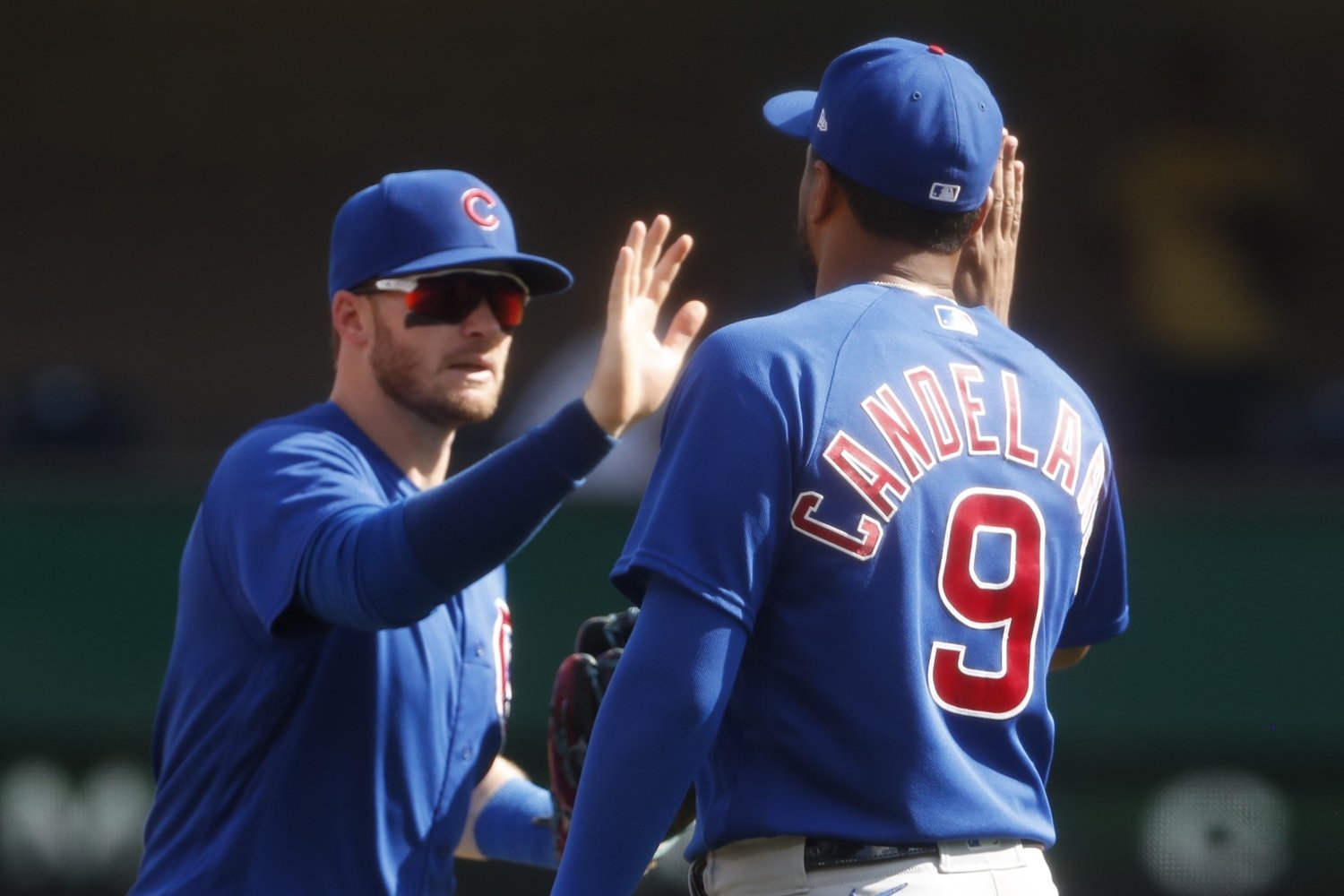 There were a couple of series this week in which the Cubs almost couldn't help being helped. The Giants and Phillies played a set in Philadelphia, and then the Reds visited the Diamondbacks over the weekend. Alas, in all the games that didn't set potential Wild Card rivals in opposition to one another, the Cubs got very little help. Arizona, improbably, swept the Rangers, before taking three of four from Cincinnati. The Giants recovered from losing the first two games of both series to salvage the finales and stay afloat. The Reds, in turn, swept the Angels before their desert defeat. The Phillies swept the useless Cardinals this weekend. The Brewers haven't lost since August 17. No matter. The Cubs' scorching-hot second half has earned them the right to focus simply on taking care of their own business. By going 5-2 on their road trip through Detroit and Pittsburgh, they raised their playoff odds to 65.6 percent, according to FanGraphs. That site has them down from division title odds of about 25 percent a week ago to just 14.9 percent, thanks to the Brewers' unstoppability, but obviously, the Cubs get a chance to change those numbers in a big way this week at Wrigley Field. In the meantime, Baseball Prospectus is more sanguine, anyway. They had the Cubs at a very healthy 39.6 percent likelihood to win the Central entering Sunday, and while another Milwaukee win slightly dented that figure, it's still much more encouraging than 15 percent. Because the PECOTA projection system is unyieldingly stubborn in its belief in the hopeless Padres, they still give the Cubs worse overall playoff odds than does FanGraphs, but that problem will take care of itself. The Cubs just need to keep winning. Obviously, that's easier said than done. They did survive the 12-game soft spot in their schedule with an 8-4 record, but they looked lucky to be playing the White Sox, Royals, Tigers, and Pirates in the process. Their next four opponents are the Brewers, Reds, Giants, and Diamondbacks, and they need to be more ready and play better ball if they want to even go .500 over that stretch. That's doubly true because the schedule is so grueling, logistically. They only have one off day coming, and it will immediately be neutralized by a doubleheader. That said, these are must-win series, and that's bad news for all the Cubs' opponents. This team has played a lot of must-win games already this year, given the position they were in as the trade deadline loomed, and they've met the challenge each and every time. That aforementioned .500 mark for these 13 games (7-6 is the target, so it's technically better than .500 that we're looking for, but still) would be more than sufficient. By going 27-14 since the All-Star break, the Cubs have given themselves breathing room. They still need to be very good over the balance of the season, but they can make most of their hay against the Rockies and Pirates. They only need to keep their heads above water in the tough fortnight ahead. That's the privilege they've earned, and it's why their playoff odds are looking rosy with five weeks left in the season.
 -
It's scoreboard watching season, and the scoreboards were unfriendly to the Cubs this week. Still, they made progress in their pursuit of the postseason. Image courtesy of © Charles LeClaire-USA TODAY Sports There were a couple of series this week in which the Cubs almost couldn't help being helped. The Giants and Phillies played a set in Philadelphia, and then the Reds visited the Diamondbacks over the weekend. Alas, in all the games that didn't set potential Wild Card rivals in opposition to one another, the Cubs got very little help. Arizona, improbably, swept the Rangers, before taking three of four from Cincinnati. The Giants recovered from losing the first two games of both series to salvage the finales and stay afloat. The Reds, in turn, swept the Angels before their desert defeat. The Phillies swept the useless Cardinals this weekend. The Brewers haven't lost since August 17. No matter. The Cubs' scorching-hot second half has earned them the right to focus simply on taking care of their own business. By going 5-2 on their road trip through Detroit and Pittsburgh, they raised their playoff odds to 65.6 percent, according to FanGraphs. That site has them down from division title odds of about 25 percent a week ago to just 14.9 percent, thanks to the Brewers' unstoppability, but obviously, the Cubs get a chance to change those numbers in a big way this week at Wrigley Field. In the meantime, Baseball Prospectus is more sanguine, anyway. They had the Cubs at a very healthy 39.6 percent likelihood to win the Central entering Sunday, and while another Milwaukee win slightly dented that figure, it's still much more encouraging than 15 percent. Because the PECOTA projection system is unyieldingly stubborn in its belief in the hopeless Padres, they still give the Cubs worse overall playoff odds than does FanGraphs, but that problem will take care of itself. The Cubs just need to keep winning. Obviously, that's easier said than done. They did survive the 12-game soft spot in their schedule with an 8-4 record, but they looked lucky to be playing the White Sox, Royals, Tigers, and Pirates in the process. Their next four opponents are the Brewers, Reds, Giants, and Diamondbacks, and they need to be more ready and play better ball if they want to even go .500 over that stretch. That's doubly true because the schedule is so grueling, logistically. They only have one off day coming, and it will immediately be neutralized by a doubleheader. That said, these are must-win series, and that's bad news for all the Cubs' opponents. This team has played a lot of must-win games already this year, given the position they were in as the trade deadline loomed, and they've met the challenge each and every time. That aforementioned .500 mark for these 13 games (7-6 is the target, so it's technically better than .500 that we're looking for, but still) would be more than sufficient. By going 27-14 since the All-Star break, the Cubs have given themselves breathing room. They still need to be very good over the balance of the season, but they can make most of their hay against the Rockies and Pirates. They only need to keep their heads above water in the tough fortnight ahead. That's the privilege they've earned, and it's why their playoff odds are looking rosy with five weeks left in the season. View full article
-
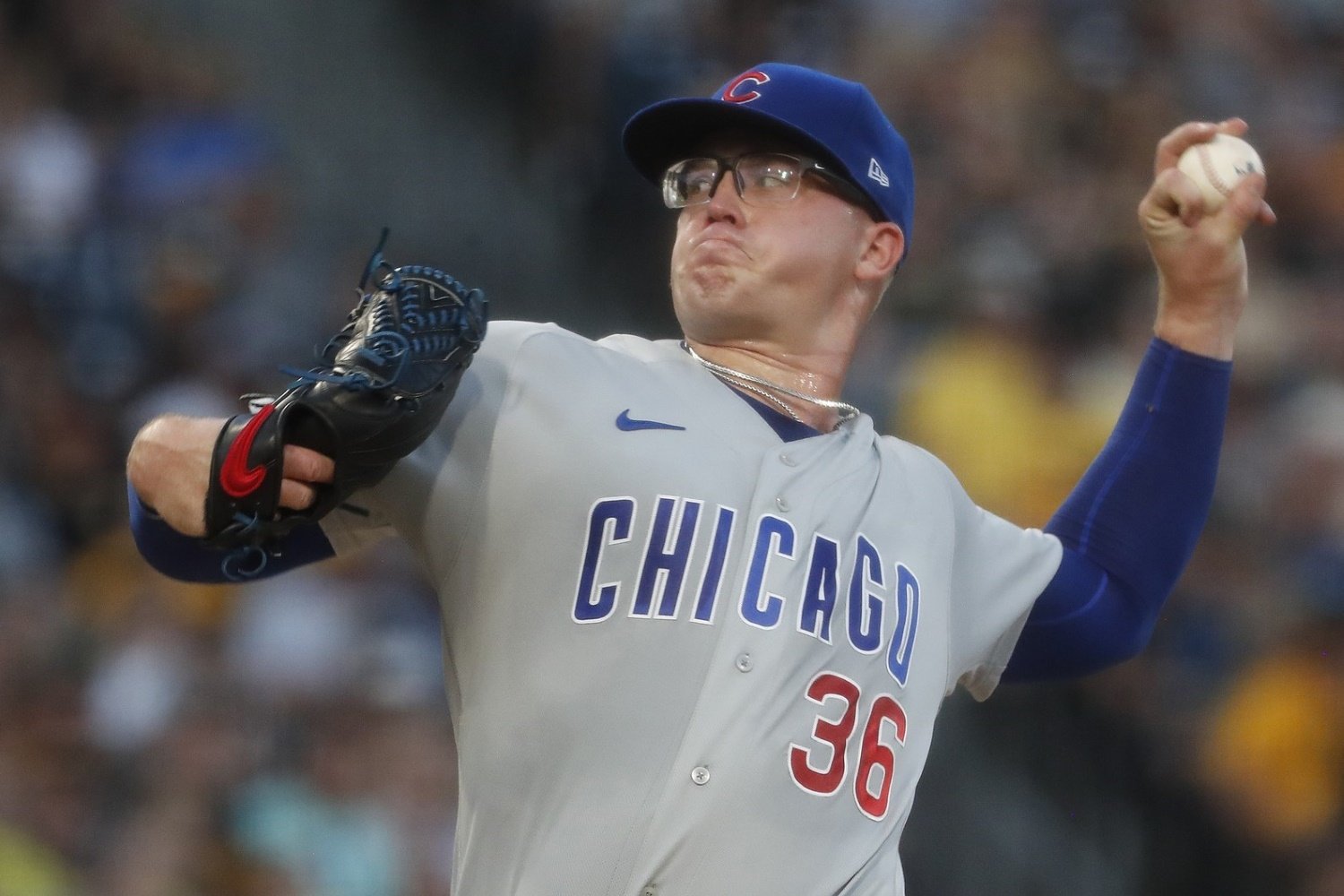 After a solid big-league debut by Jordan Wicks, the Cubs have their first semblance of stability in the starting rotation since at least mid-July. In truth, it's the first time they've had some level of comfort in all five spots all year. Even now, of course, Jameson Taillon is wobbly, and there are questions about how well Justin Steele can bear up under his accumulating workload, and there are sure to be some non-performance workload constraints on both Wicks and Javier Assad down the stretch. Still, at least they have five starters who give them a robust chance to win. It's a good thing Wicks was so impressive in his first start with the parent club, because Michael Fulmer landed on the injured list with a forearm strain Saturday, too. The Cubs have already dodged one forearm strain bullet this year, with Steele missing the minimum amount of time when he had the same problem in June. Fulmer is older than Steele, though, and his elbow has a longer history of tsuris. At the very least, he won't be back until mid-September, and there's a decent chance he won't pitch for the Cubs again. That takes a huge bite out of David Ross's bullpen depth, and puts more pressure on the starters. Fulmer has also been a favored option to work multiple innings or go early in bullpen games this year. Without him, some interesting but very nervous-making names become potentially vital cogs in the machine in the near future. The Cubs are nine games into a stretch of 13 days without a break, and after their one day off this coming Thursday, they immediately play a doubleheader to kick off 14 more games in 13 days. They are, then, one-third of the way through a murderous gauntlet of a schedule stretch, and it's the softest third. After Sunday, they'll play direct rivals for playoff position for the balance of this period, with the exception of a trip to Coors Field. For the next week, the day off and the substitution in the rotation they've just made work out perfectly. The probably starters figure to be: Game Date Opponent Starter Sun., Aug. 27 @ PIT Assad Mon., Aug. 28 MIL Taillon Tue., Aug. 29 MIL Steele Wed., Aug. 30 MIL Hendricks OFF Fri., Sep. 1 @ CIN Assad Fri., Sep. 1 @ CIN Wicks Sat., Sep. 2 @ CIN Taillon Sun., Sep. 3 @ CIN Steele After that, though, it gets sticky. The following Tuesday, at home against the Giants, none of these five will be available to start on regular rest--and, for various reasons, starting any of them on short rest is out of the question. Thus, we're sure to see one of a few guys not currently in the rotation take that start. Alternatively, someone else could take the non-Assad start Friday, with Wicks skipped, but either way, they will need a sixth starter no later than September 5. That guy could, shockingly, be Shane Greene, who starts again for Iowa Sunday. He's stretched out as far as any of these emergency options would need to be, since Ross is unlikely to ask any of them for more than a few innings, anyway. It could be Keegan Thompson or Michael Rucker, as the longest in a relay of relievers. It could also be Caleb Kilian, who had another encouraging start (six innings, seven strikeouts, no walks, one run) Friday night. None of these are inspiring options, but each is theoretically palatable. That's good, because it's probably not the last time the team will call upon them. Whichever of those pitchers makes the September 5 start, they'll be auditioning for another start later in the month--probably in Colorado, as the club tries to save the best starters for the toughest opponents and still give extra rest here and there for (especially) Steele and Wicks. This is far from an imposing postseason rotation. It's a deeper group than it has seemed to be since Drew Smyly started his long and ugly slide in late May, though. That they'll have to make up for an ever-thinning bullpen, one in which multiple pitchers are trying to weather the rigors of a full season of relief work in MLB for the first time, is daunting, but they can survive and overcome that. Wicks had a thrilling debut, and it allows fans to dream on this team making a playoff push in which they're not obligated to score six runs three times every five days in order to win. That, alone, has tremendous value.
 -
All year, the Cubs have played Whack-a-Mole with their starting rotation. If they want to make a charge in the NL Central, they have to finally break that pattern. Saturday night was a start--no pun intended. Image courtesy of © Charles LeClaire-USA TODAY Sports After a solid big-league debut by Jordan Wicks, the Cubs have their first semblance of stability in the starting rotation since at least mid-July. In truth, it's the first time they've had some level of comfort in all five spots all year. Even now, of course, Jameson Taillon is wobbly, and there are questions about how well Justin Steele can bear up under his accumulating workload, and there are sure to be some non-performance workload constraints on both Wicks and Javier Assad down the stretch. Still, at least they have five starters who give them a robust chance to win. It's a good thing Wicks was so impressive in his first start with the parent club, because Michael Fulmer landed on the injured list with a forearm strain Saturday, too. The Cubs have already dodged one forearm strain bullet this year, with Steele missing the minimum amount of time when he had the same problem in June. Fulmer is older than Steele, though, and his elbow has a longer history of tsuris. At the very least, he won't be back until mid-September, and there's a decent chance he won't pitch for the Cubs again. That takes a huge bite out of David Ross's bullpen depth, and puts more pressure on the starters. Fulmer has also been a favored option to work multiple innings or go early in bullpen games this year. Without him, some interesting but very nervous-making names become potentially vital cogs in the machine in the near future. The Cubs are nine games into a stretch of 13 days without a break, and after their one day off this coming Thursday, they immediately play a doubleheader to kick off 14 more games in 13 days. They are, then, one-third of the way through a murderous gauntlet of a schedule stretch, and it's the softest third. After Sunday, they'll play direct rivals for playoff position for the balance of this period, with the exception of a trip to Coors Field. For the next week, the day off and the substitution in the rotation they've just made work out perfectly. The probably starters figure to be: Game Date Opponent Starter Sun., Aug. 27 @ PIT Assad Mon., Aug. 28 MIL Taillon Tue., Aug. 29 MIL Steele Wed., Aug. 30 MIL Hendricks OFF Fri., Sep. 1 @ CIN Assad Fri., Sep. 1 @ CIN Wicks Sat., Sep. 2 @ CIN Taillon Sun., Sep. 3 @ CIN Steele After that, though, it gets sticky. The following Tuesday, at home against the Giants, none of these five will be available to start on regular rest--and, for various reasons, starting any of them on short rest is out of the question. Thus, we're sure to see one of a few guys not currently in the rotation take that start. Alternatively, someone else could take the non-Assad start Friday, with Wicks skipped, but either way, they will need a sixth starter no later than September 5. That guy could, shockingly, be Shane Greene, who starts again for Iowa Sunday. He's stretched out as far as any of these emergency options would need to be, since Ross is unlikely to ask any of them for more than a few innings, anyway. It could be Keegan Thompson or Michael Rucker, as the longest in a relay of relievers. It could also be Caleb Kilian, who had another encouraging start (six innings, seven strikeouts, no walks, one run) Friday night. None of these are inspiring options, but each is theoretically palatable. That's good, because it's probably not the last time the team will call upon them. Whichever of those pitchers makes the September 5 start, they'll be auditioning for another start later in the month--probably in Colorado, as the club tries to save the best starters for the toughest opponents and still give extra rest here and there for (especially) Steele and Wicks. This is far from an imposing postseason rotation. It's a deeper group than it has seemed to be since Drew Smyly started his long and ugly slide in late May, though. That they'll have to make up for an ever-thinning bullpen, one in which multiple pitchers are trying to weather the rigors of a full season of relief work in MLB for the first time, is daunting, but they can survive and overcome that. Wicks had a thrilling debut, and it allows fans to dream on this team making a playoff push in which they're not obligated to score six runs three times every five days in order to win. That, alone, has tremendous value. View full article
