


Matthew Trueblood
-
Posts
2,481 -
Joined
-
Last visited
-
Days Won
2
Content Type
Profiles
Joomla Posts 1
Chicago Cubs Videos
Chicago Cubs Free Agent & Trade Rumors, Notes, & Tidbits
2026 Chicago Cubs Top Prospects Ranking
News
2023 Chicago Cubs Draft Picks
Guides & Resources
2024 Chicago Cubs Draft Picks
The Chicago Cubs Players Project
2025 Chicago Cubs Draft Pick Tracker
2026 Chicago Cubs Draft Tracker: Picks & Bonuses
Blogs
Events
Forums
Store
Gallery
Everything posted by Matthew Trueblood
-
 In July 2022, the Cubs held the seventh overall pick in the MLB Draft. They were on the apron, as it were--the fringe of the area where the elite talents in that particular class ran out. By most people's estimation, there were a fistful of truly worthy top-of-the-first-round choices on the board going into the annual culling: Jackson Holliday, Druw Jones, Termarr Johnson, Elijah Green, Brooks Lee, and Cam Collier. That's only six names. It felt like there was a real risk that the exciting players with the future star potential would be gone before the Cubs got their turn. Then, a miracle happened. In fact, two of them did. First, the Rangers took Kumar Rocker with the third pick. Rocker, a senior pitcher from Vanderbilt who had been the 10th overall pick the previous year and didn't sign due to issues with his physical exam, was part of a double move by Texas, in which they spent the money they saved on him (relative to the slot value of the third pick) to select Brock Porter--the top high-school hurler in the draft--with their fourth-round pick. It was a clever workaround for the fact that, thanks to having signed Marcus Semien and Corey Seager the previous winter, the Rangers lost their second- and third-round picks, and would therefore have had a hard time getting more than one top-50 talent without a bold stroke. Still, it created an opportunity. Holliday, Jones, Johnson, and Green went in the top five, though, so with the Marlins on the clock, it looked like the Cubs would still be settling for the last of the big names, whoever that might be. Instead, Miami reached slightly, taking collegiate outfielder Jacob Berry. That gave the Cubs a wide-open lane. They not only got to choose between Lee and Collier, but could plausibly do a quick check-in with each, to see which they might get at a better value, the better to beef up the rest of their draft class. There's a limit to the ability to do that, and you're usually better off selecting someone in whom your model or your scouts has conviction, but it was a nice position, anyway. The Cubs had caught a break. As you surely know, they eschewed both options. Instead, they took Cade Horton, who had been a pitching hero for the University of Oklahoma in that year's College World Series, and who was considered one of the better college hurlers available. Horton, however, had not come into the draft nearly as highly rated as Lee or Collier. He had been a third baseman until relatively recently, and was coming off an injury. The track record that usually lets a team establish confidence in a college pitcher (enough, for instance, to take him first overall, as the Pirates did with LSU's Paul Skenes in 2023) wasn't there for Horton, and the Cubs had passed on two high-floor infield prospects to take him. I hated that pick. Nor was I consoled when they spent their second-round selection on Jackson Ferris, a high-ceiling high-school southpaw whom they were able to sign because of the savings they realized by taking Horton above his expected position and signing him for less than his slot allotment. Every team, in the modern era of the draft with its hard caps on bonus pools for picks in the top 10 rounds, spends pretty much every penny the CBA permits. I wasn't worried about that. I disliked the idea of passing on both Lee and Collier in order to land two pitchers, each of them vulnerable to vagaries (injury, control trouble, the inability to shape a third or fourth pitch) that make them inherently more risky than position players. I didn't write regularly at the time, but there's still ample evidence of my displeasure. Here's just one example, of more than one. This, then, is my mea culpa. I have been proven about as wrong as wrong gets. I think there were sound elements to my thought process at the time--Collier was young for his class, the son of a big-leaguer, and an advanced hitter for a prep infielder; Lee was extraordinarily polished, and more toolsy than most college shortstops; pitchers really are pretty risky, and Horton was unusually unproven for such a high pick at his level and position--but I got it very wrong, and the Cubs' scouting department (under Dan Kantrovitz, with the oversight of Jed Hoyer) got it almost unbelievably right. Friday night, MLB Pipeline unveiled their Top 100 prospects list, and Horton ranked 26th. That's been more or less his exact position on each of the major global rankings issued so far. Admittedly, Lee is a few spots higher, but Lee also signed for about $1.25 million more than Horton, so the Cubs could not have gotten Ferris if they had taken Lee instead of Horton. That's important, of course, because Ferris was the centerpiece of the trade that brought the Cubs Michael Busch, who's somewhere between 50th and 75th on most of the major lists. Besides, it was Collier I really wanted them to take, and he's not even on the newly revealed list. Baseball America just ranked him 10th in the Reds system, alone. Collier still has plenty of time to get into gear, developmentally, but the Cubs are going to realize tangible, big-league benefits from their choice in 2024, which the Reds certainly won't be able to do. If he stays healthy, Horton will pitch in the majors this season. Busch is likely to be the team's Opening Day first baseman. Horton and Ferris were a master stroke from Kantrovitz, who took over the Cubs' scouting department just a few months before the world stopped and surely didn't feel like he got to make decisions outside the long shadow of COVID until early 2022. There are still plenty of ways for it to turn south, but a year and a half after a draft is a good time to evaluate it. That's when you have a sense of the validity of the decisions that were made at the time, because they have translated either into big-league value or the expectation thereof, be it by studying much more complete and precise scouting reports or top prospect lists, or because the players involved have actually reached MLB, or because they've been traded for other players. Right now, in a sweet spot for discerning the quality of those choices, the Cubs look incredibly smart. If things pan out as they now have a right to hope, the Cubs might get the long-term ace of their rotation and a staple of their lineup for half a decade out of the choice to pass on Lee or Collier in favor of Horton and Ferris. No matter how much I believe in the practice of targeting tooled-up college hitters or extra-young, talented high-schoolers, I have to acknowledge that the team's scouting staff (and the player development folks who brought along Horton and Ferris for a year and a half after the selections were made) got this absolutely right. If the Cubs are able to claw their way out of a frustrating period of failure and become the perennial powerhouse they ought to be in the NL Central, we might well look back at the 2022 Draft as the moment that things turned sharply for the better. How did you feel about taking Horton at the time? Are you a believer in Horton and/or Busch as 2024 difference-makers? Just how big a dope am I? Feel free to answer any of these below. Just keep in mind: I still have all that gas splashed across the concrete.
 -
I'm not good with grand gestures. I just wrote "I'm Sorry!" in gasoline in this parking lot. Will someone please hand me a match? This, then, is my mea culpa. I have been proven about as wrong as wrong gets. I think there were sound elements to my thought process at the time--Collier was young for his class, the son of a big-leaguer, and an advanced hitter for a prep infielder; Lee was extraordinarily polished, and more toolsy than most college shortstops; pitchers really are pretty risky, and Horton was unusually unproven for such a high pick at his level and position--but I got it very wrong, and the Cubs' scouting department (under Dan Kantrovitz, with the oversight of Jed Hoyer) got it almost unbelievably right. Friday night, MLB Pipeline unveiled their Top 100 prospects list, and Horton ranked 26th. That's been more or less his exact position on each of the major global rankings issued so far. Admittedly, Lee is a few spots higher, but Lee also signed for about $1.25 million more than Horton, so the Cubs could not have gotten Ferris if they had taken Lee instead of Horton. That's important, of course, because Ferris was the centerpiece of the trade that brought the Cubs Michael Busch, who's somewhere between 50th and 75th on most of the major lists. Besides, it was Collier I really wanted them to take, and he's not even on the newly revealed list. Baseball America just ranked him 10th in the Reds system, alone. Collier still has plenty of time to get into gear, developmentally, but the Cubs are going to realize tangible, big-league benefits from their choice in 2024, which the Reds certainly won't be able to do. If he stays healthy, Horton will pitch in the majors this season. Busch is likely to be the team's Opening Day first baseman. Horton and Ferris were a master stroke from Kantrovitz, who took over the Cubs' scouting department just a few months before the world stopped and surely didn't feel like he got to make decisions outside the long shadow of COVID until early 2022. There are still plenty of ways for it to turn south, but a year and a half after a draft is a good time to evaluate it. That's when you have a sense of the validity of the decisions that were made at the time, because they have translated either into big-league value or the expectation thereof, be it by studying much more complete and precise scouting reports or top prospect lists, or because the players involved have actually reached MLB, or because they've been traded for other players. Right now, in a sweet spot for discerning the quality of those choices, the Cubs look incredibly smart. If things pan out as they now have a right to hope, the Cubs might get the long-term ace of their rotation and a staple of their lineup for half a decade out of the choice to pass on Lee or Collier in favor of Horton and Ferris. No matter how much I believe in the practice of targeting tooled-up college hitters or extra-young, talented high-schoolers, I have to acknowledge that the team's scouting staff (and the player development folks who brought along Horton and Ferris for a year and a half after the selections were made) got this absolutely right. If the Cubs are able to claw their way out of a frustrating period of failure and become the perennial powerhouse they ought to be in the NL Central, we might well look back at the 2022 Draft as the moment that things turned sharply for the better. How did you feel about taking Horton at the time? Are you a believer in Horton and/or Busch as 2024 difference-makers? Just how big a dope am I? Feel free to answer any of these below. Just keep in mind: I still have all that gas splashed across the concrete. View full article
-
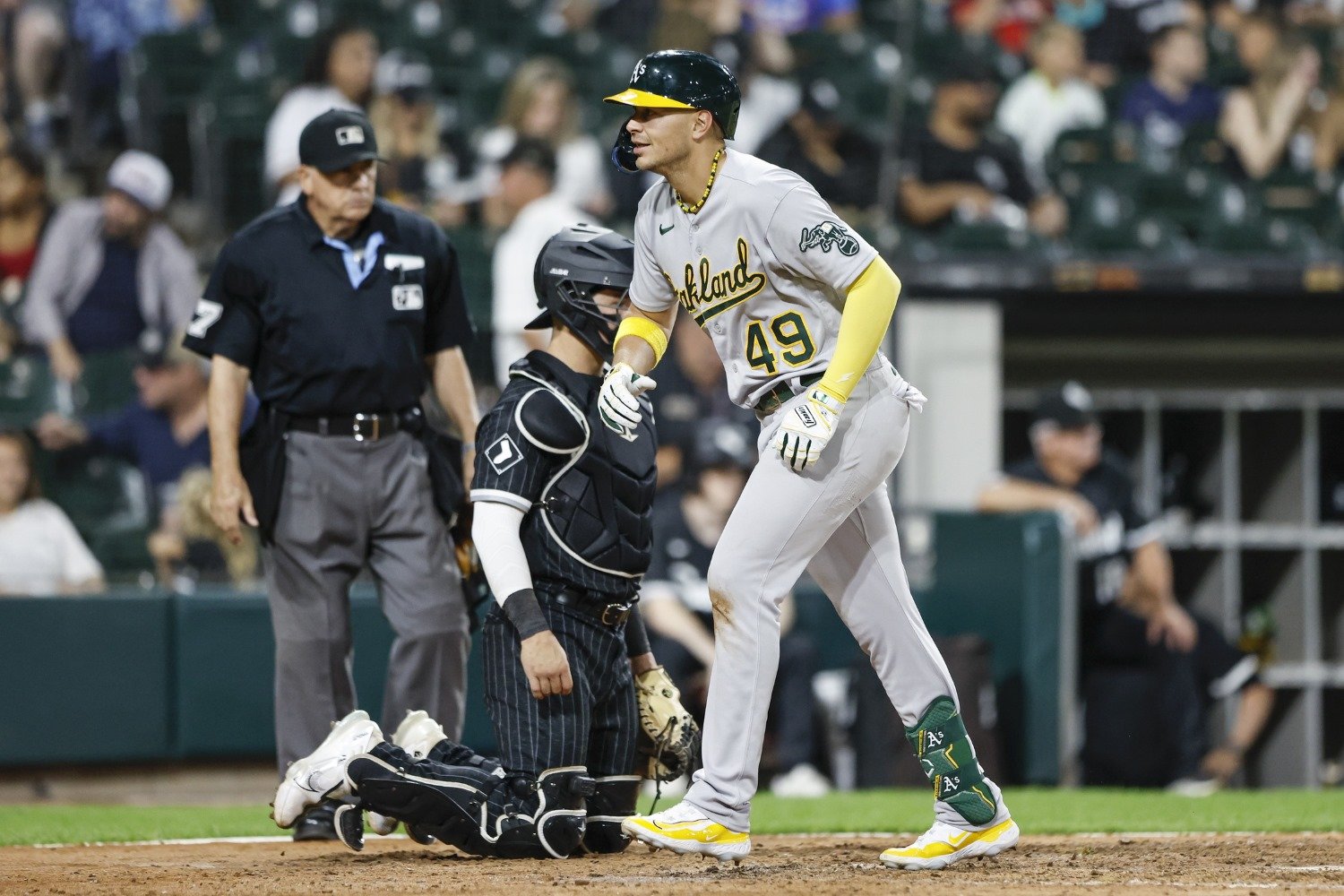 It's impossible to sugarcoat this: Ryan Noda swings and misses at a catastrophic rate. He whiffed on nearly 37 percent of his swings last season, in his first exposure to the big leagues. Of the 362 batters who came to the plate at least 200 times last year, only eight had a lower contact rate. Noda, 27, struck out 34 percent of the time. It's why it took him so long to get a big-league look, and it's an ongoing threat to his viability as a hitter. You can find many examples of a grooved swing in the modern game, but few are clearer or more glaring than Noda. When the ball isn't in the meaty part of the strike zone, he usually doesn't even touch it. That's the bad news, and it's pretty bad. Again, this is a player who just broke in last year, on the wrong side of his 27th birthday, with the worst team in baseball. On the other hand, there's good news. When Noda connects, the ball goes. He ranks highly not only in average exit velocity, but in the 90th-percentile exit velo, too. He lifts the ball, but not the way many fly-ball guys do, where pop-ups or lazy, high flies become a problem. Noda's swing is designed to hit high, hard line drives, and when he connects, he does just that, at a high rate. Put the good and the bad together, and you have a volatile but valuable profile. Noda hit .229/.364/.406 last year, and his power numbers were dampened by playing his home games in Oakland. That uninspiring raw line was good for a 123 wRC+. That's eerily similar to the 119 put up by Christopher Morel, and akin to some optimistic projections for Michael Busch. Noda, like Busch, is an escapee of the Dodgers system, where there was never going to be room for him in the lineup. As he proved after being a Rule 5 draftee, though, not being good enough to crack the Los Angeles lineup doesn't mean you're not good enough to crack any of several others throughout the league. Noda's only viable defensive positions are first base and left field, but he acquits himself in each spot, and he's a credible DH, with all that power and the discipline not to expand his strike zone. Adding Noda wouldn't cure what ails the Cubs, per se. They'd move from one slightly uncomfortable, highly fluid state on offense to another. They'd have to move pieces around constantly, to get Noda, Busch and Morel the amount of playing time each deserves, while also shielding each from bad matchups. If what they want is a hitter who will punish right-handed pitching, though, Noda is a good candidate. Why, then, would the A's trade him? In short: he's of no use to them. Noda turns 28 in March. The A's will be moribund for the balance of his prime, and holding onto anyone with trade value who won't be good five years from now is a fool's errand for them. Instead, they could ask for any of a handful of young players who might have bigger warts or be further from helping the team, but who won't age out of their usefulness before the team's new park in Las Vegas gets built. The Cubs have money to spend, and in addition to Cody Bellinger, guys like Brandon Belt and Joey Votto remain available. Already, though, Jed Hoyer has shown a greater appetite for moves that yield long-term value at lowish costs than for those that come with less risk but an exponentially higher price tag. Noda might be in the sweet spot. Would you give up anything of consequence to mix Noda in with the Cubs' existing power hitters? Can they afford to wait on a slow-thawing market for left-handed thump? Let's kick around the options.
 -
As the Cubs cast a wide net in their search for a left-handed bat to bolster their lineup, they might need to consider switching away from the big-name free agents and focusing on a trade alternative. Image courtesy of © Kamil Krzaczynski-USA TODAY Sports It's impossible to sugarcoat this: Ryan Noda swings and misses at a catastrophic rate. He whiffed on nearly 37 percent of his swings last season, in his first exposure to the big leagues. Of the 362 batters who came to the plate at least 200 times last year, only eight had a lower contact rate. Noda, 27, struck out 34 percent of the time. It's why it took him so long to get a big-league look, and it's an ongoing threat to his viability as a hitter. You can find many examples of a grooved swing in the modern game, but few are clearer or more glaring than Noda. When the ball isn't in the meaty part of the strike zone, he usually doesn't even touch it. That's the bad news, and it's pretty bad. Again, this is a player who just broke in last year, on the wrong side of his 27th birthday, with the worst team in baseball. On the other hand, there's good news. When Noda connects, the ball goes. He ranks highly not only in average exit velocity, but in the 90th-percentile exit velo, too. He lifts the ball, but not the way many fly-ball guys do, where pop-ups or lazy, high flies become a problem. Noda's swing is designed to hit high, hard line drives, and when he connects, he does just that, at a high rate. Put the good and the bad together, and you have a volatile but valuable profile. Noda hit .229/.364/.406 last year, and his power numbers were dampened by playing his home games in Oakland. That uninspiring raw line was good for a 123 wRC+. That's eerily similar to the 119 put up by Christopher Morel, and akin to some optimistic projections for Michael Busch. Noda, like Busch, is an escapee of the Dodgers system, where there was never going to be room for him in the lineup. As he proved after being a Rule 5 draftee, though, not being good enough to crack the Los Angeles lineup doesn't mean you're not good enough to crack any of several others throughout the league. Noda's only viable defensive positions are first base and left field, but he acquits himself in each spot, and he's a credible DH, with all that power and the discipline not to expand his strike zone. Adding Noda wouldn't cure what ails the Cubs, per se. They'd move from one slightly uncomfortable, highly fluid state on offense to another. They'd have to move pieces around constantly, to get Noda, Busch and Morel the amount of playing time each deserves, while also shielding each from bad matchups. If what they want is a hitter who will punish right-handed pitching, though, Noda is a good candidate. Why, then, would the A's trade him? In short: he's of no use to them. Noda turns 28 in March. The A's will be moribund for the balance of his prime, and holding onto anyone with trade value who won't be good five years from now is a fool's errand for them. Instead, they could ask for any of a handful of young players who might have bigger warts or be further from helping the team, but who won't age out of their usefulness before the team's new park in Las Vegas gets built. The Cubs have money to spend, and in addition to Cody Bellinger, guys like Brandon Belt and Joey Votto remain available. Already, though, Jed Hoyer has shown a greater appetite for moves that yield long-term value at lowish costs than for those that come with less risk but an exponentially higher price tag. Noda might be in the sweet spot. Would you give up anything of consequence to mix Noda in with the Cubs' existing power hitters? Can they afford to wait on a slow-thawing market for left-handed thump? Let's kick around the options. View full article
-
It's one of those places where, as we get a ton of insight into the game over time, the lines between "luck" and "real phenomenon that still might not repeat itself even if not actively adjusted" become blurry. I don't think Swanson got unlucky in 2023. He miiight have gotten a bit lucky in 2022. There were real tradeoffs involved in some of the adjustments he made last year, and this looks to be one of them, to me. That doesn't mean he won't lock right back in, with a winter's unconscious reset of everything. So, we'll see. You're right, he's certainly earned his keep so far. I'm not as sure as you are that I'd rather have him than Bogaerts or Turner, but they did get so much more money and so much longer deals than his that it probably washes out even if you think either or both of them are slightly better, and more than washes out if you think he's right on their level. Comparing him to Correa, at this point, is almost impossible. Talk about two vastly different career paths.
-
Dansby Swanson and Crushing the Ball in the Middle of the Plate
Matthew Trueblood posted an article in Cubs
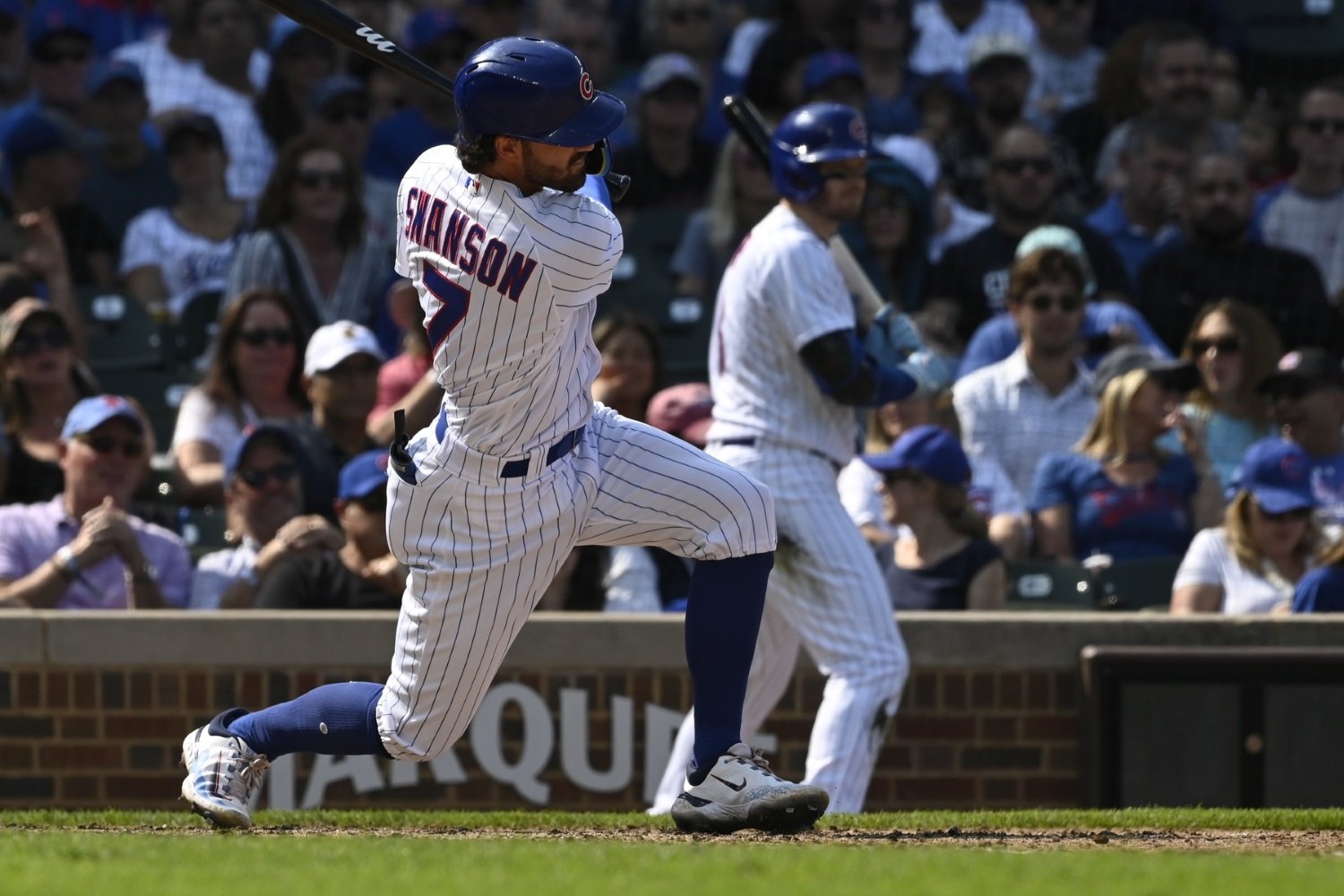 In his final two seasons with Atlanta, Dansby Swanson crushed the ball in the middle third of the plate. In what seems to be the best-maintained environment for hitters in all of baseball, Swanson stayed locked in on doing damage when pitchers were in the middle of the plate, and he rarely missed. Of the 261 hitters who took at least 600 plate appearances in 2021 and 2022 combined, Swanson had the 25th-highest wOBA on pitches in the middle third. Obviously, hitters are good in that area, even on average. They batted .292/.312/.527 on those pitches across the two campaigns. To stand out in that crowd, then, you have to put up huge numbers. Swanson did, batting .328/.351/.634 in 441 plate appearances that ended on pitches in that area. His batted-ball data was all markedly above-average, although he had to trade a bit of contact to generate that high-quality damage when he did connect. It was the right kind of tradeoff. In 2023, that part of Swanson's game fell on hard times. He ranked 216th of 293 batters with at least 300 plate appearances on middle-third wOBA, with a .252/.287/.447 line. He chased a little more, whiffed a little more, hit the ball a little less hard, and lifted the ball a little less, and it all added up to a 50-point dip in BABIP and a loss of about .130 in isolated power. He made up for some of that shortfall in other areas, as evidenced by the similar overall numbers he put up (a 107 DRC+ in 2023, compared to 110 in 2022; a 104 wRC+, compared to 116 the previous year), but the deficiency was real. Swanson really only did significant damage on the inner third of the plate in 2023, whereas in 2021 and 2022, he had been able to cover the whole strike zone in a dangerous way. Some of that is about approach. Notedly, Swanson became more patient at the plate in 2023, which is part of how he made up for doing less damage on contact. With his selectivity came a slightly deeper contact pont; he met the ball later in its flight most of the time. However, there's also a mechanical aspect to analyze here. Let's look at a couple videos of Swanson putting a hard swing on the ball in the middle third of the plate. First, from 2023: QnZHcTVfVjBZQUhRPT1fRHdSV0JRWlZBZ0VBWFZNSFZnQUFWMUplQUZsV0FsQUFDZ2NOQlFJQ1VsQUhVZ3BX.mp4 And then from 2022: T1pkQUdfWGw0TUFRPT1fVUZKU1VRWlFBZ29BV1FOVFV3QUFCMU1GQUFNQ0JWa0FCQU5UQkFJQ1VBVlVVbGNF.mp4 Compare Swanson's swings on these offerings--especially his lower half. In his final season in Atlanta, he was doing what the Braves do best: attacking the ball with ferocious intent. Yet, he didn't overstride, or get so deep into his legs that he had to come back up as he swung. His barrel got under the ball enough to lift it, but his foundation stayed under him the whole time, so there was no wasted motion or energy. In 2023, he's doing a lot of the same things, but the stride gets slightly overlong on him, and he does sink deeper into his legs, forcing him to come back up as he's swinging. He meets the ball cleanly, but without as much authority, and it dies shy of the track in left-center field. Now, here's a swing on which Swanson did all of those 2022 things, but from 2023: cThrUnZfWGw0TUFRPT1fQWdGVEJsMVZVbFFBQVZZS1VRQUFBd0FEQUFBQ1dnY0FVVmNOQ1F0WFZ3TlFCRlpW.mp4 We can talk a bit about pitch selection here. Bailey Falter sped up Swanson's bat in an 0-2 count with a fastball, and missed his spot pretty badly. Angel Perdomo, by contrast, threw almost as hard on the pitch that induced a lazy fly out, but it was a changeup. That helps explain why Swanson's stride got longer and his hips lower on the pitch he wasn't able to crush. This is part of why Swanson has always hit fastballs well and offspeed stuff less so. Still, that slight mechanical change is telling, because it's why Swanson was still good at attacking the inside pitch this past year, but struggled with stuff down and out over the plate. When a pitcher comes inside on you (and especially up and in, and especially with anything hard), it forces you to be shorter, quicker, and taller in your swing. That accords with what Swanson needs to do better and more consistently, anyway. As a hitter, it can be hard to trust your eyes and your strength enough to stay tall and extend your arms to generate power on pitches down and away, but for a guy like Swanson, that trust is essential. If he wants to get back to driving the ball productively even when it's not inside on him, he has to stay fresh enough and explosive enough to stay tall and still swing hard. Do you think the Cubs will get an offensive season from Swanson to match his best in Atlanta, over the balance of his contract? What other adjustments do you want to see from him this year? Let's talk hitting.
 -
The Cubs can have relatively few complaints about the player to whom they committed themselves for seven years last winter. He had a great first season on the North Side. There's just this one thing... Image courtesy of © Matt Marton-USA TODAY Sports In his final two seasons with Atlanta, Dansby Swanson crushed the ball in the middle third of the plate. In what seems to be the best-maintained environment for hitters in all of baseball, Swanson stayed locked in on doing damage when pitchers were in the middle of the plate, and he rarely missed. Of the 261 hitters who took at least 600 plate appearances in 2021 and 2022 combined, Swanson had the 25th-highest wOBA on pitches in the middle third. Obviously, hitters are good in that area, even on average. They batted .292/.312/.527 on those pitches across the two campaigns. To stand out in that crowd, then, you have to put up huge numbers. Swanson did, batting .328/.351/.634 in 441 plate appearances that ended on pitches in that area. His batted-ball data was all markedly above-average, although he had to trade a bit of contact to generate that high-quality damage when he did connect. It was the right kind of tradeoff. In 2023, that part of Swanson's game fell on hard times. He ranked 216th of 293 batters with at least 300 plate appearances on middle-third wOBA, with a .252/.287/.447 line. He chased a little more, whiffed a little more, hit the ball a little less hard, and lifted the ball a little less, and it all added up to a 50-point dip in BABIP and a loss of about .130 in isolated power. He made up for some of that shortfall in other areas, as evidenced by the similar overall numbers he put up (a 107 DRC+ in 2023, compared to 110 in 2022; a 104 wRC+, compared to 116 the previous year), but the deficiency was real. Swanson really only did significant damage on the inner third of the plate in 2023, whereas in 2021 and 2022, he had been able to cover the whole strike zone in a dangerous way. Some of that is about approach. Notedly, Swanson became more patient at the plate in 2023, which is part of how he made up for doing less damage on contact. With his selectivity came a slightly deeper contact pont; he met the ball later in its flight most of the time. However, there's also a mechanical aspect to analyze here. Let's look at a couple videos of Swanson putting a hard swing on the ball in the middle third of the plate. First, from 2023: QnZHcTVfVjBZQUhRPT1fRHdSV0JRWlZBZ0VBWFZNSFZnQUFWMUplQUZsV0FsQUFDZ2NOQlFJQ1VsQUhVZ3BX.mp4 And then from 2022: T1pkQUdfWGw0TUFRPT1fVUZKU1VRWlFBZ29BV1FOVFV3QUFCMU1GQUFNQ0JWa0FCQU5UQkFJQ1VBVlVVbGNF.mp4 Compare Swanson's swings on these offerings--especially his lower half. In his final season in Atlanta, he was doing what the Braves do best: attacking the ball with ferocious intent. Yet, he didn't overstride, or get so deep into his legs that he had to come back up as he swung. His barrel got under the ball enough to lift it, but his foundation stayed under him the whole time, so there was no wasted motion or energy. In 2023, he's doing a lot of the same things, but the stride gets slightly overlong on him, and he does sink deeper into his legs, forcing him to come back up as he's swinging. He meets the ball cleanly, but without as much authority, and it dies shy of the track in left-center field. Now, here's a swing on which Swanson did all of those 2022 things, but from 2023: cThrUnZfWGw0TUFRPT1fQWdGVEJsMVZVbFFBQVZZS1VRQUFBd0FEQUFBQ1dnY0FVVmNOQ1F0WFZ3TlFCRlpW.mp4 We can talk a bit about pitch selection here. Bailey Falter sped up Swanson's bat in an 0-2 count with a fastball, and missed his spot pretty badly. Angel Perdomo, by contrast, threw almost as hard on the pitch that induced a lazy fly out, but it was a changeup. That helps explain why Swanson's stride got longer and his hips lower on the pitch he wasn't able to crush. This is part of why Swanson has always hit fastballs well and offspeed stuff less so. Still, that slight mechanical change is telling, because it's why Swanson was still good at attacking the inside pitch this past year, but struggled with stuff down and out over the plate. When a pitcher comes inside on you (and especially up and in, and especially with anything hard), it forces you to be shorter, quicker, and taller in your swing. That accords with what Swanson needs to do better and more consistently, anyway. As a hitter, it can be hard to trust your eyes and your strength enough to stay tall and extend your arms to generate power on pitches down and away, but for a guy like Swanson, that trust is essential. If he wants to get back to driving the ball productively even when it's not inside on him, he has to stay fresh enough and explosive enough to stay tall and still swing hard. Do you think the Cubs will get an offensive season from Swanson to match his best in Atlanta, over the balance of his contract? What other adjustments do you want to see from him this year? Let's talk hitting. View full article
-
The Cubs have stars in each corner outfield spot going into 2024. After trading for Michael Busch, they might well have first base locked down, too. The places to play a big, defensively limited slugger are all but gone. However, there's one minor-league bat who just might force his way into the picture, anyway. Image courtesy of © Mark J. Rebilas-USA TODAY Sports It's not as though Owen Caissie is a sure thing. He struck out over 30 percent of the time in Double A in 2023, a red flag consistent with the rest of his professional track record. That's why the Cubs aren't banking on him. On the other hand, Caissie hits the stuffing out of the ball. Baseball America gathered exit velocity data on all the hitters who made their Top 100 prospects list this month, and Caissie's average of 93.3 miles per hour was fourth-highest. Playing (primarily) at a higher level of competition, he matched the average exit velocity of elite prospect and top 2023 draftee Dylan Crews. Caissie batted .289/.398/.519, and his maximum exit velocity was over 117 miles per hour. That kind of power puts a player in league not just with big-leaguers, but with the best sluggers in that league. He's just a half-step behind Aaron Judge and Shohei Ohtani. He's right in line with Joey Gallo. That's what makes Caissie too fascinating to overlook or discount, in the medium-term future. Like those hitters, he will strike out a lot, but like them, he also shows patience and a good eye at the plate. He walked over 14 percent of the time last year, at a very young age for his level of competition. (Five months younger than Crews, Caissie played the whole season at Double A.) He's not as good a pure hitter as Judge or Ohtani. The question is whether he can be as good as Gallo, because if so, he can still be tremendously productive in the big leagues. To that end, let's talk about not just how hard Caissie hits the ball, but where. Here are Caissie's spray charts for 2021 and 2022, as he ascended through the lower levels of the minors. He was a good hitter during those two years, but not a great one. In 659 plate appearances, he hit 32 doubles, two triples, and 18 homers. That's not bad, given the leagues and parks in which he was playing and his extreme youth. It's just that it wouldn't make him a viable big-leaguer, given all the strikeouts he's sure to rack up. Frankly, it's impressive that a player as young as Caissie was able to generate even fairly modest power numbers with such an opposite field-focused approach. Caissie was hitting with authority to all fields, but it's hard to hit for big power without consistently pulling the ball in the air, and he didn't do it. Let's turn to his 2023 spray chart. Now, that is more like it. That's how you have to hit the ball in order to make up for striking out over 30 percent of the time, as Caissie seems certain to do in the bigs. In about 130 fewer plate appearances than over the previous two seasons combined, Caissie had 31 doubles, two triples, and 22 homers. Without losing the ability to hammer the ball to the gap in left-center field, he started consistently elevating, and doing it to his pull field in right. Had Caissie been in MLB, his rate of pulling the ball to far right field (basically, the two rightmost sections of the charts above) would have led the league. Since he wasn't, it was Gallo who led in that category. That doesn't sound especially complimentary, but Gallo is better than his reputation. He's been wildly inconsistent since the onset of the pandemic, but he was highly effective in his early 20s, and even in 2023, he posted a 104 wRC+, with 21 home runs in 332 plate appearances. If Caissie truly had Gallo's power (including the ability to actualize it), he'd already be in the big leagues. Pulling the ball more, putting it in the air more, these are vital aspects of getting to more of an individual's power, but they aren't the whole picture, and one can't answer all the important questions about that picture without climbing above Double A and seeing some more advanced pitching. With Ian Happ, Seiya Suzuki, Michael Busch, and Christopher Morel already on the roster, the Cubs don't have a lot of available playing time for a player like Caissie, who's only cut out to be a corner outfielder or a first baseman, if not a DH. If they re-sign Cody Bellinger, the eye of that needle will only get smaller. Caissie's already had a full season in Tennessee, though. He's on the verge of the big leagues, where he'll have to either pass or fail the test the great pitchers there will pose. If he can continue developing on the arc he described this past season, he can force his way into the team's plans sooner, rather than later. How do you think Caissie fits into the Cubs' short- and longer-term plans? Do you expect to see him make a significant impact in the big leagues this year? Discuss below. Research assistance provided by TruMedia. View full article
-
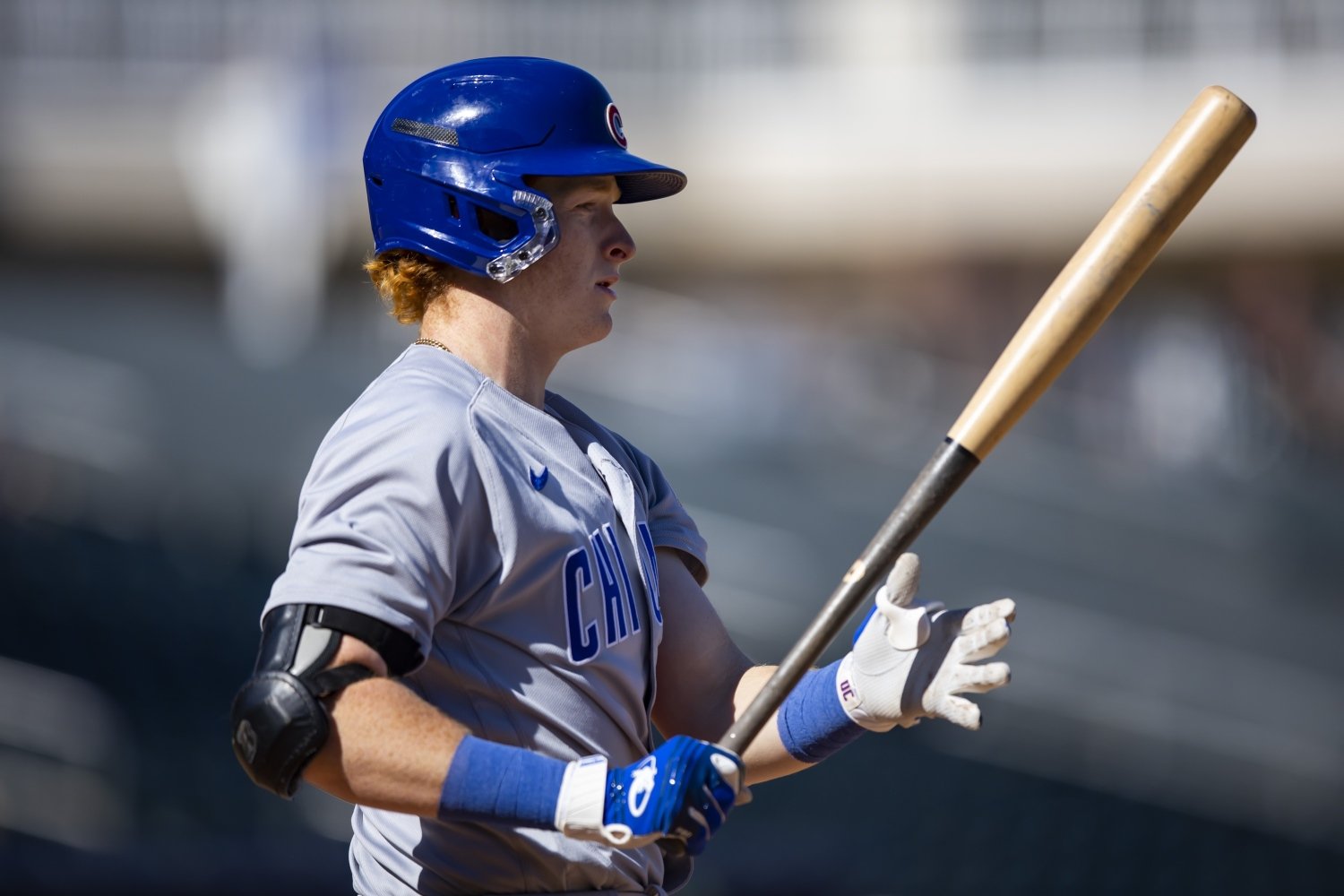 It's not as though Owen Caissie is a sure thing. He struck out over 30 percent of the time in Double A in 2023, a red flag consistent with the rest of his professional track record. That's why the Cubs aren't banking on him. On the other hand, Caissie hits the stuffing out of the ball. Baseball America gathered exit velocity data on all the hitters who made their Top 100 prospects list this month, and Caissie's average of 93.3 miles per hour was fourth-highest. Playing (primarily) at a higher level of competition, he matched the average exit velocity of elite prospect and top 2023 draftee Dylan Crews. Caissie batted .289/.398/.519, and his maximum exit velocity was over 117 miles per hour. That kind of power puts a player in league not just with big-leaguers, but with the best sluggers in that league. He's just a half-step behind Aaron Judge and Shohei Ohtani. He's right in line with Joey Gallo. That's what makes Caissie too fascinating to overlook or discount, in the medium-term future. Like those hitters, he will strike out a lot, but like them, he also shows patience and a good eye at the plate. He walked over 14 percent of the time last year, at a very young age for his level of competition. (Five months younger than Crews, Caissie played the whole season at Double A.) He's not as good a pure hitter as Judge or Ohtani. The question is whether he can be as good as Gallo, because if so, he can still be tremendously productive in the big leagues. To that end, let's talk about not just how hard Caissie hits the ball, but where. Here are Caissie's spray charts for 2021 and 2022, as he ascended through the lower levels of the minors. He was a good hitter during those two years, but not a great one. In 659 plate appearances, he hit 32 doubles, two triples, and 18 homers. That's not bad, given the leagues and parks in which he was playing and his extreme youth. It's just that it wouldn't make him a viable big-leaguer, given all the strikeouts he's sure to rack up. Frankly, it's impressive that a player as young as Caissie was able to generate even fairly modest power numbers with such an opposite field-focused approach. Caissie was hitting with authority to all fields, but it's hard to hit for big power without consistently pulling the ball in the air, and he didn't do it. Let's turn to his 2023 spray chart. Now, that is more like it. That's how you have to hit the ball in order to make up for striking out over 30 percent of the time, as Caissie seems certain to do in the bigs. In about 130 fewer plate appearances than over the previous two seasons combined, Caissie had 31 doubles, two triples, and 22 homers. Without losing the ability to hammer the ball to the gap in left-center field, he started consistently elevating, and doing it to his pull field in right. Had Caissie been in MLB, his rate of pulling the ball to far right field (basically, the two rightmost sections of the charts above) would have led the league. Since he wasn't, it was Gallo who led in that category. That doesn't sound especially complimentary, but Gallo is better than his reputation. He's been wildly inconsistent since the onset of the pandemic, but he was highly effective in his early 20s, and even in 2023, he posted a 104 wRC+, with 21 home runs in 332 plate appearances. If Caissie truly had Gallo's power (including the ability to actualize it), he'd already be in the big leagues. Pulling the ball more, putting it in the air more, these are vital aspects of getting to more of an individual's power, but they aren't the whole picture, and one can't answer all the important questions about that picture without climbing above Double A and seeing some more advanced pitching. With Ian Happ, Seiya Suzuki, Michael Busch, and Christopher Morel already on the roster, the Cubs don't have a lot of available playing time for a player like Caissie, who's only cut out to be a corner outfielder or a first baseman, if not a DH. If they re-sign Cody Bellinger, the eye of that needle will only get smaller. Caissie's already had a full season in Tennessee, though. He's on the verge of the big leagues, where he'll have to either pass or fail the test the great pitchers there will pose. If he can continue developing on the arc he described this past season, he can force his way into the team's plans sooner, rather than later. How do you think Caissie fits into the Cubs' short- and longer-term plans? Do you expect to see him make a significant impact in the big leagues this year? Discuss below. Research assistance provided by TruMedia.
 -
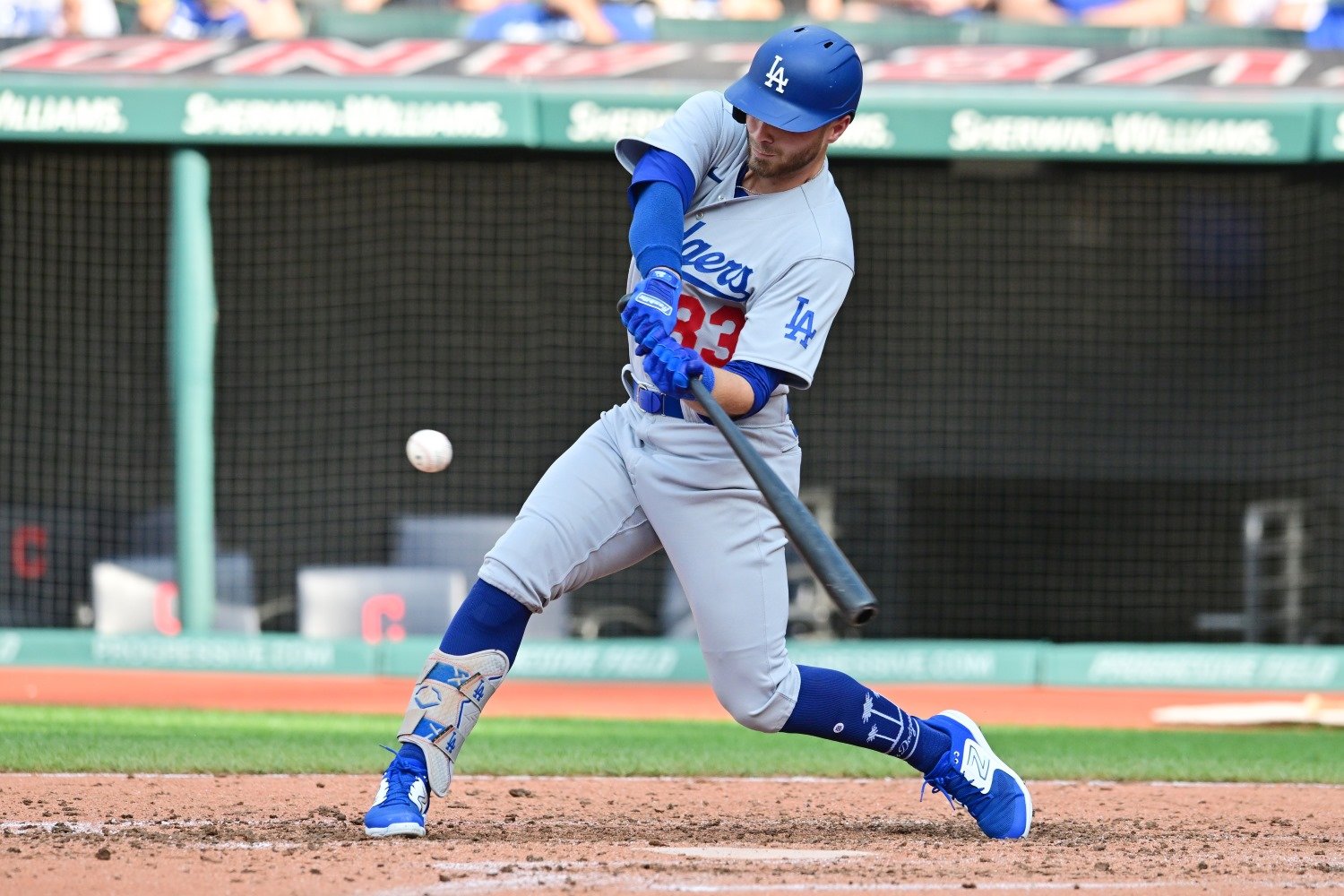 We live in the age of optimization. It's not always ruthless, and it needn't be, but by and large, teams shield even some of their best players from matchups they view as difficult for them. That especially means that left-handed hitters see lefty pitchers less often. It's easy to miss that trend, because of the way rosters and rules have changed over time, but it's true. First, consider this chart, showing the percentage of all plate appearances that have featured left-on-left matchups over the last 110 years. I've added the trend line, not to suggest that it matters how closely any given season hews to that line, but to make clearer the general direction of change. Lefty hitters are seeing lefty pitchers slightly more often than they historically have, though markedly less than they did about a decade ago. That would seem to go against the claim above, right? Wrong. We have to correct for a few things. To wit: there are more left-handed pitchers than there used to be, too. Don't obsess over the apparent slopes of these trend lines, or anything. The charts are on different scales. As you can see, though, southpaws have become more prevalent over time (though they have made up a smaller share of all pitchers since the last rounds of expansion, in the 1990s, than they had before that). So, too, have lefty batters. Take those confounding factors out, by boiling things down to the share of all lefty plate appearances taken against lefties, and you can see what's really happening. There's no good way to show it to you graphically, but take the above and mentally factor in one more thing: Benches are tiny now. In the middle chunk of the 20th century, when Casey Stengel and then Earl Weaver ruled the game through assiduous use of platoons, they had 16 or 17 position players on their rosters, and could smoothly run two or three platoons at any given time. Only their very best regulars faced same-handed pitching on a regular basis. The 13-man pitching staff makes that virtually impossible. You have fewer players on your bench, and they have to be used differently. By the time you ensure that you have a backup catcher, a shortstop-capable infielder, and a center field-capable outfielder, you're left with just one bench spot to award to a player selected purely for their bat. Many managers don't feel empowered to use those guys as aggressively as they used to, either. So, let's get to Michael Busch. One reason why the Dodgers were willing to move on from him is that, because Busch has relatively little defensive value, he needs to hit exceptionally well in order to be more than an average contributor. Lefty hitters struggle with lefty pitchers, partially because they're given few chances to acclimate themselves to facing them, but also partially because those pitchers are getting nastier all the time. As a group, lefty batters haven't had an OPS north of .700 against southpaws since 2019 (thanks largely to the aeroball), and before that, it's been since 2009. If Busch is limited to platoon work, it really limits his ceiling. I don't think he needs to be thus limited, though. Last year, across Triple A and MLB, 112 batters had at least 100 plate appearances in left-on-left situations. Among them, Busch ranked: 13th in average exit velocity 40th in hard-hit rate 12th in launch angle sweet spot rate 9th in contact rate on swings 30th in chase rate on pitches outside the zone This is cheating, a bit. Since most of Busch's sample was against Triple-A pitching, we're not comparing apples to apples--or if we are, some of them are honeycrisp and others are red delicious. It's not perfectly equitable. Still, these data tell the story of a guy who deserves to be one of the few lefty batters entrusted with regular work even against lefty pitchers. If Busch comes to camp and shows the same ability to hang in against lefties that he showed last season, it ought to shape the Cubs' plans for him. That could mean making Christopher Morel more available in trades. At face value, Busch and Morel seem like potential platoon partners, but Morel has reverse platoon splits for his career, anyway. Unless the Cubs decide that one or the other has more defensive value than is generally perceived right now, they overlap pretty significantly in their potential areas of contribution, and that might push Morel out the door if the right offer comes in. Barring that, Busch's competence against same-handed hurlers still means good things. If he's an everyday first baseman, rather than one who needs to sit once or twice a week to dodge a lefty starter, he brings more value as an individual and gives Craig Counsell more options elsewhere. He's still unlikely to be the next Anthony Rizzo, but when you break down Busch's numbers and see this surprising balance in his game, you can start to understand how he still gets to All-Star status without being able to play a valuable defensive position or bringing outstanding athleticism to the table. Are you comfortable with Busch facing lefties, at least right now? Does it tinge your opinion on the Cubs' presumed pursuits of guys like Rhys Hoskins? Research assistance provided by TruMedia, and by Stathead, by Baseball Reference.
 -
The newest position player to the Cubs organization is a left-handed hitter who can both slug and get on base. However, as a lefty in the modern game, you're never truly safe from the question: Is this guy worth playing against left-handed pitchers? Image courtesy of © Ken Blaze-USA TODAY Sports We live in the age of optimization. It's not always ruthless, and it needn't be, but by and large, teams shield even some of their best players from matchups they view as difficult for them. That especially means that left-handed hitters see lefty pitchers less often. It's easy to miss that trend, because of the way rosters and rules have changed over time, but it's true. First, consider this chart, showing the percentage of all plate appearances that have featured left-on-left matchups over the last 110 years. I've added the trend line, not to suggest that it matters how closely any given season hews to that line, but to make clearer the general direction of change. Lefty hitters are seeing lefty pitchers slightly more often than they historically have, though markedly less than they did about a decade ago. That would seem to go against the claim above, right? Wrong. We have to correct for a few things. To wit: there are more left-handed pitchers than there used to be, too. Don't obsess over the apparent slopes of these trend lines, or anything. The charts are on different scales. As you can see, though, southpaws have become more prevalent over time (though they have made up a smaller share of all pitchers since the last rounds of expansion, in the 1990s, than they had before that). So, too, have lefty batters. Take those confounding factors out, by boiling things down to the share of all lefty plate appearances taken against lefties, and you can see what's really happening. There's no good way to show it to you graphically, but take the above and mentally factor in one more thing: Benches are tiny now. In the middle chunk of the 20th century, when Casey Stengel and then Earl Weaver ruled the game through assiduous use of platoons, they had 16 or 17 position players on their rosters, and could smoothly run two or three platoons at any given time. Only their very best regulars faced same-handed pitching on a regular basis. The 13-man pitching staff makes that virtually impossible. You have fewer players on your bench, and they have to be used differently. By the time you ensure that you have a backup catcher, a shortstop-capable infielder, and a center field-capable outfielder, you're left with just one bench spot to award to a player selected purely for their bat. Many managers don't feel empowered to use those guys as aggressively as they used to, either. So, let's get to Michael Busch. One reason why the Dodgers were willing to move on from him is that, because Busch has relatively little defensive value, he needs to hit exceptionally well in order to be more than an average contributor. Lefty hitters struggle with lefty pitchers, partially because they're given few chances to acclimate themselves to facing them, but also partially because those pitchers are getting nastier all the time. As a group, lefty batters haven't had an OPS north of .700 against southpaws since 2019 (thanks largely to the aeroball), and before that, it's been since 2009. If Busch is limited to platoon work, it really limits his ceiling. I don't think he needs to be thus limited, though. Last year, across Triple A and MLB, 112 batters had at least 100 plate appearances in left-on-left situations. Among them, Busch ranked: 13th in average exit velocity 40th in hard-hit rate 12th in launch angle sweet spot rate 9th in contact rate on swings 30th in chase rate on pitches outside the zone This is cheating, a bit. Since most of Busch's sample was against Triple-A pitching, we're not comparing apples to apples--or if we are, some of them are honeycrisp and others are red delicious. It's not perfectly equitable. Still, these data tell the story of a guy who deserves to be one of the few lefty batters entrusted with regular work even against lefty pitchers. If Busch comes to camp and shows the same ability to hang in against lefties that he showed last season, it ought to shape the Cubs' plans for him. That could mean making Christopher Morel more available in trades. At face value, Busch and Morel seem like potential platoon partners, but Morel has reverse platoon splits for his career, anyway. Unless the Cubs decide that one or the other has more defensive value than is generally perceived right now, they overlap pretty significantly in their potential areas of contribution, and that might push Morel out the door if the right offer comes in. Barring that, Busch's competence against same-handed hurlers still means good things. If he's an everyday first baseman, rather than one who needs to sit once or twice a week to dodge a lefty starter, he brings more value as an individual and gives Craig Counsell more options elsewhere. He's still unlikely to be the next Anthony Rizzo, but when you break down Busch's numbers and see this surprising balance in his game, you can start to understand how he still gets to All-Star status without being able to play a valuable defensive position or bringing outstanding athleticism to the table. Are you comfortable with Busch facing lefties, at least right now? Does it tinge your opinion on the Cubs' presumed pursuits of guys like Rhys Hoskins? Research assistance provided by TruMedia, and by Stathead, by Baseball Reference. View full article
-
The Cubs' erstwhile workhorse almost had his career careen into what would have felt like a premature end. Instead, he reasserted himself, in the least conventionally assertive way possible. The oldest orthodoxy in pitching is: away, away, away. Even Bob Gibson (one of history's most famous pitch-inside, intimidate them, own the plate hurlers) revealed in his large oeuvre of post-career pitching wisdom dispensed across multiple books, disclosed that he only came inside to set up batters. He got all his outs by attacking low and away. Zack Greinke opened up to Eno Sarris back in 2015 about his doubts that pitching inside has any real value. The reason the changeup and the slider exist is to create opportunities for pitchers to work opposite- and same-handed batters, respectively, away more effectively. Since 2015, though, that orthodoxy has started crumbling. As Greinke observed in that interview with Sarris, hitters do tend to hit the ball hard when it's out over the plate, where they can extend their arms. Maybe that, verified by batted-ball data that is so ubiquitous these days, has led pitchers and their teams to change tack. Maybe it's more about the changing shapes and angles of modern pitching. Either way, though, pitchers are pounding away outside less and less often, over time. Not even the softest-tossing starter in baseball was immune to the trend, for a few years. Kyle Hendricks is a dedicated and intelligent adapter. He evolves and tweaks things, and he does so systematically. Historically one of the most devout "away, away, away" guys in baseball, Hendricks changed up on the league from 2020 through 2022--literally, but also figuratively. He started trying to force hitters to cover the whole plate a bit more, and to get in where he could consistently induce a lot of weak contact. As we all know, though, the results of that change in approach were mixed. Hendricks was superb in the COVID-curtailed 2020 season, but over the following two years, his ERA was 4.78, and he gave up a lot of hits and home runs. As you can see, after returning from the shoulder injury that ended his 2022 season, he left that experiment with abandoning the outside edge behind. He's back to what once made him dominant, but he's now working against the grain of the league's evolution. In fact, among the 375 hurlers who faced at least 200 batters in 2023, Hendricks worked Outside at the highest rate in the league. Even though his raw rates of working away were higher in his prime, he never led the league before now. The results steadily reinforced that approach, too. Batters had a .477 OPS against Outside pitches from Hendricks in 2023, the lowest of his career. As those who watched him closely know, that's largely because Hendricks didn't only change where he pitched last season. He also rebalanced his pitch mix, in a significant way. Again, this is a pitcher who doesn't do anything without thought and purpose, and you can see the way his repertoire and approach have evolved by studying the way he deployed his arsenal on Outside pitches, specifically, in each phase of his career to date. From his debut in 2014 through 2019, when he made his switch to attack more often inside, he was pretty sinker-heavy, and he tried to use his cutter to draw 'X's on each side of home plate, as Greg Maddux used to describe it. He wanted hitters to have trouble guessing which way a pitch would move, even if they immediately spotted its location. As he changed his location targets a bit in 2020 and up through 2022, he changed his mix, too. It was more four-seamers and more curveballs, as a share of all Outside pitches. He ratcheted up usage of the changeup away, but it was still just the plurality of those offerings, not the majority. He was trying to use the principles of command discipline now so widely accepted in the game. Pitch A will be easiest to command in Location X, its movement profile sets up Pitch B in Location Y, but don't try to throw Pitch A or Pitch C in Location Y, or God help you. For most pitchers, that's probably sound thinking. Those pitchers pretty much all throw harder than Hendricks, though. Those pitchers pretty much all have worse feel and worse command than Hendricks has, too. As Hendricks got more confident and adroit in his manipulation of what are really two different changeups, and with negative feedback on some of those offerings when he tried to throw them right at the outer edge (with the slim margin for error that comes with a lack of velocity), he figured out that it was time to get back to throwing outside--but not the same way he used to do it. When last he was perching such a high percentage of his pitches on the outer third and beyond, Hendricks was fastball-heavy, No more. He's in the business of driving hitters utterly insane, by throwing what look like meatballs on the outer half, where they can extend their arms and obliterate the ball. Instead, it's the changeup. He's pulling the string over and over, and it's working. None of that is to say that it will work identically well in 2024 as it did in 2023. Hendricks is a wonder, and a unique artist on the mound, but he's not immune to time, injury, or the pitfalls of being so far below the league average in the single statistic that drives so much of the modern pitching paradigm. Still, last year's major adjustments were notable, and they're a good reminder that some of the ancient wisdom about pitching is timeless. What do you expect from Hendricks this year? How repeatable is his success? Let's discuss. Research assistance throughout this piece provided by TruMedia tools. View full article
-
 The oldest orthodoxy in pitching is: away, away, away. Even Bob Gibson (one of history's most famous pitch-inside, intimidate them, own the plate hurlers) revealed in his large oeuvre of post-career pitching wisdom dispensed across multiple books, disclosed that he only came inside to set up batters. He got all his outs by attacking low and away. Zack Greinke opened up to Eno Sarris back in 2015 about his doubts that pitching inside has any real value. The reason the changeup and the slider exist is to create opportunities for pitchers to work opposite- and same-handed batters, respectively, away more effectively. Since 2015, though, that orthodoxy has started crumbling. As Greinke observed in that interview with Sarris, hitters do tend to hit the ball hard when it's out over the plate, where they can extend their arms. Maybe that, verified by batted-ball data that is so ubiquitous these days, has led pitchers and their teams to change tack. Maybe it's more about the changing shapes and angles of modern pitching. Either way, though, pitchers are pounding away outside less and less often, over time. Not even the softest-tossing starter in baseball was immune to the trend, for a few years. Kyle Hendricks is a dedicated and intelligent adapter. He evolves and tweaks things, and he does so systematically. Historically one of the most devout "away, away, away" guys in baseball, Hendricks changed up on the league from 2020 through 2022--literally, but also figuratively. He started trying to force hitters to cover the whole plate a bit more, and to get in where he could consistently induce a lot of weak contact. As we all know, though, the results of that change in approach were mixed. Hendricks was superb in the COVID-curtailed 2020 season, but over the following two years, his ERA was 4.78, and he gave up a lot of hits and home runs. As you can see, after returning from the shoulder injury that ended his 2022 season, he left that experiment with abandoning the outside edge behind. He's back to what once made him dominant, but he's now working against the grain of the league's evolution. In fact, among the 375 hurlers who faced at least 200 batters in 2023, Hendricks worked Outside at the highest rate in the league. Even though his raw rates of working away were higher in his prime, he never led the league before now. The results steadily reinforced that approach, too. Batters had a .477 OPS against Outside pitches from Hendricks in 2023, the lowest of his career. As those who watched him closely know, that's largely because Hendricks didn't only change where he pitched last season. He also rebalanced his pitch mix, in a significant way. Again, this is a pitcher who doesn't do anything without thought and purpose, and you can see the way his repertoire and approach have evolved by studying the way he deployed his arsenal on Outside pitches, specifically, in each phase of his career to date. From his debut in 2014 through 2019, when he made his switch to attack more often inside, he was pretty sinker-heavy, and he tried to use his cutter to draw 'X's on each side of home plate, as Greg Maddux used to describe it. He wanted hitters to have trouble guessing which way a pitch would move, even if they immediately spotted its location. As he changed his location targets a bit in 2020 and up through 2022, he changed his mix, too. It was more four-seamers and more curveballs, as a share of all Outside pitches. He ratcheted up usage of the changeup away, but it was still just the plurality of those offerings, not the majority. He was trying to use the principles of command discipline now so widely accepted in the game. Pitch A will be easiest to command in Location X, its movement profile sets up Pitch B in Location Y, but don't try to throw Pitch A or Pitch C in Location Y, or God help you. For most pitchers, that's probably sound thinking. Those pitchers pretty much all throw harder than Hendricks, though. Those pitchers pretty much all have worse feel and worse command than Hendricks has, too. As Hendricks got more confident and adroit in his manipulation of what are really two different changeups, and with negative feedback on some of those offerings when he tried to throw them right at the outer edge (with the slim margin for error that comes with a lack of velocity), he figured out that it was time to get back to throwing outside--but not the same way he used to do it. When last he was perching such a high percentage of his pitches on the outer third and beyond, Hendricks was fastball-heavy, No more. He's in the business of driving hitters utterly insane, by throwing what look like meatballs on the outer half, where they can extend their arms and obliterate the ball. Instead, it's the changeup. He's pulling the string over and over, and it's working. None of that is to say that it will work identically well in 2024 as it did in 2023. Hendricks is a wonder, and a unique artist on the mound, but he's not immune to time, injury, or the pitfalls of being so far below the league average in the single statistic that drives so much of the modern pitching paradigm. Still, last year's major adjustments were notable, and they're a good reminder that some of the ancient wisdom about pitching is timeless. What do you expect from Hendricks this year? How repeatable is his success? Let's discuss. Research assistance throughout this piece provided by TruMedia tools.
 -
You pegged it right for me, too. And yet... It feels like I'm forever torn between what I would do or want Hoyer to do, and what he's actually likely to do. I look at this layout and I think, "It needs a couple significant FA signings and three trades: one that's prospects for a key player, one that swaps need for need, and one that clears roster clutter for you and helps a team that doesn't have as much depth as you do, even if all you get out of it is small-scale salary relief." But that feels like so much more than Hoyer's going to do. It feels more like he'll make one big signing, skip the need-for-need trade, and go into the season with a team that's well-positioned to win 86 games but stretched to even dream on 95.
-
This was clarified last year, can't remember because of whom, but: the player has to qualify for a full year of service time. That's a slight but meaningful distinction from having to be on the roster all year. For instance, if PCA is up by the last week in April, he'd qualify.
- 4 replies
-
- 2
-

-
- pete crow armstrong
- cade horton
- (and 3 more)
-
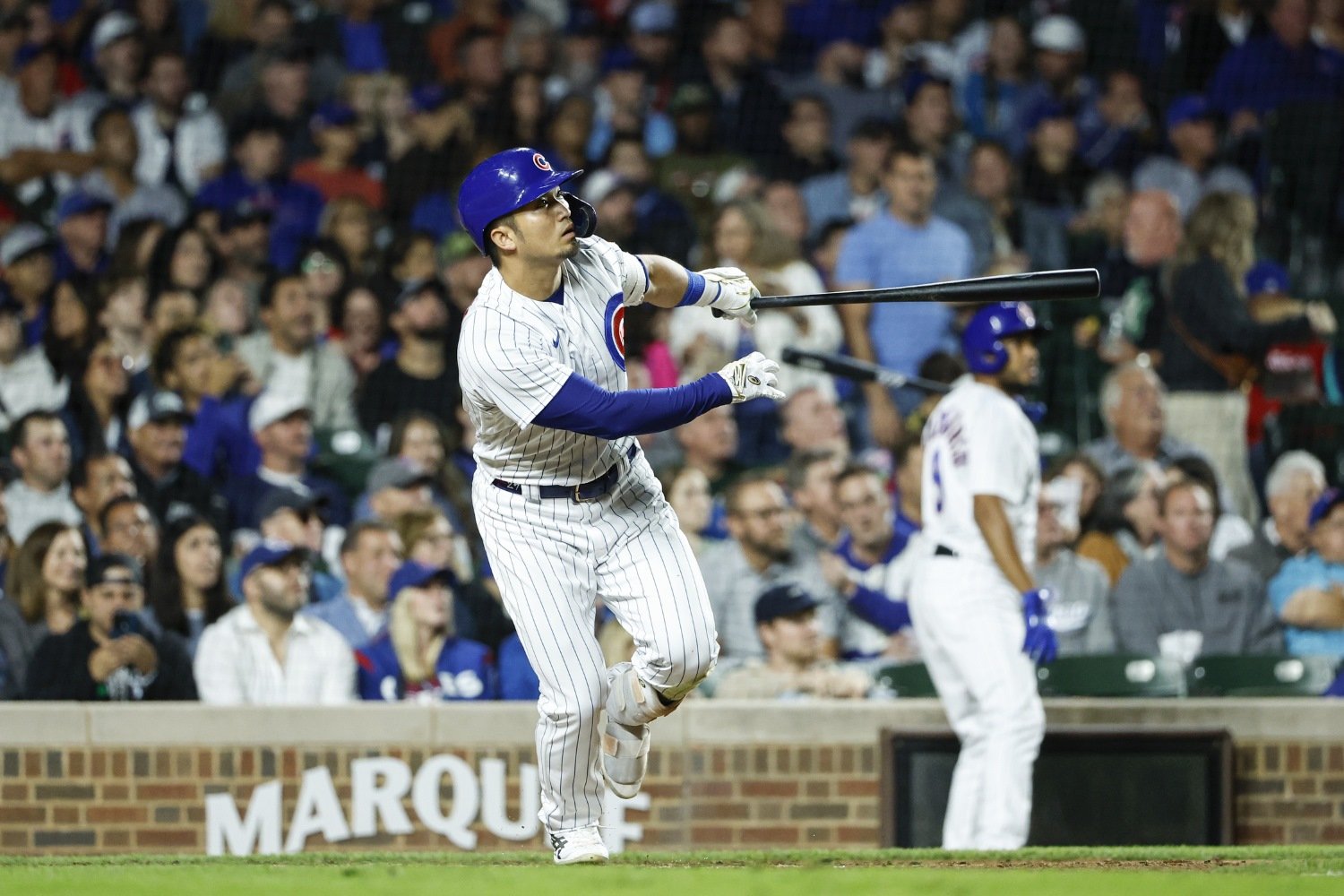 One month ago, I wrote up the most likely 26-man roster for Opening Day 2024, which then looked an awful lot like the team we last saw at the end of 2023, less the much-discussed Cody Bellinger. It was purely an exercise in framing, because we all knew the roster would look much different than that come late March. Now, things are a little more in focus. The lineup, the rotation, and the bullpen have each gotten an infusion of talent, and the depth chart at each position is starting to make more sense. Still, it feels certain that more will change. We just heard from Josh Illes this weekend about Jed Hoyer's enigmatic "fourth or fifth inning" comments, and the implication that there might be a lot more action ahead. For today, then, let's lay out the various units of the roster as it stands, while understanding that this is more work-in-progress than either rough draft or final copy. Lineup Mike Tauchman, CF Nico Hoerner, 2B Ian Happ, LF Seiya Suzuki, RF Michael Busch, 1B Dansby Swanson, SS Christopher Morel, DH Yan Gomes, C Nick Madrigal, 3B The addition of Busch really makes the lineup feel less shaky. Sliding his left-handed bat into the middle of the batting order, even with the understanding that he's somewhere south of stardom, pushes Swanson and Morel down into spots where they fit more naturally, and Busch seems better able to balance and lengthen the heart of the order than the guy he's replacing in this mix, Matt Mervis. As we creep closer to spring, I wonder increasingly whether Gomes will be the starting catcher again. Bringing him back on an affordable team option was a no-brainer, because he's respected and beloved by teammates and had a fine year at the plate. He's in hid mid-30s, though, and massive offensive regression would be no big surprise. We might see more of Miguel Amaya than has been generally believed, and sooner. Bench Amaya, C Patrick Wisdom, 3B/1B Miles Mastrobuoni, IF Alexander Canario, OF Again, I'm leaving Pete Crow-Armstrong off the roster and back in Iowa, for the moment. If the team can assemble a more reliable, dangerous position-player group, and if Crow-Armstraong has a great Cactus League, I won't object to seeing him break camp with the team. Right now, though, he looks like an almost glove-only contributor in the short term, and that's a tough fit on this roster. By contrast, Wisdom becomes a better fit for the team by the day. With Busch taking the majority of the playing time at first base, Wisdom pairs beautifully as a platoon partner for him, and can continue to be deployed on a matchups basis opposite Madrigal at third. Of course, a Bellinger signing would change some things, but it looks like there's a wide-open lane to 300 plate appearances for Wisdom again, in a way that could help the team. Starting Rotation Justin Steele - LHP Shota Imanaga - LHP Jameson Taillon - RHP Kyle Hendricks - RHP Jordan Wicks - LHP Javier Assad - RHP Even more than the Busch acquisition, Imanaga changes the landscape. While we continue to feel out how they'll actually do things, I'm listing six starters, because I expect the rotation to feel as much like a six-man group as a five-man one, even if they rarely use six in an on-schedule cycle. At any rate, this pushes Taillon and Hendricks down to the area where they fit much better, and the depth (in addition to prospects on the come, like Cade Horton) is such that they can give themselves a chance to win just about every day. Bullpen Adbert Alzolay - RHP Julian Merryweather - RHP Yency Almonte - RHP Mark Leiter Jr. - RHP Drew Smyly - LHP José Cuas - RHP Hayden Wesneski - RHP This unit feels the most out of joint right now--not worst, just least smooth or complete. They need more certainty at the back end of the game, but they also face the constraint of several players being out of options and unable to be sent to the minors. Few teams in MLB worry less about having those out-of-options guys piled up in the pen; Jed Hoyer is willing to lose the relief projects who don't work out. Still, they have some rebalancing to do, here and elsewhere. We'll probably end up doing this another time or two before Opening Day actually comes. The roster is far from final, and activity should come as soon as this week. For now, though, what do you think of the above production? Whom would you remove, and in favor of whom? Discuss it here.
- 5 comments
-
- 1
-
-
- michael busch
- yan gomes
- (and 3 more)
-
The Cubs' offseason is far from complete, but they've made enough moves in the last two weeks to merit a refresh of the roster projection we did for them last month. Let's tackle the task. Image courtesy of © Kamil Krzaczynski-USA TODAY Sports One month ago, I wrote up the most likely 26-man roster for Opening Day 2024, which then looked an awful lot like the team we last saw at the end of 2023, less the much-discussed Cody Bellinger. It was purely an exercise in framing, because we all knew the roster would look much different than that come late March. Now, things are a little more in focus. The lineup, the rotation, and the bullpen have each gotten an infusion of talent, and the depth chart at each position is starting to make more sense. Still, it feels certain that more will change. We just heard from Josh Illes this weekend about Jed Hoyer's enigmatic "fourth or fifth inning" comments, and the implication that there might be a lot more action ahead. For today, then, let's lay out the various units of the roster as it stands, while understanding that this is more work-in-progress than either rough draft or final copy. Lineup Mike Tauchman, CF Nico Hoerner, 2B Ian Happ, LF Seiya Suzuki, RF Michael Busch, 1B Dansby Swanson, SS Christopher Morel, DH Yan Gomes, C Nick Madrigal, 3B The addition of Busch really makes the lineup feel less shaky. Sliding his left-handed bat into the middle of the batting order, even with the understanding that he's somewhere south of stardom, pushes Swanson and Morel down into spots where they fit more naturally, and Busch seems better able to balance and lengthen the heart of the order than the guy he's replacing in this mix, Matt Mervis. As we creep closer to spring, I wonder increasingly whether Gomes will be the starting catcher again. Bringing him back on an affordable team option was a no-brainer, because he's respected and beloved by teammates and had a fine year at the plate. He's in hid mid-30s, though, and massive offensive regression would be no big surprise. We might see more of Miguel Amaya than has been generally believed, and sooner. Bench Amaya, C Patrick Wisdom, 3B/1B Miles Mastrobuoni, IF Alexander Canario, OF Again, I'm leaving Pete Crow-Armstrong off the roster and back in Iowa, for the moment. If the team can assemble a more reliable, dangerous position-player group, and if Crow-Armstraong has a great Cactus League, I won't object to seeing him break camp with the team. Right now, though, he looks like an almost glove-only contributor in the short term, and that's a tough fit on this roster. By contrast, Wisdom becomes a better fit for the team by the day. With Busch taking the majority of the playing time at first base, Wisdom pairs beautifully as a platoon partner for him, and can continue to be deployed on a matchups basis opposite Madrigal at third. Of course, a Bellinger signing would change some things, but it looks like there's a wide-open lane to 300 plate appearances for Wisdom again, in a way that could help the team. Starting Rotation Justin Steele - LHP Shota Imanaga - LHP Jameson Taillon - RHP Kyle Hendricks - RHP Jordan Wicks - LHP Javier Assad - RHP Even more than the Busch acquisition, Imanaga changes the landscape. While we continue to feel out how they'll actually do things, I'm listing six starters, because I expect the rotation to feel as much like a six-man group as a five-man one, even if they rarely use six in an on-schedule cycle. At any rate, this pushes Taillon and Hendricks down to the area where they fit much better, and the depth (in addition to prospects on the come, like Cade Horton) is such that they can give themselves a chance to win just about every day. Bullpen Adbert Alzolay - RHP Julian Merryweather - RHP Yency Almonte - RHP Mark Leiter Jr. - RHP Drew Smyly - LHP José Cuas - RHP Hayden Wesneski - RHP This unit feels the most out of joint right now--not worst, just least smooth or complete. They need more certainty at the back end of the game, but they also face the constraint of several players being out of options and unable to be sent to the minors. Few teams in MLB worry less about having those out-of-options guys piled up in the pen; Jed Hoyer is willing to lose the relief projects who don't work out. Still, they have some rebalancing to do, here and elsewhere. We'll probably end up doing this another time or two before Opening Day actually comes. The roster is far from final, and activity should come as soon as this week. For now, though, what do you think of the above production? Whom would you remove, and in favor of whom? Discuss it here. View full article
-
Jed Hoyer always speaks so guardedly and then half the time he doesn't do what he really only hints he's gonna do, but people always seem to take what he says at face value, anyway. I'm not directly faulting you, but I don't hear what other people seem to hear when Hoyer talks, and I think history supports my interpretation, which amounts to: not one word he says in public means anything.
-
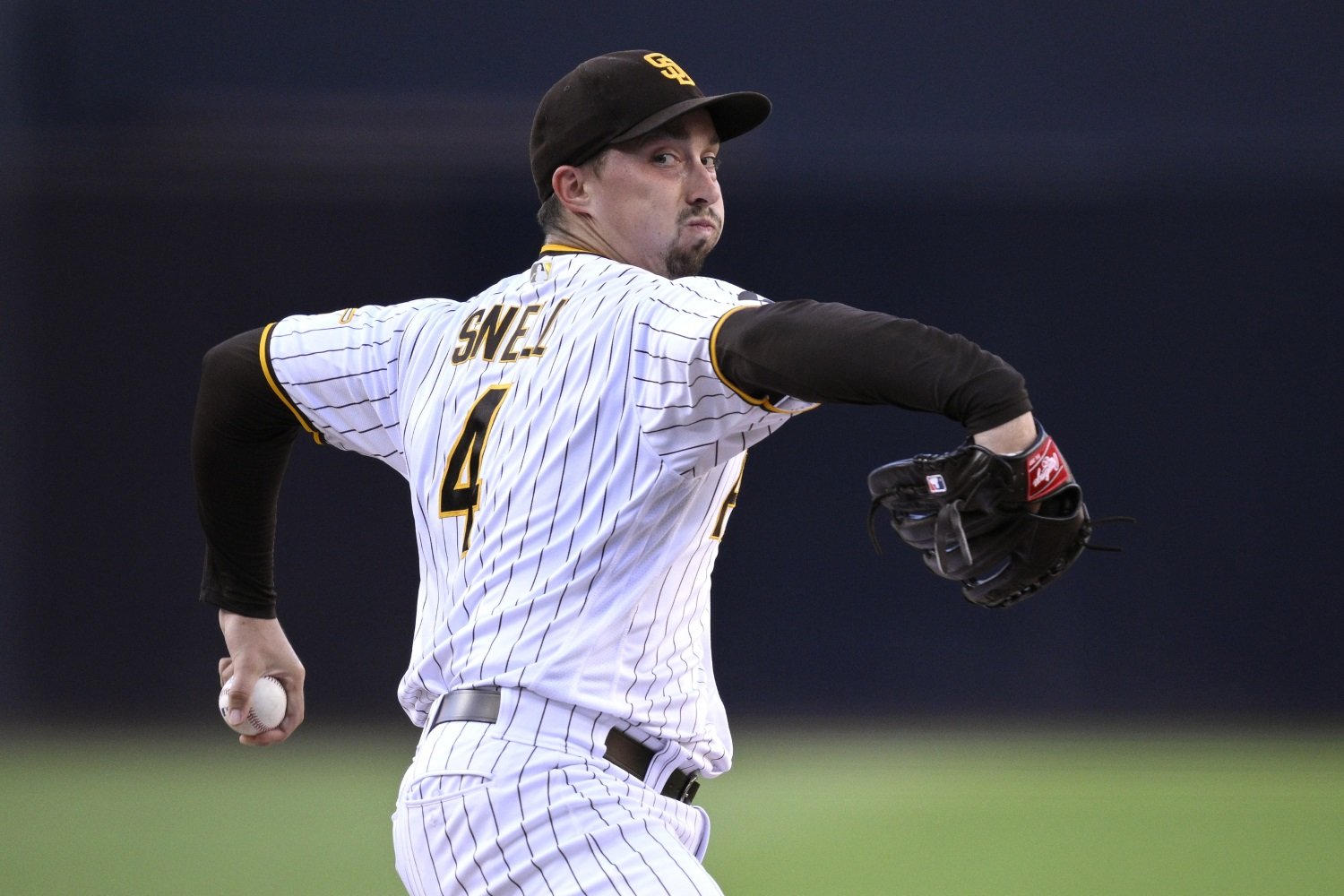 I understand why Blake Snell is not some fans' cup of tea. If truth be told, he isn't mine, either. I like my aces to fill up the strike zone, and Snell (who walked a career-high 13.3 percent of opposing batters last year) stubbornly refuses to do so. He's an inveterate nibbler. He's also a two-time Cy Young Award winner. He has four truly filthy pitches, and he's actually pretty good at locating each of them. He just spends to much time trying to hit the corners and induce chases with his breaking stuff that he lets every count become a deep one. In the last 50 seasons (going back to 1974), 10 pitchers have had at least seven no-hit bids that lasted at least six innings. Nolan Ryan, Randy Johnson, and Justin Verlander each have double-digit games of that type. Then there are Max Scherzer and David Cone, who got through six hitless frames eight times each. That leaves five guys who have gotten that far seven times each: Aníbal Sánchez, Tim Wakefield, Roger Clemens, Dave Stieb, and Snell. A perennial 30-percent strikeout guy as a starter, Snell only really gets held back by injuries. When he took the ball, he averaged 5,6 innings per start in 2023, which just isn't that bad. Let's go pitch by pitch through his arsenal, to discuss why he's so good. Four-Seam Fastball Snell doesn't have a freakish fastball, from a spin or a vertical approach angle (VAA) perspective. He's the anti-Shota Imanaga--all the special in his heater comes from the high height of his release point and the speed on it. Sitting 95 and with the ability to add and subtract a few ticks in each direction from there, Snell gets good ride when he attacks the top of the zone with the fastball. He almost has to work up there for the pitch to really take off and get the whiffs he wants. Many pitchers, especially these days, excel at throwing their heater to one side of the plate or the other. They favor that side, and it sets up the rest of their arsenal, and they command the ball much better there than to the other side of the plate. That isn't in evidence at all with Snell. He's slightly better at commanding it to the glove side (away from a lefty) when a lefty is at the plate, mostly, he tries to move the pitch around to all quadrants and chase whiffs at the letters and above, without trying to cut the zone into thirds or quarters. Thinking that way about the fastball is what leads to starters with 13-percent walk rates, but it also makes it hard to square a guy up and leads to high strikeout rates. Curveball Coming from his high release point and spindly frame, Snell's curve catches you by surprise a little. You expect a hurler like this to have one of those elite spin rates--for the ball to sing with that high metallic sound as it comes of their fingers, like blade or a wine glass has been struck just right. Instead, he has a Drew Smyly-ish hook, with as much tumble as crazy top spin. Still, he does have that top spin, and he uses it to induce elite whiff rates on the curve--especially from righties. Overhand curves are often part of reverse-split packages, and indeed, lefties make contact better and more often against Snell's hook than do righties. It's a pitch that works gorgeously off the fastball, though, regardless of the handedness of the opponent. Changeup The offering for which Snell doesn't get enough credit is the changeup, a pitch of which he does have pretty tight command. It's not a bat-missing monster, but it does induce whiffs. More importantly, it's a weak contact machine for him. Opponents had an average exit velocity south of 80 miles per hour and an average launch angle of just over 2 degrees on Snell's changeup in 2023. He didn't throw the pitch a single time to a lefty; he threw nearly 600 of them to righties. He just pounds away at one target with it, and because righties have to be ready for three other pitches, they're helpless on it. Slider This is the pitch that occasionally gets hit hard for him. Snell's slider is a 'gyro' type offering, with a small deviation in actual spin axis from the fastball but a wide variance in the exact spin he applies to it from one offering to the next. It still gets a ton of whiffs, but a pitch like that is not going to be easily or prettily commanded. It's far from a sweeper, with a mostly vertical movement differential from the fastball, and it'll sometimes hang on the glove-side third of the plate, above the knee. When that happens, he does pay for it. It doesn't happen so often that he really gets hurt in the big picture, though, as evidenced by the two Cy Young Awards and the career ERA of 3.20. Snell is a much more complete pitcher than he gets credit for. Entering the offseason, I ranked him fourth on my list of the top 50 fits for the Cubs in free agency, one ahead of Imanaga. I still think that's true. It's very hard to swallow the worry and pony up over $200 million for a pitcher like Snell, because he issues so many walks and has had hip trouble, groin trouble, and loose bodies in his elbow within the last five years. Once you step back from focusing on your preferred picayune problems, though, you can see the big picture, and it's worth that kind of investment. Snell is the last player available who really represents an infusion of superstar talent and transformation for the Cubs. With him joining Justin Steele, Imanaga, Jameson Taillon, and Kyle Hendricks in the starting rotation, the team would take a leap to a new level of expected competitiveness. Obviously, it's wildly unlikely to come to fruition. If the Cubs do spend that kind of money at this point, it's more likely to be on Cody Bellinger. Still, I think Snell might be a wiser investment than has become the consensus. He does a lot of things very, very well--more than enough to make up for the things he does that are aggravating. Would you still want Snell on a long-term, high-dollar deal? Or does Imanaga slake your thirst for rotation reinforcement this winter? Let's discuss it.
 -
All offseason, the Cubs have been locked in a slow, dangerous tango with Scott Boras, and nearly all of the rumors and musings have centered on Cody Bellinger, Jordan Montgomery, and/or Matt Chapman. There's one more big name on Boras's client list, though, and it's time to tackle him. Image courtesy of © Orlando Ramirez-USA TODAY Sports I understand why Blake Snell is not some fans' cup of tea. If truth be told, he isn't mine, either. I like my aces to fill up the strike zone, and Snell (who walked a career-high 13.3 percent of opposing batters last year) stubbornly refuses to do so. He's an inveterate nibbler. He's also a two-time Cy Young Award winner. He has four truly filthy pitches, and he's actually pretty good at locating each of them. He just spends to much time trying to hit the corners and induce chases with his breaking stuff that he lets every count become a deep one. In the last 50 seasons (going back to 1974), 10 pitchers have had at least seven no-hit bids that lasted at least six innings. Nolan Ryan, Randy Johnson, and Justin Verlander each have double-digit games of that type. Then there are Max Scherzer and David Cone, who got through six hitless frames eight times each. That leaves five guys who have gotten that far seven times each: Aníbal Sánchez, Tim Wakefield, Roger Clemens, Dave Stieb, and Snell. A perennial 30-percent strikeout guy as a starter, Snell only really gets held back by injuries. When he took the ball, he averaged 5,6 innings per start in 2023, which just isn't that bad. Let's go pitch by pitch through his arsenal, to discuss why he's so good. Four-Seam Fastball Snell doesn't have a freakish fastball, from a spin or a vertical approach angle (VAA) perspective. He's the anti-Shota Imanaga--all the special in his heater comes from the high height of his release point and the speed on it. Sitting 95 and with the ability to add and subtract a few ticks in each direction from there, Snell gets good ride when he attacks the top of the zone with the fastball. He almost has to work up there for the pitch to really take off and get the whiffs he wants. Many pitchers, especially these days, excel at throwing their heater to one side of the plate or the other. They favor that side, and it sets up the rest of their arsenal, and they command the ball much better there than to the other side of the plate. That isn't in evidence at all with Snell. He's slightly better at commanding it to the glove side (away from a lefty) when a lefty is at the plate, mostly, he tries to move the pitch around to all quadrants and chase whiffs at the letters and above, without trying to cut the zone into thirds or quarters. Thinking that way about the fastball is what leads to starters with 13-percent walk rates, but it also makes it hard to square a guy up and leads to high strikeout rates. Curveball Coming from his high release point and spindly frame, Snell's curve catches you by surprise a little. You expect a hurler like this to have one of those elite spin rates--for the ball to sing with that high metallic sound as it comes of their fingers, like blade or a wine glass has been struck just right. Instead, he has a Drew Smyly-ish hook, with as much tumble as crazy top spin. Still, he does have that top spin, and he uses it to induce elite whiff rates on the curve--especially from righties. Overhand curves are often part of reverse-split packages, and indeed, lefties make contact better and more often against Snell's hook than do righties. It's a pitch that works gorgeously off the fastball, though, regardless of the handedness of the opponent. Changeup The offering for which Snell doesn't get enough credit is the changeup, a pitch of which he does have pretty tight command. It's not a bat-missing monster, but it does induce whiffs. More importantly, it's a weak contact machine for him. Opponents had an average exit velocity south of 80 miles per hour and an average launch angle of just over 2 degrees on Snell's changeup in 2023. He didn't throw the pitch a single time to a lefty; he threw nearly 600 of them to righties. He just pounds away at one target with it, and because righties have to be ready for three other pitches, they're helpless on it. Slider This is the pitch that occasionally gets hit hard for him. Snell's slider is a 'gyro' type offering, with a small deviation in actual spin axis from the fastball but a wide variance in the exact spin he applies to it from one offering to the next. It still gets a ton of whiffs, but a pitch like that is not going to be easily or prettily commanded. It's far from a sweeper, with a mostly vertical movement differential from the fastball, and it'll sometimes hang on the glove-side third of the plate, above the knee. When that happens, he does pay for it. It doesn't happen so often that he really gets hurt in the big picture, though, as evidenced by the two Cy Young Awards and the career ERA of 3.20. Snell is a much more complete pitcher than he gets credit for. Entering the offseason, I ranked him fourth on my list of the top 50 fits for the Cubs in free agency, one ahead of Imanaga. I still think that's true. It's very hard to swallow the worry and pony up over $200 million for a pitcher like Snell, because he issues so many walks and has had hip trouble, groin trouble, and loose bodies in his elbow within the last five years. Once you step back from focusing on your preferred picayune problems, though, you can see the big picture, and it's worth that kind of investment. Snell is the last player available who really represents an infusion of superstar talent and transformation for the Cubs. With him joining Justin Steele, Imanaga, Jameson Taillon, and Kyle Hendricks in the starting rotation, the team would take a leap to a new level of expected competitiveness. Obviously, it's wildly unlikely to come to fruition. If the Cubs do spend that kind of money at this point, it's more likely to be on Cody Bellinger. Still, I think Snell might be a wiser investment than has become the consensus. He does a lot of things very, very well--more than enough to make up for the things he does that are aggravating. Would you still want Snell on a long-term, high-dollar deal? Or does Imanaga slake your thirst for rotation reinforcement this winter? Let's discuss it. View full article
-
The Cubs' newest starting pitcher doesn't throw especially hard, and because of that fact, some outlets have tabbed him as a back-end arm. That kind of lazy, radar gun-only scouting should be left in 2014. Ten years later, we know better. It's true: Shota Imanaga doesn't throw all that hard. While he's touched 96 miles per hour a few times relatively recently, he more frequently sits between 91 and 93 miles per hour. In an MLB where the average four-seamer hums in at 94, that marks him as below-average in one regard. When you combine that apparent weakness with the fact that he's left-handed and his relatively small frame, you can talk yourselt into viewing him as a guy who will be lucky to hold up the back end of an MLB rotation. Multiple evaluators have done just that, led by the venerable Baseball America. While the non-velocity concerns raised by some are valid (and will be briefly treated here, in due time), the dismissiveness with which Imanaga's potential to be an above-average starter has been downplayed is half-baked. Take every pitcher who threw at least 200 four-seam fastballs last year, and their per-pitch run value on that offering has a correlation factor of 0.27 with velocity. In one (much too simplistic) reading of the data, then, velocity can explain about 27 percent of a pitcher's fastball effectiveness. I don't know whether that number surprises you. It feels right to me, but in the modern game, we hear so much about velocity that the relationship might sound unexpectedly weak. It's true, though, and we've advanced enough in our collection of data about pitching to say with some certainty that other attributes affect the effectiveness of fastballs, too. Imanaga doesn't have even average velocity, but he does do a couple of other things well. We know that his spin rate and his vertical approach angle (VAA) are both substantially better than average. As it turns out, if you have to choose, you want the guy with those two attributes, rather than the guy with the more commonly cited one. Spin rate (0.25) and VAA (0.25) have almost as strong a correlation with run value per pitch as does velocity. Now, the three attributes overlap, and don't add up to explain three-quarters of fastball effectiveness. But it's not as though every pitcher with a good spin rate has a good VAA, and that citing the two is thus redundant. Velocity carries a correlation coefficient of 0.23 with spin rate and of 0.25 with VAA. Spin and VAA share a coefficient of 0.22, meaning they're no more likely to coincide than velocity and either of them are. These are interrelated characteristics, then, but each has independent value, and a guy with Imanaga's combination of the two newer, less heralded markers is as valuable (or more so) than one who throws hard but lacks anything special in terms of spin or VAA. The best comp for Imanaga's fastball characteristics might be Andrew Heaney, another high-spin, flat-VAA, relatively low-velocity lefty. Heaney certainly has profiled as a back-end starter for much of his career, but that's much more because his slider usually doesn't miss bats and because his changeup is inconsistent than because of that fastball. When he's had those elements working, as was the case during his 2022 stop with the Dodgers, he's been dominant. If Imanaga is able to sustain his higher-end velocities better than expected, he starts to profile more like Freddy Peralta, anyway, but Heaney would hardly be a disappointing comp. That brings us to Imanaga's other offerings. He has a sweeper and a splitter right now, each of them effective in their own ways. In fact, he throws two different flavors of changeup--one a split-change from an unusual, four-seam grip, and one more of a straight change. The splitter is the pitch that will devastate big-league hitters, assuming he can find a feel for it with the different ball they use here in the States. I believe completely in the value of Imanaga's fastball. The splitter is always a tough pitch to project, but he seems to have the feel and the experience with it to adapt. The differentiator for him will be the breaking ball. I called it a sweeper a moment ago, and that's what it is, but the team and Imanaga might come together to decide that that pitch is better shoved into a tertiary, complementary role, with a more vertical, 'gyro' slider taking over as the primary breaker. That kind of pitch would work better against right-handers and give Imanage three different looks against them. A sweeper, as we discussed over the weekend, is an unavoidably platoon-vulnerable offering. For a lefty, it often has limited utility. Imanaga might overcome that, but reshaping the breaking ball might be the key to making him the partner the Cubs want for Justin Steele at the front of the rotation. His fastball, despite the malign with which it has been treated in some corners, needs no such adjustment. Does Imanaga's lack of raw heat concern you? Will Imanaga miss enough bats to dominate in MLB? Here's the place to discuss it. View full article
-
Too Many People Are Dismissing Shota Imanaga's Upside Based on Velocity
Matthew Trueblood posted an article in Cubs
 It's true: Shota Imanaga doesn't throw all that hard. While he's touched 96 miles per hour a few times relatively recently, he more frequently sits between 91 and 93 miles per hour. In an MLB where the average four-seamer hums in at 94, that marks him as below-average in one regard. When you combine that apparent weakness with the fact that he's left-handed and his relatively small frame, you can talk yourselt into viewing him as a guy who will be lucky to hold up the back end of an MLB rotation. Multiple evaluators have done just that, led by the venerable Baseball America. While the non-velocity concerns raised by some are valid (and will be briefly treated here, in due time), the dismissiveness with which Imanaga's potential to be an above-average starter has been downplayed is half-baked. Take every pitcher who threw at least 200 four-seam fastballs last year, and their per-pitch run value on that offering has a correlation factor of 0.27 with velocity. In one (much too simplistic) reading of the data, then, velocity can explain about 27 percent of a pitcher's fastball effectiveness. I don't know whether that number surprises you. It feels right to me, but in the modern game, we hear so much about velocity that the relationship might sound unexpectedly weak. It's true, though, and we've advanced enough in our collection of data about pitching to say with some certainty that other attributes affect the effectiveness of fastballs, too. Imanaga doesn't have even average velocity, but he does do a couple of other things well. We know that his spin rate and his vertical approach angle (VAA) are both substantially better than average. As it turns out, if you have to choose, you want the guy with those two attributes, rather than the guy with the more commonly cited one. Spin rate (0.25) and VAA (0.25) have almost as strong a correlation with run value per pitch as does velocity. Now, the three attributes overlap, and don't add up to explain three-quarters of fastball effectiveness. But it's not as though every pitcher with a good spin rate has a good VAA, and that citing the two is thus redundant. Velocity carries a correlation coefficient of 0.23 with spin rate and of 0.25 with VAA. Spin and VAA share a coefficient of 0.22, meaning they're no more likely to coincide than velocity and either of them are. These are interrelated characteristics, then, but each has independent value, and a guy with Imanaga's combination of the two newer, less heralded markers is as valuable (or more so) than one who throws hard but lacks anything special in terms of spin or VAA. The best comp for Imanaga's fastball characteristics might be Andrew Heaney, another high-spin, flat-VAA, relatively low-velocity lefty. Heaney certainly has profiled as a back-end starter for much of his career, but that's much more because his slider usually doesn't miss bats and because his changeup is inconsistent than because of that fastball. When he's had those elements working, as was the case during his 2022 stop with the Dodgers, he's been dominant. If Imanaga is able to sustain his higher-end velocities better than expected, he starts to profile more like Freddy Peralta, anyway, but Heaney would hardly be a disappointing comp. That brings us to Imanaga's other offerings. He has a sweeper and a splitter right now, each of them effective in their own ways. In fact, he throws two different flavors of changeup--one a split-change from an unusual, four-seam grip, and one more of a straight change. The splitter is the pitch that will devastate big-league hitters, assuming he can find a feel for it with the different ball they use here in the States. I believe completely in the value of Imanaga's fastball. The splitter is always a tough pitch to project, but he seems to have the feel and the experience with it to adapt. The differentiator for him will be the breaking ball. I called it a sweeper a moment ago, and that's what it is, but the team and Imanaga might come together to decide that that pitch is better shoved into a tertiary, complementary role, with a more vertical, 'gyro' slider taking over as the primary breaker. That kind of pitch would work better against right-handers and give Imanage three different looks against them. A sweeper, as we discussed over the weekend, is an unavoidably platoon-vulnerable offering. For a lefty, it often has limited utility. Imanaga might overcome that, but reshaping the breaking ball might be the key to making him the partner the Cubs want for Justin Steele at the front of the rotation. His fastball, despite the malign with which it has been treated in some corners, needs no such adjustment. Does Imanaga's lack of raw heat concern you? Will Imanaga miss enough bats to dominate in MLB? Here's the place to discuss it.
 -
 For parts of the last two seasons, Yency Almonte has been downright dominant. At other times, he's looked almost helpless. That's partially because he's dealt with (and sometimes tried to pitch through) injuries, but it also has something to do with his skill set--and the inherent weaknesses in his game. Almonte, who will turn 30 in June, has two years of team control remaining. He can't be optioned to the minors, which somewhat limits his roster utility, but if he pitches the way he did throughout 2022, that won't matter. That year, he allowed fewer than four baserunners for every five innings pitched and had an ERA of 1.02. None of that is quite sustainable, but if used carefully, he can be something on the comfortable side of the wide spectrum between those numbers and the 5.06 mark he put up in an uneven 2023. Although his season ended early due to a leg injury, Almonte had a great summer last year. His ugly overall numbers were mostly the result of a hideous April and early May, during which his ERA crested at 9.00. From May 20 through the injury in August, though, he allowed just a .577 OPS and had a 2.70 ERA. It was all thanks to finding a previously missing feel for his sweeper, which will be the star of much of the rest of this discussion. When Almonte's sweeper was beyond his command, and especially when it was a bit short on downward movement, he got into a lot of trouble. Once he cleaned that up, he regained his effectiveness, but he still issued a lot of walks and doesn't strike batters out the way you expect a flamethrowing modern reliever to. What gives? In short, Almonte's problem is a platoon issue. He has the capacity to dominate right-handed batters, but limited answers for lefties. That hasn't shown up in his raw results based on handedness over the last two years, but it's true. Yency Almonte, 2022-23, Platoon Splits Split AVG OBP SLG K% BB% HR% BABIP vs. LHH 0.202 0.314 0.288 16.5 12.4 1.7 0.232 vs. RHH 0.204 0.293 0.332 27.9 8.6 2.7 0.264 Right-handed batters got more hits and a few more home runs against Almonte since the start of 2022, but it's lefties who run up his pitch count, draw walks at a high rate, and against whom he doesn't miss bats. Opponents' contact quality doesn't support the idea that he's simply throwing more hittable meatballs against righties, either. They just got luckier than lefties did over a short sample. Almonte is a righty-killer because he primarily uses a sweeper. That's the pitch at the heart of his arsenal. Against righties, in fact, it's one he throws a healthy majority of the time. Yency Almonte, 2022-23, Pitch Types by Opposing Batter Handedness Split FA% SI% SW% CH% vs. LHH 38.2 7.9 34.5 17.9 vs. RHH 1 41.3 56.8 0.1 As you can see, though, even against lefties, he leans heavily on the sweeper. That's his pitch; it's how he went from a fringe big-leaguer to a (however inconsistently) nasty relief weapon. If you had this pitch, you'd throw it a lot, too, and forget about who was up. elpBQTVfVjBZQUhRPT1fQmdVRFVGQlFYMWNBWEZ0UkF3QUFBVkJSQUFBTkFBY0FCbGRXVXdaVUNBSlVDQXBV.mp4 Here's the thing, though: as you would guess, that result isn't quite typical. Against lefties, this is a much more representative sweeper from Almonte. eFprWWpfWGw0TUFRPT1fVWxOWkJ3RldBd2NBQUZjR1Z3QUFCMVZUQUZrQldsY0FBbFpXQndVSEIxSlhWZ1FF.mp4 There's good, tight break even on that pitch. It's just that, given the angle a left-handed batter gets on the ball out of Almonte's hand and the shape of the movement, it's much easier for them to lay off than it is for righties to do the same. That's compounded by the fact that (understandably) Almonte tries to dot the outside edge with a backdoor version of that sweeper to lefties, only to see it really get away from him. It's just not a pitch that lends itself to being thrown with good command on the arm side of the plate. Yency Almonte, Pitch-By-Pitch Outcomes, Sweepers, 2022-23 Split Ball% Called Strike% Chase% Whiff/Swing% vs. LHH 43.7 25.8 22.3 44.6 vs. RHH 36.8 34 35.6 49.8 You can't throw a pitch that results in a ball over 43 percent of the time once every three pitches, but that's exactly what Almonte has done against lefties over the last two years. He can't land the sweeper in the zone consistently, which is fine when hitters expand the zone to fish for the pitch at a 35-percent clip, but when they can identify it early and only chase outside the zone 22 percent of the time, it spells trouble. Even though lefties didn't rack up gaudy numbers against him, they extended at-bats and innings by working him for walks and staying alive until they could try to square up one of his other offerings. This is normal, and it's a good entry point for a short conversation that feels long overdue. This week on 670 The Score's Bernstein and Holmes show, host Laurence Holmes pleaded with the baseball world to "get together on what's a slider, and what's a sweeper, and are they really different?" It's been bandied about a bit since the sweeper took the league by storm a couple years ago, but that question hasn't been adequately or satisfactorily answered until now--at least, not in terms that lay people can grasp. For an instructive contrast, consider Almonte and new teammate Adbert Alzolay. Last year, Alzolay broke out as the Cubs' relief ace, and it was largely thanks to his ability to pair each of his fastballs with his slider--a pitch with some tilt but a pretty vertical shape. He could attack lefties with that offering, because it worked naturally off of his heat even as it moved toward the opposite-handed batter. Almonte's breaking ball isn't a slider, like Alzolay's. It's a sweeper. It's probably time to stop thinking of sweepers as a version of the slider. For a long time, we put what should really be called two different pitches into one bin, because there were few good ways to reliably differentiate them. Now, we can do so pretty well, and we ought to. Here's Almonte's heaters, paired with his sweeper. Feel free to study those two charts for a bit, but the differences should really jump right out. Alzolay's slider is a pitch with greater gyro spin--what's sometimes called a 'bullet' slider, because it has that football-like rotation that contributes only inefficiently to movement, by slowing the ball down so that gravity can act on it and pull it downward. Almonte's is a sweeper, with far more tilt, and the movement he gets comes from the spin he applies. As you can intuit (or see by the spread of the pitches shown in the plots above), the slider Alzolay throws is an easier pitch to command, which is crucial when trying to get out opposite-handed batters with a breaking ball. It also has a more vertical movement differential from his fastballs, whereas the relationship between Almonte's heaters and his sweeper is pretty horizontal. By and large, you get out same-handed hitters with horizontal movement, and you get out opposite-handed ones with vertical movement. Thus, a sweeper (which will, all else equal, always be a more horizontal pitch than a gyro slider) can be highly effective against same-handed guys, but is rarely so against opposite-handed ones. True, old-fashioned sliders are more versatile. They're not as nasty. Alzolay will never miss as many bats, on a per-swing bases, as Almonte does. Alzolay can throw his more effectively to lefties, though. Why did Almonte use the pitch so often, so stubbornly against lefties, then? That answer is simple: He doesn't have a useful changeup at this point. He's comfortable with both the sinker and the sweeper against righties, but against lefties, he really needs something to complement his four-seamer. Since he doesn't get the movement separation he needs on the changeup, he tries to find his outs by pairing the four-seamer with the sweeper, instead. He only induced whiffs on 8.8 percent of swings against his change from 2022-23. Hitters don't hammer the pitch, but they can easily fight it off when he does land it in the zone, and he doesn't do so nearly often enough. Only 10.4 percent of the changeups at which opposing lefties did not swing were called strikes. When you're never in the zone with a pitch, hitters don't have to respect it. So, to get lefties out, what should Almonte do? It starts with changing the areas of the zone he targets most often. Here's where he threw his four-seamers and sweepers against them over the last two seasons, using TruMedia tools. You can see the way he favors the glove side of the plate with the four-seamer, a result of the angle he creates for himself by lining up on the extreme first-base side of the pitching rubber, and obviously, too, the way he tries to break the sweeper off of that pitch. That's where his pitches go against left-handed batters. Now, consider where he finds his whiffs against them: Changing location patterns isn't as easy as identifying the need to do so, but Almonte clearly needs to let his four-seamer run more up and away from lefties. Maybe, once he sets their sights up there, the sweeper down and in will look a bit more enticing. Even then, though, don't expect an extraordinary forward leap from Almonte. It looks like control will remain a bugaboo for him, and while he had a handsome strikeout rate against righties over the last two years, he's never had a gaudy one, by modern standards. That's thanks to the sinker he uses against them, rather than the four-seamer that has a little more deception and life at the top of the zone. The sinker doesn't miss bats, though it does help Almonte minimize hard contact in the air. He has great velocity and good spin on the fastballs, which helps him induce harmless contact. The breaking stuff is tasked with getting the whiffs. Instead, think of Almonte as a right-handed reliever who should be highly effective against fellow righties, but shielded from lefties. To shore up that weakness a bit, the Cubs and their new pitcher might work together to add a splitter in place of his ineffectual changeup, or to realign him a bit on the rubber, as the team did with Jose Cuas after acquiring him last summer. The former would let him deemphasize the breaking ball against lefties and balance out his profile. The latter would help him change the sights a bit on his four-seamer and sweeper, but the sweeper is too good to tweak much, and that means accepting the vulnerability to lefties that it brings with it. Craig Counsell might just need to manage around Almonte's shortcomings and get the most out of him, and given the new skipper's track record, that's not an unreasonable thing for which to hope. Where do you envision Almonte fitting into the 2024 bullpen hierarchy? Do you trust him more or less than Cuas, or Daniel Palencia? How about Julian Merryweather? Chime in below.
 -
Though he quickly became a secondary consideration once the full scope of the trade was known, the Cubs added an interesting relief pitcher in Thursday's trade with the Dodgers. Let's talk more about him, and about how modern pitching analysis works. Image courtesy of © Eric Hartline-USA TODAY Sports For parts of the last two seasons, Yency Almonte has been downright dominant. At other times, he's looked almost helpless. That's partially because he's dealt with (and sometimes tried to pitch through) injuries, but it also has something to do with his skill set--and the inherent weaknesses in his game. Almonte, who will turn 30 in June, has two years of team control remaining. He can't be optioned to the minors, which somewhat limits his roster utility, but if he pitches the way he did throughout 2022, that won't matter. That year, he allowed fewer than four baserunners for every five innings pitched and had an ERA of 1.02. None of that is quite sustainable, but if used carefully, he can be something on the comfortable side of the wide spectrum between those numbers and the 5.06 mark he put up in an uneven 2023. Although his season ended early due to a leg injury, Almonte had a great summer last year. His ugly overall numbers were mostly the result of a hideous April and early May, during which his ERA crested at 9.00. From May 20 through the injury in August, though, he allowed just a .577 OPS and had a 2.70 ERA. It was all thanks to finding a previously missing feel for his sweeper, which will be the star of much of the rest of this discussion. When Almonte's sweeper was beyond his command, and especially when it was a bit short on downward movement, he got into a lot of trouble. Once he cleaned that up, he regained his effectiveness, but he still issued a lot of walks and doesn't strike batters out the way you expect a flamethrowing modern reliever to. What gives? In short, Almonte's problem is a platoon issue. He has the capacity to dominate right-handed batters, but limited answers for lefties. That hasn't shown up in his raw results based on handedness over the last two years, but it's true. Yency Almonte, 2022-23, Platoon Splits Split AVG OBP SLG K% BB% HR% BABIP vs. LHH 0.202 0.314 0.288 16.5 12.4 1.7 0.232 vs. RHH 0.204 0.293 0.332 27.9 8.6 2.7 0.264 Right-handed batters got more hits and a few more home runs against Almonte since the start of 2022, but it's lefties who run up his pitch count, draw walks at a high rate, and against whom he doesn't miss bats. Opponents' contact quality doesn't support the idea that he's simply throwing more hittable meatballs against righties, either. They just got luckier than lefties did over a short sample. Almonte is a righty-killer because he primarily uses a sweeper. That's the pitch at the heart of his arsenal. Against righties, in fact, it's one he throws a healthy majority of the time. Yency Almonte, 2022-23, Pitch Types by Opposing Batter Handedness Split FA% SI% SW% CH% vs. LHH 38.2 7.9 34.5 17.9 vs. RHH 1 41.3 56.8 0.1 As you can see, though, even against lefties, he leans heavily on the sweeper. That's his pitch; it's how he went from a fringe big-leaguer to a (however inconsistently) nasty relief weapon. If you had this pitch, you'd throw it a lot, too, and forget about who was up. elpBQTVfVjBZQUhRPT1fQmdVRFVGQlFYMWNBWEZ0UkF3QUFBVkJSQUFBTkFBY0FCbGRXVXdaVUNBSlVDQXBV.mp4 Here's the thing, though: as you would guess, that result isn't quite typical. Against lefties, this is a much more representative sweeper from Almonte. eFprWWpfWGw0TUFRPT1fVWxOWkJ3RldBd2NBQUZjR1Z3QUFCMVZUQUZrQldsY0FBbFpXQndVSEIxSlhWZ1FF.mp4 There's good, tight break even on that pitch. It's just that, given the angle a left-handed batter gets on the ball out of Almonte's hand and the shape of the movement, it's much easier for them to lay off than it is for righties to do the same. That's compounded by the fact that (understandably) Almonte tries to dot the outside edge with a backdoor version of that sweeper to lefties, only to see it really get away from him. It's just not a pitch that lends itself to being thrown with good command on the arm side of the plate. Yency Almonte, Pitch-By-Pitch Outcomes, Sweepers, 2022-23 Split Ball% Called Strike% Chase% Whiff/Swing% vs. LHH 43.7 25.8 22.3 44.6 vs. RHH 36.8 34 35.6 49.8 You can't throw a pitch that results in a ball over 43 percent of the time once every three pitches, but that's exactly what Almonte has done against lefties over the last two years. He can't land the sweeper in the zone consistently, which is fine when hitters expand the zone to fish for the pitch at a 35-percent clip, but when they can identify it early and only chase outside the zone 22 percent of the time, it spells trouble. Even though lefties didn't rack up gaudy numbers against him, they extended at-bats and innings by working him for walks and staying alive until they could try to square up one of his other offerings. This is normal, and it's a good entry point for a short conversation that feels long overdue. This week on 670 The Score's Bernstein and Holmes show, host Laurence Holmes pleaded with the baseball world to "get together on what's a slider, and what's a sweeper, and are they really different?" It's been bandied about a bit since the sweeper took the league by storm a couple years ago, but that question hasn't been adequately or satisfactorily answered until now--at least, not in terms that lay people can grasp. For an instructive contrast, consider Almonte and new teammate Adbert Alzolay. Last year, Alzolay broke out as the Cubs' relief ace, and it was largely thanks to his ability to pair each of his fastballs with his slider--a pitch with some tilt but a pretty vertical shape. He could attack lefties with that offering, because it worked naturally off of his heat even as it moved toward the opposite-handed batter. Almonte's breaking ball isn't a slider, like Alzolay's. It's a sweeper. It's probably time to stop thinking of sweepers as a version of the slider. For a long time, we put what should really be called two different pitches into one bin, because there were few good ways to reliably differentiate them. Now, we can do so pretty well, and we ought to. Here's Almonte's heaters, paired with his sweeper. Feel free to study those two charts for a bit, but the differences should really jump right out. Alzolay's slider is a pitch with greater gyro spin--what's sometimes called a 'bullet' slider, because it has that football-like rotation that contributes only inefficiently to movement, by slowing the ball down so that gravity can act on it and pull it downward. Almonte's is a sweeper, with far more tilt, and the movement he gets comes from the spin he applies. As you can intuit (or see by the spread of the pitches shown in the plots above), the slider Alzolay throws is an easier pitch to command, which is crucial when trying to get out opposite-handed batters with a breaking ball. It also has a more vertical movement differential from his fastballs, whereas the relationship between Almonte's heaters and his sweeper is pretty horizontal. By and large, you get out same-handed hitters with horizontal movement, and you get out opposite-handed ones with vertical movement. Thus, a sweeper (which will, all else equal, always be a more horizontal pitch than a gyro slider) can be highly effective against same-handed guys, but is rarely so against opposite-handed ones. True, old-fashioned sliders are more versatile. They're not as nasty. Alzolay will never miss as many bats, on a per-swing bases, as Almonte does. Alzolay can throw his more effectively to lefties, though. Why did Almonte use the pitch so often, so stubbornly against lefties, then? That answer is simple: He doesn't have a useful changeup at this point. He's comfortable with both the sinker and the sweeper against righties, but against lefties, he really needs something to complement his four-seamer. Since he doesn't get the movement separation he needs on the changeup, he tries to find his outs by pairing the four-seamer with the sweeper, instead. He only induced whiffs on 8.8 percent of swings against his change from 2022-23. Hitters don't hammer the pitch, but they can easily fight it off when he does land it in the zone, and he doesn't do so nearly often enough. Only 10.4 percent of the changeups at which opposing lefties did not swing were called strikes. When you're never in the zone with a pitch, hitters don't have to respect it. So, to get lefties out, what should Almonte do? It starts with changing the areas of the zone he targets most often. Here's where he threw his four-seamers and sweepers against them over the last two seasons, using TruMedia tools. You can see the way he favors the glove side of the plate with the four-seamer, a result of the angle he creates for himself by lining up on the extreme first-base side of the pitching rubber, and obviously, too, the way he tries to break the sweeper off of that pitch. That's where his pitches go against left-handed batters. Now, consider where he finds his whiffs against them: Changing location patterns isn't as easy as identifying the need to do so, but Almonte clearly needs to let his four-seamer run more up and away from lefties. Maybe, once he sets their sights up there, the sweeper down and in will look a bit more enticing. Even then, though, don't expect an extraordinary forward leap from Almonte. It looks like control will remain a bugaboo for him, and while he had a handsome strikeout rate against righties over the last two years, he's never had a gaudy one, by modern standards. That's thanks to the sinker he uses against them, rather than the four-seamer that has a little more deception and life at the top of the zone. The sinker doesn't miss bats, though it does help Almonte minimize hard contact in the air. He has great velocity and good spin on the fastballs, which helps him induce harmless contact. The breaking stuff is tasked with getting the whiffs. Instead, think of Almonte as a right-handed reliever who should be highly effective against fellow righties, but shielded from lefties. To shore up that weakness a bit, the Cubs and their new pitcher might work together to add a splitter in place of his ineffectual changeup, or to realign him a bit on the rubber, as the team did with Jose Cuas after acquiring him last summer. The former would let him deemphasize the breaking ball against lefties and balance out his profile. The latter would help him change the sights a bit on his four-seamer and sweeper, but the sweeper is too good to tweak much, and that means accepting the vulnerability to lefties that it brings with it. Craig Counsell might just need to manage around Almonte's shortcomings and get the most out of him, and given the new skipper's track record, that's not an unreasonable thing for which to hope. Where do you envision Almonte fitting into the 2024 bullpen hierarchy? Do you trust him more or less than Cuas, or Daniel Palencia? How about Julian Merryweather? Chime in below. View full article
-
I think it's the latter, and I think it's Busch... but I also don't think even they know. I think they carefully carved out a move that leaves them able to go several directions from here, because they're not sure about any of these guys or eager to meet the asking price on Chapman.
- 10 replies
-
- 1
-
-
- michael busch
- nick madrigal
- (and 1 more)

