Matthew Trueblood
-
Posts
2,479 -
Joined
-
Last visited
-
Days Won
2
Content Type
Profiles
Joomla Posts 1
Chicago Cubs Videos
Chicago Cubs Free Agent & Trade Rumors, Notes, & Tidbits
2026 Chicago Cubs Top Prospects Ranking
News
2023 Chicago Cubs Draft Picks
Guides & Resources
2024 Chicago Cubs Draft Picks
The Chicago Cubs Players Project
2025 Chicago Cubs Draft Pick Tracker
2026 Chicago Cubs Draft Tracker: Picks & Bonuses
Blogs
Events
Forums
Store
Gallery
Everything posted by Matthew Trueblood
-
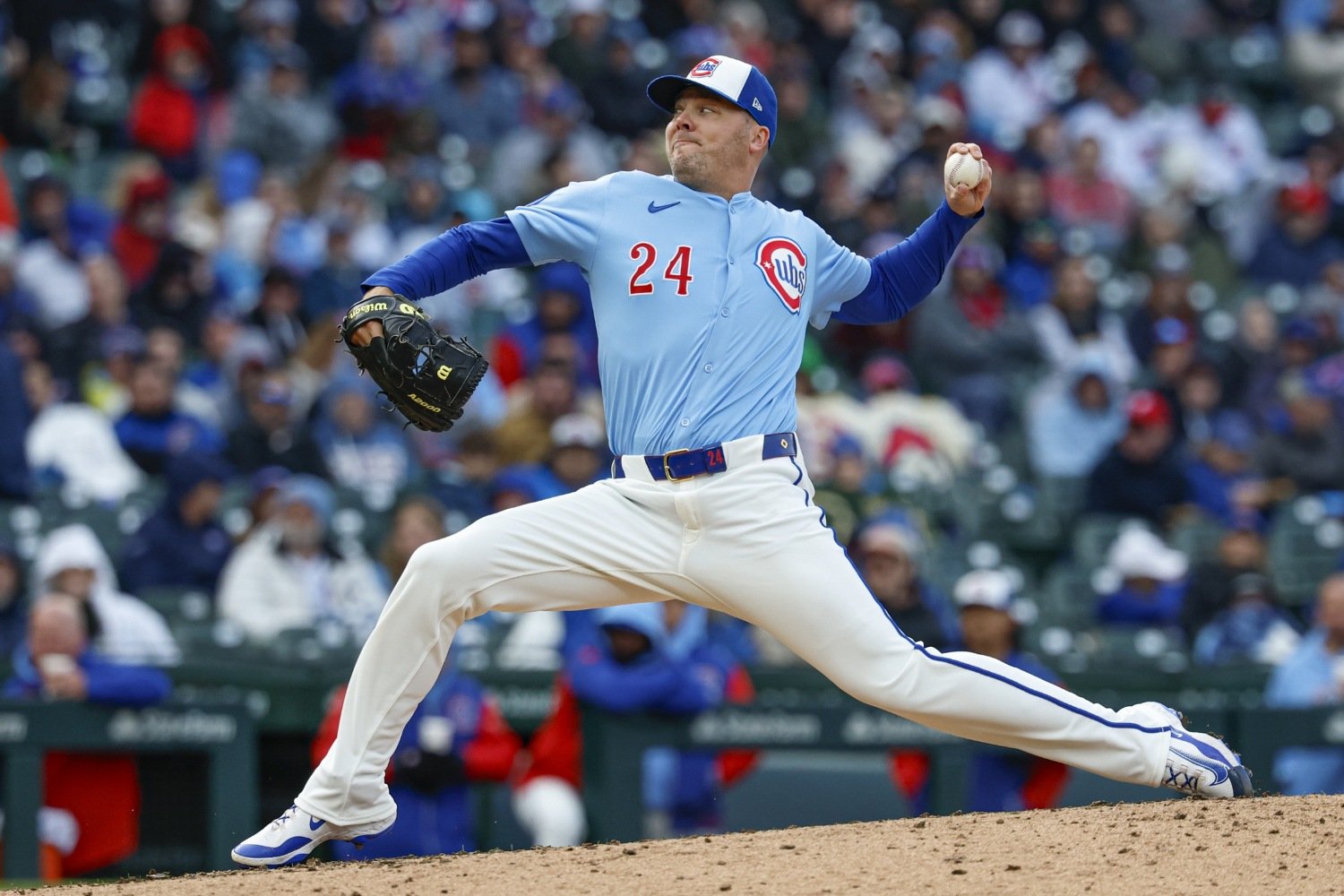 Some old dogs absolutely refuse to do anything but learn new tricks. They just keep learning new tricks, over and over, until even young dogs go, "Dude, chill." They're a rare breed, but when you're rounding out the pack of competitors in a modern playoff-hopeful bullpen, you badly need that kind of old dog. Caleb Thielbar is the alpha in that pack. Thielbar, 38, made it to the majors by way of independent ball. A Minnesota native, he went to South Dakota State University (hardly a baseball powerhouse) and was taken by the Brewers in the 2009 MLB Draft. He pitched for them at their complex in Arizona and in Helena, Mont., with their Pioneer League affiliate. In 2010, he split his time between Helena and High-A Wisconsin. After that year, the Brewers cut him, and at 24, he had his first chance to give up on baseball. Instead, he took up with the then-independent St. Paul Saints in 2011. The Twins spotted him while he was there, and signed him to a minor-league deal in August of that year. He steadily climbed through their system, and debuted in May 2013—more than three months past his 26th birthday. He was a solid reliever for his hometown team for the balance of that year and the bulk of 2014, but then things fizzled for him in 2015. He spent most of that season in the minors, and all of 2016 and 2017 back with the still-independent Saints. This was his second chance to give up on baseball. Thielbar got back into the affiliated ladder in 2018, though, signing with the Tigers. He spent all of that year and a chunk of 2019 in Detroit's system, pitching in Erie, Penn. and Toledo, Ohio, and then a bit of 2019 with the Triple-A Gwinnett affiliate of Atlanta. He put up some rather dazzling numbers, especially in the latter campaign, when he struck out 94 batters (29.5% of those he faced). He was less smoke-and-mirrors than he had been when he first scratched and clawed his way to the majors, by then. Counterintuitively, he was finding more and more raw stuff as he worked at his craft. He'd first come up as the guy wholly reliant on location and guile, and was tapping into nastier offerings in his early 30s. Still, he hadn't gotten back to the majors, and the time seemed ripe to hang it up. On the occasion of that third opportunity to give up on baseball, the 32-year-old was ready to do so. He had already taken a job as a pitching coach at a tiny Div. II school when he decided to take a last job as a doer of the job instead of a teacher, toiling for Team USA in a tournament in Arizona. He was so good there, though, that the Twins (and some other teams) wanted him again, after all. So, he came back to the game once more. Thielbar then hooked up with Driveline (only then, at 33), which helped vault his stuff even further forward. That's how, for instance, this happens. Because otherwise, to put it simply, this doesn't happen. Pitchers do not debut in the majors on the threshold of their late 20s, throwing 89-90 mph, and then steadily gain until they're sitting 93 and touching 95 at age 37. That's what Thielbar has done, though. It's how he carved out a slightly longer-lasting role in the Twins bullpen, and how he finally got to six years of big-league service time (yes, that's really all) at the end of last year, allowing him to hit free agency. It's not just the velocity, though. The remarkable thing about Thielbar is how willing and able he has been to adapt himself to pitching in different ways and different roles for so many years, and that's continued apace throughout the second act of his career. It's continued, and arguably even accelerated, since he joined the Cubs over the winter. Monday night was a bit of a crowning achievement. Yes, it was just an inning of work in a seven-run game, but Thielbar mowed down the Giants on 10 pitches. Half of those were curveballs, and his curveball was perfect. No, really, it was perfect. He threw five hooks. Three of them induced whiffs, and two went for called strikes. Since the start of the 2023 season, only three pitchers have used a curve at least five times in a start without any of them resulting in a foul, a ball, or a ball in play. Ronel Blanco and Nick Martinez each did it once last year, and then there's Thielbar. MTZxN3JfWGw0TUFRPT1fRGdaWkJWWU1BMU1BQzFOVVZnQUhBd0JYQUZrSFVsRUFVUUVDQ0ZZSEJnVUVWQUJV.mp4 It's not some galloping shock that Thielbar's curve is effective. It's the pitch that first got him to the majors, back when the fastball was nothing to write home about and there was nothing else worth mentioning in his arsenal, even if you were already writing home about something else. Thielbar's curve was a high-spin thing, back when spin rate was cutting-edge data, not even yet available to the public. It's waxed and waned over the years, though, and was less vital to his attack last year—partially because some of the spin on it dissipated with time. Well, the spin is back this year. Thielbar has cranked it back up from 2,487 rpm on average in 2024 to 2,621 rpm this year. It's also a whopping 1.5 mph firmer, and is dropping an extra inch en route to the plate. Put all that together, and it's little wonder it had such a good night Monday. In fact, it's not even surprising that the pitch has yielded a 50% whiff rate on opponents' swings this year. MTZxN3JfWGw0TUFRPT1fVkFRSEFGVUhBRlFBQ0FRSFZBQUhWMWRXQUZrRFZBUUFVd0FOVWxWVEJGVlZCVmRS.mp4 The tempting rise and hard bite of that pitch plays up, too, because Thielbar has also added an inch of carry to his fastball this year. Opponents can't as readily assume that if the ball appears to pop up out of his hand, it's going to be the curve; the fastball is doing more of that too. At an age when most pitchers lower their arm slots by several degrees, Thielbar has pushed his higher than ever—all the way to 55°. That makes the fastball-curve combination more deceptive, particularly given the spin profiles on each offering. By themselves, though, those pitches wouldn't be playing as well as they are lately. The heater isn't hot enough, and the curve separates from it so much that there should be some degree of diminishing return on their divergence. The breaking ball is clearly plus, but the fastball isn't, at least on its own. This is the part where we talk about Thielbar not quite adding a new pitch, but making a seldom-used one much more prominent in his arsenal this year. The slider you see depicted there is an offering he threw less than 1% of the time last year, and less than 6% of the time in 2023. He's had the sweeper (his best pitch, according to Baseball Prospectus's StuffPro) ever since returning to the majors in 2020, but the slider has been little-used and low-priority. That's history, now. Though classified as a slider everywhere I've checked, this newish offering is functionally a cutter, for Thielbar. Here's what his spin profile looked like in 2024, with measured spin direction on the left and observed movement direction on the right. The sweeper is a nasty pitch, but works mostly against lefties. Meanwhile, to get righties to offer at the curve more often and lefties to swing at the sweeper, he needed a pitch that would make it harder to distinguish the heater from the breaking stuff. Here's the same pair of charts for 2025. A pitch thrown with that kind of true backspin and just a bit of movement created by non-spin direction effects is almost always labeled a cutter. I can only surmise that Thielbar's tricks the system because of the depth he achieves on it, relative to his fastball, and because of his extreme arm angle, but the pitch comes in at almost 88 mph, too, so there's not much of a case to be made for calling it a slider. It's his cutter, and it helps him keep hitters on their back foot against the curve. MTZxN3JfWGw0TUFRPT1fRGdWWlhWWldWVllBWEZzRUFBQUhCQVJSQUZsUVVWVUFCQVpUQUFzREJBb0RCVk5m.mp4 Thielbar is also throwing the curve more than he has at any point in his career, give or take—and the fastball less than ever, unequivocally. With a true four-pitch mix for the first time in his life (at age 38), Thielbar can get very nasty with opposing hitters. Unlike most 38-year-olds, he's not just gutting it out on the ghost of his former stuff. He's throwing as well as ever, and it's harder than ever to figure out and hit his curve—which is bad luck for batters, since it's coming at them more than ever. MTZxN3JfWGw0TUFRPT1fQWdsWVZRRUZBRkFBREFFRlZnQUhCZ0JUQUFNQlZWQUFDZ01GQVZJRUNWQlFCMVpV.mp4 None of this should mislead you to think that Thielbar can be the Cubs' October relief ace, or anything. He's not that kind of acquisition. He'll either burn out before the postseason, or need a reset on the injured list at some point. Even the ageless lefty has to get old eventually, and for Thielbar, that's shown up over the last few years largely in the form of nagging injuries. Sometimes those have landed him on the shelf. At other times, they've merely led to inconsistent performances. Either way, there will be more adversity ahead for Thielbar. He got off to a rough start this year, but he's been thoroughly locked in over the last three or four weeks. With his widened arsenal and tweaks in spin and movement, he can still get outs—even high-leverage outs—for a World Series hopeful. Spamming secondary pitches often works even better in October than throughout the regular season, and Thielbar seems well-suited to that gambit. Monday night was proof of concept: Thielbar can be a devastating weapon in an improving relief corps for the Cubs. MTZxN3JfWGw0TUFRPT1fVlFFQUFRZFdWQU1BRHdZQlZBQUhBUUpXQUZnQUJWUUFDd01GQXdBTVZGQUhVd1pl.mp4
 -
Image courtesy of © Cody Scanlan/The Register / USA TODAY NETWORK via Imagn Images Among Triple-A hitters with at least 60 plate appearances this season, Kevin Alcántara boasts the second-highest 90th-percentile exit velocity, at 110 miles per hour. The ball is jumping off his bat, as much as ever, and while he continues to strike out roughly 30 percent of the time, he's still hitting a solid .269/.346/.409 for the Iowa Cubs. He's cracked nine extra-base hits (including two home runs) and stolen five bases in six tries thus far. He's looked good in center field, drawn 11 walks in 107 trips to the dish, and even shown some facility as a bunter: he has two sacrifices. Why am I telling you this, though? Unlike Cade Horton, who now has a very clear path to some big-league playing time, there's no obvious need (or even an apparent opening) for Alcántara right now. Quite the contrary: the Cubs have the best outfield in the league. Yes, he's using the opposite field a bit better, and yes, he's lifting it a bit more often, but there's plenty of polishing left to do, for a 22-year-old who only has about 250 plate appearances at the Triple-A level and certainly hasn't mastered it. Here's the thing: Alcántara is a capable center fielder, and he's already on the 40-man roster. Earlier this spring, I wrote about the fact that the Cubs would need to use him as a de facto fourth outfielder, despite not carrying him on the active roster for long stretches. That's just the reality of the roster they've built. Now is the time to put that plan into action, and to leverage their fluid roster status and a soft spot in their schedule by giving starting center fielder (and budding star) Pete Crow-Armstrong a little bit of a blow. Thirty-five games into Chicago's season, Crow-Armstrong has played every defensive inning in center field. Even going that long between days off is rare, in this day and age, but admittedly, the schedule is airier than it used to be, and the Cubs' season-opening series in Japan in mid-March has left them with even more blank spaces on the calendar than most teams in the weeks since. It's not an emergency in need of remedy, and Crow-Armstrong has played so well for the second half of this stretch that Craig Counsell has felt little temptation to take him off the field, at any point. Still, we're seeing some cracks form, based on the heavy usage. One of the surest ways position players respond to the grind of the long season is by seeing their plate discipline erode, and sure enough, Crow-Armstrong is moving into one of those cycles right now: his swing rate is rising, which (as ever) means his production is tailing off. By no means does this yet constitute a true problem. That blue line is the one that matters, and while it's sagged sharply over the last week or so, it's not at all hurting the team. Not yet. Proactivity matters, though. You want to get him off his feet and out of the box for a day or three, over the next fortnight or so, to avoid having him fall into bad habits. It's also good to give players a break when they're playing well, rather than wait to do so until they hit a slump. That way, they can't misconstrue their sojourn to the bench as a punitive measure, or a sign of flagging confidence from leadership. Crow-Armstrong has to rest, because rest is not optional for the modern center fielder. He's on pace for somewhere around 1,450 innings in center this year, but in reality, only two players (Omar Moreno, in 1979, and Adam Jones, in 2012) have ever played that much in that demanding position in one season. In fact, there have only been 38 player-seasons of at least 1,400 innings in center. Some fast facts about them: They were amassed by just 29 total players. Moreno, Andruw Jones, Juan Pierre, Vada Pinson, Curt Flood and Dale Murphy all did it multiple times. Twenty-one of the 38 came before 1990, including 10 before 1980. This has really only been possible since the season lengthened to 162 games in the early 1960s, so that's telling. Only 13 have come since 1998, and the only player to get over 1,400 since 2008 was Adam Jones in that 2012 campaign. Many of the players who pepper this list (to name a few non-controversial ones, Tim Raines, Steve Finley, and Lenny Dykstra) were known users of amphetamines, performance-enhancing drugs, and/or cocaine when they achieved this feat of durability. Some of those substances were effectively legal at the time, so it's not necessary to comb through the list on a witch hunt, but the fact that only one player has gotten that far in the nearly two decades since amphetamines were banned (and begun to be tested for) speaks volumes. The modern game is exceptionally demanding, physically and mentally. A center fielder can't take that position every day without suffering some heavy effects from the workload, and Crow-Armstrong is no exception. The Cubs have to find a window to get him off his feet a few times. Alcántara will be the one to do that, and he's ready for the first of what is likely to be two or three stints in that role. Shota Imanaga is likely to be shelved by his hamstring strain, which paves the way for a move. The Cubs have the next four Thursdays off, plus Monday, Jun. 2, which could allow them to occasionally get by with just 12 pitchers and lengthen their bench. They probably wouldn't have a hard time finding a part of Justin Turner's body that isn't working right, if they wanted to shelve him for a while. Best of all, after a tough week against the Giants and Mets (in the middle of which comes a game that will be started by Giants lefty Robbie Ray), the team's schedule goes jelly-soft for a while: they play the Marlins (twice), the White Sox, the Reds (twice) and the Rockies in the final three weeks of May. Alcántara can and should come up to give Crow-Armstrong multiple days off during this stretch. It will take some careful roster management, but that was always going to be the case. The hour of the jaguar is here. The Cubs ought to pounce. View full article
-
This is the Perfect Time for Cubs to Call Up Kevin Alcántara
Matthew Trueblood posted an article in Cubs
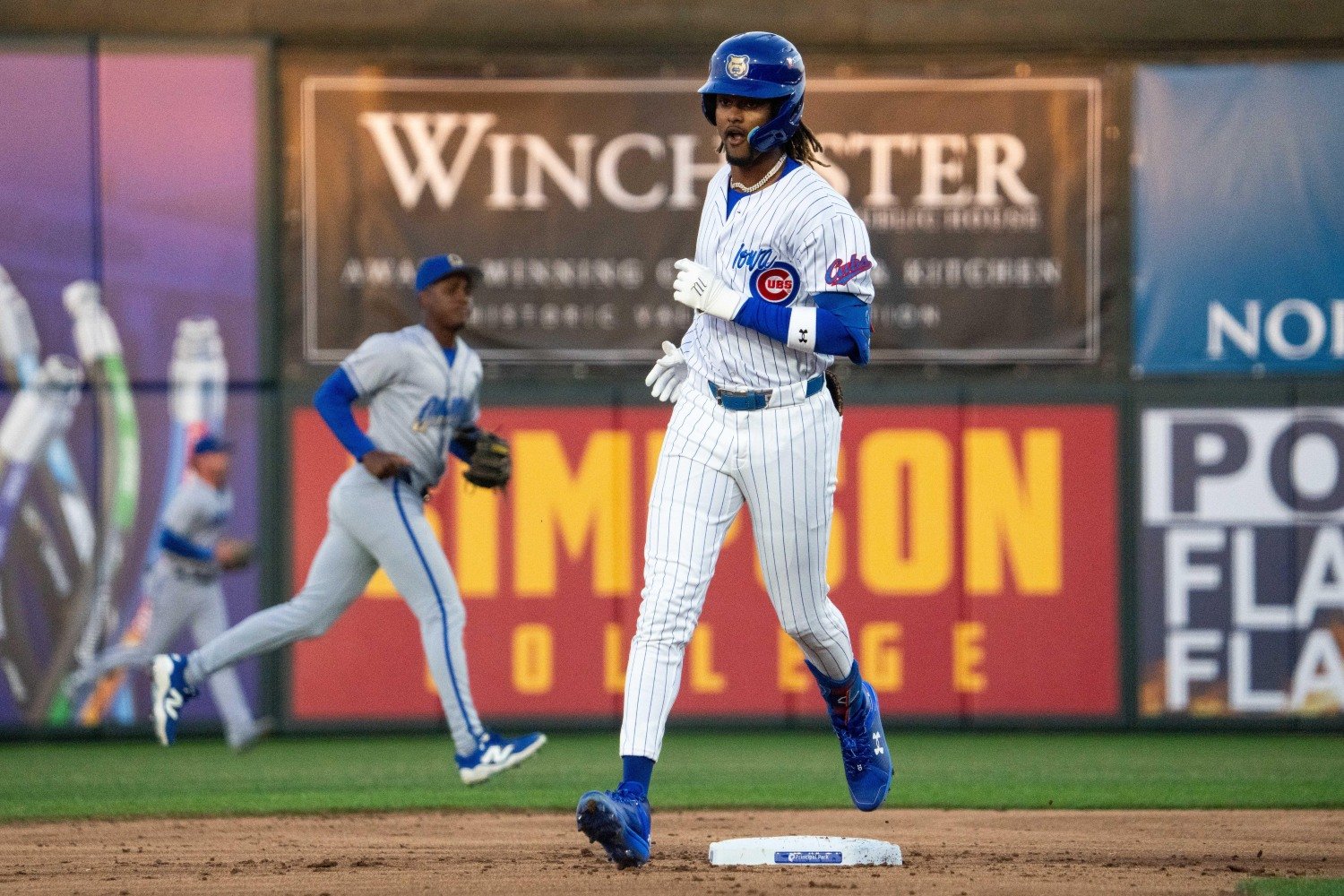 Among Triple-A hitters with at least 60 plate appearances this season, Kevin Alcántara boasts the second-highest 90th-percentile exit velocity, at 110 miles per hour. The ball is jumping off his bat, as much as ever, and while he continues to strike out roughly 30 percent of the time, he's still hitting a solid .269/.346/.409 for the Iowa Cubs. He's cracked nine extra-base hits (including two home runs) and stolen five bases in six tries thus far. He's looked good in center field, drawn 11 walks in 107 trips to the dish, and even shown some facility as a bunter: he has two sacrifices. Why am I telling you this, though? Unlike Cade Horton, who now has a very clear path to some big-league playing time, there's no obvious need (or even an apparent opening) for Alcántara right now. Quite the contrary: the Cubs have the best outfield in the league. Yes, he's using the opposite field a bit better, and yes, he's lifting it a bit more often, but there's plenty of polishing left to do, for a 22-year-old who only has about 250 plate appearances at the Triple-A level and certainly hasn't mastered it. Here's the thing: Alcántara is a capable center fielder, and he's already on the 40-man roster. Earlier this spring, I wrote about the fact that the Cubs would need to use him as a de facto fourth outfielder, despite not carrying him on the active roster for long stretches. That's just the reality of the roster they've built. Now is the time to put that plan into action, and to leverage their fluid roster status and a soft spot in their schedule by giving starting center fielder (and budding star) Pete Crow-Armstrong a little bit of a blow. Thirty-five games into Chicago's season, Crow-Armstrong has played every defensive inning in center field. Even going that long between days off is rare, in this day and age, but admittedly, the schedule is airier than it used to be, and the Cubs' season-opening series in Japan in mid-March has left them with even more blank spaces on the calendar than most teams in the weeks since. It's not an emergency in need of remedy, and Crow-Armstrong has played so well for the second half of this stretch that Craig Counsell has felt little temptation to take him off the field, at any point. Still, we're seeing some cracks form, based on the heavy usage. One of the surest ways position players respond to the grind of the long season is by seeing their plate discipline erode, and sure enough, Crow-Armstrong is moving into one of those cycles right now: his swing rate is rising, which (as ever) means his production is tailing off. By no means does this yet constitute a true problem. That blue line is the one that matters, and while it's sagged sharply over the last week or so, it's not at all hurting the team. Not yet. Proactivity matters, though. You want to get him off his feet and out of the box for a day or three, over the next fortnight or so, to avoid having him fall into bad habits. It's also good to give players a break when they're playing well, rather than wait to do so until they hit a slump. That way, they can't misconstrue their sojourn to the bench as a punitive measure, or a sign of flagging confidence from leadership. Crow-Armstrong has to rest, because rest is not optional for the modern center fielder. He's on pace for somewhere around 1,450 innings in center this year, but in reality, only two players (Omar Moreno, in 1979, and Adam Jones, in 2012) have ever played that much in that demanding position in one season. In fact, there have only been 38 player-seasons of at least 1,400 innings in center. Some fast facts about them: They were amassed by just 29 total players. Moreno, Andruw Jones, Juan Pierre, Vada Pinson, Curt Flood and Dale Murphy all did it multiple times. Twenty-one of the 38 came before 1990, including 10 before 1980. This has really only been possible since the season lengthened to 162 games in the early 1960s, so that's telling. Only 13 have come since 1998, and the only player to get over 1,400 since 2008 was Adam Jones in that 2012 campaign. Many of the players who pepper this list (to name a few non-controversial ones, Tim Raines, Steve Finley, and Lenny Dykstra) were known users of amphetamines, performance-enhancing drugs, and/or cocaine when they achieved this feat of durability. Some of those substances were effectively legal at the time, so it's not necessary to comb through the list on a witch hunt, but the fact that only one player has gotten that far in the nearly two decades since amphetamines were banned (and begun to be tested for) speaks volumes. The modern game is exceptionally demanding, physically and mentally. A center fielder can't take that position every day without suffering some heavy effects from the workload, and Crow-Armstrong is no exception. The Cubs have to find a window to get him off his feet a few times. Alcántara will be the one to do that, and he's ready for the first of what is likely to be two or three stints in that role. Shota Imanaga is likely to be shelved by his hamstring strain, which paves the way for a move. The Cubs have the next four Thursdays off, plus Monday, Jun. 2, which could allow them to occasionally get by with just 12 pitchers and lengthen their bench. They probably wouldn't have a hard time finding a part of Justin Turner's body that isn't working right, if they wanted to shelve him for a while. Best of all, after a tough week against the Giants and Mets (in the middle of which comes a game that will be started by Giants lefty Robbie Ray), the team's schedule goes jelly-soft for a while: they play the Marlins (twice), the White Sox, the Reds (twice) and the Rockies in the final three weeks of May. Alcántara can and should come up to give Crow-Armstrong multiple days off during this stretch. It will take some careful roster management, but that was always going to be the case. The hour of the jaguar is here. The Cubs ought to pounce.
 -
Image courtesy of © Michael McLoone-Imagn Images The tragedy of Shota Imanaga's injury is that it didn't have to happen—but there was no way for him to know that, until it was too late. On a medium-speed ground ball by Christian Yelich in the sixth inning Sunday, Imanaga broke into a sprint toward first base, hoping to be there in time to complete a double play after Michael Busch fielded and threw to Dansby Swanson at second. The rapid acceleration, always dangerous in this way and especially so for a player who left his last start with cramping in that very leg, led to a strain of Imanaga's hamstring. He still made it to the bag, but Swanson's relay throw didn't reach him in time, and was never going to. Yelich was safe, and the trouble was just beginning. While the Cubs have yet to confirm that Imanaga will go on the injured list, they've already diagnosed him with a hamstring strain, rather than merely soreness or cramping. His gait was affected, at least in the immediate aftermath of the play. It seems inevitable that he will land on the shelf Monday, leaving the team without the two starters who headed their rotation coming into the season. That's the bad news. The good news is twofold. Firstly, this looks likely to be on the more mild side, as these injuries go. I did some analysis of recent hamstring injuries for pitchers after Twins ace Pablo López suffered a similar one early in April. In so doing, I found that injuries to a hurler's push-off leg—as López's was and Imanaga's is—tend to require less time for a return. López was back on the mound 16 days after landing on the shelf, and there's every reason to hope that Imanaga will be back by the end of May. Second, while Imanaga was limping off the field in Milwaukee Sunday afternoon, the Iowa Cubs' ace was having no such trouble. Cade Horton pitched six sparkling innings in his second start of the weeklong series against the Buffalo Bisons, giving up just one run on two hits and striking out five, against a lone walk. Six starts into his season, Horton has a 1.24 ERA. Opposing batters are hitting .129/.241/.204 against him. He's fanning 30.5% of them. The 2022 first-round pick is primed for a big-league debut, just when the team needs him most. He's yet to crack 80 pitches in any start, so don't expect him to come up and give them tons of length, but it would be a minor upset if he makes his next start with the scripted "Iowa" scrawled across the Cubs logo on his chest. He's made material improvements this year, with the zip back on his four-seamer and a full five-pitch arsenal. As that plot shows, Horton boasts two clearly above-average pitches, in his sweeper and changeup. His command of the latter is shaky, however, so he's thrown it much less this year. To make up for that, though, he's grown increasingly comfortable with his vertical breaking pitch (the one labeled above as a slider and lumped in with his sweeper under that label below, but which is just as much a curveball), and added a sinker to his mix. Horton has thrown slightly less hard in his last two starts than his previous ones this spring, but that's corresponded with introducing the sinker into his mix, and he's also tinkering with the changeup. Even down a tick from earlier this year, he's up a tick from where he was last year. He's in bully mode. Horton would need to have either a piggyback partner or a standard long reliever available in support. If the team calls him up, he's likely to pitch a Ben Brown-like number of innings in most outings at first, because he's been kept on such a short leash in terms of pitch count thus far. Bringing him up still makes a world of sense, though, because he was on the same schedule as Imanaga and because he's such an enticing prospect, so plainly ready for the next challenge. You can rule out Horton starting on Friday. Only once in his professional career—last April, with Double-A Tennessee—has he started on four days' rest. The Cubs have an off day Thursday, so Friday will be Jameson Taillon's turn, anyway. Horton could start Saturday, in the second of a three-game series at Citi Field against the Mets, but if the Cubs want a softer landing for him, they could prepare him for the majors by having him work on four days' rest for Iowa this Friday. Then, he'd be ready to pitch next Wednesday against the Marlins, at Wrigley Field—and his second start would also come against the Triple A-caliber Marlins lineup, on May 20. Then he'd get the Rockies and Reds at home, on Memorial Day and on Sun., June 1, respectively. That would be an awfully sweet way to start a big-league career. It's conjecture, for now, and when Imanaga (in all likelihood) lands on the injured list Monday, the team is likely to call up a reliever instead of Horton or any other starter. They don't have to reassign his rotation spot until Saturday. In the interim, plenty of options remain for them. Keegan Thompson, whom the team outrighted off the 40-man roster in March, has shown better command this year with Iowa than in his recent stints at any level and made some small but important gains in pitch quality. He's stretched out and could provide length out of the pen. Promoting either Thompson or Horton (or, for that matter, recent minor-league signee and former Cubs setup man Michael Fulmer) would require the team to open a 40-man roster spot, which they might prefer not to do any sooner than is absolutely necessary. If they do so, though, they could turn any of Tom Cosgrove, Drew Pomeranz or Chris Flexen from flotsam to jetsam. Otherwise, Ethan Roberts, Gavin Hollowell, or Cosgrove could return to the majors. Jack Neely, Nate Pearson, Luke Little and Jordan Wicks are all in a strange space, probably still too promising to be cut but too much of a mess to be called up right now. One way or another, very soon, Horton is coming to the majors. Imanaga's injury opens the door for that to happen immediately. The Cubs can't afford to keep losing key pitchers to injuries, but the depth they amassed this winter is paying off, and they might now be able to benefit from steady, solid development of their top pitching prospect. Although the losses of Steele and (hopefully, for a much shorter time) Imanaga make their success to date feel somewhat fragile, the team is quickly approaching a softer stretch in the schedule—and their early success has given them some margin for error. View full article
-
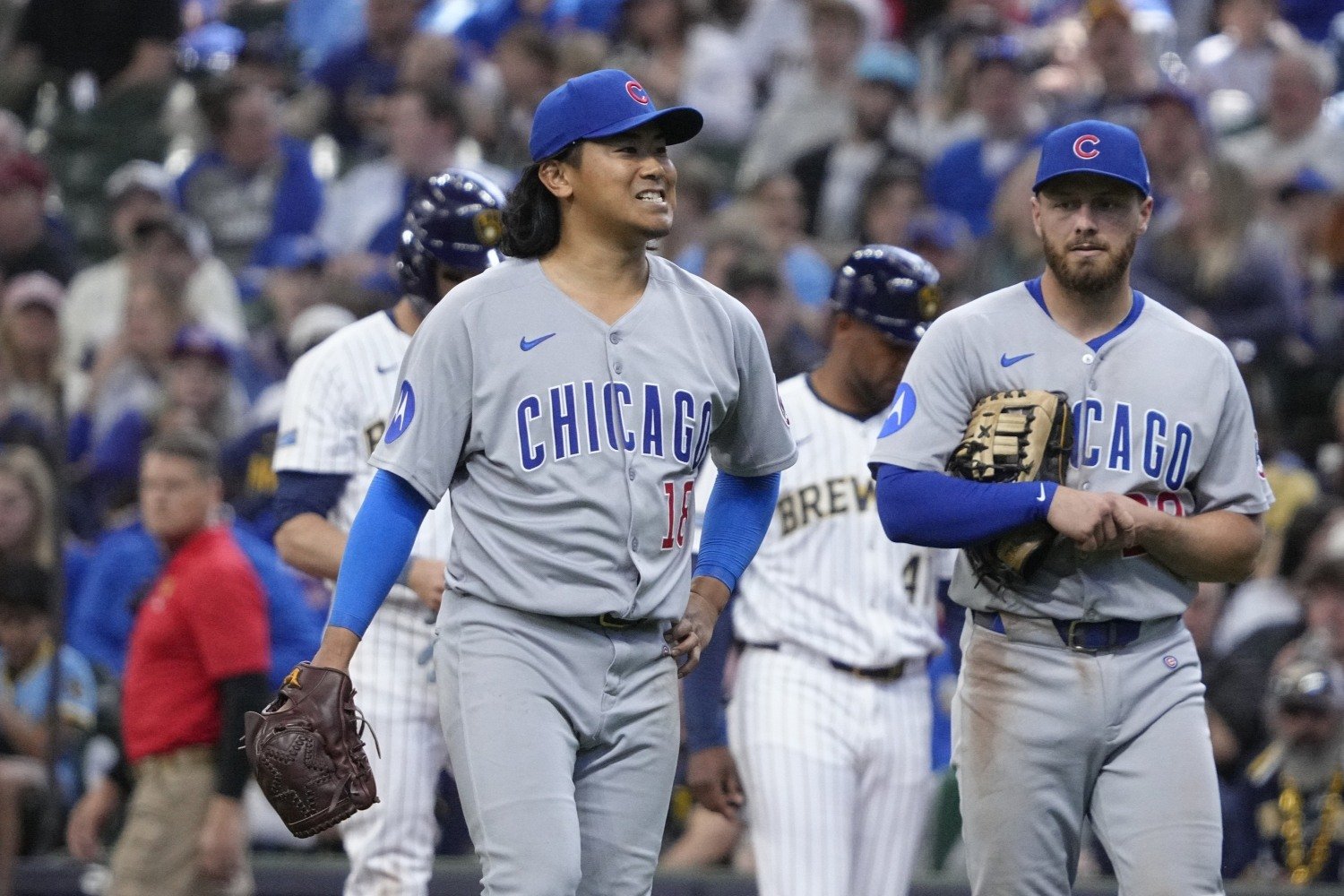 The tragedy of Shota Imanaga's injury is that it didn't have to happen—but there was no way for him to know that, until it was too late. On a medium-speed ground ball by Christian Yelich in the sixth inning Sunday, Imanaga broke into a sprint toward first base, hoping to be there in time to complete a double play after Michael Busch fielded and threw to Dansby Swanson at second. The rapid acceleration, always dangerous in this way and especially so for a player who left his last start with cramping in that very leg, led to a strain of Imanaga's hamstring. He still made it to the bag, but Swanson's relay throw didn't reach him in time, and was never going to. Yelich was safe, and the trouble was just beginning. While the Cubs have yet to confirm that Imanaga will go on the injured list, they've already diagnosed him with a hamstring strain, rather than merely soreness or cramping. His gait was affected, at least in the immediate aftermath of the play. It seems inevitable that he will land on the shelf Monday, leaving the team without the two starters who headed their rotation coming into the season. That's the bad news. The good news is twofold. Firstly, this looks likely to be on the more mild side, as these injuries go. I did some analysis of recent hamstring injuries for pitchers after Twins ace Pablo López suffered a similar one early in April. In so doing, I found that injuries to a hurler's push-off leg—as López's was and Imanaga's is—tend to require less time for a return. López was back on the mound 16 days after landing on the shelf, and there's every reason to hope that Imanaga will be back by the end of May. Second, while Imanaga was limping off the field in Milwaukee Sunday afternoon, the Iowa Cubs' ace was having no such trouble. Cade Horton pitched six sparkling innings in his second start of the weeklong series against the Buffalo Bisons, giving up just one run on two hits and striking out five, against a lone walk. Six starts into his season, Horton has a 1.24 ERA. Opposing batters are hitting .129/.241/.204 against him. He's fanning 30.5% of them. The 2022 first-round pick is primed for a big-league debut, just when the team needs him most. He's yet to crack 80 pitches in any start, so don't expect him to come up and give them tons of length, but it would be a minor upset if he makes his next start with the scripted "Iowa" scrawled across the Cubs logo on his chest. He's made material improvements this year, with the zip back on his four-seamer and a full five-pitch arsenal. As that plot shows, Horton boasts two clearly above-average pitches, in his sweeper and changeup. His command of the latter is shaky, however, so he's thrown it much less this year. To make up for that, though, he's grown increasingly comfortable with his vertical breaking pitch (the one labeled above as a slider and lumped in with his sweeper under that label below, but which is just as much a curveball), and added a sinker to his mix. Horton has thrown slightly less hard in his last two starts than his previous ones this spring, but that's corresponded with introducing the sinker into his mix, and he's also tinkering with the changeup. Even down a tick from earlier this year, he's up a tick from where he was last year. He's in bully mode. Horton would need to have either a piggyback partner or a standard long reliever available in support. If the team calls him up, he's likely to pitch a Ben Brown-like number of innings in most outings at first, because he's been kept on such a short leash in terms of pitch count thus far. Bringing him up still makes a world of sense, though, because he was on the same schedule as Imanaga and because he's such an enticing prospect, so plainly ready for the next challenge. You can rule out Horton starting on Friday. Only once in his professional career—last April, with Double-A Tennessee—has he started on four days' rest. The Cubs have an off day Thursday, so Friday will be Jameson Taillon's turn, anyway. Horton could start Saturday, in the second of a three-game series at Citi Field against the Mets, but if the Cubs want a softer landing for him, they could prepare him for the majors by having him work on four days' rest for Iowa this Friday. Then, he'd be ready to pitch next Wednesday against the Marlins, at Wrigley Field—and his second start would also come against the Triple A-caliber Marlins lineup, on May 20. Then he'd get the Rockies and Reds at home, on Memorial Day and on Sun., June 1, respectively. That would be an awfully sweet way to start a big-league career. It's conjecture, for now, and when Imanaga (in all likelihood) lands on the injured list Monday, the team is likely to call up a reliever instead of Horton or any other starter. They don't have to reassign his rotation spot until Saturday. In the interim, plenty of options remain for them. Keegan Thompson, whom the team outrighted off the 40-man roster in March, has shown better command this year with Iowa than in his recent stints at any level and made some small but important gains in pitch quality. He's stretched out and could provide length out of the pen. Promoting either Thompson or Horton (or, for that matter, recent minor-league signee and former Cubs setup man Michael Fulmer) would require the team to open a 40-man roster spot, which they might prefer not to do any sooner than is absolutely necessary. If they do so, though, they could turn any of Tom Cosgrove, Drew Pomeranz or Chris Flexen from flotsam to jetsam. Otherwise, Ethan Roberts, Gavin Hollowell, or Cosgrove could return to the majors. Jack Neely, Nate Pearson, Luke Little and Jordan Wicks are all in a strange space, probably still too promising to be cut but too much of a mess to be called up right now. One way or another, very soon, Horton is coming to the majors. Imanaga's injury opens the door for that to happen immediately. The Cubs can't afford to keep losing key pitchers to injuries, but the depth they amassed this winter is paying off, and they might now be able to benefit from steady, solid development of their top pitching prospect. Although the losses of Steele and (hopefully, for a much shorter time) Imanaga make their success to date feel somewhat fragile, the team is quickly approaching a softer stretch in the schedule—and their early success has given them some margin for error.
-
- 1
-

-
- shota imanaga
- cade horton
- (and 1 more)
-
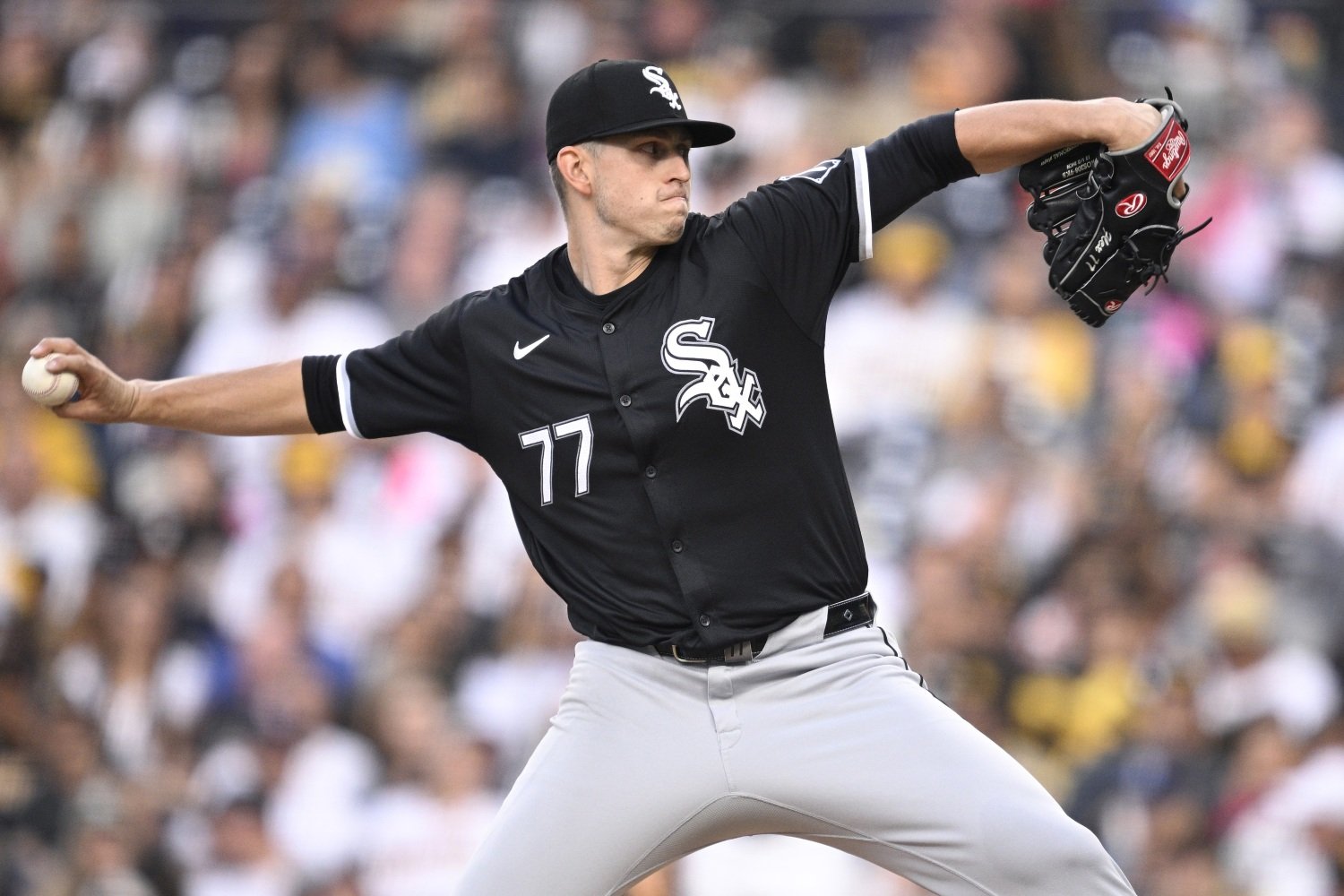 As first reported by ESPN's Jesse Rogers on Wednesday morning, league sources confirmed that the Chicago Cubs will add righthander Chris Flexen to both their 40-man roster and their active 26-man slate. The move keeps Flexen from being able to elect free agency and seek another deal, although it's not necessarily the case that the team expects Flexen to pitch important innings or stick around for very long. Rather, with Javier Assad having suffered a setback in his recovery from an oblique strain first suffered during spring training; Justin Steele out for the year after reconstructive elbow surgery; and Ben Brown showing only an inconsistent capacity to provide length and command the ball the way a big-league starter must, Flexen will come in to deliver some volume for as long as it makes sense. Assad moves to the 60-day injured list as part of this call-up, while recently recalled southpaw Tom Cosgrove was optioned to Triple-A Iowa. The Cubs had six days off in April, but Tuesday was the first of nine straight days on which they'll play a game. It was also the beginning of a softer stretch of the schedule, which the team might use to stretch their starting rotation a bit and rest their top relievers a bit. Accelerating roster churn over the last week or so has seen the team bring in and/or call up Cosgrove, Drew Pomeranz, and now Flexen. They called up Gavin Hollowell, only to option him almost immediately back to Iowa. Pomeranz, Flexen, Brad Keller and Julian Merryweather are all veterans who can't be sent to the minors without being made available to the other 29 teams, and it's unlikely the team will hold onto any of them if they have to come off the active roster for non-injury reasons, so bringing in Cosgrove was an important step; he's one more optionable arm (along with Ethan Roberts, Jack Neely, Hollowell, Nate Pearson, and Luke Little) who can be swapped into those roster vacancies when they arise. The Cubs have the ability to send Daniel Palencia to Iowa, should they choose, but further churn seems almost inevitable, either way. Though he might last just a week or so on the roster, Flexen could soak up a handful of low-leverage innings for the team, and his performance in Iowa (a 1.16 ERA in five starts) made it worth taking a closer look at what he's doing. As has been reported elsewhere, Flexen has lowered his arm slot a bit this spring. That's a noteworthy change, not just because most arm slot changes carry at least some alteration in the shape of a hurler's pitches, but because Flexen was notable mainly for his sky-high overhand delivery over the previous few years. The funnier thing, though, is to notice the unique relationship between his flavors of fastball and breaking stuff—which changed this year, because of several small changes to the pitches themselves and the elimination of one key offering in the set. Here are the yearly averages for horizontal and vertical movement on each of Flexen's pitches. I've drawn connecting lines to show the relationships between the components of his arsenal for 2023 (green), 2024 (red), and 2025 (blue). Firstly, after developing a sweeper last year, Flexen is back to using exclusively a vertical slider this season. In conjunction with his big, slow curveball and a cutter with an unusual amount of glove-side movement, that has left Flexen with a very weird set of breaking balls. It's extremely uncommon to see a pitcher with a cutter that moves more horizontally than their slider. Usually, if you have that kind of natural movement on the cutter, the slider naturally steers at least that far. The resulting concavity of the overall outline of his pitch mix above is very, very rare. Flexen has also achieved a bit more fade on his changeup and worked in a sinker more often this year. Those tweaks make sense, given the slightly lower slot. They combine to give him a six-pitch mix (four-seamer, cutter, slider, curve, change, sinker), and although his heater is still lackluster, some of the other offerings really play up after his change of angle and mix. The cutter, in particular, is an average pitch that plays up because of his command of it. In all likelihood, Flexen will have a relatively short and forgettable Cubs tenure. They continue the difficult work of navigating a season that began in mid-March and has already seen their ace go down for the duration, though, and thus, getting and saving a few innings with moves like calling up Flexen is important. After him, they might turn to Tyson Miller, who is nearing readiness to return from his own spring injury. At some point soon, they'll give Cade Horton at least a spot start in the majors. They might check in with still-available free agents Spencer Turnbull and/or Rich Hill, among others. They'll continue looking for opportunities to land players like Pomeranz and Cosgrove, to bolster their stable of fallback options. Flexen is just the next in a parade of pitchers who will be called upon to help them get to October—and hopefully, to have sufficient pitching depth to sustain a deep postseason run when they do.
 -
Image courtesy of © Orlando Ramirez-Imagn Images As first reported by ESPN's Jesse Rogers on Wednesday morning, league sources confirmed that the Chicago Cubs will add righthander Chris Flexen to both their 40-man roster and their active 26-man slate. The move keeps Flexen from being able to elect free agency and seek another deal, although it's not necessarily the case that the team expects Flexen to pitch important innings or stick around for very long. Rather, with Javier Assad having suffered a setback in his recovery from an oblique strain first suffered during spring training; Justin Steele out for the year after reconstructive elbow surgery; and Ben Brown showing only an inconsistent capacity to provide length and command the ball the way a big-league starter must, Flexen will come in to deliver some volume for as long as it makes sense. Assad moves to the 60-day injured list as part of this call-up, while recently recalled southpaw Tom Cosgrove was optioned to Triple-A Iowa. The Cubs had six days off in April, but Tuesday was the first of nine straight days on which they'll play a game. It was also the beginning of a softer stretch of the schedule, which the team might use to stretch their starting rotation a bit and rest their top relievers a bit. Accelerating roster churn over the last week or so has seen the team bring in and/or call up Cosgrove, Drew Pomeranz, and now Flexen. They called up Gavin Hollowell, only to option him almost immediately back to Iowa. Pomeranz, Flexen, Brad Keller and Julian Merryweather are all veterans who can't be sent to the minors without being made available to the other 29 teams, and it's unlikely the team will hold onto any of them if they have to come off the active roster for non-injury reasons, so bringing in Cosgrove was an important step; he's one more optionable arm (along with Ethan Roberts, Jack Neely, Hollowell, Nate Pearson, and Luke Little) who can be swapped into those roster vacancies when they arise. The Cubs have the ability to send Daniel Palencia to Iowa, should they choose, but further churn seems almost inevitable, either way. Though he might last just a week or so on the roster, Flexen could soak up a handful of low-leverage innings for the team, and his performance in Iowa (a 1.16 ERA in five starts) made it worth taking a closer look at what he's doing. As has been reported elsewhere, Flexen has lowered his arm slot a bit this spring. That's a noteworthy change, not just because most arm slot changes carry at least some alteration in the shape of a hurler's pitches, but because Flexen was notable mainly for his sky-high overhand delivery over the previous few years. The funnier thing, though, is to notice the unique relationship between his flavors of fastball and breaking stuff—which changed this year, because of several small changes to the pitches themselves and the elimination of one key offering in the set. Here are the yearly averages for horizontal and vertical movement on each of Flexen's pitches. I've drawn connecting lines to show the relationships between the components of his arsenal for 2023 (green), 2024 (red), and 2025 (blue). Firstly, after developing a sweeper last year, Flexen is back to using exclusively a vertical slider this season. In conjunction with his big, slow curveball and a cutter with an unusual amount of glove-side movement, that has left Flexen with a very weird set of breaking balls. It's extremely uncommon to see a pitcher with a cutter that moves more horizontally than their slider. Usually, if you have that kind of natural movement on the cutter, the slider naturally steers at least that far. The resulting concavity of the overall outline of his pitch mix above is very, very rare. Flexen has also achieved a bit more fade on his changeup and worked in a sinker more often this year. Those tweaks make sense, given the slightly lower slot. They combine to give him a six-pitch mix (four-seamer, cutter, slider, curve, change, sinker), and although his heater is still lackluster, some of the other offerings really play up after his change of angle and mix. The cutter, in particular, is an average pitch that plays up because of his command of it. In all likelihood, Flexen will have a relatively short and forgettable Cubs tenure. They continue the difficult work of navigating a season that began in mid-March and has already seen their ace go down for the duration, though, and thus, getting and saving a few innings with moves like calling up Flexen is important. After him, they might turn to Tyson Miller, who is nearing readiness to return from his own spring injury. At some point soon, they'll give Cade Horton at least a spot start in the majors. They might check in with still-available free agents Spencer Turnbull and/or Rich Hill, among others. They'll continue looking for opportunities to land players like Pomeranz and Cosgrove, to bolster their stable of fallback options. Flexen is just the next in a parade of pitchers who will be called upon to help them get to October—and hopefully, to have sufficient pitching depth to sustain a deep postseason run when they do. View full article
-
Seiya Suzuki and the Enormous Pleasure of the Power Hitter's Triple
Matthew Trueblood posted an article in Cubs
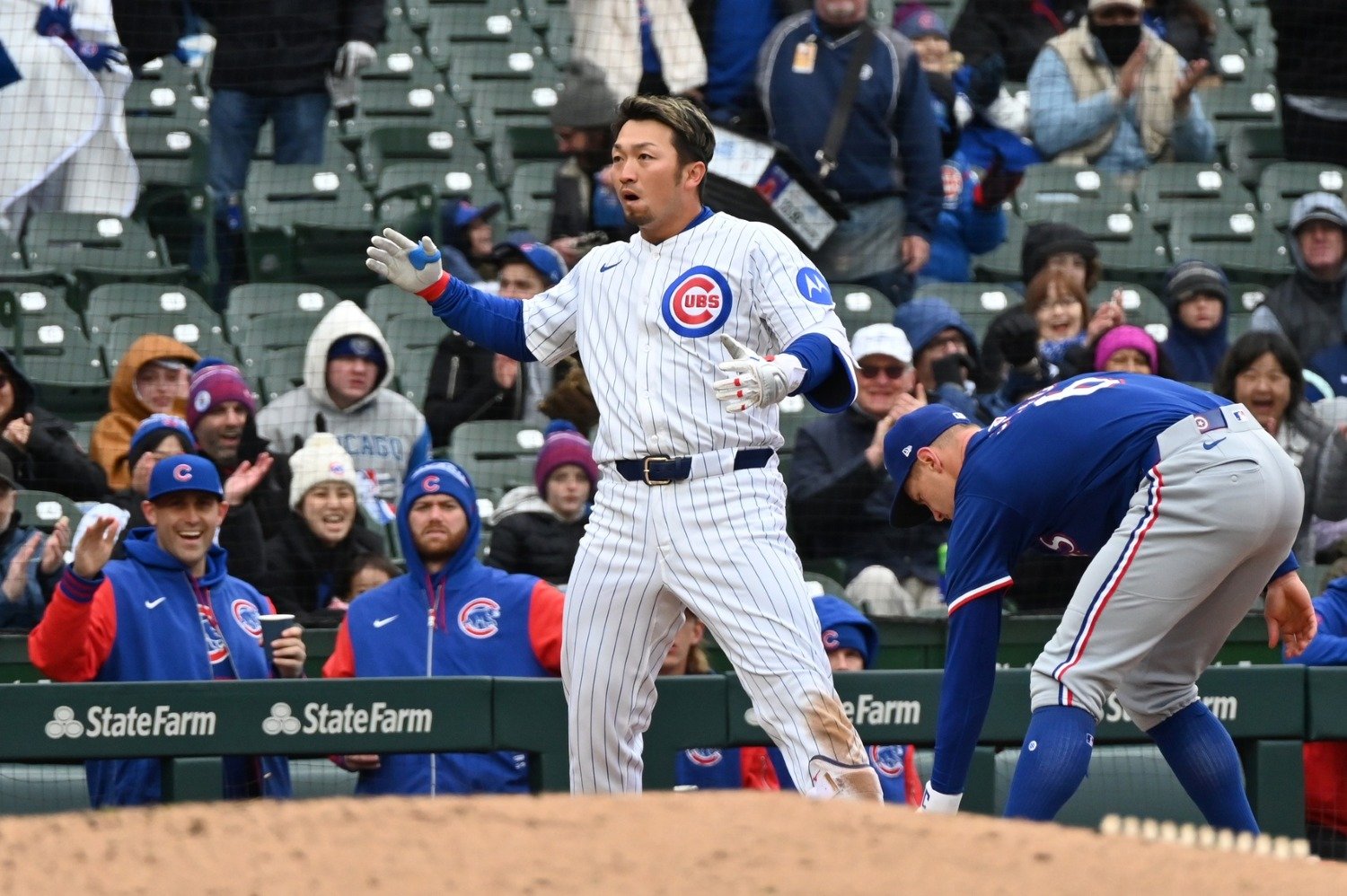 If you're a baseball fan, you have at some point lamented that there aren't more triples in the big leagues. It might be the most universal opinion in the wide and varied community that is the baseball world. Triples are the most interesting play in baseball, and while the overall trend for the last century has been toward a more athletic, more impressive, (eventually) more compelling game, the most exciting individual outcome has become tragically rare. Many blame this on the fading role of speed in the game since the dawn of the PEDs Era in the late 1980s. Players are bigger, stronger, and the fastest of them are even faster, but there are fewer players who have what we used to call plus speed, and some of the fastest ones hit the ball over the fence too consistently to put all that speed into action on the field. There's an attribution error in play there, though, because here's the twist: triples aren't as much about speed as you think. Look at the all-time leaderboard for triples, and you'll see a solid wall of grayscale faces under squashed, logo-free hats. Of the top 50 hitters with the most triples in baseball history, only two spent any significant period of their careers playing after World War II. Those two guys—Stan Musial and Roberto Clemente—start to point us in the direction of a revelation. Study the many players above and around them on the career list, and you'll take another step toward that epiphany. They probably were fast, for the most part, but these were also some of the best power hitters of the Dead Ball (and early Live Ball) Era. It's just that, given the equipment and the dimensions of most parks during those players' careers, it was hard to rack up home runs. Hitting a triple wasn't just like hitting a double, only you were fast enough to take another 90 feet by becoming a blur between bases. It was a sign that you could hit the ball far enough to force defenses to spend extra time chasing it. The disappearance of triples in the modern game is much more about shrinking parks, a livelier ball, and better, deeper-positioned outfield defenders than it is about diminishing speed in the game. More long hits clear the fences. When they don't, they're pursued by faster people with stronger arms, to fences closer to the cutoff man waiting for the throw to the infield—and those people play deeper, in the first place, so they get to the ball more quickly than players did even a decade ago. That's why, after flatlining at what seemed to be a practical minimum for the previous 30 years or so, the global triples rate fell through that false floor and found a new one after Statcast data came into play. However, in parts of four big-league seasons, Seiya Suzuki has 16 career triples. That's despite having speed on par, perhaps, with the best years of Musial or Clemente, but nowhere near that of the guys you think of hitting lots of triples: Willie Wilson, Brett Butler, José Reyes, and other gap-splitting speedsters. Suzuki has tripled in almost 1% of his career trips to the plate, well over double the league-wide clip. Why? For the same reasons why Clemente was great at it. He hits the ball hard, everywhere, and opponents don't understand how or respect him enough in the process. Firstly, let's talk about the disrespect defenses show Suzuki. It's perplexing. Here's the player- and ball-tracking map of Suzuki's triple Tuesday night in Pittsburgh. This ball was not that resoundingly struck. It was hit well, to be sure, but under 100 miles per hour off the bat. With better positioning, it might have been catchable. More plausibly, Tommy Pham could have gotten to it much more quickly and held Suzuki to a double. In reality, though, the Pirates left fielder was playing just 293 feet away from home plate. That's why you see the depth of the angle he had to take back to the ball, and why it took so long to get there that Suzuki was at third before the Bucs could relay the ball back in. Pham's was egregiously bad positioning, but this is a habit for the whole league. You can call it general disrespect, or speculate that teams are trying to position their left fielders to collect the scalded ground balls Suzuki often shoots through the left side of the infield, but the fact is that Suzuki has batted-ball quality similar to that of the Athletics' Brent Rooker and the Rangers' Wyatt Langford. The league doesn't defend him as cautiously as they defend Suzuki. Here's the average starting depth of each outfielder against each of those three hitters, and against right-handed batters, on average. Player LF CF RF Brent Rooker 305 328 297 Wyatt Langford 307 327 298 Seiya Suzuki 302 322 293 League - RHH 301 322 291 One reason why Suzuki can often take third, then, is the fact that teams don't play deep enough against him. He hits balls over fielders' heads that should be caught, because they don't believe he's going to hit it that far until he does. TGw3azlfV0ZRVkV3dEdEUT09X0JRSllWQVVFQXdBQVdWRlRCQUFBQmxKVEFBQUNVbEFBVjFBQ1ZWQlVDRlZWQkFNRg==.mp4 There's certainly more to it than that, though, and we'd give Suzuki too little credit if we acted as though this is fully avoidable problem the league is creating for itself. After all, as mentioned above, he does hit it hard through the infield often, which requires outfielders to be ready to come get the ball in front of them. More than that, though, Suzuki also has a tendency to hit balls that fool you. When he drives the ball to the middle of the field, it often has a bit more juice on it than the center fielder thinks. Something about his swing—which is decidedly unique, in the way that he generates his cleanest contact to center, whereas most modern hitters gear up to maximize their power to the pull field—is hard to read. TzBxZWFfWGw0TUFRPT1fQkFRRUFGTUhWVllBQ2xRR0JRQUhDUTVmQUZnSFZnY0FWbE1CQkZZQUJnRUhWQVZU.mp4 Leody Taveras could have cut this ball off, if he had fully realized how hard it was hit. He didn't. A lot of Suzuki's triples look something like this; they involve a fielder slightly underestimating how well he hit it, and either taking a poor route or failing to field it cleanly when they get to the ball. Often, there's a combination of the player having been out of position when the ball was hit and their not being ready for the carry on it when they try to finish a play. TVpSME5fWGw0TUFRPT1fRDFOV0FWY01WbGNBRFZGVFZnQUFVd1FGQUFBQUJWWUFWMU1HQUFvR0NBUUhCd0VE.mp4 Suzuki's doubles look a lot like the typical double. His triples are unusually well-struck. Doubles Triples Player Exit Vel. Launch Ang. Distance Exit Vel. Launch Ang. Distance League (s. 2022) 97.9 17 261 98.6 19 292 Seiya Suzuki 98.8 16 257 102.6 18 319 Now, there's another element to a triples hitter, beyond power and speed. You also have to be a heads-up, high-motor player. Suzuki has those traits in spades, too, which is the final ingredient in the soufflé. He gets out of the box well, notices when a fielder has trouble with the ball, and knows where each park might have a quirk that allows him to take an extra base—like the deep corners at his own home, Wrigley Field. MzVERERfWGw0TUFRPT1fVWdoVFhGWUJCRlFBQ3dZR0JRQUFWMUlEQUFOVUIxZ0FDbFlHQVFRQ0IxRUFBZ3RR.mp4 The ability to surprise teams. A systematic defensive weakness of which he's well-wired to take advantage. Very real power and good speed, and the awareness to maximize the value of them. Suzuki is a unique player, and it's allowed him to hit a bunch of triples, in a league slowly losing that skill—despite not fitting the archetype many have in their heads of a triples hitter. It's a delightful thing to watch, and a source of sneaky added value for the Cubs' star slugger.
 -
It should be a familiar sight for you, by now. Seiya Suzuki hit a ball to the gap, the defense was out of position, and by the time the dust settled, the slugger was on third base. Let's talk about slugger triples. Image courtesy of © Patrick Gorski-Imagn Images If you're a baseball fan, you have at some point lamented that there aren't more triples in the big leagues. It might be the most universal opinion in the wide and varied community that is the baseball world. Triples are the most interesting play in baseball, and while the overall trend for the last century has been toward a more athletic, more impressive, (eventually) more compelling game, the most exciting individual outcome has become tragically rare. Many blame this on the fading role of speed in the game since the dawn of the PEDs Era in the late 1980s. Players are bigger, stronger, and the fastest of them are even faster, but there are fewer players who have what we used to call plus speed, and some of the fastest ones hit the ball over the fence too consistently to put all that speed into action on the field. There's an attribution error in play there, though, because here's the twist: triples aren't as much about speed as you think. Look at the all-time leaderboard for triples, and you'll see a solid wall of grayscale faces under squashed, logo-free hats. Of the top 50 hitters with the most triples in baseball history, only two spent any significant period of their careers playing after World War II. Those two guys—Stan Musial and Roberto Clemente—start to point us in the direction of a revelation. Study the many players above and around them on the career list, and you'll take another step toward that epiphany. They probably were fast, for the most part, but these were also some of the best power hitters of the Dead Ball (and early Live Ball) Era. It's just that, given the equipment and the dimensions of most parks during those players' careers, it was hard to rack up home runs. Hitting a triple wasn't just like hitting a double, only you were fast enough to take another 90 feet by becoming a blur between bases. It was a sign that you could hit the ball far enough to force defenses to spend extra time chasing it. The disappearance of triples in the modern game is much more about shrinking parks, a livelier ball, and better, deeper-positioned outfield defenders than it is about diminishing speed in the game. More long hits clear the fences. When they don't, they're pursued by faster people with stronger arms, to fences closer to the cutoff man waiting for the throw to the infield—and those people play deeper, in the first place, so they get to the ball more quickly than players did even a decade ago. That's why, after flatlining at what seemed to be a practical minimum for the previous 30 years or so, the global triples rate fell through that false floor and found a new one after Statcast data came into play. However, in parts of four big-league seasons, Seiya Suzuki has 16 career triples. That's despite having speed on par, perhaps, with the best years of Musial or Clemente, but nowhere near that of the guys you think of hitting lots of triples: Willie Wilson, Brett Butler, José Reyes, and other gap-splitting speedsters. Suzuki has tripled in almost 1% of his career trips to the plate, well over double the league-wide clip. Why? For the same reasons why Clemente was great at it. He hits the ball hard, everywhere, and opponents don't understand how or respect him enough in the process. Firstly, let's talk about the disrespect defenses show Suzuki. It's perplexing. Here's the player- and ball-tracking map of Suzuki's triple Tuesday night in Pittsburgh. This ball was not that resoundingly struck. It was hit well, to be sure, but under 100 miles per hour off the bat. With better positioning, it might have been catchable. More plausibly, Tommy Pham could have gotten to it much more quickly and held Suzuki to a double. In reality, though, the Pirates left fielder was playing just 293 feet away from home plate. That's why you see the depth of the angle he had to take back to the ball, and why it took so long to get there that Suzuki was at third before the Bucs could relay the ball back in. Pham's was egregiously bad positioning, but this is a habit for the whole league. You can call it general disrespect, or speculate that teams are trying to position their left fielders to collect the scalded ground balls Suzuki often shoots through the left side of the infield, but the fact is that Suzuki has batted-ball quality similar to that of the Athletics' Brent Rooker and the Rangers' Wyatt Langford. The league doesn't defend him as cautiously as they defend Suzuki. Here's the average starting depth of each outfielder against each of those three hitters, and against right-handed batters, on average. Player LF CF RF Brent Rooker 305 328 297 Wyatt Langford 307 327 298 Seiya Suzuki 302 322 293 League - RHH 301 322 291 One reason why Suzuki can often take third, then, is the fact that teams don't play deep enough against him. He hits balls over fielders' heads that should be caught, because they don't believe he's going to hit it that far until he does. TGw3azlfV0ZRVkV3dEdEUT09X0JRSllWQVVFQXdBQVdWRlRCQUFBQmxKVEFBQUNVbEFBVjFBQ1ZWQlVDRlZWQkFNRg==.mp4 There's certainly more to it than that, though, and we'd give Suzuki too little credit if we acted as though this is fully avoidable problem the league is creating for itself. After all, as mentioned above, he does hit it hard through the infield often, which requires outfielders to be ready to come get the ball in front of them. More than that, though, Suzuki also has a tendency to hit balls that fool you. When he drives the ball to the middle of the field, it often has a bit more juice on it than the center fielder thinks. Something about his swing—which is decidedly unique, in the way that he generates his cleanest contact to center, whereas most modern hitters gear up to maximize their power to the pull field—is hard to read. TzBxZWFfWGw0TUFRPT1fQkFRRUFGTUhWVllBQ2xRR0JRQUhDUTVmQUZnSFZnY0FWbE1CQkZZQUJnRUhWQVZU.mp4 Leody Taveras could have cut this ball off, if he had fully realized how hard it was hit. He didn't. A lot of Suzuki's triples look something like this; they involve a fielder slightly underestimating how well he hit it, and either taking a poor route or failing to field it cleanly when they get to the ball. Often, there's a combination of the player having been out of position when the ball was hit and their not being ready for the carry on it when they try to finish a play. TVpSME5fWGw0TUFRPT1fRDFOV0FWY01WbGNBRFZGVFZnQUFVd1FGQUFBQUJWWUFWMU1HQUFvR0NBUUhCd0VE.mp4 Suzuki's doubles look a lot like the typical double. His triples are unusually well-struck. Doubles Triples Player Exit Vel. Launch Ang. Distance Exit Vel. Launch Ang. Distance League (s. 2022) 97.9 17 261 98.6 19 292 Seiya Suzuki 98.8 16 257 102.6 18 319 Now, there's another element to a triples hitter, beyond power and speed. You also have to be a heads-up, high-motor player. Suzuki has those traits in spades, too, which is the final ingredient in the soufflé. He gets out of the box well, notices when a fielder has trouble with the ball, and knows where each park might have a quirk that allows him to take an extra base—like the deep corners at his own home, Wrigley Field. MzVERERfWGw0TUFRPT1fVWdoVFhGWUJCRlFBQ3dZR0JRQUFWMUlEQUFOVUIxZ0FDbFlHQVFRQ0IxRUFBZ3RR.mp4 The ability to surprise teams. A systematic defensive weakness of which he's well-wired to take advantage. Very real power and good speed, and the awareness to maximize the value of them. Suzuki is a unique player, and it's allowed him to hit a bunch of triples, in a league slowly losing that skill—despite not fitting the archetype many have in their heads of a triples hitter. It's a delightful thing to watch, and a source of sneaky added value for the Cubs' star slugger. View full article
-
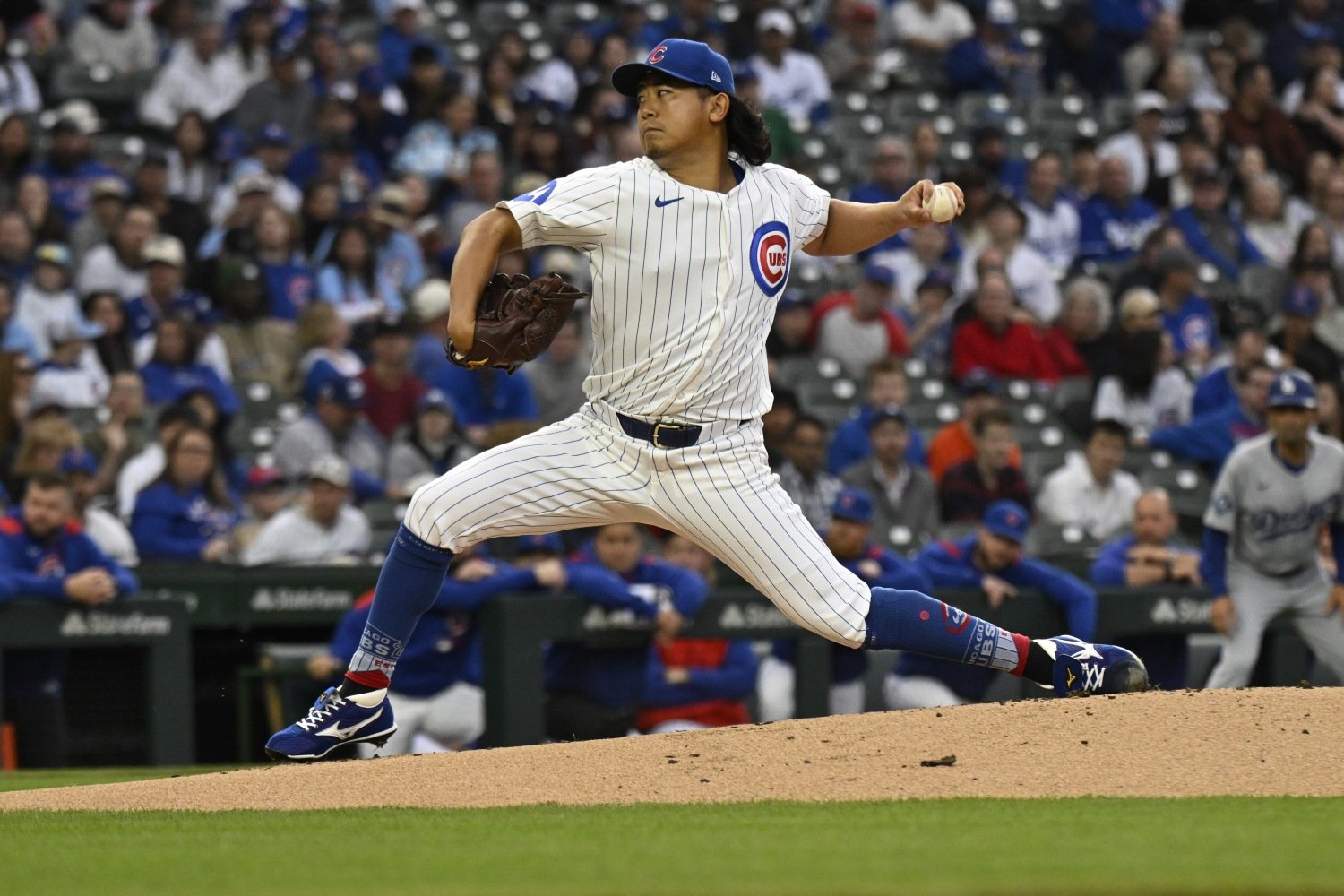 It would be unfair—it would be downright wrong, actually—to suggest that Shota Imanaga's splitter has been worse thus far in 2025 than it was in 2024. Based on results (not just when it ends at-bats, but whether it goes for a strike or a ball on all the others), it's been worth 1.5 runs above average per 100 thrown this year. That's identical to last season's rate. By StuffPro, Baseball Prospectus's pitch-valuation model, it's been a hair better (0.9, versus 1.0, where 0 is average and a negative number is better) than it was in his first Stateside season. By PitchPro, which gathers in the same inputs as StuffPro (release point, initial trajectory, velocity, movement, count and handedness) and then bakes in location, it's been better by an even wider margin (0.0, versus 0.3). However, we still have to note this: Last year, batters whiffed on 43% of their swings against Imanaga's devastating lefty splitter. This season, through six starts, that number has plunged to 30.6%. It's a major change to the primary changeup for the Japanese southpaw. To project how the rest of his season will go, we have to establish an answer to the question: Why is this happening? Firstly, let's talk about what it isn't. There's no major change in the velocity relationship between these two pitches. If anything, meanwhile, his rising four-seam fastball and his sweeper are diverging farther from the splitter in their flight than they did last year. The red triangle here marks out the movement of his four-seamer, splitter and sweeper for 2024. The blue one shows 2025. One risk when a pitcher creates more of a seemingly desirable movement separation between two pitches, of course, is that it's easier to spot the difference early. That would make hitters less likely to chase the offspeed or breaking ball in the pair, which would deflate whiff rate. Really, though, Imanaga is doing well at disguising the splitter, just as he did last year. Here's a 3-D representation of his arsenal (with average release points, trajectories and final locations) as seen from a right-handed batter's vantage point in 2024: Here's the equivalent image for this year: Maybe the latter image leaves the splitter looking a hair more detectable, but only that much, and it's not like hitters have reacted much differently to it in terms of swing decisions. They swung at 62.9% of his splitters last year; they're swinging at 61.2% of them this year. So, it's not velocity, it's not movement, and it's not release or early trajectory. That leaves two things that I do believe are contributing to the reduction in whiffs on the splitter for Imanaga. For one: he's throwing it more, right now. Here's how often he's thrown each of his pitches to righty batters, by season, since coming to the States. When you throw a given pitch more often, hitters will look for it a bit more. It's hard to make a significant adjustment, from a hitter's perspective, based on a few starts and a small difference, but if teams have been monitoring this closely, the surge in splitter usage against righties this year has been large enough to impel hitters to come into games hunting Imanaga's splitter more. The good news with this explanation for the downshift in splitter whiffs is that we should expect to see more fastball value, in compensation for it—and indeed, we do. Batters are enjoying much better results against Imanaga's fastball so far, but their average exit velocity and launch angle are unchanged, and they're whiffing on 21.7% of their swings at it, up from 17.7%. Because they're more ready for the splitter, they're less ready for the fastball. The other reason why hitters are finding the splitter better also comes with lots of consolation: the thing is in the zone more often, and closer to the zone even when it misses. Last season, the pitch's aggregate called strike probability (the chances of a strike being called if the batter didn't swing, across all splitters thrown) was 41%. This year, it's 45%. Here's what his locations looked like in 2024. And here's the same image for 2025 to date. You don't want splitters in the middle of the zone, but where he's living with it is fine. Very little hard contact will happen on a well-executed splitter there, even in the higher of the two dense red spots. Being able to land it there, meanwhile, forces hitters to either swing more or accept more called strikes when they don't. That's how he's coming out even in value, even while getting so many fewer whiffs. Imanaga has other pitches, of course. The sweeper is doing interesting things this year, too. He'll always be defined by the fastball and the splitter, though, and despite the lost whiffs on the latter, he's enjoying an excellent start to 2025 because of his adaptability. Eventually, he might need to more consistently push that splitter down out of the zone, but if and when he does, the whiff rate will rise again. In the meantime, his 2.95 career ERA is proof of his capacity to flummox big-league hitters in myriad ways.
 -
De facto Cubs ace Shota Imanaga is having a strong sophomore season, to follow what was a dazzling rookie campaign. His signature pitch isn't missing nearly as many bats as it did last year, though. What's up? Image courtesy of © Matt Marton-Imagn Images It would be unfair—it would be downright wrong, actually—to suggest that Shota Imanaga's splitter has been worse thus far in 2025 than it was in 2024. Based on results (not just when it ends at-bats, but whether it goes for a strike or a ball on all the others), it's been worth 1.5 runs above average per 100 thrown this year. That's identical to last season's rate. By StuffPro, Baseball Prospectus's pitch-valuation model, it's been a hair better (0.9, versus 1.0, where 0 is average and a negative number is better) than it was in his first Stateside season. By PitchPro, which gathers in the same inputs as StuffPro (release point, initial trajectory, velocity, movement, count and handedness) and then bakes in location, it's been better by an even wider margin (0.0, versus 0.3). However, we still have to note this: Last year, batters whiffed on 43% of their swings against Imanaga's devastating lefty splitter. This season, through six starts, that number has plunged to 30.6%. It's a major change to the primary changeup for the Japanese southpaw. To project how the rest of his season will go, we have to establish an answer to the question: Why is this happening? Firstly, let's talk about what it isn't. There's no major change in the velocity relationship between these two pitches. If anything, meanwhile, his rising four-seam fastball and his sweeper are diverging farther from the splitter in their flight than they did last year. The red triangle here marks out the movement of his four-seamer, splitter and sweeper for 2024. The blue one shows 2025. One risk when a pitcher creates more of a seemingly desirable movement separation between two pitches, of course, is that it's easier to spot the difference early. That would make hitters less likely to chase the offspeed or breaking ball in the pair, which would deflate whiff rate. Really, though, Imanaga is doing well at disguising the splitter, just as he did last year. Here's a 3-D representation of his arsenal (with average release points, trajectories and final locations) as seen from a right-handed batter's vantage point in 2024: Here's the equivalent image for this year: Maybe the latter image leaves the splitter looking a hair more detectable, but only that much, and it's not like hitters have reacted much differently to it in terms of swing decisions. They swung at 62.9% of his splitters last year; they're swinging at 61.2% of them this year. So, it's not velocity, it's not movement, and it's not release or early trajectory. That leaves two things that I do believe are contributing to the reduction in whiffs on the splitter for Imanaga. For one: he's throwing it more, right now. Here's how often he's thrown each of his pitches to righty batters, by season, since coming to the States. When you throw a given pitch more often, hitters will look for it a bit more. It's hard to make a significant adjustment, from a hitter's perspective, based on a few starts and a small difference, but if teams have been monitoring this closely, the surge in splitter usage against righties this year has been large enough to impel hitters to come into games hunting Imanaga's splitter more. The good news with this explanation for the downshift in splitter whiffs is that we should expect to see more fastball value, in compensation for it—and indeed, we do. Batters are enjoying much better results against Imanaga's fastball so far, but their average exit velocity and launch angle are unchanged, and they're whiffing on 21.7% of their swings at it, up from 17.7%. Because they're more ready for the splitter, they're less ready for the fastball. The other reason why hitters are finding the splitter better also comes with lots of consolation: the thing is in the zone more often, and closer to the zone even when it misses. Last season, the pitch's aggregate called strike probability (the chances of a strike being called if the batter didn't swing, across all splitters thrown) was 41%. This year, it's 45%. Here's what his locations looked like in 2024. And here's the same image for 2025 to date. You don't want splitters in the middle of the zone, but where he's living with it is fine. Very little hard contact will happen on a well-executed splitter there, even in the higher of the two dense red spots. Being able to land it there, meanwhile, forces hitters to either swing more or accept more called strikes when they don't. That's how he's coming out even in value, even while getting so many fewer whiffs. Imanaga has other pitches, of course. The sweeper is doing interesting things this year, too. He'll always be defined by the fastball and the splitter, though, and despite the lost whiffs on the latter, he's enjoying an excellent start to 2025 because of his adaptability. Eventually, he might need to more consistently push that splitter down out of the zone, but if and when he does, the whiff rate will rise again. In the meantime, his 2.95 career ERA is proof of his capacity to flummox big-league hitters in myriad ways. View full article
-
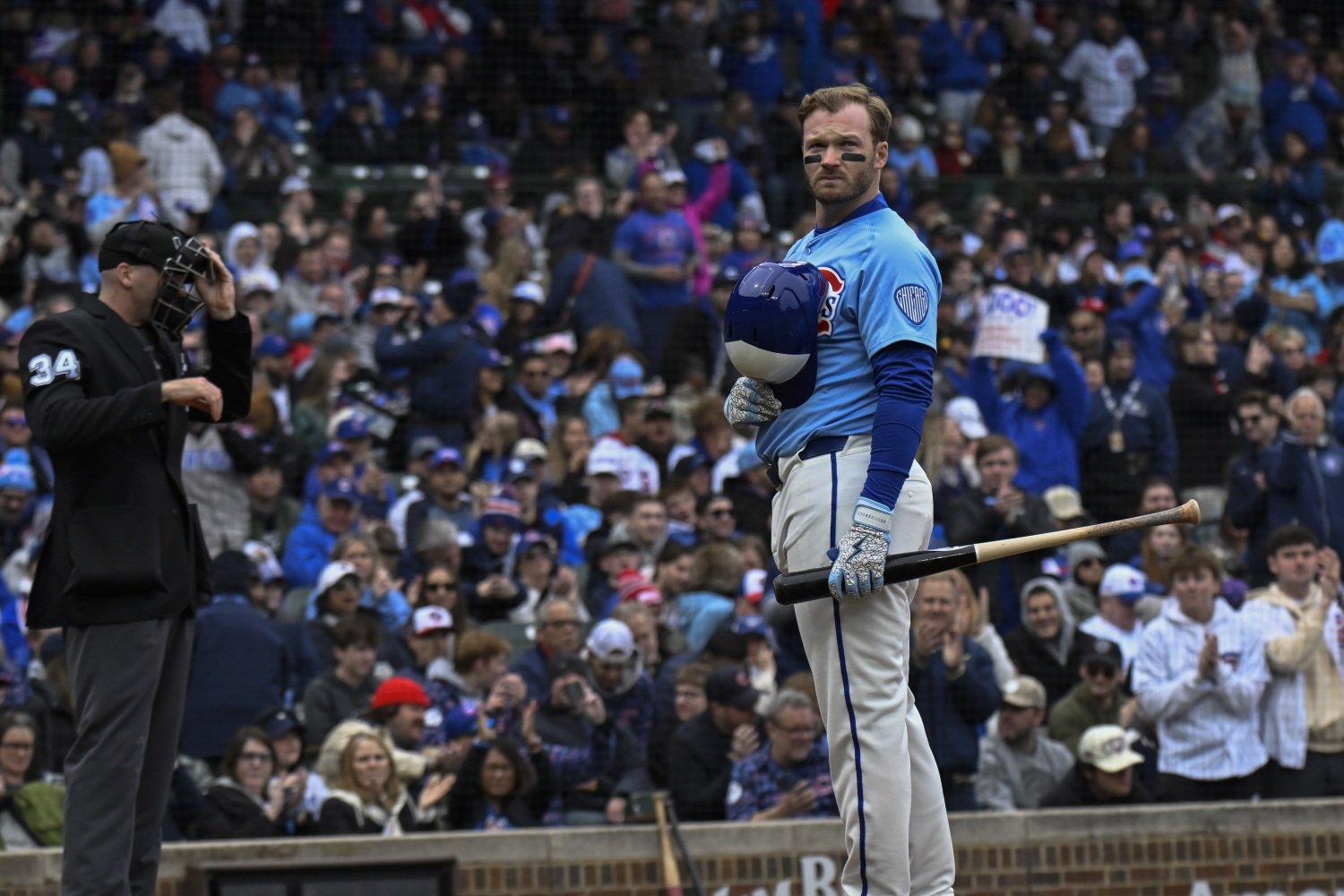 I understand that, for some, this will be anathema. Many Cubs fans regard the white, pinstriped home uniforms as essential pieces of the team's identity, and a tradition as deep (or at least as important) as the iconic uniforms worn by the Yankees, the Cardinals, the Dodgers and the Giants. In truth, though, that's never been the case. While the Cardinals' birds on the bat; the Dodgers' trademark script and red numbers; and the Yankees' minimalist, professional look have all undergone very few changes in the last century, the Cubs only started consistently using pinstripes in the late 1950s. Even then, there were many, many changes between now and then—flirtations with piping on the sleeves and collar; a switch to pullovers, and back; and tweaks to the specifics of the logo over the left breast, among other things. The idea that the Cubs have a brand identity as strong as the other flagship franchises of the league has always been a minor delusion. That said, again, I understand the value of tradition and a certain wariness about big changes, for a team so dedicated to its own history. The Cubs are 150 years old (technically), and Wrigley Field (or parts thereof) is 111 years old. Those years matter; they are a part of what makes the Cubs the Cubs. In their new Blues Alternates, though, the team has stumbled upon a design that honors that very tradition, without being slave to it. The baby blue color is a callback to the road uniforms of the 1970s, but the pants are a clean white, with a dark stripe—rather than giving in to the pajama-inspired tendency to match colors with the tops, as so many City Connect uniforms do, and as those long-ago road outfits did. The logo on the breast is a stylized reimagining of logos the team used in the 1920s and 1930s, but again, it's not just a reproduction thereof. It looks good to a 21st-century eye, too. The numbers being in red is a welcome, superior use of their secondary color, compared to decades of Cubs uniforms that were really just blue and either white or gray. The standard, Cubbie bear blue alternates in use for most of the last quarter-century do use red numbers, of course, but that look is clearly and unavoidably an alternate. Its use of the deep Cubbie blue makes it suitable for home or road, but not as a primary home kit. The only other notable use of red in the last 30 years was the red bill the team's caps used to feature for road games, and even that is gone. The Blues jerseys welcome red back into the palette, with pleasing results. Both the numbers and the lettering of the names are in a font that comes closest to making the whole look feel too retro—but it's graceful, instead. It pays homage to the halcyon days the city enjoyed in the Jazz Age and afterward, with an Art Deco aesthetic that the Wrigleyville City Connects attempted but failed to meaningfully capture. The hats are a much-needed invigorating stroke, for a team whose sans-serif 'C' caps have looked more bland and blasé than truly classic for the last 25 years. The guitar-pick patch on the sleeve is a fun risk that ties the whole thing closely to something specific, but isn't distracting. The whole visage is just gorgeous. Admittedly, I didn't even expect to like it as much as I do. It seemed a nice change of pace from the City Connects, but little more. Instead, I'm seriously calling for this: the Cubs should bid adieu to the pinstripes, for good. This should be their home uniform, with the darker blues as available but sparingly-used alternates. Maybe the pinstripes could come out on occasional Sundays, or something, but I;m in favor of leaving the whole look in the past and turning toward a future that still has close ties to that past. The Blues should become the Cubs' new primary identity.
 -
Casting aside a City Connect look that always felt too safe and too faddish, the Cubs almost seemed to be embracing a gimmick when they unveiled new alternate uniforms this winter. Instead, they've found the look they didn't even know they were looking for. Image courtesy of © Matt Marton-Imagn Images I understand that, for some, this will be anathema. Many Cubs fans regard the white, pinstriped home uniforms as essential pieces of the team's identity, and a tradition as deep (or at least as important) as the iconic uniforms worn by the Yankees, the Cardinals, the Dodgers and the Giants. In truth, though, that's never been the case. While the Cardinals' birds on the bat; the Dodgers' trademark script and red numbers; and the Yankees' minimalist, professional look have all undergone very few changes in the last century, the Cubs only started consistently using pinstripes in the late 1950s. Even then, there were many, many changes between now and then—flirtations with piping on the sleeves and collar; a switch to pullovers, and back; and tweaks to the specifics of the logo over the left breast, among other things. The idea that the Cubs have a brand identity as strong as the other flagship franchises of the league has always been a minor delusion. That said, again, I understand the value of tradition and a certain wariness about big changes, for a team so dedicated to its own history. The Cubs are 150 years old (technically), and Wrigley Field (or parts thereof) is 111 years old. Those years matter; they are a part of what makes the Cubs the Cubs. In their new Blues Alternates, though, the team has stumbled upon a design that honors that very tradition, without being slave to it. The baby blue color is a callback to the road uniforms of the 1970s, but the pants are a clean white, with a dark stripe—rather than giving in to the pajama-inspired tendency to match colors with the tops, as so many City Connect uniforms do, and as those long-ago road outfits did. The logo on the breast is a stylized reimagining of logos the team used in the 1920s and 1930s, but again, it's not just a reproduction thereof. It looks good to a 21st-century eye, too. The numbers being in red is a welcome, superior use of their secondary color, compared to decades of Cubs uniforms that were really just blue and either white or gray. The standard, Cubbie bear blue alternates in use for most of the last quarter-century do use red numbers, of course, but that look is clearly and unavoidably an alternate. Its use of the deep Cubbie blue makes it suitable for home or road, but not as a primary home kit. The only other notable use of red in the last 30 years was the red bill the team's caps used to feature for road games, and even that is gone. The Blues jerseys welcome red back into the palette, with pleasing results. Both the numbers and the lettering of the names are in a font that comes closest to making the whole look feel too retro—but it's graceful, instead. It pays homage to the halcyon days the city enjoyed in the Jazz Age and afterward, with an Art Deco aesthetic that the Wrigleyville City Connects attempted but failed to meaningfully capture. The hats are a much-needed invigorating stroke, for a team whose sans-serif 'C' caps have looked more bland and blasé than truly classic for the last 25 years. The guitar-pick patch on the sleeve is a fun risk that ties the whole thing closely to something specific, but isn't distracting. The whole visage is just gorgeous. Admittedly, I didn't even expect to like it as much as I do. It seemed a nice change of pace from the City Connects, but little more. Instead, I'm seriously calling for this: the Cubs should bid adieu to the pinstripes, for good. This should be their home uniform, with the darker blues as available but sparingly-used alternates. Maybe the pinstripes could come out on occasional Sundays, or something, but I;m in favor of leaving the whole look in the past and turning toward a future that still has close ties to that past. The Blues should become the Cubs' new primary identity. View full article
-
Chicago Cubs righthander Jameson Taillon pitched seven strong innings against the Philadelphia Phillies Sunday night. Since a clunker in Arizona to open his season, Taillon has a 2.76 ERA. What's behind his excellent five-start surge? Image courtesy of © Kamil Krzaczynski-Imagn Images He's neither missing bats at a high level nor keeping the ball on the ground, but Jameson Taillon is finding ways to thrive. He gave up two home runs, worked only 4 1/3 frames and had a lone strikeout on March 28th against the Diamondbacks, but since then, he's made five more starts, and posted a Game Score between 55 and 65 in all five. He's averaging almost six innings per start in April, despite not having thrown 100 pitches in any outing this year. With Justin Steele sidelined, Taillon is the de facto No. 2 starter for the Cubs. They need him to hold up all year, delivering not only solid work and chances to win every sixth day, but durability. He's on the right track in that regard, with plenty of innings already under his belt and so few pitches on the odometer. One reason for the efficiency he's managed is that Taillon is leaning much more on his fastball this year than he has in almost any other year of his career—and certainly since he joined the Cubs. The pitch losing its place in his arsenal as he ramps up the four-seam usage is his cutter, which is welcome news. Though it's played a role as the pitch to induce weak contact and set up other things, the cutter is Taillon's worst pitch. Here's a breakdown of his arsenal this season, with the movement of his pitches charted on the right and the StuffPro distribution on the left. StuffPro, from Baseball Prospectus, rates each pitch a hurler throws based on its expected impact on run production. Zero is average, and a negative number is better, as it indicates that the pitch was less likely to result in runs. It's a pitch-modeling metric based not on results, but on the characteristics of the pitch: release point, arm angle, velocity, movement, and spin. Taillon's reduction in cutter usage at the expense of the fastball has been a good thing, but a year ago, it wouldn't have been possible. Taillon's four-seamer wasn't good enough to bear the extra usage. This season, he's materially improved the utility of that four-seamer. Here are his StuffPro and PitchPro numbers (PItchPro is related to StuffPro, but also bakes in location) on the four-seamer for each year of his Cubs tenure, thus far. 2023: StuffPro: 0.3; PitchPro: 0.1 2024: StuffPro: 1.1; PitchPro: 0.5 2025: StuffPro: 0.5; PitchPro: -0.4 Again, the lower a number is, the better, so the best number here (by a fair margin) is the last one. On average, when Taillon throws 100 four-seamers this year, opponents are likely to score 0.4 fewer runs than against an average pitcher. A year ago, for every 100 he threw, expected offense went up by 0.5 runs. But why has Taillon's fastball been so much better? As you can see, the answer has to do with both raw stuff and location. His heater is a half-tick faster than it was last year, and his extension on it is slightly better, but that's not the primary reason for the improvement. Rather, it's coming from changes to how the pitch is moving. He's getting more carry on the pitch—more induced vertical break—and more arnside run, at the same time. Here's the thing: I'm not sure how that's happening, except because he seems to be altering his targets. If his mechanics are different, overall, it's only very, very slightly. He hasn't made a change in his arm angle, or his spin rate, or the direction of that spin. He hasn't moved on the rubber. Normally, when we see a significant change in fastball shape, it comes with a noticeable change in mechanics, spin axis, or release angles. Instead, Taillon is throwing his heater in the lower half of the zone more often than he has in any season since the pandemic—and when he does so, there's a lot more run on his offerings. Season Hi/Lo Velocity Spin Rate Extension Ind. Vert. Brk. Horz. Brk. Arm Angle 2021 High 93.9 2418 6.69 17.9 3.2 43.9 2022 High 94.1 2370 6.62 17.8 5.6 42.5 2023 High 93.7 2329 6.73 16.9 7.6 42.9 2024 High 92.2 2280 6.68 16.2 6.7 44.1 2025 High 92.7 2313 6.77 18.2 7.8 44.1 2021 Low 93.9 2420 6.75 17.9 4 43.4 2022 Low 94.1 2373 6.65 17.7 6.1 42 2023 Low 93.6 2332 6.75 16.7 8 42.2 2024 Low 92.3 2288 6.73 16 7.1 43.6 2025 Low 92.5 2304 6.81 18.2 9 43.7 More low heaters will tend to mean fewer whiffs, and in the modern game, it can also make a pitcher vulnerable to power. With the extra horizontal movement, though, Taillon is fooling hitters enough to induce weak contact. They're still lifting the ball, but without the authority to make it hurt, most of the time. Meanwhile, throwing the fastball so much is giving him the ability to get in and out of counts quickly, working ahead and filling up the strike zone. This is a slightly unsatisfying explanation. I would love to have a clearer sense of why Taillon's fastball is moving differently this year, and of why he gets so much more horizontal run when he works down in the zone. In the meantime, though, we can at least say that the root of his success at being both efficient and sturdy lies in eschewing the cutter and leaning on the heat. With better locations on a primary pitch he throws more often, Taillon is avoiding trouble and giving the Cubs what they so badly need from their veteran workhorse. View full article
-
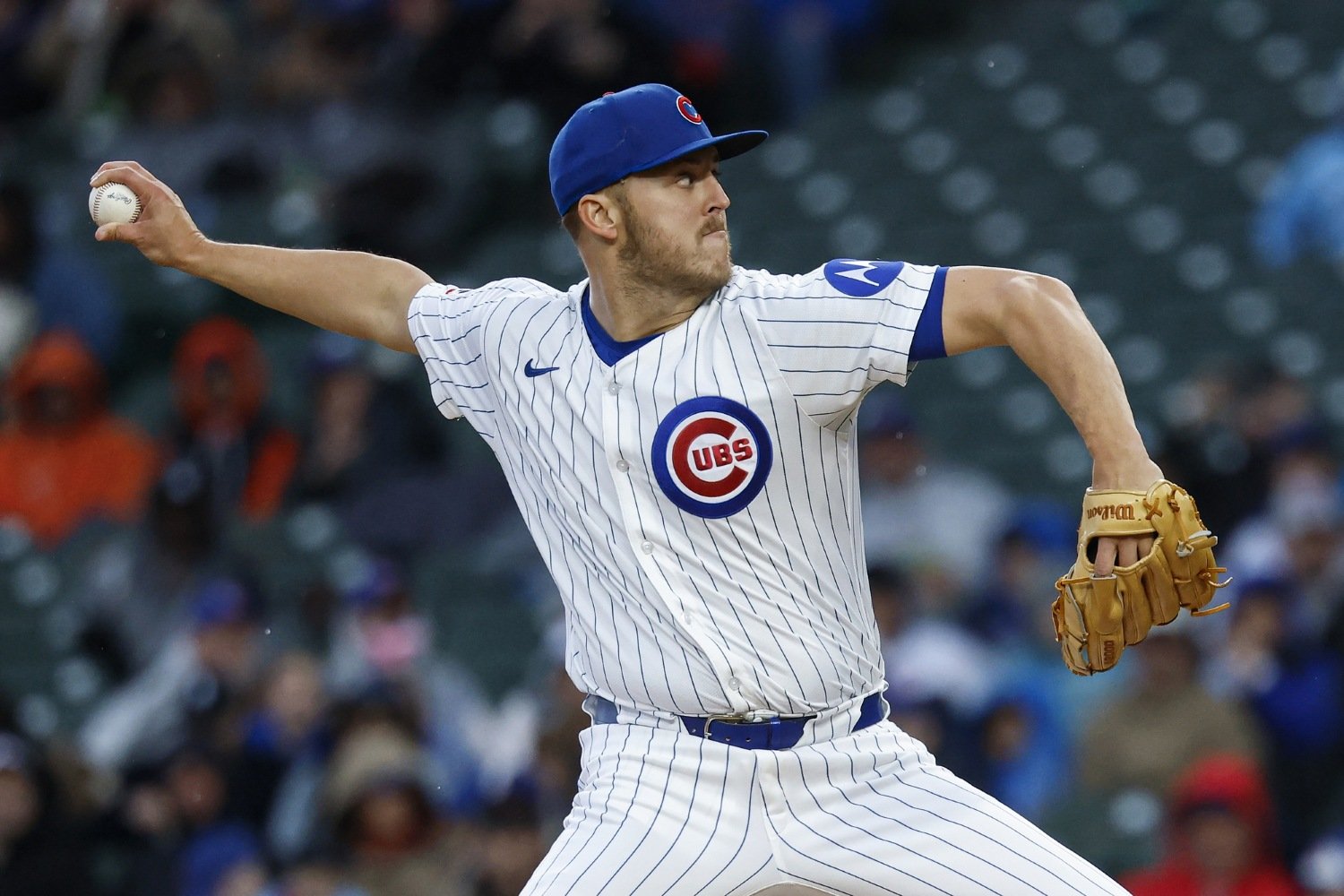 He's neither missing bats at a high level nor keeping the ball on the ground, but Jameson Taillon is finding ways to thrive. He gave up two home runs, worked only 4 1/3 frames and had a lone strikeout on March 28th against the Diamondbacks, but since then, he's made five more starts, and posted a Game Score between 55 and 65 in all five. He's averaging almost six innings per start in April, despite not having thrown 100 pitches in any outing this year. With Justin Steele sidelined, Taillon is the de facto No. 2 starter for the Cubs. They need him to hold up all year, delivering not only solid work and chances to win every sixth day, but durability. He's on the right track in that regard, with plenty of innings already under his belt and so few pitches on the odometer. One reason for the efficiency he's managed is that Taillon is leaning much more on his fastball this year than he has in almost any other year of his career—and certainly since he joined the Cubs. The pitch losing its place in his arsenal as he ramps up the four-seam usage is his cutter, which is welcome news. Though it's played a role as the pitch to induce weak contact and set up other things, the cutter is Taillon's worst pitch. Here's a breakdown of his arsenal this season, with the movement of his pitches charted on the right and the StuffPro distribution on the left. StuffPro, from Baseball Prospectus, rates each pitch a hurler throws based on its expected impact on run production. Zero is average, and a negative number is better, as it indicates that the pitch was less likely to result in runs. It's a pitch-modeling metric based not on results, but on the characteristics of the pitch: release point, arm angle, velocity, movement, and spin. Taillon's reduction in cutter usage at the expense of the fastball has been a good thing, but a year ago, it wouldn't have been possible. Taillon's four-seamer wasn't good enough to bear the extra usage. This season, he's materially improved the utility of that four-seamer. Here are his StuffPro and PitchPro numbers (PItchPro is related to StuffPro, but also bakes in location) on the four-seamer for each year of his Cubs tenure, thus far. 2023: StuffPro: 0.3; PitchPro: 0.1 2024: StuffPro: 1.1; PitchPro: 0.5 2025: StuffPro: 0.5; PitchPro: -0.4 Again, the lower a number is, the better, so the best number here (by a fair margin) is the last one. On average, when Taillon throws 100 four-seamers this year, opponents are likely to score 0.4 fewer runs than against an average pitcher. A year ago, for every 100 he threw, expected offense went up by 0.5 runs. But why has Taillon's fastball been so much better? As you can see, the answer has to do with both raw stuff and location. His heater is a half-tick faster than it was last year, and his extension on it is slightly better, but that's not the primary reason for the improvement. Rather, it's coming from changes to how the pitch is moving. He's getting more carry on the pitch—more induced vertical break—and more arnside run, at the same time. Here's the thing: I'm not sure how that's happening, except because he seems to be altering his targets. If his mechanics are different, overall, it's only very, very slightly. He hasn't made a change in his arm angle, or his spin rate, or the direction of that spin. He hasn't moved on the rubber. Normally, when we see a significant change in fastball shape, it comes with a noticeable change in mechanics, spin axis, or release angles. Instead, Taillon is throwing his heater in the lower half of the zone more often than he has in any season since the pandemic—and when he does so, there's a lot more run on his offerings. Season Hi/Lo Velocity Spin Rate Extension Ind. Vert. Brk. Horz. Brk. Arm Angle 2021 High 93.9 2418 6.69 17.9 3.2 43.9 2022 High 94.1 2370 6.62 17.8 5.6 42.5 2023 High 93.7 2329 6.73 16.9 7.6 42.9 2024 High 92.2 2280 6.68 16.2 6.7 44.1 2025 High 92.7 2313 6.77 18.2 7.8 44.1 2021 Low 93.9 2420 6.75 17.9 4 43.4 2022 Low 94.1 2373 6.65 17.7 6.1 42 2023 Low 93.6 2332 6.75 16.7 8 42.2 2024 Low 92.3 2288 6.73 16 7.1 43.6 2025 Low 92.5 2304 6.81 18.2 9 43.7 More low heaters will tend to mean fewer whiffs, and in the modern game, it can also make a pitcher vulnerable to power. With the extra horizontal movement, though, Taillon is fooling hitters enough to induce weak contact. They're still lifting the ball, but without the authority to make it hurt, most of the time. Meanwhile, throwing the fastball so much is giving him the ability to get in and out of counts quickly, working ahead and filling up the strike zone. This is a slightly unsatisfying explanation. I would love to have a clearer sense of why Taillon's fastball is moving differently this year, and of why he gets so much more horizontal run when he works down in the zone. In the meantime, though, we can at least say that the root of his success at being both efficient and sturdy lies in eschewing the cutter and leaning on the heat. With better locations on a primary pitch he throws more often, Taillon is avoiding trouble and giving the Cubs what they so badly need from their veteran workhorse.
 -
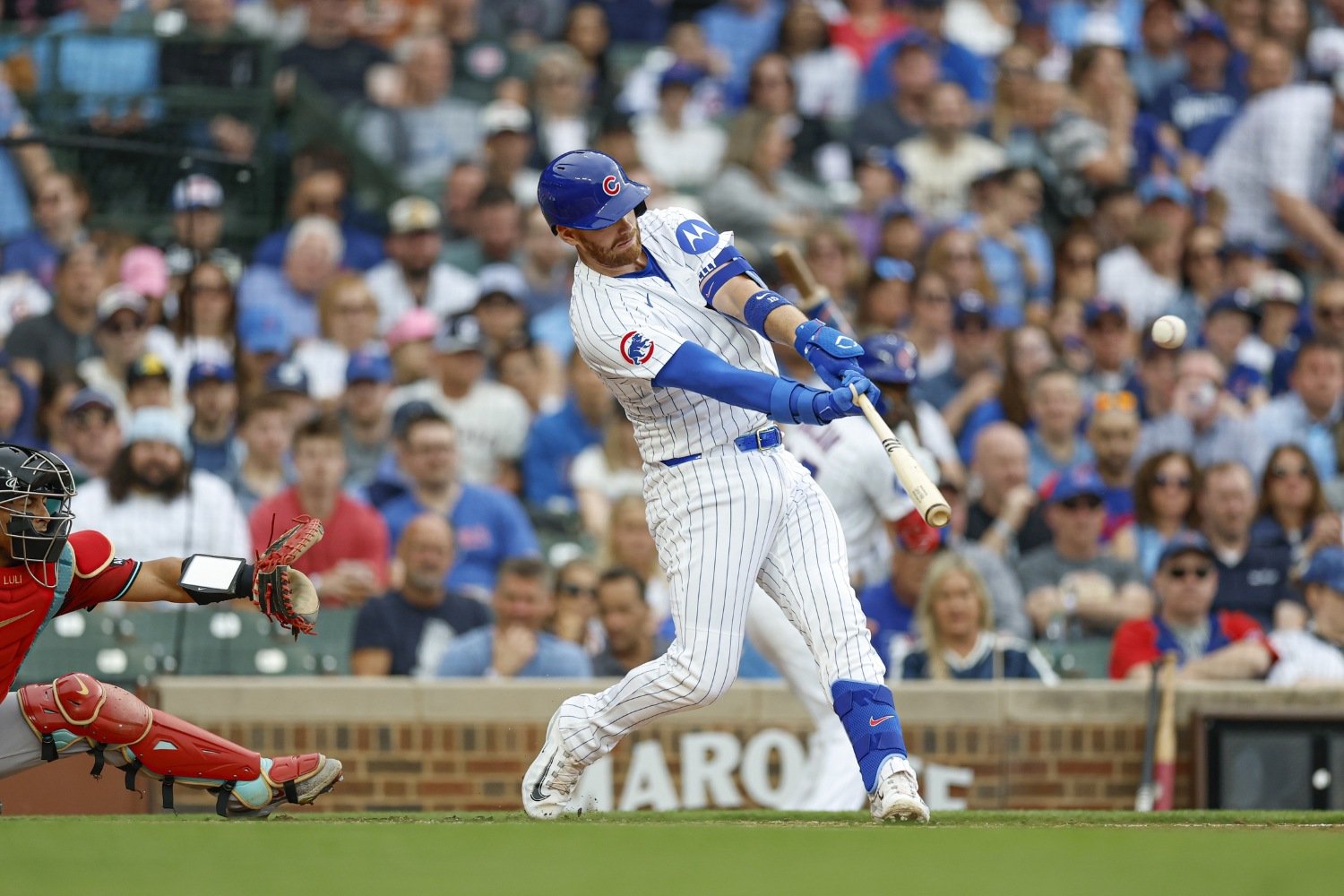 Somehow, if the season ended right now, Carson Kelly would be the best hitter in baseball for the year 2025. Somehow, as a catcher hitting the age when most catchers decline steeply in all facets, Kelly is swinging the bat 1.3 miles per hour faster than he did last year; his walk rate is roughly triple his strikeout rate; and he's tapping into power he's never achieved in the majors before. Call it a homecoming, since he's from Chicago. Call it a fluke, because it sure seems likely to be subject to regression, just like any sample this impressive. Just know that a little bit of it is good, old-fashioned mechanical cleanup. As you know by now, Baseball Savant has begun publishing data on where batters set up in the box and where their swings would intercept the pitched ball, in addition to things like bat speed, exit velocity and launch angle, They haven't yet included stride length as a datum in that set, but they do offer visual representations of batters' stride, using three moments of reporting: Pre-pitch, when the batter takes his stance; The moment when the pitcher releases the ball; and The moment when the bat meets (or would meet, in the case of a whiff) the ball An animated graphic will show you, for instance, how dramatic Matt Shaw's leg kick was, and how far he ended up striding after that initial movement. The batter's boxes in the visualizations are plotted out into six-inch squares, so although the site doesn't report an easy number, an educated and careful observer can easily rough out a hitter's stride length. It's just Applied Pythagorean Theorem, along with a little judgment about what part of the foot to measure from and to. So, I examined Kelly's swing data (including stance and contact point data) for the second half of 2023, all of 2024, and the first handful of weeks of 2025. Here's what that stride looked like in 2023: Kelly's going right at the baseball, doing things this way, but some of the energy his swing is creating is likely to be wasted. That's because his stride is a little longer than his swing requires. Kelly is not a highly athletic hitter, reliant on getting into his legs and being able to adapt and attack in fractions of a second. He doesn't need this much movement to create torque. He's just reaching. Here's the same visualization, but with 2024 highlighted: Uh-oh. That stride got even longer last year. He still had a solid season at the plate, but there was certainly still some wasted movement in his swing. Now, here's him so far in 2025. I used those grids to figure out approximate stride lengths for each campaign. Here's how far the center of his front heel moved from his setup to his contact point. 2023: 15.3 in. 2024: 19.2 in. 2025: 13.6 in. I think we'll eventually get an official, Savant-published version of this stat, and maybe we'll all learn something about my skills in this strange measurement discipline. For now, though, the estimates will do. As you can see, Kelly's shortened that stride. He's starting from a strong, balanced position, and he's staying in it, because he's remaining more upright and focusing more on generating the torque to maximize his swing speed, rather than on moving forward to catch the ball out in front of home plate. His contact point is basically unchanged, but when his bat gets there, it's moving faster, and because he's moved his head less during his swing, he's catching the ball more flush. That's why we've seen his quality of contact spike so handsomely. If it were this easy, everyone would do it. Kelly might get back into bad habits with his stride, or the novelty of his new set of moves might wear off and he might lose the fine calibration required to make such superb contact. The league might figure him out a bit and start attacking him in a whole new way, forcing a wave of counter-adjustments that destabilizes this whole array of initial changes. For now, though, Kelly is providing more production than the Cubs could possibly have hoped for, and it's thanks to a simple principle: stay tall, don't overstride, and catch the ball squarely.
 -
The Cubs signed a complementary catcher over the offseason. So far, what they're getting is one of the best hitters in baseball, and while that won't last, it's stemming from a real change. Image courtesy of © Kamil Krzaczynski-Imagn Images Somehow, if the season ended right now, Carson Kelly would be the best hitter in baseball for the year 2025. Somehow, as a catcher hitting the age when most catchers decline steeply in all facets, Kelly is swinging the bat 1.3 miles per hour faster than he did last year; his walk rate is roughly triple his strikeout rate; and he's tapping into power he's never achieved in the majors before. Call it a homecoming, since he's from Chicago. Call it a fluke, because it sure seems likely to be subject to regression, just like any sample this impressive. Just know that a little bit of it is good, old-fashioned mechanical cleanup. As you know by now, Baseball Savant has begun publishing data on where batters set up in the box and where their swings would intercept the pitched ball, in addition to things like bat speed, exit velocity and launch angle, They haven't yet included stride length as a datum in that set, but they do offer visual representations of batters' stride, using three moments of reporting: Pre-pitch, when the batter takes his stance; The moment when the pitcher releases the ball; and The moment when the bat meets (or would meet, in the case of a whiff) the ball An animated graphic will show you, for instance, how dramatic Matt Shaw's leg kick was, and how far he ended up striding after that initial movement. The batter's boxes in the visualizations are plotted out into six-inch squares, so although the site doesn't report an easy number, an educated and careful observer can easily rough out a hitter's stride length. It's just Applied Pythagorean Theorem, along with a little judgment about what part of the foot to measure from and to. So, I examined Kelly's swing data (including stance and contact point data) for the second half of 2023, all of 2024, and the first handful of weeks of 2025. Here's what that stride looked like in 2023: Kelly's going right at the baseball, doing things this way, but some of the energy his swing is creating is likely to be wasted. That's because his stride is a little longer than his swing requires. Kelly is not a highly athletic hitter, reliant on getting into his legs and being able to adapt and attack in fractions of a second. He doesn't need this much movement to create torque. He's just reaching. Here's the same visualization, but with 2024 highlighted: Uh-oh. That stride got even longer last year. He still had a solid season at the plate, but there was certainly still some wasted movement in his swing. Now, here's him so far in 2025. I used those grids to figure out approximate stride lengths for each campaign. Here's how far the center of his front heel moved from his setup to his contact point. 2023: 15.3 in. 2024: 19.2 in. 2025: 13.6 in. I think we'll eventually get an official, Savant-published version of this stat, and maybe we'll all learn something about my skills in this strange measurement discipline. For now, though, the estimates will do. As you can see, Kelly's shortened that stride. He's starting from a strong, balanced position, and he's staying in it, because he's remaining more upright and focusing more on generating the torque to maximize his swing speed, rather than on moving forward to catch the ball out in front of home plate. His contact point is basically unchanged, but when his bat gets there, it's moving faster, and because he's moved his head less during his swing, he's catching the ball more flush. That's why we've seen his quality of contact spike so handsomely. If it were this easy, everyone would do it. Kelly might get back into bad habits with his stride, or the novelty of his new set of moves might wear off and he might lose the fine calibration required to make such superb contact. The league might figure him out a bit and start attacking him in a whole new way, forcing a wave of counter-adjustments that destabilizes this whole array of initial changes. For now, though, Kelly is providing more production than the Cubs could possibly have hoped for, and it's thanks to a simple principle: stay tall, don't overstride, and catch the ball squarely. View full article
-
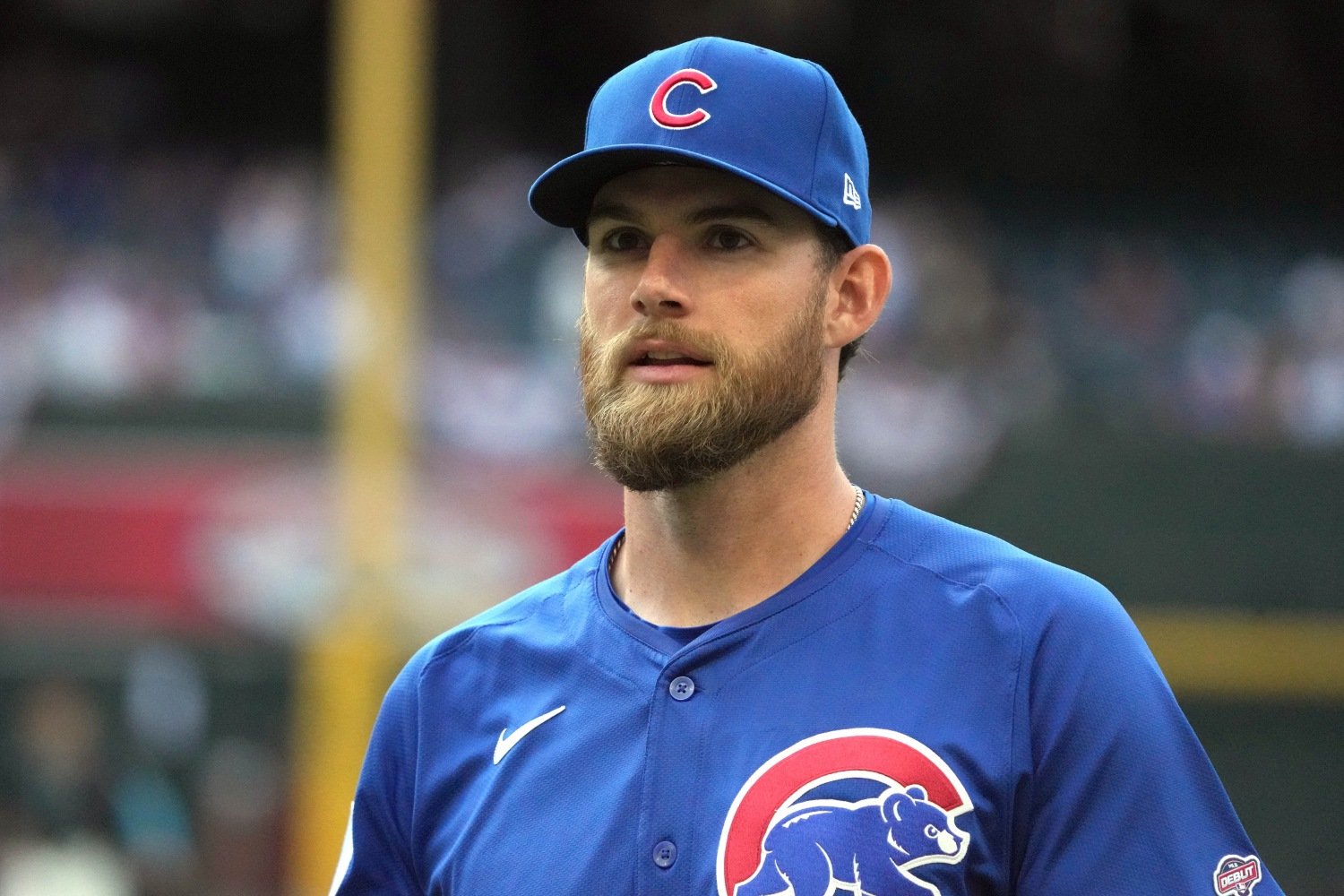 Wednesday brought a flurry of roster moves for the Cubs, as they try to survive a gauntlet of an early schedule that has seen them play teams with superb offenses, almost without a break. This time, the urgent need was to freshen the bullpen after yet another demanding, wild contest, so they recalled just-acquired lefty reliever Drew Pomeranz, whom they scooped up in a cash deal with the Mariners earlier this week. The bigger news, perhaps, was the team giving it a second go with infielder Nicky Lopez, who missed the cut for the big-league roster in spring training because of the scorching spring training showing by Rule 5 pick Gage Workman. After Workman committed two more errors at third base Tuesday night (the latest in a long string of misplays by a toolsy but unpolished defender, with no compensation coming from his overwhelmed bat), the team had little choice but to cut bait on Workman, who is likely to end up back in the custody of the Detroit Tigers. Lopez answers the otherwise sticky question of who could replace Workman on the roster, because the team has already had to demote Matt Shaw due to poor performance. It was too early to recall Shaw, and there aren't enough available at-bats to justify bringing up top prospects like James Triantos or Kevin Alcántara. Still, the bulk of the freed-up time at the hot corner figures to go not to Lopez, but to Jon Berti, who has acquitted himself nicely in his relatively limited playing time this year. The Cubs still have a bit of a looming bench problem. Berti was held back from a chance to start every day at third base, in part, because he is so valuable as a floating backup at multiple positions. Now, that job falls to the less impressive Vidal Bruján. Meanwhile, Justin Turner's swing speed is bottoming out in a way that inspires very little confidence about his ability to hit more than the odd single. Lopez makes it a trifecta of punchless infielders backing up the starting lineup. Nonetheless, the team should be ok with this configuration in the short term. Berti is good enough to bring stability to the bottom of the batting order and to third base, though that's not his best defensive position, either. In the medium term, the team's hope will be to get Shaw right and bring him back to the team, as they did with Pete Crow-Armstrong a year ago. As for Pomeranz, he gets the roster spot of the unlucky Gavin Hollowell. After giving the team two sparkling innings in what seemed like low leverage at the time, Hollowell set them up for the comeback win Tuesday night—only to be shuttled back to Iowa, because they can't afford to be down an arm for the next two days or so. If his appearance was any indication, though, he could yet play a larger role for the team as the season progresses. Pomeranz, 36, hasn't appeared in the majors since 2021, so this is quite the comeback story. He's purely a fastball-curve guy, and the fastball only sits at 92.7 mph, but it's taken on an enticing cut-ride shape that pairs well with the curve. He also throws from a very high arm slot, and the combination of his slot and his shapes gives hitters a very different look than does, say, Matthew Boyd, who starts Wednesday night for Chicago. That bullpen spot will remain a revolving door for a while, in all likelihood. Pomeranz is likely to make only a relatively brief stop with the team, unless he performs exceptionally well, is highly efficient, and can avoid being called in to soak up multiple innings amid one of the chaotic games to which this team seems uniquely prone. He's a superior second lefty to either Luke Little or Jordan Wicks, though, and since neither of them were eligible to come back to the majors absent a player being placed on the IL anyway, Pomeranz makes sense. He might be used to help neutralize the left-leaning danger cluster atop the Dodgers lineup, but if he sticks around for the weekend, he could also be of help against the likes of Bryce Harper and Kyle Schwarber when the Phillies come to Wrigley Field starting Friday.
 -
After the latest in a series of bad games for the athletic but ultimately overmatched infield prospect, the Cubs cut bait Wednesday. They'll stop the gap with a more experienced, competent defender—but are more reliant on their starters for offense with each such move. Image courtesy of © Rick Scuteri-Imagn Images Wednesday brought a flurry of roster moves for the Cubs, as they try to survive a gauntlet of an early schedule that has seen them play teams with superb offenses, almost without a break. This time, the urgent need was to freshen the bullpen after yet another demanding, wild contest, so they recalled just-acquired lefty reliever Drew Pomeranz, whom they scooped up in a cash deal with the Mariners earlier this week. The bigger news, perhaps, was the team giving it a second go with infielder Nicky Lopez, who missed the cut for the big-league roster in spring training because of the scorching spring training showing by Rule 5 pick Gage Workman. After Workman committed two more errors at third base Tuesday night (the latest in a long string of misplays by a toolsy but unpolished defender, with no compensation coming from his overwhelmed bat), the team had little choice but to cut bait on Workman, who is likely to end up back in the custody of the Detroit Tigers. Lopez answers the otherwise sticky question of who could replace Workman on the roster, because the team has already had to demote Matt Shaw due to poor performance. It was too early to recall Shaw, and there aren't enough available at-bats to justify bringing up top prospects like James Triantos or Kevin Alcántara. Still, the bulk of the freed-up time at the hot corner figures to go not to Lopez, but to Jon Berti, who has acquitted himself nicely in his relatively limited playing time this year. The Cubs still have a bit of a looming bench problem. Berti was held back from a chance to start every day at third base, in part, because he is so valuable as a floating backup at multiple positions. Now, that job falls to the less impressive Vidal Bruján. Meanwhile, Justin Turner's swing speed is bottoming out in a way that inspires very little confidence about his ability to hit more than the odd single. Lopez makes it a trifecta of punchless infielders backing up the starting lineup. Nonetheless, the team should be ok with this configuration in the short term. Berti is good enough to bring stability to the bottom of the batting order and to third base, though that's not his best defensive position, either. In the medium term, the team's hope will be to get Shaw right and bring him back to the team, as they did with Pete Crow-Armstrong a year ago. As for Pomeranz, he gets the roster spot of the unlucky Gavin Hollowell. After giving the team two sparkling innings in what seemed like low leverage at the time, Hollowell set them up for the comeback win Tuesday night—only to be shuttled back to Iowa, because they can't afford to be down an arm for the next two days or so. If his appearance was any indication, though, he could yet play a larger role for the team as the season progresses. Pomeranz, 36, hasn't appeared in the majors since 2021, so this is quite the comeback story. He's purely a fastball-curve guy, and the fastball only sits at 92.7 mph, but it's taken on an enticing cut-ride shape that pairs well with the curve. He also throws from a very high arm slot, and the combination of his slot and his shapes gives hitters a very different look than does, say, Matthew Boyd, who starts Wednesday night for Chicago. That bullpen spot will remain a revolving door for a while, in all likelihood. Pomeranz is likely to make only a relatively brief stop with the team, unless he performs exceptionally well, is highly efficient, and can avoid being called in to soak up multiple innings amid one of the chaotic games to which this team seems uniquely prone. He's a superior second lefty to either Luke Little or Jordan Wicks, though, and since neither of them were eligible to come back to the majors absent a player being placed on the IL anyway, Pomeranz makes sense. He might be used to help neutralize the left-leaning danger cluster atop the Dodgers lineup, but if he sticks around for the weekend, he could also be of help against the likes of Bryce Harper and Kyle Schwarber when the Phillies come to Wrigley Field starting Friday. View full article
-
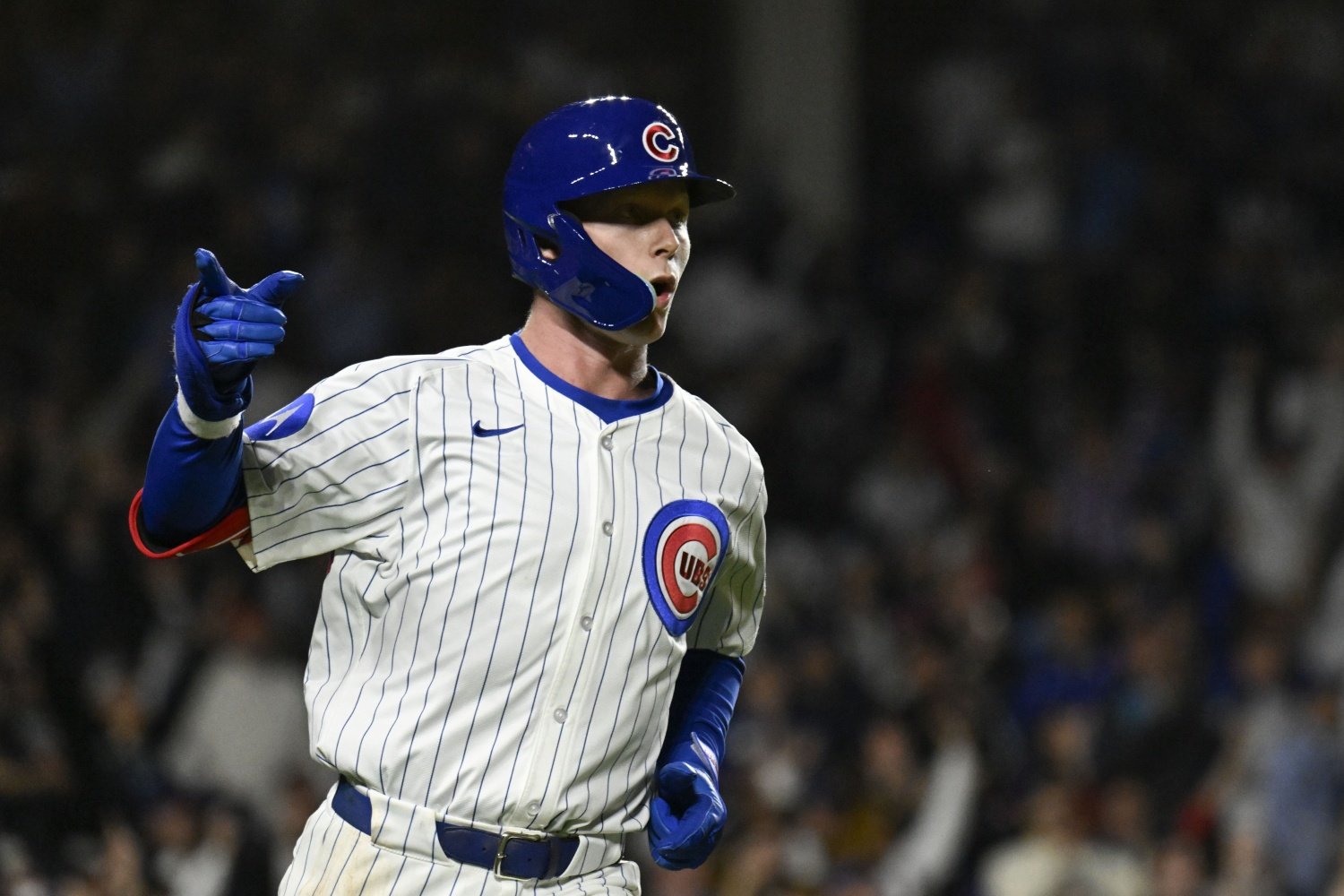 Twelve days ago, Pete Crow-Armstrong was batting .211/.286/.263, and had yet to hit a home run on the young season. He was an absolute mess at the plate, but even then, you could hear the gathering thunder in his bat. He was swinging fast and generating some intriguing contact. He just needed to swing less often. We talked, then, about the fact that (unlike most hitters in such dire straits, statistically) Crow-Armstrong had a relatively simple path to being not only productive, but stellar: swing a bit less often. The goal, there, is not even to walk more. Crow-Armstrong has actually walked plenty, throughout this season, and some of them were "bad walks"—the kind that happened only because when he got his pitch, he whiffed on it or fouled it off, and the opponent worked around him otherwise. Instead, the goal is for Crow-Armstrong to get into counts where he can sit on a particular pitch, and not worry about fighting the ball off or flipping it out into the field somewhere. As valuable as his speed is, it can't turn routine ground balls into hits, and he was making too much low-quality contact early this year. Since that date, Crow-Armstrong has modulated his approach. Guess what happened when he did so. Since April 11, he's batting .366/.381/.654, with four home runs. He's still been very aggressive, especially within the strike zone. However, he's reduced his swing rate enough to force pitchers to approach him a bit differently, and to give himself a chance to hit a pitch of his own choosing, rather than one hand-crafted for him by an opponent. It's worked, obviously. More to the point, for his entire young career, it's worked. When he swings less often—not less often than other people, even; just less often than he tends to the majority of the time—Crow-Armstrong finds success. He gets himself into trouble mostly when he gets too much into swing mode. You won't find many hitters for whom overall production and swing rate move against one another this way. However, one reason why this chart looks the way it does is relatively universal: the hot hand effect. When a shooter in a basketball game or a hitter on the diamond starts to feel themselves, they get more eager to pull the trigger. That allows for the scorching stretches we sometimes see from great players—you can't score if you don't shoot, or hit the ball if you don't swing, and guys who are genuinely going well should be ready to do those things so as to take full advantage of their momentum—but it's also nature's cooling system. Eventually, you'll swing too much or shoot from too outlandish a place a few times, and the feedback will be negative. Thence another cycle of getting hot by being smart, only to get stupid as one tries to stay hot. Because Crow-Armstrong's baseline swing rate is so high, he's vulnerable to a more extreme version of this cycle, so he'll have to learn to manage it. As you can see, his swing rate has already crept back up over the last few games. Still, he's working some deeper counts, yet. It was a 2-2 pitch Tuesday night on which he hit a key home run in the Cubs' eventful win. That dinger bought the Cubs two extra outs of Shota Imanaga, because there was no way Craig Counsell could have asked his ace to go back out for the sixth (on a night when he was grinding and working hard against baseball's most dangerous lineup) if the lead were only one run. Because it was three, Counsell was able to get two more outs from Imanaga (albeit at the cost of another run), and you can make a case that the Cubs don't outlast the Dodgers to win that game but for the little bit of length Imanaga gave them there. It was facilitated by Crow-Armstrong, who (of course) also produced two runs on this swing, alone. I'm not yet ready to say he's turned a corner. Indeed, he looks poised to cool off again, because he's creeping back toward swinging too much. As he demonstrates his adaptability, though, his tools shine through more clearly than ever. If this trend continues, and particularly if he can mature into a hitter who doesn't get swing-happy as soon as he starts to warm up, the data tells us that he can be a formidable force in the lower half of the Cubs lineup.
 -
It's all about staying hot, now—by not letting the fact that you're hot get into your own head. Image courtesy of © Matt Marton-Imagn Images Twelve days ago, Pete Crow-Armstrong was batting .211/.286/.263, and had yet to hit a home run on the young season. He was an absolute mess at the plate, but even then, you could hear the gathering thunder in his bat. He was swinging fast and generating some intriguing contact. He just needed to swing less often. We talked, then, about the fact that (unlike most hitters in such dire straits, statistically) Crow-Armstrong had a relatively simple path to being not only productive, but stellar: swing a bit less often. The goal, there, is not even to walk more. Crow-Armstrong has actually walked plenty, throughout this season, and some of them were "bad walks"—the kind that happened only because when he got his pitch, he whiffed on it or fouled it off, and the opponent worked around him otherwise. Instead, the goal is for Crow-Armstrong to get into counts where he can sit on a particular pitch, and not worry about fighting the ball off or flipping it out into the field somewhere. As valuable as his speed is, it can't turn routine ground balls into hits, and he was making too much low-quality contact early this year. Since that date, Crow-Armstrong has modulated his approach. Guess what happened when he did so. Since April 11, he's batting .366/.381/.654, with four home runs. He's still been very aggressive, especially within the strike zone. However, he's reduced his swing rate enough to force pitchers to approach him a bit differently, and to give himself a chance to hit a pitch of his own choosing, rather than one hand-crafted for him by an opponent. It's worked, obviously. More to the point, for his entire young career, it's worked. When he swings less often—not less often than other people, even; just less often than he tends to the majority of the time—Crow-Armstrong finds success. He gets himself into trouble mostly when he gets too much into swing mode. You won't find many hitters for whom overall production and swing rate move against one another this way. However, one reason why this chart looks the way it does is relatively universal: the hot hand effect. When a shooter in a basketball game or a hitter on the diamond starts to feel themselves, they get more eager to pull the trigger. That allows for the scorching stretches we sometimes see from great players—you can't score if you don't shoot, or hit the ball if you don't swing, and guys who are genuinely going well should be ready to do those things so as to take full advantage of their momentum—but it's also nature's cooling system. Eventually, you'll swing too much or shoot from too outlandish a place a few times, and the feedback will be negative. Thence another cycle of getting hot by being smart, only to get stupid as one tries to stay hot. Because Crow-Armstrong's baseline swing rate is so high, he's vulnerable to a more extreme version of this cycle, so he'll have to learn to manage it. As you can see, his swing rate has already crept back up over the last few games. Still, he's working some deeper counts, yet. It was a 2-2 pitch Tuesday night on which he hit a key home run in the Cubs' eventful win. That dinger bought the Cubs two extra outs of Shota Imanaga, because there was no way Craig Counsell could have asked his ace to go back out for the sixth (on a night when he was grinding and working hard against baseball's most dangerous lineup) if the lead were only one run. Because it was three, Counsell was able to get two more outs from Imanaga (albeit at the cost of another run), and you can make a case that the Cubs don't outlast the Dodgers to win that game but for the little bit of length Imanaga gave them there. It was facilitated by Crow-Armstrong, who (of course) also produced two runs on this swing, alone. I'm not yet ready to say he's turned a corner. Indeed, he looks poised to cool off again, because he's creeping back toward swinging too much. As he demonstrates his adaptability, though, his tools shine through more clearly than ever. If this trend continues, and particularly if he can mature into a hitter who doesn't get swing-happy as soon as he starts to warm up, the data tells us that he can be a formidable force in the lower half of the Cubs lineup. View full article
-
 At the tail end of last season, the Cubs claimed Gavin Hollowell on waivers and got him onto the big-league mound for a game. They liked some of what they saw from Hollowell, a 6-foot-7 righthander with an utterly vexing arm angle, if you're an opposing righty. His deception seemed to be ahead of both his command and his raw stuff, and the smart money said Hollowell would end up being peeled off the 40-man roster at some point during the winter. Improbably, though, he survived the team's considerable winter roster turnover, and once he got as far as spring training, it was relatively easy for the team to keep him. He can be optioned to the minor leagues, which is a qualification for a depth arm almost as valuable as any given pitch or characteristic, in the modern game. Tuesday, the team recalled Hollowell to the parent club. The lanky hurler did himself some favors by adding about a tick to his fastball, the four-seam flavor of which now sits at 94 miles per hour and touched 96 in his most recent outing, April 17 against the St. Paul Saints. The Cubs also had an idea, though, and the big hurler has embraced it: he's slid over to the third-base side of the rubber. From his upright sidearm slot, and with all that height, Hollowell gives opposing hitters a profoundly uncomfortable angle with which to work when he comes from that side of the rubber. He's releasing the ball about four feet wide of the center of the rubber. When hitters talk about some big, side-slinging pitchers appearing to throw the ball from somewhere behind them, Hollowell's new combination of setup and delivery is what they mean. Because of the extremity of these angles and the disparity in movement between his four-seamer, his sinker, and his sweeper, all three of those pitches fare better this spring in stuff models. The challenge is throwing strikes from such a bizarre angle; the strike zone gets smaller, because you're going at it sideways. Hollowell won't step into a high-leverage role for the team. He's more likely to be used as a bridge when a Cubs starter has a short outing, or as a sharp zig against the zag of (for instance) the high-slot, left-handed delivery of Shota Imanaga or the equally wide-sweeping but lefty look of Matthew Boyd. He's a temporary solution, at least for now, to the team's need for depth and fresh arms in the pen. That said, he's genuinely improved this season, and the new placement on the rubber gives him a new way to pose hitters difficult questions. As spare arms slotting into the underbelly of the bullpen go, Hollowell is a fairly interesting one.
 -
Chicago optioned Jordan Wicks to Triple-A Iowa after a rough weekend for the lefty long man. They'll replace him with a hard-throwing righty heavy on funk. Image courtesy of © Rick Scuteri-Imagn Images At the tail end of last season, the Cubs claimed Gavin Hollowell on waivers and got him onto the big-league mound for a game. They liked some of what they saw from Hollowell, a 6-foot-7 righthander with an utterly vexing arm angle, if you're an opposing righty. His deception seemed to be ahead of both his command and his raw stuff, and the smart money said Hollowell would end up being peeled off the 40-man roster at some point during the winter. Improbably, though, he survived the team's considerable winter roster turnover, and once he got as far as spring training, it was relatively easy for the team to keep him. He can be optioned to the minor leagues, which is a qualification for a depth arm almost as valuable as any given pitch or characteristic, in the modern game. Tuesday, the team recalled Hollowell to the parent club. The lanky hurler did himself some favors by adding about a tick to his fastball, the four-seam flavor of which now sits at 94 miles per hour and touched 96 in his most recent outing, April 17 against the St. Paul Saints. The Cubs also had an idea, though, and the big hurler has embraced it: he's slid over to the third-base side of the rubber. From his upright sidearm slot, and with all that height, Hollowell gives opposing hitters a profoundly uncomfortable angle with which to work when he comes from that side of the rubber. He's releasing the ball about four feet wide of the center of the rubber. When hitters talk about some big, side-slinging pitchers appearing to throw the ball from somewhere behind them, Hollowell's new combination of setup and delivery is what they mean. Because of the extremity of these angles and the disparity in movement between his four-seamer, his sinker, and his sweeper, all three of those pitches fare better this spring in stuff models. The challenge is throwing strikes from such a bizarre angle; the strike zone gets smaller, because you're going at it sideways. Hollowell won't step into a high-leverage role for the team. He's more likely to be used as a bridge when a Cubs starter has a short outing, or as a sharp zig against the zag of (for instance) the high-slot, left-handed delivery of Shota Imanaga or the equally wide-sweeping but lefty look of Matthew Boyd. He's a temporary solution, at least for now, to the team's need for depth and fresh arms in the pen. That said, he's genuinely improved this season, and the new placement on the rubber gives him a new way to pose hitters difficult questions. As spare arms slotting into the underbelly of the bullpen go, Hollowell is a fairly interesting one. View full article
-
Yeah, he's always, always, always been a streaks-and-slumps guy. I do think the sitting fastball and getting antsy when he sees one thing is real, but it's probably just the latest way that his broader tendency to run very hot and very cold is manifesting.
-
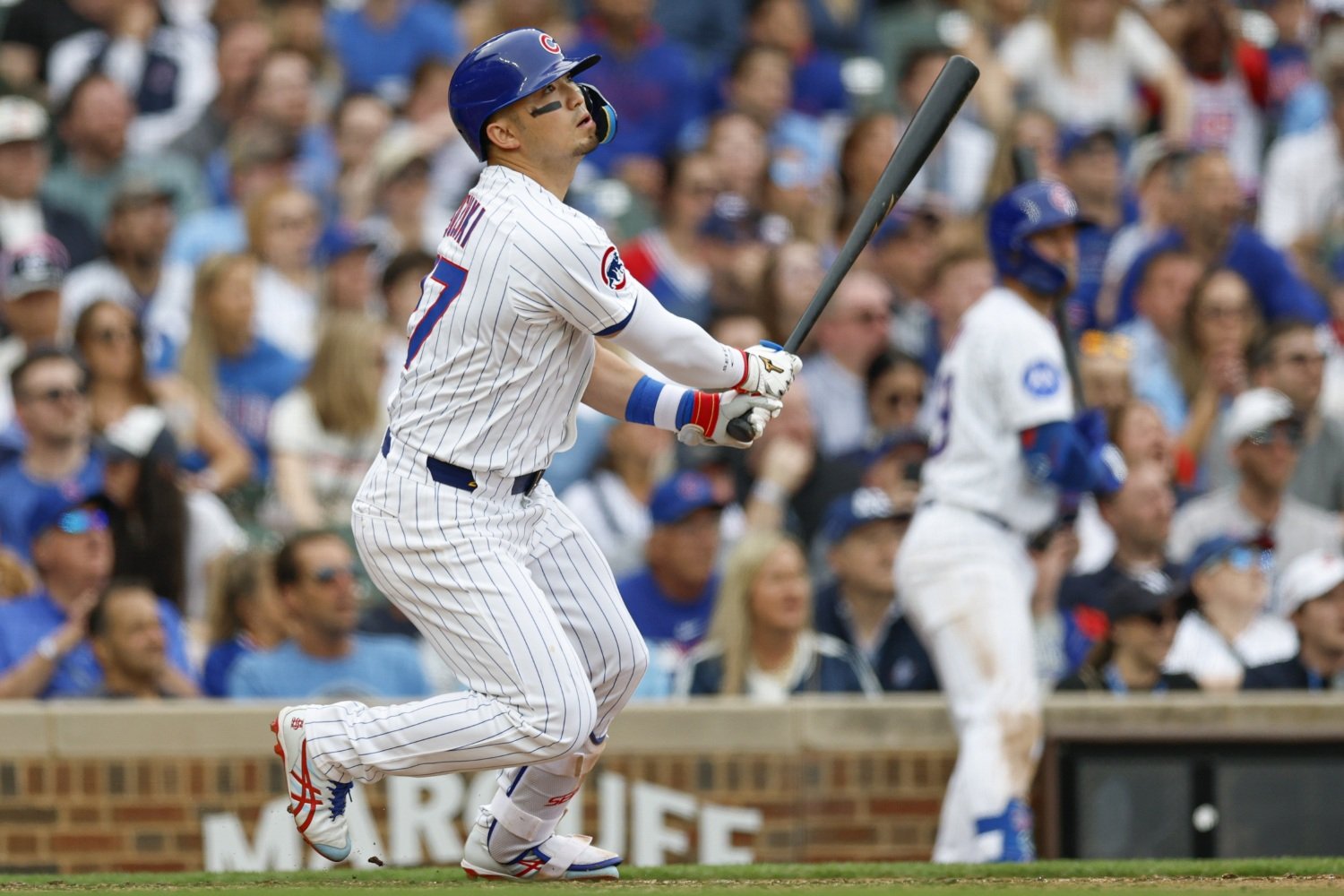 There is a sizable, well-meaning contingent of Cubdom who would have you believe that Seiya Suzuki has been secretly elite, for a while now. Some of them are in the pockets of Big Wind At Wrigley—which is to say, they (rightly) took note of the extreme quiddities of the weather patterns at the Friendly Confines last year and (less rightly) believe that that masked a breakout whereby Suzuki stepped forward and became one of the league's best hitters. Others are just devout observers of park- and league-adjusted rate stats for offense, which scored Suzuki as 21, 28, and 36 percent better than average in his first three big-league seasons, respectively. I appreciate where those folks are coming from, because amid what has been a frustrating and protracted rebuild, there's always a risk that a team's best players will take perverse, misplaced blame for the failures of their franchise. Suzuki has been, inarguably, the best Cubs hitter of the last three seasons. It's not his fault that the team failed to build a total roster within which he would have been a sufficient linchpin for the lineup, or to add players who could push him down the offensive pecking order (until this winter, of course). It would be grossly unfair for Suzuki to be treated as the problem with teams who would not even have had winning records, if not for his contributions. Pumping up his accomplishments shields us against that danger. Here's the thing, though: At a deeper level, examining all aspects of his process and then zooming out to view his topline results, Suzuki has not been the caliber of hitter his biggest boosters would have you believe him to be. Counting numbers don't always tell the truth, and they never tell the whole truth, but it's true that he only hit 21 home runs in 582 plate appearances last year, setting a new Stateside career high. Yes, Wrigley might have dampened his power slightly, but he also had some process issues to iron out. He's been very good, all along. He was not, in any season from 2022-24, good enough to be the best hitter in a championship-caliber lineup. Ironically, just as the team acquired a player who removed the pressure for him to be that kind of hitter, that's exactly what he's become in 2025. Whether Suzuki can keep this up is impossible to say, but what he's doing so far is legitimate. It's elite, in a way he'd never been before. In 2023, Robert Orr of Baseball Prospectus created a hitting metric called SEAGER. It's a backronym that pays homage to the foremost practitioner of the skills it rewards, Corey Seager. The stat itself is a compound measurement. It first maps the expected value of a swing or a take for all pitch locations, based on the outcomes hitters see when they do swing at given offerings (and, of course, on the likelihood that a given pitch would be called a strike if not swung at). Then, it evaluates each of a hitter's swing decisions. The first number it tabulates, then, is the percentage of a hitter's good swing decisions were takes on pitches on which the expected value of a swing would have been negative—versus, of course, the good decisions that stem from pouncing on hittable offerings. So, whatever the percentage of good decisions that come on takes is, SEAGER uses it as an index of selectivity at the plate. Next, the model calculates the percentage of pitches with a positive expected swing value at which a hitter didn't swing. This is labeled their "Hittable Pitch Take %". To find a player's SEAGER score, you just subtract their Hittable Pitch Take rate from their Selectivity score. A higher SEAGER score is better, then, and usually, anything over 25 puts you in elite company. Last year, Aaron Judge led the majors with a 26.5 SEAGER. Here are some key metrics for Suzuki in all four of his seasons in MLB, including one of the two major inputs for SEAGER and SEAGER itself. Season Hittable Pitch Take % Zone Contact % Contact % Over Expected SEAGER 2022 38.2 87.6 4.7 18 2023 35.4 86.1 3.9 19 2024 36.6 85.2 -5 18.7 2025 29.7 78.5 -5.3 26.8 Suzuki has always been plenty selective. What he's needed to, ever since he arrived in the league, is find a better way to cover hittable pitches—not just the strike zone, but the sections thereof where a hitter has to do damage in order to thrive in the American majors. Lo, and behold: he's done that this year. Specifically, he's gone from average or worse in terms of letting hitter-friendly pitches sail by to being in the 92nd percentile. He still knows how to tell a strike from a ball; his chase rate outside the zone is actually down this year. He's just getting a whole lot more assertive within the zone. I included the middle two columns as a way to understand how he's doing so much with so many hittable pitches this year. This early in any season, no one should trust a hitter's change in numbers if they've achieved an improvement without a sacrifice. If a guy has 100 great plate appearances in which they haven't had any negative indicators, that's not a permanent change; that's a hot streak. Suzuki, however, has traded some contact to get himself geared up and more attacking in his sweet spots. As you can see from the Contact Above Expected column (which compares a hitter's actual contact rate to what we'd expect, based on the quality of pitches they swing at), he began to make that change last year, but he wasn't really ready to accept more swing-and-miss within the strike zone. As a result, he did less damage than he might have. This year, he's showed up with some subtle adjustments in place, ready to demonstrate a different level of commitment to being an attacking, dangerous offensive player. Firstly, he's moved a bit closer to the plate. Here's what his stance, stride, and contact point looked like in the second half of 2023. He's never really been one to get cheated, when he swings, but even late in his second season in the majors, Suzuki was waiting to see the ball a fractional moment longer, which pushed his contact point deeper than might have been ideal—both relative to home plate, and relative to his own body. He was not much for going and getting the ball. Here's what Suzuki looked like at bat in 2024. In this particular way, little changed. This season, though, Suzuki has moved a bit closer to the pitcher, and a bit closer to the plate. It's not enough to even spot on TV, but in a game where a sliver of a difference in where the bat finds the ball can matter a great deal, the change is important. It's not just about where he's setting up, though. Suzuki's contact point is about 3 inches farther from his own body than it was in the past. He's getting on top of the plate more, and because he hits from a slightly more spread-out base, he's been able to get even more aggressive with his stride. He's catching the ball out where there's more power to be found. That he whiffs more in the process shouldn't surprise you; that's the nature of this tradeoff. But it's very much a worthwhile trade. That small move toward the plate has helped a great deal, because of the approach Suzuki has taken this spring. He's noticed, over the years, that pitchers felt they could bully him and set him up inside (often with sinkers down and in, which he would too often foul off, but not exclusively in that way), then go away and either freeze him or draw a flailing, reaching swing. He had a very general, middle-middle approach last year, and because opposing pitchers don't make enough mistakes to turn that into an especially fruitful approach, he created only as much power as their slips permitted. This year's Suzuki is laying off that pitch inside, for the most part. He knows where pitchers want to live against him, and he's in position—physically and mentally—to make them die there, instead. Because he's closer to that outer third, and because he's swinging more aggressively and getting the bat head out there, Suzuki's pull rate has risen sharply, even as he focuses more of his swings on the outer half. He's lifting the ball more often, because his only grounders now are the balls on which he's a hair too early, and therefore rolls over. Anything he times better is still likely to be pulled, but in the air. He's not swinging quite as fast this year, and that might remain true from now on. Set to turn 31 later this summer, his bat speed might be in for irreversible (if gentle) decline. It doesn't really matter, though. With a better-organized approach, Suzuki is making higher-value contact even amid a slight diminution in swing speed. Orr also created a statistic called Damage Rate, which gives the percentage of batted balls by a hitter that meet a slightly more rigorous standard for expected power than the one offered by (say) Baseball Savant, which uses Barrel Rate for the same purpose. Season Damage% 90th Percentile Exit Velocity Pulled Fly Ball % 2022 22.6 104.8 3.5 2023 23.2 106.3 5.9 2024 30.6 106.8 6.5 2025 33.3 108.5 8.8 Having Kyle Tucker alongside him in the lineup has certainly helped Suzuki find a few more pitches to hit. He's made significant and valuable changes independent of that, though. It's not just better weather that has allowed him to hit six home runs early this year. It's a full-scale change of approach that has taken him from good to great in several categories. He was a great hitter the last three years. Now, he's inarguably more dangerous than ever.