


Cubs Video
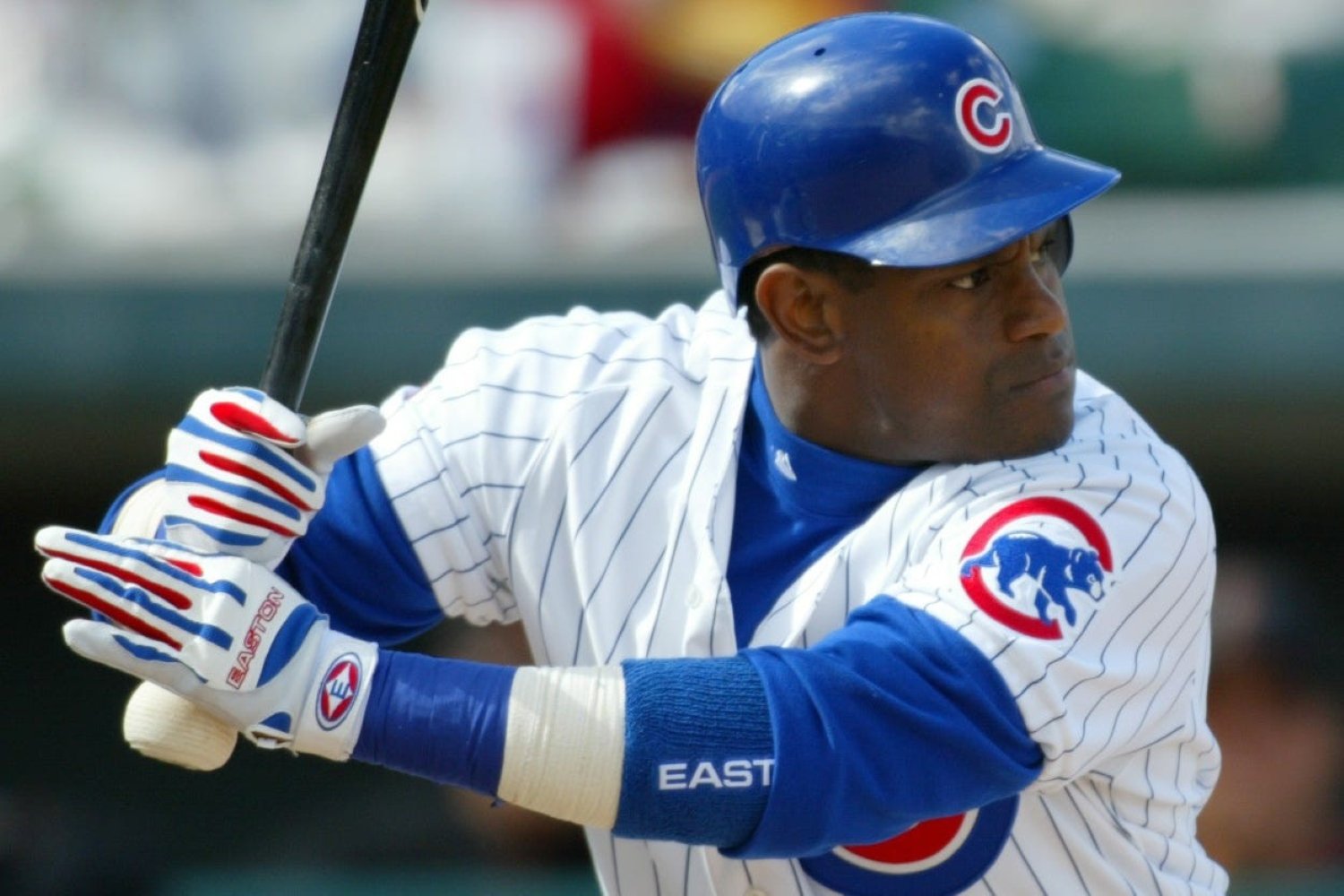
Out of the blue, on a cold Thursday afternoon in December, Sammy Sosa struck like a lightning bolt—just as he did on so many warmer, semi-soporific summer weekdays throughout the 1990s and 2000s. He issued a statement that, if Tom Ricketts can be bothered to keep his word to Cubs fans, will pave the way for his long-overdue return to a Cubs fan base that has missed his presence for the last 20 years.
Jon Heyman reports via tweet that it is, indeed, Ricketts's intention to invite Sosa back for the Cubs Convention, and presumably, there will soon be a sunny summer weekend day on which Sosa's number can be retired and raised up one of Wrigley Field's foul poles.
Look, this is a bittersweet moment. It's akin to a reunion between a parent and child who spent two decades at odds, not speaking over something that was water under the bridge all along—but which, because it so divided them, negatively affected both of them ever after. It's good to see them reconcile, but that very reconciliation also underscores the excruciating, unnecessary misery they carried for so long. Our lives are finite, precious, and plenty hard enough. To set aside long-simmering bitterness or resentment or estrangement is wonderful, but it's also an acknowledgment that a finite, precious, already-hard thing was made shorter and harder and sadder in avoidable fashion.
Sosa published a full statement, perhaps not fully satisfactory or explicit in its admissions but earnest enough. It is, down to the last word, Sammy, who was always well-meaning but a bit self-shielding and self-aggrandizing. It focuses mostly on how badly he wanted to excel and the relationship he felt with fans, and that part rings true. For far, far too long, Sosa's career has been disrespected and diminished—treated as a creation of his unadmitted steroid use, when it was nothing of the sort. Sosa was phenomenally talented and a tenacious worker, and his late-blooming step from star to superstar did owe something to chemistry, but it also owed a great deal to psychology and to plain old sweat equity.
He grinded. He broke down the approach that made him a three-time 30/30 man and did a whole set of new things, including becoming much more disciplined at the plate. He bulked up, thanks to things that were not taken purely to help him recover from injuries, and that buried the lithe and gifted defensive center fielder who slid over to right in the mid-1990s and showed off a stellar arm. In his steroid-era career phase, he was a bit one-dimensional; his speed and defense collapsed. Yet, he was a very good player before he turned that corner, and he was a truly great one—a transcendently awesome one—after he did so. Again, you're only hurting yourself if you tell yourself the lie that he achieved that greatness strictly thanks to steroids.
Was he a good teammate? The only fair answer is "sometimes". Was he a selfish person? The most honest answer is "yes". Sosa also isn't without darker stains than steroid use; he was accused of domestic violence in 1990 and it rarely comes up in discussions of his legacy. That can and should, perhaps, come to the forefront now. For most of the last two decades, though, the national baseball media has treated Sosa as a fraud and a liar, and it's had nothing to do with anything except PEDs. Some fans and (most painfully) the team to which he gave so much of himself have done the same thing. By admitting his mistakes in this area and apologizing, Sosa is trying to clear the air. He's the one crossing the divide. He's meeting everyone more than halfway.
His legacy is complicated. His dedication to the fans often felt real, but it was certainly self-serving, too. Ironically, his reunion with the team begins with them inviting him to the Convention, an event he got into the habit of skipping each year. He was beloved by fans, but he tended to love them back most when it was most valuable to him. Still, this is special. It's healing. The scars still exist, because the cuts were real and deep, but there's healing here.
I was eight years old in 1997, when I became a baseball fan in earnest. My parents got us cable for the first time, and so I was able to find the Cubs from our home in Northeast Wisconsin for the first time. It was Sosa, naturally, who seized and ensorcelled him. He was everything a kid wants a ballplayer to be: powerful, fast, hard-throwing, full of hustle; smiley, showy, bubbly. There was the sprint to right, the salutes to the bleachers, the hop on home runs, the kisses and the water poured over his head in the dugout. There was so much more to him than there was to anyone else on the field—or at least, he was less reserved and more willing to throw everything about himself out there before us, his passion and his bravado and his talent, than anyone else on the field.
For the next seven years, I was a Cubs fan, and a baseball fan, but I was also a Sammy Sosa fan. It was a separate and almost equally important thing. His charisma was as powerful as his swing. He might have put on a show, and he might have hidden away unpleasant things about himself, and he might have set Ryne Sandberg's teeth on edge, but he wasn't lying to us about loving the game fiercely. He wasn't lying about wanting to win and to succeed. That much oozed from him.
This is a happy occasion. We can share memories like these again, and savor and sit with them, and a little bit of the veil of tears separating us from them has been lifted away. Hopefully, this is a moment when many fans across the country can revisit his career and realize that it wasn't somehow fake, that his success was less legitimate than that of Mark McGwire or Barry Bonds or Roger Clemens. Hopefully, it's a moment when Sosa can keep making amends, and we can see Mark Grace, Kerry Wood, and (the desperately sick) Sandberg and Sosa bury old hatchets.
I went to my first game at Wrigley with my dad in September 1997. It was Sandberg's last game there. It was (though we didn't know it yet) Harry Caray's last day in the booth. It was the end of a disappointing season for Sosa, the one between his thriving power-speed phase and his Hulkamania homer extravaganza. That game, like every kid's first game, was pure magic to me. The Cubs won 11-3, and Sandberg got his waves and waves of applause, and I didn't even mind that Sammy went 0-for-5.
After the game, my dad and I waited at the old, rickety chainlink fence outside player parking, where there's now a green field and a beer garden from which the Ricketts family makes millions off the legacy of Sosa. The crowd was thick, so my dad put me on his shoulders to try to get an autograph. Sandberg came out, and people went nuts for him. He was close to me, but I was a little half-hearted in my pleas. Then came Sammy. I damn near fell off my dad's neck, leaning and lunging and imploring—until that huge, strong hand reached up gently and took my ball, and signed it and handed it back. I would not be writing these words if that moment hadn't happened.
I don't know how much this will really clear the air. I don't know if we can now pretend, in any way, that the last 20 years didn't happen—that Sosa, too, didn't become something of a victim, so ostracized and marginalized and saddened by it all that he went through some deep personal hurt, even if it was partially of his own making. But I'm glad that he'll be back inside the Friendly Confines someday, because that building might not be standing today if he hadn't been who he was, for all the years he was that way. Steroids or not, Sammy Sosa was a tremendous baseball player, and the way he played the game and filled up the game deserves to be fondly remembered.





Recommended Comments
Create an account or sign in to comment
You need to be a member in order to leave a comment
Create an account
Sign up for a new account in our community. It's easy!
Register a new accountSign in
Already have an account? Sign in here.
Sign In Now