


Cubs Video
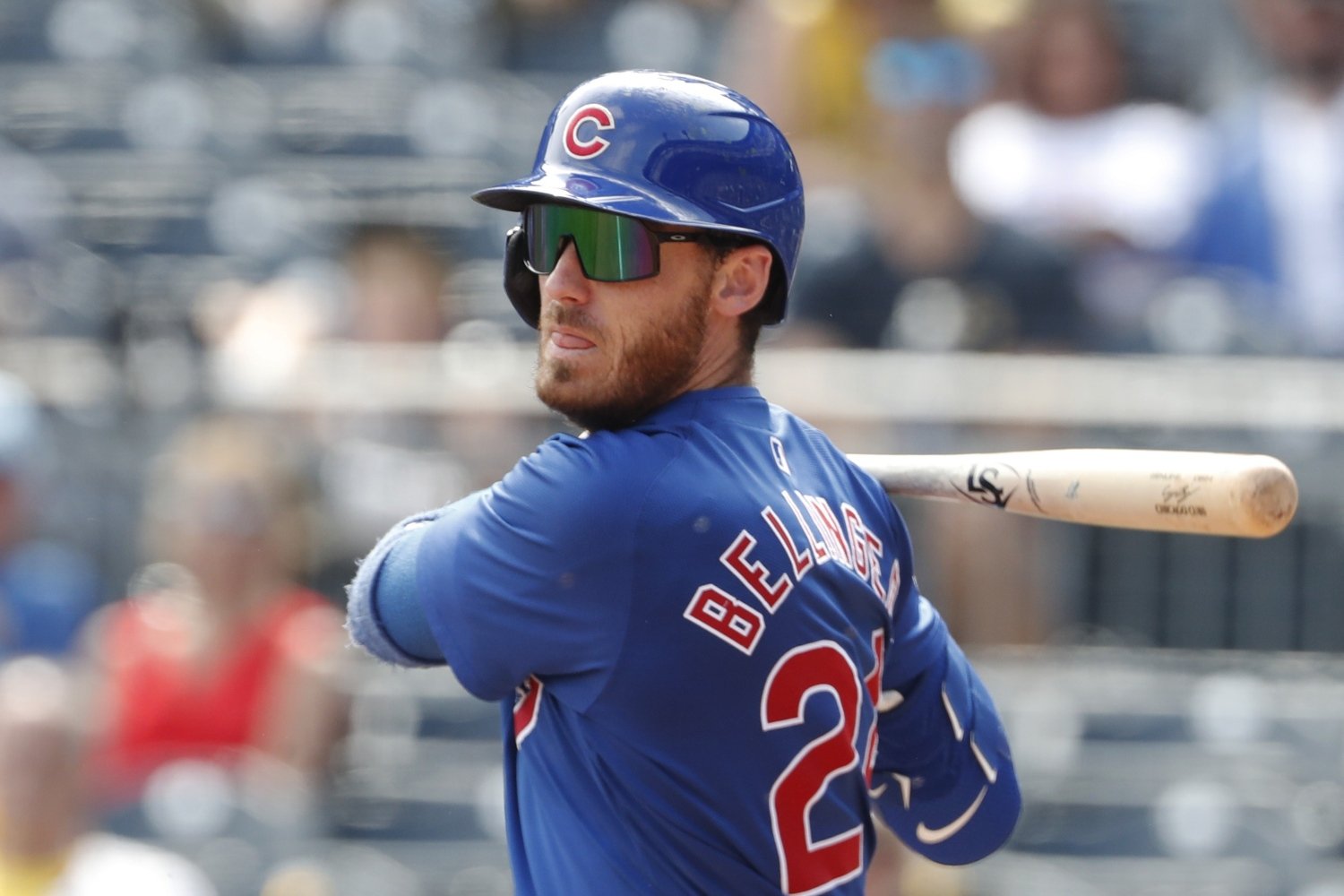
Reaction to the Cubs trading Cody Bellinger to the Yankees Tuesday afternoon has been, on balance, pretty critical. While a significant share of fans have shrugged and acknowledged the inevitability of the move, another significant share—and, to my eye, a disproportionate number of takes from media outlets with all the necessary information at hand to know better—have loudly balked at it, especially by wielding the most cutting two-letter word English gives us: "if". As in: "I guess we'll see if they spend all this money they just saved," or "If they turn around and add another starting pitcher and bolster the bullpen, then ok. But otherwise..."
That line of discussion is foolish, and I find that foolishness grating, because it's voluntary. The Cubs' salary situation is fairly transparent. After this trade, they have about $163 million on their books for 2025, in terms of real money they will pay to players, and their competitive-balance tax threshold number is around $180 million. As I've reported this fall, and as several other (frankly) more connected reporters have also suggested, the Cubs will spend around $220 million in real money this year. That's the real limiting number, though they also won't stack up that money in some strange, extreme fashion that leads to their stumbling over the $241-million tax line again.
Jed Hoyer can and will spend a good $40 million from here to Opening Day. It might be slightly less, if the team can't find a good way to spend those dollars. It might be even more, if another opportunity as juicy as the chance to acquire Kyle Tucker presents itself. That it will be any less than $30 million is unthinkable, though, and the implication that the Bellinger trade is a pointless salary dump reflects a focus on money to the exclusion of really understanding ball, on the field and in the clubhouse.
We should all be able to agree that the Ricketts family ought to spend more in annual payroll on the Cubs. As I've said several times, one of the perduring separators between the Dodgers, Mets, Yankees, and Phillies and the Cubs is the willingness of those clubs to spend upwards of $280 million per year on players, while the Cubs break into a cold sweat at the notion of going to $250 million. I don't rise in defense of the Bellinger deal by way of excusing ownership's unduly careful spending. However, in this case, it's important to realize how little is lost by saving some money on Bellinger before pivoting to multiple major reinforcements of the pitching staff.
Firstly, Bellinger is just not that good a player at this point. That's unfortunate for the Cubs, and it means I was wrong, because I felt they should stop hemming and hawing and sign him to a longer-term deal last winter, coming off his impressive 2023. Although the deal he ultimately signed was player-friendly, they did dodge a bit of a bullet by not investing in him long-term. It looks like he's poised to resume some measure of decline, after his Chicago resurgence. It's true, though, and if we were to take his name and/or visage out of the equation, it would be easier to see it.
Bellinger not only injured himself playing center field for a second year in a row (and third out of four) back in April, but rated as a below-average defender there for the season. He doesn't belong in center field at all, as he enters his 30s, and that's important. As a corner outfielder and/or first baseman, there's a lot more pressure on his bat to be incontrovertibly above-average, and it's not at all clear that he meets that standard at this point.
Famously, Bellinger found all that offensive success in 2023 with batted-ball metrics that didn't quite support the results. He did, however, become excellent at avoiding strikeouts, and he still drew a fair number of walks. Combining those skills with the ability to lethally unload on mistakes in hitter-friendly counts made him a great all-around hitter, though the market still showed its skepticism when he hit free agency last winter. The bet on him for 2024 and beyond was rooted in the idea that he could remain that selectively aggressive, sustaining a very low strikeout rate while getting on base and generating ample power. The hope was that he would integrate his 2023 adjustments and end up bringing the hard-hit and barrel rates up, without having to give back all the new contact he found.
Instead (while he did replicate those marvelous strikeout and walk rates), Bellinger's contact quality only eroded further in 2024. He lost the ability to hit the ball to center or left field with any authority, but he also pulled the ball less often than he had previously. He hit (incrementally) more ground balls. Statcast released swing speed data, which confirmed what the eye test was telling everyone, anyway: Bellinger's bat speed is below average. Again, he still adapted well, and he fought his way to a fine season. The ceiling of his profile sagged much, much lower, though, as both offensive and defensive limitations came into sharper focus.
That's why he opted in last month, and it's why the Cubs were never going to get much in return for him, even if they had eaten more money. I would argue that they still should have done so, because I believe Will Warren is a better long-term pitching piece than Cody Poteet, but the difference between the two is as practically negligible as the difference between the $5 million they sent to the Yankees and the $10 million or more (all of which would have been loaded into the first year, in that case, rather than spread between 2025 and 2026) that the Yankees wanted them to kick in if it were Warren coming back.
It's also a neat summation of why the team simply didn't need him. Bellinger posted a 111 DRC+ in 2024, according to Baseball Prospectus, which is respectable. It trailed the 120 of Seiya Suzuki and the 117 of Michael Busch, though, and those are the two incumbents who play the positions for which Bellinger is best suited at this point. Ian Happ tied Bellinger at 111, but Happ (despite striking out much more) projects to hold up better than Bellinger: he has above-average bat speed and far better contact quality, plus elite plate discipline.
To that collection of corner outfielders, DH candidates and first basemen, the Cubs added Tucker (2024 DRC+: 141). It was time to get one player out of the way of the others in that group, and it was a no-brainer that it should be Bellinger. Trading Suzuki would have meant giving back too much of the upgrade represented by the Tucker acquisition. Sending out Happ (no-trade clause, deep roots with the organization, better defense and better offensive bedrock) was never a consideration. Nor was dealing Busch, who's still under team control for five years and was every bit the defender Bellinger is at first base by the end of his rookie season.
Keeping Bellinger around just as a contingency and rotational player would have been uncomfortable and bizarre. Not even the Dodgers spend $30 million on spare parts. We all wanted to see a genuine shakeup that would give the Cubs' roster a massive infusion of talent and a more modern feel; this is what that looks like. This was the right baseball move.
Again: don't stop pressing the Rickettses to spend more money. At the same time, don't waste breath or attention on the vague possibility that this was a salary dump motivated basically by profit margin. It was, rather, the right thing to do in the wake of the Tucker move, and it will facilitate big additions to the team's starting rotation and bullpen. They might add three more above-average pitchers under team control for multiple seasons before Opening Day, and that's expensive, and this move both clears the decks for those pursuits and eliminates a potential source of frustration or drama in the clubhouse, before it could develop.
Only the billionaires win when we get distracted by squabbles about money, and as fans, we only lose when we get tunnel vision on the payroll. Sometimes, wonderfully, we get good chances not to be thus burdened, and we can talk about the baseball reasons for and ramifications of a trade, rather than allocating all our energy toward kvetching about the business side of the game. Let's not squander this one.





Recommended Comments
Create an account or sign in to comment
You need to be a member in order to leave a comment
Create an account
Sign up for a new account in our community. It's easy!
Register a new accountSign in
Already have an account? Sign in here.
Sign In Now