


Cubs Video
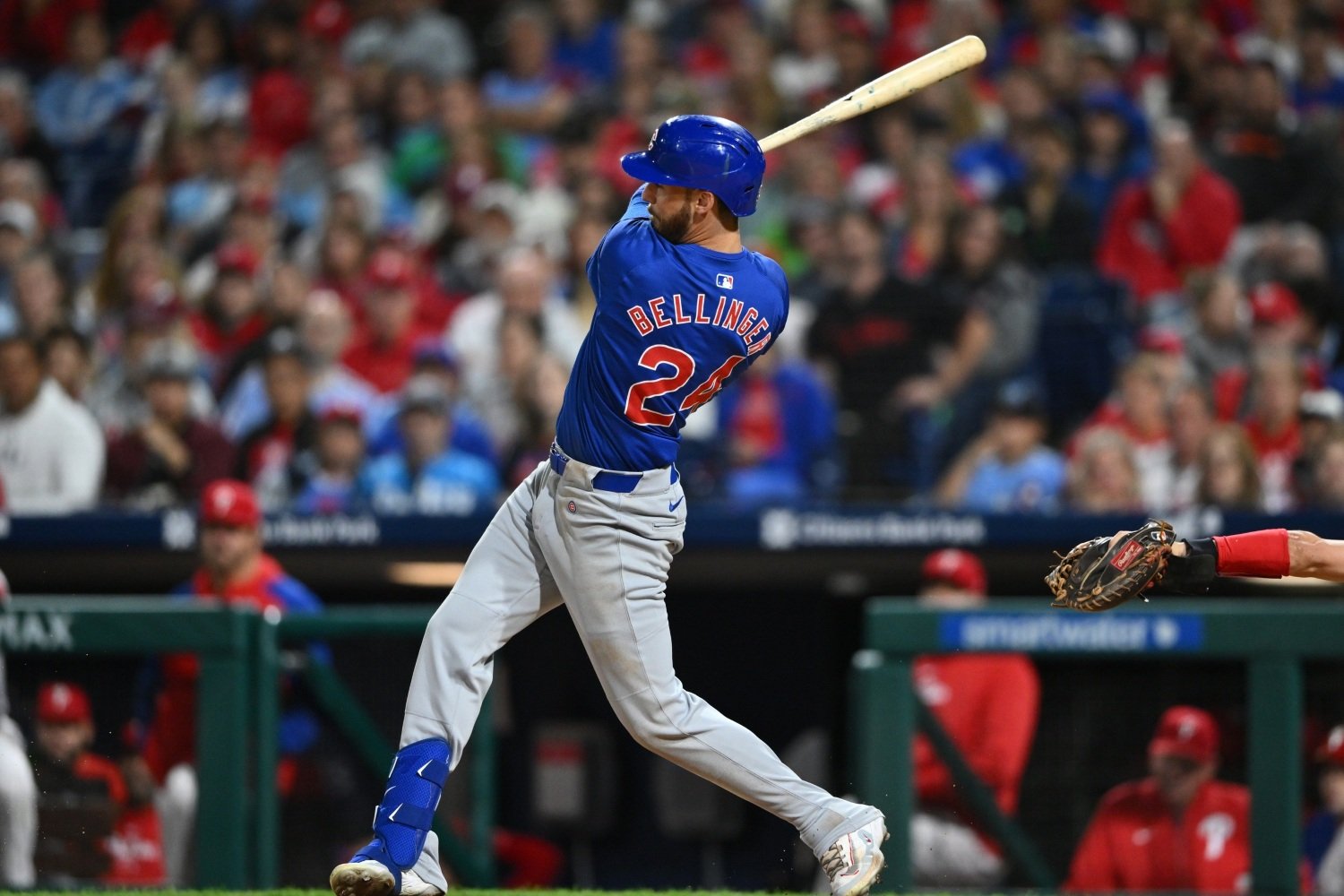
In order to add Kyle Tucker's projected arbitration salary (in excess of $15 million) and maintain the payroll flexibility they need to further supplement the roster thereafter, the Cubs needed to offload the hefty contract of Cody Bellinger. After acquiring Tucker Friday afternoon, the team sent Bellinger and cash to the New York Yankees, in exchange for right-handed swingman Cody Poteet.
Poteet, 30, is an interesting pickup. He has four years of remaining team control and can still be optioned to the minors, which is welcome flexibility. He has five pitches, though his soft stuff—sweeper, curveball, changeup—is a little better than his four-seamer or sinker. He only throws about 93 miles per hour, and the slot and the movement are fairly vanilla. He doesn't strike out a lot of hitters. He's a fairly fungible arm, but a clearly usable one, and he can cover multiple innings—even as a three- or four-inning long man or spot starter.
Poteet would probably be a more known quantity, if not for a string of brutal injuries. The second half of his 2021 season was pulverized by a knee issue. He underwent Tommy John surgery in mid-2022 and missed all of 2023, and in 2024, he spent about half the season on the shelf with a triceps strain. That's why the Cubs (like most teams would) now view him mostly as a reliever, rather than because he's unable to start from a skills perspective. It's also why he was available in this deal. He has real upside; he's just not reliably available.

Sending out Bellinger is as much about accommodating the personnel as about money, but without question, it's about both. The team is very unlikely to spend up to the competitive balance tax threshold, according to multiple sources, which means that clearing a hefty chunk of the $30 million they owed Bellinger for 2025 was important if they were to make a big splash elsewhere on the roster. This move ensures that they'll have that flexibility. The team can now turn its attention back to free-agent targets like Kirby Yates and Kyle Finnegan, but they might not be done making significant trades, either.
On Friday, the Cubs and Yankees were talking about starting pitching prospect Will Warren as compensation for Bellinger, but as the sides haggled, the Cubs became increasingly resistant to sending the amount of money the Yankees demanded to consummate that version of the deal. In the end, they'll send just $5 million to New York.
Getting Poteet while clearing so much money from their books lets the Cubs pivot more flexibly toward their next set of acquisitions, including (but not limited to) another starting pitcher.
Losing Bellinger's high-contact, occasionally powerful bat from the lineup will lightly sting, but the team was left-handed enough as it was, especially after bringing in Tucker—who is a marked upgrade from Bellinger. The real risk embraced in this trade is tied to Pete Crow-Armstrong, who is now operating without a net as he enters his first full, unfettered season as the team's center fielder. Non-tendering Mike Tauchman and trading Bellinger are clear messages about the faith the Cubs have in their young defensive whiz and his offensive upside, but right now, they also leave the team staring at a choice between Kevin Alcántara and Alexander Canario as the backup center fielders. In all likelihood, the team will try to land one more accomplished center fielder (albeit on the cheap), so they have some measure of insurance against regression or injury for Crow-Armstrong.
Bellinger and the Cubs were largely good for each other; the rest of the club's roster-building just wasn't good enough to fully capitalize on what he brought to the table. He also struggled to stay healthy, twice running into outfield walls and ending up injured in the process of making good catches. He probably didn't belong in center field anymore, anyway, so when he opted back in after the season, this immediately popped onto the team's radar. Getting Poteet and significant salary relief for Bellinger is another win, especially because the Cubs have clearer utility for him than they had for Wesneski. It's a smaller, secondary trade in the shadow of a true blockbuster, but this one, too, has a chance to make the Cubs substantially better, by giving them more spending power this winter and bringing in a controllable arm who could become a fixture.





Recommended Comments
There are no comments to display.
Create an account or sign in to comment
You need to be a member in order to leave a comment
Create an account
Sign up for a new account in our community. It's easy!
Register a new accountSign in
Already have an account? Sign in here.
Sign In Now