


Matthew Trueblood
-
Posts
2,479 -
Joined
-
Last visited
-
Days Won
2
Content Type
Profiles
Joomla Posts 1
Chicago Cubs Videos
Chicago Cubs Free Agent & Trade Rumors, Notes, & Tidbits
2026 Chicago Cubs Top Prospects Ranking
News
2023 Chicago Cubs Draft Picks
Guides & Resources
2024 Chicago Cubs Draft Picks
The Chicago Cubs Players Project
2025 Chicago Cubs Draft Pick Tracker
2026 Chicago Cubs Draft Tracker: Picks & Bonuses
Blogs
Events
Forums
Store
Gallery
Everything posted by Matthew Trueblood
-
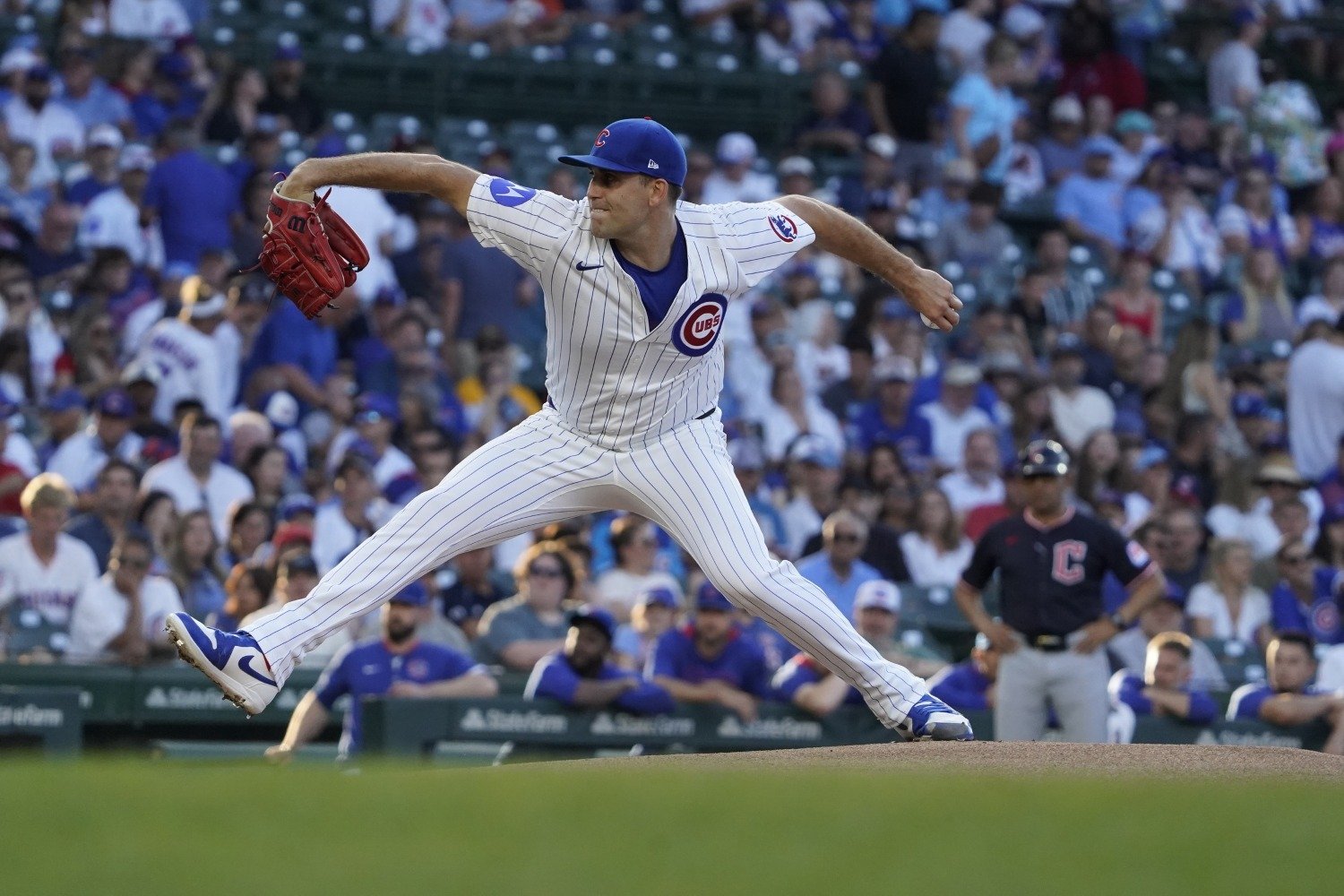
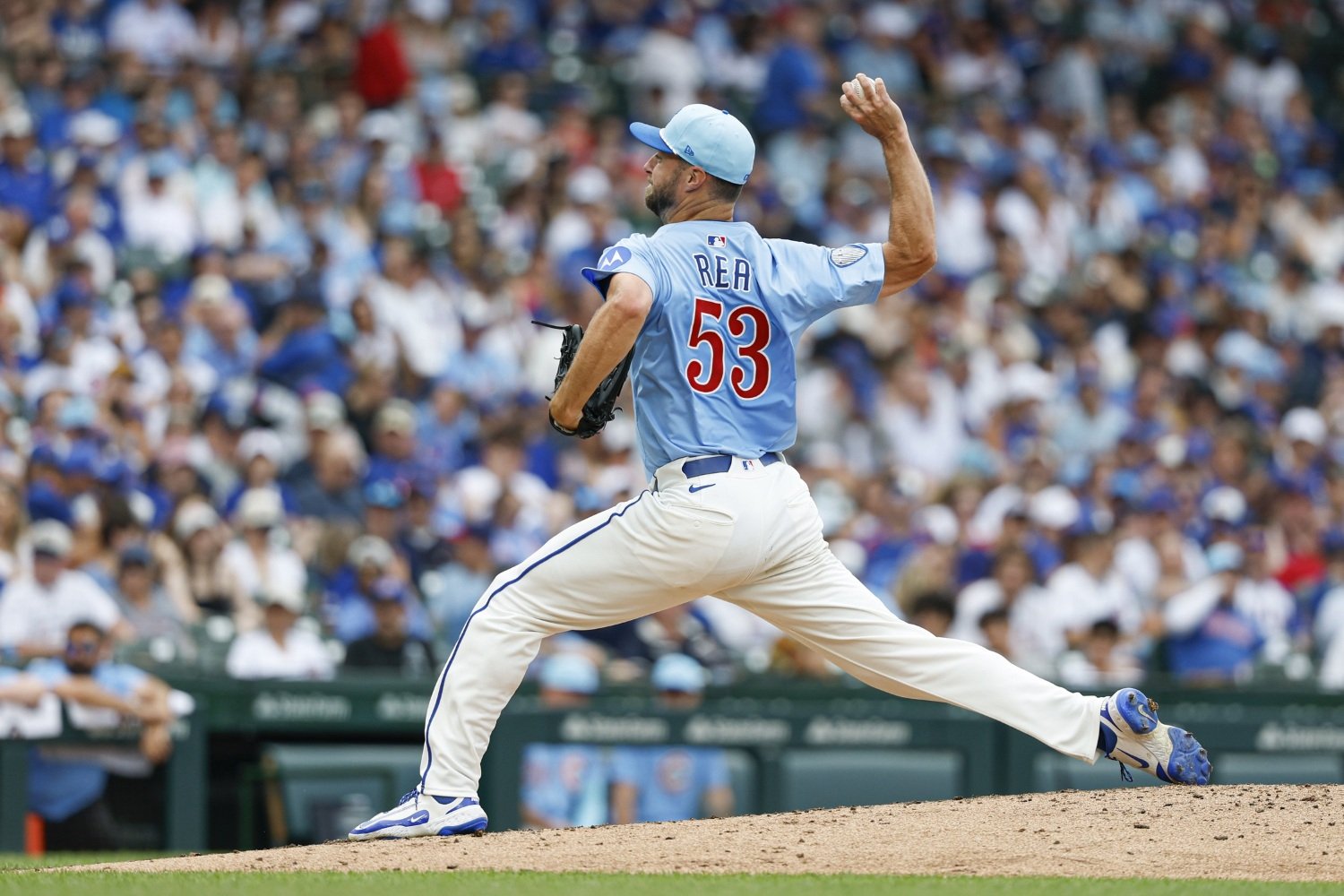 In his last two seasons with the Brewers, Colin Rea was almost a fixture in the starting rotation all season. His improbable success—he entered 2023 having pitched just 20 innings in the majors over the previous six campaigns—kept an injury-riddled pitching staff humming. Milwaukee couldn't have won those division titles without him. By the end of each year, though, the team quietly nudged Rea to long relief, and/or left him off their playoff roster. He didn't pitch in the postseason for them in either of their unceremonious first-round exits. The classic "get-you-there guy," Rea ran out of steam down the stretch in the process of helping his team get there. He's a selfless contributor, but once the league starts to adjust to him, he does sometimes struggle to counteradjust. This year, he's hoping to change that. Rea started hot as the Cubs' fifth starter this spring. They won eight of the first 10 games in which he appeared, and six of his first seven starts. In mid-May, he owned a 2.38 ERA. Thereafter, though, he endured a six-start stretch in which opponents hit nine home runs and his ERA was 7.11. By the reckoning of most Cubs fans (who didn't watch closely, over the two preceding seasons, as he dealt with similar problems and made his next round of replies), he's slipped into the melange of options on which the team must keep trying to improve—another starter with underwhelming stuff who can't set the club up for success. Quietly, though, Rea has averted outright disaster, and in fact, his last two outings have been terrific. Against the Astros in Houston and at home against the Cardinals, Rea combined for 11 2/3 innings pitched, giving up just three total runs on seven hits. He's still finding plenty of ways to get outs. To understand how, I think it's time we develop a comprehensive theory of Colin Rea. First, we'd better establish the basics, because even those are changing all the time. Rea lived on a three-fastball mix with the Brewers; they like guys to mix all three looks for opposing batters. He used six pitches last year, and the balance of his arsenal was notable. This is what most kitchen-sink guys look like; hitters see four different pitches quite often. This year, Rea is a very different kind of pitcher. He's added a seventh pitch, creating a true distinction between his cutter and a slider that he grips slightly differently and which has more depth. He's throwing a bit harder. The huge change, though, is the fastball mix. Instead of throwing the sinker and cutter just as much as the four-seamer, he's suddenly heavily featuring that four-seamer. In fact, everything else in his repertoire—the hard and the soft stuff—has taken a backseat to that true heater. In a conversation inside the Cubs clubhouse at Target Field Wednesday Rea said the changes are partially the product of the team proposing changes, and partially his own sense that changing approaches made sense. "A little bit of both," he confirmed. "I think over the past couple years, my four-seam has played pretty well. So coming in early, spring training and early in the season, it was an easy adjustment, but as you go along, the league kind of adjusts to you. So you’ve gotta make those in-season adjustments as well." Rea said that when the Cubs signed him this winter, they made a presentation to him to show where he tends to have the most success within the zone. Once he embraced that study, the switch from a three-fastball hodgepodge to the four-seamer leading the way "just kind of happened," he said. With the team's help, he realized that the locations where his stuff thrives tend to be "four-seam dominant". Meanwhile, he also moved across the rubber, from the third-base side to the first-base side. The Brewers almost universally nudge their hurlers toward the side of the rubber that creates a steeper horizontal angle for batters, and that did work for him, but once Rea moved on from the organization, he switched lanes. "I just felt like on the third-base side, it gave the chance for the hitter to kind of see the ball a little bit earlier, whereas on the first-base side, I stay more closed, more direct toward home," Rea said. "Therefore, I can hide the ball a little bit longer. And I like to work to the glove side, anyway, so that just gave me a more direct path to that side." While hitters might be fooled more by (for instance) a cutter-sweeper sequence toward the glove side of the plate if a pitcher releases the ball from way across the rubber, that movement pattern also introduces hurdles for the hurler. "Sometimes when you’re on the third-base side, you have to kind of clear your shoulder to get to that glove side, which can create some bad habits," Rea said. Switching from the sinker-forward fastball trio to the four-seamer as the primary weapon makes that switch more viable. So does the slight mechanical change he's made this year, lowering his arm slot. As he mentioned, he's already on the right line to throw a glove-side four-seamer from his new location, whereas if he wanted to be filling up the arm-side sinker space, he'd need to be really making it run from this side to avoid leaving the pitch in the middle of the plate. Last year, with a higher arm angle, he would only have found trouble in trying to push the sinker to the arm side, so it worked much better to start there. With the migration across the rubber and the lower slot, his four-seamer and sinker both run more to the arm side, and the sinker has room to do that without losing the plate. That mechanical change was only possible because he no longer had to force that front shoulder open, as he mentioned above. Remember, too, that the Cubs talked to Rea about changing up some of the locations he emphasizes and how they play off each other. Changing position on the rubber affects that, too. "On the third-base side, I threw a lot more backdoor cutters, backdoor sweepers, because that was the angle that I was at," Rea said. "On this side, I haven’t thrown as many, just because that’s a little bit harder a pitch to execute on that side." Let's take a quick look at that in action. Here's a pitch Rea threw to Michael Busch, when the Brewers visited the Cubs last year. It's a sweeper, from his position toward the third-base side of the rubber. NU53dzBfVjBZQUhRPT1fVUZBRkJnQU1VRkVBVzFjQlh3QUFCQU5WQUFOUVcxRUFBQUJVQTFBQkJnc0hVZ3RR.mp4 That pitch still worked well, as you can see. But note the shape and location. It spends a lot of time over the white of the plate, and though it dips below the zone, it doesn't sweep to the glove side very much. Now, here's Rea throwing a sweeper to punch out Michael A. Taylor this year. ckQ4M1BfWGw0TUFRPT1fQmxCVFZWQUdWVk1BRHdNR1ZBQUhCUVJSQUZoV1dnVUFDZ1lBVmxJQkJRY0VVZ3ND.mp4 Both of those pitches are properly executed. You don't want a sweeper to a lefty to do what the one to Taylor did, or at least, you're less likely to risk throwing it that way. But that's the point. His change to a new mound position has informed a change in how Rea attacks hitters, because of what it's allowed him to do differently with his arm. You can really see that sweeper take off laterally this season, whereas last year's offering was a pitch that relies more on depth and can thrive on the arm side of the plate, if well-executed. Ok, you say, but that example against Taylor is from back when Rea was great. We've already talked about how, since then, he's nosed steeply downward, then back up. What's going on there? As Rea alluded to, it's a matter of making adjustments within the season. Overall, yes, he's throwing far more four-seamers than sinkers or cutters this year—but now that hitters are hunting it, he's switched that back up. "The last few times out, I’ve gone more three fastballs—four-seam, two-seam, cutter—with still my four-seam being the more dominant pitch, but mixing those in a little bit more," he said. "Teams, it seems like especially this year, they’re on the fastball from Pitch 1. So just a way to keep them off that pitch a little bit." With the four-seamer leading the way, Rea can use his splitter and sweeper to chase swings and misses. However, at times, it makes more sense to take advantage of hitters who appear to have timed up the heat, by creating some wiggle they're not expecting. "When you can see that they’re on time for the four-seam, they’re barreling it up, that’s a good time to go to the two-seam," Rea said. Getting early, weak contact can be just as valuable as working one's way to a strikeout, in multiple ways. First, inducing that kind of contact quickly means more efficiency within the outing, because one's pitch count stays lower and the opponent has to wait longer to get looks at the secondary stuff in one's arsenal. Second, sometimes, a misexecuted breaking or offspeed pitch to a hitter who's sitting on a heater in that zone can make them early in a good way—good for the hitter, that is. As a pitcher, if the opposing batter is looking for a four-seamer, the surest way to disrupt them is to give them a version of that same pitch that attacks an unexpected part of the zone and has late movement they don't expect. Since Rea has used the four-seamer so much more heavily this year, he said, hitters sit on it and think less about the sinker and cutter. That makes it easier for him to get mishit balls with those altered flavors of the heat. You just don't see pitchers fill up a movement plot this thoroughly very often. From the side of the mound on which (at least for now) he's more comfortable, Rea is using the four-seamer as the focal point, but he can move it a whole lot, vertically and horizontally—and he can do so throughout a fairly wide velocity band. True kitchen-sink starters are rare, anymore. Throwing hard enough and having sharp enough command to succeed in the majors while maintaining four different glove-side pitch movement shapes and two to the arm side (plus the four-seamer itself) is excruciatingly hard. Rea has ridden a bit of a roller coaster of late, as he tries to harness that wide arsenal and make up for the fact that he doesn't have any one true out pitch. Because he's exceptionally open-minded and has the gift of manipulating the ball this way, however, he's already felt his way through a tough stretch and back to a good place.
 -
Image courtesy of © Kamil Krzaczynski-Imagn Images In his last two seasons with the Brewers, Colin Rea was almost a fixture in the starting rotation all season. His improbable success—he entered 2023 having pitched just 20 innings in the majors over the previous six campaigns—kept an injury-riddled pitching staff humming. Milwaukee couldn't have won those division titles without him. By the end of each year, though, the team quietly nudged Rea to long relief, and/or left him off their playoff roster. He didn't pitch in the postseason for them in either of their unceremonious first-round exits. The classic "get-you-there guy," Rea ran out of steam down the stretch in the process of helping his team get there. He's a selfless contributor, but once the league starts to adjust to him, he does sometimes struggle to counteradjust. This year, he's hoping to change that. Rea started hot as the Cubs' fifth starter this spring. They won eight of the first 10 games in which he appeared, and six of his first seven starts. In mid-May, he owned a 2.38 ERA. Thereafter, though, he endured a six-start stretch in which opponents hit nine home runs and his ERA was 7.11. By the reckoning of most Cubs fans (who didn't watch closely, over the two preceding seasons, as he dealt with similar problems and made his next round of replies), he's slipped into the melange of options on which the team must keep trying to improve—another starter with underwhelming stuff who can't set the club up for success. Quietly, though, Rea has averted outright disaster, and in fact, his last two outings have been terrific. Against the Astros in Houston and at home against the Cardinals, Rea combined for 11 2/3 innings pitched, giving up just three total runs on seven hits. He's still finding plenty of ways to get outs. To understand how, I think it's time we develop a comprehensive theory of Colin Rea. First, we'd better establish the basics, because even those are changing all the time. Rea lived on a three-fastball mix with the Brewers; they like guys to mix all three looks for opposing batters. He used six pitches last year, and the balance of his arsenal was notable. This is what most kitchen-sink guys look like; hitters see four different pitches quite often. This year, Rea is a very different kind of pitcher. He's added a seventh pitch, creating a true distinction between his cutter and a slider that he grips slightly differently and which has more depth. He's throwing a bit harder. The huge change, though, is the fastball mix. Instead of throwing the sinker and cutter just as much as the four-seamer, he's suddenly heavily featuring that four-seamer. In fact, everything else in his repertoire—the hard and the soft stuff—has taken a backseat to that true heater. In a conversation inside the Cubs clubhouse at Target Field Wednesday Rea said the changes are partially the product of the team proposing changes, and partially his own sense that changing approaches made sense. "A little bit of both," he confirmed. "I think over the past couple years, my four-seam has played pretty well. So coming in early, spring training and early in the season, it was an easy adjustment, but as you go along, the league kind of adjusts to you. So you’ve gotta make those in-season adjustments as well." Rea said that when the Cubs signed him this winter, they made a presentation to him to show where he tends to have the most success within the zone. Once he embraced that study, the switch from a three-fastball hodgepodge to the four-seamer leading the way "just kind of happened," he said. With the team's help, he realized that the locations where his stuff thrives tend to be "four-seam dominant". Meanwhile, he also moved across the rubber, from the third-base side to the first-base side. The Brewers almost universally nudge their hurlers toward the side of the rubber that creates a steeper horizontal angle for batters, and that did work for him, but once Rea moved on from the organization, he switched lanes. "I just felt like on the third-base side, it gave the chance for the hitter to kind of see the ball a little bit earlier, whereas on the first-base side, I stay more closed, more direct toward home," Rea said. "Therefore, I can hide the ball a little bit longer. And I like to work to the glove side, anyway, so that just gave me a more direct path to that side." While hitters might be fooled more by (for instance) a cutter-sweeper sequence toward the glove side of the plate if a pitcher releases the ball from way across the rubber, that movement pattern also introduces hurdles for the hurler. "Sometimes when you’re on the third-base side, you have to kind of clear your shoulder to get to that glove side, which can create some bad habits," Rea said. Switching from the sinker-forward fastball trio to the four-seamer as the primary weapon makes that switch more viable. So does the slight mechanical change he's made this year, lowering his arm slot. As he mentioned, he's already on the right line to throw a glove-side four-seamer from his new location, whereas if he wanted to be filling up the arm-side sinker space, he'd need to be really making it run from this side to avoid leaving the pitch in the middle of the plate. Last year, with a higher arm angle, he would only have found trouble in trying to push the sinker to the arm side, so it worked much better to start there. With the migration across the rubber and the lower slot, his four-seamer and sinker both run more to the arm side, and the sinker has room to do that without losing the plate. That mechanical change was only possible because he no longer had to force that front shoulder open, as he mentioned above. Remember, too, that the Cubs talked to Rea about changing up some of the locations he emphasizes and how they play off each other. Changing position on the rubber affects that, too. "On the third-base side, I threw a lot more backdoor cutters, backdoor sweepers, because that was the angle that I was at," Rea said. "On this side, I haven’t thrown as many, just because that’s a little bit harder a pitch to execute on that side." Let's take a quick look at that in action. Here's a pitch Rea threw to Michael Busch, when the Brewers visited the Cubs last year. It's a sweeper, from his position toward the third-base side of the rubber. NU53dzBfVjBZQUhRPT1fVUZBRkJnQU1VRkVBVzFjQlh3QUFCQU5WQUFOUVcxRUFBQUJVQTFBQkJnc0hVZ3RR.mp4 That pitch still worked well, as you can see. But note the shape and location. It spends a lot of time over the white of the plate, and though it dips below the zone, it doesn't sweep to the glove side very much. Now, here's Rea throwing a sweeper to punch out Michael A. Taylor this year. ckQ4M1BfWGw0TUFRPT1fQmxCVFZWQUdWVk1BRHdNR1ZBQUhCUVJSQUZoV1dnVUFDZ1lBVmxJQkJRY0VVZ3ND.mp4 Both of those pitches are properly executed. You don't want a sweeper to a lefty to do what the one to Taylor did, or at least, you're less likely to risk throwing it that way. But that's the point. His change to a new mound position has informed a change in how Rea attacks hitters, because of what it's allowed him to do differently with his arm. You can really see that sweeper take off laterally this season, whereas last year's offering was a pitch that relies more on depth and can thrive on the arm side of the plate, if well-executed. Ok, you say, but that example against Taylor is from back when Rea was great. We've already talked about how, since then, he's nosed steeply downward, then back up. What's going on there? As Rea alluded to, it's a matter of making adjustments within the season. Overall, yes, he's throwing far more four-seamers than sinkers or cutters this year—but now that hitters are hunting it, he's switched that back up. "The last few times out, I’ve gone more three fastballs—four-seam, two-seam, cutter—with still my four-seam being the more dominant pitch, but mixing those in a little bit more," he said. "Teams, it seems like especially this year, they’re on the fastball from Pitch 1. So just a way to keep them off that pitch a little bit." With the four-seamer leading the way, Rea can use his splitter and sweeper to chase swings and misses. However, at times, it makes more sense to take advantage of hitters who appear to have timed up the heat, by creating some wiggle they're not expecting. "When you can see that they’re on time for the four-seam, they’re barreling it up, that’s a good time to go to the two-seam," Rea said. Getting early, weak contact can be just as valuable as working one's way to a strikeout, in multiple ways. First, inducing that kind of contact quickly means more efficiency within the outing, because one's pitch count stays lower and the opponent has to wait longer to get looks at the secondary stuff in one's arsenal. Second, sometimes, a misexecuted breaking or offspeed pitch to a hitter who's sitting on a heater in that zone can make them early in a good way—good for the hitter, that is. As a pitcher, if the opposing batter is looking for a four-seamer, the surest way to disrupt them is to give them a version of that same pitch that attacks an unexpected part of the zone and has late movement they don't expect. Since Rea has used the four-seamer so much more heavily this year, he said, hitters sit on it and think less about the sinker and cutter. That makes it easier for him to get mishit balls with those altered flavors of the heat. You just don't see pitchers fill up a movement plot this thoroughly very often. From the side of the mound on which (at least for now) he's more comfortable, Rea is using the four-seamer as the focal point, but he can move it a whole lot, vertically and horizontally—and he can do so throughout a fairly wide velocity band. True kitchen-sink starters are rare, anymore. Throwing hard enough and having sharp enough command to succeed in the majors while maintaining four different glove-side pitch movement shapes and two to the arm side (plus the four-seamer itself) is excruciatingly hard. Rea has ridden a bit of a roller coaster of late, as he tries to harness that wide arsenal and make up for the fact that he doesn't have any one true out pitch. Because he's exceptionally open-minded and has the gift of manipulating the ball this way, however, he's already felt his way through a tough stretch and back to a good place. View full article
-
Heh. I think it's the same way pitchers aim for the outside corner, at the knees: you don't always hit that spot precisely, but aim small, miss small, and all that.
-
Image courtesy of © Kamil Krzaczynski-Imagn Images The power binge that has turned Pete Crow-Armstrong from a glove-first player into the starting center fielder for the National League All-Stars certainly didn't catch him by surprise. "I always knew it was in there," he said Tuesday, inside the visitors' clubhouse at Target Field in Minneapolis. "Maybe not before I got drafted. In high school, I did not know how to move properly. But even the first couple years in the minor leagues, I saw some power and whatnot. I would attribute that to just reps. And now we’re definitely learning how to pull the ball in the air—true spin, not so much topspin, sidespin. Yeah, I’m definitely surprised at the amount in the timeframe, but I always knew it would come." Having the tools for power production—his bat speed, which is still increasing almost week by week, and the natural uppercut plane in his swing—is one thing, but weaponizing it and being able to access it is another. Crow-Armstrong's breakout has been defined by the latter, and fueled by his self-knowledge as a hitter. It's also been a product of the team's coaching staff finding good ways to communicate with Crow-Armstrong (and several others on the team) about the value of catching the ball farther out front and creating that true spin, in the air to the pull field. Batted-ball spin is one of the (few) things the public still doesn't get to see on websites like Baseball Savant or Statcast clips via the MLB app. Teams do have it, though, and while it's not a primary focus for most hitters, spin off the bat can be used to reverse-engineer some insight into the swing. Are you on time, and on plane? Are you catching the ball squarely, with the head out around it just so? Often, if you are, the spin will be what Crow-Armstrong referred to as "true". That's not only good for carry on the ball (backspin keeps it in the air longer, so it can fly farther before it lands), but a good sign that your swing is working. As Crow-Armstrong alluded to, sidespun, sliced liners or topspin one-hoppers to the pull side can tell a hitter they're slightly missing their target in terms of timing or barrel accuracy. Lately, Crow-Armstrong and Cubs coaches have used another indicator to spot trouble in his swing, proactively working to solve it before a long slump could ensue. Around the middle of June, he got a bit more upright in the box and brought his feet closer together in his stance—but that's led to a longer stride that was not intentional, and has not been beneficial. "I was absolutely overstriding," Crow-Armstrong said. "We looked at numbers, we broke it all down. The stride was actually eight inches longer. And that creates some disconnection." He's right, of course. To take as clean a snapshot as possible, here's Crow-Armstrong's stance and stride pattern from May. Here, by contrast, is the same visual for July, entering Tuesday night's game (in which he went 0-for-4). That is, indeed, a big change in stride length, and it hasn't been good for him. It's a sign of how well he's been living at the plate that, even if you take the least flattering snippet of his recent run you can (his last 17 games, dating to June 20), Crow-Armstrong still has a .265/.292/.485 batting line. At this point, though, he and the team want to aim higher than that. He was out doing early work five hours before Tuesday night's game, along with some teammates. "I can still be moving on time, but I’d end up backing the ball up a lot," Crow-Armstrong said of his swing when the stride is too long. "The goal is to always hit behind the front side, and if you’re overstriding, then you’ve gotta really fight to get through there. So you were seeing a lot of deep-caught, jammed ground balls. Not working under my front side." When he talks it through, you can picture what Crow-Armstrong is hunting, and what's frustrating him when he can't connect on time. Overstriding, in effect, lengthens and flattens his swing. Indeed, his swing tilt is the flattest it's been all year thus far in July, so despite his bat speed being better than ever he's been late on fastballs. His attack angle and direction on the sinker and four-seamer show him not catching it while working uphill as much, and pushing it to the opposite field more. He also articulated why it hurts to overstride both on the fastball and on spinning or offspeed stuff. "I think, if anything, the overstriding is just a disservice to the visual, for me as a hitter," he said, "The depth perception just changes. If you’re overstriding, heaters probably look a little harder and the spin probably presents itself better when it normally wouldn’t, and I could probably shut down." In other words, because he knows he has to rush his barrel to get out around the longer frame he's made of himself by striding long, he's more prone to chasing non-fastballs, even while fastballs can still beat him. Crow-Armstrong did say he and the team have worked some of that problem out, and that "it's felt better" for about the last week. He still went 0-for-4 Tuesday night, but he had a great weekend against St. Louis. Having identified the problem and acted on it, he feels confident about returning to the level of production he so enjoyed prior to the recent downturn. It's easier said than done, but if nothing else, Crow-Armstrong's intimate understanding of his swing and what it's meant to accomplish provides reason for optimism that he can do it. As he noted, there's no longer any doubt that the power is there. View full article
-
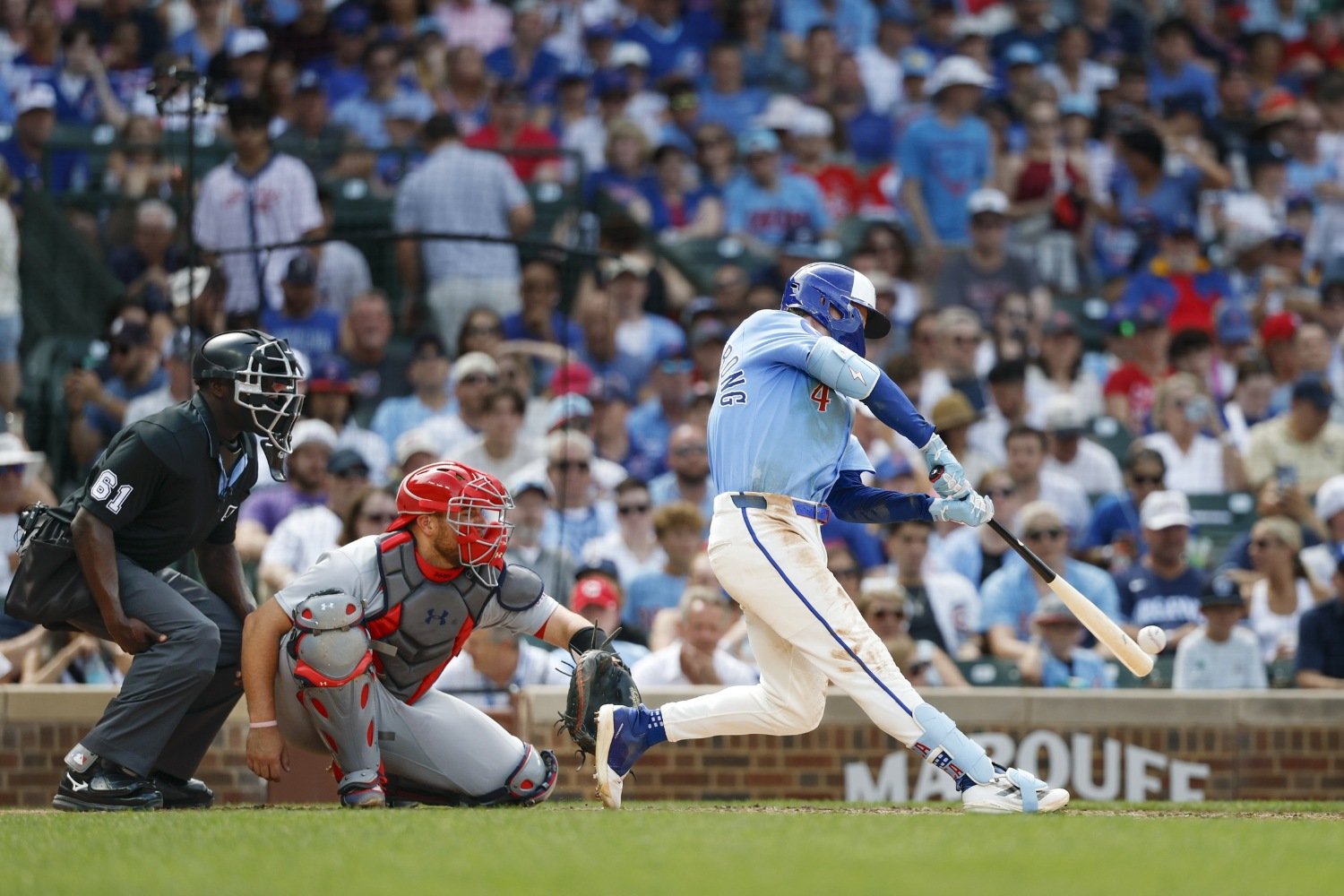 The power binge that has turned Pete Crow-Armstrong from a glove-first player into the starting center fielder for the National League All-Stars certainly didn't catch him by surprise. "I always knew it was in there," he said Tuesday, inside the visitors' clubhouse at Target Field in Minneapolis. "Maybe not before I got drafted. In high school, I did not know how to move properly. But even the first couple years in the minor leagues, I saw some power and whatnot. I would attribute that to just reps. And now we’re definitely learning how to pull the ball in the air—true spin, not so much topspin, sidespin. Yeah, I’m definitely surprised at the amount in the timeframe, but I always knew it would come." Having the tools for power production—his bat speed, which is still increasing almost week by week, and the natural uppercut plane in his swing—is one thing, but weaponizing it and being able to access it is another. Crow-Armstrong's breakout has been defined by the latter, and fueled by his self-knowledge as a hitter. It's also been a product of the team's coaching staff finding good ways to communicate with Crow-Armstrong (and several others on the team) about the value of catching the ball farther out front and creating that true spin, in the air to the pull field. Batted-ball spin is one of the (few) things the public still doesn't get to see on websites like Baseball Savant or Statcast clips via the MLB app. Teams do have it, though, and while it's not a primary focus for most hitters, spin off the bat can be used to reverse-engineer some insight into the swing. Are you on time, and on plane? Are you catching the ball squarely, with the head out around it just so? Often, if you are, the spin will be what Crow-Armstrong referred to as "true". That's not only good for carry on the ball (backspin keeps it in the air longer, so it can fly farther before it lands), but a good sign that your swing is working. As Crow-Armstrong alluded to, sidespun, sliced liners or topspin one-hoppers to the pull side can tell a hitter they're slightly missing their target in terms of timing or barrel accuracy. Lately, Crow-Armstrong and Cubs coaches have used another indicator to spot trouble in his swing, proactively working to solve it before a long slump could ensue. Around the middle of June, he got a bit more upright in the box and brought his feet closer together in his stance—but that's led to a longer stride that was not intentional, and has not been beneficial. "I was absolutely overstriding," Crow-Armstrong said. "We looked at numbers, we broke it all down. The stride was actually eight inches longer. And that creates some disconnection." He's right, of course. To take as clean a snapshot as possible, here's Crow-Armstrong's stance and stride pattern from May. Here, by contrast, is the same visual for July, entering Tuesday night's game (in which he went 0-for-4). That is, indeed, a big change in stride length, and it hasn't been good for him. It's a sign of how well he's been living at the plate that, even if you take the least flattering snippet of his recent run you can (his last 17 games, dating to June 20), Crow-Armstrong still has a .265/.292/.485 batting line. At this point, though, he and the team want to aim higher than that. He was out doing early work five hours before Tuesday night's game, along with some teammates. "I can still be moving on time, but I’d end up backing the ball up a lot," Crow-Armstrong said of his swing when the stride is too long. "The goal is to always hit behind the front side, and if you’re overstriding, then you’ve gotta really fight to get through there. So you were seeing a lot of deep-caught, jammed ground balls. Not working under my front side." When he talks it through, you can picture what Crow-Armstrong is hunting, and what's frustrating him when he can't connect on time. Overstriding, in effect, lengthens and flattens his swing. Indeed, his swing tilt is the flattest it's been all year thus far in July, so despite his bat speed being better than ever he's been late on fastballs. His attack angle and direction on the sinker and four-seamer show him not catching it while working uphill as much, and pushing it to the opposite field more. He also articulated why it hurts to overstride both on the fastball and on spinning or offspeed stuff. "I think, if anything, the overstriding is just a disservice to the visual, for me as a hitter," he said, "The depth perception just changes. If you’re overstriding, heaters probably look a little harder and the spin probably presents itself better when it normally wouldn’t, and I could probably shut down." In other words, because he knows he has to rush his barrel to get out around the longer frame he's made of himself by striding long, he's more prone to chasing non-fastballs, even while fastballs can still beat him. Crow-Armstrong did say he and the team have worked some of that problem out, and that "it's felt better" for about the last week. He still went 0-for-4 Tuesday night, but he had a great weekend against St. Louis. Having identified the problem and acted on it, he feels confident about returning to the level of production he so enjoyed prior to the recent downturn. It's easier said than done, but if nothing else, Crow-Armstrong's intimate understanding of his swing and what it's meant to accomplish provides reason for optimism that he can do it. As he noted, there's no longer any doubt that the power is there.
 -
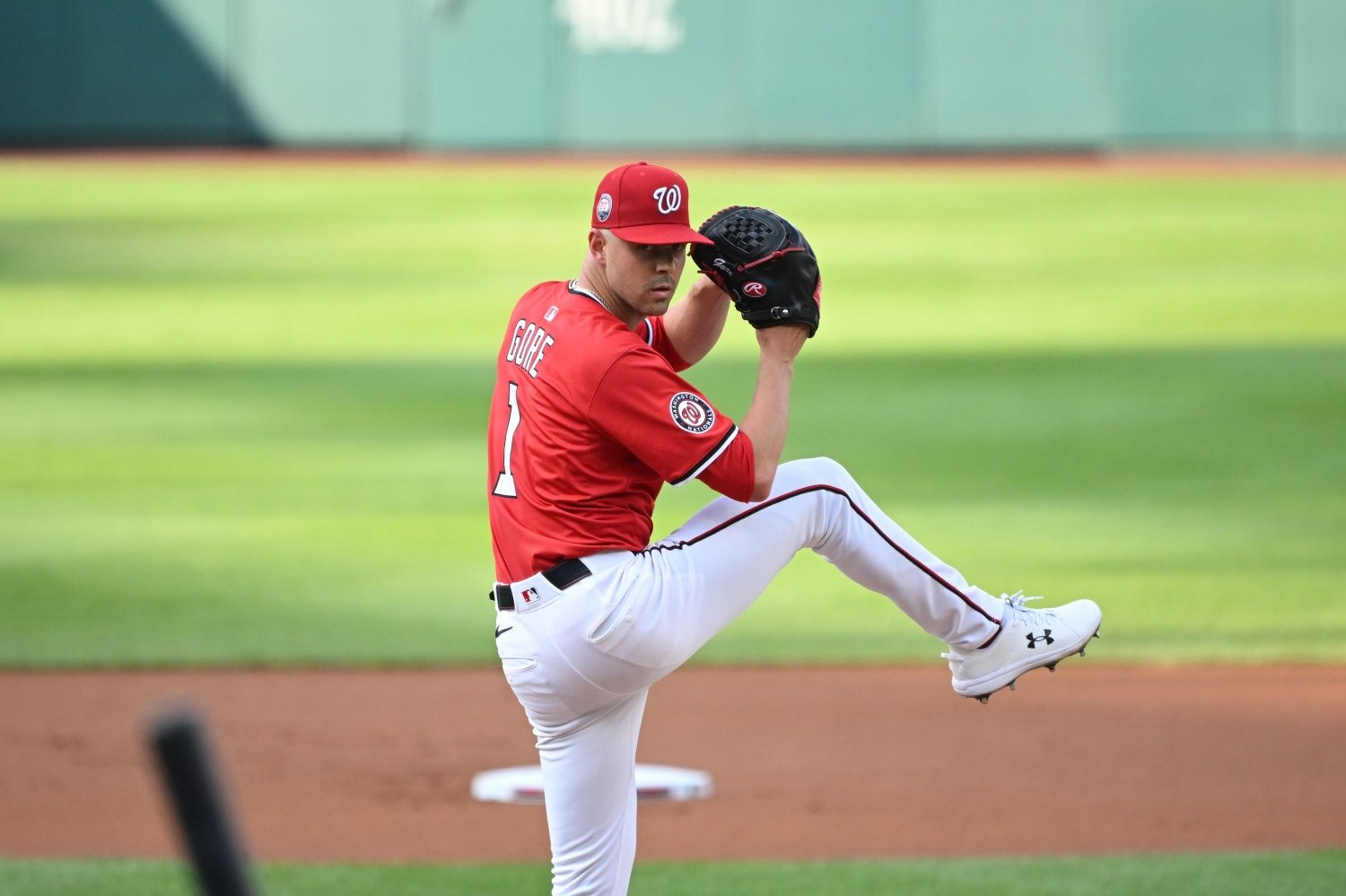 For the balance of this week, expect the Washington Nationals (and interim leader of baseball operations Michael DeBartolo Jr.) to focus tightly on the 2025 MLB Draft. It kicks off Sunday, and the Nationals have the first overall pick. Though the scouting department that will drive key decisions during the draft is largely intact, for now, the team is pouring all of its resources into making sure they complete the unwieldy job of assembling a top-tier draft class amid a major shakeup for the organization. After the All-Star Game, though, the team is expected to listen to offers for ace lefthander MacKenzie Gore, according to a source with knowledge of their thinking. It would be a surprise if ownership allowed Gore, one of the jewels of the Juan Soto trade and a 2025 All-Star, to be dealt by an interim executive, but with just two and a half years of team control remaining, Gore could be hard to extend, expensive to keep on year-to-year arbitration-fueled contracts, and insufficient to get the team back into contention by the end of 2027. That's before considering the possibility of a work stoppage that could truncate that season, and before accounting for the risk of an injury to Gore. They might never get a better package offer than the one DeBartolo will hear this month, if he can work the phones well. At 26, Gore doesn't quite qualify as a late bloomer, but he took a long time to find the level of performance he's attained for much of this first half. In 104 1/3 innings across 18 starts, he's struck out 131 batters, with an arsenal powered by a mid-90s fastball from the left side. He's slightly lowered his arm angle this year, tapping into more lateral break on his curveball, a slider he trusts much more, and a slight, salubrious change to his fastball and changeup shapes. Gore entered this season with three full years of service time, so unless he's sent to the minor leagues at some point this year or next (very unlikely, of course), he'll be eligible for free agency after 2027. He's making $2.89 million this year, but that salary will more than double for 2026 if he stays healthy. When he's right, though, he's worth all that and much more. His strikeout rate has jumped to 30.5% this year, while his walk rate has dipped to its lowest rate ever (7.9%). Contenders would line up to offer Washington a windfall for Gore, who pitched 166 innings in 2024 and won't run into an innings limit or (hopefully) even wear down at the end of this year. Initially, few within the game believed he would be available, but after Rizzo's firing, the team has indicated they will at least explore their options in the second half of this month. The Cubs implications are obvious. If dealt, Gore will be the prize acquisition of July, throughout the game. His combination of affordability, team control and playoff upside will push his price tag into the stratosphere—start with Owen Caissie and Jefferson Rojas, much the way A.J. Preller started with Gore, C.J. Abrams and James Wood when trading for Soto in 2022. However, no player could more obviously or substantially increase the Cubs' likelihood of playing deep into October. Gore is the perfect target, because while he might require almost all their top available talent from the farm, he wouldn't rob them of the financial flexibility they need to make other moves. They could trade for Gore and still supplement their lineup and/or bullpen, or even add another starter for depth and insurance—as long as they're comfortable taking on some money in the process. A trade for Gore is a longshot. The Cubs might decide they can't afford to risk as much talent as the trade would demand on one pitcher, or they might simply be outbid. Since the odds have shifted and a deal is at least vaguely possible, though, expect to hear the team and the All-Star southpaw linked in rumors at least a time or two between now and the end of the month.
 -
Image courtesy of © Rafael Suanes-Imagn Images For the balance of this week, expect the Washington Nationals (and interim leader of baseball operations Michael DeBartolo Jr.) to focus tightly on the 2025 MLB Draft. It kicks off Sunday, and the Nationals have the first overall pick. Though the scouting department that will drive key decisions during the draft is largely intact, for now, the team is pouring all of its resources into making sure they complete the unwieldy job of assembling a top-tier draft class amid a major shakeup for the organization. After the All-Star Game, though, the team is expected to listen to offers for ace lefthander MacKenzie Gore, according to a source with knowledge of their thinking. It would be a surprise if ownership allowed Gore, one of the jewels of the Juan Soto trade and a 2025 All-Star, to be dealt by an interim executive, but with just two and a half years of team control remaining, Gore could be hard to extend, expensive to keep on year-to-year arbitration-fueled contracts, and insufficient to get the team back into contention by the end of 2027. That's before considering the possibility of a work stoppage that could truncate that season, and before accounting for the risk of an injury to Gore. They might never get a better package offer than the one DeBartolo will hear this month, if he can work the phones well. At 26, Gore doesn't quite qualify as a late bloomer, but he took a long time to find the level of performance he's attained for much of this first half. In 104 1/3 innings across 18 starts, he's struck out 131 batters, with an arsenal powered by a mid-90s fastball from the left side. He's slightly lowered his arm angle this year, tapping into more lateral break on his curveball, a slider he trusts much more, and a slight, salubrious change to his fastball and changeup shapes. Gore entered this season with three full years of service time, so unless he's sent to the minor leagues at some point this year or next (very unlikely, of course), he'll be eligible for free agency after 2027. He's making $2.89 million this year, but that salary will more than double for 2026 if he stays healthy. When he's right, though, he's worth all that and much more. His strikeout rate has jumped to 30.5% this year, while his walk rate has dipped to its lowest rate ever (7.9%). Contenders would line up to offer Washington a windfall for Gore, who pitched 166 innings in 2024 and won't run into an innings limit or (hopefully) even wear down at the end of this year. Initially, few within the game believed he would be available, but after Rizzo's firing, the team has indicated they will at least explore their options in the second half of this month. The Cubs implications are obvious. If dealt, Gore will be the prize acquisition of July, throughout the game. His combination of affordability, team control and playoff upside will push his price tag into the stratosphere—start with Owen Caissie and Jefferson Rojas, much the way A.J. Preller started with Gore, C.J. Abrams and James Wood when trading for Soto in 2022. However, no player could more obviously or substantially increase the Cubs' likelihood of playing deep into October. Gore is the perfect target, because while he might require almost all their top available talent from the farm, he wouldn't rob them of the financial flexibility they need to make other moves. They could trade for Gore and still supplement their lineup and/or bullpen, or even add another starter for depth and insurance—as long as they're comfortable taking on some money in the process. A trade for Gore is a longshot. The Cubs might decide they can't afford to risk as much talent as the trade would demand on one pitcher, or they might simply be outbid. Since the odds have shifted and a deal is at least vaguely possible, though, expect to hear the team and the All-Star southpaw linked in rumors at least a time or two between now and the end of the month. View full article
-
.png.57b3f83ee6be078fdf8cded727c1eb3c.png) By the time the Minnesota Twins visited Wrigley Field last August, Pete Crow-Armstrong had begun the breakout that has made him one of the main characters of Major League Baseball in 2025. He wasn't yet the player he's been this season, but he'd made an important change to his mechanics that had unlocked some power, and that made it easier for him to stay in the lineup—where his defense and baserunning could lend him major value. That week, though, Byron Buxton was sidelined by back tightness, after he'd slammed into a wall making a catch in the previous series. The Twins' star center fielder missed the whole series. Thus, Tuesday night will be the first time that the same center field is graced by both Crow-Armstrong and Buxton on the same day. It's an exhilarating moment, for fans of each of the teams involved and for the game itself. When the All-Star Game begins in Georgia one week from now, Crow-Armstrong will be in center field for the National League. It's very likely that, before that game is over, Buxton will take over in center for the American League, the local product made good. This week, however, the two get to put on their own exhibition, taking center stage in one of the game's most dazzling jewel-box ballparks. Not only are these baseball's two best center fielders so far, but any argument for anyone else feels a bit faint—a bit pale and silly. Julio Rodríguez and Jackson Chourio have the kind of talent to keep pace with these two, but neither is having that kind of season. Jackson Merrill has been diminished by injuries after an extraordinary rookie season, but his tools don't match those of Crow-Armstrong and Buxton. If you buy unreservedly into the defense of Ceddanne Rafaela or Jake Meyers, you can put them almost on the same level for this year, alone, but eventually, you have to reconcile the numbers with what you see when the players all take the field. Nothing any of these others have done, this year or in the past, quite allows you o do that the way you can with Buxton and Crow-Armstrong. The version of the game these two play is pulsing, sizzling, searing. It transcends their numbers—although, this year, their numbers are sterling. They take over games in ways no other players seem capable of, thanks to a rare combination of tools, skills, and baseball IQ. In many ways, they're mirror images of one another, sharing obvious similarities but defined by some of their differences. Buxton is a strapping 6-foot-2, listed at 189 pounds (but probably lighter) when he came up in 2015, but now a sturdy 210 pounds (probably heavier, though only slightly). He's a Black man from small-town southeast Georgia, and a right-handed hitter, wearing No. 25 on his back. Crow-Armstrong is a flat 6 feet, and is listed at 190 pounds. Unlike the version of Buxton who weighed that much a decade ago, though, he looks almost maxed-out at that weight; his frame doesn't imply forthcoming growth the way Buxton's did. The son of two actors, he's a White man from a wealthy section of Los Angeles, and a left-handed hitter. He switched to No. 4 this year, but came up wearing 52—Buxton's number, flipped. Once the game begins, though, their similarities take over. Both have the same, lonely rough edge on their games: an extremely aggressive approach at the plate. Both have major power, beyond what you'd expect—especially from Crow-Armstrong, but even from the broad-shouldered Buxton. Both have explosive speed, which shows up in the near-impossibility of turning double plays against them and in their ability to steal bases almost without risk. (Indeed, their efficiency on steal attempts is as notable as the volume of bases they take.) Both also have the rare gifts that make up an exceptional defensive center fielder. There's the speed, of course, but also great arm strength, tremendous reads and the ability to adjust in whatever way is necessary to make the play at the last moment. Each player takes pride in their glovework, but each also takes such immense pleasure in a clutch hit that they neither can nor attempt to hide it. Each plays with an intensity and a fearlessness that occasionally imperils them, but that also colors in their game with the detail and dimension that turns a very good player into a great one. Buxton has stretched his body past its breaking point many times, either by colliding with things too recklessly or by moving so ferociously that his ligaments and tendons simply couldn't keep up. At times, it's looked like Crow-Armstrong would do the same thing, but his great jumps in the outfield have gotten him to most balls with time to spare, and he's been wise enough not to try to run through the bricks and ivy at Wrigley Field. Playing every aspect of the game well. Pushing the capacity of one player to become the focal point of an entire game past its usual limits. The frisson of danger that runs up your spine each time they vault themselves after a drive into the gap; the shockwave they send through the ball when they catch it clean. Although Aaron Judge and Shohei Ohtani are the best players in baseball, and although it might be wiser to invest in Bobby Witt Jr. or Juan Soto than in either Buxton or Crow-Armstrong, none of those players are as vividly great—as sparking with ways to win games that don't both to hide themselves—as these two are. Buxton leads MLB with six games this year in which he's both hit a home run and stolen a base. Crow-Armstrong uses his balletic footwork to stop and thwart baserunners, turning a strong arm up to maybe the game's most useful. Buxton robbed White Sox outfielder Andrew Benintendi of a game-flipping gapper and sealed a Twins win in April, on a play even the other center fielders all around him marveled at. Crow-Armstrong created a run last month when he stole third base, then caught the third baseman in a tractor beam, froze him and beat him back to the base on a ground ball, setting up a rally. Each player had a sequence in mid-June in which they made a rally-stopping, diving catch on a play in left-center field, then hit their longest home run of the season in the next half-inning. Buxton did it on June 11, taking runs off the board for the visiting Rangers with a catch to end the top of the third: ek1MajlfWGw0TUFRPT1fQWxSU1hGMVJVVkFBQ0ZwV1VBQUhWUWRWQUFBQ0FBVUFVMTBDQkZZRFZBRUdCRmNE.mp4 He then hit a ball 479 feet with two on in the bottom half of that frame. ek1MajlfWGw0TUFRPT1fQmdKUVYxd01VbFFBWFZFR0J3QUhDUVJmQUZsV1ZsQUFBRkJUQmdFRlZRZGNWVkZm.mp4 Six days later, Crow-Armstrong turned a hit that would have put the tying run on base in the top of the eighth into an out. akQ5Z0FfWGw0TUFRPT1fVjFKV1VnQUhWMVlBV2xjRVh3QUhBRlVDQUFOUVV3TUFDMUlIVVFkVVYxWUVDQUlD.mp4 Leading off the bottom of that frame, he hit one high off the video board above the right-field wall. Each of these two can turn a run or two for the opponents into none, and then create runs for their own team in the blink of an eye. Each has a good chance to hit 30 or more homers and steal 30 or more bases this year. Crow-Armstrong and Buxton are superstars, at their best. This might be the end of Buxton's prime, and Crow-Armstrong might go through plenty of rough patches in years ahead. That's why this matchup is so special. Two uniquely brilliant players will take the field in turns this week, at their absolute best. More than just a trailer for it, this could be the game's best center fielders' own private version of the All-Star Game.
By the time the Minnesota Twins visited Wrigley Field last August, Pete Crow-Armstrong had begun the breakout that has made him one of the main characters of Major League Baseball in 2025. He wasn't yet the player he's been this season, but he'd made an important change to his mechanics that had unlocked some power, and that made it easier for him to stay in the lineup—where his defense and baserunning could lend him major value. That week, though, Byron Buxton was sidelined by back tightness, after he'd slammed into a wall making a catch in the previous series. The Twins' star center fielder missed the whole series. Thus, Tuesday night will be the first time that the same center field is graced by both Crow-Armstrong and Buxton on the same day. It's an exhilarating moment, for fans of each of the teams involved and for the game itself. When the All-Star Game begins in Georgia one week from now, Crow-Armstrong will be in center field for the National League. It's very likely that, before that game is over, Buxton will take over in center for the American League, the local product made good. This week, however, the two get to put on their own exhibition, taking center stage in one of the game's most dazzling jewel-box ballparks. Not only are these baseball's two best center fielders so far, but any argument for anyone else feels a bit faint—a bit pale and silly. Julio Rodríguez and Jackson Chourio have the kind of talent to keep pace with these two, but neither is having that kind of season. Jackson Merrill has been diminished by injuries after an extraordinary rookie season, but his tools don't match those of Crow-Armstrong and Buxton. If you buy unreservedly into the defense of Ceddanne Rafaela or Jake Meyers, you can put them almost on the same level for this year, alone, but eventually, you have to reconcile the numbers with what you see when the players all take the field. Nothing any of these others have done, this year or in the past, quite allows you o do that the way you can with Buxton and Crow-Armstrong. The version of the game these two play is pulsing, sizzling, searing. It transcends their numbers—although, this year, their numbers are sterling. They take over games in ways no other players seem capable of, thanks to a rare combination of tools, skills, and baseball IQ. In many ways, they're mirror images of one another, sharing obvious similarities but defined by some of their differences. Buxton is a strapping 6-foot-2, listed at 189 pounds (but probably lighter) when he came up in 2015, but now a sturdy 210 pounds (probably heavier, though only slightly). He's a Black man from small-town southeast Georgia, and a right-handed hitter, wearing No. 25 on his back. Crow-Armstrong is a flat 6 feet, and is listed at 190 pounds. Unlike the version of Buxton who weighed that much a decade ago, though, he looks almost maxed-out at that weight; his frame doesn't imply forthcoming growth the way Buxton's did. The son of two actors, he's a White man from a wealthy section of Los Angeles, and a left-handed hitter. He switched to No. 4 this year, but came up wearing 52—Buxton's number, flipped. Once the game begins, though, their similarities take over. Both have the same, lonely rough edge on their games: an extremely aggressive approach at the plate. Both have major power, beyond what you'd expect—especially from Crow-Armstrong, but even from the broad-shouldered Buxton. Both have explosive speed, which shows up in the near-impossibility of turning double plays against them and in their ability to steal bases almost without risk. (Indeed, their efficiency on steal attempts is as notable as the volume of bases they take.) Both also have the rare gifts that make up an exceptional defensive center fielder. There's the speed, of course, but also great arm strength, tremendous reads and the ability to adjust in whatever way is necessary to make the play at the last moment. Each player takes pride in their glovework, but each also takes such immense pleasure in a clutch hit that they neither can nor attempt to hide it. Each plays with an intensity and a fearlessness that occasionally imperils them, but that also colors in their game with the detail and dimension that turns a very good player into a great one. Buxton has stretched his body past its breaking point many times, either by colliding with things too recklessly or by moving so ferociously that his ligaments and tendons simply couldn't keep up. At times, it's looked like Crow-Armstrong would do the same thing, but his great jumps in the outfield have gotten him to most balls with time to spare, and he's been wise enough not to try to run through the bricks and ivy at Wrigley Field. Playing every aspect of the game well. Pushing the capacity of one player to become the focal point of an entire game past its usual limits. The frisson of danger that runs up your spine each time they vault themselves after a drive into the gap; the shockwave they send through the ball when they catch it clean. Although Aaron Judge and Shohei Ohtani are the best players in baseball, and although it might be wiser to invest in Bobby Witt Jr. or Juan Soto than in either Buxton or Crow-Armstrong, none of those players are as vividly great—as sparking with ways to win games that don't both to hide themselves—as these two are. Buxton leads MLB with six games this year in which he's both hit a home run and stolen a base. Crow-Armstrong uses his balletic footwork to stop and thwart baserunners, turning a strong arm up to maybe the game's most useful. Buxton robbed White Sox outfielder Andrew Benintendi of a game-flipping gapper and sealed a Twins win in April, on a play even the other center fielders all around him marveled at. Crow-Armstrong created a run last month when he stole third base, then caught the third baseman in a tractor beam, froze him and beat him back to the base on a ground ball, setting up a rally. Each player had a sequence in mid-June in which they made a rally-stopping, diving catch on a play in left-center field, then hit their longest home run of the season in the next half-inning. Buxton did it on June 11, taking runs off the board for the visiting Rangers with a catch to end the top of the third: ek1MajlfWGw0TUFRPT1fQWxSU1hGMVJVVkFBQ0ZwV1VBQUhWUWRWQUFBQ0FBVUFVMTBDQkZZRFZBRUdCRmNE.mp4 He then hit a ball 479 feet with two on in the bottom half of that frame. ek1MajlfWGw0TUFRPT1fQmdKUVYxd01VbFFBWFZFR0J3QUhDUVJmQUZsV1ZsQUFBRkJUQmdFRlZRZGNWVkZm.mp4 Six days later, Crow-Armstrong turned a hit that would have put the tying run on base in the top of the eighth into an out. akQ5Z0FfWGw0TUFRPT1fVjFKV1VnQUhWMVlBV2xjRVh3QUhBRlVDQUFOUVV3TUFDMUlIVVFkVVYxWUVDQUlD.mp4 Leading off the bottom of that frame, he hit one high off the video board above the right-field wall. Each of these two can turn a run or two for the opponents into none, and then create runs for their own team in the blink of an eye. Each has a good chance to hit 30 or more homers and steal 30 or more bases this year. Crow-Armstrong and Buxton are superstars, at their best. This might be the end of Buxton's prime, and Crow-Armstrong might go through plenty of rough patches in years ahead. That's why this matchup is so special. Two uniquely brilliant players will take the field in turns this week, at their absolute best. More than just a trailer for it, this could be the game's best center fielders' own private version of the All-Star Game. -
Image courtesy of © Jordan Johnson-Imagn Images, © Katie Stratman-Imagn Images By the time the Minnesota Twins visited Wrigley Field last August, Pete Crow-Armstrong had begun the breakout that has made him one of the main characters of Major League Baseball in 2025. He wasn't yet the player he's been this season, but he'd made an important change to his mechanics that had unlocked some power, and that made it easier for him to stay in the lineup—where his defense and baserunning could lend him major value. That week, though, Byron Buxton was sidelined by back tightness, after he'd slammed into a wall making a catch in the previous series. The Twins' star center fielder missed the whole series. Thus, Tuesday night will be the first time that the same center field is graced by both Crow-Armstrong and Buxton on the same day. It's an exhilarating moment, for fans of each of the teams involved and for the game itself. When the All-Star Game begins in Georgia one week from now, Crow-Armstrong will be in center field for the National League. It's very likely that, before that game is over, Buxton will take over in center for the American League, the local product made good. This week, however, the two get to put on their own exhibition, taking center stage in one of the game's most dazzling jewel-box ballparks. Not only are these baseball's two best center fielders so far, but any argument for anyone else feels a bit faint—a bit pale and silly. Julio Rodríguez and Jackson Chourio have the kind of talent to keep pace with these two, but neither is having that kind of season. Jackson Merrill has been diminished by injuries after an extraordinary rookie season, but his tools don't match those of Crow-Armstrong and Buxton. If you buy unreservedly into the defense of Ceddanne Rafaela or Jake Meyers, you can put them almost on the same level for this year, alone, but eventually, you have to reconcile the numbers with what you see when the players all take the field. Nothing any of these others have done, this year or in the past, quite allows you o do that the way you can with Buxton and Crow-Armstrong. The version of the game these two play is pulsing, sizzling, searing. It transcends their numbers—although, this year, their numbers are sterling. They take over games in ways no other players seem capable of, thanks to a rare combination of tools, skills, and baseball IQ. In many ways, they're mirror images of one another, sharing obvious similarities but defined by some of their differences. Buxton is a strapping 6-foot-2, listed at 189 pounds (but probably lighter) when he came up in 2015, but now a sturdy 210 pounds (probably heavier, though only slightly). He's a Black man from small-town southeast Georgia, and a right-handed hitter, wearing No. 25 on his back. Crow-Armstrong is a flat 6 feet, and is listed at 190 pounds. Unlike the version of Buxton who weighed that much a decade ago, though, he looks almost maxed-out at that weight; his frame doesn't imply forthcoming growth the way Buxton's did. The son of two actors, he's a White man from a wealthy section of Los Angeles, and a left-handed hitter. He switched to No. 4 this year, but came up wearing 52—Buxton's number, flipped. Once the game begins, though, their similarities take over. Both have the same, lonely rough edge on their games: an extremely aggressive approach at the plate. Both have major power, beyond what you'd expect—especially from Crow-Armstrong, but even from the broad-shouldered Buxton. Both have explosive speed, which shows up in the near-impossibility of turning double plays against them and in their ability to steal bases almost without risk. (Indeed, their efficiency on steal attempts is as notable as the volume of bases they take.) Both also have the rare gifts that make up an exceptional defensive center fielder. There's the speed, of course, but also great arm strength, tremendous reads and the ability to adjust in whatever way is necessary to make the play at the last moment. Each player takes pride in their glovework, but each also takes such immense pleasure in a clutch hit that they neither can nor attempt to hide it. Each plays with an intensity and a fearlessness that occasionally imperils them, but that also colors in their game with the detail and dimension that turns a very good player into a great one. Buxton has stretched his body past its breaking point many times, either by colliding with things too recklessly or by moving so ferociously that his ligaments and tendons simply couldn't keep up. At times, it's looked like Crow-Armstrong would do the same thing, but his great jumps in the outfield have gotten him to most balls with time to spare, and he's been wise enough not to try to run through the bricks and ivy at Wrigley Field. Playing every aspect of the game well. Pushing the capacity of one player to become the focal point of an entire game past its usual limits. The frisson of danger that runs up your spine each time they vault themselves after a drive into the gap; the shockwave they send through the ball when they catch it clean. Although Aaron Judge and Shohei Ohtani are the best players in baseball, and although it might be wiser to invest in Bobby Witt Jr. or Juan Soto than in either Buxton or Crow-Armstrong, none of those players are as vividly great—as sparking with ways to win games that don't both to hide themselves—as these two are. Buxton leads MLB with six games this year in which he's both hit a home run and stolen a base. Crow-Armstrong uses his balletic footwork to stop and thwart baserunners, turning a strong arm up to maybe the game's most useful. Buxton robbed White Sox outfielder Andrew Benintendi of a game-flipping gapper and sealed a Twins win in April, on a play even the other center fielders all around him marveled at. Crow-Armstrong created a run last month when he stole third base, then caught the third baseman in a tractor beam, froze him and beat him back to the base on a ground ball, setting up a rally. Each player had a sequence in mid-June in which they made a rally-stopping, diving catch on a play in left-center field, then hit their longest home run of the season in the next half-inning. Buxton did it on June 11, taking runs off the board for the visiting Rangers with a catch to end the top of the third: ek1MajlfWGw0TUFRPT1fQWxSU1hGMVJVVkFBQ0ZwV1VBQUhWUWRWQUFBQ0FBVUFVMTBDQkZZRFZBRUdCRmNE.mp4 He then hit a ball 479 feet with two on in the bottom half of that frame. ek1MajlfWGw0TUFRPT1fQmdKUVYxd01VbFFBWFZFR0J3QUhDUVJmQUZsV1ZsQUFBRkJUQmdFRlZRZGNWVkZm.mp4 Six days later, Crow-Armstrong turned a hit that would have put the tying run on base in the top of the eighth into an out. akQ5Z0FfWGw0TUFRPT1fVjFKV1VnQUhWMVlBV2xjRVh3QUhBRlVDQUFOUVV3TUFDMUlIVVFkVVYxWUVDQUlD.mp4 Leading off the bottom of that frame, he hit one high off the video board above the right-field wall. Each of these two can turn a run or two for the opponents into none, and then create runs for their own team in the blink of an eye. Each has a good chance to hit 30 or more homers and steal 30 or more bases this year. Crow-Armstrong and Buxton are superstars, at their best. This might be the end of Buxton's prime, and Crow-Armstrong might go through plenty of rough patches in years ahead. That's why this matchup is so special. Two uniquely brilliant players will take the field in turns this week, at their absolute best. More than just a trailer for it, this could be the game's best center fielders' own private version of the All-Star Game. View full article
-
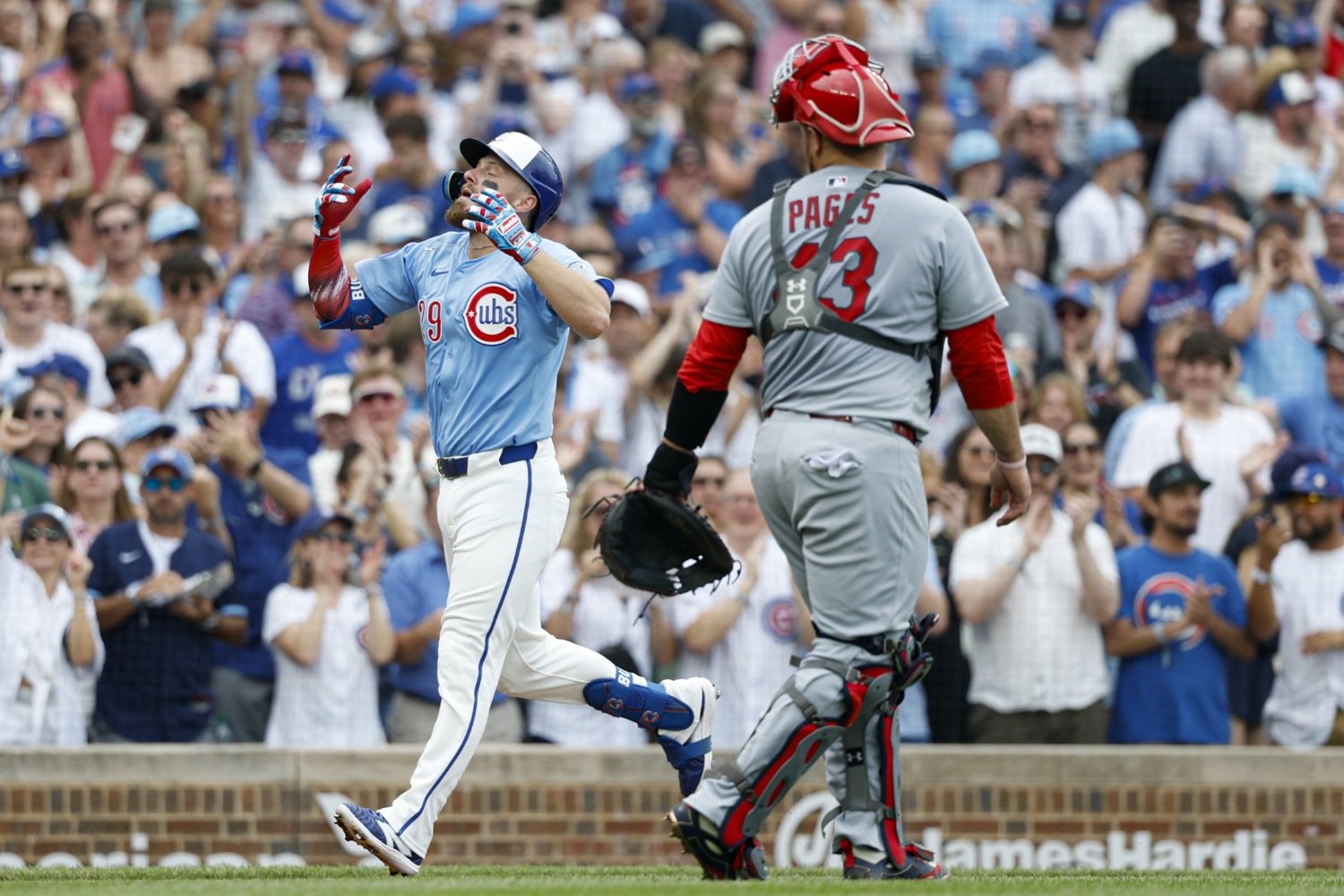 The first duty of the big-league batter is to be on time for the fastball. That's the ante; that's how you demonstrate that you deserve at least a brief look in the majors. It's much easier said than done, of course, because modern pitchers throw so hard and have such devastating secondary offerings, but you can't really move on to doing anything else well until you're consistently on time for heaters in the upper 90s, with life and location. Michael Busch produced fairly well against fastballs last year, but this season, he's taken another big step forward. Busch whiffed on 21.3% of swings against fastballs in 2024, but that figure is down to 12.3% this year. Since he crushes the heater when he makes contact with it (92.2 mph exit velocity and a 17° launch angle), that extra helping of contact on the heat goes a very long way—sometimes literally. A more selectively aggressive approach has unlocked Busch's power this year. He's swinging at 37.4% of first pitches within at-bats, up from 32.2% last year, thereby giving pitchers no quarter if they try to sneak a strike past him. Teeing off more early in counts means pulling and lifting the ball better, but not necessarily pulling off the ball more. Indeed, though his pull rate is up significantly in 2025, he's also figured out how to use the cozy dimensions of left-center at Wrigley Field to greater advantage than he had in the past. Here's his spray chart for 2024. Here's the same chart for 2025. Note how he's traded in a lot of outs down the left-field line (although some of those were somewhat promising line drives, and not every hitter would have recognized the need to sacrifice them for a different kind of contact) for more balls to left-center and harder, deeper flies to the pull field in right. Always having had a discerning eye, Busch is spitting on pitches outside the zone and accepting his walks just as well this year as last year. Within the zone, on the other hand, he's much more dangerous. His contact rate within the zone is up from 79.6% to 84.4%, thanks to staying closed with his front shoulder longer and accelerating later within the hitting zone. With a strikingly similar swing path and ideal timing zone to Pete Crow-Armstrong, Busch can feed off what Crow-Armstrong does and sees from opposing pitchers, usually batting a spot or two behind Crow-Armstrong in the lineup. He doesn't have Crow-Armstrong's bat speed—not by a longshot—but his swing is much more compact. Each of them swings with a steep tilt of the bat and tries to catch the ball while going uphill with the barrel. Each generates their best contact when they pull it in the air, which might sound obvious but isn't true of all batters. Busch's keen eye more than offsets the lack of relative bat speed, and while he and Crow-Armstrong are very different in offensive production profile, they're playing off each other wonderfully. On a team chock-full of offensive stars—with Kyle Tucker having his customary superstar-caliber season; Crow-Armstrong enjoying a dazzling breakout; Seiya Suzuki tapping into his power for the first time since coming to the United States; and Carson Kelly hitting like Johnny Bench—Busch has the best overall numbers. It's never a good idea to evaluate a player when you know they're at a local maximum or minimum; he obviously isn't better than Tucker on a true-talent level. After the weekend he just had against the arch-rival Cardinals, though, Busch has announced himself as a legitimate slugging star.
 -
Image courtesy of © Kamil Krzaczynski-Imagn Images The first duty of the big-league batter is to be on time for the fastball. That's the ante; that's how you demonstrate that you deserve at least a brief look in the majors. It's much easier said than done, of course, because modern pitchers throw so hard and have such devastating secondary offerings, but you can't really move on to doing anything else well until you're consistently on time for heaters in the upper 90s, with life and location. Michael Busch produced fairly well against fastballs last year, but this season, he's taken another big step forward. Busch whiffed on 21.3% of swings against fastballs in 2024, but that figure is down to 12.3% this year. Since he crushes the heater when he makes contact with it (92.2 mph exit velocity and a 17° launch angle), that extra helping of contact on the heat goes a very long way—sometimes literally. A more selectively aggressive approach has unlocked Busch's power this year. He's swinging at 37.4% of first pitches within at-bats, up from 32.2% last year, thereby giving pitchers no quarter if they try to sneak a strike past him. Teeing off more early in counts means pulling and lifting the ball better, but not necessarily pulling off the ball more. Indeed, though his pull rate is up significantly in 2025, he's also figured out how to use the cozy dimensions of left-center at Wrigley Field to greater advantage than he had in the past. Here's his spray chart for 2024. Here's the same chart for 2025. Note how he's traded in a lot of outs down the left-field line (although some of those were somewhat promising line drives, and not every hitter would have recognized the need to sacrifice them for a different kind of contact) for more balls to left-center and harder, deeper flies to the pull field in right. Always having had a discerning eye, Busch is spitting on pitches outside the zone and accepting his walks just as well this year as last year. Within the zone, on the other hand, he's much more dangerous. His contact rate within the zone is up from 79.6% to 84.4%, thanks to staying closed with his front shoulder longer and accelerating later within the hitting zone. With a strikingly similar swing path and ideal timing zone to Pete Crow-Armstrong, Busch can feed off what Crow-Armstrong does and sees from opposing pitchers, usually batting a spot or two behind Crow-Armstrong in the lineup. He doesn't have Crow-Armstrong's bat speed—not by a longshot—but his swing is much more compact. Each of them swings with a steep tilt of the bat and tries to catch the ball while going uphill with the barrel. Each generates their best contact when they pull it in the air, which might sound obvious but isn't true of all batters. Busch's keen eye more than offsets the lack of relative bat speed, and while he and Crow-Armstrong are very different in offensive production profile, they're playing off each other wonderfully. On a team chock-full of offensive stars—with Kyle Tucker having his customary superstar-caliber season; Crow-Armstrong enjoying a dazzling breakout; Seiya Suzuki tapping into his power for the first time since coming to the United States; and Carson Kelly hitting like Johnny Bench—Busch has the best overall numbers. It's never a good idea to evaluate a player when you know they're at a local maximum or minimum; he obviously isn't better than Tucker on a true-talent level. After the weekend he just had against the arch-rival Cardinals, though, Busch has announced himself as a legitimate slugging star. View full article
-
Image courtesy of © David Banks-Imagn Images Matthew Boyd hasn't made more than 15 starts or reached 100 innings pitched since before 'social' and 'distancing' ceased to be antonyms. This season, however, he's not only held up (under a carefully managed workload, but no insignificant one), but pitched so well that there was little doubt he would be named to the National League All-Star team when it was announced Sunday evening. Now, it's official: Boyd, at 34 years old, has earned that recognition for the first time in his 11-year career. Ruthlessly efficient and consistent, Boyd is running a career-low 5.6% walk rate, and has 12 quality starts in his 17 turns in the rotation. Among National League starters, only Spencer Schwellenbach, Zach Wheeler and Logan Webb have more. Boyd has never even reached 100 pitches in a game and has only bequeathed three runners to his bullpen all year, even as he's been asked to soak up an extra out or three in games at various points during the team's injury-ravaged season. He's made myriad small adjustments—a lower arm slot, which has begotten more run on his fastball; a firmer, tighter slider, some shifts in how he mixes and sequences his five-pitch arsenal—but there's no grand reinvention here. Boyd has merely benefited from the coincidence of being healthy and enlightened by age and experience, and he's finally getting the chance to show how good he has often been at points in his past. Had injuries not derailed his career for half a decade, he might have gotten this good long ago. Boyd was almost at this level of performance in 2018 and 2019, but fell victim to bad bouts of go-feritis, fueled by a breaking ball he didn't yet have good command of and a lack of feel for the changeup that has become his best secondary pitch. He's matured and improved, even though it was often hard to see it happening between trips to the injured list. The Cubs were excited to land him on a two-year deal this winter, even though the price tag ($29 million) made several other front offices raise their eyebrows and clutch their purse strings tighter. Now, Boyd is the linchpin of the Cubs rotation. Shota Imanaga is still better, when both are firing on all cylinders, but Imanaga is just making his full return from a hamstring strain that sidelined him for nearly two months. Justin Steele is out for the season; Jameson Taillon won't be back until at least mid-August. Ben Brown is in Iowa, and Colin Rea and Cade Horton look serviceable—but only just. Boyd is holding together a rotation that needs reinforcements, and while the team will surely look to make those additions over the next few weeks, Boyd's performance is how they can so confidently assert themselves in those pursuits. He's been a godsend, and in all likelihood, the Cubs have been the right place for him, too. He won't fly to Atlanta alone, of course. Already named starting outfielders on the NL squad, Kyle Tucker and Pete Crow-Armstrong will join him at the midsummer festival. The Cubs are no juggernaut, but the collection of players who will represent them in the league's jewel event—two offseason pickups, of very different scales and sensibilities, and their homegrown could-be superstar—speaks to the potential of this team. View full article
-
- 1
-

-
- matthew boyd
- pete crow armstrong
- (and 1 more)
-
 Matthew Boyd hasn't made more than 15 starts or reached 100 innings pitched since before 'social' and 'distancing' ceased to be antonyms. This season, however, he's not only held up (under a carefully managed workload, but no insignificant one), but pitched so well that there was little doubt he would be named to the National League All-Star team when it was announced Sunday evening. Now, it's official: Boyd, at 34 years old, has earned that recognition for the first time in his 11-year career. Ruthlessly efficient and consistent, Boyd is running a career-low 5.6% walk rate, and has 12 quality starts in his 17 turns in the rotation. Among National League starters, only Spencer Schwellenbach, Zach Wheeler and Logan Webb have more. Boyd has never even reached 100 pitches in a game and has only bequeathed three runners to his bullpen all year, even as he's been asked to soak up an extra out or three in games at various points during the team's injury-ravaged season. He's made myriad small adjustments—a lower arm slot, which has begotten more run on his fastball; a firmer, tighter slider, some shifts in how he mixes and sequences his five-pitch arsenal—but there's no grand reinvention here. Boyd has merely benefited from the coincidence of being healthy and enlightened by age and experience, and he's finally getting the chance to show how good he has often been at points in his past. Had injuries not derailed his career for half a decade, he might have gotten this good long ago. Boyd was almost at this level of performance in 2018 and 2019, but fell victim to bad bouts of go-feritis, fueled by a breaking ball he didn't yet have good command of and a lack of feel for the changeup that has become his best secondary pitch. He's matured and improved, even though it was often hard to see it happening between trips to the injured list. The Cubs were excited to land him on a two-year deal this winter, even though the price tag ($29 million) made several other front offices raise their eyebrows and clutch their purse strings tighter. Now, Boyd is the linchpin of the Cubs rotation. Shota Imanaga is still better, when both are firing on all cylinders, but Imanaga is just making his full return from a hamstring strain that sidelined him for nearly two months. Justin Steele is out for the season; Jameson Taillon won't be back until at least mid-August. Ben Brown is in Iowa, and Colin Rea and Cade Horton look serviceable—but only just. Boyd is holding together a rotation that needs reinforcements, and while the team will surely look to make those additions over the next few weeks, Boyd's performance is how they can so confidently assert themselves in those pursuits. He's been a godsend, and in all likelihood, the Cubs have been the right place for him, too. He won't fly to Atlanta alone, of course. Already named starting outfielders on the NL squad, Kyle Tucker and Pete Crow-Armstrong will join him at the midsummer festival. The Cubs are no juggernaut, but the collection of players who will represent them in the league's jewel event—two offseason pickups, of very different scales and sensibilities, and their homegrown could-be superstar—speaks to the potential of this team.
 -
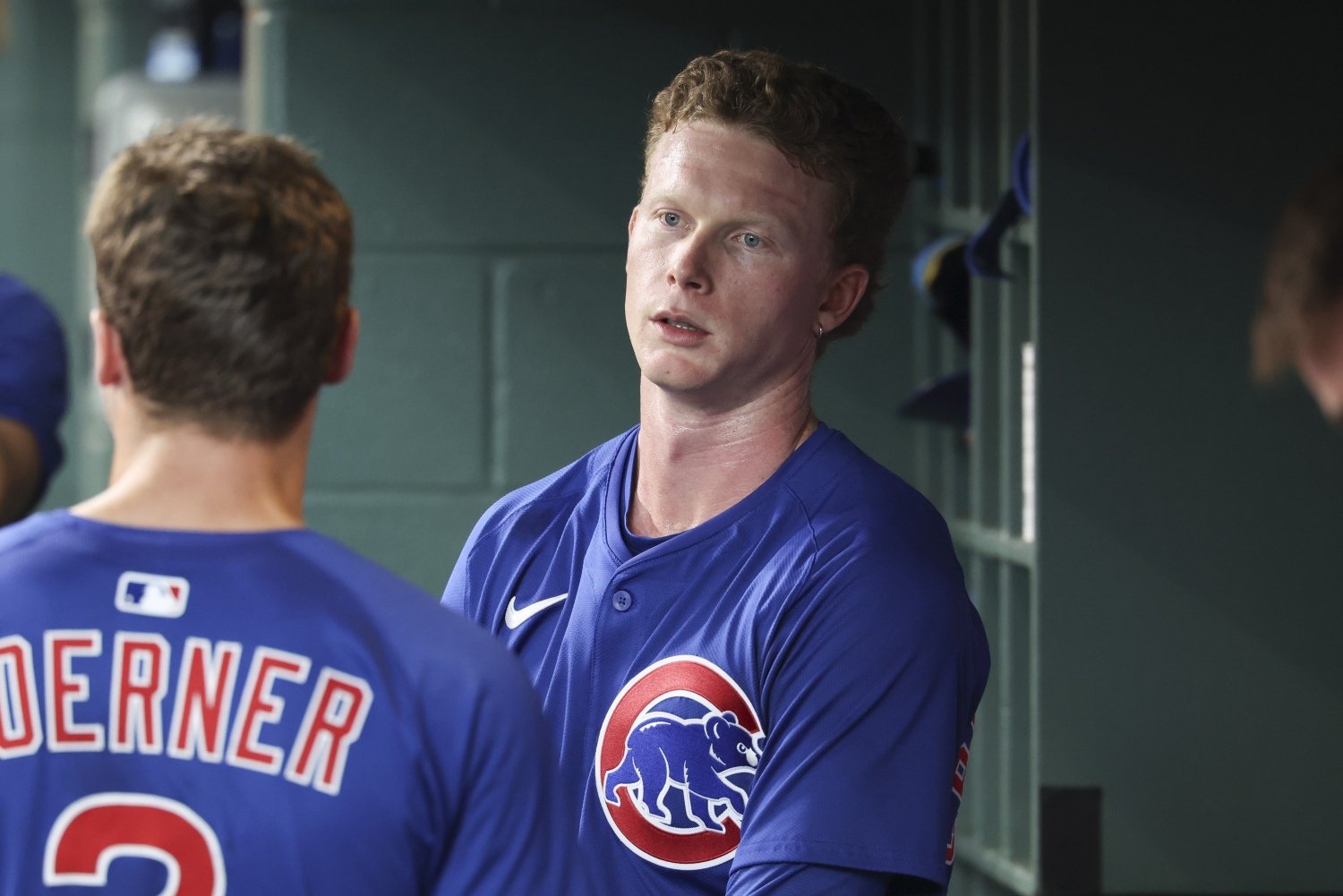 For the season, Pete Crow-Armstrong's OBP has slipped below .300. That underscores the risk inherent to his free-swinging approach, and it's not unfamiliar to Cubs fans. Javier Báez, for whom Crow-Armstrong was acquired back in 2021, was as electrifying as Crow-Armstrong, and could go on stretches of dominating in all facets of the game, just as Crow-Armstrong does. However, when Báez would go into even a fairly normal funk, the cracks that existed in the foundations of his game would be rapidly exposed. Players who hardly ever walk (and especially those who don't walk because they swing at an extreme rate, making it hard for them to consistently barrel the ball) have a lower floor than those with more well-roundedness to their games, of course, but when you follow such a player over the course of their career, you also come to realize that they're often closer to that floor than they feel. That's not to say that Crow-Armstrong—who remains one of the best defensive players in baseball; still steals bases when he does get on; and has hit seven home runs and seven doubles over that 30-game slide—is not helping the Cubs at all right now. It's just that his star has quickly lost a bit of its heat, due to the way he's racking up outs. Swinging this much does limit one's capacity to dominate, even if Crow-Armstrong's unexpected ability to fully tap into his power has allowed him to live closer to that ceiling than anyone expected three months ago. For the past month, Crow-Armstrong is swinging at over 80% of pitches inside the zone and over half of those outside the zone. The effect on his overall production (wOBA, in blue) is easy to see. We're not back to Square One, here, because of that newfound power. Crow-Armstrong was much more of a mess at the beginning of this season and at this time last year than he is right now. However, if he wants to heat back up and be an above-average offensive player—let alone the MVP candidate he was for parts of April and throughout May—he needs to swing less. Last August, when he heated up for the first time in his big-league career, it was by cutting down on chases. Earlier this year, it was by cutting down on swings within the zone, waiting not just for a strike, but for a pitch he could truly drive. We've seen Crow-Armstrong at his worst, and at his best. Right now, he's comfortably between the two extremes. Because of the nature of his profile, though, that's a bit less comforting than it sounds. Michael Busch should resume his place in the cleanup spot against right-handed pitchers, for the foreseeable future, and Crow-Armstrong should go back to batting sixth. Even then, though, the Cubs would like to be able to expect more from their center fielder than they've gotten for the last few weeks. It's not only Báez who illustrates the risks associated with not making this adjustment. Cubs fans who remember the early 2000s know an even better one. Corey Patterson's breakout 2003 campaign was thwarted by a disastrous knee injury, but even before he got hurt, there were signs of trouble. His extremely aggressive approach led to a steep dropoff in production early that summer, as the league got a firmer handle on how to attack him. Throughout 2004, he had very high peaks and very low valleys, because his approach dictated volatility. In 2005, when he settled in at an in-zone swing rate right near Crow-Armstrong's current one, his career cratered and the Cubs (eventually) gave up on him. Crow-Armstrong isn't yet in danger of that same fate, and we'll never know how things might have been different if Patterson hadn't gotten hurt. One thing is clear, though: this extreme approach requires that Crow-Armstrong make major changes when the league makes major changes in how they attack him. So far, he's fighting to keep up with that rapid pace of adjustment. Since he's already demonstrated a certain brilliance in that area, though, he's earned the benefit of the doubt for a little while longer.
 -
Image courtesy of © Troy Taormina-Imagn Images For the season, Pete Crow-Armstrong's OBP has slipped below .300. That underscores the risk inherent to his free-swinging approach, and it's not unfamiliar to Cubs fans. Javier Báez, for whom Crow-Armstrong was acquired back in 2021, was as electrifying as Crow-Armstrong, and could go on stretches of dominating in all facets of the game, just as Crow-Armstrong does. However, when Báez would go into even a fairly normal funk, the cracks that existed in the foundations of his game would be rapidly exposed. Players who hardly ever walk (and especially those who don't walk because they swing at an extreme rate, making it hard for them to consistently barrel the ball) have a lower floor than those with more well-roundedness to their games, of course, but when you follow such a player over the course of their career, you also come to realize that they're often closer to that floor than they feel. That's not to say that Crow-Armstrong—who remains one of the best defensive players in baseball; still steals bases when he does get on; and has hit seven home runs and seven doubles over that 30-game slide—is not helping the Cubs at all right now. It's just that his star has quickly lost a bit of its heat, due to the way he's racking up outs. Swinging this much does limit one's capacity to dominate, even if Crow-Armstrong's unexpected ability to fully tap into his power has allowed him to live closer to that ceiling than anyone expected three months ago. For the past month, Crow-Armstrong is swinging at over 80% of pitches inside the zone and over half of those outside the zone. The effect on his overall production (wOBA, in blue) is easy to see. We're not back to Square One, here, because of that newfound power. Crow-Armstrong was much more of a mess at the beginning of this season and at this time last year than he is right now. However, if he wants to heat back up and be an above-average offensive player—let alone the MVP candidate he was for parts of April and throughout May—he needs to swing less. Last August, when he heated up for the first time in his big-league career, it was by cutting down on chases. Earlier this year, it was by cutting down on swings within the zone, waiting not just for a strike, but for a pitch he could truly drive. We've seen Crow-Armstrong at his worst, and at his best. Right now, he's comfortably between the two extremes. Because of the nature of his profile, though, that's a bit less comforting than it sounds. Michael Busch should resume his place in the cleanup spot against right-handed pitchers, for the foreseeable future, and Crow-Armstrong should go back to batting sixth. Even then, though, the Cubs would like to be able to expect more from their center fielder than they've gotten for the last few weeks. It's not only Báez who illustrates the risks associated with not making this adjustment. Cubs fans who remember the early 2000s know an even better one. Corey Patterson's breakout 2003 campaign was thwarted by a disastrous knee injury, but even before he got hurt, there were signs of trouble. His extremely aggressive approach led to a steep dropoff in production early that summer, as the league got a firmer handle on how to attack him. Throughout 2004, he had very high peaks and very low valleys, because his approach dictated volatility. In 2005, when he settled in at an in-zone swing rate right near Crow-Armstrong's current one, his career cratered and the Cubs (eventually) gave up on him. Crow-Armstrong isn't yet in danger of that same fate, and we'll never know how things might have been different if Patterson hadn't gotten hurt. One thing is clear, though: this extreme approach requires that Crow-Armstrong make major changes when the league makes major changes in how they attack him. So far, he's fighting to keep up with that rapid pace of adjustment. Since he's already demonstrated a certain brilliance in that area, though, he's earned the benefit of the doubt for a little while longer. View full article
-
Image courtesy of © Erik Williams-Imagn Images The Cubs dropped the rubber game of their series against the Astros and sealed a losing road trip Sunday, as Houston starter Framber Valdez shut them down and Jose Altuve homered for a 2-0 Astros victory. Jameson Taillon needed 107 pitches to get through 4 2/3 innings, and he gave up the two-run wall scraper with which Altuve won the game in the bottom of the fifth. However, for Taillon, the start still marked meaningful progress. In addition to striking out four and walking just one, Taillon yielded only one homer, after allowing three against the Cardinals on Tuesday and two to the Brewers on June 19. He's given up far too many long balls this season, but locked things in better on Sunday, thanks to much better feel for his sweeper. First, consider a couple of images. Here's where Taillon located his sweepers in 2023 and 2024, with the locations only of hits allowed on sweepers superimposed over the map of all sweepers. Obviously, the sweeper is a pitch Taillon needs to throw to the outside corner of the plate to righties, and even to work off that corner for chases and empty swings. The darker, denser plot overlaid onto all the locations shows where batters hit him hardest on that offering, but there's only so much damage you can do on a ball on the edge of the zone. That's especially true of righty batters, for whom the pitch is breaking away from their barrel. Here's the same plot and overlay for 2025. This is for all his starts prior to Sunday's, by the way. The difference is subtle, but clear. Taillon has tended to make a few more mistakes over the middle with that pitch, and batters have found it right in the middle of the plate, rather than out on the edges. That's a pitch you can turn on; that's a ball you can hit out of the park. On Sunday, however, Taillon's sweeper was better. He located it more consistently, and when he made the rare mistake with it, it tended to be in counts where a hitter was defensive or prone to taking it for a strike. That's how the Cubs need Taillon to execute on his sweeper every fifth day. He got three whiffs on 10 swings, earned a couple of called strikes, and forced weak contact even when he gave up a hit on it. The pitch had slightly more depth and slightly more sweep than its season averages. If he can replicate this version of the pitch, it can be an out-getter for him, as it was in 2024. Alas, on Sunday, the cutter betrayed Taillon. He tried to sneak one past Altuve in the fifth, and when the pitch stayed in the middle of the plate (rather than veering to the outer edge, as intended), Altuve got the barrel to it, even if he was a bit early and a bit underneath it. The resulting fly ball wouldn't have left Wrigley Field, unless the wind was blowing out, but it easily made the Crawford Boxes. That mistake was costly for Taillon, whose cutter stayed on the outer half but didn't consistently work down and away from righty batters Sunday. Just as the sweeper found the consistency he's been craving, Taillon's cutter got him into trouble. He tried to lean on that pitch more Sunday than he has for most of this season, as the Astros' uniquely righty-heavy lineup forced some adjustments. Ultimately, though, he wasn't successful with that change in approach or execution. That's been the unfortunate constant for him this year: the glove-side offerings aren't working as intended. Taillon's sweeper and cutter were worth a combined 17 runs prevented last year. This season, that pair of would-be weapons have been 14 runs worse than average. That swing is drastic and troubling, especially from a pitcher who's always been known for his ability to spin the ball and throw good breaking stuff. Over the last few years, Taillon's arsenal has evolved. He's become more adept with the sinker, and (this season, thanks to the new grip he's using) with the changeup. He's throwing from a slightly higher slot, and his four-seamer has more carry. Alas, with that tilt toward more good arm-side movement, he's lost some of the deception and command that he used to achieve on his glove-side offerings—especially the sweeper and the cutter. The slight change in the interaction of his pitch movements has been good for the sinker and changeup, but bad for the cutter and sweeper. It's possible to adapt to that, and indeed, Taillon is throwing many fewer cutters this year—but that adaptation can be difficult and slow. It requires a pitcher to embrace the idea that their identity has changed. Taillon, long a guy who leans on the four-seamer and utilizes multiple breaking balls, might now be better off leaning into his sinker, changeup and curveball. He's comfortable with the curve, because it's always been there for him, but the change and sinker aren't yet moving up in his hierarchy of pitch usage. Changing small things about grip, arm slot or mechanics is one thing. Bringing your mental game into harmony with those physical changes is another. Whether they upgrade their starting rotation soon or not, the Cubs need Taillon to be a reliable starting pitcher for them the rest of the way. If they make it to the playoffs, they'll want him to make at least one start there. While he's had some rocky outings this year, Sunday's was a small step in the right direction. More will be needed. View full article
-
 The Cubs dropped the rubber game of their series against the Astros and sealed a losing road trip Sunday, as Houston starter Framber Valdez shut them down and Jose Altuve homered for a 2-0 Astros victory. Jameson Taillon needed 107 pitches to get through 4 2/3 innings, and he gave up the two-run wall scraper with which Altuve won the game in the bottom of the fifth. However, for Taillon, the start still marked meaningful progress. In addition to striking out four and walking just one, Taillon yielded only one homer, after allowing three against the Cardinals on Tuesday and two to the Brewers on June 19. He's given up far too many long balls this season, but locked things in better on Sunday, thanks to much better feel for his sweeper. First, consider a couple of images. Here's where Taillon located his sweepers in 2023 and 2024, with the locations only of hits allowed on sweepers superimposed over the map of all sweepers. Obviously, the sweeper is a pitch Taillon needs to throw to the outside corner of the plate to righties, and even to work off that corner for chases and empty swings. The darker, denser plot overlaid onto all the locations shows where batters hit him hardest on that offering, but there's only so much damage you can do on a ball on the edge of the zone. That's especially true of righty batters, for whom the pitch is breaking away from their barrel. Here's the same plot and overlay for 2025. This is for all his starts prior to Sunday's, by the way. The difference is subtle, but clear. Taillon has tended to make a few more mistakes over the middle with that pitch, and batters have found it right in the middle of the plate, rather than out on the edges. That's a pitch you can turn on; that's a ball you can hit out of the park. On Sunday, however, Taillon's sweeper was better. He located it more consistently, and when he made the rare mistake with it, it tended to be in counts where a hitter was defensive or prone to taking it for a strike. That's how the Cubs need Taillon to execute on his sweeper every fifth day. He got three whiffs on 10 swings, earned a couple of called strikes, and forced weak contact even when he gave up a hit on it. The pitch had slightly more depth and slightly more sweep than its season averages. If he can replicate this version of the pitch, it can be an out-getter for him, as it was in 2024. Alas, on Sunday, the cutter betrayed Taillon. He tried to sneak one past Altuve in the fifth, and when the pitch stayed in the middle of the plate (rather than veering to the outer edge, as intended), Altuve got the barrel to it, even if he was a bit early and a bit underneath it. The resulting fly ball wouldn't have left Wrigley Field, unless the wind was blowing out, but it easily made the Crawford Boxes. That mistake was costly for Taillon, whose cutter stayed on the outer half but didn't consistently work down and away from righty batters Sunday. Just as the sweeper found the consistency he's been craving, Taillon's cutter got him into trouble. He tried to lean on that pitch more Sunday than he has for most of this season, as the Astros' uniquely righty-heavy lineup forced some adjustments. Ultimately, though, he wasn't successful with that change in approach or execution. That's been the unfortunate constant for him this year: the glove-side offerings aren't working as intended. Taillon's sweeper and cutter were worth a combined 17 runs prevented last year. This season, that pair of would-be weapons have been 14 runs worse than average. That swing is drastic and troubling, especially from a pitcher who's always been known for his ability to spin the ball and throw good breaking stuff. Over the last few years, Taillon's arsenal has evolved. He's become more adept with the sinker, and (this season, thanks to the new grip he's using) with the changeup. He's throwing from a slightly higher slot, and his four-seamer has more carry. Alas, with that tilt toward more good arm-side movement, he's lost some of the deception and command that he used to achieve on his glove-side offerings—especially the sweeper and the cutter. The slight change in the interaction of his pitch movements has been good for the sinker and changeup, but bad for the cutter and sweeper. It's possible to adapt to that, and indeed, Taillon is throwing many fewer cutters this year—but that adaptation can be difficult and slow. It requires a pitcher to embrace the idea that their identity has changed. Taillon, long a guy who leans on the four-seamer and utilizes multiple breaking balls, might now be better off leaning into his sinker, changeup and curveball. He's comfortable with the curve, because it's always been there for him, but the change and sinker aren't yet moving up in his hierarchy of pitch usage. Changing small things about grip, arm slot or mechanics is one thing. Bringing your mental game into harmony with those physical changes is another. Whether they upgrade their starting rotation soon or not, the Cubs need Taillon to be a reliable starting pitcher for them the rest of the way. If they make it to the playoffs, they'll want him to make at least one start there. While he's had some rocky outings this year, Sunday's was a small step in the right direction. More will be needed.
 -
Image courtesy of © Denis Poroy-Imagn Images The Chicago Cubs and the Kansas City Royals had discussions this week about a trade that could send right-handed starter Seth Lugo to the North Siders, sources familiar with the negotiations said. Right now, the Royals aren't ready to become sellers, and GM J.J. Picollo went on a public campaign this week to downplay rumors that the team is moving into that mode. However, even Picollo admitted that it's possible his team could land in a situation in which they'd be forced to consider selling, and that seems right around the corner now. With an utterly impotent offense, Kansas City is plummeting in the American League standings. They lost their fifth game in a row Thursday night, to hit the halfway point of their season on pace for 76 wins. Lugo, 35, is the player who would most obviously hit the trading block if the team does pivot in that direction. He's under contract for the balance of this year, on a salary of $15 million, and he has a player option for 2026 at the same price—but he seems almost certain to decline that, barring a catastrophic injury between now and the start of November. In effect, then, he's an impending free agent, and though the Royals could extend him a qualifying offer after he declines his option this fall, they could certainly get more than the value of an eventual compensatory draft pick by trading him this summer. Last season, Lugo led the majors in starts (33) and the AL in batters faced (836). He won't match that feat this year, after a sprained finger on his pitching hand cost him the second half of May, but he's established himself as one of the most durable and consistent starters in baseball. He didn't become a full-time starter until 2023, at age 33, but since he did so (first with the Padres, now with the Royals), he's made 73 starts; averaged almost exactly six innings per start; and posted a 3.18 ERA. He doesn't rack up strikeouts the way some younger, harder-throwing alternatives might, but he limits walks and keeps the ball in the park very well. Depending on whom you ask, he throws eight, nine or 10 different pitches. Lugo certainly cuts the figure of a pitcher in whom the Cubs would have interest, and according to sources familiar with the Royals' thinking, the Chicago farm system contains multiple players in whom Kansas City has long had interest. Hoyer and company would be loath to surrender any of the team's top few prospects in exchange for Lugo, though—not only because of his age and the $15 million they'd owe him if he blew out his elbow or shoulder next week, but because they believe they have multiple needs to fill. Lugo would check just one box on their list, and is likely to become a free agent this fall. Therefore, if the Royals want (say) Jefferson Rojas or Owen Caissie as part of a package in exchange for Lugo, the Cubs might seek to do some one-stop shopping. Sources said the Cubs have also shown interest in infielder Jonathan India (who has played 20 games at third base this year, after spending his whole career at the keystone through 2024) and reliever Carlos Estévez, whom the Royals signed to a two-year deal this winter. Neither player is at the top of the Cubs' wishlist for the roles they would fill, but India and Estévez each have significant salaries, which could keep their acquisition cost down. They would also each come with team control for 2026. The sweet spot could be a deal centered on Lugo and struggling Cubs outfield prospect Kevin Alcántara. The Cubs would have to include a strong second piece, though, sources said, and that could turn out to be a problem. Quickly, the team will run into hurdles this summer, because several of their key prospects are having rough seasons or are functionally untradeable. Alcántara, for instance, has such impressive tools that he nearly made the Opening Day roster and has been ranked inside the top 30 prospects in baseball by some outlets, but he's scuffling with Triple-A Iowa this year. In fact, he's getting worse each month, including slugging an anemic .328 in June. Ben Brown has been mentioned in talks between the teams, but like Alcántara, Brown has shown his warts this season and can't command a player like Lugo on his own. The Cubs still have irons in many fires. In addition to reports that they've talked to the Pittsburgh Pirates about both Mitch Keller and David Bednar (which sources confirmed had taken place, but characterized as less active than the team's discussions with Kansas City as of the middle of this week), they're laying in wait to see what the Diamondbacks and Rangers each decide to do. The Twins are likely to trade Chris Paddack next month, a source said, and the Cubs would make sense as suitors for Paddack, too. Michael Soroka of the Nationals will be available, and is a dark-horse candidate to be an impactful starter in a new home down the stretch. Less desirable (but important, in that they give a sense of the floor the team might try to establish if they're unable to raise their ceiling) are targets like Tomoyuki Sugano and Aaron Civale. Kansas City loses little (and could gain much) by waiting out the market, even as they fall out of contention. The level of demand for pitching only moves in one direction as the trade deadline approaches. It will rise, and therefore, so will the prices on reliable, playoff-caliber starters. That's why the Cubs tried to get a deal done this week, and are believed to have standing offers out on at least two different starters as of Thursday night. They have neither the willingness nor the ability to simply push in an extra chip and force a deal across the finish line, however. For now, Lugo and the Cubs are a sensible fit, and talks remain active—but Hoyer is not close to checking off even the first item on his to-do list. View full article
-
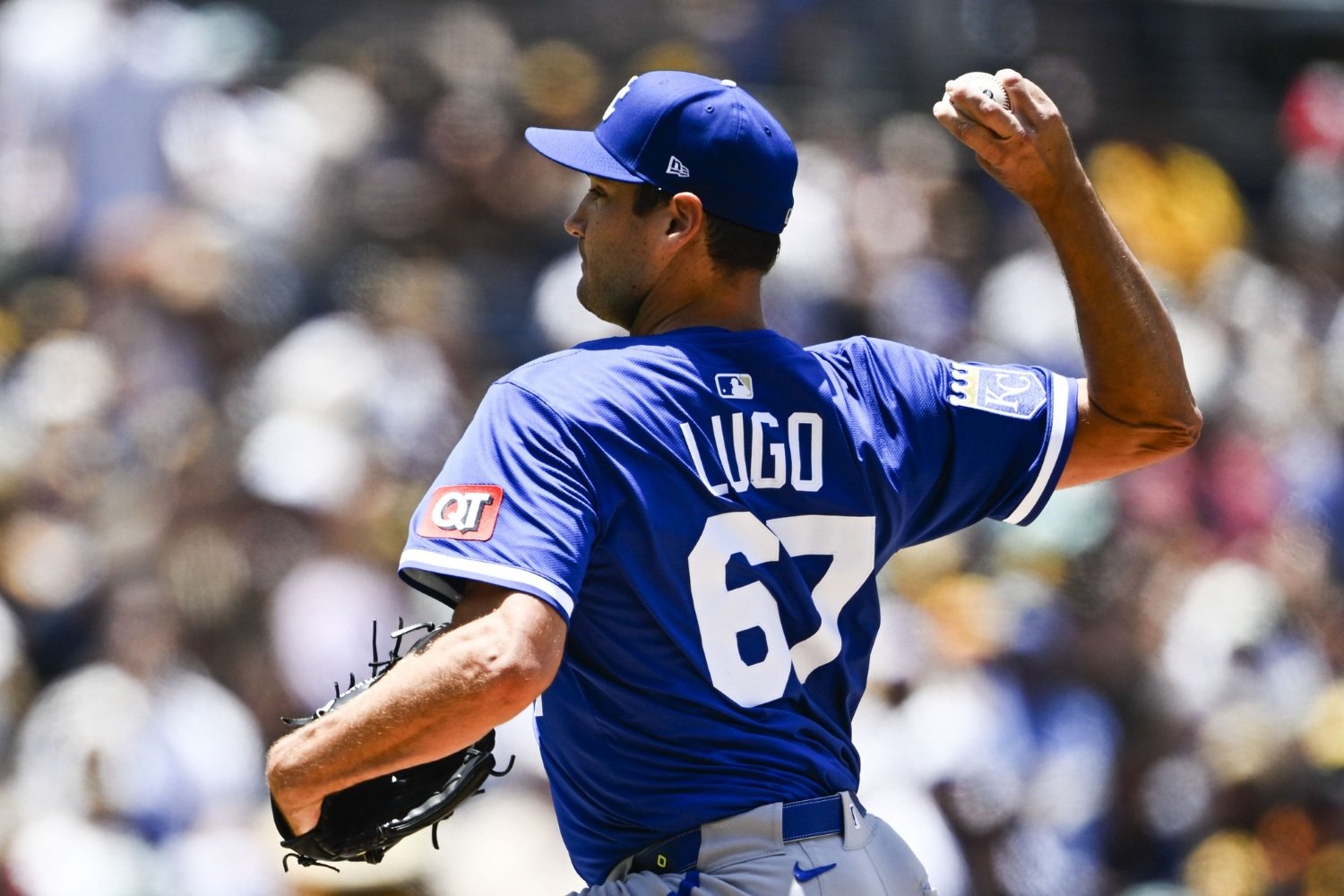 The Chicago Cubs and the Kansas City Royals had discussions this week about a trade that could send right-handed starter Seth Lugo to the North Siders, sources familiar with the negotiations said. Right now, the Royals aren't ready to become sellers, and GM J.J. Picollo went on a public campaign this week to downplay rumors that the team is moving into that mode. However, even Picollo admitted that it's possible his team could land in a situation in which they'd be forced to consider selling, and that seems right around the corner now. With an utterly impotent offense, Kansas City is plummeting in the American League standings. They lost their fifth game in a row Thursday night, to hit the halfway point of their season on pace for 76 wins. Lugo, 35, is the player who would most obviously hit the trading block if the team does pivot in that direction. He's under contract for the balance of this year, on a salary of $15 million, and he has a player option for 2026 at the same price—but he seems almost certain to decline that, barring a catastrophic injury between now and the start of November. In effect, then, he's an impending free agent, and though the Royals could extend him a qualifying offer after he declines his option this fall, they could certainly get more than the value of an eventual compensatory draft pick by trading him this summer. Last season, Lugo led the majors in starts (33) and the AL in batters faced (836). He won't match that feat this year, after a sprained finger on his pitching hand cost him the second half of May, but he's established himself as one of the most durable and consistent starters in baseball. He didn't become a full-time starter until 2023, at age 33, but since he did so (first with the Padres, now with the Royals), he's made 73 starts; averaged almost exactly six innings per start; and posted a 3.18 ERA. He doesn't rack up strikeouts the way some younger, harder-throwing alternatives might, but he limits walks and keeps the ball in the park very well. Depending on whom you ask, he throws eight, nine or 10 different pitches. Lugo certainly cuts the figure of a pitcher in whom the Cubs would have interest, and according to sources familiar with the Royals' thinking, the Chicago farm system contains multiple players in whom Kansas City has long had interest. Hoyer and company would be loath to surrender any of the team's top few prospects in exchange for Lugo, though—not only because of his age and the $15 million they'd owe him if he blew out his elbow or shoulder next week, but because they believe they have multiple needs to fill. Lugo would check just one box on their list, and is likely to become a free agent this fall. Therefore, if the Royals want (say) Jefferson Rojas or Owen Caissie as part of a package in exchange for Lugo, the Cubs might seek to do some one-stop shopping. Sources said the Cubs have also shown interest in infielder Jonathan India (who has played 20 games at third base this year, after spending his whole career at the keystone through 2024) and reliever Carlos Estévez, whom the Royals signed to a two-year deal this winter. Neither player is at the top of the Cubs' wishlist for the roles they would fill, but India and Estévez each have significant salaries, which could keep their acquisition cost down. They would also each come with team control for 2026. The sweet spot could be a deal centered on Lugo and struggling Cubs outfield prospect Kevin Alcántara. The Cubs would have to include a strong second piece, though, sources said, and that could turn out to be a problem. Quickly, the team will run into hurdles this summer, because several of their key prospects are having rough seasons or are functionally untradeable. Alcántara, for instance, has such impressive tools that he nearly made the Opening Day roster and has been ranked inside the top 30 prospects in baseball by some outlets, but he's scuffling with Triple-A Iowa this year. In fact, he's getting worse each month, including slugging an anemic .328 in June. Ben Brown has been mentioned in talks between the teams, but like Alcántara, Brown has shown his warts this season and can't command a player like Lugo on his own. The Cubs still have irons in many fires. In addition to reports that they've talked to the Pittsburgh Pirates about both Mitch Keller and David Bednar (which sources confirmed had taken place, but characterized as less active than the team's discussions with Kansas City as of the middle of this week), they're laying in wait to see what the Diamondbacks and Rangers each decide to do. The Twins are likely to trade Chris Paddack next month, a source said, and the Cubs would make sense as suitors for Paddack, too. Michael Soroka of the Nationals will be available, and is a dark-horse candidate to be an impactful starter in a new home down the stretch. Less desirable (but important, in that they give a sense of the floor the team might try to establish if they're unable to raise their ceiling) are targets like Tomoyuki Sugano and Aaron Civale. Kansas City loses little (and could gain much) by waiting out the market, even as they fall out of contention. The level of demand for pitching only moves in one direction as the trade deadline approaches. It will rise, and therefore, so will the prices on reliable, playoff-caliber starters. That's why the Cubs tried to get a deal done this week, and are believed to have standing offers out on at least two different starters as of Thursday night. They have neither the willingness nor the ability to simply push in an extra chip and force a deal across the finish line, however. For now, Lugo and the Cubs are a sensible fit, and talks remain active—but Hoyer is not close to checking off even the first item on his to-do list.
 -
Shota Imanaga is Back: Takeaways from Cubs Ace's Triumphant Return
Matthew Trueblood posted an article in Cubs
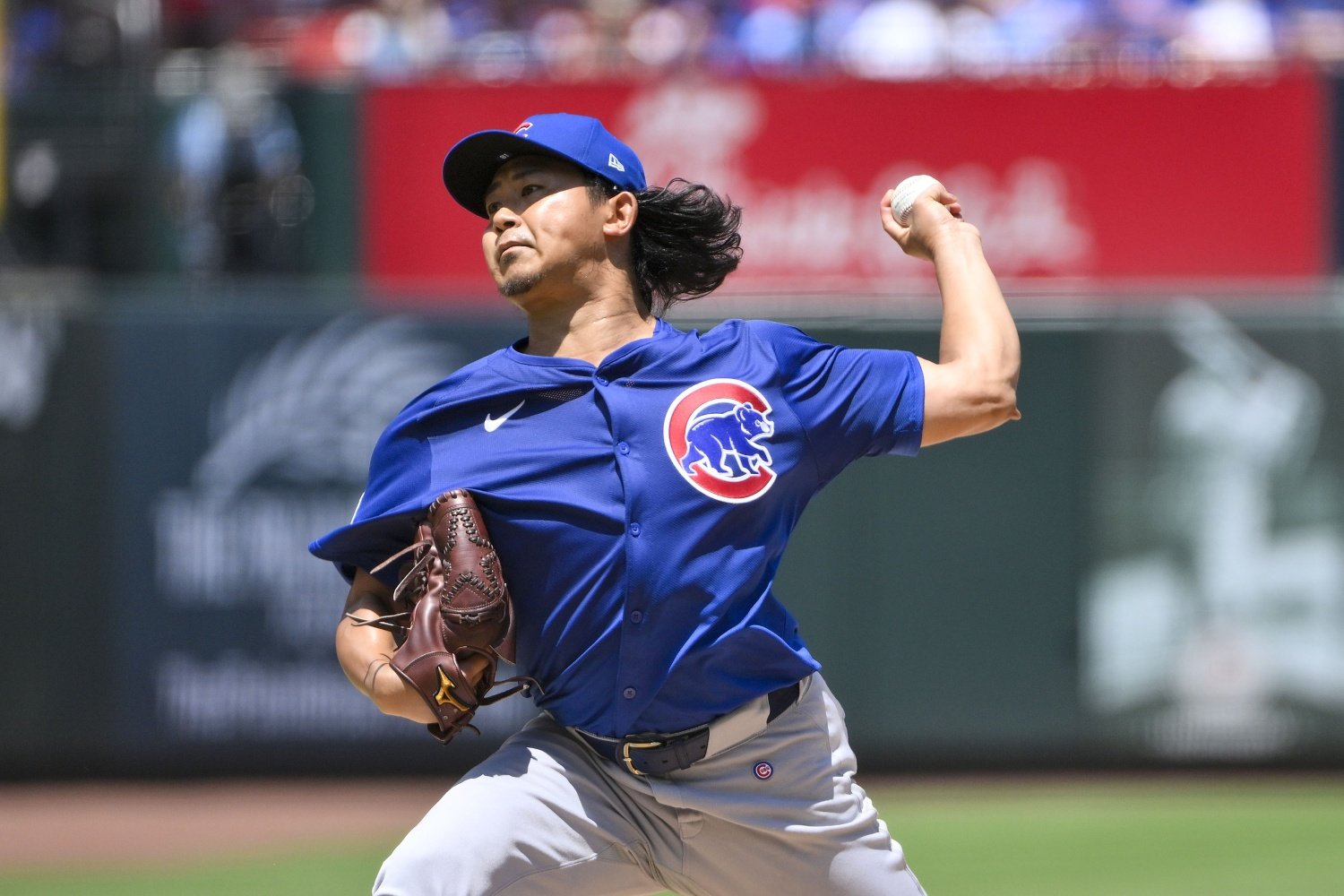 The Cubs certainly hope they can find and acquire a solid starting pitcher to supplement their rotation before the trade deadline arrives on July 31. For now, though, Shota Imanaga is their unquestioned ace, and they missed him dearly during his nearly two-month stint on the injured list. Happily, they welcomed him back Thursday, and he fired five shutout innings against the potent Cardinals offense, handing off a 2-0 lead to the bullpen. Early in the outing, Imanaga was extremely fastball-heavy, trying hard to establish that pitch and force hitters to sit on it. By the end of it, though, he'd done what he usually does: gradually increase splitter usage, sprinkle in the sweeper against lefties, and mix his stuff well enough to keep hitters off-balance and frustrated. Of his 77 pitches, Statcast read 12 as splitters, 11 as changeups, and 6 as sweepers. It can be hard to distinguish the multiple flavors of offspeed pitch Imanaga throws in real time, but he certainly did deploy both his signature splitter and the more traditional change throughout the outing. This wasn't Imanaga's best day, in terms of sheer stuff, but nothing in that regard raised a red flag, and for this one start, that's all the Cubs asked. He allowed just one hit and one walk, and he struck out three. He got seven whiffs, forced lots of mishit balls with his heater, and induced weak contact across the board. His fastball only sat around 90.5 miles per hour, but he touched 92, proving his arm is back up to speed. It was particularly fun to watch Imanaga work opposite Cardinals starter Andre Pallante, who has exceptional fastball movement characteristics, just as Imanaga does—but in the opposite way. Pallante's unusually high arm angle and funky, catapult-like delivery yields a heavy heater with lots of relative cut. Imanaga's rising heater not only comes at hitters on a singularly flat vertical plane, but runs more to the arm side than almost any fastball otherwise similar to it. The contrasting styles made for an interesting early pitcher's duel. That the Cubs had the advantage in the bout when each fighter retired is a credit, in part, to Michael Busch, who worked a superb at-bat against Pallante and hit a 3-2 fastball out of the park to right field, putting the Cubs on the board first. A long Cubs rally in the fourth failed to produce a crooked number, but a bases-loaded walk from Ian Happ did double their cushion. The Cubs are in position to escape St. Louis with a split after dropping the first two games of the series, and with Imanaga's return in the center of the narrative there, that's cause for extra optimism. Join our game thread, below, to talk more about Thursday's action.
 -
Image courtesy of © Tim Vizer-Imagn Images When you look at the big picture, Ian Happ is metronomically consistent. He's now batting .249/.341/.422 this season, after hitting .243/.341/.441 in 2024 and .248/.360/.431 in 2023. From week to week and month to month, though, we all know how hot and cold Happ runs. In fact, almost every year, he goes through the same routine: a hot spring training, a tough start, and then a surge in production throughout the summer. Last year, through the middle of May, Happ batted .219/.333/.301, with just one home run. Thereafter, though, he came alive, and hit .251/.344/.489 the rest of the way. In the team's final 118 games, Happ slammed 27 doubles, one triple, and 24 home runs. Some players simply need several weeks to adapt and adjust at the outset of each season, or don't swing comfortably until the temperatures rise. Happ's worst monthly split, for his career, is in April, when he has a .714 OPS. In June, he has an .817 career mark. We've reached the time of year when he tends to get into a rhythm, and indeed, he's been sensational this month. Nine of his 12 homers have come in June, and he's hitting .230/.327/.563. Always making adjustments, Happ has improved substantially as a right-handed batter over the last two and a half seasons. Lately, he's moved deeper in the batter's box and opened up his stance from the right side, while also moving closer to the plate. Here's what his stance and stride looked like last June, from each side of the plate. This is the most familiar form of Happ, to most fans. From the right side, especially, he's always used a fairly closed stance. His swing from that side has some drag to it, too. He's generally crashed forward, trying to run into the ball on time and then slowing his swing down near the contact point to avoid being too early. Here's a look at his swing in Statcast's animated visuals; note the way the instantaneous tracking of his swing speed flattens out at the top. To fix that, Happ had a more open stance and a shorter stride from the right side by the start of this year. Here's what the stance and stride looked like in March and April. As the year has progressed, though, he's found even more comfort in setting up and swinging that way. Now, he's moved to a more upright stance and a more conventional stride. He's also scooted all the way to the back of the box and closer to the plate. Happ's bat speed is also up from the right side this year. As many switch-hitters do, he really seems to be blooming late from the right side. He's taken a long time to accumulate playing time and hone his approach against lefties, but he's now up to 1,034 plate appearances against them in his career, and it's showing. For a switch-hitter, maybe it's fair to expect that peak production against lefties comes later in one's career than it otherwise would. That's what we're witnessing with Happ. His bat speed is not up as a lefty, but bat speed has never been his game from that side, anyway. His swing has more tilt against righties, and he controls the barrel better in those matchups. He doesn't lose acceleration late in the swing as a lefty, which means that he can be slightly early and still hit the ball hard, in the air. For several years, now, he's consistently produced, especially after June 1. Happ will need to continue playing well throughout the second half, as the team deals with likely regression from Pete Crow-Armstrong and the incurable inconsistency of Dansby Swanson. Right now, though, he's on a tear, and that's helped the Cubs weather a long, difficult stretch. View full article
-
 When you look at the big picture, Ian Happ is metronomically consistent. He's now batting .249/.341/.422 this season, after hitting .243/.341/.441 in 2024 and .248/.360/.431 in 2023. From week to week and month to month, though, we all know how hot and cold Happ runs. In fact, almost every year, he goes through the same routine: a hot spring training, a tough start, and then a surge in production throughout the summer. Last year, through the middle of May, Happ batted .219/.333/.301, with just one home run. Thereafter, though, he came alive, and hit .251/.344/.489 the rest of the way. In the team's final 118 games, Happ slammed 27 doubles, one triple, and 24 home runs. Some players simply need several weeks to adapt and adjust at the outset of each season, or don't swing comfortably until the temperatures rise. Happ's worst monthly split, for his career, is in April, when he has a .714 OPS. In June, he has an .817 career mark. We've reached the time of year when he tends to get into a rhythm, and indeed, he's been sensational this month. Nine of his 12 homers have come in June, and he's hitting .230/.327/.563. Always making adjustments, Happ has improved substantially as a right-handed batter over the last two and a half seasons. Lately, he's moved deeper in the batter's box and opened up his stance from the right side, while also moving closer to the plate. Here's what his stance and stride looked like last June, from each side of the plate. This is the most familiar form of Happ, to most fans. From the right side, especially, he's always used a fairly closed stance. His swing from that side has some drag to it, too. He's generally crashed forward, trying to run into the ball on time and then slowing his swing down near the contact point to avoid being too early. Here's a look at his swing in Statcast's animated visuals; note the way the instantaneous tracking of his swing speed flattens out at the top. To fix that, Happ had a more open stance and a shorter stride from the right side by the start of this year. Here's what the stance and stride looked like in March and April. As the year has progressed, though, he's found even more comfort in setting up and swinging that way. Now, he's moved to a more upright stance and a more conventional stride. He's also scooted all the way to the back of the box and closer to the plate. Happ's bat speed is also up from the right side this year. As many switch-hitters do, he really seems to be blooming late from the right side. He's taken a long time to accumulate playing time and hone his approach against lefties, but he's now up to 1,034 plate appearances against them in his career, and it's showing. For a switch-hitter, maybe it's fair to expect that peak production against lefties comes later in one's career than it otherwise would. That's what we're witnessing with Happ. His bat speed is not up as a lefty, but bat speed has never been his game from that side, anyway. His swing has more tilt against righties, and he controls the barrel better in those matchups. He doesn't lose acceleration late in the swing as a lefty, which means that he can be slightly early and still hit the ball hard, in the air. For several years, now, he's consistently produced, especially after June 1. Happ will need to continue playing well throughout the second half, as the team deals with likely regression from Pete Crow-Armstrong and the incurable inconsistency of Dansby Swanson. Right now, though, he's on a tear, and that's helped the Cubs weather a long, difficult stretch.
 -
Image courtesy of © Jeff Curry-Imagn Images It's not as though the Cubs' batters have forgotten how to play their game. In addition to hitting 34 home runs this month (trailing only the Mets for the most in the league), Chicago has 17 stolen bases and has been caught just four times in June. They continue to try to manufacture runs using their speed and subtle skills. However, the slightly impatient nature of their younger hitters is starting to stunt their ability to put together multiple multi-run rallies within a game. They've only walked 52 times in 742 plate appearances, a 7.0% rate that looks nothing like the one the team was posting early on. Two recent losses did see the team chalk up seven runs and lose 8-7, thanks to that power, but that's precisely the reason why the loss of dynamism in their lineup is so galling: they need runs more than ever. Miguel Amaya's injury has been part of the depletion of the lineup, but the losses of Justin Steele and Shota Imanaga (plus Javier Assad, who hasn't even made it as far as a big-league mound this year) are catching up to them more glaringly. In the last 30 days, Cubs starters have a 4.73 ERA, which ranks 23rd in the league. Jameson Taillon's home run vulnerability has returned with a vengeance. Colin Rea's job appears to be to take the mound every fifth day and hold it for as long as possible, absorbing damage and innings and refreshing the bullpen after short starts by others. Ben Brown has been so inconsistent that it's impossible to count on him at all. If the offense were still humming the way it did for most of April and May, the Cubs could be overcoming their poor starting pitching a bit more consistently. As it is, they're 10-10 this month, and trending in the wrong direction. The bullpen is solid, but not superb. The defense is stout, but shows more cracks when the pitching slumps this badly. The lack of a productive bench bat has shown up in a big way. There's no one outside the core lineup whom Craig Counsell can trust to make a contribution to scoring, so most of the team's key players are playing as close to every day as their bodies will bear. That's led to some slumps, and to some stretches where a player's numbers look ok, but wherein they produce only by hitting home runs. The balance and the versatility have seeped out of this roster. Recharging the group will be the job of both Counsell and Jed Hoyer, over the next five weeks. Imanaga will return from his hamstring strain Thursday, after almost two months' absence. New injuries will also crop up, though, and the team needs help on the positional side. It's not clear, right now, where that will come from. Still leading their division by 2.5 games, the Cubs are in good shape. To stay that way, though, they need to rediscover their early-season magic. View full article
-
Suddenly, the Cubs Have Fewer Ways to Beat You, and It's Showing
Matthew Trueblood posted an article in Cubs
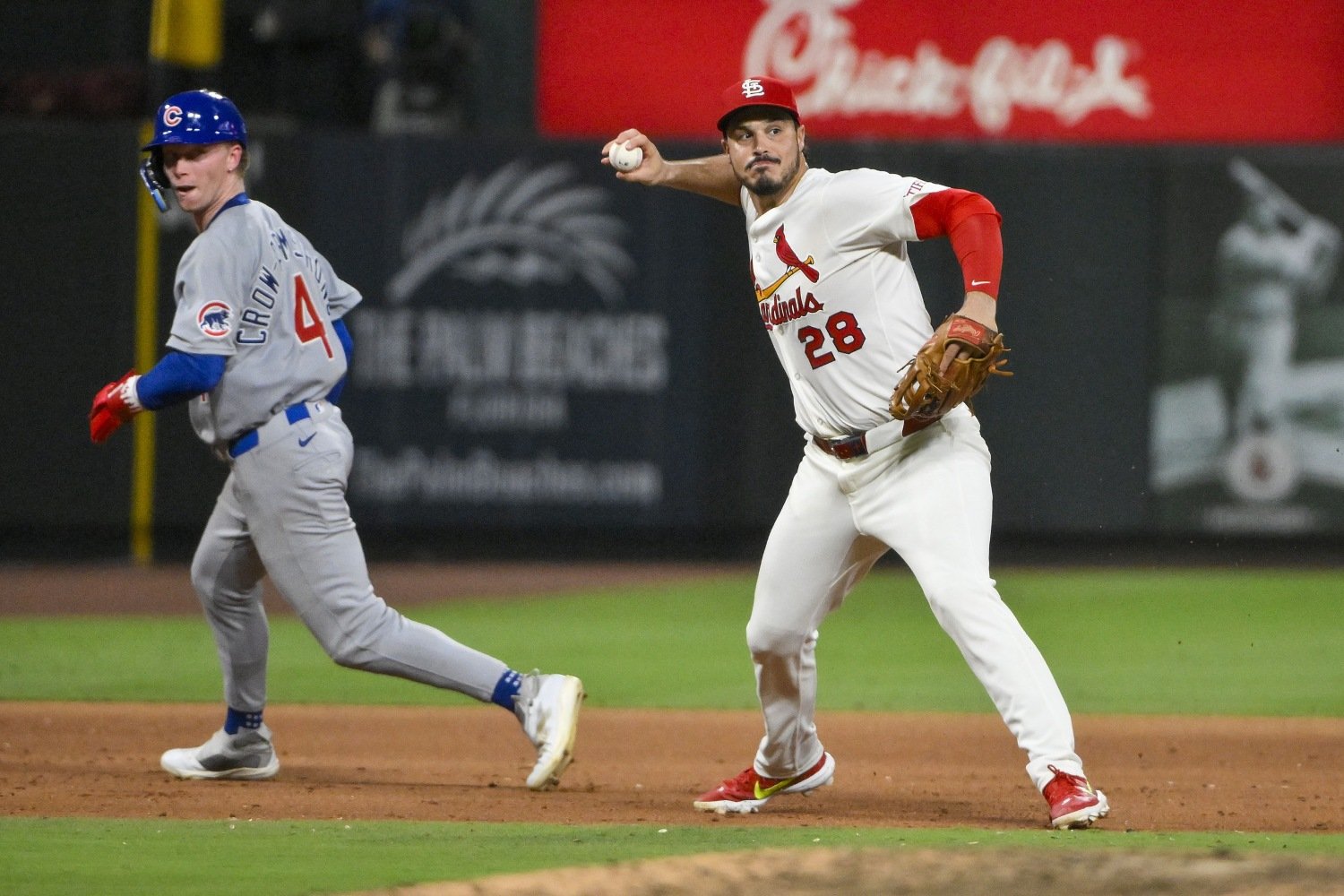 It's not as though the Cubs' batters have forgotten how to play their game. In addition to hitting 34 home runs this month (trailing only the Mets for the most in the league), Chicago has 17 stolen bases and has been caught just four times in June. They continue to try to manufacture runs using their speed and subtle skills. However, the slightly impatient nature of their younger hitters is starting to stunt their ability to put together multiple multi-run rallies within a game. They've only walked 52 times in 742 plate appearances, a 7.0% rate that looks nothing like the one the team was posting early on. Two recent losses did see the team chalk up seven runs and lose 8-7, thanks to that power, but that's precisely the reason why the loss of dynamism in their lineup is so galling: they need runs more than ever. Miguel Amaya's injury has been part of the depletion of the lineup, but the losses of Justin Steele and Shota Imanaga (plus Javier Assad, who hasn't even made it as far as a big-league mound this year) are catching up to them more glaringly. In the last 30 days, Cubs starters have a 4.73 ERA, which ranks 23rd in the league. Jameson Taillon's home run vulnerability has returned with a vengeance. Colin Rea's job appears to be to take the mound every fifth day and hold it for as long as possible, absorbing damage and innings and refreshing the bullpen after short starts by others. Ben Brown has been so inconsistent that it's impossible to count on him at all. If the offense were still humming the way it did for most of April and May, the Cubs could be overcoming their poor starting pitching a bit more consistently. As it is, they're 10-10 this month, and trending in the wrong direction. The bullpen is solid, but not superb. The defense is stout, but shows more cracks when the pitching slumps this badly. The lack of a productive bench bat has shown up in a big way. There's no one outside the core lineup whom Craig Counsell can trust to make a contribution to scoring, so most of the team's key players are playing as close to every day as their bodies will bear. That's led to some slumps, and to some stretches where a player's numbers look ok, but wherein they produce only by hitting home runs. The balance and the versatility have seeped out of this roster. Recharging the group will be the job of both Counsell and Jed Hoyer, over the next five weeks. Imanaga will return from his hamstring strain Thursday, after almost two months' absence. New injuries will also crop up, though, and the team needs help on the positional side. It's not clear, right now, where that will come from. Still leading their division by 2.5 games, the Cubs are in good shape. To stay that way, though, they need to rediscover their early-season magic.
 -
Image courtesy of © Dennis Lee-Imagn Images In a survey of their needs and chances to address them, the Cubs have made calls about players who would shore up their weaknesses on the bench and in the infield rotation, sources said this week. Two trade candidates on their radar are third baseman Luis Urías, of the West Sacramento Athletics, and utility man Willi Castro, of the Twins, and the Cubs have touched base with each of those teams this month. With Matt Shaw still struggling to generate the offense a team hopes to get from the hot corner, Chicago needs help there. Shaw has a more respectable .653 OPS since being recalled last month, but even that is underwhelming, and he's in a 4-for-40 funk that seems to confirm the staying power of the mechanical hurdles created by the huge leg kick he brought with him to the majors. Shaw is the obvious candidate for a short-term replacement, but Nico Hoerner, too, has been underwhelming. His singles-hitting profile is charming, but he's rapidly reaching the limits of it. At .288/.330/.354, his lack of power has gone from cute to glaring, and while it's fun that he's driven in 31 runs without a homer, that's a testament to the potency of the lineup around him, rather than to his actual utility. Both Urías and Castro offer versatility, and each would directly address the shortcomings of Shaw and Hoerner. Urías has had an up-and-down career, including a multi-year stint as a trusted member of Craig Counsell's Brewers teams (but one that ended on a slightly sour note). Now 28, he's due to become a free agent this fall, so the Athletics will take calls on him throughout the next six weeks. He's batting .253/.339/.394 this year, which looks underwhelming but far outstrips Shaw or Hoerner, and his feel for contact and the strike zone is very good. Urías was notable, through 2023, for a stretching, leaning stance, like he was trying to get a crick out of his back. It was an interesting setup, but it stopped working for him after a few injuries took him off the field and made it harder to maintain perfect timing. NFg3Z29fWGw0TUFRPT1fRGdVRlhWVUFCMUVBVzFGWFZnQUFBZ2NFQUZoVUFBUUFBUWNEVWxFTkIxWlhDUVpm.mp4 Last season, with the Mariners, he modified the stance to something a bit more traditional. His slightly arrhythmic, stomping leg kick, however, remained a signature of his swing. TndncW5fWGw0TUFRPT1fVlFsWFZ3SURCd01BQUZKUlVRQUFBUTVXQUFBRlZGUUFVVkFCVWdZSFVnSldVMVpl.mp4 This season, the stance has changed some more, but this time, an entire swing overhaul has accompanied it. Urías has altered his approach to contact the ball deeper, with a slightly flatter but notably faster swing. He's making solid contact about as consistently as any player in the league. Uk8yQktfWGw0TUFRPT1fVkFKWVhWUUZYd2NBRGxZSFVRQUhBZ2NBQUZnTVZBVUFDMVVBQUZFTkFnSUFCVllF.mp4 Though he's older than Isaac Paredes and isn't as good even right now as Paredes was during his best years in Tampa, Urías would be a somewhat Paredes-like pickup for this team—hopefully, with better results, since Paredes struggled for most of his brief Cubs tenure. The other important separator between the two is that, unlike Paredes, Urías wouldn't cost much in a deal. He doesn't come with club control or quite the consistent track record of Paredes, so the Cubs would merely have to make sure they make the best offer, if this is the avenue they choose. Castro, meanwhile, is a higher-upside, more compelling, lower-probability target. A switch-hitter, Castro, too, is 28. He, too, will hit free agency after the World Series. He's hitting a career-best .280/.362/.456 this year, and his right-handed swing has come along this year. His tools are a grade better than Urías's, almost across the board. He's best as a second baseman, defensively, but can play third or left with ease and shortstop, center or right in a pinch. There are two problems. Firstly, the Twins aren't yet ready to sell, according to multiple sources. They're 37-41, and in freefall, but unless they continue to struggle for the next month, they won't ship out anyone they believe is important to a potential playoff push. Castro is one of those players. Secondly, Castro has had durability problems. He's missed time this year with an oblique strain (yes, they happen to teams other than the Cubs, too), and with a sore wrist. He's dealing with the latter right now, so whether the Twins are willing to deal him might hinge on whether he can even get healthy (and remain productive) enough to command a worthwhile trade return. Either player would give the team the flexibility to either option Shaw back to Triple-A Iowa, or rotate the new hitter into the infield on a more balanced basis. Castro's ability to bat left-handed helps there. So do Urías's 57 games at second base this year; he's divided his time between second and third evenly over his career. Of course, either move also opens the possibility of trading Hoerner or Shaw to make a bigger splash on the pitching side, be it as part of the same transaction or in a separate one. Hoerner's contract extension runs out at the end of 2026. Dansby Swanson is likely to need to move off shortstop at that point, anyway. In light of that, the Cubs would consider trading Hoerner to a team interested in either a challenge deal or being involved in a three-team trade. They did so as recently as this winter, and are not viewing him as off-limits even in the context of a pennant race. One member of a rival front office pointed out that as Chicago lengthens its list of wants and needs on the summer shopping list, they'll quickly run into the limitations that come with having a solid but unspectacular farm system. To add a bat and multiple arms, as they hope to do, the team will need to move someone unexpected. That could be Hoerner, Shaw, or any of a number of other players. As a slightly sagging offense and their longstanding shortfall of pitching depth imperil their lead in the NL Central, they're widening their scope and accelerating their search for an upgrade to their roster. Urías and Castro are sensible targets, but no trade is considered imminent. View full article
.png.57b3f83ee6be078fdf8cded727c1eb3c.png)

