


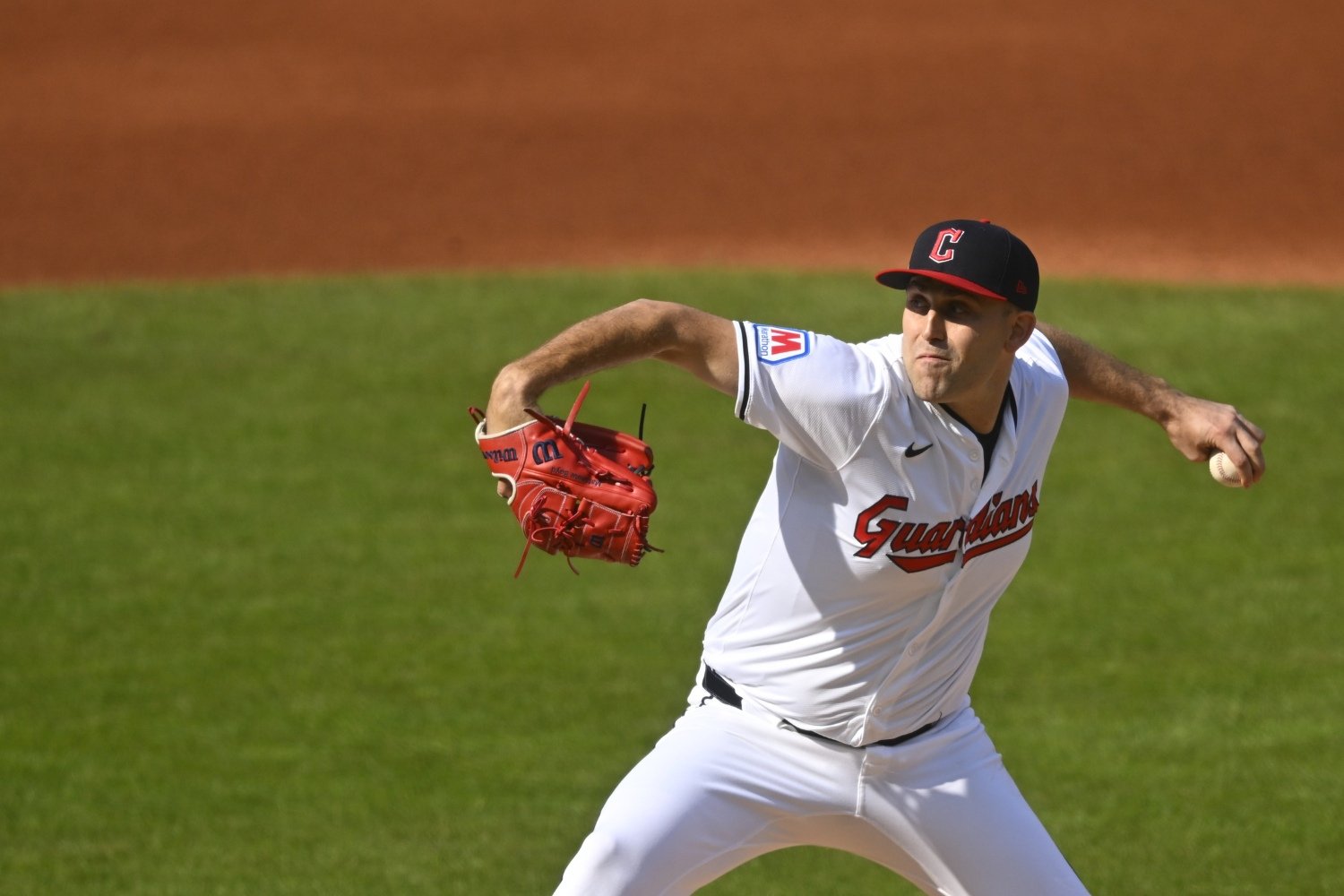
Cubs Video
The Cubs signed Matthew Boyd knowing he would be unlikely to deliver a full 30-start share in their 2025 rotation, and that he has historically been extremely vulnerable to home runs, limiting his ceiling. He earned his two-year, $29-million deal by evolving impressively in 2024, though, including steadily increased usage of steadily improving tertiary weapons. He's long had an exceptional slider and a lively four-seam fastball, but he relied more heavily on his changeup (against right-handed batters) and his sinker (against lefties) in 2024, under the guidance of a pitching development team in Cleveland that shares much organizational DNA with the Cubs.
It's nearly always a good thing to boost one's usage of solid secondary pitches, and indeed, Boyd kept opposing hitters in the park (2.4% of opponent plate appearances ended in a home run, a career-low mark for any season in which he pitched any meaningful amount) and piled up strikeouts (27.7% strikeout rate, the second-highest of his career) without walking any more batters than usual (7.8%, right in line with his career average). He was an impressively complete pitcher, with five usable pitches and good command of each.
Boyd's slider found more depth and more sweep in 2024; I've placed the three dots representing the months in which he pitched in 2024 in a box to distinguish them from all the other months of his career. More depth on the breaking ball and (thanks to the change and sinker becoming more prominent) less need for it is a potent combination; it vaulted Boyd to new heights last year.
.jpeg.20be5126120191edbd39f071c685b982.jpeg)
There's even more to the story, though. Boyd didn't just use his changeup more in 2024. He also used it better, by taking advantage of hitters who tried to sit on his fastball in hitter-friendly counts. Here's a chart showing Boyd's pitch usage by count for 2022 and 2023.
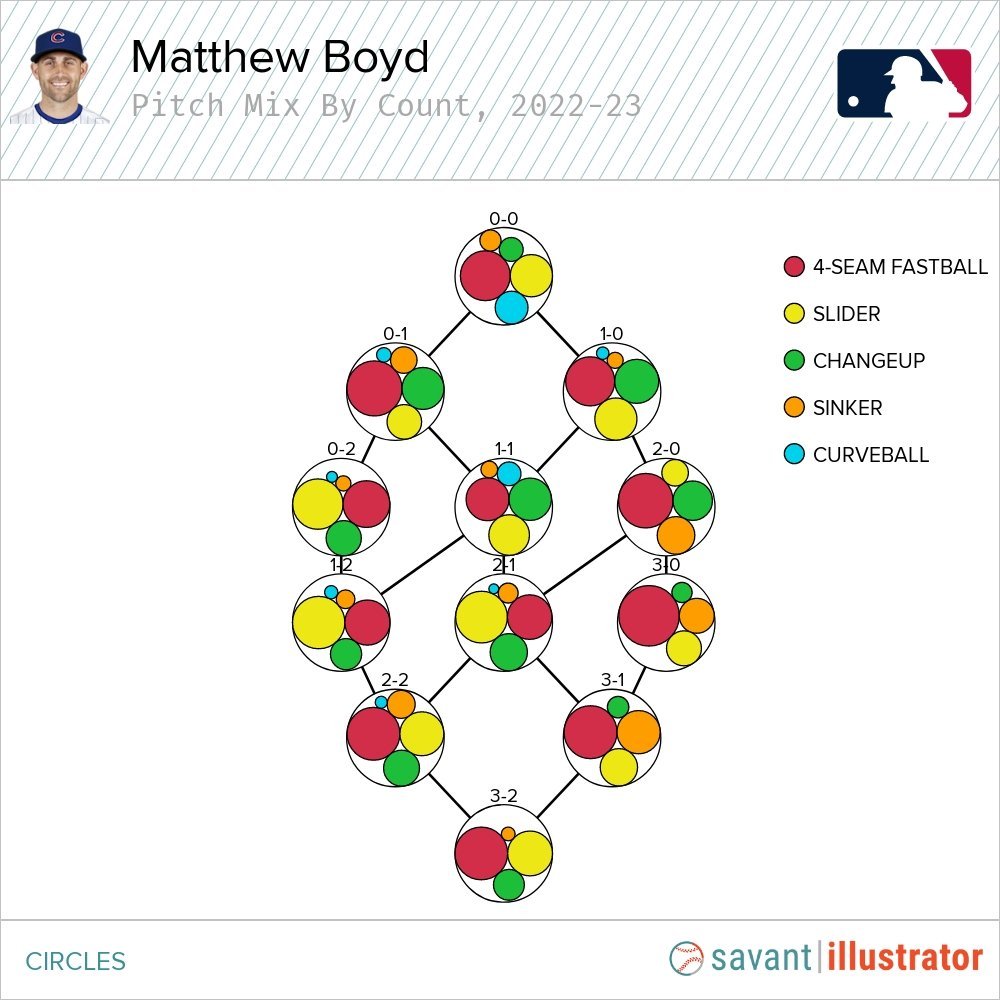
Now, here's the same chart for 2024.
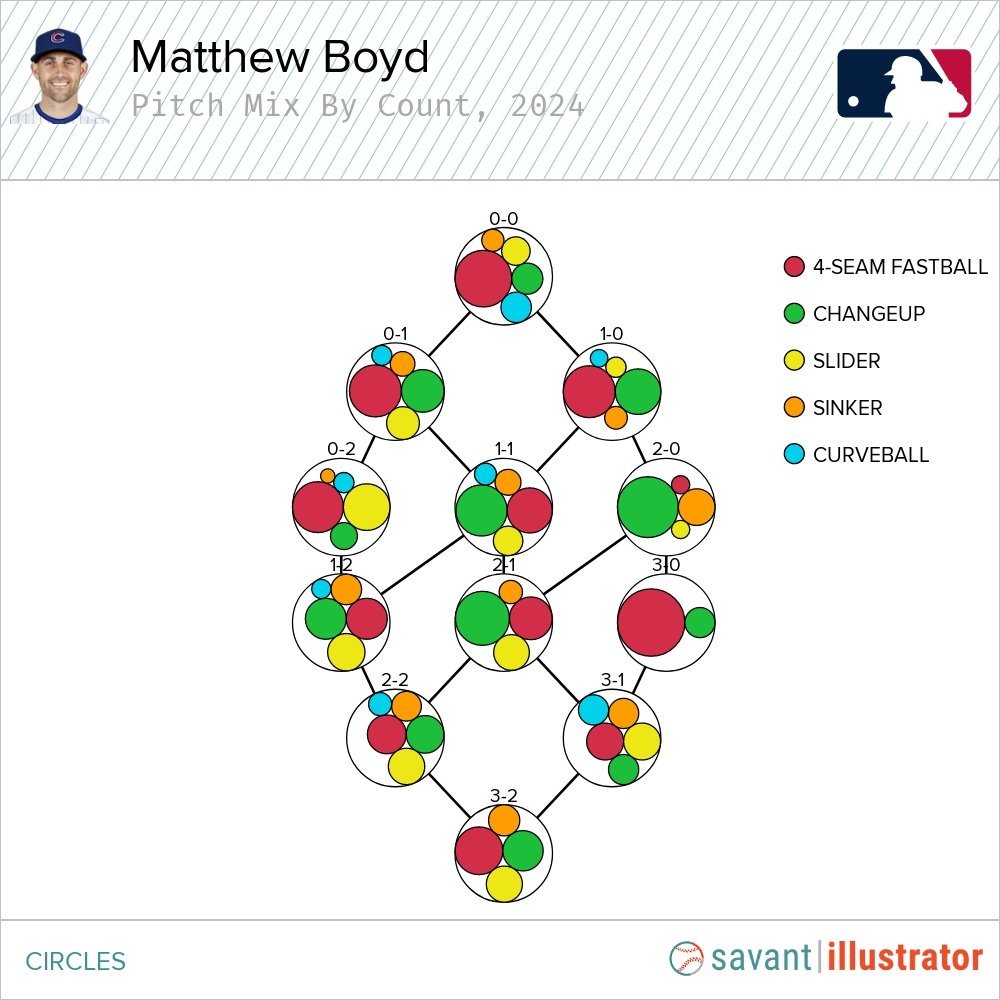
Despite a deeper and more balanced arsenal overall, note that Boyd actually got more fastball-heavy at the front ends of at-bats last year. When he fell behind, however, he started sharply violating hitters' expectations. In 1-1, 2-0, and 2-1 counts (especially the latter two), he leaned hard on the changeup. Not only did he not throw the fastball in fastball counts, but he got hitters primed for that and then gave them the very pitch that subverted those expectations. As a result, his Run Value was better in those three counts in 2024 than in any of the other four seasons since 2019 in which he pitched more than a handful of innings. He didn't exactly pitch backward; he was out there establishing the fastball and getting ahead early in counts. But he refused to give in when he fell behind, and predictably, hitters struggled to adjust.
There will have to be a next wave of adjustments, even for Boyd, a wily veteran heading into his mid-30s. Once hitters know you might be apt to throw them slop in a meatball count, they'll alter their approach and force you to alter yours. With batters feeling him out, Boyd's early-count fastball-forwardness didn't hurt him last year, as hitters only swung at 41.1% of the heaters they saw within the first two pitches of an at-bat. That number was 45.8% just one year earlier, though, and you can expect it to spike again in 2025, forcing Boyd to reshuffle his cards just to get to those counts where he can unleash the unexpected changeup.
All told, though, this is a sketch of a pitcher getting comfortable in his own pitching skin almost for the first time, a decade into his career. Boyd will probably spend some time on the injured list, but when he's healthy enough to take the mound, the Cubs expect bigger things from him than most fans do—and they have good reasons, big and small, to hold those expectations.





Recommended Comments
Create an account or sign in to comment
You need to be a member in order to leave a comment
Create an account
Sign up for a new account in our community. It's easy!
Register a new accountSign in
Already have an account? Sign in here.
Sign In Now