


Matthew Trueblood
-
Posts
2,479 -
Joined
-
Last visited
-
Days Won
2
Content Type
Profiles
Joomla Posts 1
Chicago Cubs Videos
Chicago Cubs Free Agent & Trade Rumors, Notes, & Tidbits
2026 Chicago Cubs Top Prospects Ranking
News
2023 Chicago Cubs Draft Picks
Guides & Resources
2024 Chicago Cubs Draft Picks
The Chicago Cubs Players Project
2025 Chicago Cubs Draft Pick Tracker
2026 Chicago Cubs Draft Tracker: Picks & Bonuses
Blogs
Events
Forums
Store
Gallery
Everything posted by Matthew Trueblood
-
Image courtesy of © Christopher Hanewinckel-Imagn Images Starting pitchers don't get better the third time through the opposing lineup, and no pitchers dramatically outperform their numbers with nobody on base once someone reaches. Those are immutable truths of baseball, around which lots of modern player evaluations and most in-game strategic choices are built. If you meet a pitcher who has great numbers the third time through the order within a game or whose opponent OPS is 100 points lower with runners on base, you're meeting a fraud; a charlatan; a mountebank. Don't believe a word they say, and don't you dare invest either your faith or your team's precious playoff hopes in them. I've warned you. Lots of others have warned you. We've known these things for 30 years, and for half that time, they've been repeated ad nauseum on every respectable analytical website about baseball. You can't claim not to have been cautioned. Here's the thing: Javier Assad might be special. Consider his opponents' career numbers: 1st time facing opponents in game as a starter: .265/.336/.415 in 457 plate appearances 2nd time facing opponents in game as a starter: .241/.318/.431 in 441 plate appearances 3rd time facing opponents in game as a starter: .237/.330/.364 in 201 plate appearances Nobody on base: .274/.346/.453 in 764 plate appearances Runners on: .210/.296/.339 in 574 plate appearances Those sample sizes aren't all that big. You might be waving your hand dismissively right now. I get it. I was the one warning you, just a minute ago! We're on the same side here, bub. Only, I do want to draw your attention to this: These numbers have patterned themselves pretty much the same way across each of the four big-league seasons of which Assad has pitched at least a part. It's not like he just fluked into one year of a wacky split, and it hasn't washed away. Also, I guess we should notice and acknowledge that he takes the sting out of bats the third time through the order the same way he does when men reach base—not by becoming a sudden strikeout machine or anything, but by sapping hitters' power. You can point to Assad's tremendously deep repertoire, and the fact that pitchers with bigger mixes do tend to do better as they see opponents a second and third time, but that's insufficient to explain what's happening here. You can credit him for what has always seemed a well-balanced mental approach on the mound, and tell yourself a story about him being a fairly durable late bloomer who had lots of time to refine his craft in the minors, but that doesn't adequately explain his splits with runners on, either. This is just noise, right? His 3.44 ERA has to regress toward his 4.58 FIP. His 108 career DRA-, which says he's markedly worse than an average pitcher on the fundamentals, has to tell us more than the ERA, even though he also doesn't give up many unearned runs. Don't buy the magic beans. Keep walking. You can't give the ball to Assad to start a game in October, or even entrust him with a rotation spot over the likes of Jameson Taillon or Colin Rea. This is all a put-on. Unless it isn't. Your call. View full article
-
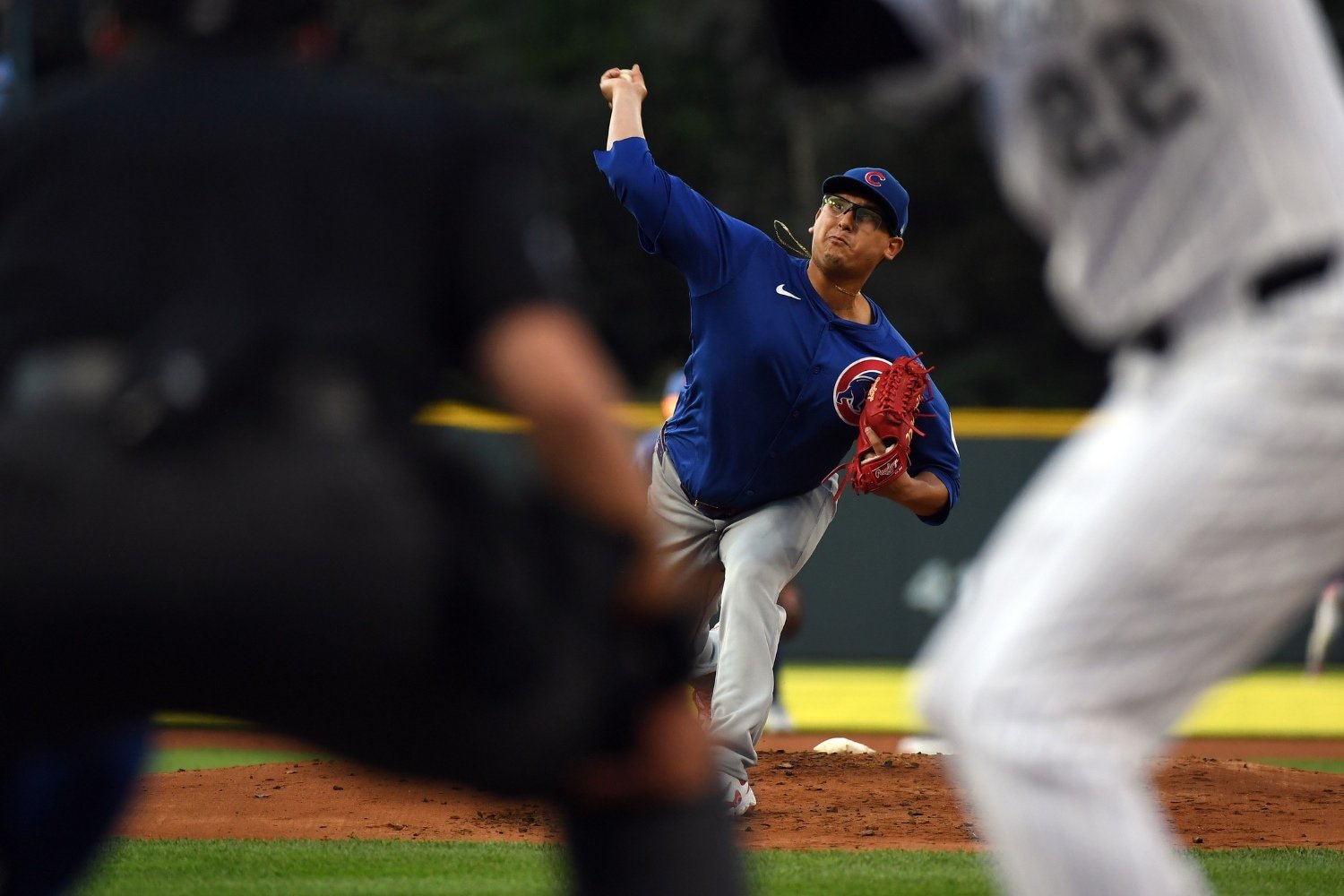 Starting pitchers don't get better the third time through the opposing lineup, and no pitchers dramatically outperform their numbers with nobody on base once someone reaches. Those are immutable truths of baseball, around which lots of modern player evaluations and most in-game strategic choices are built. If you meet a pitcher who has great numbers the third time through the order within a game or whose opponent OPS is 100 points lower with runners on base, you're meeting a fraud; a charlatan; a mountebank. Don't believe a word they say, and don't you dare invest either your faith or your team's precious playoff hopes in them. I've warned you. Lots of others have warned you. We've known these things for 30 years, and for half that time, they've been repeated ad nauseum on every respectable analytical website about baseball. You can't claim not to have been cautioned. Here's the thing: Javier Assad might be special. Consider his opponents' career numbers: 1st time facing opponents in game as a starter: .265/.336/.415 in 457 plate appearances 2nd time facing opponents in game as a starter: .241/.318/.431 in 441 plate appearances 3rd time facing opponents in game as a starter: .237/.330/.364 in 201 plate appearances Nobody on base: .274/.346/.453 in 764 plate appearances Runners on: .210/.296/.339 in 574 plate appearances Those sample sizes aren't all that big. You might be waving your hand dismissively right now. I get it. I was the one warning you, just a minute ago! We're on the same side here, bub. Only, I do want to draw your attention to this: These numbers have patterned themselves pretty much the same way across each of the four big-league seasons of which Assad has pitched at least a part. It's not like he just fluked into one year of a wacky split, and it hasn't washed away. Also, I guess we should notice and acknowledge that he takes the sting out of bats the third time through the order the same way he does when men reach base—not by becoming a sudden strikeout machine or anything, but by sapping hitters' power. You can point to Assad's tremendously deep repertoire, and the fact that pitchers with bigger mixes do tend to do better as they see opponents a second and third time, but that's insufficient to explain what's happening here. You can credit him for what has always seemed a well-balanced mental approach on the mound, and tell yourself a story about him being a fairly durable late bloomer who had lots of time to refine his craft in the minors, but that doesn't adequately explain his splits with runners on, either. This is just noise, right? His 3.44 ERA has to regress toward his 4.58 FIP. His 108 career DRA-, which says he's markedly worse than an average pitcher on the fundamentals, has to tell us more than the ERA, even though he also doesn't give up many unearned runs. Don't buy the magic beans. Keep walking. You can't give the ball to Assad to start a game in October, or even entrust him with a rotation spot over the likes of Jameson Taillon or Colin Rea. This is all a put-on. Unless it isn't. Your call.
 -
Image courtesy of © David Banks-Imagn Images Watching Cade Horton pitch over the last six weeks has been one of the game's great pleasures. With his compact frame and his almost twitchy, attack-mode mound presence, he evokes memories of Jake Peavy at his best—but, naturally, Horton throws harder. He's armed with everything a contemporary starter needs, but he works like an old-school ace. When no one is on base, he's not working out of the stretch in the name of efficiency. He takes a wide, even, square stance on the mound, stares daggers at the hitter over his high-held glove, and then works a fast-paced, high-energy motion and cuts the ball loose. He's exceptionally quick in getting back to the rubber, choosing his next pitch and delivering it; he's one of the fastest workers in the big leagues. That changes somewhat with runners on base, as you can see by comparing his splits to those of his highest-volume teammates. Lately, though, we haven't even had to see much of the slowed-down version of Horton, because batters are rarely becoming runners. Against the team from suburban Atlanta on Wednesday, Horton didn't allow a hit, working five sparkling innings on just 75 pitches before being lifted for workload management reasons. He struck out six, and the only baserunner he allowed came on a 10-pitch walk in the first inning. He was in command all night, as he has been for most of his last several outings. We continue to see him do new things, too. On Wednesday, his slider—the pitch Statcast labels as a sweeper, but which he never engineered to behave that way and which he throws like a regular slider, in terms of grip and arm action—was a bit slower and bigger-breaking than usual, which meant that his curveball was humming in at the same speed the slider was. He also had good, consistent run on his sinker and his changeup. Compare that movement array to his start against the Angels in California last month, and you can see how his stuff continues to evolve. He's getting better command of the two pitches that work to his arm side all the time. The breaking stuff has always been great, but learning how his fastball plays in the majors and how to use the sinker and changeup in contrast with his more natural movement profile has unlocked new levels for him seemingly each week over the whole summer. There will (and probably should) be controversy over Craig Counsell's choice to lift Horton so early in a close game Wednesday, after the bullpen coughed up the 1-0 edge they had and the team lost 5-1. Horton's previous workloads are so small that the Cubs have worked a bit scared with him all year, wary (arguably, more than science and medicine support) of letting him take on a normal amount of work in the starting rotation. When he's on the mound, though, Horton becomes more and more the main character of the 2025 Cubs' story with each appearance. As much as many have made of the notion that trading for Kyle Tucker put the Cubs all-in for 2025, the organization itself never thought of things that way. They define themselves as a team trying to build a young core for a long winning window, and in Michael Busch, Pete Crow-Armstrong and Matt Shaw, they've found at least three strong pieces of that core over the last two years. Horton makes four, even before one gets to the questions of whether Miguel Amaya or Daniel Palencia can carve out lasting places in that group. Given the price of starting pitching on the open market, he's phenomenally important to the team's medium-term future, which is why they've handled him so carefully thus far. Games like Wednesday's can be a bit frustrating, but they're ultimately encouraging. Come October, Horton will still be in position to have outings like that one, and each one will mean a great deal more to the team (both present and future) than this one did. View full article
-
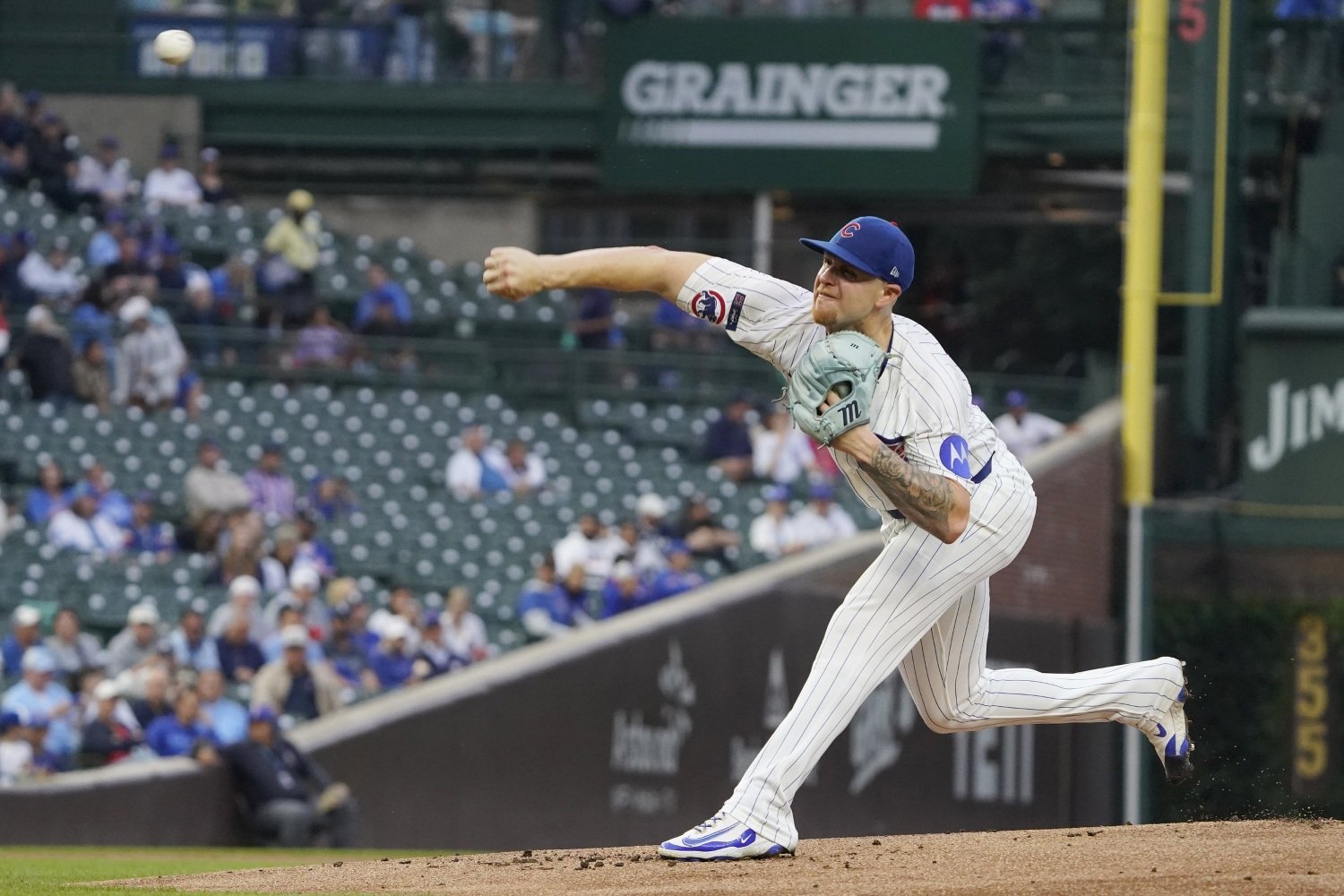 Watching Cade Horton pitch over the last six weeks has been one of the game's great pleasures. With his compact frame and his almost twitchy, attack-mode mound presence, he evokes memories of Jake Peavy at his best—but, naturally, Horton throws harder. He's armed with everything a contemporary starter needs, but he works like an old-school ace. When no one is on base, he's not working out of the stretch in the name of efficiency. He takes a wide, even, square stance on the mound, stares daggers at the hitter over his high-held glove, and then works a fast-paced, high-energy motion and cuts the ball loose. He's exceptionally quick in getting back to the rubber, choosing his next pitch and delivering it; he's one of the fastest workers in the big leagues. That changes somewhat with runners on base, as you can see by comparing his splits to those of his highest-volume teammates. Lately, though, we haven't even had to see much of the slowed-down version of Horton, because batters are rarely becoming runners. Against the team from suburban Atlanta on Wednesday, Horton didn't allow a hit, working five sparkling innings on just 75 pitches before being lifted for workload management reasons. He struck out six, and the only baserunner he allowed came on a 10-pitch walk in the first inning. He was in command all night, as he has been for most of his last several outings. We continue to see him do new things, too. On Wednesday, his slider—the pitch Statcast labels as a sweeper, but which he never engineered to behave that way and which he throws like a regular slider, in terms of grip and arm action—was a bit slower and bigger-breaking than usual, which meant that his curveball was humming in at the same speed the slider was. He also had good, consistent run on his sinker and his changeup. Compare that movement array to his start against the Angels in California last month, and you can see how his stuff continues to evolve. He's getting better command of the two pitches that work to his arm side all the time. The breaking stuff has always been great, but learning how his fastball plays in the majors and how to use the sinker and changeup in contrast with his more natural movement profile has unlocked new levels for him seemingly each week over the whole summer. There will (and probably should) be controversy over Craig Counsell's choice to lift Horton so early in a close game Wednesday, after the bullpen coughed up the 1-0 edge they had and the team lost 5-1. Horton's previous workloads are so small that the Cubs have worked a bit scared with him all year, wary (arguably, more than science and medicine support) of letting him take on a normal amount of work in the starting rotation. When he's on the mound, though, Horton becomes more and more the main character of the 2025 Cubs' story with each appearance. As much as many have made of the notion that trading for Kyle Tucker put the Cubs all-in for 2025, the organization itself never thought of things that way. They define themselves as a team trying to build a young core for a long winning window, and in Michael Busch, Pete Crow-Armstrong and Matt Shaw, they've found at least three strong pieces of that core over the last two years. Horton makes four, even before one gets to the questions of whether Miguel Amaya or Daniel Palencia can carve out lasting places in that group. Given the price of starting pitching on the open market, he's phenomenally important to the team's medium-term future, which is why they've handled him so carefully thus far. Games like Wednesday's can be a bit frustrating, but they're ultimately encouraging. Come October, Horton will still be in position to have outings like that one, and each one will mean a great deal more to the team (both present and future) than this one did.
 -
Image courtesy of © Matt Marton-Imagn Images In a blink, it seems, the Cubs have raced out to a four-game lead over the Padres for the top Wild Card spot in the National League. Chicago had just a one-game edge on San Diego going into the long weekend, but they took two out of three from the Rockies in Denver—while the Padres lost a series to the lowly Twins in Minnesota. Now, thanks to their big comeback Monday, the Cubs have taken two straight from Atlanta to start the week, while the Padres have lost twice to the Orioles. Each team has played two straight bottom-feeders, but the Cubs are 4-1, while the Padres are 1-4. That's flipped the script for the fight between the two to finish the season with home-field advantage for what looks like an almost inevitable Wild Card Series showdown. Practically speaking, the Cubs' lead is only three games. It's four in the standings at this moment, but the teams split their six games early this season. The second tiebreaker between teams is intradivisional record, and for the moment, the two are tied in that department, too. Each is 24-18 against their division rivals, with 10 more games to play. For the Cubs, those 10 come in the form of a seven-game road trip to Pittsburgh and Cincinnati in the middle of the month, and a three-game series to close out the season against the Cardinals. For the Padres, it means a whopping seven games against the Rockies and a season-ending set against the Diamondbacks, at home. That's a fairly encouraging run-in for each side, but those games with Colorado make it easier for the Padres. In any scenario in which the two teams end the season tied, the Padres will almost certainly have finished with a better intradivisional record, too, so effectively, the Cubs need to stay one game ahead of them to have home field come September 30. That's a reasonable thing to hope for, though far from a guarantee. After Wednesday's finale against the Orioles, the Padres' schedule fills in around those division games as follows: 3 vs. Reds 3 @ Mets 3 @ White Sox 3 vs. Brewers Meanwhile, around those three remaining series with their divisional also-rans, the Cubs get: 3 vs. Nationals 3 @ Suburban Atlanta 3 vs. Rays 3 vs. Mets You can, loosely, cancel out the Mets series, and the Reds and the Rays are close enough in quality and peskiness to expect each team to do about the same thing across those six games. There's no clear schedule advantage either way. Because the Padres' overall slate is quite easy, they've got a shot to go 14-9 or so even without getting scorching hot. To hold them, off, then, the Cubs have to go at least 11-12. That should be doable. This week's wins have been huge, but the Cubs have to take care of business the rest of the way. With the division race essentially over, the goal has to be to ensure that the season doesn't end at some other park, without bunting being hung at Wrigley Field. That objective is within reach now, thanks to a great recovery from last week's sweep in San Francisco. It's just not a sure thing yet. View full article
-
 In a blink, it seems, the Cubs have raced out to a four-game lead over the Padres for the top Wild Card spot in the National League. Chicago had just a one-game edge on San Diego going into the long weekend, but they took two out of three from the Rockies in Denver—while the Padres lost a series to the lowly Twins in Minnesota. Now, thanks to their big comeback Monday, the Cubs have taken two straight from Atlanta to start the week, while the Padres have lost twice to the Orioles. Each team has played two straight bottom-feeders, but the Cubs are 4-1, while the Padres are 1-4. That's flipped the script for the fight between the two to finish the season with home-field advantage for what looks like an almost inevitable Wild Card Series showdown. Practically speaking, the Cubs' lead is only three games. It's four in the standings at this moment, but the teams split their six games early this season. The second tiebreaker between teams is intradivisional record, and for the moment, the two are tied in that department, too. Each is 24-18 against their division rivals, with 10 more games to play. For the Cubs, those 10 come in the form of a seven-game road trip to Pittsburgh and Cincinnati in the middle of the month, and a three-game series to close out the season against the Cardinals. For the Padres, it means a whopping seven games against the Rockies and a season-ending set against the Diamondbacks, at home. That's a fairly encouraging run-in for each side, but those games with Colorado make it easier for the Padres. In any scenario in which the two teams end the season tied, the Padres will almost certainly have finished with a better intradivisional record, too, so effectively, the Cubs need to stay one game ahead of them to have home field come September 30. That's a reasonable thing to hope for, though far from a guarantee. After Wednesday's finale against the Orioles, the Padres' schedule fills in around those division games as follows: 3 vs. Reds 3 @ Mets 3 @ White Sox 3 vs. Brewers Meanwhile, around those three remaining series with their divisional also-rans, the Cubs get: 3 vs. Nationals 3 @ Suburban Atlanta 3 vs. Rays 3 vs. Mets You can, loosely, cancel out the Mets series, and the Reds and the Rays are close enough in quality and peskiness to expect each team to do about the same thing across those six games. There's no clear schedule advantage either way. Because the Padres' overall slate is quite easy, they've got a shot to go 14-9 or so even without getting scorching hot. To hold them, off, then, the Cubs have to go at least 11-12. That should be doable. This week's wins have been huge, but the Cubs have to take care of business the rest of the way. With the division race essentially over, the goal has to be to ensure that the season doesn't end at some other park, without bunting being hung at Wrigley Field. That objective is within reach now, thanks to a great recovery from last week's sweep in San Francisco. It's just not a sure thing yet.
 -
Image courtesy of © Sergio Estrada-Imagn Images In one sense, there was always a clear and present danger that Pete Crow-Armstrong would regress from the heights to which he soared in the first half of this season. His hyper-aggressive approach left no real floor beneath him; a cold snap from him was bound to be uglier than the same level of struggle by most other hitters. Nonetheless, the profundity and the shape of his tailspin since the start of the second half—.212/.261/.363, with just three home runs and seven walks in 162 plate appearances, against 41 strikeouts—is jarring. Even that sample lumps in a relatively hot second half of July, during which Crow-Armstrong clubbed a bunch of doubles. Since August 1, he's batting .162/.217/.231, and has only five total extra-base hits. It's simple, in a way: Crow-Armstrong hasn't yet been able to correct the problematic overstriding that crept into his swing way back in June. It's left his swing a mess, and lately, it's made him look shockingly uncomfortable in the batter's box. As strange as it sounds, often, hitters are aware of problems like these but find them hard to solve. Crow-Armstrong knows he's been making himself late on fastballs and more prone to chasing soft stuff through this mechanical flaw, but in the heat of battle, it's hard to pay off the early work he and Cubs hitting coaches have put in to fix that issue. You can see this in something like his Attack Angle, which is what Baseball Savant labels the angle between the ground and the movement of the sweet spot of the bat at the player's contact point on a given swing. It's a number that gives us a sense of a player's timing: a lower Attack Angle means a hitter isn't working up through the ball as much at contact, which means they're a bit later than when they have a higher number. Higher/earlier isn't always better, and every hitter has their own ideal range of attack angles based on their bat path and timing signature. For Crow-Armstrong, though, a steeper-than-average attack angle is where all his best production comes. Pete Crow-Armstrong, Run Value Per 100 Pitches by Attack Angle Under 6°: -3.4 6°-12°: -5.6 12°-18°: 1.1 18°-24°: 5.5 Over 24°: -3.8 Understanding that, look at this chart of his Attack Angle by month, broken down by pitch category. It's only a moderate problem that Crow-Armstrong isn't getting up to 20° or so against softer stuff. The big problem is that he's been on the wrong side of 10° against fastballs since the start of August. That, in turn, stems from the aforementioned overstriding. As he described to me in July, that flaw lengthens the portion of his swing behind his body and makes it harder for him to work underneath his front side. It leaves him late on heaters far, far too often. There's one more illustrative quirk to help understand what's going on, though. In Crow-Armstrong's first 445 plate appearances of this season, he was hit by a pitch three times. In his last 118 times up, he's been plunked four times. You've probably noticed him seeming to spin out of the way of dangerous-looking high fastballs more often lately, too. It happened as recently as Sunday—a couple of times. TUE3WWRfVjBZQUhRPT1fVlFGVkIxY0dBQUFBREZVSFhnQUhWdzlYQUZrRkJ3UUFBMWNBVkFzRVZBRmRWUVZm.mp4 You might be tempted to think that pitchers have seen Crow-Armstrong getting longer to the ball and decided to start pounding him up and in, even to a reckless extent. Alas, it's even worse than that: Crow-Armstrong is doing this to himself. Here's a side-by-side look at Crow-Armstrong's stance and stride, for May (when he was devastatingly good) and August (when he was atrocious). There's no secret knowledge required here. Just look at the images. He's starting a hair farther off the plate, but he's crept slightly forward in the batter's box, and his stance is less spread-out. He's overstriding, and he's striding right into the ball with his overlong, late-starting swing. He's jamming himself hopelessly on almost everything. There's no path to consistent, solid contact with this stride signature and Crow-Armstrong's lack of plate discipline. That's not good news. It's like a diagnosis of cancer that, while not fatal, requires major surgery. Crow-Armstrong's poor plate discipline leaves him with no way to get right at the plate except to fix this major mechanical problem—no secondary way to succeed or mitigate failure—and this is the kind of mechanical problem that usually only gets fixed in offseasons. There's a chance that he can correct it, and if he does, he could quickly get back to doing what he did until roughly mid-July. Fatigue (mental and physical) is surely a factor here, but it's not as though the league has simply figured him out and switched to doing something he can't combat. Unfortunately, though, the solution to the problem he's having is tougher to unlock than it would be if pitchers were attacking him differently. It's all in his body, his eyes, and the hitting computer that is his brain. To get turned around before next February would take a possible but difficult (and very rare) feat of self-correction, in the midst of the grind of his first full season in the majors. This is actually something the Cubs do well. They fixed Crow-Armstrong himself last July, and Miguel Amaya, too. They fixed Seiya Suzuki with a hard reset in 2023 and Matt Shaw with one this summer. However, it's awfully late in the campaign (and some of the bad habits his body is in are awfully ingrained) to get him right now. If Craig Counsell still believes it's possible to catch the Brewers for the division title (it's not) or that it's important to hold onto the top Wild Card seed in the National League (it is), he's unlikely to sanction a multi-day reset for Crow-Armstrong. He believes too much in the value of his center fielder's glove to give time for the resurrection of his bat. That dilemma is a thorny one, and it might become the limiting factor for a Cubs team that wants to go deep into October—but that also has to get there, first, and that can't afford not to have Crow-Armstrong running down balls in the outfield any more than they can afford not to have him hitting the ball. At this juncture, it's unlikely that Crow-Armstrong will rediscover the magic at the plate in 2025. That's a major disappointment, but a hard reality. If he does turn things around, it will be the best story yet in a season full of interesting ones. It could even be the defining narrative of a team that goes all the way to the World Series. For now, though, temper those expectations—or at least, root for a few days worth of Kevin Alcántara and Willi Castro in center field. View full article
-
 In one sense, there was always a clear and present danger that Pete Crow-Armstrong would regress from the heights to which he soared in the first half of this season. His hyper-aggressive approach left no real floor beneath him; a cold snap from him was bound to be uglier than the same level of struggle by most other hitters. Nonetheless, the profundity and the shape of his tailspin since the start of the second half—.212/.261/.363, with just three home runs and seven walks in 162 plate appearances, against 41 strikeouts—is jarring. Even that sample lumps in a relatively hot second half of July, during which Crow-Armstrong clubbed a bunch of doubles. Since August 1, he's batting .162/.217/.231, and has only five total extra-base hits. It's simple, in a way: Crow-Armstrong hasn't yet been able to correct the problematic overstriding that crept into his swing way back in June. It's left his swing a mess, and lately, it's made him look shockingly uncomfortable in the batter's box. As strange as it sounds, often, hitters are aware of problems like these but find them hard to solve. Crow-Armstrong knows he's been making himself late on fastballs and more prone to chasing soft stuff through this mechanical flaw, but in the heat of battle, it's hard to pay off the early work he and Cubs hitting coaches have put in to fix that issue. You can see this in something like his Attack Angle, which is what Baseball Savant labels the angle between the ground and the movement of the sweet spot of the bat at the player's contact point on a given swing. It's a number that gives us a sense of a player's timing: a lower Attack Angle means a hitter isn't working up through the ball as much at contact, which means they're a bit later than when they have a higher number. Higher/earlier isn't always better, and every hitter has their own ideal range of attack angles based on their bat path and timing signature. For Crow-Armstrong, though, a steeper-than-average attack angle is where all his best production comes. Pete Crow-Armstrong, Run Value Per 100 Pitches by Attack Angle Under 6°: -3.4 6°-12°: -5.6 12°-18°: 1.1 18°-24°: 5.5 Over 24°: -3.8 Understanding that, look at this chart of his Attack Angle by month, broken down by pitch category. It's only a moderate problem that Crow-Armstrong isn't getting up to 20° or so against softer stuff. The big problem is that he's been on the wrong side of 10° against fastballs since the start of August. That, in turn, stems from the aforementioned overstriding. As he described to me in July, that flaw lengthens the portion of his swing behind his body and makes it harder for him to work underneath his front side. It leaves him late on heaters far, far too often. There's one more illustrative quirk to help understand what's going on, though. In Crow-Armstrong's first 445 plate appearances of this season, he was hit by a pitch three times. In his last 118 times up, he's been plunked four times. You've probably noticed him seeming to spin out of the way of dangerous-looking high fastballs more often lately, too. It happened as recently as Sunday—a couple of times. TUE3WWRfVjBZQUhRPT1fVlFGVkIxY0dBQUFBREZVSFhnQUhWdzlYQUZrRkJ3UUFBMWNBVkFzRVZBRmRWUVZm.mp4 You might be tempted to think that pitchers have seen Crow-Armstrong getting longer to the ball and decided to start pounding him up and in, even to a reckless extent. Alas, it's even worse than that: Crow-Armstrong is doing this to himself. Here's a side-by-side look at Crow-Armstrong's stance and stride, for May (when he was devastatingly good) and August (when he was atrocious). There's no secret knowledge required here. Just look at the images. He's starting a hair farther off the plate, but he's crept slightly forward in the batter's box, and his stance is less spread-out. He's overstriding, and he's striding right into the ball with his overlong, late-starting swing. He's jamming himself hopelessly on almost everything. There's no path to consistent, solid contact with this stride signature and Crow-Armstrong's lack of plate discipline. That's not good news. It's like a diagnosis of cancer that, while not fatal, requires major surgery. Crow-Armstrong's poor plate discipline leaves him with no way to get right at the plate except to fix this major mechanical problem—no secondary way to succeed or mitigate failure—and this is the kind of mechanical problem that usually only gets fixed in offseasons. There's a chance that he can correct it, and if he does, he could quickly get back to doing what he did until roughly mid-July. Fatigue (mental and physical) is surely a factor here, but it's not as though the league has simply figured him out and switched to doing something he can't combat. Unfortunately, though, the solution to the problem he's having is tougher to unlock than it would be if pitchers were attacking him differently. It's all in his body, his eyes, and the hitting computer that is his brain. To get turned around before next February would take a possible but difficult (and very rare) feat of self-correction, in the midst of the grind of his first full season in the majors. This is actually something the Cubs do well. They fixed Crow-Armstrong himself last July, and Miguel Amaya, too. They fixed Seiya Suzuki with a hard reset in 2023 and Matt Shaw with one this summer. However, it's awfully late in the campaign (and some of the bad habits his body is in are awfully ingrained) to get him right now. If Craig Counsell still believes it's possible to catch the Brewers for the division title (it's not) or that it's important to hold onto the top Wild Card seed in the National League (it is), he's unlikely to sanction a multi-day reset for Crow-Armstrong. He believes too much in the value of his center fielder's glove to give time for the resurrection of his bat. That dilemma is a thorny one, and it might become the limiting factor for a Cubs team that wants to go deep into October—but that also has to get there, first, and that can't afford not to have Crow-Armstrong running down balls in the outfield any more than they can afford not to have him hitting the ball. At this juncture, it's unlikely that Crow-Armstrong will rediscover the magic at the plate in 2025. That's a major disappointment, but a hard reality. If he does turn things around, it will be the best story yet in a season full of interesting ones. It could even be the defining narrative of a team that goes all the way to the World Series. For now, though, temper those expectations—or at least, root for a few days worth of Kevin Alcántara and Willi Castro in center field.
 -
Image courtesy of © David Banks-Imagn Images There are few things (if any, at all) like a robust Wrigley Field crowd on a holiday. The Rickettses' renovation has disassembled the soul of the place and sold off a bit of it, hoping no one will notice on the other side of the reconstruction, but Wrigley remains a baseball palace, and a good Cubs team that lasts until the glare of summer starts to slant toward autumn brings out its best colors. When the Cubs fell badly behind early on Monday, though, it started to feel like the place was too crowded—not with people, but with weeks and weeks stacked on top of each other, all squished into five innings. Baseball is a summer game, which makes this Cubs season awkward, because the team has not truly had a good summer. They had a good spring, and since early June, they've been merely treading water. The anxiety of a good team that might not be quite as good as hoped—that slowly watches their division lead melt away over six weeks, then quickly watches the usurpers run away with the thing over a nightmare fortnight—has piled up for almost three months now, and when visitors from Atlanta raced out to a 6-1 lead before the holiday crowd still searching for its summer highlight at the unofficial end of that season, it looked like that anxiety would keep rising like bile in the throat all through September. Wonderfully, the team sensed that challenge, absorbed it, staggered under its weight—and then answered it. All day, Kyle Tucker looked bad—fidgety in the batter's box, uncomfortable, noncommittal at the worst possible moment on a crucial fly ball to right-center field. Early on, Pete Crow-Armstrong looked similarly so. Colin Rea still looked the way he did in San Francisco, and the rightful worries of many that he will continue to peter out over the final month seemed confirmed. But then: Matt Shaw drove a gorgeous double into the left-field corner, scoring Dansby Swanson in the fifth. It was a continuation of Shaw's pull-centric second-half breakout, a poignant evocation of Ryne Sandberg's stellar summer in the year when Sandberg left us. Swanson stroked a double into left-center in the sixth, scoring two runs to halve the remaining deficit. This is a subtler but no less vital trend. Swanson had a good road trip and has gotten into the habit of diving out and finding the barrel on balls over the outer third of the plate, where pitchers love to work him, pulling it not down the line (like Shaw) but to left-center. Swanson had eight extra-base hits to left-center field in the first half; he has eight in the second half. New Cub Aaron Civale shut down Atlanta for three innings, making his first career relief appearance in style. His velocity was up a tick from his season averages, and not seeing the opposing lineup multiple times looked like the advantage it should prove to be all month. That gave the team time to catch up. Carson Kelly came through twice, with a game-tying two-run homer in the eighth and a walkoff single (which could have been a double, if it had needed to be) in the 10th. Kelly is, arguably, the best avatar of the team's season as a whole. He started like a house afire, but since Miguel Amaya got hurt in Cincinnati in late May and Kelly had to take over as something closer to an everyday backstop, he had batted .232/.302/.338. It's fair to wonder how much better than that Kelly can be the rest of the way, just as it's fair to wonder whether the Cubs can really recapture the magic they seemed to have harnessed early in the aseason. For at least one day, though, the answers to both questions looked encouraging. Not all is copacetic. The Cubs aren't going to catch the Brewers in the NL Central, which means they'll have to play a best-of-three series just to reach the Division Series. They still have dubious starting pitching depth, and their bullpen has sprung some leaks lately. The engines of their early success on offense (Tucker, Crow-Armstrong and Seiya Suzuki) are very much stuck in neutral, even though Tucker's swing mechanics seem to have improved; none of the three look good in the batter's box right now. However, this team is deeper than it has looked for much of the summer. Ian Happ's torrid stretch continued with a homer Monday, and he was always meant to be an important part of the lineup; he just went into a prolonged funk that took him out of that role for a while. Swanson and Shaw (and, to a lesser extent, Nico Hoerner) are valuable complementary pieces who can take over an occasional game themselves, which is how this team came to seem so thoroughly dangerous back in April and May. The season has aked this team hard questions, and they haven't always found satisfactory answers. For the throng that filled Wrigley Field to begin September (and the throngs yet to come, throughout this month and (the team hopes) the next one), though, real satisfaction will hinge on how they do on the remainder of the test. They rediscovered their formula for wins just in time Monday. Now, they have to multiply the recipe to make a bigger batch. View full article
-
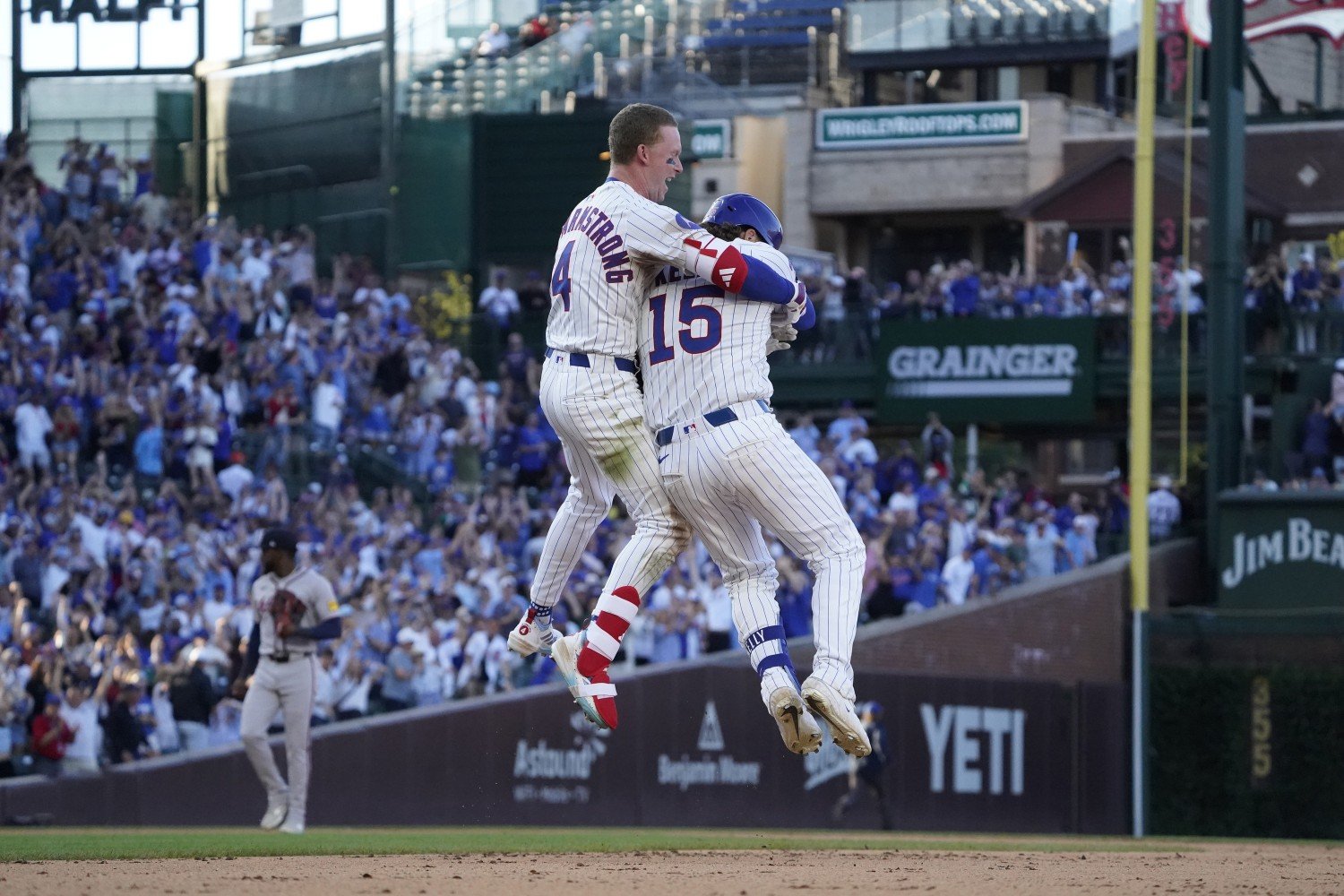 There are few things (if any, at all) like a robust Wrigley Field crowd on a holiday. The Rickettses' renovation has disassembled the soul of the place and sold off a bit of it, hoping no one will notice on the other side of the reconstruction, but Wrigley remains a baseball palace, and a good Cubs team that lasts until the glare of summer starts to slant toward autumn brings out its best colors. When the Cubs fell badly behind early on Monday, though, it started to feel like the place was too crowded—not with people, but with weeks and weeks stacked on top of each other, all squished into five innings. Baseball is a summer game, which makes this Cubs season awkward, because the team has not truly had a good summer. They had a good spring, and since early June, they've been merely treading water. The anxiety of a good team that might not be quite as good as hoped—that slowly watches their division lead melt away over six weeks, then quickly watches the usurpers run away with the thing over a nightmare fortnight—has piled up for almost three months now, and when visitors from Atlanta raced out to a 6-1 lead before the holiday crowd still searching for its summer highlight at the unofficial end of that season, it looked like that anxiety would keep rising like bile in the throat all through September. Wonderfully, the team sensed that challenge, absorbed it, staggered under its weight—and then answered it. All day, Kyle Tucker looked bad—fidgety in the batter's box, uncomfortable, noncommittal at the worst possible moment on a crucial fly ball to right-center field. Early on, Pete Crow-Armstrong looked similarly so. Colin Rea still looked the way he did in San Francisco, and the rightful worries of many that he will continue to peter out over the final month seemed confirmed. But then: Matt Shaw drove a gorgeous double into the left-field corner, scoring Dansby Swanson in the fifth. It was a continuation of Shaw's pull-centric second-half breakout, a poignant evocation of Ryne Sandberg's stellar summer in the year when Sandberg left us. Swanson stroked a double into left-center in the sixth, scoring two runs to halve the remaining deficit. This is a subtler but no less vital trend. Swanson had a good road trip and has gotten into the habit of diving out and finding the barrel on balls over the outer third of the plate, where pitchers love to work him, pulling it not down the line (like Shaw) but to left-center. Swanson had eight extra-base hits to left-center field in the first half; he has eight in the second half. New Cub Aaron Civale shut down Atlanta for three innings, making his first career relief appearance in style. His velocity was up a tick from his season averages, and not seeing the opposing lineup multiple times looked like the advantage it should prove to be all month. That gave the team time to catch up. Carson Kelly came through twice, with a game-tying two-run homer in the eighth and a walkoff single (which could have been a double, if it had needed to be) in the 10th. Kelly is, arguably, the best avatar of the team's season as a whole. He started like a house afire, but since Miguel Amaya got hurt in Cincinnati in late May and Kelly had to take over as something closer to an everyday backstop, he had batted .232/.302/.338. It's fair to wonder how much better than that Kelly can be the rest of the way, just as it's fair to wonder whether the Cubs can really recapture the magic they seemed to have harnessed early in the aseason. For at least one day, though, the answers to both questions looked encouraging. Not all is copacetic. The Cubs aren't going to catch the Brewers in the NL Central, which means they'll have to play a best-of-three series just to reach the Division Series. They still have dubious starting pitching depth, and their bullpen has sprung some leaks lately. The engines of their early success on offense (Tucker, Crow-Armstrong and Seiya Suzuki) are very much stuck in neutral, even though Tucker's swing mechanics seem to have improved; none of the three look good in the batter's box right now. However, this team is deeper than it has looked for much of the summer. Ian Happ's torrid stretch continued with a homer Monday, and he was always meant to be an important part of the lineup; he just went into a prolonged funk that took him out of that role for a while. Swanson and Shaw (and, to a lesser extent, Nico Hoerner) are valuable complementary pieces who can take over an occasional game themselves, which is how this team came to seem so thoroughly dangerous back in April and May. The season has aked this team hard questions, and they haven't always found satisfactory answers. For the throng that filled Wrigley Field to begin September (and the throngs yet to come, throughout this month and (the team hopes) the next one), though, real satisfaction will hinge on how they do on the remainder of the test. They rediscovered their formula for wins just in time Monday. Now, they have to multiply the recipe to make a bigger batch.
 -
How Carlos Santana Fits for Chicago Cubs in September, and Beyond
Matthew Trueblood posted an article in Cubs
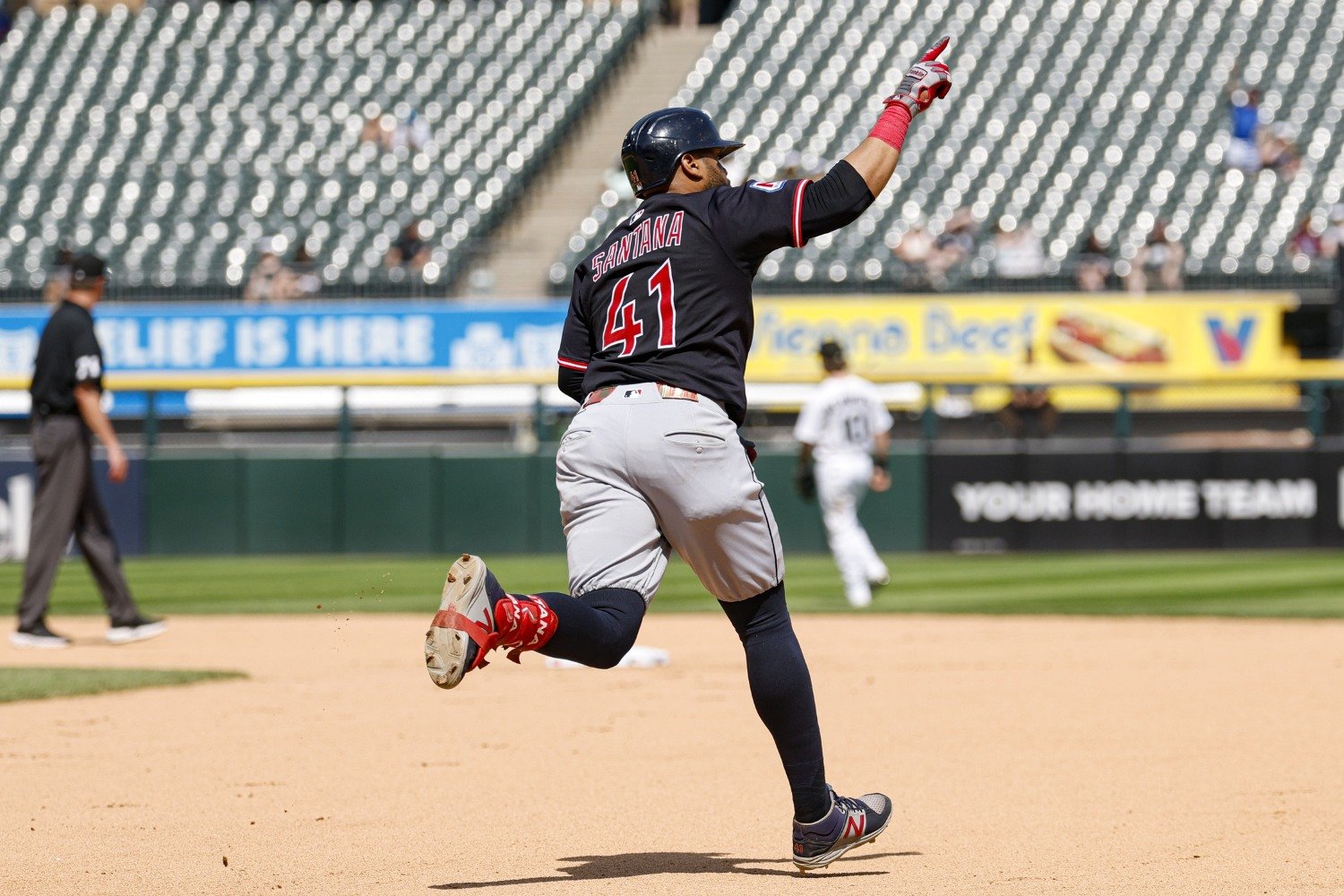 Carter Hawkins knows Carlos Santana; they overlapped in Cleveland. Craig Counsell knows Santana; he managed him in the second half of 2023. Willi Castro knows Santana; they played the 2024 season together with the Minnesota Twins. Aaron Civale, Caleb Thielbar, and Colin Rea have all been teammates, too. Santana is one of the game's most universally beloved veterans, yet another signing that affirms the Cubs' strong belief in the value of relationships and of clubhouse chemistry—and in the significance of proverbial skins on the wall. It will be easy to enfold Santana into a veteran-led and veteran-stuffed clubhouse, but how to fit him into the daily plans on the field is a bit thornier a question. Arguably the best defensive first baseman in the league, Santana can always provide that value as a glove man, but he becomes the third first baseman on the roster. He's a career .274/.372/.447 hitter against left-handed pitchers, but in a down season at age 39, he's shown major cracks even in that skill. He's hitting just .235/.328/.353 this year versus southpaws. At that rate, he's no meaningful upgrade over Justin Turner, and he's certainly not going to start ahead of Michael Busch against righties—save, perhaps, to rest Busch once or twice if the Cubs find themselves in a comfortable position over the final week. That's the bad news. The good news is that Santana's bat speed, swing path and contact numbers are little changed from last year, even against lefties. He's done two things a bit too often this year, for his profile. First, deeply uncharacteristically, he's chasing a bit more outside the strike zone. Plenty of hitters would be happy to be chasing just 25% of the pitches they see outside the zone, but Santana's extreme patience was a huge part of his success for a decade and a half. To see that trait wobble might indicate that age is catching up to him, even if he can get his bat up to speed just as well when he does fire. The other thing he's done too often this year, from the right side, is hit the ball straight up in the air. That can be fluky, though, of course, and most of those problems came in the first half. Santana hasn't lost the ability to strike the ball well or the ability to lift it against lefties, so if he reins in his plate discipline even by a tiny increment, he should be helpful. Turner (2 Defensive Runs Saved, according to Sports Info Solutions) and Busch (0 DRS) can't keep up with Santana (11) even at this advanced age, so whenever he is in the game for defense, he'll be a noticeable upgrade. There's also some tactical value to unlock, here. Santana might be a more trustworthy bat against left-handed pitchers than Kevin Alcántara, in Counsell's view, so perhaps there will be times when he'll pinch-hit for Pete Crow-Armstrong before giving way to Alcántara for late-game defense. He might also bat for Reese McGuire at times, letting Carson Kelly filter in thereafter. Santana will certainly be good for the internal vibes of the team, which are already good. Whether he'll add material on-field value depends on whether he's in full-fledged decline or just had some bad luck in the small sample of a partial season's platoon splits. As the Cubs gear up for the postseason, however, he makes as much sense as anyone they could have brought in to round out their expanded September bench. The versatility of Castro and the athleticism of Alcántara make it easier to fit him in, too.
 -
Image courtesy of © Kamil Krzaczynski-Imagn Images Carter Hawkins knows Carlos Santana; they overlapped in Cleveland. Craig Counsell knows Santana; he managed him in the second half of 2023. Willi Castro knows Santana; they played the 2024 season together with the Minnesota Twins. Aaron Civale, Caleb Thielbar, and Colin Rea have all been teammates, too. Santana is one of the game's most universally beloved veterans, yet another signing that affirms the Cubs' strong belief in the value of relationships and of clubhouse chemistry—and in the significance of proverbial skins on the wall. It will be easy to enfold Santana into a veteran-led and veteran-stuffed clubhouse, but how to fit him into the daily plans on the field is a bit thornier a question. Arguably the best defensive first baseman in the league, Santana can always provide that value as a glove man, but he becomes the third first baseman on the roster. He's a career .274/.372/.447 hitter against left-handed pitchers, but in a down season at age 39, he's shown major cracks even in that skill. He's hitting just .235/.328/.353 this year versus southpaws. At that rate, he's no meaningful upgrade over Justin Turner, and he's certainly not going to start ahead of Michael Busch against righties—save, perhaps, to rest Busch once or twice if the Cubs find themselves in a comfortable position over the final week. That's the bad news. The good news is that Santana's bat speed, swing path and contact numbers are little changed from last year, even against lefties. He's done two things a bit too often this year, for his profile. First, deeply uncharacteristically, he's chasing a bit more outside the strike zone. Plenty of hitters would be happy to be chasing just 25% of the pitches they see outside the zone, but Santana's extreme patience was a huge part of his success for a decade and a half. To see that trait wobble might indicate that age is catching up to him, even if he can get his bat up to speed just as well when he does fire. The other thing he's done too often this year, from the right side, is hit the ball straight up in the air. That can be fluky, though, of course, and most of those problems came in the first half. Santana hasn't lost the ability to strike the ball well or the ability to lift it against lefties, so if he reins in his plate discipline even by a tiny increment, he should be helpful. Turner (2 Defensive Runs Saved, according to Sports Info Solutions) and Busch (0 DRS) can't keep up with Santana (11) even at this advanced age, so whenever he is in the game for defense, he'll be a noticeable upgrade. There's also some tactical value to unlock, here. Santana might be a more trustworthy bat against left-handed pitchers than Kevin Alcántara, in Counsell's view, so perhaps there will be times when he'll pinch-hit for Pete Crow-Armstrong before giving way to Alcántara for late-game defense. He might also bat for Reese McGuire at times, letting Carson Kelly filter in thereafter. Santana will certainly be good for the internal vibes of the team, which are already good. Whether he'll add material on-field value depends on whether he's in full-fledged decline or just had some bad luck in the small sample of a partial season's platoon splits. As the Cubs gear up for the postseason, however, he makes as much sense as anyone they could have brought in to round out their expanded September bench. The versatility of Castro and the athleticism of Alcántara make it easier to fit him in, too. View full article
-
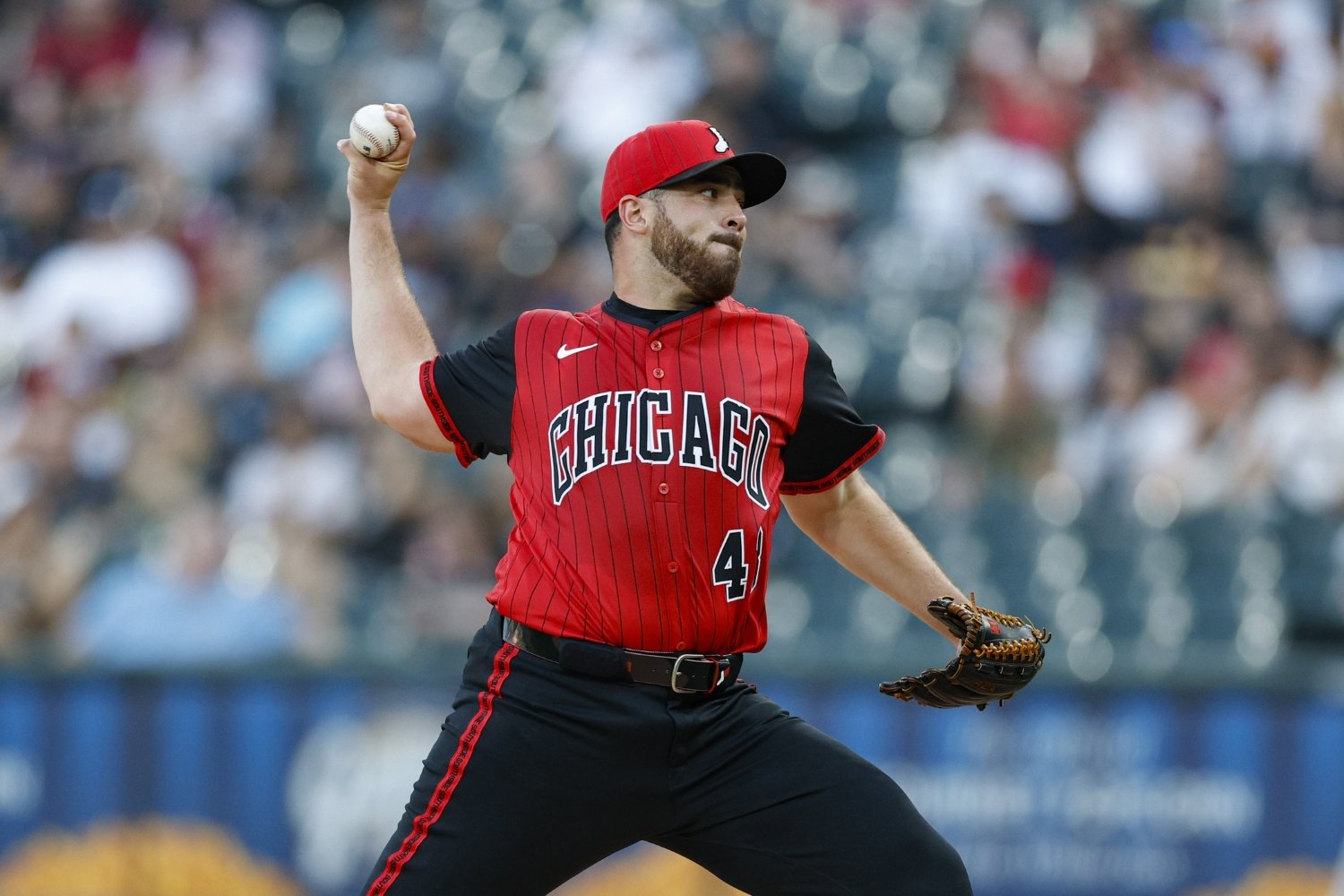 In the glory days of what Brewers fans affectionately dubbed 'Craigtember', the Cubs would have an embarrassment of riches and an endless number of ways to utilize them come Monday. They claimed righthander Aaron Civale off waivers from the White Sox Sunday, displacing lefty reliever Tom Cosgrove from the 40-man roster but givin them a proven veteran with the ability to deliver bulk innings throughout the final month of the regular season. Civale, 30, has not had a banner year in his final season before becoming eligible for free agency. He started the season in the Brewers' starting rotation, but immediately got sidelined by a leg injury and was then displaced by the promotion of rookie phenom Jacob Misiorowski. Wanting to prove to offseason suitors that he can be a valuable starter, Civale requested a trade, and was sent to the White Sox—where he's stuck in the rotation, but posted a 5.37 ERA in 13 appearances. Civale won't be Plan A for any spot in the rotation with Chicago, and he's never appeared in relief in the majors during a regular-season game. On the other hand, he's never appeared in relief in the majors during a regular-season game—which is to say, the upside of such a conversion has yet to be explored for him. He has a six-pitch mix, not counting a sweeper he's cut out of the mix he had last year, and streamlining that—perhaps even reintroducing the sweeper, in the process—could unlock some things for him. So, too, could an extra tick or two on his fastballs. His four-seamer and sinker each sit around 92 miles per hour, but his cutter drives his approach, and it's only 89-90. Bump that up, or rejigger that whole mix and increase the usage of his other heaters, and his profile changes in an intriguing way. With the change from the old structure of September rosters (whereby teams could carry all 40 of the players on their reserve lists) to the new one (whereby they can add just one batter and one pitcher on September 1), however, this addition creates a mild crunch, even for a team hungry for quality innings. Civale's roster spot could come at the expense of Ben Brown, who fills a similar role (but not well) right now. The second half of August saw the Cubs wheel through a handful of guys in that final relief slot, including Jordan Wicks, Luke Little, Gavin Hollowell, and Porter Hodge. With Ryan Brasier and Michael Soroka both on the injured list but aiming to return by mid-September, there's room for Civale in the short term, but someone will be squeezed out of the picture in the second half of the month. Though he's not coming in as a planned part of the rotation, Civale certainly could make starts for the team over the final four weeks. The Cubs' place in the postseason looks very secure, and although they should keep pressing to ensure that they host the Wild Card Series, they'll surely spend a portion of the month trying to ease the workload of starters Cade Horton and Matthew Boyd, among others. A skipped start for Horton or a lengthening to six men in the rotation is very plausible. So, too, is a piggyback arrangement whereby a starter like Horton, Colin Rea or Javier Assad might depart after four innings in favor of Civale, who would work a similar length and save the bullpen a day's work. Until Jameson Taillon returns from the injured list, at the very least, starter-style innings are available. Opposing batters have just a .679 OPS the first time they see Civale in a game this season. That rises to .818 the second time and .877 the third time. By cutting out the third time altogether and limiting second looks at him for opponents, the Cubs could get some good innings out of Civale down the stretch. It's easy, at least, to see why they're going to give it a shot. Only after the first week or two of the month will the roster math start to get tricky.
 -
Image courtesy of © Kamil Krzaczynski-Imagn Images In the glory days of what Brewers fans affectionately dubbed 'Craigtember', the Cubs would have an embarrassment of riches and an endless number of ways to utilize them come Monday. They claimed righthander Aaron Civale off waivers from the White Sox Sunday, displacing lefty reliever Tom Cosgrove from the 40-man roster but givin them a proven veteran with the ability to deliver bulk innings throughout the final month of the regular season. Civale, 30, has not had a banner year in his final season before becoming eligible for free agency. He started the season in the Brewers' starting rotation, but immediately got sidelined by a leg injury and was then displaced by the promotion of rookie phenom Jacob Misiorowski. Wanting to prove to offseason suitors that he can be a valuable starter, Civale requested a trade, and was sent to the White Sox—where he's stuck in the rotation, but posted a 5.37 ERA in 13 appearances. Civale won't be Plan A for any spot in the rotation with Chicago, and he's never appeared in relief in the majors during a regular-season game. On the other hand, he's never appeared in relief in the majors during a regular-season game—which is to say, the upside of such a conversion has yet to be explored for him. He has a six-pitch mix, not counting a sweeper he's cut out of the mix he had last year, and streamlining that—perhaps even reintroducing the sweeper, in the process—could unlock some things for him. So, too, could an extra tick or two on his fastballs. His four-seamer and sinker each sit around 92 miles per hour, but his cutter drives his approach, and it's only 89-90. Bump that up, or rejigger that whole mix and increase the usage of his other heaters, and his profile changes in an intriguing way. With the change from the old structure of September rosters (whereby teams could carry all 40 of the players on their reserve lists) to the new one (whereby they can add just one batter and one pitcher on September 1), however, this addition creates a mild crunch, even for a team hungry for quality innings. Civale's roster spot could come at the expense of Ben Brown, who fills a similar role (but not well) right now. The second half of August saw the Cubs wheel through a handful of guys in that final relief slot, including Jordan Wicks, Luke Little, Gavin Hollowell, and Porter Hodge. With Ryan Brasier and Michael Soroka both on the injured list but aiming to return by mid-September, there's room for Civale in the short term, but someone will be squeezed out of the picture in the second half of the month. Though he's not coming in as a planned part of the rotation, Civale certainly could make starts for the team over the final four weeks. The Cubs' place in the postseason looks very secure, and although they should keep pressing to ensure that they host the Wild Card Series, they'll surely spend a portion of the month trying to ease the workload of starters Cade Horton and Matthew Boyd, among others. A skipped start for Horton or a lengthening to six men in the rotation is very plausible. So, too, is a piggyback arrangement whereby a starter like Horton, Colin Rea or Javier Assad might depart after four innings in favor of Civale, who would work a similar length and save the bullpen a day's work. Until Jameson Taillon returns from the injured list, at the very least, starter-style innings are available. Opposing batters have just a .679 OPS the first time they see Civale in a game this season. That rises to .818 the second time and .877 the third time. By cutting out the third time altogether and limiting second looks at him for opponents, the Cubs could get some good innings out of Civale down the stretch. It's easy, at least, to see why they're going to give it a shot. Only after the first week or two of the month will the roster math start to get tricky. View full article
-
Image courtesy of © Stan Szeto-Imagn Images Last August 18, the Milwaukee Brewers beat the Cleveland Guardians 2-0. It was part of the signature annual kick the Crew makes to knock back all challengers and assert themselves as the rightful champions of the NL Central. It was also a new high point for Colin Rea. The Brewers had had to rely on Rea much more than expected in 2023, but they'd phased him out in August and kept him on very short leashes throughout September. He'd re-signed on a modest deal that November, but after Brandon Woodruff's season was canceled by shoulder surgery and Corbin Burnes was traded that winter, Rea emerged as an utterly unexpected de facto No. 2 starter for Milwaukee in 2024. He could not have met that challenge more impressively. After seven scoreless innings with five strikeouts and just four total baserunners allowed that day against Cleveland, Rea had pitched 135 innings for the 2024 Crew and had a 3.52 ERA. In a season full of surprising and impressive performances, Rea's was one of the most important. The Brewers could not have won the division without him. From that day on, though, they were a lot better off when someone else was pitching. Rea wouldn't have another good start the rest of the way. He was rocked for 10 runs in four innings in San Francisco on September 11. Twice in the final three weeks, he was pushed back or skipped in the rotation and made appearances out of the bullpen instead. All told, starting with his August 24 start in Oakland, Rea had a 7.52 ERA. The Brewers hadn't handed him the ball at all in their Wild Card Series loss in 2023, and although you'd have assumed they would in mid-August, they never did turn to him in their three-game loss to the Mets in October 2024. All of that (not least, the nightmarish appearance in San Francisco) felt rather relevant and immediate Wednesday night, as a fairly different Giants team did a fairly similar thing to Rea and boat-raced the Cubs, eventually winning 12-3. It's not that Rea's success to this point has been entirely fake, and it's certainly been meaningful, but you need to know this, and you (or at least the Cubs) needed to keep it in mind all along: Rea is a guy who runs out of steam at the end of a full season. That's why last year was the first time he even got a chance to pitch all the way through one as a big-league starter, or at least a facsimile of one. The hurler has made some important adjustments this year, and he has a chance to find success from time to time even down the stretch. He's not an automatic loss, if you have to hand the ball to him to start a playoff game. That shouldn't be the plan until other options have been exhausted, though, because his decade-plus in pro ball provides ample evidence that he won't have his best blend of stuff and command by the time the calendar flips to September, let alone October. Rea kept the team in the game during his previous outing, a 4-3 win over the Brewers, but he also walked five and struck out just two in that contest. The cracks are starting to show, and they're not merely the product of random fluctuation. They're part of a systematic tendency to fade a bit, which is far from unique to Rea and has to be baked into your evaluation of him. A few weeks ago, a Cubs fan might fairly have held out hope that that wouldn't matter much. Now, though, it's fair to look around and wonder just how well the Cubs can get from here to the end of the regular season, let alone what happens when the playoffs begin. Jameson Taillon went back on the injured list Tuesday, with a groin issue the team insists is minor. That might be true, and this might be purely about maintenance, but it's the second time Taillon has been shelved just when the team seemed to need the stability of a veteran starter every fifth day the most. On Tuesday night, after the Taillon news was announced, Matthew Boyd had his fourth shaky outing in the last six. Boyd isn't kaput, either, but the Cubs are much more reliant on him than they are on Rea (or even Taillon), so his unsteadiness is even more concerning. His command has wavered badly, after looking masterful for the entire first half. With 153 1/3 innings pitched, Boyd has gotten more outs this year than in 2022, 2023 and 2024 combined. It's fair to wonder whether the ability to control and manipulate the ball the way he has for so long can hold up much longer for him, before he'll need an offseason to recharge. A bit of command erosion indicates that Boyd and Rea, in their mid-30s, are getting to points their bodies are having a hard time adjusting to, because they really haven't done this before—or haven't done it in many years. For Cade Horton, that subtle sign was the blister that took him out of his start against Milwaukee last week. He came right back and dominated the Angels, but no one is likely to forget that he, too, is pitching past any precedents his body understands. Shota Imanaga and Javier Assad should be solid starters down the stretch. Beyond them, though, lie major questions even about some of the hurlers who have performed best for the Cubs this season. The loss of Justin Steele, the inability of Taillon to stay on the mound, and the busted bet on Michael Soroka all loom large at this moment. They have 29 games left to play this regular season. They only need to win, perhaps, 10 of them to ensure that they reach the postseason, but if they want to host the Wild Card Series matchup in which they're most likely to face the San Diego Padres, they probably need to go 15-14 or 16-13. At this moment, that feels like a tall order. The team's bullpen is solid, but it's neither spectacular nor overwhelmingly deep. Craig Counsell can't simply offload the middle innings he no longer wants to depend on Rea or Boyd or Horton to occupy to the pen, because he doesn't have the horses out there. He has to spend at least the next fortnight managing largely to keep people healthy and let his struggling arms work through a period of adjustment, hoping they and their bodies can lock back into a groove by the time the bunting is hung from the railings. Two losses in San Francisco are not a major problem; the Cubs are almost certain to make the playoffs even if they're swept out of town by Logan Webb Thursday. On and off the field, though, this trip has now begun to demonstrate where the team's weaknesses are and what the biggest challenges will be as they race toward the finish line of the season. View full article
-
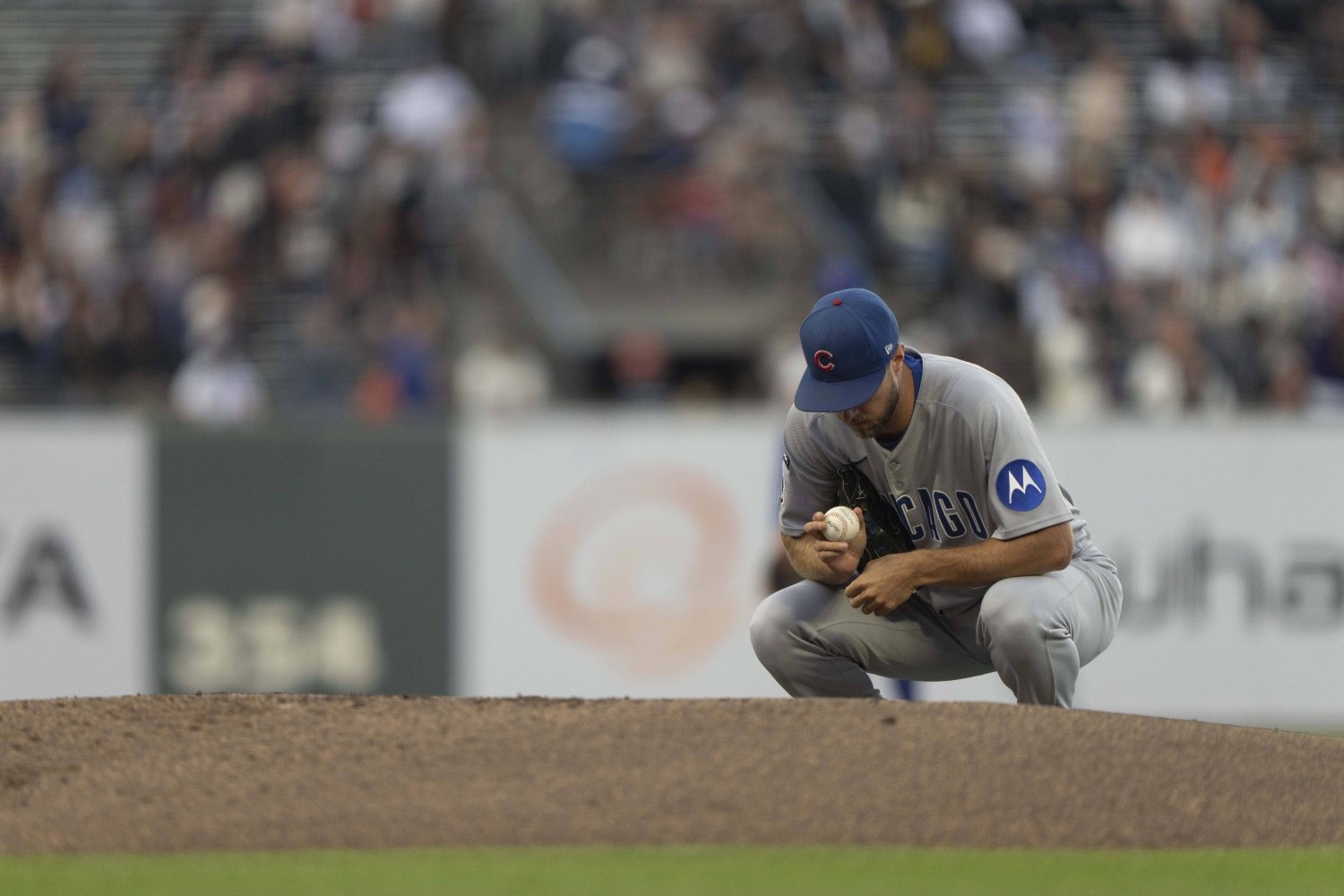 Last August 18, the Milwaukee Brewers beat the Cleveland Guardians 2-0. It was part of the signature annual kick the Crew makes to knock back all challengers and assert themselves as the rightful champions of the NL Central. It was also a new high point for Colin Rea. The Brewers had had to rely on Rea much more than expected in 2023, but they'd phased him out in August and kept him on very short leashes throughout September. He'd re-signed on a modest deal that November, but after Brandon Woodruff's season was canceled by shoulder surgery and Corbin Burnes was traded that winter, Rea emerged as an utterly unexpected de facto No. 2 starter for Milwaukee in 2024. He could not have met that challenge more impressively. After seven scoreless innings with five strikeouts and just four total baserunners allowed that day against Cleveland, Rea had pitched 135 innings for the 2024 Crew and had a 3.52 ERA. In a season full of surprising and impressive performances, Rea's was one of the most important. The Brewers could not have won the division without him. From that day on, though, they were a lot better off when someone else was pitching. Rea wouldn't have another good start the rest of the way. He was rocked for 10 runs in four innings in San Francisco on September 11. Twice in the final three weeks, he was pushed back or skipped in the rotation and made appearances out of the bullpen instead. All told, starting with his August 24 start in Oakland, Rea had a 7.52 ERA. The Brewers hadn't handed him the ball at all in their Wild Card Series loss in 2023, and although you'd have assumed they would in mid-August, they never did turn to him in their three-game loss to the Mets in October 2024. All of that (not least, the nightmarish appearance in San Francisco) felt rather relevant and immediate Wednesday night, as a fairly different Giants team did a fairly similar thing to Rea and boat-raced the Cubs, eventually winning 12-3. It's not that Rea's success to this point has been entirely fake, and it's certainly been meaningful, but you need to know this, and you (or at least the Cubs) needed to keep it in mind all along: Rea is a guy who runs out of steam at the end of a full season. That's why last year was the first time he even got a chance to pitch all the way through one as a big-league starter, or at least a facsimile of one. The hurler has made some important adjustments this year, and he has a chance to find success from time to time even down the stretch. He's not an automatic loss, if you have to hand the ball to him to start a playoff game. That shouldn't be the plan until other options have been exhausted, though, because his decade-plus in pro ball provides ample evidence that he won't have his best blend of stuff and command by the time the calendar flips to September, let alone October. Rea kept the team in the game during his previous outing, a 4-3 win over the Brewers, but he also walked five and struck out just two in that contest. The cracks are starting to show, and they're not merely the product of random fluctuation. They're part of a systematic tendency to fade a bit, which is far from unique to Rea and has to be baked into your evaluation of him. A few weeks ago, a Cubs fan might fairly have held out hope that that wouldn't matter much. Now, though, it's fair to look around and wonder just how well the Cubs can get from here to the end of the regular season, let alone what happens when the playoffs begin. Jameson Taillon went back on the injured list Tuesday, with a groin issue the team insists is minor. That might be true, and this might be purely about maintenance, but it's the second time Taillon has been shelved just when the team seemed to need the stability of a veteran starter every fifth day the most. On Tuesday night, after the Taillon news was announced, Matthew Boyd had his fourth shaky outing in the last six. Boyd isn't kaput, either, but the Cubs are much more reliant on him than they are on Rea (or even Taillon), so his unsteadiness is even more concerning. His command has wavered badly, after looking masterful for the entire first half. With 153 1/3 innings pitched, Boyd has gotten more outs this year than in 2022, 2023 and 2024 combined. It's fair to wonder whether the ability to control and manipulate the ball the way he has for so long can hold up much longer for him, before he'll need an offseason to recharge. A bit of command erosion indicates that Boyd and Rea, in their mid-30s, are getting to points their bodies are having a hard time adjusting to, because they really haven't done this before—or haven't done it in many years. For Cade Horton, that subtle sign was the blister that took him out of his start against Milwaukee last week. He came right back and dominated the Angels, but no one is likely to forget that he, too, is pitching past any precedents his body understands. Shota Imanaga and Javier Assad should be solid starters down the stretch. Beyond them, though, lie major questions even about some of the hurlers who have performed best for the Cubs this season. The loss of Justin Steele, the inability of Taillon to stay on the mound, and the busted bet on Michael Soroka all loom large at this moment. They have 29 games left to play this regular season. They only need to win, perhaps, 10 of them to ensure that they reach the postseason, but if they want to host the Wild Card Series matchup in which they're most likely to face the San Diego Padres, they probably need to go 15-14 or 16-13. At this moment, that feels like a tall order. The team's bullpen is solid, but it's neither spectacular nor overwhelmingly deep. Craig Counsell can't simply offload the middle innings he no longer wants to depend on Rea or Boyd or Horton to occupy to the pen, because he doesn't have the horses out there. He has to spend at least the next fortnight managing largely to keep people healthy and let his struggling arms work through a period of adjustment, hoping they and their bodies can lock back into a groove by the time the bunting is hung from the railings. Two losses in San Francisco are not a major problem; the Cubs are almost certain to make the playoffs even if they're swept out of town by Logan Webb Thursday. On and off the field, though, this trip has now begun to demonstrate where the team's weaknesses are and what the biggest challenges will be as they race toward the finish line of the season.
 -
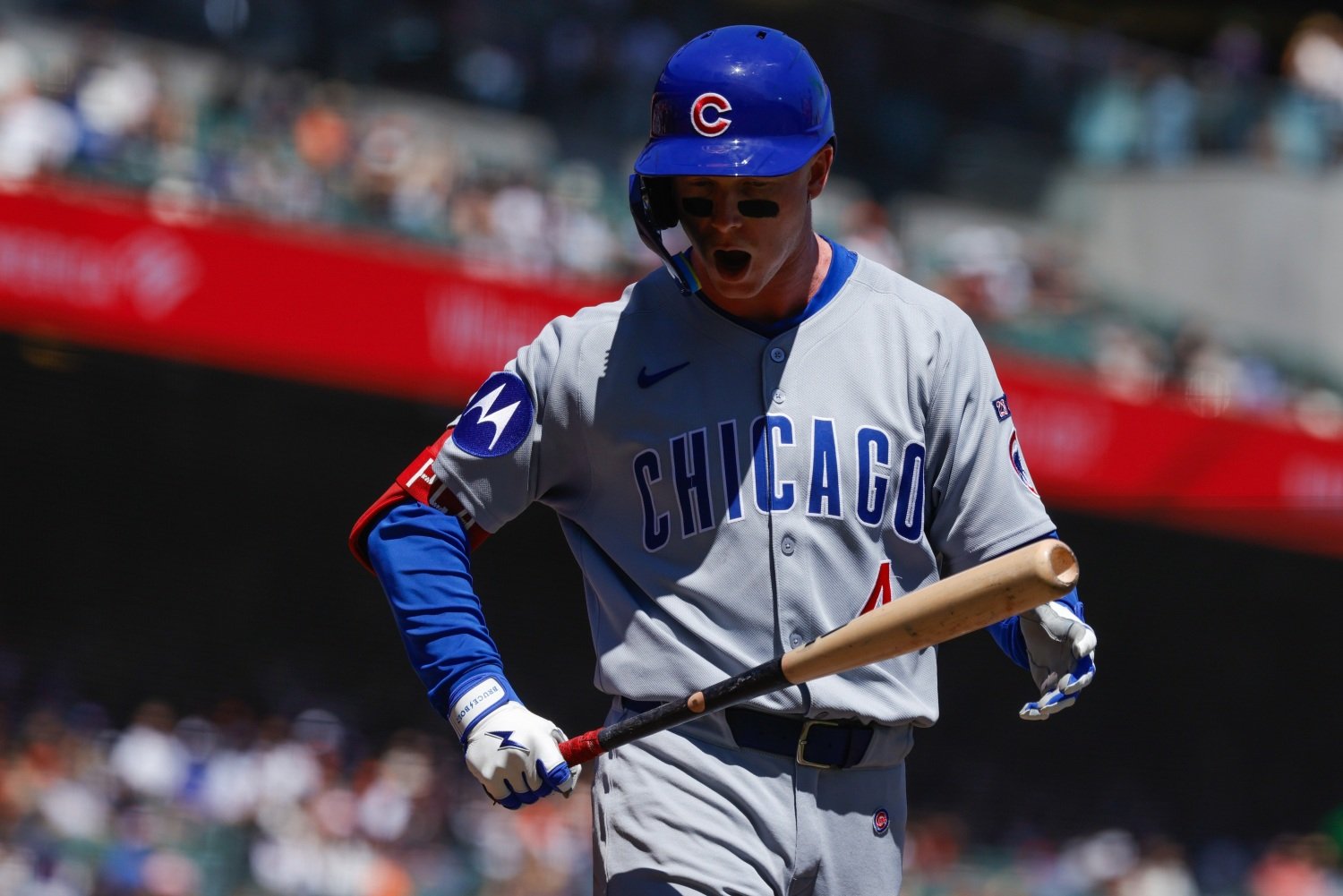
Image courtesy of © Jonathan Hui-Imagn Images In a perfect world, perhaps, Ian Happ or Nico Hoerner would be having a better season. Happ had a .360 on-base percentage in 2023. Hoerner has never had one higher than .346 over a full campaign, but (like Happ) he's had half-season stretches wherein he sits around .390. If either player was having that kind of 2025 campaign, Craig Counsell might have them slotted in atop the batting order on a regular basis. Their skill sets are well-suited to that job, when they're playing their best baseball. Right now, though, that's not the case. Happ is fighting for his life, batting .202/.315/.395 since the start of June. Hoerner is a metronome, but that's not a full-throated compliment: he's a metronomic .280/.335/.370 hitter. Given his druthers, Counsell wants more of a threat at the top of the order, and if he's going to make an exception to that rule, it needs to be for someone with a truly difference-making ability to get on base and avoid outs. Neither Happ nor Hoerner is clearing that bar. By default, then, the job has fallen to Michael Busch. Counsell moved his starting first baseman to the first spot on the lineup card just before the All-Star break, and for most of the weeks since, he's kept him there. The results have been disastrous—Busch is hitting just .195/.252/.367 in that span, and the Cubs offense continues to wobble between serviceable and maddening—but the bulk of the blame for that falls further down the batting order. With Kyle Tucker, Pete Crow-Armstrong and Seiya Suzuki all struggling similarly over longer periods (or even more intensely, over a similar period), who's had time to focus on Busch? Counsell entrusted Busch with the job because he brings a balance of on-base skills and power that can often catalyze the offense. Even amid this painful stretch (which has included hitting into some bad luck), Busch has occasionally looked worthy of that trust, but moving up and leading the crew seems to have messed with his approach a bit. That's a shame, because Busch has a somewhat delicate but extremely productive approach when he's on. He's been significantly better this year than last year, because he's locked in the best version of that approach for a bit longer than he did in his rookie campaign. That's included a few things: Being on time for the fastball Getting aggressive at the front end of counts, including hunting hittable first pitches Attacking the ball more with power in mind after gaining leverage in the count Busch's whiff rate on heaters is down this year, as he's learned to cover the upper half of the zone better without compromising his ability to drive the ball in the air. He's swinging at 38.9% of 0-0 pitches he sees, up from 32.0% last season. He's also hitting an eye-popping .295/.583/.541 in plate appearances that reach ball 3, which is good even by the standards of those advantage counts. Being more aggressive and creating more hard line drives has made Busch a better overall hitter. His hard-hit rate is up from 39.9% to 46.3% this year. He already has eight more Barrels, according to Statcast, than he had all last season. His average exit velocity is up. His expected slugging average is about .060 higher than his actual slugging average; he's find the good part of the barrel much more consistently. Swinging more often early also means that he's striking out less often, down from 28.6% last year to 24.6% this year. On the other hand, and unsurprisingly, Busch is also walking much less this year. He drew a free pass in 11.1% of his plate appearances in 2024. This season, that figure is 8.8%. Part of that is because he's swinging at those first pitches more often, and that's fine. Trading a walk for a good pass at the ball and the high chance of an extra-base hit is a profitable exchange. However, there's also a bit of a shortfall to notice in Busch's game when it comes to finishing his walks. Only 40.8% of the plate appearances in which he's gotten to three balls have eventually become bases on balls this season. Of the 600 player-seasons with the most plate appearances reaching those counts since 2021, Busch's 2025 ranks 480th in walk conversion rate. He's in the top quintile in hitting for power with three balls in the count, but the bottom quintile in turning those counts into walks. Whether that represents a problem in need of fixing is a thornier question. A bit counterintuitively, an extra-base hit on 3-0 or 3-1 is less valuable than one that comes on 1-2, or even at 0-0. That sounds silly—you get the same number of bases, either way—but you have to think a bit about the array of other possible outcomes for that plate appearance when the pitch comes in. It's good to make more of a 3-1 count than just a walk, but it's even better to create a jolt without needing to get ahead first—to bail oneself out of a pitcher-friendly count, most of all. If you don't have the knack for driving the ball when you're ahead in the count, you can still work those walks. Busch, instead, has hammered the ball in those counts—but lost some walks in the process. He's actually been quite good after falling behind early in counts, relative to the rest of the league. He still gets to power in two-strike counts, too. Those are all signs of a great hitter. and it's not as though Busch is expanding his zone or making bad swing decisions when he does get ahead. On balance, though—given, especially, that aforementioned ability to make high-value contact even when he gets to two strikes—maybe the right approach for Busch, specifically, is to swing a bit less often when he's ahead. That would tend to lead to more walks and a higher OBP, even if it comes at the cost of a little bit of power. Even amid this slump since the All-Star break, Busch hasn't been the problem with the inconsistent Cubs lineup. He's having a profoundly impressive season, and only when Tucker is at his best does the team have any better hitters. The leadoff spot has been unkind to him, though, and whether he needs to make a mental adjustment to suit his altered role or be shifted back down in the order a bit, the Cubs need more and better performance from him the rest of the way. He might process at-bats better with some others ahead of him, to watch and learn, or with runners on base who help shape the pitcher's plan in a more predictable way. Then again, he really might just be in a rut of bad luck and bad sequencing. At his best and at his worst, Busch is one of the most trustworthy bats on this roster. View full article
-
Michael Busch, Three-Ball Counts, and What His Best Approach Might Be
Matthew Trueblood posted an article in Cubs
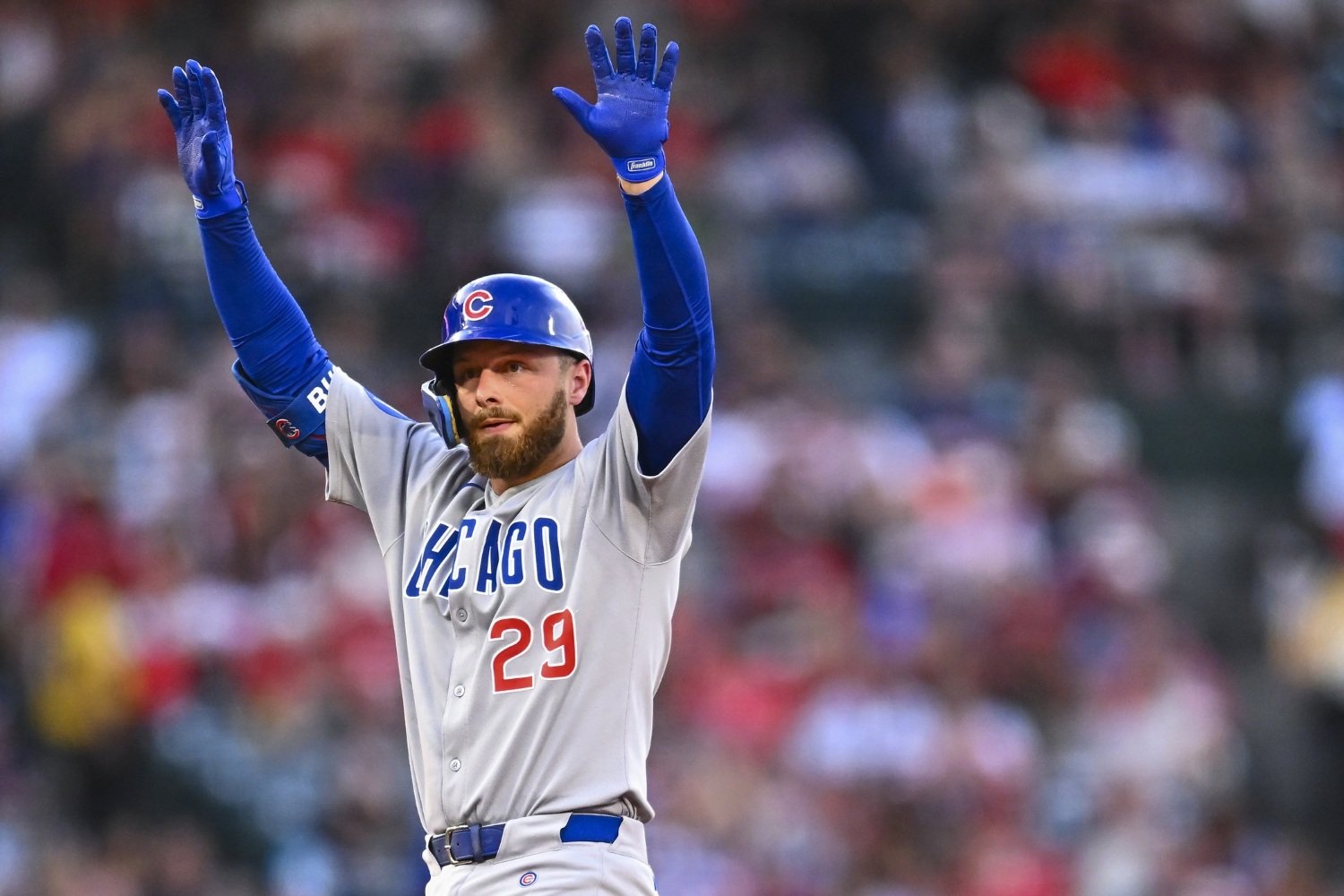 In a perfect world, perhaps, Ian Happ or Nico Hoerner would be having a better season. Happ had a .360 on-base percentage in 2023. Hoerner has never had one higher than .346 over a full campaign, but (like Happ) he's had half-season stretches wherein he sits around .390. If either player was having that kind of 2025 campaign, Craig Counsell might have them slotted in atop the batting order on a regular basis. Their skill sets are well-suited to that job, when they're playing their best baseball. Right now, though, that's not the case. Happ is fighting for his life, batting .202/.315/.395 since the start of June. Hoerner is a metronome, but that's not a full-throated compliment: he's a metronomic .280/.335/.370 hitter. Given his druthers, Counsell wants more of a threat at the top of the order, and if he's going to make an exception to that rule, it needs to be for someone with a truly difference-making ability to get on base and avoid outs. Neither Happ nor Hoerner is clearing that bar. By default, then, the job has fallen to Michael Busch. Counsell moved his starting first baseman to the first spot on the lineup card just before the All-Star break, and for most of the weeks since, he's kept him there. The results have been disastrous—Busch is hitting just .195/.252/.367 in that span, and the Cubs offense continues to wobble between serviceable and maddening—but the bulk of the blame for that falls further down the batting order. With Kyle Tucker, Pete Crow-Armstrong and Seiya Suzuki all struggling similarly over longer periods (or even more intensely, over a similar period), who's had time to focus on Busch? Counsell entrusted Busch with the job because he brings a balance of on-base skills and power that can often catalyze the offense. Even amid this painful stretch (which has included hitting into some bad luck), Busch has occasionally looked worthy of that trust, but moving up and leading the crew seems to have messed with his approach a bit. That's a shame, because Busch has a somewhat delicate but extremely productive approach when he's on. He's been significantly better this year than last year, because he's locked in the best version of that approach for a bit longer than he did in his rookie campaign. That's included a few things: Being on time for the fastball Getting aggressive at the front end of counts, including hunting hittable first pitches Attacking the ball more with power in mind after gaining leverage in the count Busch's whiff rate on heaters is down this year, as he's learned to cover the upper half of the zone better without compromising his ability to drive the ball in the air. He's swinging at 38.9% of 0-0 pitches he sees, up from 32.0% last season. He's also hitting an eye-popping .295/.583/.541 in plate appearances that reach ball 3, which is good even by the standards of those advantage counts. Being more aggressive and creating more hard line drives has made Busch a better overall hitter. His hard-hit rate is up from 39.9% to 46.3% this year. He already has eight more Barrels, according to Statcast, than he had all last season. His average exit velocity is up. His expected slugging average is about .060 higher than his actual slugging average; he's find the good part of the barrel much more consistently. Swinging more often early also means that he's striking out less often, down from 28.6% last year to 24.6% this year. On the other hand, and unsurprisingly, Busch is also walking much less this year. He drew a free pass in 11.1% of his plate appearances in 2024. This season, that figure is 8.8%. Part of that is because he's swinging at those first pitches more often, and that's fine. Trading a walk for a good pass at the ball and the high chance of an extra-base hit is a profitable exchange. However, there's also a bit of a shortfall to notice in Busch's game when it comes to finishing his walks. Only 40.8% of the plate appearances in which he's gotten to three balls have eventually become bases on balls this season. Of the 600 player-seasons with the most plate appearances reaching those counts since 2021, Busch's 2025 ranks 480th in walk conversion rate. He's in the top quintile in hitting for power with three balls in the count, but the bottom quintile in turning those counts into walks. Whether that represents a problem in need of fixing is a thornier question. A bit counterintuitively, an extra-base hit on 3-0 or 3-1 is less valuable than one that comes on 1-2, or even at 0-0. That sounds silly—you get the same number of bases, either way—but you have to think a bit about the array of other possible outcomes for that plate appearance when the pitch comes in. It's good to make more of a 3-1 count than just a walk, but it's even better to create a jolt without needing to get ahead first—to bail oneself out of a pitcher-friendly count, most of all. If you don't have the knack for driving the ball when you're ahead in the count, you can still work those walks. Busch, instead, has hammered the ball in those counts—but lost some walks in the process. He's actually been quite good after falling behind early in counts, relative to the rest of the league. He still gets to power in two-strike counts, too. Those are all signs of a great hitter. and it's not as though Busch is expanding his zone or making bad swing decisions when he does get ahead. On balance, though—given, especially, that aforementioned ability to make high-value contact even when he gets to two strikes—maybe the right approach for Busch, specifically, is to swing a bit less often when he's ahead. That would tend to lead to more walks and a higher OBP, even if it comes at the cost of a little bit of power. Even amid this slump since the All-Star break, Busch hasn't been the problem with the inconsistent Cubs lineup. He's having a profoundly impressive season, and only when Tucker is at his best does the team have any better hitters. The leadoff spot has been unkind to him, though, and whether he needs to make a mental adjustment to suit his altered role or be shifted back down in the order a bit, the Cubs need more and better performance from him the rest of the way. He might process at-bats better with some others ahead of him, to watch and learn, or with runners on base who help shape the pitcher's plan in a more predictable way. Then again, he really might just be in a rut of bad luck and bad sequencing. At his best and at his worst, Busch is one of the most trustworthy bats on this roster.
 -
Image courtesy of © John E. Sokolowski-Imagn Images It wouldn't even have crossed the mind of the 20th-century pitcher to try to beat you with nothing but speed and movement. The very best hurlers in the league in any given period—the Tom Seaver or Nolan Ryan type, with overpowering velocity at their disposal—might go right after hitters, but few of them had arsenals deep enough or control fine enough to always beat hitters that way, even at a time when most opposing lineups had a couple of hitters who would clear the fences just once a year. Thus, the most successful and praiseworthy pitchers in baseball would mix up their arm angles on you. Some had a specific pitch they threw from a slot distinctly different than that from which they threw the rest of their repertoire. Some would drop down unexpectedly in particular moments, when they felt the opposing batter was seeing them too well. This was not the exclusive demesne of junkballers, either. Seaver himself did it. So did David Cone, a generation later. John Smoltz did it. Varying one's arm angle was considered a viable (and often vital) way to deceive hitters and keep them on the defensive. It's become vanishingly rare, over the last 20 years. Some notable hurlers (Rich Hill, Clayton Kershaw, and Nestor Cortes, most famously) have dabbled with it, but the trend of the modern game is toward careful engineering and optimization of deliveries. Repeating your delivery is more prized than ever, and that means working from the same slot as much as possible. Advancements in our understanding of spin and other movement effects have allowed pitchers to create bigger differentials in movement between their offerings, so coming from different spots is less essential. In fact, the conventional wisdom has come to be that changing one's slot only gives away information to the hitter. In 2025, though, the Cubs' All-Star starting pitcher has defied that convention. Matthew Boyd is dropping down on his slider more all the time—and it's part of how he's stayed one step ahead of the league all year. Boyd has thrown his slider from a lower arm angle than his fastballs for the last few years, but the gap between the heaters and the slide piece has grown this year—and grown as the year has gone on, too. One might worry that this would make it too easy to distinguish the slider from the heat out of the hand, and Boy'd's whiff rate on the slider is down this year—but that's just part of the story. Here's the other part: Batted-Ball Data, Matthew Boyd Sliders, 2024-25 2024: 82 MPH exit velocity, 21° launch angle 2025: 78.5 MPH, 1° The median batted ball against Boyd's slider this year is a very weak ground ball. Widening the lens, of course, the results also justify his change, because he has a 2.61 ERA in 148 innings of work. Let's take a look at this in action, and see why it's so effective. In his last start, Boyd got Brice Turang out on a ground ball with a first-pitch slider in his first at-bat. Here's a pitch-by-pitch look at the second time the two saw each other. Boyd started Turang with another slider. QndvdmxfVjBZQUhRPT1fQmxKVlhWME1CUVVBQVZZS1VRQUhCZ01GQUFNR1d3UUFBRkJUQUZCUVZ3WUhBd1VD.mp4 Turang laid off this pitch, barely, but that's the kind of reaction you love to get from a hitter on the first pitch of an at-bat. An 0-0 swing should be an aggressive cut, or none at all; Boyd had Turang feeling very uncertain. He then tried the outside corner with a four-seamer, but missed. QndvdmxfVjBZQUhRPT1fRDFKWkJnSUZVd29BV1FRRVV3QUhVQUJRQUZoWEFBTUFCMUFBQTFaVFZ3QUhVd2RR.mp4 That pitch is working to the same side of the plate as the slider, but on an entirely different vertical plane. Since the slider is a sweepy-looking pitch, it's weird for the hitter to see the fastball play right in the same horizontal lane, even a foot and a half higher. Boyd was down 2-0 in the count, but he'd put some tricky things in Turang's way. QndvdmxfVjBZQUhRPT1fQlFZRVhGQUZCQWNBQUZjTFZnQUhCUUFIQUZnRFZ3UUFDd1lFQjFjREJnRmRVVmRm.mp4 When is a 2-0 sinker down the middle a good pitch? Only when it's been set up exceptionally well. Turang was waiting for a fastball in that zone, but he still mishit it. Why? Because Boyd had made it so hard for him to know what his pitch would look like when it came. Here are his release points for all three pitches in the sequence, side-by-side-by-side. There's so much funk in that first delivery (the slider), not only in that his arm is a bit lower, but in the way he strides slightly more across his body, helping create the angle for the pitch he's executing. This tweak is why Boyd throws the slider less often to righties this year, because it's a change conducive mostly to throwing the pitch to the first-base side of the plate and with deceptive sweep, but it's also why his whole ensemble has been so effective. By giving hitters such disparate looks, he disrupts the process of most guys throughout the league. The modern hitter is being optimized, too. They're working off the Trajekt machine, which can tailor the ball's flight to individual pitchers and pitches and even sync up video to simulate working against that hurler—but which can't be set to throw from two or three different places while mimicking one pitcher. Forcing batters who work relentlessly to find a small release window within which to track the ball to, instead, widen their field and see all his knees and elbows gives Boyd the edge. Not every pitcher has this much feel for the craft. Even some of those who do prefer to use it to hone especially precise location and command of their stuff, rather than to maximize deception. As Boyd gets set for his 26th start of the season Tuesday, though, his success this year is testament to the fact that the old ways of stumping great hitters still work. View full article
-
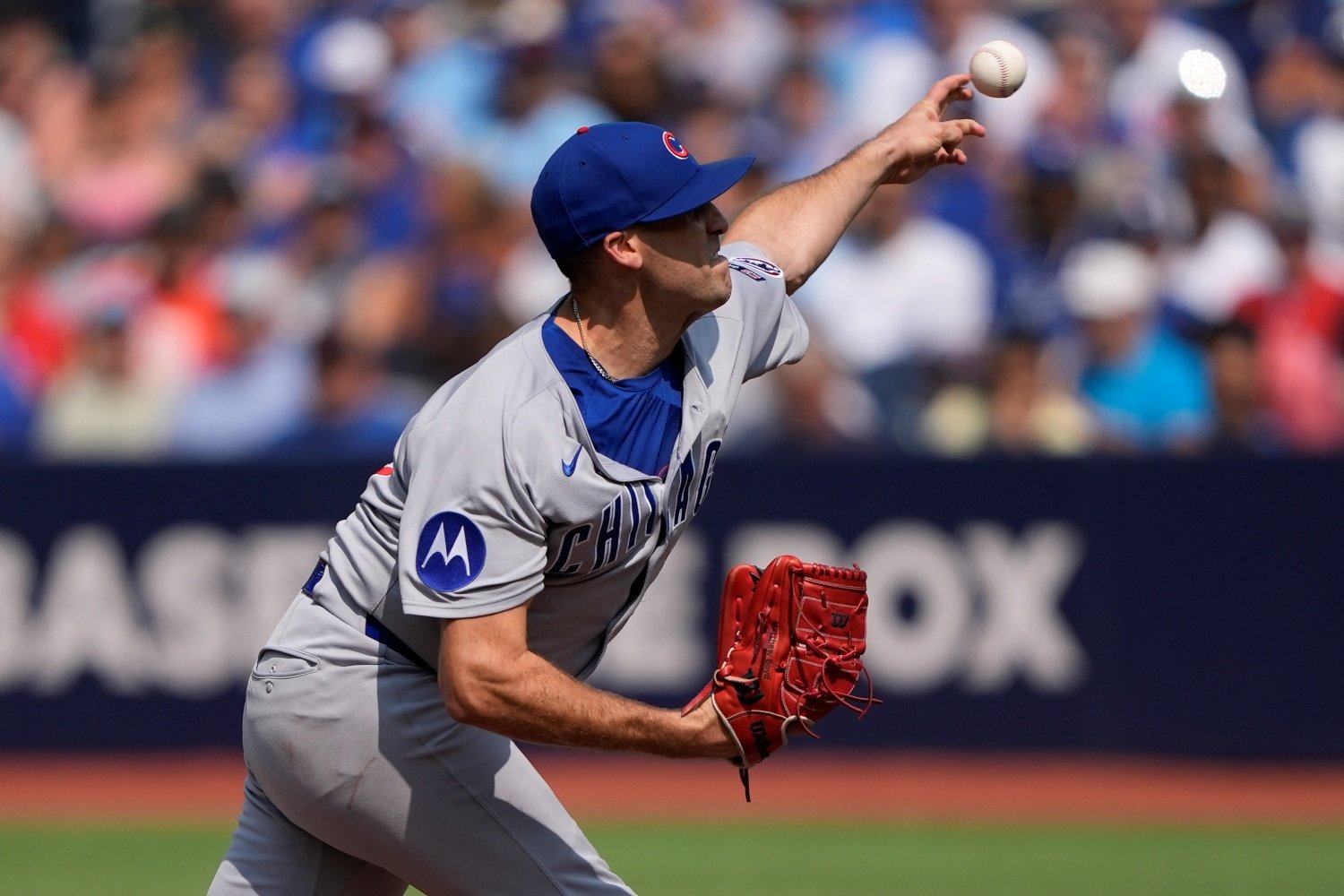 It wouldn't even have crossed the mind of the 20th-century pitcher to try to beat you with nothing but speed and movement. The very best hurlers in the league in any given period—the Tom Seaver or Nolan Ryan type, with overpowering velocity at their disposal—might go right after hitters, but few of them had arsenals deep enough or control fine enough to always beat hitters that way, even at a time when most opposing lineups had a couple of hitters who would clear the fences just once a year. Thus, the most successful and praiseworthy pitchers in baseball would mix up their arm angles on you. Some had a specific pitch they threw from a slot distinctly different than that from which they threw the rest of their repertoire. Some would drop down unexpectedly in particular moments, when they felt the opposing batter was seeing them too well. This was not the exclusive demesne of junkballers, either. Seaver himself did it. So did David Cone, a generation later. John Smoltz did it. Varying one's arm angle was considered a viable (and often vital) way to deceive hitters and keep them on the defensive. It's become vanishingly rare, over the last 20 years. Some notable hurlers (Rich Hill, Clayton Kershaw, and Nestor Cortes, most famously) have dabbled with it, but the trend of the modern game is toward careful engineering and optimization of deliveries. Repeating your delivery is more prized than ever, and that means working from the same slot as much as possible. Advancements in our understanding of spin and other movement effects have allowed pitchers to create bigger differentials in movement between their offerings, so coming from different spots is less essential. In fact, the conventional wisdom has come to be that changing one's slot only gives away information to the hitter. In 2025, though, the Cubs' All-Star starting pitcher has defied that convention. Matthew Boyd is dropping down on his slider more all the time—and it's part of how he's stayed one step ahead of the league all year. Boyd has thrown his slider from a lower arm angle than his fastballs for the last few years, but the gap between the heaters and the slide piece has grown this year—and grown as the year has gone on, too. One might worry that this would make it too easy to distinguish the slider from the heat out of the hand, and Boy'd's whiff rate on the slider is down this year—but that's just part of the story. Here's the other part: Batted-Ball Data, Matthew Boyd Sliders, 2024-25 2024: 82 MPH exit velocity, 21° launch angle 2025: 78.5 MPH, 1° The median batted ball against Boyd's slider this year is a very weak ground ball. Widening the lens, of course, the results also justify his change, because he has a 2.61 ERA in 148 innings of work. Let's take a look at this in action, and see why it's so effective. In his last start, Boyd got Brice Turang out on a ground ball with a first-pitch slider in his first at-bat. Here's a pitch-by-pitch look at the second time the two saw each other. Boyd started Turang with another slider. QndvdmxfVjBZQUhRPT1fQmxKVlhWME1CUVVBQVZZS1VRQUhCZ01GQUFNR1d3UUFBRkJUQUZCUVZ3WUhBd1VD.mp4 Turang laid off this pitch, barely, but that's the kind of reaction you love to get from a hitter on the first pitch of an at-bat. An 0-0 swing should be an aggressive cut, or none at all; Boyd had Turang feeling very uncertain. He then tried the outside corner with a four-seamer, but missed. QndvdmxfVjBZQUhRPT1fRDFKWkJnSUZVd29BV1FRRVV3QUhVQUJRQUZoWEFBTUFCMUFBQTFaVFZ3QUhVd2RR.mp4 That pitch is working to the same side of the plate as the slider, but on an entirely different vertical plane. Since the slider is a sweepy-looking pitch, it's weird for the hitter to see the fastball play right in the same horizontal lane, even a foot and a half higher. Boyd was down 2-0 in the count, but he'd put some tricky things in Turang's way. QndvdmxfVjBZQUhRPT1fQlFZRVhGQUZCQWNBQUZjTFZnQUhCUUFIQUZnRFZ3UUFDd1lFQjFjREJnRmRVVmRm.mp4 When is a 2-0 sinker down the middle a good pitch? Only when it's been set up exceptionally well. Turang was waiting for a fastball in that zone, but he still mishit it. Why? Because Boyd had made it so hard for him to know what his pitch would look like when it came. Here are his release points for all three pitches in the sequence, side-by-side-by-side. There's so much funk in that first delivery (the slider), not only in that his arm is a bit lower, but in the way he strides slightly more across his body, helping create the angle for the pitch he's executing. This tweak is why Boyd throws the slider less often to righties this year, because it's a change conducive mostly to throwing the pitch to the first-base side of the plate and with deceptive sweep, but it's also why his whole ensemble has been so effective. By giving hitters such disparate looks, he disrupts the process of most guys throughout the league. The modern hitter is being optimized, too. They're working off the Trajekt machine, which can tailor the ball's flight to individual pitchers and pitches and even sync up video to simulate working against that hurler—but which can't be set to throw from two or three different places while mimicking one pitcher. Forcing batters who work relentlessly to find a small release window within which to track the ball to, instead, widen their field and see all his knees and elbows gives Boyd the edge. Not every pitcher has this much feel for the craft. Even some of those who do prefer to use it to hone especially precise location and command of their stuff, rather than to maximize deception. As Boyd gets set for his 26th start of the season Tuesday, though, his success this year is testament to the fact that the old ways of stumping great hitters still work.
 -
Image courtesy of © Kirby Lee-Imagn Images It would be pretty easy to dismiss the miniature hot streak Kyle Tucker went on this weekend. The Cubs were playing the lowly Angels, and Tucker got some very hittable pitches in the middle of the plate, from some pitchers right on the fringe of the big leagues. He had three home runs and a double, and he drove in a key run with an opposite-field single Sunday, but all of those hits came on true meatballs. For hitters of Tucker's caliber, though, getting your pitch is meant to be nine-tenths of the battle. Hitting that pitch hard somewhere—and often, specifically, over the fence to the pull field—is the last and easiest fight. When a guy like Tucker is going right, he crushes pitches like these. As of this weekend, it would appear that Tucker is right again. cU82ZWtfWGw0TUFRPT1fRGxNSEFsUlhCUUVBVzFvRkF3QUhCQVplQUFNRFZGQUFBVmRUVXdkWEExSUJBd1JX.mp4 Obviously, though, these hits were still newsworthy, because for a long time now, Tucker hasn't been right. He had four extra-base hits in Chicago's series in Anaheim. In 168 plate appearances from the start of July until the start of that series, he had had just four extra-base hits. The problem—well, part of it—lied in his bat path. I wrote about that issue earlier this month at Baseball Prospectus. It became popular (especially in the wake of one Cubs appearance on Sunday Night Baseball) to remark on Tucker's swing speed being down slightly, but that reduction really was slight. In fact, insofar as that problem was tied speculatively to the finger injury he suffered June 1, it does a poor job of explaining his downturn—not only because that downturn didn't really begin until the second half of that month, but because his bat speed actually spiked during that window—just when his production took a nosedive. Besides, Tucker really isn't a bat-speed slugger. That's how some players generate their power, but for many others, it comes from having the knack for efficient contact. It's about having such good feel for getting the barrel to the ball that the bat speed doesn't need to be elite for the ball to jump, and it's about doing that with loft in your swing so that the ball jumps off the bat in the air. Tucker falls into that class. The number to track with him was always his swing plane, because it's the path his barrel takes to the ball that makes him a star. During his downturn in production, Tucker was too flat to the ball. Some of that might have been for reasons other than the finger issue. In fact, there were almost certainly multiple factors. Still, that was what was happening. During that fallow period, Tucker had a lot of swings like this one against balls right in the middle of the zone. VndNb1JfVjBZQUhRPT1fVkZkV1ZWWUdCUW9BQ0FFQ1V3QUhCUVpXQUZnTUFnY0FBZ1JUQ1FZRkFGQlhVbEZS.mp4 This pitch isn't down, but he's on top of it, in a bad way. His bat drags through the zone too flat; he's not whipping the barrel down to carry it up through the pitch, the way he does when he's at his best. Here's another example of the phenomenon. Different platoon matchup, different pitch, but same enticing location—and a similar unwelcome result. cU82NHpfV0ZRVkV3dEdEUT09X0JsTUFCVllEVWdNQUFBQURVUUFIQVZJRUFBQlRWMU1BVjEwTVZnVlhCZ05VQUFFRA==.mp4 The above is why Tucker survived in the lineup a long while, even as he struggled to put the barrel on the ball. He missed a great pitch to hit here, but that happens even to the best hitters, occasionally. By fouling the ball off, he wasted a great opportunity, but he didn't get himself out. Foul balls earn a batter chances to square one up and hit it straight, or to keep making good swing decisions and draw a walk. Ugly though things got, Tucker did scratch his way on base reasonably often during his profound slump. His base of skills is deep enough to keep him (almost) palatable even when he's off. Now, though, he's clicking again. Even on this measly single Sunday, you can see it. WEQybDJfWGw0TUFRPT1fQlZCWVVBWlJCQVFBQUFjR1hnQUhBbFFEQUZoVFcxWUFCd0FGQTFjRFVsSlZBMVpm.mp4 It's all in the tilt. Here's a screenshot of Tucker making contact on that pitch against the Cardinals: And here's one of him connecting against Hendricks: He's slightly behind this ball, but because he's on the best plane for his address of the ball, he gets good wood on it and hits a slicing liner the other way, with little chance of getting caught. He's more upright, in terms of his stride, but with more lean in his body to make room to work "under [his] front side," as he and several other Cubs talk about often. Here's the same screenshot for his groundout against the White Sox. And, as a capper, his contact point on the homer we looked at to start this off. You can see, in comparing these two shots, how it helps Tucker to have (presumably) more comfort and confidence in his bottom hand. It has the important job of shearing upward to pull the bat through the zone. At any rate, though, comparing the screenshots should make clear what we also saw in that scatter plot above: more tilt means much more power potential, within the context of Tucker's swing. This doesn't mean Tucker will automatically remain locked in for the rest of the year, let alone the playoffs. However, it's highly encouraging to see him rediscover the stellar swing that eluded him for a long stretch. Chicago needs him as the centerpiece of their lineup, and this weekend, he finally looked like that centerpiece again. Creating lift by swinging with his natural tilt, Tucker is back to driving the ball. View full article
-
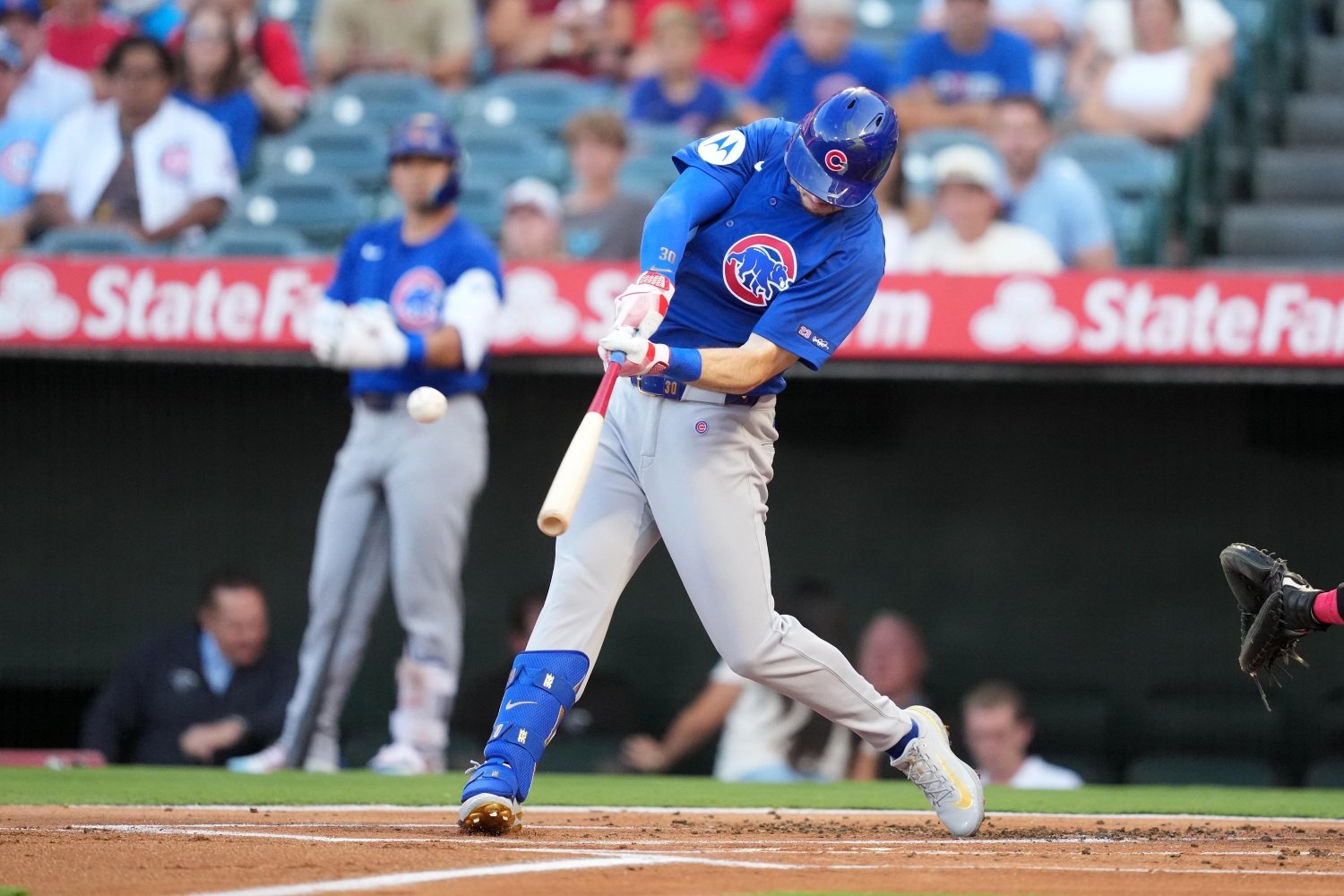 It would be pretty easy to dismiss the miniature hot streak Kyle Tucker went on this weekend. The Cubs were playing the lowly Angels, and Tucker got some very hittable pitches in the middle of the plate, from some pitchers right on the fringe of the big leagues. He had three home runs and a double, and he drove in a key run with an opposite-field single Sunday, but all of those hits came on true meatballs. For hitters of Tucker's caliber, though, getting your pitch is meant to be nine-tenths of the battle. Hitting that pitch hard somewhere—and often, specifically, over the fence to the pull field—is the last and easiest fight. When a guy like Tucker is going right, he crushes pitches like these. As of this weekend, it would appear that Tucker is right again. cU82ZWtfWGw0TUFRPT1fRGxNSEFsUlhCUUVBVzFvRkF3QUhCQVplQUFNRFZGQUFBVmRUVXdkWEExSUJBd1JX.mp4 Obviously, though, these hits were still newsworthy, because for a long time now, Tucker hasn't been right. He had four extra-base hits in Chicago's series in Anaheim. In 168 plate appearances from the start of July until the start of that series, he had had just four extra-base hits. The problem—well, part of it—lied in his bat path. I wrote about that issue earlier this month at Baseball Prospectus. It became popular (especially in the wake of one Cubs appearance on Sunday Night Baseball) to remark on Tucker's swing speed being down slightly, but that reduction really was slight. In fact, insofar as that problem was tied speculatively to the finger injury he suffered June 1, it does a poor job of explaining his downturn—not only because that downturn didn't really begin until the second half of that month, but because his bat speed actually spiked during that window—just when his production took a nosedive. Besides, Tucker really isn't a bat-speed slugger. That's how some players generate their power, but for many others, it comes from having the knack for efficient contact. It's about having such good feel for getting the barrel to the ball that the bat speed doesn't need to be elite for the ball to jump, and it's about doing that with loft in your swing so that the ball jumps off the bat in the air. Tucker falls into that class. The number to track with him was always his swing plane, because it's the path his barrel takes to the ball that makes him a star. During his downturn in production, Tucker was too flat to the ball. Some of that might have been for reasons other than the finger issue. In fact, there were almost certainly multiple factors. Still, that was what was happening. During that fallow period, Tucker had a lot of swings like this one against balls right in the middle of the zone. VndNb1JfVjBZQUhRPT1fVkZkV1ZWWUdCUW9BQ0FFQ1V3QUhCUVpXQUZnTUFnY0FBZ1JUQ1FZRkFGQlhVbEZS.mp4 This pitch isn't down, but he's on top of it, in a bad way. His bat drags through the zone too flat; he's not whipping the barrel down to carry it up through the pitch, the way he does when he's at his best. Here's another example of the phenomenon. Different platoon matchup, different pitch, but same enticing location—and a similar unwelcome result. cU82NHpfV0ZRVkV3dEdEUT09X0JsTUFCVllEVWdNQUFBQURVUUFIQVZJRUFBQlRWMU1BVjEwTVZnVlhCZ05VQUFFRA==.mp4 The above is why Tucker survived in the lineup a long while, even as he struggled to put the barrel on the ball. He missed a great pitch to hit here, but that happens even to the best hitters, occasionally. By fouling the ball off, he wasted a great opportunity, but he didn't get himself out. Foul balls earn a batter chances to square one up and hit it straight, or to keep making good swing decisions and draw a walk. Ugly though things got, Tucker did scratch his way on base reasonably often during his profound slump. His base of skills is deep enough to keep him (almost) palatable even when he's off. Now, though, he's clicking again. Even on this measly single Sunday, you can see it. WEQybDJfWGw0TUFRPT1fQlZCWVVBWlJCQVFBQUFjR1hnQUhBbFFEQUZoVFcxWUFCd0FGQTFjRFVsSlZBMVpm.mp4 It's all in the tilt. Here's a screenshot of Tucker making contact on that pitch against the Cardinals: And here's one of him connecting against Hendricks: He's slightly behind this ball, but because he's on the best plane for his address of the ball, he gets good wood on it and hits a slicing liner the other way, with little chance of getting caught. He's more upright, in terms of his stride, but with more lean in his body to make room to work "under [his] front side," as he and several other Cubs talk about often. Here's the same screenshot for his groundout against the White Sox. And, as a capper, his contact point on the homer we looked at to start this off. You can see, in comparing these two shots, how it helps Tucker to have (presumably) more comfort and confidence in his bottom hand. It has the important job of shearing upward to pull the bat through the zone. At any rate, though, comparing the screenshots should make clear what we also saw in that scatter plot above: more tilt means much more power potential, within the context of Tucker's swing. This doesn't mean Tucker will automatically remain locked in for the rest of the year, let alone the playoffs. However, it's highly encouraging to see him rediscover the stellar swing that eluded him for a long stretch. Chicago needs him as the centerpiece of their lineup, and this weekend, he finally looked like that centerpiece again. Creating lift by swinging with his natural tilt, Tucker is back to driving the ball.
 -
Yup. And in fact, Megill took pride in throwing the heat just as much as Palencia does as recently as last year—but ran into the same issues Palencia has lately and realized he needed to adjust. I think we're starting to see Palencia do so, too. Funny how many little parallels there always are between these two teams.
-
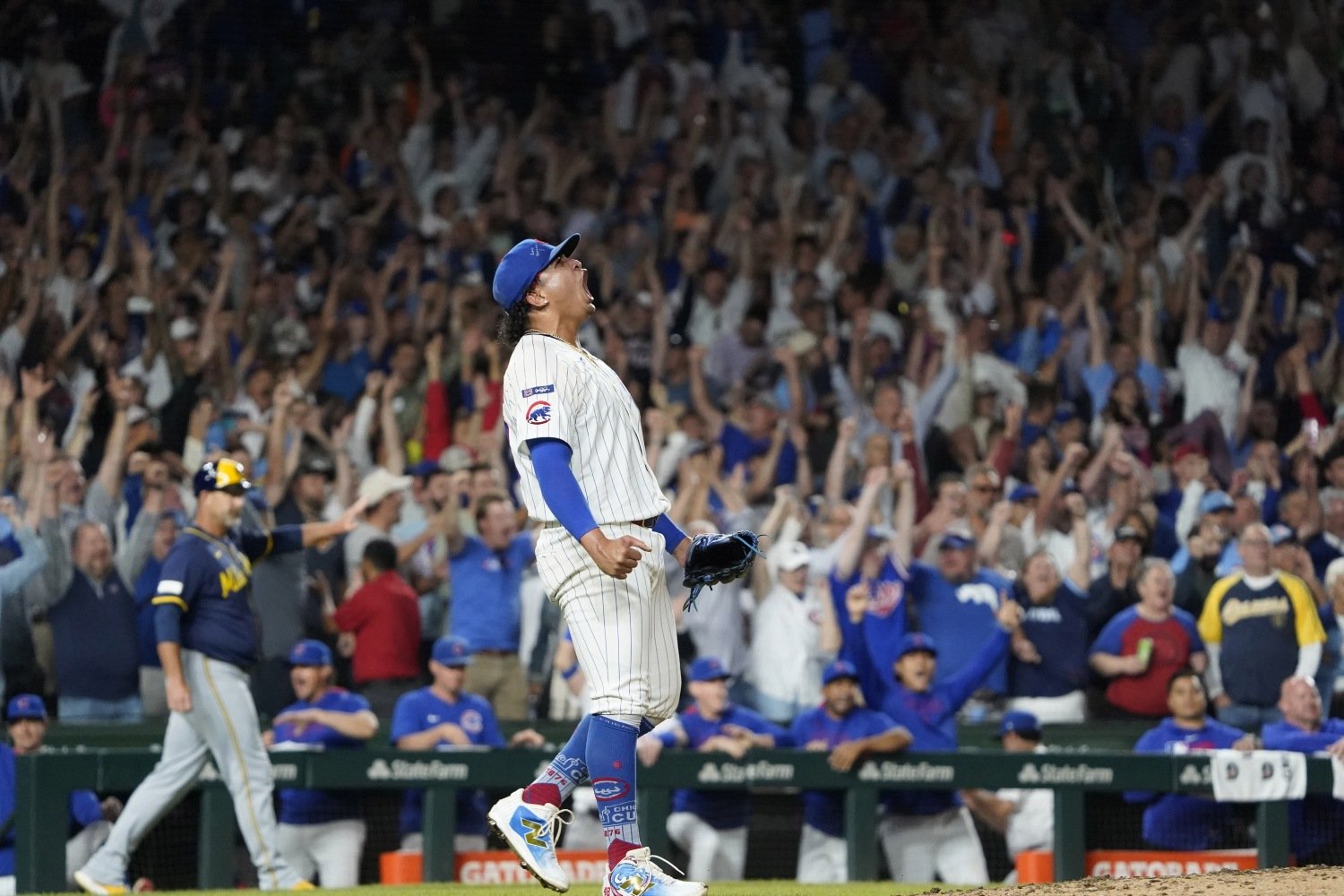 Just in time, Daniel Palencia figured it out. He entered Wednesday night's game against the Brewers with a two-run lead to protect and just three outs to get, but because he was facing baseball's best team and most dangerous lineup, that was destined not to be an easy assignment. He struck out the scrappy but overmatched Anthony Seigler using (mostly) his triple-digit fastball, but when he tried to do the same to Brice Turang, the Milwaukee second baseman cracked a line-drive single to center field. In a 1-2 count against one of baseball's best contact hitters (Caleb Durbin), we got a glimpse of Palencia's way through the threat posed by the Crew. He struck Durbin out with a vicious slider, low and away. He tried a similar approach with pinch-hitter Danny Jansen, but missed with the first and left the second too much in the zone; Jansen pulled a single that scored Turang. Pinch-runner Brandon Lockridge would then steal second, and suddenly, the Brewers had the tying run in scoring position. This is where, quite often, Palencia gets himself into trouble. He has a terrific fastball, capable of getting to 102 miles per hour and with good two-plane movement. The problem is that he overuses it. More than two-thirds of the pitches he throws are heaters, which both allows hitters to anticipate it and passes up some of the swing-and-miss potential so evident in that slider—and even his splitter, on the rare occasions when he can command that offering. Retreating to that approach in the face of mounting pressure, Palencia walked Sal Frelick. The Milwaukee outfielder goes into a defensive shell against top-end velocity, so he was safe from giving up a go-ahead homer as long as he stuck to the heat, but the right thing to do was to mix in a slider somewhere in the sequence and go for the punchout. He never did. Palencia did trust the slider enough to go to it three times against Isaac Collins, a switch-hitter batting left-handed, and it was the only thing that worked in the sequence. Collins whiffed on each of the first two sliders he saw. Alas, on 3-2, Palencia missed non-competitively with the pitch, loading the bases. That meant that everything came down to Palencia against Brewers slugger William Contreras. He was nearing 30 pitches, and his adrenaline had him a bit uneven, but Palencia did find the high side of 100 miles per hour again with Contreras in the box. He got two quick, called strikes on balls in the lower, outside quadrant, to go ahead 0-2. Then, he threw one 101.4 miles per hour at the letters. Contreras was extremely ready for it, though. He hit a sharp line drive to the right side. Nico Hoerner speared it, saving the game and allowing Chicagoans a huge sigh of relief—but that was very nearly a score-flipping single. Palencia did have Contreras set up for that location, given where the two previous heaters had been, but the right way to execute that sequence is to go even higher—eye-high, rather than chest-high, to either get an easy whiff or put that new sightline in his head. Then, he needed to throw him the slider low and away, just as he did to Durbin. If Palencia can start to trust and develop sequences like that, he'll become a truly dominant big-league closer. Four of the six whiffs he induced Wednesday were on his slider; it's a very good pitch. Right now, however, he only fully believes in his 'gasolina'. That conviction is important, but so is mixing things up, so great hitters can't sit on and time your triple-digit fastball. Come October, the Cubs need Palencia to have taken the next step as a pitcher.
 -
Image courtesy of © David Banks-Imagn Images Just in time, Daniel Palencia figured it out. He entered Wednesday night's game against the Brewers with a two-run lead to protect and just three outs to get, but because he was facing baseball's best team and most dangerous lineup, that was destined not to be an easy assignment. He struck out the scrappy but overmatched Anthony Seigler using (mostly) his triple-digit fastball, but when he tried to do the same to Brice Turang, the Milwaukee second baseman cracked a line-drive single to center field. In a 1-2 count against one of baseball's best contact hitters (Caleb Durbin), we got a glimpse of Palencia's way through the threat posed by the Crew. He struck Durbin out with a vicious slider, low and away. He tried a similar approach with pinch-hitter Danny Jansen, but missed with the first and left the second too much in the zone; Jansen pulled a single that scored Turang. Pinch-runner Brandon Lockridge would then steal second, and suddenly, the Brewers had the tying run in scoring position. This is where, quite often, Palencia gets himself into trouble. He has a terrific fastball, capable of getting to 102 miles per hour and with good two-plane movement. The problem is that he overuses it. More than two-thirds of the pitches he throws are heaters, which both allows hitters to anticipate it and passes up some of the swing-and-miss potential so evident in that slider—and even his splitter, on the rare occasions when he can command that offering. Retreating to that approach in the face of mounting pressure, Palencia walked Sal Frelick. The Milwaukee outfielder goes into a defensive shell against top-end velocity, so he was safe from giving up a go-ahead homer as long as he stuck to the heat, but the right thing to do was to mix in a slider somewhere in the sequence and go for the punchout. He never did. Palencia did trust the slider enough to go to it three times against Isaac Collins, a switch-hitter batting left-handed, and it was the only thing that worked in the sequence. Collins whiffed on each of the first two sliders he saw. Alas, on 3-2, Palencia missed non-competitively with the pitch, loading the bases. That meant that everything came down to Palencia against Brewers slugger William Contreras. He was nearing 30 pitches, and his adrenaline had him a bit uneven, but Palencia did find the high side of 100 miles per hour again with Contreras in the box. He got two quick, called strikes on balls in the lower, outside quadrant, to go ahead 0-2. Then, he threw one 101.4 miles per hour at the letters. Contreras was extremely ready for it, though. He hit a sharp line drive to the right side. Nico Hoerner speared it, saving the game and allowing Chicagoans a huge sigh of relief—but that was very nearly a score-flipping single. Palencia did have Contreras set up for that location, given where the two previous heaters had been, but the right way to execute that sequence is to go even higher—eye-high, rather than chest-high, to either get an easy whiff or put that new sightline in his head. Then, he needed to throw him the slider low and away, just as he did to Durbin. If Palencia can start to trust and develop sequences like that, he'll become a truly dominant big-league closer. Four of the six whiffs he induced Wednesday were on his slider; it's a very good pitch. Right now, however, he only fully believes in his 'gasolina'. That conviction is important, but so is mixing things up, so great hitters can't sit on and time your triple-digit fastball. Come October, the Cubs need Palencia to have taken the next step as a pitcher. View full article
