


Matthew Trueblood
-
Posts
2,479 -
Joined
-
Last visited
-
Days Won
2
Content Type
Profiles
Joomla Posts 1
Chicago Cubs Videos
Chicago Cubs Free Agent & Trade Rumors, Notes, & Tidbits
2026 Chicago Cubs Top Prospects Ranking
News
2023 Chicago Cubs Draft Picks
Guides & Resources
2024 Chicago Cubs Draft Picks
The Chicago Cubs Players Project
2025 Chicago Cubs Draft Pick Tracker
2026 Chicago Cubs Draft Tracker: Picks & Bonuses
Blogs
Events
Forums
Store
Gallery
Everything posted by Matthew Trueblood
-
Image courtesy of © David Banks-Imagn Images It wasn't just that Kyle Tucker went 0-3 in Game 1 of the Wild Card Series Tuesday. That much, you could forgive. Tucker only made it back from the injured list for the final three games of the regular season, after missing most of September with a calf strain. In the course of going 1-11 in that series against the Cardinals, Tucker found some solace in the fact that his timing and his mental approach still felt right. That optimism wasn't wholly unjustifiable, either. It's great to be on time at the plate, and difficult to do so coming back cold from three weeks on the shelf. He also drew a walk during the games, so he was making at least some good swing decisions. On the other hand, his swing certainly didn't look fully restored. It was fair to say that he was seeing the ball well and reacting correctly, but the movement of the barrel wasn't as controlled or fluid as it had been for much of the season—and certainly not as much so as over the last 10 days or so before his injury, when he seemed to finally shake the slump that swallowed his summer. He wasn't right, even if he claimed to feel (basically) right. That showed up in ugly fashion in Tucker's Cubs playoff debut Tuesday, when he went 0-3 with a strikeout even as the Cubs won, 3-1. He didn't make solid contact, and the under-the-hood metrics shouted out the problem: deficient bat speed and no tilt on the swing, which made his timing lousy even when he correctly identified pitches. It was a nadir; it seemed to prove what the weekend had hinted at. It was fair to worry whether Tucker would be able to make a meaningful contribution to the team's effort to push deeper into the postseason. In Game 2, though, he figured something out. Interestingly, the first sign of hope came when he struck out swinging, in the fourth. bmJaS2dfV0ZRVkV3dEdEUT09X0J3ZFNBVkFOQWdFQUFGTUFVZ0FIQlFaZkFBTlFWbEFBVmxGV1VRSlhCUUZXVkFvRA==.mp4 Yes, Dylan Cease flat-out beat Tucker there. He threw him a fastball at the top edge of the zone in a 3-2 count, at 99.7 miles per hour. Cease's fastball has big carry, too, so it appeared to rise at the end for Tucker. He swung somewhat under it. It was an unfortunate result. It was also a sign that he was in the right mindset, and had the right swing ready. You don't want Kyle Tucker swinging the way he can swing to touch that pitch. If a pitcher successfully executes that pitch, Tucker should strike out; you have to be ok with that. Sometimes, the other guy wins. If Tucker were unable to pull the trigger, or seemed so late he was handcuffed by the velocity of Cease, that would be trouble. It would also be trouble if he'd swung and hit a flyout, which was the best-case scenario for the combination of that pitch's speed, its movement, its location, and Tucker's swing. Whiffing on it, instead, was a sign that Tucker was ready to cover the whole strike zone and to hit any of Cease's likely offerings in that spot. It was a sign that he could get the hands moving quickly enough to swing competitively. And it showed some tilt in his swing, as opposed to that hideous flatness that became his habit from late June through mid-August. Tucker shot a single to center at the end of that loss to the Padres, continuing the positive trend and moving it into the realm of results. In the bottom of the second inning Thursday, he also got the barrel to a high fastball from Yu Darvish, scalding the ball to right field. V0Fack1fV0ZRVkV3dEdEUT09X1VBaFpVRlFGVkFvQUNGWUNVQUFIQUFOVEFGbFdWbFFBQ2dNQ1VnQUZBd1pkVWxGVg==.mp4 When the pitcher only throws 93 and doesn't quite hit their spot, you'd love to punish them with an extra-base hit—but one thing at a time. Darvish's pitch was still up in the zone, and Tucker still got around it nicely. The next time he stepped to the plate, he delivered a third straight single, this one to left field. V0Fack1fV0ZRVkV3dEdEUT09X0FnUlVWVk5SWGdFQUR3QUFWQUFIQVZkVUFBTlFWVlFBQmxWUkFRWUFBd0ZUVWdkUw==.mp4 Jeremiah Estrada, like Cease, will climb the ladder on you in terms of both location and velocity. Locked in on the fact that the Padres were trying to get him out with high heat, though, Tucker got good wood on them. How? Firstly, after plunging into the mid-60s on most of his swings over the weekend and even in Game 1, Tucker is swinging faster the last two games. He gained some confidence from a first look at the Padres' playoff pitching staff, and immediately unlocked more of his bat speed. Below, you can see the ugly valley of the previous few days, and the climb created by his barrel accelerating over the final two games of the San Diego series. We've discussed this before, though. Bat speed really won't tell the story, where Tucker is concerned. He's not elite in terms of sheer velocity. When he's going well, he's elite in his ability to hit the ball squarely, and to create some lift on it. To get there, he needs to catch the ball while working uphill and he needs to get around it just a bit. He hadn't been doing that, prior to Wednesday. Over the last several plate appearances he's taken, he has. He's also found the tilt in his swing that allows him to create loft without getting too early and rolling over on the ball. You might notice that the swing tilt is still down, relative to lots of recent stretches, even after its uptick in the last two days. That's not a reason to worry, though; it's just him reacting to what teams are doing to him. His swing plane is flatter than average the last two days, but that's because the Padres fed him a steady diet of upper-90s heaters at the top of the zone. You can't hit that kind of pitch with a 38° swing plane. You need the flatter version of your best swing, without losing whatever baseline tilt is an ineluctable part of that swing's identity. Tucker is striking that balance gorgeously over the last handful of times he's come to the plate, against great pitchers who had a plan to force him to catch up to them upstairs. The Padres pitching staff, as a group, is exceptionally good at hammering the top edge of the strike zone with heaters. For all the things they do well, that's not true of the Brewers. Tucker will see a wider variety of pitches during the NLDS than he did this wek, and in a wider variety of locations—including some down and out over the plate. With the swing he's honed by forcing himself not to get too flat against high fastballs in the high 90s, Tucker will be ready to punish those offerings from Milwaukee hurlers. He's healthy, now, and he's back in rhythm. Perhaps most importantly, though, he's also ironed out the kinks that remained in his swing as recently as Tuesday. That's a huge development for a Cubs team aspiring to a deep run in these playoffs; Seiya Suzuki shouldn't have to be a one-man slugging band in this round. View full article
-
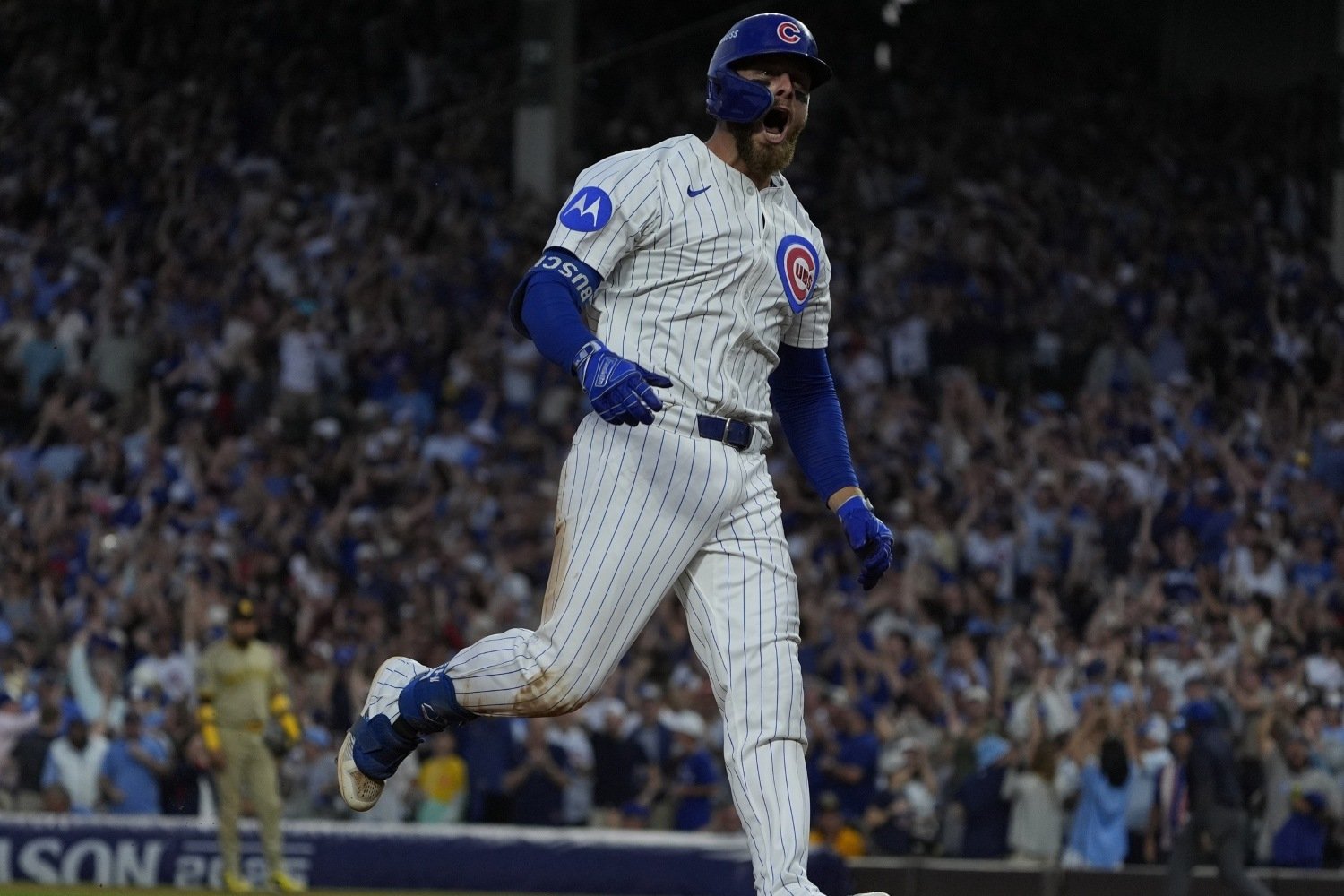 This season was a frustrating one for Jameson Taillon, personally. He wasn't able to take the ball as often as he expects of himself—not for the reasons that feel inevitable and understandable, like a balky elbow, but because of groin and calf strains. He put up good numbers when on the mound, but he knew there was more to give. The starts he missed felt big; the Cubs' thin-stretched starting rotation was part of the reason why they fell slowly out of the NL Central race after the trade deadline. With the team's clinch of a playoff berth, though, came a new chance to come through for the team, the way Taillon is always desperate to. He's a team-first guy, playing one of the most individualistic positions in team sport. He knows he can execute, and come up with the big outs in big moments, but he wasn't able to create that chance for himself this summer. He needed the autumn to deliver another opportunity. Unfortunate as it was, Cade Horton's injury after the team secured their place in the postseason gave Taillon an opening. The Cubs and Padres splitting the first two games left them needing a third starter in the first round, and Taillon was there. And he was brilliant. As a starting pitcher, there are two ways you move your team toward a win in a winner-advances game like Thursday's: Keep runs off the board better than the other guy; and Get more sheer outs than the other guy. Obviously, the first is more important, but the second thing matters, too. It matters a lot. The Padres' pen was more exhausted than the Cubs', entering Thursday, but the Cubs had concerns of their own. With all hands on deck (but fatigue a real factor for some and the next round to think about, too), being able to go to the bullpen later than one's opponent is an undeniable advantage. It won't make up for giving up three more runs than the other guy, but if you only give up one more and you also give your team seven or eight more outs than the other guy, you might still let your team come out ahead. Taillon eliminated that tricky math, because he was much, much better than Yu Darvish, on both measures. Darvish gave up one run (and was charged with a second, when the Cubs doubled their lead after he left with the bases loaded in the bottom of the second). Taillon gave up none. And Taillon got nine more outs than Darvish, leaving the Padres drawing way too deep into the well way too early, and chasing the game to boot. In his former life, a big injury or three ago, Taillon was a swing-and-miss guy. He could be a strikeout artist. That's not him anymore, though. He's only induced whiffs on about 20% of opponents' swings the last two years. He's not a whiff monster—except that, on Thursday, he was. Taillon induced 11 whiffs on 31 swings, against one of the league's highest-contact lineups. He struck out four, but he also got so many whiffs (and called strikes) within at-bats that he seemed to be constantly ahead in the count. His velocity wasn't markedly different than it usually is, but his changeup and cutter each had an extra bit of depth, and it made a world of difference. Taillon spun four shutout innings. He got some help from the Cubs' marvelous defense, along the way, but he left after four, having only allowed two hits and struck out four, without walking anyone. When Caleb Thielbar took over to begin the fifth, the Cubs led 2-0—and they were way ahead in the pitching race, too. It wouldn't have been 2-0, though, without Dansby Swanson. Like Taillon, Swanson is in his third season with the Cubs. Like Taillon, he signed a big contract with them, and like Taillon, he's generally been viewed as underwhelming from a return-on-investment standpoint. If you keep creating chances, though, redemption eventually becomes possible. Swanson, who takes such fierce pride in playing (almost, now) every day, stayed healthy this year. He stayed engaged, despite hitting into some truly lousy luck and not getting sequences of good swing decisions quite right throughout the first half. Down the stretch, he was much better at the plate—and his defense began to shine, in the small and wonderful ways that are unique to the aging shortstop making up for the slight diminishment of their athleticism. He was as important to the Cubs getting to October as (almost) anyone. And Thursday, he was as important to them taking the next step as anyone—no 'almost' about it. Swanson was a human highlight reel throughout the series. He stole a hit or two from Ryan O'Hearn in Game 1. He made a handful of strong plays Wednesday, always smooth and athletic, always seeming to release the ball as soon as he got ahold of it, making up for the lack of an elite arm by getting the throw airborne sooner than another shortstop would have. On Thursday, he seemed to be ubiquitous. He stole one hit by knocking down a would-be line drive single to center by Luis Arráez, then quickly recovering from not catching it and throwing Arráez out. He stole another from Arráez on a grounder later in the game, running left and diving to smother before throwing out the slow-footed first baseman. He closed down one Padres rally with a 6-3 double play, on which he had to run four or five steps at a dead sprint to second before throwing on the run for the twin killing. He was mistake-free, and rangy, and gorgeous. He was also the biggest reason they had a lead to work with, that his glove could protect. In the bottom of the second, as Darvish folded under a vicious assault by the middle of the Cubs lineup, they got one run on the board. The bases were loaded with nobody out, and Mike Shildt went to his bullpen—to strikeout machine and former Cubs righty Jeremiah Estrada. Swanson was due up, and Estrada jumped ahead of him 1-2. Then, Swanson went to work. He forced a seven-pitch walk, which drove home the second run and set the tone for the rest of the night. The Cubs would stay ahead in the pitching race, that at-bat said, and they would have a multi-run lead to protect while doing so. Swanson has been as patient as ever this year, but the walk rate hasn't always tracked to that. Lately, he's done a very impressive job of converting his three-ball counts to walks. It makes a huge difference; it certainly did Thursday. Between that patient at-bat and his great defense, he was the man of the match for Chicago. Throughout the series, he was nails. Never get between Dansby Swanson and a championship, once his sights are on it. The game froze at 2-0 a long time, and looked like it might have to end that way. (Given the trouble the Cubs had getting the final three outs, thank goodness that wasn't the case.) As sunset approached, the seventh-inning stretch passed, and the Padres asked Robert Suarez to work into a second inning. They probably envisioned him throwing that whole frame. Instead, in Wrigley Field's golden hour under fall's color splashes, Michael Busch delivered magic to match the majesty. It was a very neat equivalent to Kyle Schwarber's game-sealing homer in the 2015 NLDS. All that was missing was the video-board landing. Of players with at least 500 plate appearances this season, Busch had the 10th-highest DRC+ in the majors—behind guys like Schwarber and Cal Raleigh, but ahead of guys like Corbin Carroll, Vladimir Guerrero Jr., and (yes) Fernando Tatis Jr. This was an earned heroic turn; Busch has been the biggest reason for the Cubs' consistent success this year. The pitch he hit was wonderfully reminiscent of one on which he walked off the Padres almost 18 months ago, when he was a rookie and there still seemed to be problematic holes in his swing. The fastball up and away, they said, would get Busch out. It did, until it didn't, and when he's ready for it, not even 98 with plenty of air under it is enough to keep you safe. Busch put the cherry on the sundae; the party started right then. Of course, it was nearly pooped by a tenacious Padres rally. There's no quit in San Diego's team, and plenty of talent, even with some injuries that diminished them during this tangle. They avoided being down by more thanks to close calls (and reviews that went their way) on baserunning plays involving Pete Crow-Armstrong and Nico Hoerner. They nearly benefited from another hair's-breadth Cubs heartbreak when Jake Cronenworth tried to beat out a ninth-inning dribbler, but Matt Shaw made a great play and Busch (for the second or third time in the game) made a dispositively excellent stretch to the ball. Chicago survived, and they now advance to face the Brewers in what will be one of the most charged Division Series showdowns in history. It was a team effort, but the heroics of Taillon, Swanson and Busch stand out from the crowd. The second-gutsiest trade Jed Hoyer has made since taking over the team paid off hugely. So did two of his biggest free-agent outlays. With the season swinging in the balance, the Cubs found the right answers at just the right moments.
 -
Image courtesy of © David Banks-Imagn Images This season was a frustrating one for Jameson Taillon, personally. He wasn't able to take the ball as often as he expects of himself—not for the reasons that feel inevitable and understandable, like a balky elbow, but because of groin and calf strains. He put up good numbers when on the mound, but he knew there was more to give. The starts he missed felt big; the Cubs' thin-stretched starting rotation was part of the reason why they fell slowly out of the NL Central race after the trade deadline. With the team's clinch of a playoff berth, though, came a new chance to come through for the team, the way Taillon is always desperate to. He's a team-first guy, playing one of the most individualistic positions in team sport. He knows he can execute, and come up with the big outs in big moments, but he wasn't able to create that chance for himself this summer. He needed the autumn to deliver another opportunity. Unfortunate as it was, Cade Horton's injury after the team secured their place in the postseason gave Taillon an opening. The Cubs and Padres splitting the first two games left them needing a third starter in the first round, and Taillon was there. And he was brilliant. As a starting pitcher, there are two ways you move your team toward a win in a winner-advances game like Thursday's: Keep runs off the board better than the other guy; and Get more sheer outs than the other guy. Obviously, the first is more important, but the second thing matters, too. It matters a lot. The Padres' pen was more exhausted than the Cubs', entering Thursday, but the Cubs had concerns of their own. With all hands on deck (but fatigue a real factor for some and the next round to think about, too), being able to go to the bullpen later than one's opponent is an undeniable advantage. It won't make up for giving up three more runs than the other guy, but if you only give up one more and you also give your team seven or eight more outs than the other guy, you might still let your team come out ahead. Taillon eliminated that tricky math, because he was much, much better than Yu Darvish, on both measures. Darvish gave up one run (and was charged with a second, when the Cubs doubled their lead after he left with the bases loaded in the bottom of the second). Taillon gave up none. And Taillon got nine more outs than Darvish, leaving the Padres drawing way too deep into the well way too early, and chasing the game to boot. In his former life, a big injury or three ago, Taillon was a swing-and-miss guy. He could be a strikeout artist. That's not him anymore, though. He's only induced whiffs on about 20% of opponents' swings the last two years. He's not a whiff monster—except that, on Thursday, he was. Taillon induced 11 whiffs on 31 swings, against one of the league's highest-contact lineups. He struck out four, but he also got so many whiffs (and called strikes) within at-bats that he seemed to be constantly ahead in the count. His velocity wasn't markedly different than it usually is, but his changeup and cutter each had an extra bit of depth, and it made a world of difference. Taillon spun four shutout innings. He got some help from the Cubs' marvelous defense, along the way, but he left after four, having only allowed two hits and struck out four, without walking anyone. When Caleb Thielbar took over to begin the fifth, the Cubs led 2-0—and they were way ahead in the pitching race, too. It wouldn't have been 2-0, though, without Dansby Swanson. Like Taillon, Swanson is in his third season with the Cubs. Like Taillon, he signed a big contract with them, and like Taillon, he's generally been viewed as underwhelming from a return-on-investment standpoint. If you keep creating chances, though, redemption eventually becomes possible. Swanson, who takes such fierce pride in playing (almost, now) every day, stayed healthy this year. He stayed engaged, despite hitting into some truly lousy luck and not getting sequences of good swing decisions quite right throughout the first half. Down the stretch, he was much better at the plate—and his defense began to shine, in the small and wonderful ways that are unique to the aging shortstop making up for the slight diminishment of their athleticism. He was as important to the Cubs getting to October as (almost) anyone. And Thursday, he was as important to them taking the next step as anyone—no 'almost' about it. Swanson was a human highlight reel throughout the series. He stole a hit or two from Ryan O'Hearn in Game 1. He made a handful of strong plays Wednesday, always smooth and athletic, always seeming to release the ball as soon as he got ahold of it, making up for the lack of an elite arm by getting the throw airborne sooner than another shortstop would have. On Thursday, he seemed to be ubiquitous. He stole one hit by knocking down a would-be line drive single to center by Luis Arráez, then quickly recovering from not catching it and throwing Arráez out. He stole another from Arráez on a grounder later in the game, running left and diving to smother before throwing out the slow-footed first baseman. He closed down one Padres rally with a 6-3 double play, on which he had to run four or five steps at a dead sprint to second before throwing on the run for the twin killing. He was mistake-free, and rangy, and gorgeous. He was also the biggest reason they had a lead to work with, that his glove could protect. In the bottom of the second, as Darvish folded under a vicious assault by the middle of the Cubs lineup, they got one run on the board. The bases were loaded with nobody out, and Mike Shildt went to his bullpen—to strikeout machine and former Cubs righty Jeremiah Estrada. Swanson was due up, and Estrada jumped ahead of him 1-2. Then, Swanson went to work. He forced a seven-pitch walk, which drove home the second run and set the tone for the rest of the night. The Cubs would stay ahead in the pitching race, that at-bat said, and they would have a multi-run lead to protect while doing so. Swanson has been as patient as ever this year, but the walk rate hasn't always tracked to that. Lately, he's done a very impressive job of converting his three-ball counts to walks. It makes a huge difference; it certainly did Thursday. Between that patient at-bat and his great defense, he was the man of the match for Chicago. Throughout the series, he was nails. Never get between Dansby Swanson and a championship, once his sights are on it. The game froze at 2-0 a long time, and looked like it might have to end that way. (Given the trouble the Cubs had getting the final three outs, thank goodness that wasn't the case.) As sunset approached, the seventh-inning stretch passed, and the Padres asked Robert Suarez to work into a second inning. They probably envisioned him throwing that whole frame. Instead, in Wrigley Field's golden hour under fall's color splashes, Michael Busch delivered magic to match the majesty. It was a very neat equivalent to Kyle Schwarber's game-sealing homer in the 2015 NLDS. All that was missing was the video-board landing. Of players with at least 500 plate appearances this season, Busch had the 10th-highest DRC+ in the majors—behind guys like Schwarber and Cal Raleigh, but ahead of guys like Corbin Carroll, Vladimir Guerrero Jr., and (yes) Fernando Tatis Jr. This was an earned heroic turn; Busch has been the biggest reason for the Cubs' consistent success this year. The pitch he hit was wonderfully reminiscent of one on which he walked off the Padres almost 18 months ago, when he was a rookie and there still seemed to be problematic holes in his swing. The fastball up and away, they said, would get Busch out. It did, until it didn't, and when he's ready for it, not even 98 with plenty of air under it is enough to keep you safe. Busch put the cherry on the sundae; the party started right then. Of course, it was nearly pooped by a tenacious Padres rally. There's no quit in San Diego's team, and plenty of talent, even with some injuries that diminished them during this tangle. They avoided being down by more thanks to close calls (and reviews that went their way) on baserunning plays involving Pete Crow-Armstrong and Nico Hoerner. They nearly benefited from another hair's-breadth Cubs heartbreak when Jake Cronenworth tried to beat out a ninth-inning dribbler, but Matt Shaw made a great play and Busch (for the second or third time in the game) made a dispositively excellent stretch to the ball. Chicago survived, and they now advance to face the Brewers in what will be one of the most charged Division Series showdowns in history. It was a team effort, but the heroics of Taillon, Swanson and Busch stand out from the crowd. The second-gutsiest trade Jed Hoyer has made since taking over the team paid off hugely. So did two of his biggest free-agent outlays. With the season swinging in the balance, the Cubs found the right answers at just the right moments. View full article
-
He did decelerate in the slide more than you'd expect. Made it close. But no.
-
Great job by Nico, Kelly was a *liiiiitle* high though.
-
I've got him safe.
-
5th of *512* in four-seamer rate with two strikes. Just throws too many damn fastballs. Still a good pitcher! Could be even better imo. https://baseballsavant.mlb.com/statcast_search?hfPT=FF|&hfAB=&hfGT=R|&hfPR=&hfZ=&hfStadium=&hfBBL=&hfNewZones=&hfPull=&hfC=2strikes|&hfSea=2025|&hfSit=&player_type=pitcher&hfOuts=&hfOpponent=&pitcher_throws=&batter_stands=&hfSA=&game_date_gt=&game_date_lt=&hfMo=&hfTeam=&home_road=&hfRO=&position=&hfInfield=&hfOutfield=&hfInn=&hfBBT=&hfFlag=&metric_1=&group_by=name&min_pitches=100&min_results=0&min_pas=0&sort_col=pitch_percent&player_event_sort=api_p_release_speed&sort_order=desc&chk_count=on#results
-
Hate that pitch selection. Throw the slider. You played right into his hands there.
-
I think I'd have stuck with Taillon for this inning, too. BUT, I also get why Craig chose this path.
-
Brown/McDonald/Mendoza is a good booth. I think if they were on a different platform and being produced differently than these broadcasts are on ESPN, we'd be LOVING them. Alas.
-
Seiya should be a good matchup for Estrada..
-
Even though they didn't blow it open, forcing Estrada to throw 17 pitches in the 2nd was big. Outs vs. available/trustworthy arms clock is ticking a lot louder for the Pads right now than for the Cubs.
-
That's right. Effectively, he called timeout just as the play clock was hitting zero. No delay of game. (This is still how I think about it, even though I'm no great football fan. 😄 )
-
Shaw's little burp of a hot month was great, but he's got a long way to go yet, man.
-
Freddy Fermin playing hero ball behind the plate today for them but it's not enough.
-
Gotta gotta gotta add on. But boy does it seem hard to get from here to Out No. 27 for SD now. I mean you've gotta be ready to BURN an arm, and that willingness has to pay off in the form of that guy actually having it.
-
All Hands on Deck: Your Road Map to the Chaos of Cubs-Padres Game 3
Matthew Trueblood posted an article in Cubs
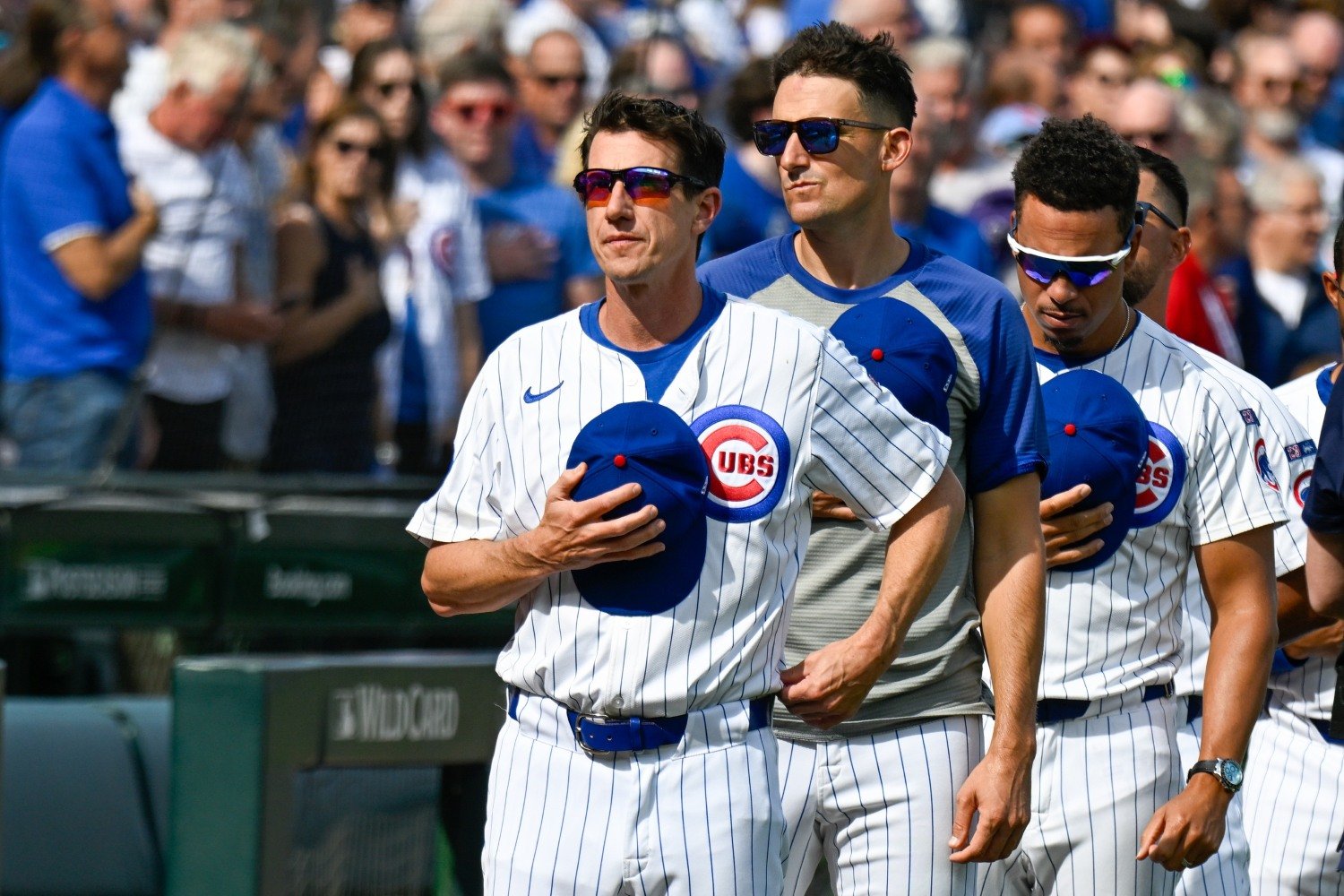 Winner-advances games are the most fun dynamic baseball gives us. The compression of a Wild Card Series—with so little buildup, no days off and no changes of venue—slightly diminishes the magic one feels ahead of a Game 5 or a Game 7, but even a Game 3 can take on the frenzied feel of an all-in hand of poker. The way the Cubs and Padres each played to get to their date on Thursday evening, that feeling will be cranked up to its maximum. Let's begin with the dramatis personae for this play in nine acts. Projected Padres Lineup Fernando Tatis Jr. - RF Luis Arráez - 1B Manny Machado - 3B Jackson Merrill - CF Xander Bogaerts - SS Ryan O'Hearn - DH Gavin Sheets - LF Jake Cronenworth - 2B Freddy Fermin - C This is the same group the visitors have run out to begin each of the first two games. The Cubs are starting a righty Thursday, rather than the southpaws who took up the bulk on Tuesday and Wednesday, but honestly, the San Diego lineup makes more sense against righties, anyway. Projected Cubs Lineup Michael Busch - 1B Nico Hoerner - 2B Ian Happ - LF Kyle Tucker - DH Seiya Suzuki - RF Carson Kelly - C Pete Crow-Armstrong - CF Dansby Swanson - SS Matt Shaw - 3B This, too, is the same group the Cubs have already been using. There'd ordinarily be an argument for batting Pete Crow-Armstrong ahead of Carson Kelly, but the Cubs are trying to keep their very right-leaning bottom half of the batting order broken up enough to deter some of the more devastating bullpen tricks Mike Shildt might otherwise throw at them. Starting Pitchers Yu Darvish - 15 GS, 72 IP, 5.38 ERA, 23% K, 6.4% BB, 4.7% HR, 39.4% GB, 97 DRA- Jameson Taillon - 23 GS, 129 2/3 IP, 3.68 ERA, 18.9% K, 5.2% BB, 4.6% HR, 33.8% GB, 114 DRA- You don't need exhaustive histories on either of these guys right now. Neither will work especially deep into this game, anyway. Matt Ostrowski wrote a great piece about Taillon's transformation this year via his altered changeup this morning, and I included a bunch of thoughts about Darvish in my scene-setter for the morning. Check those out, if you haven't already done so. The Crucial Bullpen Picture To speak about these questions more concretely and more accurately, let's review the Bullpen Usage chart for each team. First, for the Padres. Player SAT SUN MON TUE WED TOT Estrada 19 0 0 10 0 29 Morgan 0 21 0 0 0 21 Miller 17 0 0 13 27 57 Hart 0 0 0 0 0 0 Suárez 9 0 0 0 18 27 Morejón 8 0 0 9 33 50 Peralta 0 0 0 6 0 6 Rodríguez 0 21 0 0 0 21 Matsui 37 0 0 0 0 37 Vasquez 0 19 0 0 0 19 It's a win-or-go-home situation, so everyone is available. That said, the Padres have stretched themselves quite thin in relief. Maybe it makes the most sense to begin by talking about the non-premium arms here. It's incredible to watch Bradgley Rodríguez pitch, working at 98-99 miles per hour with two different fastballs and a dedicated secondary for both lefties and righties. He has an arm good enough to rank right alongside Jeremiah Estrada and claim high-leverage work. However, if Shildt really trusted him, he wouldn't be in the group of hurlers who haven't warmed up yet this series and who absorbed some spare innings Sunday. Clearly, there's at least a nagging doubt that he'll hold together under the pressure of a good opposing offense in the playoffs. Unless Darvish falls apart early, don't expect to see Rodríguez. David Morgan and Yuki Matsui are better candidates to do some bridge work. Each has the same weakness: a walk rate up around 12%. The Cubs have really struggled to convert good at-bats to walks lately, though, so that weakness might be mitigated by this particular opponent. Each can be nasty, but each (Morgan righty-righty, Matsui lefty-lefty) is someone Shildt would prefer to hold for narrow matchup work. Randy Vásquez and Kyle Hart are on the roster in case the game goes 12 or 16 innings. Of the remaining hurlers, it's too much to assume that any are unavailable, but there are some places where usage will be tightly constrained. Wandy Peralta will be the first choice for Shildt whenever he decides he needs a big out against a lefty batter, be that Michael Busch, Kyle Tucker or Pete Crow-Armstrong. Adrián Morejón is one of two pitchers I would guess Shildt will try to stay away from entirely, if possible. He just pitched so much in Game 2. The other barely-available arm (thankfully, if you're a Cubs supporter) is Mason Miller. He's a long-term investment for the team. He would need to be intact for the Division Series for them to have a chance there. As tempting as it might be to call upon him for a third straight day, I think Shildt will do everything possible to avoid that. It helps the Cubs' cause a bit that they forced Robert Suarez to throw 18 pitches to save Game 2. That might keep him to just one inning of work Thursday—though given the aggressive deployment Shildt decided on with both Morejón and Miller Wednesday, it seems like whenever the situation demands it, Suarez will be there. The wild card is Jeremiah Estrada. He has filthy stuff, but he's been human this year. He didn't look great Tuesday, but would love the chance to redeem himself more than any other pitcher out there, after the Cubs gave up on him too soon two years ago. He'll be the first-choice right-handed reliever, if Darvish gets San Diego into the middle of the game with anything like a lead. Specifically, because this can matter, here's who each of the important relievers has faced so far in the series. These guys might have incremental advantages if the same matchup recurs; batters do adapt to seeing relievers multiple times in a short span. Pitcher/Batter Busch Hoerner Happ Tucker Suzuki Kelly Crow-Armstrong Swanson Shaw Ballesteros Suarez X X X X Miller X XX XX XX X X Estrada X X X Morejón XX XX XX XX X X X Peralta X Now, let's talk about the Cubs' side of the equation. Player SAT SUN MON TUE WED TOT Palencia 0 0 0 17 0 17 Soroka 0 7 0 0 6 13 Keller 26 0 0 13 0 39 Kittredge 0 0 0 14 20 34 Pomeranz 11 0 0 11 0 22 Thielbar 15 0 0 0 14 29 Rogers 0 0 0 0 13 13 Rea 0 0 0 0 15 15 Civale 0 0 0 0 0 0 I was very surprised by the way Counsell reeled through his relievers in Game 2, chasing a win that the offense never gave him much chance to claim. Again, everyone is technically available, but in reality, Andrew Kittredge isn't available. He's worked about as hard the last two days as Miller, and although he doesn't throw 104 miles per hour, Kittredge is a graybeard. Trotting him out three days in a row would be asking for trouble. Aaron Civale is the guy on this list who's only there in case of a long extra-inning slog. Colin Rea, a starter by trade who started Friday and threw 15 pitches on his usual rotation day Wednesday, might be available for a short burst Thursday but won't be a priority selection. Otherwise, Counsell's unit is pretty free and fresh. Caleb Thielbar worked on consecutive days 15 times this year and was fine when called upon, but Drew Pomeranz will be the first southpaw Counsell looks to, you'd think. Taylor Rogers will only pitch if Taillon has to leave within about two innings and a true bullpen game breaks out. Daniel Palencia and Brad Keller are not only available, but likely to combine for something like nine outs, if things go according to plan for Counsell. They were each excellent on Tuesday, and neither got the call Wednesday. Indeed, some of Counsell's liberal use of the carousel might have been a way to ensure that he didn't burn out any of the individuals he was using, but that he absolutely wouldn't have to restrict his own choices with regard to Palencia and Keller. Pitcher/Batter Tatis Arraez Machado Merrill Bogaerts O'Hearn Sheets Cronenworth Fermin Johnson Keller X X X Palencia X X X X X Pomeranz X X X Thielbar X X X X Soroka X X Kittredge XX XX X X X Reliever familiarity can matter, but it's probably esoterica in this case. Each manager is really just looking for the right moment to pull their starter and the right decision points to swing from one reliever to the next—and hoping not to hit a whammy along the way. For Counsell, that's probably when Taillon gets through the batting order the second time, just as it was for Matthew Boyd. It wouldn't be a surprise to see Thielbar come in even earlier, though, cutting the day short at 14 or 15 batters faced for the starter and slicing through the lefty lane in the Padres lineup as they come up the second time. Then, the formula could be much the same as it was in Game 1, but with Keller ready to come in an inning earlier. A Few Minor Tactical Notes The Cubs would do well to get Moisés Ballesteros into the game to hit for Matt Shaw or Carson Kelly, if the Padres are locked into a particular righty and the leverage is high enough. Losing a bit of defensive acumen (by going from Kelly to Reese McGuire or Shaw to Willi Castro) is worth it, and the Cubs' bench is plenty deep enough to get through one game. Again, should we see Morgan, keep in mind that he has big platoon splits from the mound side. Darvish and Morgan are the Padres hurlers against whom it's easiest to run. If the Cubs can just get someone on base early, they should be able to take advantage of San Diego by stealing a bag or two. There you have it: all the matchups fit to discuss. This game will be an adventure from first pitch to last. The twists in between are what make playoff baseball a whole different sport than the regular-season version—but a great sport, thank you. With a great deal at stake for each side, this could be hard-fought even for a game of its kind. Savor it.
 -
Image courtesy of © Matt Marton-Imagn Images Winner-advances games are the most fun dynamic baseball gives us. The compression of a Wild Card Series—with so little buildup, no days off and no changes of venue—slightly diminishes the magic one feels ahead of a Game 5 or a Game 7, but even a Game 3 can take on the frenzied feel of an all-in hand of poker. The way the Cubs and Padres each played to get to their date on Thursday evening, that feeling will be cranked up to its maximum. Let's begin with the dramatis personae for this play in nine acts. Projected Padres Lineup Fernando Tatis Jr. - RF Luis Arráez - 1B Manny Machado - 3B Jackson Merrill - CF Xander Bogaerts - SS Ryan O'Hearn - DH Gavin Sheets - LF Jake Cronenworth - 2B Freddy Fermin - C This is the same group the visitors have run out to begin each of the first two games. The Cubs are starting a righty Thursday, rather than the southpaws who took up the bulk on Tuesday and Wednesday, but honestly, the San Diego lineup makes more sense against righties, anyway. Projected Cubs Lineup Michael Busch - 1B Nico Hoerner - 2B Ian Happ - LF Kyle Tucker - DH Seiya Suzuki - RF Carson Kelly - C Pete Crow-Armstrong - CF Dansby Swanson - SS Matt Shaw - 3B This, too, is the same group the Cubs have already been using. There'd ordinarily be an argument for batting Pete Crow-Armstrong ahead of Carson Kelly, but the Cubs are trying to keep their very right-leaning bottom half of the batting order broken up enough to deter some of the more devastating bullpen tricks Mike Shildt might otherwise throw at them. Starting Pitchers Yu Darvish - 15 GS, 72 IP, 5.38 ERA, 23% K, 6.4% BB, 4.7% HR, 39.4% GB, 97 DRA- Jameson Taillon - 23 GS, 129 2/3 IP, 3.68 ERA, 18.9% K, 5.2% BB, 4.6% HR, 33.8% GB, 114 DRA- You don't need exhaustive histories on either of these guys right now. Neither will work especially deep into this game, anyway. Matt Ostrowski wrote a great piece about Taillon's transformation this year via his altered changeup this morning, and I included a bunch of thoughts about Darvish in my scene-setter for the morning. Check those out, if you haven't already done so. The Crucial Bullpen Picture To speak about these questions more concretely and more accurately, let's review the Bullpen Usage chart for each team. First, for the Padres. Player SAT SUN MON TUE WED TOT Estrada 19 0 0 10 0 29 Morgan 0 21 0 0 0 21 Miller 17 0 0 13 27 57 Hart 0 0 0 0 0 0 Suárez 9 0 0 0 18 27 Morejón 8 0 0 9 33 50 Peralta 0 0 0 6 0 6 Rodríguez 0 21 0 0 0 21 Matsui 37 0 0 0 0 37 Vasquez 0 19 0 0 0 19 It's a win-or-go-home situation, so everyone is available. That said, the Padres have stretched themselves quite thin in relief. Maybe it makes the most sense to begin by talking about the non-premium arms here. It's incredible to watch Bradgley Rodríguez pitch, working at 98-99 miles per hour with two different fastballs and a dedicated secondary for both lefties and righties. He has an arm good enough to rank right alongside Jeremiah Estrada and claim high-leverage work. However, if Shildt really trusted him, he wouldn't be in the group of hurlers who haven't warmed up yet this series and who absorbed some spare innings Sunday. Clearly, there's at least a nagging doubt that he'll hold together under the pressure of a good opposing offense in the playoffs. Unless Darvish falls apart early, don't expect to see Rodríguez. David Morgan and Yuki Matsui are better candidates to do some bridge work. Each has the same weakness: a walk rate up around 12%. The Cubs have really struggled to convert good at-bats to walks lately, though, so that weakness might be mitigated by this particular opponent. Each can be nasty, but each (Morgan righty-righty, Matsui lefty-lefty) is someone Shildt would prefer to hold for narrow matchup work. Randy Vásquez and Kyle Hart are on the roster in case the game goes 12 or 16 innings. Of the remaining hurlers, it's too much to assume that any are unavailable, but there are some places where usage will be tightly constrained. Wandy Peralta will be the first choice for Shildt whenever he decides he needs a big out against a lefty batter, be that Michael Busch, Kyle Tucker or Pete Crow-Armstrong. Adrián Morejón is one of two pitchers I would guess Shildt will try to stay away from entirely, if possible. He just pitched so much in Game 2. The other barely-available arm (thankfully, if you're a Cubs supporter) is Mason Miller. He's a long-term investment for the team. He would need to be intact for the Division Series for them to have a chance there. As tempting as it might be to call upon him for a third straight day, I think Shildt will do everything possible to avoid that. It helps the Cubs' cause a bit that they forced Robert Suarez to throw 18 pitches to save Game 2. That might keep him to just one inning of work Thursday—though given the aggressive deployment Shildt decided on with both Morejón and Miller Wednesday, it seems like whenever the situation demands it, Suarez will be there. The wild card is Jeremiah Estrada. He has filthy stuff, but he's been human this year. He didn't look great Tuesday, but would love the chance to redeem himself more than any other pitcher out there, after the Cubs gave up on him too soon two years ago. He'll be the first-choice right-handed reliever, if Darvish gets San Diego into the middle of the game with anything like a lead. Specifically, because this can matter, here's who each of the important relievers has faced so far in the series. These guys might have incremental advantages if the same matchup recurs; batters do adapt to seeing relievers multiple times in a short span. Pitcher/Batter Busch Hoerner Happ Tucker Suzuki Kelly Crow-Armstrong Swanson Shaw Ballesteros Suarez X X X X Miller X XX XX XX X X Estrada X X X Morejón XX XX XX XX X X X Peralta X Now, let's talk about the Cubs' side of the equation. Player SAT SUN MON TUE WED TOT Palencia 0 0 0 17 0 17 Soroka 0 7 0 0 6 13 Keller 26 0 0 13 0 39 Kittredge 0 0 0 14 20 34 Pomeranz 11 0 0 11 0 22 Thielbar 15 0 0 0 14 29 Rogers 0 0 0 0 13 13 Rea 0 0 0 0 15 15 Civale 0 0 0 0 0 0 I was very surprised by the way Counsell reeled through his relievers in Game 2, chasing a win that the offense never gave him much chance to claim. Again, everyone is technically available, but in reality, Andrew Kittredge isn't available. He's worked about as hard the last two days as Miller, and although he doesn't throw 104 miles per hour, Kittredge is a graybeard. Trotting him out three days in a row would be asking for trouble. Aaron Civale is the guy on this list who's only there in case of a long extra-inning slog. Colin Rea, a starter by trade who started Friday and threw 15 pitches on his usual rotation day Wednesday, might be available for a short burst Thursday but won't be a priority selection. Otherwise, Counsell's unit is pretty free and fresh. Caleb Thielbar worked on consecutive days 15 times this year and was fine when called upon, but Drew Pomeranz will be the first southpaw Counsell looks to, you'd think. Taylor Rogers will only pitch if Taillon has to leave within about two innings and a true bullpen game breaks out. Daniel Palencia and Brad Keller are not only available, but likely to combine for something like nine outs, if things go according to plan for Counsell. They were each excellent on Tuesday, and neither got the call Wednesday. Indeed, some of Counsell's liberal use of the carousel might have been a way to ensure that he didn't burn out any of the individuals he was using, but that he absolutely wouldn't have to restrict his own choices with regard to Palencia and Keller. Pitcher/Batter Tatis Arraez Machado Merrill Bogaerts O'Hearn Sheets Cronenworth Fermin Johnson Keller X X X Palencia X X X X X Pomeranz X X X Thielbar X X X X Soroka X X Kittredge XX XX X X X Reliever familiarity can matter, but it's probably esoterica in this case. Each manager is really just looking for the right moment to pull their starter and the right decision points to swing from one reliever to the next—and hoping not to hit a whammy along the way. For Counsell, that's probably when Taillon gets through the batting order the second time, just as it was for Matthew Boyd. It wouldn't be a surprise to see Thielbar come in even earlier, though, cutting the day short at 14 or 15 batters faced for the starter and slicing through the lefty lane in the Padres lineup as they come up the second time. Then, the formula could be much the same as it was in Game 1, but with Keller ready to come in an inning earlier. A Few Minor Tactical Notes The Cubs would do well to get Moisés Ballesteros into the game to hit for Matt Shaw or Carson Kelly, if the Padres are locked into a particular righty and the leverage is high enough. Losing a bit of defensive acumen (by going from Kelly to Reese McGuire or Shaw to Willi Castro) is worth it, and the Cubs' bench is plenty deep enough to get through one game. Again, should we see Morgan, keep in mind that he has big platoon splits from the mound side. Darvish and Morgan are the Padres hurlers against whom it's easiest to run. If the Cubs can just get someone on base early, they should be able to take advantage of San Diego by stealing a bag or two. There you have it: all the matchups fit to discuss. This game will be an adventure from first pitch to last. The twists in between are what make playoff baseball a whole different sport than the regular-season version—but a great sport, thank you. With a great deal at stake for each side, this could be hard-fought even for a game of its kind. Savor it. View full article
-
Image courtesy of © Matt Marton-Imagn Images Because the Dodgers finished off the Reds late Wednesday night, the Cubs and Padres will square off at 4:08 PM Central time Thursday. They're the middle course in the final Wild Card feast of the round, starting near the time when the Guardians and Tigers will wrap up and ending (probably) just before the Yankees and Red Sox get underway in the Bronx. Sunset in Chicago is at 6:30 on Thursday. On an unseasonably warm October afternoon, the game will begin under the last of burning-off clouds and end right as twilight enfolds the city, turning it all those rich hues of purple, orange and blue that make the four-season city such a jewel. The drama of this game will be reflected by nature itself, even though the crowd will all be in shorts instead of sweatshirts. By the end of the game, those fireworks from Mother Nature will either set the party off like the light rig being run just right at the club, or taunt Cubs fans as they spill angrily out of Wrigley Field, wanting the chill and the crackle of leaves and even the damn rain October usually brings but getting only a defiantly summerish day—one that demands baseball, just when baseball is snatched away from the city for the year. These feelings—both possible feelings—are extremely familiar to Cubs fans. They're old friends, in all the evocative ways that that phrase falls over us when we hear it. What is an "old friend," after all? It's the warmest and most wonderful thing we have; one of the things that makes life worth living. On the other hand, many of our old friends are now aliens to us, or even enemies. Some of them are still friendly enough, but they've softened into far-off acquaintances, and their memory reminds us of pieces of our past selves that we've lost and want back—or that we regret ever being. On The West Wing, the turn-of-century political drama, "an old friend from home" was a code used by the staff when they needed to pull one another out of a meeting for something urgent and private, without the other people they're with knowing anything is amiss. The old friend they're talking about, then, is trouble. It's worry. In some ways, surely, trouble and worry are our oldest and most intimate friends. They're the ones we never get too far from, but we sure wish we could. In "The Sound of Silence," famously, Paul Simon begins by singing, "Hello Darkness, my old friend / I've come to talk with you again." In a song about that onrushing alienation and loneliness we just mentioned above, the first line identifies the one sure pal who never feels far off. Sunset will come right near the last pitch Thursday, and it might well be that 40,000 Cubs fans will feel Darkness at their shoulder by then—but equally, it's possible that Darkness will be splintered and pushed off by the light and sound and heat of a team clinching something that really counts and making their next step toward their ultimate goal. Other teams' fan bases know this duality a bit better, in that they've spent more time with it. Cubs fans have, in the grand scheme of things, relatively little experience waiting out a workday with an eye on the clock and a gathering tightness in their chest, both exhilarated and terrified. A win-or-go-home game awaits, and until it comes, fans' assignment is to get a bit more familiar with this feeling. If the Cubs can (at long last) shake off their century-old identity as irrelevant losers and become the perennial contender they ought to be, it's a feeling their fans will need to understand and manage better over time. The festive atmosphere of Wrigley Field when the team is good is a delightful old friend—a warm hug of a thing, even with the threat of a crushing loss looming in the background. It's fun to live through days like these. It's fun to immerse oneself and open the pores to the full vibrancy of it. It's also a tingly feeling, and that tingle is the danger—the threat of real pain, if things go wrong. No matter. It's worth the risk. Not all old friends are euphemisms. Of course, there will be two especially important old friends Thursday, in ways far more tangible and immediate than anything I've invited you to consider so far. One is Yu Darvish, the player who (perhaps) best emblemizes the collapse of the last great Cubs core. That's not an indictment of Darvish, of course, but of the Cubs—and, perhaps, a bit of an admission that the team got unlucky along the way. They signed Darvish prior to 2018, on a six-year deal meant to help them sustain the high-energy greatness that they'd begun to establish over the previous three seasons. Instead, he got hurt and pitched miserably in 2018. In 2019, he was healthy, but inconsistent. He pitched very well down the stretch and helped the Cubs hang around in a weak NL Central race, but ultimately, he was on the Wrigley mound when the dream of a true Cubs dynasty finally died, in a late-September start against the Cardinals. He took a 2-1 lead all the way to the ninth inning, but Joe Maddon's mistrust of his bullpen had grown so deep that he tried to get a complete game out of a tiring Darvish, who let in two Cardinals runs and lost the game. That was the last gasp. The Cubs tumbled out of the playoff picture; Maddon was fired; COVID hit. Darvish could have won the Cy Young Award in the meaningless 2020 season, but he didn't, and the Cubs lost his meaningless start in the meaningless Wild Card Series they played that fall against the Marlins. Then, the Cubs traded him to the Padres, for what has turned out to be Owen Caissie and nothing else of use. That was five full years ago, now. Darvish is only still in San Diego because he signed a massive extension prior to 2023. He turned 39 in August, and he's nowhere near the pitcher he was at his very best. He doesn't miss as many bats, and he gives up lots of homers lately. He's been hurt (neck, groin, elbow) and missed half of each of the last two campaigns. Yet, he still has six different pitches he throws at least 10% of the time for each handedness of batter, and he still throws strikes. In that way, he's still more like a video game character than a real pitcher, and he's still not the guy you want to face with your season on the line, exactly. He had a 5.38 ERA this year, but after a nightmarish first four starts in July, that number was just 4.23 over his final 11 starts. In those appearances, the Padres went 8-3, and Darvish had a 26.4% strikeout rate against a 4.6% walk rate. He averaged five innings and 19.6 batters faced per game in those starts. The Padres would take that Thursday, though it's a high-variance way to live. That could be one run in five frames; it could be four. It does feel like Matt Shaw could hook a Darvish sweeper into the basket in left field Thursday, and if he does, it will matter a great deal whether there's a runner on base or not. If so, the Cubs will be well on their way to knocking off that old friend. Before the thing is over, though, they'll need to contend with another old friend: Jeremiah Estrada. The jettisoned ex-Cubs reliever became such a story last year for his extraordinary strikeout stuff that it's easy to be let down by his performance this season; he ran into homer trouble of his own and posted a pedestrian relief ERA. He'll have to bear a significant load, with Mason Miller and Adrián Morejón unlikely to be available and Robert Suarez likely limited to one inning. Estrada, too, could give up a big hit to a Cubs slugger, but if he comes in and blows them away instead, it'll deepen the pain of the gut punch that would be losing the game and series. All that familiarity, all that atmosphere, and all that intensity will swirl into a perfect storm for some high drama Thursday. There's a great deal on the line, for both sides. The Padres are stretched thinner and have a dimmer medium-term future than the Cubs, even at a moment when the Cubs' medium-term future is somewhat murky. The emotions will be high. The air will feel electrified, and that electricity will spread and shift faster than usual because of the heat. This is what baseball fans spend April through September craving. Not having won the division, the Cubs need this win to prove their season a legitimate success. Even if they don't come away with it, this series has given us moments. There's no catchy banner to fly for getting the first Wild Card berth in a six-team playoff format, but these games themselves become flags that fly forever in the breezes of memory. Seiya Suzuki's home run and Carson Kelly's follow-up shot. Dansby Swanson's relentlessly smart, nimble defense. Nico Hoerner finding hits everywhere. These things don't fit into a sentence on a t-shirt, but they're the real reward for having won the Wild Card this year. Now, the Cubs need one more good day full of those warm and vivid moments—the kind that live on in your mind long after they happen. Another old friend—the Brewers—awaits after this, and they offer plenty of trouble to worry about. For today, though, the only thing that matters is today. Not long after sunset, tomorrow will take its weight, but for the long hours before first pitch, Cubs fans have to get comfortable with their prickly set of old friends and get ready to revel with a huge collection of them if the home team delivers. View full article
- 1 reply
-
- 1
-

-
- yu darvish
- jeremiah estrada
- (and 1 more)
-
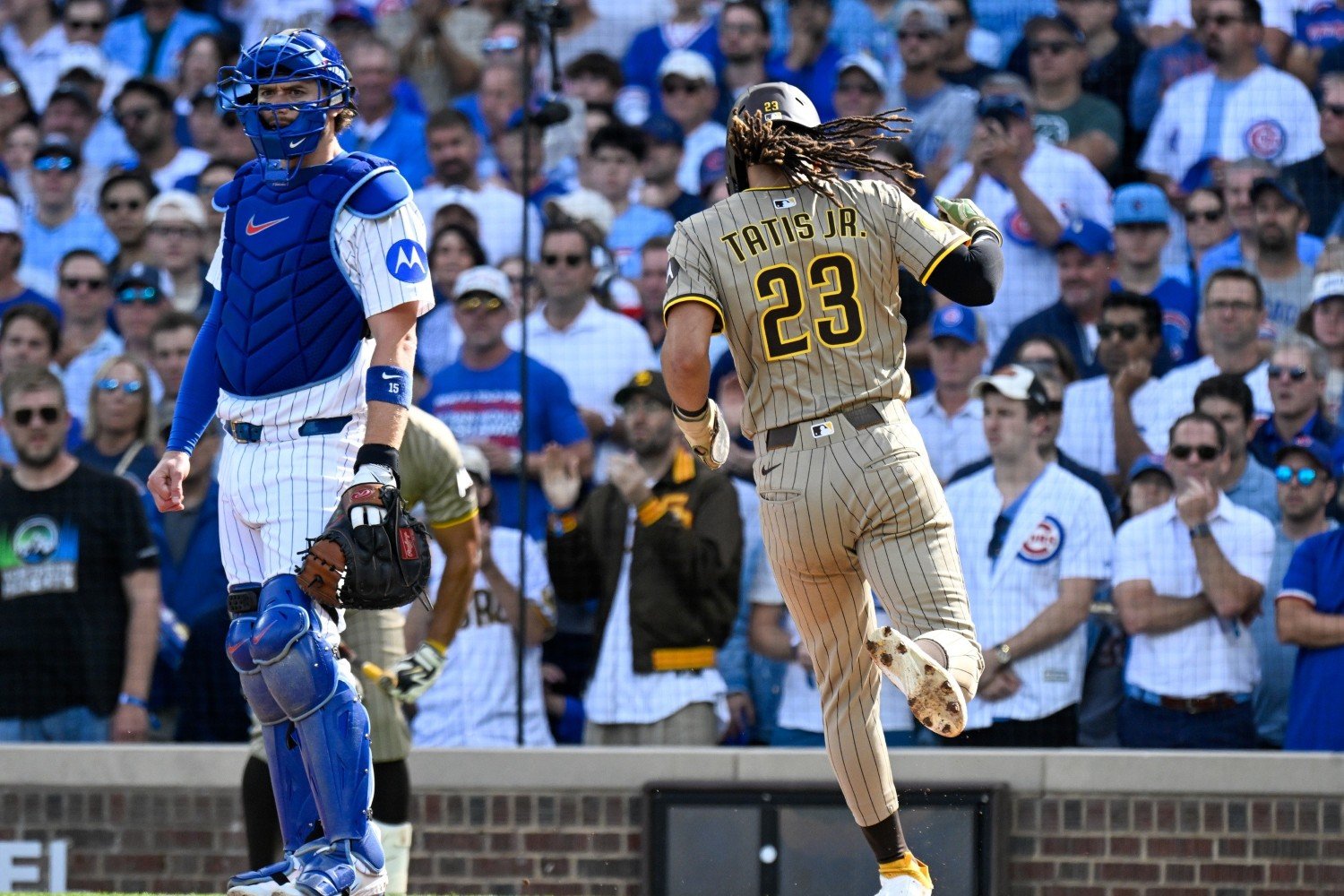 Because the Dodgers finished off the Reds late Wednesday night, the Cubs and Padres will square off at 4:08 PM Central time Thursday. They're the middle course in the final Wild Card feast of the round, starting near the time when the Guardians and Tigers will wrap up and ending (probably) just before the Yankees and Red Sox get underway in the Bronx. Sunset in Chicago is at 6:30 on Thursday. On an unseasonably warm October afternoon, the game will begin under the last of burning-off clouds and end right as twilight enfolds the city, turning it all those rich hues of purple, orange and blue that make the four-season city such a jewel. The drama of this game will be reflected by nature itself, even though the crowd will all be in shorts instead of sweatshirts. By the end of the game, those fireworks from Mother Nature will either set the party off like the light rig being run just right at the club, or taunt Cubs fans as they spill angrily out of Wrigley Field, wanting the chill and the crackle of leaves and even the damn rain October usually brings but getting only a defiantly summerish day—one that demands baseball, just when baseball is snatched away from the city for the year. These feelings—both possible feelings—are extremely familiar to Cubs fans. They're old friends, in all the evocative ways that that phrase falls over us when we hear it. What is an "old friend," after all? It's the warmest and most wonderful thing we have; one of the things that makes life worth living. On the other hand, many of our old friends are now aliens to us, or even enemies. Some of them are still friendly enough, but they've softened into far-off acquaintances, and their memory reminds us of pieces of our past selves that we've lost and want back—or that we regret ever being. On The West Wing, the turn-of-century political drama, "an old friend from home" was a code used by the staff when they needed to pull one another out of a meeting for something urgent and private, without the other people they're with knowing anything is amiss. The old friend they're talking about, then, is trouble. It's worry. In some ways, surely, trouble and worry are our oldest and most intimate friends. They're the ones we never get too far from, but we sure wish we could. In "The Sound of Silence," famously, Paul Simon begins by singing, "Hello Darkness, my old friend / I've come to talk with you again." In a song about that onrushing alienation and loneliness we just mentioned above, the first line identifies the one sure pal who never feels far off. Sunset will come right near the last pitch Thursday, and it might well be that 40,000 Cubs fans will feel Darkness at their shoulder by then—but equally, it's possible that Darkness will be splintered and pushed off by the light and sound and heat of a team clinching something that really counts and making their next step toward their ultimate goal. Other teams' fan bases know this duality a bit better, in that they've spent more time with it. Cubs fans have, in the grand scheme of things, relatively little experience waiting out a workday with an eye on the clock and a gathering tightness in their chest, both exhilarated and terrified. A win-or-go-home game awaits, and until it comes, fans' assignment is to get a bit more familiar with this feeling. If the Cubs can (at long last) shake off their century-old identity as irrelevant losers and become the perennial contender they ought to be, it's a feeling their fans will need to understand and manage better over time. The festive atmosphere of Wrigley Field when the team is good is a delightful old friend—a warm hug of a thing, even with the threat of a crushing loss looming in the background. It's fun to live through days like these. It's fun to immerse oneself and open the pores to the full vibrancy of it. It's also a tingly feeling, and that tingle is the danger—the threat of real pain, if things go wrong. No matter. It's worth the risk. Not all old friends are euphemisms. Of course, there will be two especially important old friends Thursday, in ways far more tangible and immediate than anything I've invited you to consider so far. One is Yu Darvish, the player who (perhaps) best emblemizes the collapse of the last great Cubs core. That's not an indictment of Darvish, of course, but of the Cubs—and, perhaps, a bit of an admission that the team got unlucky along the way. They signed Darvish prior to 2018, on a six-year deal meant to help them sustain the high-energy greatness that they'd begun to establish over the previous three seasons. Instead, he got hurt and pitched miserably in 2018. In 2019, he was healthy, but inconsistent. He pitched very well down the stretch and helped the Cubs hang around in a weak NL Central race, but ultimately, he was on the Wrigley mound when the dream of a true Cubs dynasty finally died, in a late-September start against the Cardinals. He took a 2-1 lead all the way to the ninth inning, but Joe Maddon's mistrust of his bullpen had grown so deep that he tried to get a complete game out of a tiring Darvish, who let in two Cardinals runs and lost the game. That was the last gasp. The Cubs tumbled out of the playoff picture; Maddon was fired; COVID hit. Darvish could have won the Cy Young Award in the meaningless 2020 season, but he didn't, and the Cubs lost his meaningless start in the meaningless Wild Card Series they played that fall against the Marlins. Then, the Cubs traded him to the Padres, for what has turned out to be Owen Caissie and nothing else of use. That was five full years ago, now. Darvish is only still in San Diego because he signed a massive extension prior to 2023. He turned 39 in August, and he's nowhere near the pitcher he was at his very best. He doesn't miss as many bats, and he gives up lots of homers lately. He's been hurt (neck, groin, elbow) and missed half of each of the last two campaigns. Yet, he still has six different pitches he throws at least 10% of the time for each handedness of batter, and he still throws strikes. In that way, he's still more like a video game character than a real pitcher, and he's still not the guy you want to face with your season on the line, exactly. He had a 5.38 ERA this year, but after a nightmarish first four starts in July, that number was just 4.23 over his final 11 starts. In those appearances, the Padres went 8-3, and Darvish had a 26.4% strikeout rate against a 4.6% walk rate. He averaged five innings and 19.6 batters faced per game in those starts. The Padres would take that Thursday, though it's a high-variance way to live. That could be one run in five frames; it could be four. It does feel like Matt Shaw could hook a Darvish sweeper into the basket in left field Thursday, and if he does, it will matter a great deal whether there's a runner on base or not. If so, the Cubs will be well on their way to knocking off that old friend. Before the thing is over, though, they'll need to contend with another old friend: Jeremiah Estrada. The jettisoned ex-Cubs reliever became such a story last year for his extraordinary strikeout stuff that it's easy to be let down by his performance this season; he ran into homer trouble of his own and posted a pedestrian relief ERA. He'll have to bear a significant load, with Mason Miller and Adrián Morejón unlikely to be available and Robert Suarez likely limited to one inning. Estrada, too, could give up a big hit to a Cubs slugger, but if he comes in and blows them away instead, it'll deepen the pain of the gut punch that would be losing the game and series. All that familiarity, all that atmosphere, and all that intensity will swirl into a perfect storm for some high drama Thursday. There's a great deal on the line, for both sides. The Padres are stretched thinner and have a dimmer medium-term future than the Cubs, even at a moment when the Cubs' medium-term future is somewhat murky. The emotions will be high. The air will feel electrified, and that electricity will spread and shift faster than usual because of the heat. This is what baseball fans spend April through September craving. Not having won the division, the Cubs need this win to prove their season a legitimate success. Even if they don't come away with it, this series has given us moments. There's no catchy banner to fly for getting the first Wild Card berth in a six-team playoff format, but these games themselves become flags that fly forever in the breezes of memory. Seiya Suzuki's home run and Carson Kelly's follow-up shot. Dansby Swanson's relentlessly smart, nimble defense. Nico Hoerner finding hits everywhere. These things don't fit into a sentence on a t-shirt, but they're the real reward for having won the Wild Card this year. Now, the Cubs need one more good day full of those warm and vivid moments—the kind that live on in your mind long after they happen. Another old friend—the Brewers—awaits after this, and they offer plenty of trouble to worry about. For today, though, the only thing that matters is today. Not long after sunset, tomorrow will take its weight, but for the long hours before first pitch, Cubs fans have to get comfortable with their prickly set of old friends and get ready to revel with a huge collection of them if the home team delivers.
- 1 comment
-
- 1
-

-
- yu darvish
- jeremiah estrada
- (and 1 more)
-
Image courtesy of © Matt Marton-Imagn Images The Cubs fell behind 1-0 early in Game 2 of the National League Wild Card Series Wednesday, but that's not a major problem. It was still a placid 1-0 in the bottom of the fourth, when with two outs, Seiya Suzuki again awakened the Cubs offense a bit. He slashed a double into the left-field corner, applying real pressure to Padres starter Dylan Cease for the first time. Carson Kelly was due to bat next, and he's not a great matchup for Cease—but he wasn't a great matchup for Nick Pivetta, either, and that didn't stop him from coming up with the game-winning homer in the fifth inning Tuesday. Mike Shildt was not going to get burned that way again. He ordered an intentional walk of Kelly by Cease, and then replaced Cease with left-handed reliever Adrián Morejón. It was a bold move—and an extremely risky one. Shildt set himself up to ask for 16 outs from his relief corps, knowing he would also need to win a game Thursday if they could hold the lead. He also exposed himself, theoretically, to a real risk of being matchup-baited. Morejón was coming in to face Pete Crow-Armstrong, who has batted .188/.217/.376 against southpaws this season. In 188 plate appearances, Crow-Armstrong struck out 55 times. In theory, though, Craig Counsell could have countered that move with one of his own. Justin Turner is on the team to do just two things: keep the vibes strong, and hit lefties. Despite an ugly overall line, he did the latter quite well this year. Turner got 109 plate appearances against southpaws, and batted .276/.330/.429 in them. He's no longer much of a power threat, but even a single would have tied the game in that moment. Then, Counsell could have pinch-run with Kevin Alcántara, who would have taken over in center field the rest of the way. That choice was right there to be made. Counsell didn't make it, though, and the truth is, that's because he'd already missed his chance. Because Counsell values Crow-Armstrong's defense so highly, the Cubs went almost three months without playing so much as an inning without him. Crow-Armstrong's offensive breakout made him indispensable to their humming offense, too, but it was the glove that made the difference. Even before the sophomore center fielder unlocked his offense beginning a few weeks into the season, he had the run of center field. The club traded Cody Bellinger over the winter, thinking (after acquiring Kyle Tucker) that they would have better ways to spend the money owed to him and insufficient playing time to offer him. However, minor pickup Vidal Bruján failed to acquit himself as a backup center fielder, and the team chose not to carry Alcántara in what would have been a fairly small role as a platoon partner to Crow-Armstrong. They didn't have a backup at the position at which Crow-Armstrong excelled, so his offensive output became irrelevant—at least to the question of whether he'd play on a given day. He would. The team needed him. If he got a hit, great. If not, he'd help them merely by running down everything hit to the gaps. It was an easier bar to clear, of course, because there was no qualified alternative within the state of Illinois. Crow-Armstrong left games that he had started just five times all season: June 23 in St. Louis, in a blowout July 11 in New York, in a blowout August 10 in St. Louis, pinch-hit for by Turner in the Cubs' last at-bat with a lefty on the mound and the team trailing August 23 in Anaheim, in a blowout September 6 against the Nationals, due to injury Again, for much of the year, that was because he didn't have anyone behind him. If the Cubs had to play any more defense in a given game, they would do anything in their power to avoid taking Crow-Armstrong and his premium leather out of action. Late in the campaign, though, that changed. Alcántara came up and spent most of the final month with the club. He was available. Still, Counsell ignored him. He (or the organization, or both) simply doesn't trust the rookie outfielder. Alcántara did fine in the limited chances he did receive, batting .364 and drawing a walk in 12 plate appearances spangled across 10 games. It made no difference. His bosses didn't see him as a viable center field option. Ditto, as it turned out, for utility man Willi Castro, whose stint with the team has turned out to be fairly abortive. Injuries forced Castro into the lineup for stretches after he was acquired at the trade deadline, but he never found his rhythm at the plate, and the team barely bothered glancing at him as a center fielder. Thus, they got to this point—to that fourth inning at the onset of October—having squandered any chance to lay the groundwork and prepare themselves for a pivotal substitution. There was no way Counsell was going to thrust Alcántara or Castro into center field for five innings, so Crow-Armstrong was effectively stuck in. He grounded out to end the inning, and the Cubs' best threat of the day dissolved into nothing. They lost 3-0, after a tornado of fire emerged from the San Diego bullpen and blazed across the field. Morejón, Mason Miller and Robert Suarez each got more than three outs, and the Cubs did gently pressure each, enough that they'll be tired if called upon Thursday. Nonetheless, Thursday will come, for Shildt. His gambit worked. He knew Counsell was in no position to remove his lefty batter, despite the utter hopelessness of the matchup thrust upon him, and he took advantage of that. The Cubs blew the game, not by giving up a homer to Manny Machado or by not converting several three-ball counts into more baserunners (though those failures didn't help), but by not using their time wisely in August and September. Lifting Crow-Armstrong in that situation should have been doable, and rehearsed. Instead, it felt impossible. The game turned on a weeks-long anti-decision, made before the Cubs even clinched their place in this series. View full article
-
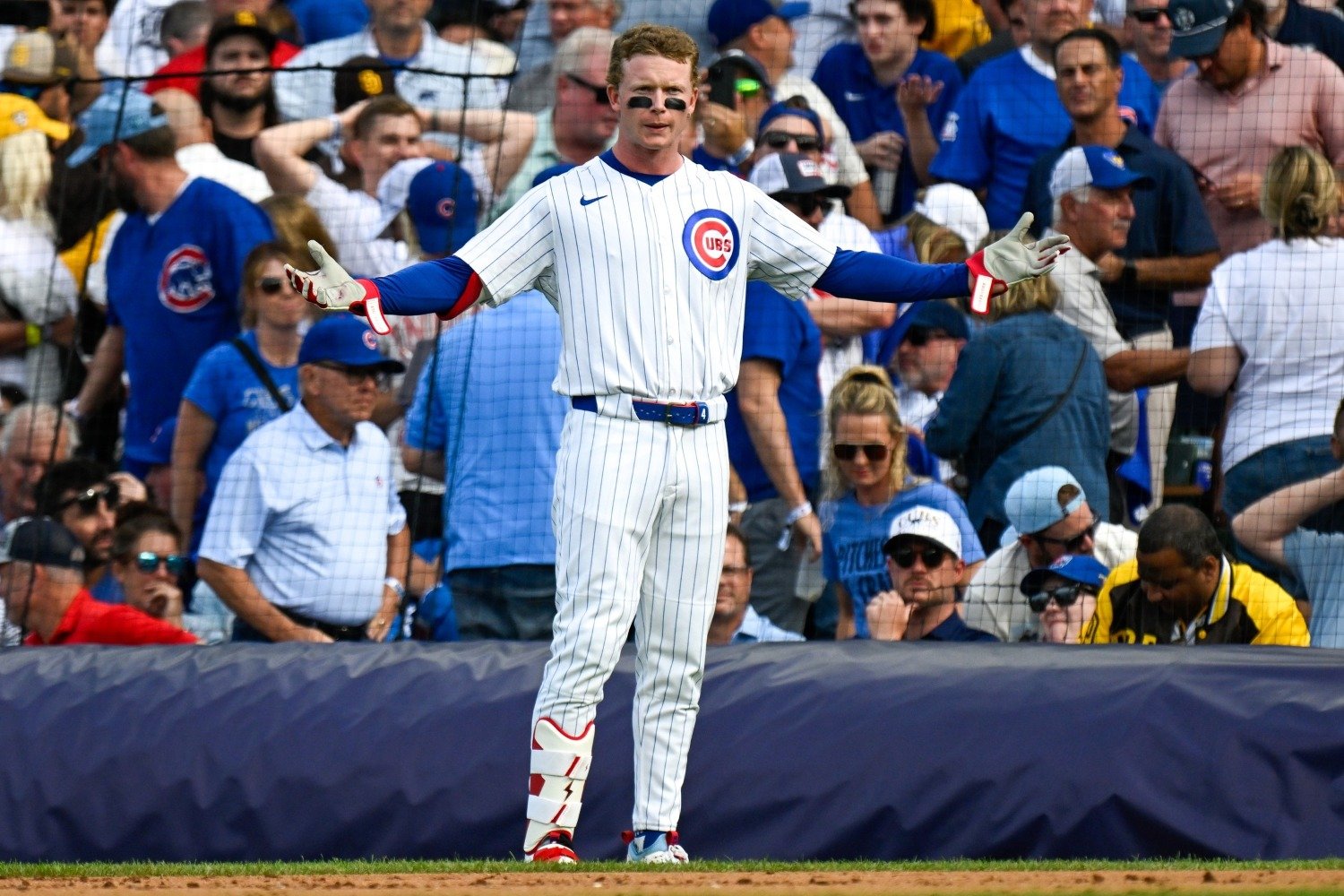 The Cubs fell behind 1-0 early in Game 2 of the National League Wild Card Series Wednesday, but that's not a major problem. It was still a placid 1-0 in the bottom of the fourth, when with two outs, Seiya Suzuki again awakened the Cubs offense a bit. He slashed a double into the left-field corner, applying real pressure to Padres starter Dylan Cease for the first time. Carson Kelly was due to bat next, and he's not a great matchup for Cease—but he wasn't a great matchup for Nick Pivetta, either, and that didn't stop him from coming up with the game-winning homer in the fifth inning Tuesday. Mike Shildt was not going to get burned that way again. He ordered an intentional walk of Kelly by Cease, and then replaced Cease with left-handed reliever Adrián Morejón. It was a bold move—and an extremely risky one. Shildt set himself up to ask for 16 outs from his relief corps, knowing he would also need to win a game Thursday if they could hold the lead. He also exposed himself, theoretically, to a real risk of being matchup-baited. Morejón was coming in to face Pete Crow-Armstrong, who has batted .188/.217/.376 against southpaws this season. In 188 plate appearances, Crow-Armstrong struck out 55 times. In theory, though, Craig Counsell could have countered that move with one of his own. Justin Turner is on the team to do just two things: keep the vibes strong, and hit lefties. Despite an ugly overall line, he did the latter quite well this year. Turner got 109 plate appearances against southpaws, and batted .276/.330/.429 in them. He's no longer much of a power threat, but even a single would have tied the game in that moment. Then, Counsell could have pinch-run with Kevin Alcántara, who would have taken over in center field the rest of the way. That choice was right there to be made. Counsell didn't make it, though, and the truth is, that's because he'd already missed his chance. Because Counsell values Crow-Armstrong's defense so highly, the Cubs went almost three months without playing so much as an inning without him. Crow-Armstrong's offensive breakout made him indispensable to their humming offense, too, but it was the glove that made the difference. Even before the sophomore center fielder unlocked his offense beginning a few weeks into the season, he had the run of center field. The club traded Cody Bellinger over the winter, thinking (after acquiring Kyle Tucker) that they would have better ways to spend the money owed to him and insufficient playing time to offer him. However, minor pickup Vidal Bruján failed to acquit himself as a backup center fielder, and the team chose not to carry Alcántara in what would have been a fairly small role as a platoon partner to Crow-Armstrong. They didn't have a backup at the position at which Crow-Armstrong excelled, so his offensive output became irrelevant—at least to the question of whether he'd play on a given day. He would. The team needed him. If he got a hit, great. If not, he'd help them merely by running down everything hit to the gaps. It was an easier bar to clear, of course, because there was no qualified alternative within the state of Illinois. Crow-Armstrong left games that he had started just five times all season: June 23 in St. Louis, in a blowout July 11 in New York, in a blowout August 10 in St. Louis, pinch-hit for by Turner in the Cubs' last at-bat with a lefty on the mound and the team trailing August 23 in Anaheim, in a blowout September 6 against the Nationals, due to injury Again, for much of the year, that was because he didn't have anyone behind him. If the Cubs had to play any more defense in a given game, they would do anything in their power to avoid taking Crow-Armstrong and his premium leather out of action. Late in the campaign, though, that changed. Alcántara came up and spent most of the final month with the club. He was available. Still, Counsell ignored him. He (or the organization, or both) simply doesn't trust the rookie outfielder. Alcántara did fine in the limited chances he did receive, batting .364 and drawing a walk in 12 plate appearances spangled across 10 games. It made no difference. His bosses didn't see him as a viable center field option. Ditto, as it turned out, for utility man Willi Castro, whose stint with the team has turned out to be fairly abortive. Injuries forced Castro into the lineup for stretches after he was acquired at the trade deadline, but he never found his rhythm at the plate, and the team barely bothered glancing at him as a center fielder. Thus, they got to this point—to that fourth inning at the onset of October—having squandered any chance to lay the groundwork and prepare themselves for a pivotal substitution. There was no way Counsell was going to thrust Alcántara or Castro into center field for five innings, so Crow-Armstrong was effectively stuck in. He grounded out to end the inning, and the Cubs' best threat of the day dissolved into nothing. They lost 3-0, after a tornado of fire emerged from the San Diego bullpen and blazed across the field. Morejón, Mason Miller and Robert Suarez each got more than three outs, and the Cubs did gently pressure each, enough that they'll be tired if called upon Thursday. Nonetheless, Thursday will come, for Shildt. His gambit worked. He knew Counsell was in no position to remove his lefty batter, despite the utter hopelessness of the matchup thrust upon him, and he took advantage of that. The Cubs blew the game, not by giving up a homer to Manny Machado or by not converting several three-ball counts into more baserunners (though those failures didn't help), but by not using their time wisely in August and September. Lifting Crow-Armstrong in that situation should have been doable, and rehearsed. Instead, it felt impossible. The game turned on a weeks-long anti-decision, made before the Cubs even clinched their place in this series.
 -
Image courtesy of © David Banks-Imagn Images Shota Imanaga will still get the ball for the Chicago Cubs in Game 2 of the Wild Card Series Wednesday at Wrigley Field. He just won't be the first one to do so. After they secured a Game 1 win Tuesday afternoon, the Cubs announced that Andrew Kittredge will start Game 2. Kittredge, who has only gotten more than three outs in a game twice this season, certainly isn't standing in for Imanaga. Nor is he the tip of a bullpen game spear. He's just an opener—a job he's done more than a dozen times before, in a long big-league career spent mostly with the Tampa Bay Rays. Kittredge is the high-leverage righty who matches up best with the Padres' key righty bats, Fernando Tatis Jr. and Manny Machado. He pitched the eighth inning in Game 1, and dispatched San Diego in order on 14 pitches. He saw Freddy Fermin, Tatis and Luis Arráez, but not Machado. Unless Mike Shildt is brave enough to significantly shake up his lineup in response to Craig Counsell's tactic, Kittredge will open Wednesday by facing Tatis, Arráez and Machado—and perhaps Jackson Merrill and Xander Bogaerts. In a series like this one, with up to three games but no days off, every reliever is essentially available twice. A manager might turn to a reliever for all three games of a series that goes the distance, but only in an emergency. By asking Daniel Palencia for five outs in Game 1, Counsell all but announced that the second game in which he would be available is Game 3. Brad Keller, currently holding the anchor role in the relay team that is the Chicago pitching staff, will be called upon to sew up a second win on whichever day the team can position themselves for one, so he needs to remain flexibly available Wednesday. However, with Palencia locked into an appearance Thursday (or not until the weekend, if the Cubs win today), Counsell is using Kittredge up front because he knows he'll need him, and against whom he wants to use him. The change dares Shildt to slide Tatis and/or Machado down in the lineup to punish Kittredge with lefty batters, but if the San Diego skipper takes that bait, he risks seeing his season end with one of those star sluggers in the on-deck circle—while Ryan O'Hearn or Gavis Sheets takes their fifth plate appearance of the afternoon. Using Kittredge right away also slips Imanaga past the meat of the Padres order, the first time through. If he sails through the first with ease or if he's in an early jam, Counsell might well let Kittredge stay in even to face Bogaerts. Thus, when Imanaga does enter, the first batters he faces will be drawn mostly from the Padres' pool of good-not-great left-handed batters. He won't have to bear the times-through-the-order penalty against Tatis or Machado any time before the fourth or fifth inning, and he can face up to 24 batters without facing Tatis or Machado a third time. It's unlikely that Imanaga will pitch to that many batters in this game, anyway. The only scenario in which he does so is one in which the Cubs trail, but narrowly, and he's pitching very well. We can, broadly, sketch the plans Counsell has in mind for the various forms the game might take, understanding that everything is subject to change in playoff baseball. PLAN A: Kittredge (1), Imanaga (5), Michael Soroka (1), Caleb Thielbar (1), Keller (1) - If no individual pitcher runs into major trouble, and if the Cubs can carve out even a small lead, this is the idea. Kittredge takes care of business in the first, then yields to Imanaga, who slices through the lineup twice (plus a batter or two). With someone like Jose Iglesias or Freddy Fermin due to see him a third time, instead, Imanaga will give way to Michael Soroka, who will pitch them through the briar patch of Tatis and Machado. Caleb Thielbar will be tasked with shutting down the very lefty-heavy band of the Padres lineup one last time, before Keller comes into finish the job. PLAN B: Kittredge (1), Imanaga (2), Rea (3), Thielbar (1), Soroka (1), Keller (1) - This is what happens if Imanaga doesn't have it Wednesday, and is getting hit hard or giving up home runs one turn through the batting order—but the Cubs are keeping the game in winnable territory with their bats. Colin Rea is the long man Counsell trusts most, even though Soroka is a key cog for this playoff bullpen. The latter is better-suited to a short-relief role than is Rea, and this is where Rea could shine. Of course, the usage of each of the last three hinges on whether the team does successfully keep the game winnable. PLAN C: Kittredge (1), Imanaga (3), Soroka (1), Thielbar (1), Civale (3), Rogers (1) - This is the outright "uh-oh" plan. If Kittredge gets ambushed or Imanaga gets shelled, and if the team is down by two or three runs by the top of the sixth, we're likely to see Aaron Civale and Taylor Rogers eat innings to close out the game. Given the strength of San Diego's bullpen, a deficit of any more than a run after the game's midpoint has to be treated like an expected loss today; the Cubs have that luxury and need to remember it. In this case, Counsell would keep the powder dry, not only reserving Keller's second appearance for Game 3 but choosing Civale over Rea. That would leave Rea, along with Drew Pomeranz, Keller, Thielbar and Palencia free to provide support to Jameson Taillon if needed on Thursday. This isn't a sign of mistrust in Imanaga; it's just a response to the unique structure of the Padres' roster and lineup. Imanaga should be the second arm into the fray, and he should stick around a while. How long will depend on how the game goes, but the Cubs don't have to sweat the details overly profusely in advance. The Padres are the ones with the narrow path to advancing, now. The Cubs have lots of ways to achieve that, and using their second Kittredge outing right at the front end of this contest is just a way of gaining more information while leveraging that greater flexibility. View full article
-
- 1
-
-
- andrew kittredge
- shota imanaga
- (and 5 more)
-
Anatomy of an Opener: How Cubs Will Navigate Game 2's Decision Points
Matthew Trueblood posted an article in Cubs
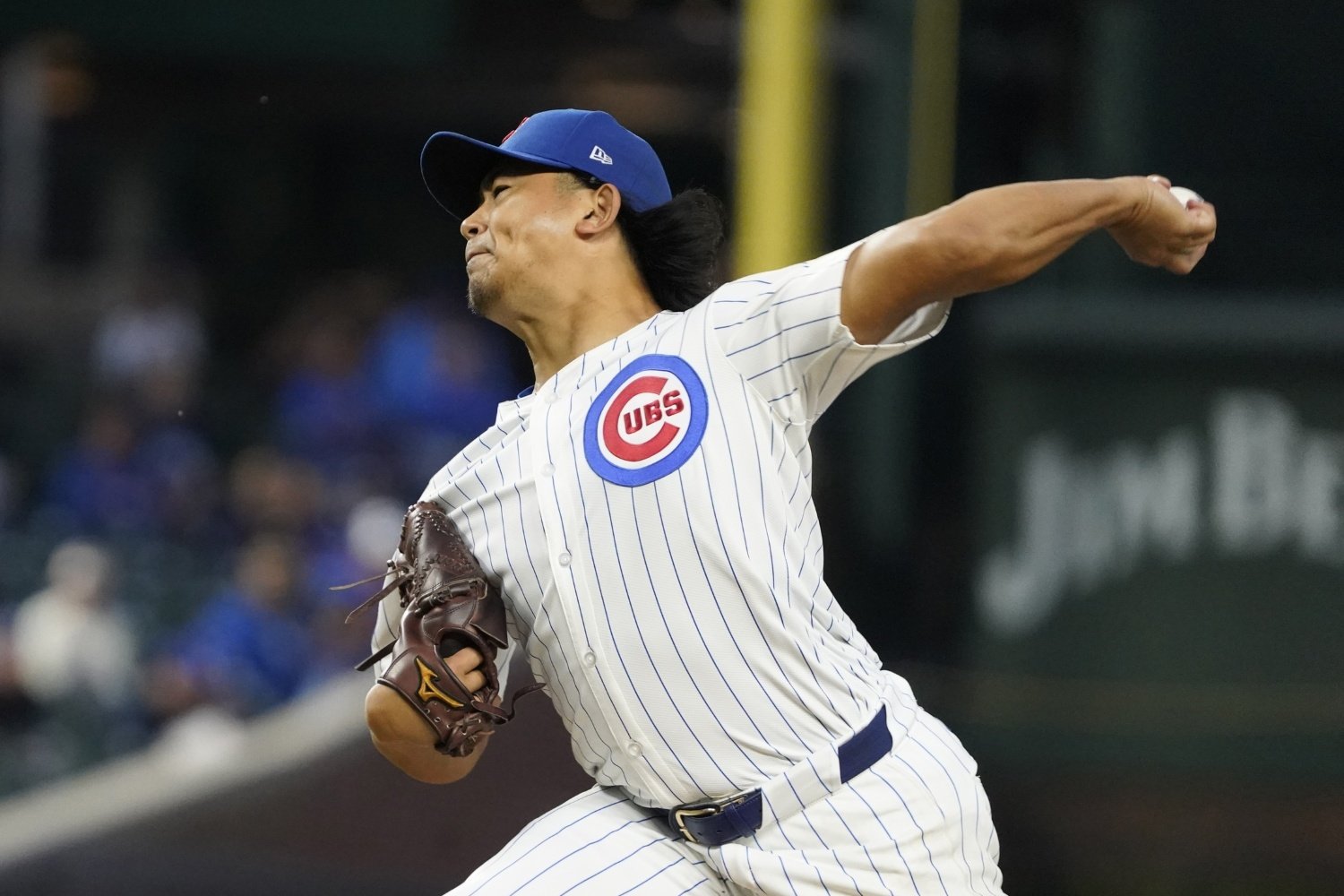 Shota Imanaga will still get the ball for the Chicago Cubs in Game 2 of the Wild Card Series Wednesday at Wrigley Field. He just won't be the first one to do so. After they secured a Game 1 win Tuesday afternoon, the Cubs announced that Andrew Kittredge will start Game 2. Kittredge, who has only gotten more than three outs in a game twice this season, certainly isn't standing in for Imanaga. Nor is he the tip of a bullpen game spear. He's just an opener—a job he's done more than a dozen times before, in a long big-league career spent mostly with the Tampa Bay Rays. Kittredge is the high-leverage righty who matches up best with the Padres' key righty bats, Fernando Tatis Jr. and Manny Machado. He pitched the eighth inning in Game 1, and dispatched San Diego in order on 14 pitches. He saw Freddy Fermin, Tatis and Luis Arráez, but not Machado. Unless Mike Shildt is brave enough to significantly shake up his lineup in response to Craig Counsell's tactic, Kittredge will open Wednesday by facing Tatis, Arráez and Machado—and perhaps Jackson Merrill and Xander Bogaerts. In a series like this one, with up to three games but no days off, every reliever is essentially available twice. A manager might turn to a reliever for all three games of a series that goes the distance, but only in an emergency. By asking Daniel Palencia for five outs in Game 1, Counsell all but announced that the second game in which he would be available is Game 3. Brad Keller, currently holding the anchor role in the relay team that is the Chicago pitching staff, will be called upon to sew up a second win on whichever day the team can position themselves for one, so he needs to remain flexibly available Wednesday. However, with Palencia locked into an appearance Thursday (or not until the weekend, if the Cubs win today), Counsell is using Kittredge up front because he knows he'll need him, and against whom he wants to use him. The change dares Shildt to slide Tatis and/or Machado down in the lineup to punish Kittredge with lefty batters, but if the San Diego skipper takes that bait, he risks seeing his season end with one of those star sluggers in the on-deck circle—while Ryan O'Hearn or Gavis Sheets takes their fifth plate appearance of the afternoon. Using Kittredge right away also slips Imanaga past the meat of the Padres order, the first time through. If he sails through the first with ease or if he's in an early jam, Counsell might well let Kittredge stay in even to face Bogaerts. Thus, when Imanaga does enter, the first batters he faces will be drawn mostly from the Padres' pool of good-not-great left-handed batters. He won't have to bear the times-through-the-order penalty against Tatis or Machado any time before the fourth or fifth inning, and he can face up to 24 batters without facing Tatis or Machado a third time. It's unlikely that Imanaga will pitch to that many batters in this game, anyway. The only scenario in which he does so is one in which the Cubs trail, but narrowly, and he's pitching very well. We can, broadly, sketch the plans Counsell has in mind for the various forms the game might take, understanding that everything is subject to change in playoff baseball. PLAN A: Kittredge (1), Imanaga (5), Michael Soroka (1), Caleb Thielbar (1), Keller (1) - If no individual pitcher runs into major trouble, and if the Cubs can carve out even a small lead, this is the idea. Kittredge takes care of business in the first, then yields to Imanaga, who slices through the lineup twice (plus a batter or two). With someone like Jose Iglesias or Freddy Fermin due to see him a third time, instead, Imanaga will give way to Michael Soroka, who will pitch them through the briar patch of Tatis and Machado. Caleb Thielbar will be tasked with shutting down the very lefty-heavy band of the Padres lineup one last time, before Keller comes into finish the job. PLAN B: Kittredge (1), Imanaga (2), Rea (3), Thielbar (1), Soroka (1), Keller (1) - This is what happens if Imanaga doesn't have it Wednesday, and is getting hit hard or giving up home runs one turn through the batting order—but the Cubs are keeping the game in winnable territory with their bats. Colin Rea is the long man Counsell trusts most, even though Soroka is a key cog for this playoff bullpen. The latter is better-suited to a short-relief role than is Rea, and this is where Rea could shine. Of course, the usage of each of the last three hinges on whether the team does successfully keep the game winnable. PLAN C: Kittredge (1), Imanaga (3), Soroka (1), Thielbar (1), Civale (3), Rogers (1) - This is the outright "uh-oh" plan. If Kittredge gets ambushed or Imanaga gets shelled, and if the team is down by two or three runs by the top of the sixth, we're likely to see Aaron Civale and Taylor Rogers eat innings to close out the game. Given the strength of San Diego's bullpen, a deficit of any more than a run after the game's midpoint has to be treated like an expected loss today; the Cubs have that luxury and need to remember it. In this case, Counsell would keep the powder dry, not only reserving Keller's second appearance for Game 3 but choosing Civale over Rea. That would leave Rea, along with Drew Pomeranz, Keller, Thielbar and Palencia free to provide support to Jameson Taillon if needed on Thursday. This isn't a sign of mistrust in Imanaga; it's just a response to the unique structure of the Padres' roster and lineup. Imanaga should be the second arm into the fray, and he should stick around a while. How long will depend on how the game goes, but the Cubs don't have to sweat the details overly profusely in advance. The Padres are the ones with the narrow path to advancing, now. The Cubs have lots of ways to achieve that, and using their second Kittredge outing right at the front end of this contest is just a way of gaining more information while leveraging that greater flexibility.
 -
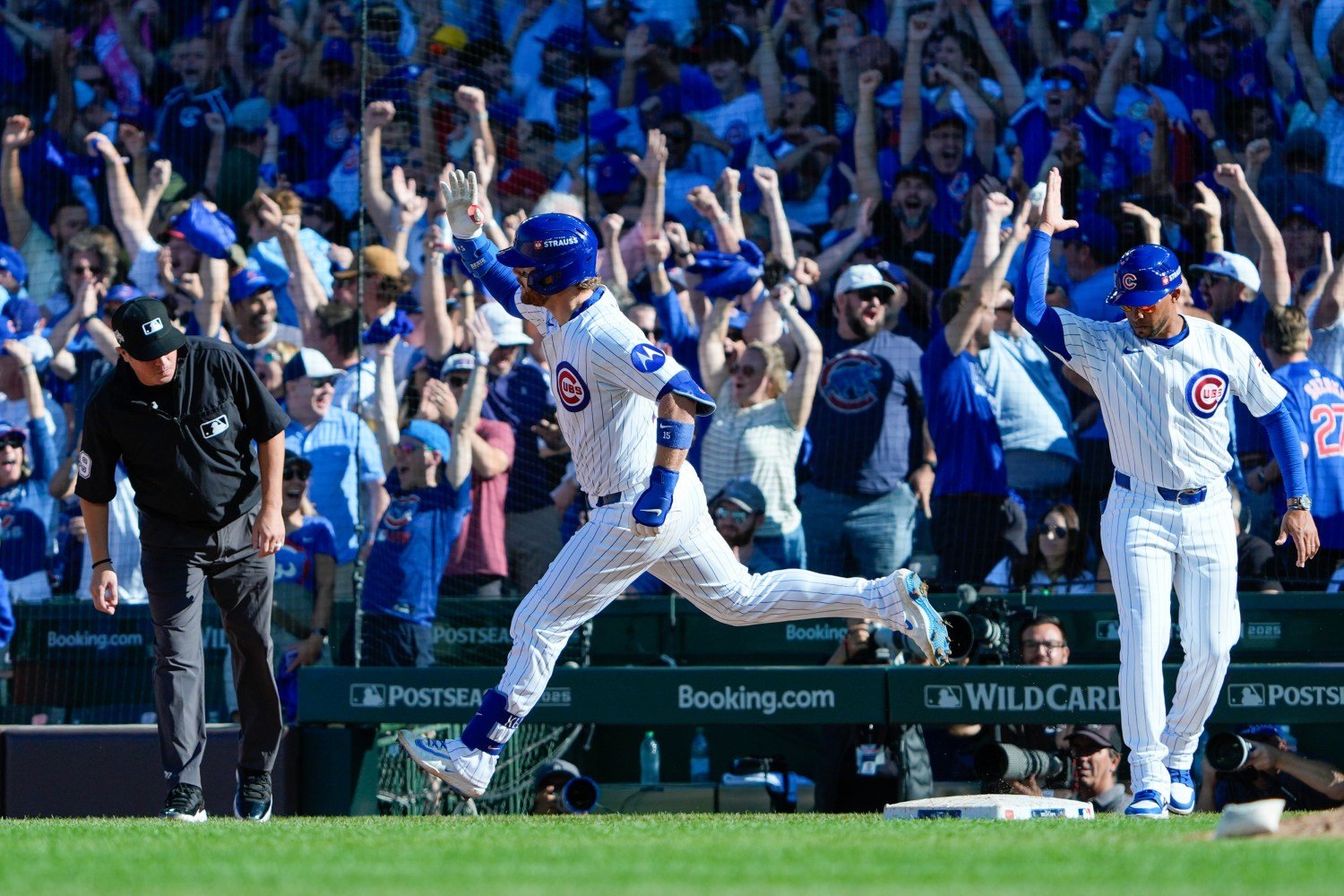 The nervousness that creeps into Wrigley Field when the playoffs start to go wrong in the playoffs is familiar, and it makes a seasoned Cubs fan's skin crawl. Everything feels slightly wrong; you become aware of your socks. There have been too many near-misses and deflating setbacks crowded into the Friendly Confines over the decades. Those moments shoulder in and take standing-room places amid the present; the quiet of a loss settles over the crowd before the loss even has to be real. It was starting to get that way in the fifth inning Tuesday. The Cubs allowed just one quick, cheap run, in the second inning, when Matthew Boyd yielded a bloop double to Jackson Merrill and then a scalded line-drive two-bagger to Xander Bogaerts. By the bottom of the fifth, though, it began to feel like that might stand up. Nick Pivetta was cruising, with a fastball that was beating the Cubs' barrels so consistently he hardly went away from it. Chicago batters tried to sit on his breaking ball, at times, and when they didn't get it, they were lost. Then, like lightning striking twice—like a boxing combo, so sudden and forceful and carefully earned by all involved—the Cubs flipped the game. I mean, they totally flipped it. First, Pivetta made an error. In his first at-bat against Seiya Suzuki, he'd stayed away. He teased him with fastballs, then got him reaching, dipping, for a low curveball. We know that that doesn't work for Suzuki; he hit a lazy flyout. The devilish thing about baseball, though, is you have to get a guy out more than once. The second time he saw the Cubs' No. 5 hitter, Pivetta wanted to show him something different, so he started pounding him inside. It was a case of trying to be too brilliant, with a twist of not having updated the scouting report recently enough. Suzuki did seem to be looking away to start the at-bat, but he quickly cottoned on and shifted his sights to the inner half. That was a major problem for Pivetta, because although Suzuki had a bit of a hole inside for much of the second half, he'd closed it up during the final week of the campaign. If the ball had been above his hands, Pivetta might have been ok. It wasn't, and Suzuki sent a missile deep into the left-field bleachers. The quietude exploded and evaporated, and your socks receded into your subconscious. That brought up Carson Kelly, which should have been good news for Pivetta. Kelly was one of his six strikeout victims through the first four innings, which the hurler accomplished by sticking to a simple plan: fastballs up and away. Kelly really struggles against heaters in that location, especially from righties, and the Padres clearly knew that. If you read our advance scouting guide to the series this morning, even you knew it: Kelly was not a good matchup with Pivetta, from the Cubs' perspective. Chastened by the failed Suzuki experiment, perhaps, Pivetta and catcher Freddy Fermin (working together for the first time, with Pivetta's personal catcher Elias Díaz hurt; it seems a heinous oversight by the Padres not to have gotten the two some game action in tandem during the regular season run-in) decided to go after Kelly the same way they had the first time. And honestly, that should have worked. Kelly is one of those hitters whose swing really loses its juice when the ball gets into the upper third of the zone, and especially above it. He can't hurt you there, most of the time. In fact, until Tuesday's fifth inning, Kelly hadn't hit a high four-seamer from a righty with any real authority all year. To find instances of him doing it, you have to go back to last July. Here's the thing, though: the previous examples should have been warnings. Here's Kelly swatting a very high, backspin fly ball just over the wall for a grand slam against the Twins last summer. MVlENGdfWGw0TUFRPT1fVlFKWVYxTUZWZ0FBWEFRTEJBQUFVbFFIQUZnRld3SUFDbElDVVFJRVZRTUhVd1lE.mp4 That, by the way, came against a pitcher (then-rookie David Festa) not at all unlike Pivetta in terms of pitch mix and approach. Here's a ball from a few weeks later, on which Kelly came up just shy of a scoreboard-flipping late bomb in Toronto. S3d4dnZfWGw0TUFRPT1fRGdaWEFWd05BMVFBV2xFS0FBQUFVd2RSQUFCUUJsWUFBVnhUQVF0WFUxWURWUXBX.mp4 Kelly is in a better position to generate power this season, with alterations to his stance and stride. That's why he had a better year at the plate this year. However, he also has something in him—a little bit of the timid hero. He doesn't swing for the fences at the top of the zone, almost ever. When the moment is biggest, though, he makes little exceptions. And sometimes those become very, very big exceptions. To really understand what a twist that swing is, consider the chart on the left (of all his regular-season homers this year, by pitch location) and on the right (the chart for his at-bat in the fifth Tuesday). Pitch 6, up there on the bar of the top of the zone, is not in his power zone, except when the adrenaline is flowing. Then, he can make it so. That, as it turned out, was the game. The crowd stayed loud; the Cubs created some insurance; the bullpen was magnificent. We'll have more on this contest before the next one tomorrow afternoon, but for now, suffice it to say this: Suzuki and Kelly made excellent adjustments and met the moment in unexpected ways. That's the stuff of which memorable playoff appearances are made. That's what makes a baseball fan's socks roll up and down, without their even noticing.
