


Matthew Trueblood
-
Posts
2,479 -
Joined
-
Last visited
-
Days Won
2
Content Type
Profiles
Joomla Posts 1
Chicago Cubs Videos
Chicago Cubs Free Agent & Trade Rumors, Notes, & Tidbits
2026 Chicago Cubs Top Prospects Ranking
News
2023 Chicago Cubs Draft Picks
Guides & Resources
2024 Chicago Cubs Draft Picks
The Chicago Cubs Players Project
2025 Chicago Cubs Draft Pick Tracker
2026 Chicago Cubs Draft Tracker: Picks & Bonuses
Blogs
Events
Forums
Store
Gallery
Everything posted by Matthew Trueblood
-
Image courtesy of © Daniel Kucin Jr.-Imagn Images Caleb Thielbar has been legitimately marvelous. Drew Pomeranz's magic is less about a tingle in the fingertips and more about smoke and spin mirroring, though, so the Cubs have snatched up another lefty to help them navigate the middle innings: veteran (and former Thielbar teammate, with the Minnesota Twins) Taylor Rogers. Rogers, 34, is enjoying a career resurgence over the last two seasons. He's pitched 93 innings since the start of 2024, with a 2.42 ERA and a 24.8% strikeout rate. He's a sinker-sweeper specialist, but saying that really doesn't convey the thing as thoroughly as it deserves. Here, look at this. You can probably guess the problem Rogers runs into, from here: home plate is only 17 inches wide. Rogers has walked 10.4% of opposing batters over this season and a half of brilliance, but in fairness, the approach is still essentially working. He induces weak contact; he works his way out of whatever jams he creates. Rogers joins Andrew Kittredge to give the Chicago bullpen two more mid-30s middle relievers, and while that description sounds uninspiring, the presence of two reliable hurlers like these should stabilize the team's relief corps nicely. The Cubs sent back North Side Baseball favorite Ivan Brethowr in the deal, a fair price given Rogers's clear but limited upside as a rental relief arm. Brethowr is a real prospect, but not a star prospect. Rogers's job is important enough to this team the rest of the way to make such a player expendable. Speaking of making players expendable, Rogers's arrival also had to come with someone's departure. In an unsurprising but weighty move, the team designated veteran righthander Ryan Pressly for assignment to make room for Rogers. It will be a meritocracy in the Chicago bullpen, the rest of the way. Rogers slots into what looks like a deep and improved pitching staff; Pressly's departure is (bittersweet) addition by subtraction. View full article
-
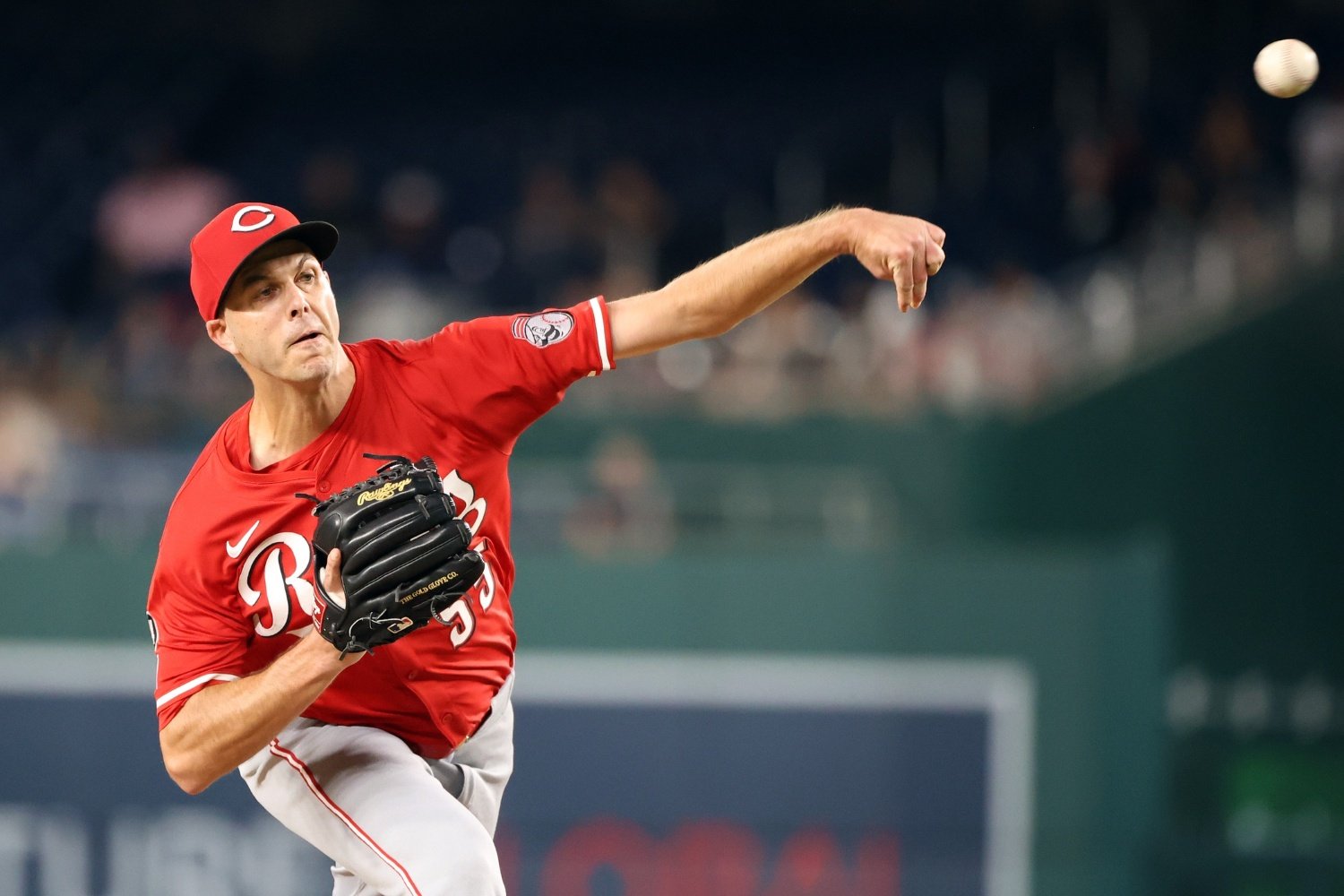 Caleb Thielbar has been legitimately marvelous. Drew Pomeranz's magic is less about a tingle in the fingertips and more about smoke and spin mirroring, though, so the Cubs have snatched up another lefty to help them navigate the middle innings: veteran (and former Thielbar teammate, with the Minnesota Twins) Taylor Rogers. Rogers, 34, is enjoying a career resurgence over the last two seasons. He's pitched 93 innings since the start of 2024, with a 2.42 ERA and a 24.8% strikeout rate. He's a sinker-sweeper specialist, but saying that really doesn't convey the thing as thoroughly as it deserves. Here, look at this. You can probably guess the problem Rogers runs into, from here: home plate is only 17 inches wide. Rogers has walked 10.4% of opposing batters over this season and a half of brilliance, but in fairness, the approach is still essentially working. He induces weak contact; he works his way out of whatever jams he creates. Rogers joins Andrew Kittredge to give the Chicago bullpen two more mid-30s middle relievers, and while that description sounds uninspiring, the presence of two reliable hurlers like these should stabilize the team's relief corps nicely. The Cubs sent back North Side Baseball favorite Ivan Brethowr in the deal, a fair price given Rogers's clear but limited upside as a rental relief arm. Brethowr is a real prospect, but not a star prospect. Rogers's job is important enough to this team the rest of the way to make such a player expendable. Speaking of making players expendable, Rogers's arrival also had to come with someone's departure. In an unsurprising but weighty move, the team designated veteran righthander Ryan Pressly for assignment to make room for Rogers. It will be a meritocracy in the Chicago bullpen, the rest of the way. Rogers slots into what looks like a deep and improved pitching staff; Pressly's departure is (bittersweet) addition by subtraction.
 -
Image courtesy of © Daniel Kucin Jr.-Imagn Images For the third year in a row, a ghastly lack of help off the bench has hamstrung the Cubs at certain stages of the season. This time, though, they're taking decisive action. In a deal in the final hour before the MLB trade deadline, Jed Hoyer pounced on erstwhile Twins utility infielder Willi Castro, sources confirmed to North Side Baseball. Jon Heyman was first with the news. Castro, 28, will be a free agent at the end of this season. In the final year of his arbitration eligibility, he’s making $6.4 million this year, which means that just over $2 million remains to be paid. That’s a small price to pay, though, for a switch-hitting utility man who offers a modicum of both power and speed. After hitting a career-high 12 home runs last year, Castro already has 10 in 2025. In 344 plate appearances with Minnesota, he entered Tuesday batting .245/.335/.407. The Twins scooped Castro up off the scrap heap before the 2023 season, signing him to a minor-league deal after he’d been non-tendered by the Detroit Tigers. Since then, he’s been the Swiss Army knife for the team, playing all over the diamond and slotted in all over the lineup card. His defense has declined sharply the last two seasons, perhaps because he’s been moved around so much, and this year, he’s mainly played second base and the corner outfield spots. However, his versatility (in both halves of innings) made him appealing to multiple teams. For the Cubs, Castro figures to play mostly at third base, as a complement (although less than a full platoon partner) to Matt Shaw. For the first time, the Cubs will have depth not just within their lineup, but beyond it—a sense that they can bring someone in tactically within a game or give days off to their regulars, and still have competence suffuse the lineup. Castro can still move around some, positionally, and as a supplemental piece in the lineup on something less than an everyday basis, he's a dynamic addition. He's improved signifiantly this year in his performance and his under-the-hood data against left-handed pitching, and he's a beloved teammte. A solid upgrade, Castro did come at a meaningful cost—but certainly not a painful one. The team surrendered two pitchers from their Double-A Knoxville roster, in helium guy Ryan Gallagher and righty Sam Armstrong. Gallagher was the club's 6th-round pick in last summer's draft, out of UC-Santa Barbara. He's made a quick ascent of the system thus far, putting up good numbers and opening some eyes with his immediate uptick in fastball velocity. He's not an electric arm, but he was a successful (if short-term) development project by the team's player development department. Even for a player who will hit free agency at season's end, he would not have been enough to headline a deal for a substantial contributor when he first entered the team's aegis. Armstrong, largely a throw-in and an organizational depth arm, is a candidate for a late switch to relief work, where he might take off a bit. There's no reason, however, for Cubs fans to lose sleep over this price. Castro often batted near the top of the Minnesota batting order this year; much less will be asked of him in Chicago. If he can keep the line moving and occasionally spell a weary or banged-up hitter, he'll advance the team's pursuit of good playoff position nicely. View full article
-
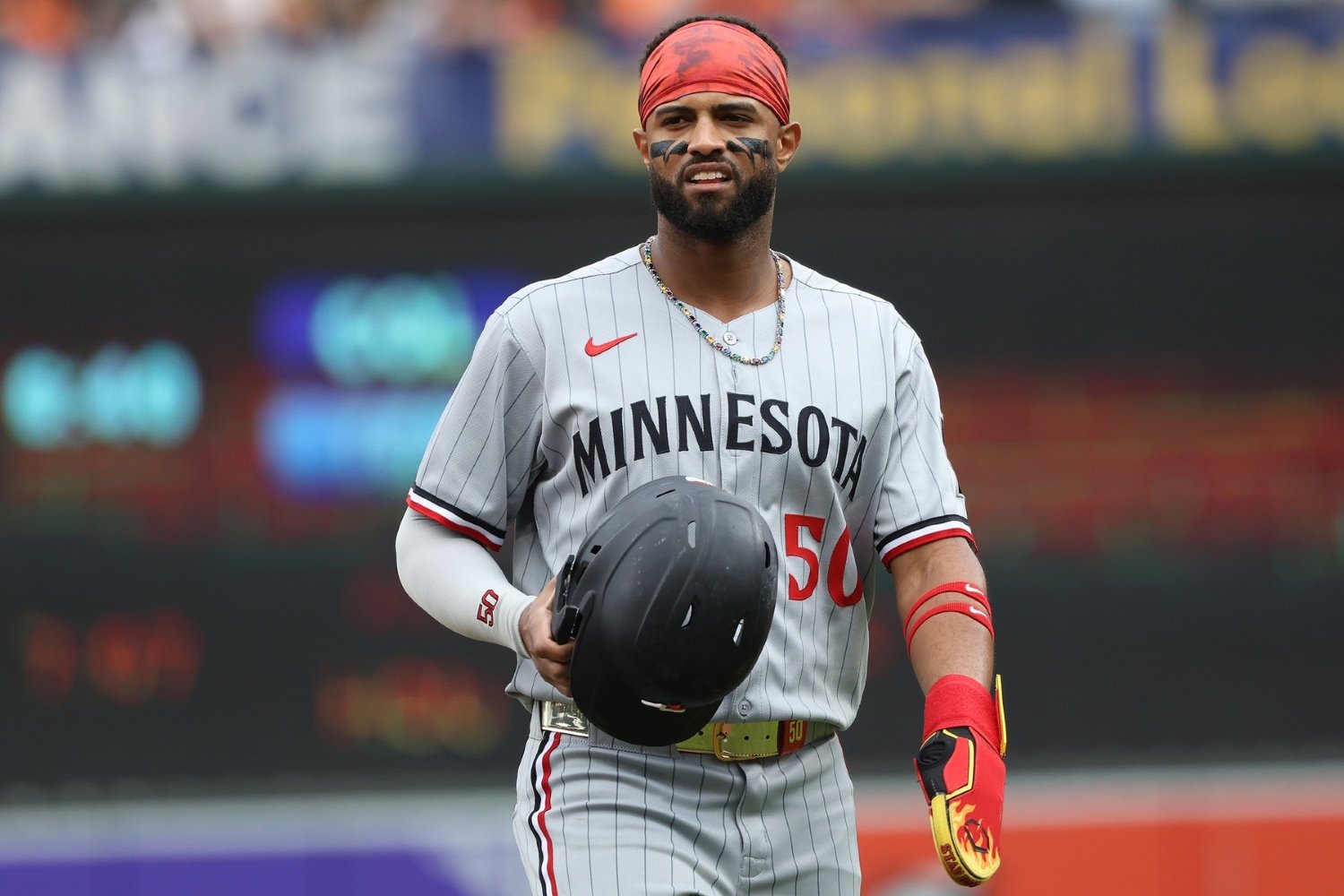 For the third year in a row, a ghastly lack of help off the bench has hamstrung the Cubs at certain stages of the season. This time, though, they're taking decisive action. In a deal in the final hour before the MLB trade deadline, Jed Hoyer pounced on erstwhile Twins utility infielder Willi Castro, sources confirmed to North Side Baseball. Jon Heyman was first with the news. Castro, 28, will be a free agent at the end of this season. In the final year of his arbitration eligibility, he’s making $6.4 million this year, which means that just over $2 million remains to be paid. That’s a small price to pay, though, for a switch-hitting utility man who offers a modicum of both power and speed. After hitting a career-high 12 home runs last year, Castro already has 10 in 2025. In 344 plate appearances with Minnesota, he entered Tuesday batting .245/.335/.407. The Twins scooped Castro up off the scrap heap before the 2023 season, signing him to a minor-league deal after he’d been non-tendered by the Detroit Tigers. Since then, he’s been the Swiss Army knife for the team, playing all over the diamond and slotted in all over the lineup card. His defense has declined sharply the last two seasons, perhaps because he’s been moved around so much, and this year, he’s mainly played second base and the corner outfield spots. However, his versatility (in both halves of innings) made him appealing to multiple teams. For the Cubs, Castro figures to play mostly at third base, as a complement (although less than a full platoon partner) to Matt Shaw. For the first time, the Cubs will have depth not just within their lineup, but beyond it—a sense that they can bring someone in tactically within a game or give days off to their regulars, and still have competence suffuse the lineup. Castro can still move around some, positionally, and as a supplemental piece in the lineup on something less than an everyday basis, he's a dynamic addition. He's improved signifiantly this year in his performance and his under-the-hood data against left-handed pitching, and he's a beloved teammte. A solid upgrade, Castro did come at a meaningful cost—but certainly not a painful one. The team surrendered two pitchers from their Double-A Knoxville roster, in helium guy Ryan Gallagher and righty Sam Armstrong. Gallagher was the club's 6th-round pick in last summer's draft, out of UC-Santa Barbara. He's made a quick ascent of the system thus far, putting up good numbers and opening some eyes with his immediate uptick in fastball velocity. He's not an electric arm, but he was a successful (if short-term) development project by the team's player development department. Even for a player who will hit free agency at season's end, he would not have been enough to headline a deal for a substantial contributor when he first entered the team's aegis. Armstrong, largely a throw-in and an organizational depth arm, is a candidate for a late switch to relief work, where he might take off a bit. There's no reason, however, for Cubs fans to lose sleep over this price. Castro often batted near the top of the Minnesota batting order this year; much less will be asked of him in Chicago. If he can keep the line moving and occasionally spell a weary or banged-up hitter, he'll advance the team's pursuit of good playoff position nicely.
 -
The Cubs haven't made Moisés Ballesteros untouchable. But they're only going to trade him if one of their potential partners on a deal is willing to accept him as the centerpiece of a trade for a controllable, high-end talent. To this point, according to at least one report, those would-be traders haven't put a fair value on Ballesteros, at least from Chicago's perspective. Ballesteros is still very young, and he's thrived as a hitter at Triple A over an extended sample. The Cubs are right to be open to trading him only if the agreed-upon deal reflects the fact that he could easily be an impact player in the majors as soon as the end of this year. If that's not happening, neither Jed Hoyer nor Carter Hawkins can really force it to. On the other hand, as the deadline creeps nearer, it's fair to wonder just how value-conscious the team intends to be. That's one of their hallmarks; it's part of the organizational DNA. At a moment when they need some high-octane help to keep pace with the streaking Brewers in the NL Central, that resolve is about to be tested in a way that it hasn't been since Hoyer took over as the main guy when Theo Epstein departed the organization. Passing that test might not mean showing the willpower not to make a move; it might have to mean showing the courage and conviction to take a bold chance. View full rumor
-
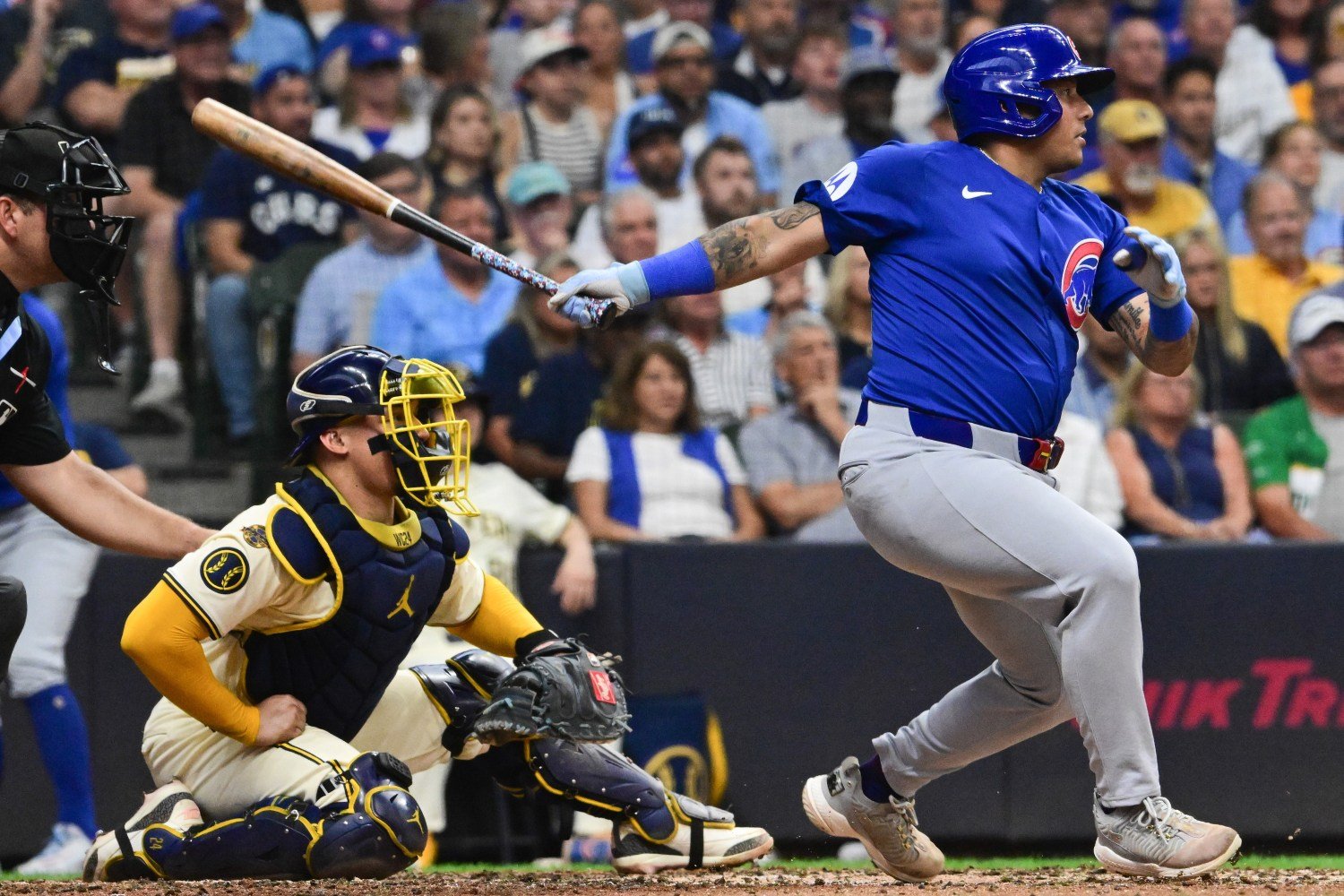 The Cubs haven't made Moisés Ballesteros untouchable. But they're only going to trade him if one of their potential partners on a deal is willing to accept him as the centerpiece of a trade for a controllable, high-end talent. To this point, according to at least one report, those would-be traders haven't put a fair value on Ballesteros, at least from Chicago's perspective. Ballesteros is still very young, and he's thrived as a hitter at Triple A over an extended sample. The Cubs are right to be open to trading him only if the agreed-upon deal reflects the fact that he could easily be an impact player in the majors as soon as the end of this year. If that's not happening, neither Jed Hoyer nor Carter Hawkins can really force it to. On the other hand, as the deadline creeps nearer, it's fair to wonder just how value-conscious the team intends to be. That's one of their hallmarks; it's part of the organizational DNA. At a moment when they need some high-octane help to keep pace with the streaking Brewers in the NL Central, that resolve is about to be tested in a way that it hasn't been since Hoyer took over as the main guy when Theo Epstein departed the organization. Passing that test might not mean showing the willpower not to make a move; it might have to mean showing the courage and conviction to take a bold chance.
 -
How Much Payroll Can Cubs Still Add Before MLB Trade Deadline?
Matthew Trueblood posted an article in Cubs
 Andrew Kittredge and Michael Soroka each signed significant (but not exorbitant) one-year deals this winter. When the Cubs traded for them Wednesday night, they took on the full remaining salaries for each player, which adds up to just over $5.8 million. (By competitive-balance tax payroll calculation, the figure is more like $6.8 million, but the Cubs only need to worry about the real cash this year.) That's the amount the team figures to have added to their payroll for the season, which now stands just over $201.4 million, according to Cot's Contracts from Baseball Prospectus. The team's CBT number is over $222 million, but that has almost no bearing now. To add another $18 million and change (with just one-third of the season left) would mean acquiring more than $50 million worth of player talent. The team won't do that, and they don't have the authorization to do so, anyway. Rather, according to sources with knowledge of the club's operations, Jed Hoyer and Carter Hawkins have about $10 million more they can spend Thursday, if the right opportunities arise. What can that buy? What constraints could it create? Well, first things first: if the front office succeeds in bagging the controllable pitching they're seeking, the budget will almost certainly not be a concern. The full-season salaries of MacKenzie Gore ($2.89 million) and Edward Cabrera ($1.95 million) each leave them owed less than $1 million for the balance of 2025. The hurdles to acquiring them are about how much talent the Cubs are and aren't willing to surrender, not about how much they'd be obligated to pay either Gore or Cabrera. There are other, less famous names who might also be available; who would also be around for three or more seasons; and who also don't make much money this year. If the team ponies up for any of them, they'll face no meaningful financial constraints. If the team has to pivot toward more veteran hurlers who have signed longer-term or higher-dollar deals, though, things change quickly. Let's ignore the obligations to Sandy Alcántara beyond 2025. This year alone, he's making $17.3 million, which would mean paying him almost $6 million for the balance of the campaign. Mitch Keller is making $15 million this year, which means $5 million after coming aboard with 54 games left. Shane Bieber makes $10 million this season, and so would be owed just over $3 million for the final third thereof. Robbie Ray, a latecomer to the trade market on whom the Cubs made a call Wednesday night, is making $25 million this season, which means he'd take up $8 million—almost the whole remaining budget for Hoyer and Hawkins. The budget does matter, because it slightly narrows the field of options. If the Giants sell, they don't want to eat money in the process, so the Cubs would have to take on all of Ray's money. That would mean making no other additions, or paying steeper prospect costs to avoid taking on salary in trades for other, smaller needs. The Rangers are trying to create payroll flexibility, but the Cubs can't take advantage by jumping into that mix—unless it be by prying loose Nathan Eovaldi and his own $6 million in remaining salary for this year, plus $12 million in signing bonuses payable this offseason. Dylan Cease ($13.75 million) and Zac Gallen ($13.5 million) are each owed roughly $4.5 million the rest of the way, which shouldn't be prohibitive—but if the Cubs also want to add even a relatively cheap reliever and a bench bat, it all adds up quickly. Willi Castro ($6.4 million in full-season salary; $2.1 million still owed) would soak up about 20 percent of what the team can still spend, for instance. If the team does add three more players today (unlikely, but possible), we could see them allow one of the teams making a deal to retain a portion of the salary. That would mean giving up a better prospect to complete a trade, but it might be the cost of doing business the way the Rickettses prefer to do it. While we're talking about money, though, let's take a moment to remember one other key factor in that regard: The business operations department sets each year's baseball operations budget based on the previous year's revenue. Thus, an aggressive trade deadline—and the packed houses and playoff home games it could yield—would pay for itself, come this winter. While Hoyer and Hawkins have to stay under budget, they should be looking for the best possible way to spend right up to their ownership-imposed limit. That's the best way to ensure that they'll have the flexibility and muscle this winter that they have lacked at times over the last year and a half.
 -
Image courtesy of © Kamil Krzaczynski-Imagn Images Andrew Kittredge and Michael Soroka each signed significant (but not exorbitant) one-year deals this winter. When the Cubs traded for them Wednesday night, they took on the full remaining salaries for each player, which adds up to just over $5.8 million. (By competitive-balance tax payroll calculation, the figure is more like $6.8 million, but the Cubs only need to worry about the real cash this year.) That's the amount the team figures to have added to their payroll for the season, which now stands just over $201.4 million, according to Cot's Contracts from Baseball Prospectus. The team's CBT number is over $222 million, but that has almost no bearing now. To add another $18 million and change (with just one-third of the season left) would mean acquiring more than $50 million worth of player talent. The team won't do that, and they don't have the authorization to do so, anyway. Rather, according to sources with knowledge of the club's operations, Jed Hoyer and Carter Hawkins have about $10 million more they can spend Thursday, if the right opportunities arise. What can that buy? What constraints could it create? Well, first things first: if the front office succeeds in bagging the controllable pitching they're seeking, the budget will almost certainly not be a concern. The full-season salaries of MacKenzie Gore ($2.89 million) and Edward Cabrera ($1.95 million) each leave them owed less than $1 million for the balance of 2025. The hurdles to acquiring them are about how much talent the Cubs are and aren't willing to surrender, not about how much they'd be obligated to pay either Gore or Cabrera. There are other, less famous names who might also be available; who would also be around for three or more seasons; and who also don't make much money this year. If the team ponies up for any of them, they'll face no meaningful financial constraints. If the team has to pivot toward more veteran hurlers who have signed longer-term or higher-dollar deals, though, things change quickly. Let's ignore the obligations to Sandy Alcántara beyond 2025. This year alone, he's making $17.3 million, which would mean paying him almost $6 million for the balance of the campaign. Mitch Keller is making $15 million this year, which means $5 million after coming aboard with 54 games left. Shane Bieber makes $10 million this season, and so would be owed just over $3 million for the final third thereof. Robbie Ray, a latecomer to the trade market on whom the Cubs made a call Wednesday night, is making $25 million this season, which means he'd take up $8 million—almost the whole remaining budget for Hoyer and Hawkins. The budget does matter, because it slightly narrows the field of options. If the Giants sell, they don't want to eat money in the process, so the Cubs would have to take on all of Ray's money. That would mean making no other additions, or paying steeper prospect costs to avoid taking on salary in trades for other, smaller needs. The Rangers are trying to create payroll flexibility, but the Cubs can't take advantage by jumping into that mix—unless it be by prying loose Nathan Eovaldi and his own $6 million in remaining salary for this year, plus $12 million in signing bonuses payable this offseason. Dylan Cease ($13.75 million) and Zac Gallen ($13.5 million) are each owed roughly $4.5 million the rest of the way, which shouldn't be prohibitive—but if the Cubs also want to add even a relatively cheap reliever and a bench bat, it all adds up quickly. Willi Castro ($6.4 million in full-season salary; $2.1 million still owed) would soak up about 20 percent of what the team can still spend, for instance. If the team does add three more players today (unlikely, but possible), we could see them allow one of the teams making a deal to retain a portion of the salary. That would mean giving up a better prospect to complete a trade, but it might be the cost of doing business the way the Rickettses prefer to do it. While we're talking about money, though, let's take a moment to remember one other key factor in that regard: The business operations department sets each year's baseball operations budget based on the previous year's revenue. Thus, an aggressive trade deadline—and the packed houses and playoff home games it could yield—would pay for itself, come this winter. While Hoyer and Hawkins have to stay under budget, they should be looking for the best possible way to spend right up to their ownership-imposed limit. That's the best way to ensure that they'll have the flexibility and muscle this winter that they have lacked at times over the last year and a half. View full article
-
Image courtesy of © Brad Mills-Imagn Images The Cubs had interest in Michael Soroka this offseason, before he signed a one-year deal with the Washington Nationals for $9 million. They first talked to the Nationals about trading for him over a month ago, in late June, around the time they also reached out to the Royals to discuss a possible Seth Lugo deal. Wednesday, in the shadow of the looming trade deadline, they got their man, sending outfielder Christian Franklin and shortstop Ronny Cruz to the Washington organization in exchange for Soroka. It's a pursuit born of a profile the Cubs very much like. Soroka moved from the starting rotation to the bullpen mid-season for the 2024 White Sox, right alongside then-teammate Chris Flexen. As he did, he mostly junked his pedestrian sinker and tapped into something new and important, by becoming a four-seam fastball-dominant arm. He also discovered new velocity, by "letting it eat" on every pitch. Over the winter, he also lowered his arm slot—something the Cubs would have implemented themselves, if he hadn't beaten them to it—and tapped into another new dynamic: his heater now enjoys superb spin mirroring with a breaking ball that has morphed from a slider into a uniquely big-breaking two-plane curve. As @Jason Ross wrote just 10 days ago, Soroka's results haven't truly dazzled this year, but the under-the-hood indices all have. He had a 4.87 ERA during his stint in the Beltway, but lousy defensive support explains a good chunk of that. According to Baseball Prospectus, his adjusted Deserved Run Average (DRA-, where 100 is average and lower is better) is 91, which is the second-best mark of his career, trailing only his All-Star season way back in 2019. Matthew Boyd's DRA- is 87. Soroka's figure is tied for 41st-best among the 127 pitchers with at least 70 innings pitched this season. Among those with whom he's tied: Spencer Strider, late-emerging trade candidate Robbie Ray and much-rumored Cubs target Merrill Kelly. In short, Soroka has been very good this season. He's striking out 25.4% of opposing batters and walking just 7.0% of them. That curveball may not be a game-breaker, but it's an out-getter. Though he's been limited by injury (he missed virtually all of April and the first week of May with a biceps strain) and has just 80 1/3 innings pitched in 16 starts, when Soroka has been on the mound, he's been solidly above-average. Why, then, was his price tag considerably lower than Kelly's? Why did the Cubs get a starting pitcher they've targeted for months at a discount, one day before the deadline? Well, that injury history is certainly a key factor. Soroka not only had that biceps issue in the spring, but missed a big chunk of last summer with a shoulder strain. He's torn his Achilles twice, which has kept the mileage on his arm relatively low, but he's not a durable pitcher, the way Kelly is. Another key reason why he wasn't in as much demand as you might have guessed, though, is that his stuff doesn't grade out as well as that of other (potentially or actually) available pitchers, going by industry-standard pitch modeling. Within that is the big, waving red flag (or is it?): Soroka's velocity is down significantly in his three starts since the All-Star break. This isn't a small change. Soroka's average heater is down almost 3 miles per hour since the break, which is especially weird, since he got eight days off between starts at that point. There'd been a downward trend even before that, so some teams were scared off by what always has a chance to be a sign of lurking or impending injury. In this case, though, the change seems to be a matter of mechanics. It's likely fixable, but just as importantly, it might not need to be fixed. Let's dig in. Here's Soroka inducing a whiff by Heliot Ramos on one of his big breaking balls, back in the first half. b0daQTBfVjBZQUhRPT1fQWxCVVhRRUZWUUFBREFNQVhnQUhCdzlVQUZoUVcxRUFBMUFDVmxjSENBTlZWZ0pT.mp4 Here's him doing the same thing to Manny Machado, just after the All-Star break. ek1MR29fVjBZQUhRPT1fQVFSVVhBSldCRlFBV2xvRUJ3QUhCbFZTQUZoVVcxTUFWRkpUQXdJTVYxWmNBRmRU.mp4 I don't know how well you can see it, but one very early mechanical difference begets another here. In the second video, Soroka strides slightly more open as he comes down the mound. If you isolate the frame when his front foot hits the dirt—what pitching gurus call 'foot strike'—in each clip, it's easier to spot. Firstly, getting even slightly more open will often sap a small but noticeable amount of zip from a pitcher's stuff, because one key ingredient in generating velocity is the torque created by delaying trunk rotation for as long as possible—the creation of hip-shoulder separation, whereby the lower half rotates slightly ahead of the upper half and the body is forced to move extremely fast to realign itself. Secondly, though, that slight difference in landing position means that instead of whipping around his landing leg's block, Soroka vaults over it slightly more. The stride that lands more open is slightly longer, so he ends up getting farther down the mound, but is falling off to the first-base side more. That leads to a slightly higher arm angle at release, as you can see if we isolate the frame in which he releases the ball in each clip. See how the lines I've superimposed there are shorter in the image on the right? That's not because Soroka is extending his arm less, but because he's releasing the ball farther in front of his own body lately than in the first half. Broadly speaking, a mechanical change like this is of neutral value. It can be good for some guys; it can be bad for others. It's only an unmitigated problem if it's a product of a pitcher being physically compromised in some way, forcing them to move differently to compensate. Although we're seeing less power from Soroka recently, there's no immediate reason to believe that he's thus compromised. The Cubs did approve his medicals, after all, and we know that that's no guarantee where they're concerned. The change in arm angle is real, and a trend that has been happening all year. He's still throwing from a lower slot than he used for most of 2024, but he's trended back up after coming way down to begin the year. That turns out to be fine for him; it accentuates the unique stuff he possesses. For one thing, it's given him an extra inch or two of carry on his four-seamer, which is a bit of a dead-zone offering and can benefit from the boost—especially at the top of the zone, which (unsurprisingly) he's had an easier time hitting with the pitch since changing his delivery slightly. Here's where his fastballs ended up in the first half. And here's where they've been in his three starts since the break: Despite the velocity loss, Soroka's outcomes on the fastball have significantly improved recently. He's hitting the high, arm-side sector of the zone (and just above it) more often, and that's where he gets whiffs and weak contact with that pitch. Throwing harder is turning out to be less important, for him, than locating better and achieving slightly improved movement. Speaking of improved movement, though, Soroka has also discovered a new and much more functional changeup: the kick-change. He's always been good at generating spin and bad at killing it, and that's the very problem the kick-change is meant to help pitchers like him solve. Before implementing the change to his change, Soroka was allowing a .380 wOBA to left-handed batters. Since then, it's .308. When you see just how drastic the difference in the depth on that changeup is, that makes sense. The Cubs believe in the kinds of changes Soroka has made. They're willing to bet on him despite the dip in velocity, not least because it looks like the kind that might be as salutary as it is limiting. They believe he can be a mid-rotation starter whenever he's able to take the mound, although he'll need to be lifted more proactively than starters with deeper arsenals or better stamina would be. They were able to get him at a price that doesn't reflect either the underlying performance he's already delivered or the upside they perceive, when you compare him to pitchers with whom he's similar. On the other hand, the main reasons why they were able to get him are that velocity dip and the injury history, and the potential linkage between the two makes it hard to buy too heavily into the idea that he's their top acquisition. One reason why they were willing to give up what they were for him is that he defuses the leverage of certain potential trade partners. Soroka is good enough that, even if the team still badly wants to add a stronger starting pitcher (as they probably do), they can credibly approach negotiations in a posture of willingness to let him be their main guy. It's harder for a team like the Marlins to hold their feet to the fire, because they got Soroka. That's one more small way in which he provides value. Plainly, though, the main focus for the team will be the more tangible, on-field value they expect to get from Soroka. He has an unusual breaking ball and a much-improved changeup. He should benefit from pitching in front of their defense, instead of that of his old team. He's inarguably better than Colin Rea, provided that he's healthy enough to pitch at his best, but he also has recent experience working in relief, so he doesn't foreclose any other options for the team. The risks associated with his health record are real, but taking them was a no-brainer. View full article
-
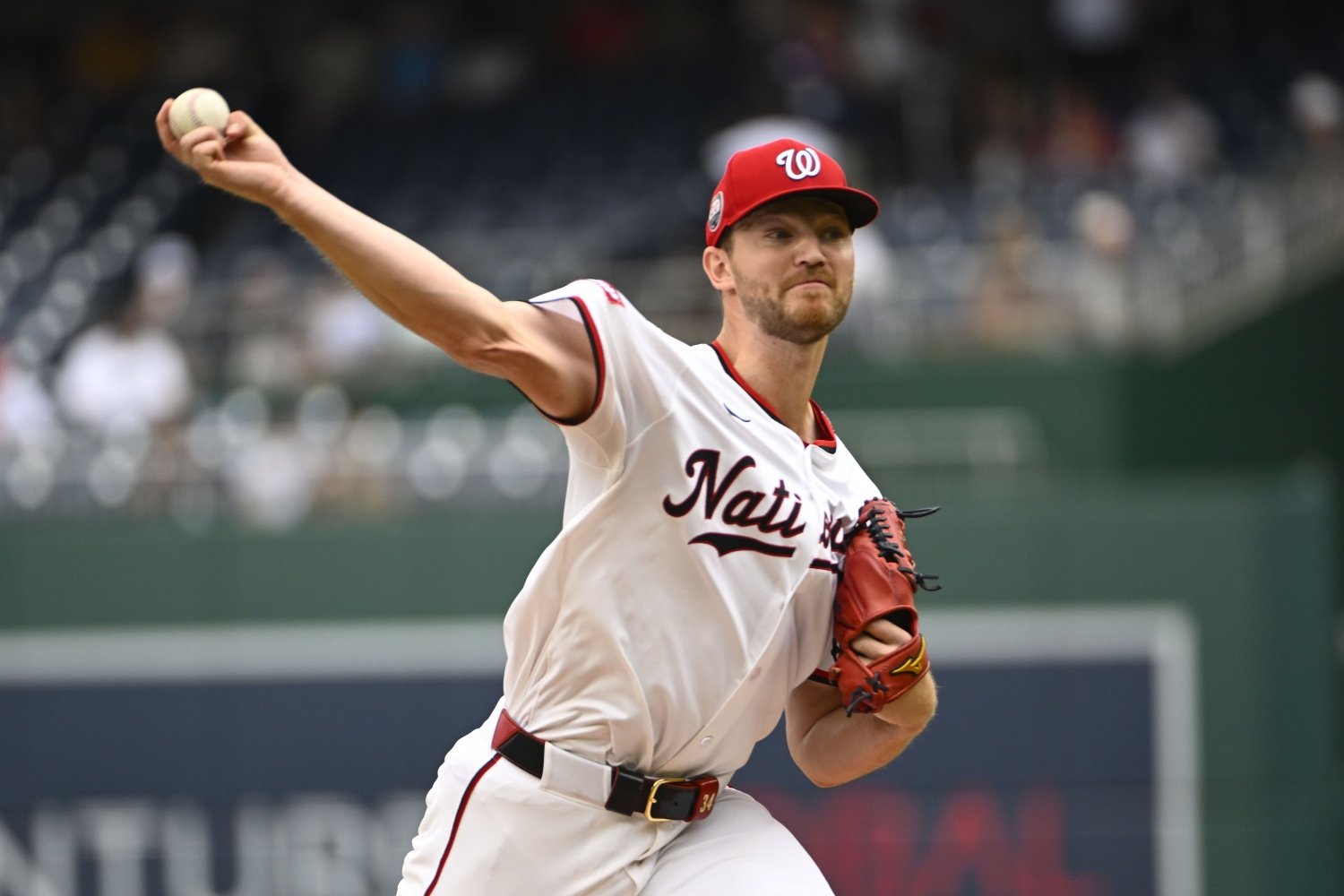 The Cubs had interest in Michael Soroka this offseason, before he signed a one-year deal with the Washington Nationals for $9 million. They first talked to the Nationals about trading for him over a month ago, in late June, around the time they also reached out to the Royals to discuss a possible Seth Lugo deal. Wednesday, in the shadow of the looming trade deadline, they got their man, sending outfielder Christian Franklin and shortstop Ronny Cruz to the Washington organization in exchange for Soroka. It's a pursuit born of a profile the Cubs very much like. Soroka moved from the starting rotation to the bullpen mid-season for the 2024 White Sox, right alongside then-teammate Chris Flexen. As he did, he mostly junked his pedestrian sinker and tapped into something new and important, by becoming a four-seam fastball-dominant arm. He also discovered new velocity, by "letting it eat" on every pitch. Over the winter, he also lowered his arm slot—something the Cubs would have implemented themselves, if he hadn't beaten them to it—and tapped into another new dynamic: his heater now enjoys superb spin mirroring with a breaking ball that has morphed from a slider into a uniquely big-breaking two-plane curve. As @Jason Ross wrote just 10 days ago, Soroka's results haven't truly dazzled this year, but the under-the-hood indices all have. He had a 4.87 ERA during his stint in the Beltway, but lousy defensive support explains a good chunk of that. According to Baseball Prospectus, his adjusted Deserved Run Average (DRA-, where 100 is average and lower is better) is 91, which is the second-best mark of his career, trailing only his All-Star season way back in 2019. Matthew Boyd's DRA- is 87. Soroka's figure is tied for 41st-best among the 127 pitchers with at least 70 innings pitched this season. Among those with whom he's tied: Spencer Strider, late-emerging trade candidate Robbie Ray and much-rumored Cubs target Merrill Kelly. In short, Soroka has been very good this season. He's striking out 25.4% of opposing batters and walking just 7.0% of them. That curveball may not be a game-breaker, but it's an out-getter. Though he's been limited by injury (he missed virtually all of April and the first week of May with a biceps strain) and has just 80 1/3 innings pitched in 16 starts, when Soroka has been on the mound, he's been solidly above-average. Why, then, was his price tag considerably lower than Kelly's? Why did the Cubs get a starting pitcher they've targeted for months at a discount, one day before the deadline? Well, that injury history is certainly a key factor. Soroka not only had that biceps issue in the spring, but missed a big chunk of last summer with a shoulder strain. He's torn his Achilles twice, which has kept the mileage on his arm relatively low, but he's not a durable pitcher, the way Kelly is. Another key reason why he wasn't in as much demand as you might have guessed, though, is that his stuff doesn't grade out as well as that of other (potentially or actually) available pitchers, going by industry-standard pitch modeling. Within that is the big, waving red flag (or is it?): Soroka's velocity is down significantly in his three starts since the All-Star break. This isn't a small change. Soroka's average heater is down almost 3 miles per hour since the break, which is especially weird, since he got eight days off between starts at that point. There'd been a downward trend even before that, so some teams were scared off by what always has a chance to be a sign of lurking or impending injury. In this case, though, the change seems to be a matter of mechanics. It's likely fixable, but just as importantly, it might not need to be fixed. Let's dig in. Here's Soroka inducing a whiff by Heliot Ramos on one of his big breaking balls, back in the first half. b0daQTBfVjBZQUhRPT1fQWxCVVhRRUZWUUFBREFNQVhnQUhCdzlVQUZoUVcxRUFBMUFDVmxjSENBTlZWZ0pT.mp4 Here's him doing the same thing to Manny Machado, just after the All-Star break. ek1MR29fVjBZQUhRPT1fQVFSVVhBSldCRlFBV2xvRUJ3QUhCbFZTQUZoVVcxTUFWRkpUQXdJTVYxWmNBRmRU.mp4 I don't know how well you can see it, but one very early mechanical difference begets another here. In the second video, Soroka strides slightly more open as he comes down the mound. If you isolate the frame when his front foot hits the dirt—what pitching gurus call 'foot strike'—in each clip, it's easier to spot. Firstly, getting even slightly more open will often sap a small but noticeable amount of zip from a pitcher's stuff, because one key ingredient in generating velocity is the torque created by delaying trunk rotation for as long as possible—the creation of hip-shoulder separation, whereby the lower half rotates slightly ahead of the upper half and the body is forced to move extremely fast to realign itself. Secondly, though, that slight difference in landing position means that instead of whipping around his landing leg's block, Soroka vaults over it slightly more. The stride that lands more open is slightly longer, so he ends up getting farther down the mound, but is falling off to the first-base side more. That leads to a slightly higher arm angle at release, as you can see if we isolate the frame in which he releases the ball in each clip. See how the lines I've superimposed there are shorter in the image on the right? That's not because Soroka is extending his arm less, but because he's releasing the ball farther in front of his own body lately than in the first half. Broadly speaking, a mechanical change like this is of neutral value. It can be good for some guys; it can be bad for others. It's only an unmitigated problem if it's a product of a pitcher being physically compromised in some way, forcing them to move differently to compensate. Although we're seeing less power from Soroka recently, there's no immediate reason to believe that he's thus compromised. The Cubs did approve his medicals, after all, and we know that that's no guarantee where they're concerned. The change in arm angle is real, and a trend that has been happening all year. He's still throwing from a lower slot than he used for most of 2024, but he's trended back up after coming way down to begin the year. That turns out to be fine for him; it accentuates the unique stuff he possesses. For one thing, it's given him an extra inch or two of carry on his four-seamer, which is a bit of a dead-zone offering and can benefit from the boost—especially at the top of the zone, which (unsurprisingly) he's had an easier time hitting with the pitch since changing his delivery slightly. Here's where his fastballs ended up in the first half. And here's where they've been in his three starts since the break: Despite the velocity loss, Soroka's outcomes on the fastball have significantly improved recently. He's hitting the high, arm-side sector of the zone (and just above it) more often, and that's where he gets whiffs and weak contact with that pitch. Throwing harder is turning out to be less important, for him, than locating better and achieving slightly improved movement. Speaking of improved movement, though, Soroka has also discovered a new and much more functional changeup: the kick-change. He's always been good at generating spin and bad at killing it, and that's the very problem the kick-change is meant to help pitchers like him solve. Before implementing the change to his change, Soroka was allowing a .380 wOBA to left-handed batters. Since then, it's .308. When you see just how drastic the difference in the depth on that changeup is, that makes sense. The Cubs believe in the kinds of changes Soroka has made. They're willing to bet on him despite the dip in velocity, not least because it looks like the kind that might be as salutary as it is limiting. They believe he can be a mid-rotation starter whenever he's able to take the mound, although he'll need to be lifted more proactively than starters with deeper arsenals or better stamina would be. They were able to get him at a price that doesn't reflect either the underlying performance he's already delivered or the upside they perceive, when you compare him to pitchers with whom he's similar. On the other hand, the main reasons why they were able to get him are that velocity dip and the injury history, and the potential linkage between the two makes it hard to buy too heavily into the idea that he's their top acquisition. One reason why they were willing to give up what they were for him is that he defuses the leverage of certain potential trade partners. Soroka is good enough that, even if the team still badly wants to add a stronger starting pitcher (as they probably do), they can credibly approach negotiations in a posture of willingness to let him be their main guy. It's harder for a team like the Marlins to hold their feet to the fire, because they got Soroka. That's one more small way in which he provides value. Plainly, though, the main focus for the team will be the more tangible, on-field value they expect to get from Soroka. He has an unusual breaking ball and a much-improved changeup. He should benefit from pitching in front of their defense, instead of that of his old team. He's inarguably better than Colin Rea, provided that he's healthy enough to pitch at his best, but he also has recent experience working in relief, so he doesn't foreclose any other options for the team. The risks associated with his health record are real, but taking them was a no-brainer.
 -
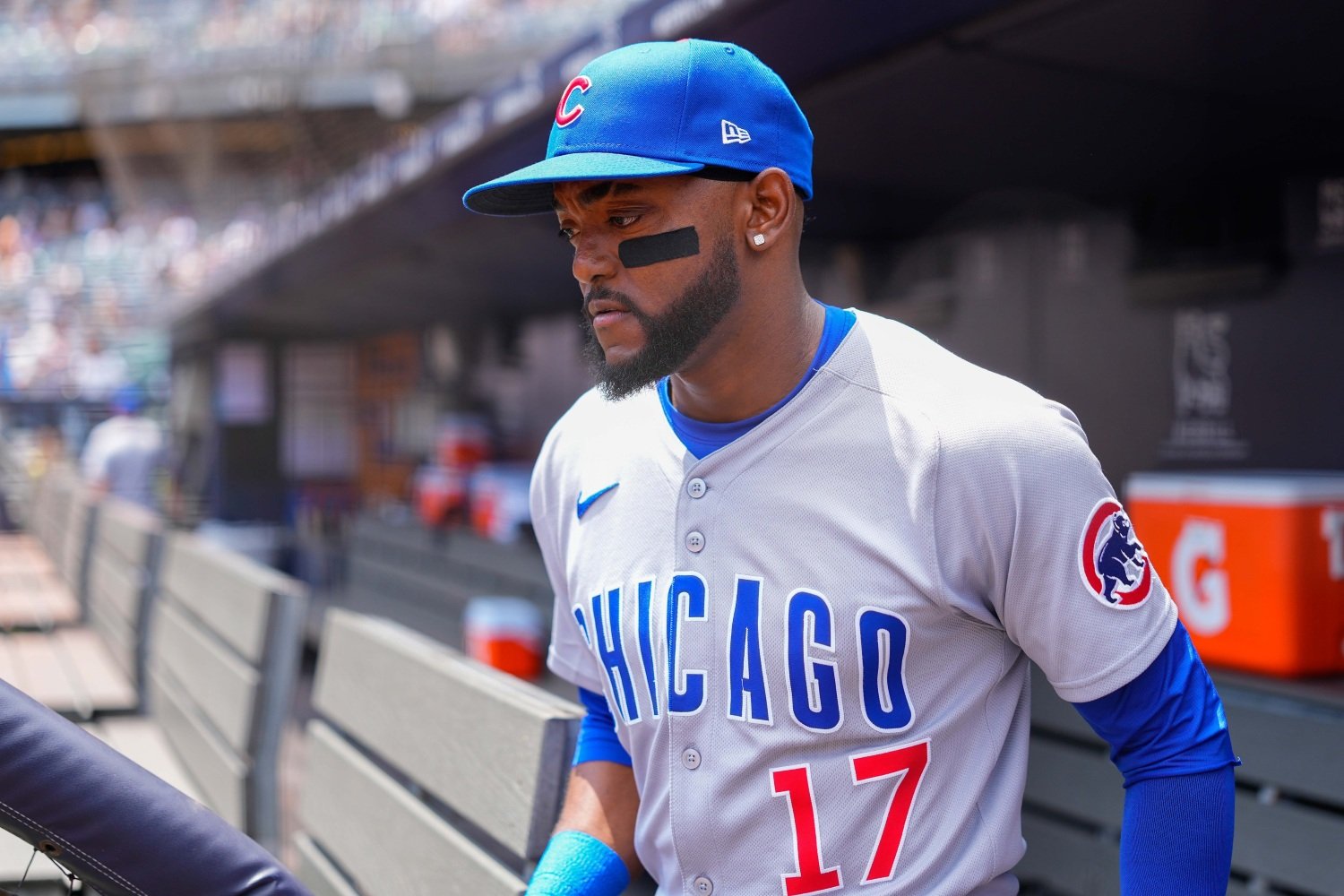 Well, after a confusing morning, we gained some clarity on the state of the Cubs' roster—for one game. Beyond today, this update will largely leave us all eager to hear what's next. According to beat writer Meghan Montemurro, the team has designated Vidal Bruján for assignment, and Moisés Ballesteros will join the active roster not in the stead of dinged-up outfielder Ian Happ, but at the expect of Bruján. This takes much of the mystery out of the choice to recall Ballesteros instead of Owen Caissie or Kevin Alcántara. Ballesteros is the natural option for the role that actually appears open here, which is basically a one-day cameo as the designated hitter. Instead of taking over for Happ on a long-term basis, Ballesteros will plug a hole for one day, and then the trade deadline will pass on the team's off day before they return to Wrigley Field on Friday. By the time they do, it feels safe to speculate that there will be another position player in their midst, other than Ballesteros. The timing of this little maneuver makes it look a lot like the team expects to permanently upgrade the bench spot Bruján has occupied until now. Could that be Eugenio Suárez, taking over at third base and pushing Matt Shaw into the bench mob? It's a long shot, but it's possible. It could also be Willi Castro of the Twins, or Ramón Urías of the Orioles, two others in whom the Cubs have expressed interest, sources say. One way or another, the team decided that it was time to move on from Bruján and bolster their mix of position players. It's unlikely that Ballesteros is the permanent plan to do that, because he's still very young and needs more consistent playing time than the roster is likely to offer. Thus, this feels like the prelude to a move that will round out what has been a slightly misshapen positional roster—and it ends up being much better news than a Happ injured list stint would have been, on multiple levels.
 -
Image courtesy of © Gregory Fisher-Imagn Images Well, after a confusing morning, we gained some clarity on the state of the Cubs' roster—for one game. Beyond today, this update will largely leave us all eager to hear what's next. According to beat writer Meghan Montemurro, the team has designated Vidal Bruján for assignment, and Moisés Ballesteros will join the active roster not in the stead of dinged-up outfielder Ian Happ, but at the expect of Bruján. This takes much of the mystery out of the choice to recall Ballesteros instead of Owen Caissie or Kevin Alcántara. Ballesteros is the natural option for the role that actually appears open here, which is basically a one-day cameo as the designated hitter. Instead of taking over for Happ on a long-term basis, Ballesteros will plug a hole for one day, and then the trade deadline will pass on the team's off day before they return to Wrigley Field on Friday. By the time they do, it feels safe to speculate that there will be another position player in their midst, other than Ballesteros. The timing of this little maneuver makes it look a lot like the team expects to permanently upgrade the bench spot Bruján has occupied until now. Could that be Eugenio Suárez, taking over at third base and pushing Matt Shaw into the bench mob? It's a long shot, but it's possible. It could also be Willi Castro of the Twins, or Ramón Urías of the Orioles, two others in whom the Cubs have expressed interest, sources say. One way or another, the team decided that it was time to move on from Bruján and bolster their mix of position players. It's unlikely that Ballesteros is the permanent plan to do that, because he's still very young and needs more consistent playing time than the roster is likely to offer. Thus, this feels like the prelude to a move that will round out what has been a slightly misshapen positional roster—and it ends up being much better news than a Happ injured list stint would have been, on multiple levels. View full article
-
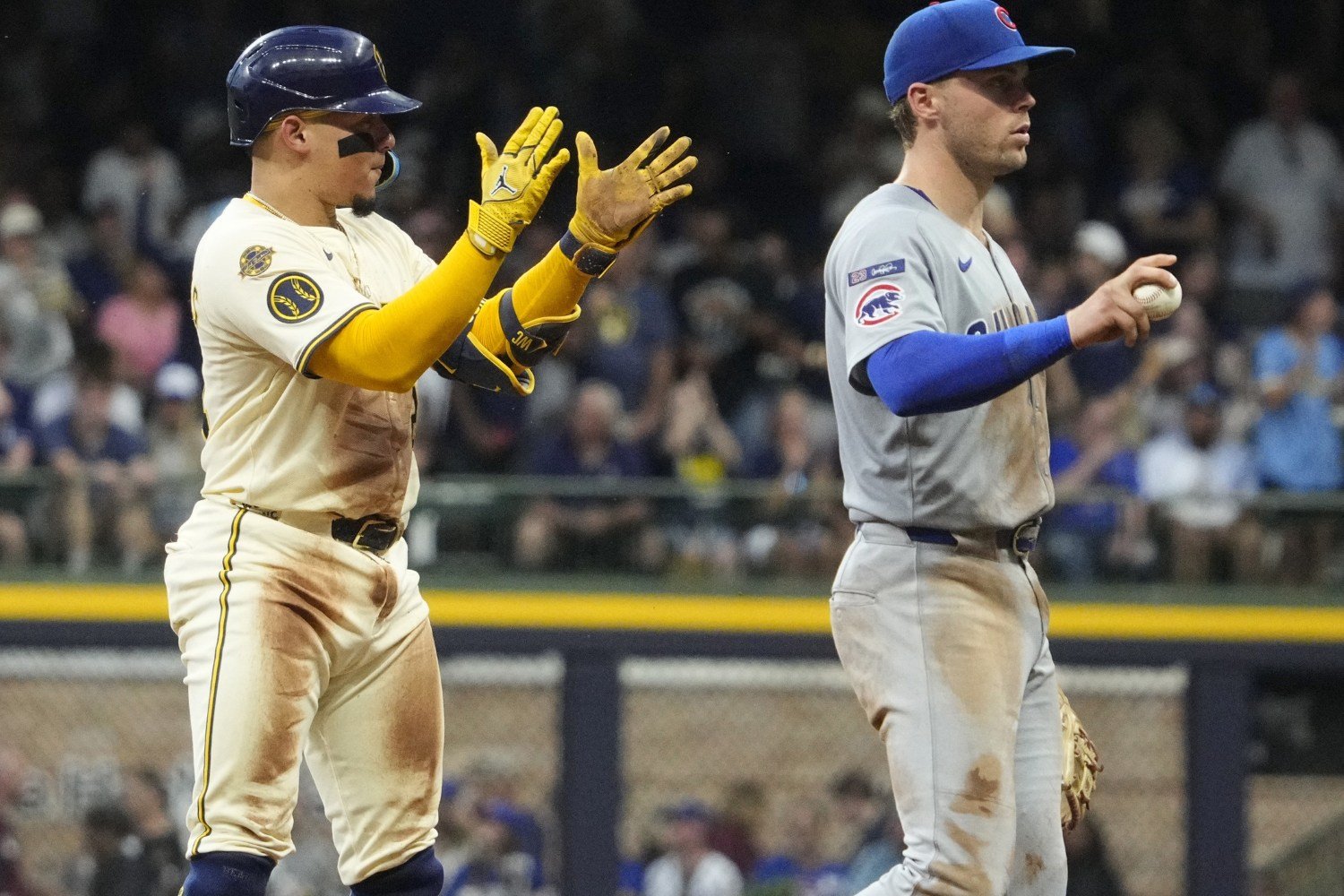 Just before Opening Day, I projected that the Cubs would win the 2025 NL Central, with 89 wins. I had the Brewers just one small step behind, at 88-74. At multiple points over the first half of the season, I made note of the fact that despite what appeared to be trends away from that projection, it still felt right to me. Now, a day before the MLB trade deadline and roughly two-thirds of the way through the season, the Cubs could go roughly .500 from here and finish with exactly that 89-73 record. I feel like I largely got them right this year. Justin Steele's injury was a major setback, but not a wholly unexpected one. Pete Crow-Armstrong's season has been a wonderful surprise, but there have been some oft-overlooked warts lurking there all along, and indeed, Crow-Armstrong has a .284 OBP in his last 40 games and is starting to have lapses in the field and on the bases. Many things have varied from any specific expectation, but they've averaged out, and looking forward, I see a team that will need to fight hard to get to 90 wins. That's fine; 90 wins was a reasonable goal for this season and will certainly get them into October, if they get there. What I had wrong was the Brewers. Their unexpected performances haven't evened out, and they're not going to. Between Isaac Collins, Jacob Misiorowski, Quinn Priester and Andrew Vaughn, Milwaukee is legitimately five or six wins better than I had projected in March. I expect them to win 94 games or so, which means that the Cubs have to keep the pedal down in order to keep pace—or resign themselves to playing in a Wild Card Series somewhere just after the end of the regular season, at best. Should that alter Jed Hoyer's approach over the next 29 hours or so? It's a bit hard to say. The Cubs extended the contract of their president of baseball operations earlier this week, in a head-scratching, cart-before-the-division-title move. Presumably, that wasn't a move designed to take pressure off Hoyer, so much as to redistribute that pressure in a healthier way throughout the organization. Either way, though, Hoyer now has job security. He faces the dilemma, therefore, of whether to trade from the long-term depth of the organization to make this team better by a significant enough margin to give them a real chance to beat out the Brewers over the final two months. It's been hard to feel good about the (no pun intended) prospects of going all-in over the last two nights. The Cubs didn't just lose to the Brewers; they got righteously whupped. None of the main candidates identified as their top trade targets would have materially changed what happened over the last two games; they were beaten by wide margins and in all facets. It doesn't feel like marginal upgrades will close the lacuna between the clubs. Feelings be damned, though, the Brewers will cool off at least slightly, sometime between now and the end of September. When they do, the Cubs have to be able to pounce, as Milwaukee has pounced by racing past the limping, .500ish Cubs over the last month and change. Right now, the Cubs roster lacks the depth and the dynamism to do that. They need better pitchers at the back end of their starting rotation and in middle relief. They need better bench options, to give their regular position players some needed rest and put the danger back in those bats, the lift back in their step. If Hoyer doesn't acquire multiple players with real and immediately visible utility to this roster by Thursday evening, his team will founder and fumfer their way to a quick October ouster—or worse. That won't necessarily mean the team failed. They're probably going to hit that 89-win benchmark I set for them four months ago; they might yet exceed it. It'll just mean they were overwhelmed by a team on a mission, doing things better than them. Since the Brewers are set up better for the future than are the Cubs, though, that would be extremely cold comfort. To get the Cubs out of the quagmire they've been stuck in since before he took over the job, Hoyer needs to get his arms extended and hit a home run at this trade deadline. Whether he even has the pop in his bat to do that when he barrels one up is not clear.
 -
Image courtesy of © Michael McLoone-Imagn Images Just before Opening Day, I projected that the Cubs would win the 2025 NL Central, with 89 wins. I had the Brewers just one small step behind, at 88-74. At multiple points over the first half of the season, I made note of the fact that despite what appeared to be trends away from that projection, it still felt right to me. Now, a day before the MLB trade deadline and roughly two-thirds of the way through the season, the Cubs could go roughly .500 from here and finish with exactly that 89-73 record. I feel like I largely got them right this year. Justin Steele's injury was a major setback, but not a wholly unexpected one. Pete Crow-Armstrong's season has been a wonderful surprise, but there have been some oft-overlooked warts lurking there all along, and indeed, Crow-Armstrong has a .284 OBP in his last 40 games and is starting to have lapses in the field and on the bases. Many things have varied from any specific expectation, but they've averaged out, and looking forward, I see a team that will need to fight hard to get to 90 wins. That's fine; 90 wins was a reasonable goal for this season and will certainly get them into October, if they get there. What I had wrong was the Brewers. Their unexpected performances haven't evened out, and they're not going to. Between Isaac Collins, Jacob Misiorowski, Quinn Priester and Andrew Vaughn, Milwaukee is legitimately five or six wins better than I had projected in March. I expect them to win 94 games or so, which means that the Cubs have to keep the pedal down in order to keep pace—or resign themselves to playing in a Wild Card Series somewhere just after the end of the regular season, at best. Should that alter Jed Hoyer's approach over the next 29 hours or so? It's a bit hard to say. The Cubs extended the contract of their president of baseball operations earlier this week, in a head-scratching, cart-before-the-division-title move. Presumably, that wasn't a move designed to take pressure off Hoyer, so much as to redistribute that pressure in a healthier way throughout the organization. Either way, though, Hoyer now has job security. He faces the dilemma, therefore, of whether to trade from the long-term depth of the organization to make this team better by a significant enough margin to give them a real chance to beat out the Brewers over the final two months. It's been hard to feel good about the (no pun intended) prospects of going all-in over the last two nights. The Cubs didn't just lose to the Brewers; they got righteously whupped. None of the main candidates identified as their top trade targets would have materially changed what happened over the last two games; they were beaten by wide margins and in all facets. It doesn't feel like marginal upgrades will close the lacuna between the clubs. Feelings be damned, though, the Brewers will cool off at least slightly, sometime between now and the end of September. When they do, the Cubs have to be able to pounce, as Milwaukee has pounced by racing past the limping, .500ish Cubs over the last month and change. Right now, the Cubs roster lacks the depth and the dynamism to do that. They need better pitchers at the back end of their starting rotation and in middle relief. They need better bench options, to give their regular position players some needed rest and put the danger back in those bats, the lift back in their step. If Hoyer doesn't acquire multiple players with real and immediately visible utility to this roster by Thursday evening, his team will founder and fumfer their way to a quick October ouster—or worse. That won't necessarily mean the team failed. They're probably going to hit that 89-win benchmark I set for them four months ago; they might yet exceed it. It'll just mean they were overwhelmed by a team on a mission, doing things better than them. Since the Brewers are set up better for the future than are the Cubs, though, that would be extremely cold comfort. To get the Cubs out of the quagmire they've been stuck in since before he took over the job, Hoyer needs to get his arms extended and hit a home run at this trade deadline. Whether he even has the pop in his bat to do that when he barrels one up is not clear. View full article
-
Image courtesy of © Michael McLoone-Imagn Images Baseball insider Bruce Levine, of 670 The Score, characterized the news as the Cubs having "dodged a bullet". Ian Happ had X-rays on the shin off which he fouled a ball late in the team's latest loss to the Brewers, which pushed them two games back of Milwaukee heading into Wednesday's series finale. Perhaps that's true, in a way, but we should widen the lens to complete the analogy: that one bullet they dodged appears to be just the latest in a hail of them, many of which have riddled the corpus of this team over the last few weeks. Despite not having a break in his lower leg, Happ will be placed on the 10-day injured list, according to reports that emerged overnight from ESPN's Jesse Rogers and the Marquee Sports Network. To replace him on the active roster, Chicago is calling up designated hitter (and quasi-catcher) Moisés Ballesteros for his second stint with the parent club. If you're hunting for silver linings, at least Ballesteros will get a chance to prove himself a bit more ready than he was early in the season. If his bat is everything the Cubs believe it is, they shouldn't miss Happ all that much during his time on the shelf. It's fascinating, though, that the team chose to go with Ballesteros, rather than either Owen Caissie or Kevin Alcántara. Caissie is the one with more experience at Triple-A Iowa, and whose bat has been hotter of late. Alcántara is the right-handed batter who could give Pete Crow-Armstrong some time off his feet, which Crow-Armstrong seems to need desperately. The best apparent explanation for electing to promote Ballesteros has to do with the team's plans at the trade deadline—only you can tell yourself as many different stories as you'd like about what shape that influence might take. Is the team avoiding bringing up Caissie or Alcántara, because they expect to move them? Are they allowing themselves a final, one-game showcase of Ballesteros, in whom some prospective trade partner is interested? Or is this a matter of pure logistics, wherein it made the most sense to bring up the only one of the three who has been in the majors already this year and they could well replace him with an outside acquisition by the weekend? The answer doesn't matter much, because it will reveal itself almost immediately. The trade deadline is just over 30 hours away. Ballesteros will be with the team for the final game of this road trip to Milwaukee. After that, what happens is anyone's guess. UPDATE: In a twist that makes sense (but which sure casts the official broadcast partner of the team in a lousy journalistic light), it now appears that the multiple overnight reports that Happ would go on the IL might be mistaken. Bruce Levine is at the park in Milwaukee, and his reporting suggests that ESPN and Marquee both jumped the gun by saying Ballesteros would take Happ's place on the roster. It's possible the team recalled Ballesteros on a just-in-case basis, to join the team's taxi squad, and that wires got crossed for that reason. It's also possible Happ's swelling came down better overnight than he or the team expected. Either way, this is good news—but a bit of a needless false start, fueled by a report from an official and team-sanctioned outlet. View full article
-
![More information about "Ian Happ Headed to Injured List: Why Are Chicago Cubs Calling Up Moises Ballesteros? [UPDATE: Now Wait a Minute.]"](//northsidebaseball.s3.us-east-1.amazonaws.com/monthly_2025_07/IaNhAPPMichaelMcLoone-ImagnImages.jpg.2f2470e058b22bfbdb3880cd5f07edbd.jpg) Baseball insider Bruce Levine, of 670 The Score, characterized the news as the Cubs having "dodged a bullet". Ian Happ had X-rays on the shin off which he fouled a ball late in the team's latest loss to the Brewers, which pushed them two games back of Milwaukee heading into Wednesday's series finale. Perhaps that's true, in a way, but we should widen the lens to complete the analogy: that one bullet they dodged appears to be just the latest in a hail of them, many of which have riddled the corpus of this team over the last few weeks. Despite not having a break in his lower leg, Happ will be placed on the 10-day injured list, according to reports that emerged overnight from ESPN's Jesse Rogers and the Marquee Sports Network. To replace him on the active roster, Chicago is calling up designated hitter (and quasi-catcher) Moisés Ballesteros for his second stint with the parent club. If you're hunting for silver linings, at least Ballesteros will get a chance to prove himself a bit more ready than he was early in the season. If his bat is everything the Cubs believe it is, they shouldn't miss Happ all that much during his time on the shelf. It's fascinating, though, that the team chose to go with Ballesteros, rather than either Owen Caissie or Kevin Alcántara. Caissie is the one with more experience at Triple-A Iowa, and whose bat has been hotter of late. Alcántara is the right-handed batter who could give Pete Crow-Armstrong some time off his feet, which Crow-Armstrong seems to need desperately. The best apparent explanation for electing to promote Ballesteros has to do with the team's plans at the trade deadline—only you can tell yourself as many different stories as you'd like about what shape that influence might take. Is the team avoiding bringing up Caissie or Alcántara, because they expect to move them? Are they allowing themselves a final, one-game showcase of Ballesteros, in whom some prospective trade partner is interested? Or is this a matter of pure logistics, wherein it made the most sense to bring up the only one of the three who has been in the majors already this year and they could well replace him with an outside acquisition by the weekend? The answer doesn't matter much, because it will reveal itself almost immediately. The trade deadline is just over 30 hours away. Ballesteros will be with the team for the final game of this road trip to Milwaukee. After that, what happens is anyone's guess. UPDATE: In a twist that makes sense (but which sure casts the official broadcast partner of the team in a lousy journalistic light), it now appears that the multiple overnight reports that Happ would go on the IL might be mistaken. Bruce Levine is at the park in Milwaukee, and his reporting suggests that ESPN and Marquee both jumped the gun by saying Ballesteros would take Happ's place on the roster. It's possible the team recalled Ballesteros on a just-in-case basis, to join the team's taxi squad, and that wires got crossed for that reason. It's also possible Happ's swelling came down better overnight than he or the team expected. Either way, this is good news—but a bit of a needless false start, fueled by a report from an official and team-sanctioned outlet.
Baseball insider Bruce Levine, of 670 The Score, characterized the news as the Cubs having "dodged a bullet". Ian Happ had X-rays on the shin off which he fouled a ball late in the team's latest loss to the Brewers, which pushed them two games back of Milwaukee heading into Wednesday's series finale. Perhaps that's true, in a way, but we should widen the lens to complete the analogy: that one bullet they dodged appears to be just the latest in a hail of them, many of which have riddled the corpus of this team over the last few weeks. Despite not having a break in his lower leg, Happ will be placed on the 10-day injured list, according to reports that emerged overnight from ESPN's Jesse Rogers and the Marquee Sports Network. To replace him on the active roster, Chicago is calling up designated hitter (and quasi-catcher) Moisés Ballesteros for his second stint with the parent club. If you're hunting for silver linings, at least Ballesteros will get a chance to prove himself a bit more ready than he was early in the season. If his bat is everything the Cubs believe it is, they shouldn't miss Happ all that much during his time on the shelf. It's fascinating, though, that the team chose to go with Ballesteros, rather than either Owen Caissie or Kevin Alcántara. Caissie is the one with more experience at Triple-A Iowa, and whose bat has been hotter of late. Alcántara is the right-handed batter who could give Pete Crow-Armstrong some time off his feet, which Crow-Armstrong seems to need desperately. The best apparent explanation for electing to promote Ballesteros has to do with the team's plans at the trade deadline—only you can tell yourself as many different stories as you'd like about what shape that influence might take. Is the team avoiding bringing up Caissie or Alcántara, because they expect to move them? Are they allowing themselves a final, one-game showcase of Ballesteros, in whom some prospective trade partner is interested? Or is this a matter of pure logistics, wherein it made the most sense to bring up the only one of the three who has been in the majors already this year and they could well replace him with an outside acquisition by the weekend? The answer doesn't matter much, because it will reveal itself almost immediately. The trade deadline is just over 30 hours away. Ballesteros will be with the team for the final game of this road trip to Milwaukee. After that, what happens is anyone's guess. UPDATE: In a twist that makes sense (but which sure casts the official broadcast partner of the team in a lousy journalistic light), it now appears that the multiple overnight reports that Happ would go on the IL might be mistaken. Bruce Levine is at the park in Milwaukee, and his reporting suggests that ESPN and Marquee both jumped the gun by saying Ballesteros would take Happ's place on the roster. It's possible the team recalled Ballesteros on a just-in-case basis, to join the team's taxi squad, and that wires got crossed for that reason. It's also possible Happ's swelling came down better overnight than he or the team expected. Either way, this is good news—but a bit of a needless false start, fueled by a report from an official and team-sanctioned outlet. -
Image courtesy of © Jeff Curry-Imagn Images The expanded playoff format has altered the landscape of Major League Baseball enormously over the last few years. It shows up most, perhaps, each July, when teams flirting with .500 behave not as frustrated sellers, but as tentative buyers—and sometimes, when teams who looked like sellers even at the All-Star break pivot toward buying at the last moment. The Cubs did that as recently as 2023. This year, it's happening again. The Royals are no longer sellers, so cross the several interesting players they might otherwise have shopped this week off the list. The Rangers are in limbo, but it seems clear that (at least) they will hold onto their top two, expensive starting pitchers. Meanwhile, the streaky Rays have made a pair of moves that makes it clear they'll both buy and sell. Who's left on the market? And what possibilities have gone by the boards for the Cubs? Let's revisit the list I first made last week, of the 105 best likely trade candidates, to see who still belongs there and who doesn't. Joe Ryan, RHP, Twins: If you want to hold onto a sliver of hope, I won't stand in your way, but the Twins seem disinclined to deal Ryan, and sources say the few teams who have even been bold enough to feel them out were gobsmacked by the price tag. He's unlikely to be dealt. Eugenio Suárez, 3B, Diamondbacks: Between the scare of a fastball that hit Suárez in the finger Monday night and the fact that Matt Shaw has come out of the break hitting like Suárez with a better glove, it seems very unlikely that the Cubs will pull the trigger on this kind of move now. Opinions on whether he'll be dealt at all are mixed, but I would guess he will be. It's just not likely to be to Chicago. Dylan Cease, RHP, Padres: The rumors of this flared and then went quiet, but behind the scenes, many still believe San Diego will do something bold—and yes, that could include trading Cease. The Cubs' position in a market for him looks favorable, but whether it makes sense for them is likely to depend on what else Jed Hoyer is able to do. Emmanuel Clase, RHP, Guardians: There's a decent chance Clase never pitches in the majors again. He's on administrative leave at least until the end of August, as the league investigates his ties to suspicious betting activity on Guardians games. Obviously, count him out. Jhoan Duran, RHP, Twins: With Clase off the market, Duran has become even more popular. The Cubs remain very interested, but the price remains very high. Sources with knowledge of the team's conversations are skeptical that Hoyer will make an exception to his usual value calculations just to shore up the bullpen; the team would strongly prefer to get a starter. Edward Cabrera, RHP, Marlins: If this list were predicated on balancing the likelihood of the Cubs landing a player with the impact they would have, Cabrera would be No. 1. He's not an ace, but he's trending in that direction, and the Cubs have told multiple other teams that their interest in those teams' available arms will have to wait until they can ascertain whether or not Cabrera will be available at a price they find palatable. They consider that a real possibility right now. Miami had a contingency starter on hand in St. Louis Monday, in case a deal got done before Cabrera took the mound, so they think it's at least plausible, too. Jacob deGrom, RHP, Rangers Nathan Eovaldi, RHP, Rangers: The Rangers might still lightly sell. They're in the thick of the American League Wild Card race, but not in a great position within it. At this point, though, they're obviously not interested in trading deGrom or Eovaldi. MacKenzie Gore, LHP, Nationals: Still an option, but a far-fetched one. The Nationals have set a higher asking price for Gore than Miami's for Cabrera, despite Cabrera being under control one year longer—and Washington wants either Shaw or Cade Horton, rather than being content with top prospects in the minors. Unless that changes, no deal will materialize. Jarren Duran, OF, Red Sox Seth Lugo, RHP, Royals: Lugo was on the market only briefly, at the beginning of this month. Once the Royals felt out what was realistic (and on what timeline suitors, including the Cubs, were interested in doing a deal), they circled back to Lugo, who agreed to a two-year contract extension instead. David Bednar, RHP, Pirates: Very much still in play. The Cubs would rather land Duran, all things equal, but Pittsburgh's asking price is lower than Minnesota's, sources say. Thus, there's a chance Hoyer pivots. Here, too, much depends on the team's pursuit of a starter. Ryan O’Hearn, 1B/OF, Orioles Merrill Kelly, RHP, Diamondbacks: The Cubs would really prefer a controllable starter. If they can't find one at a semi-reasonable price, though, Kelly tops their wish list among impending free agents. Kris Bubic, LHP, Royals: A rotator cuff strain is likely to end Bubic's season. Consider it a bullet dodged; the Cubs were interested in him over the All-Star break. Sandy Alcantara, RHP, Marlins: Alcántara seems committed to the idea of being traded, and sources familiar with the Marlins' plans say they do feel some payroll pressure to move him. I don't think the offers they're actually going to hear will clear Peter Bendix's bar, though. I'm not crossing this one off, but consider it a long shot. Jesús Sánchez, OF, Marlins Cade Smith, RHP, Guardians: Suddenly, this former closer of the future is very much the closer of Cleveland's present. They might decide to pivot into a rebuild, given the atrocious vibes of having two players suspended (if not banned) amid gambling questions, but it seems unlikely that they trade Smith this summer. Robert Suarez, RHP, Padres: Again, the Padres have to get creative, and everyone within the industry expects them to do so. Trading Suarez would be a natural way to do so, and he's a good fit for the Cubs' predilections when it comes to high-end relievers. Given his contract structure, though, the price would have to be quite low to get Hoyer interested. Ryan Helsley, RHP, Cardinals Griffin Jax, RHP, Twins: My sense is that Duran is more in demand, and that the Twins are more likely to trade him. Jax can stay on the radar, and would be a more intriguing long-term play, because he has a starter's arsenal and some glorious peripheral metrics. Just don't count on him. Willi Castro, UTIL, Twins: While Castro could certainly help this team in a number of ways, there are lots of other suitors in the mix for him. Other teams have clearer roles waiting for him, and sources familiar with the Twins' thinking believe the Cubs will be outbid. Drew Rasmussen, RHP, Rays: Tampa's recent stumble, their road-heavy late schedule, and their minor-league home make it easy to understand why they traded Danny Jansen to the Brewers Monday. They might continue a buy-and-sell approach by being willing to move Rasmussen, and the Cubs are one team who would be very interested if they do. Taylor Ward, OF, Angels: Like Willi Castro, only more so. Ward is likely to be dealt, one source said. I very much doubt that it will be to the Cubs. Zac Gallen, RHP, Diamondbacks: It's been a tough year—in fact, a tough year and a half—for Gallen. He's the rental Arizona is most likely to retain, if their asking price isn't met, and the Cubs are unlikely to be the team to meet that price. Pete Fairbanks, RHP, Rays: Like Rasmussen, only more so. The Rays will be willing to move Fairbanks, no matter what they contend to the contrary. The question is whether the Cubs are willing to give up quite a bit for a pitcher who's not quite at the level of dominance he reached a few years ago. Harrison Bader, OF, Twins: The fit is so, so good. The Cubs need someone who can platoon with Pete Crow-Armstrong. They need someone who can spell both Ian Happ and Kyle Tucker. But Bader is almost certainly bound for some team who has more playing time open for him. Carlos Santana, 1B/DH, Guardians Sonny Gray, RHP, Cardinals Ryan Jeffers, C, Twins Yandy Díaz, 1B, Rays Mitch Keller, RHP, Pirates: Note how much farther down this list (the criterion for which, as a reminder, is how much a player can contribute to the effort of winning in 2025) Keller is than Cabrera or Gore. This is why the Cubs are interested in him, but unwilling to break the bank—and why their previous efforts to acquire him fell apart earlier this summer. Ryan McMahon, 3B, Rockies: McMahon is a Yankee now. Charlie Morton, RHP, Orioles: Morton will certainly be dealt, and probably not for a huge haul. The Cubs have at least felt out Baltimore about a package deal involving both Morton and Seranthony Dominguez. Such things are never especially likely, but it's possible, and could be a great fit. Trevor Larnach, OF, Twins Cedric Mullins, OF, Orioles Luis Severino, RHP, Athletics: Severino really is a solid potential pickup, with the ability of the Athletics to demand much of anything for him limited by both the size of the contract they gave him this winter and his obvious unhappiness as part of that team. The question is how much money Hoyer could get the A's to absorb, without sending the prospect price too high for the team's tastes. Aaron Bummer, LHP, Team from Suburban Atlanta: I've heard that Alex Anthopoulos would move Bummer this week, but he's under contract for 2026, so it would be a steeper price than some of the other available lefties have. His surface-level numbers are a bit underwhelming this year, but Bummer is still a terrific ground-ball guy and he limits walks well. He'd thrive in front of the Chicago infield. Ramón Laureano, OF, Orioles: [I'm leaving this note, which appeared in the first version of this list last week, intact. Nothing important has changed.] Righty bats who can back up Ian Happ, Kyle Tucker and Seiya Suzuki in case of injuries or (in Happ's case) shaky showings are a little-discussed profile the team is looking at. Like Bader, though, Laureano likely ends up somewhere else. Kyle Freeland, LHP, Rockies: The Rockies are getting inquiries on Freeland, including from the Cubs—who love themselves a lefty starter. The profile is intriguing, though only if they can effectively land him as a buy-low opportunity. Zack Littell, RHP, Rays: The odds of Littell being dealt are steadily rising, and he'd certainly be an upgrade over the existing fluidity at the back end of the starting rotation. That said, the team is only likely to trade for one starting pitcher, and Littell is a bit below the bar you'd like that one acquisition to clear. Adrian Houser, RHP, White Sox: Like Littell, only more so. Houser would be such a low-wattage addition that he doesn't quite move the needle the way fans might rightfully hope that the team's big move will. If Hoyer does land someone like Duran to anchor the bullpen, perhaps settling for a starter in the Houser range would be more palatable. Danny Coulombe, LHP, Twins: Coulombe is a really, really good lefty reliever, with plenty of ways to get both lefty and righty batters out. He's only owed about $1 million for the balance of this year. The Cubs do want to shore up their left-handed relief, with Drew Pomeranz's magic quickly wearing off, so this is a possibility, but the Twins are in position to ask for a solid return. John Schreiber, RHP, Royals: The Royals' hot streak out of the break and the extension they were able to strike with Lugo has largely taken them out of the seller column. That's a shame, because Schreiber really would give the team needed flexibility as an optionable reliever at a higher level of reliability than most guys on whom you'd actually spend an option. Anthony Bender, RHP, Marlins: One of the hotter names on the rental setup arm market, Bender could stabilize the bridge from the team's starters to Daniel Palencia at the back end of the game. Nathaniel Lowe, 1B, Nationals Carlos Estévez, RHP, Royals: Another Royal off the list. Dennis Santana, RHP, Pirates: [As with Laureano, I'm leaving this comment as-is. Santana is a good target for the Cubs, although not an overwhelmingly likely one.] Though less famous and less dominant than Bednar, Santana could be a tremendous pickup from Pittsburgh. He has a plus slider, and has figured out how to really fill up the zone over the last year and a half. He's under team control through 2026. Brock Burke, LHP, Angels Adolis García, OF, Rangers Michael Soroka, RHP, Nationals: He's farther down this list than Houser or Littell, but Soroka might be higher on the Cubs' version of the same document. They like his stuff and the potential fit for him in their rotation. If they do make a splash in some other demographic of the roster, and if the Nationals are willing to eat a bit of the $3 million or so he's owed the rest of the way, this one could come together quickly. Luis Robert Jr., OF, White Sox Phil Maton, RHP, Cardinals Andrew Kittredge, RHP, Orioles: Chicago would rather have Dominguez, but Kittredge is likely to come cheaper, which might make the difference—especially if Hoyer lands the controllable, higher-end starter he craves. Yoán Moncada, 3B, Angels Amed Rosario, IF, Nationals: He, too, is a Yankee now. JoJo Romero, LHP, Cardinals Gregory Soto, LHP, Orioles: Another Soto lost to the Mets. Jose Quintana, LHP, Brewers: No, the Brewers and the Cubs aren't getting together on a deal that would help the Cubs fix the back end of their rotation. And no, the Cubs and Quintana reuniting probably wouldn't be welcome news to most fans, anyway. Nestor Cortes, LHP, Brewers Taj Bradley, RHP, Rays: The Cubs still like Bradley. The Rays still seem not to. Tampa's vaunted pitching philosophy is not perfect, and the Cubs do feel they could unlock Bradley a bit if they can get ahold of him. The price tag is the question mark. Pierce Johnson, RHP, That Team Near Atlanta Jeffrey Springs, LHP, Athletics Dane Myers, OF, Marlins Randal Grichuk, OF, Diamondbacks: The Royals pounced on Grichuk, as part of their pivot into a cautious buying posture. Brock Stewart, RHP, Twins: Don't overlook this possibility. Stewart is really good. He's akin to Santana, of the Pirates: blooming late, and under team control through next season. Kevin Ginkel, RHP, Diamondbacks: [Another held-over comment:] If Arizona is holding out fiercely for a player like Owen Caissie in talks for either Suárez or Kelly, don't be shocked if the Cubs finagle Ginkel as a second piece coming their way. Don't be fooled by his hideous ERA this year, either. Ginkel still has a nasty slider and the skills to be a late-inning difference-maker. Sam Haggerty, OF, Rangers Seranthony Dominguez, RHP, Orioles: Dominguez's sheer stuff is filthy. His bugaboo, when it rears up, is a lack of control, and that's plagued him this year. Nonetheless, the Cubs like him, and if he can just hit the zone occasionally, he becomes a lethal weapon in high-leverage spots. JP Sears, LHP, Athletics Kyle Finnegan, RHP, Nationals: [Nothing new here, either. All of the following still stands.] Why the Cubs didn't just sign Finnegan for around $7 million this winter, I'm really not sure. They liked him last July; they liked him this winter; they have circled back to Washington about him this July. He can be maddening to watch, with a hard but not bat-missing fastball and a splitter that makes many save opportunities long sweats, but he'd be a solid addition. Isiah Kiner-Falefa, SS, Pirates Jake Cronenworth, IF, Padres Wandy Peralta, LHP, Padres Tommy Pham, OF, Pirates Zach Eflin, RHP, Orioles Raisel Iglesias, RHP, Rich Men South of Richmond: Chicago is after Iglesias, but they've gone as far as they're willing to, and Atlanta will not budge. I suspect that that's not going to change, and thus, that no deal will come to fruition. He's not an arm for whom Hoyer is willing to overextend himself. Jorge Soler, DH/RF, Angels: An injury took Soler off the market. Josh Bell, 1B, Nationals Royce Lewis, 3B, Twins Michael A. Taylor, OF, White Sox: [Nothing new] Another great clubhouse guy who'd also be a great defensive substitution or all-purpose backup to Pete Crow-Armstrong and company. Caleb Ferguson, LHP, Pirates Mike Tauchman, OF, White Sox Chris Paddack, RHP, Twins: Minnesota dealt Paddack to Detroit Monday. Tyler Kinley, RHP, Rockies: The Cubs have been in touch with the Rockies about both Kinley and fellow (more controllable) reliever Jake Bird. Kinley is a slider monster at this stage of his career, and would just be one more arm in the mix, but he's good enough to stick in the thin Chicago pen. Kenley Jansen, RHP, Angels Ke’Bryan Hayes, 3B, Pirates Miguel Andújar, 3B/DH, Athletics: [Same as it was five days ago] His glove and legs are too leaden to make acquiring him to play in lieu of Matt Shaw viable. If the team wants just a bit more offensive depth from the right side, though, he could replace Vidal Bruján without anyone really noticing. Ramón Urías, 3B, Orioles Luis Rengifo, IF, Angels Austin Slater, OF, White Sox Enyel De Los Santos, RHP, The Team By the Highway: [Still true] Going back two years, De Los Santos has popped up on the Cubs' radar multiple times. He's a very low-grade target, but if he shakes loose just when they have an opening, they might well decide to scoop him up this time. Luis Urías, 2B, Athletics Christian Vázquez, C, Twins Ty France, 1B, Twins Andrew Chafin, LHP, Nationals Aaron Civale, RHP, White Sox Nolan Arenado, 3B, Cardinals Andrew Heaney, LHP, Pirates Jakob Junis, RHP, Guardians Kyle Hendricks, RHP, Angels Sean Newcomb, LHP, Athletics Tomoyuki Sugano, RHP, Orioles Luis García, RHP, Nationals Tyler Anderson, LHP, Angels I've crossed 16 names off this list since Thursday, and plenty of them remain extreme longshots. Still, it should be clear that the Cubs have a large number of possible ways left to improve their squad before Thursday evening. Some of the odds have shifted in each direction, and they'll do so again in the next several hours. For now, though, few things the team was ever very interested in doing have ceased to be possible. View full article
-
- 1
-

-
- 2025 trade deadline
- jhoan duran
- (and 5 more)
-
 The expanded playoff format has altered the landscape of Major League Baseball enormously over the last few years. It shows up most, perhaps, each July, when teams flirting with .500 behave not as frustrated sellers, but as tentative buyers—and sometimes, when teams who looked like sellers even at the All-Star break pivot toward buying at the last moment. The Cubs did that as recently as 2023. This year, it's happening again. The Royals are no longer sellers, so cross the several interesting players they might otherwise have shopped this week off the list. The Rangers are in limbo, but it seems clear that (at least) they will hold onto their top two, expensive starting pitchers. Meanwhile, the streaky Rays have made a pair of moves that makes it clear they'll both buy and sell. Who's left on the market? And what possibilities have gone by the boards for the Cubs? Let's revisit the list I first made last week, of the 105 best likely trade candidates, to see who still belongs there and who doesn't. Joe Ryan, RHP, Twins: If you want to hold onto a sliver of hope, I won't stand in your way, but the Twins seem disinclined to deal Ryan, and sources say the few teams who have even been bold enough to feel them out were gobsmacked by the price tag. He's unlikely to be dealt. Eugenio Suárez, 3B, Diamondbacks: Between the scare of a fastball that hit Suárez in the finger Monday night and the fact that Matt Shaw has come out of the break hitting like Suárez with a better glove, it seems very unlikely that the Cubs will pull the trigger on this kind of move now. Opinions on whether he'll be dealt at all are mixed, but I would guess he will be. It's just not likely to be to Chicago. Dylan Cease, RHP, Padres: The rumors of this flared and then went quiet, but behind the scenes, many still believe San Diego will do something bold—and yes, that could include trading Cease. The Cubs' position in a market for him looks favorable, but whether it makes sense for them is likely to depend on what else Jed Hoyer is able to do. Emmanuel Clase, RHP, Guardians: There's a decent chance Clase never pitches in the majors again. He's on administrative leave at least until the end of August, as the league investigates his ties to suspicious betting activity on Guardians games. Obviously, count him out. Jhoan Duran, RHP, Twins: With Clase off the market, Duran has become even more popular. The Cubs remain very interested, but the price remains very high. Sources with knowledge of the team's conversations are skeptical that Hoyer will make an exception to his usual value calculations just to shore up the bullpen; the team would strongly prefer to get a starter. Edward Cabrera, RHP, Marlins: If this list were predicated on balancing the likelihood of the Cubs landing a player with the impact they would have, Cabrera would be No. 1. He's not an ace, but he's trending in that direction, and the Cubs have told multiple other teams that their interest in those teams' available arms will have to wait until they can ascertain whether or not Cabrera will be available at a price they find palatable. They consider that a real possibility right now. Miami had a contingency starter on hand in St. Louis Monday, in case a deal got done before Cabrera took the mound, so they think it's at least plausible, too. Jacob deGrom, RHP, Rangers Nathan Eovaldi, RHP, Rangers: The Rangers might still lightly sell. They're in the thick of the American League Wild Card race, but not in a great position within it. At this point, though, they're obviously not interested in trading deGrom or Eovaldi. MacKenzie Gore, LHP, Nationals: Still an option, but a far-fetched one. The Nationals have set a higher asking price for Gore than Miami's for Cabrera, despite Cabrera being under control one year longer—and Washington wants either Shaw or Cade Horton, rather than being content with top prospects in the minors. Unless that changes, no deal will materialize. Jarren Duran, OF, Red Sox Seth Lugo, RHP, Royals: Lugo was on the market only briefly, at the beginning of this month. Once the Royals felt out what was realistic (and on what timeline suitors, including the Cubs, were interested in doing a deal), they circled back to Lugo, who agreed to a two-year contract extension instead. David Bednar, RHP, Pirates: Very much still in play. The Cubs would rather land Duran, all things equal, but Pittsburgh's asking price is lower than Minnesota's, sources say. Thus, there's a chance Hoyer pivots. Here, too, much depends on the team's pursuit of a starter. Ryan O’Hearn, 1B/OF, Orioles Merrill Kelly, RHP, Diamondbacks: The Cubs would really prefer a controllable starter. If they can't find one at a semi-reasonable price, though, Kelly tops their wish list among impending free agents. Kris Bubic, LHP, Royals: A rotator cuff strain is likely to end Bubic's season. Consider it a bullet dodged; the Cubs were interested in him over the All-Star break. Sandy Alcantara, RHP, Marlins: Alcántara seems committed to the idea of being traded, and sources familiar with the Marlins' plans say they do feel some payroll pressure to move him. I don't think the offers they're actually going to hear will clear Peter Bendix's bar, though. I'm not crossing this one off, but consider it a long shot. Jesús Sánchez, OF, Marlins Cade Smith, RHP, Guardians: Suddenly, this former closer of the future is very much the closer of Cleveland's present. They might decide to pivot into a rebuild, given the atrocious vibes of having two players suspended (if not banned) amid gambling questions, but it seems unlikely that they trade Smith this summer. Robert Suarez, RHP, Padres: Again, the Padres have to get creative, and everyone within the industry expects them to do so. Trading Suarez would be a natural way to do so, and he's a good fit for the Cubs' predilections when it comes to high-end relievers. Given his contract structure, though, the price would have to be quite low to get Hoyer interested. Ryan Helsley, RHP, Cardinals Griffin Jax, RHP, Twins: My sense is that Duran is more in demand, and that the Twins are more likely to trade him. Jax can stay on the radar, and would be a more intriguing long-term play, because he has a starter's arsenal and some glorious peripheral metrics. Just don't count on him. Willi Castro, UTIL, Twins: While Castro could certainly help this team in a number of ways, there are lots of other suitors in the mix for him. Other teams have clearer roles waiting for him, and sources familiar with the Twins' thinking believe the Cubs will be outbid. Drew Rasmussen, RHP, Rays: Tampa's recent stumble, their road-heavy late schedule, and their minor-league home make it easy to understand why they traded Danny Jansen to the Brewers Monday. They might continue a buy-and-sell approach by being willing to move Rasmussen, and the Cubs are one team who would be very interested if they do. Taylor Ward, OF, Angels: Like Willi Castro, only more so. Ward is likely to be dealt, one source said. I very much doubt that it will be to the Cubs. Zac Gallen, RHP, Diamondbacks: It's been a tough year—in fact, a tough year and a half—for Gallen. He's the rental Arizona is most likely to retain, if their asking price isn't met, and the Cubs are unlikely to be the team to meet that price. Pete Fairbanks, RHP, Rays: Like Rasmussen, only more so. The Rays will be willing to move Fairbanks, no matter what they contend to the contrary. The question is whether the Cubs are willing to give up quite a bit for a pitcher who's not quite at the level of dominance he reached a few years ago. Harrison Bader, OF, Twins: The fit is so, so good. The Cubs need someone who can platoon with Pete Crow-Armstrong. They need someone who can spell both Ian Happ and Kyle Tucker. But Bader is almost certainly bound for some team who has more playing time open for him. Carlos Santana, 1B/DH, Guardians Sonny Gray, RHP, Cardinals Ryan Jeffers, C, Twins Yandy Díaz, 1B, Rays Mitch Keller, RHP, Pirates: Note how much farther down this list (the criterion for which, as a reminder, is how much a player can contribute to the effort of winning in 2025) Keller is than Cabrera or Gore. This is why the Cubs are interested in him, but unwilling to break the bank—and why their previous efforts to acquire him fell apart earlier this summer. Ryan McMahon, 3B, Rockies: McMahon is a Yankee now. Charlie Morton, RHP, Orioles: Morton will certainly be dealt, and probably not for a huge haul. The Cubs have at least felt out Baltimore about a package deal involving both Morton and Seranthony Dominguez. Such things are never especially likely, but it's possible, and could be a great fit. Trevor Larnach, OF, Twins Cedric Mullins, OF, Orioles Luis Severino, RHP, Athletics: Severino really is a solid potential pickup, with the ability of the Athletics to demand much of anything for him limited by both the size of the contract they gave him this winter and his obvious unhappiness as part of that team. The question is how much money Hoyer could get the A's to absorb, without sending the prospect price too high for the team's tastes. Aaron Bummer, LHP, Team from Suburban Atlanta: I've heard that Alex Anthopoulos would move Bummer this week, but he's under contract for 2026, so it would be a steeper price than some of the other available lefties have. His surface-level numbers are a bit underwhelming this year, but Bummer is still a terrific ground-ball guy and he limits walks well. He'd thrive in front of the Chicago infield. Ramón Laureano, OF, Orioles: [I'm leaving this note, which appeared in the first version of this list last week, intact. Nothing important has changed.] Righty bats who can back up Ian Happ, Kyle Tucker and Seiya Suzuki in case of injuries or (in Happ's case) shaky showings are a little-discussed profile the team is looking at. Like Bader, though, Laureano likely ends up somewhere else. Kyle Freeland, LHP, Rockies: The Rockies are getting inquiries on Freeland, including from the Cubs—who love themselves a lefty starter. The profile is intriguing, though only if they can effectively land him as a buy-low opportunity. Zack Littell, RHP, Rays: The odds of Littell being dealt are steadily rising, and he'd certainly be an upgrade over the existing fluidity at the back end of the starting rotation. That said, the team is only likely to trade for one starting pitcher, and Littell is a bit below the bar you'd like that one acquisition to clear. Adrian Houser, RHP, White Sox: Like Littell, only more so. Houser would be such a low-wattage addition that he doesn't quite move the needle the way fans might rightfully hope that the team's big move will. If Hoyer does land someone like Duran to anchor the bullpen, perhaps settling for a starter in the Houser range would be more palatable. Danny Coulombe, LHP, Twins: Coulombe is a really, really good lefty reliever, with plenty of ways to get both lefty and righty batters out. He's only owed about $1 million for the balance of this year. The Cubs do want to shore up their left-handed relief, with Drew Pomeranz's magic quickly wearing off, so this is a possibility, but the Twins are in position to ask for a solid return. John Schreiber, RHP, Royals: The Royals' hot streak out of the break and the extension they were able to strike with Lugo has largely taken them out of the seller column. That's a shame, because Schreiber really would give the team needed flexibility as an optionable reliever at a higher level of reliability than most guys on whom you'd actually spend an option. Anthony Bender, RHP, Marlins: One of the hotter names on the rental setup arm market, Bender could stabilize the bridge from the team's starters to Daniel Palencia at the back end of the game. Nathaniel Lowe, 1B, Nationals Carlos Estévez, RHP, Royals: Another Royal off the list. Dennis Santana, RHP, Pirates: [As with Laureano, I'm leaving this comment as-is. Santana is a good target for the Cubs, although not an overwhelmingly likely one.] Though less famous and less dominant than Bednar, Santana could be a tremendous pickup from Pittsburgh. He has a plus slider, and has figured out how to really fill up the zone over the last year and a half. He's under team control through 2026. Brock Burke, LHP, Angels Adolis García, OF, Rangers Michael Soroka, RHP, Nationals: He's farther down this list than Houser or Littell, but Soroka might be higher on the Cubs' version of the same document. They like his stuff and the potential fit for him in their rotation. If they do make a splash in some other demographic of the roster, and if the Nationals are willing to eat a bit of the $3 million or so he's owed the rest of the way, this one could come together quickly. Luis Robert Jr., OF, White Sox Phil Maton, RHP, Cardinals Andrew Kittredge, RHP, Orioles: Chicago would rather have Dominguez, but Kittredge is likely to come cheaper, which might make the difference—especially if Hoyer lands the controllable, higher-end starter he craves. Yoán Moncada, 3B, Angels Amed Rosario, IF, Nationals: He, too, is a Yankee now. JoJo Romero, LHP, Cardinals Gregory Soto, LHP, Orioles: Another Soto lost to the Mets. Jose Quintana, LHP, Brewers: No, the Brewers and the Cubs aren't getting together on a deal that would help the Cubs fix the back end of their rotation. And no, the Cubs and Quintana reuniting probably wouldn't be welcome news to most fans, anyway. Nestor Cortes, LHP, Brewers Taj Bradley, RHP, Rays: The Cubs still like Bradley. The Rays still seem not to. Tampa's vaunted pitching philosophy is not perfect, and the Cubs do feel they could unlock Bradley a bit if they can get ahold of him. The price tag is the question mark. Pierce Johnson, RHP, That Team Near Atlanta Jeffrey Springs, LHP, Athletics Dane Myers, OF, Marlins Randal Grichuk, OF, Diamondbacks: The Royals pounced on Grichuk, as part of their pivot into a cautious buying posture. Brock Stewart, RHP, Twins: Don't overlook this possibility. Stewart is really good. He's akin to Santana, of the Pirates: blooming late, and under team control through next season. Kevin Ginkel, RHP, Diamondbacks: [Another held-over comment:] If Arizona is holding out fiercely for a player like Owen Caissie in talks for either Suárez or Kelly, don't be shocked if the Cubs finagle Ginkel as a second piece coming their way. Don't be fooled by his hideous ERA this year, either. Ginkel still has a nasty slider and the skills to be a late-inning difference-maker. Sam Haggerty, OF, Rangers Seranthony Dominguez, RHP, Orioles: Dominguez's sheer stuff is filthy. His bugaboo, when it rears up, is a lack of control, and that's plagued him this year. Nonetheless, the Cubs like him, and if he can just hit the zone occasionally, he becomes a lethal weapon in high-leverage spots. JP Sears, LHP, Athletics Kyle Finnegan, RHP, Nationals: [Nothing new here, either. All of the following still stands.] Why the Cubs didn't just sign Finnegan for around $7 million this winter, I'm really not sure. They liked him last July; they liked him this winter; they have circled back to Washington about him this July. He can be maddening to watch, with a hard but not bat-missing fastball and a splitter that makes many save opportunities long sweats, but he'd be a solid addition. Isiah Kiner-Falefa, SS, Pirates Jake Cronenworth, IF, Padres Wandy Peralta, LHP, Padres Tommy Pham, OF, Pirates Zach Eflin, RHP, Orioles Raisel Iglesias, RHP, Rich Men South of Richmond: Chicago is after Iglesias, but they've gone as far as they're willing to, and Atlanta will not budge. I suspect that that's not going to change, and thus, that no deal will come to fruition. He's not an arm for whom Hoyer is willing to overextend himself. Jorge Soler, DH/RF, Angels: An injury took Soler off the market. Josh Bell, 1B, Nationals Royce Lewis, 3B, Twins Michael A. Taylor, OF, White Sox: [Nothing new] Another great clubhouse guy who'd also be a great defensive substitution or all-purpose backup to Pete Crow-Armstrong and company. Caleb Ferguson, LHP, Pirates Mike Tauchman, OF, White Sox Chris Paddack, RHP, Twins: Minnesota dealt Paddack to Detroit Monday. Tyler Kinley, RHP, Rockies: The Cubs have been in touch with the Rockies about both Kinley and fellow (more controllable) reliever Jake Bird. Kinley is a slider monster at this stage of his career, and would just be one more arm in the mix, but he's good enough to stick in the thin Chicago pen. Kenley Jansen, RHP, Angels Ke’Bryan Hayes, 3B, Pirates Miguel Andújar, 3B/DH, Athletics: [Same as it was five days ago] His glove and legs are too leaden to make acquiring him to play in lieu of Matt Shaw viable. If the team wants just a bit more offensive depth from the right side, though, he could replace Vidal Bruján without anyone really noticing. Ramón Urías, 3B, Orioles Luis Rengifo, IF, Angels Austin Slater, OF, White Sox Enyel De Los Santos, RHP, The Team By the Highway: [Still true] Going back two years, De Los Santos has popped up on the Cubs' radar multiple times. He's a very low-grade target, but if he shakes loose just when they have an opening, they might well decide to scoop him up this time. Luis Urías, 2B, Athletics Christian Vázquez, C, Twins Ty France, 1B, Twins Andrew Chafin, LHP, Nationals Aaron Civale, RHP, White Sox Nolan Arenado, 3B, Cardinals Andrew Heaney, LHP, Pirates Jakob Junis, RHP, Guardians Kyle Hendricks, RHP, Angels Sean Newcomb, LHP, Athletics Tomoyuki Sugano, RHP, Orioles Luis García, RHP, Nationals Tyler Anderson, LHP, Angels I've crossed 16 names off this list since Thursday, and plenty of them remain extreme longshots. Still, it should be clear that the Cubs have a large number of possible ways left to improve their squad before Thursday evening. Some of the odds have shifted in each direction, and they'll do so again in the next several hours. For now, though, few things the team was ever very interested in doing have ceased to be possible.
 -
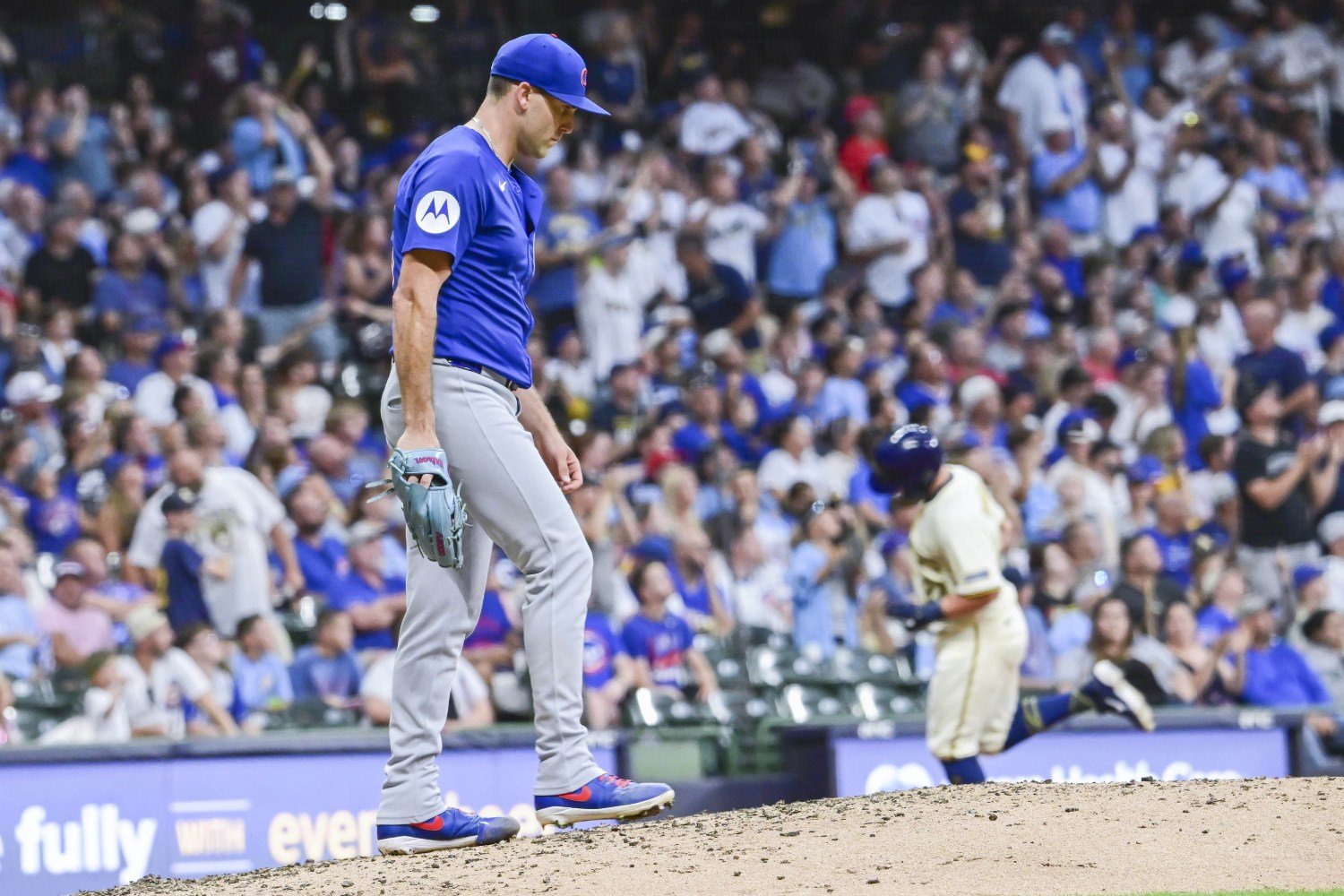 Not every game can be a referendum on an entire season. The Cubs and Brewers entered their game Monday in Milwaukee in a flat-footed tie atop the NL Central, and although the hosts took the game in convincing fashion, that game itself should be quickly forgotten. Matthew Boyd, whose command and control have been the hallmarks of his All-Star season, simply didn't have them, and while he dodged some early traffic, the Brewers offense punished his imprecision in the middle innings. Sometimes, you just have an off night. However, it would be wrong and misguided to assume that the standings for the year reflect a reality at which Monday merely poked its tongue out. It's fairer to say that while Monday's contest was a distortion and exaggeration, it illustrated a basic truth: the Brewers are a lot better than the Cubs right now. Since May 22, the Cubs have the second-best record in the National League, at 32-24. They've outscored opponents by 29 runs during that span. They haven't collapsed; they're not in much danger of falling out of the playoff picture entirely. However, the Brewers have been better—much, much better. They're 38-17 over the same span, and have outscored opponents by an even 100 runs. Their offense is lighter on power than Chicago's, but it's much deeper and more consistent. Their pitching staff is both stronger at the top and much, much deeper. The Cubs play great defense; the Brewers play equally great defense. The Cubs run the bases better than almost anyone in the league; the Brewers are the reason for the word "almost" in that sentence. This doesn't mean that the Cubs are doomed to slouch back into the muddle of the National League Wild Card race, as the Brewers charge smoothly to their third straight division title. This year, unlike in previous ones, the Cubs have a real chance at winning the division title. However, the gap between these teams that some perceived back in April or May (favoring the Cubs) is gone. A real gap has emerged, favoring the Brewers. Milwaukee really doesn't need anything more than the modest upgrade they made at backup catcher, when they traded for Danny Jansen on Monday. The Cubs, if they want to keep pace and edge out the Brewers, have multiple major needs. Jed Hoyer has his contract extension. The team he's assembled has some scintillating talent, fueling a strong campaign to date. Without massive reinforcement over the next 50 hours, though, they will fall short of the division title yet again, and they won't get very far in October. Hoyer doesn't like dealing from a position of weakness, and has tried to maintain leverage as well as possible throughout this process. With the countdown clock ticking and the reality of his team and their chief rivals playing out on the field every day, though, that leverage is gone. The Cubs ought to be desperate. If they aren't—if ownership's decision to extend Hoyer was a statement that coming this far was somehow sufficient—then they're not setting a high enough standard to get anywhere worth going. Without a major move and (just as importantly) some improved performance from their best incumbent players over the final two months, the Cubs aren't going to keep up with the Brewers. The two might be next to each other on the track, but that's just a snapshot. If you watch the video, you can see that Milwaukee is running much faster and is much less exhausted than Chicago is. If nothing changes that, this race won't look very close by the time the teams reach the finish line.
 -
Image courtesy of © Benny Sieu-Imagn Images Not every game can be a referendum on an entire season. The Cubs and Brewers entered their game Monday in Milwaukee in a flat-footed tie atop the NL Central, and although the hosts took the game in convincing fashion, that game itself should be quickly forgotten. Matthew Boyd, whose command and control have been the hallmarks of his All-Star season, simply didn't have them, and while he dodged some early traffic, the Brewers offense punished his imprecision in the middle innings. Sometimes, you just have an off night. However, it would be wrong and misguided to assume that the standings for the year reflect a reality at which Monday merely poked its tongue out. It's fairer to say that while Monday's contest was a distortion and exaggeration, it illustrated a basic truth: the Brewers are a lot better than the Cubs right now. Since May 22, the Cubs have the second-best record in the National League, at 32-24. They've outscored opponents by 29 runs during that span. They haven't collapsed; they're not in much danger of falling out of the playoff picture entirely. However, the Brewers have been better—much, much better. They're 38-17 over the same span, and have outscored opponents by an even 100 runs. Their offense is lighter on power than Chicago's, but it's much deeper and more consistent. Their pitching staff is both stronger at the top and much, much deeper. The Cubs play great defense; the Brewers play equally great defense. The Cubs run the bases better than almost anyone in the league; the Brewers are the reason for the word "almost" in that sentence. This doesn't mean that the Cubs are doomed to slouch back into the muddle of the National League Wild Card race, as the Brewers charge smoothly to their third straight division title. This year, unlike in previous ones, the Cubs have a real chance at winning the division title. However, the gap between these teams that some perceived back in April or May (favoring the Cubs) is gone. A real gap has emerged, favoring the Brewers. Milwaukee really doesn't need anything more than the modest upgrade they made at backup catcher, when they traded for Danny Jansen on Monday. The Cubs, if they want to keep pace and edge out the Brewers, have multiple major needs. Jed Hoyer has his contract extension. The team he's assembled has some scintillating talent, fueling a strong campaign to date. Without massive reinforcement over the next 50 hours, though, they will fall short of the division title yet again, and they won't get very far in October. Hoyer doesn't like dealing from a position of weakness, and has tried to maintain leverage as well as possible throughout this process. With the countdown clock ticking and the reality of his team and their chief rivals playing out on the field every day, though, that leverage is gone. The Cubs ought to be desperate. If they aren't—if ownership's decision to extend Hoyer was a statement that coming this far was somehow sufficient—then they're not setting a high enough standard to get anywhere worth going. Without a major move and (just as importantly) some improved performance from their best incumbent players over the final two months, the Cubs aren't going to keep up with the Brewers. The two might be next to each other on the track, but that's just a snapshot. If you watch the video, you can see that Milwaukee is running much faster and is much less exhausted than Chicago is. If nothing changes that, this race won't look very close by the time the teams reach the finish line. View full article
-
 Without Ryne Sandberg, there would be no Wrigley Field. The old jewel at Clark and Addison was an attraction, of a kind, when Sandberg joined the Chicago Cubs in 1982, but it was a dying thing, not a vibrant, eternal thing. Sandberg was in his second season with the team on Apr. 29, 1983, when the Cubs lost a home game to the Dodgers before such an uninspired and unimpressed crowd of 9,391 that manager Lee Elia cut loose with his famous rant about Cubs fans thereafter. By then, it was already clear that there might be something special in Sandberg, but there was little special about the Cubs, let alone their decrepit septuagenarian home. That year would be their 11th straight season with a .500 record or worse, and it was usually worse—much worse. Famously, at that time, Wrigley had no lights. They couldn't play home games at night; the place got dark and quiet enough during the days. In 1984, though, it was Sandberg—brilliant, even scintillating, not just playing well but playing dazzling all-around baseball—who lit the fire that has still never gone out in Wrigleyville. That year, he had the famous game in which he twice tied the game in the Cubs' final at-bat before a national TV audience, against the best closer in baseball. He hit 19 home runs and drove in 84 runs in 1984, but he also scored 114 times and added 36 doubles and 19 triples. He stole 32 bases, and played the surest-handed second base in the game. He was the MVP of the National League, and nearly unanimously so. The Cubs were better than .500 again at last—a lot better. They won 96 games and the National League East. No, they weren't unfairly robbed of home-field advantage because they couldn't host games at night. No, they didn't hold onto what should have been an ironclad advantage in that year's National League Championship Series. And no (though he made it back to the postseason in 1989 and had a 1.258 OPS against the Giants), Sandberg's teams never came as close to breaking the curse of the billy goat again. But Sandberg was the spark, and the breath of air to make it spread. He was a one-man wildfire, and by 1988, Wrigleyville could be seen from space on summer weeknights. That's Sandberg's legacy. He altered the identity of the Cubs and everyone who loved them. Second base is the closest landmark we have to a center of the diamond, and Sandberg sent a ripple out from his place at the keystone that would eventually be felt throughout Chicago. As great as Ron Santo, Ernie Banks, Billy Williams and Fergie Jenkins were, they had not been able to shake the team out of the deep funk into which it fell after winning their war pennant in 1945. The city had adopted the Cubbies (that belittling moniker and all) as their lovable losers. No one, until Sandberg, managed to change that. The actual results didn't change permanently, beginning in 1984. Losing seasons still outnumbered winning ones, over the course of Sandberg's career. Even as losses accumulated, though, those teams were much more respectable. They had someone fans could take pride in, with ample national profile. They began churning out other players, like Rafael Palmeiro, Greg Maddux and Mark Grace, who were similarly ineluctable in their quality and respectability. They became a place where, for instance, Andre Dawson wanted to play when collusion took financial incentives out of his decision-making process in the winter of 1986-87. Sandberg was the first Cub in a quarter-century to win an MVP award. Since then, they've had winners in 1987, 1998, and 2016, and very close finishers in a handful of other years. Sandberg's fluid, exquisitely routinized movements on ground balls and on the bases were just extensions of his personality. He was a student of the game and a servant of its fans, so dedicated to them that he walked away for one stretch when he felt he could no longer give the game the tenacity and dignity it deserved from him. If you're a Cubs fan in 2025, you owe an overweening debt to Sandberg, because the Cubs as we know them would not exist without him. He wasn't the best player in team history, or its most vivid personality, but he brought the relentless, beautiful quality that makes baseball its best self to Wrigley Field. He was the main attraction of the very first Cubs Convention, and a fixture at those events for decades afterward. He was a proud steward of the game, and became an ambassador for the team on the condition that the team could acquit itself as a conduit of the game worthy of its fans. Thanks to his insistence on that standard, ever since he came along, the Cubs have thus acquitted themselves much more consistently than they used to. Cancer needed two chances to finish off Sandberg. He beat it back once, but the pernicious form of metastatic prostate cancer he had is one of the few things in nature as tenacious as Sandberg the ballplayer was. It would have been wonderful if he could have thwarted its attempts to shut down the party twice, as he did to Bruce Sutter 41 years ago, but lives can't have happy endings. They matter because they end, and their ends are sad. Sandberg's certainly is; the world could do with another decade or two of fundamental decency, and he had it to give. While he was here, though, he gave heaping helpings of that particular blessing to fans, friends, and family. Baseball is great, not because it frees us from mortality, but because it makes us more aware of ourselves and the people around us for however long the games last. Our attention is all drawn to the same place, and the hum of really well-played and fully felt baseball heightens our senses and slows entropy's march toward us. All entertainment is about stealing time from death itself. Really good entertainment never lets you ponder that for too long. Sandberg gave Cubs fans a decade and a half of great entertainment, and the reward for that is, in one small sense, immortality: his profound respect for the game will keep him alive in the memories of baseball fans for another 65 years or more. Brewers hitting coach Al Leboeuf returned to the park as the Brewers came home for this homestand. LeBoeuf, 65, had been away from the team for weeks to undergo treatment of his own second bout of prostate cancer. Happily, his prognosis now looks good, at least for now. That's life, of course—and, in some ways, baseball. As LeBoeuf said, he's been very lucky. Sandberg couldn't quite catch the same break. There are always winners and losers, but it's not always because they earned anything different from one another. It's comforting, sometimes, to be reminded that there are winners, even when we lose. It's certainly wonderful, even on this excruciating night, to know that there is still hope for many who face a similar thing to what Sandberg did. My first game at Wrigley Field was Sandberg's last there, as a player, on Sept. 21, 1997. I remember a lot about it, but relatively little of it is focused on Sandberg. I was too young. I'd been a baby the last time he'd been able to reach October, and we'd just gotten cable so that I could watch the Cubs that very spring. I got just one summer with Sandberg, in real time, and when you're eight years old, Sammy Sosa and Brian McRae and Brant Brown look more interesting than Sandberg did at that late stage of his career. Ever since, though, I've been proud to say that that was my first game, because it's what ties me tangibly to the generation—to the man—who remade the Chicago Cubs and changed what they meant to the North Side of Chicago. Though he's now gone, he's left a lot to fans of the team, and to baseball fans in general. Cancer can't touch all of that, just as it can't tear down Wrigley Field.
 -
Image courtesy of © Jeffrey Becker-Imagn Images Without Ryne Sandberg, there would be no Wrigley Field. The old jewel at Clark and Addison was an attraction, of a kind, when Sandberg joined the Chicago Cubs in 1982, but it was a dying thing, not a vibrant, eternal thing. Sandberg was in his second season with the team on Apr. 29, 1983, when the Cubs lost a home game to the Dodgers before such an uninspired and unimpressed crowd of 9,391 that manager Lee Elia cut loose with his famous rant about Cubs fans thereafter. By then, it was already clear that there might be something special in Sandberg, but there was little special about the Cubs, let alone their decrepit septuagenarian home. That year would be their 11th straight season with a .500 record or worse, and it was usually worse—much worse. Famously, at that time, Wrigley had no lights. They couldn't play home games at night; the place got dark and quiet enough during the days. In 1984, though, it was Sandberg—brilliant, even scintillating, not just playing well but playing dazzling all-around baseball—who lit the fire that has still never gone out in Wrigleyville. That year, he had the famous game in which he twice tied the game in the Cubs' final at-bat before a national TV audience, against the best closer in baseball. He hit 19 home runs and drove in 84 runs in 1984, but he also scored 114 times and added 36 doubles and 19 triples. He stole 32 bases, and played the surest-handed second base in the game. He was the MVP of the National League, and nearly unanimously so. The Cubs were better than .500 again at last—a lot better. They won 96 games and the National League East. No, they weren't unfairly robbed of home-field advantage because they couldn't host games at night. No, they didn't hold onto what should have been an ironclad advantage in that year's National League Championship Series. And no (though he made it back to the postseason in 1989 and had a 1.258 OPS against the Giants), Sandberg's teams never came as close to breaking the curse of the billy goat again. But Sandberg was the spark, and the breath of air to make it spread. He was a one-man wildfire, and by 1988, Wrigleyville could be seen from space on summer weeknights. That's Sandberg's legacy. He altered the identity of the Cubs and everyone who loved them. Second base is the closest landmark we have to a center of the diamond, and Sandberg sent a ripple out from his place at the keystone that would eventually be felt throughout Chicago. As great as Ron Santo, Ernie Banks, Billy Williams and Fergie Jenkins were, they had not been able to shake the team out of the deep funk into which it fell after winning their war pennant in 1945. The city had adopted the Cubbies (that belittling moniker and all) as their lovable losers. No one, until Sandberg, managed to change that. The actual results didn't change permanently, beginning in 1984. Losing seasons still outnumbered winning ones, over the course of Sandberg's career. Even as losses accumulated, though, those teams were much more respectable. They had someone fans could take pride in, with ample national profile. They began churning out other players, like Rafael Palmeiro, Greg Maddux and Mark Grace, who were similarly ineluctable in their quality and respectability. They became a place where, for instance, Andre Dawson wanted to play when collusion took financial incentives out of his decision-making process in the winter of 1986-87. Sandberg was the first Cub in a quarter-century to win an MVP award. Since then, they've had winners in 1987, 1998, and 2016, and very close finishers in a handful of other years. Sandberg's fluid, exquisitely routinized movements on ground balls and on the bases were just extensions of his personality. He was a student of the game and a servant of its fans, so dedicated to them that he walked away for one stretch when he felt he could no longer give the game the tenacity and dignity it deserved from him. If you're a Cubs fan in 2025, you owe an overweening debt to Sandberg, because the Cubs as we know them would not exist without him. He wasn't the best player in team history, or its most vivid personality, but he brought the relentless, beautiful quality that makes baseball its best self to Wrigley Field. He was the main attraction of the very first Cubs Convention, and a fixture at those events for decades afterward. He was a proud steward of the game, and became an ambassador for the team on the condition that the team could acquit itself as a conduit of the game worthy of its fans. Thanks to his insistence on that standard, ever since he came along, the Cubs have thus acquitted themselves much more consistently than they used to. Cancer needed two chances to finish off Sandberg. He beat it back once, but the pernicious form of metastatic prostate cancer he had is one of the few things in nature as tenacious as Sandberg the ballplayer was. It would have been wonderful if he could have thwarted its attempts to shut down the party twice, as he did to Bruce Sutter 41 years ago, but lives can't have happy endings. They matter because they end, and their ends are sad. Sandberg's certainly is; the world could do with another decade or two of fundamental decency, and he had it to give. While he was here, though, he gave heaping helpings of that particular blessing to fans, friends, and family. Baseball is great, not because it frees us from mortality, but because it makes us more aware of ourselves and the people around us for however long the games last. Our attention is all drawn to the same place, and the hum of really well-played and fully felt baseball heightens our senses and slows entropy's march toward us. All entertainment is about stealing time from death itself. Really good entertainment never lets you ponder that for too long. Sandberg gave Cubs fans a decade and a half of great entertainment, and the reward for that is, in one small sense, immortality: his profound respect for the game will keep him alive in the memories of baseball fans for another 65 years or more. Brewers hitting coach Al Leboeuf returned to the park as the Brewers came home for this homestand. LeBoeuf, 65, had been away from the team for weeks to undergo treatment of his own second bout of prostate cancer. Happily, his prognosis now looks good, at least for now. That's life, of course—and, in some ways, baseball. As LeBoeuf said, he's been very lucky. Sandberg couldn't quite catch the same break. There are always winners and losers, but it's not always because they earned anything different from one another. It's comforting, sometimes, to be reminded that there are winners, even when we lose. It's certainly wonderful, even on this excruciating night, to know that there is still hope for many who face a similar thing to what Sandberg did. My first game at Wrigley Field was Sandberg's last there, as a player, on Sept. 21, 1997. I remember a lot about it, but relatively little of it is focused on Sandberg. I was too young. I'd been a baby the last time he'd been able to reach October, and we'd just gotten cable so that I could watch the Cubs that very spring. I got just one summer with Sandberg, in real time, and when you're eight years old, Sammy Sosa and Brian McRae and Brant Brown look more interesting than Sandberg did at that late stage of his career. Ever since, though, I've been proud to say that that was my first game, because it's what ties me tangibly to the generation—to the man—who remade the Chicago Cubs and changed what they meant to the North Side of Chicago. Though he's now gone, he's left a lot to fans of the team, and to baseball fans in general. Cancer can't touch all of that, just as it can't tear down Wrigley Field. View full article
-
NEWS: Jed Hoyer Agrees to Extension with Cubs
Matthew Trueblood replied to UMFan83's topic in Chicago Cubs Talk
Yes. And yeah, it's unlikely, but it's far from impossible that that happens. I'm somewhat shocked. I would not have done this now, and even though I don't expect the Ricketts family to do things the way I would, I'm surprised that they did. -
 The Chicago Cubs and president of baseball operations Jed Hoyer agreed to a multi-year contract extension Monday, according to multiple reports. It's a seismic moment, as much because of the timing as based on the news itself. Hoyer is working hard to upgrade the Cubs roster he built in the shadow of this Thursday's MLB trade deadline, and this news changes the context of his pursuits. Sahadev Sharma of The Athletic broke the news on Twitter. Last fall, much was made of the fact that Hoyer would be out of contract at the end of the 2025 campaign. For most fans (and even many throughout the ranks of other front offices and the baseball industry, writ large), Hoyer's status has been viewed as a microcosm of that of the team in general. Given the tenor of his own comments about his lack of an extension heading into last offseason—and given the aggressive offseason he then orchestrated—the assumption had been that the ownership group would move on from Hoyer if the team didn't make the playoffs this year. Now, apparently based on the fact that the team is in good position to do that (but without any guarantee that they actually will, in a competitive National League and an NL Central race that is currently tied), the team has jumped the gun on that decision. Presumably, this alleviates some pressure on Hoyer to make trades that might not have been in the best long-term interests of the team, and encourages him to focus on winning both now and in the future. For many, though, it will also read as an early declaration of a victory not yet won—and a questionable demonstration of faith in an executive whose track record as the top decision-maker on the baseball side of the organization is somewhat uneven. Under Hoyer, the Cubs have unloaded the remnants of their 2016 World Series-winning core. In their 2021 fire sale, they did acquire some very valuable pieces, including not only Pete Crow-Armstrong, but Kevin Alcántara and Daniel Palencia. They've signed several free agents to deals that panned out well, and under new scouting director Dan Kantrovitz, they've enjoyed more success in the MLB Draft. Their reputation in that area is improving. Hoyer made perspicacious trades to land Michael Busch and Kyle Tucker over the last two offseasons and has succeeded with forays into the Japanese market with the signings of Seiya Suzuki and Shota Imanaga. He also landed the biggest managerial free agent in baseball history when he signed Craig Counsell away from the Brewers in November 2023. On the other hand, struggling often to manage upward and somewhat stubborn in his evaluations of players, Hoyer has allowed himself to be unduly limited by the budgets set by the Ricketts family. At their whims, he non-tendered Kyle Schwarber, and has failed to land the elite free agents who might have put either of the last two iterations of this team over the top. His signature is a certain baseline conservatism that does not always serve the club well. The thinking in striking this deal now must trace in part to Hoyer's conversations with rival executives about trades that would ship out some of the key players who make up the farm system he tried to strengthen over the last few years. Not only are his incentives and the team's no longer misaligned, but he can now avoid having any negotiating partner try to use his own contract status as leverage against him. If Hoyer (as, based on his personality, we might well imagine he would) would feel unduly guilty about trading a haul of prospects for a high-impact, short-term piece, that internal conflict is now resolved, too. Chicago's pitching development has improved under Hoyer's stewardship. So has their farm system. Yet, they haven't won anything of note under his leadership, and his mistakes in roster building have been major factors in that failure. Ownership has liked his way of doing things enough to decide to re-up with him. Now, based on what he does over the next few days and what his team does over the next few months, fans will get to render their own judgments about that choice.
 -
Image courtesy of © Jim Rassol-Imagn Images If the Chicago Cubs have their druthers at the 2025 MLB trade deadline, they'll reel in Marlins righthander Edward Cabrera to join the front end of their starting rotation. Cabrera has lowered his arm slot, gaining both more electricity in an already nasty arsenal and better command thereof. He's under team control for three years beyond 2025. The Cubs have scouted him closely and believe his stuff would play even better in front of their strong defensive group. Right now, though, Miami is holding out for both Owen Caissie and Jaxon Wiggins as the centerpieces of a deal for Cabrera, sources say, and the Cubs are unwilling to meet that asking price. Caissie is the team's top outfield prospect, and Wiggins is their best minor-league starter. Giving up both would leave a huge hole in the team's farm system, and the two teams are in a staring contest, each hoping the other blinks first. Since there's no guarantee that Cabrera's price tag will come down, the Chicago front office has also remained engaged with several other teams about controllable pitchers who would deliver huge impact down the stretch but can also be retained for another two or more seasons. Sources with knowledge of the discussions confirmed the team has talked to the Nationals about MacKenzie Gore, their southpaw ace, who is under one fewer year of team control than Cabrera—he can be a free agent after 2027—but has been more durable and consistently able to fill up the zone. The price tag on Gore is similar to that of Cabrera, though, and of the two, Miami is seen as the more likely trade partner. Nationals interim baseball chief Mike DeBartolo won't trade Gore unless he gets a deal he can't refuse. The Cubs have also stayed in touch with the Pirates, with whom they came close to striking a deal to acquire Mitch Keller earlier this summer. Keller is under team control, too, but his ceiling is lower than those of Gore or Cabrera and the contract extension he signed in March 2024 is more expensive than their remaining team control. As a result, a deal for Keller would likely include Caissie, but exclude Wiggins, which is the Cubs' preferred outcome. They're cultivating that as an alternative, but it's very much a fallback. The goal is to draw down the asking price on Cabrera. Meanwhile, the Twins' asking price on Joe Ryan is even higher than that for Cabrera or Gore, which (while not unfair, given Ryan's remaining control and his skill set) makes him off-limits for the Cubs. On the other hand, Jhoan Duran and Griffin Jax are relief aces under team control through 2027, and the price tags on each would be lower because of the difference of their roles and the utility thereof. The Cubs have discussed both with Minnesota, but they prefer Duran. In Caissie, Kevin Alcántara and Moisés Ballesteros, the Cubs have three strong prospects with ample experience at Triple-A Iowa, knocking loudly on the door to the majors. They don't have an ideal opening for any of the three, and they realize that the best utilization of the group lies in trading at least one to bolster this year's team as it pursues a division title, sources say. However, they're unwilling to trade any of the three for rental players. Thus, the hunt is on for a player who delivers value for the 2026 and 2027 versions of the team, and the front office is working hard to land someone who fits those criteria. There are a few wild cards in that picture, from the obvious (Sandy Alcantara, whose numbers still don't look good but whose stuff still impresses—and who would certainly not cost both Caissie and Wiggins) to the obscure (Jose Soriano, the Angels groundballer on whom the Cubs made calls earlier this year). The team is also ready, if needed, to pivot into a mode where they keep their top set of prospects and acquire a stack of rentals, instead. The problem there is that, with a thin farm system, they're actually better-positioned to acquire high-end players with control than to snag someone like Merrill Kelly. The second tier of Chicago prospects isn't as good as the parallel tiers for some of the other teams who will be talking to the Diamondbacks about Kelly. Finally, don't discount the possibility of the Cubs including an incumbent pitcher in a trade for one of these controllable arms. Specifically, one source suggested that Javier Assad might be bundled in with Caissie and more prospect capital to land Cabrera. Ben Brown is also available, if a team likes the idea of either helping him round out his arsenal to start or converting him to the bullpen. The team could even deal a pitcher in a separate deal, to recuperate prospect depth and create space, depending on their ability to land one of the big arms in their sights. These are the big fish the team is angling for, with the deadline just three and a half days away. Whether they can actually get any of them into the boat is, of course, the big question. It could come down to whether or not Hoyer is willing to make a rare exception and go beyond his comfort zone, in terms of value. View full article
- 6 replies
-
- 1
-

-
- jhoan duran
- griffin jax
- (and 5 more)
![More information about "Ian Happ Headed to Injured List: Why Are Chicago Cubs Calling Up Moises Ballesteros? [UPDATE: Now Wait a Minute.]"](http://northsidebaseball.s3.us-east-1.amazonaws.com/monthly_2025_07/IaNhAPPMichaelMcLoone-ImagnImages.jpg.2f2470e058b22bfbdb3880cd5f07edbd.jpg)
