


Matthew Trueblood
-
Posts
2,479 -
Joined
-
Last visited
-
Days Won
2
Content Type
Profiles
Joomla Posts 1
Chicago Cubs Videos
Chicago Cubs Free Agent & Trade Rumors, Notes, & Tidbits
2026 Chicago Cubs Top Prospects Ranking
News
2023 Chicago Cubs Draft Picks
Guides & Resources
2024 Chicago Cubs Draft Picks
The Chicago Cubs Players Project
2025 Chicago Cubs Draft Pick Tracker
2026 Chicago Cubs Draft Tracker: Picks & Bonuses
Blogs
Events
Forums
Store
Gallery
Everything posted by Matthew Trueblood
-
Image courtesy of © Charles LeClaire-Imagn Images There are plenty of valid criticisms to level at Jed Hoyer, as a top executive in baseball operations. He was hired by the Ricketts family to replace his predecessor and mentor, Theo Epstein, partially because he's a more fiscally cautious, more easily managed version of Epstein. From a fan's perspective, Hoyer's inability to manage up and massage more money out of the ownership group is a problem. It's an obstacle to the sustained success the Cubs and their fans have never enjoyed, and which should be their goal. Hoyer also hasn't built as strong a player development or scouting operation as he has attempted to construct, putting more pressure on expensive acquisitions to power each year's version of his team. That might be beginning to change, but it's already taken longer to do so than it was supposed to, and Hoyer's track record in that area is shaky. Like Epstein, he's generally been good at allocating resources toward those departments, but unspectacular when it comes to actually finding or retaining excellent people to do that work. (Perhaps, in Dan Kantrovitz and Tyler Zombro (and before Zombro, Craig Breslow), we're beginning to see that change, too.) One thing Hoyer receives considerable guff for, however, really isn't fair. Fans tend to catastrophize, and because the catastrophe most often facing the Cubs is a lack of star power stemming from ownership's refusal to spend the type of money the Dodgers, Yankees, Mets, Phillies and Blue Jays do, many people accuse Hoyer of being habitually inactive in building his teams. That's just not the case. While he's limited by his own natural conservatism; a lack of Epstein's excellence at getting into the room and wooing a player he wants; and the Ricketts' greed, Hoyer never lets an opportunity to improve his team pass without substantial action. When he took over in the fall of 2020, there was bad business at hand. The Rickettses put him under the gun, budget-wise, and to make payroll work, Hoyer had to make some unwelcome decisions. He non-tendered Kyle Schwarber, and traded Yu Darvish. However, that Darvish trade was a big thing, in which the team received (among others) Owen Caissie. He also got Zach Davies in that deal, at least partially stabilizing his weakened rotation. When the Rickettses made a midwinter course correction and let him spend some money after all, it was too late to get Schwarber back, but Hoyer splashed that cash around as best he could, signing players like Joc Pederson, Jake Arrieta and Andrew Chafin. At the 2021 trade deadline, of course, Hoyer was equally aggressive, painful though it was. By gutting a team that fell apart in late June, he got not only Pete Crow-Armstrong, but Kevin Alcántara and Daniel Palencia (among a much bigger group of players, many of whom didn't pan out). He was decisive and aggressive. In the lockout winter of 2021-22, he started to build the contender he envisioned, not necessarily in 2022 but especially in 2023. Even in a year when he knew the team would still be rebuilding, he signed Marcus Stroman (three years, $71 million) and Seiya Suzuki (five years, $85 million) to noteworthy deals. Those guys became parts of his medium-term plan, and they were solid moves for a team that was not yet ready to make a bigger splash. Suzuki, of course, has paid off in especially impressive fashion, figuring out American big-league pitching just in time to be instrumental for the team's resurgence. The following offseason, sensing that his team was close to ready for a forward surge, Hoyer got more aggressive. He gave Jameson Taillon four years and $68 million and Dansby Swanson seven years and $177 million, in addition to rolling the dice on Cody Bellinger at one year and $17 million. Those weren't the even bigger moves many fans wanted to see, but Hoyer did (generally) get them right, and they represented major investments in the team. Bellinger, especially, gave him a wonderful return on investment, and Taillon and Swanson have cleared the most important bar for deals of those kinds: three years later, they're not regrettable moves. The 2023 team came up short of its goals, for which Hoyer bears plenty of blame. He responded, though, with another strong and very active winter. The proactive, opportunistic trade for Michael Busch might be remembered as the best move he ever made. Later in the offseason, he pounced on the somewhat underrated Shota Imanaga, and the deal to which he inked him turned out to be team-friendly in multiple ways. After waiting out Bellinger's market well into February, he got him back on shockingly good terms, too. Last winter, after another season of frustration for the team, he pressed the pedal down even harder. He signed Matthew Boyd for two years and $29 million, and while those numbers didn't lead anyone to expect a great deal out of him, a great deal is exactly what Boyd has proved to be. His bigger, bolder move, of course, was the trade for Kyle Tucker, wherein he used players acquired at the 2022 (Hayden Wesneski) and 2024 (Isaac Paredes) trade deadlines to land a genuine superstar. These lists of transactions aren't exhaustive, either. Along the way, Hoyer has been fairly active (though not always very accurate) in his efforts to round out the roster each winter, with signings and trade acquisitions like Tucker Barnhart, Trey Mancini, Héctor Neris, Carson Kelly, Colin Rea, Caleb Thielbar and Justin Turner. These are the kinds of moves for which no executive needs to be given much credit, and for which they shouldn't receive much blame, either; they're the table stakes for the offseason in the modern game. But many teams stop with moves like those. Hoyer has made it a habit to acquire two much higher-level players than that every winter, and while some fans would gladly trade one or two of the deals he's signed to make the bigger splash (signing Trea Turner instead of Swanson, for instance, or landing Yoshinobu Yamamoto instead of Imanaga), Hoyer's slow and steady approach means the Cubs get better between Halloween and Easter, each and every winter. Does this mean fans should give Hoyer the benefit of the doubt, in all cases? I would be a strange courier to deliver that message. He has some profound and important weaknesses as an executive, too. However, worries that the Cubs won't do anything more notable this winter than signing Phil Maton—or, indeed, that they won't do at least two things much more notable than that—simply aren't supported by facts. Hoyer's track record says he will make big moves this winter. They just might not be as big as you'd like. View full article
-
 There are plenty of valid criticisms to level at Jed Hoyer, as a top executive in baseball operations. He was hired by the Ricketts family to replace his predecessor and mentor, Theo Epstein, partially because he's a more fiscally cautious, more easily managed version of Epstein. From a fan's perspective, Hoyer's inability to manage up and massage more money out of the ownership group is a problem. It's an obstacle to the sustained success the Cubs and their fans have never enjoyed, and which should be their goal. Hoyer also hasn't built as strong a player development or scouting operation as he has attempted to construct, putting more pressure on expensive acquisitions to power each year's version of his team. That might be beginning to change, but it's already taken longer to do so than it was supposed to, and Hoyer's track record in that area is shaky. Like Epstein, he's generally been good at allocating resources toward those departments, but unspectacular when it comes to actually finding or retaining excellent people to do that work. (Perhaps, in Dan Kantrovitz and Tyler Zombro (and before Zombro, Craig Breslow), we're beginning to see that change, too.) One thing Hoyer receives considerable guff for, however, really isn't fair. Fans tend to catastrophize, and because the catastrophe most often facing the Cubs is a lack of star power stemming from ownership's refusal to spend the type of money the Dodgers, Yankees, Mets, Phillies and Blue Jays do, many people accuse Hoyer of being habitually inactive in building his teams. That's just not the case. While he's limited by his own natural conservatism; a lack of Epstein's excellence at getting into the room and wooing a player he wants; and the Ricketts' greed, Hoyer never lets an opportunity to improve his team pass without substantial action. When he took over in the fall of 2020, there was bad business at hand. The Rickettses put him under the gun, budget-wise, and to make payroll work, Hoyer had to make some unwelcome decisions. He non-tendered Kyle Schwarber, and traded Yu Darvish. However, that Darvish trade was a big thing, in which the team received (among others) Owen Caissie. He also got Zach Davies in that deal, at least partially stabilizing his weakened rotation. When the Rickettses made a midwinter course correction and let him spend some money after all, it was too late to get Schwarber back, but Hoyer splashed that cash around as best he could, signing players like Joc Pederson, Jake Arrieta and Andrew Chafin. At the 2021 trade deadline, of course, Hoyer was equally aggressive, painful though it was. By gutting a team that fell apart in late June, he got not only Pete Crow-Armstrong, but Kevin Alcántara and Daniel Palencia (among a much bigger group of players, many of whom didn't pan out). He was decisive and aggressive. In the lockout winter of 2021-22, he started to build the contender he envisioned, not necessarily in 2022 but especially in 2023. Even in a year when he knew the team would still be rebuilding, he signed Marcus Stroman (three years, $71 million) and Seiya Suzuki (five years, $85 million) to noteworthy deals. Those guys became parts of his medium-term plan, and they were solid moves for a team that was not yet ready to make a bigger splash. Suzuki, of course, has paid off in especially impressive fashion, figuring out American big-league pitching just in time to be instrumental for the team's resurgence. The following offseason, sensing that his team was close to ready for a forward surge, Hoyer got more aggressive. He gave Jameson Taillon four years and $68 million and Dansby Swanson seven years and $177 million, in addition to rolling the dice on Cody Bellinger at one year and $17 million. Those weren't the even bigger moves many fans wanted to see, but Hoyer did (generally) get them right, and they represented major investments in the team. Bellinger, especially, gave him a wonderful return on investment, and Taillon and Swanson have cleared the most important bar for deals of those kinds: three years later, they're not regrettable moves. The 2023 team came up short of its goals, for which Hoyer bears plenty of blame. He responded, though, with another strong and very active winter. The proactive, opportunistic trade for Michael Busch might be remembered as the best move he ever made. Later in the offseason, he pounced on the somewhat underrated Shota Imanaga, and the deal to which he inked him turned out to be team-friendly in multiple ways. After waiting out Bellinger's market well into February, he got him back on shockingly good terms, too. Last winter, after another season of frustration for the team, he pressed the pedal down even harder. He signed Matthew Boyd for two years and $29 million, and while those numbers didn't lead anyone to expect a great deal out of him, a great deal is exactly what Boyd has proved to be. His bigger, bolder move, of course, was the trade for Kyle Tucker, wherein he used players acquired at the 2022 (Hayden Wesneski) and 2024 (Isaac Paredes) trade deadlines to land a genuine superstar. These lists of transactions aren't exhaustive, either. Along the way, Hoyer has been fairly active (though not always very accurate) in his efforts to round out the roster each winter, with signings and trade acquisitions like Tucker Barnhart, Trey Mancini, Héctor Neris, Carson Kelly, Colin Rea, Caleb Thielbar and Justin Turner. These are the kinds of moves for which no executive needs to be given much credit, and for which they shouldn't receive much blame, either; they're the table stakes for the offseason in the modern game. But many teams stop with moves like those. Hoyer has made it a habit to acquire two much higher-level players than that every winter, and while some fans would gladly trade one or two of the deals he's signed to make the bigger splash (signing Trea Turner instead of Swanson, for instance, or landing Yoshinobu Yamamoto instead of Imanaga), Hoyer's slow and steady approach means the Cubs get better between Halloween and Easter, each and every winter. Does this mean fans should give Hoyer the benefit of the doubt, in all cases? I would be a strange courier to deliver that message. He has some profound and important weaknesses as an executive, too. However, worries that the Cubs won't do anything more notable this winter than signing Phil Maton—or, indeed, that they won't do at least two things much more notable than that—simply aren't supported by facts. Hoyer's track record says he will make big moves this winter. They just might not be as big as you'd like.
- 1 comment
-
- 1
-

-
- jed hoyer
- seiya suzuki
- (and 8 more)
-
Heh. I don't think they'll find it, either. It really is a kind of anchoring thing. Studies show MLB FAs get about 85-88% of what they demand, on average, in both years and dollars. Try for 5/110, go somewhere for 4/82 or so. Cubs really would prefer to keep it at three years, but not sure if they'll be able to or not.
-
Image courtesy of © Joe Rondone/The Republic / USA TODAY NETWORK via Imagn Images He wouldn't have been the top name on many fans' wish lists, but Zac Gallen has emerged as one of the Cubs' top targets to address their starting rotation this winter. Reports of the team's interest percolated at the end of the week, and on Saturday morning, Bob Nightengale of USA Today erroneously reported that the team had agreed to a multi-year deal with Gallen, with an annual average value north of $22 million. Nightengale beat a hasty retreat, and ESPN's Jeff Passan issued a rare tweet to certify that news was not afoot. Sources confirmed that Gallen is not in agreement with anyone (and certainly that the Cubs were not close to completing a deal) to North Side Baseball, too. However, the team's interest in Gallen—and their engagement with Scott Boras, who represents him—is legitimate. Gallen and Boras are angling for a deal similar to the one Kevin Gausman signed with the Blue Jays or the one Robbie Ray got with the Mariners, each in late November 2021. Gausman got a five-year deal worth $110 million. Ray signed for $115 million over five seasons, with a no-trade clause for the first two years of the pact and the ability to opt out after the third. That's not likely to come to fruition. Boras is aiming high, hoping to establish an anchor that will make some team satisfied to snare Gallen for four years at $88 million or so. In reality, he's likely to come in a bit lower—and so far, the Cubs aren't going that far, by any means. A source familiar with the team's plans said Jed Hoyer and company have so far offered Gallen something much more similar to the three-year, $71-million deal they struck with Marcus Stroman in 2021. Stroman got $25 million in each of the first two years of that deal, and was due $21 million for 2024, but he took advantage of an opt-out clause and hit the market after 2023, instead. Boras, of course, wants to extend that structure by a year. Another source indicated that if the Cubs were to go to four years for Gallen, they would want to reduce the annual average value of the contract to something under $20 million. Escalators (like the clause in Stroman's deal which could have pushed the value of his final season up to $25 million if he'd stayed healthy) might still give Gallen a chance to earn $90 million or more on such a deal. While talks aren't yet advanced far enough that the two sides have discussed such details, an opt-out could give Gallen a chance to hit the market again after 2027. The Cubs could seek a fifth-year club option at a lower salary, should Gallen miss time for Tommy John surgery at any point. In essence, though, the Cubs are seeking to land him on a deal more akin to those of Stroman or Jameson Taillon than to what Gausman or Ray pulled down. Let's talk about why, given the apparent gap between how Gallen hopes to be valued and what the team hopes to pay, the Cubs are so prominently involved. To do so, we can start by observing three key truths about Gallen: He's a workhorse. Though a lat strain cost him almost a month in mid-2024, he's averaged 31.5 starts and over 180 innings per year since 2022. In 2023, between the regular season and Arizona's deep playoff run, he faced 987 batters and pitched 243 2/3 innings—remarkable numbers in the modern game. At his best, he was dominant, but his best feels a bit lost in the fog. He had a 2.54 ERA in 2022 and a 3.47 in 2023. It was 3.12 when he suffered that lat injury in mid-2024, but after he returned, the number was 3.99. In 2025, it ballooned all the way to 4.83. His strikeout rate dipped sharply; he became prone to the home run. As Dylan Cease's seven-year deal last month proved, though, ERA is not the statistic savvy front offices use to evaluate pitchers these days. Gallen's stuff can still be tantalizing. His fastball sits in the 93-95 range. His curveball and changeup can be plus, and he boasts a deep arsenal. On the fundamentals beyond the surface-level numbers, he's a starter with frontline upside. Specifically, one thing seems to have derailed Gallen. It's a very small thing, but a vital one, and the big question around him is whether it can be reversed. If so, he could get right back to dominating in 2026, and stay that way for the length of even a four- or five-year deal. If not, he's probably doomed to a long period of trying to find a new winning formula. It's all about fastball shape. Zac Gallen, Four-Seam Fastballs, 2022-25 Season Velocity Horiz. Ind. Vert. 2022 94.0 3.4 16.8 2023 93.5 3.0 16.5 2024 93.8 4.9 16.1 2025 93.5 4.5 16.3 Based on Gallen's arm slot, in the first two seasons above, he enjoyed about 4.2 inches of relative cut on his fastball. In other words, though it technically faded a few inches toward the arm side between release and the plate, it did so by several fewer inches than a hitter would anticipate. Over the last two seasons, the pitch is running more—but that means it's closer to what the hitter expects. He's down to 2.2 inches of relative cut. Every problem Gallen has experienced the last year and a half springs from that well. The heater doesn't look as much like his curveball as it used to, and it doesn't separate as well from the changeup as it used to. He's not missing as many bats or managing contact as well with the fastball as he could two years ago. The Cubs have a pitching infrastructure that excels, typically, at helping pitchers find and emphasize the cut on their fastballs. They envision helping Gallen reclaim the shapes and relationships that made his pitches so devastating a few years ago. In a market where Michael King is likely to get close to $20 million per year on a three- or four-year deal, Gallen makes some sense at the same price, even if he can't quite get back to his former levels. He's far more durable than King is, with similar upside. The Cubs don't want to pay full freight for that upside, because that would be a big gamble on such a small thing. If you had to bet on a pitcher whose fastball has gone awry, though, you'd much rather face the need to fix their horizontal movement than their velocity or the rising action on that pitch. Mechanical tweaks could turn Gallen around. He's struggled with the timing of his hip and shoulder rotation, and his posture at foot strike has gotten a bit out of whack. Cleaning that up could turn Gallen into an ace again, and the Cubs feel they're uniquely positioned to achieve that. Boras doesn't offer discounts to teams with confidence in their player development, though, and Hoyer won't overpay for a player whose recent track record creates real uncertainty. Thus, as the Winter Meetings get underway, the Cubs are in a familiar position: highly interested in a Boras client, and perhaps even in pole position, but waiting for the terms to match their valuation. View full article
-
Why Zac Gallen Appeals to Chicago Cubs—and on What Terms
Matthew Trueblood posted an article in Cubs
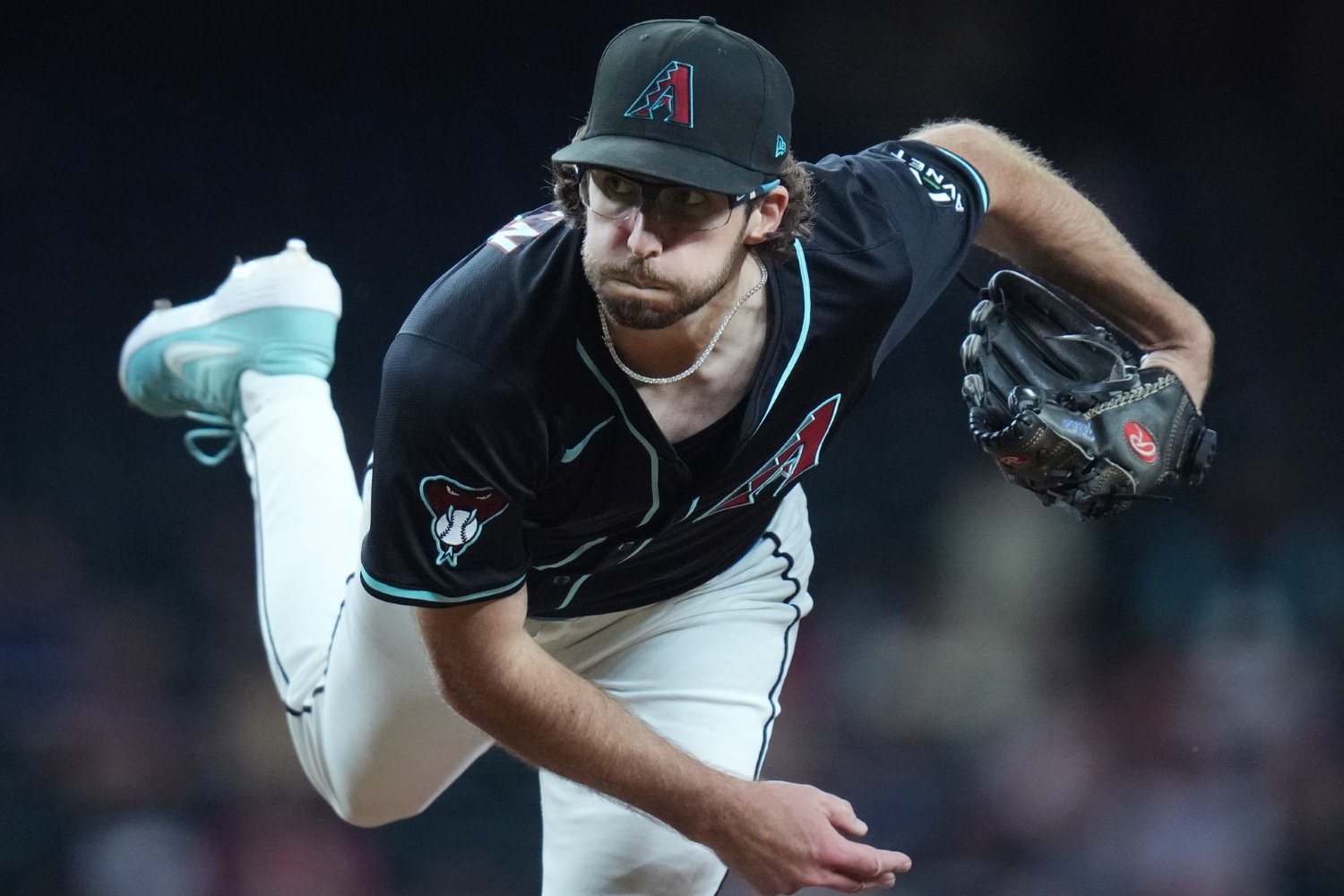 He wouldn't have been the top name on many fans' wish lists, but Zac Gallen has emerged as one of the Cubs' top targets to address their starting rotation this winter. Reports of the team's interest percolated at the end of the week, and on Saturday morning, Bob Nightengale of USA Today erroneously reported that the team had agreed to a multi-year deal with Gallen, with an annual average value north of $22 million. Nightengale beat a hasty retreat, and ESPN's Jeff Passan issued a rare tweet to certify that news was not afoot. Sources confirmed that Gallen is not in agreement with anyone (and certainly that the Cubs were not close to completing a deal) to North Side Baseball, too. However, the team's interest in Gallen—and their engagement with Scott Boras, who represents him—is legitimate. Gallen and Boras are angling for a deal similar to the one Kevin Gausman signed with the Blue Jays or the one Robbie Ray got with the Mariners, each in late November 2021. Gausman got a five-year deal worth $110 million. Ray signed for $115 million over five seasons, with a no-trade clause for the first two years of the pact and the ability to opt out after the third. That's not likely to come to fruition. Boras is aiming high, hoping to establish an anchor that will make some team satisfied to snare Gallen for four years at $88 million or so. In reality, he's likely to come in a bit lower—and so far, the Cubs aren't going that far, by any means. A source familiar with the team's plans said Jed Hoyer and company have so far offered Gallen something much more similar to the three-year, $71-million deal they struck with Marcus Stroman in 2021. Stroman got $25 million in each of the first two years of that deal, and was due $21 million for 2024, but he took advantage of an opt-out clause and hit the market after 2023, instead. Boras, of course, wants to extend that structure by a year. Another source indicated that if the Cubs were to go to four years for Gallen, they would want to reduce the annual average value of the contract to something under $20 million. Escalators (like the clause in Stroman's deal which could have pushed the value of his final season up to $25 million if he'd stayed healthy) might still give Gallen a chance to earn $90 million or more on such a deal. While talks aren't yet advanced far enough that the two sides have discussed such details, an opt-out could give Gallen a chance to hit the market again after 2027. The Cubs could seek a fifth-year club option at a lower salary, should Gallen miss time for Tommy John surgery at any point. In essence, though, the Cubs are seeking to land him on a deal more akin to those of Stroman or Jameson Taillon than to what Gausman or Ray pulled down. Let's talk about why, given the apparent gap between how Gallen hopes to be valued and what the team hopes to pay, the Cubs are so prominently involved. To do so, we can start by observing three key truths about Gallen: He's a workhorse. Though a lat strain cost him almost a month in mid-2024, he's averaged 31.5 starts and over 180 innings per year since 2022. In 2023, between the regular season and Arizona's deep playoff run, he faced 987 batters and pitched 243 2/3 innings—remarkable numbers in the modern game. At his best, he was dominant, but his best feels a bit lost in the fog. He had a 2.54 ERA in 2022 and a 3.47 in 2023. It was 3.12 when he suffered that lat injury in mid-2024, but after he returned, the number was 3.99. In 2025, it ballooned all the way to 4.83. His strikeout rate dipped sharply; he became prone to the home run. As Dylan Cease's seven-year deal last month proved, though, ERA is not the statistic savvy front offices use to evaluate pitchers these days. Gallen's stuff can still be tantalizing. His fastball sits in the 93-95 range. His curveball and changeup can be plus, and he boasts a deep arsenal. On the fundamentals beyond the surface-level numbers, he's a starter with frontline upside. Specifically, one thing seems to have derailed Gallen. It's a very small thing, but a vital one, and the big question around him is whether it can be reversed. If so, he could get right back to dominating in 2026, and stay that way for the length of even a four- or five-year deal. If not, he's probably doomed to a long period of trying to find a new winning formula. It's all about fastball shape. Zac Gallen, Four-Seam Fastballs, 2022-25 Season Velocity Horiz. Ind. Vert. 2022 94.0 3.4 16.8 2023 93.5 3.0 16.5 2024 93.8 4.9 16.1 2025 93.5 4.5 16.3 Based on Gallen's arm slot, in the first two seasons above, he enjoyed about 4.2 inches of relative cut on his fastball. In other words, though it technically faded a few inches toward the arm side between release and the plate, it did so by several fewer inches than a hitter would anticipate. Over the last two seasons, the pitch is running more—but that means it's closer to what the hitter expects. He's down to 2.2 inches of relative cut. Every problem Gallen has experienced the last year and a half springs from that well. The heater doesn't look as much like his curveball as it used to, and it doesn't separate as well from the changeup as it used to. He's not missing as many bats or managing contact as well with the fastball as he could two years ago. The Cubs have a pitching infrastructure that excels, typically, at helping pitchers find and emphasize the cut on their fastballs. They envision helping Gallen reclaim the shapes and relationships that made his pitches so devastating a few years ago. In a market where Michael King is likely to get close to $20 million per year on a three- or four-year deal, Gallen makes some sense at the same price, even if he can't quite get back to his former levels. He's far more durable than King is, with similar upside. The Cubs don't want to pay full freight for that upside, because that would be a big gamble on such a small thing. If you had to bet on a pitcher whose fastball has gone awry, though, you'd much rather face the need to fix their horizontal movement than their velocity or the rising action on that pitch. Mechanical tweaks could turn Gallen around. He's struggled with the timing of his hip and shoulder rotation, and his posture at foot strike has gotten a bit out of whack. Cleaning that up could turn Gallen into an ace again, and the Cubs feel they're uniquely positioned to achieve that. Boras doesn't offer discounts to teams with confidence in their player development, though, and Hoyer won't overpay for a player whose recent track record creates real uncertainty. Thus, as the Winter Meetings get underway, the Cubs are in a familiar position: highly interested in a Boras client, and perhaps even in pole position, but waiting for the terms to match their valuation.
 -
Why Chicago Cubs Shouldn't Sign Alex Bregman to Multi-Year Deal
Matthew Trueblood posted an article in Cubs
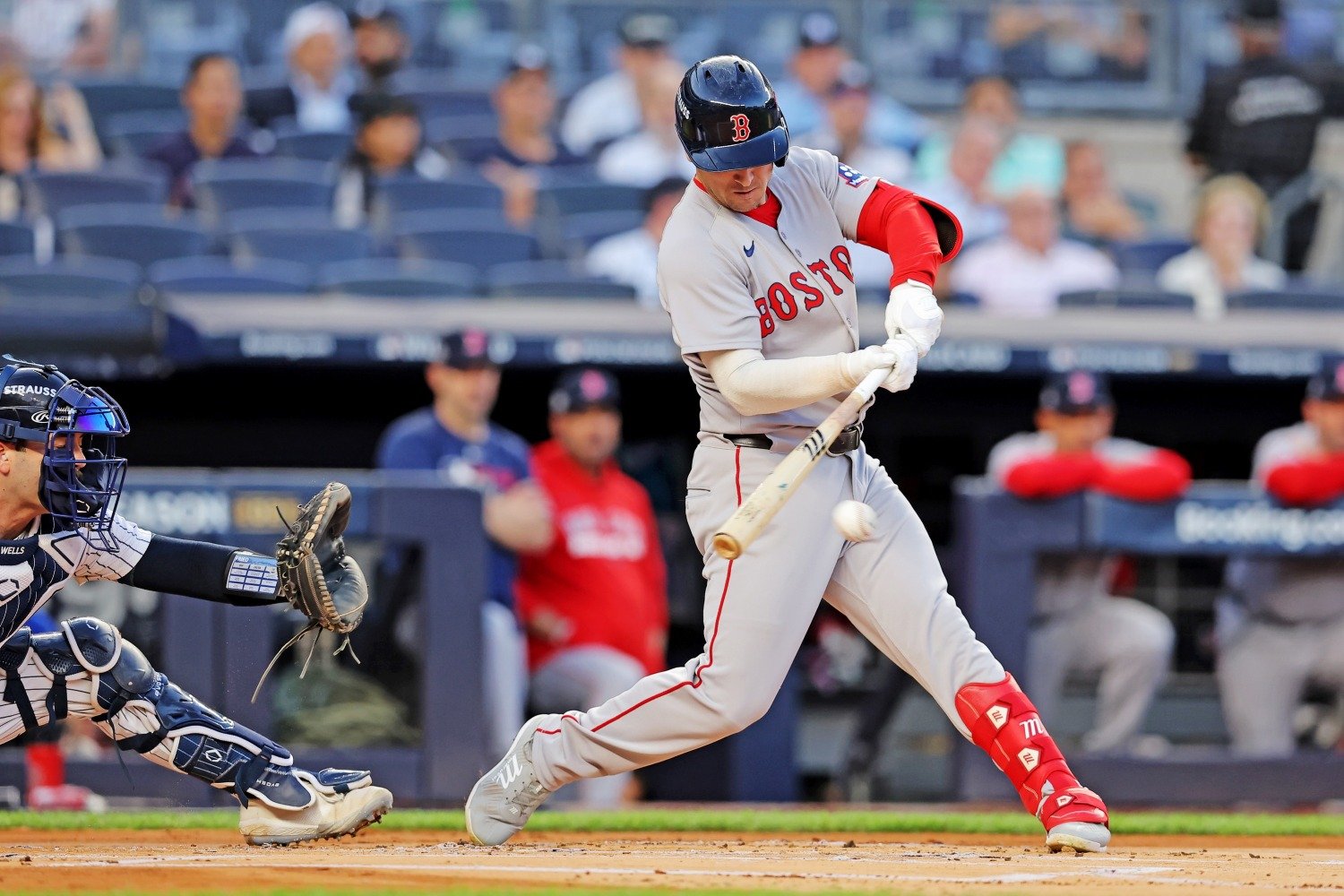 After an uneven rookie season, Matt Shaw has only a tenuous hold on the third-base job for the 2026 Chicago Cubs. Shaw comes with six more seasons of team control and will make a league-minimum salary for at least the next two years, and his defense improved by leaps and bounds over the course of 2025, but his bat is a shakier proposition. Thus, as the team tries to upgrade its roster for next season, one free agent in whom they've taken a noteworthy interest is a player with whom they flirted last offseason, as his free agency stretched into late January and early February: Alex Bregman. Sources with knowledge of the team's thinking confirmed to North Side Baseball what Sahadev Sharma and Patrick Mooney reported at The Athletic. The Cubs are considering a version of their offseason where Bregman is the headline signee, which might mean trading Shaw (or other young hitters) to address their remaining need for a top-tier starting pitcher. However, they haven't yet made more than cursory contact with agent Scott Boras about signing Bregman. It should stay that way. Here, in a nutshell, is why. Last winter, the opportunity to sign Bregman as a free agent was rightfully tantalizing. He cost the Red Sox a draft pick and some international spending capacity, because he'd rejected a qualifying offer from the Astros, but he signed a short-term deal and was always likely to opt out of it after 2025. Now, however, he's shopping for a truer long-term home. That doesn't make sense for the Cubs at the price Bregman is likely to command, because his power is probably fading in an irreversible way. Bregman consistently swung the bat around 71.5 miles per hour in 2024, even in a season when his power production sagged. In 2025, he started at roughly the same level, but it was considerably slower after he missed considerable time with a strained quad. It's possible that his true-talent swing speed didn't diminish much within the season, but it's highly likely that it's about to. Bregman will turn 32 years old just after Opening Day. As that chart from Tom Tango showed, at 32, hitters start losing bat speed at an accelerating rate. We're unlikely to see the former All-Star get back the bat speed he lost, even if he only lost it because of an injury from which he's now fully recovered. If Bregman swung the bat as fast as Kyle Schwarber or Pete Alonso, that wouldn't be so bad. Those sluggers are over-30 free agents this winter, but are in line for big deals because they have power that should remain well above average for the next few years. That just isn't true of Bregman. Based on the aging curve for bat speed, only two right-handed batters showed the ability to generate big power while swinging as slowly as Bregman is likely to swing in 2026: the Dodgers' Will Smith and new Orioles outfielder Taylor Ward. Baltimore traded a high-upside starter for Ward earlier this offseason, in Grayson Rodriguez, but that's because Rodriguez is a major, perennial injury risk—and because they only need to worry about Ward for one year, before he'll hit free agency. Expect Ward's market to be surprisingly cold next winter, because he'll be a power-oriented righty hitter with a slow swing, heading toward his mid-30s. That's what Bregman is right now. He made a world of sense on a short-term deal, but a source close to the longtime Astro said he's looking for a five-year contract this time around. He might have to settle for a four-year pact, but even that would likely pan out badly. He's not a power-only player, in that he makes contact at a very high rate and draws walks well, but Bregman is too small to project to hold onto his bat speed unusually well; too slow to hold onto much value on the bases, or to augment the upside of a balls-in-play, high-average profile for the medium-term future; and too weak-armed to stay at third base all the way through even a four-year engagement. If his market doesn't go where Bregman hopes, and he's available for under $100 million on a four-year deal, he fits the Cubs' needs. That would leave money free to bolster the rotation and the bullpen, while rounding out the lineup nicely. Certainly, if he ends up being open to another one-year deal, the Cubs should be willing to throw big money at him. If, however, he commands an annual average value over $30 million on a deal of three years or longer, the Cubs should stay away. He didn't go over a cliff in 2025 with the Red Sox, thanks to adjustments focused on pulling the ball in the air and banging balls off the Green Monster at Fenway Park. He might very well start a steep decline in 2026, though, and Wrigley Field doesn't offer the cushion against that kind of trouble that Fenway or Houston's Daikin Park do. The Cubs are unlikely to be as good in 2026 as they were in 2025. Bregman is the kind of player who could change that, but the type of deal he appears to want wouldn't allow them to do the other things they need to do to justify it. If Chicago wants a big bat in this free-agent market, they would be better off shelling out bigger bucks for Alonso or Bo Bichette. They would be even wiser to roll the dice and sign Kazuma Okamoto, out of NPB, instead—and to spend the attendant savings on a more robust upgrade of their pitching staff. Bregman was a perfect fit last year, and Jed Hoyer should have done more to bring him in. That golden opportunity has passed, and the Cubs should move on, rather than making a big-money mistake on a player heading into his twilight.
 -
Image courtesy of © Brad Penner-Imagn Images After an uneven rookie season, Matt Shaw has only a tenuous hold on the third-base job for the 2026 Chicago Cubs. Shaw comes with six more seasons of team control and will make a league-minimum salary for at least the next two years, and his defense improved by leaps and bounds over the course of 2025, but his bat is a shakier proposition. Thus, as the team tries to upgrade its roster for next season, one free agent in whom they've taken a noteworthy interest is a player with whom they flirted last offseason, as his free agency stretched into late January and early February: Alex Bregman. Sources with knowledge of the team's thinking confirmed to North Side Baseball what Sahadev Sharma and Patrick Mooney reported at The Athletic. The Cubs are considering a version of their offseason where Bregman is the headline signee, which might mean trading Shaw (or other young hitters) to address their remaining need for a top-tier starting pitcher. However, they haven't yet made more than cursory contact with agent Scott Boras about signing Bregman. It should stay that way. Here, in a nutshell, is why. Last winter, the opportunity to sign Bregman as a free agent was rightfully tantalizing. He cost the Red Sox a draft pick and some international spending capacity, because he'd rejected a qualifying offer from the Astros, but he signed a short-term deal and was always likely to opt out of it after 2025. Now, however, he's shopping for a truer long-term home. That doesn't make sense for the Cubs at the price Bregman is likely to command, because his power is probably fading in an irreversible way. Bregman consistently swung the bat around 71.5 miles per hour in 2024, even in a season when his power production sagged. In 2025, he started at roughly the same level, but it was considerably slower after he missed considerable time with a strained quad. It's possible that his true-talent swing speed didn't diminish much within the season, but it's highly likely that it's about to. Bregman will turn 32 years old just after Opening Day. As that chart from Tom Tango showed, at 32, hitters start losing bat speed at an accelerating rate. We're unlikely to see the former All-Star get back the bat speed he lost, even if he only lost it because of an injury from which he's now fully recovered. If Bregman swung the bat as fast as Kyle Schwarber or Pete Alonso, that wouldn't be so bad. Those sluggers are over-30 free agents this winter, but are in line for big deals because they have power that should remain well above average for the next few years. That just isn't true of Bregman. Based on the aging curve for bat speed, only two right-handed batters showed the ability to generate big power while swinging as slowly as Bregman is likely to swing in 2026: the Dodgers' Will Smith and new Orioles outfielder Taylor Ward. Baltimore traded a high-upside starter for Ward earlier this offseason, in Grayson Rodriguez, but that's because Rodriguez is a major, perennial injury risk—and because they only need to worry about Ward for one year, before he'll hit free agency. Expect Ward's market to be surprisingly cold next winter, because he'll be a power-oriented righty hitter with a slow swing, heading toward his mid-30s. That's what Bregman is right now. He made a world of sense on a short-term deal, but a source close to the longtime Astro said he's looking for a five-year contract this time around. He might have to settle for a four-year pact, but even that would likely pan out badly. He's not a power-only player, in that he makes contact at a very high rate and draws walks well, but Bregman is too small to project to hold onto his bat speed unusually well; too slow to hold onto much value on the bases, or to augment the upside of a balls-in-play, high-average profile for the medium-term future; and too weak-armed to stay at third base all the way through even a four-year engagement. If his market doesn't go where Bregman hopes, and he's available for under $100 million on a four-year deal, he fits the Cubs' needs. That would leave money free to bolster the rotation and the bullpen, while rounding out the lineup nicely. Certainly, if he ends up being open to another one-year deal, the Cubs should be willing to throw big money at him. If, however, he commands an annual average value over $30 million on a deal of three years or longer, the Cubs should stay away. He didn't go over a cliff in 2025 with the Red Sox, thanks to adjustments focused on pulling the ball in the air and banging balls off the Green Monster at Fenway Park. He might very well start a steep decline in 2026, though, and Wrigley Field doesn't offer the cushion against that kind of trouble that Fenway or Houston's Daikin Park do. The Cubs are unlikely to be as good in 2026 as they were in 2025. Bregman is the kind of player who could change that, but the type of deal he appears to want wouldn't allow them to do the other things they need to do to justify it. If Chicago wants a big bat in this free-agent market, they would be better off shelling out bigger bucks for Alonso or Bo Bichette. They would be even wiser to roll the dice and sign Kazuma Okamoto, out of NPB, instead—and to spend the attendant savings on a more robust upgrade of their pitching staff. Bregman was a perfect fit last year, and Jed Hoyer should have done more to bring him in. That golden opportunity has passed, and the Cubs should move on, rather than making a big-money mistake on a player heading into his twilight. View full article
-
Image courtesy of © Matt Marton-Imagn Images The Cubs face a daunting challenge of pitching management for 2026. They should get Justin Steele back about halfway through the season, but they'll need to monitor and limit his workload. Jameson Taillon, Shota Imanaga and Cade Horton are all a full go for next season, but each missed time in 2025 with injuries, which increases the chances that they'll do so again next year. That's why they extended a qualifying offer to Imanaga, even after extending Colin Rea. It's why they're still looking for upgrades to a rotation that nominally boasts six or seven viable starters. Matthew Boyd will be another source of uncertainty in that group. He pitched 180 innings in the regular season and made three more starts in the playoffs, a year after making just eight regular-season appearances in a return from Tommy John surgery. Boyd wore down in the second half and hit the wall completely in October, and now, his 2026 season is scheduled for an early start. On Wednesday afternoon, Boyd made an appearance on Foul Territory, a popular web show and podcast, to announce his plans to pitch for Team USA in the World Baseball Classic next March. The last time the WBC was contested, Japan beat the United States in the final game, thanks largely to better pitching depth. With rare exceptions, Team USA has struggled to find high-end hurlers willing to risk the nudge to their odometer that comes from ramping up to high-intensity competition earlier. Boyd might only pitch twice during the tournament, but it will mean preparing more and earlier during the offseason and ramping up faster early in spring training. That will exacerbate the risk of fatigue from Boyd late in the season, and reduce the chances that he's still going strong come October. Thus, the Cubs have yet another reason to be ready; to be wary; and to load up on pitching. Steele will be more of a second-half factor. Jaxon Wiggins could be, too, if he stays healthy. Boyd might not be the only Cubs hurler to pitch in the WBC, though. It's very possible that Imanaga, Javier Assad and/or Daniel Palencia will also get the call. Every pitcher whom the team sends to the global tournament is one who's more likely to find trouble down the stretch. Jed Hoyer and Carter Hawkins have to be assiduous in continuing to add, so they can absorb whatever losses occur as the season wears on. In the meantime, this is further expansion for the Cubs' global brand, and more importantly, it's fun. The WBC is a delightful event, and although it might not be good for the MLB teams who allow their pitchers to participate, it's good that it exists (and continues to grow). Boyd's presence will make an exciting tournament even more so, and increases the chances of the United States reclaiming the title they last won in 2017. That, in itself, is reason to celebrate the news. View full article
-
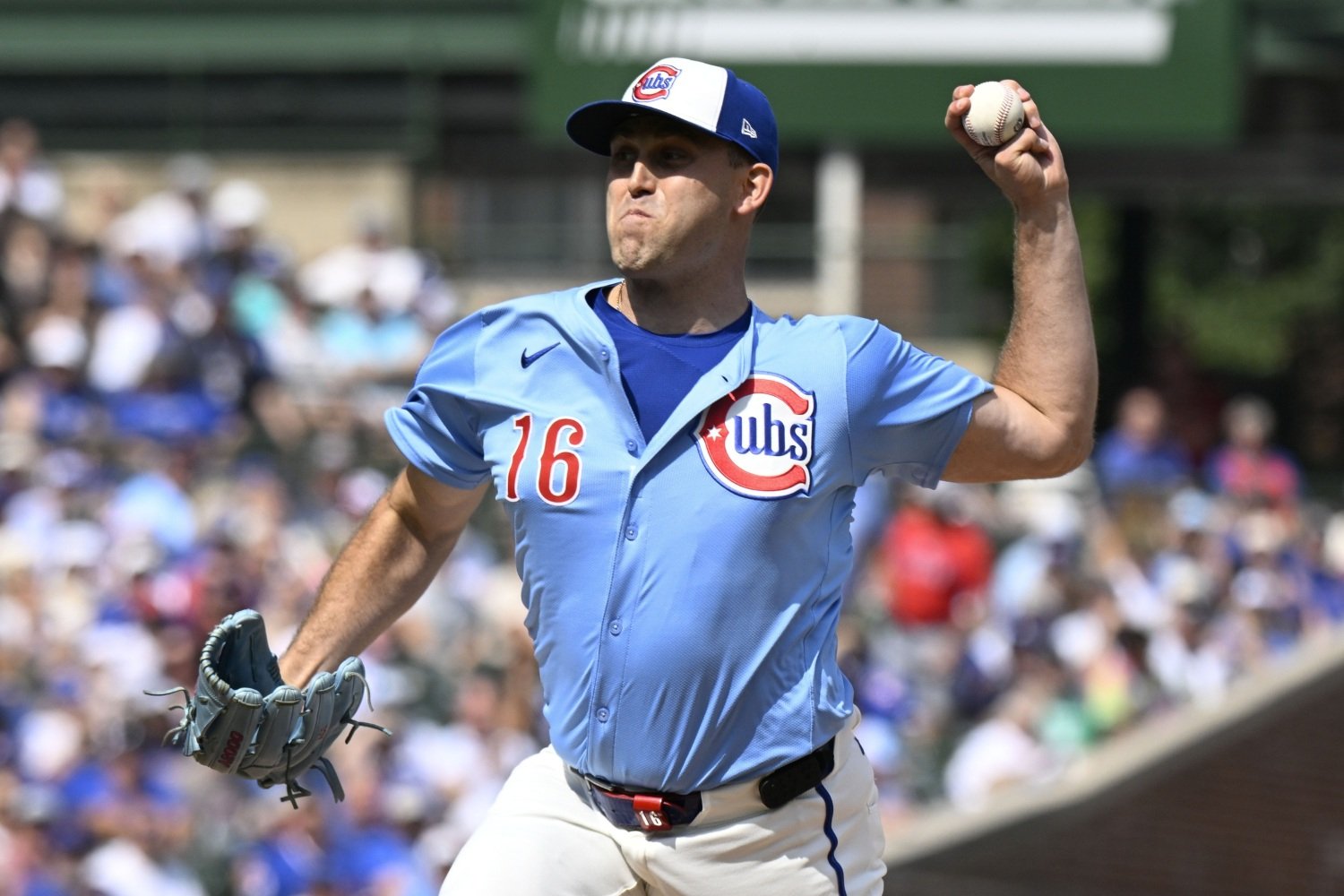 The Cubs face a daunting challenge of pitching management for 2026. They should get Justin Steele back about halfway through the season, but they'll need to monitor and limit his workload. Jameson Taillon, Shota Imanaga and Cade Horton are all a full go for next season, but each missed time in 2025 with injuries, which increases the chances that they'll do so again next year. That's why they extended a qualifying offer to Imanaga, even after extending Colin Rea. It's why they're still looking for upgrades to a rotation that nominally boasts six or seven viable starters. Matthew Boyd will be another source of uncertainty in that group. He pitched 180 innings in the regular season and made three more starts in the playoffs, a year after making just eight regular-season appearances in a return from Tommy John surgery. Boyd wore down in the second half and hit the wall completely in October, and now, his 2026 season is scheduled for an early start. On Wednesday afternoon, Boyd made an appearance on Foul Territory, a popular web show and podcast, to announce his plans to pitch for Team USA in the World Baseball Classic next March. The last time the WBC was contested, Japan beat the United States in the final game, thanks largely to better pitching depth. With rare exceptions, Team USA has struggled to find high-end hurlers willing to risk the nudge to their odometer that comes from ramping up to high-intensity competition earlier. Boyd might only pitch twice during the tournament, but it will mean preparing more and earlier during the offseason and ramping up faster early in spring training. That will exacerbate the risk of fatigue from Boyd late in the season, and reduce the chances that he's still going strong come October. Thus, the Cubs have yet another reason to be ready; to be wary; and to load up on pitching. Steele will be more of a second-half factor. Jaxon Wiggins could be, too, if he stays healthy. Boyd might not be the only Cubs hurler to pitch in the WBC, though. It's very possible that Imanaga, Javier Assad and/or Daniel Palencia will also get the call. Every pitcher whom the team sends to the global tournament is one who's more likely to find trouble down the stretch. Jed Hoyer and Carter Hawkins have to be assiduous in continuing to add, so they can absorb whatever losses occur as the season wears on. In the meantime, this is further expansion for the Cubs' global brand, and more importantly, it's fun. The WBC is a delightful event, and although it might not be good for the MLB teams who allow their pitchers to participate, it's good that it exists (and continues to grow). Boyd's presence will make an exciting tournament even more so, and increases the chances of the United States reclaiming the title they last won in 2017. That, in itself, is reason to celebrate the news.
 -
Image courtesy of © Kamil Krzaczynski-Imagn Images As part of the most recent collective bargaining agreement between the players union and MLB, an annual bonus pool was created to pay players who accumulated significant on-field value and/or finished highly in balloting for the league's major awards, in seasons in which they did not yet qualify for arbitration. It was one small (and ultimately inadequate) way to shift money from highly paid veterans (often on the decline) and underpaid young stars of the game, and it's made a significant difference in the earning power of players over their first two or three years in the league. The bonuses paid to several dozen players were announced Tuesday, and three Cubs saw their 2025 earnings substantially boosted. Pete Crow-Armstrong, who was on the All-MLB second team and put up impressive totals in wins above replacement, earned an extra $1,206,207, which is just shy of double his salary for the season. Between that extra infusion of cash; winning a Gold Glove Award; a playoff share; and his massive marketability (which has already yielded some lucrative endorsement opportunities), Crow-Armstrong got much richer this year. Whatever leverage the Cubs hoped to wield in negotiations over a contract extension when they began them in the spring has evaporated. Crow-Armstrong is still in position to hit free agency relatively young, and he'll qualify for arbitration as a Super Two player in 2027. He's holding all the cards. Cade Horton got $500,000 for his runner-up finish in the Rookie of the Year voting, and made a total of $852,806 in bonuses after adding the amount he earned via WAR calculations. That's more than he made in salary, too, and he gets the non-monetary (but extremely lucrative) added benefit of getting a full year of service time for 2025, thanks to getting those Rookie of the Year votes. He's now set to become a free agent after 2030, just as Crow-Armstrong is. He, too, leaped forward in terms of his career earning potential this season, thanks to the new rules that came into effect in the last CBA. Nothing, however, can save the earning power of a late-blooming first baseman. Michael Busch, who arguably had the best season of any Cub, got just $483,108 for his efforts. This was Busch's age-27 season, and while he made the most of it, he's not eligible for arbitration until 2027, and can't become a free agent until the end of 2029. By then, he's likely to be moving out of his prime. The Cubs have little incentive to extend him, and he has little chance to make All-MLB teams or rack up WAR, because of his position and the way the statistics are calculated. He'll be grateful for the extra money, which will be over $500,000 once his playoff share is heaped on top of it, but Busch didn't hit the same kind of jackpot as his younger, more celebrated teammates—even though he had a tremendous breakout campaign. These initiatives—the bonus payments and the service-time rewards—are a great step forward for the game, giving young stars more leverage and more power. It only makes the Cubs' job harder, because extending Crow-Armstrong looks like a very expensive endeavor at this point. So be it. The team will have to either swallow its worries and make a splash, or accept the risks that come with going year to year with franchise cornerstones. In the meantime, for Crow-Armstrong, Horton and Busch, these are just desserts for a job extremely well done. View full article
-
3 Cubs Get Supplemental Paydays via MLB Pre-Arbitration Bonus Pool
Matthew Trueblood posted an article in Cubs
 As part of the most recent collective bargaining agreement between the players union and MLB, an annual bonus pool was created to pay players who accumulated significant on-field value and/or finished highly in balloting for the league's major awards, in seasons in which they did not yet qualify for arbitration. It was one small (and ultimately inadequate) way to shift money from highly paid veterans (often on the decline) and underpaid young stars of the game, and it's made a significant difference in the earning power of players over their first two or three years in the league. The bonuses paid to several dozen players were announced Tuesday, and three Cubs saw their 2025 earnings substantially boosted. Pete Crow-Armstrong, who was on the All-MLB second team and put up impressive totals in wins above replacement, earned an extra $1,206,207, which is just shy of double his salary for the season. Between that extra infusion of cash; winning a Gold Glove Award; a playoff share; and his massive marketability (which has already yielded some lucrative endorsement opportunities), Crow-Armstrong got much richer this year. Whatever leverage the Cubs hoped to wield in negotiations over a contract extension when they began them in the spring has evaporated. Crow-Armstrong is still in position to hit free agency relatively young, and he'll qualify for arbitration as a Super Two player in 2027. He's holding all the cards. Cade Horton got $500,000 for his runner-up finish in the Rookie of the Year voting, and made a total of $852,806 in bonuses after adding the amount he earned via WAR calculations. That's more than he made in salary, too, and he gets the non-monetary (but extremely lucrative) added benefit of getting a full year of service time for 2025, thanks to getting those Rookie of the Year votes. He's now set to become a free agent after 2030, just as Crow-Armstrong is. He, too, leaped forward in terms of his career earning potential this season, thanks to the new rules that came into effect in the last CBA. Nothing, however, can save the earning power of a late-blooming first baseman. Michael Busch, who arguably had the best season of any Cub, got just $483,108 for his efforts. This was Busch's age-27 season, and while he made the most of it, he's not eligible for arbitration until 2027, and can't become a free agent until the end of 2029. By then, he's likely to be moving out of his prime. The Cubs have little incentive to extend him, and he has little chance to make All-MLB teams or rack up WAR, because of his position and the way the statistics are calculated. He'll be grateful for the extra money, which will be over $500,000 once his playoff share is heaped on top of it, but Busch didn't hit the same kind of jackpot as his younger, more celebrated teammates—even though he had a tremendous breakout campaign. These initiatives—the bonus payments and the service-time rewards—are a great step forward for the game, giving young stars more leverage and more power. It only makes the Cubs' job harder, because extending Crow-Armstrong looks like a very expensive endeavor at this point. So be it. The team will have to either swallow its worries and make a splash, or accept the risks that come with going year to year with franchise cornerstones. In the meantime, for Crow-Armstrong, Horton and Busch, these are just desserts for a job extremely well done.
 -
Image courtesy of © Raymond Carlin III-Imagn Images The Chicago Cubs and right-handed reliever Phil Maton agreed to a two-year deal Friday night, according to a source familiar with the negotiation. The news was first reported by Michael Cerami, of Bleacher Nation, on Twitter. Maton, who will turn 33 next March, gets two guaranteed years on the pact, and the Cubs will hold an option for 2028. Having pitched for four different teams over the last two seasons, Maton is the classic peripatetic middle reliever. He comes to the Cubs off a career year with the Cardinals and Rangers, wherein he posted a 2.79 ERA and struck out 32.3% of opposing batters in 61 1/3 innings. He boasts one of the league's highest-spin curveballs, with two-plane break and a huge velocity differential from his fastball. He's pushed his usage rate on the curve as high as 40% in one season, and in 2025, the hook was actually his primary pitch. Maton does not throw hard. His preferred flavor of fastball is a hard cutter that sits 90-91, which he began to feature in 2023. He works vertically with the cutter and curve from a low arm slot, and uses his sinker and sweeper to go east and west to keep hitters honest. He last walked fewer than 9% of batters in a season before the pandemic hit, but his strikeout rate generally sits north of 25% and he keeps the ball in the park well. For no playoff-caliber team can Maton be the relief ace, but he was dazzling in 2025. He's a good bet to continue striking out hitters at an above-average rate, even with tepid velocity, and the Cubs badly needed some swing-and-miss stability in their relief corps. His fastball shape suits what the Cubs like, and his non-traditional style brought him down into the team's price range. He won't be the last move Jed Hoyer makes to reinforce the bullpen, though. Once he's added to the 40-man roster, the Cubs will still have nine open places on it. They have to re-sign or replace the likes of Brad Keller, Andrew Kittredge, Drew Pomeranz, and Caleb Thielbar—in effect, all but one of their trusted relievers from the second half of 2025. Maton is a good head start on that, but only a start. Maton did not make the DiamondCentric Top 50 free agents list, published earlier this week, but did appear at the tail end of two of the lists assembled by writers collaborating on that project. The most similar pitcher to him on the top 50 was Emilio Pagán, whom we projected to earn $15 million over two years. Look for Maton's deal to fall in that price range. View full article
-
Chicago Cubs Sign Right-Handed Reliever Phil Maton to Two-Year Deal
Matthew Trueblood posted an article in Cubs
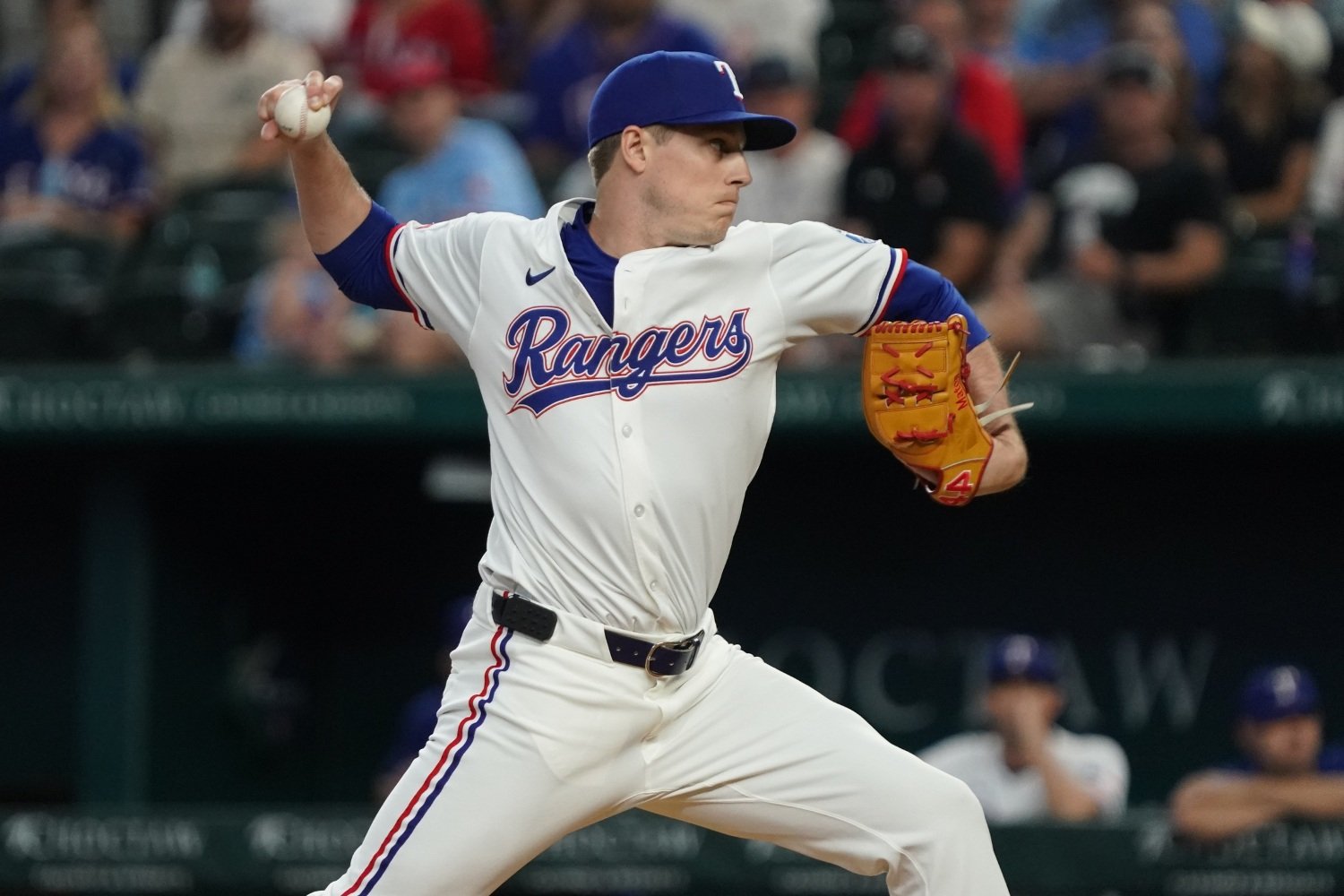 The Chicago Cubs and right-handed reliever Phil Maton agreed to a two-year deal Friday night, according to a source familiar with the negotiation. The news was first reported by Michael Cerami, of Bleacher Nation, on Twitter. Maton, who will turn 33 next March, gets two guaranteed years on the pact, and the Cubs will hold an option for 2028. Having pitched for four different teams over the last two seasons, Maton is the classic peripatetic middle reliever. He comes to the Cubs off a career year with the Cardinals and Rangers, wherein he posted a 2.79 ERA and struck out 32.3% of opposing batters in 61 1/3 innings. He boasts one of the league's highest-spin curveballs, with two-plane break and a huge velocity differential from his fastball. He's pushed his usage rate on the curve as high as 40% in one season, and in 2025, the hook was actually his primary pitch. Maton does not throw hard. His preferred flavor of fastball is a hard cutter that sits 90-91, which he began to feature in 2023. He works vertically with the cutter and curve from a low arm slot, and uses his sinker and sweeper to go east and west to keep hitters honest. He last walked fewer than 9% of batters in a season before the pandemic hit, but his strikeout rate generally sits north of 25% and he keeps the ball in the park well. For no playoff-caliber team can Maton be the relief ace, but he was dazzling in 2025. He's a good bet to continue striking out hitters at an above-average rate, even with tepid velocity, and the Cubs badly needed some swing-and-miss stability in their relief corps. His fastball shape suits what the Cubs like, and his non-traditional style brought him down into the team's price range. He won't be the last move Jed Hoyer makes to reinforce the bullpen, though. Once he's added to the 40-man roster, the Cubs will still have nine open places on it. They have to re-sign or replace the likes of Brad Keller, Andrew Kittredge, Drew Pomeranz, and Caleb Thielbar—in effect, all but one of their trusted relievers from the second half of 2025. Maton is a good head start on that, but only a start. Maton did not make the DiamondCentric Top 50 free agents list, published earlier this week, but did appear at the tail end of two of the lists assembled by writers collaborating on that project. The most similar pitcher to him on the top 50 was Emilio Pagán, whom we projected to earn $15 million over two years. Look for Maton's deal to fall in that price range.
 -
That's a great call, and the Cubs have had interest in Duran in the past. Could actually happen. Otherwise, though, I'm not sure the right player is out there to make it happen, as strong an idea as it is.
-
Image courtesy of © Kamil Krzaczynski-Imagn Images Under no circumstances will the Cubs non-tender Justin Steele or Javier Assad Friday. Though Steele is unlikely to make it back from Tommy John surgery until midsummer, he's a vital part of their medium-term pitching plans. Both he and Assad, who is arbitration-eligible for the first time and projects to make less than $2 million, have trade value even if the Cubs ultimately build a pitching staff into which they no longer fit. That doesn't mean there won't be news about one or both of them before the end of the day. Chicago could try to strike a two-year deal with Steele, who is set to hit free agency after 2027, anyway. That would give them cost certainty for the balance of the term of Steele's team control, and let Steele dispense with worrying about his earning power as he rehabs throughout the winter and spring from his operation this April. Often, with players who are sure things to receive a contract, the deadline that spurs action on deals like that is the one for exchanging arbitration figures (which will be on Jan. 8, 2026), but getting Steele's salary figured out early would give the team more clarity as they plot an active pursuit of further pitching upgrades. Assad is less likely to settle on a salary Friday, but in his first year in the system, he has relatively little earning power. The Cubs might elect to lean on him and agree to terms early, if only so there's a fixed salary associated with him when (inevitably) his name comes up in trade discussions over the next six weeks. Since Assad still has minor-league options, the Cubs can afford to stash him in Triple A and keep him stretched out as starting pitching depth in 2026. That doesn't seem like the highest use of him at this stage of his career, but flexibility always has value—to the team that currently owns the rights to a player, and to trade partners. The other two Cubs eligible for arbitration this winter are on shakier ground, and will almost certainly be involved in a transaction Friday. In Eli Morgan's case, the question is whether the Cubs will jettison him by non-tendering him, or sign him to a low-dollar deal in the neighborhood of the $1.1 million he's projected to earn in his second trip through arbitration. If the two sides can't agree on a deal before the deadline, Jed Hoyer and company will probably just cut the righty reliever loose, but there's little roster pressure to do so. Chicago's 40-man roster still only has 32 players on it, so Morgan could easily survive. It's just unlikely that the Cubs let the question of how much he'll make linger past Friday, This deadline will be enough to spur action on such a fringy case. It's a different dilemma where Reese McGuire is concerned. After being an adequate stopgap amid Miguel Amaya's injuries in 2025, McGuire is under team control for one more season, if the Cubs are willing to pay him $1.9 million or so. However, he's ineligible to be sent to the minor leagues without being exposed to the other 29 teams. With Amaya and Carson Kelly set to remain the team's catching tandem of choice and Moisés Ballesteros available as at least an emergency option at the position, McGuire doesn't really fit the 2026 Cubs. They could non-tender him, but he should have (very limited) trade value, if they choose to extract it. Because McGuire is little more than a solid backup catcher, he won't bring back a player of any substantial value in a deal. Rather, the Cubs could swap him for a player with about the same ceiling but who isn't ready for the majors. It would have to be someone another team views as a potential strain on their own 40-man roster in the year ahead, but in a different way. Rather than being out of options or near free agency, like McGuire, the target would need to be a pitcher who projects to spend much of 2026 on the injured list or a prospect already on the 40-man roster who isn't ready for the big leagues but still has an option year remaining. Even that's relatively unlikely. The best bet is that McGuire would get them only cash. Usually, in trades like the one McGuire would be involved in, a team receives something like $100,000. The Cubs would thus save about $2 million by trading him. That's nothing to sneeze at, but most of those savings can also be realized by non-tendering him. Unless they get an offer too good to pass up, the team might release McGuire just for the greater goodwill doing so would engender. One way the Cubs position themselves to scoop up players like McGuire (or, for instance, Brad Keller, whom they signed on a minor-league deal last winter) is by cultivating a reputation for fair dealing with players in situations like these. Allowing McGuire to become a free agent and choose his next employer might be worth more to the team than they could acquire by trading him, payable in doors opened and calls taken by future free agents. Amaya and Ethan Roberts each fell about a week shy of qualifying for Super Two status, so the team only has Steele, Assad, Morgan and McGuire to worry about Friday. However, they might also make news in a different way. With other teams forced into tougher decisions due to crowded 40-man rosters and/or budget constraints, there will be multiple trades Friday involving not only players like McGuire, but slightly better ones who just don't fit their current clubs. With the extra space on their roster, the Cubs could be a destination for such a player. The Orioles are considering non-tendering right-hitting first baseman Ryan Mountcastle, who's set to earn over $7 million in his final year of arbitration eligibility. Coming off a poor season, Mountcastle isn't worth that much unless you believe he's due for a rebound, but he's a career .282/.334/.479 hitter against left-handed pitchers, and could be a nice bench bat for the Cubs, rotating in at first base and designated hitter to spell Michael Busch, Ballesteros and/or Owen Caissie in various configurations. Andy Ibáñez (of the Tigers) and Jonathan India (of the Royals) are also righty batters with good track records against lefties, coming off rough seasons and on the bubble as Friday dawns. There are also, inevitably, a dozen or so intriguing arms who might shake loose easily. It's a day for small moves, but for a team with few arbitration cases to worry about and lots of room on the 40-man roster, it's a day full of opportunities. The Cubs will make some news Friday, and it could begin to indicate the direction of the offseason to come. View full article
-
 Under no circumstances will the Cubs non-tender Justin Steele or Javier Assad Friday. Though Steele is unlikely to make it back from Tommy John surgery until midsummer, he's a vital part of their medium-term pitching plans. Both he and Assad, who is arbitration-eligible for the first time and projects to make less than $2 million, have trade value even if the Cubs ultimately build a pitching staff into which they no longer fit. That doesn't mean there won't be news about one or both of them before the end of the day. Chicago could try to strike a two-year deal with Steele, who is set to hit free agency after 2027, anyway. That would give them cost certainty for the balance of the term of Steele's team control, and let Steele dispense with worrying about his earning power as he rehabs throughout the winter and spring from his operation this April. Often, with players who are sure things to receive a contract, the deadline that spurs action on deals like that is the one for exchanging arbitration figures (which will be on Jan. 8, 2026), but getting Steele's salary figured out early would give the team more clarity as they plot an active pursuit of further pitching upgrades. Assad is less likely to settle on a salary Friday, but in his first year in the system, he has relatively little earning power. The Cubs might elect to lean on him and agree to terms early, if only so there's a fixed salary associated with him when (inevitably) his name comes up in trade discussions over the next six weeks. Since Assad still has minor-league options, the Cubs can afford to stash him in Triple A and keep him stretched out as starting pitching depth in 2026. That doesn't seem like the highest use of him at this stage of his career, but flexibility always has value—to the team that currently owns the rights to a player, and to trade partners. The other two Cubs eligible for arbitration this winter are on shakier ground, and will almost certainly be involved in a transaction Friday. In Eli Morgan's case, the question is whether the Cubs will jettison him by non-tendering him, or sign him to a low-dollar deal in the neighborhood of the $1.1 million he's projected to earn in his second trip through arbitration. If the two sides can't agree on a deal before the deadline, Jed Hoyer and company will probably just cut the righty reliever loose, but there's little roster pressure to do so. Chicago's 40-man roster still only has 32 players on it, so Morgan could easily survive. It's just unlikely that the Cubs let the question of how much he'll make linger past Friday, This deadline will be enough to spur action on such a fringy case. It's a different dilemma where Reese McGuire is concerned. After being an adequate stopgap amid Miguel Amaya's injuries in 2025, McGuire is under team control for one more season, if the Cubs are willing to pay him $1.9 million or so. However, he's ineligible to be sent to the minor leagues without being exposed to the other 29 teams. With Amaya and Carson Kelly set to remain the team's catching tandem of choice and Moisés Ballesteros available as at least an emergency option at the position, McGuire doesn't really fit the 2026 Cubs. They could non-tender him, but he should have (very limited) trade value, if they choose to extract it. Because McGuire is little more than a solid backup catcher, he won't bring back a player of any substantial value in a deal. Rather, the Cubs could swap him for a player with about the same ceiling but who isn't ready for the majors. It would have to be someone another team views as a potential strain on their own 40-man roster in the year ahead, but in a different way. Rather than being out of options or near free agency, like McGuire, the target would need to be a pitcher who projects to spend much of 2026 on the injured list or a prospect already on the 40-man roster who isn't ready for the big leagues but still has an option year remaining. Even that's relatively unlikely. The best bet is that McGuire would get them only cash. Usually, in trades like the one McGuire would be involved in, a team receives something like $100,000. The Cubs would thus save about $2 million by trading him. That's nothing to sneeze at, but most of those savings can also be realized by non-tendering him. Unless they get an offer too good to pass up, the team might release McGuire just for the greater goodwill doing so would engender. One way the Cubs position themselves to scoop up players like McGuire (or, for instance, Brad Keller, whom they signed on a minor-league deal last winter) is by cultivating a reputation for fair dealing with players in situations like these. Allowing McGuire to become a free agent and choose his next employer might be worth more to the team than they could acquire by trading him, payable in doors opened and calls taken by future free agents. Amaya and Ethan Roberts each fell about a week shy of qualifying for Super Two status, so the team only has Steele, Assad, Morgan and McGuire to worry about Friday. However, they might also make news in a different way. With other teams forced into tougher decisions due to crowded 40-man rosters and/or budget constraints, there will be multiple trades Friday involving not only players like McGuire, but slightly better ones who just don't fit their current clubs. With the extra space on their roster, the Cubs could be a destination for such a player. The Orioles are considering non-tendering right-hitting first baseman Ryan Mountcastle, who's set to earn over $7 million in his final year of arbitration eligibility. Coming off a poor season, Mountcastle isn't worth that much unless you believe he's due for a rebound, but he's a career .282/.334/.479 hitter against left-handed pitchers, and could be a nice bench bat for the Cubs, rotating in at first base and designated hitter to spell Michael Busch, Ballesteros and/or Owen Caissie in various configurations. Andy Ibáñez (of the Tigers) and Jonathan India (of the Royals) are also righty batters with good track records against lefties, coming off rough seasons and on the bubble as Friday dawns. There are also, inevitably, a dozen or so intriguing arms who might shake loose easily. It's a day for small moves, but for a team with few arbitration cases to worry about and lots of room on the 40-man roster, it's a day full of opportunities. The Cubs will make some news Friday, and it could begin to indicate the direction of the offseason to come.
 -
Image courtesy of © Denis Poroy-Imagn Images According to multiple reports, the Cubs are among the teams with significant interest in Michael King. That's just preliminary speculation, but it's interesting, because (according to a source familiar with their thinking) the Cubs still view signing King as an option even after Shota Imanaga accepted the qualifying offer on Tuesday, King, who enters his age-31 season next spring, ranked 13th on DiamondCentric's top 50 free agents list, and we project him to find a four-year deal worth $75 million. Right now, however, the Cubs project to spend about $70 million on their existing rotation for 2026. Adding King to the mix would push that number to roughly $90 million, and it would force at least one pitcher whom both the team and the player themselves see as a starter into relief work. Even if Chicago uses a six-man rotation to open next season, it would go something like: Cade Horton King Imanaga Matthew Boyd Jameson Taillon Colin Rea That would leave Javier Assad out of the mix to begin the campaign, and it would mean pushing Rea (or someone else, perhaps) to the bullpen once Steele returns from Tommy John surgery. That's not a deal-breaker in and of itself, because both Assad and Rea have experience in the bullpen, but it's probably incorrect to assume they'll use a six-man rotation, too. There are too many days off in the new version of the MLB schedule to make that the best use of a limited pool of pitchers. Thus, even without Steele, signing another high-end free agent would push both Rea and Assad to the pen, unless and until someone gets hurt. The team should plan for injuries, especially with this group. Thus, the logistical hurdles to signing a player like King are relatively trivial. However, the issue of the salary King is likely to command is harder to work around. Chicago owes Dansby Swanson, Ian Happ, Seiya Suzuki, Nico Hoerner and Carson Kelly a combined $83.75 million, and they have holes to fill in both the positional corps and the bullpen. Pushing their collective spending on the rotation as high as signing King would might interfere with their plans. Much hinges on what the Ricketts family is willing to spend in 2026. They should have another $60 million to commit to players this winter, even after Imanaga returned—but it could turn out to be more like $40 million, and the difference there being similar to what King would earn on an annual basis is a telling coincidence. Since King turned down a qualifying offer, it would also cost the Cubs a draft pick to sign him. That's not a deal-breaker, either, because the team is likely to receive a pick when Kyle Tucker signs elsewhere, but the small problems with signing a top-flight starter keep adding up. For a pitcher who profiles more like an ace, it'd be easier to look past all the drawbacks to acquiring him. Alas, he's battled frequent injury trouble, and even when on the mound, his stuff didn't stand out in 2025. King does have a very heavy sinker, and that pitch and his sweeper play gorgeously off one another to righties. To lefties, his four-seamer and changeup play well. He offers a lot to dream on; the 2024 version of him was a solid No. 2 starter. Unfortunately, it's not clear that his injury issues are entirely behind him. Signing him would give the rotation much-needed upside, but not the swing-and-miss element that has been missing for years. It would also constrain their efforts to round out the lineup and replace most of their bullpen. The workaround, of course, is to trade someone from the existing group as they sign King, thereby keeping some money free to spend elsewhere while making the upgrade from whomever they replace to King. The best candidate for that is Taillon, whom they're set to pay $18 million in the final season of a four-year deal. Taillon, 34, had a 121 DRA- last year, marking him as far worse than an average starter, and his strikeout rate has been under 19% in each of the last two seasons. For those very reasons, though, Taillon has virtually no trade value. We could be heading toward a situation similar to the one the Cubs ended up in with Cody Bellinger last year. After planning for life without Bellinger and expecting him to opt out of his deal, the Cubs had to pivot when the slugger elected to opt in. They needed someone better than him, so they traded for Kyle Tucker, but that left them needing to get rid of a player with little trade value. They dumped him for Cody Poteet, whom they wouldn't even hold onto through spring training. It would be wasteful to trade Taillon that way this winter, but it might be necessary, in the wake of another failure to figure out what a key player would do upon studying their options in the marketplace. If the Cubs want to sign King, they probably need to move Taillon, to save themselves the flexibility they need to get better. Starved for leverage, they won't get much back. View full article
-
Is Michael King Worth What He Would Cost the Chicago Cubs?
Matthew Trueblood posted an article in Cubs
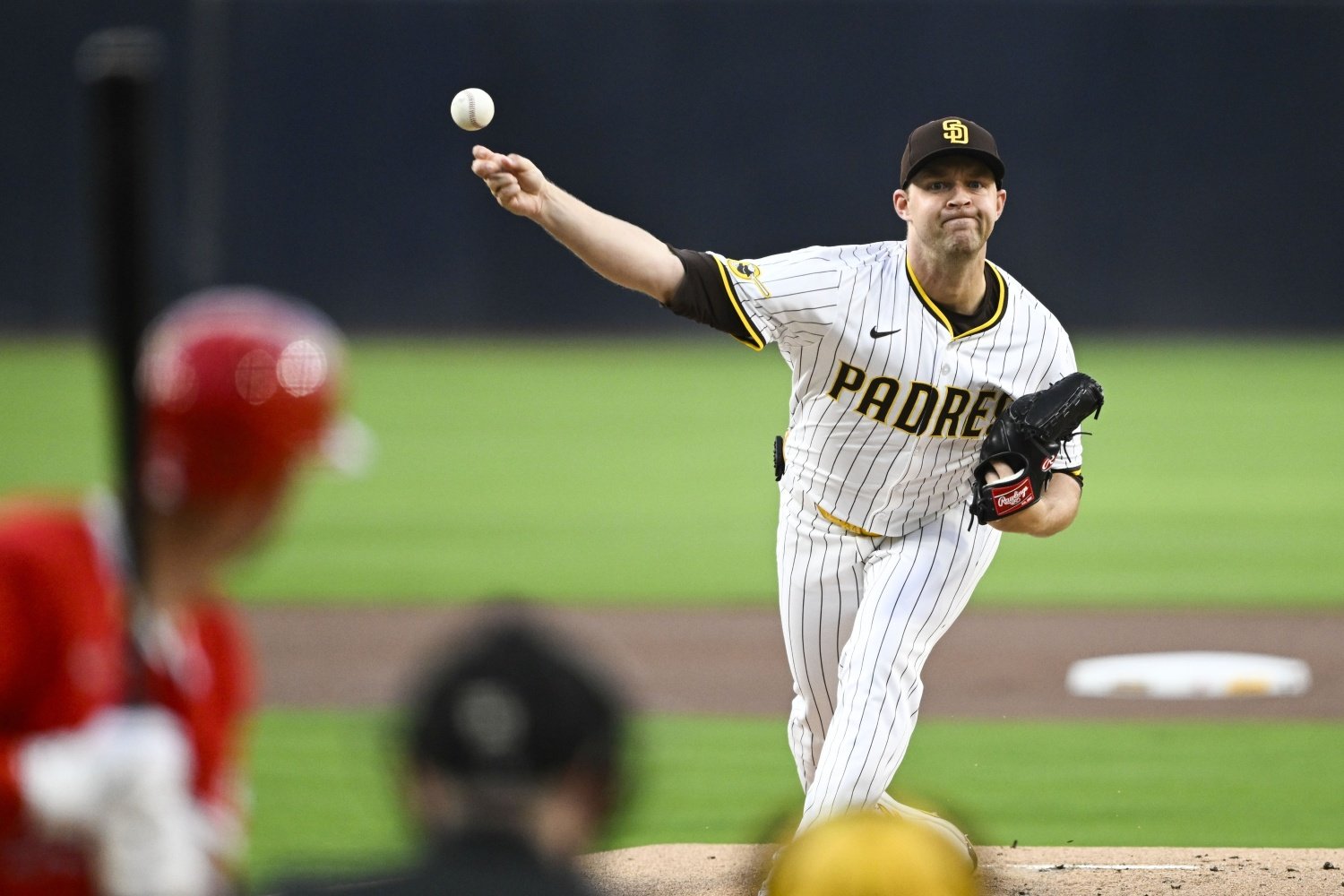 According to multiple reports, the Cubs are among the teams with significant interest in Michael King. That's just preliminary speculation, but it's interesting, because (according to a source familiar with their thinking) the Cubs still view signing King as an option even after Shota Imanaga accepted the qualifying offer on Tuesday, King, who enters his age-31 season next spring, ranked 13th on DiamondCentric's top 50 free agents list, and we project him to find a four-year deal worth $75 million. Right now, however, the Cubs project to spend about $70 million on their existing rotation for 2026. Adding King to the mix would push that number to roughly $90 million, and it would force at least one pitcher whom both the team and the player themselves see as a starter into relief work. Even if Chicago uses a six-man rotation to open next season, it would go something like: Cade Horton King Imanaga Matthew Boyd Jameson Taillon Colin Rea That would leave Javier Assad out of the mix to begin the campaign, and it would mean pushing Rea (or someone else, perhaps) to the bullpen once Steele returns from Tommy John surgery. That's not a deal-breaker in and of itself, because both Assad and Rea have experience in the bullpen, but it's probably incorrect to assume they'll use a six-man rotation, too. There are too many days off in the new version of the MLB schedule to make that the best use of a limited pool of pitchers. Thus, even without Steele, signing another high-end free agent would push both Rea and Assad to the pen, unless and until someone gets hurt. The team should plan for injuries, especially with this group. Thus, the logistical hurdles to signing a player like King are relatively trivial. However, the issue of the salary King is likely to command is harder to work around. Chicago owes Dansby Swanson, Ian Happ, Seiya Suzuki, Nico Hoerner and Carson Kelly a combined $83.75 million, and they have holes to fill in both the positional corps and the bullpen. Pushing their collective spending on the rotation as high as signing King would might interfere with their plans. Much hinges on what the Ricketts family is willing to spend in 2026. They should have another $60 million to commit to players this winter, even after Imanaga returned—but it could turn out to be more like $40 million, and the difference there being similar to what King would earn on an annual basis is a telling coincidence. Since King turned down a qualifying offer, it would also cost the Cubs a draft pick to sign him. That's not a deal-breaker, either, because the team is likely to receive a pick when Kyle Tucker signs elsewhere, but the small problems with signing a top-flight starter keep adding up. For a pitcher who profiles more like an ace, it'd be easier to look past all the drawbacks to acquiring him. Alas, he's battled frequent injury trouble, and even when on the mound, his stuff didn't stand out in 2025. King does have a very heavy sinker, and that pitch and his sweeper play gorgeously off one another to righties. To lefties, his four-seamer and changeup play well. He offers a lot to dream on; the 2024 version of him was a solid No. 2 starter. Unfortunately, it's not clear that his injury issues are entirely behind him. Signing him would give the rotation much-needed upside, but not the swing-and-miss element that has been missing for years. It would also constrain their efforts to round out the lineup and replace most of their bullpen. The workaround, of course, is to trade someone from the existing group as they sign King, thereby keeping some money free to spend elsewhere while making the upgrade from whomever they replace to King. The best candidate for that is Taillon, whom they're set to pay $18 million in the final season of a four-year deal. Taillon, 34, had a 121 DRA- last year, marking him as far worse than an average starter, and his strikeout rate has been under 19% in each of the last two seasons. For those very reasons, though, Taillon has virtually no trade value. We could be heading toward a situation similar to the one the Cubs ended up in with Cody Bellinger last year. After planning for life without Bellinger and expecting him to opt out of his deal, the Cubs had to pivot when the slugger elected to opt in. They needed someone better than him, so they traded for Kyle Tucker, but that left them needing to get rid of a player with little trade value. They dumped him for Cody Poteet, whom they wouldn't even hold onto through spring training. It would be wasteful to trade Taillon that way this winter, but it might be necessary, in the wake of another failure to figure out what a key player would do upon studying their options in the marketplace. If the Cubs want to sign King, they probably need to move Taillon, to save themselves the flexibility they need to get better. Starved for leverage, they won't get much back.
 -
Image courtesy of © Matt Marton-Imagn Images Shota Imanaga might have miscalculated a bit. He didn't think the Cubs would extend him the qualifying offer, so he turned down $15 million for 2026 with the right to earn either $15 million more in 2027 or $42 million more from 2027-28. Then again, the Cubs might have miscalculated, themselves. When they gave the offer to Imanaga, it was (in part) because they believed he would reject it, said one source familiar with their thinking. On Tuesday, each side took their medicine, as Imanaga accepted the offer. That entitles the left-handed starter to $22.025 million for 2026, a nice immediate raise, and it means the Cubs can't trade him without his permission until May 15. In essence, it ensures that the relationship between the two will last one more season, after which the Cubs will not be allowed to make the same offer even if they want to do so. Chicago chose this possibility over a team option that would have amounted to the same annual salary for three years, so they did gain some medium-term flexibility, but they now have a minor logjam forming in their starting rotation. Imanaga, 32, pitched 144 2/3 innings this year with a 3.73 ERA. His strikeout rate plunged, though, and his velocity was down after he returned from a long stint on the injured list due to a hamstring strain. He slots in, tentatively, as the team's second or third starter for 2026, but they now face the challenge of upgrading that department of their roster despite already being heavily invested in it. In addition to Imanaga's $22 million, the team owes Matthew Boyd $14.5 million; Jameson Taillon $18 million; and Colin Rea $5.5 million, not counting buyouts on the 2027 options for Boyd and Rea. Justin Steele is likely to make over $7 million via arbitration, too. That's a heavy investment in the rotation, for a team also locked into four eight-figure salaries on the positional side and needing to fill several more holes. This won't take them entirely out of the market for upgrades in the rotation, but they might feel compelled to trade either Boyd or Taillon to make room for that change, both financially and logistically. View full article
-
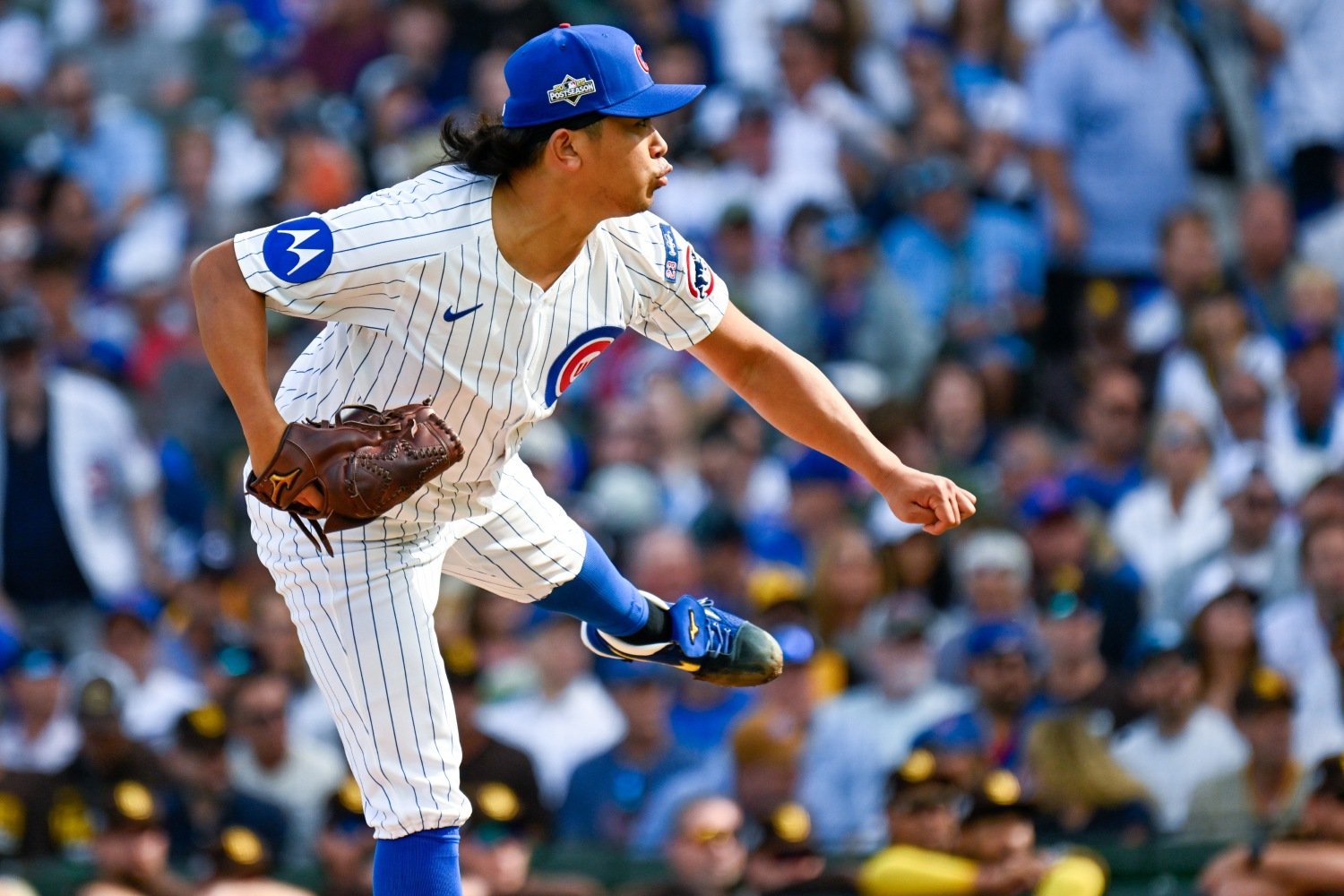 Shota Imanaga might have miscalculated a bit. He didn't think the Cubs would extend him the qualifying offer, so he turned down $15 million for 2026 with the right to earn either $15 million more in 2027 or $42 million more from 2027-28. Then again, the Cubs might have miscalculated, themselves. When they gave the offer to Imanaga, it was (in part) because they believed he would reject it, said one source familiar with their thinking. On Tuesday, each side took their medicine, as Imanaga accepted the offer. That entitles the left-handed starter to $22.025 million for 2026, a nice immediate raise, and it means the Cubs can't trade him without his permission until May 15. In essence, it ensures that the relationship between the two will last one more season, after which the Cubs will not be allowed to make the same offer even if they want to do so. Chicago chose this possibility over a team option that would have amounted to the same annual salary for three years, so they did gain some medium-term flexibility, but they now have a minor logjam forming in their starting rotation. Imanaga, 32, pitched 144 2/3 innings this year with a 3.73 ERA. His strikeout rate plunged, though, and his velocity was down after he returned from a long stint on the injured list due to a hamstring strain. He slots in, tentatively, as the team's second or third starter for 2026, but they now face the challenge of upgrading that department of their roster despite already being heavily invested in it. In addition to Imanaga's $22 million, the team owes Matthew Boyd $14.5 million; Jameson Taillon $18 million; and Colin Rea $5.5 million, not counting buyouts on the 2027 options for Boyd and Rea. Justin Steele is likely to make over $7 million via arbitration, too. That's a heavy investment in the rotation, for a team also locked into four eight-figure salaries on the positional side and needing to fill several more holes. This won't take them entirely out of the market for upgrades in the rotation, but they might feel compelled to trade either Boyd or Taillon to make room for that change, both financially and logistically.
 -
Image courtesy of © Saul Young/News Sentinel / USA TODAY NETWORK via Imagn Images It's Decision Day for Shota Imanaga, to whom the Cubs extended the qualifying offer two weeks ago. He doesn't currently count as a member of the organization, but if he accepts the offer, he'll go right back onto the 40-man roster. Right now, there's lots of room for him, but while he makes a decision about his own future, the Cubs have decisions to make about those of several of their prospects who would otherwise become eligible for the Rule 5 Draft. Tuesday is the deadline for teams to add players set to be eligible (based on the age at which they entered pro ball and the number of seasons they've played since signing) for the Rule 5 to the 40-man roster, thus protecting them from being selected. The Cubs need to protect several players, including infielder Pedro Ramírez and pitchers Brody McCullough and Brandon Birdsell. James Triantos, who was briefly in league with the team's top hitting prospects (Owen Caissie, Moisés Ballesteros and Kevin Alcántara) as they climbed the ladder, has stalled out in the high minors and enters Tuesday as an edge case. The Cubs have the open spaces to spare, for the moment, but if they have as active an offseason as Jed Hoyer envisions, they'll need to keep a few slots on their 40-man open for external additions. The main question with any Rule 5 protection decision is whether the player is likely to be taken if left unprotected. Any team who selects a player in the draft (which takes place at next month's Winter Meetings) would have to keep them on the big-league roster all year, or offer them back to their original team, so the Cubs just need to decide whether they believe anyone will be able to carry Triantos in the majors all year. If not, they can leave him off the list. If, alternatively, they just no longer believe in Triantos, the conclusion is the same. Triantos, 22, was a second-round pick in 2021, and has flashed a plus hit tool at some points during his professional career. However, injuries and a lack of power have stunted his development. In 538 plate appearances with Triple-A Iowa over the last two seasons, he's batted just .266/.322/.371, with 7 home runs. He does offer speed and versatility, but he's not a plus at any important defensive position, and while those numbers might be respectable for a slick-fielding middle infielder in the majors, they're underwhelming (to say the least) coming from a bat-first player still waiting to get the call. Ramírez, 21, is in position to simply take over whatever role the Cubs once hoped Triantos would fill. In 2025, he spent the whole season at Double-A Knoxville, where he batted .280/.346/.386. Those were virtually identical numbers to the ones he put up at High-A South Bend in 2024. He's no future star, but he looks like a solid, well-rounded backup at multiple infield positions, with upside from there. It's likely that the team protects him and lets Triantos dangle. Some of the day's other interesting calls will be on arms. Iowa starter Connor Noland doesn't have a plus pitch, but he was healthy and effective in Triple A in 2025 and offers high-floor, low-ceiling depth. Brandon Birdsell, who had climbed prospect lists and was my sleeper pick to contribute to the parent club when the team reported to spring training, almost immediately went down with a shoulder ailment that cost him the whole season. If he's healthy now, he's worth protecting from selection. The number of vacancies on their 40-man also opens the door to some trades today. The Cubs are in position to swoop in, should another team find themselves in a roster crunch and either not be able to add a player with upside or want to ship out someone taking up a precious 40-man place. By no means do Jed Hoyer and company want to end the day with their roster full, but even if they only add three or four of their current prospects to the slate, they might fill another two spots Tuesday, as well. Imanaga's decision will grab the most headlines, but there will be lots of other activity throughout the league. View full article
-
The Cubs' Wide-Open 40-Man Roster Will Fill Up in a Hurry Tuesday
Matthew Trueblood posted an article in Cubs
 It's Decision Day for Shota Imanaga, to whom the Cubs extended the qualifying offer two weeks ago. He doesn't currently count as a member of the organization, but if he accepts the offer, he'll go right back onto the 40-man roster. Right now, there's lots of room for him, but while he makes a decision about his own future, the Cubs have decisions to make about those of several of their prospects who would otherwise become eligible for the Rule 5 Draft. Tuesday is the deadline for teams to add players set to be eligible (based on the age at which they entered pro ball and the number of seasons they've played since signing) for the Rule 5 to the 40-man roster, thus protecting them from being selected. The Cubs need to protect several players, including infielder Pedro Ramírez and pitchers Brody McCullough and Brandon Birdsell. James Triantos, who was briefly in league with the team's top hitting prospects (Owen Caissie, Moisés Ballesteros and Kevin Alcántara) as they climbed the ladder, has stalled out in the high minors and enters Tuesday as an edge case. The Cubs have the open spaces to spare, for the moment, but if they have as active an offseason as Jed Hoyer envisions, they'll need to keep a few slots on their 40-man open for external additions. The main question with any Rule 5 protection decision is whether the player is likely to be taken if left unprotected. Any team who selects a player in the draft (which takes place at next month's Winter Meetings) would have to keep them on the big-league roster all year, or offer them back to their original team, so the Cubs just need to decide whether they believe anyone will be able to carry Triantos in the majors all year. If not, they can leave him off the list. If, alternatively, they just no longer believe in Triantos, the conclusion is the same. Triantos, 22, was a second-round pick in 2021, and has flashed a plus hit tool at some points during his professional career. However, injuries and a lack of power have stunted his development. In 538 plate appearances with Triple-A Iowa over the last two seasons, he's batted just .266/.322/.371, with 7 home runs. He does offer speed and versatility, but he's not a plus at any important defensive position, and while those numbers might be respectable for a slick-fielding middle infielder in the majors, they're underwhelming (to say the least) coming from a bat-first player still waiting to get the call. Ramírez, 21, is in position to simply take over whatever role the Cubs once hoped Triantos would fill. In 2025, he spent the whole season at Double-A Knoxville, where he batted .280/.346/.386. Those were virtually identical numbers to the ones he put up at High-A South Bend in 2024. He's no future star, but he looks like a solid, well-rounded backup at multiple infield positions, with upside from there. It's likely that the team protects him and lets Triantos dangle. Some of the day's other interesting calls will be on arms. Iowa starter Connor Noland doesn't have a plus pitch, but he was healthy and effective in Triple A in 2025 and offers high-floor, low-ceiling depth. Brandon Birdsell, who had climbed prospect lists and was my sleeper pick to contribute to the parent club when the team reported to spring training, almost immediately went down with a shoulder ailment that cost him the whole season. If he's healthy now, he's worth protecting from selection. The number of vacancies on their 40-man also opens the door to some trades today. The Cubs are in position to swoop in, should another team find themselves in a roster crunch and either not be able to add a player with upside or want to ship out someone taking up a precious 40-man place. By no means do Jed Hoyer and company want to end the day with their roster full, but even if they only add three or four of their current prospects to the slate, they might fill another two spots Tuesday, as well. Imanaga's decision will grab the most headlines, but there will be lots of other activity throughout the league.
 -
Image courtesy of © Mady Mertens-Imagn Images If you'd gone looking for a distinctly Cubs-coded starting pitcher in the free-agent class two winters ago, you might well have come up with Shota Imanaga as tops on the list. He was a veteran starter with an elite walk rate and sneaky athleticism. Though not a strikeout artist, he showed the ability to limit not only walks, but hard contact. He didn't throw hard, and he bordered on undersized, but Imanaga was well-rounded and smart—and left-handed. Jed Hoyer, above all, loves a southpaw. With Imanaga and Justin Steele already in the rotation, one might have reasonably expected that the team would want to diversify last offseason. Instead, though, they locked in on Matthew Boyd—another lefty, without high-end velocity, whose specialties were avoiding walks and working his way to weak contact. Under Hoyer, the Cubs adore a lefty starter who lacks velocity but not command; who needs to work in front of a good defense; and who can therefore be had for middle-tier prices despite having a high-end track record. Every time they acquire another such pitcher, though, it gets a bit harder to justify. As well as the strategy has been working (as far as it goes), the approach has effects that ripple out to the entire roster. Because the Cubs are unwilling to pay what it costs to land pitchers who miss bats at the best rates in the league (and, perhaps, reluctant to accept the extra walks and/or home runs that come when you shop for that skill, instead of command and pitchability), they have to remain extremely stout defensively. That comes with tradeoffs when building a winning offense. It also tends to mean lifting starters earlier, which forces the team to amass more relief depth. Hardest of all to work around, perhaps, is the fact that pitchers who can do what the Cubs want pitchers to do tend to have acquired those skills gradually, rather than being born with them. Hurlers with low walk rates and low opponent hard-hit rates tend to be experienced, and therefore expensive. There are few pitchers who meet Hoyer's standards and are still in their team-controlled seasons—let alone still having minor-league options. Building pitching staffs in the Hoyer style pulls money away from run production in the name of run prevention, even if not all of that money is spent on pitching itself—and it erodes roster flexibility, too. On the other hand: Hoyer's genuinely good at finding guys who will thrive in the system he's built. The Cubs have a good coaching and development infrastructure on the pitching side, even if the things they do don't work as well with draftees and young prospects as with free agents or waiver claims. There's something to be said for knowing what they're good at and staying committed to it. In that light, it's time to talk about Ranger Suárez. This week, the Phillies southpaw will decline his former team's qualifying offer. If Imanaga turns down the Cubs', too, there will be an opening near the top of the Chicago rotation, and no pitcher in the free-agent pool fits the Hoyer prototype quite like Suárez does. He struck out 23.2% of opposing batters in 2025, which is about as high as his punchout penchant rises. He fanned just over 25% of hitters in 2021, but that was as a swingman, and it came back when he threw 93-94. Now, he's more like 90-91. Suárez does have exceptional control, though. He walked just 5.8% of opponents last year, the lowest rate of his career. He fills up the zone with a deep mix, the best offering within which is a changeup that can induce both whiffs and grounders. Because hitters can never lock in on one pitch (and because his sinker has such good arm-side run), Suárez excels at inducing weak contact. He keeps the ball in the park well, and batters had just an 85.7-MPH average exit velocity against him in 2025, considerably lower than the league average. Suárez turned 30 in August, and he's in line for a four- or five-year deal. He'll make upwards of $20 million per year, and signing him would come with the added cost of a lost draft pick and forfeited spending power in international free agency next year. Then again, all the alternatives to Suárez also come with extra costs. In addition to fellow qualifying offer recipients Dylan Cease, Zac Gallen, Michael King, and Framber Valdez, there's Imanaga, but if he turns down the QO, the Cubs would lose their chance to reclaim a draft pick if he signs elsewhere. There's also Tatsuya Imai, who would only cost cash, but it looks like he'll cost much more cash than Suárez—not only because he's younger, but because whatever he signs for will come with a 15% posting fee paid to the Seibu Lions. Can the Cubs stomach one more pitcher just like the best ones they already have? You can make a fairly strong case against it, but Hoyer spent the GM Meetings in Las Vegas making the case for it, instead. "I think we'll see where the right value is. See who are the guys that that we've, you know, ultimately, the guys you usually sign are the guys you value more than the industry. And think that's kind of the nature of the game, right?" Hoyer said. "Like, Matt Boyd last year, was very clear, like, that was a guy we wanted to sign. We may have valued him higher than the industry, but that's okay. And you know, I think those are the guys you end up signing in free agency, those are the guys that I'm trading for, is the guy you probably value a bit higher than other people." That doesn't automatically mean the Cubs will be in on Suárez, or that they'll sign him, but sources familiar with the team's thinking predicted they will at least show interest. Unless his price tag runs much higher than expected, Suárez will be one of the Cubs' top targets this winter. Is that a good thing? The answer depends on how wise you think their approach to run prevention has been over the last few years. View full article
-
 If you'd gone looking for a distinctly Cubs-coded starting pitcher in the free-agent class two winters ago, you might well have come up with Shota Imanaga as tops on the list. He was a veteran starter with an elite walk rate and sneaky athleticism. Though not a strikeout artist, he showed the ability to limit not only walks, but hard contact. He didn't throw hard, and he bordered on undersized, but Imanaga was well-rounded and smart—and left-handed. Jed Hoyer, above all, loves a southpaw. With Imanaga and Justin Steele already in the rotation, one might have reasonably expected that the team would want to diversify last offseason. Instead, though, they locked in on Matthew Boyd—another lefty, without high-end velocity, whose specialties were avoiding walks and working his way to weak contact. Under Hoyer, the Cubs adore a lefty starter who lacks velocity but not command; who needs to work in front of a good defense; and who can therefore be had for middle-tier prices despite having a high-end track record. Every time they acquire another such pitcher, though, it gets a bit harder to justify. As well as the strategy has been working (as far as it goes), the approach has effects that ripple out to the entire roster. Because the Cubs are unwilling to pay what it costs to land pitchers who miss bats at the best rates in the league (and, perhaps, reluctant to accept the extra walks and/or home runs that come when you shop for that skill, instead of command and pitchability), they have to remain extremely stout defensively. That comes with tradeoffs when building a winning offense. It also tends to mean lifting starters earlier, which forces the team to amass more relief depth. Hardest of all to work around, perhaps, is the fact that pitchers who can do what the Cubs want pitchers to do tend to have acquired those skills gradually, rather than being born with them. Hurlers with low walk rates and low opponent hard-hit rates tend to be experienced, and therefore expensive. There are few pitchers who meet Hoyer's standards and are still in their team-controlled seasons—let alone still having minor-league options. Building pitching staffs in the Hoyer style pulls money away from run production in the name of run prevention, even if not all of that money is spent on pitching itself—and it erodes roster flexibility, too. On the other hand: Hoyer's genuinely good at finding guys who will thrive in the system he's built. The Cubs have a good coaching and development infrastructure on the pitching side, even if the things they do don't work as well with draftees and young prospects as with free agents or waiver claims. There's something to be said for knowing what they're good at and staying committed to it. In that light, it's time to talk about Ranger Suárez. This week, the Phillies southpaw will decline his former team's qualifying offer. If Imanaga turns down the Cubs', too, there will be an opening near the top of the Chicago rotation, and no pitcher in the free-agent pool fits the Hoyer prototype quite like Suárez does. He struck out 23.2% of opposing batters in 2025, which is about as high as his punchout penchant rises. He fanned just over 25% of hitters in 2021, but that was as a swingman, and it came back when he threw 93-94. Now, he's more like 90-91. Suárez does have exceptional control, though. He walked just 5.8% of opponents last year, the lowest rate of his career. He fills up the zone with a deep mix, the best offering within which is a changeup that can induce both whiffs and grounders. Because hitters can never lock in on one pitch (and because his sinker has such good arm-side run), Suárez excels at inducing weak contact. He keeps the ball in the park well, and batters had just an 85.7-MPH average exit velocity against him in 2025, considerably lower than the league average. Suárez turned 30 in August, and he's in line for a four- or five-year deal. He'll make upwards of $20 million per year, and signing him would come with the added cost of a lost draft pick and forfeited spending power in international free agency next year. Then again, all the alternatives to Suárez also come with extra costs. In addition to fellow qualifying offer recipients Dylan Cease, Zac Gallen, Michael King, and Framber Valdez, there's Imanaga, but if he turns down the QO, the Cubs would lose their chance to reclaim a draft pick if he signs elsewhere. There's also Tatsuya Imai, who would only cost cash, but it looks like he'll cost much more cash than Suárez—not only because he's younger, but because whatever he signs for will come with a 15% posting fee paid to the Seibu Lions. Can the Cubs stomach one more pitcher just like the best ones they already have? You can make a fairly strong case against it, but Hoyer spent the GM Meetings in Las Vegas making the case for it, instead. "I think we'll see where the right value is. See who are the guys that that we've, you know, ultimately, the guys you usually sign are the guys you value more than the industry. And think that's kind of the nature of the game, right?" Hoyer said. "Like, Matt Boyd last year, was very clear, like, that was a guy we wanted to sign. We may have valued him higher than the industry, but that's okay. And you know, I think those are the guys you end up signing in free agency, those are the guys that I'm trading for, is the guy you probably value a bit higher than other people." That doesn't automatically mean the Cubs will be in on Suárez, or that they'll sign him, but sources familiar with the team's thinking predicted they will at least show interest. Unless his price tag runs much higher than expected, Suárez will be one of the Cubs' top targets this winter. Is that a good thing? The answer depends on how wise you think their approach to run prevention has been over the last few years.
 -
Image courtesy of © Matt Marton-Imagn Images Fueled by his friendship with Seiya Suzuki and his eye-catching fashion choices, Pete Crow-Armstrong became an international star when the Cubs went to Japan to open the 2025 regular season. Next March, he won't have to endure as long a flight to experience the same global spotlight. He has accepted an offer to play for Team USA in the World Baseball Classic, starting with pool play in Houston in March, he announced Thursday night. Any list of center fielders on the wish list for American manager Mark DeRosa was going to include Crow-Armstrong, and since Byron Buxton (arguably the only other center fielder from the U.S. better than Crow-Armstrong in 2025) will probably elect to avoid the injury risk of playing high-stakes games three weeks before Opening Day, the Cubs' young star has a clear path to playing time for his country. He won't be the Cubs' only representative in the tournament, but Crow-Armstrong is the one who could enjoy a further star turn by playing well there. That doesn't come with direct benefits for the Cubs. In fact, in addition to the slight risk of injury and the significant disruption of the preparation process that is spring training, this is likely to put extra time pressure on any attempts to sign him to a long-term deal. The two sides can't talk as easily with Crow-Armstrong in Houston. As Crow-Armstrong's profile continues to grow, he's also in an increasingly comfortable negotiating position. If the Cubs want to lock him up beyond 2030, they might already need to shift their focus from trying to capture value on a team-friendly extension toward paying the market rate for his services. Contracts signed by similarly famous and talented players (Bobby Witt Jr., Julio Rodríguez, Fernando Tatis Jr.) have worked that way, even when the player didn't appear to have the short-term earning power or proximity to free agency to extract that kind of payday. Those players are all better than Crow-Armstrong, whose second-half struggles at the plate exposed very real weaknesses. However, his freakish athleticism and the upside he flashed with a calendar year (from August 2024 through July 2025) during which he batted .271/.312/.524 in 687 plate appearances make him just as dynamic as they are—and he's becoming that caliber of celebrity, too. The Tokyo Series to open 2025, his showcase at the All-Star Game and the Cubs making a two-round push into the postseason put Crow-Armstrong very much on the global map this year. Next year, he'll get to continue carving out a niche. He might even prove himself to be the best defender in baseball, anywhere in the world. The World Baseball Classic is wonderful because of players just like Crow-Armstrong; the endlessly charismatic Randy Arozarena was one of the biggest stars of the last one. Next spring's event continues to fill up with big names, and that's what Crow-Armstrong has already become. View full article

