Matthew Trueblood
-
Posts
2,477 -
Joined
-
Last visited
-
Days Won
2
Content Type
Profiles
Joomla Posts 1
Chicago Cubs Videos
Chicago Cubs Free Agent & Trade Rumors, Notes, & Tidbits
2026 Chicago Cubs Top Prospects Ranking
News
2023 Chicago Cubs Draft Picks
Guides & Resources
2024 Chicago Cubs Draft Picks
The Chicago Cubs Players Project
2025 Chicago Cubs Draft Pick Tracker
2026 Chicago Cubs Draft Tracker: Picks & Bonuses
Blogs
Events
Forums
Store
Gallery
Everything posted by Matthew Trueblood
-
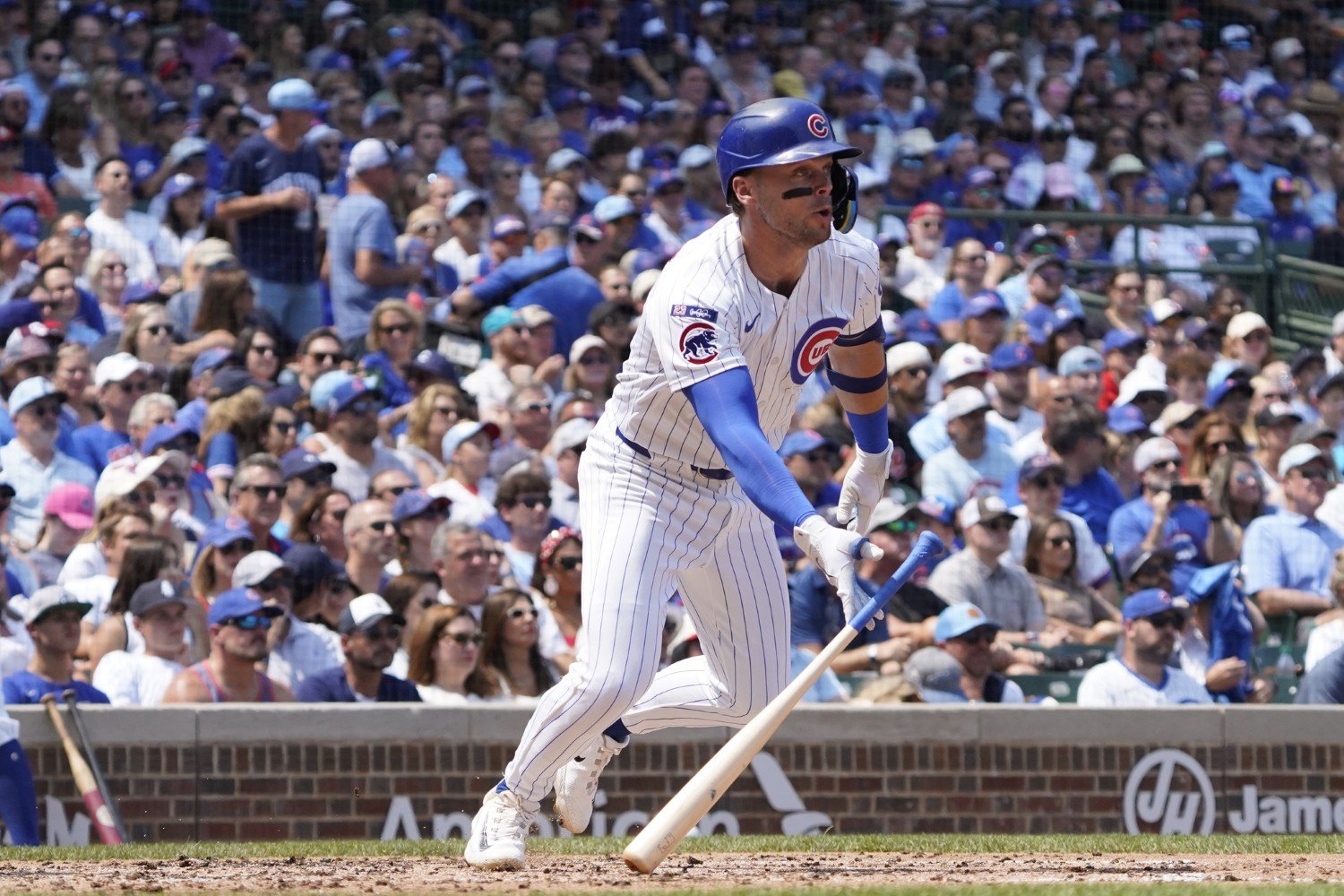 It's the rumor that will not die. At several points over the last two years, Nico Hoerner's name has become a hot one in trade discussions. In particular, since Alex Bregman signed a five-year deal with the team last month, the Cubs have received calls from several teams about Hoerner. Initially, they were more inclined to retain Hoerner and to trade Matt Shaw, who is under long-term team control and would net a similar return despite being a worse player than Hoerner. However, that might no longer be true. Early this winter, the Seattle Mariners pivoted away from previous pursuits of Hoerner and focused on the Cardinals' Brendan Donovan. The Mariners and Cubs did touch base about Hoerner after the Bregman deal, according to a source familiar with the conversation, but never came close to finding a match. The Giants were more persistently interested in Hoerner, and that interest picked up after the Bregman signing, but the Cubs refused to consider a deal in which they didn't receive top Giants infield prospect Josuar Gonzalez, so the talks fizzled. It seemed as though the market for Hoerner (along with that for Shaw) was beginning to disappear. On Monday, the Red Sox became the latest team who had reached out to Chicago about Hoerner to move on to Plan B, trading for the Brewers' Caleb Durbin instead. However, according to two league sources, there remain a couple of potential suitors for Hoerner, and the Cubs haven't shut down those talks. If they get the right offer, they'll trade the impending free agent, despite the fact that he's a fan favorite and a beloved piece of the clubhouse. That might send a shiver down the spine of some fans, but it's important to emphasize the condition in that conditional statement. The team is not desperately looking to offload salary. They're not eager to push Hoerner out of the way to give Shaw the second base job. They'll only trade Hoerner if they get the right offer. So, naturally, we must attempt to answer the question: What's the right offer? According to sources with knowledge of the team's demands in discussions with the three teams named above and two more, there are three key elements Jed Hoyer and Carter Hawkins view as essential in any deal that sees them part with their two-time Gold Glover. A useful big-league infielder, at an affordable price. This player would effectively replace Shaw as the backup at second, third and (ideally) shortstop, with Shaw taking over as the starting second baseman. In all likelihood, they'd be a fringe regular better suited to backup work, but with multiple years of team control remaining. A top prospect—probably a pitcher. The Cubs' farm system is thin right now, especially when it comes to hurlers. Adding an arm who can have a significant impact on the 2027-31 Cubs remains on the team's wish list as spring training gets underway. This would be one way to acquire that kind of pitcher, and although it would come with significant risk, they understand that they'll eventually have to take that kind of chance, anyway. Pitching help for 2026, in one form or another. If Chicago becomes more optimistic than they are right now about signing Zac Gallen, they might be more open to trading Hoerner for a package that focuses on the first two of the above elements. Spending another $15 million or more for 2026 might have to mean trading some salary, so in that scenario, Hoerner's $12 million could become the budgetary casualty that paves the way for a final pitching boost. Alternatively, though, the team could target an optionable or versatile pitcher on the trade partner's roster and achieve a similar, more direct upgrade to the pitching staff in the deal. That's a rich ransom, for a player who can become a free agent at the end of the 2026 World Series. So far, the Cubs haven't gotten a sufficiently appealing offer that checks each box. Most teams are willing to satisfy items 1 and 3, but reluctant to trade a player with big potential long-term value for one they might lose after one season. At this point, the likelihood of a trade is still low, especially because there are only a few interested teams left in the picture. Nonetheless, a move can't be ruled out. Looking at the roster through a wider lens, it's easy to see how a deal that checks each of those boxes could make sense for the Cubs. They've methodically converted long-term value into short-term value over the last few years, but that subpar farm system is a reminder that their shift into contention mode could leave them lurching back toward rebuilding by the end of the decade. To avoid that, they might need to reverse the flow and move a player under short-term control for someone who can be kept longer and cheaper. With Shaw on hand to replace him, Hoerner is a viable candidate for that treatment. The team needs pitching help for this season. and free-agent prices on the dwindling number of key arms are higher than they'd hoped. They certainly can't afford to get any weaker in right field or at DH, so a trade of Ian Happ or Seiya Suzuki is hard to fathom. Hoerner is the guy who can be moved without leaving an unfillable hole, and who could fetch enough to patch the holes that still exist. This would be Hoerner's seventh full season with Chicago. He's been ubiquitous for the post-COVID Cubs, and his blend of contact skills, speed and defensive aptitude have been key parts of the team's identity the last few years. They don't want to trade him. If a team gets desperate enough to check all three of their boxes, though, it could still happen.
 -
Image courtesy of © Bruce Kluckhohn-Imagn Images Reports repeatedly connected the Chicago Cubs to designated hitter/outfielder Miguel Andujar in the last fortnight, but Andujar signed with the San Diego Padres this week, for $4 million. That contract is proof that the Cubs didn't have a particularly serious interest in Andujar. San Diego offered a path to more playing time than the Cubs could, so if Andujar had his long-term earning potential in the front of his mind, he might have demanded considerably more from the Cubs than the Padres paid. In truth, though, the North Siders' interest was always contingent on the possibility of a second move, which didn't materialize. Andujar is a right-handed batter who mashes lefty pitching. That's a valuable complementary piece, even with little defensive value added thereto, but it's less valuable to the Cubs than to most other teams. Chicago wanted Andujar only in a scenario in which they moved Matt Shaw and opened a spot to add a left-hitting infielder to their bench. That hasn't happened, and looks increasingly unlikely, so Andujar didn't end up being a fit for the team. At catcher, the Cubs have two right-handed hitters. Among their six infielders (counting Tyler Austin, who'll back up and platoon with Michael Busch), they have five righty batters, in Shaw, Alex Bregman, Dansby Swanson, Nico Hoerner, and Austin. Busch is the only lefty batter out of those eight roster spots, so the Cubs need lots of left-handed at-bats from their outfield and DH spots. They'll get them, of course. Ian Happ is a switch-hitter, and Pete Crow-Armstrong bats left-handed. Moisés Ballesteros, in whom the team demonstrated their great faith by trading Owen Caissie earlier this winter, will soak up plenty of playing time at DH. Seiya Suzuki is locked in for at least 550 plate appearances, though, and bats right-handed. The team will choose from among Justin Dean, Kevin Alcántara, Chas McCormick and Dylan Carlson for the fourth outfielder job, and all four of those guys are de facto right-handed bats. (Carlson, technically, is a switch-hitter, but he's a disaster from the left side and would only find a real role as a backup and partial platoon partner for Crow-Armstrong.) We've accounted for all 13 position-player spots on the roster, but we haven't really accounted for all the available playing time. There are likely to be between 300 and 450 plate appearances available in that outfield and DH mix, accounting for injuries, the possibility of failure by Ballesteros, and the times when they won't need to carry any of the backup center field candidates. Those plate appearances should be given to a strong lefty batter, to make up for the right-leaning infield group and the fact that a team faces more righty pitchers than lefties. A few good trade candidates stand out. The team could try to pry underachieving but intriguing corner outfielder Trevor Larnach away from the Twins. (In fact, the Twins have several lefty bats who are short on positional or defensive value but can hit a bit.) They could pursue Lars Nootbaar, of the rebuilding Cardinals, or late-blooming former top pick Mickey Moniak from the Rockies. However, the easiest path forward is a simple, warm-feeling one: Re-sign ex-Cub Mike Tauchman. Tauchman, 35, doesn't come with worries about clubhouse fit or swing retooling. He doesn't need to play with a next contract in mind, like Andujar. He's a player with clear flaws whom everyone knows to be in decline, and he absolutely can't be placed in center field anymore. However, since the start of 2023, he's averaged almost exactly the number of plate appearances the Cubs need to fill, at the very positions where they need to fill them. He's batted .255/.359/.381, and his rates with the White Sox in 2025 weren't a step down from that. Tauchman still gets on base, and he can play a competent corner outfield spot. He'll also be exceptionally cheap. He's not likely to stay healthy all year or to be an impact player even while he's on the roster. As a complementary option in the outfield, though, Tauchman would give the Cubs lineup extra length. Because he spent two fruitful years reviving his career at Wrigley Field, he's a known commodity in the clubhouse. This is a simple solution to a simple problem. Unless something bigger comes together very, very soon, the Cubs should bring back the Palatine, Ill. native for a fourth consecutive hometown summer. View full article
-
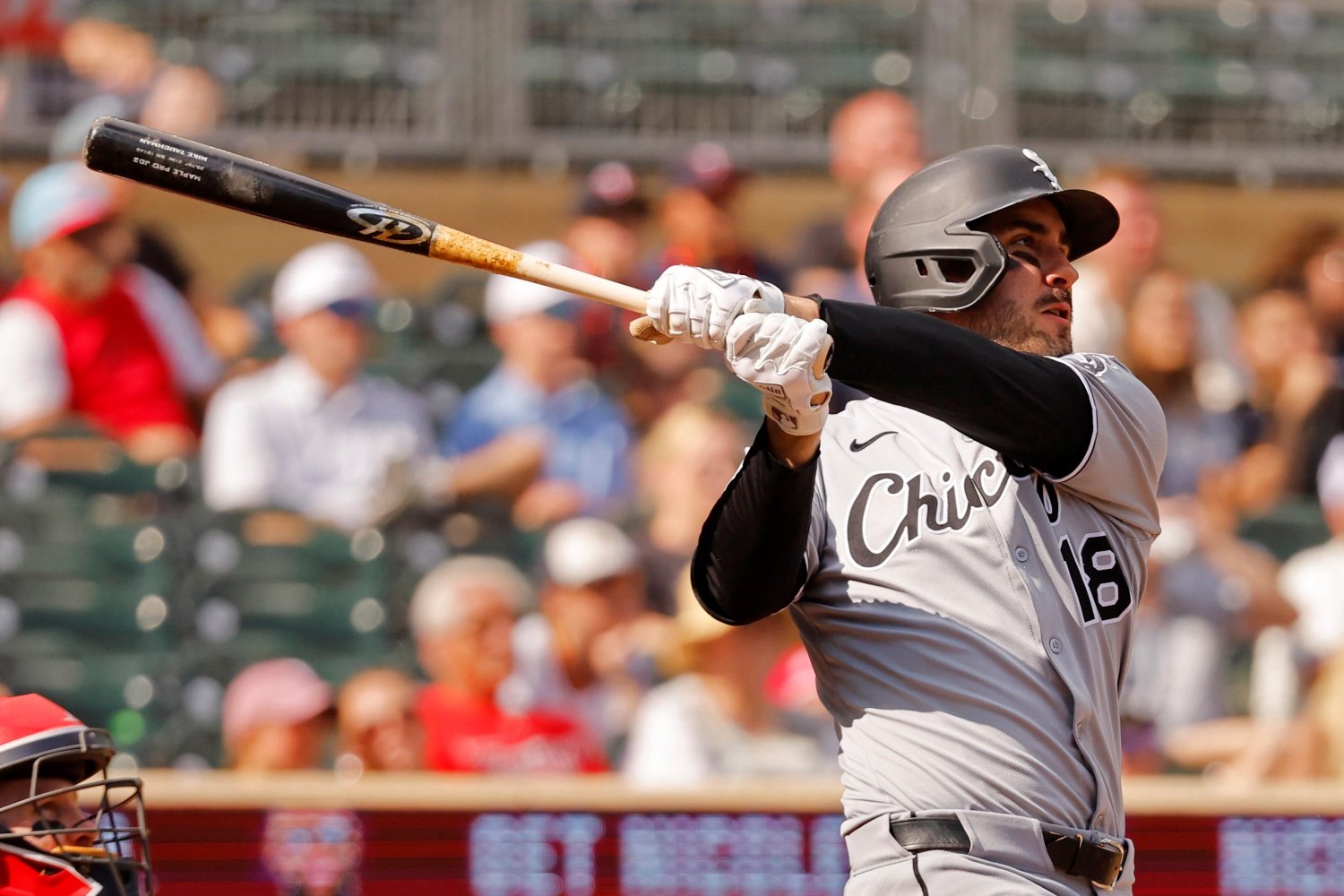 Reports repeatedly connected the Chicago Cubs to designated hitter/outfielder Miguel Andujar in the last fortnight, but Andujar signed with the San Diego Padres this week, for $4 million. That contract is proof that the Cubs didn't have a particularly serious interest in Andujar. San Diego offered a path to more playing time than the Cubs could, so if Andujar had his long-term earning potential in the front of his mind, he might have demanded considerably more from the Cubs than the Padres paid. In truth, though, the North Siders' interest was always contingent on the possibility of a second move, which didn't materialize. Andujar is a right-handed batter who mashes lefty pitching. That's a valuable complementary piece, even with little defensive value added thereto, but it's less valuable to the Cubs than to most other teams. Chicago wanted Andujar only in a scenario in which they moved Matt Shaw and opened a spot to add a left-hitting infielder to their bench. That hasn't happened, and looks increasingly unlikely, so Andujar didn't end up being a fit for the team. At catcher, the Cubs have two right-handed hitters. Among their six infielders (counting Tyler Austin, who'll back up and platoon with Michael Busch), they have five righty batters, in Shaw, Alex Bregman, Dansby Swanson, Nico Hoerner, and Austin. Busch is the only lefty batter out of those eight roster spots, so the Cubs need lots of left-handed at-bats from their outfield and DH spots. They'll get them, of course. Ian Happ is a switch-hitter, and Pete Crow-Armstrong bats left-handed. Moisés Ballesteros, in whom the team demonstrated their great faith by trading Owen Caissie earlier this winter, will soak up plenty of playing time at DH. Seiya Suzuki is locked in for at least 550 plate appearances, though, and bats right-handed. The team will choose from among Justin Dean, Kevin Alcántara, Chas McCormick and Dylan Carlson for the fourth outfielder job, and all four of those guys are de facto right-handed bats. (Carlson, technically, is a switch-hitter, but he's a disaster from the left side and would only find a real role as a backup and partial platoon partner for Crow-Armstrong.) We've accounted for all 13 position-player spots on the roster, but we haven't really accounted for all the available playing time. There are likely to be between 300 and 450 plate appearances available in that outfield and DH mix, accounting for injuries, the possibility of failure by Ballesteros, and the times when they won't need to carry any of the backup center field candidates. Those plate appearances should be given to a strong lefty batter, to make up for the right-leaning infield group and the fact that a team faces more righty pitchers than lefties. A few good trade candidates stand out. The team could try to pry underachieving but intriguing corner outfielder Trevor Larnach away from the Twins. (In fact, the Twins have several lefty bats who are short on positional or defensive value but can hit a bit.) They could pursue Lars Nootbaar, of the rebuilding Cardinals, or late-blooming former top pick Mickey Moniak from the Rockies. However, the easiest path forward is a simple, warm-feeling one: Re-sign ex-Cub Mike Tauchman. Tauchman, 35, doesn't come with worries about clubhouse fit or swing retooling. He doesn't need to play with a next contract in mind, like Andujar. He's a player with clear flaws whom everyone knows to be in decline, and he absolutely can't be placed in center field anymore. However, since the start of 2023, he's averaged almost exactly the number of plate appearances the Cubs need to fill, at the very positions where they need to fill them. He's batted .255/.359/.381, and his rates with the White Sox in 2025 weren't a step down from that. Tauchman still gets on base, and he can play a competent corner outfield spot. He'll also be exceptionally cheap. He's not likely to stay healthy all year or to be an impact player even while he's on the roster. As a complementary option in the outfield, though, Tauchman would give the Cubs lineup extra length. Because he spent two fruitful years reviving his career at Wrigley Field, he's a known commodity in the clubhouse. This is a simple solution to a simple problem. Unless something bigger comes together very, very soon, the Cubs should bring back the Palatine, Ill. native for a fourth consecutive hometown summer.
 -
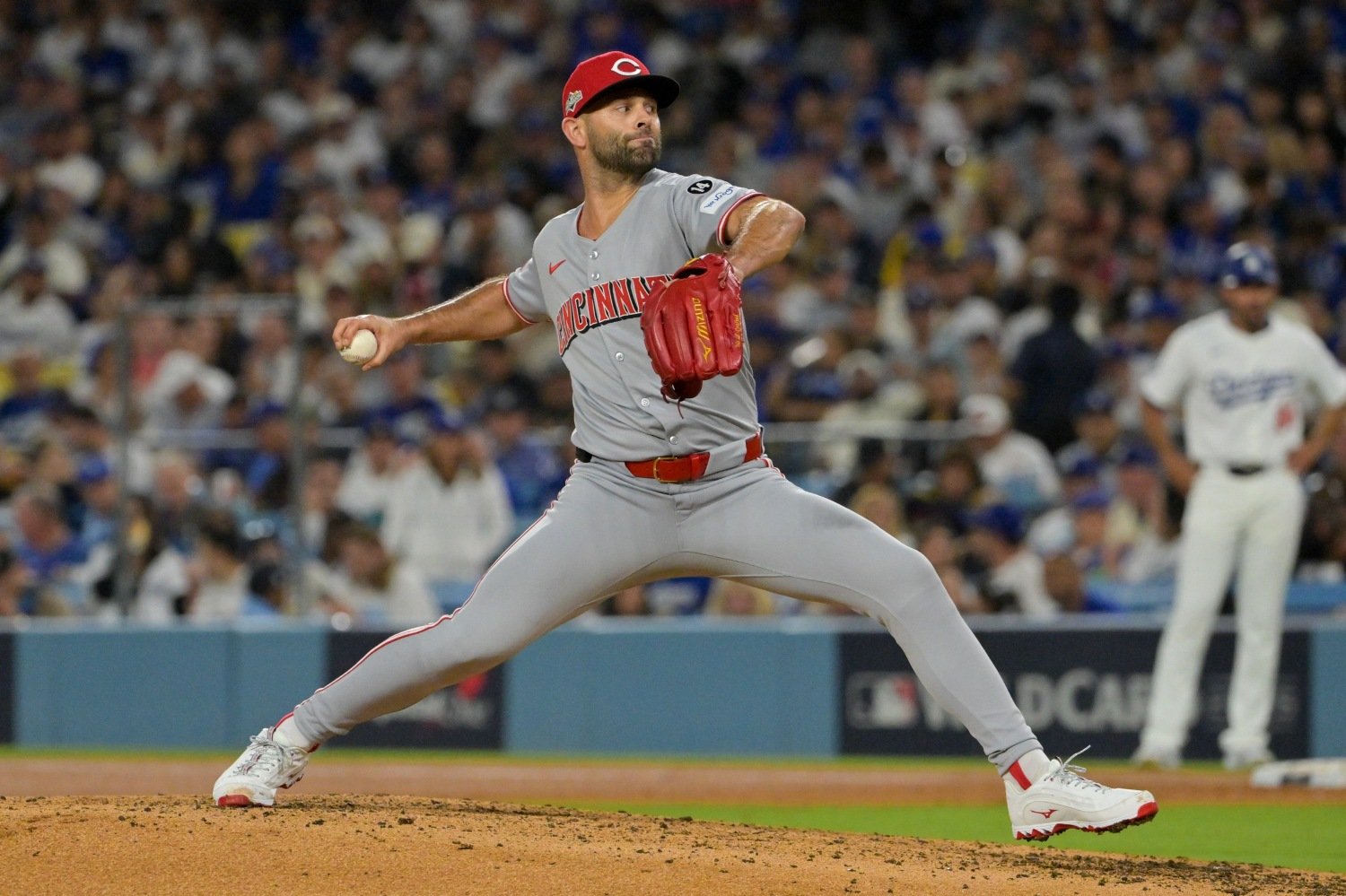 If the Cubs want a pitcher with a chance to be a frontline starter throughout 2026, they still have two solid options in free agency: Zac Gallen and Framber Valdez. Not coincidentally, the team has been mentioned in connection with each hurler over the last fortnight, and North Side Baseball can confirm that they've had sustained interest in Gallen—though not, so far, at anywhere near the terms Scott Boras has demanded for the erstwhile Diamondbacks ace. Both Gallen and Valdez would cost the Cubs a draft pick, though, because each is attached to compensation via the qualifying offer. Gallen and Valdez turned down $22.025 million from their former clubs in November, guaranteeing those teams compensatory picks if they leave. More importantly, each has spent at least a half-decade as a full-time starter, with no meaningful experience in the bullpen. They would contribute to the logjam in the team's starting rotation, and it's unlikely that either (especially on the kinds of short-term deals to which the Cubs would be open to signing them) would be happy with any role that lessened their importance, the volume of innings they could pitch, or (therefore) their earning power. It might be easier to work with Chris Bassitt, Justin Verlander or Max Scherzer, who are all in the twilight of their careers but have been very good when available. They'd be easier to stash on the injured list for stretches when the entire rotation is healthy, and Bassitt showed that he can be a weapon out of the bullpen when Toronto moved him there last fall. However, it's harder to be sure that any of them (especially the quadragenarians, Verlander and Scherzer) would be available at all when the team needs them most, in the autumn. One player could suit the Cubs' needs perfectly, and would be another way for the team to strengthen its relationship with Boras, too. Nick Martinez had a superficially poor season with the Reds in 2025, with a 4.45 ERA in 40 appearances. However, he's arguably the game's best old-fashioned swingman. He made 26 starts and 14 relief appearances in 2025, and has 61 starts out of 192 games pitched since the start of 2022. He's been exceptionally durable in a role that often comes with added injury risk, and shows the ability to turn over lineup cards as well as being a matchup weapon in the right situations. Martinez's skill set is distinct from that of Colin Rea. He's more akin to Javier Assad, with a high arm slot and extremely kinetic delivery that yields a diverse pitch mix and masks underwhelming raw stuff. Assad can still be optioned to Triple-A Iowa, so Martinez could contribute as a starter when needed; give the bullpen a long man and a solid middle-relief buttress when the rotation is fully stocked; and add to the variety of looks Craig Counsell can offer opposing lineups. The step back in his raw numbers last season had some bad luck mixed into it. Martinez's stuff is not exceptional, but he throws a four-seamer, a sinker, a cutter, a gyro slider, a good curveball and an interesting changeup. He can get lefties out, and though he struggled against fellow righties last year, he's likely to rebound on that front in 2026. Best of all, he wouldn't cost a draft pick, and is likely to sign for less on an annual basis than any of the other five free agents named above. The Cubs could add him to their staff, feel supremely confident about their depth, and still have money to spend (be it now or at the trade deadline) to round out their roster. Once camp opens next Wednesday, the team can place Justin Steele on the 60-day injured list. That would sideline him until at least Memorial Day, but (despite Steele's protestations and the team's steady optimism) no responsible plan would put him back on a big-league mound before June, anyway. He's just as likely to run into a hiccup or two and return near the end of July. Martinez could sign next week, take the roster spot created by Steele's shift to the 60-day IL, and become Rea's partner at the fluid back end of a very strong, deep rotation. These same characteristics make Martinez appealing to many other clubs, too, and he's likely to wait until Gallen and/or Valdez sign to see where demand is greatest before signing his own deal. The Cubs can afford to wait. Unless the price craters completely on one of Gallen or Valdez, they should bide their time and sign Martinez, instead, once the dust settles from the final true sweepstakes of his hot stove season.
 -
Image courtesy of © Jayne Kamin-Oncea-Imagn Images If the Cubs want a pitcher with a chance to be a frontline starter throughout 2026, they still have two solid options in free agency: Zac Gallen and Framber Valdez. Not coincidentally, the team has been mentioned in connection with each hurler over the last fortnight, and North Side Baseball can confirm that they've had sustained interest in Gallen—though not, so far, at anywhere near the terms Scott Boras has demanded for the erstwhile Diamondbacks ace. Both Gallen and Valdez would cost the Cubs a draft pick, though, because each is attached to compensation via the qualifying offer. Gallen and Valdez turned down $22.025 million from their former clubs in November, guaranteeing those teams compensatory picks if they leave. More importantly, each has spent at least a half-decade as a full-time starter, with no meaningful experience in the bullpen. They would contribute to the logjam in the team's starting rotation, and it's unlikely that either (especially on the kinds of short-term deals to which the Cubs would be open to signing them) would be happy with any role that lessened their importance, the volume of innings they could pitch, or (therefore) their earning power. It might be easier to work with Chris Bassitt, Justin Verlander or Max Scherzer, who are all in the twilight of their careers but have been very good when available. They'd be easier to stash on the injured list for stretches when the entire rotation is healthy, and Bassitt showed that he can be a weapon out of the bullpen when Toronto moved him there last fall. However, it's harder to be sure that any of them (especially the quadragenarians, Verlander and Scherzer) would be available at all when the team needs them most, in the autumn. One player could suit the Cubs' needs perfectly, and would be another way for the team to strengthen its relationship with Boras, too. Nick Martinez had a superficially poor season with the Reds in 2025, with a 4.45 ERA in 40 appearances. However, he's arguably the game's best old-fashioned swingman. He made 26 starts and 14 relief appearances in 2025, and has 61 starts out of 192 games pitched since the start of 2022. He's been exceptionally durable in a role that often comes with added injury risk, and shows the ability to turn over lineup cards as well as being a matchup weapon in the right situations. Martinez's skill set is distinct from that of Colin Rea. He's more akin to Javier Assad, with a high arm slot and extremely kinetic delivery that yields a diverse pitch mix and masks underwhelming raw stuff. Assad can still be optioned to Triple-A Iowa, so Martinez could contribute as a starter when needed; give the bullpen a long man and a solid middle-relief buttress when the rotation is fully stocked; and add to the variety of looks Craig Counsell can offer opposing lineups. The step back in his raw numbers last season had some bad luck mixed into it. Martinez's stuff is not exceptional, but he throws a four-seamer, a sinker, a cutter, a gyro slider, a good curveball and an interesting changeup. He can get lefties out, and though he struggled against fellow righties last year, he's likely to rebound on that front in 2026. Best of all, he wouldn't cost a draft pick, and is likely to sign for less on an annual basis than any of the other five free agents named above. The Cubs could add him to their staff, feel supremely confident about their depth, and still have money to spend (be it now or at the trade deadline) to round out their roster. Once camp opens next Wednesday, the team can place Justin Steele on the 60-day injured list. That would sideline him until at least Memorial Day, but (despite Steele's protestations and the team's steady optimism) no responsible plan would put him back on a big-league mound before June, anyway. He's just as likely to run into a hiccup or two and return near the end of July. Martinez could sign next week, take the roster spot created by Steele's shift to the 60-day IL, and become Rea's partner at the fluid back end of a very strong, deep rotation. These same characteristics make Martinez appealing to many other clubs, too, and he's likely to wait until Gallen and/or Valdez sign to see where demand is greatest before signing his own deal. The Cubs can afford to wait. Unless the price craters completely on one of Gallen or Valdez, they should bide their time and sign Martinez, instead, once the dust settles from the final true sweepstakes of his hot stove season. View full article
-
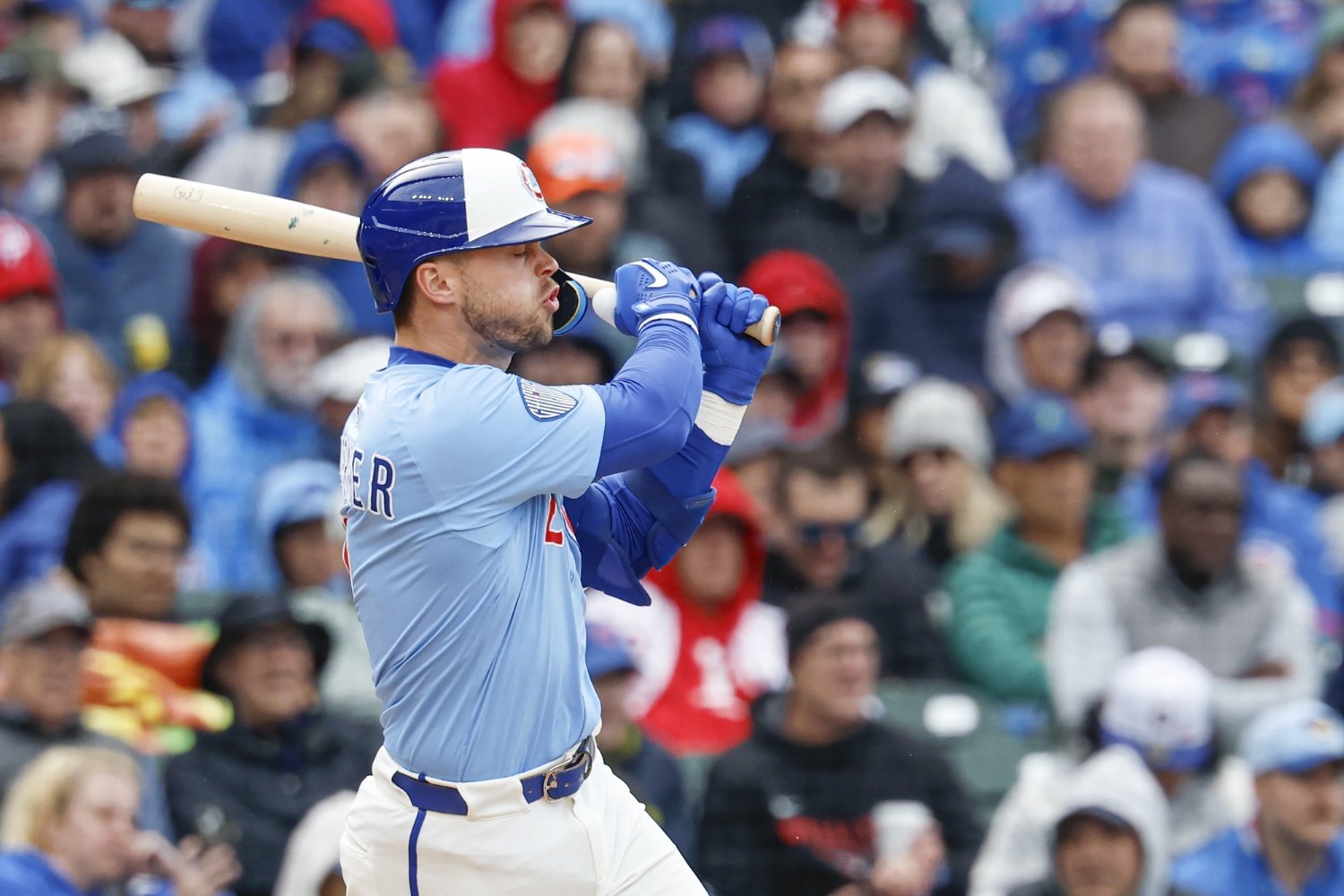 As any veteran of the baseball industry will tell you, the hardest tool to scout is the feel to hit. There's so much reactivity, so fragile a balance in it, that it's hard to gauge what a hitter can do over just a few games. It's hard to project how a player who can dominate at one level might do at the next. It's hard, even, to tell when a player has established a skill, and when they're due for regression. It was easier to scout power and arm strength and speed and defensive ability even in the days before advanced technology captured players' movements in fine detail, but it's even truer now. While we now know on what percentage of swings a batter makes contact and how often they chase outside the zone, every hitter has different ideal contact and chase rates, and those numbers don't tell us about the quality of contact a player is making. We have bat speed and exit velocity and launch angle and pull rate, but those things more reliably help us measure power than hit tool. There remains a bit of magic in baseball, and it lives in the moment between the release of the pitch and the moment it reaches the plate. That's when a batter has to make incredibly rapid, subconscious decisions, adjust their finely tuned and extraordinarily fast swing, and find the center of the ball with the barrel of their bat. Of course, now, we also have a number for that. It's far from perfect, but it does give us some useful information. Today, let's consider Statcast's Squared Up rate, and the data (both signal and noise) it provides us for the purposes of projecting two key Cubs hitters for 2026. First, we need to define our terms. Statcast tags a batted ball as Squared Up if it leaves the bat with at least 80% of the possible exit velocity, given the speed of the swing and the incoming pitch. Physics gives us a knowable maximum exit velocity, once we have the speeds and approximate masses of bat and ball, so basically, Squared Up balls are just that: ones on which the batter successfully put lots of wood on the ball, so that they got as much out of their swing as they could. Generally speaking, the guys you'd expect to run high Squared Up rates do so. Luis Arraez has led the league in each of the last two seasons, with roughly 40% of his swings resulting not only in contact, but in meeting the ball squarely. That it's Arraez atop the list illustrates the drawback and the broader nature of this skill, though. Usually, guys trade some bat speed for the bat control that allows them to make such solid contact, which means that a squared-up ball can also be a relatively weakly hit or low-value one. It's undeniably good to run a high Squared Up rate, but that skill tends to belong to slow swingers, and compensates (with varying degrees of success) for a dearth of power. Specifically, the Cubs have two players for whom squaring the ball up is vital—whose games hinge on doing it consistently. Nico Hoerner is one of the best sheer contact hitters in baseball, but if he were prone to mishitting the ball, that wouldn't make him a good player. With new metrics, we can see more clearly than ever that he's an elite pure hitter, because he squared the ball up on roughly a third of his swings last year, ranking very near the top of the league. Hoerner lacks power, because his bat speed is well below average and he doesn't have an approach that lends itself well to pulling the ball in the air. As last year progressed, though, he proved that he can hit the ball squarely with enough consistency to be a plus-plus hitter, even without either a high walk rate or average pop. Alex Bregman brings even more to the party. He uses an extremely patient approach to inform and augment his own sky-high Squared Up rate, and his swing is geared to lift the ball to the pull field. He, too, has subpar bat speed, a concern I noted rather dourly earlier this winter. However, he makes some of the most efficient contact in baseball—even topping Hoerner. Because of the things they don't do well, Hoerner and Bregman have to show an elite feel for hitting. Happily, both of them do. The question is: Will that skill stick? To answer it (in part), I took all 211 hitters who had at least 500 swings in both 2024 and 2025, and compared the percentages of those swings that resulted in Squared Up balls in play for each player from year to year. Here's the resulting chart. The R² of this plot is 0.685, which implies a very strong correlation from year to year. In other words, for the limited data we have so far, squaring the ball up is an extremely sticky skill. We might well find that it gets less neat and tidy over time, and with more seasons of data, we could do a more robust study of aging curves, but intriguingly, this population of players got better, as a group, from 2024 to 2025. Their Squared Up rate went from an average of 22.5% to 23.6%. Bat speed tends to deteriorate as a player ages, so one explanation for the increase in squaring the ball up is hitters consciously trading the bat speed they can't hold onto for better bat control. It's probably more complicated than that. There's something to be said for the theory that the proliferation of these numbers in clubhouses and hitters' meetings has helped players train better for efficient contact, but it's also probably more complicated than that. All we can say for sure, at this moment, is that how you did last year does a fine job of predicting how you'll do this year, when it comes to squaring the ball up. That sounds like very good news for Bregman and Hoerner, and it probably is. However, there's another wrinkle we need to consider. Go back to the chart above, and notice that Bregman and Hoerner are further from the trend line than most of the rest of the league. They each improved significantly at meeting the ball squarely in 2025, even though they were above average even before making that leap. Hoerner will be 29 this year; Bregman will be 32. Most of the time, when hitters past the age of 26 or so go from good to elite at something, they're due for regression. That invites the real concern that they'll each come back to Earth in 2026, and square the ball up less often. This is why, for instance, all the advanced projection systems (PECOTA: .289; ZiPS: .293; Steamer: .304) expect Hoerner to run a lower BABIP than his career mark of .307, let alone the .313 he put up in his stellar 2025 campaign. It's hard to call anything about this luck, because we're so far down to the process aspect of hitting, studying how well a hitter's hand-eye coordination manages the task of getting lumber on leather. Still, there's variance and entropy at work, here. Pitchers will make adjustments, to both Hoerner and Bregman. It won't be easy for either to sustain the level of success they've had at squaring up the ball lately. To figure out which is more likely to retain their skills and have a successful 2026, we can approach this in a slightly different, better way. Kyle Bland of PitcherList created an app to display bat-tracking data back in 2024, and one of its features is a more continuous measurement of squared-up contact. Rather than creating a binary and tagging a ball as either squared up or not, his model tracks the specific percentage of the maximum possible exit velocity on each batted ball. Here's the distribution of Hoerner's batted balls by Squared Up%, for (most of) 2025. He's very, very good at hitting the ball squarely, and though he rarely gets all of a pitch—he's just ok at generating contact efficiency north of about 92%—he also rarely mishits one at all. That's a steady hitter. Bregman's distribution is a bit more impressive, and almost laughable: Bregman creates a whole lot of extremely efficient contact, though he's also considerably more likely to whiff altogether (Squared Up%: 0) than is Hoerner. Which of these two is more likely to sustain their success at squaring it up, going forward? Hoerner, being younger, gets a certain edge. Bregman's swing is flatter, too, and flat swings generally lead to lower Squared Up rates. However, Bregman has honed his approach so well that he's locked in to swing only at pitches he can consistently square up. Hoerner's is a more expansive, aggressive, all-fields approach. We should also consider what happens if each player's suite of swings gets a tiny bit less efficient, across the board. For Hoerner, he would slosh back much closer to league average. Bregman might see his strikeout rate spike a bit, because his swings getting less efficient would mean getting out of the top end of the league in overall contact rate, but he has that big bulge in the upper 80s and 90s for Squared Up% that would come down only to the low and middle 80s. In other words, he can stay efficient with his contact even if he loses some efficiency in his swing. Hoerner lacks that luxury. Bregman is a safer bet than Hoerner to hold onto this skill, but each of them did something at an elite level last year that tends to stay good once a hitter has shown they can do it. That makes it worth mentioning one more player of whom the same things are true: Michael Busch. He was much more prone to sub-80% contact efficiency than were Hoerner and Bregman last year, but he was also better than they were at getting the crosshairs on a ball and achieving perfect (or virtually perfect) Squared Up-itude. This is a slugger with great feel for contact, in profile. Note the dearth of swings that generated less than 70% contact efficiency. If he was going to be that wrong, he stayed committed to his 'A' swing and came up empty. When he got one right, though, he gave himself a chance to get it especially right. Bland's app also tracks rolling Squared Up% for hitters throughout the season, and Busch's timeline tells a great story. In early May, he simply locked in on the ball, and never ceased to be so. Like Hoerner and Bregman, Busch lacks elite bat speed, especially for a player who needs to produce more power than either of the others do. However, from May 15 through the end of the season, he slugged .539, and then he went on an October power binge, to boot. Much of that can be attributed to his ability to square the ball up, and he's another good candidate to do so again in 2026. We still have a lot to learn about hitting, but the data are making it a bit easier to say some things with confidence. If nothing else, these numbers prove that Hoerner, Busch and Bregman have plus hit tools, albeit in ways unique to each of them. They're the anchors of the Cubs lineup for the coming season, and by the end of the year, we'll know even more about how each of them do it—and therefore, more about how the thing is done by everyone.
 -
Image courtesy of © Kamil Krzaczynski-Imagn Images As any veteran of the baseball industry will tell you, the hardest tool to scout is the feel to hit. There's so much reactivity, so fragile a balance in it, that it's hard to gauge what a hitter can do over just a few games. It's hard to project how a player who can dominate at one level might do at the next. It's hard, even, to tell when a player has established a skill, and when they're due for regression. It was easier to scout power and arm strength and speed and defensive ability even in the days before advanced technology captured players' movements in fine detail, but it's even truer now. While we now know on what percentage of swings a batter makes contact and how often they chase outside the zone, every hitter has different ideal contact and chase rates, and those numbers don't tell us about the quality of contact a player is making. We have bat speed and exit velocity and launch angle and pull rate, but those things more reliably help us measure power than hit tool. There remains a bit of magic in baseball, and it lives in the moment between the release of the pitch and the moment it reaches the plate. That's when a batter has to make incredibly rapid, subconscious decisions, adjust their finely tuned and extraordinarily fast swing, and find the center of the ball with the barrel of their bat. Of course, now, we also have a number for that. It's far from perfect, but it does give us some useful information. Today, let's consider Statcast's Squared Up rate, and the data (both signal and noise) it provides us for the purposes of projecting two key Cubs hitters for 2026. First, we need to define our terms. Statcast tags a batted ball as Squared Up if it leaves the bat with at least 80% of the possible exit velocity, given the speed of the swing and the incoming pitch. Physics gives us a knowable maximum exit velocity, once we have the speeds and approximate masses of bat and ball, so basically, Squared Up balls are just that: ones on which the batter successfully put lots of wood on the ball, so that they got as much out of their swing as they could. Generally speaking, the guys you'd expect to run high Squared Up rates do so. Luis Arraez has led the league in each of the last two seasons, with roughly 40% of his swings resulting not only in contact, but in meeting the ball squarely. That it's Arraez atop the list illustrates the drawback and the broader nature of this skill, though. Usually, guys trade some bat speed for the bat control that allows them to make such solid contact, which means that a squared-up ball can also be a relatively weakly hit or low-value one. It's undeniably good to run a high Squared Up rate, but that skill tends to belong to slow swingers, and compensates (with varying degrees of success) for a dearth of power. Specifically, the Cubs have two players for whom squaring the ball up is vital—whose games hinge on doing it consistently. Nico Hoerner is one of the best sheer contact hitters in baseball, but if he were prone to mishitting the ball, that wouldn't make him a good player. With new metrics, we can see more clearly than ever that he's an elite pure hitter, because he squared the ball up on roughly a third of his swings last year, ranking very near the top of the league. Hoerner lacks power, because his bat speed is well below average and he doesn't have an approach that lends itself well to pulling the ball in the air. As last year progressed, though, he proved that he can hit the ball squarely with enough consistency to be a plus-plus hitter, even without either a high walk rate or average pop. Alex Bregman brings even more to the party. He uses an extremely patient approach to inform and augment his own sky-high Squared Up rate, and his swing is geared to lift the ball to the pull field. He, too, has subpar bat speed, a concern I noted rather dourly earlier this winter. However, he makes some of the most efficient contact in baseball—even topping Hoerner. Because of the things they don't do well, Hoerner and Bregman have to show an elite feel for hitting. Happily, both of them do. The question is: Will that skill stick? To answer it (in part), I took all 211 hitters who had at least 500 swings in both 2024 and 2025, and compared the percentages of those swings that resulted in Squared Up balls in play for each player from year to year. Here's the resulting chart. The R² of this plot is 0.685, which implies a very strong correlation from year to year. In other words, for the limited data we have so far, squaring the ball up is an extremely sticky skill. We might well find that it gets less neat and tidy over time, and with more seasons of data, we could do a more robust study of aging curves, but intriguingly, this population of players got better, as a group, from 2024 to 2025. Their Squared Up rate went from an average of 22.5% to 23.6%. Bat speed tends to deteriorate as a player ages, so one explanation for the increase in squaring the ball up is hitters consciously trading the bat speed they can't hold onto for better bat control. It's probably more complicated than that. There's something to be said for the theory that the proliferation of these numbers in clubhouses and hitters' meetings has helped players train better for efficient contact, but it's also probably more complicated than that. All we can say for sure, at this moment, is that how you did last year does a fine job of predicting how you'll do this year, when it comes to squaring the ball up. That sounds like very good news for Bregman and Hoerner, and it probably is. However, there's another wrinkle we need to consider. Go back to the chart above, and notice that Bregman and Hoerner are further from the trend line than most of the rest of the league. They each improved significantly at meeting the ball squarely in 2025, even though they were above average even before making that leap. Hoerner will be 29 this year; Bregman will be 32. Most of the time, when hitters past the age of 26 or so go from good to elite at something, they're due for regression. That invites the real concern that they'll each come back to Earth in 2026, and square the ball up less often. This is why, for instance, all the advanced projection systems (PECOTA: .289; ZiPS: .293; Steamer: .304) expect Hoerner to run a lower BABIP than his career mark of .307, let alone the .313 he put up in his stellar 2025 campaign. It's hard to call anything about this luck, because we're so far down to the process aspect of hitting, studying how well a hitter's hand-eye coordination manages the task of getting lumber on leather. Still, there's variance and entropy at work, here. Pitchers will make adjustments, to both Hoerner and Bregman. It won't be easy for either to sustain the level of success they've had at squaring up the ball lately. To figure out which is more likely to retain their skills and have a successful 2026, we can approach this in a slightly different, better way. Kyle Bland of PitcherList created an app to display bat-tracking data back in 2024, and one of its features is a more continuous measurement of squared-up contact. Rather than creating a binary and tagging a ball as either squared up or not, his model tracks the specific percentage of the maximum possible exit velocity on each batted ball. Here's the distribution of Hoerner's batted balls by Squared Up%, for (most of) 2025. He's very, very good at hitting the ball squarely, and though he rarely gets all of a pitch—he's just ok at generating contact efficiency north of about 92%—he also rarely mishits one at all. That's a steady hitter. Bregman's distribution is a bit more impressive, and almost laughable: Bregman creates a whole lot of extremely efficient contact, though he's also considerably more likely to whiff altogether (Squared Up%: 0) than is Hoerner. Which of these two is more likely to sustain their success at squaring it up, going forward? Hoerner, being younger, gets a certain edge. Bregman's swing is flatter, too, and flat swings generally lead to lower Squared Up rates. However, Bregman has honed his approach so well that he's locked in to swing only at pitches he can consistently square up. Hoerner's is a more expansive, aggressive, all-fields approach. We should also consider what happens if each player's suite of swings gets a tiny bit less efficient, across the board. For Hoerner, he would slosh back much closer to league average. Bregman might see his strikeout rate spike a bit, because his swings getting less efficient would mean getting out of the top end of the league in overall contact rate, but he has that big bulge in the upper 80s and 90s for Squared Up% that would come down only to the low and middle 80s. In other words, he can stay efficient with his contact even if he loses some efficiency in his swing. Hoerner lacks that luxury. Bregman is a safer bet than Hoerner to hold onto this skill, but each of them did something at an elite level last year that tends to stay good once a hitter has shown they can do it. That makes it worth mentioning one more player of whom the same things are true: Michael Busch. He was much more prone to sub-80% contact efficiency than were Hoerner and Bregman last year, but he was also better than they were at getting the crosshairs on a ball and achieving perfect (or virtually perfect) Squared Up-itude. This is a slugger with great feel for contact, in profile. Note the dearth of swings that generated less than 70% contact efficiency. If he was going to be that wrong, he stayed committed to his 'A' swing and came up empty. When he got one right, though, he gave himself a chance to get it especially right. Bland's app also tracks rolling Squared Up% for hitters throughout the season, and Busch's timeline tells a great story. In early May, he simply locked in on the ball, and never ceased to be so. Like Hoerner and Bregman, Busch lacks elite bat speed, especially for a player who needs to produce more power than either of the others do. However, from May 15 through the end of the season, he slugged .539, and then he went on an October power binge, to boot. Much of that can be attributed to his ability to square the ball up, and he's another good candidate to do so again in 2026. We still have a lot to learn about hitting, but the data are making it a bit easier to say some things with confidence. If nothing else, these numbers prove that Hoerner, Busch and Bregman have plus hit tools, albeit in ways unique to each of them. They're the anchors of the Cubs lineup for the coming season, and by the end of the year, we'll know even more about how each of them do it—and therefore, more about how the thing is done by everyone. View full article
-
- 1
-

-
- nico hoerner
- alex bregman
- (and 1 more)
-
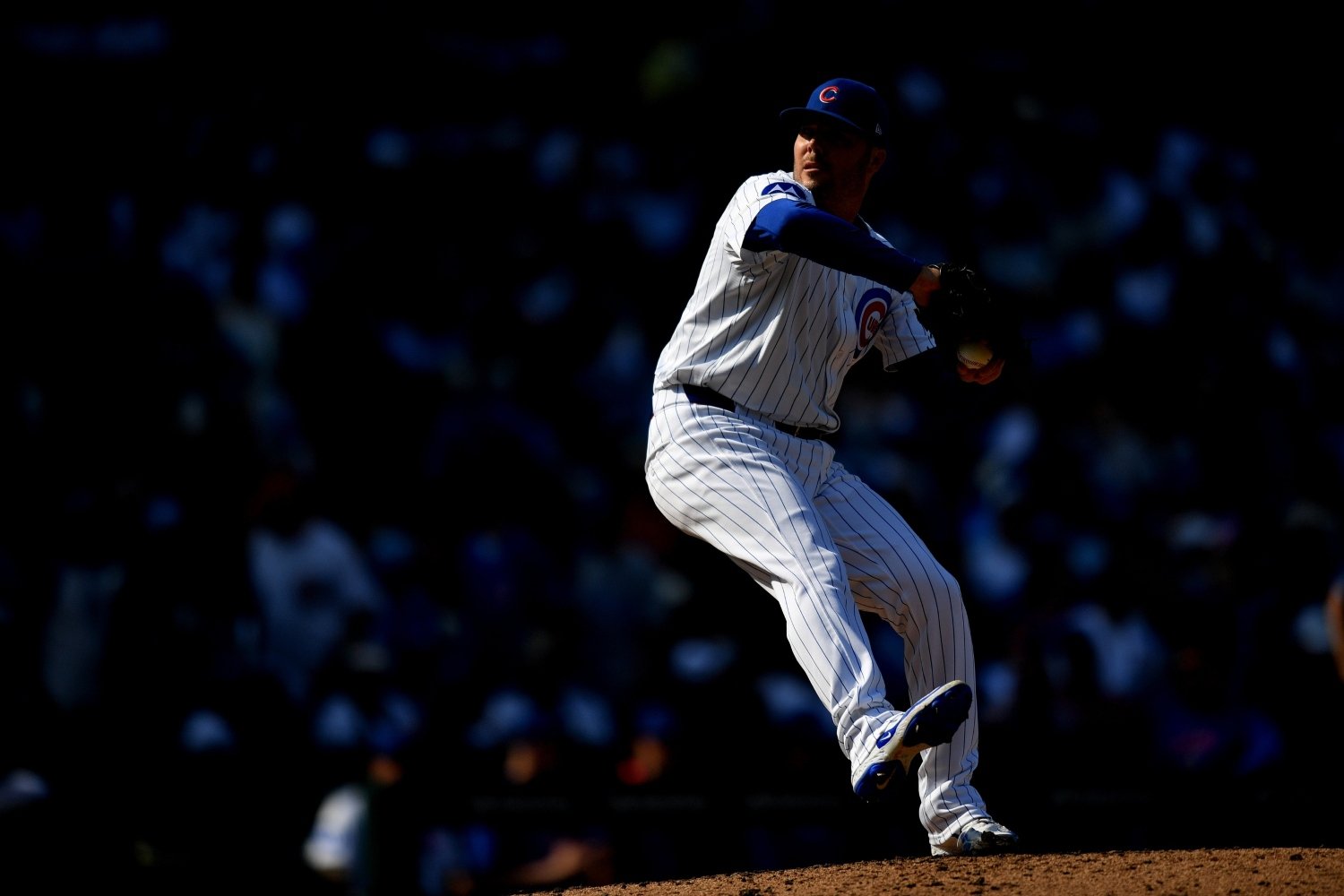 Earlier this week, we discussed the many, many candidates for not-so-many spots in the Cubs' Opening Day bullpen, focusing on the right-handed hurlers in the mix. Today, let's tackle the lefties vying for the few open spots, and the way the team will utilize those who don't make the cut. It's a different exercise than with the righties. In all likelihood, only two lefties will make the Opening Day bullpen, and if Caleb Thielbar and Hoby Milner are each healthy, they'll be the two. Each signed with the team as free agents this winter. Neither can be optioned to the minors. A third lefty could crack the group, but two things are working against that: The sheer volume of useful and intriguing right-handed arms they've collected, vying for spots; and The fact that the team has two left-handed starters (Matthew Boyd and Shota Imanaga) slated for the Opening Day rotation, with another (Justin Steele) likely to join the mix somewhere around the All-Star break, making matchup lefties out of the pen a bit less of a pressing need. We can approach the questions of who brings what and how each pitcher might be used (or disused) differently, then, when it comes to the lefties. Nonetheless, we can begin with the same graphic showing the arsenals and arm slots of the candidates. The six key southpaws in the bullpen mix are Thielbar, Milner, Jordan Wicks, Luke Little, Ryan Rolison, and Riley Martin. As indicated by the gold hues of the backgrounds on each of their profiles, Wicks, Little, Rolison and Martin can all be optioned to Triple-A Iowa, so tentatively, we can expect all of them to start the season there. Wicks, the club's first-round pick in the 2021 Draft, is also a candidate to start, though his star has dimmed over time. As is true of Ben Brown and Javier Assad from the right side, Wicks is likely to stay stretched out this spring (if he remains with the Cubs), but unlike those two, the team will be very reluctant to use Wicks as a starter in the majors. His path to helping the team is by staying capable of multi-inning stints in relief. As high as his upside seemed to be just a year or two ago, Little now looks like the first name on the chopping block the next time the Cubs need to open a 40-man roster spot. Unless he comes to camp with his velocity restored, he's not going to be able to help the Cubs. His fastball sat near 96 miles per hour and flirted with 100 as recently as 2024, but last year, it averaged just over 93. He needs to improve his control, too, but even at the best that his control is ever likely to be, he can't have a meaningful impact at that number. He lowered his arm slot last season, and his size, that angle and the nastiness of his breaking ball give him real upside. To realize it, though, he has to get the juice back in his arm, and right now, that seems like a long shot. The Cubs scooped Rolison off the waiver wire, as much because he can be optioned and stashed as because he's a potential weapon in any kind of high-leverage situation. He has the relative cut the Cubs like on a four-seam fastball, and throws it from a high three-quarters slot, so his stuff bears a sufficient resemblance to that of Thielbar to make him a fallback plan if the aging high-slot spin master gets hurt. It's nice to have multiple guys who offer a particular look to opposing batters, as long as one can be kept in the minors while the other is getting outs in the majors. Martin has a little bit of the same thing going on. He doesn't have any big-league time yet, so we can't precisely measure his arm angle, but it's similar to Rolison's. So is his arsenal, with a four-seamer and two breaking balls that work vertically, more than horizontally. The Cubs have a lot of eggs in the Milner basket right now, when it comes to getting out hitters who struggle with low-slot lefties and/or horizontal movement. That's why Little has significant potential value, if he shows up in Mesa looking revived. Failing that, though, the team would be wise to add one more lefty whose stuff is at least roughly akin to Milner's. That could be on a minor-league deal, but it should be someone optionable, if at all possible. Still, this is a much more settled battle than is the one on the right side. Milner and Thielbar are a competent, veteran pair of lefties who are terrific in the clubhouse, as well as being reliable on the mound. The four other southpaws with a chance to pitch out of Craig Counsell's pen are all on the 40-man roster, and can all be kept in the minors. The roles are easy to divine, and the redundancies are equally clear. If the season began today, the Cubs wouldn't be sweating about their left-handed relief corps. They have other boxes to check before Opening Day; this group could stay quite stable.
 -
Image courtesy of © Patrick Gorski-Imagn Images Earlier this week, we discussed the many, many candidates for not-so-many spots in the Cubs' Opening Day bullpen, focusing on the right-handed hurlers in the mix. Today, let's tackle the lefties vying for the few open spots, and the way the team will utilize those who don't make the cut. It's a different exercise than with the righties. In all likelihood, only two lefties will make the Opening Day bullpen, and if Caleb Thielbar and Hoby Milner are each healthy, they'll be the two. Each signed with the team as free agents this winter. Neither can be optioned to the minors. A third lefty could crack the group, but two things are working against that: The sheer volume of useful and intriguing right-handed arms they've collected, vying for spots; and The fact that the team has two left-handed starters (Matthew Boyd and Shota Imanaga) slated for the Opening Day rotation, with another (Justin Steele) likely to join the mix somewhere around the All-Star break, making matchup lefties out of the pen a bit less of a pressing need. We can approach the questions of who brings what and how each pitcher might be used (or disused) differently, then, when it comes to the lefties. Nonetheless, we can begin with the same graphic showing the arsenals and arm slots of the candidates. The six key southpaws in the bullpen mix are Thielbar, Milner, Jordan Wicks, Luke Little, Ryan Rolison, and Riley Martin. As indicated by the gold hues of the backgrounds on each of their profiles, Wicks, Little, Rolison and Martin can all be optioned to Triple-A Iowa, so tentatively, we can expect all of them to start the season there. Wicks, the club's first-round pick in the 2021 Draft, is also a candidate to start, though his star has dimmed over time. As is true of Ben Brown and Javier Assad from the right side, Wicks is likely to stay stretched out this spring (if he remains with the Cubs), but unlike those two, the team will be very reluctant to use Wicks as a starter in the majors. His path to helping the team is by staying capable of multi-inning stints in relief. As high as his upside seemed to be just a year or two ago, Little now looks like the first name on the chopping block the next time the Cubs need to open a 40-man roster spot. Unless he comes to camp with his velocity restored, he's not going to be able to help the Cubs. His fastball sat near 96 miles per hour and flirted with 100 as recently as 2024, but last year, it averaged just over 93. He needs to improve his control, too, but even at the best that his control is ever likely to be, he can't have a meaningful impact at that number. He lowered his arm slot last season, and his size, that angle and the nastiness of his breaking ball give him real upside. To realize it, though, he has to get the juice back in his arm, and right now, that seems like a long shot. The Cubs scooped Rolison off the waiver wire, as much because he can be optioned and stashed as because he's a potential weapon in any kind of high-leverage situation. He has the relative cut the Cubs like on a four-seam fastball, and throws it from a high three-quarters slot, so his stuff bears a sufficient resemblance to that of Thielbar to make him a fallback plan if the aging high-slot spin master gets hurt. It's nice to have multiple guys who offer a particular look to opposing batters, as long as one can be kept in the minors while the other is getting outs in the majors. Martin has a little bit of the same thing going on. He doesn't have any big-league time yet, so we can't precisely measure his arm angle, but it's similar to Rolison's. So is his arsenal, with a four-seamer and two breaking balls that work vertically, more than horizontally. The Cubs have a lot of eggs in the Milner basket right now, when it comes to getting out hitters who struggle with low-slot lefties and/or horizontal movement. That's why Little has significant potential value, if he shows up in Mesa looking revived. Failing that, though, the team would be wise to add one more lefty whose stuff is at least roughly akin to Milner's. That could be on a minor-league deal, but it should be someone optionable, if at all possible. Still, this is a much more settled battle than is the one on the right side. Milner and Thielbar are a competent, veteran pair of lefties who are terrific in the clubhouse, as well as being reliable on the mound. The four other southpaws with a chance to pitch out of Craig Counsell's pen are all on the 40-man roster, and can all be kept in the minors. The roles are easy to divine, and the redundancies are equally clear. If the season began today, the Cubs wouldn't be sweating about their left-handed relief corps. They have other boxes to check before Opening Day; this group could stay quite stable. View full article
-
The Chicago Cubs Will Play 113 Games Before the 2026 MLB Trade Deadline
Matthew Trueblood posted an article in Cubs
 Barring rainouts that are made up late in the season, the Chicago Cubs will play 113 regular-season games before the 2026 MLB trade deadline, which the league officially set this week for August 3. In a recent collective bargaining agreement, the league and the players union changed the rules around the deadline, allowing the commissioner's office to set the date of the deadline each year. Until the early 2000s, the deadline had been fixed at 11:59 PM on July 31. Then, for a while, it was still glued to that date, but the time moved up, so that deadline deals happened during drivetime and prime time. Now, it can be moved around by the commissioner, to avoid having it land on weekends or dates when many teams are playing night games that might be disrupted by last-minute roster changes. In this case, since July 31 is a Friday, the league has moved the deadline back to the following Monday. Half the league plays that day, but Rob Manfred and his staff are gambling that clubs will conduct the bulk of their business after the games of Sunday, Aug. 2 and on the morning of Aug. 3. It seems like a small change, but in truth, this is the latest in a series of steps pushing the trade deadline later and later in the season. That began with one huge change, but it's been followed by several small ones going in the same direction. Cubs fans of a certain age remember the famous Rick Sutcliffe trade, which so galvanized the 1984 team. It happened on June 15, because until the mid-1980s, that was the date of the trade deadline. This is why, for baseball traditionalists, Memorial Day is such an important landmark for teams in terms of self-evaluation. Once that holiday passed, clubs only had roughty another fortnight to set and pursue their direction. After the deadline moved back to July 31, it stayed there for decades—but Opening Day didn't stand still. It began creeping earlier in April around the time of the switch to the date of the deadline, and then in 2018, it jumped forward another week. For almost a decade, the league has been playing the first full series of most seasons in March. Here's the result—the number of games the Cubs had played by the time the trade deadline arrived in selected seasons, chosen for regular intervals and recency: 1984: 61 1994: 103 2004: 104 2014: 107 2024: 109 2025: 108 2026: 113* It almost looks like one big change, then stasis, but the creep is real. The nominal deadline has steadily moved deeper into the season calendar, making for less value delivered by players acquired at the deadline. On the other hand, it's important to note a force moving the 'real' deadline the opposite direction: the evolution of the waiver trade period. For decades, the deadline was fixed on June 15, but in practice, teams could and did make trades until the end of August. These tended to be smaller deals, but by an unspoken (or at least, spoken of only on backchannels, lest they get into trouble) agreement, teams wouldn't claim a player being waived by another club for the purpose of trading them. That allowed players to be dealt after the deadline. In the 1980s and early 1990s, though, some teams began to attempt greater brinksmanship with that strategy, trying to deal for very important players on the other side of the deadline. The trend came to a head in 1993, when Atlanta claimed Dennis Martinez on waivers to prevent the Giants from getting ahold of him as the two sides raced to the finish line in the NL West. Norms shifted quickly, and for the next 15 years, the waiver trade period existed—but it was curtailed. Teams could only trade players to the team who claimed them on revocable waivers, and only players with big contracts or some noteworthy warts would clear the waiver wire and become freely movable. Finally, ahead of the 2019 season, the league got rid of the waiver trade period altogether. In essence, then, the trade deadline spent a long time floating in the wide space between mid-June and the end of August; then got compressed into a sloshy space from the end of July to the end of August; then became, effectively, the end of July. Now, it's the end of July, period—except when the league decides it can slosh a few days into August, after all. Meanwhile, with Opening Day sliding around and the structure of the schedule (with regard to off days, scheduled doubleheaders and so on) changing often, the number of games played before the deadline (or "deadline," or deadlines, or whatever) hit has changed meaningfully over the years. It's fair to say, though, that we're now headed for the most restrictive deadline in baseball history. It's a hard stop on trades, and it comes with roughly 50 games left on the schedule for each team. That doesn't give anyone much incentive to trade top prospects for a player, unless it be someone under team control beyond this year. It does allow a fistful of extra games for a team or two to fall out of contention and decide to sell, but because prices are likely to be low, some clubs might simply hold onto their guys. Deadlines spur action, especially in high-information, competitive marketplaces. Teams know their own players and everyone else's too well to make a reckless trade because they happen to love a given player, and often, only the time pressure of the deadline can move two clubs off their intransigent positions in a negotiation. We should expect to see fewer and less exciting trades because of this change to the deadline's math. On the other hand, this is extra incentive to teams to be active before the season begins. Teams with guys who become free agents in the fall have to know that their trade values will tank by the end of July, when an acquiring team also won't be able to extend the player a qualifying offer. In the handful of weeks before the season begins, expect to see a few members of the prospective 2026-27 free-agent class dealt, because now is the time for those trades, especially given the way the schedule is working out this year. The Cubs still aren't likely to trade Nico Hoerner, Ian Happ or Seiya Suzuki. They could, however, be more likely to sign someone like Zac Gallen, who would give them unwieldy but excellent pitching depth. Rather than be a desperate team trying to pry loose a starter in mid-July when their club would rather wait for Aug. 2, teams can still sign free agents like Gallen, Framber Valdez or Chris Bassitt, so they don't end up needing to do much at what looks to be a quiet deadline. If you're likely to get two fewer starts from a pitcher now than you would have when trading for them at the deadline 15 years ago, you might as well sign someone in February, instead. The financial price of doing so will be lower than the prospect price you pay in late July, once you account for all the extra work you'll get from the player. There's something a bit boring and ickily corporate about the deadline becoming a floating thing. It feels like Manfred and his office choose the deadline out of no consideration but convenience each year, and baseball really isn't supposed to cater to the convenience of executives or players. It's also moving too deep into the season, where the impact of the summer trading period dwindles toward zero. That's bad for baseball, which has always gotten lots of juice out of sports-talk radio, taxi driver banter, and family arguments at the 4th of July over what the local nine needs to do to get better. Moving the deadline earlier would make more sense, but the league prefers to cater to convenience—and to the rationalistic economic minds of modern front offices. That's a shame, but it's only a small thing. More than anything else, it's a curiosity.
 -
Image courtesy of © David Banks-Imagn Images Barring rainouts that are made up late in the season, the Chicago Cubs will play 113 regular-season games before the 2026 MLB trade deadline, which the league officially set this week for August 3. In a recent collective bargaining agreement, the league and the players union changed the rules around the deadline, allowing the commissioner's office to set the date of the deadline each year. Until the early 2000s, the deadline had been fixed at 11:59 PM on July 31. Then, for a while, it was still glued to that date, but the time moved up, so that deadline deals happened during drivetime and prime time. Now, it can be moved around by the commissioner, to avoid having it land on weekends or dates when many teams are playing night games that might be disrupted by last-minute roster changes. In this case, since July 31 is a Friday, the league has moved the deadline back to the following Monday. Half the league plays that day, but Rob Manfred and his staff are gambling that clubs will conduct the bulk of their business after the games of Sunday, Aug. 2 and on the morning of Aug. 3. It seems like a small change, but in truth, this is the latest in a series of steps pushing the trade deadline later and later in the season. That began with one huge change, but it's been followed by several small ones going in the same direction. Cubs fans of a certain age remember the famous Rick Sutcliffe trade, which so galvanized the 1984 team. It happened on June 15, because until the mid-1980s, that was the date of the trade deadline. This is why, for baseball traditionalists, Memorial Day is such an important landmark for teams in terms of self-evaluation. Once that holiday passed, clubs only had roughty another fortnight to set and pursue their direction. After the deadline moved back to July 31, it stayed there for decades—but Opening Day didn't stand still. It began creeping earlier in April around the time of the switch to the date of the deadline, and then in 2018, it jumped forward another week. For almost a decade, the league has been playing the first full series of most seasons in March. Here's the result—the number of games the Cubs had played by the time the trade deadline arrived in selected seasons, chosen for regular intervals and recency: 1984: 61 1994: 103 2004: 104 2014: 107 2024: 109 2025: 108 2026: 113* It almost looks like one big change, then stasis, but the creep is real. The nominal deadline has steadily moved deeper into the season calendar, making for less value delivered by players acquired at the deadline. On the other hand, it's important to note a force moving the 'real' deadline the opposite direction: the evolution of the waiver trade period. For decades, the deadline was fixed on June 15, but in practice, teams could and did make trades until the end of August. These tended to be smaller deals, but by an unspoken (or at least, spoken of only on backchannels, lest they get into trouble) agreement, teams wouldn't claim a player being waived by another club for the purpose of trading them. That allowed players to be dealt after the deadline. In the 1980s and early 1990s, though, some teams began to attempt greater brinksmanship with that strategy, trying to deal for very important players on the other side of the deadline. The trend came to a head in 1993, when Atlanta claimed Dennis Martinez on waivers to prevent the Giants from getting ahold of him as the two sides raced to the finish line in the NL West. Norms shifted quickly, and for the next 15 years, the waiver trade period existed—but it was curtailed. Teams could only trade players to the team who claimed them on revocable waivers, and only players with big contracts or some noteworthy warts would clear the waiver wire and become freely movable. Finally, ahead of the 2019 season, the league got rid of the waiver trade period altogether. In essence, then, the trade deadline spent a long time floating in the wide space between mid-June and the end of August; then got compressed into a sloshy space from the end of July to the end of August; then became, effectively, the end of July. Now, it's the end of July, period—except when the league decides it can slosh a few days into August, after all. Meanwhile, with Opening Day sliding around and the structure of the schedule (with regard to off days, scheduled doubleheaders and so on) changing often, the number of games played before the deadline (or "deadline," or deadlines, or whatever) hit has changed meaningfully over the years. It's fair to say, though, that we're now headed for the most restrictive deadline in baseball history. It's a hard stop on trades, and it comes with roughly 50 games left on the schedule for each team. That doesn't give anyone much incentive to trade top prospects for a player, unless it be someone under team control beyond this year. It does allow a fistful of extra games for a team or two to fall out of contention and decide to sell, but because prices are likely to be low, some clubs might simply hold onto their guys. Deadlines spur action, especially in high-information, competitive marketplaces. Teams know their own players and everyone else's too well to make a reckless trade because they happen to love a given player, and often, only the time pressure of the deadline can move two clubs off their intransigent positions in a negotiation. We should expect to see fewer and less exciting trades because of this change to the deadline's math. On the other hand, this is extra incentive to teams to be active before the season begins. Teams with guys who become free agents in the fall have to know that their trade values will tank by the end of July, when an acquiring team also won't be able to extend the player a qualifying offer. In the handful of weeks before the season begins, expect to see a few members of the prospective 2026-27 free-agent class dealt, because now is the time for those trades, especially given the way the schedule is working out this year. The Cubs still aren't likely to trade Nico Hoerner, Ian Happ or Seiya Suzuki. They could, however, be more likely to sign someone like Zac Gallen, who would give them unwieldy but excellent pitching depth. Rather than be a desperate team trying to pry loose a starter in mid-July when their club would rather wait for Aug. 2, teams can still sign free agents like Gallen, Framber Valdez or Chris Bassitt, so they don't end up needing to do much at what looks to be a quiet deadline. If you're likely to get two fewer starts from a pitcher now than you would have when trading for them at the deadline 15 years ago, you might as well sign someone in February, instead. The financial price of doing so will be lower than the prospect price you pay in late July, once you account for all the extra work you'll get from the player. There's something a bit boring and ickily corporate about the deadline becoming a floating thing. It feels like Manfred and his office choose the deadline out of no consideration but convenience each year, and baseball really isn't supposed to cater to the convenience of executives or players. It's also moving too deep into the season, where the impact of the summer trading period dwindles toward zero. That's bad for baseball, which has always gotten lots of juice out of sports-talk radio, taxi driver banter, and family arguments at the 4th of July over what the local nine needs to do to get better. Moving the deadline earlier would make more sense, but the league prefers to cater to convenience—and to the rationalistic economic minds of modern front offices. That's a shame, but it's only a small thing. More than anything else, it's a curiosity. View full article
-
Image courtesy of © David Banks-Imagn Images After an active winter that saw several departures and just as many arrivals, the Cubs enter 2026 with good bullpen depth. However, there are a handful of unclaimed spots on their pitching staff, and spring training should yield a lively competition for them. To better understand that free-for-all, let's examine each of the candidates and the ways they might best mesh. We'll consider the right- and left-handed relievers separately, to make the project a bit more manageable. It would be hard to properly evaluate the candidacies of each player hoping to win a job in the bullpen without first mapping out what the end result of those evaluations should be, so let's start there. Most modern bullpens include eight pitchers, and for simplicity's sake, we'll assume that the 2026 Cubs will hew to that norm. They might well use a six-man rotation for some stretch of the season, which would shorten the pen to seven, but that variable can be saved for later. Of the eight in the pen, five or six are usually right-handed. It's great to have lefties who can neutralize dangerous pockets of opposing lineups that include multiple dangerous lefty sluggers, but with the three-batter minimum in place since 2020, it's hard to carry more than a couple of lefties without eventually being compelled to expose them to bad matchups. An especially split-neutral lefty can ameliorate that problem, but the Cubs don't have such a pitcher on their staff at the moment. Let's again use a simplifying assumption to clarify our discussion, and say that Caleb Thielbar and Hoby Milner will be the only lefties in the eight-man pen on Opening Day. That leaves six spots to fill with northpaws. Deciding who those six should be starts, of course, with considerations of quality. Before getting to the nuances and the nitty-gritty of roster-building, you can get a long way by focusing on the fact that good pitching staffs are made up of good pitchers. The Cubs' relief ace is Daniel Palencia, and they'll lean heavily on the two setup-quality righties they brought in this winter: Phil Maton and Hunter Harvey. When all three are healthy, those will probably be the top three righties on the relief depth chart. In fact, there are basically five righties who belong in this conversation and will absolutely be on the roster on Opening Day, unless they're hurt. In one case (Colin Rea), that doesn't necessarily mean the bullpen, but all five will be around when they're available. That group is Palencia, Maton, Harvey, Rea and Jacob Webb. Of the set, only Palencia has the ability to be optioned to the minors, and the Cubs won't want to do that, unless he has an unforeseeably disastrous spring. There are two key considerations, beyond pitcher quality, that constrain every discussion about the makeup of a bullpen: minor-league options and 40-man roster status. Teams adore players who can be optioned to the minors, because in theory, they give the roster greater fluidity and flexibility. They like to sign credible big-league pitchers to minor-league deals during the offseason, because by doing so, they save space on the 40-man roster. Once those guys are added to that reserve list, though, they have to be in the majors, and many of them come with opt-out clauses in their contracts that allow them to elect free agency if they're not added to the roster. Here are the 15 right-handed pitchers the Cubs will bring to camp with a shot to make their bullpen. I've highlighted in gold the ones who have options, and I've cast the ones not currently on the 40-man roster in gray. A lot of the information you need to project their Opening Day pen is right here. I put a blue fence around the five names we've already discussed, because they're not really part of the competition for space on the roster. For that matter, we don't know whether Rea will end up as part of this mix, even though we know he'll be on the team. If one of the team's incumbent starters gets hurt during camp, Rea would be first in line to step into the back end of the rotation. Let's assume that there are two more spots to assign to members of the cohort outside that blue box. Injuries could create a second slot fairly easily. That means that Javier Assad, Ben Brown, Porter Hodge, Gavin Hollowell, Jack Neely and Ethan Roberts are in the mix for spots, but the team can theoretically keep any of them by simply optioning them to the minors. Jeff Brigham, Corbin Martin, Collin Snider and Trent Thornton aren't on the 40-man roster, and if added, they wouldn't be eligible to be sent back to the minors. The flip side is that if they aren't added, they might not be long for the organization. From a roster-juggling perspective, those considerations can almost come out in the wash. Brown and Assad feel pretty safe, because they both have some big-league success under their belts; the ability to stretch out and work multiple innings at a time; and a bit of upside left in their profiles. They won't be traded (unless as part of a fairly significant deal) or designated for assignment. However, Hodge, Hollowell, Neely and Roberts need to have strong camps to hold onto their roster spots. It's nice that they can be sent to the minors, but if the team needs to open a roster spot for one of the four guys on minor-league deals, losing one of those four isn't going to keep the front office up at night. This is why, even in the era of big data and extremely refined player evaluation, spring training battles are very real. If you're Brigham, Martin, Snider or Thornton, you have to come to camp and be better than one of Hodge, Hollowell, Neely or Roberts—and not just better, but better by a wide enough margin that the team feels reasonably confident you'll stick on the roster for a couple of months, to make up for the roster flexibility lost by swapping out an optionable hurler for a roster-locked one. Finally, there's the more fun, on-field set of questions about building a bullpen. In the array above, I used snapshots from Baseball Savant to give a sense of both the arm slot and the pitch shapes of each hurler, so we can see how the team has accumulated diversity (and where redundancy exists). We've come full-circle, here, in that I need to stress that a team shouldn't cultivate diversity in shapes at the expense of quality; some pitch shapes are better than others. Where possible, though, it's good to have guys who throw from varying arm slots and have varying pitch mixes, so that the manager can manipulate matchups as well as possible. Referring back to that image, then, we can see one more reason why Assad is secure in his place on the roster: that high arm slot. He offers hitters a different look than just about any other Cubs righty, so he'll be a change of pace no matter when he pitches. One reason why Webb appealed to the Cubs and merited a big-league deal is the unique interplay of his fastball and changeup, with the latter running arm-side quite a bit but not having much depth. A wrinkle like that helps a pitcher stand out, and makes them more important to a team that doesn't have much of that particular trait. Palencia's velocity is another, related outlier trait, in what is otherwise a relatively soft-tossing pen. Hollowell, Roberts and Snider each offer some lesser variation on what Maton does, with low arm slots and a wide horizontal movement spread. However, the team probably doesn't need all four of those guys. Hollowell and Roberts combined to spend about 75% of their season in Iowa last year. If Snider comes to camp and shows as well as the Cubs expect, he's a good candidate to snare a roster spot, at the expense of one of those two pitchers. Martin's profile is similar to Harvey's, and because Harvey is often injured, the Cubs would probably prefer to keep both pitchers—but ideally, that would be either because Martin is willing to stick around in the minors or because Harvey is on the injured list when the campaign begins, leaving another spot open on the 26-man roster. If Martin has a great spring and the team wants to keep him, but Harvey is healthy, they'll have a bit of redundancy in profiles in middle relief. However, it wouldn't hurt them terribly to add him to the 40-man, because his profile is also somewhat similar to those of Neely and Hodge. Those, again, are pitchers the Cubs didn't trust for most of 2025, and Martin would give them much of what they'd lose by waiving either. If the Cubs landed Thornton without granting him an opt-out or upward mobility clause (which is plausible, because he's still recovering a bit from an Achilles injury last summer), he could be the most valuable pitcher in this set. As we discussed last week, he looks like a terrific candidate to add a kick-change to his arsenal, and if he develops one, he'll have a pitch mix much like those of Rea or Assad. He doesn't have quite as much capacity to pitch multiple innings as they do, but he's a nice piece to have as backup for either one. If he can leave at the end of spring, though, he's a much tougher fit, and might be destined to land elsewhere in a March trade. Finally, there's Brigham. His cutter is a unique pitch, but not an especially good one. It sits halfway between his rising four-seamer and a solid sweeper, but doesn't engender the confusion one might hope for. That makes him the wrong kind of redundancy; he doesn't really protect the team from injury. With a tweak or two, he could be similar to Hodge, but Hodge can be optioned to the minors. Brigham would have to embrace some significant changes in camp to merit a place on the 40-man roster, knowing he'd likely be last in the bullpen pecking order and would soon have to be replaced. This isn't even the exhaustive list of guys who could theoretically pitch for the team early in 2026. They'll also get looks at non-roster righty Zac Leigh, and they've signed Yacksel Rios as another non-roster invitee. These 15 will be the most interesting names to watch, though, and the way they fit together—who could replace whom, and who makes a nice complement to the rest of the group—will be the final determinant of the team's choices two months from now. View full article
-
 After an active winter that saw several departures and just as many arrivals, the Cubs enter 2026 with good bullpen depth. However, there are a handful of unclaimed spots on their pitching staff, and spring training should yield a lively competition for them. To better understand that free-for-all, let's examine each of the candidates and the ways they might best mesh. We'll consider the right- and left-handed relievers separately, to make the project a bit more manageable. It would be hard to properly evaluate the candidacies of each player hoping to win a job in the bullpen without first mapping out what the end result of those evaluations should be, so let's start there. Most modern bullpens include eight pitchers, and for simplicity's sake, we'll assume that the 2026 Cubs will hew to that norm. They might well use a six-man rotation for some stretch of the season, which would shorten the pen to seven, but that variable can be saved for later. Of the eight in the pen, five or six are usually right-handed. It's great to have lefties who can neutralize dangerous pockets of opposing lineups that include multiple dangerous lefty sluggers, but with the three-batter minimum in place since 2020, it's hard to carry more than a couple of lefties without eventually being compelled to expose them to bad matchups. An especially split-neutral lefty can ameliorate that problem, but the Cubs don't have such a pitcher on their staff at the moment. Let's again use a simplifying assumption to clarify our discussion, and say that Caleb Thielbar and Hoby Milner will be the only lefties in the eight-man pen on Opening Day. That leaves six spots to fill with northpaws. Deciding who those six should be starts, of course, with considerations of quality. Before getting to the nuances and the nitty-gritty of roster-building, you can get a long way by focusing on the fact that good pitching staffs are made up of good pitchers. The Cubs' relief ace is Daniel Palencia, and they'll lean heavily on the two setup-quality righties they brought in this winter: Phil Maton and Hunter Harvey. When all three are healthy, those will probably be the top three righties on the relief depth chart. In fact, there are basically five righties who belong in this conversation and will absolutely be on the roster on Opening Day, unless they're hurt. In one case (Colin Rea), that doesn't necessarily mean the bullpen, but all five will be around when they're available. That group is Palencia, Maton, Harvey, Rea and Jacob Webb. Of the set, only Palencia has the ability to be optioned to the minors, and the Cubs won't want to do that, unless he has an unforeseeably disastrous spring. There are two key considerations, beyond pitcher quality, that constrain every discussion about the makeup of a bullpen: minor-league options and 40-man roster status. Teams adore players who can be optioned to the minors, because in theory, they give the roster greater fluidity and flexibility. They like to sign credible big-league pitchers to minor-league deals during the offseason, because by doing so, they save space on the 40-man roster. Once those guys are added to that reserve list, though, they have to be in the majors, and many of them come with opt-out clauses in their contracts that allow them to elect free agency if they're not added to the roster. Here are the 15 right-handed pitchers the Cubs will bring to camp with a shot to make their bullpen. I've highlighted in gold the ones who have options, and I've cast the ones not currently on the 40-man roster in gray. A lot of the information you need to project their Opening Day pen is right here. I put a blue fence around the five names we've already discussed, because they're not really part of the competition for space on the roster. For that matter, we don't know whether Rea will end up as part of this mix, even though we know he'll be on the team. If one of the team's incumbent starters gets hurt during camp, Rea would be first in line to step into the back end of the rotation. Let's assume that there are two more spots to assign to members of the cohort outside that blue box. Injuries could create a second slot fairly easily. That means that Javier Assad, Ben Brown, Porter Hodge, Gavin Hollowell, Jack Neely and Ethan Roberts are in the mix for spots, but the team can theoretically keep any of them by simply optioning them to the minors. Jeff Brigham, Corbin Martin, Collin Snider and Trent Thornton aren't on the 40-man roster, and if added, they wouldn't be eligible to be sent back to the minors. The flip side is that if they aren't added, they might not be long for the organization. From a roster-juggling perspective, those considerations can almost come out in the wash. Brown and Assad feel pretty safe, because they both have some big-league success under their belts; the ability to stretch out and work multiple innings at a time; and a bit of upside left in their profiles. They won't be traded (unless as part of a fairly significant deal) or designated for assignment. However, Hodge, Hollowell, Neely and Roberts need to have strong camps to hold onto their roster spots. It's nice that they can be sent to the minors, but if the team needs to open a roster spot for one of the four guys on minor-league deals, losing one of those four isn't going to keep the front office up at night. This is why, even in the era of big data and extremely refined player evaluation, spring training battles are very real. If you're Brigham, Martin, Snider or Thornton, you have to come to camp and be better than one of Hodge, Hollowell, Neely or Roberts—and not just better, but better by a wide enough margin that the team feels reasonably confident you'll stick on the roster for a couple of months, to make up for the roster flexibility lost by swapping out an optionable hurler for a roster-locked one. Finally, there's the more fun, on-field set of questions about building a bullpen. In the array above, I used snapshots from Baseball Savant to give a sense of both the arm slot and the pitch shapes of each hurler, so we can see how the team has accumulated diversity (and where redundancy exists). We've come full-circle, here, in that I need to stress that a team shouldn't cultivate diversity in shapes at the expense of quality; some pitch shapes are better than others. Where possible, though, it's good to have guys who throw from varying arm slots and have varying pitch mixes, so that the manager can manipulate matchups as well as possible. Referring back to that image, then, we can see one more reason why Assad is secure in his place on the roster: that high arm slot. He offers hitters a different look than just about any other Cubs righty, so he'll be a change of pace no matter when he pitches. One reason why Webb appealed to the Cubs and merited a big-league deal is the unique interplay of his fastball and changeup, with the latter running arm-side quite a bit but not having much depth. A wrinkle like that helps a pitcher stand out, and makes them more important to a team that doesn't have much of that particular trait. Palencia's velocity is another, related outlier trait, in what is otherwise a relatively soft-tossing pen. Hollowell, Roberts and Snider each offer some lesser variation on what Maton does, with low arm slots and a wide horizontal movement spread. However, the team probably doesn't need all four of those guys. Hollowell and Roberts combined to spend about 75% of their season in Iowa last year. If Snider comes to camp and shows as well as the Cubs expect, he's a good candidate to snare a roster spot, at the expense of one of those two pitchers. Martin's profile is similar to Harvey's, and because Harvey is often injured, the Cubs would probably prefer to keep both pitchers—but ideally, that would be either because Martin is willing to stick around in the minors or because Harvey is on the injured list when the campaign begins, leaving another spot open on the 26-man roster. If Martin has a great spring and the team wants to keep him, but Harvey is healthy, they'll have a bit of redundancy in profiles in middle relief. However, it wouldn't hurt them terribly to add him to the 40-man, because his profile is also somewhat similar to those of Neely and Hodge. Those, again, are pitchers the Cubs didn't trust for most of 2025, and Martin would give them much of what they'd lose by waiving either. If the Cubs landed Thornton without granting him an opt-out or upward mobility clause (which is plausible, because he's still recovering a bit from an Achilles injury last summer), he could be the most valuable pitcher in this set. As we discussed last week, he looks like a terrific candidate to add a kick-change to his arsenal, and if he develops one, he'll have a pitch mix much like those of Rea or Assad. He doesn't have quite as much capacity to pitch multiple innings as they do, but he's a nice piece to have as backup for either one. If he can leave at the end of spring, though, he's a much tougher fit, and might be destined to land elsewhere in a March trade. Finally, there's Brigham. His cutter is a unique pitch, but not an especially good one. It sits halfway between his rising four-seamer and a solid sweeper, but doesn't engender the confusion one might hope for. That makes him the wrong kind of redundancy; he doesn't really protect the team from injury. With a tweak or two, he could be similar to Hodge, but Hodge can be optioned to the minors. Brigham would have to embrace some significant changes in camp to merit a place on the 40-man roster, knowing he'd likely be last in the bullpen pecking order and would soon have to be replaced. This isn't even the exhaustive list of guys who could theoretically pitch for the team early in 2026. They'll also get looks at non-roster righty Zac Leigh, and they've signed Yacksel Rios as another non-roster invitee. These 15 will be the most interesting names to watch, though, and the way they fit together—who could replace whom, and who makes a nice complement to the rest of the group—will be the final determinant of the team's choices two months from now.
 -
Image courtesy of © Benny Sieu-Imagn Images The hot stove is burning itself out in a blaze of glory. In the last week, a flurry of moves has drawn down the list of truly impactful free agents to just two or three names. Trades have sent frontline starters Freddy Peralta and MacKenzie Gore and talented outfielder Luis Robert Jr. to new clubs. What was fluid for a long time appears increasingly concrete. The contenders and the pretenders are separating themselves much more clearly. After their acquisitions of Edward Cabrera and Alex Bregman this month, the Cubs are very much on the contender side of the divide. However, they insist that they're not done tinkering with their roster, and indeed, we can survey the likely Opening Day corps and see places where upgrades are still possible. Here's how I'd rank the team's remaining needs, a few weeks out from the beginning of spring training. 1. A reliable left-handed batter, ideally with positional flexibility. That's a lot to ask for, in the endgame of the offseason. Worse, the Cubs are likely to ask such a player to accept a roving role that comes up short of everyday playing time, so it's very hard to imagine them both acquiring such a player and keeping them happy. If it were possible, though, it would be awfully nice. Michael Busch is the only left-handed hitter on the roster who has proved he can consistently hammer right-handed pitching. Ian Happ is a de facto second threat, as a switch-hitter, but the uncertainty around Pete Crow-Armstrong and Moisés Ballesteros makes bringing in one more solid lefty bat somewhat important. Don't expect that player to be Luis Arraez. He's still a free agent, but he has very little defensive utility and his game has become a caricature of itself at the plate. He never strikes out, but doesn't hit the ball hard very often, either. Switch-hitter Luis Rengifo could be in the right price range, coming off a disastrous walk year with the Angels after three good ones. He's always been a better hitter from the right side of the plate, though. A trade could unearth just the right player, like Luis García of the Nationals or Hyeseong Kim of the Dodgers, but it's easy to overpay when trying to fill a highly specific need in the trade market. Wary of that, Jed Hoyer and his team might elect to wait and see how urgent this need is come July, by which time enough progress from Ballesteros and/or Crow-Armstrong could obviate it. 2. One More Starter This has been discussed at length in all corners of Cubdom over the last two weeks, but even with an ostensible six-man rotation and Javier Assad, Ben Brown and Jordan Wicks able to start the season stretched out in Iowa, the team needs more quality depth in the rotation. That's why they're still interested in Zac Gallen, and will be only slightly less so in pitchers like Nick Martinez and Zack Littell if Gallen signs elsewhere. Injuries are coming for their incumbent starters. Filling this need via trade would be optimal, again, because it would allow them to target a controllable hurler who can be optioned to the minors. If they can find an opportunity to get better and more left-handed on the bench, trading Matt Shaw for a starter who can start the season in the minors would be in play. The team now has three players (Kevin Alcántara, Justin Dean and newly signed Chas McCormick, coming to camp on a minor-league deal) vying for the backup outfielder slot on the roster. Shaw's work in the outfield in Arizona this month is for show, to keep him mollified and to entice potential trade partners. 3. High-Octane Bullpen Help Though they're a bit roster-locked after signing four veterans to big-league deals and needing to stash Colin Rea in the pen for some stretches, the Cubs have depth and optionality in the bullpen. If they're going to make any further moves there, it should be for a no-doubt difference-maker, and it's not at all clear that such a player is available right now. The free-agent market for relievers has run dry, partially thanks to the Cubs. They have a bunch of optionable arms on the 40-man roster, and a bunch more interesting minor-league signees. Unless the Padres are desperate to clear some payroll and want to trade one of the electric arms in their bullpen, the Cubs should just roll into camp with what they have. These needs don't mesh all that well with the market. What's available is more along the lines of positionless right-handed hitters like Miguel Andujar. The fact that he's available is the best reason anyone can muster for why the Cubs have been tied to him. He's not a fit for them. Nor are most of the low-wattage starters left out there. The Twins would like to trade lefty-batting Trevor Larnach, but he can only play left field or DH, so the Cubs would have to be very confident in Shaw as a multi-tool off the bench to deal for Larnach. The Giants keep calling about Nico Hoerner, but their offers aren't getting any better. It's probably true that the Cubs will make one or two more moves before spring training begins. The smart money, though, says that they'll be inconsequential, and probably unsuccessful. Chicago has had a good offseason. They might be out of ways to reasonably improve for 2026, without destabilizing the rest of what they've assembled. View full article
-
 The hot stove is burning itself out in a blaze of glory. In the last week, a flurry of moves has drawn down the list of truly impactful free agents to just two or three names. Trades have sent frontline starters Freddy Peralta and MacKenzie Gore and talented outfielder Luis Robert Jr. to new clubs. What was fluid for a long time appears increasingly concrete. The contenders and the pretenders are separating themselves much more clearly. After their acquisitions of Edward Cabrera and Alex Bregman this month, the Cubs are very much on the contender side of the divide. However, they insist that they're not done tinkering with their roster, and indeed, we can survey the likely Opening Day corps and see places where upgrades are still possible. Here's how I'd rank the team's remaining needs, a few weeks out from the beginning of spring training. 1. A reliable left-handed batter, ideally with positional flexibility. That's a lot to ask for, in the endgame of the offseason. Worse, the Cubs are likely to ask such a player to accept a roving role that comes up short of everyday playing time, so it's very hard to imagine them both acquiring such a player and keeping them happy. If it were possible, though, it would be awfully nice. Michael Busch is the only left-handed hitter on the roster who has proved he can consistently hammer right-handed pitching. Ian Happ is a de facto second threat, as a switch-hitter, but the uncertainty around Pete Crow-Armstrong and Moisés Ballesteros makes bringing in one more solid lefty bat somewhat important. Don't expect that player to be Luis Arraez. He's still a free agent, but he has very little defensive utility and his game has become a caricature of itself at the plate. He never strikes out, but doesn't hit the ball hard very often, either. Switch-hitter Luis Rengifo could be in the right price range, coming off a disastrous walk year with the Angels after three good ones. He's always been a better hitter from the right side of the plate, though. A trade could unearth just the right player, like Luis García of the Nationals or Hyeseong Kim of the Dodgers, but it's easy to overpay when trying to fill a highly specific need in the trade market. Wary of that, Jed Hoyer and his team might elect to wait and see how urgent this need is come July, by which time enough progress from Ballesteros and/or Crow-Armstrong could obviate it. 2. One More Starter This has been discussed at length in all corners of Cubdom over the last two weeks, but even with an ostensible six-man rotation and Javier Assad, Ben Brown and Jordan Wicks able to start the season stretched out in Iowa, the team needs more quality depth in the rotation. That's why they're still interested in Zac Gallen, and will be only slightly less so in pitchers like Nick Martinez and Zack Littell if Gallen signs elsewhere. Injuries are coming for their incumbent starters. Filling this need via trade would be optimal, again, because it would allow them to target a controllable hurler who can be optioned to the minors. If they can find an opportunity to get better and more left-handed on the bench, trading Matt Shaw for a starter who can start the season in the minors would be in play. The team now has three players (Kevin Alcántara, Justin Dean and newly signed Chas McCormick, coming to camp on a minor-league deal) vying for the backup outfielder slot on the roster. Shaw's work in the outfield in Arizona this month is for show, to keep him mollified and to entice potential trade partners. 3. High-Octane Bullpen Help Though they're a bit roster-locked after signing four veterans to big-league deals and needing to stash Colin Rea in the pen for some stretches, the Cubs have depth and optionality in the bullpen. If they're going to make any further moves there, it should be for a no-doubt difference-maker, and it's not at all clear that such a player is available right now. The free-agent market for relievers has run dry, partially thanks to the Cubs. They have a bunch of optionable arms on the 40-man roster, and a bunch more interesting minor-league signees. Unless the Padres are desperate to clear some payroll and want to trade one of the electric arms in their bullpen, the Cubs should just roll into camp with what they have. These needs don't mesh all that well with the market. What's available is more along the lines of positionless right-handed hitters like Miguel Andujar. The fact that he's available is the best reason anyone can muster for why the Cubs have been tied to him. He's not a fit for them. Nor are most of the low-wattage starters left out there. The Twins would like to trade lefty-batting Trevor Larnach, but he can only play left field or DH, so the Cubs would have to be very confident in Shaw as a multi-tool off the bench to deal for Larnach. The Giants keep calling about Nico Hoerner, but their offers aren't getting any better. It's probably true that the Cubs will make one or two more moves before spring training begins. The smart money, though, says that they'll be inconsequential, and probably unsuccessful. Chicago has had a good offseason. They might be out of ways to reasonably improve for 2026, without destabilizing the rest of what they've assembled.
 -
The Long Game: How Cubs Got Long-Term Value in the Kyle Tucker Trade
Matthew Trueblood posted an article in Cubs
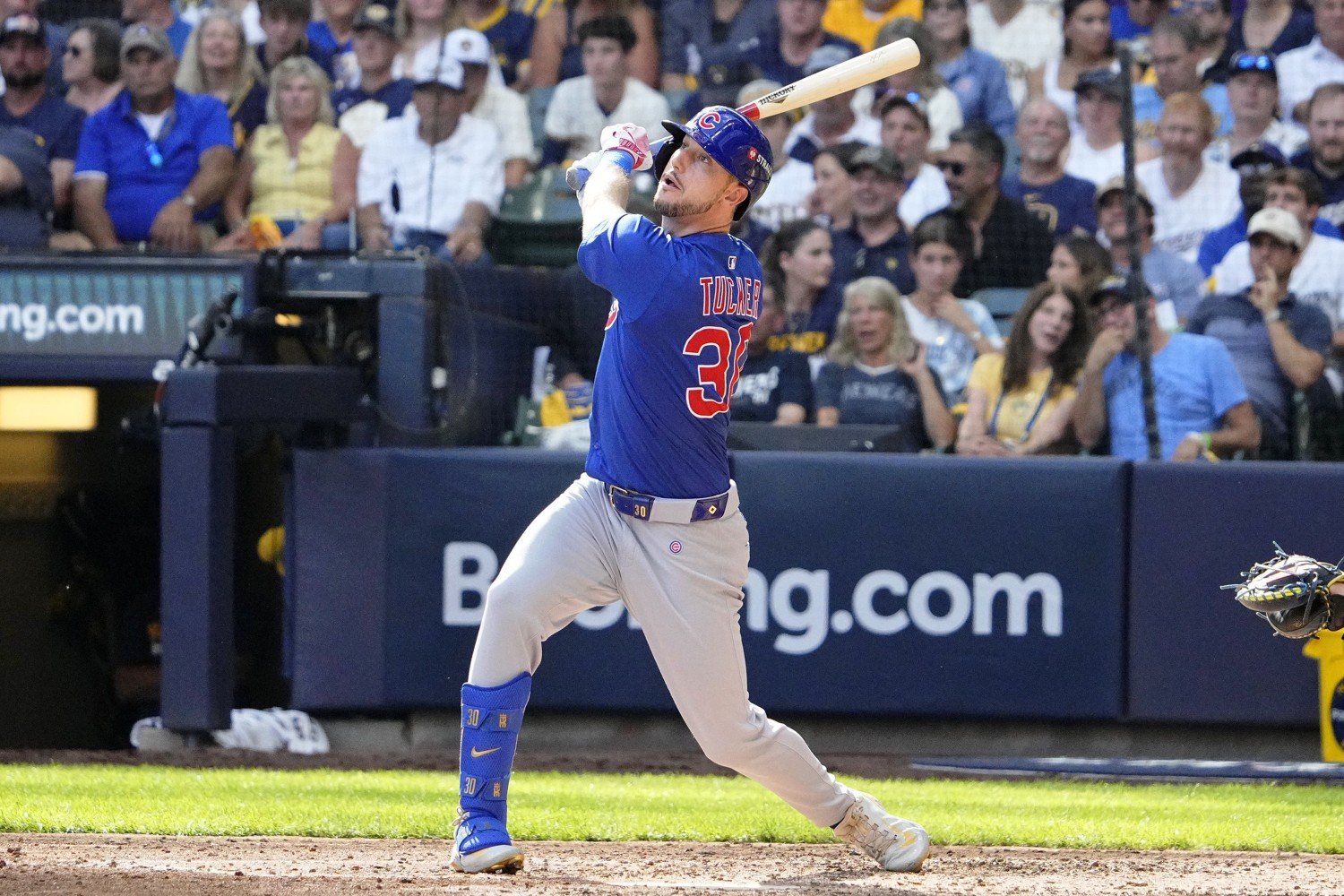 First, there was the Isaac Paredes trade. In July 2024, as they teetered on the tightrope of contention for an NL Wild Card berth, the Cubs traded talented but positionless could-be slugger Christopher Morel, promising reliever Hunter Bigge and far-off prospect Ty Johnson to the Rays for controllable, All-Star third baseman Isaac Paredes. It was a bold move, designed to help the team both in the present—Morel was still struggling to connect his raw talent with his baseball skills, and simply wasn't playable at third base anymore—and in the future. Paredes came with three and a half years of team control, so to make an upgrade from Morel to him, the Cubs coughed up two interesting arms. As I wrote at that time, that move was part of a shift in organizational philosophy and direction, which has not abated since. The team understood that, having languished a few years already on the wrong side of .500 and after firing David Ross to hire Craig Counsell and make him the highest-paid manager in baseball in November 2023, they needed to deliver on-field results soon, so they began systematically converting long-term value into short-term value. It meant churning through their draft classes faster, converting them from prospects with vague asset value into real help in the majors as quickly as possible. Thus, it was no real surprise when the team included 2024 first-rounder Cam Smith in their deal for Kyle Tucker in December 2024. That deal also sent Paredes to Houston (after an unlucky and unproductive half-season in Chicago), though, and the Cubs also threw in young pitcher Hayden Wesneski. It was a lot to give up for one year of Tucker, who became a free agent after the 2025 World Series. Tucker didn't have a once-in-a-lifetime season with the team, either. He was the anchor of an extremely productive lineup in the first half, but he had a very inconsistent, injury-dimmed second half and played little part for the team down the stretch or in October. The Cubs organization, Wrigley Field and Tucker didn't form a love connection, and the team didn't seriously court him when he hit free agency. Although it's not entirely fair to Tucker, for many fans, the emblematic moment of his year in Chicago will be his pivotal strikeout during the team's only promising rally in Game 5 of the NLDS. Resist the temptation to let that set of facts mark the trade as anything but a resounding success, though. Tucker won't be a long-term part of the Cubs, and his influence was positive but not transformative on the field. However, he was what the 2025 team needed to get over the hump and back into the postseason, and the benefits of that extend far beyond last year. As we've reported here before, the Cubs' ownership group (including members of the Ricketts family, but also high-level business operations staff, like team president Crane Kenney) sets each year's baseball operations budget based on the previous year's revenue. Arguably, that's a closed-minded, overly conservative way for a team as rich and popular as the Cubs to do business, but it's what they do. One benefit of the approach is that success is self-sustaining. The better the team does, the more money they make, and the more money they make, the more money they're permitted to spend the following year. The baseball operations staff under Jed Hoyer astutely recognized that moves that boosted their hopes last season would increase their flexibility thereafter. That informed not only their trade for Tucker, but their efforts to land (first) Tanner Scott and (later) Alex Bregman. This way of thinking about their constraints and their opportunities is really just an extension of the way Hoyer and company do business all the time. It's similar to the way they eschewed higher-rated prospects to take Cade Horton in the first round in 2022, and used the savings to draft Jackson Ferris—whom they'd then include in the Michael Busch trade months later. It's also akin to their philosophy on free agency, which favors the middle of the market over pursuits of players in position for megadeals, even though ownership would sign off on a $400-million deal if it fit into the overall budget for Hoyer. The Hoyer Cubs aren't playing 4-D chess, but they are playing regular chess. When they make a move, they know that some of the things that happen next will be beyond their control, and they accept that. To select a move, they consider which move gives them the most desirable set of long-term outcomes and chances to pivot toward a new strategy if needed. Trading for Tucker looked, from the outside, like an all-in move for 2025, especially when they didn't push hard for an extension with him that spring. Now, though, we can see how the value will spill forward, into 2026 and beyond. Making the playoffs directly earned the Cubs perhaps $25 million, and being good right from the outset ensured that they also made more throughout the summer than they would have otherwise. Tucker was a big reason for that, and a meaningful chunk of the $50 million or so in total revenue increase from 2024 to 2025 can be ascribed to the trade for him. That increase boosted the budget for 2026 and made signing Alex Bregman possible, which is likely to keep the team competitive and increase their revenues over the life of that deal. The team can also recoup some value via the draft pick they're set to receive as compensation for Tucker signing elsewhere. Even if they sign free agent Zac Gallen, giving up a pick in the process, they'll be one pick richer for having had and lost Tucker than if they'd had the same offseason but never had him. The team is still rolling up future value and exchanging it for present value. After dealing Smith and Paredes, they backfilled third base by fast-tracking 2023 first-round pick Matt Shaw to the lineup last spring; they might trade him for even more present utility before camp opens. They traded top prospect Owen Caissie for Edward Cabrera earlier this month. Last summer, they took an injured but polished college hitter (Ethan Conrad) with their top pick, giving themselves a chance for a quick payoff on their investment either via extremely rapid development for a kid taken so low in the first round or via a blockbuster trade in July. However, that doesn't mean they're forgetting about the future. What they do to win games today is also designed to improve their chances tomorrow. The Tucker deal came at a high cost, but its dividends didn't end when he moved on.
 -
Image courtesy of © Michael McLoone-Imagn Images First, there was the Isaac Paredes trade. In July 2024, as they teetered on the tightrope of contention for an NL Wild Card berth, the Cubs traded talented but positionless could-be slugger Christopher Morel, promising reliever Hunter Bigge and far-off prospect Ty Johnson to the Rays for controllable, All-Star third baseman Isaac Paredes. It was a bold move, designed to help the team both in the present—Morel was still struggling to connect his raw talent with his baseball skills, and simply wasn't playable at third base anymore—and in the future. Paredes came with three and a half years of team control, so to make an upgrade from Morel to him, the Cubs coughed up two interesting arms. As I wrote at that time, that move was part of a shift in organizational philosophy and direction, which has not abated since. The team understood that, having languished a few years already on the wrong side of .500 and after firing David Ross to hire Craig Counsell and make him the highest-paid manager in baseball in November 2023, they needed to deliver on-field results soon, so they began systematically converting long-term value into short-term value. It meant churning through their draft classes faster, converting them from prospects with vague asset value into real help in the majors as quickly as possible. Thus, it was no real surprise when the team included 2024 first-rounder Cam Smith in their deal for Kyle Tucker in December 2024. That deal also sent Paredes to Houston (after an unlucky and unproductive half-season in Chicago), though, and the Cubs also threw in young pitcher Hayden Wesneski. It was a lot to give up for one year of Tucker, who became a free agent after the 2025 World Series. Tucker didn't have a once-in-a-lifetime season with the team, either. He was the anchor of an extremely productive lineup in the first half, but he had a very inconsistent, injury-dimmed second half and played little part for the team down the stretch or in October. The Cubs organization, Wrigley Field and Tucker didn't form a love connection, and the team didn't seriously court him when he hit free agency. Although it's not entirely fair to Tucker, for many fans, the emblematic moment of his year in Chicago will be his pivotal strikeout during the team's only promising rally in Game 5 of the NLDS. Resist the temptation to let that set of facts mark the trade as anything but a resounding success, though. Tucker won't be a long-term part of the Cubs, and his influence was positive but not transformative on the field. However, he was what the 2025 team needed to get over the hump and back into the postseason, and the benefits of that extend far beyond last year. As we've reported here before, the Cubs' ownership group (including members of the Ricketts family, but also high-level business operations staff, like team president Crane Kenney) sets each year's baseball operations budget based on the previous year's revenue. Arguably, that's a closed-minded, overly conservative way for a team as rich and popular as the Cubs to do business, but it's what they do. One benefit of the approach is that success is self-sustaining. The better the team does, the more money they make, and the more money they make, the more money they're permitted to spend the following year. The baseball operations staff under Jed Hoyer astutely recognized that moves that boosted their hopes last season would increase their flexibility thereafter. That informed not only their trade for Tucker, but their efforts to land (first) Tanner Scott and (later) Alex Bregman. This way of thinking about their constraints and their opportunities is really just an extension of the way Hoyer and company do business all the time. It's similar to the way they eschewed higher-rated prospects to take Cade Horton in the first round in 2022, and used the savings to draft Jackson Ferris—whom they'd then include in the Michael Busch trade months later. It's also akin to their philosophy on free agency, which favors the middle of the market over pursuits of players in position for megadeals, even though ownership would sign off on a $400-million deal if it fit into the overall budget for Hoyer. The Hoyer Cubs aren't playing 4-D chess, but they are playing regular chess. When they make a move, they know that some of the things that happen next will be beyond their control, and they accept that. To select a move, they consider which move gives them the most desirable set of long-term outcomes and chances to pivot toward a new strategy if needed. Trading for Tucker looked, from the outside, like an all-in move for 2025, especially when they didn't push hard for an extension with him that spring. Now, though, we can see how the value will spill forward, into 2026 and beyond. Making the playoffs directly earned the Cubs perhaps $25 million, and being good right from the outset ensured that they also made more throughout the summer than they would have otherwise. Tucker was a big reason for that, and a meaningful chunk of the $50 million or so in total revenue increase from 2024 to 2025 can be ascribed to the trade for him. That increase boosted the budget for 2026 and made signing Alex Bregman possible, which is likely to keep the team competitive and increase their revenues over the life of that deal. The team can also recoup some value via the draft pick they're set to receive as compensation for Tucker signing elsewhere. Even if they sign free agent Zac Gallen, giving up a pick in the process, they'll be one pick richer for having had and lost Tucker than if they'd had the same offseason but never had him. The team is still rolling up future value and exchanging it for present value. After dealing Smith and Paredes, they backfilled third base by fast-tracking 2023 first-round pick Matt Shaw to the lineup last spring; they might trade him for even more present utility before camp opens. They traded top prospect Owen Caissie for Edward Cabrera earlier this month. Last summer, they took an injured but polished college hitter (Ethan Conrad) with their top pick, giving themselves a chance for a quick payoff on their investment either via extremely rapid development for a kid taken so low in the first round or via a blockbuster trade in July. However, that doesn't mean they're forgetting about the future. What they do to win games today is also designed to improve their chances tomorrow. The Tucker deal came at a high cost, but its dividends didn't end when he moved on. View full article
-
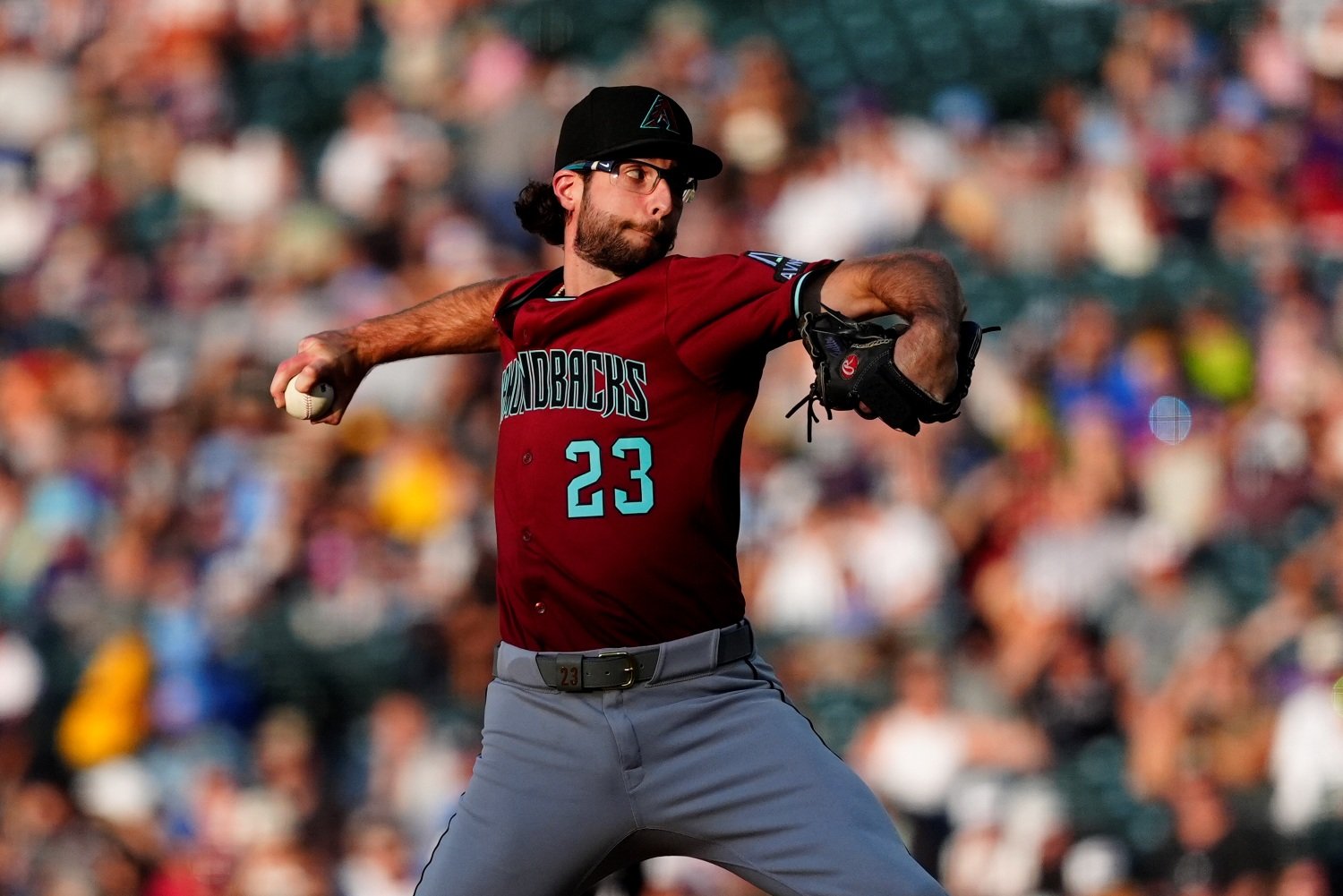 It's time for a little inside baseball. Most fans know that Scott Boras is the most powerful and visible agent in the sport, and each winter, one of the first things everyone does is to identify the players hitting free agency whom Boras's agency represents. Many fans also know, at least vaguely, that Boras's reputation is for stubborn patience and being willing to let his top players stay on the market longer than other agents do. There's truth in that, but it's not the whole story. The Boras Corporation has over 75 active major-league clients, and is always adding players as they enter professional baseball and climb the first rungs of the ladder therein. Boras can't fully service all of those players; he's the head of a large operation. The company includes several MLBPA-licensed agents, and most Boras Corporation clients are assigned at least one representative other than Boras for their day-to-day needs. However, part of the sales pitch with which Boras recruits the best players in the sport is the promise that he'll be the one negotiating your deal, when the time comes to make real money. That's his signature skill, and while his employees often talk with and even take the lead during segments of negotiations with teams, Boras is the closer. That's the real reason why his clients tend to linger on the market the way they do, as much as anything else. Before he steps in to do his thing on behalf of one client, he must tackle the one ahead of them in the pecking order. That doesn't mean that Boras clients will simply sign in descending order of quality or earning power each winter. It's not that simple. Rather, Boras and his team devise a strategy for cultivating discussions and offers, and they try to determine the best order of operations to get all their clients paid as well as possible. This can be a cold-feeling process for some of the company's clients, and there's no question that the best players get preferential treatment and take priority as the offseason gets underway, but they're not neglecting the needs of anyone they represent; they're just navigating the market with a utilitarian mindset about maximizing their players' earnings. When you see a non-elite Boras Corporation client sign early in the winter, you can bet that the team who signed them got extremely proactive in the pursuit of them. That's how Matthew Boyd signed with the Cubs in late November 2024, and how Josh Bell ended up with the Twins relatively early this winter. If a club has a sufficiently strong feeling about a player, they can jump the line by communicating to Boras (or, just as often, one of the less famous agents under the company's umbrella) that they're ready to make a deal. Failing that, though, Boras tends to line up his top players to sign soonest, setting a robust market and ensuring that demand outstrips supply when it's time to play matchmaker with the lesser lights. This offseason, as has become common, Boras controlled the market. Dylan Cease signed a massive deal with the Blue Jays in late November. Pete Alonso got his big deal, on the second go-round, signing with the Orioles in mid-December. With a deadline looming, Boras got Tatsuya Imai a flexible deal with the Astros, and earlier this month, he secured a five-year deal for Alex Bregman. Using the leverage the Cubs' deal with Bregman created, he got Ranger Suárez $130 million with the Red Sox. On Wednesday, Cody Bellinger became the latest headline name to get over $150 million. Boras Corporation clients have been guaranteed over $900 million this winter, not counting the deals inked by arbitration-eligible players. With all those stars off the board and the guys (Bell, Austin Hedges, Luke Weaver, Ha-Seong Kim and a few others) whom teams got proactive on out of the way, the Boras-specific portion of the winter has officially entered its endgame. There is only one player with a modicum of high-end earning potential left on Boras's list: Zac Gallen. Boras and company still need to find homes for Erick Fedde, Rhys Hoskins, Michael Kopech, Nick Martinez, Chris Paddack and Max Scherzer, too. None of those guys will sign long-term deals, though, and only one or two of them will get an eight-figure guarantee. Gallen is the last major piece for whom Boras needs to find a home, and it's not a coincidence that he's ended up being last in line. As was reported (rather shoddily) at the time, the Cubs did flirt with a buy-it-now move on Gallen late last year, as they tried to create more certainty in their starting rotation. The price tag was much too high for their taste, though, with Boras seeking a five-year deal. Over a month later, the team has both spent significant dollars (on Bregman, most notably) and added to their rotation via trade, so they don't have as urgent a need or as easy a fit for Gallen as they had then. That said, we talked at the time about why the team likes him, and those reasons for interest remain valid. Indeed, Gallen's market has staggered, though not quite collapsed, according to sources with knowledge of offers made to him this month. Rather than having any hope of a five-year or nine-figure payday, Gallen looks likely to settle for a deal much more akin to the one Boras got for Imai: three years and $54 million guaranteed, with the chance to push that number to $63 million via incentives or the right to opt out after either of the first two years. The Cubs have re-engaged with Boras about Gallen over the last week, according to a source familiar with the talks, but it's not clear exactly how a deal palatable to both sides would be structured. Right now, the Cubs have Boyd, Edward Cabrera, Jameson Taillon, Cade Horton and Shota Imanaga penciled into their rotation for 2026. All five of those guys have significant injury histories, either because of the volume of trouble they've encountered or because they just struggled with maladies last year. The team also has Colin Rea, who could open the season in the bullpen if everyone is healthy, and Javier Assad, who can still be optioned to the minors. Justin Steele will return sometime in the summer. On paper, they have depth in abundance. Pitching on paper is unproductive, though, and on the dirt and grass of reality, the team will soon find some limits on the availability of the group listed above. Taillon and Boyd are each planning to pitch in the World Baseball Classic, and it wouldn't be surprising if Imanaga, Cabrera and Assad ended up doing so, either. Innings limits based on age, previous workload and/or injury rehabilitation will come into play for Cabrera, Horton, Steele and top prospect Jaxon Wiggins. The Cubs are going to need more good, healthy pitchers than they currently have, and Gallen (despite ugly numbers the last year and a half) is exceptionally durable. To sign Gallen, the Cubs would have to surrender a draft pick, though that would just even things out after they were set to receive one to compensate them for the departure of Kyle Tucker. (Bregman, who received a qualifying offer last winter and wasn't eligible to get another, didn't cost the team a pick.) With Taillon, Imanaga and Boyd each slated to hit free agency after 2026, signing Gallen to any deal that allows him to opt for free agency after just one year would be superficially problematic, but one team source suggested that it would also mean more freedom to operate next winter. If Steele, Horton and Cabrera are healthy and pitch the way the team expects, rounding out the 2026 rotation will be important, but not overwhelming. Thus, as the Cubs consider ways to complete their roster and contend for a pennant this season, Gallen is back on their radar. A decision could come soon, though now that Boras isn't spread as thin, he can play the waiting game with Gallen if his client is ok with not knowing where he's going until the eve of spring training. This is just one possible path for Chicago, which is also weighing the option of trading one or more players to get more flexible and balanced throughout the roster, but it's a surprisingly real one. Boras and Jed Hoyer have learned to read and use each other relatively well, and the best remaining deal out there for Boras's last high-end client might come from Hoyer.
 -
Image courtesy of © Ron Chenoy-Imagn Images It's time for a little inside baseball. Most fans know that Scott Boras is the most powerful and visible agent in the sport, and each winter, one of the first things everyone does is to identify the players hitting free agency whom Boras's agency represents. Many fans also know, at least vaguely, that Boras's reputation is for stubborn patience and being willing to let his top players stay on the market longer than other agents do. There's truth in that, but it's not the whole story. The Boras Corporation has over 75 active major-league clients, and is always adding players as they enter professional baseball and climb the first rungs of the ladder therein. Boras can't fully service all of those players; he's the head of a large operation. The company includes several MLBPA-licensed agents, and most Boras Corporation clients are assigned at least one representative other than Boras for their day-to-day needs. However, part of the sales pitch with which Boras recruits the best players in the sport is the promise that he'll be the one negotiating your deal, when the time comes to make real money. That's his signature skill, and while his employees often talk with and even take the lead during segments of negotiations with teams, Boras is the closer. That's the real reason why his clients tend to linger on the market the way they do, as much as anything else. Before he steps in to do his thing on behalf of one client, he must tackle the one ahead of them in the pecking order. That doesn't mean that Boras clients will simply sign in descending order of quality or earning power each winter. It's not that simple. Rather, Boras and his team devise a strategy for cultivating discussions and offers, and they try to determine the best order of operations to get all their clients paid as well as possible. This can be a cold-feeling process for some of the company's clients, and there's no question that the best players get preferential treatment and take priority as the offseason gets underway, but they're not neglecting the needs of anyone they represent; they're just navigating the market with a utilitarian mindset about maximizing their players' earnings. When you see a non-elite Boras Corporation client sign early in the winter, you can bet that the team who signed them got extremely proactive in the pursuit of them. That's how Matthew Boyd signed with the Cubs in late November 2024, and how Josh Bell ended up with the Twins relatively early this winter. If a club has a sufficiently strong feeling about a player, they can jump the line by communicating to Boras (or, just as often, one of the less famous agents under the company's umbrella) that they're ready to make a deal. Failing that, though, Boras tends to line up his top players to sign soonest, setting a robust market and ensuring that demand outstrips supply when it's time to play matchmaker with the lesser lights. This offseason, as has become common, Boras controlled the market. Dylan Cease signed a massive deal with the Blue Jays in late November. Pete Alonso got his big deal, on the second go-round, signing with the Orioles in mid-December. With a deadline looming, Boras got Tatsuya Imai a flexible deal with the Astros, and earlier this month, he secured a five-year deal for Alex Bregman. Using the leverage the Cubs' deal with Bregman created, he got Ranger Suárez $130 million with the Red Sox. On Wednesday, Cody Bellinger became the latest headline name to get over $150 million. Boras Corporation clients have been guaranteed over $900 million this winter, not counting the deals inked by arbitration-eligible players. With all those stars off the board and the guys (Bell, Austin Hedges, Luke Weaver, Ha-Seong Kim and a few others) whom teams got proactive on out of the way, the Boras-specific portion of the winter has officially entered its endgame. There is only one player with a modicum of high-end earning potential left on Boras's list: Zac Gallen. Boras and company still need to find homes for Erick Fedde, Rhys Hoskins, Michael Kopech, Nick Martinez, Chris Paddack and Max Scherzer, too. None of those guys will sign long-term deals, though, and only one or two of them will get an eight-figure guarantee. Gallen is the last major piece for whom Boras needs to find a home, and it's not a coincidence that he's ended up being last in line. As was reported (rather shoddily) at the time, the Cubs did flirt with a buy-it-now move on Gallen late last year, as they tried to create more certainty in their starting rotation. The price tag was much too high for their taste, though, with Boras seeking a five-year deal. Over a month later, the team has both spent significant dollars (on Bregman, most notably) and added to their rotation via trade, so they don't have as urgent a need or as easy a fit for Gallen as they had then. That said, we talked at the time about why the team likes him, and those reasons for interest remain valid. Indeed, Gallen's market has staggered, though not quite collapsed, according to sources with knowledge of offers made to him this month. Rather than having any hope of a five-year or nine-figure payday, Gallen looks likely to settle for a deal much more akin to the one Boras got for Imai: three years and $54 million guaranteed, with the chance to push that number to $63 million via incentives or the right to opt out after either of the first two years. The Cubs have re-engaged with Boras about Gallen over the last week, according to a source familiar with the talks, but it's not clear exactly how a deal palatable to both sides would be structured. Right now, the Cubs have Boyd, Edward Cabrera, Jameson Taillon, Cade Horton and Shota Imanaga penciled into their rotation for 2026. All five of those guys have significant injury histories, either because of the volume of trouble they've encountered or because they just struggled with maladies last year. The team also has Colin Rea, who could open the season in the bullpen if everyone is healthy, and Javier Assad, who can still be optioned to the minors. Justin Steele will return sometime in the summer. On paper, they have depth in abundance. Pitching on paper is unproductive, though, and on the dirt and grass of reality, the team will soon find some limits on the availability of the group listed above. Taillon and Boyd are each planning to pitch in the World Baseball Classic, and it wouldn't be surprising if Imanaga, Cabrera and Assad ended up doing so, either. Innings limits based on age, previous workload and/or injury rehabilitation will come into play for Cabrera, Horton, Steele and top prospect Jaxon Wiggins. The Cubs are going to need more good, healthy pitchers than they currently have, and Gallen (despite ugly numbers the last year and a half) is exceptionally durable. To sign Gallen, the Cubs would have to surrender a draft pick, though that would just even things out after they were set to receive one to compensate them for the departure of Kyle Tucker. (Bregman, who received a qualifying offer last winter and wasn't eligible to get another, didn't cost the team a pick.) With Taillon, Imanaga and Boyd each slated to hit free agency after 2026, signing Gallen to any deal that allows him to opt for free agency after just one year would be superficially problematic, but one team source suggested that it would also mean more freedom to operate next winter. If Steele, Horton and Cabrera are healthy and pitch the way the team expects, rounding out the 2026 rotation will be important, but not overwhelming. Thus, as the Cubs consider ways to complete their roster and contend for a pennant this season, Gallen is back on their radar. A decision could come soon, though now that Boras isn't spread as thin, he can play the waiting game with Gallen if his client is ok with not knowing where he's going until the eve of spring training. This is just one possible path for Chicago, which is also weighing the option of trading one or more players to get more flexible and balanced throughout the roster, but it's a surprisingly real one. Boras and Jed Hoyer have learned to read and use each other relatively well, and the best remaining deal out there for Boras's last high-end client might come from Hoyer. View full article
-
That's terrifically kind of you. Thanks, and welcome! We're hoping to deliver the goods all year.
-
Image courtesy of © Stephen Brashear-Imagn Images Let me tell you a story. Not long ago, a solid journeyman relief pitcher got hurt. He tore his Achilles tendon, in fact, which is a major bummer of an injury. Before being felled, he'd been an unspectacular but valuable reliever for two and a half years. Since the start of 2023, indeed, he's appeared in 131 games in the majors and put up a 3.58 ERA. Most of that work came for the Mariners, who still had control of him for 2026 if they wanted it. Instead, though, they non-tendered him in late November. Guys who tear their Achilles in July rarely make it back to the mound before the following June, and the reliever wasn't good enough to wait on that way. Not even two months after being cut, he has a job again. The Cubs signed Trent Thornton to a minor-league deal after watching his pro day at Tread Athletics this month, and he'll get an invitation to big-league spring training, a source confirmed. Thornton, 32, is already touching 92.5 miles per hour on the gun, and he threw six different offerings in a 23-pitch bullpen session before scouts at the facility in North Carolina. He's making an impressively fast recovery from the injury, and sure looks like he'll be at full strength by Opening Day. I have a little conspiracy theory to share with you, though. It has nothing to do with his injury; there'd be little incentive for anyone involved to lie about or obfuscate his real health status. Rather, I want you to consider this chart, showing Thornton's pitch types and shapes for 2025, according to Statcast: Now, here's a clip of his session at Tread's Pro Day and the data on his pitches, served up by the coach who worked with him directly at the facility. The key to good detective work is seeing what's missing from a picture, so spot what's missing from that Pro Day outing by Thornton. He didn't throw the changeup or splitter at all. In fairness, he only threw those two pitches a combined 24 times in 2025 and 29 times in 2024. The tweet in which Tread announced that he was signing with the Cubs called him a "super supinator," which is true. Supinators are pitchers whose mechanical preference is for the inward turn of the palm required to throw a breaking ball; they're the ones who can produce elite spin rates on those pitches. Thornton is famous for having one of the highest-spin curveballs in the league, averaging over 3,000 revolutions per minute. Those guys tend not to throw many changeups, which generally require pronation (the outward turn of the palm through pushing the thumb down), instead. Ah, but it's possible the 'generally' in that last sentence is doing important work. The famous not-quite-new pitch of 2025 was the kick-change, whereby a pitcher who favors supination creates a changeup that works for them by using a spiked grip that "kicks" the spin axis of the pitch toward the arm side as they release the ball. Instead of having to pronate to create arm-side movement, the grip does the work for them. Jameson Taillon had a good season thanks to unlocking this very secret. Thornton is an exceptional candidate for a kick-change, and Tread is one of the top proponents of that pitch in the independent pitching development sphere. They've tweeted that term 11 times since early August, alone. The last two such tweets were celebrations of the progress made by two of the facility's pupils in November, centered on their kick-changes. The coach overseeing each of those guys was Turner Givens—the same one who has worked with Thornton there. If you wanted to take Thornton to the next level as a reliever, you'd give him a kick-change. It looks like he even tinkered with that pitch a bit in 2025, throwing a different flavor of changeup than he had in the past about 10 times before getting hurt. It's unfathomable that, in a couple months of work with Givens at Tread, Thornton hasn't been developing a kick-change. But he didn't throw it at his Pro Day. That might be purely because it's not ready yet. Thornton's extension at release was very, very low in this outing, because that's one way pitchers modulate effort and because that major injury to his landing leg is still healing. Extension is key to executing a good changeup, so the pitch might not be ready for prime time. However, there's another hypothesis worth our consideration. This is the conspiracy theory portion of the program. Cubs vice president of pitching Tyler Zombro joined the organization after a few months as a coach akin to Givens, at Tread—and he didn't stop working for Tread when he joined Chicago. Even after a big promotion to that VP role for Chicago in the fall, he maintains a role at Tread. Zombro is the Cubs' new secret weapon of pitching development, and because of his work at Tread, almost any pitcher who passes through that facility will come into his orbit. Thornton is the third pitcher signed by the Cubs coming out of Tread's Pro Day, joining righthander Tyler Ras and southpaw Charlie Barnes. That's probably organic, in that Tread's philosophy of pitching both informed Zombro's and now reflects it. A pitcher who works at Tread for a while will be molded to suit that philosophy, and Zombro can hardly fail to notice when they respond well to it. Tread isn't quite an extension of the Cubs, but it's sure become a likely place to find pitchers the Cubs will like. That doesn't amount to a conspiracy. If Zombro and the Cubs knew they'd have interest in Thornton, though, might Zombro have encouraged Givens and Thornton to keep the kick-change in the holster for Pro Day? That probably wouldn't have been a tough sell, for the reasons we mentioned earlier. It certainly could help the Cubs keep Thornton below the radar, though. This is a guy with 235 appearances and 401 innings in his big-league career. Getting him on a minor-league deal might not have been possible, if another team or two had seen the pitch that's likely to round out his arsenal and help him get lefties out. Opposing lefty batters hit .271/.327/.442 against Thornton in 2024 and 2025, combined. Fix that, and he becomes a candidate for high-leverage relief work. The kick-change can do that. With that pitch established, he would merit a big-league deal with an immediate 40-man roster spot. Instead, the righty will come to spring training with a chance to win a job, but the team will have roster flexibility to add higher-end talent for the balance of the winter—and he'll cost them virtually nothing if he doesn't pan out. Did Zombro help hide the most promising development happening for Thornton behind the scenes, to more easily steer one of Tread's most accomplished auditioners to the team he works for? It's unlikely, but not impossible. This is why many within the game are uncomfortable with arrangements like the one between Zombro, the Cubs and Tread—which is hardly unprecedented. It won't matter unless Thornton really has a dazzling spring, but if he fights for and wins a spot in the pen and turns out to be a key arm, credit Zombro with (at least) being the relational conduit who helped the team snare him. View full article
-
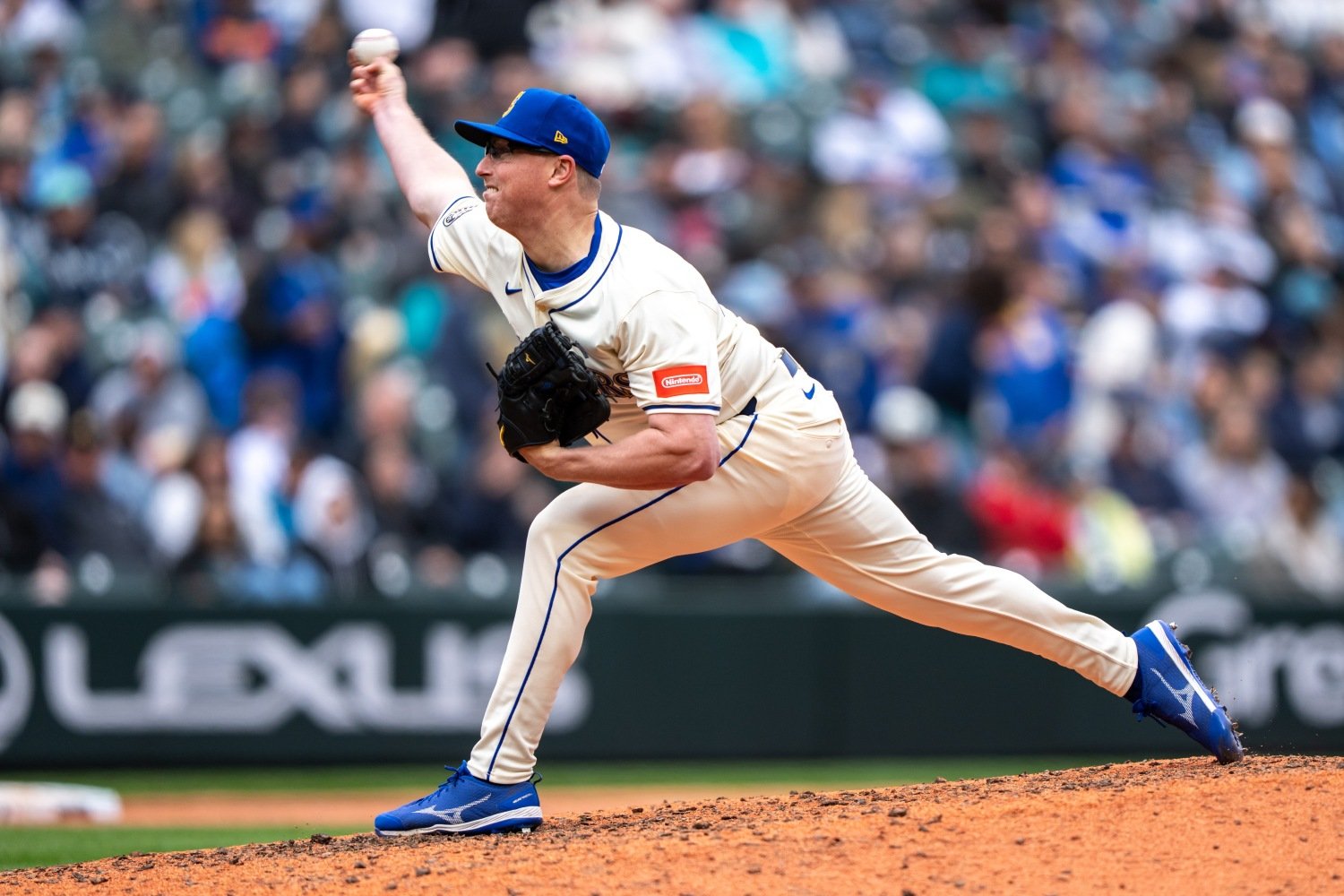 Let me tell you a story. Not long ago, a solid journeyman relief pitcher got hurt. He tore his Achilles tendon, in fact, which is a major bummer of an injury. Before being felled, he'd been an unspectacular but valuable reliever for two and a half years. Since the start of 2023, indeed, he's appeared in 131 games in the majors and put up a 3.58 ERA. Most of that work came for the Mariners, who still had control of him for 2026 if they wanted it. Instead, though, they non-tendered him in late November. Guys who tear their Achilles in July rarely make it back to the mound before the following June, and the reliever wasn't good enough to wait on that way. Not even two months after being cut, he has a job again. The Cubs signed Trent Thornton to a minor-league deal after watching his pro day at Tread Athletics this month, and he'll get an invitation to big-league spring training, a source confirmed. Thornton, 32, is already touching 92.5 miles per hour on the gun, and he threw six different offerings in a 23-pitch bullpen session before scouts at the facility in North Carolina. He's making an impressively fast recovery from the injury, and sure looks like he'll be at full strength by Opening Day. I have a little conspiracy theory to share with you, though. It has nothing to do with his injury; there'd be little incentive for anyone involved to lie about or obfuscate his real health status. Rather, I want you to consider this chart, showing Thornton's pitch types and shapes for 2025, according to Statcast: Now, here's a clip of his session at Tread's Pro Day and the data on his pitches, served up by the coach who worked with him directly at the facility. The key to good detective work is seeing what's missing from a picture, so spot what's missing from that Pro Day outing by Thornton. He didn't throw the changeup or splitter at all. In fairness, he only threw those two pitches a combined 24 times in 2025 and 29 times in 2024. The tweet in which Tread announced that he was signing with the Cubs called him a "super supinator," which is true. Supinators are pitchers whose mechanical preference is for the inward turn of the palm required to throw a breaking ball; they're the ones who can produce elite spin rates on those pitches. Thornton is famous for having one of the highest-spin curveballs in the league, averaging over 3,000 revolutions per minute. Those guys tend not to throw many changeups, which generally require pronation (the outward turn of the palm through pushing the thumb down), instead. Ah, but it's possible the 'generally' in that last sentence is doing important work. The famous not-quite-new pitch of 2025 was the kick-change, whereby a pitcher who favors supination creates a changeup that works for them by using a spiked grip that "kicks" the spin axis of the pitch toward the arm side as they release the ball. Instead of having to pronate to create arm-side movement, the grip does the work for them. Jameson Taillon had a good season thanks to unlocking this very secret. Thornton is an exceptional candidate for a kick-change, and Tread is one of the top proponents of that pitch in the independent pitching development sphere. They've tweeted that term 11 times since early August, alone. The last two such tweets were celebrations of the progress made by two of the facility's pupils in November, centered on their kick-changes. The coach overseeing each of those guys was Turner Givens—the same one who has worked with Thornton there. If you wanted to take Thornton to the next level as a reliever, you'd give him a kick-change. It looks like he even tinkered with that pitch a bit in 2025, throwing a different flavor of changeup than he had in the past about 10 times before getting hurt. It's unfathomable that, in a couple months of work with Givens at Tread, Thornton hasn't been developing a kick-change. But he didn't throw it at his Pro Day. That might be purely because it's not ready yet. Thornton's extension at release was very, very low in this outing, because that's one way pitchers modulate effort and because that major injury to his landing leg is still healing. Extension is key to executing a good changeup, so the pitch might not be ready for prime time. However, there's another hypothesis worth our consideration. This is the conspiracy theory portion of the program. Cubs vice president of pitching Tyler Zombro joined the organization after a few months as a coach akin to Givens, at Tread—and he didn't stop working for Tread when he joined Chicago. Even after a big promotion to that VP role for Chicago in the fall, he maintains a role at Tread. Zombro is the Cubs' new secret weapon of pitching development, and because of his work at Tread, almost any pitcher who passes through that facility will come into his orbit. Thornton is the third pitcher signed by the Cubs coming out of Tread's Pro Day, joining righthander Tyler Ras and southpaw Charlie Barnes. That's probably organic, in that Tread's philosophy of pitching both informed Zombro's and now reflects it. A pitcher who works at Tread for a while will be molded to suit that philosophy, and Zombro can hardly fail to notice when they respond well to it. Tread isn't quite an extension of the Cubs, but it's sure become a likely place to find pitchers the Cubs will like. That doesn't amount to a conspiracy. If Zombro and the Cubs knew they'd have interest in Thornton, though, might Zombro have encouraged Givens and Thornton to keep the kick-change in the holster for Pro Day? That probably wouldn't have been a tough sell, for the reasons we mentioned earlier. It certainly could help the Cubs keep Thornton below the radar, though. This is a guy with 235 appearances and 401 innings in his big-league career. Getting him on a minor-league deal might not have been possible, if another team or two had seen the pitch that's likely to round out his arsenal and help him get lefties out. Opposing lefty batters hit .271/.327/.442 against Thornton in 2024 and 2025, combined. Fix that, and he becomes a candidate for high-leverage relief work. The kick-change can do that. With that pitch established, he would merit a big-league deal with an immediate 40-man roster spot. Instead, the righty will come to spring training with a chance to win a job, but the team will have roster flexibility to add higher-end talent for the balance of the winter—and he'll cost them virtually nothing if he doesn't pan out. Did Zombro help hide the most promising development happening for Thornton behind the scenes, to more easily steer one of Tread's most accomplished auditioners to the team he works for? It's unlikely, but not impossible. This is why many within the game are uncomfortable with arrangements like the one between Zombro, the Cubs and Tread—which is hardly unprecedented. It won't matter unless Thornton really has a dazzling spring, but if he fights for and wins a spot in the pen and turns out to be a key arm, credit Zombro with (at least) being the relational conduit who helped the team snare him.
 -
Image courtesy of © Darren Yamashita-Imagn Images Although the Cubs aren't actively looking to trade Nico Hoerner or Matt Shaw after signing Alex Bregman, president of baseball operations Jed Hoyer admitted at Bregman's introductory press conference that interest in both Shaw and Hoerner has increased in the last few days—or, at least, that teams have felt emboldened to call about the two. Hoerner has garnered plenty of trade interest in the past, and Shaw was a key part of the demand from the Nationals when the Cubs took an interest in MacKenzie Gore. Chicago doesn't need to move Hoerner's salary; they have permission from ownership to stay above the first competitive-balance tax threshold this season. Nor are they obliged to trade Shaw, who can serve as a roving utility man or be optioned back to Triple-A Iowa. Undeniably, though, the chances of one of the two ending up elsewhere rose when Bregman signed, and although Hoerner makes a better headline-grabber, it's Shaw whom the Cubs would be happier to move, given the right return. What is the right return? Given that Shaw still has six years of team control remaining—he didn't get to a full year of service time for 2025, after he had to be demoted to the minors early in the season—it shouldn't be cheap. Chicago expects a pitcher who can contribute to their aspirations to make another run deep into the postseason in 2026, according to sources in two front offices who have had discussions with the team this week, and they'd also ask for a lower-level prospect to reinvigorate their farm system. Here are the six teams who most obviously match up with Chicago on a potential Shaw trade, and a brief rundown of the pitchers who could check that first, biggest box in a deal. Boston Red Sox After trades for Sonny Gray and Johan Oviedo and the signing of Ranger Suárez, the Red Sox are flush with pitching depth. If the season started tomorrow, they'd have a rotation of Garrett Crochet, Gray, Suárez, Oviedo, and Brayan Bello, which leaves top prospects Payton Tolle and Connolly Early out in the cold. Kutter Crawford missed all of 2025 after knee and wrist surgery, but should be a full go come spring training, and they signed Patrick Sandoval for the privilege of waiting out his rehab so they can put him into the mix this spring after modified Tommy John surgery in 2024. Bello is a good young pitcher, but not a frontline guy, and the team-friendly extension to which the team signed him has so much meat left on the bone (four years, $50.5 million, with an option for 2030 that would earn him another $20 million) that the Cubs might be wary of taking it on. Crawford is an interesting arm with three years of club control left, but in order to accept him as the pitching help in a Shaw deal, Hoyer would have to get a pretty good second piece, which is unlikely. Tolle or Early would be a great return for Shaw, allowing the Sox to fill the hole left in their infield by their failure to re-sign Bregman while netting the Cubs a high-upside left-handed hurler. That would be a fun challenge trade—but Boston covets the depth and flexibility both lefties provide. Kansas City Royals We talked about the Royals as a landing spot on Thursday, with specific mention of Kris Bubic, a plug-and-play southpaw starter. However, Bubic has just one year of team control left and a shaky track record when it comes to durability. The Cubs would push hard to land one of Noah Cameron, Luinder Avila, Ryan Bergert or Stephen Kolek (each of whom come with at least five years of team control and can be optioned to the minors) instead. Bergert and Kolek, whom Kansas City got from the Padres in July's Freddy Fermin trade, are the names to watch most closely. Minnesota Twins Another AL Central team loaded with compelling arms, the Twins have two famous aces (Pablo López and Joe Ryan) who make plenty of sense as targets for the Cubs. However, neither is available right now. That could change in the summer, but if the Cubs prefer to strike while the iron is hot and get long-term control of a starter in return for Shaw, Zebby Matthews, David Festa, Mick Abel, Taj Bradley and Connor Prielipp all make sense. Shaw would slide right in as the presumptive second baseman in Minnesota, with superior hitter but defensive clod Luke Keaschall moving to the outfield. Of the five pitchers named there, all but Bradley (4) have at least five years of club control left, and all can be optioned to the minors. Prielipp is probably a reliever, but would instantly become the highest-upside southpaw in the Cubs pen. San Francisco Giants This fit is not as tidy. The Giants badly want Hoerner or Shaw, but don't have much the Cubs want in return, save for things San Francisco can ill afford to trade. They do have a passel of back-end starters with long-term team and cost control, including Landen Roupp, Carson Whisenhunt, Hayden Birdsong and Keaton Winn. To part with Shaw, though, the Cubs would want someone with more upside or a stronger track record than any of those four possess. Unless Giants president of baseball operations Buster Posey is willing to do something unexpected (and a bit foolish), a deal between these two sides is unlikely. Tampa Bay Rays After trading Brandon Lowe earlier this winter and acquiring Gavin Lux (ostensibly to play second base) Thursday, the Rays have a very thin, very ugly depth chart around the horn. Shaw would solve some problems for them, and he fits their mold in some key respects, offensively. He'd be a huge defensive upgrade for a group that could feature the plodding Junior Caminero at third base, the better-in-left field Lux at second and the oversized Carson Williams at shortstop on many days. To get Shaw, though, the Rays would have to send the Cubs one of Shane McClanahan, Edwin Uceta or Griffin Jax. McClanahan is an ace-caliber lefty starter at his best, but has been sidelined by injuries for a year and a half. Uceta has four years of team control left and blossomed as the Rays' relief ace last year, while Jax came over in a trade with Minnesota at the deadline and has two years of team control remaining. Jax is also a candidate to move to the starting rotation, though perhaps not until 2027. This could be the highest-impact set of pitcher targets for the Cubs, though they come with shorter terms of team control than some of the hurlers the team would target in deals with other clubs interested in Shaw. Washington Nationals The Cubs were reluctant to include Shaw in a trade for Gore last winter, or at the deadline in July. However, his value to them has dropped since then, and Gore's value has diminished enough that the Nationals can no longer credibly demand both Shaw and Cade Horton for him. A deal for Gore centered on Shaw would vault the Cubs well into the lead in projected NL Central standings for 2026, though it would require them to backfill their infield and could mean throwing in a player in addition to Shaw. The name of the game, if the team does trade their 2023 first-round pick, is to augment the 2026 roster without sacrificing long-term value. Moving Shaw would raise the stakes of the team's attempts to keep Hoerner around beyond the end of his current contract after this season, so it would need to save them some money at the end of the decade by adding controllable, cost-effective pitching to their roster. They might not be able to thread that needle—but plenty of teams would love to work with them in the endeavor. View full article
-
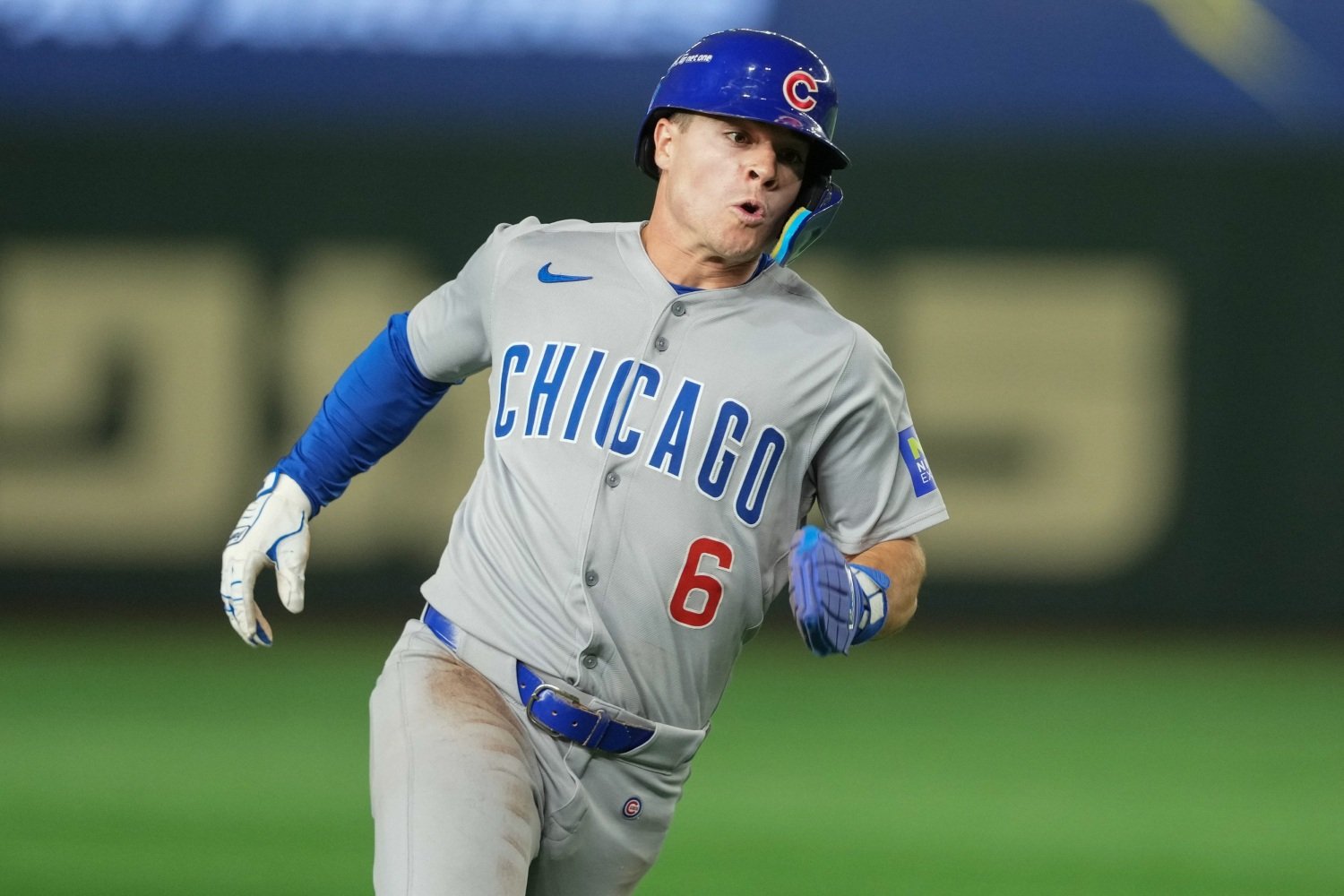 Although the Cubs aren't actively looking to trade Nico Hoerner or Matt Shaw after signing Alex Bregman, president of baseball operations Jed Hoyer admitted at Bregman's introductory press conference that interest in both Shaw and Hoerner has increased in the last few days—or, at least, that teams have felt emboldened to call about the two. Hoerner has garnered plenty of trade interest in the past, and Shaw was a key part of the demand from the Nationals when the Cubs took an interest in MacKenzie Gore. Chicago doesn't need to move Hoerner's salary; they have permission from ownership to stay above the first competitive-balance tax threshold this season. Nor are they obliged to trade Shaw, who can serve as a roving utility man or be optioned back to Triple-A Iowa. Undeniably, though, the chances of one of the two ending up elsewhere rose when Bregman signed, and although Hoerner makes a better headline-grabber, it's Shaw whom the Cubs would be happier to move, given the right return. What is the right return? Given that Shaw still has six years of team control remaining—he didn't get to a full year of service time for 2025, after he had to be demoted to the minors early in the season—it shouldn't be cheap. Chicago expects a pitcher who can contribute to their aspirations to make another run deep into the postseason in 2026, according to sources in two front offices who have had discussions with the team this week, and they'd also ask for a lower-level prospect to reinvigorate their farm system. Here are the six teams who most obviously match up with Chicago on a potential Shaw trade, and a brief rundown of the pitchers who could check that first, biggest box in a deal. Boston Red Sox After trades for Sonny Gray and Johan Oviedo and the signing of Ranger Suárez, the Red Sox are flush with pitching depth. If the season started tomorrow, they'd have a rotation of Garrett Crochet, Gray, Suárez, Oviedo, and Brayan Bello, which leaves top prospects Payton Tolle and Connolly Early out in the cold. Kutter Crawford missed all of 2025 after knee and wrist surgery, but should be a full go come spring training, and they signed Patrick Sandoval for the privilege of waiting out his rehab so they can put him into the mix this spring after modified Tommy John surgery in 2024. Bello is a good young pitcher, but not a frontline guy, and the team-friendly extension to which the team signed him has so much meat left on the bone (four years, $50.5 million, with an option for 2030 that would earn him another $20 million) that the Cubs might be wary of taking it on. Crawford is an interesting arm with three years of club control left, but in order to accept him as the pitching help in a Shaw deal, Hoyer would have to get a pretty good second piece, which is unlikely. Tolle or Early would be a great return for Shaw, allowing the Sox to fill the hole left in their infield by their failure to re-sign Bregman while netting the Cubs a high-upside left-handed hurler. That would be a fun challenge trade—but Boston covets the depth and flexibility both lefties provide. Kansas City Royals We talked about the Royals as a landing spot on Thursday, with specific mention of Kris Bubic, a plug-and-play southpaw starter. However, Bubic has just one year of team control left and a shaky track record when it comes to durability. The Cubs would push hard to land one of Noah Cameron, Luinder Avila, Ryan Bergert or Stephen Kolek (each of whom come with at least five years of team control and can be optioned to the minors) instead. Bergert and Kolek, whom Kansas City got from the Padres in July's Freddy Fermin trade, are the names to watch most closely. Minnesota Twins Another AL Central team loaded with compelling arms, the Twins have two famous aces (Pablo López and Joe Ryan) who make plenty of sense as targets for the Cubs. However, neither is available right now. That could change in the summer, but if the Cubs prefer to strike while the iron is hot and get long-term control of a starter in return for Shaw, Zebby Matthews, David Festa, Mick Abel, Taj Bradley and Connor Prielipp all make sense. Shaw would slide right in as the presumptive second baseman in Minnesota, with superior hitter but defensive clod Luke Keaschall moving to the outfield. Of the five pitchers named there, all but Bradley (4) have at least five years of club control left, and all can be optioned to the minors. Prielipp is probably a reliever, but would instantly become the highest-upside southpaw in the Cubs pen. San Francisco Giants This fit is not as tidy. The Giants badly want Hoerner or Shaw, but don't have much the Cubs want in return, save for things San Francisco can ill afford to trade. They do have a passel of back-end starters with long-term team and cost control, including Landen Roupp, Carson Whisenhunt, Hayden Birdsong and Keaton Winn. To part with Shaw, though, the Cubs would want someone with more upside or a stronger track record than any of those four possess. Unless Giants president of baseball operations Buster Posey is willing to do something unexpected (and a bit foolish), a deal between these two sides is unlikely. Tampa Bay Rays After trading Brandon Lowe earlier this winter and acquiring Gavin Lux (ostensibly to play second base) Thursday, the Rays have a very thin, very ugly depth chart around the horn. Shaw would solve some problems for them, and he fits their mold in some key respects, offensively. He'd be a huge defensive upgrade for a group that could feature the plodding Junior Caminero at third base, the better-in-left field Lux at second and the oversized Carson Williams at shortstop on many days. To get Shaw, though, the Rays would have to send the Cubs one of Shane McClanahan, Edwin Uceta or Griffin Jax. McClanahan is an ace-caliber lefty starter at his best, but has been sidelined by injuries for a year and a half. Uceta has four years of team control left and blossomed as the Rays' relief ace last year, while Jax came over in a trade with Minnesota at the deadline and has two years of team control remaining. Jax is also a candidate to move to the starting rotation, though perhaps not until 2027. This could be the highest-impact set of pitcher targets for the Cubs, though they come with shorter terms of team control than some of the hurlers the team would target in deals with other clubs interested in Shaw. Washington Nationals The Cubs were reluctant to include Shaw in a trade for Gore last winter, or at the deadline in July. However, his value to them has dropped since then, and Gore's value has diminished enough that the Nationals can no longer credibly demand both Shaw and Cade Horton for him. A deal for Gore centered on Shaw would vault the Cubs well into the lead in projected NL Central standings for 2026, though it would require them to backfill their infield and could mean throwing in a player in addition to Shaw. The name of the game, if the team does trade their 2023 first-round pick, is to augment the 2026 roster without sacrificing long-term value. Moving Shaw would raise the stakes of the team's attempts to keep Hoerner around beyond the end of his current contract after this season, so it would need to save them some money at the end of the decade by adding controllable, cost-effective pitching to their roster. They might not be able to thread that needle—but plenty of teams would love to work with them in the endeavor.
 -
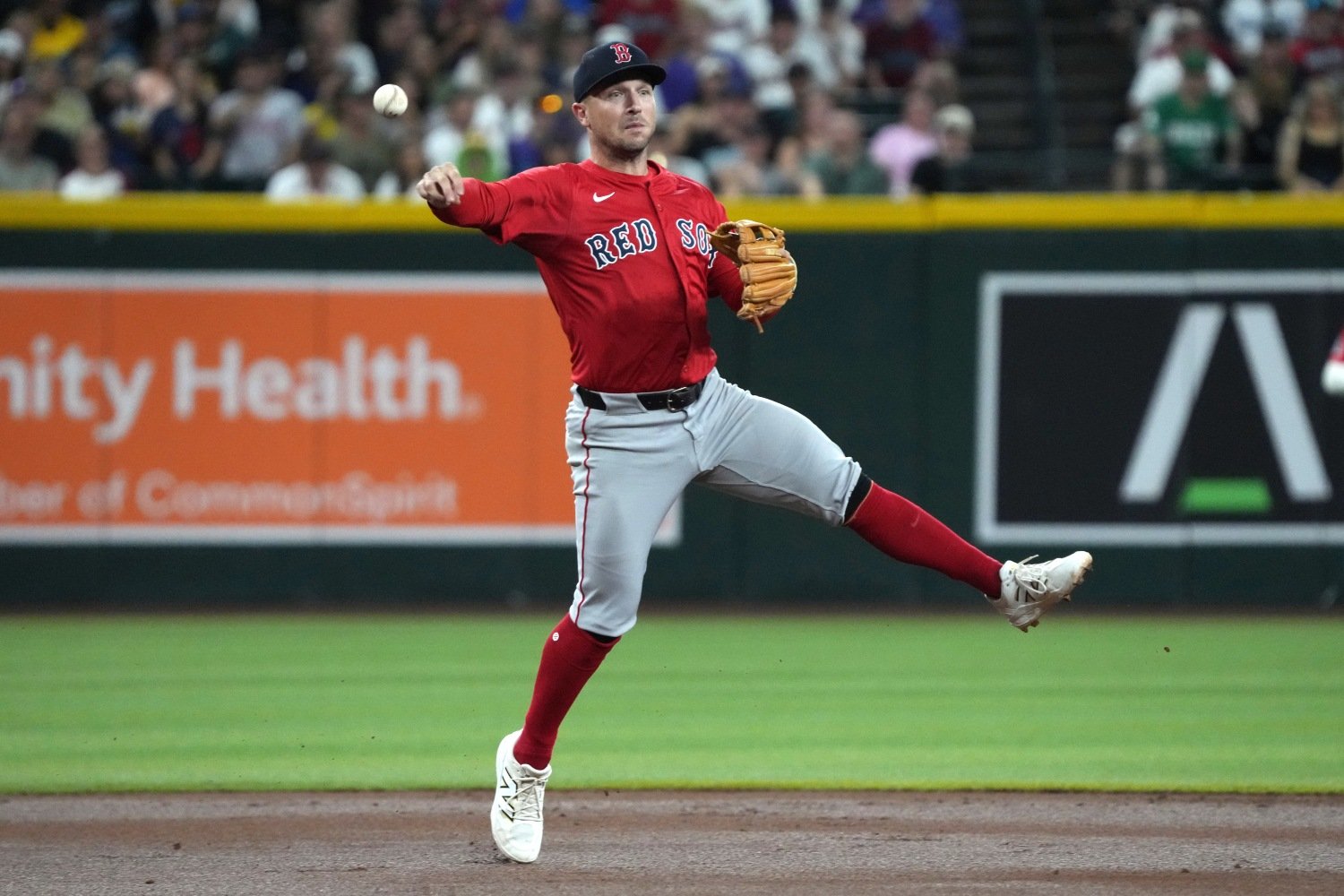 Signing Alex Bregman was primarily about adding a missing ingredient to the Cubs' batting order. Since Bregman agreed to a deal Saturday night, we've covered his fit into the lineup and his new home park, and we've dissected how well he approaches at-bats in big situations. Bregman also has an important defensive role to play, though. He'll be the team's starting third baseman for the foreseeable future. Thus, it would be wise for us to get to know him as a fielder. Bregman has consistently rated as an above-average defender at the hot corner. That's the headline. In nine of his 10 seasons in the majors, he's been average or better, according to both Defensive Runs Saved (DRS) from Sports Info Solutions and Deserved Runs Prevented from Baseball Prospectus. Somewhat surprisingly, he's even gotten better as his career has progressed. Whereas most players' defense peaks in their early 20s, Bregman won his first Gold Glove in 2024, at age 30. Two of his three best seasons by DRS came in 2023 (5) and 2024 (6), and he posted 1 DRS in 2025, despite missing a significant chunk of the season. The key to his unusually late peak has been improving steadily on plays down the third-base line, even as he's lost a bit of his ability to range to his left and take plays away from his shortstops. Plays Saved Season To His Right Straight On To His Left 2016 0 0 6 2017 -5 0 4 2018 1 -3 3 2019 1 2 8 2020 -1 1 0 2021 -3 1 4 2022 -2 0 -5 2023 5 -2 2 2024 8 0 -2 2025 1 -1 1 That might come as a minor surprise, to some, because Bregman is small for a third baseman (5-foot-11, 190 pounds) and doesn't have an elite arm. One way for third basemen to guard the foul line is the step-and-a-dive plan, but Bregman doesn't make many of those plays, and lacks the length for them. He does throw harder, on average, than Dansby Swanson or Nico Hoerner, and is right near shortstops Trea Turner and Bo Bichette on Statcast's arm strength leaderboards, but those are the guys whose arms put them at risk of having to move off short. For the long throw from the line behind third to first base, most players need above-average raw arm strength. That was the one strength of Christopher Morel, during his stint at third. A lack of arm strength prompted Nick Madrigal to play close to the line and deep, so that his throws could come with as much momentum toward first as possible. Playing deep was also Matt Shaw's way of providing more time to process the ball off the bat and cover ground; it allowed him a gentler transition from his previous homes in the middle infield. How, then, has Bregman gotten better at closing down the plays to his right, without completely compromising his ability to range to his left? Firstly, he's moved a step closer to third, on average. Here are his average depth and angle (relative to second base, where 45° would be right at third base and 0° would be right at second) of positioning, based on handedness and infield alignment, since 2021. For a stylistic comparison, I've also included Matt Shaw's positioning data for 2025. RHB LHB No Shift/Shade Shift/Shade No Shift/Shade Shift/Shade Season Depth (ft.) Angle (deg.) Depth (ft.) Angle (deg.) Depth (ft.) Angle (deg.) Depth (ft.) Angle (deg.) 2021 118 36 120 38 105 28 130 12 2022 118 36 119 37 101 29 131 13 2023 117 36 117 37 104 27 129 23 2024 120 36 122 37 102 28 129 22 2025 117 37 117 37 104 28 128 21 Matt Shaw - 2025 122 35 122 37 112 27 125 21 Remember, after 2022, the rules changed and severely restricted where teams could move infielders. Bregman was one of the players whose role significantly changed at that point. When the shift was allowed, the Astros used it extremely heavily, and Bregman was often playing a de facto shortstop against left-handed batters. Over the last three years, he's experimented with different ways to have an impact on the game, continuing to view himself as a shortstop-caliber defender even though he hasn't officially played there since 2019. Compared to Shaw, Bregman plays shallower, except when the infield plays a lefty to pull. In 2025, he also played a bit closer to the line in his default position against righties than he had before, whereas Shaw cheated slightly more toward the hole. In general, smaller players play deeper at third base, trying to use their speed to cut off the ball and leaving as much space as possible to get up to speed before it reaches them. Bregman is the exception. Like any good defender, he has figured out how to use his immutable traits to his advantage, rather than let them hurt him. Exceptionally quick with the first step, he doesn't need the extra five or 10 feet he could often have to get to balls a few steps to either side of him. Because he's not tall, he's often able to field the ball without much bend, partially because he plays shallow. A sharply hit ball will often be at the peak height of its first bounce when Bregman encounters it, and that means he can play it waist-high. The way he addresses the ball increases the utility of his arm; he can get off throws faster and with less wasted movement than most third basemen. NHlNOU5fV0ZRVkV3dEdEUT09X0FWQUhBZ0FNVTFRQVd3TldBZ0FIVndRSEFBQURVRk1BVVYwTUJGY05BRkFCQlZBSA== (1).mp4 That doesn't mean he's incapable of getting down for balls when he needs to. Moving closer to the line last year made that easier, not just because he had reduced the ground he needed to cover before getting down but because he was doing so under greater body control, making it easier to get back up and fire the ball across the diamond quickly. WEQyT05fWGw0TUFRPT1fRGdnQVVBSlhWVk1BREZJQVVBQUhBUThFQUZoWFZ3Y0FWRkJYVkZJSEExZFRVd0VG.mp4 That doesn't mean he's a perfect defender at third, or that moving toward the line hasn't cost him anything. Ranging toward shortstop now requires a bit more of his speed, and he's not always as smooth as he needs to be when embarking on those long journeys to his left. Shaw excelled at this last year, which helped cover for the slow diminishment of Swanson's speed and arm. Bregman and Swanson will have to develop a good rapport that allows them to know which is best-positioned to make a play on each and every ball hit into the hole, to make up for a dearth of the sheer athleticism you see from most good duos on the left side of an infield. WnhyNE9fWGw0TUFRPT1fVUFVQ1ZGQUhVVmNBRFZBR0FnQUhBd1FDQUFNR1Z3QUFBd0ZYQUF0VEJ3ZFdBZ1lG (1).mp4 On balance, though, Bregman is much more of a playmaker than Shaw, Madrigal, Morel, Patrick Wisdom, or any other Cub who has consistently manned third base in this century. Much of it shows up against left-handed batters, because he moves much closer to shortstop than Shaw did and can make plays like a true shortstop. WU9rNFdfWGw0TUFRPT1fQVFRQ0JRWUFWMUVBREZVQ1VnQUhWdzVlQUFNQVUxTUFWd2RSQVZJRVVBUmRCZ1Jl.mp4 It also has to do with the smaller things his sure hands and high baseball IQ bring to the table, though. Bregman loves to play shallow and take away the bunt, and part of that is being willing and able to take down the lead runner when a batter tries a sacrifice. It's fundamentals, but between positioning, footwork and the chutzpah to try it, many defenders cop out and throw to first when they have a play at second in the modern game. Not Bregman. NXlhUktfWGw0TUFRPT1fRDFJQVV3WUJVbEFBQ2xJRUJ3QUhWMUpSQUFNRkFRSUFVd0VCVlZVREF3QlJBVk5U.mp4 Chicago's defense will need to adapt a bit. They not only shaded left-handed batters about a third less often than did the Red Sox last year, but weren't as aggressive about pulling Shaw toward the middle of the diamond to make plays as the Sox were with Bregman. If Craig Counsell, Bregman and Swanson are on the same page, this move can augment the team's defense, as well as its offense. Bregman is not your typical third baseman, and he's not your typical 32-year-old. There is value left in his leather.