


Matthew Trueblood
-
Posts
2,479 -
Joined
-
Last visited
-
Days Won
2
Content Type
Profiles
Joomla Posts 1
Chicago Cubs Videos
Chicago Cubs Free Agent & Trade Rumors, Notes, & Tidbits
2026 Chicago Cubs Top Prospects Ranking
News
2023 Chicago Cubs Draft Picks
Guides & Resources
2024 Chicago Cubs Draft Picks
The Chicago Cubs Players Project
2025 Chicago Cubs Draft Pick Tracker
2026 Chicago Cubs Draft Tracker: Picks & Bonuses
Blogs
Events
Forums
Store
Gallery
Everything posted by Matthew Trueblood
-
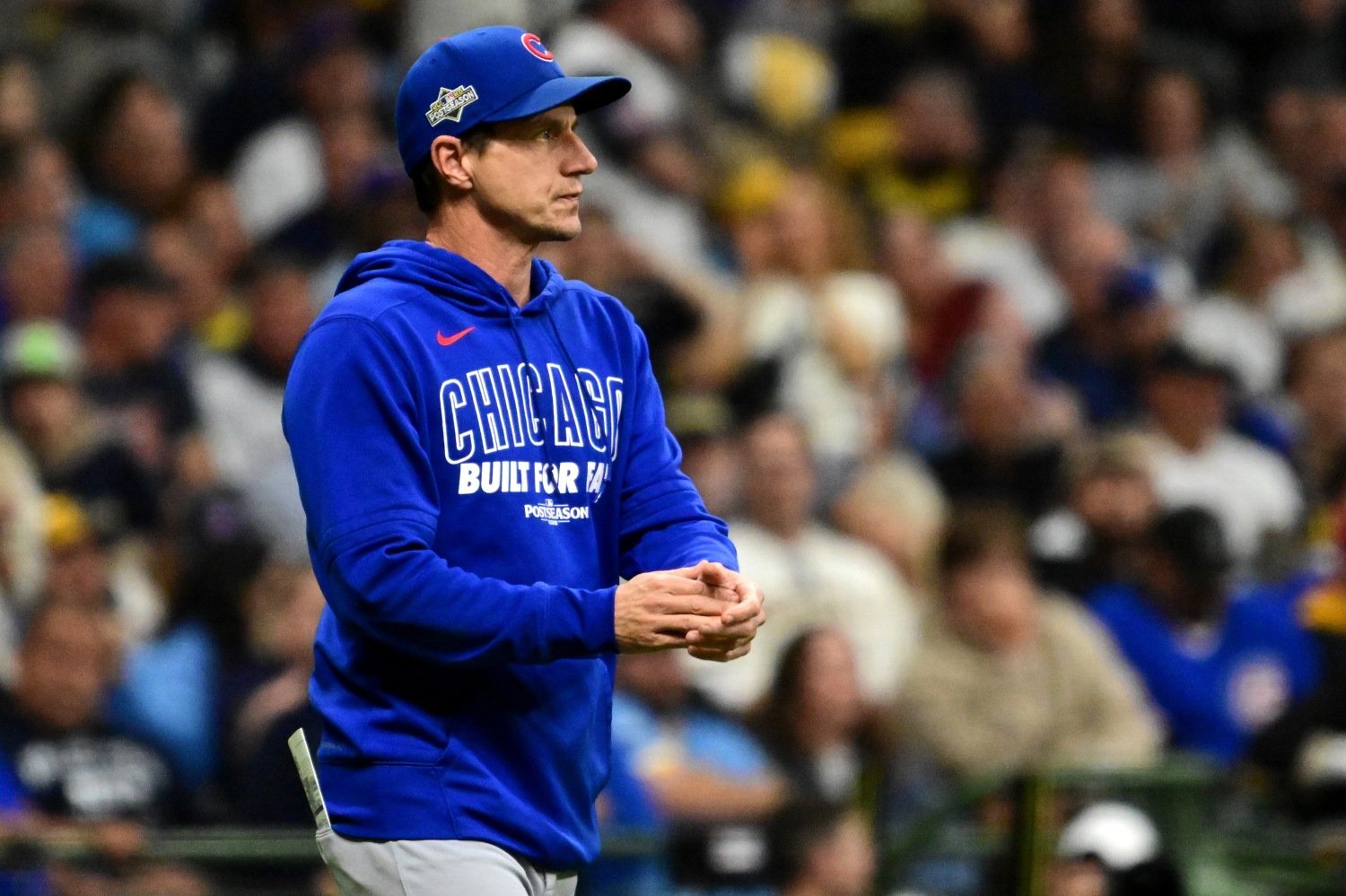 In Milwaukee, one of the indelible images of this regular season came in late July, when the Cubs visited the Brewers for a suddenly crucial three-game series. Chicago had held a fluctuating but (generally) comfortable lead all season, but by that point, the Brewers had closed the gap. The teams entered that series tied, and Milwaukee's convincing win in the opener meant they led the division by a game going into action on Tuesday, July 29. Colin Rea struggled through four innings that day, allowing four runs, and the Brewers already led 5-2 when the bottom of the sixth began. Ryan Pressly still pitched for the Cubs back then—a symbol, by that juncture, of the Cubs front office's misallocation of lots of money over the offseason. He came on to pitch the sixth, trying to keep the game (and, perhaps, the division) within striking distance. He induced a foul popout, but then two walks sandwiched around an error by Nico Hoerner loaded the bases. It was an unhappy situation for the Cubs' dyspeptic manager, Craig Counsell, but he had little choice save to let Pressly try to fool the red-hot Andrew Vaughn. It did not, uh, work. On the first pitch, Pressly hung a curveball that Vaughn hit so savagely as to leave no doubt about its fate. Counsell was on the dugout phone to the bullpen before the ball cleared the wall. Brewers fans have savored that moment as the one at which the division was decided in their favor. Some Brewers players appear to have adopted it as a favorite highlight, too, with a celebration where they mime answering or making a call—and, in the case of Abner Uribe at the end of Game 5 Saturday night, hanging up after one. As a sick burn, that leaves a bit to be desired, but the original idea sure is evocative. That was the moment the Cubs were beat, even if there was two months of baseball left to play. Counsell's move from the Brewers to the Cubs was so much at the center of the narrative this past week that it's hard not to think of the series through that lens. Ordinarily, the managers play a relatively small role in determining the outcomes of games and series in the modern game, but this time, you could see the machinations and the countermoves stacking on top of each other. You could feel the weight of each decision, and you could grasp what was going on in each chess master's mind more vividly than usual. Pat Murphy beat Counsell at every key juncture, and that helped decide the series Saturday night. Maybe the league needs a way to force starting pitcher and lineup decisions to be made on a specific schedule, without either side getting the informational advantage. Right now, the question of which pitcher will start a playoff game can often be a legitimately open one until six hours before first pitch, as teams make use of openers and map out bullpen games. This can lead to a somewhat silly standoff—each team tries to wait and see what the other will do before announcing their own plans. It rarely makes a meaningful difference, of course, because (for instance) which pitcher one side starts very rarely affects the decision for the other side about the same, but there are exceptions. After all, an entire lineup card has to be made out, and while you want to adapt which players will bat where to suit the opposing starter, you also want to decide about them based on your own pitcher's tendencies and on the overall roadmap you expect that particular game to follow. Murphy and Counsell had a virtual staring contest before all five games, to varying degrees, waiting out each other's decisions and lineups to force the other to move first and allow them to work with an edge. Murphy won all the important battles of timing. Some of that is just because he has better personnel, with more ways to beat Counsell's options. For instance, Counsell finally relented, and the Cubs announced about eight hours before Game 5 that Drew Pomeranz would be their starting pitcher. That was a huge mistake, and the Brewers were set up very nicely to exploit it. Murphy wrote Jackson Chourio, Brice Turang and William Contreras into the top three spots on his lineup card. If you could play a version of baseball where the lineup has to be made out agnostically, without foreknowledge of the opposing starter, the Cubs would have been better off. Murphy probably would have batted two lefties and a righty in his top three, rather than two righties and a lefty. Counsell lost the war of wills, and the Brewers had the chance to align themselves optimally—but that's also the custom of the day throughout the league. It's not Counsell's fault that teams are expected to announce pitchers so the other team can set their lineups, and it's not his fault that the Brewers have better matchup weapons than the Cubs do. However, because of that very league-wide custom, starting Pomeranz at all was a massive gaffe by the manager. As I wrote Friday night, Pomeranz had already been overexposed to the Brewers lineup in a condensed time period, and (unlike, for instance, Caleb Thielbar) he's very platoon-vulnerable. Locking him into the first three batters of the game and letting Murphy decide which batters those would be was an extraordinary error by the Cubs' $40-million skipper. Thielbar would have been a better option. So would any hurler with reverse platoon splits, which is not all that uncommon a creature—but, again giving Counsell a break by acknowledging the shortcomings of the front office, it is so on the Cubs. Of active hurlers for the series, only Andrew Kittredge and Jameson Taillon fit that bill. Kittredge wasn't going to start, because stuff-wise, he's more dominant against righties, and Counsell wanted him to be available for a later, more flexible assault on a righty-leaning pocket of the order. Taillon was available, by all accounts, and maybe should have been the play, but it seemed like Counsell wanted to stay away from the starter who had worked just three days earlier, if possible. He had no perfect option, but he certainly had better ones. Pomeranz tried everything to get out the top three in that lineup, as long as by 'everything,' you only mean 'fastballs'. He threw seven straight to Chourio, and got a strikeout. He threw six in a row to Turang, and induced a (deep, warning shot) flyout. Then he threw six more in a row—20 straight heaters to start the game, from a guy whose velocity doesn't and didn't exceed 95 miles per hour!—to Contreras, and on the last of them, Contreras took him deep. It was a bad matchup and a familiar one for the hitter and it was always going to happen, once Counsell started Pomeranz. It was an unavoidable 1-0 deficit. Seiya Suzuki got the Cubs level instantly in the top of the second, though, and it felt like magic. Suzuki, who was very much part of the team's problem hitting high-velocity fastballs this year, went down and got a 101.4-mph fastball from Jacob Misiorowski, lining it over the wall in right-center for a game-tying dinger. Counsell had been rescued from his bad call. He had a run to work with. The trouble, of course, is that that was all he would get. After Pomeranz's inning of work, Colin Rea took over to start the bottom of the second. Arguably, Rea also could have just started the game, but it did make some sense to have Andrew Vaughn (batting fifth) be the first batter he saw. He pitched very well through 2 2/3 innings. wending his way through the Milwaukee batting order one full turn in short order. Though the Brewers did make some hard, threatening contact. Rea yielded only two baserunners through his first nine batters faced, and one came on an error by Dansby Swanson, which was quickly nullified by a double play. If Counsell had been ready with his hook after nine batters—if the hard and fast rule had been that Rea would face Milwaukee hitters just once each—he could have gotten the team through four frames tied 1-1, and wouldn't that have been sweet? Alas, he had a different plan in mind. He had at least some vision of going to Shota Imanaga after Rea; Imanaga warmed up during the fourth and appeared to be preparing to come in should anyone get on in the inning ahead of Sal Frelick. Instead, on another 3-2 count with two outs, Vaughn got the Cubs again. Counsell had been too slow. Seeing Rea a second time and getting a hanging slider, Vaughn untied the game with one swing, and there was no need for Imanaga, after all. Three batters later, Rea still hadn't escaped the inning and Daniel Palencia had to clean things up, and the game had swung the Brewers' way. The Cubs had one good chance to tilt things back in their favor. In the top of the sixth, having known all along he would need at least a bit of bridge work from his relief workhorse, Murphy went to Aaron Ashby to face the top of the Cubs order. Ashby was the Brewers' Pomeranz in this game: already spent, not in position to have much success based on his combination of heavy recent use and matchup fatigue, but in there, nonetheless. Michael Busch bounced a single into center field against him, and Nico Hoerner walked, and you could see the danger beacons flaring, the red lights swinging round in the minds of Brewers fans and (metaphorically) sweeping the walls of Uecker Field. Then, the rally disappeared, in a puff of smoke. Ashby found the necessary guts and stuff to beat Kyle Tucker, throwing a monster of a 3-2, backdoor sinker past his bat. Then, Murphy went to righty long man Chad Patrick, who set down Suzuki and (on, somehow, an even better pitch, a backdoor cutter that froze him) Ian Happ. The Brewers needed some good luck; Suzuki drilled a liner to left that just didn't carry over the head of Chourio. Still, they had escaped. Counsell's pitching moves had been too late; the offense could muster too little. It's a cruel thing, to ask a manager to go beat a superior roster 1-0 in an elimination game, but that is what the Cubs tasked Counsell with doing Saturday night. He had ways to do it, but he missed his chances. The bulk of the blame should go to the front office, and of course, the players were the ones who failed to execute. Counsell didn't call all 20 of those consecutive Pomeranz fastballs, or mislocate the fateful slider to Vaughn. He couldn't step in and swing for the overmatched hitters. However, the genius of Counsell never materialized in this set. Murphy outfoxed him in Games 2 and 5, and it made the difference in the series, as much as Milwaukee's better scouting and development or their players' better clutch performances did. Because the Brewers won the division in their first year without Counsell and the Cubs stayed home in October, perversely, the playoff whammy that seemed to follow Counsell and his Crew after 2018 had shifted firmly onto the Brewers for a year. Theirs was the fan base with the anxiety about an October showdown; theirs was the annoying litany of losses. But now, despite the Cubs having gutted out a series win over a Padres team they're better than in the first place, it feels like that onus is now back on Counsell. The Brewers broke through. The monkey is off their back for a good, long while. Rather than disappearing, though, that monkey has crawled right up onto Counsell instead—and with him, since the two sides have a contract with three more years and a whole lot of money on it, the Cubs. There's still every chance that Counsell can win a World Series with Chicago, but he helped ensure that they won't get that chance in 2025, and being outmanaged by his mentor-turned-lieutenant-turned-rival was a brutal way for the skipper's second season with his new team to end.
 -
Image courtesy of © Benny Sieu-Imagn Images In Milwaukee, one of the indelible images of this regular season came in late July, when the Cubs visited the Brewers for a suddenly crucial three-game series. Chicago had held a fluctuating but (generally) comfortable lead all season, but by that point, the Brewers had closed the gap. The teams entered that series tied, and Milwaukee's convincing win in the opener meant they led the division by a game going into action on Tuesday, July 29. Colin Rea struggled through four innings that day, allowing four runs, and the Brewers already led 5-2 when the bottom of the sixth began. Ryan Pressly still pitched for the Cubs back then—a symbol, by that juncture, of the Cubs front office's misallocation of lots of money over the offseason. He came on to pitch the sixth, trying to keep the game (and, perhaps, the division) within striking distance. He induced a foul popout, but then two walks sandwiched around an error by Nico Hoerner loaded the bases. It was an unhappy situation for the Cubs' dyspeptic manager, Craig Counsell, but he had little choice save to let Pressly try to fool the red-hot Andrew Vaughn. It did not, uh, work. On the first pitch, Pressly hung a curveball that Vaughn hit so savagely as to leave no doubt about its fate. Counsell was on the dugout phone to the bullpen before the ball cleared the wall. Brewers fans have savored that moment as the one at which the division was decided in their favor. Some Brewers players appear to have adopted it as a favorite highlight, too, with a celebration where they mime answering or making a call—and, in the case of Abner Uribe at the end of Game 5 Saturday night, hanging up after one. As a sick burn, that leaves a bit to be desired, but the original idea sure is evocative. That was the moment the Cubs were beat, even if there was two months of baseball left to play. Counsell's move from the Brewers to the Cubs was so much at the center of the narrative this past week that it's hard not to think of the series through that lens. Ordinarily, the managers play a relatively small role in determining the outcomes of games and series in the modern game, but this time, you could see the machinations and the countermoves stacking on top of each other. You could feel the weight of each decision, and you could grasp what was going on in each chess master's mind more vividly than usual. Pat Murphy beat Counsell at every key juncture, and that helped decide the series Saturday night. Maybe the league needs a way to force starting pitcher and lineup decisions to be made on a specific schedule, without either side getting the informational advantage. Right now, the question of which pitcher will start a playoff game can often be a legitimately open one until six hours before first pitch, as teams make use of openers and map out bullpen games. This can lead to a somewhat silly standoff—each team tries to wait and see what the other will do before announcing their own plans. It rarely makes a meaningful difference, of course, because (for instance) which pitcher one side starts very rarely affects the decision for the other side about the same, but there are exceptions. After all, an entire lineup card has to be made out, and while you want to adapt which players will bat where to suit the opposing starter, you also want to decide about them based on your own pitcher's tendencies and on the overall roadmap you expect that particular game to follow. Murphy and Counsell had a virtual staring contest before all five games, to varying degrees, waiting out each other's decisions and lineups to force the other to move first and allow them to work with an edge. Murphy won all the important battles of timing. Some of that is just because he has better personnel, with more ways to beat Counsell's options. For instance, Counsell finally relented, and the Cubs announced about eight hours before Game 5 that Drew Pomeranz would be their starting pitcher. That was a huge mistake, and the Brewers were set up very nicely to exploit it. Murphy wrote Jackson Chourio, Brice Turang and William Contreras into the top three spots on his lineup card. If you could play a version of baseball where the lineup has to be made out agnostically, without foreknowledge of the opposing starter, the Cubs would have been better off. Murphy probably would have batted two lefties and a righty in his top three, rather than two righties and a lefty. Counsell lost the war of wills, and the Brewers had the chance to align themselves optimally—but that's also the custom of the day throughout the league. It's not Counsell's fault that teams are expected to announce pitchers so the other team can set their lineups, and it's not his fault that the Brewers have better matchup weapons than the Cubs do. However, because of that very league-wide custom, starting Pomeranz at all was a massive gaffe by the manager. As I wrote Friday night, Pomeranz had already been overexposed to the Brewers lineup in a condensed time period, and (unlike, for instance, Caleb Thielbar) he's very platoon-vulnerable. Locking him into the first three batters of the game and letting Murphy decide which batters those would be was an extraordinary error by the Cubs' $40-million skipper. Thielbar would have been a better option. So would any hurler with reverse platoon splits, which is not all that uncommon a creature—but, again giving Counsell a break by acknowledging the shortcomings of the front office, it is so on the Cubs. Of active hurlers for the series, only Andrew Kittredge and Jameson Taillon fit that bill. Kittredge wasn't going to start, because stuff-wise, he's more dominant against righties, and Counsell wanted him to be available for a later, more flexible assault on a righty-leaning pocket of the order. Taillon was available, by all accounts, and maybe should have been the play, but it seemed like Counsell wanted to stay away from the starter who had worked just three days earlier, if possible. He had no perfect option, but he certainly had better ones. Pomeranz tried everything to get out the top three in that lineup, as long as by 'everything,' you only mean 'fastballs'. He threw seven straight to Chourio, and got a strikeout. He threw six in a row to Turang, and induced a (deep, warning shot) flyout. Then he threw six more in a row—20 straight heaters to start the game, from a guy whose velocity doesn't and didn't exceed 95 miles per hour!—to Contreras, and on the last of them, Contreras took him deep. It was a bad matchup and a familiar one for the hitter and it was always going to happen, once Counsell started Pomeranz. It was an unavoidable 1-0 deficit. Seiya Suzuki got the Cubs level instantly in the top of the second, though, and it felt like magic. Suzuki, who was very much part of the team's problem hitting high-velocity fastballs this year, went down and got a 101.4-mph fastball from Jacob Misiorowski, lining it over the wall in right-center for a game-tying dinger. Counsell had been rescued from his bad call. He had a run to work with. The trouble, of course, is that that was all he would get. After Pomeranz's inning of work, Colin Rea took over to start the bottom of the second. Arguably, Rea also could have just started the game, but it did make some sense to have Andrew Vaughn (batting fifth) be the first batter he saw. He pitched very well through 2 2/3 innings. wending his way through the Milwaukee batting order one full turn in short order. Though the Brewers did make some hard, threatening contact. Rea yielded only two baserunners through his first nine batters faced, and one came on an error by Dansby Swanson, which was quickly nullified by a double play. If Counsell had been ready with his hook after nine batters—if the hard and fast rule had been that Rea would face Milwaukee hitters just once each—he could have gotten the team through four frames tied 1-1, and wouldn't that have been sweet? Alas, he had a different plan in mind. He had at least some vision of going to Shota Imanaga after Rea; Imanaga warmed up during the fourth and appeared to be preparing to come in should anyone get on in the inning ahead of Sal Frelick. Instead, on another 3-2 count with two outs, Vaughn got the Cubs again. Counsell had been too slow. Seeing Rea a second time and getting a hanging slider, Vaughn untied the game with one swing, and there was no need for Imanaga, after all. Three batters later, Rea still hadn't escaped the inning and Daniel Palencia had to clean things up, and the game had swung the Brewers' way. The Cubs had one good chance to tilt things back in their favor. In the top of the sixth, having known all along he would need at least a bit of bridge work from his relief workhorse, Murphy went to Aaron Ashby to face the top of the Cubs order. Ashby was the Brewers' Pomeranz in this game: already spent, not in position to have much success based on his combination of heavy recent use and matchup fatigue, but in there, nonetheless. Michael Busch bounced a single into center field against him, and Nico Hoerner walked, and you could see the danger beacons flaring, the red lights swinging round in the minds of Brewers fans and (metaphorically) sweeping the walls of Uecker Field. Then, the rally disappeared, in a puff of smoke. Ashby found the necessary guts and stuff to beat Kyle Tucker, throwing a monster of a 3-2, backdoor sinker past his bat. Then, Murphy went to righty long man Chad Patrick, who set down Suzuki and (on, somehow, an even better pitch, a backdoor cutter that froze him) Ian Happ. The Brewers needed some good luck; Suzuki drilled a liner to left that just didn't carry over the head of Chourio. Still, they had escaped. Counsell's pitching moves had been too late; the offense could muster too little. It's a cruel thing, to ask a manager to go beat a superior roster 1-0 in an elimination game, but that is what the Cubs tasked Counsell with doing Saturday night. He had ways to do it, but he missed his chances. The bulk of the blame should go to the front office, and of course, the players were the ones who failed to execute. Counsell didn't call all 20 of those consecutive Pomeranz fastballs, or mislocate the fateful slider to Vaughn. He couldn't step in and swing for the overmatched hitters. However, the genius of Counsell never materialized in this set. Murphy outfoxed him in Games 2 and 5, and it made the difference in the series, as much as Milwaukee's better scouting and development or their players' better clutch performances did. Because the Brewers won the division in their first year without Counsell and the Cubs stayed home in October, perversely, the playoff whammy that seemed to follow Counsell and his Crew after 2018 had shifted firmly onto the Brewers for a year. Theirs was the fan base with the anxiety about an October showdown; theirs was the annoying litany of losses. But now, despite the Cubs having gutted out a series win over a Padres team they're better than in the first place, it feels like that onus is now back on Counsell. The Brewers broke through. The monkey is off their back for a good, long while. Rather than disappearing, though, that monkey has crawled right up onto Counsell instead—and with him, since the two sides have a contract with three more years and a whole lot of money on it, the Cubs. There's still every chance that Counsell can win a World Series with Chicago, but he helped ensure that they won't get that chance in 2025, and being outmanaged by his mentor-turned-lieutenant-turned-rival was a brutal way for the skipper's second season with his new team to end. View full article
-
I should have put my question more plainly: If you don't want to see Imanaga, who DO you want to see pitch for those 12 outs or so?
-
I do understand y'all's lack of faith in Shota, in a sense, because it's been rough lately. I guess I DON'T fully understand what people would have him do, otherwise. I think if you have a whole lot more faith in Colin Rea, it's based more in him having not had occasion to hurt you as recently, I guess? It's, there's, I just think whoever starts, you're gonna have to white-knuckle it until the march of short relievers begins. And then white-knuckle it some more. It's a lot like those who wondered if it was viable to start Boyd in Game 4, isn't it? Something about Churchill's take on democracy as a form of government...
- 6 replies
-
- 1
-

-
- caleb thielbar
- daniel palencia
- (and 5 more)
-
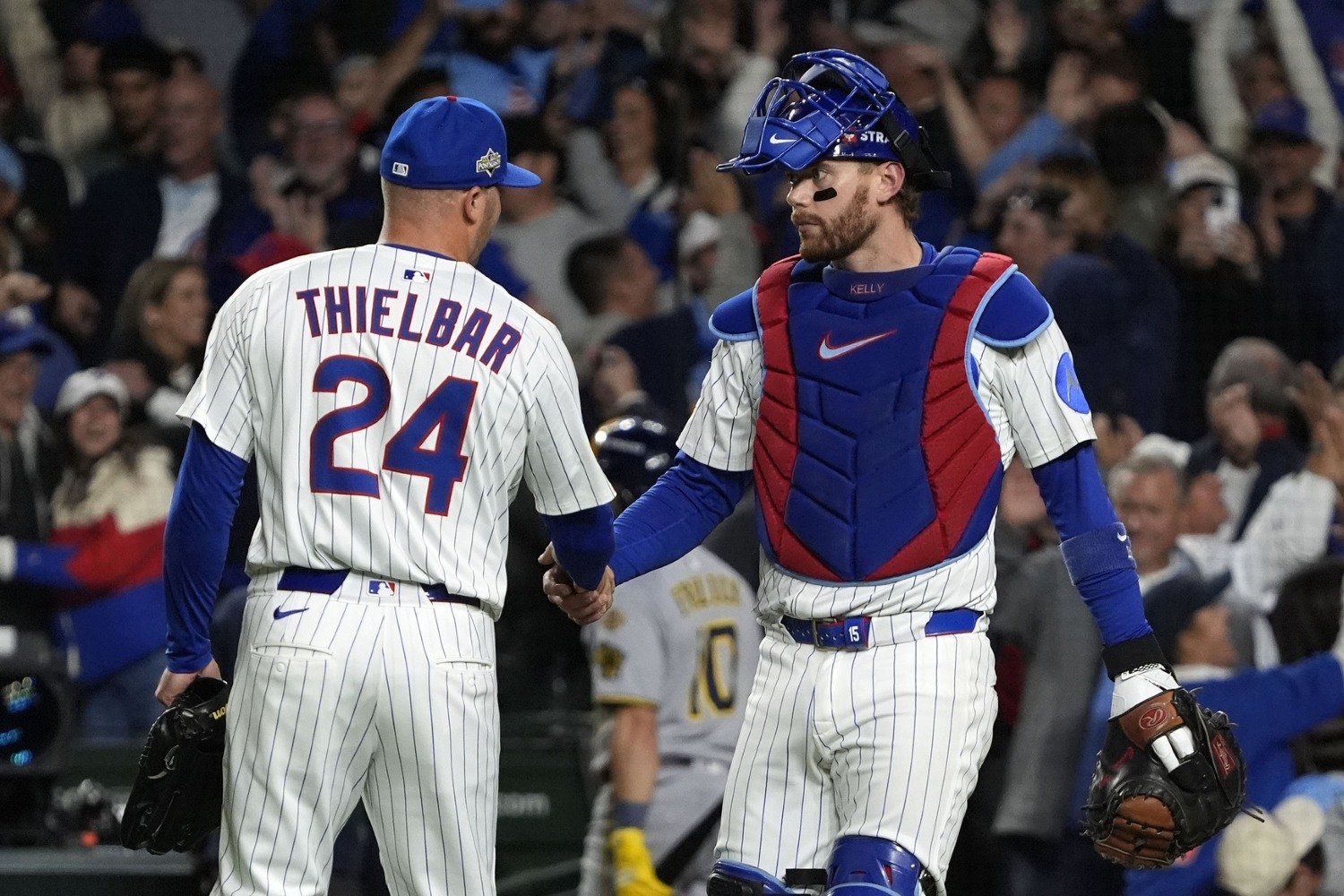 It's a race to 27 outs. There's never a doubt, with Craig Counsell, that that's what a playoff game is about. He uses an extremely short leash on starting pitchers in October, because as much as starters might be the drivers of narratives about teams and their seasons, they're not the best batter-for-batter options to win the race to 27—at least not beyond the middle of the game. Counsell got 4 2/3 innings from Matthew Boyd Thursday in Game 4 of the NLDS, which is just over halfway to 27. It's the most he's asked of any pitcher in the Cubs' seven playoff contests. That won't change Saturday night. The Cubs and Brewers will reconvene where their season series (and this postseason showdown, too) began, at Uecker Field in Milwaukee, with both teams' seasons in the balance. The candidates to give Counsell meaningful length are Shota Imanaga (the most likely starter) and Colin Rea, with Michael Soroka and Aaron Civale as less likely options. No matter who gets the longest assignment(s), though, a good chunk of the game will be handed off to some combination of the five pure relievers Counsell really trusts. There are three key questions the manager has to answer, when trying to select where and how to use his bullpen in a high-stakes game like Saturday's. Which relievers are especially good matchups for particular opposing batters? Who's been overexposed during the short series, especially to particular batters? How tired is everyone involved, and what constraints does that fatigue place on their availability? The first and third considerations are obvious, but the middle one can often be hugely important, too. We talked about this during the Padres-Cubs Wild Card Series, and with good reason. The more a given batter sees a particular pitcher within a series, the better they hit them. It's not unlike the times-through-the-order penalty, for the number of times batters see a starter within a game. One major drawback of the way Counsell has deployed his pitchers is that, once a series reaches its terminal stage, there's not much novelty left to mine out in that bullpen. If the skipper trusted Soroka to come in and try his hand again, he'd have a pocket of the lineup at which to aim him that hasn't seen much of him yet, but the trust circle only circumscribes five players right now: Brad Keller, Daniel Palencia, Drew Pomeranz, Caleb Thielbar and Andrew Kittredge. Most of the Brewers have already seen each of those guys a time or two—and the "or two" there is very important. Seeing a reliever twice in a series is normal, and doesn't seem to make a huge difference. That third time can be real trouble. Here's the chart showing how many times each relevant matchup has already happened in the last week. Pitcher/Batter Yelich Chourio Turang Contreras Vaughn Frelick Durbin Perkins Bauers Ortiz Collins Keller XX X X X X X X Palencia XX X XX XX XX XXX X X Pomeranz XX X XX X X X X Thielbar XX X X X X Kittredge X X X X X It might well have passed without your notice, but in the top of the sixth inning on Thursday night, there was a warning Counsell will need to heed in Game 5. Palencia, working for the third game in a row, got two quick outs, but then he allowed a scorched line-drive single to Andrew Vaughn, who was seeing him for the second time in the series. After that, Caleb Durbin lifted a fly ball to left field for the third out. It wasn't all that threatening to look at, but it left his bat at 90.1 miles per hour and with a 31° launch angle. That's a very narrow miss. If Durbin is just a hair quicker, that's a home run. It was, not entirely coincidentally, the third time he'd faced Palencia in the series. Counsell has deployed Palencia and Keller in a relatively matchup-agnostic way. They are, for him, situation guys, rather than pocket-of-the-order guys; their stuff and their skill are meant to work against anyone. Such hurlers aren't immune to this kind of effect, though, so if Palencia is to be used in Game 5, it needs to be at the bottom of the Milwaukee order. If Durbin bats seventh, that'll mean squeezing him into the 8-9-1 lane between Durbin and Jackson Chourio, who has already seen Palencia twice, himself. If Durbin bats sixth, there's a bit more breathing room, but only if Jake Bauers starts in place of Vaughn. You can't—you absolutely can't—let Palencia face Frelick, who hit all 12 of his home runs this season against right-handed pitchers, for a third time in this series. It needs to be Blake Perkins, Joey Ortiz, Christian Yelich, and (if necessary) Chourio, who famously got the better of Palencia with the killing blow in Game 2 but popped up on the first pitch in Game 4. Chourio still hasn't seen a slider from Palencia, and has only seen four pitches against him, period. This is the nuance and complexity the Cubs coaching staff has to consider going into this game. Everything matters that much, and every decision has that many layers and dimensions. Caleb Thielbar would also best be used against that wheel from the bottom to the top of the likely Milwaukee lineup card, since he has yet to face Perkins, Bauers, Ortiz, Yelich or Chourio in this series. Because the only batter he's faced more than once is Brice Turang, though, Thielbar can be deployed pretty flexibly. Expect him to get three outs for the Cubs somewhere in the second half of the game, and to see Counsell prioritize shielding Palencia from overexposure over getting the matchup of handedness or personnel exactly right for Thielbar. Andrew Kittredge is the skeleton key. Used so heavily in the Wild Card Series, he's been given lighter duty so far, which makes him an obvious choice for at least three outs on Saturday. His best stretch would include Turang, William Contreras, Vaughn, Frelick and Durbin, who generally do bat in connected (if somewhat interchangeable) places in the Milwaukee order, since he hasn't faced any of them yet in the series. Neither Turang nor Frelick is a great fit for Kittredge, from the Cubs' perspective, but he'll probably have to face at least one of them in any road map to the end of the game that results in a Cubs win. If he could start a clean inning against Turang, he'd be in decent shape, with a chance to erase him via a double play even if he reaches base. If Kittredge has to come into a dirty inning, it should be against Contreras. Pomeranz is a bit of a spent weapon. He's already seen Yelich and Turang twice each, and Frelick once. More than Thielbar, he's a matchup lefty; good righties make nervous fits for him. Only if there's a chance to attack Frelick with two outs in an inning or to make him the key man in a stretch where there's some margin for error should Counsell turn back to Pomeranz in Game 5. That leaves Keller, and again, it's more likely that he's used situationally than that Counsell thinks especially hard about matchups with him. If at all possible, Keller should be kept away from Yelich, against whom he's already pitched twice in the set, but the rest of the Milwaukee lineup is in play. It helps that he has yet to see Turang or Frelick at all, in the postseason. It's not hard to imagine another five-out save from Keller, although if he starts his appearance seven spots from Yelich and ends up having to face him with two outs in the bottom of the ninth, it might very well be that overexposure decides the series. Let's address the third question, posed way back at the top of this piece. How much has everyone been used, and what does that tell us about their availability? Counsell said Friday afternoon that he's not ready to name a starter, but that everyone except Boyd is available. 'Available' can mean a lot of different things, though. MON TUE WED THU FRI TOT Palencia 18 0 15 10 0 43 Soroka 0 0 0 0 0 0 Keller 0 0 19 15 0 34 Kittredge 0 0 18 0 0 18 Pomeranz 9 0 15 15 0 39 Thielbar 0 0 11 10 0 21 Rea 60 0 0 0 0 60 Civale 0 0 0 0 0 0 Brown 0 0 0 0 0 0 Count this as another reason to expect less of Palencia and Pomeranz, along with the matchup exhaustion effects explained above. Each has pitched three times in the last five days, including in both home games of the series. Both Keller and Thielbar also appeared in Games 3 and 4, but not having worked in the first two contests means each is that bit fresher, in addition to not having been seen as much by Brewers batters. Rea, Civale, Soroka and Ben Brown are fresh as daisies—but again, that only matters insofar as Counsell believes any of them can get big outs for him in the first place. It's some combination of Imanaga and Rea for, one hopes, 12-15 outs. It's Kittredge and Thielbar for a solid six, with an option for as many as nine. It's Palencia and Pomeranz if you find just the right crease and it's Keller the rest of the way. Does that get the Cubs to 27 "before"—that is, with fewer runs crossing the plate first—the Brewers? It's impossible to know. Milwaukee has a pitching advantage, going into this game. They have smoother avenues to Out 27. Nonetheless, the Cubs have a road map of their own. If they stick to it and their offense punches through against the high-octane arms they'll see in the top halves of innings, they can advance to the NLCS and get ready for another date with the Dodgers.
 -
Image courtesy of © David Banks-Imagn Images It's a race to 27 outs. There's never a doubt, with Craig Counsell, that that's what a playoff game is about. He uses an extremely short leash on starting pitchers in October, because as much as starters might be the drivers of narratives about teams and their seasons, they're not the best batter-for-batter options to win the race to 27—at least not beyond the middle of the game. Counsell got 4 2/3 innings from Matthew Boyd Thursday in Game 4 of the NLDS, which is just over halfway to 27. It's the most he's asked of any pitcher in the Cubs' seven playoff contests. That won't change Saturday night. The Cubs and Brewers will reconvene where their season series (and this postseason showdown, too) began, at Uecker Field in Milwaukee, with both teams' seasons in the balance. The candidates to give Counsell meaningful length are Shota Imanaga (the most likely starter) and Colin Rea, with Michael Soroka and Aaron Civale as less likely options. No matter who gets the longest assignment(s), though, a good chunk of the game will be handed off to some combination of the five pure relievers Counsell really trusts. There are three key questions the manager has to answer, when trying to select where and how to use his bullpen in a high-stakes game like Saturday's. Which relievers are especially good matchups for particular opposing batters? Who's been overexposed during the short series, especially to particular batters? How tired is everyone involved, and what constraints does that fatigue place on their availability? The first and third considerations are obvious, but the middle one can often be hugely important, too. We talked about this during the Padres-Cubs Wild Card Series, and with good reason. The more a given batter sees a particular pitcher within a series, the better they hit them. It's not unlike the times-through-the-order penalty, for the number of times batters see a starter within a game. One major drawback of the way Counsell has deployed his pitchers is that, once a series reaches its terminal stage, there's not much novelty left to mine out in that bullpen. If the skipper trusted Soroka to come in and try his hand again, he'd have a pocket of the lineup at which to aim him that hasn't seen much of him yet, but the trust circle only circumscribes five players right now: Brad Keller, Daniel Palencia, Drew Pomeranz, Caleb Thielbar and Andrew Kittredge. Most of the Brewers have already seen each of those guys a time or two—and the "or two" there is very important. Seeing a reliever twice in a series is normal, and doesn't seem to make a huge difference. That third time can be real trouble. Here's the chart showing how many times each relevant matchup has already happened in the last week. Pitcher/Batter Yelich Chourio Turang Contreras Vaughn Frelick Durbin Perkins Bauers Ortiz Collins Keller XX X X X X X X Palencia XX X XX XX XX XXX X X Pomeranz XX X XX X X X X Thielbar XX X X X X Kittredge X X X X X It might well have passed without your notice, but in the top of the sixth inning on Thursday night, there was a warning Counsell will need to heed in Game 5. Palencia, working for the third game in a row, got two quick outs, but then he allowed a scorched line-drive single to Andrew Vaughn, who was seeing him for the second time in the series. After that, Caleb Durbin lifted a fly ball to left field for the third out. It wasn't all that threatening to look at, but it left his bat at 90.1 miles per hour and with a 31° launch angle. That's a very narrow miss. If Durbin is just a hair quicker, that's a home run. It was, not entirely coincidentally, the third time he'd faced Palencia in the series. Counsell has deployed Palencia and Keller in a relatively matchup-agnostic way. They are, for him, situation guys, rather than pocket-of-the-order guys; their stuff and their skill are meant to work against anyone. Such hurlers aren't immune to this kind of effect, though, so if Palencia is to be used in Game 5, it needs to be at the bottom of the Milwaukee order. If Durbin bats seventh, that'll mean squeezing him into the 8-9-1 lane between Durbin and Jackson Chourio, who has already seen Palencia twice, himself. If Durbin bats sixth, there's a bit more breathing room, but only if Jake Bauers starts in place of Vaughn. You can't—you absolutely can't—let Palencia face Frelick, who hit all 12 of his home runs this season against right-handed pitchers, for a third time in this series. It needs to be Blake Perkins, Joey Ortiz, Christian Yelich, and (if necessary) Chourio, who famously got the better of Palencia with the killing blow in Game 2 but popped up on the first pitch in Game 4. Chourio still hasn't seen a slider from Palencia, and has only seen four pitches against him, period. This is the nuance and complexity the Cubs coaching staff has to consider going into this game. Everything matters that much, and every decision has that many layers and dimensions. Caleb Thielbar would also best be used against that wheel from the bottom to the top of the likely Milwaukee lineup card, since he has yet to face Perkins, Bauers, Ortiz, Yelich or Chourio in this series. Because the only batter he's faced more than once is Brice Turang, though, Thielbar can be deployed pretty flexibly. Expect him to get three outs for the Cubs somewhere in the second half of the game, and to see Counsell prioritize shielding Palencia from overexposure over getting the matchup of handedness or personnel exactly right for Thielbar. Andrew Kittredge is the skeleton key. Used so heavily in the Wild Card Series, he's been given lighter duty so far, which makes him an obvious choice for at least three outs on Saturday. His best stretch would include Turang, William Contreras, Vaughn, Frelick and Durbin, who generally do bat in connected (if somewhat interchangeable) places in the Milwaukee order, since he hasn't faced any of them yet in the series. Neither Turang nor Frelick is a great fit for Kittredge, from the Cubs' perspective, but he'll probably have to face at least one of them in any road map to the end of the game that results in a Cubs win. If he could start a clean inning against Turang, he'd be in decent shape, with a chance to erase him via a double play even if he reaches base. If Kittredge has to come into a dirty inning, it should be against Contreras. Pomeranz is a bit of a spent weapon. He's already seen Yelich and Turang twice each, and Frelick once. More than Thielbar, he's a matchup lefty; good righties make nervous fits for him. Only if there's a chance to attack Frelick with two outs in an inning or to make him the key man in a stretch where there's some margin for error should Counsell turn back to Pomeranz in Game 5. That leaves Keller, and again, it's more likely that he's used situationally than that Counsell thinks especially hard about matchups with him. If at all possible, Keller should be kept away from Yelich, against whom he's already pitched twice in the set, but the rest of the Milwaukee lineup is in play. It helps that he has yet to see Turang or Frelick at all, in the postseason. It's not hard to imagine another five-out save from Keller, although if he starts his appearance seven spots from Yelich and ends up having to face him with two outs in the bottom of the ninth, it might very well be that overexposure decides the series. Let's address the third question, posed way back at the top of this piece. How much has everyone been used, and what does that tell us about their availability? Counsell said Friday afternoon that he's not ready to name a starter, but that everyone except Boyd is available. 'Available' can mean a lot of different things, though. MON TUE WED THU FRI TOT Palencia 18 0 15 10 0 43 Soroka 0 0 0 0 0 0 Keller 0 0 19 15 0 34 Kittredge 0 0 18 0 0 18 Pomeranz 9 0 15 15 0 39 Thielbar 0 0 11 10 0 21 Rea 60 0 0 0 0 60 Civale 0 0 0 0 0 0 Brown 0 0 0 0 0 0 Count this as another reason to expect less of Palencia and Pomeranz, along with the matchup exhaustion effects explained above. Each has pitched three times in the last five days, including in both home games of the series. Both Keller and Thielbar also appeared in Games 3 and 4, but not having worked in the first two contests means each is that bit fresher, in addition to not having been seen as much by Brewers batters. Rea, Civale, Soroka and Ben Brown are fresh as daisies—but again, that only matters insofar as Counsell believes any of them can get big outs for him in the first place. It's some combination of Imanaga and Rea for, one hopes, 12-15 outs. It's Kittredge and Thielbar for a solid six, with an option for as many as nine. It's Palencia and Pomeranz if you find just the right crease and it's Keller the rest of the way. Does that get the Cubs to 27 "before"—that is, with fewer runs crossing the plate first—the Brewers? It's impossible to know. Milwaukee has a pitching advantage, going into this game. They have smoother avenues to Out 27. Nonetheless, the Cubs have a road map of their own. If they stick to it and their offense punches through against the high-octane arms they'll see in the top halves of innings, they can advance to the NLCS and get ready for another date with the Dodgers. View full article
-
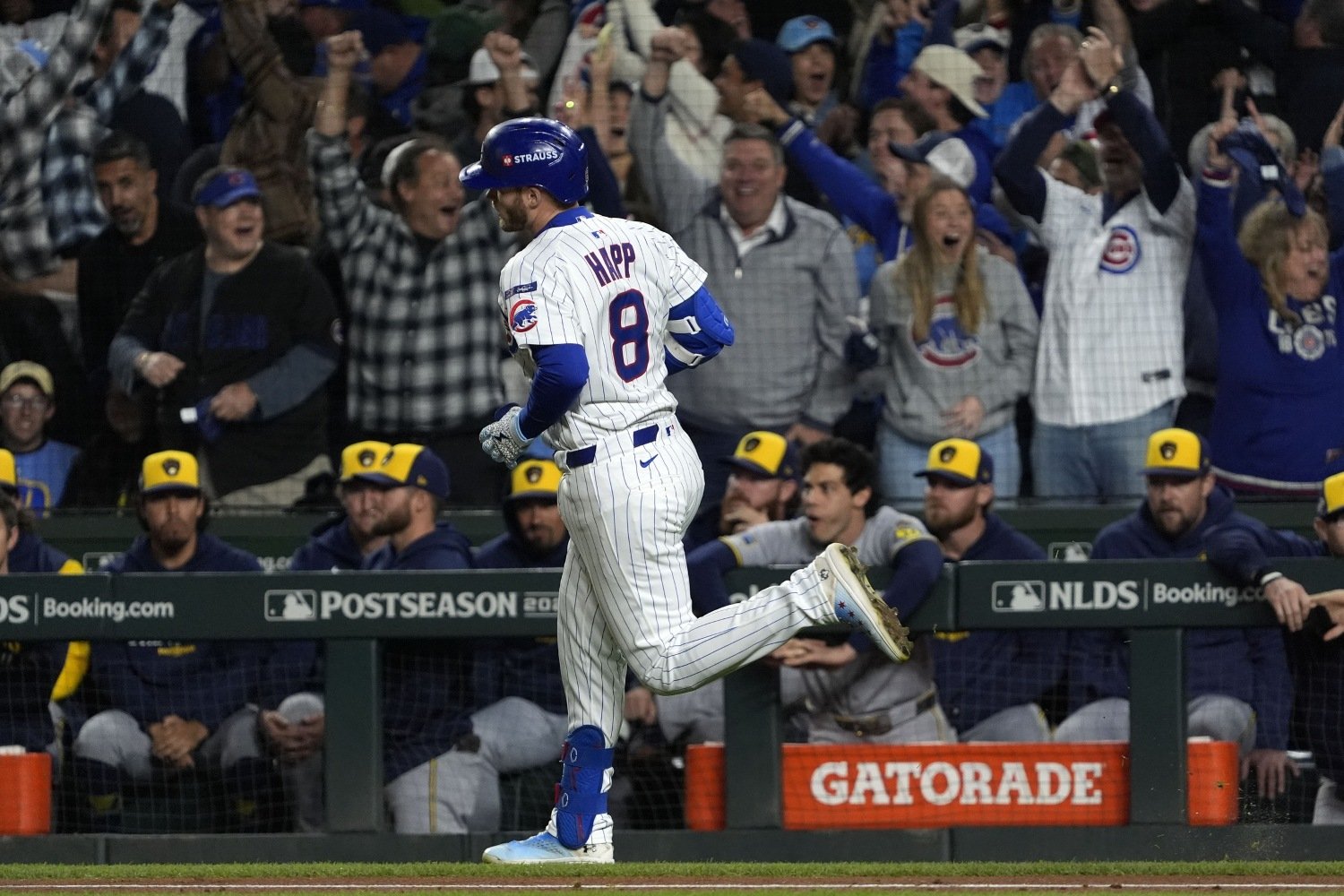 It didn't feel like Ian Happ's home run in Game 1 of the NLDS mattered very much. Decades ago, when sportswriters wanted a succinct way to sneer at Sammy Sosa for what they perceived as a dearth of clutch ability, they would say that all his home runs seemed to make a 9-1 game 9-2. Happ's solo shot off Brewers starter Freddy Peralta literally made a 9-1 game 9-2, and it felt like something worse than meaningless. It felt like a moral victory, at the time of year when those aren't supposed to exist. Within the context of that game, of course, it truly didn't matter. The Brewers went on to win easily, 9-3, and the contest was even more lopsided than its final score implied. October, however, isn't about individual games. It's about series, and in the context of the series, that homer turned out to have real heft: education, emotional weight, and foreshadowing. It all paid off Thursday night, when Happ strode to the plate with two on and two out in the bottom of the first inning, in a way Anton Chekhov would be proud of. Happ, of course, is the Cubs' longest-tenured player. He's the only guy left who has been in the organization since before they won the World Series, but when they did that, he wasn't yet a member of the big-league team. He came up the following May, and although no one knew it at the time, the dynasty he hoped he was joining was already in decline. Even as Happ had some productive seasons, his teammates stalled out or succumbed to slumps and injury. The team won a dramatic Game 5 over the Washington Nationals to reach that fall's NLCS, but it would be their last time there as a group. They were caught and passed by the Brewers for the division title in 2018. They missed the playoffs in 2019. The pandemic hit, and then the free agency of a half-dozen vital Cubs stood in the doorway brandishing its club, and the team simply came apart. Happ and Willson Contreras were the last ones left in the burned-out remnants of the palace Happ didn't get to live in back when the fruit was fresh from conquered lands and the tapestries were still thick and gorgeous. Unlike Contreras, though, Happ stuck around, electing to embrace the possibility of a revival for which he would be the elder statesman, instead of the latecoming youngster. He signed an extension in April 2023, which not only guaranteed him payment from the Cubs through 2026 but came with a no-trade clause—a rare concession by the team, and one on which Happ insisted. When he signed that deal, he probably hoped that he would see October with the team just six months later; it wasn't to be. The bitter disappointments of 2023 (when Happ came alive down the stretch but the team couldn't manage even the 84 wins required to qualify for the postseason) and 2024 (when they didn't, truthfully, even come especially close to making it that far) began to color Happ's legacy, just as the 2018-21 stretch discolored those of the guys who had won the World Series without him years ago. That wasn't fair, because Happ was improving even as he entered the phase of his career wherein many hitters begin to decline. He had his first steadily productive season as a full-time player in 2022, when he was finally shifted to the right defensive home for him in left field. He was about equally good in both 2023 and 2024, delivering solidly above-average offense and plus defense. Stubbornly, though, the team kept losing (or didn't start winning enough, anyway), and Happ struggled to evolve into a good clutch hitter. That part came last for him, and when that happens, fans have already long formed their opinions of you before you start making the impression you want. Come it did, though. He's now a .254/.353/.464 career hitter in high-leverage situations, and a .239/.327/.444 guy in late-and-close spots. It took a long time for him to become a balanced enough switch-hitter that teams couldn't exploit him by turning him around with a lefty reliever in key spots, and it took his gradual change from an all-or-nothing slugger to a more balanced, 20-homer type of guy for him to become less exploitable when the opposing hurler was hunting a strikeout. He became that kind of well-rounded, dangerous hitter, but still, it took (seemingly) forever for his signature moments to begin to come. Entering this year, Happ had zero career walkoff hits. On April 22, though, he ripped a walkoff single to beat the Dodgers at Wrigley Field. Not even two months later, he slashed another one to beat then-Pirates relief ace David Bednar. He did come up with big hits, couched comfortably in a lineup where opponents feared three or four other guys more than him. He became Big Hit Happ, in a way. More broadly, though, he scuffled. After a reasonably strong start, Happ slumped for much of May, June and early July. He went on the injured list for the first time in his career, with an oblique strain, and he almost certainly rushed back from it. It took a long while for him to get right. It took the All-Star break, in fact. When that break came, he was fighting (a losing battle) to keep his OPS above .700. Since then, though, he's been nails. Happ shored up an otherwise disastrously slump-prone lineup for much of the second half, batting .266/.368/.491 in 261 plate appearances. He swatted 17 doubles and 11 home runs, and was the beacon of consistency on a team full of suddenly bewildered batsmen. Subtly, he came up as clutch as ever, keeping the lineup afloat until enough of his teammates reawakened to get them into the postseason relatively comfortably. The playoffs were not kind to Happ, until Thursday night. He had a tremendously well-struck double against the Padres, and that homer against Peralta in Game 1, but those were his only hits in 24 trips to the plate. He needed to break out of that, and come up with the big hit for the team. He'd been able to extend the occasional rally with a walk, but facing Peralta with two outs and two on base, they didn't need him to extend the rally. They needed him to convert it. Let's flash back, one last time, to Saturday. In the sixth inning, Peralta had started Happ with a nasty slider, then gone upstairs to jump ahead 0-2 with a fastball. Happ had laid off a curveball, which is how he earned the slightly lazy fastball that he punished to center field. Peralta's execution wasn't good enough, but you can see what he was thinking there, and you can see the signs of how well he pitched for most of Game 1. His slider and curve were located right where he wanted them. So was the first heater. His stuff all had a great, very vertical shape, and he had good command of all of it. Not so in the first inning Thursday night. That would be a major factor. Peralta threw six breaking balls to batters before Happ in the first inning, and most of them had much more glove-side movement than he's typically had on them of late. Here's a chart showing his pitch movement from the first inning, alone. Lately, when he's been right, those two wiggliest sliders and the not-so-deep curve have not been there; he's consistently thrown the ball with a 12-to-6 movement pattern. Since he wasn't placing those offerings where he most wanted to, though, Peralta started Happ with changeups. He got to a 1-1 count with back-to-back cambios, retreating to the pitch with which he was most comfortable for most of this season against lefty batters. Then, he came up to the top third of the zone again, trying to take the crucial 1-2 lead in the count. This pitch was where he wanted it to be, or close thereto. He didn't miss down with it, the way he had in Game 1. Happ, however, was ready for it. He doesn't usually hit pitches in that spot to the pull field. When he's on time for it, he usually hits a sharp line drive the other way. On that pitch, though, he sought to ambush the ball, and it worked. On a pitch above his wheelhouse and on the outer half, he sent a no-doubt dinger deep into the bleachers in right-center field. That at-bat in Game 1 had mattered; he'd carried something from then to now. Those two walkoff singles be damned, Ian Happ found his signature Cubs moment. Who knows what will happen Saturday? The Cubs could complete a comeback that would sit like a rock in the stomachs of the Brewers and their fans for years to come; they could earn a chance to play for the National League pennant. They could also, of course, be sent home after all, valiant but doomed in their effort to undo the damage of Games 1 and 2 at Uecker Field in Milwaukee. At this moment, it doesn't matter. What happened in the first inning Thursday night is why you want your team to reach October. The upswell of emotion when Happ connected—from the stepwise increase of the crowd's cacophony to the blossoming feeling of joy on behalf of Happ, the organization's best soldier—is what makes these series wonderful. Winning pennants and trophies is only part of the point. The bigger, better part is that warm feeling in your breast that came after the stinging high fives and the bear hugs. It's the looks on the faces of the fans in the picture at the top of this page. It's the way this game can feel like a story written by a great author, rather than just another experience in this random and often cruel world. It's the depth of connection you felt, in that moment, with No. 8 in white—and the way his combination of loyalty and dauntless work culminated in such a remarkable reward.
 -
Image courtesy of © David Banks-Imagn Images It didn't feel like Ian Happ's home run in Game 1 of the NLDS mattered very much. Decades ago, when sportswriters wanted a succinct way to sneer at Sammy Sosa for what they perceived as a dearth of clutch ability, they would say that all his home runs seemed to make a 9-1 game 9-2. Happ's solo shot off Brewers starter Freddy Peralta literally made a 9-1 game 9-2, and it felt like something worse than meaningless. It felt like a moral victory, at the time of year when those aren't supposed to exist. Within the context of that game, of course, it truly didn't matter. The Brewers went on to win easily, 9-3, and the contest was even more lopsided than its final score implied. October, however, isn't about individual games. It's about series, and in the context of the series, that homer turned out to have real heft: education, emotional weight, and foreshadowing. It all paid off Thursday night, when Happ strode to the plate with two on and two out in the bottom of the first inning, in a way Anton Chekhov would be proud of. Happ, of course, is the Cubs' longest-tenured player. He's the only guy left who has been in the organization since before they won the World Series, but when they did that, he wasn't yet a member of the big-league team. He came up the following May, and although no one knew it at the time, the dynasty he hoped he was joining was already in decline. Even as Happ had some productive seasons, his teammates stalled out or succumbed to slumps and injury. The team won a dramatic Game 5 over the Washington Nationals to reach that fall's NLCS, but it would be their last time there as a group. They were caught and passed by the Brewers for the division title in 2018. They missed the playoffs in 2019. The pandemic hit, and then the free agency of a half-dozen vital Cubs stood in the doorway brandishing its club, and the team simply came apart. Happ and Willson Contreras were the last ones left in the burned-out remnants of the palace Happ didn't get to live in back when the fruit was fresh from conquered lands and the tapestries were still thick and gorgeous. Unlike Contreras, though, Happ stuck around, electing to embrace the possibility of a revival for which he would be the elder statesman, instead of the latecoming youngster. He signed an extension in April 2023, which not only guaranteed him payment from the Cubs through 2026 but came with a no-trade clause—a rare concession by the team, and one on which Happ insisted. When he signed that deal, he probably hoped that he would see October with the team just six months later; it wasn't to be. The bitter disappointments of 2023 (when Happ came alive down the stretch but the team couldn't manage even the 84 wins required to qualify for the postseason) and 2024 (when they didn't, truthfully, even come especially close to making it that far) began to color Happ's legacy, just as the 2018-21 stretch discolored those of the guys who had won the World Series without him years ago. That wasn't fair, because Happ was improving even as he entered the phase of his career wherein many hitters begin to decline. He had his first steadily productive season as a full-time player in 2022, when he was finally shifted to the right defensive home for him in left field. He was about equally good in both 2023 and 2024, delivering solidly above-average offense and plus defense. Stubbornly, though, the team kept losing (or didn't start winning enough, anyway), and Happ struggled to evolve into a good clutch hitter. That part came last for him, and when that happens, fans have already long formed their opinions of you before you start making the impression you want. Come it did, though. He's now a .254/.353/.464 career hitter in high-leverage situations, and a .239/.327/.444 guy in late-and-close spots. It took a long time for him to become a balanced enough switch-hitter that teams couldn't exploit him by turning him around with a lefty reliever in key spots, and it took his gradual change from an all-or-nothing slugger to a more balanced, 20-homer type of guy for him to become less exploitable when the opposing hurler was hunting a strikeout. He became that kind of well-rounded, dangerous hitter, but still, it took (seemingly) forever for his signature moments to begin to come. Entering this year, Happ had zero career walkoff hits. On April 22, though, he ripped a walkoff single to beat the Dodgers at Wrigley Field. Not even two months later, he slashed another one to beat then-Pirates relief ace David Bednar. He did come up with big hits, couched comfortably in a lineup where opponents feared three or four other guys more than him. He became Big Hit Happ, in a way. More broadly, though, he scuffled. After a reasonably strong start, Happ slumped for much of May, June and early July. He went on the injured list for the first time in his career, with an oblique strain, and he almost certainly rushed back from it. It took a long while for him to get right. It took the All-Star break, in fact. When that break came, he was fighting (a losing battle) to keep his OPS above .700. Since then, though, he's been nails. Happ shored up an otherwise disastrously slump-prone lineup for much of the second half, batting .266/.368/.491 in 261 plate appearances. He swatted 17 doubles and 11 home runs, and was the beacon of consistency on a team full of suddenly bewildered batsmen. Subtly, he came up as clutch as ever, keeping the lineup afloat until enough of his teammates reawakened to get them into the postseason relatively comfortably. The playoffs were not kind to Happ, until Thursday night. He had a tremendously well-struck double against the Padres, and that homer against Peralta in Game 1, but those were his only hits in 24 trips to the plate. He needed to break out of that, and come up with the big hit for the team. He'd been able to extend the occasional rally with a walk, but facing Peralta with two outs and two on base, they didn't need him to extend the rally. They needed him to convert it. Let's flash back, one last time, to Saturday. In the sixth inning, Peralta had started Happ with a nasty slider, then gone upstairs to jump ahead 0-2 with a fastball. Happ had laid off a curveball, which is how he earned the slightly lazy fastball that he punished to center field. Peralta's execution wasn't good enough, but you can see what he was thinking there, and you can see the signs of how well he pitched for most of Game 1. His slider and curve were located right where he wanted them. So was the first heater. His stuff all had a great, very vertical shape, and he had good command of all of it. Not so in the first inning Thursday night. That would be a major factor. Peralta threw six breaking balls to batters before Happ in the first inning, and most of them had much more glove-side movement than he's typically had on them of late. Here's a chart showing his pitch movement from the first inning, alone. Lately, when he's been right, those two wiggliest sliders and the not-so-deep curve have not been there; he's consistently thrown the ball with a 12-to-6 movement pattern. Since he wasn't placing those offerings where he most wanted to, though, Peralta started Happ with changeups. He got to a 1-1 count with back-to-back cambios, retreating to the pitch with which he was most comfortable for most of this season against lefty batters. Then, he came up to the top third of the zone again, trying to take the crucial 1-2 lead in the count. This pitch was where he wanted it to be, or close thereto. He didn't miss down with it, the way he had in Game 1. Happ, however, was ready for it. He doesn't usually hit pitches in that spot to the pull field. When he's on time for it, he usually hits a sharp line drive the other way. On that pitch, though, he sought to ambush the ball, and it worked. On a pitch above his wheelhouse and on the outer half, he sent a no-doubt dinger deep into the bleachers in right-center field. That at-bat in Game 1 had mattered; he'd carried something from then to now. Those two walkoff singles be damned, Ian Happ found his signature Cubs moment. Who knows what will happen Saturday? The Cubs could complete a comeback that would sit like a rock in the stomachs of the Brewers and their fans for years to come; they could earn a chance to play for the National League pennant. They could also, of course, be sent home after all, valiant but doomed in their effort to undo the damage of Games 1 and 2 at Uecker Field in Milwaukee. At this moment, it doesn't matter. What happened in the first inning Thursday night is why you want your team to reach October. The upswell of emotion when Happ connected—from the stepwise increase of the crowd's cacophony to the blossoming feeling of joy on behalf of Happ, the organization's best soldier—is what makes these series wonderful. Winning pennants and trophies is only part of the point. The bigger, better part is that warm feeling in your breast that came after the stinging high fives and the bear hugs. It's the looks on the faces of the fans in the picture at the top of this page. It's the way this game can feel like a story written by a great author, rather than just another experience in this random and often cruel world. It's the depth of connection you felt, in that moment, with No. 8 in white—and the way his combination of loyalty and dauntless work culminated in such a remarkable reward. View full article
-
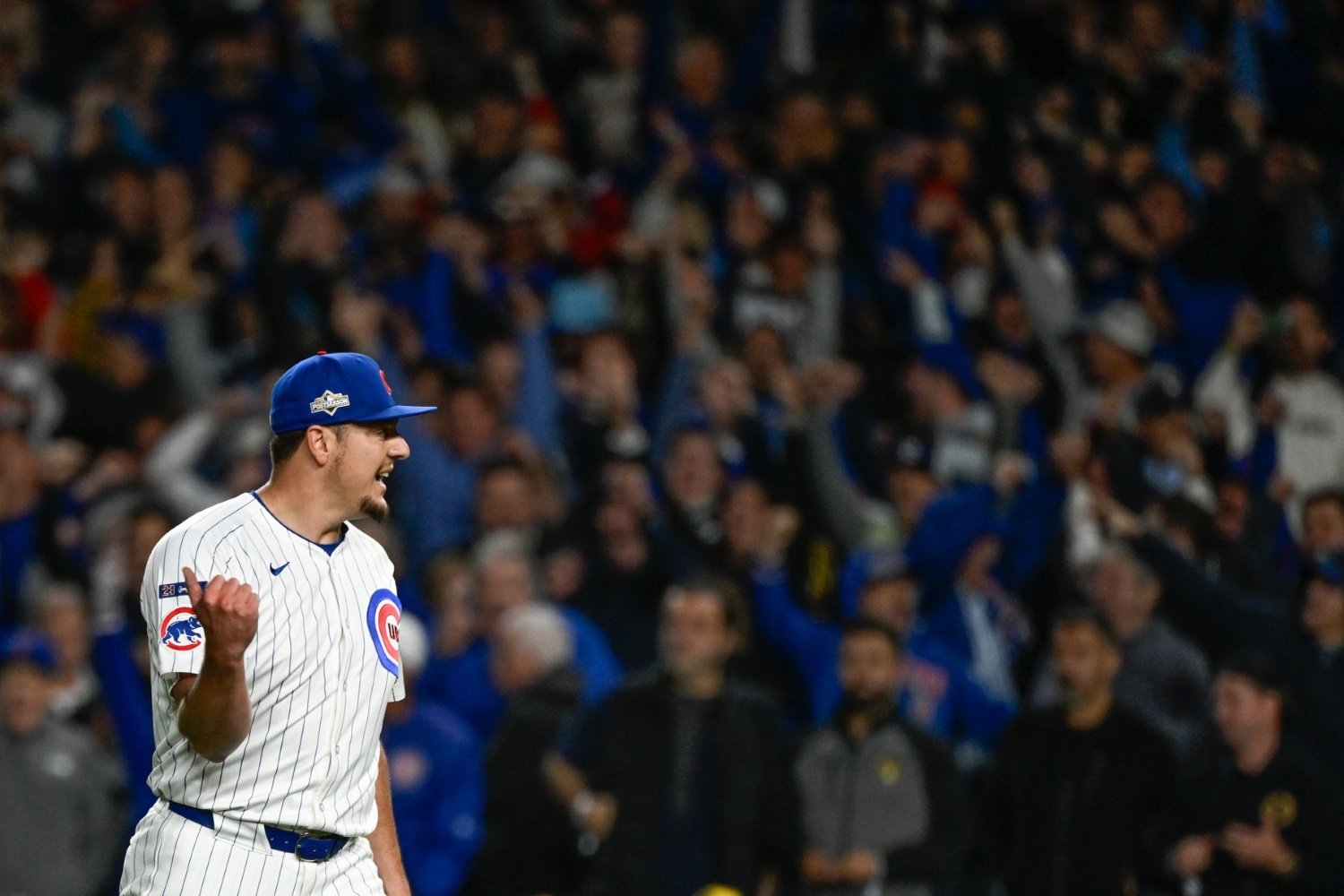 What the Cubs have gotten from Brad Keller this year is remarkable. Even if you spotted the potetial for a great fit between the Cubs and Keller, as we did last November, it would have been hard to guess that he would move into short relief and emerge as the co-relief ace of a playoff-bound team. Keller pitched 69 1/3 regular-season innings with a 2.07 ERA. Having never struck out even 20% of opposing batters in a season at the major-league level before, he topped 27% in his first season as a full-time reliever. He got ground balls and limited walks. He held opponents to a .512 OPS. He was dominant. Down the stretch, he was as good as ever, on a results level—but that's hidden the fact that he's had to make some significant changes to stay ahead of the curve and find things his body can do at the end of this very long year. Pitching in short bursts out of the bullpen is easier than starting, in that one doesn't have to pace oneself for as long an outing or find ways to get the same batters out two or three times in a game. However, as many hurlers will tell you, the routine of being a reliever can be much tougher than that of a starter, and learning the rhythm of that role poses major challenges. Pitchers have to learn when they can fit a side session, if they need to work on a given pitch, but they can't make themselves unavailable for the game that day in the process. They have a harder time scheduling their weight-lifting and other conditioning than do starters. For many pitchers, the end of a first season working in relief becomes very draining, very suddenly. Happily, Keller's stuff has generally held up, and he's had the adrenaline of a team surging to the postseason to keep himself amped up and focused. However, that doesn't erase the grind. As the year has progressed, we've seen Keller gain and lose feel for certain pieces of his unusually wide arsenal, and he's had to scramble to fix some things by either shelving a pitch or emphasizing its cousin for long stretches. The distinction isn't this clear or unidirectional, but it's helpful to separate Keller's season into two segments. When we do, we can spot some changes he's made, and then we can make note of the ways those changes manifested on Wednesday. Firstly, seemingly losing his feel for the sweeper, Keller has ratcheted down his usage of that pitch and booster his usage of the true slider, in its stead. That's been especially notable against right-handed batters, because the sweeper was a bit of a staple for him until August. Now, he doesn't seem to trust it at all. As you can see, Keller's also gone to his sinker considerably more here in the playoffs than he did in September. That's a revival of a strategy he turned to in the middle of the summer. and it's mostly about the fact that his very cutterish four-seamer paired better with the sweeper—whereas his sinker (more of a running two-seamer, in shape) plays better off the hard slider. We're seeing Keller go to his slider more often against lefties, too, actually. All of that is happening for a simple reason: Keller's velocity is trending slightly downward, and so is the carry on his heater. A slight loss of velocity on his fastballs but a substantial loss on his secondary offerings tells you that he's trying to lock in on shape, rather than speed. That's working, but it requires some changes of tack. By contrast, he's maintained a great feel for spinning the ball, so it makes sense for him to lean into the pitches that rely on spin for big movement and rely less on pure power. Keller's breaking stuff has become a muddle, in a way. He no longer has two distinct breaking ball looks, for the time being. He's throwing the slider much more than the sweeper, but even when he tries the sweeper, it's not taking off to the glove side the way it has in the past. It's just a slower version of his slider, in those moments. He's consistently found better depth on the pitch, though. Keller's slider is now a pitch that will move down more than sideways, by a substantial amount. That can make it slightly less effective against righties, in that he'll induce fewer whiffs this way, but he can keep this version of the breaking ball on the plate much better than he could with the sweeper-first attack. To set up that slider, Keller has also ventured more into testing the glove side of the plate with his sinker. Righty batters are looking for his four-seamer or for the sinker in on the hands, but Keller has gotten a bit more adroit at throwing it on the outer third. That's setting up the slider better than the same pitch can when thrown inside. This is a big flurry of adjustments for a pitcher to be making at this time of year, but Keller is in a unique situation. As a former starter with a five-pitch mix whose team is counting on him for big outs, Keller feels he has ways to overcome bugs that pop up within his mix or that emerge from accumulating fatigue. That brings us to Wednesday night. The Cubs were clinging to a 4-3 lead when, with two outs in the top of the eighth, Craig Counsell called upon Keller. He entered a dirty inning, with two runners on base, and his job was to get out Caleb Durbin. He couldn't. In fact, he walked Durbin on four pitches, and you could be forgiven for feeling very concerned. The last we'd seen Keller, he was limping toward the finish against the Padres in the Wild Card Series, and he couldn't make it. Asked to pitch two innings that night, he'd come out for the second of them and utterly gone to pieces: two hits, two hit batters, a wild pitch. He was all over the place. Durbin's at-bat looked like evidence of more of the same. Jake Bauers was up next, now with the bases loaded. That was terrible news for a wild Keller, because Bauers has been very patient at the plate all season—and he'd already had the two best and most productive at-bats of the game for the Brewers, by then. Keller missed high and away with a first-pitch fastball, and you could be forgiven for watching only through your fingers. Then, in a semi-miracle, he simply locked it back in. Bauers's patience can be a double-edged sword sometimes. He wasn't going to swing at a 1-0 pitch with the bases loaded and the tying run at third base, almost no matter what. Keller hit the upper third of the zone with a fastball, and he was back in the count. Then, he fired home a changeup that also landed for a strike, and he was back in charge of the at-bat. Bauers had let him back into it, to be sure, but Keller made quality pitches. Having changed the slugger's eye level and messed with his timing, Keller then went back to the top rail for a swinging strike to end the frame. It was a huge mistake, and (essentially) classic Keller, the guy we've seen more of throughout this season. There was no one else Counsell would trust to secure the win in the ninth, but there wouldn't need to be. Keller had walked Durbin because he couldn't find the feel for his sinker, so he simply stuck tightly to his four-seamer the rest of the way. He didn't really have the touch on his slider, either, but he landed the changeup in the zone another time or two en route to a strikeout of Blake Perkins. He got a first-pitch swing from Christian Yelich on a slider he'd meant mostly as a way to steal a strike, and when Nico Hoerner snared the resulting grounder and threw out Yelich, the game was over. It was as low-stress as such outings come, and it was made possible by Keller quickly determining what was working and doing it, eschewing what wasn't quite right. No Cubs reliever threw even 20 pitches Wednesday, which is important. They'll have 28 hours between first pitches, with the late start Thursday night for Game 4. Everyone should be available, and relatively fresh. Keller has reasserted himself as the ace the team hoped they had at the back end of the game, at least for now, and he did it by re-centering himself and using all the tools available to him to escape a desperate jam.
 -
Image courtesy of © Matt Marton-Imagn Images What the Cubs have gotten from Brad Keller this year is remarkable. Even if you spotted the potetial for a great fit between the Cubs and Keller, as we did last November, it would have been hard to guess that he would move into short relief and emerge as the co-relief ace of a playoff-bound team. Keller pitched 69 1/3 regular-season innings with a 2.07 ERA. Having never struck out even 20% of opposing batters in a season at the major-league level before, he topped 27% in his first season as a full-time reliever. He got ground balls and limited walks. He held opponents to a .512 OPS. He was dominant. Down the stretch, he was as good as ever, on a results level—but that's hidden the fact that he's had to make some significant changes to stay ahead of the curve and find things his body can do at the end of this very long year. Pitching in short bursts out of the bullpen is easier than starting, in that one doesn't have to pace oneself for as long an outing or find ways to get the same batters out two or three times in a game. However, as many hurlers will tell you, the routine of being a reliever can be much tougher than that of a starter, and learning the rhythm of that role poses major challenges. Pitchers have to learn when they can fit a side session, if they need to work on a given pitch, but they can't make themselves unavailable for the game that day in the process. They have a harder time scheduling their weight-lifting and other conditioning than do starters. For many pitchers, the end of a first season working in relief becomes very draining, very suddenly. Happily, Keller's stuff has generally held up, and he's had the adrenaline of a team surging to the postseason to keep himself amped up and focused. However, that doesn't erase the grind. As the year has progressed, we've seen Keller gain and lose feel for certain pieces of his unusually wide arsenal, and he's had to scramble to fix some things by either shelving a pitch or emphasizing its cousin for long stretches. The distinction isn't this clear or unidirectional, but it's helpful to separate Keller's season into two segments. When we do, we can spot some changes he's made, and then we can make note of the ways those changes manifested on Wednesday. Firstly, seemingly losing his feel for the sweeper, Keller has ratcheted down his usage of that pitch and booster his usage of the true slider, in its stead. That's been especially notable against right-handed batters, because the sweeper was a bit of a staple for him until August. Now, he doesn't seem to trust it at all. As you can see, Keller's also gone to his sinker considerably more here in the playoffs than he did in September. That's a revival of a strategy he turned to in the middle of the summer. and it's mostly about the fact that his very cutterish four-seamer paired better with the sweeper—whereas his sinker (more of a running two-seamer, in shape) plays better off the hard slider. We're seeing Keller go to his slider more often against lefties, too, actually. All of that is happening for a simple reason: Keller's velocity is trending slightly downward, and so is the carry on his heater. A slight loss of velocity on his fastballs but a substantial loss on his secondary offerings tells you that he's trying to lock in on shape, rather than speed. That's working, but it requires some changes of tack. By contrast, he's maintained a great feel for spinning the ball, so it makes sense for him to lean into the pitches that rely on spin for big movement and rely less on pure power. Keller's breaking stuff has become a muddle, in a way. He no longer has two distinct breaking ball looks, for the time being. He's throwing the slider much more than the sweeper, but even when he tries the sweeper, it's not taking off to the glove side the way it has in the past. It's just a slower version of his slider, in those moments. He's consistently found better depth on the pitch, though. Keller's slider is now a pitch that will move down more than sideways, by a substantial amount. That can make it slightly less effective against righties, in that he'll induce fewer whiffs this way, but he can keep this version of the breaking ball on the plate much better than he could with the sweeper-first attack. To set up that slider, Keller has also ventured more into testing the glove side of the plate with his sinker. Righty batters are looking for his four-seamer or for the sinker in on the hands, but Keller has gotten a bit more adroit at throwing it on the outer third. That's setting up the slider better than the same pitch can when thrown inside. This is a big flurry of adjustments for a pitcher to be making at this time of year, but Keller is in a unique situation. As a former starter with a five-pitch mix whose team is counting on him for big outs, Keller feels he has ways to overcome bugs that pop up within his mix or that emerge from accumulating fatigue. That brings us to Wednesday night. The Cubs were clinging to a 4-3 lead when, with two outs in the top of the eighth, Craig Counsell called upon Keller. He entered a dirty inning, with two runners on base, and his job was to get out Caleb Durbin. He couldn't. In fact, he walked Durbin on four pitches, and you could be forgiven for feeling very concerned. The last we'd seen Keller, he was limping toward the finish against the Padres in the Wild Card Series, and he couldn't make it. Asked to pitch two innings that night, he'd come out for the second of them and utterly gone to pieces: two hits, two hit batters, a wild pitch. He was all over the place. Durbin's at-bat looked like evidence of more of the same. Jake Bauers was up next, now with the bases loaded. That was terrible news for a wild Keller, because Bauers has been very patient at the plate all season—and he'd already had the two best and most productive at-bats of the game for the Brewers, by then. Keller missed high and away with a first-pitch fastball, and you could be forgiven for watching only through your fingers. Then, in a semi-miracle, he simply locked it back in. Bauers's patience can be a double-edged sword sometimes. He wasn't going to swing at a 1-0 pitch with the bases loaded and the tying run at third base, almost no matter what. Keller hit the upper third of the zone with a fastball, and he was back in the count. Then, he fired home a changeup that also landed for a strike, and he was back in charge of the at-bat. Bauers had let him back into it, to be sure, but Keller made quality pitches. Having changed the slugger's eye level and messed with his timing, Keller then went back to the top rail for a swinging strike to end the frame. It was a huge mistake, and (essentially) classic Keller, the guy we've seen more of throughout this season. There was no one else Counsell would trust to secure the win in the ninth, but there wouldn't need to be. Keller had walked Durbin because he couldn't find the feel for his sinker, so he simply stuck tightly to his four-seamer the rest of the way. He didn't really have the touch on his slider, either, but he landed the changeup in the zone another time or two en route to a strikeout of Blake Perkins. He got a first-pitch swing from Christian Yelich on a slider he'd meant mostly as a way to steal a strike, and when Nico Hoerner snared the resulting grounder and threw out Yelich, the game was over. It was as low-stress as such outings come, and it was made possible by Keller quickly determining what was working and doing it, eschewing what wasn't quite right. No Cubs reliever threw even 20 pitches Wednesday, which is important. They'll have 28 hours between first pitches, with the late start Thursday night for Game 4. Everyone should be available, and relatively fresh. Keller has reasserted himself as the ace the team hoped they had at the back end of the game, at least for now, and he did it by re-centering himself and using all the tools available to him to escape a desperate jam. View full article
-
 Baseball remains a wonderfully complex and nuanced game. There are many ways to win, and many ways to lose. There are still multiple successful styles available to a team aspiring to play deep into October. You don't have to be built around power, or loaded with high-priced stars. However, one thing is increasingly non-negotiable: you have to win the velocity battle, somewhere. That. as much as anything else, is why the Cubs are now one loss from heading home for the winter, in the first full week of October. They're a well-rounded team. They play excellent defense, and they have plenty of offensive talent, too. Alas, they're running into the wall that awaits every team in October, and they don't have the juice to burst through it. Cubs hitters, by and large, can't hit good fastballs. On pitches 97 miles per hour or faster, the Cubs had the third-lowest batter run value per 100 pitches in the league during the regular season, according to Statcast. Obviously, the league hits worse than its overall average on those pitches; velocity matters. But the fact that the Cubs lag so far behind the rest of the serious contenders in that ability is catching up to them in a major way. Among Cubs who saw at least 50 pitches that fast this season, only Kyle Tucker and Michael Busch had a positive run value on them—and Busch just barely cleared that line. Obviously, with Tucker ailing and playing like a much worse version of himself over the last few months, that means the Cubs lack any kind of threat against pitchers who throw exceptionally hard. Meanwhile, Seiya Suzuki, Pete Crow-Armstrong, Dansby Swanson, Nico Hoerner, Carson Kelly and Justin Turner are all at least 2 runs worse than average per 100 pitches seen when pitchers ramp up to 97 and above. That's down in the range where 'overmatched' becomes an appropriate label. The natural assumption might be that bat speed is the problem; the Cubs also have some of the slowest swing speed in the league. As it turns out, though, bat speed bears little relationship to success against high-velocity pitches. Suzuki and Crow-Armstrong swing fast; it does them no good. Busch is one of the slowest swingers on the team against hot heaters, but it works for him. Rather, the issue here has to be that the team isn't calibrating their best players' approaches properly to handle great velocity. What's missing is hard to pin down. Maybe they're sitting on the wrong offerings, or trying to cover the strike zone too thoroughly. Maybe the pitfalls of Crow-Armstrong's aggressive approach are preventing him from being able to time the fastball. Maybe Suzuki and Swanson, who are so much more patient, are starting too late. In all likelihood, each of the players struggling is doing so for a different reason. That's the biggest problem the team faces: that solving their overarching issue doesn't seem like a switch the coaching staff can flip. There are too many small things making up the big thing holding them back from producing runs in the postseason. With Game 3 of the NLDS right around the corner, the offseason looms, and there might be solutions to find there—but what everyone has been really hoping for is the lineup to wake up and do damage before they get knocked out.
- 2 comments
-
- 1
-
-
- michael busch
- kyle tucker
- (and 5 more)
-
Image courtesy of © David Banks-Imagn Images Baseball remains a wonderfully complex and nuanced game. There are many ways to win, and many ways to lose. There are still multiple successful styles available to a team aspiring to play deep into October. You don't have to be built around power, or loaded with high-priced stars. However, one thing is increasingly non-negotiable: you have to win the velocity battle, somewhere. That. as much as anything else, is why the Cubs are now one loss from heading home for the winter, in the first full week of October. They're a well-rounded team. They play excellent defense, and they have plenty of offensive talent, too. Alas, they're running into the wall that awaits every team in October, and they don't have the juice to burst through it. Cubs hitters, by and large, can't hit good fastballs. On pitches 97 miles per hour or faster, the Cubs had the third-lowest batter run value per 100 pitches in the league during the regular season, according to Statcast. Obviously, the league hits worse than its overall average on those pitches; velocity matters. But the fact that the Cubs lag so far behind the rest of the serious contenders in that ability is catching up to them in a major way. Among Cubs who saw at least 50 pitches that fast this season, only Kyle Tucker and Michael Busch had a positive run value on them—and Busch just barely cleared that line. Obviously, with Tucker ailing and playing like a much worse version of himself over the last few months, that means the Cubs lack any kind of threat against pitchers who throw exceptionally hard. Meanwhile, Seiya Suzuki, Pete Crow-Armstrong, Dansby Swanson, Nico Hoerner, Carson Kelly and Justin Turner are all at least 2 runs worse than average per 100 pitches seen when pitchers ramp up to 97 and above. That's down in the range where 'overmatched' becomes an appropriate label. The natural assumption might be that bat speed is the problem; the Cubs also have some of the slowest swing speed in the league. As it turns out, though, bat speed bears little relationship to success against high-velocity pitches. Suzuki and Crow-Armstrong swing fast; it does them no good. Busch is one of the slowest swingers on the team against hot heaters, but it works for him. Rather, the issue here has to be that the team isn't calibrating their best players' approaches properly to handle great velocity. What's missing is hard to pin down. Maybe they're sitting on the wrong offerings, or trying to cover the strike zone too thoroughly. Maybe the pitfalls of Crow-Armstrong's aggressive approach are preventing him from being able to time the fastball. Maybe Suzuki and Swanson, who are so much more patient, are starting too late. In all likelihood, each of the players struggling is doing so for a different reason. That's the biggest problem the team faces: that solving their overarching issue doesn't seem like a switch the coaching staff can flip. There are too many small things making up the big thing holding them back from producing runs in the postseason. With Game 3 of the NLDS right around the corner, the offseason looms, and there might be solutions to find there—but what everyone has been really hoping for is the lineup to wake up and do damage before they get knocked out. View full article
-
All Hands, Make Fast: The Last Stand of the 2025 Chicago Cubs
Matthew Trueblood posted an article in Cubs
 The road map, this time, is pretty clear. There might be chances for Craig Counsell to get creative, or to be more aggressive than he would ordinarily be, but the Cubs will have to create them. For instance, though Quinn Priester is about average at controlling the running game, the Cubs won't be able to apply pressure to the Brewers starter unless they first put some of their speedy runners on base. We've already gotten a great breakdown of how the Cubs can attack Priester, from @Jason Ross, but having a plan and executing it against this Milwaukee team can sometimes be the difference between riding a horse and riding a horse fly. A point might come, mid-game, when Kyle Tucker and his balky calf reach base, and Counsell gets a chance to pinch-run for him with Willi Castro or Kevin Alcántara. With Moisés Ballesteros looming as an option off the bench, Counsell should pull that trigger if Tucker represents a run of any importance, but whether he will actually do so is a less important question than whether Tucker can even pose the question by getting on in the first place. Counsell doesn't have any great options coming off the bench, so unless he makes the fairly radical choice to bench Matt Shaw in favor of Castro, most of the pressure to generate runs falls on his players. On the other side of the ledger, Counsell has a bit more control, and the challenge will be for a slightly fidgety manager with a long history of quick hooks to stay his hand Wednesday and get some length out of Jameson Taillon. The Cubs' relievers just aren't so good that Counsell should be eager to remove Taillon in favor of them—not against this lineup, and not knowing that there are two more games left to win even if Chicago takes the one Wednesday. No Cubs pitcher has gotten 15 outs in a game during this brief postseason run; that has to change if the Cubs are to keep their season alive. Beyond Taillon, Counsell should take advantage of the fact that he's never anointed any particular closer by going to Andrew Kittredge and Brad Keller right away. If it comes down to it, Daniel Palencia can close out the game at the end, but the plan should be to maximize the number of outs spread among Taillon, Kittredge, Keller, and lefties Caleb Thielbar and Drew Pomeranz. The first two games of this series were so lopsided that the Cubs couldn't even do anything that felt important in the second half of either contest. The electricity of the crowd at Milwaukee's Uecker Field overwhelmed them; the Brewers themselves overpowered and outplayed them. The challenge, of course, is to reverse that momentum and demonstrate the same capacity for intimidation and execution Milwaukee showed. It'll be interesting to see whether Wrigley Field is invaded by more Brewers fans, after Cubs fans made no appreciable dent in the atmosphere in Milwaukee. Either way, though, the team has to give the crowd a reason to feel confident and get involved. Just as neither the manager nor the players can use trickeration or fancy gambits to break the game, the crowd can't will a team to victory. In one tough at-bat and on one hustle play after another, the Cubs have to find enough self-belief and a smart enough approach to play their way back into the series, slowly. It's been a peculiar season. The Cubs never won or lost more than five straight games, and now, they're very unlikely to. They only lost three or more in a row five times, though; they won at least three in a row 15 times. That sounds good, because it is. This team bounces back and stops the bleeding fast. They have a lot of ways to win games. The Brewers specialize in taking some of those avenues away, but if the Cubs are the team they think they are—the one they've strived to be all season—they have one more get-up left in them.
 -
Image courtesy of © David Banks-Imagn Images The road map, this time, is pretty clear. There might be chances for Craig Counsell to get creative, or to be more aggressive than he would ordinarily be, but the Cubs will have to create them. For instance, though Quinn Priester is about average at controlling the running game, the Cubs won't be able to apply pressure to the Brewers starter unless they first put some of their speedy runners on base. We've already gotten a great breakdown of how the Cubs can attack Priester, from @Jason Ross, but having a plan and executing it against this Milwaukee team can sometimes be the difference between riding a horse and riding a horse fly. A point might come, mid-game, when Kyle Tucker and his balky calf reach base, and Counsell gets a chance to pinch-run for him with Willi Castro or Kevin Alcántara. With Moisés Ballesteros looming as an option off the bench, Counsell should pull that trigger if Tucker represents a run of any importance, but whether he will actually do so is a less important question than whether Tucker can even pose the question by getting on in the first place. Counsell doesn't have any great options coming off the bench, so unless he makes the fairly radical choice to bench Matt Shaw in favor of Castro, most of the pressure to generate runs falls on his players. On the other side of the ledger, Counsell has a bit more control, and the challenge will be for a slightly fidgety manager with a long history of quick hooks to stay his hand Wednesday and get some length out of Jameson Taillon. The Cubs' relievers just aren't so good that Counsell should be eager to remove Taillon in favor of them—not against this lineup, and not knowing that there are two more games left to win even if Chicago takes the one Wednesday. No Cubs pitcher has gotten 15 outs in a game during this brief postseason run; that has to change if the Cubs are to keep their season alive. Beyond Taillon, Counsell should take advantage of the fact that he's never anointed any particular closer by going to Andrew Kittredge and Brad Keller right away. If it comes down to it, Daniel Palencia can close out the game at the end, but the plan should be to maximize the number of outs spread among Taillon, Kittredge, Keller, and lefties Caleb Thielbar and Drew Pomeranz. The first two games of this series were so lopsided that the Cubs couldn't even do anything that felt important in the second half of either contest. The electricity of the crowd at Milwaukee's Uecker Field overwhelmed them; the Brewers themselves overpowered and outplayed them. The challenge, of course, is to reverse that momentum and demonstrate the same capacity for intimidation and execution Milwaukee showed. It'll be interesting to see whether Wrigley Field is invaded by more Brewers fans, after Cubs fans made no appreciable dent in the atmosphere in Milwaukee. Either way, though, the team has to give the crowd a reason to feel confident and get involved. Just as neither the manager nor the players can use trickeration or fancy gambits to break the game, the crowd can't will a team to victory. In one tough at-bat and on one hustle play after another, the Cubs have to find enough self-belief and a smart enough approach to play their way back into the series, slowly. It's been a peculiar season. The Cubs never won or lost more than five straight games, and now, they're very unlikely to. They only lost three or more in a row five times, though; they won at least three in a row 15 times. That sounds good, because it is. This team bounces back and stops the bleeding fast. They have a lot of ways to win games. The Brewers specialize in taking some of those avenues away, but if the Cubs are the team they think they are—the one they've strived to be all season—they have one more get-up left in them. View full article
- 1 reply
-
- 1
-

-
- andrew kittredge
- brad keller
- (and 4 more)
-
Was Monday Night Shota Imanaga's Last Start in a Cubs Uniform?
Matthew Trueblood posted an article in Cubs
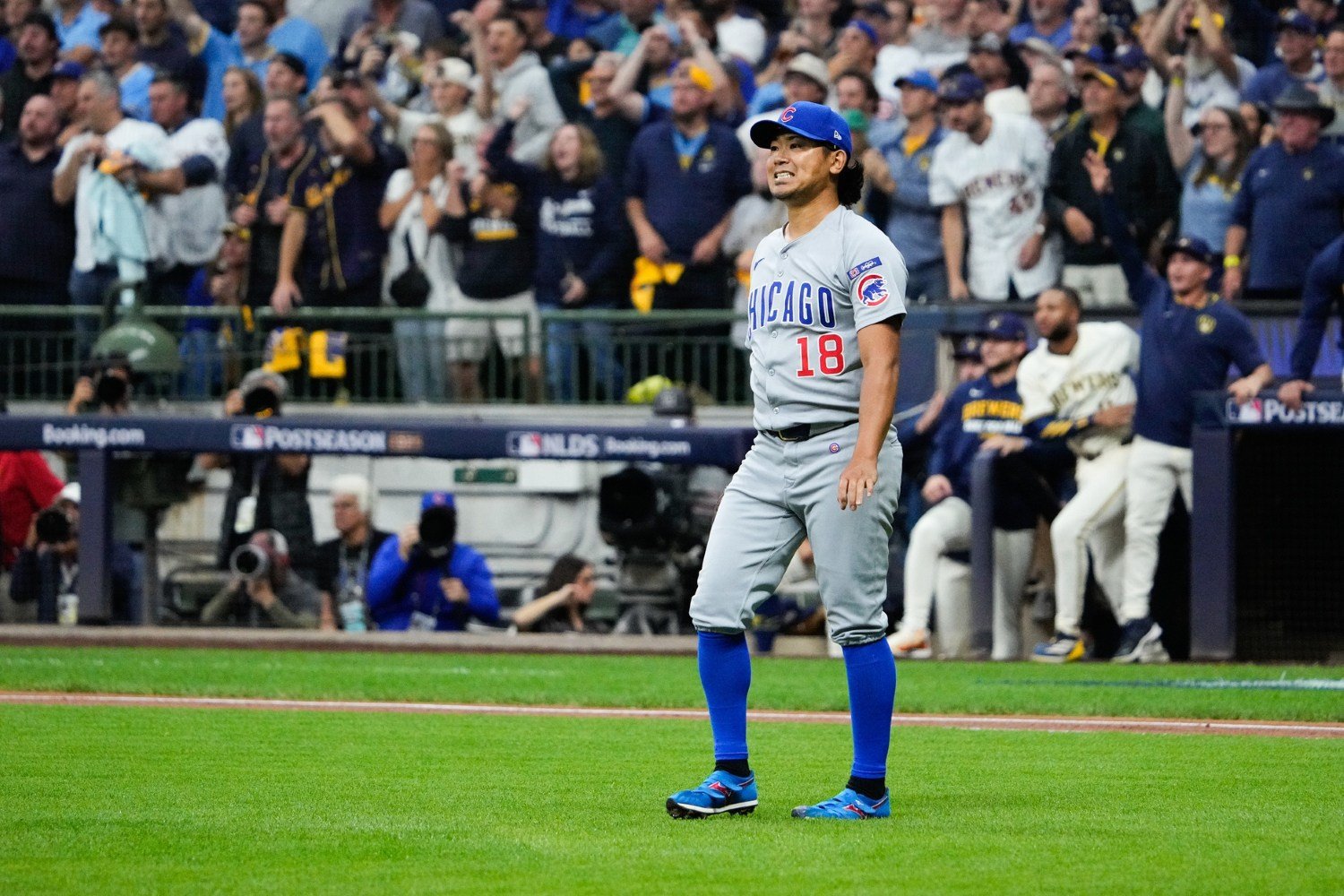 Unless the Cubs force a decisive Game 5 in their National League Division Series showdown with the Milwaukee Brewers, they won't give the ball to Shota Imanaga again this season. It's been an uneven second season on the North Side for Imanaga, who was their ace for much of 2024 and was shaping up to fill the same role for them early this year—but who has been less consistent and more vulnerable to home runs since returning to the rotation at midseason. His overall numbers look good, but he's given up 18 home runs in his last 11 starts, and his strikeout rate is dramatically lower than it was last year. The timing of that significant regression is awful, because this fall marks a major decision point for the Cubs with regard to Imanaga. The terms of the contract to which the two parties agreed in January 2024 are complicated, but in short: Imanaga made $23 million over these first two seasons of his Cubs career This fall, the Cubs have to decide whether to exercise a three-year, $57-million option for the next three seasons, paying Imanaga $20 million in each of the next two years and $17 million in 2028. Should the Cubs decline that option, Imanaga will have a $15-million player option for 2026. Another version of the same dance would ensue next fall, if Imanaga exercises that option. The Cubs would have to decide on two years and $42 million, at that point, amounting to the same total payout through 2028, or allow Imanaga to decide on another $15-million player option for 2027. For the majority of the time between Imanaga's signing and now, the first Cubs option felt like a no-brainer. Triggering it would push the total value of Imanaga's deal to $80 million over five years, but that's a relative bargain for the No. 2-caliber starter he's appeared to be for most of the last two years. Alas, at this moment, it feels more like a no-brainer in the opposite direction. Imanaga is 32 years old. His stuff is diminished, and he suffered a hamstring injury this year of which there's roughly a 25% chance of reinjury in the future—which doesn't reduce the baseline risks of injury to his elbow, shoulder or other more traditionally pitching-specific things. It's hard to justify anything close to $57 million in newly guaranteed money to such a pitcher, coming off the stretch he's been on since mid-August. If they don't exercise their side of the option, the Cubs could well retain Imanaga, anyway. He's in position to make more than $15 million in guaranteed money this winter, but he probably won't top $15 million for 2026 alone. Given that there's another $15 million (with $42 million over two years as the upside) waiting for him in 2027 if he sticks with this deal, he probably won't receive an offer this winter that beats the combination of earning power and security the current contract gives him. It would take a lot of self-belief on Imanaga's part to plunge back into the market, but if what he wants is certainty about where he'll pitch for the next three or four years, he's only likely to find it there. Let's say, though, that the Cubs turn down their half of the option and Imanaga turns down his. There would still be one more path to reunion between the two, at that point—if the Cubs are feeling spendy as the offseason gets underway. Should Imanaga eschew the $15-million option, the Cubs could extend a qualifying offer to tether Imanaga to them as he enters free agency. That offer is likely to be somewhere around $22 million, and if the Cubs attach it to him, Imanaga's market would be deflated so much that he'd probably retreat and accept the offer. For the Cubs, that makes declining the option an even more obvious choice. Instead of committing to three more years of his services and paying him $20 million in 2026 alone, they'd get him for an incrementally increased cost next year but avoid having money tied up beyond that. On balance, it's still very likely that Imanaga is back with Chicago next season—or at least, that he stays with the organization initially. There could always be an unforeseen winter trade, but the smart money says Imanaga will exercise his half of the option this fall. From a pitching depth perspective, it would be great to have Imanaga back as part of the rotation mix in 2026. It would also be a bit of a relief, because as engaging and endearing as he has been throughout his stay with the team, this would be a sad way for the relationship to end. Imanaga remains a valuable starter, and the Cubs aren't awash in good options as they enter the offseason. Even if they do retain him, though, they need to be active in the market this winter, to further bolster their staff.
 -
Image courtesy of © Michael McLoone-Imagn Images Unless the Cubs force a decisive Game 5 in their National League Division Series showdown with the Milwaukee Brewers, they won't give the ball to Shota Imanaga again this season. It's been an uneven second season on the North Side for Imanaga, who was their ace for much of 2024 and was shaping up to fill the same role for them early this year—but who has been less consistent and more vulnerable to home runs since returning to the rotation at midseason. His overall numbers look good, but he's given up 18 home runs in his last 11 starts, and his strikeout rate is dramatically lower than it was last year. The timing of that significant regression is awful, because this fall marks a major decision point for the Cubs with regard to Imanaga. The terms of the contract to which the two parties agreed in January 2024 are complicated, but in short: Imanaga made $23 million over these first two seasons of his Cubs career This fall, the Cubs have to decide whether to exercise a three-year, $57-million option for the next three seasons, paying Imanaga $20 million in each of the next two years and $17 million in 2028. Should the Cubs decline that option, Imanaga will have a $15-million player option for 2026. Another version of the same dance would ensue next fall, if Imanaga exercises that option. The Cubs would have to decide on two years and $42 million, at that point, amounting to the same total payout through 2028, or allow Imanaga to decide on another $15-million player option for 2027. For the majority of the time between Imanaga's signing and now, the first Cubs option felt like a no-brainer. Triggering it would push the total value of Imanaga's deal to $80 million over five years, but that's a relative bargain for the No. 2-caliber starter he's appeared to be for most of the last two years. Alas, at this moment, it feels more like a no-brainer in the opposite direction. Imanaga is 32 years old. His stuff is diminished, and he suffered a hamstring injury this year of which there's roughly a 25% chance of reinjury in the future—which doesn't reduce the baseline risks of injury to his elbow, shoulder or other more traditionally pitching-specific things. It's hard to justify anything close to $57 million in newly guaranteed money to such a pitcher, coming off the stretch he's been on since mid-August. If they don't exercise their side of the option, the Cubs could well retain Imanaga, anyway. He's in position to make more than $15 million in guaranteed money this winter, but he probably won't top $15 million for 2026 alone. Given that there's another $15 million (with $42 million over two years as the upside) waiting for him in 2027 if he sticks with this deal, he probably won't receive an offer this winter that beats the combination of earning power and security the current contract gives him. It would take a lot of self-belief on Imanaga's part to plunge back into the market, but if what he wants is certainty about where he'll pitch for the next three or four years, he's only likely to find it there. Let's say, though, that the Cubs turn down their half of the option and Imanaga turns down his. There would still be one more path to reunion between the two, at that point—if the Cubs are feeling spendy as the offseason gets underway. Should Imanaga eschew the $15-million option, the Cubs could extend a qualifying offer to tether Imanaga to them as he enters free agency. That offer is likely to be somewhere around $22 million, and if the Cubs attach it to him, Imanaga's market would be deflated so much that he'd probably retreat and accept the offer. For the Cubs, that makes declining the option an even more obvious choice. Instead of committing to three more years of his services and paying him $20 million in 2026 alone, they'd get him for an incrementally increased cost next year but avoid having money tied up beyond that. On balance, it's still very likely that Imanaga is back with Chicago next season—or at least, that he stays with the organization initially. There could always be an unforeseen winter trade, but the smart money says Imanaga will exercise his half of the option this fall. From a pitching depth perspective, it would be great to have Imanaga back as part of the rotation mix in 2026. It would also be a bit of a relief, because as engaging and endearing as he has been throughout his stay with the team, this would be a sad way for the relationship to end. Imanaga remains a valuable starter, and the Cubs aren't awash in good options as they enter the offseason. Even if they do retain him, though, they need to be active in the market this winter, to further bolster their staff. View full article
-
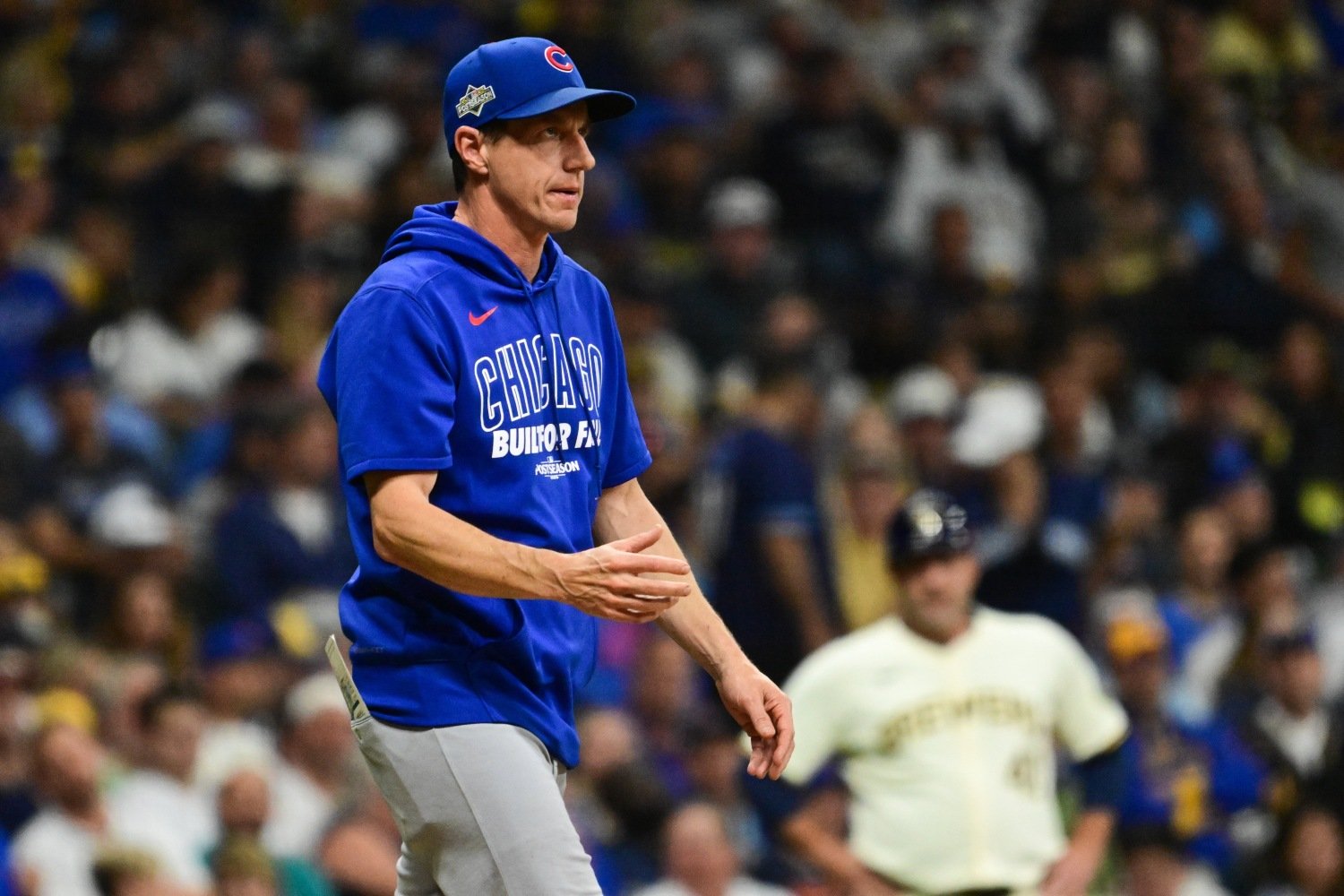 When Pat Murphy slated Aaron Ashby to start Game 2 of the National League Division Series, Craig Counsell's best move seemed clear: start Justin Turner at first base, and let Michael Busch come in only once Milwaukee goes away from Ashby in favor of a right-handed hurler. He did that. Meanwhile, with Shota Imanaga starting, Counsell had some options to consider on his own side. Should he start Willi Castro, a more dynamic offensive presence, in the place of superior third baseman Matt Shaw, and let Imanaga's fly-ball tendencies mute the lost value from the defensive downgrade? When should he lift Imanaga, and should he then try to get through the balance of the game using only his trusted short-relief arms—Brad Keller, Daniel Palencia, Andrew Kittredge, Drew Pomeranz, and Caleb Thielbar—or turn to a multi-inning bulk reliever, in Colin Rea? He didn't make the right calls in all cases. Shaw over Castro worked out fine, as the rookie drew two more walks and gave the team at least the semblance of a scoring chance in later innings. Then again, his glove never really came into play. Imanaga probably should have come out after one trip through the order, since he'd already given up a three-run home run to Andrew Vaughn by then and it was clear Monday would not be a redemption story amid his brutal final stretch of the campaign. Instead, Counsell tried to stretch him, and the Brewers gained the lead when William Contreras took Imanaga deep. For the second game in a row, the most successful Cubs pitcher (Aaron Civale in Game 1, Rea in Game 2) was the one to whom Counsell turned to close the barn door after the horses had all departed. Turner got one hit in two at-bats against Ashby, but then Busch made no impact in the balance of the contest. It's possible to nitpick Counsell's handling of the game, then, and even of this entire postseason—but it's a fool's errand. Counsell has done fine. He's been outmanaged by Murphy, who's a better skipper right now than his former protege-turned-boss, but Murphy is on his way to a second straight Manager of the Year Award. The fault isn't in Counsell's deployment of the roster, but (in the context of this series) in his roster itself. The Cubs might be one of the six best teams in baseball, but the Brewers are better than they are. Their lineup is deeper and more well-rounded. Their pitching staff is deeper and better at missing bats. The Brewers organization, including but far beyond the big-league coaching staff, is better at scouting and player development than the Cubs are. Counsell is out of pitchers who can get the Brewers out when it counts. He had to do some clever contortions just to get past the Padres, whose offense is broken. The trade deadline pickup of Kittredge was a great one, and low-cost veteran reclamation projects (Keller, Pomeranz, even Thielbar and Rea to some extent) have been good for them—as is the case almost every year. Jed Hoyer and company assembled a staff that got them to 92 wins in the regular season, but they're out of steam now. With Justin Steele recovering from Tommy John surgery and Cade Horton sidelined by a fractured rib, they were always going to reach this point some time in the first half of October. That could have been averted (or at least postponed) if the team had made a bigger acquisition at the trade deadline, but it's not clear that anyone available then would have saved their bacon. Edward Cabrera, MacKenzie Gore, Joe Ryan and Kris Bubic not only stayed with their teams at the deadline, but either pitched dreadfully or got hurt after it. Seth Lugo fell apart, too. Merrill Kelly would have been more like a Band-Aid than a true crutch for the rotation. Even a high-impact reliever probably wouldn't have changed the state of play at this moment. Of course, two pitchers who could have tilted that balance did pitch Monday. Blake Snell and Jesús Luzardo squared off in the other NLDS in Philadelphia. Snell signed with the Dodgers last winter, and he represents what would be possible if the Ricketts family were much more aggressive than they are. If the Cubs were spending $280 million per year on payroll, as they probably should, Snell would have been a very real and reasonable target. Luzardo, of course, was nearly a Cub over the winter, before medicals scuttled a deal that would have sent Owen Caissie to Miami. He represents, naturally, what it would look like if Hoyer were more aggressive—if he were less wary and more accepting of the risks inherent in acquiring high-end talent. Having Steele, Horton, Snell or Luzardo would make a huge difference for this team. Having two of them would make them legitimate World Series contenders. Having been better at bringing along young players or scouting and developing top prospects would be a boon, too, although in fairness, the team has gotten good returns on Busch and Pete Crow-Armstrong this year. Counsell is being paid handsomely to make the most of what he has, and while he's doing fairly well, there's room for improvement. It won't matter that much, though, until the team invests in upgrading the range of options Counsell has to survey and utilize. We can't even fairly critique his performance this month, because while he hasn't been nimble or creative enough to win a World Series, he also doesn't have a team that could do so even if he were meeting that high standard.
- 4 comments
-
- 1
-
-
- shota imanaga
- justin turner
- (and 1 more)
-
Image courtesy of © Benny Sieu-Imagn Images When Pat Murphy slated Aaron Ashby to start Game 2 of the National League Division Series, Craig Counsell's best move seemed clear: start Justin Turner at first base, and let Michael Busch come in only once Milwaukee goes away from Ashby in favor of a right-handed hurler. He did that. Meanwhile, with Shota Imanaga starting, Counsell had some options to consider on his own side. Should he start Willi Castro, a more dynamic offensive presence, in the place of superior third baseman Matt Shaw, and let Imanaga's fly-ball tendencies mute the lost value from the defensive downgrade? When should he lift Imanaga, and should he then try to get through the balance of the game using only his trusted short-relief arms—Brad Keller, Daniel Palencia, Andrew Kittredge, Drew Pomeranz, and Caleb Thielbar—or turn to a multi-inning bulk reliever, in Colin Rea? He didn't make the right calls in all cases. Shaw over Castro worked out fine, as the rookie drew two more walks and gave the team at least the semblance of a scoring chance in later innings. Then again, his glove never really came into play. Imanaga probably should have come out after one trip through the order, since he'd already given up a three-run home run to Andrew Vaughn by then and it was clear Monday would not be a redemption story amid his brutal final stretch of the campaign. Instead, Counsell tried to stretch him, and the Brewers gained the lead when William Contreras took Imanaga deep. For the second game in a row, the most successful Cubs pitcher (Aaron Civale in Game 1, Rea in Game 2) was the one to whom Counsell turned to close the barn door after the horses had all departed. Turner got one hit in two at-bats against Ashby, but then Busch made no impact in the balance of the contest. It's possible to nitpick Counsell's handling of the game, then, and even of this entire postseason—but it's a fool's errand. Counsell has done fine. He's been outmanaged by Murphy, who's a better skipper right now than his former protege-turned-boss, but Murphy is on his way to a second straight Manager of the Year Award. The fault isn't in Counsell's deployment of the roster, but (in the context of this series) in his roster itself. The Cubs might be one of the six best teams in baseball, but the Brewers are better than they are. Their lineup is deeper and more well-rounded. Their pitching staff is deeper and better at missing bats. The Brewers organization, including but far beyond the big-league coaching staff, is better at scouting and player development than the Cubs are. Counsell is out of pitchers who can get the Brewers out when it counts. He had to do some clever contortions just to get past the Padres, whose offense is broken. The trade deadline pickup of Kittredge was a great one, and low-cost veteran reclamation projects (Keller, Pomeranz, even Thielbar and Rea to some extent) have been good for them—as is the case almost every year. Jed Hoyer and company assembled a staff that got them to 92 wins in the regular season, but they're out of steam now. With Justin Steele recovering from Tommy John surgery and Cade Horton sidelined by a fractured rib, they were always going to reach this point some time in the first half of October. That could have been averted (or at least postponed) if the team had made a bigger acquisition at the trade deadline, but it's not clear that anyone available then would have saved their bacon. Edward Cabrera, MacKenzie Gore, Joe Ryan and Kris Bubic not only stayed with their teams at the deadline, but either pitched dreadfully or got hurt after it. Seth Lugo fell apart, too. Merrill Kelly would have been more like a Band-Aid than a true crutch for the rotation. Even a high-impact reliever probably wouldn't have changed the state of play at this moment. Of course, two pitchers who could have tilted that balance did pitch Monday. Blake Snell and Jesús Luzardo squared off in the other NLDS in Philadelphia. Snell signed with the Dodgers last winter, and he represents what would be possible if the Ricketts family were much more aggressive than they are. If the Cubs were spending $280 million per year on payroll, as they probably should, Snell would have been a very real and reasonable target. Luzardo, of course, was nearly a Cub over the winter, before medicals scuttled a deal that would have sent Owen Caissie to Miami. He represents, naturally, what it would look like if Hoyer were more aggressive—if he were less wary and more accepting of the risks inherent in acquiring high-end talent. Having Steele, Horton, Snell or Luzardo would make a huge difference for this team. Having two of them would make them legitimate World Series contenders. Having been better at bringing along young players or scouting and developing top prospects would be a boon, too, although in fairness, the team has gotten good returns on Busch and Pete Crow-Armstrong this year. Counsell is being paid handsomely to make the most of what he has, and while he's doing fairly well, there's room for improvement. It won't matter that much, though, until the team invests in upgrading the range of options Counsell has to survey and utilize. We can't even fairly critique his performance this month, because while he hasn't been nimble or creative enough to win a World Series, he also doesn't have a team that could do so even if he were meeting that high standard. View full article
-
Image courtesy of © Matt Marton-Imagn Images It's been a long stretch of tough outcomes for Shota Imanaga. He's a smart, adaptable and wonderfully human southpaw, but recently, he's running into too many barrels and craning his neck to watch too many balls sail over the outfield wall. He's allowed at least one home run in 10 straight starts, during which his ERA is 4.70 and he's surrendered a total of 16 long balls. The trouble stems, in no small part, from a persistent problem getting his release point up the way he did before his hamstring strain in May. As good as Imanaga has been since joining the Cubs in January 2024, therefore, he's not inspiring much confidence recently. His excellent control and his pitchability have hung in there, but he just can't get out of the strike zone when he needs to right now, and thus, he's having a hard time mitigating opponents' power. The Brewers aren't one of the league's highest-powered offenses, in terms of hitting home runs, but they pose a real threat to Imanaga and the Cubs heading into Game 2. That's not to say that there's any doubt about the legitimacy or wisdom of starting Imanaga. I want to take a moment to dispel that notion, because it seems unfortunately prevalent online and in Chicago's sports conversation today. It was not a mistake to give Matthew Boyd the ball in Game 1 of the NLDS, and it's not a mistake to give the ball to Imanaga Monday night. The team needs innings from both of those guys to get through this series, and although Boyd proved an especially bad matchup with the Brewers throughout this season, it made a world of sense to bring him back on three days' rest after throwing just 58 pitches in the Wild Card Series against San Diego. The plan was to use him in an abbreviated start; the Brewers just landed their knockout punch before the Cubs could get into their bob-and-weave. Delaying starts by Boyd and/or Imanaga until later in the series wouldn't have done anything of value for the Cubs. On the contrary, it made much more sense to slate them for these two games, which each have off days on either side of them. That gives Craig Counsell the luxury of being aggressive with his bullpen behind each of them. He had to be more expansive with the relievers than he would have liked on Saturday, but Aaron Civale and Ben Brown soaked up the majority of the lost-cause work, which gives the skipper plenty of angles to play in Games 2 and 3. Let's talk about those angles, and specifically, the plan Counsell and his staff are likely to sketch to get to Out No. 27 Monday night, in a game that is just this side of a must-win. First, let's approximate the lineup the Brewers will deploy. Jackson Chourio tested his hamstring on the workout day Sunday, and it looks like he avoided a serious injury that would take him off the roster for the balance of the series, but he seems unlikely to be on the card for Game 2. That poses a challenge to Pat Murphy, who relies on Chourio and catcher William Contreras as the right-handed counterweights to his three best left-handed batters in the top half of the batting order—especially when a lefty is on the bump for the opponent. He does have the luxury, though, of sliding Andrew Vaughn up into the heart of the order if needed. Here's a best guess of what Milwaukee will send out to counter Imanaga and whatever else the Cubs have in store. Brice Turang - 2B William Contreras - C Christian Yelich - DH Andrew Vaughn - 1B Sal Frelick - RF Caleb Durbin - 3B Isaac Collins - LF Blake Perkins - CF Joey Ortiz - SS Expect Imanaga to face that entire order once. The real fun starts right after that. With the off day coming after this one as the series changes venues and Imanaga having struggled so much lately, there's little chance that the team will ask him to work his way through the lineup even a second time. The only dilemma is whether to let him face Turang a second time or not. In August, Turang torched a ball against Imanaga, a ferocious line drive to right field on a fastball that the lefty had aimed for the outer edge but which ended up on the inner third. In general, though, Imanaga has had his number; that hit is Turang's only bit of success in nine plate appearances. Therefore, for my money, Imanaga should get Turang, too. After that, though, it's Colin Rea time. Counsell should give the ball to Rea for the balance of the Brewers' second trip through the order. The rest of the game's plan depends partially on how those two pitch and what the offense can muster against Aaron Ashby and (almost certainly) Quinn Priester, but here's a best guess at how things might map out: Imanaga: 10 batters Rea: 8 batters Drew Pomeranz: 3 batters (Turang, Contreras, Yelich, third time) Daniel Palencia: 7 batters (the bottom six in the lineup, Turang the fourth time) Andrew Kittredge: 5 batters (Contreras, Yelich, Vaughn, Frelick, Durbin, fourth time) Brad Keller: 3 batters (Collins, Perkins, Ortiz, fourth time) Caleb Thielbar: Likely, whatever's left of the game (Turang, Contreras, Yelich, Vaughn, Frelick, fifth time) In reality, you hope that the game is more condensed than this. Over the last five years, teams who face exactly 36 batters in road games are exactly .500 (623-623), so if you have to go any further than the end of the fourth trip through the order, you're in trouble. The Cubs would prefer that Palencia and/or Kittredge are so efficient that Keller comes in a few batters sooner, to close out a win in the ninth. You have to plan for something worse than the ideal, though, especially when facing the Brewers and their relentless on-base machine of an offense. No important Chicago pitcher will be unavailable in this game, as the team tries to steal one at The Ueck before coming home to the Friendly Confines. They have such ample chances to rest the hurlers they do use that they're likely to pull the plug on Imanaga before trouble can truly roil, and then to be aggressive in the way they deploy the rest of the trustworthy arms. It's important to have a map, but as Game 1 (painfully) reminded the Cubs, the Brewers are good at tearing up your map and forcing you to start pressing buttons almost desperately. Chicago's ability to avoid the early haymaker will determine whether they can convert a good gameplan into a much-needed win. View full article
-
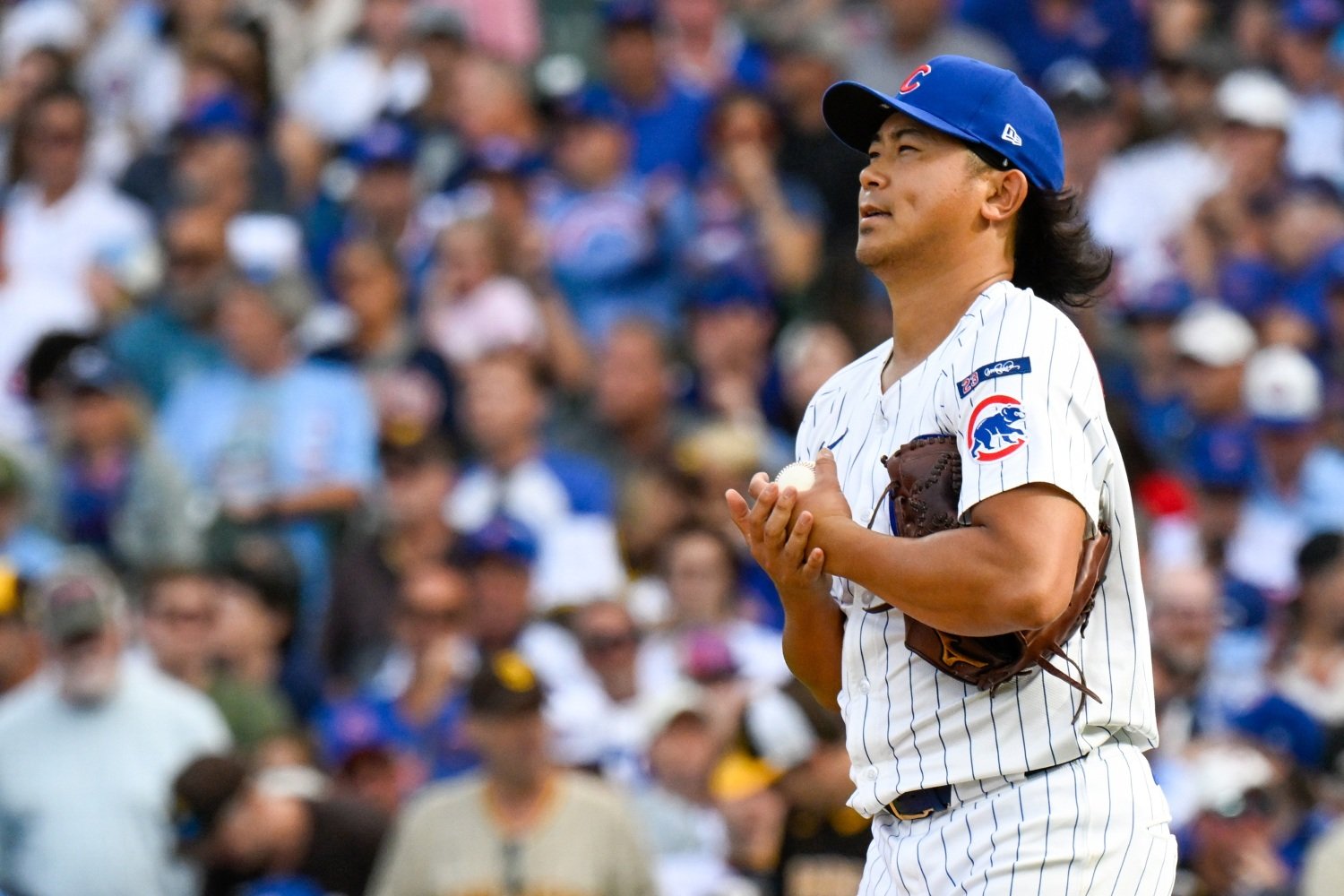 It's been a long stretch of tough outcomes for Shota Imanaga. He's a smart, adaptable and wonderfully human southpaw, but recently, he's running into too many barrels and craning his neck to watch too many balls sail over the outfield wall. He's allowed at least one home run in 10 straight starts, during which his ERA is 4.70 and he's surrendered a total of 16 long balls. The trouble stems, in no small part, from a persistent problem getting his release point up the way he did before his hamstring strain in May. As good as Imanaga has been since joining the Cubs in January 2024, therefore, he's not inspiring much confidence recently. His excellent control and his pitchability have hung in there, but he just can't get out of the strike zone when he needs to right now, and thus, he's having a hard time mitigating opponents' power. The Brewers aren't one of the league's highest-powered offenses, in terms of hitting home runs, but they pose a real threat to Imanaga and the Cubs heading into Game 2. That's not to say that there's any doubt about the legitimacy or wisdom of starting Imanaga. I want to take a moment to dispel that notion, because it seems unfortunately prevalent online and in Chicago's sports conversation today. It was not a mistake to give Matthew Boyd the ball in Game 1 of the NLDS, and it's not a mistake to give the ball to Imanaga Monday night. The team needs innings from both of those guys to get through this series, and although Boyd proved an especially bad matchup with the Brewers throughout this season, it made a world of sense to bring him back on three days' rest after throwing just 58 pitches in the Wild Card Series against San Diego. The plan was to use him in an abbreviated start; the Brewers just landed their knockout punch before the Cubs could get into their bob-and-weave. Delaying starts by Boyd and/or Imanaga until later in the series wouldn't have done anything of value for the Cubs. On the contrary, it made much more sense to slate them for these two games, which each have off days on either side of them. That gives Craig Counsell the luxury of being aggressive with his bullpen behind each of them. He had to be more expansive with the relievers than he would have liked on Saturday, but Aaron Civale and Ben Brown soaked up the majority of the lost-cause work, which gives the skipper plenty of angles to play in Games 2 and 3. Let's talk about those angles, and specifically, the plan Counsell and his staff are likely to sketch to get to Out No. 27 Monday night, in a game that is just this side of a must-win. First, let's approximate the lineup the Brewers will deploy. Jackson Chourio tested his hamstring on the workout day Sunday, and it looks like he avoided a serious injury that would take him off the roster for the balance of the series, but he seems unlikely to be on the card for Game 2. That poses a challenge to Pat Murphy, who relies on Chourio and catcher William Contreras as the right-handed counterweights to his three best left-handed batters in the top half of the batting order—especially when a lefty is on the bump for the opponent. He does have the luxury, though, of sliding Andrew Vaughn up into the heart of the order if needed. Here's a best guess of what Milwaukee will send out to counter Imanaga and whatever else the Cubs have in store. Brice Turang - 2B William Contreras - C Christian Yelich - DH Andrew Vaughn - 1B Sal Frelick - RF Caleb Durbin - 3B Isaac Collins - LF Blake Perkins - CF Joey Ortiz - SS Expect Imanaga to face that entire order once. The real fun starts right after that. With the off day coming after this one as the series changes venues and Imanaga having struggled so much lately, there's little chance that the team will ask him to work his way through the lineup even a second time. The only dilemma is whether to let him face Turang a second time or not. In August, Turang torched a ball against Imanaga, a ferocious line drive to right field on a fastball that the lefty had aimed for the outer edge but which ended up on the inner third. In general, though, Imanaga has had his number; that hit is Turang's only bit of success in nine plate appearances. Therefore, for my money, Imanaga should get Turang, too. After that, though, it's Colin Rea time. Counsell should give the ball to Rea for the balance of the Brewers' second trip through the order. The rest of the game's plan depends partially on how those two pitch and what the offense can muster against Aaron Ashby and (almost certainly) Quinn Priester, but here's a best guess at how things might map out: Imanaga: 10 batters Rea: 8 batters Drew Pomeranz: 3 batters (Turang, Contreras, Yelich, third time) Daniel Palencia: 7 batters (the bottom six in the lineup, Turang the fourth time) Andrew Kittredge: 5 batters (Contreras, Yelich, Vaughn, Frelick, Durbin, fourth time) Brad Keller: 3 batters (Collins, Perkins, Ortiz, fourth time) Caleb Thielbar: Likely, whatever's left of the game (Turang, Contreras, Yelich, Vaughn, Frelick, fifth time) In reality, you hope that the game is more condensed than this. Over the last five years, teams who face exactly 36 batters in road games are exactly .500 (623-623), so if you have to go any further than the end of the fourth trip through the order, you're in trouble. The Cubs would prefer that Palencia and/or Kittredge are so efficient that Keller comes in a few batters sooner, to close out a win in the ninth. You have to plan for something worse than the ideal, though, especially when facing the Brewers and their relentless on-base machine of an offense. No important Chicago pitcher will be unavailable in this game, as the team tries to steal one at The Ueck before coming home to the Friendly Confines. They have such ample chances to rest the hurlers they do use that they're likely to pull the plug on Imanaga before trouble can truly roil, and then to be aggressive in the way they deploy the rest of the trustworthy arms. It's important to have a map, but as Game 1 (painfully) reminded the Cubs, the Brewers are good at tearing up your map and forcing you to start pressing buttons almost desperately. Chicago's ability to avoid the early haymaker will determine whether they can convert a good gameplan into a much-needed win.
 -
Image courtesy of © David Banks-Imagn Images Rather than hand the ball directly to Quinn Priester (who will still, in all likelihood, pitch the majority of the game) Monday, the Brewers announced on Sunday's off day in Milwaukee that they intend to start left-handed reliever Aaron Ashby in Game 2 of the NLDS. It's a wrinkle made not only possible, but downright convenient, thanks to the league's strange new way of starting the Division Series on the same day before shifting them onto different schedules. Though some have wrongly concluded that MLB doesn't want to contend with the NFL for viewership on Sundays, the league's real reason for doing this is to preserve the advantage for teams who earn a bye while still staggering the DIvision Series schedule, to avoid totally dark days on the postseason calendar. Because Game 1 and Game 2 will begin some 55 hours apart, the Brewers can very comfortably turn around Ashby, who got four outs on 16 pitches on Saturday afternoon. They won't even need to worry about stretching him out a bit, as they often do, if that's what the circumstances demand. After all, there's also another off day Tuesday, as the two teams make the arduous journey from Milwaukee to Chicago. The breather after a Game 1 beatdown will do the Cubs and their weary bullpen some good; this is the Brewers' way of trying to claw back their share of the value in the lacuna. Ashby has been one of the best relievers in baseball this year. Thwarted in his hopes of returning to starting work this spring when he was sidelined with an oblique strain, the southpaw embraced his role as a multi-inning weapon for Murphy and has utterly dominated opposing batters, leaning mostly on the combination of his uniquely heavy high-slot sinker (approaching 100 miles per hour doesn't hurt) and 12-to-6 curveball. He's been good against everybody, but the platoon split is real and worth discussing: vs. LHH: .193/.299/.241, 29.2% strikeout rate, 10.1% walk rate, 82.9 mph exit velocity, -4° launch angle vs. RHH: .245/.312/.348, 27.5% strikeout rate, 8.2% walk rate, 91.4 mph exit velocity, 2° launch angle Typically, the Cubs' lineup starts with lefty slugger Michael Busch, and in Game 1, lefty Kyle Tucker batted third. Considering each of them and the fact that Ian Happ hits better from the left side, Pat Murphy is choosing to use Ashby to shield Priester from the worst matchups the Cubs offer him. Though the organization has done their best to cast the matter in some doubt, it's overwhelmingly likely that Priester will take over from Ashby after an inning or so of work. The idea is simply to shift the rollover of the lineup card, from Priester's perspective, just as that was the Cubs' hope when they used Andrew Kittredge in fron of Shota Imanaga in Game 2 of the Wild Card Series against San Diego. The big difference is that. in a game laid expansively between two off days, the Brewers don't need length from Priester; the Cubs did need to find the best possible recipe to get four or five innings out of Imanaga last week. The Brewers might well bullpen this whole game, deploying Ashby and Priester only as the first two in a string of hurlers who appear. They're not as deep as they were a year or two ago, but Milwaukee has a handful of solid relievers and ways to give Craig Counsell tough choices from a matchup perspective. In fact, because they're coming off a long layoff (rather than a three-game playoff series) and have played coy with Ashby as their starter, Milwaukee could even choose to use Jose Quintana in this game, rather than in Game 3 as most have anticipated. It's very tough to pin down what will happen after Ashby departs, and in fact, that's almost sure to depend on where the game stands after the first inning or two. Priester is still very, very likely to work multiple frames, but there are several ways the Brewers could cut back against the grain if the Cubs overcommit themselves to their expectation of that. All things considered, then, there's a clear best batting order for Counsell to begin Monday night's game: Nico Hoerner - 2B Justin Turner - 1B Seiya Suzuki - RF Kyle Tucker - DH Ian Happ - LF Carson Kelly - C Pete Crow-Armstrong - CF Dansby Swanson - SS Matt Shaw - 3B That's how Chicago should stack things, to best punish the Brewers' tactic and gain the strategic edge throughout the game. After Jared Koenig's recent return to form against righties, Ashby is the lefty arm the team most needs to fear from Milwaukee, and they're giving the Cubs the luxury of having him locked into the first three batters of the game. That's an opportunity not to be missed. Nico Hoerner, Justin Turner and Seiya Suzuki should greet Ashby in the top of the first, with one eye fixed on the Milwaukee bullpen. Yes, this means giving up an at-bat for Busch, which Murphy might regard as a win unto itself. In truth, though, Turner (.276/.330/.429) has been much better than Busch (.207/.274/.368) against lefties this season. Counsell could respond to Murphy's ploy by sliding Busch down to sixth in the order (going, perhaps, Hoerner—Suzuki—Tucker—Kelly—Happ—Busch—Swanson—Crow-Armstrong—Shaw), daring his former mentor and colleague to keep Ashby around for six or eight batters, but what if Murphy's plan is to insert Quintana to replace Ashby, after all? In that case, Counsell wouldn't have gained an at-bat for Busch against a righty. He'd only have stuffed Kelly and his inconsistent bat into the cleanup spot, without gaining enough in return. Turner should bat in the first, but be subject to a pinch-runner (probably just Busch, but if Counsell really wants to press his luck, he could turn to Kevin Alcántara) if and when he reaches base. Busch can take over in the bottom of the first on defense. and from then on, the Cubs lineup will function roughly as usual, with Hoerner, Busch, Suzuki, and Tucker alternating handedness through the meat of the batting order. Tucker (.269/.365/.461 against lefties this year), of course, is no slouch even against the likes of Ashby. To get to a really good matchup, Murphy would have to stick with Ashby all the way to the eighth batter, Pete Crow-Armstrong. It's far more likely that he'll flip to Priester after three or five batters, at which point the Cubs will have forced his hand and given themselves the best possible chance to draw first blood. Counsell has been so reluctant to actively use his bench that this approach seems as much a no-brainer as using an opener is, in itself. Turner won't replace Busch (or even Crow-Armstrong) late in games, but it should be a much easier sell to have him take one at-bat at the front end of a long game. He might have a major impact, and once he's out of the mix, the Cubs will be back to business as usual at the plate. Monday night will be a barn-burner. The pressure to escape The Ueck with a win is huge; the Cubs will be pressing buttons a bit more eagerly in their own right. The Brewers are trying to bait Counsell into something, and to undermine the excellent production Busch has provided atop the batting order. To catch them overextended and create a counterattack, Counsell has to be willing to shake up his lineup a bit. View full article
-
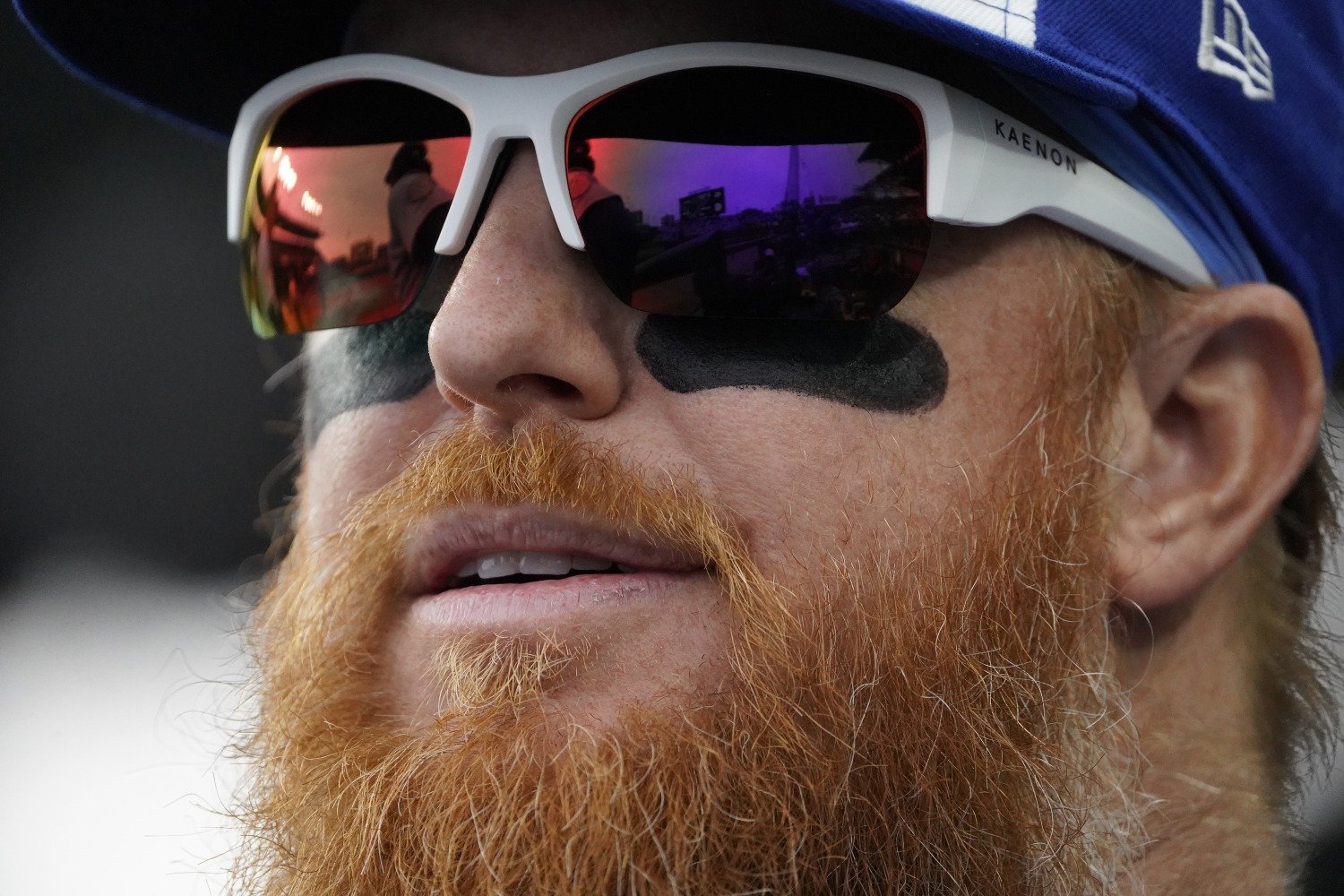 Rather than hand the ball directly to Quinn Priester (who will still, in all likelihood, pitch the majority of the game) Monday, the Brewers announced on Sunday's off day in Milwaukee that they intend to start left-handed reliever Aaron Ashby in Game 2 of the NLDS. It's a wrinkle made not only possible, but downright convenient, thanks to the league's strange new way of starting the Division Series on the same day before shifting them onto different schedules. Though some have wrongly concluded that MLB doesn't want to contend with the NFL for viewership on Sundays, the league's real reason for doing this is to preserve the advantage for teams who earn a bye while still staggering the DIvision Series schedule, to avoid totally dark days on the postseason calendar. Because Game 1 and Game 2 will begin some 55 hours apart, the Brewers can very comfortably turn around Ashby, who got four outs on 16 pitches on Saturday afternoon. They won't even need to worry about stretching him out a bit, as they often do, if that's what the circumstances demand. After all, there's also another off day Tuesday, as the two teams make the arduous journey from Milwaukee to Chicago. The breather after a Game 1 beatdown will do the Cubs and their weary bullpen some good; this is the Brewers' way of trying to claw back their share of the value in the lacuna. Ashby has been one of the best relievers in baseball this year. Thwarted in his hopes of returning to starting work this spring when he was sidelined with an oblique strain, the southpaw embraced his role as a multi-inning weapon for Murphy and has utterly dominated opposing batters, leaning mostly on the combination of his uniquely heavy high-slot sinker (approaching 100 miles per hour doesn't hurt) and 12-to-6 curveball. He's been good against everybody, but the platoon split is real and worth discussing: vs. LHH: .193/.299/.241, 29.2% strikeout rate, 10.1% walk rate, 82.9 mph exit velocity, -4° launch angle vs. RHH: .245/.312/.348, 27.5% strikeout rate, 8.2% walk rate, 91.4 mph exit velocity, 2° launch angle Typically, the Cubs' lineup starts with lefty slugger Michael Busch, and in Game 1, lefty Kyle Tucker batted third. Considering each of them and the fact that Ian Happ hits better from the left side, Pat Murphy is choosing to use Ashby to shield Priester from the worst matchups the Cubs offer him. Though the organization has done their best to cast the matter in some doubt, it's overwhelmingly likely that Priester will take over from Ashby after an inning or so of work. The idea is simply to shift the rollover of the lineup card, from Priester's perspective, just as that was the Cubs' hope when they used Andrew Kittredge in fron of Shota Imanaga in Game 2 of the Wild Card Series against San Diego. The big difference is that. in a game laid expansively between two off days, the Brewers don't need length from Priester; the Cubs did need to find the best possible recipe to get four or five innings out of Imanaga last week. The Brewers might well bullpen this whole game, deploying Ashby and Priester only as the first two in a string of hurlers who appear. They're not as deep as they were a year or two ago, but Milwaukee has a handful of solid relievers and ways to give Craig Counsell tough choices from a matchup perspective. In fact, because they're coming off a long layoff (rather than a three-game playoff series) and have played coy with Ashby as their starter, Milwaukee could even choose to use Jose Quintana in this game, rather than in Game 3 as most have anticipated. It's very tough to pin down what will happen after Ashby departs, and in fact, that's almost sure to depend on where the game stands after the first inning or two. Priester is still very, very likely to work multiple frames, but there are several ways the Brewers could cut back against the grain if the Cubs overcommit themselves to their expectation of that. All things considered, then, there's a clear best batting order for Counsell to begin Monday night's game: Nico Hoerner - 2B Justin Turner - 1B Seiya Suzuki - RF Kyle Tucker - DH Ian Happ - LF Carson Kelly - C Pete Crow-Armstrong - CF Dansby Swanson - SS Matt Shaw - 3B That's how Chicago should stack things, to best punish the Brewers' tactic and gain the strategic edge throughout the game. After Jared Koenig's recent return to form against righties, Ashby is the lefty arm the team most needs to fear from Milwaukee, and they're giving the Cubs the luxury of having him locked into the first three batters of the game. That's an opportunity not to be missed. Nico Hoerner, Justin Turner and Seiya Suzuki should greet Ashby in the top of the first, with one eye fixed on the Milwaukee bullpen. Yes, this means giving up an at-bat for Busch, which Murphy might regard as a win unto itself. In truth, though, Turner (.276/.330/.429) has been much better than Busch (.207/.274/.368) against lefties this season. Counsell could respond to Murphy's ploy by sliding Busch down to sixth in the order (going, perhaps, Hoerner—Suzuki—Tucker—Kelly—Happ—Busch—Swanson—Crow-Armstrong—Shaw), daring his former mentor and colleague to keep Ashby around for six or eight batters, but what if Murphy's plan is to insert Quintana to replace Ashby, after all? In that case, Counsell wouldn't have gained an at-bat for Busch against a righty. He'd only have stuffed Kelly and his inconsistent bat into the cleanup spot, without gaining enough in return. Turner should bat in the first, but be subject to a pinch-runner (probably just Busch, but if Counsell really wants to press his luck, he could turn to Kevin Alcántara) if and when he reaches base. Busch can take over in the bottom of the first on defense. and from then on, the Cubs lineup will function roughly as usual, with Hoerner, Busch, Suzuki, and Tucker alternating handedness through the meat of the batting order. Tucker (.269/.365/.461 against lefties this year), of course, is no slouch even against the likes of Ashby. To get to a really good matchup, Murphy would have to stick with Ashby all the way to the eighth batter, Pete Crow-Armstrong. It's far more likely that he'll flip to Priester after three or five batters, at which point the Cubs will have forced his hand and given themselves the best possible chance to draw first blood. Counsell has been so reluctant to actively use his bench that this approach seems as much a no-brainer as using an opener is, in itself. Turner won't replace Busch (or even Crow-Armstrong) late in games, but it should be a much easier sell to have him take one at-bat at the front end of a long game. He might have a major impact, and once he's out of the mix, the Cubs will be back to business as usual at the plate. Monday night will be a barn-burner. The pressure to escape The Ueck with a win is huge; the Cubs will be pressing buttons a bit more eagerly in their own right. The Brewers are trying to bait Counsell into something, and to undermine the excellent production Busch has provided atop the batting order. To catch them overextended and create a counterattack, Counsell has to be willing to shake up his lineup a bit.
-
- 2
-
-
- justin turner
- michael busch
- (and 3 more)
-
Image courtesy of © Benny Sieu-Imagn Images In the flow of a game, amid the thunder and bluster of a raucous crowd and a playoff series, the play looks normal. Sal Frelick hit a slow, looping grounder to the right side of the infield. Nico Hoerner charged it. If Hoerner had made the play cleanly, it would have been an easy out, and the Cubs would have been close to escaping a rough first inning. They were already down 2-1, but that's no insurmountable deficit. The chance was right there for Hoerner. You know what happened, instead. Hoerner stooped and reached as he ran, but the ball stayed down. It hit the tip of his glove, but rolled past him, allowing Frelick to reach safely. Andrew Vaughn pulled into second, and the heads-up William Contreras wheeled around third and scored well ahead of a hopeless Hoerner peg to the plate. Suddenly, it was not only 3-1, but 3-1 and counting. There was only one out, and the crowd at Uecker Field hit a new decibel level, and it would have taken something more than Matthew Boyd had to offer to get out of the inning unscathed. What do you say about such a play? Is it a lapse by Hoerner? A product of the moment, and the Brewers' famous offensive momentum? In part, of course, the answer is yes, times two. Hoerner himself took a big dose of responsibility for the loss after the game. “If you just get an out like you do most of the time in that situation,” Hoerner said (as reported by Jordan Bastian of MLB.com), “I love Matty’s chances to get out of that inning with two runs and settle in like you’ve seen him do so many times this year.” It's impossible not to muse about whether Hoerner would have made the play correctly and gotten Frelick at first base, had there not been some tension and anxiety already building up because of the Brewers' two-run answer to the Cubs' opening salvo, a Michael Busch leadoff home run. It seems plausible, at least. Maybe that goes double because Frelick runs well, which forces infielders to think about quicker ways to make plays on slowly-hit balls and often invites mistakes. The Cubs got unlucky, in the way the ball came off Frelick's bat and the situation they were in. Hoerner, however, had a chance to make a play in either of two ways. He just didn't succeed. Let's break down how freaky this little floater was. Frelick took a healthy swing on the 0-1 pitch from Matthew Boyd. He was looking for a slider, but he got a sinker. As a result, he hit a ball that: Came from a swing with a bat speed of 70 miles per hour; Left the bat at 49.5 miles per hour; Had a 14° launch angle; and Traveled 93 feet before its first feather-soft bounce, just shy of the infield dirt. That's just not a normal batted ball, by any definition. Even slackening the parameters somewhat, I found just 10 batted balls all season that roughly fit the above criteria. You might think it sounds like a typical Brewers—maybe even a quintessentially Frelick—batted ball, but it's not. On the very rare occasions when a guy hits a ball this way, it's usually a power hitter who got hilariously jammed. In only one of the 10 instances did it even result in a broken bat. Sorry, buddy. When you clip this small a piece of the ball with this small a piece of the bat, you don't even break it. Breaking the bat would mean you hit it better than you just did. Softly hit balls can be dangerous, especially coming from big swings, but ones like this don't even tend to be so. The batter rarely gets out of the box well, because they got so jammed it stops their feet a moment. Plus, these aren't going to die in the grass somewhere far short of a fielder's starting position. They tend to be weird-looking, floating liners, sometimes caught by the pitcher but often played on a dying bounce or two by an infielder and thrown across with ease. Here's what made this play different. First, Frelick pulled the ball, which is peculiar. Most of these go either back up the middle or to the batter's opposite side; they were very late to the ball. Frelick was less so, and the angle of his bat and the riding shape of Boyd's sinker produced a ball hit toward the hole between first and second. Second, with two runners on base and one out, Hoerner had been playing a step closer to second base than he normally would against a lefty batter. Here's the first frame of the TNT broadcast after it cuts from the center-field camera to the one high and behind home plate. Hoerner's first instinct, reading Frelick's swing and the trajectory of the ball, was to charge and surround it, turning his shoulders slightly toward second base as he fielded the ball to throw there and start a double play. Even as the ball comes off the turf on its first bounce and passes in front of Vaughn, that's Hoerner's thought. You can see him squaring to it, preparing that turn and sidearm fire to Swanson. Very, very soon after that, though, Hoerner knew something was wrong. The ball wasn't getting to him fast enough. It was too weakly hit for a double play, at least in the overwhelming majority of cases. Here, you can see his body (his brain had time to do only a fraction of this thinking, but your muscle memory kicks in faster and can sometimes lead you astray) trying to figure out how he'll get to the ball fast enough and under enough control to get it to Swanson with the required alacrity. Carson Kelly, however, has clocked all of this. Notice him pointing Hoerner toward first. That's where the safe play is. That brings us to the moment when, finally, ball and fielder are about to intersect. This has all been one agonizingly slow bounce, until now, the ball drifting much more dreamily than it does most of the time, just when everyone is programmed to be going extra fast. Now, Hoerner is addressing it, and he's turned his shoulders toward first, at least half-aware that that's where the play should go—but his right foot never gave up on the double play. He's changed direction slightly, but not decelerated much, and that right foot says he had at least half a thought of picking the ball, using a reverse pivot to find the missing power in the play, and throwing to Swanson anyway. And the heartbreaking thing is: he was right. That could have worked, at least to get Vaughn, and possibly to turn what would have been a game-changing double play. Look where the runners are as he gets to the ball. Frelick hadn't gotten out of the box well, either. Picking it on the run and making an unhurried throw to first was a valid option. That low dig and ferocious whirling throw to Swanson was a valid option, although a riskier one. Unfortunately, cursed with a little more time than plays like that usually give, Hoerner got caught between the possibilities. Plus, one more thing: the ball absolutely died on the dirt, in a way only a ball hit phenomenally weakly can. Hoerner had had time to account for that in some measure by then, but the first bounce off the grass fooled him. A ball that gets a healthy hop off the turf rarely then dies on the dirt; it's more like the other way around. Hoerner has to get lower, but he did try to get pretty low, considering that he was still making the play on the move. The ball just won the game of "how low can you go?", in improbable fashion. One out there makes a big difference. Two tilts the game back toward the Cubs. The actual unfolding of the play was a calamity from which the Cubs didn't recover, and probably never had a chance to. It's bad luck, but it's also the kind of pressure the Brewers apply: there are always runners on, putting more things in your head; there's always speed going down the line, rushing your decisions; and there's always a bit of a frenzy going inside Uecker Field when the home team is assembling a rally. It was all too much for the Cubs Saturday—even too much for their stellar defensive second baseman. View full article
-
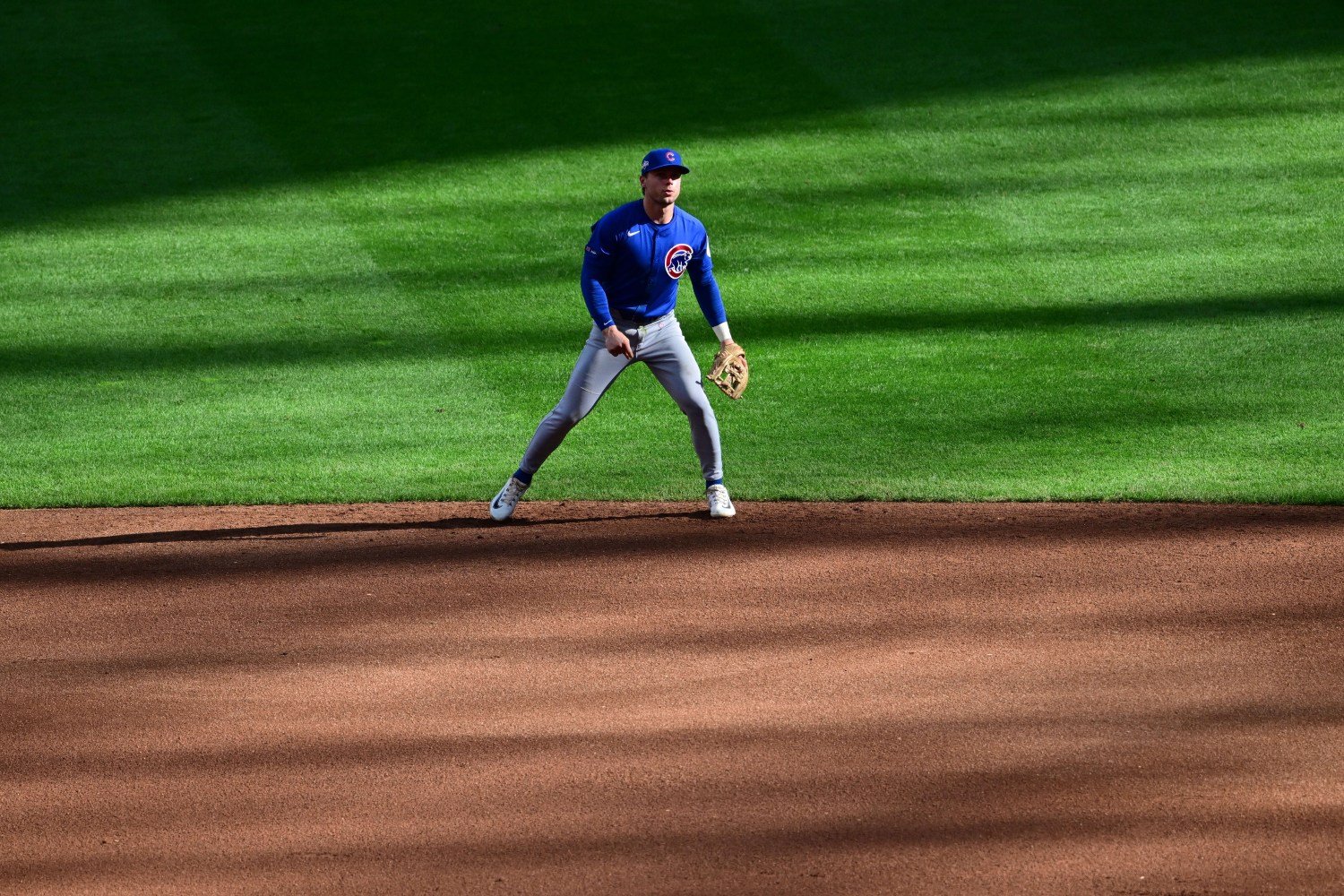 In the flow of a game, amid the thunder and bluster of a raucous crowd and a playoff series, the play looks normal. Sal Frelick hit a slow, looping grounder to the right side of the infield. Nico Hoerner charged it. If Hoerner had made the play cleanly, it would have been an easy out, and the Cubs would have been close to escaping a rough first inning. They were already down 2-1, but that's no insurmountable deficit. The chance was right there for Hoerner. You know what happened, instead. Hoerner stooped and reached as he ran, but the ball stayed down. It hit the tip of his glove, but rolled past him, allowing Frelick to reach safely. Andrew Vaughn pulled into second, and the heads-up William Contreras wheeled around third and scored well ahead of a hopeless Hoerner peg to the plate. Suddenly, it was not only 3-1, but 3-1 and counting. There was only one out, and the crowd at Uecker Field hit a new decibel level, and it would have taken something more than Matthew Boyd had to offer to get out of the inning unscathed. What do you say about such a play? Is it a lapse by Hoerner? A product of the moment, and the Brewers' famous offensive momentum? In part, of course, the answer is yes, times two. Hoerner himself took a big dose of responsibility for the loss after the game. “If you just get an out like you do most of the time in that situation,” Hoerner said (as reported by Jordan Bastian of MLB.com), “I love Matty’s chances to get out of that inning with two runs and settle in like you’ve seen him do so many times this year.” It's impossible not to muse about whether Hoerner would have made the play correctly and gotten Frelick at first base, had there not been some tension and anxiety already building up because of the Brewers' two-run answer to the Cubs' opening salvo, a Michael Busch leadoff home run. It seems plausible, at least. Maybe that goes double because Frelick runs well, which forces infielders to think about quicker ways to make plays on slowly-hit balls and often invites mistakes. The Cubs got unlucky, in the way the ball came off Frelick's bat and the situation they were in. Hoerner, however, had a chance to make a play in either of two ways. He just didn't succeed. Let's break down how freaky this little floater was. Frelick took a healthy swing on the 0-1 pitch from Matthew Boyd. He was looking for a slider, but he got a sinker. As a result, he hit a ball that: Came from a swing with a bat speed of 70 miles per hour; Left the bat at 49.5 miles per hour; Had a 14° launch angle; and Traveled 93 feet before its first feather-soft bounce, just shy of the infield dirt. That's just not a normal batted ball, by any definition. Even slackening the parameters somewhat, I found just 10 batted balls all season that roughly fit the above criteria. You might think it sounds like a typical Brewers—maybe even a quintessentially Frelick—batted ball, but it's not. On the very rare occasions when a guy hits a ball this way, it's usually a power hitter who got hilariously jammed. In only one of the 10 instances did it even result in a broken bat. Sorry, buddy. When you clip this small a piece of the ball with this small a piece of the bat, you don't even break it. Breaking the bat would mean you hit it better than you just did. Softly hit balls can be dangerous, especially coming from big swings, but ones like this don't even tend to be so. The batter rarely gets out of the box well, because they got so jammed it stops their feet a moment. Plus, these aren't going to die in the grass somewhere far short of a fielder's starting position. They tend to be weird-looking, floating liners, sometimes caught by the pitcher but often played on a dying bounce or two by an infielder and thrown across with ease. Here's what made this play different. First, Frelick pulled the ball, which is peculiar. Most of these go either back up the middle or to the batter's opposite side; they were very late to the ball. Frelick was less so, and the angle of his bat and the riding shape of Boyd's sinker produced a ball hit toward the hole between first and second. Second, with two runners on base and one out, Hoerner had been playing a step closer to second base than he normally would against a lefty batter. Here's the first frame of the TNT broadcast after it cuts from the center-field camera to the one high and behind home plate. Hoerner's first instinct, reading Frelick's swing and the trajectory of the ball, was to charge and surround it, turning his shoulders slightly toward second base as he fielded the ball to throw there and start a double play. Even as the ball comes off the turf on its first bounce and passes in front of Vaughn, that's Hoerner's thought. You can see him squaring to it, preparing that turn and sidearm fire to Swanson. Very, very soon after that, though, Hoerner knew something was wrong. The ball wasn't getting to him fast enough. It was too weakly hit for a double play, at least in the overwhelming majority of cases. Here, you can see his body (his brain had time to do only a fraction of this thinking, but your muscle memory kicks in faster and can sometimes lead you astray) trying to figure out how he'll get to the ball fast enough and under enough control to get it to Swanson with the required alacrity. Carson Kelly, however, has clocked all of this. Notice him pointing Hoerner toward first. That's where the safe play is. That brings us to the moment when, finally, ball and fielder are about to intersect. This has all been one agonizingly slow bounce, until now, the ball drifting much more dreamily than it does most of the time, just when everyone is programmed to be going extra fast. Now, Hoerner is addressing it, and he's turned his shoulders toward first, at least half-aware that that's where the play should go—but his right foot never gave up on the double play. He's changed direction slightly, but not decelerated much, and that right foot says he had at least half a thought of picking the ball, using a reverse pivot to find the missing power in the play, and throwing to Swanson anyway. And the heartbreaking thing is: he was right. That could have worked, at least to get Vaughn, and possibly to turn what would have been a game-changing double play. Look where the runners are as he gets to the ball. Frelick hadn't gotten out of the box well, either. Picking it on the run and making an unhurried throw to first was a valid option. That low dig and ferocious whirling throw to Swanson was a valid option, although a riskier one. Unfortunately, cursed with a little more time than plays like that usually give, Hoerner got caught between the possibilities. Plus, one more thing: the ball absolutely died on the dirt, in a way only a ball hit phenomenally weakly can. Hoerner had had time to account for that in some measure by then, but the first bounce off the grass fooled him. A ball that gets a healthy hop off the turf rarely then dies on the dirt; it's more like the other way around. Hoerner has to get lower, but he did try to get pretty low, considering that he was still making the play on the move. The ball just won the game of "how low can you go?", in improbable fashion. One out there makes a big difference. Two tilts the game back toward the Cubs. The actual unfolding of the play was a calamity from which the Cubs didn't recover, and probably never had a chance to. It's bad luck, but it's also the kind of pressure the Brewers apply: there are always runners on, putting more things in your head; there's always speed going down the line, rushing your decisions; and there's always a bit of a frenzy going inside Uecker Field when the home team is assembling a rally. It was all too much for the Cubs Saturday—even too much for their stellar defensive second baseman.
 -
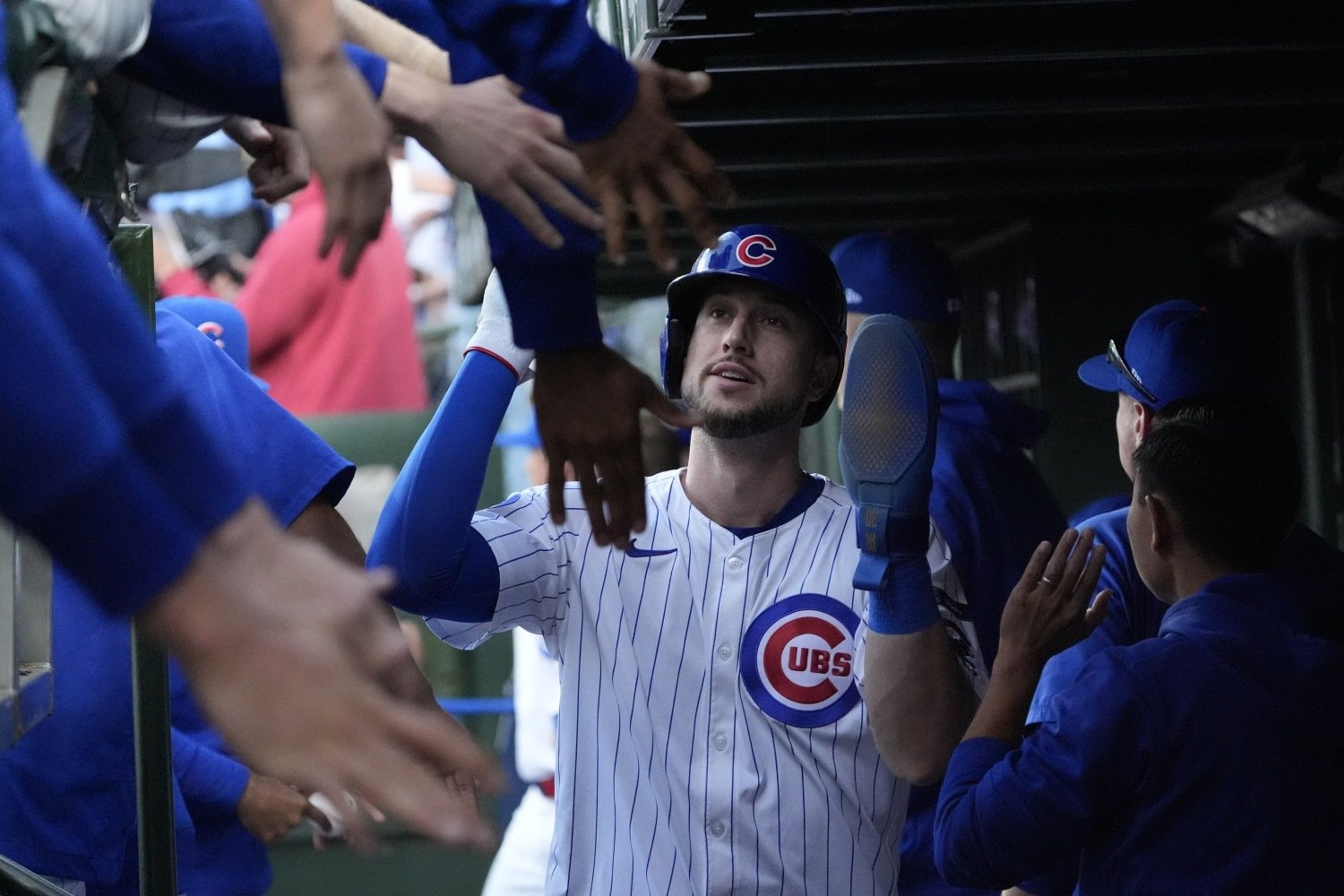 It wasn't just that Kyle Tucker went 0-3 in Game 1 of the Wild Card Series Tuesday. That much, you could forgive. Tucker only made it back from the injured list for the final three games of the regular season, after missing most of September with a calf strain. In the course of going 1-11 in that series against the Cardinals, Tucker found some solace in the fact that his timing and his mental approach still felt right. That optimism wasn't wholly unjustifiable, either. It's great to be on time at the plate, and difficult to do so coming back cold from three weeks on the shelf. He also drew a walk during the games, so he was making at least some good swing decisions. On the other hand, his swing certainly didn't look fully restored. It was fair to say that he was seeing the ball well and reacting correctly, but the movement of the barrel wasn't as controlled or fluid as it had been for much of the season—and certainly not as much so as over the last 10 days or so before his injury, when he seemed to finally shake the slump that swallowed his summer. He wasn't right, even if he claimed to feel (basically) right. That showed up in ugly fashion in Tucker's Cubs playoff debut Tuesday, when he went 0-3 with a strikeout even as the Cubs won, 3-1. He didn't make solid contact, and the under-the-hood metrics shouted out the problem: deficient bat speed and no tilt on the swing, which made his timing lousy even when he correctly identified pitches. It was a nadir; it seemed to prove what the weekend had hinted at. It was fair to worry whether Tucker would be able to make a meaningful contribution to the team's effort to push deeper into the postseason. In Game 2, though, he figured something out. Interestingly, the first sign of hope came when he struck out swinging, in the fourth. bmJaS2dfV0ZRVkV3dEdEUT09X0J3ZFNBVkFOQWdFQUFGTUFVZ0FIQlFaZkFBTlFWbEFBVmxGV1VRSlhCUUZXVkFvRA==.mp4 Yes, Dylan Cease flat-out beat Tucker there. He threw him a fastball at the top edge of the zone in a 3-2 count, at 99.7 miles per hour. Cease's fastball has big carry, too, so it appeared to rise at the end for Tucker. He swung somewhat under it. It was an unfortunate result. It was also a sign that he was in the right mindset, and had the right swing ready. You don't want Kyle Tucker swinging the way he can swing to touch that pitch. If a pitcher successfully executes that pitch, Tucker should strike out; you have to be ok with that. Sometimes, the other guy wins. If Tucker were unable to pull the trigger, or seemed so late he was handcuffed by the velocity of Cease, that would be trouble. It would also be trouble if he'd swung and hit a flyout, which was the best-case scenario for the combination of that pitch's speed, its movement, its location, and Tucker's swing. Whiffing on it, instead, was a sign that Tucker was ready to cover the whole strike zone and to hit any of Cease's likely offerings in that spot. It was a sign that he could get the hands moving quickly enough to swing competitively. And it showed some tilt in his swing, as opposed to that hideous flatness that became his habit from late June through mid-August. Tucker shot a single to center at the end of that loss to the Padres, continuing the positive trend and moving it into the realm of results. In the bottom of the second inning Thursday, he also got the barrel to a high fastball from Yu Darvish, scalding the ball to right field. V0Fack1fV0ZRVkV3dEdEUT09X1VBaFpVRlFGVkFvQUNGWUNVQUFIQUFOVEFGbFdWbFFBQ2dNQ1VnQUZBd1pkVWxGVg==.mp4 When the pitcher only throws 93 and doesn't quite hit their spot, you'd love to punish them with an extra-base hit—but one thing at a time. Darvish's pitch was still up in the zone, and Tucker still got around it nicely. The next time he stepped to the plate, he delivered a third straight single, this one to left field. V0Fack1fV0ZRVkV3dEdEUT09X0FnUlVWVk5SWGdFQUR3QUFWQUFIQVZkVUFBTlFWVlFBQmxWUkFRWUFBd0ZUVWdkUw==.mp4 Jeremiah Estrada, like Cease, will climb the ladder on you in terms of both location and velocity. Locked in on the fact that the Padres were trying to get him out with high heat, though, Tucker got good wood on them. How? Firstly, after plunging into the mid-60s on most of his swings over the weekend and even in Game 1, Tucker is swinging faster the last two games. He gained some confidence from a first look at the Padres' playoff pitching staff, and immediately unlocked more of his bat speed. Below, you can see the ugly valley of the previous few days, and the climb created by his barrel accelerating over the final two games of the San Diego series. We've discussed this before, though. Bat speed really won't tell the story, where Tucker is concerned. He's not elite in terms of sheer velocity. When he's going well, he's elite in his ability to hit the ball squarely, and to create some lift on it. To get there, he needs to catch the ball while working uphill and he needs to get around it just a bit. He hadn't been doing that, prior to Wednesday. Over the last several plate appearances he's taken, he has. He's also found the tilt in his swing that allows him to create loft without getting too early and rolling over on the ball. You might notice that the swing tilt is still down, relative to lots of recent stretches, even after its uptick in the last two days. That's not a reason to worry, though; it's just him reacting to what teams are doing to him. His swing plane is flatter than average the last two days, but that's because the Padres fed him a steady diet of upper-90s heaters at the top of the zone. You can't hit that kind of pitch with a 38° swing plane. You need the flatter version of your best swing, without losing whatever baseline tilt is an ineluctable part of that swing's identity. Tucker is striking that balance gorgeously over the last handful of times he's come to the plate, against great pitchers who had a plan to force him to catch up to them upstairs. The Padres pitching staff, as a group, is exceptionally good at hammering the top edge of the strike zone with heaters. For all the things they do well, that's not true of the Brewers. Tucker will see a wider variety of pitches during the NLDS than he did this wek, and in a wider variety of locations—including some down and out over the plate. With the swing he's honed by forcing himself not to get too flat against high fastballs in the high 90s, Tucker will be ready to punish those offerings from Milwaukee hurlers. He's healthy, now, and he's back in rhythm. Perhaps most importantly, though, he's also ironed out the kinks that remained in his swing as recently as Tuesday. That's a huge development for a Cubs team aspiring to a deep run in these playoffs; Seiya Suzuki shouldn't have to be a one-man slugging band in this round.
