


Cubs Video
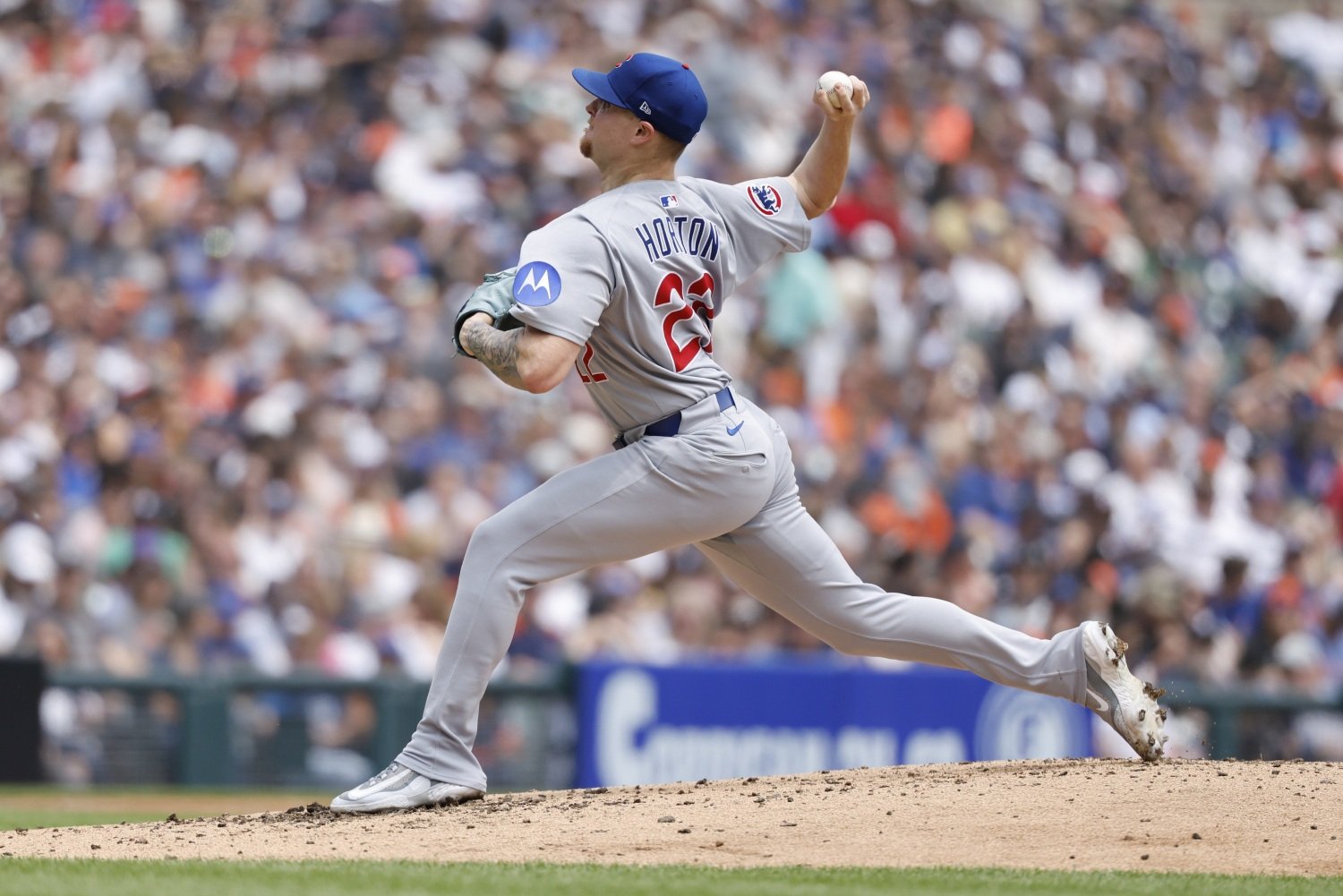
Cade Horton induced 17 whiffs from the Tigers Sunday. He struck out six in five innings of work, and on nine swings against his ever-improving changeup, Detroit batters whiffed six times. This is no longer a dismissable fluke. Even looking purely at release point, movement and velocity differential, Horton's changeup is a plus pitch. A guy who naturally supinates (turning the hand thumb-up, the way one must do to throw a good breaking ball), Horton naturally worked his way into a power cutter as his primary fastball, and he's had good facility with a sweeper and slider (or curve; call it whichever you prefer). Usually, though, it's hard for such pitchers to find a changeup that they can also locate, and which also flummoxes hitters at the game's highest level.
Instead, the changeup has looked as good as anything else in Horton's repertoire, during his short tenure with the team thus far. The six whiffs Sunday make 20 in 29 swings at the pitch since he came to the majors. He doesn't get many called strikes with it, but when hitters do swing and even manage to make contact, it's extremely weak, non-dangerous contact, anyway.
When you add this kind of changeup to the fastball and sweeper that are the guts of Horton's arsenal, you've built a full-fledged ace. That's ambitious, but also true. If Horton can harness what he's already shown in his short big-league career, and continue to polish the changeup, he's going to become the type of pitcher who can throw 180 innings, strike out that number or more, and post an ERA under 3.00 in a full season. He's emerging as the kind of controllable hurler the Cubs have only dreamed of, at least since the days of Jake Arrieta and Kyle Hendricks first finding their footing in 2014.
The catch, of course, is that he's not on that level quite yet. He gave up four runs against the Tigers Sunday, and part of the reason was that he didn't quite trust his changeup enough. Let's take a look at the three at-bats he had against Detroit star Riley Greene, the third of which made all the difference in the outing.
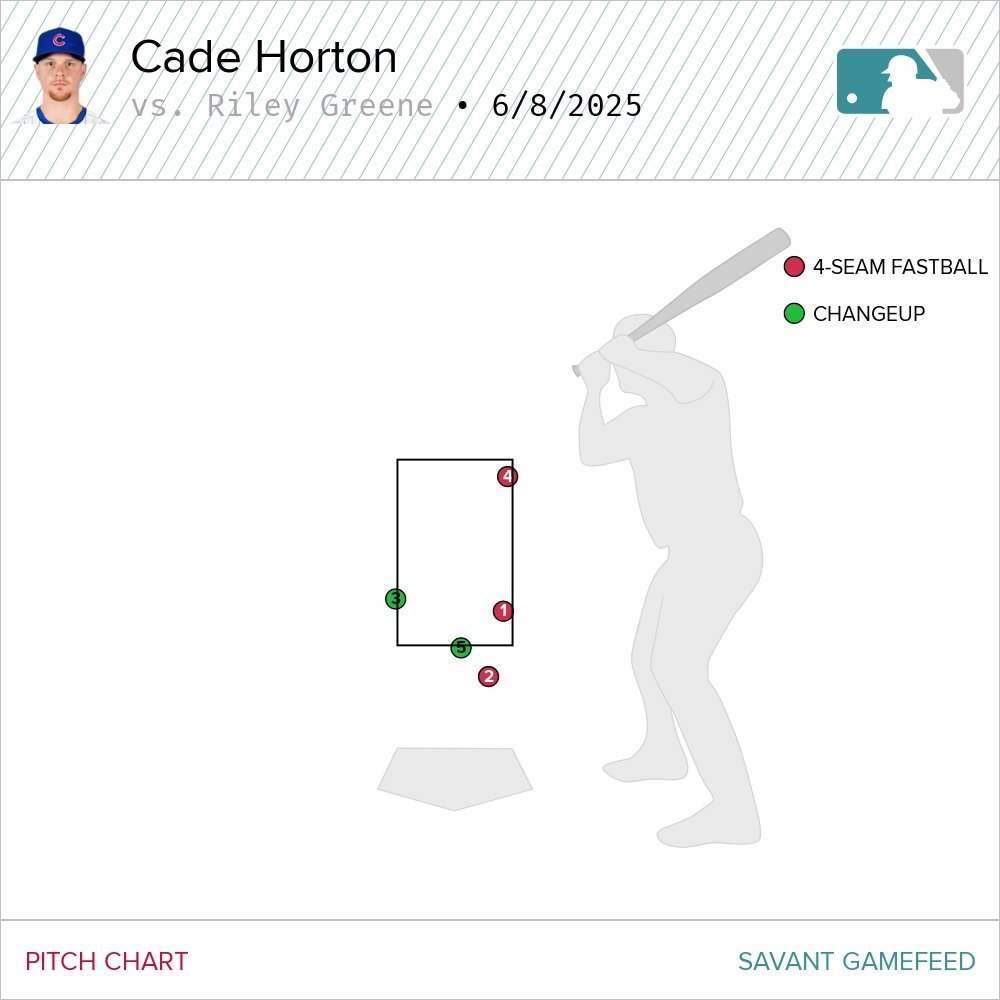
In the first, Horton went after Greene very effectively. After starting him with two of those cutting fastballs down and in to go 1-1, he went with a changeup all the way across on the outside corner, earning a foul tip to get ahead. He then crowded Greene with the kind of riding, up-and-in cutter he needs to continue to have as a staple. Greene fought it off foul, but Horton had forced him to change both lanes and eye levels. When he went back to the changeup at the bottom of the zone, it froze Greene for strike three.
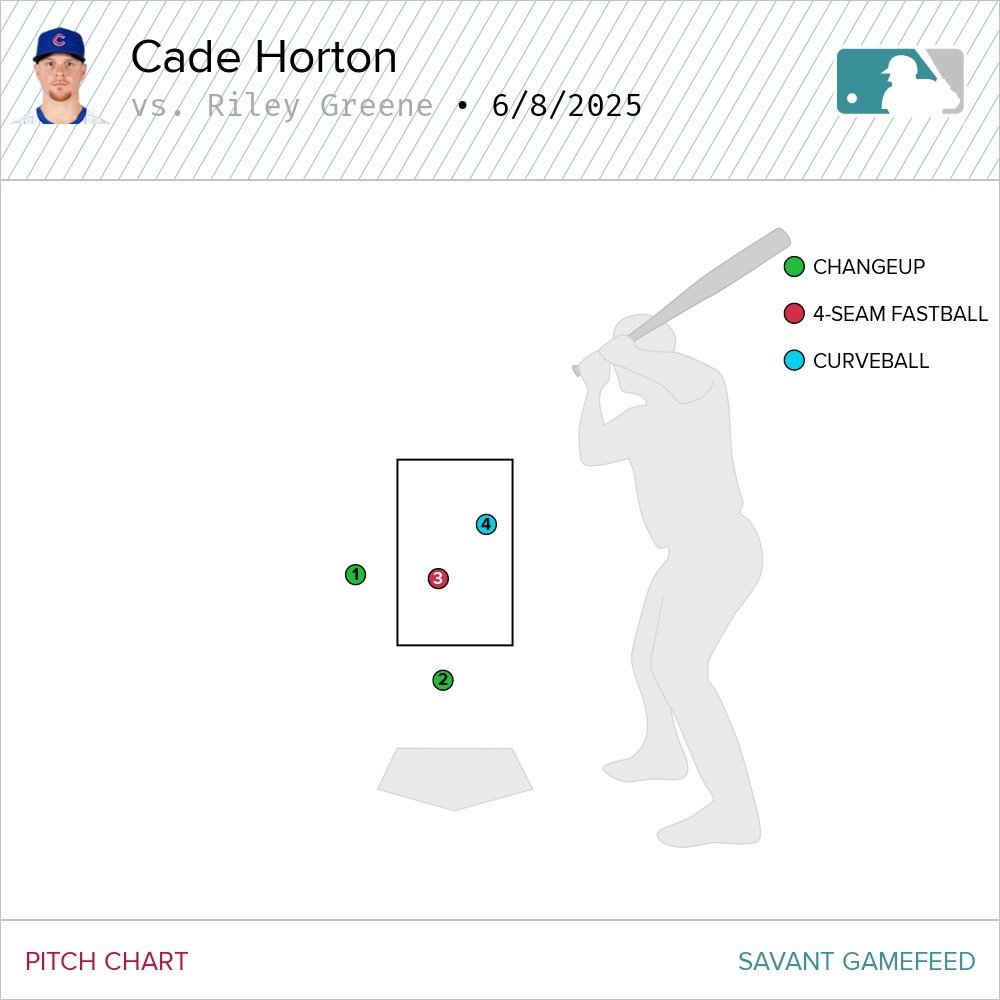
In his second look at Horton, Greene had to deal with two more changeups right away. Horton missed outside with the first, but got Greene to chase one that had superb depth and was on the plate for the second. Again, the two were at 1-1. This time, Horton followed that with a fastball away for a called strike. Thereafter, though, he tried to finish him off with the curve (or slider), the bigger and more vertical of his breaking pitches. It hung inside, and though it tied Greene up, he fileted the pitch into left field for a single. Greene won that battle, but Horton continued to look like he had good answers even for the star lefty batter.
In his third look, though, with two runners on in the fifth inning, Horton got caught in a rookie mindset amid a situation that demanded veteran savvy. Perhaps worried that he'd overexposed the changeup, he tried to bully Greene with his heater, working in the meaty part of the zone. Four pitches; four fastballs. He got ahead 0-2, but after missing away, he tried to come back inside one more time. Greene, again, didn't slam the ball, but he got an even better chunk of it this time, for a clean opposite-field single that brought home two runs.
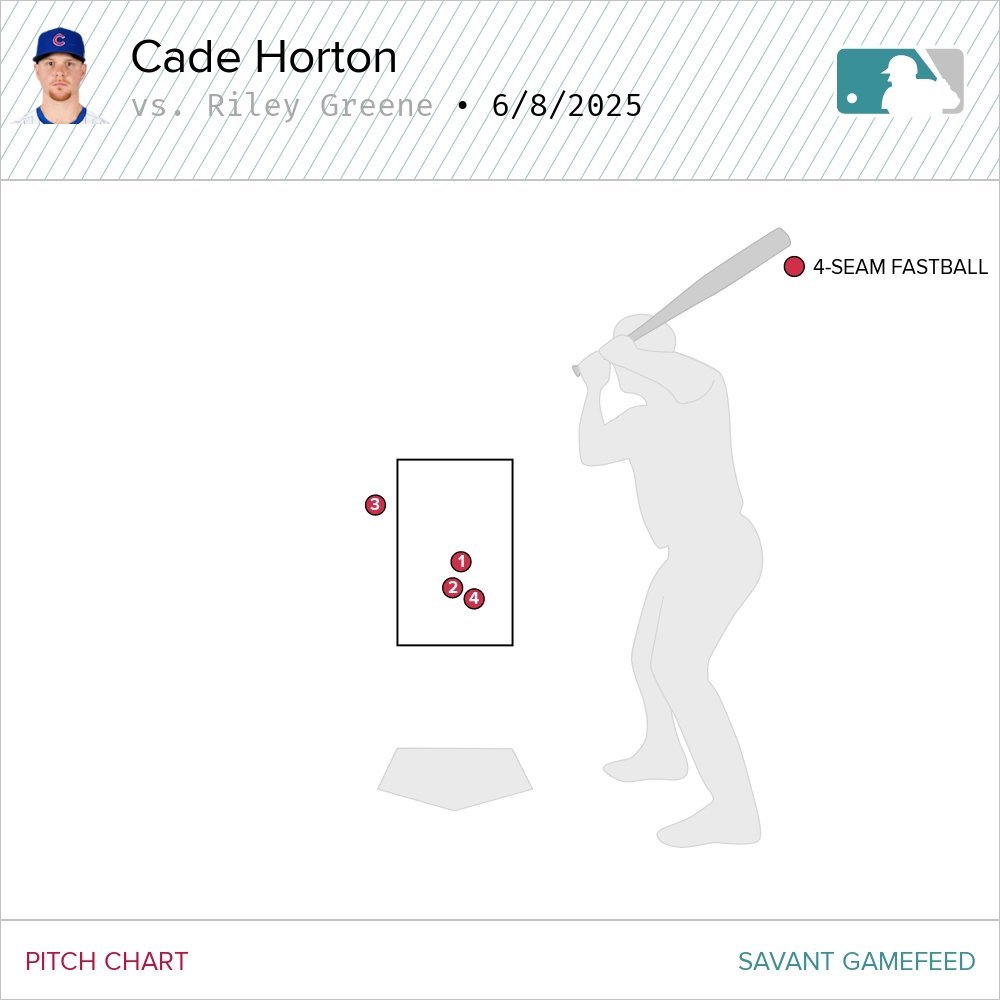
The Cubs' offense stalled out Sunday, anyway. Horton never had a chance at the win. He could have kept the affair much closer, though, had he been willing to mix things up more in that third and final confrontation with Greene. His changeup is a weapon, but if he defaults to lesser weapons in big moments because he's not yet fully dedicated to the idea that his third or fourth pitch can be a bat-missing monster, then he won't fully realize the potential the change opens up for him. Whether the change would have worked against Greene in that fifth-inning jam is almost beside the point. It was the right thing to try, at least. Horton needs to develop more faith in his sweeper and his change, to match the real efficacy of those pitches when he does throw them. If he does, he'll be the best pitcher the Cubs have by the end of this season—or, failing that, the clear co-ace, alongside Shota Imanaga. If he doesn't, he'll continue to be fun and tantalizing, but he won't be quite the frontline playoff arm the Cubs could most use.





Recommended Comments
Create an account or sign in to comment
You need to be a member in order to leave a comment
Create an account
Sign up for a new account in our community. It's easy!
Register a new accountSign in
Already have an account? Sign in here.
Sign In Now