Jump to content
North Side Baseball
  • Cubs News & Analysis

    The Cubs Are Overwhelmingly White—But Sadly, Not All That Unusually So


    Matthew Trueblood

    It's something we should all want to see the team change. Alas, the Cubs are far from alone in this regard, in a game with a rich history of cultural exchange but an uncertain future.

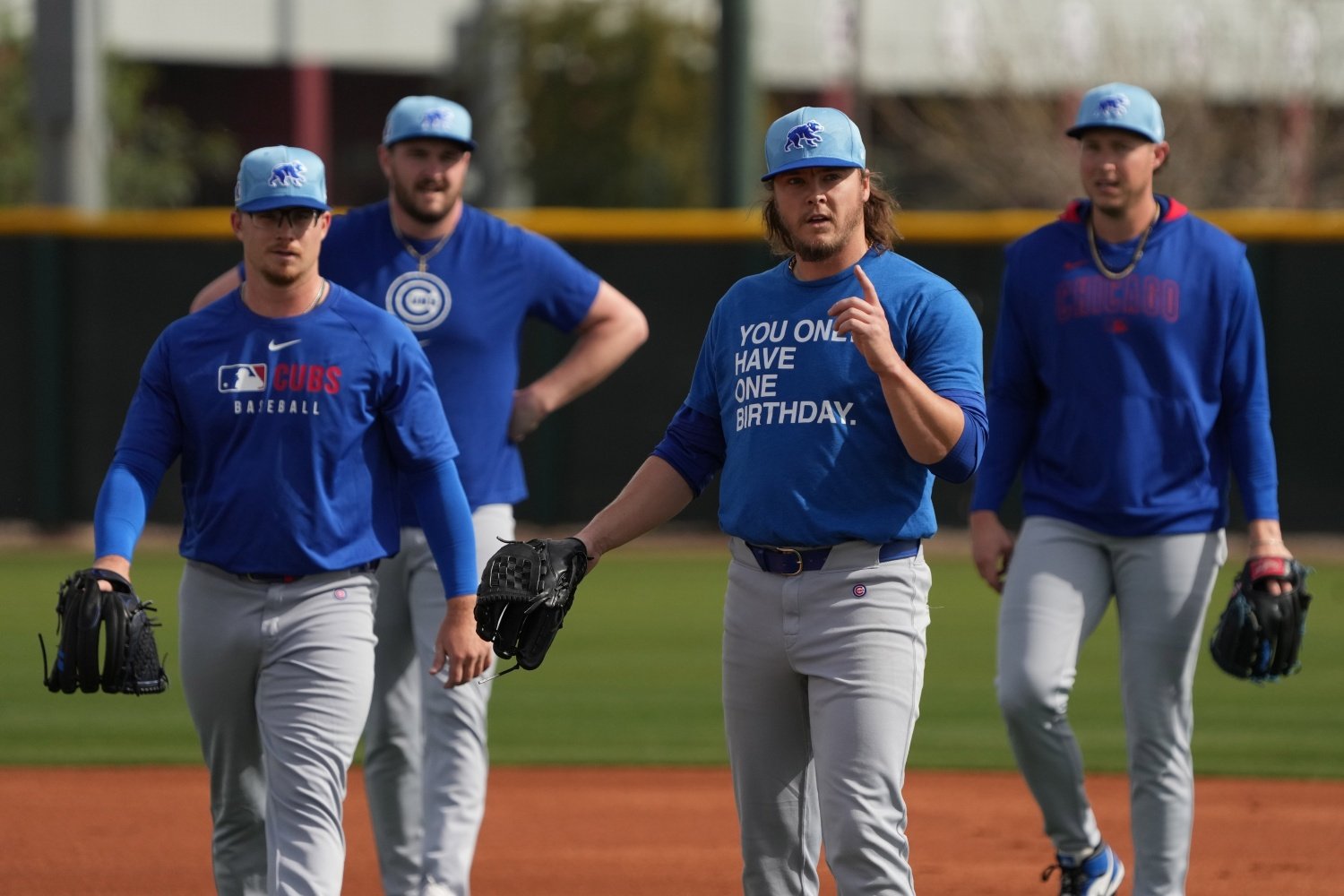
    Image courtesy of © Rick Scuteri-Imagn Images

    Cubs Video

    When the Cubs signed Justin Turner earlier this month, they designated outfielder Alexander Canario for assignment. It was a natural choice, given that Canario was already pinched by the roster crunch the team faced after earlier moves to add Jon Berti, Gage Workman, and Vidal Bruján to their mix of bench options. Still, it was notable, because the swap of Canario—a Black native of the Dominican Republic—for Turner, who is white, reduced the number of non-white players on the Cubs' 40-man roster to seven. Of the current 40, 32 are American-born, and only one person of color from the United States (reliever Tyson Miller) is in line to make the Opening Day roster.

    As Black History Month draws to a close, it's jarring to note that while the Cubs are unusually white, they are far from an outlier. Baseball draws as heavily as ever on international talent, especially as the flow of talented, accomplished pros from South Korea and Japan to the United States grows more robust, but despite the annual lip service the league pays to reaching out to people of color in the domestic pool of young talent, Black participation has not rebounded from the long slump into which it fell roughly 20 years ago.

    In 2023, just over 6% of the players on Opening Day rosters were Black. For the purposes of that survey, Black and Latino identities seemed to be held separate, when the reality is that many players from the Caribbean identify as Black, as well as Latino. Still, the league continues to fail in whatever efforts it's made to court African-American fans and find or empower African-American players, and the Cubs are among the worst in that regard.

    Like the country of which it is such a proud part, MLB has a long history of structural racism, including formal and informal segregation; clubhouse cliques, often drawn along racial lines; and layers of tension, based not only on the construct of race but on colorism, language, ethnicity, and even geographic background. Untold numbers of players, including not just long-forgotten ones but several still playing right now, have shared stories of abuse, alienation, or discrimination, by clubs, fans, opponents, teammates, and others.

    However, beginning even before Jackie Robinson and the abolition of the color line, the game has also long been a place where racial progress was won and barriers were challenged and (sometimes) torn down. Robinson's emergence with the Brooklyn Dodgers was one of the first landmark victories and galvanizing moments of the post-World War II Civil Rights movement. That some major progress made in the 50 years after Robinson's debut has since eroded, with the game growing whiter even as it leans more heavily on international talent and needs to reach more diverse a more diverse prospective fan base, is deeply worrisome.

    The Cubs are becoming the face of this problem, to the limited extent to which it's being recognized and discussed. It's not just that they have few players of color, but that of those they do have, the majority are role players or likely minor-leaguers. If Workman wins the bench spot over Bruján, they could be down to just six players of color on the 40-man, and of those, Miller, Daniel Palencia, and Miguel Amaya will all be in something less than a full-time, high-volume role. The only non-white stars on the team are Seiya Suzuki and Shota Imanaga.

    Presumably, the front office is not consciously working to build heavily white rosters, or to make their core of highly-paid stars predominantly white. Nonetheless, they have no person of color from North America set to make more than $1 million in 2025. They've traded two Black players who were already emerging as top prospects (Zyhir Hope and Cam Smith) in successive winters. Those trades brought back excellent players who can better help the Cubs in the short term, in Michael Busch and Kyle Tucker, and no one should argue that the team was wrong to make those deals just because those players are white and the centerpieces of the packages they sent out were not.

    However, Smith is one of just two players of color the team has taken in the first round since 2013. The other, Ed Howard, has fizzled in the Chicago farm system. They've struggled to develop their top international free agent signees (nearly all of whom are people of color) from promising talents into genuine contributors. While there's no evidence of systemic prejudice in the Cubs operation (at least beyond that which seems to be much too powerful in the sport as a whole), they unequivocally need to do better when it comes to acquiring and developing star-caliber players who aren't white Americans.

    Sammy Sosa is a fascinating character to see back in Cubs camp, at a moment when this trend is emerging for the franchise. His own relationship with the media was always tinged by his race and nationality, and while he's responsible for many of his own choices over the years, he left the sport feeling so exposed to the friction and frustration of racism that he underwent treatments designed to lighten his own skin tone.

    Sosa wore No. 21 during his time with the Cubs in honor of Roberto Clemente, the Black Puerto Rican hero of so many mid-century players and fans of all races. Clemente, too, felt deeply mistreated and disrespected by local and national baseball media, and by many fans, even at the peak of his great fame and widespread adulation. Racism has always been a part of baseball, even as Black players and the cultures of the sport in the Caribbean, Mexico, and the Pacific Rim have been vital to its growth and survival. The Cubs can't instantly fix this troubling trend toward whiteness, even within their own clubhouse—let alone throughout the league. Nonetheless, the team photo this spring will be a good opportunity for everyone to reflect on the need for both local and widespread change, to make the game more accessible and appealing to a broader swath of a very diverse, global fan base.

    Follow North Side Baseball For Chicago Cubs News & Analysis

    Recent Cubs Articles

    Recent Cubs Videos

    Cubs Top Prospects

    Pedro Ramirez

    Iowa Cubs - AAA, IF
    On Thursday, the 22-year-old went 4-for-6with his fifth home run and five RBI. He also stole his 6th and 7th bases. In 16 games, he's hitting .328 (1.026 OPS).

    User Feedback

    Recommended Comments

    Featured Comments

    Brad Purcell

    Posted

    I have been a die hard cubs fan for over 40 years, I look forward to seeing better articles than this one.....players should NOT be recruited due to their skin color! Whoever is the best player should be on the team regardless of what color skin they have. I think it's sickening for you to publish this article!

    • Like 2
    • Haha 1
    • Love 1
    Outshined_One

    Posted

    16 minutes ago, Brad Purcell said:

    I have been a die hard cubs fan for over 40 years, I look forward to seeing better articles than this one.....players should NOT be recruited due to their skin color! Whoever is the best player should be on the team regardless of what color skin they have. I think it's sickening for you to publish this article!

    Tell us more about your points of view on this matter, person who registered for this site 20 minutes ago.

    • Like 3
    • Disagree 1
    • Haha 1
    Matthew Trueblood

    Posted

    51 minutes ago, Brad Purcell said:

    I have been a die hard cubs fan for over 40 years, I look forward to seeing better articles than this one.....players should NOT be recruited due to their skin color! Whoever is the best player should be on the team regardless of what color skin they have. I think it's sickening for you to publish this article!

    "Presumably, the front office is not consciously working to build heavily white rosters, or to make their core of highly-paid stars predominantly white. Nonetheless, they have no person of color from North America set to make more than $1 million in 2025. They've traded two Black players who were already emerging as top prospects (Zyhir Hope and Cam Smith) in successive winters. Those trades brought back excellent players who can better help the Cubs in the short term, in Michael Busch and Kyle Tucker, and no one should argue that the team was wrong to make those deals just because those players are white and the centerpieces of the packages they sent out were not."

    It's all there for you, man. Just gotta read it all.

    JBears79

    Posted

    MLB has been trying to increase African American participation in baseball for years. The socioeconomic gap needs to be closed before any type of meaningful change will occur in that department in my opinion. Its just far easier to get scholarships and ROI in football and basketball then it is in baseball at the moment. That could certainly change here in the future with NCAA baseball programs having access to NIL money.

    Personally, I think MLB wide they do a really solid job with diversity in the sport. The best players in the game all draw from very diverse cultures and backgrounds. Obviously the majority of it comes from Latin America but I don't think there is much you can change there. Teams already invest a ton of resources into international scouting. What else can they do? Teams are always going to put the best players on the field regardless of skin color (as they should).

    I'm not sure what else the MLB can do to increase African American participation. They already promote players like Aaron Judge and Mookie Betts a ton. They should obviously keep increasing investment in youth baseball leagues but I think that isnt exclusive to African American initiatives. I dont know what the answer is.

    • Like 1
    CubfanBen

    Posted (edited)

    I don’t think this is that big of a deal actually. I think it’d be really cool to see a more diverse roster but rosters change constantly. The marlins roster last year was filled with people of color from the all over the place. The guy who just got the biggest contract in the history of sports is a black Dominican. Racism isn’t as big of a deal as it used to be. It’s about talent, opportunity and culture.

    Edited by CubfanBen
    • Like 1
    SB in SC

    Posted

    Matt I love your articles but this is an interesting angle that you took on this one.  You could have highlighted a couple young black players in the farm system that we hope to see great things from in the future. You could have looked at why the Cubs spend to their limit before having to pay the tax on Latin American international free agents every year, but those players are not making it to the MLB roster.  You could have compared the programs MLB uses to create Black participation to the programs in the NBA or the NFL to create participation.  

    • Like 1
    Stratos

    Posted (edited)

    As a fan, the skin colour or ethnic background of Cubs players doesn't matter at all to me, and I assume the Cubs FO doesn't make any player decisions based on skin color.  I hope this never changes.

    I assume the MLB wants to appeal to everyone as a business/sport, so it does suck that the longtime problem of the decreasing participation of African-American players in baseball seems to be an issue that hasn't improved much.  I have no idea the reasons for this.  I doubt this is directly the fault of the MLB, who have made efforts over the years to help this issue, its probably just the changing choices of youth, the rise of other sports the last 30 years, and maybe some broader socioeconomic factors.  But i'm just speculating.  It would have been interesting if this article explored this issue more.

    For those that care about skin color, the link in the article said 49% of the MLB.com top 100 prospects were non-white, for whatever that's worth.

    Edited by Stratos
    imb

    Posted

    OMC should come do a point-counterpoint about how the cubs don’t have ENOUGH whites

    • Haha 4
    Hot Sauce

    Posted

    The NBA resonates more with young black athletes than MLB because it is more relatable to black youth who see the league as an extension of their own cultural identity. They have successfully positioned themselves at the intersection of sports and hip hop culture. Hence why black kids want the newest pair of LeBrons and why more of them are playing NBA 2k than MLB the Show.

    As JBears mentioned, baseball programs having access to NIL money will make a difference, albeit a small one, but it is unlikely that MLB comes close to the number of black players of the 1980s ever again. The NBA, and to a lesser extent the NFL, passed them up decades ago. 

    • Like 1
    mul21

    Posted

    7 hours ago, Hot Sauce said:

    The NBA resonates more with young black athletes than MLB because it is more relatable to black youth who see the league as an extension of their own cultural identity. They have successfully positioned themselves at the intersection of sports and hip hop culture. Hence why black kids want the newest pair of LeBrons and why more of them are playing NBA 2k than MLB the Show.

    As JBears mentioned, baseball programs having access to NIL money will make a difference, albeit a small one, but it is unlikely that MLB comes close to the number of black players of the 1980s ever again. The NBA, and to a lesser extent the NFL, passed them up decades ago. 

    It has much less to do with interest than it does access.  You can go to the park (or a rec center) and play one on one with a friend and a $20 basketball that will last for 5 years whereas you need a much larger group, more equipment that costs a lot more money, a field that needs a lot more maintenance, and decent weather to get in good baseball practice.  Not to mention the fact that you almost have to be on a travel team to get exposed to decent competition in baseball and if you go to the park or the Y, there's a decent chance you'll run into a dude who is bigger, better, faster, and stronger than you to provide a better level of competition.  It's just a completely different financial realm as JBears already pointed out.

    • Like 4
    Hot Sauce

    Posted

    2 hours ago, mul21 said:

    It has much less to do with interest than it does access.  You can go to the park (or a rec center) and play one on one with a friend and a $20 basketball that will last for 5 years whereas you need a much larger group, more equipment that costs a lot more money, a field that needs a lot more maintenance, and decent weather to get in good baseball practice.  Not to mention the fact that you almost have to be on a travel team to get exposed to decent competition in baseball and if you go to the park or the Y, there's a decent chance you'll run into a dude who is bigger, better, faster, and stronger than you to provide a better level of competition.  It's just a completely different financial realm as JBears already pointed out.

    A soccer ball costs the same as a basketball and black Americans aren’t playing soccer either.

    Socioeconomic factors and accessibility certainly factor in, but you are severely downplaying how much personal identity plays a role in interest. It’s human nature for a kid to gravitate toward a sport where he/she sees themselves represented in. The easiest non-sport example of this is in the music industry where socioeconomics and accessibility don’t matter, yet you see kids drawn to a genre that they feel represented in. 
     

    Kids in the Dominican play baseball with sticks and use egg cartons as gloves. They don’t have access to travel ball leagues. They play because they see people who look like them on TV. Professional athletes have talked about being inspired to play a sport because they saw someone who looked like them on TV. The best example of this is the popularity of tennis among black females in the post-Williams era. 

    • Like 1
    CubinNY

    Posted

    Look what comes out of the woodwork. 

    It's amazing. Sponsoring leagues and building ball diamonds would cost MLB pennies on the dollar. But at least they have Jackie Robinson Day, a Hank Aaron award, and a Roberto Clemente award. 

    Jesus Christ on a popsicle stick. 

    When people talked about White privilege and systemic racism, this thread would be a good example. 

    thawv

    Posted

    I love your stuff Matt, but his is so wired to read.  Teams don't give a crap about anything but winning.  Why would skin color be brought in to this in 2025??  This write is just crazy!

    • Like 1
    • Haha 1
    cl smooth

    Posted

    There’s nothing wrong with this article. If anything, this is a MLB problem and not just a Chicago Cubs problem. It’s been this way for 20+ years. MLB can go and parade the dead corpse of Jackie Robinson around for commercials and special events but that really doesn’t change the fact that a low number of African Americans are in the major leagues.


    Didn’t the Astros only have one person of color on their major league roster at one point during the late 90s/early 2000s (gonna say it was Richard Hidalgo)? 

    There’s a reason why RBI (Reviving Baseball in Inner Cities), a non-profit organization that helped start the career of Hall of Famer CC Sabathia, along with the off-the-field work of Curtis Granderson and Jason Heyward is so important. 

    • Like 1
    Hot Sauce

    Posted

    1 hour ago, cl smooth said:

    There’s nothing wrong with this article. If anything, this is a MLB problem and not just a Chicago Cubs problem. It’s been this way for 20+ years. MLB can go and parade the dead corpse of Jackie Robinson around for commercials and special events but that really doesn’t change the fact that a low number of African Americans are in the major leagues.


    Didn’t the Astros only have one person of color on their major league roster at one point during the late 90s/early 2000s (gonna say it was Richard Hidalgo)? 

    There’s a reason why RBI (Reviving Baseball in Inner Cities), a non-profit organization that helped start the career of Hall of Famer CC Sabathia, along with the off-the-field work of Curtis Granderson and Jason Heyward is so important. 

    The article identified an issue and failed to suggest any solutions. 

    Hot Sauce

    Posted

    7 minutes ago, TomtheBombadil said:

    I wouldn’t mind trying these steps: break up the supremacist murder empire, esp western pols, oligarchs, and their familiars to the Gulag, establish a moneyless, stateless, and nonhierarchical society, and then pretend to be shocked at how many of these issues are manufactured to prop up lies and delusions 

    Somebody come get their dad. 


    Create an account or sign in to comment

    You need to be a member in order to leave a comment

    Create an account

    Sign up for a new account in our community. It's easy!

    Register a new account

    Sign in

    Already have an account? Sign in here.

    Sign In Now

×
×
  • Create New...
