


RandallPnkFloyd
-
Posts
533 -
Joined
-
Last visited
Content Type
Profiles
Joomla Posts 1
Chicago Cubs Videos
Chicago Cubs Free Agent & Trade Rumors, Notes, & Tidbits
2026 Chicago Cubs Top Prospects Ranking
News
2023 Chicago Cubs Draft Picks
Guides & Resources
2024 Chicago Cubs Draft Picks
The Chicago Cubs Players Project
2025 Chicago Cubs Draft Pick Tracker
2026 Chicago Cubs Draft Tracker: Picks & Bonuses
Blogs
Events
Forums
Store
Gallery
Everything posted by RandallPnkFloyd
-
The big bat the Cubs brought in this winter happens to be a 26-year-old who's not yet established in the big leagues. Can he still deliver like a bigger-name, bigger-money slugger? Image courtesy of © Joe Camporeale-USA TODAY Sports The contrasting reactions to the 2023-24 Chicago Cubs offseason are not mutually exclusive. While it’s true that the organization could have sought more impactful means by which to improve their club, it would also be accurate to note that the team is at least marginally better via those that were made. There’s some nuance to be explored, which will be compounded with subsequent moves made pre-trade deadline and beyond. Whichever way one leans, though, it's all about to go from exhibition to exhilaration--from nattering to mattering. We now have a firm idea as to the roster construction for the outset of 2024. Whatever decisions remain in play regarding lineup construction or defensive configuration, we can be sure that Michael Busch will be a centerpiece in all of it. Critics of the Cubs’ offseason will almost certainly point to the lack of offensive additions at clear areas of need. Above all, that included first and third base, both of which featured wavering performance and a lack of future clarity. Cherry-picking a few numbers, the team ranked 17th in ISO (.174) and 27th in on-base percentage (.299) at first base last year, while hanging 13th in ISO (.166) and 11th in OBP (.323) in the opposite corner, with the latter spot only walking 8.1 percent of the time (ranked 18th). They were also a middle-tier operation on both sides of the infield from a defensive standpoint. What’s notable about those spots, above all, is that they’re the two without any long-term certainty. Basically every other position is locked in for at least the next two years, or has a prospect at the upper levels ready to step in. As such, it was extremely logical to see names like Matt Chapman or Pete Alonso floated in connection with the team. The absence of a more impactful addition – given the lack of true standouts on the offensive side – left us ultimately disappointed that a marquee addition didn’t occur at either of what represented the team’s only legitimate openings for ’24. Enter Michael Busch. It’s not as if the Cubs didn’t do anything to address the corners. I’m excited to watch Christopher Morel at third base. And as far as Busch is concerned, when the team acquired him from the Los Angeles Dodgers, my immediate reaction was that he’d slot in at that spot. That was quickly dispelled, and we can fully anticipate him manning first base, instead. While the team has indicated they could “protect” him against lefties early on – something that was further solidified with the addition of Garrett Cooper – Busch will get ample opportunities to nab a long-term role for himself out of that position. With that, however, a pair of questions are left lingering: How much can the Cubs rely on a breakout from Michael Busch? and How much do they need a breakout from Michael Busch? As far as the former is concerned, it’s impossible to know when, or if, a prospect will realize their potential. In Busch’s case, though, things look good. He spent time in Double-A in both 2021 and 2022. He was at Triple-A in 2022 and 2023. Over each of those sets of years, he showed significant growth in adjusting to the level. With the Dodgers’ Tulsa affiliate, Busch’s 2021 slash was .267/.386/.484 across 495 plate appearances. He struck out 26.1 percent of the time and walked at a 14.1-percent clip. His ISO sat at .218. With the exception of the strikeout rate, there’s nothing there to be upset about. But he built on that in 2022, with an obscene .306/.445/.667 line in 137 PAs before being called up to the next level. The punchout rate remained about the same, but he bumped the walks up to 17.1 percent and the ISO to a hilarious .361. Smaller sample size, of course, but he demonstrated marked improvement almost across the board before heading up to Oklahoma City (‘up’ in level; I am uneducated as to the actual geography of the state of Oklahoma). [Ed. note: He went down and left; Oklahoma City is about 105 miles southwest of Tulsa. I was curious. You were curious. Yes, you were. You were curious. Admit it.] The trends in Triple-A were much the same, if not slightly more encouraging. In over 500 PAs, Busch secured a .266/.343/.480 line, a .214 ISO, 26.0 K%, and 9.9 BB%. He followed that up with .323/.431/.618, a .295 ISO, 18.8 K%, and 13.9 BB% in 469 trips to the plate in 2023. So while the sample size remained large, he showed an ability to not only generate more walks, just as he had in Double-A, but limit the punchouts, too. The bat, in multiple respects, has always been Busch’s primary tool, but he demonstrated a clear penchant for adjustments at each of the two levels. One imagines that trend leaves him set up for the coveted breakout, especially with the runway he’ll get with the Cubs (one which he was not afforded in LA). Which brings us to the latter query. A breakout from Michael Busch isn’t at all an unrealistic scenario, but how much do they need that breakout to occur to find success within the larger context of the National League? The Cubs didn’t have an issue manufacturing runs last year. Their 819 runs were third-most in the NL. They walked a fair bit (ranked fifth), didn’t strike out a ton (ninth-best K%), and were aggressive on the bases (fourth in steals). Where they came up short against their Senior Circuit counterparts was in the power game. The Cubs’ home run total (196) ranked eighth in the NL, their ISO was seventh (.167), and they were ahead of only Washington in Hard Hit% (30.7). While there may be some room for growth out of the other regulars (perhaps an uptick in power from someone like Cody Bellinger), the ISO side of things is fairly well-established for this group. There just isn’t a lot of true impact in the bats. With that offensive output, however, the Cubs fell a game out of a playoff spot. So it’s not as if they scratched every last bit out of the barrel and still fell short. A couple of bounces throughout the year, and they’re playing into October. At the same time, seven of the top 10 squads in ISO were playoff teams. Busch’s ability to get the ball into the gaps and over the outfield walls is going to be essential for this team. Power plays, and Busch has it. Given the lack of other genuinely impactful transactions on that side of the ball, his ability to stick and provide impact reads as imperative as this point in the calendar. The good news is that Busch does have the runway. He also has protection. The Cubs could field Cooper or Patrick Wisdom against certain lefties, to ensure Busch’s development at the top level stays on track. But their presence likely won’t inhibit his overall opportunity in the way that it would have under certain previous managers. Ultimately, as the season begins, the offensive output of Busch is something on which I’ll maintain a keen eye, both for his breakout potential and the Cubs’ 2024 fortunes at large. View full article
-
The Necessity and Tantalizing Possibility of a Michael Busch Breakout
RandallPnkFloyd posted an article in Cubs
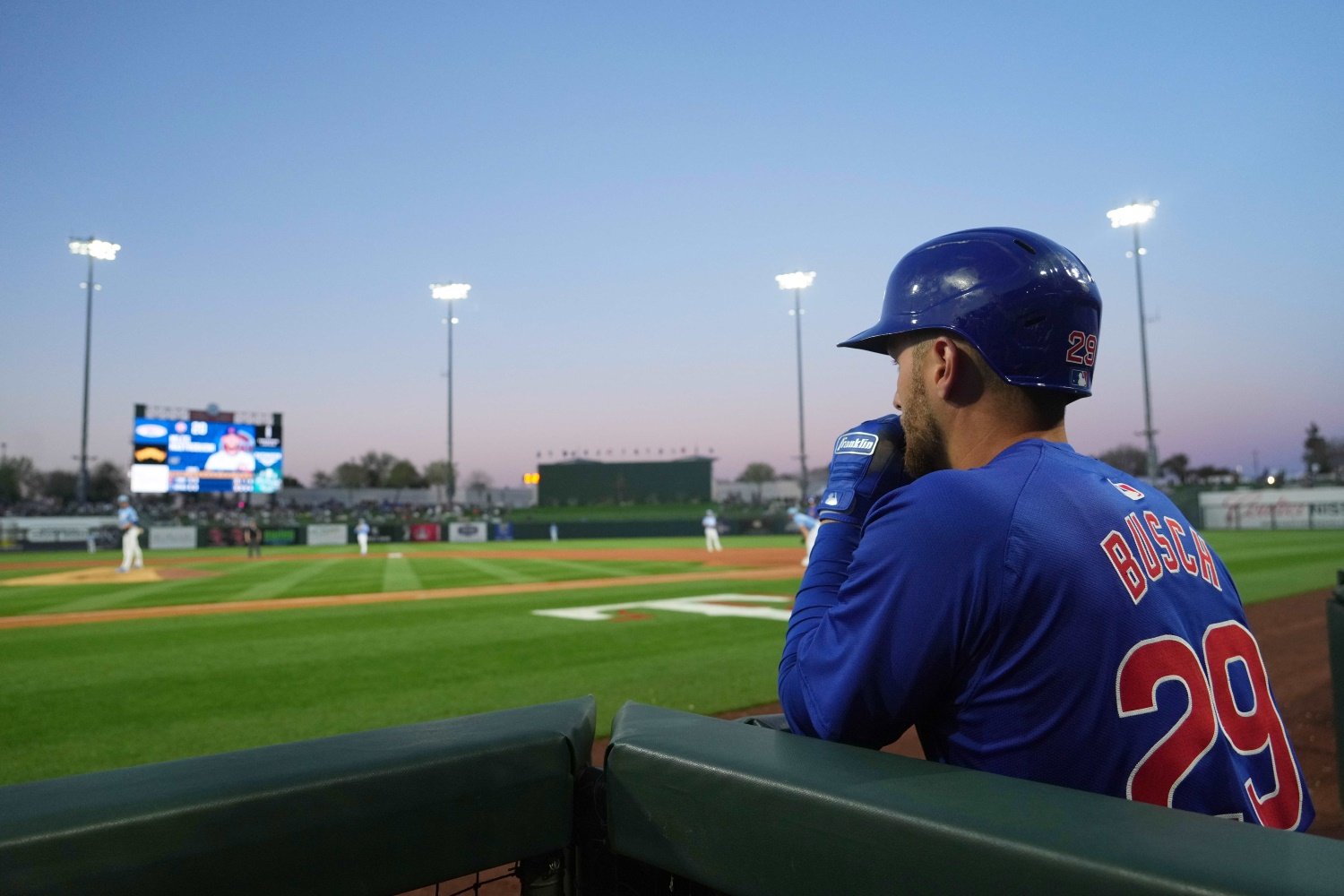 The contrasting reactions to the 2023-24 Chicago Cubs offseason are not mutually exclusive. While it’s true that the organization could have sought more impactful means by which to improve their club, it would also be accurate to note that the team is at least marginally better via those that were made. There’s some nuance to be explored, which will be compounded with subsequent moves made pre-trade deadline and beyond. Whichever way one leans, though, it's all about to go from exhibition to exhilaration--from nattering to mattering. We now have a firm idea as to the roster construction for the outset of 2024. Whatever decisions remain in play regarding lineup construction or defensive configuration, we can be sure that Michael Busch will be a centerpiece in all of it. Critics of the Cubs’ offseason will almost certainly point to the lack of offensive additions at clear areas of need. Above all, that included first and third base, both of which featured wavering performance and a lack of future clarity. Cherry-picking a few numbers, the team ranked 17th in ISO (.174) and 27th in on-base percentage (.299) at first base last year, while hanging 13th in ISO (.166) and 11th in OBP (.323) in the opposite corner, with the latter spot only walking 8.1 percent of the time (ranked 18th). They were also a middle-tier operation on both sides of the infield from a defensive standpoint. What’s notable about those spots, above all, is that they’re the two without any long-term certainty. Basically every other position is locked in for at least the next two years, or has a prospect at the upper levels ready to step in. As such, it was extremely logical to see names like Matt Chapman or Pete Alonso floated in connection with the team. The absence of a more impactful addition – given the lack of true standouts on the offensive side – left us ultimately disappointed that a marquee addition didn’t occur at either of what represented the team’s only legitimate openings for ’24. Enter Michael Busch. It’s not as if the Cubs didn’t do anything to address the corners. I’m excited to watch Christopher Morel at third base. And as far as Busch is concerned, when the team acquired him from the Los Angeles Dodgers, my immediate reaction was that he’d slot in at that spot. That was quickly dispelled, and we can fully anticipate him manning first base, instead. While the team has indicated they could “protect” him against lefties early on – something that was further solidified with the addition of Garrett Cooper – Busch will get ample opportunities to nab a long-term role for himself out of that position. With that, however, a pair of questions are left lingering: How much can the Cubs rely on a breakout from Michael Busch? and How much do they need a breakout from Michael Busch? As far as the former is concerned, it’s impossible to know when, or if, a prospect will realize their potential. In Busch’s case, though, things look good. He spent time in Double-A in both 2021 and 2022. He was at Triple-A in 2022 and 2023. Over each of those sets of years, he showed significant growth in adjusting to the level. With the Dodgers’ Tulsa affiliate, Busch’s 2021 slash was .267/.386/.484 across 495 plate appearances. He struck out 26.1 percent of the time and walked at a 14.1-percent clip. His ISO sat at .218. With the exception of the strikeout rate, there’s nothing there to be upset about. But he built on that in 2022, with an obscene .306/.445/.667 line in 137 PAs before being called up to the next level. The punchout rate remained about the same, but he bumped the walks up to 17.1 percent and the ISO to a hilarious .361. Smaller sample size, of course, but he demonstrated marked improvement almost across the board before heading up to Oklahoma City (‘up’ in level; I am uneducated as to the actual geography of the state of Oklahoma). [Ed. note: He went down and left; Oklahoma City is about 105 miles southwest of Tulsa. I was curious. You were curious. Yes, you were. You were curious. Admit it.] The trends in Triple-A were much the same, if not slightly more encouraging. In over 500 PAs, Busch secured a .266/.343/.480 line, a .214 ISO, 26.0 K%, and 9.9 BB%. He followed that up with .323/.431/.618, a .295 ISO, 18.8 K%, and 13.9 BB% in 469 trips to the plate in 2023. So while the sample size remained large, he showed an ability to not only generate more walks, just as he had in Double-A, but limit the punchouts, too. The bat, in multiple respects, has always been Busch’s primary tool, but he demonstrated a clear penchant for adjustments at each of the two levels. One imagines that trend leaves him set up for the coveted breakout, especially with the runway he’ll get with the Cubs (one which he was not afforded in LA). Which brings us to the latter query. A breakout from Michael Busch isn’t at all an unrealistic scenario, but how much do they need that breakout to occur to find success within the larger context of the National League? The Cubs didn’t have an issue manufacturing runs last year. Their 819 runs were third-most in the NL. They walked a fair bit (ranked fifth), didn’t strike out a ton (ninth-best K%), and were aggressive on the bases (fourth in steals). Where they came up short against their Senior Circuit counterparts was in the power game. The Cubs’ home run total (196) ranked eighth in the NL, their ISO was seventh (.167), and they were ahead of only Washington in Hard Hit% (30.7). While there may be some room for growth out of the other regulars (perhaps an uptick in power from someone like Cody Bellinger), the ISO side of things is fairly well-established for this group. There just isn’t a lot of true impact in the bats. With that offensive output, however, the Cubs fell a game out of a playoff spot. So it’s not as if they scratched every last bit out of the barrel and still fell short. A couple of bounces throughout the year, and they’re playing into October. At the same time, seven of the top 10 squads in ISO were playoff teams. Busch’s ability to get the ball into the gaps and over the outfield walls is going to be essential for this team. Power plays, and Busch has it. Given the lack of other genuinely impactful transactions on that side of the ball, his ability to stick and provide impact reads as imperative as this point in the calendar. The good news is that Busch does have the runway. He also has protection. The Cubs could field Cooper or Patrick Wisdom against certain lefties, to ensure Busch’s development at the top level stays on track. But their presence likely won’t inhibit his overall opportunity in the way that it would have under certain previous managers. Ultimately, as the season begins, the offensive output of Busch is something on which I’ll maintain a keen eye, both for his breakout potential and the Cubs’ 2024 fortunes at large.
 -
As we preview the coming season from a Cubs-colored lens, let's dig into the NL West. It's the home of the sport's top juggernaut, but there are also some legitimate secondary contenders who will be thorns in the Cubs' side this summer. Image courtesy of © Kim Hong-Ji/Reuters via USA TODAY Sports The 2024 iteration of the National League West figures to be less intriguing than past years'. The 2022 and 2023 seasons saw the San Diego Padres take massive swings to dethrone the Los Angeles Dodgers. Those ultimately failed, and the Padres took the all-too-familiar route of “scaling back" their payroll. The 2023 season did feature the arrival of the young Arizona Diamondbacks, but it remains to be seen just how competitive they can be in the larger context of their division. Ultimately, 2024 figures to be exactly what we’d expect. The Dodgers signed and acquired just about every superstar available. They’re the reigning champions, and they will be for the foreseeable future. The Diamondbacks are a playoff threat, sure. But they remain an around-the-margins type of squad. They can beat you in a short series, but they’re not scaring anyone in the 162-game regular season slate. Beyond those two, you’ve got a pair of middling teams in San Diego and San Francisco, as well as whatever is happening in Colorado. Big-picture, there are a wealth of fun players within the division. Some of them even play for teams that aren’t the Dodgers. But when it comes down to it, you’re probably not getting genuine title contention outside of Los Angeles. Despite the pessimistic outlook, here are some things to bear in mind for the NL West in 2024. Los Angeles Dodgers Projected Record: 93-69 (FanGraphs); 101-61 (Baseball Prospectus) Offseason Moves: Notable Additions: Shohei Ohtani, Tyler Glasnow, Teoscar Hernández, Yoshinobu Yamamoto, James Paxton Notable Subtractions: J.D. Martinez, Julio Urías, Lance Lynn Scouting Report Do we need to? At this point, you know the roster and you know the narratives, the latter of which ranged from “They’re the only team trying to win a title this side of Atlanta,” to “The Dodgers are bad for baseball!” Their offense features Shohei Ohtani, Freddie Freeman, and Mookie Betts. Their pitching staff will roll out Yoshinobu Yamamoto, Tyler Glasnow, and Walker Buehler. They’re going to score a ton of runs. They’re not going to allow very many. Anything less than 100 wins probably makes it a disappointing regular season. Big Question: How will Mookie Betts, Starting Shortstop play out? It’s a hilarious offensive setup. The pitching upside is in the stratosphere. It’s probably only on the defense where we see legitimate questions. Mookie Betts is now the starting shortstop. His handling of the spot merits some concern. Max Muncy was also one of the worst fielding third basemen in baseball. Last year, the Dodgers were able to compensate for some of Muncy’s shortcomings, because Miguel Rojas was adept at moving to his right. Betts hasn't yet demonstrated the ability to make that difficult play consistently, so you have to wonder what that side of their infield will look like from a performance standpoint. Arizona Diamondbacks Projected Record: 83-79 (FanGraphs); 85-77 (Baseball Prospectus) Offseason Moves: Notable Additions: Joc Pederson, Eugenio Suárez, Randal Grichuk, Eduardo Rodríguez Notable Subtractions: Evan Longoria, Tommy Pham Scouting Report The Snakes were a middle-tier offensive operation last year. They didn’t strike out, but nor did they get on base at an elite clip or showcase much power. Their pitching was equally competent, but shy of dominant. They were active this winter, in a scattershot kind of way, in pursuit of a more legitimate playoff posture for 2024. Rodríguez gives them stability in the rotation, while each of Suárez and Pederson gives them some thump at the plate. They also re-signed Lourdes Gurriel, Jr. Speed and defense remain their trademarks. Their 166 steals trailed only Cincinnati for the highest mark in the league last year. Their 31 Outs Above Average ranked second in the bigs, and their 46 Defensive Runs Saved ranked fourth. Their offseason shuffling makes them better, but they’re still built to succeed through the chaos on the bases and the quality of their gloves, and bringing in Suárez to play third could actually weaken their team defense. Big Question: To what extent can the gloves cover for the bats? A rather shocking World Series run made the Diamondbacks the buzzy contenders for LA's title, and they have a right to feel that way even after the late-winter additions the Padres and Giants each made. They probably still won’t be able to keep up with the Hollywood stars over 162, but it'll be interesting to watch the difference in the defense. Arizona was an elite defensive squad last year. The Dodgers’ glovework could be what ultimately leads to their demise (if anything does). How much that bridges the gap between the two, though, remains a question. San Francisco Giants Projected Record: 81-81 (FanGraphs); 83-79 (Baseball Prospectus) Offseason Moves: Notable Additions: Matt Chapman, Jung Hoo Lee, Jorge Soler, Jordan Hicks, Blake Snell Notable Subtractions: Joc Pederson, Brandon Crawford, Mitch Haniger, Alex Wood, Anthony DeSclafani Scouting Report The Giants’ pitching ranked 11th in the league in ERA (3.91) and fourth in FIP (3.98). They featured the league’s highest ground-ball rate by a fairly wide margin (48.7%) and a defensive infrastructure competent enough to support it. Jordan Hicks should add more punch to the former (though it remains to be seen how he’ll succeed in a starting capacity; we've seen him struggle in previous attempts to claim that role), and Matt Chapman will further solidify their defense. Of course, they were also 24th in runs scored (674), 23rd in ISO (.149), and struck out at the league’s sixth-highest rate (24.5 percent). Any hope for contention from this club is probably going to rely heavily on that side of the ball. Chapman and Soler should help in terms of power production, at least (especially as right-handed hitters). Lee gives them a dynamic table-setter, as well. Big Question: Will the offensive additions help, given their home ballpark? San Francisco’s 30-homer drought isn’t a secret at this point. The last Giant to hit that many in one season was Barry Bonds, in 2004. The last righty to do it was Jeff Kent, in 2002. Soler’s done it twice in his career. Chapman’s done it once, but has two seasons of 27. Oracle Park has one of the lowest three-year park factors for home runs in the league, depressing them by 16 percent, but Soler and Chapman have the kind of prodigious power to test its confinement. San Diego Padres Projected Record: 81-81 (FanGraphs); 80-82 (Baseball Prospectus) Offseason Moves: Notable Additions: Yuki Matsui, Woo-Suk Go, Michael King, Jhony Brito, Randy Vásquez, Enyel De Los Santos, Dylan Cease Notable Subtractions: Juan Soto, Blake Snell, Michael Wacha, Seth Lugo, Josh Hader Scouting Report The 2023 season for the Padres made very little sense. They featured Cy Young winner Blake Snell in their rotation. Their staff, as a whole, was tied for the best ERA in the National League (3.73). They scored 752 runs, which left them sixth in the NL and fed into a +104 run differential. Yet, they finished 82-80, needing a late run to even scratch above .500. The two phases of the game were just never on the same page. When the pitching held up, the offense couldn’t score. When the offense came through, the pitching faltered. They still boast Manny Machado, Fernando Tatis Jr., and Xander Bogaerts in the lineup. Their No. 2 prospect, Jackson Merrill, had an outstanding spring and made the roster as the starting center fielder. They just added Dylan Cease to a rotation that has plenty of upside following the trade of Juan Soto. But it remains to be seen whether they can find the balance that eluded them all year in 2023. Big Question: Can the starting staff support the bullpen? San Diego lost Snell, Michael Wacha, and Seth Lugo to free agency over the winter. Snell led the starting group in innings last year, with Lugo second and Wacha fourth. That’s a lot of innings for which to compensate. Cease averaged a shade over five innings per start last year. Michael King is converting to a sustained starting role for the first time, and none of Vásquez, Brito, or Matt Waldon were full-time starters last year. It’s an interesting group with massive upside, and the Friars do have a very deep bullpen, too. Many of their relief pieces are funky or untested, though, which will make it important that the starters chew up some innings and keep pressure off them. Colorado Rockies Projected Record: 59-103 (FanGraphs); 57-105 (Baseball Prospectus) Offseason Moves: Notable Additions: Dakota Hudson, Cal Quantrill Notable Subtractions: Brent Suter Scouting Report The Rockies had the worst pitching staff in baseball by ERA (5.68) last year. They were 18th in runs scored. They’re projected to be the worst team in the NL, according to multiple outlets. There just isn’t a lot of hope here. Nolan Jones is good, probably. Brenton Doyle is a fun defender in center. Kris Bryant could maybe be healthy as a full-time first baseman. But what are we doing here? Big Question: Will they ever be even a little bit interesting? I am simply begging the Rockies to give me a reason to remember that they exist. In addition to the presumptive division champions, there are three viable Wild Card hopefuls here. While the teams of the West need not be the Cubs' primary concern this season, they're relevant to them, because the Padres, Giants, and Diamondbacks have left the path to a non-NL Central championship playoff berth feeling pretty narrow. View full article
-
2024 NL West Preview: The Dodgers Aren't the Cubs' Problem, Yet
RandallPnkFloyd posted an article in Cubs
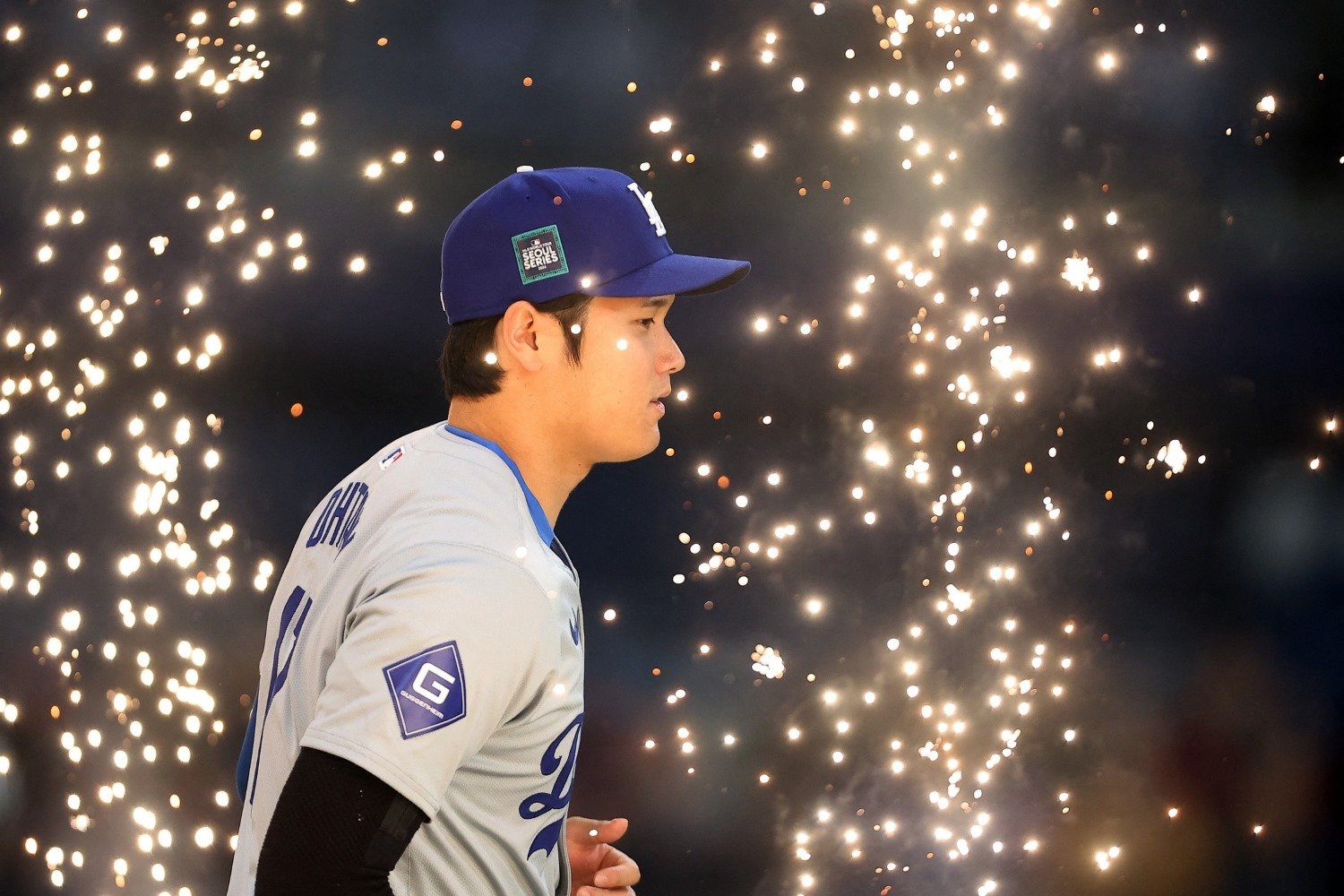 The 2024 iteration of the National League West figures to be less intriguing than past years'. The 2022 and 2023 seasons saw the San Diego Padres take massive swings to dethrone the Los Angeles Dodgers. Those ultimately failed, and the Padres took the all-too-familiar route of “scaling back" their payroll. The 2023 season did feature the arrival of the young Arizona Diamondbacks, but it remains to be seen just how competitive they can be in the larger context of their division. Ultimately, 2024 figures to be exactly what we’d expect. The Dodgers signed and acquired just about every superstar available. They’re the reigning champions, and they will be for the foreseeable future. The Diamondbacks are a playoff threat, sure. But they remain an around-the-margins type of squad. They can beat you in a short series, but they’re not scaring anyone in the 162-game regular season slate. Beyond those two, you’ve got a pair of middling teams in San Diego and San Francisco, as well as whatever is happening in Colorado. Big-picture, there are a wealth of fun players within the division. Some of them even play for teams that aren’t the Dodgers. But when it comes down to it, you’re probably not getting genuine title contention outside of Los Angeles. Despite the pessimistic outlook, here are some things to bear in mind for the NL West in 2024. Los Angeles Dodgers Projected Record: 93-69 (FanGraphs); 101-61 (Baseball Prospectus) Offseason Moves: Notable Additions: Shohei Ohtani, Tyler Glasnow, Teoscar Hernández, Yoshinobu Yamamoto, James Paxton Notable Subtractions: J.D. Martinez, Julio Urías, Lance Lynn Scouting Report Do we need to? At this point, you know the roster and you know the narratives, the latter of which ranged from “They’re the only team trying to win a title this side of Atlanta,” to “The Dodgers are bad for baseball!” Their offense features Shohei Ohtani, Freddie Freeman, and Mookie Betts. Their pitching staff will roll out Yoshinobu Yamamoto, Tyler Glasnow, and Walker Buehler. They’re going to score a ton of runs. They’re not going to allow very many. Anything less than 100 wins probably makes it a disappointing regular season. Big Question: How will Mookie Betts, Starting Shortstop play out? It’s a hilarious offensive setup. The pitching upside is in the stratosphere. It’s probably only on the defense where we see legitimate questions. Mookie Betts is now the starting shortstop. His handling of the spot merits some concern. Max Muncy was also one of the worst fielding third basemen in baseball. Last year, the Dodgers were able to compensate for some of Muncy’s shortcomings, because Miguel Rojas was adept at moving to his right. Betts hasn't yet demonstrated the ability to make that difficult play consistently, so you have to wonder what that side of their infield will look like from a performance standpoint. Arizona Diamondbacks Projected Record: 83-79 (FanGraphs); 85-77 (Baseball Prospectus) Offseason Moves: Notable Additions: Joc Pederson, Eugenio Suárez, Randal Grichuk, Eduardo Rodríguez Notable Subtractions: Evan Longoria, Tommy Pham Scouting Report The Snakes were a middle-tier offensive operation last year. They didn’t strike out, but nor did they get on base at an elite clip or showcase much power. Their pitching was equally competent, but shy of dominant. They were active this winter, in a scattershot kind of way, in pursuit of a more legitimate playoff posture for 2024. Rodríguez gives them stability in the rotation, while each of Suárez and Pederson gives them some thump at the plate. They also re-signed Lourdes Gurriel, Jr. Speed and defense remain their trademarks. Their 166 steals trailed only Cincinnati for the highest mark in the league last year. Their 31 Outs Above Average ranked second in the bigs, and their 46 Defensive Runs Saved ranked fourth. Their offseason shuffling makes them better, but they’re still built to succeed through the chaos on the bases and the quality of their gloves, and bringing in Suárez to play third could actually weaken their team defense. Big Question: To what extent can the gloves cover for the bats? A rather shocking World Series run made the Diamondbacks the buzzy contenders for LA's title, and they have a right to feel that way even after the late-winter additions the Padres and Giants each made. They probably still won’t be able to keep up with the Hollywood stars over 162, but it'll be interesting to watch the difference in the defense. Arizona was an elite defensive squad last year. The Dodgers’ glovework could be what ultimately leads to their demise (if anything does). How much that bridges the gap between the two, though, remains a question. San Francisco Giants Projected Record: 81-81 (FanGraphs); 83-79 (Baseball Prospectus) Offseason Moves: Notable Additions: Matt Chapman, Jung Hoo Lee, Jorge Soler, Jordan Hicks, Blake Snell Notable Subtractions: Joc Pederson, Brandon Crawford, Mitch Haniger, Alex Wood, Anthony DeSclafani Scouting Report The Giants’ pitching ranked 11th in the league in ERA (3.91) and fourth in FIP (3.98). They featured the league’s highest ground-ball rate by a fairly wide margin (48.7%) and a defensive infrastructure competent enough to support it. Jordan Hicks should add more punch to the former (though it remains to be seen how he’ll succeed in a starting capacity; we've seen him struggle in previous attempts to claim that role), and Matt Chapman will further solidify their defense. Of course, they were also 24th in runs scored (674), 23rd in ISO (.149), and struck out at the league’s sixth-highest rate (24.5 percent). Any hope for contention from this club is probably going to rely heavily on that side of the ball. Chapman and Soler should help in terms of power production, at least (especially as right-handed hitters). Lee gives them a dynamic table-setter, as well. Big Question: Will the offensive additions help, given their home ballpark? San Francisco’s 30-homer drought isn’t a secret at this point. The last Giant to hit that many in one season was Barry Bonds, in 2004. The last righty to do it was Jeff Kent, in 2002. Soler’s done it twice in his career. Chapman’s done it once, but has two seasons of 27. Oracle Park has one of the lowest three-year park factors for home runs in the league, depressing them by 16 percent, but Soler and Chapman have the kind of prodigious power to test its confinement. San Diego Padres Projected Record: 81-81 (FanGraphs); 80-82 (Baseball Prospectus) Offseason Moves: Notable Additions: Yuki Matsui, Woo-Suk Go, Michael King, Jhony Brito, Randy Vásquez, Enyel De Los Santos, Dylan Cease Notable Subtractions: Juan Soto, Blake Snell, Michael Wacha, Seth Lugo, Josh Hader Scouting Report The 2023 season for the Padres made very little sense. They featured Cy Young winner Blake Snell in their rotation. Their staff, as a whole, was tied for the best ERA in the National League (3.73). They scored 752 runs, which left them sixth in the NL and fed into a +104 run differential. Yet, they finished 82-80, needing a late run to even scratch above .500. The two phases of the game were just never on the same page. When the pitching held up, the offense couldn’t score. When the offense came through, the pitching faltered. They still boast Manny Machado, Fernando Tatis Jr., and Xander Bogaerts in the lineup. Their No. 2 prospect, Jackson Merrill, had an outstanding spring and made the roster as the starting center fielder. They just added Dylan Cease to a rotation that has plenty of upside following the trade of Juan Soto. But it remains to be seen whether they can find the balance that eluded them all year in 2023. Big Question: Can the starting staff support the bullpen? San Diego lost Snell, Michael Wacha, and Seth Lugo to free agency over the winter. Snell led the starting group in innings last year, with Lugo second and Wacha fourth. That’s a lot of innings for which to compensate. Cease averaged a shade over five innings per start last year. Michael King is converting to a sustained starting role for the first time, and none of Vásquez, Brito, or Matt Waldon were full-time starters last year. It’s an interesting group with massive upside, and the Friars do have a very deep bullpen, too. Many of their relief pieces are funky or untested, though, which will make it important that the starters chew up some innings and keep pressure off them. Colorado Rockies Projected Record: 59-103 (FanGraphs); 57-105 (Baseball Prospectus) Offseason Moves: Notable Additions: Dakota Hudson, Cal Quantrill Notable Subtractions: Brent Suter Scouting Report The Rockies had the worst pitching staff in baseball by ERA (5.68) last year. They were 18th in runs scored. They’re projected to be the worst team in the NL, according to multiple outlets. There just isn’t a lot of hope here. Nolan Jones is good, probably. Brenton Doyle is a fun defender in center. Kris Bryant could maybe be healthy as a full-time first baseman. But what are we doing here? Big Question: Will they ever be even a little bit interesting? I am simply begging the Rockies to give me a reason to remember that they exist. In addition to the presumptive division champions, there are three viable Wild Card hopefuls here. While the teams of the West need not be the Cubs' primary concern this season, they're relevant to them, because the Padres, Giants, and Diamondbacks have left the path to a non-NL Central championship playoff berth feeling pretty narrow.
 -
2024 Chicago Cubs Positional Preview: High-Leverage Relief Pitching
RandallPnkFloyd posted an article in Cubs
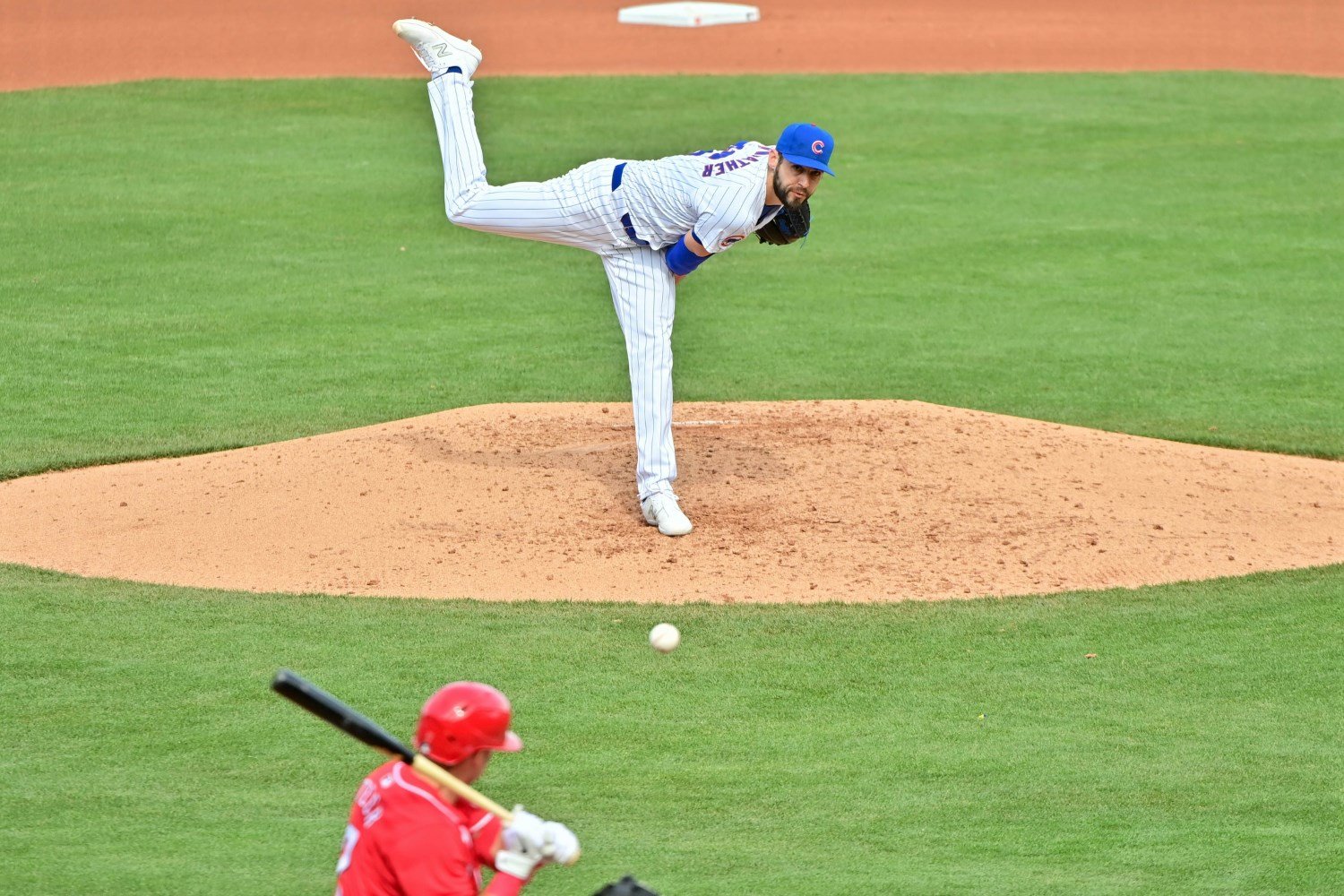 Like the starting rotation, the relief corps for the Chicago Cubs saw only light turnover this winter. Of the 10 arms who logged the most innings out of the bullpen in 2023, only Michael Fulmer and Michael Rucker did not return. Otherwise, it’s a host of re-tooled veterans and high-upside arms comprising the group. This is even more true of the back end. While names like Yency Almonte or Edwin Escobar could be effective as situational arms, those that made up the late innings last year are poised to return in similar capacities for 2024. Only Héctor Neris brings new blood to the eighth and ninth frames of close games. There was some buzz about an established closer, but the organization’s reluctance to pay heavily for relief arms – especially on multi-year deals – quickly ruled them out. Nonetheless, we’re still looking at a fairly stable foursome to round things out. The Locks: Adbert Alzolay, Julian Merryweather, Mark Leiter Jr., Héctor Neris 2023 Stats Alzolay: 58 G, 64.0 IP, 9.42 K/9, 1.83 BB/9, 2.67 ERA, 3.02 FIP Merryweather: 69 G, 72.0 IP, 12.25 K/9, 4.50 BB/9, 3.38 ERA, 3.52 FIP Leiter Jr: 69 G, 64.1 IP, 10.77 K/9, 3.36 BB/9, 3.50 ERA, 3.77 FIP Neris (with HOU): 71 G, 68.1 IP, 10.14 K/9, 4.08 BB/9, 1.71 ERA, 3.83 FIP 2024 Projections (ZiPS) Alzolay: 42 G, 74 IP, 9.40 K/9, 2.41 BB/9, 3.73 ERA, 3.91 FIP Merryweather: 56 G, 56 IP, 11.90 K/9, 3.81 BB/9, 3.97 ERA, 3.82 FIP Leiter Jr: 45 G, 73 IP, 9.25 K/9, 3.58 BB/9, 4.32 ERA, 4.46 FIP Neris: 62 G, 57 IP, 10.29 K/9, 3.43 BB/9, 3.90 ERA, 4.12 FIP Scouting Report While previous starting experience isn’t a rarity among the Cubs’ relief arms, the full-time conversion of Adbert Alzolay to the pen was one of the more enjoyable storylines in 2023. Having struggled as a starter – predominantly with health issues – the Cubs rode him out in relief full-time last year. His four-seam/sinker/slider mix played exceptionally well in that role, as his 22 saves paced the team’s relievers by a wide margin. He struggled a bit in the second half, with contact trends indicating far more line drives than in the season’s first half, in particular. But, by all accounts, he’s the guy in the ninth again for 2024. Merryweather was the poster boy for the type of success the Cubs want to have with their relievers. He had previously struggled to hang on to opportunities in Toronto, ending up as a waiver claim by the team in January of last year. After getting in the lab, he picked up just a little bit of velocity and went super slider-heavy. The slide piece accounted for almost half of his pitches thrown, up from about 20 percent in 2022. That pitch generated whiffs at a 45-percent clip, with virtually everything in the swing-and-miss game representing a career-best for Merryweather. Leiter represents a similar trend to each, in that he’s spun from the same reclamation web as Merryweather while also coming off a shaky second half in the way that Alzolay was perceived to be. In Leiter’s case, his strikeout rate dipped, his walk rate rose, and he gave up a touch harder contact that was more likely to be in the air than the first half. Regardless, he and his splitters and his reverse splits will be heavily featured once again. Neris will be tasked with bringing some stability to the group. He has experience pitching in high-leverage situations, especially coming off a two-year run with Houston. He does tend to let command get away from him on occasion, but brings more punchout potential than many of the other options, both in this portion of the bullpen and elsewhere. The challenge for the late-inning guys is going to be remaining fresh for a full year. The onus is probably more on Craig Counsell in that respect, but given that Alzolay and (especially) Leiter were at varying levels of “cooked” by September, the organization will want to set up this group for more longevity, in the absence of more impactful bullpen additions. Other Options We’ll circle back to the rest of the relief arms in the near future, but it’ll be interesting to see if any of the fringe arms or swing guys work their way into higher-leverage situations as the season progresses. José Cuas looked decent in a small sample. Daniel Palencia and Luke Little are high-upside power arms. Maybe Carl Edwards Jr. works his way back into the fold on a level we didn’t expect. There are bodies there, but their reliability in those late innings remains to be seen. The Big Question: Is there enough late-inning volume? There are questions as to the reliability of Alzolay in a ninth-inning role. I don’t necessarily have those questions. He didn’t take over the gig until the summer; minor performance setbacks were inevitable. ZiPS likes him as the closer again, to the tune of 28 saves. His arsenal plays well. He’s the guy. Beyond him, though, you have to wonder how many arms can step onto the bump in those “clutch” situations. Not that teams load up their bullpen with arms they deem “late-inning guys” necessarily. But even within those four, you do have to wonder about the sustainability. Two reclamation projects and a 34-year-old arm who outpitched his peripherals to an extent don’t engender ironclad confidence at a position with a high rate of volatility to begin with. Again, it’s not necessarily something teams can prepare for, but it’s at least something to be aware of. Of course, that’s also why they’re paying Craig Counsell the big bucks.
 -
Much will be asked of the 2024 Chicago Cubs bullpen, especially the firemen at the end of the game. This group has never before met the challenge of locking down leads for a contender all the way through to October. Can they do it? Image courtesy of © Matt Kartozian-USA TODAY Sports Like the starting rotation, the relief corps for the Chicago Cubs saw only light turnover this winter. Of the 10 arms who logged the most innings out of the bullpen in 2023, only Michael Fulmer and Michael Rucker did not return. Otherwise, it’s a host of re-tooled veterans and high-upside arms comprising the group. This is even more true of the back end. While names like Yency Almonte or Edwin Escobar could be effective as situational arms, those that made up the late innings last year are poised to return in similar capacities for 2024. Only Héctor Neris brings new blood to the eighth and ninth frames of close games. There was some buzz about an established closer, but the organization’s reluctance to pay heavily for relief arms – especially on multi-year deals – quickly ruled them out. Nonetheless, we’re still looking at a fairly stable foursome to round things out. The Locks: Adbert Alzolay, Julian Merryweather, Mark Leiter Jr., Héctor Neris 2023 Stats Alzolay: 58 G, 64.0 IP, 9.42 K/9, 1.83 BB/9, 2.67 ERA, 3.02 FIP Merryweather: 69 G, 72.0 IP, 12.25 K/9, 4.50 BB/9, 3.38 ERA, 3.52 FIP Leiter Jr: 69 G, 64.1 IP, 10.77 K/9, 3.36 BB/9, 3.50 ERA, 3.77 FIP Neris (with HOU): 71 G, 68.1 IP, 10.14 K/9, 4.08 BB/9, 1.71 ERA, 3.83 FIP 2024 Projections (ZiPS) Alzolay: 42 G, 74 IP, 9.40 K/9, 2.41 BB/9, 3.73 ERA, 3.91 FIP Merryweather: 56 G, 56 IP, 11.90 K/9, 3.81 BB/9, 3.97 ERA, 3.82 FIP Leiter Jr: 45 G, 73 IP, 9.25 K/9, 3.58 BB/9, 4.32 ERA, 4.46 FIP Neris: 62 G, 57 IP, 10.29 K/9, 3.43 BB/9, 3.90 ERA, 4.12 FIP Scouting Report While previous starting experience isn’t a rarity among the Cubs’ relief arms, the full-time conversion of Adbert Alzolay to the pen was one of the more enjoyable storylines in 2023. Having struggled as a starter – predominantly with health issues – the Cubs rode him out in relief full-time last year. His four-seam/sinker/slider mix played exceptionally well in that role, as his 22 saves paced the team’s relievers by a wide margin. He struggled a bit in the second half, with contact trends indicating far more line drives than in the season’s first half, in particular. But, by all accounts, he’s the guy in the ninth again for 2024. Merryweather was the poster boy for the type of success the Cubs want to have with their relievers. He had previously struggled to hang on to opportunities in Toronto, ending up as a waiver claim by the team in January of last year. After getting in the lab, he picked up just a little bit of velocity and went super slider-heavy. The slide piece accounted for almost half of his pitches thrown, up from about 20 percent in 2022. That pitch generated whiffs at a 45-percent clip, with virtually everything in the swing-and-miss game representing a career-best for Merryweather. Leiter represents a similar trend to each, in that he’s spun from the same reclamation web as Merryweather while also coming off a shaky second half in the way that Alzolay was perceived to be. In Leiter’s case, his strikeout rate dipped, his walk rate rose, and he gave up a touch harder contact that was more likely to be in the air than the first half. Regardless, he and his splitters and his reverse splits will be heavily featured once again. Neris will be tasked with bringing some stability to the group. He has experience pitching in high-leverage situations, especially coming off a two-year run with Houston. He does tend to let command get away from him on occasion, but brings more punchout potential than many of the other options, both in this portion of the bullpen and elsewhere. The challenge for the late-inning guys is going to be remaining fresh for a full year. The onus is probably more on Craig Counsell in that respect, but given that Alzolay and (especially) Leiter were at varying levels of “cooked” by September, the organization will want to set up this group for more longevity, in the absence of more impactful bullpen additions. Other Options We’ll circle back to the rest of the relief arms in the near future, but it’ll be interesting to see if any of the fringe arms or swing guys work their way into higher-leverage situations as the season progresses. José Cuas looked decent in a small sample. Daniel Palencia and Luke Little are high-upside power arms. Maybe Carl Edwards Jr. works his way back into the fold on a level we didn’t expect. There are bodies there, but their reliability in those late innings remains to be seen. The Big Question: Is there enough late-inning volume? There are questions as to the reliability of Alzolay in a ninth-inning role. I don’t necessarily have those questions. He didn’t take over the gig until the summer; minor performance setbacks were inevitable. ZiPS likes him as the closer again, to the tune of 28 saves. His arsenal plays well. He’s the guy. Beyond him, though, you have to wonder how many arms can step onto the bump in those “clutch” situations. Not that teams load up their bullpen with arms they deem “late-inning guys” necessarily. But even within those four, you do have to wonder about the sustainability. Two reclamation projects and a 34-year-old arm who outpitched his peripherals to an extent don’t engender ironclad confidence at a position with a high rate of volatility to begin with. Again, it’s not necessarily something teams can prepare for, but it’s at least something to be aware of. Of course, that’s also why they’re paying Craig Counsell the big bucks. View full article
-
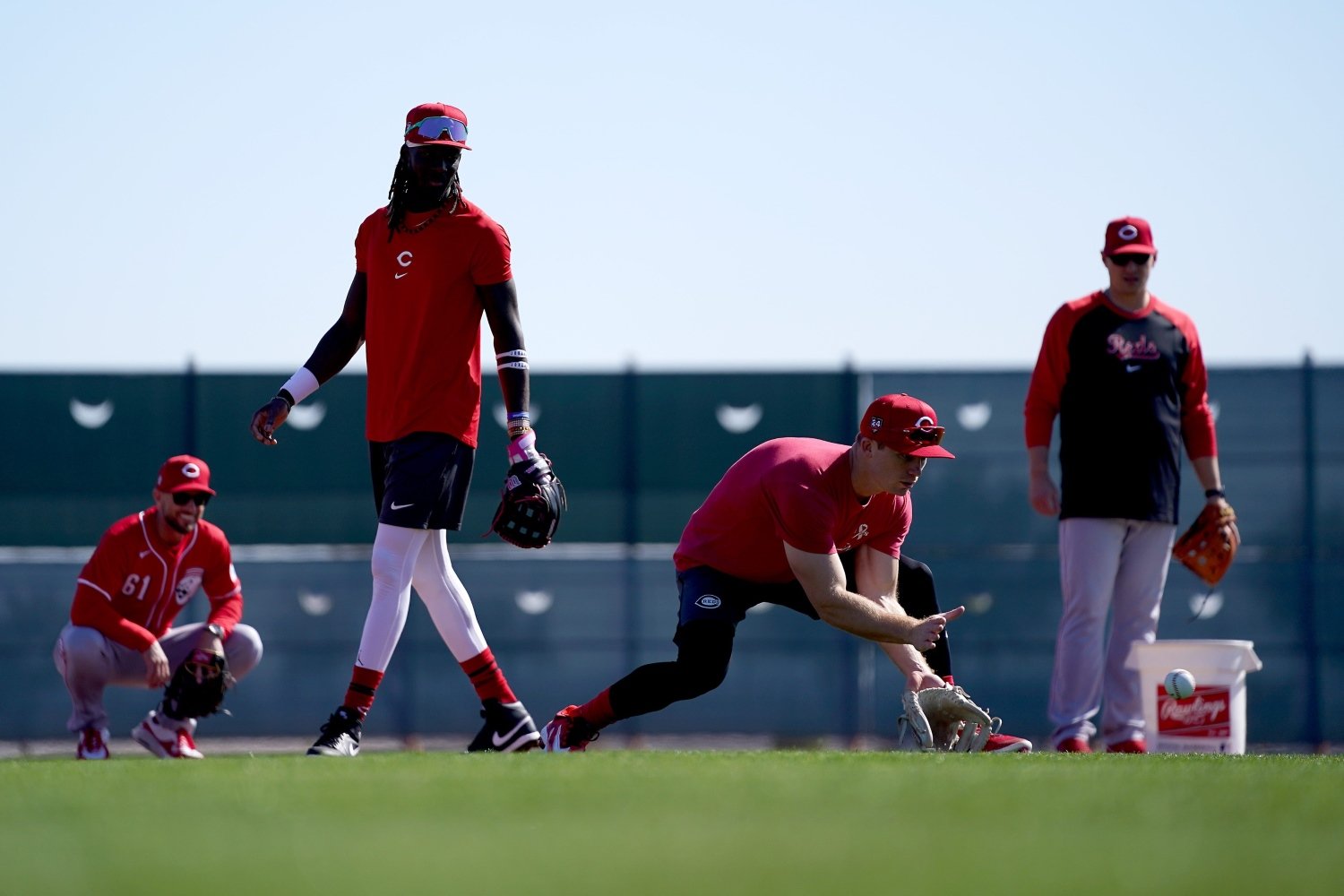 At various points throughout the 2023 season, I posited that the Cincinnati Reds would be the first Major League Baseball team to reach the postseason on vibes alone. Coming out of a lengthy rebuild (with a brief, half-hearted, COVID-ruined attempt at contention mixed in there), the arrival of multiple high-end prospects had the Reds’ stock on the rise. Ultimately, they ended up only one game worse than the Cubs, with an 82-80 finish. It didn’t result in a playoff spot, though, as they finished 10 games out of the division race and two back of the wild card. While they didn't make a postseason appearance last year, the 20-game improvement does leave plenty of room for optimism in the Queen City. They ranked fourth in the National League in ISO (.170) and eighth in collective wRC+ (98). The pitching will need to improve, however. The Reds were third-worst in the NL in ERA (3.83), which was largely due to a shallow starting group (5.43 ERA). One imagines that a full season of the likes of Elly De La Cruz, Christian Encarnacion-Strand, and Matt McLain could boost the offense, while additions Frankie Montas, Nick Martinez, Emilio Pagán, and Brent Suter could improve the pitching outcomes. They’re not division favorites, but they’re very much in the mix. Projected Record: 79-83 (FanGraphs), 78-84 (Baseball Prospectus) Key Additions: Jeimer Candelario Frankie Montas Nick Martinez Brent Suter Emilio Pagán Key Subtractions: Joey Votto Nick Senzel Harrison Bader Curt Casali Derek Law Projected Opening Day Lineup: 😄 Tyler Stephenson 1B: Christian Encarnacion-Strand 2B: Matt McLain SS: Elly De La Cruz 3B: Jeimer Candelario LF: Spencer Steer CF: TJ Friedl RF: Will Benson DH: Jonathan India Projected Opening Day Pitching Staff: Starting Pitchers Hunter Greene Graham Ashcraft Frankie Montas Andrew Abbott Nick Martinez Bullpen Lucas Sims (Setup) Emilio Pagán (Setup) Brent Suter (Setup) Alexis Díaz (Closer) Scouting Report The Reds’ cumulative .327 on-base percentage ranked 10th in MLB in 2023. Their 190 steals were the top number (24 more than the next-closest team). So the first thing you need to know about this squad is that they create traffic, then havoc. De La Cruz alone swiped 35 bags in only 98 games. McLain had a season of 27 in Double-A in 2022. Steer and India even combined for 29 last year. You’re going to see a lot of movement from this team. As far as their power profile goes, the .170 ISO was obviously one of the better figures in the bigs (11th overall), but it’s not necessarily over-the-fence pop, as their 198 homers sat 14th. There’s gap power and there’s speed. It’s a tough matchup for any staff to deal with. Where the Reds’ struggles could manifest is on the bump. Health was an issue, even more so than performance. Cincinnati used 17 different starters last year, with Ashcraft’s 26 pacing the group. Ashcraft and Greene – two of the projected stalwarts in a high-upside rotation – each missed time. Nick Lodolo – the other of that group – missed almost the entire year. When healthy, it’s a group with a sky-high ceiling. Greene as the ace & Ashcraft, Lodolo, and Andrew Abbott behind him is a group that could be the envy of most of baseball. But given the health concerns, it’s hard to put too much faith in that coming to fruition. That's why the team added Montas and Martinez. The aim is to give them more innings on the front end and take some pressure off what should be a formidable bullpen. Martinez may end up in a swing role, but it’s one he played well in San Diego. Suter and Pagán, while each past their prime, offer rubber-armed reliability in the relief mix. With that pair in tow next to Sims and Alexis Díaz, there’s a lot of stability for Cincinnati late in games. Their middle-relief corps offers volume, too. Sam Moll, Ian Gibaut, Tejay Antone, and Buck Farmer are just a few names in a group that runs deep. So even if the Reds continue to struggle on the mound, it won’t be because they didn’t attempt to avoid it. Ultimately, this roster will rely very heavily on upside. Both the offense and pitching present a great deal of it, but growing pains will also be part of all of this. If there’s a troubling aspect for an exciting club such as this, it’s that the NL Central does boast some of the beefier farm systems in all of baseball. So while they may have the most talent arriving at the top stage at present, the other squads aren’t going to be too far behind. One Big Question: How will David Bell configure the lineup? It’s not so much about the batting order as it is the players on the field. In declining his option, the Reds let Joey Votto walk and essentially announced Encarnacion-Strand as their starting first baseman, leaving Noelvi Marte on the opposite corner. Things became more complicated, though, as they signed Jeimer Candelario in free agency. With those three, in conjunction with McLain, De La Cruz, Steer, and India, the Reds essentially have seven players for five spots. Marte’s PED suspension clarifies things a bit, at least. The only worse way to get greater clarity is injury, and McClain has a still-nebulous shoulder problem that is doing just that. From the jump, Cincinnati will roll out a group that features Encarnacion-Strand at first, De La Cruz at short, and Candelario at third. Steer and India could be mixed in at first, second, or third, when not serving as the team’s DH. Upon Marte’s and McClain's return, however, it’s going to be fascinating to watch how Bell manages his group. Injuries happen. Poor performance happens. Suspensions – apparently – happen. But if this group is fully healthy and performing well, it’s going to be quite a murky setup for the man on the bench to handle daily. The Reds aren't the Cubs' biggest threat in the NL Central this year. They are, however, an interesting and competitive team. The head-to-head matchups between these two could go a long way to determining which (if either) makes it over the hump and into October this time.
 -
We've all spent much of the spring trying to get ahold of out-of-context, odd-angle videos of Christopher Morel playing third base. Maybe we'd get a better perspective by zooming out--way out. Image courtesy of © Rick Scuteri-USA TODAY Sports At this point in the timeline, it appears that Christopher Morel will be the Chicago Cubs Opening Day starter at third base. The previously nomadic defender should have a permanent spot, at least from the jump. It’s a logical way for things to play out, given a couple of factors. The most obvious is that Morel becoming a mainstay there would present the additional benefit of circulating other players in the designated hitter slot, which could ultimately wind up a boon for the offense. The more crucial one, though, is Morel’s skill set in comparison with other options. We’ve discussed the team’s options at the position extensively. Patrick Wisdom offers a decent offensive profile for the spot, but is very much a below-average defender. Nick Madrigal gives you defensive efficiency but is nowhere close to the bat you’d want at the hot corner. The player health variable clarifies this further. Wisdom was limited early in the spring with a quad issue. Madrigal remains out with the latest in what seem to be perpetual hamstring issues. By the time we reach the end of March, Morel will likely be the only candidate to get a full spring's worth of preparation. Even beyond that, though, it stands to reason that Morel merely has to be average in order to maintain his grip on the spot. His offensive upside is such that he can compensate for a lot, especially given some of his comps on that side of the ball in a defensive context. So he’s the guy, basically, until he’s not--even if a couple of early spring errors give us the slightest bit of apprehension. With that, though, we need to consider an important shift in the line of questioning. Not necessarily “Can he hang at third base?” but rather “Can he keep up enough to hang at third base?” Can he grow into the position efficiently enough, even if the early returns aren’t terrific? The distinction lies in the broader context of the position itself. It’s insufficiently specific to say that Morel can start and remain at third base with simply passable defense. What classifies as passable defense at third base is continually evolving. This adds another layer to Morel’s specific situation. Defense – as a whole – has improved across Major League Baseball over the parade of decades. There are a few theories as to why, none of which I have the space to explore right now (but stay tuned). Twenty years ago, teams were committing 0.66 errors per game. Ten years ago, that figure was at 0.60. Last season, errors were committed at a 0.52-per-game clip. Average fielding percentage has gone .983, .984, and .986 over those same leaps in time. Now, obviously, it’s oversimplified in the face of positional context, in addition to the fact that neither represents an effective measure of a player’s defensive skill. Nonetheless, they do provide a snapshot to showcase the simple idea that defense has improved. Among qualifiers at third base specifically, the average Outs Above Average (OAA) figure was 1.1 in 2016 (the earliest point at which we have that data) but rose to 1.7 in 2023. Defensive Runs Saved (DRS) in 2016 was 1.6. In 2023, that figure was 2.8. Fielding Run Value (FRV) – a more comprehensive metric than either of the other two – rose from 1.6 in 2016 to 2.8 in 2023. It’s an imperfect science. The “average” alone takes into account the entire range of defenders, and the individual years do feature some fluctuation. The leaders at the position from 2023 also aren’t on the other side of a massive gap from the leaders in 2016 (OAA leaders went for 18, 12, and 11, respectively in 2016 and were at 17, 13, and 11 in 2023). But the big picture does speak to the idea that defense has steadily gotten better. With expansion more than a quarter-century in our rearview, teams don't have to choose between players who can hit and those who can field as often. It's much easier to find players who can do both, which makes every weakness more glaring than it would have been 20, 30, or 40 years ago. With better positioning and better coaching, too, the conversion rate on balls a fielder reaches just keep rising. In the 1960s, or even in the early 1990s, it might have been possible to get by with a mistake-prone hot corner defender who uses good range to make up for mishaps. In 2024, that's not a viable strategy. The other team's not going to make the mistake that evens the scales. You have to find ways to minimize them in an absolute sense, because the relative cost of each has sharply risen. This question of Morel’s ability to keep up with defensive growth around the league feeds directly into another query. How are we measuring his growth? Should we be looking at fielding percentage and errors while the sample remains small? It would, at least, be indicative of Morel’s individual ability to keep traffic off the basepath, even if we’re not measuring his true skill at the position. We can also look to DRS in examining Morel’s ability to prevent runs as a defender. Ultimately, that’s what it’s about for him at this stage. It’s not so much about converting outs as it is preventing runs. It's a philosophical and complex idea, but also makes Morel’s adjustment far more fascinating as a result. Defensive metrics, on their own, measure different things. That nuance could be essential in evaluating Morel’s first legitimate entry into the defensive world. And maybe that’s where we look for his growth as the season progresses. Is he making the plays he needs to make and preventing runs? Yes? Then the Cubs are fine to keep rolling with him there. The defensive stature of the position itself hasn’t grown by leaps and bounds in a year-to-year context. The growth is essential, but it doesn’t have to be exponential. As the sample grows, the measurement can change. The purpose of this isn’t to oppose or undermine my previous notion that Morel doesn’t have to be great on defense in order to be effective. That still rings true. While the Cubs have built themselves in such a way that success on the margins is essential, they are solidified elsewhere to the point where they can compensate for the occasional third-base flub. For Morel, it’s about the growth. Defense has improved quite steadily over the last few decades. But it hasn’t experienced any sizable jump between years that proved to be permanent. So for now, Morel’s aim should be preventing runs. Maybe later on, we can worry about converting outs. View full article
-
Christopher Morel Has a Third Base Base Rate Problem, Basically
RandallPnkFloyd posted an article in Cubs
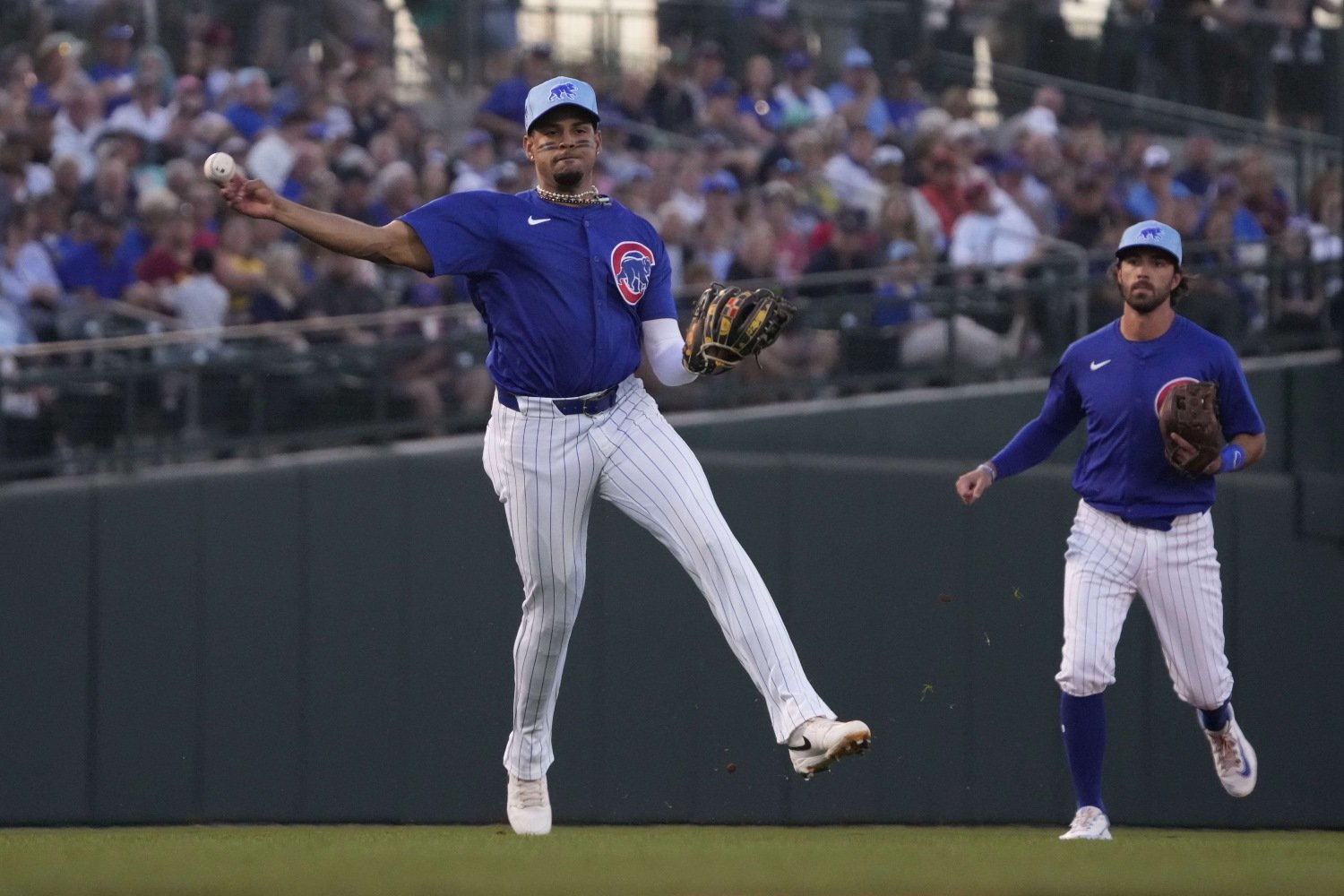 At this point in the timeline, it appears that Christopher Morel will be the Chicago Cubs Opening Day starter at third base. The previously nomadic defender should have a permanent spot, at least from the jump. It’s a logical way for things to play out, given a couple of factors. The most obvious is that Morel becoming a mainstay there would present the additional benefit of circulating other players in the designated hitter slot, which could ultimately wind up a boon for the offense. The more crucial one, though, is Morel’s skill set in comparison with other options. We’ve discussed the team’s options at the position extensively. Patrick Wisdom offers a decent offensive profile for the spot, but is very much a below-average defender. Nick Madrigal gives you defensive efficiency but is nowhere close to the bat you’d want at the hot corner. The player health variable clarifies this further. Wisdom was limited early in the spring with a quad issue. Madrigal remains out with the latest in what seem to be perpetual hamstring issues. By the time we reach the end of March, Morel will likely be the only candidate to get a full spring's worth of preparation. Even beyond that, though, it stands to reason that Morel merely has to be average in order to maintain his grip on the spot. His offensive upside is such that he can compensate for a lot, especially given some of his comps on that side of the ball in a defensive context. So he’s the guy, basically, until he’s not--even if a couple of early spring errors give us the slightest bit of apprehension. With that, though, we need to consider an important shift in the line of questioning. Not necessarily “Can he hang at third base?” but rather “Can he keep up enough to hang at third base?” Can he grow into the position efficiently enough, even if the early returns aren’t terrific? The distinction lies in the broader context of the position itself. It’s insufficiently specific to say that Morel can start and remain at third base with simply passable defense. What classifies as passable defense at third base is continually evolving. This adds another layer to Morel’s specific situation. Defense – as a whole – has improved across Major League Baseball over the parade of decades. There are a few theories as to why, none of which I have the space to explore right now (but stay tuned). Twenty years ago, teams were committing 0.66 errors per game. Ten years ago, that figure was at 0.60. Last season, errors were committed at a 0.52-per-game clip. Average fielding percentage has gone .983, .984, and .986 over those same leaps in time. Now, obviously, it’s oversimplified in the face of positional context, in addition to the fact that neither represents an effective measure of a player’s defensive skill. Nonetheless, they do provide a snapshot to showcase the simple idea that defense has improved. Among qualifiers at third base specifically, the average Outs Above Average (OAA) figure was 1.1 in 2016 (the earliest point at which we have that data) but rose to 1.7 in 2023. Defensive Runs Saved (DRS) in 2016 was 1.6. In 2023, that figure was 2.8. Fielding Run Value (FRV) – a more comprehensive metric than either of the other two – rose from 1.6 in 2016 to 2.8 in 2023. It’s an imperfect science. The “average” alone takes into account the entire range of defenders, and the individual years do feature some fluctuation. The leaders at the position from 2023 also aren’t on the other side of a massive gap from the leaders in 2016 (OAA leaders went for 18, 12, and 11, respectively in 2016 and were at 17, 13, and 11 in 2023). But the big picture does speak to the idea that defense has steadily gotten better. With expansion more than a quarter-century in our rearview, teams don't have to choose between players who can hit and those who can field as often. It's much easier to find players who can do both, which makes every weakness more glaring than it would have been 20, 30, or 40 years ago. With better positioning and better coaching, too, the conversion rate on balls a fielder reaches just keep rising. In the 1960s, or even in the early 1990s, it might have been possible to get by with a mistake-prone hot corner defender who uses good range to make up for mishaps. In 2024, that's not a viable strategy. The other team's not going to make the mistake that evens the scales. You have to find ways to minimize them in an absolute sense, because the relative cost of each has sharply risen. This question of Morel’s ability to keep up with defensive growth around the league feeds directly into another query. How are we measuring his growth? Should we be looking at fielding percentage and errors while the sample remains small? It would, at least, be indicative of Morel’s individual ability to keep traffic off the basepath, even if we’re not measuring his true skill at the position. We can also look to DRS in examining Morel’s ability to prevent runs as a defender. Ultimately, that’s what it’s about for him at this stage. It’s not so much about converting outs as it is preventing runs. It's a philosophical and complex idea, but also makes Morel’s adjustment far more fascinating as a result. Defensive metrics, on their own, measure different things. That nuance could be essential in evaluating Morel’s first legitimate entry into the defensive world. And maybe that’s where we look for his growth as the season progresses. Is he making the plays he needs to make and preventing runs? Yes? Then the Cubs are fine to keep rolling with him there. The defensive stature of the position itself hasn’t grown by leaps and bounds in a year-to-year context. The growth is essential, but it doesn’t have to be exponential. As the sample grows, the measurement can change. The purpose of this isn’t to oppose or undermine my previous notion that Morel doesn’t have to be great on defense in order to be effective. That still rings true. While the Cubs have built themselves in such a way that success on the margins is essential, they are solidified elsewhere to the point where they can compensate for the occasional third-base flub. For Morel, it’s about the growth. Defense has improved quite steadily over the last few decades. But it hasn’t experienced any sizable jump between years that proved to be permanent. So for now, Morel’s aim should be preventing runs. Maybe later on, we can worry about converting outs.
 -
Barring any injury or shocking meltdown, the Top Four options for the Chicago Cubs starting rotation appear set. But in a league where it's rare to use fewer than eight starting pitchers in a season, who fills the gaps? Image courtesy of © Allan Henry-USA TODAY Sports As previously noted, we’ll see Justin Steele, Kyle Hendricks, Jameson Taillon, and Shōta Imanaga ride it out at the top. It’s not a group with a ton of flash or intrigue, but given the defense behind them, they should be more than adequate. If you’re looking for a bit extra of the latter, look no further than the depth. The Cubs still have a fifth starter to sort. Their name may have been floated in association with Jordan Montgomery, but it’s hard to imagine at this stage. Instead, they’ll look to a veteran roster holdover (Drew Smyly), an upper-tier prospect coming off a bit more than a cup of coffee (Jordan Wicks), a pair of swingmen from 2023 (Javier Assad & Hayden Wesneski), a post-hype-ish prospect (Ben Brown), and their top pitching prospect (Cade Horton). All will likely see a start on the bump at Wrigley in 2024. But sustainability remains a question for all. The Depth: Drew Smyly, Jordan Wicks, Javier Assad, Hayden Wesneski, Javier Assad, Ben Brown, Cade Horton 2023 Stats Smyly: 23 GS, 142.1 IP, 8.92 K/9, 3.54 BB/9, 1.43 WHIP, 5.00 ERA, 4.96 FIP Wicks: 7 GS, 34.2 IP, 6.23 K/9, 2.86 BB/9, 1.27 WHIP, 4.41 ERA, 4.70 FIP Assad: 10 GS, 109.1 IP, 7.74 K/9, 3.38 BB/9, 1.23 WHIP, 3.05 ERA, 4.29 FIP Wesneski: 11 GS, 89.1 IP, 8.36 K/9, 3.22 BB/9, 1.28 WHIP, 4.63 ERA, 5.48 FIP Brown (AAA): 15 GS, 72.2 IP, 12.39 K/9, 6.32 BB/9, 1.53 WHIP, 5.33 ERA, 4.66 FIP Horton (A+): 11 GS, 47.0 IP, 12.45 K/9, 2.30 BB/9, 1.00 WHIP, 3.83 ERA, 3.23 FIP 2024 Projections (ZiPS) Smyly: 21 GS, 121 IP, 8.63 K/9, 3.05 BB/9, 1.35 WHIP, 4.54 ERA, 4.63 FIP Wicks: 25 GS, 110 IP, 7.67 K/9, 3.18 BB/9, 1.33 WHIP, 4.41 ERA, 4.37 FIP Assad: 17 GS, 114 IP, 7.17 K/9, 3.54 BB/9, 1.39 WHIP, 4.33 ERA, 4.73 FIP Wesneski: 17 GS, 101 IP, 8.32 K/9, 3.27 BB/9, 1.32 WHIP, 4.51 ERA, 4.41 FIP Brown: 20 GS, 95 IP, 9.03 K/9, 3.86 BB/9, 1.35 WHIP, 4.23 ERA, 4.29 FIP Horton: 22 GS, 86 IP, 7.43 K/9, 2.93 BB/9, 1.28 WHIP, 4.50 ERA, 4.43 FIP Scouting Report The degree to which we’ll see Smyly out of the starting gate in ’24 depends heavily on who you talk to or projection model to which you subscribe. Smyly returns to the Cubs after exercising his player option following the struggles of 2023. June was a particularly laborious month, as Smyly posted his worst K-BB numbers of the year (3.9 K-BB%) and was touched for a HardHit% up near 40. He was bounced from the rotation and fared decently as a reliever, but his status as a starter is heavily in doubt. Nonetheless, Smyly does offer some intrigue for the upcoming year, given his winter work at Driveline. Therein, he worked to add a splitter & slider to the mix while dropping the slider. The results haven’t been there this spring – on paper – but it stands to reason that he could be effective in a swing role if the changes take. It’s hard to imagine him as a starter with any kind of longevity at this stage. Wicks flashed about as much as we could have hoped for in 2023, especially given his skill set. He is the type of cerebral arm that the team covets – given the defensive infrastructure on the roster – he’s not going to overpower anyone. But he can locate and mix enough to make him a mid-rotation guy. It’s just a matter of increasing the workload. If I were a betting man – and I’m not – he’d be the guy to get the first crack at the fifth spot. Assad and Wesneski each bring plenty of value to the current roster, even as they live in something of a pitcher’s purgatory. Neither has shown enough over a longer-term stretch to latch onto a rotation spot, but they’re each very effective in shorter stints. Assad had a nice run as a spot starter but could generate whiffs and induce soft contact at a much higher rate as a reliever. Wesneski was not too dissimilar. Walks plagued him in relief, but the strikeout rate was higher, and the hard contact rate was drastically lower. It’s straightforward to imagine a world where either or both are in a long relief/spot starting role once again; it’s equally easy to see the organization wanting to keep either one stretched out in Iowa. As for the prospects, we’re looking at the murkiest picture of the depth group but with the highest upside. Given health and command issues, Ben Brown lost some of the luster as an option last year. But his combination of upper-90s and nonsense-breaking stuff is too tantalizing to ignore forever. He dabbled in relief last year; one wonders if the Cubs move that option to the forefront to get him to Wrigley more expediently. Horton represents the highest upside of the system’s arms. He already has the velocity and the slider. He’s working on the changeup and maybe the curve. He’s an exciting prospect, but one does wonder about the timeline. Do the Cubs give him a crack at relief sometime during the summer just to get him big-league innings? Does he get a full slate of minor league starts throughout ’24 for workload purposes? It’s tough to ignore the upside in the context of him not being too far, but I don’t imagine the Cubs will rush here unless they need to. Other Options None. That’s kind of it. Unless a starting prospect takes a massive leap or the Cubs make a shocking play for Jordan Montgomery, we’re likely looking at the group for the immediate future. The Big Question How will the organization manage the higher-upside guys in 2024? I posited a couple of different ways in which the Cubs can go about handling Brown and Horton. For the most part, we know what shape things will take for the other younger arms. Wicks likely starts, whether in Chicago or Iowa. Assad and/or Wesneski could be bound for Iowa, but a swing role does make heavy sense for either of them. But what of Brown & Horton? What does the timeline look like? What does the role in 2024 look like? One imagines we’ll have answers to those questions soon. Fearless prediction? Brown ends up moving to relief, at least for a time. Ideally, it keeps him healthy and builds his confidence in short stints. Horton, conversely, ends up starting on the farm for the duration of the year. The former seems more likely, but it’ll be very interesting to see how aggressive the Cubs want to be in progressing Horton, especially up through the ranks. View full article
-
2024 Chicago Cubs Positional Preview: Who Is The Fifth Starter?
RandallPnkFloyd posted an article in Cubs
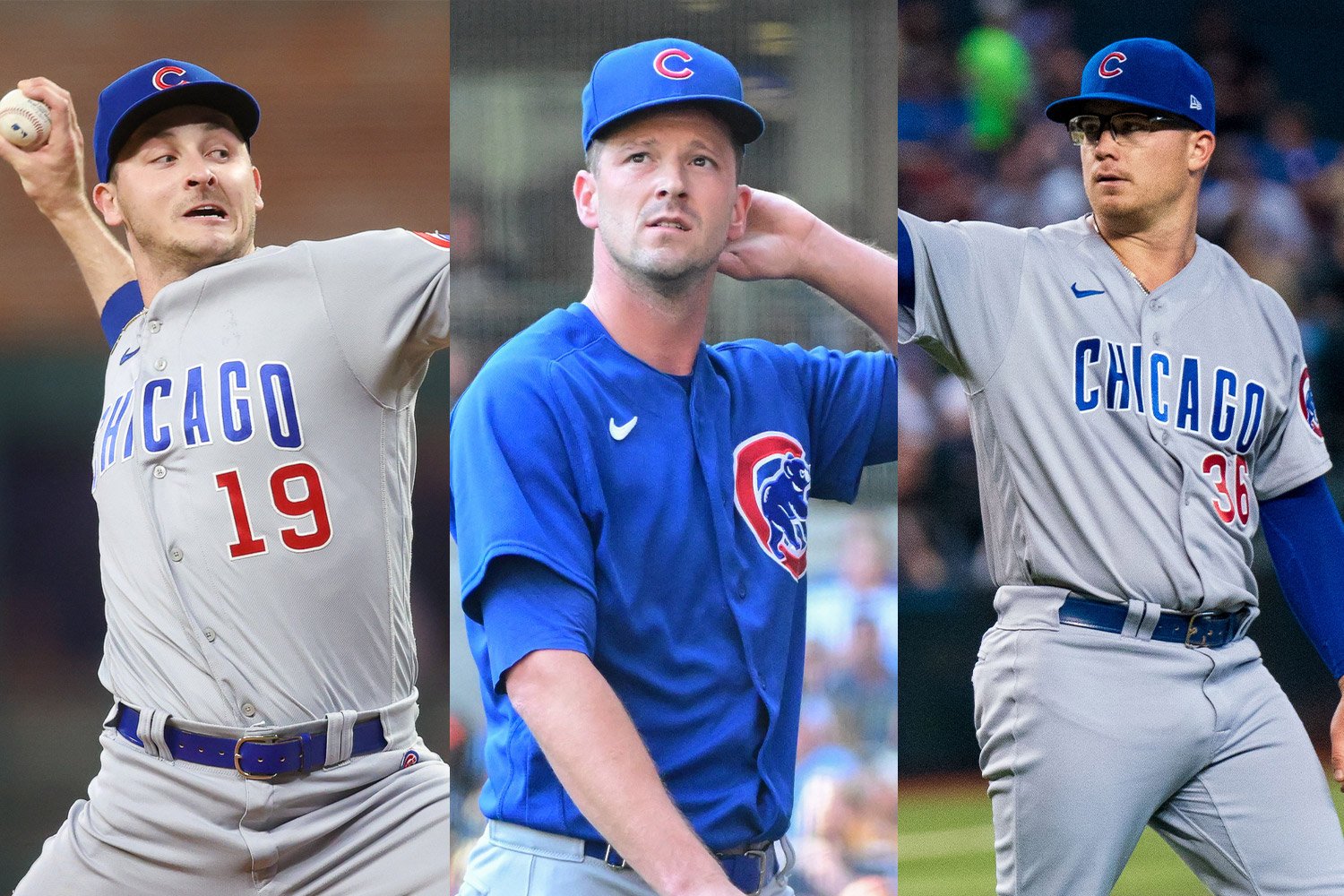 As previously noted, we’ll see Justin Steele, Kyle Hendricks, Jameson Taillon, and Shōta Imanaga ride it out at the top. It’s not a group with a ton of flash or intrigue, but given the defense behind them, they should be more than adequate. If you’re looking for a bit extra of the latter, look no further than the depth. The Cubs still have a fifth starter to sort. Their name may have been floated in association with Jordan Montgomery, but it’s hard to imagine at this stage. Instead, they’ll look to a veteran roster holdover (Drew Smyly), an upper-tier prospect coming off a bit more than a cup of coffee (Jordan Wicks), a pair of swingmen from 2023 (Javier Assad & Hayden Wesneski), a post-hype-ish prospect (Ben Brown), and their top pitching prospect (Cade Horton). All will likely see a start on the bump at Wrigley in 2024. But sustainability remains a question for all. The Depth: Drew Smyly, Jordan Wicks, Javier Assad, Hayden Wesneski, Javier Assad, Ben Brown, Cade Horton 2023 Stats Smyly: 23 GS, 142.1 IP, 8.92 K/9, 3.54 BB/9, 1.43 WHIP, 5.00 ERA, 4.96 FIP Wicks: 7 GS, 34.2 IP, 6.23 K/9, 2.86 BB/9, 1.27 WHIP, 4.41 ERA, 4.70 FIP Assad: 10 GS, 109.1 IP, 7.74 K/9, 3.38 BB/9, 1.23 WHIP, 3.05 ERA, 4.29 FIP Wesneski: 11 GS, 89.1 IP, 8.36 K/9, 3.22 BB/9, 1.28 WHIP, 4.63 ERA, 5.48 FIP Brown (AAA): 15 GS, 72.2 IP, 12.39 K/9, 6.32 BB/9, 1.53 WHIP, 5.33 ERA, 4.66 FIP Horton (A+): 11 GS, 47.0 IP, 12.45 K/9, 2.30 BB/9, 1.00 WHIP, 3.83 ERA, 3.23 FIP 2024 Projections (ZiPS) Smyly: 21 GS, 121 IP, 8.63 K/9, 3.05 BB/9, 1.35 WHIP, 4.54 ERA, 4.63 FIP Wicks: 25 GS, 110 IP, 7.67 K/9, 3.18 BB/9, 1.33 WHIP, 4.41 ERA, 4.37 FIP Assad: 17 GS, 114 IP, 7.17 K/9, 3.54 BB/9, 1.39 WHIP, 4.33 ERA, 4.73 FIP Wesneski: 17 GS, 101 IP, 8.32 K/9, 3.27 BB/9, 1.32 WHIP, 4.51 ERA, 4.41 FIP Brown: 20 GS, 95 IP, 9.03 K/9, 3.86 BB/9, 1.35 WHIP, 4.23 ERA, 4.29 FIP Horton: 22 GS, 86 IP, 7.43 K/9, 2.93 BB/9, 1.28 WHIP, 4.50 ERA, 4.43 FIP Scouting Report The degree to which we’ll see Smyly out of the starting gate in ’24 depends heavily on who you talk to or projection model to which you subscribe. Smyly returns to the Cubs after exercising his player option following the struggles of 2023. June was a particularly laborious month, as Smyly posted his worst K-BB numbers of the year (3.9 K-BB%) and was touched for a HardHit% up near 40. He was bounced from the rotation and fared decently as a reliever, but his status as a starter is heavily in doubt. Nonetheless, Smyly does offer some intrigue for the upcoming year, given his winter work at Driveline. Therein, he worked to add a splitter & slider to the mix while dropping the slider. The results haven’t been there this spring – on paper – but it stands to reason that he could be effective in a swing role if the changes take. It’s hard to imagine him as a starter with any kind of longevity at this stage. Wicks flashed about as much as we could have hoped for in 2023, especially given his skill set. He is the type of cerebral arm that the team covets – given the defensive infrastructure on the roster – he’s not going to overpower anyone. But he can locate and mix enough to make him a mid-rotation guy. It’s just a matter of increasing the workload. If I were a betting man – and I’m not – he’d be the guy to get the first crack at the fifth spot. Assad and Wesneski each bring plenty of value to the current roster, even as they live in something of a pitcher’s purgatory. Neither has shown enough over a longer-term stretch to latch onto a rotation spot, but they’re each very effective in shorter stints. Assad had a nice run as a spot starter but could generate whiffs and induce soft contact at a much higher rate as a reliever. Wesneski was not too dissimilar. Walks plagued him in relief, but the strikeout rate was higher, and the hard contact rate was drastically lower. It’s straightforward to imagine a world where either or both are in a long relief/spot starting role once again; it’s equally easy to see the organization wanting to keep either one stretched out in Iowa. As for the prospects, we’re looking at the murkiest picture of the depth group but with the highest upside. Given health and command issues, Ben Brown lost some of the luster as an option last year. But his combination of upper-90s and nonsense-breaking stuff is too tantalizing to ignore forever. He dabbled in relief last year; one wonders if the Cubs move that option to the forefront to get him to Wrigley more expediently. Horton represents the highest upside of the system’s arms. He already has the velocity and the slider. He’s working on the changeup and maybe the curve. He’s an exciting prospect, but one does wonder about the timeline. Do the Cubs give him a crack at relief sometime during the summer just to get him big-league innings? Does he get a full slate of minor league starts throughout ’24 for workload purposes? It’s tough to ignore the upside in the context of him not being too far, but I don’t imagine the Cubs will rush here unless they need to. Other Options None. That’s kind of it. Unless a starting prospect takes a massive leap or the Cubs make a shocking play for Jordan Montgomery, we’re likely looking at the group for the immediate future. The Big Question How will the organization manage the higher-upside guys in 2024? I posited a couple of different ways in which the Cubs can go about handling Brown and Horton. For the most part, we know what shape things will take for the other younger arms. Wicks likely starts, whether in Chicago or Iowa. Assad and/or Wesneski could be bound for Iowa, but a swing role does make heavy sense for either of them. But what of Brown & Horton? What does the timeline look like? What does the role in 2024 look like? One imagines we’ll have answers to those questions soon. Fearless prediction? Brown ends up moving to relief, at least for a time. Ideally, it keeps him healthy and builds his confidence in short stints. Horton, conversely, ends up starting on the farm for the duration of the year. The former seems more likely, but it’ll be very interesting to see how aggressive the Cubs want to be in progressing Horton, especially up through the ranks.
 -
There wasn’t a whole lot that was surprising about the 2023 Chicago Cubs’ starting staff. They were a low velocity group that relied upon limiting baserunners and efficiency rather than power or flash. The numbers reflect that. Image courtesy of © Matt Kartozian-USA TODAY Sports As a starting group, they were 25th in strikeouts per nine (7.78) but posted the sixth-best BB/9 rate (2.55). Their collective groundball rate (44.7 percent) was the third-best mark in the league, while they surrendered hard contact at the lowest frequency (30.3 percent) among starting groups. Unexciting? Probably. Effective? It’d be hard to argue against it. The impending 2024 year doesn’t look much different, either. Despite a little buzz about potential trade or free-agent acquisitions heading into the winter, holdovers will comprise most of the starting five. Justin Steele, Kyle Hendricks, and Jameson Taillon all return. Shōta Imanaga represents the only new face among the locks for the rotation. While he brings more movement, we’re still looking at a front-end fairly low on velocity. And that – at least for the foreseeable future – will remain by design. While the organization may have some younger arms more adept at the velocity game within the next year or so, the remainder of the roster remains constructed so that they’ll continue to rely on in-play and out(s) as their formula in the rotation. The Locks: Justin Steele, Kyle Hendricks, Jameson Tailon, Shōta Imanaga 2023 Stats: Steele: 30 GS, 173.1 IP, 16 W, 9.14 K/9, 1.87 BB/9, 1.17 WHIP, 3.06 ERA, 3.02 FIP, 4.9 fWAR Hendricks: 33 GS, 137.0 IP, 6 W, 6.11 K/9, 1.77 BB/9, 1.20 WHIP, 3.74 ERA, 3.81 FIP, 2.8 fWAR Taillon: 31 GS, 154.1 IP, 8 W, 8.16 K/9, 2.39 BB/9, 1.28 WHIP, 4.84 ERA, 4.61 FIP, 1.6 fWAR Imanaga (Japan): 24 G, 159.0 IP, 7 W, 10.6 K/9, 1.4 BB/9, 1.02 WHIP, 2.66 ERA (Baseball-Reference) 2024 Projections (ZiPS): Steele: 27 GS, 153 IP, 10 W, 8.16 K/9, 2.64 BB/9, 1.25 WHIP, 3.64 ERA, 3.90 FIP, 2.6 fWAR Hendricks: 25 GS, 132 IP, 6.99 K/9, 2.17 BB/9, 1.30 WHIP, 4.41 ERA, 4.52 FIP, 1.6 fWAR Taillon: 25 GS, 137 IP, 7 W, 7.83 K/9, 2.44 BB/9, 1.26 WHIP, 4.41 ERA, 4.43 FIP, 1.7 fWAR Imanaga: 25 GS, 137 IP, 8 W, 9.59 K/9, 2.63 BB/9, 1.20 WHIP, 3.55 ERA, 3.55 FIP, 3.0 fWAR Scouting Report: 91.8, 87.7, 93.8. Those are the average fastball velocities of Steele, Hendricks, and Taillon. Numbers aren’t quite in on Imanaga yet, but he’s likely to sit about 92-93 if his trends from Japan carry over. Not to belabor the point, but we know exactly what kind of arm makes up the majority of the starting group. The good news is that the team kept their elite defensive middle infield intact, re-signed Cody Bellinger, and had stability behind the plate and the outfield corners. While living with little margin-for-error isn’t an ideal way to fly, at least the remainder of the squad is built in such a way as to support the pitching staff properly. Steele represents the ace of the staff. He’s coming off a year in which he finished fifth in the NL Cy Young voting, even with an uneven finish. Steele finished sixth in GB% (49.4) and featured the second-best hard contact rate (27.8) among qualifying starters. His K/9 ranked 22nd, while his BB/9 sat 7th. With an offseason to refine his fastball/slider combo (accounting for just over 96 percent of pitches thrown), we shouldn’t expect anything less from him in ’24. Hendricks rebounded from his 16 starts in 2022 to the same form we expected. While his strikeouts were down even from his modest career norms, his walk rate and batted ball numbers all fell in line with his yearly averages. He remains a cerebral force in the starting five. Interestingly, we can say essentially much the same of Taillon. While he labored through the first half of the season – mainly due to mechanic struggles – most of his peripherals fell in line with the career averages; only the ballooned ERA (4.84) stands as an outlier from what we’ve typically come to expect. More on him in a moment. Imanaga is a deviation from this group because he has high whiff potential. For the other three starters, it’s really about location (save Steele, who gets enough movement to generate strikeouts at a higher rate than Hendricks or Taillon, even if not quite elite). With Imanaga, you’re getting the combination of stuff and command we haven’t seen in the starting group in the last few years. Seeing how it translates to facing MLB hitters with a larger workload will be interesting. Other Options: We’ll discuss the depth options to occupy the fifth spot and beyond later this week. For now, here is a list of names: Jordan Wicks, Drew Smyly, Javier Assad, Hayden Wesneski, Ben Brown, and Cade Horton. There is probably more intrigue on the back end than the front, given the upside within the volume. Those names represent some of the upper-tier arms within the system, so an opportunity to start this season could provide insight into future iterations of the rotation. Some of those names will feature heavily in relief, as well. Ultimately – and, again, we’ll dive further into this group in a second part – the team has done a solid job at building up starting depth thanks heavily to their still-recently revamped pitching infrastructure. The Big Question: Which Taillon are the Cubs getting in ’24? There are questions about Steele replicating his 2023 success. There are questions about Imanaga’s transition to Major League Baseball. There are questions about the ability of some of the depth arms to perform in a starting role. But perhaps the most immediate question facing the starting group is which version of Jameson Taillon they’ll see in 2024. The first-half flavor of Taillon posted a 6.15 ERA, walked almost three hitters per nine, and gave up heavy line drive contact. The Cubs lost a dozen of his first 14 starts. In the second half, though, he improved the ERA to 3.70, walked only 2.07 per nine, and dropped his WHIP from 1.40 to 1.17. While he gave up harder contact overall, he boosted his groundball rate by about five percent. It’s pretty evident at this point that Taillon was working through some mechanical stuff early on in the year, especially with an adjustment to a new organization & staff. Given that the second half of the year showcased Taillon as the type of pitcher he’s been throughout his career – a reliable starter, though not quite upper tier – one imagines that some of those unquantifiable elements (comfort, etc.) will allow him to return as a stabilizing presence in the upcoming year. View full article
-
 As a starting group, they were 25th in strikeouts per nine (7.78) but posted the sixth-best BB/9 rate (2.55). Their collective groundball rate (44.7 percent) was the third-best mark in the league, while they surrendered hard contact at the lowest frequency (30.3 percent) among starting groups. Unexciting? Probably. Effective? It’d be hard to argue against it. The impending 2024 year doesn’t look much different, either. Despite a little buzz about potential trade or free-agent acquisitions heading into the winter, holdovers will comprise most of the starting five. Justin Steele, Kyle Hendricks, and Jameson Taillon all return. Shōta Imanaga represents the only new face among the locks for the rotation. While he brings more movement, we’re still looking at a front-end fairly low on velocity. And that – at least for the foreseeable future – will remain by design. While the organization may have some younger arms more adept at the velocity game within the next year or so, the remainder of the roster remains constructed so that they’ll continue to rely on in-play and out(s) as their formula in the rotation. The Locks: Justin Steele, Kyle Hendricks, Jameson Tailon, Shōta Imanaga 2023 Stats: Steele: 30 GS, 173.1 IP, 16 W, 9.14 K/9, 1.87 BB/9, 1.17 WHIP, 3.06 ERA, 3.02 FIP, 4.9 fWAR Hendricks: 33 GS, 137.0 IP, 6 W, 6.11 K/9, 1.77 BB/9, 1.20 WHIP, 3.74 ERA, 3.81 FIP, 2.8 fWAR Taillon: 31 GS, 154.1 IP, 8 W, 8.16 K/9, 2.39 BB/9, 1.28 WHIP, 4.84 ERA, 4.61 FIP, 1.6 fWAR Imanaga (Japan): 24 G, 159.0 IP, 7 W, 10.6 K/9, 1.4 BB/9, 1.02 WHIP, 2.66 ERA (Baseball-Reference) 2024 Projections (ZiPS): Steele: 27 GS, 153 IP, 10 W, 8.16 K/9, 2.64 BB/9, 1.25 WHIP, 3.64 ERA, 3.90 FIP, 2.6 fWAR Hendricks: 25 GS, 132 IP, 6.99 K/9, 2.17 BB/9, 1.30 WHIP, 4.41 ERA, 4.52 FIP, 1.6 fWAR Taillon: 25 GS, 137 IP, 7 W, 7.83 K/9, 2.44 BB/9, 1.26 WHIP, 4.41 ERA, 4.43 FIP, 1.7 fWAR Imanaga: 25 GS, 137 IP, 8 W, 9.59 K/9, 2.63 BB/9, 1.20 WHIP, 3.55 ERA, 3.55 FIP, 3.0 fWAR Scouting Report: 91.8, 87.7, 93.8. Those are the average fastball velocities of Steele, Hendricks, and Taillon. Numbers aren’t quite in on Imanaga yet, but he’s likely to sit about 92-93 if his trends from Japan carry over. Not to belabor the point, but we know exactly what kind of arm makes up the majority of the starting group. The good news is that the team kept their elite defensive middle infield intact, re-signed Cody Bellinger, and had stability behind the plate and the outfield corners. While living with little margin-for-error isn’t an ideal way to fly, at least the remainder of the squad is built in such a way as to support the pitching staff properly. Steele represents the ace of the staff. He’s coming off a year in which he finished fifth in the NL Cy Young voting, even with an uneven finish. Steele finished sixth in GB% (49.4) and featured the second-best hard contact rate (27.8) among qualifying starters. His K/9 ranked 22nd, while his BB/9 sat 7th. With an offseason to refine his fastball/slider combo (accounting for just over 96 percent of pitches thrown), we shouldn’t expect anything less from him in ’24. Hendricks rebounded from his 16 starts in 2022 to the same form we expected. While his strikeouts were down even from his modest career norms, his walk rate and batted ball numbers all fell in line with his yearly averages. He remains a cerebral force in the starting five. Interestingly, we can say essentially much the same of Taillon. While he labored through the first half of the season – mainly due to mechanic struggles – most of his peripherals fell in line with the career averages; only the ballooned ERA (4.84) stands as an outlier from what we’ve typically come to expect. More on him in a moment. Imanaga is a deviation from this group because he has high whiff potential. For the other three starters, it’s really about location (save Steele, who gets enough movement to generate strikeouts at a higher rate than Hendricks or Taillon, even if not quite elite). With Imanaga, you’re getting the combination of stuff and command we haven’t seen in the starting group in the last few years. Seeing how it translates to facing MLB hitters with a larger workload will be interesting. Other Options: We’ll discuss the depth options to occupy the fifth spot and beyond later this week. For now, here is a list of names: Jordan Wicks, Drew Smyly, Javier Assad, Hayden Wesneski, Ben Brown, and Cade Horton. There is probably more intrigue on the back end than the front, given the upside within the volume. Those names represent some of the upper-tier arms within the system, so an opportunity to start this season could provide insight into future iterations of the rotation. Some of those names will feature heavily in relief, as well. Ultimately – and, again, we’ll dive further into this group in a second part – the team has done a solid job at building up starting depth thanks heavily to their still-recently revamped pitching infrastructure. The Big Question: Which Taillon are the Cubs getting in ’24? There are questions about Steele replicating his 2023 success. There are questions about Imanaga’s transition to Major League Baseball. There are questions about the ability of some of the depth arms to perform in a starting role. But perhaps the most immediate question facing the starting group is which version of Jameson Taillon they’ll see in 2024. The first-half flavor of Taillon posted a 6.15 ERA, walked almost three hitters per nine, and gave up heavy line drive contact. The Cubs lost a dozen of his first 14 starts. In the second half, though, he improved the ERA to 3.70, walked only 2.07 per nine, and dropped his WHIP from 1.40 to 1.17. While he gave up harder contact overall, he boosted his groundball rate by about five percent. It’s pretty evident at this point that Taillon was working through some mechanical stuff early on in the year, especially with an adjustment to a new organization & staff. Given that the second half of the year showcased Taillon as the type of pitcher he’s been throughout his career – a reliable starter, though not quite upper tier – one imagines that some of those unquantifiable elements (comfort, etc.) will allow him to return as a stabilizing presence in the upcoming year.
 -
The Chicago Cubs' re-addition of Cody Bellinger into the mix early this spring has me jazzed about the exhibition season and beyond. However, two things can be true. And the other thing true in my mind is that it remains difficult to label the 2023-24 offseason a success. That line of thinking comes back to one buzzword: clarity. Image courtesy of © Rick Scuteri-USA TODAY Sports The team set out into the winter needing clarity in a few spots. Perhaps most notably, they needed it on the infield corners. They especially needed clarity – if not a true upgrade – at third base. And while we may have an idea of how the Cubs want things to pan out at the hot corner, that lack of clarity continues to loom as the Arizona weather begins to heat up. The Starter: Christopher Morel (?) 2023 Stats: .247/.313/.508, 31.0 K%, 8.4 BB%, .260 ISO, 119 wRC+, 1.4 fWAR 2024 Projections (ZiPS): .242/.309/.465, 30.8 K%, 8.2 BB%, .224 ISO, 108 wRC+, 1.3 fWAR Scouting Report: Given that this is the first legitimate opportunity seemingly given to Morel at this level, it seems appropriate to assume Morel will be get the nod at third when the season opens up at the end of March. The clear interest from the brass feeds directly into the assumption. Morel’s offensive profile would play best among the options. He hits just enough and has the desired power for a corner spot. His success there would allow the club more flexibility at the designated hitter spot and elsewhere in the field, while also establishing a permanent defensive home for one of their best young hitters. The question will obviously be the defense. Morel has the athleticism and the arm to handle the spot. It’s a matter of the glove and instincts translating in such a way as to entrench him at the corner. There’s a likely scenario whereby Morel gets the majority of the time, but also mixes in semi-regularly at DH. This would ease his transition and open up some of the flexibility recently discussed. Given the upper-tier defense the Cubs have elsewhere in the field, though, Morel doesn’t have to be outstanding to hold onto it. He merely has to be average. With the physical tools, the infrastructure around him, and the clear intention in the opportunity from team leadership, it’s easy to imagine Cubs Third Baseman Christopher Morel as the established thing by the end of ’24. Other Options: Even if Morel does ultimately take the job wholesale, we’re likely to see a mix of Nick Madrigal, Patrick Wisdom, and Michael Busch on his DH days. It stands to reason that Matt Shaw will find his way into the big league mix before season’s end as well. Madrigal represents the most stable of the options, purely from the perspective of skill set. He provided above-average defense there, a happy development that no one expected. Any sort of timeshare that involves a late-game defensive sub could result in Madrigal getting run in those situations. His bat – predicated entirely around regular contact – doesn’t carry the profile for regular starts, but he’s not a total zero. He can give you something at the plate. The concern there is health. Madrigal’s 92 games in 2023 were the most in his Major League career to date, but he also hit the Injured List on multiple occasions. Wisdom gives you something of the offensive profile you’re looking for there, as does Busch. In Wisdom’s case, the defense isn’t suitable to fill in beyond very short stretches, and he strikes out far too much at the plate. Garrett Cooper’s addition as a non-roster invite does lead one to ponder how long Wisdom may be around for the corner-thumper-off-the-bench role. As for Busch, he’s penciled in as the everyday first baseman at present. We may see him at third throughout the year, especially in instances against right-handed pitching where Cody Bellinger suits up at first. Matt Mervis forcing his way into the picture – however unlikely – could also flip Busch to the other side of the diamond. Shaw as a third base option would probably require a lot of things to go wrong early in the season. The Cubs are moving him around, as his bat should play from anywhere. If Morel struggles massively (on either side of the ball) or injuries force movement after he’s been given some extra time to cook in Tennessee/Iowa, we could see Shaw pop into the picture. For now, though, he’s likely on the outside of things, leaving Madrigal, Wisdom, and – to a lesser extent – Busch behind Morel. The Big Question: How “everyday” is everyday? There are more obvious questions. Can Morel hang as an everyday guy? Is he a long-term option if he does? Do the Cubs have the depth there if he fails or gets hurt? But they’re not necessarily unique ones. The largest question, in my mind, is whether Christopher Morel: Everyday Third Baseman comes as something of a misnomer. We know the Cubs have a great deal of roster flexibility beyond their entrenched starters in the middle of the infield and the outfield corners. They have positional versatility off the bench. Could we see a situation where Morel is more part of a rotation between third and DH, rather than the more familiar Regular 3B/Occasional DH? If Craig Counsell wants to work in Madrigal, Wisdom, Busch, or even Miles Mastrobuoni, then I suppose it’s possible more in a way that subjects Morel to DH more than anyone else in the field. One has to imagine that the cerebral nature of the Cubs’ new skipper would lead him to steer clear of this, though. In an ideal world, though, Morel is given the everyday crack until the sample becomes large enough to make a determination on his positional future one way or the other. View full article
-
 The team set out into the winter needing clarity in a few spots. Perhaps most notably, they needed it on the infield corners. They especially needed clarity – if not a true upgrade – at third base. And while we may have an idea of how the Cubs want things to pan out at the hot corner, that lack of clarity continues to loom as the Arizona weather begins to heat up. The Starter: Christopher Morel (?) 2023 Stats: .247/.313/.508, 31.0 K%, 8.4 BB%, .260 ISO, 119 wRC+, 1.4 fWAR 2024 Projections (ZiPS): .242/.309/.465, 30.8 K%, 8.2 BB%, .224 ISO, 108 wRC+, 1.3 fWAR Scouting Report: Given that this is the first legitimate opportunity seemingly given to Morel at this level, it seems appropriate to assume Morel will be get the nod at third when the season opens up at the end of March. The clear interest from the brass feeds directly into the assumption. Morel’s offensive profile would play best among the options. He hits just enough and has the desired power for a corner spot. His success there would allow the club more flexibility at the designated hitter spot and elsewhere in the field, while also establishing a permanent defensive home for one of their best young hitters. The question will obviously be the defense. Morel has the athleticism and the arm to handle the spot. It’s a matter of the glove and instincts translating in such a way as to entrench him at the corner. There’s a likely scenario whereby Morel gets the majority of the time, but also mixes in semi-regularly at DH. This would ease his transition and open up some of the flexibility recently discussed. Given the upper-tier defense the Cubs have elsewhere in the field, though, Morel doesn’t have to be outstanding to hold onto it. He merely has to be average. With the physical tools, the infrastructure around him, and the clear intention in the opportunity from team leadership, it’s easy to imagine Cubs Third Baseman Christopher Morel as the established thing by the end of ’24. Other Options: Even if Morel does ultimately take the job wholesale, we’re likely to see a mix of Nick Madrigal, Patrick Wisdom, and Michael Busch on his DH days. It stands to reason that Matt Shaw will find his way into the big league mix before season’s end as well. Madrigal represents the most stable of the options, purely from the perspective of skill set. He provided above-average defense there, a happy development that no one expected. Any sort of timeshare that involves a late-game defensive sub could result in Madrigal getting run in those situations. His bat – predicated entirely around regular contact – doesn’t carry the profile for regular starts, but he’s not a total zero. He can give you something at the plate. The concern there is health. Madrigal’s 92 games in 2023 were the most in his Major League career to date, but he also hit the Injured List on multiple occasions. Wisdom gives you something of the offensive profile you’re looking for there, as does Busch. In Wisdom’s case, the defense isn’t suitable to fill in beyond very short stretches, and he strikes out far too much at the plate. Garrett Cooper’s addition as a non-roster invite does lead one to ponder how long Wisdom may be around for the corner-thumper-off-the-bench role. As for Busch, he’s penciled in as the everyday first baseman at present. We may see him at third throughout the year, especially in instances against right-handed pitching where Cody Bellinger suits up at first. Matt Mervis forcing his way into the picture – however unlikely – could also flip Busch to the other side of the diamond. Shaw as a third base option would probably require a lot of things to go wrong early in the season. The Cubs are moving him around, as his bat should play from anywhere. If Morel struggles massively (on either side of the ball) or injuries force movement after he’s been given some extra time to cook in Tennessee/Iowa, we could see Shaw pop into the picture. For now, though, he’s likely on the outside of things, leaving Madrigal, Wisdom, and – to a lesser extent – Busch behind Morel. The Big Question: How “everyday” is everyday? There are more obvious questions. Can Morel hang as an everyday guy? Is he a long-term option if he does? Do the Cubs have the depth there if he fails or gets hurt? But they’re not necessarily unique ones. The largest question, in my mind, is whether Christopher Morel: Everyday Third Baseman comes as something of a misnomer. We know the Cubs have a great deal of roster flexibility beyond their entrenched starters in the middle of the infield and the outfield corners. They have positional versatility off the bench. Could we see a situation where Morel is more part of a rotation between third and DH, rather than the more familiar Regular 3B/Occasional DH? If Craig Counsell wants to work in Madrigal, Wisdom, Busch, or even Miles Mastrobuoni, then I suppose it’s possible more in a way that subjects Morel to DH more than anyone else in the field. One has to imagine that the cerebral nature of the Cubs’ new skipper would lead him to steer clear of this, though. In an ideal world, though, Morel is given the everyday crack until the sample becomes large enough to make a determination on his positional future one way or the other.
 -
As Chicago Cubs Re-Sign Cody Bellinger, Defensive Versatility Skyrockets
RandallPnkFloyd posted an article in Cubs
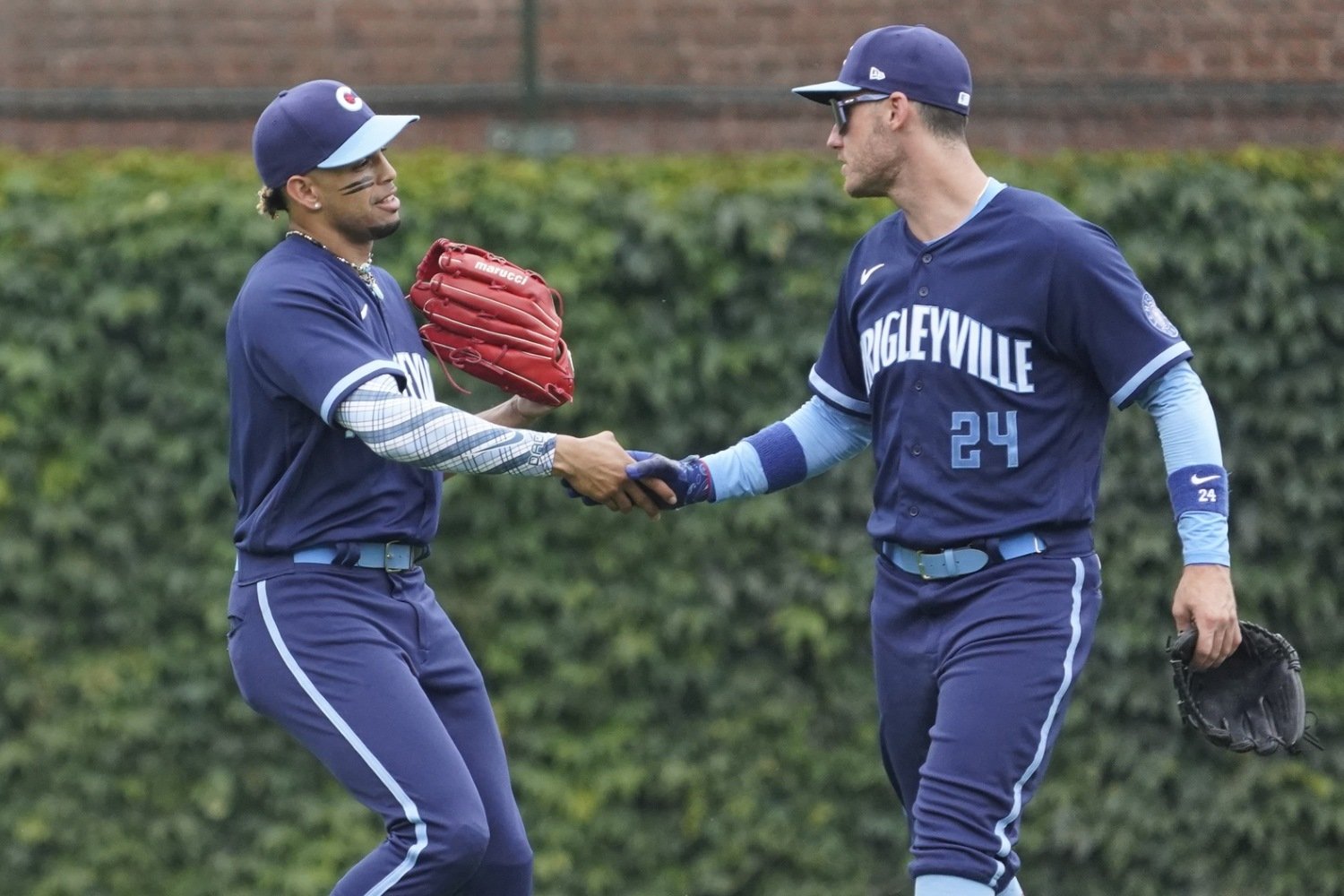 The Chicago Cubs’ re-signing of Cody Bellinger to what is, in essence, a one-year deal quelled many a nerve across the North Side fanbase over the weekend. In bringing back one of their offensive stalwarts from 2023, the Cubs locked in their sorely needed lefty bat for the middle of the order and a strong defender, to establish themselves as, at least, a contender for the National League Central crown in 2024. The ramifications of bringing Bellinger back into the fold run deep. There are lineup construction implications. There’s likely to be fallout on the 40-man. It puts the team into a position where prospects get to focus on the final steps of their development, rather than being thrust into a role from the jump. Most importantly – and perhaps impressively – it unlocks an absurd level of defensive versatility that should be the envy of teams around Major League Baseball. It’s no secret that this team has to be excellent on the margins in order to succeed. While signing Bellinger seemed essential, they’re still multiple steps behind legitimate contenders elsewhere in the NL. This is especially true on the defensive front. The Cubs have not built a staff of power arms. Some are on the rise throughout the system, sure. But with a staff that relies on soft contact, the defense has to be the crux of their aspirations. That makes the Bellinger re-addition that much more fascinating. Realistically, there are about four spots on the roster that are genuinely locked in. The middle infield features Dansby Swanson and Nico Hoerner (with the latter possessing the ability to move over to the six when the former needs a day off). Ian Happ will once again man left field. Yan Gomes is the guy behind the plate, until Miguel Amaya can hang as the No. 1. Seiya Suzuki will get the bulk of the starts in right. But without a true designated hitter on the roster, we can likely assume he’ll grab at least a decent share in that role, to open up some playing time for others. That leaves three and a half spots where the Cubs are lacking in everyday certainty: First base, third base, part of the DH gig, and center field. For those spots, the Cubs have Bellinger, Christopher Morel, Michael Busch, Patrick Wisdom, Nick Madrigal, Mike Tauchman, and Miles Mastrobuoni currently on the roster. Pete Crow-Armstrong and Alexander Canario are on the 40-man. They also have David Peralta, Dominic Smith, and Garrett Cooper in camp on minor-league deals. That’s a dozen names. Of them, Bellinger will most likely get the lion’s share of starts in center out of the gate, but we know he can handle first base at an upper-tier level, as well. When PCA is ready (or when Craig Counsell wants to work one of Canario or Tauchman into the mix), we’ll see him bounce to that infield corner. We may also see him in right for a spell once Crow-Armstrong does arrive permanently. So that’s two guaranteed spots in which we’ll see Bellinger, and maybe a third. Morel appeared at six different positions in 2023. The team wants to give him a shot to lock down the hot corner. If he can’t, we’ll likely see him bounce around in a somewhat similar fashion (while grabbing the majority of starts out of the DH spot). Somewhat similarly, Michael Busch played four separate positions in Los Angeles last year. The Cubs want to give him a chance at first. But we may also see him bounce around to second and third on an as-needed basis in order to get the bat into the lineup. Further down the roster, you’ve got Wisdom, who can play first, third, and the outfield corners (although those, please, God, only in emergencies). Madrigal can play second, and showed us last year that he can play third with the best of them. Tauchman can hold down any of the three outfield positions. So can Canario. Mastrobuoni played second, short, third, left, and right. The current slate of non-roster invites don’t offer the same level of flexibility, but they can handle first and/or an outfield corner in a pinch, opening up the DH spot, which would further goose the team's total flexibility. When Crow-Armstrong demonstrates that he’s ready for a regular role, your guys in center can be deployed elsewhere. Each of these guys can be counted on for at least some level of stability, too. You don’t want to trot Wisdom out at third for multiple weeks at a time. But on a Tuesday, so Morel can sit or just take some hacks at DH? Absolutely. You’re not worried about defensive metrics in single game samples. The purpose of having a roster constructed this way is that it allows you to plug guys in as needed without any real fear of catastrophe in the field. Point being, the Bellinger signing does a lot of really positive things for the Cubs. The defensive component might just be the most fascinating of it all. We’ve come to view Counsell as something of a chess master. And while he’ll certainly have a pretty regular lineup – especially having noted the comfort of hitters being an important consideration over the weekend – there are an absurd number of possibilities for his defensive configuration as 2024 gets underway. We’ll see some continued movement throughout the spring, for sure. But from a roster construction standpoint, it’s very clear that the organization has a significant desire to incorporate movable pieces. Not only from bench spots, either. Nearly half of the regular starters will experience some level of positional variability. It’s a massive tool in the toolbox for a manager such as Counsell and one that could play out as a significant advantage in 2024.
 -
The Chicago Cubs' lineup gained stability and concrete shape this weekend. Their defense, meanwhile, got even more fluid. Image courtesy of © David Banks-USA TODAY Sports The Chicago Cubs’ re-signing of Cody Bellinger to what is, in essence, a one-year deal quelled many a nerve across the North Side fanbase over the weekend. In bringing back one of their offensive stalwarts from 2023, the Cubs locked in their sorely needed lefty bat for the middle of the order and a strong defender, to establish themselves as, at least, a contender for the National League Central crown in 2024. The ramifications of bringing Bellinger back into the fold run deep. There are lineup construction implications. There’s likely to be fallout on the 40-man. It puts the team into a position where prospects get to focus on the final steps of their development, rather than being thrust into a role from the jump. Most importantly – and perhaps impressively – it unlocks an absurd level of defensive versatility that should be the envy of teams around Major League Baseball. It’s no secret that this team has to be excellent on the margins in order to succeed. While signing Bellinger seemed essential, they’re still multiple steps behind legitimate contenders elsewhere in the NL. This is especially true on the defensive front. The Cubs have not built a staff of power arms. Some are on the rise throughout the system, sure. But with a staff that relies on soft contact, the defense has to be the crux of their aspirations. That makes the Bellinger re-addition that much more fascinating. Realistically, there are about four spots on the roster that are genuinely locked in. The middle infield features Dansby Swanson and Nico Hoerner (with the latter possessing the ability to move over to the six when the former needs a day off). Ian Happ will once again man left field. Yan Gomes is the guy behind the plate, until Miguel Amaya can hang as the No. 1. Seiya Suzuki will get the bulk of the starts in right. But without a true designated hitter on the roster, we can likely assume he’ll grab at least a decent share in that role, to open up some playing time for others. That leaves three and a half spots where the Cubs are lacking in everyday certainty: First base, third base, part of the DH gig, and center field. For those spots, the Cubs have Bellinger, Christopher Morel, Michael Busch, Patrick Wisdom, Nick Madrigal, Mike Tauchman, and Miles Mastrobuoni currently on the roster. Pete Crow-Armstrong and Alexander Canario are on the 40-man. They also have David Peralta, Dominic Smith, and Garrett Cooper in camp on minor-league deals. That’s a dozen names. Of them, Bellinger will most likely get the lion’s share of starts in center out of the gate, but we know he can handle first base at an upper-tier level, as well. When PCA is ready (or when Craig Counsell wants to work one of Canario or Tauchman into the mix), we’ll see him bounce to that infield corner. We may also see him in right for a spell once Crow-Armstrong does arrive permanently. So that’s two guaranteed spots in which we’ll see Bellinger, and maybe a third. Morel appeared at six different positions in 2023. The team wants to give him a shot to lock down the hot corner. If he can’t, we’ll likely see him bounce around in a somewhat similar fashion (while grabbing the majority of starts out of the DH spot). Somewhat similarly, Michael Busch played four separate positions in Los Angeles last year. The Cubs want to give him a chance at first. But we may also see him bounce around to second and third on an as-needed basis in order to get the bat into the lineup. Further down the roster, you’ve got Wisdom, who can play first, third, and the outfield corners (although those, please, God, only in emergencies). Madrigal can play second, and showed us last year that he can play third with the best of them. Tauchman can hold down any of the three outfield positions. So can Canario. Mastrobuoni played second, short, third, left, and right. The current slate of non-roster invites don’t offer the same level of flexibility, but they can handle first and/or an outfield corner in a pinch, opening up the DH spot, which would further goose the team's total flexibility. When Crow-Armstrong demonstrates that he’s ready for a regular role, your guys in center can be deployed elsewhere. Each of these guys can be counted on for at least some level of stability, too. You don’t want to trot Wisdom out at third for multiple weeks at a time. But on a Tuesday, so Morel can sit or just take some hacks at DH? Absolutely. You’re not worried about defensive metrics in single game samples. The purpose of having a roster constructed this way is that it allows you to plug guys in as needed without any real fear of catastrophe in the field. Point being, the Bellinger signing does a lot of really positive things for the Cubs. The defensive component might just be the most fascinating of it all. We’ve come to view Counsell as something of a chess master. And while he’ll certainly have a pretty regular lineup – especially having noted the comfort of hitters being an important consideration over the weekend – there are an absurd number of possibilities for his defensive configuration as 2024 gets underway. We’ll see some continued movement throughout the spring, for sure. But from a roster construction standpoint, it’s very clear that the organization has a significant desire to incorporate movable pieces. Not only from bench spots, either. Nearly half of the regular starters will experience some level of positional variability. It’s a massive tool in the toolbox for a manager such as Counsell and one that could play out as a significant advantage in 2024. View full article
-
How Much Does Christopher Morel Really Need to Prove Defensively?
RandallPnkFloyd posted an article in Cubs
 Minor-league outfield signings serving as a potential Cody Bellinger contingency notwithstanding, perhaps the biggest Chicago Cubs news to emerge from the extended weekend was that they would give Christopher Morel a prolonged run at third base this spring. We (obviously) do not know what shape that will end up taking. The assumption has long been that Morel would get most of his starts out of the designated hitter spot. Nick Madrigal and Patrick Wisdom have been loosely, uneasily projected to hold down the hot corner, with an occasional cameo from Michael Busch. Morel, in the meantime, could see a splash of playing time at myriad positions, as was the case in 2023. He appeared at second, shortstop, third, and all three outfield spots last year. That would likely be on an as-needed basis, however, as none of those spots appear to be a long-term home for Morel. The middle infield is locked up for at least the next couple of years. The corner outfield spots are, too, with Ian Happ and Seiya Suzuki. Center field represents more of a question, but the Cubs already have Pete Crow-Armstrong, Mike Tauchman, and Alexander Canario vying for time, and the 2022 experiment in which Morel got extended run in center didn't leave anyone especially encouraged. Morel’s opportunities are constrained by others and by his own limitations, all over the diamond. There was brief chatter about a look at first base, but the acquisition of Busch seems to have put that on hold. This means that third base represents the most logical fit for Morel, if the team is hellbent on getting him time in the field. Realistically, shouldn’t that have always been the case anyway? Morel’s bat profiles well for the spot--much more so than the contact-oriented (and-nothing-else) Madrigal or the massive strikeout rate (even compared to Morel's own bloated one) of Wisdom. In matters of playing time, it’s largely about the defense, which is what the Cubs are aiming to examine this spring. But just how good does he have to be in order to stick there, anyway? Could the team get by with him being even average? Slightly below? Or does he have to be Actually Good in order to maintain a grip on an everyday positional role? There are three fairly close comparisons to be made against Morel’s offensive production in 2023: Max Muncy, Jake Burger, and Jeimer Candelario. Here are their respective lines: Morel: .247/.313/.508/.821, 31.0 K%, 8.4 BB%, .260 ISO, 119 wRC+ Muncy: .212/.333/.475/.808, 26.4 K%, 14.7 BB%, .263 ISO, 118 wRC+ Burger: .250/.309/.518/.828, 27.6 K%, 5.9 BB%, .268 ISO, 120 wRC+ Candelario: .251/.336/.471/.807, 22.0 K%, 9.2 BB%, .220 ISO, 117 wRC+ Candelario featured the highest WAR of the three (3.3, ranked eighth among qualifying third basemen). Muncy followed at 2.9 (12th) and Burger at 2.5 (15th). Nothing identical to Morel among them, but similarities abound. The most notable difference is that Muncy and Burger each project for over 70 percent of the playing time at third base, according to the depth charts over at FanGraphs. Candelario is in a bit more of a unique position, given the glut of infield prospects in Cincinnati, but totaled 994 innings at the position last year. Should one of the Reds’ prospects falter or hit the injured list, he’s likely the guy to step into a larger role there. So it stands to reason that this trio of Morel’s offensive comps are considered everyday guys at the hot corner. And yet, the defensive output isn’t terrific. Muncy went for an Outs Above Average (OAA) of -7 and -3 Defensive Runs Saved (DRS). Burger was -8 and -7, respectively. Candelario ended up on the positive side of OAA, at 2, but fell on the negative of DRS, at -5. In roughly 180 innings at the position over the last two seasons, Morel has a cumulative OAA of -3 and DRS of -4. It stands to reason that he could improve that if given more reps. Obviously, he has to make at least minor strides, because that rate of defensive leakage would amount to 15 or 20 lost runs over a full season. The hope would be that he makes bigger progress. But if he doesn’t – and he ends up being a bit under the average threshold – would it really matter? The reality is that there are very few third basemen who excel on both sides of the ball. José Ramírez, Manny Machado and Nolan Arenado stand almost alone in that regard. Outside of the truly elite at the position, you’re likely getting a glove-first guy with a mediocre bat, or an above-average bat with average-to-below average defense, like the Morel comps. With that in mind, who’s to say that Morel has to be good in order to nail down the position? It’s not as if the rest of the league (or the Cubs' own alternatives) are perfect. Madrigal looked solid in a very small sample, but his bat is better suited for…not a corner infield spot. And Wisdom’s glove was an atrocity in both 2022 & 2023. It certainly seems as if the Cubs should be giving Morel every chance to stick. Now, of course, there’s a bit of additional context. It’s a team built to live on the edge. Steady pitching, strong defense, and very little margin for error. It’s possible that the team decides to ride it out with Madrigal (or, hey, wild idea: sign a massive-upside defender like Matt Chapman) in order to ensure that fielding phalanx remains intact to cover any offensive shortcomings. You could also argue that allowing Morel to ride it out there makes more sense under these circumstances, given that almost no infielders are better at making plays to their right than Dansby Swanson. With such good defense around him, one becomes a little more optimistic as to: The impact of below-average defense from Morel; and The potential for development over time. In an ideal world, Morel shows he can handle the position from a defensive standpoint. This would help the club to avoid wasting his athleticism as an everyday DH. It would also allow the Cubs to operate with a little more freedom at the DH spot, which could lead to increased opportunity for many of the youngsters coming up through the ranks (Alexander Canario, for one) and for Busch to play often even if Bellinger re-signs. If it doesn’t work, though (or if the team decides to stay status quo with the Madrigal/Wisdom Braintrust), then we’ll likely see much of the same we did last year. Heavy time in the lineup, but sparingly seeing the actual field away from the basepaths. Let’s just not pretend that he has to be good to be the answer at third base for now.
- 17 comments
-
- 1
-

-
- christopher morel
- nick madrigal
- (and 1 more)
-
As the Chicago Cubs undertake the project of trying to turn one of their best hitters into a credible defender at a key position of need, the big question will be how high a bar he needs to clear. That question has a few wrinkles to it, so let's examine them. Image courtesy of © Rick Scuteri-USA TODAY Sports Minor-league outfield signings serving as a potential Cody Bellinger contingency notwithstanding, perhaps the biggest Chicago Cubs news to emerge from the extended weekend was that they would give Christopher Morel a prolonged run at third base this spring. We (obviously) do not know what shape that will end up taking. The assumption has long been that Morel would get most of his starts out of the designated hitter spot. Nick Madrigal and Patrick Wisdom have been loosely, uneasily projected to hold down the hot corner, with an occasional cameo from Michael Busch. Morel, in the meantime, could see a splash of playing time at myriad positions, as was the case in 2023. He appeared at second, shortstop, third, and all three outfield spots last year. That would likely be on an as-needed basis, however, as none of those spots appear to be a long-term home for Morel. The middle infield is locked up for at least the next couple of years. The corner outfield spots are, too, with Ian Happ and Seiya Suzuki. Center field represents more of a question, but the Cubs already have Pete Crow-Armstrong, Mike Tauchman, and Alexander Canario vying for time, and the 2022 experiment in which Morel got extended run in center didn't leave anyone especially encouraged. Morel’s opportunities are constrained by others and by his own limitations, all over the diamond. There was brief chatter about a look at first base, but the acquisition of Busch seems to have put that on hold. This means that third base represents the most logical fit for Morel, if the team is hellbent on getting him time in the field. Realistically, shouldn’t that have always been the case anyway? Morel’s bat profiles well for the spot--much more so than the contact-oriented (and-nothing-else) Madrigal or the massive strikeout rate (even compared to Morel's own bloated one) of Wisdom. In matters of playing time, it’s largely about the defense, which is what the Cubs are aiming to examine this spring. But just how good does he have to be in order to stick there, anyway? Could the team get by with him being even average? Slightly below? Or does he have to be Actually Good in order to maintain a grip on an everyday positional role? There are three fairly close comparisons to be made against Morel’s offensive production in 2023: Max Muncy, Jake Burger, and Jeimer Candelario. Here are their respective lines: Morel: .247/.313/.508/.821, 31.0 K%, 8.4 BB%, .260 ISO, 119 wRC+ Muncy: .212/.333/.475/.808, 26.4 K%, 14.7 BB%, .263 ISO, 118 wRC+ Burger: .250/.309/.518/.828, 27.6 K%, 5.9 BB%, .268 ISO, 120 wRC+ Candelario: .251/.336/.471/.807, 22.0 K%, 9.2 BB%, .220 ISO, 117 wRC+ Candelario featured the highest WAR of the three (3.3, ranked eighth among qualifying third basemen). Muncy followed at 2.9 (12th) and Burger at 2.5 (15th). Nothing identical to Morel among them, but similarities abound. The most notable difference is that Muncy and Burger each project for over 70 percent of the playing time at third base, according to the depth charts over at FanGraphs. Candelario is in a bit more of a unique position, given the glut of infield prospects in Cincinnati, but totaled 994 innings at the position last year. Should one of the Reds’ prospects falter or hit the injured list, he’s likely the guy to step into a larger role there. So it stands to reason that this trio of Morel’s offensive comps are considered everyday guys at the hot corner. And yet, the defensive output isn’t terrific. Muncy went for an Outs Above Average (OAA) of -7 and -3 Defensive Runs Saved (DRS). Burger was -8 and -7, respectively. Candelario ended up on the positive side of OAA, at 2, but fell on the negative of DRS, at -5. In roughly 180 innings at the position over the last two seasons, Morel has a cumulative OAA of -3 and DRS of -4. It stands to reason that he could improve that if given more reps. Obviously, he has to make at least minor strides, because that rate of defensive leakage would amount to 15 or 20 lost runs over a full season. The hope would be that he makes bigger progress. But if he doesn’t – and he ends up being a bit under the average threshold – would it really matter? The reality is that there are very few third basemen who excel on both sides of the ball. José Ramírez, Manny Machado and Nolan Arenado stand almost alone in that regard. Outside of the truly elite at the position, you’re likely getting a glove-first guy with a mediocre bat, or an above-average bat with average-to-below average defense, like the Morel comps. With that in mind, who’s to say that Morel has to be good in order to nail down the position? It’s not as if the rest of the league (or the Cubs' own alternatives) are perfect. Madrigal looked solid in a very small sample, but his bat is better suited for…not a corner infield spot. And Wisdom’s glove was an atrocity in both 2022 & 2023. It certainly seems as if the Cubs should be giving Morel every chance to stick. Now, of course, there’s a bit of additional context. It’s a team built to live on the edge. Steady pitching, strong defense, and very little margin for error. It’s possible that the team decides to ride it out with Madrigal (or, hey, wild idea: sign a massive-upside defender like Matt Chapman) in order to ensure that fielding phalanx remains intact to cover any offensive shortcomings. You could also argue that allowing Morel to ride it out there makes more sense under these circumstances, given that almost no infielders are better at making plays to their right than Dansby Swanson. With such good defense around him, one becomes a little more optimistic as to: The impact of below-average defense from Morel; and The potential for development over time. In an ideal world, Morel shows he can handle the position from a defensive standpoint. This would help the club to avoid wasting his athleticism as an everyday DH. It would also allow the Cubs to operate with a little more freedom at the DH spot, which could lead to increased opportunity for many of the youngsters coming up through the ranks (Alexander Canario, for one) and for Busch to play often even if Bellinger re-signs. If it doesn’t work, though (or if the team decides to stay status quo with the Madrigal/Wisdom Braintrust), then we’ll likely see much of the same we did last year. Heavy time in the lineup, but sparingly seeing the actual field away from the basepaths. Let’s just not pretend that he has to be good to be the answer at third base for now. View full article
- 17 replies
-
- 1
-
-
- christopher morel
- nick madrigal
- (and 1 more)
-
How Playing with Playing Time Changes the 2024 Chicago Cubs' Projections
RandallPnkFloyd posted an article in Cubs
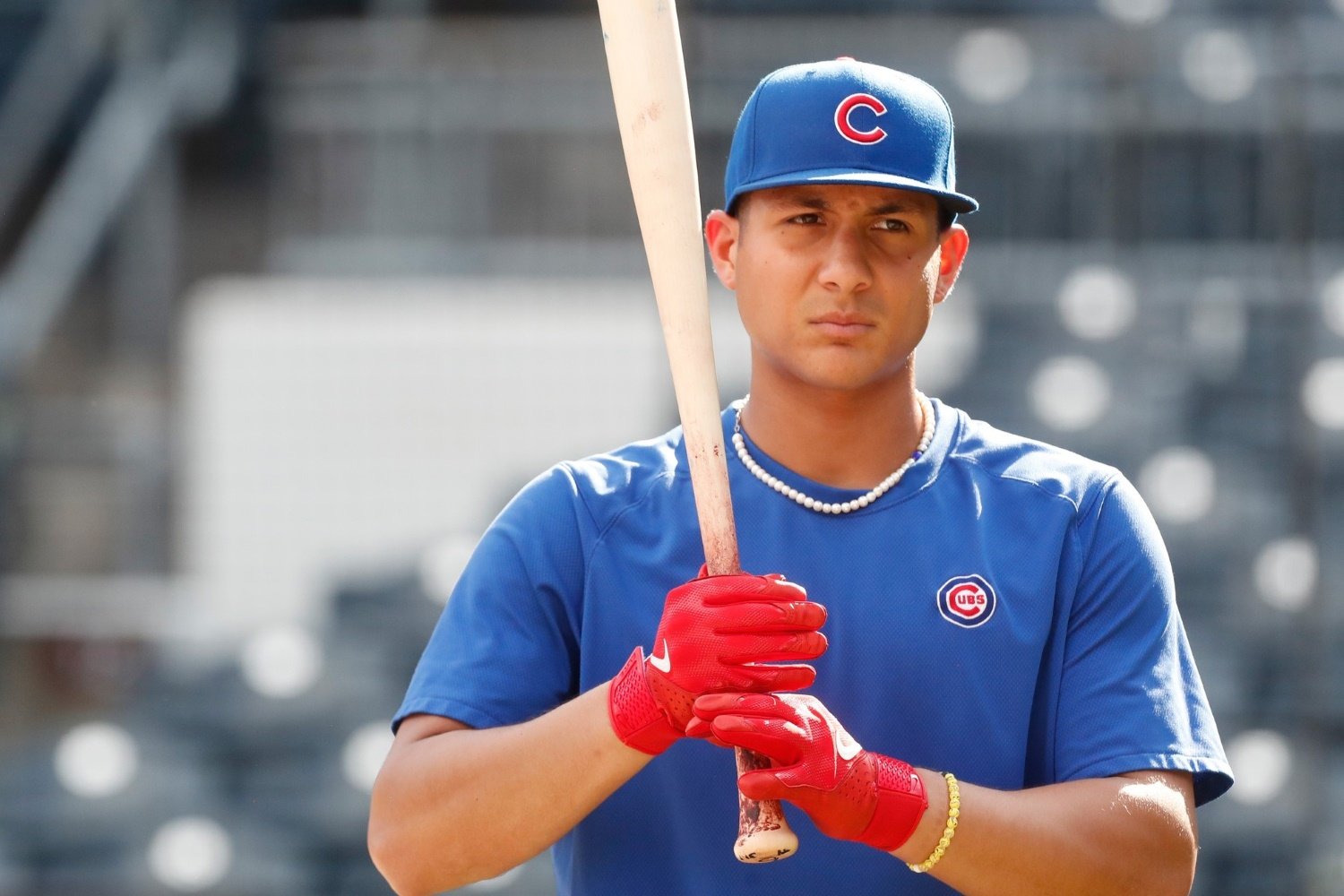 It seems like projection season always leaves fans of the Chicago Cubs in varying states of dismay. Even in past winters wherein the team has been far more active or seems to feature more upside, systems like PECOTA and ZiPS don’t tend to love them—at least not as much as fans want them to. That’s a bit of anecdotal evidence for you, but certainly speaks to where fans are once again, as a collective emotional unit. The projections emerging out of Baseball Prospectus in the past week—and FanGraphs before them—see the Cubs in an almost identical light: roughly 81 wins, about a 35-percent shot at the postseason, and eerily similar runs for and against. It’s a far cry from what we might have expected to feel at this point, given the pleasant shock of the Craig Counsell hire at the onset of the offseason. The good news is that, unlike previous years in which they reached this point in underwhelming shape, the Cubs still have a chance to shake the projection systems up a bit. With a handful of impact free agents still available, the club can hand over some cash to enhance their chances in an otherwise weak division. But regardless of that additional context and whether or not the team will, in fact, add, there are internal factors that could impact whether the Cubs outperform their projections—or underperform them. Either way, there’s plenty of variance waiting to occur underneath the prospective statline presented by said projections. Most notable among them is the catcher position. From a personnel standpoint, this is a spot that looks to be sewn up coming out of Arizona. It’ll be Yan Gomes and Miguel Amaya representing the 1-2 punch behind the plate. At present, PECOTA projects Gomes for 414 plate appearances and a 0.3 WARP. (In fact, when I say PECOTA, I kind of mean me. I’m the Depth Charts analyst for the NL Central at BP, so the playing time projections are partially fueled by my input.) Behind him, Amaya’s projected at 249 plate appearances and a 1.0 WARP. Similarly, ZiPS has Gomes at 0.7 WAR across 378 PAs and Amaya at 1.0 in 237. At first glance, it appears that both PECOTA and ZiPS favor Amaya’s production more in a smaller sample than Gomes’s. What if, in that case, we flipped them? We give Amaya the 414 plate appearances and Gomes the 249? Rough math puts Amaya up to 1.7 WARP, with Gomes slipping slightly back to 0.2. If we go the same route with ZiPS, Amaya gets boosted up to 1.6 WAR, with Gomes coming back to 0.4. Now, there isn’t a whole lot we can glean from just that small bit of information. The main takeaway, however, is that Amaya gets a sizable boost with increased playing time, while what Gomes loses is only marginal. That just makes sense, since on a rate basis, the systems each think Amaya is a better player. From an offensive standpoint, it could behoove the Cubs to give their younger backstop more time behind the plate. Of course, the defensive context matters too, and there’s a reason that the team decided to pick up Gomes’s option in the first place. The upside that Amaya presents with the bat, though, makes it a situation worth monitoring, especially in considering how it could impact their projected win total. Flipping the view over to first base, PECOTA currently has Michael Busch at 0.9 WARP across 444 plate appearances. Matt Mervis is at 0.1 in only 99. ZiPS is just slightly more bullish on Busch, going 0.7 in 308 PAs. Mervis is at 0.3 in 112 through that lens. If we applied the same exercise in reversing their roles, Busch ends up with 0.2 WARP and 0.3 WAR, while Mervis sits 0.5 and 0.3, respectively. The difference there is less than marginal. Regardless of who mans first base, it seems that the overall production could be similar between the two, which doesn’t seem entirely unreasonable when you consider the limited big league experience of either option. Now, were the Cubs to sign one of the remaining free agents—like, say Cody Bellinger—who would log pretty notable time at the spot, then you’d see more of a WARP/WAR increase than merely shuffling pieces around the roster as currently constructed. If we wanted to throw third base into the conversation, we’d look at Nick Madrigal vs. Patrick Wisdom. BP has Madrigal at 1.7 WARP in 363 PAs and Wisdom at 1.1 in 427. (Madrigal is the projected starter, but Wisdom’s versatility gets him more plate appearances overall.) ZiPS is at 1.3 in 357 and 0.3 in 126, respectively, but exclusively at third base. Since the latter bears more positional focus, we’ll stick only with that one. If we swapped their projected roles, you’d get 0.5 WAR from Madrigal and 0.9 WAR from Wisdom. Each of these three positions represents the least “sure” of the things for the Cubs’ Opening Day lineup come Mar. 28, at least if you’re acting under the assumption that Cody Bellinger will be manning center field by then. We know, of course, the likeliest outcome for the configuration of each by that point. But projecting what will happen at that trio of spots beyond then is anything but a certainty. What we can opine on, at the very least, is that the Cubs running out Amaya more often than Gomes could have a larger impact on the offensive side of the ball. For a team that is set to live on the margins yet again, that could have some rather significant bearing on their projected win total. The same cannot be said, however, of the corners. First base doesn’t feature a lot of variance in either case of a post-hype prospect holding it down. Madrigal appears to be the guy at third, and if you flipped them, you’re ending up with less production over 350-ish plate appearances. Behind the plate, though, absolutely holds some intrigue when we measure the outcomes against these preseason projections. Obviously, we’re dealing in hypotheticals and rough math quite a bit here. Nothing is without context, either. It’s easy to say that the Cubs could outperform their projected win total with more of Amaya because they’d score more runs, but would they also surrender more? The projection systems say Amaya is also a better defender than the aging Gomes, who no longer frames pitches as well as he once did, but we know that pitchers love working with Gomes in a way that can’t easily be ignored. In any case, a team like the Cubs presents a fascinating case study for the projection systems from this point until October. They’re an average team. The projections say so, and our collective eyeballs likely feel the same. But the Craig Counsell of it all will likely have a lot to say about how much they outperform or underperform that standing in the middle tier. Purely within the context of the projections themselves, it’s going to be very interesting to watch how much variance occurs as the season progresses and how much that variance is dependent on distribution of playing time.
 -
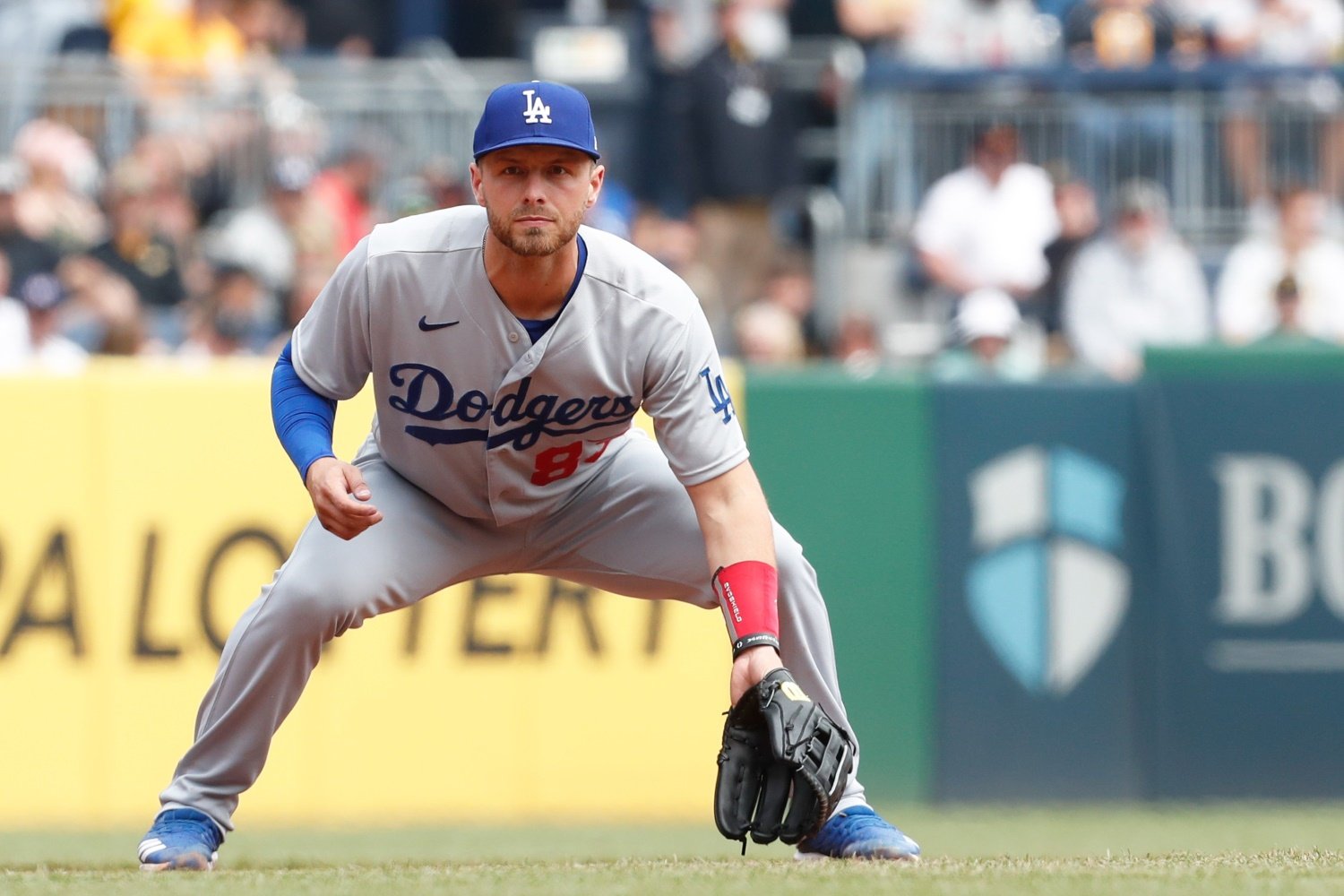 When the Chicago Cubs first acquired Michael Busch from the Los Angeles Dodgers, my instinct was to immediately evaluate him as part of the picture at third base. The Cubs lacked certainty at both infield corners, sure. But given Busch’s prior role in Los Angeles and an easier road to clarity at first base, it was the logical fit. My justification existed within that future projection. Patrick Wisdom strikes out too much, for a guy who plays subpar defense. Nick Madrigal doesn’t have the offensive profile needed to play regularly, despite his great glove. The organization has shown almost no interest in allowing Christopher Morel to ply his trade at the spot on anything resembling a long-term basis. On the other side, the team was linked to Rhys Hoskins all winter, with Matt Mervis also waiting for another crack at nabbing a permanent role at the top level. So, in the face of people much smarter than me declaring otherwise, I honed in on third base as Busch’s immediate spot with the Cubs. Since that time, Hoskins has signed in Milwaukee. Pete Alonso, an apparent trade candidate from the winter’s outset, doesn’t appear likely to be moved prior to his own free agency. With that, there’s also this from Carter Hawkins (via Marquee😞 “Our expectation is he’s on the Opening Day roster," Hawkins said. "I think there’s obviously opportunity at first base — that’s kind of the easy plug-and-play. He’s got really good reviews defensively over there from our scouts that have seen him, from talking to the Dodgers, from obviously seeing him over there.” Hawkins also offered the caveat that Busch does have a history of time at second and third. He noted that third base will require extensive work from a defensive standpoint, something that makes plenty of sense given the organization’s commitment to upper-tier defense. Nevertheless, the Hoskins signing is what likely seals this more than anything. With no viable candidates existing outside the organization at present, it’s likely going to be Busch, no matter what misguided inklings I had at the time of the trade. Busch’s professional experience at the position is minimal. In 2023, at Triple A, he started seven games at first base. He spent 10 innings there across four games in the majors, but no starts. That’s it. Until he was drafted, though, first base was his primary position. He played 158 games there at North Carolina, and another 66 in wood-bat summer leagues. He's more comfortable at that spot than anywhere else on the diamond, even if he hasn't made it his primary home in a few years. It makes sense to stick Busch at first, especially since the path to clarity now seems more obvious on the other side of the infield. You can survive with a combination of Wisdom and Madrigal there. You can sign Matt Chapman. There are a couple of prospects scratching the upper levels of the minors. The intrigue exists far more there (in both the short and long term) than it does at first base. Busch as the guy getting the run out of the gate makes multiple degrees of sense. Of course, that also creates a massive question pertaining to one former darling prospect: Matt Mervis. After his power bat broke him onto the scene as a potential future first baseman, he sipped 99 plate appearances' worth of coffee in 2023. That culminated in a .167/.242/.289 line, with an ISO of just .122 and a strikeout rate a touch over 32 percent. Mervis went to Iowa and adjustments were made, but not to the degree of really impacting outcomes. Cody Bellinger’s extensive, health-related run at the spot helped to hold Mervis down indefinitely. In terms of the “future” context, Mervis’s demotion seemed more permanent, as the discussion moved to names like Alonso or Hoskins. Busch anchoring first base would seem to indicate a fair amount of gloom and doom for Mervis’s future on the North Side. Busch doesn’t offer the power that Mervis could, but his 20-plus homer potential isn’t exactly a far cry from Mervis's upside. Add in more contact and more athleticism and there’s plenty of logic in it being Busch over Mervis. When you add in Morel’s standing as the team’s full-time designated hitter, Mervis gets squeezed out, quickly and easily. So it would, in fact, appear that the Cubs were at least able to solve one part of their corner infield puzzle with the Busch acquisition. Maybe they even answered the question of what happens with Mervis moving forward (if Busch succeeds). Third base is still in question, but there are bodies available, inside and outside of the organization. Maybe Busch thrives and Mervis hits. That would be a nice problem to have. Regardless of the way it shakes out, though, it’s a situation that offers far more intrigue than hoping Eric Hosmer and/or Trey Mancini can hold it down over the course of a full season. Where do you like Busch's fit on the roster best? Would you make room for Mervis, or start looking to trade him? Weigh in below, and let's get a brainstorm going.
 -
Both corners of the Cubs infield remain sources of uncertainty, if not outright confusion. Their big trade with the Dodgers early this month has offered new possibilities, but not (yet) a clear solution. Image courtesy of © Charles LeClaire-USA TODAY Sports When the Chicago Cubs first acquired Michael Busch from the Los Angeles Dodgers, my instinct was to immediately evaluate him as part of the picture at third base. The Cubs lacked certainty at both infield corners, sure. But given Busch’s prior role in Los Angeles and an easier road to clarity at first base, it was the logical fit. My justification existed within that future projection. Patrick Wisdom strikes out too much, for a guy who plays subpar defense. Nick Madrigal doesn’t have the offensive profile needed to play regularly, despite his great glove. The organization has shown almost no interest in allowing Christopher Morel to ply his trade at the spot on anything resembling a long-term basis. On the other side, the team was linked to Rhys Hoskins all winter, with Matt Mervis also waiting for another crack at nabbing a permanent role at the top level. So, in the face of people much smarter than me declaring otherwise, I honed in on third base as Busch’s immediate spot with the Cubs. Since that time, Hoskins has signed in Milwaukee. Pete Alonso, an apparent trade candidate from the winter’s outset, doesn’t appear likely to be moved prior to his own free agency. With that, there’s also this from Carter Hawkins (via Marquee😞 “Our expectation is he’s on the Opening Day roster," Hawkins said. "I think there’s obviously opportunity at first base — that’s kind of the easy plug-and-play. He’s got really good reviews defensively over there from our scouts that have seen him, from talking to the Dodgers, from obviously seeing him over there.” Hawkins also offered the caveat that Busch does have a history of time at second and third. He noted that third base will require extensive work from a defensive standpoint, something that makes plenty of sense given the organization’s commitment to upper-tier defense. Nevertheless, the Hoskins signing is what likely seals this more than anything. With no viable candidates existing outside the organization at present, it’s likely going to be Busch, no matter what misguided inklings I had at the time of the trade. Busch’s professional experience at the position is minimal. In 2023, at Triple A, he started seven games at first base. He spent 10 innings there across four games in the majors, but no starts. That’s it. Until he was drafted, though, first base was his primary position. He played 158 games there at North Carolina, and another 66 in wood-bat summer leagues. He's more comfortable at that spot than anywhere else on the diamond, even if he hasn't made it his primary home in a few years. It makes sense to stick Busch at first, especially since the path to clarity now seems more obvious on the other side of the infield. You can survive with a combination of Wisdom and Madrigal there. You can sign Matt Chapman. There are a couple of prospects scratching the upper levels of the minors. The intrigue exists far more there (in both the short and long term) than it does at first base. Busch as the guy getting the run out of the gate makes multiple degrees of sense. Of course, that also creates a massive question pertaining to one former darling prospect: Matt Mervis. After his power bat broke him onto the scene as a potential future first baseman, he sipped 99 plate appearances' worth of coffee in 2023. That culminated in a .167/.242/.289 line, with an ISO of just .122 and a strikeout rate a touch over 32 percent. Mervis went to Iowa and adjustments were made, but not to the degree of really impacting outcomes. Cody Bellinger’s extensive, health-related run at the spot helped to hold Mervis down indefinitely. In terms of the “future” context, Mervis’s demotion seemed more permanent, as the discussion moved to names like Alonso or Hoskins. Busch anchoring first base would seem to indicate a fair amount of gloom and doom for Mervis’s future on the North Side. Busch doesn’t offer the power that Mervis could, but his 20-plus homer potential isn’t exactly a far cry from Mervis's upside. Add in more contact and more athleticism and there’s plenty of logic in it being Busch over Mervis. When you add in Morel’s standing as the team’s full-time designated hitter, Mervis gets squeezed out, quickly and easily. So it would, in fact, appear that the Cubs were at least able to solve one part of their corner infield puzzle with the Busch acquisition. Maybe they even answered the question of what happens with Mervis moving forward (if Busch succeeds). Third base is still in question, but there are bodies available, inside and outside of the organization. Maybe Busch thrives and Mervis hits. That would be a nice problem to have. Regardless of the way it shakes out, though, it’s a situation that offers far more intrigue than hoping Eric Hosmer and/or Trey Mancini can hold it down over the course of a full season. Where do you like Busch's fit on the roster best? Would you make room for Mervis, or start looking to trade him? Weigh in below, and let's get a brainstorm going. View full article
-
The Cubs made a crucial upgrade in their lineup with a trade Thursday, adding left-handed thump. The question is what, exactly, they just did to their defense. Image courtesy of © BRYAN TERRY/THE OKLAHOMAN / USA TODAY NETWORK Within the same calendar day on which their deal with Shōta Imanaga was announced, the Chicago Cubs swung a major trade, too. In this one, they acquired (former?) top prospect Michael Busch & reliever Yency Almonte from the Los Angeles Dodgers. In return, the Cubs sent highly-regarded pitching prospect Jackson Ferris, and 2023 draftee Zyhir Hope, an outfielder. It’s not a wildly significant trade on paper. In one description, it’s a couple of guys not on the 40-man roster for a former top prospect being squeezed out of a championship-caliber roster and a reliever out of options. But the ramifications run deep, especially on the Cubs’ end of things. One aspect that seems essential to discuss, though, is the defensive angle of it all. While there are still moves to be made—if you believe the hype, the Cubs could be in line for multiple marquee free agents before the offseason expires—the early assumption is that Michael Busch could assume a role as the regular starter at either third or first base. It’s an idea worth exploring on multiple levels. Busch’s sample at the major-league level is small. He has 81 plate appearances to his name, all of which came in 2023. He doesn’t have a real stretch at the top level to make any determination either way, nor is the mainstream fan base aware of the skill set he brings. Scouting reports don’t love the glove or arm, though, and essentially any overview you read of Busch as a player questions the position at which he’ll spend his time for the foreseeable future. For the sake of ease, here’s MLB Pipeline, on Busch’s defense: Though Busch has fringy speed and arm strength, he has worked hard to improve his quickness and arm since turning pro. Evaluators inside and outside of the organization were impressed at how he has transformed himself into an adequate defender at second base, though the Dodgers have deployed him primarily at third base in 2023. The game speeds up on him at the hot corner, however, and he's still best suited for first base and capable of playing a passable left field. I am, admittedly, not well-versed on the Dodgers’ system. I know it’s good; it’s good in perpetuity. Virtually every scouting report I’ve seen, though, reflects the same sentiment, and the conclusion of all of them is the idea that Busch does not have a defensive home moving forward—save for maybe first base (where the Cubs also happen to have a long-term need). Again, that initial vibe is one that has him as the Cubs’ primary guy at third for 2024, perhaps independent of any other moves they would make (short of a Matt Chapman, of course). This makes it a fascinating move for the Cubs, on a couple of levels. The team does not have a long-term option settled on either corner of the infield. That doesn’t mean they don’t have bodies, though. Nick Madrigal, Patrick Wisdom, Christopher Morel, and Miles Mastrobuoni could, theoretically, all see time there in 2024. Longer-term, someone like BJ Murray, Jr. or (more notably) Matt Shaw represent some upside within the system. The organization’s previous reluctance to roll Morel out with any level of consistency at the position probably rules him out. Mastrobuoni isn’t anything more than utility off the bench. As such, of those likely to get the bulk of the starts at third, only Busch, Madrigal, and Wisdom seem realistic. All three bring drastically different types of offense. Defensively, though, it isn’t a difficult puzzle to solve; the job could already be in Busch’s hands. Madrigal, without question, exceeded expectations with his glove at the hot corner. Across roughly 560 innings, he went for an Outs Above Average of 10 and posted 8 Defensive Runs Saved. His lack of long-term viability is about his contact-only bat (given what you want out of a corner infield spot), rather than his defense. Interestingly, ruling Wisdom out kind of takes the opposite perspective. Wisdom has the pop (strikeouts notwistanding) to hang in a corner, but it’s his glove as the limiting factor. In over 900 innings in 2022, Wisdom posted -6 DRS and -11 OAA, before going for -5 DRS and -6 OAA in roughly half the time (460 innings) in 2023. Busch only has 99 major-league innings at third base. The numbers aren’t terrific, with a DRS of -1 and OAA of -4 in that small sample. You can make the argument that the Cubs were an upper-tier defense even without full-time excellence at third in the last few years. You can also note that having Dansby Swanson to your left—someone who featured an 80 percent success rate in moving to his right—would mitigate some of those concerns. And defense can always be coached up. If Busch made strides at second base, it’s absolutely possible he could demonstrate the type of growth in a full-time switch to third that we saw from Madrigal. The possibility of a platoon with either of the others, both of whom are right-handed bats, exists. That could allow for Busch’s growth within a small sample. But it is interesting that a team as defense-oriented as the Cubs would be willing to quickly install Busch into their infield picture, given the shortcomings that have been noted throughout his professional career. Which leads me to two conclusions. The first is that we should take seriously (though not at all as gospel) reports that Busch will be the Cubs’ 2024 first baseman. It’s the early assumption, according to the always-reliable Sahadev Sharma, but not close to official yet. The second is that the Cubs believe they can get him moving at a passable rate with the glove, to a point where the massive upside with the bat will help to compensate for any defensive deficiency. All that—this is likely an essential component for the Cubs specifically—without the hefty contract of someone like Chapman. After the most dull offseason possible, the Cubs have started to create a buzz this week. The infield configuration with Busch in the fold is fascinating, especially when you consider additional signings or a trade of someone like Wisdom on the horizon. It’s a trade that creates questions, but also unlocks all sorts of potential for the balance of this winter. View full article
- 10 replies
-
- 1
-
-
- michael busch
- nick madrigal
- (and 1 more)
-
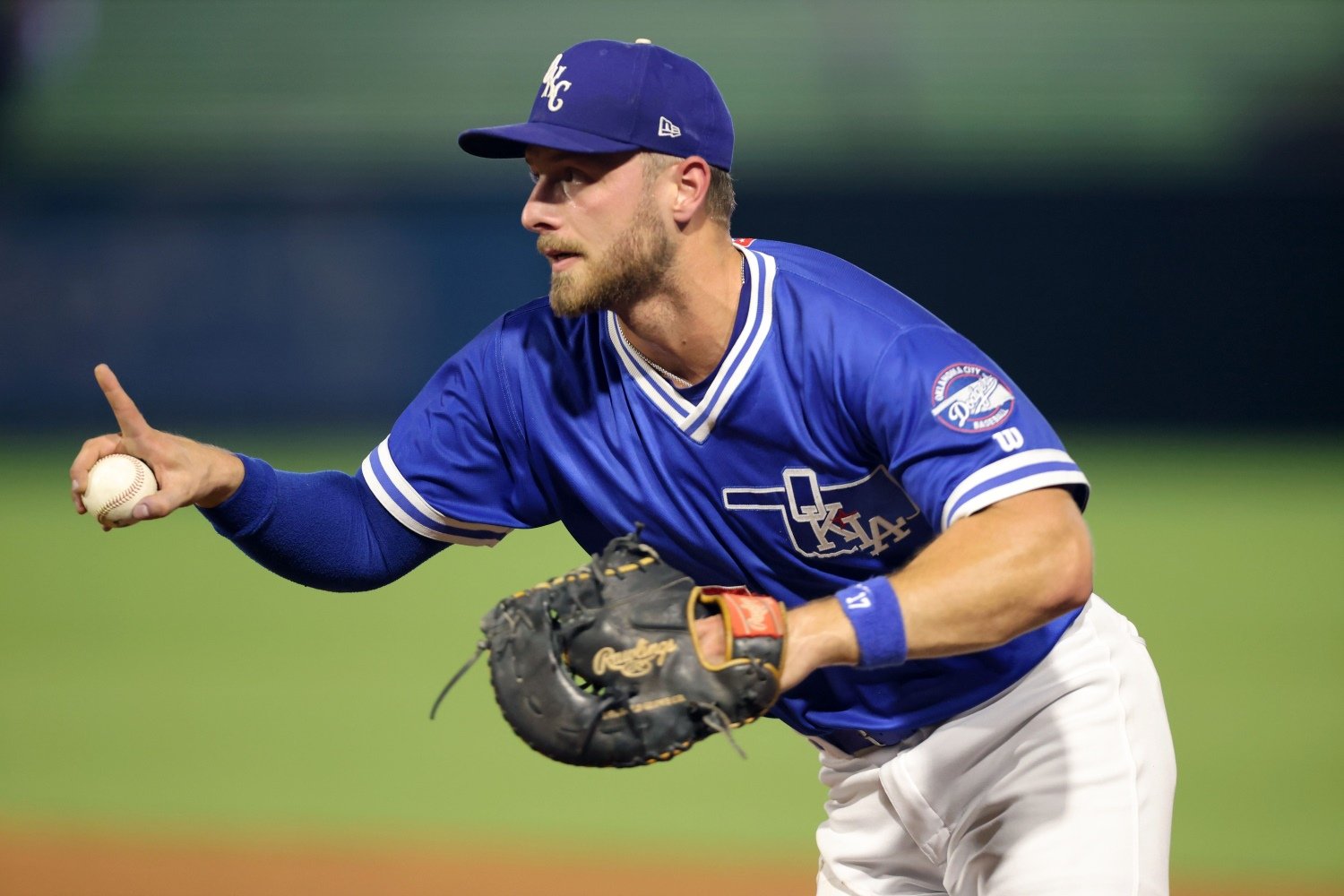 Within the same calendar day on which their deal with Shōta Imanaga was announced, the Chicago Cubs swung a major trade, too. In this one, they acquired (former?) top prospect Michael Busch & reliever Yency Almonte from the Los Angeles Dodgers. In return, the Cubs sent highly-regarded pitching prospect Jackson Ferris, and 2023 draftee Zyhir Hope, an outfielder. It’s not a wildly significant trade on paper. In one description, it’s a couple of guys not on the 40-man roster for a former top prospect being squeezed out of a championship-caliber roster and a reliever out of options. But the ramifications run deep, especially on the Cubs’ end of things. One aspect that seems essential to discuss, though, is the defensive angle of it all. While there are still moves to be made—if you believe the hype, the Cubs could be in line for multiple marquee free agents before the offseason expires—the early assumption is that Michael Busch could assume a role as the regular starter at either third or first base. It’s an idea worth exploring on multiple levels. Busch’s sample at the major-league level is small. He has 81 plate appearances to his name, all of which came in 2023. He doesn’t have a real stretch at the top level to make any determination either way, nor is the mainstream fan base aware of the skill set he brings. Scouting reports don’t love the glove or arm, though, and essentially any overview you read of Busch as a player questions the position at which he’ll spend his time for the foreseeable future. For the sake of ease, here’s MLB Pipeline, on Busch’s defense: Though Busch has fringy speed and arm strength, he has worked hard to improve his quickness and arm since turning pro. Evaluators inside and outside of the organization were impressed at how he has transformed himself into an adequate defender at second base, though the Dodgers have deployed him primarily at third base in 2023. The game speeds up on him at the hot corner, however, and he's still best suited for first base and capable of playing a passable left field. I am, admittedly, not well-versed on the Dodgers’ system. I know it’s good; it’s good in perpetuity. Virtually every scouting report I’ve seen, though, reflects the same sentiment, and the conclusion of all of them is the idea that Busch does not have a defensive home moving forward—save for maybe first base (where the Cubs also happen to have a long-term need). Again, that initial vibe is one that has him as the Cubs’ primary guy at third for 2024, perhaps independent of any other moves they would make (short of a Matt Chapman, of course). This makes it a fascinating move for the Cubs, on a couple of levels. The team does not have a long-term option settled on either corner of the infield. That doesn’t mean they don’t have bodies, though. Nick Madrigal, Patrick Wisdom, Christopher Morel, and Miles Mastrobuoni could, theoretically, all see time there in 2024. Longer-term, someone like BJ Murray, Jr. or (more notably) Matt Shaw represent some upside within the system. The organization’s previous reluctance to roll Morel out with any level of consistency at the position probably rules him out. Mastrobuoni isn’t anything more than utility off the bench. As such, of those likely to get the bulk of the starts at third, only Busch, Madrigal, and Wisdom seem realistic. All three bring drastically different types of offense. Defensively, though, it isn’t a difficult puzzle to solve; the job could already be in Busch’s hands. Madrigal, without question, exceeded expectations with his glove at the hot corner. Across roughly 560 innings, he went for an Outs Above Average of 10 and posted 8 Defensive Runs Saved. His lack of long-term viability is about his contact-only bat (given what you want out of a corner infield spot), rather than his defense. Interestingly, ruling Wisdom out kind of takes the opposite perspective. Wisdom has the pop (strikeouts notwistanding) to hang in a corner, but it’s his glove as the limiting factor. In over 900 innings in 2022, Wisdom posted -6 DRS and -11 OAA, before going for -5 DRS and -6 OAA in roughly half the time (460 innings) in 2023. Busch only has 99 major-league innings at third base. The numbers aren’t terrific, with a DRS of -1 and OAA of -4 in that small sample. You can make the argument that the Cubs were an upper-tier defense even without full-time excellence at third in the last few years. You can also note that having Dansby Swanson to your left—someone who featured an 80 percent success rate in moving to his right—would mitigate some of those concerns. And defense can always be coached up. If Busch made strides at second base, it’s absolutely possible he could demonstrate the type of growth in a full-time switch to third that we saw from Madrigal. The possibility of a platoon with either of the others, both of whom are right-handed bats, exists. That could allow for Busch’s growth within a small sample. But it is interesting that a team as defense-oriented as the Cubs would be willing to quickly install Busch into their infield picture, given the shortcomings that have been noted throughout his professional career. Which leads me to two conclusions. The first is that we should take seriously (though not at all as gospel) reports that Busch will be the Cubs’ 2024 first baseman. It’s the early assumption, according to the always-reliable Sahadev Sharma, but not close to official yet. The second is that the Cubs believe they can get him moving at a passable rate with the glove, to a point where the massive upside with the bat will help to compensate for any defensive deficiency. All that—this is likely an essential component for the Cubs specifically—without the hefty contract of someone like Chapman. After the most dull offseason possible, the Cubs have started to create a buzz this week. The infield configuration with Busch in the fold is fascinating, especially when you consider additional signings or a trade of someone like Wisdom on the horizon. It’s a trade that creates questions, but also unlocks all sorts of potential for the balance of this winter.
- 10 comments
-
- 1
-
-
- michael busch
- nick madrigal
- (and 1 more)
-
As the Cubs seek to add a big bat to their lineup this winter, they figure to lock in on a few first basemen as potential acquisitions. They're a team that prioritizes defense, though, and it will be interesting to see how much weight they assign to the glove at that position as they go about their hot stove business. Image courtesy of © John Geliebter-USA TODAY Sports The Chicago Cubs introduced Craig Counsell as their manager on Monday morning. While his staff still needs sorting, we now know the face of the man tasked with manning the bench in 2024. There are a few other spots, however, where we aren’t quite so fortunate. Among those is first base, where the Cubs will assuredly feature someone not currently on the roster. The 2023 iteration of the club saw a mix of Cody Bellinger (59 games), Trey Mancini (51), Matt Mervis (27), Jeimer Candelario (21), Eric Hosmer (15), and Patrick Wisdom and Jared Young (14 each) log time at the position. Of those players, two didn’t finish the season as part of the roster (Mancini and Hosmer); one has already departed this offseason via waivers (Young), and two are set to find a lucrative payday in free agency (Bellinger & Candelario). With no positional prospect on the cusp, that leaves Mervis and Wisdom as the only in-house options that might see time at the spot in 2024. The team has also said Christopher Morel will get some winter reps at the cold corner. It’s hard to imagine that any of the trio will be a viable option to see major time there, however. The organization spent 2023 mismanaging Mervis to the point of wondering if he’ll ever get a genuine shot again. Wisdom is a non-tender candidate given his loud but shallow skill set. It remains to be seen how serious the Cubs are about Morel as a viable option at the spot in the longer term. All of this is to say that we’re going to see a new first baseman at Wrigley Field in 2024. Bellinger could very well return on a long-term contract. So, too, could Candelario (albeit less likely). The door hasn’t been closed on either as firmly as it has with, say, Marcus Stroman. However, given their commitment to other positions (center field and third base, respectively), it would likely end up being more of a timeshare situation. In either case, the Cubs would still need someone else capable of holding down the spot. There’s a nonzero chance that we could see a roster that involves part-time Bellinger at first, with someone like Morel filling in the gaps, but for now, we should be acting under the assumption that whoever starts the majority of games at first is not someone currently affiliated with the organization. Rhys Hoskins has already been mentioned in conjunction with the Cubs’ pursuits this winter. A torn ACL and the permanent transition of Bryce Harper to first base has left him a free agent unlikely to return to his previous club. We just watched the Cubs have massive success with a one-year, injury-related reclamation project. There’s some logical smoke there. Pete Alonso is the other notable name tied to the Cubs. One year away from free agency, Alonso is said to want to bring his power bat to the North Side. If Morel ends up being part of the picture, there’s some serious offensive upside involved with the Cubs’ first base prospects in the offseason’s infancy. However, it’s the defensive component of a potential addition that shouldn’t be overlooked in the discussion. One of my main concerns with trotting out Hosmer as last year’s Opening Day first sacker was his defense. The 2023 Cubs were a team built around defense. With a pitching staff low on swing-and-miss, the team was set to rely on the combination of Dansby Swanson and Nico Hoerner up the middle, Yan Gomes behind the plate, and whatever body they could get to man third base. With such a slim margin for error, you didn’t necessarily want Hosmer holding it down in the longer term–especially given that since 2017, he was among the worst in Defensive Runs Saved (-10) and Def rating (-101.2) within the group of qualifying first basemen. While the sample was too small to draw any real statistical conclusion, the eye test gave us all we needed. He never appeared comfortable, was regularly out of position, and had difficulty picking the ball on throws in the dirt. Clearly the Cubs’ brass felt that was enough, as Hosmer was jettisoned before the end of May. In a miniscule sample, Mancini wasn’t any better (-5 DRS) and Young was worse still (-3 DRS, -3 Outs Above Average). Among the remainder of that group, Patrick Wisdom also finished on the negative side of the metric threshold (-1 DRS). Both Mervis & Candelario were fine, finishing on the positive end of DRS (2 & 1, respectively) and the negative of OAA (-1 & -2). Bellinger ended up logging the most innings at the position (421.2) and compiled the most appealing defensive output of the group (5 DRS, 0 OAA). Ultimately, though, the statistical sample itself was far too inappreciable for any real information to be gleaned as far as what the Cubs should look for at the position for 2024. And advanced metrics tend to be less illuminating at first base than at other positions, in large part. We can conclude that the Cubs–at a bare minimum–need at least average defense at first base. Having Swanson and Hoerner slinging the ball across the diamond helps, but the team needs stronger glovework than they got in 2023. Would Hoskins or Alonso fill the bill? Hoskins doesn’t have a stellar defensive reputation. He did finish 2022 with 3 DRS, but also -6 OAA. His mobility has also left something to be desired, and that was before a devastating knee injury. Alonso, by contrast, is coming off the best defensive season of his career, in which he went for a DRS of 6 and 0 OAA. But it’s also not as if he has an established history of defensive efficiency, either. Three of Alonso’s five seasons with the Mets have featured below-average defense, by the estimation of both DRS & OAA. The Morel factor remains interesting in all of this as well. He’s obviously very athletic and, by all accounts, has decent hands. Even if he’s a bit undersized for the position, there isn’t any real reason to think that he couldn’t take to it. The instincts required for the position would likely be the largest hitch. One does wonder if his athleticism would almost be wasted there, though, and if the Cubs would prefer to give him the legitimate shot at third base that seems to have been a long time coming. That aspect of the winter will be an interesting one to monitor, and should lend insight into whether or not the Cubs are serious about giving their young slugger an opportunity to latch on to an everyday spot there. In any case, what is it exactly that the Cubs should be looking for in a first baseman on the defensive side of the ball? It stands to reason that even average production would do just fine. While the long-term third baseman for this organization is also unknown, the Cubs are solid as a rock up the middle. This makes it so that your first baseman doesn’t have to compensate in the event that you were rolling with anything other than elite pieces on the infield. Thus, while first base defense shouldn’t be overlooked, the Cubs can also afford to trade in a bit of defensive quality in favor of a big bat. While you don’t want to drop in any old body just because they can hit a little bit, if you can get even average defense from the position, the rest of your infield construction compensates. This leaves Hoskins as the least preferred option among the trio, given that he’s been consistently below the average threshold, whereas Alonso becomes the preferred option between the two (if his 2023 is to be believed). Morel is, of course, a total wild card within the picture. Which means that in the overarching question of what the Cubs should look for defensively, the answer appears to be somebody decidedly average. The good news is that even the most average of solutions come with an above-average bat. What weight do you assign to the glove in the team’s search for a first baseman? Do you have a strong preference between Hoskins and Alonso, given their respective price tags in free agency and trade? Give us your opinions on this crucial question in the comment section. View full article

