


RandallPnkFloyd
-
Posts
533 -
Joined
-
Last visited
Content Type
Profiles
Joomla Posts 1
Chicago Cubs Videos
Chicago Cubs Free Agent & Trade Rumors, Notes, & Tidbits
2026 Chicago Cubs Top Prospects Ranking
News
2023 Chicago Cubs Draft Picks
Guides & Resources
2024 Chicago Cubs Draft Picks
The Chicago Cubs Players Project
2025 Chicago Cubs Draft Pick Tracker
2026 Chicago Cubs Draft Tracker: Picks & Bonuses
Blogs
Events
Forums
Store
Gallery
Everything posted by RandallPnkFloyd
-
Image courtesy of © Patrick Gorski-Imagn Images Update: A correction has been issued. Milner has been placed on waivers, but was not DFA'd. If he goes unclaimed, he will remain with the Cubs. If he is claimed, that team would assume the remainder of his contract in full. Original article as follows. On Friday afternoon, it was announced that the Chicago Cubs are designating veteran relief pitcher Hoby Milner for assignment. Milner hadn't appeared in a game for the Cubs since June 25 following an appendectomy. He'd been working his way back from that in recent weeks, but his 30-day rehabilitation window was set to expire having started that process at the end of July. Milner was a key left-handed arm for Craig Counsell—with whom he shared a history in Milwaukee—earlier in the year. He threw 15 innings in March & April as the bullpen battled through their early injury woes, pitching to a 2.40 ERA across various forms of leverage. He followed that up with exactly 10.1 innings in each of the two subsequent months, but had taken a step back in June prior to the need for his procedure. Up until that June 25 date, he'd pitched to a 6.10 ERA as opposing hitters torched him for a .417 wOBA. It's important to note, though, that much of that damage came in one specific outing wherein he allowed six runs in just one-third of an inning. In large part, he'd been exactly what the Cubs expected: meager at gathering whiffs, but otherwise producing strong numbers thanks to his ability to prevent free passes and avoid hard contact. In total, he pitched 35.2 innings across 38 appearances with a 3.53 ERA to his name. The Cubs are cutting bait with Milner just before rosters expand. Without a lot of option-ability throughout the rest of the relief corps, the front office decided that their current setup is more worthwhile than one that results in a departure from a different arm that has seen more recent action. That leaves breakout arm Ryan Rolison alongside Caleb Thielbar as the team's two left-handed arms in relief, with a pitcher featuring more flexibility likely on the way early next week. The Cubs will place Milner on waivers as a part of the DFA process. Given that we're past the trade deadline and close to the August 31 postseason eligibility threshold, it's entirely possible that another team snags him off waivers and gives the Cubs a bit of relief on his modest $3.75 million salary through the end of 2026. View full article
-
Hoby Milner's Tenure With Cubs Might Be Coming To Abrupt End
RandallPnkFloyd posted an article in Cubs
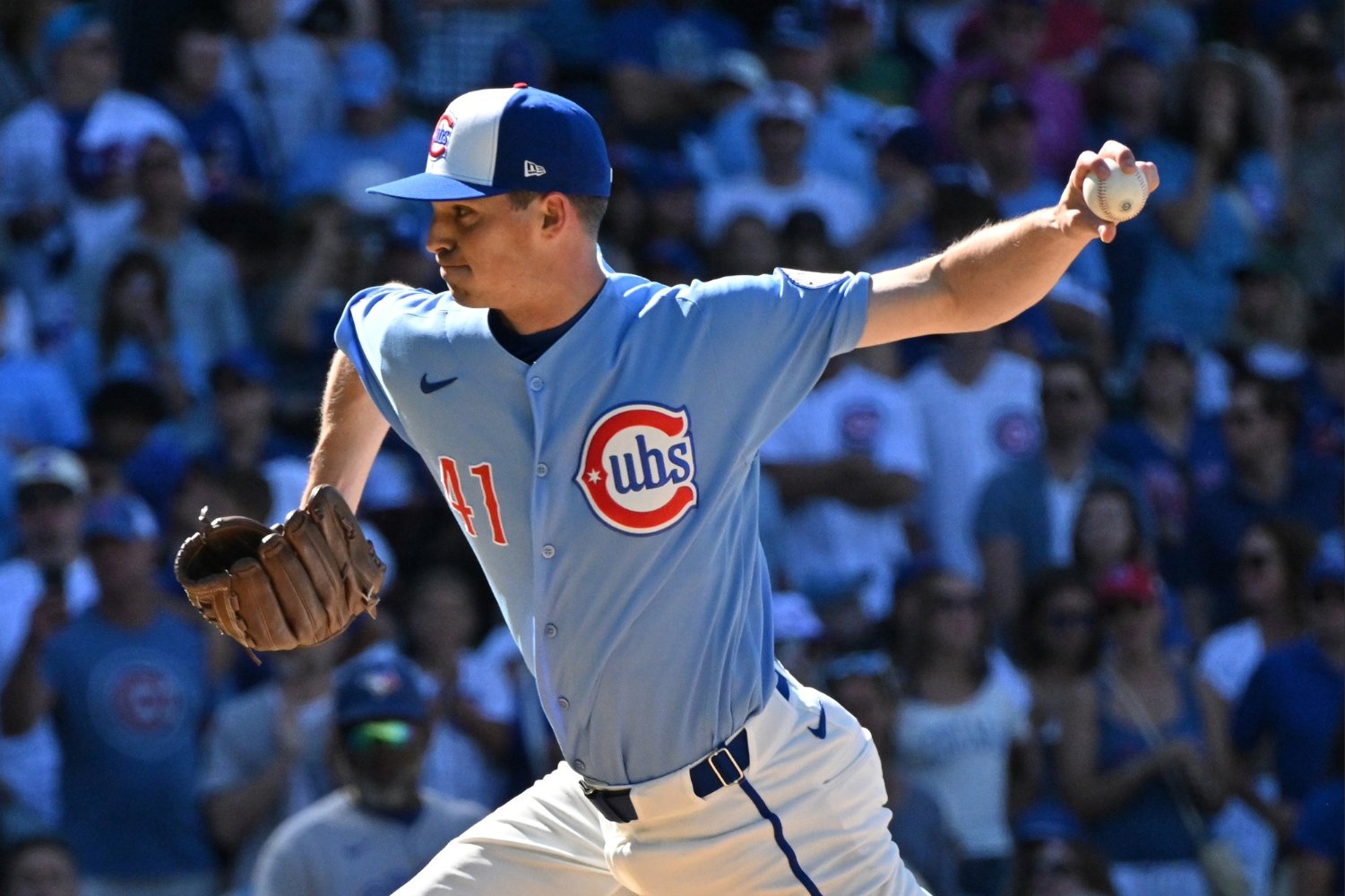 Update: A correction has been issued. Milner has been placed on waivers, but was not DFA'd. If he goes unclaimed, he will remain with the Cubs. If he is claimed, that team would assume the remainder of his contract in full. Original article as follows. On Friday afternoon, it was announced that the Chicago Cubs are designating veteran relief pitcher Hoby Milner for assignment. Milner hadn't appeared in a game for the Cubs since June 25 following an appendectomy. He'd been working his way back from that in recent weeks, but his 30-day rehabilitation window was set to expire having started that process at the end of July. Milner was a key left-handed arm for Craig Counsell—with whom he shared a history in Milwaukee—earlier in the year. He threw 15 innings in March & April as the bullpen battled through their early injury woes, pitching to a 2.40 ERA across various forms of leverage. He followed that up with exactly 10.1 innings in each of the two subsequent months, but had taken a step back in June prior to the need for his procedure. Up until that June 25 date, he'd pitched to a 6.10 ERA as opposing hitters torched him for a .417 wOBA. It's important to note, though, that much of that damage came in one specific outing wherein he allowed six runs in just one-third of an inning. In large part, he'd been exactly what the Cubs expected: meager at gathering whiffs, but otherwise producing strong numbers thanks to his ability to prevent free passes and avoid hard contact. In total, he pitched 35.2 innings across 38 appearances with a 3.53 ERA to his name. The Cubs are cutting bait with Milner just before rosters expand. Without a lot of option-ability throughout the rest of the relief corps, the front office decided that their current setup is more worthwhile than one that results in a departure from a different arm that has seen more recent action. That leaves breakout arm Ryan Rolison alongside Caleb Thielbar as the team's two left-handed arms in relief, with a pitcher featuring more flexibility likely on the way early next week. The Cubs will place Milner on waivers as a part of the DFA process. Given that we're past the trade deadline and close to the August 31 postseason eligibility threshold, it's entirely possible that another team snags him off waivers and gives the Cubs a bit of relief on his modest $3.75 million salary through the end of 2026.
 -
Image courtesy of © Rick Scuteri-Imagn Images When you've got a team with hitters performing at either end of the offensive spectrum at a given point in the year, it becomes easy to ignore the steady ones. In the case of the Chicago Cubs, the bulk of 2026 has been spent marveling at the work of Pete Crow-Armstrong & the second half of Alex Bregman, or worrying about the sustained early summer slump from Nico Hoerner or woeful stretches from Ian Happ. Which means that Seiya Suzuki has been left somewhere else, lost in the shuffle. Suzuki is in the midst of yet another above-average offensive season for the Cubs. While 2025 saw him eclipse the 30-homer mark for the first time against a modest step back in batted ball luck (reflected in a .245 average), this year has represented a bit of the inverse. His isolated power has fallen from a career-high .233 last year to a still-quality .209, while he's bumped his average way up to .270, with a .364 on-base percentage that is nearly 40 points higher than it was last season. It'd be hard to characterize one season as better than the other. Either way, you're getting a good run of production that just happens to manifest in slightly different ways. If there's one thing that sets the 2026 iteration of Suzuki apart from 2025 and the two seasons prior, though, it's that he's been just a touch more aggressive. Suzuki's 22.4 percent chase rate is roughly two percent higher than each of the last two seasons. That may not seem like a tremendous difference from prior rates, especially while he's made the same amount of overall contact on just about the same rate of swings. However, it's just enough of a difference for a hitter that was previously labeled as too patient to throw some things off. Each of his barrel and hard-hit rates have slipped, but he's still managed to remain productive given almost no mechanical change (save a slight closing of his front foot in his stance). The trade-off has come in the form of losing some of his run value in the heart of the zone (which has dropped from +10 to +3) while accruing gains in the shadow of the zone; his run value on the edges has been a combined -38 in the last two years, while sitting at -15 this year (his best since 2023). This is all a somewhat complicated way of noting the continued quality Seiya Suzuki displays, despite some drops in a handful of underlying factors. Nevertheless, he's turned in a .270/.364/.478 line with a 134 wRC+ that represents exactly the type of year we'd expect from him, even if everything in those trends was completely aboveboard. In fact, let's look at where Suzuki stands throughout his time with the Cubs. There are 286 hitters with enough playing time to qualify for the leaderboard since 2023. Suzuki's 130 wRC+ over that time ranks 21st. He's 44th in average (.270), 35th in OBP (.352), and 37th in ISO (.211). In short, he's been one of the best hitters the league has had to offer since he entered it. Even in the midst of some defensive woes across his first three seasons, Suzuki has still managed to accumulate 13.0 fWAR (good for 37th). With that element of his game back on track (five Outs Above Average this year), his 3.7 fWAR in 2026 specifically has him at 26th this year. The value of a player with that level of consistency can't really be overstated. Sure, there are stretches where he's disappeared or that overly patient approach becomes a detriment to his game. But the long and short of it is that there are very few players as steady in what they provide as Suzuki. Which brings us to a very important consideration. Suzuki and Ian Happ are both free agents at the end of 2026. It'd be difficult to see the Cubs retain both of them (though a world does exist where that is the case). Happ is enduring his worst offensive season since 2021, slashing .220/.327/.426 with a strikeout rate a touch over 30 percent. While he's on pace to exceed his previous career high in home runs, his inability to create regular contact (despite a patient approach), below average baserunning, and overstated defensive competence against less-favorable metrics all work against him. Suzuki, meanwhile, has turned in that remarkable steadiness and has ascended defensively. If you could only re-sign one on a new deal, it'd be tough to turn on the broader consistency that Suzuki offers, even in the eyes of Happ's longevity with the organization. Whether or not that comes to pass is a matter for another day. In the meantime, there's a certain marveling that should be happening over the steadiness that Seiya Suzuki possesses. It doesn't always manifest on a daily basis, but the fact that he can be relied upon to drop virtually the same line year-over-year is a rare quality worthy of celebration, even if he's always flying a bit under the radar. View full article
-
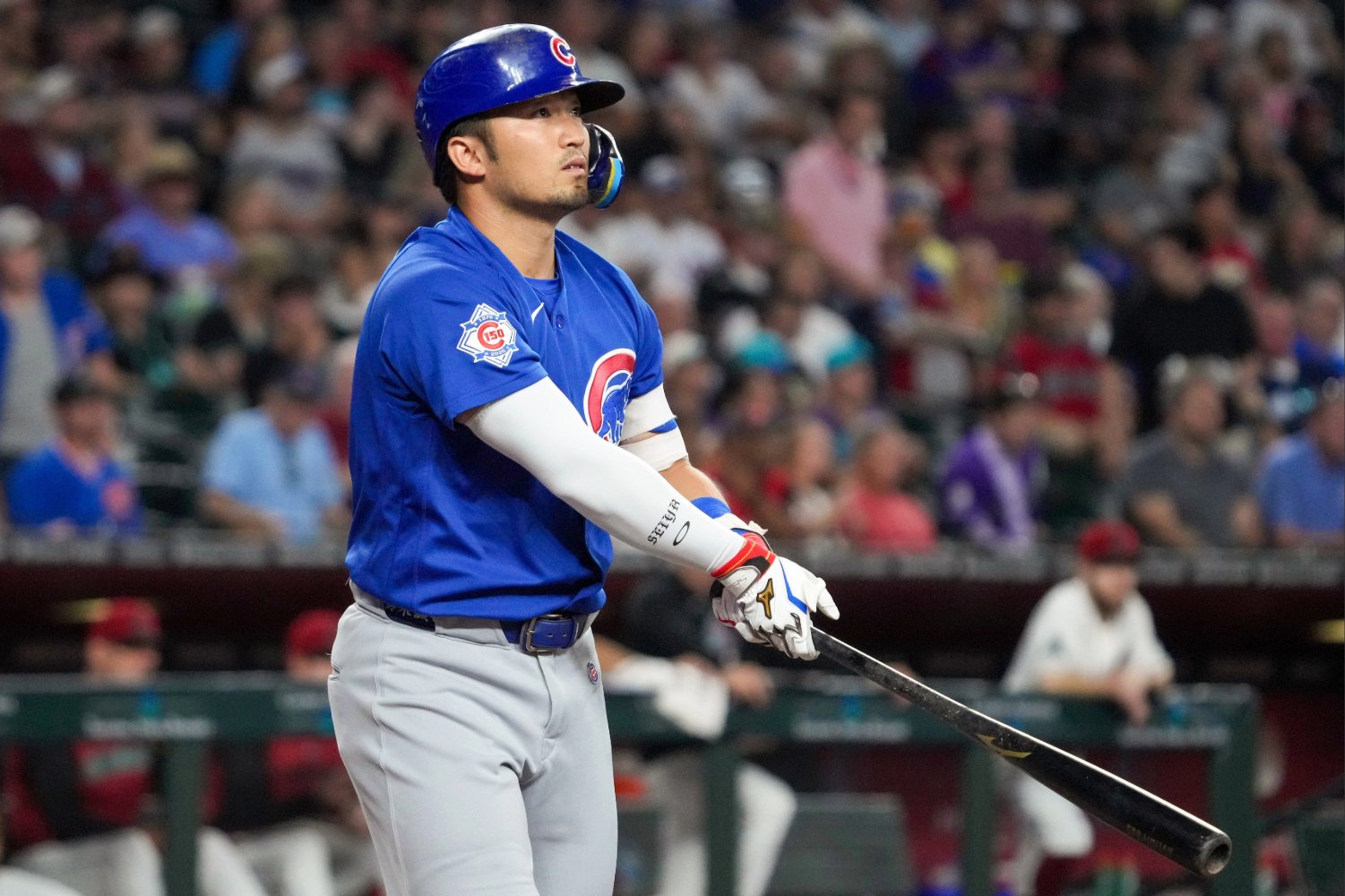 When you've got a team with hitters performing at either end of the offensive spectrum at a given point in the year, it becomes easy to ignore the steady ones. In the case of the Chicago Cubs, the bulk of 2026 has been spent marveling at the work of Pete Crow-Armstrong & the second half of Alex Bregman, or worrying about the sustained early summer slump from Nico Hoerner or woeful stretches from Ian Happ. Which means that Seiya Suzuki has been left somewhere else, lost in the shuffle. Suzuki is in the midst of yet another above-average offensive season for the Cubs. While 2025 saw him eclipse the 30-homer mark for the first time against a modest step back in batted ball luck (reflected in a .245 average), this year has represented a bit of the inverse. His isolated power has fallen from a career-high .233 last year to a still-quality .209, while he's bumped his average way up to .270, with a .364 on-base percentage that is nearly 40 points higher than it was last season. It'd be hard to characterize one season as better than the other. Either way, you're getting a good run of production that just happens to manifest in slightly different ways. If there's one thing that sets the 2026 iteration of Suzuki apart from 2025 and the two seasons prior, though, it's that he's been just a touch more aggressive. Suzuki's 22.4 percent chase rate is roughly two percent higher than each of the last two seasons. That may not seem like a tremendous difference from prior rates, especially while he's made the same amount of overall contact on just about the same rate of swings. However, it's just enough of a difference for a hitter that was previously labeled as too patient to throw some things off. Each of his barrel and hard-hit rates have slipped, but he's still managed to remain productive given almost no mechanical change (save a slight closing of his front foot in his stance). The trade-off has come in the form of losing some of his run value in the heart of the zone (which has dropped from +10 to +3) while accruing gains in the shadow of the zone; his run value on the edges has been a combined -38 in the last two years, while sitting at -15 this year (his best since 2023). This is all a somewhat complicated way of noting the continued quality Seiya Suzuki displays, despite some drops in a handful of underlying factors. Nevertheless, he's turned in a .270/.364/.478 line with a 134 wRC+ that represents exactly the type of year we'd expect from him, even if everything in those trends was completely aboveboard. In fact, let's look at where Suzuki stands throughout his time with the Cubs. There are 286 hitters with enough playing time to qualify for the leaderboard since 2023. Suzuki's 130 wRC+ over that time ranks 21st. He's 44th in average (.270), 35th in OBP (.352), and 37th in ISO (.211). In short, he's been one of the best hitters the league has had to offer since he entered it. Even in the midst of some defensive woes across his first three seasons, Suzuki has still managed to accumulate 13.0 fWAR (good for 37th). With that element of his game back on track (five Outs Above Average this year), his 3.7 fWAR in 2026 specifically has him at 26th this year. The value of a player with that level of consistency can't really be overstated. Sure, there are stretches where he's disappeared or that overly patient approach becomes a detriment to his game. But the long and short of it is that there are very few players as steady in what they provide as Suzuki. Which brings us to a very important consideration. Suzuki and Ian Happ are both free agents at the end of 2026. It'd be difficult to see the Cubs retain both of them (though a world does exist where that is the case). Happ is enduring his worst offensive season since 2021, slashing .220/.327/.426 with a strikeout rate a touch over 30 percent. While he's on pace to exceed his previous career high in home runs, his inability to create regular contact (despite a patient approach), below average baserunning, and overstated defensive competence against less-favorable metrics all work against him. Suzuki, meanwhile, has turned in that remarkable steadiness and has ascended defensively. If you could only re-sign one on a new deal, it'd be tough to turn on the broader consistency that Suzuki offers, even in the eyes of Happ's longevity with the organization. Whether or not that comes to pass is a matter for another day. In the meantime, there's a certain marveling that should be happening over the steadiness that Seiya Suzuki possesses. It doesn't always manifest on a daily basis, but the fact that he can be relied upon to drop virtually the same line year-over-year is a rare quality worthy of celebration, even if he's always flying a bit under the radar.
 -
Image courtesy of © Matt Marton-Imagn Images Earlier this week, our @Jeremy Tecktiel examined the Chicago Cubs' defensive performance in 2026. Therein, he was able to illustrate the idea that this year's group has not only been the best team in Major League Baseball on that side of the ball, but has turned into something legitimately historic. And that status comes regardless of your defensive metric of choice. In the case of the that broad perspective, their collective work with the gloves has them on pace to turn in some absolutely wild numbers as they relate to each of Defensive Runs Saved, Outs Above Average, and Fielding Run Value. Whether you're interested in run prevention or the recording of outs, they're your team. It's not just that they're posting such impressive metrics in a vacuum, but ones that far exceed any team that could be considered in league with them from a defensive standpoint. Jeremy's piece examined the team in the cumulative sense. Let's take it a step further and see just where those gaps between the Cubs and their big-league counterparts are present. How Cubs Stack Up At Each Defensive Position In 2026 The most obvious area of gap-creating play comes in the form of Pete Crow-Armstrong. It's not enough that he's had a complete breakout at the plate; he's been far-and-away the best defender the sport has to offer this year as an outfielder. By OAA, his mark of 23 ranks second (behind Bobby Witt Jr.) but is also nine outs clear of the next-closest outfielder (Ceddanne Rafaela, at 14). That same gap exists within FRV, where the top two outfielders carry over the same numbers. DRS doesn't love Crow-Armstrong's work quite as much (14), but he still sits as one of the top defensive performers regardless of position. None of that is surprising. Crow-Armstrong's jump is well-ahead of the second-ranked outfielder (Wyatt Langford), and he's recorded more five-star catches (defined as a catch with under a 25 percent probability) than any other defender you'll find. That such a gap would exist here before anywhere else is a relatively easy pattern to discern. The next area that helps to create the Cubs' team-wide advantage isn't quite as obvious. It's the work of Alex Bregman at third base. In the case of both OAA (7) and FRV (6), it's Bregman's name that lives atop the leaderboard. The only third baseman higher on the DRS side is Matt Chapman, whose 16 runs saved narrowly edges that of Bregman's 14. If we're looking at defense as the business of recording outs, though, it's Bregman leading the pack, with his work at the hot corner helping to the Cubs to push their gap wider. If we pivot back into more obvious notes, the middle infield of Nico Hoerner and Dansby Swanson has done their part, but more in conjunction with one another than on their own. Hoerner ranks fourth in OAA among second basemen (9), seventh in FRV (8), and 8th in DRS (3). Swanson, meanwhile, is third in OAA (16), fourth in FRV (11), and sixth in DRS (6) among those plying their trade at the six spot. They're both very good within the context of their own position, but it's what they do as a duo that makes the Cubs so darn good up the middle. As far as OAA goes, those two are both in the top 13 among infielders. Only the St. Louis Cardinals have each of their two middle infielders (JJ Wetherholt & Masyn Winn) up that high on the leaderboard (we're not considering Milwaukee, as Joey Ortiz has roughly half the innings of work at shortstop that either Winn or Swanson do). That same trend is present on the FRV side, where each of Hoerner & Swanson are in the top 12. Again, it's only St. Louis doing something similar in that matter. When you factor in the other positions at which the Cubs are having success—Ian Happ is above average in left field by both FRV & DRS, Michael Busch is above by both of those and OAA at first base, Seiya Suzuki has been near-elite according to all three, and both of the team's catchers are lingering around an average threshold—it's clear that the whole roster is contributing to this contemporary excellence. But it's the the work of Pete Crow-Armstrong, Alex Bregman, and the tandem of Nico Hoerner & Dansby Swanson that has helped to create a legitimate and insurmountable gap between the Cubs and their competition. View full article
-
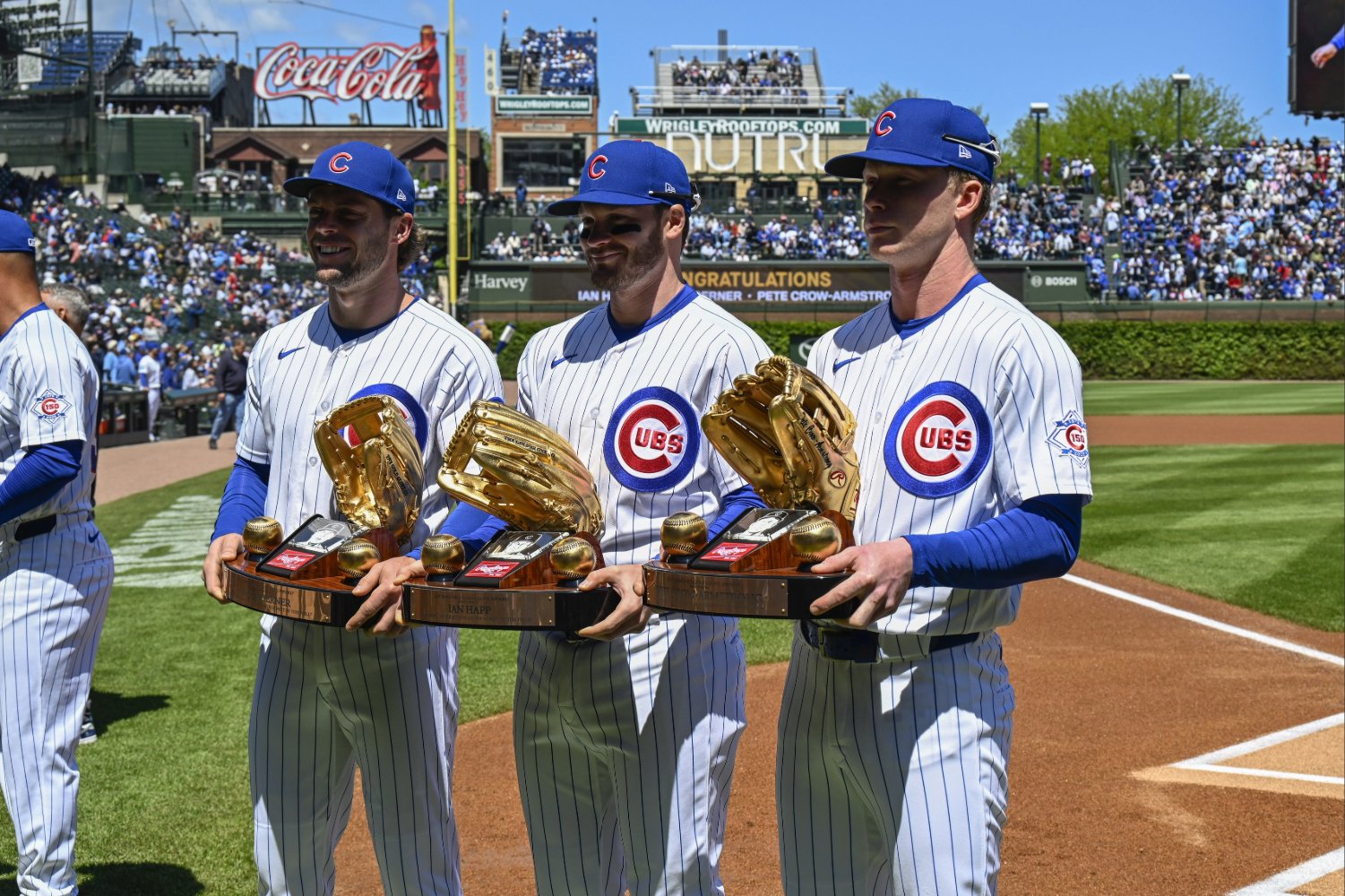 Earlier this week, our @Jeremy Tecktiel examined the Chicago Cubs' defensive performance in 2026. Therein, he was able to illustrate the idea that this year's group has not only been the best team in Major League Baseball on that side of the ball, but has turned into something legitimately historic. And that status comes regardless of your defensive metric of choice. In the case of the that broad perspective, their collective work with the gloves has them on pace to turn in some absolutely wild numbers as they relate to each of Defensive Runs Saved, Outs Above Average, and Fielding Run Value. Whether you're interested in run prevention or the recording of outs, they're your team. It's not just that they're posting such impressive metrics in a vacuum, but ones that far exceed any team that could be considered in league with them from a defensive standpoint. Jeremy's piece examined the team in the cumulative sense. Let's take it a step further and see just where those gaps between the Cubs and their big-league counterparts are present. How Cubs Stack Up At Each Defensive Position In 2026 The most obvious area of gap-creating play comes in the form of Pete Crow-Armstrong. It's not enough that he's had a complete breakout at the plate; he's been far-and-away the best defender the sport has to offer this year as an outfielder. By OAA, his mark of 23 ranks second (behind Bobby Witt Jr.) but is also nine outs clear of the next-closest outfielder (Ceddanne Rafaela, at 14). That same gap exists within FRV, where the top two outfielders carry over the same numbers. DRS doesn't love Crow-Armstrong's work quite as much (14), but he still sits as one of the top defensive performers regardless of position. None of that is surprising. Crow-Armstrong's jump is well-ahead of the second-ranked outfielder (Wyatt Langford), and he's recorded more five-star catches (defined as a catch with under a 25 percent probability) than any other defender you'll find. That such a gap would exist here before anywhere else is a relatively easy pattern to discern. The next area that helps to create the Cubs' team-wide advantage isn't quite as obvious. It's the work of Alex Bregman at third base. In the case of both OAA (7) and FRV (6), it's Bregman's name that lives atop the leaderboard. The only third baseman higher on the DRS side is Matt Chapman, whose 16 runs saved narrowly edges that of Bregman's 14. If we're looking at defense as the business of recording outs, though, it's Bregman leading the pack, with his work at the hot corner helping to the Cubs to push their gap wider. If we pivot back into more obvious notes, the middle infield of Nico Hoerner and Dansby Swanson has done their part, but more in conjunction with one another than on their own. Hoerner ranks fourth in OAA among second basemen (9), seventh in FRV (8), and 8th in DRS (3). Swanson, meanwhile, is third in OAA (16), fourth in FRV (11), and sixth in DRS (6) among those plying their trade at the six spot. They're both very good within the context of their own position, but it's what they do as a duo that makes the Cubs so darn good up the middle. As far as OAA goes, those two are both in the top 13 among infielders. Only the St. Louis Cardinals have each of their two middle infielders (JJ Wetherholt & Masyn Winn) up that high on the leaderboard (we're not considering Milwaukee, as Joey Ortiz has roughly half the innings of work at shortstop that either Winn or Swanson do). That same trend is present on the FRV side, where each of Hoerner & Swanson are in the top 12. Again, it's only St. Louis doing something similar in that matter. When you factor in the other positions at which the Cubs are having success—Ian Happ is above average in left field by both FRV & DRS, Michael Busch is above by both of those and OAA at first base, Seiya Suzuki has been near-elite according to all three, and both of the team's catchers are lingering around an average threshold—it's clear that the whole roster is contributing to this contemporary excellence. But it's the the work of Pete Crow-Armstrong, Alex Bregman, and the tandem of Nico Hoerner & Dansby Swanson that has helped to create a legitimate and insurmountable gap between the Cubs and their competition.
 -
Image courtesy of © Kamil Krzaczynski-Imagn Images The Chicago Cubs entered Major League Baseball's 2026 trade deadline with as clear of needs as just about any organization in the league. Jed Hoyer's previous track record of addressing needs in more of a tepid fashion than an assertive one didn't lend itself to the idea that the organization would properly go about their business. What transpired, though, was fairly remarkable. Not only did Hoyer and his front office comrades put the Cubs in a position to address their shortcomings, they completely solidified the staff on paper as the team awaits the recovery of various arms suited for various roles. A bench bat was even added for good measure. As a recap, here's where things fell prior to the Aug. 3 deadline for the Cubs: Acquired RHP Kevin Gausman from Toronto Blue Jays in exchange for prospects Brett Bateman & Ty Southisene Acquired RHP Clay Holmes & OF Tyrone Taylor from New York Mets in exchange for prospect Jefferson Rojas Acquired RHP Ryan Zeferjahn from Los Angeles Angels in exchange for Moisés Ballesteros & prospect Mason McGwire Acquired LHP Braxton Garrett from Miami Marlins in exchange for prospects Jonathon Long & Jace Beck The moves that the Cubs made were largely about 2026 (Garrett, Zeferjahn, and their respective team control notwithstanding). While Bateman has since made his big-league debut with Toronto and Ballesteros is back at the top level with the Angels, we're not at a point of re-grading the moves based on the performance of those who departed the organization as part of the transactional spree. As such, we're only interested in the early returns from those acquired. Let's take a quick look at those returns. Kevin Gausman Despite his status as an impending free agent, Gausman was perhaps the most significant addition the team made ahead of the deadline. He's a veteran with postseason experience capable of working deep into ball games. His first start indicated as much, as he threw seven innings while allowing two earned runs against Kansas City back on August 7. His second start didn't land quite as favorably, as he ran up the strikeout numbers (seven) but only worked 4.2 innings while allowing six earned runs. Gausman's splitter has absolutely played in each start, which is hardly a surprise given that its his pitch that has generated the most chase (39.2 percent), whiff (39.8 percent), and groundball action (48.9 percent) of anything else in his arsenal. As long as he's deploying the fastball effectively (something that did not happen against Washington last week), he should be able to provide the Cubs with plenty of much-needed efficiency down the stretch atop their rotation. Clay Holmes Holmes hadn't pitched since May 15 when the Cubs acquired him, as he was recovering from a broken fibula that was the result of a comebacker off his right leg. His return was imminent, though, and his two starts since arriving in Chicago have been a sort of inverse of that of Gausman. He labored through his first start, throwing four innings, allowing six hits and two walks, and being tagged for four runs in a game the Cubs eventually lost. In start No. 2, however, he was brilliant. Against St. Louis over the weekend, Holmes worked into the seventh (6.2 innings), allowed just a single hit and one walk, and kept the Cardinals off the scoreboard. His sinker was out in full force; he threw it 55 percent of the time and generated groundballs on 61.1 percent of the balls in play allowed. That sinker should allow him to continue to find success down the stretch, as he's a groundball machine on the mound throwing in front of an elite infield defense. Ryan Zeferjahn It's a bit more difficult to gauge the early returns on a relief pitcher than it is a starter. Zeferjahn has made six appearances for the Cubs thus far, logging 5.1 innings of work. His ERA sits over eight (8.44) through those initial appearances with a FIP (7.58) that doesn't look much more favorable. However, his strikeout rate is still admirable (25.0 percent) and his walk rate is down a touch (10.7 percent). It's also noteworthy that each of the appearances that Zeferjahn has made to date have come in a game that the Cubs would go on to win. He's allowed runs in three of those six appearances, but none of those clunky outings have come in a way that was damaging to the Cubs' playoff pursuit. Unlike a starting pitcher that has multiple innings at a time, Zeferjahn hasn't had quite the springboard to gaining his footing quite yet, so even through some bad luck (.400 opposing BABIP), we don't yet have a reason to be worried that their big relief acquisition is a dud. Tyrone Taylor Taylor was brought in to, essentially, serve as a fifth outfielder and right-handed bat off the bench. That's the role he's filled thus far. Of his 11 games with the Cubs, he's been a pinch runner once and has pinch hit on three different occasions with only six starts to his name. There hasn't been anything particularly noteworthy on the stat sheet quite yet (47 wRC+), but he's scattered a few hits across his smattering of appearances. He's an especially difficult player to gauge in terms of overall value, but as his sample increases (particularly against left-handed pitching), you'd hope to see the occasional contribution, even if it's not coming with much frequency. Braxton Garrett The only deal the Cubs made with a clear eye on the future (Garrett is under team control through 2028), it was a bit of a surprise that the team added him to the big-league roster so soon after his acquisition. However, that was more about giving their pitching staff some coverage than anything, and he has yet to make his Cubs debut. He's also made just one appearance with Iowa, throwing a pair of innings while walking six and allowing an earned run. Unless he's added back into the mix upon the expansion of rosters, it's unlikely we'll see him again before 2027 as the Cubs work to develop him into a starter worthy of next year's rotation. View full article
-
Gauging Early Impressions From Cubs' Biggest Trade Deadline Acquisitions
RandallPnkFloyd posted an article in Cubs
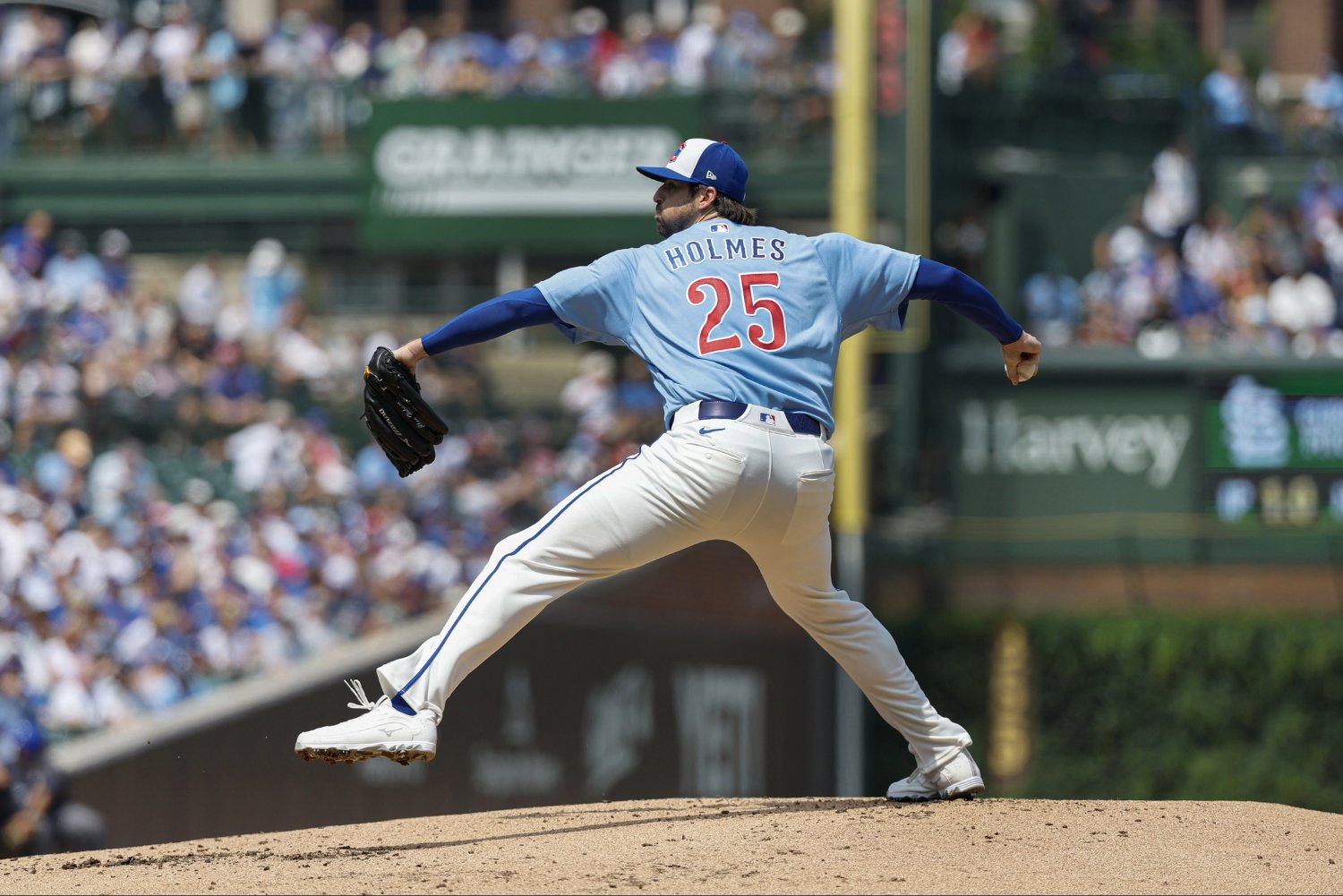 The Chicago Cubs entered Major League Baseball's 2026 trade deadline with as clear of needs as just about any organization in the league. Jed Hoyer's previous track record of addressing needs in more of a tepid fashion than an assertive one didn't lend itself to the idea that the organization would properly go about their business. What transpired, though, was fairly remarkable. Not only did Hoyer and his front office comrades put the Cubs in a position to address their shortcomings, they completely solidified the staff on paper as the team awaits the recovery of various arms suited for various roles. A bench bat was even added for good measure. As a recap, here's where things fell prior to the Aug. 3 deadline for the Cubs: Acquired RHP Kevin Gausman from Toronto Blue Jays in exchange for prospects Brett Bateman & Ty Southisene Acquired RHP Clay Holmes & OF Tyrone Taylor from New York Mets in exchange for prospect Jefferson Rojas Acquired RHP Ryan Zeferjahn from Los Angeles Angels in exchange for Moisés Ballesteros & prospect Mason McGwire Acquired LHP Braxton Garrett from Miami Marlins in exchange for prospects Jonathon Long & Jace Beck The moves that the Cubs made were largely about 2026 (Garrett, Zeferjahn, and their respective team control notwithstanding). While Bateman has since made his big-league debut with Toronto and Ballesteros is back at the top level with the Angels, we're not at a point of re-grading the moves based on the performance of those who departed the organization as part of the transactional spree. As such, we're only interested in the early returns from those acquired. Let's take a quick look at those returns. Kevin Gausman Despite his status as an impending free agent, Gausman was perhaps the most significant addition the team made ahead of the deadline. He's a veteran with postseason experience capable of working deep into ball games. His first start indicated as much, as he threw seven innings while allowing two earned runs against Kansas City back on August 7. His second start didn't land quite as favorably, as he ran up the strikeout numbers (seven) but only worked 4.2 innings while allowing six earned runs. Gausman's splitter has absolutely played in each start, which is hardly a surprise given that its his pitch that has generated the most chase (39.2 percent), whiff (39.8 percent), and groundball action (48.9 percent) of anything else in his arsenal. As long as he's deploying the fastball effectively (something that did not happen against Washington last week), he should be able to provide the Cubs with plenty of much-needed efficiency down the stretch atop their rotation. Clay Holmes Holmes hadn't pitched since May 15 when the Cubs acquired him, as he was recovering from a broken fibula that was the result of a comebacker off his right leg. His return was imminent, though, and his two starts since arriving in Chicago have been a sort of inverse of that of Gausman. He labored through his first start, throwing four innings, allowing six hits and two walks, and being tagged for four runs in a game the Cubs eventually lost. In start No. 2, however, he was brilliant. Against St. Louis over the weekend, Holmes worked into the seventh (6.2 innings), allowed just a single hit and one walk, and kept the Cardinals off the scoreboard. His sinker was out in full force; he threw it 55 percent of the time and generated groundballs on 61.1 percent of the balls in play allowed. That sinker should allow him to continue to find success down the stretch, as he's a groundball machine on the mound throwing in front of an elite infield defense. Ryan Zeferjahn It's a bit more difficult to gauge the early returns on a relief pitcher than it is a starter. Zeferjahn has made six appearances for the Cubs thus far, logging 5.1 innings of work. His ERA sits over eight (8.44) through those initial appearances with a FIP (7.58) that doesn't look much more favorable. However, his strikeout rate is still admirable (25.0 percent) and his walk rate is down a touch (10.7 percent). It's also noteworthy that each of the appearances that Zeferjahn has made to date have come in a game that the Cubs would go on to win. He's allowed runs in three of those six appearances, but none of those clunky outings have come in a way that was damaging to the Cubs' playoff pursuit. Unlike a starting pitcher that has multiple innings at a time, Zeferjahn hasn't had quite the springboard to gaining his footing quite yet, so even through some bad luck (.400 opposing BABIP), we don't yet have a reason to be worried that their big relief acquisition is a dud. Tyrone Taylor Taylor was brought in to, essentially, serve as a fifth outfielder and right-handed bat off the bench. That's the role he's filled thus far. Of his 11 games with the Cubs, he's been a pinch runner once and has pinch hit on three different occasions with only six starts to his name. There hasn't been anything particularly noteworthy on the stat sheet quite yet (47 wRC+), but he's scattered a few hits across his smattering of appearances. He's an especially difficult player to gauge in terms of overall value, but as his sample increases (particularly against left-handed pitching), you'd hope to see the occasional contribution, even if it's not coming with much frequency. Braxton Garrett The only deal the Cubs made with a clear eye on the future (Garrett is under team control through 2028), it was a bit of a surprise that the team added him to the big-league roster so soon after his acquisition. However, that was more about giving their pitching staff some coverage than anything, and he has yet to make his Cubs debut. He's also made just one appearance with Iowa, throwing a pair of innings while walking six and allowing an earned run. Unless he's added back into the mix upon the expansion of rosters, it's unlikely we'll see him again before 2027 as the Cubs work to develop him into a starter worthy of next year's rotation.
 -
Image courtesy of © Jordan Johnson-Imagn Images In the most objective sense, the Chicago Cubs had one of the better trade deadline sequences of any organization in Major League Baseball. They had clear needs, and the front office took firm and aggressive steps toward addressing those needs. That doesn't mean each piece of their new roster puzzle fits in seamlessly, however. Kevin Gausman will get work at the front of the rotation. Clay Holmes, when healthy, will have a spot in his own right. Ryan Zeferjahn should be able to parlay some solid work with a listless Los Angeles Angels squad into leverage opportunities with a depleted Cubs bullpen. Where we start to run into some uncertainty, though, comes in the form of Braxton Garrett. Garrett was acquired from the Miami Marlins in exchange for prospects Jonathon Long and Jace Beck. The return itself is decent-enough from the Miami side, but the Cubs' perspective is a simple calculus; they gave up a bat-first player without a positional future in Chicago and a 26-year-old minor-league free agent that had broken out but lacked a pathway to innings at the top level. Neither name involved suggests that Garrett is a player the Cubs had to have. Nor does it indicate they need to bestow upon him an immediate major-league role. However, it isn't difficult to see what they liked. In 2023, Garrett was a breakout arm for the Marlins. He made 30 starts, threw almost 160 innings, and pitched to a 3.66 ERA (3.68 FIP), a 23.7 percent strikeout rate, and a 4.4 percent walk rate. The walk rate stood out, in particular, as it sat in the 97th percentile that season. All told, he turned in a 3.1 fWAR and established himself as yet another interesting young arm in South Beach. A year later, Garrett made seven tough-luck starts in which he continued to excel in his strikeout and walk rates but ran into a fair bit of hard contact and a .310 opposing batting average on balls in play. His ERA sat over five before hitting the shelf in June and undergoing Tommy John surgery in December of 2024. That wiped out all of 2025, with just two big league starts to his name since. At the minor-league level, Garrett has excelled. With the Marlins' Triple-A affiliate this season, he'd made 15 starts to a 2.90 ERA, a 26.4 percent strikeout rate, and a 9.4 percent walk rate. Elements of his profile that must have represented enough intrigue to the Cubs to execute this deal have been on display within all of that. The pre-surgery iteration of Garrett was primarily sinker-sweeper/slider. The 2024 season saw the introduction of a four-seam with a higher frequency, leading to a predominant three-pitch mix. Since getting back into regular work, that trio is primarily what we've seen from him in Triple-A this season: As with his previous major-league work with Statcast, it's likely that TJ Stats has that slider/sweeper features significant overlap, with only the sinker sitting above it usage. The old mix of the sinker with a breaking pitch was successful for Garrett as it allowed him to be something of a groundball specialist. In his more than 300 innings of big-league work, he's gotten the ball on the ground 48.2 percent of the time. The four-seam addition hasn't dramatically overhauled his usage within a general context, but has provided him with a second pitch to lean on in those situation where he ends up behind. The metrics supporting it are also slightly better than the sinker in terms of the success of opposing hitters (though in a smaller sample). In general, here's where Garrett falls within his minor-league performance this season: Ultimately, even as an arm logging his innings in the minor leagues at present, it's not hard to see where the Cubs' intrigue originates. He brings multiple fastballs and an effective sweeper/slider combination that has allowed him to mitigate hard contact in an effective fashion and helps him get a healthy amount of groundballs. That latter note is especially significant given the defense that will be playing behind him in Chicago. There's also the factor of control. For a package of Long and Beck, the Cubs were able to get a multi-year left-handed starter with an interesting profile. They could have acquired a stronger track record in Reid Detmers, but at a much higher cost. The additional move for Holmes (while already having Gausman and David Peterson in tow) makes this more appealing than it otherwise could have been. We don't know what Garrett's role looks like this season. He may not even have one in 2026, barring continued injuries to the starting staff. But with Gausman and Matthew Boyd as pending free agents and Holmes holding a player option with the wide expectation that he'll decline, Garrett offers them much more certainty beyond 2026 than they may otherwise have had. It's a good bit of business from Jed Hoyer, even if the results may not be realized until a post-lockout world View full article
-
Navigating the Logic Behind Cubs' Acquisition of Braxton Garrett
RandallPnkFloyd posted an article in Cubs
 In the most objective sense, the Chicago Cubs had one of the better trade deadline sequences of any organization in Major League Baseball. They had clear needs, and the front office took firm and aggressive steps toward addressing those needs. That doesn't mean each piece of their new roster puzzle fits in seamlessly, however. Kevin Gausman will get work at the front of the rotation. Clay Holmes, when healthy, will have a spot in his own right. Ryan Zeferjahn should be able to parlay some solid work with a listless Los Angeles Angels squad into leverage opportunities with a depleted Cubs bullpen. Where we start to run into some uncertainty, though, comes in the form of Braxton Garrett. Garrett was acquired from the Miami Marlins in exchange for prospects Jonathon Long and Jace Beck. The return itself is decent-enough from the Miami side, but the Cubs' perspective is a simple calculus; they gave up a bat-first player without a positional future in Chicago and a 26-year-old minor-league free agent that had broken out but lacked a pathway to innings at the top level. Neither name involved suggests that Garrett is a player the Cubs had to have. Nor does it indicate they need to bestow upon him an immediate major-league role. However, it isn't difficult to see what they liked. In 2023, Garrett was a breakout arm for the Marlins. He made 30 starts, threw almost 160 innings, and pitched to a 3.66 ERA (3.68 FIP), a 23.7 percent strikeout rate, and a 4.4 percent walk rate. The walk rate stood out, in particular, as it sat in the 97th percentile that season. All told, he turned in a 3.1 fWAR and established himself as yet another interesting young arm in South Beach. A year later, Garrett made seven tough-luck starts in which he continued to excel in his strikeout and walk rates but ran into a fair bit of hard contact and a .310 opposing batting average on balls in play. His ERA sat over five before hitting the shelf in June and undergoing Tommy John surgery in December of 2024. That wiped out all of 2025, with just two big league starts to his name since. At the minor-league level, Garrett has excelled. With the Marlins' Triple-A affiliate this season, he'd made 15 starts to a 2.90 ERA, a 26.4 percent strikeout rate, and a 9.4 percent walk rate. Elements of his profile that must have represented enough intrigue to the Cubs to execute this deal have been on display within all of that. The pre-surgery iteration of Garrett was primarily sinker-sweeper/slider. The 2024 season saw the introduction of a four-seam with a higher frequency, leading to a predominant three-pitch mix. Since getting back into regular work, that trio is primarily what we've seen from him in Triple-A this season: As with his previous major-league work with Statcast, it's likely that TJ Stats has that slider/sweeper features significant overlap, with only the sinker sitting above it usage. The old mix of the sinker with a breaking pitch was successful for Garrett as it allowed him to be something of a groundball specialist. In his more than 300 innings of big-league work, he's gotten the ball on the ground 48.2 percent of the time. The four-seam addition hasn't dramatically overhauled his usage within a general context, but has provided him with a second pitch to lean on in those situation where he ends up behind. The metrics supporting it are also slightly better than the sinker in terms of the success of opposing hitters (though in a smaller sample). In general, here's where Garrett falls within his minor-league performance this season: Ultimately, even as an arm logging his innings in the minor leagues at present, it's not hard to see where the Cubs' intrigue originates. He brings multiple fastballs and an effective sweeper/slider combination that has allowed him to mitigate hard contact in an effective fashion and helps him get a healthy amount of groundballs. That latter note is especially significant given the defense that will be playing behind him in Chicago. There's also the factor of control. For a package of Long and Beck, the Cubs were able to get a multi-year left-handed starter with an interesting profile. They could have acquired a stronger track record in Reid Detmers, but at a much higher cost. The additional move for Holmes (while already having Gausman and David Peterson in tow) makes this more appealing than it otherwise could have been. We don't know what Garrett's role looks like this season. He may not even have one in 2026, barring continued injuries to the starting staff. But with Gausman and Matthew Boyd as pending free agents and Holmes holding a player option with the wide expectation that he'll decline, Garrett offers them much more certainty beyond 2026 than they may otherwise have had. It's a good bit of business from Jed Hoyer, even if the results may not be realized until a post-lockout world
 -
Image courtesy of © David Banks-Imagn Images He's faced plenty of well-earned criticism throughout his tenure, but Chicago Cubs president of baseball operations Jed Hoyer has occasionally been able to flip the narrative in his favor. We saw it when he traded for Kyle Tucker prior to the 2025 season. We saw it manifest in a different way with the signing of Alex Bregman, followed by the acquisition of Edward Cabrera from the Miami Marlins. An executive known for being among the game's most conservative was willing to push the chips in if he felt the fit was there. Moves of that magnitude have reshaped perception of Hoyer a bit recently. Additional criticisms have persisted, though. Chief among them is Hoyer's tendency to go conservative on the other end of the roster. Rather than address the shortcomings of a group with surefire solutions, his reign atop the front office hierarchy has been marked by half-measures. The 2024 team acquired Isaac Paredes, Nate Pearson, and a couple of minor-league fliers for a team that finished middle-of-the-pack in their production from the mound. Last year, it was Willi Castro, Michael Soroka, Andrew Kittredge, and Taylor Rogers. Needs were addressed, but in a way that spoke to more of an on-paper sense and allowed Hoyer to preserve his farm system above all. It's the type of trend we've seen from Hoyer in working to fill out the fringes of a roster. He's made a bad habit of building bad benches. On the mound, he's chased reclamation projects, rather than paying top dollar for established entities. He took a step toward dispelling both critiques, however, with an uncharacteristically aggressive approach to this year's trade deadline. The Cubs entered the 2026 trading frenzy with extremely clear needs. A rash of injuries has left them depleted in the rotation all year, with those woes spilling over into the relief corps. Starting pitching was the focus above all, with innings coverage needed and playoff-caliber upside still in short supply. Relief help was a secondary but major need, too. The Cubs bullpen has stabilized in the wake of myriad injuries, but further help was needed. At the bottom of the list (but still noteworthy) was a right-handed bat to combat the volume of left-handed pitchers they'd be liable to face come playoff time. Hoyer was able to strike to address all three in the most impactful ways possible. While he didn't morph into an executive from the same stratum as someone like A.J. Preller and sell the farm entirely, he stood far less on sentiment here. Prospects with actual name recognition in the system—Jefferson Rojas, Moisés Ballesteros, Jonathon Long, Brett Bateman, and Mason McGwire among them—were sent out for players who can help the Cubs immediately. In Kevin Gausman, Clay Holmes, and Braxton Garrett, Hoyer addressed his team's need for starting pitching almost entirely. Gausman is an innings-eater with actual playoff experience. Holmes, upon his return from a broken leg, offers additional stability in the middle of the rotation. Garrett has flashed upside as recently as 2023, though injuries have derailed him. He offers medium-term team control, and can still be optioned to the minor leagues while he tries to unlock his fujl skill set again. He's the least exciting of the three, but he adds additional flexibility to a starting group that sorely needed it. From there, you get into how this could lead to arms currently starting transitioning into relief roles. Javier Assad or Colin Rea could extend their value by working out of the bullpen. That alone adds depth, in addition to the acquisition of Ryan Zeferjahn, who should see his strong peripherals play up to the front of the stat sheet with an elite defense behind him. And in Tyrone Taylor, the Cubs get a lefty masher that can compensate for Ian Happ's absence of productivity against pitchers of that handedness (and work as a solid bench bat in a general sense). These aren't half measures. All told, Hoyer moved four prospects from our top-20 list and another that had just graduated from it. The players acquired aren't the types we've grown accustomed to seeing from Jed Hoyer this time of year. There's actual value in what they can provide down the stretch in 2026. The change of tack is not necessarily indicative of a change in philosophy for Hoyer himself. More than anything, it speaks to the faith Hoyer has in this year's group. This is a roster that features one of the league's most productive offensive groups and a defense that far exceeds that of its peers across the league. The jury very much still may be out on the quality of Jed Hoyer as an executive. But good executives move in a shrewd fashion when things are aligned correctly within their organization. Hoyer just did a thing that good executives do. View full article
-
At 2026 MLB Trade Deadline, Jed Hoyer Finally Got It Right
RandallPnkFloyd posted an article in Cubs
 He's faced plenty of well-earned criticism throughout his tenure, but Chicago Cubs president of baseball operations Jed Hoyer has occasionally been able to flip the narrative in his favor. We saw it when he traded for Kyle Tucker prior to the 2025 season. We saw it manifest in a different way with the signing of Alex Bregman, followed by the acquisition of Edward Cabrera from the Miami Marlins. An executive known for being among the game's most conservative was willing to push the chips in if he felt the fit was there. Moves of that magnitude have reshaped perception of Hoyer a bit recently. Additional criticisms have persisted, though. Chief among them is Hoyer's tendency to go conservative on the other end of the roster. Rather than address the shortcomings of a group with surefire solutions, his reign atop the front office hierarchy has been marked by half-measures. The 2024 team acquired Isaac Paredes, Nate Pearson, and a couple of minor-league fliers for a team that finished middle-of-the-pack in their production from the mound. Last year, it was Willi Castro, Michael Soroka, Andrew Kittredge, and Taylor Rogers. Needs were addressed, but in a way that spoke to more of an on-paper sense and allowed Hoyer to preserve his farm system above all. It's the type of trend we've seen from Hoyer in working to fill out the fringes of a roster. He's made a bad habit of building bad benches. On the mound, he's chased reclamation projects, rather than paying top dollar for established entities. He took a step toward dispelling both critiques, however, with an uncharacteristically aggressive approach to this year's trade deadline. The Cubs entered the 2026 trading frenzy with extremely clear needs. A rash of injuries has left them depleted in the rotation all year, with those woes spilling over into the relief corps. Starting pitching was the focus above all, with innings coverage needed and playoff-caliber upside still in short supply. Relief help was a secondary but major need, too. The Cubs bullpen has stabilized in the wake of myriad injuries, but further help was needed. At the bottom of the list (but still noteworthy) was a right-handed bat to combat the volume of left-handed pitchers they'd be liable to face come playoff time. Hoyer was able to strike to address all three in the most impactful ways possible. While he didn't morph into an executive from the same stratum as someone like A.J. Preller and sell the farm entirely, he stood far less on sentiment here. Prospects with actual name recognition in the system—Jefferson Rojas, Moisés Ballesteros, Jonathon Long, Brett Bateman, and Mason McGwire among them—were sent out for players who can help the Cubs immediately. In Kevin Gausman, Clay Holmes, and Braxton Garrett, Hoyer addressed his team's need for starting pitching almost entirely. Gausman is an innings-eater with actual playoff experience. Holmes, upon his return from a broken leg, offers additional stability in the middle of the rotation. Garrett has flashed upside as recently as 2023, though injuries have derailed him. He offers medium-term team control, and can still be optioned to the minor leagues while he tries to unlock his fujl skill set again. He's the least exciting of the three, but he adds additional flexibility to a starting group that sorely needed it. From there, you get into how this could lead to arms currently starting transitioning into relief roles. Javier Assad or Colin Rea could extend their value by working out of the bullpen. That alone adds depth, in addition to the acquisition of Ryan Zeferjahn, who should see his strong peripherals play up to the front of the stat sheet with an elite defense behind him. And in Tyrone Taylor, the Cubs get a lefty masher that can compensate for Ian Happ's absence of productivity against pitchers of that handedness (and work as a solid bench bat in a general sense). These aren't half measures. All told, Hoyer moved four prospects from our top-20 list and another that had just graduated from it. The players acquired aren't the types we've grown accustomed to seeing from Jed Hoyer this time of year. There's actual value in what they can provide down the stretch in 2026. The change of tack is not necessarily indicative of a change in philosophy for Hoyer himself. More than anything, it speaks to the faith Hoyer has in this year's group. This is a roster that features one of the league's most productive offensive groups and a defense that far exceeds that of its peers across the league. The jury very much still may be out on the quality of Jed Hoyer as an executive. But good executives move in a shrewd fashion when things are aligned correctly within their organization. Hoyer just did a thing that good executives do.
 -
Image courtesy of Mark J. Rebilas-Imagn Images In acquiring Kevin Gausman from the Toronto Blue Jays on Sunday evening, the Chicago Cubs took at least one step toward stabilizing their rotation. Of course, even for a pending free agent, a pitcher of that stature doesn't come without a notable cost in terms of prospects headed the other way. As part of the deal, the Cubs sent middle infield prospect Ty Southisene and outfielder Brett Bateman to the Jays. Of our top prospects in the Cubs' organization, Southisene was the higher-ranked prospect of the two (no. 15), with Bateman's departure somewhat thinning out an unclear outfield picture for the future at the top level. Southisene began the 2026 season in Low-A, before being promoted to High-A. Upon his promotion to the higher of the two, he absolutely thrived. At the time of the deal, Southisene was slashing .333/.459/.381 with a walk rate (14.9%) that exceeded his strikeout rate (12.9%) and a 134 wRC+. The approach is Southisene's hallmark, as indicated by the low strikeout figure and overall ability to make contact. Within his profile, however, lurk two major questions. Whether he can add any semblance of power is the first one. His ISO in A-ball was .105 before slipping to .048 in High-A. In his brief time in the system, there's been very little power to speak of, and whether more is on the way remains to be seen, and to access any pop, he might have to sacrifice some of the hit tool. The second question revolves around his position. Southisene's arm strength is a question, leaving many to wonder if he can stick at shortstop or is destined for work at the keystone for the better part of his career. Ultimately, Southisene rising to the top level with the Cubs was always going to be a tough sell. His profile isn't dissimilar from that of Nico Hoerner, who is plugged into second base for the next six years after his contract extension earlier this year. While you love a profile that sits on a foundation of approach and contact, it was unlikely we were ever going to see him climb all the way up given the Hoerner-sized roadblock standing in his way—especially given that the transition to second seems like a lock. In Bateman, though, the Cubs lost a similar profile but at a more certain position of need. With each of Ian Happ and Seiya Suzuki set to hit free agency this winter, there is very little certainty to speak of on either side of Pete Crow-Armstrong on the grass. Bateman had looked very good in Triple-A after starting there at the outset of the 2026 season. His slash read .312/.431/.422 with closely-aligning strikeout (18.8%) and walk (17.3%) rates and a 126 wRC+. There's a bit more power than his trade-mate Southisene (.110 ISO), with the ability to play all three outfield spots competently. He's not featured in our list of Cubs top prospects. Nor will you find his name across other outlets (even the ones that feature a higher volume). However, that profile could have allowed him to hang around as a fourth outfielder at some point. At the end of the day, this is kind of the plutonic ideal of a deadline deal for the Cubs. They acquired a player at a dire position of need, while sending back a pair of prospects with decent floors but limited ceilings. The Cubs may end up missing Bateman more than Southisene considering the aforementioned absence of clarity on the grass, but this doesn't feel too much like a deal where they're going to regret the prospects they had to send the other way against the stability wrought by the pitcher they were able to acquire. It also shouldn't stop them from being able to do anything else they want to get done today. View full article
-
 In acquiring Kevin Gausman from the Toronto Blue Jays on Sunday evening, the Chicago Cubs took at least one step toward stabilizing their rotation. Of course, even for a pending free agent, a pitcher of that stature doesn't come without a notable cost in terms of prospects headed the other way. As part of the deal, the Cubs sent middle infield prospect Ty Southisene and outfielder Brett Bateman to the Jays. Of our top prospects in the Cubs' organization, Southisene was the higher-ranked prospect of the two (no. 15), with Bateman's departure somewhat thinning out an unclear outfield picture for the future at the top level. Southisene began the 2026 season in Low-A, before being promoted to High-A. Upon his promotion to the higher of the two, he absolutely thrived. At the time of the deal, Southisene was slashing .333/.459/.381 with a walk rate (14.9%) that exceeded his strikeout rate (12.9%) and a 134 wRC+. The approach is Southisene's hallmark, as indicated by the low strikeout figure and overall ability to make contact. Within his profile, however, lurk two major questions. Whether he can add any semblance of power is the first one. His ISO in A-ball was .105 before slipping to .048 in High-A. In his brief time in the system, there's been very little power to speak of, and whether more is on the way remains to be seen, and to access any pop, he might have to sacrifice some of the hit tool. The second question revolves around his position. Southisene's arm strength is a question, leaving many to wonder if he can stick at shortstop or is destined for work at the keystone for the better part of his career. Ultimately, Southisene rising to the top level with the Cubs was always going to be a tough sell. His profile isn't dissimilar from that of Nico Hoerner, who is plugged into second base for the next six years after his contract extension earlier this year. While you love a profile that sits on a foundation of approach and contact, it was unlikely we were ever going to see him climb all the way up given the Hoerner-sized roadblock standing in his way—especially given that the transition to second seems like a lock. In Bateman, though, the Cubs lost a similar profile but at a more certain position of need. With each of Ian Happ and Seiya Suzuki set to hit free agency this winter, there is very little certainty to speak of on either side of Pete Crow-Armstrong on the grass. Bateman had looked very good in Triple-A after starting there at the outset of the 2026 season. His slash read .312/.431/.422 with closely-aligning strikeout (18.8%) and walk (17.3%) rates and a 126 wRC+. There's a bit more power than his trade-mate Southisene (.110 ISO), with the ability to play all three outfield spots competently. He's not featured in our list of Cubs top prospects. Nor will you find his name across other outlets (even the ones that feature a higher volume). However, that profile could have allowed him to hang around as a fourth outfielder at some point. At the end of the day, this is kind of the plutonic ideal of a deadline deal for the Cubs. They acquired a player at a dire position of need, while sending back a pair of prospects with decent floors but limited ceilings. The Cubs may end up missing Bateman more than Southisene considering the aforementioned absence of clarity on the grass, but this doesn't feel too much like a deal where they're going to regret the prospects they had to send the other way against the stability wrought by the pitcher they were able to acquire. It also shouldn't stop them from being able to do anything else they want to get done today.
 -
Image courtesy of © Albert Cesare/The Enquirer / USA TODAY NETWORK via Imagn Images Despite obvious needs, there are quite a few things working against our clarity surrounding the Chicago Cubs' trade deadline plans. For one thing, they're an organization that famously plays things close to the vest. For another, one of the few surefire sellers at the deadline happens to reside in their own division in the form of the Cincinnati Reds. While the Reds aren't completely out of the National League's Wild Card race, they're currently 4.5 games back of the third slot with five teams ahead of them (before you even get to one of the three teams currently in playoff position). There's no way they're buying in that position, and the team's current offensive picture makes it difficult to envision them making the sort of run over the next handful of days that would justify a pivot. As such, we can consider them among the teams most likely to sell alongside the likes of the New York Mets or Los Angeles Angels. This is where the Cubs come in. They need help on the mound, primarily in the form of starting pitching, but also on the relief side of things. The former will take priority over the latter, but there should be an assumption that, considering their current health woes on both fronts, additions are coming to in every phase of pitching. In the bullpen specifically, they're still rolling without the likes of winter signings Phil Maton, Hoby Milner, and Hunter Harvey, in addition to Daniel Palencia. That's left them leaning heavily on the likes of Jacob Webb, Trent Thornton, and a smattering of other journeyman types. If the Cubs and Reds were going to come together on a trade, it's difficult to see it coming to fruition for any marquee piece. The intradivision component makes that quite rare, with the Cubs likely lacking the gumption to create a larger package required to facilitate such a deal. Not that the Reds were selling any of their young hitters or starting pitchers, but even someone like Brady Singer (who has pitched much better these last two months than his full-season numbers would indicate) may be out of reach unless the Cubs overpay. Someone who would have made a logical fit, like Spencer Steer, is now likely out of the question due to injury (but even then, may have been a difficult get for Jed Hoyer and company). However, those same limitations don't always apply to middle relief pitchers. The Reds have exactly the type of reliable bullpen arms the Cubs could covet to help bridge the gap between their thin rotation and injury-plagued leverage group. Among Cincinnati's handful of potentially-available relief pitchers, Caleb Ferguson, Brock Burke, Pierce Johnson, and Emilio Pagán are all on short-term deals. Ferguson & Burke are free agents at season's end, with Johnson possessing a mutual option that effectively makes him the same. Of that quartet, Pagán is a name we can likely cross off the board given his $10 million player option and intensely concerning peripherals. Ferguson, Burke, and Johnson, meanwhile, offer a bit more appeal for the Cubs. The former two are both southpaws; Ferguson has a respectable 3.86 ERA through 21 innings of work, while Burke has been the far healthier of the two in working to a sterling 2.66 ERA across roughly 50 innings. Both have out-pitched their peripherals — Ferguson has a 3.63 xERA & 4.49 FIP, while Burke is working with a 4.30 xERA & 4.28 FIP — and each presents the kind of profile the Cubs tend to like out of their relievers. Neither features high-strikeout tendencies, but they each carry a history of heavy groundball work (Ferguson, specifically, is at a 54.0 GB% in 2026) with Ferguson's sinker-cutter-four-seam & Burke's four-seam/slider combination representing an appealing mix for a relief arm. Johnson would be a tougher sell. His ERA is up over five, with a FIP that looks very similar. He's only exceeded a 40 percent groundball rate once in the last four years, with a 14.6 homer-to-flyball rate that sits 35th among 189 relievers with at least 30 innings to their name. Ferguson & Burke offer that left-handed appeal in addition to a performance advantage over Johnson. The Cubs are rolling with Caleb Thielbar & Ryan Rolison at present as their primary southpaws in relief. While Rolison has been a revelation, Thielbar hasn't been remotely as effective as he was in 2025. Hoby Milner's return is imminent, but it's entirely possible the Cubs want to pursue an additional lefty to further solidify their relief corps ahead of October. Neither Ferguson nor Burke would shift the paradigm of this bullpen, but they would at least help to stabilize things. If Hoyer can accept the inherent surcharge that comes with working with a division rival this time of year, he'll find the relief corps reinforcements he's been looking for. View full article
-
 Despite obvious needs, there are quite a few things working against our clarity surrounding the Chicago Cubs' trade deadline plans. For one thing, they're an organization that famously plays things close to the vest. For another, one of the few surefire sellers at the deadline happens to reside in their own division in the form of the Cincinnati Reds. While the Reds aren't completely out of the National League's Wild Card race, they're currently 4.5 games back of the third slot with five teams ahead of them (before you even get to one of the three teams currently in playoff position). There's no way they're buying in that position, and the team's current offensive picture makes it difficult to envision them making the sort of run over the next handful of days that would justify a pivot. As such, we can consider them among the teams most likely to sell alongside the likes of the New York Mets or Los Angeles Angels. This is where the Cubs come in. They need help on the mound, primarily in the form of starting pitching, but also on the relief side of things. The former will take priority over the latter, but there should be an assumption that, considering their current health woes on both fronts, additions are coming to in every phase of pitching. In the bullpen specifically, they're still rolling without the likes of winter signings Phil Maton, Hoby Milner, and Hunter Harvey, in addition to Daniel Palencia. That's left them leaning heavily on the likes of Jacob Webb, Trent Thornton, and a smattering of other journeyman types. If the Cubs and Reds were going to come together on a trade, it's difficult to see it coming to fruition for any marquee piece. The intradivision component makes that quite rare, with the Cubs likely lacking the gumption to create a larger package required to facilitate such a deal. Not that the Reds were selling any of their young hitters or starting pitchers, but even someone like Brady Singer (who has pitched much better these last two months than his full-season numbers would indicate) may be out of reach unless the Cubs overpay. Someone who would have made a logical fit, like Spencer Steer, is now likely out of the question due to injury (but even then, may have been a difficult get for Jed Hoyer and company). However, those same limitations don't always apply to middle relief pitchers. The Reds have exactly the type of reliable bullpen arms the Cubs could covet to help bridge the gap between their thin rotation and injury-plagued leverage group. Among Cincinnati's handful of potentially-available relief pitchers, Caleb Ferguson, Brock Burke, Pierce Johnson, and Emilio Pagán are all on short-term deals. Ferguson & Burke are free agents at season's end, with Johnson possessing a mutual option that effectively makes him the same. Of that quartet, Pagán is a name we can likely cross off the board given his $10 million player option and intensely concerning peripherals. Ferguson, Burke, and Johnson, meanwhile, offer a bit more appeal for the Cubs. The former two are both southpaws; Ferguson has a respectable 3.86 ERA through 21 innings of work, while Burke has been the far healthier of the two in working to a sterling 2.66 ERA across roughly 50 innings. Both have out-pitched their peripherals — Ferguson has a 3.63 xERA & 4.49 FIP, while Burke is working with a 4.30 xERA & 4.28 FIP — and each presents the kind of profile the Cubs tend to like out of their relievers. Neither features high-strikeout tendencies, but they each carry a history of heavy groundball work (Ferguson, specifically, is at a 54.0 GB% in 2026) with Ferguson's sinker-cutter-four-seam & Burke's four-seam/slider combination representing an appealing mix for a relief arm. Johnson would be a tougher sell. His ERA is up over five, with a FIP that looks very similar. He's only exceeded a 40 percent groundball rate once in the last four years, with a 14.6 homer-to-flyball rate that sits 35th among 189 relievers with at least 30 innings to their name. Ferguson & Burke offer that left-handed appeal in addition to a performance advantage over Johnson. The Cubs are rolling with Caleb Thielbar & Ryan Rolison at present as their primary southpaws in relief. While Rolison has been a revelation, Thielbar hasn't been remotely as effective as he was in 2025. Hoby Milner's return is imminent, but it's entirely possible the Cubs want to pursue an additional lefty to further solidify their relief corps ahead of October. Neither Ferguson nor Burke would shift the paradigm of this bullpen, but they would at least help to stabilize things. If Hoyer can accept the inherent surcharge that comes with working with a division rival this time of year, he'll find the relief corps reinforcements he's been looking for.
 -
Image courtesy of Eric Hartline-Imagn Images As the New York Mets continue to linger at the bottom of the NL East standings, there's no question about their trade deadline approach. They're going to sell, and one can imagine them doing so pretty aggressively. With a few notable impending free agents and a desire to reconstruct the roster in a way that doesn't yield the same level of disaster in 2027, they're a logical partner for the Chicago Cubs and their multiple needs—even after the Cubs already snapped up one Mets arm, last month. That the Cubs are in need of arms isn't the only reason that the Mets make a sensible link-up. It's also the fact that their current context makes them the rare team that could offer multiple major-league players within the framework of the same deal. That kind of opportunity can't be overlooked at this time of year, given the Cubs' multiple needs: a starter (or two) and a reliever (or two). While hypothetical trades between the two sides will focus on that side, it's also not all the Mets have to offer. Sensible additions on the positional side could also prove a fit for the Cubs' more limited needs in the field. Finding a package deal that makes sense isn't about merely putting two names together. Instead, it would be about putting positions or roles alongside each other in a way that spares the Cubs the need to make another significant trade, too. From the Mets' perspective, meanwhile, it would be a way to access a higher tier of Cubs prospect than they could get for any one of their players. It's unlikely that we'll see the Cubs go all-in. It's not in Jed Hoyer's nature to do so. An impact deal isn't out of the question, of course, but if he were to pursue this multi-player route, it's unlikely he'd be in on an upper-tier starter and an upper-tier reliever. You'd probably see him try to do one or the other, while settling for a lower caliber of player in the other role. That's another important caveat within all of this. Let's take a look at the categories of combo deal on which the Cubs and Mets could get together. Starter/Reliever Interest in a starter of any kind is going to focus on Freddy Peralta. While mired in a down year since his arrival in Queens, he's one of the higher-upside rentals on the starting pitching market and has a productive, happy history with Craig Counsell. He still presents plenty of appeal to the Cubs. Should Peralta be the name to headline a deal, you're probably looking more at the A.J. Minter, Huascar Brazobán or Brooks Raley end of the pool than someone like Luke Weaver (considering the latter's excellent season and additional year under contract) or Devin Williams. Should the Cubs go in the direction of Clay Holmes, rather than Peralta, Weaver becomes more possible. While it's not as if Holmes would be cheap (he's performed well and has another year on his contract), his cost could be enough lower than Peralta's to make it feasible to go after a solid starter (who is, notably, in the final stages of his recover from a fractured fibula) and the better of the Mets' potentially available relievers. Williams, on the other hand, feels more cost-prohibitive, considering his $15-million-a-year salary through 2028. Overall, this feels like the most likely pathway for the Cubs if they were able to pull off a multi-player trade with New York. Their needs on the mound far exceed the other phase of their roster, and the ability to solidify multiple parts of the pitching spectrum has to be appealing for Jed Hoyer and company. Starter/Position Player There isn't a wealth of position players the Mets would part with in whom the Cubs would actually have interest. They don't have a need for the likes of Francisco Lindor or Bo Bichette. Nor do they have the logistical or payroll space to accommodate either one, should the Mets actually seek a trade of either one of their biggest names. (Bichette could fit for them as a DH and backup infielder, but it's unrealistic to think the Mets would eat enough money or put a low enough price tag on him to justify that gamble.) It's also unlikely that a player they're more likely to trade, in Luis Robert Jr., would be on the Cubs' radar. A right-handed bat? Sure. A right-handed bat with a recent history of injury and uneven performance, and whose defensive value has trended sharply downward? Less likely, even with the Cubs' uncertainty on the corners of the grass beyond 2026. Robert comes with a club option for 2027, but it's not one the team would be eager to pick up. There is at least one name that could be interesting in this respect: Tyrone Taylor. His numbers don't read as especially impressive; his line is .237/.281/.481. Where that slug comes from, though, is noteworthy. Taylor is a lefty masher, with a line that ascends to .282/.303/.569 against southpaws. His wRC+ against left-handed pitching is 137, against an 82 versus the other handedness. If the Cubs are going to pursue a bat at the deadline, he fits the profile as a flexible outfielder and right-handed hitter. His acquisition cost wouldn't be difficult to package with any available starter, either. He'd be a clear upgrade over current fifth outfielder Justin Dean. Reliever/Position Player This is perhaps the most tepid of the possibilities involving the Mets; it wouldn't solve the Cubs' biggest issues within their rotation. What they can do here, however, is address a pair of needs without plumbing the depths of their own farm system. While there would be a legitimate cost for someone performing at Weaver's level, it wouldn't be the same conversation as for one of the starters. And it would only decrease from there. The Cubs can address their need for relief pitching and pick up a desired profile of a bench bat in the form of Taylor, while still leaving plenty of room for a starter addition elsewhere. It may not be the most efficient means of action among their potential routes here, but it would stabilize the roster, nonetheless. View full article
-
New York Mets Offer Cubs a One-Stop Shopping Option at MLB Trade Deadline
RandallPnkFloyd posted an article in Cubs
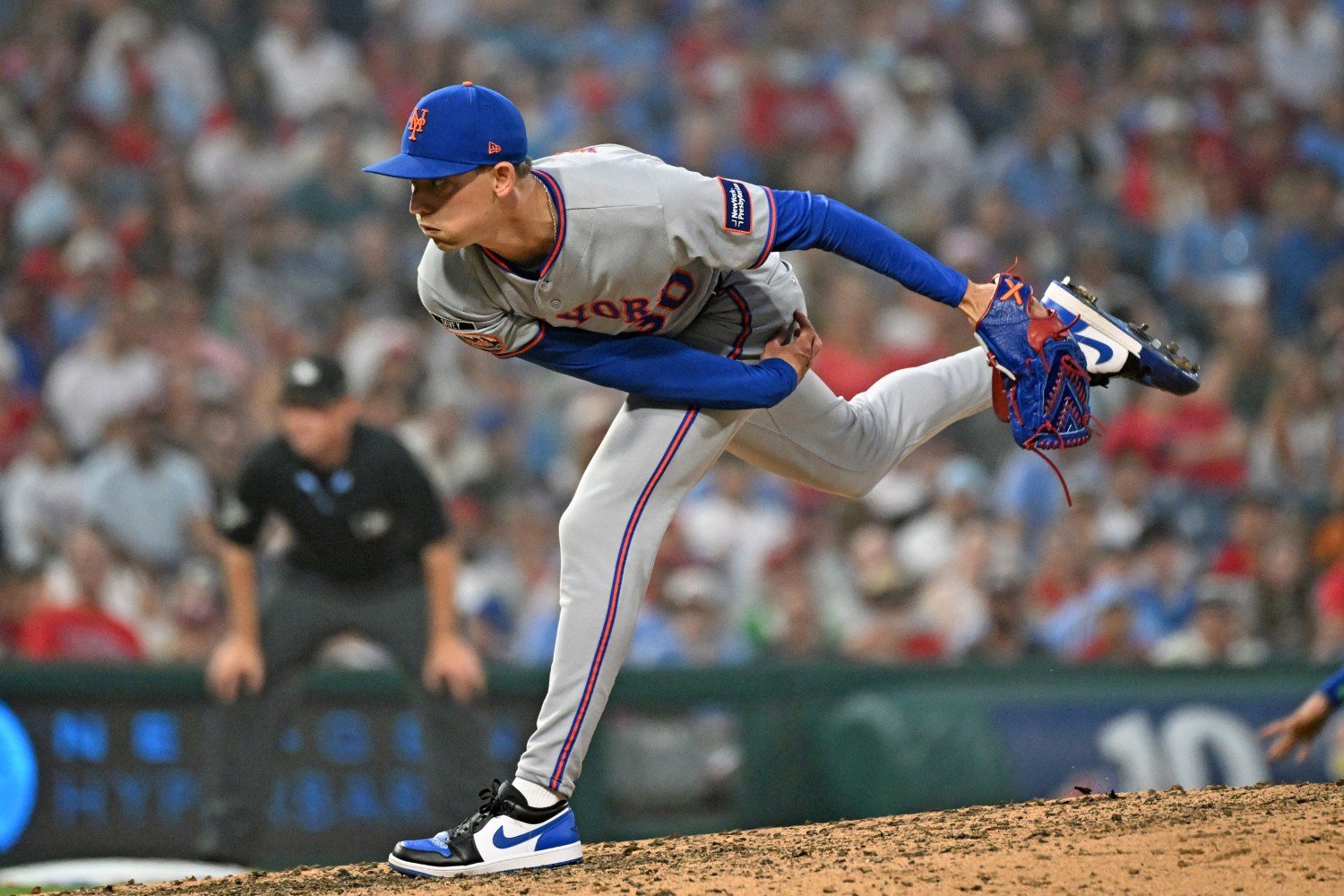 As the New York Mets continue to linger at the bottom of the NL East standings, there's no question about their trade deadline approach. They're going to sell, and one can imagine them doing so pretty aggressively. With a few notable impending free agents and a desire to reconstruct the roster in a way that doesn't yield the same level of disaster in 2027, they're a logical partner for the Chicago Cubs and their multiple needs—even after the Cubs already snapped up one Mets arm, last month. That the Cubs are in need of arms isn't the only reason that the Mets make a sensible link-up. It's also the fact that their current context makes them the rare team that could offer multiple major-league players within the framework of the same deal. That kind of opportunity can't be overlooked at this time of year, given the Cubs' multiple needs: a starter (or two) and a reliever (or two). While hypothetical trades between the two sides will focus on that side, it's also not all the Mets have to offer. Sensible additions on the positional side could also prove a fit for the Cubs' more limited needs in the field. Finding a package deal that makes sense isn't about merely putting two names together. Instead, it would be about putting positions or roles alongside each other in a way that spares the Cubs the need to make another significant trade, too. From the Mets' perspective, meanwhile, it would be a way to access a higher tier of Cubs prospect than they could get for any one of their players. It's unlikely that we'll see the Cubs go all-in. It's not in Jed Hoyer's nature to do so. An impact deal isn't out of the question, of course, but if he were to pursue this multi-player route, it's unlikely he'd be in on an upper-tier starter and an upper-tier reliever. You'd probably see him try to do one or the other, while settling for a lower caliber of player in the other role. That's another important caveat within all of this. Let's take a look at the categories of combo deal on which the Cubs and Mets could get together. Starter/Reliever Interest in a starter of any kind is going to focus on Freddy Peralta. While mired in a down year since his arrival in Queens, he's one of the higher-upside rentals on the starting pitching market and has a productive, happy history with Craig Counsell. He still presents plenty of appeal to the Cubs. Should Peralta be the name to headline a deal, you're probably looking more at the A.J. Minter, Huascar Brazobán or Brooks Raley end of the pool than someone like Luke Weaver (considering the latter's excellent season and additional year under contract) or Devin Williams. Should the Cubs go in the direction of Clay Holmes, rather than Peralta, Weaver becomes more possible. While it's not as if Holmes would be cheap (he's performed well and has another year on his contract), his cost could be enough lower than Peralta's to make it feasible to go after a solid starter (who is, notably, in the final stages of his recover from a fractured fibula) and the better of the Mets' potentially available relievers. Williams, on the other hand, feels more cost-prohibitive, considering his $15-million-a-year salary through 2028. Overall, this feels like the most likely pathway for the Cubs if they were able to pull off a multi-player trade with New York. Their needs on the mound far exceed the other phase of their roster, and the ability to solidify multiple parts of the pitching spectrum has to be appealing for Jed Hoyer and company. Starter/Position Player There isn't a wealth of position players the Mets would part with in whom the Cubs would actually have interest. They don't have a need for the likes of Francisco Lindor or Bo Bichette. Nor do they have the logistical or payroll space to accommodate either one, should the Mets actually seek a trade of either one of their biggest names. (Bichette could fit for them as a DH and backup infielder, but it's unrealistic to think the Mets would eat enough money or put a low enough price tag on him to justify that gamble.) It's also unlikely that a player they're more likely to trade, in Luis Robert Jr., would be on the Cubs' radar. A right-handed bat? Sure. A right-handed bat with a recent history of injury and uneven performance, and whose defensive value has trended sharply downward? Less likely, even with the Cubs' uncertainty on the corners of the grass beyond 2026. Robert comes with a club option for 2027, but it's not one the team would be eager to pick up. There is at least one name that could be interesting in this respect: Tyrone Taylor. His numbers don't read as especially impressive; his line is .237/.281/.481. Where that slug comes from, though, is noteworthy. Taylor is a lefty masher, with a line that ascends to .282/.303/.569 against southpaws. His wRC+ against left-handed pitching is 137, against an 82 versus the other handedness. If the Cubs are going to pursue a bat at the deadline, he fits the profile as a flexible outfielder and right-handed hitter. His acquisition cost wouldn't be difficult to package with any available starter, either. He'd be a clear upgrade over current fifth outfielder Justin Dean. Reliever/Position Player This is perhaps the most tepid of the possibilities involving the Mets; it wouldn't solve the Cubs' biggest issues within their rotation. What they can do here, however, is address a pair of needs without plumbing the depths of their own farm system. While there would be a legitimate cost for someone performing at Weaver's level, it wouldn't be the same conversation as for one of the starters. And it would only decrease from there. The Cubs can address their need for relief pitching and pick up a desired profile of a bench bat in the form of Taylor, while still leaving plenty of room for a starter addition elsewhere. It may not be the most efficient means of action among their potential routes here, but it would stabilize the roster, nonetheless.
 -
Image courtesy of © Gary A. Vasquez-Imagn Images As the trade deadline approaches, there isn't any doubt that pitching remains at the forefront of the Chicago Cubs' needs. A staff decimated by various injuries will likely need multiple additions if they're to reach October at all, let alone hang with their fellow National League contenders. That doesn't mean it will be a pitching exclusive deadline for the Cubs, though, as some supplementary offense couldn't hurt. Should that be the case, an old friend could wind up being a target in the form of Jorge Soler. It's been a decade since we saw Soler in Chicago. He's been on a journey since, with turns in Kansas City, Atlanta (twice), Miami, San Francisco, and Anaheim. Currently logging plate appearances for a listless Angels squad, he stands to be one of a number of veterans finding their way to new teams before Aug. 3. Whether or not the Cubs should be that new team for Soler, however, is another matter entirely. On paper, a pursuit of Soler would be a sensible fit. There are some financial ramifications on an AAV of roughly $12 million, but a right-handed bench bat capable of supplying power is something the Cubs could use. Their current group of starting righties — Seiya Suzuki, Nico Hoerner, Dansby Swanson, Carson Kelly, and Alex Bregman — provides only modest collective power, save Suzuki and the occasional stretch of torrid play from Swanson. None of the present right-handed (or righty-capable) bench consisting of Miguel Amaya, James Triantos, or Pedro Ramírez offers much on the power side, either. Soler, in theory, could help that dynamic. The "theory" portion, however, is where we begin to run into some issues. Soler's performance each of the last two years is that of a below-average hitter. He went for a wRC+ of 88 in 2025 and is at 85 thus far in 2026. Worse yet, the power hasn't manifested within his high-strikeout tendencies. He posted a .172 ISO last season before managing just .167 this year. In reality, we haven't seen Soler at the peak of his power potential since 2023, with 2024 providing our last glimpse into a hitter capable of exceeding a .200 ISO. Also working against him is the fact that he hasn't been particularly good this year against left-handed pitching. His wRC+ against pitchers of the opposite handedness in 2026 is just 67, against a 91 mark against righties. Only one of his 11 home runs this season has come against a left-handed pitcher. He was a bit more balanced in 2025, but not in a way that indicated him to be any sort of lefty masher. The last time we saw that kind of skill set was 2024. Statistically, it's a difficult move to justify. There's likely something of an argument to be made for organizational context, wherein the player is simply not performing because he's part of a woeful organization. However, the profile itself simply does not fit: Soler's percentile distribution indicates that this is a player who swings a lot, swings hard, and features minimal contact. The Cubs are, somewhat famously, an organization that trades bat speed for efficiency within their contact. Soler would actively work against that preferred profile. To say nothing of a near-inability to play the field, limiting the flexibility with which Craig Counsell would have to maneuver his roster in rotating through the designated hitter slot. Reunions can be a fun concept in the abstract. And when you talk about a team like the 2016 Cubs, those opportunities for bringing back an active player are waning to the point of almost being impossible. However, we haven't seen Soler at his best for a few years at this point. It's difficult to see the Cubs being so interested in pursuit of a reunion in their own right. It's simply too difficult a move to justify. Soler actively works outside of the profile the Cubs prefer from their hitters, without the power we're accustomed to seeing from him to compensate his current state. View full article
-
 As the trade deadline approaches, there isn't any doubt that pitching remains at the forefront of the Chicago Cubs' needs. A staff decimated by various injuries will likely need multiple additions if they're to reach October at all, let alone hang with their fellow National League contenders. That doesn't mean it will be a pitching exclusive deadline for the Cubs, though, as some supplementary offense couldn't hurt. Should that be the case, an old friend could wind up being a target in the form of Jorge Soler. It's been a decade since we saw Soler in Chicago. He's been on a journey since, with turns in Kansas City, Atlanta (twice), Miami, San Francisco, and Anaheim. Currently logging plate appearances for a listless Angels squad, he stands to be one of a number of veterans finding their way to new teams before Aug. 3. Whether or not the Cubs should be that new team for Soler, however, is another matter entirely. On paper, a pursuit of Soler would be a sensible fit. There are some financial ramifications on an AAV of roughly $12 million, but a right-handed bench bat capable of supplying power is something the Cubs could use. Their current group of starting righties — Seiya Suzuki, Nico Hoerner, Dansby Swanson, Carson Kelly, and Alex Bregman — provides only modest collective power, save Suzuki and the occasional stretch of torrid play from Swanson. None of the present right-handed (or righty-capable) bench consisting of Miguel Amaya, James Triantos, or Pedro Ramírez offers much on the power side, either. Soler, in theory, could help that dynamic. The "theory" portion, however, is where we begin to run into some issues. Soler's performance each of the last two years is that of a below-average hitter. He went for a wRC+ of 88 in 2025 and is at 85 thus far in 2026. Worse yet, the power hasn't manifested within his high-strikeout tendencies. He posted a .172 ISO last season before managing just .167 this year. In reality, we haven't seen Soler at the peak of his power potential since 2023, with 2024 providing our last glimpse into a hitter capable of exceeding a .200 ISO. Also working against him is the fact that he hasn't been particularly good this year against left-handed pitching. His wRC+ against pitchers of the opposite handedness in 2026 is just 67, against a 91 mark against righties. Only one of his 11 home runs this season has come against a left-handed pitcher. He was a bit more balanced in 2025, but not in a way that indicated him to be any sort of lefty masher. The last time we saw that kind of skill set was 2024. Statistically, it's a difficult move to justify. There's likely something of an argument to be made for organizational context, wherein the player is simply not performing because he's part of a woeful organization. However, the profile itself simply does not fit: Soler's percentile distribution indicates that this is a player who swings a lot, swings hard, and features minimal contact. The Cubs are, somewhat famously, an organization that trades bat speed for efficiency within their contact. Soler would actively work against that preferred profile. To say nothing of a near-inability to play the field, limiting the flexibility with which Craig Counsell would have to maneuver his roster in rotating through the designated hitter slot. Reunions can be a fun concept in the abstract. And when you talk about a team like the 2016 Cubs, those opportunities for bringing back an active player are waning to the point of almost being impossible. However, we haven't seen Soler at his best for a few years at this point. It's difficult to see the Cubs being so interested in pursuit of a reunion in their own right. It's simply too difficult a move to justify. Soler actively works outside of the profile the Cubs prefer from their hitters, without the power we're accustomed to seeing from him to compensate his current state.
 -
Image courtesy of © Matt Marton-Imagn Images All things considered, the Chicago Cubs find themselves in an enviable position within a couple of weeks of the 2026 MLB trade deadline. They're atop the standings in the National League Wild Card race, with FanGraphs projecting them to remain in playoff position (albeit one slot lower given Philadelphia's slightly more favorable projection). It'd be dangerous to portray this as a sure-thing situation, considering some of the struggles we've seen from this team over sustained stretches this season, in addition to the myriad injuries they've experienced on the mound. Nevertheless, their position remains an enviable one as the season prepares to hit the major benchmark that the deadline represents. Of course, remaining where they are will hinge on a few names on the current roster stabilizing things. We know (or at least think; he's suddenly slumping again at the plate) that Pete Crow-Armstrong will be in the National League MVP mix, while offensive stars who have struggled (Alex Bregman and Nico Hoerner, for example) have begun to ascend of late. However, a few different names could have an even larger bearing on the team's ability to actually maintain their standing. Seiya Suzuki, OF/DH At his best, Suzuki is a player capable of driving offensive production on his own. While it hasn't been without various health issues over the years, we've all witnessed what peak performance looks like for him over sustained stretches of play. The issue is what unfolds in between those runs. In 2026 alone, Suzuki missed time early due to a knee injury before going on to a .328 batting average, .430 on-base percentage, and .239 isolated power across his first 79 plate appearances, for a rather gaudy 175 wRC+. Of course, that turned into a May where the slash read just .190/.265/.286 with a paltry 51 wRC+. It's not entirely dissimilar from a couple of the trends we've seen from Suzuki in each of the last two years Two seasons ago, Suzuki did almost exactly the same thing that we saw early on this year. He came out scorching in March and April, before falling well below average by wRC+ in May (71). Last season, Suzuki was excellent for each of the first two months before he began to linger closer to the average threshold, with wRC+ marks of 103, 103, and 106 from June to August. Much of that was due to waning power, including an August wherein his ISO sat at just .079. The issue isn't a question of quality. Suzuki is, objectively, one of the team's top hitters. The reason he gets a mention here is because of those rough stretches to which he's been prone. Whether they happen as a result of health or mechanics or approach isn't the point here. Instead, it's about the idea that Suzuki may be the team's most important hitter this side of Crow-Armstrong, especially in the face of so many other struggles that have permeated the lineup at various points this season. For the Cubs to maintain their position as buyers ahead of the trade deadline, Suzuki needs to do just that. He's looked good to start the second half, including homering Monday night. Matthew Boyd, SP The Cubs' rotation is in shambles. As of this writing, you're looking at a corps of Boyd, Shota Imanaga, Jameson Taillon, David Peterson and Colin Rea. Before returning to the mound Monday night, Taillon had been on the injured list since the beginning of June, with the likes of Edward Cabrera, Ben Brown, Justin Steele, and Cade Horton all joining him there or having gotten there first and saving him a seat on the shelf. Even Boyd himself went nearly two months between starts. And none of that takes into account what's transpired with the bullpen. The stack of injuries has forced Boyd into a role where he needs to be something of a stopper in the rotation. One could make the argument the team came into the season lacking a genuine one, but the combination of injuries and variance in performance from the other starters have left the role at Boyd's feet. Imanaga's fly-ball tendencies make him more prone to the occasional dud of a start; Boyd offers more stability. Unfair as it may be, Boyd is the pitcher who needs to remain as stable as possible across these next couple of weeks. If he can continue to turn in the type of classic quality start we've come to expect from him over the last two years, the Cubs can remain afloat even against the wave of injuries. If not, then there's a severe issue awaiting the Cubs—and they'll need a huge, unlikely deadline splash to surmount it. Caleb Thielbar, RP Like Boyd in the rotation, the rash of injuries across the relief corps have pressed arms into duties that they may not otherwise have served, both in terms of volume and leverage. That has very much been the case with Thielbar, who has thrown nearly half of his innings in medium or high leverage. Thielbar parlayed a solid 2025 into a second contract with the team, but was supposed to be a small cog in a big machine. It hasn't panned out that way. He hasn't been particularly successful in a fairly demanding role. Thielbar has spent the majority of the year trying to tread water, as illustrated by an ERA in the mid-4s and a 5.51 FIP. It would be entirely reasonable to have concerns about him being pressed into such a role. However, with guys like Daniel Palencia, Hunter Harvey, Ethan Roberts, Hoby Milner, and Phil Maton (again) out with injuries, the team will need Thielbar to keep delivering high-leverage outs. If Thielbar rediscovers some semblance of last year's form over the next 10 days or so, it will save Jed Hoyer a big headache. If he doesn't, the Cubs probably need to pick up a good lefty reliever by the deadline. Given the length of their shopping list even without that item, it'd be nice not to add that to it. View full article
-
3 Cubs Who Will Make or Break Team at MLB Trade Deadline (and Beyond)
RandallPnkFloyd posted an article in Cubs
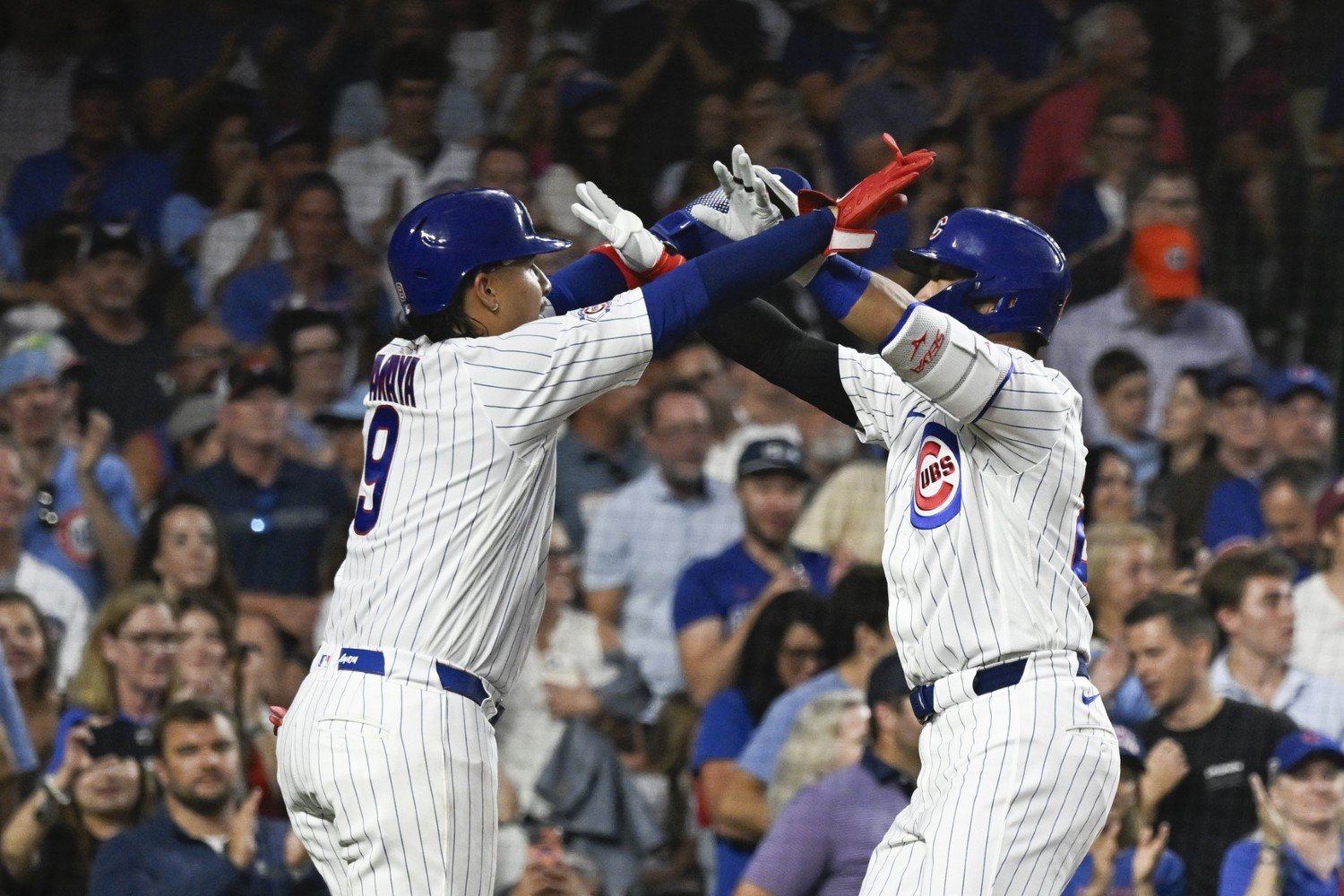 All things considered, the Chicago Cubs find themselves in an enviable position within a couple of weeks of the 2026 MLB trade deadline. They're atop the standings in the National League Wild Card race, with FanGraphs projecting them to remain in playoff position (albeit one slot lower given Philadelphia's slightly more favorable projection). It'd be dangerous to portray this as a sure-thing situation, considering some of the struggles we've seen from this team over sustained stretches this season, in addition to the myriad injuries they've experienced on the mound. Nevertheless, their position remains an enviable one as the season prepares to hit the major benchmark that the deadline represents. Of course, remaining where they are will hinge on a few names on the current roster stabilizing things. We know (or at least think; he's suddenly slumping again at the plate) that Pete Crow-Armstrong will be in the National League MVP mix, while offensive stars who have struggled (Alex Bregman and Nico Hoerner, for example) have begun to ascend of late. However, a few different names could have an even larger bearing on the team's ability to actually maintain their standing. Seiya Suzuki, OF/DH At his best, Suzuki is a player capable of driving offensive production on his own. While it hasn't been without various health issues over the years, we've all witnessed what peak performance looks like for him over sustained stretches of play. The issue is what unfolds in between those runs. In 2026 alone, Suzuki missed time early due to a knee injury before going on to a .328 batting average, .430 on-base percentage, and .239 isolated power across his first 79 plate appearances, for a rather gaudy 175 wRC+. Of course, that turned into a May where the slash read just .190/.265/.286 with a paltry 51 wRC+. It's not entirely dissimilar from a couple of the trends we've seen from Suzuki in each of the last two years Two seasons ago, Suzuki did almost exactly the same thing that we saw early on this year. He came out scorching in March and April, before falling well below average by wRC+ in May (71). Last season, Suzuki was excellent for each of the first two months before he began to linger closer to the average threshold, with wRC+ marks of 103, 103, and 106 from June to August. Much of that was due to waning power, including an August wherein his ISO sat at just .079. The issue isn't a question of quality. Suzuki is, objectively, one of the team's top hitters. The reason he gets a mention here is because of those rough stretches to which he's been prone. Whether they happen as a result of health or mechanics or approach isn't the point here. Instead, it's about the idea that Suzuki may be the team's most important hitter this side of Crow-Armstrong, especially in the face of so many other struggles that have permeated the lineup at various points this season. For the Cubs to maintain their position as buyers ahead of the trade deadline, Suzuki needs to do just that. He's looked good to start the second half, including homering Monday night. Matthew Boyd, SP The Cubs' rotation is in shambles. As of this writing, you're looking at a corps of Boyd, Shota Imanaga, Jameson Taillon, David Peterson and Colin Rea. Before returning to the mound Monday night, Taillon had been on the injured list since the beginning of June, with the likes of Edward Cabrera, Ben Brown, Justin Steele, and Cade Horton all joining him there or having gotten there first and saving him a seat on the shelf. Even Boyd himself went nearly two months between starts. And none of that takes into account what's transpired with the bullpen. The stack of injuries has forced Boyd into a role where he needs to be something of a stopper in the rotation. One could make the argument the team came into the season lacking a genuine one, but the combination of injuries and variance in performance from the other starters have left the role at Boyd's feet. Imanaga's fly-ball tendencies make him more prone to the occasional dud of a start; Boyd offers more stability. Unfair as it may be, Boyd is the pitcher who needs to remain as stable as possible across these next couple of weeks. If he can continue to turn in the type of classic quality start we've come to expect from him over the last two years, the Cubs can remain afloat even against the wave of injuries. If not, then there's a severe issue awaiting the Cubs—and they'll need a huge, unlikely deadline splash to surmount it. Caleb Thielbar, RP Like Boyd in the rotation, the rash of injuries across the relief corps have pressed arms into duties that they may not otherwise have served, both in terms of volume and leverage. That has very much been the case with Thielbar, who has thrown nearly half of his innings in medium or high leverage. Thielbar parlayed a solid 2025 into a second contract with the team, but was supposed to be a small cog in a big machine. It hasn't panned out that way. He hasn't been particularly successful in a fairly demanding role. Thielbar has spent the majority of the year trying to tread water, as illustrated by an ERA in the mid-4s and a 5.51 FIP. It would be entirely reasonable to have concerns about him being pressed into such a role. However, with guys like Daniel Palencia, Hunter Harvey, Ethan Roberts, Hoby Milner, and Phil Maton (again) out with injuries, the team will need Thielbar to keep delivering high-leverage outs. If Thielbar rediscovers some semblance of last year's form over the next 10 days or so, it will save Jed Hoyer a big headache. If he doesn't, the Cubs probably need to pick up a good lefty reliever by the deadline. Given the length of their shopping list even without that item, it'd be nice not to add that to it.
 -
Image courtesy of © Patrick Gorski-Imagn Images That the Chicago Cubs' bullpen hasn't been a total catastrophe serves as something of a minor miracle in this 2026 season. Despite a fWAR figure that ranks just 24th in the league (-0.1), they sit comfortably in the top half of the league in reliever ERA (3.82), walk rate (9.2 percent), and groundball rate (42.6 percent). Those elements have helped them to remain afloat in the face of consistent instability permeating throughout the individuals in the group. The absence of stability in the team's relief corps stems from a few different factors. Its construction is one. Injuries, both internally and within the rotation, have represented another (perhaps even more significantly so). In the face of such turmoil, one unassuming arm has emerged as a source of stability for Craig Counsell in the form of Hoby Milner. Our Jason Ross last discussed Milner in this space back in April. Therein, he noted some of the successes that Milner was experiencing in the early going but also confronted some of the red flags. At that point in the year, the veteran southpaw was rolling at a 2.39 ERA but a FIP over six, with a sharp decline in his typical groundball tendencies. Milner ended April with 15 innings pitched and a 2.40 ERA. His strikeout rate, though, sat at 8.6 percent, a low number even by his modest standards. His 6.9 percent walk rate was also up a bit from his career norms, with a .192 opposing batting average that indicated some good fortune in the face of uneven trends. There were some role changes and subsequent usage tweaks at play that impacted him, but the bottom line was that the results weren't completely jiving with the underlying trends. Fast-forward almost exactly two months to now and many of the concerns around Milner's early performance have stabilized. As of this writing, he has a 3.38 ERA to his credit and a 4.20 FIP. He's still outperforming the peripherals a touch (4.94 xERA, 4.71 xFIP), but there's been a progression over the last three months that helps to illustrate his value as a steady arm in this bullpen. The two months since April have looked as follows: May: 10.1 IP, 2.61 ERA, 2.33 FIP, 15.9 K%, 4.5 BB%, 50.0 GB%, .250 opposing batting average June: 9.1 IP, 5.79 ERA, 4.39 FIP, 12.8 K%, 5,1 BB%, 40.0 GB%, .294 opponent batting average At first blush, the idea that Milner not only has his red flags behind him (as the headline posits) but is also a source of stability would seem outrageous. After really find his groove in May, the surface numbers are more indicative of a player falling back toward the regression feared by some of the trends back in April. However, it's important to note that Milner had an especially poor outing back on June 5. He allowed six earned runs in just a third of an inning. In his other nine innings of work, he's allowed zero runners to cross home plate. Which means that the image of Milner as a reliable arm in relief is still very much intact. His usage is starting to support that idea as well. In Jason's piece, he noted the increased usage of Milner's sinker given some of the higher traffic on the basepaths, as well as the higher-leverage situations into which an increased role had pressed him. That came at the expense of his sweeper. In the stretch of time since, he's gotten back to the arsenal we generally expect: The shift in usage from being sinker-heavy to blending the sinker and sweeper more effectively comes as a result of Milner not being asked to handle make-or-break moments, while also being deployed against left-handed hitters more frequently than righties. That June 5 outing notwithstanding, he's regained his form in limiting baserunners while also maintaining strikeout and walk trends more akin to his career norms. As a result, Milner has been able to maintain his status as perhaps the most stable arm this relief corps has to offer. He's taken on more work than any current member of the bullpen (34.2 IP), and while the early turbulence forced him to take on an increased role, the early red flags — the traffic, absence of strikeouts, and waning groundball contact — are largely behind him. Given how messy the configuration of this group of relievers has been (mostly for reasons which are out of their control), that Milner has settled back into his usual self speaks to exactly what the Cubs were hoping he'd provide as a veteran soft-tossing lefty. View full article
-
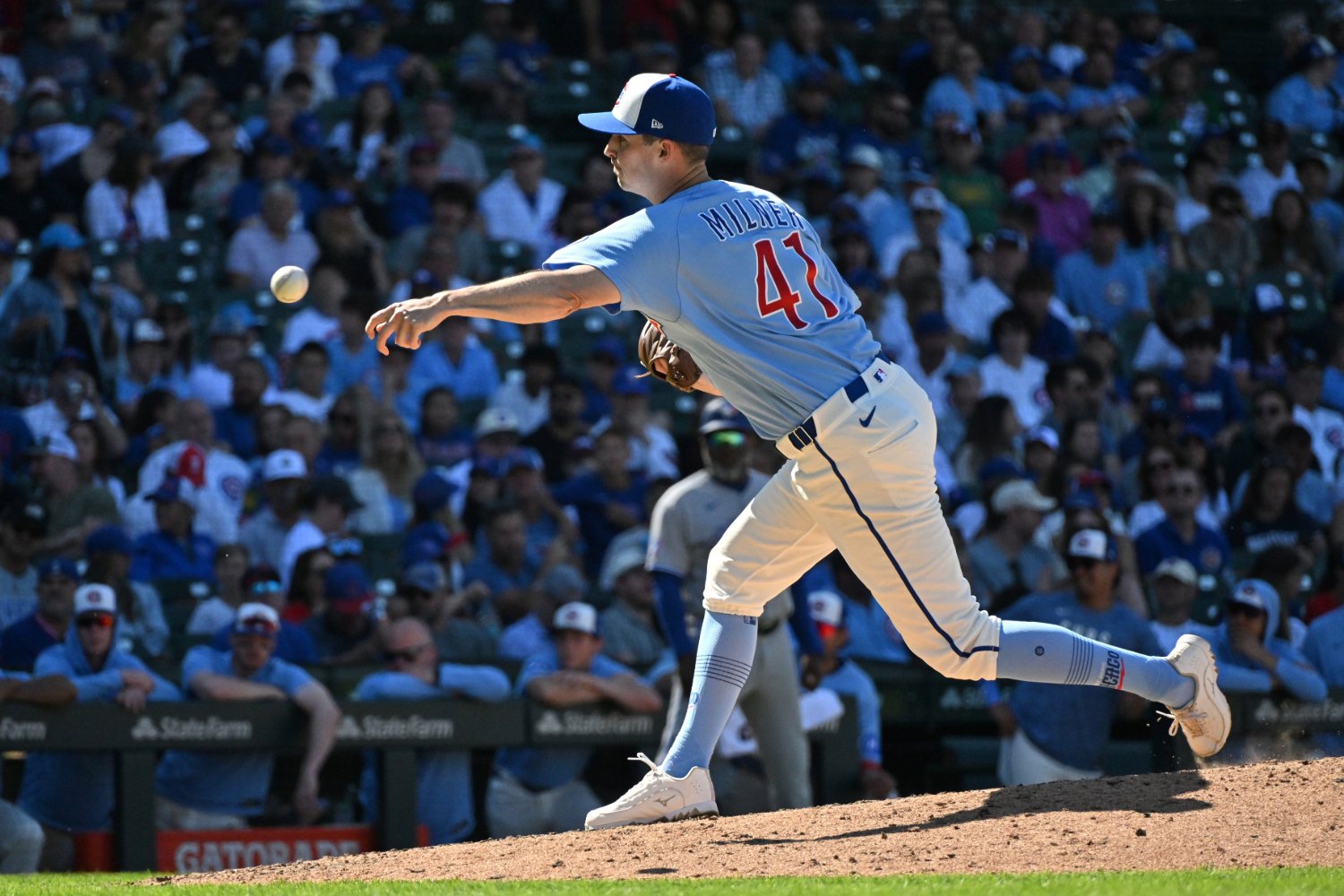 That the Chicago Cubs' bullpen hasn't been a total catastrophe serves as something of a minor miracle in this 2026 season. Despite a fWAR figure that ranks just 24th in the league (-0.1), they sit comfortably in the top half of the league in reliever ERA (3.82), walk rate (9.2 percent), and groundball rate (42.6 percent). Those elements have helped them to remain afloat in the face of consistent instability permeating throughout the individuals in the group. The absence of stability in the team's relief corps stems from a few different factors. Its construction is one. Injuries, both internally and within the rotation, have represented another (perhaps even more significantly so). In the face of such turmoil, one unassuming arm has emerged as a source of stability for Craig Counsell in the form of Hoby Milner. Our Jason Ross last discussed Milner in this space back in April. Therein, he noted some of the successes that Milner was experiencing in the early going but also confronted some of the red flags. At that point in the year, the veteran southpaw was rolling at a 2.39 ERA but a FIP over six, with a sharp decline in his typical groundball tendencies. Milner ended April with 15 innings pitched and a 2.40 ERA. His strikeout rate, though, sat at 8.6 percent, a low number even by his modest standards. His 6.9 percent walk rate was also up a bit from his career norms, with a .192 opposing batting average that indicated some good fortune in the face of uneven trends. There were some role changes and subsequent usage tweaks at play that impacted him, but the bottom line was that the results weren't completely jiving with the underlying trends. Fast-forward almost exactly two months to now and many of the concerns around Milner's early performance have stabilized. As of this writing, he has a 3.38 ERA to his credit and a 4.20 FIP. He's still outperforming the peripherals a touch (4.94 xERA, 4.71 xFIP), but there's been a progression over the last three months that helps to illustrate his value as a steady arm in this bullpen. The two months since April have looked as follows: May: 10.1 IP, 2.61 ERA, 2.33 FIP, 15.9 K%, 4.5 BB%, 50.0 GB%, .250 opposing batting average June: 9.1 IP, 5.79 ERA, 4.39 FIP, 12.8 K%, 5,1 BB%, 40.0 GB%, .294 opponent batting average At first blush, the idea that Milner not only has his red flags behind him (as the headline posits) but is also a source of stability would seem outrageous. After really find his groove in May, the surface numbers are more indicative of a player falling back toward the regression feared by some of the trends back in April. However, it's important to note that Milner had an especially poor outing back on June 5. He allowed six earned runs in just a third of an inning. In his other nine innings of work, he's allowed zero runners to cross home plate. Which means that the image of Milner as a reliable arm in relief is still very much intact. His usage is starting to support that idea as well. In Jason's piece, he noted the increased usage of Milner's sinker given some of the higher traffic on the basepaths, as well as the higher-leverage situations into which an increased role had pressed him. That came at the expense of his sweeper. In the stretch of time since, he's gotten back to the arsenal we generally expect: The shift in usage from being sinker-heavy to blending the sinker and sweeper more effectively comes as a result of Milner not being asked to handle make-or-break moments, while also being deployed against left-handed hitters more frequently than righties. That June 5 outing notwithstanding, he's regained his form in limiting baserunners while also maintaining strikeout and walk trends more akin to his career norms. As a result, Milner has been able to maintain his status as perhaps the most stable arm this relief corps has to offer. He's taken on more work than any current member of the bullpen (34.2 IP), and while the early turbulence forced him to take on an increased role, the early red flags — the traffic, absence of strikeouts, and waning groundball contact — are largely behind him. Given how messy the configuration of this group of relievers has been (mostly for reasons which are out of their control), that Milner has settled back into his usual self speaks to exactly what the Cubs were hoping he'd provide as a veteran soft-tossing lefty.
 -
Image courtesy of © Vincent Carchietta-Imagn Images Pete Crow-Armstrong contains multitudes. Almost immediately upon making his Chicago Cubs debut with a 2023 cup of coffee, it was clear that there would be multiple sides of the Crow-Armstrong experience. He's a player with loud tools capable of doing things rarely seen on a baseball field, in all phases of the game. There's also an erratic quality to his game, wherein his immaturity as a hitter can compromise those tools in a way that prevents them from manifesting with as much consistency as one might prefer. Since he became a full-time player during the 2024 season, we've seen each end of that spectrum. The 2025 season, specifically, illustrated the layers of his performance, with a first half that garnered buzz as a National League MVP candidate before it faded entirely in the second. But we've never seen a Pete Crow-Armstrong like we're seeing this June. It's hard to imagine this is where we are after the start in which Crow-Armstrong found himself mired back in April. He finished that month with a .241/.307/.362 line and a 88 wRC+, while striking out roughly 30 percent of the time. Things progressed steadily in May, and his blazing hot streak really began on May 22, but (like Sammy Sosa did back in 1998) he really began to find the national spotlight once we reached June. The numbers this month read as follows (79 plate appearances): Batting Average: .437 On-Base Percentage: .481 Slugging Percentage: .930 K%: 22.8 BB%: 7.6 Isolated Power: .493 wRC+: 282 It's nearly impossible to communicate the immensity of that output, especially when the month is just about gone. The sample isn't exactly small at this point. To add some further context, this is where the second-best hitter ranks in each of the above this month (save strikeout and walk rates, which are only notable given how reasonable they are within Crow-Armstrong's wider body of work with respect to plate discipline): Batting Average: .391 (Yordan Álvarez) On-Base Percentage: .473 (Shohei Ohtani, though Álvarez is tied with Crow-Armstrong) Slugging Percentage: .783 (Ohtani) Isolated Power: .433 (Ohtani) wRC+: 234 (Ohtani) It would be unreasonable to suggest that Crow-Armstrong possesses the comprehensive skill set and consistency required to match hitters like Álvarez or Ohtani over a larger sample. However, the fact that he isn't just ahead of them but comfortably so speaks to just how obscene his output this month has actually been. It far exceeds anything he did in in the first half of his breakout 2025 season. And the above was all before he did this on Tuesday: Such is the nature of a stretch like this that Matt Trueblood already invoked Sosa's 1998 heater when discussing his output earlier this month (with plenty of additional nuance beyond the numbers). To update the comparison, since May 22, Crow-Armstrong is batting .387/.466/.811, with 21 extra-base hits. From May 22 through June 23 in 1998, Sosa hit .325/.358/.921, with 24 extra-base hits. Only 12 of Crow-Armstrong's long hits were homers, whereas an impossible 22 of Sosa's were, but this is what a run like Sosa's looks like in the modern game. Perhaps, though, there's a former NL MVP out of the Cubs organization of an even more recent vintage to which we can draw comparisons. Kris Bryant took home the award in 2016 as a sophomore, in what would end up being the peak of his career. That season, he posted a line that ran .292/.385/.554 with a .262 ISO and a 148 wRC+. The output that season was massive. His best month that season was August, wherein he went .383/.472/.748, which looks a whole lot like Crow-Armstrong's line over the last 31 days—but is worse. The best player in his best month on a championship team falls short of where we're seeing Pete Crow-Armstrong in June of 2026. We could even extend it to a player who has been a comp for Crow-Armstrong since the two were part of the same 2021 trade: Javier Báez. In 2018, there was a real case to be made that Báez should have taken home the MVP award over Christian Yelich—though he peaked a little too early to make it convincing. His best month that year came in July, with a line of .333/.347/.606, an ISO of .273 (though his .288 in August was higher), and a 155 wRC+. Again, we're not even in the same ballpark in comparing that to Crow-Armstrong's June. Of course, none of this is to cast aspersions on some of the most beloved Cubs of the modern era at the individual peak at the absolute pinnacle of their powers. It's to showcase just how absurd this version of Pete Crow-Armstrong has been in June. With the torrid month he's had, he's run his overall line on the season up to .287/.366/.529. He's been 50% more productive than an average batter for the year. There isn't a player in the sport who has accrued more fWAR on the season than Crow-Armstrong has, which also speaks to the fact that he's remained the sport's best defensive center fielder in the midst of this offensive explosion, an impressive feat in itself. It often feels like as long as Shohei Ohtani is in Major League Baseball, he's the National League's lock for the MVP award, but there's a real case emerging for Crow-Armstrong to steal one. Regardless of the award implications, it feels like there's something of a foundation being laid for Pete Crow-Armstrong this month. Between the steady improvement in May and the explosion in June, it does feel like we're watching a player settle into his skill set and demonstrate a level of maturation at the plate that can fuel a lasting brilliance. The month itself is important because it's among the most enjoyable things in the sport to watch a player performing at this level for nearly four consecutive weeks. What happens next, though, could prove just how important it is, for the long run. View full article
