


Cubs Video
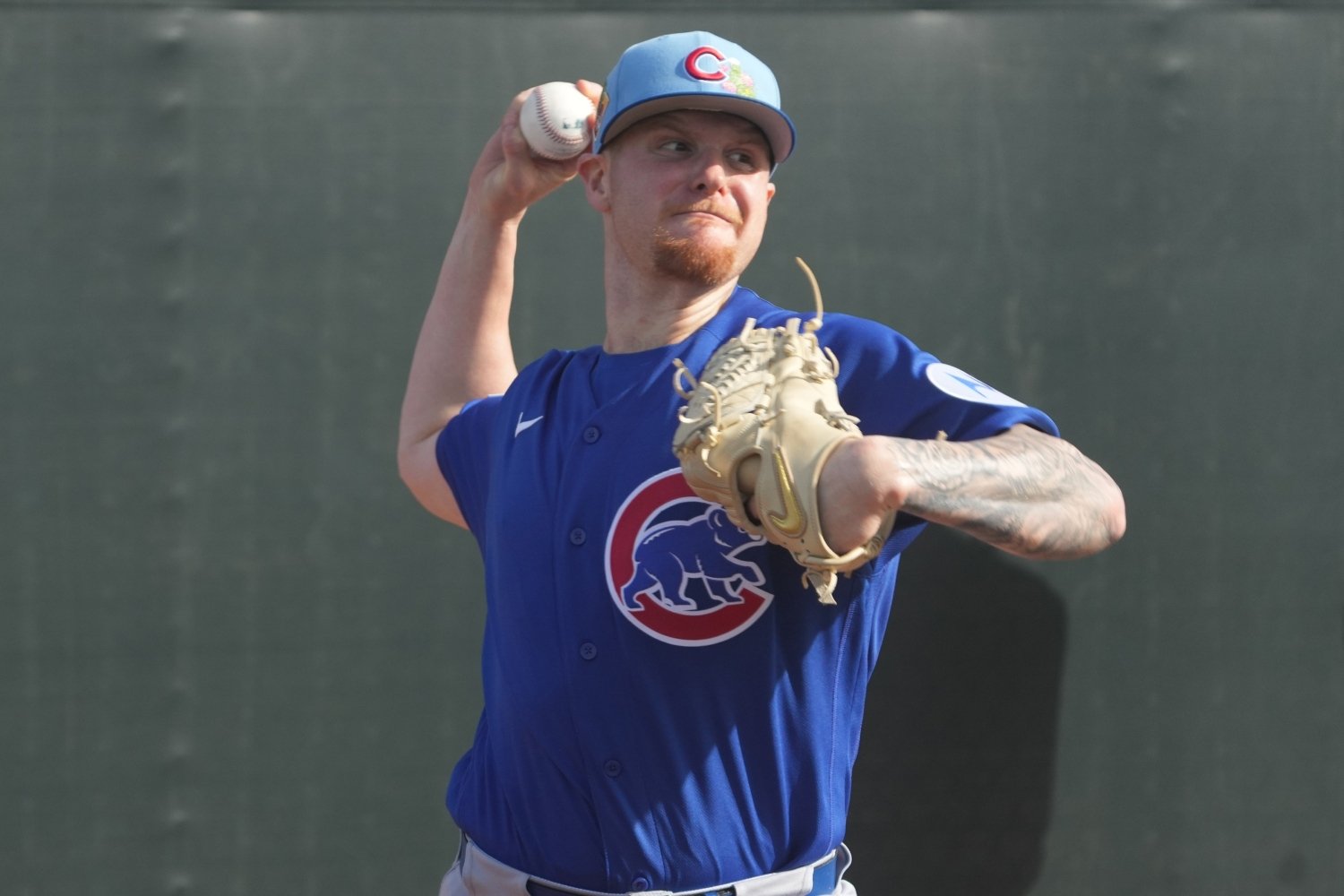
The buzz around the 2026 Chicago Cubs is real. They have a new marquee bat in Alex Bregman and a new marquee arm in Edward Cabrera, and are coming off a postseason berth primed to compete for a division title. Among their burgeoning set of high-end talents, one stands out: Cade Horton.
It's difficult to overstate how much of a success Horton's rookie campaign was. Across 22 starts at the major-league level last year, he pitched to an 11-4 record, a 2.67 ERA, and a 20.4% strikeout rate, with a 6.9 percent walk rate. Even with room for growth in missing bats and a fractured rib that cut his season short, Horton finished second in the National League Rookie of the Year voting to Atlanta's Drake Baldwin. It sets the stage for one of the most hyped pitching prospects that the organization has seen in decades.
That might seem like hyperbole; it isn't. The Cubs have done well in drafting and developing hitters over the last decade-plus. They've been able to acquire prospects from the lower levels of other organizations' minor-league ranks and do the same. Pitching, however, has not been as consistent an area of excellence. The odd reclamation project or mid-rotation arm notwithstanding, it's been an area in which the team has lacked going back multiple generations of front office leadership.
That perception of the Cubs and their pitching development could shift dramatically if Horton is able to continue the ascent he began after being selected 7th overall in 2022. We know that the upside is beyond what Horton turned in across the 118 innings of his rookie campaign, particularly in regard to the strikeouts. While the control was a healthy element, he'd been running strikeout rates between 28% and 30% in the minor leagues. Generating whiffs outside the strike zone should help him to do just that. Opponents made contact on about 52% of their out-of-zone swings against Horton at the big-league level last year; he's shown the ability to generate whiffs much more often on chase pitches. Horton isn't an overwhelming strikeout pitcher, but by virtue of generating more swings with his secondary offerings alone, that number should increase.
What should work farther in Horton's favor is the continued development of his changeup. Once thought of as a tertiary pitch, that offering has become arguably his best. Matt Trueblood examined this as a concept following Horton's 10-strikeout outburst against Cleveland on Monday. In that outing, Horton garnered whiffs on 11 of 15 changeups thrown, which could be indicative of where some of that additional whiff might be found.
Ultimately, though, the projections don't love Horton to build on that aspect of his game too much. The following is where the various models have him performing in 2026:
- Steamer: 24 GS, 8-9, 4.34 ERA, 4.40 FIP, 20.4 K%, 7.9 BB%, 1.2 fWAR
- ZiPS: 25 GS, 8-7, 3.89 ERA, 4.06 FIP, 21.2 K%, 7.2 BB%, 1.6 fWAR
- ATC: 23 GS, 9-7, 3.91 ERA, 4.14 FIP, 20.6 K%, 7.5 BB%, 1.7 fWAR
- THE BAT X: 23 GS, 8-8, 4.06 ERA, 3.89 FIP, 21.0 K%, 7.5 BB%, 2.3 fWAR
- OOPSY: 24 GS, 8-8, 3.96 ERA, 4.12 FIP, 22.4 K%, 8.3 BB%, 1.7 fWAR
Pitching projections are notoriously difficult to gauge, given the position's reliance on other factors beyond their own skill set. Nevertheless, there's a fair bit of consistency here, and each projection speaks to a central idea: Horton will experience regression in run prevention, with essentially similar peripheral numbers. You could do worse than a season like that. A season of 23-25 starts, an ERA around 4.00, and a strikeout rate working its way slightly more toward average would keep Horton in the thicket of mid-rotation starters. At the same time, it's fair to hope for more than that.
Horton's fastball-sweeper combination was already going to be adept at getting outs. Use that combination against right-handed hitters, offer the changeup against lefties, and you're in a good spot. If Horton can sustain the results he's getting in the spring on that changeup, you're not looking for middle-tier results. You're looking for something that finishes closer to the top tier of all starting pitchers in the sport.
It doesn't feel unrealistic to expect that out of Horton in 2026. His first taste of big-league action proved that he's a resourceful, intense competitor with plus stuff. If he stays healthy, those traits should carry him to a stronger 2026 than the raw numbers imply.





.thumb.JPG.19c99ddd60a76edf810c77d321439828.JPG)


Recommended Comments
Create an account or sign in to comment
You need to be a member in order to leave a comment
Create an account
Sign up for a new account in our community. It's easy!
Register a new accountSign in
Already have an account? Sign in here.
Sign In Now