


Cubs Video
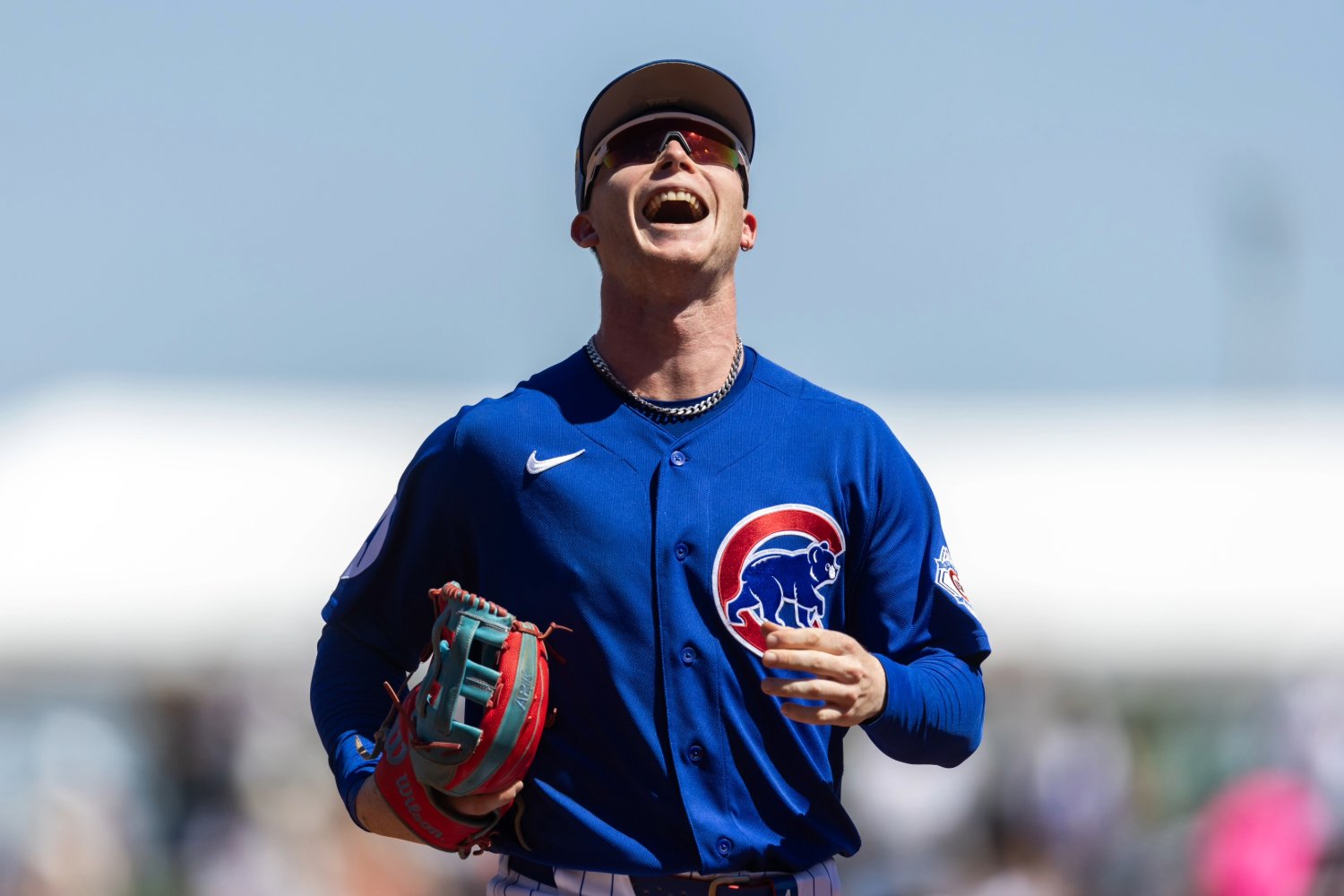
The week ahead of Major League Baseball's Opening Day always carries a certain sanguine energy to it. The optimism that permeates throughout each fanbase at the outset, typically juxtaposed against the transition from winter into spring, is unique to baseball. Of course, a team can always add some extra juice to that by extending one of its most exciting players. The Chicago Cubs have done just that, by striking an agreement on a long-term agreement with Pete Crow-Armstrong. The budding star will now be a Cub for even longer than the five years for which they controlled him before arriving at a deal.
Mind you, Crow-Armstrong wasn't the only player the Cubs could have opted to extend ahead of the season. Nico Hoerner is a free agent after 2026. Ian Happ and Seiya Suzuki are, too—to say nothing of Shota Imanaga, Matthew Boyd, and Jameson Taillon. We could discuss the merits of each sticking around (or not sticking around) beyond this season, but there was no question that Crow-Armstrong would be the player best-positioned for this kind of deal this spring.
There are a few things to consider when deeming a player to be worthy of an extension, especially within the framework of a team with multiple candidates for one. The context of their current deal is likely at the top. Players far from free agency (like Crow-Armstrong) and those bordering on indispensable but nearing free agency (like Hoerner, Happ and Suzuki) fit at opposite ends of the spectrum. Projectability is another key issue. You want to ensure a player is going to sustain or improve their levels of performance for at least a certain portion of a contract. Then, you get into the more unquantifiable narrative impact. While payroll and performance are going to rank at the top of a team's considerations, a player who adds a certain vibe and positive attention to the organization is going to have value that extends beyond either sheet.
Some of that is an oversimplification. The farm system bears an impact. The condition of the payroll beyond the individual player does, too, in addition to myriad other factors that the average outsider mind may not even consider. But it's the broad criteria that feeds into an easy rationale as to what made Crow-Armstrong such an appealing extension candidate.
The context of his current contract is an easy component to navigate. Crow-Armstrong hasn't yet hit arbitration; he's eligible for his first year of it next winter. From there, it's four years of arbitration prior to free agency following the 2030 season. With continued improvement at the plate (read: plate discipline), it's possible that growth could work in conjunction with the areas in which he already excels to drive a high, continually-ascending price in arbitration. As such, the Cubs were able to ensure cost certainty with one of the most important players on their roster as they continue to build toward the future.
It should be noted that the phrase "continued improvement" is also doing quite a bit of heavy lifting in that previous paragraph. Age alone, however, indicates that a certain degree of projectability still exists within Crow-Armstrong's profile. It's big speed, big power, and elite defense, yes. It's also wild aggression and, subsequently, a whole lot of swing and miss. It may be unreasonable to suspect improvement is nigh there; aggressive hitters generally tend to remain aggressive throughout their career. Any refinement in the approach, though, should be able to yield offensive outcomes that aren't necessarily better on the whole, but at least more sustained after he began to fizzle some in the second half. Stronger outcomes would be nice, but Crow-Armstrong extending last year's pace through September would also serve the same purpose of offensive ascension. In either scenario, you're talking about a 30-homer, 30-steal player with a Gold Glove in his back pocket building on those benchmarks. Locking that in is essential.
From there, you get into the narrative impact. This is where Crow-Armstrong really begins to lend credence to the idea of extension worthiness.
The Cubs are not completely constructed for aesthetic appeal. They are comprised of several good players that are fundamentally sound in multiple respects. However, they don't do anything loud. It's a collection of largely reserved personalities relying on efficiency in multiple aspects of their game to drive success. From that perspective, Crow-Armstrong is easily the most exciting player the Cubs have to offer. A blend of elite defense, upper-percentile speed, and 30-homer power will do that. This is true to the extent that he's in the same Javier Báez tier of stop-what-you're-doing-and-watch television. In doing so, he transcends Chicago baseball in capturing attention at a more national level. Marketability matters, especially for a league that doesn't do it particularly well.
Pete Crow-Armstrong might not be the Chicago Cubs' best player. He may not be their most important player. But the compounding of the different elements he brings, along with the context of his career and contractual trajectory, all feed into the idea that he was absolutely the right person, in the right place, at the right time to offer this kind of extension. Even in the face of others that might merit the same kind of offer.
The narrative favors him as a "face of the franchise" type, succeeding the likes of Kris Bryant and Anthony Rizzo while managing to secure an even longer-term future within the organization. In all, not a bad return for in that fateful trade for Báez five years ago.





Recommended Comments
There are no comments to display.
Create an account or sign in to comment
You need to be a member in order to leave a comment
Create an account
Sign up for a new account in our community. It's easy!
Register a new accountSign in
Already have an account? Sign in here.
Sign In Now