RandallPnkFloyd
-
Posts
533 -
Joined
-
Last visited
Content Type
Profiles
Joomla Posts 1
Chicago Cubs Videos
Chicago Cubs Free Agent & Trade Rumors, Notes, & Tidbits
2026 Chicago Cubs Top Prospects Ranking
News
2023 Chicago Cubs Draft Picks
Guides & Resources
2024 Chicago Cubs Draft Picks
The Chicago Cubs Players Project
2025 Chicago Cubs Draft Pick Tracker
2026 Chicago Cubs Draft Tracker: Picks & Bonuses
Blogs
Events
Forums
Store
Gallery
Everything posted by RandallPnkFloyd
-
Image courtesy of © David Banks-Imagn Images Whenever a team is operating within a torrid stretch of play, it becomes worth wondering how the drivers of a team's offense stand in proximity to such a period. With Pete Crow-Armstrong and the Chicago Cubs' own recent run, that relationship became fairly obvious on Wednesday night. With the Cubs needing a minor miracle to rattle off yet another win at Wrigley Field (and in the late-April-early-May period of the season), Crow-Armstrong deposited a 0-0 pitch from his shoe tops to the netting in left-center field to level the score and allow the Cubs to win in 10 innings. That it would only have been a homer at the Friendly Confines is hardly consequential to the overall point we're making. Had this stretch of play for the Cubs occurred early in the season, the juxtaposition with Crow-Armstrong's output would have looked very different. Through his first 111 plate appearances of the season (through April 25), he featured a slash of just .235/.291/.314 with a wRC+ of 70. He had just a single home run to his name and was rattling off strikeouts at a 30.6 percent clip. Had it not been for Michael Busch's own slow start to the year, his production would have sat at the bottom of the list in terms of output from Cubs regulars. As one might expect, the underlying plate discipline looking rather woeful was a significant contributor. As of that point on the calendar, Crow-Armstrong was swinging at a 57.8 percent rate. That mark was 12 points higher than the next closest player (Busch) on the roster. His 46.7 percent chase rate was nearly 11 points higher than Nico Hoerner's 35.4 Chase%, without the obvious element of bat-to-ball skills that his infield counterpart possesses. He was still able to make hard contact (46.4 percent), but the erratic nature of his approach held his expected batting average down to just .211. Since that particular point in time, though, we've seen a rather notable shift in Crow-Armstrong's approach: While it's not without its own game-to-game volatility, there's a calmer version of Pete Crow-Armstrong manifesting at the plate since April 25. His overall chase rate is down to 37.2 percent in the 41 plate appearances since and has slipped his overall swing rate to under 50 percent (49.7). His contact rate, meanwhile, has graduated from 71.7 percent in that first stretch to 81.6 in the subsequent plate appearances. That latter figure trails only Seiya Suzuki and (more obviously) Hoerner among regulars. It goes without saying, then, that the production has been ascending for Crow-Armstrong in this two-week period. His slash reads .278/.366/.611 with a wRC+ of 170. His strikeout rate has been cut nearly in half (17.1 percent) with a walk rate that has nearly doubled (9.8 percent). Three of his four home runs have come in that 41 PA sample, with an xBA all the way up at .325. It almost feels too obvious that a more disciplined iteration of Crow-Armstrong is directly responsible for the production we've seen over these past couple of weeks. Were there something in his pitch selection or in his mechanics (vis-à-vis bat tracking) that was indicative of his recent run of play, then perhaps there would be room for a different discussion. The reality is, though, that those things are still varying as much on a given night that a trend has yet to be uncovered. Which leads us to the only rational conclusion that we have with as wild a swinger as our subject: he's tamped it down. It's probably unreasonable, however, to think that this is something sustainable. We've seen Crow-Armstrong endure stretches where he calms down some at the plate, increases his production, and then gradually works his way back into the free-swinger that his baseball identity finds impossible to conceal over any sort of prolonged stretch. On the unrealistic chance that this is something real, though, we can at least look upon this period as a transitional moment into a new foundation. Of course, we're going to need a much, much longer sample before we can declare that even a remote possibility. It's important to note that such pessimism surrounding its permanence doesn't take anything away from his play of late. Regardless of how he got there, Crow-Armstrong needed a stretch like this following a rough start to the year. Even if it's eventually going to result in an inevitable regression in his plate approach, getting him back on track performance-wise was paramount to keeping the Cubs atop the NL Central. View full article
-
Pete Crow-Armstrong Is Going Through One Of His Mature Stretches
RandallPnkFloyd posted an article in Cubs
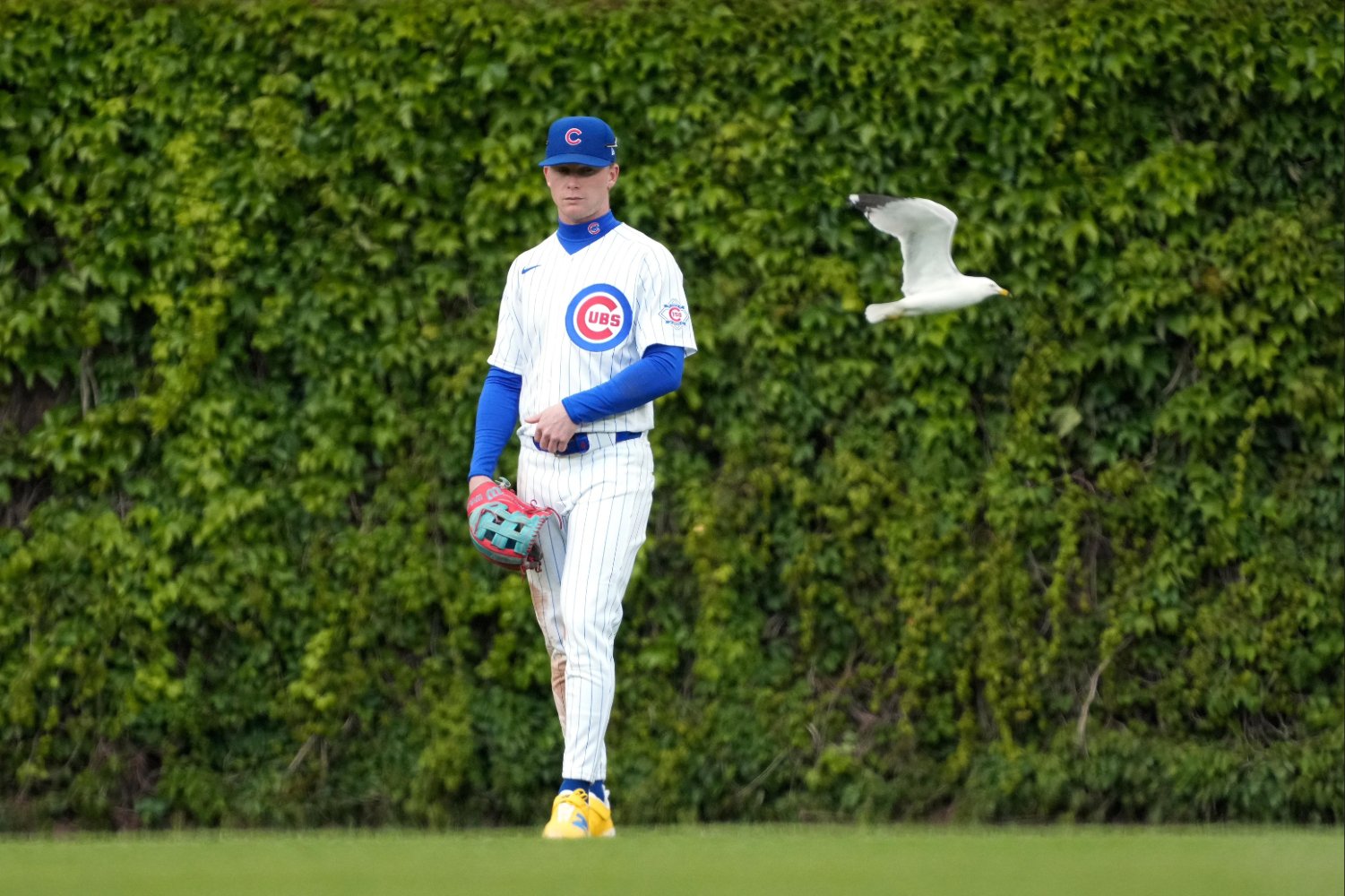 Whenever a team is operating within a torrid stretch of play, it becomes worth wondering how the drivers of a team's offense stand in proximity to such a period. With Pete Crow-Armstrong and the Chicago Cubs' own recent run, that relationship became fairly obvious on Wednesday night. With the Cubs needing a minor miracle to rattle off yet another win at Wrigley Field (and in the late-April-early-May period of the season), Crow-Armstrong deposited a 0-0 pitch from his shoe tops to the netting in left-center field to level the score and allow the Cubs to win in 10 innings. That it would only have been a homer at the Friendly Confines is hardly consequential to the overall point we're making. Had this stretch of play for the Cubs occurred early in the season, the juxtaposition with Crow-Armstrong's output would have looked very different. Through his first 111 plate appearances of the season (through April 25), he featured a slash of just .235/.291/.314 with a wRC+ of 70. He had just a single home run to his name and was rattling off strikeouts at a 30.6 percent clip. Had it not been for Michael Busch's own slow start to the year, his production would have sat at the bottom of the list in terms of output from Cubs regulars. As one might expect, the underlying plate discipline looking rather woeful was a significant contributor. As of that point on the calendar, Crow-Armstrong was swinging at a 57.8 percent rate. That mark was 12 points higher than the next closest player (Busch) on the roster. His 46.7 percent chase rate was nearly 11 points higher than Nico Hoerner's 35.4 Chase%, without the obvious element of bat-to-ball skills that his infield counterpart possesses. He was still able to make hard contact (46.4 percent), but the erratic nature of his approach held his expected batting average down to just .211. Since that particular point in time, though, we've seen a rather notable shift in Crow-Armstrong's approach: While it's not without its own game-to-game volatility, there's a calmer version of Pete Crow-Armstrong manifesting at the plate since April 25. His overall chase rate is down to 37.2 percent in the 41 plate appearances since and has slipped his overall swing rate to under 50 percent (49.7). His contact rate, meanwhile, has graduated from 71.7 percent in that first stretch to 81.6 in the subsequent plate appearances. That latter figure trails only Seiya Suzuki and (more obviously) Hoerner among regulars. It goes without saying, then, that the production has been ascending for Crow-Armstrong in this two-week period. His slash reads .278/.366/.611 with a wRC+ of 170. His strikeout rate has been cut nearly in half (17.1 percent) with a walk rate that has nearly doubled (9.8 percent). Three of his four home runs have come in that 41 PA sample, with an xBA all the way up at .325. It almost feels too obvious that a more disciplined iteration of Crow-Armstrong is directly responsible for the production we've seen over these past couple of weeks. Were there something in his pitch selection or in his mechanics (vis-à-vis bat tracking) that was indicative of his recent run of play, then perhaps there would be room for a different discussion. The reality is, though, that those things are still varying as much on a given night that a trend has yet to be uncovered. Which leads us to the only rational conclusion that we have with as wild a swinger as our subject: he's tamped it down. It's probably unreasonable, however, to think that this is something sustainable. We've seen Crow-Armstrong endure stretches where he calms down some at the plate, increases his production, and then gradually works his way back into the free-swinger that his baseball identity finds impossible to conceal over any sort of prolonged stretch. On the unrealistic chance that this is something real, though, we can at least look upon this period as a transitional moment into a new foundation. Of course, we're going to need a much, much longer sample before we can declare that even a remote possibility. It's important to note that such pessimism surrounding its permanence doesn't take anything away from his play of late. Regardless of how he got there, Crow-Armstrong needed a stretch like this following a rough start to the year. Even if it's eventually going to result in an inevitable regression in his plate approach, getting him back on track performance-wise was paramount to keeping the Cubs atop the NL Central.
 -
Image courtesy of © Kamil Krzaczynski-Imagn Images When the Chicago Cubs signed Alex Bregman this winter, much of the narrative centered around his intangibles. Teams that employ Bregman simply win baseball games. While we may never know the extent to which this effect permeates through the clubhouse, it's hard to argue with the results. As the Cubs have ascended in the standings, though, Bregman's name is one we've heard little about. That brings us to the concrete. From a more tangible standpoint, the book on Bregman was that he'd provide value based firstly on his approach. He doesn't walk a ton, but he doesn't strike out, either. He works a keen eye to hit himself on base, more so than to generate a free pass, with modest power in the offing. Through a touch more than 150 plate appearances, that's exactly what the Cubs have seen. Bregman has struck out just 15.4 percent of the time, which is better than every Cub regular not named Nico Hoerner (even if it is just a touch above his career average of 13.5%). He's walked at a steady 11.5% clip, too. The approach element of his game has remained intact, as Bregman's chase rate (18.2%) is elite and each of the whiff (17.5%) and strikeout rates are just a hair less than that. His 4.01 pitches per plate appearance sits comfortably above league average (3.90) and trails only Dansby Swanson's 4.21 P/PA for the top spot in the group. Yet, one (ok, at least this writer) can't help but feel a sense of disappointment surrounding Bregman's performance in the early going. Perhaps that's something to do with the fact that he's still a below-average hitter by wRC+ (97) and has yet to demonstrate any semblance of power (.110 ISO). There's a touch of misfortune reflected in a .273 batting average on balls in play, but it otherwise feels like there's far more impact to be unlocked from the team's marquee signing of the offseason. A bit of extra elevation may be the key. We already know that Wrigley Field is not a friendly environment for a right-handed hitter looking for power. But Bregman isn't looking for power in the traditional sense. He's looking for the gaps. However, it's hard to find the gaps when you're putting the ball on the ground more than 45 percent of the time, as Bregman has through his 156 plate appearances. Some of that is due less to the zone in which Bregman's swinging, and more to the types of pitches at which he's swinging. For the last four seasons, offspeed pitches yielded Bregman's highest ground-ball rates. That number has grown even higher this season, with a GB% of 64.3 against that pitch grouping. He's also swinging at offspeed stuff 45.5 percent of the time. Not only has he gone for an increase in volume of swings against the offspeed offerings, but he's also swinging less against each of the fastball and breaking pitch groups. There may also be a slight zone issue at play. This is Bregman's zone chart in 2026, illustrating Swing%: It's a decent enough distribution around various portions of the zone, but there's certainly a focus on the inner portion of it. Which becomes problematic when you consider where the groundballs are coming from: There's an easy conclusion to be drawn here: a higher volume of swings in a certain zone is going to beget a higher volume of groundballs. But one doesn't have to lead to the other. When you factor in the number of offspeed pitches at which Bregman is swinging versus his history of outcomes against that pitch type (and get to the fact that he's pulling ground balls at a rate that is currently a career high (24.8%)), it starts to feel like there's something in the approach that's pinning him down. Simply put, he's not in a groove and on time, just yet. While Bregman may very well be offering what the Cubs were hoping to get in the broad scheme of things, there's another level to be attained, and they need to see him attain it. Bregman isn't here to drive the offense from strictly a power standpoint, but eventually, they need him to deliver a bit more power. Once he reaches that point, whether by this adjustment or another, the Cubs will get closer to seeing a fully-realized version of Alex Bregman in their lineup. View full article
-
Alex Bregman Has Been Fine for the Cubs So Far. Is 'Fine' Good Enough?
RandallPnkFloyd posted an article in Cubs
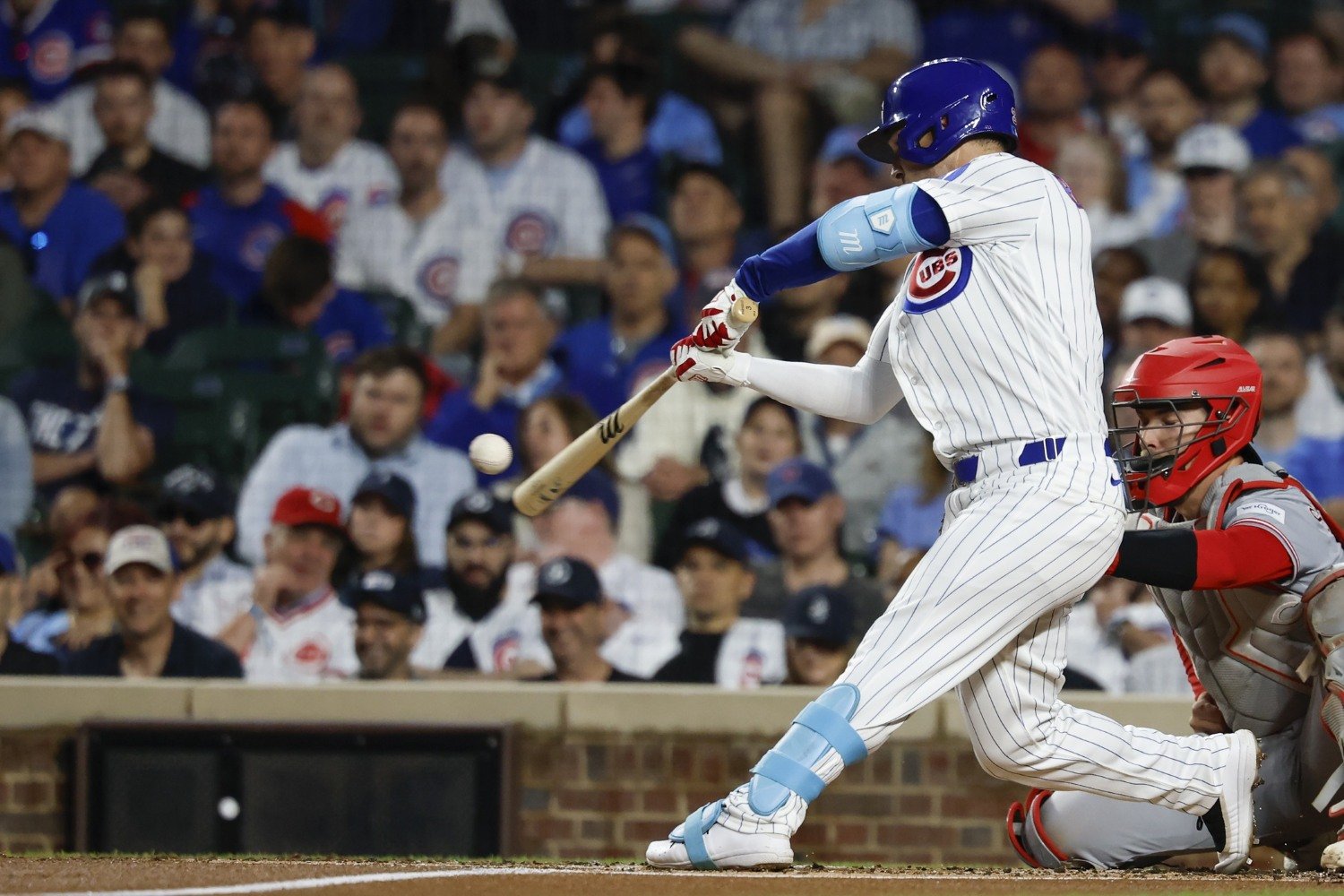 When the Chicago Cubs signed Alex Bregman this winter, much of the narrative centered around his intangibles. Teams that employ Bregman simply win baseball games. While we may never know the extent to which this effect permeates through the clubhouse, it's hard to argue with the results. As the Cubs have ascended in the standings, though, Bregman's name is one we've heard little about. That brings us to the concrete. From a more tangible standpoint, the book on Bregman was that he'd provide value based firstly on his approach. He doesn't walk a ton, but he doesn't strike out, either. He works a keen eye to hit himself on base, more so than to generate a free pass, with modest power in the offing. Through a touch more than 150 plate appearances, that's exactly what the Cubs have seen. Bregman has struck out just 15.4 percent of the time, which is better than every Cub regular not named Nico Hoerner (even if it is just a touch above his career average of 13.5%). He's walked at a steady 11.5% clip, too. The approach element of his game has remained intact, as Bregman's chase rate (18.2%) is elite and each of the whiff (17.5%) and strikeout rates are just a hair less than that. His 4.01 pitches per plate appearance sits comfortably above league average (3.90) and trails only Dansby Swanson's 4.21 P/PA for the top spot in the group. Yet, one (ok, at least this writer) can't help but feel a sense of disappointment surrounding Bregman's performance in the early going. Perhaps that's something to do with the fact that he's still a below-average hitter by wRC+ (97) and has yet to demonstrate any semblance of power (.110 ISO). There's a touch of misfortune reflected in a .273 batting average on balls in play, but it otherwise feels like there's far more impact to be unlocked from the team's marquee signing of the offseason. A bit of extra elevation may be the key. We already know that Wrigley Field is not a friendly environment for a right-handed hitter looking for power. But Bregman isn't looking for power in the traditional sense. He's looking for the gaps. However, it's hard to find the gaps when you're putting the ball on the ground more than 45 percent of the time, as Bregman has through his 156 plate appearances. Some of that is due less to the zone in which Bregman's swinging, and more to the types of pitches at which he's swinging. For the last four seasons, offspeed pitches yielded Bregman's highest ground-ball rates. That number has grown even higher this season, with a GB% of 64.3 against that pitch grouping. He's also swinging at offspeed stuff 45.5 percent of the time. Not only has he gone for an increase in volume of swings against the offspeed offerings, but he's also swinging less against each of the fastball and breaking pitch groups. There may also be a slight zone issue at play. This is Bregman's zone chart in 2026, illustrating Swing%: It's a decent enough distribution around various portions of the zone, but there's certainly a focus on the inner portion of it. Which becomes problematic when you consider where the groundballs are coming from: There's an easy conclusion to be drawn here: a higher volume of swings in a certain zone is going to beget a higher volume of groundballs. But one doesn't have to lead to the other. When you factor in the number of offspeed pitches at which Bregman is swinging versus his history of outcomes against that pitch type (and get to the fact that he's pulling ground balls at a rate that is currently a career high (24.8%)), it starts to feel like there's something in the approach that's pinning him down. Simply put, he's not in a groove and on time, just yet. While Bregman may very well be offering what the Cubs were hoping to get in the broad scheme of things, there's another level to be attained, and they need to see him attain it. Bregman isn't here to drive the offense from strictly a power standpoint, but eventually, they need him to deliver a bit more power. Once he reaches that point, whether by this adjustment or another, the Cubs will get closer to seeing a fully-realized version of Alex Bregman in their lineup.
 -
Image courtesy of © Denis Poroy-Imagn Images Given his lack of a defensive position (and, somehow worse, the times when he does have one), you won't find Moisés Ballesteros near the top of any WAR leaderboard. He doesn't have the two-part value to drive up that number. If you were to flip the order over to wRC+, however, you'd find him pretty quickly. In fact, with a 216 wRC+ in 69 plate appearances, Ballesteros trails only Yordan Alvarez for the major-league lead. As obscene as that figure is, the rest of the stat sheet is no more subtle. His slash goes .387/.435/.710. He's hit five home runs, barreled 13.7% of his batted balls, and hit 56.9% of all his batted balls hard. That latter figure sits in the 97th percentile for the league. Perhaps most encouraging about the start from Ballesteros is that virtually everything he's producing is coming on the strength of exactly what we thought his skill set was. The power has outperformed what might have been expected, given his launch angle throughout his previous pro career, but he's also been aggressive, while managing consistent contact. That's long been the book on Ballesteros: he's not particularly patient, but he's able to adapt his swing to drive the ball and avoid strikeouts. Contact and swing trends each illustrate exactly that. Given how seamlessly the profile has manifested in nearly a full-time role, is it possible that his skill set could help him stave off what seems like inevitable regression? There are already some factors that lay down the groundwork for at least a modest step back in production. His batting average on balls in play sits at an astronomical .442. His 49.4% swing rate and 32.8% chase rate are higher than the league average. Extreme batted-ball fortune from a rookie hitter who's been aggressive at the plate seems like a recipe for a big comedown—especially when that rookie is one of the slowest players in baseball. While those elements may work in conjunction with one another to create regression (as they have, repeatedly, throughout baseball history), it's also entirely possible that the profile and what we've seen in the swing thus far from Ballesteros will keep him ensconced among the top hitters in the league. For one, the contact rate has remained strong. Ballesteros makes contact on nearly 80% of swings. He's also using the zone to evenly distribute his contact all over the field: It's much more difficult to get a read on a hitter when his tendencies are less apparent than most. Ballesteros has pulled the ball and gone up the middle 34% of the time each, with another 32% headed to the opposite field. That'll make the opposition's adjustments more difficult. If he was a dead-pull guy, for example, you could work the outer part of the zone to get some softer contact out of him. Given how adept Ballesteros has been at hitting the ball all over the field, however, that becomes much more difficult if you're an opposing arm. He can do that because his swing has some extraordinary characteristics. Ballesteros's average bat speed this year is 73.8 MPH, up from 72.7 last year. His contact point has moved 5 inches farther in front of his frame, and that intercept point comes with his bat working uphill in the ideal attack angle range 61.4% of the time, a near-elite rate. It's one thing to expect regression. The early combination of BABIP and aggression for a rookie have spelled doom for many of Ballesteros's predecessors. Those two factors could certainly be responsible for at least a mild step back on the stat sheet in the future. At the same time, there's a profile afoot here that could allow him to fend it off in a way that few hitters are equipped to do. A contact-oriented yet adaptable swing has allowed him to absolutely thrive to this point. That blend should continue to carry him, regardless of what adjustments may be on the horizon from the opposition. View full article
-
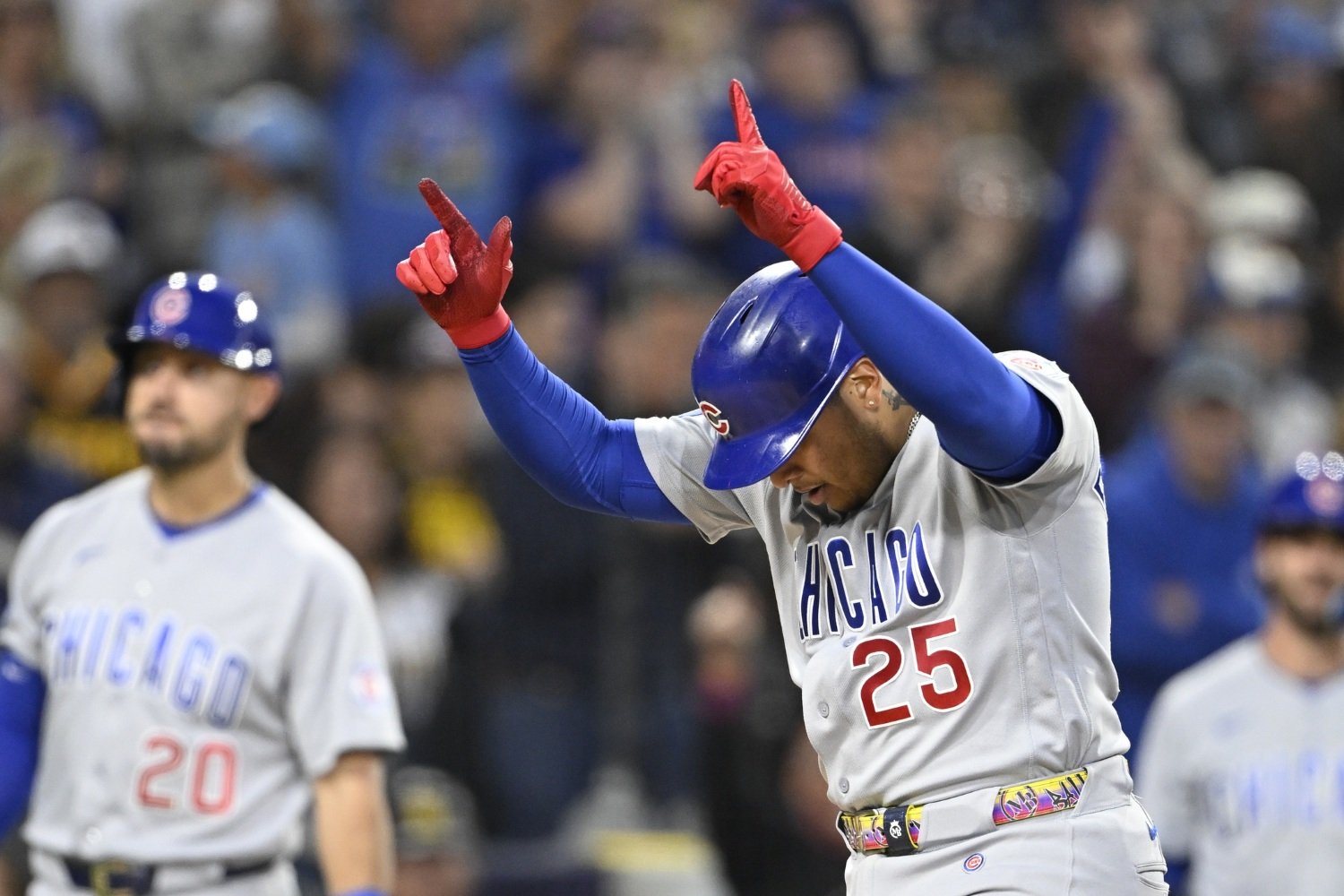 Given his lack of a defensive position (and, somehow worse, the times when he does have one), you won't find Moisés Ballesteros near the top of any WAR leaderboard. He doesn't have the two-part value to drive up that number. If you were to flip the order over to wRC+, however, you'd find him pretty quickly. In fact, with a 216 wRC+ in 69 plate appearances, Ballesteros trails only Yordan Alvarez for the major-league lead. As obscene as that figure is, the rest of the stat sheet is no more subtle. His slash goes .387/.435/.710. He's hit five home runs, barreled 13.7% of his batted balls, and hit 56.9% of all his batted balls hard. That latter figure sits in the 97th percentile for the league. Perhaps most encouraging about the start from Ballesteros is that virtually everything he's producing is coming on the strength of exactly what we thought his skill set was. The power has outperformed what might have been expected, given his launch angle throughout his previous pro career, but he's also been aggressive, while managing consistent contact. That's long been the book on Ballesteros: he's not particularly patient, but he's able to adapt his swing to drive the ball and avoid strikeouts. Contact and swing trends each illustrate exactly that. Given how seamlessly the profile has manifested in nearly a full-time role, is it possible that his skill set could help him stave off what seems like inevitable regression? There are already some factors that lay down the groundwork for at least a modest step back in production. His batting average on balls in play sits at an astronomical .442. His 49.4% swing rate and 32.8% chase rate are higher than the league average. Extreme batted-ball fortune from a rookie hitter who's been aggressive at the plate seems like a recipe for a big comedown—especially when that rookie is one of the slowest players in baseball. While those elements may work in conjunction with one another to create regression (as they have, repeatedly, throughout baseball history), it's also entirely possible that the profile and what we've seen in the swing thus far from Ballesteros will keep him ensconced among the top hitters in the league. For one, the contact rate has remained strong. Ballesteros makes contact on nearly 80% of swings. He's also using the zone to evenly distribute his contact all over the field: It's much more difficult to get a read on a hitter when his tendencies are less apparent than most. Ballesteros has pulled the ball and gone up the middle 34% of the time each, with another 32% headed to the opposite field. That'll make the opposition's adjustments more difficult. If he was a dead-pull guy, for example, you could work the outer part of the zone to get some softer contact out of him. Given how adept Ballesteros has been at hitting the ball all over the field, however, that becomes much more difficult if you're an opposing arm. He can do that because his swing has some extraordinary characteristics. Ballesteros's average bat speed this year is 73.8 MPH, up from 72.7 last year. His contact point has moved 5 inches farther in front of his frame, and that intercept point comes with his bat working uphill in the ideal attack angle range 61.4% of the time, a near-elite rate. It's one thing to expect regression. The early combination of BABIP and aggression for a rookie have spelled doom for many of Ballesteros's predecessors. Those two factors could certainly be responsible for at least a mild step back on the stat sheet in the future. At the same time, there's a profile afoot here that could allow him to fend it off in a way that few hitters are equipped to do. A contact-oriented yet adaptable swing has allowed him to absolutely thrive to this point. That blend should continue to carry him, regardless of what adjustments may be on the horizon from the opposition.
 -
Image courtesy of © Jonathan Hui-Imagn Images Despite dropping two of three games to the Los Angeles Dodgers over the weekend, things look much better for the Chicago Cubs now than they did a couple of weeks ago. The offense has experienced positive regression, and the pitching staff has held together in the wake of an abnormal number of injuries to the bullpen. What we shouldn't do, however, is underrate the role of defense in this early season turnaround. Defense has been a sort of hallmark of the current front office regime. In 2023, the Cubs ranked eighth as a team in Outs Above Average (16) and ninth in Defensive Runs Saved (33). They followed that up in 2024 with the seventh-ranked OAA (21) and ninth-ranked DRS (37) before shooting up the leaderboard last season, largely courtesy of the addition of Pete Crow-Armstrong to the everyday lineup. Their OAA ranked fourth (29) and their 84 DRS trailed only the Texas Rangers for the top spot. When you consider the roster configuration this season, it's not a surprise that they're on their way to replicating last season's results in 2026. By Outs Above Average, no team has a higher mark than the Cubs' 14 thus far. Their Defensive Runs Saved figure, at 16, reads as the fourth-best. The best way to support a pitching staff navigating as much attrition as the Cubs' is by playing sound defense behind them. Of course, the fact that this is happening isn't something that should ring as too much of a surprise given the names on the roster. Two of the top three spots for individual players in Outs Above Average are occupied by members of the Cubs. Pete Crow-Armstrong and Nico Hoerner each have an OAA of seven to date, a figure which trails only Bobby Witt Jr.'s eight. Crow-Armstrong has a 95 percent success rate against an 87 percent estimated success rate, with the leftover eight percent also trailing only Witt as the league's best. Hoerner isn't far behind there, with a seven percent success rate added. Of the two, Crow-Armstrong has made things look characteristically simple given his first-by-a-mile outfield jump (5.5 feet vs. average). Hoerner, meanwhile, has been a human highlight reel, contributing things like this: And this: And that was just in a single weekend. Those two serving as the linchpins of the Cubs' defensive game certainly tracks. What's somewhat more remarkable about the defense the team is providing, though, is the fact that five other regulars feature, at worst, average OAA numbers. Michael Busch has an OAA of three. Only Willson Contreras has been better at a position that defensive metrics don't particularly love. Likewise, Matt Shaw is at two, with each of Ian Happ, Alex Bregman, and Seiya Suzuki coming in at average (zero OAA). Of the team's regular starting nine, the only member of the group to check in below average defensively (by OAA) is Dansby Swanson. His -1 OAA currently sits at the bottom, which feels somewhat surprising when you consider that he was able to unlock something like this in LA this weekend: It's important to remember that Swanson got off to a bit of a slow start defensively last season. He ended up posting an OAA of four before year's end. Even if the defense has regressed a bit from his peak, it's not as if he's serving as some weak link here. There's been the odd misplay or difficult read pinning his production down a bit to date, but things should even out to be more in line with his defensive counterparts. That Swanson is even at the bottom of the leaderboard for the Cubs speaks to how strong this group has been. Even if we wanted to throw catchers in the mix, the Cubs have a tandem in Miguel Amaya & Carson Kelly that rank 32nd and 34th, respectively, in Catching Runs. The ranking itself isn't favorable given that only 45 catchers qualify for that leaderboard, but the only area where the two check in even slightly below average (-1) is framing. They're otherwise exactly average in the other components of the position (throwing & blocking). When you're able to supplement steady offensive production and a pitching staff that is hanging in there despite a myriad of injuries with defense at this level, you get things like a 10-game winning streak in April. While those other phases of the game have the tendency to wax and wane as a season progresses, defense is one thing that has the ability to remain consistent. So, while we're operating within a small sample for a collection of metrics that notoriously need larger ones, it feels like the defense is as dependable a unit as exists in the league. Even as the lineup and pitching staff regress and rebound according to their nature, the collective defensive effort of the Cubs should help to stabilize things regularly as we approach the summer months. View full article
-
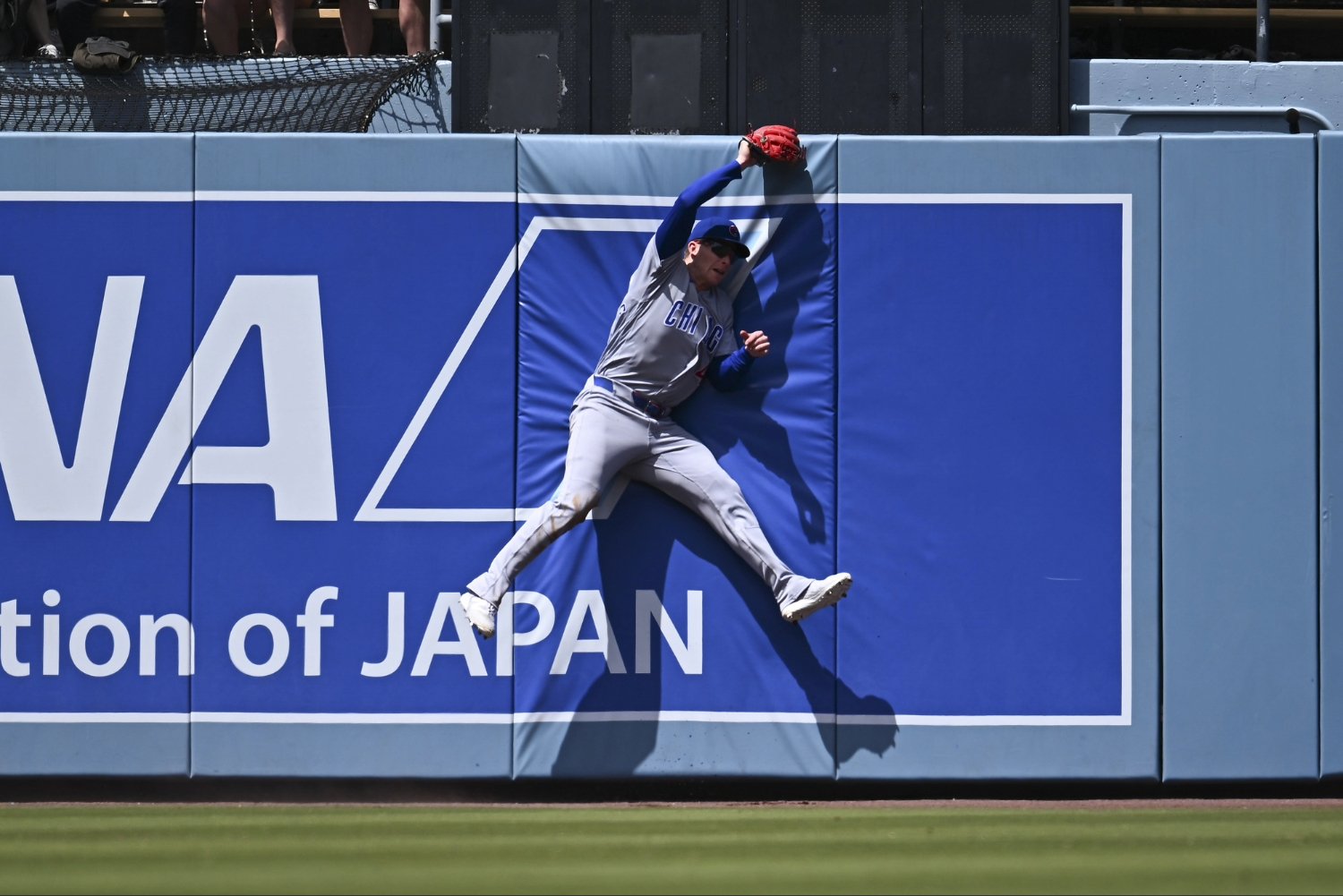 Despite dropping two of three games to the Los Angeles Dodgers over the weekend, things look much better for the Chicago Cubs now than they did a couple of weeks ago. The offense has experienced positive regression, and the pitching staff has held together in the wake of an abnormal number of injuries to the bullpen. What we shouldn't do, however, is underrate the role of defense in this early season turnaround. Defense has been a sort of hallmark of the current front office regime. In 2023, the Cubs ranked eighth as a team in Outs Above Average (16) and ninth in Defensive Runs Saved (33). They followed that up in 2024 with the seventh-ranked OAA (21) and ninth-ranked DRS (37) before shooting up the leaderboard last season, largely courtesy of the addition of Pete Crow-Armstrong to the everyday lineup. Their OAA ranked fourth (29) and their 84 DRS trailed only the Texas Rangers for the top spot. When you consider the roster configuration this season, it's not a surprise that they're on their way to replicating last season's results in 2026. By Outs Above Average, no team has a higher mark than the Cubs' 14 thus far. Their Defensive Runs Saved figure, at 16, reads as the fourth-best. The best way to support a pitching staff navigating as much attrition as the Cubs' is by playing sound defense behind them. Of course, the fact that this is happening isn't something that should ring as too much of a surprise given the names on the roster. Two of the top three spots for individual players in Outs Above Average are occupied by members of the Cubs. Pete Crow-Armstrong and Nico Hoerner each have an OAA of seven to date, a figure which trails only Bobby Witt Jr.'s eight. Crow-Armstrong has a 95 percent success rate against an 87 percent estimated success rate, with the leftover eight percent also trailing only Witt as the league's best. Hoerner isn't far behind there, with a seven percent success rate added. Of the two, Crow-Armstrong has made things look characteristically simple given his first-by-a-mile outfield jump (5.5 feet vs. average). Hoerner, meanwhile, has been a human highlight reel, contributing things like this: And this: And that was just in a single weekend. Those two serving as the linchpins of the Cubs' defensive game certainly tracks. What's somewhat more remarkable about the defense the team is providing, though, is the fact that five other regulars feature, at worst, average OAA numbers. Michael Busch has an OAA of three. Only Willson Contreras has been better at a position that defensive metrics don't particularly love. Likewise, Matt Shaw is at two, with each of Ian Happ, Alex Bregman, and Seiya Suzuki coming in at average (zero OAA). Of the team's regular starting nine, the only member of the group to check in below average defensively (by OAA) is Dansby Swanson. His -1 OAA currently sits at the bottom, which feels somewhat surprising when you consider that he was able to unlock something like this in LA this weekend: It's important to remember that Swanson got off to a bit of a slow start defensively last season. He ended up posting an OAA of four before year's end. Even if the defense has regressed a bit from his peak, it's not as if he's serving as some weak link here. There's been the odd misplay or difficult read pinning his production down a bit to date, but things should even out to be more in line with his defensive counterparts. That Swanson is even at the bottom of the leaderboard for the Cubs speaks to how strong this group has been. Even if we wanted to throw catchers in the mix, the Cubs have a tandem in Miguel Amaya & Carson Kelly that rank 32nd and 34th, respectively, in Catching Runs. The ranking itself isn't favorable given that only 45 catchers qualify for that leaderboard, but the only area where the two check in even slightly below average (-1) is framing. They're otherwise exactly average in the other components of the position (throwing & blocking). When you're able to supplement steady offensive production and a pitching staff that is hanging in there despite a myriad of injuries with defense at this level, you get things like a 10-game winning streak in April. While those other phases of the game have the tendency to wax and wane as a season progresses, defense is one thing that has the ability to remain consistent. So, while we're operating within a small sample for a collection of metrics that notoriously need larger ones, it feels like the defense is as dependable a unit as exists in the league. Even as the lineup and pitching staff regress and rebound according to their nature, the collective defensive effort of the Cubs should help to stabilize things regularly as we approach the summer months.
 -
Image courtesy of © Patrick Gorski-Imagn Images Anybody who's watched Chicago Cubs second baseman Nico Hoerner play baseball for even a fragment of time knows that he is as close to a complete player as one may find in the sport. "Perfectly solid" is how his blend of contact, defense, and baserunning might be described. You don't necessarily see screaming for him to be talking about in the same breath as the league's very elite, but he's spending time in their company in various parts of the leaderboard all the same. He did it in 2025, when he ranked 20th in the league in FanGraphs' Wins Above Replacement metric (4.8). He also had one of the eight-best batting averages (.297), a top-three strikeout rate (7.6 percent), and one of the dozen-best Outs Above Average figures (15) regardless of position. That's the kind of output that earns you a six-year contract extension, as Hoerner did just after Opening Day this season. And while the energy wrought by a sizable new place on the payroll helps to capture national attention in a certain way on its own, Hoerner's early performance might propel him up the list of players deemed "elite" in 2026. While we're still operating within a small sample, fWAR pegs Hoerner as one of the seven-most valuable position players in baseball up to this point. His 1.1 fWAR (as of the series opener against the Phillies) ranks third in the National League, trailing only Andy Pages and Jordan Walker. Much of his .308/.422/.481 line also checks in among the league's best, with an OAA figure that ranks eighth among all position players at present. It isn't so much that Hoerner's standing among the very best rings as surprising. He was in the top 20 in fWAR last year, so it stands to reason that even modest improvement combined with regression from others in that portion of the board could help him to ascend. What's a little more jarring in this case is what Hoerner is on pace to do and where that could land him among the game's position players by season's end. That idea can help to inform us as to what is driving Hoerner to look even more impressive as a baseball player thus far in 2026. If he continued at his current pace, Hoerner would be in line for a .912 OPS finish. His wRC+ would check in at 160, with a dozen home runs and 58 steals. His fWAR would read a gaudy 11.5. Considering the relatively modest output he's posted on the offensive side — where he's been more of that solid rather than elite beyond his contact skills — most of this is unsustainable. However, such an astonishing fWAR pace at this point in the season speaks to where Hoerner has been thriving to this point in the year. FanGraphs' WAR metric is determined by the following: WAR = (Batting Runs + Base Running Runs + Fielding Runs + Positional Adjustment + League Adjustment +Replacement Runs) / (Runs Per Win) The formula itself is not complicated. But each of those "runs" metrics and various adjustments offer a certain degree of nuance. Especially when you look at the area of this in which we're most interested: Batting Runs. Therein, wOBA is the predominant factor with park adjustments and league averages coming into play. In short, wOBA represents some individuals' preferred comprehensive offensive metric, essentially due to the fact that it offers weight to various types of hits and means of reaching base. This, dear reader, is where we begin to find what is driving Hoerner's impressive performance this year. Hoerner's wOBA sits at .409 entering Philadelphia. His previous career best under that category was last year's .324 mark. That's a sizable gap. There are two elements driving his increased wOBA thus far; the first is his increased walk rate. Hoerner is drawing free passes 13.0 percent of the time, which would obliterate his previous career-high of 10.0 back in 2021. Further, he's on pace for 69 doubles and 12 homers. While the latter would represent a narrow edge over the 10 home runs he hit in 2022, that volume of doubles would nearly double the 35 he hit in 2024. Walks and doubles (i.e., gap-to-gap power), in addition to everything else he was already doing well, are propelling Nico Hoerner into the ranks of the game's very elite. It remains to be seen how much of this is sustainable. It's not that Hoerner's eye is better; it's that he's become less inclined to swing at a high rate until he finds a more favorable pitch. Could he slip into old tendencies and increase aggression as the season wears on? Sure. That might cost him a little bit in either regard (though, as Matt Trueblood examined, there's a slight mechanical change at play that's boosting his improved slugging output). Ultimately, though, we're looking at a player who was complete and set within his skill set undergoing further evolution to take his game to the next level. As frustrating as elements of this offense have been in the early going, Nico Hoerner's continued ascent represents a fascinating development to monitor as the season progresses. View full article
-
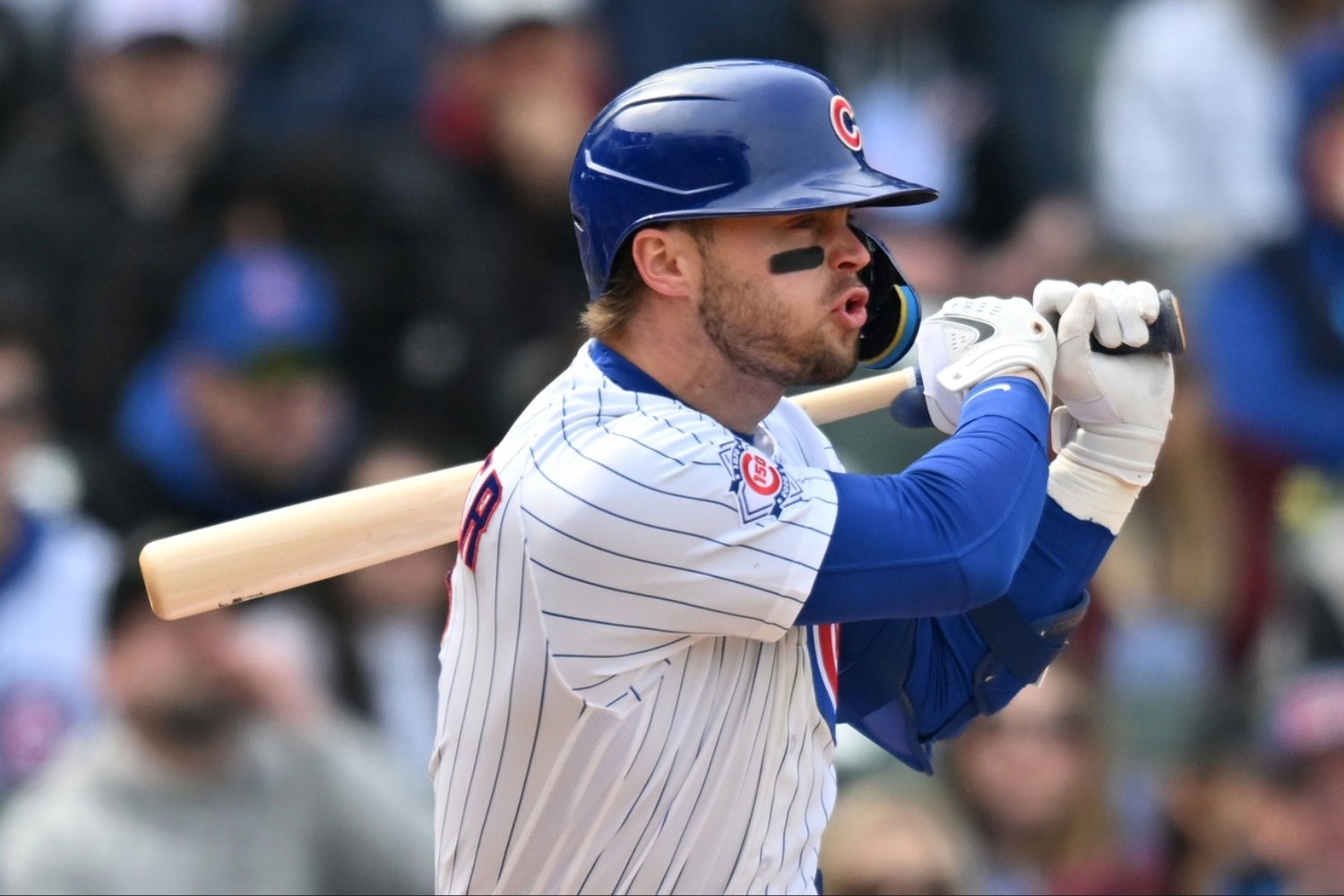 Anybody who's watched Chicago Cubs second baseman Nico Hoerner play baseball for even a fragment of time knows that he is as close to a complete player as one may find in the sport. "Perfectly solid" is how his blend of contact, defense, and baserunning might be described. You don't necessarily see screaming for him to be talking about in the same breath as the league's very elite, but he's spending time in their company in various parts of the leaderboard all the same. He did it in 2025, when he ranked 20th in the league in FanGraphs' Wins Above Replacement metric (4.8). He also had one of the eight-best batting averages (.297), a top-three strikeout rate (7.6 percent), and one of the dozen-best Outs Above Average figures (15) regardless of position. That's the kind of output that earns you a six-year contract extension, as Hoerner did just after Opening Day this season. And while the energy wrought by a sizable new place on the payroll helps to capture national attention in a certain way on its own, Hoerner's early performance might propel him up the list of players deemed "elite" in 2026. While we're still operating within a small sample, fWAR pegs Hoerner as one of the seven-most valuable position players in baseball up to this point. His 1.1 fWAR (as of the series opener against the Phillies) ranks third in the National League, trailing only Andy Pages and Jordan Walker. Much of his .308/.422/.481 line also checks in among the league's best, with an OAA figure that ranks eighth among all position players at present. It isn't so much that Hoerner's standing among the very best rings as surprising. He was in the top 20 in fWAR last year, so it stands to reason that even modest improvement combined with regression from others in that portion of the board could help him to ascend. What's a little more jarring in this case is what Hoerner is on pace to do and where that could land him among the game's position players by season's end. That idea can help to inform us as to what is driving Hoerner to look even more impressive as a baseball player thus far in 2026. If he continued at his current pace, Hoerner would be in line for a .912 OPS finish. His wRC+ would check in at 160, with a dozen home runs and 58 steals. His fWAR would read a gaudy 11.5. Considering the relatively modest output he's posted on the offensive side — where he's been more of that solid rather than elite beyond his contact skills — most of this is unsustainable. However, such an astonishing fWAR pace at this point in the season speaks to where Hoerner has been thriving to this point in the year. FanGraphs' WAR metric is determined by the following: WAR = (Batting Runs + Base Running Runs + Fielding Runs + Positional Adjustment + League Adjustment +Replacement Runs) / (Runs Per Win) The formula itself is not complicated. But each of those "runs" metrics and various adjustments offer a certain degree of nuance. Especially when you look at the area of this in which we're most interested: Batting Runs. Therein, wOBA is the predominant factor with park adjustments and league averages coming into play. In short, wOBA represents some individuals' preferred comprehensive offensive metric, essentially due to the fact that it offers weight to various types of hits and means of reaching base. This, dear reader, is where we begin to find what is driving Hoerner's impressive performance this year. Hoerner's wOBA sits at .409 entering Philadelphia. His previous career best under that category was last year's .324 mark. That's a sizable gap. There are two elements driving his increased wOBA thus far; the first is his increased walk rate. Hoerner is drawing free passes 13.0 percent of the time, which would obliterate his previous career-high of 10.0 back in 2021. Further, he's on pace for 69 doubles and 12 homers. While the latter would represent a narrow edge over the 10 home runs he hit in 2022, that volume of doubles would nearly double the 35 he hit in 2024. Walks and doubles (i.e., gap-to-gap power), in addition to everything else he was already doing well, are propelling Nico Hoerner into the ranks of the game's very elite. It remains to be seen how much of this is sustainable. It's not that Hoerner's eye is better; it's that he's become less inclined to swing at a high rate until he finds a more favorable pitch. Could he slip into old tendencies and increase aggression as the season wears on? Sure. That might cost him a little bit in either regard (though, as Matt Trueblood examined, there's a slight mechanical change at play that's boosting his improved slugging output). Ultimately, though, we're looking at a player who was complete and set within his skill set undergoing further evolution to take his game to the next level. As frustrating as elements of this offense have been in the early going, Nico Hoerner's continued ascent represents a fascinating development to monitor as the season progresses.
 -
Image courtesy of © Nathan Ray Seebeck-Imagn Images Caveats abound at this early stage of the season, but the Chicago Cubs are, at present and at best, a mediocre offensive team. A number of components will even out as the sample grows, but it's a hard idea to deny for a team that ranks 19th in runs scored, 24th in isolated power, and 22nd in wRC+. The inability to score runs consistently across an objectively easier portion of the calendar than they'll face in the coming weeks is frustrating from a viewership standpoint. It also doesn't feel terribly surprising. Under Craig Counsell as manager, it seems like the Cubs have always been working within a solid foundational process. They work good counts, they're able to draw walks, and they square up contact. The results themselves, however, have not always followed. In April of 2024, they were ninth in the league in runs scored. Then, in May that same year, they were 26th; in June, they were 27th. They got back to the middle of the pack in July before finishing in the top six in each of the season's final two months. In April of 2025, no team scored more runs than the Cubs' 184. They were third in runs in May before falling to 15th in June and 11th in July. The sputtering truly began in August when they ranked 27th before crawling back up to just outside the top 10 in September. Not that that's meant as criticism of Counsell or his coaching staff directly. The process is there. In each of those two seasons, the Cubs ranked in the top 10 in the league in walk rate and on-base percentage. In 2024, they were 13th in the league in squared-up contact before ranking in the top five last season. They have a presence on the bases and are able to generate meaningful contact. What they lack in bat speed, they trade in for efficiency. The issue is that their approach combines with personnel to create a rather difficult needle to thread. It requires collective effort and collective success for its merits to be realized. Following Saturday's loss to the Pittsburgh Pirates (in which the Cubs created plenty of traffic that didn't result in runs), Counsell noted the following: Therein lies exactly the problem we're seeing manifest with these Cubs at the plate. As recently as last year, the Cubs were occasionally accused of being too reliant on home runs to score offense. Those accusations weren't entirely off base. The thing about home runs is that they aren't always going to be in your offensive bag, especially when you're playing home games at Wrigley Field in April. Counsell's comment speaks to the issue we're seeing unfold and the difficulty a team can have to thread the needle when you're built the way they are. The Cubs do not have an offensive driver. There are loud tools mixed in throughout the lineup, sure. But they do not have a hitter who is going to unlock elite swing speed or make contact at a rate rarely seen on Statcast. The kind that can carry a lineup over a stretch. Their game is in a collective efficiency that raises the floor. Right now, the process toward that efficiency is playing out. They're top five in the league in walk rate (12.1 percent) and are fourth in the league in squared-up contact rate (35.8 percent). However, this philosophy requires the majority of the lineup to be locked into the process in addition to the need for timely hitting. You need those extra ingredients to find more than the floor on offense. The Cubs do not have the majority going the right way at the plate, nor have they received such timely hitting. Ian Happ is striking out roughly 36 percent of the time. Each of Dansby Swanson and Pete Crow-Armstrong were doing so at a rate pushing 30 and neither has had any power to speak of to compensate. Michael Busch hadn't recorded a hit in 30 trips to the plate prior to sitting on Sunday. The Cubs' .209 average with runners on ranks 28th in the league. Swanson notwithstanding given his place in the batting order, these are crucial elements of the lineup that need to be demonstrating the process set forth by this team in order to generate runs. The balance for Nico Hoerner's excellence or Alex Bregman's extreme batted ball misfortune (.213 BABIP) simply does not exist. And this team is not built to score in most other ways. Even with the return of Seiya Suzuki adding something new to the lineup than we've seen for the first few weeks, what we are seeing is a natural byproduct of the team's roster construction. Individuals need to adopt the philosophy, and once a certain volume of your lineup is executing said process, the runs will come. The Cubs don't have that volume, and they're struggling to score. Until things even out in that respect, in addition to the natural leveling of statistical outcomes over the course of a baseball season, this type of peak-and-valley trend in their run production is liable to continue. View full article
-
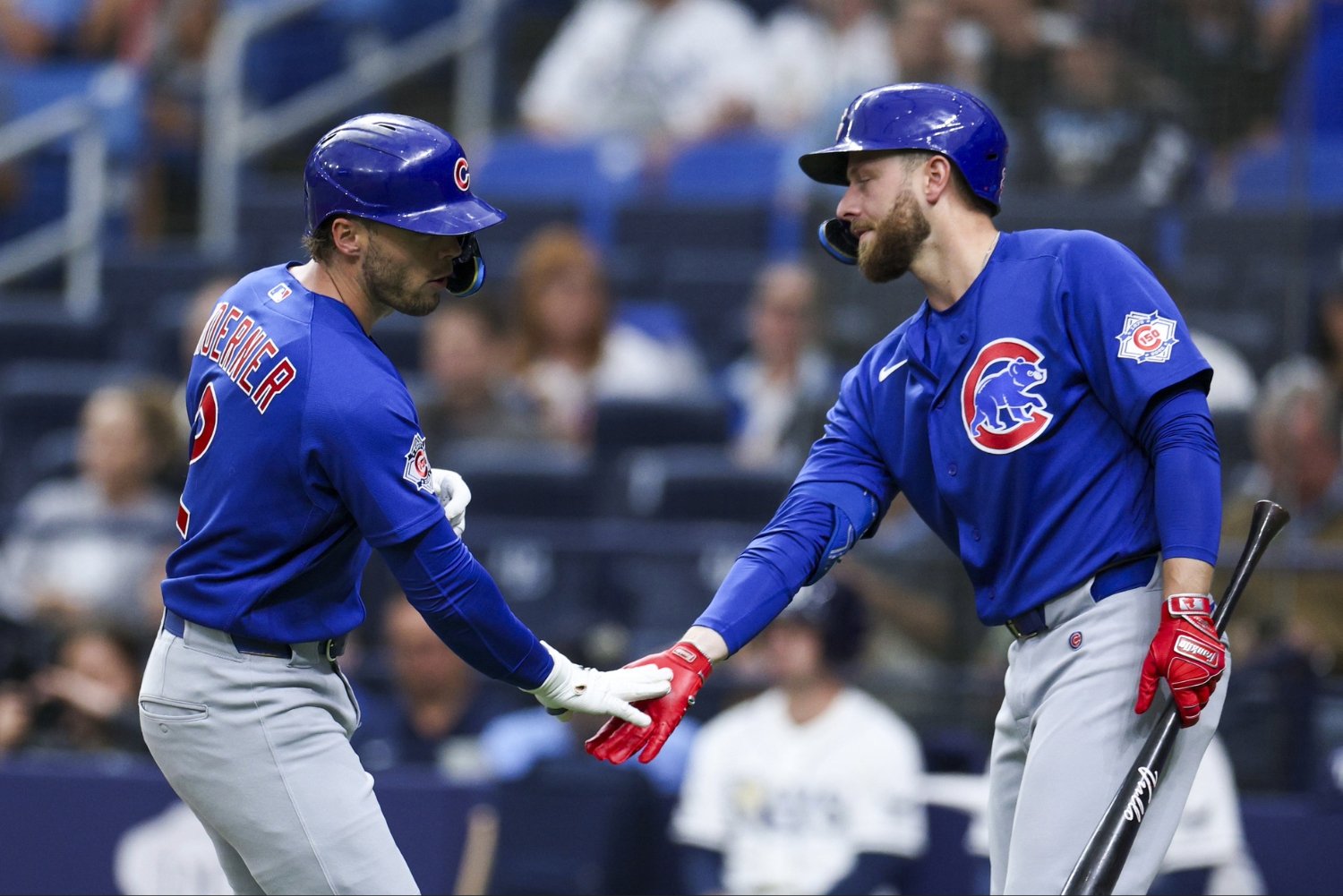 Caveats abound at this early stage of the season, but the Chicago Cubs are, at present and at best, a mediocre offensive team. A number of components will even out as the sample grows, but it's a hard idea to deny for a team that ranks 19th in runs scored, 24th in isolated power, and 22nd in wRC+. The inability to score runs consistently across an objectively easier portion of the calendar than they'll face in the coming weeks is frustrating from a viewership standpoint. It also doesn't feel terribly surprising. Under Craig Counsell as manager, it seems like the Cubs have always been working within a solid foundational process. They work good counts, they're able to draw walks, and they square up contact. The results themselves, however, have not always followed. In April of 2024, they were ninth in the league in runs scored. Then, in May that same year, they were 26th; in June, they were 27th. They got back to the middle of the pack in July before finishing in the top six in each of the season's final two months. In April of 2025, no team scored more runs than the Cubs' 184. They were third in runs in May before falling to 15th in June and 11th in July. The sputtering truly began in August when they ranked 27th before crawling back up to just outside the top 10 in September. Not that that's meant as criticism of Counsell or his coaching staff directly. The process is there. In each of those two seasons, the Cubs ranked in the top 10 in the league in walk rate and on-base percentage. In 2024, they were 13th in the league in squared-up contact before ranking in the top five last season. They have a presence on the bases and are able to generate meaningful contact. What they lack in bat speed, they trade in for efficiency. The issue is that their approach combines with personnel to create a rather difficult needle to thread. It requires collective effort and collective success for its merits to be realized. Following Saturday's loss to the Pittsburgh Pirates (in which the Cubs created plenty of traffic that didn't result in runs), Counsell noted the following: Therein lies exactly the problem we're seeing manifest with these Cubs at the plate. As recently as last year, the Cubs were occasionally accused of being too reliant on home runs to score offense. Those accusations weren't entirely off base. The thing about home runs is that they aren't always going to be in your offensive bag, especially when you're playing home games at Wrigley Field in April. Counsell's comment speaks to the issue we're seeing unfold and the difficulty a team can have to thread the needle when you're built the way they are. The Cubs do not have an offensive driver. There are loud tools mixed in throughout the lineup, sure. But they do not have a hitter who is going to unlock elite swing speed or make contact at a rate rarely seen on Statcast. The kind that can carry a lineup over a stretch. Their game is in a collective efficiency that raises the floor. Right now, the process toward that efficiency is playing out. They're top five in the league in walk rate (12.1 percent) and are fourth in the league in squared-up contact rate (35.8 percent). However, this philosophy requires the majority of the lineup to be locked into the process in addition to the need for timely hitting. You need those extra ingredients to find more than the floor on offense. The Cubs do not have the majority going the right way at the plate, nor have they received such timely hitting. Ian Happ is striking out roughly 36 percent of the time. Each of Dansby Swanson and Pete Crow-Armstrong were doing so at a rate pushing 30 and neither has had any power to speak of to compensate. Michael Busch hadn't recorded a hit in 30 trips to the plate prior to sitting on Sunday. The Cubs' .209 average with runners on ranks 28th in the league. Swanson notwithstanding given his place in the batting order, these are crucial elements of the lineup that need to be demonstrating the process set forth by this team in order to generate runs. The balance for Nico Hoerner's excellence or Alex Bregman's extreme batted ball misfortune (.213 BABIP) simply does not exist. And this team is not built to score in most other ways. Even with the return of Seiya Suzuki adding something new to the lineup than we've seen for the first few weeks, what we are seeing is a natural byproduct of the team's roster construction. Individuals need to adopt the philosophy, and once a certain volume of your lineup is executing said process, the runs will come. The Cubs don't have that volume, and they're struggling to score. Until things even out in that respect, in addition to the natural leveling of statistical outcomes over the course of a baseball season, this type of peak-and-valley trend in their run production is liable to continue.
 -
Image courtesy of © Rick Scuteri-Imagn Images One of the more intriguing aspects of the Chicago Cubs and their lineup construction thus far in 2026 has been the distribution of playing time between their two catchers. In reality, the team has a pair of starting-caliber backstops. Carson Kelly is coming off a career season despite fading in the second half of 2025, while Miguel Amaya looked to be gaining traction at the plate in 2024 before injuries ravaged his ability to perform last season. The early assumption was that Kelly would get the majority of the time behind the plate by a decent margin, at least early, as Amaya regained his footing at the top level. However, that's not entirely how things have played out across almost a dozen contests. Kelly certainly does have the edge in time behind the plate so far; he's caught seven games to Amaya's four. However, Amaya also has a trio of appearances as the designated hitter. From a catching standpoint, though, Kelly's 60 innings are a significant edge over Amaya's 36. The production gap at this young stage of the season does feel wide, though, and could inform Craig Counsell's choices a little bit differently upon the return of Seiya Suzuki. From a production standpoint, Amaya has a healthy edge in output. He's contributed a .294/.400/.529 line to the cause with an even 15.0 percent rate in both strikeouts and walks and a 164 wRC+. Kelly, meanwhile, is sitting on a .250/.344/.286 line, a 21.9 percent strikeout rate, and a 12.5 percent walk rate. His wRC+ reads as below average, checking in at 90. The concern there, of course, is in the latter's absence of power. After going for a .179 ISO in 2025, he's at a mere .036 clip in 2026. When you factor in the strikeout-to-walk ratio, there's a clear edge for Amaya in the production game, even when Kelly is receiving the lion's share of the work behind the dish. Believe it or not, Amaya's advantage over Kelly carries over to defensive performance, as well. Kelly's been exactly average in blocking and framing and below average in throwing hitters out despite technically carrying an advantage in pop time. Amaya, however, holds an advantage in his ability to control the run game. The difference between the two in framing has been marginal to date: Each has different areas of the zone in which they're finding success on the framing front. There's an awful lot of consistency here between the two, presenting a really similar skill set. Ultimately, though, we still don't know how much ABS is factoring into this, nor do we have a large enough overall sample to declare one better in this aspect than the other. So, if we call that a wash and move toward something comprehensive, Amaya's arm props him up slightly between the two. Either way, there's a long way to go before this aspect becomes something more tangible in one being better than the other in matters of playing time being determined. It does feel worth noting, at least, that Amaya has outperformed Kelly in more areas than not. What is also notable at this point is where that playing time is actually being distributed, because at this early stage, there doesn't appear to be a particular order between the two. Carson Kelly has caught Matthew Boyd twice, Shota Imanaga twice, and Jameson Taillon and Edward Cabrera each once. He was also behind the plate for Cade Horton's 17 pitches prior to his season-ending injury over the weekend. Amaya caught each of Horton, Taillon, and Cabrera a single time before assuming duty for Javier Assad's first start on Tuesday. None of it indicates a clear trend, though. Especially because it's too early for the data to indicate whether the catchers themselves have any bearing on pitcher performance. Which means that we're in this sort of muddled early season stage where Craig Counsell is feeling out his roster in certain respects. While the catching could certainly have an impact on the pitching staff at some point in a way that could sway playing distributions, the sample (on either side of the ball) isn't large enough to justify any firm conclusion, even if Miguel Amaya has outplayed Carson Kelly within that minuscule run. What will be interesting to monitor in the coming days, though, is how that distribution could shift upon the return of Seiya Suzuki. Counsell has been inclined to throw Amaya into the DH spot to get his bat in there, but the return of Suzuki and the extended run that Matt Shaw has gotten in right field could lead to a shift in how the catching position actually looks given the slight defensive difference between the two. It's just as intriguing a situation as we could have thought, with the changing roster dynamics likely to lend a little more clarity moving forward. View full article
-
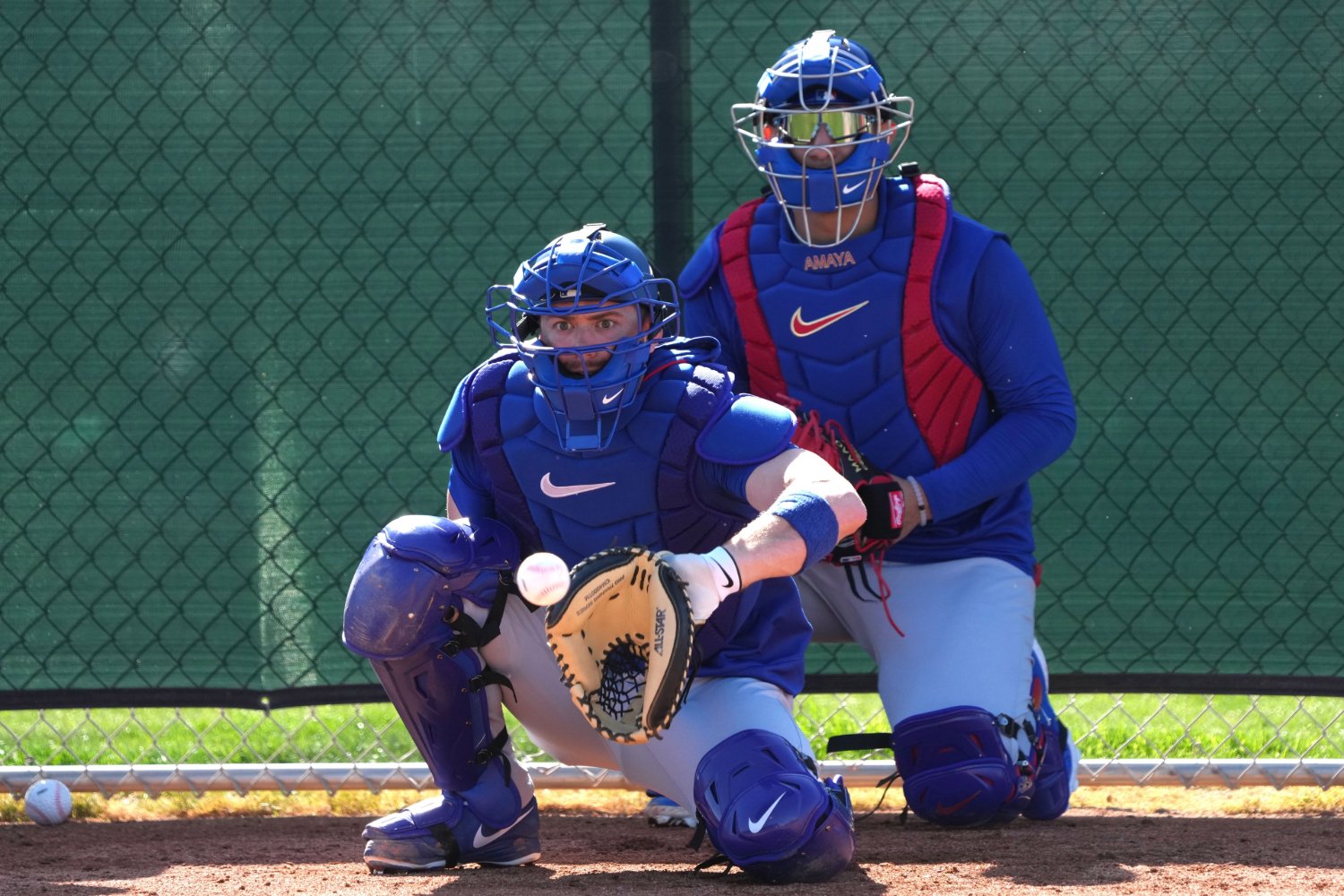 One of the more intriguing aspects of the Chicago Cubs and their lineup construction thus far in 2026 has been the distribution of playing time between their two catchers. In reality, the team has a pair of starting-caliber backstops. Carson Kelly is coming off a career season despite fading in the second half of 2025, while Miguel Amaya looked to be gaining traction at the plate in 2024 before injuries ravaged his ability to perform last season. The early assumption was that Kelly would get the majority of the time behind the plate by a decent margin, at least early, as Amaya regained his footing at the top level. However, that's not entirely how things have played out across almost a dozen contests. Kelly certainly does have the edge in time behind the plate so far; he's caught seven games to Amaya's four. However, Amaya also has a trio of appearances as the designated hitter. From a catching standpoint, though, Kelly's 60 innings are a significant edge over Amaya's 36. The production gap at this young stage of the season does feel wide, though, and could inform Craig Counsell's choices a little bit differently upon the return of Seiya Suzuki. From a production standpoint, Amaya has a healthy edge in output. He's contributed a .294/.400/.529 line to the cause with an even 15.0 percent rate in both strikeouts and walks and a 164 wRC+. Kelly, meanwhile, is sitting on a .250/.344/.286 line, a 21.9 percent strikeout rate, and a 12.5 percent walk rate. His wRC+ reads as below average, checking in at 90. The concern there, of course, is in the latter's absence of power. After going for a .179 ISO in 2025, he's at a mere .036 clip in 2026. When you factor in the strikeout-to-walk ratio, there's a clear edge for Amaya in the production game, even when Kelly is receiving the lion's share of the work behind the dish. Believe it or not, Amaya's advantage over Kelly carries over to defensive performance, as well. Kelly's been exactly average in blocking and framing and below average in throwing hitters out despite technically carrying an advantage in pop time. Amaya, however, holds an advantage in his ability to control the run game. The difference between the two in framing has been marginal to date: Each has different areas of the zone in which they're finding success on the framing front. There's an awful lot of consistency here between the two, presenting a really similar skill set. Ultimately, though, we still don't know how much ABS is factoring into this, nor do we have a large enough overall sample to declare one better in this aspect than the other. So, if we call that a wash and move toward something comprehensive, Amaya's arm props him up slightly between the two. Either way, there's a long way to go before this aspect becomes something more tangible in one being better than the other in matters of playing time being determined. It does feel worth noting, at least, that Amaya has outperformed Kelly in more areas than not. What is also notable at this point is where that playing time is actually being distributed, because at this early stage, there doesn't appear to be a particular order between the two. Carson Kelly has caught Matthew Boyd twice, Shota Imanaga twice, and Jameson Taillon and Edward Cabrera each once. He was also behind the plate for Cade Horton's 17 pitches prior to his season-ending injury over the weekend. Amaya caught each of Horton, Taillon, and Cabrera a single time before assuming duty for Javier Assad's first start on Tuesday. None of it indicates a clear trend, though. Especially because it's too early for the data to indicate whether the catchers themselves have any bearing on pitcher performance. Which means that we're in this sort of muddled early season stage where Craig Counsell is feeling out his roster in certain respects. While the catching could certainly have an impact on the pitching staff at some point in a way that could sway playing distributions, the sample (on either side of the ball) isn't large enough to justify any firm conclusion, even if Miguel Amaya has outplayed Carson Kelly within that minuscule run. What will be interesting to monitor in the coming days, though, is how that distribution could shift upon the return of Seiya Suzuki. Counsell has been inclined to throw Amaya into the DH spot to get his bat in there, but the return of Suzuki and the extended run that Matt Shaw has gotten in right field could lead to a shift in how the catching position actually looks given the slight defensive difference between the two. It's just as intriguing a situation as we could have thought, with the changing roster dynamics likely to lend a little more clarity moving forward.
 -
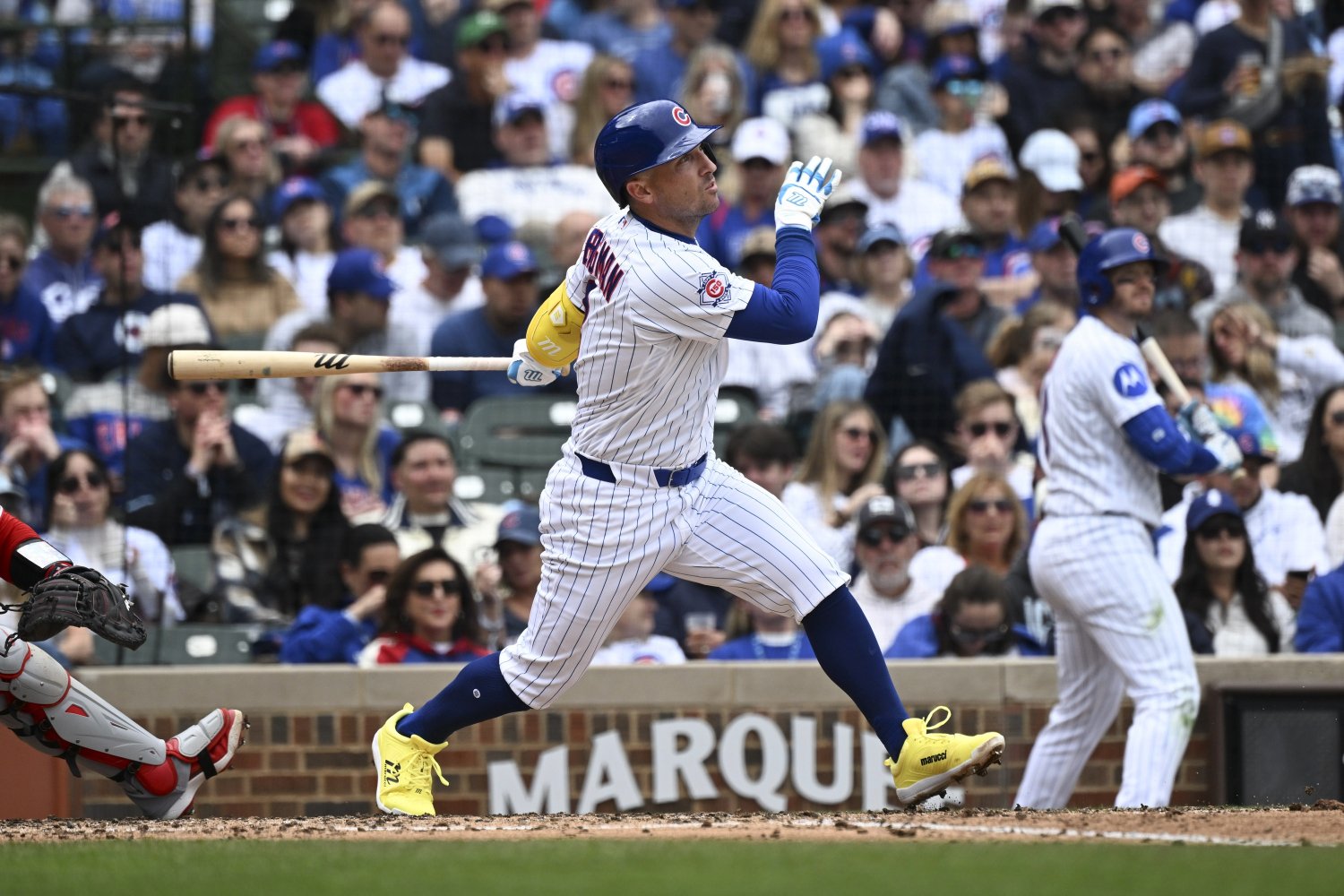 From a run production standpoint, there hasn't been much to be impressed with as far as the 2026 Chicago Cubs are concerned. Prior to the series opener against the Tampa Bay Rays, they rank 18th in runs (37), 21st in isolated power (.129), and 19th in collective wRC+ (89). In short, it's a below-average offense in the early going. Across the board, though, there are some underlying elements of the process that look quite good, and free-agent signing Alex Bregman is leading that charge. When the Cubs brought in Bregman, the book on him was a hitter who commanded the strike zone. While he wasn't going to sit up near the top of the walk rate leaderboard, he was able to drive quality contact and maintain strikeout avoidance on the strength of that keen eye. As easy as it is to be frustrated with the cumulative returns of the lineup thus far, it's hard to argue against the idea that Bregman is giving the Cubs exactly what they could've hoped for. The stats themselves are not terribly indicative of a player who has demonstrated early returns on a massive five-year contract. Through roughly 40 plate appearances, he's gone for a .167/.268/.333 line with a wRC+ of only 78. His contributions to the overall run production came in the form of a pair of home runs against the Washington Nationals in a game that the Cubs ultimately lost. But good process should, eventually, yield positive results, and Bregman has very much demonstrated such early on. It's a minuscule sample, but, to date, Bregman is exactly who the team thought he was: The most essential elements of the above are reflected in the approach and the resulting quality of contact. First is the fact that Bregman's chase rate is in the 100th percentile. His 6.9 percent chase rate is nearly three points below that of Baltimore's Taylor Ward, who ranks second in that category. When he does swing, he's making contact as reflected in a whiff rate that sits as the 18th-best and a strikeout rate that ranks 22nd. What's more is that he's able to drive quality contact as a result. Rather than use that patience to drive up his walk rate (which is still of quality on its own), Bregman is putting balls in play and doing so in an all-fields fashion: That was one of the positives with Bregman as a right-handed hitter playing his home games at Wrigley Field. He doesn't have to rely on dead pull power that could be heavily tamped by questionable park factors. Instead, his contact has found its way all over the field. And it's good contact, reflected by a 96th percentile hard-hit rate that ranks ninth in the league overall. These are all, objectively, positive things. While we can't say that this kind of process has yet contributed to a rather feeble Cubs offensive attack, it all sets the stage for Bregman to begin contributing regularly when the offense begins to find a groove for itself. After all, fortunes haven't favored Bregman in the slightest to this young point in the season. His batting average on balls in play sits at a brutal .138, which is one of the 10 worst marks in the sport. His current wOBA, at .278, would represent a career low. However, he's working with a .354 xwOBA that aligns much more with his career average from that standpoint (.362). The process is there, even if the results haven't been. Luckily for both Bregman and the Cubs, we're talking about a nine-game sample. The conditions at Wrigley, where the team has played the majority of their games thus far, haven't been super favorable to get the offense moving in the right direction. Trends like the ones Bregman has demonstrated thus far have a way of evening out over time. If history can be trusted, it shouldn't be long before the star third baseman begins dragging his stats back to where they belong.
 -
Image courtesy of © Matt Marton-Imagn Images From a run production standpoint, there hasn't been much to be impressed with as far as the 2026 Chicago Cubs are concerned. Prior to the series opener against the Tampa Bay Rays, they rank 18th in runs (37), 21st in isolated power (.129), and 19th in collective wRC+ (89). In short, it's a below-average offense in the early going. Across the board, though, there are some underlying elements of the process that look quite good, and free-agent signing Alex Bregman is leading that charge. When the Cubs brought in Bregman, the book on him was a hitter who commanded the strike zone. While he wasn't going to sit up near the top of the walk rate leaderboard, he was able to drive quality contact and maintain strikeout avoidance on the strength of that keen eye. As easy as it is to be frustrated with the cumulative returns of the lineup thus far, it's hard to argue against the idea that Bregman is giving the Cubs exactly what they could've hoped for. The stats themselves are not terribly indicative of a player who has demonstrated early returns on a massive five-year contract. Through roughly 40 plate appearances, he's gone for a .167/.268/.333 line with a wRC+ of only 78. His contributions to the overall run production came in the form of a pair of home runs against the Washington Nationals in a game that the Cubs ultimately lost. But good process should, eventually, yield positive results, and Bregman has very much demonstrated such early on. It's a minuscule sample, but, to date, Bregman is exactly who the team thought he was: The most essential elements of the above are reflected in the approach and the resulting quality of contact. First is the fact that Bregman's chase rate is in the 100th percentile. His 6.9 percent chase rate is nearly three points below that of Baltimore's Taylor Ward, who ranks second in that category. When he does swing, he's making contact as reflected in a whiff rate that sits as the 18th-best and a strikeout rate that ranks 22nd. What's more is that he's able to drive quality contact as a result. Rather than use that patience to drive up his walk rate (which is still of quality on its own), Bregman is putting balls in play and doing so in an all-fields fashion: That was one of the positives with Bregman as a right-handed hitter playing his home games at Wrigley Field. He doesn't have to rely on dead pull power that could be heavily tamped by questionable park factors. Instead, his contact has found its way all over the field. And it's good contact, reflected by a 96th percentile hard-hit rate that ranks ninth in the league overall. These are all, objectively, positive things. While we can't say that this kind of process has yet contributed to a rather feeble Cubs offensive attack, it all sets the stage for Bregman to begin contributing regularly when the offense begins to find a groove for itself. After all, fortunes haven't favored Bregman in the slightest to this young point in the season. His batting average on balls in play sits at a brutal .138, which is one of the 10 worst marks in the sport. His current wOBA, at .278, would represent a career low. However, he's working with a .354 xwOBA that aligns much more with his career average from that standpoint (.362). The process is there, even if the results haven't been. Luckily for both Bregman and the Cubs, we're talking about a nine-game sample. The conditions at Wrigley, where the team has played the majority of their games thus far, haven't been super favorable to get the offense moving in the right direction. Trends like the ones Bregman has demonstrated thus far have a way of evening out over time. If history can be trusted, it shouldn't be long before the star third baseman begins dragging his stats back to where they belong. View full article
-
Image courtesy of © Matt Marton-Imagn Images For the second time this young season, Matthew Boyd stepped onto the bump against an inferior opponent. Unlike his first one, however, the Chicago Cubs were able to put said opponent to bed. Rather than needing to overcome Boyd in doing so, they did so on the strength of this year's Opening Day starter. After his first start, Matthew Trueblood examined Boyd's outing. There was a lot of good to take from it. Most notably, he generated a high rate of whiffs against the Washington Nationals (20 on 37 swings to be exact) but was unable to avoid opposing barrels. As Trueblood pointed out, five pieces of contact came off the bats of Nats hitters at a speed of at least 103.8 MPH. It was chalked up in the piece as a sequencing issue above all, as Washington was able to key in on specific pitches in between the whiffs. The second time around, against the Los Angeles Angels, Boyd didn't have quite the dominance across individual pitches. But he was able to keep opposing hitters off balance enough to run up the strikeout column on his line while minimizing damage in a way that he couldn't in start No. 1. Here are the particulars in that first start on Opening Day: We've already noted the positive of the whiffs, but Boyd clearly got too reliant on his four-seam. Even for a player that had a 24 percent gap between that and his most-used secondary pitch (the changeup) in 2025, 67 percent is still screaming sequencing issues. That's much too reliant on one pitch type, especially because he only threw it 47 percent of the time last year. That's how you get a 100.8 MPH average exit velocity and four of the seven total hard hit balls in the start. Obviously, feel matters on a cold day at Wrigley, but the results are the results. The second start, though, offered a far more sensible plan of attack: The four-seam is the primary pitch. He's always going to lean on it. But throwing it at a clip 12 percent under his first start, especially given the effect of the changeup on the day, is encouraging. There was a tradeoff with fewer whiffs against the former, but the changeup came in strong by running that rate up on its own. As a result, Boyd cut his hard contact against in half (more than half, technically) with only three pieces of hard contact against him and a cumulative average exit velocity against of just 90.1 MPH (his total figure in the first start was 98.6 MPH). Against the fastball specifically, Angels hitters went for an average exit velocity of 94.8 across a similar number of batted ball events. Boyd was also able to avoid the barrel entirely, not ceding a single piece of barrel contact after allowing it one-third of the time in his first outing. The stuff itself is playing just fine. Boyd's K% through a pair of starts is at 45.9 and trails only Kevin Gausman here in the early going. His 21.1 percent swinging strike rate is behind only Jack Leiter. We already knew the first start wasn't an issue with the stuff itself, but the predictability of it. A little more variety can go a long way, as Boyd's two-run line in his second start can attest. View full article
-
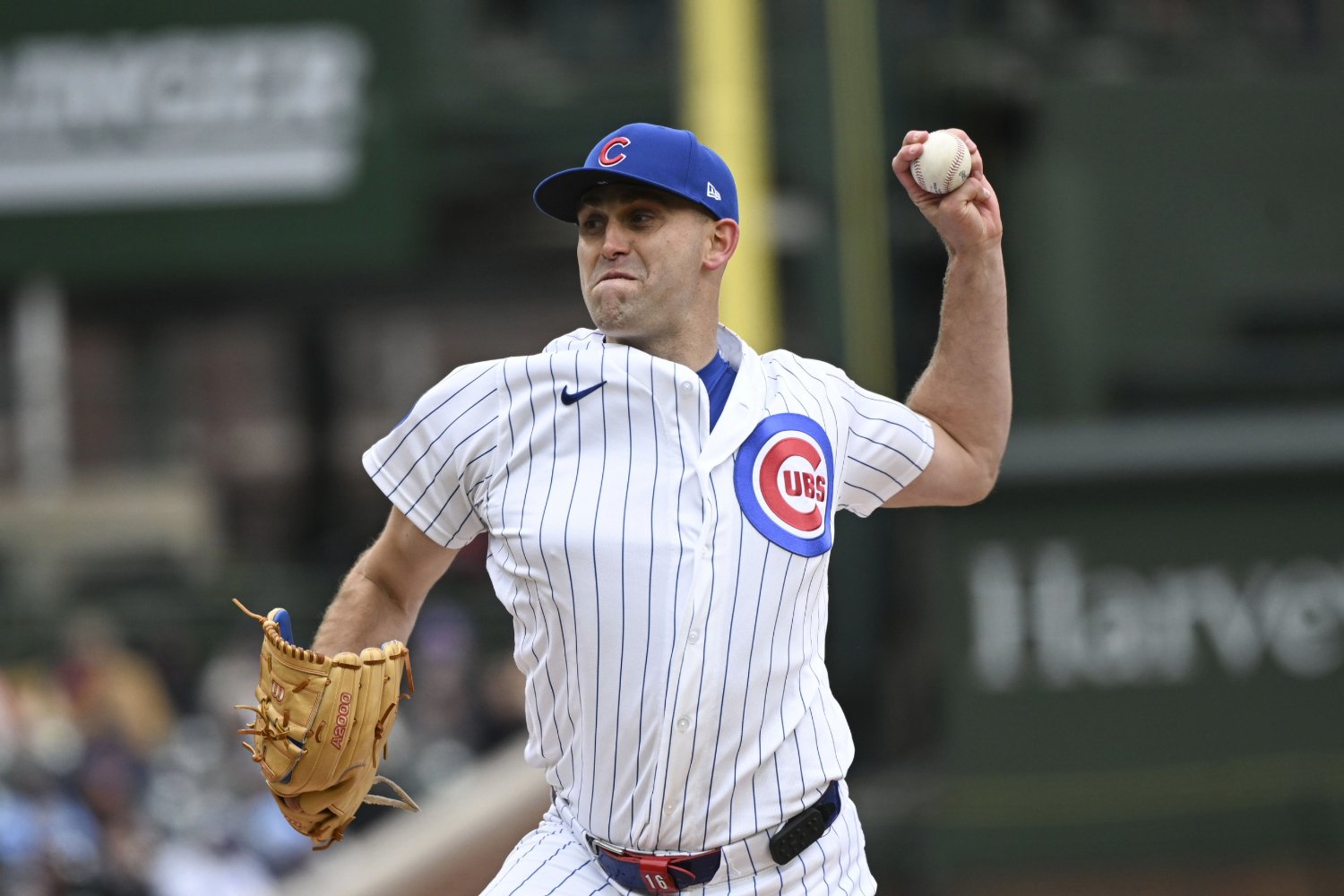 For the second time this young season, Matthew Boyd stepped onto the bump against an inferior opponent. Unlike his first one, however, the Chicago Cubs were able to put said opponent to bed. Rather than needing to overcome Boyd in doing so, they did so on the strength of this year's Opening Day starter. After his first start, Matthew Trueblood examined Boyd's outing. There was a lot of good to take from it. Most notably, he generated a high rate of whiffs against the Washington Nationals (20 on 37 swings to be exact) but was unable to avoid opposing barrels. As Trueblood pointed out, five pieces of contact came off the bats of Nats hitters at a speed of at least 103.8 MPH. It was chalked up in the piece as a sequencing issue above all, as Washington was able to key in on specific pitches in between the whiffs. The second time around, against the Los Angeles Angels, Boyd didn't have quite the dominance across individual pitches. But he was able to keep opposing hitters off balance enough to run up the strikeout column on his line while minimizing damage in a way that he couldn't in start No. 1. Here are the particulars in that first start on Opening Day: We've already noted the positive of the whiffs, but Boyd clearly got too reliant on his four-seam. Even for a player that had a 24 percent gap between that and his most-used secondary pitch (the changeup) in 2025, 67 percent is still screaming sequencing issues. That's much too reliant on one pitch type, especially because he only threw it 47 percent of the time last year. That's how you get a 100.8 MPH average exit velocity and four of the seven total hard hit balls in the start. Obviously, feel matters on a cold day at Wrigley, but the results are the results. The second start, though, offered a far more sensible plan of attack: The four-seam is the primary pitch. He's always going to lean on it. But throwing it at a clip 12 percent under his first start, especially given the effect of the changeup on the day, is encouraging. There was a tradeoff with fewer whiffs against the former, but the changeup came in strong by running that rate up on its own. As a result, Boyd cut his hard contact against in half (more than half, technically) with only three pieces of hard contact against him and a cumulative average exit velocity against of just 90.1 MPH (his total figure in the first start was 98.6 MPH). Against the fastball specifically, Angels hitters went for an average exit velocity of 94.8 across a similar number of batted ball events. Boyd was also able to avoid the barrel entirely, not ceding a single piece of barrel contact after allowing it one-third of the time in his first outing. The stuff itself is playing just fine. Boyd's K% through a pair of starts is at 45.9 and trails only Kevin Gausman here in the early going. His 21.1 percent swinging strike rate is behind only Jack Leiter. We already knew the first start wasn't an issue with the stuff itself, but the predictability of it. A little more variety can go a long way, as Boyd's two-run line in his second start can attest.
 -
Image courtesy of © Matt Marton-Imagn Images With a bit of an uneven start to the 2026 season, there's been some attention building around the Chicago Cubs' lineup and Craig Counsell's construction of it. It's doubtless that his choices thus far, some of which have drawn ire from subsections of the fanbase, have been predominantly informed by the absence of Seiya Suzuki. Regardless of those particulars and how things could shift upon Suzuki's return, it's clear that there's one portion of this iteration of the team's lineup that is working exactly the way it's supposed to. As of this writing, each lineup penned by Counsell has featured Pete Crow-Armstrong batting fourth and Nico Hoerner directly behind him in the fifth spot. The returns for each player have been solid within a small sample so far; Crow-Armstrong is reaching base at a .333 clip with an improved walk rate, while Hoerner has a pair of doubles to his credit and an even split between his walk and strikeout rates. We're working with minuscule samples, and neither player really profiles for the spot in which they're currently hitting. Crow-Armstrong doesn't have the typical makeup of a clean-up hitter even following a 30-homer campaign in 2025, and Hoerner's contact-centric skill set isn't one you'd typically find batting in the five spot. However. it's the way one plays off of the other that is a really tantalizing thought for the starting nine moving forward. As much variability as still exists within Crow-Armstrong's offensive skill set, there's at least one thing of which one can be assured: reliability on the basepaths. Crow-Armstrong is armed with elite sprint speed but also a level of instinct between 90-foot sections of the infield dirt. His 29.5 feet-per-second was both above league average and in the 96th percentile in 2025, while his baserunning acumen scored high marks as well. FanGraphs' baserunning metric, BsR, checked in at 6.7 for Crow-Armstrong last year. That comprehensive metric measures on-base skills through a blend of steals, double play avoidance, and advancement on the bases (all weighted and measured against expectancy in a variety of contexts). A 6.7 figure doesn't quite classify as "excellent" in the eyes of the metric, though it falls between that and "great." The same can be said of Statcast's Runner Runs, wherein baserunning performance is measured primarily within taking extra bases. Here is where Crow-Armstrong falls in that respect: In terms of the broad metric, Crow-Armstrong's four Runner Runs pegged him ninth in the league among qualifiers in 2025. What's unique about his case is that the attempted advances against the estimated attempt, the latter of which measures what the average runner might attempt in that same situation. In the advance attempt rate, Crow-Armstrong ranks 20th. The estimated attempt rank, however, ranks 190th. That leaves his attempt rate above average as the 12th-highest among that group. There's plenty of nuance within all of these baserunning metrics, but the simplified version is Runner Runs measures the ability to take extra bases. Crow-Armstrong is aggressive on the bases but has the skill set to make him successful in doing so. That'll play anywhere in the lineup. Having Hoerner directly behind him, however, is a way for the Cubs to unlock the best version of that aggression. In Hoerner, the Cubs have a bat that lived in the 99th percentile in both whiff and strikeout rate last year. His contact rate, at 89.8 percent, ranked fourth in the league among qualifiers. Within all of that contact, only Luis Arráez hit more singles than Hoerner's 138. Even better is that with runners on, Hoerner's .328 average ranked fifth. Not a ton of that action came with Crow-Armstrong on base in front of him, though. He spent much of 2025 hitting fourth or seventh while Hoerner was operating in the sixth or seventh spot. Having the two back-to-back has the potential to unlock a certain level of run production that has to be enticing for Counsell. If Crow-Armstrong can reach first base (or second. given that he ranked 11th in the league in doubles last year), then you're looking at any number of first-and-third situations at various stages of a game by virtue of Hoerner hitting behind him. If he's on second, then you're creating more immediate run-scoring opportunities. There's also an aesthetic appeal to all of this. Watching Pete Crow-Armstrong run the bases is one of the great joys in this game, and there's something special about Nico Hoerner's old-school contact profile. The two working in conjunction with one another is as much of a feast for the eyes as it is a boon to run-scoring opportunities. Either way, the value of having one of the game's elite contact hitters behind one of its top baserunners cannot be overstated. The two were more akin to ships passing in the night last year, but have the opportunity to be something paramount to the offensive output of the Cubs in 2026. View full article
-
 With a bit of an uneven start to the 2026 season, there's been some attention building around the Chicago Cubs' lineup and Craig Counsell's construction of it. It's doubtless that his choices thus far, some of which have drawn ire from subsections of the fanbase, have been predominantly informed by the absence of Seiya Suzuki. Regardless of those particulars and how things could shift upon Suzuki's return, it's clear that there's one portion of this iteration of the team's lineup that is working exactly the way it's supposed to. As of this writing, each lineup penned by Counsell has featured Pete Crow-Armstrong batting fourth and Nico Hoerner directly behind him in the fifth spot. The returns for each player have been solid within a small sample so far; Crow-Armstrong is reaching base at a .333 clip with an improved walk rate, while Hoerner has a pair of doubles to his credit and an even split between his walk and strikeout rates. We're working with minuscule samples, and neither player really profiles for the spot in which they're currently hitting. Crow-Armstrong doesn't have the typical makeup of a clean-up hitter even following a 30-homer campaign in 2025, and Hoerner's contact-centric skill set isn't one you'd typically find batting in the five spot. However. it's the way one plays off of the other that is a really tantalizing thought for the starting nine moving forward. As much variability as still exists within Crow-Armstrong's offensive skill set, there's at least one thing of which one can be assured: reliability on the basepaths. Crow-Armstrong is armed with elite sprint speed but also a level of instinct between 90-foot sections of the infield dirt. His 29.5 feet-per-second was both above league average and in the 96th percentile in 2025, while his baserunning acumen scored high marks as well. FanGraphs' baserunning metric, BsR, checked in at 6.7 for Crow-Armstrong last year. That comprehensive metric measures on-base skills through a blend of steals, double play avoidance, and advancement on the bases (all weighted and measured against expectancy in a variety of contexts). A 6.7 figure doesn't quite classify as "excellent" in the eyes of the metric, though it falls between that and "great." The same can be said of Statcast's Runner Runs, wherein baserunning performance is measured primarily within taking extra bases. Here is where Crow-Armstrong falls in that respect: In terms of the broad metric, Crow-Armstrong's four Runner Runs pegged him ninth in the league among qualifiers in 2025. What's unique about his case is that the attempted advances against the estimated attempt, the latter of which measures what the average runner might attempt in that same situation. In the advance attempt rate, Crow-Armstrong ranks 20th. The estimated attempt rank, however, ranks 190th. That leaves his attempt rate above average as the 12th-highest among that group. There's plenty of nuance within all of these baserunning metrics, but the simplified version is Runner Runs measures the ability to take extra bases. Crow-Armstrong is aggressive on the bases but has the skill set to make him successful in doing so. That'll play anywhere in the lineup. Having Hoerner directly behind him, however, is a way for the Cubs to unlock the best version of that aggression. In Hoerner, the Cubs have a bat that lived in the 99th percentile in both whiff and strikeout rate last year. His contact rate, at 89.8 percent, ranked fourth in the league among qualifiers. Within all of that contact, only Luis Arráez hit more singles than Hoerner's 138. Even better is that with runners on, Hoerner's .328 average ranked fifth. Not a ton of that action came with Crow-Armstrong on base in front of him, though. He spent much of 2025 hitting fourth or seventh while Hoerner was operating in the sixth or seventh spot. Having the two back-to-back has the potential to unlock a certain level of run production that has to be enticing for Counsell. If Crow-Armstrong can reach first base (or second. given that he ranked 11th in the league in doubles last year), then you're looking at any number of first-and-third situations at various stages of a game by virtue of Hoerner hitting behind him. If he's on second, then you're creating more immediate run-scoring opportunities. There's also an aesthetic appeal to all of this. Watching Pete Crow-Armstrong run the bases is one of the great joys in this game, and there's something special about Nico Hoerner's old-school contact profile. The two working in conjunction with one another is as much of a feast for the eyes as it is a boon to run-scoring opportunities. Either way, the value of having one of the game's elite contact hitters behind one of its top baserunners cannot be overstated. The two were more akin to ships passing in the night last year, but have the opportunity to be something paramount to the offensive output of the Cubs in 2026.
 -
Image courtesy of © Matt Kartozian-Imagn Images When Pete Crow-Armstrong signed his extension with the Chicago Cubs earlier this week, we discussed how important various elements of context are in justifying a deal. With someone like Crow-Armstrong, it's simple. He's young, he's exciting, and he has a skill set that still has plenty of runway within his projectability. Nothing complicated there. Not that Nico Hoerner's new six-year contract extension with the Cubs is a complicated situation either, mind you. In fact, it's quite easy to justify. But just as Crow-Armstrong's deal featured a small caveat in the form of whether his plate discipline will develop or stagnate, Hoerner's carries the smallest bit of apprehension. We'll shelve that for a moment, though. Behind Crow-Armstrong (whose blend of the above qualities made him the ideal candidate for an extension), Hoerner was likely the player you'd have the second-easiest time making an extension case for on a list of players that includes Ian Happ, Seiya Suzuki, Jameson Taillon, Shota Imanaga, and Matthew Boyd, among others. With Crow-Armstrong's extension, we discussed three factors that helped with an easy justification: contractual context, projectability, and narrative impact. Hoerner loudly checks two of the boxes, with any issue looming for a third not quite relevant at present. Hoerner was set to be a free agent following the 2026 season. Regardless of how labor negotiations could impact free agency, he stood to be one of the most notable position players available on the market. His blend of contact, baserunning, and defensive acumen could have combined to earn him significant dollars with another club (as of this writing, we don't know the financials of his new deal). The context is different here; with Crow-Armstrong, it was about cost-certainty. With Hoerner, it was retention. We don't know what another team might've been willing to offer Hoerner; perhaps it would have surpassed that of a Cubs offer. Getting an extension done now may or may not have saved a few bucks, but preserving one of your club's most important players on that side of the ball is the real win. Further, Hoerner wins the narrative impact as well. The Cubs aren't exactly a team lacking in leadership, but Hoerner's lead-by-example demeanor combined with his other intangible qualities made him one of the more well-liked members of the organization among the fanbase. There's almost no downside to extending a player who offers you that. Even the performance standpoint works in Hoerner's favor, at least in the short term. He offers you almost nothing in the power department but is one of the more refined examples of a contact hitter we have in the game today. In addition to his whiff and strikeout rates, each of which rest in the 99th percentile, he squares up his contact among the league's best. Hoerner doesn't merely put balls in play, but does so in a manner that is consistently solid, featuring lots of line drive contact and very few pulled groundballs. Those all work in his favor, even sans average power. Then you get into the baserunning, where his 28.6 feet-per-second spring speed exceeds the league average 27 ft/sec mark and his 5 Baserunning Runs (a combination metric of stolen bases and extra bases taken) ranked 11th among qualifying position players. Of course, none of this even mentions his defense. Hoerner's 15 Outs Above Average ranked 12th among position players last year, regardless of their defensive home. Since his first full year back in 2022, Hoerner's 51 OAA ranks fourth overall, trailing only Ke'Bryan Hayes (64), Andrés Giménez (62), and Dansby Swanson (62). This is an elite glove that helps to fortify the team's infield defense for the foreseeable future alongside Swanson, Alex Bregman, and Michael Busch. One doesn't have to squint to see why retaining Nico Hoerner is an absolutely essential move for the Cubs beyond 2026. However, projectability is a real concern for someone who may have already produced his career-best work last year. Aging curves are real, and Hoerner is in his age-29 season. If he were following the most generic, traditional path in the eyes of the aging curve, then he could hit the inflection point for his decline as soon as next season (when he'd be 30). Now, bodies age differently and Hoerner doesn't have as many big league miles on his as other players his age. Concern over how the contract will age has less to do with Hoerner himself and more to do with the profile reaching age-30 and above. A high-contact, elite defending second baseman who is skilled on the bases? Yeah, you worry about that player more than you might if they were less reliant on athleticism. Eyes weaken (and there is evidence to suggest strikeouts are increasingly a problem on the less appealing end of the aging curve) and legs get slower. The physical force of a swing may not manifest with the effectiveness it once did. Is this, then, something we should be worrying about as we progress through this new Hoerner contract? Maybe. But, also, maybe not. The thing about Hoerner's profile is that beyond the bat-to-ball skills, none of it is elite. He swings at a speed well below league average (his 68.5 MPH swing lived in the eighth percentile last year). He's not working with elite speed on the bases, relying more on instinct and knowledge of the basepaths than the jets alone. He's also not playing a particularly difficult defensive spot compared to shortstop or center field. While it's possible that there may very well be decline of some sort at the very tail end of this deal, the combination of lower miles and the idea that Hoerner is more solid than elite everywhere should work in his favor. Of course, in addition to how Hoerner himself will age, there's also the future of the organization to consider. Matt Shaw was already forced out of his temporary defensive home by the signing of Alex Bregman to a five-year deal. Dansby Swanson has another three years on his deal after 2026. With Michael Busch possessing another three arbitration years (if not an eventual extension of his own) as, arguably, the team's most consistent impact bat, there isn't room left on the infield. To say nothing of the fact that Jefferson Rojas is steadily ascending the system as a shortstop-of-the-future type. It certainly puts the Cubs in a position where position changes are going to become necessary, if not an outright trade. But you also extend players that have present, demonstrated value. You don't not extend a player due to the abstract future of a young player or prospect, regardless of the latter's upside. It all works in Hoerner's favor, really. The Cubs extended a fan favorite and one of the most stable elements of their roster for six years. You simply cannot allow that combination to walk. Sure, fears may exist about how the contract could age or how this impacts young players in the organization, but do those fears not exist for virtually any long-term deal in any organization? If there's an order of priority for extensions in this organization, Nico Hoerner was, at worst, second on the list. It's hard to find a case against it, even if history offers the slightest bit of apprehension. That's a concern for another day. View full article
-
 When Pete Crow-Armstrong signed his extension with the Chicago Cubs earlier this week, we discussed how important various elements of context are in justifying a deal. With someone like Crow-Armstrong, it's simple. He's young, he's exciting, and he has a skill set that still has plenty of runway within his projectability. Nothing complicated there. Not that Nico Hoerner's new six-year contract extension with the Cubs is a complicated situation either, mind you. In fact, it's quite easy to justify. But just as Crow-Armstrong's deal featured a small caveat in the form of whether his plate discipline will develop or stagnate, Hoerner's carries the smallest bit of apprehension. We'll shelve that for a moment, though. Behind Crow-Armstrong (whose blend of the above qualities made him the ideal candidate for an extension), Hoerner was likely the player you'd have the second-easiest time making an extension case for on a list of players that includes Ian Happ, Seiya Suzuki, Jameson Taillon, Shota Imanaga, and Matthew Boyd, among others. With Crow-Armstrong's extension, we discussed three factors that helped with an easy justification: contractual context, projectability, and narrative impact. Hoerner loudly checks two of the boxes, with any issue looming for a third not quite relevant at present. Hoerner was set to be a free agent following the 2026 season. Regardless of how labor negotiations could impact free agency, he stood to be one of the most notable position players available on the market. His blend of contact, baserunning, and defensive acumen could have combined to earn him significant dollars with another club (as of this writing, we don't know the financials of his new deal). The context is different here; with Crow-Armstrong, it was about cost-certainty. With Hoerner, it was retention. We don't know what another team might've been willing to offer Hoerner; perhaps it would have surpassed that of a Cubs offer. Getting an extension done now may or may not have saved a few bucks, but preserving one of your club's most important players on that side of the ball is the real win. Further, Hoerner wins the narrative impact as well. The Cubs aren't exactly a team lacking in leadership, but Hoerner's lead-by-example demeanor combined with his other intangible qualities made him one of the more well-liked members of the organization among the fanbase. There's almost no downside to extending a player who offers you that. Even the performance standpoint works in Hoerner's favor, at least in the short term. He offers you almost nothing in the power department but is one of the more refined examples of a contact hitter we have in the game today. In addition to his whiff and strikeout rates, each of which rest in the 99th percentile, he squares up his contact among the league's best. Hoerner doesn't merely put balls in play, but does so in a manner that is consistently solid, featuring lots of line drive contact and very few pulled groundballs. Those all work in his favor, even sans average power. Then you get into the baserunning, where his 28.6 feet-per-second spring speed exceeds the league average 27 ft/sec mark and his 5 Baserunning Runs (a combination metric of stolen bases and extra bases taken) ranked 11th among qualifying position players. Of course, none of this even mentions his defense. Hoerner's 15 Outs Above Average ranked 12th among position players last year, regardless of their defensive home. Since his first full year back in 2022, Hoerner's 51 OAA ranks fourth overall, trailing only Ke'Bryan Hayes (64), Andrés Giménez (62), and Dansby Swanson (62). This is an elite glove that helps to fortify the team's infield defense for the foreseeable future alongside Swanson, Alex Bregman, and Michael Busch. One doesn't have to squint to see why retaining Nico Hoerner is an absolutely essential move for the Cubs beyond 2026. However, projectability is a real concern for someone who may have already produced his career-best work last year. Aging curves are real, and Hoerner is in his age-29 season. If he were following the most generic, traditional path in the eyes of the aging curve, then he could hit the inflection point for his decline as soon as next season (when he'd be 30). Now, bodies age differently and Hoerner doesn't have as many big league miles on his as other players his age. Concern over how the contract will age has less to do with Hoerner himself and more to do with the profile reaching age-30 and above. A high-contact, elite defending second baseman who is skilled on the bases? Yeah, you worry about that player more than you might if they were less reliant on athleticism. Eyes weaken (and there is evidence to suggest strikeouts are increasingly a problem on the less appealing end of the aging curve) and legs get slower. The physical force of a swing may not manifest with the effectiveness it once did. Is this, then, something we should be worrying about as we progress through this new Hoerner contract? Maybe. But, also, maybe not. The thing about Hoerner's profile is that beyond the bat-to-ball skills, none of it is elite. He swings at a speed well below league average (his 68.5 MPH swing lived in the eighth percentile last year). He's not working with elite speed on the bases, relying more on instinct and knowledge of the basepaths than the jets alone. He's also not playing a particularly difficult defensive spot compared to shortstop or center field. While it's possible that there may very well be decline of some sort at the very tail end of this deal, the combination of lower miles and the idea that Hoerner is more solid than elite everywhere should work in his favor. Of course, in addition to how Hoerner himself will age, there's also the future of the organization to consider. Matt Shaw was already forced out of his temporary defensive home by the signing of Alex Bregman to a five-year deal. Dansby Swanson has another three years on his deal after 2026. With Michael Busch possessing another three arbitration years (if not an eventual extension of his own) as, arguably, the team's most consistent impact bat, there isn't room left on the infield. To say nothing of the fact that Jefferson Rojas is steadily ascending the system as a shortstop-of-the-future type. It certainly puts the Cubs in a position where position changes are going to become necessary, if not an outright trade. But you also extend players that have present, demonstrated value. You don't not extend a player due to the abstract future of a young player or prospect, regardless of the latter's upside. It all works in Hoerner's favor, really. The Cubs extended a fan favorite and one of the most stable elements of their roster for six years. You simply cannot allow that combination to walk. Sure, fears may exist about how the contract could age or how this impacts young players in the organization, but do those fears not exist for virtually any long-term deal in any organization? If there's an order of priority for extensions in this organization, Nico Hoerner was, at worst, second on the list. It's hard to find a case against it, even if history offers the slightest bit of apprehension. That's a concern for another day.
 -
Image courtesy of © Mark J. Rebilas-Imagn Images The week ahead of Major League Baseball's Opening Day always carries a certain sanguine energy to it. The optimism that permeates throughout each fanbase at the outset, typically juxtaposed against the transition from winter into spring, is unique to baseball. Of course, a team can always add some extra juice to that by extending one of its most exciting players. The Chicago Cubs have done just that, by striking an agreement on a long-term agreement with Pete Crow-Armstrong. The budding star will now be a Cub for even longer than the five years for which they controlled him before arriving at a deal. Mind you, Crow-Armstrong wasn't the only player the Cubs could have opted to extend ahead of the season. Nico Hoerner is a free agent after 2026. Ian Happ and Seiya Suzuki are, too—to say nothing of Shota Imanaga, Matthew Boyd, and Jameson Taillon. We could discuss the merits of each sticking around (or not sticking around) beyond this season, but there was no question that Crow-Armstrong would be the player best-positioned for this kind of deal this spring. There are a few things to consider when deeming a player to be worthy of an extension, especially within the framework of a team with multiple candidates for one. The context of their current deal is likely at the top. Players far from free agency (like Crow-Armstrong) and those bordering on indispensable but nearing free agency (like Hoerner, Happ and Suzuki) fit at opposite ends of the spectrum. Projectability is another key issue. You want to ensure a player is going to sustain or improve their levels of performance for at least a certain portion of a contract. Then, you get into the more unquantifiable narrative impact. While payroll and performance are going to rank at the top of a team's considerations, a player who adds a certain vibe and positive attention to the organization is going to have value that extends beyond either sheet. Some of that is an oversimplification. The farm system bears an impact. The condition of the payroll beyond the individual player does, too, in addition to myriad other factors that the average outsider mind may not even consider. But it's the broad criteria that feeds into an easy rationale as to what made Crow-Armstrong such an appealing extension candidate. The context of his current contract is an easy component to navigate. Crow-Armstrong hasn't yet hit arbitration; he's eligible for his first year of it next winter. From there, it's four years of arbitration prior to free agency following the 2030 season. With continued improvement at the plate (read: plate discipline), it's possible that growth could work in conjunction with the areas in which he already excels to drive a high, continually-ascending price in arbitration. As such, the Cubs were able to ensure cost certainty with one of the most important players on their roster as they continue to build toward the future. It should be noted that the phrase "continued improvement" is also doing quite a bit of heavy lifting in that previous paragraph. Age alone, however, indicates that a certain degree of projectability still exists within Crow-Armstrong's profile. It's big speed, big power, and elite defense, yes. It's also wild aggression and, subsequently, a whole lot of swing and miss. It may be unreasonable to suspect improvement is nigh there; aggressive hitters generally tend to remain aggressive throughout their career. Any refinement in the approach, though, should be able to yield offensive outcomes that aren't necessarily better on the whole, but at least more sustained after he began to fizzle some in the second half. Stronger outcomes would be nice, but Crow-Armstrong extending last year's pace through September would also serve the same purpose of offensive ascension. In either scenario, you're talking about a 30-homer, 30-steal player with a Gold Glove in his back pocket building on those benchmarks. Locking that in is essential. From there, you get into the narrative impact. This is where Crow-Armstrong really begins to lend credence to the idea of extension worthiness. The Cubs are not completely constructed for aesthetic appeal. They are comprised of several good players that are fundamentally sound in multiple respects. However, they don't do anything loud. It's a collection of largely reserved personalities relying on efficiency in multiple aspects of their game to drive success. From that perspective, Crow-Armstrong is easily the most exciting player the Cubs have to offer. A blend of elite defense, upper-percentile speed, and 30-homer power will do that. This is true to the extent that he's in the same Javier Báez tier of stop-what-you're-doing-and-watch television. In doing so, he transcends Chicago baseball in capturing attention at a more national level. Marketability matters, especially for a league that doesn't do it particularly well. Pete Crow-Armstrong might not be the Chicago Cubs' best player. He may not be their most important player. But the compounding of the different elements he brings, along with the context of his career and contractual trajectory, all feed into the idea that he was absolutely the right person, in the right place, at the right time to offer this kind of extension. Even in the face of others that might merit the same kind of offer. The narrative favors him as a "face of the franchise" type, succeeding the likes of Kris Bryant and Anthony Rizzo while managing to secure an even longer-term future within the organization. In all, not a bad return for in that fateful trade for Báez five years ago. View full article
-
The Cubs Found the Right Player At the Right Time In Pete Crow-Armstrong
RandallPnkFloyd posted an article in Cubs
 The week ahead of Major League Baseball's Opening Day always carries a certain sanguine energy to it. The optimism that permeates throughout each fanbase at the outset, typically juxtaposed against the transition from winter into spring, is unique to baseball. Of course, a team can always add some extra juice to that by extending one of its most exciting players. The Chicago Cubs have done just that, by striking an agreement on a long-term agreement with Pete Crow-Armstrong. The budding star will now be a Cub for even longer than the five years for which they controlled him before arriving at a deal. Mind you, Crow-Armstrong wasn't the only player the Cubs could have opted to extend ahead of the season. Nico Hoerner is a free agent after 2026. Ian Happ and Seiya Suzuki are, too—to say nothing of Shota Imanaga, Matthew Boyd, and Jameson Taillon. We could discuss the merits of each sticking around (or not sticking around) beyond this season, but there was no question that Crow-Armstrong would be the player best-positioned for this kind of deal this spring. There are a few things to consider when deeming a player to be worthy of an extension, especially within the framework of a team with multiple candidates for one. The context of their current deal is likely at the top. Players far from free agency (like Crow-Armstrong) and those bordering on indispensable but nearing free agency (like Hoerner, Happ and Suzuki) fit at opposite ends of the spectrum. Projectability is another key issue. You want to ensure a player is going to sustain or improve their levels of performance for at least a certain portion of a contract. Then, you get into the more unquantifiable narrative impact. While payroll and performance are going to rank at the top of a team's considerations, a player who adds a certain vibe and positive attention to the organization is going to have value that extends beyond either sheet. Some of that is an oversimplification. The farm system bears an impact. The condition of the payroll beyond the individual player does, too, in addition to myriad other factors that the average outsider mind may not even consider. But it's the broad criteria that feeds into an easy rationale as to what made Crow-Armstrong such an appealing extension candidate. The context of his current contract is an easy component to navigate. Crow-Armstrong hasn't yet hit arbitration; he's eligible for his first year of it next winter. From there, it's four years of arbitration prior to free agency following the 2030 season. With continued improvement at the plate (read: plate discipline), it's possible that growth could work in conjunction with the areas in which he already excels to drive a high, continually-ascending price in arbitration. As such, the Cubs were able to ensure cost certainty with one of the most important players on their roster as they continue to build toward the future. It should be noted that the phrase "continued improvement" is also doing quite a bit of heavy lifting in that previous paragraph. Age alone, however, indicates that a certain degree of projectability still exists within Crow-Armstrong's profile. It's big speed, big power, and elite defense, yes. It's also wild aggression and, subsequently, a whole lot of swing and miss. It may be unreasonable to suspect improvement is nigh there; aggressive hitters generally tend to remain aggressive throughout their career. Any refinement in the approach, though, should be able to yield offensive outcomes that aren't necessarily better on the whole, but at least more sustained after he began to fizzle some in the second half. Stronger outcomes would be nice, but Crow-Armstrong extending last year's pace through September would also serve the same purpose of offensive ascension. In either scenario, you're talking about a 30-homer, 30-steal player with a Gold Glove in his back pocket building on those benchmarks. Locking that in is essential. From there, you get into the narrative impact. This is where Crow-Armstrong really begins to lend credence to the idea of extension worthiness. The Cubs are not completely constructed for aesthetic appeal. They are comprised of several good players that are fundamentally sound in multiple respects. However, they don't do anything loud. It's a collection of largely reserved personalities relying on efficiency in multiple aspects of their game to drive success. From that perspective, Crow-Armstrong is easily the most exciting player the Cubs have to offer. A blend of elite defense, upper-percentile speed, and 30-homer power will do that. This is true to the extent that he's in the same Javier Báez tier of stop-what-you're-doing-and-watch television. In doing so, he transcends Chicago baseball in capturing attention at a more national level. Marketability matters, especially for a league that doesn't do it particularly well. Pete Crow-Armstrong might not be the Chicago Cubs' best player. He may not be their most important player. But the compounding of the different elements he brings, along with the context of his career and contractual trajectory, all feed into the idea that he was absolutely the right person, in the right place, at the right time to offer this kind of extension. Even in the face of others that might merit the same kind of offer. The narrative favors him as a "face of the franchise" type, succeeding the likes of Kris Bryant and Anthony Rizzo while managing to secure an even longer-term future within the organization. In all, not a bad return for in that fateful trade for Báez five years ago.
 -
Image courtesy of © Rick Scuteri-Imagn Images The buzz around the 2026 Chicago Cubs is real. They have a new marquee bat in Alex Bregman and a new marquee arm in Edward Cabrera, and are coming off a postseason berth primed to compete for a division title. Among their burgeoning set of high-end talents, one stands out: Cade Horton. It's difficult to overstate how much of a success Horton's rookie campaign was. Across 22 starts at the major-league level last year, he pitched to an 11-4 record, a 2.67 ERA, and a 20.4% strikeout rate, with a 6.9 percent walk rate. Even with room for growth in missing bats and a fractured rib that cut his season short, Horton finished second in the National League Rookie of the Year voting to Atlanta's Drake Baldwin. It sets the stage for one of the most hyped pitching prospects that the organization has seen in decades. That might seem like hyperbole; it isn't. The Cubs have done well in drafting and developing hitters over the last decade-plus. They've been able to acquire prospects from the lower levels of other organizations' minor-league ranks and do the same. Pitching, however, has not been as consistent an area of excellence. The odd reclamation project or mid-rotation arm notwithstanding, it's been an area in which the team has lacked going back multiple generations of front office leadership. That perception of the Cubs and their pitching development could shift dramatically if Horton is able to continue the ascent he began after being selected 7th overall in 2022. We know that the upside is beyond what Horton turned in across the 118 innings of his rookie campaign, particularly in regard to the strikeouts. While the control was a healthy element, he'd been running strikeout rates between 28% and 30% in the minor leagues. Generating whiffs outside the strike zone should help him to do just that. Opponents made contact on about 52% of their out-of-zone swings against Horton at the big-league level last year; he's shown the ability to generate whiffs much more often on chase pitches. Horton isn't an overwhelming strikeout pitcher, but by virtue of generating more swings with his secondary offerings alone, that number should increase. What should work farther in Horton's favor is the continued development of his changeup. Once thought of as a tertiary pitch, that offering has become arguably his best. Matt Trueblood examined this as a concept following Horton's 10-strikeout outburst against Cleveland on Monday. In that outing, Horton garnered whiffs on 11 of 15 changeups thrown, which could be indicative of where some of that additional whiff might be found. Ultimately, though, the projections don't love Horton to build on that aspect of his game too much. The following is where the various models have him performing in 2026: Steamer: 24 GS, 8-9, 4.34 ERA, 4.40 FIP, 20.4 K%, 7.9 BB%, 1.2 fWAR ZiPS: 25 GS, 8-7, 3.89 ERA, 4.06 FIP, 21.2 K%, 7.2 BB%, 1.6 fWAR ATC: 23 GS, 9-7, 3.91 ERA, 4.14 FIP, 20.6 K%, 7.5 BB%, 1.7 fWAR THE BAT X: 23 GS, 8-8, 4.06 ERA, 3.89 FIP, 21.0 K%, 7.5 BB%, 2.3 fWAR OOPSY: 24 GS, 8-8, 3.96 ERA, 4.12 FIP, 22.4 K%, 8.3 BB%, 1.7 fWAR Pitching projections are notoriously difficult to gauge, given the position's reliance on other factors beyond their own skill set. Nevertheless, there's a fair bit of consistency here, and each projection speaks to a central idea: Horton will experience regression in run prevention, with essentially similar peripheral numbers. You could do worse than a season like that. A season of 23-25 starts, an ERA around 4.00, and a strikeout rate working its way slightly more toward average would keep Horton in the thicket of mid-rotation starters. At the same time, it's fair to hope for more than that. Horton's fastball-sweeper combination was already going to be adept at getting outs. Use that combination against right-handed hitters, offer the changeup against lefties, and you're in a good spot. If Horton can sustain the results he's getting in the spring on that changeup, you're not looking for middle-tier results. You're looking for something that finishes closer to the top tier of all starting pitchers in the sport. It doesn't feel unrealistic to expect that out of Horton in 2026. His first taste of big-league action proved that he's a resourceful, intense competitor with plus stuff. If he stays healthy, those traits should carry him to a stronger 2026 than the raw numbers imply. View full article