RandallPnkFloyd
-
Posts
493 -
Joined
-
Last visited
Content Type
Profiles
Joomla Posts 1
Chicago Cubs Videos
Chicago Cubs Free Agent & Trade Rumors, Notes, & Tidbits
2026 Chicago Cubs Top Prospects Ranking
News
2023 Chicago Cubs Draft Picks
Guides & Resources
2024 Chicago Cubs Draft Picks
The Chicago Cubs Players Project
2025 Chicago Cubs Draft Pick Tracker
2026 Chicago Cubs Draft Pick Tracker
Blogs
Events
Forums
Store
Gallery
Everything posted by RandallPnkFloyd
-
Image courtesy of © Melissa Tamez-Imagn Images There are some areas on the roster where we could or will see turnover, but the Chicago Cubs enter the 2025-26 offseason with their middle infield as stable a position group as any. Under contract through 2029, Dansby Swanson will remain at shortstop, while Nico Hoerner will handle the keystone through at least through the end of 2026. The depth behind those two, however, is somewhat in question. Not that it's a major area of concern. Hoerner logged time at second base in 153 games, while Swanson was at short for 159. Beyond Hoerner, the Cubs deployed a mix of Jon Berti (13 games), Willi Castro (six games), Matt Shaw (four games), Vidal Bruján (three games), and Nicky Lopez (one game). Aside from Hoerner appearing in eight games in Swanson's stead at shortstop, each of Bruján, Lopez, and Gage Workman registered a pair of appearances. None of the names behind the incumbents are still with the organization. Some of them have been gone for months. Thus, as the Cubs build their roster for 2026, they're going to have to at least maintain an eye on who could serve as this year's depth, minimal as the need may be. Second Base Starter: Nico Hoerner (.297/.345/.394, 7 HR, 29 SB, 109 wRC+, 4.8 fWAR) Just about everything Hoerner did in 2025 was a career best. He posted his highest average, his best park-adjusted offense, and his largest Wins Above Replacement output (according to FanGraphs), while cutting his strikeout rate to just 7.6%. Meanwhile, he continued to ply his trade as one of the best defensive infielders in the sport. With a down-ballot MVP vote to his credit, it's hard to imagine we see his name floating around the trade ether in the way that we saw last winter. Depth: James Triantos, Pedro Ramirez Of the two middle infield spots, the Cubs at least have a little bit of security behind Hoerner (albeit no one with any top-level experience). The team added James Triantos to the 40-man roster ahead of last week's deadline, protecting him from the Rule 5 Draft. Should anything happen to Hoerner, it's likely he'd be first in line to get keystone reps. While he's cooled a bit as an offensive prospect (which could at least be partially attributed to a 70-point drop in his batting average on balls in play), he offers some of the same base stealing prowess we see from Hoerner (78 steals across all levels the last two years). Should it not be Triantos, another recent addition to the 40-man could supplement the middle infield as needed. Pedro Ramirez doesn't have experience above Double A yet, but has more recently demonstrated some offensive upside. He slashed .280/.346/.386 and swiped 28 bags in 2025. That's despite a BABIP regression of his own, compared to lower levels. Either way, the team is getting a somewhat similar skill set to that of their starting second baseman. But it's also possible we see the team address this with a versatile option off the bench that could push each one further down the depth chart. Shortstop Starter: Dansby Swanson (.244/.300/.417, 24 HR, 20 SB, 99 wRC+, 3.3 fWAR) It was a strange year for Swanson. On one hand, he demonstrated consistent power in a 20/20 campaign. On the other, his contact rate was his lowest over a full season in his career (71.3%) and his strikeout rate ballooned to 26.0%. His on-base percentage has continued to drop, but the power coming back (after a down year in that regard in 2024) was encouraging. Not that the inconsistency constitutes a big change; Swanson has always had some bewildering variance in his game. The Cubs love his presence in the clubhouse and the steadiness of his glove. He's likely the starter until that contract runs out. Depth: Hoerner This one doesn't merit nearly as deep a discussion. Unlike second base, which has a decent volume on the 40-man, the Cubs have no such presence behind Swanson. Names like Jefferson Rojas or Cristian Hernandez are still at least another year away. Should anything happen to Swanson—a difficult thing to anticipate, given that he's appeared in at least 147 games in each year since 2020—it would be an easy call for the team to flip Hoerner to the other side of the second-base bag. In that case, you're looking at an extended run for a bench bat to be named later, or one of Triantos or Ramirez. Either way, the depth behind Swanson exists almost exclusively in the form of his comrade on the middle infield. The Cubs don't have a great deal of depth at these positions, but the idea is that they shouldn't need any. View full article
-
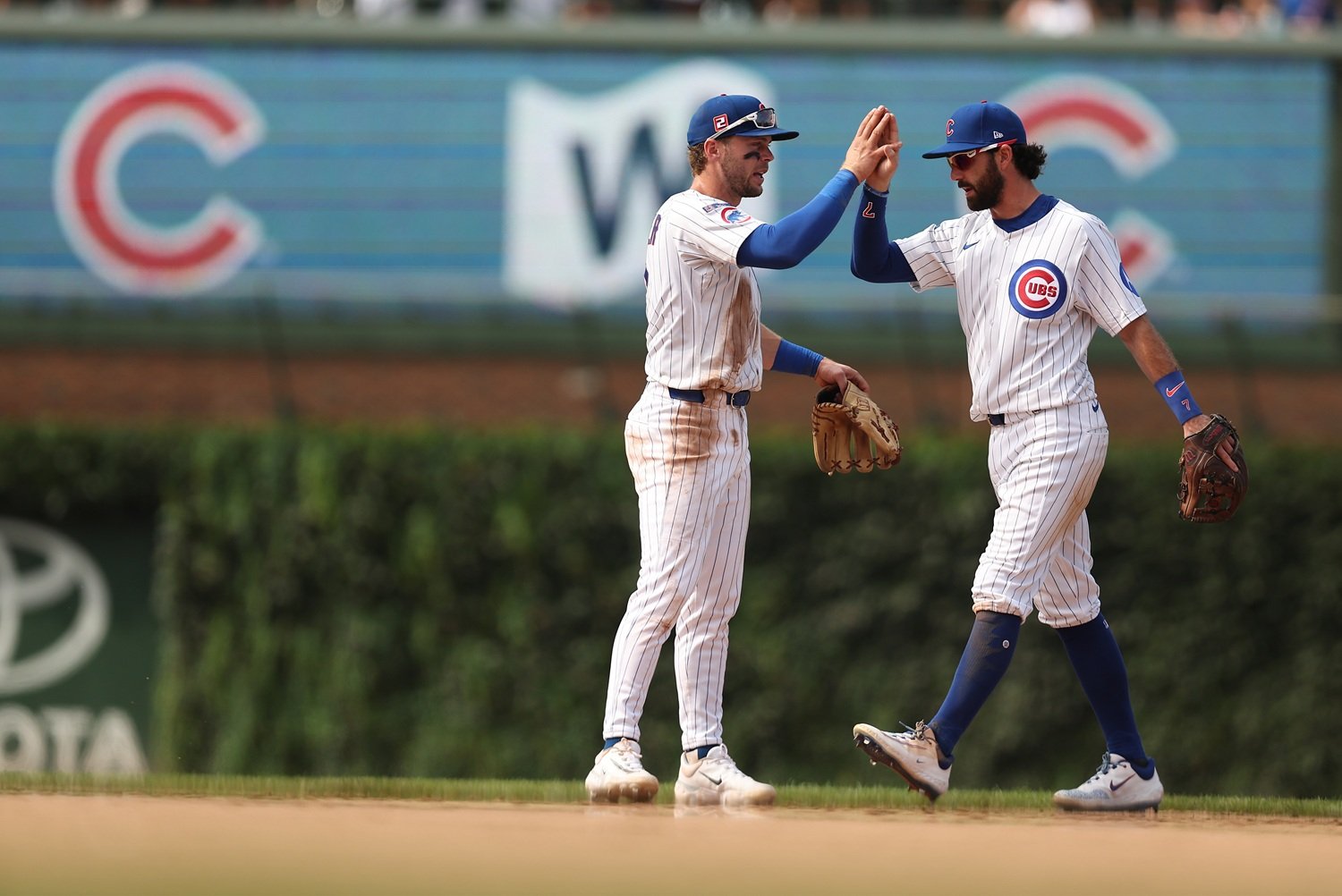 There are some areas on the roster where we could or will see turnover, but the Chicago Cubs enter the 2025-26 offseason with their middle infield as stable a position group as any. Under contract through 2029, Dansby Swanson will remain at shortstop, while Nico Hoerner will handle the keystone through at least through the end of 2026. The depth behind those two, however, is somewhat in question. Not that it's a major area of concern. Hoerner logged time at second base in 153 games, while Swanson was at short for 159. Beyond Hoerner, the Cubs deployed a mix of Jon Berti (13 games), Willi Castro (six games), Matt Shaw (four games), Vidal Bruján (three games), and Nicky Lopez (one game). Aside from Hoerner appearing in eight games in Swanson's stead at shortstop, each of Bruján, Lopez, and Gage Workman registered a pair of appearances. None of the names behind the incumbents are still with the organization. Some of them have been gone for months. Thus, as the Cubs build their roster for 2026, they're going to have to at least maintain an eye on who could serve as this year's depth, minimal as the need may be. Second Base Starter: Nico Hoerner (.297/.345/.394, 7 HR, 29 SB, 109 wRC+, 4.8 fWAR) Just about everything Hoerner did in 2025 was a career best. He posted his highest average, his best park-adjusted offense, and his largest Wins Above Replacement output (according to FanGraphs), while cutting his strikeout rate to just 7.6%. Meanwhile, he continued to ply his trade as one of the best defensive infielders in the sport. With a down-ballot MVP vote to his credit, it's hard to imagine we see his name floating around the trade ether in the way that we saw last winter. Depth: James Triantos, Pedro Ramirez Of the two middle infield spots, the Cubs at least have a little bit of security behind Hoerner (albeit no one with any top-level experience). The team added James Triantos to the 40-man roster ahead of last week's deadline, protecting him from the Rule 5 Draft. Should anything happen to Hoerner, it's likely he'd be first in line to get keystone reps. While he's cooled a bit as an offensive prospect (which could at least be partially attributed to a 70-point drop in his batting average on balls in play), he offers some of the same base stealing prowess we see from Hoerner (78 steals across all levels the last two years). Should it not be Triantos, another recent addition to the 40-man could supplement the middle infield as needed. Pedro Ramirez doesn't have experience above Double A yet, but has more recently demonstrated some offensive upside. He slashed .280/.346/.386 and swiped 28 bags in 2025. That's despite a BABIP regression of his own, compared to lower levels. Either way, the team is getting a somewhat similar skill set to that of their starting second baseman. But it's also possible we see the team address this with a versatile option off the bench that could push each one further down the depth chart. Shortstop Starter: Dansby Swanson (.244/.300/.417, 24 HR, 20 SB, 99 wRC+, 3.3 fWAR) It was a strange year for Swanson. On one hand, he demonstrated consistent power in a 20/20 campaign. On the other, his contact rate was his lowest over a full season in his career (71.3%) and his strikeout rate ballooned to 26.0%. His on-base percentage has continued to drop, but the power coming back (after a down year in that regard in 2024) was encouraging. Not that the inconsistency constitutes a big change; Swanson has always had some bewildering variance in his game. The Cubs love his presence in the clubhouse and the steadiness of his glove. He's likely the starter until that contract runs out. Depth: Hoerner This one doesn't merit nearly as deep a discussion. Unlike second base, which has a decent volume on the 40-man, the Cubs have no such presence behind Swanson. Names like Jefferson Rojas or Cristian Hernandez are still at least another year away. Should anything happen to Swanson—a difficult thing to anticipate, given that he's appeared in at least 147 games in each year since 2020—it would be an easy call for the team to flip Hoerner to the other side of the second-base bag. In that case, you're looking at an extended run for a bench bat to be named later, or one of Triantos or Ramirez. Either way, the depth behind Swanson exists almost exclusively in the form of his comrade on the middle infield. The Cubs don't have a great deal of depth at these positions, but the idea is that they shouldn't need any.
 -
Image courtesy of © Lily Smith/The Register / USA TODAY NETWORK via Imagn Images Among the developments that took shape for the 2025 Chicago Cubs was the establishment of long-term options on either side of the infield dirt. Coming off an impressive rookie campaign in 2024, Michael Busch further cemented himself as the team's first baseman of the future. His offensive output shot up all over the board while he continued capable of providing reliable defense. On the other side, it wasn't without its bumps (including an early demotion to Iowa), but Matt Shaw showed enough flashes to get another run as the team's starter at the hot corner in 2026. His glove is his primary asset (12 Defensive Runs Saved) with the bat showing out occasionally (130 wRC+ in the second half before an atrocious playoff run). What the Cubs possess in terms of contingencies for 2026, however, is anyone's guess. Justin Turner was the primary supplement for Busch at first. While Busch drew 155 appearances (131 starts), Turner's work against left-handed pitching got him in action for 39 games while Moisés Ballesteros drew in for a pair late in the year. Carlos Santana was in the mix for six games of his own. Third base was much more of a hodgepodge. While Shaw worked on his bat in Triple-A, Craig Counsell was forced to run out a rotation of Jon Berti, Vidal Bruján, and Nicky Lopez. Gage Workman got a few appearances early while Willi Castro had a few starts thrown his way after his acquisition at the trade deadline. Turner garnered 14 appearances of his own at the hot corner. That's seven players logging time at third base, with only Shaw remaining in the organization. Shaw's bat remains imperfect. That means that, as the Cubs build their roster for '26, they may want to explore the addition of a bench bat capable of giving him a blow as needed. First base, though, has some depth to work with beyond its current starter. First Base Starter: Michael Busch (.261/.343/.523, 34 HR, 4 SB, 140 wRC+, 3.5 fWAR) Everywhere you look, you see improvement from Michael Busch in 2025. His approach continued its refinement and he raised his contact rates while cutting his strikeout rate by five percent. The power was perhaps the most significant development that took shape for him last season, providing something sustainable in a Cubs lineup that struggled to find it at times. Some of that was due to Counsell playing the matchups and hiding him against lefties. The rest is the upside that was already present when he was acquired from the Los Angeles Dodgers ahead of 2024. He certainly looks the part of a long-term option at the position. Depth: Moisés Ballesteros, Jonathon Long With the impending departure of Kyle Tucker, it certainly looks as if Seiya Suzuki will get his playing time back on the outfield grass. That will, in turn, free up some time for Ballesteros as the team's designated hitter. And if the team is apprehensive about putting him behind the plate — which seems likely considering the presence of Carson Kelly and Miguel Amaya — then Ballesteros could be on the roster as the team's designated hitter to start the year. That leaves him as an option to supplement Busch at first, though as a left-handed hitter, it's not as if he's going to steal starts. Even with limited experience, the fact that Counsell was willing to throw him a bit of time toward the end of the year indicates that we should expect to see him in Busch's stead at least on occasion, however. In the minor league ranks, Jonathon Long possesses some of the same skill set that makes Busch so intriguing. Long has an advanced approach at this stage (13.0 percent walk rate in Triple-A in '25) that feeds into his power upside (20 homers, .173 ISO). Initially a corner infielder, Long logged just nine games at third in 2025 against 115 at first base. Should the Cubs be in need of a longer term option for Busch at any point in 2025, he's likely the guy (barring any outside addition this winter). Third Base Starter: Matt Shaw (.226/.295/.394, 13 HR, 17 SB, 93 wRC+, 1.5 fWAR) It'll be interesting to see what shape Shaw's role will take for the 2026 Cubs considering the team is expected to be in on Alex Bregman again this winter. Would such a signing relegate Shaw to more utility duty on the infield? Would he become an immediate trade candidate? It's difficult to project. At this point, though, we have no reason to believe that the hot corner will belong to anyone other than Shaw next season, even as the offensive side of his game remains a work in progress. Depth: Pedro Ramirez Unlike first base, where you could see a path toward playing time for a couple of notable bats in the system, the Cubs have no such contingency currently in their organization. We've already noted the fact that Long hasn't played the position much recently. As such, Pedro Ramirez, who was just added to the 40-man roster, appears to be the most likely candidate to fill in. He's more of a light-hitting option on the power side (.106 ISO) but offers a solid approach and good on-base skills (28 steals). Where there are questions, though, is about how the glove will play, with reports citing his reaction time and arm. Ultimately, this is a clear area in need of a bench upgrade as the winter gets underway. The good news for the Cubs, at least, is that whatever outside depth they may pursue should provide at least a mild upgrade over what they ran out beyond Shaw last season. View full article
-
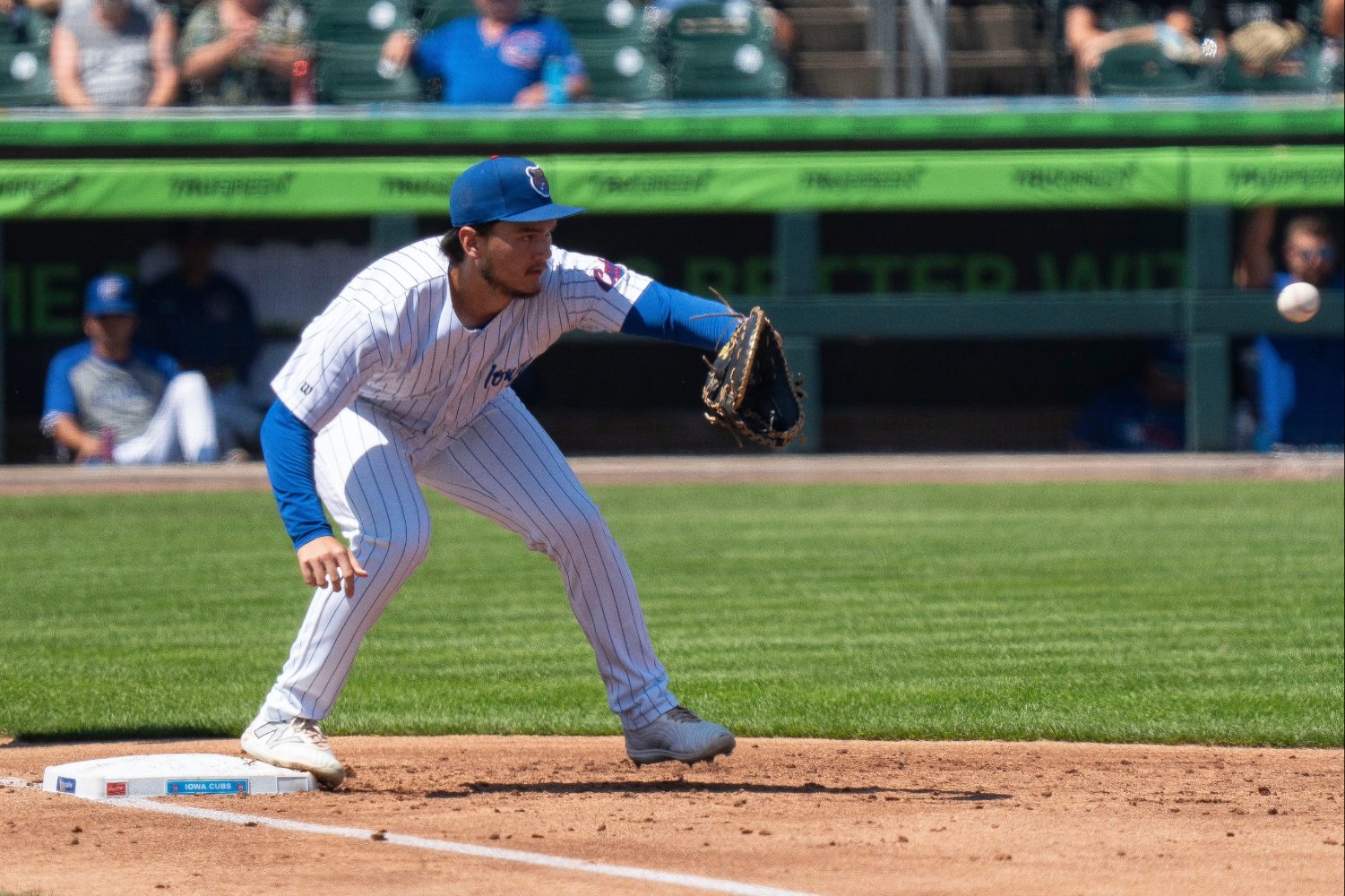 Among the developments that took shape for the 2025 Chicago Cubs was the establishment of long-term options on either side of the infield dirt. Coming off an impressive rookie campaign in 2024, Michael Busch further cemented himself as the team's first baseman of the future. His offensive output shot up all over the board while he continued capable of providing reliable defense. On the other side, it wasn't without its bumps (including an early demotion to Iowa), but Matt Shaw showed enough flashes to get another run as the team's starter at the hot corner in 2026. His glove is his primary asset (12 Defensive Runs Saved) with the bat showing out occasionally (130 wRC+ in the second half before an atrocious playoff run). What the Cubs possess in terms of contingencies for 2026, however, is anyone's guess. Justin Turner was the primary supplement for Busch at first. While Busch drew 155 appearances (131 starts), Turner's work against left-handed pitching got him in action for 39 games while Moisés Ballesteros drew in for a pair late in the year. Carlos Santana was in the mix for six games of his own. Third base was much more of a hodgepodge. While Shaw worked on his bat in Triple-A, Craig Counsell was forced to run out a rotation of Jon Berti, Vidal Bruján, and Nicky Lopez. Gage Workman got a few appearances early while Willi Castro had a few starts thrown his way after his acquisition at the trade deadline. Turner garnered 14 appearances of his own at the hot corner. That's seven players logging time at third base, with only Shaw remaining in the organization. Shaw's bat remains imperfect. That means that, as the Cubs build their roster for '26, they may want to explore the addition of a bench bat capable of giving him a blow as needed. First base, though, has some depth to work with beyond its current starter. First Base Starter: Michael Busch (.261/.343/.523, 34 HR, 4 SB, 140 wRC+, 3.5 fWAR) Everywhere you look, you see improvement from Michael Busch in 2025. His approach continued its refinement and he raised his contact rates while cutting his strikeout rate by five percent. The power was perhaps the most significant development that took shape for him last season, providing something sustainable in a Cubs lineup that struggled to find it at times. Some of that was due to Counsell playing the matchups and hiding him against lefties. The rest is the upside that was already present when he was acquired from the Los Angeles Dodgers ahead of 2024. He certainly looks the part of a long-term option at the position. Depth: Moisés Ballesteros, Jonathon Long With the impending departure of Kyle Tucker, it certainly looks as if Seiya Suzuki will get his playing time back on the outfield grass. That will, in turn, free up some time for Ballesteros as the team's designated hitter. And if the team is apprehensive about putting him behind the plate — which seems likely considering the presence of Carson Kelly and Miguel Amaya — then Ballesteros could be on the roster as the team's designated hitter to start the year. That leaves him as an option to supplement Busch at first, though as a left-handed hitter, it's not as if he's going to steal starts. Even with limited experience, the fact that Counsell was willing to throw him a bit of time toward the end of the year indicates that we should expect to see him in Busch's stead at least on occasion, however. In the minor league ranks, Jonathon Long possesses some of the same skill set that makes Busch so intriguing. Long has an advanced approach at this stage (13.0 percent walk rate in Triple-A in '25) that feeds into his power upside (20 homers, .173 ISO). Initially a corner infielder, Long logged just nine games at third in 2025 against 115 at first base. Should the Cubs be in need of a longer term option for Busch at any point in 2025, he's likely the guy (barring any outside addition this winter). Third Base Starter: Matt Shaw (.226/.295/.394, 13 HR, 17 SB, 93 wRC+, 1.5 fWAR) It'll be interesting to see what shape Shaw's role will take for the 2026 Cubs considering the team is expected to be in on Alex Bregman again this winter. Would such a signing relegate Shaw to more utility duty on the infield? Would he become an immediate trade candidate? It's difficult to project. At this point, though, we have no reason to believe that the hot corner will belong to anyone other than Shaw next season, even as the offensive side of his game remains a work in progress. Depth: Pedro Ramirez Unlike first base, where you could see a path toward playing time for a couple of notable bats in the system, the Cubs have no such contingency currently in their organization. We've already noted the fact that Long hasn't played the position much recently. As such, Pedro Ramirez, who was just added to the 40-man roster, appears to be the most likely candidate to fill in. He's more of a light-hitting option on the power side (.106 ISO) but offers a solid approach and good on-base skills (28 steals). Where there are questions, though, is about how the glove will play, with reports citing his reaction time and arm. Ultimately, this is a clear area in need of a bench upgrade as the winter gets underway. The good news for the Cubs, at least, is that whatever outside depth they may pursue should provide at least a mild upgrade over what they ran out beyond Shaw last season.
- 1 comment
-
- 1
-

-
- matt shaw
- michael busch
- (and 2 more)
-
Image courtesy of © Michael McLoone-Imagn Images There are three components that make the infield collective of the Chicago Cubs perhaps the most stable aspect of their franchise ahead of 2026. The first is on the defensive side, where they succeeded at virtually every position in '25. As a collective, their work with the leather is some of the finest you'll see from the four spots on the dirt. Another is in each of their respective contract statuses, where each starting infielder is under contract through at least the end of next year, including another pre-arbitration offseason for Michael Busch and three more years of it for Matt Shaw. The third is their health. While we watched Kyle Tucker battle injuries in the second half of the season and Pete Crow-Armstrong maybe begin to burn out a bit in September, the Cubs got the full run of virtually all of their infielder defenders. Busch appeared in 155 games. Nico Hoerner was plugged in for 156 and Dansby Swanson for 159. Matt Shaw appeared most of the time when he wasn't in Iowa and reached 126 games in his rookie campaign. It's not all positive, of course. While there were numerous flashes of offensive competency from a couple of their starting infielders, the left side of the infield, in particular, was ravaged by inconsistent play and adjustments that came and went. It's a tough sell to necessarily want this to be the same group ahead of next season given that, but the aspects of defensive quality, financial certainty, and ability to stay on the field do help them to maintain their status as the most stable phase of the Chicago Cubs' operation. With all that being said, let's see how each starter and the *gulp* bench group grade out from their work in 2025. Michael Busch: A It's almost difficult to overstate the offensive value that Busch brought to the group in his second season on the North Side. We knew he was a certified stick when he was acquired from the Los Angeles Dodgers two offseasons ago. But Craig Counsell found a sweet spot of where to deploy him against lefties and where to protect him, which led to some really strong results in '25. Busch's numbers landed at a .261/.343/.523 slash, with a 23.5 percent strikeout rate, a 9.5 walk rate, and a 140 wRC+. The walk rate was the only one of those numbers that (slightly) regressed, as he raised each of his average, on-base, and especially the slug from his first go-round with the Cubs. It all culminated in a wRC+ that sat 22 points higher than the number he posted in 2024. The power is, of course, the most notable element. Busch reached 34 homers and finished in the 90th percentile in average exit velocity (92.2 MPH) and 95th in barrel rate (17.1 percent). Despite questions elsewhere, there's little doubt that they have an impact first baseman in the mix moving forward. The only caveat for him this year was on defense, where he finished just below average (-1) in the eyes of Outs Above Average. It's close enough to the threshold considering the position, though, that there isn't any real reason to be concerned. especially when he's miles ahead of some of the other upper-tier bats at the spot with which he now finds himself in league. Nico Hoerner: A+ If you went by FanGraphs' Wins Above Replacement metric, then Nico Hoerner was a top-10 player in the National League in 2025. If you went by Baseball Reference's Wins Above Replacement metric, then Nico Hoerner was a top-10 player in Major League Baseball in 2025. It's kind of wild for a player we have likely perceived as a lighter-hitting second baseman that brings elite defense to finish with either kind of credential, but it also speaks to the balance that Hoerner was able to bring to each phase of his game this year. On the offensive side, it mostly boils down to Hoerner's contact ability. He was fourth in the league in contact rate (89.9 percent), seventh in whiff rate (4.9 percent), and third in strikeout rate (7.6 percent). His already-modest power regressed slightly (.097 ISO), but he was able to ride a slight uptick in his average on balls in play (.313) to post what would be the highest wRC+ mark of his career (109). He was his typical elite self on the defensive end, posting an OAA of 15 that ranked 11th among all qualifying defenders in the sport. Even sans power, there were simply very few players that had a better blend of offensive and defensive success than Hoerner in 2025. With that said, his future is the murkiest of the four starting infielders. With Busch and Shaw still pre-arb and Swanson locked into his hefty contract, Hoerner is the odd one out in that he's set to be a free agent after 2026. Will the Cubs extend him a second time, or are we in for another season of trade rumors? Dansby Swanson: D+ It's a harsh grade for the captain of the infield, but it's also a harsh reality that Swanson provides up against his contract. Offensively, Swanson's saving grace was his uptick in power. His .173 ISO came in roughly 30 points higher than the previous season. His barrel rate (11.7 percent) and hard-hit rate (47.7 percent) each represented career highs. When he wasn't finding the barrel, though, the results were simply not there. Swanson's strikeout rate (26.0 percent) was his highest in a Cubs uniform, while his walk rate (7.3 percent) was his lowest since 2022. His swing rate and whiff rate were each the highest of his career, too, including a 27.1 swing-and-miss percentage against fastballs that stands as a career-worst figure. As far as trends go, there was certainly a selling-out-for-power component to Swanson's game this year. While the occasional power is nice, the other elements of his game regressing made it too infrequent a contributor on a price tag approaching $30 million. That's especially true because he didn't have the elite defense on which to fall back this time around. While the glove spoke for a lot of his game in the last two years in Chicago (20 OAA in 2023 and 17 OAA in 2024), he posted an OAA of just two in '25. Neither is a particularly encouraging trend with another four years to go on his contract. Matt Shaw: C+ It's true that Matt Shaw was a below-average hitter in his rookie season—his wRC+ finished at 93. It's also true that he showcased growth in the second half, when that number jumped up to 130. While his strikeout rate was higher and his walk rate lower, he was able to generate more quality contact in the second half on his way to a .263 ISO, nearly 200 points higher than the mark he had in the first half of the year. Adjustments came fast and furious for Shaw that allowed him to take off in that respect. They didn't all stick, however, as the strikeout rate catapulted to over 30 percent in the postseason, with just a pair of hits in 23 plate appearances. There's still work to be done, even if the upside was apparent. Where Shaw did impress was with the glove. Despite questions about his ability to stick anywhere but the keystone long-term, he was a regular on the highlight reals and quite adept at run prevention. His 12 Defensive Runs Saved ranked third among big leaguers at the hot corner and earned him a spot as a Gold Glove finalist. So, while the bat remains a mixed bag (and the first half of '25 was truly dismal for him), the glove helps him to salvage a solid grade for this season. The Bench: F That the Cubs lacked positional depth heading into the year was not a secret. Names they rolled out on the infield at various points in 2025 included names (and wRC+ outputs) like Justin Turner (86), Vidal Bruján (42), Gage Workman (57), Nicky Lopez (1), Jon Berti (42), Carlos Santana (-36), and Willi Castro (40). It's a little bit paradoxical to both praise the health and stability of the infield while simultaneously criticizing the depth, since depth is a little bit less crucial when you don't have to ride them out as frequently as a team that didn't have either of the former. Still, with Shaw's early struggles and Swanson's inability to produce in the batter's box any sustained fashion, having some sort of supplement (particularly in October) might've done the Cubs some good. They failed to address the bench in any meaningful way last winter and during the season, leaving no other grade as an option. View full article
-
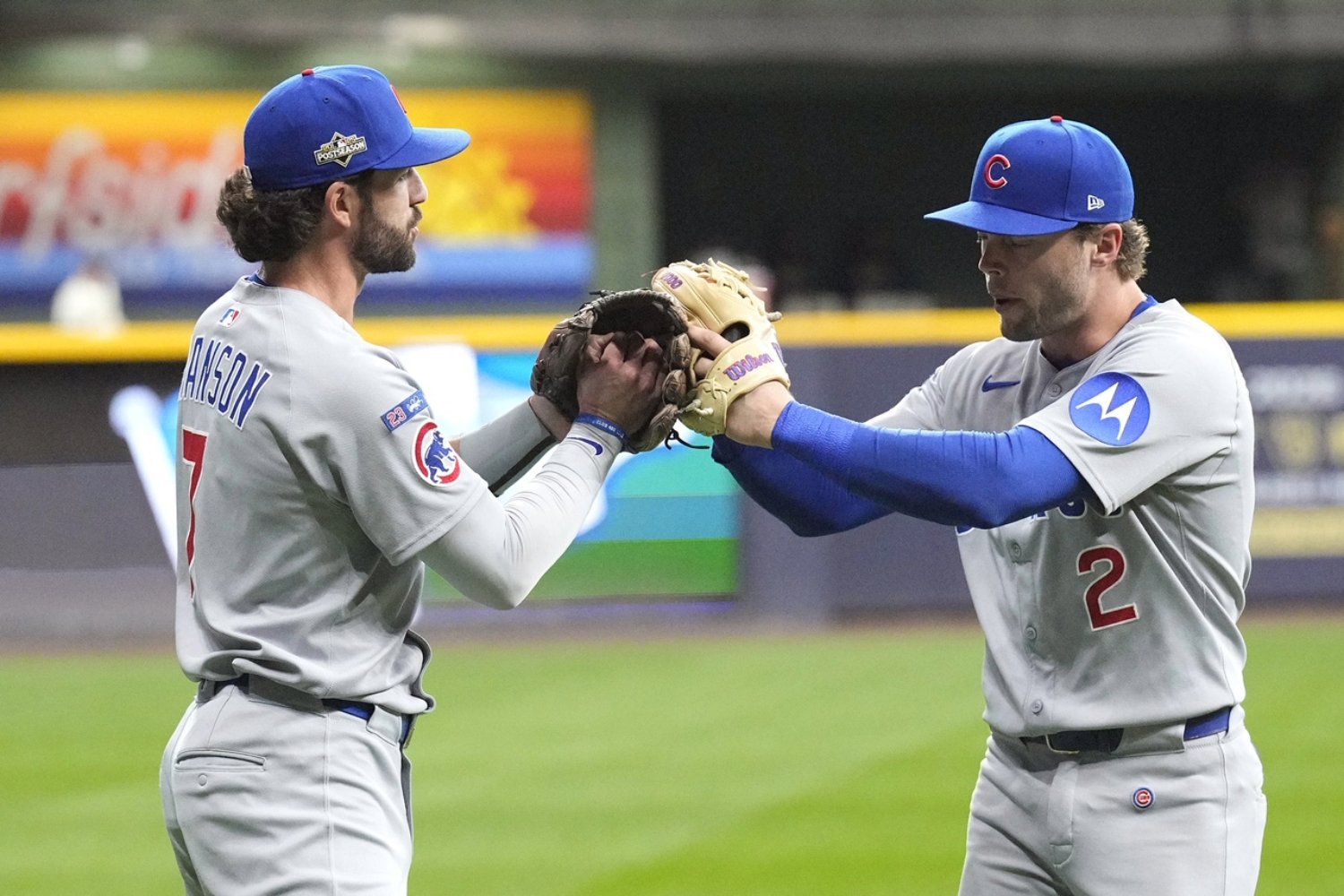 There are three components that make the infield collective of the Chicago Cubs perhaps the most stable aspect of their franchise ahead of 2026. The first is on the defensive side, where they succeeded at virtually every position in '25. As a collective, their work with the leather is some of the finest you'll see from the four spots on the dirt. Another is in each of their respective contract statuses, where each starting infielder is under contract through at least the end of next year, including another pre-arbitration offseason for Michael Busch and three more years of it for Matt Shaw. The third is their health. While we watched Kyle Tucker battle injuries in the second half of the season and Pete Crow-Armstrong maybe begin to burn out a bit in September, the Cubs got the full run of virtually all of their infielder defenders. Busch appeared in 155 games. Nico Hoerner was plugged in for 156 and Dansby Swanson for 159. Matt Shaw appeared most of the time when he wasn't in Iowa and reached 126 games in his rookie campaign. It's not all positive, of course. While there were numerous flashes of offensive competency from a couple of their starting infielders, the left side of the infield, in particular, was ravaged by inconsistent play and adjustments that came and went. It's a tough sell to necessarily want this to be the same group ahead of next season given that, but the aspects of defensive quality, financial certainty, and ability to stay on the field do help them to maintain their status as the most stable phase of the Chicago Cubs' operation. With all that being said, let's see how each starter and the *gulp* bench group grade out from their work in 2025. Michael Busch: A It's almost difficult to overstate the offensive value that Busch brought to the group in his second season on the North Side. We knew he was a certified stick when he was acquired from the Los Angeles Dodgers two offseasons ago. But Craig Counsell found a sweet spot of where to deploy him against lefties and where to protect him, which led to some really strong results in '25. Busch's numbers landed at a .261/.343/.523 slash, with a 23.5 percent strikeout rate, a 9.5 walk rate, and a 140 wRC+. The walk rate was the only one of those numbers that (slightly) regressed, as he raised each of his average, on-base, and especially the slug from his first go-round with the Cubs. It all culminated in a wRC+ that sat 22 points higher than the number he posted in 2024. The power is, of course, the most notable element. Busch reached 34 homers and finished in the 90th percentile in average exit velocity (92.2 MPH) and 95th in barrel rate (17.1 percent). Despite questions elsewhere, there's little doubt that they have an impact first baseman in the mix moving forward. The only caveat for him this year was on defense, where he finished just below average (-1) in the eyes of Outs Above Average. It's close enough to the threshold considering the position, though, that there isn't any real reason to be concerned. especially when he's miles ahead of some of the other upper-tier bats at the spot with which he now finds himself in league. Nico Hoerner: A+ If you went by FanGraphs' Wins Above Replacement metric, then Nico Hoerner was a top-10 player in the National League in 2025. If you went by Baseball Reference's Wins Above Replacement metric, then Nico Hoerner was a top-10 player in Major League Baseball in 2025. It's kind of wild for a player we have likely perceived as a lighter-hitting second baseman that brings elite defense to finish with either kind of credential, but it also speaks to the balance that Hoerner was able to bring to each phase of his game this year. On the offensive side, it mostly boils down to Hoerner's contact ability. He was fourth in the league in contact rate (89.9 percent), seventh in whiff rate (4.9 percent), and third in strikeout rate (7.6 percent). His already-modest power regressed slightly (.097 ISO), but he was able to ride a slight uptick in his average on balls in play (.313) to post what would be the highest wRC+ mark of his career (109). He was his typical elite self on the defensive end, posting an OAA of 15 that ranked 11th among all qualifying defenders in the sport. Even sans power, there were simply very few players that had a better blend of offensive and defensive success than Hoerner in 2025. With that said, his future is the murkiest of the four starting infielders. With Busch and Shaw still pre-arb and Swanson locked into his hefty contract, Hoerner is the odd one out in that he's set to be a free agent after 2026. Will the Cubs extend him a second time, or are we in for another season of trade rumors? Dansby Swanson: D+ It's a harsh grade for the captain of the infield, but it's also a harsh reality that Swanson provides up against his contract. Offensively, Swanson's saving grace was his uptick in power. His .173 ISO came in roughly 30 points higher than the previous season. His barrel rate (11.7 percent) and hard-hit rate (47.7 percent) each represented career highs. When he wasn't finding the barrel, though, the results were simply not there. Swanson's strikeout rate (26.0 percent) was his highest in a Cubs uniform, while his walk rate (7.3 percent) was his lowest since 2022. His swing rate and whiff rate were each the highest of his career, too, including a 27.1 swing-and-miss percentage against fastballs that stands as a career-worst figure. As far as trends go, there was certainly a selling-out-for-power component to Swanson's game this year. While the occasional power is nice, the other elements of his game regressing made it too infrequent a contributor on a price tag approaching $30 million. That's especially true because he didn't have the elite defense on which to fall back this time around. While the glove spoke for a lot of his game in the last two years in Chicago (20 OAA in 2023 and 17 OAA in 2024), he posted an OAA of just two in '25. Neither is a particularly encouraging trend with another four years to go on his contract. Matt Shaw: C+ It's true that Matt Shaw was a below-average hitter in his rookie season—his wRC+ finished at 93. It's also true that he showcased growth in the second half, when that number jumped up to 130. While his strikeout rate was higher and his walk rate lower, he was able to generate more quality contact in the second half on his way to a .263 ISO, nearly 200 points higher than the mark he had in the first half of the year. Adjustments came fast and furious for Shaw that allowed him to take off in that respect. They didn't all stick, however, as the strikeout rate catapulted to over 30 percent in the postseason, with just a pair of hits in 23 plate appearances. There's still work to be done, even if the upside was apparent. Where Shaw did impress was with the glove. Despite questions about his ability to stick anywhere but the keystone long-term, he was a regular on the highlight reals and quite adept at run prevention. His 12 Defensive Runs Saved ranked third among big leaguers at the hot corner and earned him a spot as a Gold Glove finalist. So, while the bat remains a mixed bag (and the first half of '25 was truly dismal for him), the glove helps him to salvage a solid grade for this season. The Bench: F That the Cubs lacked positional depth heading into the year was not a secret. Names they rolled out on the infield at various points in 2025 included names (and wRC+ outputs) like Justin Turner (86), Vidal Bruján (42), Gage Workman (57), Nicky Lopez (1), Jon Berti (42), Carlos Santana (-36), and Willi Castro (40). It's a little bit paradoxical to both praise the health and stability of the infield while simultaneously criticizing the depth, since depth is a little bit less crucial when you don't have to ride them out as frequently as a team that didn't have either of the former. Still, with Shaw's early struggles and Swanson's inability to produce in the batter's box any sustained fashion, having some sort of supplement (particularly in October) might've done the Cubs some good. They failed to address the bench in any meaningful way last winter and during the season, leaving no other grade as an option.
 -
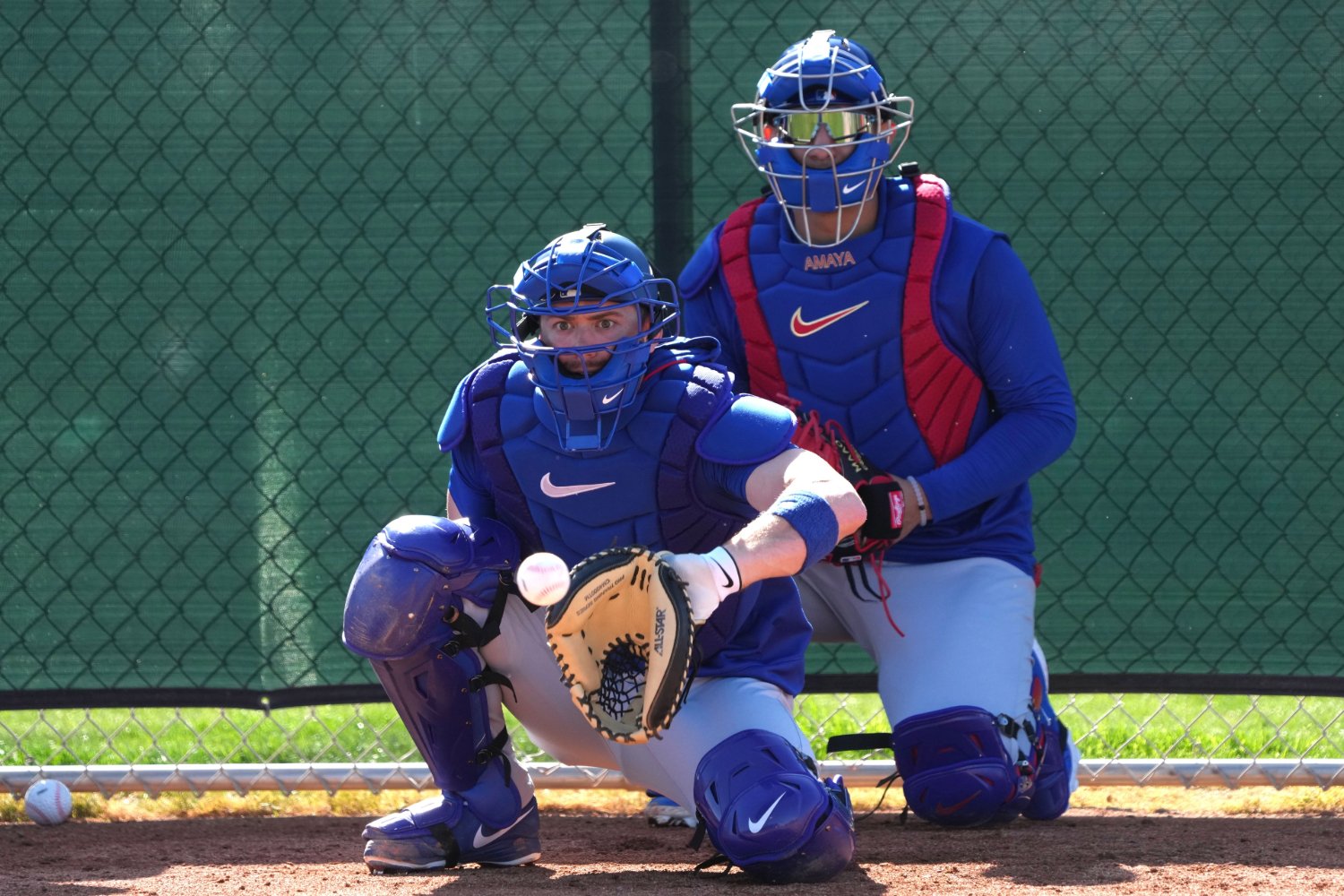 That the Chicago Cubs ended up with one of the best catching groups in all of baseball in 2025 isn't a surprise. How they got there, however, certainly qualifies as one. Despite very mild rumblings about the team seeking to upgrade the position in 2024 and into the subsequent offseason, last year's second-half emergence of Miguel Amaya as a hitter changed the calculus a bit. Rather than seek a pure upgrade, the Cubs shifted their attention to acquiring an effective supplement to Amaya, both in terms of the bat and the glove. That supplement arrived in the form of stable veteran Carson Kelly. Kelly's shocking output in April brought far more than expected, of course. What begin as something of a timeshare graduated to more playing time his way, though Amaya was able to cycle in roughly every two or three days. Distribution of playing time wound up as a moot discussion, however, as an oblique injury sent Amaya to the injured list before May reached its close. He'd return later in the year, but headed back to the IL almost immediately after an ankle injury running through first base would prove to be the ultimate end to his campaign. In his stead, the Cubs called up veteran backstop Reese McGuire. Something of a journeyman over the last couple of years, McGuire went from spring training invitee to crucial backup to Kelly in Amaya's absence. His combination of defense and occasional power proved to be the right balance as a No. 2 backstop, with the Cubs choosing to hold onto him even upon Amaya's one-day return from the IL. The trio were effective enough at various points that the team didn't appear inclined to give even a shred of time behind the plate to Moisés Ballesteros, who appeared in just six innings as a defender. All told, the Cubs finished with three of the top 38 catchers in wRC+ (minimum of 100 plate appearances, to account for Amaya), while Carson Kelly (2.6) landed as the No. 13 catcher in terms of fWAR (minimum of 400 plate appearances). As a collective, their fWAR (4.2) ended the year as the No. 7 catching group in the sport. Let's take a look at how everything broke down for the team's main trio behind the plate. Carson Kelly: B+ It would be really easy to over-grade a player like Kelly, who completely outperformed any expectations that the baseball world might've had for him. His 115 wRC+ was a new career best, while he also maintained the steady strikeout (19.0 percent) and walk (10.7 percent) rates that he reset with Detroit and Texas in 2024. The most notable aspect of Kelly's season, though, lived on the power side. His .179 ISO and 17 home runs were each his best since 2019. At the same time, any conversation about Kelly's offensive success needs to note how much his March & April output buoyed his end-of-season numbers. He wRC+'d 257, checked in at a .480 ISO, and struck out just 9.0 percent of the time against a 22.4 percent walk rate in that first month. He had other flashes throughout the year, but was never able to replicate anything close to what he turned in out of the starting gates. Still, when factoring in the defense — where he was above average everywhere except framing — Kelly was able to provide a healthy bit of stability, even with bouts of inconsistency at the plate throughout the year. Miguel Amaya: C Conversely, attaching a grade to Amaya at all feels unfair given the volume of games lost due to injury. The amount of growth he demonstrated (on both sides of the ball) in 2024 warranted an opportunity to run as the top backstop for the Cubs in '25. And while that was unable to come to fruition given his two injuries, many of the signs of a breakout that he'd flashed last year were still present, primarily on the offensive side. He struck out slightly more and walked slightly less, but the results were there otherwise. Though it was only 103 plate appearances, Amaya's 124 wRC+ indicated continued growth at the plate, while a .219 ISO showed that there's plenty of power to tap into. As far as his defense goes, the small sample wrought by injury left things fairly inconclusive, but he did wind up at least average in just about every regard. Assuming he's healthy from the jump in '26, it'll be interesting to see what the distribution looks like between Kelly & Amaya, given the former's strong performance in the latter's absence. Reese McGuire: B For what the Cubs needed out of their No. 2 spot sans Amaya (and visibly unwilling to hand legitimate time behind the plate to Moises Ballesteros), McGuire was just fine. His .226/.245/.444 slash line and 86 wRC+ don't read as particularly impressive, nor does his mere 2.9 percent walk rate. But he provided plenty of occasional power, indicated by his slugging percentage and a .218 ISO, which he did while grading out as an 80th-percentile pitch framer and above-average blocker behind the plate. And that's really the exact type of profile you'd want to get out of a position that doesn't run deep in offensive talent throughout the league: an occasional contributor on offense who provides stability with the glove. It's not a lot that you're going to get, but considering the injury context and what's needed in that type of role, McGuire was perfectly fine. The context helps his grade here. Moisés Ballesteros: Inconclusive The Cubs' No. 2 offensive prospect behind Owen Caissie, it's tough to justify incorporating Ballesteros as a part of this discussion. From an offensive standpoint, he came on strong to close the year after two brief stints with the team earlier in the season. A final output of .298/.394/.474 with a 143 wRC+ in 66 plate appearances will certainly work. But he also logged only six innings of playing time behind the plate, meaning that we can't really offer a grade from a positional standpoint. Nevertheless, with McGuire now a free agent and Kelly a year away from joining him (to say nothing of the unlikelihood of a Kyle Tucker return), Ballesteros' role in 2026 will be fascinating to watch. Not only in terms of his own distribution between serving as a catcher and designated hitter, but how much he could factor in behind the plate with McGuire likely joining a new club ahead of next year.
 -
Image courtesy of © Rick Scuteri-Imagn Images That the Chicago Cubs ended up with one of the best catching groups in all of baseball in 2025 isn't a surprise. How they got there, however, certainly qualifies as one. Despite very mild rumblings about the team seeking to upgrade the position in 2024 and into the subsequent offseason, last year's second-half emergence of Miguel Amaya as a hitter changed the calculus a bit. Rather than seek a pure upgrade, the Cubs shifted their attention to acquiring an effective supplement to Amaya, both in terms of the bat and the glove. That supplement arrived in the form of stable veteran Carson Kelly. Kelly's shocking output in April brought far more than expected, of course. What begin as something of a timeshare graduated to more playing time his way, though Amaya was able to cycle in roughly every two or three days. Distribution of playing time wound up as a moot discussion, however, as an oblique injury sent Amaya to the injured list before May reached its close. He'd return later in the year, but headed back to the IL almost immediately after an ankle injury running through first base would prove to be the ultimate end to his campaign. In his stead, the Cubs called up veteran backstop Reese McGuire. Something of a journeyman over the last couple of years, McGuire went from spring training invitee to crucial backup to Kelly in Amaya's absence. His combination of defense and occasional power proved to be the right balance as a No. 2 backstop, with the Cubs choosing to hold onto him even upon Amaya's one-day return from the IL. The trio were effective enough at various points that the team didn't appear inclined to give even a shred of time behind the plate to Moisés Ballesteros, who appeared in just six innings as a defender. All told, the Cubs finished with three of the top 38 catchers in wRC+ (minimum of 100 plate appearances, to account for Amaya), while Carson Kelly (2.6) landed as the No. 13 catcher in terms of fWAR (minimum of 400 plate appearances). As a collective, their fWAR (4.2) ended the year as the No. 7 catching group in the sport. Let's take a look at how everything broke down for the team's main trio behind the plate. Carson Kelly: B+ It would be really easy to over-grade a player like Kelly, who completely outperformed any expectations that the baseball world might've had for him. His 115 wRC+ was a new career best, while he also maintained the steady strikeout (19.0 percent) and walk (10.7 percent) rates that he reset with Detroit and Texas in 2024. The most notable aspect of Kelly's season, though, lived on the power side. His .179 ISO and 17 home runs were each his best since 2019. At the same time, any conversation about Kelly's offensive success needs to note how much his March & April output buoyed his end-of-season numbers. He wRC+'d 257, checked in at a .480 ISO, and struck out just 9.0 percent of the time against a 22.4 percent walk rate in that first month. He had other flashes throughout the year, but was never able to replicate anything close to what he turned in out of the starting gates. Still, when factoring in the defense — where he was above average everywhere except framing — Kelly was able to provide a healthy bit of stability, even with bouts of inconsistency at the plate throughout the year. Miguel Amaya: C Conversely, attaching a grade to Amaya at all feels unfair given the volume of games lost due to injury. The amount of growth he demonstrated (on both sides of the ball) in 2024 warranted an opportunity to run as the top backstop for the Cubs in '25. And while that was unable to come to fruition given his two injuries, many of the signs of a breakout that he'd flashed last year were still present, primarily on the offensive side. He struck out slightly more and walked slightly less, but the results were there otherwise. Though it was only 103 plate appearances, Amaya's 124 wRC+ indicated continued growth at the plate, while a .219 ISO showed that there's plenty of power to tap into. As far as his defense goes, the small sample wrought by injury left things fairly inconclusive, but he did wind up at least average in just about every regard. Assuming he's healthy from the jump in '26, it'll be interesting to see what the distribution looks like between Kelly & Amaya, given the former's strong performance in the latter's absence. Reese McGuire: B For what the Cubs needed out of their No. 2 spot sans Amaya (and visibly unwilling to hand legitimate time behind the plate to Moises Ballesteros), McGuire was just fine. His .226/.245/.444 slash line and 86 wRC+ don't read as particularly impressive, nor does his mere 2.9 percent walk rate. But he provided plenty of occasional power, indicated by his slugging percentage and a .218 ISO, which he did while grading out as an 80th-percentile pitch framer and above-average blocker behind the plate. And that's really the exact type of profile you'd want to get out of a position that doesn't run deep in offensive talent throughout the league: an occasional contributor on offense who provides stability with the glove. It's not a lot that you're going to get, but considering the injury context and what's needed in that type of role, McGuire was perfectly fine. The context helps his grade here. Moisés Ballesteros: Inconclusive The Cubs' No. 2 offensive prospect behind Owen Caissie, it's tough to justify incorporating Ballesteros as a part of this discussion. From an offensive standpoint, he came on strong to close the year after two brief stints with the team earlier in the season. A final output of .298/.394/.474 with a 143 wRC+ in 66 plate appearances will certainly work. But he also logged only six innings of playing time behind the plate, meaning that we can't really offer a grade from a positional standpoint. Nevertheless, with McGuire now a free agent and Kelly a year away from joining him (to say nothing of the unlikelihood of a Kyle Tucker return), Ballesteros' role in 2026 will be fascinating to watch. Not only in terms of his own distribution between serving as a catcher and designated hitter, but how much he could factor in behind the plate with McGuire likely joining a new club ahead of next year. View full article
-
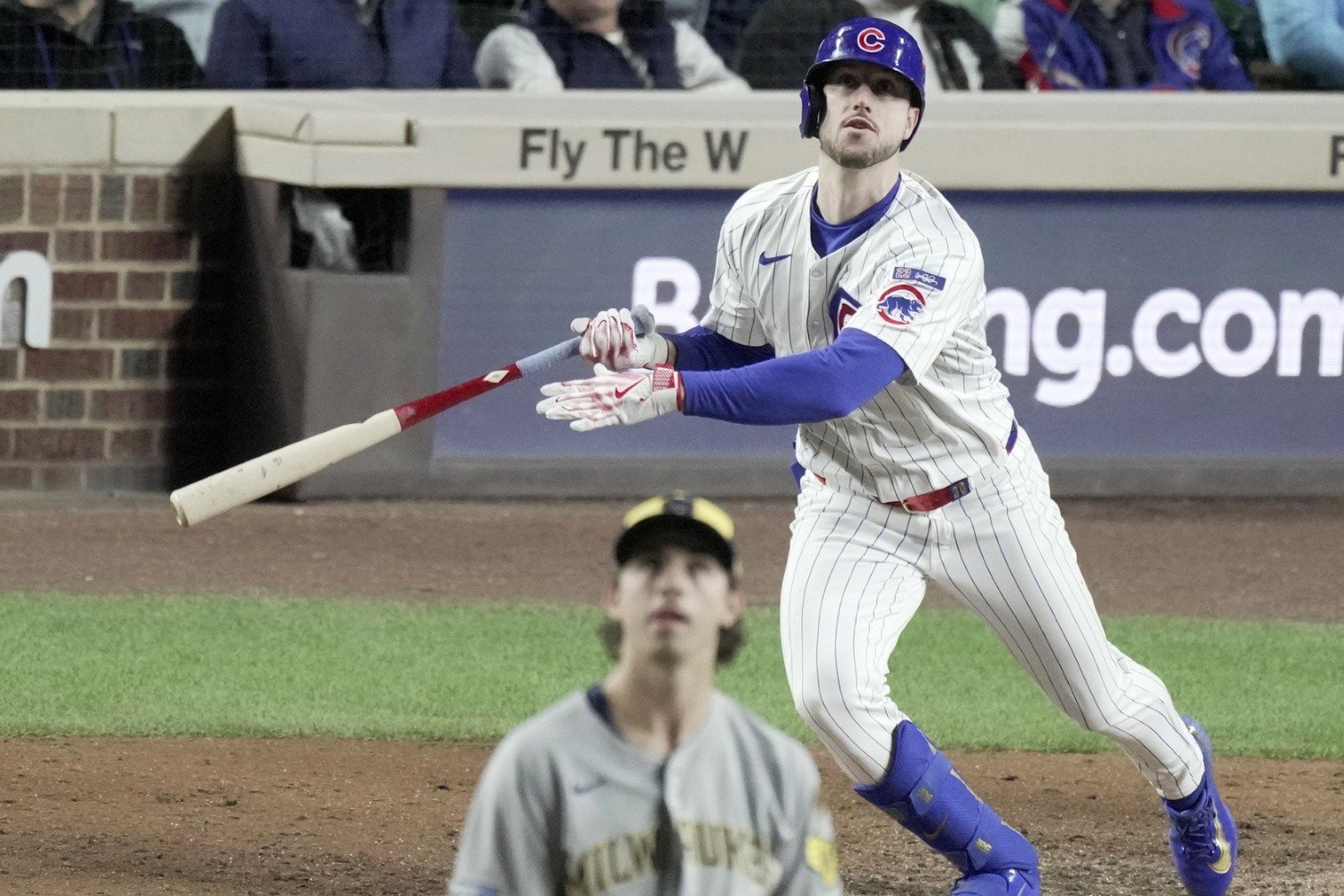 Don't look now, but it appears the Chicago Cubs are capable of scoring beyond the first inning of a baseball game. After scattering their three runs through the game (solo home runs like burps all night after a garlicky dinner) in Game 1, the Cubs did all of their scoring in the first innings of Games 2 and 3. The fourth game of their NLDS matchup against the Milwaukee Brewers, though, saw the Cubs score across the final three innings after a first-inning bombardment. After a few games of woes between the second and ninth innings, some crucial signs of life began to emerge for the Cubs in Game 4. Those developments could make the difference between the frustration of the series' first two games and something more akin to what we saw in Game 4, when they lay their season on the line on Saturday night. No sign, however, is more important than what we've begun to see from Kyle Tucker. Tucker's second half of the season wasn't what you wanted to see, for a team that squandered a lead in the National League Central and limped their way into the Wild Card round. Slowed by a hand fracture and a calf injury, Tucker batted just .231/.360/.378 after the All-Star break, for a good-not-great, OBP-driven wRC+ of 115. Those numbers fell well off his .280/.384/.499 and 145 wRC+ pace in the first half. You'll note, however, that Tucker—even amid such health-driven struggles to produce—continued to reach base and remained an above average hitter. The approach remained intact, with Tucker simply lacking the health to make it matter. Given that, it was unclear what the Cubs would get out of Tucker heading into the postseason. He was activated ahead of their September 26 contest and appeared as a designated hitter for three games to close out the regular season. Therein, however, he notched just one hit in a dozen plate appearances, with one walk. He looked a bit better in the Wild Card Series, going 3-for-11, and our Matt Trueblood predicted that we would see him complete a turn of the corner during the Division Series, based on the trends in his swing metrics that showed up against San Diego. That hoped-for spike in production didn't manifest in Game 1, when Tucker went 0-for-3 with a walk and was only able to muster an average exit velocity of 86.9 MPH. Game 2 didn't offer much room for optimism, either. Tucker, again, went 0-for-3 with a walk, and the contact quality was still lackluster. He put only two balls in play across those four plate appearances: a 72.9-MPH grounder off a fastball, and a 64.1-MPH popout on a curveball. That Tucker averaged 94.5 MPH against fastballs during the regular season speaks to the gap that remained. As such, considering where things stood results-wise, it was really difficult to drum up optimism around the Cubs' most important bat heading into the elimination games. Happily, that's where we've started to see a shift. Tucker was 2-for-3 with a walk in Game 3. The most important component of that game was in the velocity trends. After a walk in his first plate appearance, he went 100.1 MPH on a groundout, 100.2 MPH on a single, and 89.4 MPH on another single. It was a 96.6 MPH average exit velocity on a trio of balls in play, including a 100.2 MPH average against fastballs. It was the kind of trend you needed to see ahead of Thursday's game. The fourth game of the series was where Tucker was, finally, able to make his presence known, for (really) the first time since the end of August, when he homered thrice in two games in Anaheim. In Thursday's tussle, Tucker turned in another 2-for-3 night, with a seventh-inning homer that was mashed and another two walks. His 107.5 MPH on the homer trailed only Michael Busch's 108.1 on his eighth-inning blast. All of Tucker's balls in play came on fastballs, averaging 97.3 MPH; the lowest exit velocity he produced was 90.3. The last two games have helped Tucker run his stat line in this series up to the following: .333/.529/.583; a 5.9% strikeout rate, a 29.4% walk rate, and a wRC+ of 215 in 17 plate appearances. It's obviously only four games, but the balance there is important. We've seen Tucker prop up his overall production while physically compromised, on the strength of the patience within his approach. But for the first time since dealing with his various injuries in the second half, he's starting to turn that patience and plate coverage into exit velocity. It's nearly impossible to overstate the value of such a development. On its own, you have Tucker returning to form as one of the most dangerous hitters in Major League Baseball, ahead of the single most important game of the 2025 season. To understand why that matters, remember: the first-half version of Tucker had a sort of trickle-down effect on the rest of the Cubs lineup, where his patience and subsequent output were (somewhat unquantifiably) leading a number of teammates to follow suit. If the Cubs are about to get a returned-to-form Tucker and the extra pop that comes with it, there is suddenly much more reason to believe they can hang around in a decisive Game 5.
 -
Image courtesy of © Mark Hoffman-USA TODAY Network v Don't look now, but it appears the Chicago Cubs are capable of scoring beyond the first inning of a baseball game. After scattering their three runs through the game (solo home runs like burps all night after a garlicky dinner) in Game 1, the Cubs did all of their scoring in the first innings of Games 2 and 3. The fourth game of their NLDS matchup against the Milwaukee Brewers, though, saw the Cubs score across the final three innings after a first-inning bombardment. After a few games of woes between the second and ninth innings, some crucial signs of life began to emerge for the Cubs in Game 4. Those developments could make the difference between the frustration of the series' first two games and something more akin to what we saw in Game 4, when they lay their season on the line on Saturday night. No sign, however, is more important than what we've begun to see from Kyle Tucker. Tucker's second half of the season wasn't what you wanted to see, for a team that squandered a lead in the National League Central and limped their way into the Wild Card round. Slowed by a hand fracture and a calf injury, Tucker batted just .231/.360/.378 after the All-Star break, for a good-not-great, OBP-driven wRC+ of 115. Those numbers fell well off his .280/.384/.499 and 145 wRC+ pace in the first half. You'll note, however, that Tucker—even amid such health-driven struggles to produce—continued to reach base and remained an above average hitter. The approach remained intact, with Tucker simply lacking the health to make it matter. Given that, it was unclear what the Cubs would get out of Tucker heading into the postseason. He was activated ahead of their September 26 contest and appeared as a designated hitter for three games to close out the regular season. Therein, however, he notched just one hit in a dozen plate appearances, with one walk. He looked a bit better in the Wild Card Series, going 3-for-11, and our Matt Trueblood predicted that we would see him complete a turn of the corner during the Division Series, based on the trends in his swing metrics that showed up against San Diego. That hoped-for spike in production didn't manifest in Game 1, when Tucker went 0-for-3 with a walk and was only able to muster an average exit velocity of 86.9 MPH. Game 2 didn't offer much room for optimism, either. Tucker, again, went 0-for-3 with a walk, and the contact quality was still lackluster. He put only two balls in play across those four plate appearances: a 72.9-MPH grounder off a fastball, and a 64.1-MPH popout on a curveball. That Tucker averaged 94.5 MPH against fastballs during the regular season speaks to the gap that remained. As such, considering where things stood results-wise, it was really difficult to drum up optimism around the Cubs' most important bat heading into the elimination games. Happily, that's where we've started to see a shift. Tucker was 2-for-3 with a walk in Game 3. The most important component of that game was in the velocity trends. After a walk in his first plate appearance, he went 100.1 MPH on a groundout, 100.2 MPH on a single, and 89.4 MPH on another single. It was a 96.6 MPH average exit velocity on a trio of balls in play, including a 100.2 MPH average against fastballs. It was the kind of trend you needed to see ahead of Thursday's game. The fourth game of the series was where Tucker was, finally, able to make his presence known, for (really) the first time since the end of August, when he homered thrice in two games in Anaheim. In Thursday's tussle, Tucker turned in another 2-for-3 night, with a seventh-inning homer that was mashed and another two walks. His 107.5 MPH on the homer trailed only Michael Busch's 108.1 on his eighth-inning blast. All of Tucker's balls in play came on fastballs, averaging 97.3 MPH; the lowest exit velocity he produced was 90.3. The last two games have helped Tucker run his stat line in this series up to the following: .333/.529/.583; a 5.9% strikeout rate, a 29.4% walk rate, and a wRC+ of 215 in 17 plate appearances. It's obviously only four games, but the balance there is important. We've seen Tucker prop up his overall production while physically compromised, on the strength of the patience within his approach. But for the first time since dealing with his various injuries in the second half, he's starting to turn that patience and plate coverage into exit velocity. It's nearly impossible to overstate the value of such a development. On its own, you have Tucker returning to form as one of the most dangerous hitters in Major League Baseball, ahead of the single most important game of the 2025 season. To understand why that matters, remember: the first-half version of Tucker had a sort of trickle-down effect on the rest of the Cubs lineup, where his patience and subsequent output were (somewhat unquantifiably) leading a number of teammates to follow suit. If the Cubs are about to get a returned-to-form Tucker and the extra pop that comes with it, there is suddenly much more reason to believe they can hang around in a decisive Game 5. View full article
-
How Matthew Boyd Overcame His Brewers Demons In Game 4 Win
RandallPnkFloyd posted an article in Cubs
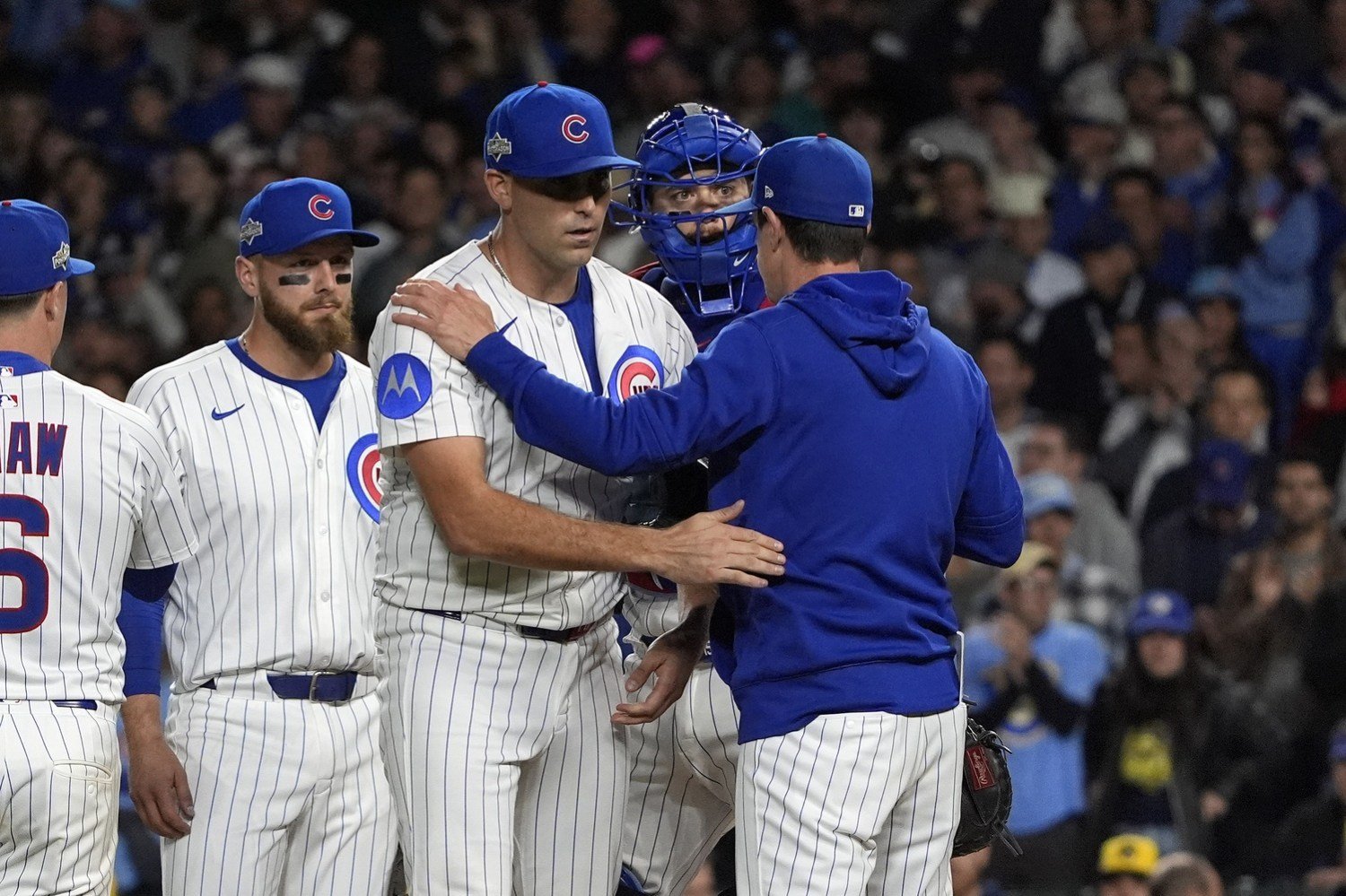 Ahead of Thursday night's Game 4, it wasn't unreasonable to think that Matthew Boyd should have made his last start in the Chicago Cubs' NLDS matchup against the Milwaukee Brewers. Not only was it an opponent he'd struggled with in the regular season, but he found himself absolutely punked by the division rivals in Game 1: two outs, six runs. In the regular season, Boyd drew two starts against Milwaukee. He threw 10 1/3 innings across those two outings, allowing nine earned runs on 12 hits. Those regular-season struggles were compounded in Game 1. He threw 30 pitches and served up a 90.2-MPH exit velocity on the high volume of contact he allowed in a brief stay on the bump. Such context made it difficult to trust Boyd for another start in this particular series (assuming things went that far). Thursday, however, represented a stark contrast, and instead left us with the iteration of Boyd we'd seen for the bulk of 2025. In the Cubs' 6-0 Game 4 win at a raucous Wrigley Field, Boyd hung around for 4 2/3 innings; allowed just a pair of hits; walked three; and held the Brewers scoreless, before the bullpen took it the rest of the way. It reignited not only hope of a series victory, but faith in Boyd specifically. And it wasn't complicated, coming down to usage and command. The following is the breakdown of Boyd's start in Game 1: Boyd isn't a pitcher who's going to generate a huge number of whiffs, so that the swing-and-miss column reads as underwhelming is deceiving. He induced whiffs on only 23.4% of opponents' swings throughout the 2025 regular season. Instead, Boyd's strength is in command and, subsequently, managing contact quality. He was well above average in both average opponent exit velocity and opponent hard-hit rate. Not so in Game 1, though. Each pitch he threw, with the exception of the sinker, was touched for an average exit velocity at least 4 MPH higher than what he turned in during the regular season. The changeup was also a source of woe in the small sample, as its absence of whiff and poor results defied what that pitch had been for him all season. So while punked is not a technical term, it does speak to what the Brewers were able to do in taking advantage of lackluster command and getting a reliable pitch to handle against him. Those issues were completely dialed in by his next start, however. The breakdown looked like this: The first thing you'll notice is that the average exit velocity fell by 10 miles per hour. The second thing you may notice is that Boyd, pitching in a much more expanded sample than Game 1, put his changeup firmly in the back seat in favor of the curveball. It was something that visibly caught Milwaukee off-guard, as he only got four swings against it but earned called or swinging strikes on 40% of the hooks he threw. He had that pitch locked in, and it created an issue for a Milwaukee lineup that didn't have any the first time they saw him. What makes the Boyd turnaround so enjoyable between starts isn't solely the outcome. It's that the underlying factor contributing to it falls squarely on the craft. Command can be honed in with an evaluation of mechanics or simply clearing out a poor start ahead of the next one. But the foresight to change the usage just enough to make it play in your favor against an opponent who has had your number throughout the season speaks to a nuance that makes this game so fascinating. In each of those two regular season starts, it was the changeup serving as Boyd's most-used secondary offering (thrown 26 percent of the time on July 28 and 20 percent of the time on August 19). The Brewers had no reason to expect the hook would be there in lieu of it, and were unable to adjust. It ultimately may not mean anything, in the final result of this series. Maybe it will. But it certainly dispels a certain level of concern about Boyd's ability to pitch at this point in the year, given the volume he's thrown in comparison to the last handful of seasons. It was an impressive performance under pressure, from a veteran the team needs for the balance of this season and in 2026. In that sense, its meaning and value are impossible to erase.
 -
Image courtesy of © David Banks-Imagn Images Ahead of Thursday night's Game 4, it wasn't unreasonable to think that Matthew Boyd should have made his last start in the Chicago Cubs' NLDS matchup against the Milwaukee Brewers. Not only was it an opponent he'd struggled with in the regular season, but he found himself absolutely punked by the division rivals in Game 1: two outs, six runs. In the regular season, Boyd drew two starts against Milwaukee. He threw 10 1/3 innings across those two outings, allowing nine earned runs on 12 hits. Those regular-season struggles were compounded in Game 1. He threw 30 pitches and served up a 90.2-MPH exit velocity on the high volume of contact he allowed in a brief stay on the bump. Such context made it difficult to trust Boyd for another start in this particular series (assuming things went that far). Thursday, however, represented a stark contrast, and instead left us with the iteration of Boyd we'd seen for the bulk of 2025. In the Cubs' 6-0 Game 4 win at a raucous Wrigley Field, Boyd hung around for 4 2/3 innings; allowed just a pair of hits; walked three; and held the Brewers scoreless, before the bullpen took it the rest of the way. It reignited not only hope of a series victory, but faith in Boyd specifically. And it wasn't complicated, coming down to usage and command. The following is the breakdown of Boyd's start in Game 1: Boyd isn't a pitcher who's going to generate a huge number of whiffs, so that the swing-and-miss column reads as underwhelming is deceiving. He induced whiffs on only 23.4% of opponents' swings throughout the 2025 regular season. Instead, Boyd's strength is in command and, subsequently, managing contact quality. He was well above average in both average opponent exit velocity and opponent hard-hit rate. Not so in Game 1, though. Each pitch he threw, with the exception of the sinker, was touched for an average exit velocity at least 4 MPH higher than what he turned in during the regular season. The changeup was also a source of woe in the small sample, as its absence of whiff and poor results defied what that pitch had been for him all season. So while punked is not a technical term, it does speak to what the Brewers were able to do in taking advantage of lackluster command and getting a reliable pitch to handle against him. Those issues were completely dialed in by his next start, however. The breakdown looked like this: The first thing you'll notice is that the average exit velocity fell by 10 miles per hour. The second thing you may notice is that Boyd, pitching in a much more expanded sample than Game 1, put his changeup firmly in the back seat in favor of the curveball. It was something that visibly caught Milwaukee off-guard, as he only got four swings against it but earned called or swinging strikes on 40% of the hooks he threw. He had that pitch locked in, and it created an issue for a Milwaukee lineup that didn't have any the first time they saw him. What makes the Boyd turnaround so enjoyable between starts isn't solely the outcome. It's that the underlying factor contributing to it falls squarely on the craft. Command can be honed in with an evaluation of mechanics or simply clearing out a poor start ahead of the next one. But the foresight to change the usage just enough to make it play in your favor against an opponent who has had your number throughout the season speaks to a nuance that makes this game so fascinating. In each of those two regular season starts, it was the changeup serving as Boyd's most-used secondary offering (thrown 26 percent of the time on July 28 and 20 percent of the time on August 19). The Brewers had no reason to expect the hook would be there in lieu of it, and were unable to adjust. It ultimately may not mean anything, in the final result of this series. Maybe it will. But it certainly dispels a certain level of concern about Boyd's ability to pitch at this point in the year, given the volume he's thrown in comparison to the last handful of seasons. It was an impressive performance under pressure, from a veteran the team needs for the balance of this season and in 2026. In that sense, its meaning and value are impossible to erase. View full article
-
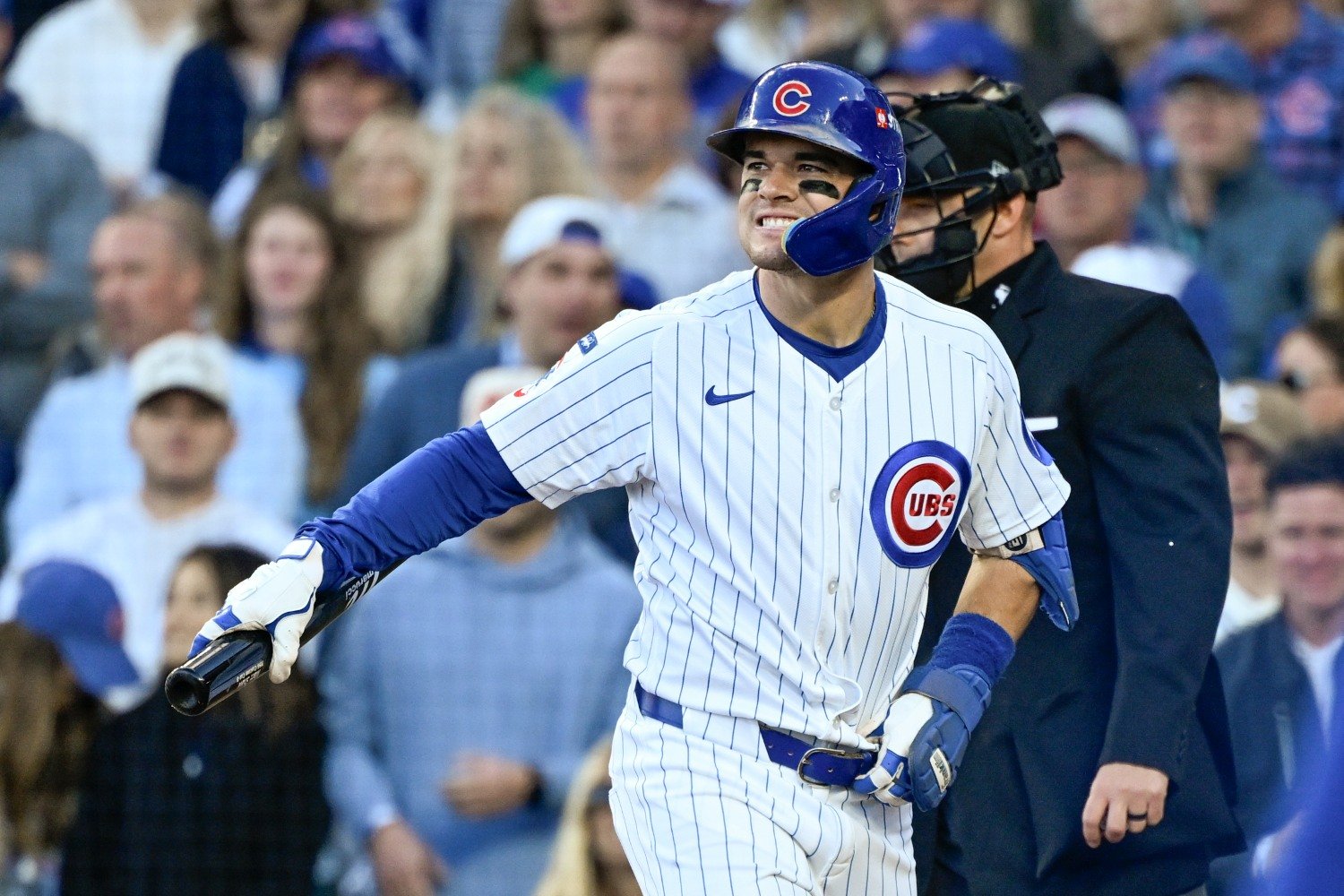 It would be a tough ask for one to create a robust list of offensive contributors in the 2025 postseason for the Chicago Cubs. Such is the nature of a team that has scored 16 runs across six games, or 2.7 per game. But even if you made a top-10 list of the top hitters in a nine-man group, Matt Shaw wouldn't make it. As he did 114 times during the regular season, Shaw has drawn a start at the hot corner for each of the Cubs' six games during these playoffs. Thus far, he's contributed zero hits across 17 plate appearances, with four walks and seven strikeouts to his name. It's not so much the absence of hits as it is both the context around such a void and the fact that he hasn't been particularly close to generating any semblance of value by way of a swing. Despite coming out of the wild card round against San Diego, the following has been a familiar sight out of Shaw through the six games he's played: We've watched Shaw battle against his mechanics at various points throughout the 2025 season. It's likely we're witnessing yet another manifestation thereof right now. The goal here isn't to identify the specific source of Shaw's postseason woes, however. It's to examine the repercussions, and discuss whether a justification exists to drop him into the starting lineup again for Thursday's Game 4. Whatever issues are plaguing Shaw this stage are leading to a couple notable outcomes, both for the player himself and the team as a collective. In terms of his own performance, Shaw has rarely swung the bat throughout these playoffs, with a 41.2% swing rate. Only Ian Happ has a lower rate thus far. The difference is that when Shaw does swing the bat, the outcome is the third-worst contact rate of anyone who has swung a bat for the Cubs this October (65.7%), with a whiff rate five percent higher than he turned in during the regular season. Even the walks have lacked impact, as all four have been isolated to the first two games against Milwaukee, one of which was a blowout loss and the other where the offense proved incapable of supplementing that on-base with any meaningful approach. Besides, just watch him up there. He tried a couple of poking bunts Wednesday, hoping to figure out some way to create an offensive threat, because he's that profoundly lost. Worse yet is that on those instances where Shaw has made contact, he's created exactly no true threat. He's not alone in a 0.0% barrel rate within this lineup, but he is solo in the 0.0% Hard-Hit% game. It's a mess for Shaw at this point. He's unable to compensate for minimal contact with, at least, impactful contact. Factor in the strikeout woes (41.2%) and the runners he's stranded this postseason (10 of them), and this is simply a player unable to contribute to the collective. Six of his seven strikeouts this postseason have also come against right-handed pitching. If it's to be Freddy Peralta in Game 4, it becomes even more difficult to justify another start for Shaw. The issue beyond this specific performance, however, is that the options beyond Shaw don't run deep. Justin Turner has one game and two plate appearances to his credit, though he hit much better in that minuscule set of chances than Shaw has. Do you toss the veteran a start at a position at which he logged just 35 innings in 2025, in hopes that there's a certain stabilizing of the lineup that happens as a result? Shaw's chances to have an impact on defense in these playoffs have been limited, anyway. He made a tremendous play to help finish off the Padres, but the Cubs staff is mostly yielding fly balls, and Shaw couldn't do anything about the few hot shots the Brewers sent past him in Game 1. The only other option at present would be Willi Castro, who hasn't garnered an appearance at the plate and has only been inserted once this postseason overall. He walked at more than a 16% clip in September, but was woeful pretty much everywhere else. The tradeoff there seems negligible. That's the issue Counsell now faces. It's hard to justify another start for Shaw, considering the total non-factor he's been at the plate—not just against Milwaukee, but for all six games this postseason. The options behind him, however, also don't inspire much confidence. Do you take the defensive tradeoff and insert a veteran with an extensive run of postseason play? Do you hope that Castro can parlay his own patience into some level of production in the way that Shaw has not? The answer to both questions is probably no at this juncture, leading to the unfortunate outcome of simply requiring Matt Shaw to occupy his usual spot in the lineup and hope for the best. It's malpractice, though, that the team didn't better prepare to plug someone else in there. Their rookie at the hot corner is kaput, for 2025.
 -
Image courtesy of © Matt Marton-Imagn Images It would be a tough ask for one to create a robust list of offensive contributors in the 2025 postseason for the Chicago Cubs. Such is the nature of a team that has scored 16 runs across six games, or 2.7 per game. But even if you made a top-10 list of the top hitters in a nine-man group, Matt Shaw wouldn't make it. As he did 114 times during the regular season, Shaw has drawn a start at the hot corner for each of the Cubs' six games during these playoffs. Thus far, he's contributed zero hits across 17 plate appearances, with four walks and seven strikeouts to his name. It's not so much the absence of hits as it is both the context around such a void and the fact that he hasn't been particularly close to generating any semblance of value by way of a swing. Despite coming out of the wild card round against San Diego, the following has been a familiar sight out of Shaw through the six games he's played: We've watched Shaw battle against his mechanics at various points throughout the 2025 season. It's likely we're witnessing yet another manifestation thereof right now. The goal here isn't to identify the specific source of Shaw's postseason woes, however. It's to examine the repercussions, and discuss whether a justification exists to drop him into the starting lineup again for Thursday's Game 4. Whatever issues are plaguing Shaw this stage are leading to a couple notable outcomes, both for the player himself and the team as a collective. In terms of his own performance, Shaw has rarely swung the bat throughout these playoffs, with a 41.2% swing rate. Only Ian Happ has a lower rate thus far. The difference is that when Shaw does swing the bat, the outcome is the third-worst contact rate of anyone who has swung a bat for the Cubs this October (65.7%), with a whiff rate five percent higher than he turned in during the regular season. Even the walks have lacked impact, as all four have been isolated to the first two games against Milwaukee, one of which was a blowout loss and the other where the offense proved incapable of supplementing that on-base with any meaningful approach. Besides, just watch him up there. He tried a couple of poking bunts Wednesday, hoping to figure out some way to create an offensive threat, because he's that profoundly lost. Worse yet is that on those instances where Shaw has made contact, he's created exactly no true threat. He's not alone in a 0.0% barrel rate within this lineup, but he is solo in the 0.0% Hard-Hit% game. It's a mess for Shaw at this point. He's unable to compensate for minimal contact with, at least, impactful contact. Factor in the strikeout woes (41.2%) and the runners he's stranded this postseason (10 of them), and this is simply a player unable to contribute to the collective. Six of his seven strikeouts this postseason have also come against right-handed pitching. If it's to be Freddy Peralta in Game 4, it becomes even more difficult to justify another start for Shaw. The issue beyond this specific performance, however, is that the options beyond Shaw don't run deep. Justin Turner has one game and two plate appearances to his credit, though he hit much better in that minuscule set of chances than Shaw has. Do you toss the veteran a start at a position at which he logged just 35 innings in 2025, in hopes that there's a certain stabilizing of the lineup that happens as a result? Shaw's chances to have an impact on defense in these playoffs have been limited, anyway. He made a tremendous play to help finish off the Padres, but the Cubs staff is mostly yielding fly balls, and Shaw couldn't do anything about the few hot shots the Brewers sent past him in Game 1. The only other option at present would be Willi Castro, who hasn't garnered an appearance at the plate and has only been inserted once this postseason overall. He walked at more than a 16% clip in September, but was woeful pretty much everywhere else. The tradeoff there seems negligible. That's the issue Counsell now faces. It's hard to justify another start for Shaw, considering the total non-factor he's been at the plate—not just against Milwaukee, but for all six games this postseason. The options behind him, however, also don't inspire much confidence. Do you take the defensive tradeoff and insert a veteran with an extensive run of postseason play? Do you hope that Castro can parlay his own patience into some level of production in the way that Shaw has not? The answer to both questions is probably no at this juncture, leading to the unfortunate outcome of simply requiring Matt Shaw to occupy his usual spot in the lineup and hope for the best. It's malpractice, though, that the team didn't better prepare to plug someone else in there. Their rookie at the hot corner is kaput, for 2025. View full article
-
Image courtesy of © Michael McLoone-Imagn Images After another loss to the Milwaukee Brewers on Monday, the Chicago Cubs stand with the classic Avengers: Endgame protagonists; it feels like they have a 1-in-roughly-14-million chance of claiming victory. Such dire odds are not the result of being down 2-0 in a best-of-five series. They're also not due solely to the idea that the Brewers are simply a better ballclub. While both of those things may (objectively) be true, there's also an alignment issue within the roster. And while we're at it, here's another, less lazy pop culture reference. As far as partnerships go, Cubs hitters and Cubs pitchers feature the type of ill-gotten, questionable-decision-leading-to-disastrous-result structure that would make even our best horror directors squirm. Not in a darkly fun and chaotic John Carpenter sort of way, mind you, where the vibes and atmosphere don't leave you wanting for an ultimate outcome. You're just happy to be along for the ride. But rather in an Ari Aster sort of way, where you're unsure why you're consuming it in the first place and feel sort of gross afterward. This is all a fairly dramatic way of stating that the composition of this roster was never going to work in anything resembling a pleasant fashion, against a team like Milwaukee. On one hand, you have the Cubs pitching staff. They've been a fine group in 2025, composed of middle-to-low-tier velocity and reclamation arms. As a collective, they sat ninth in ERA (3.81) and paced the league with a 6.9% walk rate. The results were there, regardless of their own composition. Ahead of the National League Division Series, concern permeated two primary areas: their ability to perform at a high level while missing Cade Horton, combined with the need to feature a potentially burning-out Matthew Boyd; and their broader, further-reaching dearth of both velocity and swing-and-miss ability. The Brewers absolutely feast on teams with that combination of weaknesses. This is a team with the third-highest contact rate (79.6%) on swings, and when they don't have to battle high-end raw stuff, that contact can be authoritative. Against finesse pitchers (those with a low combined strikeout and walk rate, relative to the league average), the Brewers had a .274/.336/.417 line and a 105 OPS+, meaning they're substantially above-average. Their ability to generate runs via contact against the specific profile of the bulk of the Cubs staff was always going to lead to run production on their end. It wasn't about shutting down the opposition on the Cubs' end, but merely minimizing damage. In short, the Cubs were going to be trailing, probably at many points, in this series. That left a certain onus on the hitters to be able to work their way back into games. That's where we begin to confront the issue we've seen unfold in the first two games of this series. Whether or not the Cubs are a team capable of coming back in games where they find themselves trailing is almost irrelevant—because whether they are constructed that way or not, it's not something they have done particularly well in 2025. One factor in establishing this idea about this year's group is in their splits when trailing in games. When behind, the Cubs lineup features a slash of .241/.321/.409. When ahead, they have an average 20 points higher and a slugging percentage almost 50 points above the trailing rate. Primary culprits in the shortfall of production when the team is behind include Pete Crow-Armstrong (.202/.270/.405), Seiya Suzuki (.236/.322/.433), Michael Busch (.207/.333/.377), Carson Kelly (.205/.302/.369) and Matt Shaw (.232/.279/.416). That's over half your lineup that scuffles significantly in a trailing situation. Then you toss in the leverage component: The most notable column here is in the runs added or subtracted due to leverage. Suzuki leads the way, but that's also on the strength of either his patience or a pitch over the heart of the plate. Ian Happ's is almost exclusively due to patience in his own right, as is Kyle Tucker's. Only Nico Hoerner offers something even remotely balanced in creating value in the leverage game. Everyone else is obviously on the wrong end of the spectrum in that regard. Nuance in this discussion runs incredibly deep—deeper than even these couple of factors, for sure. It's a team that has struggled against velocity, too. But as many different additional elements that we could include as part of this discussion, many of them lead to the same (relatively simple) idea: the Cubs were always going to be trailing at points during this series, and they lack the ability to overcome those scenarios. Whether that's a failure of construction or of execution remains to be seen. Either way, though, it's certainly something with which the Cubs' front office will have to reckon as they begin to turn their attention toward the 2026 roster. View full article
-
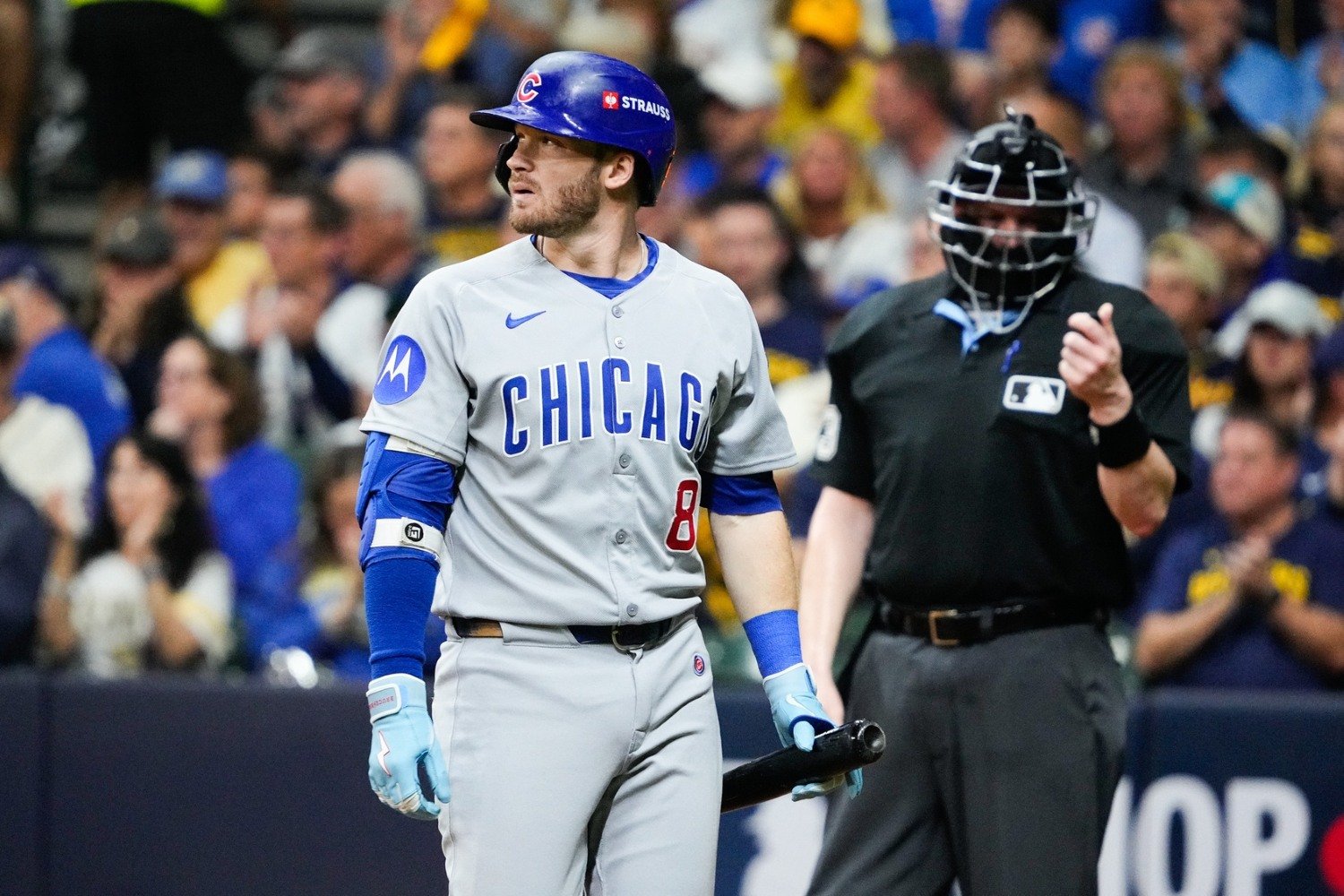 After another loss to the Milwaukee Brewers on Monday, the Chicago Cubs stand with the classic Avengers: Endgame protagonists; it feels like they have a 1-in-roughly-14-million chance of claiming victory. Such dire odds are not the result of being down 2-0 in a best-of-five series. They're also not due solely to the idea that the Brewers are simply a better ballclub. While both of those things may (objectively) be true, there's also an alignment issue within the roster. And while we're at it, here's another, less lazy pop culture reference. As far as partnerships go, Cubs hitters and Cubs pitchers feature the type of ill-gotten, questionable-decision-leading-to-disastrous-result structure that would make even our best horror directors squirm. Not in a darkly fun and chaotic John Carpenter sort of way, mind you, where the vibes and atmosphere don't leave you wanting for an ultimate outcome. You're just happy to be along for the ride. But rather in an Ari Aster sort of way, where you're unsure why you're consuming it in the first place and feel sort of gross afterward. This is all a fairly dramatic way of stating that the composition of this roster was never going to work in anything resembling a pleasant fashion, against a team like Milwaukee. On one hand, you have the Cubs pitching staff. They've been a fine group in 2025, composed of middle-to-low-tier velocity and reclamation arms. As a collective, they sat ninth in ERA (3.81) and paced the league with a 6.9% walk rate. The results were there, regardless of their own composition. Ahead of the National League Division Series, concern permeated two primary areas: their ability to perform at a high level while missing Cade Horton, combined with the need to feature a potentially burning-out Matthew Boyd; and their broader, further-reaching dearth of both velocity and swing-and-miss ability. The Brewers absolutely feast on teams with that combination of weaknesses. This is a team with the third-highest contact rate (79.6%) on swings, and when they don't have to battle high-end raw stuff, that contact can be authoritative. Against finesse pitchers (those with a low combined strikeout and walk rate, relative to the league average), the Brewers had a .274/.336/.417 line and a 105 OPS+, meaning they're substantially above-average. Their ability to generate runs via contact against the specific profile of the bulk of the Cubs staff was always going to lead to run production on their end. It wasn't about shutting down the opposition on the Cubs' end, but merely minimizing damage. In short, the Cubs were going to be trailing, probably at many points, in this series. That left a certain onus on the hitters to be able to work their way back into games. That's where we begin to confront the issue we've seen unfold in the first two games of this series. Whether or not the Cubs are a team capable of coming back in games where they find themselves trailing is almost irrelevant—because whether they are constructed that way or not, it's not something they have done particularly well in 2025. One factor in establishing this idea about this year's group is in their splits when trailing in games. When behind, the Cubs lineup features a slash of .241/.321/.409. When ahead, they have an average 20 points higher and a slugging percentage almost 50 points above the trailing rate. Primary culprits in the shortfall of production when the team is behind include Pete Crow-Armstrong (.202/.270/.405), Seiya Suzuki (.236/.322/.433), Michael Busch (.207/.333/.377), Carson Kelly (.205/.302/.369) and Matt Shaw (.232/.279/.416). That's over half your lineup that scuffles significantly in a trailing situation. Then you toss in the leverage component: The most notable column here is in the runs added or subtracted due to leverage. Suzuki leads the way, but that's also on the strength of either his patience or a pitch over the heart of the plate. Ian Happ's is almost exclusively due to patience in his own right, as is Kyle Tucker's. Only Nico Hoerner offers something even remotely balanced in creating value in the leverage game. Everyone else is obviously on the wrong end of the spectrum in that regard. Nuance in this discussion runs incredibly deep—deeper than even these couple of factors, for sure. It's a team that has struggled against velocity, too. But as many different additional elements that we could include as part of this discussion, many of them lead to the same (relatively simple) idea: the Cubs were always going to be trailing at points during this series, and they lack the ability to overcome those scenarios. Whether that's a failure of construction or of execution remains to be seen. Either way, though, it's certainly something with which the Cubs' front office will have to reckon as they begin to turn their attention toward the 2026 roster.
 -
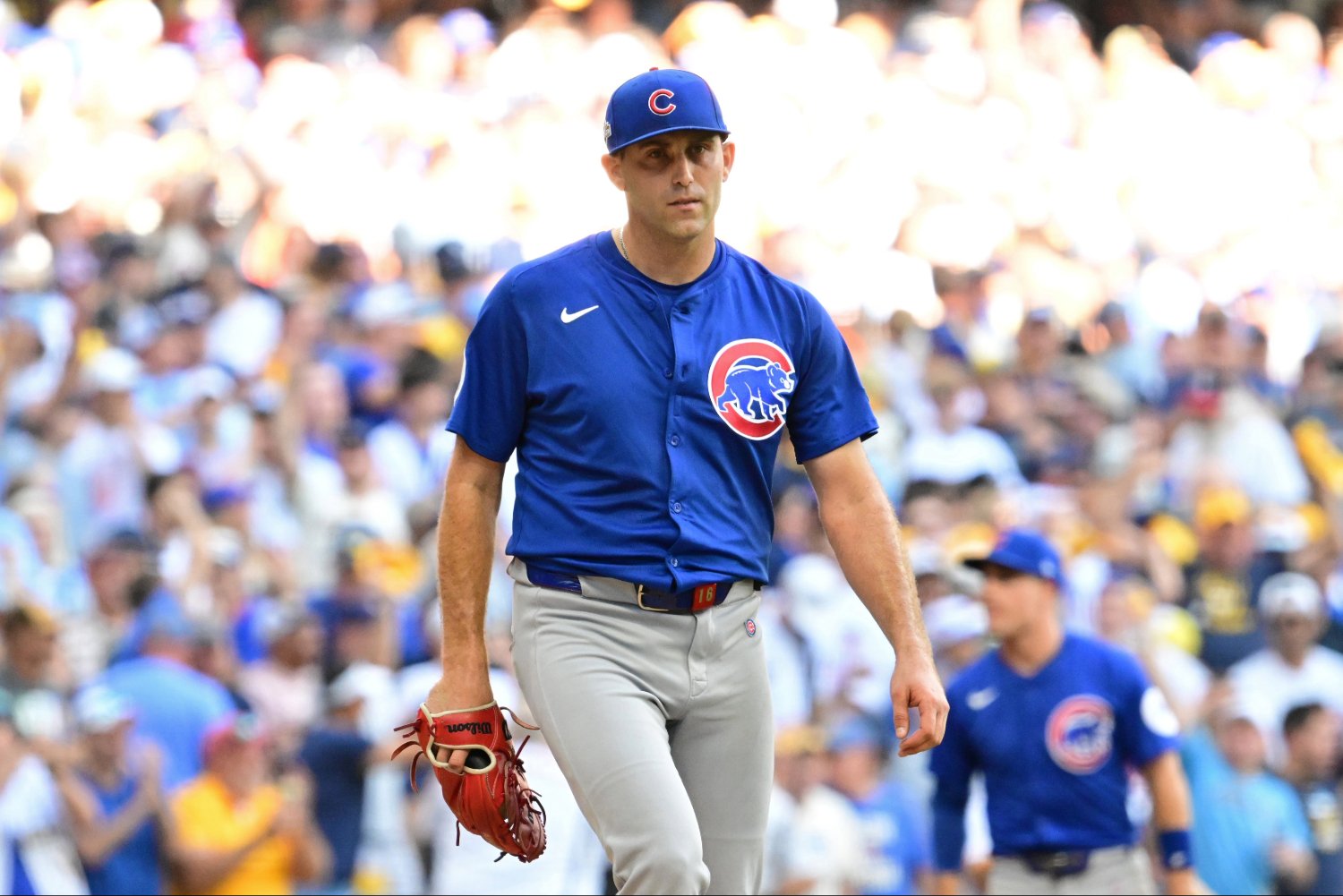 It was evident from just about the first pitch of Saturday's Game 1 against the Milwaukee Brewers that Matthew Boyd did not have "it." His sequence—double, double, double, groundout, walk, error, strikeout, single—was perhaps the worst way things could have started for the Chicago Cubs in the five-game series. Even with the important acknowledgement that it's only one game and the work of the bullpen (particularly Aaron Civale) mitigated the consequences of running too deep off such a short start start, questions are sure to emerge regarding Boyd's short-term role. That Boyd struggled so mightily against the Brewers did not, unfortunately, come as a surprise. A couple of factors could have predicted as much, in fact. One is the two-game sample we have from Boyd against Milwaukee in 2025. In those two starts, he allowed nine earned runs on 12 hits in 10 1/3 innings. It seems inarguable to say that his skill set is ill-suited to take on a lineup that makes as much contact as the Brewers do. Compound that with short rest, even off of a 58-pitch start, and you have the outcome the Cubs received on Saturday afternoon. Where they go from here, though, is certainly a matter for debate as it relates to Boyd. We do know that the Cubs will roll out Shota Imanaga for Game 2, ideally in a more trustworthy fashion than they did against San Diego in deploying an opener. But he also has a 5.73 ERA against Milwaukee in four career starts, so it may end up being a quick hook if he gets into some trouble. Regardless of how that all transpires, you're probably looking at a Jameson Taillon or Colin Rea start in Game 3, assuming the latter isn't involved in some sort of piggyback with Imanaga. Ultimately, Game 4 (should the Cubs get there) lines back up for Boyd to take the ball. But should he? It's not as if Boyd's start, brutal as it was, was any kind of outlier for his late-season performance. Just about everywhere, September offered some of the worst numbers we'd seen from him in an otherwise strong campaign. At 5.31, his September ERA was his worst an in individual month. The same was true regarding his FIP (5.69), strikeout rate (14.0 percent), and wOBA against (.343). That latter figure was concerning on its own, but the expected value produced by opposing hitters is particularly jarring: If you want to go back to a start where Boyd did not allow a run, you'd have to go back to August 2. In the nine subsequent starts from that point (49 innings), he allowed at least two earned runs in all of them (5.51 ERA). So, not only do you have a guy who has struggled against the Cubs' specific opponent in the National League Division Series, but one who is coming off more than a month where he turned in some of his poorest work across 31 total starts. That his arm angle dropped to its lowest point since the first month of the season (24.4 degrees) in September speaks to a potential cause of all of this: fatigue. That's kind of an important notion here, too. You can hardly fault a guy who last crossed the 170 inning threshold in 2019 for burning out to an extent (if that is, indeed, what's happening). Boyd's workload this year has, essentially, been of the same total of his last four seasons combined in terms of volume. If the arm angle drop-off is indicative of some fatigue, even if the velocity and movement have maintained, it's a logical explanation. But it also speaks to the danger of having Boyd run out there for a potential Game 4 start where the team may be facing elimination. It's possible that the Cubs turn to Boyd as a pseudo-opener in Game 4 and see how it goes. From there—and depending on how things transpire in Game 3—perhaps you've got Colin Rea to assume some of the bulk work in that one. Or Counsell could lean heavily into Aaron Civale considering how sharp he looked amid the disaster of Game 1 (4 1/3 innings, three hits, no walks, 37 strikes on 55 pitches). But there's another caveat even to minimizing his presence later in this series. Boyd has been woeful in the first inning since the start of August. In first innings going back 10 starts, he has a 6.30 ERA and a walk rate (6.8 percent) that exceeds his total figure for the season. Sure, he's been a bit unlucky with a groundball rate approaching 47 percent in those innings (.333 BABIP), but this is also an opponent that feasts on batted ball fortune. Even the opener solution isn't foolproof. As such, the unfortunate reality is that Counsell probably shouldn't trust Matthew Boyd with another start in this series, though his alternative options are practically nonexistent. The results weren't there in September. They weren't there at any point against the Brewers in his three starts against them to date in 2025. It'd be unreasonable to expect a sudden turnaround when the evidence points firmly in the other direction. It might be an impossible scenario to avoid depending on what kind of volume the Cubs get between now and then, but it'd be a really tough sell to see Boyd pitching with the Cubs' backs up against the wall.
 -
Image courtesy of © Benny Sieu-Imagn Images It was evident from just about the first pitch of Saturday's Game 1 against the Milwaukee Brewers that Matthew Boyd did not have "it." His sequence—double, double, double, groundout, walk, error, strikeout, single—was perhaps the worst way things could have started for the Chicago Cubs in the five-game series. Even with the important acknowledgement that it's only one game and the work of the bullpen (particularly Aaron Civale) mitigated the consequences of running too deep off such a short start start, questions are sure to emerge regarding Boyd's short-term role. That Boyd struggled so mightily against the Brewers did not, unfortunately, come as a surprise. A couple of factors could have predicted as much, in fact. One is the two-game sample we have from Boyd against Milwaukee in 2025. In those two starts, he allowed nine earned runs on 12 hits in 10 1/3 innings. It seems inarguable to say that his skill set is ill-suited to take on a lineup that makes as much contact as the Brewers do. Compound that with short rest, even off of a 58-pitch start, and you have the outcome the Cubs received on Saturday afternoon. Where they go from here, though, is certainly a matter for debate as it relates to Boyd. We do know that the Cubs will roll out Shota Imanaga for Game 2, ideally in a more trustworthy fashion than they did against San Diego in deploying an opener. But he also has a 5.73 ERA against Milwaukee in four career starts, so it may end up being a quick hook if he gets into some trouble. Regardless of how that all transpires, you're probably looking at a Jameson Taillon or Colin Rea start in Game 3, assuming the latter isn't involved in some sort of piggyback with Imanaga. Ultimately, Game 4 (should the Cubs get there) lines back up for Boyd to take the ball. But should he? It's not as if Boyd's start, brutal as it was, was any kind of outlier for his late-season performance. Just about everywhere, September offered some of the worst numbers we'd seen from him in an otherwise strong campaign. At 5.31, his September ERA was his worst an in individual month. The same was true regarding his FIP (5.69), strikeout rate (14.0 percent), and wOBA against (.343). That latter figure was concerning on its own, but the expected value produced by opposing hitters is particularly jarring: If you want to go back to a start where Boyd did not allow a run, you'd have to go back to August 2. In the nine subsequent starts from that point (49 innings), he allowed at least two earned runs in all of them (5.51 ERA). So, not only do you have a guy who has struggled against the Cubs' specific opponent in the National League Division Series, but one who is coming off more than a month where he turned in some of his poorest work across 31 total starts. That his arm angle dropped to its lowest point since the first month of the season (24.4 degrees) in September speaks to a potential cause of all of this: fatigue. That's kind of an important notion here, too. You can hardly fault a guy who last crossed the 170 inning threshold in 2019 for burning out to an extent (if that is, indeed, what's happening). Boyd's workload this year has, essentially, been of the same total of his last four seasons combined in terms of volume. If the arm angle drop-off is indicative of some fatigue, even if the velocity and movement have maintained, it's a logical explanation. But it also speaks to the danger of having Boyd run out there for a potential Game 4 start where the team may be facing elimination. It's possible that the Cubs turn to Boyd as a pseudo-opener in Game 4 and see how it goes. From there—and depending on how things transpire in Game 3—perhaps you've got Colin Rea to assume some of the bulk work in that one. Or Counsell could lean heavily into Aaron Civale considering how sharp he looked amid the disaster of Game 1 (4 1/3 innings, three hits, no walks, 37 strikes on 55 pitches). But there's another caveat even to minimizing his presence later in this series. Boyd has been woeful in the first inning since the start of August. In first innings going back 10 starts, he has a 6.30 ERA and a walk rate (6.8 percent) that exceeds his total figure for the season. Sure, he's been a bit unlucky with a groundball rate approaching 47 percent in those innings (.333 BABIP), but this is also an opponent that feasts on batted ball fortune. Even the opener solution isn't foolproof. As such, the unfortunate reality is that Counsell probably shouldn't trust Matthew Boyd with another start in this series, though his alternative options are practically nonexistent. The results weren't there in September. They weren't there at any point against the Brewers in his three starts against them to date in 2025. It'd be unreasonable to expect a sudden turnaround when the evidence points firmly in the other direction. It might be an impossible scenario to avoid depending on what kind of volume the Cubs get between now and then, but it'd be a really tough sell to see Boyd pitching with the Cubs' backs up against the wall. View full article
-
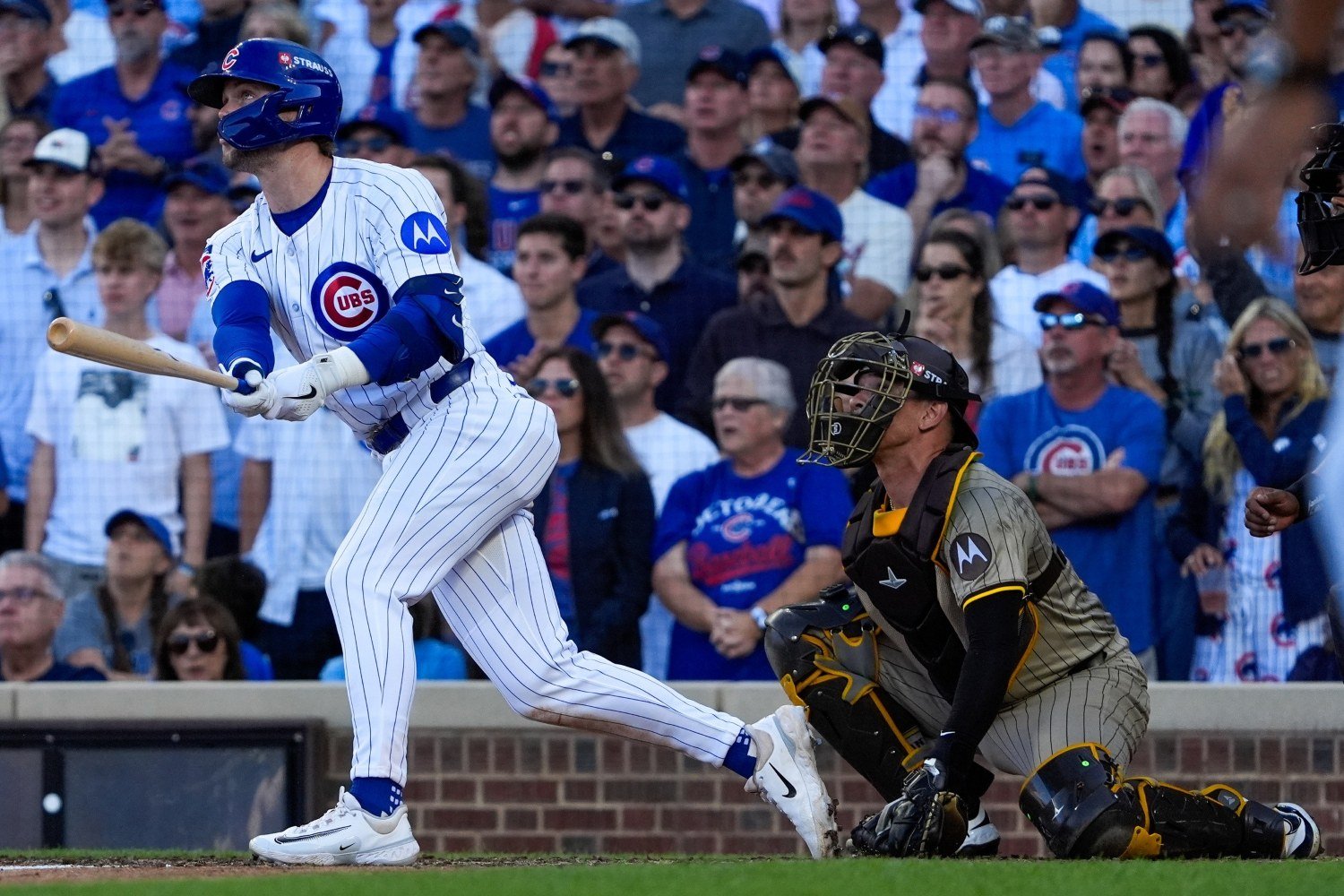 In Major League Baseball's postseason, nothing happens in a vacuum. You can win individual games during the regular season on the strength of just one phase of the roster. The offense pops off to a point where pitching and defense have to merely show up. The pitching might do its job to carry a team across nine innings despite a slow day at the plate. Perhaps it's less about either, and more about what the defense is able to do to stifle an opponent. Stack enough of them and you're playing in October. Regardless of the shape it takes, it's difficult for one phase to carry a team over a particular stretch beyond the confines of an isolated nine innings. In the postseason, the calculus changes. Yes, those individual components can still win games, but it's a much more nuanced process in being able to stack the requisite wins that lead to a legitimate October run—and each individual win is a bigger part of such a run. The Chicago Cubs were able to bounce the San Diego Padres on the strength of their pitching and of their defense. A pair of 3-1 wins offered just enough offense to get the job done, but it was on the strength of their arms and their gloves they were able to advance into the National League Division Series. Now staring down their division rivals in Milwaukee, it's going to require some support from the other phase of the roster if the team is to progress beyond the first legitimate round of play. That means that Nico Hoerner could very well be the most important (and most dangerous) player on the positional side of the Cubs' roster. Don't get it twisted: the Cubs have more impactful players than Hoerner. Michael Busch, Seiya Suzuki, and Pete Crow-Armstrong are among the players capable of popping at any particular moment. But in order to beat a team like the Brewers, there's a certain level of stability that's needed: stability of bat, stability of glove, stability of mindset. At a time when the vibe has the chance to become anything but, Hoerner represents a calming presence for this group. At some point throughout the season, there's been a stretch of poor production or a concerning trend for seemingly each player on the Cubs' roster. Such a stretch doesn't exist for Nico Hoerner: It's a fairly standard rolling wOBA chart for the first 300 or so plate appearances. But as you get closer to the middle of the season, there's a consistent brilliance that begins to manifest. Hoerner's full season numbers (a .297/.345/.394 line with a 7.6% strikeout rate, 6.0% walk rate, and .324 wOBA) aren't buoyed by an especially torrid stretch, in the way that Crow-Armstrong or recent opponent Fernando Tatis Jr might have been. Instead, this is a picture of consistency. In the months prior to September (which stands as something of a positive outlier), Hoerner never had a batting average over .295 in an individual month—but he also never had one go below .283. His on-base percentage was at its highest in July (.347) but never fell below .330. He had three separate months where it was .339. His wOBA never fell below .308, and never went above .324. Not only is it remarkably steady output, but it's quality. At the absolute worst of 2025, Hoerner was a league-average bat. His outlying performances have been well above that. It's consistency not only in production, but in process. His swing rate never fluctuated more than five percentage points from month to month. Nor (and perhaps this is more important) did his contact rate, where he topped out at 92.0% and sat at a season-low 87.1% back in May. It's the same story mechanically, where he's had the same amount of tilt in his swing since June, the same swing length in each month except June, and has remained within 0.5 MPH of the same efficient bat speed he started with back in March & April (68.4). All of this leaves us with little surprise as to the quiet steadiness of Hoerner through the Cubs' first three playoff games. Hoerner has yet to notch a walk or a strikeout, but is still rolling with a .364 average through a dozen plate appearances. None of this even begins to bring his defense into the equation. But Hoerner's clear commitment to process on both sides of the ball is how you end up getting something like this in a crucial spot: A player this sound is an intensely dangerous player under the heat of an October spotlight. Sure, Suzuki or Busch may make more noise at the plate and Crow-Armstrong might turn a game on the bases, but it's on the strength of the steadiness of someone like Hoerner that the difference is going to be made. This is a Brewers team that can pitch and manage a staff effectively. Their team ERA ranked second in the league (3.59), while possessing the league's sixth-best strikeout rate (23.7%). They put balls in play, with Milwaukee hitters tied for fourth in strikeout rate (20.3%)). A player like Hoerner is exactly how you can begin to mitigate each of those factors. It's process-oriented in a way that correlates with postseason success. There will surely be players to make a louder impact at any point, for however long this series against Milwaukee lasts, but it's hard to imagine a presence of more sustained importance than Nico Hoerner in the 2025 NLDS.
 -
Image courtesy of © David Banks-Imagn Images In Major League Baseball's postseason, nothing happens in a vacuum. You can win individual games during the regular season on the strength of just one phase of the roster. The offense pops off to a point where pitching and defense have to merely show up. The pitching might do its job to carry a team across nine innings despite a slow day at the plate. Perhaps it's less about either, and more about what the defense is able to do to stifle an opponent. Stack enough of them and you're playing in October. Regardless of the shape it takes, it's difficult for one phase to carry a team over a particular stretch beyond the confines of an isolated nine innings. In the postseason, the calculus changes. Yes, those individual components can still win games, but it's a much more nuanced process in being able to stack the requisite wins that lead to a legitimate October run—and each individual win is a bigger part of such a run. The Chicago Cubs were able to bounce the San Diego Padres on the strength of their pitching and of their defense. A pair of 3-1 wins offered just enough offense to get the job done, but it was on the strength of their arms and their gloves they were able to advance into the National League Division Series. Now staring down their division rivals in Milwaukee, it's going to require some support from the other phase of the roster if the team is to progress beyond the first legitimate round of play. That means that Nico Hoerner could very well be the most important (and most dangerous) player on the positional side of the Cubs' roster. Don't get it twisted: the Cubs have more impactful players than Hoerner. Michael Busch, Seiya Suzuki, and Pete Crow-Armstrong are among the players capable of popping at any particular moment. But in order to beat a team like the Brewers, there's a certain level of stability that's needed: stability of bat, stability of glove, stability of mindset. At a time when the vibe has the chance to become anything but, Hoerner represents a calming presence for this group. At some point throughout the season, there's been a stretch of poor production or a concerning trend for seemingly each player on the Cubs' roster. Such a stretch doesn't exist for Nico Hoerner: It's a fairly standard rolling wOBA chart for the first 300 or so plate appearances. But as you get closer to the middle of the season, there's a consistent brilliance that begins to manifest. Hoerner's full season numbers (a .297/.345/.394 line with a 7.6% strikeout rate, 6.0% walk rate, and .324 wOBA) aren't buoyed by an especially torrid stretch, in the way that Crow-Armstrong or recent opponent Fernando Tatis Jr might have been. Instead, this is a picture of consistency. In the months prior to September (which stands as something of a positive outlier), Hoerner never had a batting average over .295 in an individual month—but he also never had one go below .283. His on-base percentage was at its highest in July (.347) but never fell below .330. He had three separate months where it was .339. His wOBA never fell below .308, and never went above .324. Not only is it remarkably steady output, but it's quality. At the absolute worst of 2025, Hoerner was a league-average bat. His outlying performances have been well above that. It's consistency not only in production, but in process. His swing rate never fluctuated more than five percentage points from month to month. Nor (and perhaps this is more important) did his contact rate, where he topped out at 92.0% and sat at a season-low 87.1% back in May. It's the same story mechanically, where he's had the same amount of tilt in his swing since June, the same swing length in each month except June, and has remained within 0.5 MPH of the same efficient bat speed he started with back in March & April (68.4). All of this leaves us with little surprise as to the quiet steadiness of Hoerner through the Cubs' first three playoff games. Hoerner has yet to notch a walk or a strikeout, but is still rolling with a .364 average through a dozen plate appearances. None of this even begins to bring his defense into the equation. But Hoerner's clear commitment to process on both sides of the ball is how you end up getting something like this in a crucial spot: A player this sound is an intensely dangerous player under the heat of an October spotlight. Sure, Suzuki or Busch may make more noise at the plate and Crow-Armstrong might turn a game on the bases, but it's on the strength of the steadiness of someone like Hoerner that the difference is going to be made. This is a Brewers team that can pitch and manage a staff effectively. Their team ERA ranked second in the league (3.59), while possessing the league's sixth-best strikeout rate (23.7%). They put balls in play, with Milwaukee hitters tied for fourth in strikeout rate (20.3%)). A player like Hoerner is exactly how you can begin to mitigate each of those factors. It's process-oriented in a way that correlates with postseason success. There will surely be players to make a louder impact at any point, for however long this series against Milwaukee lasts, but it's hard to imagine a presence of more sustained importance than Nico Hoerner in the 2025 NLDS. View full article
-
 As the Chicago Cubs prepare to head north to kick off the National League Division Series in Milwaukee, they can do so with the knowledge that a couple of their key hitters appear to (finally) be getting right at exactly the correct time. There was a point in the second half where things looked bleak for each of Pete Crow-Armstrong and Kyle Tucker. Despite the former's status at one point as a Most Valuable Player candidate and the latter spending much of the first half showcasing why he's a premier offensive talent, there wasn't much to speak of from either bat in the final stretch of the regular season. Crow-Armstrong turned in a .216/.262/.372 line in the second half, checking in with a wRC+ of only 72. August was a particularly brutal month for him, as that wRC+ figure came in at a mere 22 across 112 plate appearances. Tucker, meanwhile, went for a .231/.360/.378 line in half No. 2. Despite characteristically strong approach numbers that allowed him to remain a fixture on the basepaths, his power (and contributions in general) plummeted. He posted a wRC+ of 115 that represented a 30-point drop from his first half number. The respective reasoning behind their struggles is where the two differ. Crow-Armstrong was working through mechanical issues and what looked like some visible fatigue as the season wore on, while Tucker's hand fracture compounded with a September calf injury to pin down his ability create the same level of impact that we saw at the plate in the first half of the year. Regardless of the factors generating such intense struggles for two of the team's essential bats, it appears each is on his way to serving as a factor in the NLDS. As we approached the end of the regular season, there were at least signs that Crow-Armstrong was on his way back. He recorded at least one hit in five of his last six starts of the regular season, including back-to-back games with home runs in the final weekend. Even so, his postseason debut was a struggle. He went 0-for-3 with three strikeouts while whiffing seven times on nine swings. While the result in Game 2 might not have been terribly different (0-for-3 with two strikeouts), he at least cut the whiffs down a touch (five on nine swings) and saw 18 pitches across his three trips to the plate. But it's his 3-for-4 effort in Thursday's Game 3 that bodes particularly well for the start of the series against Milwaukee. Therein, he whiffed just thrice on 10 swings (another 18 pitches). His first notch on the stat sheet was a softer-hit single (86.4 MPH), but then he checked in with singles that came off the bat at 100.8 MPH and 109.4 MPH. It's the type of contact that can do wonders for a hitter in the confidence game. Tucker, on the other hand, started to show signs of bouncing back as early as in Game 2. He didn't have quite the same close to the regular season, as he only made three starts at a 1-for-12 output upon his activation from the injured list. So, it wasn't necessarily surprising to see him go 0-for-3 in Game 1. And while he recorded just one hit in four plate appearances in Game 2, he was able to produce a pair of hard hits in the effort (99.0 & 96.3 MPH). Like Crow-Armstrong, Tucker was able to put multiple hits on the board in Game 3, as he went 2-for-4 and came across the score one of the team's three runs. What's particularly encouraging about Tucker, though, is in his lack of swing-and-miss in the series at large. Not that it had been an issue for him during the regular season in the way it was for someone like Crow-Armstrong, but despite whiffing at three pitches on eight swings in Game 2, he bookended the series with a single whiff in each of Game 1 and Game 3. If he's on his way back to a level of strength more akin to the version we saw in the first half, then that near-absence of whiff is going to be a massive boon to the Cubs' lineup against the Brewers. Despite a lack of overall run production, there are a lot of things going right for this Cubs lineup at present. They're getting hits on the board and maintaining a regular presence on the basepaths. Hitters like Pete Crow-Armstrong and Kyle Tucker have their spot in the lineup on the strength of their ability to generate production with the guys around them getting on base. The value of these two appearing to be on a track toward getting back to the perception we had of their contributions for the bulk of the first half cannot be overstated.
 -
Image courtesy of © Kamil Krzaczynski-Imagn Images As the Chicago Cubs prepare to head north to kick off the National League Division Series in Milwaukee, they can do so with the knowledge that a couple of their key hitters appear to (finally) be getting right at exactly the correct time. There was a point in the second half where things looked bleak for each of Pete Crow-Armstrong and Kyle Tucker. Despite the former's status at one point as a Most Valuable Player candidate and the latter spending much of the first half showcasing why he's a premier offensive talent, there wasn't much to speak of from either bat in the final stretch of the regular season. Crow-Armstrong turned in a .216/.262/.372 line in the second half, checking in with a wRC+ of only 72. August was a particularly brutal month for him, as that wRC+ figure came in at a mere 22 across 112 plate appearances. Tucker, meanwhile, went for a .231/.360/.378 line in half No. 2. Despite characteristically strong approach numbers that allowed him to remain a fixture on the basepaths, his power (and contributions in general) plummeted. He posted a wRC+ of 115 that represented a 30-point drop from his first half number. The respective reasoning behind their struggles is where the two differ. Crow-Armstrong was working through mechanical issues and what looked like some visible fatigue as the season wore on, while Tucker's hand fracture compounded with a September calf injury to pin down his ability create the same level of impact that we saw at the plate in the first half of the year. Regardless of the factors generating such intense struggles for two of the team's essential bats, it appears each is on his way to serving as a factor in the NLDS. As we approached the end of the regular season, there were at least signs that Crow-Armstrong was on his way back. He recorded at least one hit in five of his last six starts of the regular season, including back-to-back games with home runs in the final weekend. Even so, his postseason debut was a struggle. He went 0-for-3 with three strikeouts while whiffing seven times on nine swings. While the result in Game 2 might not have been terribly different (0-for-3 with two strikeouts), he at least cut the whiffs down a touch (five on nine swings) and saw 18 pitches across his three trips to the plate. But it's his 3-for-4 effort in Thursday's Game 3 that bodes particularly well for the start of the series against Milwaukee. Therein, he whiffed just thrice on 10 swings (another 18 pitches). His first notch on the stat sheet was a softer-hit single (86.4 MPH), but then he checked in with singles that came off the bat at 100.8 MPH and 109.4 MPH. It's the type of contact that can do wonders for a hitter in the confidence game. Tucker, on the other hand, started to show signs of bouncing back as early as in Game 2. He didn't have quite the same close to the regular season, as he only made three starts at a 1-for-12 output upon his activation from the injured list. So, it wasn't necessarily surprising to see him go 0-for-3 in Game 1. And while he recorded just one hit in four plate appearances in Game 2, he was able to produce a pair of hard hits in the effort (99.0 & 96.3 MPH). Like Crow-Armstrong, Tucker was able to put multiple hits on the board in Game 3, as he went 2-for-4 and came across the score one of the team's three runs. What's particularly encouraging about Tucker, though, is in his lack of swing-and-miss in the series at large. Not that it had been an issue for him during the regular season in the way it was for someone like Crow-Armstrong, but despite whiffing at three pitches on eight swings in Game 2, he bookended the series with a single whiff in each of Game 1 and Game 3. If he's on his way back to a level of strength more akin to the version we saw in the first half, then that near-absence of whiff is going to be a massive boon to the Cubs' lineup against the Brewers. Despite a lack of overall run production, there are a lot of things going right for this Cubs lineup at present. They're getting hits on the board and maintaining a regular presence on the basepaths. Hitters like Pete Crow-Armstrong and Kyle Tucker have their spot in the lineup on the strength of their ability to generate production with the guys around them getting on base. The value of these two appearing to be on a track toward getting back to the perception we had of their contributions for the bulk of the first half cannot be overstated. View full article
-
 The Chicago Cubs will be without rookie starter Cade Horton for at least the Wild Card round of the 2025 postseason—and probably for the whole thing. His absence, which comes by way of a fractured rib, means a couple of different things for this group and their immediate future. Horton led the team in second-half ERA (1.03), FIP (2.80), and fWAR (1.8). That isn't easy value to replace. The team is now tasked with actually trying to replace said value. Matthew Boyd and Shota Imanaga will each get a start (probably in that order) in the first two games against San Diego. On paper, that's a favorable start to the series against a lineup that skews left-handed—or at least, in light of Fernando Tatis Jr.'s (.845 OPS against right-handed pitchers, .696 against lefties) peculiar splits, is more dangerous overall against right-handed hurlers. That leaves one of Jameson Taillon and Colin Rea in position to nab a start in a potential Game 3, should it progress to that point. To which Craig Counsell would turn in that scenario, though, is anybody's guess at this juncture. On the whole, Taillon has had an underwhelming season. He's made 23 starts, with a 3.68 ERA, a 4.66 FIP, and the lowest strikeout rate of his career (18.1%). Even with the lack of punchouts, it's still a fine year, but he's had issues with the home run ball. Taillon's 13.6% HR/FB rate is his highest since his rookie campaign in 2016, and is tied with Imanaga for the worst rate on the team. But despite his battles with the go-fer ball, Taillon actually has a couple of factors working in his favor. For one, the Padres are not a team particularly adept at hitting home runs. Their 148 homers rank just 28th in the majors, and they own a .136 collective ISO that sits in the same position. They're neither clearing fences or splitting gaps at a high rate. Taillon is also above-average at limiting hard contact, on a per-batted ball basis. He should be able to keep San Diego in the park, and under the wraps of the Cubs' excellent defense. If, for some reason, Counsell eschews his highly-paid veteran, then it'll likely be Colin Rea out of the starting gate in a Game 3. Rea has been a stabilizing force for a team that has fought against rotation issues all year, going for an ERA of 3.95, a 4.12 FIP, a 19.2% strikeout rate, and a 6.8% walk rate. Like Taillon, Rea has been quite good in the second half (3.14 FIP, 22.1 K%), so he carries a certain amount of momentum into October in his own right. Where his counterpart may have the advantage, though, is in Taillon's work against left-handers. Taillon vs. LHH: .200 AVG, 21.2 K%, 7.2 BB%, 13.9 HR/FB%, .275 wOBA Rea vs. LHH: .292 AVG, 19.0 K%, 9.2 BB%, 14.9 HR/FB%, .366 wOBA And there's your separator. Regardless of who starts, that individual is going to have to contend with Jackson Merrill, Gavin Sheets, and Jake Cronenworth. Factor in the contact factor from Luis Arráez or the potential for Ryan O'Hearn to suddenly break out, and that's a volume of lefties you'd like to manage as efficiently as possible. Given that this group isn't also concentrated in any specific portion of the lineup, it really does leave Taillon as the more appropriate option of the two. There are, of course, caveats to any Game 3 situation. Quick hooks will likely abound, which means that there could be a need for volume beyond the starter. If the game is managing the left-handed hitters in the Padres' lineup, then Michael Soroka could be first in line for a multi-inning appearance, ahead of Javier Assad. Left-handed hitters have a .320 wOBA against Soroka and a .363 mark against Assad in '25. Soroka also offers quite a bit more in the strikeout game (25.2%, compared to Assad's 12.7%). Against a Padres team that doesn't strike out and scores runs largely on the strength of their on-base volume, there's a pretty clear path for the middle innings as well. It's going to be a lot for Counsell to navigate. The Cubs will enter the Wild Card Series with a decent collection of relief arms, but you're also operating within the confines of just three games. Length and efficiency will be needed from each of Boyd and Imanaga, before Counsell can even begin to roll out a coherent gameplan for what would happen in a Game 3. But compounding Taillon with Soroka does appear to be the most effective initial idea, depending on what else happens between the certain now and the possible then.
 -
Image courtesy of © Kamil Krzaczynski-Imagn Images The Chicago Cubs will be without rookie starter Cade Horton for at least the Wild Card round of the 2025 postseason—and probably for the whole thing. His absence, which comes by way of a fractured rib, means a couple of different things for this group and their immediate future. Horton led the team in second-half ERA (1.03), FIP (2.80), and fWAR (1.8). That isn't easy value to replace. The team is now tasked with actually trying to replace said value. Matthew Boyd and Shota Imanaga will each get a start (probably in that order) in the first two games against San Diego. On paper, that's a favorable start to the series against a lineup that skews left-handed—or at least, in light of Fernando Tatis Jr.'s (.845 OPS against right-handed pitchers, .696 against lefties) peculiar splits, is more dangerous overall against right-handed hurlers. That leaves one of Jameson Taillon and Colin Rea in position to nab a start in a potential Game 3, should it progress to that point. To which Craig Counsell would turn in that scenario, though, is anybody's guess at this juncture. On the whole, Taillon has had an underwhelming season. He's made 23 starts, with a 3.68 ERA, a 4.66 FIP, and the lowest strikeout rate of his career (18.1%). Even with the lack of punchouts, it's still a fine year, but he's had issues with the home run ball. Taillon's 13.6% HR/FB rate is his highest since his rookie campaign in 2016, and is tied with Imanaga for the worst rate on the team. But despite his battles with the go-fer ball, Taillon actually has a couple of factors working in his favor. For one, the Padres are not a team particularly adept at hitting home runs. Their 148 homers rank just 28th in the majors, and they own a .136 collective ISO that sits in the same position. They're neither clearing fences or splitting gaps at a high rate. Taillon is also above-average at limiting hard contact, on a per-batted ball basis. He should be able to keep San Diego in the park, and under the wraps of the Cubs' excellent defense. If, for some reason, Counsell eschews his highly-paid veteran, then it'll likely be Colin Rea out of the starting gate in a Game 3. Rea has been a stabilizing force for a team that has fought against rotation issues all year, going for an ERA of 3.95, a 4.12 FIP, a 19.2% strikeout rate, and a 6.8% walk rate. Like Taillon, Rea has been quite good in the second half (3.14 FIP, 22.1 K%), so he carries a certain amount of momentum into October in his own right. Where his counterpart may have the advantage, though, is in Taillon's work against left-handers. Taillon vs. LHH: .200 AVG, 21.2 K%, 7.2 BB%, 13.9 HR/FB%, .275 wOBA Rea vs. LHH: .292 AVG, 19.0 K%, 9.2 BB%, 14.9 HR/FB%, .366 wOBA And there's your separator. Regardless of who starts, that individual is going to have to contend with Jackson Merrill, Gavin Sheets, and Jake Cronenworth. Factor in the contact factor from Luis Arráez or the potential for Ryan O'Hearn to suddenly break out, and that's a volume of lefties you'd like to manage as efficiently as possible. Given that this group isn't also concentrated in any specific portion of the lineup, it really does leave Taillon as the more appropriate option of the two. There are, of course, caveats to any Game 3 situation. Quick hooks will likely abound, which means that there could be a need for volume beyond the starter. If the game is managing the left-handed hitters in the Padres' lineup, then Michael Soroka could be first in line for a multi-inning appearance, ahead of Javier Assad. Left-handed hitters have a .320 wOBA against Soroka and a .363 mark against Assad in '25. Soroka also offers quite a bit more in the strikeout game (25.2%, compared to Assad's 12.7%). Against a Padres team that doesn't strike out and scores runs largely on the strength of their on-base volume, there's a pretty clear path for the middle innings as well. It's going to be a lot for Counsell to navigate. The Cubs will enter the Wild Card Series with a decent collection of relief arms, but you're also operating within the confines of just three games. Length and efficiency will be needed from each of Boyd and Imanaga, before Counsell can even begin to roll out a coherent gameplan for what would happen in a Game 3. But compounding Taillon with Soroka does appear to be the most effective initial idea, depending on what else happens between the certain now and the possible then. View full article
-
Ian Happ is Commanding the Zone, Creating His Own Batted-Ball Luck
RandallPnkFloyd posted an article in Cubs
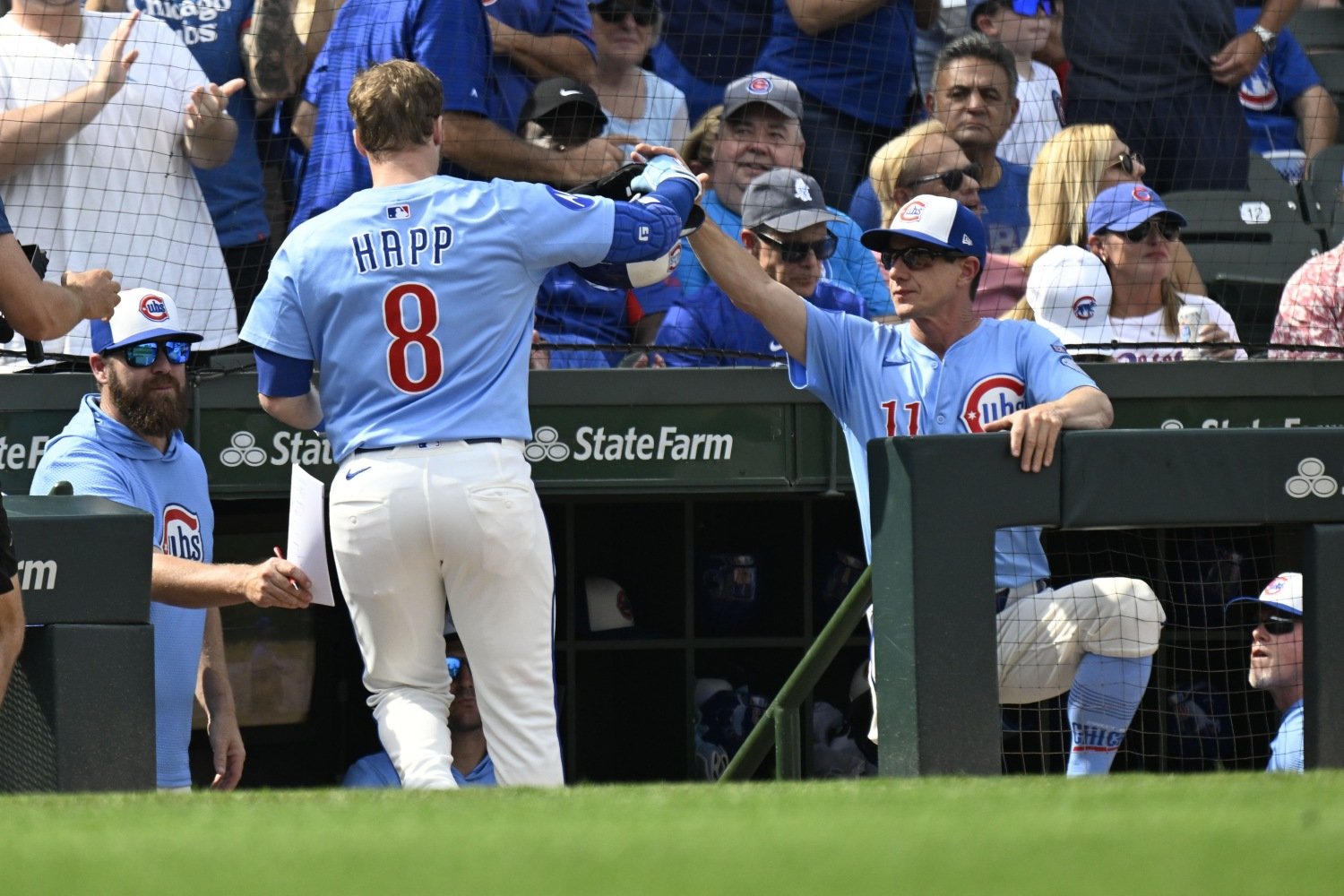 It turns out that when a hitter creates high-quality contact, good things tend to happen. Ian Happ is learning as much here in the month of September. Obviously, Happ was trying to do that all along, even during a sleepy first half. It just wasn't happening for him. Compound some brutal luck with questions around the quality of his baserunning, and it would have been entirely reasonable to suggest one of the Chicago Cubs' top outfield prospects start to eat into his playing time (and hey: we did). It's funny how quickly those questions and their accompanying suggestions begin to fade, though, when the chips start falling in your favor a little more frequently. There wasn't a lot to love in Happ's line through the end of August. Despite a characteristically high walk rate (13.2%), he spent the majority of the year turning in just-okay production everywhere else. His line read .234/.335/.402, with a 109 wRC+ that scratched just a bit above that average threshold. Even his .168 ISO feels a little weird to invest in, given that it was propped up by a torrid .274 mark in June (which was also, ironically, a month in which he checked in with a lower-than-average walk rate and an on-base percentage under .300). Ultimately, it's all fine. Happ's 2025 has been acceptably above-average, even with some of the shortcomings that have manifested throughout. When we look at the negative perception that developed around Happ's production, much it likely stems from a slog of a stretch between June and July. Despite the power output in the former that allowed his ISO across the two months to sit over .200, Happ's line included an average of just .198 and an OBP of only .300. He had a pedestrian (literally, since he hit for such a low average that he badly needed his walks) 102 wRC+. It was a struggle that led to the noted questions about playing time, especially with Owen Caissie demonstrating proficiency upon his arrival at the big-league level. Working against Happ in all of that (beyond the narrative, of course) was his batting average on balls in play. His BABIP in June checked in at just .200; the July figure was .196. There isn't necessarily an evident reason for those struggles, either. Sure, Happ's ground-ball rate in those two months was higher than in any other month this year (37.8% in June, 40.7% in July), and yes, his BABIP on ground balls was just .192. But the rate in each month was at or below his career average, and his BABIP was only .083 on fly balls across the two. Those are two of the first areas we look when looking at BABIP issues, but they reveal almost nothing. There were also some mechanical issues that we noted back in July that could point to the source, but much of that came from Happ's hitting right-handed and none of it was sustained to the point where we could draw any firm conclusions. That's to say nothing of an oblique injury he sustained in early May that could have had a bearing on the subsequent two months. It seems as though the struggles were multifactorial; there's no one culprit here. Regardless of the reasons, however, it's clear that Happ now has his BABIP woes behind him. As the Cubs' offense has ascended in September, Happ has been a driver of the improvement we're starting to see from a group that was anemic for roughly two months. Through the 15 games in which he's played, Happ's wRC+ (193) trails only Nico Hoerner among Cubs regulars. He's bringing a .321/.443/.625 line to the table. Most notable for our purposes, however, is the fact that Happ's BABIP sits at a robust .342. He actually had an even higher BABIP (.349) in May. The difference lies is the fact that while Happ is finding success everywhere else on the stat sheet this month, he hit just .243 in May (99 wRC+) and struck out nearly 30 percent of the time (29.3% strikeout rate), while bookending the month around that oblique issue. Happ struggled to make contact within the zone in May as well, with an in-zone whiff rate of nearly 21%. So there was some good fortune, but not a whole lot else to lean on. It's a stark contrast to what we're seeing in September. Happ's overall contact rate remains similar to what he turned in in May and throughout the rest of the year. What he's doing with that contact, however, stands out: Happ's 58.1% hard-hit rate sits at least 12 percent above any other output he's posted this year in an individual month. The quality of contact is working in conjunction with an increase in the flyball rate (41.9%) to help Happ overcome the BABIP monster that plagued him so much in the middle months of the year. There isn't much in the approach that's changed; Happ has been a touch more aggressive but is still demonstrating much of the same contact and whiff tendencies we've seen all year. What is notable, though, is what's happening with Happ's bat within the zone: Attack direction speaks to the horizontal movement of the sweet spot of the bat as it makes contact with the ball. Happ's attack direction has been getting closer to zero since July, in a pretty steep trend. What this means in his case is more opposite-field contact; his Pull% has dropped by at least 5 percentage points between each month since July. This is indicative of a strong grasp of the zone. Happ's catching the ball where it's pitched and executing the contact accordingly. His zone profile since the start of August tells us that much. Here's where Happ is getting pitched as a right-handed hitter: And here's where he's seeing the ball as a lefty swinger: Opposing pitchers are working predominantly outside against Happ, regardless of the side of the plate from which he's working. The decreasing attack direction is illustrating the idea that he's acutely aware of this and acting as such, working to the opposite field at a higher rate than he had been in July, which was the month of his greatest struggle this month. Quality contact in the ideal direction for where the ball is pitched should equate to more batted-ball "luck," which is really just the residue of design. It's been noted both on social media and from colleagues, but it remains somewhat humorous that at this current pace, Ian Happ is going to give us a nearly identical season to what he's turned in for the last few. But it hasn't been without some extreme month-to-month variance in the production. Some of that is the nature of baseball, which would be an easier solution to accept if it weren't for the absence of a surefire explanation for the low points, particularly in 2025. Regardless of the reasons for the mid-year struggle (mechanics, health, bad luck), it's apparent that Happ is now a hitter in control. Always in possession of good discipline, Happ has started to make the zone work for him. Combine the two things, and you have a guy in the process of spinning the entire narrative in his favor at the most crucial time of the year.