RandallPnkFloyd
-
Posts
533 -
Joined
-
Last visited
Content Type
Profiles
Joomla Posts 1
Chicago Cubs Videos
Chicago Cubs Free Agent & Trade Rumors, Notes, & Tidbits
2026 Chicago Cubs Top Prospects Ranking
News
2023 Chicago Cubs Draft Picks
Guides & Resources
2024 Chicago Cubs Draft Picks
The Chicago Cubs Players Project
2025 Chicago Cubs Draft Pick Tracker
2026 Chicago Cubs Draft Tracker: Picks & Bonuses
Blogs
Events
Forums
Store
Gallery
Everything posted by RandallPnkFloyd
-
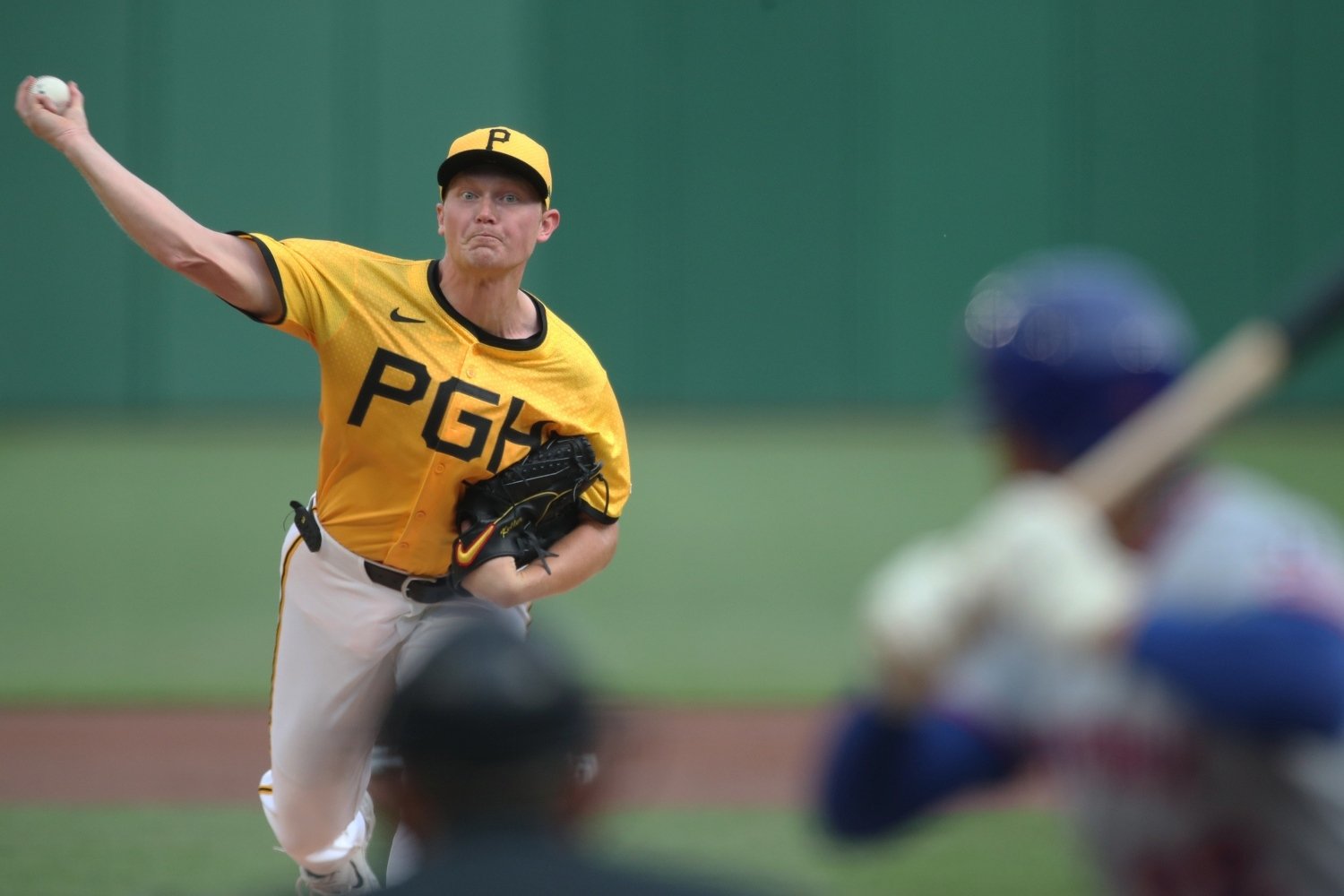 While my memory of the more specific context is a little spotty for someone who was 13 years old at the time, the impact of the Chicago Cubs' 2003 trade with the Pittsburgh Pirates is anything but. That year, the Cubs shored up what then-GM Jim Hendry believed to be a playoff-caliber roster by acquiring third baseman Aramis Ramírez and Kenny Lofton for a relatively unimpactful package that included infielder José Hernández off their active roster. Lofton was a journeyman leadoff man who fit perfectly into a Corey Patterson-less roster, while Ramírez was a bounceback candidate (after a rough 2002) who ended up becoming one of the more important Cubs in modern history. The deal, of course, propelled the Cubs into the postseason. Ramírez came up with several clutch hits to push them deeper into October, and that would be his habit for most of the next decade. Now sitting 22 years clear of such a one-sided deal, could the Cubs and Pirates align on another landmark transaction? The Cubs' needs at this point are clear. Starting pitching tops the listt. A bat (of the impending free-agent variety) has jumped the line to just behind said starting pitcher, given Matt Shaw's underwhelming offensive output at third base, even if he has been better since his return from Iowa. Some help off the bench would be nice, too. Like any playoff hopeful, they'll also try to upgrade their bullpen. That brings us to the Pittsburgh Pirates. The Bucs are, objectively, bad. Their pitching and defense can make life difficult for contenders as the season wears on, and they've done some of the Cubs' dirty work by beating up the Mets and Cardinals over the last week, but at 37-50, they're one of the few clear-cut sellers here in July. They're 14 games behind the Cubs and 10 games out of a Wild Card spot. Given the Cubs' desire to act on their needs within a more immediate timeline, it's only natural that the two teams would be connected in trade talks. We've already heard the rumor that the Cubs are targeting starter Mitch Keller. On the Pirates' end, the context of their season thus far has them listening on just about everybody. Before this is all said and done, we could hear about far more than Keller as it relates to the Cubs and their July trade targets. "Just about everybody" is an important qualifier in all of this. Paul Skenes isn't likely to be moved, and while Andrew McCutchen would be a sort of ideal target in a Justin Turner-type role (without the first-base acumen), he appears set on playing out what's left of his career in the Steel City. So those two—along with a top pitching prospect like Bubba Chandler or an injured one like Jared Jones—are out. That still leaves plenty of room for the Cubs to strike a deal that fills multiple needs, however. The framework starts with Keller, a logical trade target given that he: is a starting pitcher; and carries a certain level of cost certainty on a contract that runs through 2028. Keller has never fully realized his potential in Pittsburgh, but he's turning in a solid season for the Pirates. Even with a strikeout decline, he's pitched to a 3.90 ERA, a 3.33 FIP, and is averaging 5.8 innings per start thus far. That's exactly the type of arm that the Cubs could use: someone who offers a little bit of stability in between what you're getting out of a young arm and Jameson Taillon's propensity for the occasional clunker of an outing. But the Cubs have an opportunity here to extend beyond only their largest need. Andrew Heaney is a shorter-term commitment on a one-year deal, but he provides a similar level of length (5.5 innings per outing) with steadiness reflected in his 4.20 ERA over the last three years. There isn't as much upside here, but the term is favorable and he'll eat some innings in the back end of the rotation. In an ideal world, you're getting a Keller type with the upside and a Heaney type with the stability. We, of course, don't live in that type of world, but either one represents a sensible target, nonetheless. Meanwhile, David Bednar has been excellent after yet another early-season demotion. He's pitched to a 2.93 ERA, and the 35.3% strikeout rate is a career-best. If you remove pre-April 19th, things get even better; the K-rate jumps to 37.4% and the ERA shrinks to 1.95. Similarly, Dennis Santana has worked to a 1.50 ERA (2.39 FIP) in a predominantly late-inning role. If the Cubs are trying to shore up the end of games, either would represent a fantastic get, with each having a year and a half of team control remaining. "But what about the bats?" you might be asking. McCutchen would certainly be a big right-handed upgrade to the bench if he was, in fact, willing to join a contender for a couple of months, but we don't know what that looks like. We've heard some whispers about Ke'Bryan Hayes' availability, but he doesn't offer much of a bump in the lineup, and the commitment is such that you're pivoting to a block of Matt Shaw (club option in 2030). Isiah Kiner-Falefa, though, offers a bit better of a hit tool with an experienced glove (27 Outs Above Average in his career at third base). In pursuit of depth, he's a logical target. Ultimately, though, the Cubs may have to look elsewhere for their offensive pursuits. If McCutchen is indeed committed to staying, options are few and far between. You've nowhere to put Oneil Cruz, nowhere to put Bryan Reynolds, and no chance of prying either of them away from Pittsburgh, anyway. Outside of the couple of infielders noted above, there just isn't enough upside to complicate a potential deal by trying to shoehorn a position player in as well. A starter-starter or starter-reliever combination would yield crucial components of a potential postseason roster. There's just one other complication: an in-division opponent. That doesn't feel like as much of a hurdle between these two clubs as it would be between, say, the Cubs and the Milwaukee Brewers or the Cubs and the St. Louis Cardinals. By my count, these two clubs have consummated roughly 50 trades of varying natures in their respective histories. Not all of them have carried the weight of 2003's, but there are certainly deals where the Pirates have included important contributors. The 2009 season comes to mind, when John Grabow and Tom Gorzelanny were sent to the North Side in a deal that included Josh Harrison (yes, that one) and Kevin Hart (no, not that one). So there's a little bit more of a precedent here between the Cubs and Pirates that doesn't exist with other in-division rivals. Besides, Jed Hoyer and Pirates GM Ben Cherington are old mates from their Boston days. That divisional component presents as less of a factor, given such historical dynamics between executives and organizations. The two are kind of a natural fit for a trade. The Cubs have their very obvious needs; the Pirates are a seller without a lot of direction, making most of their roster available. It's difficult to pinpoint the exact intricacies of a trade could look like, but there's a match here.
 -
Image courtesy of © Charles LeClaire-Imagn Images While my memory of the more specific context is a little spotty for someone who was 13 years old at the time, the impact of the Chicago Cubs' 2003 trade with the Pittsburgh Pirates is anything but. That year, the Cubs shored up what then-GM Jim Hendry believed to be a playoff-caliber roster by acquiring third baseman Aramis Ramírez and Kenny Lofton for a relatively unimpactful package that included infielder José Hernández off their active roster. Lofton was a journeyman leadoff man who fit perfectly into a Corey Patterson-less roster, while Ramírez was a bounceback candidate (after a rough 2002) who ended up becoming one of the more important Cubs in modern history. The deal, of course, propelled the Cubs into the postseason. Ramírez came up with several clutch hits to push them deeper into October, and that would be his habit for most of the next decade. Now sitting 22 years clear of such a one-sided deal, could the Cubs and Pirates align on another landmark transaction? The Cubs' needs at this point are clear. Starting pitching tops the listt. A bat (of the impending free-agent variety) has jumped the line to just behind said starting pitcher, given Matt Shaw's underwhelming offensive output at third base, even if he has been better since his return from Iowa. Some help off the bench would be nice, too. Like any playoff hopeful, they'll also try to upgrade their bullpen. That brings us to the Pittsburgh Pirates. The Bucs are, objectively, bad. Their pitching and defense can make life difficult for contenders as the season wears on, and they've done some of the Cubs' dirty work by beating up the Mets and Cardinals over the last week, but at 37-50, they're one of the few clear-cut sellers here in July. They're 14 games behind the Cubs and 10 games out of a Wild Card spot. Given the Cubs' desire to act on their needs within a more immediate timeline, it's only natural that the two teams would be connected in trade talks. We've already heard the rumor that the Cubs are targeting starter Mitch Keller. On the Pirates' end, the context of their season thus far has them listening on just about everybody. Before this is all said and done, we could hear about far more than Keller as it relates to the Cubs and their July trade targets. "Just about everybody" is an important qualifier in all of this. Paul Skenes isn't likely to be moved, and while Andrew McCutchen would be a sort of ideal target in a Justin Turner-type role (without the first-base acumen), he appears set on playing out what's left of his career in the Steel City. So those two—along with a top pitching prospect like Bubba Chandler or an injured one like Jared Jones—are out. That still leaves plenty of room for the Cubs to strike a deal that fills multiple needs, however. The framework starts with Keller, a logical trade target given that he: is a starting pitcher; and carries a certain level of cost certainty on a contract that runs through 2028. Keller has never fully realized his potential in Pittsburgh, but he's turning in a solid season for the Pirates. Even with a strikeout decline, he's pitched to a 3.90 ERA, a 3.33 FIP, and is averaging 5.8 innings per start thus far. That's exactly the type of arm that the Cubs could use: someone who offers a little bit of stability in between what you're getting out of a young arm and Jameson Taillon's propensity for the occasional clunker of an outing. But the Cubs have an opportunity here to extend beyond only their largest need. Andrew Heaney is a shorter-term commitment on a one-year deal, but he provides a similar level of length (5.5 innings per outing) with steadiness reflected in his 4.20 ERA over the last three years. There isn't as much upside here, but the term is favorable and he'll eat some innings in the back end of the rotation. In an ideal world, you're getting a Keller type with the upside and a Heaney type with the stability. We, of course, don't live in that type of world, but either one represents a sensible target, nonetheless. Meanwhile, David Bednar has been excellent after yet another early-season demotion. He's pitched to a 2.93 ERA, and the 35.3% strikeout rate is a career-best. If you remove pre-April 19th, things get even better; the K-rate jumps to 37.4% and the ERA shrinks to 1.95. Similarly, Dennis Santana has worked to a 1.50 ERA (2.39 FIP) in a predominantly late-inning role. If the Cubs are trying to shore up the end of games, either would represent a fantastic get, with each having a year and a half of team control remaining. "But what about the bats?" you might be asking. McCutchen would certainly be a big right-handed upgrade to the bench if he was, in fact, willing to join a contender for a couple of months, but we don't know what that looks like. We've heard some whispers about Ke'Bryan Hayes' availability, but he doesn't offer much of a bump in the lineup, and the commitment is such that you're pivoting to a block of Matt Shaw (club option in 2030). Isiah Kiner-Falefa, though, offers a bit better of a hit tool with an experienced glove (27 Outs Above Average in his career at third base). In pursuit of depth, he's a logical target. Ultimately, though, the Cubs may have to look elsewhere for their offensive pursuits. If McCutchen is indeed committed to staying, options are few and far between. You've nowhere to put Oneil Cruz, nowhere to put Bryan Reynolds, and no chance of prying either of them away from Pittsburgh, anyway. Outside of the couple of infielders noted above, there just isn't enough upside to complicate a potential deal by trying to shoehorn a position player in as well. A starter-starter or starter-reliever combination would yield crucial components of a potential postseason roster. There's just one other complication: an in-division opponent. That doesn't feel like as much of a hurdle between these two clubs as it would be between, say, the Cubs and the Milwaukee Brewers or the Cubs and the St. Louis Cardinals. By my count, these two clubs have consummated roughly 50 trades of varying natures in their respective histories. Not all of them have carried the weight of 2003's, but there are certainly deals where the Pirates have included important contributors. The 2009 season comes to mind, when John Grabow and Tom Gorzelanny were sent to the North Side in a deal that included Josh Harrison (yes, that one) and Kevin Hart (no, not that one). So there's a little bit more of a precedent here between the Cubs and Pirates that doesn't exist with other in-division rivals. Besides, Jed Hoyer and Pirates GM Ben Cherington are old mates from their Boston days. That divisional component presents as less of a factor, given such historical dynamics between executives and organizations. The two are kind of a natural fit for a trade. The Cubs have their very obvious needs; the Pirates are a seller without a lot of direction, making most of their roster available. It's difficult to pinpoint the exact intricacies of a trade could look like, but there's a match here. View full article
-
Trade Deadline 2025, Exploring The Cubs' Weaknesses: Third Base
RandallPnkFloyd posted an article in Cubs
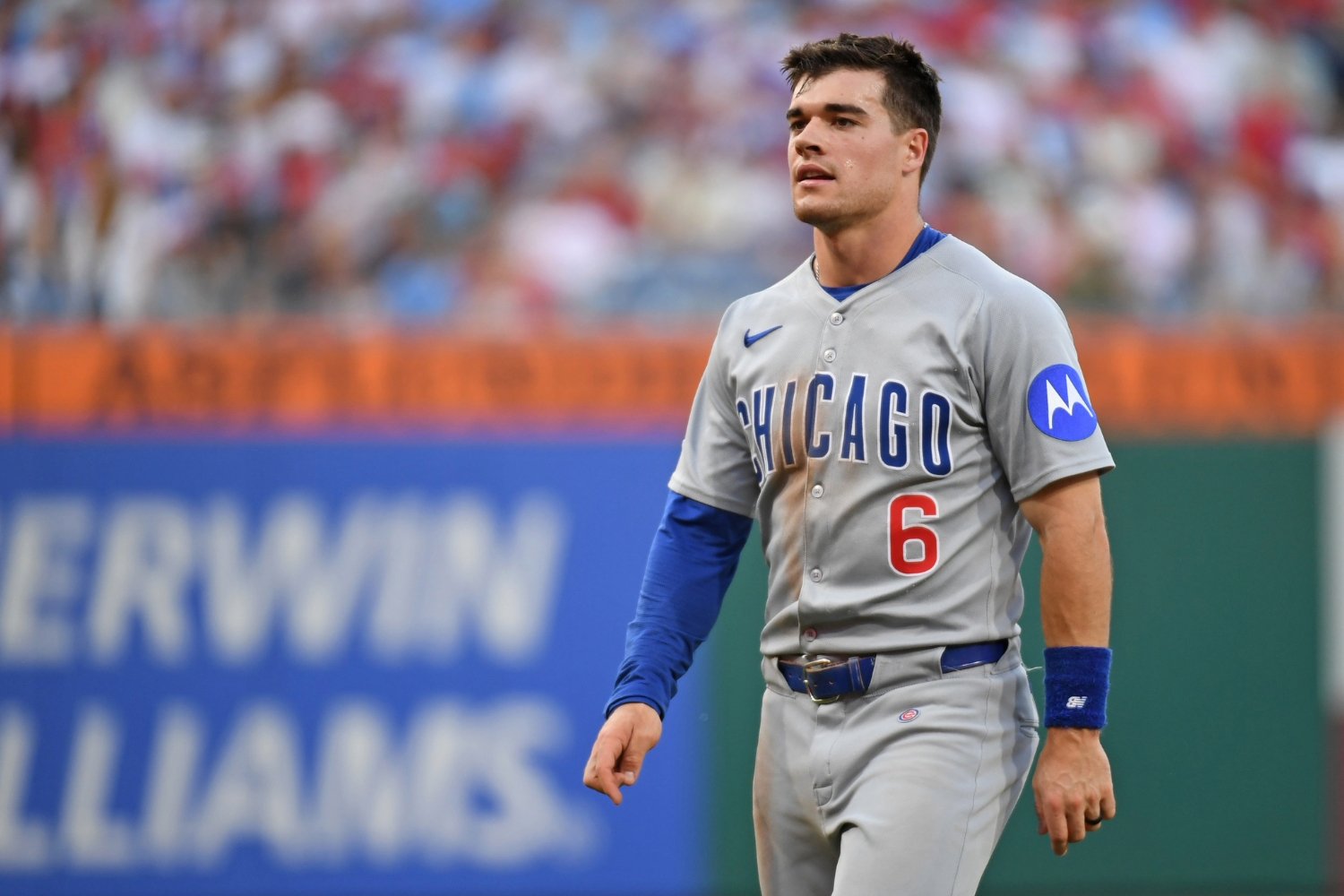 The calendar now reads July, indicating an increased fervor around potential trade candidates. Given the Chicago Cubs' increasingly-apparent needs, they're primed to exist firmly in the middle of a handful of various rumors in connection with a handful of various targets. Starting pitching will grab the bulk of the headlines in that respect, but third base likely won't be too far behind. As a lineup, the Cubs are in solid standing. We knew this going back to the offseason when they had very little flexibility considering how many different players are firmly entrenched in their spot for 2025. Third base, though, was seen as the one position in which the team could use an upgrade. Not much has changed on that front midway through the season. This, of course, comes after Matt Shaw was given the third base job out of spring training, subsequently struggled, and was optioned before returning after about a month in Iowa. While there has been marked improvement, it's a position that still leaves plenty to be desired for the Cubs at large, at least on the offensive side. Prior to his demotion, Shaw's slash carried at just .172/.294/.241. He was striking out nearly 27 percent of the time while offering very little when he was making contact. His ISO checked in at just .069, and his his Hard-Hit% read just 22.5 percent. His wRC+ was 62. Just about everywhere on the stat sheet indicated Shaw as the team's worst hitter through roughly a month. The defense hadn't progressed at that point either, leading to the Iowa stint. Upon his return, though, we've seen plenty of improvement on the Shaw front. His slash since his mid-May return reads .246/.303/.352, with a strikeout rate down to 18.2 percent and a slight uptick in contact quality (27.6 Hard-Hit%). He still isn't providing much on the power front, however, as his ISO is just .107 during this recent stretch. His wRC+, at 87, still indicates a below-average performer. So, while the defense has gotten better, both from the eye test and on the stat sheet, third base still represents a position that the Cubs need more from, especially as we've seen them prone to bouts of offensive depression. The Cubs will, undoubtedly, be heavily involved in trade discussions for starting pitching. But, given how much a veteran third baseman could help to stabilize the lineup over Shaw's still-developing bat, it could behoove them to pursue such a player ahead of the July 31st deadline. That's not to say I'm suggesting the Cubs pull the plug on Matt Shaw as an option, mind you. The Cubs are in a position where they represent a top National League contender. There's a certain degree of uncertainty with Kyle Tucker as an impending free agent, so there's a need to fortify the 2025 roster as much as possible. A move for a third baseman wouldn't represent a long-term change in terms of Shaw's involvement in the lineup; it would merely serve to boost the lineup for the short-term as it relates to this season. The issue is that there aren't a wealth of candidates that appear feasible for such a move. Philadelphia Phillies third sacker Alec Bohm, for example, is a player that has been floated in trade rumors for the last couple of winters. And while the Phillies could move him to change the shape of their own roster, they're still a contending team, and Bohm still has another year of team control, to say nothing of the fact that while his approach and defense have remained strong, his power has taken a massive dip in '25 (.109 ISO). So, even if the Phillies were interested in moving him in-season, you're not improving your roster in a preferred manner. It's not an entirely dissimilar situation with Colorado's Ryan McMahon, who was floated as a name the Cubs were interested earlier in the year but presents issues on a couple of fronts. For one, his contract runs for two seasons beyond 2025. He does have some versatility, but it's not as if the Cubs have openings elsewhere when they'd be ready to give Shaw another run in '26. For another, he's striking out at a clip over 30 percent, and his impact is certainly of a higher quality at home (.230 ISO) versus away (.134). So, despite the purported interest earlier this year, we can probably rule him out as well. Which brings us to Alex Bregman. He's having his best season since roughly 2019, thriving both in approach (9.7 percent walk rate) and impact (.254 ISO). Playing his home games at Fenway has helped some, as it's been the ninth-most favorable park for righties by Statcast's Park Factors. Nonetheless, we know the team had interest in the offseason (regardless to what extent that actually looked like). The issue is in the contract. Bregman has a guaranteed year with an opt-out for 2026 and a player option for 2027, both at a $25 million price point. At this point in time, it seems clear that Bregman will, in fact, opt out and retest the market this winter in order to get more term on his deal. Should he come to Wrigley — which sits as the 18th-best park for right-handed hitters this year — and struggle, though, opting in would present certain challenges for a Cubs team that hopes to sign Kyle Tucker long-term. Boston is also only two games out of a wild card spot, too. So, we don't even know how compelled they'd be to trade a player like Bregman. All of this is to say that the Cubs could have just one viable option to acquire for their third base position: Arizona's Eugenio Suárez. By no measure are the Arizona Diamondbacks out of the postseason race at this point. While they sit 10 games back in the National League West, they're just four games out of a wild card spot. At the same time, though, taking stock of their actual chances could compel them to sell by month's end. They've lost their stop starter (Corbin Burnes) and their top two relievers (Justin Martinez & A.J. Puk) out of an already-shaky bullpen for the season. Corbin Carroll is on the Injured List with a fracture in his wrist, and Gabriel Moreno is with him due to a hand injury. Such injury volume will become increasingly difficult to overcome in one of the league's best divisions. Suárez is a free agent after this year and in the midst of doing what he's always done: playing solid defense and hitting for obscene amounts of power. If you're checking boxes, Suárez is probably the name we'll hear that hits the most, and he does so resoundingly. The 33-year-old is slashing .253/.323/.565 with 25 homers and a .312 ISO. He strikes out at a higher rate than you may like (25.6 percent) and doesn't walk as much as he used to (6.4 percent), but the impact there is significant. Only four players carry a higher ISO than Suárez does at this point, and two of their names are Aaron Judge & Shohei Ohtani. So, it's a worthy tradeoff. Defensively, Suárez is at a -3 Outs Above Average in 2025. That's a downgrade from what Shaw has provided since his return, but it's also not so bad that he can't easily compensate on the offensive side. And it's certainly better than what the team was getting in their other internal options while Shaw spent his time in Iowa. In short, you can live with it. Add in the fact that Suárez is a free agent after this year, which means that you're capitalizing on his bat and not dealing with a defensive issue long-term, and you've got the ideal trade candidate for the Cubs to land before the deadline. Again, this isn't about Matt Shaw not being a viable long-term option. This is about the Cubs fortifying their lineup for the only season in which they are currently guaranteed a certain level of success. We don't know what the 2026 season will look like. So adding in a player like Suárez, who boosts your lineup significantly on the power side while not impacting Shaw's long-term outlook, becomes a rather obvious move for the Cubs to make. Of course, they won't be the only ones there either. Seattle needs some extra offense in their wild card race, specifically at third base. Detroit could use an infield bat. Even a fringe team like Cincinnati could be in the mix to bring in an old friend. Ultimately, it's not a slam dunk that the Cubs would get a player like Suárez even if they try. But the concept — in acquiring a steady bat at third base to play out the remainder of '25 and lift the floor of the collective — is sound.
 -
Image courtesy of Eric Hartline-Imagn Images The calendar now reads July, indicating an increased fervor around potential trade candidates. Given the Chicago Cubs' increasingly-apparent needs, they're primed to exist firmly in the middle of a handful of various rumors in connection with a handful of various targets. Starting pitching will grab the bulk of the headlines in that respect, but third base likely won't be too far behind. As a lineup, the Cubs are in solid standing. We knew this going back to the offseason when they had very little flexibility considering how many different players are firmly entrenched in their spot for 2025. Third base, though, was seen as the one position in which the team could use an upgrade. Not much has changed on that front midway through the season. This, of course, comes after Matt Shaw was given the third base job out of spring training, subsequently struggled, and was optioned before returning after about a month in Iowa. While there has been marked improvement, it's a position that still leaves plenty to be desired for the Cubs at large, at least on the offensive side. Prior to his demotion, Shaw's slash carried at just .172/.294/.241. He was striking out nearly 27 percent of the time while offering very little when he was making contact. His ISO checked in at just .069, and his his Hard-Hit% read just 22.5 percent. His wRC+ was 62. Just about everywhere on the stat sheet indicated Shaw as the team's worst hitter through roughly a month. The defense hadn't progressed at that point either, leading to the Iowa stint. Upon his return, though, we've seen plenty of improvement on the Shaw front. His slash since his mid-May return reads .246/.303/.352, with a strikeout rate down to 18.2 percent and a slight uptick in contact quality (27.6 Hard-Hit%). He still isn't providing much on the power front, however, as his ISO is just .107 during this recent stretch. His wRC+, at 87, still indicates a below-average performer. So, while the defense has gotten better, both from the eye test and on the stat sheet, third base still represents a position that the Cubs need more from, especially as we've seen them prone to bouts of offensive depression. The Cubs will, undoubtedly, be heavily involved in trade discussions for starting pitching. But, given how much a veteran third baseman could help to stabilize the lineup over Shaw's still-developing bat, it could behoove them to pursue such a player ahead of the July 31st deadline. That's not to say I'm suggesting the Cubs pull the plug on Matt Shaw as an option, mind you. The Cubs are in a position where they represent a top National League contender. There's a certain degree of uncertainty with Kyle Tucker as an impending free agent, so there's a need to fortify the 2025 roster as much as possible. A move for a third baseman wouldn't represent a long-term change in terms of Shaw's involvement in the lineup; it would merely serve to boost the lineup for the short-term as it relates to this season. The issue is that there aren't a wealth of candidates that appear feasible for such a move. Philadelphia Phillies third sacker Alec Bohm, for example, is a player that has been floated in trade rumors for the last couple of winters. And while the Phillies could move him to change the shape of their own roster, they're still a contending team, and Bohm still has another year of team control, to say nothing of the fact that while his approach and defense have remained strong, his power has taken a massive dip in '25 (.109 ISO). So, even if the Phillies were interested in moving him in-season, you're not improving your roster in a preferred manner. It's not an entirely dissimilar situation with Colorado's Ryan McMahon, who was floated as a name the Cubs were interested earlier in the year but presents issues on a couple of fronts. For one, his contract runs for two seasons beyond 2025. He does have some versatility, but it's not as if the Cubs have openings elsewhere when they'd be ready to give Shaw another run in '26. For another, he's striking out at a clip over 30 percent, and his impact is certainly of a higher quality at home (.230 ISO) versus away (.134). So, despite the purported interest earlier this year, we can probably rule him out as well. Which brings us to Alex Bregman. He's having his best season since roughly 2019, thriving both in approach (9.7 percent walk rate) and impact (.254 ISO). Playing his home games at Fenway has helped some, as it's been the ninth-most favorable park for righties by Statcast's Park Factors. Nonetheless, we know the team had interest in the offseason (regardless to what extent that actually looked like). The issue is in the contract. Bregman has a guaranteed year with an opt-out for 2026 and a player option for 2027, both at a $25 million price point. At this point in time, it seems clear that Bregman will, in fact, opt out and retest the market this winter in order to get more term on his deal. Should he come to Wrigley — which sits as the 18th-best park for right-handed hitters this year — and struggle, though, opting in would present certain challenges for a Cubs team that hopes to sign Kyle Tucker long-term. Boston is also only two games out of a wild card spot, too. So, we don't even know how compelled they'd be to trade a player like Bregman. All of this is to say that the Cubs could have just one viable option to acquire for their third base position: Arizona's Eugenio Suárez. By no measure are the Arizona Diamondbacks out of the postseason race at this point. While they sit 10 games back in the National League West, they're just four games out of a wild card spot. At the same time, though, taking stock of their actual chances could compel them to sell by month's end. They've lost their stop starter (Corbin Burnes) and their top two relievers (Justin Martinez & A.J. Puk) out of an already-shaky bullpen for the season. Corbin Carroll is on the Injured List with a fracture in his wrist, and Gabriel Moreno is with him due to a hand injury. Such injury volume will become increasingly difficult to overcome in one of the league's best divisions. Suárez is a free agent after this year and in the midst of doing what he's always done: playing solid defense and hitting for obscene amounts of power. If you're checking boxes, Suárez is probably the name we'll hear that hits the most, and he does so resoundingly. The 33-year-old is slashing .253/.323/.565 with 25 homers and a .312 ISO. He strikes out at a higher rate than you may like (25.6 percent) and doesn't walk as much as he used to (6.4 percent), but the impact there is significant. Only four players carry a higher ISO than Suárez does at this point, and two of their names are Aaron Judge & Shohei Ohtani. So, it's a worthy tradeoff. Defensively, Suárez is at a -3 Outs Above Average in 2025. That's a downgrade from what Shaw has provided since his return, but it's also not so bad that he can't easily compensate on the offensive side. And it's certainly better than what the team was getting in their other internal options while Shaw spent his time in Iowa. In short, you can live with it. Add in the fact that Suárez is a free agent after this year, which means that you're capitalizing on his bat and not dealing with a defensive issue long-term, and you've got the ideal trade candidate for the Cubs to land before the deadline. Again, this isn't about Matt Shaw not being a viable long-term option. This is about the Cubs fortifying their lineup for the only season in which they are currently guaranteed a certain level of success. We don't know what the 2026 season will look like. So adding in a player like Suárez, who boosts your lineup significantly on the power side while not impacting Shaw's long-term outlook, becomes a rather obvious move for the Cubs to make. Of course, they won't be the only ones there either. Seattle needs some extra offense in their wild card race, specifically at third base. Detroit could use an infield bat. Even a fringe team like Cincinnati could be in the mix to bring in an old friend. Ultimately, it's not a slam dunk that the Cubs would get a player like Suárez even if they try. But the concept — in acquiring a steady bat at third base to play out the remainder of '25 and lift the floor of the collective — is sound. View full article
-
Image courtesy of John Antonoff/Chicago Sun-Times With the exception of the work being done behind (and at) the plate, the bench that the Chicago Cubs cobbled together for 2025 has been an underwhelming presence on an otherwise offensively-capable roster. Perhaps that's a level of understatement given where things stand, but while an upgrade should be expected over the next month, there's at least one aspect in need of more immediate addressing. That aspect takes shape in the form of Vidal Bruján, who has essentially been the team's least valuable player. Yes, Justin Turner has been underwhelming as a short-side platoon option at first base. Sure, Jon Berti's .256 on-base percentage is pinning him down from utilizing his baserunning tool. But it's been Bruján serving as the deadest of weight on a roster that could use just a little bit of extra depth. It's difficult to get on a player too much given the role he was expected to fill. Nobody was deceiving themselves into thinking that Bruján was going to be anything other than a versatile, glove-only option. But, as recently as 2023, he was an intriguing offensive player at Triple-A. That's essentially been wiped off the map thus far in '25. To date, Bruján has appeared at the plate just 32 times, which probably speaks to where he stands anyway given that Matt Shaw spent a month at Triple-A. Within those 32 plate appearances, though, Bruján has turned in the following: a .161/.188/.226 slash line, a 25.0 K%, a 3.1 BB%, and a .065 ISO. His wRC+ stands at 13. Among Cubs players that have taken at least five trips to the plate this year, only Nicky Lopez was worse (1 wRC+). Worse yet, there's nothing here to indicate that Bruján has more in the tank to offer or that there's been any kind of luck component. He has yet to barrel a pitch this year (0.0 Barrel%) and is hitting the ball in the air over half the time. That blend of soft contact and fly ball energy isn't going to carry you anywhere offensively. That his xBA is actually lower than his current mark (.151) doesn't ring as any sort of surprise. Even with a lower hard hit rate last year, he was still able to work a .276 BABIP given that he was putting the ball on the ground — something of an essential for a light-hitting presence like Bruján — with a little more frequency. Not that it's worth getting worked up over a player whose role has been so minimal. Craig Counsell has clearly recognized the empty impact Bruján brings given that extraordinarily low volume of plate appearances at this juncture in the season. But. when you talk about depth, you'd like to have at least mild competence off the bench when you're trying to give your starters a rest, especially as the summer heat waves continue. With Bruján, you'd be inserting a total offensive zero at the plate whose defense has also checked in at varying levels of "fine." The main issue for the Cubs is that they simply have no additional options with which they can replace him. There isn't a player in Iowa that could fill such a role, as you want more of an extended run for upper-tier prospects than a bench role would provide. Even someone like James Triantos, who could bounce around the field a bit if the Cubs were so inclined, has regressed in just about every way offensively in 2025. It's just not there. Nor do we know about potential trade candidates. Fringe guys aren't featured in trade rumors like the bigger names are. But that's what the Cubs need: a fringe guy. Someone capable of contributing on occasion and possessing a level of versatility. Bruján has the latter but has proven incapable of the former. And, unlike the value of someone like Turner (noted veteran leadership) or Berti (speed), we don't have a benchmark for the value that Bruján provides to this roster. The broader context of his numbers, even in being deployed so infrequently, casts doubt over whether he provides this roster with any value. As trade season starts to heat up, it's likely that Vidal Bruján won't be long for the roster. It was a worthwhile pickup; there was some minor league upside at the plate and the versatility will play on any bench. But, we've already seen the Cubs move on from two other zeroes at the plate in Lopez & Gage Workman. It's getting close to time to shore up the fringes, which means that Bruján could be next... once a viable replacement option manifests. View full article
-
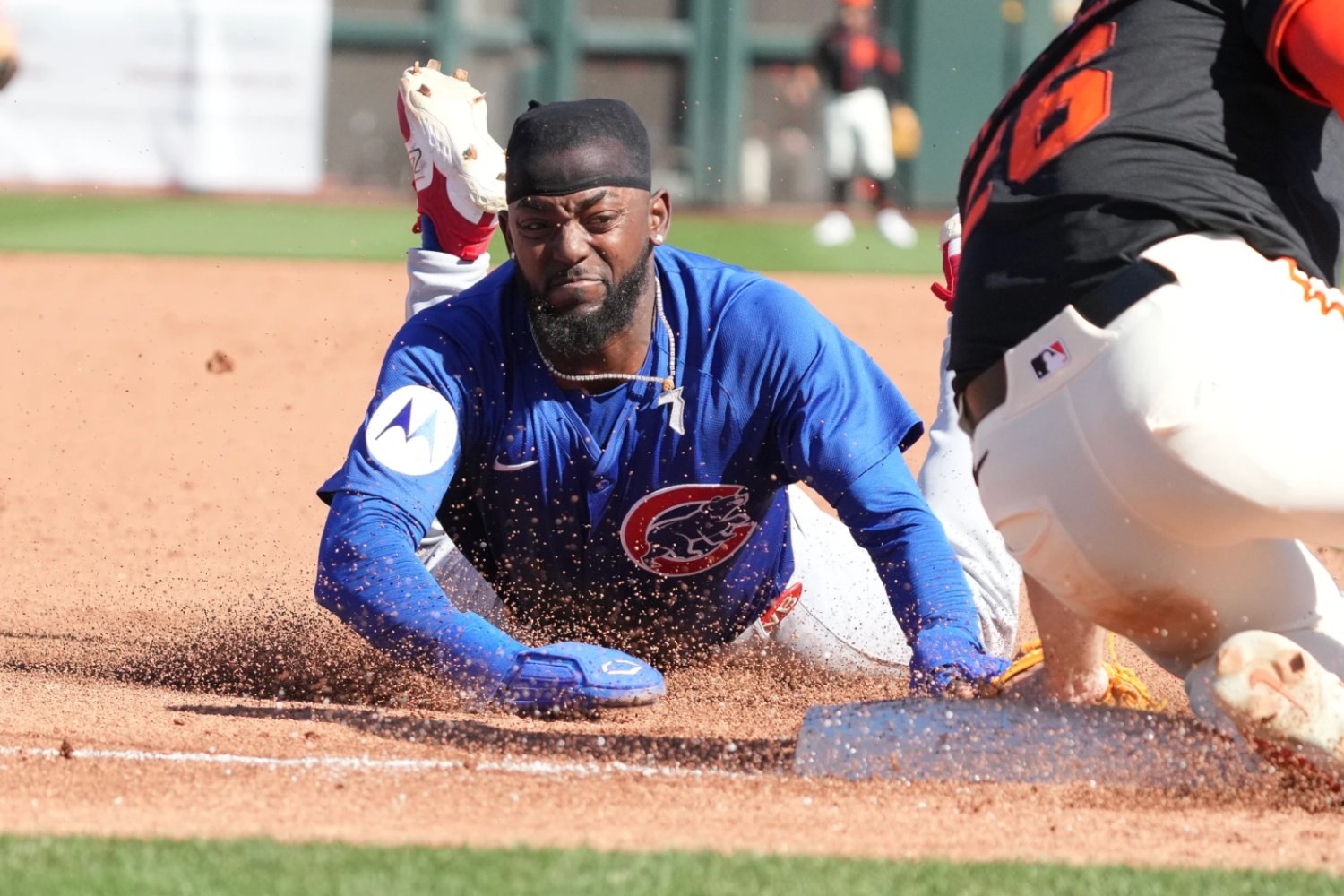 With the exception of the work being done behind (and at) the plate, the bench that the Chicago Cubs cobbled together for 2025 has been an underwhelming presence on an otherwise offensively-capable roster. Perhaps that's a level of understatement given where things stand, but while an upgrade should be expected over the next month, there's at least one aspect in need of more immediate addressing. That aspect takes shape in the form of Vidal Bruján, who has essentially been the team's least valuable player. Yes, Justin Turner has been underwhelming as a short-side platoon option at first base. Sure, Jon Berti's .256 on-base percentage is pinning him down from utilizing his baserunning tool. But it's been Bruján serving as the deadest of weight on a roster that could use just a little bit of extra depth. It's difficult to get on a player too much given the role he was expected to fill. Nobody was deceiving themselves into thinking that Bruján was going to be anything other than a versatile, glove-only option. But, as recently as 2023, he was an intriguing offensive player at Triple-A. That's essentially been wiped off the map thus far in '25. To date, Bruján has appeared at the plate just 32 times, which probably speaks to where he stands anyway given that Matt Shaw spent a month at Triple-A. Within those 32 plate appearances, though, Bruján has turned in the following: a .161/.188/.226 slash line, a 25.0 K%, a 3.1 BB%, and a .065 ISO. His wRC+ stands at 13. Among Cubs players that have taken at least five trips to the plate this year, only Nicky Lopez was worse (1 wRC+). Worse yet, there's nothing here to indicate that Bruján has more in the tank to offer or that there's been any kind of luck component. He has yet to barrel a pitch this year (0.0 Barrel%) and is hitting the ball in the air over half the time. That blend of soft contact and fly ball energy isn't going to carry you anywhere offensively. That his xBA is actually lower than his current mark (.151) doesn't ring as any sort of surprise. Even with a lower hard hit rate last year, he was still able to work a .276 BABIP given that he was putting the ball on the ground — something of an essential for a light-hitting presence like Bruján — with a little more frequency. Not that it's worth getting worked up over a player whose role has been so minimal. Craig Counsell has clearly recognized the empty impact Bruján brings given that extraordinarily low volume of plate appearances at this juncture in the season. But. when you talk about depth, you'd like to have at least mild competence off the bench when you're trying to give your starters a rest, especially as the summer heat waves continue. With Bruján, you'd be inserting a total offensive zero at the plate whose defense has also checked in at varying levels of "fine." The main issue for the Cubs is that they simply have no additional options with which they can replace him. There isn't a player in Iowa that could fill such a role, as you want more of an extended run for upper-tier prospects than a bench role would provide. Even someone like James Triantos, who could bounce around the field a bit if the Cubs were so inclined, has regressed in just about every way offensively in 2025. It's just not there. Nor do we know about potential trade candidates. Fringe guys aren't featured in trade rumors like the bigger names are. But that's what the Cubs need: a fringe guy. Someone capable of contributing on occasion and possessing a level of versatility. Bruján has the latter but has proven incapable of the former. And, unlike the value of someone like Turner (noted veteran leadership) or Berti (speed), we don't have a benchmark for the value that Bruján provides to this roster. The broader context of his numbers, even in being deployed so infrequently, casts doubt over whether he provides this roster with any value. As trade season starts to heat up, it's likely that Vidal Bruján won't be long for the roster. It was a worthwhile pickup; there was some minor league upside at the plate and the versatility will play on any bench. But, we've already seen the Cubs move on from two other zeroes at the plate in Lopez & Gage Workman. It's getting close to time to shore up the fringes, which means that Bruján could be next... once a viable replacement option manifests.
 -
Image courtesy of © Patrick Gorski-Imagn Images Despite just about everything that unfolded at Wrigley Field over the weekend, the Chicago Cubs' bullpen had been one of the league's best since the start of May. Even including the trio of rough outings for the collective against Seattle, the relief corps features the best ERA (2.71), the fourth-best FIP (3.48), and the fourth-best walk rate (7.7 percent) in Major League Baseball since May 1st. There are, of course, a handful of reasons for the increased success of the 'pen (and how "real" various runs are for various arms). But, Chris Flexen has certainly played a role in such an ascent for a group which Craig Counsell struggled to piece together innings in April. Through a baker's dozen worth of outings for the Cubs, Flexen has been nearly flawless, at least to this point. Across those 13 appearances, Flexen has posted a sterling 0.78 ERA. Within the broader context of the Cubs' bullpen, Flexen features both the team's lowest ERA and lowest WHIP (0.87) among those with at least 10 innings. Sunday's tough one was the first time he'd allowed an earned run to score, which becomes even more impressive when you consider that eight of his appearances have been of the multi-inning variety. That includes the notable outing last Thursday, in which Flexen tossed three clean innings to allow the Cubs a chance in what ultimately resulted in an 8-7 loss following a brutal Jameson Taillon start. Prior to Sunday, Flexen's success had me wondering if the Cubs should give him a little bit of a run as a starter until reinforcements arrived in the shape of health or trade. After all, this was a guy that pieced together at least reasonable results (4.80 FIP) for a historically bad Chicago White Sox team in 2024. "If he's capable of handing multi-inning stretches in relief, perhaps it would behoove Counsell to give him a start in favor of Colin Rea or Ben Brown considering their respective struggles of late," was a thought that crossed my mind more than a couple of times in the last couple of weeks. Until I looked deeper. Not only would it be ill-advised to deploy Flexen out of the gate, it's possible that regression is nigh for the reliever, if expected outcomes are to be believed. His ERA looks quite good, yes. His WHIP, too. But, under the surface, this is a guy who, at first blush, appears to take a step back as his 2025 volume increases. The hallmarks are there. Flexen's BABIP against is .188. He's working with a 91.4 percent strand rate. His HR/FB ratio is 4.8 percent. Flexen's career marks in each category? .304, 71.8, and 11.4, respectively. While the career totals are at least something of an oversimplification given his condensed role with the Cubs, the expected stats still aren't as favorable as his actual outcomes. He's at a 3.19 xERA, a .244 xBA, and a .350 xSLG. We likely wouldn't consider those bad as true outcomes, but they do speak to how much he's been able to outperform his peripherals. And that's due to the fact that his stuff just isn't overpowering enough to sustain such a stretch. It's a 20th percentile fastball in terms of velocity with a 15.3 percent strikeout rate that sits ahead of only Nate Pearson among the Cubs' bullpen regulars. His "best" pitch by Stuff+ is his changeup (94), which he only throws 2.1 percent of the time. A contact-oriented, primarily multi-inning reliever is always going to be the first guy to go in the regression game. Volatility is the nature of relief, after all. What Flexen does have working in his favor, at least, is his ability to minimize quality contact. And that works as a starting point for why regression might not be around the next corner, but maybe the one after that. His 3.1 Barrel% is easily the best of his career, along with a 35.4 percent Hard-Hit rate that serves as his best since 2017. When you work those in with a solid 46.2 groundball rate, it's no wonder Flexen has been able to string together success in the way he has. It's that ability to work around the barrel that could allow Flexen to maintain this performance longer than he has any right to. Flexen's three primary pitches this year have been his fastball, his cutter, and his curveball: The first two pitches represent the norm for his career. But the introduction of the curveball as more of a fixture in his arsenal appears to be what is making the difference. Opposing hitters have mustered a Hard-Hit% of just 22.2 against the hook and have yet to barrel one off Flexen. At 44.4 percent, it's also where he's garnering the highest rate of groundballs. So, that uptick in usage appears to be making the difference for him. What important to note about the offering is that it's not a strikeout pitch, but a driver of Flexen's success in 2025. He's dropping that pitch into the middle of the zone horizontally while varying the vertical: Subsequently, he's getting a fair bit of chase (30.4 percent), a fair bit of whiff (29.6), and a terrific bit of both (57.1 chase & miss rate). Factor in the groundballs, and it starts to become valid thinking that Flexen could stave off regression quite a while longer when you add in a near 20-point gap below his fastball & cutter in Hard-Hit%. Plus, he has a manager deploying him the correct spots and in possession of the knowledge as to when his outings should carry into a second or third inning. The regression monster comes for us all eventually. But, thanks to the curveball, Chris Flexen might have the silver bullet to keep it at bay a while longer. View full article
-
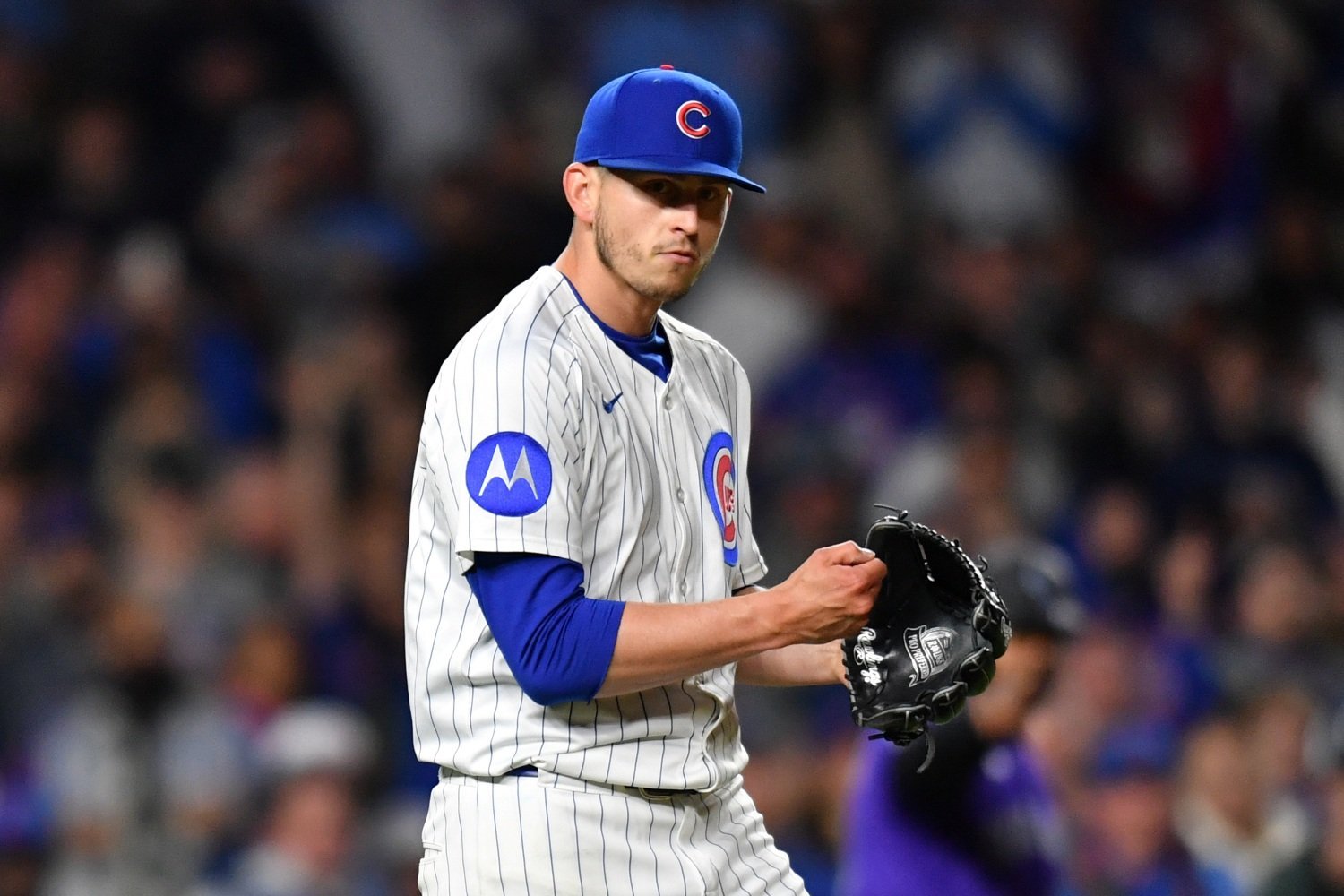 Despite just about everything that unfolded at Wrigley Field over the weekend, the Chicago Cubs' bullpen had been one of the league's best since the start of May. Even including the trio of rough outings for the collective against Seattle, the relief corps features the best ERA (2.71), the fourth-best FIP (3.48), and the fourth-best walk rate (7.7 percent) in Major League Baseball since May 1st. There are, of course, a handful of reasons for the increased success of the 'pen (and how "real" various runs are for various arms). But, Chris Flexen has certainly played a role in such an ascent for a group which Craig Counsell struggled to piece together innings in April. Through a baker's dozen worth of outings for the Cubs, Flexen has been nearly flawless, at least to this point. Across those 13 appearances, Flexen has posted a sterling 0.78 ERA. Within the broader context of the Cubs' bullpen, Flexen features both the team's lowest ERA and lowest WHIP (0.87) among those with at least 10 innings. Sunday's tough one was the first time he'd allowed an earned run to score, which becomes even more impressive when you consider that eight of his appearances have been of the multi-inning variety. That includes the notable outing last Thursday, in which Flexen tossed three clean innings to allow the Cubs a chance in what ultimately resulted in an 8-7 loss following a brutal Jameson Taillon start. Prior to Sunday, Flexen's success had me wondering if the Cubs should give him a little bit of a run as a starter until reinforcements arrived in the shape of health or trade. After all, this was a guy that pieced together at least reasonable results (4.80 FIP) for a historically bad Chicago White Sox team in 2024. "If he's capable of handing multi-inning stretches in relief, perhaps it would behoove Counsell to give him a start in favor of Colin Rea or Ben Brown considering their respective struggles of late," was a thought that crossed my mind more than a couple of times in the last couple of weeks. Until I looked deeper. Not only would it be ill-advised to deploy Flexen out of the gate, it's possible that regression is nigh for the reliever, if expected outcomes are to be believed. His ERA looks quite good, yes. His WHIP, too. But, under the surface, this is a guy who, at first blush, appears to take a step back as his 2025 volume increases. The hallmarks are there. Flexen's BABIP against is .188. He's working with a 91.4 percent strand rate. His HR/FB ratio is 4.8 percent. Flexen's career marks in each category? .304, 71.8, and 11.4, respectively. While the career totals are at least something of an oversimplification given his condensed role with the Cubs, the expected stats still aren't as favorable as his actual outcomes. He's at a 3.19 xERA, a .244 xBA, and a .350 xSLG. We likely wouldn't consider those bad as true outcomes, but they do speak to how much he's been able to outperform his peripherals. And that's due to the fact that his stuff just isn't overpowering enough to sustain such a stretch. It's a 20th percentile fastball in terms of velocity with a 15.3 percent strikeout rate that sits ahead of only Nate Pearson among the Cubs' bullpen regulars. His "best" pitch by Stuff+ is his changeup (94), which he only throws 2.1 percent of the time. A contact-oriented, primarily multi-inning reliever is always going to be the first guy to go in the regression game. Volatility is the nature of relief, after all. What Flexen does have working in his favor, at least, is his ability to minimize quality contact. And that works as a starting point for why regression might not be around the next corner, but maybe the one after that. His 3.1 Barrel% is easily the best of his career, along with a 35.4 percent Hard-Hit rate that serves as his best since 2017. When you work those in with a solid 46.2 groundball rate, it's no wonder Flexen has been able to string together success in the way he has. It's that ability to work around the barrel that could allow Flexen to maintain this performance longer than he has any right to. Flexen's three primary pitches this year have been his fastball, his cutter, and his curveball: The first two pitches represent the norm for his career. But the introduction of the curveball as more of a fixture in his arsenal appears to be what is making the difference. Opposing hitters have mustered a Hard-Hit% of just 22.2 against the hook and have yet to barrel one off Flexen. At 44.4 percent, it's also where he's garnering the highest rate of groundballs. So, that uptick in usage appears to be making the difference for him. What important to note about the offering is that it's not a strikeout pitch, but a driver of Flexen's success in 2025. He's dropping that pitch into the middle of the zone horizontally while varying the vertical: Subsequently, he's getting a fair bit of chase (30.4 percent), a fair bit of whiff (29.6), and a terrific bit of both (57.1 chase & miss rate). Factor in the groundballs, and it starts to become valid thinking that Flexen could stave off regression quite a while longer when you add in a near 20-point gap below his fastball & cutter in Hard-Hit%. Plus, he has a manager deploying him the correct spots and in possession of the knowledge as to when his outings should carry into a second or third inning. The regression monster comes for us all eventually. But, thanks to the curveball, Chris Flexen might have the silver bullet to keep it at bay a while longer.
 -
Michael Busch is Becoming a Franchise First Baseman, vs. No He Isn't
RandallPnkFloyd posted an article in Cubs
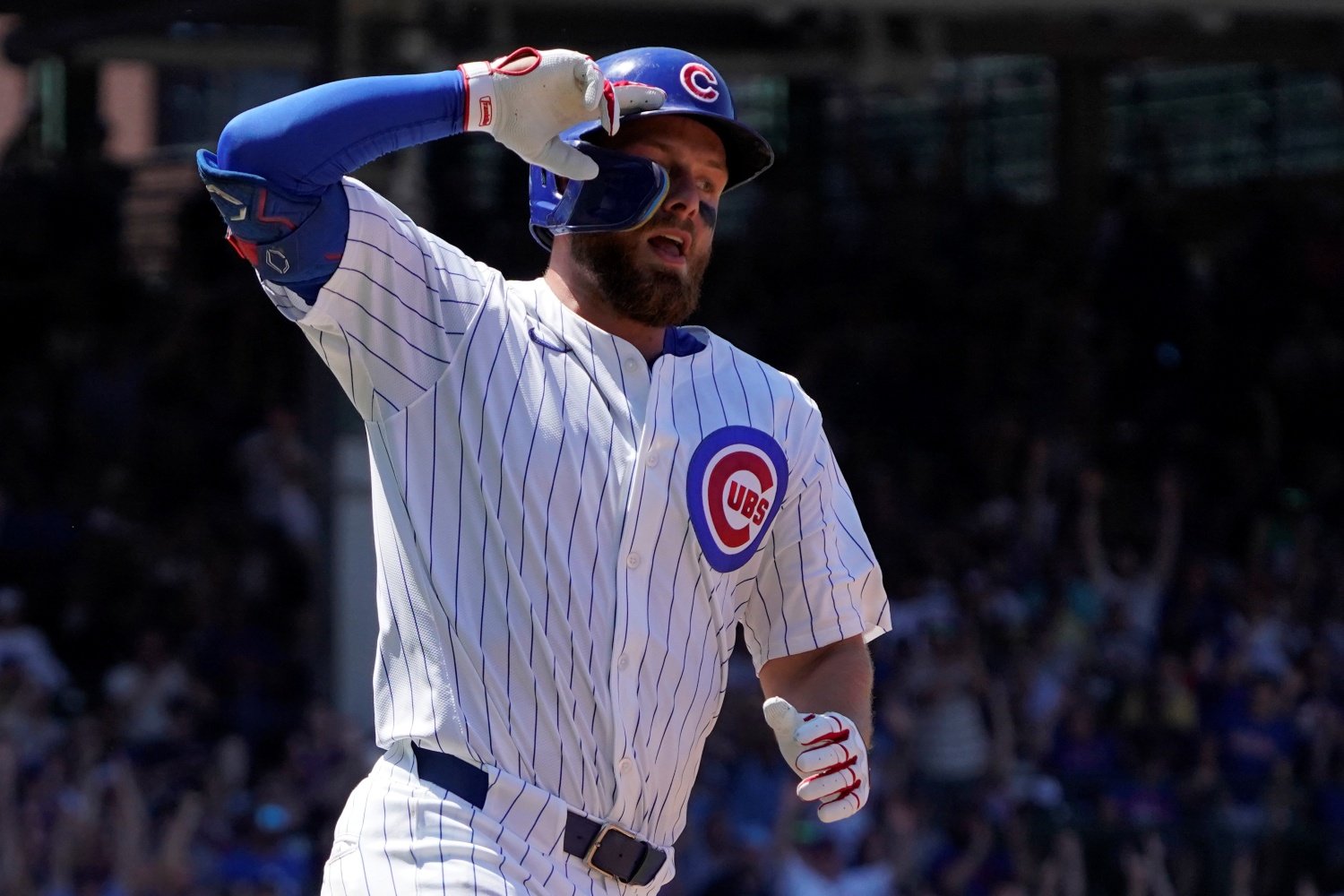 It's happened relatively quietly, amid the arrival of Kyle Tucker and the conspicuous rise of Pete Crow-Armstrong, but it would appear the Chicago Cubs have found their next franchise first baseman in Michael Busch. Probably. Maybe. It depends. We'll discuss the qualifier later. First base is not an easy position at which to excel. You need above-average power to even be considered among the better names—but not just power. Violent power. I hesitate to use "light-tower power," but it's perhaps the most appropriate description for the type we expect out of the spot. Being a burly, intense-looking person doesn't hurt. And even if you capture what the position requires on the offensive and aesthetic areas of the spectrum, there's a decent chance the stingy defensive metrics don't like the work you're turning in, anyway, given the phonebooth in which you're operating relative to other positions (a conversation we're tabling right now in favor of an offensive focus). In any case, Busch has been one of the most valuable players at the position since the start of last year. Going back to 2024, only five of his counterparts feature a higher fWAR than Busch's 3.9 figure, and only five are ahead of him in the wRC+ game (where Busch has posted a cumulative 128). The names ahead of him: Vladimir Guerrero Jr., Freddie Freeman, Bryce Harper, and Pete Alonso, with Matt Olson and Ryan O'Hearn swapping out for each respective category. So, you know, the good ones. That's interesting, because when you consider the archetype of the position, it's not one that Busch conveys in physicality or in more ground-level output. At 6 feet and 210 pounds, Busch checks in as one of the smaller players the position has to offer. And then there's this: Sure, yeah, Busch is able to put the barrel on the baseball better than most players at the position. But when one starts messing around with those categories, you start to lose him. He's 13th in average exit velocity (14th in max), 11th in average home run distance, and 20th in balls hit over 95 MPH. So if we're going by the archetype of the first baseman, it's not a box into which Busch neatly fits. Yet, here he is, sitting among the game's very best at the position in some of those more comprehensive metrics and refining the areas of his game in which he struggled last season. That's the important thing, too. Busch's improving defense and occasional power was always going to prop him up in the broader picture of the position; it's not like the talent pool runs too deep on a year-over-year basis. But Busch has been able to focus on those shortcomings, to catapult his production toward something more consistent, primarily in the plate discipline department. The most noticeable area for improvement last year was a strikeout rate that approached 30% (28.6). Only Rhys Hoskins had a higher K% among positional regulars last year, while Busch's CSW% (called and swinging strike rate) also sat as the fifth-highest (27.4%) as he navigated the zone in his first full season. This year, he's cut the K% to 21.7 (13th "highest") and has the ninth-best CSW% (25.1) among 27 qualifying first basemen. He's cut down the chase, brought up the in-zone swings, and produced more contact. He's also swinging at fastballs more than any other type of pitch, which lends itself to the six-percentage-point increase we're seeing in Hard-Hit% (46.0 as of this writing). As a result, you get this type of percentile chart: There's obviously room for further improvement in certain areas, but it's also a lot of deep red. Busch is, objectively, a very good hitter. Given where he stands within the positional context, you could call him an elite first baseman, and probably face minimal pushback. The upper echelon stands above him, but it's not like he's sitting miles behind the others. But! Can we consider him a franchise first baseman in the way that the likes of Freeman or Harper or Guerrero are? This question rests on the fact that Busch is still getting heavily shielded against pitchers of the same handedness. He has only 38 plate appearances versus left-handed pitchers, and 229 against righties. Obviously, the only answer to that is: no. Unless and until he shows the ability to hit lefties, and thus earns every day playing time, he's not a franchise anything. That label only goes on the guys who are cemented into your lineup. Despite the lackluster performance that the team is getting out of short-side platoon partner Justin Turner, Craig Counsell has made a concerted effort to get a right-handed hitter going against southpaws. It hasn't worked in the box score, but it's worked heavily in Busch's favor in matters of his own production. Plus, the league leader in plate appearances against lefties is Josh Naylor, with 94. The average plate appearance figure among qualifying first basemen is roughly 80. In the grand scheme of a season, it's not some tremendously high volume of chances Busch is missing; it might be 100 over a full campaign. As long as we're talking about the idea of a "franchise" first sacker, let's invoke Anthony Rizzo's name as part of this discussion. Busch is at roughly 830 PA, while turning in a line of .260/.351/.475, a 0.46 BB/K ratio, and a 133 wRC+ across 1.5 seasons with the Cubs. Rizzo's first two seasons (around 1,000 PA) went .259/.333/.441, a 0.52 BB/K ratio, and a 111 wRC+. There's some deeper context (age, for instance), and Busch lacks the charisma of a player like Rizzo, who easily latched onto the "franchise" qualifier, but the trajectory appears set for him to become exactly that for the Chicago Cubs. It doesn't make sense. He's small. He's quiet. He doesn't hit the ball as hard or as far. He doesn't get run vs. left-handed pitchers. And yet, everything Michael Busch has done in 1.5 years on the North Side has him set to help us forget about the first base bridge that existed between himself and Rizzo. You can be less than a franchise player, but still an extremely good one.
 -
Image courtesy of © David Banks-Imagn Images It's happened relatively quietly, amid the arrival of Kyle Tucker and the conspicuous rise of Pete Crow-Armstrong, but it would appear the Chicago Cubs have found their next franchise first baseman in Michael Busch. Probably. Maybe. It depends. We'll discuss the qualifier later. First base is not an easy position at which to excel. You need above-average power to even be considered among the better names—but not just power. Violent power. I hesitate to use "light-tower power," but it's perhaps the most appropriate description for the type we expect out of the spot. Being a burly, intense-looking person doesn't hurt. And even if you capture what the position requires on the offensive and aesthetic areas of the spectrum, there's a decent chance the stingy defensive metrics don't like the work you're turning in, anyway, given the phonebooth in which you're operating relative to other positions (a conversation we're tabling right now in favor of an offensive focus). In any case, Busch has been one of the most valuable players at the position since the start of last year. Going back to 2024, only five of his counterparts feature a higher fWAR than Busch's 3.9 figure, and only five are ahead of him in the wRC+ game (where Busch has posted a cumulative 128). The names ahead of him: Vladimir Guerrero Jr., Freddie Freeman, Bryce Harper, and Pete Alonso, with Matt Olson and Ryan O'Hearn swapping out for each respective category. So, you know, the good ones. That's interesting, because when you consider the archetype of the position, it's not one that Busch conveys in physicality or in more ground-level output. At 6 feet and 210 pounds, Busch checks in as one of the smaller players the position has to offer. And then there's this: Sure, yeah, Busch is able to put the barrel on the baseball better than most players at the position. But when one starts messing around with those categories, you start to lose him. He's 13th in average exit velocity (14th in max), 11th in average home run distance, and 20th in balls hit over 95 MPH. So if we're going by the archetype of the first baseman, it's not a box into which Busch neatly fits. Yet, here he is, sitting among the game's very best at the position in some of those more comprehensive metrics and refining the areas of his game in which he struggled last season. That's the important thing, too. Busch's improving defense and occasional power was always going to prop him up in the broader picture of the position; it's not like the talent pool runs too deep on a year-over-year basis. But Busch has been able to focus on those shortcomings, to catapult his production toward something more consistent, primarily in the plate discipline department. The most noticeable area for improvement last year was a strikeout rate that approached 30% (28.6). Only Rhys Hoskins had a higher K% among positional regulars last year, while Busch's CSW% (called and swinging strike rate) also sat as the fifth-highest (27.4%) as he navigated the zone in his first full season. This year, he's cut the K% to 21.7 (13th "highest") and has the ninth-best CSW% (25.1) among 27 qualifying first basemen. He's cut down the chase, brought up the in-zone swings, and produced more contact. He's also swinging at fastballs more than any other type of pitch, which lends itself to the six-percentage-point increase we're seeing in Hard-Hit% (46.0 as of this writing). As a result, you get this type of percentile chart: There's obviously room for further improvement in certain areas, but it's also a lot of deep red. Busch is, objectively, a very good hitter. Given where he stands within the positional context, you could call him an elite first baseman, and probably face minimal pushback. The upper echelon stands above him, but it's not like he's sitting miles behind the others. But! Can we consider him a franchise first baseman in the way that the likes of Freeman or Harper or Guerrero are? This question rests on the fact that Busch is still getting heavily shielded against pitchers of the same handedness. He has only 38 plate appearances versus left-handed pitchers, and 229 against righties. Obviously, the only answer to that is: no. Unless and until he shows the ability to hit lefties, and thus earns every day playing time, he's not a franchise anything. That label only goes on the guys who are cemented into your lineup. Despite the lackluster performance that the team is getting out of short-side platoon partner Justin Turner, Craig Counsell has made a concerted effort to get a right-handed hitter going against southpaws. It hasn't worked in the box score, but it's worked heavily in Busch's favor in matters of his own production. Plus, the league leader in plate appearances against lefties is Josh Naylor, with 94. The average plate appearance figure among qualifying first basemen is roughly 80. In the grand scheme of a season, it's not some tremendously high volume of chances Busch is missing; it might be 100 over a full campaign. As long as we're talking about the idea of a "franchise" first sacker, let's invoke Anthony Rizzo's name as part of this discussion. Busch is at roughly 830 PA, while turning in a line of .260/.351/.475, a 0.46 BB/K ratio, and a 133 wRC+ across 1.5 seasons with the Cubs. Rizzo's first two seasons (around 1,000 PA) went .259/.333/.441, a 0.52 BB/K ratio, and a 111 wRC+. There's some deeper context (age, for instance), and Busch lacks the charisma of a player like Rizzo, who easily latched onto the "franchise" qualifier, but the trajectory appears set for him to become exactly that for the Chicago Cubs. It doesn't make sense. He's small. He's quiet. He doesn't hit the ball as hard or as far. He doesn't get run vs. left-handed pitchers. And yet, everything Michael Busch has done in 1.5 years on the North Side has him set to help us forget about the first base bridge that existed between himself and Rizzo. You can be less than a franchise player, but still an extremely good one. View full article
-
Image courtesy of © David Banks-Imagn Images A quick peak behind the curtain: When I watch baseball through a writing lens, I'm doing it almost robotically, examining mechanics, decisions, body language, and anything else my years of coaching have taught me to look for. It's more dutiful and academic than joyful. Luckily, I'm commonly able to find a middle ground with the fan side, and the fan side craves excitement. I want loud things. I want showy things. Nick Kurtz throwing his bat when he launches a walkoff homer that didn't land until the following afternoon? Yeah, I'm going to eat that up. Elly De La Cruz throwing a 98-MPH seed on a relay to nab a runner at home? That's cash. So Tuesday night very much fell into my wheelhouse, in multiple respects. The day started with former Chicago Cubs infielder Javier Báez getting his recognition for 10 years of service in Major League Baseball. If you haven't followed, Báez is having a resurgent season for the best team in baseball, carrying his best offensive output in roughly four years. So after the Cubs and Detroit Tigers shared a joint Instagram post acknowledging the milestone, Javy decided to celebrate accordingly: The game, and the season, have been heartwarming for fans of the Cubs to witness. There isn't a single member of the franchise (this side of Sammy Sosa) who has brought the level of excitement that Báez provided. He's gone through a lot since signing in Detroit, but is now proving to be a very important component for a very good baseball team. He's even back at shortstop on many days, after a significant and highly successful stint in center field. It's somewhat appropriate, though, that such a night for Báez came on the same evening in which Pete Crow-Armstrong showed out in his latest fashion. The heir to Báez in the excitement game, the eighth inning of Tuesday's Cubs win belonged to Crow-Armstrong. He made a diving catch in the top half of the inning to rob Brice Turang, before turning around and hitting a monster home run that sealed it to start the bottom half of the frame: Seventy-one feet covered. A 5% catch probability. A homer that traveled 452 feet, courtesy of a 111.5 MPH exit velocity, both of which are career bests. I genuinely hope that we don't start to take these types of moments for granted. Of course, neither half of the inning was surprising. We've seen Crow-Armstrong do each of these things. Sometimes it's one on a night. Other times, it's both, but with several degrees of separation. In this instance, we got the best of Pete Crow-Armstrong on each side of the ball, within about 10 minutes of each other. For it to happen the night in which Báez was not only recognized for his longevity in the sport but reminded us exactly who he is in doing so carries a certain degree of poetic weight. While Cub fans have, obviously, longed for this team to be a contender for the last handful of years, there's also been a rather dull air around the organization. It's not only that they weren't a very good baseball team. They were boring in their pursuit of the .500 threshold. In not only serving as a key element in the quality of their roster in 2025, Crow-Armstrong is carrying on the Báez legacy in the excitement department. It's that ol' chestnut: how can you not be romantic about baseball? (And don't say the obvious ways.) Of course, the two are always going to be inextricably linked. They were part of the same deal that saw Báez's departure and Crow-Armstrong's arrival. But the manner in which they play the game—the defense, the free-swinging, the flash, and all the other things Matt Ostrowski discussed earlier this month—allows that connection to remain strong. It's rooted in passion and in instinct. The two are linked not only in the transaction log, but in Cubs lore. Consider where things stand. Báez is officially back and in the public eye, given the success of his team. Crow-Armstrong is a viable candidate for Most Valuable Player in the National League. At their best, each can give you something you've never seen before or something that renews your appreciation for the game. Here's hoping Tuesday night won't be the last time we see the two overlap like this. View full article
-
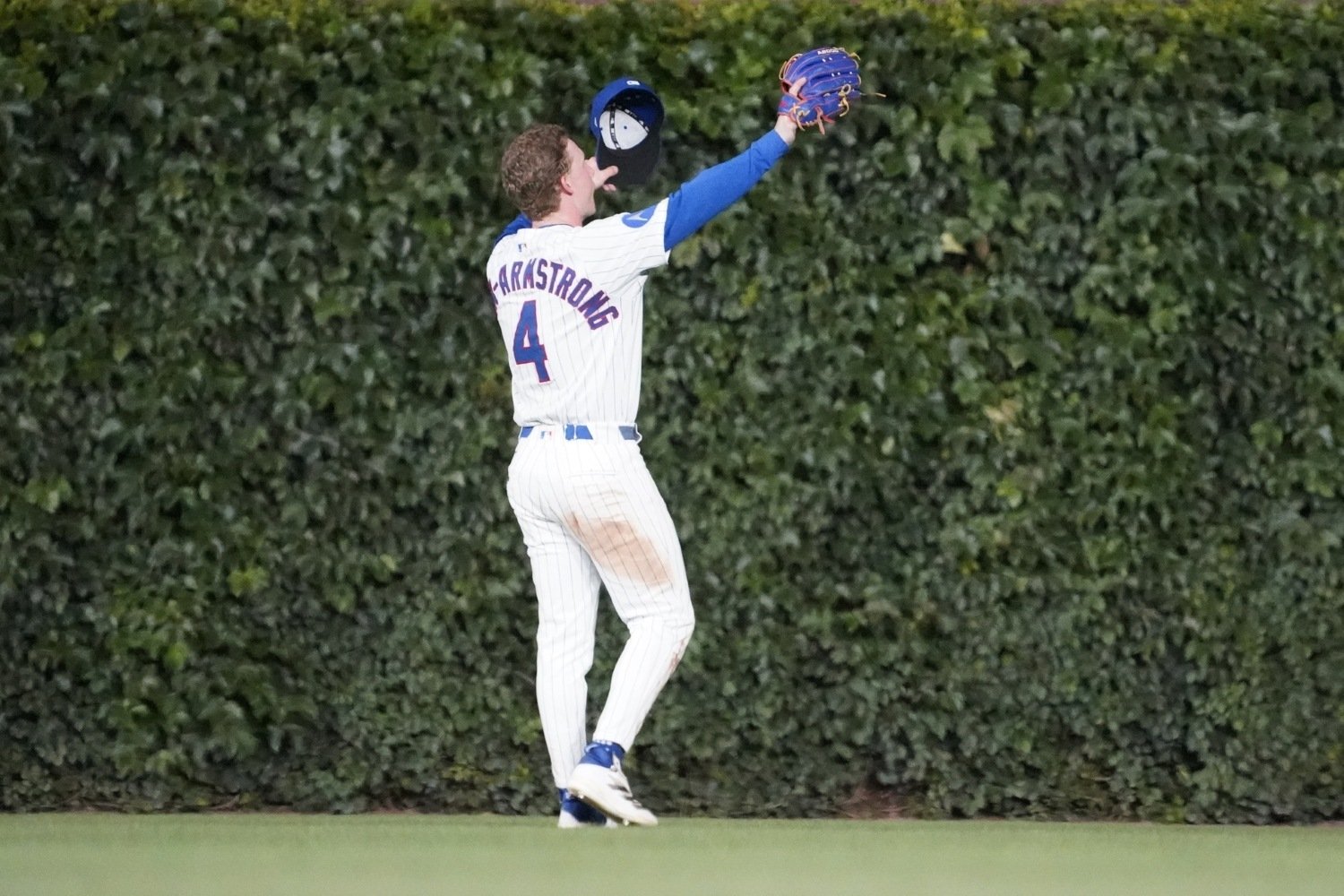 A quick peak behind the curtain: When I watch baseball through a writing lens, I'm doing it almost robotically, examining mechanics, decisions, body language, and anything else my years of coaching have taught me to look for. It's more dutiful and academic than joyful. Luckily, I'm commonly able to find a middle ground with the fan side, and the fan side craves excitement. I want loud things. I want showy things. Nick Kurtz throwing his bat when he launches a walkoff homer that didn't land until the following afternoon? Yeah, I'm going to eat that up. Elly De La Cruz throwing a 98-MPH seed on a relay to nab a runner at home? That's cash. So Tuesday night very much fell into my wheelhouse, in multiple respects. The day started with former Chicago Cubs infielder Javier Báez getting his recognition for 10 years of service in Major League Baseball. If you haven't followed, Báez is having a resurgent season for the best team in baseball, carrying his best offensive output in roughly four years. So after the Cubs and Detroit Tigers shared a joint Instagram post acknowledging the milestone, Javy decided to celebrate accordingly: The game, and the season, have been heartwarming for fans of the Cubs to witness. There isn't a single member of the franchise (this side of Sammy Sosa) who has brought the level of excitement that Báez provided. He's gone through a lot since signing in Detroit, but is now proving to be a very important component for a very good baseball team. He's even back at shortstop on many days, after a significant and highly successful stint in center field. It's somewhat appropriate, though, that such a night for Báez came on the same evening in which Pete Crow-Armstrong showed out in his latest fashion. The heir to Báez in the excitement game, the eighth inning of Tuesday's Cubs win belonged to Crow-Armstrong. He made a diving catch in the top half of the inning to rob Brice Turang, before turning around and hitting a monster home run that sealed it to start the bottom half of the frame: Seventy-one feet covered. A 5% catch probability. A homer that traveled 452 feet, courtesy of a 111.5 MPH exit velocity, both of which are career bests. I genuinely hope that we don't start to take these types of moments for granted. Of course, neither half of the inning was surprising. We've seen Crow-Armstrong do each of these things. Sometimes it's one on a night. Other times, it's both, but with several degrees of separation. In this instance, we got the best of Pete Crow-Armstrong on each side of the ball, within about 10 minutes of each other. For it to happen the night in which Báez was not only recognized for his longevity in the sport but reminded us exactly who he is in doing so carries a certain degree of poetic weight. While Cub fans have, obviously, longed for this team to be a contender for the last handful of years, there's also been a rather dull air around the organization. It's not only that they weren't a very good baseball team. They were boring in their pursuit of the .500 threshold. In not only serving as a key element in the quality of their roster in 2025, Crow-Armstrong is carrying on the Báez legacy in the excitement department. It's that ol' chestnut: how can you not be romantic about baseball? (And don't say the obvious ways.) Of course, the two are always going to be inextricably linked. They were part of the same deal that saw Báez's departure and Crow-Armstrong's arrival. But the manner in which they play the game—the defense, the free-swinging, the flash, and all the other things Matt Ostrowski discussed earlier this month—allows that connection to remain strong. It's rooted in passion and in instinct. The two are linked not only in the transaction log, but in Cubs lore. Consider where things stand. Báez is officially back and in the public eye, given the success of his team. Crow-Armstrong is a viable candidate for Most Valuable Player in the National League. At their best, each can give you something you've never seen before or something that renews your appreciation for the game. Here's hoping Tuesday night won't be the last time we see the two overlap like this.
 -
As Brendan notes, it's possible that this could just be a blip. It's a small sample, after all. But it says a lot that Tucker is having difficulty generating quality contact while simultaneously putting the ball on the ground at his highest frequency in a given month (35.7%). In that light, the power decline isn't a difficult aspect to explain. The contact isn't there; nor is the elevation. The other layer, however, could provide some further insight. I mentioned Tucker's massive K% this month. It's not necessarily the result of chasing more pitches, or even taking more pitches for strikes. His 17.0% chase rate is lower than it was in March and April, and his called strike percentage is only about two percentage points higher than it was in either of the first two months (14.9%). He's just...whiffing. Tucker's whiff rate has climbed to 27.8% this month. It's at an even 20.0% inside the strike zone. Breaking and off-speed pitches have proven a particular source of woe for him this month, as they check in at whiff rates of 53.6% and 45.5%, respectively. More concerning is the fact that he's not getting more of them from opposing pitchers, either. He's actually experienced a decrease in breaking pitches, while offspeed stuff has maintained throughout the first three months of the year. But he's battling those pitches in a way that we didn't really see in the first two months. While the power dip and the strikeout leap are certainly different layers of Tucker's June struggles, it's hard to describe them as two entirely separate elements within his offensive performance. The former can likely be attributed to the finger sprain on some level (if not serving as the main thing), but it's also possible that it's affecting his overall ability to make contact—let alone quality contact. So, should we be concerned? It's hard to be, when you're talking about a hitter of Kyle Tucker's stature, especially because there is still value there in his ability to work counts. If this was a situation where the walk rate deteriorated, then you could start to draw conclusions about his approach escaping him. But he's clearly working through the lingering impact of injury on some level, leading him to both struggle with overall contact and, subsequently, contact quality. Ultimately, it's a two-week sample. It's hard to get too worked up about. It's glaring, to be sure, given the team's struggle to plate runs in the past week. But perhaps Monday's off day was just the ticket to serve as a springboard for a healthier Tucker to get back on track in the second half of the month. Tuesday was a good start. View full article
-
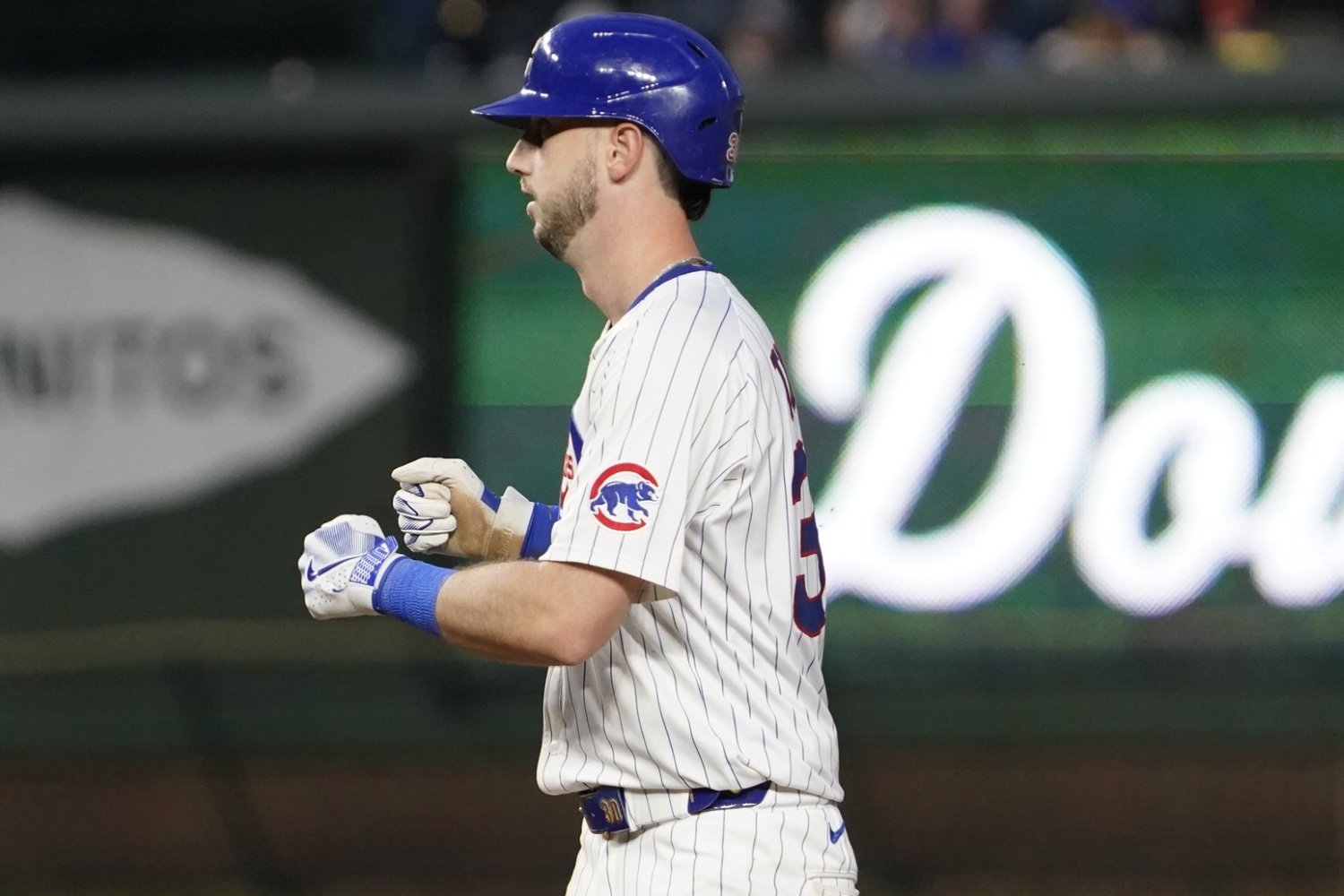 In baseball, more than in other sports, two things can be true at once. As such, we can acknowledge that Kyle Tucker is still providing immense value to the Chicago Cubs lineup. Since the start of June, he's reaching base at a .380 clip, largely courtesy of a 16.0% walk rate. He's also got a wRC+ of 127 for the month. Neither detail is surprising, as we've already seen that the team can benefit from his skill set in the midst of an extended slump. The other side of that coin is that as the team is struggling to score runs (2.2 runs per game in their last five, as of this writing), Tucker's absence of power, in conjunction with his creeping penchant for striking out, is becoming much more noticeable. Tucker's isolated power since the calendar flipped over to June is .171. There's some important context to that figure, on two levels. The first is the gravity of such a low ISO for a hitter of Tucker's stature. It isn't just his lowest this season; it's his lowest since May of 2023 (.140) and his third-lowest in an individual month since he became a full-time player post-2020. Perhaps more concerning is the fact that Tucker is punching out at a 26.0% rate, more than double what he did in each of the first two months. Not since 2020 has he had a mark even remotely near that for a full month. The other layer here is, of course, the timeline. On June 1, Tucker jammed his finger on an awkward slide into second base. While it's impossible to know the extent to which he's being affected by that, it does provide us with a clear threshold between Tucker's previous trends at the plate and what we've witnessed in the two weeks since. Let's talk about the power first. It's hard to generate power when you're not making quality contact, and Tucker's hard-hit rate has declined significantly this month, regardless of pitch type: Fastballs taking a back seat in the Hard-Hit% department is perhaps the largest concern depicted above. It's the pitch type against which he's consistently posted the highest hard-hit rates throughout his career. It's a sharp, sharp decline, too. He made hard contact against fastballs 58.3 percent of the time in May. He's at just 40.0% thus far in June. While bat speed isn't the tell-all factor in generating power (especially given that we recently lauded the collective for trading speed for efficiency in that respect), there's an aspect of this that could be an indicator as to why Tucker is failing to generate quality contact more frequently: As Brendan notes, it's possible that this could just be a blip. It's a small sample, after all. But it says a lot that Tucker is having difficulty generating quality contact while simultaneously putting the ball on the ground at his highest frequency in a given month (35.7%). In that light, the power decline isn't a difficult aspect to explain. The contact isn't there; nor is the elevation. The other layer, however, could provide some further insight. I mentioned Tucker's massive K% this month. It's not necessarily the result of chasing more pitches, or even taking more pitches for strikes. His 17.0% chase rate is lower than it was in March and April, and his called strike percentage is only about two percentage points higher than it was in either of the first two months (14.9%). He's just...whiffing. Tucker's whiff rate has climbed to 27.8% this month. It's at an even 20.0% inside the strike zone. Breaking and off-speed pitches have proven a particular source of woe for him this month, as they check in at whiff rates of 53.6% and 45.5%, respectively. More concerning is the fact that he's not getting more of them from opposing pitchers, either. He's actually experienced a decrease in breaking pitches, while offspeed stuff has maintained throughout the first three months of the year. But he's battling those pitches in a way that we didn't really see in the first two months. While the power dip and the strikeout leap are certainly different layers of Tucker's June struggles, it's hard to describe them as two entirely separate elements within his offensive performance. The former can likely be attributed to the finger sprain on some level (if not serving as the main thing), but it's also possible that it's affecting his overall ability to make contact—let alone quality contact. So, should we be concerned? It's hard to be, when you're talking about a hitter of Kyle Tucker's stature, especially because there is still value there in his ability to work counts. If this was a situation where the walk rate deteriorated, then you could start to draw conclusions about his approach escaping him. But he's clearly working through the lingering impact of injury on some level, leading him to both struggle with overall contact and, subsequently, contact quality. Ultimately, it's a two-week sample. It's hard to get too worked up about. It's glaring, to be sure, given the team's struggle to plate runs in the past week. But perhaps Monday's off day was just the ticket to serve as a springboard for a healthier Tucker to get back on track in the second half of the month. Tuesday was a good start.
 -
Image courtesy of © David Banks-Imagn Images There's an old (probably overused) adage in the world of golf: drive for show, putt for dough. It speaks to the idea that sheer power will take you only so far. It's the efficiency on the backend that'll make the difference in matters of actually winning. It's not a like-for-like comparison with the world of baseball, but the 2025 Chicago Cubs are applying their own spin to the idea. After all, the Cubs are scoring more runs than just about everyone in Major League Baseball. Only the Los Angeles Dodgers have scored more than the Cubs' 349 runs, and nobody has a better run differential than their +102. They're a top-five team in terms of power (81 home runs, .186 ISO), too. Notably—and impressively—they're doing this without a ton of bat speed in the mix. A look at the bat speed leaderboard reveals a lot of what you would expect. On a team level, the New York Yankees are atop the heap (72.7 MPH average). Individuals sitting at or near the top include Oneil Cruz, Kyle Schwarber, and Aaron Judge. Again, nothing surprising. But when you're sorting through the leaderboard, what you won't find is a ton of involvement remotely near the top, on the part of this Cubs lineup. The fastest average bat speed by a qualifying Cubs hitter is Seiya Suzuki's, at 73.0 MPH. He's 70th. One must proceed even further to find Kyle Tucker, at 97th (72.2), before Ian Happ at 105th (72.0). The rest of the team's regulars include Pete Crow-Armstrong at 115th (71.8), Dansby Swanson at 152nd (70.8), Michael Busch at 182nd (69.7), and Nico Hoerner at 205th (68.2). If we wanted to change the perspective to include Carson Kelly, he'd be 186th of those with at least 200 swings. Given that, it's no surprise that the bat speed distribution (on a team level) looks as follows: The Cubs are effectively tied with the Cincinnati Reds for the lowest average bat speed among all 30 major-league clubs. Their rate of "fast" swings (over 75 MPH) is ahead of only those same Reds (15.2%). They're also ahead only of the Miami Marlins in swing length (7.2 feet). So it's a group with slow, short swings. And it's working. The y-axis of the above graph is the squared-up rate per swing. There, the Cubs rank fourth. They're also 11th in rate of competitive swings (90.4%) and just 23rd in swords (i.e. non-competitive swings), both no doubt a byproduct of the other data we're looking at here. Which is, quite obviously, the point. As a team, the Cubs feature a swing rate of just 47.0%, which ranks 17th. They're chasing at the league's fifth-lowest rate (26.3%), but swinging inside the zone at the seventh-highest clip (65.8%). As a result of their approach and their trends when actually swinging, only the Toronto Blue Jays feature a higher contact rate than the Cubs' collective 79.2%. When they do swing outside the zone, they're making contact at the fifth-best rate (58.5%) while making contact within the zone at a rate of 86.8 (which ranks ninth, but is less than one percentage point behind the league-leading Kansas City Royals). Although the Cubs are very much a middle-of-the-road squad in terms of hitting the ball hard (39.9% of their batted balls), they rank eighth in Barrel rate (9.8%). That, dear reader, is the point of all of this. Swing speed is, generally, a good thing. You can compensate for some things and generate a certain level of run production based on the speed and violence of a swing alone. But it's inefficient. As an example, the Yankees, for all the power they may feature, are also just 26th in contact rate and, subsequently, 27 runs behind the Cubs (with only one fewer game played) on the leaderboard. The Cubs have designed an approach that thrives on efficiency. They're making contact on the barrel of the bat. When you do that, good things tend to happen. It guides you through the wildly free-swinging Pete Crow-Armstrong experience at the plate or those months when Dansby Swanson swings at every single fastball he can find. It's a tradeoff, but one that is extremely worthwhile. No team in baseball has more accurate bats than the Cubs'. View full article
-
Why (and How) Chicago Cubs Trade Bat Speed for Efficiency at the Plate
RandallPnkFloyd posted an article in Cubs
 There's an old (probably overused) adage in the world of golf: drive for show, putt for dough. It speaks to the idea that sheer power will take you only so far. It's the efficiency on the backend that'll make the difference in matters of actually winning. It's not a like-for-like comparison with the world of baseball, but the 2025 Chicago Cubs are applying their own spin to the idea. After all, the Cubs are scoring more runs than just about everyone in Major League Baseball. Only the Los Angeles Dodgers have scored more than the Cubs' 349 runs, and nobody has a better run differential than their +102. They're a top-five team in terms of power (81 home runs, .186 ISO), too. Notably—and impressively—they're doing this without a ton of bat speed in the mix. A look at the bat speed leaderboard reveals a lot of what you would expect. On a team level, the New York Yankees are atop the heap (72.7 MPH average). Individuals sitting at or near the top include Oneil Cruz, Kyle Schwarber, and Aaron Judge. Again, nothing surprising. But when you're sorting through the leaderboard, what you won't find is a ton of involvement remotely near the top, on the part of this Cubs lineup. The fastest average bat speed by a qualifying Cubs hitter is Seiya Suzuki's, at 73.0 MPH. He's 70th. One must proceed even further to find Kyle Tucker, at 97th (72.2), before Ian Happ at 105th (72.0). The rest of the team's regulars include Pete Crow-Armstrong at 115th (71.8), Dansby Swanson at 152nd (70.8), Michael Busch at 182nd (69.7), and Nico Hoerner at 205th (68.2). If we wanted to change the perspective to include Carson Kelly, he'd be 186th of those with at least 200 swings. Given that, it's no surprise that the bat speed distribution (on a team level) looks as follows: The Cubs are effectively tied with the Cincinnati Reds for the lowest average bat speed among all 30 major-league clubs. Their rate of "fast" swings (over 75 MPH) is ahead of only those same Reds (15.2%). They're also ahead only of the Miami Marlins in swing length (7.2 feet). So it's a group with slow, short swings. And it's working. The y-axis of the above graph is the squared-up rate per swing. There, the Cubs rank fourth. They're also 11th in rate of competitive swings (90.4%) and just 23rd in swords (i.e. non-competitive swings), both no doubt a byproduct of the other data we're looking at here. Which is, quite obviously, the point. As a team, the Cubs feature a swing rate of just 47.0%, which ranks 17th. They're chasing at the league's fifth-lowest rate (26.3%), but swinging inside the zone at the seventh-highest clip (65.8%). As a result of their approach and their trends when actually swinging, only the Toronto Blue Jays feature a higher contact rate than the Cubs' collective 79.2%. When they do swing outside the zone, they're making contact at the fifth-best rate (58.5%) while making contact within the zone at a rate of 86.8 (which ranks ninth, but is less than one percentage point behind the league-leading Kansas City Royals). Although the Cubs are very much a middle-of-the-road squad in terms of hitting the ball hard (39.9% of their batted balls), they rank eighth in Barrel rate (9.8%). That, dear reader, is the point of all of this. Swing speed is, generally, a good thing. You can compensate for some things and generate a certain level of run production based on the speed and violence of a swing alone. But it's inefficient. As an example, the Yankees, for all the power they may feature, are also just 26th in contact rate and, subsequently, 27 runs behind the Cubs (with only one fewer game played) on the leaderboard. The Cubs have designed an approach that thrives on efficiency. They're making contact on the barrel of the bat. When you do that, good things tend to happen. It guides you through the wildly free-swinging Pete Crow-Armstrong experience at the plate or those months when Dansby Swanson swings at every single fastball he can find. It's a tradeoff, but one that is extremely worthwhile. No team in baseball has more accurate bats than the Cubs'.
 -
For Shaw to not only field that ball with the hop he got but make a throw that reached Michael Busch on the fly speaks to the improvement being made in a short time. And while the pick on its own is impressive enough, it's hardly the only time he's flashed that type of, well, flash with the leather in even the past week(ish): It feels like there's a decent chance that the Cincinnati Reds are tired of seeing Matt Shaw play defense. While the degree of difficulty in fielding the baseball wasn't nearly as high as the one on Sunday, the strength to get that throw across while losing balance absolutely is hard to generate. If you remember, arm strength was something of a concern in Shaw's transition to third base. In 2024, MLB Pipeline's scouting report referred to his arm as "fringy" and a liability. The follow-up in 2025 was a bit more direct in referring to it as "below-average" and that it would be stretched at third base. Sure: It's not that Shaw suddenly has arm strength that he didn't possess before, but he's developing the type of "strength" required to play the position by making an adjustment. There's an IQ thing taking shape here. Because even when Shaw doesn't uncork the throw, he's getting it over there in a rather savvy, efficient manner: That one felt intentional. You've got a catcher running, so there's no need to rush a throw that might get past Busch. Instead, you get it over there on the big hop and the rest takes care of itself. These are exactly the type of things you want to see from a player who was visibly struggling at the position upon his first taste of big-league action. While Outs Above Average isn't our preferred metric, it does, at least, give us the ability to examine the performance splits on a more specific level. In this case, monthly. Shaw's OAA in March and April (prior to his demotion) was -3. He had a success rate of just 58 percent, against a 63 percent estimated success rate. He particularly struggled moving to his left (-2) and back (-1). Since his return, however, Shaw has an OAA of 0, indicating that he's been exactly average. He's also exceeded the estimated success rate (75 percent success against 74 percent estimated). There's still some struggle to his left (-2 OAA), but he's average moving back, average to his right, and above-average moving in. These numbers, of course, aren't entirely reliable within a small sample (to say nothing of the fact that they don't tell us a lot about his arm), but they do at least allow us to put the improvement into some sort of concrete context. Ultimately, though, it's all about what you want to see. The eye test, the little bit of data available, looks good. There's confidence brewing here, on both sides of the ball. Even if he's never able to drum up elite production from a defensive standpoint, the stability he can provide at a position that has lacked it in that facet could be invaluable—to say nothing of what he's doing at the plate. View full article
-
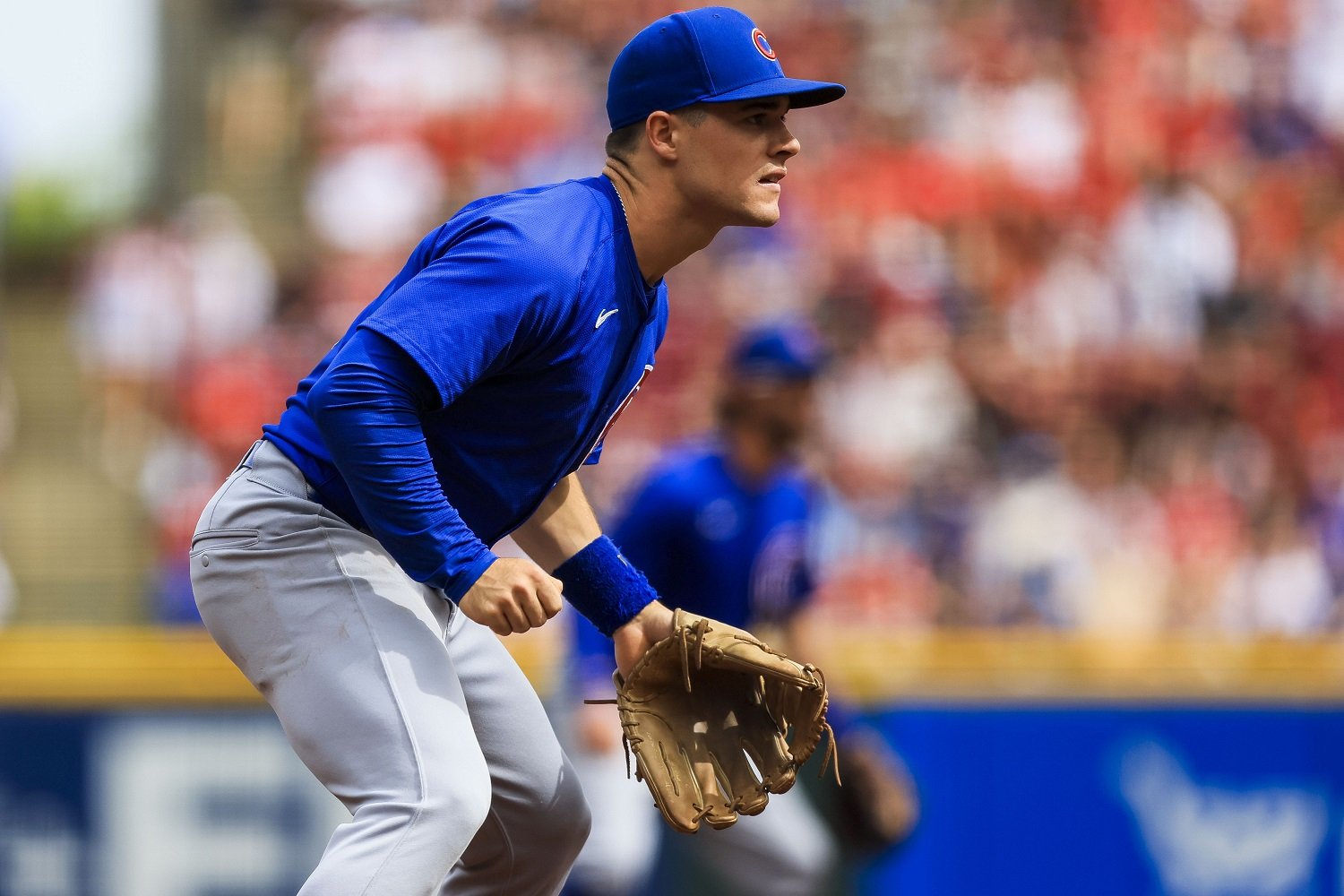 An unfortunate reality of analyzing defense in baseball is that, sometimes, you have to rely on the eye test before anything else. This is especially true when examining a small sample, wherein the metrics either don't convey reality or lack the volume of context needed to become meaningful. Lucky for us, the eye test is all we need in declaring that Matt Shaw's defense looks quite good since his return to the Chicago Cubs from Iowa. We already know what Shaw has done with the bat; he's made some adjustments in positioning and to the leg kick to drive up his production. While we don't have the ability to pinpoint positioning or other factors that might be making a difference for him on the defensive side (especially as defensive metrics don't make room for splits at this point), we do have plenty of anecdotal evidence to support the idea. The evidence was most recently on display on Sunday: For Shaw to not only field that ball with the hop he got but make a throw that reached Michael Busch on the fly speaks to the improvement being made in a short time. And while the pick on its own is impressive enough, it's hardly the only time he's flashed that type of, well, flash with the leather in even the past week(ish): It feels like there's a decent chance that the Cincinnati Reds are tired of seeing Matt Shaw play defense. While the degree of difficulty in fielding the baseball wasn't nearly as high as the one on Sunday, the strength to get that throw across while losing balance absolutely is hard to generate. If you remember, arm strength was something of a concern in Shaw's transition to third base. In 2024, MLB Pipeline's scouting report referred to his arm as "fringy" and a liability. The follow-up in 2025 was a bit more direct in referring to it as "below-average" and that it would be stretched at third base. Sure: It's not that Shaw suddenly has arm strength that he didn't possess before, but he's developing the type of "strength" required to play the position by making an adjustment. There's an IQ thing taking shape here. Because even when Shaw doesn't uncork the throw, he's getting it over there in a rather savvy, efficient manner: That one felt intentional. You've got a catcher running, so there's no need to rush a throw that might get past Busch. Instead, you get it over there on the big hop and the rest takes care of itself. These are exactly the type of things you want to see from a player who was visibly struggling at the position upon his first taste of big-league action. While Outs Above Average isn't our preferred metric, it does, at least, give us the ability to examine the performance splits on a more specific level. In this case, monthly. Shaw's OAA in March and April (prior to his demotion) was -3. He had a success rate of just 58 percent, against a 63 percent estimated success rate. He particularly struggled moving to his left (-2) and back (-1). Since his return, however, Shaw has an OAA of 0, indicating that he's been exactly average. He's also exceeded the estimated success rate (75 percent success against 74 percent estimated). There's still some struggle to his left (-2 OAA), but he's average moving back, average to his right, and above-average moving in. These numbers, of course, aren't entirely reliable within a small sample (to say nothing of the fact that they don't tell us a lot about his arm), but they do at least allow us to put the improvement into some sort of concrete context. Ultimately, though, it's all about what you want to see. The eye test, the little bit of data available, looks good. There's confidence brewing here, on both sides of the ball. Even if he's never able to drum up elite production from a defensive standpoint, the stability he can provide at a position that has lacked it in that facet could be invaluable—to say nothing of what he's doing at the plate.
 -
Cubs Define Bullpen Roles, Turn Biggest Weakness Into Strength
RandallPnkFloyd posted an article in Cubs
 The Chicago Cubs' approach to building a bullpen isn't a secret. Nor is it uncommon. There's no secret sauce. Unfortunately, though, the throwing-upside-at-the-wall-and-seeing-what-sticks approach does take a little while to brew. In their case, it took virtually all of March and April. By ERA, the Cubs had the 26th-ranked bullpen in the season's opening month and change (4.76). They were 27th in strikeout rate (19.2 percent), 26th in walk rate (11.8 percent), and 24th in strand rate (66.0 percent). While they were able to limit quality contact — their 35.6 Hard-Hit% was fifth-best — there was simply too much traffic for even a somewhat modest .294 BABIP to not bite them in the way that it did. As is expected with that type of performance, we lost some friends along the way. Nate Pearson pitched to a 10.38 ERA across 8 2/3 innings and was optioned to Iowa by the middle of the month. Eli Morgan posted an even higher mark before an elbow impingement sent him to the injured list, where he still resides indefinitely. While a different context entirely, Colin Rea wasn't long for relief work, as injuries in the rotation forced him into a starting role. And that's just in the middle of the 'pen. The responsibility of finishing games that were otherwise propped up by one of the league's top offenses was a burden. The Cubs blew seven saves during the first month of the year. Interestingly, none of them were from Ryan Pressly, whose 2.25 ERA covered for brutal peripherals (a 5.09 FIP & a walk rate that exceeded a floundering strikeout number). It was a harbinger of things to come, as the veteran righty lost his job in the month that followed. Ultimately, the March & April group was a hodgepodge of veteran (as in, some of these guys are old) arms attempting to navigate low power and heavy traffic. Even as the Cubs at large held together against a brutal schedule, the bullpen was the part of the roster that was clearly the weakest... until that calendar read "May 1", at least. Last month was a different story entirely for relievers on the North Side. Their 2.37 collective ERA was the best in all of baseball. The walk rate climbed all the way to seventh (8.3 percent), and the strand rate took over the top slot (78.9 percent). While they still weren't posting gaudy punchout numbers (21.8 percent), the BABIP fell to .261. Most essential within the strong output is that a clear core of the '25 bullpen started to take shape. Each of Caleb Thielbar (8.0 innings), Drew Pomeranz (9 1/3 innings), Brad Keller (14 2/3 innings) blanked the opposition with perfect 0.00 ERA marks. Chris Flexen was able to accomplish the same task in a largely multi-inning role (14 1/3 innings in eight appearances), as was Ryan Brasier (albeit in much more limited work in his 3 1/3 innings off the IL). Perhaps the most important development for the group, though, came in the form of Daniel Palencia as the team's primary ninth inning option. With Porter Hodge suffering an oblique injury, the team's most electric arm was pressed into the closer role and absolutely delivered. Through an even dozen innings of work, he posted a 1.50 ERA and five saves. Even with one blip in Miami, the emergence of his 98th percentile fastball velocity appears to have settled the most pressing issue in the 'pen. Rather than work with the least bad (or, at best, questionable) option, Craig Counsell was able to operate with a little bit of freedom in turning to those presenting actual efficiency in their appearances. As such, Pressly's tightrope act was relegated to garbage time, while Julian Merryweather's velocity decline cost him a role via mid-month DFA. So, it's no wonder that certain elements that we saw escape the team's ability to navigate the middle and late innings became much more settled last month. That's primarily reflected in strike one. The Cubs ranked 22nd in first-strike percentage in March/April, at 59.1 percent. Subsequently, opposing hitters were only swinging at a 45.1 percent clip (also 22nd) and chasing only 31.8 percent of the time (13th). The whiff rate sat at just 9.8 percent (27th). In May, though, that first strike figure shot up to 66.5 percent (1st). Along with it came the swing rate, at 48.2 percent (7th). By forcing hitters into swings that they may be otherwise unwilling to make, you're putting the ball into the hands of your defense (given the still-relative absence of overall strikeout stuff). When you do that, rather than take the ball out of their hands entirely through the death knell of any bullpen (read: walks), you're going to find more consistent and sustainable success. That's what we saw in May. Ideally, that's what we'll continue to see. It's not always going to be as sterling as it was last month (especially as temperatures heat up). But, there are clearly some reliable options that have emerged for Counsell to circulate as the rotation gets healthier (Shota Imanaga) and more consistent (Ben Brown). It wasn't pretty — working through the ugliness in the early going and letting "your guys" settle in rarely is — but the Cubs' bullpen appears to have found its footing.
 -
Image courtesy of © Charles LeClaire-Imagn Images The Chicago Cubs' approach to building a bullpen isn't a secret. Nor is it uncommon. There's no secret sauce. Unfortunately, though, the throwing-upside-at-the-wall-and-seeing-what-sticks approach does take a little while to brew. In their case, it took virtually all of March and April. By ERA, the Cubs had the 26th-ranked bullpen in the season's opening month and change (4.76). They were 27th in strikeout rate (19.2 percent), 26th in walk rate (11.8 percent), and 24th in strand rate (66.0 percent). While they were able to limit quality contact — their 35.6 Hard-Hit% was fifth-best — there was simply too much traffic for even a somewhat modest .294 BABIP to not bite them in the way that it did. As is expected with that type of performance, we lost some friends along the way. Nate Pearson pitched to a 10.38 ERA across 8 2/3 innings and was optioned to Iowa by the middle of the month. Eli Morgan posted an even higher mark before an elbow impingement sent him to the injured list, where he still resides indefinitely. While a different context entirely, Colin Rea wasn't long for relief work, as injuries in the rotation forced him into a starting role. And that's just in the middle of the 'pen. The responsibility of finishing games that were otherwise propped up by one of the league's top offenses was a burden. The Cubs blew seven saves during the first month of the year. Interestingly, none of them were from Ryan Pressly, whose 2.25 ERA covered for brutal peripherals (a 5.09 FIP & a walk rate that exceeded a floundering strikeout number). It was a harbinger of things to come, as the veteran righty lost his job in the month that followed. Ultimately, the March & April group was a hodgepodge of veteran (as in, some of these guys are old) arms attempting to navigate low power and heavy traffic. Even as the Cubs at large held together against a brutal schedule, the bullpen was the part of the roster that was clearly the weakest... until that calendar read "May 1", at least. Last month was a different story entirely for relievers on the North Side. Their 2.37 collective ERA was the best in all of baseball. The walk rate climbed all the way to seventh (8.3 percent), and the strand rate took over the top slot (78.9 percent). While they still weren't posting gaudy punchout numbers (21.8 percent), the BABIP fell to .261. Most essential within the strong output is that a clear core of the '25 bullpen started to take shape. Each of Caleb Thielbar (8.0 innings), Drew Pomeranz (9 1/3 innings), Brad Keller (14 2/3 innings) blanked the opposition with perfect 0.00 ERA marks. Chris Flexen was able to accomplish the same task in a largely multi-inning role (14 1/3 innings in eight appearances), as was Ryan Brasier (albeit in much more limited work in his 3 1/3 innings off the IL). Perhaps the most important development for the group, though, came in the form of Daniel Palencia as the team's primary ninth inning option. With Porter Hodge suffering an oblique injury, the team's most electric arm was pressed into the closer role and absolutely delivered. Through an even dozen innings of work, he posted a 1.50 ERA and five saves. Even with one blip in Miami, the emergence of his 98th percentile fastball velocity appears to have settled the most pressing issue in the 'pen. Rather than work with the least bad (or, at best, questionable) option, Craig Counsell was able to operate with a little bit of freedom in turning to those presenting actual efficiency in their appearances. As such, Pressly's tightrope act was relegated to garbage time, while Julian Merryweather's velocity decline cost him a role via mid-month DFA. So, it's no wonder that certain elements that we saw escape the team's ability to navigate the middle and late innings became much more settled last month. That's primarily reflected in strike one. The Cubs ranked 22nd in first-strike percentage in March/April, at 59.1 percent. Subsequently, opposing hitters were only swinging at a 45.1 percent clip (also 22nd) and chasing only 31.8 percent of the time (13th). The whiff rate sat at just 9.8 percent (27th). In May, though, that first strike figure shot up to 66.5 percent (1st). Along with it came the swing rate, at 48.2 percent (7th). By forcing hitters into swings that they may be otherwise unwilling to make, you're putting the ball into the hands of your defense (given the still-relative absence of overall strikeout stuff). When you do that, rather than take the ball out of their hands entirely through the death knell of any bullpen (read: walks), you're going to find more consistent and sustainable success. That's what we saw in May. Ideally, that's what we'll continue to see. It's not always going to be as sterling as it was last month (especially as temperatures heat up). But, there are clearly some reliable options that have emerged for Counsell to circulate as the rotation gets healthier (Shota Imanaga) and more consistent (Ben Brown). It wasn't pretty — working through the ugliness in the early going and letting "your guys" settle in rarely is — but the Cubs' bullpen appears to have found its footing. View full article
-
We're at the end of May, and the Chicago Cubs remain atop the National League Central. Within the broader National League Context, too, they look like a legitimate contender when all three phases are working together. And while the pitching phase remains imperfect and unhealthy, there are signs of a framework coming together for the longer term of 2025. Notably, the bullpen in the season's second month was much improved from what we saw in the opening stretch of March & April. By ERA, it was a top-three group in all of baseball (2.67). In particular, Ryan Brasier, Caleb Thielbar, Chris Flexen, and Brad Keller were able to pitch through varying stages of the month without allowing a single run (though, of course, Brasier specifically did not return from injury until near the end of May). While some roles still need to be ironed out, there's a reliable group emerging, with the below names carrying the team through the month within those roles. #3: Matthew Boyd May Stats: 28.0 IP, 3.54 ERA, 3.04 FIP, 30.4% K-rate, 1.8% BB-rate, 1.04 WHIP Perhaps the best value signing of the offseason, Boyd finds himself among the top three on this list for the second consecutive month. Within a starting staff marred by injury (Shota Imanaga, Justin Steele), home run issues (Jameson Taillon), or overall inconsistency (Ben Brown), Boyd has been a steadying force for the rotation. What's been even more impressive is the gap between his strikeout and walk rates. While not quite at a career-best rate, Boyd's strikeout rate for the year (24.9 percent) is above his career average, with eight strikeouts in three separate outings within his last four. In those starts, he's punched out a combined 27 hitters against just a pair of walks. It isn't always a flawless outing, but the value of such stability cannot be overstated. #2: Drew Pomeranz May Stats: 10.1 IP, 0.00 ERA, 2.00 FIP, 32.5% K-rate, 5.2% BB-rate, 0.58 WHIP While even I have openly questioned how long Pomeranz can sustain his success while essentially throwing just one pitch, the veteran reliever just continues to simply not allow runs. He's barely allowing baserunners while finding success via efficiency. His 74.5 first strike percentage is a career high (by 14 percent), and he's getting called strikes a shade over 20 percent of the time. So, while he's not garnering massive whiffs (just 9.7 percent), he's freezing hitters into not swinging with his fastball movement. An encouraging sign is that the knuckle curve is starting to manifest a little bit more. He's thrown it at least 20 percent of the time in half of his last eight appearances. For a pitcher already filling up the strike zone with a hard, moving four-seam fastball, making that pitch back into a regular feature could be devastating for opposing hitters. For now, we'll take a month without a run allowed, especially when the last one (on May 31st) came as an opener in a shutout victory. #1 (May Cy Young) Daniel Palencia May Stats: 12.0 IP, 1.50 ERA, 1.35 FIP, 33.3% K-rate, 6.6% BB-rate, 0.75 WHIP Don't look now, but it appears that the Chicago Cubs may have found their closer. What started as Ryan Pressly's job was passed on to Porter Hodge prior to the latter's oblique injury. When Hodge hit the Injured List, Craig Counsell gave his most electric arm a crack at the ninth inning. Despite a blip in Miami during the month, Palencia has been excellent, recording five saves during the month. His 33.3 percent strikeout rate led the team's staff in May while he's gotten the ball on the ground almost half the time (48.0 percent). His 99.2 MPH average fastball velocity sits in the 98th percentile, as does his 2.1 percent barrel rate. It's just an extraordinarily enticing blend of outcomes for a guy that has ran with the opportunity to close games. The Cubs have other relievers that have been effective, but you want a certain degree of violence in the ninth. Palencia has got it. View full article
-
North Side Baseball's Cubs Pitcher of the Month - May 2025
RandallPnkFloyd posted an article in Cubs
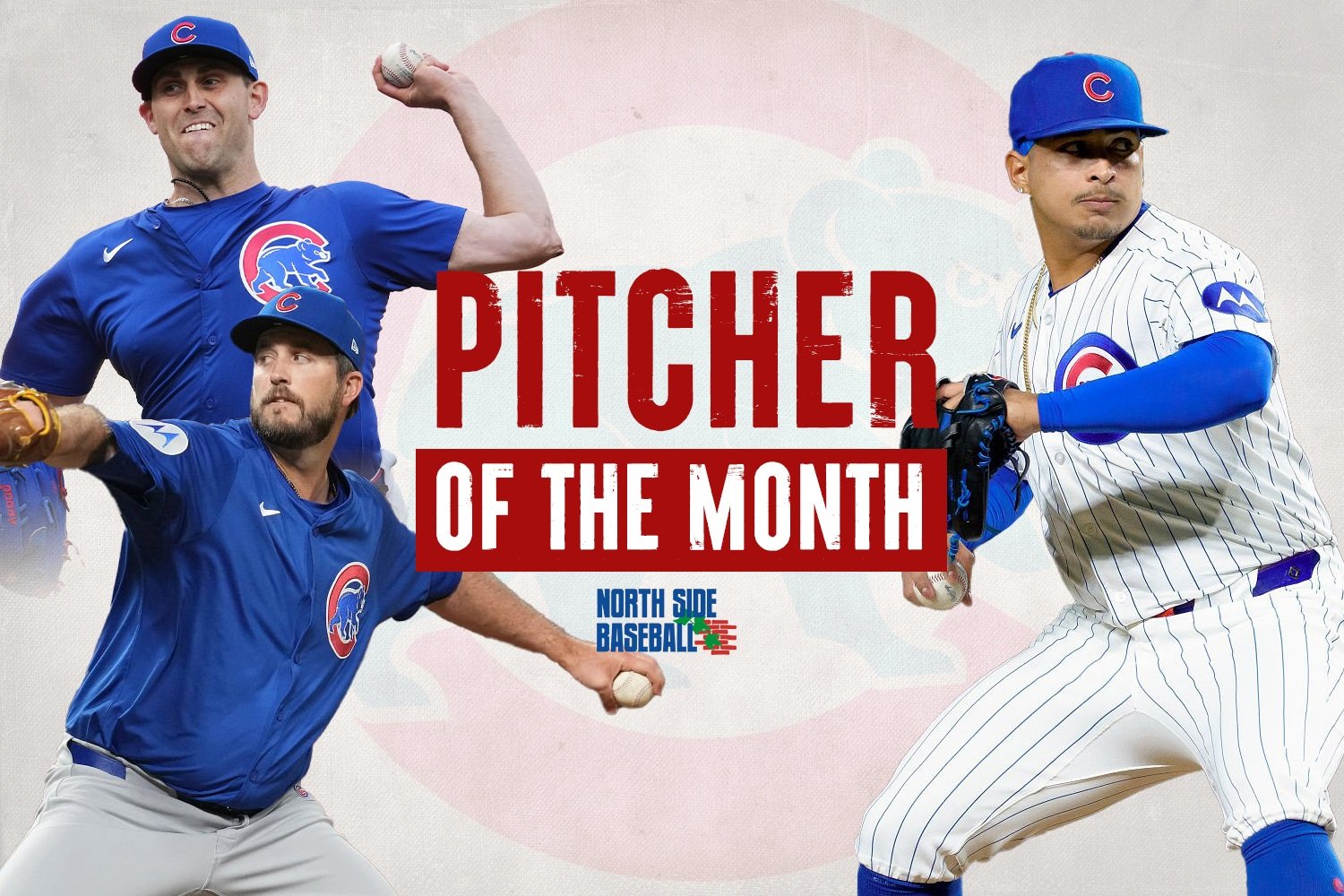 We're at the end of May, and the Chicago Cubs remain atop the National League Central. Within the broader National League Context, too, they look like a legitimate contender when all three phases are working together. And while the pitching phase remains imperfect and unhealthy, there are signs of a framework coming together for the longer term of 2025. Notably, the bullpen in the season's second month was much improved from what we saw in the opening stretch of March & April. By ERA, it was a top-three group in all of baseball (2.67). In particular, Ryan Brasier, Caleb Thielbar, Chris Flexen, and Brad Keller were able to pitch through varying stages of the month without allowing a single run (though, of course, Brasier specifically did not return from injury until near the end of May). While some roles still need to be ironed out, there's a reliable group emerging, with the below names carrying the team through the month within those roles. #3: Matthew Boyd May Stats: 28.0 IP, 3.54 ERA, 3.04 FIP, 30.4% K-rate, 1.8% BB-rate, 1.04 WHIP Perhaps the best value signing of the offseason, Boyd finds himself among the top three on this list for the second consecutive month. Within a starting staff marred by injury (Shota Imanaga, Justin Steele), home run issues (Jameson Taillon), or overall inconsistency (Ben Brown), Boyd has been a steadying force for the rotation. What's been even more impressive is the gap between his strikeout and walk rates. While not quite at a career-best rate, Boyd's strikeout rate for the year (24.9 percent) is above his career average, with eight strikeouts in three separate outings within his last four. In those starts, he's punched out a combined 27 hitters against just a pair of walks. It isn't always a flawless outing, but the value of such stability cannot be overstated. #2: Drew Pomeranz May Stats: 10.1 IP, 0.00 ERA, 2.00 FIP, 32.5% K-rate, 5.2% BB-rate, 0.58 WHIP While even I have openly questioned how long Pomeranz can sustain his success while essentially throwing just one pitch, the veteran reliever just continues to simply not allow runs. He's barely allowing baserunners while finding success via efficiency. His 74.5 first strike percentage is a career high (by 14 percent), and he's getting called strikes a shade over 20 percent of the time. So, while he's not garnering massive whiffs (just 9.7 percent), he's freezing hitters into not swinging with his fastball movement. An encouraging sign is that the knuckle curve is starting to manifest a little bit more. He's thrown it at least 20 percent of the time in half of his last eight appearances. For a pitcher already filling up the strike zone with a hard, moving four-seam fastball, making that pitch back into a regular feature could be devastating for opposing hitters. For now, we'll take a month without a run allowed, especially when the last one (on May 31st) came as an opener in a shutout victory. #1 (May Cy Young) Daniel Palencia May Stats: 12.0 IP, 1.50 ERA, 1.35 FIP, 33.3% K-rate, 6.6% BB-rate, 0.75 WHIP Don't look now, but it appears that the Chicago Cubs may have found their closer. What started as Ryan Pressly's job was passed on to Porter Hodge prior to the latter's oblique injury. When Hodge hit the Injured List, Craig Counsell gave his most electric arm a crack at the ninth inning. Despite a blip in Miami during the month, Palencia has been excellent, recording five saves during the month. His 33.3 percent strikeout rate led the team's staff in May while he's gotten the ball on the ground almost half the time (48.0 percent). His 99.2 MPH average fastball velocity sits in the 98th percentile, as does his 2.1 percent barrel rate. It's just an extraordinarily enticing blend of outcomes for a guy that has ran with the opportunity to close games. The Cubs have other relievers that have been effective, but you want a certain degree of violence in the ninth. Palencia has got it.
 -
Michael Busch's Start to 2025 Has Been the Same, But Different
RandallPnkFloyd posted an article in Cubs
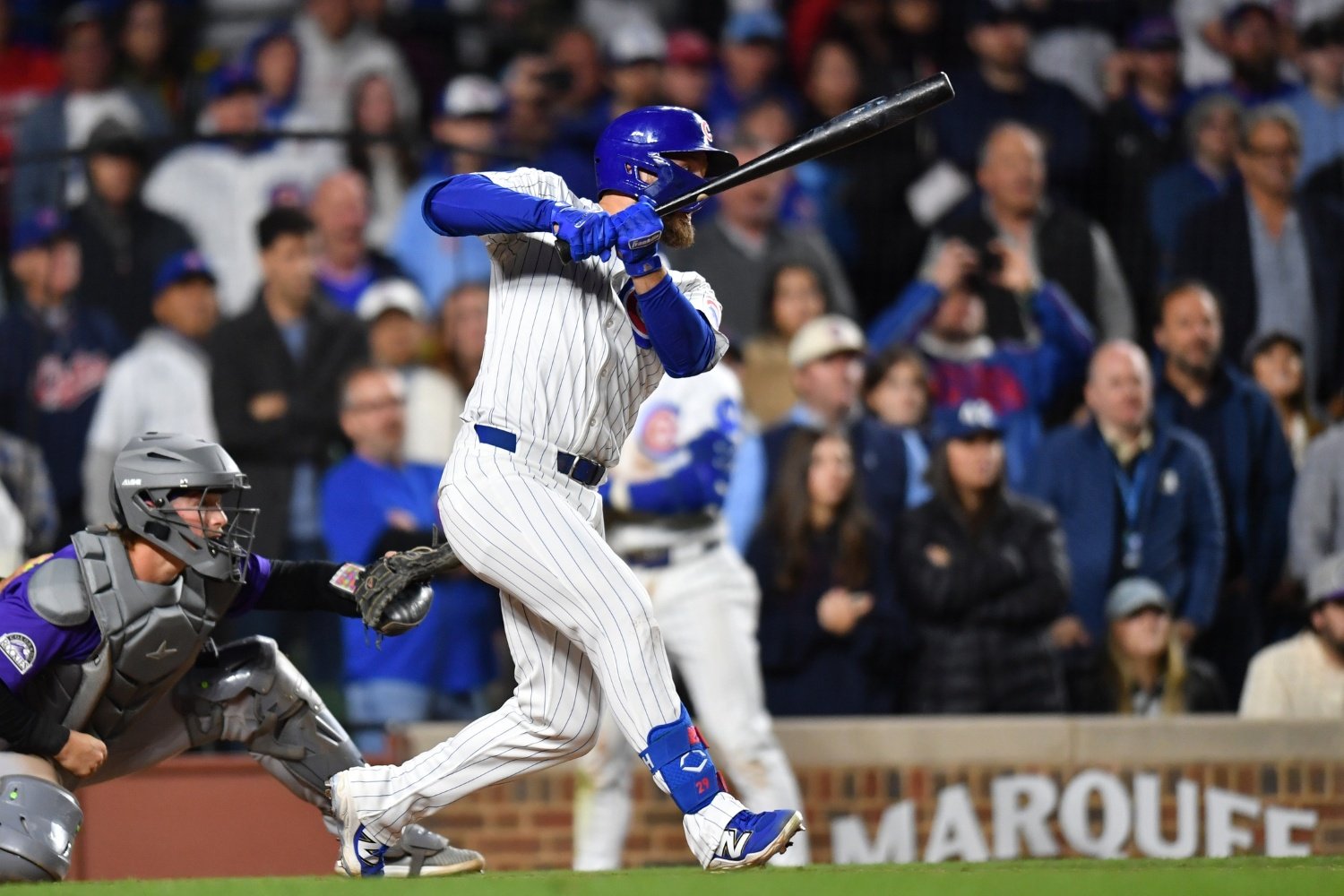 Stop me if you've heard this one before: Michael Busch comes out of the gate hot. He slugs .500 in March and April, providing consistent power in a potent Chicago Cubs offense. The calendar flips over to May, the power disappears, the strikeout rate rises, and we're pondering whether what we saw in the season's first month was even real. While such a scenario may speak more to what we saw in 2024, it's hard to ignore the parallels between Busch's rookie campaign last season and what we've seen thus far in 2025. It's an imperfect comparison. Maybe even a dramatic one. But it's hard to ignore some of the similarities between his output in the early going of each campaign. The 2024 March/April iteration of Michael Busch looked like a long-term solution at first base. He hit .266, reached base at a .333 clip, and posted an isolated power figure of .234. His wRC+ checked in at 130. He also struck out at a rate north of 30 percent (more on that in a moment). When May rolled around, he looked like hardly the same hitter. The average fell to just .208 (even with a .342 BABIP). The ISO dropped nearly 70 points to .167. His wRC+ barely scratched above the "average" threshold, at 104. His K% managed to sit five points higher, at 37.2 percent. Busch would, of course, go on to stabilize in certain respects. Even if the power wavered throughout the year, he was able to cut the strikeout rate in each month as the season progressed, while improving his quality of contact. There was a maturity there that assured him of the first base position ahead of 2025. That position remains stable, but the same April-to-May trend remains present. In March and April of this year, Busch went for a .276 average. He ISO'd .245 and posted a 152 wRC+. The strikeout rate remained high, in a relative sense, but came down massively from last year's start (24.8 percent). But since the calendar read "May 1," we're witnessing a lot of the same things. Busch is hitting just .221 this month. His ISO has cratered in comparison with the opening month, at .147. His wRC+, as of this writing, is at 103. The biggest change is in the strikeout rate. It's still up from last month, but not what it was in 2024 (25.3 percent). Like last year, he's managed to increase the walk rate in the midst of struggles elsewhere. Busch has stabilized his game in comparison to last year, but the power dip in consecutive years is a rather jarring feature of his game. Especially because, at first blush, there isn't much in the way of indicators. He's experiencing a higher quality of contact (around 37 percent Hard%), has largely cut or remained steady in his whiff rates, and has virtually an identical groundball rate in May (37.5) that he did in March & April (35.5). Contact is quite similar, too. It actually defies logic. Busch has a higher average exit velocity in May. A steeper launch angle. A higher xSLG. He's finding the barrel with more frequency, too. Even with a slight increase on the chase-and-miss front, there is nothing that indicates Busch should be struggling to find power to this extent, let alone feature an ISO of just .107 in the last two weeks. So what gives? It might be as simple as where in the zone Busch is putting his bat. The following is Busch's zone profile in March & April: Nothing surprising here, especially given the power output. Swings in the upper two-thirds of the zone, as well as on the inner portion of the plate. When you look at Busch's swing against the above visual, it makes sense. And then you get to May: Some similar trends exist through the middle of the zone vertically. But there's more emphasis on the lower portions of the zone on the horizontal side. It may not be intentional, but you're talking about a guy with 19th percentile bat speed. As good as everything else looks, generating enough lift to create impact from where in the zone Busch is swinging more frequently this month is going to be a difficult task. For Busch, it looks like one he can't overcome at present. Michael Busch is very much the hitter we expected from a growth standpoint. The strikeouts are down, the contact is up, and the approach has remained steady even through a big ol' power dip. It appears he just needs to work on those pitches in the upper portion of the zone in order to get it back.
 -
Image courtesy of © Patrick Gorski-Imagn Images Stop me if you've heard this one before: Michael Busch comes out of the gate hot. He slugs .500 in March and April, providing consistent power in a potent Chicago Cubs offense. The calendar flips over to May, the power disappears, the strikeout rate rises, and we're pondering whether what we saw in the season's first month was even real. While such a scenario may speak more to what we saw in 2024, it's hard to ignore the parallels between Busch's rookie campaign last season and what we've seen thus far in 2025. It's an imperfect comparison. Maybe even a dramatic one. But it's hard to ignore some of the similarities between his output in the early going of each campaign. The 2024 March/April iteration of Michael Busch looked like a long-term solution at first base. He hit .266, reached base at a .333 clip, and posted an isolated power figure of .234. His wRC+ checked in at 130. He also struck out at a rate north of 30 percent (more on that in a moment). When May rolled around, he looked like hardly the same hitter. The average fell to just .208 (even with a .342 BABIP). The ISO dropped nearly 70 points to .167. His wRC+ barely scratched above the "average" threshold, at 104. His K% managed to sit five points higher, at 37.2 percent. Busch would, of course, go on to stabilize in certain respects. Even if the power wavered throughout the year, he was able to cut the strikeout rate in each month as the season progressed, while improving his quality of contact. There was a maturity there that assured him of the first base position ahead of 2025. That position remains stable, but the same April-to-May trend remains present. In March and April of this year, Busch went for a .276 average. He ISO'd .245 and posted a 152 wRC+. The strikeout rate remained high, in a relative sense, but came down massively from last year's start (24.8 percent). But since the calendar read "May 1," we're witnessing a lot of the same things. Busch is hitting just .221 this month. His ISO has cratered in comparison with the opening month, at .147. His wRC+, as of this writing, is at 103. The biggest change is in the strikeout rate. It's still up from last month, but not what it was in 2024 (25.3 percent). Like last year, he's managed to increase the walk rate in the midst of struggles elsewhere. Busch has stabilized his game in comparison to last year, but the power dip in consecutive years is a rather jarring feature of his game. Especially because, at first blush, there isn't much in the way of indicators. He's experiencing a higher quality of contact (around 37 percent Hard%), has largely cut or remained steady in his whiff rates, and has virtually an identical groundball rate in May (37.5) that he did in March & April (35.5). Contact is quite similar, too. It actually defies logic. Busch has a higher average exit velocity in May. A steeper launch angle. A higher xSLG. He's finding the barrel with more frequency, too. Even with a slight increase on the chase-and-miss front, there is nothing that indicates Busch should be struggling to find power to this extent, let alone feature an ISO of just .107 in the last two weeks. So what gives? It might be as simple as where in the zone Busch is putting his bat. The following is Busch's zone profile in March & April: Nothing surprising here, especially given the power output. Swings in the upper two-thirds of the zone, as well as on the inner portion of the plate. When you look at Busch's swing against the above visual, it makes sense. And then you get to May: Some similar trends exist through the middle of the zone vertically. But there's more emphasis on the lower portions of the zone on the horizontal side. It may not be intentional, but you're talking about a guy with 19th percentile bat speed. As good as everything else looks, generating enough lift to create impact from where in the zone Busch is swinging more frequently this month is going to be a difficult task. For Busch, it looks like one he can't overcome at present. Michael Busch is very much the hitter we expected from a growth standpoint. The strikeouts are down, the contact is up, and the approach has remained steady even through a big ol' power dip. It appears he just needs to work on those pitches in the upper portion of the zone in order to get it back. View full article
-
Image courtesy of © Katie Stratman-Imagn Images The names atop the FanGraphs Wins Above Replacement leaderboard as of this writing read as such: Aaron Judge: 4.6 Pete Crow-Armstrong: 3.1 The gap between the two notwithstanding, the Chicago Cubs' centerfielder has been the second-most valuable player in the majors thus far. We knew his baserunning and defensive prowess would carry him to a respectable figure there, regardless of his offensive contributions. To some extent, it has; his 3.2 BsR baserunning metric ranks sixth in the sport, and his Fielding Run Value figure of 9 paces the league. What really stands out through nearly two months of the year, though, is the power he's generated at the plate. Crow-Armstrong has already slugged 14 home runs in 225 plate appearances (a top-10 total), and boasts a gaudy .290 isolated power (ISO, the difference between slugging and batting average). So not only do you have a player with 97th-percentile sprint speed, but you have one who's putting the ball over the fence almost as often as anyone in baseball. An interesting thing to think about in this is whether we should have expected it. Since being drafted in 2020, the book on Crow-Armstrong is exactly what you'd imagine it'd be. Scouting reports may have indicated some power, but speed and defense were always expected to be the foundational components of his game. Was there anything sitting in the draft scouting or in his minor-league output that indicated such power was on the horizon? The following is a collection of scouting reports before or upon Crow-Armstrong's selection 19th overall by the New York Mets in 2020. I've included only a selection in which his power potential is noted. MLB Pipeline: FanGraphs: Baseball America: Baseball Prospectus: The fascinating part of these is that there wasn't a consensus on this aspect of his game. If you go through the remainder of those reports, you get the expected bits about the other tools. When it came to his pop, though, predictions varied widely in both confidence and direction. Crow-Armstrong's minor league output gave us little reason to think that power like this was in the cards early in his career. He hit 16 homers across two levels in 2022, and 20 between two in 2023. But while there was a slight increase between the two seasons, he hit only 15 between Triple-A and the major-league level last year. Given the variance in the initial scouting and the relatively low home run totals while scaling the ladder, it's impossible to say that we expected what he's done to this point. A fun aspect about Crow-Armstrong is that he can derive "power" from his speed, stretching singles to doubles and doubles to triples. But he's also flashed a Barrel rate around 14%, driving the ball to a degree that we didn't expect. Given the bat speed, which is up about 1.2 MPH from last year, he should continue to find success in putting the ball over the fence while driving up the rate-based power figures (ISO, SLG) courtesy of his speed. The other tools were already helping him to compensate for the hyperaggressiveness of his approach. But if you're going to continue to get star-level power output from him, this is a whole new ballgame. View full article