


RandallPnkFloyd
-
Posts
513 -
Joined
-
Last visited
Content Type
Profiles
Joomla Posts 1
Chicago Cubs Videos
Chicago Cubs Free Agent & Trade Rumors, Notes, & Tidbits
2026 Chicago Cubs Top Prospects Ranking
News
2023 Chicago Cubs Draft Picks
Guides & Resources
2024 Chicago Cubs Draft Picks
The Chicago Cubs Players Project
2025 Chicago Cubs Draft Pick Tracker
2026 Chicago Cubs Draft Tracker: Picks & Bonuses
Blogs
Events
Forums
Store
Gallery
Everything posted by RandallPnkFloyd
-
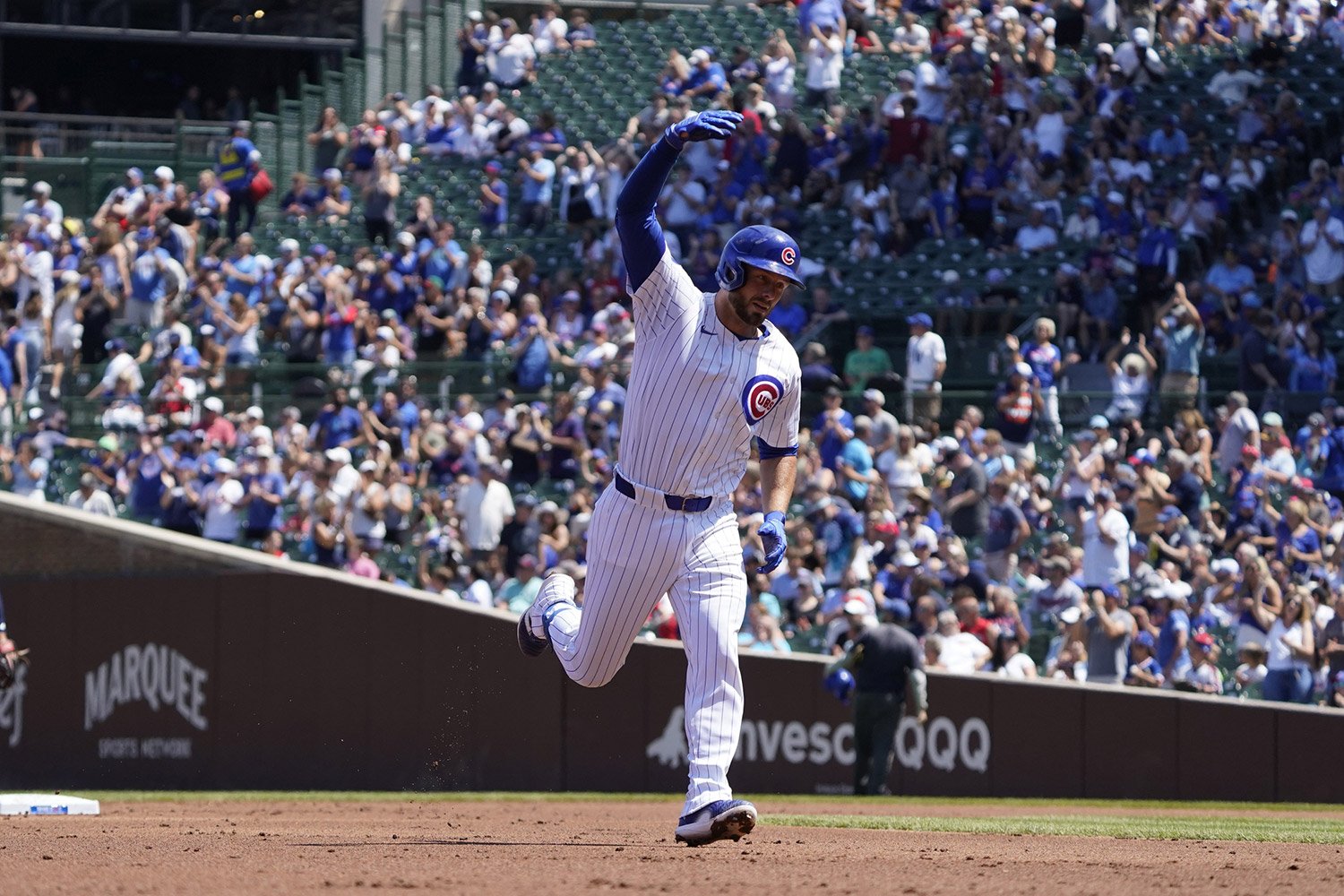 However, one small moment from the GM Meetings stands out as notable as it relates to the Chicago Cubs’ “first baseman of the future.” Of Michael Busch, Hoyer said: “Because we now know he can play first, he doesn’t have to work on it. He can move around a little bit. But the expectation is he’s playing first.” There was plenty else thrown in there with respect to Busch’s defensive development at the position, all of which was deservedly complementary. But that very small note of it all is of great interest to me. Because this was something I had already thought about. When the Cubs acquired Busch, I initially waxed poetic for long stretches about which position would best suit him. It was an entirely futile exercise, as the team plugged him into first base from the jump. But let’s not be too quick to forget that Busch does have at least some experience at other spots. The Los Angeles Dodgers gave him time at second, third, and left as a member of their system. I’m not sure how much any other position was considered despite the Cubs having a longer-term need at the hot corner at the time of the trade. Regardless, the defensive returns were likely better than anyone could have imagined in his first full year at the position. From 2021 to 2023, Busch spent exactly 22 games at first, 17 of which were starts. With the Cubs in 2024, it was 142 games (130 starts). Not only did he adjust well, he skyrocketed. Only seven regulars at the position finished with a better Fielding Run Value (1) than Busch, and only eight were better than him in Outs Above Average (2). For that reason, I’m not even remotely suggesting the Cubs casually bump Busch from the spot and turn him into some type of super-utility player. Nor am I saying the Cubs should go out and sign Pete Alonso and slide Busch over to the keystone. Let him continue his growth at the position. At the same time, what if we injected just a little bit of versatility into his game as a treat? The Cubs need to add impact offense. While they have a handful of needs on the mound, we have also seen how lacking an offensive catalyst in your lineup can turn a couple of sluggish games at the dish into extended runs of ineptitude. The glaring issue – aside from ponying up for what it could cost to acquire the archetype needed – is the team’s lack of flexibility as far as the roster goes. On paper, the infield is locked in (once Nico Hoerner returns from injury). The outfield is locked in. Barring a trade of someone like Cody Bellinger or even Ian Happ, it’s going to be difficult for the team to find space for what they need. So, instead of suggesting, I’m simply wondering. I wonder if they could sign someone like Alonso to split time at first and DH while Busch slides over for the former situations. I wonder if Busch’s rapid development makes them think he could handle second base and allow them to become more comfortable trading Nico Hoerner and/or some of their infield prospect depth in pursuit of an arm. I wonder if the team would be willing to upgrade on the infield and move Busch around a couple of times a week if it meant upgrading the offense in any meaningful way. You know, a pseudo-super-utility role. None of those scenarios are likely as they are written. Pete Alonso isn’t likely to accept a role as even a part-time DH, let alone as part of a regular split. The team isn’t likely to move Busch full-time or with any kind of regularity. This is why I’m not suggesting but merely wondering. The team’s lack of flexibility on a roster that needs at least one upgrade of significance lends itself to such queries. While I absolutely believe Jed Hoyer when he says that the organization views Michael Busch as a first baseman moving forward, we shouldn’t outright dismiss the idea of a bit of positional versatility. Because there’s value in that from an overall roster construction standpoint but also a winter transaction one. Perhaps it leaves them with just a bit more flexibility than they appear to have at present. Again, we’re speaking in outlandish ideas here. But until Actual Moves come to fruition, it’s kind of all we have.
 -
If there’s one thing I detest as a writer, it’s constructing trade proposals. In large part, trade proposals are almost always flawed, if not outright bad. Free agency is easy, by comparison. “This guy is not at all attached to a team, so we can absolutely speculate where he might end up.” Trade talks, however, are a different animal entirely. Image courtesy of © Joe Camporeale-Imagn Images We have merely the smallest sense of who could actually be moved. And we certainly don’t know the cost to acquire them. So, I steer clear of them entirely to maintain my brand as the rare quiet, introverted, Smart Baseball Person. I don’t mind so much when other people do it, though. Especially when it’s MLB Trade Rumors; their lists tend to be rooted in reality, whether you’re talking about a ranking or a salary projection. So when they dropped their Top 35 Trade Candidates earlier this week, my ears perked up. Last year’s iteration of the list focused on 25 players, with six of the top eight and seven overall finding new homes before the winter ran out. The justification for expansion was the volume of players that could be available via rebuilding teams or those that have already declared a desire to cut payroll. You’re looking at the Chicago White Sox, Texas Rangers, and St. Louis Cardinals among such teams, with clubs like Tampa Bay or Cleveland always looking to be a little busy to save a few bucks. It’s worth noting that Jorge Soler’s name was on the list and was already moved this week. One down! It's a very interesting exercise to look at the list through Chicago Cubs tinted glasses. Up and down the list, you see names that would look quite sharp in the royal blue pinstripes for one reason or another in 2025. Garrett Crochet, Devin Williams, Ryan Helsley, Bo Bichette. However, there are a couple of issues with parsing through the list while maintaining that specific perspective. An even dozen players on the list are either from teams in the National League Central (the bulk of which currently spend their spring & summers in St. Louis) or the White Sox. While I don’t think we should entirely dismiss the notion of the Cubs doing business within their division or city, it’s an objective truth that teams don’t love doing that. So we might as well knock all those names out of the running ahead of time. Another is Cody Bellinger, who remains on the Cubs roster until he isn’t. That leaves 21 other names for the organization to pursue off this list. The list also features a few relievers that are set to be a bit pricey. Pete Fairbanks and Ryan Pressly fall on somewhat different ends of the reliever salary spectrum. Still, a reliever with a hefty salary either way isn’t really in the Cubs’ nature (a concept we can debate another time). For the same reason, we can probably knock Jordan Montgomery off the team’s wish list following his miserable 2024. As much as Arizona leadership is trying to disparage him publicly enough not to exercise his player option, he’s not walking away from $22.5 million. Still, on the side of the arms, both Jesús Luzardo & Chris Paddack are tantalizing. These are both names that have, historically, been mentioned as potential Cub targets. Both have extensive injury histories, however. Luzardo was a likely trade candidate last year but was limited to just 12 starts. Paddack made 17 in his full-time return from a second Tommy John surgery but continued to experience arm trouble throughout the season. I don’t think that their respective histories make either one less intriguing. But given that some health questions permeate the Cubs’ prospective pitching staff, I’m not sure they’d be inclined to make an upside play when they are probably seeking a little more certainty on the mound. Cross another five names off the list. Only 16 to go. And they’re all position players. Let’s pare it down a bit more. Let’s first knock off Luis Arráez. The Cubs need more power, in addition to the fact that he’s limited positionally. That one doesn’t work. Additionally, I’m not sure the team is willing to pursue an outfield bat unless they can boost the offensive output, which would rule out Mike Yastrzemski, Wilyer Abreu, Leody Taveras, Chas McCormick, Cedric Mullins, and probably Lane Thomas. Not that those are poor options, necessarily. They’re strong supplementary bats in your lineup. However, the Cubs have enough supplementary offensive profiles throughout their lineup. We’re into the single digits now, with only nine players remaining. Those nine read as such: catcher Christian Vázquez, first basemen Yandy Díaz, Josh Naylor, Nathaniel Lowe, and Ryan Mountcastle, third basemen Brett Baty & Eugenio Suárez, shortstop Bo Bichette, and OF/DH Brent Rooker. Not in order, of course, as I’ve already made a right mess of expressing any of this in the order in which MLBTR provides them. But they’re all on there. We also don’t know what the Cubs could seek positionally this winter. We know they must inject some life (read: power) into the offense. But what does that look like? A third-base bopper with Isaac Paredes flipped over to the keystone? A corner outfield bat? A first baseman to split time with Michael Busch and spend some time as a DH (if not someone with just a bit more versatility)? An addition at third base remains possible, though not as much of a need with Paredes’ arrival. Baty is interesting, given his previous prospect pedigree. Now that he’s officially lost the job to Mark Vientos in Queens, the Mets could try to capitalize on that pedigree. At the same time, should Pete Alonso depart in free agency, perhaps you’re flipping Vientos over to first and giving Baty another run at the hot corner. Baty doesn’t provide the type of pop the Cubs should be seeking, but he’s also the kind of post-hype bat we’ve seen the team have an interest in. Interestingly, the Second Half Edition of Eugenio Suárez fits exactly what the Cubs need to add to their lineup. He ISO’d a wild .295 in the second half of the season, and posted a wRC+ of 153. Defensive metrics liked him overall, too, with his FRV & OAA above the average threshold. The power is evident; he’s slugged 30 homers in three of the last four seasons. It’s also an interesting potential move from a logistics standpoint. In acquiring Suárez, you’re essentially moving Paredes over, trading Nico Hoerner, and giving your upper-level prospects some additional time but not blocking them long-term. The combination of his first half and age (33), though, could make the Cubs iffy about pursuit. I’m not sure I hate the idea, though. The Cubs deciding to go the route of a first base/designated hitter type would be interesting. It’s also dependent on how they feel about Michael Busch. Is he your everyday first baseman? Or are there some platoon considerations? Díaz or Mountcastle could make sense as a short-side guy if you want to give Busch some relief against lefties. However, neither has posted particularly impressive power numbers in recent years. Naylor’s bat is likely the biggest upside of the bunch, but he (as well as Lowe) makes less logistical sense as a lefty without positional versatility. That leaves us with Vázquez & Bichette. A well-regarded defensive catcher with only modest offensive upside and an infielder whose current status is based more on name recognition than performance. Suppose the pursuit of a legitimate upgrade behind the dish fails. In that case, Vázquez appears to be at least a worthwhile option, coupled with the apparent offensive rise of Miguel Amaya, until Moises Ballesteros is ready. Bichette could cost a haul even with some of his more recent performance & health woes. He presents a similar logistical fallout to Suárez but with a longer-term blockage of Matt Shaw & James Triantos. This is all a very long way of saying. I’m unsure how much the Chicago Cubs factor into the Top 35 trade candidates, as MLB Trade Rumors illustrate them. Some names could be targets of the front office. And I imagine we’ll hear the Cubs connected to some of the chatter for any number of these names. However, most of them will require either a bit of compromise (in the case of an inter-division trade) or some logistical work, on the other hand, to make a fit more apparent. But while we don’t know how the Cubs will be involved with these specific names on the list, it’s interesting to think about how the list could impact the Cubs in other ways. For example, do moves of some of these names add other names to the list, either from the trading or the acquiring organization? There are layers here. And the offseason is just getting started. View full article
-
 We have merely the smallest sense of who could actually be moved. And we certainly don’t know the cost to acquire them. So, I steer clear of them entirely to maintain my brand as the rare quiet, introverted, Smart Baseball Person. I don’t mind so much when other people do it, though. Especially when it’s MLB Trade Rumors; their lists tend to be rooted in reality, whether you’re talking about a ranking or a salary projection. So when they dropped their Top 35 Trade Candidates earlier this week, my ears perked up. Last year’s iteration of the list focused on 25 players, with six of the top eight and seven overall finding new homes before the winter ran out. The justification for expansion was the volume of players that could be available via rebuilding teams or those that have already declared a desire to cut payroll. You’re looking at the Chicago White Sox, Texas Rangers, and St. Louis Cardinals among such teams, with clubs like Tampa Bay or Cleveland always looking to be a little busy to save a few bucks. It’s worth noting that Jorge Soler’s name was on the list and was already moved this week. One down! It's a very interesting exercise to look at the list through Chicago Cubs tinted glasses. Up and down the list, you see names that would look quite sharp in the royal blue pinstripes for one reason or another in 2025. Garrett Crochet, Devin Williams, Ryan Helsley, Bo Bichette. However, there are a couple of issues with parsing through the list while maintaining that specific perspective. An even dozen players on the list are either from teams in the National League Central (the bulk of which currently spend their spring & summers in St. Louis) or the White Sox. While I don’t think we should entirely dismiss the notion of the Cubs doing business within their division or city, it’s an objective truth that teams don’t love doing that. So we might as well knock all those names out of the running ahead of time. Another is Cody Bellinger, who remains on the Cubs roster until he isn’t. That leaves 21 other names for the organization to pursue off this list. The list also features a few relievers that are set to be a bit pricey. Pete Fairbanks and Ryan Pressly fall on somewhat different ends of the reliever salary spectrum. Still, a reliever with a hefty salary either way isn’t really in the Cubs’ nature (a concept we can debate another time). For the same reason, we can probably knock Jordan Montgomery off the team’s wish list following his miserable 2024. As much as Arizona leadership is trying to disparage him publicly enough not to exercise his player option, he’s not walking away from $22.5 million. Still, on the side of the arms, both Jesús Luzardo & Chris Paddack are tantalizing. These are both names that have, historically, been mentioned as potential Cub targets. Both have extensive injury histories, however. Luzardo was a likely trade candidate last year but was limited to just 12 starts. Paddack made 17 in his full-time return from a second Tommy John surgery but continued to experience arm trouble throughout the season. I don’t think that their respective histories make either one less intriguing. But given that some health questions permeate the Cubs’ prospective pitching staff, I’m not sure they’d be inclined to make an upside play when they are probably seeking a little more certainty on the mound. Cross another five names off the list. Only 16 to go. And they’re all position players. Let’s pare it down a bit more. Let’s first knock off Luis Arráez. The Cubs need more power, in addition to the fact that he’s limited positionally. That one doesn’t work. Additionally, I’m not sure the team is willing to pursue an outfield bat unless they can boost the offensive output, which would rule out Mike Yastrzemski, Wilyer Abreu, Leody Taveras, Chas McCormick, Cedric Mullins, and probably Lane Thomas. Not that those are poor options, necessarily. They’re strong supplementary bats in your lineup. However, the Cubs have enough supplementary offensive profiles throughout their lineup. We’re into the single digits now, with only nine players remaining. Those nine read as such: catcher Christian Vázquez, first basemen Yandy Díaz, Josh Naylor, Nathaniel Lowe, and Ryan Mountcastle, third basemen Brett Baty & Eugenio Suárez, shortstop Bo Bichette, and OF/DH Brent Rooker. Not in order, of course, as I’ve already made a right mess of expressing any of this in the order in which MLBTR provides them. But they’re all on there. We also don’t know what the Cubs could seek positionally this winter. We know they must inject some life (read: power) into the offense. But what does that look like? A third-base bopper with Isaac Paredes flipped over to the keystone? A corner outfield bat? A first baseman to split time with Michael Busch and spend some time as a DH (if not someone with just a bit more versatility)? An addition at third base remains possible, though not as much of a need with Paredes’ arrival. Baty is interesting, given his previous prospect pedigree. Now that he’s officially lost the job to Mark Vientos in Queens, the Mets could try to capitalize on that pedigree. At the same time, should Pete Alonso depart in free agency, perhaps you’re flipping Vientos over to first and giving Baty another run at the hot corner. Baty doesn’t provide the type of pop the Cubs should be seeking, but he’s also the kind of post-hype bat we’ve seen the team have an interest in. Interestingly, the Second Half Edition of Eugenio Suárez fits exactly what the Cubs need to add to their lineup. He ISO’d a wild .295 in the second half of the season, and posted a wRC+ of 153. Defensive metrics liked him overall, too, with his FRV & OAA above the average threshold. The power is evident; he’s slugged 30 homers in three of the last four seasons. It’s also an interesting potential move from a logistics standpoint. In acquiring Suárez, you’re essentially moving Paredes over, trading Nico Hoerner, and giving your upper-level prospects some additional time but not blocking them long-term. The combination of his first half and age (33), though, could make the Cubs iffy about pursuit. I’m not sure I hate the idea, though. The Cubs deciding to go the route of a first base/designated hitter type would be interesting. It’s also dependent on how they feel about Michael Busch. Is he your everyday first baseman? Or are there some platoon considerations? Díaz or Mountcastle could make sense as a short-side guy if you want to give Busch some relief against lefties. However, neither has posted particularly impressive power numbers in recent years. Naylor’s bat is likely the biggest upside of the bunch, but he (as well as Lowe) makes less logistical sense as a lefty without positional versatility. That leaves us with Vázquez & Bichette. A well-regarded defensive catcher with only modest offensive upside and an infielder whose current status is based more on name recognition than performance. Suppose the pursuit of a legitimate upgrade behind the dish fails. In that case, Vázquez appears to be at least a worthwhile option, coupled with the apparent offensive rise of Miguel Amaya, until Moises Ballesteros is ready. Bichette could cost a haul even with some of his more recent performance & health woes. He presents a similar logistical fallout to Suárez but with a longer-term blockage of Matt Shaw & James Triantos. This is all a very long way of saying. I’m unsure how much the Chicago Cubs factor into the Top 35 trade candidates, as MLB Trade Rumors illustrate them. Some names could be targets of the front office. And I imagine we’ll hear the Cubs connected to some of the chatter for any number of these names. However, most of them will require either a bit of compromise (in the case of an inter-division trade) or some logistical work, on the other hand, to make a fit more apparent. But while we don’t know how the Cubs will be involved with these specific names on the list, it’s interesting to think about how the list could impact the Cubs in other ways. For example, do moves of some of these names add other names to the list, either from the trading or the acquiring organization? There are layers here. And the offseason is just getting started.
 -
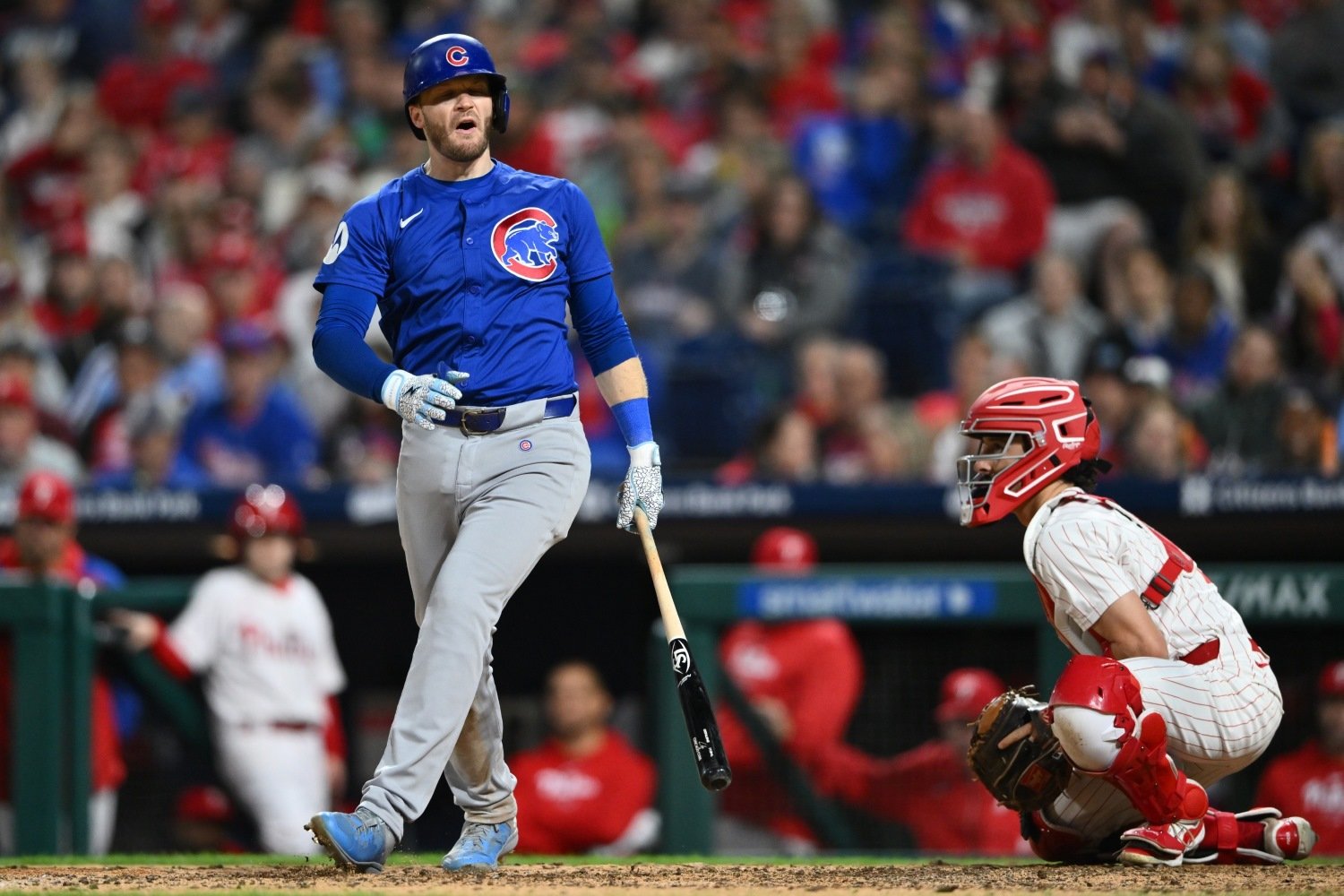
The hot-stove binaries might not apply to this team, this winter. Image courtesy of © Kyle Ross-Imagn Images We’re dangerously close to the end of the 2024 Major League Baseball season. There’s a certain disappointment that comes with that. But for the fans of the 29 teams that won’t be crowned World Series champion, there’s also a level of anticipation that comes with that. It’s interesting to think about where the Chicago Cubs fall on that spectrum. After the last few offseasons, it’s easy to be dismissive of the potential outcomes that the winter of 2024-25 will bring to the North Side. A few marginal changes here, some reclamation-project relievers there. Even with some fairly significant contracts signed (Dansby Swanson and Cody Bellinger, most notably), it’s not as if there has been an earth-shaking move from the current regime at any point, whether via trade or free agency. Given that the same conservative group still rules the organization, that’s likely going to continue to be standard operating procedure in yet another offseason. At the same time, there’s a world where the Cubs can become as interesting as any team in baseball for the next several weeks. The leaders in a massive market spending consecutive years on the mere cusp of contention isn’t acceptable, after all. We’ve reached the point where Jed Hoyer is objectively fighting for his job, given his contract status. That’s not to say that they’re going to dole out beefy contracts to Juan Soto and Corbin Burnes and Alex Bregman in an effort to “win” the offseason and preserve Hoyer’s place atop the front office. But there’s an opportunity here to be as active as they’ve been in any winter of the past several years. We call this the paradox edition of the potential offseason outcomes, with a pathway to both buying and selling in an effort to get back into contention for 2025. There are, of course, certain “locks” for the 2025 Chicago Cubs that go beyond contract status. Shota Imanaga, Justin Steele, and much of the team’s collection of young relievers on the bump (Porter Hodge, Ben Brown, etc.) should be retained. On the positional side, you’re probably looking at Dansby Swanson, Michael Busch, Isaac Paredes, and Pete Crow-Armstrong. These types of names go well beyond what’s on paper. They’re players who not only have a certain level of team control, but feature a skill set that you absolutely desire as a factor in the “next great Cubs team.” If we start to look too closely at contracts, then flexibility starts to dissolve before our eyes. Contractually, much of the 2025 Cubs are likely already here. Which is why our paradoxical version of the impending offseason is so much more fun. Instead of simply accepting the certainty that exists all over the roster and merely supplementing with a short-term focus on the next year or two, the Cubs can deploy a bit of creativity for a change, in order to build out the roster for success that stretches out a bit more long-term. The Chicago Cubs currently boast a handful of quality veterans whose contracts run throughout the next two years. The team, as currently constructed, isn’t really in a position to hang with the genuinely elite teams of the National League in either 2025 or 2026. A couple of simple moves could put them into playoff contention, sure. But what if we start to look at improving this team over the course of that stretch, but also a bit past it? Perhaps that starts with trading Ian Happ—a player whose skill set I’ve come to admire greatly. This isn’t a suggestion that they should move him. But perhaps if you were to move his two more years of advanced approach and steady glovework—there would be many takers on the trade market, although he would be able to direct his own destination—you can shoot higher on corner outfield upside. As easy as it is to love what Happ brings, we also know what his ceiling looks like at this point. The idea here is that you could move his notable money off the books in order to raise that ceiling via a separate deal. Seiya Suzuki fits a similar bill on the positional side of things. His defense is a massive shortcoming, and it’s unlikely the team wants to limit themselves to a full-time player in the designated hitter spot. With only two more years on his contract, could a team take his bat in order for the Cubs to upgrade the other corner in a more comprehensive way? It's not a dissimilar idea from potentially moving Nico Hoerner. Again, we know what he brings to the middle of the infield. But you’re looking at a certain offensive ceiling that could be raised without compromising too much on the defensive side. That could mean elevating a prospect, in the form of Matt Shaw or James Triantos. It could also mean shifting gears entirely and bumping Paredes over to the keystone, in order to improve your offense there while finding a higher-impact bat at third base. If we wanted to propose such an idea on the mound, you’re likely revisiting the idea of trading Jameson Taillon. While he faltered at points, his total body of work in 2024 looks better than many of his career numbers. His best ERA (3.27) since 2018 & his best FIP (3.92) since 2019. A team looking to bolster its rotation in the shorter term could absolutely look to Taillon, in order to maximize their next two years. Let’s quickly circle back to what’s not being suggested here. The idea is not that the Cubs would be better without any of these four players, absent further moves. Nor is the idea that any of the four would be moved in the exact deal for their potential replacement. The concept is that the Cubs have a handful of high-quality veterans for the next two years. But we’ve established throughout this season that the Cubs need impact on both sides of the ball. There is a world where the team could move at least one player noted here in pursuit of a separate deal in which they can find a legitimate upgrade that represents a longer-term play. Of course, I don’t know what that player looks like. Beyond the free-agent market (which is sparse in terms of the type of talent the Cubs actually need once you look past the frustratingly unattainable Soto), we don’t exactly know who could be had for the right price via trade. Nor do we have a present idea of non-tenders. Not that a non-tender candidate is necessarily the type of player you look to in order to replace established vets. It's just one more source of uncertainty. You get the point. Ultimately, the Chicago Cubs have a set position within the National League. They’re a fine team, but not necessarily a good one and certainly not an elite one. We’ve established before what they are, which is largely a collection of complementary bats in need of more impact sprinkled throughout their roster. With some of these two-year guys in tow and a high volume of covetable prospects, there’s a world where the Cubs can “sell” some of the quality veterans while pivoting to deals that feature higher-impact talent whose team control stretches beyond 2026. It’s not an easy world to perceive, especially in the face of prospect-hugging types. It's a little scary. It also goes against the typical modus operandi of this front office, as it represents a more aggressive means of operating. It’s why we’re treating it as such a paradoxical idea. Trading your veterans to get better now, while making aggressive movement toward adding more impact to the roster. It borders on fiction, to be sure. But, man, it would be a fascinating sequence of events to watch unfold as we progress into the winter months. View full article
-
Are Cubs Buyers or Sellers This Offseason? Could It Be Some of Each?
RandallPnkFloyd posted an article in Cubs
 We’re dangerously close to the end of the 2024 Major League Baseball season. There’s a certain disappointment that comes with that. But for the fans of the 29 teams that won’t be crowned World Series champion, there’s also a level of anticipation that comes with that. It’s interesting to think about where the Chicago Cubs fall on that spectrum. After the last few offseasons, it’s easy to be dismissive of the potential outcomes that the winter of 2024-25 will bring to the North Side. A few marginal changes here, some reclamation-project relievers there. Even with some fairly significant contracts signed (Dansby Swanson and Cody Bellinger, most notably), it’s not as if there has been an earth-shaking move from the current regime at any point, whether via trade or free agency. Given that the same conservative group still rules the organization, that’s likely going to continue to be standard operating procedure in yet another offseason. At the same time, there’s a world where the Cubs can become as interesting as any team in baseball for the next several weeks. The leaders in a massive market spending consecutive years on the mere cusp of contention isn’t acceptable, after all. We’ve reached the point where Jed Hoyer is objectively fighting for his job, given his contract status. That’s not to say that they’re going to dole out beefy contracts to Juan Soto and Corbin Burnes and Alex Bregman in an effort to “win” the offseason and preserve Hoyer’s place atop the front office. But there’s an opportunity here to be as active as they’ve been in any winter of the past several years. We call this the paradox edition of the potential offseason outcomes, with a pathway to both buying and selling in an effort to get back into contention for 2025. There are, of course, certain “locks” for the 2025 Chicago Cubs that go beyond contract status. Shota Imanaga, Justin Steele, and much of the team’s collection of young relievers on the bump (Porter Hodge, Ben Brown, etc.) should be retained. On the positional side, you’re probably looking at Dansby Swanson, Michael Busch, Isaac Paredes, and Pete Crow-Armstrong. These types of names go well beyond what’s on paper. They’re players who not only have a certain level of team control, but feature a skill set that you absolutely desire as a factor in the “next great Cubs team.” If we start to look too closely at contracts, then flexibility starts to dissolve before our eyes. Contractually, much of the 2025 Cubs are likely already here. Which is why our paradoxical version of the impending offseason is so much more fun. Instead of simply accepting the certainty that exists all over the roster and merely supplementing with a short-term focus on the next year or two, the Cubs can deploy a bit of creativity for a change, in order to build out the roster for success that stretches out a bit more long-term. The Chicago Cubs currently boast a handful of quality veterans whose contracts run throughout the next two years. The team, as currently constructed, isn’t really in a position to hang with the genuinely elite teams of the National League in either 2025 or 2026. A couple of simple moves could put them into playoff contention, sure. But what if we start to look at improving this team over the course of that stretch, but also a bit past it? Perhaps that starts with trading Ian Happ—a player whose skill set I’ve come to admire greatly. This isn’t a suggestion that they should move him. But perhaps if you were to move his two more years of advanced approach and steady glovework—there would be many takers on the trade market, although he would be able to direct his own destination—you can shoot higher on corner outfield upside. As easy as it is to love what Happ brings, we also know what his ceiling looks like at this point. The idea here is that you could move his notable money off the books in order to raise that ceiling via a separate deal. Seiya Suzuki fits a similar bill on the positional side of things. His defense is a massive shortcoming, and it’s unlikely the team wants to limit themselves to a full-time player in the designated hitter spot. With only two more years on his contract, could a team take his bat in order for the Cubs to upgrade the other corner in a more comprehensive way? It's not a dissimilar idea from potentially moving Nico Hoerner. Again, we know what he brings to the middle of the infield. But you’re looking at a certain offensive ceiling that could be raised without compromising too much on the defensive side. That could mean elevating a prospect, in the form of Matt Shaw or James Triantos. It could also mean shifting gears entirely and bumping Paredes over to the keystone, in order to improve your offense there while finding a higher-impact bat at third base. If we wanted to propose such an idea on the mound, you’re likely revisiting the idea of trading Jameson Taillon. While he faltered at points, his total body of work in 2024 looks better than many of his career numbers. His best ERA (3.27) since 2018 & his best FIP (3.92) since 2019. A team looking to bolster its rotation in the shorter term could absolutely look to Taillon, in order to maximize their next two years. Let’s quickly circle back to what’s not being suggested here. The idea is not that the Cubs would be better without any of these four players, absent further moves. Nor is the idea that any of the four would be moved in the exact deal for their potential replacement. The concept is that the Cubs have a handful of high-quality veterans for the next two years. But we’ve established throughout this season that the Cubs need impact on both sides of the ball. There is a world where the team could move at least one player noted here in pursuit of a separate deal in which they can find a legitimate upgrade that represents a longer-term play. Of course, I don’t know what that player looks like. Beyond the free-agent market (which is sparse in terms of the type of talent the Cubs actually need once you look past the frustratingly unattainable Soto), we don’t exactly know who could be had for the right price via trade. Nor do we have a present idea of non-tenders. Not that a non-tender candidate is necessarily the type of player you look to in order to replace established vets. It's just one more source of uncertainty. You get the point. Ultimately, the Chicago Cubs have a set position within the National League. They’re a fine team, but not necessarily a good one and certainly not an elite one. We’ve established before what they are, which is largely a collection of complementary bats in need of more impact sprinkled throughout their roster. With some of these two-year guys in tow and a high volume of covetable prospects, there’s a world where the Cubs can “sell” some of the quality veterans while pivoting to deals that feature higher-impact talent whose team control stretches beyond 2026. It’s not an easy world to perceive, especially in the face of prospect-hugging types. It's a little scary. It also goes against the typical modus operandi of this front office, as it represents a more aggressive means of operating. It’s why we’re treating it as such a paradoxical idea. Trading your veterans to get better now, while making aggressive movement toward adding more impact to the roster. It borders on fiction, to be sure. But, man, it would be a fascinating sequence of events to watch unfold as we progress into the winter months.
 -
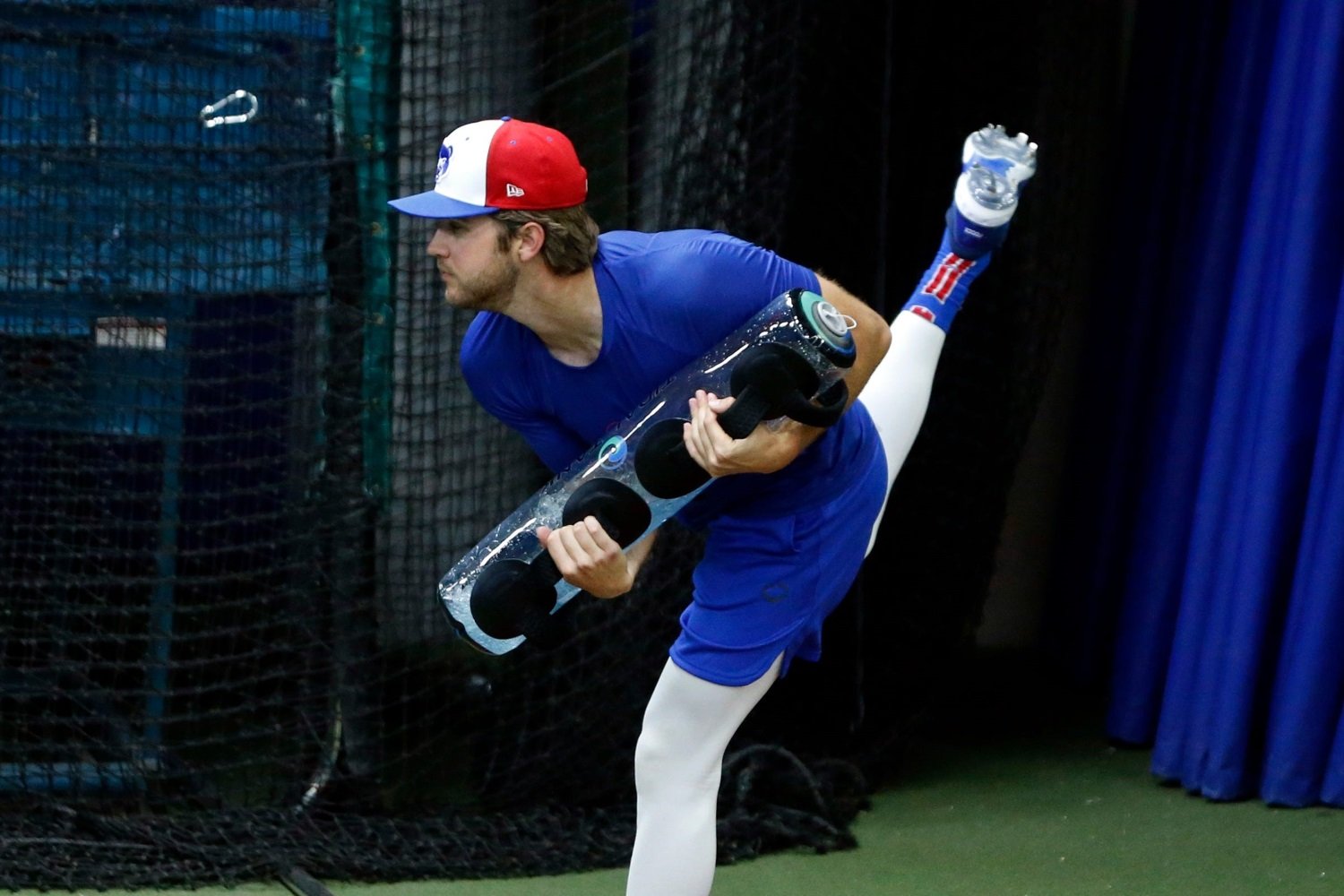 On the position side, Moises Ballesteros has continued to flash much of what made him such an enticing prospect throughout 2024. He’s shown the power, utilizing his work behind the plate to key his development as a hitter. Jonathon Long has showcased the power bat that is one of his hallmarks. Ben Cowles has demonstrated a keen approach, but has struggled to produce hits consistently. Up on the bump, it’s been more of a mixed bag. So much of what we saw in Week 3 makes plenty of sense. Ballesteros started the week off with an 0-for-5 dud of a performance on Tuesday. But he came back out on Wednesday and went 2-for-4 with a double and homer, his third of each during the fall slate. He added three more hits (including his fourth homer) on Friday to round out the week. He’s now at a .391/.431/.717 line for the fall, with just seven strikeouts against four walks. Suffice to say, his AFL stint has been just about everything we could have hoped for. Long and Cowles also maintained much of what we’ve seen from them for the Solar Sox. The former knocked in a pair of runs with a hit on Wednesday before slugging his third home run of the fall on Thursday. He drove in another run with a hit on Friday. He’s hitting .317 across 46 plate appearances, with his 13 RBIs pacing Mesa thus far. Cowles was 1-for-7 between Tuesday and Wednesday, before recording three hits in a 14-run Solar Sox outburst on Friday. It’s been uneven, but he has his batting average up to .244 and is maintaining a .354 OBP through 48 trips to the plate, despite a slow start. Cubs pitchers were spread quite a bit throughout the week. Vince Reilly kicked off the week for the North Side delegation, as he threw two shutout innings in Tuesday’s loss to Surprise, with a strikeout, walk, and hit recorded throughout. The next day, Mesa turned to Grant Kipp, who turned in a lovely start. He threw three innings and struck out five in what was perhaps the biggest highlight from Chicago pitching for the week—especially given how much of a struggle the end of it turned out to be. Kipp only sits 92-93 MPH and will turn 25 years old next month, but he does have an interesting pair of breaking balls and stands 6-foot-6. It would make a lot of sense to move him to the bullpen next year and see if he can take a forward leap. Friday was a busy one that saw three Cub arms take the mound, including a start from Luis Rujano. Rujano struggled across his two innings, with three strikeouts, three walks, two hits, and a pair of runs mixed in a busy couple of innings. Shane Marshall appeared later in that game, with a scoreless inning in the midst of a difficult fall season. That appearance dropped his ERA in the AFL to… 20.25. Sam Thoresen appeared in the ninth inning of what was, at that point, a blowout against Peoria. Five walks, a hit, and four unearned runs later, it was a 14-10 Mesa win that required a late save from Athletics prospect Wander Guante. Reilly bookended the week with another inning (and a save) against Glendale on Saturday, despite three walks in his single inning of work. So this week for the Mesa Solar Sox, as it relates to the Cubs, was much like the first two. Some really nice stuff from the hitters and an extremely mixed bag of outings from the arms. After a day off on Sunday, the Sox will head back out to Surprise ahead of an actual full week of games.
 -
After a day off last Monday, the Chicago Cubs contingent of Arizona Fall League prospects was back at it with the Mesa Solar Sox. While the record for the Sox wasn’t terrific, we saw some positive developments from the North Side representatives. Even more encouraging is that the trend extends beyond Moises Ballesteros. Let’s talk about Moises Ballesteros first, though. The organization’s top prospect behind the dish had a big week for the Solar Sox. He started with a pair of hits and a walk on Tuesday, keying a 15-2 Mesa win over Scottsdale. He followed that up with another two knocks on Wednesday, including his second homer of the fall slate. His other hit was a double. He followed up a day off on Thursday with two more hits on Friday. Ballesteros is hitting .419 with a .457 on-base percentage across 31 fall at-bats. He remains dead even in strikeouts to walks, with three each. Four of his 13 hits have been of the extra base variety, with two homers and two doubles to date. He’s been excellent while simultaneously putting in the work behind the plate that appears to be helping him with the bat. It doesn’t look like the fall season will do anything to curb our excitement over his potential. However, Ballesteros’ prowess at the plate wasn’t the only offensive highlight for the Cubs’ representatives on the Mesa roster. Ben Cowles had a nice week after a tough start in the desert. He turned in a three-hit effort to open the week on Tuesday, featuring a walk and a trio of runs knocked in, largely courtesy of two doubles. He added two more hits across five at-bats on Thursday with another RBI. However, Saturday was perhaps the most encouraging start for Cowles, as he went 0-for-1 with three free passes. He has an average of .222 and an OBP up to .344 in 27 AFL at-bats. A far cry from where he stood after week one. Flipping back to he’s-been-good-since-the-jump side of the spectrum: Jonathon Long. After going just 1-for-5 on Wednesday, Long recorded three hits against Salt River on Thursday, one of which was a double. He homered on Friday to give him two in the AFL. Long’s at a .333/.375/.600/.975 line thus far. Overall, it was a really nice week for the offensive prospects the Cubs sent down. We saw some power, some approach, and some timely hitting. What more could we want? Up on the bump, Sam Thoresen was the first Cub to appear this week. He threw a scoreless ninth inning on Tuesday. Vince Reilly followed him up with a save on Wednesday, throwing a perfect ninth against Peoria that included a strikeout. After a Cub-free Thursday, we saw Grant Kipp & Shane Marshall on Friday. The results were…not as terrific. Kipp was a bit uneven in his start, allowing four runs across three innings of work, with a home run allowed and a lot of quality contact against. Marshall’s outing was much more concerning, however. He worked through one inning and gave up six hits, including a pair of home runs and five runs overall. His fall ERA stands at 27.00 after a string of laborsome appearances. Thoresen book-ended the week for the Solar Sox on Saturday but was hit with the loss after allowing two hits and two walks in a walk-off loss. Ultimately, it was a much more encouraging week from the offensive representatives than the arms. It’s also easier to find meaningful takeaways for the bats, given the higher volume of appearances than we see from pitchers on AFL rosters. You’re talking about regular starts with a full slate of plate appearances therein against maybe one or two appearances in a week isolated to a single inning. That’s the takeaway from Week 2 of the Arizona Fall League: the offensive prospects give us more to examine, and the Cubs’ bats looked very good. The whole league has the day off on Monday before the Solar Sox make the extremely unenviable drive out to Surprise to kick off the week on Tuesday. View full article
- 1 reply
-
- 1
-

-
- moises ballesteros
- jonathon long
- (and 5 more)
-
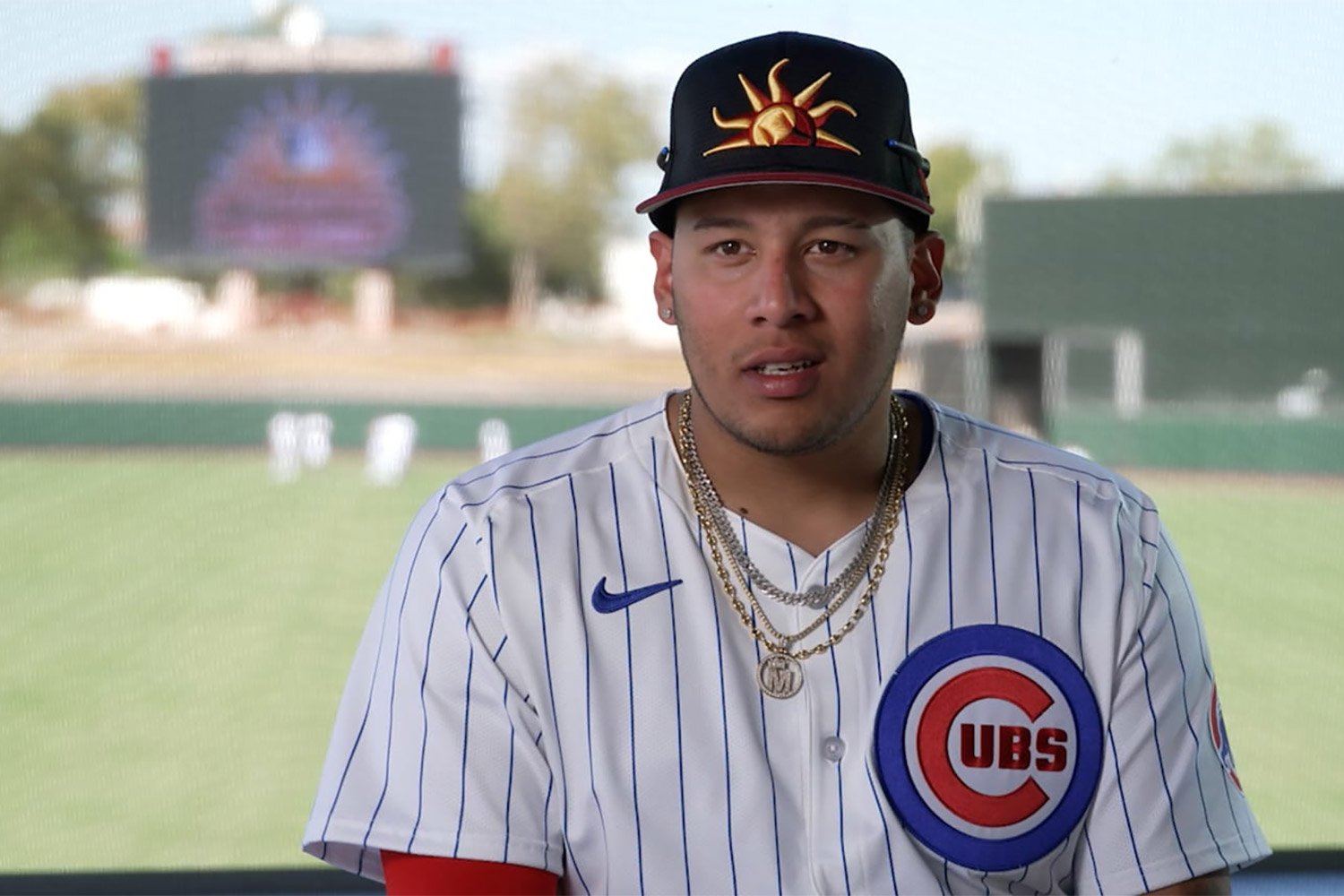 Let’s talk about Moises Ballesteros first, though. The organization’s top prospect behind the dish had a big week for the Solar Sox. He started with a pair of hits and a walk on Tuesday, keying a 15-2 Mesa win over Scottsdale. He followed that up with another two knocks on Wednesday, including his second homer of the fall slate. His other hit was a double. He followed up a day off on Thursday with two more hits on Friday. Ballesteros is hitting .419 with a .457 on-base percentage across 31 fall at-bats. He remains dead even in strikeouts to walks, with three each. Four of his 13 hits have been of the extra base variety, with two homers and two doubles to date. He’s been excellent while simultaneously putting in the work behind the plate that appears to be helping him with the bat. It doesn’t look like the fall season will do anything to curb our excitement over his potential. However, Ballesteros’ prowess at the plate wasn’t the only offensive highlight for the Cubs’ representatives on the Mesa roster. Ben Cowles had a nice week after a tough start in the desert. He turned in a three-hit effort to open the week on Tuesday, featuring a walk and a trio of runs knocked in, largely courtesy of two doubles. He added two more hits across five at-bats on Thursday with another RBI. However, Saturday was perhaps the most encouraging start for Cowles, as he went 0-for-1 with three free passes. He has an average of .222 and an OBP up to .344 in 27 AFL at-bats. A far cry from where he stood after week one. Flipping back to he’s-been-good-since-the-jump side of the spectrum: Jonathon Long. After going just 1-for-5 on Wednesday, Long recorded three hits against Salt River on Thursday, one of which was a double. He homered on Friday to give him two in the AFL. Long’s at a .333/.375/.600/.975 line thus far. Overall, it was a really nice week for the offensive prospects the Cubs sent down. We saw some power, some approach, and some timely hitting. What more could we want? Up on the bump, Sam Thoresen was the first Cub to appear this week. He threw a scoreless ninth inning on Tuesday. Vince Reilly followed him up with a save on Wednesday, throwing a perfect ninth against Peoria that included a strikeout. After a Cub-free Thursday, we saw Grant Kipp & Shane Marshall on Friday. The results were…not as terrific. Kipp was a bit uneven in his start, allowing four runs across three innings of work, with a home run allowed and a lot of quality contact against. Marshall’s outing was much more concerning, however. He worked through one inning and gave up six hits, including a pair of home runs and five runs overall. His fall ERA stands at 27.00 after a string of laborsome appearances. Thoresen book-ended the week for the Solar Sox on Saturday but was hit with the loss after allowing two hits and two walks in a walk-off loss. Ultimately, it was a much more encouraging week from the offensive representatives than the arms. It’s also easier to find meaningful takeaways for the bats, given the higher volume of appearances than we see from pitchers on AFL rosters. You’re talking about regular starts with a full slate of plate appearances therein against maybe one or two appearances in a week isolated to a single inning. That’s the takeaway from Week 2 of the Arizona Fall League: the offensive prospects give us more to examine, and the Cubs’ bats looked very good. The whole league has the day off on Monday before the Solar Sox make the extremely unenviable drive out to Surprise to kick off the week on Tuesday.
 -
The annual autumnal showcase is underway, and an octet of Cubs prospects made their marks in the first days of the action. Image courtesy of © Mark J. Rebilas-Imagn Images Depending on your secondary rooting interest(s), it’s possible that the dwindling number of teams remaining in the MLB postseason has caused your attention to wane. If you’re a person who finds it difficult to engage with a team beyond the Chicago Cubs, then this mindset has been in effect for the past couple of weeks. The good news, at least, is that the Arizona Fall League got underway last week. As a reminder, the Cubs sent eight players to this year’s iteration of the Mesa Solar Sox. Position players include catcher Moises Ballesteros, deadline acquisition Benjamin Cowles, and corner infielder Jonathon Long. The rest are pitchers, with Grant Kipp, Vince Reilly, Luis Rujano, Shane Marshall, and Sam Thoresen representing the organization on the bump. Things didn’t get off to a terrific start on Monday. Each of Ballesteros and Cowles drew a start in the opener, with the latter appearing at shortstop. They went a combined 0-for-7, with a walk from Ballesteros and a strikeout from Cowles serving as the only noteworthy contributions to the box score. It was a quiet 1-0 win for Mesa, which stood in stark contrast to the next time the Solar Sox took the field on Wednesday. The second contest of the week resulted in a 19-3 drubbing of Scottsdale. While Cowles didn’t appear, Ballesteros and Long each contributed heavily. Ballesteros went 2-for-6, including a double and a pair of runs knocked in. Long, though, stole the show. His three-hit effort was a loud one, with a double, a homer, and five runs batted in. Thursday marked the inverse of the first two games, on a couple levels. For one, it was Mesa’s first loss of the fall season. For another, it was finally a chance to see some of the arms the Cubs sent to the AFL. Kipp drew the start, throwing three innings and allowing just a run while striking out four. Thoresen and Reilly each succeeded him in relief, combining for two innings, one run, and a trio of strikeouts. Marshall appeared later, but didn’t experience the same luck as his Cubs predecessors. He surrendered three runs in just an inning of work on three hits (including a home run) and a walk. His outing was one of two notable disappointments for Cubs representatives on Thursday, as Cowles turned in another hitless effort, going 0-for-4. Each of Ballesteros, Long, and Cowles drew starts on Friday. It was the Cubs’ top catching prospect with the most notable line of the night, as Ballesteros went 3-for-4 with a walk and a run scored. In what was a decent offensive output for the Solar Sox overall, though, Cowles continued to struggle and Long went hitless. They went a combined 0-for-9, with Long punching out twice and Cowles once. Reilly was the only Cub prospect to appear on Saturday. He was credited with the win after throwing a scoreless eighth inning. As quiet as Saturday was, though, we got a week’s worth of action with respect to Cubs players on Sunday. Each of Ballesteros, Cowles, and Long were in the lineup for Mesa’s 10-3 win over Surprise. Ballesteros had three hits (including his first AFL homer), while Long & Cowles each collected their first hits of the fall season. The former notched a pair of hits and a pair of runs knocked in, while Cowles scored a run in his one time on base. On the bump, Rujano was awarded the win after three dominant innings of work in which he struck out five, walked one, and didn’t allow a run. Marshall appeared in the ninth and struggled a bit to start his outing. He gave up a single and a double before striking out the next two hitters on his way to ending the inning. In terms of collective output, Ballesteros has been the Cubs’ most consistent offensive presence. He’s hitting .412 and reaching base at a .450 clip, with his six runs batted in trailing only Long’s eight. Ballesteros has also only struck out once across 19 plate appearances, against two walks. Long’s at .333 and .412 in average and on-base, with a home run and double also to his credit. None of Mesa’s hitters have struggled to the degree that Cowles has, however. He’s at an average of just .056 to this point. One hopes that ending his run of hitless starts on Sunday serves as a springboard for the remainder of the fall season. The stuff on the mound has largely been encouraging as well. Each of Kipp and Rujano have posted strong extended outings, with Thoresen and Reilly performing well in short bursts. Marshall is the only one of the Cubs’ representatives on the hill to have had an uneven start to the fall slate. Overall, it’s a fun start from an intriguing group of Cubs prospects. While Ballesteros is the only marquee prospect of the bunch, the versatility of Cowles and power of Long make the position group worth monitoring. And knowing what the Cubs have been able to do in building up their pitching infrastructure makes nearly any arm in the system someone on which to maintain a keen eye. Mesa has a day off on Monday before getting underway for the week again on Tuesday. Ideally, yours truly will be in attendance a couple of times in the coming days. View full article
-
- 1
-
-
- moises ballesteros
- jonathon long
- (and 3 more)
-
How the Cubs Delegation Did in Week 1 of the Arizona Fall League
RandallPnkFloyd posted an article in Cubs
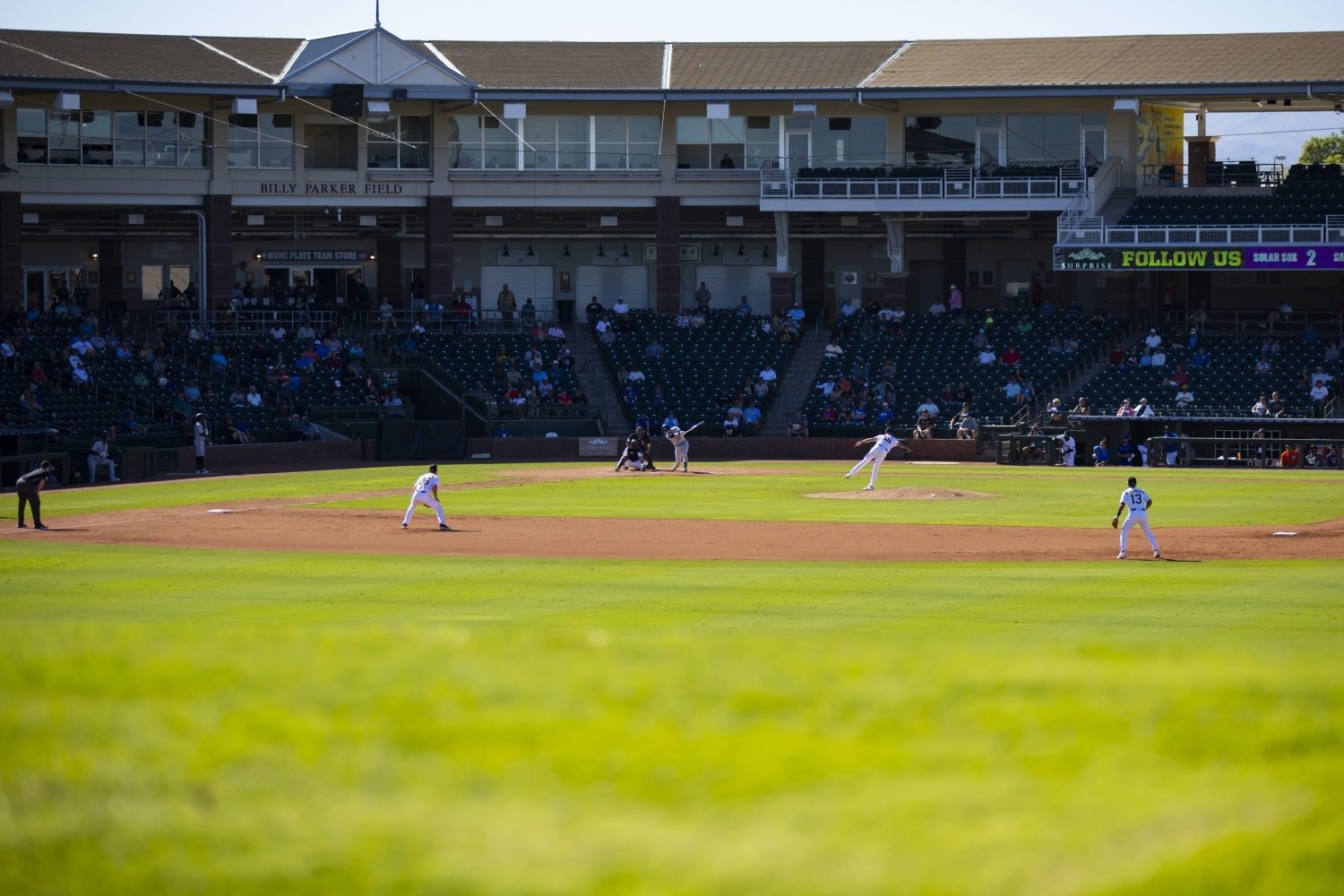 Depending on your secondary rooting interest(s), it’s possible that the dwindling number of teams remaining in the MLB postseason has caused your attention to wane. If you’re a person who finds it difficult to engage with a team beyond the Chicago Cubs, then this mindset has been in effect for the past couple of weeks. The good news, at least, is that the Arizona Fall League got underway last week. As a reminder, the Cubs sent eight players to this year’s iteration of the Mesa Solar Sox. Position players include catcher Moises Ballesteros, deadline acquisition Benjamin Cowles, and corner infielder Jonathon Long. The rest are pitchers, with Grant Kipp, Vince Reilly, Luis Rujano, Shane Marshall, and Sam Thoresen representing the organization on the bump. Things didn’t get off to a terrific start on Monday. Each of Ballesteros and Cowles drew a start in the opener, with the latter appearing at shortstop. They went a combined 0-for-7, with a walk from Ballesteros and a strikeout from Cowles serving as the only noteworthy contributions to the box score. It was a quiet 1-0 win for Mesa, which stood in stark contrast to the next time the Solar Sox took the field on Wednesday. The second contest of the week resulted in a 19-3 drubbing of Scottsdale. While Cowles didn’t appear, Ballesteros and Long each contributed heavily. Ballesteros went 2-for-6, including a double and a pair of runs knocked in. Long, though, stole the show. His three-hit effort was a loud one, with a double, a homer, and five runs batted in. Thursday marked the inverse of the first two games, on a couple levels. For one, it was Mesa’s first loss of the fall season. For another, it was finally a chance to see some of the arms the Cubs sent to the AFL. Kipp drew the start, throwing three innings and allowing just a run while striking out four. Thoresen and Reilly each succeeded him in relief, combining for two innings, one run, and a trio of strikeouts. Marshall appeared later, but didn’t experience the same luck as his Cubs predecessors. He surrendered three runs in just an inning of work on three hits (including a home run) and a walk. His outing was one of two notable disappointments for Cubs representatives on Thursday, as Cowles turned in another hitless effort, going 0-for-4. Each of Ballesteros, Long, and Cowles drew starts on Friday. It was the Cubs’ top catching prospect with the most notable line of the night, as Ballesteros went 3-for-4 with a walk and a run scored. In what was a decent offensive output for the Solar Sox overall, though, Cowles continued to struggle and Long went hitless. They went a combined 0-for-9, with Long punching out twice and Cowles once. Reilly was the only Cub prospect to appear on Saturday. He was credited with the win after throwing a scoreless eighth inning. As quiet as Saturday was, though, we got a week’s worth of action with respect to Cubs players on Sunday. Each of Ballesteros, Cowles, and Long were in the lineup for Mesa’s 10-3 win over Surprise. Ballesteros had three hits (including his first AFL homer), while Long & Cowles each collected their first hits of the fall season. The former notched a pair of hits and a pair of runs knocked in, while Cowles scored a run in his one time on base. On the bump, Rujano was awarded the win after three dominant innings of work in which he struck out five, walked one, and didn’t allow a run. Marshall appeared in the ninth and struggled a bit to start his outing. He gave up a single and a double before striking out the next two hitters on his way to ending the inning. In terms of collective output, Ballesteros has been the Cubs’ most consistent offensive presence. He’s hitting .412 and reaching base at a .450 clip, with his six runs batted in trailing only Long’s eight. Ballesteros has also only struck out once across 19 plate appearances, against two walks. Long’s at .333 and .412 in average and on-base, with a home run and double also to his credit. None of Mesa’s hitters have struggled to the degree that Cowles has, however. He’s at an average of just .056 to this point. One hopes that ending his run of hitless starts on Sunday serves as a springboard for the remainder of the fall season. The stuff on the mound has largely been encouraging as well. Each of Kipp and Rujano have posted strong extended outings, with Thoresen and Reilly performing well in short bursts. Marshall is the only one of the Cubs’ representatives on the hill to have had an uneven start to the fall slate. Overall, it’s a fun start from an intriguing group of Cubs prospects. While Ballesteros is the only marquee prospect of the bunch, the versatility of Cowles and power of Long make the position group worth monitoring. And knowing what the Cubs have been able to do in building up their pitching infrastructure makes nearly any arm in the system someone on which to maintain a keen eye. Mesa has a day off on Monday before getting underway for the week again on Tuesday. Ideally, yours truly will be in attendance a couple of times in the coming days.
-
- 1
-
-
- moises ballesteros
- jonathon long
- (and 3 more)
-
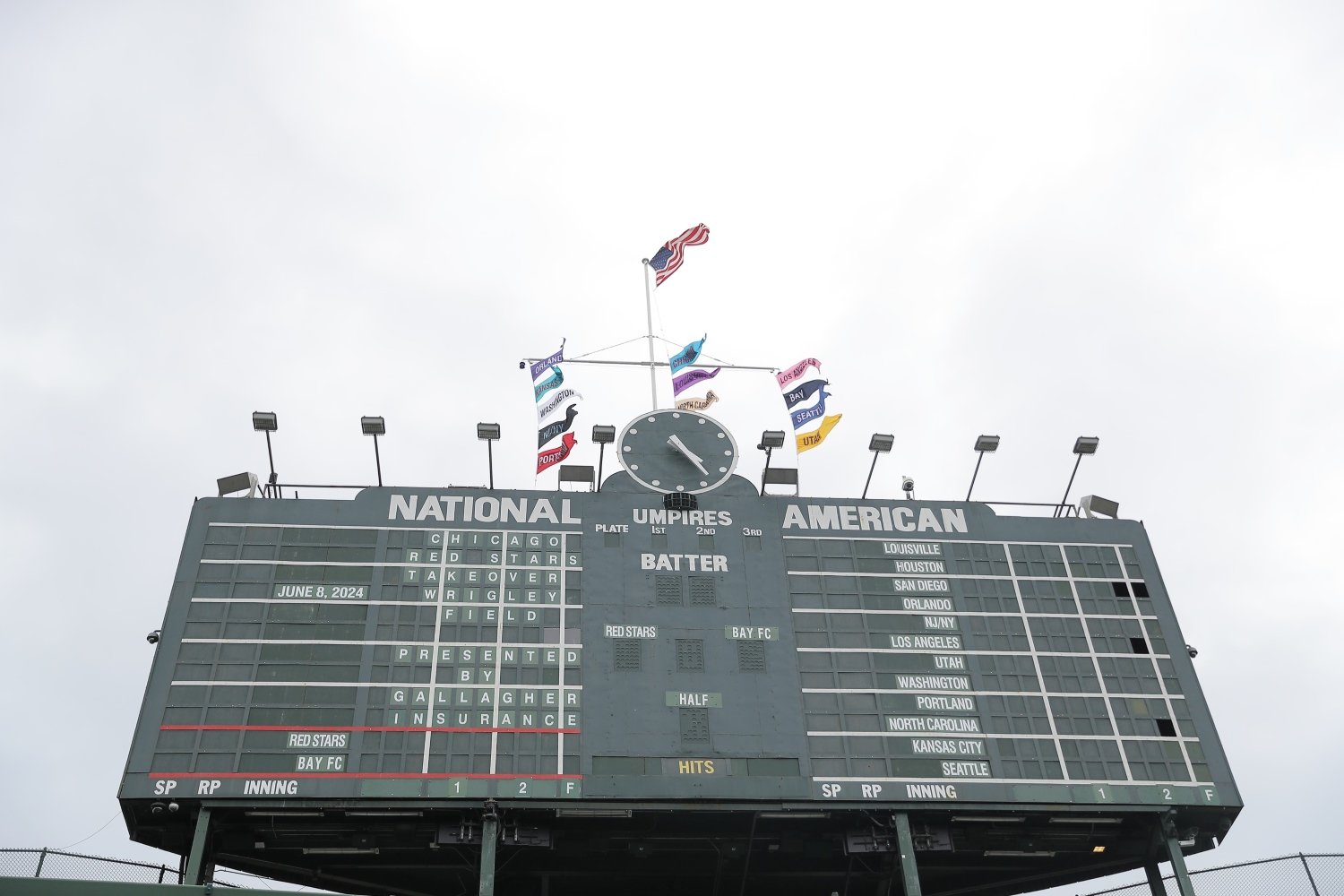 If you’ve been around the Chicago sports scene for any period of time, you’ve obviously heard of Bear Weather. But Cubs president Jed Hoyer wants to make sure you’ve also heard of Cub Weather. At his year-end press conference on Tuesday, Hoyer said a lot of words. Many of those words we’d heard before. “Disappointing” this and “outplaying the projections” that. Sure. But one of the more interesting points of the presser came when Hoyer blamed… climate change? As expected, the offense was a point of emphasis throughout the discussion on Tuesday. Within that, Hoyer pointed out the weather putting hitters at Wrigley at a disadvantage over the course of the year. “It was really difficult to assess," Hoyer said of the offense, "when you think about how Wrigley Field played this year. Last year, Wrigley was the seventh-best offensive park in baseball. This year it was 29th, and after last weekend it might be 30th.” More specifically, Hoyer was referencing the wind blowing in at a much higher frequency than we’ve come to expect when the Cubs take the field on the North Side. On the surface, it’s a frustrating explanation for what was a questionably constructed lineup to begin with. At the same time, it’s also not an entirely unreasonable framing of the team’s woes on that side of the ball. In terms of wRC+, the Cubs were 24th while playing at home (94). They ranked 25th in home runs (78) and 27th in ISO (.142). On the road, however, they went for a wRC+ of 108 that was tied for fifth-best. They ranked 12th in homers (92) and 10th in ISO (.159). Interestingly, some of the outcomes you wouldn’t expect to be impacted by the weather are also fairly stark in the home/road splits for the Cubs. They struck out at a rate tied for 11th-highest (23.3 percent) and were dead last in Hard Hit% while at Wrigley (27.0). When you flip to the road splits, the K% fell to 21.4 (9th best), and the Hard Hit% bumped up to 31.8 (also 9th). Regardless of what those figures ultimately look like, how much merit is behind what Hoyer had to say about the weather being such a looming factor in the Cubs’ offensive woes this year? In terms of the ways in which the wind manifested, Hoyer appeared to be spot on with the team spending more time with it blowing in. Wrigley featured 3,227 plate appearances under those circumstances in the 2024 season. That’s up nearly 300 from the previous year and up about 1,000 from 2021. Conversely, only 1,155 plate appearances occurred with the wind blowing out this season. That’s down roughly 800 and 600 from each of the two prior seasons, respectively. Of note, crosswinds also experienced an increase, but there’s been year-to-year variance there, anyway. Baseball Savant’s Park Factor doesn’t paint a pretty picture for 2024 Wrigley Field, either. In 2023, Wrigley had a home run factor of 105 (100 is average, higher means more), and a 102 in runs. That indicates an above-average observance in each category. This year, however, it was at 85 and 91 in the two categories, respectively, which is not only a massive dip from the prior year, but one that indicates Wrigley as a suffocating offensive environment. The overall Park Factor checked in at 97 for the season, which was the fourth-lowest mark in the sport, ahead of only San Diego and Tampa Bay (tied at 96) and Seattle (91). Hoyer certainly wasn’t wrong in his analysis. It seems worth pointing out, though, that while the Cubs were at a disadvantage in their home setting, they weren’t super able to take advantage of those sparse occasions where the wind was blowing out. They experienced quality of contact decreases reflected in their average exit velocity and Barrel%, while posting a massively lower xwOBA; that latter figure was at .325 in 2023 before dropping to .281 in ’24. As with almost anything in this life, this is far from a black-and-white concept. Yes, Jed Hoyer is accurate in his line of thinking that the weather had an impact on the Cubs’ ability to produce on the offensive side of the ball this year. The conditions flipped in a very stark manner that left Wrigley Field as one of the worst offensive environments in Major League Baseball. But the volume of blame we can assign to the weather for the Cubs' lack of run production remains to be seen--especially given their decrease in success when the wind conditions were actually working for them, as well as the team’s struggles at home in areas that don’t necessarily have anything to do with the weather. The important thing to note about the complexity of the weather conundrum is that, as much as the weather is a factor, it doesn’t excuse the Cubs from making a run at improving the offense this winter. Because it’s not solely on the wind.
 -
Do the Cubs' head baseball honcho's claims about wind and weather patterns at Wrigley Field this season hold water? Image courtesy of © Melissa Tamez-Imagn Images If you’ve been around the Chicago sports scene for any period of time, you’ve obviously heard of Bear Weather. But Cubs president Jed Hoyer wants to make sure you’ve also heard of Cub Weather. At his year-end press conference on Tuesday, Hoyer said a lot of words. Many of those words we’d heard before. “Disappointing” this and “outplaying the projections” that. Sure. But one of the more interesting points of the presser came when Hoyer blamed… climate change? As expected, the offense was a point of emphasis throughout the discussion on Tuesday. Within that, Hoyer pointed out the weather putting hitters at Wrigley at a disadvantage over the course of the year. “It was really difficult to assess," Hoyer said of the offense, "when you think about how Wrigley Field played this year. Last year, Wrigley was the seventh-best offensive park in baseball. This year it was 29th, and after last weekend it might be 30th.” More specifically, Hoyer was referencing the wind blowing in at a much higher frequency than we’ve come to expect when the Cubs take the field on the North Side. On the surface, it’s a frustrating explanation for what was a questionably constructed lineup to begin with. At the same time, it’s also not an entirely unreasonable framing of the team’s woes on that side of the ball. In terms of wRC+, the Cubs were 24th while playing at home (94). They ranked 25th in home runs (78) and 27th in ISO (.142). On the road, however, they went for a wRC+ of 108 that was tied for fifth-best. They ranked 12th in homers (92) and 10th in ISO (.159). Interestingly, some of the outcomes you wouldn’t expect to be impacted by the weather are also fairly stark in the home/road splits for the Cubs. They struck out at a rate tied for 11th-highest (23.3 percent) and were dead last in Hard Hit% while at Wrigley (27.0). When you flip to the road splits, the K% fell to 21.4 (9th best), and the Hard Hit% bumped up to 31.8 (also 9th). Regardless of what those figures ultimately look like, how much merit is behind what Hoyer had to say about the weather being such a looming factor in the Cubs’ offensive woes this year? In terms of the ways in which the wind manifested, Hoyer appeared to be spot on with the team spending more time with it blowing in. Wrigley featured 3,227 plate appearances under those circumstances in the 2024 season. That’s up nearly 300 from the previous year and up about 1,000 from 2021. Conversely, only 1,155 plate appearances occurred with the wind blowing out this season. That’s down roughly 800 and 600 from each of the two prior seasons, respectively. Of note, crosswinds also experienced an increase, but there’s been year-to-year variance there, anyway. Baseball Savant’s Park Factor doesn’t paint a pretty picture for 2024 Wrigley Field, either. In 2023, Wrigley had a home run factor of 105 (100 is average, higher means more), and a 102 in runs. That indicates an above-average observance in each category. This year, however, it was at 85 and 91 in the two categories, respectively, which is not only a massive dip from the prior year, but one that indicates Wrigley as a suffocating offensive environment. The overall Park Factor checked in at 97 for the season, which was the fourth-lowest mark in the sport, ahead of only San Diego and Tampa Bay (tied at 96) and Seattle (91). Hoyer certainly wasn’t wrong in his analysis. It seems worth pointing out, though, that while the Cubs were at a disadvantage in their home setting, they weren’t super able to take advantage of those sparse occasions where the wind was blowing out. They experienced quality of contact decreases reflected in their average exit velocity and Barrel%, while posting a massively lower xwOBA; that latter figure was at .325 in 2023 before dropping to .281 in ’24. As with almost anything in this life, this is far from a black-and-white concept. Yes, Jed Hoyer is accurate in his line of thinking that the weather had an impact on the Cubs’ ability to produce on the offensive side of the ball this year. The conditions flipped in a very stark manner that left Wrigley Field as one of the worst offensive environments in Major League Baseball. But the volume of blame we can assign to the weather for the Cubs' lack of run production remains to be seen--especially given their decrease in success when the wind conditions were actually working for them, as well as the team’s struggles at home in areas that don’t necessarily have anything to do with the weather. The important thing to note about the complexity of the weather conundrum is that, as much as the weather is a factor, it doesn’t excuse the Cubs from making a run at improving the offense this winter. Because it’s not solely on the wind. View full article
-
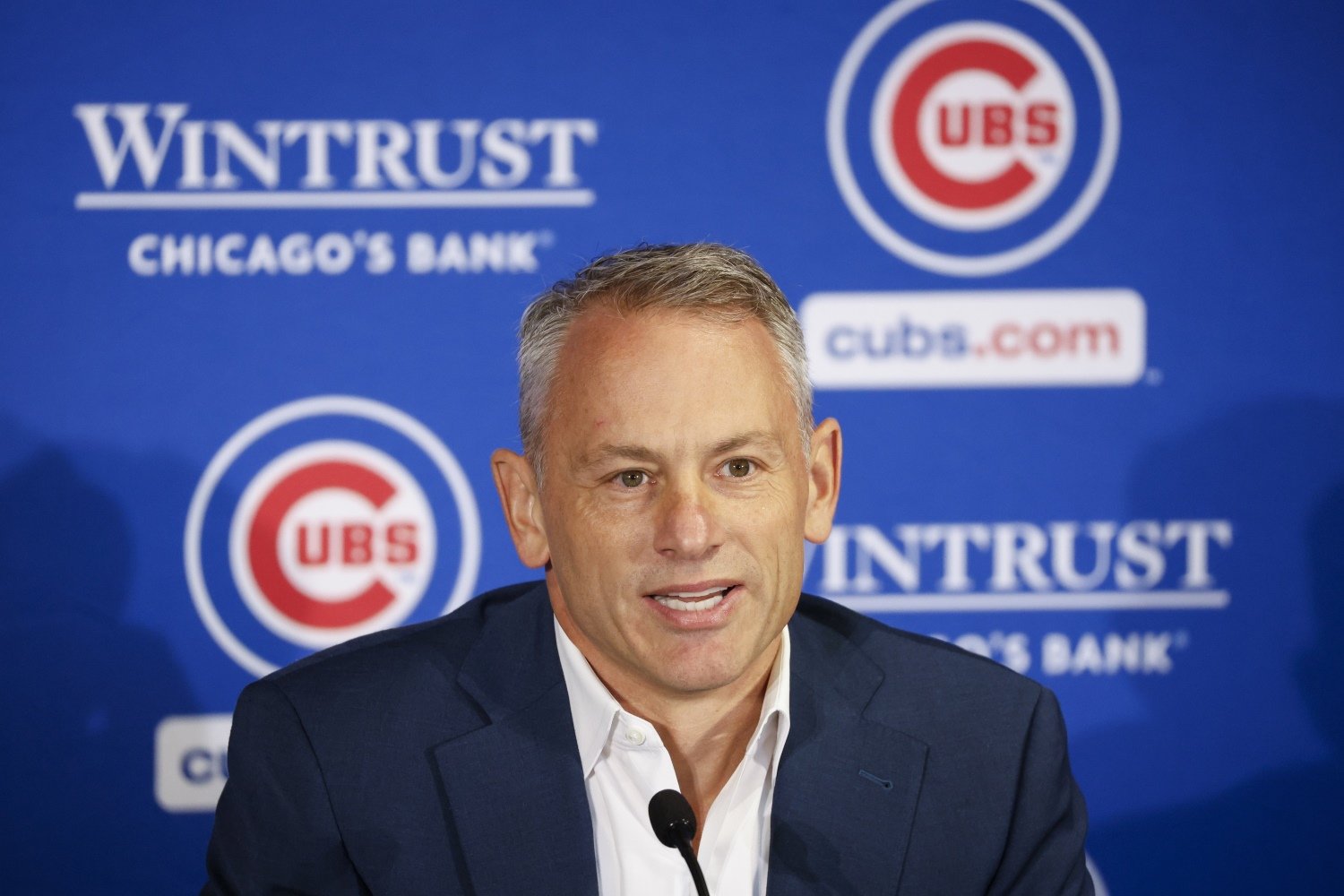 If you were hoping for something of value to escape the lips of Jed Hoyer on Tuesday, then I’m not sure you’ve ever heard Jed Hoyer speak. Much of the day’s end-of-year presser involved general statements about the disappointment of the year, vague information on player health, and some word salad about needing to outperform projections. As frustrating as it can be to listen to Hoyer speak coming off the candor of the Theo Epstein reign atop the Chicago Cubs front office, that latter bit is sure to strike as particularly infuriating. In essence, Hoyer noted that each team in this year’s playoff field has at least one five-win player, with that player outperforming projections to reach the mark. I’m oversimplifying the quote, but Hoyer’s oversimplifying the concept and denying reality. That’s worse, right? It seems worse. We at North Side Basseball have not been quiet about the Cubs’ need for a legitimate star. They’re a team comprised of complementary bats. That’s no fault of their own. They’re not built to be upper-tier run producers. There are legitimately good offensive pieces throughout the lineup, however streaky their actual output may be. But lacking that true catalyst in the lineup is what stretches their bouts of offensive woes from weeks to months. I say months, because Hoyer very astutely pointed out that seemingly the entire team fell into a season-ruining slump across at least May and June--as if we were unaware. Ultimately, the major issue with Hoyer’s sentiment about outperforming projections is that it confirms the fears of fans--ones that had already been realized throughout much of the 2024 season. The Chicago Cubs were relying on upside. They needed upper-percentile production from throughout their lineup in order to make their roster, as constructed, actually work. They built a lineup on hope, more than any tangible quality. That’s a problem, and given what Hoyer communicated on Tuesday, it’s a deep-rooted one. Let’s talk about Hoyer’s assertion regarding playoff teams, five-win players, and outperforming projections, because there is at least a kernel of truth there from a broad perspective. Yes, you need elite baseball players to be an elite baseball team. Major League Baseball history is merely sprinkled with tales of sum-of-their-parts clubs that have been successful. The majority of great teams were built to win with great players. However, where did those players that Hoyer references come from? Juan Soto, Francisco Lindor, and William Contreras were all acquired via trade. Shohei Ohtani and Bryce Harper were signed in free agency. Bobby Witt Jr. was drafted No. 2 overall. Even if you wanted to go a bit farther down the leaderboard and take some injury context into account, you’ve got Manny Machado, Mookie Betts, Freddie Freeman, and Trea Turner. Free agency, trade, trade, and free agency. Each player listed was either acquired via front-office aggression or, in the case of Witt, features a certain level of prospect pedigree. I’m not so blinded by 2024 frustration (which is, admittedly, increasing as I write this) as to not acknowledge that there are exceptions here. Gunnar Henderson and Jackson Merrill weren’t top-five picks. Yordan Alvarez was acquired by Houston before he even logged a minor-league game with the Dodgers. Willy Adames (not a five-win guy, but darn close) was acquired before his real and sustained breakout in Milwaukee. But you’re also talking about some very specific organizations with a track record of getting their players to realize their potential. Which brings us to another issue with Hoyer’s empty truisms: the Cubs haven’t done that. Perhaps it’s unreasonable to have expected it to happen thus far. But I’m also not so sure it is. We have myriad examples of 2021 and 2022 draftees already performing as MLB regulars. Some of them are on star-level trajectories. Despite the high volume of intriguing position players, we haven’t seen anyone whom the team developed entirely internally break down the door to the big leagues. More specifically, they haven’t done it to the level that Hoyer describes. A regular role doesn’t even seem like it’s on the horizon for this group of enticing positional prospects, let alone a star-level breakthrough. Are we supposed to believe that it’s in the tank there somewhere, on the way? Should it be considered a believable scenario, deployed as justification for not pursuing legitimate offensive talent in the way that many of their National League counterparts already have? There’s no solid evidence to support buying the hope that Hoyer was trying to sell you on Tuesday. The specific issue here is stars. That’s what Hoyer was talking about. The team can develop quality position players (and probably even better pitchers). But the idea that you need a certain caliber of player to be postseason-bound with any kind of regularity is demonstrably true, and the cause to believe that this front office can acquire or develop such players is scant. Because you need to do one of two things. You either need to acquire upper-tier players via trades or free agency, or you need to develop them with robust organizational processes. You need to be willing to trade prospects or spend actual dollars. Hoyer and company have proven far too conservative in their pursuit of that level of player in any context (we’re not talking about the Dansby Swansons of the world, or a trade for Isaac Paredes here; the bar we're talking about is above their heads) and we haven’t seen evidence of the latter. The Phillies and Dodgers and Brewers are running circles around them on both sides of the equation. Of course, none of this is new. We knew this about Hoyer before he opened his mouth on Tuesday. What we don’t know is how much of that is attributable to behind-the-scenes budget constraints. Frankly, though, it doesn’t matter. This is a major-market baseball team with a recent history of success. They reset to build up their farm and get their books healthy. They’ve done that. The next step, however, is going to require Hoyer to step much farther outside of his comfort zone–whether with his prospects or his bosses' money–than he might be comfortable doing. And that, dear reader, is the problem here.
 -
The first step in solving a problem is admitting that there is one. Thing is, Jed Hoyer only kind of did so on Tuesday. Image courtesy of © Kamil Krzaczynski-Imagn Images If you were hoping for something of value to escape the lips of Jed Hoyer on Tuesday, then I’m not sure you’ve ever heard Jed Hoyer speak. Much of the day’s end-of-year presser involved general statements about the disappointment of the year, vague information on player health, and some word salad about needing to outperform projections. As frustrating as it can be to listen to Hoyer speak coming off the candor of the Theo Epstein reign atop the Chicago Cubs front office, that latter bit is sure to strike as particularly infuriating. In essence, Hoyer noted that each team in this year’s playoff field has at least one five-win player, with that player outperforming projections to reach the mark. I’m oversimplifying the quote, but Hoyer’s oversimplifying the concept and denying reality. That’s worse, right? It seems worse. We at North Side Basseball have not been quiet about the Cubs’ need for a legitimate star. They’re a team comprised of complementary bats. That’s no fault of their own. They’re not built to be upper-tier run producers. There are legitimately good offensive pieces throughout the lineup, however streaky their actual output may be. But lacking that true catalyst in the lineup is what stretches their bouts of offensive woes from weeks to months. I say months, because Hoyer very astutely pointed out that seemingly the entire team fell into a season-ruining slump across at least May and June--as if we were unaware. Ultimately, the major issue with Hoyer’s sentiment about outperforming projections is that it confirms the fears of fans--ones that had already been realized throughout much of the 2024 season. The Chicago Cubs were relying on upside. They needed upper-percentile production from throughout their lineup in order to make their roster, as constructed, actually work. They built a lineup on hope, more than any tangible quality. That’s a problem, and given what Hoyer communicated on Tuesday, it’s a deep-rooted one. Let’s talk about Hoyer’s assertion regarding playoff teams, five-win players, and outperforming projections, because there is at least a kernel of truth there from a broad perspective. Yes, you need elite baseball players to be an elite baseball team. Major League Baseball history is merely sprinkled with tales of sum-of-their-parts clubs that have been successful. The majority of great teams were built to win with great players. However, where did those players that Hoyer references come from? Juan Soto, Francisco Lindor, and William Contreras were all acquired via trade. Shohei Ohtani and Bryce Harper were signed in free agency. Bobby Witt Jr. was drafted No. 2 overall. Even if you wanted to go a bit farther down the leaderboard and take some injury context into account, you’ve got Manny Machado, Mookie Betts, Freddie Freeman, and Trea Turner. Free agency, trade, trade, and free agency. Each player listed was either acquired via front-office aggression or, in the case of Witt, features a certain level of prospect pedigree. I’m not so blinded by 2024 frustration (which is, admittedly, increasing as I write this) as to not acknowledge that there are exceptions here. Gunnar Henderson and Jackson Merrill weren’t top-five picks. Yordan Alvarez was acquired by Houston before he even logged a minor-league game with the Dodgers. Willy Adames (not a five-win guy, but darn close) was acquired before his real and sustained breakout in Milwaukee. But you’re also talking about some very specific organizations with a track record of getting their players to realize their potential. Which brings us to another issue with Hoyer’s empty truisms: the Cubs haven’t done that. Perhaps it’s unreasonable to have expected it to happen thus far. But I’m also not so sure it is. We have myriad examples of 2021 and 2022 draftees already performing as MLB regulars. Some of them are on star-level trajectories. Despite the high volume of intriguing position players, we haven’t seen anyone whom the team developed entirely internally break down the door to the big leagues. More specifically, they haven’t done it to the level that Hoyer describes. A regular role doesn’t even seem like it’s on the horizon for this group of enticing positional prospects, let alone a star-level breakthrough. Are we supposed to believe that it’s in the tank there somewhere, on the way? Should it be considered a believable scenario, deployed as justification for not pursuing legitimate offensive talent in the way that many of their National League counterparts already have? There’s no solid evidence to support buying the hope that Hoyer was trying to sell you on Tuesday. The specific issue here is stars. That’s what Hoyer was talking about. The team can develop quality position players (and probably even better pitchers). But the idea that you need a certain caliber of player to be postseason-bound with any kind of regularity is demonstrably true, and the cause to believe that this front office can acquire or develop such players is scant. Because you need to do one of two things. You either need to acquire upper-tier players via trades or free agency, or you need to develop them with robust organizational processes. You need to be willing to trade prospects or spend actual dollars. Hoyer and company have proven far too conservative in their pursuit of that level of player in any context (we’re not talking about the Dansby Swansons of the world, or a trade for Isaac Paredes here; the bar we're talking about is above their heads) and we haven’t seen evidence of the latter. The Phillies and Dodgers and Brewers are running circles around them on both sides of the equation. Of course, none of this is new. We knew this about Hoyer before he opened his mouth on Tuesday. What we don’t know is how much of that is attributable to behind-the-scenes budget constraints. Frankly, though, it doesn’t matter. This is a major-market baseball team with a recent history of success. They reset to build up their farm and get their books healthy. They’ve done that. The next step, however, is going to require Hoyer to step much farther outside of his comfort zone–whether with his prospects or his bosses' money–than he might be comfortable doing. And that, dear reader, is the problem here. View full article
- 1 reply
-
- 1
-
-
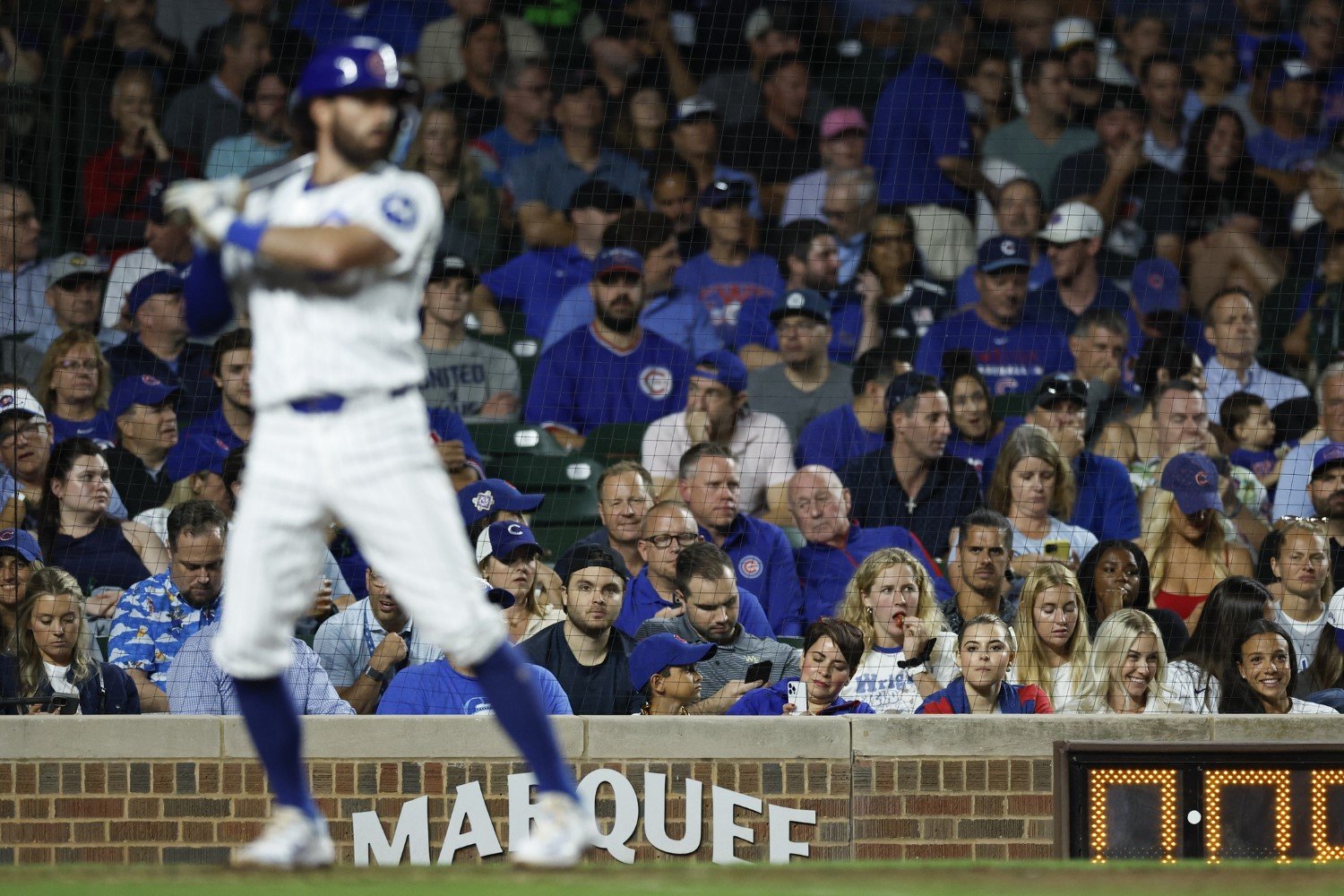 Success is a hilarious concept within the world of sports. From a fan perspective, success is almost entirely dependent on final outcomes--especially in matters of team sport. Did your team win a championship? No? Well, then we can only assume that season was a failure, not a success. That’s an oversimplification, of course, but fandom does tend to be a pretty simple framework in most cases. As a teacher, coach, and athlete development specialist, I’m extremely process-oriented by nature. I'm also prone to stretches of overthinking about what sound process and success actually look like. So, while I can sit here and say that the 2024 Chicago Cubs season has not been a success--and be right--I also have to recognize that there are layers to that that would make me wrong. The organization set a goal to reach the playoffs this season, on their way to establishing the “next great Cubs team.” In that respect, the season was not a success. You don’t even need the championship qualifier here. The team underachieved for months, putting together a hot stretch in August that served as the fake rally with which we’ve become all-too-familiar, in macrocosm. They failed to reach the playoffs. There are reasons they failed that ran beyond their control, but by their own standard, set forth back in the spring, it was an unsuccessful season. There are layers to consider, though. A team is made up of individuals, and those inidividuals all had their own seasons. We can define success a little differently when looking at them in isolation than when examining the team in a wide-angle lens. Focusing specifically on the offense, what do you want out of a hitter to demonstrate success in a given year? Landing on the positive side of the 100 wRC+ threshold? Developing a new element of the skill set, or continuing to thrive in an old one? Steady performance? Broad development, especially for younger players? I’ll admit I probably have more questions than answers. At the same time, our answer is probably somewhere in there. You obviously want hitters to land above average, and to show us that they are either providing stability where it didn't previously exist or developing new areas of success. That last bit rings true in terms of development, too. With that in mind, perhaps we can turn our attention to some individual Cub hitters that did have a successful 2024 season--or at least muse about their place within all of this. Places where we can count simple developmental progress as a win are always the most comfortable, so that’s where we start. The Cubs had some very loud successes here, primarily in the form(s) of Michael Busch and Pete Crow-Armstrong. Busch was a fascinating acquisition from the jump. Squeezed out of the infield picture in Los Angeles, the offensive upside was clear. It was just a matter of where he’d play. It quickly became clear that he’d assume the void left by Anthony Rizzo what feels like a decade ago. And he’s done just that, in effective fashion. He’s been above the 100 mark in wRC+ in each individual month outside of August, while turning in a 120 mark overall. Perhaps more impressive (given that we expected his offense to be pretty good) is the defensive evolution he’s showcased. He has 8 Defensive Runs Saved. That number isn’t only acceptable; it's elite. There’s some development that he’ll still undergo – primarily cutting down the strikeouts – but he’s the guy. Same goes for Pete Crow-Armstrong. We spent the entire year wondering if and when Crow-Armstrong’s bat could even remotely catch up to his glove. Turns out, the answer to if was yes, and the answer to when was August. A 154 wRC+, .244 ISO, and 8.2 BB% were among the marks Crow-Armstrong posted that month. Everything good was up, and the strikeout rates were down. He’s carried that over a bit into September, too. The defense requires no encomiums. He’s a Platinum Glove Award candidate-in-waiting. It’s a different conversation than we might’ve been having in, say, July, but the growth there is evident. This breakout was essential for establishing his role. I suppose we can lump Miguel Amaya in with those guys, too. The sample size is still small, but no smaller than Crow-Armstrong's. After Amaya's swing and approach changes in the summer, it’s possible that he could be The Guy behind the dish--although only possible, and far from certain. He posted gaudy wRC+ figures in July and August (149 and 157, respectively), and struck out at a mere 2.9% clip in the latter month. His ISO exceeded .250 in August, too. It hasn’t carried over into September, primarily due to some horrendous batted-ball luck. Given how poor his offense looked for the first three-ish months of the year, it’s hard to label it a success outright. Maybe we lean more inconclusive. But he’s at least generated more equity for himself within the “catcher of the future” conversation. The development angle is a copout, though. You can do that with nearly every team in Major League Baseball. “Well they’re bad, but look at this guy who’ll be important going forward.” Let’s talk about the veterans, because this is where things get murky, and murky is where things get interesting. Ian Happ has had a successful season. He shook off a poor April and a merely average May to post upper-tier numbers for much of the season. It hasn’t been his best overall season, but he’s continued to demonstrate steadiness in his approach and has bumped up the power numbers from his last two seasons (.210 ISO), even with a complete absence of it early in the year. The eye test doesn’t love him with the glove, but the metrics all have him above average. Who am I to argue (although I plan to, at a later date)? It's not nearly as cut-and-dry with the likes of Seiya Suzuki, Cody Bellinger, or Dansby Swanson, however. Do we call it a successful year for someone who turned in a very strong offensive season, but became unplayable defensively? What about a hitter who turned in a solid season, but lost much of the impact that earned him a lucrative new three-year(ish) deal? And then we arrive at the captain of the Chicago infield, who started off poorly on both sides of the ball and quickly regained control over his defense--only for the offense to continue faltering until late July. While never an upper-tier offensive threat to begin with, can we consider what has become a just-okay year by his own standards to be a success? If you haven’t figured it out, this column is speaking more to the philosophy of success than the actual standard of it. You could certainly point to the strides Suzuki made at the dish, to argue in favor of a successful 2024. You could also lean to the side that says his defensive ineptitude could hamstring the Cubs’ roster construction, if he’s strictly a DH now. Cody Bellinger’s year hasn’t not been a success. But the absence of actual power is also a concerning element to navigate for him. Swanson isn’t expected to be an offensive catalyst. But playing on that contract, he kind of is, right? Or he has to be, unless and until the team expands its spending in some substantial way. Does a two-month stretch of strong showings at the plate compensate for a performance that was at least partially responsible for digging the Cubs their early hole? This is the manifestation of my own brain, getting caught up in pieces elsewhere on the internet that opine things like “Dansby Swanson had a good year” or “It’s a good thing that Cody Bellinger is probably coming back, actually.” Because my initial inclination is to disagree. Yet, the massive gray areas wherein we can define success or failure complicate that to such a dire extent. It’s one of baseball’s great paradoxes. Regardless of all that, disappointing as the 2024 Cubs may be, at least they offer some… nuance? Some things to talk about? I had discussed, back in the middle of the summer, that the Cubs were not only bad, but something worse: boring. They are, at least, less boring now. Major League Baseball is a unique sport, in that there’s such a significant emphasis on development. Other sports have this, as well, where you’re looking at stages of a rookie’s evolution into a veteran. But there’s such a heavier emphasis on it in the baseball world that it’s easier to find the successes in the midst of the disappointment of the team context. Ultimately, you can define success in a lot of ways. The 2024 Chicago Cubs were not successful in many of them. But there are also these other things (I’m gesturing broadly now) where we can actually be happy about the trendlines. So who knows what it really means, anyway?
- 2 comments
-
- 2
-
-
- dansby swanson
- cody bellinger
- (and 2 more)
-
Baseball seasons are so long that almost every team and individual season end up rendered in gray, rather than black-and-white. So, in a gun steel-and-charcoal campaign, where are the light gray silver linings--and who gets to decide on their value? Image courtesy of © Kamil Krzaczynski-Imagn Images Success is a hilarious concept within the world of sports. From a fan perspective, success is almost entirely dependent on final outcomes--especially in matters of team sport. Did your team win a championship? No? Well, then we can only assume that season was a failure, not a success. That’s an oversimplification, of course, but fandom does tend to be a pretty simple framework in most cases. As a teacher, coach, and athlete development specialist, I’m extremely process-oriented by nature. I'm also prone to stretches of overthinking about what sound process and success actually look like. So, while I can sit here and say that the 2024 Chicago Cubs season has not been a success--and be right--I also have to recognize that there are layers to that that would make me wrong. The organization set a goal to reach the playoffs this season, on their way to establishing the “next great Cubs team.” In that respect, the season was not a success. You don’t even need the championship qualifier here. The team underachieved for months, putting together a hot stretch in August that served as the fake rally with which we’ve become all-too-familiar, in macrocosm. They failed to reach the playoffs. There are reasons they failed that ran beyond their control, but by their own standard, set forth back in the spring, it was an unsuccessful season. There are layers to consider, though. A team is made up of individuals, and those inidividuals all had their own seasons. We can define success a little differently when looking at them in isolation than when examining the team in a wide-angle lens. Focusing specifically on the offense, what do you want out of a hitter to demonstrate success in a given year? Landing on the positive side of the 100 wRC+ threshold? Developing a new element of the skill set, or continuing to thrive in an old one? Steady performance? Broad development, especially for younger players? I’ll admit I probably have more questions than answers. At the same time, our answer is probably somewhere in there. You obviously want hitters to land above average, and to show us that they are either providing stability where it didn't previously exist or developing new areas of success. That last bit rings true in terms of development, too. With that in mind, perhaps we can turn our attention to some individual Cub hitters that did have a successful 2024 season--or at least muse about their place within all of this. Places where we can count simple developmental progress as a win are always the most comfortable, so that’s where we start. The Cubs had some very loud successes here, primarily in the form(s) of Michael Busch and Pete Crow-Armstrong. Busch was a fascinating acquisition from the jump. Squeezed out of the infield picture in Los Angeles, the offensive upside was clear. It was just a matter of where he’d play. It quickly became clear that he’d assume the void left by Anthony Rizzo what feels like a decade ago. And he’s done just that, in effective fashion. He’s been above the 100 mark in wRC+ in each individual month outside of August, while turning in a 120 mark overall. Perhaps more impressive (given that we expected his offense to be pretty good) is the defensive evolution he’s showcased. He has 8 Defensive Runs Saved. That number isn’t only acceptable; it's elite. There’s some development that he’ll still undergo – primarily cutting down the strikeouts – but he’s the guy. Same goes for Pete Crow-Armstrong. We spent the entire year wondering if and when Crow-Armstrong’s bat could even remotely catch up to his glove. Turns out, the answer to if was yes, and the answer to when was August. A 154 wRC+, .244 ISO, and 8.2 BB% were among the marks Crow-Armstrong posted that month. Everything good was up, and the strikeout rates were down. He’s carried that over a bit into September, too. The defense requires no encomiums. He’s a Platinum Glove Award candidate-in-waiting. It’s a different conversation than we might’ve been having in, say, July, but the growth there is evident. This breakout was essential for establishing his role. I suppose we can lump Miguel Amaya in with those guys, too. The sample size is still small, but no smaller than Crow-Armstrong's. After Amaya's swing and approach changes in the summer, it’s possible that he could be The Guy behind the dish--although only possible, and far from certain. He posted gaudy wRC+ figures in July and August (149 and 157, respectively), and struck out at a mere 2.9% clip in the latter month. His ISO exceeded .250 in August, too. It hasn’t carried over into September, primarily due to some horrendous batted-ball luck. Given how poor his offense looked for the first three-ish months of the year, it’s hard to label it a success outright. Maybe we lean more inconclusive. But he’s at least generated more equity for himself within the “catcher of the future” conversation. The development angle is a copout, though. You can do that with nearly every team in Major League Baseball. “Well they’re bad, but look at this guy who’ll be important going forward.” Let’s talk about the veterans, because this is where things get murky, and murky is where things get interesting. Ian Happ has had a successful season. He shook off a poor April and a merely average May to post upper-tier numbers for much of the season. It hasn’t been his best overall season, but he’s continued to demonstrate steadiness in his approach and has bumped up the power numbers from his last two seasons (.210 ISO), even with a complete absence of it early in the year. The eye test doesn’t love him with the glove, but the metrics all have him above average. Who am I to argue (although I plan to, at a later date)? It's not nearly as cut-and-dry with the likes of Seiya Suzuki, Cody Bellinger, or Dansby Swanson, however. Do we call it a successful year for someone who turned in a very strong offensive season, but became unplayable defensively? What about a hitter who turned in a solid season, but lost much of the impact that earned him a lucrative new three-year(ish) deal? And then we arrive at the captain of the Chicago infield, who started off poorly on both sides of the ball and quickly regained control over his defense--only for the offense to continue faltering until late July. While never an upper-tier offensive threat to begin with, can we consider what has become a just-okay year by his own standards to be a success? If you haven’t figured it out, this column is speaking more to the philosophy of success than the actual standard of it. You could certainly point to the strides Suzuki made at the dish, to argue in favor of a successful 2024. You could also lean to the side that says his defensive ineptitude could hamstring the Cubs’ roster construction, if he’s strictly a DH now. Cody Bellinger’s year hasn’t not been a success. But the absence of actual power is also a concerning element to navigate for him. Swanson isn’t expected to be an offensive catalyst. But playing on that contract, he kind of is, right? Or he has to be, unless and until the team expands its spending in some substantial way. Does a two-month stretch of strong showings at the plate compensate for a performance that was at least partially responsible for digging the Cubs their early hole? This is the manifestation of my own brain, getting caught up in pieces elsewhere on the internet that opine things like “Dansby Swanson had a good year” or “It’s a good thing that Cody Bellinger is probably coming back, actually.” Because my initial inclination is to disagree. Yet, the massive gray areas wherein we can define success or failure complicate that to such a dire extent. It’s one of baseball’s great paradoxes. Regardless of all that, disappointing as the 2024 Cubs may be, at least they offer some… nuance? Some things to talk about? I had discussed, back in the middle of the summer, that the Cubs were not only bad, but something worse: boring. They are, at least, less boring now. Major League Baseball is a unique sport, in that there’s such a significant emphasis on development. Other sports have this, as well, where you’re looking at stages of a rookie’s evolution into a veteran. But there’s such a heavier emphasis on it in the baseball world that it’s easier to find the successes in the midst of the disappointment of the team context. Ultimately, you can define success in a lot of ways. The 2024 Chicago Cubs were not successful in many of them. But there are also these other things (I’m gesturing broadly now) where we can actually be happy about the trendlines. So who knows what it really means, anyway? View full article
-
Fitting Cody Bellinger into the 2025 Cubs Roster, If We Must
RandallPnkFloyd posted an article in Cubs
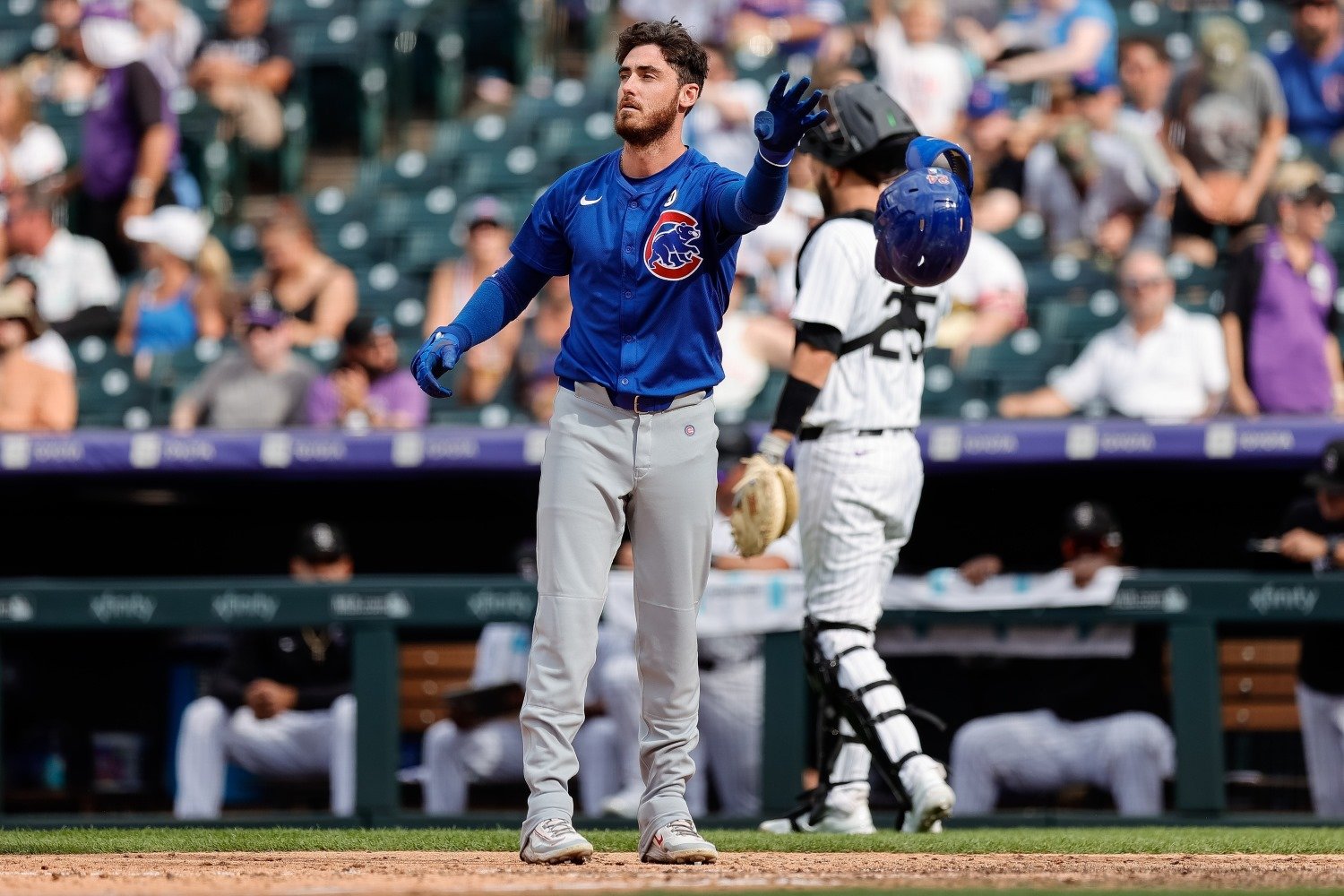 Even with a brief run of success at the end of August into September, it was always going to be a stretch for the Chicago Cubs to be playoff-bound. If you’re like me, you’ve been thinking about the 2025 Cubs for quite a while. With the team’s postseason hopes set to come to an official end within the next handful of days, though, we can start to do so in a bit more earnest fashion. With that, there’s one very significant piece of the discussion at the forefront of the offseason: Cody Bellinger. There’s been a bit of waffling over Bellinger’s potential value, should he decide to re-enter the free-agent market this winter by exercising his opt-out provision. That's bound to be the case when you’re talking about one of the higher-profile potential free agents. With Bob Nightengale recently reporting that Bellinger is “fully expected” to opt in, however, it’s time to grok just what that looks like for the Cubs. Bellinger has turned in a solid, if unspectacular 2024 campaign. He’s been above-average by wRC+ (114), and has sustained most of the gains he made last year in his contact and approach. The difference, however, lies in the power. Last year, Bellinger hit 26 homers and posted a .218 isolated slugging. Both were his highest marks since 2019. This year, he sits at 18 and a .168 ISO. There are a handful of factors we could examine as to why, but our focus here isn’t directly on Bellinger’s offensive output. Overall, we can classify it as… fine. Any number of teams would take that production, even with some subtraction from his 2023 power output--especially when you combine it with his versatility. As of this writing, Bellinger has appeared at first base, center field, and right field on regular bases, plus shorter stints as the DH. He’s been roughly average at each spot, by most analytical measures. A steady, versatile bat with occasional power is a profile that has some appeal. But assuming Bellinger doesn’t exercise his opt-out–as is currently the industry expectation–is he actually a fit for the 2025 Chicago Cubs? The question is defined more by the emergence of certain players around him, rather than by any shortcoming of Bellinger himself. It’s a logistical question that also lends itself to a financial one, given the payroll context associated with an opt-in. The logistical one, though, is the more interesting one for me. As frustrating as the season has been from a contention standpoint, the emergence of Michael Busch and Pete Crow-Armstrong have been exciting. The former would surely get some down-ballot Rookie of the Year votes in less robust rookie classes, thanks to his 20-homer season and increasing maturity as a hitter. The latter has captured fans' imaginations, thanks to a 10/25 season and an explosive second half. Jovial as we may be over their respective developments, it’s precisely those breakouts that are starting to squeeze Bellinger out of the picture. When Bellinger re-upped with the Cubs, the expectation was that he’d man center until Crow-Armstrong was ready. From there, he could move onto the dirt. Busch’s emergence instead pushed Bellinger over to right field. That, in turn, forced Seiya Suzuki into a more consistent role as the team’s designated hitter--although, that part works out nicely, since Suzuki wasn't looking especially viable in right field anyway. It’s a configuration that we could reasonably expect to carry into 2025: Bellinger back via (in essence) opting in, Busch and Crow-Armstrong each being pre-arb, and another two years on Suzuki's contract create a lot of inertia that would tend to keep them all where they've been lately. From there, you’re locking in the young guys, making Suzuki a full-timer at DH, and rolling Bellinger out in right almost every day, occasionally rotating him elsewhere only to spell the others or get off his feet. It’s a scenario that strips the Cubs of any flexibility, however. For one, the splits aren’t so stark in their contrast that you’re regularly moving Bellinger in or out of anywhere other than right, unless it’s a day off or a specific arm that you’d like the others to avoid. Additionally, right field offers the team perhaps their best chance at upgrading the offense in the grander way this team needs to seek this winter. Bellinger’s return would hamstring that effort--and not only on paper. Which means that, objectively, the best thing to do about Bellinger’s apparent return would be to turn around and trade him. It frees them up to make meaningful additions elsewhere, while giving specific players on your roster who are more crucial to the long-term future a little more freedom to operate. You’re then able to seek out meaningful additions that the lineup needs to generate a more sustained offensive product. Of course, that comes with a major caveat: the contract itself. I generally try to stay out of financial discussions, but it’s hard to imagine too many teams being eager to take on Bellinger’s $27.5 million figure, given his lack of power and the fact that so few were willing to give legitimate pursuit last winter. Nor are they going to seek out Suzuki’s $19 million, given his rapid trajectory toward DH-only territory and his no-trade clause. So even moving one to open some flexibility in terms of adding impact talent to your roster seems like an extremely unlikely scenario. The logistical question feeds into the financial one. And one question plus one question equals a problem for the Cubs. They have to navigate their current, unsatisfactory roster construction by attempting to add an impact bat to a spot that doesn’t exist, by moving one of a couple of contracts that nobody is likely to want, all while operating within an internal model that appears to be conservative to a fault. Therein lies the very obvious problem with Cody Bellinger’s impending return. It’s (for me, at least) feeding into a rather negative perception of an otherwise quality baseball player. If anything, though, it’s more condemnation of the organization than criticism of the player. Because, again, Bellinger is fine. Unfortunately, this team needs to add a player that is multiple levels above fine, so that they may match the offensive output of their contending counterparts in the National League. And while they could do it with a full season of this late-season Crow-Armstrong or this impressive version of Michael Busch, relying on upside is exactly what sank the Cubs in another year of non-contention. Ultimately, it’s not so much that Bellinger’s return is a minus for the organization, as it is that leadership is ill-equipped to navigate what comes next.
 -
He's not a bad player, but he's not a good fit, either. How do you solve a problem like a likable former MVP? Image courtesy of © Isaiah J. Downing-Imagn Images Even with a brief run of success at the end of August into September, it was always going to be a stretch for the Chicago Cubs to be playoff-bound. If you’re like me, you’ve been thinking about the 2025 Cubs for quite a while. With the team’s postseason hopes set to come to an official end within the next handful of days, though, we can start to do so in a bit more earnest fashion. With that, there’s one very significant piece of the discussion at the forefront of the offseason: Cody Bellinger. There’s been a bit of waffling over Bellinger’s potential value, should he decide to re-enter the free-agent market this winter by exercising his opt-out provision. That's bound to be the case when you’re talking about one of the higher-profile potential free agents. With Bob Nightengale recently reporting that Bellinger is “fully expected” to opt in, however, it’s time to grok just what that looks like for the Cubs. Bellinger has turned in a solid, if unspectacular 2024 campaign. He’s been above-average by wRC+ (114), and has sustained most of the gains he made last year in his contact and approach. The difference, however, lies in the power. Last year, Bellinger hit 26 homers and posted a .218 isolated slugging. Both were his highest marks since 2019. This year, he sits at 18 and a .168 ISO. There are a handful of factors we could examine as to why, but our focus here isn’t directly on Bellinger’s offensive output. Overall, we can classify it as… fine. Any number of teams would take that production, even with some subtraction from his 2023 power output--especially when you combine it with his versatility. As of this writing, Bellinger has appeared at first base, center field, and right field on regular bases, plus shorter stints as the DH. He’s been roughly average at each spot, by most analytical measures. A steady, versatile bat with occasional power is a profile that has some appeal. But assuming Bellinger doesn’t exercise his opt-out–as is currently the industry expectation–is he actually a fit for the 2025 Chicago Cubs? The question is defined more by the emergence of certain players around him, rather than by any shortcoming of Bellinger himself. It’s a logistical question that also lends itself to a financial one, given the payroll context associated with an opt-in. The logistical one, though, is the more interesting one for me. As frustrating as the season has been from a contention standpoint, the emergence of Michael Busch and Pete Crow-Armstrong have been exciting. The former would surely get some down-ballot Rookie of the Year votes in less robust rookie classes, thanks to his 20-homer season and increasing maturity as a hitter. The latter has captured fans' imaginations, thanks to a 10/25 season and an explosive second half. Jovial as we may be over their respective developments, it’s precisely those breakouts that are starting to squeeze Bellinger out of the picture. When Bellinger re-upped with the Cubs, the expectation was that he’d man center until Crow-Armstrong was ready. From there, he could move onto the dirt. Busch’s emergence instead pushed Bellinger over to right field. That, in turn, forced Seiya Suzuki into a more consistent role as the team’s designated hitter--although, that part works out nicely, since Suzuki wasn't looking especially viable in right field anyway. It’s a configuration that we could reasonably expect to carry into 2025: Bellinger back via (in essence) opting in, Busch and Crow-Armstrong each being pre-arb, and another two years on Suzuki's contract create a lot of inertia that would tend to keep them all where they've been lately. From there, you’re locking in the young guys, making Suzuki a full-timer at DH, and rolling Bellinger out in right almost every day, occasionally rotating him elsewhere only to spell the others or get off his feet. It’s a scenario that strips the Cubs of any flexibility, however. For one, the splits aren’t so stark in their contrast that you’re regularly moving Bellinger in or out of anywhere other than right, unless it’s a day off or a specific arm that you’d like the others to avoid. Additionally, right field offers the team perhaps their best chance at upgrading the offense in the grander way this team needs to seek this winter. Bellinger’s return would hamstring that effort--and not only on paper. Which means that, objectively, the best thing to do about Bellinger’s apparent return would be to turn around and trade him. It frees them up to make meaningful additions elsewhere, while giving specific players on your roster who are more crucial to the long-term future a little more freedom to operate. You’re then able to seek out meaningful additions that the lineup needs to generate a more sustained offensive product. Of course, that comes with a major caveat: the contract itself. I generally try to stay out of financial discussions, but it’s hard to imagine too many teams being eager to take on Bellinger’s $27.5 million figure, given his lack of power and the fact that so few were willing to give legitimate pursuit last winter. Nor are they going to seek out Suzuki’s $19 million, given his rapid trajectory toward DH-only territory and his no-trade clause. So even moving one to open some flexibility in terms of adding impact talent to your roster seems like an extremely unlikely scenario. The logistical question feeds into the financial one. And one question plus one question equals a problem for the Cubs. They have to navigate their current, unsatisfactory roster construction by attempting to add an impact bat to a spot that doesn’t exist, by moving one of a couple of contracts that nobody is likely to want, all while operating within an internal model that appears to be conservative to a fault. Therein lies the very obvious problem with Cody Bellinger’s impending return. It’s (for me, at least) feeding into a rather negative perception of an otherwise quality baseball player. If anything, though, it’s more condemnation of the organization than criticism of the player. Because, again, Bellinger is fine. Unfortunately, this team needs to add a player that is multiple levels above fine, so that they may match the offensive output of their contending counterparts in the National League. And while they could do it with a full season of this late-season Crow-Armstrong or this impressive version of Michael Busch, relying on upside is exactly what sank the Cubs in another year of non-contention. Ultimately, it’s not so much that Bellinger’s return is a minus for the organization, as it is that leadership is ill-equipped to navigate what comes next. View full article
-
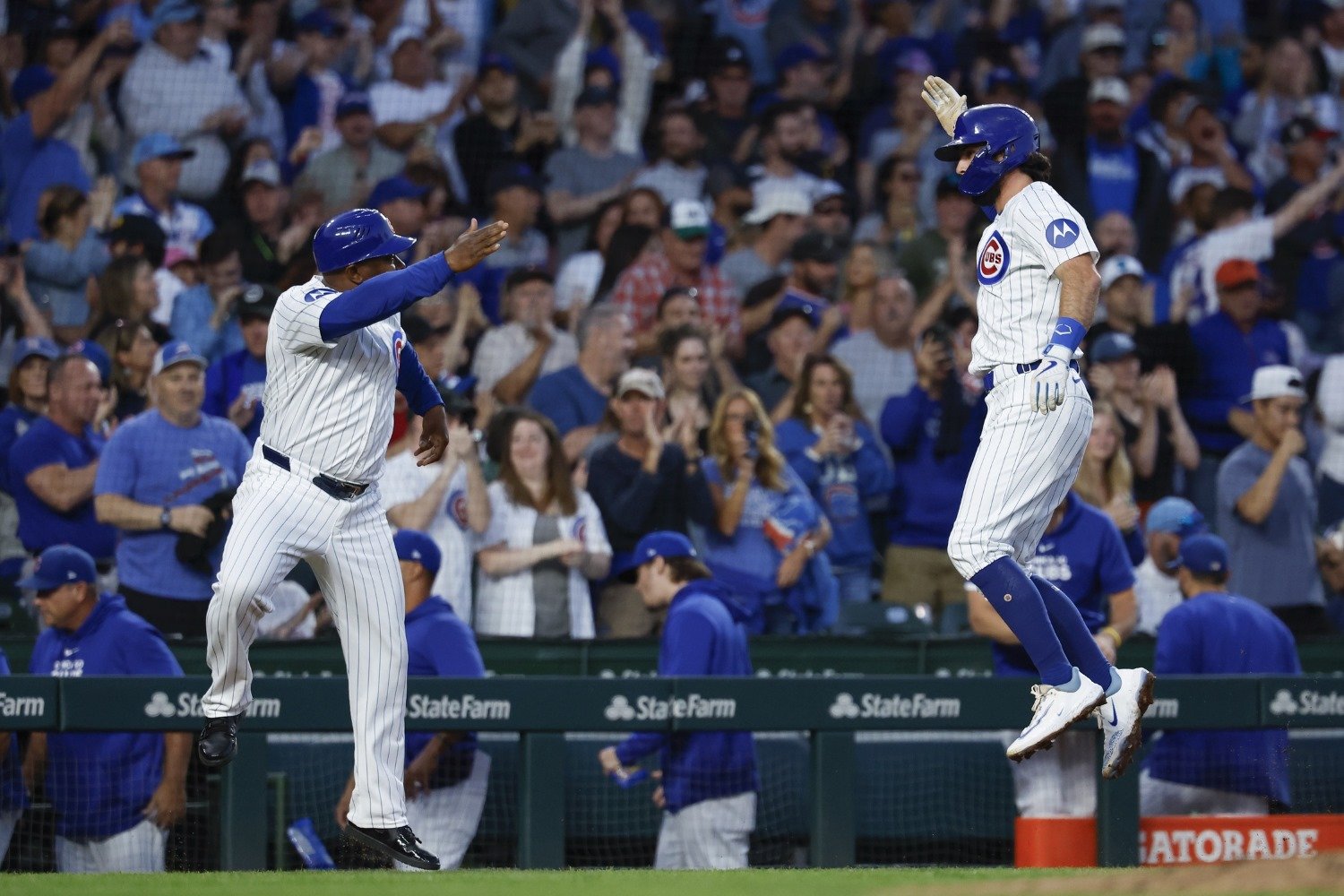 The amount of ink spilled over Dansby Swanson, his performance (on both sides of the ball), and his contract throughout this 2024 season is enough to… do something that you could do with a large volume of ink. In a summer where many of us in this space spent the time lamenting just about every facet of an underperforming offense, it was Swanson’s ineptitude that drew the most ire. I last wrote about Dansby Swanson on Apr. 10. It was a different time. The offense was off to a strong start, showcasing discipline and intention with seemingly each individual plate appearance. They were chasing starters from games early. Swanson himself was slashing .270/.378/.514 through 45 plate appearances, with a walk rate over 15% and a top-30 ISO. He was sixth overall in HardHit%. The falloff from there was precipitous. Even by the end of April, his wRC+ sat at just 89. He followed that with a figure of 38 in May. Things rebounded slightly in June (110), before a mark of 63 in July. Only in August did Swanson turn in his highest quality month, from start to finish. Therein, Swanson went for a 120 wRC+ while slashing .261/.340/.443 and posting strikeout and walk numbers of 22.0% and 11.0%, respectively. Every single output listed was his best in a month this year, with a .182 ISO trailing only June for his best, as well (.204). It’s impossible to look at the explosion of the team’s offense and not look at Dansby Swanson as a key part of it. There have been sexier elements of it, for sure. Pete Crow-Armstrong’s apparent breakout, Miguel Amaya’s mechanical adjustments, and Seiya Suzuki turning in a third consecutive well-above-average month could all have a lot to say about this team down the stretch. But we can’t overlook Swanson’s rebound. What we can do, though, is look upon it with less optimism than we might some of the other developments within the lineup. On Apr. 10, Swanson was aggressive on – and subsequently mashing – fastballs. Despite some regular month-to-month variance, that’s long been his M.O.: capitalizing against heat. The early trends were not at all indicative of how he’d finish the month. Fastballs ended up being the pitch group he swung at with the lowest frequency in April. Hard stuff then took a backseat to offspeed in May, June, and July--offspeed, as in the pitch types that Swanson chases the most, whiffs at the most, and manages the lowest rate of hard contact against for almost the entirety of his career. August, though, showed us exactly the iteration of Swanson that the team needs to see in order to justify his contract. He swung at fastballs at a 53.5% clip last month, while cutting the offspeed Swing% by nearly 15 percentage points (down to 46%). Shockingly (he said sarcastically), he demonstrated his lowest chase rate (17.6%), lowest whiff rate (26.2%), and highest HardHit% (40.0%) against the hard stuff. So Swanson, a guy with the clearest of needs at the plate to maximize his output as a hitter, did exactly the thing that he needs to do for an entire month. As such, it becomes easy to ask: Why doesn’t he just swing at fastballs all the time? There’s some complexity to that question, though--mostly in that pitchers are likely smarter than to give the fastball masher a diet of fastballs. Except, what if they aren’t? Swanson has seen an increasing number of fastballs, with July to August representing the only drop, wherein he still saw roughly 55% heaters in the latter. Even when he’s behind, pitchers are still throwing him the hard stuff at a rate that has sat as the highest in four of the five completed months to date. One would absolutely be justified in wondering exactly where this level of awareness has been from Swanson throughout 2024. We can’t attribute all of it to pitch types. Swanson has made some mechanical adjustments focused on elevating the ball more, given his alarming career-high of a 49.4 GB%. Perhaps he’s drawn some recent inspiration from Mal Swanson’s Olympic exploits (I say that only slightly ironically; I’ve got NWSL takes for sale, too). But with how tight the correlation has been throughout his career between offensive output and fastball aggression, it’s difficult to put too much stock anywhere else. Ultimately, there are a couple of truths in matters of Dansby Swanson. One is that he needs to succeed on fastballs. A second is that he’s not always going to swing at fastballs. That leads to a third truth, which is that Dansby Swanson is going to remain an immensely frustrating player to watch, because of the first two. The looming fourth truth, however, is that Swanson isn’t going anywhere. So as much as we’d like to see a prolonged stretch like this, we’ll likely have to accept the fact that moments such as these are fleeting, due to his own issues with plate discipline--a fifth truth, if you choose to view it as permanent.
 -
The Cubs' long-term shortstop has come on strong since the All-Star break, but there are mixed signals within his data in terms of the sustainability of that success. Image courtesy of © Kamil Krzaczynski-USA TODAY Sports The amount of ink spilled over Dansby Swanson, his performance (on both sides of the ball), and his contract throughout this 2024 season is enough to… do something that you could do with a large volume of ink. In a summer where many of us in this space spent the time lamenting just about every facet of an underperforming offense, it was Swanson’s ineptitude that drew the most ire. I last wrote about Dansby Swanson on Apr. 10. It was a different time. The offense was off to a strong start, showcasing discipline and intention with seemingly each individual plate appearance. They were chasing starters from games early. Swanson himself was slashing .270/.378/.514 through 45 plate appearances, with a walk rate over 15% and a top-30 ISO. He was sixth overall in HardHit%. The falloff from there was precipitous. Even by the end of April, his wRC+ sat at just 89. He followed that with a figure of 38 in May. Things rebounded slightly in June (110), before a mark of 63 in July. Only in August did Swanson turn in his highest quality month, from start to finish. Therein, Swanson went for a 120 wRC+ while slashing .261/.340/.443 and posting strikeout and walk numbers of 22.0% and 11.0%, respectively. Every single output listed was his best in a month this year, with a .182 ISO trailing only June for his best, as well (.204). It’s impossible to look at the explosion of the team’s offense and not look at Dansby Swanson as a key part of it. There have been sexier elements of it, for sure. Pete Crow-Armstrong’s apparent breakout, Miguel Amaya’s mechanical adjustments, and Seiya Suzuki turning in a third consecutive well-above-average month could all have a lot to say about this team down the stretch. But we can’t overlook Swanson’s rebound. What we can do, though, is look upon it with less optimism than we might some of the other developments within the lineup. On Apr. 10, Swanson was aggressive on – and subsequently mashing – fastballs. Despite some regular month-to-month variance, that’s long been his M.O.: capitalizing against heat. The early trends were not at all indicative of how he’d finish the month. Fastballs ended up being the pitch group he swung at with the lowest frequency in April. Hard stuff then took a backseat to offspeed in May, June, and July--offspeed, as in the pitch types that Swanson chases the most, whiffs at the most, and manages the lowest rate of hard contact against for almost the entirety of his career. August, though, showed us exactly the iteration of Swanson that the team needs to see in order to justify his contract. He swung at fastballs at a 53.5% clip last month, while cutting the offspeed Swing% by nearly 15 percentage points (down to 46%). Shockingly (he said sarcastically), he demonstrated his lowest chase rate (17.6%), lowest whiff rate (26.2%), and highest HardHit% (40.0%) against the hard stuff. So Swanson, a guy with the clearest of needs at the plate to maximize his output as a hitter, did exactly the thing that he needs to do for an entire month. As such, it becomes easy to ask: Why doesn’t he just swing at fastballs all the time? There’s some complexity to that question, though--mostly in that pitchers are likely smarter than to give the fastball masher a diet of fastballs. Except, what if they aren’t? Swanson has seen an increasing number of fastballs, with July to August representing the only drop, wherein he still saw roughly 55% heaters in the latter. Even when he’s behind, pitchers are still throwing him the hard stuff at a rate that has sat as the highest in four of the five completed months to date. One would absolutely be justified in wondering exactly where this level of awareness has been from Swanson throughout 2024. We can’t attribute all of it to pitch types. Swanson has made some mechanical adjustments focused on elevating the ball more, given his alarming career-high of a 49.4 GB%. Perhaps he’s drawn some recent inspiration from Mal Swanson’s Olympic exploits (I say that only slightly ironically; I’ve got NWSL takes for sale, too). But with how tight the correlation has been throughout his career between offensive output and fastball aggression, it’s difficult to put too much stock anywhere else. Ultimately, there are a couple of truths in matters of Dansby Swanson. One is that he needs to succeed on fastballs. A second is that he’s not always going to swing at fastballs. That leads to a third truth, which is that Dansby Swanson is going to remain an immensely frustrating player to watch, because of the first two. The looming fourth truth, however, is that Swanson isn’t going anywhere. So as much as we’d like to see a prolonged stretch like this, we’ll likely have to accept the fact that moments such as these are fleeting, due to his own issues with plate discipline--a fifth truth, if you choose to view it as permanent. View full article
-
The Dark Side of Miguel Amaya's Phenomenal Second Half for Cubs
RandallPnkFloyd posted an article in Cubs
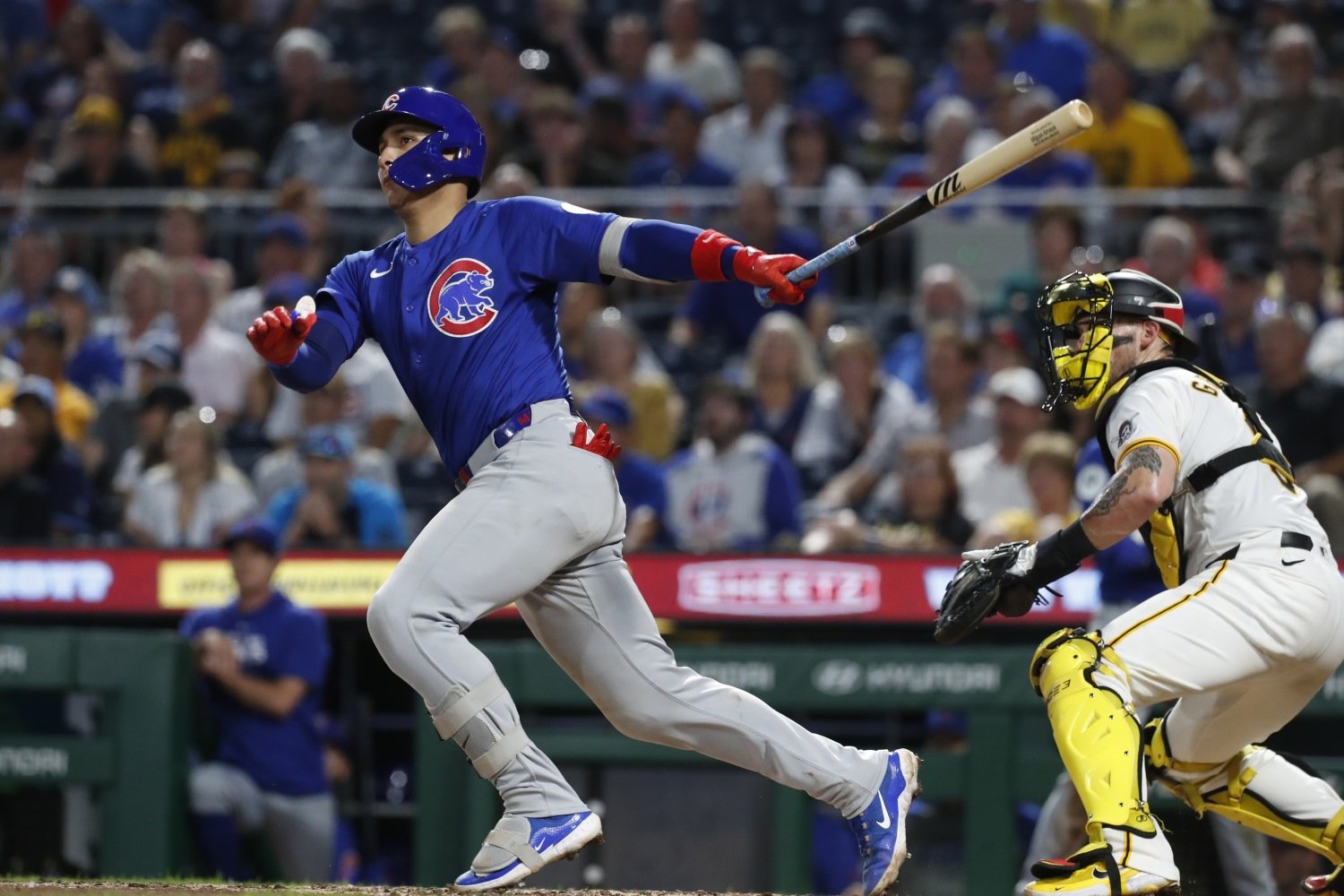 …is a thing I would say, if I were a more optimistic person in matters of this particular franchise. There’s no doubt that Miguel Amaya’s second half has been superb. It’s inarguable. After a first half in which he hit only .201 and ran a paltry 58 wRC+, Amaya has been a massive boon to a Cubs offense that has shown actual signs of life at different times over the last few weeks. His second-half numbers read as follows: .311/.346/.527, 12.5 K%, 5.0 BB%, .216 ISO, 143 wRC+. Amaya falls in the top 5-7 among qualifying backstops in virtually every category since the start of the second half, with very slim margins separating him from the top in most instances. That illustrates just how legitimate his impact has been since he made some mechanical adjustments and refined the approach. That’s the component of this stretch of play that has been discussed: the adjustments. We’ve discussed multiple angles of the changes here at NSBB, with Matt Trueblood most recently looking at the chaos present within the nuances of Amaya’s changes that have led to such rapid gains in his offensive performance. Further discussion of the changes, however, is not our purpose here. We’re not even interested in the sustainability of it all, in the more literal sense. Instead, the focus here is on the implications this could have on the catcher spot moving forward, from an organizational standpoint. More specifically, we’re interested in how this could impact the team’s perspective of the position. Because there’s a very direct outcome that seems almost too obvious at this point. We all know what it is. Miguel Amaya carries his run through the end of 2024. The Cubs – who reportedly made an inspired pitch to acquire Los Angeles Angels catcher Logan O’Hoppe prior to the trade deadline, showcasing a clear desire to upgrade their future behind the dish – decide that Amaya has now earned a longer runway with which to latch onto the catcher-of-the-future gig. They fill in the backup spot with a glove-first veteran, add their traditional third catcher to stash in Iowa, and call it a day. Again, it’s almost too obvious. This is a conservative front office. I won’t go as far as saying they’ll choose the path of least resistance. But Jed Hoyer-led leadership has shown a certain degree of loyalty to players already in the organization, at the expense of pursuing outside additions. Not that there’s exactly a plethora of outside talent to be had on the catching market. In free agency, you’ve got Elías Díaz, Danny Jansen, and an array of players who would serve as a no. 2, at best. They could take another run at O’Hoppe, but the trade market is likely to be even more barren than the free-agent class. Once you have an upper-tier catcher, you’re not likely to let them walk. With that in mind, I do think that the offseason context would make the obvious approach here simultaneously logical. Amaya has shown that, at his best, you could do far worse. The fear, however, is that the front office doesn’t even make the effort. They’ve seen what they need to see over a two- or three-month span, and move on to examining other avenues of offensive upgrades within the roster. That, dear reader, would be bad business. I wouldn’t go as far as saying dereliction of duty, but I’m also not not saying that. We’ve seen Miguel Amaya at his best. But we also have a far more extended sample of him at his worst. Perhaps the breakout is real, and he can be an above-average hitter from behind the plate. What that doesn’t mean, however, is that the Cubs should merely hand him the keys to the gig. I don’t think leadership is foolish enough to do exactly that. The fear persists, though. We’ve seen this front office play it safe far too often. Failing to make meaningful additions and then attempting to gas up the upside is how they’ve found themselves mired in offensive mediocrity for almost the entirety of 2024. I don’t know if Amaya’s adjustments will hold up. And I don’t know if the Cubs can even find legitimate catching help on any market this winter. I do know that this team in the Jed Hoyer Era has a track record with respect to decision-making. And this stretch of play is reigniting those fears.
 -
Don’t look now, but the Chicago Cubs might just have their catcher of the future… Image courtesy of © Charles LeClaire-USA TODAY Sports …is a thing I would say, if I were a more optimistic person in matters of this particular franchise. There’s no doubt that Miguel Amaya’s second half has been superb. It’s inarguable. After a first half in which he hit only .201 and ran a paltry 58 wRC+, Amaya has been a massive boon to a Cubs offense that has shown actual signs of life at different times over the last few weeks. His second-half numbers read as follows: .311/.346/.527, 12.5 K%, 5.0 BB%, .216 ISO, 143 wRC+. Amaya falls in the top 5-7 among qualifying backstops in virtually every category since the start of the second half, with very slim margins separating him from the top in most instances. That illustrates just how legitimate his impact has been since he made some mechanical adjustments and refined the approach. That’s the component of this stretch of play that has been discussed: the adjustments. We’ve discussed multiple angles of the changes here at NSBB, with Matt Trueblood most recently looking at the chaos present within the nuances of Amaya’s changes that have led to such rapid gains in his offensive performance. Further discussion of the changes, however, is not our purpose here. We’re not even interested in the sustainability of it all, in the more literal sense. Instead, the focus here is on the implications this could have on the catcher spot moving forward, from an organizational standpoint. More specifically, we’re interested in how this could impact the team’s perspective of the position. Because there’s a very direct outcome that seems almost too obvious at this point. We all know what it is. Miguel Amaya carries his run through the end of 2024. The Cubs – who reportedly made an inspired pitch to acquire Los Angeles Angels catcher Logan O’Hoppe prior to the trade deadline, showcasing a clear desire to upgrade their future behind the dish – decide that Amaya has now earned a longer runway with which to latch onto the catcher-of-the-future gig. They fill in the backup spot with a glove-first veteran, add their traditional third catcher to stash in Iowa, and call it a day. Again, it’s almost too obvious. This is a conservative front office. I won’t go as far as saying they’ll choose the path of least resistance. But Jed Hoyer-led leadership has shown a certain degree of loyalty to players already in the organization, at the expense of pursuing outside additions. Not that there’s exactly a plethora of outside talent to be had on the catching market. In free agency, you’ve got Elías Díaz, Danny Jansen, and an array of players who would serve as a no. 2, at best. They could take another run at O’Hoppe, but the trade market is likely to be even more barren than the free-agent class. Once you have an upper-tier catcher, you’re not likely to let them walk. With that in mind, I do think that the offseason context would make the obvious approach here simultaneously logical. Amaya has shown that, at his best, you could do far worse. The fear, however, is that the front office doesn’t even make the effort. They’ve seen what they need to see over a two- or three-month span, and move on to examining other avenues of offensive upgrades within the roster. That, dear reader, would be bad business. I wouldn’t go as far as saying dereliction of duty, but I’m also not not saying that. We’ve seen Miguel Amaya at his best. But we also have a far more extended sample of him at his worst. Perhaps the breakout is real, and he can be an above-average hitter from behind the plate. What that doesn’t mean, however, is that the Cubs should merely hand him the keys to the gig. I don’t think leadership is foolish enough to do exactly that. The fear persists, though. We’ve seen this front office play it safe far too often. Failing to make meaningful additions and then attempting to gas up the upside is how they’ve found themselves mired in offensive mediocrity for almost the entirety of 2024. I don’t know if Amaya’s adjustments will hold up. And I don’t know if the Cubs can even find legitimate catching help on any market this winter. I do know that this team in the Jed Hoyer Era has a track record with respect to decision-making. And this stretch of play is reigniting those fears. View full article
-
 I loved so much about what Cody Bellinger brought to the table for the 2023 Chicago Cubs. Turning in his first 20/20 season while also producing his best overall offensive numbers since 2019 made the Cubs bringing him back an absolute necessity. A team short on bats needed Bellinger to return for 2024--to say nothing of the quality defense he provides at multiple positions. Bellinger’s 2024 has been… not entirely what he or the team hoped. But it’s also been quite similar to what he provided last year. To break out my English teacher vernacular, it’s been rather paradoxical. Many of Bellinger’s 2023 approach and contact trends have carried over. His swing rates are virtually identical. His contact rates, both inside and out of the zone, have fluctuated by less than 2 percent. His non-contact strike rate this year is 26.1%, against a 25.9% mark last year. It’s led to almost the exact same strikeout and walk outputs that we saw last year. Even with some of the underlying concerns over quality of contact and batted-ball luck, Bellinger has managed to turn in a very solid season. Except where he hasn’t. That comes on the power side. Despite a 26-homer season last year, Bellinger’s overall ISO was still .218. For a player who has multiple .300+ ISO seasons to his credit, that wasn't an overly impressive figure. It's been a nasty surprise, then, to see it drop rather significantly even from there, this year. In 2024, Bellinger sports a .154 ISO. His HardHit% this year, at 32.0%, is nearly identical to last year. Not even at the height of his struggles in Los Angeles was it so low. Wavering quality of contact combined with an increased FB% has led to a bit less luck on the batted ball side this year, too. At this rate, it would obviously be unreasonable to expect Bellinger to return even remotely to his former power output from early in his career. His body has simply been through too much. He has managed to evolve, however, and remains a very capable bat, thanks to his refined contact ability and occasional power. This is where my concerns over Bellinger’s value to this Cubs roster start to manifest, though--because "quality approach and occasional power" sounds an awful lot like, well, a lot of this Cubs roster. The Cubs need impact. The unique structure of Bellinger’s three-year deal offers him the ability to opt out after both 2024 and 2025. There was a point in the year where opting in seemed like a virtual certainty. But with a bit of an uptick in performance in the second half (123 wRC+, .207 ISO), there remains a chance he could look for the big payday that eluded him last winter, out on the market. The unfortunate reality is that the Cubs should probably hope that he does. In a purely hypothetical sense, such a decision would offer the Cubs the most opportunity to seek legitimate impact via the trade market. I previously discussed the inflexibility that the Cubs have in adding impact to their roster. Their left fielder is locked in. Essentially their entire infield is, as well. Their center fielder is on the come-up. You’re looking at right field (in the event of a Bellinger departure) and catcher as the only plausible areas where they could seek the upgrade they so sorely need for the middle of their lineup, without incurring major transaction costs or the added risk of redundant resource allocation. The latter also becomes eliminated if the front office decides Miguel Amaya has shown enough in the second half to get another crack at the starting gig in 2025. This is where I start to struggle to navigate the idea of Cody Bellinger in the Cubs lineup moving forward. He’s so similar to the rest of their lineup. Steady approach. Good for occasional power. But he’s no longer the guy you can build around. If he chooses to opt in, the Cubs will have a quality bat in their lineup. However, they’re at the point where they need much more than mere quality. They need a star. And Bellinger walking in favor of a new contract provides them with the best chance to do it.
 -
It feels like there's always an enigma in the center of the Cubs' positional core, somewhere--a player whose performance and fit into the team's long-term plans are both hard to suss out. Lately, the most inscrutable of the bunch is the man making more than any other 2024 Cub. Image courtesy of © Charles LeClaire-USA TODAY Sports I loved so much about what Cody Bellinger brought to the table for the 2023 Chicago Cubs. Turning in his first 20/20 season while also producing his best overall offensive numbers since 2019 made the Cubs bringing him back an absolute necessity. A team short on bats needed Bellinger to return for 2024--to say nothing of the quality defense he provides at multiple positions. Bellinger’s 2024 has been… not entirely what he or the team hoped. But it’s also been quite similar to what he provided last year. To break out my English teacher vernacular, it’s been rather paradoxical. Many of Bellinger’s 2023 approach and contact trends have carried over. His swing rates are virtually identical. His contact rates, both inside and out of the zone, have fluctuated by less than 2 percent. His non-contact strike rate this year is 26.1%, against a 25.9% mark last year. It’s led to almost the exact same strikeout and walk outputs that we saw last year. Even with some of the underlying concerns over quality of contact and batted-ball luck, Bellinger has managed to turn in a very solid season. Except where he hasn’t. That comes on the power side. Despite a 26-homer season last year, Bellinger’s overall ISO was still .218. For a player who has multiple .300+ ISO seasons to his credit, that wasn't an overly impressive figure. It's been a nasty surprise, then, to see it drop rather significantly even from there, this year. In 2024, Bellinger sports a .154 ISO. His HardHit% this year, at 32.0%, is nearly identical to last year. Not even at the height of his struggles in Los Angeles was it so low. Wavering quality of contact combined with an increased FB% has led to a bit less luck on the batted ball side this year, too. At this rate, it would obviously be unreasonable to expect Bellinger to return even remotely to his former power output from early in his career. His body has simply been through too much. He has managed to evolve, however, and remains a very capable bat, thanks to his refined contact ability and occasional power. This is where my concerns over Bellinger’s value to this Cubs roster start to manifest, though--because "quality approach and occasional power" sounds an awful lot like, well, a lot of this Cubs roster. The Cubs need impact. The unique structure of Bellinger’s three-year deal offers him the ability to opt out after both 2024 and 2025. There was a point in the year where opting in seemed like a virtual certainty. But with a bit of an uptick in performance in the second half (123 wRC+, .207 ISO), there remains a chance he could look for the big payday that eluded him last winter, out on the market. The unfortunate reality is that the Cubs should probably hope that he does. In a purely hypothetical sense, such a decision would offer the Cubs the most opportunity to seek legitimate impact via the trade market. I previously discussed the inflexibility that the Cubs have in adding impact to their roster. Their left fielder is locked in. Essentially their entire infield is, as well. Their center fielder is on the come-up. You’re looking at right field (in the event of a Bellinger departure) and catcher as the only plausible areas where they could seek the upgrade they so sorely need for the middle of their lineup, without incurring major transaction costs or the added risk of redundant resource allocation. The latter also becomes eliminated if the front office decides Miguel Amaya has shown enough in the second half to get another crack at the starting gig in 2025. This is where I start to struggle to navigate the idea of Cody Bellinger in the Cubs lineup moving forward. He’s so similar to the rest of their lineup. Steady approach. Good for occasional power. But he’s no longer the guy you can build around. If he chooses to opt in, the Cubs will have a quality bat in their lineup. However, they’re at the point where they need much more than mere quality. They need a star. And Bellinger walking in favor of a new contract provides them with the best chance to do it. View full article
-
What Do We Really Want from Cubs Rookie Pete Crow-Armstrong?
RandallPnkFloyd posted an article in Cubs
 I have a finite number of approaches to writing. Generally, I’m heading down one of three routes: push an agenda in favor of or against a narrative; draw attention to a particular player; or explore the space of my own brain in pursuit of making something abstract more concrete. This is the latter. My brain doesn’t tend to handle abstract well, and I can't seem to get a concrete sense of the expectations for Pete Crow-Armstrong. I’m not sure what the Chicago Cubs fan collective wants from Crow-Armstrong. Over the past handful of months, I’ve read plenty of columns and thinkpieces from various sources, expressing something about what they want to see from the defensive wizard. Whether it’s taking umbrage with his bunting habits or examining every single incremental offensive improvement, I’m struggling to grasp exactly what we want to see. It’s somehow become more abstract than “get better on offense.” Er. Well. Has it, though? Crow-Armstrong’s 2024 output is…quite bad. His slash includes a mere .210 average & paltry .254 on-base percentage while running at a wRC+ of 67. He’s cut the strikeout rate from even his minor league time, down to 21.9%, and is supplying at least occasional power (.141 ISO). But when it comes down to it, you’d like to see the guy with 100th-percentile sprint speed on base just a little bit more. We’d likely see more than his 23 steals to date. August, however, has seen a shift in offensive maturity. Through 57 plate appearances this month, he’s hitting .269 and reaching base at a .309 clip. He’s also slugging .500 and cut the strikeout rate all the way down to 8.8%. The walk rate, at 5.3%, exceeds his season mark. It all culminates in a wRC+ around 120 for the month. It seems to represent a corner being turned. Sustainability is the next step. I assume the collective will agree on both counts. We could haggle over which components are sustainable. Maybe a little less power? For sure, a little more whiff is coming. In any case, the upside with the stick is being realized in a way that it previously wasn’t. But regardless of what the actual narrative is surrounding any given day’s iteration of Crow-Armstrong, I’m still left wondering what exactly we want to see before 2024 runs out--assuming that, you know, the last 50-ish plate appearances are not it. I think that the actual reasoning behind such varied perspectives on what Crow-Armstrong is and is not doing is a much grander and, dare I say, more abstract idea than the performance of the player himself. The reality of our perception of Crow-Armstrong’s development – in my extremely humble opinion – runs deeper than the actual trajectory of his development. What I think we’re looking for from Crow-Armstrong is what my own brain craves: clarity. Around the game, we see young players – especially on the outfield grass – immediately make an impact. Baseball is in a terrific place, with myriad rising stars contributing to their teams in meaningful ways. Crow-Armstrong, on the other hand, has been more of a project, at least on the offensive side. I think the inherent quality of human impatience is why we’ve seen such a range of thoughts around him. We not only want to know what he’ll develop into as a hitter, but we want to know now. The Cubs have enough players with upside. We’ve seen them fail to realize it all over the major-league roster this year. We’ve also seen them start to scratch it in the upper levels of the system. It’s all tantalizing, for better and worse. But it’s hard to stomach so much abstraction, whether in my own brain or the rational reader’s. That’s the conclusion with which I’m running. I don’t think that Crow-Armstrong has reached the point of being a polarizing player. Very few are questioning the upside itself; those who are appear to be outliers. But the remainder of the collective appears to be looking at different things. The improvement. The individual plate appearances. The bunting. It’s created a scattered idea of the player. Ultimately, I think within all of this, we’re just looking for the same thing: to know. Perhaps we will soon.
