


Cubs Video
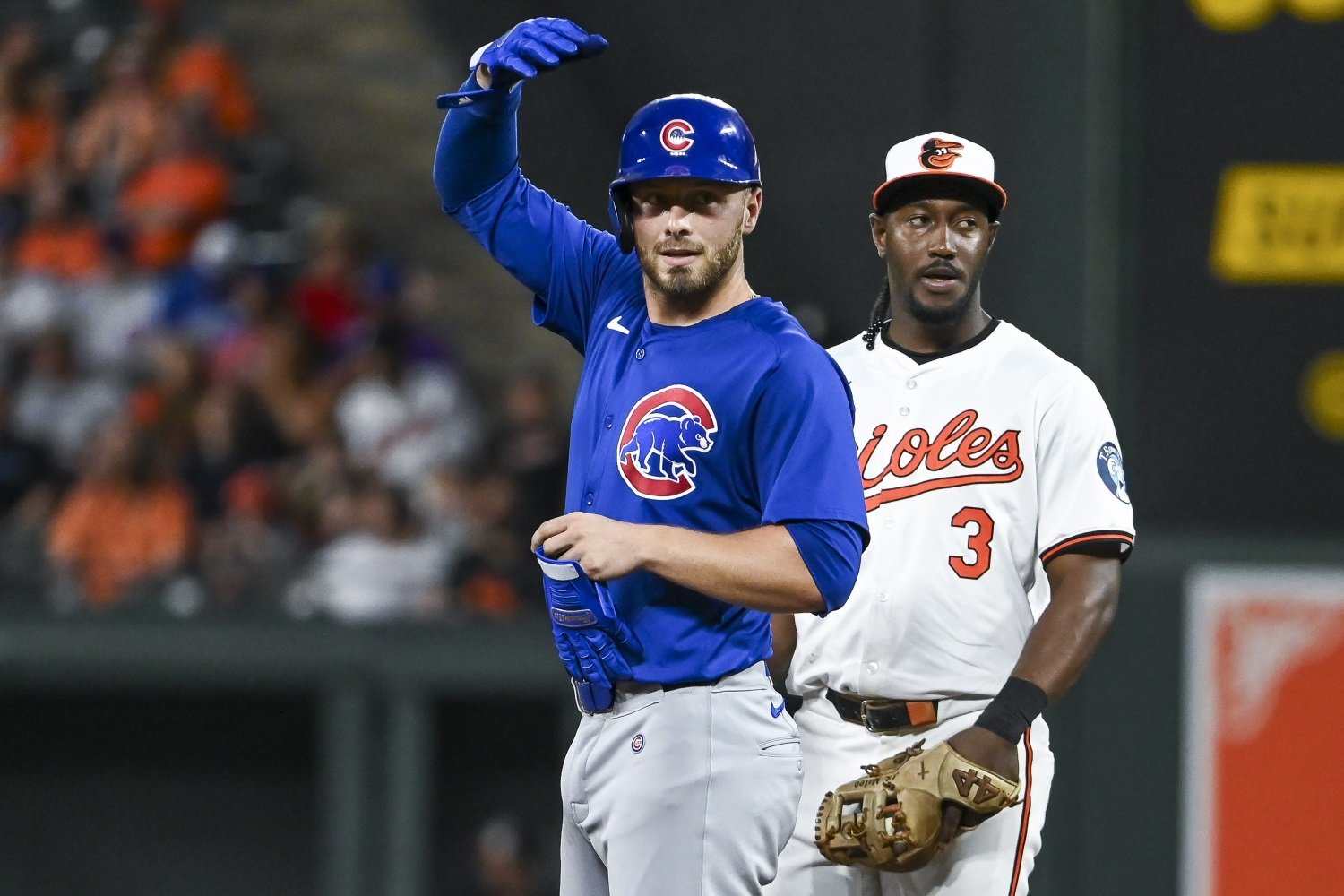
While the Chicago Cubs were able to cap off the first half of the 2024 season on a largely positive note, truly encouraging narratives around the team remain fairly sparse. The bullpen cost them games early in the year, and the lineup was pinned down by a number of underperforming and/or injured players that have left them unable to compensate. Many of the “positives” of the first half lie in the starting rotation. There is, though, at least one rousing offensive success to emerge out of these troubled months, with long-term implications aplenty: Michael Busch.
Busch wowed with an impressive home run streak back in April, in which he put a baseball over the outfield fence in five consecutive games. While there have been some dips in performance since then, Busch has largely burnished his reputation as an extremely capable bat for the Cubs.
The overall numbers for Michael Busch illustrate a mature bat capable of hitting virtually anywhere in the lineup. His slash at the break reads .271/.357/.466, with an 11.6 BB%. It’s a walk rate that sits in the 87th percentile among qualified hitters. If there’s any concern, it’s in the punchouts. Busch’s strikeout rate still sits over 30 percent (31.0%), but it dropped roughly eight percentage points between May and June, and he's posted an even 20% rate thus far in July.
It seems contradictory to tab Busch as a mature bat, while at the same time noting some fairly intense punchout rates. But it’s not as if he’s going up and swinging wildly. His 45.4 Swing% is quite measured, while a 25.4 O-Swing% is good for the 74th percentile. He also ranks 22nd in the league in pitches per plate appearance, with 4.14. That’s well above the average of 3.87. So his strikeouts are more a byproduct of his ability to work the count than a ghastly inability to make contact.
Busch has also proven to be a rare source of power for the Cubs this season. He’s posted an isolated power (ISO) of .195 to date, book-ending the first half with a .234 mark in April and a .231 in the first couple weeks of July. Only Ian Happ and Seiya Suzuki boast higher ISOs than his. As such, the walks and power allow him to compensate for his strikeout deficiencies while putting the screws to opposing pitchers via deep counts.
When Busch was acquired from the Los Angeles Dodgers, the scouting report focused almost exclusively on his bat. It’s part of the reason why the Dodgers were willing to part with one of their top prospects in the first place. Once they signed Shohei Ohtani to serve as the full-time designated hitter, that closed the book on Busch’s Hollywood career. It was a time before the Dodgers’ intense battle with the injury bug on their infield, but their hypothetical lack of space was the Cubs’ immediate gain.
While he probably wasn't ever going to cut it at second or third base, Busch's acclimation to the job of playing the cold corner every day in the majors has been as smooth as could possibly have been hoped. First base is not an easy position to which to transition. While it may not require as much athleticism as other infield spots, there’s a toolbox that not everyone possesses, especially from the standpoints of hands and instincts. Busch has proven to be adept at each facet the position demands, though. He’s posted a Fielding Run Value of 2 to date, and 5 Defensive Runs Saved.
It’s that defensive component that has helped Busch to establish himself as one of the better players at the position in all of baseball. The FanGraphs leaderboard has him fourth in WAR (2.0) among first basemen. The names ahead of him are Bryce Harper, Freddie Freeman, and Christian Walker. Names behind him include Vladimir Guerrero Jr. Yandy Díaz, Pete Alonso, and Paul Goldschmidt. Putting it in that perspective illustrates just how much of a success the first half-season of Busch's Cubs tenure has been.
The Cubs had been without a long-term solution at first base since they traded away franchise icon Anthony Rizzo. Frank Schwindel was a brief flash. Matt Mervis appears destined for a Quadruple-A career. Cody Bellinger provides too much value as an outfield glove to pin him down on an infield corner full-time at this point. None of Eric Hosmer, Trey Mancini, Alfonso Rivas, P.J. Higgins, or Jared Young turned out to be more than weak stopgaps at the position--not that they were ever expected to.
But such a high volume of players getting reps at first base – to say nothing of Jeimer Candelario, Patrick Wisdom, David Bote – speaks to the difficulty they’ve had finding stability in the wake of the Rizzo trade. And while there are a couple of notable names in the system, including BJ Murray Jr & Haydn McGeary, neither appears remotely close to a major-league cup of coffee at this point.
We can also throw the financial aspect into the discussion. With names like Alonso and Walker potentially available at the position, the Cubs are now able to lock in a pre-arbitration player at the position instead of shelling out huge dollars. The average fan shouldn't worry about the team’s finances, but massive savings there could allow the team to reallocate funds in other areas of offensive deficiency. (Whether they actually will spend money aggressively elsewhere is, of course, a different question.)
Ultimately, it’s hard to overstate how much the emergence of Busch has silvered the lining of the dark clouds hanging over this team after the first half of 2024. With the potential for additional evolution, it’s hard not to think that the position is locked down for the foreseeable future, and easy to get excited dreaming on how he might perform over the next three to five seasons.





Recommended Comments
There are no comments to display.
Create an account or sign in to comment
You need to be a member in order to leave a comment
Create an account
Sign up for a new account in our community. It's easy!
Register a new accountSign in
Already have an account? Sign in here.
Sign In Now