


RandallPnkFloyd
-
Posts
513 -
Joined
-
Last visited
Content Type
Profiles
Joomla Posts 1
Chicago Cubs Videos
Chicago Cubs Free Agent & Trade Rumors, Notes, & Tidbits
2026 Chicago Cubs Top Prospects Ranking
News
2023 Chicago Cubs Draft Picks
Guides & Resources
2024 Chicago Cubs Draft Picks
The Chicago Cubs Players Project
2025 Chicago Cubs Draft Pick Tracker
2026 Chicago Cubs Draft Tracker: Picks & Bonuses
Blogs
Events
Forums
Store
Gallery
Everything posted by RandallPnkFloyd
-
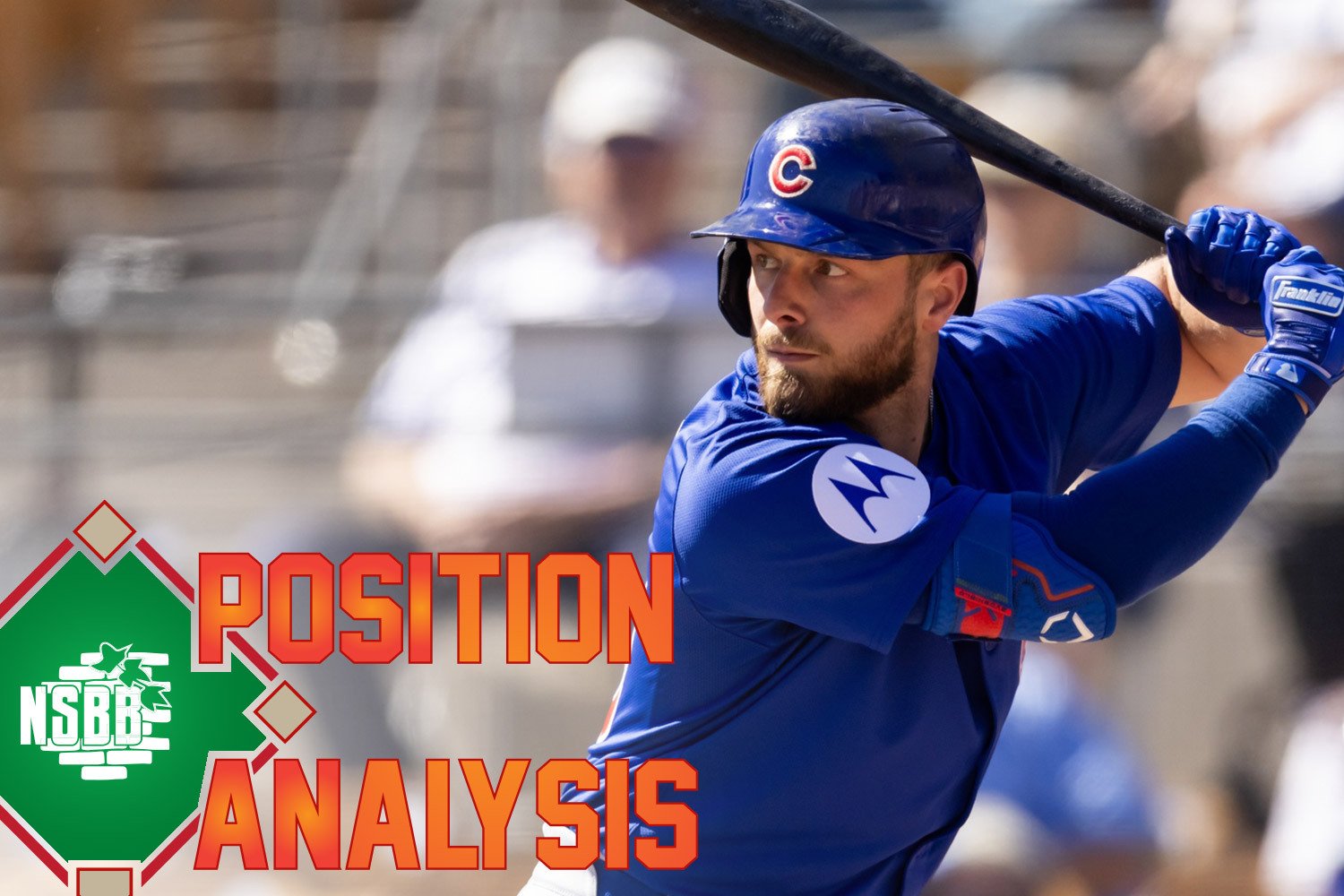 What a difference a year makes. The first base position on the North Side was extremely uncertain ahead of the 2024 season. The Chicago Cubs had gone plug-and-play in the two years following Anthony Rizzo’s deadline departure. The 2022 group was led by Alfonso Rivas’ 81 games at the spot, with a smattering of Frank Schwindel, P.J. Higgins, and Patrick Wisdom behind him. The succeeding team in ’23 wasn’t terribly improved. They saw a hodgepodge of Eric Hosmer, Trey Mancini, and (eventually, courtesy of injury) Cody Bellinger rotate through. In total, seven different players logged at least a dozen appearances at first base. There were some Pete Alonso rumors at one point, but the position itself lived almost entirely in the abstract given the excessive turnover and lack of notable prospects in the wake of Rizzo’s departure. Enter Michael Busch. A castoff of the Los Angeles Dodgers’ crowded farm system, Busch was a bat without a position during his days as part of their organization. The Cubs entrenched him at first base from the jump and the results were… actually quite good. His bat was uneven, but the approach matured as the season wore on. Perhaps more importantly (given the offensive pedigree already possessed), his defense improved as the season progressed. He ultimately finished as an above-average defender. Busch’s presence leaves no doubt as to the immediate future of the position. He’s under team control through 2027 and has added muscle in pursuit of additional power. Beyond him, however, things get a little bit murky. CUBS FIRST BASEMEN AT A GLANCE Starter: Michael Busch Backup: Justin Turner Depth: Jon Berti Prospects: Jonathon Long, Moises Ballesteros Cubs fWAR Ranking Last Year: 11th (2.2) Cubs fWAR Projection This Year: 2.0 THE GOOD There’s stability here now. That is perhaps the most important thing about Busch’s emergence in ’24. And while he was already a quality offensive prospect upon arrival, he showcased maturity as the year trudged on. After peaking in May, Busch’s K% dropped in each succeeding month. He closed the year with his lowest rate of the season, at 20.9 percent in September. With the exception of August (97), he was above average in each individual month by wRC+. Even with brutal batted ball luck (.212 BABIP) in September, he still posted a 117 figure and put down his highest ISO (.243) of the campaign. He capped the season on a high note, demonstrating enough growth as to not even make the position a conversation over the winter after so much uncertainty in the few previous years. The next steps for Busch are smaller components within the overall offensive profile. He posted upper-percentile chase, walk, and barrel rates. But he also sat in the 28th percentile in Whiff% and 46th in Hard-hit%. So, while he was making mostly good swing decisions, his contact quality was suboptimal. His swing also sat in the 24th percentile in bat speed. You can live with the whiffs not coming down if it means the added muscle will contribute to higher-end driving of the baseball. And if the Cubs can get that out of him, even at the expense of the overall contact rate, there’s likely another level to be reached here. THE BAD Prior to the Cubs’ signing Justin Turner, there were questions about the depth here. His addition, however, changes the calculus at the position. A career third baseman, Turner has largely been seen only at first in the last two years. His advanced approach — even with a sharp decline in his power output — should be a boon for several players on the roster, including Busch. He also provides a decent enough safety net should Busch face any sort of regression or injury. Given that, it’s difficult to pinpoint an exact weakness within the first base position. Longer-term, you’re obviously banking on Busch being a dude in the lineup even beyond 2027. Jonathon Long has a strong offensive profile, but likely isn’t the defender that Busch is. Moises Ballesteros may be forced over to first by virtue of his defensive trajectory as a catcher. Outside of those long-term, abstract possibilities, you’re looking at a position that finally has some certainty to it. THE BOTTOM LINE This is Michael Busch’s spot until it isn’t. While a hole at third base and a potential trade of Nico Hoerner prompted some brief discussion of his athleticism moving him elsewhere (even if on a temporary basis), the additional strength and consistent month-to-month improvement makes him a fascinating player to project as we creep closer to the 2025 season.
 -
The Cubs need more power production from their star shortstop in 2025. That's easier said than done, though, because there's no one adjustment he can make to tap back into the pop he's shown in the past. Image courtesy of © Rick Scuteri-Imagn Images There was a time in my life when I thought Dansby Swanson was a mystery—something to be solved. But I’ve grown up. Matured. Evolved. Now I realize that the Chicago Cubs’ shortstop is a sometimes-good, mostly underwhelming offensive performer who is propped up by the exceptionally steady defense he provides. It’s honestly nice to have that type of clarity. That does not, however, mean that there aren’t aspects of Swanson’s offensive game worth discussing. His power (and sometimes lack thereof) is a particularly interesting area of study as we prepare for the new season. The 2021 season represented the peak of Swanson’s power. He hit 27 home runs and logged a .201 isolated power (the only time he’s exceeded the .200 threshold). His Barrel rate, at 11.4%, was his highest over a full season, while his Hard Hit rate (42.7%) trailed only 2022 as his highest rate for a single season. He still finished as a slightly below-average performer (99 wRC+), because his walk rate was lower than you’d like (8.0%), his strikeout rate was higher than you’d like (25.6%), and he didn’t make as much contact as you’d like (72.6% of all swings). In 2022, Swanson experienced a sharp uptick in his average and on-base outputs. This was largely due to a .348 BABIP. The power dipped slightly, but from an overhead perspective, not much of what Swanson has done in those two years has changed since. His swing rates, chase rates, called strike rates, and so on have all remained within one or two percentage points of each other over the last four seasons. Aside from a 2022 outlier, the quality of contact rates haven’t changed much, either. What has changed, however, is the type of batted ball he's been hitting that hard. His launch angle fell sharply last year, in particular. With it, his ground-ball rate skyrocketed, so it makes sense that Swanson’s 16-homer, .148-ISO 2024 campaign was his worst power year in a full season since 2018. We’ve talked before about Swanson’s need to cling to a specific pitch type to generate sustained offensive success. My inclination in pondering the decline in power is that he is doing the opposite of that. But that may not be all. Before we get to pitch types, let’s talk about Swanson's overall swing rates in relation to the zone itself. To generate power, you’re looking middle-up, unless you’re an elite hitter who can generate power to other parts of the zone. Swanson is not one. He needs to live up. These zone profiles represent Swanson’s 2021, when his power was at its highest, against 2024: It’s not that Swanson is swinging less often. He’s just swinging in a more concentrated fashion, and it isn’t playing to his benefit. Below is Swanson’s Barrel rate per ball in play, with 2021 being represented on the left and 2024 on the right: In large part, Swanson was finding the barrel middle-middle (obviously) and up and away. With the condensed zone in which he operated last year, he’s just not finding the barrel. It’s almost as if he’s gotten too patient, in a very specific way, and it’s limiting his overall output more than a general decline in swing rate would. It’s important to note that the 2022 profile doesn’t look like the one from 2021. He worked more on the inner half. But he was still working the upper parts of both sides of the zone. That aspect, on either side, has faded in the two seasons during which he’s been with the Cubs. The launch angle, as a result, has come down, bottoming out at just 10.4° last season. Another factor impacting his ability to contribute is that he’s become pull-heavy. Since arriving in Chicago, Swanson has posted the two highest pull rate seasons in his career. He's hit fewer than 19% of his batted balls to the opposite field in each of his two seasons with the Cubs. It’s a dangerous proposition, when we know how bad Wrigley Field has been for right-handed hitters since he arrived. But given that he’s still swinging at outside pitches (albeit not elevated ones), you’d like to see him get the ball to the opposite field with more regularity to, perhaps, generate a bit more batted-ball luck. From a zone perspective, we should hope for a little more lift from Swanson in 2025, but for him to do that, he’s going to need to fall back in love with the fastballs. We’ve known for a while that Swanson’s best work comes against the hard stuff. It got him off to a strong start last year before things started to get jumbled in his approach. In his best quality-of-contact season (2022), fastballs were the pitch type at which he swung most (53.5%). Every year since 2018, save last season, his highest Barrel rate has come against heat. The same is true of his slugging average. The other two pitch categories have much more variation, but no sustained positive outcomes. He’s a player who needs to sit fastball. Unfortunately, that hasn’t been a viable proposition for him. Last year, Swanson swung at offspeed stuff more than any other pitch type. The year before, his first in Chicago, it was the same story, with a larger margin: It’s obviously not a new trend. But you'd like to see one of two things. Either the gap is narrower, like in 2021, or offspeed takes a backseat to the hard stuff. We got the first one in 2024. but we also got the highest chase rate of his career against offspeed offerings (60.9%), the highest ground-ball rate (64.3%), and a whiff rate that was 13 percentage points higher than it was against the fastball (37.1%)—which is, for the pitcher’s part, the purpose of throwing that type of pitch. And while Swanson did whiff and experience other negative results against offspeed pitches in his two best offensive seasons, he was still able to compensate with quality contact: As illustrated above, that has not been the case in his time with the Cubs. Instead, the gap between his success against fastballs and his success against other pitch types has only widened. This makes it seem like it’s more imperative for Swanson to focus on pitch type than on location. A blend of the two would, of course, be ideal. But if you had to hone in on one to draw out improvement in Swanson’s game, it would behoove him more to renew the focus on the hard stuff. I think it’s also important to consider the logistics of the swing itself. Swanson doesn’t have a particularly short or fast swing. It’s sort of middle-tier in length, and 45th-percentile in speed. Those are logistics we can investigate further, the more bat-tracking data we gather. But if the swing itself is an inhibitor of Swanson managing against high velocity, then the zone needs to be the focus. Either way, there are important considerations in the approach for Swanson to generate more power. That power doesn’t have to be exclusively in the form of home runs, but it sure as heck can’t include declining hard-hit rates and increased ground-ball numbers. Whatever the fix, perhaps a fresh environment—some changes in the hitting coaching group, better health, and a few new veteran voices around Swanson in the lineup—will help Swanson achieve it. One thing is for sure: since he's 31, this is a pivotal season. The Cubs need to see their long-term, star-level investment begin to return star-level performance, if only for a year or two. View full article
-
The Multi-Layered Process of Reclaiming Dansby Swanson's Power
RandallPnkFloyd posted an article in Cubs
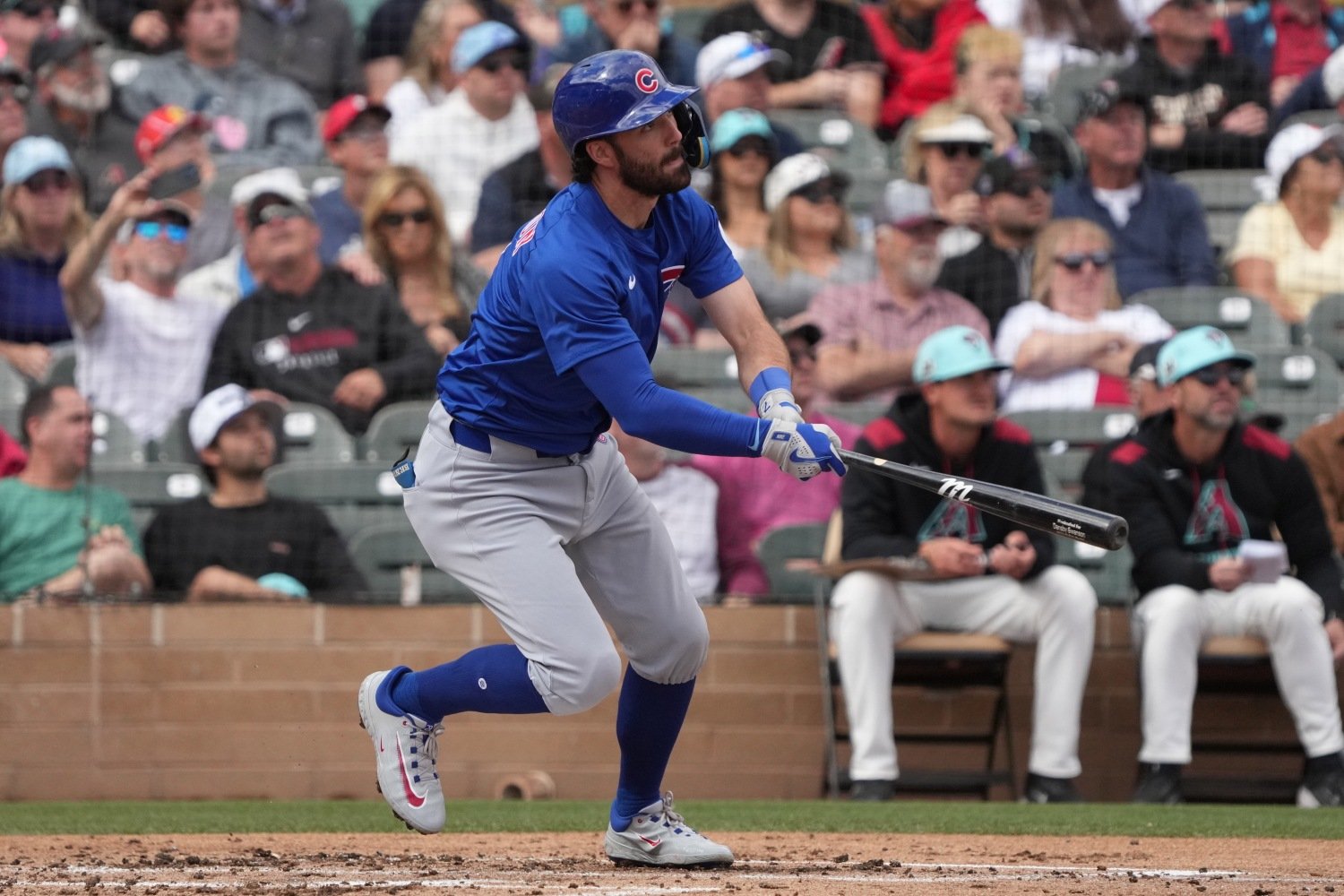 There was a time in my life when I thought Dansby Swanson was a mystery—something to be solved. But I’ve grown up. Matured. Evolved. Now I realize that the Chicago Cubs’ shortstop is a sometimes-good, mostly underwhelming offensive performer who is propped up by the exceptionally steady defense he provides. It’s honestly nice to have that type of clarity. That does not, however, mean that there aren’t aspects of Swanson’s offensive game worth discussing. His power (and sometimes lack thereof) is a particularly interesting area of study as we prepare for the new season. The 2021 season represented the peak of Swanson’s power. He hit 27 home runs and logged a .201 isolated power (the only time he’s exceeded the .200 threshold). His Barrel rate, at 11.4%, was his highest over a full season, while his Hard Hit rate (42.7%) trailed only 2022 as his highest rate for a single season. He still finished as a slightly below-average performer (99 wRC+), because his walk rate was lower than you’d like (8.0%), his strikeout rate was higher than you’d like (25.6%), and he didn’t make as much contact as you’d like (72.6% of all swings). In 2022, Swanson experienced a sharp uptick in his average and on-base outputs. This was largely due to a .348 BABIP. The power dipped slightly, but from an overhead perspective, not much of what Swanson has done in those two years has changed since. His swing rates, chase rates, called strike rates, and so on have all remained within one or two percentage points of each other over the last four seasons. Aside from a 2022 outlier, the quality of contact rates haven’t changed much, either. What has changed, however, is the type of batted ball he's been hitting that hard. His launch angle fell sharply last year, in particular. With it, his ground-ball rate skyrocketed, so it makes sense that Swanson’s 16-homer, .148-ISO 2024 campaign was his worst power year in a full season since 2018. We’ve talked before about Swanson’s need to cling to a specific pitch type to generate sustained offensive success. My inclination in pondering the decline in power is that he is doing the opposite of that. But that may not be all. Before we get to pitch types, let’s talk about Swanson's overall swing rates in relation to the zone itself. To generate power, you’re looking middle-up, unless you’re an elite hitter who can generate power to other parts of the zone. Swanson is not one. He needs to live up. These zone profiles represent Swanson’s 2021, when his power was at its highest, against 2024: It’s not that Swanson is swinging less often. He’s just swinging in a more concentrated fashion, and it isn’t playing to his benefit. Below is Swanson’s Barrel rate per ball in play, with 2021 being represented on the left and 2024 on the right: In large part, Swanson was finding the barrel middle-middle (obviously) and up and away. With the condensed zone in which he operated last year, he’s just not finding the barrel. It’s almost as if he’s gotten too patient, in a very specific way, and it’s limiting his overall output more than a general decline in swing rate would. It’s important to note that the 2022 profile doesn’t look like the one from 2021. He worked more on the inner half. But he was still working the upper parts of both sides of the zone. That aspect, on either side, has faded in the two seasons during which he’s been with the Cubs. The launch angle, as a result, has come down, bottoming out at just 10.4° last season. Another factor impacting his ability to contribute is that he’s become pull-heavy. Since arriving in Chicago, Swanson has posted the two highest pull rate seasons in his career. He's hit fewer than 19% of his batted balls to the opposite field in each of his two seasons with the Cubs. It’s a dangerous proposition, when we know how bad Wrigley Field has been for right-handed hitters since he arrived. But given that he’s still swinging at outside pitches (albeit not elevated ones), you’d like to see him get the ball to the opposite field with more regularity to, perhaps, generate a bit more batted-ball luck. From a zone perspective, we should hope for a little more lift from Swanson in 2025, but for him to do that, he’s going to need to fall back in love with the fastballs. We’ve known for a while that Swanson’s best work comes against the hard stuff. It got him off to a strong start last year before things started to get jumbled in his approach. In his best quality-of-contact season (2022), fastballs were the pitch type at which he swung most (53.5%). Every year since 2018, save last season, his highest Barrel rate has come against heat. The same is true of his slugging average. The other two pitch categories have much more variation, but no sustained positive outcomes. He’s a player who needs to sit fastball. Unfortunately, that hasn’t been a viable proposition for him. Last year, Swanson swung at offspeed stuff more than any other pitch type. The year before, his first in Chicago, it was the same story, with a larger margin: It’s obviously not a new trend. But you'd like to see one of two things. Either the gap is narrower, like in 2021, or offspeed takes a backseat to the hard stuff. We got the first one in 2024. but we also got the highest chase rate of his career against offspeed offerings (60.9%), the highest ground-ball rate (64.3%), and a whiff rate that was 13 percentage points higher than it was against the fastball (37.1%)—which is, for the pitcher’s part, the purpose of throwing that type of pitch. And while Swanson did whiff and experience other negative results against offspeed pitches in his two best offensive seasons, he was still able to compensate with quality contact: As illustrated above, that has not been the case in his time with the Cubs. Instead, the gap between his success against fastballs and his success against other pitch types has only widened. This makes it seem like it’s more imperative for Swanson to focus on pitch type than on location. A blend of the two would, of course, be ideal. But if you had to hone in on one to draw out improvement in Swanson’s game, it would behoove him more to renew the focus on the hard stuff. I think it’s also important to consider the logistics of the swing itself. Swanson doesn’t have a particularly short or fast swing. It’s sort of middle-tier in length, and 45th-percentile in speed. Those are logistics we can investigate further, the more bat-tracking data we gather. But if the swing itself is an inhibitor of Swanson managing against high velocity, then the zone needs to be the focus. Either way, there are important considerations in the approach for Swanson to generate more power. That power doesn’t have to be exclusively in the form of home runs, but it sure as heck can’t include declining hard-hit rates and increased ground-ball numbers. Whatever the fix, perhaps a fresh environment—some changes in the hitting coaching group, better health, and a few new veteran voices around Swanson in the lineup—will help Swanson achieve it. One thing is for sure: since he's 31, this is a pivotal season. The Cubs need to see their long-term, star-level investment begin to return star-level performance, if only for a year or two.
 -
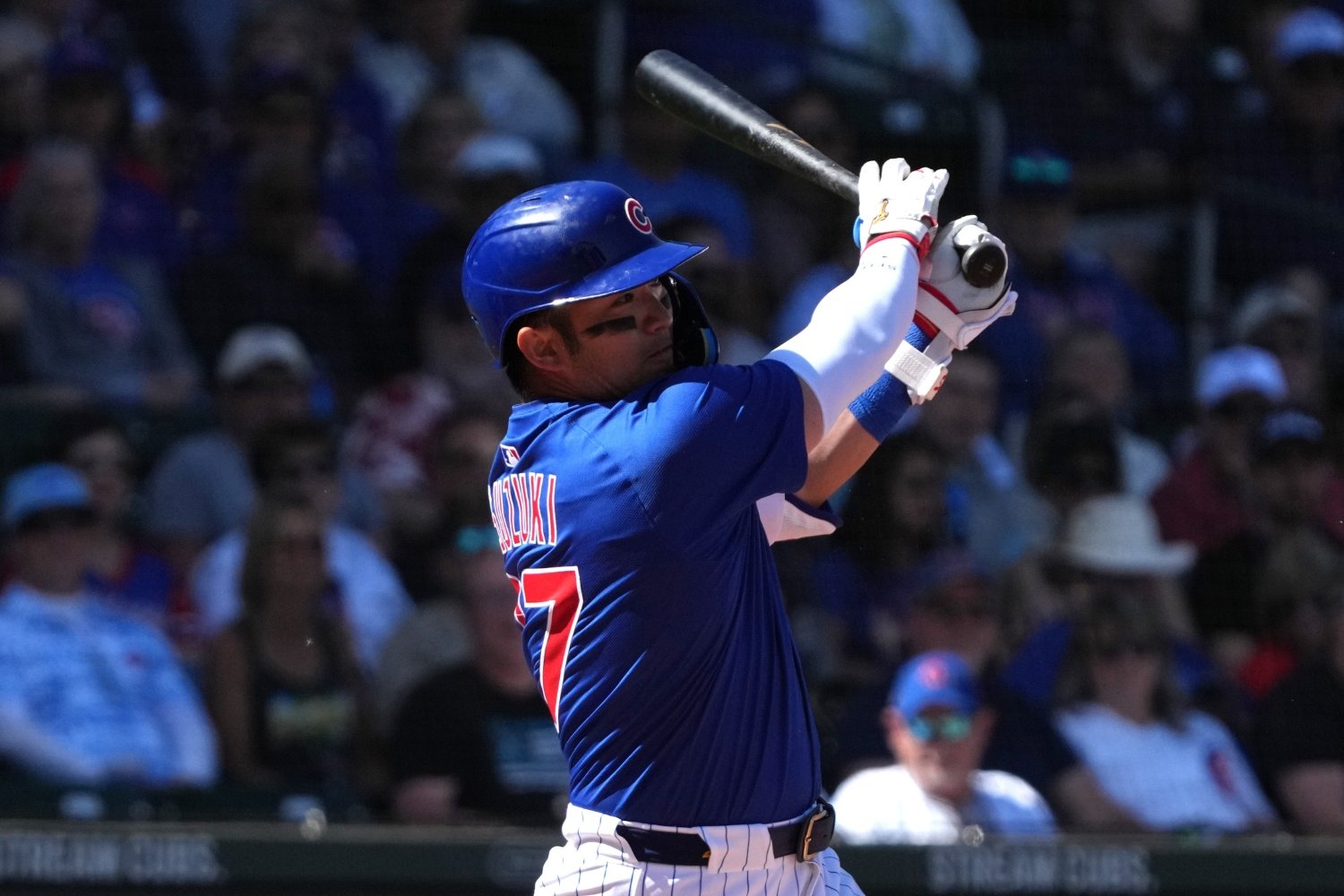 The calendar has just barely flipped over to March, but we’ve long known the shape of the Chicago Cubs’ lineup to start 2025. The bench still needs to be sorted, sure. But assuming Matt Shaw latches onto the third base gig (and we have no reason to think otherwise at this point), the starting nine is crystal clear. At the same time, I’ve spent a good part of the early spring pondering what the results could look like early in the year with the apparent starting group. Last year, for example, we saw Ian Happ struggle mightily in March and April. His .216 average, .098 ISO, and 92 wRC+ last April were all his lowest in an individual month, ultimately pinning down his overall numbers by season’s end. Dansby Swanson followed up a 90 wRC+ in April with a meager 39 in May, before finally settling in during June. Notably, though, the early returns for both Happ and Swanson are fairly in line with what we should expect from each of them at that point in the year. While Happ’s career 104 wRC+ in March/April is indicative of an above-average player, it’s also his lowest figure in an individual month. In each of May and June, though, he’s at 121. His power output also takes a bit to get going. A .119 ISO for March/April comes in as the lowest, before spiking to .219 and .206 in the subsequent two months, respectively. In Happ’s case, there isn’t any clear thing to indicate why the slow start transpires. There’s as much variance in his swing rates and pitch-type tendencies in the first few months of the season as in the last few months. And it’s not as if he’s outright bad, with 2024 serving as something of an outlier on his spectrum of March/April production. It just takes a minute before his bat is fully ready in a given year. Even his more modest pace, though, presents a pretty strong contrast to his veteran counterpart in Swanson. While not quite the offensive caliber of even someone like Happ, Swanson has done his worst work in the season’s first month for virtually his entire career. His .235 average, .311 on-base percentage, .135 ISO, and 85 wRC+ before May 1 are all the lowest of any individual month. Last year saw his typical cold March/April spiral into a downright frigid May. We’ll get into some of the particulars regarding Swanson’s erratic tendencies (early and otherwise) at the plate in the coming days, but the main point is that the Cubs have a couple of regulars prone to quiet (or bad) stretches to start the year. You also have to factor in Matt Shaw, who has shown the ability to adjust when transitioning to a new level but will need some time to do so. That’s a third of the projected lineup that could slog a bit during the first month of the season, even if there's nothing materially wrong. That brings me to my central question: Do the Cubs have enough hot starters to balance out the cold ones? They were, after all, able to do it in 2024. Despite the slow starts from Happ, Swanson, and Nico Hoerner (not typically a slow starter, but he's coming off surgery ahead of 2025), the Cubs sat fourth in the National League standings and a half-game behind Milwaukee in the NL Central at the end of April. Their 149 runs over that first month and change were sixth-best in the NL. Interestingly, much of the balance came from multiple names no longer around. Mike Tauchman posted a 171 wRC+ across 92 March and April plate appearances, courtesy of higher-than-usual power numbers and a walk rate sitting a shade above 16%. Cody Bellinger’s walk and power numbers were also his best in an individual month, despite horrid batted-ball luck. While those two are no longer with the team, luckily, they were not the sole source of offense in the early going. Seiya Suzuki and Michael Busch were the Cubs’ second- and third-best hitters by wRC+ through April. Suzuki went for a 147 wRC+ across 68 plate appearances, while Busch sat at 130 after 108 trips to the plate. Both compensated for alarming strikeout rates (about 30%, on average) with good power and solid (though not outlandish) walk rates. While we don’t have enough data yet to say whether Busch is a characteristically hot or cold starter, we have a little more to back up Suzuki’s place in this. The numbers say we should be able to count on him for continued balance, in the event of slow starts from elsewhere in the lineup. His career 137 wRC+ in March and April trails only September for his highest individual month. He generally strikes out more early on, but also walks and hits for enough power to compensate. Entering the season as the team’s full-time designated hitter will, ideally, keep him healthy enough to continue to be that stabilizing force in the lineup. For his money, Busch closed 2024 on a high note. He wrapped September with his lowest strikeout rate (20.9%) and highest isolated power (.243) of any individual month. With added bulk and a strong start to the spring, he at least looks in line to repeat—or perhaps even build on—what was a great rookie season, and that should start right away. He already looks awfully locked in this spring. So there’s two—two batters, so far, to balance out expected slow starts from Happ, Swanson and (probably, whether by virtue of health slowing him down or holding him out altogether) Hoerner, plus the risk of an adjustment period for Shaw. Yes, that makes this the Kyle Tucker portion of the show. Tucker’s first month has historically been his worst month. The term is relative here, however. He’s posted a 122 wRC+ even in March and April; gone for an 11.8% walk rate; and slugged his way to a .206 ISO in the first month of the season throughout his career. That’s the difference with an elite hitter. His other months are better, because the bar is so high. In fact, he alone should help to compensate for the contributions Tauchman and Bellinger were able to make early last season, as long as he breaks out of his early spring funk before the season gets into gear. It helps to have that level of certainty, because the remainder of the group is somewhat uncertain. Can Pete Crow-Armstrong rein in the swing rates? Can Shaw make that huge leg kick work in the majors? Will Miguel Amaya’s second-half adjustments allow him to maintain such steady production? When you combine those questions with the typical (or expected) trends of certain hitters within the lineup, that balance becomes essential. And at this point, the Cubs appear to have it, given the Tucker acquisition. If you can get an affirmative on at least one of those three questions, the possibility of a torrid start becomes a bit more real. This wasn’t an intentional backdoor way of noting the importance of Tucker’s addition, but it kind of ended up being one. One of the consistent issues with the Cubs last year was not having that catalyst in the lineup when the group started to go cold. They needed someone to stay the course and mitigate the effects of any cold stretch. Tucker’s addition does exactly that, and his presence should be notable from the jump. Now, you’ve got Suzuki in a position to remain healthy. You’ve got Busch ready to build on his success. And you’ve got some youngsters who need to prove something early, in order to demonstrate their importance to the lineup. As frustrating as last year’s group was on the offensive side of the ball, the balance looks likely to be better this year. One can very easily imagine such balance not only serving the group well in April, but catapulting them to a wildly improved full season at the plate in 2025.
 -
A couple of the hitters whose early struggles made life hard last spring are habitual slow starters. Does the team have ways to better survive early travails and put runs on the board from Day One this time? Image courtesy of © Rick Scuteri-Imagn Images The calendar has just barely flipped over to March, but we’ve long known the shape of the Chicago Cubs’ lineup to start 2025. The bench still needs to be sorted, sure. But assuming Matt Shaw latches onto the third base gig (and we have no reason to think otherwise at this point), the starting nine is crystal clear. At the same time, I’ve spent a good part of the early spring pondering what the results could look like early in the year with the apparent starting group. Last year, for example, we saw Ian Happ struggle mightily in March and April. His .216 average, .098 ISO, and 92 wRC+ last April were all his lowest in an individual month, ultimately pinning down his overall numbers by season’s end. Dansby Swanson followed up a 90 wRC+ in April with a meager 39 in May, before finally settling in during June. Notably, though, the early returns for both Happ and Swanson are fairly in line with what we should expect from each of them at that point in the year. While Happ’s career 104 wRC+ in March/April is indicative of an above-average player, it’s also his lowest figure in an individual month. In each of May and June, though, he’s at 121. His power output also takes a bit to get going. A .119 ISO for March/April comes in as the lowest, before spiking to .219 and .206 in the subsequent two months, respectively. In Happ’s case, there isn’t any clear thing to indicate why the slow start transpires. There’s as much variance in his swing rates and pitch-type tendencies in the first few months of the season as in the last few months. And it’s not as if he’s outright bad, with 2024 serving as something of an outlier on his spectrum of March/April production. It just takes a minute before his bat is fully ready in a given year. Even his more modest pace, though, presents a pretty strong contrast to his veteran counterpart in Swanson. While not quite the offensive caliber of even someone like Happ, Swanson has done his worst work in the season’s first month for virtually his entire career. His .235 average, .311 on-base percentage, .135 ISO, and 85 wRC+ before May 1 are all the lowest of any individual month. Last year saw his typical cold March/April spiral into a downright frigid May. We’ll get into some of the particulars regarding Swanson’s erratic tendencies (early and otherwise) at the plate in the coming days, but the main point is that the Cubs have a couple of regulars prone to quiet (or bad) stretches to start the year. You also have to factor in Matt Shaw, who has shown the ability to adjust when transitioning to a new level but will need some time to do so. That’s a third of the projected lineup that could slog a bit during the first month of the season, even if there's nothing materially wrong. That brings me to my central question: Do the Cubs have enough hot starters to balance out the cold ones? They were, after all, able to do it in 2024. Despite the slow starts from Happ, Swanson, and Nico Hoerner (not typically a slow starter, but he's coming off surgery ahead of 2025), the Cubs sat fourth in the National League standings and a half-game behind Milwaukee in the NL Central at the end of April. Their 149 runs over that first month and change were sixth-best in the NL. Interestingly, much of the balance came from multiple names no longer around. Mike Tauchman posted a 171 wRC+ across 92 March and April plate appearances, courtesy of higher-than-usual power numbers and a walk rate sitting a shade above 16%. Cody Bellinger’s walk and power numbers were also his best in an individual month, despite horrid batted-ball luck. While those two are no longer with the team, luckily, they were not the sole source of offense in the early going. Seiya Suzuki and Michael Busch were the Cubs’ second- and third-best hitters by wRC+ through April. Suzuki went for a 147 wRC+ across 68 plate appearances, while Busch sat at 130 after 108 trips to the plate. Both compensated for alarming strikeout rates (about 30%, on average) with good power and solid (though not outlandish) walk rates. While we don’t have enough data yet to say whether Busch is a characteristically hot or cold starter, we have a little more to back up Suzuki’s place in this. The numbers say we should be able to count on him for continued balance, in the event of slow starts from elsewhere in the lineup. His career 137 wRC+ in March and April trails only September for his highest individual month. He generally strikes out more early on, but also walks and hits for enough power to compensate. Entering the season as the team’s full-time designated hitter will, ideally, keep him healthy enough to continue to be that stabilizing force in the lineup. For his money, Busch closed 2024 on a high note. He wrapped September with his lowest strikeout rate (20.9%) and highest isolated power (.243) of any individual month. With added bulk and a strong start to the spring, he at least looks in line to repeat—or perhaps even build on—what was a great rookie season, and that should start right away. He already looks awfully locked in this spring. So there’s two—two batters, so far, to balance out expected slow starts from Happ, Swanson and (probably, whether by virtue of health slowing him down or holding him out altogether) Hoerner, plus the risk of an adjustment period for Shaw. Yes, that makes this the Kyle Tucker portion of the show. Tucker’s first month has historically been his worst month. The term is relative here, however. He’s posted a 122 wRC+ even in March and April; gone for an 11.8% walk rate; and slugged his way to a .206 ISO in the first month of the season throughout his career. That’s the difference with an elite hitter. His other months are better, because the bar is so high. In fact, he alone should help to compensate for the contributions Tauchman and Bellinger were able to make early last season, as long as he breaks out of his early spring funk before the season gets into gear. It helps to have that level of certainty, because the remainder of the group is somewhat uncertain. Can Pete Crow-Armstrong rein in the swing rates? Can Shaw make that huge leg kick work in the majors? Will Miguel Amaya’s second-half adjustments allow him to maintain such steady production? When you combine those questions with the typical (or expected) trends of certain hitters within the lineup, that balance becomes essential. And at this point, the Cubs appear to have it, given the Tucker acquisition. If you can get an affirmative on at least one of those three questions, the possibility of a torrid start becomes a bit more real. This wasn’t an intentional backdoor way of noting the importance of Tucker’s addition, but it kind of ended up being one. One of the consistent issues with the Cubs last year was not having that catalyst in the lineup when the group started to go cold. They needed someone to stay the course and mitigate the effects of any cold stretch. Tucker’s addition does exactly that, and his presence should be notable from the jump. Now, you’ve got Suzuki in a position to remain healthy. You’ve got Busch ready to build on his success. And you’ve got some youngsters who need to prove something early, in order to demonstrate their importance to the lineup. As frustrating as last year’s group was on the offensive side of the ball, the balance looks likely to be better this year. One can very easily imagine such balance not only serving the group well in April, but catapulting them to a wildly improved full season at the plate in 2025. View full article
-
We spent a great deal of time last season haggling over the 2024 Chicago Cubs’ defensive production at third base. Some of us dedicated valuable time to drumming up justifications, stressing patience, and ultimately forcing optimism regarding Christopher Morel’s future at the position. A fool’s errand, obviously. Image courtesy of Cody Scanlan/The Register Last year’s Cubs were the second-worst team in baseball in matters of defending the hot corner. Their -15 Outs Above Average was ahead of only the Cincinnati Reds. Christopher Morel himself accounted for an OAA of -11. His replacement, Isaac Paredes, also finished below the average threshold (-1). Even 2023 defensive darling Nick Madrigal took a step back in posting a -2 OAA in his abbreviated season. Virtually nothing went right at third base on that side of the ball. Despite that, the Cubs at least appeared to have found a middle-term solution for the spot. Paredes wasn’t without his flaws, but had proven to be a steady defender there over the course of his career. And then he was traded as part of the Kyle Tucker deal. A worthwhile move (obviously!), but one that also sent the Cubs back into the realm of uncertainty when it comes to the longer term outlook at that corner of the infield. Which is where Matt Shaw comes in. It’s a relatively objective thought to posit that the Cubs would have been in a better position with Alex Bregman in the fold. That would have given them a surefire answer at third base for the next handful of years (pending opt-outs), and even if the team had to trade Nico Hoerner to offset salary to make it work, Shaw is probably better suited for glove work at the keystone at this point in time. And if he’s not, they have other viable options coming down the pipeline (James Triantos, etc.). That’s not how things played out, of course. And the Cubs are now set to run out onto the field in 2025 with their top positional prospect as their starting third baseman. His bat will go a long way toward maintaining his role throughout the year, to the point where it may be the thing that makes or breaks him out of the gate. Because, ultimately, his defense is irrelevant. Diving into the numbers would be futile, given that only rudimentary figures are available for MiLB squads. On top of that, Shaw’s experience at third is extremely limited. He appeared there 42 times with Double-A Tennessee and another 22 with Iowa. Projecting his defensive output is just impossible at this point. What we can do, though, is lean on the profile in order to draw some conclusions. Especially up against someone like, say, Christopher Morel. MLB Pipeline noted the following about Shaw’s defensive makeup: Quickness & hands are kind of two prerequisites for playing the position. You can get by with even a mediocre arm. We saw Madrigal do it (even if it required six crow hops on each play). But that reaction time and the hands to make the play are the most essential components. Morel struggled because he didn’t have the hands. He tried to compensate with his cannon of a right arm. But without the foundation in the glove itself, it ended up moot. It’s that simple bit of information that we have about Shaw as a defender that should at least allow him to be an upgrade over the crew the team had manning the hot corner last year. Given that, I think it’s perfectly acceptable to believe that Matt Shaw’s defense at third base this year does not matter. With how much erraticism we saw from Morel this year, it would be a stretch to imagine something worse. By virtue of his stable glove alone, Shaw will be better. The Cubs are also more fortified elsewhere on the diamond. The remainder of their infield is somewhere between the realm of good (Michael Busch) to elite (Dansby Swanson and Nico Hoerner). They could have one of the best defensive outfields in the game. So even if Shaw’s adjustment to the top level includes some defensive growing pains, this team can live with it. The bat will be the emphasis. The bat should be the emphasis. Shaw may not be long for the position anyway, depending on Hoerner’s long-term future with the organization. I’ll be watching the defense with a keen eye because that’s my nature. But unlike last year, where I was living and dying with each play Morel had to make, the anxiety over Shaw taking over at third base isn't nearly as palpable. View full article
-
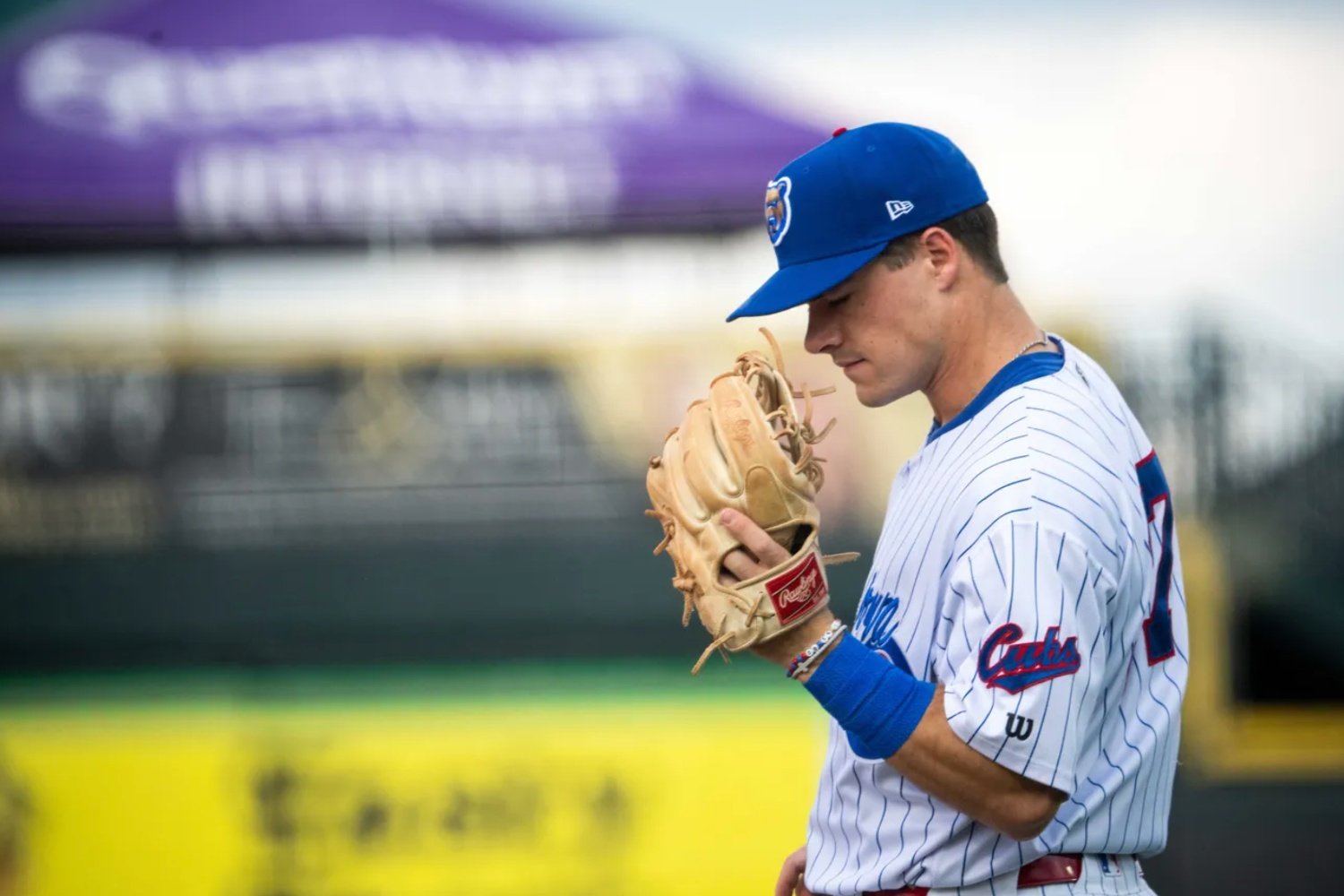 Last year’s Cubs were the second-worst team in baseball in matters of defending the hot corner. Their -15 Outs Above Average was ahead of only the Cincinnati Reds. Christopher Morel himself accounted for an OAA of -11. His replacement, Isaac Paredes, also finished below the average threshold (-1). Even 2023 defensive darling Nick Madrigal took a step back in posting a -2 OAA in his abbreviated season. Virtually nothing went right at third base on that side of the ball. Despite that, the Cubs at least appeared to have found a middle-term solution for the spot. Paredes wasn’t without his flaws, but had proven to be a steady defender there over the course of his career. And then he was traded as part of the Kyle Tucker deal. A worthwhile move (obviously!), but one that also sent the Cubs back into the realm of uncertainty when it comes to the longer term outlook at that corner of the infield. Which is where Matt Shaw comes in. It’s a relatively objective thought to posit that the Cubs would have been in a better position with Alex Bregman in the fold. That would have given them a surefire answer at third base for the next handful of years (pending opt-outs), and even if the team had to trade Nico Hoerner to offset salary to make it work, Shaw is probably better suited for glove work at the keystone at this point in time. And if he’s not, they have other viable options coming down the pipeline (James Triantos, etc.). That’s not how things played out, of course. And the Cubs are now set to run out onto the field in 2025 with their top positional prospect as their starting third baseman. His bat will go a long way toward maintaining his role throughout the year, to the point where it may be the thing that makes or breaks him out of the gate. Because, ultimately, his defense is irrelevant. Diving into the numbers would be futile, given that only rudimentary figures are available for MiLB squads. On top of that, Shaw’s experience at third is extremely limited. He appeared there 42 times with Double-A Tennessee and another 22 with Iowa. Projecting his defensive output is just impossible at this point. What we can do, though, is lean on the profile in order to draw some conclusions. Especially up against someone like, say, Christopher Morel. MLB Pipeline noted the following about Shaw’s defensive makeup: Quickness & hands are kind of two prerequisites for playing the position. You can get by with even a mediocre arm. We saw Madrigal do it (even if it required six crow hops on each play). But that reaction time and the hands to make the play are the most essential components. Morel struggled because he didn’t have the hands. He tried to compensate with his cannon of a right arm. But without the foundation in the glove itself, it ended up moot. It’s that simple bit of information that we have about Shaw as a defender that should at least allow him to be an upgrade over the crew the team had manning the hot corner last year. Given that, I think it’s perfectly acceptable to believe that Matt Shaw’s defense at third base this year does not matter. With how much erraticism we saw from Morel this year, it would be a stretch to imagine something worse. By virtue of his stable glove alone, Shaw will be better. The Cubs are also more fortified elsewhere on the diamond. The remainder of their infield is somewhere between the realm of good (Michael Busch) to elite (Dansby Swanson and Nico Hoerner). They could have one of the best defensive outfields in the game. So even if Shaw’s adjustment to the top level includes some defensive growing pains, this team can live with it. The bat will be the emphasis. The bat should be the emphasis. Shaw may not be long for the position anyway, depending on Hoerner’s long-term future with the organization. I’ll be watching the defense with a keen eye because that’s my nature. But unlike last year, where I was living and dying with each play Morel had to make, the anxiety over Shaw taking over at third base isn't nearly as palpable.
 -
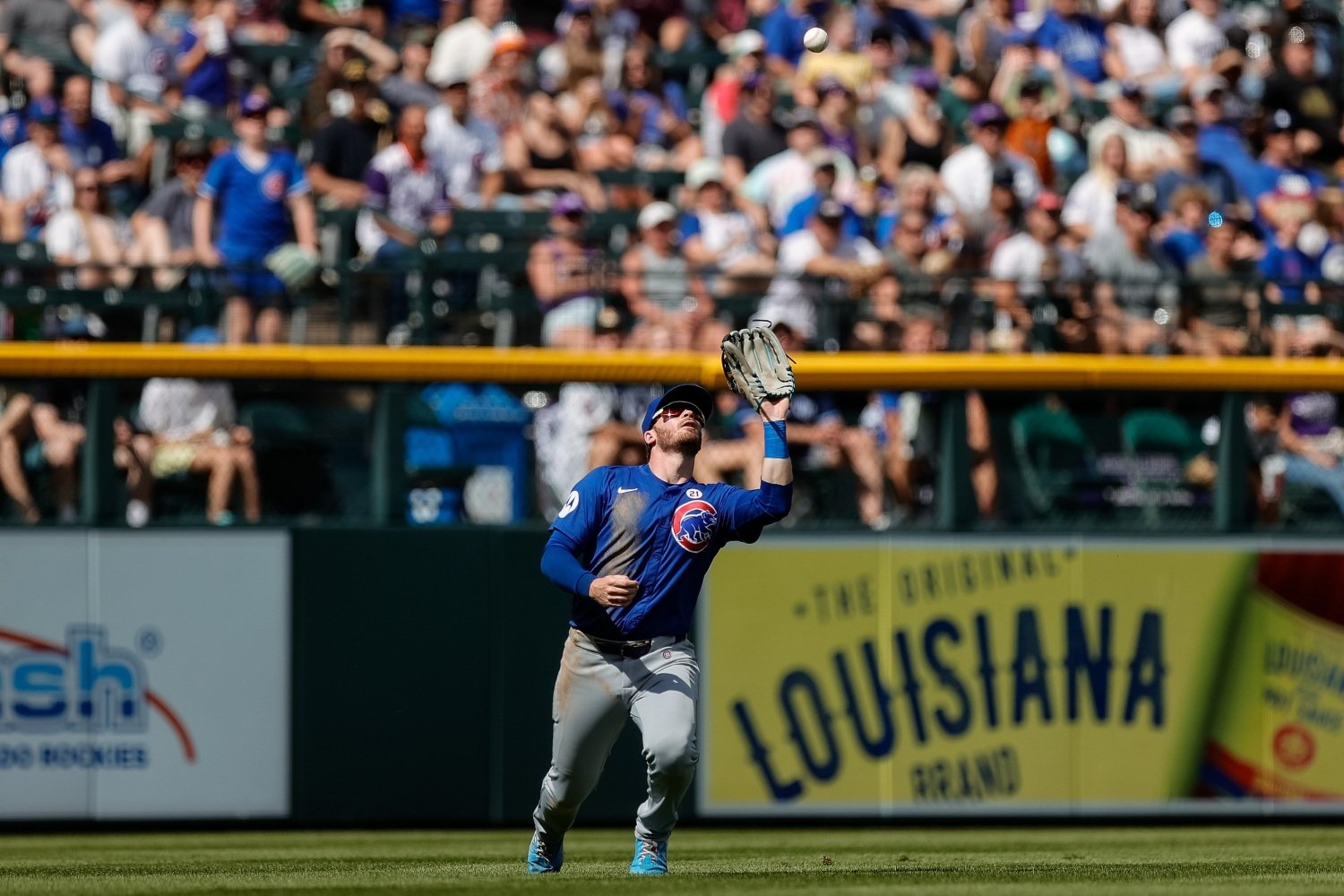 Late last week, MLB.com’s Mike Petriello published a piece in which he examined the most improved defenses among contenders (while also expounding on a pair of clubs who got worse on that side of the ball). I found it quite interesting that the Chicago Cubs were listed among the three teams with the most improved defenses. More specifically, I thought the rationale Petriello gave was worth exploring: We’ll talk plenty about the shape of the infield defense as the spring wears on and Matt Shaw gets closer to locking down the hot corner, but in the interim, the thoughts on the outfield are what struck me most. Petriello noted that a full season from Pete Crow-Armstrong before the above excerpt, with the idea of “addition by subtraction” serving as the basis for most of the rest of the discussion. So let’s dive a bit deeper into that. The Cubs figure to have a very regular outfield trio; Ian Happ, Crow-Armstrong, and Kyle Tucker are your three starters. Seiya Suzuki will rotate in on occasion, and the early assumption is that we’ll see Alexander Canario work as the team’s regular fourth outfielder. Perhaps Craig Counsell will work in a little Jon Berti, as well. That consistency in the starting lineup, though, is an important step toward solidifying the outfield defense. The Cubs deployed 10 different players on the grass last season: Happ, Crow-Armstrong, Suzuki, Canario, Bellinger, Tauchman, Wisdom, Kevin Alcántara, Miles Mastrobuoni, and Garrett Cooper. By Outs Above Average, they were exactly average in left field (0), well above in center (12), and below in right (-4). Obviously, some of the 10 players impacted those figures more than others, but the newfound stability of the outfield defense should be evident early on. Crow-Armstrong coming in as the full-time center fielder is a key component of this. He posted an OAA of 14 last year, with a 94% success rate against an 89% expected rate on batted balls in his direction. He was above average in each individual month in which he appeared, including notching 6 OAA in the season’s final month. We know that his value lies predominantly in his glove, and it’s almost impossible to overstate the significance of a full season of that. He only got about 65% of the playing time out there in 2024; that number seems bound to rise in 2025. Next to Crow-Armstrong, the most notable change in the defense is to his left. As Petriello notes, Bellinger was exactly average and Tauchman fell a touch below. Suzuki, though, was a problem across the 72 games in which he appeared in right field. He posted -3 OAA, and the eye test might’ve actually been worse. To add Kyle Tucker, who has never fallen below the average threshold (with the exception of a wonky 2023) solidifies the defense there. To not only remove Suzuki from the equation on a full-time basis, but replace him with an above-average defender, is a boon for the group. Interestingly, the biggest question mark of the three is likely Ian Happ, who has built up a reputation as a quality defender. Despite the Gold Glove reputation to which he’s attached, he finished as a below-average defender by OAA in 2024. Some of that was due to a brutal April that hampered his overall defensive production (-4 OAA). But he still had the odd month after Crow-Armstrong arrived where he was also worse than average. Moving to his left became particularly problematic. In that respect, one primarily has to wonder about the communication between Happ and Crow-Armstrong. Perhaps some time and adjustments were needed. For a defender the quality of Happ is to struggle moving in the direction of one of the game’s elite defenders speaks to some sort of communication issue. If that ends up solidified, then we should see a big bounce-back for Happ. And if we don’t, we might have to start wondering if his career-worst 2023 (-7 OAA) was a precursor. We’ll table that discussion for now, though. The unknown in all of this is Canario. We know he’s logged time at all three outfield spots, but he has a minimal sample at the top level to inform any evaluations. With the Cubs, he’s only appeared in each corner. But the expectation is that he’ll step in to spell Crow-Armstrong in center, too, should he make the roster. Given the depths to which we saw Suzuki’s glove sink, though, it’s difficult to imagine Canario being too much of a detriment as a once-or-twice-a-week guy. Last year’s Cubs were fine in the outfield. Especially late in the year. But the overall perception has entirely shifted with the new year. While we need to keep an eye on Happ, a full season of Crow-Armstrong; the addition of Tucker; and addition by the subtraction of Suzuki from the defensive equation could very well have this looking like one of the top outfield trios the league has to offer.
 -
The Cubs had too many boxes on their offseason checklist to make upgrading the outfield defense a major priority—but they found a way to do that, anyway. Image courtesy of © Isaiah J. Downing-Imagn Images Late last week, MLB.com’s Mike Petriello published a piece in which he examined the most improved defenses among contenders (while also expounding on a pair of clubs who got worse on that side of the ball). I found it quite interesting that the Chicago Cubs were listed among the three teams with the most improved defenses. More specifically, I thought the rationale Petriello gave was worth exploring: We’ll talk plenty about the shape of the infield defense as the spring wears on and Matt Shaw gets closer to locking down the hot corner, but in the interim, the thoughts on the outfield are what struck me most. Petriello noted that a full season from Pete Crow-Armstrong before the above excerpt, with the idea of “addition by subtraction” serving as the basis for most of the rest of the discussion. So let’s dive a bit deeper into that. The Cubs figure to have a very regular outfield trio; Ian Happ, Crow-Armstrong, and Kyle Tucker are your three starters. Seiya Suzuki will rotate in on occasion, and the early assumption is that we’ll see Alexander Canario work as the team’s regular fourth outfielder. Perhaps Craig Counsell will work in a little Jon Berti, as well. That consistency in the starting lineup, though, is an important step toward solidifying the outfield defense. The Cubs deployed 10 different players on the grass last season: Happ, Crow-Armstrong, Suzuki, Canario, Bellinger, Tauchman, Wisdom, Kevin Alcántara, Miles Mastrobuoni, and Garrett Cooper. By Outs Above Average, they were exactly average in left field (0), well above in center (12), and below in right (-4). Obviously, some of the 10 players impacted those figures more than others, but the newfound stability of the outfield defense should be evident early on. Crow-Armstrong coming in as the full-time center fielder is a key component of this. He posted an OAA of 14 last year, with a 94% success rate against an 89% expected rate on batted balls in his direction. He was above average in each individual month in which he appeared, including notching 6 OAA in the season’s final month. We know that his value lies predominantly in his glove, and it’s almost impossible to overstate the significance of a full season of that. He only got about 65% of the playing time out there in 2024; that number seems bound to rise in 2025. Next to Crow-Armstrong, the most notable change in the defense is to his left. As Petriello notes, Bellinger was exactly average and Tauchman fell a touch below. Suzuki, though, was a problem across the 72 games in which he appeared in right field. He posted -3 OAA, and the eye test might’ve actually been worse. To add Kyle Tucker, who has never fallen below the average threshold (with the exception of a wonky 2023) solidifies the defense there. To not only remove Suzuki from the equation on a full-time basis, but replace him with an above-average defender, is a boon for the group. Interestingly, the biggest question mark of the three is likely Ian Happ, who has built up a reputation as a quality defender. Despite the Gold Glove reputation to which he’s attached, he finished as a below-average defender by OAA in 2024. Some of that was due to a brutal April that hampered his overall defensive production (-4 OAA). But he still had the odd month after Crow-Armstrong arrived where he was also worse than average. Moving to his left became particularly problematic. In that respect, one primarily has to wonder about the communication between Happ and Crow-Armstrong. Perhaps some time and adjustments were needed. For a defender the quality of Happ is to struggle moving in the direction of one of the game’s elite defenders speaks to some sort of communication issue. If that ends up solidified, then we should see a big bounce-back for Happ. And if we don’t, we might have to start wondering if his career-worst 2023 (-7 OAA) was a precursor. We’ll table that discussion for now, though. The unknown in all of this is Canario. We know he’s logged time at all three outfield spots, but he has a minimal sample at the top level to inform any evaluations. With the Cubs, he’s only appeared in each corner. But the expectation is that he’ll step in to spell Crow-Armstrong in center, too, should he make the roster. Given the depths to which we saw Suzuki’s glove sink, though, it’s difficult to imagine Canario being too much of a detriment as a once-or-twice-a-week guy. Last year’s Cubs were fine in the outfield. Especially late in the year. But the overall perception has entirely shifted with the new year. While we need to keep an eye on Happ, a full season of Crow-Armstrong; the addition of Tucker; and addition by the subtraction of Suzuki from the defensive equation could very well have this looking like one of the top outfield trios the league has to offer. View full article
-
He'll be a welcome veteran presence—even by the young guys at each infield corner, because neither of them should feel threatened by the Cubs' newest bat. Image courtesy of © Eakin Howard-Imagn Images With the Chicago Cubs bringing in Justin Turner on a one-year deal Tuesday, there will be an immediate reaction from certain circles that label him as “Matt Shaw insurance.” After all, this was a pivot after the team failed to sign Alex Bregman. Given that the newest member of the Boston Red Sox would have been just that for the Cubs (in a couple of different ways) their pivot should offer much the same kind of value, right? It’s a notion that isn’t entirely misguided, on the surface. If one hasn’t been tuned into Justin Turner’s career, then one is still likely to assume he’s a corner bat capable of manning third base as needed, while also serving as a supplementary piece at first base and in the designated hitter spot. But while it’s understandable to maintain that perception of Turner, it’s just hopelessly out of date. In his career, Turner has over 7,800 innings at third base to his name. He has roughly 850 on the other side of the infield, and a smattering of innings on the middle infield (including 49 perhaps somewhat notable frames at the keystone in 2023). Of the massive amount of time he’s manned the hot corner, only 90 of those innings have come in the last two seasons. Of the 850 at first base, 616 have come over that same span. Turner hasn’t turned in an above-average defensive season at third base since 2019. In his limited time at third, he’s fallen below the average line in each season since, regardless of your metric of choice. He’s been at least serviceable at first base, where each metric has lingered just around average (if not slightly above). Even if the glove proved capable, the arm is a virtual zero at this point. Since 2020, Statcast has Turner’s arm strength ranked 565th of 705 players. In 2024, specifically (albeit spending time primarily at a position that required fewer, easier throws), he ranked 269th out of 288 names. There simply isn’t anything to justify placing Turner at third base at this point in his career. Of course, we watched Christopher Morel play third for the majority of last season. By Outs Above Average, Cub third basemen ranked 29th in the league in the quality of their defense (-15). Only Cincinnati was worse. Craig Counsell will not use that as a justification to throw Turner out for extended stretches. That said, he'll probably be available to play the spot for parts of games when an injury happens or chaos reigns. He has experience, and minimizing the time he spends there should help to mitigate any negative factors that could be wrought by his poor performance at the position. Turner will serve as the primary backup to Michael Busch at first base. He’ll offer some protection against particularly tough left-handed pitchers. He’ll slot in as the team’s designated hitter whenever Seiya Suzuki finds himself in an outfield corner. And he’ll, on occasion, slide over to third base when the circumstances are exactly right. The opportunities for that latter scenario will be rare. Because Justin Turner is barely a third baseman anymore. He may not be at all. But regardless of how we want to define that descriptor in matters of the Cubs’ new veteran, it’s fairly clear that this move will have almost zero bearing on Shaw. It's a move built to boost the club's offense; their defense will have to figure itself out. View full article
-
How Justin Turner Fits and Can Contribute for Chicago Cubs, Defensively
RandallPnkFloyd posted an article in Cubs
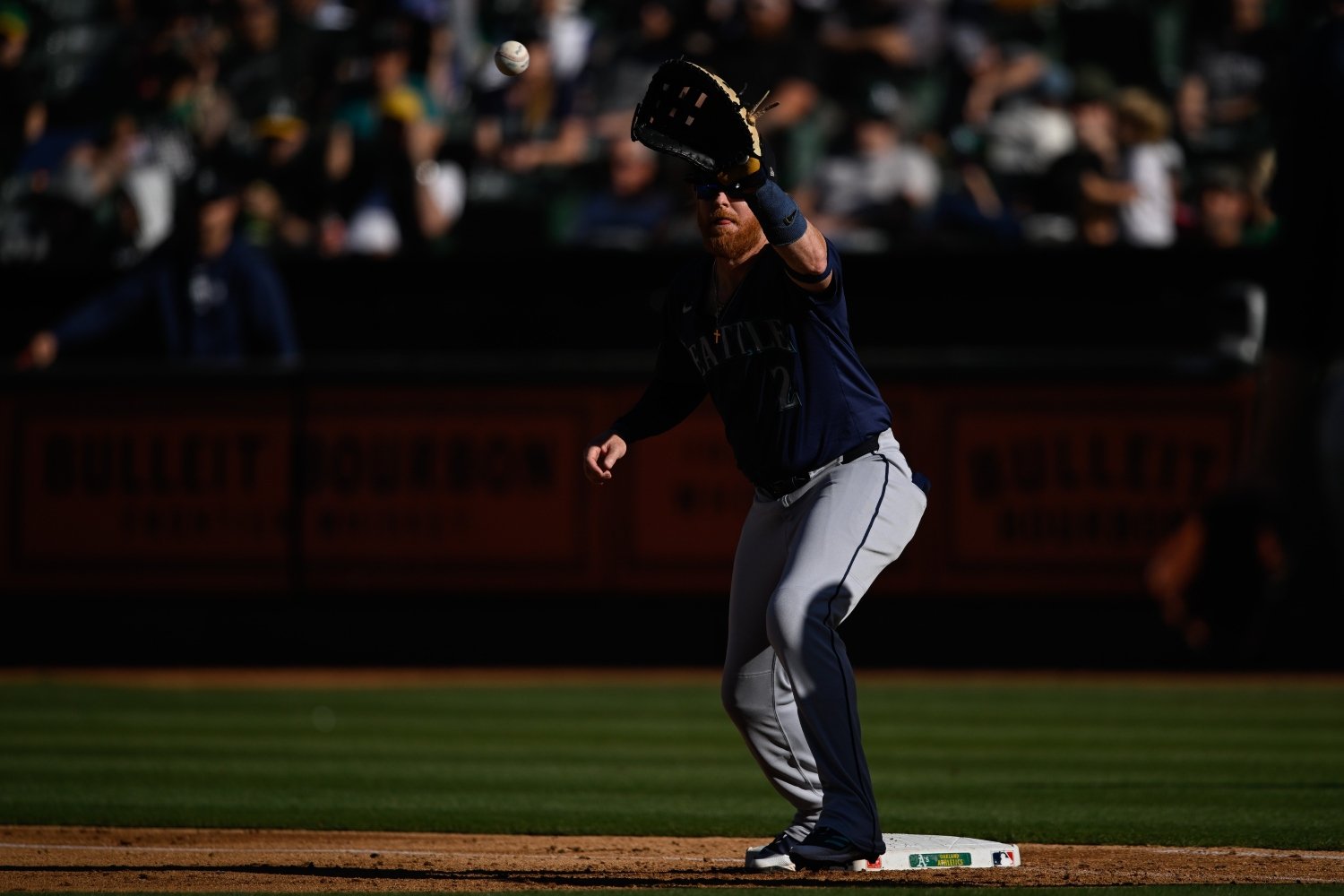 With the Chicago Cubs bringing in Justin Turner on a one-year deal Tuesday, there will be an immediate reaction from certain circles that label him as “Matt Shaw insurance.” After all, this was a pivot after the team failed to sign Alex Bregman. Given that the newest member of the Boston Red Sox would have been just that for the Cubs (in a couple of different ways) their pivot should offer much the same kind of value, right? It’s a notion that isn’t entirely misguided, on the surface. If one hasn’t been tuned into Justin Turner’s career, then one is still likely to assume he’s a corner bat capable of manning third base as needed, while also serving as a supplementary piece at first base and in the designated hitter spot. But while it’s understandable to maintain that perception of Turner, it’s just hopelessly out of date. In his career, Turner has over 7,800 innings at third base to his name. He has roughly 850 on the other side of the infield, and a smattering of innings on the middle infield (including 49 perhaps somewhat notable frames at the keystone in 2023). Of the massive amount of time he’s manned the hot corner, only 90 of those innings have come in the last two seasons. Of the 850 at first base, 616 have come over that same span. Turner hasn’t turned in an above-average defensive season at third base since 2019. In his limited time at third, he’s fallen below the average line in each season since, regardless of your metric of choice. He’s been at least serviceable at first base, where each metric has lingered just around average (if not slightly above). Even if the glove proved capable, the arm is a virtual zero at this point. Since 2020, Statcast has Turner’s arm strength ranked 565th of 705 players. In 2024, specifically (albeit spending time primarily at a position that required fewer, easier throws), he ranked 269th out of 288 names. There simply isn’t anything to justify placing Turner at third base at this point in his career. Of course, we watched Christopher Morel play third for the majority of last season. By Outs Above Average, Cub third basemen ranked 29th in the league in the quality of their defense (-15). Only Cincinnati was worse. Craig Counsell will not use that as a justification to throw Turner out for extended stretches. That said, he'll probably be available to play the spot for parts of games when an injury happens or chaos reigns. He has experience, and minimizing the time he spends there should help to mitigate any negative factors that could be wrought by his poor performance at the position. Turner will serve as the primary backup to Michael Busch at first base. He’ll offer some protection against particularly tough left-handed pitchers. He’ll slot in as the team’s designated hitter whenever Seiya Suzuki finds himself in an outfield corner. And he’ll, on occasion, slide over to third base when the circumstances are exactly right. The opportunities for that latter scenario will be rare. Because Justin Turner is barely a third baseman anymore. He may not be at all. But regardless of how we want to define that descriptor in matters of the Cubs’ new veteran, it’s fairly clear that this move will have almost zero bearing on Shaw. It's a move built to boost the club's offense; their defense will have to figure itself out.
 -
When Yan Gomes's career unraveled in early 2024, it derailed the Cubs' catching situation for months. This time around, they're much better-positioned... right? Image courtesy of © Rick Scuteri-Imagn Images After a winter dedicated to creating more clarity and upgrading depth throughout the roster, there isn’t a whole lot for the Chicago Cubs to settle this spring. Matt Shaw and the third base spot notwithstanding, the positional side of the exhibition season will be about building up and staying healthy—at least as far as the starting lineup goes. That doesn’t mean that it isn’t a month without intriguing storylines for the lineup this side of Shaw, however. For the greatest degree of mystery about regular-season playing time, look behind the plate. In a broad sense, the Cubs’ catcher spot is settled. Signing Carson Kelly was designed to lower the risks associated with Miguel Amaya, but not to replace him. Jed Hoyer now hopes he has two credible backstops on his projected roster. The Logan O’Hoppe pursuit at last year’s trade deadline didn’t persist into the offseason. In the absence of higher-upside options on either the free agent or trade markets, Kelly was the best way to cobble together a modest timeshare situation, even if Amaya will still be the primary receiver. Keep an eye on the likes of Moises Ballesteros and Pablo Aliendo as the season progresses, but that’s for developmental purposes. Neither is set to challenge for a big-league role in camp, even if the former’s bat could put him on the cusp of earning some opportunities by the time the summer arrives. Early on, Amaya and Kelly will be the tandem behind the plate. The extent to which each one will “hold it down,” however, is a matter of some conjecture. Baseball Prospectus’s depth charts have Amaya occupying the spot half the time this year. Kelly’s at 45 percent. Ballesteros occupies the other 5%, likely in the instance of a late-season callup. Similarly, FanGraphs has Amaya at 50 and Kelly at 47, with an extra two thrown in the direction of Reese McGuire, who’s likely to get run as a third catcher in Iowa. Their last little bit of time was also saved for Ballesteros. Either way, an even division of labor looks likely. Will that be the case, though? Should it be? Plenty of factors will dictate what the split looks like. There are variables on both sides of the ball, too. Amaya might possess higher upside as a hitter. While his overall line (.232/.288/.357, 83 wRC+) doesn’t indicate a desirable offensive backstop, his second-half numbers do bode well. He went for a 113 wRC+ in the season’s second half, with a minuscule 11.4 K% and a strong .174 ISO. July and August were particularly kind to him, with wRC+ figures of 149 and 157, respectively. The changes to his approach are well-documented at this point, with Craig Counsell and company likely to spend the early part of the year figuring out how much of that is sustainable. Kelly’s 2024 wRC+ (99) essentially indicates a league-average hitter. He cut his strikeout rate by about nine points between 2023 and last year, driving up the power numbers from an .081 ISO two years ago to .135. While not overly impressive on its own, his 9.7% career walk rate is three points higher than Amaya’s. He’s had an uneven career as a hitter, but has shown the ability to give slightly above-average production out of the catcher position depending on the year. Amaya has two months of quality production to his name; Kelly has roughly two separate seasons of it over a much more extended period. Given the latter’s inconsistent production, however, there isn’t much separating the two at this moment. Even if Kelly has a wider sample of success than his catching counterpart. Amaya possesses more upside. It’s likely the bat that tips the scales in Amaya’s favor early. Defensively, Amaya is likely going to need to demonstrate more growth to stave off Kelly for the top spot on the depth chart. By the reckoning of Catching Defense Added (CDA), BP’s comprehensive catching metric, Kelly was the 21st-ranked catcher in the bigs last year (1.6). Amaya, meanwhile, sat 77th (-2.7). In more granular metrics, Kelly was just slightly below average in framing but above in both blocking and throwing. Amaya fell under the average threshold in framing and in throwing. As a blocker, though, Amaya succeeds. He trailed only Danny Jansen in Blocks Above Average, with 12 (via Baseball Savant). How much that compensates for his shortcomings in the other aspects of the position, of course, is a subject of both valid debate and much uncertainty. Savant also had him as the 10th-worst catcher in Framing Runs (-5), 14th-worst in Stealing Runs (-2), and with the fifth-worst pop time to second base. Kelly, on the other hand, was 20th in Framing Runs (1), 10th in Stealing Runs (3), and featured an above-average pop time. He's terrifically accurate, too. The defensive question isn’t one. Kelly is the superior defender. While Amaya still has time to showcase some development on that side of the ball, one does have to wonder how much that will factor into the distribution between the two—and when. It’s not a particularly enigmatic picture to examine. Amaya’s bat gets him early playing time. Kelly’s steadiness on both sides keeps him in the mix a few days a week. Over time, as Kelly becomes more familiar with the pitching staff, his run prevention forces the issue—but so does Amaya's continued offensive improvement. That, at least, is what the Cubs are hoping for. In the meantime, perhaps each guy will be paired up with specific pitchers. The catcher position is, undoubtedly, improved for 2025. But the way these two interact with each other, from a performance standpoint, could have a lot to say about where the position goes in the years beyond this one. View full article
-
Spring Training Questions: How Will the Cubs' Catcher Timeshare Play Out?
RandallPnkFloyd posted an article in Cubs
.png.37464d5b50fa3c6d8a0c144584a8ff6a.png) After a winter dedicated to creating more clarity and upgrading depth throughout the roster, there isn’t a whole lot for the Chicago Cubs to settle this spring. Matt Shaw and the third base spot notwithstanding, the positional side of the exhibition season will be about building up and staying healthy—at least as far as the starting lineup goes. That doesn’t mean that it isn’t a month without intriguing storylines for the lineup this side of Shaw, however. For the greatest degree of mystery about regular-season playing time, look behind the plate. In a broad sense, the Cubs’ catcher spot is settled. Signing Carson Kelly was designed to lower the risks associated with Miguel Amaya, but not to replace him. Jed Hoyer now hopes he has two credible backstops on his projected roster. The Logan O’Hoppe pursuit at last year’s trade deadline didn’t persist into the offseason. In the absence of higher-upside options on either the free agent or trade markets, Kelly was the best way to cobble together a modest timeshare situation, even if Amaya will still be the primary receiver. Keep an eye on the likes of Moises Ballesteros and Pablo Aliendo as the season progresses, but that’s for developmental purposes. Neither is set to challenge for a big-league role in camp, even if the former’s bat could put him on the cusp of earning some opportunities by the time the summer arrives. Early on, Amaya and Kelly will be the tandem behind the plate. The extent to which each one will “hold it down,” however, is a matter of some conjecture. Baseball Prospectus’s depth charts have Amaya occupying the spot half the time this year. Kelly’s at 45 percent. Ballesteros occupies the other 5%, likely in the instance of a late-season callup. Similarly, FanGraphs has Amaya at 50 and Kelly at 47, with an extra two thrown in the direction of Reese McGuire, who’s likely to get run as a third catcher in Iowa. Their last little bit of time was also saved for Ballesteros. Either way, an even division of labor looks likely. Will that be the case, though? Should it be? Plenty of factors will dictate what the split looks like. There are variables on both sides of the ball, too. Amaya might possess higher upside as a hitter. While his overall line (.232/.288/.357, 83 wRC+) doesn’t indicate a desirable offensive backstop, his second-half numbers do bode well. He went for a 113 wRC+ in the season’s second half, with a minuscule 11.4 K% and a strong .174 ISO. July and August were particularly kind to him, with wRC+ figures of 149 and 157, respectively. The changes to his approach are well-documented at this point, with Craig Counsell and company likely to spend the early part of the year figuring out how much of that is sustainable. Kelly’s 2024 wRC+ (99) essentially indicates a league-average hitter. He cut his strikeout rate by about nine points between 2023 and last year, driving up the power numbers from an .081 ISO two years ago to .135. While not overly impressive on its own, his 9.7% career walk rate is three points higher than Amaya’s. He’s had an uneven career as a hitter, but has shown the ability to give slightly above-average production out of the catcher position depending on the year. Amaya has two months of quality production to his name; Kelly has roughly two separate seasons of it over a much more extended period. Given the latter’s inconsistent production, however, there isn’t much separating the two at this moment. Even if Kelly has a wider sample of success than his catching counterpart. Amaya possesses more upside. It’s likely the bat that tips the scales in Amaya’s favor early. Defensively, Amaya is likely going to need to demonstrate more growth to stave off Kelly for the top spot on the depth chart. By the reckoning of Catching Defense Added (CDA), BP’s comprehensive catching metric, Kelly was the 21st-ranked catcher in the bigs last year (1.6). Amaya, meanwhile, sat 77th (-2.7). In more granular metrics, Kelly was just slightly below average in framing but above in both blocking and throwing. Amaya fell under the average threshold in framing and in throwing. As a blocker, though, Amaya succeeds. He trailed only Danny Jansen in Blocks Above Average, with 12 (via Baseball Savant). How much that compensates for his shortcomings in the other aspects of the position, of course, is a subject of both valid debate and much uncertainty. Savant also had him as the 10th-worst catcher in Framing Runs (-5), 14th-worst in Stealing Runs (-2), and with the fifth-worst pop time to second base. Kelly, on the other hand, was 20th in Framing Runs (1), 10th in Stealing Runs (3), and featured an above-average pop time. He's terrifically accurate, too. The defensive question isn’t one. Kelly is the superior defender. While Amaya still has time to showcase some development on that side of the ball, one does have to wonder how much that will factor into the distribution between the two—and when. It’s not a particularly enigmatic picture to examine. Amaya’s bat gets him early playing time. Kelly’s steadiness on both sides keeps him in the mix a few days a week. Over time, as Kelly becomes more familiar with the pitching staff, his run prevention forces the issue—but so does Amaya's continued offensive improvement. That, at least, is what the Cubs are hoping for. In the meantime, perhaps each guy will be paired up with specific pitchers. The catcher position is, undoubtedly, improved for 2025. But the way these two interact with each other, from a performance standpoint, could have a lot to say about where the position goes in the years beyond this one.
After a winter dedicated to creating more clarity and upgrading depth throughout the roster, there isn’t a whole lot for the Chicago Cubs to settle this spring. Matt Shaw and the third base spot notwithstanding, the positional side of the exhibition season will be about building up and staying healthy—at least as far as the starting lineup goes. That doesn’t mean that it isn’t a month without intriguing storylines for the lineup this side of Shaw, however. For the greatest degree of mystery about regular-season playing time, look behind the plate. In a broad sense, the Cubs’ catcher spot is settled. Signing Carson Kelly was designed to lower the risks associated with Miguel Amaya, but not to replace him. Jed Hoyer now hopes he has two credible backstops on his projected roster. The Logan O’Hoppe pursuit at last year’s trade deadline didn’t persist into the offseason. In the absence of higher-upside options on either the free agent or trade markets, Kelly was the best way to cobble together a modest timeshare situation, even if Amaya will still be the primary receiver. Keep an eye on the likes of Moises Ballesteros and Pablo Aliendo as the season progresses, but that’s for developmental purposes. Neither is set to challenge for a big-league role in camp, even if the former’s bat could put him on the cusp of earning some opportunities by the time the summer arrives. Early on, Amaya and Kelly will be the tandem behind the plate. The extent to which each one will “hold it down,” however, is a matter of some conjecture. Baseball Prospectus’s depth charts have Amaya occupying the spot half the time this year. Kelly’s at 45 percent. Ballesteros occupies the other 5%, likely in the instance of a late-season callup. Similarly, FanGraphs has Amaya at 50 and Kelly at 47, with an extra two thrown in the direction of Reese McGuire, who’s likely to get run as a third catcher in Iowa. Their last little bit of time was also saved for Ballesteros. Either way, an even division of labor looks likely. Will that be the case, though? Should it be? Plenty of factors will dictate what the split looks like. There are variables on both sides of the ball, too. Amaya might possess higher upside as a hitter. While his overall line (.232/.288/.357, 83 wRC+) doesn’t indicate a desirable offensive backstop, his second-half numbers do bode well. He went for a 113 wRC+ in the season’s second half, with a minuscule 11.4 K% and a strong .174 ISO. July and August were particularly kind to him, with wRC+ figures of 149 and 157, respectively. The changes to his approach are well-documented at this point, with Craig Counsell and company likely to spend the early part of the year figuring out how much of that is sustainable. Kelly’s 2024 wRC+ (99) essentially indicates a league-average hitter. He cut his strikeout rate by about nine points between 2023 and last year, driving up the power numbers from an .081 ISO two years ago to .135. While not overly impressive on its own, his 9.7% career walk rate is three points higher than Amaya’s. He’s had an uneven career as a hitter, but has shown the ability to give slightly above-average production out of the catcher position depending on the year. Amaya has two months of quality production to his name; Kelly has roughly two separate seasons of it over a much more extended period. Given the latter’s inconsistent production, however, there isn’t much separating the two at this moment. Even if Kelly has a wider sample of success than his catching counterpart. Amaya possesses more upside. It’s likely the bat that tips the scales in Amaya’s favor early. Defensively, Amaya is likely going to need to demonstrate more growth to stave off Kelly for the top spot on the depth chart. By the reckoning of Catching Defense Added (CDA), BP’s comprehensive catching metric, Kelly was the 21st-ranked catcher in the bigs last year (1.6). Amaya, meanwhile, sat 77th (-2.7). In more granular metrics, Kelly was just slightly below average in framing but above in both blocking and throwing. Amaya fell under the average threshold in framing and in throwing. As a blocker, though, Amaya succeeds. He trailed only Danny Jansen in Blocks Above Average, with 12 (via Baseball Savant). How much that compensates for his shortcomings in the other aspects of the position, of course, is a subject of both valid debate and much uncertainty. Savant also had him as the 10th-worst catcher in Framing Runs (-5), 14th-worst in Stealing Runs (-2), and with the fifth-worst pop time to second base. Kelly, on the other hand, was 20th in Framing Runs (1), 10th in Stealing Runs (3), and featured an above-average pop time. He's terrifically accurate, too. The defensive question isn’t one. Kelly is the superior defender. While Amaya still has time to showcase some development on that side of the ball, one does have to wonder how much that will factor into the distribution between the two—and when. It’s not a particularly enigmatic picture to examine. Amaya’s bat gets him early playing time. Kelly’s steadiness on both sides keeps him in the mix a few days a week. Over time, as Kelly becomes more familiar with the pitching staff, his run prevention forces the issue—but so does Amaya's continued offensive improvement. That, at least, is what the Cubs are hoping for. In the meantime, perhaps each guy will be paired up with specific pitchers. The catcher position is, undoubtedly, improved for 2025. But the way these two interact with each other, from a performance standpoint, could have a lot to say about where the position goes in the years beyond this one. -
One of the more exciting components of players' returns to spring camp is the first image of them in their new uniform. While the updated headshot in your MLB app is nice, the arrival of the new season makes the addition more real and provides a certain layer of excitement regardless of the caliber of the player. Image courtesy of © Rick Scuteri-Imagn Images / © Rick Scuteri-Imagn Images The 2025 Chicago Cubs feature no shortage of new faces. While they might not have pursued the extent we would have hoped in building up the newest iteration of their roster, they addressed several areas of need and increased their depth in crucial spots. The names below represent those new names that we’ll see both on a permanent basis and for at least a spell during the spring via the non-roster invite, perhaps even later on down the line. Position Players Kyle Tucker Acquired from the Houston Astros via trade in exchange for Hayden Wesneski, Isaac Paredes, and prospect Cam Smith. One of the most significant offseason acquisitions for any team, Tucker will be the Cubs’ everyday right fielder for 2025. He’ll likely hit in the two or three spots in the order, providing the catalyst this team largely lacked in recent years. No question about the role here. We’ll spend the entirety of 2025 pining for an extension. Carson Kelly Acquired via free agency on a two-year contract. While not as impactful as the Tucker addition, Kelly was perhaps the most important add that the team needed to make this winter. In need of a competent complement to Miguel Amaya, Kelly brings strong defensive metrics and a bat coming off one of its best seasons. We’ll dive in later as to what the split will look like, but expect Kelly to see plenty of time behind the dish, even after Amaya’s second-half emergence. Gage Workman Acquired from the Detroit Tigers via the Rule-5 Draft. A local product (read: local to me, the Arizona State graduate who also lives in close proximity to Workman’s Basha High School), Workman isn’t guaranteed to stay in the organization for long. A former switch hitter, Workman made some offensive strides in serving as a full-time lefty last season. His value resides in his defense, though, where he could provide some important infield versatility off the bench. If he can’t hang in the spring, he could wind up back with the Tigers before the exhibition season reaches its end. Jon Berti Acquired via free agency on a one-year contract. In the absence of true clarity behind the starting lineup, Berti’s addition was notable late in the winter. He has experience at six different positions as a utilityman, with the potential to serve as the backup for Michael Busch at first base. While he’s never reached the base-stealing mark he set in 2022 (41), he’s still an average hitter who can be relied on for any number of positions. Unlike his other versatile counterparts in the bench mix, he’s a lock for the ’25 roster. Vidal Bruján Acquired from the Tampa Bay Rays via trade in exchange for Matt Mervis & cash considerations. A similar skill set – and nearly identical positional splits – to that of Berti, Bruján was acquired following his being designated for assignment by the Rays. One does wonder that, given the similarity to Berti, it will combine with a lack of upside to make him something of a redundancy on the roster. If so, he may not be long for it. If someone like Workman or NRI receiver Nicky Lopez struggles throughout the spring, there’s a chance he could stick around a bit longer to cover some ground. Nicky Lopez (NRI) Acquired via free agency on a minor league contract & invited to Major League camp. The Naperville native is an intriguing piece of the spring puzzle. On one hand, the Cubs would appear to have plenty of light-hitting, versatile infielders on more stable ground with which to work in pursuit of a roster spot. On the other, few have the experience & subsequent defensive track record of Lopez. That could give him an advantage over Workman or Bruján, especially in matters of middle infield work. Reese McGuire & Carlos Pérez (NRIs) Acquired via free agency on a minor league contract & invited to Major League camp. Signed to minor league deals in December & January, respectively, the two are lumped together given the nearly identical role they were brought in for: depth. At least one of them will end up backstopping in Iowa if Amaya or Kelly sustain an injury while also providing a buffer. At the same time, each of Moises Ballesteros & Pablo Aliendo continue their development. Given that we saw the Cubs run four different catchers on their big league roster at various points last year, you can never have too much depth here. But we won’t see them at Wrigley unless it’s an emergency. Pitchers Matthew Boyd Acquired via free agency on a two-year contract. Signed very early in the offseason, the Cubs were clearly pursuing the upside play in signing Boyd. Despite middling results for most of his time as a starter in Detroit, Boyd was brilliant in his eight outings for Cleveland last season. He’ll slot into the latter portion of the rotation behind Justin Steele, Shota Imanaga, and Jameson Taillon. It's pretty straightforward here. Eli Morgan Acquired from the Cleveland Guardians via trade in exchange for prospect Alfonsin Rosario. In need of more stability out of the bullpen, the Cubs acquired just that in the former Cleveland reliever. While he outpitched his peripherals to a degree, he was brilliant in avoiding quality contact and stranding baserunners. He dealt with a pair of injury issues last year but had turned in consecutive seasons of over 60 innings in each of the two years prior. He’ll be a massive component of the relief corps this season. Cody Poteet Acquired from the New York Yankees via trade in exchange for Cody Bellinger. The underwhelming return in what ended up being almost a pure salary dump, one wonders how much we’ll see of Poteet at Wrigley Field in 2025. More directly, one doesn’t expect to see much of it. He’s worked almost exclusively as a minor league starter for the Marlins & Yankees for his career, and the assumption is that he will continue to serve that type starting this year. He could be in for a spot start down the line, but he’s near the back of the line for starting opportunities even following early injuries to Javier Assad & Brandon Birdsell. Colin Rea Acquired via free agency on a one-year contract. While we might’ve been hoping for someone with a bit more frontline capability as the Cubs’ other notable starting pitcher addition this winter, Rea’s skill set as a swingman will factor heavily into the 2025 team. Those early injuries could put him in line to grab some starts in April & May, with multi-inning relief appearances likely in the cards down the road. Caleb Thielbar Acquired via free agency on a one-year contract. Facing some uncertainty from the left side of the pitcher’s mound, Thielbar had been a steady presence out of the Minnesota ‘pen for a number of years prior to posting an ERA north of five in 2024. The Cubs are banking on some command issues & batted ball luck doing him in with their infrastructure, getting him back on track for the upcoming year. He'll get plenty of looks early as one of only two left-handed relievers on the 40-man. Ryan Pressly Acquired from the Houston Astros via trade in exchange for prospect Juan Bello. The Cubs entered the 2024-25 offseason wanting more experience at the back end of their bullpen. Pressly had recorded over 30 saves in each of the two years before Houston brought in Josh Hader before last season. There’s a bit of concern about the velocity & other peripheral factors. However, Pressly still avoids hard contact and generates plenty of groundballs for what should be a quality infield defense. Despite the presence of Porter Hodge, Pressly should get the bulk of the ninth-inning work. Ryan Brasier Acquired from the Los Angeles Dodgers via trade in exchange for a player-to-be-named-later or cash considerations. Squeezed out of the Dodgers’ crowded relief picture, the Cubs were more than happy to accommodate the arrival of Brasier following his DFA. He’s never quite gotten back to his 2021 brilliance, but his peripherals have remained consistent, and his command is effective enough that he doesn’t walk many hitters. Even with a slight dip in velocity last year, he should figure into the late-inning picture pretty regularly. Brandon Hughes, Ben Heller, Trevor Richards, Phil Bickford, Brad Keller, Brooks Kriske (NRIs) Acquired via free agency on a minor league contract & received an invite to major league camp. Save Kriske; each Cubs' reclamation project spent at least some time at the big league level in 2024. Converted outfielder Brandon Hughes will be the most familiar to Cub fans since, you know, they were the ones that converted him from outfielder to pitcher. He looked like a breakout candidate in 2022 before struggling with health and performance in ’23. He pitched to an ERA over eight in 15 appearances in Arizona last season. Heller is your classic good-velo-bad-command addition, having averaged 96.3 MPH on his fastball last year. Given the presence of his secondary pitches, that would be fun to rein in. Each of Richards & Bickford are largely two-pitch guys with plenty of MLB experience to their names. The spring should give us a good indication of what the Cubs might be trying to do with this crew. View full article
- 1 reply
-
- 2
-

-
- kyle tucker
- carson kelly
- (and 5 more)
-
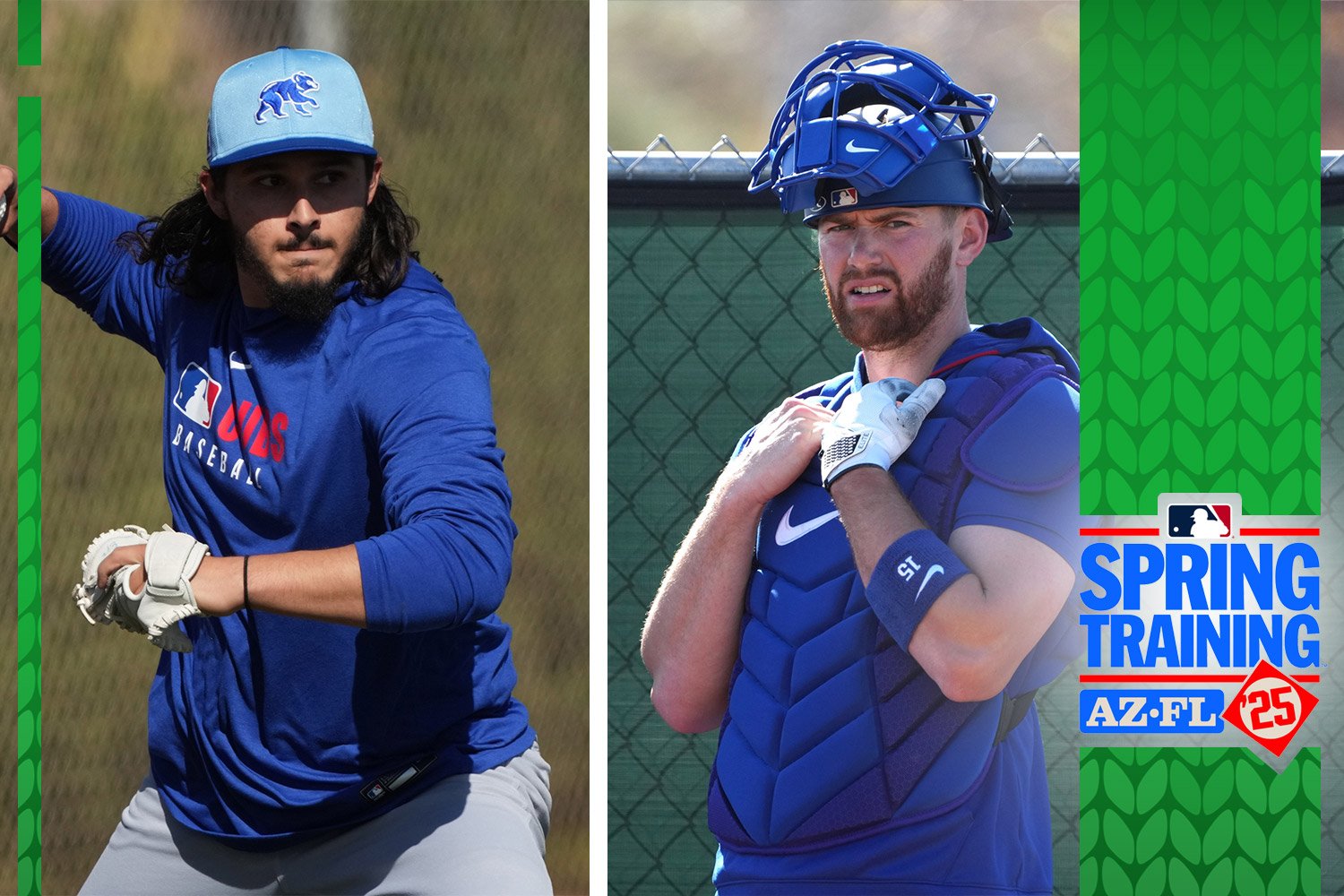 The 2025 Chicago Cubs feature no shortage of new faces. While they might not have pursued the extent we would have hoped in building up the newest iteration of their roster, they addressed several areas of need and increased their depth in crucial spots. The names below represent those new names that we’ll see both on a permanent basis and for at least a spell during the spring via the non-roster invite, perhaps even later on down the line. Position Players Kyle Tucker Acquired from the Houston Astros via trade in exchange for Hayden Wesneski, Isaac Paredes, and prospect Cam Smith. One of the most significant offseason acquisitions for any team, Tucker will be the Cubs’ everyday right fielder for 2025. He’ll likely hit in the two or three spots in the order, providing the catalyst this team largely lacked in recent years. No question about the role here. We’ll spend the entirety of 2025 pining for an extension. Carson Kelly Acquired via free agency on a two-year contract. While not as impactful as the Tucker addition, Kelly was perhaps the most important add that the team needed to make this winter. In need of a competent complement to Miguel Amaya, Kelly brings strong defensive metrics and a bat coming off one of its best seasons. We’ll dive in later as to what the split will look like, but expect Kelly to see plenty of time behind the dish, even after Amaya’s second-half emergence. Gage Workman Acquired from the Detroit Tigers via the Rule-5 Draft. A local product (read: local to me, the Arizona State graduate who also lives in close proximity to Workman’s Basha High School), Workman isn’t guaranteed to stay in the organization for long. A former switch hitter, Workman made some offensive strides in serving as a full-time lefty last season. His value resides in his defense, though, where he could provide some important infield versatility off the bench. If he can’t hang in the spring, he could wind up back with the Tigers before the exhibition season reaches its end. Jon Berti Acquired via free agency on a one-year contract. In the absence of true clarity behind the starting lineup, Berti’s addition was notable late in the winter. He has experience at six different positions as a utilityman, with the potential to serve as the backup for Michael Busch at first base. While he’s never reached the base-stealing mark he set in 2022 (41), he’s still an average hitter who can be relied on for any number of positions. Unlike his other versatile counterparts in the bench mix, he’s a lock for the ’25 roster. Vidal Bruján Acquired from the Tampa Bay Rays via trade in exchange for Matt Mervis & cash considerations. A similar skill set – and nearly identical positional splits – to that of Berti, Bruján was acquired following his being designated for assignment by the Rays. One does wonder that, given the similarity to Berti, it will combine with a lack of upside to make him something of a redundancy on the roster. If so, he may not be long for it. If someone like Workman or NRI receiver Nicky Lopez struggles throughout the spring, there’s a chance he could stick around a bit longer to cover some ground. Nicky Lopez (NRI) Acquired via free agency on a minor league contract & invited to Major League camp. The Naperville native is an intriguing piece of the spring puzzle. On one hand, the Cubs would appear to have plenty of light-hitting, versatile infielders on more stable ground with which to work in pursuit of a roster spot. On the other, few have the experience & subsequent defensive track record of Lopez. That could give him an advantage over Workman or Bruján, especially in matters of middle infield work. Reese McGuire & Carlos Pérez (NRIs) Acquired via free agency on a minor league contract & invited to Major League camp. Signed to minor league deals in December & January, respectively, the two are lumped together given the nearly identical role they were brought in for: depth. At least one of them will end up backstopping in Iowa if Amaya or Kelly sustain an injury while also providing a buffer. At the same time, each of Moises Ballesteros & Pablo Aliendo continue their development. Given that we saw the Cubs run four different catchers on their big league roster at various points last year, you can never have too much depth here. But we won’t see them at Wrigley unless it’s an emergency. Pitchers Matthew Boyd Acquired via free agency on a two-year contract. Signed very early in the offseason, the Cubs were clearly pursuing the upside play in signing Boyd. Despite middling results for most of his time as a starter in Detroit, Boyd was brilliant in his eight outings for Cleveland last season. He’ll slot into the latter portion of the rotation behind Justin Steele, Shota Imanaga, and Jameson Taillon. It's pretty straightforward here. Eli Morgan Acquired from the Cleveland Guardians via trade in exchange for prospect Alfonsin Rosario. In need of more stability out of the bullpen, the Cubs acquired just that in the former Cleveland reliever. While he outpitched his peripherals to a degree, he was brilliant in avoiding quality contact and stranding baserunners. He dealt with a pair of injury issues last year but had turned in consecutive seasons of over 60 innings in each of the two years prior. He’ll be a massive component of the relief corps this season. Cody Poteet Acquired from the New York Yankees via trade in exchange for Cody Bellinger. The underwhelming return in what ended up being almost a pure salary dump, one wonders how much we’ll see of Poteet at Wrigley Field in 2025. More directly, one doesn’t expect to see much of it. He’s worked almost exclusively as a minor league starter for the Marlins & Yankees for his career, and the assumption is that he will continue to serve that type starting this year. He could be in for a spot start down the line, but he’s near the back of the line for starting opportunities even following early injuries to Javier Assad & Brandon Birdsell. Colin Rea Acquired via free agency on a one-year contract. While we might’ve been hoping for someone with a bit more frontline capability as the Cubs’ other notable starting pitcher addition this winter, Rea’s skill set as a swingman will factor heavily into the 2025 team. Those early injuries could put him in line to grab some starts in April & May, with multi-inning relief appearances likely in the cards down the road. Caleb Thielbar Acquired via free agency on a one-year contract. Facing some uncertainty from the left side of the pitcher’s mound, Thielbar had been a steady presence out of the Minnesota ‘pen for a number of years prior to posting an ERA north of five in 2024. The Cubs are banking on some command issues & batted ball luck doing him in with their infrastructure, getting him back on track for the upcoming year. He'll get plenty of looks early as one of only two left-handed relievers on the 40-man. Ryan Pressly Acquired from the Houston Astros via trade in exchange for prospect Juan Bello. The Cubs entered the 2024-25 offseason wanting more experience at the back end of their bullpen. Pressly had recorded over 30 saves in each of the two years before Houston brought in Josh Hader before last season. There’s a bit of concern about the velocity & other peripheral factors. However, Pressly still avoids hard contact and generates plenty of groundballs for what should be a quality infield defense. Despite the presence of Porter Hodge, Pressly should get the bulk of the ninth-inning work. Ryan Brasier Acquired from the Los Angeles Dodgers via trade in exchange for a player-to-be-named-later or cash considerations. Squeezed out of the Dodgers’ crowded relief picture, the Cubs were more than happy to accommodate the arrival of Brasier following his DFA. He’s never quite gotten back to his 2021 brilliance, but his peripherals have remained consistent, and his command is effective enough that he doesn’t walk many hitters. Even with a slight dip in velocity last year, he should figure into the late-inning picture pretty regularly. Brandon Hughes, Ben Heller, Trevor Richards, Phil Bickford, Brad Keller, Brooks Kriske (NRIs) Acquired via free agency on a minor league contract & received an invite to major league camp. Save Kriske; each Cubs' reclamation project spent at least some time at the big league level in 2024. Converted outfielder Brandon Hughes will be the most familiar to Cub fans since, you know, they were the ones that converted him from outfielder to pitcher. He looked like a breakout candidate in 2022 before struggling with health and performance in ’23. He pitched to an ERA over eight in 15 appearances in Arizona last season. Heller is your classic good-velo-bad-command addition, having averaged 96.3 MPH on his fastball last year. Given the presence of his secondary pitches, that would be fun to rein in. Each of Richards & Bickford are largely two-pitch guys with plenty of MLB experience to their names. The spring should give us a good indication of what the Cubs might be trying to do with this crew.
 -
There's no All-Star blocking the path of the Cubs' top prospect to the hot corner this spring. Say that over and over to yourself, with varying inflections, and it can sound anywhere from exciting to terrifying. Image courtesy of © Rick Scuteri-Imagn Images As position players officially report to spring training for the Chicago Cubs, we now know that Alex Bregman will not be among them. Even for someone (such as myself) who has been highly critical of Jed Hoyer & Co. for being so risk-averse, it’s hard to find too much fault in their missing out this time. The Cubs’ reported offer tells us that they gave it the old college try, with his massive new AAV indicative of how much Boston had to overpay in order to lock him down. While the frustration is muted, though, it’s tough to argue against the continued presence of a slightly different emotion: concern. Matt Shaw now has no safety net. With or without Bregman, it was likely that Shaw was looking at a starting gig. There were going to be some logistical considerations had the team signed Bregman, which could have involved moving Nico Hoerner to offset some salary and, subsequently, maintain a clear path for Shaw. In that case, the team’s top prospect would still have a clear path to a starting gig. But in that particular scenario, Bregman’s offensive upside would have provided more overall compensation for any early shortcomings from Shaw than Hoerner can offer. The shape of his arrival would have been different, given Bregman’s more impactful offensive skill set and (thus) the reduced pressure to get production from Shaw. With Bregman, he would have batted eighth or ninth for much of the season. As things stand, if he hits the way they hope he will, he might end up batting fifth. The Cubs have indicated that they are not merely going to hand Shaw the keys to the third base gig, but it’s hard to imagine the team’s collection of light-hitting bench options supplanting him out of the gate. It’s his job to lose. While the clarity is a positive thing for a prospective contender, the current construction of the roster offers no contingency. If Shaw struggles to maintain his grip on the role, it’ll be a massive detriment to the team’s offensive output. Options that would’ve reinforced some stability existed this winter, outside of Bregman. Yoán Moncada was one. Josh Rojas was another. Either would have made sense, to slow down the aggression on Shaw’s timeline and provide some extra pop off the bench once he was ready to hit at the top level. Each also came with some level of versatility. Such an addition would have made me feel much more comfortable about the configuration of the big-league roster. Overall, though, it’s not as if there was a wealth of options. But given that those two specific hitters ended up with the non-contending Angels and White Sox, respectively, one wonders if the Cubs pushed as much as they likely should have to add a bit more short-term certainty to their roster. Of course, it’s entirely possible there were playing time considerations on the part of the players themselves that made that irrelevant from the start. Short of lying to them, it's hard to get players with a chance to start somewhere to take a bench gig instead. In any case, the current infield setup for the Cubs is going to feature Shaw on Opening Day, regardless of what team leadership might say publicly. If he struggles, we could see Jon Berti or Vidal Bruján or Gage Workman or even Nicky Lopez. Given the offensive shortcomings of each of those names, however, we are presented with two sides to the Matt Shaw coin. The first is the overly pessimistic one. If he struggles to the point where he needs to be demoted to regain traction as a hitter, the Cubs are likely to be in a precarious spot with their third base production. At that point, you’ll likely need to look outside the organization to strengthen the lineup, but outside of someone like Brett Baty, there aren’t a ton of obvious trade candidates who present an enticing level of even hypothetical upside at the plate. It would be an extremely problematic development for the Cubs, from a lineup standpoint. The other, more positive side is that Shaw’s run is going to be unfettered. Craig Counsell isn’t going to be tempted to give him a quick hook, given that he possesses superior offensive talent to those on the bench. He’ll have a chance to work through some things as needed. And we know he has the ability to adjust. So while there’s an element of apprehension associated with Shaw’s role, there’s also a certain positive anticipation, given the extended opportunity he’s essentially locked into at this point. None of this is new or mysterious information. Shaw is the third baseman. He might struggle. He might not. He might not struggle early, and then struggle later, and then stop struggling again. Few big-league arrivals give way to uninterrupted success. There’s an obvious risk inherent in this process. The fact that the Cubs have now officially missed out on Alex Bregman not only locks Shaw into the gig, but removes a potential safety net altogether. It's not too late to change that, but if they don't, the good news will be that Shaw has real promise. He might just make this decision look really good, in time. View full article
-
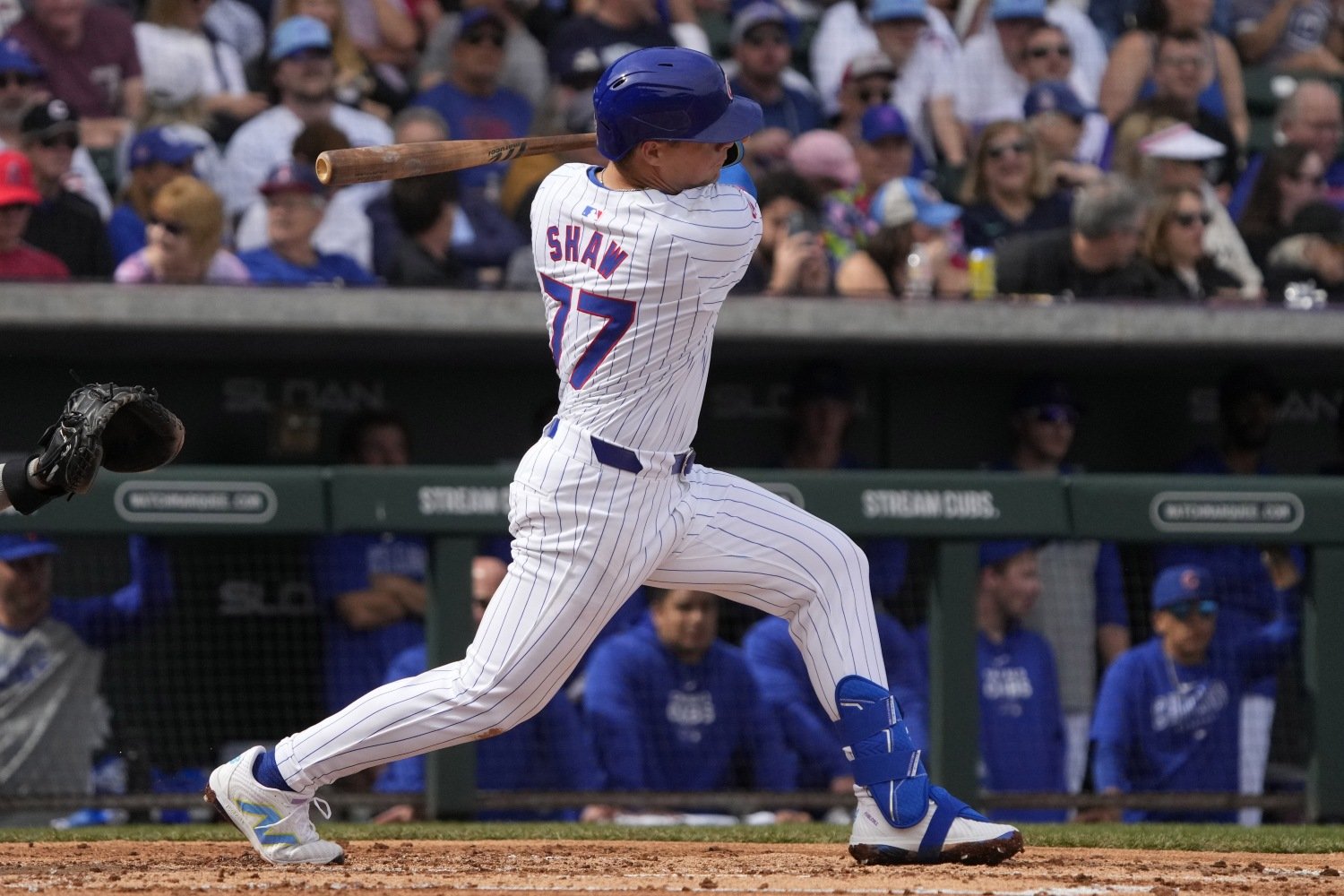 As position players officially report to spring training for the Chicago Cubs, we now know that Alex Bregman will not be among them. Even for someone (such as myself) who has been highly critical of Jed Hoyer & Co. for being so risk-averse, it’s hard to find too much fault in their missing out this time. The Cubs’ reported offer tells us that they gave it the old college try, with his massive new AAV indicative of how much Boston had to overpay in order to lock him down. While the frustration is muted, though, it’s tough to argue against the continued presence of a slightly different emotion: concern. Matt Shaw now has no safety net. With or without Bregman, it was likely that Shaw was looking at a starting gig. There were going to be some logistical considerations had the team signed Bregman, which could have involved moving Nico Hoerner to offset some salary and, subsequently, maintain a clear path for Shaw. In that case, the team’s top prospect would still have a clear path to a starting gig. But in that particular scenario, Bregman’s offensive upside would have provided more overall compensation for any early shortcomings from Shaw than Hoerner can offer. The shape of his arrival would have been different, given Bregman’s more impactful offensive skill set and (thus) the reduced pressure to get production from Shaw. With Bregman, he would have batted eighth or ninth for much of the season. As things stand, if he hits the way they hope he will, he might end up batting fifth. The Cubs have indicated that they are not merely going to hand Shaw the keys to the third base gig, but it’s hard to imagine the team’s collection of light-hitting bench options supplanting him out of the gate. It’s his job to lose. While the clarity is a positive thing for a prospective contender, the current construction of the roster offers no contingency. If Shaw struggles to maintain his grip on the role, it’ll be a massive detriment to the team’s offensive output. Options that would’ve reinforced some stability existed this winter, outside of Bregman. Yoán Moncada was one. Josh Rojas was another. Either would have made sense, to slow down the aggression on Shaw’s timeline and provide some extra pop off the bench once he was ready to hit at the top level. Each also came with some level of versatility. Such an addition would have made me feel much more comfortable about the configuration of the big-league roster. Overall, though, it’s not as if there was a wealth of options. But given that those two specific hitters ended up with the non-contending Angels and White Sox, respectively, one wonders if the Cubs pushed as much as they likely should have to add a bit more short-term certainty to their roster. Of course, it’s entirely possible there were playing time considerations on the part of the players themselves that made that irrelevant from the start. Short of lying to them, it's hard to get players with a chance to start somewhere to take a bench gig instead. In any case, the current infield setup for the Cubs is going to feature Shaw on Opening Day, regardless of what team leadership might say publicly. If he struggles, we could see Jon Berti or Vidal Bruján or Gage Workman or even Nicky Lopez. Given the offensive shortcomings of each of those names, however, we are presented with two sides to the Matt Shaw coin. The first is the overly pessimistic one. If he struggles to the point where he needs to be demoted to regain traction as a hitter, the Cubs are likely to be in a precarious spot with their third base production. At that point, you’ll likely need to look outside the organization to strengthen the lineup, but outside of someone like Brett Baty, there aren’t a ton of obvious trade candidates who present an enticing level of even hypothetical upside at the plate. It would be an extremely problematic development for the Cubs, from a lineup standpoint. The other, more positive side is that Shaw’s run is going to be unfettered. Craig Counsell isn’t going to be tempted to give him a quick hook, given that he possesses superior offensive talent to those on the bench. He’ll have a chance to work through some things as needed. And we know he has the ability to adjust. So while there’s an element of apprehension associated with Shaw’s role, there’s also a certain positive anticipation, given the extended opportunity he’s essentially locked into at this point. None of this is new or mysterious information. Shaw is the third baseman. He might struggle. He might not. He might not struggle early, and then struggle later, and then stop struggling again. Few big-league arrivals give way to uninterrupted success. There’s an obvious risk inherent in this process. The fact that the Cubs have now officially missed out on Alex Bregman not only locks Shaw into the gig, but removes a potential safety net altogether. It's not too late to change that, but if they don't, the good news will be that Shaw has real promise. He might just make this decision look really good, in time.
 -
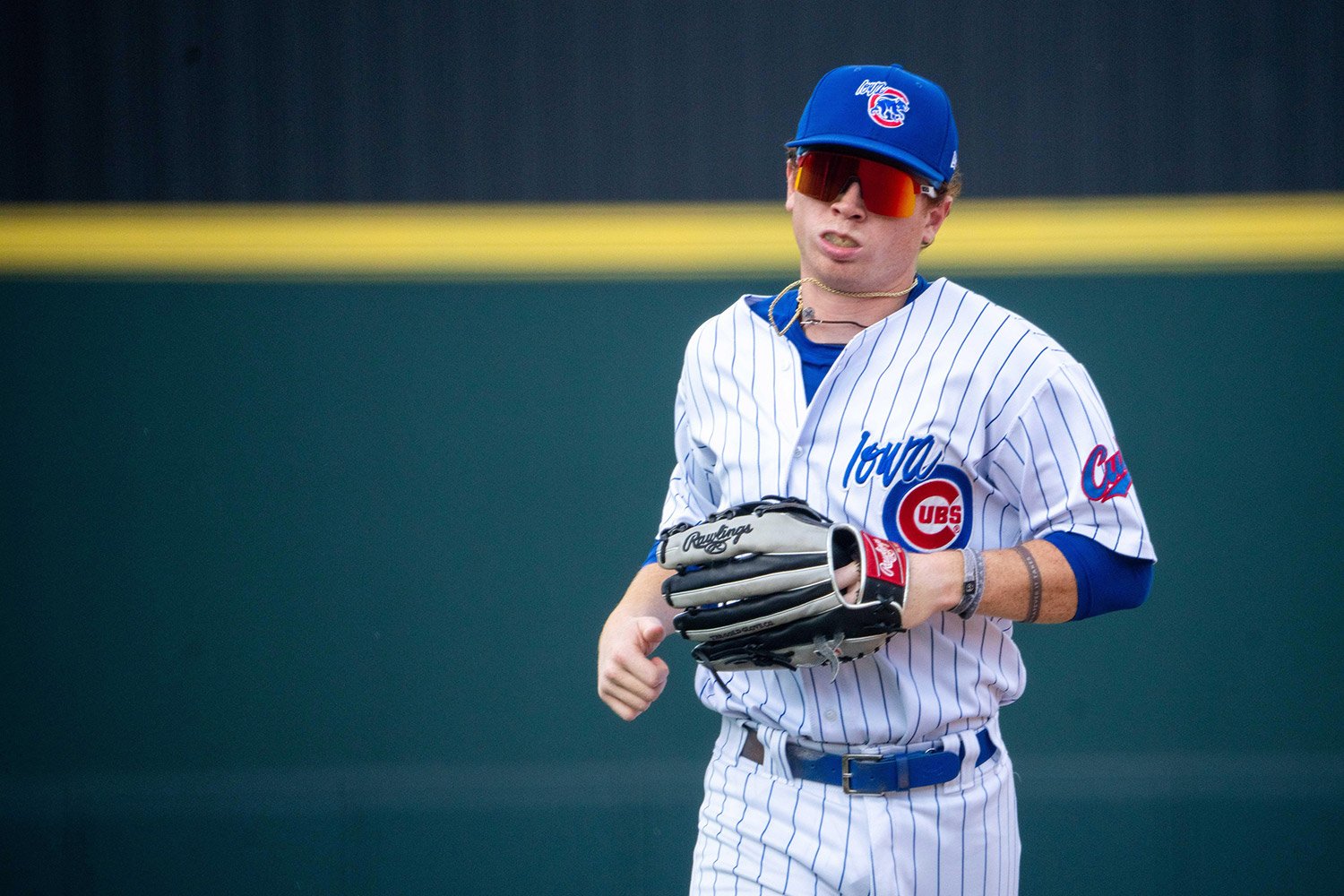 An interesting byproduct of that, however, is that whatever prospect-centric narratives still exist in the mainstream have seen their volume condensed. Given his proximity to the third base job, we've heard plenty about Matt Shaw. We've also heard lots about Owen Caissie and Kevin Alcántara, whether as trade chips or in their varying standing within various top prospect lists. Even Ben Cowles and Jonathon Long have had a moment courtesy of their Arizona Fall League appearances. With that, the name James Triantos has seemingly faded from our collective consciousness. Even as, arguably, a top-five Cubs prospect, Triantos appears to exist in a sort of no man’s land in terms of relevance. He’s not Matt Shaw. Nor has he been as prominently mentioned as part of a trade package for a starting pitcher. He wasn’t a part of this year’s AFL contingent. Yet, Triantos stands to play a very important part for the Cubs in 2025. In one way or another. In a personnel sense, it isn’t entirely unreasonable to expect to see Triantos at the keystone at some point in 2025. A strong spring could put him in line to handle reps while Nico Hoerner recovers from offseason surgery. His skill set as a hitter would help the team to replicate what they could be missing in the latter’s absence. This is particularly true in Triantos’ ability to make contact. Triantos may not only be the best bat-to-ball-skills guy in the system but maybe in the organization. He carries a K% of just 14.5 throughout his time as a prospect, including a mark of just 11.1 between Double-A & Triple-A last year. It is important to note that there was a jump from under 10 percent in Tennessee before it jumped up upon his promotion to Iowa. But while the rate itself leaked just over 17 percent in Iowa, he’s shown a clear ability to adjust each time. Upon being drafted in ’21, Triantos posted K% rates over 16 percent in each of the Arizona Complex League & Low-A (in 2022). That gave him the time to adjust to pro ball. At the beginning of the following year, he cut it to around 10. In 2023, Triantos made the transition from High-A to Double-A. His strikeout rate rose by five percent between the two. But starting the year back in Tennessee for 2024, the rate fell back to under 10. Diving just a bit deeper, the contact trends bode even better for Triantos as a hitter. With the exception of his 109 PAs in the complex league back in ’21, Triantos has never posted a Contact% below 80. He was at 88.0 percent with Double-A last season and maintained at 84.1 upon his promotion. For comparison’s sake, there were 11 Cub hitters with at least 200 plate appearances last season. Only Hoerner, Isaac Paredes, and Mike Tauchman posted figures over 80. Even more notable is that 10 of those 11 hitters chased fewer pitches than Triantos, who expanded the zone to the tune of a 34.1 O-Swing% while in Iowa. That speaks to two things. One is the pure contact ability. The other is the refinement still needed in the approach. One has the ability to compensate for the other, though, and that Triantos has maintained high contact – and subsequent strong counting stats – speaks to such compensation. Given his outcomes, even if he needs to refine the approach, he may not have to tamp down the aggressiveness all that much. The one hitch in Triantos relieving Hoerner for even a short stretch is the matter of his defense. “Hitch” being a relevant term here, though, in that he has seen an uptick in quality since his transition over to second base. At worst, he’s fine at the spot. But when you’re talking about replacing a part of an elite middle infield tandem for even a small amount of time, one wonders what type of impact that gap could have. Ultimately, though, the strides he’s made on that side of the ball wouldn’t appear to have him as any sort of detriment if he were running out there in Hoerner’s absence. There is, however, another manner in which James Triantos could be an impactful part of the Cubs’ 2025 operation: the trade market. With the Cubs still being noted in connection with any number of available arms, his standing within the organization’s top prospects could leave him as a centerpiece of such a deal. Especially given his proximity to the top level. In today’s mode of organizational practices, many teams are moving players in the interest of finances. Meaning there’s an increased desire for upper-level prospects that could contribute in the short-term, rather than younger guys with an eye on projection. Triantos fits exactly the type of bill that that handful of teams desire. Which really means that in one way or another, it’s hard not to see the infielder being an important part of the equation for the 2025 Chicago Cubs. It’d sure be neat to see at Wrigley. The Cubs were 15th in Contact% as a group last season (76.9), and Triantos’ ability to contribute in exactly that facet could be valuable if Hoerner’s health status makes him a necessity. But we also know the Cubs have flirted with the idea of acquiring a starting pitcher that fits more of a “frontline” label than their other offseason additions. Either way, we can’t overlook James Triantos as part of this year’s equation.
 -
Regardless of what the big picture looks like for the Chicago Cubs and their 2024-25 offseason, the objectively positive development to emerge has been a focus on the big club. Rather than pining for prospects on the fringe of a breakthrough, there’s been earnest discussion on roster construction as it relates to what the 2025 roster will actually look like. That’s not to say that there hasn’t been an eye on the system, of course. It just hasn’t been the emphasis as it relates to the progression of winter. That is, at worst, an indication that a certain level of expectation exists for this group. Image courtesy of © Cody Scanlan/The Register / USA TODAY NETWORK An interesting byproduct of that, however, is that whatever prospect-centric narratives still exist in the mainstream have seen their volume condensed. Given his proximity to the third base job, we've heard plenty about Matt Shaw. We've also heard lots about Owen Caissie and Kevin Alcántara, whether as trade chips or in their varying standing within various top prospect lists. Even Ben Cowles and Jonathon Long have had a moment courtesy of their Arizona Fall League appearances. With that, the name James Triantos has seemingly faded from our collective consciousness. Even as, arguably, a top-five Cubs prospect, Triantos appears to exist in a sort of no man’s land in terms of relevance. He’s not Matt Shaw. Nor has he been as prominently mentioned as part of a trade package for a starting pitcher. He wasn’t a part of this year’s AFL contingent. Yet, Triantos stands to play a very important part for the Cubs in 2025. In one way or another. In a personnel sense, it isn’t entirely unreasonable to expect to see Triantos at the keystone at some point in 2025. A strong spring could put him in line to handle reps while Nico Hoerner recovers from offseason surgery. His skill set as a hitter would help the team to replicate what they could be missing in the latter’s absence. This is particularly true in Triantos’ ability to make contact. Triantos may not only be the best bat-to-ball-skills guy in the system but maybe in the organization. He carries a K% of just 14.5 throughout his time as a prospect, including a mark of just 11.1 between Double-A & Triple-A last year. It is important to note that there was a jump from under 10 percent in Tennessee before it jumped up upon his promotion to Iowa. But while the rate itself leaked just over 17 percent in Iowa, he’s shown a clear ability to adjust each time. Upon being drafted in ’21, Triantos posted K% rates over 16 percent in each of the Arizona Complex League & Low-A (in 2022). That gave him the time to adjust to pro ball. At the beginning of the following year, he cut it to around 10. In 2023, Triantos made the transition from High-A to Double-A. His strikeout rate rose by five percent between the two. But starting the year back in Tennessee for 2024, the rate fell back to under 10. Diving just a bit deeper, the contact trends bode even better for Triantos as a hitter. With the exception of his 109 PAs in the complex league back in ’21, Triantos has never posted a Contact% below 80. He was at 88.0 percent with Double-A last season and maintained at 84.1 upon his promotion. For comparison’s sake, there were 11 Cub hitters with at least 200 plate appearances last season. Only Hoerner, Isaac Paredes, and Mike Tauchman posted figures over 80. Even more notable is that 10 of those 11 hitters chased fewer pitches than Triantos, who expanded the zone to the tune of a 34.1 O-Swing% while in Iowa. That speaks to two things. One is the pure contact ability. The other is the refinement still needed in the approach. One has the ability to compensate for the other, though, and that Triantos has maintained high contact – and subsequent strong counting stats – speaks to such compensation. Given his outcomes, even if he needs to refine the approach, he may not have to tamp down the aggressiveness all that much. The one hitch in Triantos relieving Hoerner for even a short stretch is the matter of his defense. “Hitch” being a relevant term here, though, in that he has seen an uptick in quality since his transition over to second base. At worst, he’s fine at the spot. But when you’re talking about replacing a part of an elite middle infield tandem for even a small amount of time, one wonders what type of impact that gap could have. Ultimately, though, the strides he’s made on that side of the ball wouldn’t appear to have him as any sort of detriment if he were running out there in Hoerner’s absence. There is, however, another manner in which James Triantos could be an impactful part of the Cubs’ 2025 operation: the trade market. With the Cubs still being noted in connection with any number of available arms, his standing within the organization’s top prospects could leave him as a centerpiece of such a deal. Especially given his proximity to the top level. In today’s mode of organizational practices, many teams are moving players in the interest of finances. Meaning there’s an increased desire for upper-level prospects that could contribute in the short-term, rather than younger guys with an eye on projection. Triantos fits exactly the type of bill that that handful of teams desire. Which really means that in one way or another, it’s hard not to see the infielder being an important part of the equation for the 2025 Chicago Cubs. It’d sure be neat to see at Wrigley. The Cubs were 15th in Contact% as a group last season (76.9), and Triantos’ ability to contribute in exactly that facet could be valuable if Hoerner’s health status makes him a necessity. But we also know the Cubs have flirted with the idea of acquiring a starting pitcher that fits more of a “frontline” label than their other offseason additions. Either way, we can’t overlook James Triantos as part of this year’s equation. View full article
-
The Cubs have technically been active this offseason. In this case, though, 'technically' is not the best kind of 'active'. Image courtesy of © David Banks-Imagn Images The Chicago Cubs have addressed multiple areas of need this winter. They acquired a catalyst for their lineup in Kyle Tucker. They acquired a true closer in Ryan Pressly. They shored up the middle and back of the rotation via the signings of Matthew Boyd and Colin Rea. They checked a lot of boxes and, at worst, appear to be better than they were in 2024. And yet, I find myself continually staving off disappointment when looking at the broad picture of the offseason. With specific items crossed off the list—some of them more emphatically than others—and a coaching staff more suited to what manager Craig Counsell wanted around him, it seems like the Cubs did almost precisely what they set out to do from the jump. So why the feeling of apprehension as February draws near? This is where I landed: In spite of those additions—all of which have the ability to provide plenty of benefits for the Cubs—this is an organization still relying on the upside play. It’s a criticism we’ve held over Jed Hoyer with increasing frequency in the past year or two, and one that has lingered throughout a moderately busy winter. The Tucker move is obviously a counterargument to this, unto itself. It was a big swing. We can fixate on the lack of hope as far as an extension goes or fall into despair over the fact that the Cubs won’t be in the mix for him on the free-agent market next offseason. We can and, frankly, we probably will, as the season wears on. But he represents a genuine aspect of improvement for the 2025 Chicago Cubs. While his individual addition is key, though, it’s important to note that it’s not entirely without its own context in this discussion independent of the move itself. When the Cubs made the trade, I discussed the importance of the next move. The hyper-conservative front office took an uncharacteristically bold step. Was that a precursor to additional ambition? After all, when one looks out at the National League landscape, it’s top-heavy. The Dodgers, Phillies, Mets, and that team from suburban Cobb County, Georgia are not easy opponents to overcome. The same could be said of Arizona, Milwaukee, San Francisco and maybe San Diego. A single move, however impactful it may have been, wasn’t going to tip the scales in the Cubs’ favor. They needed more. Yet, since the Tucker acquisition on Dec. 13, we’ve seen the Cubs sign Rea for the rotation, Jon Berti for the bench, and trade for Pressly to insert into the closer’s role. That's to say nothing of the smattering of minor-league deals for relief arms. Ultimately, beyond Tucker, though, we have a fringe starter, a journeyman utility infielder, and a 36-year-old reliever whose peripherals have wavered in the past couple of years. It’s an oversimplification on some level, but it still speaks to how uninspired the Hoyer-led group has continued to be since their bold move in mid-December. The scales haven’t tipped. The Cubs are barely even the favorite in their own division, let alone a threat to contenders elsewhere on the Senior Circuit. They continue to be reliant on overperformance. Pete Crow-Armstrong doesn’t have a safety net if his development doesn’t continue in the right direction. Same with Michael Busch. Matt Shaw doesn’t have one either, with only a small handful of largely inexperienced glove-first types threatening a job that the front office insisted wouldn’t be handed to him. The bullpen should, somewhat organically, be better, by virtue of improved rotation depth. But remember when we heard about the team pursuing established arms for relief, instead of stocking up on reclamation types? Does Pressly quite clear that bar? It's a negative read on what the team has done this offseason. I’m not ignorant of that. It likely undervalues someone like Tucker, downplays the upside of Shaw, and oversimplifies Pressly’s performance against peripherals that haven’t completely fallen apart (even if I have certain concerns). But as an individual who struggles to exist in the abstract, this is a team that has, yet again, turned a blind eye toward the option of building a roster with more tangible components than theoretical ones. In a vacuum, it’s not a bad offseason. But roster construction doesn’t happen in a vacuum. The Dodgers rule the league. The Mets aren’t far behind. Arizona has made massive moves. The Georgia club should be healthy. We don’t have reason to suspect Philadelphia or Milwaukee are going away. When you combine the broader NL context with a continued streak of barely marginal improvements to a roster that needed much more, it’s hard to muster up enthusiasm—and that was before Tom Ricketts’ vomit-inducing comments about spending. There’s youth here. That comes with a certain level of apprehension on its own. But you also need sustained improvement from Miguel Amaya and sustained… anything from Dansby Swanson. Ian Happ can’t stagnate for the first two months of the season again. The rotation has its own limitations, despite opportunities for improvement at various levels of the market this winter. This could still change. There are rumors of more moves in the air, some of which are tantalizing possibilities. For now, though, we wait, even as things keep happening; they don't quite fulfill our cravings. It's a special kind of purgatory, not unlike some of their other Chicago sports counterparts. And it’s wrought by, above all, a stubborn reluctance to cling to abstract upside to a more tangible ambition. View full article
-
 The Chicago Cubs have addressed multiple areas of need this winter. They acquired a catalyst for their lineup in Kyle Tucker. They acquired a true closer in Ryan Pressly. They shored up the middle and back of the rotation via the signings of Matthew Boyd and Colin Rea. They checked a lot of boxes and, at worst, appear to be better than they were in 2024. And yet, I find myself continually staving off disappointment when looking at the broad picture of the offseason. With specific items crossed off the list—some of them more emphatically than others—and a coaching staff more suited to what manager Craig Counsell wanted around him, it seems like the Cubs did almost precisely what they set out to do from the jump. So why the feeling of apprehension as February draws near? This is where I landed: In spite of those additions—all of which have the ability to provide plenty of benefits for the Cubs—this is an organization still relying on the upside play. It’s a criticism we’ve held over Jed Hoyer with increasing frequency in the past year or two, and one that has lingered throughout a moderately busy winter. The Tucker move is obviously a counterargument to this, unto itself. It was a big swing. We can fixate on the lack of hope as far as an extension goes or fall into despair over the fact that the Cubs won’t be in the mix for him on the free-agent market next offseason. We can and, frankly, we probably will, as the season wears on. But he represents a genuine aspect of improvement for the 2025 Chicago Cubs. While his individual addition is key, though, it’s important to note that it’s not entirely without its own context in this discussion independent of the move itself. When the Cubs made the trade, I discussed the importance of the next move. The hyper-conservative front office took an uncharacteristically bold step. Was that a precursor to additional ambition? After all, when one looks out at the National League landscape, it’s top-heavy. The Dodgers, Phillies, Mets, and that team from suburban Cobb County, Georgia are not easy opponents to overcome. The same could be said of Arizona, Milwaukee, San Francisco and maybe San Diego. A single move, however impactful it may have been, wasn’t going to tip the scales in the Cubs’ favor. They needed more. Yet, since the Tucker acquisition on Dec. 13, we’ve seen the Cubs sign Rea for the rotation, Jon Berti for the bench, and trade for Pressly to insert into the closer’s role. That's to say nothing of the smattering of minor-league deals for relief arms. Ultimately, beyond Tucker, though, we have a fringe starter, a journeyman utility infielder, and a 36-year-old reliever whose peripherals have wavered in the past couple of years. It’s an oversimplification on some level, but it still speaks to how uninspired the Hoyer-led group has continued to be since their bold move in mid-December. The scales haven’t tipped. The Cubs are barely even the favorite in their own division, let alone a threat to contenders elsewhere on the Senior Circuit. They continue to be reliant on overperformance. Pete Crow-Armstrong doesn’t have a safety net if his development doesn’t continue in the right direction. Same with Michael Busch. Matt Shaw doesn’t have one either, with only a small handful of largely inexperienced glove-first types threatening a job that the front office insisted wouldn’t be handed to him. The bullpen should, somewhat organically, be better, by virtue of improved rotation depth. But remember when we heard about the team pursuing established arms for relief, instead of stocking up on reclamation types? Does Pressly quite clear that bar? It's a negative read on what the team has done this offseason. I’m not ignorant of that. It likely undervalues someone like Tucker, downplays the upside of Shaw, and oversimplifies Pressly’s performance against peripherals that haven’t completely fallen apart (even if I have certain concerns). But as an individual who struggles to exist in the abstract, this is a team that has, yet again, turned a blind eye toward the option of building a roster with more tangible components than theoretical ones. In a vacuum, it’s not a bad offseason. But roster construction doesn’t happen in a vacuum. The Dodgers rule the league. The Mets aren’t far behind. Arizona has made massive moves. The Georgia club should be healthy. We don’t have reason to suspect Philadelphia or Milwaukee are going away. When you combine the broader NL context with a continued streak of barely marginal improvements to a roster that needed much more, it’s hard to muster up enthusiasm—and that was before Tom Ricketts’ vomit-inducing comments about spending. There’s youth here. That comes with a certain level of apprehension on its own. But you also need sustained improvement from Miguel Amaya and sustained… anything from Dansby Swanson. Ian Happ can’t stagnate for the first two months of the season again. The rotation has its own limitations, despite opportunities for improvement at various levels of the market this winter. This could still change. There are rumors of more moves in the air, some of which are tantalizing possibilities. For now, though, we wait, even as things keep happening; they don't quite fulfill our cravings. It's a special kind of purgatory, not unlike some of their other Chicago sports counterparts. And it’s wrought by, above all, a stubborn reluctance to cling to abstract upside to a more tangible ambition.
 -
Can Pete Crow-Armstrong Claim the Leadoff Spot for the 2025 Chicago Cubs?
RandallPnkFloyd posted an article in Cubs
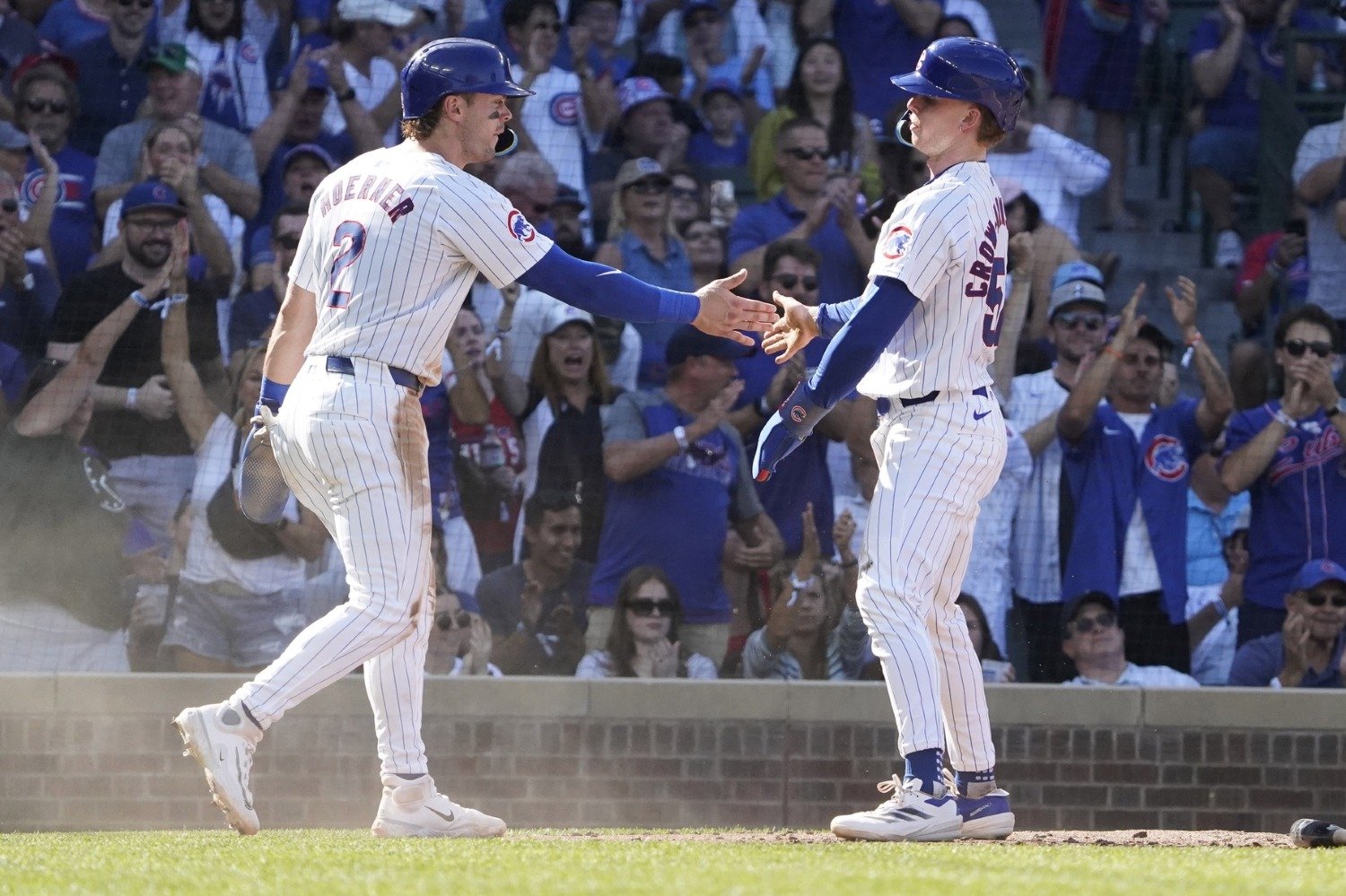 With the exception of the two-year stretch when Dexter Fowler held it down, it seems like the onset of each year brings new conversation about the Chicago Cubs’ leadoff spot. A true, consistent leadoff hitter just feels like one of those things that has regularly eluded the organization. For the most part, this is a conversation we likely won’t lean too heavily on as the season approaches. It’s Ian Happ’s role to lose. Happ represents the most logical candidate for the top spot in the lineup, especially with Nico Hoerner’s availability somewhat up in the air in the short term. Happ is kind of exactly what the modern leadoff man looks like: a steady approach and subsequent on-base presence. Even if the speed isn’t there, a certain level of baserunning acumen is. His numbers are reflective of exactly that. Happ’s 4.12 pitches per plate appearance (P/PA) ranked 22nd of 131 qualifying players last season. His 27.1 Chase% was the 27th-best of roughly that same group. He was able to parlay that patience into the eighth-best BB% (12.2) and, as a result, a .341 OBP that sat 35th. There are some other intricacies at play, but as far as broad strokes go, Happ’s skill set is certainly best suited to continue in that capacity. But suppose the Cubs wanted to pivot toward something of a more traditional archetype in the top spot of their lineup. Say, more of a burner with a more aggressive (read: less developed) approach—someone who can serve as an absolute nuisance on the basepaths out of the gate. I am talking, of course, about Pete Crow-Armstrong. Crow-Armstrong did most of his work out of the 7-9 spots in 2024. He was specifically entrenched in the no. 8 spot, with 286 plate appearances there against 40 as the seventh hitter and 79 as the ninth. The timing of his breakout likely coincided with how successful he was in that spot, finishing with a 107 wRC+ as the team’s eighth hitter. Given the breakout itself, though, it stands to reason whether he represents a viable option to ride out in that spot, especially if the Cubs want to be a bit more aggressive on the bases earlier in games. Whether or not the skill set itself transfers, however, is the question in need of answering. Again, if we’re talking about a more modern concept of a leadoff hitter, it’s more about the approach than the speed. As a (barely) non-qualifier, Crow-Armstrong’s 3.46 P/PA sat 604th of the roughly 800 players that had at least one plate appearance in 2024. With that, it’s probably not surprising that his Swing% (59.2) was the fourth-highest of 207 hitters with at least 400 PAs. His Chase%, at 43.5, was the seventh-highest. Neither of those would be an issue if he was making contact, but his 73.2 Contact% ranked 156th, including one of the worst rates on pitches inside the strike zone (79.3). So it’s probably not a surprise that his OBP came in at a mere .286. While the eye test supported some growth at the plate, it’s clear that there is still more work to be done with respect to the approach. In June and July, Crow-Armstrong’s first two months of genuine run in center field, he maintained an overall Swing% of 61.5 and a Chase% that lingered around 48.0. His contact did jump up between the two months, however. He went from 68.4 percent in June to 74.1 percent in July. With that, his OBP grew from .192 to .232. August was where we saw the biggest improvement. His Swing% was cut to 56.0 percent and his chase rate fell to 36.0 percent. The contact rate bumped up to 79.5 percent and, subsequently, his OBP shot up (.375). Of course, things came back down in a big way in September, where his swing tendencies were nearly identical to June & July, with a contact rabte even lower. If that wasn’t enough, Crow-Armstrong’s Baseball Savant page illustrates a man who doesn’t quite know what he wants. Despite relative consistency in terms of the way he was being pitched, the month-to-month variance in his approach is stark. In each of June and July, he swung at breaking and offspeed pitches at a far higher rate than that of the hard stuff. That flipped in August, when he was more aggressive on the hard stuff than the other two. During September, he allowed breaking pitches to serve as the object of his desire at the plate once again. The difference in chase rate vs. breaking and offspeed and chase rate vs. fastballs is intense. Perhaps it’s somewhat obvious, then, that the fastball focus being dialed in August was part of what allowed him to experience as much success as he did. This all speaks to the idea that Pete Crow-Armstrong doesn’t have the maturity as a hitter quite yet to be considered in a leadoff spot. While he represents a somewhat archaic ideology for the spot, it would still be a somewhat ideal scenario for someone with his on-base ability to serve as the table-setter. For now, though, he’s best served in those spots that more often feature lower stakes. Plus, it’s not as if the Cubs are hurting for someone to fill the role admirably. Happ is more than capable given his own skill set, even if he doesn’t have quite the baserunning prowess of his outfield counterpart. It’s worth noting, however, that Happ’s contract extension only runs through the end of next season. Crow-Armstrong will still be pre-arb at that point, and very likely still in the organization. At that point, the Cubs could very well be searching for a new leadoff man. How the lefty swinger's bat matures over that span is going to be a fascinating development as far as the lineup – and the future of the leadoff spot along with it – goes.
 -
Say what you will about the kid, but he's a sparkplug. Image courtesy of © David Banks-Imagn Images With the exception of the two-year stretch when Dexter Fowler held it down, it seems like the onset of each year brings new conversation about the Chicago Cubs’ leadoff spot. A true, consistent leadoff hitter just feels like one of those things that has regularly eluded the organization. For the most part, this is a conversation we likely won’t lean too heavily on as the season approaches. It’s Ian Happ’s role to lose. Happ represents the most logical candidate for the top spot in the lineup, especially with Nico Hoerner’s availability somewhat up in the air in the short term. Happ is kind of exactly what the modern leadoff man looks like: a steady approach and subsequent on-base presence. Even if the speed isn’t there, a certain level of baserunning acumen is. His numbers are reflective of exactly that. Happ’s 4.12 pitches per plate appearance (P/PA) ranked 22nd of 131 qualifying players last season. His 27.1 Chase% was the 27th-best of roughly that same group. He was able to parlay that patience into the eighth-best BB% (12.2) and, as a result, a .341 OBP that sat 35th. There are some other intricacies at play, but as far as broad strokes go, Happ’s skill set is certainly best suited to continue in that capacity. But suppose the Cubs wanted to pivot toward something of a more traditional archetype in the top spot of their lineup. Say, more of a burner with a more aggressive (read: less developed) approach—someone who can serve as an absolute nuisance on the basepaths out of the gate. I am talking, of course, about Pete Crow-Armstrong. Crow-Armstrong did most of his work out of the 7-9 spots in 2024. He was specifically entrenched in the no. 8 spot, with 286 plate appearances there against 40 as the seventh hitter and 79 as the ninth. The timing of his breakout likely coincided with how successful he was in that spot, finishing with a 107 wRC+ as the team’s eighth hitter. Given the breakout itself, though, it stands to reason whether he represents a viable option to ride out in that spot, especially if the Cubs want to be a bit more aggressive on the bases earlier in games. Whether or not the skill set itself transfers, however, is the question in need of answering. Again, if we’re talking about a more modern concept of a leadoff hitter, it’s more about the approach than the speed. As a (barely) non-qualifier, Crow-Armstrong’s 3.46 P/PA sat 604th of the roughly 800 players that had at least one plate appearance in 2024. With that, it’s probably not surprising that his Swing% (59.2) was the fourth-highest of 207 hitters with at least 400 PAs. His Chase%, at 43.5, was the seventh-highest. Neither of those would be an issue if he was making contact, but his 73.2 Contact% ranked 156th, including one of the worst rates on pitches inside the strike zone (79.3). So it’s probably not a surprise that his OBP came in at a mere .286. While the eye test supported some growth at the plate, it’s clear that there is still more work to be done with respect to the approach. In June and July, Crow-Armstrong’s first two months of genuine run in center field, he maintained an overall Swing% of 61.5 and a Chase% that lingered around 48.0. His contact did jump up between the two months, however. He went from 68.4 percent in June to 74.1 percent in July. With that, his OBP grew from .192 to .232. August was where we saw the biggest improvement. His Swing% was cut to 56.0 percent and his chase rate fell to 36.0 percent. The contact rate bumped up to 79.5 percent and, subsequently, his OBP shot up (.375). Of course, things came back down in a big way in September, where his swing tendencies were nearly identical to June & July, with a contact rabte even lower. If that wasn’t enough, Crow-Armstrong’s Baseball Savant page illustrates a man who doesn’t quite know what he wants. Despite relative consistency in terms of the way he was being pitched, the month-to-month variance in his approach is stark. In each of June and July, he swung at breaking and offspeed pitches at a far higher rate than that of the hard stuff. That flipped in August, when he was more aggressive on the hard stuff than the other two. During September, he allowed breaking pitches to serve as the object of his desire at the plate once again. The difference in chase rate vs. breaking and offspeed and chase rate vs. fastballs is intense. Perhaps it’s somewhat obvious, then, that the fastball focus being dialed in August was part of what allowed him to experience as much success as he did. This all speaks to the idea that Pete Crow-Armstrong doesn’t have the maturity as a hitter quite yet to be considered in a leadoff spot. While he represents a somewhat archaic ideology for the spot, it would still be a somewhat ideal scenario for someone with his on-base ability to serve as the table-setter. For now, though, he’s best served in those spots that more often feature lower stakes. Plus, it’s not as if the Cubs are hurting for someone to fill the role admirably. Happ is more than capable given his own skill set, even if he doesn’t have quite the baserunning prowess of his outfield counterpart. It’s worth noting, however, that Happ’s contract extension only runs through the end of next season. Crow-Armstrong will still be pre-arb at that point, and very likely still in the organization. At that point, the Cubs could very well be searching for a new leadoff man. How the lefty swinger's bat matures over that span is going to be a fascinating development as far as the lineup – and the future of the leadoff spot along with it – goes. View full article
-
Why Ha-Seong Kim Makes More Sense Than Alex Bregman for the Chicago Cubs
RandallPnkFloyd posted an article in Cubs
.png.b9c251659968e61518d9f6039322a21a.png) As Alex Bregman’s free agency continues on into the new year, his name has floated into close-ish proximity to that of the Chicago Cubs. It’s logical. The Cubs don’t technically have a third baseman and thanks to the Cody Bellinger trade, they do have some extra cash to spend. Bregman is a third baseman who will cost a lot of cash. On paper, you can see why the Cubs have been mentioned. While the two make a sensible match in the abstract, however, a deal seems very unlikely in practice. Part of the Cubs’ motive in moving an infielder was to create some extra space for top prospect Matt Shaw. They did so, sending Isaac Paredes to Houston. Turning around and signing a big-dollar infielder exactly akin to Paredes (though better, to be sure) would be a bit inconsistent with their last couple of moves. There’s a logic to the connection on the surface, but additional context certainly doesn’t lend itself to the idea. Instead of Bregman, maybe the Cubs should be talking about another high-profile infielder, but one with more versatility and a lower price tag. Let’s talk about Ha-Seong Kim. Here’s a simple comparison between Bregman and Kim, from 2022 through 2024: Bregman: 2,014 PA, .260/.349/.449, 12.4 K%, 11.1 BB%, .188 ISO, 127 wRC+ Kim: 1,678 PA, .250/.336/.385, 17.9 K%, 11.0 BB%, .135 ISO, 106 wRC+ The advantage goes, of course, to Bregman. There isn’t a huge discrepancy in the slash lines, but Bregman has the notable power edge. While never reaching the 30-40 homer power we saw in 2018 and 2019, he’s hit at least 20 home runs in each of the last three seasons (74 in total). Kim has totaled just 39, topping out at 17 in 2023. They also represent two different types of approach. Bregman is coming off his most aggressive season at the plate since his rookie year (44.9 Swing%). He makes contact at a high rate despite that (88.5 percent) and didn’t experience a big uptick in strikeouts, either. Kim, meanwhile, has decreased his Swing% in each of his four seasons in Major League Baseball, bottoming out at 37.8% last year. His increase in Contact% (85.7% in 2024) can be at least somewhat attributed to that. So, too, can his strikeout rate, which is somewhat the result of working deep counts and a 23.7% called strike percentage. In a vacuum, Bregman’s the guy you want. But given the Cubs’ specific needs, this isn't an "in a vacuum" situation. When it comes to the Cubs' actual needs, you’re not losing a ton with Kim over Bregman. You still get a quality approach, plenty of contact, and the resulting on-base ability. You lose out on the some of the power, sure. But it’s not as if there’s this huge dropoff anywhere else. More importantly, widening the lens to take in their defensive profiles, Kim is exactly the type of infielder the Cubs should be targeting with their situation. Bregman has played almost exclusively third base to this point in his career, with an additional several hundred innings at shortstop (where he was below average, even at a much younger age). He’s lingered at average to above at the hot corner. There have been some reports he’d consider swapping positions (something that wouldn’t be necessary with the Cubs). On the other hand, Kim is someone who’s already done it—and done it well. With the Padres, Kim logged over 1,000 innings at second base, 2,500ish at shortstop, and almost 600 at third. He was elite at the keystone, above-average in his last work at third, and above average at the six. There’s a level of versatility already demonstrated here. Because of that (and because he'd cost so much less), there’s an argument to be made that while Bregman represents the objectively better bat, Kim represents the objectively better fit. The Cubs want to hand the third base job over to Matt Shaw with a solid safety net beneath him. But while the possibility of someone like Yoán Moncada still exists elsewhere in this conversation, they don’t have a contingency in place at present. Really, the same could be said for much of the infield. Vidal Bruján (can’t hit), Miles Mastrobuoni (can’t hit), Gage Workman (hasn’t played above Double-A and maybe can’t hit), Luis Vázquez (really can't hit) and Benjamin Cowles (might hit someday) represent the infield depth currently on the 40-man roster. Ha-Seong Kim not only represents a stopgap at third base that allows you to ease Shaw in more gradually, he also offers a high-quality contingency across the entire infield. If Shaw hits in the spring but Nico Hoerner isn’t ready due to his offseason arm surgery, you’ve got him for second base. When Dansby Swanson needs a blow—and we’ve seen him burn out or fight nagging injuries at times—you’ve got Kim for shortstop. At a much lower price and a much shorter term than the elder Bregman will command, that feels like a better deal. I’m not advocating for the Cubs not spending money to improve their roster. But the reality is that they’ll likely be a little more frugal with the extra wiggle room they’ve gained, in order to save some space for in-season acquisitions. They'd also like to direct some major resources toward reinforcing their pitching staff before the offseason is out. Projecting a deal for Kim is complicated given his injury status, but he'd certainly leave more room for that than signing Bregman would. When you consider the context, Kim would be an extraordinary addition to the Chicago infield. There's an important caveat to consider, which is the shoulder injury that ended his season prematurely and required surgery. But in providing a safety net for Shaw and serving as an effective utility option across the infield, the Cubs can enhance their roster stability substantially with a Kim signing. I also watch a lot of San Diego Padres games, for what that's worth, and I think he’s neat—a balanced and dynamic player. But from a roster construction standpoint, there’s a lot of logic here. I could talk myself into Ha-Seong Kim before I could talk myself into Alex Bregman. Less than a week into the new year, I must be losing my mind. Or?
As Alex Bregman’s free agency continues on into the new year, his name has floated into close-ish proximity to that of the Chicago Cubs. It’s logical. The Cubs don’t technically have a third baseman and thanks to the Cody Bellinger trade, they do have some extra cash to spend. Bregman is a third baseman who will cost a lot of cash. On paper, you can see why the Cubs have been mentioned. While the two make a sensible match in the abstract, however, a deal seems very unlikely in practice. Part of the Cubs’ motive in moving an infielder was to create some extra space for top prospect Matt Shaw. They did so, sending Isaac Paredes to Houston. Turning around and signing a big-dollar infielder exactly akin to Paredes (though better, to be sure) would be a bit inconsistent with their last couple of moves. There’s a logic to the connection on the surface, but additional context certainly doesn’t lend itself to the idea. Instead of Bregman, maybe the Cubs should be talking about another high-profile infielder, but one with more versatility and a lower price tag. Let’s talk about Ha-Seong Kim. Here’s a simple comparison between Bregman and Kim, from 2022 through 2024: Bregman: 2,014 PA, .260/.349/.449, 12.4 K%, 11.1 BB%, .188 ISO, 127 wRC+ Kim: 1,678 PA, .250/.336/.385, 17.9 K%, 11.0 BB%, .135 ISO, 106 wRC+ The advantage goes, of course, to Bregman. There isn’t a huge discrepancy in the slash lines, but Bregman has the notable power edge. While never reaching the 30-40 homer power we saw in 2018 and 2019, he’s hit at least 20 home runs in each of the last three seasons (74 in total). Kim has totaled just 39, topping out at 17 in 2023. They also represent two different types of approach. Bregman is coming off his most aggressive season at the plate since his rookie year (44.9 Swing%). He makes contact at a high rate despite that (88.5 percent) and didn’t experience a big uptick in strikeouts, either. Kim, meanwhile, has decreased his Swing% in each of his four seasons in Major League Baseball, bottoming out at 37.8% last year. His increase in Contact% (85.7% in 2024) can be at least somewhat attributed to that. So, too, can his strikeout rate, which is somewhat the result of working deep counts and a 23.7% called strike percentage. In a vacuum, Bregman’s the guy you want. But given the Cubs’ specific needs, this isn't an "in a vacuum" situation. When it comes to the Cubs' actual needs, you’re not losing a ton with Kim over Bregman. You still get a quality approach, plenty of contact, and the resulting on-base ability. You lose out on the some of the power, sure. But it’s not as if there’s this huge dropoff anywhere else. More importantly, widening the lens to take in their defensive profiles, Kim is exactly the type of infielder the Cubs should be targeting with their situation. Bregman has played almost exclusively third base to this point in his career, with an additional several hundred innings at shortstop (where he was below average, even at a much younger age). He’s lingered at average to above at the hot corner. There have been some reports he’d consider swapping positions (something that wouldn’t be necessary with the Cubs). On the other hand, Kim is someone who’s already done it—and done it well. With the Padres, Kim logged over 1,000 innings at second base, 2,500ish at shortstop, and almost 600 at third. He was elite at the keystone, above-average in his last work at third, and above average at the six. There’s a level of versatility already demonstrated here. Because of that (and because he'd cost so much less), there’s an argument to be made that while Bregman represents the objectively better bat, Kim represents the objectively better fit. The Cubs want to hand the third base job over to Matt Shaw with a solid safety net beneath him. But while the possibility of someone like Yoán Moncada still exists elsewhere in this conversation, they don’t have a contingency in place at present. Really, the same could be said for much of the infield. Vidal Bruján (can’t hit), Miles Mastrobuoni (can’t hit), Gage Workman (hasn’t played above Double-A and maybe can’t hit), Luis Vázquez (really can't hit) and Benjamin Cowles (might hit someday) represent the infield depth currently on the 40-man roster. Ha-Seong Kim not only represents a stopgap at third base that allows you to ease Shaw in more gradually, he also offers a high-quality contingency across the entire infield. If Shaw hits in the spring but Nico Hoerner isn’t ready due to his offseason arm surgery, you’ve got him for second base. When Dansby Swanson needs a blow—and we’ve seen him burn out or fight nagging injuries at times—you’ve got Kim for shortstop. At a much lower price and a much shorter term than the elder Bregman will command, that feels like a better deal. I’m not advocating for the Cubs not spending money to improve their roster. But the reality is that they’ll likely be a little more frugal with the extra wiggle room they’ve gained, in order to save some space for in-season acquisitions. They'd also like to direct some major resources toward reinforcing their pitching staff before the offseason is out. Projecting a deal for Kim is complicated given his injury status, but he'd certainly leave more room for that than signing Bregman would. When you consider the context, Kim would be an extraordinary addition to the Chicago infield. There's an important caveat to consider, which is the shoulder injury that ended his season prematurely and required surgery. But in providing a safety net for Shaw and serving as an effective utility option across the infield, the Cubs can enhance their roster stability substantially with a Kim signing. I also watch a lot of San Diego Padres games, for what that's worth, and I think he’s neat—a balanced and dynamic player. But from a roster construction standpoint, there’s a lot of logic here. I could talk myself into Ha-Seong Kim before I could talk myself into Alex Bregman. Less than a week into the new year, I must be losing my mind. Or? -
Though the Astros third baseman is clearly the better player before accounting for context, this is baseball, and context matters. Image courtesy of © Thomas Shea-Imagn Images As Alex Bregman’s free agency continues on into the new year, his name has floated into close-ish proximity to that of the Chicago Cubs. It’s logical. The Cubs don’t technically have a third baseman and thanks to the Cody Bellinger trade, they do have some extra cash to spend. Bregman is a third baseman who will cost a lot of cash. On paper, you can see why the Cubs have been mentioned. While the two make a sensible match in the abstract, however, a deal seems very unlikely in practice. Part of the Cubs’ motive in moving an infielder was to create some extra space for top prospect Matt Shaw. They did so, sending Isaac Paredes to Houston. Turning around and signing a big-dollar infielder exactly akin to Paredes (though better, to be sure) would be a bit inconsistent with their last couple of moves. There’s a logic to the connection on the surface, but additional context certainly doesn’t lend itself to the idea. Instead of Bregman, maybe the Cubs should be talking about another high-profile infielder, but one with more versatility and a lower price tag. Let’s talk about Ha-Seong Kim. Here’s a simple comparison between Bregman and Kim, from 2022 through 2024: Bregman: 2,014 PA, .260/.349/.449, 12.4 K%, 11.1 BB%, .188 ISO, 127 wRC+ Kim: 1,678 PA, .250/.336/.385, 17.9 K%, 11.0 BB%, .135 ISO, 106 wRC+ The advantage goes, of course, to Bregman. There isn’t a huge discrepancy in the slash lines, but Bregman has the notable power edge. While never reaching the 30-40 homer power we saw in 2018 and 2019, he’s hit at least 20 home runs in each of the last three seasons (74 in total). Kim has totaled just 39, topping out at 17 in 2023. They also represent two different types of approach. Bregman is coming off his most aggressive season at the plate since his rookie year (44.9 Swing%). He makes contact at a high rate despite that (88.5 percent) and didn’t experience a big uptick in strikeouts, either. Kim, meanwhile, has decreased his Swing% in each of his four seasons in Major League Baseball, bottoming out at 37.8% last year. His increase in Contact% (85.7% in 2024) can be at least somewhat attributed to that. So, too, can his strikeout rate, which is somewhat the result of working deep counts and a 23.7% called strike percentage. In a vacuum, Bregman’s the guy you want. But given the Cubs’ specific needs, this isn't an "in a vacuum" situation. When it comes to the Cubs' actual needs, you’re not losing a ton with Kim over Bregman. You still get a quality approach, plenty of contact, and the resulting on-base ability. You lose out on the some of the power, sure. But it’s not as if there’s this huge dropoff anywhere else. More importantly, widening the lens to take in their defensive profiles, Kim is exactly the type of infielder the Cubs should be targeting with their situation. Bregman has played almost exclusively third base to this point in his career, with an additional several hundred innings at shortstop (where he was below average, even at a much younger age). He’s lingered at average to above at the hot corner. There have been some reports he’d consider swapping positions (something that wouldn’t be necessary with the Cubs). On the other hand, Kim is someone who’s already done it—and done it well. With the Padres, Kim logged over 1,000 innings at second base, 2,500ish at shortstop, and almost 600 at third. He was elite at the keystone, above-average in his last work at third, and above average at the six. There’s a level of versatility already demonstrated here. Because of that (and because he'd cost so much less), there’s an argument to be made that while Bregman represents the objectively better bat, Kim represents the objectively better fit. The Cubs want to hand the third base job over to Matt Shaw with a solid safety net beneath him. But while the possibility of someone like Yoán Moncada still exists elsewhere in this conversation, they don’t have a contingency in place at present. Really, the same could be said for much of the infield. Vidal Bruján (can’t hit), Miles Mastrobuoni (can’t hit), Gage Workman (hasn’t played above Double-A and maybe can’t hit), Luis Vázquez (really can't hit) and Benjamin Cowles (might hit someday) represent the infield depth currently on the 40-man roster. Ha-Seong Kim not only represents a stopgap at third base that allows you to ease Shaw in more gradually, he also offers a high-quality contingency across the entire infield. If Shaw hits in the spring but Nico Hoerner isn’t ready due to his offseason arm surgery, you’ve got him for second base. When Dansby Swanson needs a blow—and we’ve seen him burn out or fight nagging injuries at times—you’ve got Kim for shortstop. At a much lower price and a much shorter term than the elder Bregman will command, that feels like a better deal. I’m not advocating for the Cubs not spending money to improve their roster. But the reality is that they’ll likely be a little more frugal with the extra wiggle room they’ve gained, in order to save some space for in-season acquisitions. They'd also like to direct some major resources toward reinforcing their pitching staff before the offseason is out. Projecting a deal for Kim is complicated given his injury status, but he'd certainly leave more room for that than signing Bregman would. When you consider the context, Kim would be an extraordinary addition to the Chicago infield. There's an important caveat to consider, which is the shoulder injury that ended his season prematurely and required surgery. But in providing a safety net for Shaw and serving as an effective utility option across the infield, the Cubs can enhance their roster stability substantially with a Kim signing. I also watch a lot of San Diego Padres games, for what that's worth, and I think he’s neat—a balanced and dynamic player. But from a roster construction standpoint, there’s a lot of logic here. I could talk myself into Ha-Seong Kim before I could talk myself into Alex Bregman. Less than a week into the new year, I must be losing my mind. Or? View full article
.png.37464d5b50fa3c6d8a0c144584a8ff6a.png)
.png.b9c251659968e61518d9f6039322a21a.png)