


RandallPnkFloyd
-
Posts
513 -
Joined
-
Last visited
Content Type
Profiles
Joomla Posts 1
Chicago Cubs Videos
Chicago Cubs Free Agent & Trade Rumors, Notes, & Tidbits
2026 Chicago Cubs Top Prospects Ranking
News
2023 Chicago Cubs Draft Picks
Guides & Resources
2024 Chicago Cubs Draft Picks
The Chicago Cubs Players Project
2025 Chicago Cubs Draft Pick Tracker
2026 Chicago Cubs Draft Tracker: Picks & Bonuses
Blogs
Events
Forums
Store
Gallery
Everything posted by RandallPnkFloyd
-
It's a good time to ask some big questions, even though we don't quite have their answers yet. Image courtesy of © David Banks-USA TODAY Sports I have a finite number of approaches to writing. Generally, I’m heading down one of three routes: push an agenda in favor of or against a narrative; draw attention to a particular player; or explore the space of my own brain in pursuit of making something abstract more concrete. This is the latter. My brain doesn’t tend to handle abstract well, and I can't seem to get a concrete sense of the expectations for Pete Crow-Armstrong. I’m not sure what the Chicago Cubs fan collective wants from Crow-Armstrong. Over the past handful of months, I’ve read plenty of columns and thinkpieces from various sources, expressing something about what they want to see from the defensive wizard. Whether it’s taking umbrage with his bunting habits or examining every single incremental offensive improvement, I’m struggling to grasp exactly what we want to see. It’s somehow become more abstract than “get better on offense.” Er. Well. Has it, though? Crow-Armstrong’s 2024 output is…quite bad. His slash includes a mere .210 average & paltry .254 on-base percentage while running at a wRC+ of 67. He’s cut the strikeout rate from even his minor league time, down to 21.9%, and is supplying at least occasional power (.141 ISO). But when it comes down to it, you’d like to see the guy with 100th-percentile sprint speed on base just a little bit more. We’d likely see more than his 23 steals to date. August, however, has seen a shift in offensive maturity. Through 57 plate appearances this month, he’s hitting .269 and reaching base at a .309 clip. He’s also slugging .500 and cut the strikeout rate all the way down to 8.8%. The walk rate, at 5.3%, exceeds his season mark. It all culminates in a wRC+ around 120 for the month. It seems to represent a corner being turned. Sustainability is the next step. I assume the collective will agree on both counts. We could haggle over which components are sustainable. Maybe a little less power? For sure, a little more whiff is coming. In any case, the upside with the stick is being realized in a way that it previously wasn’t. But regardless of what the actual narrative is surrounding any given day’s iteration of Crow-Armstrong, I’m still left wondering what exactly we want to see before 2024 runs out--assuming that, you know, the last 50-ish plate appearances are not it. I think that the actual reasoning behind such varied perspectives on what Crow-Armstrong is and is not doing is a much grander and, dare I say, more abstract idea than the performance of the player himself. The reality of our perception of Crow-Armstrong’s development – in my extremely humble opinion – runs deeper than the actual trajectory of his development. What I think we’re looking for from Crow-Armstrong is what my own brain craves: clarity. Around the game, we see young players – especially on the outfield grass – immediately make an impact. Baseball is in a terrific place, with myriad rising stars contributing to their teams in meaningful ways. Crow-Armstrong, on the other hand, has been more of a project, at least on the offensive side. I think the inherent quality of human impatience is why we’ve seen such a range of thoughts around him. We not only want to know what he’ll develop into as a hitter, but we want to know now. The Cubs have enough players with upside. We’ve seen them fail to realize it all over the major-league roster this year. We’ve also seen them start to scratch it in the upper levels of the system. It’s all tantalizing, for better and worse. But it’s hard to stomach so much abstraction, whether in my own brain or the rational reader’s. That’s the conclusion with which I’m running. I don’t think that Crow-Armstrong has reached the point of being a polarizing player. Very few are questioning the upside itself; those who are appear to be outliers. But the remainder of the collective appears to be looking at different things. The improvement. The individual plate appearances. The bunting. It’s created a scattered idea of the player. Ultimately, I think within all of this, we’re just looking for the same thing: to know. Perhaps we will soon. View full article
-
The Two Problems Facing the Cubs as Another Important Offseason Looms
RandallPnkFloyd posted an article in Cubs
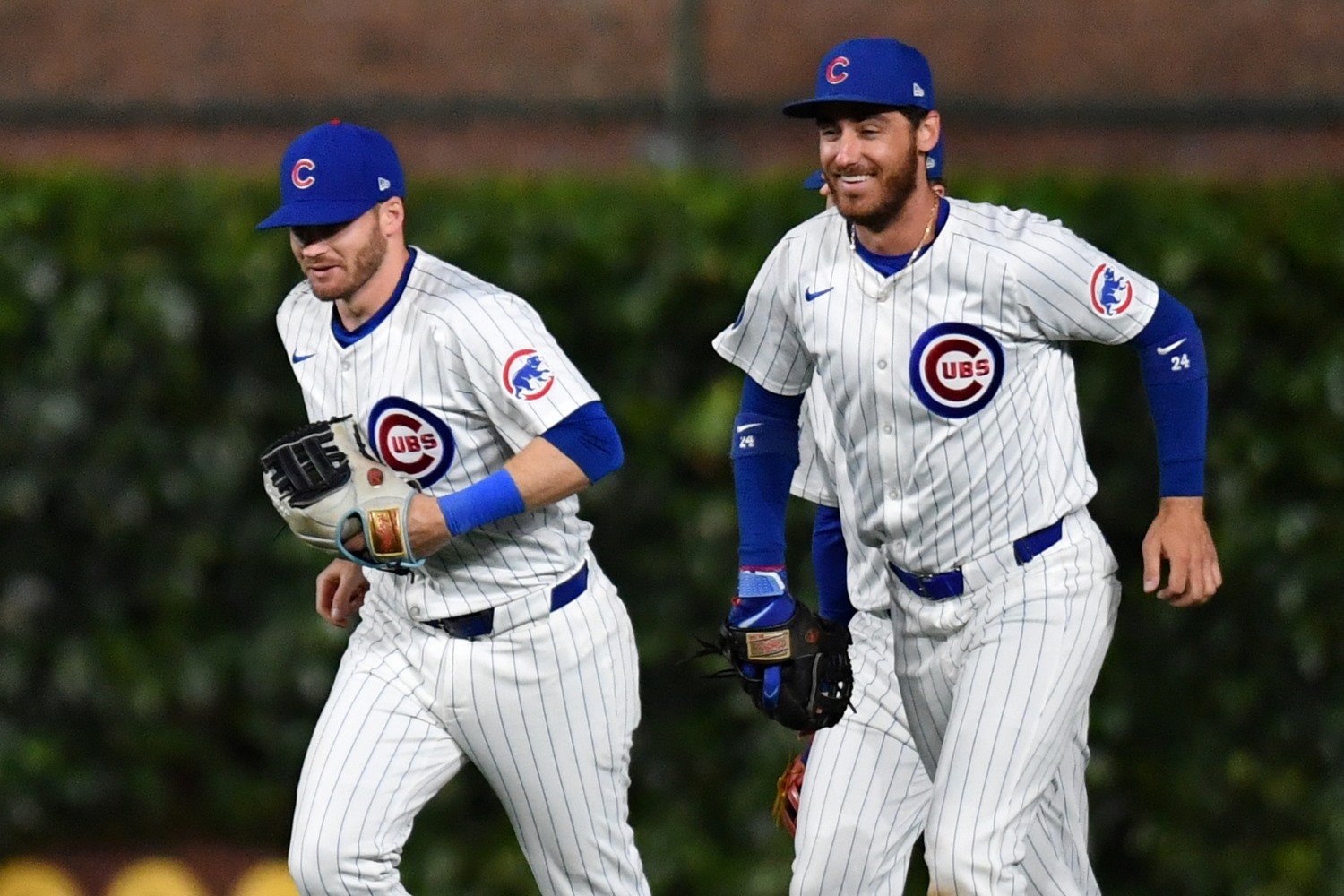 If you’re like me, you’re punting on the remainder of the 2024 Chicago Cubs. If you’re even more like me, you’re punting on the remainder of the 2024 Chicago Cubs and turning your attention almost entirely toward Caleb Williams and the Chicago Bears. But the very little bit of attention span I have remaining for baseball, as August crisps toward September, is thinking about the Cubs in 2025. Earlier this week, I wondered about Ian Happ’s best spot in the batting order moving forward. Given his work this year, it appears that either the top of the lineup card or the very middle thereof (No. 1 or No. 5) are the most likely slots in which we’ll see him. Throughout that process, though, a concern started to emerge in the back of my mind that eventually moved to the front of it. That concern was later compounded by fellow North Side Baseball contributor @matto1233’s verbalizing of the same idea. So let’s talk about it. Specifically, the concern is roster flexibility. In a broader sense, it’s roster construction. But as it relates to any movement within this lineup – an idea that could have a large bearing on where Happ hits next year – the rigid nature of the group is something I’ll be watching with a keen eye as we crawl toward the winter. The Chicago Cubs are a team built out of complementary bats. This is an issue we’ve raised before. It’s a team – and a market – in need of A Guy. They have lots of nice bats on the roster. But without A Guy, you’re not maximizing the complementary nature of the individual skill sets. These are the current Cubs hitters under contract or team control through at least next season (with the final year of that control): Happ: 2026 Michael Busch: 2029 Nico Hoerner: 2026 Dansby Swanson: 2029 Isaac Paredes: 2027 Seiya Suzuki: 2026 Cody Bellinger: 2024 (Player Opt-In, though!) That’s to say nothing of Pete Crow-Armstrong in center field and a handful of positional prospects in the upper minors (Matt Shaw, James Triantos, Kevin Alcántara, etc.). Simply put, there are a ton of bodies here, both for the remainder of 2024 and for the foreseeable future. So if you’re Jed Hoyer et al, what exactly are you doing here? You’ve assembled a group of quality baseball players, but many of them have underperformed or proven too streaky to be reliable. And while none of them have performed outright poorly enough to dump them in some money-saving fashion, the collective also isn’t strong enough to hang with the top offenses around the National League. As such, the ones the Cubs might be motivated to move should a higher-upside bat come along are likely to be difficult to clear. Nobody’s taking Swanson’s contract. It’s unlikely that anyone takes on Bellinger’s, once he (presumably) opts in. Seiya Suzuki’s upside with the bat isn’t so much that a team is willing to acquire him to DH, given his demonstrated durability issues. You can maybe move Hoerner on his reasonable contract, but what impact player are you getting at the keystone? There are so few such players, and those teams that possess one aren’t keen to part with them. If you’re moving Hoerner, it’s probably to create space for Matt Shaw or James Triantos, but do either of them move the needle enough? And those are really the only conversations this team might be willing to have. Happ is an integral part of the roster and the culture. Busch has brought stability to a position that’s been volatile since Anthony Rizzo’s departure. Crow-Armstrong’s all-world defense is finally being supported by some flashes at the plate. You just moved a fan favorite in Christopher Morel to acquire Paredes and his multiple years of team control. They’re all locks. Now we’ve got the ol’ rock-and-hard place issue. This ultimately speaks to two problems. One is the organization’s roster construction to date. As Matt Ostrowski put it in the NSBB writers Slack, the Cubs brought in Dansby Swanson to be A Guy--except that Swanson isn’t A Guy. He’s someone you bring in to supplement A Guy, as we all saw him do with Freddie Freeman and Ronald Acuña Jr. in Atlanta. Defense? Yes. Leadership and vibes? Absolutely. Offensively, though, nothing about his slog of a 2024 has been surprising, as frustrating as it may be. He’s a microcosm of how the front office has assembled this particular group of hitters. The other problem is how you make meaningful additions moving forward. Outside of the catcher spot, where the team has reportedly already expressed interest in a notable upgrade, there isn’t an obvious spot at which you could pursue A Guy. In my extremely outsider opinion, Hoyer is unlikely to want to disrupt the cultural fabric of the team much. Nor will he want to move any of these guys for a subpar return, given the upside they actually possess regardless of 2024 outcomes. That’s not to say it’s impossible that such a move could transpire over the course of the winter. But such inflexibility, in conjunction with historically conservative leadership, makes it extremely cumbersome to develop into a concrete idea. In turn, that makes it harder than we'd all like it to be to envision the path from here to where the Cubs need to be.
- 3 comments
-
- 1
-

-
- cody bellinger
- dansby swanson
- (and 2 more)
-
There's a difference between what this team is and what it ought to be. That much is clear. Unfortunately, the club's irrational belief in its own roster has foreclosed some options for fixing that. Image courtesy of © Patrick Gorski-USA TODAY Sports If you’re like me, you’re punting on the remainder of the 2024 Chicago Cubs. If you’re even more like me, you’re punting on the remainder of the 2024 Chicago Cubs and turning your attention almost entirely toward Caleb Williams and the Chicago Bears. But the very little bit of attention span I have remaining for baseball, as August crisps toward September, is thinking about the Cubs in 2025. Earlier this week, I wondered about Ian Happ’s best spot in the batting order moving forward. Given his work this year, it appears that either the top of the lineup card or the very middle thereof (No. 1 or No. 5) are the most likely slots in which we’ll see him. Throughout that process, though, a concern started to emerge in the back of my mind that eventually moved to the front of it. That concern was later compounded by fellow North Side Baseball contributor @matto1233’s verbalizing of the same idea. So let’s talk about it. Specifically, the concern is roster flexibility. In a broader sense, it’s roster construction. But as it relates to any movement within this lineup – an idea that could have a large bearing on where Happ hits next year – the rigid nature of the group is something I’ll be watching with a keen eye as we crawl toward the winter. The Chicago Cubs are a team built out of complementary bats. This is an issue we’ve raised before. It’s a team – and a market – in need of A Guy. They have lots of nice bats on the roster. But without A Guy, you’re not maximizing the complementary nature of the individual skill sets. These are the current Cubs hitters under contract or team control through at least next season (with the final year of that control): Happ: 2026 Michael Busch: 2029 Nico Hoerner: 2026 Dansby Swanson: 2029 Isaac Paredes: 2027 Seiya Suzuki: 2026 Cody Bellinger: 2024 (Player Opt-In, though!) That’s to say nothing of Pete Crow-Armstrong in center field and a handful of positional prospects in the upper minors (Matt Shaw, James Triantos, Kevin Alcántara, etc.). Simply put, there are a ton of bodies here, both for the remainder of 2024 and for the foreseeable future. So if you’re Jed Hoyer et al, what exactly are you doing here? You’ve assembled a group of quality baseball players, but many of them have underperformed or proven too streaky to be reliable. And while none of them have performed outright poorly enough to dump them in some money-saving fashion, the collective also isn’t strong enough to hang with the top offenses around the National League. As such, the ones the Cubs might be motivated to move should a higher-upside bat come along are likely to be difficult to clear. Nobody’s taking Swanson’s contract. It’s unlikely that anyone takes on Bellinger’s, once he (presumably) opts in. Seiya Suzuki’s upside with the bat isn’t so much that a team is willing to acquire him to DH, given his demonstrated durability issues. You can maybe move Hoerner on his reasonable contract, but what impact player are you getting at the keystone? There are so few such players, and those teams that possess one aren’t keen to part with them. If you’re moving Hoerner, it’s probably to create space for Matt Shaw or James Triantos, but do either of them move the needle enough? And those are really the only conversations this team might be willing to have. Happ is an integral part of the roster and the culture. Busch has brought stability to a position that’s been volatile since Anthony Rizzo’s departure. Crow-Armstrong’s all-world defense is finally being supported by some flashes at the plate. You just moved a fan favorite in Christopher Morel to acquire Paredes and his multiple years of team control. They’re all locks. Now we’ve got the ol’ rock-and-hard place issue. This ultimately speaks to two problems. One is the organization’s roster construction to date. As Matt Ostrowski put it in the NSBB writers Slack, the Cubs brought in Dansby Swanson to be A Guy--except that Swanson isn’t A Guy. He’s someone you bring in to supplement A Guy, as we all saw him do with Freddie Freeman and Ronald Acuña Jr. in Atlanta. Defense? Yes. Leadership and vibes? Absolutely. Offensively, though, nothing about his slog of a 2024 has been surprising, as frustrating as it may be. He’s a microcosm of how the front office has assembled this particular group of hitters. The other problem is how you make meaningful additions moving forward. Outside of the catcher spot, where the team has reportedly already expressed interest in a notable upgrade, there isn’t an obvious spot at which you could pursue A Guy. In my extremely outsider opinion, Hoyer is unlikely to want to disrupt the cultural fabric of the team much. Nor will he want to move any of these guys for a subpar return, given the upside they actually possess regardless of 2024 outcomes. That’s not to say it’s impossible that such a move could transpire over the course of the winter. But such inflexibility, in conjunction with historically conservative leadership, makes it extremely cumbersome to develop into a concrete idea. In turn, that makes it harder than we'd all like it to be to envision the path from here to where the Cubs need to be. View full article
-
Does batting order matter? Put it this way: try running your team out there without writing one. Image courtesy of © David Richard-USA TODAY Sports I’ve been on something of a personal quest this season--one not entirely unlike the archetypal hero & their journey to self-actualization. No, I haven’t encountered personal loss, physical danger, or newfound levels of maturation wrought by the people, places, and things with which I interact. But my journey has featured a call, an abyss, and, I think, a conclusion. That conclusion is this: I’m in on Ian Happ. If you remember, I spent the early portion of the season pondering Happ’s purpose. I wasn’t sold on whether the Chicago Cubs left fielder was even good, let alone an integral part of the roster. Several months after the fact, however, I have arrived at the conclusion that the Cubs do, indeed, need Happ. That isn’t my purpose here, though. I could surely throw out some numbers to support the idea of Happ being a key piece of the Next Great Whatever. He is, after all, on pace for one of his best seasons yet, courtesy of an elite walk rate and the potential to set a new career mark in home runs. Instead, with the Cubs largely out of the National League Wild Card race, my questions are starting to shift toward 2025. In this particular case, I’m wondering where Happ is best suited within the Cubs’ lineup for next season. Technically, Happ has hit out of eight different spots in the order this season. If we eliminate the singular plate appearance as a pinch-hitter in the No. 9 hole, we’re looking at seven. He has an additional 49 PAs between second, sixth, and seventh. He has 54 in the No. 3 spot and 61 as No. 4. The two slots in which we’ve seen Happ the most are leadoff (143 PA) and the fifth spot (186 PA). The distribution of time in each is quite interesting, as well. Craig Counsell rode Happ as his top guy through almost all of March and April. Beginning Apr. 19, we saw a stretch in which Happ bounced around quite a bit. He went sixth, second, and then third for a long stretch, before the second half of May saw him bouncing around again. In early June, he was slotted in at no. 5 through Jul. 11, before a few weeks in the cleanup spot. On Jul. 30, he was back in the leadoff spot, where he's resided since. There are myriad reasons for the inconsistency in Happ’s spot in the batting order. One is the inconsistency of the lineup at large. Happ’s own absence of power early in the year made him a viable leadoff candidate, as he was still walking at an exceptional rate. As his bat got hotter, many of his teammates didn’t follow suit, or were injured. Thus, it was a matter of plugging in his patience-power skill set wherever it might’ve been deemed most valuable. Even with the power now showing up, though, Counsell reinserted Happ into that top spot at the end of last month. Given the higher volume of plate appearances out of the No. 1 and No. 5 spots, one assumes that we’ll see Happ ply his trade at the dish in one of those two positions, long-term. In a direct comparison, Happ has been stronger out of the latter. As a leadoff hitter, Happ has slashed .213/.329/.426, with a wRC+ of 115. He’s walking at a 14.7% clip. When dropped to fifth, the slash goes .253/.360/.544 and the wRC+ is 150. His walk rate sits at 12.9%, and there's much more power there. Objectively, it seems fairly obvious that the better performance from Happ has come from the No. 5 spot: more on-base skills, more power, better overall production. It’s important to consider, however, that Happ’s increase in production coincided with his move to that spot. Had we gotten the from-May-on version of Happ back in March and April, those numbers might not look so disparate now. The Happ question, though, isn’t so much about Ian Happ. It’s a broader, philosophical inquiry. Do you want more of a traditional leadoff hitter – someone who can take a walk, but more likely hits their way on and adds a few steals along the way? Or are you okay with an on-base force who supplies regular power, even if there’s no one ahead of him to make similarly effective use of that power? In today’s game, the latter seems like the easier answer to justify. The old prototype of the leadoff hitter is one we seldom see. Nico Hoerner is likely as close as the Cubs are getting, but he hasn’t been effective in that spot over his 2024 body of work (97 wRC+). Of course, any answer to such a question requires us to know what the Cubs have planned for their position group ahead of 2025--which…we do not. But given the conservative nature of the front office, in conjunction with the team’s various contracts, one imagines that major changes won’t happen. The lineup will more than likely look quite similar next year. Which brings us back to the original query: where is Ian Happ best suited to hit in this Cubs lineup? The easy answer is simply ‘yes.’ He’s proven adept as a leadoff man. He’s seen more pitches than all but six qualifying position players (aside: the Cubs have four of the top 10 hitters in pitches per plate appearance, including Happ) and reaches base at a rate that reflects that. He’s almost precisely average on the bases and can add the occasional steal. Of course, you like to see that OBP and power smack-dab in the middle of your lineup, too. This is all to say that I don’t have an answer to my question, because I don’t think there is an answer. If anything, it speaks more to the importance of overall roster construction than the specific skill set of Happ. If the team wants to pursue a more permanent leadoff hitter, then they’d be fine rolling Happ out in the fifth spot. If they want to pursue a more impactful power bat, then they could elect the keep him atop the starting nine. I don’t think there’s a wrong answer here. If forced to choose, I’m probably rolling with him out of the top spot and hoping that more consistent power develops out of the likes of Michael Busch or Seiya Suzuki, while simultaneously hoping that Cody Bellinger returns. But that we’re discussing either route as something viable does speak to my own growth within the larger Ian Happ narrative--and by extension, more importantly, to Happ's impressive maturation at the plate throughout this season. View full article
-
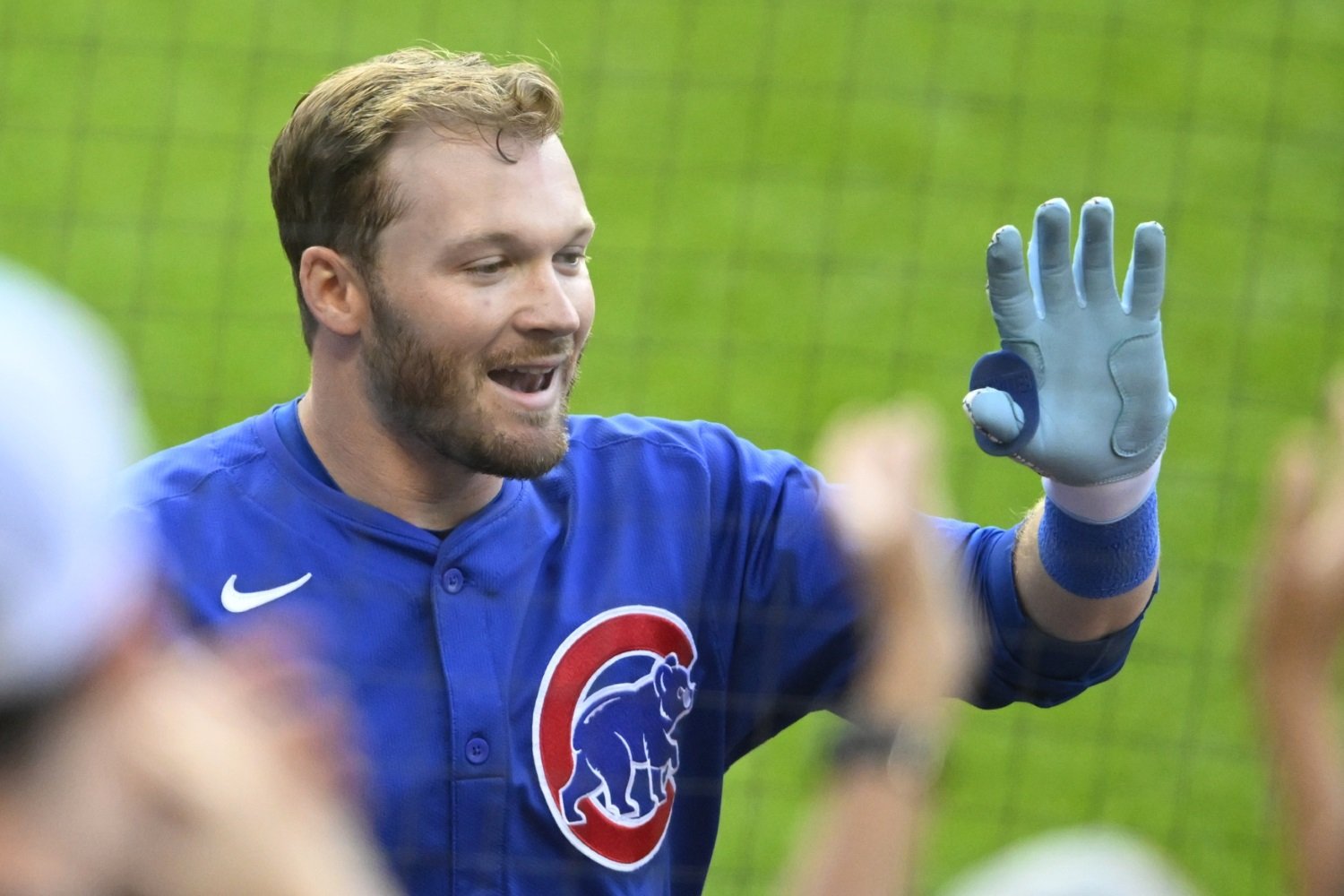 I’ve been on something of a personal quest this season--one not entirely unlike the archetypal hero & their journey to self-actualization. No, I haven’t encountered personal loss, physical danger, or newfound levels of maturation wrought by the people, places, and things with which I interact. But my journey has featured a call, an abyss, and, I think, a conclusion. That conclusion is this: I’m in on Ian Happ. If you remember, I spent the early portion of the season pondering Happ’s purpose. I wasn’t sold on whether the Chicago Cubs left fielder was even good, let alone an integral part of the roster. Several months after the fact, however, I have arrived at the conclusion that the Cubs do, indeed, need Happ. That isn’t my purpose here, though. I could surely throw out some numbers to support the idea of Happ being a key piece of the Next Great Whatever. He is, after all, on pace for one of his best seasons yet, courtesy of an elite walk rate and the potential to set a new career mark in home runs. Instead, with the Cubs largely out of the National League Wild Card race, my questions are starting to shift toward 2025. In this particular case, I’m wondering where Happ is best suited within the Cubs’ lineup for next season. Technically, Happ has hit out of eight different spots in the order this season. If we eliminate the singular plate appearance as a pinch-hitter in the No. 9 hole, we’re looking at seven. He has an additional 49 PAs between second, sixth, and seventh. He has 54 in the No. 3 spot and 61 as No. 4. The two slots in which we’ve seen Happ the most are leadoff (143 PA) and the fifth spot (186 PA). The distribution of time in each is quite interesting, as well. Craig Counsell rode Happ as his top guy through almost all of March and April. Beginning Apr. 19, we saw a stretch in which Happ bounced around quite a bit. He went sixth, second, and then third for a long stretch, before the second half of May saw him bouncing around again. In early June, he was slotted in at no. 5 through Jul. 11, before a few weeks in the cleanup spot. On Jul. 30, he was back in the leadoff spot, where he's resided since. There are myriad reasons for the inconsistency in Happ’s spot in the batting order. One is the inconsistency of the lineup at large. Happ’s own absence of power early in the year made him a viable leadoff candidate, as he was still walking at an exceptional rate. As his bat got hotter, many of his teammates didn’t follow suit, or were injured. Thus, it was a matter of plugging in his patience-power skill set wherever it might’ve been deemed most valuable. Even with the power now showing up, though, Counsell reinserted Happ into that top spot at the end of last month. Given the higher volume of plate appearances out of the No. 1 and No. 5 spots, one assumes that we’ll see Happ ply his trade at the dish in one of those two positions, long-term. In a direct comparison, Happ has been stronger out of the latter. As a leadoff hitter, Happ has slashed .213/.329/.426, with a wRC+ of 115. He’s walking at a 14.7% clip. When dropped to fifth, the slash goes .253/.360/.544 and the wRC+ is 150. His walk rate sits at 12.9%, and there's much more power there. Objectively, it seems fairly obvious that the better performance from Happ has come from the No. 5 spot: more on-base skills, more power, better overall production. It’s important to consider, however, that Happ’s increase in production coincided with his move to that spot. Had we gotten the from-May-on version of Happ back in March and April, those numbers might not look so disparate now. The Happ question, though, isn’t so much about Ian Happ. It’s a broader, philosophical inquiry. Do you want more of a traditional leadoff hitter – someone who can take a walk, but more likely hits their way on and adds a few steals along the way? Or are you okay with an on-base force who supplies regular power, even if there’s no one ahead of him to make similarly effective use of that power? In today’s game, the latter seems like the easier answer to justify. The old prototype of the leadoff hitter is one we seldom see. Nico Hoerner is likely as close as the Cubs are getting, but he hasn’t been effective in that spot over his 2024 body of work (97 wRC+). Of course, any answer to such a question requires us to know what the Cubs have planned for their position group ahead of 2025--which…we do not. But given the conservative nature of the front office, in conjunction with the team’s various contracts, one imagines that major changes won’t happen. The lineup will more than likely look quite similar next year. Which brings us back to the original query: where is Ian Happ best suited to hit in this Cubs lineup? The easy answer is simply ‘yes.’ He’s proven adept as a leadoff man. He’s seen more pitches than all but six qualifying position players (aside: the Cubs have four of the top 10 hitters in pitches per plate appearance, including Happ) and reaches base at a rate that reflects that. He’s almost precisely average on the bases and can add the occasional steal. Of course, you like to see that OBP and power smack-dab in the middle of your lineup, too. This is all to say that I don’t have an answer to my question, because I don’t think there is an answer. If anything, it speaks more to the importance of overall roster construction than the specific skill set of Happ. If the team wants to pursue a more permanent leadoff hitter, then they’d be fine rolling Happ out in the fifth spot. If they want to pursue a more impactful power bat, then they could elect the keep him atop the starting nine. I don’t think there’s a wrong answer here. If forced to choose, I’m probably rolling with him out of the top spot and hoping that more consistent power develops out of the likes of Michael Busch or Seiya Suzuki, while simultaneously hoping that Cody Bellinger returns. But that we’re discussing either route as something viable does speak to my own growth within the larger Ian Happ narrative--and by extension, more importantly, to Happ's impressive maturation at the plate throughout this season.
 -
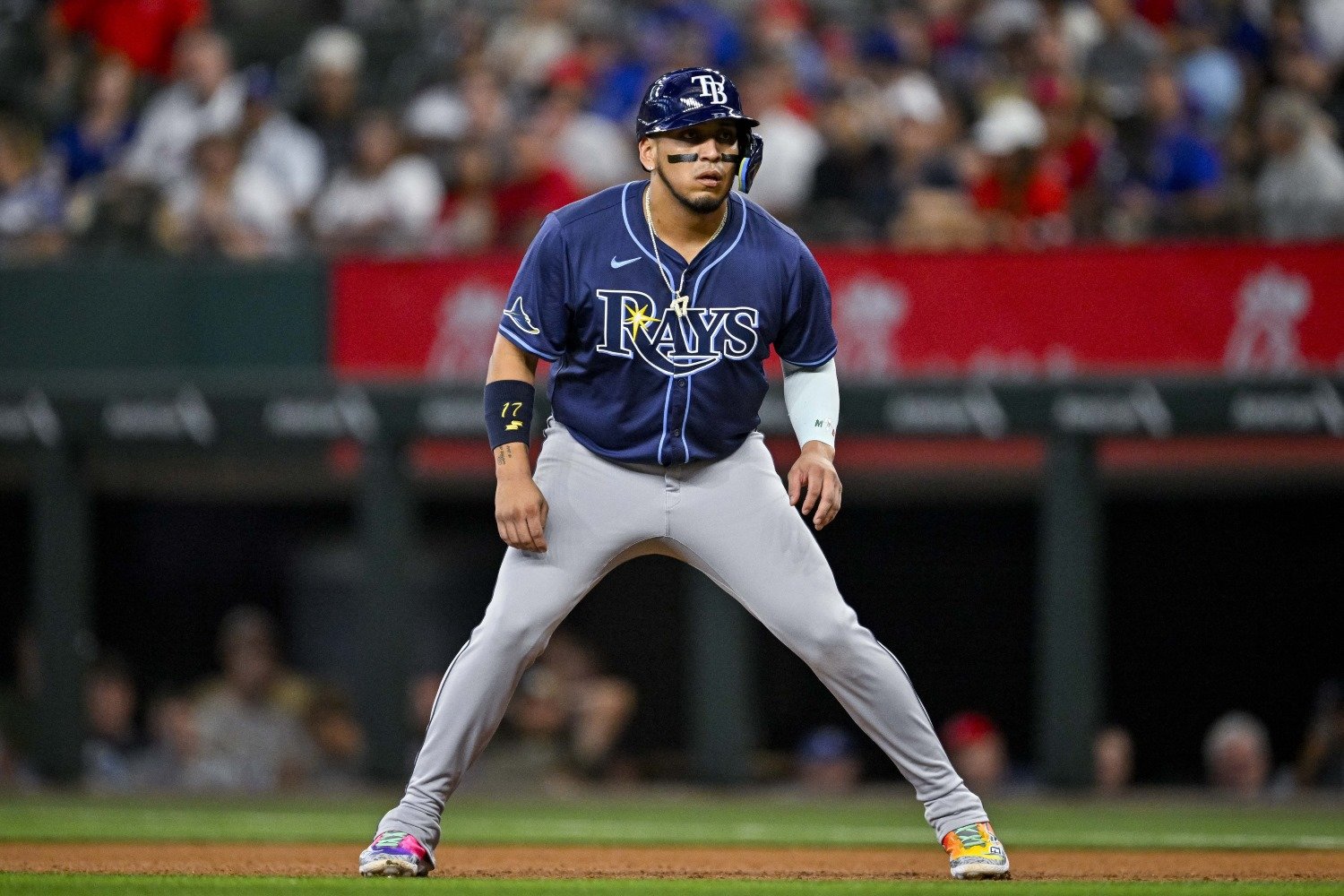 For the second consecutive year, the Chicago Cubs have acquired a corner infielder that was once part of their own organization (and, in a further level of irony, included in the same 2017 trade). However, the difference in context between last year’s Jeimer Candelario addition and Sunday’s acquisition of Isaac Paredes could not be starker. Candelario was a pure rental. The Cubs rode a scorching July into “buy” mode, and were willing to surrender their MLB Pipeline Nos. 16 and 17 prospects (Kevin Made and DJ Herz) to make it possible. The consequence of trading away Christopher Morel and Hunter Bigge to acquire Paredes is one of more immediately notable impact, but also one that maintains a keen eye on the future in a way that last year’s move did not. Let’s start with what the Cubs are trading away. I’m running on a month free of Twitter. But I imagine the reaction to this move will be extremely polarizing. Despite an offensive season wrecked by poor batted-ball luck and a defensive one that failed to see the development we collectively hoped for, Morel was an immensely popular player. He brought an energy to the roster and a power output that hasn’t been particularly common throughout the last couple of seasons. Hunter Bigge flashed big-time stuff in a three-inning sample. The Rays are going to have him throwing, like, 110 MPH. Barely a year after being a 15th-round pick out of Ball State, Ty Johnson has touched 98 and missed lots of bats this year, although it all came below Double-A and he's been a bit on the effectively wild side. Unlike last year’s trade, where it was a lower-level prospect and a guy who would’ve had a tough time breaking into a deep staff, the departures here are guys whom we know--and whom we like. The reality, though, is that this move makes loads of sense from a logistical standpoint. You’d like to keep Morel around as a bat. But unless the organization was going to look at another position change – unlikely given the Cubs’ organizational depth on the outfield grass – he wasn’t a defensive fit. His presence as a DH-only, then, would’ve hamstrung their ability to cycle some other guys into the lineup at various points. I’m not so sure Craig Counsell likes that kind of limitation for that spot. The sample is very limited, but in 2020, 2022, and 2023, the only player who got more than a quarter of the starts at DH in a season for him with the Brewers was Andrew McCutchen, who started there 82 times in 2022. With Bigge, on the other hand, you’re capitalizing on the value of a pitcher with some volatility throughout his minor-league career. You’d like to see both on the North Side, for both practical and sentimental reasons. Jed Hoyer, though, showed he can be shrewd (for a change) in his pursuit of actual improvements to the roster. Because that’s what Isaac Paredes is. He’s an established bat at this point, with a career wRC+ of 121. Though not demonstrating quite the power output of last year, he still has an ISO lingering around .200, with very strong strikeout and walk numbers. In direct comparison with Morel, the Cubs clearly lose out on some power potential, but gain in multiple facets of hitting. His defense at the hot corner is also solid. The Cubs have had five players log at least one full inning at third base this season. Only Miles Mastrobuoni has come out clean in the eyes of the defensive metrics. Morel’s -9 FRV & -12 OAA made him one of the worst positional defenders in all of baseball. Even with Paredes sitting exactly average by FRV (0) and barely above by OAA (1), he’s a massive upgrade. He’s been average or above in each of the last four seasons. And he’s in place well beyond this year. That’s perhaps the most important thing to note about this trade. Despite what will likely be painted as a black-and-white, buyers vs. sellers perception, this isn’t indicating the Cubs as “buyers” in the grand sense. Buying, at least to me, implies a pursuit of contention within that year. There’s intentionality behind it. The Cubs have acquired an impact player, yes. But they didn’t do so in hopes of spinning themselves into a contender by year’s end. It’s not totally unrealistic that it could happen. Given their place within the standings, though, it probably won’t. Instead, this is Hoyer planning for next year. Paredes isn’t a free agent until 2028. You give yourself some stability at a position that lacked it going back to last year, while removing a logjam at the designated hitter slot. That allows you to cycle in some depth guys or prospects as the season progresses, whether as a DH or positionally. While the notion of the Cubs as buyers should be dispelled, the move does, however, increase the fascination with the direction of the team in the next 48 hours. Will Paredes play third base exclusively, given his previous versatility in Tampa Bay? Does it make a Nico Hoerner trade more likely, now that you’ve filled a spot that could’ve otherwise housed Matt Shaw or James Triantos? Might we get more of a chance to see young bats now that they could, in theory, come up to hit a little bit as a DH? So many questions. The good news, at least, is that third base is finally not one of those questions.
 -
It was pretty clear that the existing position player corps wasn't going to get the Cubs over the top. They've taken a big step toward overhauling that group with one trade, and while it invites some questions about other ones, it also affirmatively answers a few big ones. Image courtesy of © Jerome Miron-USA TODAY Sports For the second consecutive year, the Chicago Cubs have acquired a corner infielder that was once part of their own organization (and, in a further level of irony, included in the same 2017 trade). However, the difference in context between last year’s Jeimer Candelario addition and Sunday’s acquisition of Isaac Paredes could not be starker. Candelario was a pure rental. The Cubs rode a scorching July into “buy” mode, and were willing to surrender their MLB Pipeline Nos. 16 and 17 prospects (Kevin Made and DJ Herz) to make it possible. The consequence of trading away Christopher Morel and Hunter Bigge to acquire Paredes is one of more immediately notable impact, but also one that maintains a keen eye on the future in a way that last year’s move did not. Let’s start with what the Cubs are trading away. I’m running on a month free of Twitter. But I imagine the reaction to this move will be extremely polarizing. Despite an offensive season wrecked by poor batted-ball luck and a defensive one that failed to see the development we collectively hoped for, Morel was an immensely popular player. He brought an energy to the roster and a power output that hasn’t been particularly common throughout the last couple of seasons. Hunter Bigge flashed big-time stuff in a three-inning sample. The Rays are going to have him throwing, like, 110 MPH. Barely a year after being a 15th-round pick out of Ball State, Ty Johnson has touched 98 and missed lots of bats this year, although it all came below Double-A and he's been a bit on the effectively wild side. Unlike last year’s trade, where it was a lower-level prospect and a guy who would’ve had a tough time breaking into a deep staff, the departures here are guys whom we know--and whom we like. The reality, though, is that this move makes loads of sense from a logistical standpoint. You’d like to keep Morel around as a bat. But unless the organization was going to look at another position change – unlikely given the Cubs’ organizational depth on the outfield grass – he wasn’t a defensive fit. His presence as a DH-only, then, would’ve hamstrung their ability to cycle some other guys into the lineup at various points. I’m not so sure Craig Counsell likes that kind of limitation for that spot. The sample is very limited, but in 2020, 2022, and 2023, the only player who got more than a quarter of the starts at DH in a season for him with the Brewers was Andrew McCutchen, who started there 82 times in 2022. With Bigge, on the other hand, you’re capitalizing on the value of a pitcher with some volatility throughout his minor-league career. You’d like to see both on the North Side, for both practical and sentimental reasons. Jed Hoyer, though, showed he can be shrewd (for a change) in his pursuit of actual improvements to the roster. Because that’s what Isaac Paredes is. He’s an established bat at this point, with a career wRC+ of 121. Though not demonstrating quite the power output of last year, he still has an ISO lingering around .200, with very strong strikeout and walk numbers. In direct comparison with Morel, the Cubs clearly lose out on some power potential, but gain in multiple facets of hitting. His defense at the hot corner is also solid. The Cubs have had five players log at least one full inning at third base this season. Only Miles Mastrobuoni has come out clean in the eyes of the defensive metrics. Morel’s -9 FRV & -12 OAA made him one of the worst positional defenders in all of baseball. Even with Paredes sitting exactly average by FRV (0) and barely above by OAA (1), he’s a massive upgrade. He’s been average or above in each of the last four seasons. And he’s in place well beyond this year. That’s perhaps the most important thing to note about this trade. Despite what will likely be painted as a black-and-white, buyers vs. sellers perception, this isn’t indicating the Cubs as “buyers” in the grand sense. Buying, at least to me, implies a pursuit of contention within that year. There’s intentionality behind it. The Cubs have acquired an impact player, yes. But they didn’t do so in hopes of spinning themselves into a contender by year’s end. It’s not totally unrealistic that it could happen. Given their place within the standings, though, it probably won’t. Instead, this is Hoyer planning for next year. Paredes isn’t a free agent until 2028. You give yourself some stability at a position that lacked it going back to last year, while removing a logjam at the designated hitter slot. That allows you to cycle in some depth guys or prospects as the season progresses, whether as a DH or positionally. While the notion of the Cubs as buyers should be dispelled, the move does, however, increase the fascination with the direction of the team in the next 48 hours. Will Paredes play third base exclusively, given his previous versatility in Tampa Bay? Does it make a Nico Hoerner trade more likely, now that you’ve filled a spot that could’ve otherwise housed Matt Shaw or James Triantos? Might we get more of a chance to see young bats now that they could, in theory, come up to hit a little bit as a DH? So many questions. The good news, at least, is that third base is finally not one of those questions. View full article
-
While a catching catastrophe is partly to blame for the Cubs' lousy season, there's some renewed hope around their young, homegrown backstop. Image courtesy of © Jeff Le-USA TODAY Sports As discouraging as much of the 2024 Chicago Cubs offense has been, the absence of production from behind the plate has been almost dispiriting. A tag-team plan that began with Miguel Amaya and Yan Gomes has been disappointing enough to see half the unit jettisoned from the roster, while the other has ceded playing time to a player not even in the organization until the middle of June, in Tomás Nido. While the seemingly immediate decline of Gomes’s glove and bat was a disappointing result for a steady veteran, it’s the struggle from Amaya that has been far more difficult to stomach. This was supposed to be the year that the longtime farmhand latched onto the starting job and grabbed the “catcher of the future” label. Instead, we’ve been collectively counting the days until Moises Ballesteros makes his Wrigley Field debut. That was the case until July, at least. On Jul. 3, Amaya was hitting .186 and featured a .249 on-base percentage. He hadn’t recorded a hit since Jun. 26 and had started losing significant playing time to Nido. The Cubs gave Amaya a small stretch of days off to work on his swing mechanics. The result was a more subtle leg kick, in pursuit of something resembling a two-strike approach at all times. The results have been striking. In 29 July plate appearances, Amaya is hitting .458. He hasn’t struck out in seven games. His 13.8 K% is his lowest individual month thus far, while his 13.8 BB% represents nearly double any other individual month--although, of course, it's still a minuscule sample. His .167 ISO is also notable, following a .055 mark in May and an .035 in June. His wRC+ for the month sits at a wild 232. The stretch runs Amaya’s overall output into something far more enticing out of the catcher position. He’s at a .223/.290/.306 slash and a 75 wRC+. The numbers are, obviously, still subpar. But this is a far cry from where he was at the beginning of this month. That very much speaks to how Amaya has taken to the changes in his swing and approach. It’s a small sample, but one that has the potential to alter the trajectory of the Cubs’ future at the position if even remotely sustainable. A woeful year by Amaya had the fan base searching for alternatives behind the dish. Danny Jansen and Elías Díaz were hot names, until it became clear that the team wouldn't be deadline buyers, and Ballesteros started catching more eyes as a longer-term option. While the Cubs aren’t going to acquire a pending free agent like Jansen, Amaya showcasing any level of steadiness can stave off any catching pursuits altogether. This would allow them to allocate their resources elsewhere. As far as Ballesteros goes, there are questions about his ability to catch full-time. Should the Cubs choose to give him a cup of coffee before year’s end, there isn’t any pressure to throw him behind the plate full-time. They can, instead, deploy him out of the designated hitter slot more frequently. Again, we’re dealing with a stretch of time in which nothing firm can be declared. But Miguel Amaya reestablishing that upward trajectory can do a lot of things for the Cubs, both at the position itself and elsewhere on the roster. View full article
-
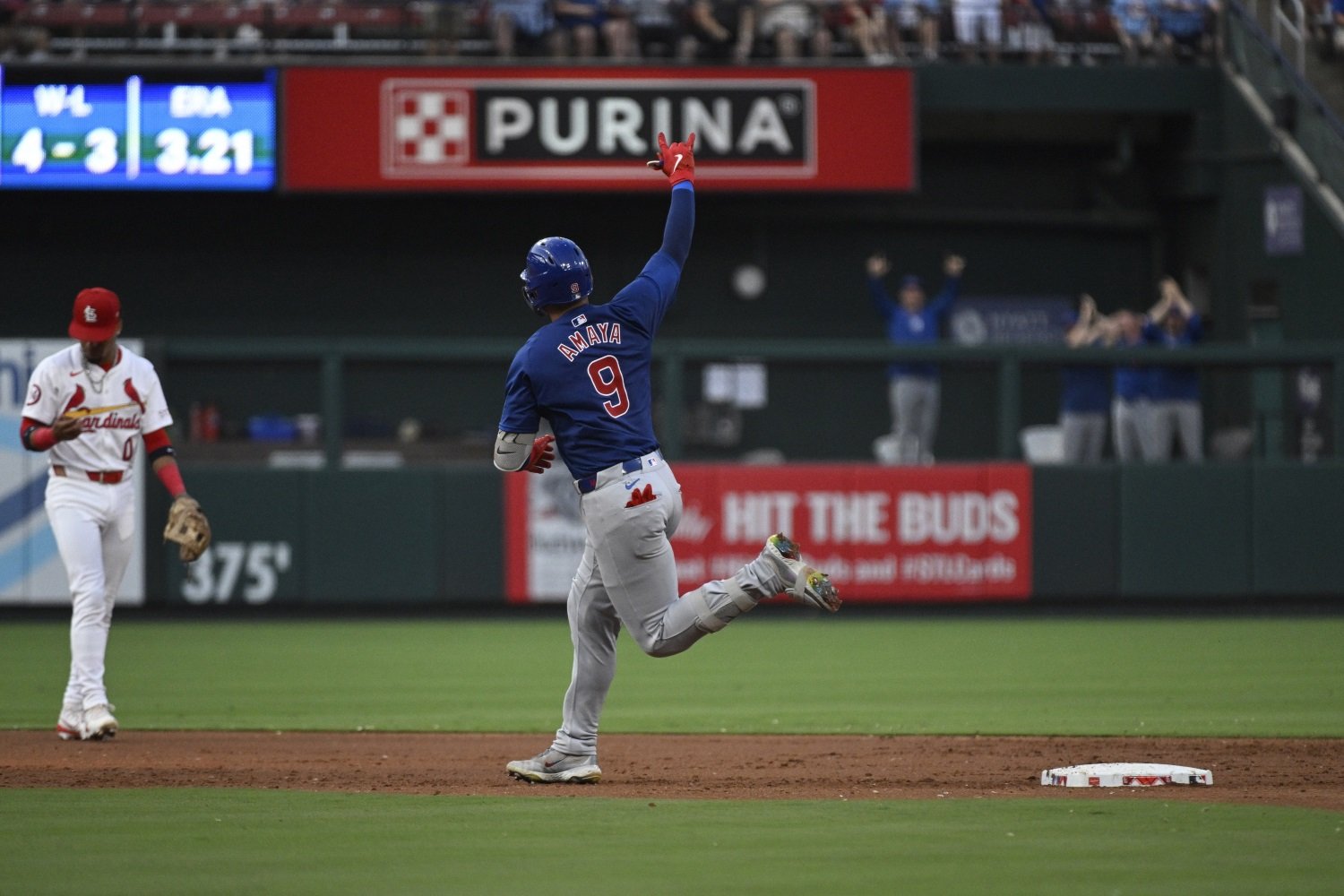 As discouraging as much of the 2024 Chicago Cubs offense has been, the absence of production from behind the plate has been almost dispiriting. A tag-team plan that began with Miguel Amaya and Yan Gomes has been disappointing enough to see half the unit jettisoned from the roster, while the other has ceded playing time to a player not even in the organization until the middle of June, in Tomás Nido. While the seemingly immediate decline of Gomes’s glove and bat was a disappointing result for a steady veteran, it’s the struggle from Amaya that has been far more difficult to stomach. This was supposed to be the year that the longtime farmhand latched onto the starting job and grabbed the “catcher of the future” label. Instead, we’ve been collectively counting the days until Moises Ballesteros makes his Wrigley Field debut. That was the case until July, at least. On Jul. 3, Amaya was hitting .186 and featured a .249 on-base percentage. He hadn’t recorded a hit since Jun. 26 and had started losing significant playing time to Nido. The Cubs gave Amaya a small stretch of days off to work on his swing mechanics. The result was a more subtle leg kick, in pursuit of something resembling a two-strike approach at all times. The results have been striking. In 29 July plate appearances, Amaya is hitting .458. He hasn’t struck out in seven games. His 13.8 K% is his lowest individual month thus far, while his 13.8 BB% represents nearly double any other individual month--although, of course, it's still a minuscule sample. His .167 ISO is also notable, following a .055 mark in May and an .035 in June. His wRC+ for the month sits at a wild 232. The stretch runs Amaya’s overall output into something far more enticing out of the catcher position. He’s at a .223/.290/.306 slash and a 75 wRC+. The numbers are, obviously, still subpar. But this is a far cry from where he was at the beginning of this month. That very much speaks to how Amaya has taken to the changes in his swing and approach. It’s a small sample, but one that has the potential to alter the trajectory of the Cubs’ future at the position if even remotely sustainable. A woeful year by Amaya had the fan base searching for alternatives behind the dish. Danny Jansen and Elías Díaz were hot names, until it became clear that the team wouldn't be deadline buyers, and Ballesteros started catching more eyes as a longer-term option. While the Cubs aren’t going to acquire a pending free agent like Jansen, Amaya showcasing any level of steadiness can stave off any catching pursuits altogether. This would allow them to allocate their resources elsewhere. As far as Ballesteros goes, there are questions about his ability to catch full-time. Should the Cubs choose to give him a cup of coffee before year’s end, there isn’t any pressure to throw him behind the plate full-time. They can, instead, deploy him out of the designated hitter slot more frequently. Again, we’re dealing with a stretch of time in which nothing firm can be declared. But Miguel Amaya reestablishing that upward trajectory can do a lot of things for the Cubs, both at the position itself and elsewhere on the roster.
 -
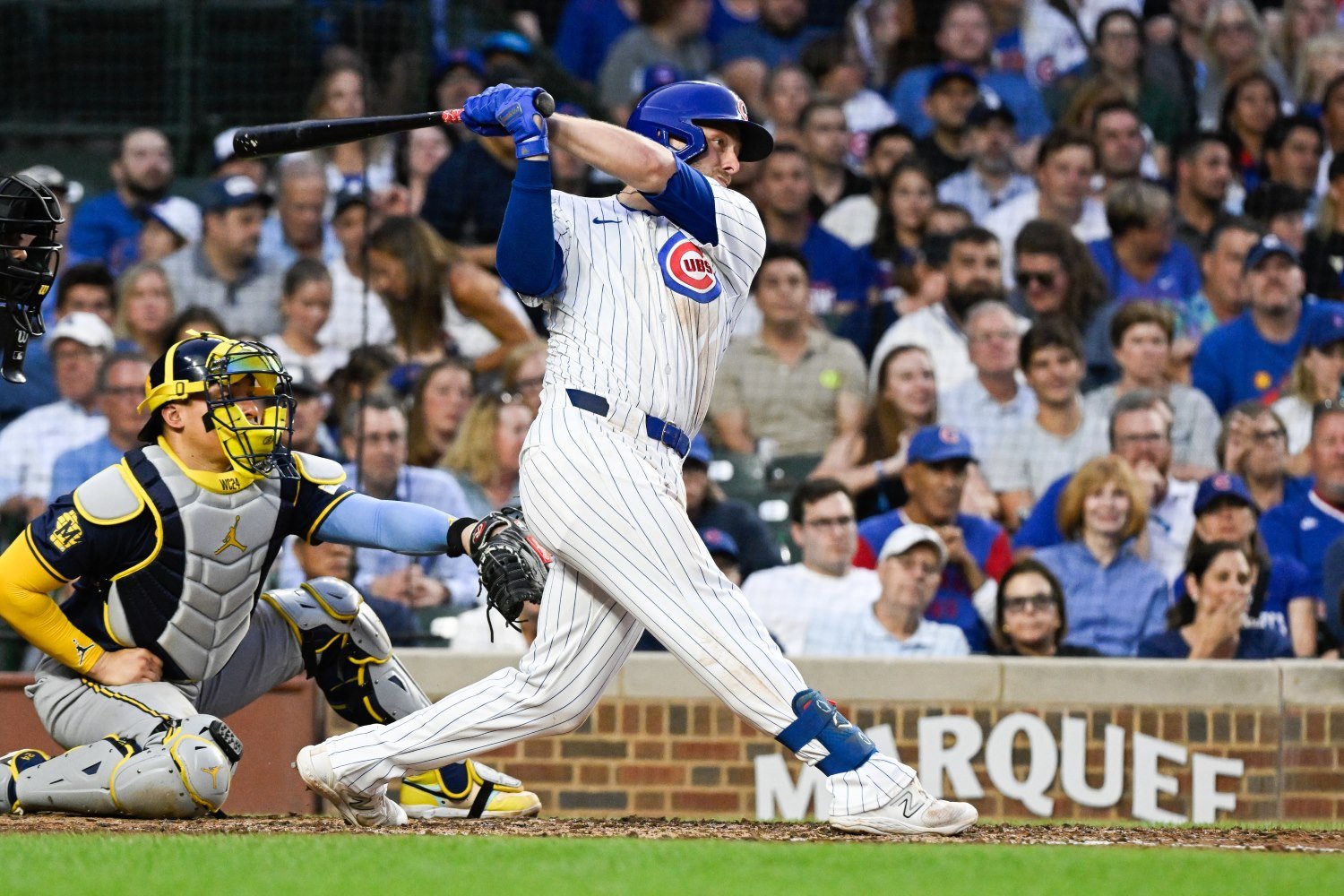 Admittedly, I’ve wavered on a number of occasions, as it relates to the 2024 Chicago Cubs. The team appeared to collapse in on itself after a strong April. An underperforming offense and a woeful bullpen had me starting to think about the other ways in which I could consume the sport, without it being related to my disappointing team of choice. To date, writing has forced me to remain engaged. But as we prepare to hit the Jul. 30 trade deadline (a point in time at which the Cubs figure to sell some stuff and get worse for the balance of the campaign, not better), I start to wonder about the benefit of such engagement once the team has essentially thrown in the towel on the season. Not that the Cubs are in a position to sell off their roster. They have aspirations of contention next year. They have too many multi-year contracts, juxtaposed with too much underperformance, to look the way that the Oakland Athletics or Chicago White Sox might once the calendar flips over to August. At worst (and probably at best), they’re looking at a sustained purgatory for the remainder of 2024. So why should we tune in? There’s an outside shot at contention even after the deadline, sure. But considering the way this team has looked all year, it’s hard to imagine being eager to engage even after the threshold has passed. They don’t excel in any facet of the game that makes you want to watch. They lack an identity. What will we still be doing here, post-July? For me, it really seems to boil down to two elements. The first is the arms. Porter Hodge has been excellent. Hunter Bigge will return from his optional assignment once a reliever gets traded or hurt. Daniel Palencia, too. Ben Brown just started mound work. Factor in Justin Steele and Shota Imanaga atop the rotation, and there remains a really interesting collection of pitchers to watch, who should be a lock to be around after July. Between the stuff and the velocity, it remains an exciting group, for now and for next year. Watch them get the work in on the mound and then shift your attention elsewhere while they’re at the plate. The other is the potential for call-ups on the positional side. Moises Ballesteros. Matt Shaw. Owen Caissie. The Cubs have been an infuriating group to watch operate at the plate this year, Michael Busch and post-April Ian Happ notwithstanding. The Cubs effectively calling it a year should mean that we get at least an early glimpse of some of their top positional prospects. That’s reason enough to tune in, assuming the team is willing to open up spots to make it happen. Ultimately, the reasons to tune in after July are fairly standard among non-contenders. You have your few young, exciting players, and some prospects about to crack the top level. You tune in to watch those guys, but maybe don’t invest in the outcome the way that you otherwise would have. It’s not a unique method of fan operation. In fact, it's a very familiar one for us Cubs fans. And that’s the important thing. The Cubs have not been fun to watch this year. Even their wins have been agonizing. For someone who clings to the value of time as much as I do, it’s been a labor. I want upper-tier defense. I want velocity. I want action at the plate. We all do. We’ve gotten only some of that this year, and only some of the time. If anything, I’ve come around to thinking that the 2024 Chicago Cubs could actually be more exciting once they’ve given up. A no-pressure environment in which some of their rising arms and future positional players can showcase what we might have to look forward to. I’ve spent the majority of the year wondering what this team’s future trajectory looks like, given their current stagnation. August and September look to offer just a little bit more energy in that respect.
 -
I spend a lot of time thinking about, well, time. I’ve learned that it’s my most coveted resource and my most stringent boundary. So when I’m thinking about the things that I consume, especially in sport, I value my time. Image courtesy of © Matt Marton-USA TODAY Sports Admittedly, I’ve wavered on a number of occasions, as it relates to the 2024 Chicago Cubs. The team appeared to collapse in on itself after a strong April. An underperforming offense and a woeful bullpen had me starting to think about the other ways in which I could consume the sport, without it being related to my disappointing team of choice. To date, writing has forced me to remain engaged. But as we prepare to hit the Jul. 30 trade deadline (a point in time at which the Cubs figure to sell some stuff and get worse for the balance of the campaign, not better), I start to wonder about the benefit of such engagement once the team has essentially thrown in the towel on the season. Not that the Cubs are in a position to sell off their roster. They have aspirations of contention next year. They have too many multi-year contracts, juxtaposed with too much underperformance, to look the way that the Oakland Athletics or Chicago White Sox might once the calendar flips over to August. At worst (and probably at best), they’re looking at a sustained purgatory for the remainder of 2024. So why should we tune in? There’s an outside shot at contention even after the deadline, sure. But considering the way this team has looked all year, it’s hard to imagine being eager to engage even after the threshold has passed. They don’t excel in any facet of the game that makes you want to watch. They lack an identity. What will we still be doing here, post-July? For me, it really seems to boil down to two elements. The first is the arms. Porter Hodge has been excellent. Hunter Bigge will return from his optional assignment once a reliever gets traded or hurt. Daniel Palencia, too. Ben Brown just started mound work. Factor in Justin Steele and Shota Imanaga atop the rotation, and there remains a really interesting collection of pitchers to watch, who should be a lock to be around after July. Between the stuff and the velocity, it remains an exciting group, for now and for next year. Watch them get the work in on the mound and then shift your attention elsewhere while they’re at the plate. The other is the potential for call-ups on the positional side. Moises Ballesteros. Matt Shaw. Owen Caissie. The Cubs have been an infuriating group to watch operate at the plate this year, Michael Busch and post-April Ian Happ notwithstanding. The Cubs effectively calling it a year should mean that we get at least an early glimpse of some of their top positional prospects. That’s reason enough to tune in, assuming the team is willing to open up spots to make it happen. Ultimately, the reasons to tune in after July are fairly standard among non-contenders. You have your few young, exciting players, and some prospects about to crack the top level. You tune in to watch those guys, but maybe don’t invest in the outcome the way that you otherwise would have. It’s not a unique method of fan operation. In fact, it's a very familiar one for us Cubs fans. And that’s the important thing. The Cubs have not been fun to watch this year. Even their wins have been agonizing. For someone who clings to the value of time as much as I do, it’s been a labor. I want upper-tier defense. I want velocity. I want action at the plate. We all do. We’ve gotten only some of that this year, and only some of the time. If anything, I’ve come around to thinking that the 2024 Chicago Cubs could actually be more exciting once they’ve given up. A no-pressure environment in which some of their rising arms and future positional players can showcase what we might have to look forward to. I’ve spent the majority of the year wondering what this team’s future trajectory looks like, given their current stagnation. August and September look to offer just a little bit more energy in that respect. View full article
-
The Cubs' outfielder/first baseman isn't on the active roster at the moment, but the injured list is the furthest you should expect him to wander any time in the near future. You can safely ignore trade chatter about this particular player. Image courtesy of © Jeff Hanisch-USA TODAY Sports Jed Hoyer came right out on Monday and said it. Unless the Chicago Cubs defy what the first three-plus months of the season have shown us, they’ll be set to sell ahead of the Jul. 30 trade deadline. We’ve already heard rumblings about a handful of veteran players who could be dealt before that point. Perhaps most intriguing among them, though, is Cody Bellinger. Bellinger’s return was seen as something of a non-negotiable issue last winter, in terms of the Cubs’ 2024 fortunes. The team hadn’t added any other hitters with a track record to speak of, and Bellinger was coming off his best year since 2019. His average (.307), isolated slugging (.218), and strikeout rate (15.6%) were all at their best since that point, while his 20 steals represented a career-high total. They had to have him. It took until the extreme end of February, but the deal got done. It’s the combination of that deal and Bellinger’s 2024 performance (to say nothing of his current injury) that make navigating a potential trade a daunting task. Tabling the finger injury for a moment, Bellinger’s 2024 has been…not what his 2023 was. After a 134 wRC+ last year, he’s barely above the threshold for average this year, at 108. He’s managed to maintain similar strikeout and walk numbers to last year but isn’t replicating anything else. Most notable among the trends is the absence of power. He’s at a .141 ISO and a 7.6 percent HR/FB ratio; those figures are the lowest of his career. If the Cubs have any interest in trading Bellingeer, they have to overcome some issues more complex than a slightly underwhelming offensive season. In a vacuum, it’s fine production. He could offer supplementary offense to a contender while providing the ability to play a stable outfield and first base. The structure of the contract, though, likely washes out on-field value questions, in favor of financial ones. Bellinger’s contract was presented as a three-year pact. In reality, it's a series of one-year deals, because he has an opt-out after 2024 and another player option for 2026. Those two options add up to $50 million; it would require a pretty intense suspension of reality to believe that a prospective team might be willing to take him off the Cubs’ hands given the current circumstances. And that was before the injury. Bellinger was eligible to come off the IL on Sunday, but there’s no timetable for an actual return. That leaves a minuscule window in which he could come back, perform well, and wind up involved as a part of legitimate negotiations prior to Jul. 30. The timetable alone makes such a trade difficult to fathom. Even if we strip away the injury context, it’s just not something that seemed realistic at any point leading up to the end of the month. While the Cubs would surely love to move that contract off the books for the next two years, the control he has via the opt-out will torpedo his trade value, and the team won't want to trade him for nothing. Jed Hoyer finds himself in an interesting position ahead of this deadline. Most of the other sellers emerging on the market knew this would be their position, or have a clear set of players who make sense. This was not the plan for the Cubs, and their leverage in trade discussions about several potentially valuable pieces is tough to pin down. It’ll be difficult enough to muster up the ability to move players from elsewhere on the roster. A trade of Cody Bellinger is a complete impossibility. View full article
-
Cody Bellinger Isn't Going Anywhere, This Month or This Fall
RandallPnkFloyd posted an article in Cubs
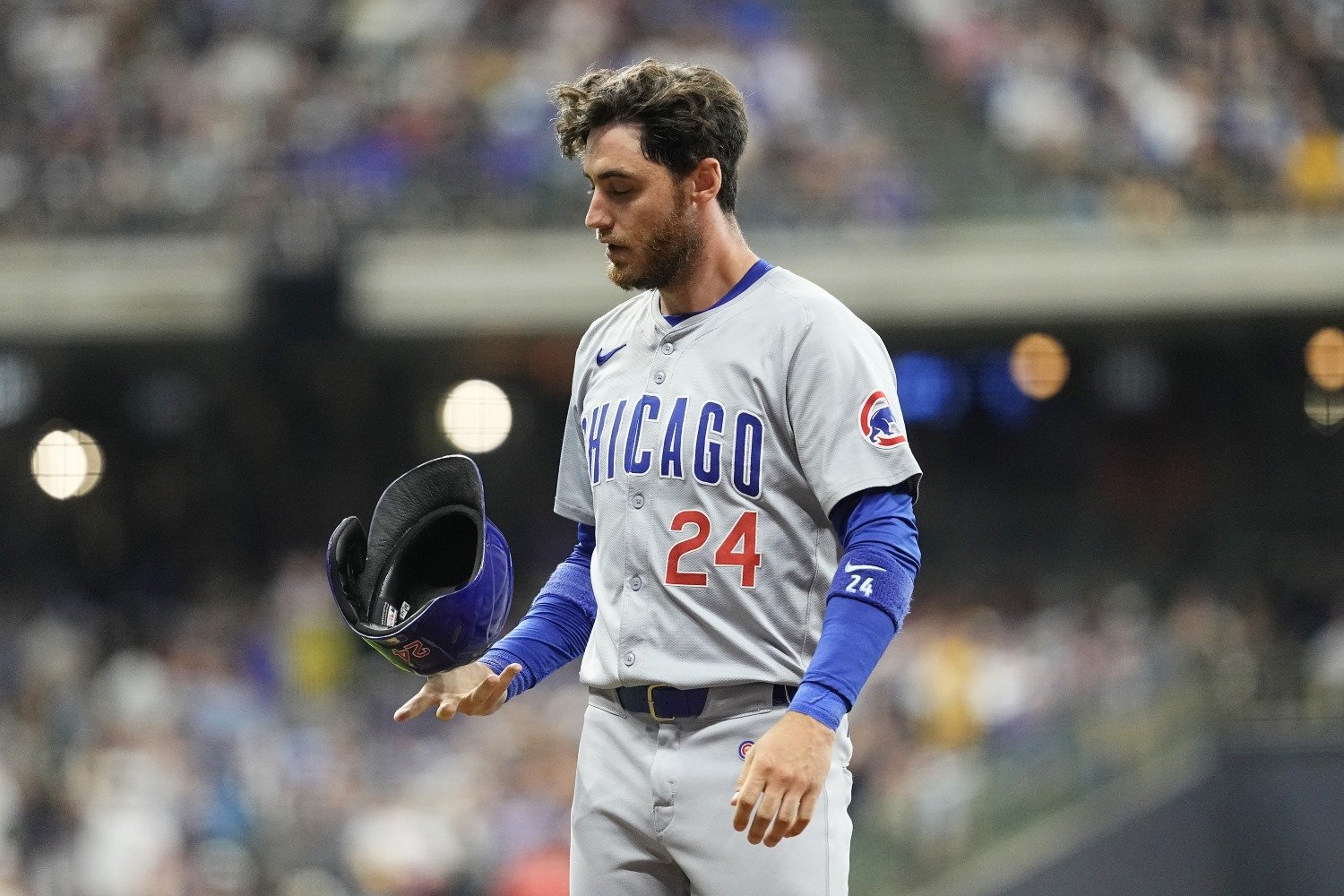 Jed Hoyer came right out on Monday and said it. Unless the Chicago Cubs defy what the first three-plus months of the season have shown us, they’ll be set to sell ahead of the Jul. 30 trade deadline. We’ve already heard rumblings about a handful of veteran players who could be dealt before that point. Perhaps most intriguing among them, though, is Cody Bellinger. Bellinger’s return was seen as something of a non-negotiable issue last winter, in terms of the Cubs’ 2024 fortunes. The team hadn’t added any other hitters with a track record to speak of, and Bellinger was coming off his best year since 2019. His average (.307), isolated slugging (.218), and strikeout rate (15.6%) were all at their best since that point, while his 20 steals represented a career-high total. They had to have him. It took until the extreme end of February, but the deal got done. It’s the combination of that deal and Bellinger’s 2024 performance (to say nothing of his current injury) that make navigating a potential trade a daunting task. Tabling the finger injury for a moment, Bellinger’s 2024 has been…not what his 2023 was. After a 134 wRC+ last year, he’s barely above the threshold for average this year, at 108. He’s managed to maintain similar strikeout and walk numbers to last year but isn’t replicating anything else. Most notable among the trends is the absence of power. He’s at a .141 ISO and a 7.6 percent HR/FB ratio; those figures are the lowest of his career. If the Cubs have any interest in trading Bellingeer, they have to overcome some issues more complex than a slightly underwhelming offensive season. In a vacuum, it’s fine production. He could offer supplementary offense to a contender while providing the ability to play a stable outfield and first base. The structure of the contract, though, likely washes out on-field value questions, in favor of financial ones. Bellinger’s contract was presented as a three-year pact. In reality, it's a series of one-year deals, because he has an opt-out after 2024 and another player option for 2026. Those two options add up to $50 million; it would require a pretty intense suspension of reality to believe that a prospective team might be willing to take him off the Cubs’ hands given the current circumstances. And that was before the injury. Bellinger was eligible to come off the IL on Sunday, but there’s no timetable for an actual return. That leaves a minuscule window in which he could come back, perform well, and wind up involved as a part of legitimate negotiations prior to Jul. 30. The timetable alone makes such a trade difficult to fathom. Even if we strip away the injury context, it’s just not something that seemed realistic at any point leading up to the end of the month. While the Cubs would surely love to move that contract off the books for the next two years, the control he has via the opt-out will torpedo his trade value, and the team won't want to trade him for nothing. Jed Hoyer finds himself in an interesting position ahead of this deadline. Most of the other sellers emerging on the market knew this would be their position, or have a clear set of players who make sense. This was not the plan for the Cubs, and their leverage in trade discussions about several potentially valuable pieces is tough to pin down. It’ll be difficult enough to muster up the ability to move players from elsewhere on the roster. A trade of Cody Bellinger is a complete impossibility.
 -
In Michael Busch, Cubs Have Their First Baseman of the Present and Future
RandallPnkFloyd posted an article in Cubs
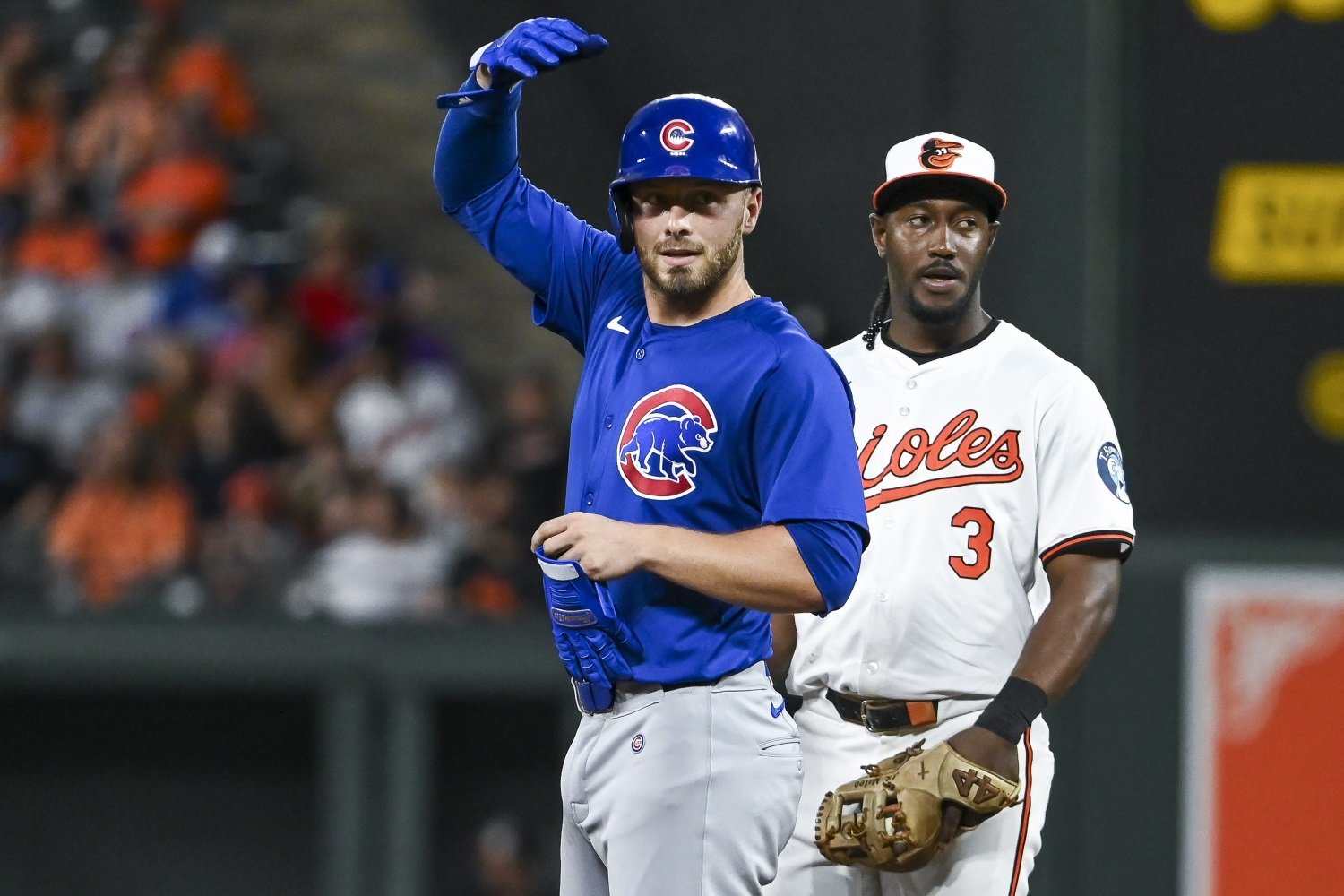 While the Chicago Cubs were able to cap off the first half of the 2024 season on a largely positive note, truly encouraging narratives around the team remain fairly sparse. The bullpen cost them games early in the year, and the lineup was pinned down by a number of underperforming and/or injured players that have left them unable to compensate. Many of the “positives” of the first half lie in the starting rotation. There is, though, at least one rousing offensive success to emerge out of these troubled months, with long-term implications aplenty: Michael Busch. Busch wowed with an impressive home run streak back in April, in which he put a baseball over the outfield fence in five consecutive games. While there have been some dips in performance since then, Busch has largely burnished his reputation as an extremely capable bat for the Cubs. The overall numbers for Michael Busch illustrate a mature bat capable of hitting virtually anywhere in the lineup. His slash at the break reads .271/.357/.466, with an 11.6 BB%. It’s a walk rate that sits in the 87th percentile among qualified hitters. If there’s any concern, it’s in the punchouts. Busch’s strikeout rate still sits over 30 percent (31.0%), but it dropped roughly eight percentage points between May and June, and he's posted an even 20% rate thus far in July. It seems contradictory to tab Busch as a mature bat, while at the same time noting some fairly intense punchout rates. But it’s not as if he’s going up and swinging wildly. His 45.4 Swing% is quite measured, while a 25.4 O-Swing% is good for the 74th percentile. He also ranks 22nd in the league in pitches per plate appearance, with 4.14. That’s well above the average of 3.87. So his strikeouts are more a byproduct of his ability to work the count than a ghastly inability to make contact. Busch has also proven to be a rare source of power for the Cubs this season. He’s posted an isolated power (ISO) of .195 to date, book-ending the first half with a .234 mark in April and a .231 in the first couple weeks of July. Only Ian Happ and Seiya Suzuki boast higher ISOs than his. As such, the walks and power allow him to compensate for his strikeout deficiencies while putting the screws to opposing pitchers via deep counts. When Busch was acquired from the Los Angeles Dodgers, the scouting report focused almost exclusively on his bat. It’s part of the reason why the Dodgers were willing to part with one of their top prospects in the first place. Once they signed Shohei Ohtani to serve as the full-time designated hitter, that closed the book on Busch’s Hollywood career. It was a time before the Dodgers’ intense battle with the injury bug on their infield, but their hypothetical lack of space was the Cubs’ immediate gain. While he probably wasn't ever going to cut it at second or third base, Busch's acclimation to the job of playing the cold corner every day in the majors has been as smooth as could possibly have been hoped. First base is not an easy position to which to transition. While it may not require as much athleticism as other infield spots, there’s a toolbox that not everyone possesses, especially from the standpoints of hands and instincts. Busch has proven to be adept at each facet the position demands, though. He’s posted a Fielding Run Value of 2 to date, and 5 Defensive Runs Saved. It’s that defensive component that has helped Busch to establish himself as one of the better players at the position in all of baseball. The FanGraphs leaderboard has him fourth in WAR (2.0) among first basemen. The names ahead of him are Bryce Harper, Freddie Freeman, and Christian Walker. Names behind him include Vladimir Guerrero Jr. Yandy Díaz, Pete Alonso, and Paul Goldschmidt. Putting it in that perspective illustrates just how much of a success the first half-season of Busch's Cubs tenure has been. The Cubs had been without a long-term solution at first base since they traded away franchise icon Anthony Rizzo. Frank Schwindel was a brief flash. Matt Mervis appears destined for a Quadruple-A career. Cody Bellinger provides too much value as an outfield glove to pin him down on an infield corner full-time at this point. None of Eric Hosmer, Trey Mancini, Alfonso Rivas, P.J. Higgins, or Jared Young turned out to be more than weak stopgaps at the position--not that they were ever expected to. But such a high volume of players getting reps at first base – to say nothing of Jeimer Candelario, Patrick Wisdom, David Bote – speaks to the difficulty they’ve had finding stability in the wake of the Rizzo trade. And while there are a couple of notable names in the system, including BJ Murray Jr & Haydn McGeary, neither appears remotely close to a major-league cup of coffee at this point. We can also throw the financial aspect into the discussion. With names like Alonso and Walker potentially available at the position, the Cubs are now able to lock in a pre-arbitration player at the position instead of shelling out huge dollars. The average fan shouldn't worry about the team’s finances, but massive savings there could allow the team to reallocate funds in other areas of offensive deficiency. (Whether they actually will spend money aggressively elsewhere is, of course, a different question.) Ultimately, it’s hard to overstate how much the emergence of Busch has silvered the lining of the dark clouds hanging over this team after the first half of 2024. With the potential for additional evolution, it’s hard not to think that the position is locked down for the foreseeable future, and easy to get excited dreaming on how he might perform over the next three to five seasons.
 -
Not much concrete good news came from the first 60 percent of this Cubs season. One trade has yielded so much present and expected future value, though, that it can't help but give you some hope for 2025 and beyond. Image courtesy of © Tommy Gilligan-USA TODAY Sports While the Chicago Cubs were able to cap off the first half of the 2024 season on a largely positive note, truly encouraging narratives around the team remain fairly sparse. The bullpen cost them games early in the year, and the lineup was pinned down by a number of underperforming and/or injured players that have left them unable to compensate. Many of the “positives” of the first half lie in the starting rotation. There is, though, at least one rousing offensive success to emerge out of these troubled months, with long-term implications aplenty: Michael Busch. Busch wowed with an impressive home run streak back in April, in which he put a baseball over the outfield fence in five consecutive games. While there have been some dips in performance since then, Busch has largely burnished his reputation as an extremely capable bat for the Cubs. The overall numbers for Michael Busch illustrate a mature bat capable of hitting virtually anywhere in the lineup. His slash at the break reads .271/.357/.466, with an 11.6 BB%. It’s a walk rate that sits in the 87th percentile among qualified hitters. If there’s any concern, it’s in the punchouts. Busch’s strikeout rate still sits over 30 percent (31.0%), but it dropped roughly eight percentage points between May and June, and he's posted an even 20% rate thus far in July. It seems contradictory to tab Busch as a mature bat, while at the same time noting some fairly intense punchout rates. But it’s not as if he’s going up and swinging wildly. His 45.4 Swing% is quite measured, while a 25.4 O-Swing% is good for the 74th percentile. He also ranks 22nd in the league in pitches per plate appearance, with 4.14. That’s well above the average of 3.87. So his strikeouts are more a byproduct of his ability to work the count than a ghastly inability to make contact. Busch has also proven to be a rare source of power for the Cubs this season. He’s posted an isolated power (ISO) of .195 to date, book-ending the first half with a .234 mark in April and a .231 in the first couple weeks of July. Only Ian Happ and Seiya Suzuki boast higher ISOs than his. As such, the walks and power allow him to compensate for his strikeout deficiencies while putting the screws to opposing pitchers via deep counts. When Busch was acquired from the Los Angeles Dodgers, the scouting report focused almost exclusively on his bat. It’s part of the reason why the Dodgers were willing to part with one of their top prospects in the first place. Once they signed Shohei Ohtani to serve as the full-time designated hitter, that closed the book on Busch’s Hollywood career. It was a time before the Dodgers’ intense battle with the injury bug on their infield, but their hypothetical lack of space was the Cubs’ immediate gain. While he probably wasn't ever going to cut it at second or third base, Busch's acclimation to the job of playing the cold corner every day in the majors has been as smooth as could possibly have been hoped. First base is not an easy position to which to transition. While it may not require as much athleticism as other infield spots, there’s a toolbox that not everyone possesses, especially from the standpoints of hands and instincts. Busch has proven to be adept at each facet the position demands, though. He’s posted a Fielding Run Value of 2 to date, and 5 Defensive Runs Saved. It’s that defensive component that has helped Busch to establish himself as one of the better players at the position in all of baseball. The FanGraphs leaderboard has him fourth in WAR (2.0) among first basemen. The names ahead of him are Bryce Harper, Freddie Freeman, and Christian Walker. Names behind him include Vladimir Guerrero Jr. Yandy Díaz, Pete Alonso, and Paul Goldschmidt. Putting it in that perspective illustrates just how much of a success the first half-season of Busch's Cubs tenure has been. The Cubs had been without a long-term solution at first base since they traded away franchise icon Anthony Rizzo. Frank Schwindel was a brief flash. Matt Mervis appears destined for a Quadruple-A career. Cody Bellinger provides too much value as an outfield glove to pin him down on an infield corner full-time at this point. None of Eric Hosmer, Trey Mancini, Alfonso Rivas, P.J. Higgins, or Jared Young turned out to be more than weak stopgaps at the position--not that they were ever expected to. But such a high volume of players getting reps at first base – to say nothing of Jeimer Candelario, Patrick Wisdom, David Bote – speaks to the difficulty they’ve had finding stability in the wake of the Rizzo trade. And while there are a couple of notable names in the system, including BJ Murray Jr & Haydn McGeary, neither appears remotely close to a major-league cup of coffee at this point. We can also throw the financial aspect into the discussion. With names like Alonso and Walker potentially available at the position, the Cubs are now able to lock in a pre-arbitration player at the position instead of shelling out huge dollars. The average fan shouldn't worry about the team’s finances, but massive savings there could allow the team to reallocate funds in other areas of offensive deficiency. (Whether they actually will spend money aggressively elsewhere is, of course, a different question.) Ultimately, it’s hard to overstate how much the emergence of Busch has silvered the lining of the dark clouds hanging over this team after the first half of 2024. With the potential for additional evolution, it’s hard not to think that the position is locked down for the foreseeable future, and easy to get excited dreaming on how he might perform over the next three to five seasons. View full article
-
As we close in on the midway point of July, one thing is becoming increasingly clear: the Chicago Cubs will be sellers at the MLB trade deadline. There isn’t a stretch to talk them out if it in the way that we saw 2023. Veterans currently on the roster will no longer be so by the time the calendar flips over to August. Navigating that, though, remains a difficult task. The Cubs, at large, are an underperforming group. They don’t have a long list of players prospective teams will be keen to acquire. Given the roster construction, though, it’s hard to identify anyone who could or should be considered untouchable. Nevertheless, as this team probably hopes to contend next year, there are at least a couple of names we can likely establish as being part of the 2025 Cubs. That starts at the top of the starting rotation with Justin Steele & Shota Imanaga. The former still has three more years of arbitration eligibility. Ideally, the team signs him to an extension before the years get too deep into that. In terms of run prevention, Steele has been (somewhat quietly) better than he was during his Cy Young candidate last year. He’s pitched to a 2.95 ERA, a 3.33 FIP, and continues to minimize walks. It took him 13 starts to get his first win, but it wasn’t to any fault of his own. And while Imanaga is 30, it’s hard to imagine the Cubs moving him in the first year of his deal. While he hasn’t been as dominant as he was to start the year, few expected him to be. Heavy flyballs will lead to more run production on the part of opposing hitters. But the stuff is absolutely there, and his uniquely structured contract should have him in town for at least three more years. There’s no reason to think the Cubs want to move forward with any two arms atop their starting five than Steele & Imanaga. Javier Assad likely pitched well enough to earn another (ideally healthy) year in the rotation if we wanted to extend the conversation. Ben Brown’s upside is too great for it to be considered. Given their health status, neither is part of the discussion, but one imagines neither would be seriously considered a trade candidate anyway. In the field, things get murky. The offense – and, in some cases, the defense – has underperformed to such a degree that you wonder who would even pursue some of their bats, let alone whether the team has anyone up to being deemed untouchable. There’s at least one in the form of Michael Busch. While the strikeout remains north of 30 percent, he’s shown a certain maturity and level of consistency at the plate that’s a rarity throughout the lineup. He’s walking at a rate (12.6 percent) that compensates for his susceptibility to punchouts and has started July with a .278 ISO. He’s providing stability in a lineup that lacks it. It’s also hard to imagine the team would rush to trade Ian Happ, either. I’m not sure they’d go as far as labeling him untouchable. But he’s hitting extremely well and has an upper-tier approach for the days when he’s not. He’s as close to the face of this organization as they’ve had since the guys from 2016 and has two more years under contract. We’ll throw his outfield comrade Pete Crow-Armstrong in there, too. The defense plays at the highest level. His bat’s just a work in progress. On the position side, though, that might be it. Seiya Suzuki is an interesting one. His defense is seemingly getting worse. But he’s showcasing more consistent power. Is it enough to compensate for his bouts of swing-and-miss or the defensive woes? Christopher Morel’s situation isn’t entirely dissimilar. He possesses massive power and has really reigned in the whiff of his game. A .219 BABIP is holding him down to a miserable extent. His defense, though, hasn’t taken the steps the team thought it might. It’s hard to imagine the team considering two separate players with notable defensive shortcomings to be untouchable. One or both could be moved. Feet to the fire, this is the list of untouchables (without current health issues): Justin Steele, Shota Imanaga, Michael Busch, Ian Happ, Pete Crow-Armstrong. Four of those are my perspective. The other one (Happ) is me trying to feign an understanding of the inner workings of the front office. And that’s probably as far as I’d be willing to go. Teams wanting a prospective DH could absolutely pursue the likes of Suzuki or Morel. Cody Bellinger & Nico Hoerner each make a certain degree of sense to be moved. You can justify those on some level. Probably Happ, too, but I don’t think the team wants to do so anyway. You can’t, though, explain your way out of moving either of your upper-tier pitchers, your one stable (cost-controlled) bat, or your future defensive superstar. View full article
-
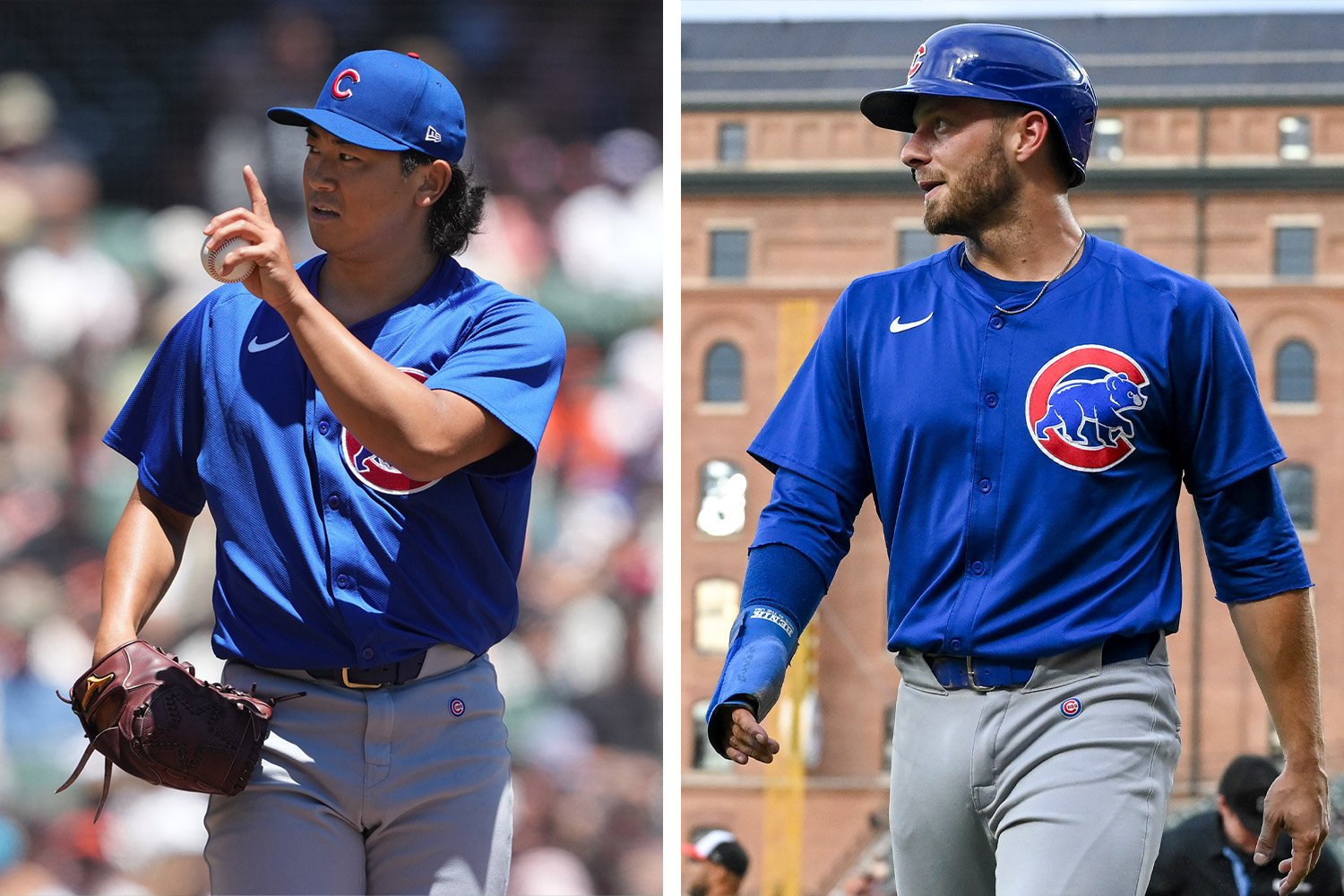 There isn’t a stretch to talk them out if it in the way that we saw 2023. Veterans currently on the roster will no longer be so by the time the calendar flips over to August. Navigating that, though, remains a difficult task. The Cubs, at large, are an underperforming group. They don’t have a long list of players prospective teams will be keen to acquire. Given the roster construction, though, it’s hard to identify anyone who could or should be considered untouchable. Nevertheless, as this team probably hopes to contend next year, there are at least a couple of names we can likely establish as being part of the 2025 Cubs. That starts at the top of the starting rotation with Justin Steele & Shota Imanaga. The former still has three more years of arbitration eligibility. Ideally, the team signs him to an extension before the years get too deep into that. In terms of run prevention, Steele has been (somewhat quietly) better than he was during his Cy Young candidate last year. He’s pitched to a 2.95 ERA, a 3.33 FIP, and continues to minimize walks. It took him 13 starts to get his first win, but it wasn’t to any fault of his own. And while Imanaga is 30, it’s hard to imagine the Cubs moving him in the first year of his deal. While he hasn’t been as dominant as he was to start the year, few expected him to be. Heavy flyballs will lead to more run production on the part of opposing hitters. But the stuff is absolutely there, and his uniquely structured contract should have him in town for at least three more years. There’s no reason to think the Cubs want to move forward with any two arms atop their starting five than Steele & Imanaga. Javier Assad likely pitched well enough to earn another (ideally healthy) year in the rotation if we wanted to extend the conversation. Ben Brown’s upside is too great for it to be considered. Given their health status, neither is part of the discussion, but one imagines neither would be seriously considered a trade candidate anyway. In the field, things get murky. The offense – and, in some cases, the defense – has underperformed to such a degree that you wonder who would even pursue some of their bats, let alone whether the team has anyone up to being deemed untouchable. There’s at least one in the form of Michael Busch. While the strikeout remains north of 30 percent, he’s shown a certain maturity and level of consistency at the plate that’s a rarity throughout the lineup. He’s walking at a rate (12.6 percent) that compensates for his susceptibility to punchouts and has started July with a .278 ISO. He’s providing stability in a lineup that lacks it. It’s also hard to imagine the team would rush to trade Ian Happ, either. I’m not sure they’d go as far as labeling him untouchable. But he’s hitting extremely well and has an upper-tier approach for the days when he’s not. He’s as close to the face of this organization as they’ve had since the guys from 2016 and has two more years under contract. We’ll throw his outfield comrade Pete Crow-Armstrong in there, too. The defense plays at the highest level. His bat’s just a work in progress. On the position side, though, that might be it. Seiya Suzuki is an interesting one. His defense is seemingly getting worse. But he’s showcasing more consistent power. Is it enough to compensate for his bouts of swing-and-miss or the defensive woes? Christopher Morel’s situation isn’t entirely dissimilar. He possesses massive power and has really reigned in the whiff of his game. A .219 BABIP is holding him down to a miserable extent. His defense, though, hasn’t taken the steps the team thought it might. It’s hard to imagine the team considering two separate players with notable defensive shortcomings to be untouchable. One or both could be moved. Feet to the fire, this is the list of untouchables (without current health issues): Justin Steele, Shota Imanaga, Michael Busch, Ian Happ, Pete Crow-Armstrong. Four of those are my perspective. The other one (Happ) is me trying to feign an understanding of the inner workings of the front office. And that’s probably as far as I’d be willing to go. Teams wanting a prospective DH could absolutely pursue the likes of Suzuki or Morel. Cody Bellinger & Nico Hoerner each make a certain degree of sense to be moved. You can justify those on some level. Probably Happ, too, but I don’t think the team wants to do so anyway. You can’t, though, explain your way out of moving either of your upper-tier pitchers, your one stable (cost-controlled) bat, or your future defensive superstar.
 -
The end of July will see the Chicago Cubs as trade deadline sellers. It’s hard to imagine too many untouchables with a roster such as this. However, given the rampant underperformance throughout the roster, a handful will be labeled unmovable. That lack of mobility largely stems from contracts. If it’s a health thing, we’re probably not discussing them as a trade candidate. In the case of contracts, the term or the dollars are both hindrances to prospective teams’ willingness to pursue. There’s also (obviously) a performance factor. I’m not going to pretend to know math as far as the former is concerned. I teach American Lit. But it’s easy to know when a contract is an obstacle, especially when combined with performance. As is the case with our first (and second) unmovable. Dansby Swanson isn’t going anywhere. There have been some minor flashes, but he’s ultimately in the midst of his worst offensive season. He’s hitting .204 and reaching base at a mere .281 clip. He’s striking out almost 28 percent of the time and offering a .136 ISO. Those aren’t just career-worsts. Those are Swanson bottoming out entirely. The defensive metrics have returned, but even that element of his game hasn’t passed the eye test as frequently. Signed through 2029 at an AAV near $26 million, there isn’t a team out there inquiring. Kyle Hendricks is on the opposite end of the (term? sentiment?) spectrum. He’s carrying a $16 million AAV on his deal this year, the last of his five-year deal. That deal might not be so cumbersome if Hendricks was near his best. But he’s been a shell this year. His ERA is north of seven. His FIP is 5.40. A BB% of 7.1 is his worst mark as a Cub. Hendricks is also allowing 1.85 homers per nine innings. Everything about him – much to our collective chagrin – is screaming cooked. No team is acquiring him currently. Perhaps he can latch on with a smaller deal in the offseason, but he’s not a factor here. In the blend of contract & performance, we should probably throw Hector Nerís into the discussion. He’s on a $9 million deal with a vesting option after 60 appearances. He’s at 33 thus far. Each one is seemingly shakier than the last. A 15.8 BB% is the worst of his career and the fourth highest among relief pitchers. His whiff rate has plummeted, and his contact rate is high. It’s quality stuff, too. A 39.8 HardHit% is roughly 12 points above last year. Nope. He’s here. Same with Drew Smyly. There is no vesting option (only a mutual one), but he’s playing on a $9.5 million deal and has had issues with command and flyballs this year. The Cubs aren’t eating significant cash just to move him. He’s probably worth grouping with the others. There was a point last year where Jameson Taillon might’ve been considered for this list. But he’s pitched well enough and is only 32 with two affordable years remaining. A team needing stability, like Baltimore or San Diego, might be interested. I suppose it’s somewhat good news that it’s a relatively small group of immovable guys. While there likely aren’t any that will fetch some massive return for impact talent, the front office should be able to build up a future roster pretty nicely if navigated appropriately. Of course, whether they can be trusted to do so is another discussion. Nevertheless, we do have one certainty for this year’s trade deadline. Dansby Swanson will be a Cub well down the line. Kyle Hendricks will be a Cub at least through this year. Hector Nerís will be a Cub this year and maybe even next. Those jerseys will at least get a little extra run than some current teammates. View full article
-
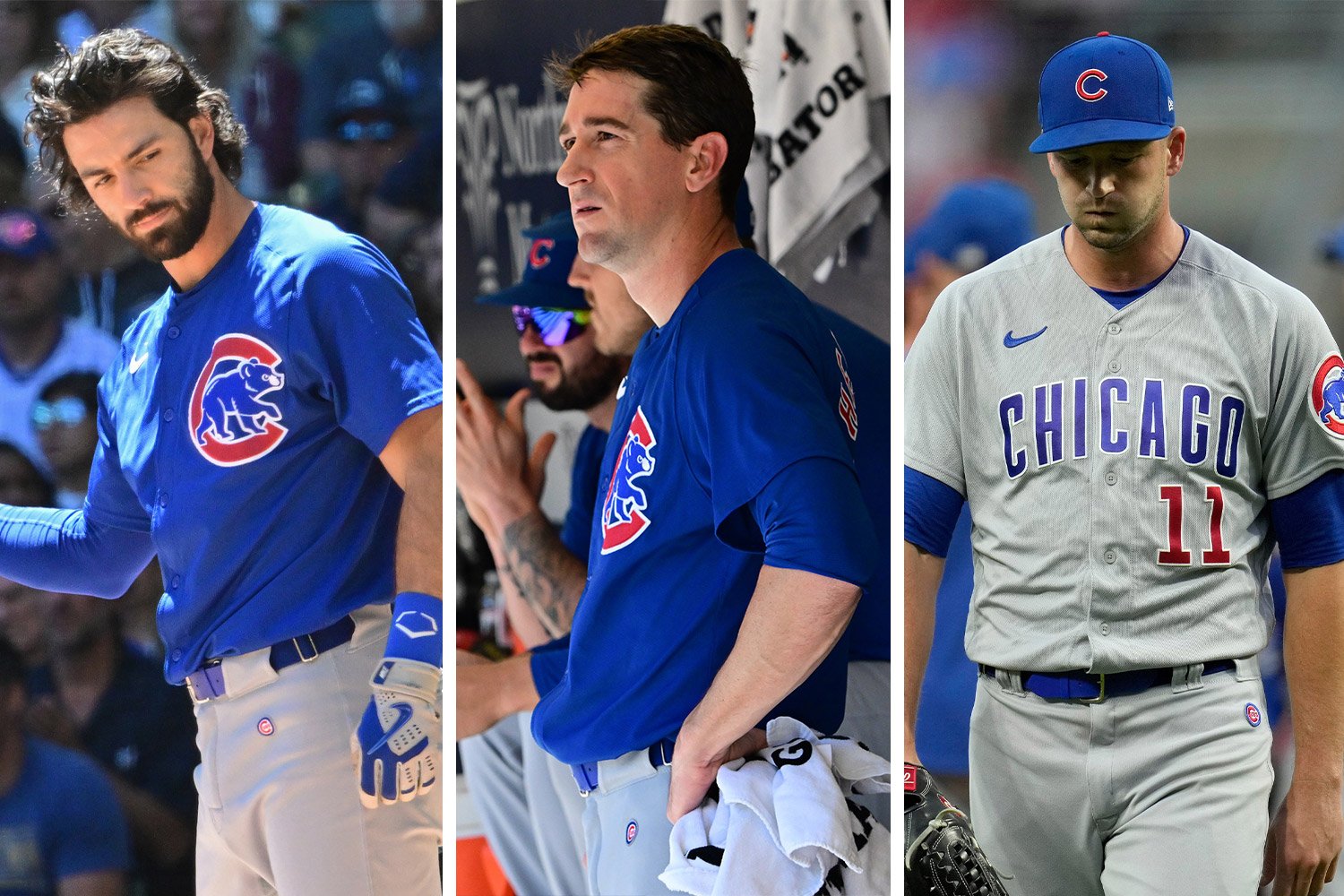 That lack of mobility largely stems from contracts. If it’s a health thing, we’re probably not discussing them as a trade candidate. In the case of contracts, the term or the dollars are both hindrances to prospective teams’ willingness to pursue. There’s also (obviously) a performance factor. I’m not going to pretend to know math as far as the former is concerned. I teach American Lit. But it’s easy to know when a contract is an obstacle, especially when combined with performance. As is the case with our first (and second) unmovable. Dansby Swanson isn’t going anywhere. There have been some minor flashes, but he’s ultimately in the midst of his worst offensive season. He’s hitting .204 and reaching base at a mere .281 clip. He’s striking out almost 28 percent of the time and offering a .136 ISO. Those aren’t just career-worsts. Those are Swanson bottoming out entirely. The defensive metrics have returned, but even that element of his game hasn’t passed the eye test as frequently. Signed through 2029 at an AAV near $26 million, there isn’t a team out there inquiring. Kyle Hendricks is on the opposite end of the (term? sentiment?) spectrum. He’s carrying a $16 million AAV on his deal this year, the last of his five-year deal. That deal might not be so cumbersome if Hendricks was near his best. But he’s been a shell this year. His ERA is north of seven. His FIP is 5.40. A BB% of 7.1 is his worst mark as a Cub. Hendricks is also allowing 1.85 homers per nine innings. Everything about him – much to our collective chagrin – is screaming cooked. No team is acquiring him currently. Perhaps he can latch on with a smaller deal in the offseason, but he’s not a factor here. In the blend of contract & performance, we should probably throw Hector Nerís into the discussion. He’s on a $9 million deal with a vesting option after 60 appearances. He’s at 33 thus far. Each one is seemingly shakier than the last. A 15.8 BB% is the worst of his career and the fourth highest among relief pitchers. His whiff rate has plummeted, and his contact rate is high. It’s quality stuff, too. A 39.8 HardHit% is roughly 12 points above last year. Nope. He’s here. Same with Drew Smyly. There is no vesting option (only a mutual one), but he’s playing on a $9.5 million deal and has had issues with command and flyballs this year. The Cubs aren’t eating significant cash just to move him. He’s probably worth grouping with the others. There was a point last year where Jameson Taillon might’ve been considered for this list. But he’s pitched well enough and is only 32 with two affordable years remaining. A team needing stability, like Baltimore or San Diego, might be interested. I suppose it’s somewhat good news that it’s a relatively small group of immovable guys. While there likely aren’t any that will fetch some massive return for impact talent, the front office should be able to build up a future roster pretty nicely if navigated appropriately. Of course, whether they can be trusted to do so is another discussion. Nevertheless, we do have one certainty for this year’s trade deadline. Dansby Swanson will be a Cub well down the line. Kyle Hendricks will be a Cub at least through this year. Hector Nerís will be a Cub this year and maybe even next. Those jerseys will at least get a little extra run than some current teammates.
 -
Long about the second or third stellar play Miles Mastrobuoni made behind Justin Steele in his start last Friday, I started to have some surprising thoughts. Image courtesy of © David Banks-USA TODAY Sports The first thought was: Why would the Cubs play anybody but Miles Mastrobuoni at third base for the remainder of the year? The second was: Is Miles Mastrobuoni the most exciting player the Cubs have to offer? But once I talked myself down from each of those, I started to wonder something else. Given his utility and increasingly apparent defensive excellence, does Mastrobuoni have enough to offer on offense to make him a valued regular in this lineup? I must admit, I’ve defied my typically preferred baseball archetype in matters of Mastrobuoni. Generally, I’m a fan of the utility type who offers upper-tier defense even if the bat doesn’t play. Perhaps my pro-Cubs bias has made me more dismissive of it in a higher-stakes scenario. But in those days where we’re slogging through a shaky pitching performance or a lineup absent of any production, Mastrobuoni has shown an ability to jumpstart the heart rate--if ever so slightly. Which brings me back to the original question: Is there anything of value in that bat? Mastrobuoni has 65 plate appearances at the big-league level this year. The slash includes a .172 average and .262 OBP, to go along with a .034 ISO. His wRC+ is 41. In most respects, it’s an extension of last year. Mastrobuoni finished with 149 plate appearances at the highest level, with a .241 average, .308 OBP, .060 ISO, and wRC+ of 71. I’m not going to blame myself for wondering what the point was, given numbers that look like that. At the same time, though, there are some interesting things happening. In his first 17 plate appearances with Tampa Bay in 2022, Mastrobuoni struck out six times. It was a 35.3 K% to go along with only a single walk (5.9%). Last year, he cut the K% to 21.5 and jumped the BB% up a bit to 8.7, in a much more expansive sample. This year, he’s at 13.6 on the K% side and an impressive 10.6% rate for walks. It’s all a minuscule sample, but bear with me. Comparing only the two Cubs years (given the larger samples they provide), Mastrobuoni has a higher swing rate thus far in 2024 (40.4%) than he did in 2023 (37.4%). But he’s raised the in-zone swing rate by roughly six percentage points, and dropped the chase rate by about three. It’s helped him to move his overall contact rate up from 78.8% last year to 82.4% this year. His whiff rate has fallen slightly, while his called strike rate has dropped by about 4%. Some zone awareness and subsequent aggression within the zone are apparent. It's also important to note that virtually any scouting report you can find on Mastrobuoni from his Tampa Bay days is going to mention his on-base skills. Sure enough, he walked at a 21.8% clip in 2023 and a 14.3% rate this year in Iowa. His on-base there was .448 last year and .361 this year. There’s also a possibility for slightly more power. His ISO figures in Iowa the last two seasons have read .178 and .183, though it's way, way easier to hit a ball out of Principal Park than it is to leave any big-league stadium. He’s just been working on the ground a bit too much (46.7 GB% this year) to realize it at the top level. He’s making reasonably good contact (38.7 hard-hit% combined in the two seasons). He’s pinned down by a .174 BABIP, more than anything. This is all to say that I don’t think Mastrobuoni has a play-him-everyday kind of offensive skill set. But I think the approach and contact trends are such that he does have more to offer than we’ve seen so far. There appears to be potential for legitimate value out of the utility role. Depending on the route the Cubs go at the trade deadline, we could be in for the first extended run for Miles Mastrobuoni to show us something on offense. I’m at a point where I’d like to see it. View full article
-
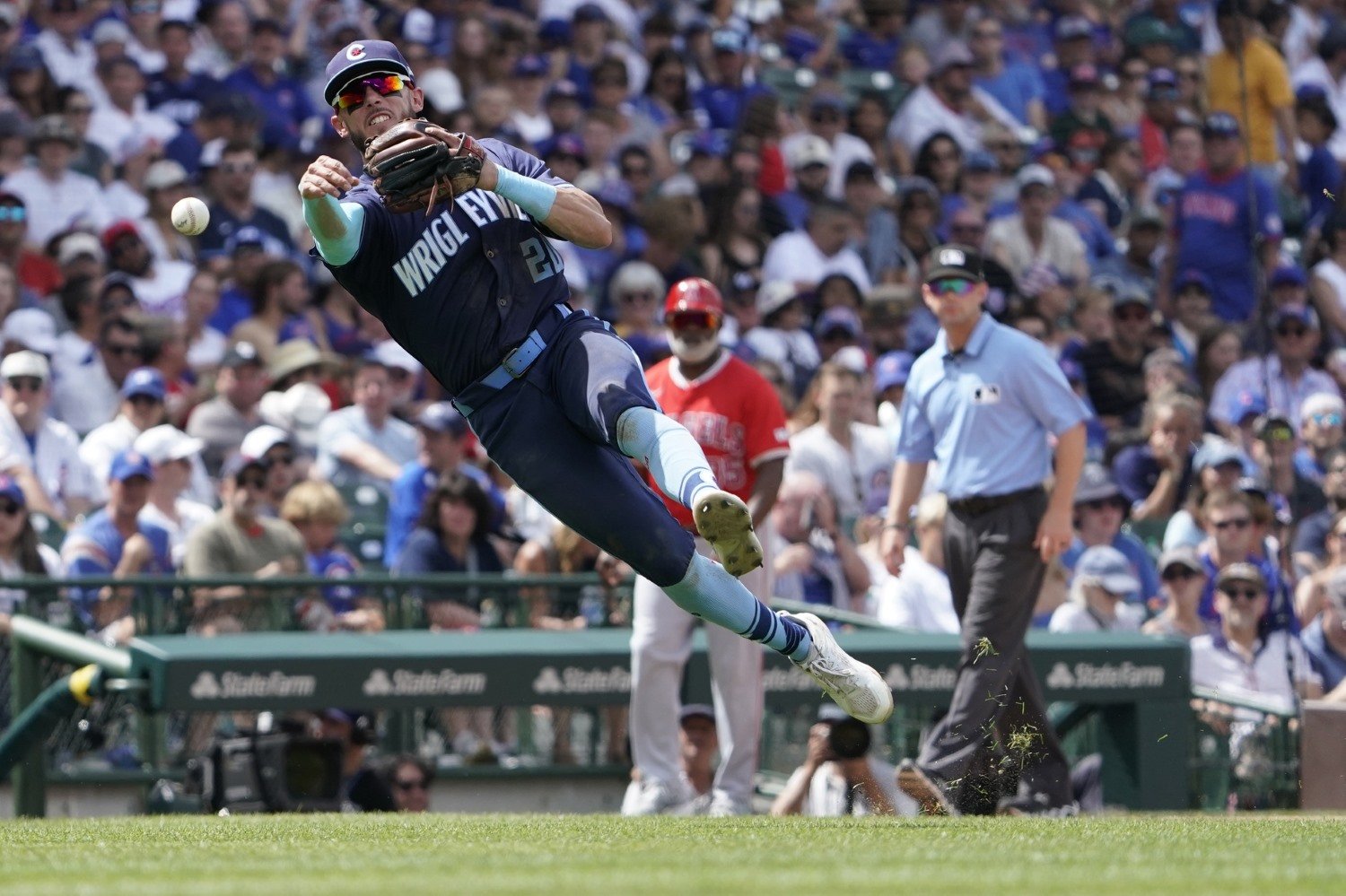 The first thought was: Why would the Cubs play anybody but Miles Mastrobuoni at third base for the remainder of the year? The second was: Is Miles Mastrobuoni the most exciting player the Cubs have to offer? But once I talked myself down from each of those, I started to wonder something else. Given his utility and increasingly apparent defensive excellence, does Mastrobuoni have enough to offer on offense to make him a valued regular in this lineup? I must admit, I’ve defied my typically preferred baseball archetype in matters of Mastrobuoni. Generally, I’m a fan of the utility type who offers upper-tier defense even if the bat doesn’t play. Perhaps my pro-Cubs bias has made me more dismissive of it in a higher-stakes scenario. But in those days where we’re slogging through a shaky pitching performance or a lineup absent of any production, Mastrobuoni has shown an ability to jumpstart the heart rate--if ever so slightly. Which brings me back to the original question: Is there anything of value in that bat? Mastrobuoni has 65 plate appearances at the big-league level this year. The slash includes a .172 average and .262 OBP, to go along with a .034 ISO. His wRC+ is 41. In most respects, it’s an extension of last year. Mastrobuoni finished with 149 plate appearances at the highest level, with a .241 average, .308 OBP, .060 ISO, and wRC+ of 71. I’m not going to blame myself for wondering what the point was, given numbers that look like that. At the same time, though, there are some interesting things happening. In his first 17 plate appearances with Tampa Bay in 2022, Mastrobuoni struck out six times. It was a 35.3 K% to go along with only a single walk (5.9%). Last year, he cut the K% to 21.5 and jumped the BB% up a bit to 8.7, in a much more expansive sample. This year, he’s at 13.6 on the K% side and an impressive 10.6% rate for walks. It’s all a minuscule sample, but bear with me. Comparing only the two Cubs years (given the larger samples they provide), Mastrobuoni has a higher swing rate thus far in 2024 (40.4%) than he did in 2023 (37.4%). But he’s raised the in-zone swing rate by roughly six percentage points, and dropped the chase rate by about three. It’s helped him to move his overall contact rate up from 78.8% last year to 82.4% this year. His whiff rate has fallen slightly, while his called strike rate has dropped by about 4%. Some zone awareness and subsequent aggression within the zone are apparent. It's also important to note that virtually any scouting report you can find on Mastrobuoni from his Tampa Bay days is going to mention his on-base skills. Sure enough, he walked at a 21.8% clip in 2023 and a 14.3% rate this year in Iowa. His on-base there was .448 last year and .361 this year. There’s also a possibility for slightly more power. His ISO figures in Iowa the last two seasons have read .178 and .183, though it's way, way easier to hit a ball out of Principal Park than it is to leave any big-league stadium. He’s just been working on the ground a bit too much (46.7 GB% this year) to realize it at the top level. He’s making reasonably good contact (38.7 hard-hit% combined in the two seasons). He’s pinned down by a .174 BABIP, more than anything. This is all to say that I don’t think Mastrobuoni has a play-him-everyday kind of offensive skill set. But I think the approach and contact trends are such that he does have more to offer than we’ve seen so far. There appears to be potential for legitimate value out of the utility role. Depending on the route the Cubs go at the trade deadline, we could be in for the first extended run for Miles Mastrobuoni to show us something on offense. I’m at a point where I’d like to see it.
 -
It's hard to be patient and farsighted enough to evaluate a streaky hitter as a player. The Cubs' left fielder makes it closer to impossible. Let's try, anyway. Image courtesy of © Kamil Krzaczynski-USA TODAY Sports I think I’m starting to come around on Ian Happ. Is his defense somewhat overrated? Probably. Would you like more consistency & sustainability out of his offensive output? Certainly. Is he too stoic to be a face-of-the-franchise type? I, personally, think so. But when he’s going in the way that he has in the last several weeks, he’s a rare catalyst for an otherwise (mostly) dormant Chicago Cubs lineup. Not that it’s only this recent stretch that has made me realize Happ’s value to the lineup. He’s been quite good since the start of May--even if my own perception is only just catching up to that fact. At the end of April, Happ had a .216 average, a .333 OBP, and 29 strikeouts across 120 plate appearances. His ISO was a mere .098. His wRC+ was 93. The latter figure indicates that Happ was below-average, but it's not nearly as bad as we might’ve perceived. I did, however, wonder in the early days of May if his lack of power was wrought by too much patience. While there was a boost in the power game the following month – and, subsequently, the wRC+ figure – perception still wasn’t working in Happ’s favor by the end of it. His strikeout rate jumped another five percentage points, nearly touching 30. He was walking less often. And so, while his ISO did experience a significant jump as the month wore on, the overall numbers still just were not working. Things changed in June, however. The strikeout rate remained high (27.4%), but the walk rate climbed back up to 16.0% for the month and the power continued to manifest (.256 ISO). He hit only .244, but reached base at a .387 clip and supplied regular power. You can compensate for some of the lower-performing categories when the rest look like that. That’s a version of Happ we can work with. The July edition is my favorite, though. Happ has 28 plate appearances so far this month. He’s slashing .417/.500/.875, with a 17.9 K% & 14.3 BB%. His ISO is at .458. The massive three-run shot off his bat onto Eutaw St. on Tuesday was essentially the death knell against a very good Baltimore Orioles team. For a Cubs team that hasn’t been able to put teams away virtually all season, the timing was impeccable. Overall, it’s a hilarious stretch that is (obviously) in no way sustainable. But the seeds from which these shoots have emerged were planted in June. Happ’s has toned down the whiff in his game since May. He cut it slightly in June, and even more so through the first week-plus of July. He’s getting the ball elevated, with a ground-ball rate that has decreased steadily since he started the year off at nearly 50% in April. No full-blown Happ analysis is the goal here. It's just to point out that there are a lot of important developments that have taken shape in building up to this offensive explosion. The ultimate aim here is to give some insight into managing my own perception of Happ. I discussed earlier in the year my struggle to grasp his level of actual quality. I think I’m finally arriving at real conclusions. Those conclusions read as follows: Ian Happ is a high-quality baseball player, who is prone to stretches of offensive ineptitude in which he retreats into too disciplined an approach and gets caught in-between, resulting in many groundballs and poor batted-ball luck. During those stretches, he’ll provide occasional power and enough on-base presence via the walk to compensate just enough. In between those stretches, he’ll light up the stat sheet through mixing line-drive contact and home run power. The former components make him frustrating. The latter makes it all worth it. View full article
-
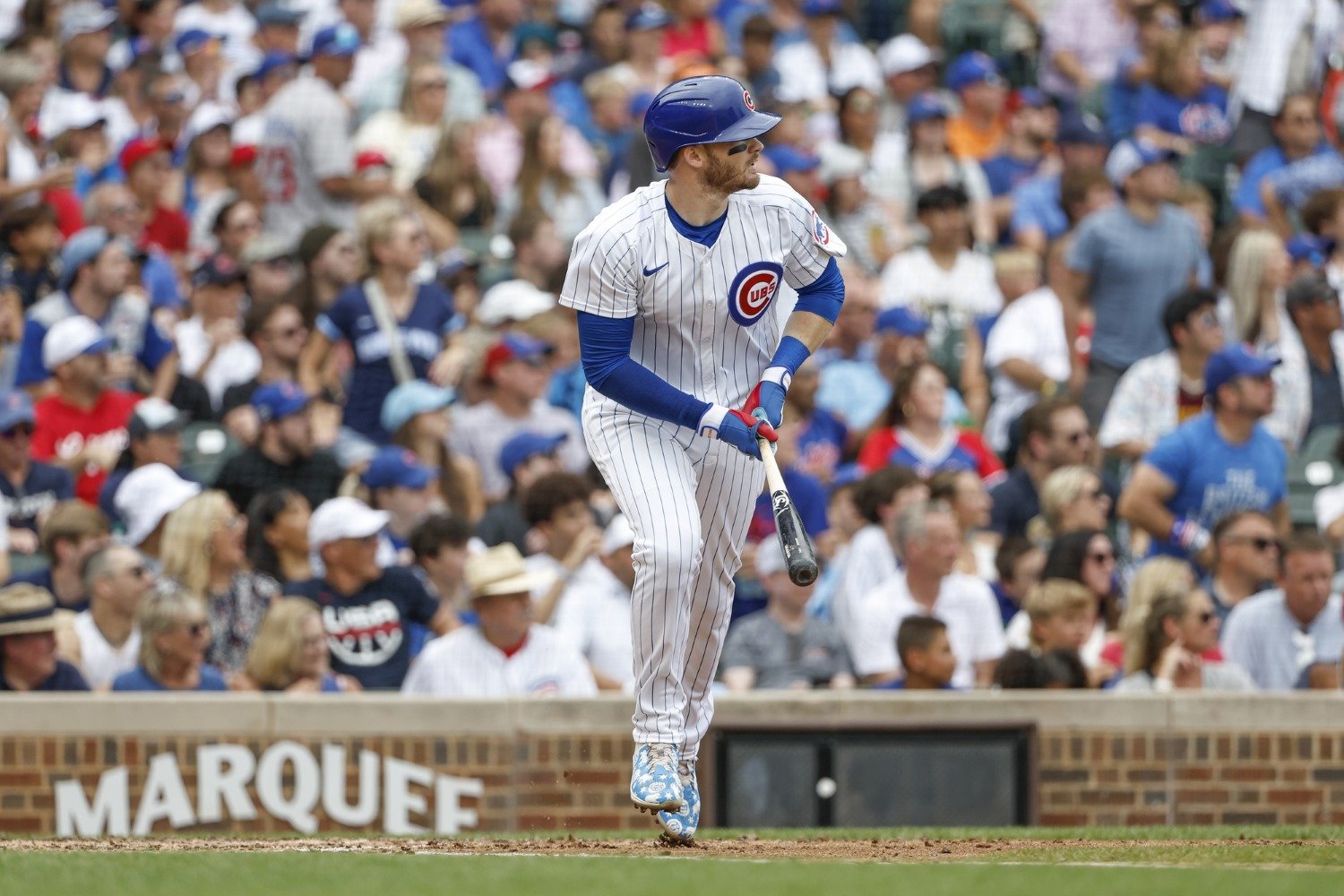 I think I’m starting to come around on Ian Happ. Is his defense somewhat overrated? Probably. Would you like more consistency & sustainability out of his offensive output? Certainly. Is he too stoic to be a face-of-the-franchise type? I, personally, think so. But when he’s going in the way that he has in the last several weeks, he’s a rare catalyst for an otherwise (mostly) dormant Chicago Cubs lineup. Not that it’s only this recent stretch that has made me realize Happ’s value to the lineup. He’s been quite good since the start of May--even if my own perception is only just catching up to that fact. At the end of April, Happ had a .216 average, a .333 OBP, and 29 strikeouts across 120 plate appearances. His ISO was a mere .098. His wRC+ was 93. The latter figure indicates that Happ was below-average, but it's not nearly as bad as we might’ve perceived. I did, however, wonder in the early days of May if his lack of power was wrought by too much patience. While there was a boost in the power game the following month – and, subsequently, the wRC+ figure – perception still wasn’t working in Happ’s favor by the end of it. His strikeout rate jumped another five percentage points, nearly touching 30. He was walking less often. And so, while his ISO did experience a significant jump as the month wore on, the overall numbers still just were not working. Things changed in June, however. The strikeout rate remained high (27.4%), but the walk rate climbed back up to 16.0% for the month and the power continued to manifest (.256 ISO). He hit only .244, but reached base at a .387 clip and supplied regular power. You can compensate for some of the lower-performing categories when the rest look like that. That’s a version of Happ we can work with. The July edition is my favorite, though. Happ has 28 plate appearances so far this month. He’s slashing .417/.500/.875, with a 17.9 K% & 14.3 BB%. His ISO is at .458. The massive three-run shot off his bat onto Eutaw St. on Tuesday was essentially the death knell against a very good Baltimore Orioles team. For a Cubs team that hasn’t been able to put teams away virtually all season, the timing was impeccable. Overall, it’s a hilarious stretch that is (obviously) in no way sustainable. But the seeds from which these shoots have emerged were planted in June. Happ’s has toned down the whiff in his game since May. He cut it slightly in June, and even more so through the first week-plus of July. He’s getting the ball elevated, with a ground-ball rate that has decreased steadily since he started the year off at nearly 50% in April. No full-blown Happ analysis is the goal here. It's just to point out that there are a lot of important developments that have taken shape in building up to this offensive explosion. The ultimate aim here is to give some insight into managing my own perception of Happ. I discussed earlier in the year my struggle to grasp his level of actual quality. I think I’m finally arriving at real conclusions. Those conclusions read as follows: Ian Happ is a high-quality baseball player, who is prone to stretches of offensive ineptitude in which he retreats into too disciplined an approach and gets caught in-between, resulting in many groundballs and poor batted-ball luck. During those stretches, he’ll provide occasional power and enough on-base presence via the walk to compensate just enough. In between those stretches, he’ll light up the stat sheet through mixing line-drive contact and home run power. The former components make him frustrating. The latter makes it all worth it.
 -
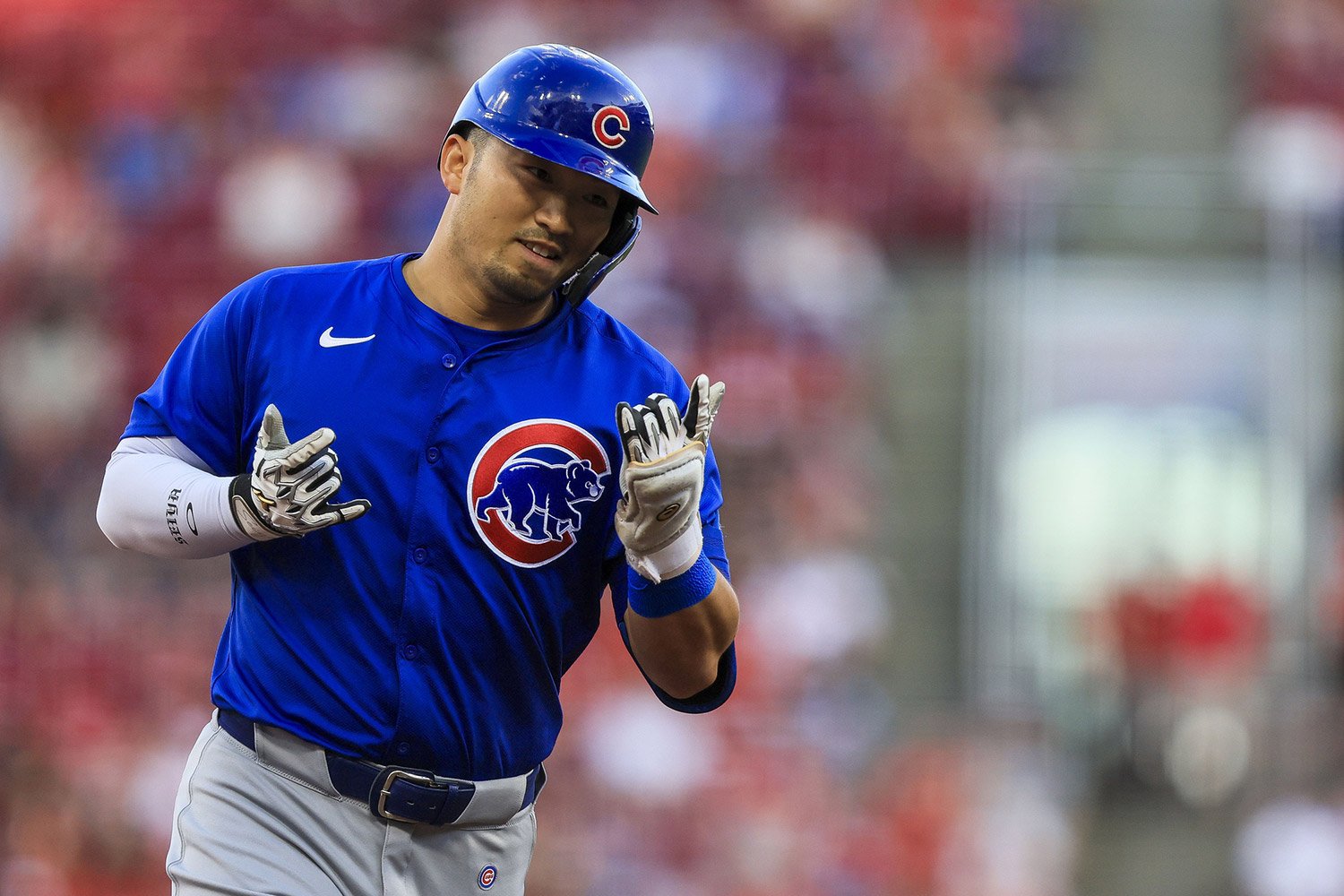 Christopher Morel showed enough early improvement, though, to see more time. Combined with the offensive ineptitude of Nick Madrigal, that projection didn’t even remotely pan out. Morel started at the DH spot only seven times in March & April against 22 starts at the hot corner. As such, the team has gone through much of the year without a surefire solution at the position. Eleven players have at least one start as the team’s designated hitter heading into the weekend. In a general sense, rotating the DH makes some sense. Especially as the team has sought more time for Pete Crow-Armstrong in center field, it allows you to work with Ian Happ, Cody Bellinger, and Seiya Suzuki there. Mike Tauchman, when healthy. Patrick Wisdom’s power bat, on occasion. However, the leaders in DH that started this year have been Morel (19) and Suzuki (18). However, an important component is taking shape on the North Side that will likely impact how the Cubs intend to use that spot moving forward. And while that component is developing, it’s anything but clear. It’s the increasing inability to put either Morel or Seiya Suzuki on the actual baseball field. We’ve touched on Morel’s defense of late (and throughout the year). While the eye test might’ve shown some steady improvement early in the year, it’s obvious that he lacks the chops to be a viable long-term solution at the position. He lacks the instincts and probably some tools to make it a success. A similar situation is developing in the case of Suzuki. Friday afternoon saw him drop yet another routine fly ball, something that’s become alarmingly common for him despite a steady run as a fielder during his days over in Japan. Morel has been, statistically, the worst third baseman in baseball by Fielding Run Value. Among third sackers with at least 200 innings, only Jeimer Candelario’s -6 is close to Morel’s -8 on that end of the leaderboard. Suzuki, meanwhile, ranks 34th out of 42 right fielders in FRV (-3). He’s in league with names like Gavin Sheets and Nick Castellanos, who have a…certain reputation with the glove. Suffice it to say neither player has a long-term future in the field. This presents an interesting dynamic for how the team will utilize the DH spot moving forward. With two players becoming increasingly unreliable in the field, how do you balance the only spot they might be fit for? Rotating Suzuki into the slot more frequently seems more likely in the immediate future. Assuming Pete Crow-Armstrong is healthy, an outfield configuration of Happ, PCA, and Bellinger seems most appropriate for the defensive side of things. And since you don’t want Seiya’s bat out of the equation, he’ll have to get his plate appearances from that particular spot. When one of those guys needs a blow, or you want an offensive bump, given PCA’s shortcomings on that side, you throw Suzuki in right and let David Bote, Patrick Wisdom, or Miles Mastrobuoni handle the hot corner. It also presents some interesting trade deadline implications. With the team likely to fall on the sell side of things, do they prioritize moving one to free up that DH spot for the other and improve team defense? I suppose that would depend on what they’re seeking in return, between lower-level prospects, high-upside guys who are blocked (a la Michael Busch), or, more unlikely, a surefire longer-term piece in part of a larger deal. It presents an interesting quandary for Craig Counsell in a season full of them. A team that was so good on defense a year ago finds themselves trying to handle two regulars whose defense appears to be in steady decline. At the very least, it adds another curious element to how the team approaches this month’s deadline.
 -
There hasn’t been any real consistency this year as to how the Chicago Cubs have utilized their designated hitter slot. The early expectation was to deploy Nick Madrigal primarily at third base from the jump. Christopher Morel would see more looks as the DH until the latter gained more comfort transitioning to his new position. Image courtesy of © Katie Stratman-USA TODAY Sports Christopher Morel showed enough early improvement, though, to see more time. Combined with the offensive ineptitude of Nick Madrigal, that projection didn’t even remotely pan out. Morel started at the DH spot only seven times in March & April against 22 starts at the hot corner. As such, the team has gone through much of the year without a surefire solution at the position. Eleven players have at least one start as the team’s designated hitter heading into the weekend. In a general sense, rotating the DH makes some sense. Especially as the team has sought more time for Pete Crow-Armstrong in center field, it allows you to work with Ian Happ, Cody Bellinger, and Seiya Suzuki there. Mike Tauchman, when healthy. Patrick Wisdom’s power bat, on occasion. However, the leaders in DH that started this year have been Morel (19) and Suzuki (18). However, an important component is taking shape on the North Side that will likely impact how the Cubs intend to use that spot moving forward. And while that component is developing, it’s anything but clear. It’s the increasing inability to put either Morel or Seiya Suzuki on the actual baseball field. We’ve touched on Morel’s defense of late (and throughout the year). While the eye test might’ve shown some steady improvement early in the year, it’s obvious that he lacks the chops to be a viable long-term solution at the position. He lacks the instincts and probably some tools to make it a success. A similar situation is developing in the case of Suzuki. Friday afternoon saw him drop yet another routine fly ball, something that’s become alarmingly common for him despite a steady run as a fielder during his days over in Japan. Morel has been, statistically, the worst third baseman in baseball by Fielding Run Value. Among third sackers with at least 200 innings, only Jeimer Candelario’s -6 is close to Morel’s -8 on that end of the leaderboard. Suzuki, meanwhile, ranks 34th out of 42 right fielders in FRV (-3). He’s in league with names like Gavin Sheets and Nick Castellanos, who have a…certain reputation with the glove. Suffice it to say neither player has a long-term future in the field. This presents an interesting dynamic for how the team will utilize the DH spot moving forward. With two players becoming increasingly unreliable in the field, how do you balance the only spot they might be fit for? Rotating Suzuki into the slot more frequently seems more likely in the immediate future. Assuming Pete Crow-Armstrong is healthy, an outfield configuration of Happ, PCA, and Bellinger seems most appropriate for the defensive side of things. And since you don’t want Seiya’s bat out of the equation, he’ll have to get his plate appearances from that particular spot. When one of those guys needs a blow, or you want an offensive bump, given PCA’s shortcomings on that side, you throw Suzuki in right and let David Bote, Patrick Wisdom, or Miles Mastrobuoni handle the hot corner. It also presents some interesting trade deadline implications. With the team likely to fall on the sell side of things, do they prioritize moving one to free up that DH spot for the other and improve team defense? I suppose that would depend on what they’re seeking in return, between lower-level prospects, high-upside guys who are blocked (a la Michael Busch), or, more unlikely, a surefire longer-term piece in part of a larger deal. It presents an interesting quandary for Craig Counsell in a season full of them. A team that was so good on defense a year ago finds themselves trying to handle two regulars whose defense appears to be in steady decline. At the very least, it adds another curious element to how the team approaches this month’s deadline. View full article
