


Cubs Video
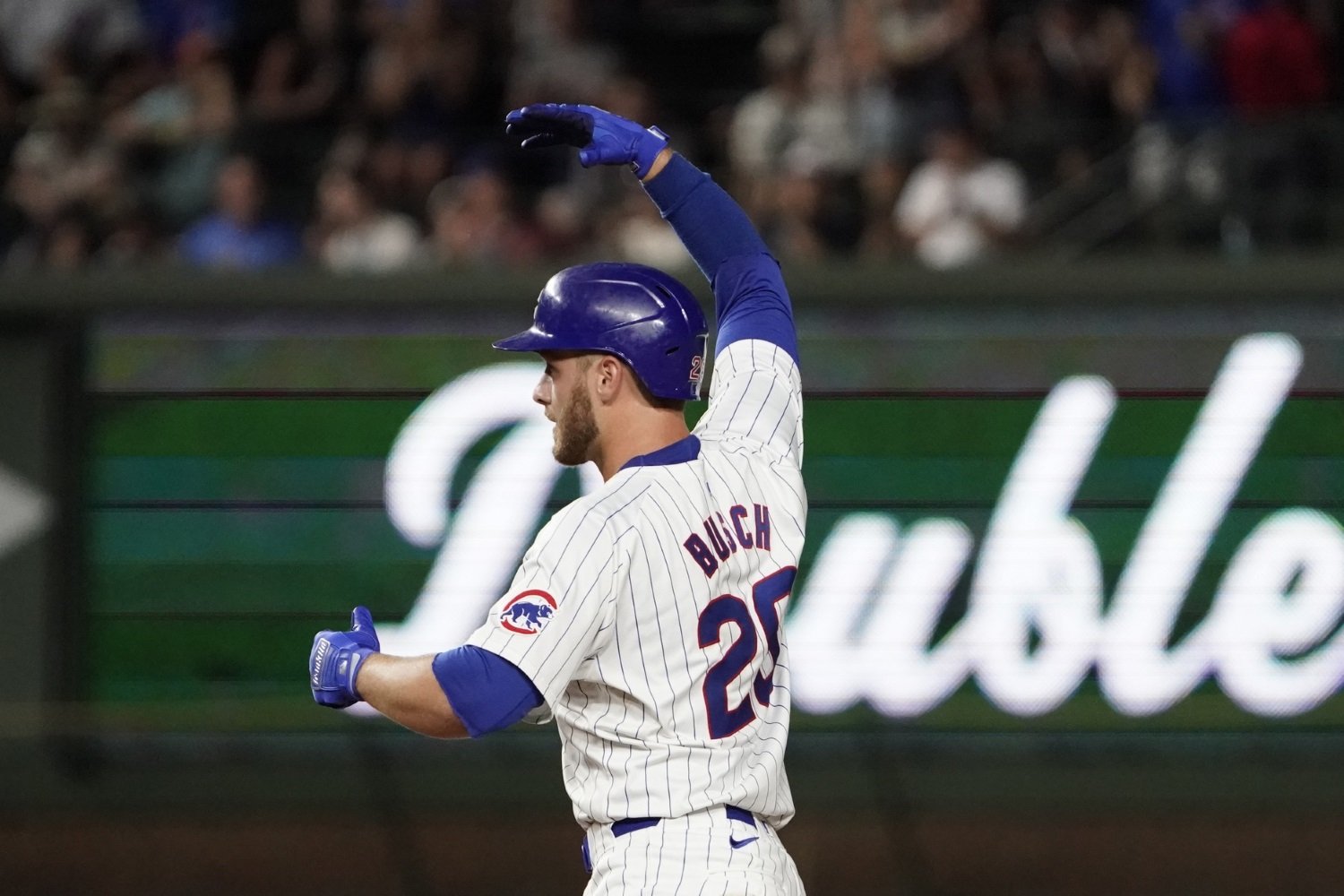
Any good feeling about individual hitters in the Chicago Cubs’ lineup has been fleeting. We had early plate discipline from Christopher Morel. We had early power from Michael Busch. We have individual moments from Seiya Suzuki. We have a recent power surge from Ian Happ. But none of it has been sustained. Stretches of complete silence from the collective lineup has fed into myriad questions about the on-field product, and (by extension) the organization as a whole.
Maybe Busch is starting to give us something a little more permanent.
It was fairly surprising to see the Cubs hand the keys to first base over to Busch so early. Even with a high-upside bat, there was very little ground to stand on, in terms of major-league success. Nevertheless, upon his acquisition from the Dodgers, there he was: entrenched in a position that carries a fair bit of prestige in organizational history.
The early returns reflected the faith from the Cubs’ brass. He hit .266 in the first month of the year, while reaching base at a .333 clip and notching a .234 ISO. (For you math whizzes, that means he slugged .500.) He made hard contact at a 37.1-percent rate and kept the ball off the ground, on his way to a wRC+ of 133. Then, May happened.
Last month, Busch’s wRC+ dropped to a 106. He was still above-average, sure--but only technically. He struck out at an even higher rate (37.2%) and didn’t feature the power to compensate like he had in April (.167 ISO). While he was able to garner the free pass on a more consistent basis (15.1 BB%), his quality of contact slipped, and he put the ball on the ground half the time. The impact just wasn’t there.
The June version of Busch, however, seems to have struck some sort of balance in providing regular value to the lineup. The power hasn’t returned. In fact, his .147 ISO this month is his lowest yet. But everything else is starting to look promising.
Busch’s walk rate has maintained. More importantly, though, whiffs are down significantly--particularly against fastballs, where he’s cut the Whiff% from 31.8% in May to just 18.2% in June. He’s cut offspeed whiffs down almost 10 percentage points, too. Subsequently, the strikeout rate is down (25.0%) and more balls are being put in play. The quality of contact is back up to snuff, and the ground balls have come back down. (Er, you know what I mean.) It’s all fed into a line that features a .324 average and .425 on-base percentage.
One imagines that much of the uptick in production is due to Busch gaining (re-gaining?) a command of the strike zone. His chase rate, particularly against breaking and offspeed pitches, has plummeted. That’s forcing pitchers to come into the zone more often, leading to the above factors improving for Busch. Ideally, this will eventually lead to an organic return of the power numbers, as well. We're already seeing some evidence of that this week.
Given the volatility of pretty much every Cubs hitter on a month-to-month basis this year, it’s hard to put too much future stock into the developments from Busch. But there’s an optimistic read here that says Busch came out hot; the league adjusted; and Busch adjusted back. If this is a sustainable version of Michael Busch, than he might just be every bit the guy we thought we saw back in April.
Of course, in order for that to mean anything in 2024, a couple of his teammates have to come along for the rise.





.thumb.JPG.19c99ddd60a76edf810c77d321439828.JPG)


Recommended Comments
There are no comments to display.
Create an account or sign in to comment
You need to be a member in order to leave a comment
Create an account
Sign up for a new account in our community. It's easy!
Register a new accountSign in
Already have an account? Sign in here.
Sign In Now