


RandallPnkFloyd
-
Posts
513 -
Joined
-
Last visited
Content Type
Profiles
Joomla Posts 1
Chicago Cubs Videos
Chicago Cubs Free Agent & Trade Rumors, Notes, & Tidbits
2026 Chicago Cubs Top Prospects Ranking
News
2023 Chicago Cubs Draft Picks
Guides & Resources
2024 Chicago Cubs Draft Picks
The Chicago Cubs Players Project
2025 Chicago Cubs Draft Pick Tracker
2026 Chicago Cubs Draft Tracker: Picks & Bonuses
Blogs
Events
Forums
Store
Gallery
Everything posted by RandallPnkFloyd
-
Chicago Cubs Have the Best Outfield in Major League Baseball
RandallPnkFloyd posted an article in Cubs
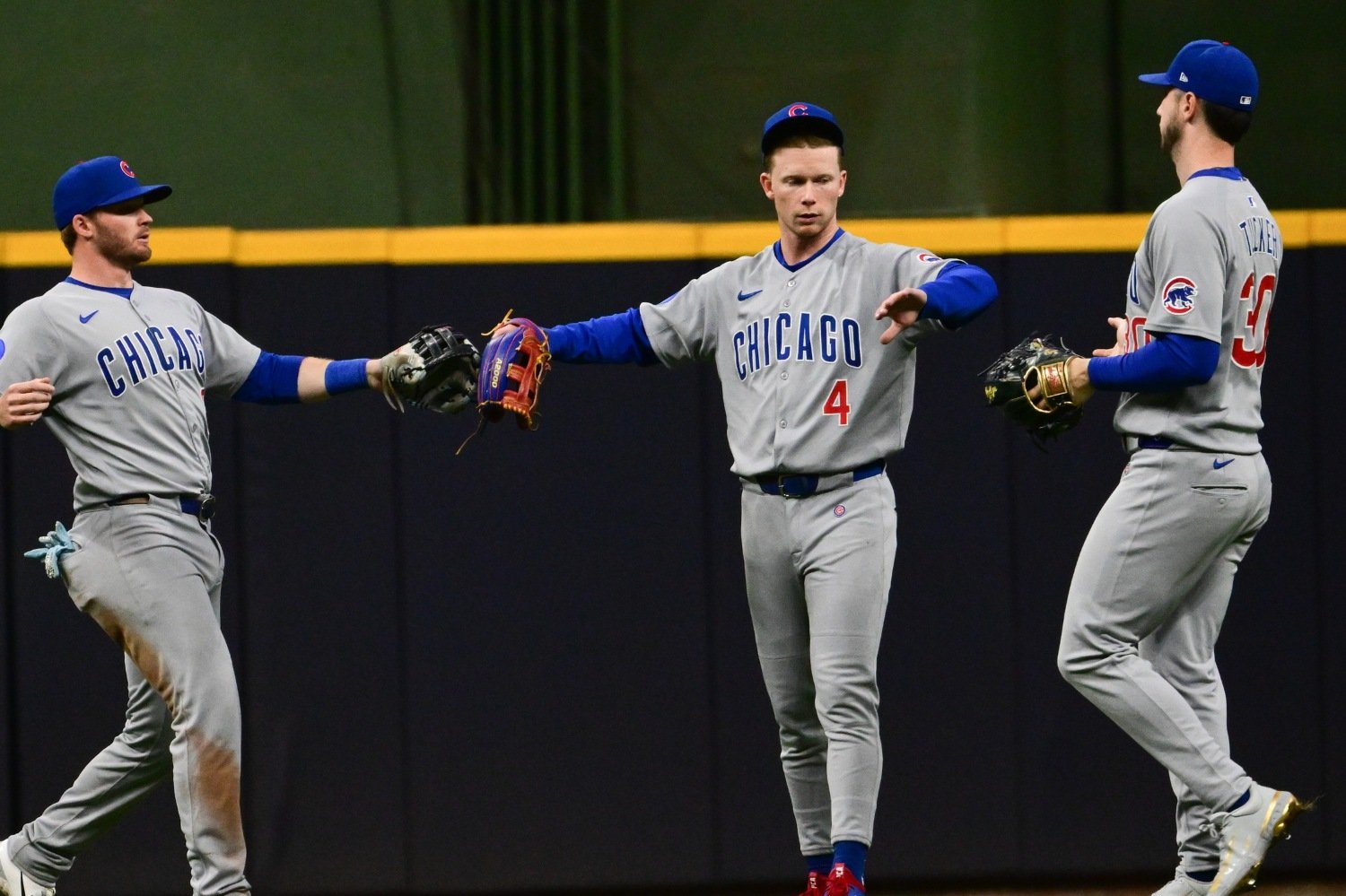 No team in baseball features a better trio on the outfield grass than the Chicago Cubs. There isn't a whole lot of room for debate here, either. As a group, the Cubs' outfield ranks first in fWAR (5.0), well ahead of the New York Yankees (4.2) and even farther ahead of the Boston Red Sox (3.0). While it would be an oversimplification to attribute the team's early success specifically and solely to that group (given the success of Michael Busch and the tandem of Miguel Amaya and Carson Kelly behind the plate), it's certainly been the outfield leading the way. This was always possible, but it was far from guaranteed, so seeing it come to fruition is as encouraging as it is satisfying. The acquisition of Kyle Tucker was obviously a boon. With such little positional flexibility when the offseason began, moving Cody Bellinger out of town and finding a suitable replacement for Seiya Suzuki's glove in right represented one of the only paths toward legitimate addition within the lineup. Tucker has been crucial to the team's early run to the top of the National League Central, but it's been far from the only element driving the offensive (and defensive, for that matter) pace thus far. In addition to pacing the league in fWAR, the Cubs' outfield leads the league in isolated slugging (.236) and strikeout rate (16.5%), while sitting top five in batting average (.291), on-base percentage (.367), and stolen bases (21). Their 22 home runs are tied with the Yankees atop the leaderboard, as well. To say that it's a potent group would be an understatement. Tucker has been as advertised. Plenty of ink is still to be spilt over the team's efforts to retain their new-ish superstar, but even with a little bit of a recent "cold" streak, he's still a top-10 position player in most categories. His 168 wRC+ ranks seventh, while his walk rate (15.3%) continues to outpace his strikeout rate (11.7%). While Tucker had the ability to raise the floor of what this group could produce, it's been Pete Crow-Armstrong who has pushed the ceiling upward. Not all of the stats look great. He's still reaching base at a barely a .300 clip, but he's tamped down the strikeouts on his way to producing a 139 wRC+. That's all despite a very cold start. The power has really manifested, to the tune of a .287 ISO that even narrowly surpasses that of Tucker (.285). We knew the speed would be there, and lo: 12 steals. The mildly ironic thing is that the star-level play we see from each of Tucker and Crow-Armstrong on a daily basis has overshadowed the contributions of Ian Happ atop the lineup. He's running a 120 wRC+, with virtually no power to speak of (.102 ISO). Generally a slow starter, that Happ is already a worthy contributor without the power (which we don't typically see until May, anyway) really gets moving speaks to the actual ceiling of this group. Then there's the defensive component. The Cubs lead the league with 10 Defensive Runs Saved in the outfield, even with Tucker rating a bit below average. It helps that Crow-Armstrong is jumping his way to covering more ground than almost any individual outfielder in baseball, but Happ's defense looks legitimately good in the face of metrics that have soured on him throughout his Gold Glove run. It's the combination of offense and defense that has given the Cubs two of the nine most valuable players in baseball—and we're not just talking outfielders. There are 162 qualifying position players in the league. Crow-Armstrong ranks third in FanGraphs WAR, and Tucker sits ninth. Happ's farther down the list, at 63rd, but it's nearly impossible to overstate the level at which this outfield has performed. They've been much-needed, too. While catcher (Amaya/Kelly) and first base (Busch) both sit in the top seven in positional value, the middle infield spots have both been middle-of-the-road. Third base is near the bottom of the league (28th). Seiya Suzuki's phenomenal production as the DH is vital, but since his defensive homes are in the outfield, he feels like an extension of that corps. Consider some of the groups that were projected to be among the best in the league on the grass in the National League alone. Arizona. San Diego. Milwaukee. FanGraphs's preseason positional power rankings had the Cubs eighth in left field, 12th in center, and fifth in right. They've blown them all away. And then you get into the value of pushing Suzuki into a full-time role as the designated hitter. It's this group that has not only made the Cubs into a legitimate NL contender, but a singularly watchable winner. After a handful of years of middle-tier, outright boring baseball, the Cubs have become one of the most exciting teams in the sport on the strength of their outfield.
 -
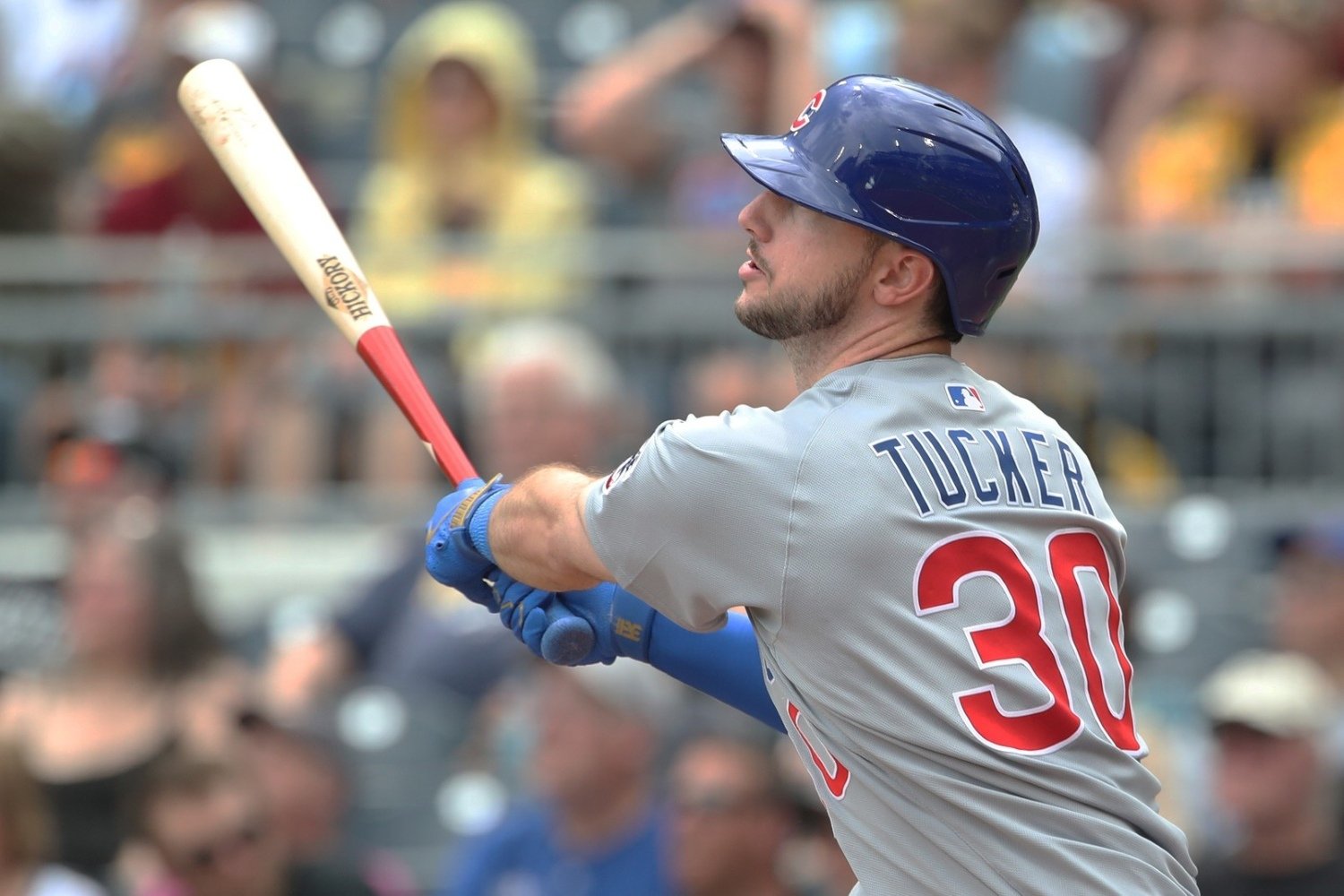 Through April 20, you'd have been hard-pressed to find a better hitter in the National League than Kyle Tucker. After a brutal spring, the Chicago Cubs' superstar came out hot, with a slash that included a .302 average and .404 on-base percentage. His ISO checked in at .313 (six homers) with baserunning efficiency to match the power (four steals). That's to say nothing of a strikeout rate (12.3%) that came in at a clip below his walk rate (14.9%). Since that point, however, Tucker has been... not that. In the seven games from April 21-30, Tucker's wRC+ sat at just 87. He hit .192/.323/.308. It's not an ideal stretch, given how strong the Cubs' offense has been going, and the extent to which that dominance relied upon Tucker's production. But even with a late April swoon, the team is still getting plenty of value out of his bat, and there were indications that he'd pull out of it quickly, all along. Logically, let's talk about that latter point first. Tucker's BABIP over the seven games in question (.190) indicates some brutal batted-ball luck. There isn't a ton in his batted-ball profile to suggest he was doing anything terribly differently. His swing and contact rates looked quite similar in that first stretch versus the more recent one. His approach to the zone has been consistent, and there's plenty of variance in the types of pitches at which he's swinging: If there was any discernible trend, it would likely be the result of pitch types, since his zone approach hasn't fluctuated in any perceptible manner. But, as pictured above, no such trend exists. Plenty of variance exists in the last handful of games, just as it did earlier in the month—which is to say, we have really no reason to be concerned about Tucker, given some of the underlying factors. That was underscored when he took Paul Skenes deep Thursday, even if three other well-struck balls went for outs on the day. The more important note, for our purposes at present, goes back to that first point: the fact that even a slumping Kyle Tucker is one capable of contributing plenty to the team's offense. Tucker's trend of having a walk rate higher than his strikeout rate remained intact. Even through a tough stretch, he struck out at just a 12.9% rate, against a 16.1% clip for walks. He's also stolen another four bases. That he's still able to contribute to the offense while not experiencing any level of luck when actually putting the ball in play says a lot about the caliber of hitter he is. And this isn't a new type of thing from him, either. If anything, it's a hallmark. Per Stathead, there are 133 instances of Tucker having a seven-game stretch in which he hit under .195. He's walked at least twice in such stretches almost 70 percent of the time, and has stolen at least one base in well over half of them. They don't all look quite as good as far as the OBP component goes, but it speaks to his overall development into the star that he is. Only 16 of the 110 total instances where he featured an OBP under .300 in one of these stretches have come in the two years prior to 2025. It's difficult to recall a hitter in even recent memory who was able to provide actual offensive value, even when working through a questionable stretch. Prime Anthony Rizzo is probably our best recent example, with an even greater stockpile of .300+ OBP runs in low batting average stretches (but also a higher volume of seven-game stretches under .195). Kyle Schwarber was able to do it occasionally (but has done it more since leaving). Aramis Ramírez did it a handful of times. Derrek Lee had a few. Suffice to say, it's been a minute since the Cubs had a hitter showcase the type of balance in working through a tough stretch while still staying afloat in the offensive contributions department. It's not like we needed additional reasons to stockpile as to why having (and keeping!) a hitter like Kyle Tucker is such an imperative to a team like the Cubs. But here's another one.
 -
Image courtesy of © Charles LeClaire-Imagn Images Through April 20, you'd have been hard-pressed to find a better hitter in the National League than Kyle Tucker. After a brutal spring, the Chicago Cubs' superstar came out hot, with a slash that included a .302 average and .404 on-base percentage. His ISO checked in at .313 (six homers) with baserunning efficiency to match the power (four steals). That's to say nothing of a strikeout rate (12.3%) that came in at a clip below his walk rate (14.9%). Since that point, however, Tucker has been... not that. In the seven games from April 21-30, Tucker's wRC+ sat at just 87. He hit .192/.323/.308. It's not an ideal stretch, given how strong the Cubs' offense has been going, and the extent to which that dominance relied upon Tucker's production. But even with a late April swoon, the team is still getting plenty of value out of his bat, and there were indications that he'd pull out of it quickly, all along. Logically, let's talk about that latter point first. Tucker's BABIP over the seven games in question (.190) indicates some brutal batted-ball luck. There isn't a ton in his batted-ball profile to suggest he was doing anything terribly differently. His swing and contact rates looked quite similar in that first stretch versus the more recent one. His approach to the zone has been consistent, and there's plenty of variance in the types of pitches at which he's swinging: If there was any discernible trend, it would likely be the result of pitch types, since his zone approach hasn't fluctuated in any perceptible manner. But, as pictured above, no such trend exists. Plenty of variance exists in the last handful of games, just as it did earlier in the month—which is to say, we have really no reason to be concerned about Tucker, given some of the underlying factors. That was underscored when he took Paul Skenes deep Thursday, even if three other well-struck balls went for outs on the day. The more important note, for our purposes at present, goes back to that first point: the fact that even a slumping Kyle Tucker is one capable of contributing plenty to the team's offense. Tucker's trend of having a walk rate higher than his strikeout rate remained intact. Even through a tough stretch, he struck out at just a 12.9% rate, against a 16.1% clip for walks. He's also stolen another four bases. That he's still able to contribute to the offense while not experiencing any level of luck when actually putting the ball in play says a lot about the caliber of hitter he is. And this isn't a new type of thing from him, either. If anything, it's a hallmark. Per Stathead, there are 133 instances of Tucker having a seven-game stretch in which he hit under .195. He's walked at least twice in such stretches almost 70 percent of the time, and has stolen at least one base in well over half of them. They don't all look quite as good as far as the OBP component goes, but it speaks to his overall development into the star that he is. Only 16 of the 110 total instances where he featured an OBP under .300 in one of these stretches have come in the two years prior to 2025. It's difficult to recall a hitter in even recent memory who was able to provide actual offensive value, even when working through a questionable stretch. Prime Anthony Rizzo is probably our best recent example, with an even greater stockpile of .300+ OBP runs in low batting average stretches (but also a higher volume of seven-game stretches under .195). Kyle Schwarber was able to do it occasionally (but has done it more since leaving). Aramis Ramírez did it a handful of times. Derrek Lee had a few. Suffice to say, it's been a minute since the Cubs had a hitter showcase the type of balance in working through a tough stretch while still staying afloat in the offensive contributions department. It's not like we needed additional reasons to stockpile as to why having (and keeping!) a hitter like Kyle Tucker is such an imperative to a team like the Cubs. But here's another one. View full article
-
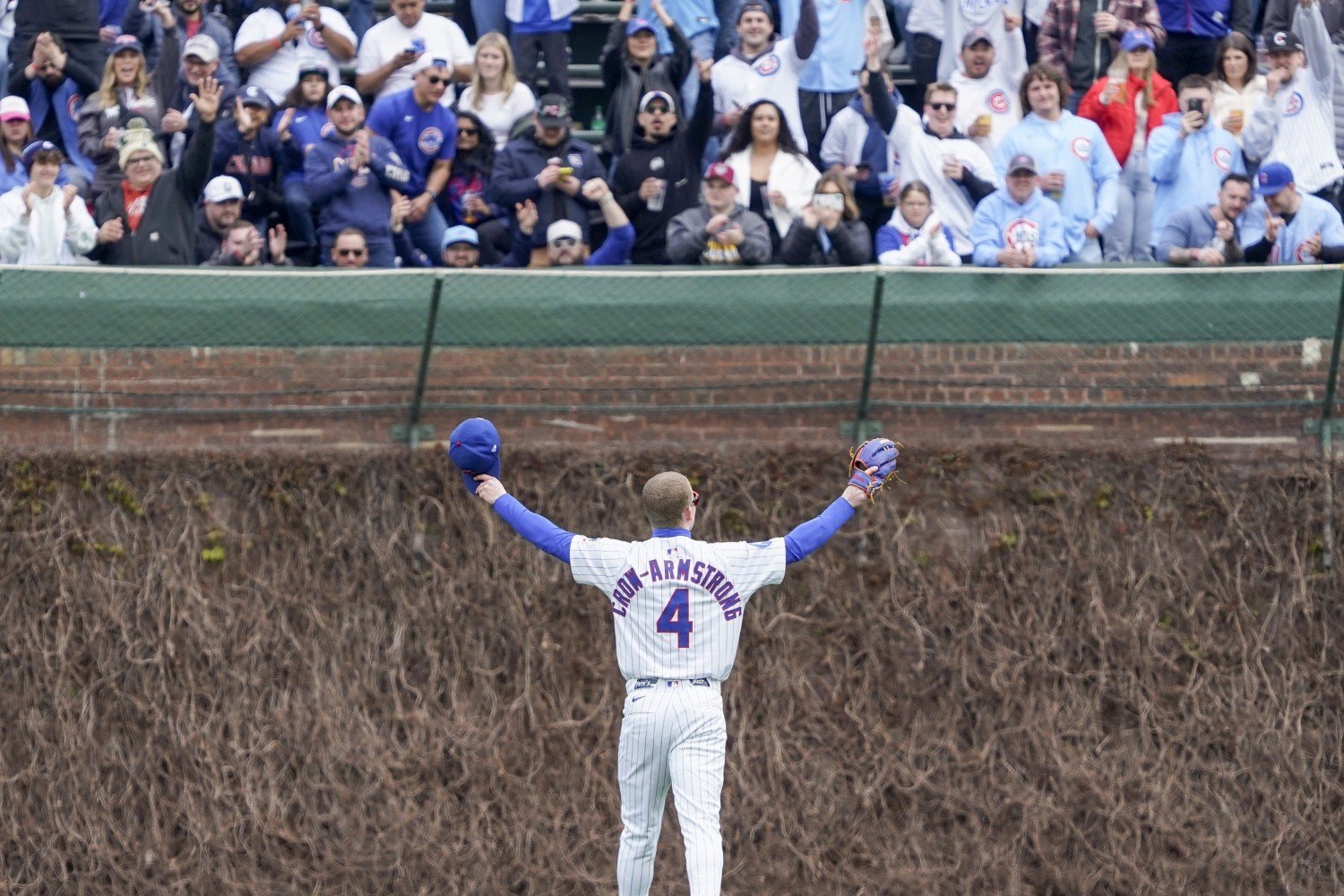 That Pete Crow-Armstrong is perhaps the best defender in baseball should be a shock to no one. We knew that in his years as a prospect. The glove was going to play at a high level, no matter what. Concerns about the bat? Sure. But elite sprint speed and top-tier defensive instincts (to say nothing of what he brings on the basepaths) were giving you a three- or four-win player, almost regardless of offensive outcomes. The bat almost becomes a bonus, given those other factors. As he approaches 175 big-league games, there hasn't been anything to deter us from buying into that narrative. By Fielding Run Value (FRV), Crow-Armstrong was the second-most valuable defender in the sport last year, with his mark of 16 tying Daulton Varsho and Jacob Young to trail only Patrick Bailey's 22. Thirteen of that came from his range, as he deployed his sheer speed in the most effective fashion. Yet, there was still (somehow) another level to be reached—a level where he's not only making exceptional plays look easy, but he's making them actually routine. MLB.com's Mike Petriello covered as much in an analysis centered around Crow-Armstrong's outfield jump, in particular. Therein, he covers a number of different catches that Crow-Armstrong has made on the run this season. Those range in catch probability from 10 percent to 45 percent. Petriello's piece even includes video of plays that Crow-Armstrong, specifically, has made against other defenders who have failed to make similar ones. None of the plays required a highlight-reel catch, either. Just an exceptional jump: It's difficult to overstate just how crucial the jump is. Only Boston's Ceddanne Rafaela features a better jump than Crow-Armstrong's 4.8 feet. As Petriello notes, jump is measured as feet in the correct direction in the first three seconds after the release of the pitch. You're laying a fairly significant foundation with an impactful jump. His is nearly five feet better than the average outfielder. Then you add in what's currently checking in as 96th percentile sprint speed. It's unreal. Given that, Crow-Armstrong is recording outs at a rate nine percent above expected. The estimated success rate on balls hit in his direction this year is 87 percent. But he's closing them out at a 96 percent clip. The route—which Petriello notes is a shortcoming of not only Crow-Armstrong, but other elite defenders—becomes immaterial when the jump is combined with the speed. Turns out, you can compensate for a lot when you're reacting and moving that quickly with your initial read. But it's not just about making the play. Recording the out is important on its own, of course. When you're able to establish yourself as the defender making that play on your feet and under control, though, you're able to avoid some of the physical danger that comes with the territory of outfield defense. Risky dives resulting in shoulder or wrist injuries? Out. Slides in which you get your ankle caught under you? Out. Collisions wrought by uncertainty over who has the cleaner path to the catch? Out. Even more so with a pair of savvy defenders bookending Crow-Armstrong in Ian Happ and Kyle Tucker. The result is fewer catches that make the SportsCenter Top 10 (aside: is that even a thing anymore?), but allows for much more sustainability—both in the certainty of the play in itself, and in the long-term outcomes associated with health in avoiding the riskier options. To the untrained eye, it may be less visually appealing. But if there's a player who can make an exceptional jump and quick path look as exciting as a full-extension layout, Pete Crow-Armstrong is probably the guy to do it. In the meantime, this increased suavity makes him less likely to get hurt playing even superb defense. That counts for just as much as the extra catch or two he makes per week.
 -
Image courtesy of © David Banks-Imagn Images That Pete Crow-Armstrong is perhaps the best defender in baseball should be a shock to no one. We knew that in his years as a prospect. The glove was going to play at a high level, no matter what. Concerns about the bat? Sure. But elite sprint speed and top-tier defensive instincts (to say nothing of what he brings on the basepaths) were giving you a three- or four-win player, almost regardless of offensive outcomes. The bat almost becomes a bonus, given those other factors. As he approaches 175 big-league games, there hasn't been anything to deter us from buying into that narrative. By Fielding Run Value (FRV), Crow-Armstrong was the second-most valuable defender in the sport last year, with his mark of 16 tying Daulton Varsho and Jacob Young to trail only Patrick Bailey's 22. Thirteen of that came from his range, as he deployed his sheer speed in the most effective fashion. Yet, there was still (somehow) another level to be reached—a level where he's not only making exceptional plays look easy, but he's making them actually routine. MLB.com's Mike Petriello covered as much in an analysis centered around Crow-Armstrong's outfield jump, in particular. Therein, he covers a number of different catches that Crow-Armstrong has made on the run this season. Those range in catch probability from 10 percent to 45 percent. Petriello's piece even includes video of plays that Crow-Armstrong, specifically, has made against other defenders who have failed to make similar ones. None of the plays required a highlight-reel catch, either. Just an exceptional jump: It's difficult to overstate just how crucial the jump is. Only Boston's Ceddanne Rafaela features a better jump than Crow-Armstrong's 4.8 feet. As Petriello notes, jump is measured as feet in the correct direction in the first three seconds after the release of the pitch. You're laying a fairly significant foundation with an impactful jump. His is nearly five feet better than the average outfielder. Then you add in what's currently checking in as 96th percentile sprint speed. It's unreal. Given that, Crow-Armstrong is recording outs at a rate nine percent above expected. The estimated success rate on balls hit in his direction this year is 87 percent. But he's closing them out at a 96 percent clip. The route—which Petriello notes is a shortcoming of not only Crow-Armstrong, but other elite defenders—becomes immaterial when the jump is combined with the speed. Turns out, you can compensate for a lot when you're reacting and moving that quickly with your initial read. But it's not just about making the play. Recording the out is important on its own, of course. When you're able to establish yourself as the defender making that play on your feet and under control, though, you're able to avoid some of the physical danger that comes with the territory of outfield defense. Risky dives resulting in shoulder or wrist injuries? Out. Slides in which you get your ankle caught under you? Out. Collisions wrought by uncertainty over who has the cleaner path to the catch? Out. Even more so with a pair of savvy defenders bookending Crow-Armstrong in Ian Happ and Kyle Tucker. The result is fewer catches that make the SportsCenter Top 10 (aside: is that even a thing anymore?), but allows for much more sustainability—both in the certainty of the play in itself, and in the long-term outcomes associated with health in avoiding the riskier options. To the untrained eye, it may be less visually appealing. But if there's a player who can make an exceptional jump and quick path look as exciting as a full-extension layout, Pete Crow-Armstrong is probably the guy to do it. In the meantime, this increased suavity makes him less likely to get hurt playing even superb defense. That counts for just as much as the extra catch or two he makes per week. View full article
-
For Chicago Cubs, Third Base Defense is Becoming an Immediate Concern
RandallPnkFloyd posted an article in Cubs
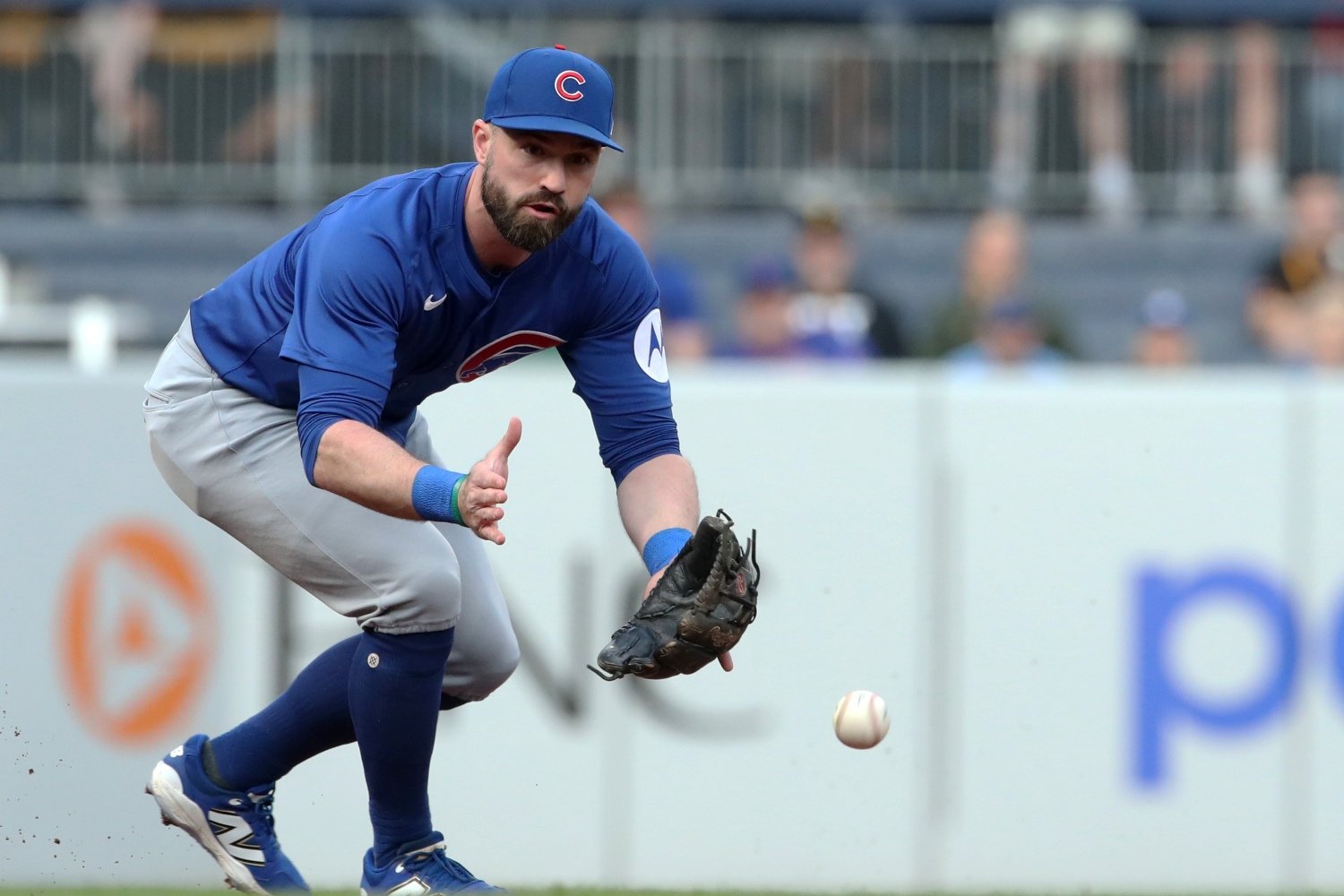 Ahead of the 2025 season, it wasn't a secret that third base represented an area of concern for the Chicago Cubs. A trade of Isaac Paredes, a failed pursuit of Alex Bregman, and a tossing of the keys to an untested rookie in Matt Shaw certainly had potential to compound into a dangerous situation where roster construction is concerned. That something close to the worst-case scenario has played out there and the Cubs have still come out ahead (18-12, so far) qualifies as a minor miracle. The team is not only producing runs at a high enough rate to compensate for the shortcomings of the hot corner, but playing sound defense just about everywhere else. The team's collective Fielding Run Value of 2 ranks 11th in the league, and while the outfield's 5 FRV on their own helps to prop it up somewhat, that they're above-average as a collective speaks to the overall defensive soundness this team has demonstrated early on. Especially when you consider that the third base position has been one of the worst. Not getting average offensive outcomes out of third base isn't a surprise (or even that big of a detriment). But the Cubs sit 27th in FRV out of the hot corner (-4). That's only a notch above Cleveland, whose -5 mark sits at the bottom of the rankings. There was an argument to be made that Shaw's defense didn't necessarily matter, if the bat came through early on. However, that didn't happen, and with the team now rotating out a collection of light-hitting utility types, the defensive aspect becomes more important. You need value on one side of the ball. The Cubs aren't getting it. We saw as much on Sunday, when Vidal Bruján misplayed a ball at third with two outs in the 10th inning against Philadelphia. With a quick runner in Trea Turner, he stepped back on a ground ball rather than attacking it. The result was an additional run to give the Phillies a 3-1 edge, which represents a much harder gap to close in a narrow extra-inning affair: Those are the types of things you risk when you don't have a full-time third baseman on the roster. Thus far, the Cubs have seen five different players man third base. Shaw got 18 appearances prior to his demotion to Iowa, Jon Berti's at 11, Gage Workman had seven before being cut, and each of Bruján and Justin Turner have appeared there twice. Berti is at -1 FRV, as was Workman before he flipped over to the South Side. Shaw, representing the largest sample (141 innings) checked in at -2. It's something you can stomach a little more if you're getting offensive production. The Cubs are not. Third base, in total, has posted a 57 wRC+ for them through 34 games. Again, it's hardly a surprise. Unless Shaw popped, you weren't expecting much out of the position. That's why the team wanted Bregman badly, but it's also fair to note that they declined to make a desperate lunge to finish a deal with him. They trusted Shaw, more than they should have. Given that, we're probably looking at a situation where the Cubs are going to need to prioritize the defensive side a little more. Whether that's giving one of those guys more of a full-time look or looking at external options isn't my call to make. But given Sunday's specific context and the bigger-picture defensive output from the position, it looks likely to keep presenting itself for further discussion.
 -
Alex Bregman never walked through that door. Matt Shaw had to be demoted, and Gage Workman is on the other side of town. The Chicago Cubs are on Plan D at third base, and it shows. Those are the types of things you risk when you don't have a full-time third baseman on the roster. Thus far, the Cubs have seen five different players man third base. Shaw got 18 appearances prior to his demotion to Iowa, Jon Berti's at 11, Gage Workman had seven before being cut, and each of Bruján and Justin Turner have appeared there twice. Berti is at -1 FRV, as was Workman before he flipped over to the South Side. Shaw, representing the largest sample (141 innings) checked in at -2. It's something you can stomach a little more if you're getting offensive production. The Cubs are not. Third base, in total, has posted a 57 wRC+ for them through 34 games. Again, it's hardly a surprise. Unless Shaw popped, you weren't expecting much out of the position. That's why the team wanted Bregman badly, but it's also fair to note that they declined to make a desperate lunge to finish a deal with him. They trusted Shaw, more than they should have. Given that, we're probably looking at a situation where the Cubs are going to need to prioritize the defensive side a little more. Whether that's giving one of those guys more of a full-time look or looking at external options isn't my call to make. But given Sunday's specific context and the bigger-picture defensive output from the position, it looks likely to keep presenting itself for further discussion. View full article
-
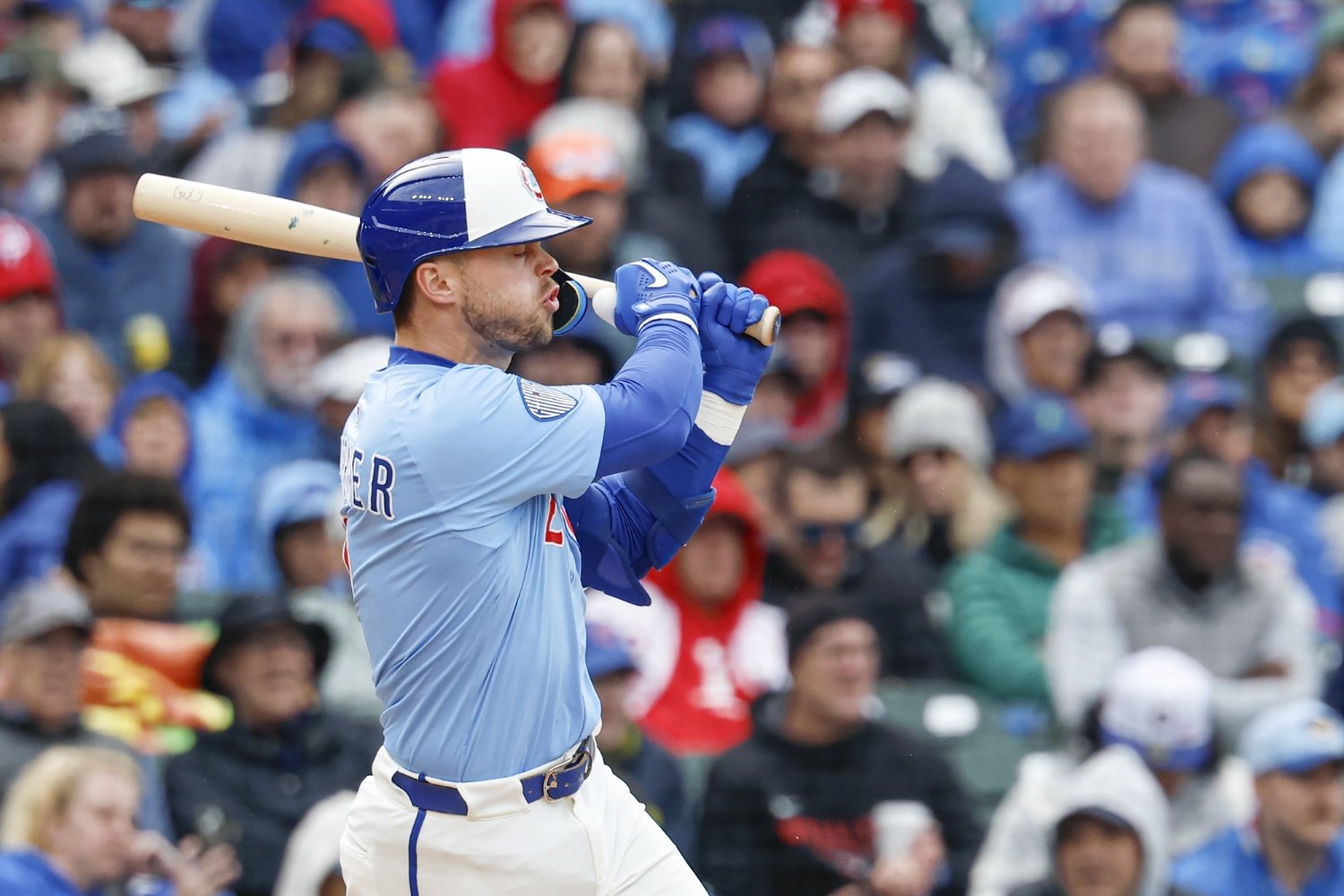 I love a paradox. There's something poetic about two things that don't necessarily work together (but also somehow do?). Lucky for me, I spend my time (outside of the classroom, anyway) covering baseball, a sport absolutely dripping with various contradictions. I explored as much fairly recently, in Kyle Tucker's approach to the offspeed pitch, but he's far from the only one plying that trade for the 2025 Chicago Cubs. Nico Hoerner hasn't always been a paradoxical player, but his evolution has drawn him in that direction. He's the contact-oriented guy with no power to speak of, to the point where even the barrel of the bat remains elusive. Hoerner has largely fit this archetype for most of his career: his best isolated slugging was a mere .129 back in 2022. But he's entrenched himself into that type of skill set even more as time has worn on. When Hoerner was selected out of Stanford, this type of player wasn't something entirely expected. In fact, MLB Pipeline's scouting report back in 2019 reported the following: Fifteen homers per season? Since his arrival at the top level that year, Hoerner topped out at 10 (2022). Since then, he's hit 9 (2023) and 7 (2024), and he has zero on the 2025 campaign thus far. Instead of Ian Kinsler—a common comp for him as a prospect—Hoerner's game has become something more akin to Luis Arraez—with (somehow) even less power. Don't get it twisted. The contact skills are elite. The rarified air of Hoerner's 2025 contact rate (91.6%) has him in league with Arraez (96.9) and Steven Kwan (92.6). Rookie shortstop Jacob Wilson (92.0) has also shoehorned himself into that elite group, leaving Hoerner's Contact% as the fourth-best in the league. He's more than 1% clear of Milwaukee's Sal Frelick and Arizona's Geraldo Perdomo, who round out the top six. That Hoerner finds himself in such a group shouldn't be a surprise. His contact rate has risen, if only by a shred, each year he's been in the league. That comes with the combination of a swing rate that has risen in three consecutive years and a whiff rate that has been falling since 2021. That latter rate (Whiff%) is currently at a career-best 4.2% of all the pitches he sees, leaving him in the 99th percentile. He's simply become one of the best in the business in putting the bat on the baseball. But how much value lies there? That is a valid question. Sure, you can make contact all day and put balls in play, but when you've got 8th-percentile bat speed, you're not walking, and you're not driving the ball, what are you adding to the lineup? As a hitter, Hoerner is doing exactly what he should be doing to maximize his output. Already without a bunch of swing-and-miss in his game, Hoerner's rare moments of "impact" have come against offspeed pitches. He's attacking those pitches to a greater degree than ever: But, to our earlier point, there isn't a ton of impact here. Hoerner's ISO on the season checks in at just .061 and he has yet to record a Statcast Barrel. The lack of bat speed—which has always been present and doesn't appear to be a result of offseason forearm surgery—will likely continue to pin him down from a productivity standpoint. Luckily for Hoerner, his speed and baserunning allow him to continue to maintain value. Even with questionable quality-of-contact outcomes, he's still at a .307 average on balls in play thus far. His 15.6% infield hit rate (the percentage of all his ground balls that become infield hits) is a career high. So while he's putting the ball on the ground in the middle of this exceptional contact volume, it isn't quite holding him back from being a fixture on the bases (.327 OBP to date). When that characteristic starts to wane, though, there could be some cause for concern in his ability to reach base as a contact-only guy. It will wane, too. No one had an infield hit rate north of 12.7% last season. And luckily for the Cubs at large, it's unlikely that this means anything for the 2025 campaign. The Cubs land on the higher end of the contact spectrum, and with the team generating a bit of power in the bottom half of the order (courtesy of Pete Crow-Armstrong's surge and the combination of Miguel Amaya and Carson Kelly from behind the plate), Hoerner's contact is a boon for overall run production. The metrics don't love his skill set from a park-adjusted standpoint. Hoerner's wRC+ is at 92. His OPS+ is at 94. If you're looking at catch-all figures that flatter his overall value, you're likely not going to find it. But for what the Cubs have around him, it's working. The contact volume, combined with what he brings defensively, allow him to maintain value in that grander context. He's become an increasingly rare archetype among major-league hitters. It's not always going to work, but it'll do for now.
 -
How much value is there in being Luis Arraez? Cubs infielder Nico Hoerner is running some experiments to find out. Image courtesy of © Kamil Krzaczynski-Imagn Images I love a paradox. There's something poetic about two things that don't necessarily work together (but also somehow do?). Lucky for me, I spend my time (outside of the classroom, anyway) covering baseball, a sport absolutely dripping with various contradictions. I explored as much fairly recently, in Kyle Tucker's approach to the offspeed pitch, but he's far from the only one plying that trade for the 2025 Chicago Cubs. Nico Hoerner hasn't always been a paradoxical player, but his evolution has drawn him in that direction. He's the contact-oriented guy with no power to speak of, to the point where even the barrel of the bat remains elusive. Hoerner has largely fit this archetype for most of his career: his best isolated slugging was a mere .129 back in 2022. But he's entrenched himself into that type of skill set even more as time has worn on. When Hoerner was selected out of Stanford, this type of player wasn't something entirely expected. In fact, MLB Pipeline's scouting report back in 2019 reported the following: Fifteen homers per season? Since his arrival at the top level that year, Hoerner topped out at 10 (2022). Since then, he's hit 9 (2023) and 7 (2024), and he has zero on the 2025 campaign thus far. Instead of Ian Kinsler—a common comp for him as a prospect—Hoerner's game has become something more akin to Luis Arraez—with (somehow) even less power. Don't get it twisted. The contact skills are elite. The rarified air of Hoerner's 2025 contact rate (91.6%) has him in league with Arraez (96.9) and Steven Kwan (92.6). Rookie shortstop Jacob Wilson (92.0) has also shoehorned himself into that elite group, leaving Hoerner's Contact% as the fourth-best in the league. He's more than 1% clear of Milwaukee's Sal Frelick and Arizona's Geraldo Perdomo, who round out the top six. That Hoerner finds himself in such a group shouldn't be a surprise. His contact rate has risen, if only by a shred, each year he's been in the league. That comes with the combination of a swing rate that has risen in three consecutive years and a whiff rate that has been falling since 2021. That latter rate (Whiff%) is currently at a career-best 4.2% of all the pitches he sees, leaving him in the 99th percentile. He's simply become one of the best in the business in putting the bat on the baseball. But how much value lies there? That is a valid question. Sure, you can make contact all day and put balls in play, but when you've got 8th-percentile bat speed, you're not walking, and you're not driving the ball, what are you adding to the lineup? As a hitter, Hoerner is doing exactly what he should be doing to maximize his output. Already without a bunch of swing-and-miss in his game, Hoerner's rare moments of "impact" have come against offspeed pitches. He's attacking those pitches to a greater degree than ever: But, to our earlier point, there isn't a ton of impact here. Hoerner's ISO on the season checks in at just .061 and he has yet to record a Statcast Barrel. The lack of bat speed—which has always been present and doesn't appear to be a result of offseason forearm surgery—will likely continue to pin him down from a productivity standpoint. Luckily for Hoerner, his speed and baserunning allow him to continue to maintain value. Even with questionable quality-of-contact outcomes, he's still at a .307 average on balls in play thus far. His 15.6% infield hit rate (the percentage of all his ground balls that become infield hits) is a career high. So while he's putting the ball on the ground in the middle of this exceptional contact volume, it isn't quite holding him back from being a fixture on the bases (.327 OBP to date). When that characteristic starts to wane, though, there could be some cause for concern in his ability to reach base as a contact-only guy. It will wane, too. No one had an infield hit rate north of 12.7% last season. And luckily for the Cubs at large, it's unlikely that this means anything for the 2025 campaign. The Cubs land on the higher end of the contact spectrum, and with the team generating a bit of power in the bottom half of the order (courtesy of Pete Crow-Armstrong's surge and the combination of Miguel Amaya and Carson Kelly from behind the plate), Hoerner's contact is a boon for overall run production. The metrics don't love his skill set from a park-adjusted standpoint. Hoerner's wRC+ is at 92. His OPS+ is at 94. If you're looking at catch-all figures that flatter his overall value, you're likely not going to find it. But for what the Cubs have around him, it's working. The contact volume, combined with what he brings defensively, allow him to maintain value in that grander context. He's become an increasingly rare archetype among major-league hitters. It's not always going to work, but it'll do for now. View full article
-
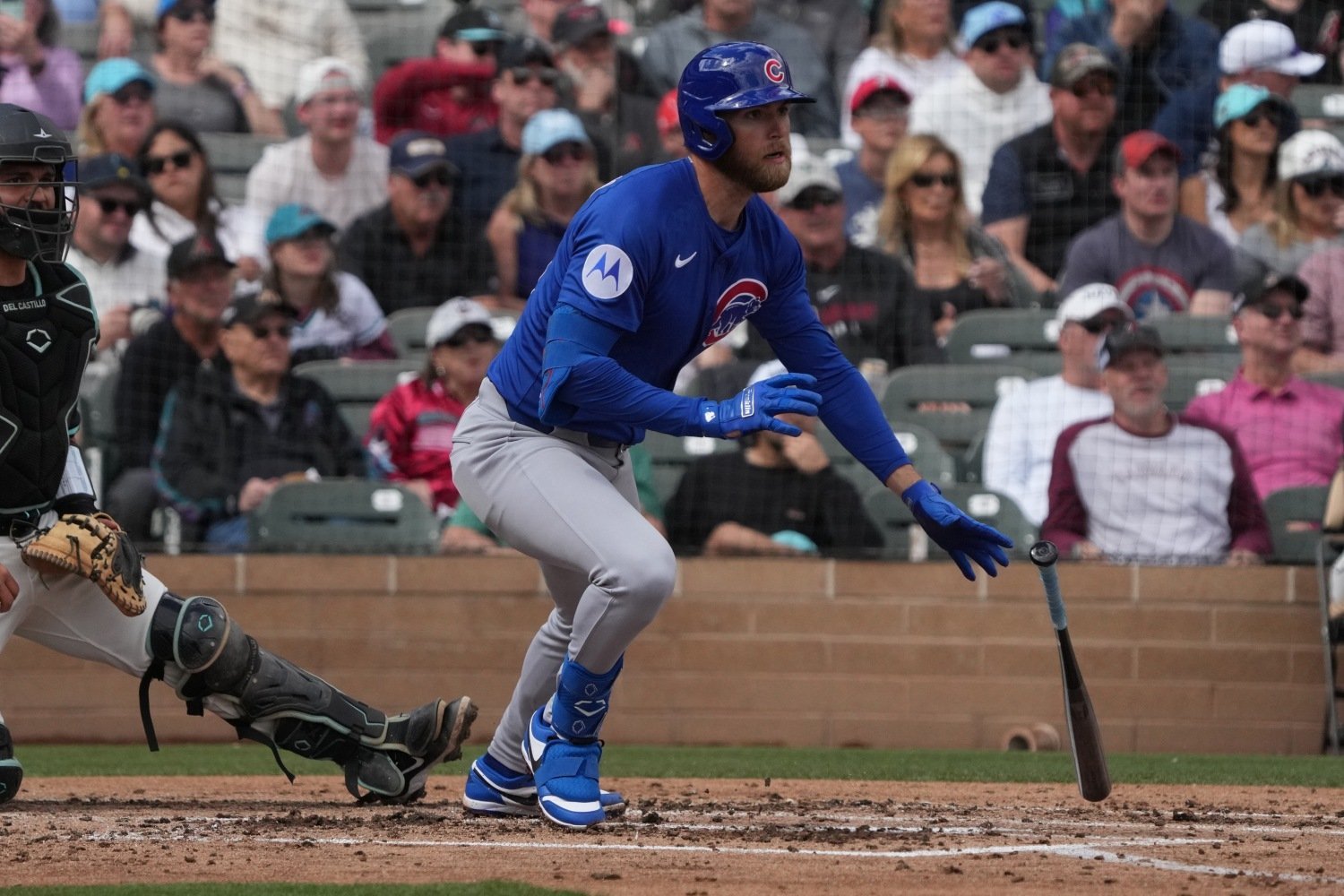 In between games of their quick two-game series with the Los Angeles Dodgers, the Chicago Cubs shuffled the roster around a little bit. Just not quite in the way that we thought they would: The pitching side of things was noted earlier this week. With the Cubs acquiring Drew Pomeranz and his upward mobility clause on Monday of this week, the initial report was that he'd be called up to the big club on Wednesday. That's come to fruition with his selection from Iowa and the subsequent placing of Justin Steele on the 60-day IL. Steele, of course, will miss the rest of the 2025 season after undergoing elbow surgery. Also notable within the pitching transactions is the quick option of Gavin Hollowell back to Iowa. Hollowell made his first appearance of 2025 on Tuesday night, flashing a new arm slot and holding things down for two crucial innings in the Cubs' comeback win over the Dodgers. Given the outcomes there, it probably won't be long before we see him again. Pomeranz, though, will give manager Craig Counsell a fresh arm from the left side to work with for at least the next handful of days. Obviously, the most pressing news from Sahadev Sharma is the signing of infielder Nicky Lopez to a Major League deal. Lopez, you'll remember, was with the Cubs in spring training, but opted out of his deal once it became clear that Vidal Bruján and Gage Workman were ahead of him in the utility infielder game. He caught on with the Los Angeles Angels in Zach Neto's absence. With Neto returning over the weekend, Lopez was sent back out and elected free agency. Lopez had a really strong spring for the Cubs (195 wRC+ in 24 PA), but his bat has consistently been below average (with the exception of a 104 wRC+ back in 2021). He does bring a lot versatility to the infield. Given Workman's broad struggles with strikeouts and recent struggles with the glove (especially on Tuesday), there's an element of stability that Lopez can bring to the group. It's an unfortunate development for Workman, in particular, as we couldn't remotely classify this as a legitimate run. He had a fantastic spring but was unable to find consistent opportunity with Matt Shaw in front of him to start the year. The small sample wasn't nearly enough to warrant a longer run with the roster, however. At least, not for a team pressing for early wins in a schedule as tough as this. He'll head to waivers and, if he gets through, will be offered back to Detroit, his original, pre-Rule 5 team. Shaw, of course, is not ready to return to the big leagues just yet. He has just one hit in 13 at-bats since returning to Triple-A Iowa and is still in search of the confidence that made him one of the best prospects in all of baseball. He'll be back at some point in 2025, but it may not be soon. So, then, where do the Cubs go from here at the hot corner? All of Jon Berti , Bruján, and (technically) Justin Turner can handle the position, but that triumvirate isn't exactly going to solve the team's offensive woes at third base. Turner has a .412 OPS and looks like he'll be the next to go when the Cubs need a free roster spot, while Berti and Bruján are far more valuable as versatile chess pieces off the bench, rather than everyday starters. Perhaps Lopez, with enough playing time, can prove his spring training performance wasn't all that much of a fluke. We're not going to pretend like this roster shuffling changes much for the Cubs in the grand scheme of things, of course. You've replaced one light-hitting utility infielder with another. But Lopez is certainly a more seasoned version of Workman, given the lengthier run he's gotten at the top level since 2019. Now back in the fold, he does at least combine with Bruján and Berti to give the Cubs one of the more versatile bench groups in all of baseball. And that's probably going to be necessary for this next stretch of baseball given the remaining vacancy at third base.
 -
Pitching moves were expected. Position player moves... less so. Image courtesy of © Rick Scuteri-Imagn Images In between games of their quick two-game series with the Los Angeles Dodgers, the Chicago Cubs shuffled the roster around a little bit. Just not quite in the way that we thought they would: The pitching side of things was noted earlier this week. With the Cubs acquiring Drew Pomeranz and his upward mobility clause on Monday of this week, the initial report was that he'd be called up to the big club on Wednesday. That's come to fruition with his selection from Iowa and the subsequent placing of Justin Steele on the 60-day IL. Steele, of course, will miss the rest of the 2025 season after undergoing elbow surgery. Also notable within the pitching transactions is the quick option of Gavin Hollowell back to Iowa. Hollowell made his first appearance of 2025 on Tuesday night, flashing a new arm slot and holding things down for two crucial innings in the Cubs' comeback win over the Dodgers. Given the outcomes there, it probably won't be long before we see him again. Pomeranz, though, will give manager Craig Counsell a fresh arm from the left side to work with for at least the next handful of days. Obviously, the most pressing news from Sahadev Sharma is the signing of infielder Nicky Lopez to a Major League deal. Lopez, you'll remember, was with the Cubs in spring training, but opted out of his deal once it became clear that Vidal Bruján and Gage Workman were ahead of him in the utility infielder game. He caught on with the Los Angeles Angels in Zach Neto's absence. With Neto returning over the weekend, Lopez was sent back out and elected free agency. Lopez had a really strong spring for the Cubs (195 wRC+ in 24 PA), but his bat has consistently been below average (with the exception of a 104 wRC+ back in 2021). He does bring a lot versatility to the infield. Given Workman's broad struggles with strikeouts and recent struggles with the glove (especially on Tuesday), there's an element of stability that Lopez can bring to the group. It's an unfortunate development for Workman, in particular, as we couldn't remotely classify this as a legitimate run. He had a fantastic spring but was unable to find consistent opportunity with Matt Shaw in front of him to start the year. The small sample wasn't nearly enough to warrant a longer run with the roster, however. At least, not for a team pressing for early wins in a schedule as tough as this. He'll head to waivers and, if he gets through, will be offered back to Detroit, his original, pre-Rule 5 team. Shaw, of course, is not ready to return to the big leagues just yet. He has just one hit in 13 at-bats since returning to Triple-A Iowa and is still in search of the confidence that made him one of the best prospects in all of baseball. He'll be back at some point in 2025, but it may not be soon. So, then, where do the Cubs go from here at the hot corner? All of Jon Berti , Bruján, and (technically) Justin Turner can handle the position, but that triumvirate isn't exactly going to solve the team's offensive woes at third base. Turner has a .412 OPS and looks like he'll be the next to go when the Cubs need a free roster spot, while Berti and Bruján are far more valuable as versatile chess pieces off the bench, rather than everyday starters. Perhaps Lopez, with enough playing time, can prove his spring training performance wasn't all that much of a fluke. We're not going to pretend like this roster shuffling changes much for the Cubs in the grand scheme of things, of course. You've replaced one light-hitting utility infielder with another. But Lopez is certainly a more seasoned version of Workman, given the lengthier run he's gotten at the top level since 2019. Now back in the fold, he does at least combine with Bruján and Berti to give the Cubs one of the more versatile bench groups in all of baseball. And that's probably going to be necessary for this next stretch of baseball given the remaining vacancy at third base. View full article
-
The shape of the barrel feels a lot less important if you don't put any of the bat on the ball. Image courtesy of © Denis Poroy-Imagn Images An anecdote: I swung a torpedo bat for the first time on Monday. For some reason, one of my JV players acquired one at the earliest possible moment. I found that it was easier to find the barrel, but the weight distribution was quite a bit different. And when I didn't find the barrel, I found more pain in my hands than with a traditional barrel. In short, it's something that clearly requires significant adjustment and isn't going to be an appropriate tool for everyone. Not that that's new information. For those 72 hours during which the baseball world was abuzz with discourse regarding the new bat shape, the prevailing opinion likened it to a club fitting in golf. Nor do we suspect that Dansby Swanson came out to start the year swinging it for the first time in his career. Ultimately, there's some indication that it's serving him well, although it also doesn't seem that he's using it all the time. Meanwhile, there's a segment of Swanson's game that is going terribly wrong and rendering those benefits rather hollow—which his bat had better not be, that would be illegal and not very effective. The last time I wrote on Swanson, his slash included a .211 average and a .281 on-base percentage, but the underlying data was encouraging. Each of those trends has gone in starkly opposite directions. In the 10 days since I wrote that piece, Swanson's average has plummeted further, to just .177, while he's scratching out a meager .223 OBP. His ISO, which sat at .263 back then, currently checks in at .167. The strikeout rate has ballooned from 18.5% at that point to 28.8% now. It's that last fact that has us most concerned for Swanson moving forward. The 18.5% figure came in at the 67th percentile. It's now in the 17th. The Cubs have played seven games since that last Swanson examination. Across that stretch (31 plate appearances), Swanson has 4 hits. He's struck out 15 times. For those not well-versed in mathematics, Swanson has struck out nearly half the time in his last seven games. It sucks. So what, exactly, is going wrong? Many of Swanson's contact trends remain the same (including an actual increase on Contact% inside the strike zone) and his Hard-Hit% (52.9) is in the 87th percentile. His BABIP has come up somewhat (.206), and he's driving the ball in the air. Many of his outcomes are indicative of a player that should be far better on the stat sheet. There's just one massive problem: when he expands his zone, it's a bloodbath. Chase is a natural component to the approach for most hitters. Few can minimize chase in favor of in-zone swings and, thus, more production (hello, Kyle Tucker). Swanson has a 24.9 Chase% for his career. This year, it's at 26.1%. That's... not really a notable increase. What is notable, however, is what is happening when he does chase. Swanson's contact rate on pitches outside of the strike zone checks in at an appalling 34.0 percent. That's down from 50.4 percent last year and 52.4 percent for his career. And it somehow gets more concerning. Swanson is not only chasing fastballs at a higher frequency, he's missing them: Opposing pitchers are missing the zone at a 42.5 percent rate with fastballs. Swanson is swinging at such pitches 30.6 percent of the time. That's a big ol' jump from last season, when he chased fastballs just 19.9 percent of the time. The overall O-Contact% is, quite obviously, concerning, but to be missing fastballs to that extent really sets off alarm bells. He seems to have gotten better at identifying offspeed stuff—or at least, he's sitting more eagerly on the fastball—because he's swinging less often on offspeed pitches and more often on fastballs, regardless of location. If he's sitting on the fastball and seeing it well, maybe this will just require him to temper his aggressiveness when pitchers take him out of the zone with it—but you'd hope to see more contact on it, given his apparent approach. There are other factors contributing to the slump in which Swanson finds himself currently mired. Wrigley tamping down right-handed hitters against his rise in flyballs is an easy one. But the inability to generate any kind of contact outside of the zone represents perhaps the largest and most concerning component of his April. Is he just out of sorts? Is the torpedo throwing off balance and showing us both sides of the spectrum? It's unfortunate, because the actual batted-ball outcomes are quite good. But if Swanson isn't generating contact, he's generating nothing. If he's locking in on a particular pitch type in order to do more damage when he gets it, he'll have to make better swing decisions even upon identifying that pitch. Otherwise, a partial retreat to a more balanced attack is in order. View full article
-
For Dansby Swanson, Strikeouts Are Piling Up. What's Going On?
RandallPnkFloyd posted an article in Cubs
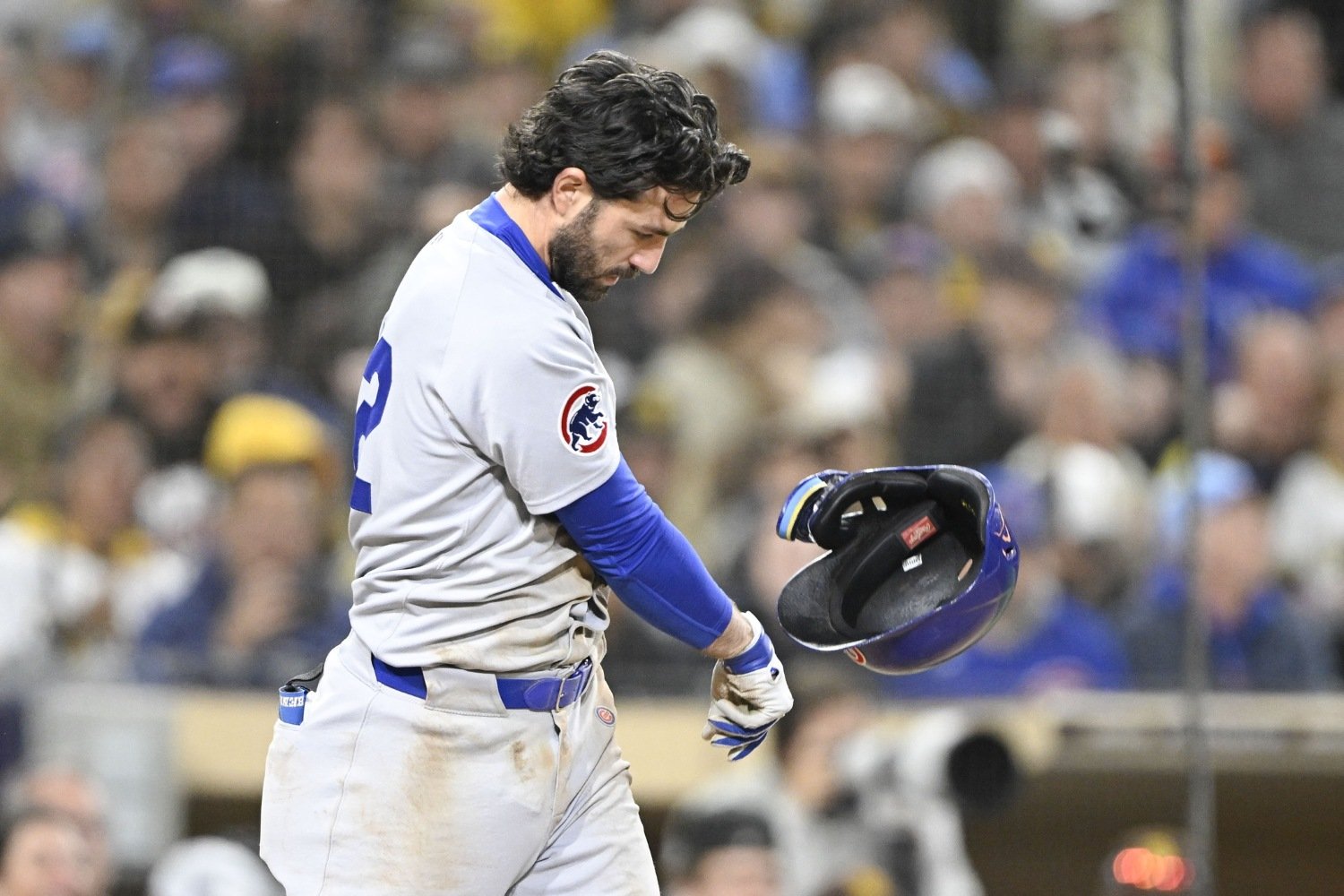 An anecdote: I swung a torpedo bat for the first time on Monday. For some reason, one of my JV players acquired one at the earliest possible moment. I found that it was easier to find the barrel, but the weight distribution was quite a bit different. And when I didn't find the barrel, I found more pain in my hands than with a traditional barrel. In short, it's something that clearly requires significant adjustment and isn't going to be an appropriate tool for everyone. Not that that's new information. For those 72 hours during which the baseball world was abuzz with discourse regarding the new bat shape, the prevailing opinion likened it to a club fitting in golf. Nor do we suspect that Dansby Swanson came out to start the year swinging it for the first time in his career. Ultimately, there's some indication that it's serving him well, although it also doesn't seem that he's using it all the time. Meanwhile, there's a segment of Swanson's game that is going terribly wrong and rendering those benefits rather hollow—which his bat had better not be, that would be illegal and not very effective. The last time I wrote on Swanson, his slash included a .211 average and a .281 on-base percentage, but the underlying data was encouraging. Each of those trends has gone in starkly opposite directions. In the 10 days since I wrote that piece, Swanson's average has plummeted further, to just .177, while he's scratching out a meager .223 OBP. His ISO, which sat at .263 back then, currently checks in at .167. The strikeout rate has ballooned from 18.5% at that point to 28.8% now. It's that last fact that has us most concerned for Swanson moving forward. The 18.5% figure came in at the 67th percentile. It's now in the 17th. The Cubs have played seven games since that last Swanson examination. Across that stretch (31 plate appearances), Swanson has 4 hits. He's struck out 15 times. For those not well-versed in mathematics, Swanson has struck out nearly half the time in his last seven games. It sucks. So what, exactly, is going wrong? Many of Swanson's contact trends remain the same (including an actual increase on Contact% inside the strike zone) and his Hard-Hit% (52.9) is in the 87th percentile. His BABIP has come up somewhat (.206), and he's driving the ball in the air. Many of his outcomes are indicative of a player that should be far better on the stat sheet. There's just one massive problem: when he expands his zone, it's a bloodbath. Chase is a natural component to the approach for most hitters. Few can minimize chase in favor of in-zone swings and, thus, more production (hello, Kyle Tucker). Swanson has a 24.9 Chase% for his career. This year, it's at 26.1%. That's... not really a notable increase. What is notable, however, is what is happening when he does chase. Swanson's contact rate on pitches outside of the strike zone checks in at an appalling 34.0 percent. That's down from 50.4 percent last year and 52.4 percent for his career. And it somehow gets more concerning. Swanson is not only chasing fastballs at a higher frequency, he's missing them: Opposing pitchers are missing the zone at a 42.5 percent rate with fastballs. Swanson is swinging at such pitches 30.6 percent of the time. That's a big ol' jump from last season, when he chased fastballs just 19.9 percent of the time. The overall O-Contact% is, quite obviously, concerning, but to be missing fastballs to that extent really sets off alarm bells. He seems to have gotten better at identifying offspeed stuff—or at least, he's sitting more eagerly on the fastball—because he's swinging less often on offspeed pitches and more often on fastballs, regardless of location. If he's sitting on the fastball and seeing it well, maybe this will just require him to temper his aggressiveness when pitchers take him out of the zone with it—but you'd hope to see more contact on it, given his apparent approach. There are other factors contributing to the slump in which Swanson finds himself currently mired. Wrigley tamping down right-handed hitters against his rise in flyballs is an easy one. But the inability to generate any kind of contact outside of the zone represents perhaps the largest and most concerning component of his April. Is he just out of sorts? Is the torpedo throwing off balance and showing us both sides of the spectrum? It's unfortunate, because the actual batted-ball outcomes are quite good. But if Swanson isn't generating contact, he's generating nothing. If he's locking in on a particular pitch type in order to do more damage when he gets it, he'll have to make better swing decisions even upon identifying that pitch. Otherwise, a partial retreat to a more balanced attack is in order.
 -
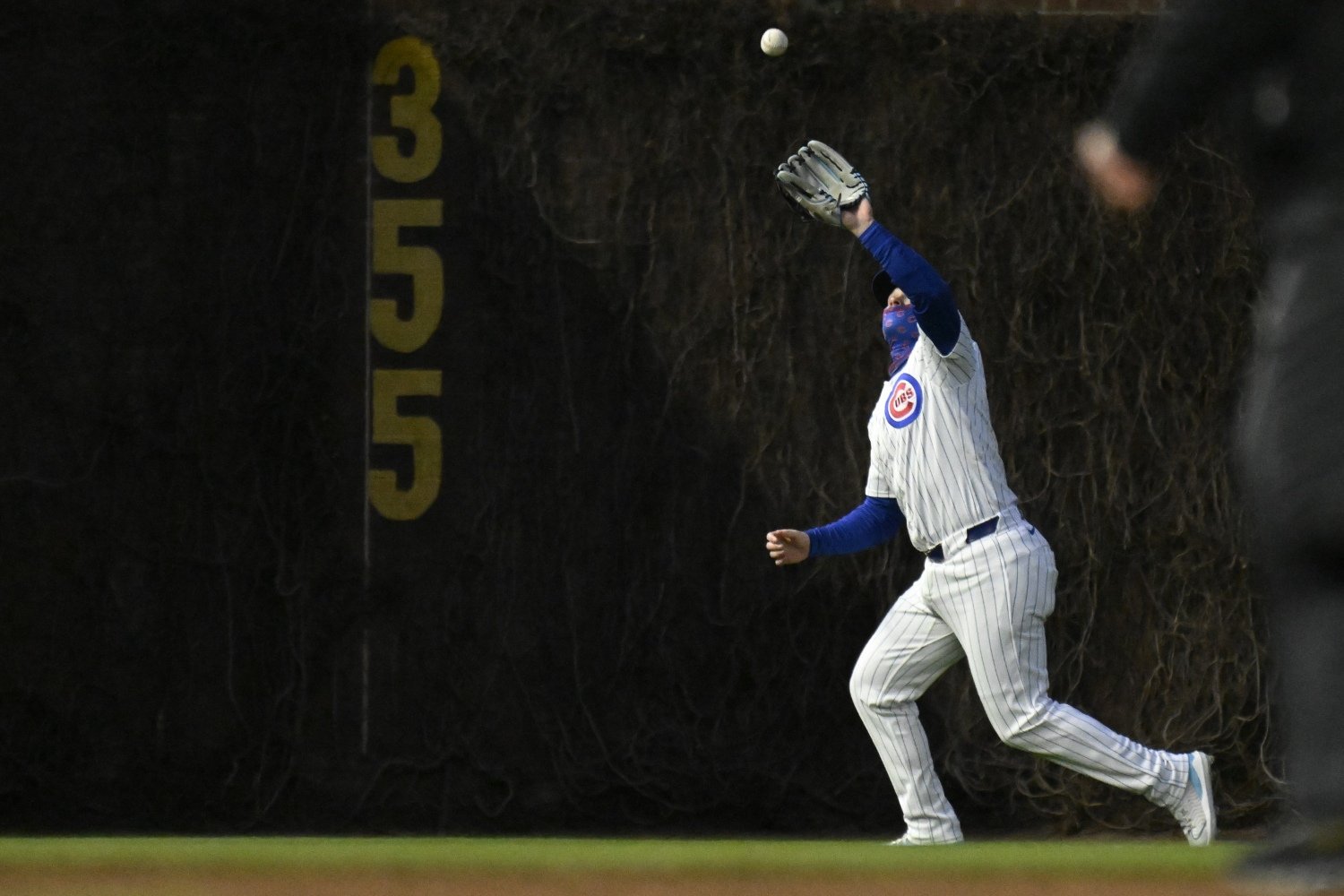 Ian Happ has won three consecutive Gold Glove awards. Somehow. For the last handful of years, there's been a perception of the Chicago Cubs' left fielder that doesn't necessarily link up with reality. Those of us who watch the Cubs with regularity know that he is, at times, a terrific defender—but that he's less so at other times. He posted a Fielding Run Value of 1 in 2022, -4 in 2023, and -1 in 2024. In each year, Happ took home hardware indicating that he was one of the best defenders in Major League Baseball. We know that the Rawlings Gold Glove Award™ is based more on perception than reality. It's not an accolade distributed based on any statistical merit, but rather on reputation. Arguably, then, it's more telling that Happ hasn't even sniffed a Fielding Bible Award, which is rooted in data and positioning (among the various factors) and voted on by attentive experts. But something feels a little bit different about the way Happ is playing defense this year. Maybe it's having Pete Crow-Armstrong to his left on a full-time basis. Perhaps it's something as simple as a renewed focus. In a position that lacks high-end performance in the eyes of defensive metrics, though, Happ is proving to be at his best. Thus far in 2025, he's giving us defense that looks like this: And like this: We're not naive enough to put too much stock in defensive output before April even comes to a close. It requires a much larger sample than what a hitter turns in at the plate to make a sound numerical evaluation. For the sake of argument, though, let's look at some of the output that Happ has been able to turn in so far. Fielding Run Value is Statcast's comprehensive defensive metric. It takes every quantifiable component that a defender can submit to the stat sheet and spits it out in terms of runs above or below average. Happ is at 0. That would indicate him to be an exactly average defender. It's not a number that pops on its own, but consider where he landed in each of the last two seasons (decidedly below average). Also, consider where the position at large sits through roughly a month of play. Of the 23 qualifying left fielders, a dozen sit below the average threshold. Even Steven Kwan—two-time winner of the Fielding Bible Award in left—comes in at 0, losing a run for his range that he made back with his arm. Happ has no such compromise. He's been average across the board. More importantly, there is something interesting in his Directional Outs Above Average data. Happ was perfectly adequate the last couple of years coming straight in (4) or moving straight back (2). But when you tossed a direction toward either angle, problems arose. Happ was -3 in moving in and to his left, -2 in and to his right, and -1 back and to his right. While that latter figure still sits at -1, he's erased the shortcomings that existed on more shallow fare. He's above-average coming in and moving to his left (no surprise, given the above video vs. Arizona from this past weekend) and average elsewhere. It's possible that the initial jump bears some responsibility for getting Happ's defense in order. He was exactly average in Outfield Jump last year and below average in 2023. This year, he's at 0.6 Feet vs. Avg in the jump. It's not a significant leap, but could be just enough to kickstart the defensive output. Happ also, simply, looks more comfortable when tracking difficult fly balls this year. With Crow-Armstrong entrenched in center and the addition of Kyle Tucker opposite Happ, the Cubs have the makings of one of the best defensive outfields in the sport. If Happ's early returns are in any way sustainable, it's very possible that that upside could come to fruition.
 -
And it's not like he was a liability before. Image courtesy of © Matt Marton-Imagn Images Ian Happ has won three consecutive Gold Glove awards. Somehow. For the last handful of years, there's been a perception of the Chicago Cubs' left fielder that doesn't necessarily link up with reality. Those of us who watch the Cubs with regularity know that he is, at times, a terrific defender—but that he's less so at other times. He posted a Fielding Run Value of 1 in 2022, -4 in 2023, and -1 in 2024. In each year, Happ took home hardware indicating that he was one of the best defenders in Major League Baseball. We know that the Rawlings Gold Glove Award™ is based more on perception than reality. It's not an accolade distributed based on any statistical merit, but rather on reputation. Arguably, then, it's more telling that Happ hasn't even sniffed a Fielding Bible Award, which is rooted in data and positioning (among the various factors) and voted on by attentive experts. But something feels a little bit different about the way Happ is playing defense this year. Maybe it's having Pete Crow-Armstrong to his left on a full-time basis. Perhaps it's something as simple as a renewed focus. In a position that lacks high-end performance in the eyes of defensive metrics, though, Happ is proving to be at his best. Thus far in 2025, he's giving us defense that looks like this: And like this: We're not naive enough to put too much stock in defensive output before April even comes to a close. It requires a much larger sample than what a hitter turns in at the plate to make a sound numerical evaluation. For the sake of argument, though, let's look at some of the output that Happ has been able to turn in so far. Fielding Run Value is Statcast's comprehensive defensive metric. It takes every quantifiable component that a defender can submit to the stat sheet and spits it out in terms of runs above or below average. Happ is at 0. That would indicate him to be an exactly average defender. It's not a number that pops on its own, but consider where he landed in each of the last two seasons (decidedly below average). Also, consider where the position at large sits through roughly a month of play. Of the 23 qualifying left fielders, a dozen sit below the average threshold. Even Steven Kwan—two-time winner of the Fielding Bible Award in left—comes in at 0, losing a run for his range that he made back with his arm. Happ has no such compromise. He's been average across the board. More importantly, there is something interesting in his Directional Outs Above Average data. Happ was perfectly adequate the last couple of years coming straight in (4) or moving straight back (2). But when you tossed a direction toward either angle, problems arose. Happ was -3 in moving in and to his left, -2 in and to his right, and -1 back and to his right. While that latter figure still sits at -1, he's erased the shortcomings that existed on more shallow fare. He's above-average coming in and moving to his left (no surprise, given the above video vs. Arizona from this past weekend) and average elsewhere. It's possible that the initial jump bears some responsibility for getting Happ's defense in order. He was exactly average in Outfield Jump last year and below average in 2023. This year, he's at 0.6 Feet vs. Avg in the jump. It's not a significant leap, but could be just enough to kickstart the defensive output. Happ also, simply, looks more comfortable when tracking difficult fly balls this year. With Crow-Armstrong entrenched in center and the addition of Kyle Tucker opposite Happ, the Cubs have the makings of one of the best defensive outfields in the sport. If Happ's early returns are in any way sustainable, it's very possible that that upside could come to fruition. View full article
-
It's Time for More Michael Busch Against Left-Handed Pitching
RandallPnkFloyd posted an article in Cubs
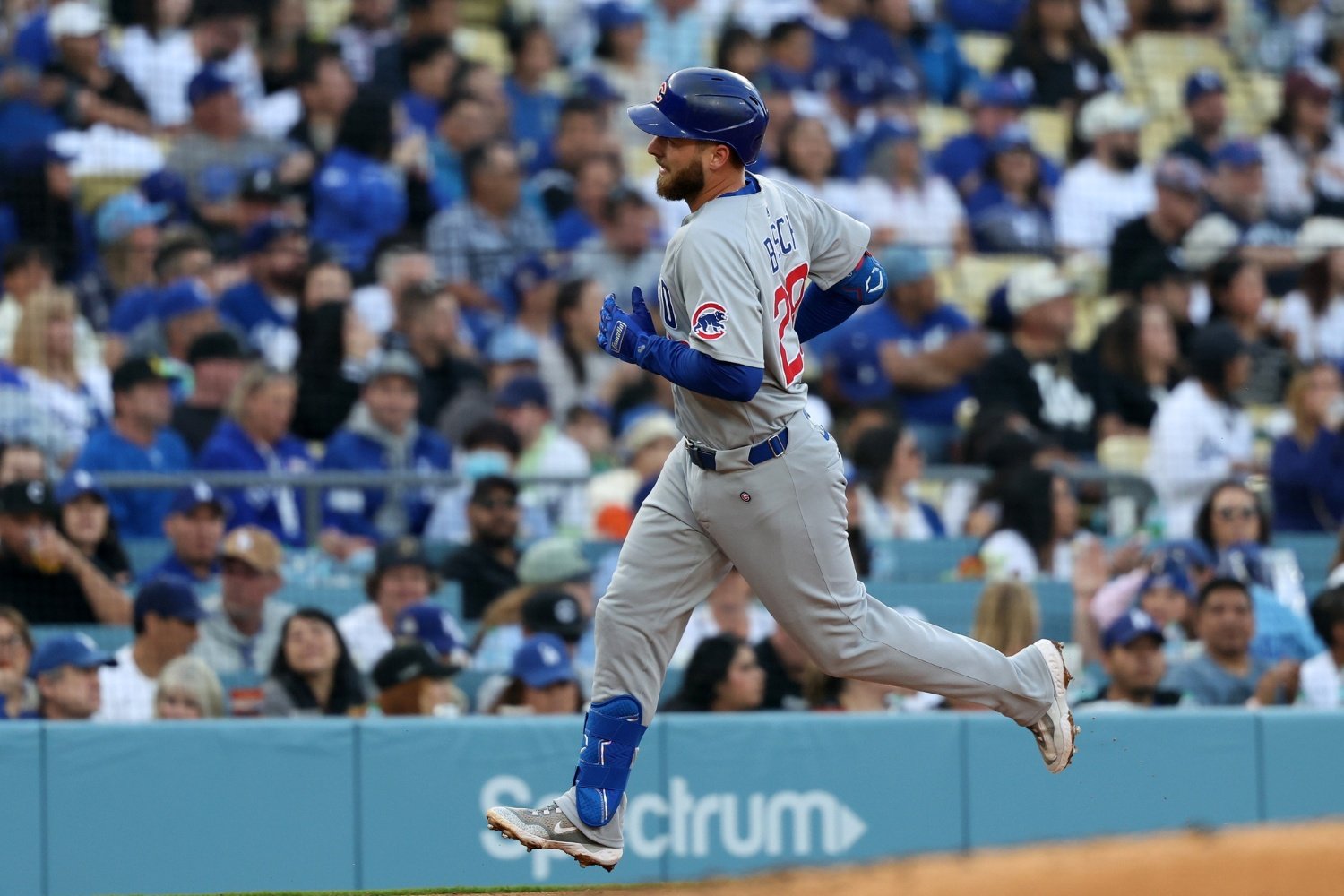 The Chicago Cubs have a full-time first baseman on their roster. It's inarguable. Are there better ones? Sure. But the Cubs know what it looks like to not have one. Michael Busch is one. That's why Craig Counsell's approach to the lineup to start the year has been a bit perplexing. Busch earned the team's trust last year. He posted a 119 wRC+ and hit 21 home runs; his defense also improved dramatically as the season progressed. By fWAR, he was the ninth-best first baseman among 25 qualifers (2.3). Had it not been for the typical rookie ebb and flow, he might've landed higher, especially as the defense got better. But the upside in the bat was evident from the start. Not unlike this year, Busch got off to a strong offensive start in 2024. He posted a 130 wRC+ in the first month of the year, along with a .234 ISO. It didn't entirely hold up wire-to-wire, but Busch was able to reach the end as a more mature hitter in terms of approach. He even rediscovered his power in September (.243 ISO). His strikeout rate fell each month from May onward, bottoming out (in a good way) with a 20.9 K% in September. From Busch, we expected growth and got it. The gradual improvement of the approach and comfort on the defensive side left zero questions at first ahead of 2025, and the excitement only rose as he had a scorching spring. March and April have only brought more success in each regard, as the wRC+ sits at an astronomical 162. His ISO is a terrific .284, and he's only striking out 24.0% of the time. Despite that latter stat, Busch is demonstrating more patience. His swing rate is down (42.1%), as well as his chase rate (22.1%). While the sustainability of his start can be reasonably fairly questioned, the profile really can't be. We know what he is and now it's a matter of fine-tuning. Interestingly, though, the Cubs deployed him in a bit different a fashion throughout his rookie campaign versus what we've seen so far in 2025. Unlike 2024, Craig Counsell has chosen to shield Busch almost entirely from left-handed pitching. Busch has only seven plate appearances against southpaws; he has 68 against righties. He's struck out three times and walked once against same-handed hurlers, with a wRC+ of 82. Instead, Counsell has chosen to roll heavily with Justin Turner against lefties. In fact, we've openly wondered if this is a platoon situation. Seiya Suzuki's injury could press Turner into more regular DH duty, but that's been the trend on both the pinch-hitting and starting fronts. Turner has 16 plate appearances against left-handed arms, with three hits and three walks to speak of. The numbers are fine on their own, but they're also low-impact. Meanwhile, Busch hasn't proved completely inept against lefties in his own right. Of the 165 plate appearances taken by Cubs first basemen against lefties last year, Busch had 94. He totaled 100 encounters with them, sprinkling in pinch-hit and DH chances. He hit .258 therein, with a 103 wRC+ and .124 ISO. His strikeout rate was 25%, which is harder to work around when one hits for below-average power, but he accepted enough walks to be a viable producer. Nonetheless, this spring, Counsell has reduced Busch's exposure to southpaws in favor of the newcoming Turner. The slugging vet has been fine, but it's not as if he's some vaunted lefty masher. He's fairly split-neutral for his career (125 wRC+ vs. LHP, 126 vs. RHP). Obviously, that production against lefties is still much better than what Busch produced last year. Over the last three years, Turner has also become a bit more of a splits guy. He's batted .285/.379/.449 in 372 plate appearances off them since this date in 2022, so it's very reasonable for Counsell to expect more from him than from Busch with a lefty on the mound. On the other hand, Turner is 40, and Busch should be the medium-term future at first base for this team. If the growth we've seen is real, he should be able to handle lefties. Since there seems to be a large gap in his power production based on platoon matchup, and since this team (unlike last year's) has a trustworthy weapon to complement him, it's likely that Turner continues to take many of the plate appearances against lefties at the first base spot. Hopefully, though, the team also finds ways to keep the younger slugger involved—more so than he's been thus far, when there's a lefthander on the mound.
 -
If you've got a legitimate starter at a position, shouldn't he get an unfettered opportunity? Image courtesy of © Kiyoshi Mio-Imagn Images The Chicago Cubs have a full-time first baseman on their roster. It's inarguable. Are there better ones? Sure. But the Cubs know what it looks like to not have one. Michael Busch is one. That's why Craig Counsell's approach to the lineup to start the year has been a bit perplexing. Busch earned the team's trust last year. He posted a 119 wRC+ and hit 21 home runs; his defense also improved dramatically as the season progressed. By fWAR, he was the ninth-best first baseman among 25 qualifers (2.3). Had it not been for the typical rookie ebb and flow, he might've landed higher, especially as the defense got better. But the upside in the bat was evident from the start. Not unlike this year, Busch got off to a strong offensive start in 2024. He posted a 130 wRC+ in the first month of the year, along with a .234 ISO. It didn't entirely hold up wire-to-wire, but Busch was able to reach the end as a more mature hitter in terms of approach. He even rediscovered his power in September (.243 ISO). His strikeout rate fell each month from May onward, bottoming out (in a good way) with a 20.9 K% in September. From Busch, we expected growth and got it. The gradual improvement of the approach and comfort on the defensive side left zero questions at first ahead of 2025, and the excitement only rose as he had a scorching spring. March and April have only brought more success in each regard, as the wRC+ sits at an astronomical 162. His ISO is a terrific .284, and he's only striking out 24.0% of the time. Despite that latter stat, Busch is demonstrating more patience. His swing rate is down (42.1%), as well as his chase rate (22.1%). While the sustainability of his start can be reasonably fairly questioned, the profile really can't be. We know what he is and now it's a matter of fine-tuning. Interestingly, though, the Cubs deployed him in a bit different a fashion throughout his rookie campaign versus what we've seen so far in 2025. Unlike 2024, Craig Counsell has chosen to shield Busch almost entirely from left-handed pitching. Busch has only seven plate appearances against southpaws; he has 68 against righties. He's struck out three times and walked once against same-handed hurlers, with a wRC+ of 82. Instead, Counsell has chosen to roll heavily with Justin Turner against lefties. In fact, we've openly wondered if this is a platoon situation. Seiya Suzuki's injury could press Turner into more regular DH duty, but that's been the trend on both the pinch-hitting and starting fronts. Turner has 16 plate appearances against left-handed arms, with three hits and three walks to speak of. The numbers are fine on their own, but they're also low-impact. Meanwhile, Busch hasn't proved completely inept against lefties in his own right. Of the 165 plate appearances taken by Cubs first basemen against lefties last year, Busch had 94. He totaled 100 encounters with them, sprinkling in pinch-hit and DH chances. He hit .258 therein, with a 103 wRC+ and .124 ISO. His strikeout rate was 25%, which is harder to work around when one hits for below-average power, but he accepted enough walks to be a viable producer. Nonetheless, this spring, Counsell has reduced Busch's exposure to southpaws in favor of the newcoming Turner. The slugging vet has been fine, but it's not as if he's some vaunted lefty masher. He's fairly split-neutral for his career (125 wRC+ vs. LHP, 126 vs. RHP). Obviously, that production against lefties is still much better than what Busch produced last year. Over the last three years, Turner has also become a bit more of a splits guy. He's batted .285/.379/.449 in 372 plate appearances off them since this date in 2022, so it's very reasonable for Counsell to expect more from him than from Busch with a lefty on the mound. On the other hand, Turner is 40, and Busch should be the medium-term future at first base for this team. If the growth we've seen is real, he should be able to handle lefties. Since there seems to be a large gap in his power production based on platoon matchup, and since this team (unlike last year's) has a trustworthy weapon to complement him, it's likely that Turner continues to take many of the plate appearances against lefties at the first base spot. Hopefully, though, the team also finds ways to keep the younger slugger involved—more so than he's been thus far, when there's a lefthander on the mound. View full article
-
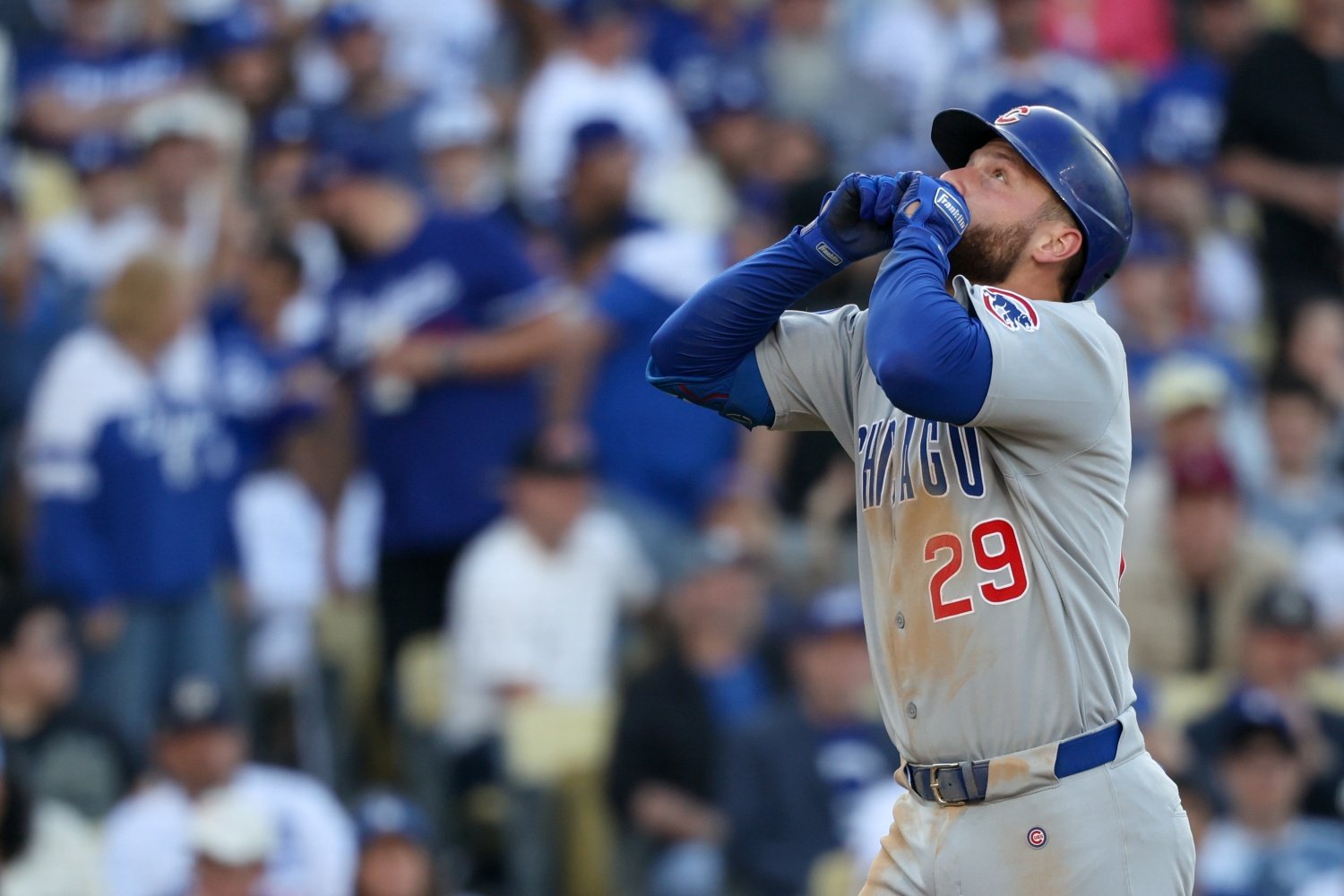 As of this writing, the Chicago Cubs are 12-9. They sit atop the National League Central, a game in front of the Milwaukee Brewers (10-9) and game-and-a-half ahead of the 9-9 Cincinnati Reds and St. Louis Cardinals. They've scored 124 runs and sport a +36 run differential. The former leads the league by a wide margin, while the latter trails only the San Diego Padres, by just a run. Like I said, better than we expected. The March and April schedule was always going to be a gauntlet. Starting in Tokyo against the Los Angeles Dodgers before returning Stateside for tilts with the Arizona Diamondbacks, Texas Rangers, and Padres was a tall order. Even the West Sacramento Athletics have looked awfully feisty, except in their games against the Cubs. And yet, Chicago has emerged from this stretch—to say nothing of an 0-2 start coming out of the aforementioned Tokyo series—a shade over .500. The offense has had a lot to say about that, but it goes beyond strictly run production. The Cubs are in the league's top six in on-base percentage (.340), ISO (.176), K% (20.2), BB% (10.6), and wRC+ (121). Their stranglehold on the league lead in swipes has shrunk a bit, but their 29 stolen bases are still pacing the field. While there are some individual nuances within the lineup, it's been a multi-faceted attack that goes beyond even the massive early success from the likes of Kyle Tucker and Michael Busch. It's a lineup that has propelled them in the face of some woes up on the bump. The Cubs' starting staff sports a 3.64 ERA that ranks ninth, but their bullpen ERA (4.92) sits 27th. The latter performance has resulted in just five saves, and a couple of blown ones, which is why it's been so essential that the offense has propped them up in the way that it has. It's harder to lose leads with a shaky relief corps when you've built up a healthy gap. The most important component of the start, though, is the quality of the opposition. While the A's are far less than a juggernaut, the Dodgers, Diamondbacks, Padres, and Rangers are formidable. All Cubs opponents are, in aggregate, 52-22 against teams other than the Cubs. The Padres, in particular, have only a single loss on the books vs. non-Cubs teams. Coming into this stretch, many would have been happy if the team had escaped as even a .500 club. That mindset really carries through the month of April, because they still have another round of games against the Snakes, the Dodgers, and the Philadelphia Phillies. Given where we already are, it isn't unreasonable to think that the Cubs could muster a .500 stretch through the end of April, at a minimum. Such an outcome would carry them to a 17-14 record to finish the month and, as such, would likely land above where we thought they'd be. While .500 should be a reasonable benchmark over the next 10 games, there's reason to think they can exceed even that. While projected to be quite a bit better, both the Diamondbacks and Phillies feature pitching staffs that have underachieved. They rank 20th and 21st, respectively, in ERA as a staff, with the former's rotation struggling and the latter facing some inconsistencies in their bullpen. Even with some new arms in the bullpen mix, there's more uncertainty for the Cubs' staff than that wrought by an uneven performance through 22 games. Justin Steele is gone from the rotation. The bullpen has been woeful. The burden will still need to be carried by the offense throughout this stretch. While they'll play host against the trio of contenders, each of the Diamondbacks (115) and Dodgers (110) sit in the top six in wRC+ on the road. If there's a narrative or a perception to be gleaned from the team's performance through the halfway point of April, it's that the Cubs can hang. Every team is going to experience some unevenness during April, as we watch factors related to health and weather manifest in ways they maybe wouldn't at other points during the year. That the Cubs are able to stave off those factors to a similar extent as their contending counterparts says a lot about this team. And as long as the team remains in contention, the expectation should be that additions will present themselves to allow them to continue to hang as the season progresses.
 -
It's been better than we thought, but it isn't about to get any easier. Image courtesy of © Kiyoshi Mio-Imagn Images As of this writing, the Chicago Cubs are 12-9. They sit atop the National League Central, a game in front of the Milwaukee Brewers (10-9) and game-and-a-half ahead of the 9-9 Cincinnati Reds and St. Louis Cardinals. They've scored 124 runs and sport a +36 run differential. The former leads the league by a wide margin, while the latter trails only the San Diego Padres, by just a run. Like I said, better than we expected. The March and April schedule was always going to be a gauntlet. Starting in Tokyo against the Los Angeles Dodgers before returning Stateside for tilts with the Arizona Diamondbacks, Texas Rangers, and Padres was a tall order. Even the West Sacramento Athletics have looked awfully feisty, except in their games against the Cubs. And yet, Chicago has emerged from this stretch—to say nothing of an 0-2 start coming out of the aforementioned Tokyo series—a shade over .500. The offense has had a lot to say about that, but it goes beyond strictly run production. The Cubs are in the league's top six in on-base percentage (.340), ISO (.176), K% (20.2), BB% (10.6), and wRC+ (121). Their stranglehold on the league lead in swipes has shrunk a bit, but their 29 stolen bases are still pacing the field. While there are some individual nuances within the lineup, it's been a multi-faceted attack that goes beyond even the massive early success from the likes of Kyle Tucker and Michael Busch. It's a lineup that has propelled them in the face of some woes up on the bump. The Cubs' starting staff sports a 3.64 ERA that ranks ninth, but their bullpen ERA (4.92) sits 27th. The latter performance has resulted in just five saves, and a couple of blown ones, which is why it's been so essential that the offense has propped them up in the way that it has. It's harder to lose leads with a shaky relief corps when you've built up a healthy gap. The most important component of the start, though, is the quality of the opposition. While the A's are far less than a juggernaut, the Dodgers, Diamondbacks, Padres, and Rangers are formidable. All Cubs opponents are, in aggregate, 52-22 against teams other than the Cubs. The Padres, in particular, have only a single loss on the books vs. non-Cubs teams. Coming into this stretch, many would have been happy if the team had escaped as even a .500 club. That mindset really carries through the month of April, because they still have another round of games against the Snakes, the Dodgers, and the Philadelphia Phillies. Given where we already are, it isn't unreasonable to think that the Cubs could muster a .500 stretch through the end of April, at a minimum. Such an outcome would carry them to a 17-14 record to finish the month and, as such, would likely land above where we thought they'd be. While .500 should be a reasonable benchmark over the next 10 games, there's reason to think they can exceed even that. While projected to be quite a bit better, both the Diamondbacks and Phillies feature pitching staffs that have underachieved. They rank 20th and 21st, respectively, in ERA as a staff, with the former's rotation struggling and the latter facing some inconsistencies in their bullpen. Even with some new arms in the bullpen mix, there's more uncertainty for the Cubs' staff than that wrought by an uneven performance through 22 games. Justin Steele is gone from the rotation. The bullpen has been woeful. The burden will still need to be carried by the offense throughout this stretch. While they'll play host against the trio of contenders, each of the Diamondbacks (115) and Dodgers (110) sit in the top six in wRC+ on the road. If there's a narrative or a perception to be gleaned from the team's performance through the halfway point of April, it's that the Cubs can hang. Every team is going to experience some unevenness during April, as we watch factors related to health and weather manifest in ways they maybe wouldn't at other points during the year. That the Cubs are able to stave off those factors to a similar extent as their contending counterparts says a lot about this team. And as long as the team remains in contention, the expectation should be that additions will present themselves to allow them to continue to hang as the season progresses. View full article
-
The Paradox of Kyle Tucker's Approach and Outcomes on Offspeed Stuff
RandallPnkFloyd posted an article in Cubs
 Given that it's been so long a while since the Chicago Cubs have had a hitter like Kyle Tucker, there really aren't enough superlatives to deploy in discussing his start to the year. Only a handful of hitters have been better. He owns a .301/.410/.578 line, a .277 ISO, and a walk rate (16.0%) that exceeds his strikeout rate (12.0%). His wRC+ checks in at 172. There have been other good hitters throughout the lineup, but Tucker has been every bit the catalyst he was purported to be upon arrival. Similarly, there are a lot of good things about the way the Cubs approach each plate appearance as a collective. The lineup ranks in the middle of the pack in chase rate, but sits fourth in the league in Contact% (78.5%). And while a number of hitters are contributing to the quality of the team approach (Dansby Swanson, in particular), it's Tucker whom we should be lauding most. Not that it's a surprise. The eye test alone tells us that Tucker has already identified what he wants by the time he steps in the box, and the execution has been pretty spectacular to watch unfold each time he steps in. But the numbers are also indicative of exactly that type of player. Broadly speaking, his ability to avoid hacking outside the zone is a level above that of his colleagues. Tucker's Chase% (16.3) is in the 99th percentile, and his walk rate is in the 94th. Only San Francisco's Matt Chapman (16.2) has a lower swing rate on pitches outside the strike zone. When he does expand, Tucker is making more contact than he did last year, with a 64.3% contact rate that is the highest he's ever had. The awareness he has of the zone itself is allowing him to expand effectively. There are also some interesting things happening inside the strike zone, though. Tucker is hacking more in-zone (72.3%), but making less contact (81.6%) than he did a year ago. Part of that speaks to the types of pitches at which he's swinging thus far: There's been a big ol' jump, specifically, in Tucker's swinging (and missing) on offspeed pitches. He's missed on 26.7% of swings at offspeed stuff in the zone, compared to 17.1% for breaking balls and 15.8% for heaters. But he's also chasing that pitch at a lower frequency. And we'd be remiss in not noting that opposing pitchers are delivering offspeed pitches with more frequency than before: 19.6% of the time, which would be the highest share he's seen since 2019. An obvious aim is to limit Tucker's ability to find the barrel while also getting some additional groundballs. One of those has worked, and it's not the first one. Opposing pitchers would probably fall into despair knowing that offspeed is currently the pitch type against which Tucker's experienced the largest increase in Barrel rates, according to Statcast. Tucker's Barrel% has spiked in general, but a rise from 4.8% vs. offspeed last year to 14.3% this year is vast. There's a tradeoff happening here; he's more aggressive on that pitch (given the higher volume seen) and experiencing more extremes: hard contact, or outright whiffs. He's had 14 batted balls on offspeed stuff, and is hitting .500 (five singles, two doubles, one home run) against them overall: those eight hits, six outs on balls in play, and just two strikeouts. The ultimate point here is just in the nuances of plate discipline. We know, in a very general sense, that Tucker has been outstanding, but it hasn't been perfect. What he has done, though, is turn what could have been a rather glaring imperfection into an asset. Pitchers made an adjustment. Tucker made it not matter. It'll be interesting to see what the next one looks like.
 -
The Chicago Cubs have been disciplined in the box. More so than most teams. But Kyle Tucker's been the best of 'em. Image courtesy of © Denis Poroy-Imagn Images Given that it's been so long a while since the Chicago Cubs have had a hitter like Kyle Tucker, there really aren't enough superlatives to deploy in discussing his start to the year. Only a handful of hitters have been better. He owns a .301/.410/.578 line, a .277 ISO, and a walk rate (16.0%) that exceeds his strikeout rate (12.0%). His wRC+ checks in at 172. There have been other good hitters throughout the lineup, but Tucker has been every bit the catalyst he was purported to be upon arrival. Similarly, there are a lot of good things about the way the Cubs approach each plate appearance as a collective. The lineup ranks in the middle of the pack in chase rate, but sits fourth in the league in Contact% (78.5%). And while a number of hitters are contributing to the quality of the team approach (Dansby Swanson, in particular), it's Tucker whom we should be lauding most. Not that it's a surprise. The eye test alone tells us that Tucker has already identified what he wants by the time he steps in the box, and the execution has been pretty spectacular to watch unfold each time he steps in. But the numbers are also indicative of exactly that type of player. Broadly speaking, his ability to avoid hacking outside the zone is a level above that of his colleagues. Tucker's Chase% (16.3) is in the 99th percentile, and his walk rate is in the 94th. Only San Francisco's Matt Chapman (16.2) has a lower swing rate on pitches outside the strike zone. When he does expand, Tucker is making more contact than he did last year, with a 64.3% contact rate that is the highest he's ever had. The awareness he has of the zone itself is allowing him to expand effectively. There are also some interesting things happening inside the strike zone, though. Tucker is hacking more in-zone (72.3%), but making less contact (81.6%) than he did a year ago. Part of that speaks to the types of pitches at which he's swinging thus far: There's been a big ol' jump, specifically, in Tucker's swinging (and missing) on offspeed pitches. He's missed on 26.7% of swings at offspeed stuff in the zone, compared to 17.1% for breaking balls and 15.8% for heaters. But he's also chasing that pitch at a lower frequency. And we'd be remiss in not noting that opposing pitchers are delivering offspeed pitches with more frequency than before: 19.6% of the time, which would be the highest share he's seen since 2019. An obvious aim is to limit Tucker's ability to find the barrel while also getting some additional groundballs. One of those has worked, and it's not the first one. Opposing pitchers would probably fall into despair knowing that offspeed is currently the pitch type against which Tucker's experienced the largest increase in Barrel rates, according to Statcast. Tucker's Barrel% has spiked in general, but a rise from 4.8% vs. offspeed last year to 14.3% this year is vast. There's a tradeoff happening here; he's more aggressive on that pitch (given the higher volume seen) and experiencing more extremes: hard contact, or outright whiffs. He's had 14 batted balls on offspeed stuff, and is hitting .500 (five singles, two doubles, one home run) against them overall: those eight hits, six outs on balls in play, and just two strikeouts. The ultimate point here is just in the nuances of plate discipline. We know, in a very general sense, that Tucker has been outstanding, but it hasn't been perfect. What he has done, though, is turn what could have been a rather glaring imperfection into an asset. Pitchers made an adjustment. Tucker made it not matter. It'll be interesting to see what the next one looks like. View full article
-
 The following are objective statements: Justin Steele is one of the Cubs' players most crucial to their success in 2025. The Cubs can find success in 2025 without Justin Steele. Isn't it neat that two things can both be true? The news that Steele will miss the remainder of the 2025 season (and possibly beyond) isn't something that anyone is going to say is a good thing for the Chicago Cubs. In fact, it's quite bad. Losing one of their top two arms from the rotation is a blow, especially with a bit of volatility further down the depth chart. It's going to lead to a brief scramble in the short term, with some potential impact in the longer term as they scour the trade market for a replacement (assuming continued contention as the year wears on). At the same time, it's not an injury that entirely unravels what the Cubs were trying to accomplish this season. In fact, Matt Trueblood's initial writeup of the news indicated that it's something the organization was likely prepared for, given recent concerns over his long-term durability. They might not have pursued a top-flight starter to the extent we expected at the winter's outset, but they at least have some depth assembled. When you juxtapose that preparedness with what had been a fairly underwhelming start to the campaign for Steele, you're left with plenty of reason to believe that the Cubs can stave off the bulk of the negative impact wrought by such an injury. Even in the absence of Steele, the Cubs have a durable, competitive rotation with a relatively traditional structure. Their actual ace, Shota Imanaga, remains healthy and effective. He's provided more stability both in health and start-to-start length, with home run issues serving as the only area where he comes up short against his top-of-the-rotation counterparts. The Cubs don't have one of the few truly elite "aces" in the sport, but their actual No. 1 is in good shape to continue leading the charge. Beyond Imanaga, there's still plenty of stability here. The upside play for Matthew Boyd has paid off thus far, courtesy of the evolution of his arsenal. There's more upside to be had in the form of Ben Brown, too. If he can build off a six-inning, scoreless start against the Dodgers, then you're looking at No. 2 or 3 starter upside, which allows Jameson Taillon to settle nicely into a No. 3 or 4 spot. There'll be some clunkiness here, but that's inherent in virtually any rotation. For now, 80 percent of the expected rotation remains intact and (with the exception of Taillon's poor batted-ball luck) is faring well. When you get down beyond the four remaining starters, it's not as if the panic button is at the ready. There's not a lot of swing-and-miss, but anyone stepping in for Steele for any length of time has the support of an upper-tier defense. The Cubs' collective Fielding Run Value (4) is the second-best mark in the league, with the outfield alone accounting for a 2 FRV. As such, Colin Rea is perfectly acceptable every five days in the short term. He's not going to strike many batters out, but as long as he can avoid hard contact, his flyball rate will be served well by the exceptional defensive group the Cubs boast in the outfield. Javier Assad could be set to begin a rehab assignment soon. We know he brings a similar skill set. The Cubs could also move to Jordan Wicks or (later on) Brandon Birdsell. The latter three are all health-dependent, but none of the options would have to be perfect in order to be effective, given the team's defensive structure. This also opens the door for Cade Horton to make an appearance at Wrigley Field this summer. He was, after all, supposed to be here already, if health issues in 2024 didn't push that back. So far, he's thrown 7 1/3 innings across two starts that have included an even dozen strikeouts. The stuff is undeniably there. His durability will have to be built up and command reined in before it becomes reality, but it's not as if you're going to throw any of the other four above a healthy, stretched-out Horton. None of this is to say that the Cubs shouldn't pursue outside options should they become available. A chance to be aggressive at some point exists. Nor are we suggesting that these are benefits to being sans Justin Steele for the balance of 2025. But there are silver linings here. There's volume. There's opportunity. Many teams would be pressed into making a dramatic decision in the short term. The Cubs, however, can push that off for a time. In the interim, we could get a decent look at the longer-term picture in the rotation—all while the options have the comfort of an elite defense behind them. It'll be fine. (You know, hopefully.)
 -
Losing your de facto ace probably isn't ideal. But what if the Chicago Cubs are... fine, without theirs? Image courtesy of © Ed Szczepanski-Imagn Images The following are objective statements: Justin Steele is one of the Cubs' players most crucial to their success in 2025. The Cubs can find success in 2025 without Justin Steele. Isn't it neat that two things can both be true? The news that Steele will miss the remainder of the 2025 season (and possibly beyond) isn't something that anyone is going to say is a good thing for the Chicago Cubs. In fact, it's quite bad. Losing one of their top two arms from the rotation is a blow, especially with a bit of volatility further down the depth chart. It's going to lead to a brief scramble in the short term, with some potential impact in the longer term as they scour the trade market for a replacement (assuming continued contention as the year wears on). At the same time, it's not an injury that entirely unravels what the Cubs were trying to accomplish this season. In fact, Matt Trueblood's initial writeup of the news indicated that it's something the organization was likely prepared for, given recent concerns over his long-term durability. They might not have pursued a top-flight starter to the extent we expected at the winter's outset, but they at least have some depth assembled. When you juxtapose that preparedness with what had been a fairly underwhelming start to the campaign for Steele, you're left with plenty of reason to believe that the Cubs can stave off the bulk of the negative impact wrought by such an injury. Even in the absence of Steele, the Cubs have a durable, competitive rotation with a relatively traditional structure. Their actual ace, Shota Imanaga, remains healthy and effective. He's provided more stability both in health and start-to-start length, with home run issues serving as the only area where he comes up short against his top-of-the-rotation counterparts. The Cubs don't have one of the few truly elite "aces" in the sport, but their actual No. 1 is in good shape to continue leading the charge. Beyond Imanaga, there's still plenty of stability here. The upside play for Matthew Boyd has paid off thus far, courtesy of the evolution of his arsenal. There's more upside to be had in the form of Ben Brown, too. If he can build off a six-inning, scoreless start against the Dodgers, then you're looking at No. 2 or 3 starter upside, which allows Jameson Taillon to settle nicely into a No. 3 or 4 spot. There'll be some clunkiness here, but that's inherent in virtually any rotation. For now, 80 percent of the expected rotation remains intact and (with the exception of Taillon's poor batted-ball luck) is faring well. When you get down beyond the four remaining starters, it's not as if the panic button is at the ready. There's not a lot of swing-and-miss, but anyone stepping in for Steele for any length of time has the support of an upper-tier defense. The Cubs' collective Fielding Run Value (4) is the second-best mark in the league, with the outfield alone accounting for a 2 FRV. As such, Colin Rea is perfectly acceptable every five days in the short term. He's not going to strike many batters out, but as long as he can avoid hard contact, his flyball rate will be served well by the exceptional defensive group the Cubs boast in the outfield. Javier Assad could be set to begin a rehab assignment soon. We know he brings a similar skill set. The Cubs could also move to Jordan Wicks or (later on) Brandon Birdsell. The latter three are all health-dependent, but none of the options would have to be perfect in order to be effective, given the team's defensive structure. This also opens the door for Cade Horton to make an appearance at Wrigley Field this summer. He was, after all, supposed to be here already, if health issues in 2024 didn't push that back. So far, he's thrown 7 1/3 innings across two starts that have included an even dozen strikeouts. The stuff is undeniably there. His durability will have to be built up and command reined in before it becomes reality, but it's not as if you're going to throw any of the other four above a healthy, stretched-out Horton. None of this is to say that the Cubs shouldn't pursue outside options should they become available. A chance to be aggressive at some point exists. Nor are we suggesting that these are benefits to being sans Justin Steele for the balance of 2025. But there are silver linings here. There's volume. There's opportunity. Many teams would be pressed into making a dramatic decision in the short term. The Cubs, however, can push that off for a time. In the interim, we could get a decent look at the longer-term picture in the rotation—all while the options have the comfort of an elite defense behind them. It'll be fine. (You know, hopefully.) View full article
-
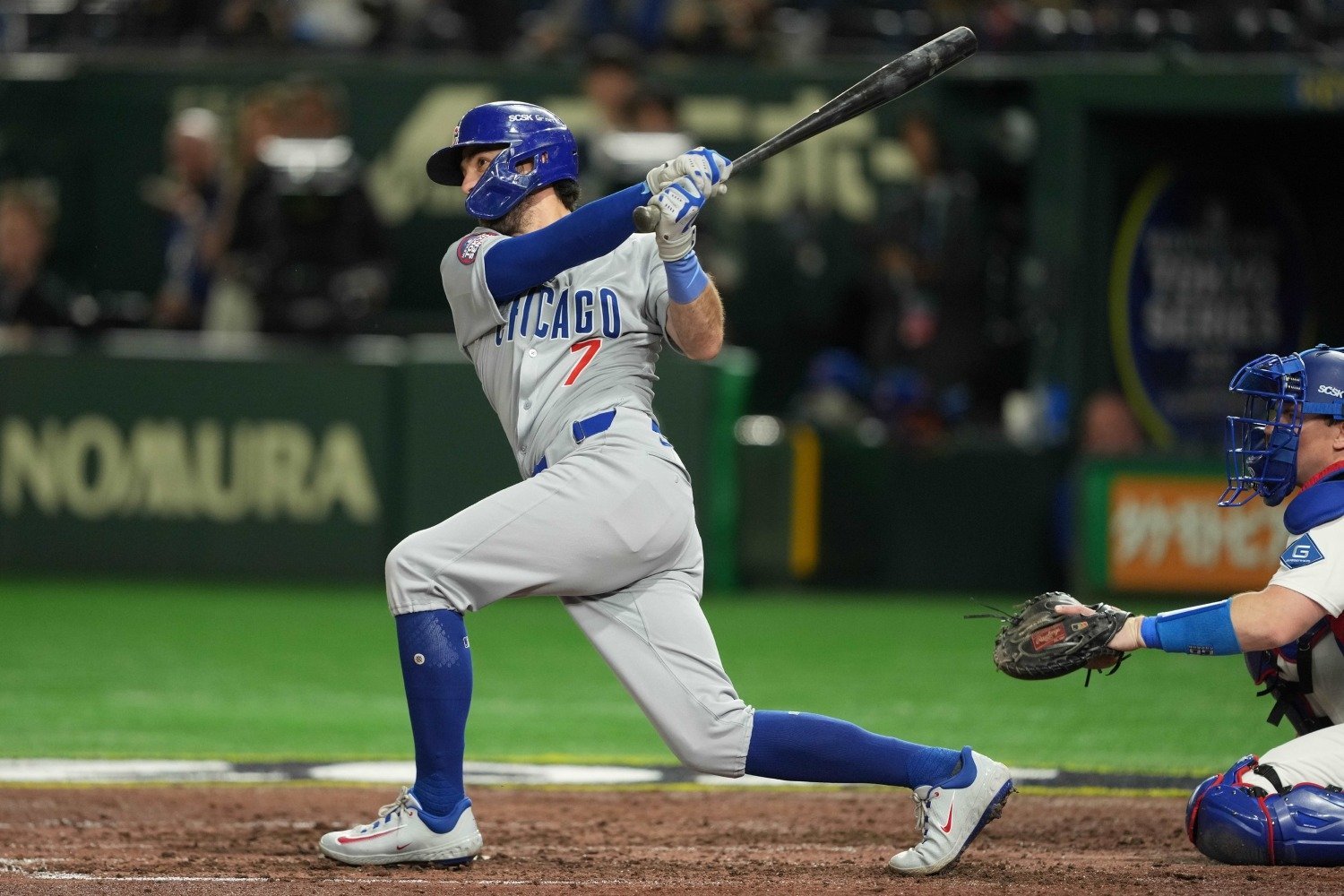 He's not (yet) technically the best version of himself. We've gotten excited about Dansby Swanson before. It never lasts. I wrote about his start to the 2023 season on April 4th of that year. At this point in last year's calendar, he had a 139 wRC+ while reaching base at a .367 clip. By September of '24, I was writing about an August & September turnaround courtesy of apparently-increased health. At this point, we kind of have to accept who & what the Chicago Cubs' shortstop actually is: an above-average-to-excellent defensive infielder prone to hot stretches and even colder ones. To read anything further into it would be foolhardy in his age-31 season. But! Is it possible that the player whose slash line currently includes a .211 average and .281 on-base percentage might be... better than we could have expected? Despite a rather brutal line, Swanson has done a number of things well. For one, he has a .263 ISO. His highest mark was .201 back in 2021. His HardHit% is at 51.1, which is nearly five points higher than his previous career-best. He's also cut his K% by nearly six percent (18.5). There's been some brutal batted ball luck, as reflected in his .190 BABIP. Things are going to even out. The average on balls in play certainly will. His slugging may come down. But, regardless of how the natural pattern of baseball plays out, it's fairly clear that the torpedo bat is serving as the ideal tool for someone such as Swanson. Swanson's percentile rankings thus far are as follows: I'm looking specifically at the contact trends (Average Exist Velocity, Barrel%, Hard-Hit%, and Squared-Up%). In 2024, Swanson sat 56th, 62nd, 64th, and 47th in each category, respectively. The year before that, only the Barrel% (70th) carried any level of respectability, as the other three landed in the 50th, 42nd, and 37th percentiles. What's interesting is that Swanson's bad speed has actually decreased. His average bat speed (70.7 MPH) is a full tick off last year's average while his overall rate of reaching average speed has fallen by more than half (5.9 percent). At the same time, he's also managed to jump the squared-up contact from 33.4 percent of contact to 47.7 percent in 2025. His rate of blasts has ballooned from 15.4 percent (per contact made) to 26.2. His overall rate of contact hasn't changed much, while his in-zone contact rate has remained fairly similar. Given that the torpedo bat moves the point of quality contact closer to the hitter, the utilization of the new hitters' tool has allowed Swanson to swing a little more freely within the zone. These are Swanson's barrels across the zone in 2024: And here's thus far in 2025: The second graphic is obviously thinned out due to a smaller sample. But, there's some increased zone coverage apparent here in the barrel game. Even better is that he's generating barrels slightly inward and slightly up. As Swanson doesn't have a particularly long swing, this appears to be a slight change that is helping him a pretty notable way. Not only that, the upward movement of the hotspot is giving way to more fly balls. This is, after all, a guy that abused worms to the point of a 49.9 GB% in 2024. In a broad sense, we can definitely point to the torpedo bat as a reason for the uptick in Swanson's quality of contact. But it would also be an oversimplification. Swanson has moved two inches closer to the plate, providing the ideal contact point for where those barrels are manifesting. He's also raised his swing rate against fastballs by four percent and cut his rate versus off-speed pitches by nearly 15. The hard stuff has largely been his highest source of barrels throughout his career while off-speed offerings have, more often than not, done the opposite. It's a really nuanced picture to attempt to draw this early in the season. The torpedo bat is the star. But Swanson has refined some other things in conjunction with the lumber change that clearly have him off to a good start, even in the face of a sub-.200 BABIP. It's obviously still quite early. And we've gotten excited about changes from Dansby Swanson before. I'm probably a sucker at this point. But what if I'm not?
 -
Given that we're barely into the middle of April, there's still a few weeks to go before we can make wild claims about the 2025 season. Claims like: Dansby Swanson is the best he's ever been. Image courtesy of © Darren Yamashita-Imagn Images He's not (yet) technically the best version of himself. We've gotten excited about Dansby Swanson before. It never lasts. I wrote about his start to the 2023 season on April 4th of that year. At this point in last year's calendar, he had a 139 wRC+ while reaching base at a .367 clip. By September of '24, I was writing about an August & September turnaround courtesy of apparently-increased health. At this point, we kind of have to accept who & what the Chicago Cubs' shortstop actually is: an above-average-to-excellent defensive infielder prone to hot stretches and even colder ones. To read anything further into it would be foolhardy in his age-31 season. But! Is it possible that the player whose slash line currently includes a .211 average and .281 on-base percentage might be... better than we could have expected? Despite a rather brutal line, Swanson has done a number of things well. For one, he has a .263 ISO. His highest mark was .201 back in 2021. His HardHit% is at 51.1, which is nearly five points higher than his previous career-best. He's also cut his K% by nearly six percent (18.5). There's been some brutal batted ball luck, as reflected in his .190 BABIP. Things are going to even out. The average on balls in play certainly will. His slugging may come down. But, regardless of how the natural pattern of baseball plays out, it's fairly clear that the torpedo bat is serving as the ideal tool for someone such as Swanson. Swanson's percentile rankings thus far are as follows: I'm looking specifically at the contact trends (Average Exist Velocity, Barrel%, Hard-Hit%, and Squared-Up%). In 2024, Swanson sat 56th, 62nd, 64th, and 47th in each category, respectively. The year before that, only the Barrel% (70th) carried any level of respectability, as the other three landed in the 50th, 42nd, and 37th percentiles. What's interesting is that Swanson's bad speed has actually decreased. His average bat speed (70.7 MPH) is a full tick off last year's average while his overall rate of reaching average speed has fallen by more than half (5.9 percent). At the same time, he's also managed to jump the squared-up contact from 33.4 percent of contact to 47.7 percent in 2025. His rate of blasts has ballooned from 15.4 percent (per contact made) to 26.2. His overall rate of contact hasn't changed much, while his in-zone contact rate has remained fairly similar. Given that the torpedo bat moves the point of quality contact closer to the hitter, the utilization of the new hitters' tool has allowed Swanson to swing a little more freely within the zone. These are Swanson's barrels across the zone in 2024: And here's thus far in 2025: The second graphic is obviously thinned out due to a smaller sample. But, there's some increased zone coverage apparent here in the barrel game. Even better is that he's generating barrels slightly inward and slightly up. As Swanson doesn't have a particularly long swing, this appears to be a slight change that is helping him a pretty notable way. Not only that, the upward movement of the hotspot is giving way to more fly balls. This is, after all, a guy that abused worms to the point of a 49.9 GB% in 2024. In a broad sense, we can definitely point to the torpedo bat as a reason for the uptick in Swanson's quality of contact. But it would also be an oversimplification. Swanson has moved two inches closer to the plate, providing the ideal contact point for where those barrels are manifesting. He's also raised his swing rate against fastballs by four percent and cut his rate versus off-speed pitches by nearly 15. The hard stuff has largely been his highest source of barrels throughout his career while off-speed offerings have, more often than not, done the opposite. It's a really nuanced picture to attempt to draw this early in the season. The torpedo bat is the star. But Swanson has refined some other things in conjunction with the lumber change that clearly have him off to a good start, even in the face of a sub-.200 BABIP. It's obviously still quite early. And we've gotten excited about changes from Dansby Swanson before. I'm probably a sucker at this point. But what if I'm not? View full article
