RandallPnkFloyd
-
Posts
533 -
Joined
-
Last visited
Content Type
Profiles
Joomla Posts 1
Chicago Cubs Videos
Chicago Cubs Free Agent & Trade Rumors, Notes, & Tidbits
2026 Chicago Cubs Top Prospects Ranking
News
2023 Chicago Cubs Draft Picks
Guides & Resources
2024 Chicago Cubs Draft Picks
The Chicago Cubs Players Project
2025 Chicago Cubs Draft Pick Tracker
2026 Chicago Cubs Draft Tracker: Picks & Bonuses
Blogs
Events
Forums
Store
Gallery
Everything posted by RandallPnkFloyd
-
How Matthew Boyd Overcame His Brewers Demons In Game 4 Win
RandallPnkFloyd posted an article in Cubs
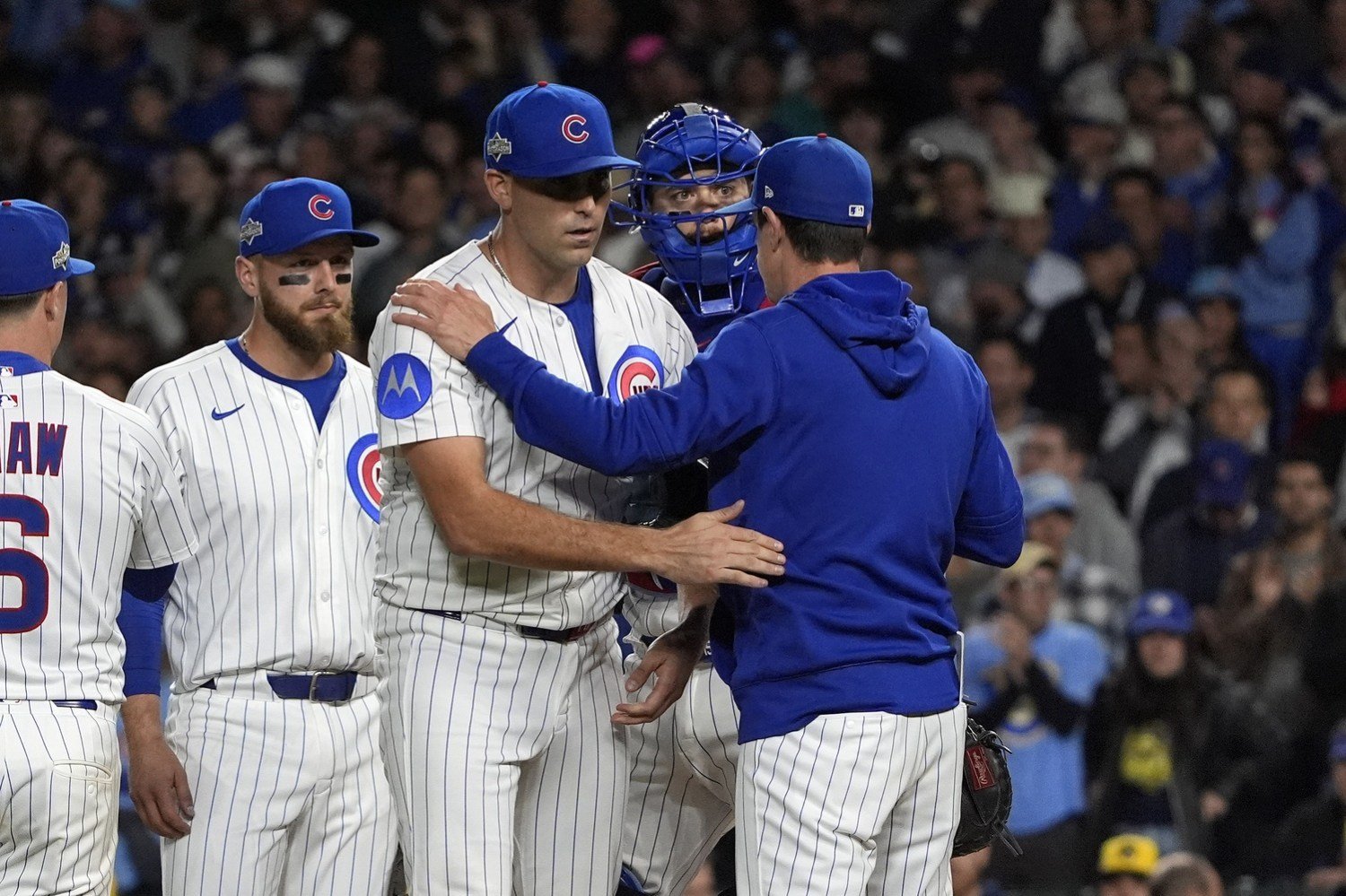 Ahead of Thursday night's Game 4, it wasn't unreasonable to think that Matthew Boyd should have made his last start in the Chicago Cubs' NLDS matchup against the Milwaukee Brewers. Not only was it an opponent he'd struggled with in the regular season, but he found himself absolutely punked by the division rivals in Game 1: two outs, six runs. In the regular season, Boyd drew two starts against Milwaukee. He threw 10 1/3 innings across those two outings, allowing nine earned runs on 12 hits. Those regular-season struggles were compounded in Game 1. He threw 30 pitches and served up a 90.2-MPH exit velocity on the high volume of contact he allowed in a brief stay on the bump. Such context made it difficult to trust Boyd for another start in this particular series (assuming things went that far). Thursday, however, represented a stark contrast, and instead left us with the iteration of Boyd we'd seen for the bulk of 2025. In the Cubs' 6-0 Game 4 win at a raucous Wrigley Field, Boyd hung around for 4 2/3 innings; allowed just a pair of hits; walked three; and held the Brewers scoreless, before the bullpen took it the rest of the way. It reignited not only hope of a series victory, but faith in Boyd specifically. And it wasn't complicated, coming down to usage and command. The following is the breakdown of Boyd's start in Game 1: Boyd isn't a pitcher who's going to generate a huge number of whiffs, so that the swing-and-miss column reads as underwhelming is deceiving. He induced whiffs on only 23.4% of opponents' swings throughout the 2025 regular season. Instead, Boyd's strength is in command and, subsequently, managing contact quality. He was well above average in both average opponent exit velocity and opponent hard-hit rate. Not so in Game 1, though. Each pitch he threw, with the exception of the sinker, was touched for an average exit velocity at least 4 MPH higher than what he turned in during the regular season. The changeup was also a source of woe in the small sample, as its absence of whiff and poor results defied what that pitch had been for him all season. So while punked is not a technical term, it does speak to what the Brewers were able to do in taking advantage of lackluster command and getting a reliable pitch to handle against him. Those issues were completely dialed in by his next start, however. The breakdown looked like this: The first thing you'll notice is that the average exit velocity fell by 10 miles per hour. The second thing you may notice is that Boyd, pitching in a much more expanded sample than Game 1, put his changeup firmly in the back seat in favor of the curveball. It was something that visibly caught Milwaukee off-guard, as he only got four swings against it but earned called or swinging strikes on 40% of the hooks he threw. He had that pitch locked in, and it created an issue for a Milwaukee lineup that didn't have any the first time they saw him. What makes the Boyd turnaround so enjoyable between starts isn't solely the outcome. It's that the underlying factor contributing to it falls squarely on the craft. Command can be honed in with an evaluation of mechanics or simply clearing out a poor start ahead of the next one. But the foresight to change the usage just enough to make it play in your favor against an opponent who has had your number throughout the season speaks to a nuance that makes this game so fascinating. In each of those two regular season starts, it was the changeup serving as Boyd's most-used secondary offering (thrown 26 percent of the time on July 28 and 20 percent of the time on August 19). The Brewers had no reason to expect the hook would be there in lieu of it, and were unable to adjust. It ultimately may not mean anything, in the final result of this series. Maybe it will. But it certainly dispels a certain level of concern about Boyd's ability to pitch at this point in the year, given the volume he's thrown in comparison to the last handful of seasons. It was an impressive performance under pressure, from a veteran the team needs for the balance of this season and in 2026. In that sense, its meaning and value are impossible to erase.
 -
Image courtesy of © David Banks-Imagn Images Ahead of Thursday night's Game 4, it wasn't unreasonable to think that Matthew Boyd should have made his last start in the Chicago Cubs' NLDS matchup against the Milwaukee Brewers. Not only was it an opponent he'd struggled with in the regular season, but he found himself absolutely punked by the division rivals in Game 1: two outs, six runs. In the regular season, Boyd drew two starts against Milwaukee. He threw 10 1/3 innings across those two outings, allowing nine earned runs on 12 hits. Those regular-season struggles were compounded in Game 1. He threw 30 pitches and served up a 90.2-MPH exit velocity on the high volume of contact he allowed in a brief stay on the bump. Such context made it difficult to trust Boyd for another start in this particular series (assuming things went that far). Thursday, however, represented a stark contrast, and instead left us with the iteration of Boyd we'd seen for the bulk of 2025. In the Cubs' 6-0 Game 4 win at a raucous Wrigley Field, Boyd hung around for 4 2/3 innings; allowed just a pair of hits; walked three; and held the Brewers scoreless, before the bullpen took it the rest of the way. It reignited not only hope of a series victory, but faith in Boyd specifically. And it wasn't complicated, coming down to usage and command. The following is the breakdown of Boyd's start in Game 1: Boyd isn't a pitcher who's going to generate a huge number of whiffs, so that the swing-and-miss column reads as underwhelming is deceiving. He induced whiffs on only 23.4% of opponents' swings throughout the 2025 regular season. Instead, Boyd's strength is in command and, subsequently, managing contact quality. He was well above average in both average opponent exit velocity and opponent hard-hit rate. Not so in Game 1, though. Each pitch he threw, with the exception of the sinker, was touched for an average exit velocity at least 4 MPH higher than what he turned in during the regular season. The changeup was also a source of woe in the small sample, as its absence of whiff and poor results defied what that pitch had been for him all season. So while punked is not a technical term, it does speak to what the Brewers were able to do in taking advantage of lackluster command and getting a reliable pitch to handle against him. Those issues were completely dialed in by his next start, however. The breakdown looked like this: The first thing you'll notice is that the average exit velocity fell by 10 miles per hour. The second thing you may notice is that Boyd, pitching in a much more expanded sample than Game 1, put his changeup firmly in the back seat in favor of the curveball. It was something that visibly caught Milwaukee off-guard, as he only got four swings against it but earned called or swinging strikes on 40% of the hooks he threw. He had that pitch locked in, and it created an issue for a Milwaukee lineup that didn't have any the first time they saw him. What makes the Boyd turnaround so enjoyable between starts isn't solely the outcome. It's that the underlying factor contributing to it falls squarely on the craft. Command can be honed in with an evaluation of mechanics or simply clearing out a poor start ahead of the next one. But the foresight to change the usage just enough to make it play in your favor against an opponent who has had your number throughout the season speaks to a nuance that makes this game so fascinating. In each of those two regular season starts, it was the changeup serving as Boyd's most-used secondary offering (thrown 26 percent of the time on July 28 and 20 percent of the time on August 19). The Brewers had no reason to expect the hook would be there in lieu of it, and were unable to adjust. It ultimately may not mean anything, in the final result of this series. Maybe it will. But it certainly dispels a certain level of concern about Boyd's ability to pitch at this point in the year, given the volume he's thrown in comparison to the last handful of seasons. It was an impressive performance under pressure, from a veteran the team needs for the balance of this season and in 2026. In that sense, its meaning and value are impossible to erase. View full article
-
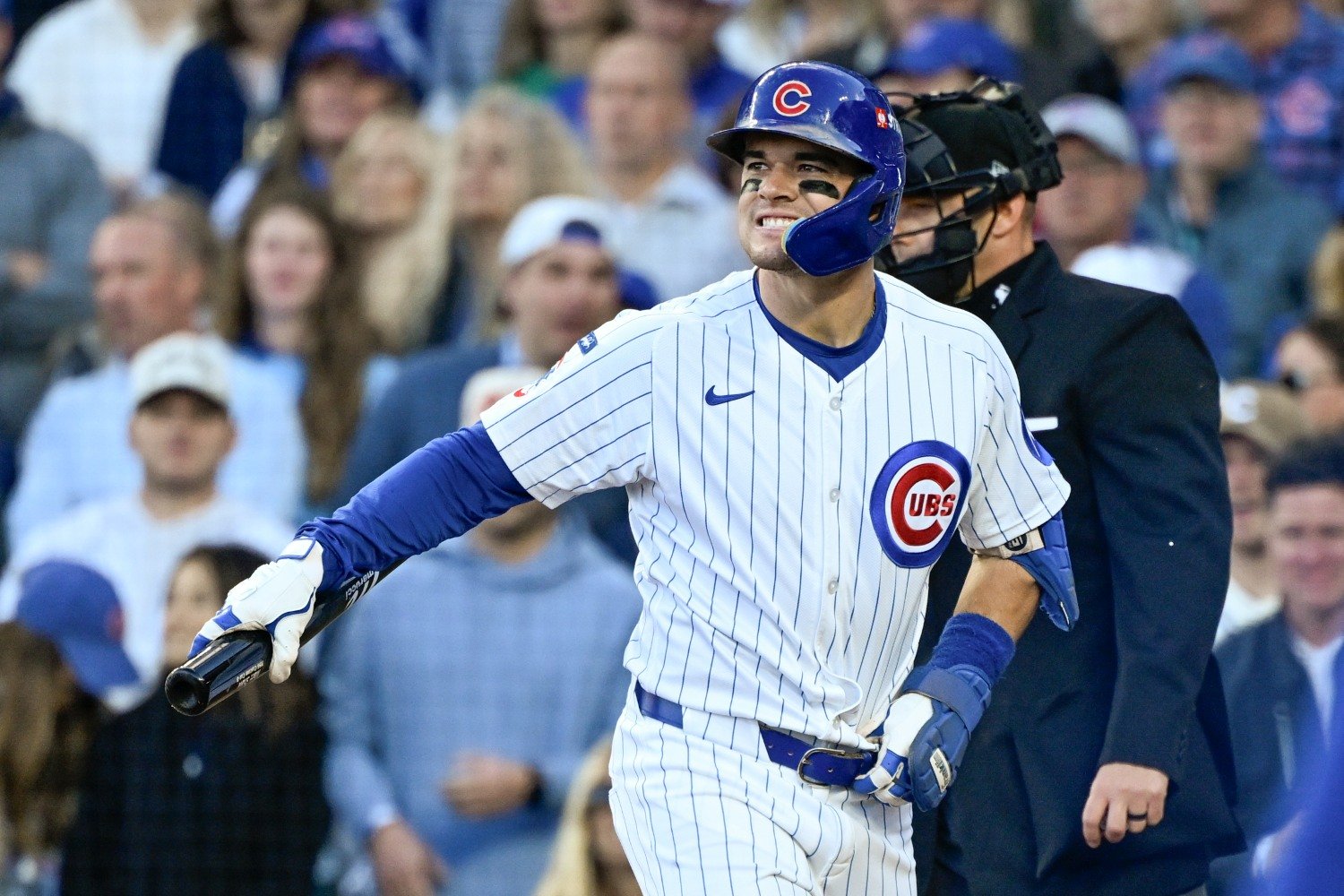 It would be a tough ask for one to create a robust list of offensive contributors in the 2025 postseason for the Chicago Cubs. Such is the nature of a team that has scored 16 runs across six games, or 2.7 per game. But even if you made a top-10 list of the top hitters in a nine-man group, Matt Shaw wouldn't make it. As he did 114 times during the regular season, Shaw has drawn a start at the hot corner for each of the Cubs' six games during these playoffs. Thus far, he's contributed zero hits across 17 plate appearances, with four walks and seven strikeouts to his name. It's not so much the absence of hits as it is both the context around such a void and the fact that he hasn't been particularly close to generating any semblance of value by way of a swing. Despite coming out of the wild card round against San Diego, the following has been a familiar sight out of Shaw through the six games he's played: We've watched Shaw battle against his mechanics at various points throughout the 2025 season. It's likely we're witnessing yet another manifestation thereof right now. The goal here isn't to identify the specific source of Shaw's postseason woes, however. It's to examine the repercussions, and discuss whether a justification exists to drop him into the starting lineup again for Thursday's Game 4. Whatever issues are plaguing Shaw this stage are leading to a couple notable outcomes, both for the player himself and the team as a collective. In terms of his own performance, Shaw has rarely swung the bat throughout these playoffs, with a 41.2% swing rate. Only Ian Happ has a lower rate thus far. The difference is that when Shaw does swing the bat, the outcome is the third-worst contact rate of anyone who has swung a bat for the Cubs this October (65.7%), with a whiff rate five percent higher than he turned in during the regular season. Even the walks have lacked impact, as all four have been isolated to the first two games against Milwaukee, one of which was a blowout loss and the other where the offense proved incapable of supplementing that on-base with any meaningful approach. Besides, just watch him up there. He tried a couple of poking bunts Wednesday, hoping to figure out some way to create an offensive threat, because he's that profoundly lost. Worse yet is that on those instances where Shaw has made contact, he's created exactly no true threat. He's not alone in a 0.0% barrel rate within this lineup, but he is solo in the 0.0% Hard-Hit% game. It's a mess for Shaw at this point. He's unable to compensate for minimal contact with, at least, impactful contact. Factor in the strikeout woes (41.2%) and the runners he's stranded this postseason (10 of them), and this is simply a player unable to contribute to the collective. Six of his seven strikeouts this postseason have also come against right-handed pitching. If it's to be Freddy Peralta in Game 4, it becomes even more difficult to justify another start for Shaw. The issue beyond this specific performance, however, is that the options beyond Shaw don't run deep. Justin Turner has one game and two plate appearances to his credit, though he hit much better in that minuscule set of chances than Shaw has. Do you toss the veteran a start at a position at which he logged just 35 innings in 2025, in hopes that there's a certain stabilizing of the lineup that happens as a result? Shaw's chances to have an impact on defense in these playoffs have been limited, anyway. He made a tremendous play to help finish off the Padres, but the Cubs staff is mostly yielding fly balls, and Shaw couldn't do anything about the few hot shots the Brewers sent past him in Game 1. The only other option at present would be Willi Castro, who hasn't garnered an appearance at the plate and has only been inserted once this postseason overall. He walked at more than a 16% clip in September, but was woeful pretty much everywhere else. The tradeoff there seems negligible. That's the issue Counsell now faces. It's hard to justify another start for Shaw, considering the total non-factor he's been at the plate—not just against Milwaukee, but for all six games this postseason. The options behind him, however, also don't inspire much confidence. Do you take the defensive tradeoff and insert a veteran with an extensive run of postseason play? Do you hope that Castro can parlay his own patience into some level of production in the way that Shaw has not? The answer to both questions is probably no at this juncture, leading to the unfortunate outcome of simply requiring Matt Shaw to occupy his usual spot in the lineup and hope for the best. It's malpractice, though, that the team didn't better prepare to plug someone else in there. Their rookie at the hot corner is kaput, for 2025.
 -
Image courtesy of © Matt Marton-Imagn Images It would be a tough ask for one to create a robust list of offensive contributors in the 2025 postseason for the Chicago Cubs. Such is the nature of a team that has scored 16 runs across six games, or 2.7 per game. But even if you made a top-10 list of the top hitters in a nine-man group, Matt Shaw wouldn't make it. As he did 114 times during the regular season, Shaw has drawn a start at the hot corner for each of the Cubs' six games during these playoffs. Thus far, he's contributed zero hits across 17 plate appearances, with four walks and seven strikeouts to his name. It's not so much the absence of hits as it is both the context around such a void and the fact that he hasn't been particularly close to generating any semblance of value by way of a swing. Despite coming out of the wild card round against San Diego, the following has been a familiar sight out of Shaw through the six games he's played: We've watched Shaw battle against his mechanics at various points throughout the 2025 season. It's likely we're witnessing yet another manifestation thereof right now. The goal here isn't to identify the specific source of Shaw's postseason woes, however. It's to examine the repercussions, and discuss whether a justification exists to drop him into the starting lineup again for Thursday's Game 4. Whatever issues are plaguing Shaw this stage are leading to a couple notable outcomes, both for the player himself and the team as a collective. In terms of his own performance, Shaw has rarely swung the bat throughout these playoffs, with a 41.2% swing rate. Only Ian Happ has a lower rate thus far. The difference is that when Shaw does swing the bat, the outcome is the third-worst contact rate of anyone who has swung a bat for the Cubs this October (65.7%), with a whiff rate five percent higher than he turned in during the regular season. Even the walks have lacked impact, as all four have been isolated to the first two games against Milwaukee, one of which was a blowout loss and the other where the offense proved incapable of supplementing that on-base with any meaningful approach. Besides, just watch him up there. He tried a couple of poking bunts Wednesday, hoping to figure out some way to create an offensive threat, because he's that profoundly lost. Worse yet is that on those instances where Shaw has made contact, he's created exactly no true threat. He's not alone in a 0.0% barrel rate within this lineup, but he is solo in the 0.0% Hard-Hit% game. It's a mess for Shaw at this point. He's unable to compensate for minimal contact with, at least, impactful contact. Factor in the strikeout woes (41.2%) and the runners he's stranded this postseason (10 of them), and this is simply a player unable to contribute to the collective. Six of his seven strikeouts this postseason have also come against right-handed pitching. If it's to be Freddy Peralta in Game 4, it becomes even more difficult to justify another start for Shaw. The issue beyond this specific performance, however, is that the options beyond Shaw don't run deep. Justin Turner has one game and two plate appearances to his credit, though he hit much better in that minuscule set of chances than Shaw has. Do you toss the veteran a start at a position at which he logged just 35 innings in 2025, in hopes that there's a certain stabilizing of the lineup that happens as a result? Shaw's chances to have an impact on defense in these playoffs have been limited, anyway. He made a tremendous play to help finish off the Padres, but the Cubs staff is mostly yielding fly balls, and Shaw couldn't do anything about the few hot shots the Brewers sent past him in Game 1. The only other option at present would be Willi Castro, who hasn't garnered an appearance at the plate and has only been inserted once this postseason overall. He walked at more than a 16% clip in September, but was woeful pretty much everywhere else. The tradeoff there seems negligible. That's the issue Counsell now faces. It's hard to justify another start for Shaw, considering the total non-factor he's been at the plate—not just against Milwaukee, but for all six games this postseason. The options behind him, however, also don't inspire much confidence. Do you take the defensive tradeoff and insert a veteran with an extensive run of postseason play? Do you hope that Castro can parlay his own patience into some level of production in the way that Shaw has not? The answer to both questions is probably no at this juncture, leading to the unfortunate outcome of simply requiring Matt Shaw to occupy his usual spot in the lineup and hope for the best. It's malpractice, though, that the team didn't better prepare to plug someone else in there. Their rookie at the hot corner is kaput, for 2025. View full article
-
Image courtesy of © Michael McLoone-Imagn Images After another loss to the Milwaukee Brewers on Monday, the Chicago Cubs stand with the classic Avengers: Endgame protagonists; it feels like they have a 1-in-roughly-14-million chance of claiming victory. Such dire odds are not the result of being down 2-0 in a best-of-five series. They're also not due solely to the idea that the Brewers are simply a better ballclub. While both of those things may (objectively) be true, there's also an alignment issue within the roster. And while we're at it, here's another, less lazy pop culture reference. As far as partnerships go, Cubs hitters and Cubs pitchers feature the type of ill-gotten, questionable-decision-leading-to-disastrous-result structure that would make even our best horror directors squirm. Not in a darkly fun and chaotic John Carpenter sort of way, mind you, where the vibes and atmosphere don't leave you wanting for an ultimate outcome. You're just happy to be along for the ride. But rather in an Ari Aster sort of way, where you're unsure why you're consuming it in the first place and feel sort of gross afterward. This is all a fairly dramatic way of stating that the composition of this roster was never going to work in anything resembling a pleasant fashion, against a team like Milwaukee. On one hand, you have the Cubs pitching staff. They've been a fine group in 2025, composed of middle-to-low-tier velocity and reclamation arms. As a collective, they sat ninth in ERA (3.81) and paced the league with a 6.9% walk rate. The results were there, regardless of their own composition. Ahead of the National League Division Series, concern permeated two primary areas: their ability to perform at a high level while missing Cade Horton, combined with the need to feature a potentially burning-out Matthew Boyd; and their broader, further-reaching dearth of both velocity and swing-and-miss ability. The Brewers absolutely feast on teams with that combination of weaknesses. This is a team with the third-highest contact rate (79.6%) on swings, and when they don't have to battle high-end raw stuff, that contact can be authoritative. Against finesse pitchers (those with a low combined strikeout and walk rate, relative to the league average), the Brewers had a .274/.336/.417 line and a 105 OPS+, meaning they're substantially above-average. Their ability to generate runs via contact against the specific profile of the bulk of the Cubs staff was always going to lead to run production on their end. It wasn't about shutting down the opposition on the Cubs' end, but merely minimizing damage. In short, the Cubs were going to be trailing, probably at many points, in this series. That left a certain onus on the hitters to be able to work their way back into games. That's where we begin to confront the issue we've seen unfold in the first two games of this series. Whether or not the Cubs are a team capable of coming back in games where they find themselves trailing is almost irrelevant—because whether they are constructed that way or not, it's not something they have done particularly well in 2025. One factor in establishing this idea about this year's group is in their splits when trailing in games. When behind, the Cubs lineup features a slash of .241/.321/.409. When ahead, they have an average 20 points higher and a slugging percentage almost 50 points above the trailing rate. Primary culprits in the shortfall of production when the team is behind include Pete Crow-Armstrong (.202/.270/.405), Seiya Suzuki (.236/.322/.433), Michael Busch (.207/.333/.377), Carson Kelly (.205/.302/.369) and Matt Shaw (.232/.279/.416). That's over half your lineup that scuffles significantly in a trailing situation. Then you toss in the leverage component: The most notable column here is in the runs added or subtracted due to leverage. Suzuki leads the way, but that's also on the strength of either his patience or a pitch over the heart of the plate. Ian Happ's is almost exclusively due to patience in his own right, as is Kyle Tucker's. Only Nico Hoerner offers something even remotely balanced in creating value in the leverage game. Everyone else is obviously on the wrong end of the spectrum in that regard. Nuance in this discussion runs incredibly deep—deeper than even these couple of factors, for sure. It's a team that has struggled against velocity, too. But as many different additional elements that we could include as part of this discussion, many of them lead to the same (relatively simple) idea: the Cubs were always going to be trailing at points during this series, and they lack the ability to overcome those scenarios. Whether that's a failure of construction or of execution remains to be seen. Either way, though, it's certainly something with which the Cubs' front office will have to reckon as they begin to turn their attention toward the 2026 roster. View full article
-
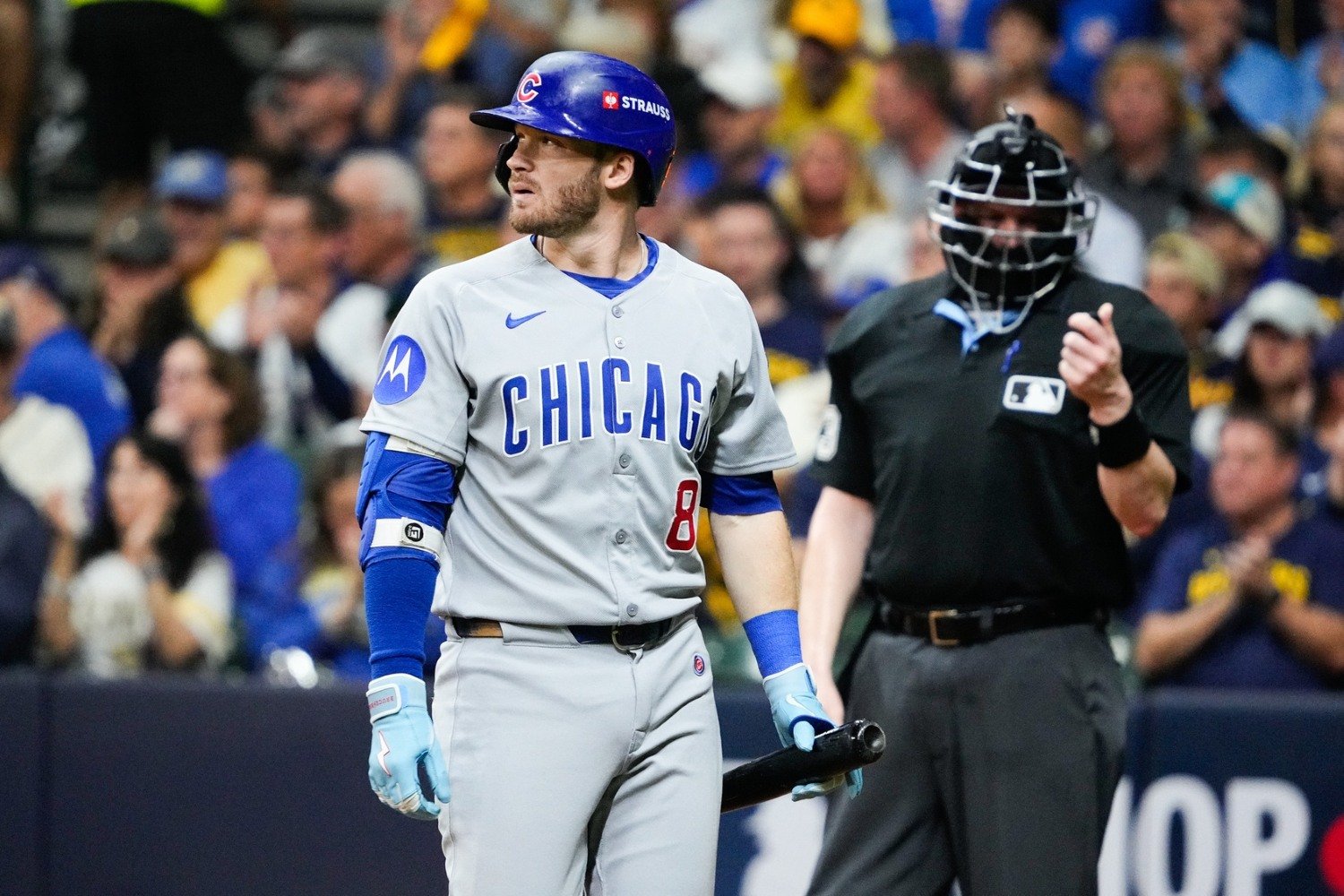 After another loss to the Milwaukee Brewers on Monday, the Chicago Cubs stand with the classic Avengers: Endgame protagonists; it feels like they have a 1-in-roughly-14-million chance of claiming victory. Such dire odds are not the result of being down 2-0 in a best-of-five series. They're also not due solely to the idea that the Brewers are simply a better ballclub. While both of those things may (objectively) be true, there's also an alignment issue within the roster. And while we're at it, here's another, less lazy pop culture reference. As far as partnerships go, Cubs hitters and Cubs pitchers feature the type of ill-gotten, questionable-decision-leading-to-disastrous-result structure that would make even our best horror directors squirm. Not in a darkly fun and chaotic John Carpenter sort of way, mind you, where the vibes and atmosphere don't leave you wanting for an ultimate outcome. You're just happy to be along for the ride. But rather in an Ari Aster sort of way, where you're unsure why you're consuming it in the first place and feel sort of gross afterward. This is all a fairly dramatic way of stating that the composition of this roster was never going to work in anything resembling a pleasant fashion, against a team like Milwaukee. On one hand, you have the Cubs pitching staff. They've been a fine group in 2025, composed of middle-to-low-tier velocity and reclamation arms. As a collective, they sat ninth in ERA (3.81) and paced the league with a 6.9% walk rate. The results were there, regardless of their own composition. Ahead of the National League Division Series, concern permeated two primary areas: their ability to perform at a high level while missing Cade Horton, combined with the need to feature a potentially burning-out Matthew Boyd; and their broader, further-reaching dearth of both velocity and swing-and-miss ability. The Brewers absolutely feast on teams with that combination of weaknesses. This is a team with the third-highest contact rate (79.6%) on swings, and when they don't have to battle high-end raw stuff, that contact can be authoritative. Against finesse pitchers (those with a low combined strikeout and walk rate, relative to the league average), the Brewers had a .274/.336/.417 line and a 105 OPS+, meaning they're substantially above-average. Their ability to generate runs via contact against the specific profile of the bulk of the Cubs staff was always going to lead to run production on their end. It wasn't about shutting down the opposition on the Cubs' end, but merely minimizing damage. In short, the Cubs were going to be trailing, probably at many points, in this series. That left a certain onus on the hitters to be able to work their way back into games. That's where we begin to confront the issue we've seen unfold in the first two games of this series. Whether or not the Cubs are a team capable of coming back in games where they find themselves trailing is almost irrelevant—because whether they are constructed that way or not, it's not something they have done particularly well in 2025. One factor in establishing this idea about this year's group is in their splits when trailing in games. When behind, the Cubs lineup features a slash of .241/.321/.409. When ahead, they have an average 20 points higher and a slugging percentage almost 50 points above the trailing rate. Primary culprits in the shortfall of production when the team is behind include Pete Crow-Armstrong (.202/.270/.405), Seiya Suzuki (.236/.322/.433), Michael Busch (.207/.333/.377), Carson Kelly (.205/.302/.369) and Matt Shaw (.232/.279/.416). That's over half your lineup that scuffles significantly in a trailing situation. Then you toss in the leverage component: The most notable column here is in the runs added or subtracted due to leverage. Suzuki leads the way, but that's also on the strength of either his patience or a pitch over the heart of the plate. Ian Happ's is almost exclusively due to patience in his own right, as is Kyle Tucker's. Only Nico Hoerner offers something even remotely balanced in creating value in the leverage game. Everyone else is obviously on the wrong end of the spectrum in that regard. Nuance in this discussion runs incredibly deep—deeper than even these couple of factors, for sure. It's a team that has struggled against velocity, too. But as many different additional elements that we could include as part of this discussion, many of them lead to the same (relatively simple) idea: the Cubs were always going to be trailing at points during this series, and they lack the ability to overcome those scenarios. Whether that's a failure of construction or of execution remains to be seen. Either way, though, it's certainly something with which the Cubs' front office will have to reckon as they begin to turn their attention toward the 2026 roster.
 -
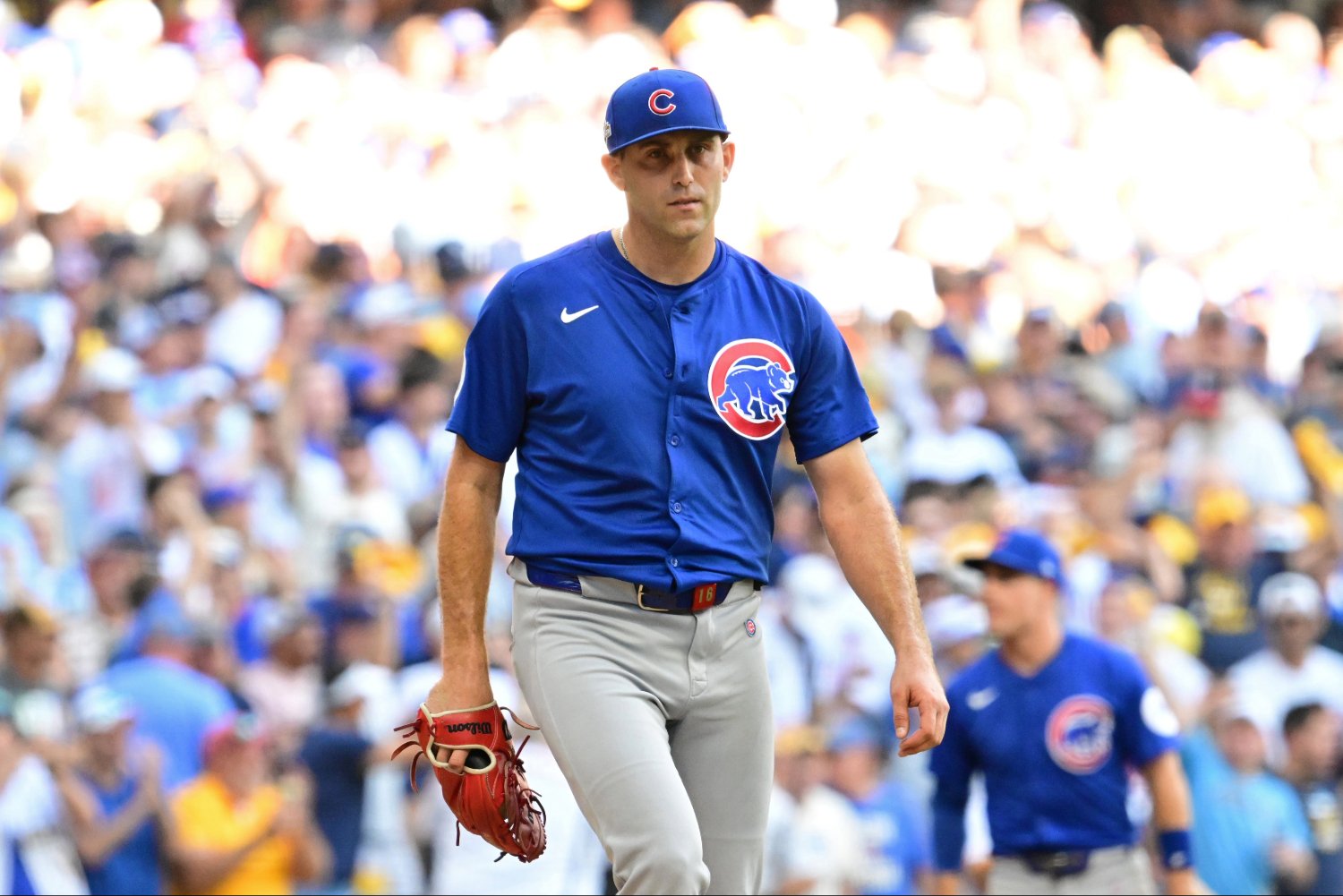 It was evident from just about the first pitch of Saturday's Game 1 against the Milwaukee Brewers that Matthew Boyd did not have "it." His sequence—double, double, double, groundout, walk, error, strikeout, single—was perhaps the worst way things could have started for the Chicago Cubs in the five-game series. Even with the important acknowledgement that it's only one game and the work of the bullpen (particularly Aaron Civale) mitigated the consequences of running too deep off such a short start start, questions are sure to emerge regarding Boyd's short-term role. That Boyd struggled so mightily against the Brewers did not, unfortunately, come as a surprise. A couple of factors could have predicted as much, in fact. One is the two-game sample we have from Boyd against Milwaukee in 2025. In those two starts, he allowed nine earned runs on 12 hits in 10 1/3 innings. It seems inarguable to say that his skill set is ill-suited to take on a lineup that makes as much contact as the Brewers do. Compound that with short rest, even off of a 58-pitch start, and you have the outcome the Cubs received on Saturday afternoon. Where they go from here, though, is certainly a matter for debate as it relates to Boyd. We do know that the Cubs will roll out Shota Imanaga for Game 2, ideally in a more trustworthy fashion than they did against San Diego in deploying an opener. But he also has a 5.73 ERA against Milwaukee in four career starts, so it may end up being a quick hook if he gets into some trouble. Regardless of how that all transpires, you're probably looking at a Jameson Taillon or Colin Rea start in Game 3, assuming the latter isn't involved in some sort of piggyback with Imanaga. Ultimately, Game 4 (should the Cubs get there) lines back up for Boyd to take the ball. But should he? It's not as if Boyd's start, brutal as it was, was any kind of outlier for his late-season performance. Just about everywhere, September offered some of the worst numbers we'd seen from him in an otherwise strong campaign. At 5.31, his September ERA was his worst an in individual month. The same was true regarding his FIP (5.69), strikeout rate (14.0 percent), and wOBA against (.343). That latter figure was concerning on its own, but the expected value produced by opposing hitters is particularly jarring: If you want to go back to a start where Boyd did not allow a run, you'd have to go back to August 2. In the nine subsequent starts from that point (49 innings), he allowed at least two earned runs in all of them (5.51 ERA). So, not only do you have a guy who has struggled against the Cubs' specific opponent in the National League Division Series, but one who is coming off more than a month where he turned in some of his poorest work across 31 total starts. That his arm angle dropped to its lowest point since the first month of the season (24.4 degrees) in September speaks to a potential cause of all of this: fatigue. That's kind of an important notion here, too. You can hardly fault a guy who last crossed the 170 inning threshold in 2019 for burning out to an extent (if that is, indeed, what's happening). Boyd's workload this year has, essentially, been of the same total of his last four seasons combined in terms of volume. If the arm angle drop-off is indicative of some fatigue, even if the velocity and movement have maintained, it's a logical explanation. But it also speaks to the danger of having Boyd run out there for a potential Game 4 start where the team may be facing elimination. It's possible that the Cubs turn to Boyd as a pseudo-opener in Game 4 and see how it goes. From there—and depending on how things transpire in Game 3—perhaps you've got Colin Rea to assume some of the bulk work in that one. Or Counsell could lean heavily into Aaron Civale considering how sharp he looked amid the disaster of Game 1 (4 1/3 innings, three hits, no walks, 37 strikes on 55 pitches). But there's another caveat even to minimizing his presence later in this series. Boyd has been woeful in the first inning since the start of August. In first innings going back 10 starts, he has a 6.30 ERA and a walk rate (6.8 percent) that exceeds his total figure for the season. Sure, he's been a bit unlucky with a groundball rate approaching 47 percent in those innings (.333 BABIP), but this is also an opponent that feasts on batted ball fortune. Even the opener solution isn't foolproof. As such, the unfortunate reality is that Counsell probably shouldn't trust Matthew Boyd with another start in this series, though his alternative options are practically nonexistent. The results weren't there in September. They weren't there at any point against the Brewers in his three starts against them to date in 2025. It'd be unreasonable to expect a sudden turnaround when the evidence points firmly in the other direction. It might be an impossible scenario to avoid depending on what kind of volume the Cubs get between now and then, but it'd be a really tough sell to see Boyd pitching with the Cubs' backs up against the wall.
 -
Image courtesy of © Benny Sieu-Imagn Images It was evident from just about the first pitch of Saturday's Game 1 against the Milwaukee Brewers that Matthew Boyd did not have "it." His sequence—double, double, double, groundout, walk, error, strikeout, single—was perhaps the worst way things could have started for the Chicago Cubs in the five-game series. Even with the important acknowledgement that it's only one game and the work of the bullpen (particularly Aaron Civale) mitigated the consequences of running too deep off such a short start start, questions are sure to emerge regarding Boyd's short-term role. That Boyd struggled so mightily against the Brewers did not, unfortunately, come as a surprise. A couple of factors could have predicted as much, in fact. One is the two-game sample we have from Boyd against Milwaukee in 2025. In those two starts, he allowed nine earned runs on 12 hits in 10 1/3 innings. It seems inarguable to say that his skill set is ill-suited to take on a lineup that makes as much contact as the Brewers do. Compound that with short rest, even off of a 58-pitch start, and you have the outcome the Cubs received on Saturday afternoon. Where they go from here, though, is certainly a matter for debate as it relates to Boyd. We do know that the Cubs will roll out Shota Imanaga for Game 2, ideally in a more trustworthy fashion than they did against San Diego in deploying an opener. But he also has a 5.73 ERA against Milwaukee in four career starts, so it may end up being a quick hook if he gets into some trouble. Regardless of how that all transpires, you're probably looking at a Jameson Taillon or Colin Rea start in Game 3, assuming the latter isn't involved in some sort of piggyback with Imanaga. Ultimately, Game 4 (should the Cubs get there) lines back up for Boyd to take the ball. But should he? It's not as if Boyd's start, brutal as it was, was any kind of outlier for his late-season performance. Just about everywhere, September offered some of the worst numbers we'd seen from him in an otherwise strong campaign. At 5.31, his September ERA was his worst an in individual month. The same was true regarding his FIP (5.69), strikeout rate (14.0 percent), and wOBA against (.343). That latter figure was concerning on its own, but the expected value produced by opposing hitters is particularly jarring: If you want to go back to a start where Boyd did not allow a run, you'd have to go back to August 2. In the nine subsequent starts from that point (49 innings), he allowed at least two earned runs in all of them (5.51 ERA). So, not only do you have a guy who has struggled against the Cubs' specific opponent in the National League Division Series, but one who is coming off more than a month where he turned in some of his poorest work across 31 total starts. That his arm angle dropped to its lowest point since the first month of the season (24.4 degrees) in September speaks to a potential cause of all of this: fatigue. That's kind of an important notion here, too. You can hardly fault a guy who last crossed the 170 inning threshold in 2019 for burning out to an extent (if that is, indeed, what's happening). Boyd's workload this year has, essentially, been of the same total of his last four seasons combined in terms of volume. If the arm angle drop-off is indicative of some fatigue, even if the velocity and movement have maintained, it's a logical explanation. But it also speaks to the danger of having Boyd run out there for a potential Game 4 start where the team may be facing elimination. It's possible that the Cubs turn to Boyd as a pseudo-opener in Game 4 and see how it goes. From there—and depending on how things transpire in Game 3—perhaps you've got Colin Rea to assume some of the bulk work in that one. Or Counsell could lean heavily into Aaron Civale considering how sharp he looked amid the disaster of Game 1 (4 1/3 innings, three hits, no walks, 37 strikes on 55 pitches). But there's another caveat even to minimizing his presence later in this series. Boyd has been woeful in the first inning since the start of August. In first innings going back 10 starts, he has a 6.30 ERA and a walk rate (6.8 percent) that exceeds his total figure for the season. Sure, he's been a bit unlucky with a groundball rate approaching 47 percent in those innings (.333 BABIP), but this is also an opponent that feasts on batted ball fortune. Even the opener solution isn't foolproof. As such, the unfortunate reality is that Counsell probably shouldn't trust Matthew Boyd with another start in this series, though his alternative options are practically nonexistent. The results weren't there in September. They weren't there at any point against the Brewers in his three starts against them to date in 2025. It'd be unreasonable to expect a sudden turnaround when the evidence points firmly in the other direction. It might be an impossible scenario to avoid depending on what kind of volume the Cubs get between now and then, but it'd be a really tough sell to see Boyd pitching with the Cubs' backs up against the wall. View full article
-
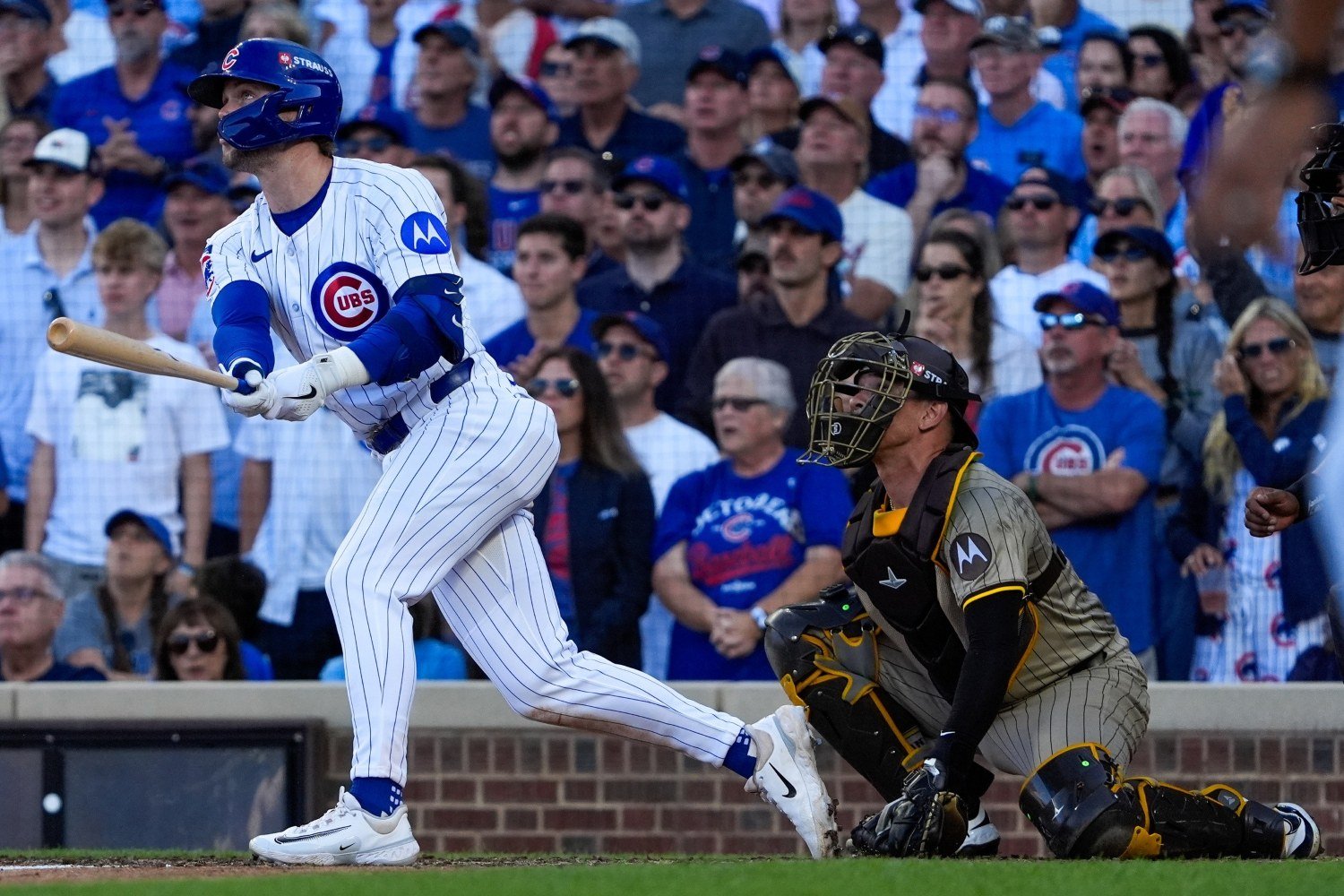 In Major League Baseball's postseason, nothing happens in a vacuum. You can win individual games during the regular season on the strength of just one phase of the roster. The offense pops off to a point where pitching and defense have to merely show up. The pitching might do its job to carry a team across nine innings despite a slow day at the plate. Perhaps it's less about either, and more about what the defense is able to do to stifle an opponent. Stack enough of them and you're playing in October. Regardless of the shape it takes, it's difficult for one phase to carry a team over a particular stretch beyond the confines of an isolated nine innings. In the postseason, the calculus changes. Yes, those individual components can still win games, but it's a much more nuanced process in being able to stack the requisite wins that lead to a legitimate October run—and each individual win is a bigger part of such a run. The Chicago Cubs were able to bounce the San Diego Padres on the strength of their pitching and of their defense. A pair of 3-1 wins offered just enough offense to get the job done, but it was on the strength of their arms and their gloves they were able to advance into the National League Division Series. Now staring down their division rivals in Milwaukee, it's going to require some support from the other phase of the roster if the team is to progress beyond the first legitimate round of play. That means that Nico Hoerner could very well be the most important (and most dangerous) player on the positional side of the Cubs' roster. Don't get it twisted: the Cubs have more impactful players than Hoerner. Michael Busch, Seiya Suzuki, and Pete Crow-Armstrong are among the players capable of popping at any particular moment. But in order to beat a team like the Brewers, there's a certain level of stability that's needed: stability of bat, stability of glove, stability of mindset. At a time when the vibe has the chance to become anything but, Hoerner represents a calming presence for this group. At some point throughout the season, there's been a stretch of poor production or a concerning trend for seemingly each player on the Cubs' roster. Such a stretch doesn't exist for Nico Hoerner: It's a fairly standard rolling wOBA chart for the first 300 or so plate appearances. But as you get closer to the middle of the season, there's a consistent brilliance that begins to manifest. Hoerner's full season numbers (a .297/.345/.394 line with a 7.6% strikeout rate, 6.0% walk rate, and .324 wOBA) aren't buoyed by an especially torrid stretch, in the way that Crow-Armstrong or recent opponent Fernando Tatis Jr might have been. Instead, this is a picture of consistency. In the months prior to September (which stands as something of a positive outlier), Hoerner never had a batting average over .295 in an individual month—but he also never had one go below .283. His on-base percentage was at its highest in July (.347) but never fell below .330. He had three separate months where it was .339. His wOBA never fell below .308, and never went above .324. Not only is it remarkably steady output, but it's quality. At the absolute worst of 2025, Hoerner was a league-average bat. His outlying performances have been well above that. It's consistency not only in production, but in process. His swing rate never fluctuated more than five percentage points from month to month. Nor (and perhaps this is more important) did his contact rate, where he topped out at 92.0% and sat at a season-low 87.1% back in May. It's the same story mechanically, where he's had the same amount of tilt in his swing since June, the same swing length in each month except June, and has remained within 0.5 MPH of the same efficient bat speed he started with back in March & April (68.4). All of this leaves us with little surprise as to the quiet steadiness of Hoerner through the Cubs' first three playoff games. Hoerner has yet to notch a walk or a strikeout, but is still rolling with a .364 average through a dozen plate appearances. None of this even begins to bring his defense into the equation. But Hoerner's clear commitment to process on both sides of the ball is how you end up getting something like this in a crucial spot: A player this sound is an intensely dangerous player under the heat of an October spotlight. Sure, Suzuki or Busch may make more noise at the plate and Crow-Armstrong might turn a game on the bases, but it's on the strength of the steadiness of someone like Hoerner that the difference is going to be made. This is a Brewers team that can pitch and manage a staff effectively. Their team ERA ranked second in the league (3.59), while possessing the league's sixth-best strikeout rate (23.7%). They put balls in play, with Milwaukee hitters tied for fourth in strikeout rate (20.3%)). A player like Hoerner is exactly how you can begin to mitigate each of those factors. It's process-oriented in a way that correlates with postseason success. There will surely be players to make a louder impact at any point, for however long this series against Milwaukee lasts, but it's hard to imagine a presence of more sustained importance than Nico Hoerner in the 2025 NLDS.
 -
Image courtesy of © David Banks-Imagn Images In Major League Baseball's postseason, nothing happens in a vacuum. You can win individual games during the regular season on the strength of just one phase of the roster. The offense pops off to a point where pitching and defense have to merely show up. The pitching might do its job to carry a team across nine innings despite a slow day at the plate. Perhaps it's less about either, and more about what the defense is able to do to stifle an opponent. Stack enough of them and you're playing in October. Regardless of the shape it takes, it's difficult for one phase to carry a team over a particular stretch beyond the confines of an isolated nine innings. In the postseason, the calculus changes. Yes, those individual components can still win games, but it's a much more nuanced process in being able to stack the requisite wins that lead to a legitimate October run—and each individual win is a bigger part of such a run. The Chicago Cubs were able to bounce the San Diego Padres on the strength of their pitching and of their defense. A pair of 3-1 wins offered just enough offense to get the job done, but it was on the strength of their arms and their gloves they were able to advance into the National League Division Series. Now staring down their division rivals in Milwaukee, it's going to require some support from the other phase of the roster if the team is to progress beyond the first legitimate round of play. That means that Nico Hoerner could very well be the most important (and most dangerous) player on the positional side of the Cubs' roster. Don't get it twisted: the Cubs have more impactful players than Hoerner. Michael Busch, Seiya Suzuki, and Pete Crow-Armstrong are among the players capable of popping at any particular moment. But in order to beat a team like the Brewers, there's a certain level of stability that's needed: stability of bat, stability of glove, stability of mindset. At a time when the vibe has the chance to become anything but, Hoerner represents a calming presence for this group. At some point throughout the season, there's been a stretch of poor production or a concerning trend for seemingly each player on the Cubs' roster. Such a stretch doesn't exist for Nico Hoerner: It's a fairly standard rolling wOBA chart for the first 300 or so plate appearances. But as you get closer to the middle of the season, there's a consistent brilliance that begins to manifest. Hoerner's full season numbers (a .297/.345/.394 line with a 7.6% strikeout rate, 6.0% walk rate, and .324 wOBA) aren't buoyed by an especially torrid stretch, in the way that Crow-Armstrong or recent opponent Fernando Tatis Jr might have been. Instead, this is a picture of consistency. In the months prior to September (which stands as something of a positive outlier), Hoerner never had a batting average over .295 in an individual month—but he also never had one go below .283. His on-base percentage was at its highest in July (.347) but never fell below .330. He had three separate months where it was .339. His wOBA never fell below .308, and never went above .324. Not only is it remarkably steady output, but it's quality. At the absolute worst of 2025, Hoerner was a league-average bat. His outlying performances have been well above that. It's consistency not only in production, but in process. His swing rate never fluctuated more than five percentage points from month to month. Nor (and perhaps this is more important) did his contact rate, where he topped out at 92.0% and sat at a season-low 87.1% back in May. It's the same story mechanically, where he's had the same amount of tilt in his swing since June, the same swing length in each month except June, and has remained within 0.5 MPH of the same efficient bat speed he started with back in March & April (68.4). All of this leaves us with little surprise as to the quiet steadiness of Hoerner through the Cubs' first three playoff games. Hoerner has yet to notch a walk or a strikeout, but is still rolling with a .364 average through a dozen plate appearances. None of this even begins to bring his defense into the equation. But Hoerner's clear commitment to process on both sides of the ball is how you end up getting something like this in a crucial spot: A player this sound is an intensely dangerous player under the heat of an October spotlight. Sure, Suzuki or Busch may make more noise at the plate and Crow-Armstrong might turn a game on the bases, but it's on the strength of the steadiness of someone like Hoerner that the difference is going to be made. This is a Brewers team that can pitch and manage a staff effectively. Their team ERA ranked second in the league (3.59), while possessing the league's sixth-best strikeout rate (23.7%). They put balls in play, with Milwaukee hitters tied for fourth in strikeout rate (20.3%)). A player like Hoerner is exactly how you can begin to mitigate each of those factors. It's process-oriented in a way that correlates with postseason success. There will surely be players to make a louder impact at any point, for however long this series against Milwaukee lasts, but it's hard to imagine a presence of more sustained importance than Nico Hoerner in the 2025 NLDS. View full article
-
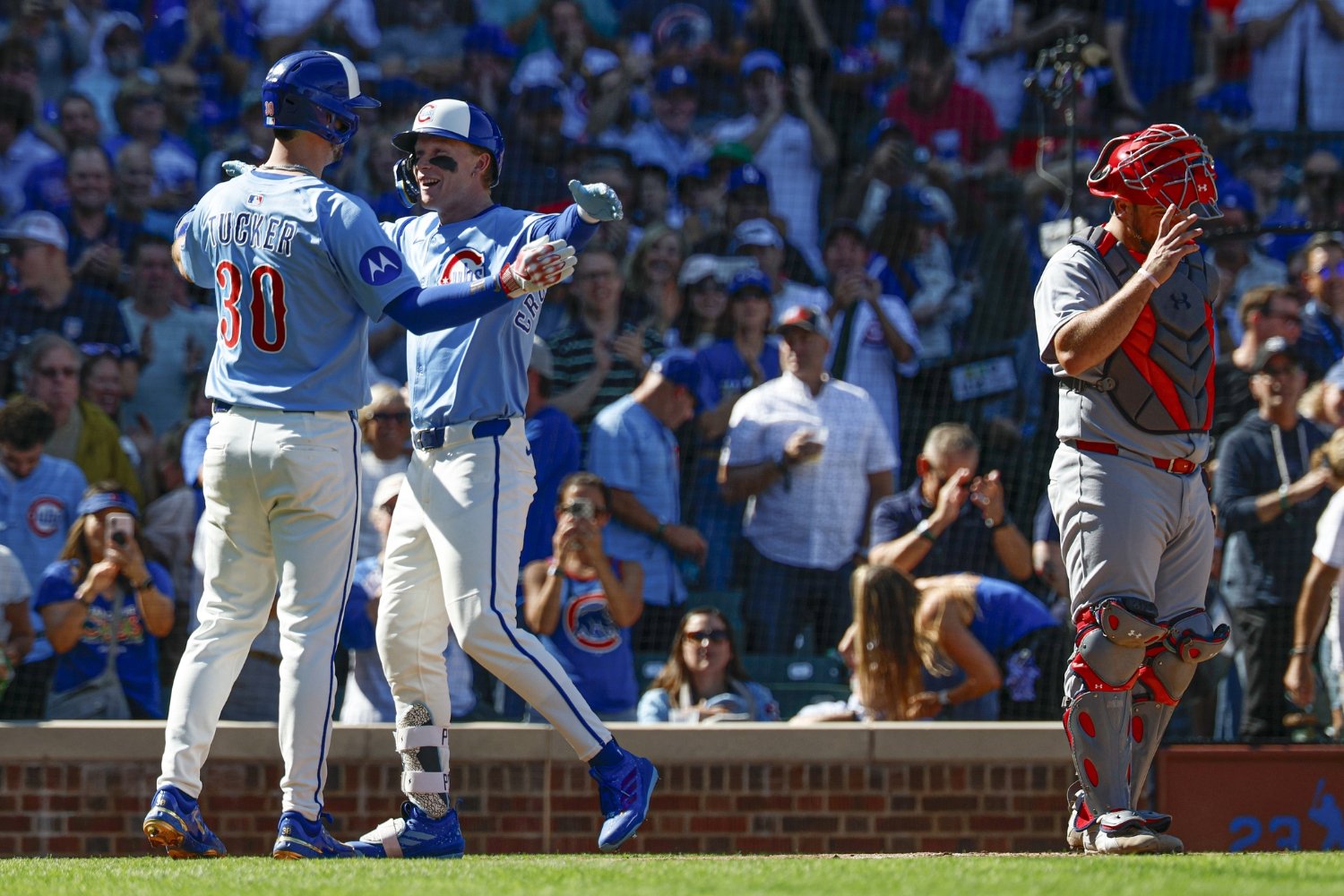 As the Chicago Cubs prepare to head north to kick off the National League Division Series in Milwaukee, they can do so with the knowledge that a couple of their key hitters appear to (finally) be getting right at exactly the correct time. There was a point in the second half where things looked bleak for each of Pete Crow-Armstrong and Kyle Tucker. Despite the former's status at one point as a Most Valuable Player candidate and the latter spending much of the first half showcasing why he's a premier offensive talent, there wasn't much to speak of from either bat in the final stretch of the regular season. Crow-Armstrong turned in a .216/.262/.372 line in the second half, checking in with a wRC+ of only 72. August was a particularly brutal month for him, as that wRC+ figure came in at a mere 22 across 112 plate appearances. Tucker, meanwhile, went for a .231/.360/.378 line in half No. 2. Despite characteristically strong approach numbers that allowed him to remain a fixture on the basepaths, his power (and contributions in general) plummeted. He posted a wRC+ of 115 that represented a 30-point drop from his first half number. The respective reasoning behind their struggles is where the two differ. Crow-Armstrong was working through mechanical issues and what looked like some visible fatigue as the season wore on, while Tucker's hand fracture compounded with a September calf injury to pin down his ability create the same level of impact that we saw at the plate in the first half of the year. Regardless of the factors generating such intense struggles for two of the team's essential bats, it appears each is on his way to serving as a factor in the NLDS. As we approached the end of the regular season, there were at least signs that Crow-Armstrong was on his way back. He recorded at least one hit in five of his last six starts of the regular season, including back-to-back games with home runs in the final weekend. Even so, his postseason debut was a struggle. He went 0-for-3 with three strikeouts while whiffing seven times on nine swings. While the result in Game 2 might not have been terribly different (0-for-3 with two strikeouts), he at least cut the whiffs down a touch (five on nine swings) and saw 18 pitches across his three trips to the plate. But it's his 3-for-4 effort in Thursday's Game 3 that bodes particularly well for the start of the series against Milwaukee. Therein, he whiffed just thrice on 10 swings (another 18 pitches). His first notch on the stat sheet was a softer-hit single (86.4 MPH), but then he checked in with singles that came off the bat at 100.8 MPH and 109.4 MPH. It's the type of contact that can do wonders for a hitter in the confidence game. Tucker, on the other hand, started to show signs of bouncing back as early as in Game 2. He didn't have quite the same close to the regular season, as he only made three starts at a 1-for-12 output upon his activation from the injured list. So, it wasn't necessarily surprising to see him go 0-for-3 in Game 1. And while he recorded just one hit in four plate appearances in Game 2, he was able to produce a pair of hard hits in the effort (99.0 & 96.3 MPH). Like Crow-Armstrong, Tucker was able to put multiple hits on the board in Game 3, as he went 2-for-4 and came across the score one of the team's three runs. What's particularly encouraging about Tucker, though, is in his lack of swing-and-miss in the series at large. Not that it had been an issue for him during the regular season in the way it was for someone like Crow-Armstrong, but despite whiffing at three pitches on eight swings in Game 2, he bookended the series with a single whiff in each of Game 1 and Game 3. If he's on his way back to a level of strength more akin to the version we saw in the first half, then that near-absence of whiff is going to be a massive boon to the Cubs' lineup against the Brewers. Despite a lack of overall run production, there are a lot of things going right for this Cubs lineup at present. They're getting hits on the board and maintaining a regular presence on the basepaths. Hitters like Pete Crow-Armstrong and Kyle Tucker have their spot in the lineup on the strength of their ability to generate production with the guys around them getting on base. The value of these two appearing to be on a track toward getting back to the perception we had of their contributions for the bulk of the first half cannot be overstated.
 -
Image courtesy of © Kamil Krzaczynski-Imagn Images As the Chicago Cubs prepare to head north to kick off the National League Division Series in Milwaukee, they can do so with the knowledge that a couple of their key hitters appear to (finally) be getting right at exactly the correct time. There was a point in the second half where things looked bleak for each of Pete Crow-Armstrong and Kyle Tucker. Despite the former's status at one point as a Most Valuable Player candidate and the latter spending much of the first half showcasing why he's a premier offensive talent, there wasn't much to speak of from either bat in the final stretch of the regular season. Crow-Armstrong turned in a .216/.262/.372 line in the second half, checking in with a wRC+ of only 72. August was a particularly brutal month for him, as that wRC+ figure came in at a mere 22 across 112 plate appearances. Tucker, meanwhile, went for a .231/.360/.378 line in half No. 2. Despite characteristically strong approach numbers that allowed him to remain a fixture on the basepaths, his power (and contributions in general) plummeted. He posted a wRC+ of 115 that represented a 30-point drop from his first half number. The respective reasoning behind their struggles is where the two differ. Crow-Armstrong was working through mechanical issues and what looked like some visible fatigue as the season wore on, while Tucker's hand fracture compounded with a September calf injury to pin down his ability create the same level of impact that we saw at the plate in the first half of the year. Regardless of the factors generating such intense struggles for two of the team's essential bats, it appears each is on his way to serving as a factor in the NLDS. As we approached the end of the regular season, there were at least signs that Crow-Armstrong was on his way back. He recorded at least one hit in five of his last six starts of the regular season, including back-to-back games with home runs in the final weekend. Even so, his postseason debut was a struggle. He went 0-for-3 with three strikeouts while whiffing seven times on nine swings. While the result in Game 2 might not have been terribly different (0-for-3 with two strikeouts), he at least cut the whiffs down a touch (five on nine swings) and saw 18 pitches across his three trips to the plate. But it's his 3-for-4 effort in Thursday's Game 3 that bodes particularly well for the start of the series against Milwaukee. Therein, he whiffed just thrice on 10 swings (another 18 pitches). His first notch on the stat sheet was a softer-hit single (86.4 MPH), but then he checked in with singles that came off the bat at 100.8 MPH and 109.4 MPH. It's the type of contact that can do wonders for a hitter in the confidence game. Tucker, on the other hand, started to show signs of bouncing back as early as in Game 2. He didn't have quite the same close to the regular season, as he only made three starts at a 1-for-12 output upon his activation from the injured list. So, it wasn't necessarily surprising to see him go 0-for-3 in Game 1. And while he recorded just one hit in four plate appearances in Game 2, he was able to produce a pair of hard hits in the effort (99.0 & 96.3 MPH). Like Crow-Armstrong, Tucker was able to put multiple hits on the board in Game 3, as he went 2-for-4 and came across the score one of the team's three runs. What's particularly encouraging about Tucker, though, is in his lack of swing-and-miss in the series at large. Not that it had been an issue for him during the regular season in the way it was for someone like Crow-Armstrong, but despite whiffing at three pitches on eight swings in Game 2, he bookended the series with a single whiff in each of Game 1 and Game 3. If he's on his way back to a level of strength more akin to the version we saw in the first half, then that near-absence of whiff is going to be a massive boon to the Cubs' lineup against the Brewers. Despite a lack of overall run production, there are a lot of things going right for this Cubs lineup at present. They're getting hits on the board and maintaining a regular presence on the basepaths. Hitters like Pete Crow-Armstrong and Kyle Tucker have their spot in the lineup on the strength of their ability to generate production with the guys around them getting on base. The value of these two appearing to be on a track toward getting back to the perception we had of their contributions for the bulk of the first half cannot be overstated. View full article
-
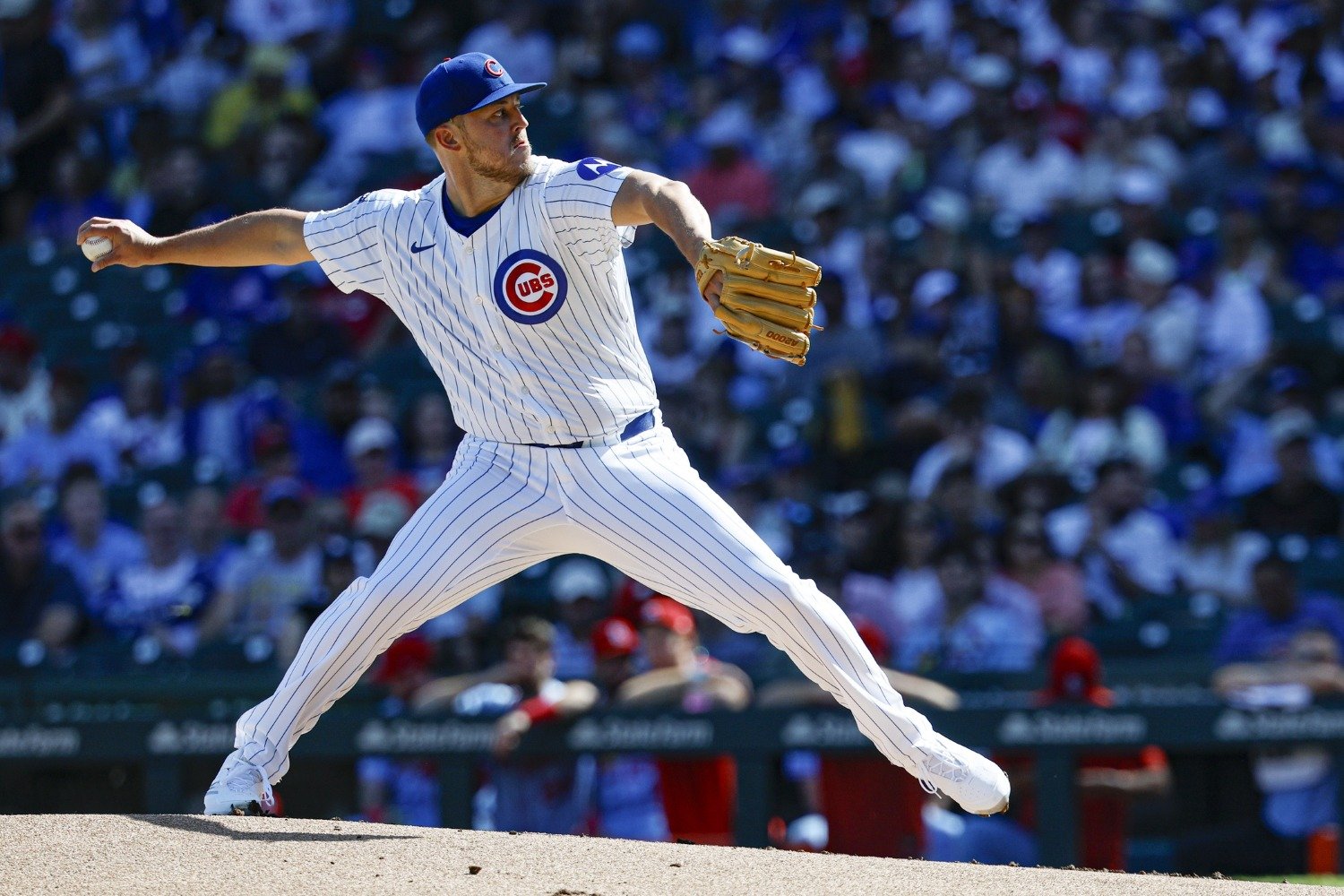 The Chicago Cubs will be without rookie starter Cade Horton for at least the Wild Card round of the 2025 postseason—and probably for the whole thing. His absence, which comes by way of a fractured rib, means a couple of different things for this group and their immediate future. Horton led the team in second-half ERA (1.03), FIP (2.80), and fWAR (1.8). That isn't easy value to replace. The team is now tasked with actually trying to replace said value. Matthew Boyd and Shota Imanaga will each get a start (probably in that order) in the first two games against San Diego. On paper, that's a favorable start to the series against a lineup that skews left-handed—or at least, in light of Fernando Tatis Jr.'s (.845 OPS against right-handed pitchers, .696 against lefties) peculiar splits, is more dangerous overall against right-handed hurlers. That leaves one of Jameson Taillon and Colin Rea in position to nab a start in a potential Game 3, should it progress to that point. To which Craig Counsell would turn in that scenario, though, is anybody's guess at this juncture. On the whole, Taillon has had an underwhelming season. He's made 23 starts, with a 3.68 ERA, a 4.66 FIP, and the lowest strikeout rate of his career (18.1%). Even with the lack of punchouts, it's still a fine year, but he's had issues with the home run ball. Taillon's 13.6% HR/FB rate is his highest since his rookie campaign in 2016, and is tied with Imanaga for the worst rate on the team. But despite his battles with the go-fer ball, Taillon actually has a couple of factors working in his favor. For one, the Padres are not a team particularly adept at hitting home runs. Their 148 homers rank just 28th in the majors, and they own a .136 collective ISO that sits in the same position. They're neither clearing fences or splitting gaps at a high rate. Taillon is also above-average at limiting hard contact, on a per-batted ball basis. He should be able to keep San Diego in the park, and under the wraps of the Cubs' excellent defense. If, for some reason, Counsell eschews his highly-paid veteran, then it'll likely be Colin Rea out of the starting gate in a Game 3. Rea has been a stabilizing force for a team that has fought against rotation issues all year, going for an ERA of 3.95, a 4.12 FIP, a 19.2% strikeout rate, and a 6.8% walk rate. Like Taillon, Rea has been quite good in the second half (3.14 FIP, 22.1 K%), so he carries a certain amount of momentum into October in his own right. Where his counterpart may have the advantage, though, is in Taillon's work against left-handers. Taillon vs. LHH: .200 AVG, 21.2 K%, 7.2 BB%, 13.9 HR/FB%, .275 wOBA Rea vs. LHH: .292 AVG, 19.0 K%, 9.2 BB%, 14.9 HR/FB%, .366 wOBA And there's your separator. Regardless of who starts, that individual is going to have to contend with Jackson Merrill, Gavin Sheets, and Jake Cronenworth. Factor in the contact factor from Luis Arráez or the potential for Ryan O'Hearn to suddenly break out, and that's a volume of lefties you'd like to manage as efficiently as possible. Given that this group isn't also concentrated in any specific portion of the lineup, it really does leave Taillon as the more appropriate option of the two. There are, of course, caveats to any Game 3 situation. Quick hooks will likely abound, which means that there could be a need for volume beyond the starter. If the game is managing the left-handed hitters in the Padres' lineup, then Michael Soroka could be first in line for a multi-inning appearance, ahead of Javier Assad. Left-handed hitters have a .320 wOBA against Soroka and a .363 mark against Assad in '25. Soroka also offers quite a bit more in the strikeout game (25.2%, compared to Assad's 12.7%). Against a Padres team that doesn't strike out and scores runs largely on the strength of their on-base volume, there's a pretty clear path for the middle innings as well. It's going to be a lot for Counsell to navigate. The Cubs will enter the Wild Card Series with a decent collection of relief arms, but you're also operating within the confines of just three games. Length and efficiency will be needed from each of Boyd and Imanaga, before Counsell can even begin to roll out a coherent gameplan for what would happen in a Game 3. But compounding Taillon with Soroka does appear to be the most effective initial idea, depending on what else happens between the certain now and the possible then.
 -
Image courtesy of © Kamil Krzaczynski-Imagn Images The Chicago Cubs will be without rookie starter Cade Horton for at least the Wild Card round of the 2025 postseason—and probably for the whole thing. His absence, which comes by way of a fractured rib, means a couple of different things for this group and their immediate future. Horton led the team in second-half ERA (1.03), FIP (2.80), and fWAR (1.8). That isn't easy value to replace. The team is now tasked with actually trying to replace said value. Matthew Boyd and Shota Imanaga will each get a start (probably in that order) in the first two games against San Diego. On paper, that's a favorable start to the series against a lineup that skews left-handed—or at least, in light of Fernando Tatis Jr.'s (.845 OPS against right-handed pitchers, .696 against lefties) peculiar splits, is more dangerous overall against right-handed hurlers. That leaves one of Jameson Taillon and Colin Rea in position to nab a start in a potential Game 3, should it progress to that point. To which Craig Counsell would turn in that scenario, though, is anybody's guess at this juncture. On the whole, Taillon has had an underwhelming season. He's made 23 starts, with a 3.68 ERA, a 4.66 FIP, and the lowest strikeout rate of his career (18.1%). Even with the lack of punchouts, it's still a fine year, but he's had issues with the home run ball. Taillon's 13.6% HR/FB rate is his highest since his rookie campaign in 2016, and is tied with Imanaga for the worst rate on the team. But despite his battles with the go-fer ball, Taillon actually has a couple of factors working in his favor. For one, the Padres are not a team particularly adept at hitting home runs. Their 148 homers rank just 28th in the majors, and they own a .136 collective ISO that sits in the same position. They're neither clearing fences or splitting gaps at a high rate. Taillon is also above-average at limiting hard contact, on a per-batted ball basis. He should be able to keep San Diego in the park, and under the wraps of the Cubs' excellent defense. If, for some reason, Counsell eschews his highly-paid veteran, then it'll likely be Colin Rea out of the starting gate in a Game 3. Rea has been a stabilizing force for a team that has fought against rotation issues all year, going for an ERA of 3.95, a 4.12 FIP, a 19.2% strikeout rate, and a 6.8% walk rate. Like Taillon, Rea has been quite good in the second half (3.14 FIP, 22.1 K%), so he carries a certain amount of momentum into October in his own right. Where his counterpart may have the advantage, though, is in Taillon's work against left-handers. Taillon vs. LHH: .200 AVG, 21.2 K%, 7.2 BB%, 13.9 HR/FB%, .275 wOBA Rea vs. LHH: .292 AVG, 19.0 K%, 9.2 BB%, 14.9 HR/FB%, .366 wOBA And there's your separator. Regardless of who starts, that individual is going to have to contend with Jackson Merrill, Gavin Sheets, and Jake Cronenworth. Factor in the contact factor from Luis Arráez or the potential for Ryan O'Hearn to suddenly break out, and that's a volume of lefties you'd like to manage as efficiently as possible. Given that this group isn't also concentrated in any specific portion of the lineup, it really does leave Taillon as the more appropriate option of the two. There are, of course, caveats to any Game 3 situation. Quick hooks will likely abound, which means that there could be a need for volume beyond the starter. If the game is managing the left-handed hitters in the Padres' lineup, then Michael Soroka could be first in line for a multi-inning appearance, ahead of Javier Assad. Left-handed hitters have a .320 wOBA against Soroka and a .363 mark against Assad in '25. Soroka also offers quite a bit more in the strikeout game (25.2%, compared to Assad's 12.7%). Against a Padres team that doesn't strike out and scores runs largely on the strength of their on-base volume, there's a pretty clear path for the middle innings as well. It's going to be a lot for Counsell to navigate. The Cubs will enter the Wild Card Series with a decent collection of relief arms, but you're also operating within the confines of just three games. Length and efficiency will be needed from each of Boyd and Imanaga, before Counsell can even begin to roll out a coherent gameplan for what would happen in a Game 3. But compounding Taillon with Soroka does appear to be the most effective initial idea, depending on what else happens between the certain now and the possible then. View full article
-
Ian Happ is Commanding the Zone, Creating His Own Batted-Ball Luck
RandallPnkFloyd posted an article in Cubs
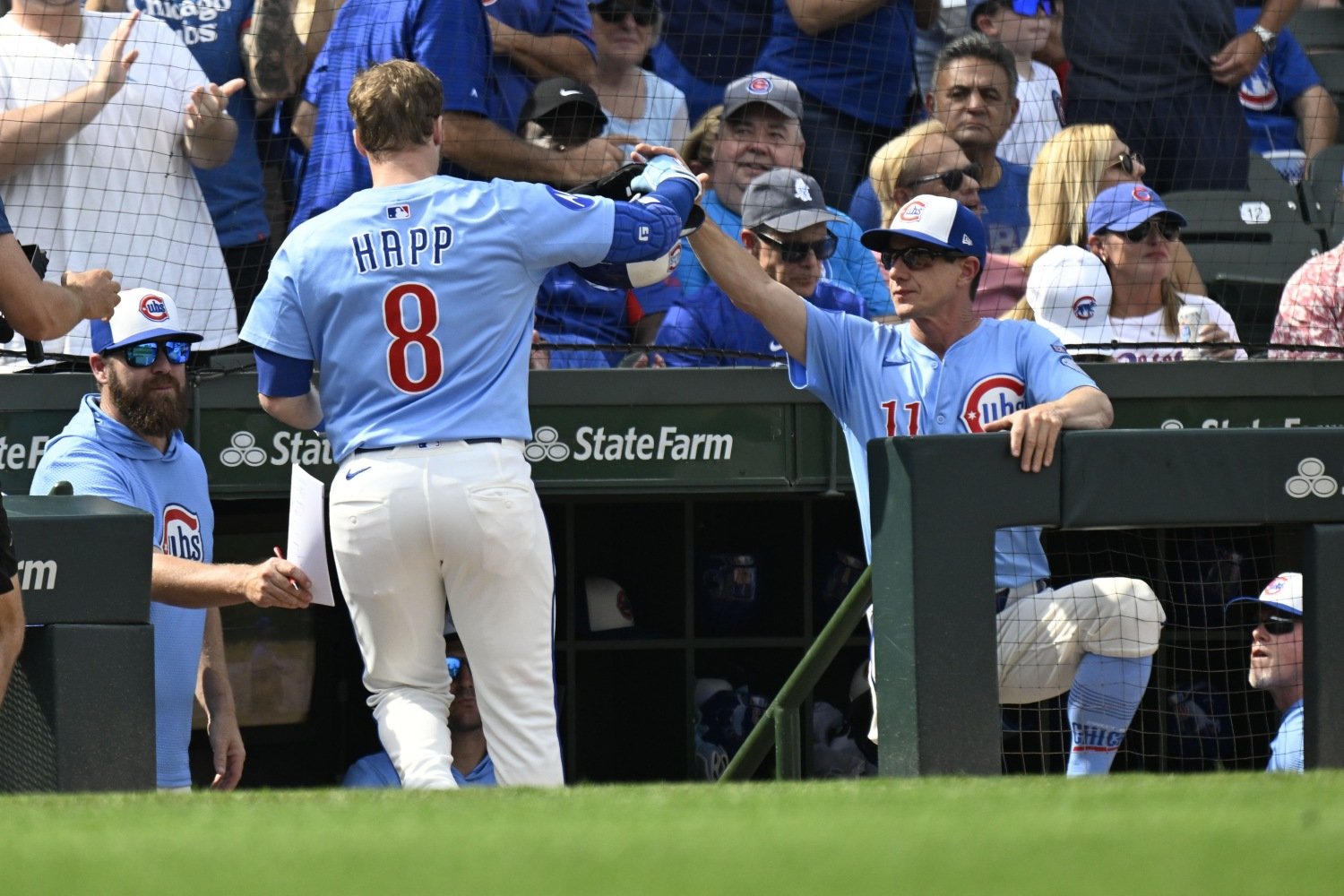 It turns out that when a hitter creates high-quality contact, good things tend to happen. Ian Happ is learning as much here in the month of September. Obviously, Happ was trying to do that all along, even during a sleepy first half. It just wasn't happening for him. Compound some brutal luck with questions around the quality of his baserunning, and it would have been entirely reasonable to suggest one of the Chicago Cubs' top outfield prospects start to eat into his playing time (and hey: we did). It's funny how quickly those questions and their accompanying suggestions begin to fade, though, when the chips start falling in your favor a little more frequently. There wasn't a lot to love in Happ's line through the end of August. Despite a characteristically high walk rate (13.2%), he spent the majority of the year turning in just-okay production everywhere else. His line read .234/.335/.402, with a 109 wRC+ that scratched just a bit above that average threshold. Even his .168 ISO feels a little weird to invest in, given that it was propped up by a torrid .274 mark in June (which was also, ironically, a month in which he checked in with a lower-than-average walk rate and an on-base percentage under .300). Ultimately, it's all fine. Happ's 2025 has been acceptably above-average, even with some of the shortcomings that have manifested throughout. When we look at the negative perception that developed around Happ's production, much it likely stems from a slog of a stretch between June and July. Despite the power output in the former that allowed his ISO across the two months to sit over .200, Happ's line included an average of just .198 and an OBP of only .300. He had a pedestrian (literally, since he hit for such a low average that he badly needed his walks) 102 wRC+. It was a struggle that led to the noted questions about playing time, especially with Owen Caissie demonstrating proficiency upon his arrival at the big-league level. Working against Happ in all of that (beyond the narrative, of course) was his batting average on balls in play. His BABIP in June checked in at just .200; the July figure was .196. There isn't necessarily an evident reason for those struggles, either. Sure, Happ's ground-ball rate in those two months was higher than in any other month this year (37.8% in June, 40.7% in July), and yes, his BABIP on ground balls was just .192. But the rate in each month was at or below his career average, and his BABIP was only .083 on fly balls across the two. Those are two of the first areas we look when looking at BABIP issues, but they reveal almost nothing. There were also some mechanical issues that we noted back in July that could point to the source, but much of that came from Happ's hitting right-handed and none of it was sustained to the point where we could draw any firm conclusions. That's to say nothing of an oblique injury he sustained in early May that could have had a bearing on the subsequent two months. It seems as though the struggles were multifactorial; there's no one culprit here. Regardless of the reasons, however, it's clear that Happ now has his BABIP woes behind him. As the Cubs' offense has ascended in September, Happ has been a driver of the improvement we're starting to see from a group that was anemic for roughly two months. Through the 15 games in which he's played, Happ's wRC+ (193) trails only Nico Hoerner among Cubs regulars. He's bringing a .321/.443/.625 line to the table. Most notable for our purposes, however, is the fact that Happ's BABIP sits at a robust .342. He actually had an even higher BABIP (.349) in May. The difference lies is the fact that while Happ is finding success everywhere else on the stat sheet this month, he hit just .243 in May (99 wRC+) and struck out nearly 30 percent of the time (29.3% strikeout rate), while bookending the month around that oblique issue. Happ struggled to make contact within the zone in May as well, with an in-zone whiff rate of nearly 21%. So there was some good fortune, but not a whole lot else to lean on. It's a stark contrast to what we're seeing in September. Happ's overall contact rate remains similar to what he turned in in May and throughout the rest of the year. What he's doing with that contact, however, stands out: Happ's 58.1% hard-hit rate sits at least 12 percent above any other output he's posted this year in an individual month. The quality of contact is working in conjunction with an increase in the flyball rate (41.9%) to help Happ overcome the BABIP monster that plagued him so much in the middle months of the year. There isn't much in the approach that's changed; Happ has been a touch more aggressive but is still demonstrating much of the same contact and whiff tendencies we've seen all year. What is notable, though, is what's happening with Happ's bat within the zone: Attack direction speaks to the horizontal movement of the sweet spot of the bat as it makes contact with the ball. Happ's attack direction has been getting closer to zero since July, in a pretty steep trend. What this means in his case is more opposite-field contact; his Pull% has dropped by at least 5 percentage points between each month since July. This is indicative of a strong grasp of the zone. Happ's catching the ball where it's pitched and executing the contact accordingly. His zone profile since the start of August tells us that much. Here's where Happ is getting pitched as a right-handed hitter: And here's where he's seeing the ball as a lefty swinger: Opposing pitchers are working predominantly outside against Happ, regardless of the side of the plate from which he's working. The decreasing attack direction is illustrating the idea that he's acutely aware of this and acting as such, working to the opposite field at a higher rate than he had been in July, which was the month of his greatest struggle this month. Quality contact in the ideal direction for where the ball is pitched should equate to more batted-ball "luck," which is really just the residue of design. It's been noted both on social media and from colleagues, but it remains somewhat humorous that at this current pace, Ian Happ is going to give us a nearly identical season to what he's turned in for the last few. But it hasn't been without some extreme month-to-month variance in the production. Some of that is the nature of baseball, which would be an easier solution to accept if it weren't for the absence of a surefire explanation for the low points, particularly in 2025. Regardless of the reasons for the mid-year struggle (mechanics, health, bad luck), it's apparent that Happ is now a hitter in control. Always in possession of good discipline, Happ has started to make the zone work for him. Combine the two things, and you have a guy in the process of spinning the entire narrative in his favor at the most crucial time of the year.
 -
Image courtesy of © Matt Marton-Imagn Images It turns out that when a hitter creates high-quality contact, good things tend to happen. Ian Happ is learning as much here in the month of September. Obviously, Happ was trying to do that all along, even during a sleepy first half. It just wasn't happening for him. Compound some brutal luck with questions around the quality of his baserunning, and it would have been entirely reasonable to suggest one of the Chicago Cubs' top outfield prospects start to eat into his playing time (and hey: we did). It's funny how quickly those questions and their accompanying suggestions begin to fade, though, when the chips start falling in your favor a little more frequently. There wasn't a lot to love in Happ's line through the end of August. Despite a characteristically high walk rate (13.2%), he spent the majority of the year turning in just-okay production everywhere else. His line read .234/.335/.402, with a 109 wRC+ that scratched just a bit above that average threshold. Even his .168 ISO feels a little weird to invest in, given that it was propped up by a torrid .274 mark in June (which was also, ironically, a month in which he checked in with a lower-than-average walk rate and an on-base percentage under .300). Ultimately, it's all fine. Happ's 2025 has been acceptably above-average, even with some of the shortcomings that have manifested throughout. When we look at the negative perception that developed around Happ's production, much it likely stems from a slog of a stretch between June and July. Despite the power output in the former that allowed his ISO across the two months to sit over .200, Happ's line included an average of just .198 and an OBP of only .300. He had a pedestrian (literally, since he hit for such a low average that he badly needed his walks) 102 wRC+. It was a struggle that led to the noted questions about playing time, especially with Owen Caissie demonstrating proficiency upon his arrival at the big-league level. Working against Happ in all of that (beyond the narrative, of course) was his batting average on balls in play. His BABIP in June checked in at just .200; the July figure was .196. There isn't necessarily an evident reason for those struggles, either. Sure, Happ's ground-ball rate in those two months was higher than in any other month this year (37.8% in June, 40.7% in July), and yes, his BABIP on ground balls was just .192. But the rate in each month was at or below his career average, and his BABIP was only .083 on fly balls across the two. Those are two of the first areas we look when looking at BABIP issues, but they reveal almost nothing. There were also some mechanical issues that we noted back in July that could point to the source, but much of that came from Happ's hitting right-handed and none of it was sustained to the point where we could draw any firm conclusions. That's to say nothing of an oblique injury he sustained in early May that could have had a bearing on the subsequent two months. It seems as though the struggles were multifactorial; there's no one culprit here. Regardless of the reasons, however, it's clear that Happ now has his BABIP woes behind him. As the Cubs' offense has ascended in September, Happ has been a driver of the improvement we're starting to see from a group that was anemic for roughly two months. Through the 15 games in which he's played, Happ's wRC+ (193) trails only Nico Hoerner among Cubs regulars. He's bringing a .321/.443/.625 line to the table. Most notable for our purposes, however, is the fact that Happ's BABIP sits at a robust .342. He actually had an even higher BABIP (.349) in May. The difference lies is the fact that while Happ is finding success everywhere else on the stat sheet this month, he hit just .243 in May (99 wRC+) and struck out nearly 30 percent of the time (29.3% strikeout rate), while bookending the month around that oblique issue. Happ struggled to make contact within the zone in May as well, with an in-zone whiff rate of nearly 21%. So there was some good fortune, but not a whole lot else to lean on. It's a stark contrast to what we're seeing in September. Happ's overall contact rate remains similar to what he turned in in May and throughout the rest of the year. What he's doing with that contact, however, stands out: Happ's 58.1% hard-hit rate sits at least 12 percent above any other output he's posted this year in an individual month. The quality of contact is working in conjunction with an increase in the flyball rate (41.9%) to help Happ overcome the BABIP monster that plagued him so much in the middle months of the year. There isn't much in the approach that's changed; Happ has been a touch more aggressive but is still demonstrating much of the same contact and whiff tendencies we've seen all year. What is notable, though, is what's happening with Happ's bat within the zone: Attack direction speaks to the horizontal movement of the sweet spot of the bat as it makes contact with the ball. Happ's attack direction has been getting closer to zero since July, in a pretty steep trend. What this means in his case is more opposite-field contact; his Pull% has dropped by at least 5 percentage points between each month since July. This is indicative of a strong grasp of the zone. Happ's catching the ball where it's pitched and executing the contact accordingly. His zone profile since the start of August tells us that much. Here's where Happ is getting pitched as a right-handed hitter: And here's where he's seeing the ball as a lefty swinger: Opposing pitchers are working predominantly outside against Happ, regardless of the side of the plate from which he's working. The decreasing attack direction is illustrating the idea that he's acutely aware of this and acting as such, working to the opposite field at a higher rate than he had been in July, which was the month of his greatest struggle this month. Quality contact in the ideal direction for where the ball is pitched should equate to more batted-ball "luck," which is really just the residue of design. It's been noted both on social media and from colleagues, but it remains somewhat humorous that at this current pace, Ian Happ is going to give us a nearly identical season to what he's turned in for the last few. But it hasn't been without some extreme month-to-month variance in the production. Some of that is the nature of baseball, which would be an easier solution to accept if it weren't for the absence of a surefire explanation for the low points, particularly in 2025. Regardless of the reasons for the mid-year struggle (mechanics, health, bad luck), it's apparent that Happ is now a hitter in control. Always in possession of good discipline, Happ has started to make the zone work for him. Combine the two things, and you have a guy in the process of spinning the entire narrative in his favor at the most crucial time of the year. View full article
-
Image courtesy of © Dale Zanine-Imagn Images To say that Willi Castro's bat has regressed since joining the Chicago Cubs would be a severe understatement. The utilityman slashed .245/.335/.407 as a member of the Minnesota Twins, checking in at a 108 wRC+ prior to the trade that sent him to the North Side. While Castro has helped to stabilize the bench—logging time at second base, third base, and all three outfield spots—the bat hasn't made the trip quite yet. His batting line as a member of the Cubs comes in at only .188/.266/.259. His wRC+ sits at 52. That's not terribly surprising; much of Castro's value is derived out of his versatility, after all. That bat has, historically, been prone to some ebbs and flows. But, for a team without Kyle Tucker at present due to a calf injury, Castro is starting to find his way in generating value on the other side of the ball. That's not to say that Castro is the full-time right fielder in the Cubs' lineup sans Tucker. But it is notable that a team that has had Owen Caissie and Kevin Alcántara on the roster at various points in the last month has rolled Castro out there seven times in his last 10 appearances. That slate of games runs back to September 2, the point at which the team was first without Tucker. Since that mark on the calendar, Castro has gone for a slash of .269/.441/.308 with a 132 wRC+. The slugging is indicative of the fact that we're still not seeing much in the way of impact from Castro (not that we expected to), but there's one key component of his game that is driving his success over these last 10 games: his plate discipline. It's important to note that "approach" and "discipline" at the plate are not interchangeable concepts. Approach speaks to the ability to work a walk, yes, but it's also about parlaying a keen eye into quality contact and, as such, a certain level of impact on the box score. Castro isn't offering that. What he is offering, though, is the pure ability to work a walk due to an increased level of plate discipline. Castro's walk rate since September 2 sits at 20.6 percent. Only six hitters with at least 30 plate appearances over that small-ish sample have a higher rate over that span. That list includes names like Kyle Schwarber (21.4 percent), Aaron Judge (21.2), and Shohei Ohtani (20.7). In short, Castro's ability to draw a walk in this stretch that is approaching two weeks of play sits as legitimately elite. It doesn't appear to be an overly complicated process, either. The following is Castro's swing rate over the course of the 2025 season: You'll note the rather significant dip in the rate at the tail end of it. Since this isn't a rolling graph but rather one that illustrates individual games, this does speak to the idea that he's really tamped down his free-swinging habits since stepping into regular right field duty. Unsurprisingly, his chase rate has fallen along with it: The two visuals make it very clear that Castro is demonstrating a much more assertive command of the zone as a hitter. He's swinging less overall, but he's specifically been able to reign it in on pitches outside the strike zone given that minimal chase rate over the last 10 days. Interestingly, though, he hasn't been able to utilize it in a manner beyond simply drawing walks. And that's where the distinction lies. Willi Castro has not registered a hard hit ball in play despite the more valuable outcomes since stepping into more regular duty in Kyle Tucker's absence. Not that there isn't value in what Castro is doing at present; he's drawn a walk in each game he's played as a right fielder (save for the first one on September 2). He's also scored four runs over this stretch as a result of him being more of a fixture on the basepaths since Castro is, technically, an above-average baserunner (0.6 BsR per FanGraphs). There is, also, a certain reality attached to this in that if Willi Castro is this type of hitter at the plate, then he presents the Cubs with tremendous value. This is a guy with a career ISO of .140 and a wRC+ of 96. His walk rate for his career is under seven percent. The Cubs acquired him because he's a versatile defensive player on a shallow bench who can hit a little bit. Not the other way around. So, he doesn't actually have to do more than he's doing right now. Sure, an approach that manifests in frequent quality contact and impact in any given night's box score would be nice. But the Cubs have that elsewhere (at least on paper). Castro's plate discipline yielding walks by the bushel, in conjunction with his solid on-base skills, make this version of him somewhat ideal for the Cubs as the postseason draws closer. View full article
-
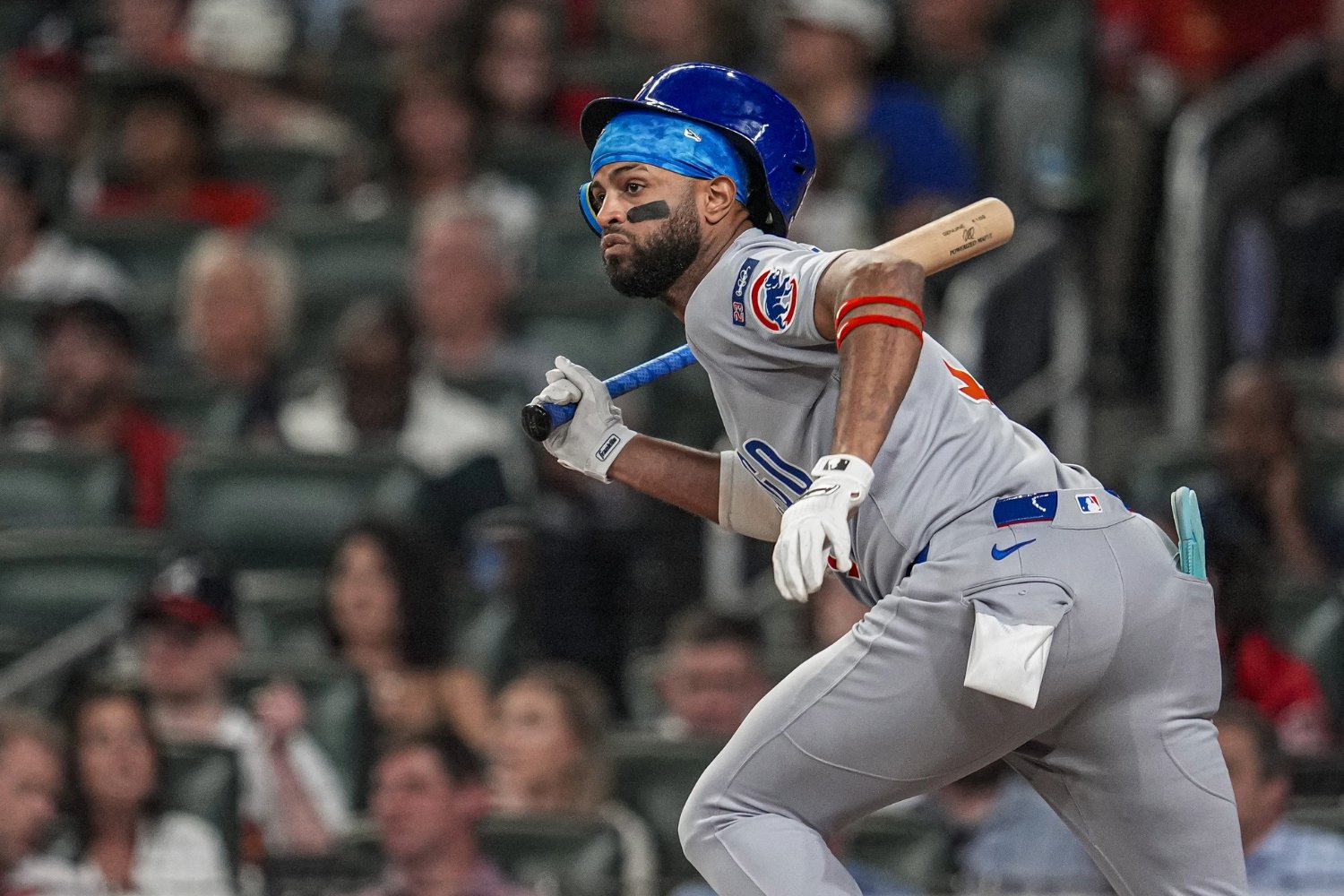 To say that Willi Castro's bat has regressed since joining the Chicago Cubs would be a severe understatement. The utilityman slashed .245/.335/.407 as a member of the Minnesota Twins, checking in at a 108 wRC+ prior to the trade that sent him to the North Side. While Castro has helped to stabilize the bench—logging time at second base, third base, and all three outfield spots—the bat hasn't made the trip quite yet. His batting line as a member of the Cubs comes in at only .188/.266/.259. His wRC+ sits at 52. That's not terribly surprising; much of Castro's value is derived out of his versatility, after all. That bat has, historically, been prone to some ebbs and flows. But, for a team without Kyle Tucker at present due to a calf injury, Castro is starting to find his way in generating value on the other side of the ball. That's not to say that Castro is the full-time right fielder in the Cubs' lineup sans Tucker. But it is notable that a team that has had Owen Caissie and Kevin Alcántara on the roster at various points in the last month has rolled Castro out there seven times in his last 10 appearances. That slate of games runs back to September 2, the point at which the team was first without Tucker. Since that mark on the calendar, Castro has gone for a slash of .269/.441/.308 with a 132 wRC+. The slugging is indicative of the fact that we're still not seeing much in the way of impact from Castro (not that we expected to), but there's one key component of his game that is driving his success over these last 10 games: his plate discipline. It's important to note that "approach" and "discipline" at the plate are not interchangeable concepts. Approach speaks to the ability to work a walk, yes, but it's also about parlaying a keen eye into quality contact and, as such, a certain level of impact on the box score. Castro isn't offering that. What he is offering, though, is the pure ability to work a walk due to an increased level of plate discipline. Castro's walk rate since September 2 sits at 20.6 percent. Only six hitters with at least 30 plate appearances over that small-ish sample have a higher rate over that span. That list includes names like Kyle Schwarber (21.4 percent), Aaron Judge (21.2), and Shohei Ohtani (20.7). In short, Castro's ability to draw a walk in this stretch that is approaching two weeks of play sits as legitimately elite. It doesn't appear to be an overly complicated process, either. The following is Castro's swing rate over the course of the 2025 season: You'll note the rather significant dip in the rate at the tail end of it. Since this isn't a rolling graph but rather one that illustrates individual games, this does speak to the idea that he's really tamped down his free-swinging habits since stepping into regular right field duty. Unsurprisingly, his chase rate has fallen along with it: The two visuals make it very clear that Castro is demonstrating a much more assertive command of the zone as a hitter. He's swinging less overall, but he's specifically been able to reign it in on pitches outside the strike zone given that minimal chase rate over the last 10 days. Interestingly, though, he hasn't been able to utilize it in a manner beyond simply drawing walks. And that's where the distinction lies. Willi Castro has not registered a hard hit ball in play despite the more valuable outcomes since stepping into more regular duty in Kyle Tucker's absence. Not that there isn't value in what Castro is doing at present; he's drawn a walk in each game he's played as a right fielder (save for the first one on September 2). He's also scored four runs over this stretch as a result of him being more of a fixture on the basepaths since Castro is, technically, an above-average baserunner (0.6 BsR per FanGraphs). There is, also, a certain reality attached to this in that if Willi Castro is this type of hitter at the plate, then he presents the Cubs with tremendous value. This is a guy with a career ISO of .140 and a wRC+ of 96. His walk rate for his career is under seven percent. The Cubs acquired him because he's a versatile defensive player on a shallow bench who can hit a little bit. Not the other way around. So, he doesn't actually have to do more than he's doing right now. Sure, an approach that manifests in frequent quality contact and impact in any given night's box score would be nice. But the Cubs have that elsewhere (at least on paper). Castro's plate discipline yielding walks by the bushel, in conjunction with his solid on-base skills, make this version of him somewhat ideal for the Cubs as the postseason draws closer.
 -
Image courtesy of © Orlando Ramirez-Imagn Images It's entirely possible that you, dear reader, have found it difficult to invest emotionally in the Chicago Cubs over the course of the last several months. The underperformance certainly doesn't help. While they're not alone in their struggles to accrue wins consistently among their contending adversaries, the underperformance permeating throughout the roster can pin down such emotion. The team's inability to maintain any level of transparency regarding their process around player health (see: Kyle Tucker's calf) could be another factor. There are others, of course. But the purpose of this piece isn't to dwell on those. Instead, Wednesday morning's announcement that the team will bring Anthony Rizzo back into the fold as an organizational ambassador following his sudden (albeit, probably expected) retirement offers us a temporary reprieve from any grievance that might be lingering and, subsequently, stalling that emotional investment. In fact, the report that the team will honor Rizzo in a ceremony at Wrigley Field this weekend to mark the transition could serve to ignite those struggling to uncover the positive vibes and propel them in the entirely opposite direction. Statistically, you're not going to find Rizzo's name too frequently across the various leaderboards in the history of the Cubs' organization. He ranks sixth in home runs (242) and 10th in extra-base hits (538). Beyond that, it's a smattering of lists you don't necessarily want to be a part of. First in hit-by-pitches (165), eighth in strikeouts (871), 10th in double plays grounded into (112). But little of that seems to matter, especially when one considers the accolades. A three-time All-Star. A four-time Gold Glove recipient. A vote-getter for the Most Valuable Player award in five separate seasons, including fourth-place finishes in each of 2015 and 2016. There's an arbitrary nature inherent in certain baseball awards, but that Rizzo was able to have his name called for, or, at least, adjacent to multiple still speaks to his importance to the organization at an inflection point in its history. The acquisition of Anthony Rizzo always did feel like a turning point. When the Cubs hired Theo Epstein in October of 2011, it wasn't long before the revamped front office acquired a player immensely familiar to Epstein and Jed Hoyer, the latter of whom acquired Rizzo when Epstein was still in Boston and Hoyer was running his own shop in San Diego. By January of 2012, Rizzo was a Cub, headed to the North Side in exchange for fellow deal-headliner Andrew Cashner. Along with the transparency of their new team president, Rizzo's arrival served as an immediate injection of vibes. Not that the team was ready to immediately start anew solely on the merits of their new first baseman. The team lost 101 games in 2012 (he appeared in 87). They lost 96 in 2013. Another 89 losses followed in 2014. But, by the time the team was ready to contend with their newfound core, it was Rizzo that served as the de facto captain of a team that included long-hyped prospects Kris Bryant, Javier Báez, and Kyle Schwarber (among... others). He'd experienced the losing and the growing that sometimes accompanies it. Rizzo led the team in bWAR that year (6.4) and trailed only Bryant in 2016 (5.8) as the team ended their 108-year World Series drought. As was the case in those early years and for the remainder of his time in Chicago, Rizzo wasn't the standout. He finished second in WAR to Bryant again in 2017 (4.7) before his game started to show some early signs of regression, taking a total backseat to a player like Báez before the decade was over. But the vibes. An emotional wreck. Tarp catches. Striking out Freddie Freeman. Chasing Freddie Freeman down on the basepaths. The parade speech. To say nothing of his works within the city, including a multi-million dollar donation to Lurie Children's Hospital among myriad other contributions both in Chicago and New York. Rarely did his name leap out and scream at you from the stat sheet outside of those prime seasons, but there was an energy that Rizzo carried that died out quite a lot when he and his fellow "core" members were gone by the middle of 2021. It never should have ended the way that it did. The Cubs, on an organizational level, have been reckoning with that process in the years since. One could argue that they're still not there, especially given how the past few months have gone. It's exactly that context that leaves the return of Anthony Rizzo as much more than a simple feel-good story of a former player rejoining the club in a symbolic fashion. Instead, this is something that actually matters. In the name of vibes, of course. This is an organization that lost a legend in Ryne Sandberg earlier this year. It was an absolute devastation to the franchise, the fanbase, and the city (even to someone such as myself who was only conscious long enough to merely perceive the latter portion of his career). Compound that with injuries, inconsistent play, and upside failing to be realized from the present roster, and there's a real exhaustion that begins to take hold. While it was certainly a joyous occasion seeing Sammy Sosa back in the mix (now on multiple occasions in '25) and having Derrek Lee join him as part of the team's Hall of Fame induction, there's also an entire generation of fane that are much more intimately familiar with Rizzo than either of Sosa or Lee. To say nothing of how much has happened in the world over the past decade. Rizzo's return is an emotional victory in an entirely different way. You're obviously not going to replace the void left by Sandberg, whether as a tangibly accomplished player or as a more abstract, ceremonial presence post-career. Still, the fact that Rizzo possessed the vibe and leadership that he did from the jump on the field and has done the work he has in Chicago away from it makes the value of his presence almost unquantifiable. It's also a chance to work in the direction of recovering some of the magic lost when this team decided to dump just about everyone who stepped to the plate or on the mound in 2016. It's all of it. There's a healing factor, on multiple levels. There's a comfort factor. In a season where it's become increasingly difficult to grasp either, it just feels damn good to have Anthony Rizzo around again. View full article
-
Cubs' Honoring of Anthony Rizzo Feels Essential Given the Time & Place
RandallPnkFloyd posted an article in Cubs
 It's entirely possible that you, dear reader, have found it difficult to invest emotionally in the Chicago Cubs over the course of the last several months. The underperformance certainly doesn't help. While they're not alone in their struggles to accrue wins consistently among their contending adversaries, the underperformance permeating throughout the roster can pin down such emotion. The team's inability to maintain any level of transparency regarding their process around player health (see: Kyle Tucker's calf) could be another factor. There are others, of course. But the purpose of this piece isn't to dwell on those. Instead, Wednesday morning's announcement that the team will bring Anthony Rizzo back into the fold as an organizational ambassador following his sudden (albeit, probably expected) retirement offers us a temporary reprieve from any grievance that might be lingering and, subsequently, stalling that emotional investment. In fact, the report that the team will honor Rizzo in a ceremony at Wrigley Field this weekend to mark the transition could serve to ignite those struggling to uncover the positive vibes and propel them in the entirely opposite direction. Statistically, you're not going to find Rizzo's name too frequently across the various leaderboards in the history of the Cubs' organization. He ranks sixth in home runs (242) and 10th in extra-base hits (538). Beyond that, it's a smattering of lists you don't necessarily want to be a part of. First in hit-by-pitches (165), eighth in strikeouts (871), 10th in double plays grounded into (112). But little of that seems to matter, especially when one considers the accolades. A three-time All-Star. A four-time Gold Glove recipient. A vote-getter for the Most Valuable Player award in five separate seasons, including fourth-place finishes in each of 2015 and 2016. There's an arbitrary nature inherent in certain baseball awards, but that Rizzo was able to have his name called for, or, at least, adjacent to multiple still speaks to his importance to the organization at an inflection point in its history. The acquisition of Anthony Rizzo always did feel like a turning point. When the Cubs hired Theo Epstein in October of 2011, it wasn't long before the revamped front office acquired a player immensely familiar to Epstein and Jed Hoyer, the latter of whom acquired Rizzo when Epstein was still in Boston and Hoyer was running his own shop in San Diego. By January of 2012, Rizzo was a Cub, headed to the North Side in exchange for fellow deal-headliner Andrew Cashner. Along with the transparency of their new team president, Rizzo's arrival served as an immediate injection of vibes. Not that the team was ready to immediately start anew solely on the merits of their new first baseman. The team lost 101 games in 2012 (he appeared in 87). They lost 96 in 2013. Another 89 losses followed in 2014. But, by the time the team was ready to contend with their newfound core, it was Rizzo that served as the de facto captain of a team that included long-hyped prospects Kris Bryant, Javier Báez, and Kyle Schwarber (among... others). He'd experienced the losing and the growing that sometimes accompanies it. Rizzo led the team in bWAR that year (6.4) and trailed only Bryant in 2016 (5.8) as the team ended their 108-year World Series drought. As was the case in those early years and for the remainder of his time in Chicago, Rizzo wasn't the standout. He finished second in WAR to Bryant again in 2017 (4.7) before his game started to show some early signs of regression, taking a total backseat to a player like Báez before the decade was over. But the vibes. An emotional wreck. Tarp catches. Striking out Freddie Freeman. Chasing Freddie Freeman down on the basepaths. The parade speech. To say nothing of his works within the city, including a multi-million dollar donation to Lurie Children's Hospital among myriad other contributions both in Chicago and New York. Rarely did his name leap out and scream at you from the stat sheet outside of those prime seasons, but there was an energy that Rizzo carried that died out quite a lot when he and his fellow "core" members were gone by the middle of 2021. It never should have ended the way that it did. The Cubs, on an organizational level, have been reckoning with that process in the years since. One could argue that they're still not there, especially given how the past few months have gone. It's exactly that context that leaves the return of Anthony Rizzo as much more than a simple feel-good story of a former player rejoining the club in a symbolic fashion. Instead, this is something that actually matters. In the name of vibes, of course. This is an organization that lost a legend in Ryne Sandberg earlier this year. It was an absolute devastation to the franchise, the fanbase, and the city (even to someone such as myself who was only conscious long enough to merely perceive the latter portion of his career). Compound that with injuries, inconsistent play, and upside failing to be realized from the present roster, and there's a real exhaustion that begins to take hold. While it was certainly a joyous occasion seeing Sammy Sosa back in the mix (now on multiple occasions in '25) and having Derrek Lee join him as part of the team's Hall of Fame induction, there's also an entire generation of fane that are much more intimately familiar with Rizzo than either of Sosa or Lee. To say nothing of how much has happened in the world over the past decade. Rizzo's return is an emotional victory in an entirely different way. You're obviously not going to replace the void left by Sandberg, whether as a tangibly accomplished player or as a more abstract, ceremonial presence post-career. Still, the fact that Rizzo possessed the vibe and leadership that he did from the jump on the field and has done the work he has in Chicago away from it makes the value of his presence almost unquantifiable. It's also a chance to work in the direction of recovering some of the magic lost when this team decided to dump just about everyone who stepped to the plate or on the mound in 2016. It's all of it. There's a healing factor, on multiple levels. There's a comfort factor. In a season where it's become increasingly difficult to grasp either, it just feels damn good to have Anthony Rizzo around again.
 -
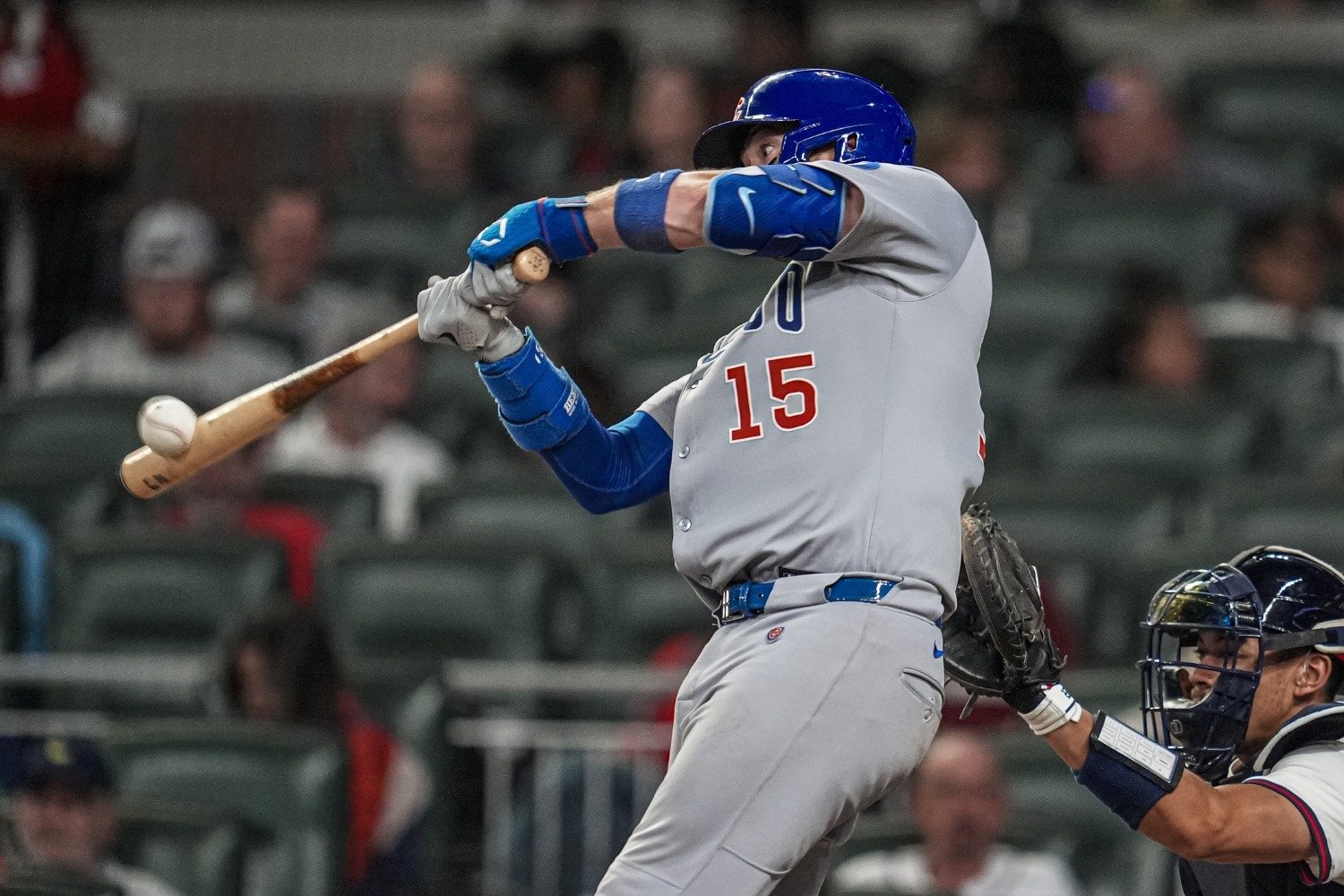 In a completely objective view, Carson Kelly is having a fine offensive season. It's the best of his career, in fact. Kelly carries a .255/.344/.455 line, a 17.9% strikeout rate, an 11.5% strikeout rate, and a 125 wRC+ across the stat sheet. Those marks stand as the best of his career, save for a 2019 on-base percentage that was slightly higher and a couple of years with a touch higher walk rate. Among the 21 backstops with at least 350 plate appearances to their name, Kelly sits fourth in wRC+ and in the top 5-7 just about everywhere else that isn't batting average. So not only has he been excellent by his own standards, he's been elite by the standard set by the position's production in the broader context of the league. Sure, some of it's carried by his scorching start to the year (a 257 wRC+ through the end of April), but even since the start of May, his OPS is a very respectable .694. There is, however, also an interesting trend starting to develop in his game as we reach the final stretch. Since August 25—a somewhat arbitrary date, but it gives a decent-enough sample in going back to Kelly's last 38 plate appearances—Kelly is hitting only .206, while striking out almost 27 percent of the time. What he is doing, though, is hitting for power. Over that same stretch, Kelly's ISO sits at .353, and he's hit four home runs. The latter figure is tied for the team lead while the former sits nearly 50 points ahead of the Cubs' second-place hitter in that timeframe (Ian Happ, at .309). All of these are classic hallmarks of a guy selling out for power. The concept of "selling out" in order to get the ball to travel may or may not serve as a bit of an oversimplification here. We'll circle back to those. But there are a number of trends that would indicate damage is what's on Kelly's mind each time he steps to the plate. The first thing worth noting is just the general trend of slug: Kelly's production on the slug slide has been on the visible upswing so far in September, accounting for 26 of those 38 PA we're discussing. Case in point: four of his six overall hits in September have found their way into the seats. That's hardly surprising, though, when you consider what the bat's doing. Attack angle is a new metric on the scene. For the uninitiated, it refers to the angle at which the barrel of the bat is traveling (relative to the ground) at the moment of contact. This is Kelly's throughout 2025: Kelly's attack angle is at 14° in September, easily the steepest angle with which he's worked this year. Steeper attack angle often begets a steeper launch angle, so it's probably not going to come as any sort of surprise that Kelly's launch angle looks like it does right now: Factor in the pull rate: And you have a very clear trend beginning to emerge. Attack angle is a timing metric, essentially; it tells us how much the hitter has gotten his bat working up through the hitting zone by the time they reach the contact point. Every swing starts downhill, as the barrel sweeps behind a batter and heads for a place in front of them. Knowing a player's attack angle (especially in the context of that player's usual number) tells us how long the barrel has been rising by the time the ball arrives. It pairs with another metric, attack direction, which gives the angle of travel of the barrel relative to the playing field, instead of to the diamond. Kelly's attack direction has also moved significantly, and here, the trend is a bit cleaner and more sudden. A negative attack direction is one oriented to the hitter's pull field, so this is telling us that Kelly has moved dramatically toward getting around the ball more. This isn't the same as his pull rate, which we looked at above, but they're closely related, of course. He's getting to the ball with his bat both going up more steeply and around the ball a bit more. As you'd guess, that means he's catching the ball farther out in front of his body. As you might not guess, but will learn to, this also means his swing is a bit flatter, in one sense. Wait. We just said he's steeper. You can't be flatter and steeper at the same time, can you? Well, plainly, yes. Kelly's steeper barrel trajectory at contact is partially a result of his barrel tilting less as he brings it around and into the hitting zone. His swing tilt is 32° this month, the flattest it's been in any month of the season. That means that he's bringing the bat flatter through the hitting zone, rather than having the barrel a bit farther below his hands. He's intentionally going out to create that extra pull and maintain the lift, even though that might open him up to more manipulations of timing The dynamics of the swing are directly responsible for the increased power output. What's interesting about this trend, though, is that his actual approach hasn't changed in the way that one might expect. This is where we get to the idea of "selling out" for power as an oversimplification—at least in the sense that we can't blindly call it that. Kelly's swing rate is actually at its lowest rate in an individual month this season (40.2%). His chase rate did jump a fair bit in August, but has since come back down (21.1%). You'd expect a player who was legitimately selling out to end up being a little bit more aggressive than we've seen Kelly in this most recent stretch. That side of the approach would leave us hesitant to make any kind of declaration about selling out, except for one extremely important factor that we've neglected to mention. Kelly's whiff rate has skyrocketed. At 29.7%, it's at its highest point of the year, easily eclipsing the 24.5% mark from June. It is, of course, manifesting on the chase side (half his swings on balls out of the zone are coming up empty), but where it's especially prominent is inside the strike zone. Within the zone, Kelly is swinging and missing at a 24.1% rate. That's a stark figure, and his highest in an individual stretch since September 2019. Cruciall, all of this is still happening over a very small sample. We're talking about 38 plate appearances or, in the case of September on its own, 26 of them. The primary concern is what it's doing to his walk rate, where he's now doing under 8 percent of the time, despite the low swing rate we just touched on. When you whiff as much as he's whiffing right now, you can't always fight off the pivotal pitch and earn an eventual free pass. Nor is swinging as steeply and hitting the ball as high as he is right now conducive to getting hits on balls in play. That's, in turn, feeding into his .263 OBP over this stretch (which is also partially pinned down by a .143 BABIP). If there is a certainty in all of this, it's that we need more data to not only see this as a surefire trend, but also consider the impact of such a trend within the current iteration of the Cubs' offensive production.
 -
Image courtesy of © Dale Zanine-Imagn Images In a completely objective view, Carson Kelly is having a fine offensive season. It's the best of his career, in fact. Kelly carries a .255/.344/.455 line, a 17.9% strikeout rate, an 11.5% strikeout rate, and a 125 wRC+ across the stat sheet. Those marks stand as the best of his career, save for a 2019 on-base percentage that was slightly higher and a couple of years with a touch higher walk rate. Among the 21 backstops with at least 350 plate appearances to their name, Kelly sits fourth in wRC+ and in the top 5-7 just about everywhere else that isn't batting average. So not only has he been excellent by his own standards, he's been elite by the standard set by the position's production in the broader context of the league. Sure, some of it's carried by his scorching start to the year (a 257 wRC+ through the end of April), but even since the start of May, his OPS is a very respectable .694. There is, however, also an interesting trend starting to develop in his game as we reach the final stretch. Since August 25—a somewhat arbitrary date, but it gives a decent-enough sample in going back to Kelly's last 38 plate appearances—Kelly is hitting only .206, while striking out almost 27 percent of the time. What he is doing, though, is hitting for power. Over that same stretch, Kelly's ISO sits at .353, and he's hit four home runs. The latter figure is tied for the team lead while the former sits nearly 50 points ahead of the Cubs' second-place hitter in that timeframe (Ian Happ, at .309). All of these are classic hallmarks of a guy selling out for power. The concept of "selling out" in order to get the ball to travel may or may not serve as a bit of an oversimplification here. We'll circle back to those. But there are a number of trends that would indicate damage is what's on Kelly's mind each time he steps to the plate. The first thing worth noting is just the general trend of slug: Kelly's production on the slug slide has been on the visible upswing so far in September, accounting for 26 of those 38 PA we're discussing. Case in point: four of his six overall hits in September have found their way into the seats. That's hardly surprising, though, when you consider what the bat's doing. Attack angle is a new metric on the scene. For the uninitiated, it refers to the angle at which the barrel of the bat is traveling (relative to the ground) at the moment of contact. This is Kelly's throughout 2025: Kelly's attack angle is at 14° in September, easily the steepest angle with which he's worked this year. Steeper attack angle often begets a steeper launch angle, so it's probably not going to come as any sort of surprise that Kelly's launch angle looks like it does right now: Factor in the pull rate: And you have a very clear trend beginning to emerge. Attack angle is a timing metric, essentially; it tells us how much the hitter has gotten his bat working up through the hitting zone by the time they reach the contact point. Every swing starts downhill, as the barrel sweeps behind a batter and heads for a place in front of them. Knowing a player's attack angle (especially in the context of that player's usual number) tells us how long the barrel has been rising by the time the ball arrives. It pairs with another metric, attack direction, which gives the angle of travel of the barrel relative to the playing field, instead of to the diamond. Kelly's attack direction has also moved significantly, and here, the trend is a bit cleaner and more sudden. A negative attack direction is one oriented to the hitter's pull field, so this is telling us that Kelly has moved dramatically toward getting around the ball more. This isn't the same as his pull rate, which we looked at above, but they're closely related, of course. He's getting to the ball with his bat both going up more steeply and around the ball a bit more. As you'd guess, that means he's catching the ball farther out in front of his body. As you might not guess, but will learn to, this also means his swing is a bit flatter, in one sense. Wait. We just said he's steeper. You can't be flatter and steeper at the same time, can you? Well, plainly, yes. Kelly's steeper barrel trajectory at contact is partially a result of his barrel tilting less as he brings it around and into the hitting zone. His swing tilt is 32° this month, the flattest it's been in any month of the season. That means that he's bringing the bat flatter through the hitting zone, rather than having the barrel a bit farther below his hands. He's intentionally going out to create that extra pull and maintain the lift, even though that might open him up to more manipulations of timing The dynamics of the swing are directly responsible for the increased power output. What's interesting about this trend, though, is that his actual approach hasn't changed in the way that one might expect. This is where we get to the idea of "selling out" for power as an oversimplification—at least in the sense that we can't blindly call it that. Kelly's swing rate is actually at its lowest rate in an individual month this season (40.2%). His chase rate did jump a fair bit in August, but has since come back down (21.1%). You'd expect a player who was legitimately selling out to end up being a little bit more aggressive than we've seen Kelly in this most recent stretch. That side of the approach would leave us hesitant to make any kind of declaration about selling out, except for one extremely important factor that we've neglected to mention. Kelly's whiff rate has skyrocketed. At 29.7%, it's at its highest point of the year, easily eclipsing the 24.5% mark from June. It is, of course, manifesting on the chase side (half his swings on balls out of the zone are coming up empty), but where it's especially prominent is inside the strike zone. Within the zone, Kelly is swinging and missing at a 24.1% rate. That's a stark figure, and his highest in an individual stretch since September 2019. Cruciall, all of this is still happening over a very small sample. We're talking about 38 plate appearances or, in the case of September on its own, 26 of them. The primary concern is what it's doing to his walk rate, where he's now doing under 8 percent of the time, despite the low swing rate we just touched on. When you whiff as much as he's whiffing right now, you can't always fight off the pivotal pitch and earn an eventual free pass. Nor is swinging as steeply and hitting the ball as high as he is right now conducive to getting hits on balls in play. That's, in turn, feeding into his .263 OBP over this stretch (which is also partially pinned down by a .143 BABIP). If there is a certainty in all of this, it's that we need more data to not only see this as a surefire trend, but also consider the impact of such a trend within the current iteration of the Cubs' offensive production. View full article
-
Pete Crow-Armstrong's Power-Speed Output Could Make Cubs History
RandallPnkFloyd posted an article in Cubs
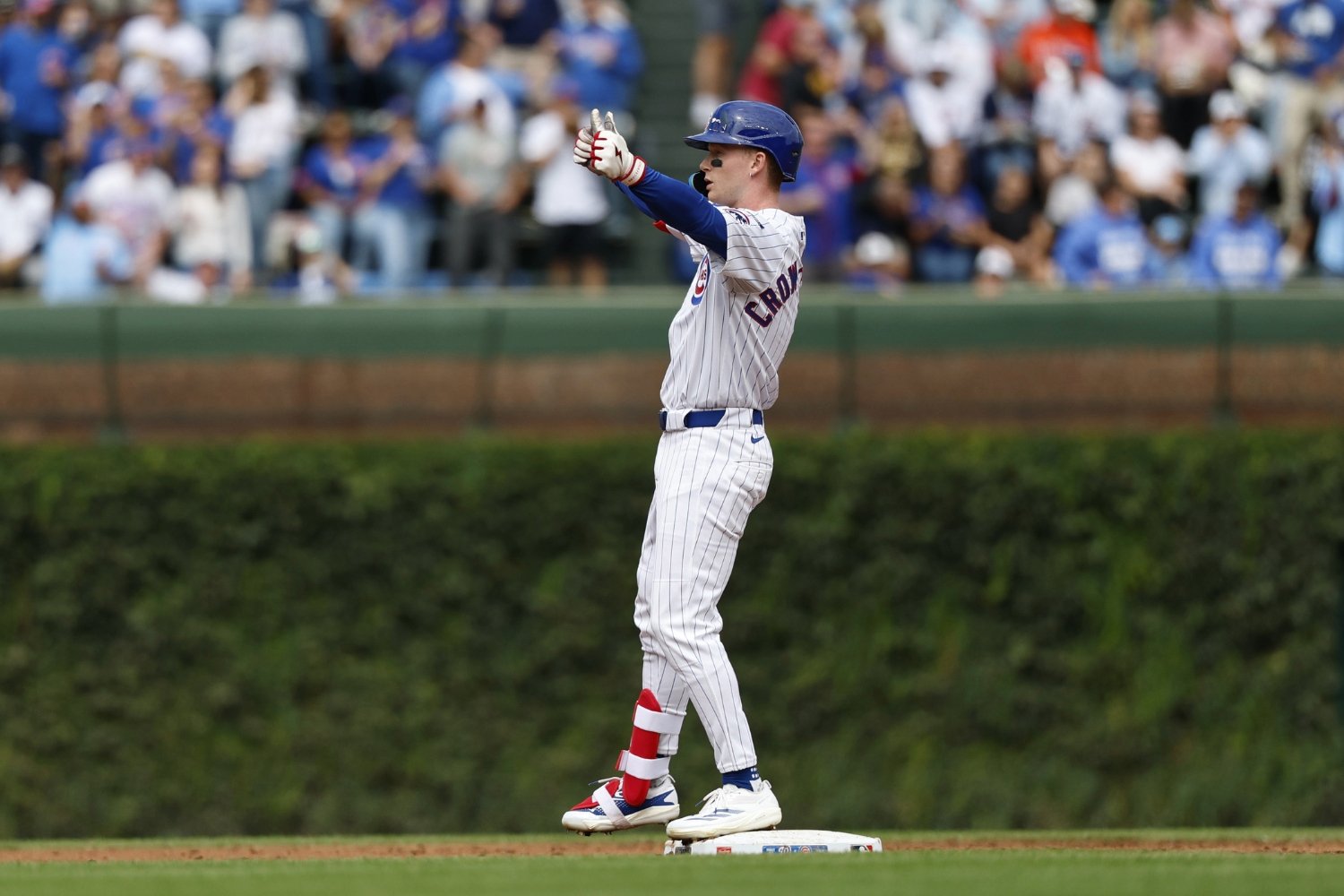 Pete Crow-Armstrong's 2025 season was etched into Chicago Cubs lore several months ago. It's easy to forget that, given how things have gone since. But after being the fourth-fastest player -- regardless of organization -- to reach a 25-25 season back in July (and the fastest Cub to do so), it was clear that Crow-Armstrong was doing something that has rarely been seen from an organizational standpoint. The Cubs have had powerful hitters and the occasional demon on the basepaths, but not in a particularly high volume on one side or the other. And certainly not at once. To put Crow-Armstrong's 2025 season in its own context, there are 22 players this season that have hit more than the 28 homers he has on the books as of this writing. None of those hitters, however, has eclipsed 30 steals. That is, of course, except Crow-Armstrong and his 32 swipes. Only Juan Soto's 29 comes close, followed by Jazz Chisholm Jr. at 27, and then a host of players residing farther down the leaderboard. In short, the power-speed combination is Pete Crow-Armstrong first, everyone else later. Against his big league counterparts, Crow-Armstrong's output in 2025 reads as similar to where he stands in the broader context of the organization's history. At present, he sits 75th on the Cubs' all-time leaderboard on the home run front for a single season. Only once, however, has someone ahead of him on that list stolen more than the 32 he's swiped this far. What is worth exploring regardless, though, is whether we've seen a hitter top the Cubs in each category in a given season, in the same way Crow-Armstrong is doing now. Interestingly, the most recent example in the team's history is a player forever connected to Crow-Armstrong: Javier Báez. Drawing comparisons to Báez that extend beyond the trade for one another back in 2021, Crow-Armstrong is now primed to be the first person since El Mago to lead the team in each category. Báez led the way with 34 homers and 21 steals in 2018, when he finished second in NL MVP voting. Anthony Rizzo nearly did so as well in 2015, leading all Cubs with 31 home runs but falling three steals short of Dexter Fowler's 20. Before Baéz, Alfonso Soriano was also almost able to accomplish the feat in 2008 but came up three steals short of Ryan Theriot's team lead in steals. Instead, we have to look to a lower steal volume to find the only other time it's been done since the turn of the century. Derrek Lee was able to do it in 2005 when he hit 46 homers and stole just 15 bases. Speaking of recent Cubs Hall of Fame inductees, there's a healthy Sammy Sosa component to all of this. That legendary 1998 season in which Sosa hit 66 home runs? He also stole 18 bases, which stood alone atop the leaderboard for the team that year. He also did it during the 1993 season (33 homers, 36 steals) and in 1995 when he went for 36 home runs and 34 steals. There was a near-miss for Sosa in each of 1996 and 1997, too, but he fell short of Shawon Dunston and Brian McRae in the steals game each year, respectively. It's easy to forget how good Sosa was on the basepaths in the earlier portion of his career, but he possessed exactly that power-speed combo we're talking about. A list such as this would be incomplete without Ryne Sandberg, as well. Similar to Sosa, Sandberg had a smattering of years where he was in the mix for the team lead in both. His ability to serve as a two-way threat was most present in 1990, when he topped out at 40 homers and 25 steals, the latter of which was tied with Dunston for the team lead. He'd also done it in 1992 (26 homers, 17 steals) and in kind of an inverse way a few years earlier in 1985, when he hit 26 home runs and swiped 54 bags. The wild thing is that running back 40 years brings us to what is effectively the end of the list. The mid-20th century doesn't feature much in the way of power-speed blends, despite some standouts on either side. Realistically, you'd have to go back to the 1880s to see it done again. Which puts into perspective just how rare Pete Crow-Armstrong's potential feat actually is (of course, he has to complete it first). The steal side of things is essentially wrapped up for Crow-Armstrong. Kyle Tucker's 25 is the runner-up to his total, with Nico Hoerner sitting one more back at 24. Tucker's lingering calf iinjury is likely to pin down that number throughout September as the Cubs ease him back in, and Hoerner's only stolen five bases since the beginning of August, leaving his pace in doubt. The team's steal title is all but sewn up for the center fielder. Things aren't quite as sure on the power side, however. Seiya Suzuki trails Crow-Armstrong by just one and Michael Busch is behind by two. None have been particularly impressive in the second half, but Crow-Armstrong's absence of power in the second half is notable given how narrow the gap is. So, it stands to reason that he may join the ranks of near-misses before the month comes to a close. Or he could enter a group of names that includes the likes of Sandberg, Sosa, Lee, and Báez. Not too bad, if it comes to fruition.
 -
Image courtesy of © Kamil Krzaczynski-Imagn Images Pete Crow-Armstrong's 2025 season was etched into Chicago Cubs lore several months ago. It's easy to forget that, given how things have gone since. But after being the fourth-fastest player -- regardless of organization -- to reach a 25-25 season back in July (and the fastest Cub to do so), it was clear that Crow-Armstrong was doing something that has rarely been seen from an organizational standpoint. The Cubs have had powerful hitters and the occasional demon on the basepaths, but not in a particularly high volume on one side or the other. And certainly not at once. To put Crow-Armstrong's 2025 season in its own context, there are 22 players this season that have hit more than the 28 homers he has on the books as of this writing. None of those hitters, however, has eclipsed 30 steals. That is, of course, except Crow-Armstrong and his 32 swipes. Only Juan Soto's 29 comes close, followed by Jazz Chisholm Jr. at 27, and then a host of players residing farther down the leaderboard. In short, the power-speed combination is Pete Crow-Armstrong first, everyone else later. Against his big league counterparts, Crow-Armstrong's output in 2025 reads as similar to where he stands in the broader context of the organization's history. At present, he sits 75th on the Cubs' all-time leaderboard on the home run front for a single season. Only once, however, has someone ahead of him on that list stolen more than the 32 he's swiped this far. What is worth exploring regardless, though, is whether we've seen a hitter top the Cubs in each category in a given season, in the same way Crow-Armstrong is doing now. Interestingly, the most recent example in the team's history is a player forever connected to Crow-Armstrong: Javier Báez. Drawing comparisons to Báez that extend beyond the trade for one another back in 2021, Crow-Armstrong is now primed to be the first person since El Mago to lead the team in each category. Báez led the way with 34 homers and 21 steals in 2018, when he finished second in NL MVP voting. Anthony Rizzo nearly did so as well in 2015, leading all Cubs with 31 home runs but falling three steals short of Dexter Fowler's 20. Before Baéz, Alfonso Soriano was also almost able to accomplish the feat in 2008 but came up three steals short of Ryan Theriot's team lead in steals. Instead, we have to look to a lower steal volume to find the only other time it's been done since the turn of the century. Derrek Lee was able to do it in 2005 when he hit 46 homers and stole just 15 bases. Speaking of recent Cubs Hall of Fame inductees, there's a healthy Sammy Sosa component to all of this. That legendary 1998 season in which Sosa hit 66 home runs? He also stole 18 bases, which stood alone atop the leaderboard for the team that year. He also did it during the 1993 season (33 homers, 36 steals) and in 1995 when he went for 36 home runs and 34 steals. There was a near-miss for Sosa in each of 1996 and 1997, too, but he fell short of Shawon Dunston and Brian McRae in the steals game each year, respectively. It's easy to forget how good Sosa was on the basepaths in the earlier portion of his career, but he possessed exactly that power-speed combo we're talking about. A list such as this would be incomplete without Ryne Sandberg, as well. Similar to Sosa, Sandberg had a smattering of years where he was in the mix for the team lead in both. His ability to serve as a two-way threat was most present in 1990, when he topped out at 40 homers and 25 steals, the latter of which was tied with Dunston for the team lead. He'd also done it in 1992 (26 homers, 17 steals) and in kind of an inverse way a few years earlier in 1985, when he hit 26 home runs and swiped 54 bags. The wild thing is that running back 40 years brings us to what is effectively the end of the list. The mid-20th century doesn't feature much in the way of power-speed blends, despite some standouts on either side. Realistically, you'd have to go back to the 1880s to see it done again. Which puts into perspective just how rare Pete Crow-Armstrong's potential feat actually is (of course, he has to complete it first). The steal side of things is essentially wrapped up for Crow-Armstrong. Kyle Tucker's 25 is the runner-up to his total, with Nico Hoerner sitting one more back at 24. Tucker's lingering calf iinjury is likely to pin down that number throughout September as the Cubs ease him back in, and Hoerner's only stolen five bases since the beginning of August, leaving his pace in doubt. The team's steal title is all but sewn up for the center fielder. Things aren't quite as sure on the power side, however. Seiya Suzuki trails Crow-Armstrong by just one and Michael Busch is behind by two. None have been particularly impressive in the second half, but Crow-Armstrong's absence of power in the second half is notable given how narrow the gap is. So, it stands to reason that he may join the ranks of near-misses before the month comes to a close. Or he could enter a group of names that includes the likes of Sandberg, Sosa, Lee, and Báez. Not too bad, if it comes to fruition. View full article
-
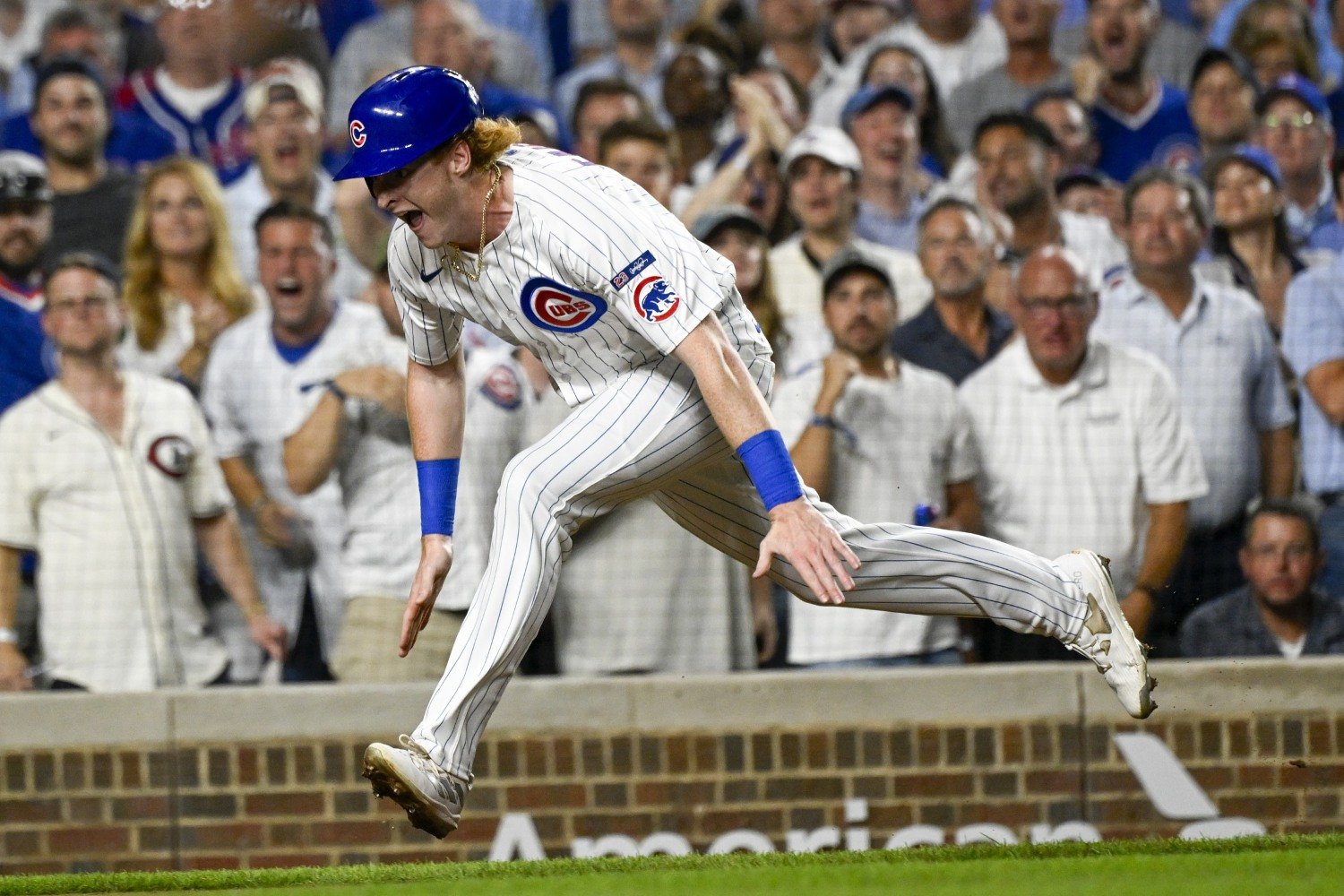 From the outset, the outfield seemed like the most settled unit for the 2025 Chicago Cubs. The trio of Ian Happ, Pete Crow-Armstrong, and Kyle Tucker was going to be a tough one to move (barring injury), with Seiya Suzuki ready to step in for work as a fourth outfielder. This, naturally, led to some questions as to the future of two of the team's top prospects, Owen Caissie and Kevin Alcántara. Between the two, Caissie began to make an urgent case for himself as the temperature climbed. Turning in a 142 wRC+ and some massive power figures (.277 ISO) with Iowa, the banging on the big-league door became rather loud as the summer progressed. Despite some trade chatter in connection with controllable pitching, the team held on to Caissie and called him up earlier this month. To date, Caissie has gotten work across eight games at the major-league level. Three of those have been as a pinch-hitter, one (his debut) was as a designated hitter, and three came in relief of Kyle Tucker during his "reset." As the early results across his first 20 plate appearances have been solid (115 wRC+, .211 ISO), the fans' clamor for regular duty has become more pointed. However, that same question persists: when and where do you play him? It's actually not a particularly difficult question to answer. All three starting outfielders are healthy, with the weekend series in Anaheim showcasing a return to form for Tucker and (to an extent) Crow-Armstrong. That leaves two options. Either you're playing him in left in relief oHapp, or you're rolling him out as a DH, to get Suzuki a reset of his own. In the latter's case, however, the process is still manifesting—as it always has. It's something of a flawed process, in that Suzuki is likely far too patient at the plate, but it's a process, nonetheless. The hope is that luck starts falling his way with a little more regularity, and you take the occasional strikeout looking in favor of the on-base and power output he was demonstrating earlier in the year. That leaves just one option. Anecdotally, there's been a bit of a weird thing transpiring on the Marquee Network broadcasts and social media at large: they keep declaring that Ian Happ is starting to round into form. The issue with that line of thinking is that, at this point, it remains unequivocally false. Happ's full-season numbers are the worst he's turned in since 2021. He's at a wRC+ of just 103, with a slash that reads .226/.330/.380. He's been almost entirely propped up by his walk rate (13.4%) since the start of the year, with the slug dissolving in a way that we haven't seen at any point during his career; a .154 ISO represents a career low, by 15 points. Couple that with baserunning concerns wrought by an apparent speed decline, and one starts to wonder how the veteran continues to draw regular work over Caissie. His glove is an asset in left field, but that's not a defense-first position. The very notion of a resurgent Happ is an exercise in drawing your preferred endpoints. After an atrocious (.179/.304/.333) July, he's been markedly better in August (.217/.353/.333), but notice that the righthand column hasn't moved. No one was especially happy with the way he'd hit through the end of June (.241/.331/.403), but he was better then than he's been in either month since. Happ's own confidence in a return to form sounds as rooted in his manager having assured him he'll play as in any key adjustments. That state of affairs can't last, though. Not when you've got such massive upside in Caissie, and so little left in Happ. Everything with Caissie is in the smallest of samples, so far. But the offensive output has been solid, with plenty of room for growth. The strikeout rate is high (25.0%), but he's compensated well with the power output (that .211 ISO) courtesy of a 14.3% barrel rate and a 74.7 MPH average swing speed. Even better is the fact that he runs well—his 27.8 ft/sec sprint speed checks in just slightly behind Suzuki and Willi Castro—while providing steady defense in his own right. Happ and Suzuki pose similar dilemmas, when evaluating them as candidates to lose time to Caissie. Both are overly patient hitters in the midst of pretty intense struggles. However, Happ's power output remains fairly limited, on top of his other shortcomings being demonstrated. If Suzuki gets right, the upside is higher—and his recent track record gives us more reason to believe that’s possible. He's also a righty batter, whereas Happ (a switch-hitter who's better as a lefty) overlaps with Caissie more in a profile sketch. As we know what the upside is and we know what the swing data says Caissie can provide, there is only thin justification to run Happ out in left field over the youngster. Caissie's defensive chops have closed the gap on his veteran teammate, too. It's time to take a chance on the rookie.