RandallPnkFloyd
-
Posts
533 -
Joined
-
Last visited
Content Type
Profiles
Joomla Posts 1
Chicago Cubs Videos
Chicago Cubs Free Agent & Trade Rumors, Notes, & Tidbits
2026 Chicago Cubs Top Prospects Ranking
News
2023 Chicago Cubs Draft Picks
Guides & Resources
2024 Chicago Cubs Draft Picks
The Chicago Cubs Players Project
2025 Chicago Cubs Draft Pick Tracker
2026 Chicago Cubs Draft Tracker: Picks & Bonuses
Blogs
Events
Forums
Store
Gallery
Everything posted by RandallPnkFloyd
-
With a densely packed early schedule, the Cubs have maintained an equitable timeshare at catcher so far. They're not alone in trying to keep backstops fresh this way. Still, the balance needs to keep tilting toward the younger half of their unit. Image courtesy of © Orlando Ramirez-USA TODAY Sports If you rewind the time continuum to the offseason, the catcher spot is not one you will find among the Cubs' uncertainties. From the end of the 2023 season until Opening Day 2024, we knew that the tandem of Yan Gomes & Miguel Amaya would be behind the plate--barring any unforeseen circumstances, of course. Gomes did a fine job, by all accounts, in each of the last two years. He provided stability for a precision-based pitching staff, while contributing only occasionally on offense. Amaya got his first taste of the bigs in '23, after several years of “catcher of the future" hype. While the pair didn’t offer a ton of long-term clarity – given Gomes’s age and Amaya’s inexperience – the organization knew they’d at least have stability at the spot heading into the new season. Through 30 games, Amaya has appeared 19 times (17 starts) to Gomes’s 16 (13 starts). A weighty distribution? Not particularly. It is, however, extremely intriguing, and might have more to say about the tandem moving forward than we’d expect in April. The reality is that there’s an option here that very obviously represents the superior catcher, and it’s a gap that only appears to be widening. That gap exists on both sides of the ball. It’s not as if one is exceeding the other on defense, even if the other option might offer a bit more offensively--or vice-versa--in the types of situations you tend to see around the league. In the case of Gomes & Amaya – or is it Amaya & Gomes? – it’s very clear in each facet. Let’s dive into the offense first. It’s a bit easier to digest as an appetizer, before the main course of catching metrics still in their relative infancy. Neither offers a ton at the plate, in a big-picture sense. Amaya is running a 71 OPS+ as of this writing; Gomes, though, is at 42. In other words, both are below-average bats, but Amaya is, at least, showing some upside. He’s making contact (76-ish percent) and striking out (25-ish percent) at roughly the same rates as last year, despite losing all sense of plate discipline. If he can rein that in, there’s an opportunity to realize his occasional power on a more consistent basis--especially given that his HardHit% is notably up (31.0 percent vs. 26.9 last year). With the higher end of his potential on the defensive side, such a trend would only solidify his status as an emerging higher-end player at the position. In contrast, Gomes has provided virtually nothing with the bat. His plate discipline has soured, as he’s made significantly less contact in each of his three seasons with the team than in the season before. His quality of contact is down, and Gomes has not taken a single walk in 2024. Given his 35% strikeout rate, that's nearly unfathomable. Not that any of this is a surprise. Gomes was always a defense-first type behind the plate, favored because of his unquantifiable ability to handle the staff. Amaya was going to have more to offer on offense. I think the expectation was that the playing time distribution for the full season could reflect that, even if Amaya gradually stepped into a larger capacity as it wore on. But as the calendar page flips to May, that distribution – whose expected presence was initially wrought by the defensive “superiority” of the veteran – appears to be getting turned on its head by the younger of the two. Matt Trueblood wrote a fantastic piece about Miguel Amaya’s growth at the beginning of the month. Therein, he focused most heavily on the defensive strides made by Amaya, particularly in regard to framing and Amaya’s setup behind the plate. Now, a handful of weeks removed from that piece, the numbers are really starting to take shape between the two. Here’s where the two stack up against one another, courtesy of Baseball Prospectus’s catching metrics: CSAA FrmR EPAA SRAA CDA M. Amaya 0.005 1.0 -0.001 0.008 1.1 Y. Gomes -0.011 -1.7 0.001 0.004 -1.8 The only spot where Amaya doesn’t maintain a significant advantage over his counterpart is in blocking pitches in the dirt. Pitch framing and the arm behind the plate each favor Amaya heavily. In both Called Strikes Above Average & Framing Runs, Amaya not only far exceeds the performance of Gomes, but is outstanding among all backstops with at least 100 innings (of which there are 40 names). Amaya’s CSAA ranks eighth among that group, while his FrmR sits ninth. Gomes is 40th in the former and 39th in the latter. The blocking situation is marginal, given that the league leader in Errant Pitches Above Average is the Mets’ Francisco Alvarez at 0.002. Don’t get me wrong, it’s an important component, given the verticality of approach of the Cubs’ staff. But 38 of the 40 catchers on that list fall at either end of the Amaya-Gomes pairing. Then we flip to the arm, where Amaya’s Swipe Rate Above Average sits 11th (Gomes is 15th). Really, though, we don’t need to look too much farther than the comprehensive Catcher Defensive Adjustment. Amaya is eighth there. Gomes is 39th. This shouldn’t come as a shock. Amaya’s output far exceeded that of his veteran running mate even last year. His CDA was 2.3, to Gomes’s -7.2. But as Amaya continues to show growth reflected in the metrics, in addition to growing in comfort with the collective staff, this is a gap that is only going to get wider. Amaya still has improvements to make, mind you. On both sides of the ball. We know what Yan Gomes is at this point. And while he served admirably while the Cubs (presumably) waited for Amaya to reach this level, it’s high time he makes himself comfortable in the back seat. View full article
-
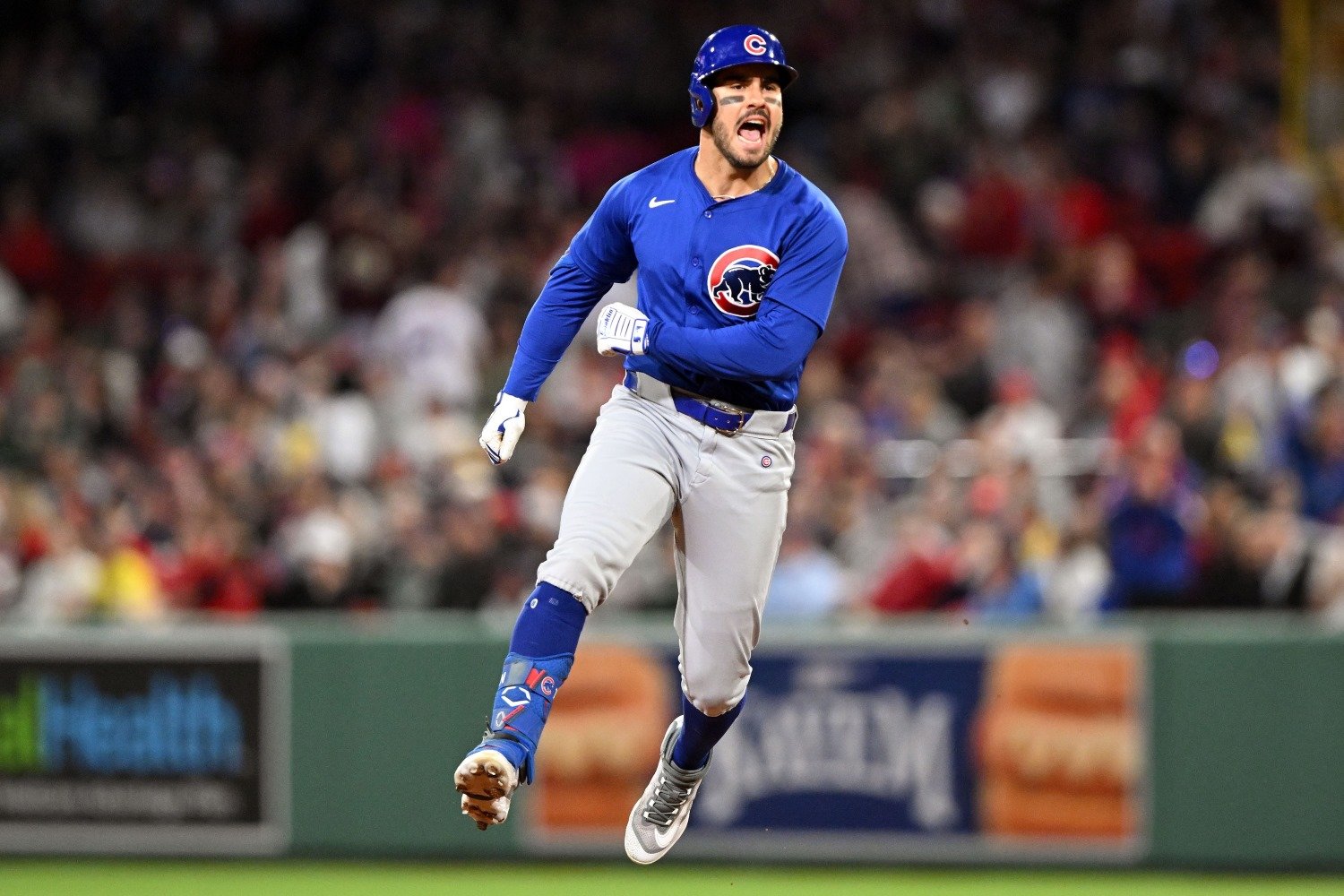 I spent the better part of 2023 refusing to accept Mike Tauchman as a legitimate part of the Chicago Cubs’ roster. A fringe player over 30 years old who hadn't made an appearance at the big-league level in 2022 wasn’t worthy of 400-plus plate appearances for a team with playoff aspirations, in my estimation. Obviously, that opinion isn’t unique, in itself. Although Craig Counsell reportedly locked Tauchman into a roster spot from the jump this spring, my initial assumption was that he wouldn’t be around to see 2024 all the way through. To keep pace with the other contenders in the National League, the team needs to deploy the best hitters in the organization. The outfield depth the Cubs have at the upper minors is close to a breakthrough, ready to supplant him. Yet, as the calendar prepares to flip to May, I’m dangerously close to not only accepting Tauchman as a fixture on this roster, but accepting it entirely as legitimate. Naturally, the striking moment was his three-run homer at Fenway on Sunday night. Even if the Cubs ultimately lost that game, that shot injected new life into one of the more monotonous viewing experiences of the year. And it’s not like it was an individual flash, either. Tauchman leads the team in fWAR (0.9). He leads the team in walk rate (17.1%). Nobody has a higher HardHit% than his 42.6%. As a result, his on-base percentage is pacing the group at .432. This is across 88 plate appearances--not enough to qualify, but only 30 or so behind the team’s full-time group. The deeper you drill, the more encouraging It gets. In addition to the hard contact, Tauchman is working counts with real depth. His 4.8 pitches per plate appearance represents a career high, and a notable jump over last year’s 4.3. It’s also well above league leader Mike Trout’s 4.6 P/PA. Among 210 hitters with at least 80 PAs this year, Tauchman’s 17.3 percent O-Swing% is one of the 10 lowest. Conversely, his Z-Swing%, at 73.7, is one of the 25 highest among that group. Even more encouraging is his contact distribution. Tauchman’s 40-ish percent Oppo% is a 10-point jump from last year. He’s been more active in swinging on the outer part of the strike zone, but is driving it from that spot, as well. He’s at a 42.9% hard-hit rate on opposite-field contact, which represents a 20-point jump from 2023. His eye for the zone is elite, even on a team where “professional at-bats” run deep. Even in working deep counts, he’s still managed to cut his strikeout rate down to a career-low 19.3%. What has driven me to an actual appreciation of Tauchman – beyond the exceptional discipline – is the timing in all of this. It’s not that he wasn’t getting run with Seiya Suzuki or Cody Bellinger in the lineup; he was. But with that pair on the IL, Tauchman’s approach in the lineup has been indispensable. Since Suzuki hit the IL on Apr. 15, Tauchman has reached base safely in 11 of 14 games. Eight of those 10 have featured multiple appearances on base. The sample isn’t large enough to showcase a genuine improvement in the approach. Nor are we sure about the composition of the lineup once everyone is healthy. While Tauchman may not be the most impactful bat on paper, the skill set he’s providing in 2024 remains crucial within this lineup, especially as contact wanes in certain sectors of the starting nine. He’ll remain a fixture in this lineup, even upon the return of the other two-thirds of the team’s starting outfield. And he should. Maybe David Ross was right all along.
 -
Injuries that have limited or removed all three of the Chicago Cubs' top outfielders should have dented their record more than it has so far. They're 18-11, atop the National League Central, and they owe a lot of that to a guy I didn't believe in at all. Image courtesy of © Brian Fluharty-USA TODAY Sports I spent the better part of 2023 refusing to accept Mike Tauchman as a legitimate part of the Chicago Cubs’ roster. A fringe player over 30 years old who hadn't made an appearance at the big-league level in 2022 wasn’t worthy of 400-plus plate appearances for a team with playoff aspirations, in my estimation. Obviously, that opinion isn’t unique, in itself. Although Craig Counsell reportedly locked Tauchman into a roster spot from the jump this spring, my initial assumption was that he wouldn’t be around to see 2024 all the way through. To keep pace with the other contenders in the National League, the team needs to deploy the best hitters in the organization. The outfield depth the Cubs have at the upper minors is close to a breakthrough, ready to supplant him. Yet, as the calendar prepares to flip to May, I’m dangerously close to not only accepting Tauchman as a fixture on this roster, but accepting it entirely as legitimate. Naturally, the striking moment was his three-run homer at Fenway on Sunday night. Even if the Cubs ultimately lost that game, that shot injected new life into one of the more monotonous viewing experiences of the year. And it’s not like it was an individual flash, either. Tauchman leads the team in fWAR (0.9). He leads the team in walk rate (17.1%). Nobody has a higher HardHit% than his 42.6%. As a result, his on-base percentage is pacing the group at .432. This is across 88 plate appearances--not enough to qualify, but only 30 or so behind the team’s full-time group. The deeper you drill, the more encouraging It gets. In addition to the hard contact, Tauchman is working counts with real depth. His 4.8 pitches per plate appearance represents a career high, and a notable jump over last year’s 4.3. It’s also well above league leader Mike Trout’s 4.6 P/PA. Among 210 hitters with at least 80 PAs this year, Tauchman’s 17.3 percent O-Swing% is one of the 10 lowest. Conversely, his Z-Swing%, at 73.7, is one of the 25 highest among that group. Even more encouraging is his contact distribution. Tauchman’s 40-ish percent Oppo% is a 10-point jump from last year. He’s been more active in swinging on the outer part of the strike zone, but is driving it from that spot, as well. He’s at a 42.9% hard-hit rate on opposite-field contact, which represents a 20-point jump from 2023. His eye for the zone is elite, even on a team where “professional at-bats” run deep. Even in working deep counts, he’s still managed to cut his strikeout rate down to a career-low 19.3%. What has driven me to an actual appreciation of Tauchman – beyond the exceptional discipline – is the timing in all of this. It’s not that he wasn’t getting run with Seiya Suzuki or Cody Bellinger in the lineup; he was. But with that pair on the IL, Tauchman’s approach in the lineup has been indispensable. Since Suzuki hit the IL on Apr. 15, Tauchman has reached base safely in 11 of 14 games. Eight of those 10 have featured multiple appearances on base. The sample isn’t large enough to showcase a genuine improvement in the approach. Nor are we sure about the composition of the lineup once everyone is healthy. While Tauchman may not be the most impactful bat on paper, the skill set he’s providing in 2024 remains crucial within this lineup, especially as contact wanes in certain sectors of the starting nine. He’ll remain a fixture in this lineup, even upon the return of the other two-thirds of the team’s starting outfield. And he should. Maybe David Ross was right all along. View full article
-
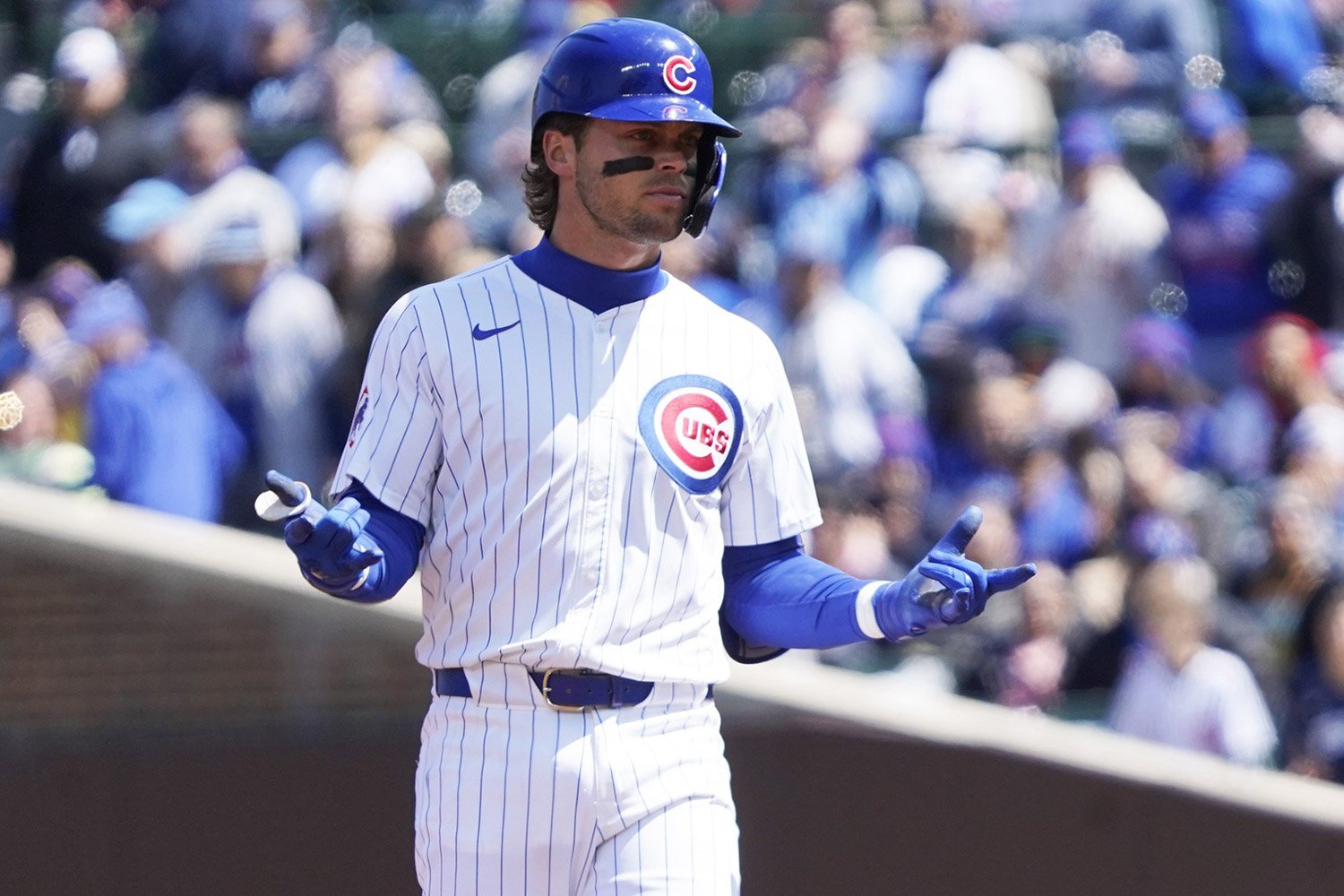 Nico Hoerner has been both of these hitters in a single month. On April 13th, Hoerner was hitting .171. His wRC+ was only 77; his ISO was .024. In the broad way in which we typically evaluate hitters, it wasn’t getting off to the kind of start he might’ve aimed for. Especially given his revamped approach. While Hoerner was hitting only .171, his on-base percentage sat at .352. His walk rate (16.7 percent) exceeded his strikeout rate (13.0 percent). That was all intentional. Hoerner wanted to walk more. He wanted to work the count and find his way on base beyond hitting himself there. The results were part of that process. His Swing% was just 40.1, including a mere 23.1 on pitches outside the strike zone. He only whiffed at only 7.8 percent of pitches. That’s an important thing to note about his early-season output. The walk rate was a positive byproduct of limiting chase, even if the results in actually swinging the bat didn’t come along with it. Even with a Contact% lingering around 80, he was still able to contribute meaningfully. Since that point in the timeline, though, Hoerner has instead crept back toward his free-swinging ways. His Swing% has jumped up by a full 10 percent (50.3) over the past 10 or so days. Along with it, his O-Swing% crept up to 40.4. What’s absurd within that is that Hoerner hasn’t lost anything. In fact, he’s only gained traction. His Contact% is 89.7 over that stretch. His Whiff% is just 5.2 percent. It’s a stretch that’s brought his cumulative plate discipline figures closer in line with his career norms. As of this writing, his Swing% for the season sits at 44.8; his chase rate is 30.8, and his whiff rate is 6.6 percent. His contact rate is 85.1. There’s some further nuance here, too. Hoerner is demonstrating slightly less hard contact now that he’s making more of it. The walk rate is also down to just 2.2 percent. He is, however, hitting to all fields with more regularity. All three parts of the field come in at least 30 percent in his distribution. His strikeout rate is also lower than it was in the first half of April. This recent stretch probably isn’t a version of Nico Hoerner that we should grow accustomed to. A Swing% at or above 50 hasn’t been on his stat sheet since 2019. He’s always been able to maintain patience and limit whiffs while simultaneously offering high contact rates. If anything, perhaps the revamped approach was an overcorrection for him, hoping to drive up the walk rate. I suppose there’s merit in trying to enhance a specific element of your game, especially given the depth offered by simply being a hitter in baseball. It’s something of a pick-your-poison situation. Do you want the patient hitter who walks a bunch and doesn’t strike out but whose patience might be limiting balls in play? Or do you want the contact-oriented approach, with only occasional walks but sprays hits all over the field? I imagine that’s the case for the Cubs’ skipper, too. Craig Counsell has intermittently deployed Hoerner out of the leadoff spot throughout the year, even before Ian Happ’s recent hamstring issue. I’d be willing to bet there’s merit in leading off your more aggressive contact monster and your uber-patient walk machine, depending on the matchup. When that’s appropriate, though, is well above my paygrade.
 -
My favorite type of hitter is the patient one. I believe that hitters with strong plate discipline showcase demonstrate an intellectual component that I’m fascinated with. They’re calculated. At the same time, I can also appreciate the (seemingly rare) hitter who can swing at a majority of pitches but find himself on base with regularity all the same. Image courtesy of © David Banks-USA TODAY Sports Nico Hoerner has been both of these hitters in a single month. On April 13th, Hoerner was hitting .171. His wRC+ was only 77; his ISO was .024. In the broad way in which we typically evaluate hitters, it wasn’t getting off to the kind of start he might’ve aimed for. Especially given his revamped approach. While Hoerner was hitting only .171, his on-base percentage sat at .352. His walk rate (16.7 percent) exceeded his strikeout rate (13.0 percent). That was all intentional. Hoerner wanted to walk more. He wanted to work the count and find his way on base beyond hitting himself there. The results were part of that process. His Swing% was just 40.1, including a mere 23.1 on pitches outside the strike zone. He only whiffed at only 7.8 percent of pitches. That’s an important thing to note about his early-season output. The walk rate was a positive byproduct of limiting chase, even if the results in actually swinging the bat didn’t come along with it. Even with a Contact% lingering around 80, he was still able to contribute meaningfully. Since that point in the timeline, though, Hoerner has instead crept back toward his free-swinging ways. His Swing% has jumped up by a full 10 percent (50.3) over the past 10 or so days. Along with it, his O-Swing% crept up to 40.4. What’s absurd within that is that Hoerner hasn’t lost anything. In fact, he’s only gained traction. His Contact% is 89.7 over that stretch. His Whiff% is just 5.2 percent. It’s a stretch that’s brought his cumulative plate discipline figures closer in line with his career norms. As of this writing, his Swing% for the season sits at 44.8; his chase rate is 30.8, and his whiff rate is 6.6 percent. His contact rate is 85.1. There’s some further nuance here, too. Hoerner is demonstrating slightly less hard contact now that he’s making more of it. The walk rate is also down to just 2.2 percent. He is, however, hitting to all fields with more regularity. All three parts of the field come in at least 30 percent in his distribution. His strikeout rate is also lower than it was in the first half of April. This recent stretch probably isn’t a version of Nico Hoerner that we should grow accustomed to. A Swing% at or above 50 hasn’t been on his stat sheet since 2019. He’s always been able to maintain patience and limit whiffs while simultaneously offering high contact rates. If anything, perhaps the revamped approach was an overcorrection for him, hoping to drive up the walk rate. I suppose there’s merit in trying to enhance a specific element of your game, especially given the depth offered by simply being a hitter in baseball. It’s something of a pick-your-poison situation. Do you want the patient hitter who walks a bunch and doesn’t strike out but whose patience might be limiting balls in play? Or do you want the contact-oriented approach, with only occasional walks but sprays hits all over the field? I imagine that’s the case for the Cubs’ skipper, too. Craig Counsell has intermittently deployed Hoerner out of the leadoff spot throughout the year, even before Ian Happ’s recent hamstring issue. I’d be willing to bet there’s merit in leading off your more aggressive contact monster and your uber-patient walk machine, depending on the matchup. When that’s appropriate, though, is well above my paygrade. View full article
-
As a person who overreacts to everything, it sometimes becomes difficult to watch the Chicago Cubs play defense in a measured fashion. A failed pick at first by Michael Busch or the odd mistake from Dansby Swanson and I’m ready to sprint to conclusions. Image courtesy of © Orlando Ramirez-USA TODAY Sports It’s an interesting paradox in which to reside for someone so consumed by defense and recognizing the sample it requires to genuinely analyze as a result. But as we prepare to hit the end of April and guys have settled into spots accordingly, it now seems like a point at which to take a temperature check. What the numbers say might not have as much value at this early stage, but it’s at least worth exploring in comparison to last year. This is in addition to where certain players are performing in the larger context of Major League Baseball. The most obvious place to start – and probably, subconsciously, the basis for this article – is on the infield corners. After all, these were the only positions remotely in question throughout much of the winter. Even after the acquisition of Michael Busch for first and the decision to run with Christopher Morel at third, long-term stability was far from a given. And yet, the Cubs may have fallen into such luck at not one of those spots but each of them. The Cubs had seven players appear at first base last year, with Patrick Wisdom’s 77 innings representing the fewest among the group. They combined to rank 21st in the league in the very comprehensive Fielding Run Value (-4), 20th in Outs Above Average (-5), and 12th in Defensive Runs Saved (1). In that sense, Michael Busch has, thus far, represented an upgrade. He has a FRV of 0 and an OAA of 1. DRS is the only metric that doesn’t love him, at -3 to this point. Of course, metrics tend to collude against first base anyway, so there’s likely always going to be one naysayer among the trio. While Busch has had the occasional issue with a pick or a low throw, the overall results have been sound. Sometimes, they’re even more so. Like this one against the Dodgers. Or this one against Houston. A middle infield featuring Swanson & Nico Hoerner, combined with the rapid improvement of Morel, tends to make life pretty easy on a first baseman from the jump. Despite lacking a defensive home, the fact that he’s been as solid as he has speaks to a solid trajectory moving forward. On the other side, Morel came in with much more scrutiny. The Cubs forewent the opportunity to sign Matt Chapman, instead opting to place Morel there, despite the third base picture not looking unlike the one on the other side. The team had five players appear at the hot corner (four if we want to exclude Edwin Ríos’ eight innings), of which only Nick Madrigal emerged of good quality in the eyes of the metrics. Our favorite smaller-than-your-average-baseball-player posted an FRV of 8, an OAA of 10, and a DRS of 8. Not bad for his first full-time run at the spot, like, ever. Of course, offensive profiles matter to some extent, and Madrigal’s didn’t work as a full-time third sacker, which is why it’s been so welcome a development to see Morel’s early improvement there. Overall, FRV has him at -1. OAA has him at -2. DRS is -1. So, slightly below average to this point. Given some of the mistakes we saw in the spring and the first week of the season, those numbers actually appear…fine? Swaths of fans were ready to pull the plug after just a few games. The arm has played. The glove just needs to follow. Only then will Morel get a full nine innings there. But he’s well on his way. If there’s a concern to be expressed over the defense to date, it’s not on the corners. It’s certainly not on the middle infield, where Swanson & Hoerner continue to live among the league’s best metrics-wise. The outfield, however, is leaving something to be desired. The Cubs’ group of outfielders sits 26th in FRV (-3), 23rd in OAA (-3), and 13th in DRS (1). Ian Happ & Cody Bellinger have been below average by the metrics. Bellinger was already having a tough inning before a misread led to his current rib injury, as he appeared to lose a ball in the lights. Interestingly, that sort of represents the biggest concern for this group: light sources. While there isn’t a metric to place it, the Cubs have (anecdotally) appeared to lose more balls in the sun or stadium lights than any other team in baseball. More worrisome is that it largely comes from their three starters across the grass: Happ, Bellinger, and Seiya Suzuki. I suppose that’s a positive aspect of Pete Crow-Armstrong’s return to the top club. The bat may not be there yet, but you know you’re getting premium defense. Given injuries, with so many moving parts in the outfield, he should bring up-the-middle stability to the defensive picture out there. Here's a quick peek at the catching (something I’ll likely expand on later this week). I love what we’re getting from Miguel Amaya. He ranks fifth among backstops with at least 50 innings in Baseball Prospectus’ Catcher Defensive Adjustment (1.0) and eighth in Called Strikes Above Average (0.006). Yan Gomes ranks 52nd in CDA (-1.4) and CSAA (-0.011). It’s still early, but there may be a gap establishing between the two of them. Ultimately, we’re at the end of April. And I’m throwing out a bunch of metrics that need a significant sample to mean anything at all while also adjusting to a world of FRV against OAA & DRS. But it’s something to monitor, especially given the team’s continued roster construction and need for high-end defense. In short: middle infield good, corners improving, catchers just-okay-to-probably-quite-good, and outfield can’t field baseballs with light involved. Still a long way to go in the defensive game. View full article
-
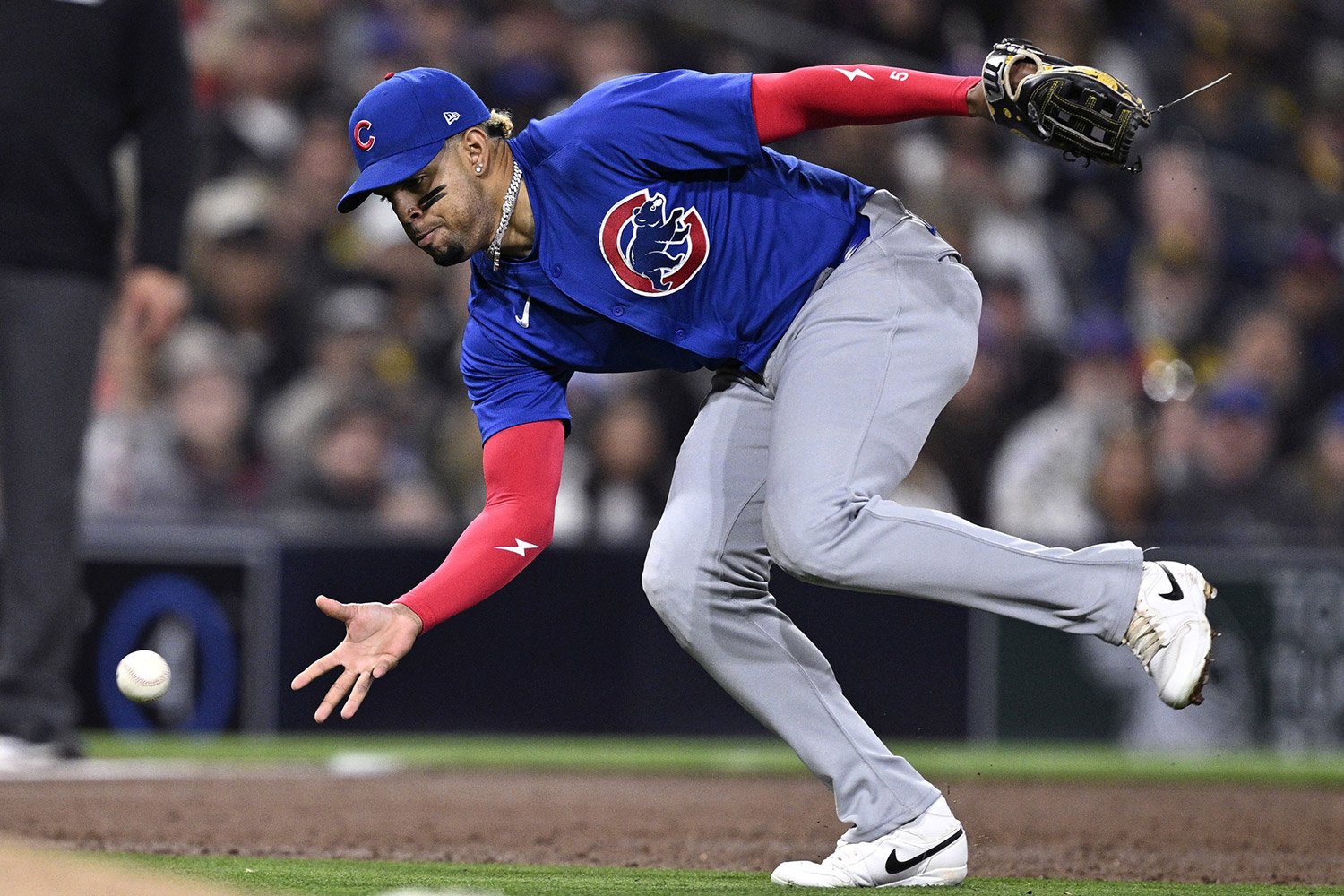 It’s an interesting paradox in which to reside for someone so consumed by defense and recognizing the sample it requires to genuinely analyze as a result. But as we prepare to hit the end of April and guys have settled into spots accordingly, it now seems like a point at which to take a temperature check. What the numbers say might not have as much value at this early stage, but it’s at least worth exploring in comparison to last year. This is in addition to where certain players are performing in the larger context of Major League Baseball. The most obvious place to start – and probably, subconsciously, the basis for this article – is on the infield corners. After all, these were the only positions remotely in question throughout much of the winter. Even after the acquisition of Michael Busch for first and the decision to run with Christopher Morel at third, long-term stability was far from a given. And yet, the Cubs may have fallen into such luck at not one of those spots but each of them. The Cubs had seven players appear at first base last year, with Patrick Wisdom’s 77 innings representing the fewest among the group. They combined to rank 21st in the league in the very comprehensive Fielding Run Value (-4), 20th in Outs Above Average (-5), and 12th in Defensive Runs Saved (1). In that sense, Michael Busch has, thus far, represented an upgrade. He has a FRV of 0 and an OAA of 1. DRS is the only metric that doesn’t love him, at -3 to this point. Of course, metrics tend to collude against first base anyway, so there’s likely always going to be one naysayer among the trio. While Busch has had the occasional issue with a pick or a low throw, the overall results have been sound. Sometimes, they’re even more so. Like this one against the Dodgers. Or this one against Houston. A middle infield featuring Swanson & Nico Hoerner, combined with the rapid improvement of Morel, tends to make life pretty easy on a first baseman from the jump. Despite lacking a defensive home, the fact that he’s been as solid as he has speaks to a solid trajectory moving forward. On the other side, Morel came in with much more scrutiny. The Cubs forewent the opportunity to sign Matt Chapman, instead opting to place Morel there, despite the third base picture not looking unlike the one on the other side. The team had five players appear at the hot corner (four if we want to exclude Edwin Ríos’ eight innings), of which only Nick Madrigal emerged of good quality in the eyes of the metrics. Our favorite smaller-than-your-average-baseball-player posted an FRV of 8, an OAA of 10, and a DRS of 8. Not bad for his first full-time run at the spot, like, ever. Of course, offensive profiles matter to some extent, and Madrigal’s didn’t work as a full-time third sacker, which is why it’s been so welcome a development to see Morel’s early improvement there. Overall, FRV has him at -1. OAA has him at -2. DRS is -1. So, slightly below average to this point. Given some of the mistakes we saw in the spring and the first week of the season, those numbers actually appear…fine? Swaths of fans were ready to pull the plug after just a few games. The arm has played. The glove just needs to follow. Only then will Morel get a full nine innings there. But he’s well on his way. If there’s a concern to be expressed over the defense to date, it’s not on the corners. It’s certainly not on the middle infield, where Swanson & Hoerner continue to live among the league’s best metrics-wise. The outfield, however, is leaving something to be desired. The Cubs’ group of outfielders sits 26th in FRV (-3), 23rd in OAA (-3), and 13th in DRS (1). Ian Happ & Cody Bellinger have been below average by the metrics. Bellinger was already having a tough inning before a misread led to his current rib injury, as he appeared to lose a ball in the lights. Interestingly, that sort of represents the biggest concern for this group: light sources. While there isn’t a metric to place it, the Cubs have (anecdotally) appeared to lose more balls in the sun or stadium lights than any other team in baseball. More worrisome is that it largely comes from their three starters across the grass: Happ, Bellinger, and Seiya Suzuki. I suppose that’s a positive aspect of Pete Crow-Armstrong’s return to the top club. The bat may not be there yet, but you know you’re getting premium defense. Given injuries, with so many moving parts in the outfield, he should bring up-the-middle stability to the defensive picture out there. Here's a quick peek at the catching (something I’ll likely expand on later this week). I love what we’re getting from Miguel Amaya. He ranks fifth among backstops with at least 50 innings in Baseball Prospectus’ Catcher Defensive Adjustment (1.0) and eighth in Called Strikes Above Average (0.006). Yan Gomes ranks 52nd in CDA (-1.4) and CSAA (-0.011). It’s still early, but there may be a gap establishing between the two of them. Ultimately, we’re at the end of April. And I’m throwing out a bunch of metrics that need a significant sample to mean anything at all while also adjusting to a world of FRV against OAA & DRS. But it’s something to monitor, especially given the team’s continued roster construction and need for high-end defense. In short: middle infield good, corners improving, catchers just-okay-to-probably-quite-good, and outfield can’t field baseballs with light involved. Still a long way to go in the defensive game.
 -
With any semblance of protection from the rest of the lineup dwindling due to injury, the Chicago Cubs' rookie slugger has hit a rough patch this week. Why? And how can he get out of it? Image courtesy of © Kamil Krzaczynski-USA TODAY Sports A stretch like this was always inevitable. Of course, to even call this a stretch would be, in fact, a stretch. But Michael Busch has gone four consecutive games without recording a hit. He’s struck out nine times across those four games, including eight in this three-game set against Houston. Not that this is cause for any panic. As recently as Saturday, Busch was slashing .328/.405/.656. His streak of five straight games with a home run was just a week and a half ago. He was, arguably, the most exciting hitter in the Cubs’ lineup. It is worthwhile, however, to take a quick glance under the hood of this last set of games, to see if there’s anything that we should maybe (at the very least) monitor. There isn’t much you’re going to glean from such a small sample. Obviously. But there are at least a couple of things we can point to as interesting, given the lackluster outcomes. Fastballs have been, by a wide margin, the pitch type Busch has seen most often this year; he’s seen about 52% heaters, against roughly 30% and 18% breaking and offspeed, respectively. In the last four games, Busch has seen his lowest percentage of fastballs in consecutive games. He’s had individual games where opposing pitchers have avoided the hard stuff. This is the first instance of it happening over multiple games, though. The Marlins found a way to sequence and attack him; the Astros had one in advance. If this is an adjustment that opposing pitchers are making, it’s a logical one. Breaking pitches are the group against which Busch has generated the least hard contact (though a 36.4 HardHit% is still cromulent). It’s also the subset most likely to generate a strikeout from Busch. He’s whiffing at those pitches at a 36.4% clip. Busch has also expanded the zone more often than we had seen prior to the last few days. Impressively, his chase rate resisted the inflationary pressure of a long road trip, but after coming home and seeing teams switch up the mix against him, Busch's plate discipline has finally cracked a bit. His chase rate was 21.2% through Saturday, but since then, it's 33.3%. The overall Swing% is up only slightly, so the fact that he’s chasing and whiffing is at least notable. Overall, it’s not as if a four-game stretch – even in the ultimate small sample that April represents – is going to damage Busch’s output. His ISO (.280) still sits in the top 10 among qualifying position players. His 4.5 pitches per plate appearance is still a mark well above league average. The strikeout rate is up there, but not skyrocketing horrifically in the wake of his brief (to date) struggles. The stat sheet still looks good in more places than it doesn’t. What becomes important for Busch at this point, though, is the adjustment to be made. We’ve seen him adjust at each level. Those adjustments have also come after an extended run, however (2021 to 2022 in Double-A, 2022 to 2023 in Triple-A). If the “trends” over a four-game sample are indicative of a larger adjustment on the part of opposing pitchers, then Busch is going to have to demonstrate the ability to make quick counteradjustments. It’s not as if the Cubs have a wealth of thriving offensive talent at present. They might have had that on Opening Day, but now, too much of that talent is on the IL. Busch can (and likely will) adjust, if necessary. It just needs to happen fast, for this team. View full article
-
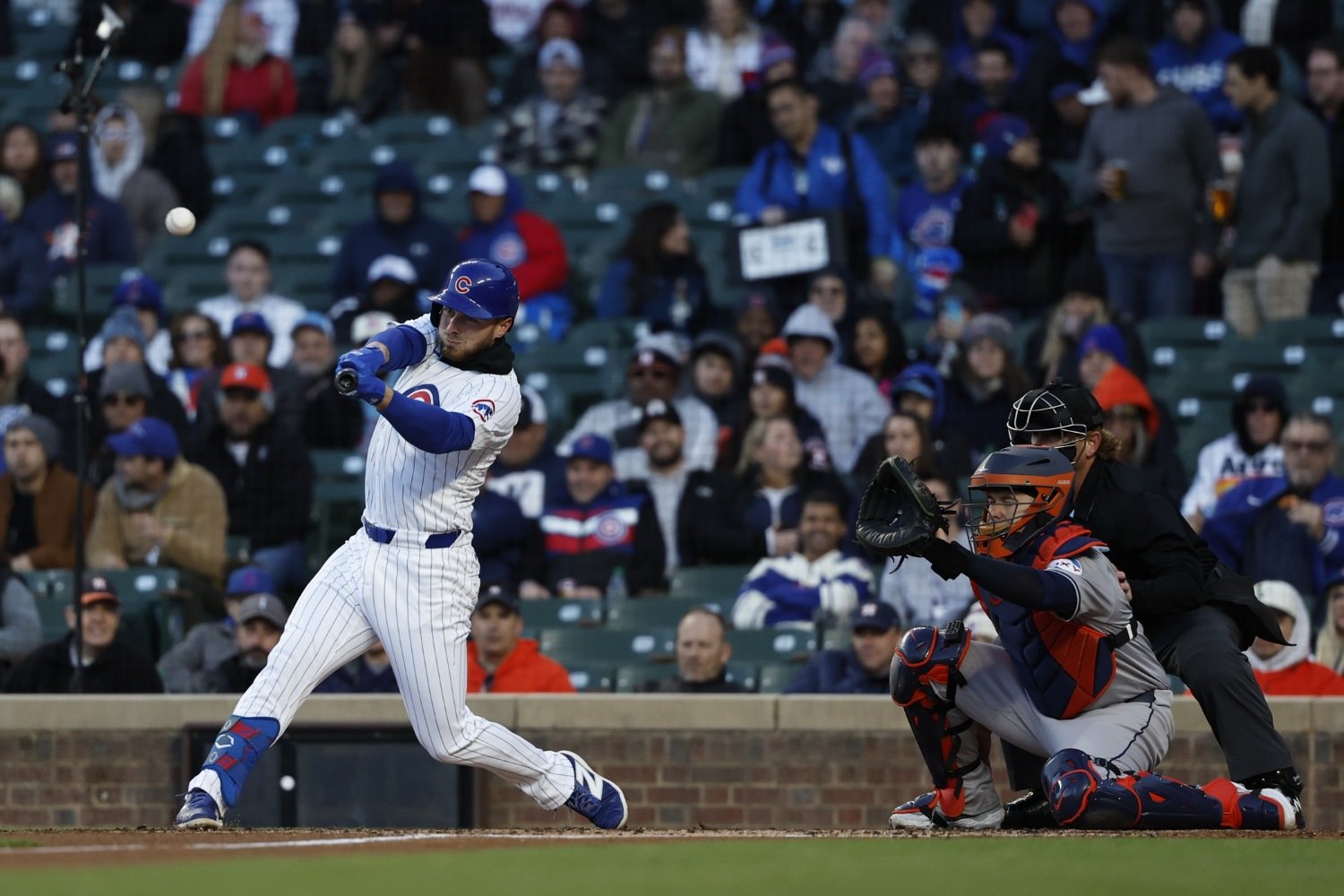 A stretch like this was always inevitable. Of course, to even call this a stretch would be, in fact, a stretch. But Michael Busch has gone four consecutive games without recording a hit. He’s struck out nine times across those four games, including eight in this three-game set against Houston. Not that this is cause for any panic. As recently as Saturday, Busch was slashing .328/.405/.656. His streak of five straight games with a home run was just a week and a half ago. He was, arguably, the most exciting hitter in the Cubs’ lineup. It is worthwhile, however, to take a quick glance under the hood of this last set of games, to see if there’s anything that we should maybe (at the very least) monitor. There isn’t much you’re going to glean from such a small sample. Obviously. But there are at least a couple of things we can point to as interesting, given the lackluster outcomes. Fastballs have been, by a wide margin, the pitch type Busch has seen most often this year; he’s seen about 52% heaters, against roughly 30% and 18% breaking and offspeed, respectively. In the last four games, Busch has seen his lowest percentage of fastballs in consecutive games. He’s had individual games where opposing pitchers have avoided the hard stuff. This is the first instance of it happening over multiple games, though. The Marlins found a way to sequence and attack him; the Astros had one in advance. If this is an adjustment that opposing pitchers are making, it’s a logical one. Breaking pitches are the group against which Busch has generated the least hard contact (though a 36.4 HardHit% is still cromulent). It’s also the subset most likely to generate a strikeout from Busch. He’s whiffing at those pitches at a 36.4% clip. Busch has also expanded the zone more often than we had seen prior to the last few days. Impressively, his chase rate resisted the inflationary pressure of a long road trip, but after coming home and seeing teams switch up the mix against him, Busch's plate discipline has finally cracked a bit. His chase rate was 21.2% through Saturday, but since then, it's 33.3%. The overall Swing% is up only slightly, so the fact that he’s chasing and whiffing is at least notable. Overall, it’s not as if a four-game stretch – even in the ultimate small sample that April represents – is going to damage Busch’s output. His ISO (.280) still sits in the top 10 among qualifying position players. His 4.5 pitches per plate appearance is still a mark well above league average. The strikeout rate is up there, but not skyrocketing horrifically in the wake of his brief (to date) struggles. The stat sheet still looks good in more places than it doesn’t. What becomes important for Busch at this point, though, is the adjustment to be made. We’ve seen him adjust at each level. Those adjustments have also come after an extended run, however (2021 to 2022 in Double-A, 2022 to 2023 in Triple-A). If the “trends” over a four-game sample are indicative of a larger adjustment on the part of opposing pitchers, then Busch is going to have to demonstrate the ability to make quick counteradjustments. It’s not as if the Cubs have a wealth of thriving offensive talent at present. They might have had that on Opening Day, but now, too much of that talent is on the IL. Busch can (and likely will) adjust, if necessary. It just needs to happen fast, for this team.
 -
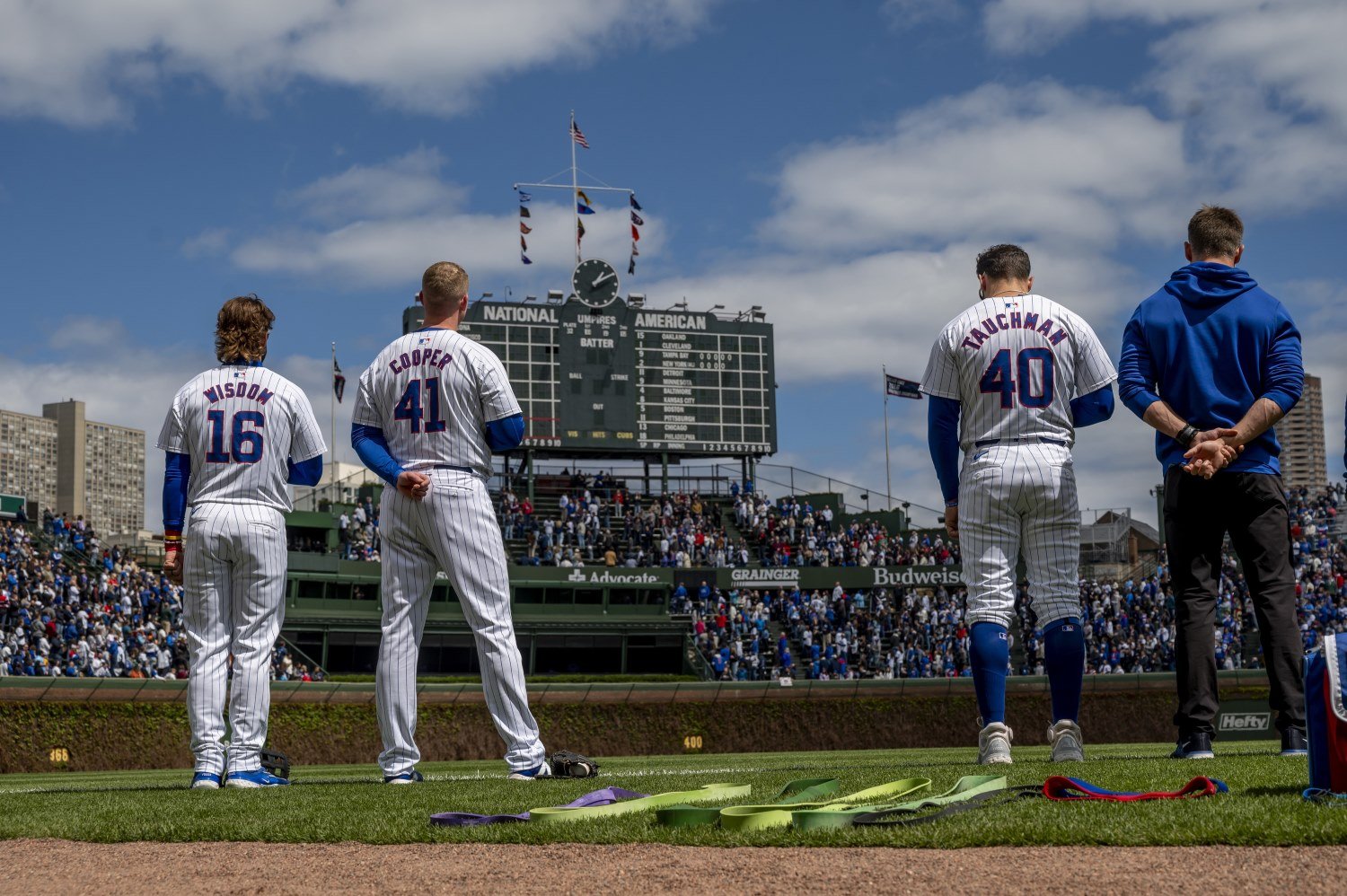 Going back to early in the spring, I’ve spent more time than I care to admit thinking about the Chicago Cubs’ roster construction at the infield corners and on the bench, as the two seemed inextricably linked. As the third base picture became clearer and Garrett Cooper earned a roster spot, I wondered how Craig Counsell would balance playing time for Cooper, Christopher Morel, Nick Madrigal, Patrick Wisdom, and (maybe, eventually) Matt Mervis. Not that the expectation was that they’d all be on the roster at the same time--especially with Mervis’s optionability. Even still, that’s five names for, functionally, three spots: third base, designated hitter, and first base (to whatever extent Michael Busch left room for someone to claim playing time). The rapid ascent of Busch compressed that down to only the former two spots, but also expedited the process of clarifying it. Morel gets the bulk of the starts at third (16 starts at third, only six appearances as DH). Madrigal fills in late in games (17 appearances, but only seven starts). Wisdom, now healthy, gets the odd start there or in an outfield corner. What it did, though, was leave something of a redundancy on the roster. Wisdom and Cooper are not dissimilar players at this point in their careers. Like, at all. Decent offensive upside (in between strikeouts) with the ability to make the odd appearance in an outfield corner. Having both of them on one bench unit felt unnecessary, but with so many regulars completely entrenched into everyday roles, it’s probably something that could be balanced over a short stretch. That stretch ended up being shorter than we expected. With the recall of Mervis, the Cubs would have had to find a way to balance two nearly identical righty bats with an eerily similar left-handed one, albeit with less positional flexibility. Optioning Alexander Canario to make room for Mervis was floated in certain spaces, but didn’t line up with any logic I can discern, given the redundancy. So the Cubs are now set to say goodbye to Cooper, in favor of Wisdom and of Mervis. In the most direct sense, it’s Wisdom over Cooper. With such similar profiles, it’s logical that the Cubs went with the familiarity of a guy who's done much for them over the last three-plus seasons. That's especially true given that Wisdom has at least made a handful of corner outfield appearances; Cooper’s two trips to left field this year were his first since 2021. However, while this is largely going to be depicted as something of a rearranging of the bench, it probably says more about the composition of the starting lineup than we might initially think. Morel’s tenure as the everyday designated hitter is over. The corners are more settled than we likely thought they’d be at this juncture, given Busch’s rise and Morel’s seemingly exponential improvement on the other side. That’s left something of a vacancy at the DH spot, though. Cooper spent six games there, against only three as a first-base fill-in. Ian Happ, Seiya Suzuki, and Mike Tauchman are the others (besides Morel) to assume that role multiple times. It’s interesting that while the direct bench comparison – and, just as likely, the ultimate decision – was Wisdom vs. Cooper, it’s Mervis’s arrival that directly impacts Cooper. There’s a world in which this move results in Mervis assuming a near-everyday DH role, with Wisdom continuing to ply his trade only on occasion. Mervis was excelling in Iowa against right-handed pitching. What we shouldn’t overlook, however, is that he was also holding his own against lefties. His line against southpaws went .300/.360/.650 in 25 plate appearances before his promotion. So not only do you get the boost against righties, but you don’t lose anything on the other side of the plate, given Cooper’s early struggles against pitchers of that handedness, where he was performing noticeably worse than against right-handers. While it’s not as if Cooper was performing poorly overall (118 wRC+), this winds up being the most logical move from a bench composition standpoint. Madrigal offers defense off the bench. Wisdom brings the same offensive profile and more in the “intangible” department. But as much as this seems like a bench-centric move, it presents significantly more big-picture ramifications for the Cubs’ roster moving forward. Can Mervis be a guy? Could he be the guy out of that DH spot? Not to mention the 40-man implications, which could bode well in attempting to add some relief help soon. Perhaps I’m blowing it out of proportion, but this reads as more than a simple April DFA of a fringe bat. It shakes things up in all the right ways, with the potential to have some longer-term effects in a way that you don’t typically see.
 -
The Chicago Cubs aren't messing around. Less than four full weeks into the season, they've changed the texture of their roster, shaking up the position-player mix in search of a better alignment of options. Image courtesy of © Patrick Gorski-USA TODAY Sports Going back to early in the spring, I’ve spent more time than I care to admit thinking about the Chicago Cubs’ roster construction at the infield corners and on the bench, as the two seemed inextricably linked. As the third base picture became clearer and Garrett Cooper earned a roster spot, I wondered how Craig Counsell would balance playing time for Cooper, Christopher Morel, Nick Madrigal, Patrick Wisdom, and (maybe, eventually) Matt Mervis. Not that the expectation was that they’d all be on the roster at the same time--especially with Mervis’s optionability. Even still, that’s five names for, functionally, three spots: third base, designated hitter, and first base (to whatever extent Michael Busch left room for someone to claim playing time). The rapid ascent of Busch compressed that down to only the former two spots, but also expedited the process of clarifying it. Morel gets the bulk of the starts at third (16 starts at third, only six appearances as DH). Madrigal fills in late in games (17 appearances, but only seven starts). Wisdom, now healthy, gets the odd start there or in an outfield corner. What it did, though, was leave something of a redundancy on the roster. Wisdom and Cooper are not dissimilar players at this point in their careers. Like, at all. Decent offensive upside (in between strikeouts) with the ability to make the odd appearance in an outfield corner. Having both of them on one bench unit felt unnecessary, but with so many regulars completely entrenched into everyday roles, it’s probably something that could be balanced over a short stretch. That stretch ended up being shorter than we expected. With the recall of Mervis, the Cubs would have had to find a way to balance two nearly identical righty bats with an eerily similar left-handed one, albeit with less positional flexibility. Optioning Alexander Canario to make room for Mervis was floated in certain spaces, but didn’t line up with any logic I can discern, given the redundancy. So the Cubs are now set to say goodbye to Cooper, in favor of Wisdom and of Mervis. In the most direct sense, it’s Wisdom over Cooper. With such similar profiles, it’s logical that the Cubs went with the familiarity of a guy who's done much for them over the last three-plus seasons. That's especially true given that Wisdom has at least made a handful of corner outfield appearances; Cooper’s two trips to left field this year were his first since 2021. However, while this is largely going to be depicted as something of a rearranging of the bench, it probably says more about the composition of the starting lineup than we might initially think. Morel’s tenure as the everyday designated hitter is over. The corners are more settled than we likely thought they’d be at this juncture, given Busch’s rise and Morel’s seemingly exponential improvement on the other side. That’s left something of a vacancy at the DH spot, though. Cooper spent six games there, against only three as a first-base fill-in. Ian Happ, Seiya Suzuki, and Mike Tauchman are the others (besides Morel) to assume that role multiple times. It’s interesting that while the direct bench comparison – and, just as likely, the ultimate decision – was Wisdom vs. Cooper, it’s Mervis’s arrival that directly impacts Cooper. There’s a world in which this move results in Mervis assuming a near-everyday DH role, with Wisdom continuing to ply his trade only on occasion. Mervis was excelling in Iowa against right-handed pitching. What we shouldn’t overlook, however, is that he was also holding his own against lefties. His line against southpaws went .300/.360/.650 in 25 plate appearances before his promotion. So not only do you get the boost against righties, but you don’t lose anything on the other side of the plate, given Cooper’s early struggles against pitchers of that handedness, where he was performing noticeably worse than against right-handers. While it’s not as if Cooper was performing poorly overall (118 wRC+), this winds up being the most logical move from a bench composition standpoint. Madrigal offers defense off the bench. Wisdom brings the same offensive profile and more in the “intangible” department. But as much as this seems like a bench-centric move, it presents significantly more big-picture ramifications for the Cubs’ roster moving forward. Can Mervis be a guy? Could he be the guy out of that DH spot? Not to mention the 40-man implications, which could bode well in attempting to add some relief help soon. Perhaps I’m blowing it out of proportion, but this reads as more than a simple April DFA of a fringe bat. It shakes things up in all the right ways, with the potential to have some longer-term effects in a way that you don’t typically see. View full article
-
The Cubs had a relatively successful west coast road trip but their plate discipline spiraled. What happened? Image courtesy of © David Banks-USA TODAY Sports The early reputation of the 2024 Chicago Cubs centered heavily around their plate discipline. It was covered here on multiple occasions in the early going, highlighted by growth from the likes of Ian Happ, Christopher Morel, and Dansby Swanson. The flashing upside of a low-turnover lineup under new leadership had our attention in the most complementary way, as they continually ran up pitch counts and chased opposing starters early in games. From here on out, the words are not meant to dismiss any of that as a mirage. Chicago went 5-4 on their nine-game West Coast road swing. It was a run that easily could have ended 7-2 if not for a pair of bullpen meltdowns in San Diego and Arizona. Nevertheless, given how these things tend to go for the Cubs – at least anecdotally – that record seems acceptable coming back to Wrigley Field on Thursday. Of course, the injuries and adjacent composition of the pitching staff are going to garner the most attention regarding any disappointment, especially given that that facet was almost directly responsible for the two most egregious losses of the trip. However, there’s a notable trend emerging on the other side of the ball, out of what was previously believed to be the strength of this squad. And it lies in that same plate discipline we were lauding only ten days ago. What the Cubs were able to do – specifically the likes of Happ & Morel – was avoid pitches outside the strike zone. Get pitches to come to the zone and make contact from there. Through April 7th, that’s absolutely what they were doing: O-Swing% Pre-4/7 Post-4/7 (Road Trip) Dansby Swanson 14.4 34.3 Nico Hoerner 22.4 30.8 Christopher Morel 18.8 30.4 Cody Bellinger 16.1 27.9 Ian Happ 21.6 19.4 Michael Busch 22.5 21.6 For the first four names listed, it’s not just that the discipline appeared to dip a bit. It tanked. Swanson – whose discipline was evincing itself in consistently hard contact – was hitting .310 and reaching base at a .432 clip before the Cubs set out on the trip. He comes back at just .235 & .303 in those categories. Morel was at .306 and .342. He’s now .217 and .267. Bellinger was at .229 and .341, only to return at .200 and .296. Swanson may be the most concerning of the three. We recently discussed his historic month-to-month variance, specifically noting that he needed to hone in on the fastball from a Swing% standpoint. And he had been early on, generating consistently hard contact. However, recent trends indicate that his fastball swinging has taken a backseat to other pitch types. It’s not as if pitchers have adjusted in the way they approach him, either. He’s still seeing a heavy share of fastballs (which is generally the case just due to the nature of pitcher approaches). If we’re looking for a concern level, Swanson’s history puts him on our watch list. Morel – who, as an aside, showcased some massive defensive growth on the road – is also someone we’re keeping our eye on. He was so patient coming out of the gate but gradually fell back into his free-swinging habits. Bellinger hasn’t found his footing, save for a few individual moments, so we’re kind of biding our time in following his trends for now. With those three specifically, you wonder about the nature of such a road trip and the mental aspect. While we can’t quantify it, these are all everyday players. You’re adjusting to late starts. You’ve got the travel. The team played multiple extra-inning games. Spare me the big-league paycheck spiel. There’s a mental factor here. Moving forward, the question will center around how much. of it is due to just that versus regression from the progress we saw earlier. In something of a contrast, Hoerner, Happ, and Busch each present different outcomes in their change in swing habits during their time out west. Hoerner became far more patient from the season's outset but without the results. In the years before that, he demonstrated what I might call measured aggression. He’ll swing, but never at any shocking rate that proves a detriment to his overall output. An O-Swing% lingering around 30 percent isn’t a crazy figure for him because he compensates with regular contact. For Hoerner, it’s more a matter of whether we see him return to a more aggressive style, given that the patience hasn’t manifested in the results he might’ve been hoping for (even if the underlying stuff was encouraging). In the last two years, he’s gone for contact rates of 77.0 and 80.7 percent on pitches outside the strike zone. He also had almost twice as many hits on the road as he had notched all year to that point, including two multi-hit games. It is far too small a sample to declare any level of correlation, but it is an interesting development to monitor nonetheless. In contrast to Hoerner’s rising swing rates, the patience of Ian Happ didn’t yield…anything for him on the trip. Happ, whose evolution into a perfectly acceptable leadoff hitter was documented earlier this week, was hitting .361 and featured a .458 OBP after the Cubs’ last game at Wrigley. He returns at .247 and .353. Happ had a three-hit game in the 12-11 loss in Arizona but only recorded two hits otherwise. He struck out nine times on the road (more than he had the year before departing) against only five walks. There is such a thing as too patient at the plate. Is that what we’re seeing with Ian Happ? Interestingly, rookie Michael Busch is the only hitter emerging from the trip with fewer questions. He recorded hits in seven of the nine games, including his five-game home run streak. He was on base 17 times, with just about all counting stats coming in higher upon the team’s return to the North Side. As genuinely impressive as Busch had already been, the fact that he stands so far apart from his veteran counterparts speaks volumes about his ability to adjust so early in his big-league career. It’s not a surprise, as he showcased this ability at each level, but it does instill a level of comfort that his excellence at the plate thus far is at least remotely sustainable. Again, none of this is to say that the Cubs’ early plate discipline was an apparition. The team emphasized approach in the spring, and each of these hitters has demonstrated an ability to do just that. Engaging so heavily at the plate can also become exhausting over the long term. So we may see lapses as the season wears on, especially when the Cubs are enduring a stretch such as they have been for the last two-ish weeks. What it does, though, is raise some interesting points of emphasis to monitor. We’re watching Swanson, Morel, & Bellinger for their early-season variance. Hoerner to see if his approach reverts to a previous vintage. Happ will determine the line between patience being a virtue and vice. And Busch’s sustainability in the middle of all of it. Ultimately, we’re still playing in the sandbox of small samples. You can’t make declarations in April. But you can ask questions. View full article
-
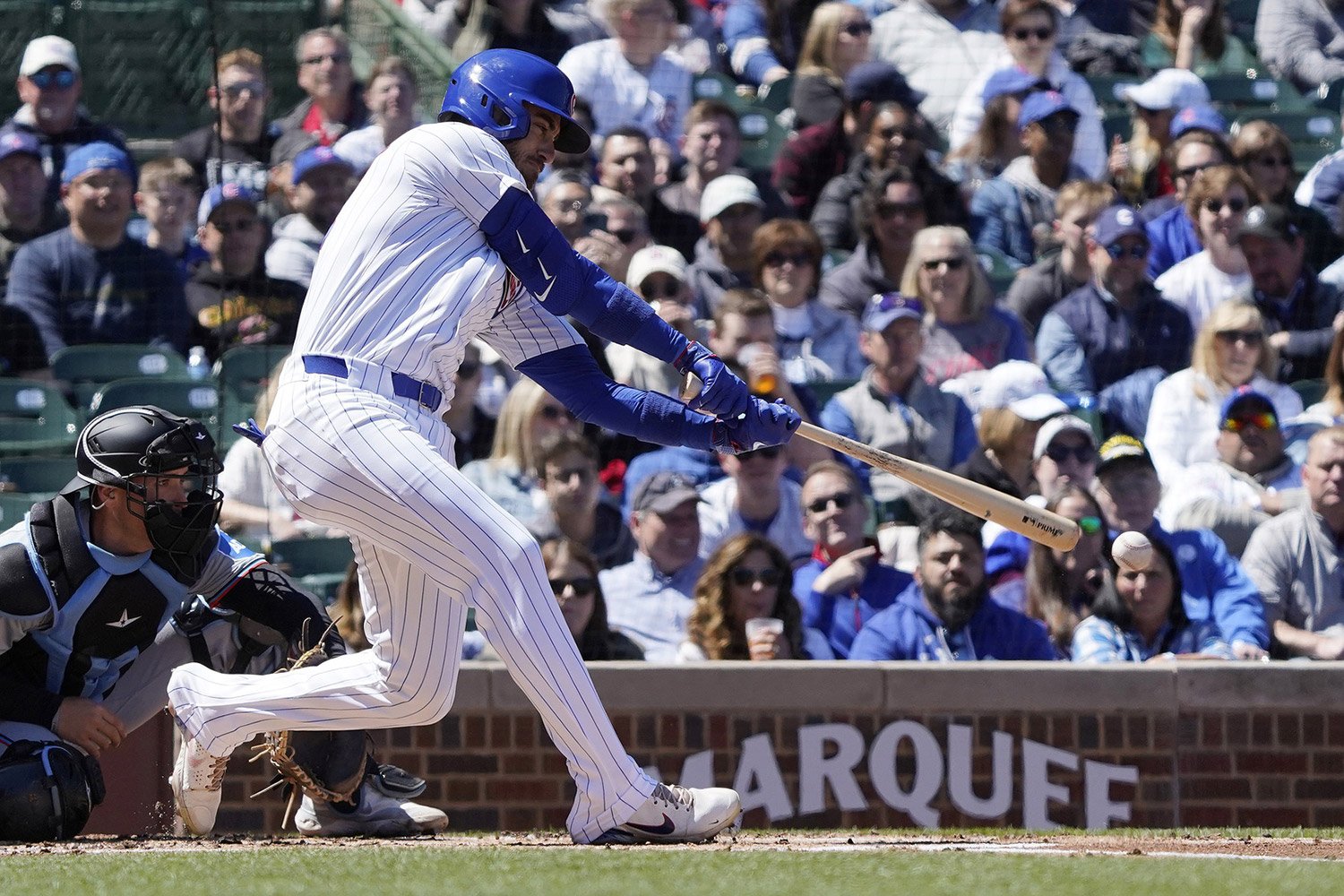 The early reputation of the 2024 Chicago Cubs centered heavily around their plate discipline. It was covered here on multiple occasions in the early going, highlighted by growth from the likes of Ian Happ, Christopher Morel, and Dansby Swanson. The flashing upside of a low-turnover lineup under new leadership had our attention in the most complementary way, as they continually ran up pitch counts and chased opposing starters early in games. From here on out, the words are not meant to dismiss any of that as a mirage. Chicago went 5-4 on their nine-game West Coast road swing. It was a run that easily could have ended 7-2 if not for a pair of bullpen meltdowns in San Diego and Arizona. Nevertheless, given how these things tend to go for the Cubs – at least anecdotally – that record seems acceptable coming back to Wrigley Field on Thursday. Of course, the injuries and adjacent composition of the pitching staff are going to garner the most attention regarding any disappointment, especially given that that facet was almost directly responsible for the two most egregious losses of the trip. However, there’s a notable trend emerging on the other side of the ball, out of what was previously believed to be the strength of this squad. And it lies in that same plate discipline we were lauding only ten days ago. What the Cubs were able to do – specifically the likes of Happ & Morel – was avoid pitches outside the strike zone. Get pitches to come to the zone and make contact from there. Through April 7th, that’s absolutely what they were doing: O-Swing% Pre-4/7 Post-4/7 (Road Trip) Dansby Swanson 14.4 34.3 Nico Hoerner 22.4 30.8 Christopher Morel 18.8 30.4 Cody Bellinger 16.1 27.9 Ian Happ 21.6 19.4 Michael Busch 22.5 21.6 For the first four names listed, it’s not just that the discipline appeared to dip a bit. It tanked. Swanson – whose discipline was evincing itself in consistently hard contact – was hitting .310 and reaching base at a .432 clip before the Cubs set out on the trip. He comes back at just .235 & .303 in those categories. Morel was at .306 and .342. He’s now .217 and .267. Bellinger was at .229 and .341, only to return at .200 and .296. Swanson may be the most concerning of the three. We recently discussed his historic month-to-month variance, specifically noting that he needed to hone in on the fastball from a Swing% standpoint. And he had been early on, generating consistently hard contact. However, recent trends indicate that his fastball swinging has taken a backseat to other pitch types. It’s not as if pitchers have adjusted in the way they approach him, either. He’s still seeing a heavy share of fastballs (which is generally the case just due to the nature of pitcher approaches). If we’re looking for a concern level, Swanson’s history puts him on our watch list. Morel – who, as an aside, showcased some massive defensive growth on the road – is also someone we’re keeping our eye on. He was so patient coming out of the gate but gradually fell back into his free-swinging habits. Bellinger hasn’t found his footing, save for a few individual moments, so we’re kind of biding our time in following his trends for now. With those three specifically, you wonder about the nature of such a road trip and the mental aspect. While we can’t quantify it, these are all everyday players. You’re adjusting to late starts. You’ve got the travel. The team played multiple extra-inning games. Spare me the big-league paycheck spiel. There’s a mental factor here. Moving forward, the question will center around how much. of it is due to just that versus regression from the progress we saw earlier. In something of a contrast, Hoerner, Happ, and Busch each present different outcomes in their change in swing habits during their time out west. Hoerner became far more patient from the season's outset but without the results. In the years before that, he demonstrated what I might call measured aggression. He’ll swing, but never at any shocking rate that proves a detriment to his overall output. An O-Swing% lingering around 30 percent isn’t a crazy figure for him because he compensates with regular contact. For Hoerner, it’s more a matter of whether we see him return to a more aggressive style, given that the patience hasn’t manifested in the results he might’ve been hoping for (even if the underlying stuff was encouraging). In the last two years, he’s gone for contact rates of 77.0 and 80.7 percent on pitches outside the strike zone. He also had almost twice as many hits on the road as he had notched all year to that point, including two multi-hit games. It is far too small a sample to declare any level of correlation, but it is an interesting development to monitor nonetheless. In contrast to Hoerner’s rising swing rates, the patience of Ian Happ didn’t yield…anything for him on the trip. Happ, whose evolution into a perfectly acceptable leadoff hitter was documented earlier this week, was hitting .361 and featured a .458 OBP after the Cubs’ last game at Wrigley. He returns at .247 and .353. Happ had a three-hit game in the 12-11 loss in Arizona but only recorded two hits otherwise. He struck out nine times on the road (more than he had the year before departing) against only five walks. There is such a thing as too patient at the plate. Is that what we’re seeing with Ian Happ? Interestingly, rookie Michael Busch is the only hitter emerging from the trip with fewer questions. He recorded hits in seven of the nine games, including his five-game home run streak. He was on base 17 times, with just about all counting stats coming in higher upon the team’s return to the North Side. As genuinely impressive as Busch had already been, the fact that he stands so far apart from his veteran counterparts speaks volumes about his ability to adjust so early in his big-league career. It’s not a surprise, as he showcased this ability at each level, but it does instill a level of comfort that his excellence at the plate thus far is at least remotely sustainable. Again, none of this is to say that the Cubs’ early plate discipline was an apparition. The team emphasized approach in the spring, and each of these hitters has demonstrated an ability to do just that. Engaging so heavily at the plate can also become exhausting over the long term. So we may see lapses as the season wears on, especially when the Cubs are enduring a stretch such as they have been for the last two-ish weeks. What it does, though, is raise some interesting points of emphasis to monitor. We’re watching Swanson, Morel, & Bellinger for their early-season variance. Hoerner to see if his approach reverts to a previous vintage. Happ will determine the line between patience being a virtue and vice. And Busch’s sustainability in the middle of all of it. Ultimately, we’re still playing in the sandbox of small samples. You can’t make declarations in April. But you can ask questions.
 -
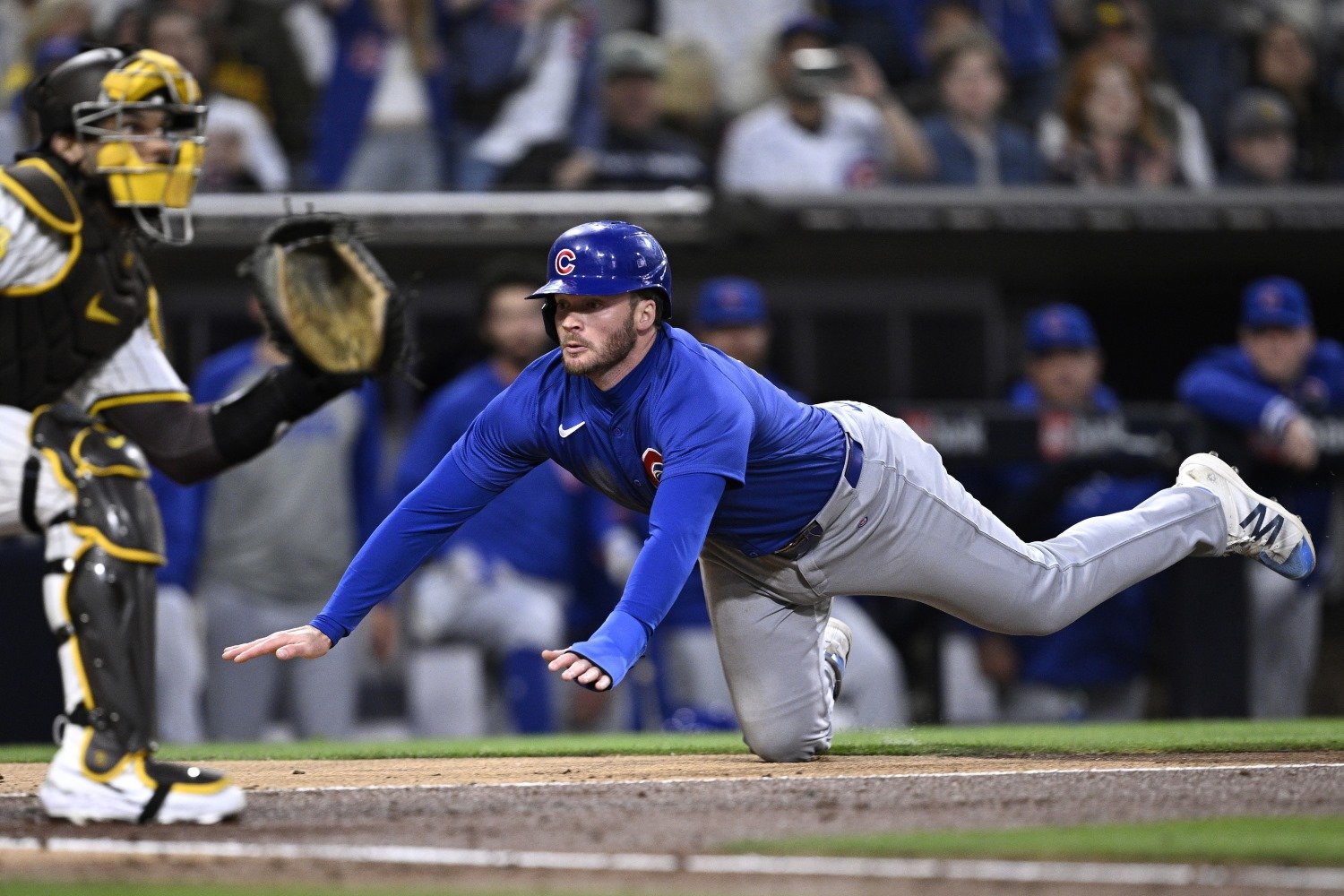 There’s an episode of The Office where various members of the office staff discuss whether Hilary Swank is hot or not. The discussion spirals into a debate which results in a seemingly endless stalemate. This is where I find myself with Ian Happ, with whom I have a complicated relationship. Is he good? Is he not? Is his historically uneven bat the right one to lead the Cubs’ lineup in 2024? Despite being entrenched as the team’s leadoff man (against righty starters) for 2024, Happ doesn’t have the full skill set you’d expect to see from the prototypical player in that role. (There’s also the separate matter of his defense, which is probably not what it’s purported to be, despite a pair of Gold Glove awards that might attempt to say otherwise.) My assumption is that such a perspective isn’t a unique quality among those who follow the Chicago Cubs. The thinking itself – as to whether a player is “good” or “bad” – is black-and-white and, probably, asking the wrong question, in this case. Any level of dismissiveness about Happ undersells what the player has become and the intricacies of his evolution. This is what MLB Pipeline had to say about Happ when he graduated from the Cubs’ system back in 2017: That initial scouting report has proven itself to be varying shades of true over the course of Happ’s career. He’s hit 20 homers in three separate seasons, with 104 of his 124 total dingers coming as a lefty. While he hasn’t been a detriment to the Cubs on the basepaths, he also hasn’t reached anywhere near the 20-20 threshold. The closest he got was last year, when he went 21-14. What’s probably most notable is the variance we’ve seen from Happ in the roughly eight years we’ve watched him. He’s had those years of 20+ home runs. He’s also had seasons where he barely scratched 15. The power, by ISO, has also shrunk a bit, in a more gradual way. Happ has had walk rates touching 15 percent, but also below 10. He’s struck out at a rate over 30 percent on multiple occasions. There’s a lot at play that has both fed into the extremely volatile perception that the collective has of him, as well as his suitability for the leadoff role in which he now finds himself. In terms of the approach, early Ian Happ saw 4.09 pitches per plate appearance. From 2021 to 2023, he went 4.19, 4.00, and 4.15 in the P/PA game. Happ was initially more prone to swinging outside the strike zone, posting an O-Swing% over 30% in two of his first three years. Those coincided with far higher whiff rates than we’ve come to expect from the more modern Happ vintage. He averaged a Whiff% of 15.5% in those early years. This year, Happ has composed himself into a fixture of plate discipline. His P/PA is at 4.68. Only Colorado’s Nolan Jones is seeing more pitches, at 4.72. That’s fed directly into the lowest whiff rate of his career – a meager 10 percent in the early going – and the highest contact rate, at 78.1%. He’s also making hard contact at his highest rate since 2018 (36.2%, using FanGraphs's splits). From a discipline standpoint, Ian Happ is a logical fit atop the lineup, especially given the growth he's demonstrated. Would it be an oversimplification, though, to declare that he just refined his approach in order to fit the bill? Maybe. Pitchers have generally approached Happ the exact same way throughout his career. His Zone% has remained relatively constant, with only mild (and normal) fluctuation in the pitch type he’s seen. One trend that does exist within his approach, though, is his more recent avoidance of the offspeed pitch. Offspeed has represented an area of struggle for Happ throughout his career. It’s represented – by far – his lowest HardHit% output in every year at which he’s been a major-league hitter, while more occasionally serving as the pitch he whiffs at most. This year, however, he’s cut down his Swing% against offspeed pitches to just 39.5%. That would be his lowest total by a wide margin if it’s sustained. His ability to recognize and lay off that pitch certainly speaks to the significant growth we’ve seen in his overall plate discipline thus far. It’s a development not entirely dissimilar to Dansby Swanson, though for Happ, it’s more about pitch type avoidance rather than needing to hone in on one specific pitch. The “prototypical” leadoff man has become something of a rare breed at this level to begin with. Gone are the days of contact-oriented hitters who can get on and steal a bunch of bases. They still exist, but usually more as one-tool-or-the-other. Instead, you’re just looking for that consistent on-base presence that the other guys can drive in. Ian Happ has evolved into exactly that type of player. Again, the question of whether Happ is a strong, consistent bat probably isn’t the right question--especially within the context of him in the leadoff spot. The actual issue is just how his evolution led him to being in that position in the first place. A potential 20-20 guy with a high strikeout rate early on has instead become one of the most patient hitters in all of baseball, demonstrating recognition on specific types of pitches. The absence of power thus far (.130 ISO, even after his drought-busting first homer Tuesday night) is certainly worth pondering; in a general sense, though, the refinement evident in his approach makes him the ideal tone-setter for this group, especially given the early emphasis on quality plate appearances.
 -
How is a switch-hitting left fielder like a two-time Oscar winner? Image courtesy of © Orlando Ramirez-USA TODAY Sports There’s an episode of The Office where various members of the office staff discuss whether Hilary Swank is hot or not. The discussion spirals into a debate which results in a seemingly endless stalemate. This is where I find myself with Ian Happ, with whom I have a complicated relationship. Is he good? Is he not? Is his historically uneven bat the right one to lead the Cubs’ lineup in 2024? Despite being entrenched as the team’s leadoff man (against righty starters) for 2024, Happ doesn’t have the full skill set you’d expect to see from the prototypical player in that role. (There’s also the separate matter of his defense, which is probably not what it’s purported to be, despite a pair of Gold Glove awards that might attempt to say otherwise.) My assumption is that such a perspective isn’t a unique quality among those who follow the Chicago Cubs. The thinking itself – as to whether a player is “good” or “bad” – is black-and-white and, probably, asking the wrong question, in this case. Any level of dismissiveness about Happ undersells what the player has become and the intricacies of his evolution. This is what MLB Pipeline had to say about Happ when he graduated from the Cubs’ system back in 2017: That initial scouting report has proven itself to be varying shades of true over the course of Happ’s career. He’s hit 20 homers in three separate seasons, with 104 of his 124 total dingers coming as a lefty. While he hasn’t been a detriment to the Cubs on the basepaths, he also hasn’t reached anywhere near the 20-20 threshold. The closest he got was last year, when he went 21-14. What’s probably most notable is the variance we’ve seen from Happ in the roughly eight years we’ve watched him. He’s had those years of 20+ home runs. He’s also had seasons where he barely scratched 15. The power, by ISO, has also shrunk a bit, in a more gradual way. Happ has had walk rates touching 15 percent, but also below 10. He’s struck out at a rate over 30 percent on multiple occasions. There’s a lot at play that has both fed into the extremely volatile perception that the collective has of him, as well as his suitability for the leadoff role in which he now finds himself. In terms of the approach, early Ian Happ saw 4.09 pitches per plate appearance. From 2021 to 2023, he went 4.19, 4.00, and 4.15 in the P/PA game. Happ was initially more prone to swinging outside the strike zone, posting an O-Swing% over 30% in two of his first three years. Those coincided with far higher whiff rates than we’ve come to expect from the more modern Happ vintage. He averaged a Whiff% of 15.5% in those early years. This year, Happ has composed himself into a fixture of plate discipline. His P/PA is at 4.68. Only Colorado’s Nolan Jones is seeing more pitches, at 4.72. That’s fed directly into the lowest whiff rate of his career – a meager 10 percent in the early going – and the highest contact rate, at 78.1%. He’s also making hard contact at his highest rate since 2018 (36.2%, using FanGraphs's splits). From a discipline standpoint, Ian Happ is a logical fit atop the lineup, especially given the growth he's demonstrated. Would it be an oversimplification, though, to declare that he just refined his approach in order to fit the bill? Maybe. Pitchers have generally approached Happ the exact same way throughout his career. His Zone% has remained relatively constant, with only mild (and normal) fluctuation in the pitch type he’s seen. One trend that does exist within his approach, though, is his more recent avoidance of the offspeed pitch. Offspeed has represented an area of struggle for Happ throughout his career. It’s represented – by far – his lowest HardHit% output in every year at which he’s been a major-league hitter, while more occasionally serving as the pitch he whiffs at most. This year, however, he’s cut down his Swing% against offspeed pitches to just 39.5%. That would be his lowest total by a wide margin if it’s sustained. His ability to recognize and lay off that pitch certainly speaks to the significant growth we’ve seen in his overall plate discipline thus far. It’s a development not entirely dissimilar to Dansby Swanson, though for Happ, it’s more about pitch type avoidance rather than needing to hone in on one specific pitch. The “prototypical” leadoff man has become something of a rare breed at this level to begin with. Gone are the days of contact-oriented hitters who can get on and steal a bunch of bases. They still exist, but usually more as one-tool-or-the-other. Instead, you’re just looking for that consistent on-base presence that the other guys can drive in. Ian Happ has evolved into exactly that type of player. Again, the question of whether Happ is a strong, consistent bat probably isn’t the right question--especially within the context of him in the leadoff spot. The actual issue is just how his evolution led him to being in that position in the first place. A potential 20-20 guy with a high strikeout rate early on has instead become one of the most patient hitters in all of baseball, demonstrating recognition on specific types of pitches. The absence of power thus far (.130 ISO, even after his drought-busting first homer Tuesday night) is certainly worth pondering; in a general sense, though, the refinement evident in his approach makes him the ideal tone-setter for this group, especially given the early emphasis on quality plate appearances. View full article
-
Do The 2024 Cubs Need To Steal Bases To Be Effective Offensively?
RandallPnkFloyd posted an article in Cubs
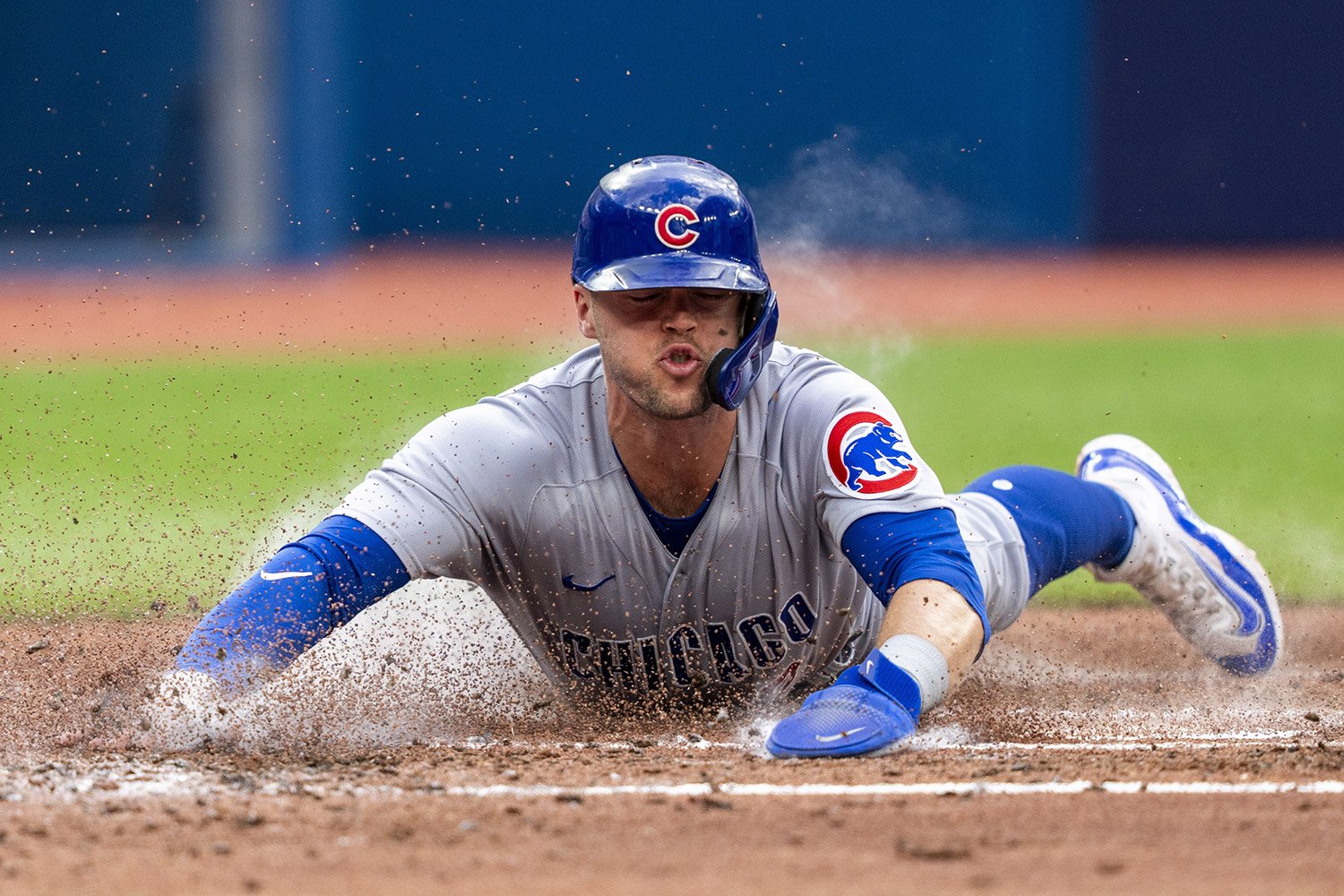 The 2023 iteration of the Chicago Cubs was one of the best baserunning teams in Major League Baseball. FanGraphs’ Base Running metric (BsR) takes the following into account as part of its calculation: Ultimate Base Running (UBR – a measure of each baserunning event) Weighted Stolen Base Runs (wSB – the contributions of a player stealing bases measured by runs) Weighted Grounded into Double Play Runs (wGDP – essentially the ability of a player to stay out of double plays) Last year’s Cubs came in with a 7.8 BsR figure, which ranked ninth in the league. Narrowing the field to only National League counterparts, they ranked fifth. The team’s 140 steals ranked eighth among big league squads, with their eight-most caught stealing (34) easily attributable to that aggressiveness. They also hit into the second-fewest double plays (95), with only Pittsburgh’s 92 sitting lower. It made sense within the composition of last year’s roster. Nico Hoerner was a stolen base demon with 43 steals (fifth in the league), followed by Cody Bellinger’s 20 and Ian Happ’s 14. Miles Mastrobuoni (13) & Nick Madrigal (10) each hit double digits, with another host of players contributing a few swipes to the effort. With that group’s offensive contrast of on-base and contact ability against a lack of power and ending on the higher side of GB%, getting runners in motion was a reasonable tool for the team to generate offense. Despite minimal roster turnover, it’s a strategy that hasn’t carried over into the subsequent season. Not that that’s super unique to the Cubs. As of this writing, the Cubs have just a pair of steals. Mind you, they aren’t trailing the rest of the league by a wide margin. A few clubs have just three to date. But none of those teams were as active on the basepaths as the Cubs were last season. They also have only two caught stealing, leaving very little indication of any aggression in that facet of the game thus far. This brings us to one important point and one important question: The point is that just because the Cubs aren’t attempting to get runners moving at the same rate as 2023 doesn’t mean they aren’t demonstrating quality on the bases. Our friend, Brett Taylor, over at Bleacher Nation, aggregated a few details about their baserunning performance to date. Those details include the fact that the Cubs are moving runners from first to third at the highest rate in baseball, in addition to leading the field in Statcast’s XBR comprehensive baserunning metric by a fairly wide margin (a measure by which they were tied with Atlanta as the league’s fifth-best baserunning team in 2023). The question is whether the Cubs must be aggressive on the basepaths to generate sustainable offensive success. Given the overall lack of roster turnover, this seems a valid question based on last year’s stolen base output. At a quick glance, however, steals don’t necessarily equate to more production. Not directly, at least. The top five teams in steals last year were as follows: Cincinnati (190), Arizona (166), Kansas City (163), Tampa Bay (160), and Cleveland (151). Those teams ranked ninth, 15th, 23rd, fourth, and 27th in the league in runs scored, respectively. Only Tampa Bay (fourth again) and Cincinnati (10th) sat in the top 10 in on-base percentage. Only the Rays were in the top 10 in hitting with runners on, as well. For those teams, it would appear that speed on the bases didn’t correlate with an increase in productivity. The Cubs' offensive success in the current season is not solely dependent on steals. They are in the top five, with runners on in wRC+ (140), K% (16.5), and BB% (14.2). They’re seventh in average (.290) and ISO (.193). Their ability to provide quality plate appearances with runners on and subsequently move those runners, especially given the first-to-third note provided by Brett in the above article, suggests that steals are not a necessity for them. Their strategy of working counts and working deeper into the lineup allows them to generate runs even without incorporating the speed element. The fact that steals are down across the league only furthers the Cubs’ case for not demonstrating the same aggressiveness as last year. Without a genuinely comprehensive lineup, steals are almost a futile endeavor for some clubs. A peek at the team's stolen base leaders over the last few seasons doesn’t present any real correlation with run production. Many of the frontrunners in that category are much farther down the leaderboard in runs scored. However, a starting nine that runs deep in their ability to turn in quality PAs will see runs manifest in a much more organic way. This is what we’ve seen with the Cubs in the early going. Does this mean the Cubs are content not to demonstrate aggressiveness in the longer 2024 term? Perhaps not. After all, their real go-getter in the SB game, Nico Hoerner, is off to a wildly slow start. Maybe once he shows up on the bases at a higher frequency, there’ll be at least a marginal shift. In the interim, though, I think we continue to see the Cubs play it as conservatively as possible in that sense, which seems to be…just fine.
 -
Last year, the Cubs were a very good baserunning team. Will that success and aggressiveness carry over to 2024? Image courtesy of © Kevin Sousa-USA TODAY Sports The 2023 iteration of the Chicago Cubs was one of the best baserunning teams in Major League Baseball. FanGraphs’ Base Running metric (BsR) takes the following into account as part of its calculation: Ultimate Base Running (UBR – a measure of each baserunning event) Weighted Stolen Base Runs (wSB – the contributions of a player stealing bases measured by runs) Weighted Grounded into Double Play Runs (wGDP – essentially the ability of a player to stay out of double plays) Last year’s Cubs came in with a 7.8 BsR figure, which ranked ninth in the league. Narrowing the field to only National League counterparts, they ranked fifth. The team’s 140 steals ranked eighth among big league squads, with their eight-most caught stealing (34) easily attributable to that aggressiveness. They also hit into the second-fewest double plays (95), with only Pittsburgh’s 92 sitting lower. It made sense within the composition of last year’s roster. Nico Hoerner was a stolen base demon with 43 steals (fifth in the league), followed by Cody Bellinger’s 20 and Ian Happ’s 14. Miles Mastrobuoni (13) & Nick Madrigal (10) each hit double digits, with another host of players contributing a few swipes to the effort. With that group’s offensive contrast of on-base and contact ability against a lack of power and ending on the higher side of GB%, getting runners in motion was a reasonable tool for the team to generate offense. Despite minimal roster turnover, it’s a strategy that hasn’t carried over into the subsequent season. Not that that’s super unique to the Cubs. As of this writing, the Cubs have just a pair of steals. Mind you, they aren’t trailing the rest of the league by a wide margin. A few clubs have just three to date. But none of those teams were as active on the basepaths as the Cubs were last season. They also have only two caught stealing, leaving very little indication of any aggression in that facet of the game thus far. This brings us to one important point and one important question: The point is that just because the Cubs aren’t attempting to get runners moving at the same rate as 2023 doesn’t mean they aren’t demonstrating quality on the bases. Our friend, Brett Taylor, over at Bleacher Nation, aggregated a few details about their baserunning performance to date. Those details include the fact that the Cubs are moving runners from first to third at the highest rate in baseball, in addition to leading the field in Statcast’s XBR comprehensive baserunning metric by a fairly wide margin (a measure by which they were tied with Atlanta as the league’s fifth-best baserunning team in 2023). The question is whether the Cubs must be aggressive on the basepaths to generate sustainable offensive success. Given the overall lack of roster turnover, this seems a valid question based on last year’s stolen base output. At a quick glance, however, steals don’t necessarily equate to more production. Not directly, at least. The top five teams in steals last year were as follows: Cincinnati (190), Arizona (166), Kansas City (163), Tampa Bay (160), and Cleveland (151). Those teams ranked ninth, 15th, 23rd, fourth, and 27th in the league in runs scored, respectively. Only Tampa Bay (fourth again) and Cincinnati (10th) sat in the top 10 in on-base percentage. Only the Rays were in the top 10 in hitting with runners on, as well. For those teams, it would appear that speed on the bases didn’t correlate with an increase in productivity. The Cubs' offensive success in the current season is not solely dependent on steals. They are in the top five, with runners on in wRC+ (140), K% (16.5), and BB% (14.2). They’re seventh in average (.290) and ISO (.193). Their ability to provide quality plate appearances with runners on and subsequently move those runners, especially given the first-to-third note provided by Brett in the above article, suggests that steals are not a necessity for them. Their strategy of working counts and working deeper into the lineup allows them to generate runs even without incorporating the speed element. The fact that steals are down across the league only furthers the Cubs’ case for not demonstrating the same aggressiveness as last year. Without a genuinely comprehensive lineup, steals are almost a futile endeavor for some clubs. A peek at the team's stolen base leaders over the last few seasons doesn’t present any real correlation with run production. Many of the frontrunners in that category are much farther down the leaderboard in runs scored. However, a starting nine that runs deep in their ability to turn in quality PAs will see runs manifest in a much more organic way. This is what we’ve seen with the Cubs in the early going. Does this mean the Cubs are content not to demonstrate aggressiveness in the longer 2024 term? Perhaps not. After all, their real go-getter in the SB game, Nico Hoerner, is off to a wildly slow start. Maybe once he shows up on the bases at a higher frequency, there’ll be at least a marginal shift. In the interim, though, I think we continue to see the Cubs play it as conservatively as possible in that sense, which seems to be…just fine. View full article
-
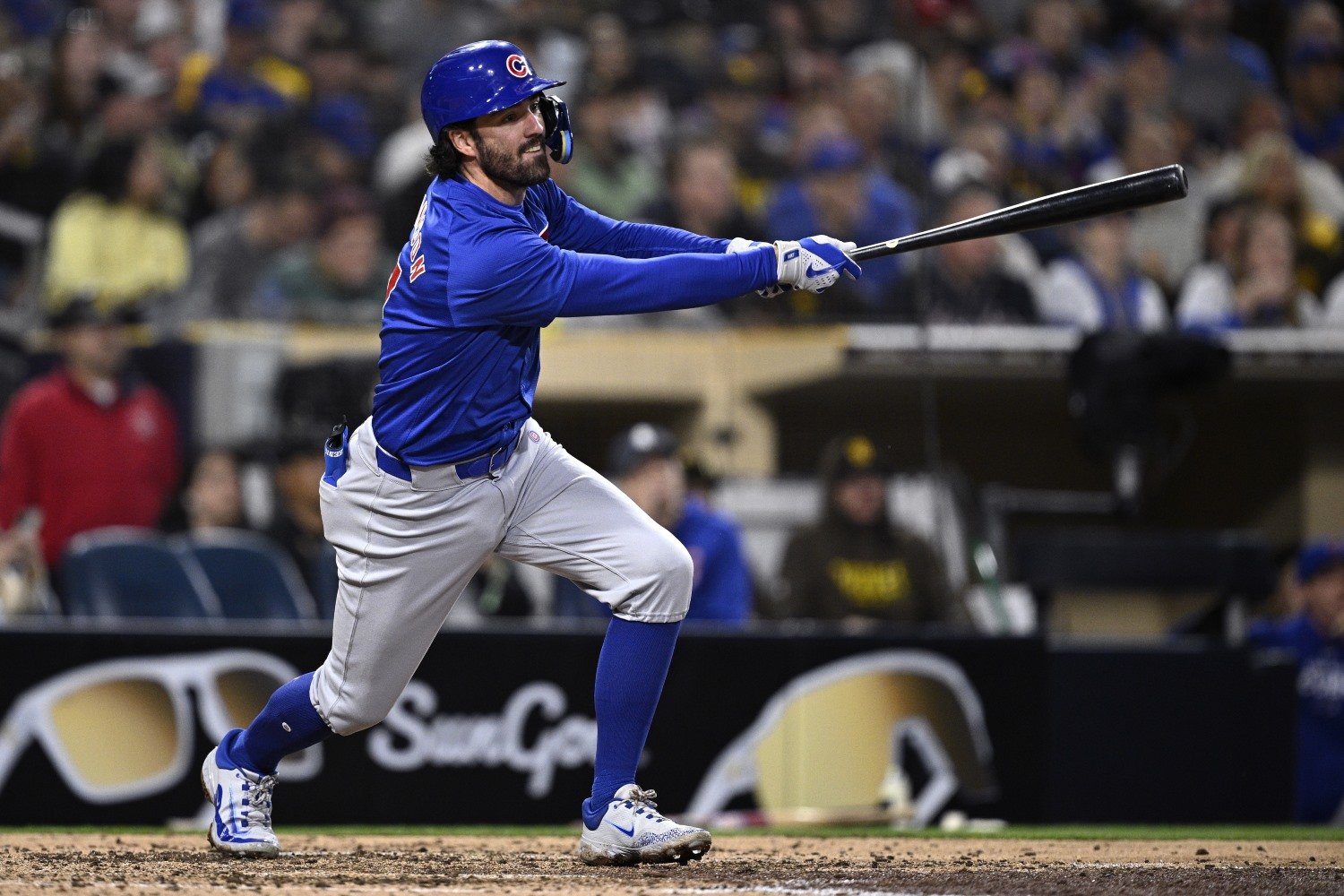 Earlier this week, I raved about the Chicago Cubs’ offensive approach to start 2024. From top to bottom, the lineup looks like a group of professional hitters, ready to wear down opposing starters and chew through their bullpens. After doing it against the Los Angeles Dodgers throughout the weekend, they did it again to old friend Yu Darvish in San Diego on Monday night. The outcome of that game notwithstanding, Darvish threw 65 pitches across three innings as the Cubs notched as many hard-hit balls as whiffs (seven apiece). Fixed in the middle of that offensive battery is Dansby Swanson. The Cubs’ shortstop is off to a .270/.378/.514 start through 45 plate appearances, walking more than 15 percent of the time and hitting for considerable power. His walk rate and ISO put him in the top 30 among current qualifiers entering Tuesday's games; his Hard Hit% – at an even 50.0 – ranked sixth overall. It’s likely an unsustainable start, but it mirrors his strong April from last year fairly closely. After the season’s first month in ‘23, Swanson was hitting .286 and reaching base at a .412 clip, largely thanks to a walk rate near 18 percent. There was no power to speak of (.061 ISO), but he was making solid contact. At 9.9%, his soft contact rate in the first month was his second-lowest in any month-long stretch last season. That start ended up being unsustainable, not because he was doing anything outlandish from the jump, but because he got away from what makes Swanson such a threat at the plate: he was inconsistent in his aggressiveness against the fastball. Last September, I wrote at Pitcher List about the enigmatic month-to-month performance that has been a hallmark of Swanson's career. Many Atlanta fans felt the need to point out to me – in as condescending a fashion as possible – that Swanson’s offensive game is prone to variance. That variance is borne out of his inability to maintain a consistent approach. This is most notable in his insistence on hacking at non-hard stuff from opposing pitchers. We shouldn't expect opposing pitchers to approach Swanson with a majority of fastballs in every plate appearance, especially given his prowess against that pitch type. But his down months aligned with his swing tendencies; when Swing% against other pitch types far exceeded Swing% against hard stuff, the overall output went down. This fairly obvious element of Swanson’s offensive game is also what has me juiced about this start. Unsustainable? Sure. Encouraging, still? You bet. To date, Swanson is swinging at fastballs 43.4 percent of the time. The next-closest umbrella category is offspeed stuff, at 37.9 percent. That’s exactly what you want. His Hard Hit% against the former is an obscene 69.2 percent. Perhaps more importantly, though, he’s demonstrating a keener awareness of the strike zone. His overall Swing% sits at just 39.9 percent to date, including only 19.4 percent on pitches outside the strike zone. Fastballs are more likely to be in the strike zone than are breaking or offspeed pitches. In what is surely an oversimplification, this trend indicates to me that Swanson has been successful in identifying fastballs and prioritizing those in swings, more so than in previous years. Even better? That trend comes with opposing pitchers throwing him fewer fastballs. At 46.6 percent, it’s the lowest rate of fastballs seen in his career to date. With that in mind, nothing about Swanson’s start is surprising. He’s feasting on fastballs, as he’s set out to do for his entire career. The difference, at this point, is that he appears to be succeeding. We don’t know the source or whether that component is sustainable, especially given how much volatility has prevailed in his offensive output in his career. One imagines with the Cubs’ approach running this deep, though, the broader context of the lineup could offer him more opportunity at sustainability than he’s ever had.
 -
The whole Chicago Cubs lineup seems to have a clear idea of what they want to do in each plate appearance. Their shortstop, highest-paid player, and steady leader might be the player thriving most on that intentional mentality. Image courtesy of © Orlando Ramirez-USA TODAY Sports Earlier this week, I raved about the Chicago Cubs’ offensive approach to start 2024. From top to bottom, the lineup looks like a group of professional hitters, ready to wear down opposing starters and chew through their bullpens. After doing it against the Los Angeles Dodgers throughout the weekend, they did it again to old friend Yu Darvish in San Diego on Monday night. The outcome of that game notwithstanding, Darvish threw 65 pitches across three innings as the Cubs notched as many hard-hit balls as whiffs (seven apiece). Fixed in the middle of that offensive battery is Dansby Swanson. The Cubs’ shortstop is off to a .270/.378/.514 start through 45 plate appearances, walking more than 15 percent of the time and hitting for considerable power. His walk rate and ISO put him in the top 30 among current qualifiers entering Tuesday's games; his Hard Hit% – at an even 50.0 – ranked sixth overall. It’s likely an unsustainable start, but it mirrors his strong April from last year fairly closely. After the season’s first month in ‘23, Swanson was hitting .286 and reaching base at a .412 clip, largely thanks to a walk rate near 18 percent. There was no power to speak of (.061 ISO), but he was making solid contact. At 9.9%, his soft contact rate in the first month was his second-lowest in any month-long stretch last season. That start ended up being unsustainable, not because he was doing anything outlandish from the jump, but because he got away from what makes Swanson such a threat at the plate: he was inconsistent in his aggressiveness against the fastball. Last September, I wrote at Pitcher List about the enigmatic month-to-month performance that has been a hallmark of Swanson's career. Many Atlanta fans felt the need to point out to me – in as condescending a fashion as possible – that Swanson’s offensive game is prone to variance. That variance is borne out of his inability to maintain a consistent approach. This is most notable in his insistence on hacking at non-hard stuff from opposing pitchers. We shouldn't expect opposing pitchers to approach Swanson with a majority of fastballs in every plate appearance, especially given his prowess against that pitch type. But his down months aligned with his swing tendencies; when Swing% against other pitch types far exceeded Swing% against hard stuff, the overall output went down. This fairly obvious element of Swanson’s offensive game is also what has me juiced about this start. Unsustainable? Sure. Encouraging, still? You bet. To date, Swanson is swinging at fastballs 43.4 percent of the time. The next-closest umbrella category is offspeed stuff, at 37.9 percent. That’s exactly what you want. His Hard Hit% against the former is an obscene 69.2 percent. Perhaps more importantly, though, he’s demonstrating a keener awareness of the strike zone. His overall Swing% sits at just 39.9 percent to date, including only 19.4 percent on pitches outside the strike zone. Fastballs are more likely to be in the strike zone than are breaking or offspeed pitches. In what is surely an oversimplification, this trend indicates to me that Swanson has been successful in identifying fastballs and prioritizing those in swings, more so than in previous years. Even better? That trend comes with opposing pitchers throwing him fewer fastballs. At 46.6 percent, it’s the lowest rate of fastballs seen in his career to date. With that in mind, nothing about Swanson’s start is surprising. He’s feasting on fastballs, as he’s set out to do for his entire career. The difference, at this point, is that he appears to be succeeding. We don’t know the source or whether that component is sustainable, especially given how much volatility has prevailed in his offensive output in his career. One imagines with the Cubs’ approach running this deep, though, the broader context of the lineup could offer him more opportunity at sustainability than he’s ever had. View full article
-
The Numbers and the Necessity Behind the Cubs' Great At-Bats This Weekend
RandallPnkFloyd posted an article in Cubs
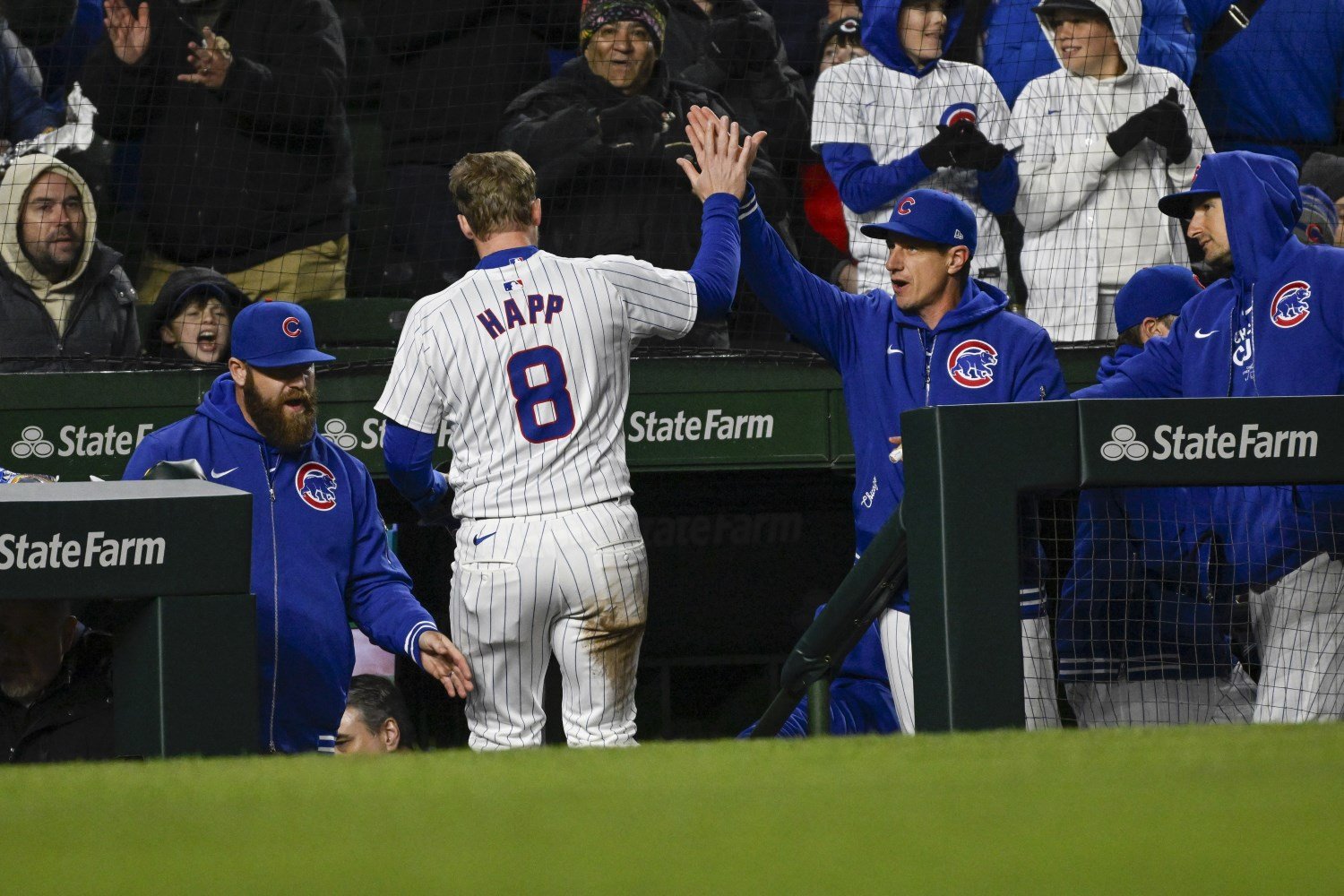 You can’t glean a ton from a three-game series early in the year. You can glean even less when the series finale is plagued by the field conditions that the weather wrought on a Sunday afternoon at Wrigley Field. Nevertheless, it’s difficult to look at the outcomes of the weekend set against the Los Angeles Dodgers and not get excited about the prospects for this Chicago Cubs team. After all, this was the measuring stick at this point in the year. With all due respect to the defending champions down in Texas, it was the Dodgers who acquired seemingly everyone over the winter, started 7-2, and featured an early +15 run differential heading into the weekend. The Dodgers, with Mookie Betts looking like the best player in baseball and sporting massive stuff from their starters on the mound. You don’t put too much stock into a series at this juncture, but you also want to see how your team can hang. Early on, it didn’t look great. With only modest additions over the winter, nobody places the Cubs within the upper tier of the league. A potential NL Central division champion? Sure. But that’s kind of where it ends. That perception was compounded by the Dodgers tagging Kyle Hendricks for a pair of runs in the first inning on Friday, before Bobby Miller promptly struck out the side in the bottom half of the inning. The vibe at that point was, “Well, yeah, this is kind of how this will probably go.” Almost immediately, however, the Cubs shifted the flow of the game back in their favor (he said, trying to avoid using the word momentum at all costs). The offense kept putting in the work on Friday, even as the Dodgers kept banging at the door of a comeback. Even a loss on Saturday couldn’t dampen the home nine, so the rain tried to do so on Sunday. Still, the Cubs thumped Los Angeles up and down the box score. Taking two of three from the Dodgers – at any point in the year – adds a certain level of moral victory to the black-and-white one that goes into the standings. Stealing one would’ve done so. Taking two in the most assertive fashion possible feeds into an unquantifiable level of confidence. If we are to quantify it, though, and lean into the idea that the Cubs put on an auspicious display over the weekend, we can attribute that all almost directly to the quality of their plate appearances. Throughout the lineup, the team was an absolute nightmare for Dodger pitchers to deal with. On Friday, Miller ended up throwing 58 pitches in 1 2/3 innings. He didn’t escape the second, after the Cubs put it on him. Yoshinobu Yamamoto threw 80 pitches across five frames (though dazzling ones) on Saturday. To close out the weekend, they made Gavin Stone throw 77 in just three innings of work. In 9 2/3 innings – which, on its own merit, says something about the Cubs throughout the weekend – Dodgers starters threw 215 pitches. It wasn’t so much that the Cubs were able to cash in their high-level plate discipline for walks. Sure, they walked six times on Friday, but then only matched that in the final two games of the series combined. What they did, instead, was parlay that approach into consistent, high-quality contact. Their Hard Hit% in the three games went 37.0, 54.5, and 43.5. The rate in the second and third games far exceeded that of the Dodgers’ all-world lineup. Obviously, that’s impressive on its own. There’s a conversation to be had about the Cubs’ approach to pitching against the LA lineup on the other side, but zeroing in on the team’s own lineup really speaks to what this team is attempting to do at the plate. While that three-game sample demonstrated their commitment to patience, the broader picture thus far speaks to exactly the same concept. The Cubs lead the league in walk rate, with a 12.7% mark ahead of the second-place New York Yankees and their 12.1% clip. Their on-base percentage is tied with Texas for tops in the league. Only the Kansas City Royals (38.7) & Los Angeles Angels (37.9) are making hard contact at a higher rate than the Cubs (36.4), and that's on a per-batted ball basis, rather than a per-plate appearance one. The North Siders are seeing 3.94 pitches per plate appearance, which is above the league average. The individual standouts further this narrative. Ian Happ is at 4.6 pitches per trip to the dish, walking at a rate of 16.3%, and reaching base at a .442 clip. Dansby Swanson (4.5), Michael Busch (4.2), and Seiya Suzuki (4.1) are all well above the individual average mark for P/PA (3.9). All four are in the top 35 among 207 qualifying position players in Hard Hit%. Simply put, the respective approaches that we saw from Cubs hitters over the weekend were microcosms of what they’ve turned in through the first week-plus of regular season action. That’s exactly what they need to do on that side of the ball. We’ve (I’ve?) spilled a lot of digital ink discussing how the Cubs need to be excellent on defense, in order to support a largely soft-tossing pitching staff. Similarly, the offense needs to bring a “grind” approach to their plate appearances in order to generate offense for a group that isn’t as stocked with raw talent or star power as several others throughout the league. Such an approach is how this team is capable of hanging around with some of the very best in the league. That level of diligence manifesting as confidence in their plate appearances is a nightmare for opposing pitchers; the Dodgers are now keenly aware of this, and the Cubs have an opportunity to continue the trend against at least three or four additional contenders through the rest of the month. Whose at-bats have stood out to you most in the season's first 10 days? What do you still want to see the team do better or differently? Join the conversation below, as we await a late game for the Cubs on the West Coast.
 -
Facing as stern an early test as the season can offer, the Chicago Cubs answered with an awesome offensive display this weekend against the Dodgers. It was their approach at the plate that stood out most. Image courtesy of © Matt Marton-USA TODAY Sports You can’t glean a ton from a three-game series early in the year. You can glean even less when the series finale is plagued by the field conditions that the weather wrought on a Sunday afternoon at Wrigley Field. Nevertheless, it’s difficult to look at the outcomes of the weekend set against the Los Angeles Dodgers and not get excited about the prospects for this Chicago Cubs team. After all, this was the measuring stick at this point in the year. With all due respect to the defending champions down in Texas, it was the Dodgers who acquired seemingly everyone over the winter, started 7-2, and featured an early +15 run differential heading into the weekend. The Dodgers, with Mookie Betts looking like the best player in baseball and sporting massive stuff from their starters on the mound. You don’t put too much stock into a series at this juncture, but you also want to see how your team can hang. Early on, it didn’t look great. With only modest additions over the winter, nobody places the Cubs within the upper tier of the league. A potential NL Central division champion? Sure. But that’s kind of where it ends. That perception was compounded by the Dodgers tagging Kyle Hendricks for a pair of runs in the first inning on Friday, before Bobby Miller promptly struck out the side in the bottom half of the inning. The vibe at that point was, “Well, yeah, this is kind of how this will probably go.” Almost immediately, however, the Cubs shifted the flow of the game back in their favor (he said, trying to avoid using the word momentum at all costs). The offense kept putting in the work on Friday, even as the Dodgers kept banging at the door of a comeback. Even a loss on Saturday couldn’t dampen the home nine, so the rain tried to do so on Sunday. Still, the Cubs thumped Los Angeles up and down the box score. Taking two of three from the Dodgers – at any point in the year – adds a certain level of moral victory to the black-and-white one that goes into the standings. Stealing one would’ve done so. Taking two in the most assertive fashion possible feeds into an unquantifiable level of confidence. If we are to quantify it, though, and lean into the idea that the Cubs put on an auspicious display over the weekend, we can attribute that all almost directly to the quality of their plate appearances. Throughout the lineup, the team was an absolute nightmare for Dodger pitchers to deal with. On Friday, Miller ended up throwing 58 pitches in 1 2/3 innings. He didn’t escape the second, after the Cubs put it on him. Yoshinobu Yamamoto threw 80 pitches across five frames (though dazzling ones) on Saturday. To close out the weekend, they made Gavin Stone throw 77 in just three innings of work. In 9 2/3 innings – which, on its own merit, says something about the Cubs throughout the weekend – Dodgers starters threw 215 pitches. It wasn’t so much that the Cubs were able to cash in their high-level plate discipline for walks. Sure, they walked six times on Friday, but then only matched that in the final two games of the series combined. What they did, instead, was parlay that approach into consistent, high-quality contact. Their Hard Hit% in the three games went 37.0, 54.5, and 43.5. The rate in the second and third games far exceeded that of the Dodgers’ all-world lineup. Obviously, that’s impressive on its own. There’s a conversation to be had about the Cubs’ approach to pitching against the LA lineup on the other side, but zeroing in on the team’s own lineup really speaks to what this team is attempting to do at the plate. While that three-game sample demonstrated their commitment to patience, the broader picture thus far speaks to exactly the same concept. The Cubs lead the league in walk rate, with a 12.7% mark ahead of the second-place New York Yankees and their 12.1% clip. Their on-base percentage is tied with Texas for tops in the league. Only the Kansas City Royals (38.7) & Los Angeles Angels (37.9) are making hard contact at a higher rate than the Cubs (36.4), and that's on a per-batted ball basis, rather than a per-plate appearance one. The North Siders are seeing 3.94 pitches per plate appearance, which is above the league average. The individual standouts further this narrative. Ian Happ is at 4.6 pitches per trip to the dish, walking at a rate of 16.3%, and reaching base at a .442 clip. Dansby Swanson (4.5), Michael Busch (4.2), and Seiya Suzuki (4.1) are all well above the individual average mark for P/PA (3.9). All four are in the top 35 among 207 qualifying position players in Hard Hit%. Simply put, the respective approaches that we saw from Cubs hitters over the weekend were microcosms of what they’ve turned in through the first week-plus of regular season action. That’s exactly what they need to do on that side of the ball. We’ve (I’ve?) spilled a lot of digital ink discussing how the Cubs need to be excellent on defense, in order to support a largely soft-tossing pitching staff. Similarly, the offense needs to bring a “grind” approach to their plate appearances in order to generate offense for a group that isn’t as stocked with raw talent or star power as several others throughout the league. Such an approach is how this team is capable of hanging around with some of the very best in the league. That level of diligence manifesting as confidence in their plate appearances is a nightmare for opposing pitchers; the Dodgers are now keenly aware of this, and the Cubs have an opportunity to continue the trend against at least three or four additional contenders through the rest of the month. Whose at-bats have stood out to you most in the season's first 10 days? What do you still want to see the team do better or differently? Join the conversation below, as we await a late game for the Cubs on the West Coast. View full article
-
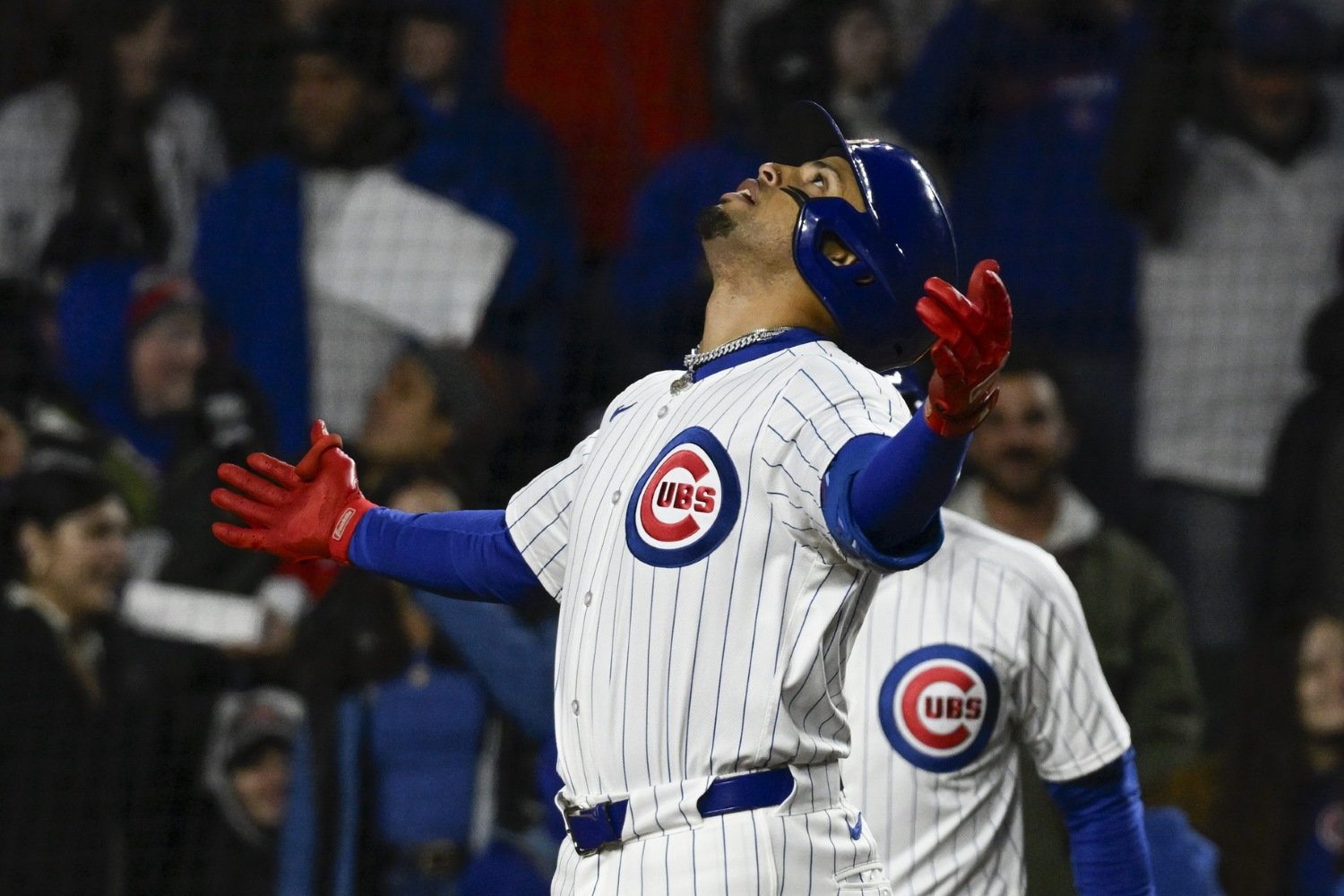 Javier Báez is one of my favorite players to wear a Chicago Cubs uniform. I know I am not unique in that regard. With that in mind, it’s worth noting that nothing said herein about his output or skill set is meant to disparage the player. At some point, though, he locked in who he is, for better and worse In the field or on the basepaths, he created moments on a baseball diamond that you were sure you had never seen before. While the timing of his trade to New York aligned with the departures of much of the rest of the team’s championship core, the void he left just felt larger (save for Anthony Rizzo, whose trade left a different type of absence). There was a level of eagerness and anticipation that vanished from this lineup and has been difficult to replicate since. That's why the comparisons between Báez and Christopher Morel seemed at least mildly appropriate as they gained steam last season. A young, charismatic presence. A product of the Cubs’ own system. Intense swings. Loud contact. Genuine emotion on the field. It made a certain degree of sense at the time, as Morel completed his breakout in 2023. The more tangible components of their respective games reinforced the comparison. This specifically manifested in their free-swinging style. On three occasions, Báez has posted a strikeout rate over 30 percent. Morel has done it in each of the last two seasons. As a Cub, Báez posted an ISO of at least .250 twice. Morel did it last year. Big power, bigger whiffs. You could argue it’s natural that the two would be juxtaposed with one another in a Cubs context. Those comparisons seem less appropriate now, for two main reasons on opposite sides of the ball. Let’s knock out the defensive comparison first. Báez has largely always been a plus-defender. He’s never registered as a below-average glove by OAA, and only once fell on the wrong side of 0 according to DRS at shortstop. Morel hasn’t found a defensive home, and has struggled early on in adapting to a more permanent spot at third base. Of course, that aspect was never the reason for the comparison. It was always about the offense. At the plate, Báez never appeared to make the adjustment with regard to plate discipline. If anything, as his career has unfolded, his approach has gotten markedly worse.. His career strikeout rate sits at 27.9 percent. He’s walked at a clip south of 5 percent. After chasing more than 40 percent of pitches outside the zone early in his career, he’s exceeded 46 percent in that category each of the last four seasons. Early on in 2024, he’s over 55 percent in terms of chase rate. His inability to rein in the impulse to swing has resulted in steadily declining contact quality, as well. In 2022, Báez ranked 165th out of 207 hitters with at least 400 plate appearances in Hard Hit% (26.8). Last year, he was 183rd out of 212 (28.4). He posted identical groundball rates of 49.9% in each of the two seasons. While the Cubs were willing to allow Báez to compensate for his obscene power with the shortcomings of his game, those shortcomings have taken the wheel in the years that followed. It’s left very little value from the bat. Conversely, Morel’s offensive game is maturing into something almost entirely dissimilar to that of Báez (if it wasn’t already). Last year, Javy had the worst chase rate in MLB. He’s also seen 3.66 pitches per plate appearance for his career, including figures of 3.55 and 3.60 in each of the last two seasons. Morel, meanwhile, sits 43rd percentile in chase rate (not great, but not Báez), and is at 3.86 P/PA appearance after two full seasons of big-league experience. Morel’s chase rate, at 32.4 percent in each of his two seasons, is miles lower than the 45.0 percent figure Báez has turned in for his career. There’s probably an argument to be made that the similarities in their strikeout rate are due more to Morel working deeper counts than Morel having a similar approach to Báez, especially when you consider that he’s striking out almost exactly half the time with a two-strike count. Ultimately, Morel is not only making more consistent contact, but also demonstrating a higher quality of it. He jumped his Hard Hit% up from 36.8 percent in 2022 to 41.9 percent in 2023. There’s growth there, but 2024 is showing early signs of being his true establishment as an upper-tier hitter. Through six games, Morel has struck out only twice. His chase rate is a mere 3.2 percent, with a 10 percent jump in his Z-Swing% (80.4). His contact rate is at 89.5 percent. Those are genuinely hilarious numbers. Obviously, this is too small a sample to verify anything, and pitchers are finding the zone almost 60 percent of the time against him – which will surely change – but it does speak to Morel’s intention in refining his plate approach. From Craig Counsell, via the Cubs’ official site: “Really, since the start of Spring Training, it’s just been hard-hit balls and a real controlled aggression, is the best way I can describe it. There hasn’t been chase … That’s just going to make him really dangerous.” Even with the inherent unsustainability of his early plate discipline, a demonstration of growth would be the final nail in the coffin of the comparison. Morel already had more of an awareness of the zone and control in taking pitches, but being able to drop the Chase% on any meaningful level would yield massive dividends in his counting stats and strikeout/walk rates. It’s interesting that our collective perception of their respective profiles is as similar as it is. “Big power, bigger whiffs” represents a massive oversimplification. Morel has always made better swing decisions. If the first week is any indication, that gap is going to grow into something to make us all feel silly for thinking it in the first place.
 -
The Chicago Cubs just might have an infielder with 40-homer upside, but without the hulking physique of the game's other great sluggers. Sound familiar? Not so fast. Image courtesy of © Matt Marton-USA TODAY Sports Javier Báez is one of my favorite players to wear a Chicago Cubs uniform. I know I am not unique in that regard. With that in mind, it’s worth noting that nothing said herein about his output or skill set is meant to disparage the player. At some point, though, he locked in who he is, for better and worse In the field or on the basepaths, he created moments on a baseball diamond that you were sure you had never seen before. While the timing of his trade to New York aligned with the departures of much of the rest of the team’s championship core, the void he left just felt larger (save for Anthony Rizzo, whose trade left a different type of absence). There was a level of eagerness and anticipation that vanished from this lineup and has been difficult to replicate since. That's why the comparisons between Báez and Christopher Morel seemed at least mildly appropriate as they gained steam last season. A young, charismatic presence. A product of the Cubs’ own system. Intense swings. Loud contact. Genuine emotion on the field. It made a certain degree of sense at the time, as Morel completed his breakout in 2023. The more tangible components of their respective games reinforced the comparison. This specifically manifested in their free-swinging style. On three occasions, Báez has posted a strikeout rate over 30 percent. Morel has done it in each of the last two seasons. As a Cub, Báez posted an ISO of at least .250 twice. Morel did it last year. Big power, bigger whiffs. You could argue it’s natural that the two would be juxtaposed with one another in a Cubs context. Those comparisons seem less appropriate now, for two main reasons on opposite sides of the ball. Let’s knock out the defensive comparison first. Báez has largely always been a plus-defender. He’s never registered as a below-average glove by OAA, and only once fell on the wrong side of 0 according to DRS at shortstop. Morel hasn’t found a defensive home, and has struggled early on in adapting to a more permanent spot at third base. Of course, that aspect was never the reason for the comparison. It was always about the offense. At the plate, Báez never appeared to make the adjustment with regard to plate discipline. If anything, as his career has unfolded, his approach has gotten markedly worse.. His career strikeout rate sits at 27.9 percent. He’s walked at a clip south of 5 percent. After chasing more than 40 percent of pitches outside the zone early in his career, he’s exceeded 46 percent in that category each of the last four seasons. Early on in 2024, he’s over 55 percent in terms of chase rate. His inability to rein in the impulse to swing has resulted in steadily declining contact quality, as well. In 2022, Báez ranked 165th out of 207 hitters with at least 400 plate appearances in Hard Hit% (26.8). Last year, he was 183rd out of 212 (28.4). He posted identical groundball rates of 49.9% in each of the two seasons. While the Cubs were willing to allow Báez to compensate for his obscene power with the shortcomings of his game, those shortcomings have taken the wheel in the years that followed. It’s left very little value from the bat. Conversely, Morel’s offensive game is maturing into something almost entirely dissimilar to that of Báez (if it wasn’t already). Last year, Javy had the worst chase rate in MLB. He’s also seen 3.66 pitches per plate appearance for his career, including figures of 3.55 and 3.60 in each of the last two seasons. Morel, meanwhile, sits 43rd percentile in chase rate (not great, but not Báez), and is at 3.86 P/PA appearance after two full seasons of big-league experience. Morel’s chase rate, at 32.4 percent in each of his two seasons, is miles lower than the 45.0 percent figure Báez has turned in for his career. There’s probably an argument to be made that the similarities in their strikeout rate are due more to Morel working deeper counts than Morel having a similar approach to Báez, especially when you consider that he’s striking out almost exactly half the time with a two-strike count. Ultimately, Morel is not only making more consistent contact, but also demonstrating a higher quality of it. He jumped his Hard Hit% up from 36.8 percent in 2022 to 41.9 percent in 2023. There’s growth there, but 2024 is showing early signs of being his true establishment as an upper-tier hitter. Through six games, Morel has struck out only twice. His chase rate is a mere 3.2 percent, with a 10 percent jump in his Z-Swing% (80.4). His contact rate is at 89.5 percent. Those are genuinely hilarious numbers. Obviously, this is too small a sample to verify anything, and pitchers are finding the zone almost 60 percent of the time against him – which will surely change – but it does speak to Morel’s intention in refining his plate approach. From Craig Counsell, via the Cubs’ official site: “Really, since the start of Spring Training, it’s just been hard-hit balls and a real controlled aggression, is the best way I can describe it. There hasn’t been chase … That’s just going to make him really dangerous.” Even with the inherent unsustainability of his early plate discipline, a demonstration of growth would be the final nail in the coffin of the comparison. Morel already had more of an awareness of the zone and control in taking pitches, but being able to drop the Chase% on any meaningful level would yield massive dividends in his counting stats and strikeout/walk rates. It’s interesting that our collective perception of their respective profiles is as similar as it is. “Big power, bigger whiffs” represents a massive oversimplification. Morel has always made better swing decisions. If the first week is any indication, that gap is going to grow into something to make us all feel silly for thinking it in the first place. View full article
-
Was that good for you? That was really good for me. Like, really good. During the Chicago Cubs’ home opener against Colorado on Monday, I came to a realization: There's a shortage of players who get me “razzed” about watching baseball on this team’s roster. The Cubs have a handful of solid baseball players, but it’s not as if they have a bunch of dudes for whom I absolutely have to tune in. While I can appreciate the smoothness of the infield defense or idealized efficiency from the starting staff, there isn’t that unquantifiable thing-you-have-to-see-live element that the stars on other rosters may feature. With the arrival of Shōta Imanaga at Wrigley Field, I think that might've changed. The Cubs’ most notable signing of the offseason (this side of Cody Bellinger’s return), Imanaga absolutely shoved against a miserable Rockies squad. He finished with six innings, a pair of hits allowed, and nine strikeouts against zero walks. But it wasn’t so much the line itself; it was the intensity and upside Imanaga flashed that have me as enthused about any individual Cub as I’ve been in the last few seasons. Over the course of his six frames, Imanaga threw 92 pitches, with four pitch types scattered across the total. Of those 92, 56 were fastballs (averaging 92.5 MPH), 24 were splitters, and 10 were sweepers. He mixed in a pair of curveballs, according to the distribution. Against righties, he went fastball 34 times, splitter 22 times, and a singular curve. Lefties saw 22 fastballs, 10 sweepers, a pair of splitters, and a curve. Here’s the mix itself, for the visual learners: Imanaga has unique movement working in his favor. His Vertical Approach Angle (VAA) – the angle at which pitches approach the plate – checked in at -4.15 degrees, which would put him well above average. His Induced Vertical Break (IVB) – the upward break from release to home plate, relative to what gravity would have dictated – was 18.6 inches. While these are very much concepts yours truly – and the baseball community at large – is working to get a better grasp on, it’s undeniable that Imanaga excelled in both facets in the home opener. Part of having a guy like him in the mix is not only that “tune in” factor, but the curiosity in expanding an understanding of the game, because he’s bringing about a certain fascination with the art of pitching. That art was a martial one Monday, as Imanaga deployed a deadly combination of mix and movement against Colorado. An aside: Interestingly, this helps to showcase a bit of Boston pitching coach Andrew Bailey’s recent remarks on the fastball. Essentially, it boils down to the idea that the fastball is your jab in a boxing match, and needs to be used strategically in setting up the more impactful weapons in a pitcher’s arsenal. It’s not necessarily a new concept, but the metaphor is apt in connecting to what we’ve seen from Imanaga thus far. He doesn’t have top-tier velocity, but he has plus movement. He deployed that moving four-seamer effectively, to the point where the splitter and occasional sweeper were much more devastating than their own raw characteristics would suggest. Another visual: We love pitchability--the capacity to not only be able to locate your pitches where you want them, but demonstrate an effective mix in conjunction with varied locations to keep hitters as off-balance as possible. The above is exactly what you’re looking for from someone nicknamed “The Throwing Philosopher.” Generating whiffs and weak fly balls up in the zone with the hard stuff. Inducing whiffs at the bottom with the splitter. The mix was excellent, and showcased exactly what it is that could make him such an effective starter in this year’s group. Of course, we knew about his stuff coming into the year. Reviews and expectations were mixed on his velocity and place in a rotation. But it was the stuff – combined with pitchability – that was so enthralling. And that’s exactly what we got. There’s a caveat here. On the contact he did surrender on Monday, three of every four batted balls against Imanaga were flies. All of that contact came against fastballs. It’s not surprising, given the intentional deployment of that pitch type in that location. On a cold April day at Wrigley, that’s something you can get away with, but in warmer weather or smaller parks, it's an apparent area of vulnerability. As the season wears on, it’ll be one of his shortcomings to evaluate against his evolution as a Major League pitcher. Ultimately, though, that's summertime’s problem. It can’t hurt me. For right now, I’m basking in one of the more exciting Cubs starters to come around since… Jake Arrieta’s torrid 2015-16? Again, not that the Cubs’ other starters aren’t of a certain quality, or that I’m declaring him any level of “elite.” But Imanaga’s approach and mix makes me want to invest more intellectually, and that’s possibly the highest compliment I can offer a player. Now, at the same time, let’s see what he does against (presumably) a formidable opponent in the Dodgers this weekend. View full article
-
In Appreciation of Shota Imanaga's Sterling Chicago Cubs Debut
RandallPnkFloyd posted an article in Cubs
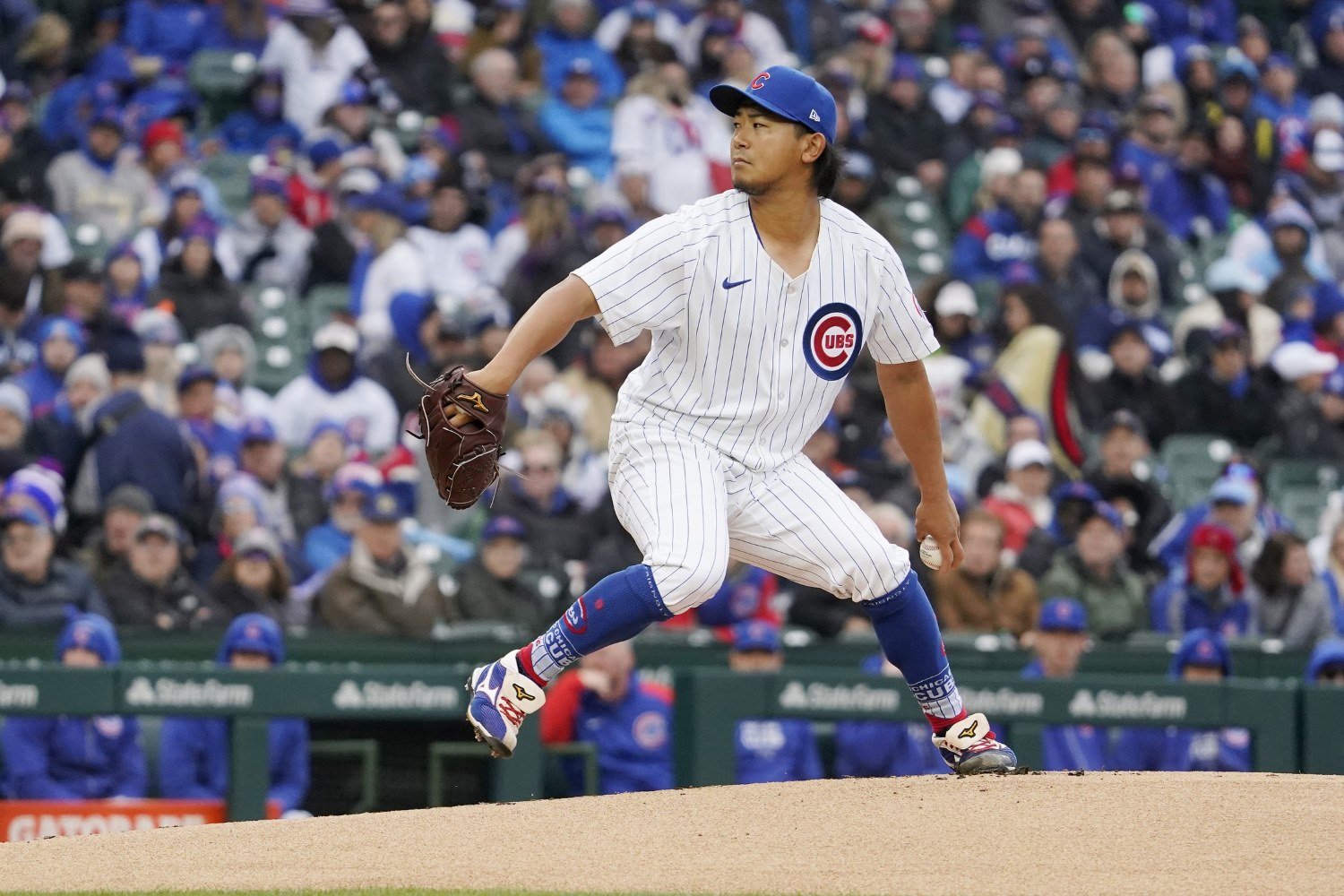 During the Chicago Cubs’ home opener against Colorado on Monday, I came to a realization: There's a shortage of players who get me “razzed” about watching baseball on this team’s roster. The Cubs have a handful of solid baseball players, but it’s not as if they have a bunch of dudes for whom I absolutely have to tune in. While I can appreciate the smoothness of the infield defense or idealized efficiency from the starting staff, there isn’t that unquantifiable thing-you-have-to-see-live element that the stars on other rosters may feature. With the arrival of Shōta Imanaga at Wrigley Field, I think that might've changed. The Cubs’ most notable signing of the offseason (this side of Cody Bellinger’s return), Imanaga absolutely shoved against a miserable Rockies squad. He finished with six innings, a pair of hits allowed, and nine strikeouts against zero walks. But it wasn’t so much the line itself; it was the intensity and upside Imanaga flashed that have me as enthused about any individual Cub as I’ve been in the last few seasons. Over the course of his six frames, Imanaga threw 92 pitches, with four pitch types scattered across the total. Of those 92, 56 were fastballs (averaging 92.5 MPH), 24 were splitters, and 10 were sweepers. He mixed in a pair of curveballs, according to the distribution. Against righties, he went fastball 34 times, splitter 22 times, and a singular curve. Lefties saw 22 fastballs, 10 sweepers, a pair of splitters, and a curve. Here’s the mix itself, for the visual learners: Imanaga has unique movement working in his favor. His Vertical Approach Angle (VAA) – the angle at which pitches approach the plate – checked in at -4.15 degrees, which would put him well above average. His Induced Vertical Break (IVB) – the upward break from release to home plate, relative to what gravity would have dictated – was 18.6 inches. While these are very much concepts yours truly – and the baseball community at large – is working to get a better grasp on, it’s undeniable that Imanaga excelled in both facets in the home opener. Part of having a guy like him in the mix is not only that “tune in” factor, but the curiosity in expanding an understanding of the game, because he’s bringing about a certain fascination with the art of pitching. That art was a martial one Monday, as Imanaga deployed a deadly combination of mix and movement against Colorado. An aside: Interestingly, this helps to showcase a bit of Boston pitching coach Andrew Bailey’s recent remarks on the fastball. Essentially, it boils down to the idea that the fastball is your jab in a boxing match, and needs to be used strategically in setting up the more impactful weapons in a pitcher’s arsenal. It’s not necessarily a new concept, but the metaphor is apt in connecting to what we’ve seen from Imanaga thus far. He doesn’t have top-tier velocity, but he has plus movement. He deployed that moving four-seamer effectively, to the point where the splitter and occasional sweeper were much more devastating than their own raw characteristics would suggest. Another visual: We love pitchability--the capacity to not only be able to locate your pitches where you want them, but demonstrate an effective mix in conjunction with varied locations to keep hitters as off-balance as possible. The above is exactly what you’re looking for from someone nicknamed “The Throwing Philosopher.” Generating whiffs and weak fly balls up in the zone with the hard stuff. Inducing whiffs at the bottom with the splitter. The mix was excellent, and showcased exactly what it is that could make him such an effective starter in this year’s group. Of course, we knew about his stuff coming into the year. Reviews and expectations were mixed on his velocity and place in a rotation. But it was the stuff – combined with pitchability – that was so enthralling. And that’s exactly what we got. There’s a caveat here. On the contact he did surrender on Monday, three of every four batted balls against Imanaga were flies. All of that contact came against fastballs. It’s not surprising, given the intentional deployment of that pitch type in that location. On a cold April day at Wrigley, that’s something you can get away with, but in warmer weather or smaller parks, it's an apparent area of vulnerability. As the season wears on, it’ll be one of his shortcomings to evaluate against his evolution as a Major League pitcher. Ultimately, though, that's summertime’s problem. It can’t hurt me. For right now, I’m basking in one of the more exciting Cubs starters to come around since… Jake Arrieta’s torrid 2015-16? Again, not that the Cubs’ other starters aren’t of a certain quality, or that I’m declaring him any level of “elite.” But Imanaga’s approach and mix makes me want to invest more intellectually, and that’s possibly the highest compliment I can offer a player. Now, at the same time, let’s see what he does against (presumably) a formidable opponent in the Dodgers this weekend.