RandallPnkFloyd
-
Posts
519 -
Joined
-
Last visited
Content Type
Profiles
Joomla Posts 1
Chicago Cubs Videos
Chicago Cubs Free Agent & Trade Rumors, Notes, & Tidbits
2026 Chicago Cubs Top Prospects Ranking
News
2023 Chicago Cubs Draft Picks
Guides & Resources
2024 Chicago Cubs Draft Picks
The Chicago Cubs Players Project
2025 Chicago Cubs Draft Pick Tracker
2026 Chicago Cubs Draft Tracker: Picks & Bonuses
Blogs
Events
Forums
Store
Gallery
Everything posted by RandallPnkFloyd
-
Better Chicago Cubs Defensive Alignments, Through Good Luck and Bad
RandallPnkFloyd posted an article in Cubs
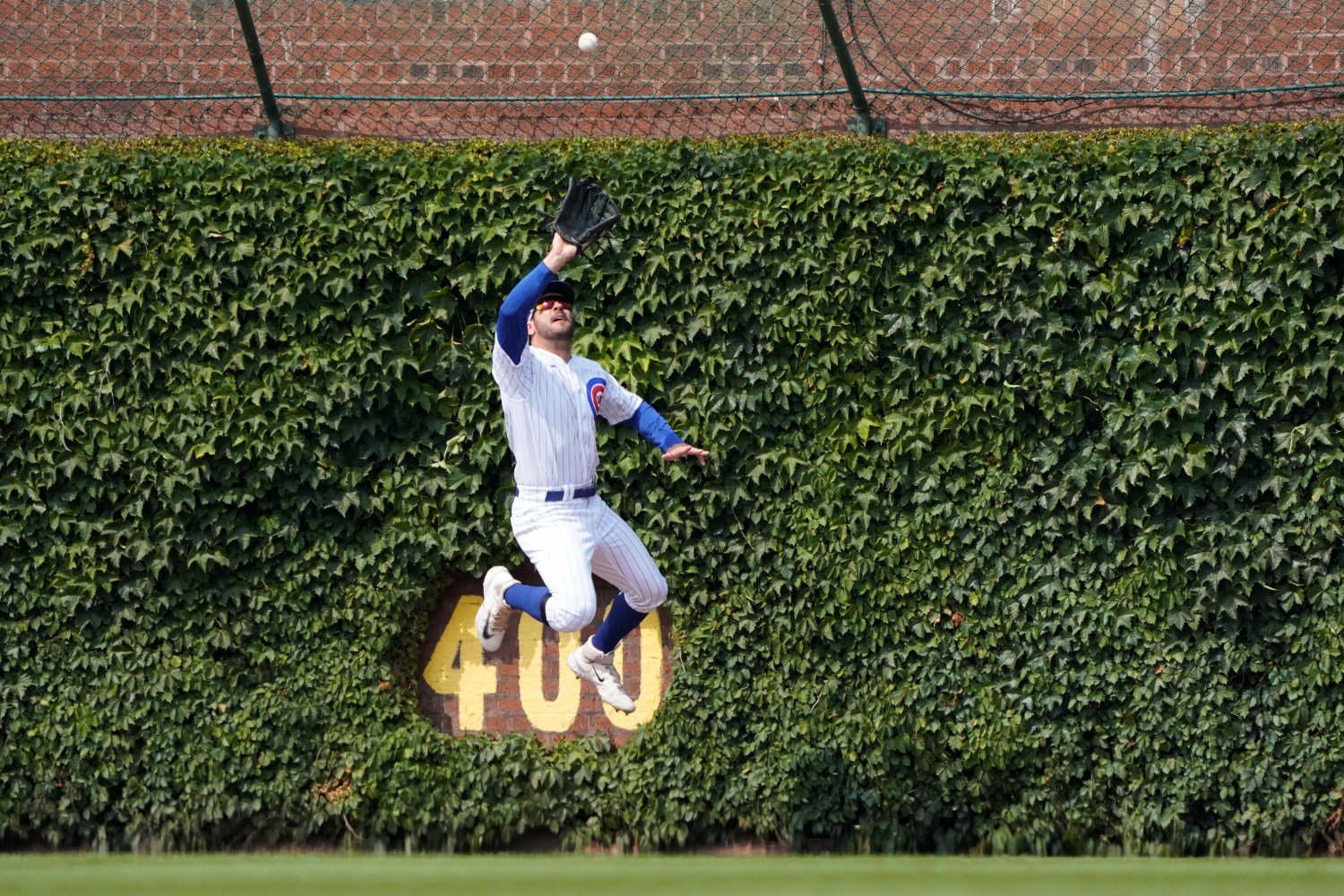 Back on June 2, Matt Trueblood wrote a piece in which he detailed the underwhelming defense of the Chicago Cubs. The crux of the discussion was that while the team was lauded for their defense on paper (especially given the signing of Dansby Swanson), they ultimately were coming up short in an area where they needed to thrive. No lies detected, as a team with as slim a margin for error as this iteration of the Cubs possesses almost needs to be elite defensively in order to be competitive longer-term. There are elements of the defensive configuration of these Cubs that have never been up for debate. Yan Gomes and Tucker Barnhart form an upper-tier defensive pair behind the plate. Swanson and Nico Hoerner are (perhaps) the best middle-infield duo in matters of the glove. And Cody Bellinger was shining on the outfield grass prior to his knee injury. Elsewhere, though, they were not meeting expectations. We’re now speeding toward the end of the month in which that piece was published, and things look slightly different, but in a way that is far more impactful than a small change might indicate. And it’s very much for the better. Of course, it’s important to note that such changes have been triggered by injury more than any other factor. But with the Cubs winning five of six heading into their week of division matchups against Pittsburgh and St. Louis, it’s hard not to wonder if the new look in the field could lead to an extended run of much-improved play (to say nothing of the overall vibes). The first of the changes was the selection and subsequent call-up of Mike Tauchman. He’s certainly played his part with the bat, turning in his steadiest offensive performance since 2019 with the New York Yankees, but he’s also ensured the Cubs have not experienced a drop-off in centerfield play following the Bellinger injury. Through 27 games (just over 200 innings), Tauchman has posted 2 Defensive Runs Saved and 0 Outs Above Average. So one metric likes him, and the other considers him just about average. Bellinger was at 1 DRS and 3 OAA through about 330 innings. While other outfield metrics don’t love him, especially his jump, the Cubs haven’t lost anything trotting Tauchman out there in center. This was likely at least part of the thought process when deciding to place Bellinger at first base upon his return (in addition to the health considerations & struggles of Matt Mervis). Bellinger is likely overqualified as an athlete to man the position, but he has a solid history there. His rookie year notwithstanding (where the numbers were decidedly worse), Bellinger has posted a DRS of 2 and OAA of 1 in the years since 2017, at a position where it’s difficult to shine in the eyes of defensive metrics. The trio of Mervis, Trey Mancini, and Eric Hosmer, responsible for almost the entirety of first base play prior to Bellinger’s return, combined to post a -3 DRS and -2 OAA. So you’re getting stability in center (albeit with an athletic drop-off) and a defensive boost at first base, which seems essential given the high-level play elsewhere on the infield. Score one for the defense. On the other side of the discussion is the hot corner. Patrick Wisdom started 41 games at third prior to hitting the injured list over the weekend. The numbers there are, well, not great. As exciting as his early offensive stretch was, his defense hasn’t followed suit at any point. He’s gone for -6 DRS and -3 OAA thus far, a season after posting -6 and -11 in those metrics, respectively. Miles Mastrobuoni has started seven games there (for some reason) and been largely fine, while Edwin Rios has only appeared in five. Third baseman Christopher Morel has yet to appear at third base this season. Dare I say the Cubs have their solution at the spot, though, in Nick Madrigal? Since returning from his brief demotion to Iowa on June 9th, Madrigal has appeared in eight games at third and started seven of them. He has a DRS of 1 and is exactly at the ‘average’ threshold by OAA. A move that was originally born of necessity in order to get Madrigal’s (ideally) high-contact bat into the lineup has actually not been anywhere near the disaster most of us expected. The bat obviously needs to come through in the way that his skill set says it should, but the defense appears to be–shockingly–the best option for the Cubs at the position at this point. Elsewhere, we’re now in a stretch where Seiya Suzuki is healthy and looks steady on both sides of the ball. Ian Happ looks better by the eye test, even if the metrics still don’t look terrific. (Ultimately, we’re talking about volatile numbers that require far larger samples anyway.) With improvements at those spots happening organically combining with those that were necessitated by injury, we may be looking at the best possible defensive configuration that this team could offer–which seems like an absolute imperative at this point. It would be negligent not to note that we’re working with as minuscule a sample as possible for defensive metrics in a 2023 context. Even from the start of the year, it’s hard to lend too much credence to any performance, for better or worse. Ultimately, though, this particular configuration has worked in ways that others have not. And while we don’t know how things could change when Wisdom returns or if the Cubs will ever decide to allow Morel to ply his trade at a single position, there are worse lineups that we could see from a defensive standpoint (and we probably have seen them). You’d love for this movement to have been internally developed and not prompted by outside factors, but even if injury ends up being responsible for the shuffle, the improving defense is at least one factor boosting the Cubs into contention in their immensely winnable division.
 -
Folks…we need to talk about Christopher Morel. Normally, when I preface a piece with that type of phrasing, it’s not a harbinger of positivity. I can think of at least two occasions where this was the case (and weirdly, they both involved San Diego Padres first baseman Eric Hosmer). But in this case–when we’re in a stretch where the Cubs aren’t necessarily giving us Good and Fun things to discuss on a regular basis–Christopher Morel is, perhaps, more worthy of our attention than anyone else. After all, power is fun. Loud power is the type of thing you tune in for specifically. When the “Last” Great Cubs Team was at their peak, they had power in a few forms. But it was Javíer Báez that got you to turn the game on, Cubs fan or not. Báez’s propensity for doing something incredible on the baseball field was matched only by his tendency to swing at a pitch thrown in the direction of the opposing dugout. When that ball went, though, it went. Of course, it’s not the first time we’ve seen those names juxtaposed against one another. It’s an apt comparison. Through just over 50 plate appearances, Morel is striking out at a 36.5 percent clip. His Whiff rate sits a shade over 20 percent. He’s chasing pitches outside the strike zone around 40 percent of the time. Who cares? He also has nine homers in a dozen games. And they weren’t cheap. Try to keep your tongue in your mouth with the exit velocity, distance, and direction of each: May 9: 106.6, 422 ft, Straightaway May 12: 109.2, 429 ft, Oppo May 14: 113.6, 461 ft, Pull May 15: 102.7, 401 ft, Pull May 17: 110.1, 402 ft, Straightaway May 19: 98.0, 371 ft, Pull May 20: 101.2, 406 ft, Straightaway May 21: 103.3, 356 ft, Oppo May 23: 108.2, 383, Pull There’s some variety there, in terms of distance and direction. The one consistency? Seemingly everything is absolutely mashed. It’s no surprise that Morel is 91st-percentile in max exit velocity (that 113.6 nonsense above); has a hard-hit rate at exactly 50 percent; and is carrying an ISO over .600 (.612) through his first 50 plate appearances. In case you’re wondering, Morel does lead the league in ISO among players with at least 50 PAs. Jake Burger is second, with .376. Before the Morel call-up, the Cubs were in the bottom half of the league in ISO, at a .153 mark. That sat them 17th in MLB and ninth in the National League. In the stretch since his promotion, they’re fourth (.212). Overall, the Cubs now sit 12th in ISO (sixth in the NL), at .168. It’s not all due to Morel, as Seiya Suzuki has started to find the power stroke a bit, but he’s the most notable factor in that stretch of time. There’s one trend from this that I’m really excited about. The kid is feasting on the hard stuff. Six of Morel’s nine homers have come against fastballs. He has a 70-percent hard-hit rate and an absurd Barrel rate of 35 percent against fastballs. His 57.7-percent swing rate is his highest against any of the three broad pitch categories, by a wide margin. It’s a positive trend to be that aggressive against a specific pitch type, and to have the majority of your success come against that pitch type. Of course, there’s going to be an adjustment on the part of opposing pitchers. They’ll see the chase rate and the 80-percent whiff rate against offspeed pitches and conduct themselves accordingly. So those Whiff & strikeout percentages aren’t going down, and it will be an important challenge to Morel not to let them go up, instead. The power itself is certainly real. Don’t forget, he had already hit 11 homers in 29 games in Iowa. Ideally, there will be an adjustment on Morel’s part to help mitigate the impending one coming from opposing pitchers. But we’re not there yet. I hate to bring the Báez comparison back into this, just because there were so many things that Javy did–on both sides of the ball–that made you lose your mind. The skill set that Christopher Morel possesses, though, makes it a not-illogical one to maintain. You’ll live with the strikeouts if you’re getting this kind of power production on a team that very much can use it. View full article
-
Christopher Morel Magic, and What He Needs to Do for His Next Trick
RandallPnkFloyd posted an article in Cubs
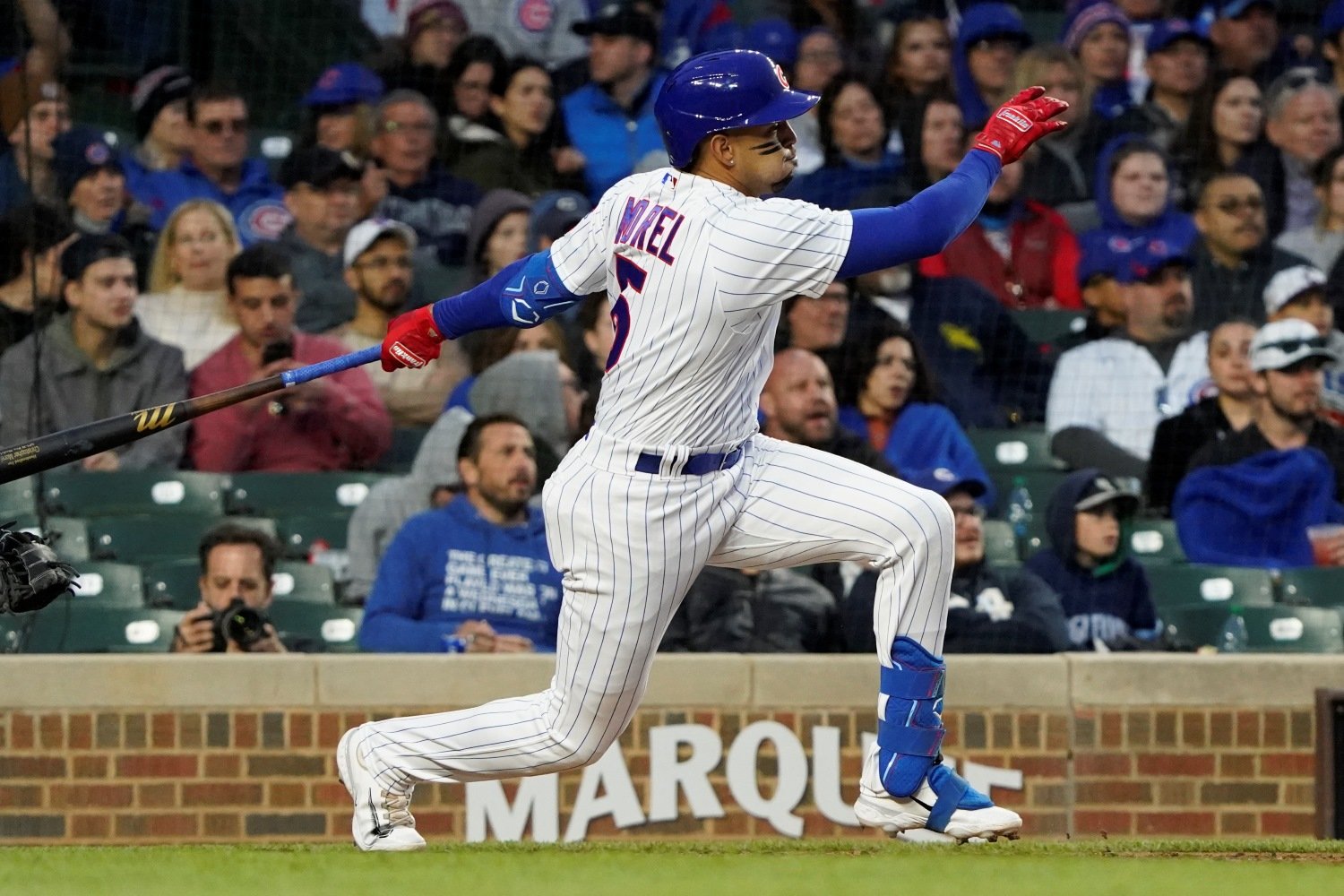 Normally, when I preface a piece with that type of phrasing, it’s not a harbinger of positivity. I can think of at least two occasions where this was the case (and weirdly, they both involved San Diego Padres first baseman Eric Hosmer). But in this case–when we’re in a stretch where the Cubs aren’t necessarily giving us Good and Fun things to discuss on a regular basis–Christopher Morel is, perhaps, more worthy of our attention than anyone else. After all, power is fun. Loud power is the type of thing you tune in for specifically. When the “Last” Great Cubs Team was at their peak, they had power in a few forms. But it was Javíer Báez that got you to turn the game on, Cubs fan or not. Báez’s propensity for doing something incredible on the baseball field was matched only by his tendency to swing at a pitch thrown in the direction of the opposing dugout. When that ball went, though, it went. Of course, it’s not the first time we’ve seen those names juxtaposed against one another. It’s an apt comparison. Through just over 50 plate appearances, Morel is striking out at a 36.5 percent clip. His Whiff rate sits a shade over 20 percent. He’s chasing pitches outside the strike zone around 40 percent of the time. Who cares? He also has nine homers in a dozen games. And they weren’t cheap. Try to keep your tongue in your mouth with the exit velocity, distance, and direction of each: May 9: 106.6, 422 ft, Straightaway May 12: 109.2, 429 ft, Oppo May 14: 113.6, 461 ft, Pull May 15: 102.7, 401 ft, Pull May 17: 110.1, 402 ft, Straightaway May 19: 98.0, 371 ft, Pull May 20: 101.2, 406 ft, Straightaway May 21: 103.3, 356 ft, Oppo May 23: 108.2, 383, Pull There’s some variety there, in terms of distance and direction. The one consistency? Seemingly everything is absolutely mashed. It’s no surprise that Morel is 91st-percentile in max exit velocity (that 113.6 nonsense above); has a hard-hit rate at exactly 50 percent; and is carrying an ISO over .600 (.612) through his first 50 plate appearances. In case you’re wondering, Morel does lead the league in ISO among players with at least 50 PAs. Jake Burger is second, with .376. Before the Morel call-up, the Cubs were in the bottom half of the league in ISO, at a .153 mark. That sat them 17th in MLB and ninth in the National League. In the stretch since his promotion, they’re fourth (.212). Overall, the Cubs now sit 12th in ISO (sixth in the NL), at .168. It’s not all due to Morel, as Seiya Suzuki has started to find the power stroke a bit, but he’s the most notable factor in that stretch of time. There’s one trend from this that I’m really excited about. The kid is feasting on the hard stuff. Six of Morel’s nine homers have come against fastballs. He has a 70-percent hard-hit rate and an absurd Barrel rate of 35 percent against fastballs. His 57.7-percent swing rate is his highest against any of the three broad pitch categories, by a wide margin. It’s a positive trend to be that aggressive against a specific pitch type, and to have the majority of your success come against that pitch type. Of course, there’s going to be an adjustment on the part of opposing pitchers. They’ll see the chase rate and the 80-percent whiff rate against offspeed pitches and conduct themselves accordingly. So those Whiff & strikeout percentages aren’t going down, and it will be an important challenge to Morel not to let them go up, instead. The power itself is certainly real. Don’t forget, he had already hit 11 homers in 29 games in Iowa. Ideally, there will be an adjustment on Morel’s part to help mitigate the impending one coming from opposing pitchers. But we’re not there yet. I hate to bring the Báez comparison back into this, just because there were so many things that Javy did–on both sides of the ball–that made you lose your mind. The skill set that Christopher Morel possesses, though, makes it a not-illogical one to maintain. You’ll live with the strikeouts if you’re getting this kind of power production on a team that very much can use it.
 -
It's too early for a serious progress report on the Cubs' rookie first baseman, but it's never too early to take a step back and try to see the bigger picture. What has Matt Mervis done well so far, and what signs do we have that he can adjust quickly to MLB pitching? The last few weeks have not been kind to the Chicago Cubs. They were swept by Miami, lost a four-game set against Washington, dropped the first two of a series against St. Louis, and, most recently, were bounced out of Target Field with two weekend losses that saw a combined score of 27-4. Somewhere, sandwiched in there, was a series victory over that same Miami team who had swept them in the Sunshine State a week earlier. Hurting for offense (among other things), the team decided to shake things up at the first base position with the callup of Matt Mervis on May 5. Though not the Cubs’ top prospect – or even the second-, third-, fourth- or fifth-best, really – the fanfare attending his arrival was befitting of that level of pedigree. An uninspiring month-and-change of Eric Hosmer and Trey Mancini at the position prompted the Cubs to make the move to inject more offense into the spot. We’re now just over a week into said call-up, and Saturday’s start for Mervis in Minnesota marked seven games. With that in mind, I thought it would be a fun exercise to see how each appearance has gone and where we go from here. The following represents the first week’s worth of starts for the Duke University product: Friday, May 5th: 1-4, RBI, 2 K - Mervis’s first career hit, an RBI single in a 4-1 Cubs win, came out with an exit velocity of 111.2 MPH and carried a xBA of .770. Good start, even with a pair of punchouts. Saturday, May 6th: 1-4, RBI, 3 K - While not pieced up quite as well as his career opener laser, Mervis’s 78.4-MPH single still did feature a xBA of .690. So, good placement. Sunday, May 7th: 2-6, R, K - The outcome was a loss for the Cubs, but Mervis’s two singles had exit velos of 101.5 and 100.0, two of the Cubs’ top six outcomes in exit velocity for the day. Monday, May 8th: 0-3, BB, K - A disappointing series opener for the Cubs was also Mervis’ first career hitless outing. He did extend the on-base streak to four with the walk, though. Tuesday, May 9th: 0-4, 1 K - Things didn’t get much better for Mervis–or the Cubs–on his first Tuesday, as he extended his hitless streak across two games and didn’t generate the impressive contact we saw in the first two games. Friday, May 12th: 1-4, 2B, 2 K - An extra-base hit! Better yet, what could’ve been Mervis’s first home run if the Cubs had been playing in seven other ballparks. The double came off the bat at 108.5 miles per hour. Saturday, May 13th: 0-3, BB, 3 K - And we’re back on the hitless train, while not even putting a ball in play. The good news is that this wasn’t unique among the Cubs’ lineup in an 11-1 drubbing. Final Week 1 Line: .179/.233/.214/.448, 43.3 K%, 6.7 BB%, 25 wRC+ While not officially included as part of his “Week 1 Line,” Mervis did go 2-for-4 with a pair of additional singles in a 16-3 Sunday shellacking at the hands of the Twins. He did strike out once more, but the game did drop his strikeout rate a touch, as well as his walk rate, while bringing the wRC+ up to 44 through eight starts. So what, exactly, can we glean from a week’s worth of outings from a first-base bopper? Well, probably nothing. It’s not the start you desperately wanted to see from a guy who hit 36 homers across three levels in 2022 and carried nearly identical walk and strikeout clips thus far in Iowa in 2023 (17.0 & 16.1, respectively), but rare is the prospect who arrives on the big-league scene and mashes. Even if Mervis has done it each time he’s graduated up to a new level, it was never likely he would make a seamless transition to the highest level of competition. The plate discipline is where you will likely see the largest impending adjustment. Mervis currently has a called-and-swinging-strike rate of 34.8 percent, with the whiff rate in there sitting at 17.9 percent. Those are much higher rates than at any level for him last year. Contact is low, at 64.9 percent, but he’s not hyperaggressive, offering at a fairly reasonable 50.9 percent of the pitches he’s seen. What’s encouraging is that Mervis’s lowest swing rate among the three pitch types is on breaking pitches, at 46.3 percent. He’s whiffing at those pitches so far at a rather frightening 63.2-percent rate. There’s an element of recognition there, at least, even if he hasn’t been able to generate consistent contact quite yet. Defensively, he’s looked…adequate? It’s impossible to determine anything in a seven- or eight-game sample, but this is especially true on the defensive end. He has 1 DRS and 0 OAA thus far. You need a full-season sample for anything to matter there, but a couple picks and no glaring mistakes is comforting. Hosmer (0 on both metrics; UZR/150 doesn’t love him at, -22.7) and Mancini (-3 DRS, 1 OAA, -2.4 UZR/150) have each been varying levels of fun or frustrating, depending on the day. Anything so far from Mervis would suggest that the Cubs aren’t losing anything by turning to him at this point in the year. Ultimately, there’s not a lot to take away here yet. Strikeouts are bad, power would be nice, etc. Mervis has generated hard contact out of the gate. More contact, overall, will be the next goal. Assuming that adjustment can take place posthaste, the power will come before long. With none of the Cubs’ hitters proving inspiring at the plate right now, the Cubs can afford to let Mervis settle in. View full article
-
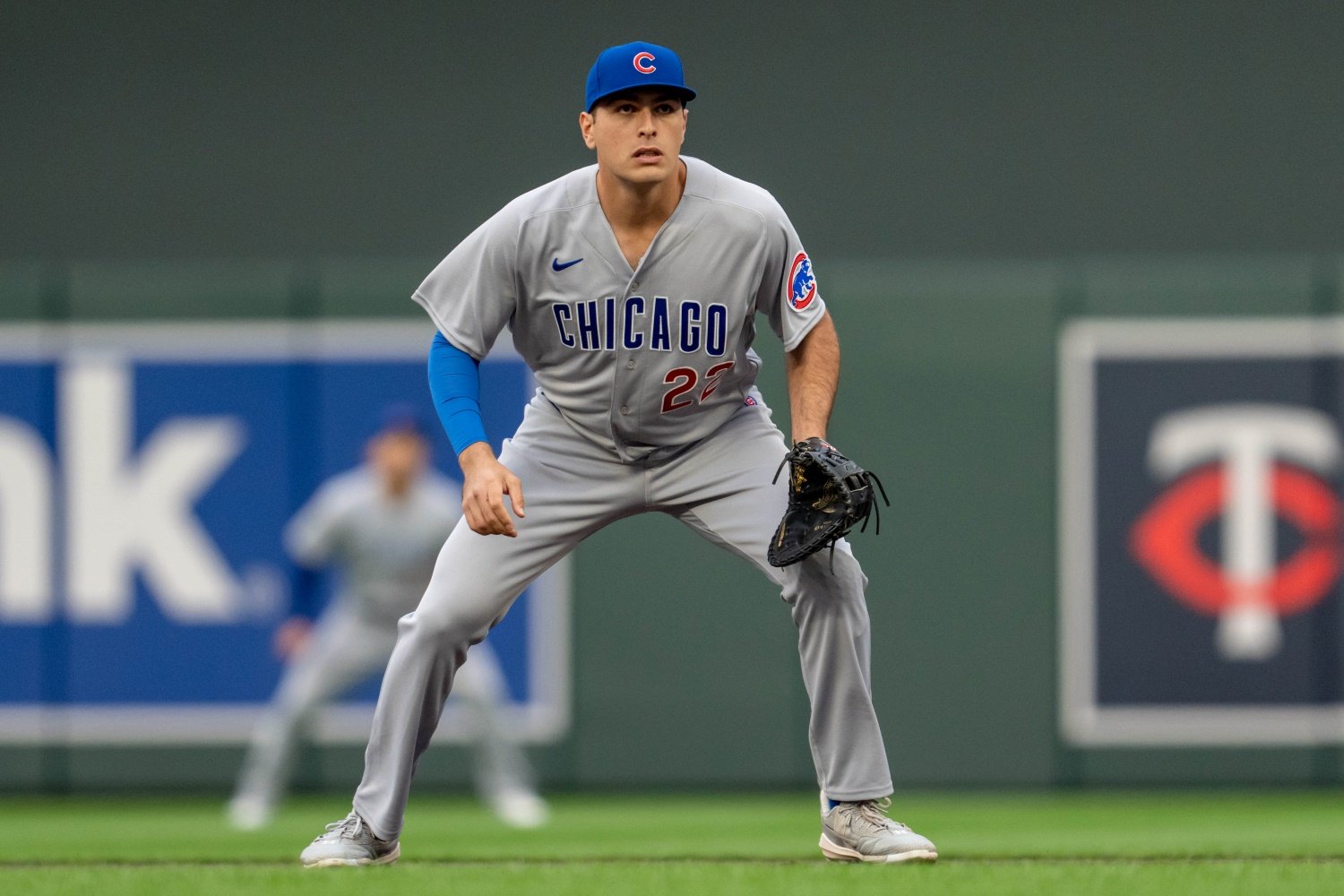 The last few weeks have not been kind to the Chicago Cubs. They were swept by Miami, lost a four-game set against Washington, dropped the first two of a series against St. Louis, and, most recently, were bounced out of Target Field with two weekend losses that saw a combined score of 27-4. Somewhere, sandwiched in there, was a series victory over that same Miami team who had swept them in the Sunshine State a week earlier. Hurting for offense (among other things), the team decided to shake things up at the first base position with the callup of Matt Mervis on May 5. Though not the Cubs’ top prospect – or even the second-, third-, fourth- or fifth-best, really – the fanfare attending his arrival was befitting of that level of pedigree. An uninspiring month-and-change of Eric Hosmer and Trey Mancini at the position prompted the Cubs to make the move to inject more offense into the spot. We’re now just over a week into said call-up, and Saturday’s start for Mervis in Minnesota marked seven games. With that in mind, I thought it would be a fun exercise to see how each appearance has gone and where we go from here. The following represents the first week’s worth of starts for the Duke University product: Friday, May 5th: 1-4, RBI, 2 K - Mervis’s first career hit, an RBI single in a 4-1 Cubs win, came out with an exit velocity of 111.2 MPH and carried a xBA of .770. Good start, even with a pair of punchouts. Saturday, May 6th: 1-4, RBI, 3 K - While not pieced up quite as well as his career opener laser, Mervis’s 78.4-MPH single still did feature a xBA of .690. So, good placement. Sunday, May 7th: 2-6, R, K - The outcome was a loss for the Cubs, but Mervis’s two singles had exit velos of 101.5 and 100.0, two of the Cubs’ top six outcomes in exit velocity for the day. Monday, May 8th: 0-3, BB, K - A disappointing series opener for the Cubs was also Mervis’ first career hitless outing. He did extend the on-base streak to four with the walk, though. Tuesday, May 9th: 0-4, 1 K - Things didn’t get much better for Mervis–or the Cubs–on his first Tuesday, as he extended his hitless streak across two games and didn’t generate the impressive contact we saw in the first two games. Friday, May 12th: 1-4, 2B, 2 K - An extra-base hit! Better yet, what could’ve been Mervis’s first home run if the Cubs had been playing in seven other ballparks. The double came off the bat at 108.5 miles per hour. Saturday, May 13th: 0-3, BB, 3 K - And we’re back on the hitless train, while not even putting a ball in play. The good news is that this wasn’t unique among the Cubs’ lineup in an 11-1 drubbing. Final Week 1 Line: .179/.233/.214/.448, 43.3 K%, 6.7 BB%, 25 wRC+ While not officially included as part of his “Week 1 Line,” Mervis did go 2-for-4 with a pair of additional singles in a 16-3 Sunday shellacking at the hands of the Twins. He did strike out once more, but the game did drop his strikeout rate a touch, as well as his walk rate, while bringing the wRC+ up to 44 through eight starts. So what, exactly, can we glean from a week’s worth of outings from a first-base bopper? Well, probably nothing. It’s not the start you desperately wanted to see from a guy who hit 36 homers across three levels in 2022 and carried nearly identical walk and strikeout clips thus far in Iowa in 2023 (17.0 & 16.1, respectively), but rare is the prospect who arrives on the big-league scene and mashes. Even if Mervis has done it each time he’s graduated up to a new level, it was never likely he would make a seamless transition to the highest level of competition. The plate discipline is where you will likely see the largest impending adjustment. Mervis currently has a called-and-swinging-strike rate of 34.8 percent, with the whiff rate in there sitting at 17.9 percent. Those are much higher rates than at any level for him last year. Contact is low, at 64.9 percent, but he’s not hyperaggressive, offering at a fairly reasonable 50.9 percent of the pitches he’s seen. What’s encouraging is that Mervis’s lowest swing rate among the three pitch types is on breaking pitches, at 46.3 percent. He’s whiffing at those pitches so far at a rather frightening 63.2-percent rate. There’s an element of recognition there, at least, even if he hasn’t been able to generate consistent contact quite yet. Defensively, he’s looked…adequate? It’s impossible to determine anything in a seven- or eight-game sample, but this is especially true on the defensive end. He has 1 DRS and 0 OAA thus far. You need a full-season sample for anything to matter there, but a couple picks and no glaring mistakes is comforting. Hosmer (0 on both metrics; UZR/150 doesn’t love him at, -22.7) and Mancini (-3 DRS, 1 OAA, -2.4 UZR/150) have each been varying levels of fun or frustrating, depending on the day. Anything so far from Mervis would suggest that the Cubs aren’t losing anything by turning to him at this point in the year. Ultimately, there’s not a lot to take away here yet. Strikeouts are bad, power would be nice, etc. Mervis has generated hard contact out of the gate. More contact, overall, will be the next goal. Assuming that adjustment can take place posthaste, the power will come before long. With none of the Cubs’ hitters proving inspiring at the plate right now, the Cubs can afford to let Mervis settle in.
 -
The Cubs didn't commit to Cody Bellinger long-term this offseason, but they did allocate a major chunk of their budget for 2023 to the erstwhile Dodgers center fielder. He's paying off that risk gorgeously. Back in March 2021, I wrote a nonsense piece in which I attempted to quantify aesthetically pleasing baseball swings, with an absurd headline and everything. (I’m calling it nonsense, but I completely believed in what I wrote, and still do, two years later.) Therein, I discussed the best swings in baseball and examined whether there was any correlation to performance. Somewhat obviously, Cody Bellinger’s sweet swing made the list. I discussed the elongated path to the ball, his zone coverage, and the smooth violence in his contact. Of course, it’s been a minute since we’ve seen that Cody Bellinger. The last two seasons were unkind to the Cubs’ new center fielder. A former NL Rookie of the Year, NLCS MVP, NL MVP, Gold Glover, and Silver Slugger being available on the free-agent market after getting non-tendered by the squad that drafted him tells you everything you need to know. After dislocating his shoulder in the 2020 postseason, he hadn’t been able to regain any semblance of form in the subsequent years. The Cubs, in dire need of stability in center, signed Bellinger to a one-year, $17.5-million pact. The hope was that he’d have something to offer on both sides of the ball. After all, for a team that was going all-in on defense – signaled by their catching tandem and pursuit of Dansby Swanson above other shortstop candidates – the defense for Bellinger had never faltered. If the bat could just occasionally come along with it, well, that would almost, weirdly, be a bonus. To this point, it looks like the Cubs are getting quite a bit of both. The defense has been spectacular. Bellinger’s Outs Above Average of 2 is the second-most among all outfielders, and matches his two Defensive Runs Saved. That part is not up for debate, and was really never going to be. “Upper-tier defensive outfielder still really good at catching baseballs” isn’t a particularly grabby headline, anyway. What has been most impressive about Bellinger, though, has been his approach on the offensive side of the ledger. No, he’s not quite back to MVP form. In case you’re wondering what that looks like, you’re talking about a 161 wRC+, .324 ISO, 0.88 K/BB ratio, and a 7.8 fWAR. The timeline slowed down so much in 2020 that it feels like a decade since we saw that version of the player. But the one that we’ve seen thus far on the North Side has been more than competent. He has actually just been quite good. The following is a sampling of numbers from Bellinger in 2021, 2022, and through Tuesday, May 9th of 2023: PA AVG OBP ISO K% BB% wRC+ 2021 350 0.165 0.24 0.137 26.9 8.9 47 2022 550 0.21 0.265 0.179 27.3 6.9 83 2023 145 0.291 0.366 0.252 18.6 9.7 143 We’re still operating with a small sample, but the output is encouraging in itself. He’s cut the strikeout percentage, and is showcasing far more power than he did in either of the last two seasons. Those two developments are noteworthy for anybody. A player striking out less and hitting for more power are both things you definitely want in your lineup. As a result, after two seasons of being among the worst hitters in baseball, Bellinger has found himself back at the popular table in the wRC+ game. Just to dig a little deeper, here’s some other stuff: Swing% Contact% Whiff% Barrel% HardHit% 2021 51.3 72.3 14.2 7.1 30.8 2022 49.8 76 12 8.3 34.7 2023 48.3 79.9 9.7 8.3 33.3 These underlying figures do seem to support at least some of what the output looks like. The Swing% hasn’t changed drastically in any direction, whether in or out of the zone, but more balls in play is working well in conjunction with the absence of the shift. For more swing rate context, the 2021 season was Bellinger’s highest swing rate of his career, by a fairly wide margin. You’d love to see him get back to being as choosy as he was back in 2019. Not that he’ll return to his ways of violent contact on swing rate alone (if at all), but the patience coming back into the fold at least a bit bodes well. Speaking of violent contact, there actually has not been a lot to speak of from Bellinger thus far. While his contact rates are up – and so is the power – Bellinger is not exactly mashing the baseball. In fact, he’s not hitting it particularly hard at all. His hard-hit rate is a tick lower than it was last season, and his barrel rate remains identical. Baseball Savant has him 33rd percentile in average exit velocity and 32nd in HardHit%. Oof. But it’s not as if Bellinger has ridden a spree of soft contact to an untenable conquest of the BABIP monster. At .326, his BABIP isn’t a super outlandish figure. And at .255, his expected batting average (xBA) is still far better than it was in either of the last two seasons. The absence of the shift is playing its part, given that Bellinger has a .392 wOBA in 2023 vs. wOBA figures of .239 & .283 in each of the last two years, respectively, when he was being shifted roughly 90 percent of the time. Weirdly, though, what is working heavily in Bellinger’s favor is the flyball. Bellinger’s flyball rate, at 47.5 percent, is nearly identical to each of the last two seasons (47.5 in 2021 & 47.2 in 2022). On that flyball contact, he’s making hard contact at a 34-percent rate, ISOing .600, and has a 207 wRC+. His HR/FB rate, as a result, sits at 14.9 percent. That’s easily his highest of the last three seasons. While we haven’t seen Bellinger overhaul his swing quite like he has in previous years, there are likely some slight mechanical tweaks at play. I’ll let someone far smarter than me analyze those at a later date; Jay Jaffe at FanGraphs has a nice piece on some of the flyball trends to tide you over for now. Ultimately, while Jaffe does note in the piece that Bellinger showed signs of rounding back into some upper level of form in April of 2022, he’s far ahead of where he was at this point last year. That’s an essential thing for the Cubs. As currently constructed, their margin for error is virtually zero. They need the defense to play at its elite upside, but they also need some bats to come through (especially given some of the lineup choices we’ve seen; a separate issue entirely). Bellinger has the ability to be a catalyst in a way that many of us didn’t expect. We may never see 2019 Cody Bellinger again, but this 2023 version is looking pretty good. View full article
-
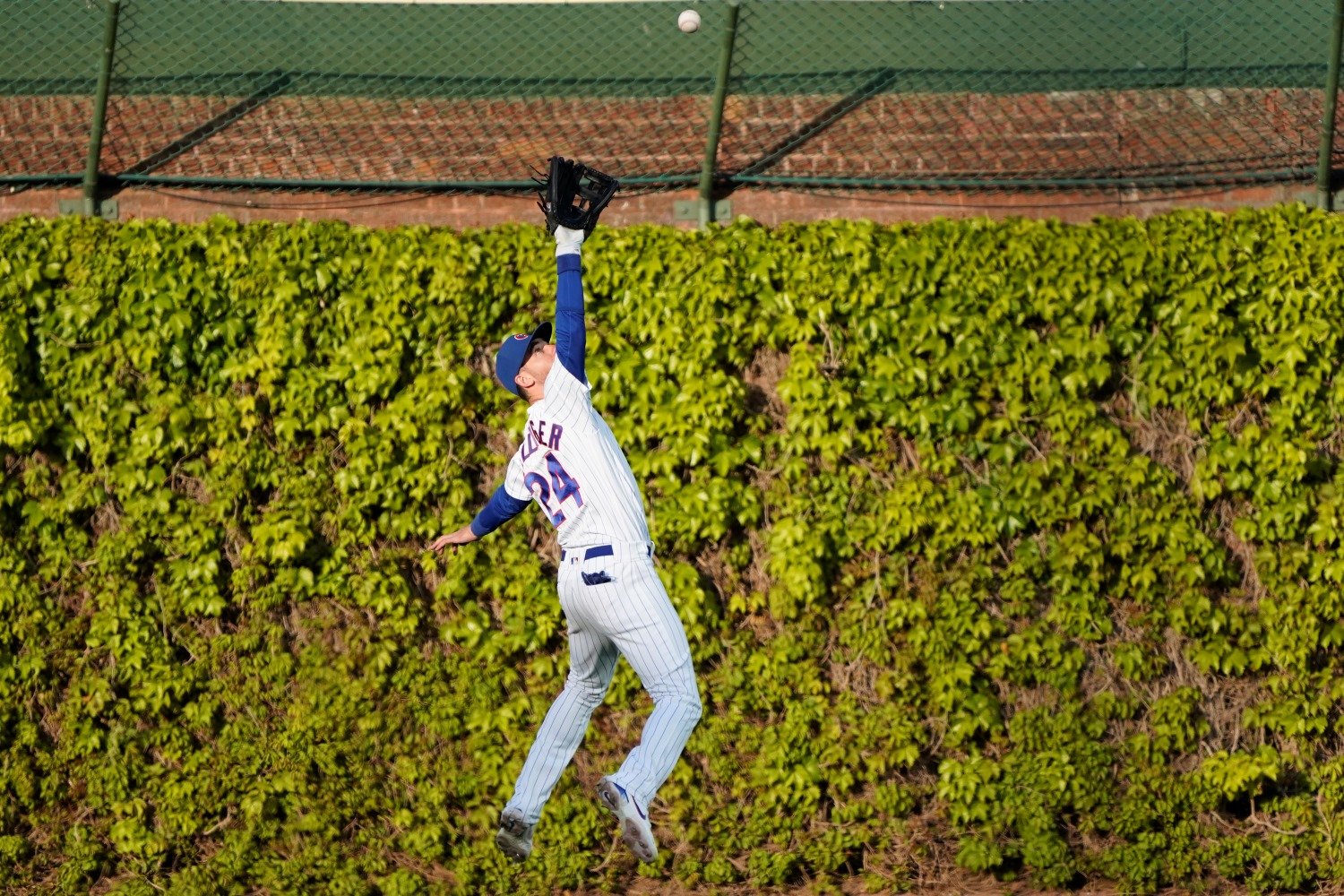 Back in March 2021, I wrote a nonsense piece in which I attempted to quantify aesthetically pleasing baseball swings, with an absurd headline and everything. (I’m calling it nonsense, but I completely believed in what I wrote, and still do, two years later.) Therein, I discussed the best swings in baseball and examined whether there was any correlation to performance. Somewhat obviously, Cody Bellinger’s sweet swing made the list. I discussed the elongated path to the ball, his zone coverage, and the smooth violence in his contact. Of course, it’s been a minute since we’ve seen that Cody Bellinger. The last two seasons were unkind to the Cubs’ new center fielder. A former NL Rookie of the Year, NLCS MVP, NL MVP, Gold Glover, and Silver Slugger being available on the free-agent market after getting non-tendered by the squad that drafted him tells you everything you need to know. After dislocating his shoulder in the 2020 postseason, he hadn’t been able to regain any semblance of form in the subsequent years. The Cubs, in dire need of stability in center, signed Bellinger to a one-year, $17.5-million pact. The hope was that he’d have something to offer on both sides of the ball. After all, for a team that was going all-in on defense – signaled by their catching tandem and pursuit of Dansby Swanson above other shortstop candidates – the defense for Bellinger had never faltered. If the bat could just occasionally come along with it, well, that would almost, weirdly, be a bonus. To this point, it looks like the Cubs are getting quite a bit of both. The defense has been spectacular. Bellinger’s Outs Above Average of 2 is the second-most among all outfielders, and matches his two Defensive Runs Saved. That part is not up for debate, and was really never going to be. “Upper-tier defensive outfielder still really good at catching baseballs” isn’t a particularly grabby headline, anyway. What has been most impressive about Bellinger, though, has been his approach on the offensive side of the ledger. No, he’s not quite back to MVP form. In case you’re wondering what that looks like, you’re talking about a 161 wRC+, .324 ISO, 0.88 K/BB ratio, and a 7.8 fWAR. The timeline slowed down so much in 2020 that it feels like a decade since we saw that version of the player. But the one that we’ve seen thus far on the North Side has been more than competent. He has actually just been quite good. The following is a sampling of numbers from Bellinger in 2021, 2022, and through Tuesday, May 9th of 2023: PA AVG OBP ISO K% BB% wRC+ 2021 350 0.165 0.24 0.137 26.9 8.9 47 2022 550 0.21 0.265 0.179 27.3 6.9 83 2023 145 0.291 0.366 0.252 18.6 9.7 143 We’re still operating with a small sample, but the output is encouraging in itself. He’s cut the strikeout percentage, and is showcasing far more power than he did in either of the last two seasons. Those two developments are noteworthy for anybody. A player striking out less and hitting for more power are both things you definitely want in your lineup. As a result, after two seasons of being among the worst hitters in baseball, Bellinger has found himself back at the popular table in the wRC+ game. Just to dig a little deeper, here’s some other stuff: Swing% Contact% Whiff% Barrel% HardHit% 2021 51.3 72.3 14.2 7.1 30.8 2022 49.8 76 12 8.3 34.7 2023 48.3 79.9 9.7 8.3 33.3 These underlying figures do seem to support at least some of what the output looks like. The Swing% hasn’t changed drastically in any direction, whether in or out of the zone, but more balls in play is working well in conjunction with the absence of the shift. For more swing rate context, the 2021 season was Bellinger’s highest swing rate of his career, by a fairly wide margin. You’d love to see him get back to being as choosy as he was back in 2019. Not that he’ll return to his ways of violent contact on swing rate alone (if at all), but the patience coming back into the fold at least a bit bodes well. Speaking of violent contact, there actually has not been a lot to speak of from Bellinger thus far. While his contact rates are up – and so is the power – Bellinger is not exactly mashing the baseball. In fact, he’s not hitting it particularly hard at all. His hard-hit rate is a tick lower than it was last season, and his barrel rate remains identical. Baseball Savant has him 33rd percentile in average exit velocity and 32nd in HardHit%. Oof. But it’s not as if Bellinger has ridden a spree of soft contact to an untenable conquest of the BABIP monster. At .326, his BABIP isn’t a super outlandish figure. And at .255, his expected batting average (xBA) is still far better than it was in either of the last two seasons. The absence of the shift is playing its part, given that Bellinger has a .392 wOBA in 2023 vs. wOBA figures of .239 & .283 in each of the last two years, respectively, when he was being shifted roughly 90 percent of the time. Weirdly, though, what is working heavily in Bellinger’s favor is the flyball. Bellinger’s flyball rate, at 47.5 percent, is nearly identical to each of the last two seasons (47.5 in 2021 & 47.2 in 2022). On that flyball contact, he’s making hard contact at a 34-percent rate, ISOing .600, and has a 207 wRC+. His HR/FB rate, as a result, sits at 14.9 percent. That’s easily his highest of the last three seasons. While we haven’t seen Bellinger overhaul his swing quite like he has in previous years, there are likely some slight mechanical tweaks at play. I’ll let someone far smarter than me analyze those at a later date; Jay Jaffe at FanGraphs has a nice piece on some of the flyball trends to tide you over for now. Ultimately, while Jaffe does note in the piece that Bellinger showed signs of rounding back into some upper level of form in April of 2022, he’s far ahead of where he was at this point last year. That’s an essential thing for the Cubs. As currently constructed, their margin for error is virtually zero. They need the defense to play at its elite upside, but they also need some bats to come through (especially given some of the lineup choices we’ve seen; a separate issue entirely). Bellinger has the ability to be a catalyst in a way that many of us didn’t expect. We may never see 2019 Cody Bellinger again, but this 2023 version is looking pretty good.
 -
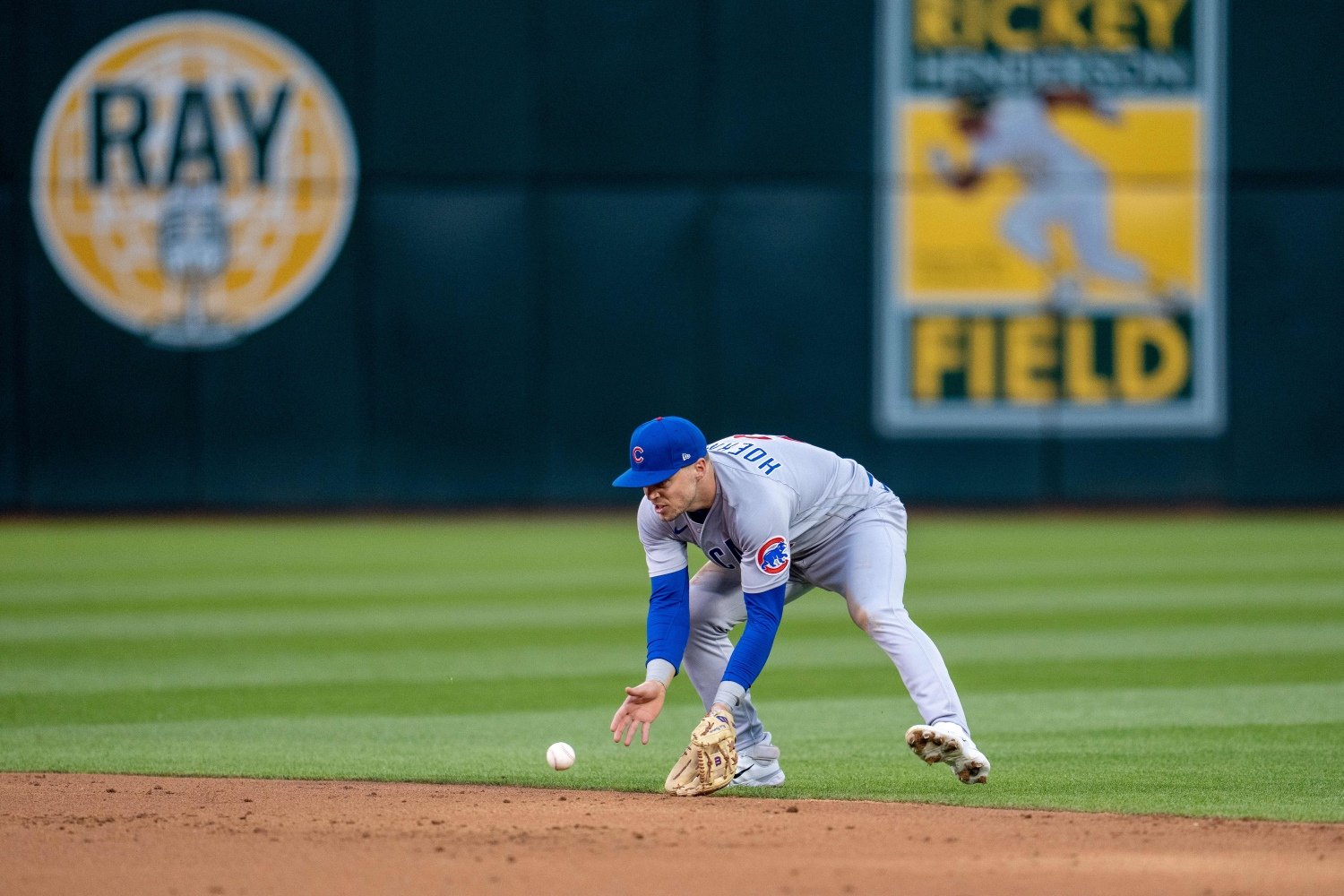 For a team that has languished for the better part of *gestures broadly at the last century* at the leadoff spot, Nico Hoerner has been a bit of a revelation. He’s 97th percentile in K%, fanning less than 10 percent of the time, and 99th in Whiff%. He’s not evincing big power or chqarging up his exit velocities at the top end, but he’s making solid contact at a high rate and proving to be a menace on the basepaths (nine steals already). Hoerner has proven to be something of a throwback out of the leadoff spot, with the high volume of contact, low volume of strikeouts, and consistent movement on the bases. But what brings us here today RE: Nico Hoerner is the matter of his defense. The Cubs’ obvious pursuit of a shortstop this past winter was interesting, because the team already had a very good one. He didn’t necessarily profile as the impact bat that any of the four guys available can be, but he’s clearly carved out his own skill set at the plate while providing strong defense–so strong, in fact, that the only full-time player at the six who was stronger in that regard was the one they eventually signed, in Dansby Swanson. With that signing, we knew the middle of the diamond would be a source of strength for this Cubs team in 2023. Swanson at short, Nico at second, and Cody Bellinger manning center field constitute a top-tier defensive trio. If there was any question about how the Cubs would defend in the most important portion of the field, it was likely going to be Hoerner’s transition, given the lengthier track record of Swanson and Bellinger at their respective positions. Those questions didn’t manifest by any shortcoming of Hoerner, either. The elimination of the shift and likely increased activity on the basepaths make the prospect of a transition for any player on the middle infield a much more complex one at this point. The good news for Hoerner and the Cubs? It should be–and has been–a seamless one. As of this writing, Nico Hoerner has logged 589 innings at the keystone since 2019. He’s about halfway to surpassing his previous high in games started at the position, which was 30 back in 2021. The sample, obviously, is not massive. But within its fielding metric Outs Above Average, Baseball Savant breaks down the field location. Since 2019, this is where Hoerner has stood in each respect: Again, it’s a small sample we’re looking at, but regardless of positioning or where he’s fielding the ball, Hoerner is succeeding. His Success Rate Added–not featured there, but it’s simple math, folks–is on the positive side in each criteria, some to a pretty significant degree. For additional context, each of those figures above is the same or better than Andrés Giménez, who was the second-best 2B by OAA in 2022. And to be fair, with the exception of when he moved to his left, he was in league just about everywhere with top OAA guy Jonathan Schoop, as well. There seems to be little doubt, at least for my money, that he will be in the mix as the top glove guy at the position in 2023. There’s zero question that Nico Hoerner has the athleticism and the lateral quickness to thrive at the spot. It’s just a matter of adjusting his instincts, which to this point have been deployed almost exclusively in a shortstop capacity, to fit. We’ve seen him struggle ever-so-slightly with the throws. That’s perhaps the one extremely minor shortcoming that the eye test has to offer. He has one throwing error this season, which ties his career total for throwing errors at the position. *gasp* But the absence of the shift seems to be of little consequence. Not when you’ve got a cerebral player with a shortstop pedigree. The Cubs signed a Gold Glove shortstop and ended up with a Gold Glove second baseman at the same time.
 -
While my quest to quantify “vibes” is still in effect, I can confirm (from roughly 2,000 miles away) that the vibes on the North Side of Chicago are, in fact, good. Pitching looks good, fielding looks great, and the baserunning has been phenomenal. No matter what phase of this team you’re discussing, though, Nico Hoerner is right in the middle of all of it. For a team that has languished for the better part of *gestures broadly at the last century* at the leadoff spot, Nico Hoerner has been a bit of a revelation. He’s 97th percentile in K%, fanning less than 10 percent of the time, and 99th in Whiff%. He’s not evincing big power or chqarging up his exit velocities at the top end, but he’s making solid contact at a high rate and proving to be a menace on the basepaths (nine steals already). Hoerner has proven to be something of a throwback out of the leadoff spot, with the high volume of contact, low volume of strikeouts, and consistent movement on the bases. But what brings us here today RE: Nico Hoerner is the matter of his defense. The Cubs’ obvious pursuit of a shortstop this past winter was interesting, because the team already had a very good one. He didn’t necessarily profile as the impact bat that any of the four guys available can be, but he’s clearly carved out his own skill set at the plate while providing strong defense–so strong, in fact, that the only full-time player at the six who was stronger in that regard was the one they eventually signed, in Dansby Swanson. With that signing, we knew the middle of the diamond would be a source of strength for this Cubs team in 2023. Swanson at short, Nico at second, and Cody Bellinger manning center field constitute a top-tier defensive trio. If there was any question about how the Cubs would defend in the most important portion of the field, it was likely going to be Hoerner’s transition, given the lengthier track record of Swanson and Bellinger at their respective positions. Those questions didn’t manifest by any shortcoming of Hoerner, either. The elimination of the shift and likely increased activity on the basepaths make the prospect of a transition for any player on the middle infield a much more complex one at this point. The good news for Hoerner and the Cubs? It should be–and has been–a seamless one. As of this writing, Nico Hoerner has logged 589 innings at the keystone since 2019. He’s about halfway to surpassing his previous high in games started at the position, which was 30 back in 2021. The sample, obviously, is not massive. But within its fielding metric Outs Above Average, Baseball Savant breaks down the field location. Since 2019, this is where Hoerner has stood in each respect: Again, it’s a small sample we’re looking at, but regardless of positioning or where he’s fielding the ball, Hoerner is succeeding. His Success Rate Added–not featured there, but it’s simple math, folks–is on the positive side in each criteria, some to a pretty significant degree. For additional context, each of those figures above is the same or better than Andrés Giménez, who was the second-best 2B by OAA in 2022. And to be fair, with the exception of when he moved to his left, he was in league just about everywhere with top OAA guy Jonathan Schoop, as well. There seems to be little doubt, at least for my money, that he will be in the mix as the top glove guy at the position in 2023. There’s zero question that Nico Hoerner has the athleticism and the lateral quickness to thrive at the spot. It’s just a matter of adjusting his instincts, which to this point have been deployed almost exclusively in a shortstop capacity, to fit. We’ve seen him struggle ever-so-slightly with the throws. That’s perhaps the one extremely minor shortcoming that the eye test has to offer. He has one throwing error this season, which ties his career total for throwing errors at the position. *gasp* But the absence of the shift seems to be of little consequence. Not when you’ve got a cerebral player with a shortstop pedigree. The Cubs signed a Gold Glove shortstop and ended up with a Gold Glove second baseman at the same time. View full article
-
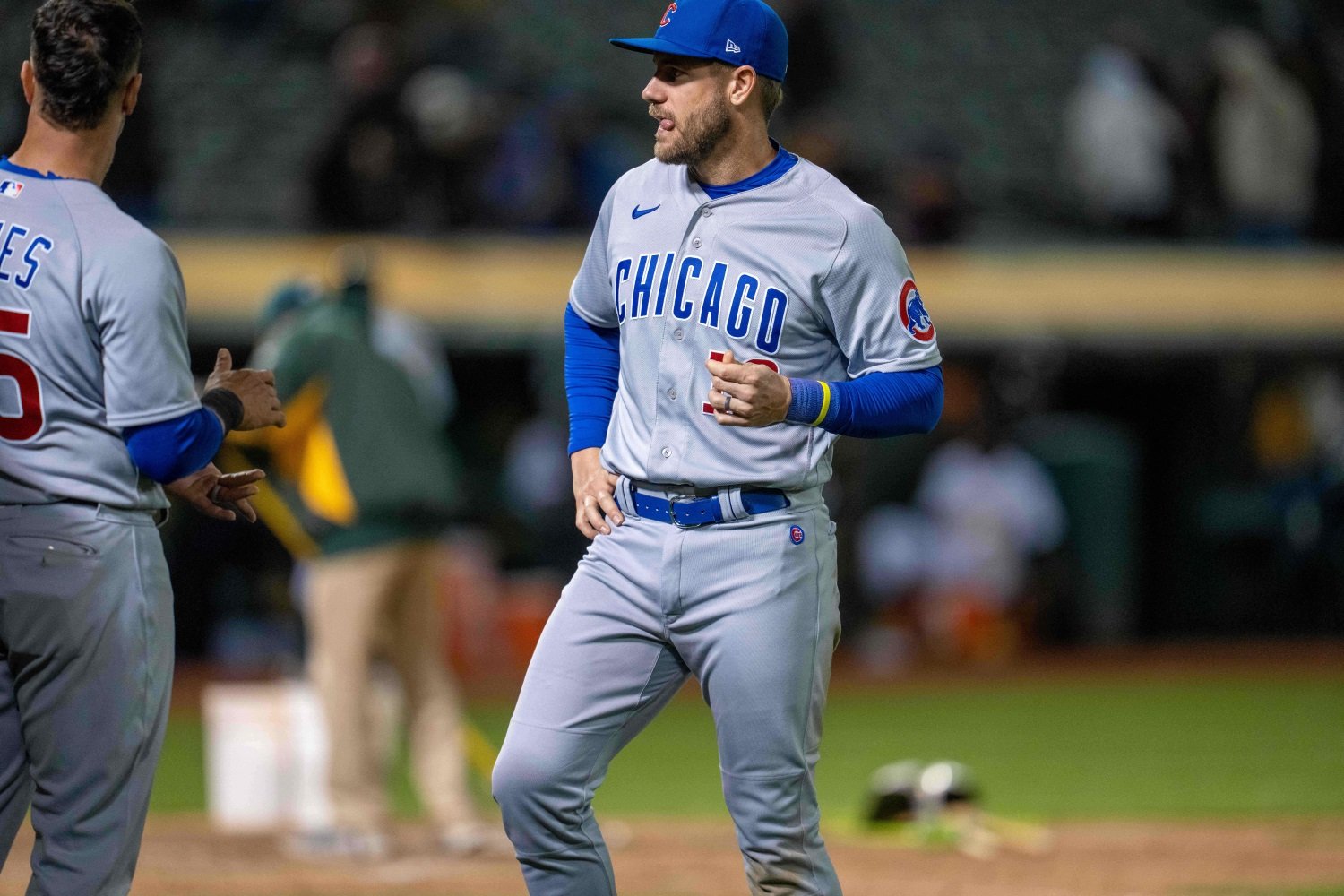 As I watch Patrick Wisdom hit his second homer of the night and tie Pete Alonso for the league lead, with eight, I am reminded of two things. There’s a slight chance I might have been at least a little bit wrong about this Cubs offense. It’s fun! It’s not especially powerful (beyond Wisdom), but the contact and the baserunning make them a far more compelling group to watch on that side of the ball than I expected. I was probably also wrong about the aforementioned Wisdom. The Cubs made improvements to most areas of their lineup. At the very least, spots like first base were addressed. They left the hot corner untouched. I certainly wondered about that. Of course, discussion will be had about a potential Matt Chapman signing down the road, but the spring training picture didn’t lend itself to a great deal of encouragement. There was Wisdom, of course. Christopher Morel had a fun rookie year, with the team potentially looking at him as an option there after moving him around a bunch in 2022. Edwin Rios was added during the spring, giving the Cubs a potentially potent platoon (love alliteration) with at least average defense at the spot. Nick Madrigal was added to the mix. It became a hodgepodge of bodies at a corner spot, which seems to be a bit of a secondary theme with this year’s group. To this point, though, the spot has been all about Wisdom. He’s started 10 games there, with a pair of appearances in right field and one as the designated hitter. It’s otherwise been Madrigal, who has been just fine defensively across four starts. Nonetheless, as muddled as the spot was, it’s extremely clear that Wisdom has third on lock. And with good reason. Beyond his eight homers, Wisdom has been fantastic in the small sample. His strikeout rate, at 31.6%, is actually lower than it’s been in either of the last two years. Contact is up a bunch, sitting at 73.3% overall, a bump of seven percentage points from last year. His 193 wRC+ and .500 ISO are hilarious stats to include given the sample size, but they speak to just how hot he’s been. In nailing down third, Wisdom has essentially made the other options on the roster into non-factors. David Ross has been content to roll Ríos out as nothing more than a DH, while Madrigal gets in as a contact bat mostly designed to give Wisdom a blow. Those roles are becoming more clearly defined before the month of April is even out. Where this does complicate things is in matters of Christopher Morel. At one point during the spring, it looked as if Morel could be the guy at the spot. As a rookie last year, he saw time at second, third, shortstop, left, and center, with the healthy plurality of those appearances (57 of them) in that last spot. And while he was optioned to Iowa to start the year, he’s been on a scorcher to start 2023. Through a dozen games in Triple A, Morel has gone for a .378 average and reached base at a .500 clip, with four homers and a pair of steals mixed in there. Three of his last four homers have come in the last three games. He’s walking at a very strong 18% rate, while his 28% strikeout rate is a little more reasonable than his 32% at the big-league level in 2022. His wRC+ is a comical 225. He’s been fantastic. And, by all accounts, it’s not going to matter in the short-term, because of Patrick Wisdom’s own offensive outbursts. Finding a fit for Morel seemed easy early on. Wisdom was always going to get the first crack. But if he struggled, it seemed more likely that Morel would get a shot for a regular gig over guys like Ríos or Madrigal. With Wisdom going the way he is, though, matters have become much more complicated in finding a path for Morel to return to the big leagues. Morel has started at third in half of Iowa’s games so far, with looks in left and center for a couple games each. It’s a trend that illustrated the organization’s desire for him to develop at third base specifically. But if Morel’s going to force his way back to Wrigley, as appears to be the case based on this dozen-game sample, it’s likely going to require a different path than initially thought. Ian Happ, Cody Bellinger, and a now-healthy Seiya Suzuki have the outfield spots locked down. It’s not a situation where Morel is needing to traverse the outfield grass in the same capacity that he did last year. The middle infield is also spoken for, between Dansby Swanson and Nico Hoerner. And with Wisdom’s start, first base is the only spot in any kind of flux (until we get that Matt Mervis call-up, at least). So, unless Wisdom flames out far quicker than any of us are expecting, it’s going to have to be some type of superutility role for Morel upon his return. Not that there’s anything wrong with that. The DH does lend some flexibility to Ross to work in a guy like Morel on a near-daily basis. Get guys like Happ, Bellinger or Wisdom a day, and you’ve got Morel in there easily. Of course, that requires the team to declutter the backend of the roster. Phantom IL Trey Mancini? Move on from Eric Hosmer? Stop carrying three catchers? They’re solutions, but maybe not ones that the staff is inclined to make in the immediate future. Could that mean an extended stay in Iowa to continue to log regular starts at third, regardless of performance? It’s not at all out of the question. If anything, barring injury, it seems more likely at this point. Regardless of how it takes shape, it’s looking like the most logical path to get Morel playing games at the big-league level again is in that utility fashion. Third base has just become occupied in a way that none of us expected. It’s not a terrible problem to have, given that it’s required a torrid start from Wisdom. But it very much clouds the picture of what Morel’s path back to the top level looks like, even as good as he’s been thus far for Iowa.
 -
Patrick Wisdom is the hottest slugger in baseball, and not just thanks to those eyes and that smile. His impressive start creates a bit of a logjam for the Cubs, though, with particular respect to Christopher Morel. As I watch Patrick Wisdom hit his second homer of the night and tie Pete Alonso for the league lead, with eight, I am reminded of two things. There’s a slight chance I might have been at least a little bit wrong about this Cubs offense. It’s fun! It’s not especially powerful (beyond Wisdom), but the contact and the baserunning make them a far more compelling group to watch on that side of the ball than I expected. I was probably also wrong about the aforementioned Wisdom. The Cubs made improvements to most areas of their lineup. At the very least, spots like first base were addressed. They left the hot corner untouched. I certainly wondered about that. Of course, discussion will be had about a potential Matt Chapman signing down the road, but the spring training picture didn’t lend itself to a great deal of encouragement. There was Wisdom, of course. Christopher Morel had a fun rookie year, with the team potentially looking at him as an option there after moving him around a bunch in 2022. Edwin Rios was added during the spring, giving the Cubs a potentially potent platoon (love alliteration) with at least average defense at the spot. Nick Madrigal was added to the mix. It became a hodgepodge of bodies at a corner spot, which seems to be a bit of a secondary theme with this year’s group. To this point, though, the spot has been all about Wisdom. He’s started 10 games there, with a pair of appearances in right field and one as the designated hitter. It’s otherwise been Madrigal, who has been just fine defensively across four starts. Nonetheless, as muddled as the spot was, it’s extremely clear that Wisdom has third on lock. And with good reason. Beyond his eight homers, Wisdom has been fantastic in the small sample. His strikeout rate, at 31.6%, is actually lower than it’s been in either of the last two years. Contact is up a bunch, sitting at 73.3% overall, a bump of seven percentage points from last year. His 193 wRC+ and .500 ISO are hilarious stats to include given the sample size, but they speak to just how hot he’s been. In nailing down third, Wisdom has essentially made the other options on the roster into non-factors. David Ross has been content to roll Ríos out as nothing more than a DH, while Madrigal gets in as a contact bat mostly designed to give Wisdom a blow. Those roles are becoming more clearly defined before the month of April is even out. Where this does complicate things is in matters of Christopher Morel. At one point during the spring, it looked as if Morel could be the guy at the spot. As a rookie last year, he saw time at second, third, shortstop, left, and center, with the healthy plurality of those appearances (57 of them) in that last spot. And while he was optioned to Iowa to start the year, he’s been on a scorcher to start 2023. Through a dozen games in Triple A, Morel has gone for a .378 average and reached base at a .500 clip, with four homers and a pair of steals mixed in there. Three of his last four homers have come in the last three games. He’s walking at a very strong 18% rate, while his 28% strikeout rate is a little more reasonable than his 32% at the big-league level in 2022. His wRC+ is a comical 225. He’s been fantastic. And, by all accounts, it’s not going to matter in the short-term, because of Patrick Wisdom’s own offensive outbursts. Finding a fit for Morel seemed easy early on. Wisdom was always going to get the first crack. But if he struggled, it seemed more likely that Morel would get a shot for a regular gig over guys like Ríos or Madrigal. With Wisdom going the way he is, though, matters have become much more complicated in finding a path for Morel to return to the big leagues. Morel has started at third in half of Iowa’s games so far, with looks in left and center for a couple games each. It’s a trend that illustrated the organization’s desire for him to develop at third base specifically. But if Morel’s going to force his way back to Wrigley, as appears to be the case based on this dozen-game sample, it’s likely going to require a different path than initially thought. Ian Happ, Cody Bellinger, and a now-healthy Seiya Suzuki have the outfield spots locked down. It’s not a situation where Morel is needing to traverse the outfield grass in the same capacity that he did last year. The middle infield is also spoken for, between Dansby Swanson and Nico Hoerner. And with Wisdom’s start, first base is the only spot in any kind of flux (until we get that Matt Mervis call-up, at least). So, unless Wisdom flames out far quicker than any of us are expecting, it’s going to have to be some type of superutility role for Morel upon his return. Not that there’s anything wrong with that. The DH does lend some flexibility to Ross to work in a guy like Morel on a near-daily basis. Get guys like Happ, Bellinger or Wisdom a day, and you’ve got Morel in there easily. Of course, that requires the team to declutter the backend of the roster. Phantom IL Trey Mancini? Move on from Eric Hosmer? Stop carrying three catchers? They’re solutions, but maybe not ones that the staff is inclined to make in the immediate future. Could that mean an extended stay in Iowa to continue to log regular starts at third, regardless of performance? It’s not at all out of the question. If anything, barring injury, it seems more likely at this point. Regardless of how it takes shape, it’s looking like the most logical path to get Morel playing games at the big-league level again is in that utility fashion. Third base has just become occupied in a way that none of us expected. It’s not a terrible problem to have, given that it’s required a torrid start from Wisdom. But it very much clouds the picture of what Morel’s path back to the top level looks like, even as good as he’s been thus far for Iowa. View full article
-
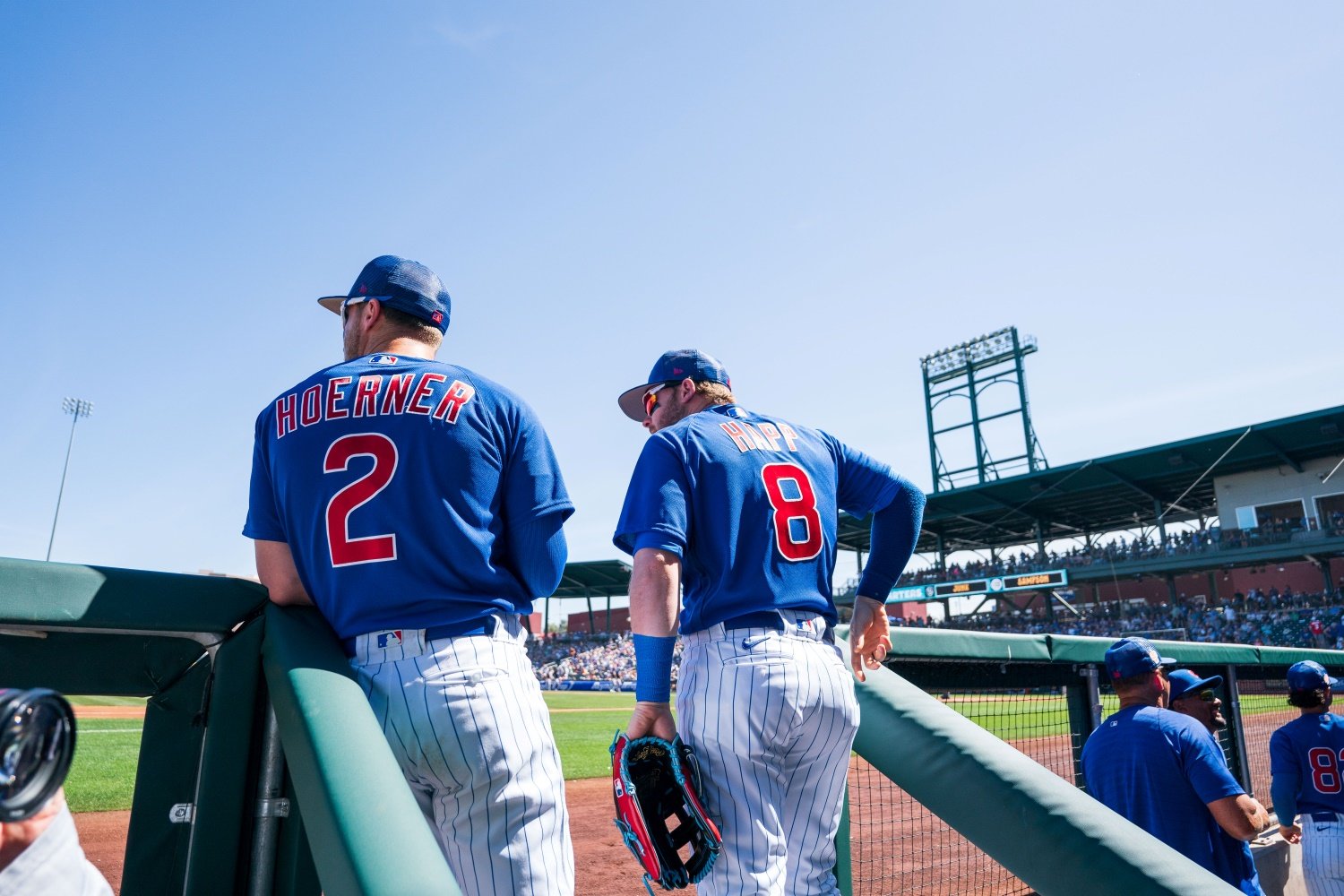 Don’t get it twisted. The jury is still out on Jed Hoyer. While we can acknowledge that he’s been hamstrung by ownership and budget limitations – to an extent we’re largely unaware of as organizational outsiders – he has yet to build a contender on his own. We’re still waiting on that “next great Cubs team.” One of the largest knocks on Hoyer’s reign during the (non-)rebuild has been their severe resistance to signing players to contract extensions. This took its clearest and most poignant form in the trades of Anthony Rizzo, Kris Bryant, and Javier Báez within the fastest of windows in 2021, as well as letting Willson Contreras walk in free agency after failing to move him in 2022. (We should note, though, that someone like Kyle Schwarber doesn’t perfectly fit the conversation, as it didn’t appear that the organization ever had an interest in extending him, in contrast with the others. That he departed via non-tender prior to his last season of arbitration eligibility testifies to that.) It isn’t so much that the Cubs refused to spend, outright. Sure, they probably could have signed the likes of a Bryce Harper or a Manny Machado. They actively chose not to. But they have, at least, handed out some decent-sized contracts in free agency, most notably for Marcus Stroman, Seiya Suzuki, and Dansby Swanson. Notable players have been signed to notable contracts, even if it seems like teams such as San Diego, Toronto, or Texas have blown past them with the aim of returning to serious contention. A modest effort is still an effort. Of course, when you’re trading away franchise cornerstones that helped break a century-long title drought while maintaining a resistance to signing said franchise cornerstones, that leads to a certain perception, fair or not. While signings like Stroman or Swanson do move the needle at least a little bit as we await the arrival of upper-tier prospects from inside the system, it’s that apparent unwillingness to extend that has particularly drawn the ire of the fanbase since Hoyer took over. As Rizzo, Bryant, and Báez crept closer to free agency, it became an eventuality that they wouldn’t be retained. And although there was a glimmer of hope that Contreras could stick around after the team failed to move him last July, that ship obviously also sailed—in a very obnoxious direction. And yet, in a little more than a month, is it possible that Jed Hoyer has shifted the narrative in his favor? The team capped spring training by signing second baseman Nico Hoerner to a contract extension. A three-year pact worth $35 million, Hoerner’s deal kicks in after this season. It buys out his remaining arbitration years, as well as one year of free agency. Barely two weeks after the Hoerner deal, the team agreed to another three-year extension with left fielder Ian Happ. With Happ set to hit free agency after 2023, the new contract will keep him stalking the outfield grass for another three starting in 2024. There are, of course, layers to each. The Cubs get cost certainty with Hoerner as he reaches the end of team control, while he gets a chance to cash in again while still in his prime. Happ locking into another few years takes one of the better free-agent bats off the market before he gets there. They’re fine deals that won’t really prove burdensome regardless of the outcomes, since the term of each is relatively short. Perhaps most notable, though, is how this shifts the narrative favorably for Hoyer and the Cubs in the extension game. The reality is that the Cubs have now signed two members of their current “core” to extensions, regardless of what those deals look like. While they may not carry the cachet of the names of the previous group, the organization has shown that they’re willing to take the necessary steps to extend guys when it’s the right fit. All things considered, had the Cubs locked in Bryant, Báez or Contreras to the type of contract that each was reportedly seeking, the blowback could now be outpacing that of the negative perception wrought by not extending them at all. Bryant, while performing well when healthy, has struggled to stay on the field since arriving in Colorado. He played in only 42 games last year. Báez was a below-average offensive performer in 2022, and has started off even worse this year. As far as Contreras goes, it’s early, but the St. Louis pitching staff has been very bad. Given the trajectory of a Hoerner or a Happ against that of a Bryant or a Báez, maybe there’s some merit to be found here after all. Not to besmirch two all-time Cubs even a little bit. There’s no way of telling what either would have done had they re-upped and stuck around. I’d even argue Báez, in a familiar environment where he was very much beloved, would be in far better form than we’ve seen since his departure. Rizzo has continued his steady brand of baseball, wonky back and all. It’s not a perfect argument to make, but given the early returns, things are starting to lean toward the vindication of Hoyer and the Cubs. This isn’t to laud the front office overmuch. There have been notable opportunities to improve the ballclub in the immediate term that fell by the wayside, to a pretty frustrating extent. As the organization heads into whatever they’re labeling this next phase as, though, we have to acknowledge that the fan base might have been governed too much by emotion, while the team has quietly won extension roulette.
 -
The Ian Happ extension might be viewed as more than the next step after the similar deal signed by Nico Hoerner earlier this month. Have the Cubs gotten around and ahead of the curve when it comes to contract extensions and their investments in players? Don’t get it twisted. The jury is still out on Jed Hoyer. While we can acknowledge that he’s been hamstrung by ownership and budget limitations – to an extent we’re largely unaware of as organizational outsiders – he has yet to build a contender on his own. We’re still waiting on that “next great Cubs team.” One of the largest knocks on Hoyer’s reign during the (non-)rebuild has been their severe resistance to signing players to contract extensions. This took its clearest and most poignant form in the trades of Anthony Rizzo, Kris Bryant, and Javier Báez within the fastest of windows in 2021, as well as letting Willson Contreras walk in free agency after failing to move him in 2022. (We should note, though, that someone like Kyle Schwarber doesn’t perfectly fit the conversation, as it didn’t appear that the organization ever had an interest in extending him, in contrast with the others. That he departed via non-tender prior to his last season of arbitration eligibility testifies to that.) It isn’t so much that the Cubs refused to spend, outright. Sure, they probably could have signed the likes of a Bryce Harper or a Manny Machado. They actively chose not to. But they have, at least, handed out some decent-sized contracts in free agency, most notably for Marcus Stroman, Seiya Suzuki, and Dansby Swanson. Notable players have been signed to notable contracts, even if it seems like teams such as San Diego, Toronto, or Texas have blown past them with the aim of returning to serious contention. A modest effort is still an effort. Of course, when you’re trading away franchise cornerstones that helped break a century-long title drought while maintaining a resistance to signing said franchise cornerstones, that leads to a certain perception, fair or not. While signings like Stroman or Swanson do move the needle at least a little bit as we await the arrival of upper-tier prospects from inside the system, it’s that apparent unwillingness to extend that has particularly drawn the ire of the fanbase since Hoyer took over. As Rizzo, Bryant, and Báez crept closer to free agency, it became an eventuality that they wouldn’t be retained. And although there was a glimmer of hope that Contreras could stick around after the team failed to move him last July, that ship obviously also sailed—in a very obnoxious direction. And yet, in a little more than a month, is it possible that Jed Hoyer has shifted the narrative in his favor? The team capped spring training by signing second baseman Nico Hoerner to a contract extension. A three-year pact worth $35 million, Hoerner’s deal kicks in after this season. It buys out his remaining arbitration years, as well as one year of free agency. Barely two weeks after the Hoerner deal, the team agreed to another three-year extension with left fielder Ian Happ. With Happ set to hit free agency after 2023, the new contract will keep him stalking the outfield grass for another three starting in 2024. There are, of course, layers to each. The Cubs get cost certainty with Hoerner as he reaches the end of team control, while he gets a chance to cash in again while still in his prime. Happ locking into another few years takes one of the better free-agent bats off the market before he gets there. They’re fine deals that won’t really prove burdensome regardless of the outcomes, since the term of each is relatively short. Perhaps most notable, though, is how this shifts the narrative favorably for Hoyer and the Cubs in the extension game. The reality is that the Cubs have now signed two members of their current “core” to extensions, regardless of what those deals look like. While they may not carry the cachet of the names of the previous group, the organization has shown that they’re willing to take the necessary steps to extend guys when it’s the right fit. All things considered, had the Cubs locked in Bryant, Báez or Contreras to the type of contract that each was reportedly seeking, the blowback could now be outpacing that of the negative perception wrought by not extending them at all. Bryant, while performing well when healthy, has struggled to stay on the field since arriving in Colorado. He played in only 42 games last year. Báez was a below-average offensive performer in 2022, and has started off even worse this year. As far as Contreras goes, it’s early, but the St. Louis pitching staff has been very bad. Given the trajectory of a Hoerner or a Happ against that of a Bryant or a Báez, maybe there’s some merit to be found here after all. Not to besmirch two all-time Cubs even a little bit. There’s no way of telling what either would have done had they re-upped and stuck around. I’d even argue Báez, in a familiar environment where he was very much beloved, would be in far better form than we’ve seen since his departure. Rizzo has continued his steady brand of baseball, wonky back and all. It’s not a perfect argument to make, but given the early returns, things are starting to lean toward the vindication of Hoyer and the Cubs. This isn’t to laud the front office overmuch. There have been notable opportunities to improve the ballclub in the immediate term that fell by the wayside, to a pretty frustrating extent. As the organization heads into whatever they’re labeling this next phase as, though, we have to acknowledge that the fan base might have been governed too much by emotion, while the team has quietly won extension roulette. View full article
-
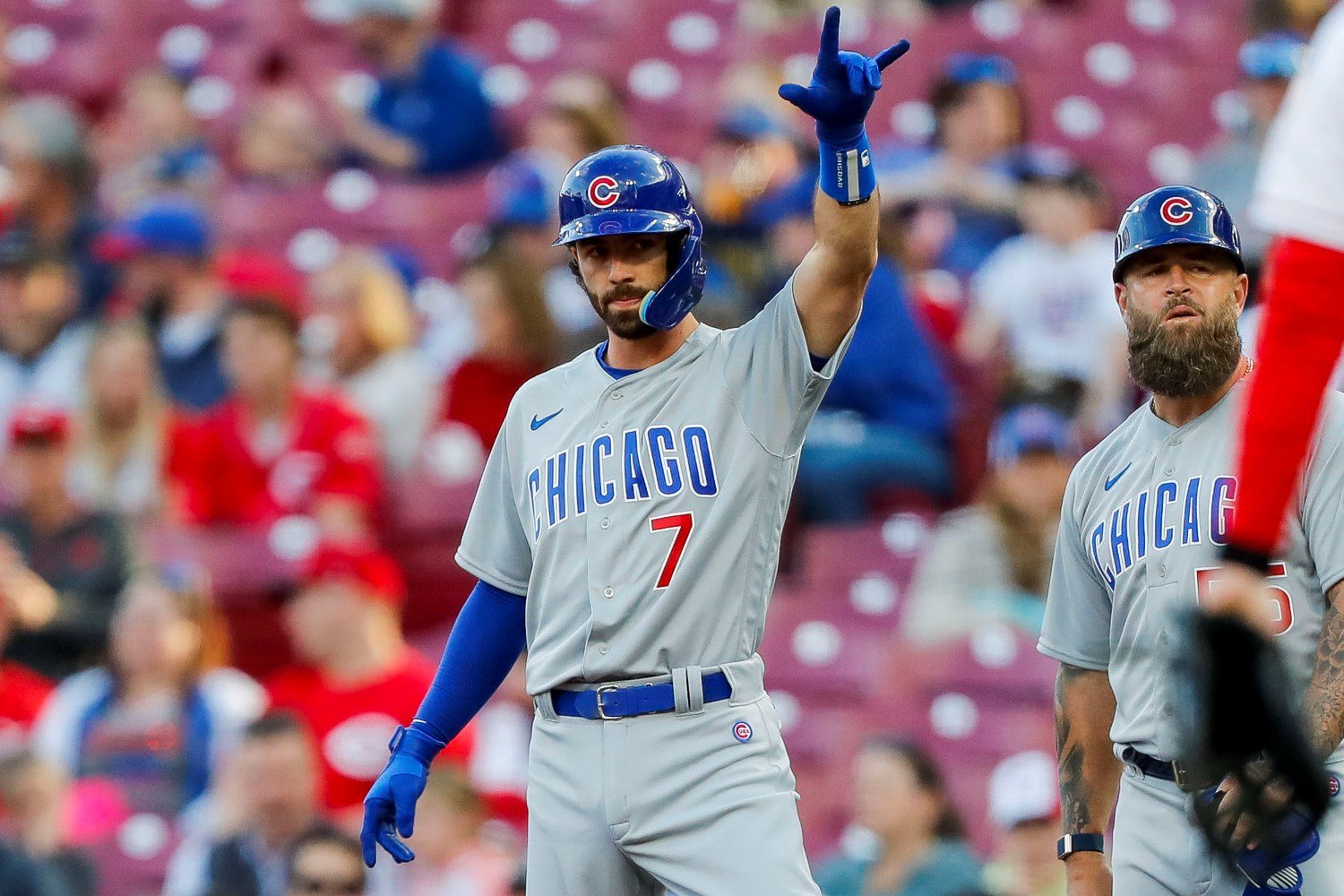 Compared to the trio of Trea Turner, Xander Bogaerts, and Carlos Correa, Swanson was less desirable and less marketable. But at his peak, he’s probably part of the second tier of Major League shortstops (we can litigate tiers later). Elite defensively. Probably already punched above his weight offensively. Can still be a 20/20 guy. That’s where I landed with Swanson. You could do far, far worse at the six. But as an offensive centerpiece? Probably not what you want. Well, we’re through four games and it suddenly looks like we were all off-base in being underwhelmed by Swanson being the choice among the four winter shortstops. It’s a hilarious sentiment. Just as one shouldn’t react negatively to outcomes over the course of…probably April, one also certainly should not jump to happy conclusions, either–even if those happy conclusions feature 10 hits across the first 17 at-bats and being one of the only drivers of run production across the team’s first five days of the regular season. It probably wouldn’t be super worth discussing, unless the numbers in question were weird. And they are. So this isn’t so much raving about Swanson as it is seizing the opportunity to look at the output thus far. We covered the 10 hits across 17 at-bats (18 plate appearances). Within that, Swanson has an average exit velocity of 95.7 miles per hour. That’s five MPH higher than any season he’s had to date. He’s making hard contact a hair above 58 percent of the time. That’s 12 percentage points higher than his rate last year, which represented his best offensive season up to that point. If there’s a trend that is legitimately notable, it’s that Swanson has been hyper-aggressive against fastballs to this point. He’s swinging at hard stuff at a 58.4 percent clip, which would be his highest swing rate against that pitch type in any of his Major League seasons. Typically, it’s the offspeed stuff that induces his highest swing rate in each year since 2017. He’s laid off that stuff quite a bit to this point in favor of fastballs. Two other trends are worth tracking, too: Swanson has been hitting to the pull side or middle a shade over 83 percent of the time. For a guy who’s gone the other way about a quarter of the time throughout his career, it’s interesting that he’s starting out this hot and carrying the vast majority of that contact to the hitter’s side of the field. We’ve got a long way to go before it’s of any statistical significance, but the elimination of the shift makes it something worth pointing out for future monitoring. Swanson has a fly-ball rate of exactly zero percent. He hasn’t put a ball in the air to this point. Again, the sample is so small. This one is just funny to me. It’s been hard contact on the ground or via line drive, and it’s obviously working. Perhaps the biggest irony of all of this is that Swanson got off to a completely abhorrent start in 2022. He hit .216, posted a .135 isolated power (ISO), and struck out almost 37 percent of the time. Once the calendar turned over to May, it was (obviously) a different story. Nonetheless, for someone who emphasizes the mental game as much as Swanson does, I imagine there’s a certain level of freedom that comes along with a start such as this. Ultimately, the numbers here don’t mean anything. They’re entertaining, but not indicative of performance or any level of output we can expect moving forward. However, with the other factors at play this season (shift, etc.), it’s absolutely going to be worth exploring Swanson’s production as the season wears on–not only because he represented the Cubs’ largest contractual investment this offseason, but because he’s had such variance at the plate in his career to date.
 -
Nobody said Dansby Swanson couldn’t hit. But juxtaposing him with the other three shortstops in this year’s free agent class, it’s easy to see how one could arrive at the perception of him that pervaded over the winter. Compared to the trio of Trea Turner, Xander Bogaerts, and Carlos Correa, Swanson was less desirable and less marketable. But at his peak, he’s probably part of the second tier of Major League shortstops (we can litigate tiers later). Elite defensively. Probably already punched above his weight offensively. Can still be a 20/20 guy. That’s where I landed with Swanson. You could do far, far worse at the six. But as an offensive centerpiece? Probably not what you want. Well, we’re through four games and it suddenly looks like we were all off-base in being underwhelmed by Swanson being the choice among the four winter shortstops. It’s a hilarious sentiment. Just as one shouldn’t react negatively to outcomes over the course of…probably April, one also certainly should not jump to happy conclusions, either–even if those happy conclusions feature 10 hits across the first 17 at-bats and being one of the only drivers of run production across the team’s first five days of the regular season. It probably wouldn’t be super worth discussing, unless the numbers in question were weird. And they are. So this isn’t so much raving about Swanson as it is seizing the opportunity to look at the output thus far. We covered the 10 hits across 17 at-bats (18 plate appearances). Within that, Swanson has an average exit velocity of 95.7 miles per hour. That’s five MPH higher than any season he’s had to date. He’s making hard contact a hair above 58 percent of the time. That’s 12 percentage points higher than his rate last year, which represented his best offensive season up to that point. If there’s a trend that is legitimately notable, it’s that Swanson has been hyper-aggressive against fastballs to this point. He’s swinging at hard stuff at a 58.4 percent clip, which would be his highest swing rate against that pitch type in any of his Major League seasons. Typically, it’s the offspeed stuff that induces his highest swing rate in each year since 2017. He’s laid off that stuff quite a bit to this point in favor of fastballs. Two other trends are worth tracking, too: Swanson has been hitting to the pull side or middle a shade over 83 percent of the time. For a guy who’s gone the other way about a quarter of the time throughout his career, it’s interesting that he’s starting out this hot and carrying the vast majority of that contact to the hitter’s side of the field. We’ve got a long way to go before it’s of any statistical significance, but the elimination of the shift makes it something worth pointing out for future monitoring. Swanson has a fly-ball rate of exactly zero percent. He hasn’t put a ball in the air to this point. Again, the sample is so small. This one is just funny to me. It’s been hard contact on the ground or via line drive, and it’s obviously working. Perhaps the biggest irony of all of this is that Swanson got off to a completely abhorrent start in 2022. He hit .216, posted a .135 isolated power (ISO), and struck out almost 37 percent of the time. Once the calendar turned over to May, it was (obviously) a different story. Nonetheless, for someone who emphasizes the mental game as much as Swanson does, I imagine there’s a certain level of freedom that comes along with a start such as this. Ultimately, the numbers here don’t mean anything. They’re entertaining, but not indicative of performance or any level of output we can expect moving forward. However, with the other factors at play this season (shift, etc.), it’s absolutely going to be worth exploring Swanson’s production as the season wears on–not only because he represented the Cubs’ largest contractual investment this offseason, but because he’s had such variance at the plate in his career to date. View full article
-
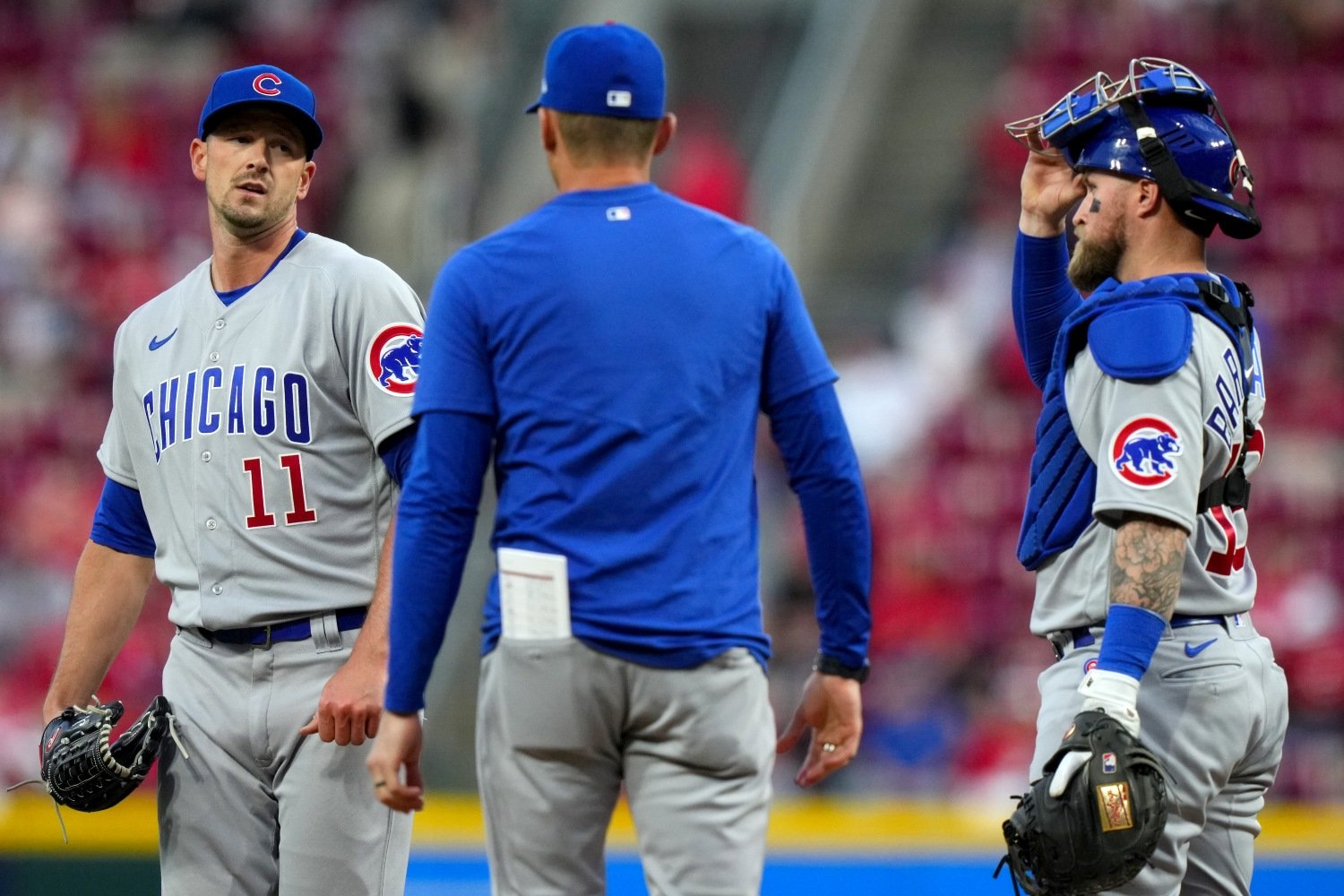 I’m not a purist, but I can at least enjoy the idea that the type of baseball which the Cubs will need to employ often is close to baseball at its purest. The wins are going to look like that. Clean. Efficient. A dash of aggression. That’s fun baseball when it works. Since Thursday, though, what we’ve largely seen is the other end of the spectrum. It’s less fun. Not because of the outcome. Losses aren’t particularly enjoyable when you have a rooting interest, regardless of their style or character. But this is what the losses are going to look like in 2023. It’s of a more agonizing flavor. If anything, it serves as a looming reminder that this version of the Cubs doesn’t have the chops to compensate when they need it. Through this trio of losses, we’ve run the gamut as to the type of defeat we can expect to see from a club like this one. Saturday’s game was, perhaps, the clearest example. The Cubs managed to get one run across, via an Ian Happ homer that essentially climbed its way into the basket. From there, mild mismanagement of the bullpen from David Ross watched Javier Assad squander the lead provided by said run. Assad was charged with all three Milwaukee runs after struggling to hold onto his command in his second inning of work. While Sunday figures to be the rarest type of loss from a score standpoint, it still represented something that we haven’t seen the last of. Cubs pitchers walked six hitters, five of which came from relievers. Four of those free passes resulted in runs. Ironically, that was the difference in the 9-5 final score. Which brings us to Monday. The Cubs jumped out to a 3-0 lead. Drew Smyly quickly erased it by surrendering three of his own, most of which came on a handful of singles in the first inning. While they were able to regain the lead by a 6-4 count in the top of the fifth, Smyly surrendered another three in the bottom half. Nine hits, a pair of walks, and one game-sealing homer across 4.2 innings of work. The Cubs created traffic thereafter, but they couldn’t manifest the situational hitting needed to take the lead back from a lowly Cincinnati team. It's three losses. In the grand scheme of a baseball season there will be many, many more. But while three losses in early April can’t tell you anything about the long-term future of a team, the nature of each does tell you something about these particular Cubs. The Saturday loss shows you how slim the margin for error is. David Ross rolls Assad out for a second inning. With a 1-0 lead, the manager was unable to act quickly enough when his reliever didn’t have command. Or, rather, have the foresight to have an arm up and moving if command was an issue to begin with. No one warming. No contingency. Weirdly, a loss in which the Cubs surrendered nine runs also said a lot. The pitching staff, be it the rotation or the bullpen, doesn’t have a lot of strikeout stuff. It’s why the Cubs spent so much time beefing up their defensive infrastructure. When you issue free passes and allow teams to put it in play, which is the entire basis of this pitching staff, weird things are going to happen. You’ll be flared to death–sometimes, to the tune of nine runs. Monday was likely the least common outcome we’ll see. It’s hard to visualize too many losses when the Cubs score six runs, given the solid quality of their starting staff and the defensive component. But they also can’t be chasing teams late in games. Opposing managers can play matchups with their bullpen. The bottom half of the Cubs’ lineup is meek. There isn’t a lot coming off the bench that is going to rattle an opposing reliever, either. Which we also saw Monday. This isn’t about pointing out that the Cubs have lost three of four, or even feeling some type of way about it. The Cubs are going to win a lot of games. The roster is going to change over the course of the season. My overarching point, which will be belabored over the course of 2023, is that the roster construction of this team means that the pull-your-hair-out type of losses will be more the norm than, say, a blowout. Nobody’s going to classify this team as bad. Even after a 1-3 start. But these Cubs were built to be average. As such, they were unintentionally built to frustrate. Through four games, we’ve already seen most of the manners in which they plan to do so.
 -
Opening Day was a delight, because it showed you exactly what you can expect wins to look like for this iteration of the Cubs: manufacturing runs, capitalizing on a few breaks via aggressiveness on the bases, solid pitching, and outstanding defense. Since then, they’ve laid down just as clear a blueprint for their losses. I’m not a purist, but I can at least enjoy the idea that the type of baseball which the Cubs will need to employ often is close to baseball at its purest. The wins are going to look like that. Clean. Efficient. A dash of aggression. That’s fun baseball when it works. Since Thursday, though, what we’ve largely seen is the other end of the spectrum. It’s less fun. Not because of the outcome. Losses aren’t particularly enjoyable when you have a rooting interest, regardless of their style or character. But this is what the losses are going to look like in 2023. It’s of a more agonizing flavor. If anything, it serves as a looming reminder that this version of the Cubs doesn’t have the chops to compensate when they need it. Through this trio of losses, we’ve run the gamut as to the type of defeat we can expect to see from a club like this one. Saturday’s game was, perhaps, the clearest example. The Cubs managed to get one run across, via an Ian Happ homer that essentially climbed its way into the basket. From there, mild mismanagement of the bullpen from David Ross watched Javier Assad squander the lead provided by said run. Assad was charged with all three Milwaukee runs after struggling to hold onto his command in his second inning of work. While Sunday figures to be the rarest type of loss from a score standpoint, it still represented something that we haven’t seen the last of. Cubs pitchers walked six hitters, five of which came from relievers. Four of those free passes resulted in runs. Ironically, that was the difference in the 9-5 final score. Which brings us to Monday. The Cubs jumped out to a 3-0 lead. Drew Smyly quickly erased it by surrendering three of his own, most of which came on a handful of singles in the first inning. While they were able to regain the lead by a 6-4 count in the top of the fifth, Smyly surrendered another three in the bottom half. Nine hits, a pair of walks, and one game-sealing homer across 4.2 innings of work. The Cubs created traffic thereafter, but they couldn’t manifest the situational hitting needed to take the lead back from a lowly Cincinnati team. It's three losses. In the grand scheme of a baseball season there will be many, many more. But while three losses in early April can’t tell you anything about the long-term future of a team, the nature of each does tell you something about these particular Cubs. The Saturday loss shows you how slim the margin for error is. David Ross rolls Assad out for a second inning. With a 1-0 lead, the manager was unable to act quickly enough when his reliever didn’t have command. Or, rather, have the foresight to have an arm up and moving if command was an issue to begin with. No one warming. No contingency. Weirdly, a loss in which the Cubs surrendered nine runs also said a lot. The pitching staff, be it the rotation or the bullpen, doesn’t have a lot of strikeout stuff. It’s why the Cubs spent so much time beefing up their defensive infrastructure. When you issue free passes and allow teams to put it in play, which is the entire basis of this pitching staff, weird things are going to happen. You’ll be flared to death–sometimes, to the tune of nine runs. Monday was likely the least common outcome we’ll see. It’s hard to visualize too many losses when the Cubs score six runs, given the solid quality of their starting staff and the defensive component. But they also can’t be chasing teams late in games. Opposing managers can play matchups with their bullpen. The bottom half of the Cubs’ lineup is meek. There isn’t a lot coming off the bench that is going to rattle an opposing reliever, either. Which we also saw Monday. This isn’t about pointing out that the Cubs have lost three of four, or even feeling some type of way about it. The Cubs are going to win a lot of games. The roster is going to change over the course of the season. My overarching point, which will be belabored over the course of 2023, is that the roster construction of this team means that the pull-your-hair-out type of losses will be more the norm than, say, a blowout. Nobody’s going to classify this team as bad. Even after a 1-3 start. But these Cubs were built to be average. As such, they were unintentionally built to frustrate. Through four games, we’ve already seen most of the manners in which they plan to do so. View full article
-
 It’s been a minute since I referred to a Chicago Cubs website as a writing basecamp. Long enough, anyway, that recalling the last time–when I was a freshman in college–made me feel very sad about my age. In any case, I’ve been around. I’ve spent time at RotoGraphs, FanSided, Beyond the Box Score, and a handful of places in between. And while I now primarily reside at Pitcher List, I jumped at the opportunity to focus on my first love of Major League Baseball once again: Our Cubs. My Cubs story is not a super complicated one. My mom’s side of the family are Cubs fans. My dad’s side lean White Sox. Mom won. And while I spent pretty much my entire life into high school moving around to or adjacent to military bases (which did complicate things a couple times for an impressionable youth who went to a disproportionate number of games in Philadelphia), it always came back to the Cubs. And realistically, that’s where I still find myself. I won’t lie: Living in the southwest and spending a lot of time recently in San Diego, it’s hard to resist the pull of what they’ve got going on there. But, amid whatever in the world the organization has done to undermine our collective loyalty since 2016, I’m still here. So there’s that. Inside and out of the Cubs, if you are unfamiliar with my writing (as you likely are), there’s a few things I tend to hone in on. Defense. Give me a slick turn on the middle infield or a pick at first base all day over a 450-foot homer. My favorite baseball archetype is the elite defender who can’t hit. And I unironically love the fact that most defensive metrics in existence are widely criticized and deemed unreliable. Swing aesthetics. I wrote a whole piece a couple years ago at BtBS attempting to quantify a swing that was visually appealing for the eyeballs. The bottom line was that lefties just do it better. And I’m excited to watch Cody Bellinger’s beautiful hack in 2023. “Vibes.” Every spring, everybody always talks about the vibe(s) in camp. The Cubs, apparently, had very good vibes in Mesa. Starting on Opening Day, I plan to track vibes throughout the season as part of my aim to quantify them. The Cubs will be the litmus test. I still don’t know how it’s going to work, but I’ll have a metric for vibes by year’s end. The mental side. When I was teaching, I had a bit with my students when they were worried about accruing student loan debt. I told them that my plan was to continuously go back to school for the rest of my life and then one day, I would die. Problem solved. More importantly, on one of those trips back, I acquired a master’s from the University of Florida that specialized in athlete development. Dansby Swanson’s focus on the psychological side of baseball is of utmost interest to me, and it’s a conversation I intend to continue to spread. Because it ain’t happening enough in the world of baseball. Jake Lamb. I live in Phoenix. He was an All Star. I still believe the breakout is coming. No further questions. Which brings me to the 2023 Chicago Cubs and why I’m excited that this year, in particular, is the one in which I can set up shop here at North Side Baseball. I love a process. Development, in any field, and all of its facets fascinate me. For better or for worse, the Cubs are at a very delicate stage of that process. Granted, it’s the second time we’ve seen this sort of process play out in barely over a decade, and this one hasn’t quite brought the level of anticipation that the first one did. Nonetheless, we’re at the turn. I don’t have a particularly high opinion of the 2023 Chicago Cubs. I think they’re going to have a decent staff, a fun defense, and will ultimately struggle to score runs. Given the top-heavy National League, .500 is probably the best we can hope for. But where the Cubs go from here in the process is going to be wildly interesting. There are so many intriguing arms in the system. There are several interesting bats. They won’t all make it, and the organization won’t have room for all of them even if they did. Watching this take shape is going to be a blast. Having the opportunity to look at the many components of a rebuild process at this stage is something that I take great joy in. The joy in 2023 will manifest itself in the middle infield defense, in Hayden Wesneski’s slider, and in the continued development of those intriguing guys in the system. Maybe 2023 joy is Matt Mervis’ first homer later in the year. Or someone like Cam Sanders breaking onto the scene. Perhaps joy comes in the form of a Cody Bellinger return to prominence. There will be joy, though, and that’s the important thing. And so here we are at Opening Day 2023. No matter how cynical you’ve grown about the Cubs–or the sport at large–there’s still something mystical about it. There’s an energy there that you can’t quite describe. I almost disassociate while consuming Opening Day baseball. Just taking it in. The analysis can start on Day 2.
 -
Hello. I’m Randy Holt, and I’ll be joining the crew here at Northside Baseball. Let’s get to know each other. It’s been a minute since I referred to a Chicago Cubs website as a writing basecamp. Long enough, anyway, that recalling the last time–when I was a freshman in college–made me feel very sad about my age. In any case, I’ve been around. I’ve spent time at RotoGraphs, FanSided, Beyond the Box Score, and a handful of places in between. And while I now primarily reside at Pitcher List, I jumped at the opportunity to focus on my first love of Major League Baseball once again: Our Cubs. My Cubs story is not a super complicated one. My mom’s side of the family are Cubs fans. My dad’s side lean White Sox. Mom won. And while I spent pretty much my entire life into high school moving around to or adjacent to military bases (which did complicate things a couple times for an impressionable youth who went to a disproportionate number of games in Philadelphia), it always came back to the Cubs. And realistically, that’s where I still find myself. I won’t lie: Living in the southwest and spending a lot of time recently in San Diego, it’s hard to resist the pull of what they’ve got going on there. But, amid whatever in the world the organization has done to undermine our collective loyalty since 2016, I’m still here. So there’s that. Inside and out of the Cubs, if you are unfamiliar with my writing (as you likely are), there’s a few things I tend to hone in on. Defense. Give me a slick turn on the middle infield or a pick at first base all day over a 450-foot homer. My favorite baseball archetype is the elite defender who can’t hit. And I unironically love the fact that most defensive metrics in existence are widely criticized and deemed unreliable. Swing aesthetics. I wrote a whole piece a couple years ago at BtBS attempting to quantify a swing that was visually appealing for the eyeballs. The bottom line was that lefties just do it better. And I’m excited to watch Cody Bellinger’s beautiful hack in 2023. “Vibes.” Every spring, everybody always talks about the vibe(s) in camp. The Cubs, apparently, had very good vibes in Mesa. Starting on Opening Day, I plan to track vibes throughout the season as part of my aim to quantify them. The Cubs will be the litmus test. I still don’t know how it’s going to work, but I’ll have a metric for vibes by year’s end. The mental side. When I was teaching, I had a bit with my students when they were worried about accruing student loan debt. I told them that my plan was to continuously go back to school for the rest of my life and then one day, I would die. Problem solved. More importantly, on one of those trips back, I acquired a master’s from the University of Florida that specialized in athlete development. Dansby Swanson’s focus on the psychological side of baseball is of utmost interest to me, and it’s a conversation I intend to continue to spread. Because it ain’t happening enough in the world of baseball. Jake Lamb. I live in Phoenix. He was an All Star. I still believe the breakout is coming. No further questions. Which brings me to the 2023 Chicago Cubs and why I’m excited that this year, in particular, is the one in which I can set up shop here at North Side Baseball. I love a process. Development, in any field, and all of its facets fascinate me. For better or for worse, the Cubs are at a very delicate stage of that process. Granted, it’s the second time we’ve seen this sort of process play out in barely over a decade, and this one hasn’t quite brought the level of anticipation that the first one did. Nonetheless, we’re at the turn. I don’t have a particularly high opinion of the 2023 Chicago Cubs. I think they’re going to have a decent staff, a fun defense, and will ultimately struggle to score runs. Given the top-heavy National League, .500 is probably the best we can hope for. But where the Cubs go from here in the process is going to be wildly interesting. There are so many intriguing arms in the system. There are several interesting bats. They won’t all make it, and the organization won’t have room for all of them even if they did. Watching this take shape is going to be a blast. Having the opportunity to look at the many components of a rebuild process at this stage is something that I take great joy in. The joy in 2023 will manifest itself in the middle infield defense, in Hayden Wesneski’s slider, and in the continued development of those intriguing guys in the system. Maybe 2023 joy is Matt Mervis’ first homer later in the year. Or someone like Cam Sanders breaking onto the scene. Perhaps joy comes in the form of a Cody Bellinger return to prominence. There will be joy, though, and that’s the important thing. And so here we are at Opening Day 2023. No matter how cynical you’ve grown about the Cubs–or the sport at large–there’s still something mystical about it. There’s an energy there that you can’t quite describe. I almost disassociate while consuming Opening Day baseball. Just taking it in. The analysis can start on Day 2. View full article