RandallPnkFloyd
-
Posts
513 -
Joined
-
Last visited
Content Type
Profiles
Joomla Posts 1
Chicago Cubs Videos
Chicago Cubs Free Agent & Trade Rumors, Notes, & Tidbits
2026 Chicago Cubs Top Prospects Ranking
News
2023 Chicago Cubs Draft Picks
Guides & Resources
2024 Chicago Cubs Draft Picks
The Chicago Cubs Players Project
2025 Chicago Cubs Draft Pick Tracker
2026 Chicago Cubs Draft Tracker: Picks & Bonuses
Blogs
Events
Forums
Store
Gallery
Everything posted by RandallPnkFloyd
-
The Chicago Cubs chose not to pursue an established player for their vacancies on the infield corners this winter. One of the young hitters they plugged in is adjusting and improving nicely. The other, however, is struggling mightily. Image courtesy of © Michael McLoone-USA TODAY Sports The team deployed seven different players at first base in 2023, with Cody Bellinger’s 59 appearances leading the way. On the opposite side of the diamond, Nick Madrigal’s surprising defense led him to 72 appearances, most among the six players to appear there. Given Bellinger’s primary spot on the outfield grass and the minimal offensive upside presented by Madrigal, neither was projected to spend the bulk of 2024 in the same spot. Nevertheless, the Cubs insisted on giving Christopher Morel a shot at third base and acquired Michael Busch from the Los Angeles Dodgers to settle things at first. It was the former’s first opportunity at a full-time defensive home at the top level, while Busch had appeared only sparingly in the big leagues at all. His opportunities had come primarily at second and third base. Offensive profiles probably had a say in the team’s aims for each spot. Each sports an offensive skill set well-suited for one of the corner spots. But each experiment was going to feature its own transitional period. The hope for Morel was that his arm and athleticism would eventually facilitate acceptable defense at the hot corner, especially with Dansby Swanson to his left. Even with some growing pains, the team hoped to see him figure it out. For Busch, it was more a process of elimination, given Morel being better-suited to third based on the two players' arm strength and the extremely established middle infield. I’m probably oversimplifying, but neither move was indefensible, in light of the Cubs’ apparent reluctance to sign Matt Chapman or push for a trade to land someone more established, like Pete Alonso. If they could provide at least some defensive stability, the offense could help to compensate for whatever shortcomings remained. Fast-forward from that spring mindset to July, and most questions seem to have been answered--on opposite ends of the spectrum. Morel has been the worst defensive third baseman in baseball. Among 14 qualifiers, his -6 Fielding Run Value sits at the bottom. Only Boston’s Rafael Devers has a lower Defensive Runs Saved than Morel’s mark, which also sits at -6. Just in case there was any doubt about the more comprehensive metric, Outs Above Average doesn’t like him either. His -8 OAA mark sits not only as the worst among third basemen, but the fifth-worst among 260 qualifying defenders at any position. There was some hope that maybe the eye test was more favorable than the metrics, especially as they were bogged down by his transitional period in April. However, even that can’t save Morel at this point. He’s a fourth-percentile defender, lacking in needed hands & instincts. Maybe they can try it again next spring (or later this summer) in right field, or something. Morel’s woes, though, stand in sharp contrast to his counterpart on the other end of the apron. Busch has not only impressed offensively after a May slog, but has shown quality with the glove at first base. Defensive metrics don’t love first basemen, but Busch has posted the fourth-best FRV at the position (3). For context, Carlos Santana & Christian Walker lead all players at the position, with 5. His OAA of 5 trails only those two, while his 4 DRS are tied for the second-most at the position. The eye test supports such an improvement as well, between picks/scoops and more general fielding tasks, like ranging to his right (and knowing when not to). He’s showcased enough growth that you feel comfortable with him at first base moving forward. That presents a very interesting scenario for the Cubs. As few options as they have at third from a farm perspective, they have even fewer at first. Matt Mervis looks like a Quadruple-A player, and B.J. Murray Jr. is in the midst of a down year. It was Busch or an outside solution. At third, the team could eventually turn to Matt Shaw, so I suppose if you had to choose only one to succeed defensively, you’d prefer it to be Busch. Regardless of all that, though, it’s fairly clear that the defensive outcomes have at least lent some level of clarity to what is needed in the future for this roster. Given Busch’s offensive upside and above-average defense, you can comfortably lock him in at the cold corner for the next few years. Third base doesn’t offer that same luxury. The Cubs will likely have a new player at the position next year. Whether that’s someone like Shaw or an outside solution remains to be seen, but while the context of positional adjustment was similar between Busch and Morel, it’s become very obvious that they're headed in opposite directions. View full article
-
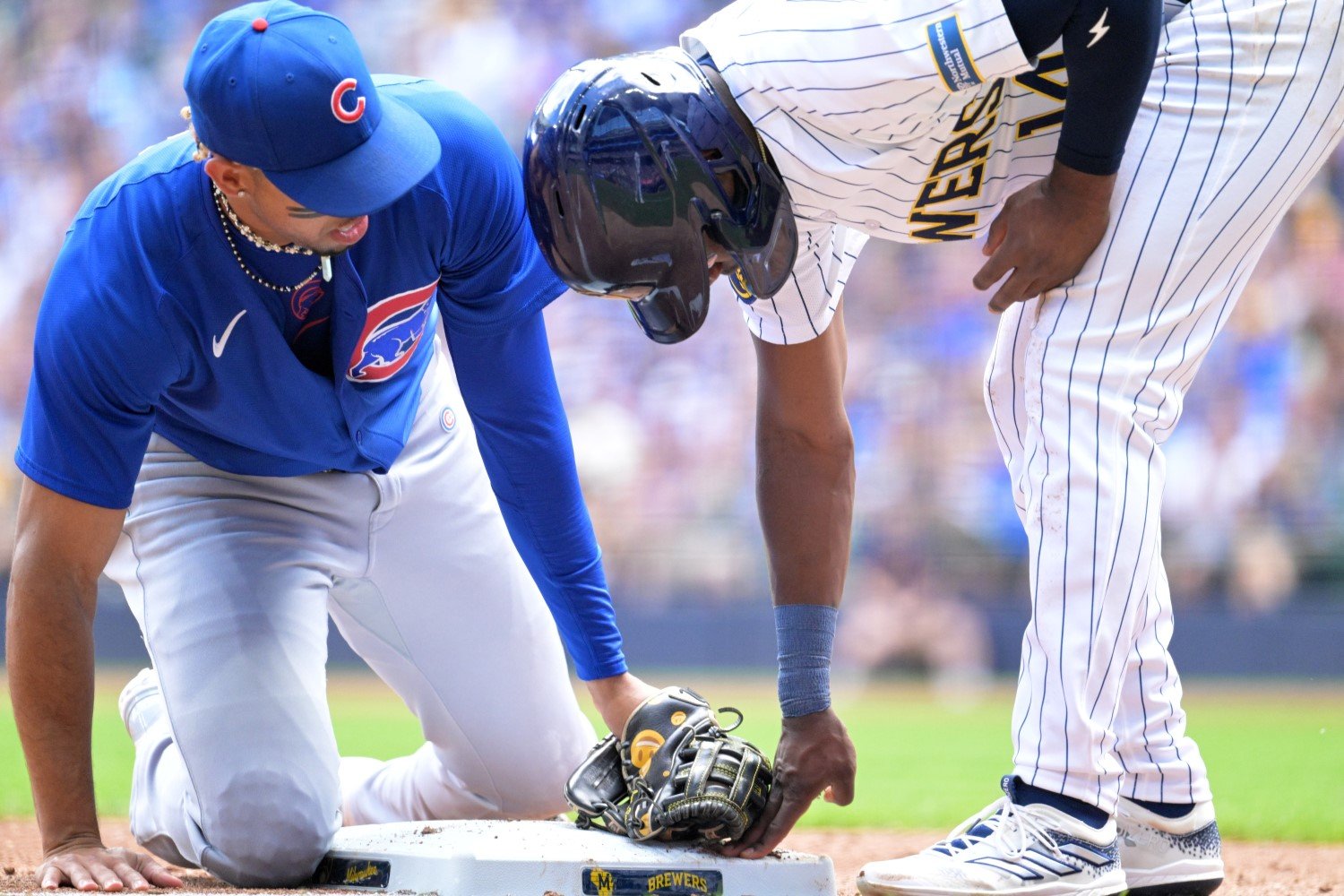 The team deployed seven different players at first base in 2023, with Cody Bellinger’s 59 appearances leading the way. On the opposite side of the diamond, Nick Madrigal’s surprising defense led him to 72 appearances, most among the six players to appear there. Given Bellinger’s primary spot on the outfield grass and the minimal offensive upside presented by Madrigal, neither was projected to spend the bulk of 2024 in the same spot. Nevertheless, the Cubs insisted on giving Christopher Morel a shot at third base and acquired Michael Busch from the Los Angeles Dodgers to settle things at first. It was the former’s first opportunity at a full-time defensive home at the top level, while Busch had appeared only sparingly in the big leagues at all. His opportunities had come primarily at second and third base. Offensive profiles probably had a say in the team’s aims for each spot. Each sports an offensive skill set well-suited for one of the corner spots. But each experiment was going to feature its own transitional period. The hope for Morel was that his arm and athleticism would eventually facilitate acceptable defense at the hot corner, especially with Dansby Swanson to his left. Even with some growing pains, the team hoped to see him figure it out. For Busch, it was more a process of elimination, given Morel being better-suited to third based on the two players' arm strength and the extremely established middle infield. I’m probably oversimplifying, but neither move was indefensible, in light of the Cubs’ apparent reluctance to sign Matt Chapman or push for a trade to land someone more established, like Pete Alonso. If they could provide at least some defensive stability, the offense could help to compensate for whatever shortcomings remained. Fast-forward from that spring mindset to July, and most questions seem to have been answered--on opposite ends of the spectrum. Morel has been the worst defensive third baseman in baseball. Among 14 qualifiers, his -6 Fielding Run Value sits at the bottom. Only Boston’s Rafael Devers has a lower Defensive Runs Saved than Morel’s mark, which also sits at -6. Just in case there was any doubt about the more comprehensive metric, Outs Above Average doesn’t like him either. His -8 OAA mark sits not only as the worst among third basemen, but the fifth-worst among 260 qualifying defenders at any position. There was some hope that maybe the eye test was more favorable than the metrics, especially as they were bogged down by his transitional period in April. However, even that can’t save Morel at this point. He’s a fourth-percentile defender, lacking in needed hands & instincts. Maybe they can try it again next spring (or later this summer) in right field, or something. Morel’s woes, though, stand in sharp contrast to his counterpart on the other end of the apron. Busch has not only impressed offensively after a May slog, but has shown quality with the glove at first base. Defensive metrics don’t love first basemen, but Busch has posted the fourth-best FRV at the position (3). For context, Carlos Santana & Christian Walker lead all players at the position, with 5. His OAA of 5 trails only those two, while his 4 DRS are tied for the second-most at the position. The eye test supports such an improvement as well, between picks/scoops and more general fielding tasks, like ranging to his right (and knowing when not to). He’s showcased enough growth that you feel comfortable with him at first base moving forward. That presents a very interesting scenario for the Cubs. As few options as they have at third from a farm perspective, they have even fewer at first. Matt Mervis looks like a Quadruple-A player, and B.J. Murray Jr. is in the midst of a down year. It was Busch or an outside solution. At third, the team could eventually turn to Matt Shaw, so I suppose if you had to choose only one to succeed defensively, you’d prefer it to be Busch. Regardless of all that, though, it’s fairly clear that the defensive outcomes have at least lent some level of clarity to what is needed in the future for this roster. Given Busch’s offensive upside and above-average defense, you can comfortably lock him in at the cold corner for the next few years. Third base doesn’t offer that same luxury. The Cubs will likely have a new player at the position next year. Whether that’s someone like Shaw or an outside solution remains to be seen, but while the context of positional adjustment was similar between Busch and Morel, it’s become very obvious that they're headed in opposite directions.
 -
As the Chicago Cubs continue their plight in the National League playoff picture, the conversation has somewhat naturally shifted to the buy/sell concept for next month’s MLB trade deadline. Image courtesy of © Kamil Krzaczynski-USA TODAY Sports There is, of course, the discussion as to whether the Cubs even have players of enough value worthy of selling. Given the volume of underperforming players on the roster, it's not an entirely unreasonable opinion. Those worth moving at the deadline are more likely to be players the team prefers to keep in the longer term, anyway. But as the chatter started to pick up, the internet latched onto one of the team’s higher-profile names to garner a reasonable return: Nico Hoerner. Hoerner was previously seen as something of a building block for the “next great Cubs team,” with the team signing him to an extension last March. That deal runs through 2026 with an AAV of just under $12 million. While the deal might’ve told us something about how the Cubs view Hoerner in the general context of their future, it’s also not one that would be too cumbersome for another team to take on in a trade, either. In pondering the idea of a Hoerner trade, it’s not so much wondering what a return would look like but whether the time is right for such a move. While Hoerner has worked his way back from a tough start on the defensive side – his Fielding Run Value has run up to 2 since it was on the other end of that threshold to start the year – the offense hasn’t been there in the way that we might’ve hoped. He’s at a wRC+ of 98 for the year and is still in the throes of his worth month. That figure stands at 79 for June. There are caveats, though. At the same time, the broad output looks pretty similar to what we’ve seen before. His strikeout rate is just 10.4 percent, while his walks are up a touch, at 9.4. He’s still reaching base at a reasonable .336 clip, too. He isn’t making as much quality contact, which is holding his average down, but it’s not as if he’s fallen off a cliff in the way that, say, his middle infield partner has. The bat is one of contact and on-base, with not much else. As long as the defense is there, he has just enough value, given the offensive skill set, to be a desirable player at the keystone (or perhaps even shortstop) for prospective teams. It’s not as if the team would be selling low on Hoerner at this juncture. He’s largely the same player, just with a little less luck, given the decline in contact quality. As such, it’s not as if the return would be anything earth-shattering in the first place. The return now is probably what the return would’ve been before. Whether this is a move the Cubs should explore is another thing entirely; it seems likely that a trade of Hoerner would be about opening up an infield spot for a rising prospect more than anything. Matt Shaw & James Triantos might offer more upside with the bat than Hoerner provides. While the team will likely seek to get Shaw in at third base in the somewhat near future, Triantos is more limited. If it’s not second, it’s an outfield corner, where the team has even less wiggle room for future personnel. I suppose it’s also possible (though far less likely) that the team shifts Michael Busch over to the keystone, a position at which he does have some experience, in pursuit of a legitimate power bat at first base. A trade of Nico Hoerner wouldn’t be about continuing to stock the farm system. It would be about logistics. It would make things a bit easier to manage the next wave of prospects or move others around should they get some impact offense into the mix. Is a trade for the sake of logistics a desirable thing? Probably not. Especially when discussing a player as steady and likable as Hoerner. But the team is in the position that they’re in, with very few trade options to show for it. This means that, at least among the fans, this chatter isn’t going away anytime soon. View full article
-
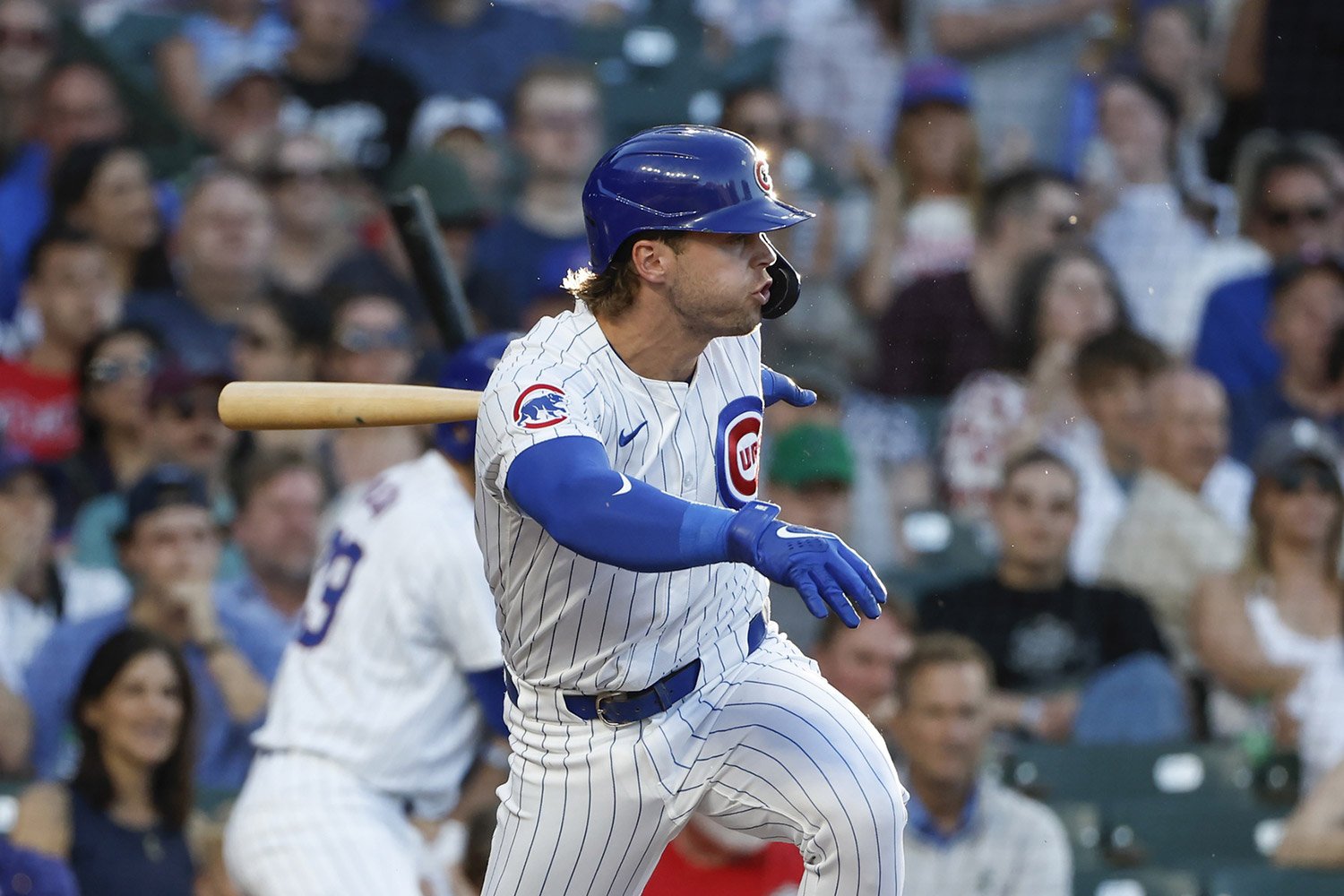 There is, of course, the discussion as to whether the Cubs even have players of enough value worthy of selling. Given the volume of underperforming players on the roster, it's not an entirely unreasonable opinion. Those worth moving at the deadline are more likely to be players the team prefers to keep in the longer term, anyway. But as the chatter started to pick up, the internet latched onto one of the team’s higher-profile names to garner a reasonable return: Nico Hoerner. Hoerner was previously seen as something of a building block for the “next great Cubs team,” with the team signing him to an extension last March. That deal runs through 2026 with an AAV of just under $12 million. While the deal might’ve told us something about how the Cubs view Hoerner in the general context of their future, it’s also not one that would be too cumbersome for another team to take on in a trade, either. In pondering the idea of a Hoerner trade, it’s not so much wondering what a return would look like but whether the time is right for such a move. While Hoerner has worked his way back from a tough start on the defensive side – his Fielding Run Value has run up to 2 since it was on the other end of that threshold to start the year – the offense hasn’t been there in the way that we might’ve hoped. He’s at a wRC+ of 98 for the year and is still in the throes of his worth month. That figure stands at 79 for June. There are caveats, though. At the same time, the broad output looks pretty similar to what we’ve seen before. His strikeout rate is just 10.4 percent, while his walks are up a touch, at 9.4. He’s still reaching base at a reasonable .336 clip, too. He isn’t making as much quality contact, which is holding his average down, but it’s not as if he’s fallen off a cliff in the way that, say, his middle infield partner has. The bat is one of contact and on-base, with not much else. As long as the defense is there, he has just enough value, given the offensive skill set, to be a desirable player at the keystone (or perhaps even shortstop) for prospective teams. It’s not as if the team would be selling low on Hoerner at this juncture. He’s largely the same player, just with a little less luck, given the decline in contact quality. As such, it’s not as if the return would be anything earth-shattering in the first place. The return now is probably what the return would’ve been before. Whether this is a move the Cubs should explore is another thing entirely; it seems likely that a trade of Hoerner would be about opening up an infield spot for a rising prospect more than anything. Matt Shaw & James Triantos might offer more upside with the bat than Hoerner provides. While the team will likely seek to get Shaw in at third base in the somewhat near future, Triantos is more limited. If it’s not second, it’s an outfield corner, where the team has even less wiggle room for future personnel. I suppose it’s also possible (though far less likely) that the team shifts Michael Busch over to the keystone, a position at which he does have some experience, in pursuit of a legitimate power bat at first base. A trade of Nico Hoerner wouldn’t be about continuing to stock the farm system. It would be about logistics. It would make things a bit easier to manage the next wave of prospects or move others around should they get some impact offense into the mix. Is a trade for the sake of logistics a desirable thing? Probably not. Especially when discussing a player as steady and likable as Hoerner. But the team is in the position that they’re in, with very few trade options to show for it. This means that, at least among the fans, this chatter isn’t going away anytime soon.
 -
One way or another, change is coming for the 2024 Chicago Cubs. Their struggles this season are going to force the issue. The team has a loaded farm system. Can their reinforcements come from within? Should things continue at their current pace, the Chicago Cubs are going to find themselves in a weird sort of purgatory as the trade deadline approaches. They're not necessarily bad enough to sell. They're certainly not good enough to buy. With the former, you wonder which of their underperforming players from either side of the ball would even fetch a decent return. If the latter somehow occurs, is the front office willing to send away upper-tier talent in pursuit of meaningful change? It's all hypothetical, but there’s a certain murkiness to this team’s future now, both in the short and in the long term. But there’s also an additional component to this discussion to keep in mind. That vaunted farm system that we’ve heard so much about this year has some talent hitting the upper minors, and could soon be banging on the door of the big leagues. From an offensive perspective, it’ll be an interesting situation to navigate. As far as the hitters go, there are a few names we could see touch the field at Wrigley before 2024 draws to a close. The most logical names in such a discussion include Owen Caissie, Matt Shaw, and Moises Ballesteros. They represent three of the team’s top five positional prospects. They’re exciting names, to be sure. But they aren’t the only ones. Brennen Davis still exists in Iowa. James Triantos shouldn’t be completely ruled out, either, as he's thriving in Double-A Tennessee. A quick rundown: Caissie isn’t posting quite the gaudy power numbers that he did last year, but he’s still balancing a strikeout rate around 28% with a walk rate around 15%. He’s added a few steals. Matt Shaw came out hot, hit a lull, and has since regained steam. He’s reaching base at a .358 clip, with 10 homers and 17 steals thus far. He could jump up to Iowa soon. Ballesteros has already made his move up a level, after posting a 154 wRC+ in Tennessee; he’s hitting .350 in 20 plate appearances since arriving in Iowa. Davis has had awful batted ball luck (.212 BABIP) to go along with his consistently awful injury luck (only 36 games played), but has been much better than some of the numbers may indicate. He features a .314 ISO across 136 trips to the plate. James Triantos isn’t walking as much this year, but is still hitting .309 and striking out only 10 percent of the time. He has 25 steals, too. Those five names have at least plausible potential to reach the top level this year, and they offer the most intrigue of anyone in the system. Among other names, BJ Murray Jr has struggled. Kevin Alcántara is only just about to return to game action after a two-week absence. Jefferson Rojas is still a long way off. Luis Vázquez has already made his debut, and could come back as a supplementary glove for the infield at some point. Each of the five names above, though, presents interesting positional context and could have a significant bearing on how close to reality their Wrigley Field arrival may actually be. If we’re going for pure logic, Ballesteros represents the most straightforward addition. Miguel Amaya has been well below average on both sides of the ledger, while Tomás Nido only offers so much upside. Ballesteros has the potential to be a massive offensive upgrade if he can handle upper-level pitching, while not presenting much of a dropoff behind the dish. His biggest weakness there is in controlling the running game, which isn’t unusual, given how Cub catchers have fared in that aspect this year. Continuing to go by order of logic, Shaw comes next. If the team is still unhappy with Christopher Morel’s defense at third (and you'd hope they are), Shaw could present more stability there. He’s played 37 games at the position this year, after only three in 2023. From a lineup perspective, you’re bumping Morel back to DH and likely improving team defense as a result. Such a promotion would mean Shaw either skipping a level or enduring a very short stint in Iowa. That’s not entirely out of the question, given just how dominant his hot stretches have been this year. From there, things become less clear. Short of a trade somewhere, the path is much more clouded for the two outfielders. The team has Ian Happ, Pete Crow-Armstrong, Cody Bellinger, and Seiya Suzuki entrenched in the outfield. Mike Tauchman should be, too, in about three weeks. While Caissie and Davis offer really interesting upside, it’s hard to imagine space for them on the roster as currently constructed--even with the designated hitter slot theoretically open. The same could be said of Triantos. The idea of a Nico Hoerner trade is something I’ve seen floated on social media, given the team’s overall lack of quality trade candidates. But just a year removed from an extension and in the midst of a below-average 2024, it’s hard to envision a move. Triantos has appeared on the outfield grass sometimes. But even then, we’re looking at the same issue with which Caissie and Davis would be confronted. Of course, like Shaw, Triantos has another level of minor-league ball he could work through if the team is hellbent on some sort of promotion. Ultimately, that means that if we’re attempting to project Cubs prospects who could factor into the second half, we’re likely looking at Moises Ballesteros or Matt Shaw given the context of the roster. Each offers the most straightforward option, with Amaya taking a backseat or Morel heading back to full-time DH duties. Either one would be a move that could be made without upsetting the current roster construction. At the same time, the construction could end up looking quite different in the coming weeks. Perhaps the Cubs make a move with the idea of opening up some space for prospects like Caissie, Davis or Triantos. Overall, though, it’s difficult to get too razzed about the idea of one of the Cubs’ top hitting prospects making their Wrigley Field debut before 2024 runs out. It just doesn’t appear to be in this front office’s nature to promote aggressively. That might end up making someone like Davis or even Murray Jr most likely, depending on how the team approaches the deadline. The next month of play and the team's choices about their future will determine who could and should come up once we hit the later stages of the summer. View full article
-
Which Cubs Prospects Could Come Up from the Minors to Help the 2024 Cubs?
RandallPnkFloyd posted an article in Cubs
 Should things continue at their current pace, the Chicago Cubs are going to find themselves in a weird sort of purgatory as the trade deadline approaches. They're not necessarily bad enough to sell. They're certainly not good enough to buy. With the former, you wonder which of their underperforming players from either side of the ball would even fetch a decent return. If the latter somehow occurs, is the front office willing to send away upper-tier talent in pursuit of meaningful change? It's all hypothetical, but there’s a certain murkiness to this team’s future now, both in the short and in the long term. But there’s also an additional component to this discussion to keep in mind. That vaunted farm system that we’ve heard so much about this year has some talent hitting the upper minors, and could soon be banging on the door of the big leagues. From an offensive perspective, it’ll be an interesting situation to navigate. As far as the hitters go, there are a few names we could see touch the field at Wrigley before 2024 draws to a close. The most logical names in such a discussion include Owen Caissie, Matt Shaw, and Moises Ballesteros. They represent three of the team’s top five positional prospects. They’re exciting names, to be sure. But they aren’t the only ones. Brennen Davis still exists in Iowa. James Triantos shouldn’t be completely ruled out, either, as he's thriving in Double-A Tennessee. A quick rundown: Caissie isn’t posting quite the gaudy power numbers that he did last year, but he’s still balancing a strikeout rate around 28% with a walk rate around 15%. He’s added a few steals. Matt Shaw came out hot, hit a lull, and has since regained steam. He’s reaching base at a .358 clip, with 10 homers and 17 steals thus far. He could jump up to Iowa soon. Ballesteros has already made his move up a level, after posting a 154 wRC+ in Tennessee; he’s hitting .350 in 20 plate appearances since arriving in Iowa. Davis has had awful batted ball luck (.212 BABIP) to go along with his consistently awful injury luck (only 36 games played), but has been much better than some of the numbers may indicate. He features a .314 ISO across 136 trips to the plate. James Triantos isn’t walking as much this year, but is still hitting .309 and striking out only 10 percent of the time. He has 25 steals, too. Those five names have at least plausible potential to reach the top level this year, and they offer the most intrigue of anyone in the system. Among other names, BJ Murray Jr has struggled. Kevin Alcántara is only just about to return to game action after a two-week absence. Jefferson Rojas is still a long way off. Luis Vázquez has already made his debut, and could come back as a supplementary glove for the infield at some point. Each of the five names above, though, presents interesting positional context and could have a significant bearing on how close to reality their Wrigley Field arrival may actually be. If we’re going for pure logic, Ballesteros represents the most straightforward addition. Miguel Amaya has been well below average on both sides of the ledger, while Tomás Nido only offers so much upside. Ballesteros has the potential to be a massive offensive upgrade if he can handle upper-level pitching, while not presenting much of a dropoff behind the dish. His biggest weakness there is in controlling the running game, which isn’t unusual, given how Cub catchers have fared in that aspect this year. Continuing to go by order of logic, Shaw comes next. If the team is still unhappy with Christopher Morel’s defense at third (and you'd hope they are), Shaw could present more stability there. He’s played 37 games at the position this year, after only three in 2023. From a lineup perspective, you’re bumping Morel back to DH and likely improving team defense as a result. Such a promotion would mean Shaw either skipping a level or enduring a very short stint in Iowa. That’s not entirely out of the question, given just how dominant his hot stretches have been this year. From there, things become less clear. Short of a trade somewhere, the path is much more clouded for the two outfielders. The team has Ian Happ, Pete Crow-Armstrong, Cody Bellinger, and Seiya Suzuki entrenched in the outfield. Mike Tauchman should be, too, in about three weeks. While Caissie and Davis offer really interesting upside, it’s hard to imagine space for them on the roster as currently constructed--even with the designated hitter slot theoretically open. The same could be said of Triantos. The idea of a Nico Hoerner trade is something I’ve seen floated on social media, given the team’s overall lack of quality trade candidates. But just a year removed from an extension and in the midst of a below-average 2024, it’s hard to envision a move. Triantos has appeared on the outfield grass sometimes. But even then, we’re looking at the same issue with which Caissie and Davis would be confronted. Of course, like Shaw, Triantos has another level of minor-league ball he could work through if the team is hellbent on some sort of promotion. Ultimately, that means that if we’re attempting to project Cubs prospects who could factor into the second half, we’re likely looking at Moises Ballesteros or Matt Shaw given the context of the roster. Each offers the most straightforward option, with Amaya taking a backseat or Morel heading back to full-time DH duties. Either one would be a move that could be made without upsetting the current roster construction. At the same time, the construction could end up looking quite different in the coming weeks. Perhaps the Cubs make a move with the idea of opening up some space for prospects like Caissie, Davis or Triantos. Overall, though, it’s difficult to get too razzed about the idea of one of the Cubs’ top hitting prospects making their Wrigley Field debut before 2024 runs out. It just doesn’t appear to be in this front office’s nature to promote aggressively. That might end up making someone like Davis or even Murray Jr most likely, depending on how the team approaches the deadline. The next month of play and the team's choices about their future will determine who could and should come up once we hit the later stages of the summer.
 -
The 2024 Chicago Cubs have been unexpectedly bad, and the prospects for the near future are dim. Here's the thing: that's not even the worst news. They're also a bore. First, a disclaimer: I’m going to take off my objectivity hat to which I typically try to cling and instead take more of a personal approach here. I am not oblivious to the trajectory of the Chicago Cubs, as currently constructed. They were never a legitimate title contender, even if a National League Central crown appeared to be in reach from the outset of 2024. It was a team that neglected to improve where they likely needed to, instead choosing to rely on upside and a team-wide uptick in performance in order for meaningful improvement to occur. That conservatism (and the resulting mediocrity) has led the majority of the fanbase to frustration. If you’ve spent even 60 seconds on social media somewhere in the month of June, that’s an obvious statement. There are multiple team aspects to which we can point to gather up enough shortcomings, in discussing why this current club needs to scramble just to avoid spending extended time in last place in a relatively mediocre division. That, however, is not my purpose here. Instead, I have just one primary criticism to share surrounding the 2024 Chicago Cubs: they’re boring. While technically alive, I was too young to actually comprehend the success of the Chicago Bulls in the 1990s, until the tail end. That means that, at 34 years old, my sports fandom has been fraught with disappointment. A roughly five-year stretch of hockey (prior to my abandonment of the Chicago franchise and sport at large stemming from their own cultural rot) and 2016 represent the only championship joy I have experienced to date. It's not as if I'm naïve in thinking that your team of choice must only win championships to be enjoyed. You can find something to like in even the worst of teams. Certain aspects of the game, personalities involved, and hope for the future offer at least some reason to engage positively with teams that are subpar among their league counterparts. With each passing day, though, I am becoming more unsure that the 2024 Cubs are offering much in any of those respects. Frustrations abound for an underperforming team. But it’s not as if we haven’t experienced bad Cubs teams in the last handful of decades. There have been… many. Even the worst of teams, though, featured at least a few reasons to engage. The 2012 Cubs lost 101 games. They also featured 32 homers from Alfonso Soriano, 183 hits from Starlin Castro, stellar defense from Darwin Barney, and a young Anthony Rizzo cracking into the big leagues. They lost 96 in 2006, but had 38 homers from Aramis Ramírez and 58 swipes from Juan Pierre. Carlos Zambrano pitched to a 3.41 ERA and won 16 games, and he hit six home runs that year. The 2002 campaign – wherein they lost 95 – featured a 49-homer season from Sammy Sosa and another 59 combined from Fred McGriff & Mark Bellhorn, plus Mark Prior's rookie showing. Those teams had standout performances. They had personality, even if the wins didn’t manifest along with those components. Perhaps most importantly, they offered some hope for the future. The 2002 and 2006 teams each improved by roughly 20 games the next season. The teams following 2012 didn’t feature the same leap, but did have Theo Epstein and a coherent plan at the helm. These 2024 Cubs are offering us very little on any of those fronts. Moments of excitement have been fleeting, at best, this season. Michael Busch had a nice stretch. Ian Happ did, too. In fact, both of them are still in one. Shota Imanaga came flying out of the gate. Again, though, nothing has been sustainable. The most exciting things to take away from this year’s team have been…their approach in April? Maybe? Which is also to say that this team doesn’t do anything loud. Twenty teams make hard contact more consistently than the Cubs. They’re in the bottom 10 of the league in ISO. On the mound, they’re bottom of the league in average velocity. It’s hard to get the type of impact performance that even those bad teams had, when your roster is comprised of just-ok parts. What entertainment value are you getting when the whole ship is built out of “steady yet unspectacular”? Especially when “steady” has yet to truly manifest. Furthering things is that it’s a stoic group. I’m not sure if that’s by design, but it’s simply devoid of front-facing personality. Dansby Swanson, Ian Happ, Cody Bellinger, Nico Hoerner, Michael Busch, Justin Steele, Jameson Taillon. The list goes on. A lot of guys who don’t display emotion for the better part of their daily contribution. As someone who isn’t outwardly demonstrative, I understand. As someone who wants to be entertained, though, I crave more. It makes their struggles more frustrating when it feels (however illusory the feeling) like a little more edge could change things for the better. More than anything, this team is maybe lacking in vision. Much more than the handful of good performances we saw in 2012 and 2013, what those teams had over this one was the fact that they were part of a well-understood, publicly-acknowledged rebuild. Spending those years thinking about trades and tracking other teams' farm systems was made easier by the fact that doing those things was the plan, all along. This team fell face-first into a similar position, which feels much more like 2002 or 2006, without the fun. They paid a manager $40 million and then sat on their hands. They have an upper-tier farm system, but appear terrified to use it, whether by pushing their talent to the top level or utilizing it within the trade market. Now, obviously, I have no insight as to what’s happening behind the scenes. But there’s a perception of Jed Hoyer here that is rapidly developing, and it isn’t one working in his favor. None of this is to say that we couldn’t witness a boost in watchability from these Cubs. Imanaga, prior to his struggles, was full of energy on the mound. Christopher Morel possesses it, when he isn’t struggling. Pete Crow-Armstrong contains entertainment upside in league with Javier Báez. But that can’t be realized when the team is mired in its collective woes in the way that it has been going back to mid-May. Nor is it to say that, as a fan, I don’t care if the Cubs win games or not. My preference in that respect is always that the players play well, and the team wins games. But in the interim, I need something to look forward to. I value my time. I also don’t want the perception to be that I am stripping these players of their humanity in that they’re here merely for my amusement. I understand the nature of struggle in sport and the psychological factors that exist therein. This isn’t about the Cubs as individual players; this is a critique of the Cubs' operating on an organizational level. At that level, their goal should be to get fans and followers to invest--invest their time, their emotion. What incentive is there to invest, given the absence of key factors that even those bad teams had? I don’t need them to be good. I just need them to be interesting. View full article
-
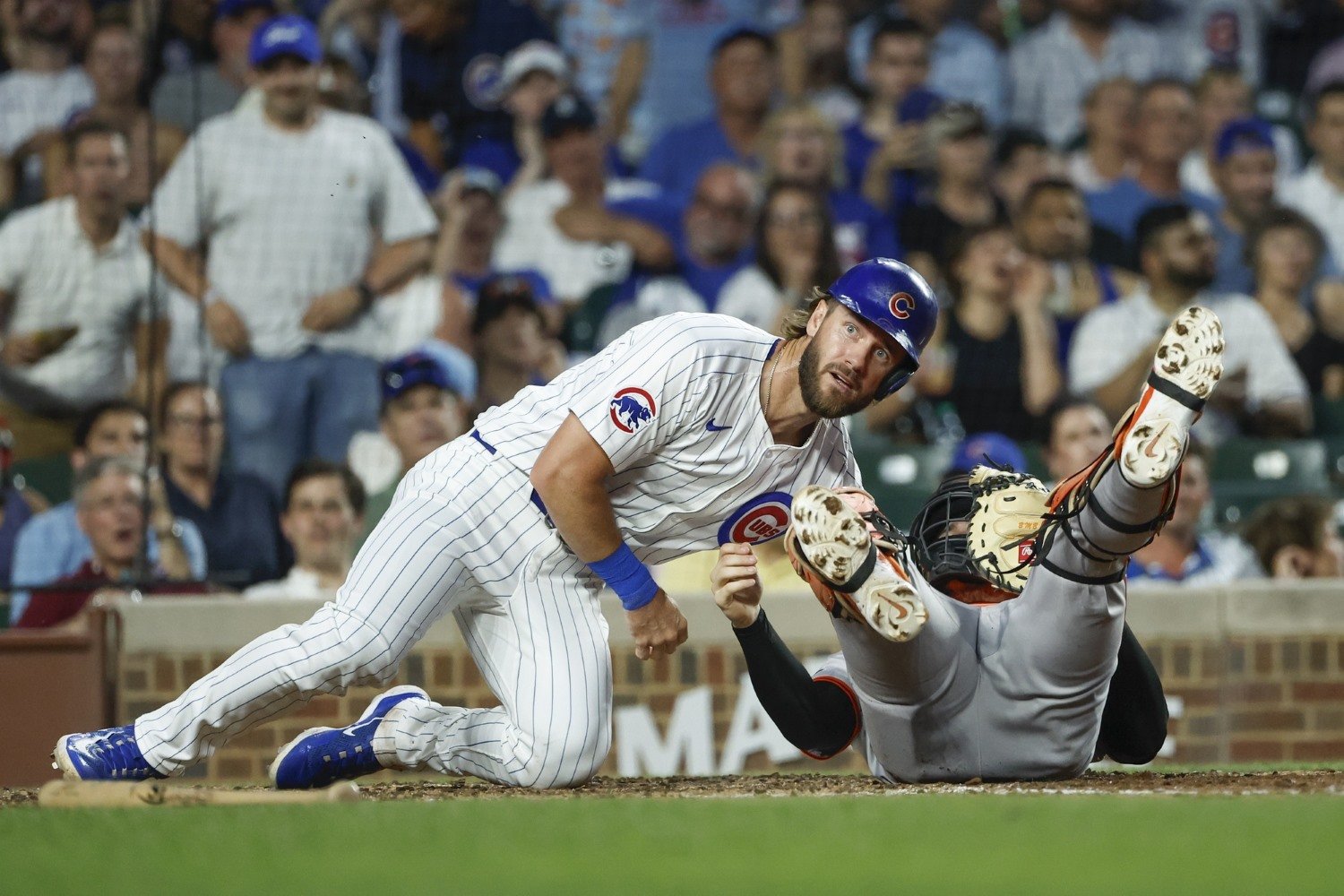 First, a disclaimer: I’m going to take off my objectivity hat to which I typically try to cling and instead take more of a personal approach here. I am not oblivious to the trajectory of the Chicago Cubs, as currently constructed. They were never a legitimate title contender, even if a National League Central crown appeared to be in reach from the outset of 2024. It was a team that neglected to improve where they likely needed to, instead choosing to rely on upside and a team-wide uptick in performance in order for meaningful improvement to occur. That conservatism (and the resulting mediocrity) has led the majority of the fanbase to frustration. If you’ve spent even 60 seconds on social media somewhere in the month of June, that’s an obvious statement. There are multiple team aspects to which we can point to gather up enough shortcomings, in discussing why this current club needs to scramble just to avoid spending extended time in last place in a relatively mediocre division. That, however, is not my purpose here. Instead, I have just one primary criticism to share surrounding the 2024 Chicago Cubs: they’re boring. While technically alive, I was too young to actually comprehend the success of the Chicago Bulls in the 1990s, until the tail end. That means that, at 34 years old, my sports fandom has been fraught with disappointment. A roughly five-year stretch of hockey (prior to my abandonment of the Chicago franchise and sport at large stemming from their own cultural rot) and 2016 represent the only championship joy I have experienced to date. It's not as if I'm naïve in thinking that your team of choice must only win championships to be enjoyed. You can find something to like in even the worst of teams. Certain aspects of the game, personalities involved, and hope for the future offer at least some reason to engage positively with teams that are subpar among their league counterparts. With each passing day, though, I am becoming more unsure that the 2024 Cubs are offering much in any of those respects. Frustrations abound for an underperforming team. But it’s not as if we haven’t experienced bad Cubs teams in the last handful of decades. There have been… many. Even the worst of teams, though, featured at least a few reasons to engage. The 2012 Cubs lost 101 games. They also featured 32 homers from Alfonso Soriano, 183 hits from Starlin Castro, stellar defense from Darwin Barney, and a young Anthony Rizzo cracking into the big leagues. They lost 96 in 2006, but had 38 homers from Aramis Ramírez and 58 swipes from Juan Pierre. Carlos Zambrano pitched to a 3.41 ERA and won 16 games, and he hit six home runs that year. The 2002 campaign – wherein they lost 95 – featured a 49-homer season from Sammy Sosa and another 59 combined from Fred McGriff & Mark Bellhorn, plus Mark Prior's rookie showing. Those teams had standout performances. They had personality, even if the wins didn’t manifest along with those components. Perhaps most importantly, they offered some hope for the future. The 2002 and 2006 teams each improved by roughly 20 games the next season. The teams following 2012 didn’t feature the same leap, but did have Theo Epstein and a coherent plan at the helm. These 2024 Cubs are offering us very little on any of those fronts. Moments of excitement have been fleeting, at best, this season. Michael Busch had a nice stretch. Ian Happ did, too. In fact, both of them are still in one. Shota Imanaga came flying out of the gate. Again, though, nothing has been sustainable. The most exciting things to take away from this year’s team have been…their approach in April? Maybe? Which is also to say that this team doesn’t do anything loud. Twenty teams make hard contact more consistently than the Cubs. They’re in the bottom 10 of the league in ISO. On the mound, they’re bottom of the league in average velocity. It’s hard to get the type of impact performance that even those bad teams had, when your roster is comprised of just-ok parts. What entertainment value are you getting when the whole ship is built out of “steady yet unspectacular”? Especially when “steady” has yet to truly manifest. Furthering things is that it’s a stoic group. I’m not sure if that’s by design, but it’s simply devoid of front-facing personality. Dansby Swanson, Ian Happ, Cody Bellinger, Nico Hoerner, Michael Busch, Justin Steele, Jameson Taillon. The list goes on. A lot of guys who don’t display emotion for the better part of their daily contribution. As someone who isn’t outwardly demonstrative, I understand. As someone who wants to be entertained, though, I crave more. It makes their struggles more frustrating when it feels (however illusory the feeling) like a little more edge could change things for the better. More than anything, this team is maybe lacking in vision. Much more than the handful of good performances we saw in 2012 and 2013, what those teams had over this one was the fact that they were part of a well-understood, publicly-acknowledged rebuild. Spending those years thinking about trades and tracking other teams' farm systems was made easier by the fact that doing those things was the plan, all along. This team fell face-first into a similar position, which feels much more like 2002 or 2006, without the fun. They paid a manager $40 million and then sat on their hands. They have an upper-tier farm system, but appear terrified to use it, whether by pushing their talent to the top level or utilizing it within the trade market. Now, obviously, I have no insight as to what’s happening behind the scenes. But there’s a perception of Jed Hoyer here that is rapidly developing, and it isn’t one working in his favor. None of this is to say that we couldn’t witness a boost in watchability from these Cubs. Imanaga, prior to his struggles, was full of energy on the mound. Christopher Morel possesses it, when he isn’t struggling. Pete Crow-Armstrong contains entertainment upside in league with Javier Báez. But that can’t be realized when the team is mired in its collective woes in the way that it has been going back to mid-May. Nor is it to say that, as a fan, I don’t care if the Cubs win games or not. My preference in that respect is always that the players play well, and the team wins games. But in the interim, I need something to look forward to. I value my time. I also don’t want the perception to be that I am stripping these players of their humanity in that they’re here merely for my amusement. I understand the nature of struggle in sport and the psychological factors that exist therein. This isn’t about the Cubs as individual players; this is a critique of the Cubs' operating on an organizational level. At that level, their goal should be to get fans and followers to invest--invest their time, their emotion. What incentive is there to invest, given the absence of key factors that even those bad teams had? I don’t need them to be good. I just need them to be interesting.
 -
The Cubs' richest recent player investment has had a tough season, but he's coming out of his funk a bit during June. Could it be that he was at less than 100 percent during his toughest times? Image courtesy of © Kamil Krzaczynski-USA TODAY Sports When the Chicago Cubs signed Dansby Swanson in the 2022-23 offseason, they did so knowing that he didn’t possess the offensive upside of his free agent counterparts. However negligent pursuing defense and unquantifiable character traits over clearly (and, probably, vastly) superior hitters might’ve been, it’s not likely they expected this poor a performance from him with the stick this early in the contract. That's because Swanson hasn’t been this bad for this long before--at least not since he stabilized as an offensive performer, somewhere in 2019. That year was when he established himself after a rapid ascent to the big leagues. He posted wRC+ figures of 63 & 79 in 2017 and 2018, respectively, with the 91 in 2019 representing his establishment. He’s produced above-average wRC+ figures since, with the exception of a 99 blip in 2021. So when we think about stretches where he’s been as bad as he has for virtually all of 2024, it becomes very difficult to find a comparison. It's that very “breakout” season, though, that provides us with something we can compare to. Even after establishing himself as an elite defender who hits enough, Swanson has had month-to-month stretches of volatility, but August and September of 2019 give us a precedent for this sort of prolonged slump. Perhaps there’s some sort of information we can glean, to find answers as to how Swanson can crawl out of what is threatening to become a season-long funk. The last stretch this brutal for Swanson really started in July of that 2019 campaign. He ran an 84 wRC+ that month, before going for figures of 36 and 52 in the final two months. His final figure for the second half was just 55. Looking at the second half as a whole, he struck out at a 29.7 percent clip while hitting just .204 and posting a .315 on-base percentage. His ISO was only .049. That’s all even with a very respectable .312 BABIP. Let’s dig a bit deeper. In August and September of that season, he made only one piece of hard contact on a non-fastball. Other than that, offspeed and breaking pitches ruled him. He whiffed at roughly 42% of breaking pitches and exactly half of his swings at offspeed stuff. His overall swing rates were within his normal band for that season, but he plunged to a contact rate of barely 70%. It was just a lot of whiff, when he wasn’t making higher-than-usual groundball contact. Swanson hasn’t been quite that bad in 2024. Sure, a wRC+ of 81 isn’t what you want from perhaps your highest-profile player. But it’s been even worse within. In May, he was at just a 40 wRC+ and fanned at a 28% rate. His ISO was just .086. His overall first-half numbers feature a slash with a .208 average, a .286 OBP and a .134 ISO. Again, not quite as bad, but his longest stretch of well-below-average production since late 2019. Of course, there’s a giant caveat within that 2019 stretch that I have neglected to share: He was working through a heel injury. He missed time, and then continued to have it nag him through the end of the year. Up to that point, he was having a genuine breakout season, which brings us to a relevant question: how much of Dansby Swanson’s current performance can we attribute to the knee injury for which he spent time on the IL last month? It was characterized as a right knee sprain coming off a slide into second base. This is my entirely backdoor way of trying to find a little bit of optimism with regard to 2024 Dansby Swanson. As outsiders, we have no way of knowing the extent to which the knee was bothering him. But thus far in June, he has looked… better. Through a shade over 50 plate appearances, his wRC+ is at 103 for this month. His strikeout rate has been cut from 28.1% in May to just 19.0% in June, while his walks are back up a touch, to 10.3%. His ISO is up at .196, the highest of any month to this point. He’s still hitting the ball on the ground far too much (60.0 GB%), but whiffs are down and balls in play are up. That’s a start. It’s easy to lose the uptick in performance within the broader context of Swanson’s own struggles and those of the team at large. But it’s at least becoming fairly clear that the weeks surrounding his IL stint were absolutely impacted by the knee injury, given the parallels to the heel in 2019. He has a long way to go to reestablish some value as a member of this Cubs’ lineup, but the reality is, so do the eight guys around him on any given night. What we have for now, at least, is at least some semblance of optimism. View full article
-
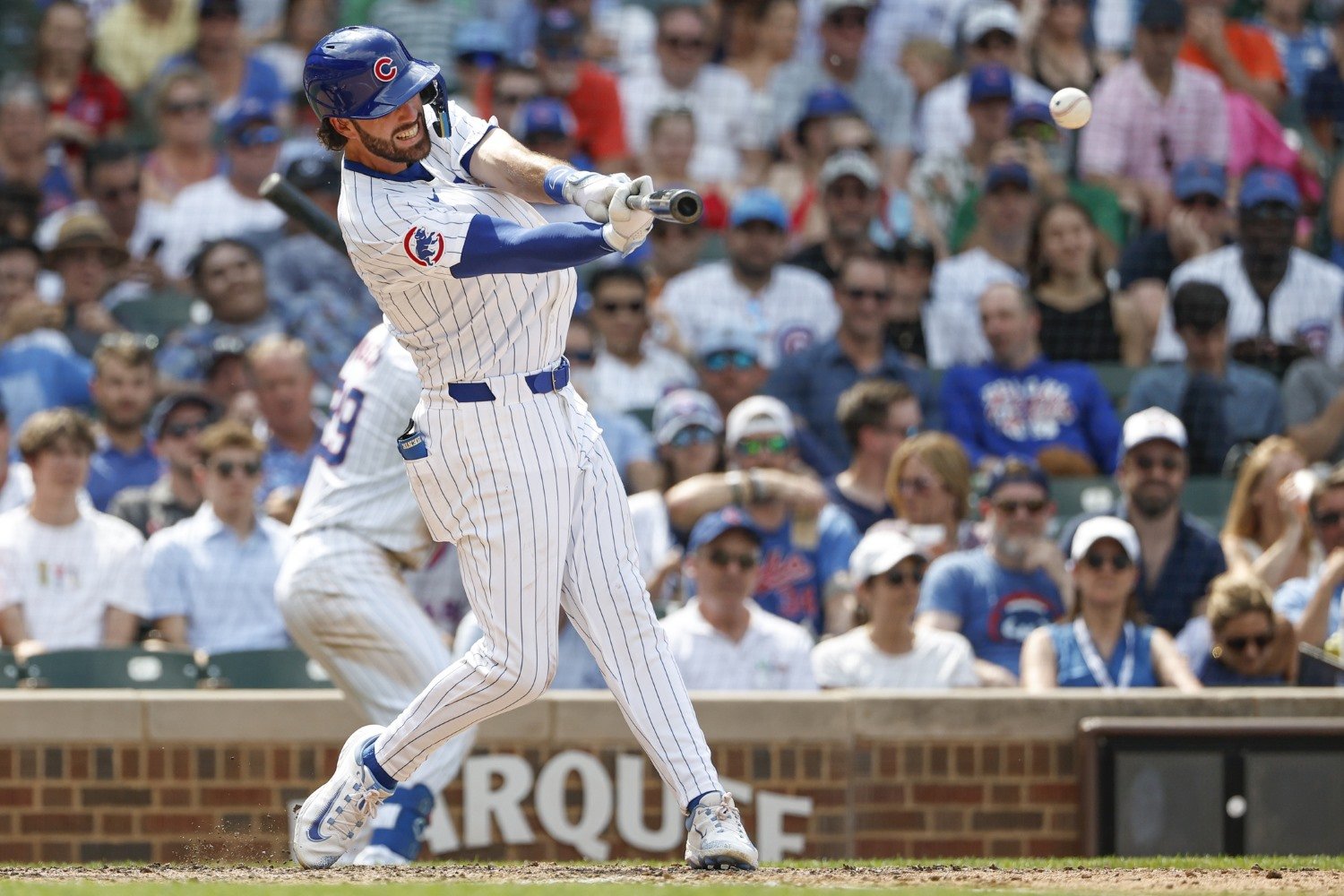 When the Chicago Cubs signed Dansby Swanson in the 2022-23 offseason, they did so knowing that he didn’t possess the offensive upside of his free agent counterparts. However negligent pursuing defense and unquantifiable character traits over clearly (and, probably, vastly) superior hitters might’ve been, it’s not likely they expected this poor a performance from him with the stick this early in the contract. That's because Swanson hasn’t been this bad for this long before--at least not since he stabilized as an offensive performer, somewhere in 2019. That year was when he established himself after a rapid ascent to the big leagues. He posted wRC+ figures of 63 & 79 in 2017 and 2018, respectively, with the 91 in 2019 representing his establishment. He’s produced above-average wRC+ figures since, with the exception of a 99 blip in 2021. So when we think about stretches where he’s been as bad as he has for virtually all of 2024, it becomes very difficult to find a comparison. It's that very “breakout” season, though, that provides us with something we can compare to. Even after establishing himself as an elite defender who hits enough, Swanson has had month-to-month stretches of volatility, but August and September of 2019 give us a precedent for this sort of prolonged slump. Perhaps there’s some sort of information we can glean, to find answers as to how Swanson can crawl out of what is threatening to become a season-long funk. The last stretch this brutal for Swanson really started in July of that 2019 campaign. He ran an 84 wRC+ that month, before going for figures of 36 and 52 in the final two months. His final figure for the second half was just 55. Looking at the second half as a whole, he struck out at a 29.7 percent clip while hitting just .204 and posting a .315 on-base percentage. His ISO was only .049. That’s all even with a very respectable .312 BABIP. Let’s dig a bit deeper. In August and September of that season, he made only one piece of hard contact on a non-fastball. Other than that, offspeed and breaking pitches ruled him. He whiffed at roughly 42% of breaking pitches and exactly half of his swings at offspeed stuff. His overall swing rates were within his normal band for that season, but he plunged to a contact rate of barely 70%. It was just a lot of whiff, when he wasn’t making higher-than-usual groundball contact. Swanson hasn’t been quite that bad in 2024. Sure, a wRC+ of 81 isn’t what you want from perhaps your highest-profile player. But it’s been even worse within. In May, he was at just a 40 wRC+ and fanned at a 28% rate. His ISO was just .086. His overall first-half numbers feature a slash with a .208 average, a .286 OBP and a .134 ISO. Again, not quite as bad, but his longest stretch of well-below-average production since late 2019. Of course, there’s a giant caveat within that 2019 stretch that I have neglected to share: He was working through a heel injury. He missed time, and then continued to have it nag him through the end of the year. Up to that point, he was having a genuine breakout season, which brings us to a relevant question: how much of Dansby Swanson’s current performance can we attribute to the knee injury for which he spent time on the IL last month? It was characterized as a right knee sprain coming off a slide into second base. This is my entirely backdoor way of trying to find a little bit of optimism with regard to 2024 Dansby Swanson. As outsiders, we have no way of knowing the extent to which the knee was bothering him. But thus far in June, he has looked… better. Through a shade over 50 plate appearances, his wRC+ is at 103 for this month. His strikeout rate has been cut from 28.1% in May to just 19.0% in June, while his walks are back up a touch, to 10.3%. His ISO is up at .196, the highest of any month to this point. He’s still hitting the ball on the ground far too much (60.0 GB%), but whiffs are down and balls in play are up. That’s a start. It’s easy to lose the uptick in performance within the broader context of Swanson’s own struggles and those of the team at large. But it’s at least becoming fairly clear that the weeks surrounding his IL stint were absolutely impacted by the knee injury, given the parallels to the heel in 2019. He has a long way to go to reestablish some value as a member of this Cubs’ lineup, but the reality is, so do the eight guys around him on any given night. What we have for now, at least, is at least some semblance of optimism.
 -
After too long a time with too little offensive production and too little control of the running game on the part of their catching corps, the Cubs took action Wednesday. Will it be a sufficient change? Image courtesy of © Gregory Fisher-USA TODAY Sports We’re inside of six weeks until the MLB trade deadline, and social media is abuzz with all the theoretical names the Chicago Cubs could pursue before then. Danny Jansen & Elias Díaz have been heavily mentioned in that discussion, given the absence of any offensive contributions from behind the plate. While something like that could come to fruition before Jul. 31 (even with teams’ general apprehension for trading for catchers in-season), the organization has at least made a move in the interim. It was announced Wednesday that the team designated veteran catcher Yan Gomes for assignment and signed former New York Mets catcher Tomás Nido to a major-league deal. Nido will step in to serve as backup to Miguel Amaya. While it’s an unfortunate end in the organization for a player who was (by all accounts) well-respected in the clubhouse, it’s hard to argue against any justification for the Gomes DFA. Already a light-hitting player at the position, Gomes was in the midst of his worst offensive season. Approaching 100 plate appearances, he had posted a wRC+ of only 17, while slashing only .154/.179/.242 and striking out almost 38 percent of the time. Those are eye-poppingly bad numbers, obviously. Not that we should expect Nido to come in and right the ship in matters of offensive production at the position. He sports a career wRC+ of 56, a career ISO of .099, and he probably doesn’t walk enough (4.2 career BB%) to compensate for how much he strikes out (25.7%). In matters of the stick, he’s essentially a wash with Gomes (and 2024 Miguel Amaya, for that matter). But what Nido brings to the table is a defensive boost behind the plate. The typically steady glove of Gomes was experiencing a fairly notable decline on the defensive end, too. Baseball Prospectus had his comprehensive Catcher Defensive Adjustment at a -5.8 for the year. That ranked 81st among 82 catchers. His Deserved Runs Prevented sat at an identical figure, ranking 82 out of 82. That’s a product both of framing issues – wherein Gomes also sat at the bottom of the leaderboard (-0.018 Called Strikes Above Average) – and problems controlling the run game, where Gomes was 57th in Swipe Rate Above Average. Nido isn’t elite by really any standard. But at the very least, you’re getting a steady dose of mid, as opposed to one of bad. His -0.2 CDA ranks 49th among that group and the same number in DRP is 50th. While he doesn’t have the control over the running game in outright preventing attempts (below average Takeoff Rate Above Average), he’s at least adept at stopping them with an above average SRAA. He does that while being almost exactly average in the framing game. It's also worth noting in all of this that in addition to being a significant upgrade over Gomes – on probably both sides of the ball at this point – Nido is also a rather sizeable upgrade over what we’ve seen from Miguel Amaya on the defensive side. It’ll be interesting to see if Nido starts to creep into the starter’s time, given the stability he appears to offer from a defensive perspective. Again, we’re not talking about a massive shakeup. It’s not a Jansen or Díaz type of move that could yield genuine impact. But it was a necessary one. Gomes was providing so much negative value in multiple facets that something like this became necessity. That steady dose of mid I mentioned earlier does sound pretty nice at this point, after all. View full article
-
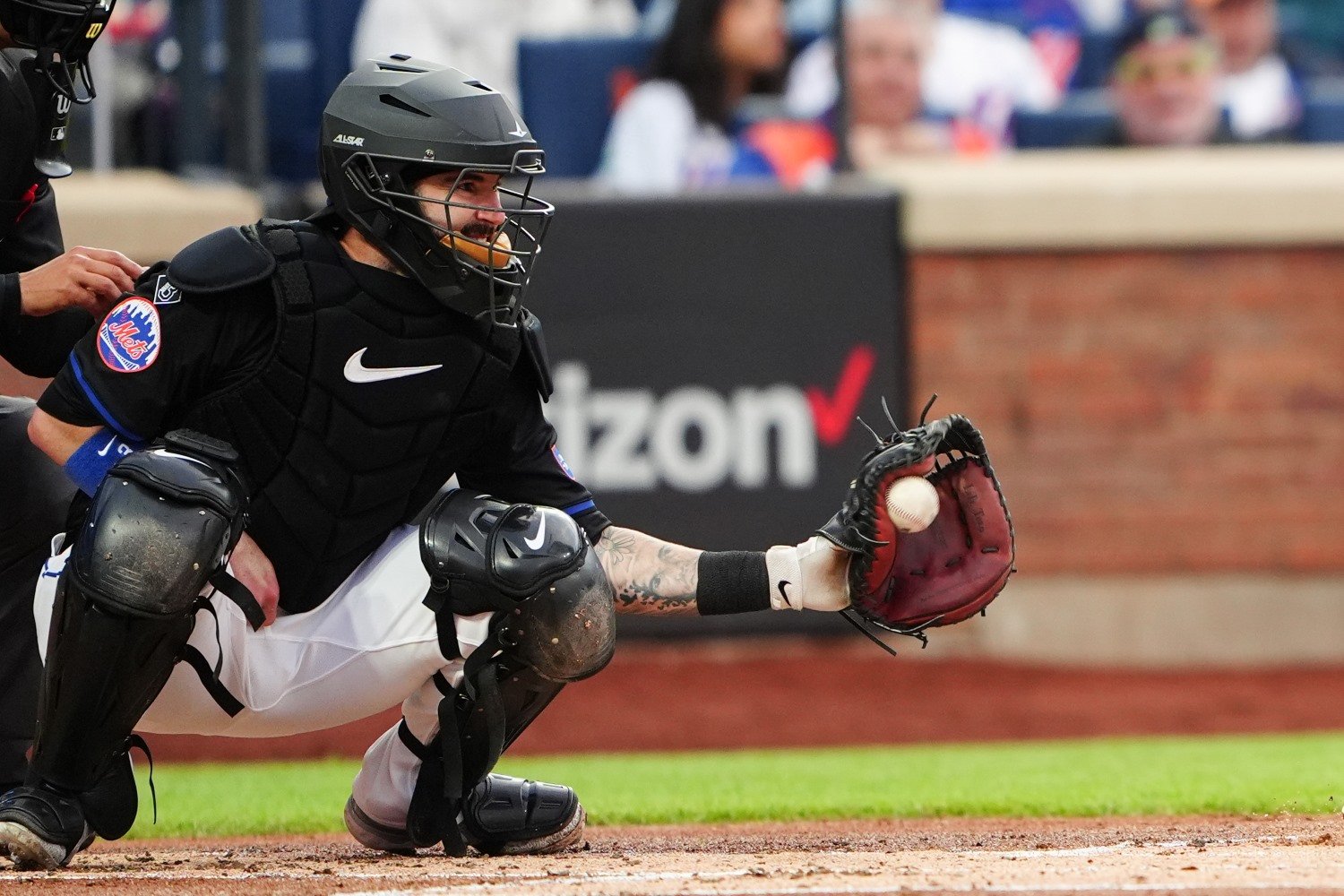 We’re inside of six weeks until the MLB trade deadline, and social media is abuzz with all the theoretical names the Chicago Cubs could pursue before then. Danny Jansen & Elias Díaz have been heavily mentioned in that discussion, given the absence of any offensive contributions from behind the plate. While something like that could come to fruition before Jul. 31 (even with teams’ general apprehension for trading for catchers in-season), the organization has at least made a move in the interim. It was announced Wednesday that the team designated veteran catcher Yan Gomes for assignment and signed former New York Mets catcher Tomás Nido to a major-league deal. Nido will step in to serve as backup to Miguel Amaya. While it’s an unfortunate end in the organization for a player who was (by all accounts) well-respected in the clubhouse, it’s hard to argue against any justification for the Gomes DFA. Already a light-hitting player at the position, Gomes was in the midst of his worst offensive season. Approaching 100 plate appearances, he had posted a wRC+ of only 17, while slashing only .154/.179/.242 and striking out almost 38 percent of the time. Those are eye-poppingly bad numbers, obviously. Not that we should expect Nido to come in and right the ship in matters of offensive production at the position. He sports a career wRC+ of 56, a career ISO of .099, and he probably doesn’t walk enough (4.2 career BB%) to compensate for how much he strikes out (25.7%). In matters of the stick, he’s essentially a wash with Gomes (and 2024 Miguel Amaya, for that matter). But what Nido brings to the table is a defensive boost behind the plate. The typically steady glove of Gomes was experiencing a fairly notable decline on the defensive end, too. Baseball Prospectus had his comprehensive Catcher Defensive Adjustment at a -5.8 for the year. That ranked 81st among 82 catchers. His Deserved Runs Prevented sat at an identical figure, ranking 82 out of 82. That’s a product both of framing issues – wherein Gomes also sat at the bottom of the leaderboard (-0.018 Called Strikes Above Average) – and problems controlling the run game, where Gomes was 57th in Swipe Rate Above Average. Nido isn’t elite by really any standard. But at the very least, you’re getting a steady dose of mid, as opposed to one of bad. His -0.2 CDA ranks 49th among that group and the same number in DRP is 50th. While he doesn’t have the control over the running game in outright preventing attempts (below average Takeoff Rate Above Average), he’s at least adept at stopping them with an above average SRAA. He does that while being almost exactly average in the framing game. It's also worth noting in all of this that in addition to being a significant upgrade over Gomes – on probably both sides of the ball at this point – Nido is also a rather sizeable upgrade over what we’ve seen from Miguel Amaya on the defensive side. It’ll be interesting to see if Nido starts to creep into the starter’s time, given the stability he appears to offer from a defensive perspective. Again, we’re not talking about a massive shakeup. It’s not a Jansen or Díaz type of move that could yield genuine impact. But it was a necessary one. Gomes was providing so much negative value in multiple facets that something like this became necessity. That steady dose of mid I mentioned earlier does sound pretty nice at this point, after all.
 -
The Chicago Cubs need a jolt--a powerful and sudden but lasting injection of offensive firepower, preferably from a dynamic young hitter. And there's some good news on that front. Image courtesy of © David Banks-USA TODAY Sports Any good feeling about individual hitters in the Chicago Cubs’ lineup has been fleeting. We had early plate discipline from Christopher Morel. We had early power from Michael Busch. We have individual moments from Seiya Suzuki. We have a recent power surge from Ian Happ. But none of it has been sustained. Stretches of complete silence from the collective lineup has fed into myriad questions about the on-field product, and (by extension) the organization as a whole. Maybe Busch is starting to give us something a little more permanent. It was fairly surprising to see the Cubs hand the keys to first base over to Busch so early. Even with a high-upside bat, there was very little ground to stand on, in terms of major-league success. Nevertheless, upon his acquisition from the Dodgers, there he was: entrenched in a position that carries a fair bit of prestige in organizational history. The early returns reflected the faith from the Cubs’ brass. He hit .266 in the first month of the year, while reaching base at a .333 clip and notching a .234 ISO. (For you math whizzes, that means he slugged .500.) He made hard contact at a 37.1-percent rate and kept the ball off the ground, on his way to a wRC+ of 133. Then, May happened. Last month, Busch’s wRC+ dropped to a 106. He was still above-average, sure--but only technically. He struck out at an even higher rate (37.2%) and didn’t feature the power to compensate like he had in April (.167 ISO). While he was able to garner the free pass on a more consistent basis (15.1 BB%), his quality of contact slipped, and he put the ball on the ground half the time. The impact just wasn’t there. The June version of Busch, however, seems to have struck some sort of balance in providing regular value to the lineup. The power hasn’t returned. In fact, his .147 ISO this month is his lowest yet. But everything else is starting to look promising. Busch’s walk rate has maintained. More importantly, though, whiffs are down significantly--particularly against fastballs, where he’s cut the Whiff% from 31.8% in May to just 18.2% in June. He’s cut offspeed whiffs down almost 10 percentage points, too. Subsequently, the strikeout rate is down (25.0%) and more balls are being put in play. The quality of contact is back up to snuff, and the ground balls have come back down. (Er, you know what I mean.) It’s all fed into a line that features a .324 average and .425 on-base percentage. One imagines that much of the uptick in production is due to Busch gaining (re-gaining?) a command of the strike zone. His chase rate, particularly against breaking and offspeed pitches, has plummeted. That’s forcing pitchers to come into the zone more often, leading to the above factors improving for Busch. Ideally, this will eventually lead to an organic return of the power numbers, as well. We're already seeing some evidence of that this week. Given the volatility of pretty much every Cubs hitter on a month-to-month basis this year, it’s hard to put too much future stock into the developments from Busch. But there’s an optimistic read here that says Busch came out hot; the league adjusted; and Busch adjusted back. If this is a sustainable version of Michael Busch, than he might just be every bit the guy we thought we saw back in April. Of course, in order for that to mean anything in 2024, a couple of his teammates have to come along for the rise. View full article
-
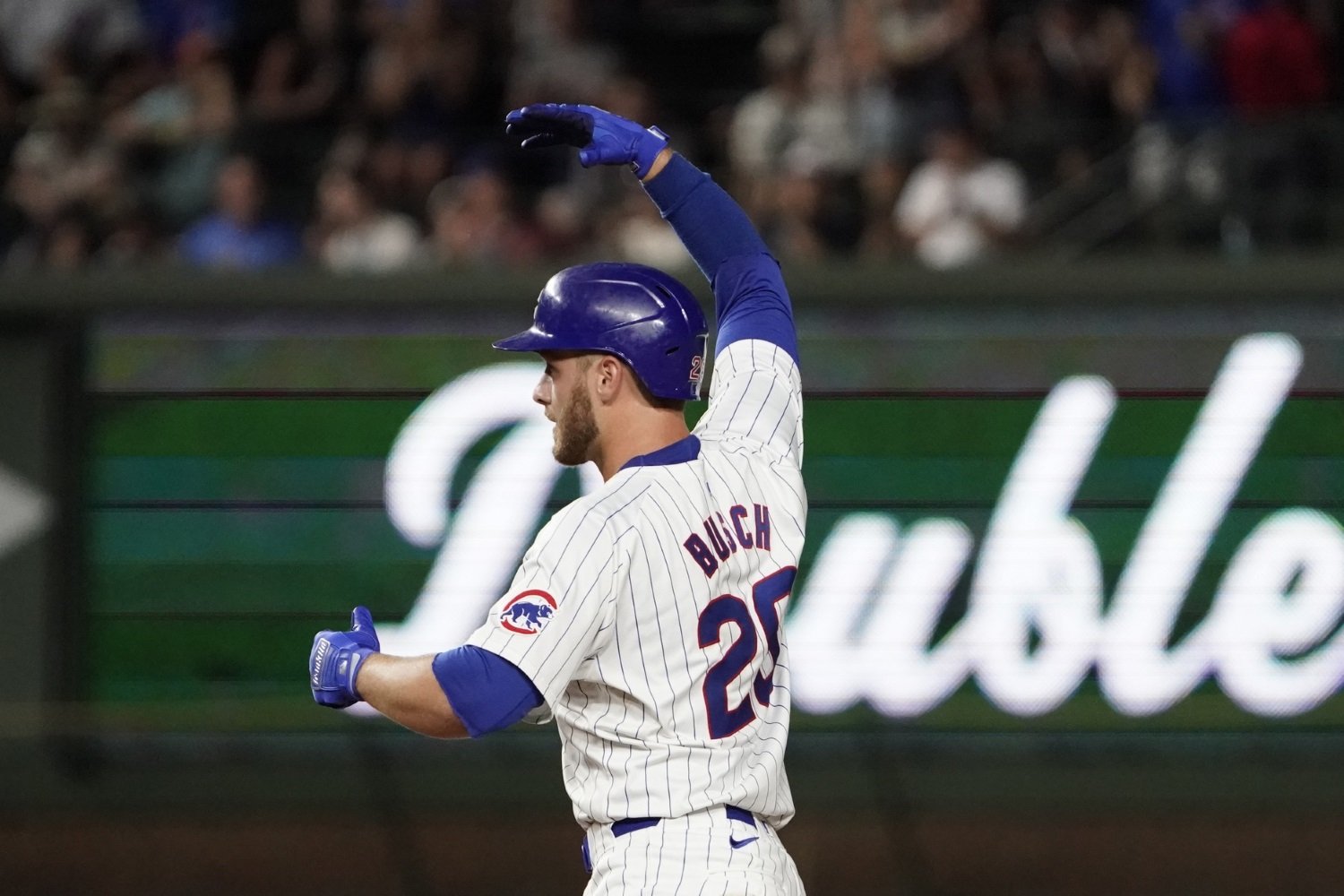 Any good feeling about individual hitters in the Chicago Cubs’ lineup has been fleeting. We had early plate discipline from Christopher Morel. We had early power from Michael Busch. We have individual moments from Seiya Suzuki. We have a recent power surge from Ian Happ. But none of it has been sustained. Stretches of complete silence from the collective lineup has fed into myriad questions about the on-field product, and (by extension) the organization as a whole. Maybe Busch is starting to give us something a little more permanent. It was fairly surprising to see the Cubs hand the keys to first base over to Busch so early. Even with a high-upside bat, there was very little ground to stand on, in terms of major-league success. Nevertheless, upon his acquisition from the Dodgers, there he was: entrenched in a position that carries a fair bit of prestige in organizational history. The early returns reflected the faith from the Cubs’ brass. He hit .266 in the first month of the year, while reaching base at a .333 clip and notching a .234 ISO. (For you math whizzes, that means he slugged .500.) He made hard contact at a 37.1-percent rate and kept the ball off the ground, on his way to a wRC+ of 133. Then, May happened. Last month, Busch’s wRC+ dropped to a 106. He was still above-average, sure--but only technically. He struck out at an even higher rate (37.2%) and didn’t feature the power to compensate like he had in April (.167 ISO). While he was able to garner the free pass on a more consistent basis (15.1 BB%), his quality of contact slipped, and he put the ball on the ground half the time. The impact just wasn’t there. The June version of Busch, however, seems to have struck some sort of balance in providing regular value to the lineup. The power hasn’t returned. In fact, his .147 ISO this month is his lowest yet. But everything else is starting to look promising. Busch’s walk rate has maintained. More importantly, though, whiffs are down significantly--particularly against fastballs, where he’s cut the Whiff% from 31.8% in May to just 18.2% in June. He’s cut offspeed whiffs down almost 10 percentage points, too. Subsequently, the strikeout rate is down (25.0%) and more balls are being put in play. The quality of contact is back up to snuff, and the ground balls have come back down. (Er, you know what I mean.) It’s all fed into a line that features a .324 average and .425 on-base percentage. One imagines that much of the uptick in production is due to Busch gaining (re-gaining?) a command of the strike zone. His chase rate, particularly against breaking and offspeed pitches, has plummeted. That’s forcing pitchers to come into the zone more often, leading to the above factors improving for Busch. Ideally, this will eventually lead to an organic return of the power numbers, as well. We're already seeing some evidence of that this week. Given the volatility of pretty much every Cubs hitter on a month-to-month basis this year, it’s hard to put too much future stock into the developments from Busch. But there’s an optimistic read here that says Busch came out hot; the league adjusted; and Busch adjusted back. If this is a sustainable version of Michael Busch, than he might just be every bit the guy we thought we saw back in April. Of course, in order for that to mean anything in 2024, a couple of his teammates have to come along for the rise.
 -
Is the Cubs' Pitching Lab Even Operational, At This Point?
RandallPnkFloyd posted an article in Cubs
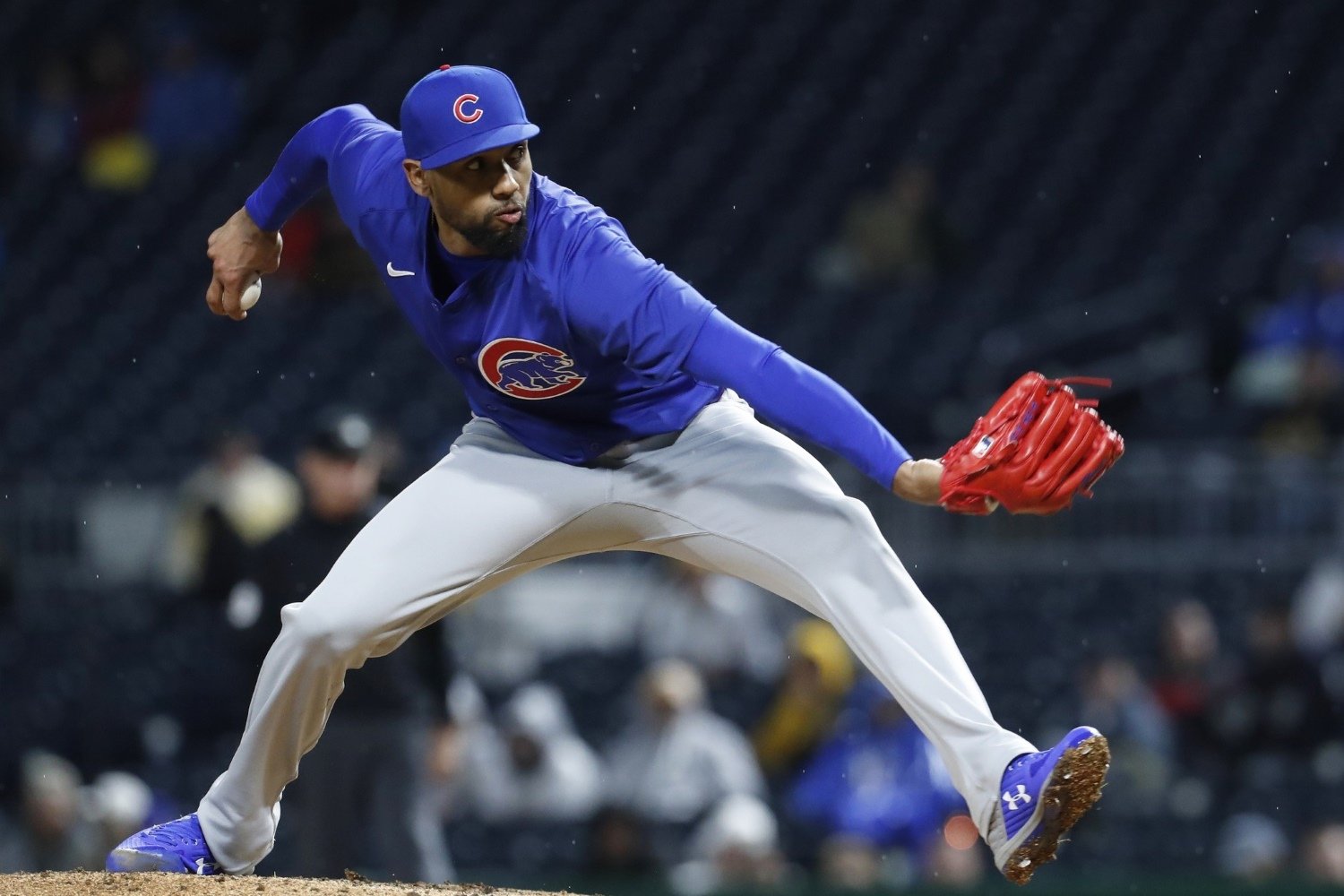 I’m not going to pretend to know a lot about the inner workings of pitching development. I was never a pitcher (lacking the mental fortitude to do so), and I possess only a rudimentary knowledge of what institutions like Driveline do, outside of increasing velocity. But I do know that the Chicago Cubs were starting to gain a lot of credit for their pitching infrastructure under Craig Breslow. This manifested in “bargain-bin” arms turning into viable relief options, before they were subsequently shipped out of town during the team’s recent reset. That was pretty solid process. Names like Scott Effross, David Robertson, and Brandon Hughes either broke out or reestablished themselves as part of the organization. Mark Leiter Jr. & Julian Merryweather, too. There was a time when Rowan Wick looked like a closer-in-waiting. Keegan Thompson & Adbert Alzolay have flashed good things. The team has a myriad of recent success stories in flipping the narrative around their in-house pitching solutions. But the team’s recent bullpen woes have started to dissolve any good will they’ve built up with their recent process. Alzolay struggled to sustain his success prior to (or perhaps because of) his injury. Thompson lost it to an alarming degree, as well. José Cuas was a disaster, and Héctor Neris is enduring the worst season of his career. This is all happening while names like Jeremiah Estrada & Trevor Megill have gone on to thrive outside of the organization. The process itself is, of course, not unique. Every team does some variation of what the Cubs are doing in terms of adding relief help. Find a veteran, help them develop or elevate a pitch, and hope you can catch lightning in a bottle. But the Cubs tried to sell themselves as having a high-end pitching development infrastructure, and their recent results appear to be waning relative to their organizational counterparts. Their bullpen ERA ranks 24th (4.49). The strikeout numbers look decent, but they’re walking opposing hitters at a rate tied with the Los Angeles Angels for the league’s fifth-highest (10.8%). Their collective velocity is in the bottom half of the league, while they are proving incapable of generating swings outside of the zone. Strike One has been an issue as well, with a first pitch Strike% that sits just 19th. I’m oversimplifying, but there’s just something broken within the Cubs’ process in their relief corps, especially coming off a year where they sat pretty nicely in each of those regards. It's especially frustrating, given that Craig Counsell’s ability to manage a pitching staff was purported to be a crucial factor in 2024. While the Cubs didn’t add much outside of Neris, that blend was supposed to be a boon for the organization this year, even with the current personnel. That hasn’t happened, and it’s already leading to grumbling about the job being done on the bench--valid or not. That idea applies to the larger questions starting to emerge regarding the “lab”, as well. Maybe it’s just a personnel issue. Some health issues and some young arms working through some stuff could be holding the staff back in larger ways than we might realize. But when you’re talking about a narrative, validity doesn’t always matter. And the narrative surrounding the lab is starting to shift toward something irrecoverable. Again, I’m not here to speculate on the effectiveness of the Cubs’ behind-the-scenes process in matters of pitching. We don’t know the intricacies, and we aren’t yet at a point where we can point to Breslow’s departure, given that (pretty much) the rest of the front office personnel remains in place. Something here is broken, though. And it’s costing the Cubs, in an increasingly dire way.
 -
It didn't translate into the kind of success fans crave, but from 2019 through 2023, the Chicago Cubs derived a lot of value from successful development of pitchers scooped off baseball's scrap heap. This year? Not so much. Image courtesy of © Charles LeClaire-USA TODAY Sports I’m not going to pretend to know a lot about the inner workings of pitching development. I was never a pitcher (lacking the mental fortitude to do so), and I possess only a rudimentary knowledge of what institutions like Driveline do, outside of increasing velocity. But I do know that the Chicago Cubs were starting to gain a lot of credit for their pitching infrastructure under Craig Breslow. This manifested in “bargain-bin” arms turning into viable relief options, before they were subsequently shipped out of town during the team’s recent reset. That was pretty solid process. Names like Scott Effross, David Robertson, and Brandon Hughes either broke out or reestablished themselves as part of the organization. Mark Leiter Jr. & Julian Merryweather, too. There was a time when Rowan Wick looked like a closer-in-waiting. Keegan Thompson & Adbert Alzolay have flashed good things. The team has a myriad of recent success stories in flipping the narrative around their in-house pitching solutions. But the team’s recent bullpen woes have started to dissolve any good will they’ve built up with their recent process. Alzolay struggled to sustain his success prior to (or perhaps because of) his injury. Thompson lost it to an alarming degree, as well. José Cuas was a disaster, and Héctor Neris is enduring the worst season of his career. This is all happening while names like Jeremiah Estrada & Trevor Megill have gone on to thrive outside of the organization. The process itself is, of course, not unique. Every team does some variation of what the Cubs are doing in terms of adding relief help. Find a veteran, help them develop or elevate a pitch, and hope you can catch lightning in a bottle. But the Cubs tried to sell themselves as having a high-end pitching development infrastructure, and their recent results appear to be waning relative to their organizational counterparts. Their bullpen ERA ranks 24th (4.49). The strikeout numbers look decent, but they’re walking opposing hitters at a rate tied with the Los Angeles Angels for the league’s fifth-highest (10.8%). Their collective velocity is in the bottom half of the league, while they are proving incapable of generating swings outside of the zone. Strike One has been an issue as well, with a first pitch Strike% that sits just 19th. I’m oversimplifying, but there’s just something broken within the Cubs’ process in their relief corps, especially coming off a year where they sat pretty nicely in each of those regards. It's especially frustrating, given that Craig Counsell’s ability to manage a pitching staff was purported to be a crucial factor in 2024. While the Cubs didn’t add much outside of Neris, that blend was supposed to be a boon for the organization this year, even with the current personnel. That hasn’t happened, and it’s already leading to grumbling about the job being done on the bench--valid or not. That idea applies to the larger questions starting to emerge regarding the “lab”, as well. Maybe it’s just a personnel issue. Some health issues and some young arms working through some stuff could be holding the staff back in larger ways than we might realize. But when you’re talking about a narrative, validity doesn’t always matter. And the narrative surrounding the lab is starting to shift toward something irrecoverable. Again, I’m not here to speculate on the effectiveness of the Cubs’ behind-the-scenes process in matters of pitching. We don’t know the intricacies, and we aren’t yet at a point where we can point to Breslow’s departure, given that (pretty much) the rest of the front office personnel remains in place. Something here is broken, though. And it’s costing the Cubs, in an increasingly dire way. View full article
-
 Identity is an interesting thing within the context of a major-league organization. You’re talking about those elements on which an organization hangs their hat. Last year’s Arizona Diamondbacks emphasized the collective: their roster, without many real standouts, performed in unison, demonstrating baserunning efficiency and excellent defense en route to a World Series appearance. This year, you’ve got the young and powerful Baltimore Orioles. The old(er), powerful New York Yankees. The young upstarts in Cincinnati who are absolute demons on the basepaths. Milwaukee’s ability to put balls in play and to thrive with a patchwork pitching staff. And so on. When the 2024 season began, one of the only sure things about the Chicago Cubs appeared to be their identity. With so few changes over the winter, they were again built around an efficient pitching staff that allowed balls in play, but soft contact overall. That was supported by an upper-tier defense, led by a legitimately elite middle infield. They had to excel on the margins, given a lack of offensive firepower, but it was believed that the pitching-and-defense formula they’d established could still allow them to succeed in one of the league’s weaker divisions. Of course, as we wade deeper into the month of June, the Cubs have undergone an identity crisis. The offense is essentially what could have been expected. Despite early plate discipline that might have led us to believe otherwise, the Cubs are 15th overall in runs and 20th in team wRC+ (97). May was worse, as they were 26th in the league in runs, 22nd in ISO (.131), and 23rd in wRC+ (88). Regression has come for some of their shiny early numbers. Other players have never gotten going. But without an impact bat, we can likely expect the team to continue scratching out runs in the most effort-intensive way possible. Again, not unexpected within the context of their identity. Instead, the problematic elements reside on the mound and the field. Sitting in the bottom five in fastball velocity in 2023 (93.4 MPH average), the Cubs were able to allow hard contact at one of the league’s five lowest rates. Only both LA teams, the Phillies, and Padres were better in HardHit% against than the Cubs’ 37.9% rate. That came in conjunction with the sixth-highest GB% (44.1). Their walk rate was in the top half of the league, at 8.4%. Even in allowing contact at a 76.8% rate on swings (10th-highest), it’s a formula that works. THat's true, at least, when you have a top-10 defensive unit. The Cubs were ninth in Fielding Run Value (14) to go along with a Defensive Runs Saved of 36 last year. They were above average in FRV at both middle infield spots, third base, center field, and behind the plate. Only the corner outfield spots and first base came up short. It was a unit that supplemented the type of pitching the Cubs had. While the Cubs did have some higher-velocity arms coming up through the pipeline, we still expected the identity to be very much the same, given the lack of turnover throughout much of the roster. However, that hasn’t materialized in the way that we expected. While the staff has managed to post the exact same average fastball velocity as ’23 so far, they haven’t been nearly as efficient. Despite giving up a touch less contact, they’re surrendering far more of the damaging variety of contact. Their 39.6 HardHit% against is the league’s ninth-highest. Their ground-ball rate has slipped to 42.7%, while their FB% has shot up from 34.9 last year (28th) to 39.0 this year (12th). Their walk rate sits as one of the league’s nine worst, at 8.6%. There have been individual successes within the staff, to be sure. But the collective isn’t proving nearly as efficient as they were in 2023. That has likely been a factor in the decline of the defense. The Cubs’ team FRV is at -16, which ranks 27th. Their DRS, at -15, is in the same spot. First base and center field are the only spots where the team is getting above-average defensive production, with left field sitting right on the threshold. Everywhere has been markedly worse. To reiterate: when your offense has the shortcomings that the Cubs’ lineup does, you have to excel in the other facets. And the Cubs most certainly are not. Much of this is something of an oversimplification, as we are painting the roster with a broad brush. At the same time, it very much underscores the implosion of the identity that the Cubs had planned to maintain for 2024. It’s not so much that they’re struggling to find one. It’s that they’re failing at maintaining the one they hoped was part of their very foundation. As such, it’s left them looking like something else entirely--something the apparent mirage of April prevented us from imagining. They're not a team without an identity, but something worse: a baseball team that just is not very good. Now, that’s not to say it’s a permanent outlook. But given their offseason conservatism, their inability to protect what was a fragile identity might just undermine it altogether.
 -
For the second time on what's only been a four-game homestand so far, the Chicago Cubs overcame a huge, multi-run defensive failure to win a game. It was exciting. Maybe it will be galvanizing. But it sure isn't what this team was supposed to be about. Image courtesy of © David Banks-USA TODAY Sports Identity is an interesting thing within the context of a major-league organization. You’re talking about those elements on which an organization hangs their hat. Last year’s Arizona Diamondbacks emphasized the collective: their roster, without many real standouts, performed in unison, demonstrating baserunning efficiency and excellent defense en route to a World Series appearance. This year, you’ve got the young and powerful Baltimore Orioles. The old(er), powerful New York Yankees. The young upstarts in Cincinnati who are absolute demons on the basepaths. Milwaukee’s ability to put balls in play and to thrive with a patchwork pitching staff. And so on. When the 2024 season began, one of the only sure things about the Chicago Cubs appeared to be their identity. With so few changes over the winter, they were again built around an efficient pitching staff that allowed balls in play, but soft contact overall. That was supported by an upper-tier defense, led by a legitimately elite middle infield. They had to excel on the margins, given a lack of offensive firepower, but it was believed that the pitching-and-defense formula they’d established could still allow them to succeed in one of the league’s weaker divisions. Of course, as we wade deeper into the month of June, the Cubs have undergone an identity crisis. The offense is essentially what could have been expected. Despite early plate discipline that might have led us to believe otherwise, the Cubs are 15th overall in runs and 20th in team wRC+ (97). May was worse, as they were 26th in the league in runs, 22nd in ISO (.131), and 23rd in wRC+ (88). Regression has come for some of their shiny early numbers. Other players have never gotten going. But without an impact bat, we can likely expect the team to continue scratching out runs in the most effort-intensive way possible. Again, not unexpected within the context of their identity. Instead, the problematic elements reside on the mound and the field. Sitting in the bottom five in fastball velocity in 2023 (93.4 MPH average), the Cubs were able to allow hard contact at one of the league’s five lowest rates. Only both LA teams, the Phillies, and Padres were better in HardHit% against than the Cubs’ 37.9% rate. That came in conjunction with the sixth-highest GB% (44.1). Their walk rate was in the top half of the league, at 8.4%. Even in allowing contact at a 76.8% rate on swings (10th-highest), it’s a formula that works. THat's true, at least, when you have a top-10 defensive unit. The Cubs were ninth in Fielding Run Value (14) to go along with a Defensive Runs Saved of 36 last year. They were above average in FRV at both middle infield spots, third base, center field, and behind the plate. Only the corner outfield spots and first base came up short. It was a unit that supplemented the type of pitching the Cubs had. While the Cubs did have some higher-velocity arms coming up through the pipeline, we still expected the identity to be very much the same, given the lack of turnover throughout much of the roster. However, that hasn’t materialized in the way that we expected. While the staff has managed to post the exact same average fastball velocity as ’23 so far, they haven’t been nearly as efficient. Despite giving up a touch less contact, they’re surrendering far more of the damaging variety of contact. Their 39.6 HardHit% against is the league’s ninth-highest. Their ground-ball rate has slipped to 42.7%, while their FB% has shot up from 34.9 last year (28th) to 39.0 this year (12th). Their walk rate sits as one of the league’s nine worst, at 8.6%. There have been individual successes within the staff, to be sure. But the collective isn’t proving nearly as efficient as they were in 2023. That has likely been a factor in the decline of the defense. The Cubs’ team FRV is at -16, which ranks 27th. Their DRS, at -15, is in the same spot. First base and center field are the only spots where the team is getting above-average defensive production, with left field sitting right on the threshold. Everywhere has been markedly worse. To reiterate: when your offense has the shortcomings that the Cubs’ lineup does, you have to excel in the other facets. And the Cubs most certainly are not. Much of this is something of an oversimplification, as we are painting the roster with a broad brush. At the same time, it very much underscores the implosion of the identity that the Cubs had planned to maintain for 2024. It’s not so much that they’re struggling to find one. It’s that they’re failing at maintaining the one they hoped was part of their very foundation. As such, it’s left them looking like something else entirely--something the apparent mirage of April prevented us from imagining. They're not a team without an identity, but something worse: a baseball team that just is not very good. Now, that’s not to say it’s a permanent outlook. But given their offseason conservatism, their inability to protect what was a fragile identity might just undermine it altogether. View full article
-
It's a sporadic problem. It doesn't crop up often, and there's no predicting when it will. Because Seiya Suzuki's defense is having such a huge negative impact, though, it might be a problem on which the team needs to act decisively. Image courtesy of © Kamil Krzaczynski-USA TODAY Sports For myriad reasons, Saturday night was a messy affair between the Chicago Cubs and the Cincinnati Reds. But the one play that sticks out most in my mind is the drop that Seiya Suzuki committed on a should-have-been-routine out in the second inning. The Reds had the bases loaded with two outs. Justin Steele looked to have worked his way out of it on a lazy flyball from Luke Maile, on which Suzuki and Pete Crow-Armstrong converged to put the inning to bed--except that Suzuki took charge and called for the ball, only to drop it. Like…dropped it. TGw3azlfV0ZRVkV3dEdEUT09X0ExUlpWd1lOWGdRQUNGUUxVd0FBQ1FOVUFGbFJXd01BVjFBQlZnb0RBUVFFVXdJQQ==.mp4 The Reds scored three on that play, and added one more tally in the inning. All four went down as unearned in the box score for Steele. While Suzuki went on to redeem himself with a game-tying grand slam, it’s not the first time we’ve seen this specific issue. And while you’d also like to afford him some grace given the conditions in which the teams were playing, it’s that lack of it being an isolated occurrence that has me wondering about his future in right field. There was the one last year in Atlanta. With two outs in the eighth inning of a game the Cubs led 6-5, Suzuki’s drop of a Sean Murphy fly ball directly led to a 7-6 loss. There was another in 2022 against the Dodgers, in addition to the small handful of balls lost in the sun during his time as a Cub. Errors (and misplays, like the one above, not officially labeled that way) are obviously going to happen. And it stands to reason that outfielders might be more impacted by weather – rain or problematic shine – than infielders, given the angle at which they need to field baseballs. Anecdotally (or perhaps in the purest sense of confirmation bias), it just seems like Suzuki’s occur at the most egregious times. A close game or a time at which the Cubs are scuffling in a broad sense and can’t afford another mistake. Or a combination of both, as we saw on Saturday. OU93M2pfWGw0TUFRPT1fQUZOWkFsSUdCd01BQ3dBRVVnQUFWQVZWQUFBTVVRVUFCQVJYQUFNRVZ3Y0hWUUVD.mp4 This wasn't even the first time this year that Suzuki has victimized Steele in a key spot. a1pucktfWGw0TUFRPT1fQkFkVEFRY0dYd0VBQ2xNQkJBQUFDQUpXQUZsV1cxY0FBVndFVVFSVVZGSmRVbEJT.mp4 The larger issue is that, while the most outlandish of mistakes obviously stand out, those are mere standouts in a troubling display of defense that Suzuki has demonstrated since coming over from Japan. In 2022, Suzuki stood 46th in Fielding Run Value, out of 68 right fielders (-3). Last year, he was 32nd out of 60 (-2). This year, he’s 24th out of 29 (-3) and in the 13th percentile of defense overall. In each of ’22 and ’24, he’s fallen on the negative side of both the range and the arm under the FRV banner. He’s also at an aggregate Defensive Runs Saved of -3 across the three seasons. Weirdly, coming in on fly balls to his right have been his biggest issue. He had a -1 OAA on such flies in 2022, a -3 last year, and is at -1 again this year. One imagines that having Crow-Armstrong to his right on (nearly) a full-time basis moving forward could help to mitigate that--even if it didn’t on Saturday. But the roster context certainly does make way for the possibility of Suzuki DHing in a more frequent capacity. Crow-Armstrong is here now, likely on a permanent basis. That’s going to push Cody Bellinger over to right sometimes. While the Cubs could (and will) play Bellinger at first base, Michael Busch needs his plate appearances, too. Craig Counsell loves Mike Tauchman, and at a certain point, he's out of places to play other than right field. David Bote’s return to the bigs does complicate this situation further, especially if Counsell wishes to have Christopher Morel DH more often. That's to say nothing of the outfield talent in the upper minors, if the organization ever wishes to deploy it. Regardless of the roster dynamics, it’s a strange fall for a player who had gained a great deal of respect for his glove, specifically, while still in Japan. That makes it even more difficult to pinpoint exactly what’s going wrong. But with Crow-Armstrong establishing himself as an everyday player and the Cubs’ bloat in that section of the lineup, it’s at least a realistic thought to question Suzuki’s long-term future on the outfield grass. View full article
-
Stormy Present Spells Uncertain Future for Seiya Suzuki in Right Field
RandallPnkFloyd posted an article in Cubs
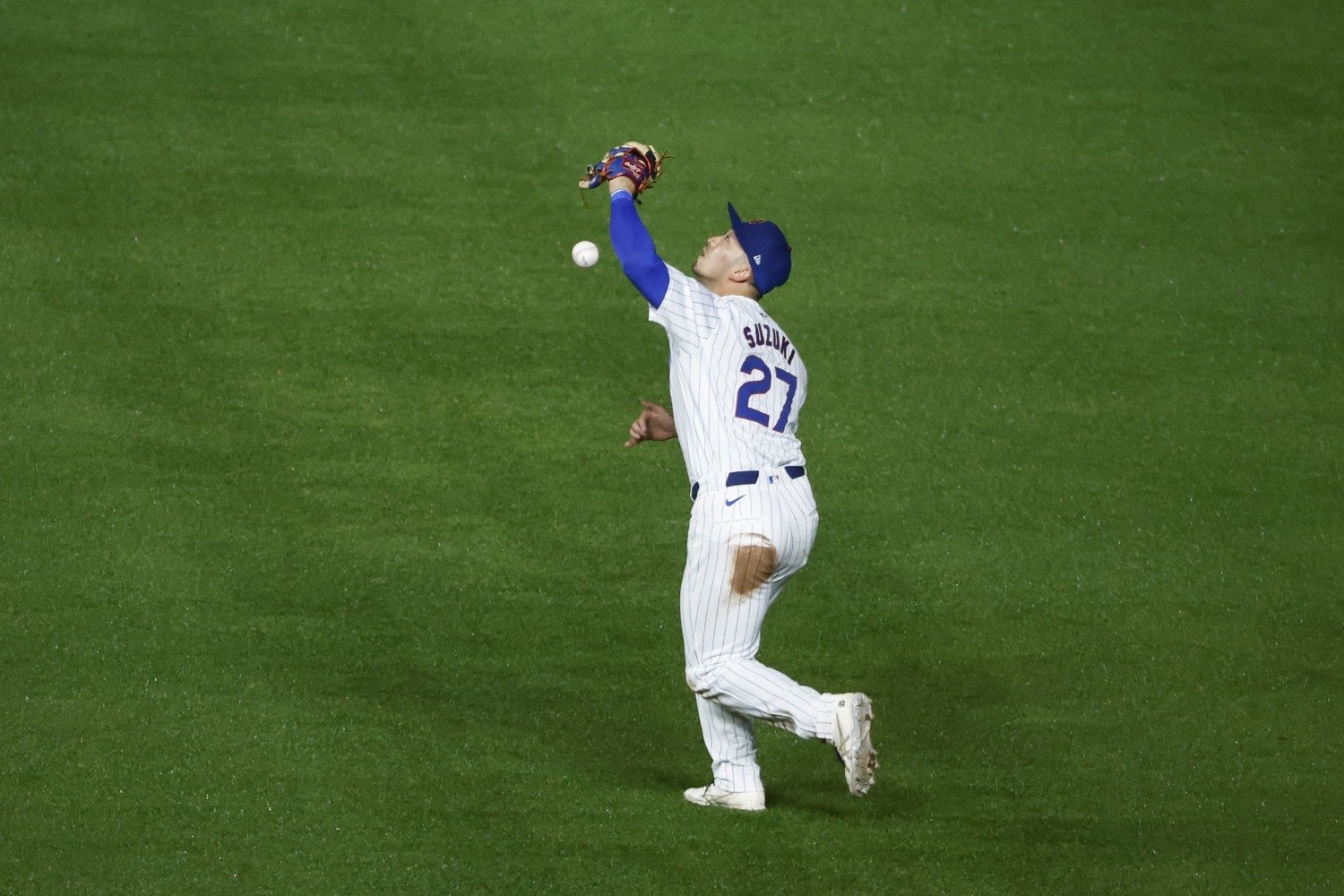 For myriad reasons, Saturday night was a messy affair between the Chicago Cubs and the Cincinnati Reds. But the one play that sticks out most in my mind is the drop that Seiya Suzuki committed on a should-have-been-routine out in the second inning. The Reds had the bases loaded with two outs. Justin Steele looked to have worked his way out of it on a lazy flyball from Luke Maile, on which Suzuki and Pete Crow-Armstrong converged to put the inning to bed--except that Suzuki took charge and called for the ball, only to drop it. Like…dropped it. TGw3azlfV0ZRVkV3dEdEUT09X0ExUlpWd1lOWGdRQUNGUUxVd0FBQ1FOVUFGbFJXd01BVjFBQlZnb0RBUVFFVXdJQQ==.mp4 The Reds scored three on that play, and added one more tally in the inning. All four went down as unearned in the box score for Steele. While Suzuki went on to redeem himself with a game-tying grand slam, it’s not the first time we’ve seen this specific issue. And while you’d also like to afford him some grace given the conditions in which the teams were playing, it’s that lack of it being an isolated occurrence that has me wondering about his future in right field. There was the one last year in Atlanta. With two outs in the eighth inning of a game the Cubs led 6-5, Suzuki’s drop of a Sean Murphy fly ball directly led to a 7-6 loss. There was another in 2022 against the Dodgers, in addition to the small handful of balls lost in the sun during his time as a Cub. Errors (and misplays, like the one above, not officially labeled that way) are obviously going to happen. And it stands to reason that outfielders might be more impacted by weather – rain or problematic shine – than infielders, given the angle at which they need to field baseballs. Anecdotally (or perhaps in the purest sense of confirmation bias), it just seems like Suzuki’s occur at the most egregious times. A close game or a time at which the Cubs are scuffling in a broad sense and can’t afford another mistake. Or a combination of both, as we saw on Saturday. OU93M2pfWGw0TUFRPT1fQUZOWkFsSUdCd01BQ3dBRVVnQUFWQVZWQUFBTVVRVUFCQVJYQUFNRVZ3Y0hWUUVD.mp4 This wasn't even the first time this year that Suzuki has victimized Steele in a key spot. a1pucktfWGw0TUFRPT1fQkFkVEFRY0dYd0VBQ2xNQkJBQUFDQUpXQUZsV1cxY0FBVndFVVFSVVZGSmRVbEJT.mp4 The larger issue is that, while the most outlandish of mistakes obviously stand out, those are mere standouts in a troubling display of defense that Suzuki has demonstrated since coming over from Japan. In 2022, Suzuki stood 46th in Fielding Run Value, out of 68 right fielders (-3). Last year, he was 32nd out of 60 (-2). This year, he’s 24th out of 29 (-3) and in the 13th percentile of defense overall. In each of ’22 and ’24, he’s fallen on the negative side of both the range and the arm under the FRV banner. He’s also at an aggregate Defensive Runs Saved of -3 across the three seasons. Weirdly, coming in on fly balls to his right have been his biggest issue. He had a -1 OAA on such flies in 2022, a -3 last year, and is at -1 again this year. One imagines that having Crow-Armstrong to his right on (nearly) a full-time basis moving forward could help to mitigate that--even if it didn’t on Saturday. But the roster context certainly does make way for the possibility of Suzuki DHing in a more frequent capacity. Crow-Armstrong is here now, likely on a permanent basis. That’s going to push Cody Bellinger over to right sometimes. While the Cubs could (and will) play Bellinger at first base, Michael Busch needs his plate appearances, too. Craig Counsell loves Mike Tauchman, and at a certain point, he's out of places to play other than right field. David Bote’s return to the bigs does complicate this situation further, especially if Counsell wishes to have Christopher Morel DH more often. That's to say nothing of the outfield talent in the upper minors, if the organization ever wishes to deploy it. Regardless of the roster dynamics, it’s a strange fall for a player who had gained a great deal of respect for his glove, specifically, while still in Japan. That makes it even more difficult to pinpoint exactly what’s going wrong. But with Crow-Armstrong establishing himself as an everyday player and the Cubs’ bloat in that section of the lineup, it’s at least a realistic thought to question Suzuki’s long-term future on the outfield grass.
 -
We've Prayed for Times Like This for Homegrown Cubs Pitching (and Yet...)
RandallPnkFloyd posted an article in Cubs
 For as long as I can remember – at least the last handful of years – I’ve had to go outside of the Chicago Cubs organization if I wanted to watch an exciting pitching performance. Whether it’s a stuff-based starter or a fireballing reliever, genuine excitement was to be found somewhere within the 29 other teams in Major League Baseball. That’s not to say that the Cubs haven’t had good pitchers in the last handful of seasons. They certainly have. Jake Arrieta wasn’t all that long ago, after all. Neither was prime Kyle Hendricks. Jon Lester and Pedro Strop provided some of my fondest memories in shorter-term Cubs history. And there have been interesting ones, too. Rowan Wick looked like a dude at some point. I enjoyed Scott Effross a lot. But there’s a certain watchability factor that Cubs pitchers have lacked in the last several years, even amid a solid collection of arms. The velo. The stuff. While the Cubs' overhauling their pitching infrastructure made such an outlook possible, we’d yet to see the fruits of that labor prior to 2024. Which is part of what made Ben Brown’s Tuesday start so special. It wasn’t only that he held the Milwaukee Brewers hitless across seven innings, mixing the fastball & curve to absolutely delightful effect. It was that the type of raw stuff he flashed – and has shown us all year – is something we’d typically have to seek elsewhere. A Brewers starter. Or a Dodgers starter. Or a Tampa Bay reliever. The tides are shifting, to a point where we don’t have to seek outside means in order to see special stuff. It doesn’t end with Brown. Shota Imanaga’s blend of upper-zone fastball against his splitter. Hayden Wesneski’s sweeper. The velocity of a Daniel Palencia or (now) Porter Hodge. Results notwithstanding in recent weeks, the watchability has risen when we’re watching the Cubs on the bump. Of course, there are more on the way. Cade Horton. Michael Arias. Brandon Birdsell. There are exciting arms in this system that offer far more of this type of energy than we’ve seen from inside the organization since the halcyon days of Kyle Farnsworth, Juan Cruz, Mark Prior, and Carlos Zambrano. That's to say nothing of the quality that you’re getting from Javier Assad and others who belong more to the previous era's outs-over-oohs-and-aahs ethos. But this isn’t about organizational quality. This is about the completely unquantifiable organizational excitement. You obviously want quality on the hill. But at some point, you also want flash. You want velocity and movement. Sure, there might be a bit more erraticism that presents itself as a result, – it’ll surely lead to some subsequent frustration when you’ve got a walk in a key moment – but you’re less liable to care, over an extended period, when your eyeballs are busy feasting on the physics-defying intensity of your own team's offerings. In the broader team context, it’s a small thing. It certainly doesn’t completely compensate for the struggles we’ve seen out of the collective roster over the past few weeks. But there is solace to be offered here, at the very least. Whether it’s Brown or Imanaga or Hodge, there’s at least a certain relief in acknowledging that the Cubs have finally done it. They’ve set themselves up such that, perhaps, it’ll soon be fans of other teams finding themselves tuning into the Cubs’ barrage of exciting arms for a change.
 -
Let's forget the rough results recently--especially since they're mostly the offense's fault. When was the last time it was this much fun to watch the Cubs pitch, from a pure stuff and domination potential perspective? Image courtesy of © Jeff Hanisch-USA TODAY Sports For as long as I can remember – at least the last handful of years – I’ve had to go outside of the Chicago Cubs organization if I wanted to watch an exciting pitching performance. Whether it’s a stuff-based starter or a fireballing reliever, genuine excitement was to be found somewhere within the 29 other teams in Major League Baseball. That’s not to say that the Cubs haven’t had good pitchers in the last handful of seasons. They certainly have. Jake Arrieta wasn’t all that long ago, after all. Neither was prime Kyle Hendricks. Jon Lester and Pedro Strop provided some of my fondest memories in shorter-term Cubs history. And there have been interesting ones, too. Rowan Wick looked like a dude at some point. I enjoyed Scott Effross a lot. But there’s a certain watchability factor that Cubs pitchers have lacked in the last several years, even amid a solid collection of arms. The velo. The stuff. While the Cubs' overhauling their pitching infrastructure made such an outlook possible, we’d yet to see the fruits of that labor prior to 2024. Which is part of what made Ben Brown’s Tuesday start so special. It wasn’t only that he held the Milwaukee Brewers hitless across seven innings, mixing the fastball & curve to absolutely delightful effect. It was that the type of raw stuff he flashed – and has shown us all year – is something we’d typically have to seek elsewhere. A Brewers starter. Or a Dodgers starter. Or a Tampa Bay reliever. The tides are shifting, to a point where we don’t have to seek outside means in order to see special stuff. It doesn’t end with Brown. Shota Imanaga’s blend of upper-zone fastball against his splitter. Hayden Wesneski’s sweeper. The velocity of a Daniel Palencia or (now) Porter Hodge. Results notwithstanding in recent weeks, the watchability has risen when we’re watching the Cubs on the bump. Of course, there are more on the way. Cade Horton. Michael Arias. Brandon Birdsell. There are exciting arms in this system that offer far more of this type of energy than we’ve seen from inside the organization since the halcyon days of Kyle Farnsworth, Juan Cruz, Mark Prior, and Carlos Zambrano. That's to say nothing of the quality that you’re getting from Javier Assad and others who belong more to the previous era's outs-over-oohs-and-aahs ethos. But this isn’t about organizational quality. This is about the completely unquantifiable organizational excitement. You obviously want quality on the hill. But at some point, you also want flash. You want velocity and movement. Sure, there might be a bit more erraticism that presents itself as a result, – it’ll surely lead to some subsequent frustration when you’ve got a walk in a key moment – but you’re less liable to care, over an extended period, when your eyeballs are busy feasting on the physics-defying intensity of your own team's offerings. In the broader team context, it’s a small thing. It certainly doesn’t completely compensate for the struggles we’ve seen out of the collective roster over the past few weeks. But there is solace to be offered here, at the very least. Whether it’s Brown or Imanaga or Hodge, there’s at least a certain relief in acknowledging that the Cubs have finally done it. They’ve set themselves up such that, perhaps, it’ll soon be fans of other teams finding themselves tuning into the Cubs’ barrage of exciting arms for a change. View full article
-
 At this point, you won’t find many positive words in any quarter about the Chicago Cubs. They’re in the midst of a horrific May, and a smaller stretch in which they’ve lost eight of 10. While the pitching has largely held up – or even been outstanding – the offense has been anemic, and the defense has largely been below-average. To that end, Matt Trueblood published a piece regarding Dansby Swanson and his contract earlier this week. In Year 2 of his deal, it’s a contract already looking problematic on multiple fronts. This includes the offense – where Swanson was already visibly the weakest of the available shortstops last winter – and the defense, which has long been the hallmark of his game. I’ve long been a fan of Dansby Swanson. His process as a defender and commitment to discussing the mental side of sport is extremely admirable. When he signed in Chicago, I doubt that even those who were fine with the deal had any delusions about what he brings. At best, it’s excellent defense and an average bat. Of course, what we’re getting now is at the left end of the spectrum of possible outcomes. The previous regime under Theo Epstein caught a lot of flak for the Jason Heyward deal, in which you essentially wound up paying for presence and defense. With Swanson, the Cubs are, to our knowledge, really only getting one of those things. There’s plenty of opportunity for redemption from Swanson, of course. We know he had a knee issue that could impact the defense we’ve seen in 2024. Getting his approach in order could help him to at least reestablish some offensive value within the streakiness he brings, which would be a net positive (since expecting offensive consistency is a fool’s errand at this point in his career). You could also make that statement for most of the lineup at this point in the calendar. What’s important to note in the larger context of the Swanson conversation isn’t so much his value and his contract in a vacuum. That’s an important conversation, but a separate one to what Swanson’s struggles are bringing to my own mind. Instead, my focus is on the process of this front office in assembling offensive talent. Swanson was never expected to be an offensive catalyst. He’s been in the league since 2016. If you think there’s more to his bat, then you probably shouldn’t be making decisions at this level. But what he was supposed to be was a supplement. When he’s on – even with the frustrating streakiness – he’s an effective secondary piece on your lineup. Of course, the same could be said of Ian Happ. The same could be said of Seiya Suzuki, or this version of Cody Bellinger. Or Nico Hoerner. Probably Michael Busch, too. The Cubs have built their entire ship out of secondary bats, all while hoping that maybe someone like Christopher Morel could evolve into the gamebreaker that this lineup is dying for. But it’s hard to imagine that that bat is on its way. Morel has already outperformed what his skill set said he should be. On the farm, Pete Crow-Armstrong is a glove-first guy. Brennen Davis can’t stay healthy. Alexander Canario can’t find an opportunity. Owen Caissie and Kevin Alcántara represent the potential for such a presence in the lineup, but you’re still talking about prospects. And within the prospect conversation, you’re talking about an organization who appears about as conservative in pushing their youth to the higher levels as any team out there. And that’s really the issue, isn’t it? Conservatism. Jed Hoyer won’t push the envelope on the trade market. Or in free agency. Or in graduating prospects. There’s some obvious oversimplification there, especially as it relates to prospect development. But, ultimately, you’ve spent this time rebuilding the organizational depth, but at what point do we see it activated and deployed in a meaningful way? Until that question has an answer, this is the type of offensive profile we should expect to continue to see on the North Side. Secondary bats are safe. They have a floor (for the most part). Can’t whiff if you don’t swing the bat. Therein lies the problem. The Dansby addition is something of a microcosm for a larger issue plaguing this organization in its current form. We obviously aren’t privy to the conversations happening behind closed doors, especially as it relates to trades and transactions. Maybe Hoyer is trying, and has been trying hard since last fall, and a bigger move just hasn't come together. Maybe there’s a character thing they like about this current group. For our eyes, though, it looks like a front office content to play it safe and bank on hope above all. Until Jed Hoyer is willing to shed safety and take a big swing, I fear we’re going to be stuck watching a whole lot of mid on offense for the foreseeable future.
 -
The prerogative of the Chicago Cubs' front office has been to amass better depth and generate a stable, balanced big-league roster. Did they focus too much on that, at the expense of building one that can actually win? Image courtesy of © David Banks-USA TODAY Sports At this point, you won’t find many positive words in any quarter about the Chicago Cubs. They’re in the midst of a horrific May, and a smaller stretch in which they’ve lost eight of 10. While the pitching has largely held up – or even been outstanding – the offense has been anemic, and the defense has largely been below-average. To that end, Matt Trueblood published a piece regarding Dansby Swanson and his contract earlier this week. In Year 2 of his deal, it’s a contract already looking problematic on multiple fronts. This includes the offense – where Swanson was already visibly the weakest of the available shortstops last winter – and the defense, which has long been the hallmark of his game. I’ve long been a fan of Dansby Swanson. His process as a defender and commitment to discussing the mental side of sport is extremely admirable. When he signed in Chicago, I doubt that even those who were fine with the deal had any delusions about what he brings. At best, it’s excellent defense and an average bat. Of course, what we’re getting now is at the left end of the spectrum of possible outcomes. The previous regime under Theo Epstein caught a lot of flak for the Jason Heyward deal, in which you essentially wound up paying for presence and defense. With Swanson, the Cubs are, to our knowledge, really only getting one of those things. There’s plenty of opportunity for redemption from Swanson, of course. We know he had a knee issue that could impact the defense we’ve seen in 2024. Getting his approach in order could help him to at least reestablish some offensive value within the streakiness he brings, which would be a net positive (since expecting offensive consistency is a fool’s errand at this point in his career). You could also make that statement for most of the lineup at this point in the calendar. What’s important to note in the larger context of the Swanson conversation isn’t so much his value and his contract in a vacuum. That’s an important conversation, but a separate one to what Swanson’s struggles are bringing to my own mind. Instead, my focus is on the process of this front office in assembling offensive talent. Swanson was never expected to be an offensive catalyst. He’s been in the league since 2016. If you think there’s more to his bat, then you probably shouldn’t be making decisions at this level. But what he was supposed to be was a supplement. When he’s on – even with the frustrating streakiness – he’s an effective secondary piece on your lineup. Of course, the same could be said of Ian Happ. The same could be said of Seiya Suzuki, or this version of Cody Bellinger. Or Nico Hoerner. Probably Michael Busch, too. The Cubs have built their entire ship out of secondary bats, all while hoping that maybe someone like Christopher Morel could evolve into the gamebreaker that this lineup is dying for. But it’s hard to imagine that that bat is on its way. Morel has already outperformed what his skill set said he should be. On the farm, Pete Crow-Armstrong is a glove-first guy. Brennen Davis can’t stay healthy. Alexander Canario can’t find an opportunity. Owen Caissie and Kevin Alcántara represent the potential for such a presence in the lineup, but you’re still talking about prospects. And within the prospect conversation, you’re talking about an organization who appears about as conservative in pushing their youth to the higher levels as any team out there. And that’s really the issue, isn’t it? Conservatism. Jed Hoyer won’t push the envelope on the trade market. Or in free agency. Or in graduating prospects. There’s some obvious oversimplification there, especially as it relates to prospect development. But, ultimately, you’ve spent this time rebuilding the organizational depth, but at what point do we see it activated and deployed in a meaningful way? Until that question has an answer, this is the type of offensive profile we should expect to continue to see on the North Side. Secondary bats are safe. They have a floor (for the most part). Can’t whiff if you don’t swing the bat. Therein lies the problem. The Dansby addition is something of a microcosm for a larger issue plaguing this organization in its current form. We obviously aren’t privy to the conversations happening behind closed doors, especially as it relates to trades and transactions. Maybe Hoyer is trying, and has been trying hard since last fall, and a bigger move just hasn't come together. Maybe there’s a character thing they like about this current group. For our eyes, though, it looks like a front office content to play it safe and bank on hope above all. Until Jed Hoyer is willing to shed safety and take a big swing, I fear we’re going to be stuck watching a whole lot of mid on offense for the foreseeable future. View full article
-
 I’ve written about Nick Madrigal – and the Cubs’ third-base situation, at large – several times over the past several months. With Madrigal, in particular, I’ve been on different ends of the spectrum. From generous about his future to questioning his purpose on the roster, I’ve been willing to maintain some flexibility when it comes to the team’s shortest position player. Let's dispense with that, in favor of something more concrete: Nick Madrigal should not be a member of this Chicago Cubs roster. It wasn’t one specific play that led to this idea taking root for me. That would be reactionary. Even if Madrigal’s error on a would-be double play proved to be the death knell for the Cubs on Monday afternoon, in the big picture, it’s the broader problem(s) with this team in recent days/weeks that make his ongoing presence untenable. They can’t score runs. An important function of baseball, you need to score more runs than your opponent to generate wins. And if you’re not going to score runs, you absolutely need to prevent them at an elite level to have any hopes of making progress in the standings. By that definition, the Chicago Cubs have outgrown any justification for Nick Madrigal’s presence here. Offensively, he offers you very little--maybe even nothing. There are 329 players with at least 80 MLB plate appearances thus far in 2024. Madrigal’s .037 ISO is one of the five worst. His 18.1 HardHit% is one of the six worst. It’s soft contact, while putting the ball onto the ground almost 60 percent of the time. When your skill set requires you to hit your way on base, it would behoove you to… hit your way on base. But with a player like Madrigal, there’s an excuse to be made for regular appearances if the defense is up to snuff. Especially when you’re coming off a strong defensive year at a position where the starter is still making a transition to full-time duty. It’s logical. However, even that has run its course to a pretty astonishing extent. Again, Madrigal had a nice 2023 in his first year at third base. He posted a FRV of 8, an OAA of 10, and a DRS of 8. Regardless of your metric of choice, he was great. There were those who were less sure of the metrics based on the eye test. Regression has largely proven those folks to be correct. Madrigal’s broad metrics include a -2 in each of FRV & OAA and a flat 0 in DRS. More troubling, though, is his success rate at the hot corner. At third base, he’s maintaining a success rate of 69 percent against an estimated success rate of 74 percent. It’s worse when he has to move in either direction. To his right, his success rate is 67 percent against an 83 expected figure. To his left, it’s 67 percent and 73 percent expected. So while he’s been fine in plays that don’t require movement (75 percent vs. 73 percent expected), he hasn’t offered any real upside there. Morel has shown improvement but has still struggled with adjusting profitably in the big picture. If you’re looking for a defensive presence for late situations, shouldn’t that instead be going to defensive whiz Luis Vázquez, who has toiled purposelessly on this roster for the better part of a week? Simply put, the defensive justification for Madrigal being a part of this roster goes out the window between the overall output and the more specific miscues like we saw Monday. When the Cubs hired Craig Counsell this winter, they positioned themselves as a serious baseball team. They didn’t follow that up with genuine roster upgrades that might have further cemented that mindset. I fear that continuing to roster Madrigal, in particular, unravels any hypothetical seriousness altogether.