


Matthew Trueblood
-
Posts
2,481 -
Joined
-
Last visited
-
Days Won
2
Content Type
Profiles
Joomla Posts 1
Chicago Cubs Videos
Chicago Cubs Free Agent & Trade Rumors, Notes, & Tidbits
2026 Chicago Cubs Top Prospects Ranking
News
2023 Chicago Cubs Draft Picks
Guides & Resources
2024 Chicago Cubs Draft Picks
The Chicago Cubs Players Project
2025 Chicago Cubs Draft Pick Tracker
2026 Chicago Cubs Draft Tracker: Picks & Bonuses
Blogs
Events
Forums
Store
Gallery
Everything posted by Matthew Trueblood
-
The Cubs Hitting Target No One is Talking About, But Everyone Should Be
Matthew Trueblood posted an article in Cubs
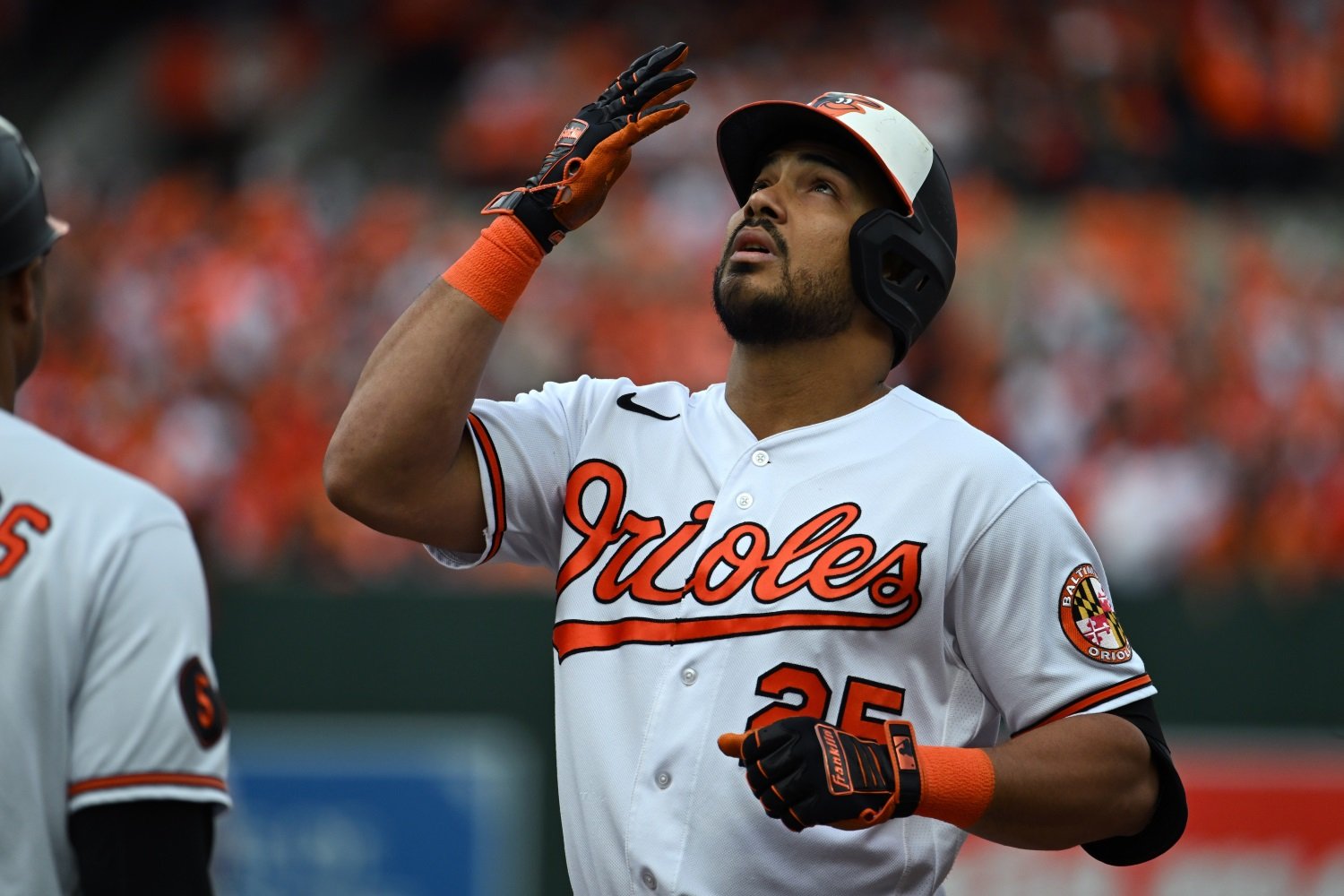 Every winter, a handful of trades happen without having ever been on anyone's radar. In early 2015, the Cubs traded for Dexter Fowler, surrendering Luis Valbuena and Dan Straily in the exchange, and it came almost out of nowhere. Yet, it was the move that completed and lent synergy to that offseason, and to the 2015 Cubs as a whole. Fowler was only under team control for one year, but getting his on-base skills atop the batting order catalyzed the team in a way that would have had a lasting impact, even if he hadn't come back unexpectedly in 2016. That trade made sense for both the Cubs and the Houston Astros, and a sagacious baseball person could have predicted it, if their attention had been directed that way. At the time, though, it just wasn't at the forefront of anyone's mind. The deal almost perfectly coincided with the Nationals and Max Scherzer agreeing to a record-breaking free-agent deal. There had already been a flurry of moves that winter, including Ben Zobrist being traded to Oakland, and there were a few notable free agents left on the board. Many people were thinking about the upstart Cubs and Astros, but few were cognizant of the way they lined up in a trade. I think we have a similar situation on our hands, as 2024 dawns, with the Cubs and the Baltimore Orioles. Chicago has yet to do a blessed thing to address their roster needs for the coming season, but we well know that they won't remain so inactive during January. On the contrary, they figure to be in on several of the top remaining free agents--the names who have consumed so many fans' whole attention this winter, like Shota Imanaga, Jordan Montgomery, Cody Bellinger, and Matt Chapman. If they successfully address their rotation via free agency, though, they might do well to turn around and spin off some of their depth in that area to shore up another area of need via trade. The Orioles need starting pitching, badly. They, too, have watched the winter market play out more or less without them, having only signed Craig Kimbrel to stop the gap left behind by an injury to Felix Bautista. They have Kyle Bradish, who was a Cy Young contender (in a weak crop of them) in 2023, and they have Grayson Rodriguez, but they're shy on good options beyond those two. What they do have in abundance, though, are bats--including at least one who might be too close to departing for nothing for their comfort. Anthony Santander does a whole lot of things well. The 29-year-old venezolano is a switch-hitter with power and plate discipline, and he's been quietly sturdy from both sides of the plate for the last two seasons. Anthony Santander, Splits by Pitcher Handedness, 2022-23 Split PA AVG OBP SLG BB% K% v RHP 955 0.241 0.307 0.453 7 19.5 v LHP 348 0.272 0.359 0.495 12.1 25.3 The raw numbers against righties might seem underwhelming, but that's in the AL East, with deep center fields almost across the board and an unreachable opposite-field power alley at home in Baltimore. It's also the kind of line that goes from merely solid out of a typical hitter to downright delightful out of one who (be it by virtue of being a switch-hitter or for some other skillset-related reason) mashes against the other handedness of pitcher. Even without accounting for the latter, his wRC+ (where 100 is average and higher is better) against righties is 113, and against lefties, it's 142. Overall, Santander has 65 doubles and 61 home runs since the start of 2022. He's been about 20 percent better than an average big-league hitter. He's matchup-proof and ballpark-proof, because he doesn't strike out terribly often and hits the ball in the air hard enough and often enough to accumulate extra-base hits despite suboptimal conditions for power. He's a below-average runner and (though you can find defensive metrics to suggest the opposite) a below-average corner outfielder. Last season, Santander spent almost 50 games at designated hitter for the Orioles, and that's where he would fit best with the Cubs, too. He could certainly rotate with Ian Happ and Seiya Suzuki, keeping all three fresher by diminishing the time any need to spend in the outfield without taking their bats out of the lineup. He's played some first base in Baltimore, and could expand into that role with the Cubs, but he only truly adds value with what he does in the batter's box. Nonetheless, the value he would add--especially to the Cubs--would be tremendous. Whereas Happ is a switch-hitter who scuffles against lefties, Santander is one who pummels them. He brings the kind of power that the team needs to push Dansby Swanson down to the right place for him in the batting order. A Cubs lineup with Santander (even absent any other additions) could go: Nico Hoerner - 2B Ian Happ - LF Anthony Santander - 1B Seiya Suzuki - RF Christopher Morel - DH Dansby Swanson - SS Patrick Wisdom - 3B Yan Gomes - C Pete Crow-Armstrong - CF Thst's not a lineup without problems. It is, however, a lineup with speed, power, on-base skills, and strong defense up the middle, which is what Jed Hoyer has been trying to build for a few years now, with (generously) mixed results. Santander is only under team control for the coming season. MLB Trade Rumors projects him to earn upward of $12.5 million via arbitration in his fourth tour of that circuit. The Orioles love Santander as a clubhouse presence and lineup stabilizer, but they don't exactly need him the way the Cubs do, and they could use both the trade haul he should command and the money trading him would free up for other expenditures. That's how these two teams become an interesting fit. At the moment, the Cubs have a shortage of starting pitchers, not a surfeit. They might have enough arms, but they don't have good enough ones. That could change in a few days, though, as the markets for Imanaga and others shift into high gear. Already, we've seen Lucas Giolito come off the board this week. Spending via free agency to round out the rotation would leave the Cubs in a position of sufficient strength to consider trading one of their supplemental starters, even if that guy were under long-term team control. Javier Assad and Hayden Wesneski are the names that jump right into the conversation, here. Each has five years of club control left, and while both are more swingmen than potential aces, each has also demonstrated real upside, in both a starting and a relief role. It might take a small, lower-level prospect kicker to get a deal centered around Santander and one of those arms done, but even if so, it could make a lot of sense for the Cubs. With Justin Steele, Jameson Taillon, Kyle Hendricks, Jordan Wicks, Ben Brown, Cade Horton, and others in the mix, they can afford to jettison Assad or Wesneski to fill a need. Alternatively, maybe the Orioles would take interest in Drew Smyly, a serviceable veteran swingman in his own right. He's only under team control for 2024, and would represent almost no cost savings, so the Cubs would have to part with a pretty good prospect to even out the talent imbalance between Santander and Smyly, but if the famously far-looking Orioles front office is interested in slightly improving their roster balance in the short term while stockpiling more talent for the future, that framework could make some sense. One way or another, I will have an eye on Santander until spring training starts. While his name is almost nowhere in trade rumors and the O's disclaimed a desire to move him early this offseason, the fit between those two clubs and the value he could deliver to the Cubs are both too good to ignore. If a surprise trade is going to bolster the 2024 team, this just might be the one. What do you think of Santander as a trade target for the Cubs? Would you part with Assad or Wesneski and more to get a deal done? Sound off in the comments.
 -
A Little After-Christmas Clarity About Jed Hoyer's Mindset
Matthew Trueblood posted an article in Cubs
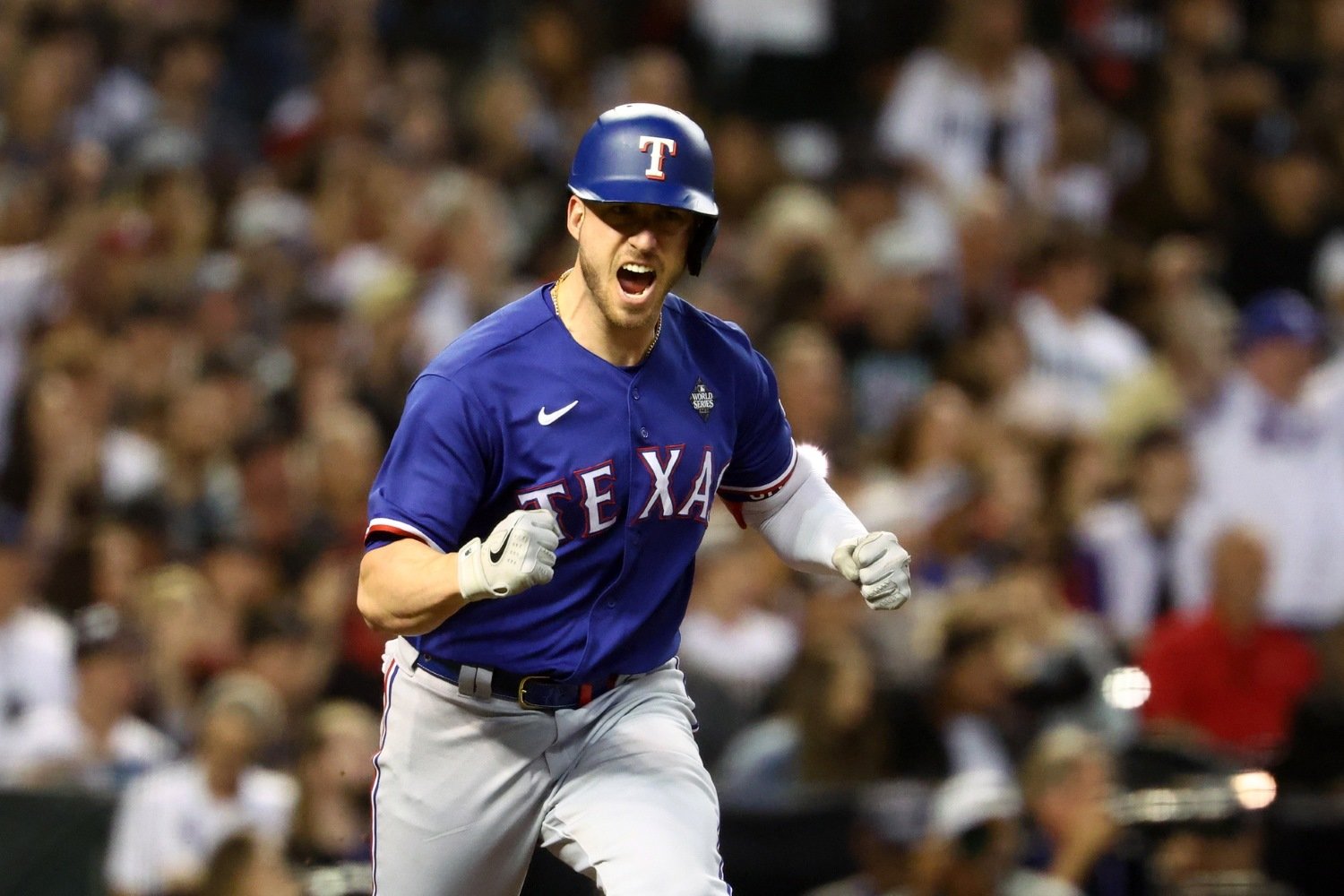 The good news is that, with pitchers and catchers reporting in just seven weeks, teams have finally been forced to get serious and start making their commitments for 2024. In the past week, in addition to the Dodgers' blockbuster signing of Yoshinobu Yamamoto, we've seen Mitch Garver land with the Seattle Mariners and both Kevin Kiermaier and Isiah Kiner-Falefa sign up with the Toronto Blue Jays. The Padres signed Japanese closer Yuki Matsui, and catchers Tom Murphy (Giants) and Martin Maldonado (White Sox) each found new homes. The bad news, of course, is that the Cubs didn't sign any of those players. Fifty days after making a huge commitment to Craig Counsell, they find themselves as the only team in baseball not to have made an external addition to their 40-man roster so far this winter. As the team missed on guys like Shohei Ohtani, Juan Soto, and Yamamoto, it was relatively easy to explain away frustrations, because the likelihood of them landing any of those extremely high-priced, sought-after players was always low. Even if it felt like they could or should have tried harder, they probably wouldn't have ended up with any of those three, even if Jed Hoyer and company had pulled out all the stops. There were also some moves (like the Dodgers' trade for Tyler Glasnow, or the Cardinals' passel of veteran starting pitching signings) that didn't spark any real jealousy, because those players or deals would not have been good fits for the Cubs. You can't say that for the Garver deal, which puts him in Seattle for just $24 million over two years. Ditto for the very affordable five-year deal Matsui signed with the Padres--even if a five-year pact feels strangely bold for a lefty closer with some yellow flags around him as he transitions from NPB to MLB. It's a slow, steady thrum of movement, and maybe no individual transaction means the Cubs have missed their chance to make material improvements, but it's like the age-old paradox of the heap: at some point, perhaps without realizing it, we will realize that the team passed a critical point at which their options became too limited and they could no longer find their way to a successful offseason. Both Garver and Andrew McCutchen (who recently re-signed with the Pirates) were decent prospective fits with the Cubs, who need a more reliable bat at designated hitter. Lourdes Gurriel, Jr. could have been an even better one, and signed an affordable deal to stay with the Diamondbacks. Seth Lugo and Michael Wacha (each newly-minted Royals), Jack Flaherty (a Tiger), Nick Martinez (of the Reds), Sonny Gray (Cardinals), and Eduardo Rodriguez (Diamondbacks) all were various levels of interesting as rotation help, and taking them (in addition to Yamamoto, Aaron Nola, and Glasnow) off the list of potential targets does significantly affect the Cubs' ability to project the needed improvements to that unit. When I pass along the fun facts that have circulated about the team's non-spending this winter, it's partially tongue-in-cheek. The Cubs will make additions to their roster, and the timing of them really isn't as important as some make it out to be. I don't believe in signing free agents of real substance in the latter part of January, except in very special circumstances, because signings like those nearly always betray a lack of real conviction on the part of the team or a dissatisfaction with the market on the part of the player, and that usually augurs ill for the deal's outcomes. But there's a sliver of December and a full fortnight of January between now and the second half of January, and I expect the team to move before then. In one sense, fans are getting far too worked up over the sequence of events this winter. In another sense, though, there's something real fueling that anxiety, and it's worth discussing in frank terms. The thing is, Cubs fans (like almost all fans, and like almost all people, in their various ways and at various times) expect a lasting transformation this winter. They don't feel satisfied with their team, but they expect that to change, and not just incrementally or over a long period. They anticipate a shift so large as to constitute metamorphosis, and soon--a near-constant state of anxious hope only ratcheted up by the Counsell deal back in November. I don't think that was ever how Hoyer was thinking, and while he's smart enough to know that he needs to shore up portions of this roster, he doesn't seem at all interested in trying hard to meet the increased expectations of his fan constituency. He's said this all along, but fans frequently (and with some good reason) mistrust or dismiss those remarks. We like the shiny stuff. We like novelty. We like moves that give a sensation of change, especially after a season that ended in such frustration. Hoyer, by contrast, likes the team he put together last year, and believes in it more than Cubs fans do. He also thinks many of the improvements needed can and should come from within, with better deployment of the big-league roster and management of the grind of the season by Counsell and with continued wins in scouting and player development. He's hoping for major contributions from Pete Crow-Armstrong and other top prospects this season, and doesn't have the same attraction to more proven solutions at the Cubs' key positions of need that fans almost universally feel. It's ok to think he's wrong to have such faith, but it's there. It's ok to think his zeal for his own farm system and developmental infrastructure is unearned or premature, but our skepticism doesn't affect Hoyer. The Cubs will get better for 2024 between now and mid-February, but it might not be by enough for most fans' tastes. As the shelves begin to empty, it's becoming clear that while fans were trying to shop for a new home, a new car, or a whole new self, Hoyer is looking to buy groceries. Hey, we all gotta eat.
 -
The MLB offseason has gotten moving over the last fortnight, including a couple of substantial moves over the holiday. At last, we're seeing the market for free agents and trade candidates gain the clarity that can only come from a seemingly endless sea of options turning into an ever-narrowing river. Image courtesy of © Mark J. Rebilas-USA TODAY Sports The good news is that, with pitchers and catchers reporting in just seven weeks, teams have finally been forced to get serious and start making their commitments for 2024. In the past week, in addition to the Dodgers' blockbuster signing of Yoshinobu Yamamoto, we've seen Mitch Garver land with the Seattle Mariners and both Kevin Kiermaier and Isiah Kiner-Falefa sign up with the Toronto Blue Jays. The Padres signed Japanese closer Yuki Matsui, and catchers Tom Murphy (Giants) and Martin Maldonado (White Sox) each found new homes. The bad news, of course, is that the Cubs didn't sign any of those players. Fifty days after making a huge commitment to Craig Counsell, they find themselves as the only team in baseball not to have made an external addition to their 40-man roster so far this winter. As the team missed on guys like Shohei Ohtani, Juan Soto, and Yamamoto, it was relatively easy to explain away frustrations, because the likelihood of them landing any of those extremely high-priced, sought-after players was always low. Even if it felt like they could or should have tried harder, they probably wouldn't have ended up with any of those three, even if Jed Hoyer and company had pulled out all the stops. There were also some moves (like the Dodgers' trade for Tyler Glasnow, or the Cardinals' passel of veteran starting pitching signings) that didn't spark any real jealousy, because those players or deals would not have been good fits for the Cubs. You can't say that for the Garver deal, which puts him in Seattle for just $24 million over two years. Ditto for the very affordable five-year deal Matsui signed with the Padres--even if a five-year pact feels strangely bold for a lefty closer with some yellow flags around him as he transitions from NPB to MLB. It's a slow, steady thrum of movement, and maybe no individual transaction means the Cubs have missed their chance to make material improvements, but it's like the age-old paradox of the heap: at some point, perhaps without realizing it, we will realize that the team passed a critical point at which their options became too limited and they could no longer find their way to a successful offseason. Both Garver and Andrew McCutchen (who recently re-signed with the Pirates) were decent prospective fits with the Cubs, who need a more reliable bat at designated hitter. Lourdes Gurriel, Jr. could have been an even better one, and signed an affordable deal to stay with the Diamondbacks. Seth Lugo and Michael Wacha (each newly-minted Royals), Jack Flaherty (a Tiger), Nick Martinez (of the Reds), Sonny Gray (Cardinals), and Eduardo Rodriguez (Diamondbacks) all were various levels of interesting as rotation help, and taking them (in addition to Yamamoto, Aaron Nola, and Glasnow) off the list of potential targets does significantly affect the Cubs' ability to project the needed improvements to that unit. When I pass along the fun facts that have circulated about the team's non-spending this winter, it's partially tongue-in-cheek. The Cubs will make additions to their roster, and the timing of them really isn't as important as some make it out to be. I don't believe in signing free agents of real substance in the latter part of January, except in very special circumstances, because signings like those nearly always betray a lack of real conviction on the part of the team or a dissatisfaction with the market on the part of the player, and that usually augurs ill for the deal's outcomes. But there's a sliver of December and a full fortnight of January between now and the second half of January, and I expect the team to move before then. In one sense, fans are getting far too worked up over the sequence of events this winter. In another sense, though, there's something real fueling that anxiety, and it's worth discussing in frank terms. The thing is, Cubs fans (like almost all fans, and like almost all people, in their various ways and at various times) expect a lasting transformation this winter. They don't feel satisfied with their team, but they expect that to change, and not just incrementally or over a long period. They anticipate a shift so large as to constitute metamorphosis, and soon--a near-constant state of anxious hope only ratcheted up by the Counsell deal back in November. I don't think that was ever how Hoyer was thinking, and while he's smart enough to know that he needs to shore up portions of this roster, he doesn't seem at all interested in trying hard to meet the increased expectations of his fan constituency. He's said this all along, but fans frequently (and with some good reason) mistrust or dismiss those remarks. We like the shiny stuff. We like novelty. We like moves that give a sensation of change, especially after a season that ended in such frustration. Hoyer, by contrast, likes the team he put together last year, and believes in it more than Cubs fans do. He also thinks many of the improvements needed can and should come from within, with better deployment of the big-league roster and management of the grind of the season by Counsell and with continued wins in scouting and player development. He's hoping for major contributions from Pete Crow-Armstrong and other top prospects this season, and doesn't have the same attraction to more proven solutions at the Cubs' key positions of need that fans almost universally feel. It's ok to think he's wrong to have such faith, but it's there. It's ok to think his zeal for his own farm system and developmental infrastructure is unearned or premature, but our skepticism doesn't affect Hoyer. The Cubs will get better for 2024 between now and mid-February, but it might not be by enough for most fans' tastes. As the shelves begin to empty, it's becoming clear that while fans were trying to shop for a new home, a new car, or a whole new self, Hoyer is looking to buy groceries. Hey, we all gotta eat. View full article
-
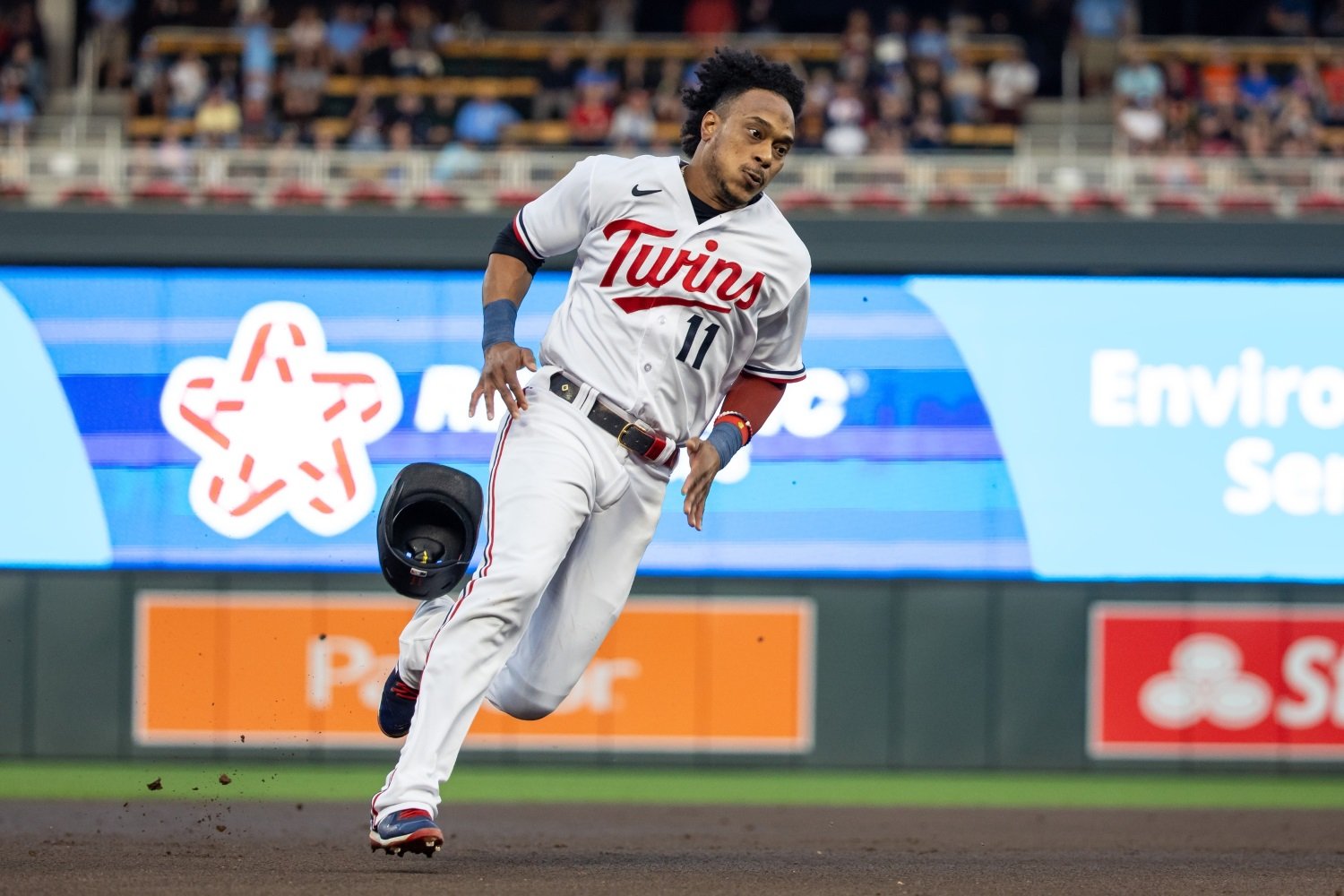 I do want to invite you to swing back in and explore our forums in the coming days. There's always good conversation happening there. We'll also have a fun couple of pieces from Matt Ostrowski during that time, reminiscing on the Cubs tenures of Mark Bellhorn and Matt Murton. Barring breaking news, though, we'll otherwise go quiet for the holiday. Before that happens, a few scattered baseball thoughts. Cubs Don't Seem to be in on Teoscar Hernandez In Ken Rosenthal's latest notes piece, he mentions two active suitors for free-agent slugger and outfielder Hérnandez, most recently of the Mariners. Those potential destinations are the Angels and the Red Sox. They make sense, and it's nice to see rumors picking up for guys like Hérnandez. When people have talked about the market opening up and accelerating after the signings of Shohei Ohtani and Yoshinobu Yamamoto, this is what they've been talking about. There are compelling, probably high-dollar free agents who have yet to be talked about almost at all, but who can now talk much more freely with teams. Admittedly, though, Hérnandez is not an ideal fit for the Cubs, who don't have an open corner outfield spot to dole out. He could rotate with Ian Happ and Seiya Suzuki through those spots and the designated hitter role, but it doesn't feel likely that either side will take an active interest in that particular move, given what we've learned about the Cubs' mindset so far this winter. Why I'm Not in on Jorge Polanco or Max Kepler for the Cubs As your friendly Minnesotan delegate to Cubdom, I feel an obligation to point out the flaws in a couple of proposed fits for the Cubs who currently play for my local nine. Several people have suggested that the team should look to acquire Polanco or Kepler from the Twins, and there's been one (somewhat wishy-washy) report of actual talks between the two sides. So, let's break these options down. Polanco, 30, is a second baseman whom the Twins moved to third base out of desperation late in 2023. It was ugly. He's not a left-side infield defender. Even at second, he's a bit limited, thanks to some lower-leg injuries and his age, but he'd be a fine fit for a Cubs team that didn't have Dansby Swanson or Nico Hoerner. This version of the Cubs has both, and thus, there's very little in the way of fit with Polanco. I love the switch-hitter's style and approach, and especially the fairly radical approach changes he's made to make sure his success is sustainable as his body has begun to rebel against him. He'll only cost $10.5 million in 2024, and there's a club option on his deal for $12 million in 2025. I wouldn't mind him as a DH, but the Twins' asking price for him will not work for a guy who's unlikely to notch an .800 OPS and has no defensive value for this particular roster. Kepler is the next verse in the same song. He's a great defensive right fielder, but Suzuki is there. He's played center field in the past, but didn't like it. He felt he had a harder time staying healthy at that spot, and that it stretched him too thin. When last the Twins asked him about playing it a substantial amount, he declined to do so. It's why that team has been active about reinforcing center the last two winters. He did have a very strong finish to 2023, and the talent to sustain that dazzling success is there, but Kepler has a very inconsistent offensive track record, too. There are flaws in his batted-ball profile, and there have been some in his approach, in the past. He's more likely to run an OPS in the .730s than one 100 points north of that, and that's just not that useful from a guy confined to DH in the context of the Cubs roster. He's also only under team control for one more season. The Cubs will make moves at some point. They will upgrade the 2024 roster. It's probably not going to happen until 2024 actually comes, though, and perhaps that's ok. Enjoy your holidays, everyone. By all means, tell me why I'm wrong about the would-be Twins targets in the comments.
 -
Things figure to be quiet over the next several days, both for the Cubs themselves and here on the site. Let's talk a little baseball before we go. Image courtesy of © Jordan Johnson-USA TODAY Sports I do want to invite you to swing back in and explore our forums in the coming days. There's always good conversation happening there. We'll also have a fun couple of pieces from Matt Ostrowski during that time, reminiscing on the Cubs tenures of Mark Bellhorn and Matt Murton. Barring breaking news, though, we'll otherwise go quiet for the holiday. Before that happens, a few scattered baseball thoughts. Cubs Don't Seem to be in on Teoscar Hernandez In Ken Rosenthal's latest notes piece, he mentions two active suitors for free-agent slugger and outfielder Hérnandez, most recently of the Mariners. Those potential destinations are the Angels and the Red Sox. They make sense, and it's nice to see rumors picking up for guys like Hérnandez. When people have talked about the market opening up and accelerating after the signings of Shohei Ohtani and Yoshinobu Yamamoto, this is what they've been talking about. There are compelling, probably high-dollar free agents who have yet to be talked about almost at all, but who can now talk much more freely with teams. Admittedly, though, Hérnandez is not an ideal fit for the Cubs, who don't have an open corner outfield spot to dole out. He could rotate with Ian Happ and Seiya Suzuki through those spots and the designated hitter role, but it doesn't feel likely that either side will take an active interest in that particular move, given what we've learned about the Cubs' mindset so far this winter. Why I'm Not in on Jorge Polanco or Max Kepler for the Cubs As your friendly Minnesotan delegate to Cubdom, I feel an obligation to point out the flaws in a couple of proposed fits for the Cubs who currently play for my local nine. Several people have suggested that the team should look to acquire Polanco or Kepler from the Twins, and there's been one (somewhat wishy-washy) report of actual talks between the two sides. So, let's break these options down. Polanco, 30, is a second baseman whom the Twins moved to third base out of desperation late in 2023. It was ugly. He's not a left-side infield defender. Even at second, he's a bit limited, thanks to some lower-leg injuries and his age, but he'd be a fine fit for a Cubs team that didn't have Dansby Swanson or Nico Hoerner. This version of the Cubs has both, and thus, there's very little in the way of fit with Polanco. I love the switch-hitter's style and approach, and especially the fairly radical approach changes he's made to make sure his success is sustainable as his body has begun to rebel against him. He'll only cost $10.5 million in 2024, and there's a club option on his deal for $12 million in 2025. I wouldn't mind him as a DH, but the Twins' asking price for him will not work for a guy who's unlikely to notch an .800 OPS and has no defensive value for this particular roster. Kepler is the next verse in the same song. He's a great defensive right fielder, but Suzuki is there. He's played center field in the past, but didn't like it. He felt he had a harder time staying healthy at that spot, and that it stretched him too thin. When last the Twins asked him about playing it a substantial amount, he declined to do so. It's why that team has been active about reinforcing center the last two winters. He did have a very strong finish to 2023, and the talent to sustain that dazzling success is there, but Kepler has a very inconsistent offensive track record, too. There are flaws in his batted-ball profile, and there have been some in his approach, in the past. He's more likely to run an OPS in the .730s than one 100 points north of that, and that's just not that useful from a guy confined to DH in the context of the Cubs roster. He's also only under team control for one more season. The Cubs will make moves at some point. They will upgrade the 2024 roster. It's probably not going to happen until 2024 actually comes, though, and perhaps that's ok. Enjoy your holidays, everyone. By all means, tell me why I'm wrong about the would-be Twins targets in the comments. View full article
-
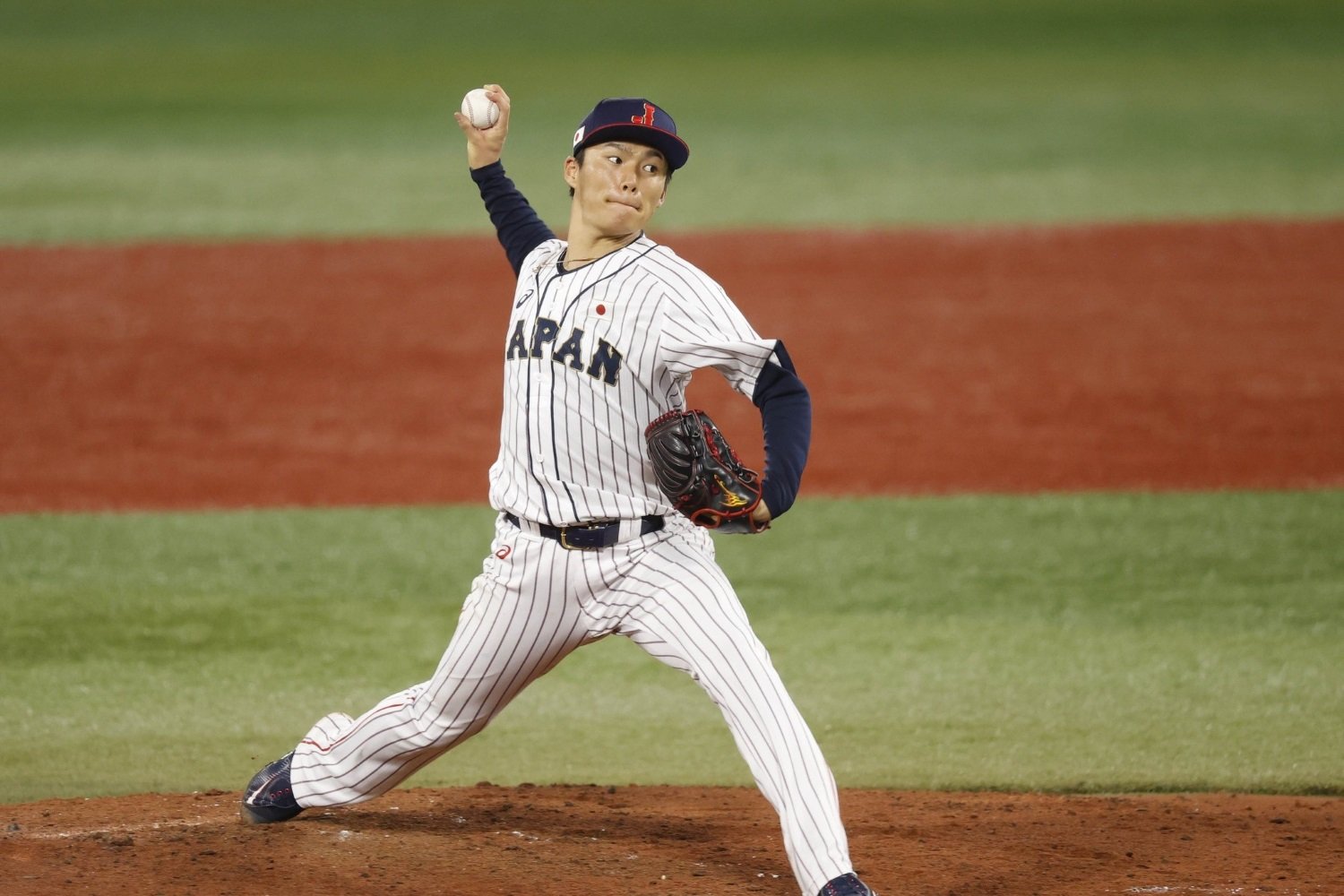 Those scrappy Dodgers are really starting to put something together. It was tough to figure how they'd get over the hump with just Mookie Betts, Freddie Freeman, Shohei Ohtani, and Tyler Glasnow to fuel their World Series aspirations. Now, they finally have a high-priced star to stick into the mix, committing not just $325 million in salary to Yoshinobu Yamamoto, but another $50 million and change in the form of a posting fee. Yamamoto, 25, also has two opt-outs in this deal. Thankfully for the Cubs, the Dodgers only become a real problem for them if they first overcome the other four teams in their division and make it to the postseason. Given the overall structure of the NL right now, it's unlikely that the Dodgers will be a playoff opponent unless and until the Cubs beat someone else in a short series, so the team just needs to focus their energies on actually becoming the best team in the NL Central. Right now, even that would require some significant action. We've finally reached the point where, after what is likely to be a quiet period around the holidays, moves should start to happen in quick succession. There were three key dominos in this offseason market: Ohtani, Yamamoto, and Juan Soto. Now, all three have fallen, and that will bring clarity to conversations teams are having with top free agents Blake Snell, Jordan Montgomery, Cody Bellinger, and Shota Imanaga. Snell really isn't a Cubs target. While there is one way to frame things in which he seems a good fit for the team, it's never been a good fit. To Cubs fans, the need for more swing-and-miss from the starting rotation is glaring, but the Cubs themselves prioritize things other than whiffs when they shop for starters. The heat of Snell's market should work in the Cubs' favor; they're much more likely to target Imanaga or Montgomery. It's Imanaga whose market figures to move fastest now that Yamamoto is taken care of. With the Dodgers unlikely to pursue him now, the Cubs could be contending with the Giants, Yankees, and Red Sox for him, but he has to sign with a team by Jan, 11. Quickly, the player and his various suitors will need to gain some clarity. The exciting thing about Imanaga is that he combines the kind of high-strikeout upside Snell offers with good control. The big drawback is that he might run into home run trouble in MLB, at least in the short term. The other big knock-on effect here is that, since the Mets missed out on Yamamoto, they might turn their vision more fully toward 2025. Going all the way back to late July, they've been sending mixed (but broadly unenthusiastic) signals about their own feelings of viability for 2024. They made a serious bid for Yamamoto's services, but even as they did so, many maintained that they would pivot toward a longer-term focus if they couldn't land him. Will that mean that the Cubs revisit discussions of a Pete Alonso trade? It's not out of the question. Alonso is the kind of transformative offensive addition that has seemed out of reach ever since Ohtani and Soto each found other homes. It would be a short-term addition, but the impact in that one season of remaining club control could be enormous. Whether Jed Hoyer will have the stomach for the price new Mets president of baseball operations David Stearns demands in Alonso talks, however, remains to be seen. For most Cubs fans, losing out on Yamamoto will feel a bit less painful than not landing Ohtani, because the team more publicly backed away from the sweepstakes for him over the 10 days leading up to the move. There were several reasons why Yamamoto was my top free-agent fit for the Cubs, though, and he's the player who could have most helped the team for the short and long term. Alas, it long ago became clear that that wasn't to be. Now, at least the Cubs will be able to get down to brass tacks with potential partners on key acquisitions, be it Bellinger, Hoskins, Alonso, Shane Bieber, Josh Naylor, or others. Do the Dodgers' big expenditures bother you? What move are you most anxious to see the Cubs make, now that the market figures to open up?
 -
Fairly late on Thursday night, the Dodgers agreed to a monstrous 12-year, $325-million deal with right-handed Japanese ace Yoshinobu Yamamoto. The big three dominos of this offseason have fallen. What now? Image courtesy of © Yukihito Taguchi-USA TODAY Sports Those scrappy Dodgers are really starting to put something together. It was tough to figure how they'd get over the hump with just Mookie Betts, Freddie Freeman, Shohei Ohtani, and Tyler Glasnow to fuel their World Series aspirations. Now, they finally have a high-priced star to stick into the mix, committing not just $325 million in salary to Yoshinobu Yamamoto, but another $50 million and change in the form of a posting fee. Yamamoto, 25, also has two opt-outs in this deal. Thankfully for the Cubs, the Dodgers only become a real problem for them if they first overcome the other four teams in their division and make it to the postseason. Given the overall structure of the NL right now, it's unlikely that the Dodgers will be a playoff opponent unless and until the Cubs beat someone else in a short series, so the team just needs to focus their energies on actually becoming the best team in the NL Central. Right now, even that would require some significant action. We've finally reached the point where, after what is likely to be a quiet period around the holidays, moves should start to happen in quick succession. There were three key dominos in this offseason market: Ohtani, Yamamoto, and Juan Soto. Now, all three have fallen, and that will bring clarity to conversations teams are having with top free agents Blake Snell, Jordan Montgomery, Cody Bellinger, and Shota Imanaga. Snell really isn't a Cubs target. While there is one way to frame things in which he seems a good fit for the team, it's never been a good fit. To Cubs fans, the need for more swing-and-miss from the starting rotation is glaring, but the Cubs themselves prioritize things other than whiffs when they shop for starters. The heat of Snell's market should work in the Cubs' favor; they're much more likely to target Imanaga or Montgomery. It's Imanaga whose market figures to move fastest now that Yamamoto is taken care of. With the Dodgers unlikely to pursue him now, the Cubs could be contending with the Giants, Yankees, and Red Sox for him, but he has to sign with a team by Jan, 11. Quickly, the player and his various suitors will need to gain some clarity. The exciting thing about Imanaga is that he combines the kind of high-strikeout upside Snell offers with good control. The big drawback is that he might run into home run trouble in MLB, at least in the short term. The other big knock-on effect here is that, since the Mets missed out on Yamamoto, they might turn their vision more fully toward 2025. Going all the way back to late July, they've been sending mixed (but broadly unenthusiastic) signals about their own feelings of viability for 2024. They made a serious bid for Yamamoto's services, but even as they did so, many maintained that they would pivot toward a longer-term focus if they couldn't land him. Will that mean that the Cubs revisit discussions of a Pete Alonso trade? It's not out of the question. Alonso is the kind of transformative offensive addition that has seemed out of reach ever since Ohtani and Soto each found other homes. It would be a short-term addition, but the impact in that one season of remaining club control could be enormous. Whether Jed Hoyer will have the stomach for the price new Mets president of baseball operations David Stearns demands in Alonso talks, however, remains to be seen. For most Cubs fans, losing out on Yamamoto will feel a bit less painful than not landing Ohtani, because the team more publicly backed away from the sweepstakes for him over the 10 days leading up to the move. There were several reasons why Yamamoto was my top free-agent fit for the Cubs, though, and he's the player who could have most helped the team for the short and long term. Alas, it long ago became clear that that wasn't to be. Now, at least the Cubs will be able to get down to brass tacks with potential partners on key acquisitions, be it Bellinger, Hoskins, Alonso, Shane Bieber, Josh Naylor, or others. Do the Dodgers' big expenditures bother you? What move are you most anxious to see the Cubs make, now that the market figures to open up? View full article
-
In important news for the maximization of the value of new manager Craig Counsell, the Cubs completed their coaching staff Tuesday. They'll enter 2024 with, in some sense, three pitching coaches in uniform each day. Holmes, the former longtime MLB reliever, was with the Rockies when Counsell came up in the late 1990s, and they played another year together in Arizona in 2000. Strittmatter, meanwhile, played with Counsell all the way up the chain of the Rockies' farm system in the 1990s. To be sure, these moves are Counsell-driven. He chose people he knows, and with whom he's comfortable. However, it's also well worth noting their core competencies. Holmes isn't one of those hyper-modern pitching gurus who can clearly and concisely communicate advanced concepts to the public, but in his recent role with the Orioles, he worked successfully with a front office obsessed with the analytical nuances and biomechanical edges that exist in the current game. He also developed a reputation as an ebullient and enthusiastic resource for the relievers under his charge. In Baltimore, Holmes was the assistant pitching coach. The Cubs already have one of those: Daniel Moskos, who works as an assistant to Tommy Hottovy. In effect, it seems as though Holmes will take over the role previously filled by major-league pitching strategist Danny Hultzen, who moved on to the team's front office. Getting a guy with substantial experience and a relationship with Counsell for that role is perfect. While in Baltimore, Holmes talked about how much he loved working with Brandon Hyde, whom he said was brilliant at sensing when pitchers needed a day off. Part of Counsell's excellence lies in doing that very thing, and he should feel comfortable communicating about such matters with Holmes. For his part, Strittmatter stayed in Colorado when Counsell was traded elsewhere in 1997, and he pretty much never left. He's coming aboard as the replacement for Craig Driver, who was (in turn) the replacement for Mike Borzello. That's a role the Cubs have prized and from which they need to get significant value. Counsell's Brewers teams consistently and massively outperformed the league average in terms of pitch framing from their catchers. Much of the credit rightfully went to the organization's catching coordinator, Charlie Greene, but Counsell also had Walker McKinven and Nestor Corredor on his coaching staff, working closely with Greene to ensure the developmental work they did in the minors with their backstops carried over to the majors. Strittmatter, who was last the Rockies' minor-league coordinator, seems to be Counsell's attempt to find someone he trusts to do the same things Greene or McKinven did for him for years. Coincidentally, Greene himself got promoted to the Brewers' big-league coaching staff earlier this month. (In fact, it was no coincidence. Counsell and the Cubs were ready to poach Greene by offering him this same role, and the Brewers had to act to keep him.) If Counsell can create the same synergy with old minor-league teammate Strittmatter as he had with Greene or McKinven, it could be worth a win or two to the Cubs, by itself. These are smart hires, not least because they figure to make a newcomer in the manager's chair more at ease with a coaching staff of which he inherited most members. The Cubs have resolved their uncertainty about who will teach and deploy their players for 2024. All that's left is to figure out which players they'll be teaching and deploying. View full article
-
Cubs Hire Darren Holmes, Mark Strittmatter to Finalize Coaching Staff
Matthew Trueblood posted an article in Cubs
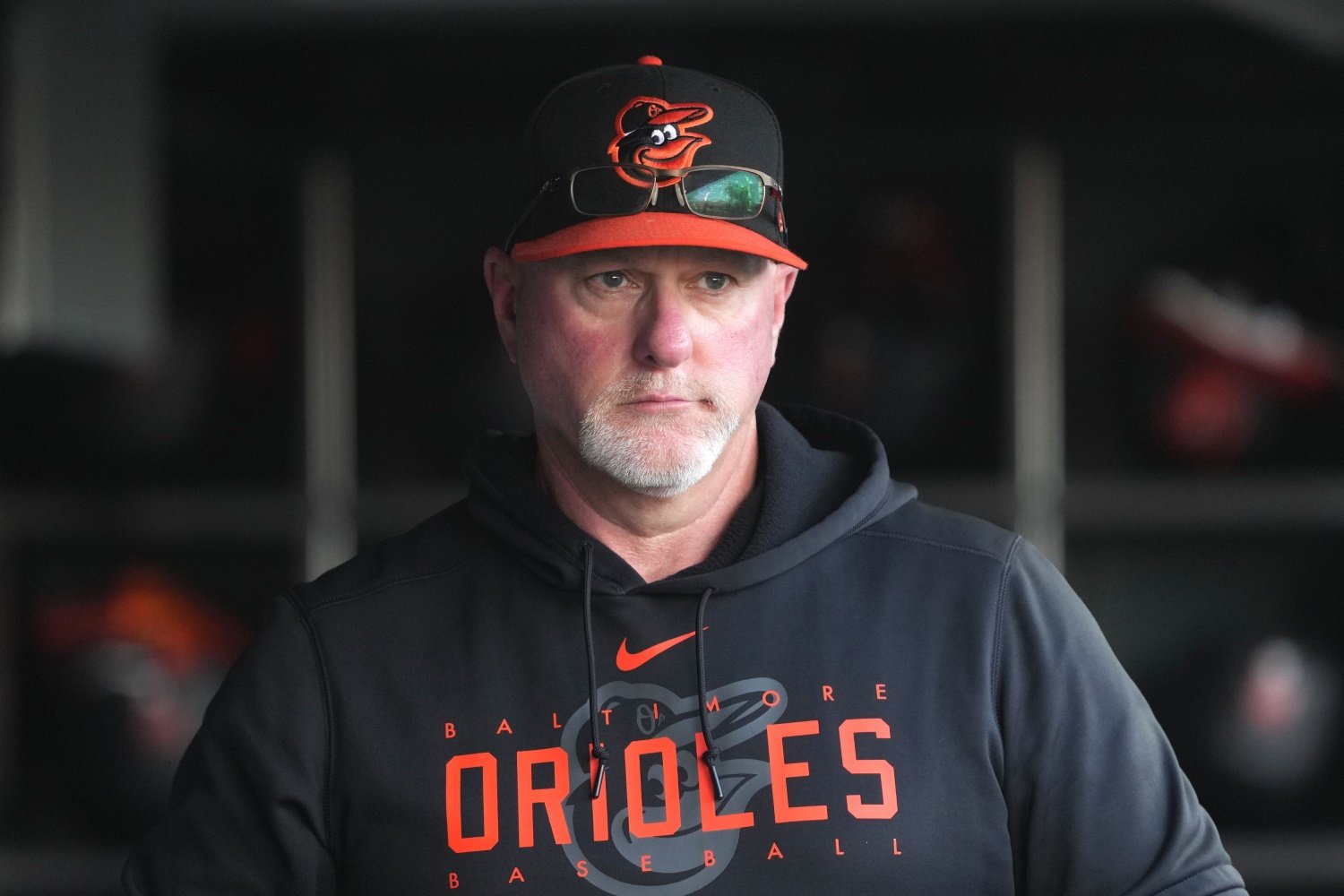 Without a doubt, Craig Counsell has value all his own as a manager. He's masterful in his maneuvering within games, and has done well at cultivating clubhouse morale and weathering the brutal grind of an MLB season. To get the most out of him, though, the team needs to surround him with the right support staff, to ensure that the team gets better at player development and preparation. Already, the team hired Ryan Flaherty as Counsell's bench coach, after Andy Green departed for the Mets. Flaherty's playing career was a less serendipity-soaked version of Counsell's, and he's shown savvy as a coach and front-office liaison in his previous stops. On Tuesday, though, the team also filled its last two vacancies, bringing in Darren Holmes as the bullpen coach and Mark Strittmatter as catching coach. Holmes, the former longtime MLB reliever, was with the Rockies when Counsell came up in the late 1990s, and they played another year together in Arizona in 2000. Strittmatter, meanwhile, played with Counsell all the way up the chain of the Rockies' farm system in the 1990s. To be sure, these moves are Counsell-driven. He chose people he knows, and with whom he's comfortable. However, it's also well worth noting their core competencies. Holmes isn't one of those hyper-modern pitching gurus who can clearly and concisely communicate advanced concepts to the public, but in his recent role with the Orioles, he worked successfully with a front office obsessed with the analytical nuances and biomechanical edges that exist in the current game. He also developed a reputation as an ebullient and enthusiastic resource for the relievers under his charge. In Baltimore, Holmes was the assistant pitching coach. The Cubs already have one of those: Daniel Moskos, who works as an assistant to Tommy Hottovy. In effect, it seems as though Holmes will take over the role previously filled by major-league pitching strategist Danny Hultzen, who moved on to the team's front office. Getting a guy with substantial experience and a relationship with Counsell for that role is perfect. While in Baltimore, Holmes talked about how much he loved working with Brandon Hyde, whom he said was brilliant at sensing when pitchers needed a day off. Part of Counsell's excellence lies in doing that very thing, and he should feel comfortable communicating about such matters with Holmes. For his part, Strittmatter stayed in Colorado when Counsell was traded elsewhere in 1997, and he pretty much never left. He's coming aboard as the replacement for Craig Driver, who was (in turn) the replacement for Mike Borzello. That's a role the Cubs have prized and from which they need to get significant value. Counsell's Brewers teams consistently and massively outperformed the league average in terms of pitch framing from their catchers. Much of the credit rightfully went to the organization's catching coordinator, Charlie Greene, but Counsell also had Walker McKinven and Nestor Corredor on his coaching staff, working closely with Greene to ensure the developmental work they did in the minors with their backstops carried over to the majors. Strittmatter, who was last the Rockies' minor-league coordinator, seems to be Counsell's attempt to find someone he trusts to do the same things Greene or McKinven did for him for years. Coincidentally, Greene himself got promoted to the Brewers' big-league coaching staff earlier this month. (In fact, it was no coincidence. Counsell and the Cubs were ready to poach Greene by offering him this same role, and the Brewers had to act to keep him.) If Counsell can create the same synergy with old minor-league teammate Strittmatter as he had with Greene or McKinven, it could be worth a win or two to the Cubs, by itself. These are smart hires, not least because they figure to make a newcomer in the manager's chair more at ease with a coaching staff of which he inherited most members. The Cubs have resolved their uncertainty about who will teach and deploy their players for 2024. All that's left is to figure out which players they'll be teaching and deploying.
 -
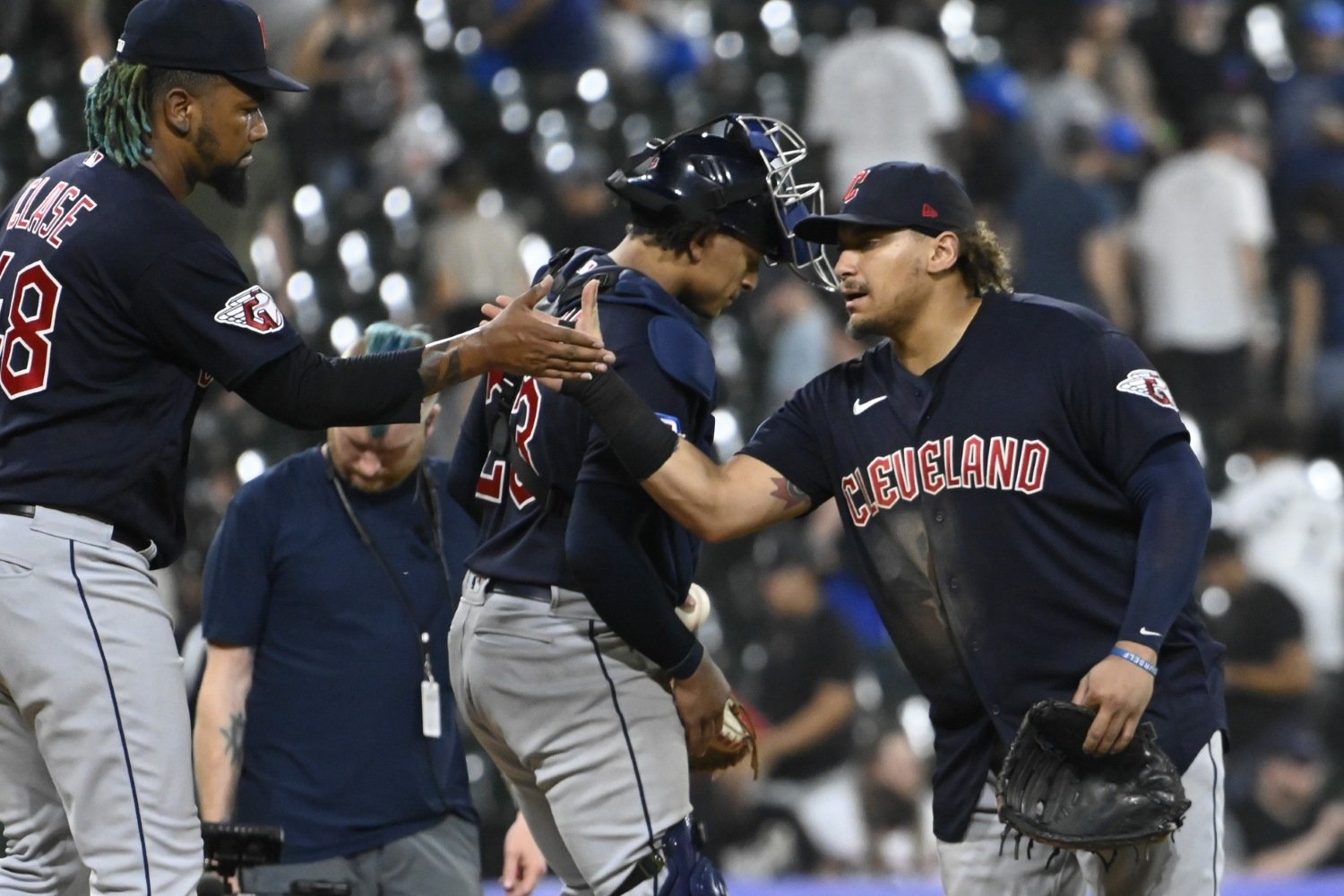 There's no question that the Guardians are interested in trading Shane Bieber, who is set to make somewhere between $12 million and $14 million via arbitration in 2024 and hit free agency after the season. They won't trade him purely to shed that salary, though; they have other ways to manage their budgetary restrictions for the coming year. The Cubs, in turn, are interested in Bieber, but not at the cost of Christopher Morel or any of the top tier of prospects (Pete Crow-Armstrong, Cade Horton, or Kevin Alcantara) in their farm system. As the free agency of Shohei Ohtani and the trade markets of Juan Soto and Tyler Glasnow played out, these two teams circled each other and exchanged ideas about deals that would include Bieber, but also expand beyond him. Cleveland might have longer-term payroll constraints to consider, which could lead them to move first baseman Josh Naylor, closer Emmanuel Clase, or both. I've written about why Naylor and Clase would each be excellent fits for the Cubs, and I can directly report that the two sides have talked about permutations of deals that would involve each of these three players--though, as far as I know, not all three in any one deal. Let's take this from the abstract to the concrete. Here are three possible versions of a trade between the Cubs and Guardians, each of which is theoretically possible but (perhaps) none of which is actually likely. This way, we can better define what does and doesn't make sense for each side. The Clean Rental Cubs acquire Shane Bieber; Guardians acquire Alexander Canario and Brandon Birdsell One important thing to keep in mind, when trading with Cleveland, is that they are almost perpetually in a roster crunch. With a highly effective model-based approach to the draft and a solid operation in Latin America, the Guardians' farm system is almost always deep, but it's especially deep with guys who quickly fill up the 40-man roster. That model-centric draft strategy leads to a lot of college picks, and those guys become Rule 5-eligible sooner than high-school selections. Right now, Cleveland has a full 40-man roster, so (while they could always designate someone for assignment or make a separate move) they're not looking to take on multiple MLB-ready pieces in a trade for Bieber. This deal fits their needs neatly. Canario would slot right into an outfield mix that remains a disaster area, and Birdsell made six starts at Double A this season, but doesn't become Rule 5-eligible until after 2025. In the long run, Birdsell might need to move to the bullpen, and Canario might be a better platoon outfielder than everyday guy, but they each give Cleveland a nice blend of upside and surety, without straining their organizational logistics. The Cubs, meanwhile, can spare both players, as they each exist in areas of depth for the team. Bieber would slot in right alongside Justin Steele, Jameson Taillon, and Kyle Hendricks, in what would be a very flat but impressively deep starting corps. The Two-Birds, One-Stone Approach Cubs acquire Shane Bieber, Josh Naylor, and Myles Straw; Guardians acquire Kevin Alcántara, Ben Brown, Alexander Canario, Brandon Birdsell, and Haydn McGeary Crucially, this deal is not just about the Cubs filling two of their most urgent needs. It also doubles Cleveland's pleasure. The Guardians signed Straw to a five-year contract extension in April 2022, and they almost immediately regretted it. After he'd excited them with a season in which he batted .271/.349/.348 with excellent outfield defense, he's batted .229/.296/.284 in the two seasons since. Now 29, Straw is still a solid defensive center fielder, but that bat is unplayable, at least as anything more than a fifth outfielder. He's due $4.5 million in 2024, $13 million over the following two seasons, and then small buyouts on club options for 2027 and 2028. Such a deal wouldn't hamstring the Cubs, of course, but it's the kind of mistake the Guardians really can't afford. They've been looking for ways to get out from under it, although their desire to do so comes far short of compelling them to give up a prospect just to do so. In this trade, they get major value for both Bieber and Naylor, and they also clear Straw's contract from their books. The Cubs, of course, fill both their rotation and their first base void. Alcántara would be a major loss, given his tremendous upside, but the team's medium-term outfield picture is crowded enough to make it worthwhile. Notably, this deal amounts to stacking Naylor and Straw (bad contract and all) for Alcántara, Brown, and McGeary atop the first trade. That's a plausible structure, but whether the Guardians would actually take an interest in it depends on where they fall on the wide spectrum of industry opinions about both Alcántara and Brown. For what it's worth, Brown is a good fit for what Cleveland likes to target and do with young hurlers. The Moonshot Cubs acquire Shane Bieber and Emmanuel Clase; Guardians acquire Christopher Morel, Kevin Alcántara, Brody McCullough and Brandon Birdsell This will seem far too rich to most Cubs fans, which reflects the reality of the stalemate between the teams. The Cubs are willing to move Morel, but they view him as a very valuable trade piece. Other teams, including the Guardians, see him as desirable but not a premium chip. If a deal around Bieber and Clase came together, it would probably be because the Cubs capitulated on giving up one of their top three prospects (they'd sooner let go of Alcántara than Pete Crow-Armstrong or Cade Horton, at this stage) and met the Guardians halfway on Morel. Right now, the Cubs' most urgent need is for better pitching depth. This move would solve that in one fell swoop, and Clase's long-term, team-friendly deal would give it a long-lasting impact. With the losses of Morel and Crow-Armstrong, they'd then face an equally urgent imperative to shore up the offense (and the outfield), and Bieber and Clase would take up a good-sized chunk of their payroll, so the viability of it might hinge on the team's sense of their budgetary flexibility. Still, there are ways to make up for the losses of Morel and Alcántara via free agency, and the Cubs' organizational pitching depth is sufficient to cushion the blow of giving up Birdsell and McCullough. This version of the deal is the least likely, but it would have the greatest chance of setting up the Cubs to compete for a World Series in the short term, and it would simultaneously have the greatest long-term impact of any of these possibilities. What do you think? Are any of these moves you would endorse? What changes to these frameworks do you propose? Bring me any good thoughts. Bring me anything but screenshots of the Trade Values site.
 -
At this point, it's not the waiting game of Yoshinobu Yamamoto's free agency that is holding up the Cubs' winter. Rather, it's the long dance they're doing with the Cleveland Guardians, about multiple potential trades that could set the direction of their offseason. Image courtesy of © Matt Marton-USA TODAY Sports There's no question that the Guardians are interested in trading Shane Bieber, who is set to make somewhere between $12 million and $14 million via arbitration in 2024 and hit free agency after the season. They won't trade him purely to shed that salary, though; they have other ways to manage their budgetary restrictions for the coming year. The Cubs, in turn, are interested in Bieber, but not at the cost of Christopher Morel or any of the top tier of prospects (Pete Crow-Armstrong, Cade Horton, or Kevin Alcantara) in their farm system. As the free agency of Shohei Ohtani and the trade markets of Juan Soto and Tyler Glasnow played out, these two teams circled each other and exchanged ideas about deals that would include Bieber, but also expand beyond him. Cleveland might have longer-term payroll constraints to consider, which could lead them to move first baseman Josh Naylor, closer Emmanuel Clase, or both. I've written about why Naylor and Clase would each be excellent fits for the Cubs, and I can directly report that the two sides have talked about permutations of deals that would involve each of these three players--though, as far as I know, not all three in any one deal. Let's take this from the abstract to the concrete. Here are three possible versions of a trade between the Cubs and Guardians, each of which is theoretically possible but (perhaps) none of which is actually likely. This way, we can better define what does and doesn't make sense for each side. The Clean Rental Cubs acquire Shane Bieber; Guardians acquire Alexander Canario and Brandon Birdsell One important thing to keep in mind, when trading with Cleveland, is that they are almost perpetually in a roster crunch. With a highly effective model-based approach to the draft and a solid operation in Latin America, the Guardians' farm system is almost always deep, but it's especially deep with guys who quickly fill up the 40-man roster. That model-centric draft strategy leads to a lot of college picks, and those guys become Rule 5-eligible sooner than high-school selections. Right now, Cleveland has a full 40-man roster, so (while they could always designate someone for assignment or make a separate move) they're not looking to take on multiple MLB-ready pieces in a trade for Bieber. This deal fits their needs neatly. Canario would slot right into an outfield mix that remains a disaster area, and Birdsell made six starts at Double A this season, but doesn't become Rule 5-eligible until after 2025. In the long run, Birdsell might need to move to the bullpen, and Canario might be a better platoon outfielder than everyday guy, but they each give Cleveland a nice blend of upside and surety, without straining their organizational logistics. The Cubs, meanwhile, can spare both players, as they each exist in areas of depth for the team. Bieber would slot in right alongside Justin Steele, Jameson Taillon, and Kyle Hendricks, in what would be a very flat but impressively deep starting corps. The Two-Birds, One-Stone Approach Cubs acquire Shane Bieber, Josh Naylor, and Myles Straw; Guardians acquire Kevin Alcántara, Ben Brown, Alexander Canario, Brandon Birdsell, and Haydn McGeary Crucially, this deal is not just about the Cubs filling two of their most urgent needs. It also doubles Cleveland's pleasure. The Guardians signed Straw to a five-year contract extension in April 2022, and they almost immediately regretted it. After he'd excited them with a season in which he batted .271/.349/.348 with excellent outfield defense, he's batted .229/.296/.284 in the two seasons since. Now 29, Straw is still a solid defensive center fielder, but that bat is unplayable, at least as anything more than a fifth outfielder. He's due $4.5 million in 2024, $13 million over the following two seasons, and then small buyouts on club options for 2027 and 2028. Such a deal wouldn't hamstring the Cubs, of course, but it's the kind of mistake the Guardians really can't afford. They've been looking for ways to get out from under it, although their desire to do so comes far short of compelling them to give up a prospect just to do so. In this trade, they get major value for both Bieber and Naylor, and they also clear Straw's contract from their books. The Cubs, of course, fill both their rotation and their first base void. Alcántara would be a major loss, given his tremendous upside, but the team's medium-term outfield picture is crowded enough to make it worthwhile. Notably, this deal amounts to stacking Naylor and Straw (bad contract and all) for Alcántara, Brown, and McGeary atop the first trade. That's a plausible structure, but whether the Guardians would actually take an interest in it depends on where they fall on the wide spectrum of industry opinions about both Alcántara and Brown. For what it's worth, Brown is a good fit for what Cleveland likes to target and do with young hurlers. The Moonshot Cubs acquire Shane Bieber and Emmanuel Clase; Guardians acquire Christopher Morel, Kevin Alcántara, Brody McCullough and Brandon Birdsell This will seem far too rich to most Cubs fans, which reflects the reality of the stalemate between the teams. The Cubs are willing to move Morel, but they view him as a very valuable trade piece. Other teams, including the Guardians, see him as desirable but not a premium chip. If a deal around Bieber and Clase came together, it would probably be because the Cubs capitulated on giving up one of their top three prospects (they'd sooner let go of Alcántara than Pete Crow-Armstrong or Cade Horton, at this stage) and met the Guardians halfway on Morel. Right now, the Cubs' most urgent need is for better pitching depth. This move would solve that in one fell swoop, and Clase's long-term, team-friendly deal would give it a long-lasting impact. With the losses of Morel and Crow-Armstrong, they'd then face an equally urgent imperative to shore up the offense (and the outfield), and Bieber and Clase would take up a good-sized chunk of their payroll, so the viability of it might hinge on the team's sense of their budgetary flexibility. Still, there are ways to make up for the losses of Morel and Alcántara via free agency, and the Cubs' organizational pitching depth is sufficient to cushion the blow of giving up Birdsell and McCullough. This version of the deal is the least likely, but it would have the greatest chance of setting up the Cubs to compete for a World Series in the short term, and it would simultaneously have the greatest long-term impact of any of these possibilities. What do you think? Are any of these moves you would endorse? What changes to these frameworks do you propose? Bring me any good thoughts. Bring me anything but screenshots of the Trade Values site. View full article
-
It's the holidays, Squally. Where's your generosity of spirit? He's a solid second guy!
-
Fixed! Lol. Can't BELIEVE the B-Ref linker defaults to a kid in a summer wood-bat semipro league instead of him. 😄
-
Giving up on players willy-nilly is no way to do business, but a healthy pace of turnover and trade is vital to the sustainability of a competitive organization. The Cubs have three open spots on their 40-man roster right now, but they also have three players they need to jettison by February. Image courtesy of © Allan Henry-USA TODAY Sports The Cubs need to add a potent bat to their lineup, a frontline starter to their rotation, and better depth to their bullpen this offseason. That's partially because of the failure of these three players to develop into anything useful. Brennen Davis, OF By every account, Davis is a great guy, a hard worker, and a very talented ballplayer. Sometimes, when it comes to trying to win baseball games, none of that ends up mattering. Injuries have stolen all the promise from Davis, and while there might still lurk some spark of hope for a resurgent season or two and a modest big-league career, he's little more than a phantom on the Cubs roster now. He's a long-levered, tragic reminder that Kevin Alcantara is no sure thing. That Davis was rated so highly as a prospect just a couple of years ago is a cautionary tale, but not because he was fool's gold. He just failed the last, sternest, cruelest test a player has to pass, in order to become a success in MLB: he's not lucky. That sounds silly, and ephemeral. It sounds like waiting things out will fix it. Alas, that's not how this particular kind of baseball luck works. The gods just didn't dip enough of his body parts into the River Styx. The Cubs need to trade or cut Davis and spend that 40-man spot on a player who will deliver real value in 2024. Caleb Kilian, RHP The natural contrast with Davis is unkind to Kilian, because he hasn't been thwarted by injury. He's just not able to translate his raw talent into actionable big-league talent. Since he was a prospect in the Giants system, there have been doubts about his ability to flesh out a repertoire that misses bats in MLB, not least because of the wanting shape on his fastball(s). He's tinkered relentlessly and occasionally looked to be on the brink of figuring things out, only to have everything go back to seed. The block might be mental. It might be mechanical. It might, after all, be physical, and he could be pitching right through stuff that might shelve a less determined soul. At this point, as is the case with Davis, it just doesn't matter. If anyone will make an offer for Kilian, the Cubs should take it, but he's not worth much even as a throw-in at this stage, and getting him off the roster will almost assuredly make room for a more useful pitcher--even if it be at a higher price for the Ricketts family. Michael Rucker, RHP A rubber-armed up-and-down guy is not without some value. David Ross wasn't great at extracting that value from Rucker, but he did explore various methods, and Rucker tried valiantly to make meaningful adjustments. It just isn't there. He's never going to be more than the seventh or eighth arm in a team's bullpen. If the Cubs had a clear and durable top pitcher or two in their bullpen hierarchy, they might be able to benefit from that kind of presence, the way Craig Counsell has benefited from having so many seemingly fungible arms float around at the edges of his bullpen in the recent past. To get to that kind of pen, though, the team needs to clear more roster space and chase some upside. Rucker has none of it. Would you stand up to defend holding onto any of this trio? Are there other members of the current 40-man roster you think the Cubs need to get shot of, in order to take the next step toward contention? Weigh in below. View full article
-
 The Cubs need to add a potent bat to their lineup, a frontline starter to their rotation, and better depth to their bullpen this offseason. That's partially because of the failure of these three players to develop into anything useful. Brennen Davis, OF By every account, Davis is a great guy, a hard worker, and a very talented ballplayer. Sometimes, when it comes to trying to win baseball games, none of that ends up mattering. Injuries have stolen all the promise from Davis, and while there might still lurk some spark of hope for a resurgent season or two and a modest big-league career, he's little more than a phantom on the Cubs roster now. He's a long-levered, tragic reminder that Kevin Alcantara is no sure thing. That Davis was rated so highly as a prospect just a couple of years ago is a cautionary tale, but not because he was fool's gold. He just failed the last, sternest, cruelest test a player has to pass, in order to become a success in MLB: he's not lucky. That sounds silly, and ephemeral. It sounds like waiting things out will fix it. Alas, that's not how this particular kind of baseball luck works. The gods just didn't dip enough of his body parts into the River Styx. The Cubs need to trade or cut Davis and spend that 40-man spot on a player who will deliver real value in 2024. Caleb Kilian, RHP The natural contrast with Davis is unkind to Kilian, because he hasn't been thwarted by injury. He's just not able to translate his raw talent into actionable big-league talent. Since he was a prospect in the Giants system, there have been doubts about his ability to flesh out a repertoire that misses bats in MLB, not least because of the wanting shape on his fastball(s). He's tinkered relentlessly and occasionally looked to be on the brink of figuring things out, only to have everything go back to seed. The block might be mental. It might be mechanical. It might, after all, be physical, and he could be pitching right through stuff that might shelve a less determined soul. At this point, as is the case with Davis, it just doesn't matter. If anyone will make an offer for Kilian, the Cubs should take it, but he's not worth much even as a throw-in at this stage, and getting him off the roster will almost assuredly make room for a more useful pitcher--even if it be at a higher price for the Ricketts family. Michael Rucker, RHP A rubber-armed up-and-down guy is not without some value. David Ross wasn't great at extracting that value from Rucker, but he did explore various methods, and Rucker tried valiantly to make meaningful adjustments. It just isn't there. He's never going to be more than the seventh or eighth arm in a team's bullpen. If the Cubs had a clear and durable top pitcher or two in their bullpen hierarchy, they might be able to benefit from that kind of presence, the way Craig Counsell has benefited from having so many seemingly fungible arms float around at the edges of his bullpen in the recent past. To get to that kind of pen, though, the team needs to clear more roster space and chase some upside. Rucker has none of it. Would you stand up to defend holding onto any of this trio? Are there other members of the current 40-man roster you think the Cubs need to get shot of, in order to take the next step toward contention? Weigh in below.
 -
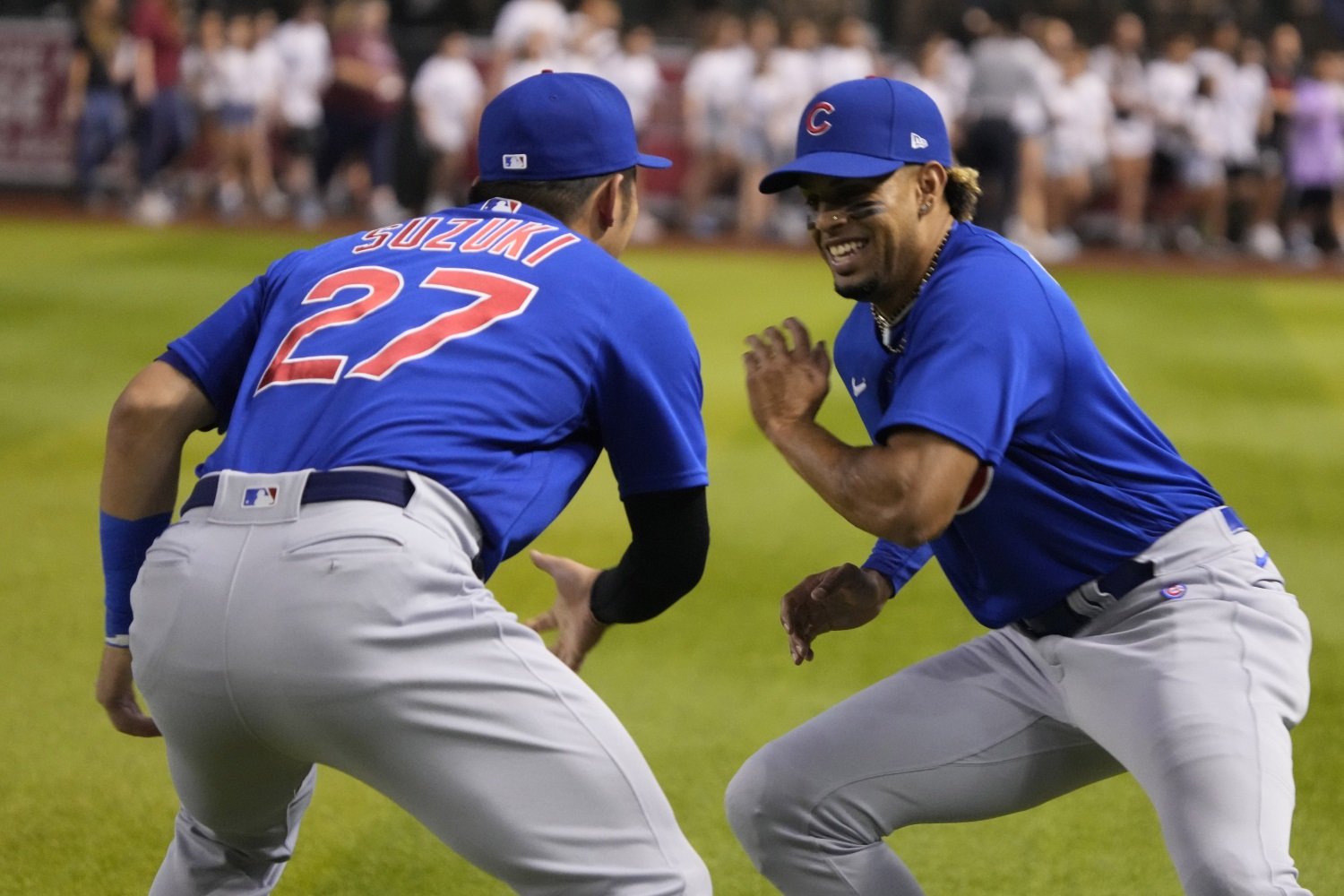 For the purposes of this exercise, we'll focus solely on internal options. This isn't a prediction that the team won't sign any free agents or make any trades; it's just a glimpse at what the team will look like without them. Starting Lineup Mike Tauchman, CF Nico Hoerner, 2B Ian Happ, LF Seiya Suzuki, RF Dansby Swanson, SS Matt Mervis, 1B Christopher Morel, DH Yan Gomes, C Nick Madrigal, 3B The glaring omission here, of course, is Pete Crow-Armstrong. A contract extension could solidify Crow-Armstrong's place with the team on Opening Day, and it's still possible he could win the job without one, but he's not the favorite at this moment. Having only taken 158 plate appearances at Triple A and with some clear work to do offensively, Crow-Armstrong could return to Iowa to open the season and try to sand off the rough edges. To reclaim an extra year of service time, the Cubs would need to wait until roughly the beginning of May to call him up. If he doesn't assert himself in the Cactus League, though, that feels like the short end of the timeline, anyway. Bench Miguel Amaya, C Patrick Wisdom, 3B/1B Alexander Canario, OF Miles Mastrobuoni, IF This unit, and this specific set of players, is the reason why Craig Counsell was such an important acquisition back in November. David Ross got nothing much out of Amaya, using him far too sparingly and doing a lousy job of developing him at the big-league level. Ditto for Canario. These are guys with ample tactical value, if instilled with confidence and used in the right matchups and situations. Counsell will tap into that. Starting Rotation Justin Steele Jameson Taillon Kyle Hendricks Javier Assad Jordan Wicks Plainly, this can't be the group come Opening Day. So far, this exercise has only underscored that the Cubs' most urgent and pressing need is for a frontline starting pitcher. Steele is unlikely to ever have a season as good as his 2023 again. Taillon figures to be somewhat better than he was last season, and if he's a third starter, you probably have a pretty sturdy rotation. If he's second, though, that's a problem. Hendricks's resurgent season was a delightful thing, but it came with some warning signs that the end is only getting nearer, not further away. Wicks is the only hurler here who provides upside beyond the role into which he's slotted. Bullpen Adbert Alzolay Julian Merryweather Drew Smyly Hayden Wesneski Daniel Palencia Mark Leiter, Jr. Jose Cuas Luke Little The top six names here are all relatively recent converts from starting roles. All eight have meaningful upside, and at least three of them have the chance to be a legitimate relief ace. However, none is a proven one, and none have shown the consistency or the durability to do that over a full season. Nor is the team's relief depth overwhelmingly impressive, unless you consider the likes of Assad or Ben Brown to be part of that equation. The Cubs need reinforcement in this area, too. By now, it should be pretty clear why the Cubs are 22nd in the current projected 2024 standings at FanGraphs. Understandably, fans are growing impatient. There are still a number of avenues available for the Cubs to markedly improve, but there's no question that they need to do so, and that will require a much bolder second half of the offseason. What do you think of this roster projection? Where did I err, and who should be on the list instead? Join the conversation below.
- 7 comments
-
- 1
-

-
- matt mervis
- mike tauchman
- (and 5 more)
-
With their offseason starting so slowly, the Cubs are far from a finished product for 2024. If the season were to begin today, though, how would they line up along the chalk lines? Let's take a look, to pinpoint what still needs to change. Understandably, fans are growing impatient. There are still a number of avenues available for the Cubs to markedly improve, but there's no question that they need to do so, and that will require a much bolder second half of the offseason. What do you think of this roster projection? Where did I err, and who should be on the list instead? Join the conversation below. View full article
-
This is Not a Rebuild, Dec. 15, 2023: Bemoaning Late-Stage Capitalism
Matthew Trueblood posted an article in Cubs
 The Chicago Cubs are testing their fans' patience and threatening some of their sanity. In the latest episode of This is Not a Rebuild, the guys try to make sense of the team's approach to free agency, take turns ranting on subjects ranging from Eric Hosmer to the sustainability of any sector of our economy, and then close with a Random Cub of the Week! Here's the full episode, on Spotify: It's also available on Apple Podcasts. Subscribe, rate, and review the show on your favorite platform. This offseason hasn't been much fun so far, but the show continues to be.
 -
In the latest episode of the unofficial Cubs podcast of North Side Baseball, one of the co-hosts is in a very dark place. The rest of us make it much worse. Image courtesy of Matt Trueblood via Spotify for Podcasters The Chicago Cubs are testing their fans' patience and threatening some of their sanity. In the latest episode of This is Not a Rebuild, the guys try to make sense of the team's approach to free agency, take turns ranting on subjects ranging from Eric Hosmer to the sustainability of any sector of our economy, and then close with a Random Cub of the Week! Here's the full episode, on Spotify: It's also available on Apple Podcasts. Subscribe, rate, and review the show on your favorite platform. This offseason hasn't been much fun so far, but the show continues to be. View full article
-
The Cubs' hopes of adding a top-of-the-rotation starting pitcher this winter have been dealt a few heavy blows this week. The next few days will be critical: Does Jed Hoyer have good options left to address his starting staff? The Tampa Bay Rays and Los Angeles Dodgers agreed to a deal Thursday to send Tyler Glasnow to Los Angeles, along with outfielder Manuel Margot. The Rays will get young, controllable starting pitcher Ryan Pepiot and outfield prospect Jonny DeLuca in return. As of early Friday morning, though, the deal isn't official, because it's contingent on Glasnow and the Dodgers agreeing on a contract extension to keep him around beyond his scheduled free agency at the end of 2024. For a long time this offseason, fans grew more anxious, but little actually changed. Although the Cubs haven't addressed their fairly dire need for help at the front end of their rotation, they also hadn't missed out on many of their realistic options to make that upgrade. Now, though, the music seems to have stopped, and chairs are filling up. The team needs to find one soon, and Glasnow marks a very oft-mentioned target taken off the board. While his lack of durability is an important mark against Glasnow, the other argument not to acquire him was that he'd only be around for one year. That the Dodgers are getting him to sign an extension to make this deal work makes this feel like more of a miss for the Cubs. Soon, another important miss will also become official. Yoshinobu Yamamoto's lucrative free-agent sweepstakes continues, but the Cubs seem not to be a serious player in it. One by one, the pitchers who could materially change the look and feel of the Chicago rotation are finding their new homes, and none (so far) are on the North Side of Chicago. Three good options do stand out, though. It's not too late to flip the script. Let's break down the situation with each hurler. Shota Imanaga Of the remaining pitching targets, the most intriguing is Imanaga. It's pretty clear, by now, that his market will reach the $20-million annual average value range, and it's likely to be a five-year deal. That's a big payout to a 30-year-old, but as I've written before, Imanaga has a ton of upside. If the Cubs can land him, they'll have the swing-and-miss element that has been missing from their rotation the last several years. Imanaga's strikeout-to-walk ratio of 188:24 in NPB this year is like something out of a video game, especially given that he did it while facing only 637 batters. Against MLB hitters, he'll need to make some adjustments, and both of those rates are likely to move in the less desirable direction. They have plenty of room to do so without posing a problem, though. Imanaga's sheer stuff supports the numbers and suggests he could keep them up, to some extent. As we've discussed recently, it doesn't seem like the Cubs are willing to go far enough to sign top-end superstars in free agency, but Imanaga fits into the range to which they do seem willing to stretch. Shane Bieber The Cubs and Guardians have had substantial trade talks around a number of names and involving a lot of potential combinations of young Cubs talent, but one player who stays right in the center of the conversation is Bieber. He's not a Glasnow-like swing-and-miss maven, at this point in his career, but he does several things well and has a deep repertoire. He's the kind of starting pitcher the Cubs have tended to value more highly than most of the rest of the league. With the precedent set anew by the Glasnow deal, it wouldn't be shocking to see the Cubs try to secure an extension with Bieber before completing a trade. In 2024, the hope is that he would be a No. 2 starter, but for the handful of years after that, he would project as more of a mid-rotation option. An extension that ensured he would be a long-term replacement for Kyle Hendricks (who needs to slide to the back of the rotation mix in 2024 and is likely to leave thereafter) would make a trade for Bieber more exciting. Jordan Montgomery If any free agent smoothly blends the reliability and control of Bieber with the upside of Imanaga, it's probably Montgomery. I discussed why he's a good fit for the Cubs, from a pitching philosophy perspective, earlier this offseason. The market for Montgomery is yet to gain full heat, but that figures to change as Glasnow and Yamamoto come off the board, and it could move quickly at that point. He doesn't miss bats the way you'd like your front-end starter to do so. That's the knock on Montgomery. His durability is superb, though, and he fills up the strike zone. He also does things with seam-shifted wake and the unique release point on his high, over-the-top deliver that make him tough to read and tough to hit. It's unlikely that the Cubs can afford both Imanaga and Montgomery, and if they do want to sign Montgomery, they might prefer not to extend Bieber, so as not to overcommit to mid-rotation hurlers for the long term. Still, it might be that the Rangers' co-ace for the stretch run is the right guy to prioritize. Which of these three hurlers strike you as most likely (or most desirable) for the Cubs? Who else is still on your radar? Let's talk about raising the ceiling in the rotation, even if it can't be with Glasnow or Yamamoto. View full article
-
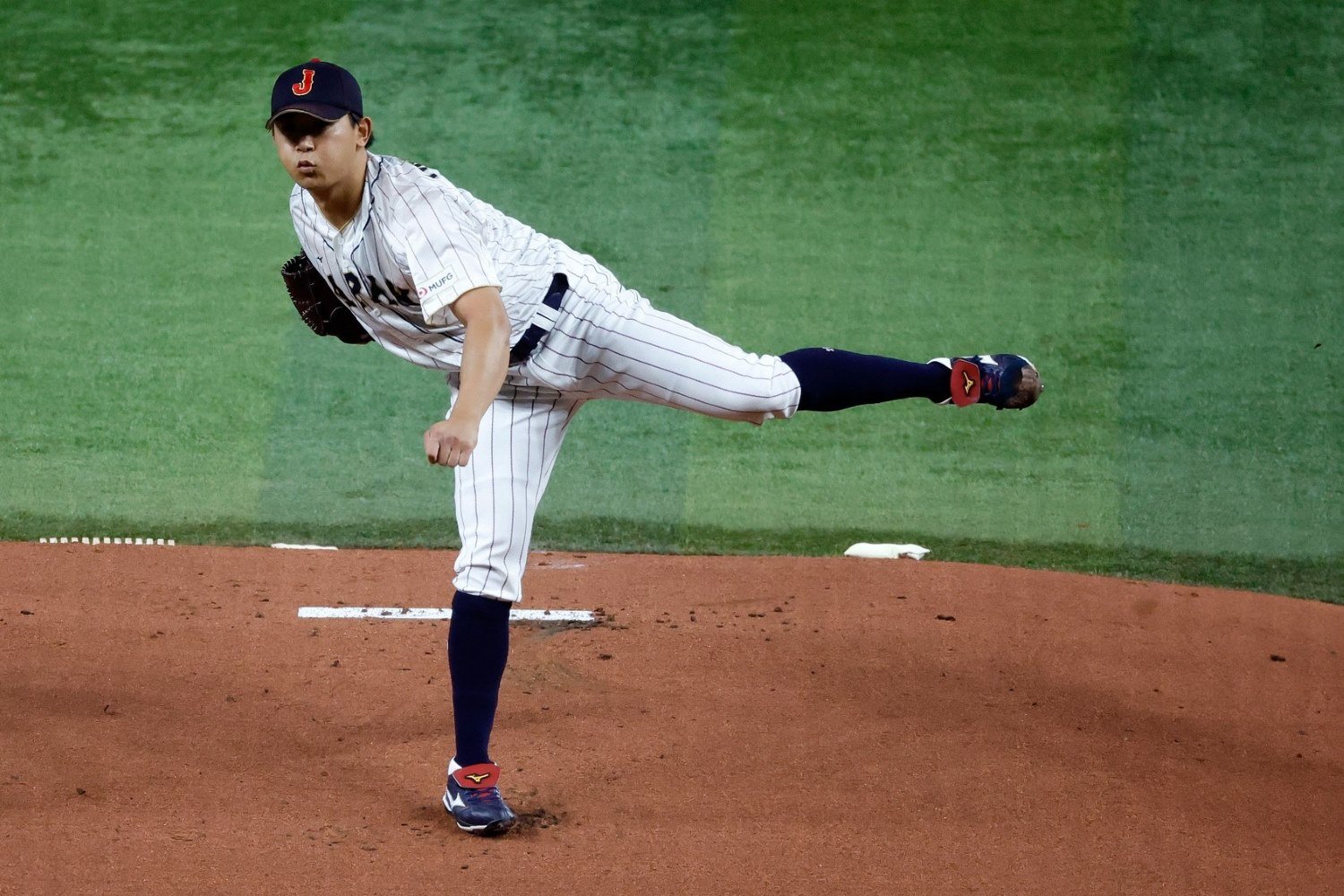 The Tampa Bay Rays and Los Angeles Dodgers agreed to a deal Thursday to send Tyler Glasnow to Los Angeles, along with outfielder Manuel Margot. The Rays will get young, controllable starting pitcher Ryan Pepiot and outfield prospect Jonny DeLuca in return. As of early Friday morning, though, the deal isn't official, because it's contingent on Glasnow and the Dodgers agreeing on a contract extension to keep him around beyond his scheduled free agency at the end of 2024. For a long time this offseason, fans grew more anxious, but little actually changed. Although the Cubs haven't addressed their fairly dire need for help at the front end of their rotation, they also hadn't missed out on many of their realistic options to make that upgrade. Now, though, the music seems to have stopped, and chairs are filling up. The team needs to find one soon, and Glasnow marks a very oft-mentioned target taken off the board. While his lack of durability is an important mark against Glasnow, the other argument not to acquire him was that he'd only be around for one year. That the Dodgers are getting him to sign an extension to make this deal work makes this feel like more of a miss for the Cubs. Soon, another important miss will also become official. Yoshinobu Yamamoto's lucrative free-agent sweepstakes continues, but the Cubs seem not to be a serious player in it. One by one, the pitchers who could materially change the look and feel of the Chicago rotation are finding their new homes, and none (so far) are on the North Side of Chicago. Three good options do stand out, though. It's not too late to flip the script. Let's break down the situation with each hurler. Shota Imanaga Of the remaining pitching targets, the most intriguing is Imanaga. It's pretty clear, by now, that his market will reach the $20-million annual average value range, and it's likely to be a five-year deal. That's a big payout to a 30-year-old, but as I've written before, Imanaga has a ton of upside. If the Cubs can land him, they'll have the swing-and-miss element that has been missing from their rotation the last several years. Imanaga's strikeout-to-walk ratio of 188:24 in NPB this year is like something out of a video game, especially given that he did it while facing only 637 batters. Against MLB hitters, he'll need to make some adjustments, and both of those rates are likely to move in the less desirable direction. They have plenty of room to do so without posing a problem, though. Imanaga's sheer stuff supports the numbers and suggests he could keep them up, to some extent. As we've discussed recently, it doesn't seem like the Cubs are willing to go far enough to sign top-end superstars in free agency, but Imanaga fits into the range to which they do seem willing to stretch. Shane Bieber The Cubs and Guardians have had substantial trade talks around a number of names and involving a lot of potential combinations of young Cubs talent, but one player who stays right in the center of the conversation is Bieber. He's not a Glasnow-like swing-and-miss maven, at this point in his career, but he does several things well and has a deep repertoire. He's the kind of starting pitcher the Cubs have tended to value more highly than most of the rest of the league. With the precedent set anew by the Glasnow deal, it wouldn't be shocking to see the Cubs try to secure an extension with Bieber before completing a trade. In 2024, the hope is that he would be a No. 2 starter, but for the handful of years after that, he would project as more of a mid-rotation option. An extension that ensured he would be a long-term replacement for Kyle Hendricks (who needs to slide to the back of the rotation mix in 2024 and is likely to leave thereafter) would make a trade for Bieber more exciting. Jordan Montgomery If any free agent smoothly blends the reliability and control of Bieber with the upside of Imanaga, it's probably Montgomery. I discussed why he's a good fit for the Cubs, from a pitching philosophy perspective, earlier this offseason. The market for Montgomery is yet to gain full heat, but that figures to change as Glasnow and Yamamoto come off the board, and it could move quickly at that point. He doesn't miss bats the way you'd like your front-end starter to do so. That's the knock on Montgomery. His durability is superb, though, and he fills up the strike zone. He also does things with seam-shifted wake and the unique release point on his high, over-the-top deliver that make him tough to read and tough to hit. It's unlikely that the Cubs can afford both Imanaga and Montgomery, and if they do want to sign Montgomery, they might prefer not to extend Bieber, so as not to overcommit to mid-rotation hurlers for the long term. Still, it might be that the Rangers' co-ace for the stretch run is the right guy to prioritize. Which of these three hurlers strike you as most likely (or most desirable) for the Cubs? Who else is still on your radar? Let's talk about raising the ceiling in the rotation, even if it can't be with Glasnow or Yamamoto.
 -
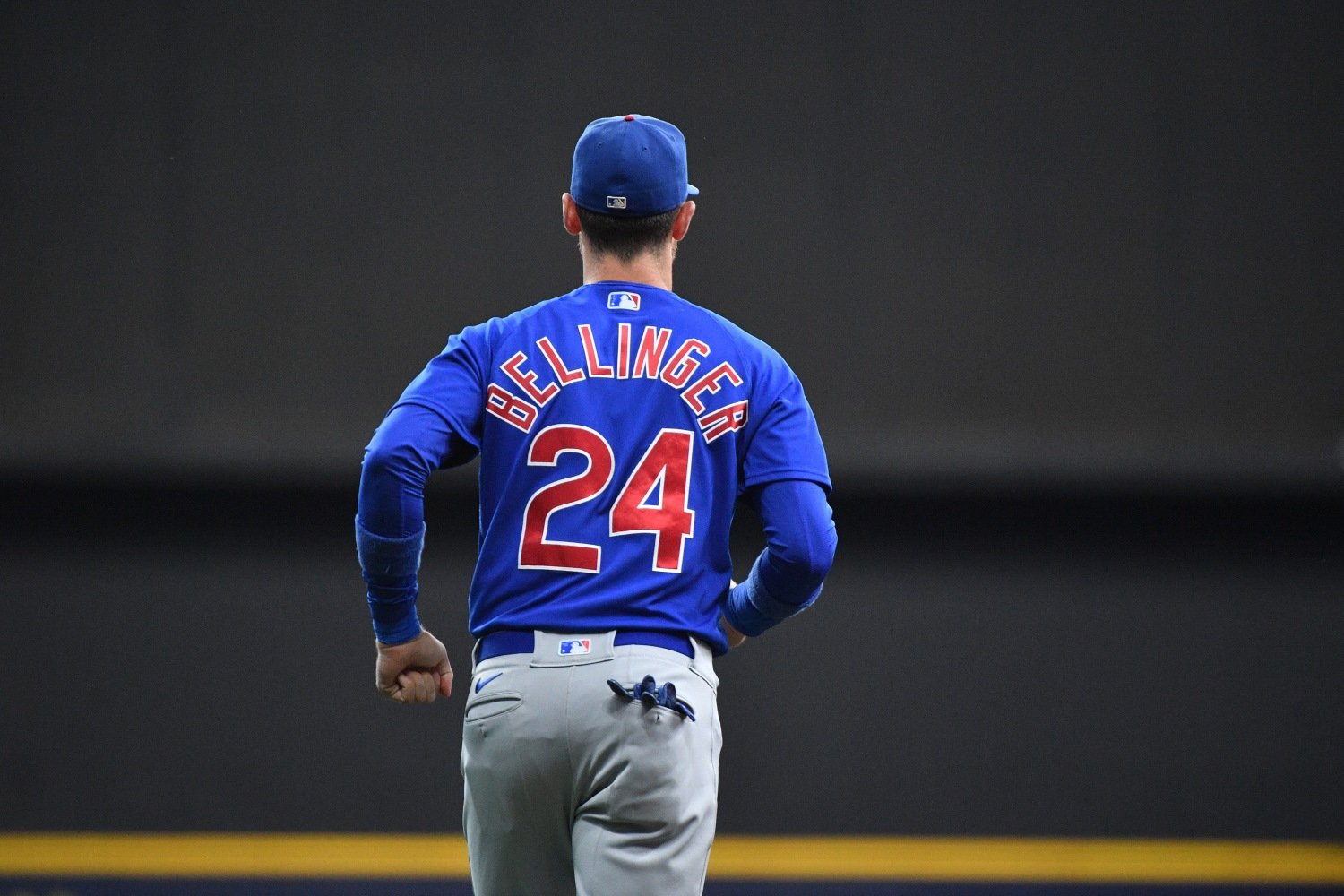 I've said this in a couple of places recently, but in my opinion, the Cubs' goal this winter ought not to be to project for a certain number of wins or to be obvious favorites in the NL Central. Rather, the goal should be to add at least two players who project to be comfortably above-average, for multiple seasons. In fact, that should be the goal most winters. Flexibility is good, and Jed Hoyer is good at maintaining it, but a team can't gain the kind of traction the Cubs need to gain without committing to (and securing a commitment from, unless they're under team control anyway) good players for the medium or long term. In fact, that's what Hoyer has been trying to do over the last couple winters, anyway. Two years ago, around the lockout, he signed both Marcus Stroman and Seiya Suzuki. Just last year, it was Dansby Swanson and Jameson Taillon. That's on top of moves like the extensions the team signed with Nico Hoerner and Ian Happ in the spring. They're building this roster out by committing to these guys for long enough to truly build around them, instead of having to replace them just when they start to get their feet under them. That brings us around to Cody Bellinger, because he, too, signed with the Cubs last winter, but it wasn't the same kind of deal. He delivered real value, but it was on a one-year deal, so now that value has burned itself out. Now, after the Cubs missed out (however voluntarily, or not) on Shohei Ohtani and Juan Soto and with their hopes of acquiring Yoshinobu Yamamoto or Tyler Glasnow looking very dim, rumors of Bellinger and the Cubs reuniting are starting to percolate. It's hard, emotionally, not to think of that possibility as an unsatisfying status quo kind of move. We've well established the risk of regression for Bellinger, based on his underlying performance indicators. Soto and Ohtani each would have represented major upgrades, and Yamamoto would be a level of impact player above what Bellinger has been in any season save his MVP campaign in 2019. After not landing any of them, bringing back Bellinger would feel like a lateral move at the worst time--at least narratively. Instead, try to imagine that Bellinger is an equally young, equally versatile, equally graceful left-handed power hitter. Imagine him as a free agent without draft pick compensation attached, since by re-signing him, the Cubs would lose only the opportunity to gain an extra pick if he signed elsewhere instead. Whereas Bellinger was just in Chicago on a pillow deal in 2023, if he comes back now, it would be on a contract lasting at least six or seven years. It would be a long-term commitment between the two sides, and even if that makes fans a bit nervous, it should also excite them. Bellinger, were he to return now, would be a fixture at first base for the team for the foreseeable future. He'd be the first Cub to officially be on the books into the next decade. It's unlikely that a move will come together unless Bellinger's asking price falls down to $25 million or so in annual average value, which means that (especially in five years or so) it needn't be the top salary on the roster. There really wouldn't be inordinate pressure on Bellinger to rejuvenate himself further, or to recapture that 2019 form. He'd just need to approximate what we just saw from him in 2023, and he would be able to do it with the security and fan affection that comes with that kind of long-term deal. Slot Bellinger in that way, and a little of the pressure on the team's scouting and player-development systems also abates. The team's capacity to trade from their depth on the farm system, especially with regard to position players, would increase just a bit. Bellinger would still be a good fit with the Cubs, if his market doesn't take off the way he and Scott Boras have hoped. It would help the team establish its long-term core. I'm not sure who either of the Cubs' long-term, above-average acquisitions this winter will be. They're likely to be active in the trade market, and they have plenty of money to spend. There are other free agents in whom they might have active interest, beyond Bellinger, like Jordan Montgomery or Matt Chapman. If they do end up reupping with their best player from the season just past, though, they'll have done something bigger than they did by bringing him in the first time, and we shouldn't lose sight of that fact.
 -
With two brand-name targets for external acquisitions by the boards and another two seemingly on the verge of the same, the Cubs are circling toward a reunion with their breakout star of 2023. Don't be tempted into thinking of that as a consolation prize. Image courtesy of © Michael McLoone-USA TODAY Sports I've said this in a couple of places recently, but in my opinion, the Cubs' goal this winter ought not to be to project for a certain number of wins or to be obvious favorites in the NL Central. Rather, the goal should be to add at least two players who project to be comfortably above-average, for multiple seasons. In fact, that should be the goal most winters. Flexibility is good, and Jed Hoyer is good at maintaining it, but a team can't gain the kind of traction the Cubs need to gain without committing to (and securing a commitment from, unless they're under team control anyway) good players for the medium or long term. In fact, that's what Hoyer has been trying to do over the last couple winters, anyway. Two years ago, around the lockout, he signed both Marcus Stroman and Seiya Suzuki. Just last year, it was Dansby Swanson and Jameson Taillon. That's on top of moves like the extensions the team signed with Nico Hoerner and Ian Happ in the spring. They're building this roster out by committing to these guys for long enough to truly build around them, instead of having to replace them just when they start to get their feet under them. That brings us around to Cody Bellinger, because he, too, signed with the Cubs last winter, but it wasn't the same kind of deal. He delivered real value, but it was on a one-year deal, so now that value has burned itself out. Now, after the Cubs missed out (however voluntarily, or not) on Shohei Ohtani and Juan Soto and with their hopes of acquiring Yoshinobu Yamamoto or Tyler Glasnow looking very dim, rumors of Bellinger and the Cubs reuniting are starting to percolate. It's hard, emotionally, not to think of that possibility as an unsatisfying status quo kind of move. We've well established the risk of regression for Bellinger, based on his underlying performance indicators. Soto and Ohtani each would have represented major upgrades, and Yamamoto would be a level of impact player above what Bellinger has been in any season save his MVP campaign in 2019. After not landing any of them, bringing back Bellinger would feel like a lateral move at the worst time--at least narratively. Instead, try to imagine that Bellinger is an equally young, equally versatile, equally graceful left-handed power hitter. Imagine him as a free agent without draft pick compensation attached, since by re-signing him, the Cubs would lose only the opportunity to gain an extra pick if he signed elsewhere instead. Whereas Bellinger was just in Chicago on a pillow deal in 2023, if he comes back now, it would be on a contract lasting at least six or seven years. It would be a long-term commitment between the two sides, and even if that makes fans a bit nervous, it should also excite them. Bellinger, were he to return now, would be a fixture at first base for the team for the foreseeable future. He'd be the first Cub to officially be on the books into the next decade. It's unlikely that a move will come together unless Bellinger's asking price falls down to $25 million or so in annual average value, which means that (especially in five years or so) it needn't be the top salary on the roster. There really wouldn't be inordinate pressure on Bellinger to rejuvenate himself further, or to recapture that 2019 form. He'd just need to approximate what we just saw from him in 2023, and he would be able to do it with the security and fan affection that comes with that kind of long-term deal. Slot Bellinger in that way, and a little of the pressure on the team's scouting and player-development systems also abates. The team's capacity to trade from their depth on the farm system, especially with regard to position players, would increase just a bit. Bellinger would still be a good fit with the Cubs, if his market doesn't take off the way he and Scott Boras have hoped. It would help the team establish its long-term core. I'm not sure who either of the Cubs' long-term, above-average acquisitions this winter will be. They're likely to be active in the trade market, and they have plenty of money to spend. There are other free agents in whom they might have active interest, beyond Bellinger, like Jordan Montgomery or Matt Chapman. If they do end up reupping with their best player from the season just past, though, they'll have done something bigger than they did by bringing him in the first time, and we shouldn't lose sight of that fact. View full article
-
It made sense that the Cubs couldn't (or wouldn't) keep pace with the Dodgers, Giants, and Blue Jays in the Shohei Ohtani sweepstakes. That's in keeping with the way Jed Hoyer has done business ever since taking over. The question is: Even in some future in which the Cubs have a more aggressive top baseball executive, will ownership let them cook? Ohtani's contract was one thing. Whatever number you prefer to assign to it, its practical impact exceeds half a billion dollars, and although Ohtani has been one of the greatest players in baseball history for the last three years, there's risk the size of Lake Michigan in throwing that much money at him just as he begins the process of rehabbing from what amounts to a second Tommy John surgery on his elbow. He's also almost 30 years old, so even though he didn't elect a contract as long as those signed by Trea Turner and Xander Bogaerts last winter, he'll be nearly 40 when the deal wraps up. None of that is true of Yamamoto. He's not a unicorn, and he's racked up heavier workloads than any MLB team would allow a pitcher to incur by the age of 25, but then again, he's only 25. He's one of the world's most accomplished starting pitchers, and signing him will come at a purely financial cost--no draft picks will be taken away. nor international free-agent spending ability curtailed, for whichever team signs him. If the Cubs won't venture past $300 million for him, for whom will they do so? The answer should be obvious by now: it's no one. That's just not going to happen under Hoyer's leadership. Maybe that's ok. Epstein and Hoyer's second half-decade at the helm of the organization saw too much slippage in the good foundations they had laid during the first few years. They were betrayed and undermined by ownership, but they also failed. They were supposed to come to Chicago and turn an inconsistent franchise into a perennial contender, for the first time since before World War II. They didn't do it. Hoyer is trying to get that heavy lift right this time, and perhaps that's laudable. It's possible to win without high-priced superstars. It might even be the wiser course in many cases, and especially so for the Cubs. They face the same stiff penalties other big-market teams do when they exceed the luxury tax thresholds, and they don't receive any of the little benefits that help small-market teams compete, but unlike every other big-market team in baseball (unless you count the White Sox as one), the Cubs are competing exclusively against small-market teams. They would take on a lot of risk by building around superstars, given the head start on sustainability the current rules give to the Reds, Brewers, Pirates, and even Cardinals. Still, Cubs fans are within their rights to be frustrated by this way of doing things. Hoyer hasn't yet proved good enough at his more conservative way of building a team to be one of those teams who wins without stars, and it's not fun to root for a team who has such an overabundance of resources--many of them extracted directly from fans, via high prices on absolutely everything--and harbors them so jealously, when they don't even offer the solace of consistent playoff appearances. The essential question is this: Is Hoyer's conservatism the only thing stopping the team from playing for Yamamoto-like boondoggles? If so, then fans can console themselves with the knowledge that they'll soon see either a turn in the team's fortunes or a change of its course. If it's just that Hoyer doesn't like putting too many eggs in one basket, then (if the team doesn't win something big, and soon) he'll be replaced by an executive who's more disposed to do so. Eventually, if it's just Hoyer between the Cubs and a Yamamoto, an Ohtani, or a Juan Soto, then either his plan will work, or it won't, and the next person will land the team's first true megadeal. Alas, that's just one possibility, and the other is more pernicious. Hoyer probably isn't even asking Tom Ricketts for the right to truly swing with the Dodgers, Yankees, Mets, Phillies, and Padres on contracts like the ones the highest-profile free agents have signed over the last few winters. The nightmare scenario is one in which the Cubs can't get over the hump (without star power) in 2024 or 2025, Hoyer is dismissed, and a new executive tries to bring in the kind of generational player Hoyer neglected--only to be told that the owner was never going to permit that kind of major move, anyway. The biggest drawback to Hoyer's conservatism is that it prevents us from updating our information on Ricketts's willingness to do what it takes to win. If the team keeps making good progress in its scouting and player development, maybe it will never matter that much. If the team turns Pete Crow-Armstrong and Cade Horton into the next Corbin Carroll and Gerrit Cole, they won't need to shell out $300 million to keep them. They'll have a chance to get aggressive and sign them long-term for half that much, or less. If not, though, we need to know whether Ricketts is even open to paying the irrational price the market sets on elite talent. We can't get that answer while Hoyer stands in the way. View full article

