


Matthew Trueblood
-
Posts
2,481 -
Joined
-
Last visited
-
Days Won
2
Content Type
Profiles
Joomla Posts 1
Chicago Cubs Videos
Chicago Cubs Free Agent & Trade Rumors, Notes, & Tidbits
2026 Chicago Cubs Top Prospects Ranking
News
2023 Chicago Cubs Draft Picks
Guides & Resources
2024 Chicago Cubs Draft Picks
The Chicago Cubs Players Project
2025 Chicago Cubs Draft Pick Tracker
2026 Chicago Cubs Draft Tracker: Picks & Bonuses
Blogs
Events
Forums
Store
Gallery
Everything posted by Matthew Trueblood
-
The Chicago Cubs' 2021 first-round pick hoped to fully establish himself as a big-league starter in 2024. It didn't happen, thanks largely to injuries—but also to an inability to miss bats with his breaking ball, a problem he must solve in order to break through this year. Image courtesy of © Kamil Krzaczynski-Imagn Images It was not a good season for Jordan Wicks in 2024. There were some encouraging signs, like a slight uptick in velocity and some sustained carry on his four-seamer, but injuries cut the center out of his season, and he spent a chunk of the time during which he was healthy at Triple-A Iowa, trying to work through the problems he created for himself when he set out to solve the problems he'd had upon first arriving in the majors in 2023. He had tried to design a new pitch mix, but had to retreat from that—and didn't find any strikeouts on the other side of his reinvention. In terms of motor preference, Wicks is a natural pronator. That means that, when his arm is free and working the way it more easily does, he turns his thumb downward and/or his palm outward through release of the ball, rather than coming out around the ball and turning his palm inward, toward his right side. Guys who naturally pronate can create good carry on the four-seamer, but the pitches in which they specialize tend to be the ones that move to the arm side—sinkers and changeups. Indeed, if you go back to when Wicks was first entering professional baseball, you'll read many scouting reports praising his change and his feel for the sinker, but concerns about whether he would ever develop a very good breaking pitch. As indicated in the video above, there are ways to make a breaking ball work from a high slot and with pronation as a motor preference, but they're somewhat limited. Wicks tried to break through that wall in 2024. He showed up in the spring with a sweeper, which was on trend for the league as a whole, but it was a strange choice for his combination of arm angle and natural arm action. It might or might not have led to his forearm trouble. We can't say that for sure, but we can observe that the flexor-pronator muscles in the forearm are more prone to injury when one works against that internal wiring, as it were. We can also say that, while the movement on the sweeper was tantalizing, Wicks showed no real command of it. Here's a now-familiar face touching up a bad miss in a pitcher-friendly count, and nearly taking a misplaced sweeper out of the park in April. Tucked Up the Sweeper.mp4 So, between whatever role throwing that breaking ball played in his injury early on and the struggles he found in actually executing it, Wicks made the decision to scrap the sweeper and go to more of a gyro slider. Here are his average movement coordinates by pitch type, with each dot representing one appearance, for 2024. Inside the green circle are the sliders (sweepers, really) he threw over the first two months. Inside the red square are the sliders to which he turned thereafter. That's a good change, and one very much in line with the organization's philosophy on this, both at the time and (especially) now, a handful of months later. Motor preference is a major point of emphasis for new Cubs special assistant/pitching guru Tyler Zombro, who also works at the increasingly famous training academy, Tread Athletics—and is seen in the video in the tweet above. Zombro will surely encourage Wicks to stick with that more vertical slider, and in fact, he might suggest even less of an emphasis on depth. With the carry he got on his fastball in 2024, there's room for Wicks to throw more of a cutterish, hard slider. Indeed, Wicks was throwing the sweepy slider around 82.5 miles per hour early on, but that ratcheted up to 85.5 or so after the shape change. He could pull that up to around 87, where he threw his few nominal cutters last year, and get a bit less drop on the pitch, and still be doing fine. In the video of Zombro, you can hear him allude to a Death Ball-style breaking ball, which is a version of the hard, overhand curve that emphasizes sharp movement and mimicry of the fastball instead of big movement or velocity differentials. With a more gyro, cutterish slider, Wicks would also create room to pivot into more of a Death Ball curve. All of those possible upsides are good news. The bad news is, the version of the tight slider to which Wicks turned in 2024 really didn't miss any bats, or fool anyone at all. We can use Baseball Prospectus's StuffPro and PitchPro to break this down a bit. StuffPro evaluates pitches not based on outcomes, but based on velocity, release, movement, count, and handedness; and PitchPro uses all of those inputs, plus location. Zero is average, and lower is better, because the numbers are represented as the number of expected runs produced against that pitch type in that split per 100 pitches thrown, relative to an average pitch. Here are all the pitch types Wicks threw at least 10 times to batters of a particular handedness in 2024. Pitch Type v. LHH v. RHH StuffPro PitchPro StuffPro PitchPro Four-Seamer -0.3 -0.8 0 -0.6 Sinker -0.1 -0.3 2.2 1.8 Changeup 0 -0.1 -0.3 -0.4 Slider -0.3 0.3 Sweeper -0.8 -0.8 Curveball -0.1 0.6 As you'd expect, Wicks's sweeper was expected to be really good against lefties. Sweepers against same-handed batters are nearly always good. If a pitcher can't consistently execute them or run into injury trouble when they try, though, the pitch doesn't have much real-world utility. Note that these data tell us Wicks has four or five usable pitches against lefties, including the four-seamer, the sinker, and the slider. He just has to execute the latter better, to make up for scrapping the sweeper. Against righties, though, Wicks is in more of a predicament. His changeup and four-seamer work gorgeously, but the current forms of the sinker and the curveball do not work at all. Reshaping the curve into a Death Ball could be a game-changer for Wicks, but he also needs to put the sinker away against righties, altogether. Given that, it would be great if he could find more confidence with the hard, cutterish slider, to set everything else off. It's a dilemma. Wicks has some impressive and valuable traits, but putting his puzzle pieces together to form a complete pitcher with mid-rotation value is surprisingly difficult. Reinventing his slider on the fly didn't quite work. As the Cubs gear up for spring training, it will be interesting to see whether Wicks has come up with a new way to attack the problems he faces in terms of pitch design and achieve more strikeouts, without giving up the good things he did unlock in 2024. View full article
-
In what should be their final bullpen move of the offseason, the Cubs have swooped in to scoop up the Dodgers' veteran hurler, who had been designated for assignment last week. Image courtesy of © Kiyoshi Mio-Imagn Images Ever since the Dodgers were forced to cut Ryan Brasier to accommodate Kirby Yates last week, the Cubs have made sense as his landing place. Brasier, 37, is on the second year of a very affordable two-year, $9-million pact he signed with the Dodgers on this very date last year. He'll join Ryan Pressly, Caleb Thielbar and Eli Morgan as veteran newcomers in an overhauled Chicago relief corps. You can read much more about Brasier (and the implications this move could have for the balance of the Cubs' plans for this offseason) here. We'll also update this with further details, as we gather them. An erstwhile slider monster who only found very inconsistent success across a handful of seasons with the Red Sox, Brasier landed in Los Angeles at the 2023 trade deadline, just after he'd begun tinkering with a cutter. He then fully implemented that pitch, and his career took off. He only pitch 66 2/3 regular-season and 11 1/3 postseason innings for the Dodgers, but in that time, his stock skyrocketed. His fastball shapes aren't especially deceptive, given his arm slot, but he makes up for that with solid velocity that plays up because of plus extension at release. Brasier's ability to lean on the slider but keep hitters off his fastball with the cutter, effectively making it a bridge pitch that works well because he works in short bursts, has proved transformative. The really nice thing about Brasier, relative to fellow superannuated righty and free agent David Robertson, is that he only stands to make $4.5 million in 2025. That leaves the Cubs some financial wiggle room, as they now turn their attention to hunting big game (be it Alex Bregman, Dylan Cease, or some other, mystery target) in the endgame of the offseason. That's medium-term, at the moment. We have yet to suss out whom the Cubs will give up to get Brasier, but it won't be someone from their 40-man roster, which means they'll have to cut someone or make another trade, since their own 40-man was also full before this move. Plenty of balls remain in the air here. UPDATE: Maddie Lee of the Sun-Times brings the news first: Brasier begets a player to be named later, so the Cubs will trim someone inessential—there are plenty of options at the end of the pitching side of the roster, right now—and absorb the salary, without giving up a major piece. However, that doesn't mean the player eventually named won't have real value. The Cubs weren't the only team interested in Brasier and the list of players from which they and the Dodgers will pick the return at some point is likely to include at least an interesting prospect or two, albeit a lower-level one. View full article
-
TRADE: Cubs Acquire Right-Handed Reliever Ryan Brasier from Dodgers
Matthew Trueblood posted an article in Cubs
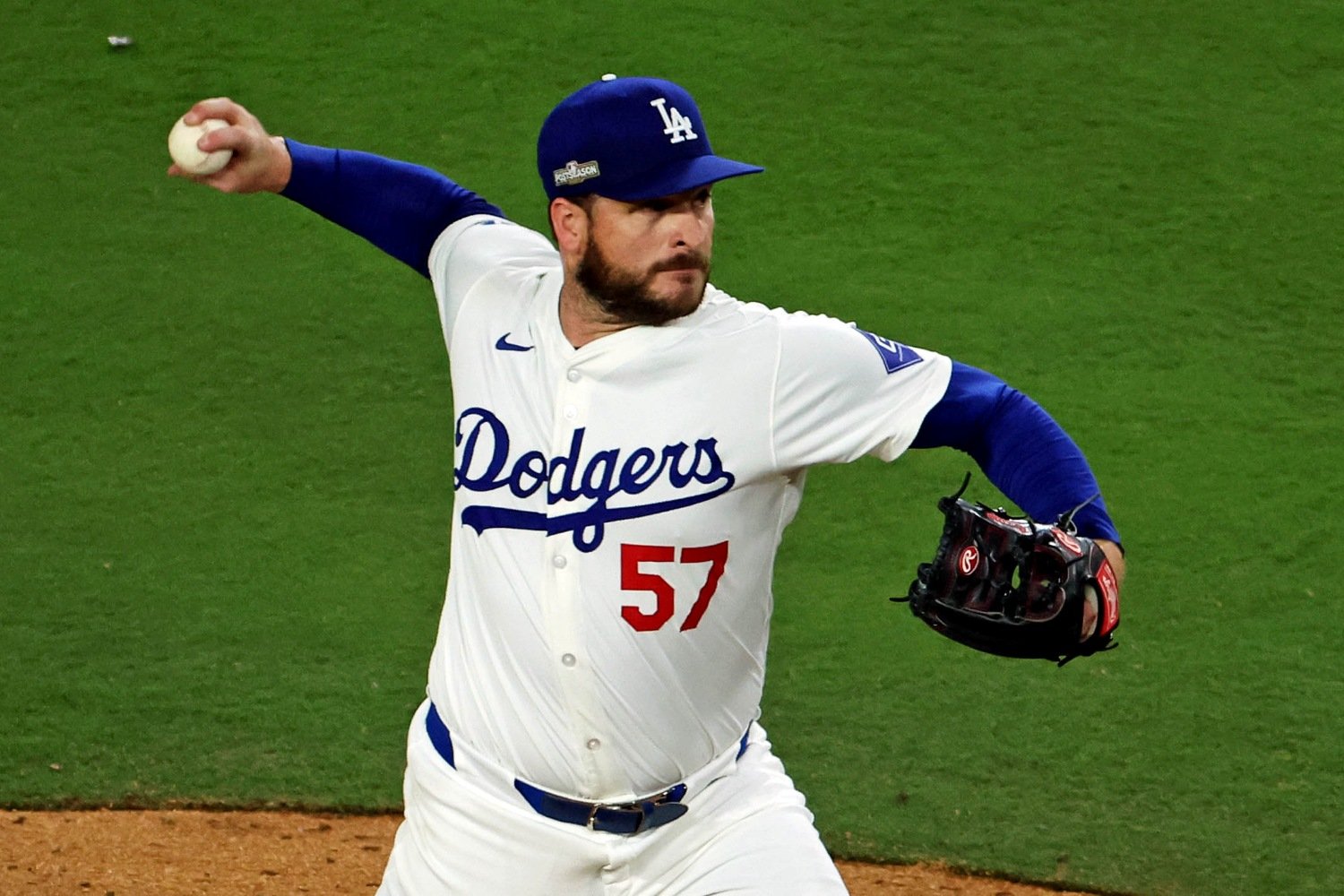 Ever since the Dodgers were forced to cut Ryan Brasier to accommodate Kirby Yates last week, the Cubs have made sense as his landing place. Brasier, 37, is on the second year of a very affordable two-year, $9-million pact he signed with the Dodgers on this very date last year. He'll join Ryan Pressly, Caleb Thielbar and Eli Morgan as veteran newcomers in an overhauled Chicago relief corps. You can read much more about Brasier (and the implications this move could have for the balance of the Cubs' plans for this offseason) here. We'll also update this with further details, as we gather them. An erstwhile slider monster who only found very inconsistent success across a handful of seasons with the Red Sox, Brasier landed in Los Angeles at the 2023 trade deadline, just after he'd begun tinkering with a cutter. He then fully implemented that pitch, and his career took off. He only pitch 66 2/3 regular-season and 11 1/3 postseason innings for the Dodgers, but in that time, his stock skyrocketed. His fastball shapes aren't especially deceptive, given his arm slot, but he makes up for that with solid velocity that plays up because of plus extension at release. Brasier's ability to lean on the slider but keep hitters off his fastball with the cutter, effectively making it a bridge pitch that works well because he works in short bursts, has proved transformative. The really nice thing about Brasier, relative to fellow superannuated righty and free agent David Robertson, is that he only stands to make $4.5 million in 2025. That leaves the Cubs some financial wiggle room, as they now turn their attention to hunting big game (be it Alex Bregman, Dylan Cease, or some other, mystery target) in the endgame of the offseason. That's medium-term, at the moment. We have yet to suss out whom the Cubs will give up to get Brasier, but it won't be someone from their 40-man roster, which means they'll have to cut someone or make another trade, since their own 40-man was also full before this move. Plenty of balls remain in the air here. UPDATE: Maddie Lee of the Sun-Times brings the news first: Brasier begets a player to be named later, so the Cubs will trim someone inessential—there are plenty of options at the end of the pitching side of the roster, right now—and absorb the salary, without giving up a major piece. However, that doesn't mean the player eventually named won't have real value. The Cubs weren't the only team interested in Brasier and the list of players from which they and the Dodgers will pick the return at some point is likely to include at least an interesting prospect or two, albeit a lower-level one.
 -
The Chicago Cubs are a bit more serious about their pursuit of the best remaining free agent than previously believed. Two sources familiar with the negotiation said Tuesday that the team has made a four-year offer to the Scott Boras client, with a unique structure. Image courtesy of © Thomas Shea-Imagn Images As I wrote Sunday, the Cubs have to proceed carefully, if they really do intend to reel in Alex Bregman to close out their impressive offseason. They have just over $35 million in remaining wiggle room beneath the lowest threshold of the competitive-balance tax, which is one of two distinct hard ceilings under which Jed Hoyer has to fit his payroll budget for 2025. There's a budget figure he received from the Ricketts family, which is just as concrete but unknown to us, and there's the CBT threshold, which he will not be allowed to exceed this year after creeping to the wrong side of the line in 2024. So, right now, the Cubs have a "creative, potentially unprecedented" contract offer out to Bregman, one source said. The deal is believed to be worth around $30 million annually over four years, with multiple opt-outs. Bregman could end up with the right to opt out after any of the first three seasons of the deal, and the structure of the contract would be similar to the one the Cubs signed with Cody Bellinger (another Boras client) last February. Bellinger's deal essentially guaranteed him $30 million for 2024, $30 million for 2025, and $20 million for 2026, with the right to opt out after either of the first two seasons, but some money sloshes from one year to the next in the form of buyouts paid only if he triggers either opt-out clause. A Bregman deal would be similarly (though perhaps less starkly) front-loaded, in an effort to accommodate both his and Boras's desire that he exceeds the $31.35-million AAV Rafael Devers earned on the long extension he signed with the Red Sox in 2023 and the Cubs' need to stay under the CBT line. That could include a counter-option for the Cubs on one of the opt-outs, allowing them to void Bregman's option by extending him for an extra year or two—similar to the decision they'll have to make this fall about Shota Imanaga's oddly-structured deal. It could also mean that the fourth year is not fully guaranteed, but a vesting option contingent on health or playing time, with a big chunk of the money in Year 3 (2027, the season that could be affected by a work stoppage anyway) pushed out to Year 4 and divided into a guaranteed buyout and a hefty vesting value. One way or another, there's likely to be a wrinkle. That's because, if Bregman makes (say) $34 million in 2025 and then opts out, it could push the Cubs over the luxury tax line at the last moment, by changing whatever his AAV would be over four years to that higher number. Astros GM Dana Brown referred to Bregman's time with the team in the past tense at a media luncheon Tuesday, sparking some speculation that Houston no longer expects Bregman to return. It's his long-time team that we know to have already offered Bregman a six-year deal, but if he wanted the one they offered, he'd already have re-signed with them. It's not clear whether the offer they made weeks or months ago is even still on the table. Does that mean the Cubs are more prominent in the bidding for Bregman than previously thought? Not necessarily, but it's interesting. So, too, is the news that the Red Sox and Cardinals have re-engaged about a potential Nolan Arenado trade. It's increasingly clear that no seven-year offer is forthcoming for Bregman. Even if it's true that he's received multiple six-year deals, seeing any such long-term deal rise to meet his asking price at this stage of the offseason is highly unlikely. The Cubs' offer is "a push," one source said, and the question is whether it will be a strong enough one to sell Bregman on reuniting with Astros teammates Kyle Tucker and Ryan Pressly—and adding a capstone to a roster already projected as the comfortable division favorite. In almost any scenario, this deal would put the Cubs perilously close to the luxury-tax line. A signing, then, would make it much less likely that the team acquires another veteran reliever, unless it be someone they like on a deal worth less than $5 million. It would also prompt another round of rumors about trading Nico Hoerner, another topic I touched upon Sunday. Hoerner and his $11.67-million CBT number would be easy enough to move, but the Cubs probably wouldn't get as much for him in this scenario as they might have if they'd been more set on moving him in the early stages of the winter. They wouldn't necessarily have to trade Hoerner immediately, though. If they kept other expenses to a minimum, and assuming this potential deal is structured loosely with the CBT line for 2025 in mind, Chicago could go into the season with all of Hoerner, Bregman and Matt Shaw in the mix, likely asking Shaw to start the season at Triple-A Iowa, and then trade Hoerner in July. We're getting ahead of ourselves. While the team has made a substantial offer, they're by no means at the finish line with Bregman. They do seem to have waited out his market well, though, in the sense that the decorated veteran is more open now to the kind of deal the Cubs were always willing to entertain than he was when they first began checking in. They value Bregman as a clearly middle-of-the-order bat (even after he showed signs of decline in the first half of 2024), a more experienced third baseman than Shaw, and a clubhouse presence. As much as they want to commit to young players (Pete Crow-Armstrong, Michael Busch, and Miguel Amaya are already written into the Opening Day lineup, albeit in pencil, and they would not have made the Isaac Paredes-for-Tucker trade if they didn't at least believe in Shaw as a long-term option at third), the team also sees Bregman as a clear upgrade over either Shaw or Hoerner. Hoyer is trying to complete a lineup that would be different than that of the Dodgers, but not much less productive, overall—and is, yet again, trying some unusual things to get there. This deal could be wildly player-friendly, stretching a now-familiar but risky structure to a new extreme. However, it could also out the Cubs over the top, if it comes together in just the right form and they can create whatever other flexibility they require. View full article
-
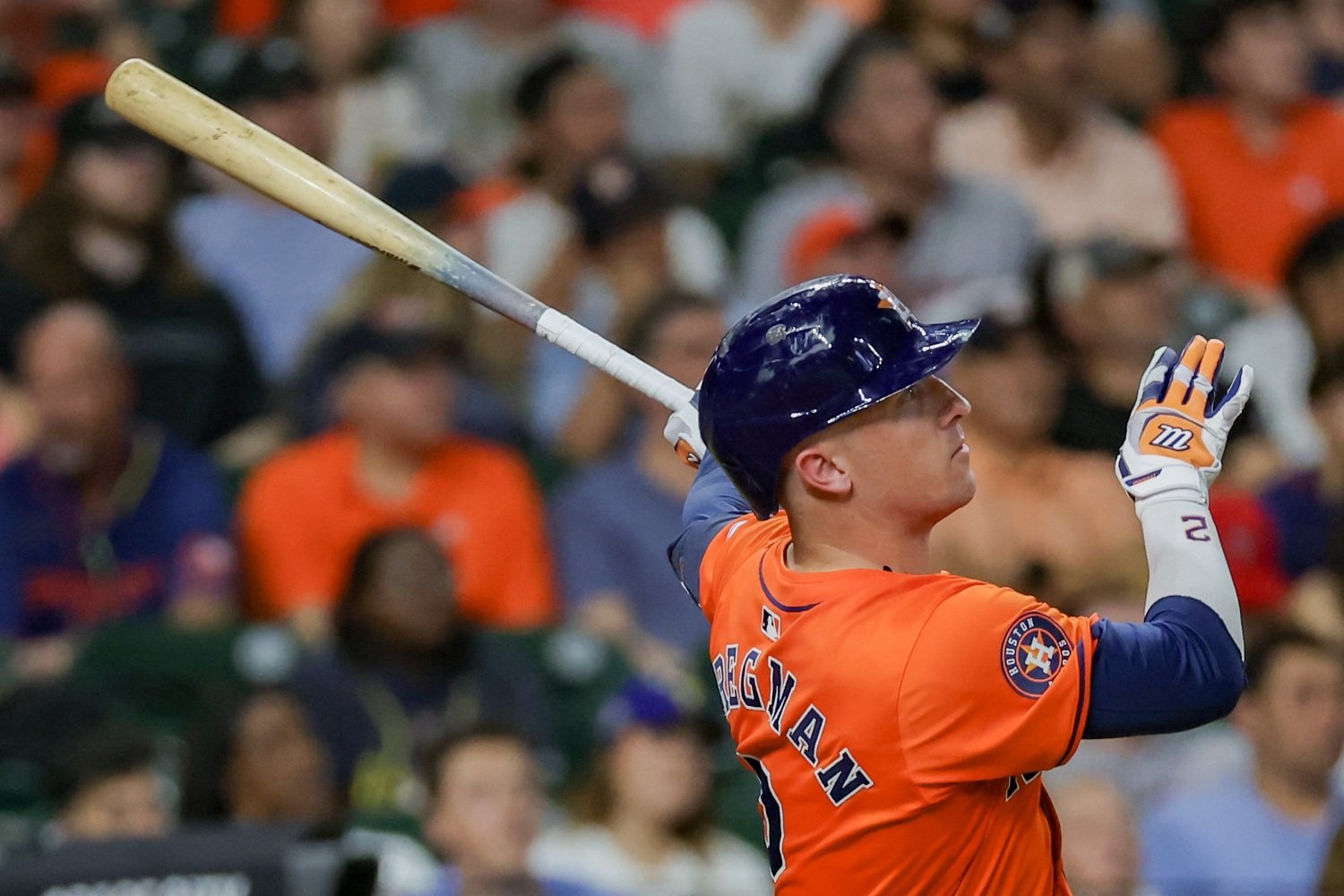 As I wrote Sunday, the Cubs have to proceed carefully, if they really do intend to reel in Alex Bregman to close out their impressive offseason. They have just over $35 million in remaining wiggle room beneath the lowest threshold of the competitive-balance tax, which is one of two distinct hard ceilings under which Jed Hoyer has to fit his payroll budget for 2025. There's a budget figure he received from the Ricketts family, which is just as concrete but unknown to us, and there's the CBT threshold, which he will not be allowed to exceed this year after creeping to the wrong side of the line in 2024. So, right now, the Cubs have a "creative, potentially unprecedented" contract offer out to Bregman, one source said. The deal is believed to be worth around $30 million annually over four years, with multiple opt-outs. Bregman could end up with the right to opt out after any of the first three seasons of the deal, and the structure of the contract would be similar to the one the Cubs signed with Cody Bellinger (another Boras client) last February. Bellinger's deal essentially guaranteed him $30 million for 2024, $30 million for 2025, and $20 million for 2026, with the right to opt out after either of the first two seasons, but some money sloshes from one year to the next in the form of buyouts paid only if he triggers either opt-out clause. A Bregman deal would be similarly (though perhaps less starkly) front-loaded, in an effort to accommodate both his and Boras's desire that he exceeds the $31.35-million AAV Rafael Devers earned on the long extension he signed with the Red Sox in 2023 and the Cubs' need to stay under the CBT line. That could include a counter-option for the Cubs on one of the opt-outs, allowing them to void Bregman's option by extending him for an extra year or two—similar to the decision they'll have to make this fall about Shota Imanaga's oddly-structured deal. It could also mean that the fourth year is not fully guaranteed, but a vesting option contingent on health or playing time, with a big chunk of the money in Year 3 (2027, the season that could be affected by a work stoppage anyway) pushed out to Year 4 and divided into a guaranteed buyout and a hefty vesting value. One way or another, there's likely to be a wrinkle. That's because, if Bregman makes (say) $34 million in 2025 and then opts out, it could push the Cubs over the luxury tax line at the last moment, by changing whatever his AAV would be over four years to that higher number. Astros GM Dana Brown referred to Bregman's time with the team in the past tense at a media luncheon Tuesday, sparking some speculation that Houston no longer expects Bregman to return. It's his long-time team that we know to have already offered Bregman a six-year deal, but if he wanted the one they offered, he'd already have re-signed with them. It's not clear whether the offer they made weeks or months ago is even still on the table. Does that mean the Cubs are more prominent in the bidding for Bregman than previously thought? Not necessarily, but it's interesting. So, too, is the news that the Red Sox and Cardinals have re-engaged about a potential Nolan Arenado trade. It's increasingly clear that no seven-year offer is forthcoming for Bregman. Even if it's true that he's received multiple six-year deals, seeing any such long-term deal rise to meet his asking price at this stage of the offseason is highly unlikely. The Cubs' offer is "a push," one source said, and the question is whether it will be a strong enough one to sell Bregman on reuniting with Astros teammates Kyle Tucker and Ryan Pressly—and adding a capstone to a roster already projected as the comfortable division favorite. In almost any scenario, this deal would put the Cubs perilously close to the luxury-tax line. A signing, then, would make it much less likely that the team acquires another veteran reliever, unless it be someone they like on a deal worth less than $5 million. It would also prompt another round of rumors about trading Nico Hoerner, another topic I touched upon Sunday. Hoerner and his $11.67-million CBT number would be easy enough to move, but the Cubs probably wouldn't get as much for him in this scenario as they might have if they'd been more set on moving him in the early stages of the winter. They wouldn't necessarily have to trade Hoerner immediately, though. If they kept other expenses to a minimum, and assuming this potential deal is structured loosely with the CBT line for 2025 in mind, Chicago could go into the season with all of Hoerner, Bregman and Matt Shaw in the mix, likely asking Shaw to start the season at Triple-A Iowa, and then trade Hoerner in July. We're getting ahead of ourselves. While the team has made a substantial offer, they're by no means at the finish line with Bregman. They do seem to have waited out his market well, though, in the sense that the decorated veteran is more open now to the kind of deal the Cubs were always willing to entertain than he was when they first began checking in. They value Bregman as a clearly middle-of-the-order bat (even after he showed signs of decline in the first half of 2024), a more experienced third baseman than Shaw, and a clubhouse presence. As much as they want to commit to young players (Pete Crow-Armstrong, Michael Busch, and Miguel Amaya are already written into the Opening Day lineup, albeit in pencil, and they would not have made the Isaac Paredes-for-Tucker trade if they didn't at least believe in Shaw as a long-term option at third), the team also sees Bregman as a clear upgrade over either Shaw or Hoerner. Hoyer is trying to complete a lineup that would be different than that of the Dodgers, but not much less productive, overall—and is, yet again, trying some unusual things to get there. This deal could be wildly player-friendly, stretching a now-familiar but risky structure to a new extreme. However, it could also out the Cubs over the top, if it comes together in just the right form and they can create whatever other flexibility they require.
 -
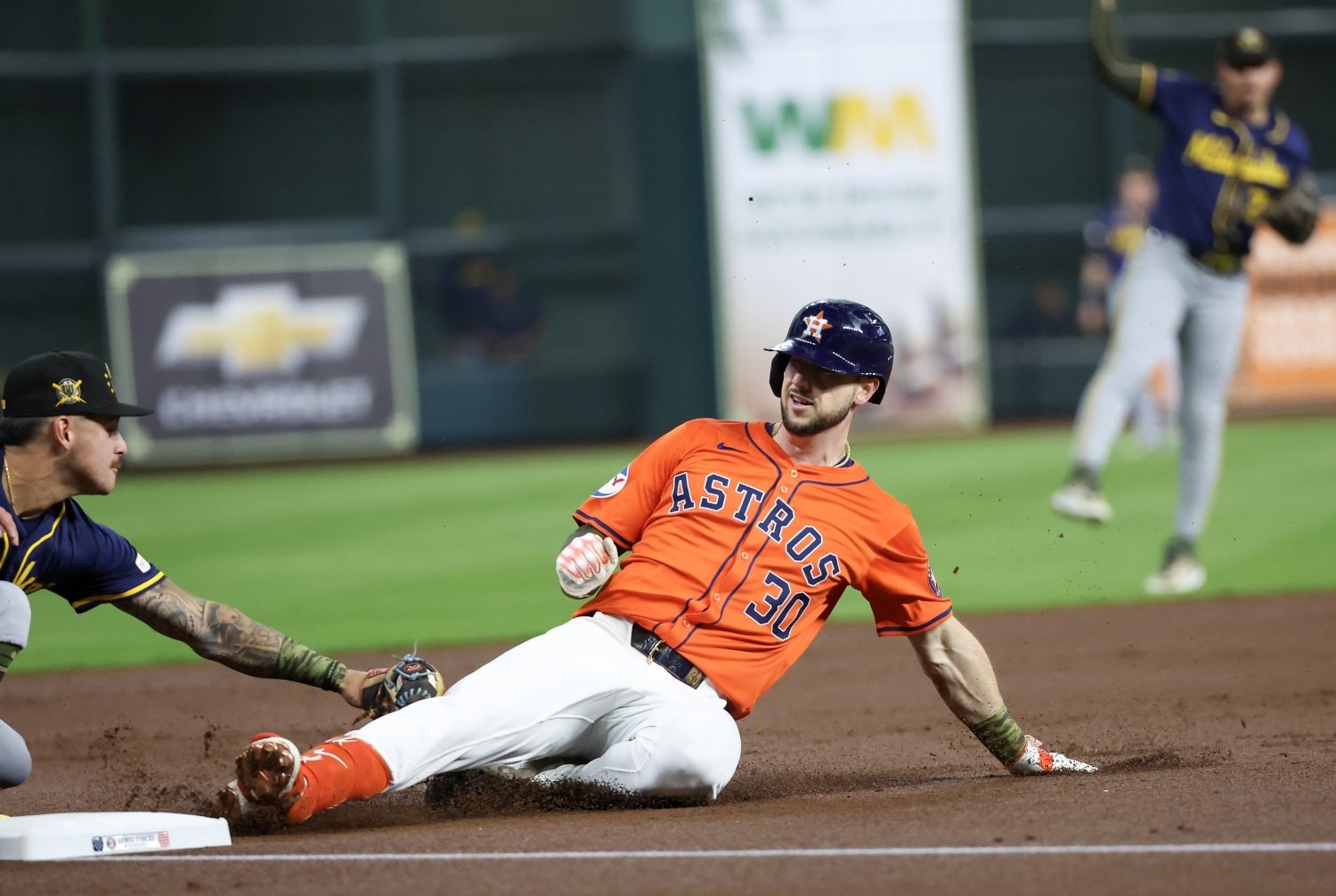 The greatest of several great things about Kyle Tucker, at least until now, is that he's good at so many things—and that he really doesn't have a notable weakness. Tucker, 28, is a tremendous hitter (90.9 runs better than average at bat for his career, according to Baseball Prospectus's Deserved Runs Above Average framework, and 16.2 runs to the good in 2024, alone, despite all that missed time); a fine fielder (1.3 runs above average for his career, although he was below-average prior to a strong 2.3 Deserved Runs Prevented in 2024); and a sneakily terrific baserunner (3.2 runs better than average, according to Deserved Runs on the Bases), with 103 steals and just 14 times caught stealing. Last season, though, he was merely average on the bases, and although he successfully stole all 11 bases he attempted to take, he slowed to a career-worst 26.0 feet per second in sprint speed, according to Statcast. Nor can we read that as a mere product of the broken bone he suffered when he fouled a ball off his shin in early June, because it's part of a trend that makes plenty of sense—almost every player gets slower with age—but could be trouble: 2019: 27.7 feet per second 2020: 27.6 2021: 27.4 2022: 26.7 2023: 26.6 2024: 26.0 Again, we expect players to get slower after about age 23, in most cases, but this is a dramatic slide. It comes, too, as the league's standard for athleticism in right field only continues to rise. The average MLB right fielder now posts a sprint speed around 27.5 feet per second, so Tucker is demonstrably behind them—not one step behind (that was true by 2022), but two steps slower. If he hits the way he did in 2024, of course, that doesn't matter. Nor is it impossible, even now, to be a strong defensive corner outfielder without good raw speed. Indeed, his glove has rated very well, and the eye test has tended to match that, even as he's slowed down. Tucker won't be able to go over the wall at Wrigley Field and take away home runs, as he did quite well at the short and shallow wall in his former home in Houston, though. He'll have to guard the deepest right-field corner in baseball, and navigate tough wind and sun conditions. We know for sure that that's still difficult, even on this side of the renovations to Wrigley and the upgrades to things like the lights illuminating the outfield for night games, because we all watched Seiya Suzuki wrestle with the position and get speared into the turnbuckle by it over the last two seasons. On the bases, it shows up even more undeniably. Tucker still took 11 bases with good instincts and opportunism, and the Cubs' coaching staff is sure to encourage that tendency this season, too. He also did fine when reading the ball was enough to earn an extra 90 feet, because of the defense's alignment and the location of a hit. He uses his eyes and his baseball brain well. bG55TjdfVjBZQUhRPT1fRHdVSFYxWlNVUW9BQVZKUlZ3QUFDVlZYQUFNTlUxUUFWMVpUQmdzRkExQlhBRkVD.mp4 However, a fair bit of baserunning comes down to pure speed, and you either have it, or you don't. There were other times when Tucker read the ball well, but when a faster player would clearly have had a chance to advance, and he pulled up and played it safe, instead. MzVEZHZfWGw0TUFRPT1fQmdaVVZsRUNVUW9BWEZvRlVnQUFBUVpRQUFCV1ZWa0FWRjFSQWxJRkJWSURVbFlF.mp4 Plus, when you hit the ball all over the yard with authority (as Tucker does), one of the benefits is often a ball bouncing off or to the wall, with defenders hightailing it in pursuit of a bad bounce or trying to make up ground after you caught them out of position. When that happens, there's very often an extra 90 feet out there to be had as the batter, and Tucker used to be good at claiming them. Used to be. MVlEZDlfWGw0TUFRPT1fQjFkVlVsWldVRk1BV2xRRUJ3QUFWQU5VQUFOUVd3UUFVVk5YQlFVR0F3b0dVUU5m (1).mp4 The above was not an isolated incident, either. There were a couple of doubles on which Tucker pulled up safely at second, but when other hitters could have sought a triple. There were a couple of long singles, to the line or the gap in right field, on which past versions of Tucker might have been safe at second. He was thrown out on one, and stopped at first on others. Speed is an asset, but Tucker can and should still be great this season without it. It'll be interesting to see if he can recover well from last year's leg issue and get back a bit of the lost pep in his step, and whether that ensures that the Cubs get the best of his defense and baserunning. His offensive production shouldn't even be in question, so this is a nitpick. If and when the team does talk to Tucker about a long-term deal, though, it bears weightier consideration. Even at 26 feet per second, Tucker is a good enough athlete to help in multiple dimensions of the game. If he loses another step or two over the next three years, though, his 30s could be ugly. It's not a major threat to his short-term value, but his long-term projection is a separate question.
 -
The one lousy part of the Cubs' superstar right fielder's game in 2024 was his baserunning—and not just after he fouled a ball off his shin, breaking it. Is his athleticism declining so fast that the Cubs should worry about it compromising his game in 2025? Image courtesy of © Thomas Shea-Imagn Images The greatest of several great things about Kyle Tucker, at least until now, is that he's good at so many things—and that he really doesn't have a notable weakness. Tucker, 28, is a tremendous hitter (90.9 runs better than average at bat for his career, according to Baseball Prospectus's Deserved Runs Above Average framework, and 16.2 runs to the good in 2024, alone, despite all that missed time); a fine fielder (1.3 runs above average for his career, although he was below-average prior to a strong 2.3 Deserved Runs Prevented in 2024); and a sneakily terrific baserunner (3.2 runs better than average, according to Deserved Runs on the Bases), with 103 steals and just 14 times caught stealing. Last season, though, he was merely average on the bases, and although he successfully stole all 11 bases he attempted to take, he slowed to a career-worst 26.0 feet per second in sprint speed, according to Statcast. Nor can we read that as a mere product of the broken bone he suffered when he fouled a ball off his shin in early June, because it's part of a trend that makes plenty of sense—almost every player gets slower with age—but could be trouble: 2019: 27.7 feet per second 2020: 27.6 2021: 27.4 2022: 26.7 2023: 26.6 2024: 26.0 Again, we expect players to get slower after about age 23, in most cases, but this is a dramatic slide. It comes, too, as the league's standard for athleticism in right field only continues to rise. The average MLB right fielder now posts a sprint speed around 27.5 feet per second, so Tucker is demonstrably behind them—not one step behind (that was true by 2022), but two steps slower. If he hits the way he did in 2024, of course, that doesn't matter. Nor is it impossible, even now, to be a strong defensive corner outfielder without good raw speed. Indeed, his glove has rated very well, and the eye test has tended to match that, even as he's slowed down. Tucker won't be able to go over the wall at Wrigley Field and take away home runs, as he did quite well at the short and shallow wall in his former home in Houston, though. He'll have to guard the deepest right-field corner in baseball, and navigate tough wind and sun conditions. We know for sure that that's still difficult, even on this side of the renovations to Wrigley and the upgrades to things like the lights illuminating the outfield for night games, because we all watched Seiya Suzuki wrestle with the position and get speared into the turnbuckle by it over the last two seasons. On the bases, it shows up even more undeniably. Tucker still took 11 bases with good instincts and opportunism, and the Cubs' coaching staff is sure to encourage that tendency this season, too. He also did fine when reading the ball was enough to earn an extra 90 feet, because of the defense's alignment and the location of a hit. He uses his eyes and his baseball brain well. bG55TjdfVjBZQUhRPT1fRHdVSFYxWlNVUW9BQVZKUlZ3QUFDVlZYQUFNTlUxUUFWMVpUQmdzRkExQlhBRkVD.mp4 However, a fair bit of baserunning comes down to pure speed, and you either have it, or you don't. There were other times when Tucker read the ball well, but when a faster player would clearly have had a chance to advance, and he pulled up and played it safe, instead. MzVEZHZfWGw0TUFRPT1fQmdaVVZsRUNVUW9BWEZvRlVnQUFBUVpRQUFCV1ZWa0FWRjFSQWxJRkJWSURVbFlF.mp4 Plus, when you hit the ball all over the yard with authority (as Tucker does), one of the benefits is often a ball bouncing off or to the wall, with defenders hightailing it in pursuit of a bad bounce or trying to make up ground after you caught them out of position. When that happens, there's very often an extra 90 feet out there to be had as the batter, and Tucker used to be good at claiming them. Used to be. MVlEZDlfWGw0TUFRPT1fQjFkVlVsWldVRk1BV2xRRUJ3QUFWQU5VQUFOUVd3UUFVVk5YQlFVR0F3b0dVUU5m (1).mp4 The above was not an isolated incident, either. There were a couple of doubles on which Tucker pulled up safely at second, but when other hitters could have sought a triple. There were a couple of long singles, to the line or the gap in right field, on which past versions of Tucker might have been safe at second. He was thrown out on one, and stopped at first on others. Speed is an asset, but Tucker can and should still be great this season without it. It'll be interesting to see if he can recover well from last year's leg issue and get back a bit of the lost pep in his step, and whether that ensures that the Cubs get the best of his defense and baserunning. His offensive production shouldn't even be in question, so this is a nitpick. If and when the team does talk to Tucker about a long-term deal, though, it bears weightier consideration. Even at 26 feet per second, Tucker is a good enough athlete to help in multiple dimensions of the game. If he loses another step or two over the next three years, though, his 30s could be ugly. It's not a major threat to his short-term value, but his long-term projection is a separate question. View full article
-
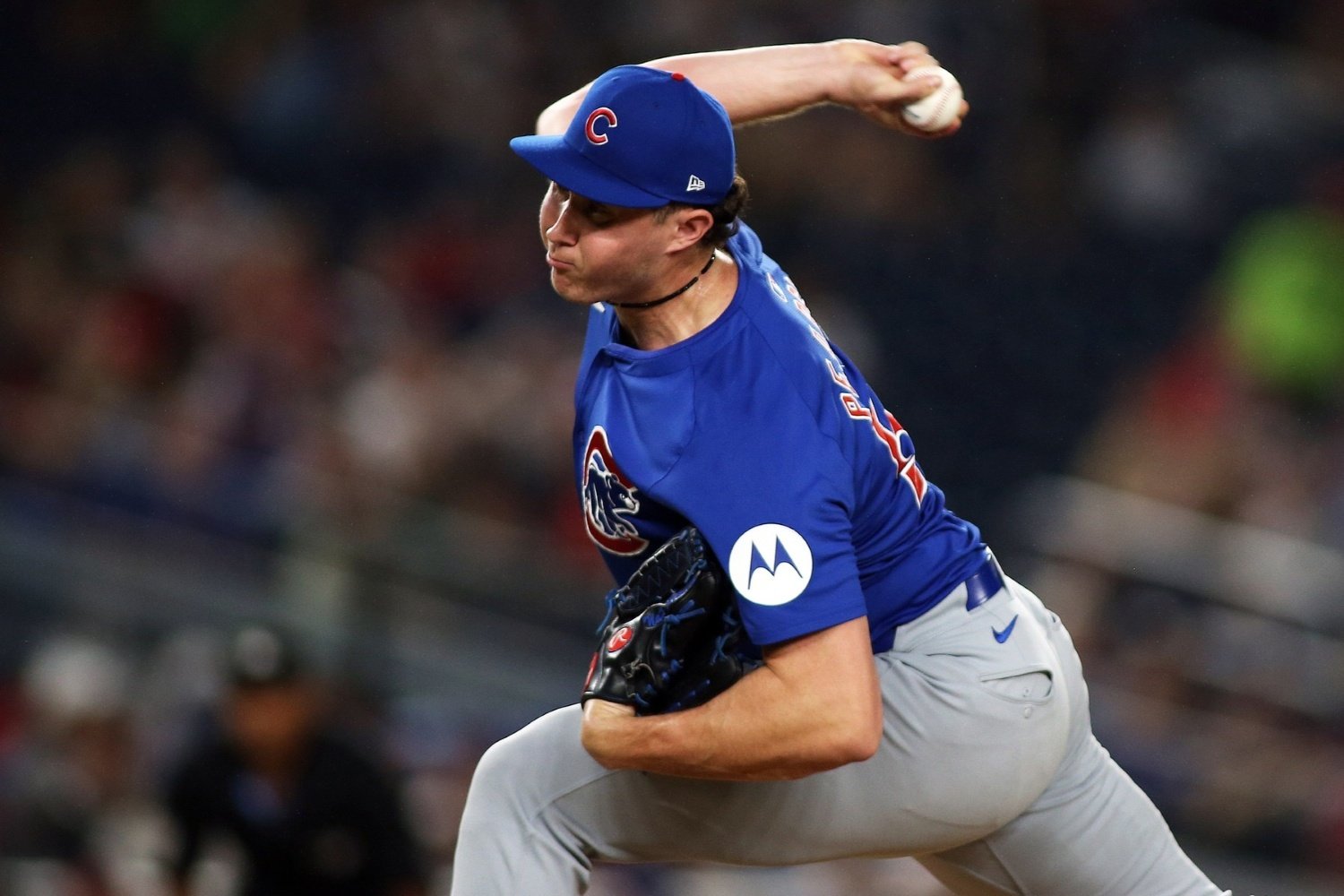 Nate Pearson always wanted to make it work as a starting pitcher, which is part of why he never figured things out and established himself with the Toronto Blue Jays. When he finally moved to the bullpen full-time in 2023, he began to figure things out, and after the Cubs snatched him up last July and made a few changes to where he sets up and which pitches he throws most often, he was superb. His strikeout rate had spiked in 2024 for Toronto and then receded to an underwhelming 22.3% for the Cubs, but he also only walked 3.9% of the batters he faced in a Cubs uniform. Because it's the trendy thing, and because Pearson does nominally have a three- or four-pitch mix, there was some talk this winter about whether the Cubs would capitalize on that improved control by moving him back to the rotation. That would be one way to infuse their starting group with some high-end velocity, which (admittedly) they do need. Pearson averaged 97.7 miles per hour on his four-seamer last year, with a 90th-percentile velocity of 99.5. Even if he lost a tick by stretching out and pacing himself, he'd be capable of dominating with that heater, especially given his plus extension. Thus, last month, Jed Hoyer told Meghan Montemurro of the Chicago Tribune that Pearson will stretch out to some extent this spring. Hoyer did say, though, that he still expects Pearson to end up in the bullpen. I can tell you right now how far Pearson will stretch: he'll work to nine batters in a game. That's his limit, and that's where the Cubs will stop him, and that's ok. There are a handful of things that can stop a pitcher from being viable as a traditional starter, which requires one to face the opposing lineup two or three times within a game. One, of course, is health and durability, but while Pearson has often been injured during his developmental journey, his frame says he could hold up to the job of starting as well as he can to relieving, from a health standpoint. He's a horse. Another separator is control, but Pearson checked that box last summer, after the Cubs moved him over on the rubber. He can now fill up the zone with his fastball enough to avoid undue numbers of walks or unwieldy early pitch counts. That same slide across the rubber, coupled with an increased reliance on his slider (which works better to lefties given the horizontal and vertical angles created by his change of mound position than it did before), resolves another common issue, which is a vulnerability to platoon matchups. So far, so good. Now, we come to the trouble spot. The final test of a starter is the ability to fool hitters that second or third time, which means having a deep enough arsenal to keep them guessing and a repeatable enough delivery to stop them from identifying a particular pitch early in its flight. Unfortunately, that's where Pearson fails. Here are his release points in 2024 while he was with Toronto: That carried some problems, especially because it created a set of horizontal angles lefties could pick up on, and because of the aforementioned control problems that stemmed from his alignment. Here's the same plot for his time with the Cubs. There's more funk here, but there's also less consistency. Pearson doesn't really have a changeup, and he uses his sinker only sparingly, but the four pitches do fit together in a neat, deceptive way. Baseball Prospectus's Arsenal metrics, released last month and discussed in detail with regard to Colin Rea here at North Side Baseball, do smile upon Pearson, thanks to the deceptiveness of his altered release angles and the combination of his vicious slider with a high-riding fastball. Pitch Type Probability: 50th Percentile Movement Spread: 88th Velocity Spread: 79th Surprise Factor: 62nd So, what's the problem? Consider these two snapshots of his release points in consecutive outings in September, from the pitcher's perspective and in 3-D visualization: He threw 33 pitches in the game against the Athletics on Sept. 18, on the left, and 22 in one against the Nationals two days later. Look how scattershot his release points were in the image from the game against Oakland. That's untenable, and that happens too often with Pearson. Here, drawn at random, is another snapshot, from his first appearance in August, against the Cardinals: Even if you can sustain deception and have nasty raw stuff, being this wild with the actual release of the ball is a problem. We can make some allowances, perhaps, for the fact that Pearson was moving over to a new place on the mound under the Cubs' direction, but this just isn't the profile of a pitcher who can keep hitters from identifying his pitches out of the hand on a second or third trip through the lineup within a game. For that matter, he also seems to work well on relatively short rest, which is how some guys work. He's better off in a role where he can be called upon to work two innings in a close game against a tough lineup, without having to face anyone twice, and then get a few days off—and that's exactly what the Cubs bullpen needs, given that veterans Ryan Pressly, Caleb Thielbar, and Julian Merryweather are all better in one-inning bursts. Stretching Pearson out enough to be the entire bridge from a good start to a Pressly save makes a world of sense. Trying to get a pitcher who still struggles to repeat his delivery after half a decade in the majors through five or six innings makes none. The Cubs will (and should) stretch Pearson out just enough to maximize his utility in relief, and then reap the rewards of a flexible bullpen megaweapon.
 -
In a second straight winter that has seen a handful of conversions from relief to starting by pitchers throughout the league, the Cubs' summer trade acquisition has been mentioned occasionally as a candidate to do so. He shouldn't be. Image courtesy of © Daniel Kucin Jr.-Imagn Images Nate Pearson always wanted to make it work as a starting pitcher, which is part of why he never figured things out and established himself with the Toronto Blue Jays. When he finally moved to the bullpen full-time in 2023, he began to figure things out, and after the Cubs snatched him up last July and made a few changes to where he sets up and which pitches he throws most often, he was superb. His strikeout rate had spiked in 2024 for Toronto and then receded to an underwhelming 22.3% for the Cubs, but he also only walked 3.9% of the batters he faced in a Cubs uniform. Because it's the trendy thing, and because Pearson does nominally have a three- or four-pitch mix, there was some talk this winter about whether the Cubs would capitalize on that improved control by moving him back to the rotation. That would be one way to infuse their starting group with some high-end velocity, which (admittedly) they do need. Pearson averaged 97.7 miles per hour on his four-seamer last year, with a 90th-percentile velocity of 99.5. Even if he lost a tick by stretching out and pacing himself, he'd be capable of dominating with that heater, especially given his plus extension. Thus, last month, Jed Hoyer told Meghan Montemurro of the Chicago Tribune that Pearson will stretch out to some extent this spring. Hoyer did say, though, that he still expects Pearson to end up in the bullpen. I can tell you right now how far Pearson will stretch: he'll work to nine batters in a game. That's his limit, and that's where the Cubs will stop him, and that's ok. There are a handful of things that can stop a pitcher from being viable as a traditional starter, which requires one to face the opposing lineup two or three times within a game. One, of course, is health and durability, but while Pearson has often been injured during his developmental journey, his frame says he could hold up to the job of starting as well as he can to relieving, from a health standpoint. He's a horse. Another separator is control, but Pearson checked that box last summer, after the Cubs moved him over on the rubber. He can now fill up the zone with his fastball enough to avoid undue numbers of walks or unwieldy early pitch counts. That same slide across the rubber, coupled with an increased reliance on his slider (which works better to lefties given the horizontal and vertical angles created by his change of mound position than it did before), resolves another common issue, which is a vulnerability to platoon matchups. So far, so good. Now, we come to the trouble spot. The final test of a starter is the ability to fool hitters that second or third time, which means having a deep enough arsenal to keep them guessing and a repeatable enough delivery to stop them from identifying a particular pitch early in its flight. Unfortunately, that's where Pearson fails. Here are his release points in 2024 while he was with Toronto: That carried some problems, especially because it created a set of horizontal angles lefties could pick up on, and because of the aforementioned control problems that stemmed from his alignment. Here's the same plot for his time with the Cubs. There's more funk here, but there's also less consistency. Pearson doesn't really have a changeup, and he uses his sinker only sparingly, but the four pitches do fit together in a neat, deceptive way. Baseball Prospectus's Arsenal metrics, released last month and discussed in detail with regard to Colin Rea here at North Side Baseball, do smile upon Pearson, thanks to the deceptiveness of his altered release angles and the combination of his vicious slider with a high-riding fastball. Pitch Type Probability: 50th Percentile Movement Spread: 88th Velocity Spread: 79th Surprise Factor: 62nd So, what's the problem? Consider these two snapshots of his release points in consecutive outings in September, from the pitcher's perspective and in 3-D visualization: He threw 33 pitches in the game against the Athletics on Sept. 18, on the left, and 22 in one against the Nationals two days later. Look how scattershot his release points were in the image from the game against Oakland. That's untenable, and that happens too often with Pearson. Here, drawn at random, is another snapshot, from his first appearance in August, against the Cardinals: Even if you can sustain deception and have nasty raw stuff, being this wild with the actual release of the ball is a problem. We can make some allowances, perhaps, for the fact that Pearson was moving over to a new place on the mound under the Cubs' direction, but this just isn't the profile of a pitcher who can keep hitters from identifying his pitches out of the hand on a second or third trip through the lineup within a game. For that matter, he also seems to work well on relatively short rest, which is how some guys work. He's better off in a role where he can be called upon to work two innings in a close game against a tough lineup, without having to face anyone twice, and then get a few days off—and that's exactly what the Cubs bullpen needs, given that veterans Ryan Pressly, Caleb Thielbar, and Julian Merryweather are all better in one-inning bursts. Stretching Pearson out enough to be the entire bridge from a good start to a Pressly save makes a world of sense. Trying to get a pitcher who still struggles to repeat his delivery after half a decade in the majors through five or six innings makes none. The Cubs will (and should) stretch Pearson out just enough to maximize his utility in relief, and then reap the rewards of a flexible bullpen megaweapon. View full article
-
And no, it's not because they have Alex Bregman baked in. Image courtesy of © Kamil Krzaczynski-Imagn Images Baseball Prospectus just rolled out their full PECOTA projections for 2025, and it's going to surprise you—in a good way. According to PECOTA, the Cubs are not just favorites in the NL Central, but clear, even prohibitive ones. The system forecasts 90.6 wins for the Cubs across their 10,000 simulations of the coming season, and gives them a 79.7% chance to win the NL Central. Only the Dodgers and a team from the suburbs just north of Atlanta, Ga. have higher projected win totals, and only Los Angeles has a higher estimated likelihood to win their division than do the Cubs. That's not in the National League; that's out of all 30 teams. The system, like Dan Szymborski's ZiPS seemed to be when it rolled out last month, adores this team. It projects the Cubs to score the seventh-most runs in MLB and allow the seventh-fewest, and no team in the Central is projected to match them on either side of the ledger. In fact, while the Cubs are expected to be the 90-win team Craig Counsell demanded last fall, no other team in the division is even projected for 81 wins; the Brewers are pegged for a disappointing 80-82. As we've said all winter, it's important not to underestimate the impact of Kyle Tucker. PECOTA expects him to hit 29 home runs, with an overall batting line 42 percent better than the league average and 5.3 wins above replacement player (WARP), good for fifth in MLB—right between José Ramírez and Ketel Marte. For pitchers, Shota Imanaga ranks 16th and Justin Steele 20th in projected WARP. This is not a drill; the Cubs are bordering on juggernaut status. About the only bad news you'll find, to whatever extent you invest trust in PECOTA, is that it doesn't really buy into the Matt Shaw thing, at least right away. Shaw's projection of .236/.298/.381 and a 95 DRC+ (where 100 is average and higher is better) is uninspiring. You don't need me to tell you this, but even that bad news comes with some consolation: Alex Bregman is still out there. PECOTA has Bregman hitting .258/.332/.421, with plus defense at third, making him the 32nd-best position player by projected WARP. In other words, while already darlings of the system, the Cubs could become even more so, if their opportunities line up right. Just as you'd expect, the team's rumored starting pitcher trade target, Dylan Cease, could have just as huge an impact. He ranks 17th in projected pitcher WARP, right behind Imanaga. Cease would effectively take the rotation spot of either Colin Rea (110 DRA-, where 100 is average and lower is better) or Javier Assad (106), so if the team did get hold of Cease or Bregman, they could immediately add another three wins to the team's projection. Projections are just numbers; they're not worth much on their own. In this case, though, they're a good reminder of how far this team has come. Over the last half-decade, as the Cubs have perennially wallowed in mediocrity, PECOTA has basically nailed their projections, saying over and over that they were anywhere from a 76-win team to an 83-win one, matching their real record very closely. Now, it's saying something very different—profoundly different—and the Cubs are still trying to make moves that would impress it even further. As sources of spring optimism go, this is a forceful one, even if many fans will understandably hold onto some skepticism until the team pays off these expectations on the field. View full article
-
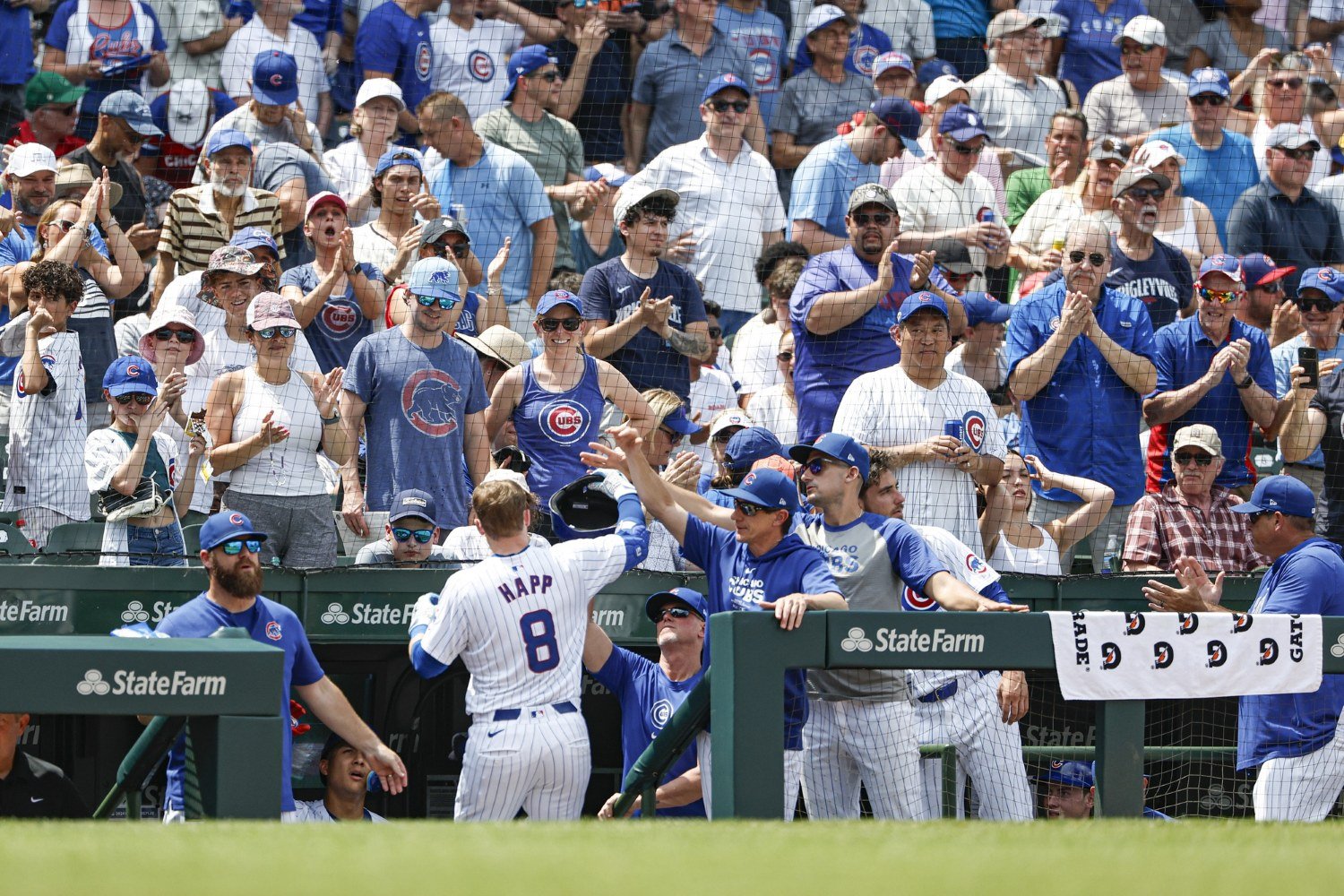 Baseball Prospectus just rolled out their full PECOTA projections for 2025, and it's going to surprise you—in a good way. According to PECOTA, the Cubs are not just favorites in the NL Central, but clear, even prohibitive ones. The system forecasts 90.6 wins for the Cubs across their 10,000 simulations of the coming season, and gives them a 79.7% chance to win the NL Central. Only the Dodgers and a team from the suburbs just north of Atlanta, Ga. have higher projected win totals, and only Los Angeles has a higher estimated likelihood to win their division than do the Cubs. That's not in the National League; that's out of all 30 teams. The system, like Dan Szymborski's ZiPS seemed to be when it rolled out last month, adores this team. It projects the Cubs to score the seventh-most runs in MLB and allow the seventh-fewest, and no team in the Central is projected to match them on either side of the ledger. In fact, while the Cubs are expected to be the 90-win team Craig Counsell demanded last fall, no other team in the division is even projected for 81 wins; the Brewers are pegged for a disappointing 80-82. As we've said all winter, it's important not to underestimate the impact of Kyle Tucker. PECOTA expects him to hit 29 home runs, with an overall batting line 42 percent better than the league average and 5.3 wins above replacement player (WARP), good for fifth in MLB—right between José Ramírez and Ketel Marte. For pitchers, Shota Imanaga ranks 16th and Justin Steele 20th in projected WARP. This is not a drill; the Cubs are bordering on juggernaut status. About the only bad news you'll find, to whatever extent you invest trust in PECOTA, is that it doesn't really buy into the Matt Shaw thing, at least right away. Shaw's projection of .236/.298/.381 and a 95 DRC+ (where 100 is average and higher is better) is uninspiring. You don't need me to tell you this, but even that bad news comes with some consolation: Alex Bregman is still out there. PECOTA has Bregman hitting .258/.332/.421, with plus defense at third, making him the 32nd-best position player by projected WARP. In other words, while already darlings of the system, the Cubs could become even more so, if their opportunities line up right. Just as you'd expect, the team's rumored starting pitcher trade target, Dylan Cease, could have just as huge an impact. He ranks 17th in projected pitcher WARP, right behind Imanaga. Cease would effectively take the rotation spot of either Colin Rea (110 DRA-, where 100 is average and lower is better) or Javier Assad (106), so if the team did get hold of Cease or Bregman, they could immediately add another three wins to the team's projection. Projections are just numbers; they're not worth much on their own. In this case, though, they're a good reminder of how far this team has come. Over the last half-decade, as the Cubs have perennially wallowed in mediocrity, PECOTA has basically nailed their projections, saying over and over that they were anywhere from a 76-win team to an 83-win one, matching their real record very closely. Now, it's saying something very different—profoundly different—and the Cubs are still trying to make moves that would impress it even further. As sources of spring optimism go, this is a forceful one, even if many fans will understandably hold onto some skepticism until the team pays off these expectations on the field.
 -
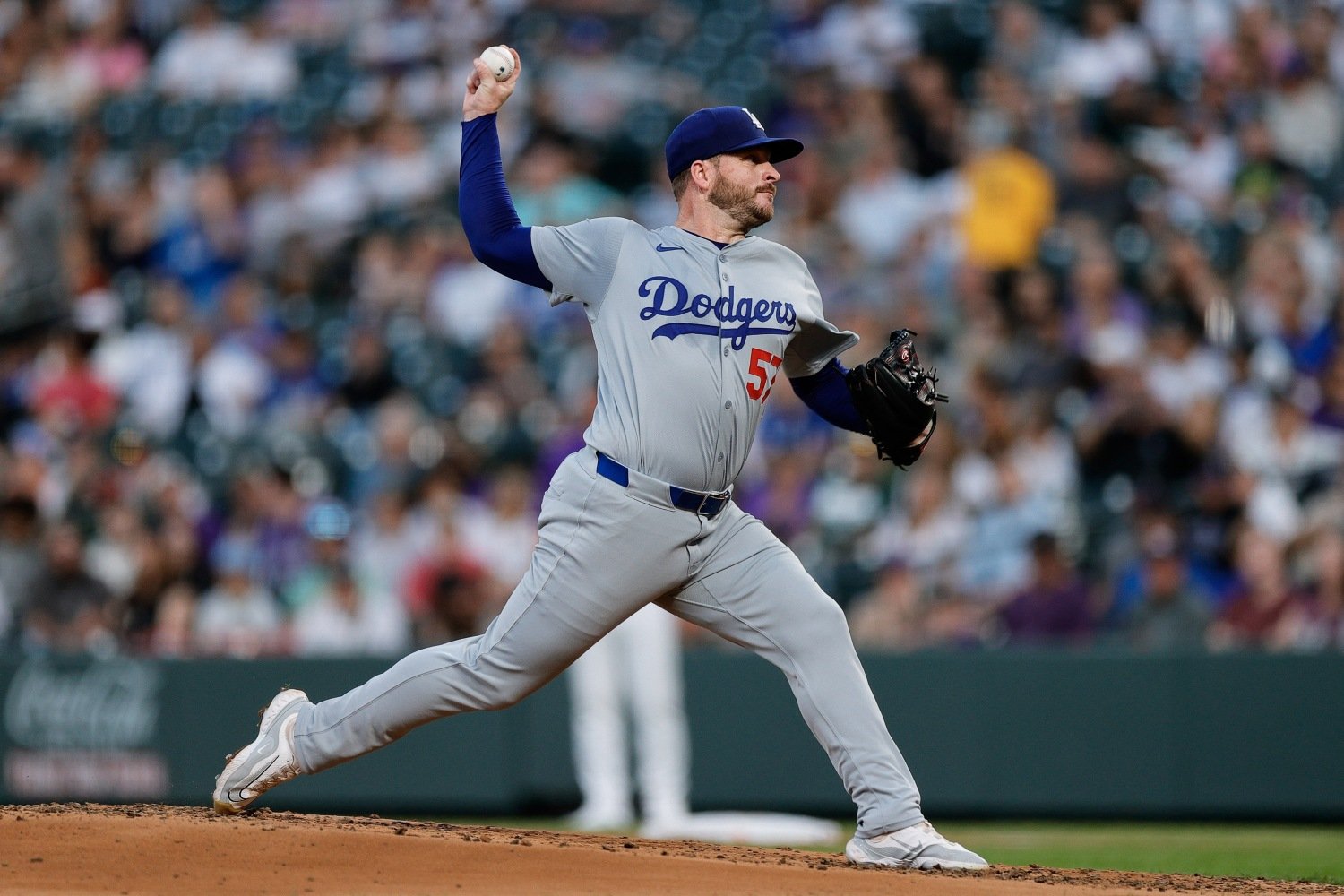 During 670 The Score's weekly baseball show Inside the Clubhouse, host and baseball insider Bruce Levine made an interesting comment that we should all hope was slightly off base. "From what I understand, they're talking to Brasier already, having been let go of by the Dodgers," Levine said. That would be Ryan Brasier, who was, indeed, designated for assignment Thursday. Legally, though, the Cubs can't have contacted Brasier yet, because he's not a free agent. The Dodgers have until Tuesday to trade him, before they'd need to place him on outright waivers and give all 29 other teams a chance to claim him for his salary for 2025, believed to be $4.5 million. (He signed a two-year deal at this time last year worth $9 million, but details on what will be paid when in that deal are more sketchy than usual for modern big-leaguers. If Brasier makes it as far as the waiver wire, rather than being traded, he could very well make it through unscatched. At this stage of the winter, there are a handful of similar free-agent relievers available at similar prices, and there are incentives in Brasier's contract that could push his earnings up as much as $2 million based on his health and availability. The Cubs' ideal scenario, then, is that he does clear waivers, becomes a free agent, and can be signed for the league-minimum salary of $760,000, with the Dodgers paying the rest of what he's owed. Obviously, the Cubs would have to win a free-for-all for his services at that point, but it'd be a boon if they could land him. For that very reason, though, no team is allowed to directly contact Brasier right now. Hopefully, what Levine meant—or what a source meant, and he misconstrued—is that the Cubs have been in contact with the Dodgers about a possible trade. That's more plausible, and indeed, sources I spoke to said the team has talked to Los Angeles about him this offseason, though it wasn't clear whether that was before or after he was cut as a procedural move to make way for the Dodgers signing Kirby Yates. A trade for Brasier would be a fine second-best option to having him slide through waivers, from the Cubs' perspective, because it wouldn't come with the risk that he's claimed or signed by some other team instead. It would probably cost a legitimate (though low-level) prospect, someone with more upside than Juan Bello (whom the Cubs gave up to get Ryan Pressly from the Astros). That would reflect the fact that Brasier will come cheaper than Pressly, financially, but also that the Dodgers are likely to have some alternative trade partners approach them about Brasier, who (unlike Pressly) does not have the ability to decide where he lands. Why would the Cubs be willing to do that deal, though? It would certainly partially be about Brasier, himself. After all, he's developed a stout and effective four-pitch mix, with a four-seamer and slider he'll throw to both lefties and righties; a sinker for righties; and a cutter for lefties. Since the start of 2023, he's pitched 88 regular-season innings and 11 more in the playoffs. His 23.3% strikeout rate is good, but not great. However, his 6.9% walk and 1.7% home-run rates are sparkling, and he's held opposing batters to a .204/.262/.312 line. The cutter, in particular, has been huge for him. Another part of the rationale, though, is what else getting Brasier might make possible. The Cubs feel a need to further reinforce their bullpen, but if they do so via free agency (David Robertson, Kyle Finnegan) or a more expensive trade (Robert Suarez), it will at least slightly encroach on their efforts to make any other upgrades to their roster. Trading for Brasier is a different story, though—especially if the Dodgers kick in some cash to ensure that Brasier's salary doesn't rise beyond about $4 million for the Cubs' purposes. If that be the case, the Cubs could get a bit more serious about their pursuit of Alex Bregman. That's the key advantage to nabbing Brasier (or another lower-cost, higher-reward relief alternative, like Kendall Graveman) from the front office's perspective. Jed Hoyer is still not considering a long-term commitment to Bregman, but according to one source in another front office that has talked with Bregman's camp this winter, that might not put the Cubs at a disadvantage. The conflicting reports about whether Bregman was willing to shift from seeking a seven-year deal to a short-term structure turn out not to have been conflicting, as much as two different glimpses into a flexible process. Bregman, according to two sources, is unwilling to settle for a short-term deal without getting a substantially better annual average value than he could command on a long-term one—but is open to that exchange of total value for short-term earnings, provided there's a real chance to win in his prospective landing spot and that he can feel confident of having a successful season there. The Cubs certainly seem to pass that double test, which means that if neither of the teams (one being the Astros, the other currently unidentified) step up their six-year deals in terms of AAV or add a seventh year thereto, Chicago could be a viable suitoor on a deal much akin to the one Cody Bellinger signed last winter. Bregman might want to get more than the $31.35 million AAV on Rafael Devers's 2023 extension with the Red Sox, so one possible structure would be a three-year, $90-million deal in which Bregman is guaranteed $31.5 million in each of the first two years and $27.5 million in the third, with opt-outs after 2025 and 2026. Right now, Chicago's payroll stands at roughly $180 million, so adding Brasier and Bregman at (say) $36 million would bring them right to the $215-million range that has appeared to be their target for some time. Their competitive-balance tax number is currently $198 million, so this would push them up to within about $7 million of the lowest threshold for the CBT—a threshold they will not surpass in 2025, under any circumstances. It's very, very unlikely that the team could add both Bregman and one of those more expensive bullpen pieces, given their spending constraints. I've written recently about multiple reasons why they might not even want to approach that threshold so closely before the season begins. However, Hoyer has the option to use up what would otherwise be his in-season flexibility now, if he sees this as an opportunity too good to pass up. Brasier and Bregman would complete the team's roster, pending a possible (though unlikely, as it would have to be cash-neutral or better, and they wouldn't want to give up more young talent along the way) trade of Nico Hoerner for a starting pitcher. Some have raised two valid questions about this potential path, so let me address them here. Why, effectively, choose Bregman over Hoerner, when the former is almost 31 and the latter is three years and change younger—especially if it means getting more expensive? Wins above replacement be damned, Bregman is plain old better than Hoerner. Moreover, while Hoerner's youth makes it easy to forget it, he's only under contract for two more seasons, and it's unlikely that the Cubs will look to sign him to a second, more lucrative extension to keep him beyond 2026. His skill set won't age as well as Bregman's already has, and if there's an automated strike zone in our future, Bregman (who is set to magically shrink three or four inches this spring, when players are officially and objectively measured for the use of that zone in Cactus and Grapefruit League games) might get a big boost to his own aging proposition. It wouldn't mark a loss of medium- or long-term value, because Hoerner really doesn't have any, and the Cubs would go from NL Central contenders to serious World Series threats for 2025. Why give up draft picks and international free-agent spending power to sign a player to a short-term deal? Shouldn't the Cubs only be willing to do that if it comes with long-term upside? I used to be of this mind, too, but have been talked into the notion that the team would (and maybe even should) give up those long-term assets to land Bregman in the short term. Hoyer gets a fixed payroll budget from the business side of the Cubs each year. It's based not on projected earnings for the coming year, but on revenues from the prior season, and it's not flexible (as some teams' budgets are) based on the possible emergence of an opportunity to invest for the long term or swing big for a championship banner. That might not be a good way to do things, but it's what the Ricketts family has decided to do. Within that decision space, then, Hoyer has to consider whether signing (in this case) Bregman would materially improve the club's chances to win a lot of games and go to the postseason. If it will, then the extra money such a season would surely bring in justifies the loss of a couple lottery tickets on teenage talent. The upside of this paradigm is that success should be at least partially self-sustaining, so short-term moves that maintain agility from year to year and raise the likely earning power of the organization for the season appeal more to them than they might without considering the way their budget is determined. The next few days are likely to be busy; teams and players are starting to get anxious about spots unfilled and spring training homes undetermined. The Cubs still aren't likely to land Bregman, but if they can snap up Brasier or a similarly solid reliever at a similarly great price, it will improve their chances—and things could happen quickly.
 -
Here's hoping they didn't tamper with him... Image courtesy of © Isaiah J. Downing-Imagn Images During 670 The Score's weekly baseball show Inside the Clubhouse, host and baseball insider Bruce Levine made an interesting comment that we should all hope was slightly off base. "From what I understand, they're talking to Brasier already, having been let go of by the Dodgers," Levine said. That would be Ryan Brasier, who was, indeed, designated for assignment Thursday. Legally, though, the Cubs can't have contacted Brasier yet, because he's not a free agent. The Dodgers have until Tuesday to trade him, before they'd need to place him on outright waivers and give all 29 other teams a chance to claim him for his salary for 2025, believed to be $4.5 million. (He signed a two-year deal at this time last year worth $9 million, but details on what will be paid when in that deal are more sketchy than usual for modern big-leaguers. If Brasier makes it as far as the waiver wire, rather than being traded, he could very well make it through unscatched. At this stage of the winter, there are a handful of similar free-agent relievers available at similar prices, and there are incentives in Brasier's contract that could push his earnings up as much as $2 million based on his health and availability. The Cubs' ideal scenario, then, is that he does clear waivers, becomes a free agent, and can be signed for the league-minimum salary of $760,000, with the Dodgers paying the rest of what he's owed. Obviously, the Cubs would have to win a free-for-all for his services at that point, but it'd be a boon if they could land him. For that very reason, though, no team is allowed to directly contact Brasier right now. Hopefully, what Levine meant—or what a source meant, and he misconstrued—is that the Cubs have been in contact with the Dodgers about a possible trade. That's more plausible, and indeed, sources I spoke to said the team has talked to Los Angeles about him this offseason, though it wasn't clear whether that was before or after he was cut as a procedural move to make way for the Dodgers signing Kirby Yates. A trade for Brasier would be a fine second-best option to having him slide through waivers, from the Cubs' perspective, because it wouldn't come with the risk that he's claimed or signed by some other team instead. It would probably cost a legitimate (though low-level) prospect, someone with more upside than Juan Bello (whom the Cubs gave up to get Ryan Pressly from the Astros). That would reflect the fact that Brasier will come cheaper than Pressly, financially, but also that the Dodgers are likely to have some alternative trade partners approach them about Brasier, who (unlike Pressly) does not have the ability to decide where he lands. Why would the Cubs be willing to do that deal, though? It would certainly partially be about Brasier, himself. After all, he's developed a stout and effective four-pitch mix, with a four-seamer and slider he'll throw to both lefties and righties; a sinker for righties; and a cutter for lefties. Since the start of 2023, he's pitched 88 regular-season innings and 11 more in the playoffs. His 23.3% strikeout rate is good, but not great. However, his 6.9% walk and 1.7% home-run rates are sparkling, and he's held opposing batters to a .204/.262/.312 line. The cutter, in particular, has been huge for him. Another part of the rationale, though, is what else getting Brasier might make possible. The Cubs feel a need to further reinforce their bullpen, but if they do so via free agency (David Robertson, Kyle Finnegan) or a more expensive trade (Robert Suarez), it will at least slightly encroach on their efforts to make any other upgrades to their roster. Trading for Brasier is a different story, though—especially if the Dodgers kick in some cash to ensure that Brasier's salary doesn't rise beyond about $4 million for the Cubs' purposes. If that be the case, the Cubs could get a bit more serious about their pursuit of Alex Bregman. That's the key advantage to nabbing Brasier (or another lower-cost, higher-reward relief alternative, like Kendall Graveman) from the front office's perspective. Jed Hoyer is still not considering a long-term commitment to Bregman, but according to one source in another front office that has talked with Bregman's camp this winter, that might not put the Cubs at a disadvantage. The conflicting reports about whether Bregman was willing to shift from seeking a seven-year deal to a short-term structure turn out not to have been conflicting, as much as two different glimpses into a flexible process. Bregman, according to two sources, is unwilling to settle for a short-term deal without getting a substantially better annual average value than he could command on a long-term one—but is open to that exchange of total value for short-term earnings, provided there's a real chance to win in his prospective landing spot and that he can feel confident of having a successful season there. The Cubs certainly seem to pass that double test, which means that if neither of the teams (one being the Astros, the other currently unidentified) step up their six-year deals in terms of AAV or add a seventh year thereto, Chicago could be a viable suitoor on a deal much akin to the one Cody Bellinger signed last winter. Bregman might want to get more than the $31.35 million AAV on Rafael Devers's 2023 extension with the Red Sox, so one possible structure would be a three-year, $90-million deal in which Bregman is guaranteed $31.5 million in each of the first two years and $27.5 million in the third, with opt-outs after 2025 and 2026. Right now, Chicago's payroll stands at roughly $180 million, so adding Brasier and Bregman at (say) $36 million would bring them right to the $215-million range that has appeared to be their target for some time. Their competitive-balance tax number is currently $198 million, so this would push them up to within about $7 million of the lowest threshold for the CBT—a threshold they will not surpass in 2025, under any circumstances. It's very, very unlikely that the team could add both Bregman and one of those more expensive bullpen pieces, given their spending constraints. I've written recently about multiple reasons why they might not even want to approach that threshold so closely before the season begins. However, Hoyer has the option to use up what would otherwise be his in-season flexibility now, if he sees this as an opportunity too good to pass up. Brasier and Bregman would complete the team's roster, pending a possible (though unlikely, as it would have to be cash-neutral or better, and they wouldn't want to give up more young talent along the way) trade of Nico Hoerner for a starting pitcher. Some have raised two valid questions about this potential path, so let me address them here. Why, effectively, choose Bregman over Hoerner, when the former is almost 31 and the latter is three years and change younger—especially if it means getting more expensive? Wins above replacement be damned, Bregman is plain old better than Hoerner. Moreover, while Hoerner's youth makes it easy to forget it, he's only under contract for two more seasons, and it's unlikely that the Cubs will look to sign him to a second, more lucrative extension to keep him beyond 2026. His skill set won't age as well as Bregman's already has, and if there's an automated strike zone in our future, Bregman (who is set to magically shrink three or four inches this spring, when players are officially and objectively measured for the use of that zone in Cactus and Grapefruit League games) might get a big boost to his own aging proposition. It wouldn't mark a loss of medium- or long-term value, because Hoerner really doesn't have any, and the Cubs would go from NL Central contenders to serious World Series threats for 2025. Why give up draft picks and international free-agent spending power to sign a player to a short-term deal? Shouldn't the Cubs only be willing to do that if it comes with long-term upside? I used to be of this mind, too, but have been talked into the notion that the team would (and maybe even should) give up those long-term assets to land Bregman in the short term. Hoyer gets a fixed payroll budget from the business side of the Cubs each year. It's based not on projected earnings for the coming year, but on revenues from the prior season, and it's not flexible (as some teams' budgets are) based on the possible emergence of an opportunity to invest for the long term or swing big for a championship banner. That might not be a good way to do things, but it's what the Ricketts family has decided to do. Within that decision space, then, Hoyer has to consider whether signing (in this case) Bregman would materially improve the club's chances to win a lot of games and go to the postseason. If it will, then the extra money such a season would surely bring in justifies the loss of a couple lottery tickets on teenage talent. The upside of this paradigm is that success should be at least partially self-sustaining, so short-term moves that maintain agility from year to year and raise the likely earning power of the organization for the season appeal more to them than they might without considering the way their budget is determined. The next few days are likely to be busy; teams and players are starting to get anxious about spots unfilled and spring training homes undetermined. The Cubs still aren't likely to land Bregman, but if they can snap up Brasier or a similarly solid reliever at a similarly great price, it will improve their chances—and things could happen quickly. View full article
-
What the Chicago Cubs Definitely WON'T Give Up for Dylan Cease
Matthew Trueblood posted an article in Cubs
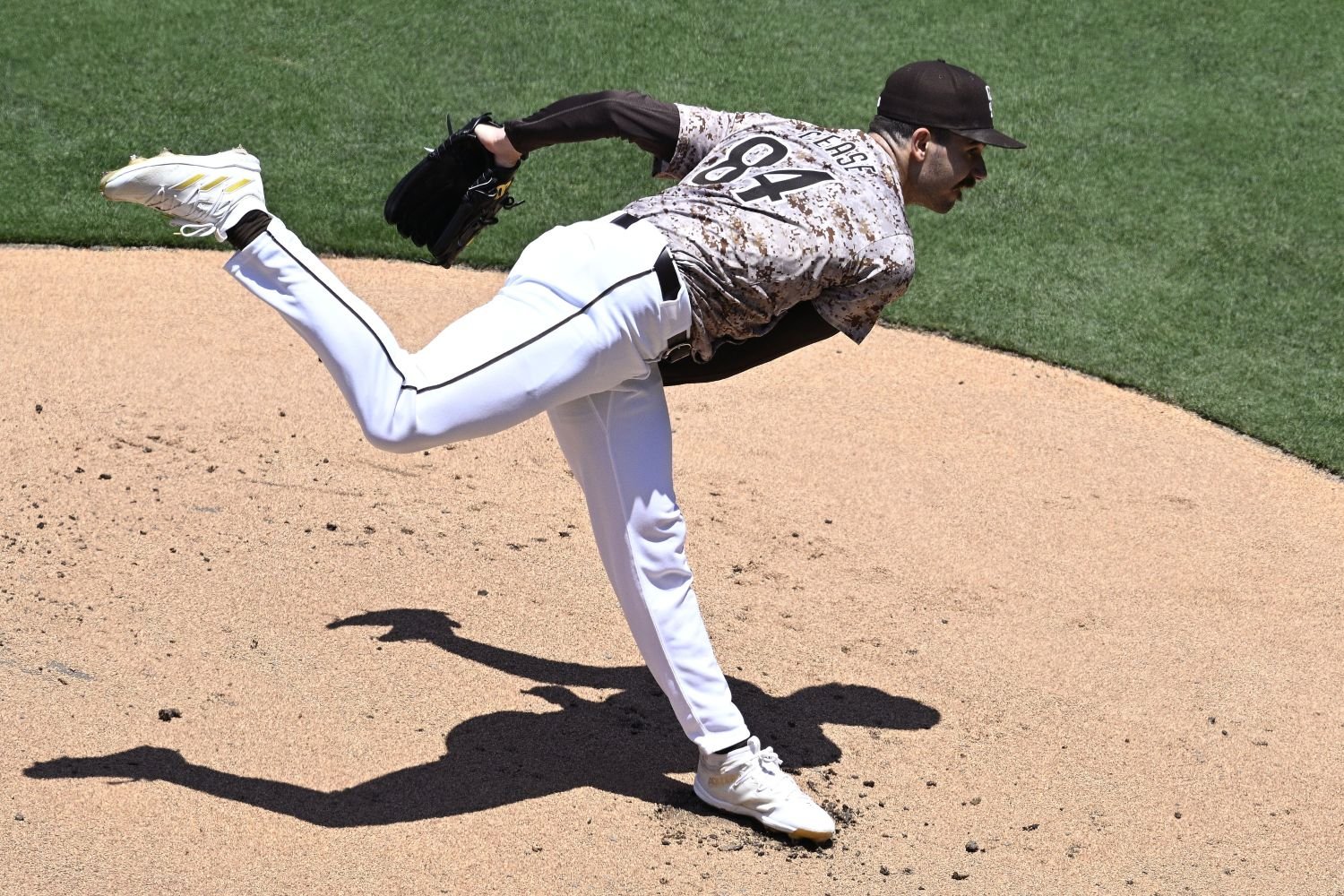 There might not be a better-connected baseball reporter in the Chicago media sphere than Levine, of 670 The Score. That's no denigration of any of the other great beat writers covering the Cubs or White Sox, many of whom know their individual teams a bit better than Levine knows either one. It's just a fact, reflecting the fact that he's been covering baseball in the city for longer than most of the rest of either beat has been alive, and that he has cultivated valuable relationships in front offices and with agents throughout the game. That's why it was fairly stunning when, in the first segment of Levine's weekly Inside the Clubhouse show Saturday, he contended that the Cubs would be likely to trade Justin Steele to acquire Dylan Cease of the Padres. The thrust of his argument was a rhetorical question he posed to his co-host, Ryan McGuffey: "Would you rather have two years of Steele or one year of Cease?" He made the case that the Padres, who do want to win in 2025, would be uninterested in anything shy of top Cubs prospect Matt Shaw in exchange for Cease, and that the Cubs would and should trade Steele for the final year of Cease's team control, in the hopes that he could secure a pennant for them before leaving in free agency next winter. As ideas go, this one is creative, and it's not Levine's wont to toss such things out without having discussed it with someone inside one of the organizations in question. In this case, though, he got the wrong end of the stick. Two crucial facts undermine the case for this trade. Firstly, Justin Steele is not two years from free agency; he's three years away. It's possible that Levine was forwarding someone else's vaguely-worded or ill-explained expectation that 2027 (which should be the final season of Steele's team control) will be pulverized by a work stoppage, but teams are nowhere near confident enough of that to shape trade valuations and decisions around it at this point. More likely, Levine and/or a league source got their wires crossed, because Steele is in his second year of arbitration eligibility and already agreed to a handsome $6.55-million salary for 2025. Ordinarily, of course, players reach arbitration after they attain three years of MLB service time, and become free agents after three passes through arbitration. Steele, however, was a Super Two player for 2024, so he won't reach six years of service until the end of 2027. Thus, he gets four seasons of arbitration eligibility. That both makes a huge difference in his value to the Cubs (relative to if he really were set to become a free agent after 2026) and, somewhat perversely, makes him harder to take on for the Padres. The latter brings us to the second problem with Levine's idea: The Padres do want to contend this year, but they need to cut substantial salary to make room for the additions they still badly need to make, and Steele doesn't accommodate that need. Swapping Cease out for him would only save the Friars $7.2 million. That's not insignificant, but if A.J. Preller does elect to trade Cease, he'll want to realize more savings than that. When the Padres signed Michael King to a one-year deal to avoid arbitration, they structured it such that almost half that amount will be paid near the end of 2025, between the third and fourth disbursals of revenue-sharing money for the year and after they pull in any playoff revenues they can generate. That $3.75-million buyout on a mutual option will be assigned to the 2026 budget. They did the same thing with Elias Díaz, whom they inked for $3.5 million but who will get $2 million of that as the buyout on another mutual option. Those deals give them more space to be creative between now and Opening Day, and don't necessarily signify that the team is penniless or illiquid, but they do underscore the fact that Preller needs to make some cuts before making any additions. He'll also want to load up with good, young talents making the league's minimum salary, or something very close to it. It's roster space (just 36 of the 40 slots on the roster are filled) the Padres have, and money they lack. They might well be able to sign a good player with the money they save by trading Cease, but they don't need a good player to get back to where they were in 2024; they need three or four. This is why I've talked about these two teams as good trade partners all winter. The Cubs have excess depth at a low cost, and the Padres have high-end talents who could help put the Cubs over the top. If a Cease-to-the-Cubs trade happens, it will almost certainly center on one of Javier Assad and Ben Brown and one of Owen Caissie, Kevin Alcántara, or James Triantos, with a third piece involved. That's the kind of framework that works for both teams. Once we're clear on how much team control Steele still has left, it's plain that he has no place in this conversation. Neither team's situation is a fit for that idea, and the gap in quality between Cease and Steele isn't large enough to make the ends of the string meet.
 -
"No rumors here, baby," Bruce Levine said Saturday morning, "Go everywhere else for the rumors; we talk about what's going on." Then he talked about some stuff that certainly is not going on. Image courtesy of © Orlando Ramirez-Imagn Images There might not be a better-connected baseball reporter in the Chicago media sphere than Levine, of 670 The Score. That's no denigration of any of the other great beat writers covering the Cubs or White Sox, many of whom know their individual teams a bit better than Levine knows either one. It's just a fact, reflecting the fact that he's been covering baseball in the city for longer than most of the rest of either beat has been alive, and that he has cultivated valuable relationships in front offices and with agents throughout the game. That's why it was fairly stunning when, in the first segment of Levine's weekly Inside the Clubhouse show Saturday, he contended that the Cubs would be likely to trade Justin Steele to acquire Dylan Cease of the Padres. The thrust of his argument was a rhetorical question he posed to his co-host, Ryan McGuffey: "Would you rather have two years of Steele or one year of Cease?" He made the case that the Padres, who do want to win in 2025, would be uninterested in anything shy of top Cubs prospect Matt Shaw in exchange for Cease, and that the Cubs would and should trade Steele for the final year of Cease's team control, in the hopes that he could secure a pennant for them before leaving in free agency next winter. As ideas go, this one is creative, and it's not Levine's wont to toss such things out without having discussed it with someone inside one of the organizations in question. In this case, though, he got the wrong end of the stick. Two crucial facts undermine the case for this trade. Firstly, Justin Steele is not two years from free agency; he's three years away. It's possible that Levine was forwarding someone else's vaguely-worded or ill-explained expectation that 2027 (which should be the final season of Steele's team control) will be pulverized by a work stoppage, but teams are nowhere near confident enough of that to shape trade valuations and decisions around it at this point. More likely, Levine and/or a league source got their wires crossed, because Steele is in his second year of arbitration eligibility and already agreed to a handsome $6.55-million salary for 2025. Ordinarily, of course, players reach arbitration after they attain three years of MLB service time, and become free agents after three passes through arbitration. Steele, however, was a Super Two player for 2024, so he won't reach six years of service until the end of 2027. Thus, he gets four seasons of arbitration eligibility. That both makes a huge difference in his value to the Cubs (relative to if he really were set to become a free agent after 2026) and, somewhat perversely, makes him harder to take on for the Padres. The latter brings us to the second problem with Levine's idea: The Padres do want to contend this year, but they need to cut substantial salary to make room for the additions they still badly need to make, and Steele doesn't accommodate that need. Swapping Cease out for him would only save the Friars $7.2 million. That's not insignificant, but if A.J. Preller does elect to trade Cease, he'll want to realize more savings than that. When the Padres signed Michael King to a one-year deal to avoid arbitration, they structured it such that almost half that amount will be paid near the end of 2025, between the third and fourth disbursals of revenue-sharing money for the year and after they pull in any playoff revenues they can generate. That $3.75-million buyout on a mutual option will be assigned to the 2026 budget. They did the same thing with Elias Díaz, whom they inked for $3.5 million but who will get $2 million of that as the buyout on another mutual option. Those deals give them more space to be creative between now and Opening Day, and don't necessarily signify that the team is penniless or illiquid, but they do underscore the fact that Preller needs to make some cuts before making any additions. He'll also want to load up with good, young talents making the league's minimum salary, or something very close to it. It's roster space (just 36 of the 40 slots on the roster are filled) the Padres have, and money they lack. They might well be able to sign a good player with the money they save by trading Cease, but they don't need a good player to get back to where they were in 2024; they need three or four. This is why I've talked about these two teams as good trade partners all winter. The Cubs have excess depth at a low cost, and the Padres have high-end talents who could help put the Cubs over the top. If a Cease-to-the-Cubs trade happens, it will almost certainly center on one of Javier Assad and Ben Brown and one of Owen Caissie, Kevin Alcántara, or James Triantos, with a third piece involved. That's the kind of framework that works for both teams. Once we're clear on how much team control Steele still has left, it's plain that he has no place in this conversation. Neither team's situation is a fit for that idea, and the gap in quality between Cease and Steele isn't large enough to make the ends of the string meet. View full article
-
As the Options Narrow, Stay Cognizant of Breadth of Cubs' Options
Matthew Trueblood posted an article in Cubs
 There's no time on the calendar when it's easy to consume baseball news in a measured, responsible way. That, alas, is not in the nature of our social media-driven world, and that world, in turn, was shaped by some bad media habits that emerged in the two or three decades before it. This time of year is full of especially deep pitfalls for fans, though, and Cubs Twitter is a perfect place to see that in action lately. Last weekend, we reported here that the Cubs have had discussions with the Padres about a possible trade for Michael King. That was true. It's true, too, that the team has at least entertained taking on flamethrowing reliever Robert Suarez. It's true that, as has been reported by multiple insiders this week, the Cubs remain interested in Alex Bregman, and that they have also talked to the Padres about Dylan Cease. Amid those true statements, though, lies the risk of drawing some deeply untrue conclusions. Extrapolating things from one rumor and reading into another can lead you down the wrong path. So can stacking rumors on top of one another. To better understand a complicated situation about which we have profoundly imperfect information, then, it's important that we start figuring out what isn't possible, among the things that have been mentioned—and naming some things that haven't been mentioned, but are distinctly possible, even if improbable. So, first things first: No, it is not possible that the Cubs will acquire both Cease and Bregman in the days and weeks ahead. That one has gathered some momentum online, thanks to the way both possible moves have bubbled and sloshed toward completion at the same time, but for our edification (and to avoid needless disappointment), let's clarify that situation. The overpowering temptation, when hearing multiple juicy rumors, is to think in terms of 'and', but the reality—and usually, the reason why neither of any two given moves has happened yet—is that the situation is governed by 'or'. The most likely scenario is that the Cubs acquire neither Cease nor Bregman, but it's entirely out of the question that they'll acquire both. Cease will make $13.75 million in 2025, and Bregman's absolute floor for a salary is $20 million. The Cubs can't (well, could, but you get the idea; it's not within their budget to) add over $30 million to their payroll from here, and they're not going to trade Nico Hoerner at this last gasp of the offseason just to make room for a player a bit better but four years his senior. The Padres can't eat much of Cease's salary; clearing that money is their primary reason for being willing to deal him. Eliminate that idea from your mind. Next, I would urge people not to think of Cease and Suarez as a potential package. The most likely way for the Cubs to end up with Suarez is as a low-cost salary dump by San Diego, who signed a catcher (Elías Díaz, for $3.5 million) and thus reduced the likelihood of a three-team deal between themselves, the Cubs and the Twins, but who still need to get money off their books somehow. If the Cubs did get Suarez as part of a package, though, it would almost surely be with King, not with Cease. Suarez is due $10 million in 2025 and has two player options thereafter. That's an easy contract to take on alongside the roughly $8 million King will make this year, but not as easy if taking on Cease's money. This one isn't impossible, like Cease and Bregman are, but consider it extremely unlikely that the Cubs get both Cease and King. On the other hand, it's worth noting how many things are still possible, beyond the obvious and oft-discussed. If the Cubs don't get Bregman or Cease or King or Suarez, they could still land David Robertson—but, just as importantly, they have other paths to a bullpen upgrade, even if they don't find common ground with Robertson. They had some interest in Jorge Polanco, only to see him re-sign with the Mariners, but they're not out of ways to bolster their infield depth, even beyond Bregman—who became more likely to return to Houston with the elimination of Polanco as an alternative for the Astros. Ha-Seong Kim is also off the market, but when he landed with the Rays, it became fractionally more likely that Tampa would be open to trading Brandon Lowe. Robertson and Lowe, to pick one plausible combination, could fit into the room left in the team's payroll budget. If that doesn't work out, the Cubs could take a harder look at non-tendered free agent Brendan Rodgers. Enrique Hernández, Yoán Moncada, José Iglesias and, yes, Brandon Drury are all still out there. The Twins have listened on Willi Castro throughout the winter and are still willing to deal him if the price is right; Castro would be a perfect fit for the bench, and arguably a better fit for the overall roster and payroll situation of the team than anyone else available, including Bregman and Cease. If Robertson were to sign elsewhere, the Cubs could circle back to Kyle Finnegan, where they found the asking price too high as of a couple of weeks ago. They could pivot to Kendall Graveman, Buck Farmer, or Spencer Turnbull. There are still several good options for every need the Cubs really have; some of them are just less sexy than others. Nor are we done seeing talented players become available. The Dodgers designated Ryan Brasier for assignment to make room on their roster for Kirby Yates. Brasier is old and he's good, rather than great, but he'd clearly improve the Cubs bullpen. By no means will the Dodgers release him; designating him was just a formality. They'll trade him sometime in the next handful of days, and it could well be to the Cubs. If it isn't, that, too, is ok, because the next free-agent deal with a team whose 40-man roster is full. Twenty-four of the 30 teams have at least 40 on their roster, including the Cubs; five teams have a pending deal that will require them to cut or trade someone. Talent not only falls into place on MLB rosters later in the offseason than it used to, but continues to arrive on the market later, too. Again, I would guess the Cubs acquire none of King, Cease, or Bregman. That doesn't mean that the chances of acquiring any of them are zero—plainly, they are higher than that—and it doesn't mean the Cubs can't complete their roster with a strong final move, or two, or three. The universe of possible moves is wider than the rumor mill can tell us, and that's important to remember. At the same time, it's important to be aware of the boundaries of that universe, so you don't waste time drawing castles in the void beyond it.
 -
It's good to have concrete information, even if it's merely news of interest or discussions, rather than actual moves. With names continuing to come off the board as the offseason winds toward a conclusion, though, the danger is that each bit of concrete news blinds us to the sea of other possibilities teams are entertaining, but we're not hearing about. Image courtesy of © Thomas Shea-Imagn Images There's no time on the calendar when it's easy to consume baseball news in a measured, responsible way. That, alas, is not in the nature of our social media-driven world, and that world, in turn, was shaped by some bad media habits that emerged in the two or three decades before it. This time of year is full of especially deep pitfalls for fans, though, and Cubs Twitter is a perfect place to see that in action lately. Last weekend, we reported here that the Cubs have had discussions with the Padres about a possible trade for Michael King. That was true. It's true, too, that the team has at least entertained taking on flamethrowing reliever Robert Suarez. It's true that, as has been reported by multiple insiders this week, the Cubs remain interested in Alex Bregman, and that they have also talked to the Padres about Dylan Cease. Amid those true statements, though, lies the risk of drawing some deeply untrue conclusions. Extrapolating things from one rumor and reading into another can lead you down the wrong path. So can stacking rumors on top of one another. To better understand a complicated situation about which we have profoundly imperfect information, then, it's important that we start figuring out what isn't possible, among the things that have been mentioned—and naming some things that haven't been mentioned, but are distinctly possible, even if improbable. So, first things first: No, it is not possible that the Cubs will acquire both Cease and Bregman in the days and weeks ahead. That one has gathered some momentum online, thanks to the way both possible moves have bubbled and sloshed toward completion at the same time, but for our edification (and to avoid needless disappointment), let's clarify that situation. The overpowering temptation, when hearing multiple juicy rumors, is to think in terms of 'and', but the reality—and usually, the reason why neither of any two given moves has happened yet—is that the situation is governed by 'or'. The most likely scenario is that the Cubs acquire neither Cease nor Bregman, but it's entirely out of the question that they'll acquire both. Cease will make $13.75 million in 2025, and Bregman's absolute floor for a salary is $20 million. The Cubs can't (well, could, but you get the idea; it's not within their budget to) add over $30 million to their payroll from here, and they're not going to trade Nico Hoerner at this last gasp of the offseason just to make room for a player a bit better but four years his senior. The Padres can't eat much of Cease's salary; clearing that money is their primary reason for being willing to deal him. Eliminate that idea from your mind. Next, I would urge people not to think of Cease and Suarez as a potential package. The most likely way for the Cubs to end up with Suarez is as a low-cost salary dump by San Diego, who signed a catcher (Elías Díaz, for $3.5 million) and thus reduced the likelihood of a three-team deal between themselves, the Cubs and the Twins, but who still need to get money off their books somehow. If the Cubs did get Suarez as part of a package, though, it would almost surely be with King, not with Cease. Suarez is due $10 million in 2025 and has two player options thereafter. That's an easy contract to take on alongside the roughly $8 million King will make this year, but not as easy if taking on Cease's money. This one isn't impossible, like Cease and Bregman are, but consider it extremely unlikely that the Cubs get both Cease and King. On the other hand, it's worth noting how many things are still possible, beyond the obvious and oft-discussed. If the Cubs don't get Bregman or Cease or King or Suarez, they could still land David Robertson—but, just as importantly, they have other paths to a bullpen upgrade, even if they don't find common ground with Robertson. They had some interest in Jorge Polanco, only to see him re-sign with the Mariners, but they're not out of ways to bolster their infield depth, even beyond Bregman—who became more likely to return to Houston with the elimination of Polanco as an alternative for the Astros. Ha-Seong Kim is also off the market, but when he landed with the Rays, it became fractionally more likely that Tampa would be open to trading Brandon Lowe. Robertson and Lowe, to pick one plausible combination, could fit into the room left in the team's payroll budget. If that doesn't work out, the Cubs could take a harder look at non-tendered free agent Brendan Rodgers. Enrique Hernández, Yoán Moncada, José Iglesias and, yes, Brandon Drury are all still out there. The Twins have listened on Willi Castro throughout the winter and are still willing to deal him if the price is right; Castro would be a perfect fit for the bench, and arguably a better fit for the overall roster and payroll situation of the team than anyone else available, including Bregman and Cease. If Robertson were to sign elsewhere, the Cubs could circle back to Kyle Finnegan, where they found the asking price too high as of a couple of weeks ago. They could pivot to Kendall Graveman, Buck Farmer, or Spencer Turnbull. There are still several good options for every need the Cubs really have; some of them are just less sexy than others. Nor are we done seeing talented players become available. The Dodgers designated Ryan Brasier for assignment to make room on their roster for Kirby Yates. Brasier is old and he's good, rather than great, but he'd clearly improve the Cubs bullpen. By no means will the Dodgers release him; designating him was just a formality. They'll trade him sometime in the next handful of days, and it could well be to the Cubs. If it isn't, that, too, is ok, because the next free-agent deal with a team whose 40-man roster is full. Twenty-four of the 30 teams have at least 40 on their roster, including the Cubs; five teams have a pending deal that will require them to cut or trade someone. Talent not only falls into place on MLB rosters later in the offseason than it used to, but continues to arrive on the market later, too. Again, I would guess the Cubs acquire none of King, Cease, or Bregman. That doesn't mean that the chances of acquiring any of them are zero—plainly, they are higher than that—and it doesn't mean the Cubs can't complete their roster with a strong final move, or two, or three. The universe of possible moves is wider than the rumor mill can tell us, and that's important to remember. At the same time, it's important to be aware of the boundaries of that universe, so you don't waste time drawing castles in the void beyond it. View full article
-
 Ok, technically, 86 big-league batters came to the plate at least once and ended up with a worse OPS than the one Brandon Drury posted in bis age-31 season. Drury hit .169/.242/.228 in 360 plate appearances, though. The closest player to having that much playing time with that bad a batting line was Tim Anderson, who only got 241 trips to the plate. Drury went from being a plus slugger and avid lover of the dinger to utterly lost in record time. It's hard to make a strong case that the Cubs should have any interest in him. Yet, the case is there to be made, assuming that the still-far-fetched Alex Bregman opportunity never materializes. Drury is versatile, in his way. He's a right-handed batter, and thus a good fit as a platoon partner for Michael Busch, should that need emerge. He's played plenty of second and third, and not (as is true of Ty France) only in the semi-distant past; he can legitimately handle those positions. His offensive showing in 2024 was also not nearly as bad (or, rather, as ominous) as it looked. He did fail to produce anything, but his whiff rate didn't spike, and neither did his chase rate. He hit the ball hard less often and hit it on the ground much more often, but he still showed the same ability to lock in and blast the ball when he did catch the barrel. We only have swing speed data in the public sphere for 2024, so we can't contextualize Drury's by comparing it to what he was doing in previous years, but he was above-average in swing speed, and he got faster as the season went along. Nor was Drury mishitting everything; he just didn't tap into the full potential exit velocity created by an efficient collision between bat and ball. That, presumably, is what he used to do so well, and it went missing for him in 2024—but he can still make mid-range contact fairly consistently. The above does suggest a problem, because the bimodal distribution you see there for the whole league is the one you see from most individuals, too. It reflects the fact that most hitters have two gears, and thus, can handle multiple pitch types and cover the whole zone. Drury lost that capacity in 2024. Does that mean that he won't recapture it. though? Again, we might guess that this augurs badly for his future, because he's reaching the very age where the minimal available data (brought to us by the Guardian of Statcast, Tom Tango) suggests that the aging curve tilts dangerously downward for bat speed. But Drury was still on the right side of average, and we'll need more time to tell whether hitters who reach his age tend to lose their ability to square up multiple pitch types, specifically. With Drury, we also have the confounding factor of a hamstring strain that sidelined him early in the season and appeared to derail his whole campaign. That's not the kind of injury that can rightfully be called a season-ruiner, so it's up to Drury to prove it if that was the underlying cause. Still, despite the hideous topline numbers, the fundamentals of Drury's movement don't seem terminally compromised. The solid bat speed and lack of catastrophic whiff rates argues powerfully that he has rebound potential. He was so bad, though, and is at such a delicate age that Drury will surely sign a split contract, or a straight-up minor-league deal. If the Cubs end up going a fairly expensive route to round out their pitching staff (like, say, signing a free-agent reliever but then also trading from their minor-league position-player depth to make a pricey upgrade to the starting rotation), Drury might be the perfect bench bat to add, because he would cost them none of their precious remaining financial wiggle room and might not even require a 40-man roster spot right away. This is a bit of a poor man's Yoán Moncada situation. Signing a player coming off a seemingly irredeemably bad season is simply a risk some teams have to be willing to take, accepting the low, low cost of doing so as the compensation for not getting any real certainty in the bargain. Even the under-the-hood numbers on Drury aren't good. They're merely decent, as opposed to his atrocious results. Signing him would be a dice-roll on fixing the broken dude, and while that's not sexy in this highly analytical era, it can be one way to find solid value.
 -
In 2022 and 2023, the versatile, powerful infielder batted .262/.313/.495 and swatted 54 home runs. He won a Silver Slugger Award. Then, in 2024, he was the worst hitter in baseball. Image courtesy of © Gary A. Vasquez-Imagn Images Ok, technically, 86 big-league batters came to the plate at least once and ended up with a worse OPS than the one Brandon Drury posted in bis age-31 season. Drury hit .169/.242/.228 in 360 plate appearances, though. The closest player to having that much playing time with that bad a batting line was Tim Anderson, who only got 241 trips to the plate. Drury went from being a plus slugger and avid lover of the dinger to utterly lost in record time. It's hard to make a strong case that the Cubs should have any interest in him. Yet, the case is there to be made, assuming that the still-far-fetched Alex Bregman opportunity never materializes. Drury is versatile, in his way. He's a right-handed batter, and thus a good fit as a platoon partner for Michael Busch, should that need emerge. He's played plenty of second and third, and not (as is true of Ty France) only in the semi-distant past; he can legitimately handle those positions. His offensive showing in 2024 was also not nearly as bad (or, rather, as ominous) as it looked. He did fail to produce anything, but his whiff rate didn't spike, and neither did his chase rate. He hit the ball hard less often and hit it on the ground much more often, but he still showed the same ability to lock in and blast the ball when he did catch the barrel. We only have swing speed data in the public sphere for 2024, so we can't contextualize Drury's by comparing it to what he was doing in previous years, but he was above-average in swing speed, and he got faster as the season went along. Nor was Drury mishitting everything; he just didn't tap into the full potential exit velocity created by an efficient collision between bat and ball. That, presumably, is what he used to do so well, and it went missing for him in 2024—but he can still make mid-range contact fairly consistently. The above does suggest a problem, because the bimodal distribution you see there for the whole league is the one you see from most individuals, too. It reflects the fact that most hitters have two gears, and thus, can handle multiple pitch types and cover the whole zone. Drury lost that capacity in 2024. Does that mean that he won't recapture it. though? Again, we might guess that this augurs badly for his future, because he's reaching the very age where the minimal available data (brought to us by the Guardian of Statcast, Tom Tango) suggests that the aging curve tilts dangerously downward for bat speed. But Drury was still on the right side of average, and we'll need more time to tell whether hitters who reach his age tend to lose their ability to square up multiple pitch types, specifically. With Drury, we also have the confounding factor of a hamstring strain that sidelined him early in the season and appeared to derail his whole campaign. That's not the kind of injury that can rightfully be called a season-ruiner, so it's up to Drury to prove it if that was the underlying cause. Still, despite the hideous topline numbers, the fundamentals of Drury's movement don't seem terminally compromised. The solid bat speed and lack of catastrophic whiff rates argues powerfully that he has rebound potential. He was so bad, though, and is at such a delicate age that Drury will surely sign a split contract, or a straight-up minor-league deal. If the Cubs end up going a fairly expensive route to round out their pitching staff (like, say, signing a free-agent reliever but then also trading from their minor-league position-player depth to make a pricey upgrade to the starting rotation), Drury might be the perfect bench bat to add, because he would cost them none of their precious remaining financial wiggle room and might not even require a 40-man roster spot right away. This is a bit of a poor man's Yoán Moncada situation. Signing a player coming off a seemingly irredeemably bad season is simply a risk some teams have to be willing to take, accepting the low, low cost of doing so as the compensation for not getting any real certainty in the bargain. Even the under-the-hood numbers on Drury aren't good. They're merely decent, as opposed to his atrocious results. Signing him would be a dice-roll on fixing the broken dude, and while that's not sexy in this highly analytical era, it can be one way to find solid value. View full article
-
The huge right-handed hurler made some big noise in his rookie season, only to have it end with a neck issue that the team struggled to diagnose or treat. Now a fan favorite (but also a potential trade chip), he enters 2025 in a weird predicament. Image courtesy of © Albert Cesare/The Enquirer / USA TODAY NETWORK If they keep him, the 2025 Chicago Cubs face a fascinating and fun dilemma with Ben Brown. He's demonstrated a certain capacity for dominating opposing hitters in the big leagues, and after walks were a problem for him in Triple A, he kept them under control in the big leagues. Yet, his relative fragility has become clear over the two and a half seasons he's spent in the Cubs organization, and he also has just two pitches: a riding four-seam fastball and a sharp, biting curveball. The question is whether he's capable of being the mid-rotation starter he looked like in his brief stint in for them in that role last year, or whether he belongs in the bullpen. Life as a two-pitch starter is not easy. Brown's own teammate, Justin Steele, has sort of proved that it's still possible, with his cutting fastball and good slider, but even he has steadily increased his usage of the changeup, curveball, and sinker of late. Besides, he's able to get away with a slimmer repertoire partially because his fastball shape baffles hitters. Using Max Bay's Dynamic Dead Zone app, consider what hitters expect Steele's fastball to do based on his arm slot (the blue gradient topographical field in the background), compared to what his heater actually does. Even if hitters mentally force themselves to sit cutter and look for that pitch instead of expecting any kind of average fastball, Steele's rides considerably more than they'll anticipate. Familiarity helps all hitters against all pitchers, but it can't fully erode the value of having a fastball with this kind of funk. Brown, by contrast, has a fastball shape you can't help but call vanilla. His slender 6-foot-6 frame could create deception or tough angles for hitters in either of a couple ways, be it a high overhand slot and steep downward plane or a low slot yielding an extreme release point and a flat, carrying shape as the ball enters the hitting zone. Brown, however, has a standard three-quarters arm angle, and his fastball moves exactly the way the hitter expects it to, given that. Now, he has compensation for that that Steele would not have, if he didn't possess his naturally nasty shape. Brown's extension down the mound at release is tremendous, which makes his plus velocity play up even more. His perceived fastball velocity, for opposing hitters, was 97.2 miles per hour in 2024, good for 24th of the 152 hurlers who threw at least 500 four-seamers. He can overpower hitters at a fair rate, despite the lack of a unique or helpful fastball shape. His curveball plays gorgeously off that pitch, too, in a way. It's a unique offering, with good-not-great spin rates and an imperfect match to the fastball in terms of spin axis out of the hand. However, because the pitch has more gyro action than most curveballs, it dives more than its spin axis would suggest, so sometimes, even hitters who recognize the pitch struggle to hit it. It's that nasty. Hitters whiffed on that curve on a whopping 51% of their swings against it in 2024. That gives Brown huge upside; it's how he struck out 28.8% of opposing batters. It's the kind of wrinkle that will get a lot more hittable when it becomes familiar to hitters, be it the second time in a game or the second start in a season in which they face him. Maybe the Cubs have an interesting, creative plan to give Brown a more viable third pitch in 2025. Tyler Zombro, the Tread Athletics performance specialist who now also works as a special assistant for the Cubs, is famous for helping pitchers find new offerings that suit their motor preferences and skill sets. Brown did toy with a changeup as a rookie, although it didn't look promising. Right now, he's prone to giving up hard contact, especially if kept in a starting role. So, should the Cubs keep him at Iowa come the regular season, to hone his stuff and deepen his arsenal as a starter? In that case, he'd surely be the first call if and when someone gets hurt. Or does he have more value in the bullpen, where he'd make a strong case to slot right into the mix on Opening Day? For my money, Brown is a reliever, which makes him a tricky fit into the 2025 plans. After all, the Cubs are heavily rumored to be pursuing a reliever to add to their existing pen already, and that mystery man would be joining a corps of Ryan Pressly, Porter Hodge, Tyson Miller, Nate Pearson, Caleb Thielbar, Eli Morgan, Julian Merryweather, and many more. That's just the logistical side of things. We should also consider the added risk of injury that often comes with a move to relief, for a pitcher with Brown's delivery and his health record. Thus, the best move the Cubs could make this offseason might be to trade Brown. Somewhere in the league, there is a team who would be happy to take on Brown and his six remaining seasons of team control, and try to draw the starter out of him. In fact, they'd so enjoy that project that they would give up something pretty good to get him—or at least, they would be happy to have him headline a package of talent from the Cubs in exchange for a player with a clearer path to having a big impact on the 2025 Cubs. Although fans are understandably attached to a player who threw seven no-hit innings and struck out 10 against the hated Brewers mere months ago, in the big picture, Brown can best help the Cubs by being included in a deal for someone more complete and more reliable. View full article
-
Cubs Fans Adore Ben Brown's Upside. Are They Overlooking His Downsides?
Matthew Trueblood posted an article in Cubs
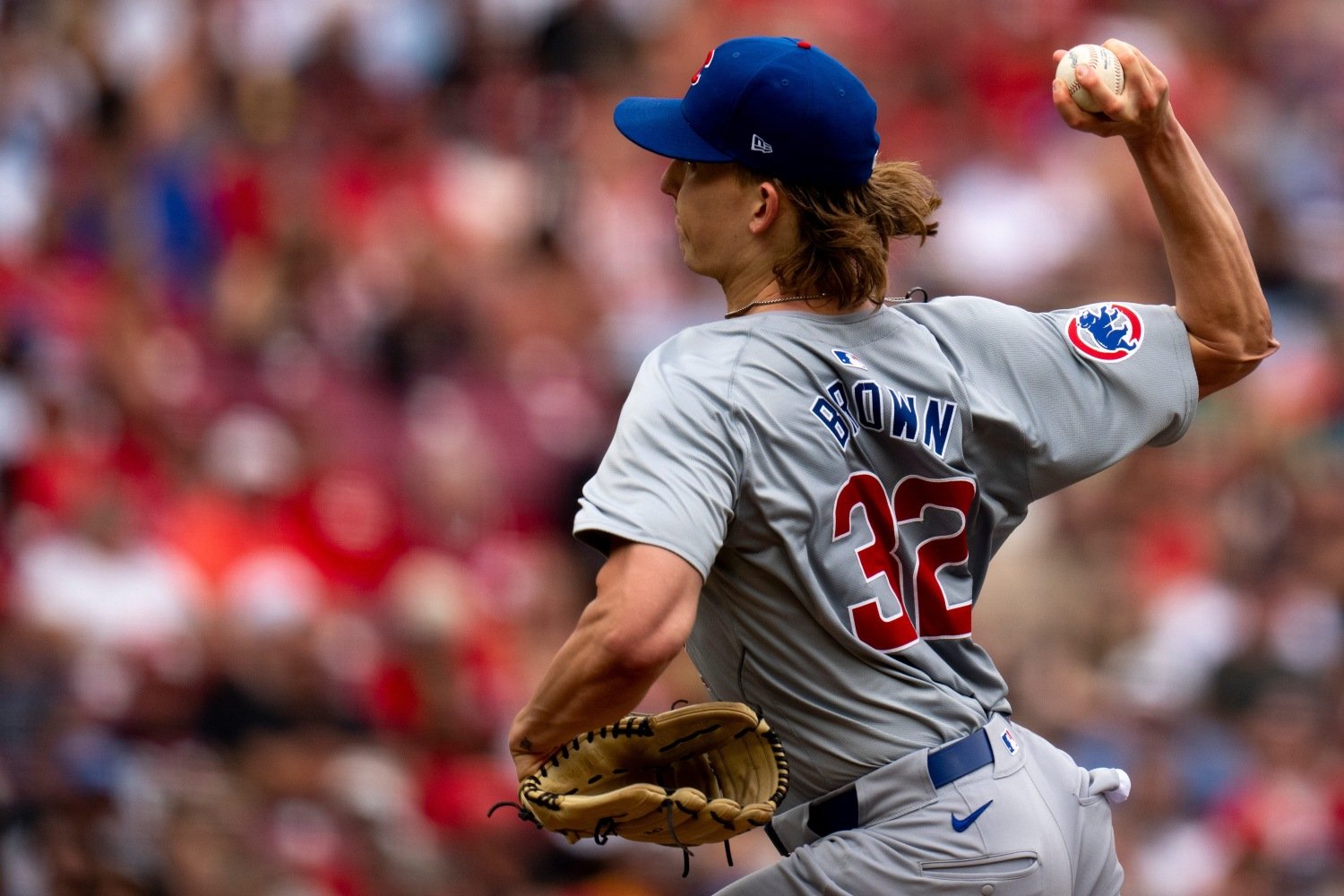 If they keep him, the 2025 Chicago Cubs face a fascinating and fun dilemma with Ben Brown. He's demonstrated a certain capacity for dominating opposing hitters in the big leagues, and after walks were a problem for him in Triple A, he kept them under control in the big leagues. Yet, his relative fragility has become clear over the two and a half seasons he's spent in the Cubs organization, and he also has just two pitches: a riding four-seam fastball and a sharp, biting curveball. The question is whether he's capable of being the mid-rotation starter he looked like in his brief stint in for them in that role last year, or whether he belongs in the bullpen. Life as a two-pitch starter is not easy. Brown's own teammate, Justin Steele, has sort of proved that it's still possible, with his cutting fastball and good slider, but even he has steadily increased his usage of the changeup, curveball, and sinker of late. Besides, he's able to get away with a slimmer repertoire partially because his fastball shape baffles hitters. Using Max Bay's Dynamic Dead Zone app, consider what hitters expect Steele's fastball to do based on his arm slot (the blue gradient topographical field in the background), compared to what his heater actually does. Even if hitters mentally force themselves to sit cutter and look for that pitch instead of expecting any kind of average fastball, Steele's rides considerably more than they'll anticipate. Familiarity helps all hitters against all pitchers, but it can't fully erode the value of having a fastball with this kind of funk. Brown, by contrast, has a fastball shape you can't help but call vanilla. His slender 6-foot-6 frame could create deception or tough angles for hitters in either of a couple ways, be it a high overhand slot and steep downward plane or a low slot yielding an extreme release point and a flat, carrying shape as the ball enters the hitting zone. Brown, however, has a standard three-quarters arm angle, and his fastball moves exactly the way the hitter expects it to, given that. Now, he has compensation for that that Steele would not have, if he didn't possess his naturally nasty shape. Brown's extension down the mound at release is tremendous, which makes his plus velocity play up even more. His perceived fastball velocity, for opposing hitters, was 97.2 miles per hour in 2024, good for 24th of the 152 hurlers who threw at least 500 four-seamers. He can overpower hitters at a fair rate, despite the lack of a unique or helpful fastball shape. His curveball plays gorgeously off that pitch, too, in a way. It's a unique offering, with good-not-great spin rates and an imperfect match to the fastball in terms of spin axis out of the hand. However, because the pitch has more gyro action than most curveballs, it dives more than its spin axis would suggest, so sometimes, even hitters who recognize the pitch struggle to hit it. It's that nasty. Hitters whiffed on that curve on a whopping 51% of their swings against it in 2024. That gives Brown huge upside; it's how he struck out 28.8% of opposing batters. It's the kind of wrinkle that will get a lot more hittable when it becomes familiar to hitters, be it the second time in a game or the second start in a season in which they face him. Maybe the Cubs have an interesting, creative plan to give Brown a more viable third pitch in 2025. Tyler Zombro, the Tread Athletics performance specialist who now also works as a special assistant for the Cubs, is famous for helping pitchers find new offerings that suit their motor preferences and skill sets. Brown did toy with a changeup as a rookie, although it didn't look promising. Right now, he's prone to giving up hard contact, especially if kept in a starting role. So, should the Cubs keep him at Iowa come the regular season, to hone his stuff and deepen his arsenal as a starter? In that case, he'd surely be the first call if and when someone gets hurt. Or does he have more value in the bullpen, where he'd make a strong case to slot right into the mix on Opening Day? For my money, Brown is a reliever, which makes him a tricky fit into the 2025 plans. After all, the Cubs are heavily rumored to be pursuing a reliever to add to their existing pen already, and that mystery man would be joining a corps of Ryan Pressly, Porter Hodge, Tyson Miller, Nate Pearson, Caleb Thielbar, Eli Morgan, Julian Merryweather, and many more. That's just the logistical side of things. We should also consider the added risk of injury that often comes with a move to relief, for a pitcher with Brown's delivery and his health record. Thus, the best move the Cubs could make this offseason might be to trade Brown. Somewhere in the league, there is a team who would be happy to take on Brown and his six remaining seasons of team control, and try to draw the starter out of him. In fact, they'd so enjoy that project that they would give up something pretty good to get him—or at least, they would be happy to have him headline a package of talent from the Cubs in exchange for a player with a clearer path to having a big impact on the 2025 Cubs. Although fans are understandably attached to a player who threw seven no-hit innings and struck out 10 against the hated Brewers mere months ago, in the big picture, Brown can best help the Cubs by being included in a deal for someone more complete and more reliable.
 -
 Though he's diligently worked his fastball up into a range that would have been impressive a decade ago, Colin Rea is not by any means a power pitcher. He sits around 93 miles per hour with his four-seam fastball, and even his 90th-percentile velocity is only 94.3. He doesn't have exceptional shape on that pitch, either. He can't get hitters out by being fastball-forward—at least, not that one fastball. The wrinkle, when it comes to Rea, is his ability to put a wrinkle in his heaters, in both directions. He has both a sinker and a cutter, to complement the four-seamer, and then adds a sweeper and the occasional curveball and splitter to the wide mix. When he's effective—and for long stretches of each of the last two seasons, he has been—he achieves that status by keeping hitters off-balance, changing both speeds and movement patterns. Now, for the first time in the history of pitching analysis, we have some tools with which to affirmatively measure that skill and proclivity. Earlier this month at Baseball Prospectus, Stephen Sutton-Brown and the stats team introduced their suite of four new Arsenal metrics, designed to evaluate the interaction factors that augment the effectiveness of a pitcher's arsenal beyond the sum of its parts. Years ago, it was also BP who revolutionized the study and quantification of pitch tunneling—ways to disguise the incoming pitch as a different one or reduce a hitter's confidence and reaction time by denying them any certainty about what they're dealing with for as much of the flight time of the ball as possible. This new framework builds upon that one, but takes on a more complex and nuanced version of that dynamic. The stats are: Pitch Type Probability: This is, roughly speaking, the confidence the batter can feel about diagnosing which pitch is coming at them, based on the release point and initial speed and trajectory of the ball out of the hand. Pitchers who mix pitches fairly evenly, especially if they do so while matching release points well and working in the same initial trajectory range, will score well. This also bakes in the count, because that's a key component of the hitter's estimate of pitch type probabilities. Movement Spread: The size of the area a hitter will feel they must cover, based on the likelihood of a pitch being any of that pitcher's possible offerings and the movement patterns of those pitches. This rewards pitches that look the same out of the hand but don't take similar paths to the plate. Velocity Spread: The same measurement of distributed probabilities, but with velocity. Obviously, this tends to be a good score if a pitcher can repeat their delivery and initial trajectory with two or three different pitches that cover a wide velocity band, like a four-seamer, a cutter, and a slider, or a fastball, a changeup, and a curveball. Surprise Factor: A rating of how surprising observed pitch movement was, based on the distribution derived for Movement Spread. So, instead of measuring the size of a hitter's focal field, this emphasizes the ability to violate their expectations with a big movement away from what they think they see. In some ways, these numbers tend to move together. In others, they tend to work against each other. We're all familiar with the paradox many pitchers face, but these put it into numbers: You want to make everything look the same, without letting everything actually be the same by the time it reaches the batter. That requires exquisite proprioception, feel for spin, and the ability to throw hard in the first place, as well as to take something off without slowing down the whole operation of the arm. As much as the modern game prizes velocity, there is no set of skills more important than this set. We just haven't been able to articulate, isolate and measure those skills very well, until now. Colin Rea is a modern master of this stuff—especially Pitch Type Probability and Surprise Factor. In the former, he ranked in the 97th percentile among all MLB pitchers in 2024. In the latter, he was in the 93rd. He was more like average with regard to Movement (59th) and Velocity (57th) Spread, because he leans so hard on his three fastballs and they don't diverge all that widely in those measurements, but he was so assiduous about using each and mixing them evenly that hitters were usually set up for the wrong thing, and had a hard time squaring him up most of the time. To get a sense of why and how this works, let's use Baseball Savant's 3D animations of Rea's arsenal. Here's (obviously, a digitized, strange abstraction of) what a right-handed batter sees from Rea in any given game: The pink dots in the foreground, close along the trajectories matching each pitch type, are the commitment point, by which time a batter has to have decided whether and where to swing. The further white dots represent the recognition point, where a hitter can start to pick out a pitch type reasonably reliably against most pitchers. The furthest cluster is Rea's average release point for each pitch. As you can see, there's not much separation here, even by the commitment point. Against righties, Rea threw his sweeper, sinker, four-seamer and cutter anywhere from 15 to 39 percent of the time last season, so hitters could never sit on any of them with much confidence, and the offerings each moved differently enough to dodge barrels or lock a hitter up for a called strike at times. He's also superb at matching his release points, as you can see if we look down the other end of this barrel. Here's a shot of his average pitch trajectories to righties, from a point just a few feet behind his release point, above the mound somewhere. Most pitchers give hitters a bit better a cue than that. In fact, here's the same shot from behind Rea's invisible hand, but on pitches he threw to lefties. As you can see, he works a bit more over the top with his curveball (in blue), which gives them a chance. Because he's trying to shape and locate differently with the other offerings, too, there are slightly larger separations between them, at release and throughout their flight. Here's what a lefty batter sees against him. Against lefties, though, Rea is even more of a kitchen-sink guy, negating whatever losses he suffers from being easier to pick up out of the hand (or at least mitigating those disadvantages). He threw five different pitches at least 13% of the time against lefties last year, with only the curve being held for truly sparing use—and because that pitch has such a wide velocity differential and movement spread from his other pitches and is thrown so rarely, it contributes to that sky-high Surprise Factor. Sutton-Brown noted in his introductory post about these metrics that they don't yet improve projections of pitcher performance. That doesn't mean they won't, but more fine-tuning (and perhaps more disaggregating, into platoon settings and such) is necessary to get there. For now, they're just qualitative measurements that describe a pitcher's style. However, in the case of Rea (a pitcher with so little in the way of wipeout stuff, who nonetheless has put together two straight seasons as a workmanlike, helpful backend starter), they can be very helpful, already.
 -
It was a mild surprise when the Cubs were willing to guarantee $5 million to secure the services of the peripatetic righthander. His style was a clear fit for the team's approach, though, and a new data stream gives us insight into that. Image courtesy of © Jeff Hanisch-Imagn Images Though he's diligently worked his fastball up into a range that would have been impressive a decade ago, Colin Rea is not by any means a power pitcher. He sits around 93 miles per hour with his four-seam fastball, and even his 90th-percentile velocity is only 94.3. He doesn't have exceptional shape on that pitch, either. He can't get hitters out by being fastball-forward—at least, not that one fastball. The wrinkle, when it comes to Rea, is his ability to put a wrinkle in his heaters, in both directions. He has both a sinker and a cutter, to complement the four-seamer, and then adds a sweeper and the occasional curveball and splitter to the wide mix. When he's effective—and for long stretches of each of the last two seasons, he has been—he achieves that status by keeping hitters off-balance, changing both speeds and movement patterns. Now, for the first time in the history of pitching analysis, we have some tools with which to affirmatively measure that skill and proclivity. Earlier this month at Baseball Prospectus, Stephen Sutton-Brown and the stats team introduced their suite of four new Arsenal metrics, designed to evaluate the interaction factors that augment the effectiveness of a pitcher's arsenal beyond the sum of its parts. Years ago, it was also BP who revolutionized the study and quantification of pitch tunneling—ways to disguise the incoming pitch as a different one or reduce a hitter's confidence and reaction time by denying them any certainty about what they're dealing with for as much of the flight time of the ball as possible. This new framework builds upon that one, but takes on a more complex and nuanced version of that dynamic. The stats are: Pitch Type Probability: This is, roughly speaking, the confidence the batter can feel about diagnosing which pitch is coming at them, based on the release point and initial speed and trajectory of the ball out of the hand. Pitchers who mix pitches fairly evenly, especially if they do so while matching release points well and working in the same initial trajectory range, will score well. This also bakes in the count, because that's a key component of the hitter's estimate of pitch type probabilities. Movement Spread: The size of the area a hitter will feel they must cover, based on the likelihood of a pitch being any of that pitcher's possible offerings and the movement patterns of those pitches. This rewards pitches that look the same out of the hand but don't take similar paths to the plate. Velocity Spread: The same measurement of distributed probabilities, but with velocity. Obviously, this tends to be a good score if a pitcher can repeat their delivery and initial trajectory with two or three different pitches that cover a wide velocity band, like a four-seamer, a cutter, and a slider, or a fastball, a changeup, and a curveball. Surprise Factor: A rating of how surprising observed pitch movement was, based on the distribution derived for Movement Spread. So, instead of measuring the size of a hitter's focal field, this emphasizes the ability to violate their expectations with a big movement away from what they think they see. In some ways, these numbers tend to move together. In others, they tend to work against each other. We're all familiar with the paradox many pitchers face, but these put it into numbers: You want to make everything look the same, without letting everything actually be the same by the time it reaches the batter. That requires exquisite proprioception, feel for spin, and the ability to throw hard in the first place, as well as to take something off without slowing down the whole operation of the arm. As much as the modern game prizes velocity, there is no set of skills more important than this set. We just haven't been able to articulate, isolate and measure those skills very well, until now. Colin Rea is a modern master of this stuff—especially Pitch Type Probability and Surprise Factor. In the former, he ranked in the 97th percentile among all MLB pitchers in 2024. In the latter, he was in the 93rd. He was more like average with regard to Movement (59th) and Velocity (57th) Spread, because he leans so hard on his three fastballs and they don't diverge all that widely in those measurements, but he was so assiduous about using each and mixing them evenly that hitters were usually set up for the wrong thing, and had a hard time squaring him up most of the time. To get a sense of why and how this works, let's use Baseball Savant's 3D animations of Rea's arsenal. Here's (obviously, a digitized, strange abstraction of) what a right-handed batter sees from Rea in any given game: The pink dots in the foreground, close along the trajectories matching each pitch type, are the commitment point, by which time a batter has to have decided whether and where to swing. The further white dots represent the recognition point, where a hitter can start to pick out a pitch type reasonably reliably against most pitchers. The furthest cluster is Rea's average release point for each pitch. As you can see, there's not much separation here, even by the commitment point. Against righties, Rea threw his sweeper, sinker, four-seamer and cutter anywhere from 15 to 39 percent of the time last season, so hitters could never sit on any of them with much confidence, and the offerings each moved differently enough to dodge barrels or lock a hitter up for a called strike at times. He's also superb at matching his release points, as you can see if we look down the other end of this barrel. Here's a shot of his average pitch trajectories to righties, from a point just a few feet behind his release point, above the mound somewhere. Most pitchers give hitters a bit better a cue than that. In fact, here's the same shot from behind Rea's invisible hand, but on pitches he threw to lefties. As you can see, he works a bit more over the top with his curveball (in blue), which gives them a chance. Because he's trying to shape and locate differently with the other offerings, too, there are slightly larger separations between them, at release and throughout their flight. Here's what a lefty batter sees against him. Against lefties, though, Rea is even more of a kitchen-sink guy, negating whatever losses he suffers from being easier to pick up out of the hand (or at least mitigating those disadvantages). He threw five different pitches at least 13% of the time against lefties last year, with only the curve being held for truly sparing use—and because that pitch has such a wide velocity differential and movement spread from his other pitches and is thrown so rarely, it contributes to that sky-high Surprise Factor. Sutton-Brown noted in his introductory post about these metrics that they don't yet improve projections of pitcher performance. That doesn't mean they won't, but more fine-tuning (and perhaps more disaggregating, into platoon settings and such) is necessary to get there. For now, they're just qualitative measurements that describe a pitcher's style. However, in the case of Rea (a pitcher with so little in the way of wipeout stuff, who nonetheless has put together two straight seasons as a workmanlike, helpful backend starter), they can be very helpful, already. View full article
-
 According to two sources with knowledge of the teams' conversations, the Chicago Cubs are among the handful of teams who have inquired about the possibility of acquiring San Diego Padres starter Michael King. The two sides have touched base about multiple potential deals this winter, as the Padres try to navigate a uniquely confining combination of big offseason needs and a budget that needs to be slashed in response to both shrinking television revenues and the altered, uncertain ownership situation of the team. King, 29, will be eligible to reach free agency at the end of 2025. He was the Padres' biggest get in the Juan Soto trade last winter, but is available again now, not only because the team has a general need to cut salary but because he and the team have not yet settled on a salary for this season. They exchanged arbitration figures of $8.8 million (the player) and $7.325 million (the team) earlier this month, and the lack of cost certainty is especially unwelcome for San Diego at the moment. President of baseball operations A.J. Preller is tasked with cutting the team's payroll enough to get them under the lowest competitive-balance tax threshold for this season, which stands at $241 million. They're currently just under $247 million, using the midpoint between King's and the club's number to project his earnings, meaning they need to cut significantly—because they also find themselves essentially without a starting catcher or a credible left fielder, and would like to add another starting pitcher to make themselves credible contenders in the NL West. Given that long shopping list and their financial shortfall, Preller has been patient this winter, knowing all along he would need to get aggressive in the endgame of the offseason. If the team had successfully wooed Roki Sasaki, their offseason could have assumed a slightly different shape, but in the 10 days since he made his decision, Preller has circled back to several teams with whom he had more general discussions earlier to take a harder look at certain options. King's name is relatively new to the list of players the team has made available, joining more expensive and more oft-bandied options Luis Arraez ($14 million), Dylan Cease ($13.75 million) and Robert Suarez ($10 million). It's unlikely that the Padres will trade all four, but trading one or two seems "almost inevitable," according to one source familiar with the club's thinking. It's possible that three of the quartet will be shipped out, as Preller tries to amass a huge amount of viable big-league talent while maintaining financial flexibility and capturing long-term team control. Preller's advantages, now, are that all four players have garnered at least some interest, and that he has five open 40-man roster spots to play with, at a juncture of the winter when most teams are struggling to consolidate overloaded rosters. Arraez and Suarez have much less trade value than Cease and King, however, and might net Preller nothing more than freedom from the obligation to pay them. Arraez's 2024 marked his third straight batting title, but it also saw him evolve ever more into a one-dimensional singles hitter, without even enough walks to make his on-base percentage as his batting average. Suarez, meanwhile, has not only that eight-figure salary for 2025, but player options he can trigger for 2026 and 2027. He's already in his mid-30s, making many teams raise an eyebrow at that contract structure. One version of a deal the Cubs and Padres have explored could send King and Suarez to Chicago, with multiple young, controllable pieces going back to San Diego. Javier Assad, Ben Brown, and Kevin Alcántara are potential pieces in a return. One way or another, the deal would probably include players with MLB experience and/or those very close to the majors, like those three, as opposed to far-off prospects. That would align with Preller's goal of staying competitive while escaping the financial purgatory into which his past willingness to lock into long-term deals (and the death of free-spending former owner Peter Seidler) have pushed him. It could also mean netting the Cubs a freed-up roster spot, an important consideration given that they currently have two pending moves (the Jon Berti signing and the Ryan Pressly trade) and a full 40-man roster that doesn;t count either of them. In another scenario (less exciting for Cubs fans, but perhaps more probable), the Padres might connect with the Twins on a trade to bring in catcher Christian Vázquez, with the Cubs acquiring Suarez in a three-team arrangement to make the money work. That possibility underscores something that has slipped past the notice of many fans this winter, largely because it makes such a poor match with the broader narratives about the team: the Cubs are one of the few teams able and willing to add money this winter, even if much of that is because of the money that came off their books in the fall. It was Chicago's willingness to pay when others weren't that facilitated their trades for Kyle Tucker and Ryan Pressly, from Houston, in addition to their handful of small free-agent additions. Now, late in the winter, they're positioned to land another player or two at what they might consider an unusually palatable cost in talent, largely because they have financial freedom that their trade partners lack. The Twins are in a less extreme version of the Padres' situation, so any trade that sends Vázquez from one place to the other is likely to require someone to act as an intermediary—a money sink. If the Cubs do land King, look for them to broach a long-term extension with him in spring training. That's still several twists of the drama from now, but the team has liked King for years, dating back to his time with the Yankees. Because he's bloomed late and dealt with injury issues after being a late-round pick with a small initial signing bonus, King (unlike Tucker, or Cease, for that matter) is a good candidate for an extension even a year out from free agency. He had a 2.95 ERA in 173 1/3 innings in 2024, well-supported by his peripheral numbers, and the Cubs love his arsenal. They might be willing to pay more for him than they would for Cease, not only because he'd cost them less in 2025 monetarily, but because they would view King as a possible long-term piece.
 -
Although they've turned their attention partially to free agents after their weekend bullpen trade, the Chicago Cubs are not done exploring the possibility of larger moves that could shake up their roster. Image courtesy of © Denis Poroy-Imagn Images According to two sources with knowledge of the teams' conversations, the Chicago Cubs are among the handful of teams who have inquired about the possibility of acquiring San Diego Padres starter Michael King. The two sides have touched base about multiple potential deals this winter, as the Padres try to navigate a uniquely confining combination of big offseason needs and a budget that needs to be slashed in response to both shrinking television revenues and the altered, uncertain ownership situation of the team. King, 29, will be eligible to reach free agency at the end of 2025. He was the Padres' biggest get in the Juan Soto trade last winter, but is available again now, not only because the team has a general need to cut salary but because he and the team have not yet settled on a salary for this season. They exchanged arbitration figures of $8.8 million (the player) and $7.325 million (the team) earlier this month, and the lack of cost certainty is especially unwelcome for San Diego at the moment. President of baseball operations A.J. Preller is tasked with cutting the team's payroll enough to get them under the lowest competitive-balance tax threshold for this season, which stands at $241 million. They're currently just under $247 million, using the midpoint between King's and the club's number to project his earnings, meaning they need to cut significantly—because they also find themselves essentially without a starting catcher or a credible left fielder, and would like to add another starting pitcher to make themselves credible contenders in the NL West. Given that long shopping list and their financial shortfall, Preller has been patient this winter, knowing all along he would need to get aggressive in the endgame of the offseason. If the team had successfully wooed Roki Sasaki, their offseason could have assumed a slightly different shape, but in the 10 days since he made his decision, Preller has circled back to several teams with whom he had more general discussions earlier to take a harder look at certain options. King's name is relatively new to the list of players the team has made available, joining more expensive and more oft-bandied options Luis Arraez ($14 million), Dylan Cease ($13.75 million) and Robert Suarez ($10 million). It's unlikely that the Padres will trade all four, but trading one or two seems "almost inevitable," according to one source familiar with the club's thinking. It's possible that three of the quartet will be shipped out, as Preller tries to amass a huge amount of viable big-league talent while maintaining financial flexibility and capturing long-term team control. Preller's advantages, now, are that all four players have garnered at least some interest, and that he has five open 40-man roster spots to play with, at a juncture of the winter when most teams are struggling to consolidate overloaded rosters. Arraez and Suarez have much less trade value than Cease and King, however, and might net Preller nothing more than freedom from the obligation to pay them. Arraez's 2024 marked his third straight batting title, but it also saw him evolve ever more into a one-dimensional singles hitter, without even enough walks to make his on-base percentage as his batting average. Suarez, meanwhile, has not only that eight-figure salary for 2025, but player options he can trigger for 2026 and 2027. He's already in his mid-30s, making many teams raise an eyebrow at that contract structure. One version of a deal the Cubs and Padres have explored could send King and Suarez to Chicago, with multiple young, controllable pieces going back to San Diego. Javier Assad, Ben Brown, and Kevin Alcántara are potential pieces in a return. One way or another, the deal would probably include players with MLB experience and/or those very close to the majors, like those three, as opposed to far-off prospects. That would align with Preller's goal of staying competitive while escaping the financial purgatory into which his past willingness to lock into long-term deals (and the death of free-spending former owner Peter Seidler) have pushed him. It could also mean netting the Cubs a freed-up roster spot, an important consideration given that they currently have two pending moves (the Jon Berti signing and the Ryan Pressly trade) and a full 40-man roster that doesn;t count either of them. In another scenario (less exciting for Cubs fans, but perhaps more probable), the Padres might connect with the Twins on a trade to bring in catcher Christian Vázquez, with the Cubs acquiring Suarez in a three-team arrangement to make the money work. That possibility underscores something that has slipped past the notice of many fans this winter, largely because it makes such a poor match with the broader narratives about the team: the Cubs are one of the few teams able and willing to add money this winter, even if much of that is because of the money that came off their books in the fall. It was Chicago's willingness to pay when others weren't that facilitated their trades for Kyle Tucker and Ryan Pressly, from Houston, in addition to their handful of small free-agent additions. Now, late in the winter, they're positioned to land another player or two at what they might consider an unusually palatable cost in talent, largely because they have financial freedom that their trade partners lack. The Twins are in a less extreme version of the Padres' situation, so any trade that sends Vázquez from one place to the other is likely to require someone to act as an intermediary—a money sink. If the Cubs do land King, look for them to broach a long-term extension with him in spring training. That's still several twists of the drama from now, but the team has liked King for years, dating back to his time with the Yankees. Because he's bloomed late and dealt with injury issues after being a late-round pick with a small initial signing bonus, King (unlike Tucker, or Cease, for that matter) is a good candidate for an extension even a year out from free agency. He had a 2.95 ERA in 173 1/3 innings in 2024, well-supported by his peripheral numbers, and the Cubs love his arsenal. They might be willing to pay more for him than they would for Cease, not only because he'd cost them less in 2025 monetarily, but because they would view King as a possible long-term piece. View full article

