


Cubs Video
From Aug. 1 through the end of the season, the Cubs' average fastball--as a team--hummed in at 92.1 miles per hour. A decade ago, that would have been acceptable, and two decades ago, it might have made them one of the more formidable staffs in the big leagues. This season, though, and specifically over that stretch to end it, the team not only had the least hot average heat in the majors, but lagged 29th place by a full mile per hour--or the same amount by which that team, the Rangers, trailed the 11th-place Milwaukee Brewers.
You can do a lot without velocity, even now. Kyle Hendricks is delightful proof of that. Then again, though, the team is likely to part ways with Hendricks after the season, and for good reason. His ERA was just under 6.00 for the campaign, and that largely because everyone treated the penultimate game of the season as a getaway day before a getaway day, allowing him to slice through the Reds for 7 1/3 scoreless innings. Having Hendricks around for the last decade has been a good reminder of the value of movement, deception, sequencing, and location, but at plenty of times, he's also been a reminder of what it looks like to pursue outs against the huge, powerful hitters who make up the modern game, without the ability to overpower them.
Nor will the problem leave along with Hendricks. If you simply take him out of the equation for that final two-month stretch--if you take the slowest thrower in any MLB rotation out of the Cubs' sample and leave everyone else's as is--the team still had slower fastballs than every other club, albeit by a smaller margin.
That can't continue. It's just too important to throw hard, in the modern game. Velocity explains about 40 percent of variation from one pitcher to another in whiff rate on four-seamers and sinkers, and there's no correlation between velocity and exit velocity--meaning the old saw that harder fastballs get hit harder, too, is just false. It is a bit harder to throw strikes for harder throwers, but they also benefit from more chases on non-fastballs outside the zone, setting other things equal.
As I've written a few times this year, the Cubs are cognizant of the problem, except that they don't necessarily view it as one. Their goal is to minimize injury risk and maximize pitchability by prioritizing traits other than velocity, and it's a noble cause, if those ends are attainable. Just as often, lately, they haven't been. Rather than erratic, injury-prone hard throwers, the team has had... erratic, injury-prone soft-tossers.
The bizarre weather patterns at Wrigley Field this past season partially cloaked the issue, but the pitching staff simply wasn't good enough in 2024, and that was partially because they didn't throw hard enough. Eighteenth in MLB in strikeout rate on the season, they were fifth-worst in that crucial category from Aug. 1 onward. They traded one hard thrower (Hunter Bigge) and one distinctly non-hard thrower (Mark Leiter Jr.) at the deadline, and collected two hard throwers, in Nate Pearson and Jack Neely. Nonetheless, they were unimpressive.
Happily, the team can easily address this with some offseason shopping. No fewer than six impending free agents threw at least 400 pitches at or above 95 miles per hour last season. Signing any of them could be a superb move, at the right price, and a few are sufficiently interesting as reclamation projects. The group consists of:
- Corbin Burnes, well-known ace
- Blake Snell, very much the same
- Nathan Eovaldi, aging stalwart fireballer
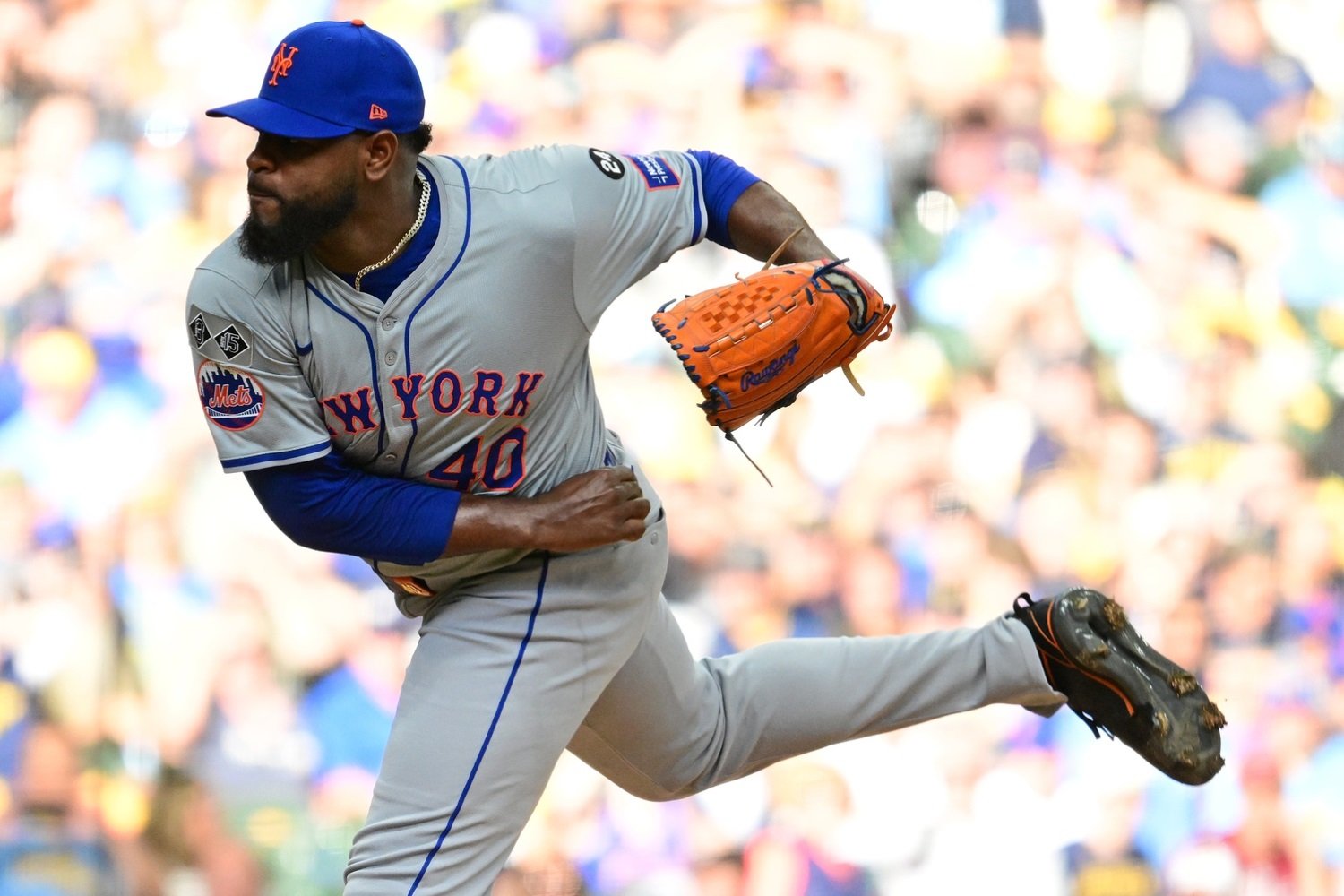
- Luis Severino, the Mets' wildly successful turnaround man in the rotation this year
- Frankie Montas, who retains something like ace upside but has only tapped into it in spams during his career
- Yusei Kikuchi, whose velocity is often underrated.
Most of these are aging arms, as players tend to be when you get ahold of them via free agency. Jameson Taillon has already lost a tick on his fastballs since joining the Cubs, though he's been effective, anyway. It wouldn't be wise to put all the team's velocity-upgrading eggs into any of these baskets. They need to maintain their balance of softer-tossing players with extra funk in their arsenal or delivery with flamethrowers like Daniel Palencia, and eventually, they need to have more guys like Palencia. However, in the short term, any of the above starters could help the team climb the fastball velocity and strikeout leaderboards for next season.
So can internal options, of course. Of the 178 starters who threw at least 200 four-seamers last year, Ben Brown ranked 11th in velocity. Alas, there's not yet any evidence that Brown can hold up over a long season, but for as long as he's around, he can help the team throw more heat and enjoy the benefits thereof. Pearson was an intriguing pickup in July and could certainly play a role in reversing this trend. Triple-A live arm Michael Arias touches 99 with his sinker and could matriculate to MLB next year, if his command improves. Cade Horton, the team's top pitching prospect, throws hard--just not freakishly hard, the way a prospect must in order to garner much hype these days.
Still, the team needs to replace innings in their rotation this winter, and they need to sign at least one reliable veteran to do that job. They might as well kill two birds with one stone. Many of these pitchers will be enviable bargain buys, anyway--not in that they won't get paid handsomely, but in that the market is likely to bear less than they're truly worth, Throwing hard will probably never be the top criterion by which Tommy Hottovy or Hottovy-led coaching groups will judge a pitcher, but it needs to take on a larger role in their evaluations than it has had for the last several seasons. These six names fling open the door for that kind of change.




.thumb.JPG.19c99ddd60a76edf810c77d321439828.JPG)



Recommended Comments
Create an account or sign in to comment
You need to be a member in order to leave a comment
Create an account
Sign up for a new account in our community. It's easy!
Register a new accountSign in
Already have an account? Sign in here.
Sign In Now