


Cubs Video
None of the traditional tools are in all that much doubt for Kevin Alcántara. He's demonstrated good speed, impressive and improving defense in center field, and a feel to hit that belies his 6-foot-6 frame. His power is still coming together, as is always the case with such long-levered, lanky hitters at his age, but it's already in evidence. For a guy who just turned 22 in July and has that length and gawkiness to manage, Alcántara's top exit velocities--he hit three balls at least 110 miles per hour in his month and a half at Triple-A Iowa--are phenomenal.
Right now, however, he swings and misses so much that little else matters. He whiffed on over 30 percent of his swings during his time in Triple A this year, He struck out 43 times in 148 plate appearances there, although he balanced that--just as he has throughout his climb up the minor-league ladder--with a good walk rate and solid power output. He's not yet ready to make contact at a high enough rate for much else to matter in the majors, but he could play a role for the team by the middle of next season, if he can clean that up a bit--and if he can more consistently lift the ball in the process.
That's a daunting challenge, in general. Most hitters trade a bit of contact when they try to focus on elevating the ball, because that usually means altering one's swing path to get slightly more uphill. The slight uppercut, which has to be kept distinct from the severe one, is not a flaw, and it can put a player on plane with the ball longer than a flatter swing. However, keeping that uppercut slight can be very difficult, and even when one achieves it, there are some pitches--like flat, riding fastballs at the top of the zone--that a lot of big-league pitchers can throw and that chew through that kind of swing, racking up swinging strikes against it.
The good news is that a dramatic swing change isn't required here. Alcántara does have to make some adjustments, but you can see the way he can do it without overhauling everything. At his height and with those aforementioned long levers, it can take a while to learn to work uphill without getting long and loopy in the early phase of the swing. He's clearly focused, so far, on being direct to the ball. The elements of a swing that can lift the ball are there, though.
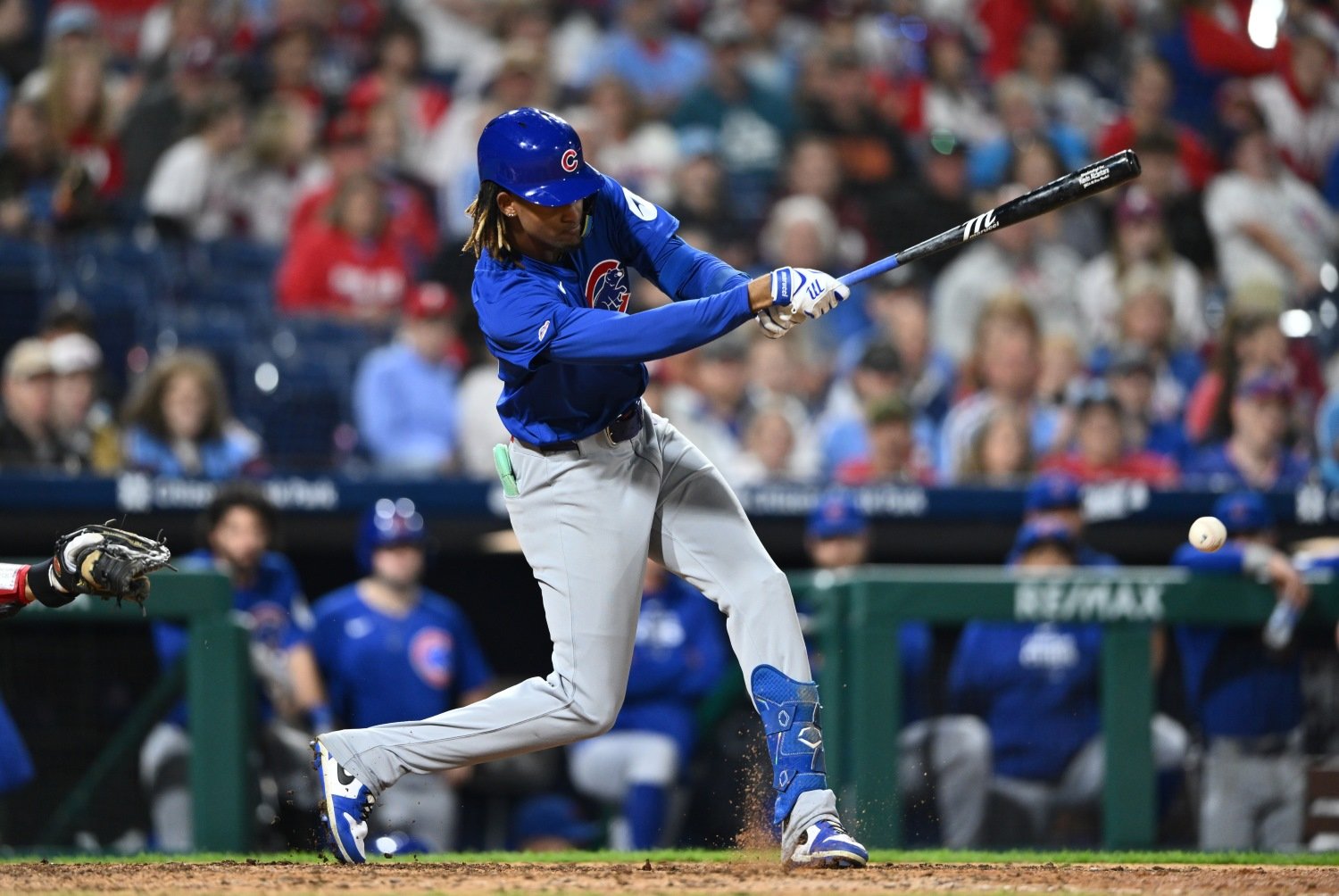
Alas, another problem at his height is that you can end up hitting the top half of the ball just because your body wants to carry the bat higher than the pitcher is likely to throw it. Alcántara falls victim to this a lot. He doesn't just hit ground balls. He hits an extraordinary number of balls almost straight down, as he did for his first big-league hit Wednesday.
He also grounded out earlier in the game on a ball hit just about straight down. It wasn't a fluke, or a case of nerves. Alcántara has done this throughout his pro career to this point. Because of his speed and the extent to which infielders have to respect his higher-end exit velocities, he will get a fair number of infield hits this way, but that's only a real consolation if you believe he'll hit that kind of ball reasonably rarely. If it's taking up a third of his batted balls, it's a real problem.
Well, in Triple-A, it took up a lot more than that. I created a different way to divide up batted balls into buckets earlier this year, splitting them all up into three even launch-angle bins: low, medium, and high. There are some balls coded traditionally as ground balls that go in the medium range. There are some flies that go in the medium range. The idea was to get away from the narrow definition of line drives and capture the fact that higher launch angles engender better results on grounders, so the ones hit at more than 2 degrees get binned with line drives under this system.
Here's a graph of Alcántara's rolling five-game Low Hit% for his time in Iowa. He hits the ball down--not even hard, long one-hoppers likely to get through the infield 40 percent of the time, but choppers--on over half his batted balls.
.png.e434f00b8ed82a56d90dfff6356e3788.png)
As you can see, he made adjustments and had some success lifting the ball late in his I-Cubs run. Still, that has to be his area of greatest developmental focus going into next year: how to simultaneously whiff less and lift more. It's a solvable baseball puzzle, especially for a player with such dazzling tools. If he cracks it, he would become the top prospect in the Cubs system and should replace any of the team's current outfielders. As we watch his first few at-bats in the majors, though, we'll get lots of reminders that it's not going to be as simple as "cracking it".




.thumb.JPG.19c99ddd60a76edf810c77d321439828.JPG)


Recommended Comments
Create an account or sign in to comment
You need to be a member in order to leave a comment
Create an account
Sign up for a new account in our community. It's easy!
Register a new accountSign in
Already have an account? Sign in here.
Sign In Now