Matthew Trueblood
-
Posts
2,479 -
Joined
-
Last visited
-
Days Won
2
Content Type
Profiles
Joomla Posts 1
Chicago Cubs Videos
Chicago Cubs Free Agent & Trade Rumors, Notes, & Tidbits
2026 Chicago Cubs Top Prospects Ranking
News
2023 Chicago Cubs Draft Picks
Guides & Resources
2024 Chicago Cubs Draft Picks
The Chicago Cubs Players Project
2025 Chicago Cubs Draft Pick Tracker
2026 Chicago Cubs Draft Tracker: Picks & Bonuses
Blogs
Events
Forums
Store
Gallery
Everything posted by Matthew Trueblood
-
Image courtesy of © Kamil Krzaczynski-Imagn Images The Cubs don't prize bat speed. Almost every team in the league does, by now, and the Cubs certainly don't truly disdain the ability to swing fast, but Chicago is willing to zig against a league-wide zag in this regard. If you sort all batters with at least 25 competitive swings this year by average bat speed, the Cubs have no one inside the top 125, and only three players in the top 200. Well, that was true until a week ago, anyway. Owen Caissie's power is his calling card. If he didn't have very good bat speed, it would be both surprising and profoundly worrisome. The more dependent a player's profile is on power, the more non-negotiable it is that they swing fast. Good bat speed is one of the key foundations of slugging. It's a relief, then, to see that Caissie has swung the bat at 75.1 mph since arriving in the big leagues—43rd-fastest among the nearly 600 players with at least 25 swings. Teams have bat-tracking data even for players in the minors, though it tends not to be as complete or as accurate. Thus, the Cubs knew Caissie swung fast before they called him up, but there's another question to be asked that goes beyond the validity of data, too: how reliably can a hitter get off his 'A' swing against big-league pitchers? It's not hard to find examples of players who took a long time to learn to do that, because the big-league strike zone is slightly larger than that in Triple A, and because big-league pitchers have many more ways to manipulate opposing batters and ruin their timing. Plenty of young hitters (even ones with prodigious talent) come up and find themselves caught in between, or struggling to execute a swing that can cover all the offerings their new, better opponents can throw for strikes. Caissie will almost surely go through that kind of adjustment period at some point, but in his first 14 plate appearances, he's shown the ability to do those difficult things and still swing fast. There's one more fun wrinkle, too. This one, too, was known in advance, but it's stark to set it into a big-league context. Caissie has a swing with above-average tilt, in addition to that sheer swing speed. Only 22 hitters have an average bat speed of 75 mph or higher and a swing tilt of at least 33° this year. (The league averages are 71.8 mph and 32°, respectively.) Here they are. This isn't a list comprised exclusively of superstars. Former Cubs farmhand Alexander Canario's inclusion is the most glaring reminder that this kind of swing will get you plenty of chances, but not necessarily bring you unmitigated success. Much depends on whether you can consistently make contact, and famously, that's been Caissie's one weakness throughout his minor-league career. There's a firm and lowish ceiling on the contact rate one can achieve when swinging this fast, with a tilted barrel designed to generate loft. On balance, though, it's an exhilarating thing to see from the Cubs' top prospect. If you take out the guys on whom the jury is necessarily still out (White Sox rookie Colson Montgomery, the oft-injured Triston Casas), it's fair to say that swinging this fast with this plane gives a hitter about a 60% chance of becoming a star-caliber slugger. The chances of being an actually bad player are remote—around 10%. Caissie will have to prove he can sustain these swing characteristics whenever the league forces a big round of adjustments, and much of that might happen next year, rather than right now. As things stand, though, he's right in line with the sluggers who have lit up the league throughout this season, and it's encouraging to see that merely coming to the majors and seeing better pitchers didn't rob him of that ability to exercise his talent. View full article
-
After One Week, Owen Caissie's Swing Data Already Puts Him in Rare Air
Matthew Trueblood posted an article in Cubs
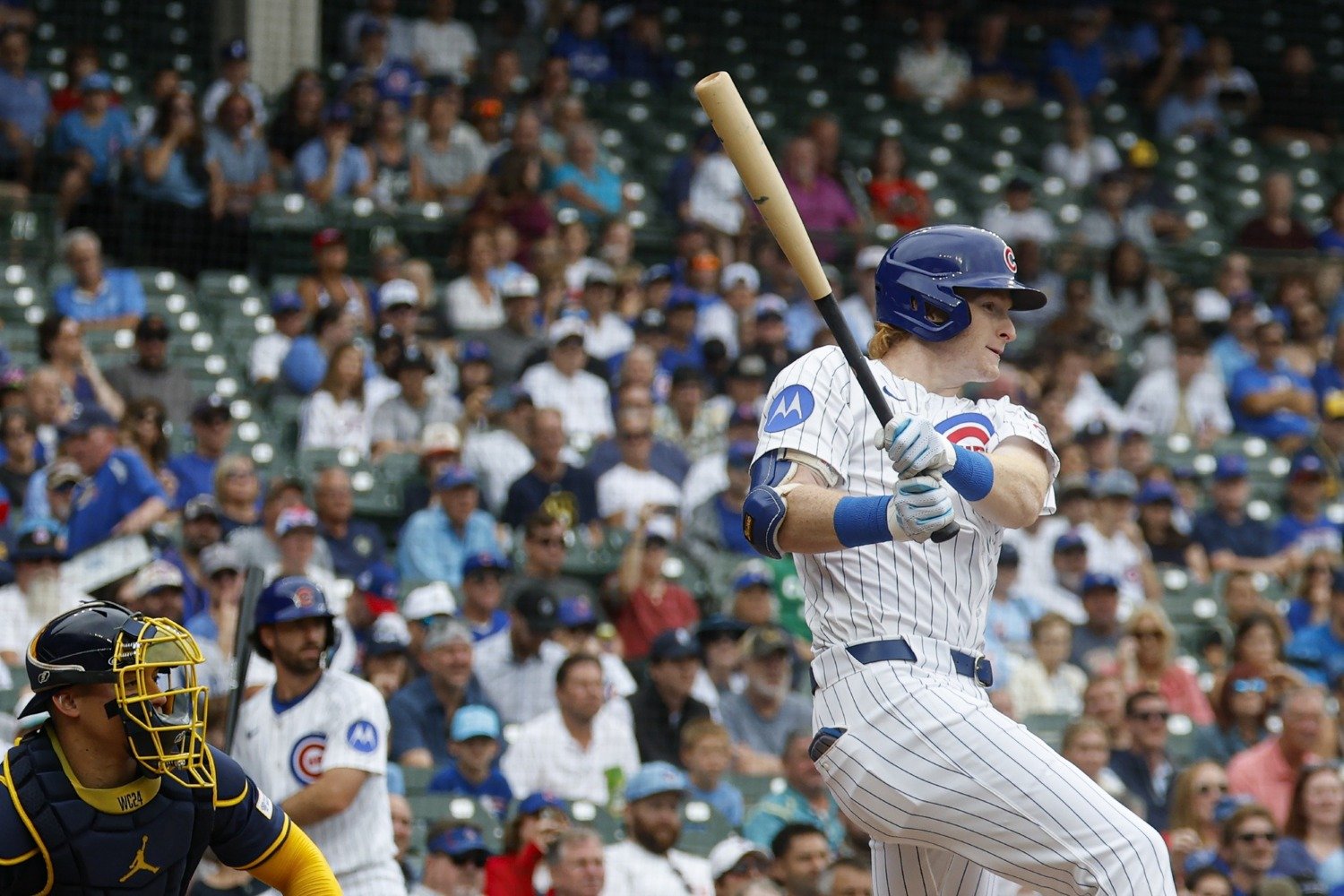 The Cubs don't prize bat speed. Almost every team in the league does, by now, and the Cubs certainly don't truly disdain the ability to swing fast, but Chicago is willing to zig against a league-wide zag in this regard. If you sort all batters with at least 25 competitive swings this year by average bat speed, the Cubs have no one inside the top 125, and only three players in the top 200. Well, that was true until a week ago, anyway. Owen Caissie's power is his calling card. If he didn't have very good bat speed, it would be both surprising and profoundly worrisome. The more dependent a player's profile is on power, the more non-negotiable it is that they swing fast. Good bat speed is one of the key foundations of slugging. It's a relief, then, to see that Caissie has swung the bat at 75.1 mph since arriving in the big leagues—43rd-fastest among the nearly 600 players with at least 25 swings. Teams have bat-tracking data even for players in the minors, though it tends not to be as complete or as accurate. Thus, the Cubs knew Caissie swung fast before they called him up, but there's another question to be asked that goes beyond the validity of data, too: how reliably can a hitter get off his 'A' swing against big-league pitchers? It's not hard to find examples of players who took a long time to learn to do that, because the big-league strike zone is slightly larger than that in Triple A, and because big-league pitchers have many more ways to manipulate opposing batters and ruin their timing. Plenty of young hitters (even ones with prodigious talent) come up and find themselves caught in between, or struggling to execute a swing that can cover all the offerings their new, better opponents can throw for strikes. Caissie will almost surely go through that kind of adjustment period at some point, but in his first 14 plate appearances, he's shown the ability to do those difficult things and still swing fast. There's one more fun wrinkle, too. This one, too, was known in advance, but it's stark to set it into a big-league context. Caissie has a swing with above-average tilt, in addition to that sheer swing speed. Only 22 hitters have an average bat speed of 75 mph or higher and a swing tilt of at least 33° this year. (The league averages are 71.8 mph and 32°, respectively.) Here they are. This isn't a list comprised exclusively of superstars. Former Cubs farmhand Alexander Canario's inclusion is the most glaring reminder that this kind of swing will get you plenty of chances, but not necessarily bring you unmitigated success. Much depends on whether you can consistently make contact, and famously, that's been Caissie's one weakness throughout his minor-league career. There's a firm and lowish ceiling on the contact rate one can achieve when swinging this fast, with a tilted barrel designed to generate loft. On balance, though, it's an exhilarating thing to see from the Cubs' top prospect. If you take out the guys on whom the jury is necessarily still out (White Sox rookie Colson Montgomery, the oft-injured Triston Casas), it's fair to say that swinging this fast with this plane gives a hitter about a 60% chance of becoming a star-caliber slugger. The chances of being an actually bad player are remote—around 10%. Caissie will have to prove he can sustain these swing characteristics whenever the league forces a big round of adjustments, and much of that might happen next year, rather than right now. As things stand, though, he's right in line with the sluggers who have lit up the league throughout this season, and it's encouraging to see that merely coming to the majors and seeing better pitchers didn't rob him of that ability to exercise his talent.
 -
For my part, I've been trying to ensure we're all clear on the fact that they're NOT catching the Brewers. I agree that any notion of doing so is delusional. The year you're thinking of, by the by, is 1977. I think they started 47-22 that year and still managed to finish 81-81.
-
Victor: this take is crazy. If you're really itchy to blame the Cubs for this, the way to do it is to question whether their poor development/instruction infrastructure at the big-league level is a major factor in Tucker running into this roadblock. But Kyle Tucker is a much better baseball player than Cody Bellinger; you're not going to find anyone credible who'd take Bellinger over him, or who would even regard it as especially close.
-
Image courtesy of © Matt Marton-Imagn Images If you're in an optimistic frame of mind, Cade Horton coming down with a blister isn't the worst news. The Cubs have been trying to keep his workload closely managed, but even so, Horton has already surpassed 115 innings pitched this year. That's after throwing just 88 1/3 in his first pro season of 2023, and 34 1/3 last year before being shut down with arm trouble. He should be in position to pitch as many as 140 innings this year without causing harm, but that number's already right around the corner. With Javier Assad having made a successful return from the injured list and Jameson Taillon set to do the same Monday night, moving Horton to the injured list for the rest of August might be the right thing for his long-term future and the club's roster management conundrums. Assad was optioned to Triple-A Iowa earlier Monday, but not even the relatively short-term plans actually include him being stashed there. Nudging Horton aside and embracing a rotation of Shota Imanaga, Matthew Boyd, Colin Rea, Assad and Taillon (with reinforcement from Ben Brown) makes a certain kind of sense. Let's be realistic, though: most Cubs fans are (understandably) not up to much optimism right now. The realist's slant on this news is much more grim. With the team embarking on a long stretch without off days to alleviate stress on the pitching staff, losing Horton could fracture the entire structure of that group. More to the point, Horton has been an indispensable part of that staff ever since he arrived. Entering Monday, the Cubs were 11-5 in his outings this year. In the time since his debut, they're 37-31 in games he doesn't pitch. Horton was their talisman. Though Boyd and Imanaga have been more consistent, Horton has been just as important—and since the All-Star break, he's been their best overall starter. With Horton sidelined and the offense suffocated by Freddy Peralta and the Brewers, Milwaukee cruised to victory in the first game of Monday's twinbill. That didn't change anything important in the division race, which the Brewers will win fairly easily. However, the loss brought the Cubs down to 70-54, which means that they'll need to play above-.500 baseball the rest of the way to reach 90 wins. Their fight, now, should be for the top Wild Card spot, and winning 90 games will almost certainly be required to grab that position. Without Horton, though, they could end up scrambling just to hold onto playoff position. Things are getting much more precarious than the team's fans hoped they would become, back in May or June. Maybe Horton won't even be forced to miss a start. He might be ok to pitch, on a weekly basis, and just need to make adjustments to his pitch mix (maybe his curveball particularly exacerbated this issue, for instance) or tolerate the pain involved. Maybe the blister will be treatable and non-recurring. For that matter, maybe Taillon and Assad will step into their spots in the rotation and win games at the same rate Horton was, on the strength of their own performances and an offensive resurgence. Right now, though, the future of the 2025 Cubs is suddenly much murkier. Horton was one player they were ill-prepared to lose, after having already lost trade acquisition Michael Soroka almost as soon as they got him. We won't know more for a few days. but the balance of this series just became more important—not because there's any hope of catching Milwaukee, but because that team is good enough to keep beating the Cubs all week and leave the team on the fringes of the playoff picture by the weekend. Without Horton, the stability the team might hope to establish thereafter will be harder to find. View full article
-
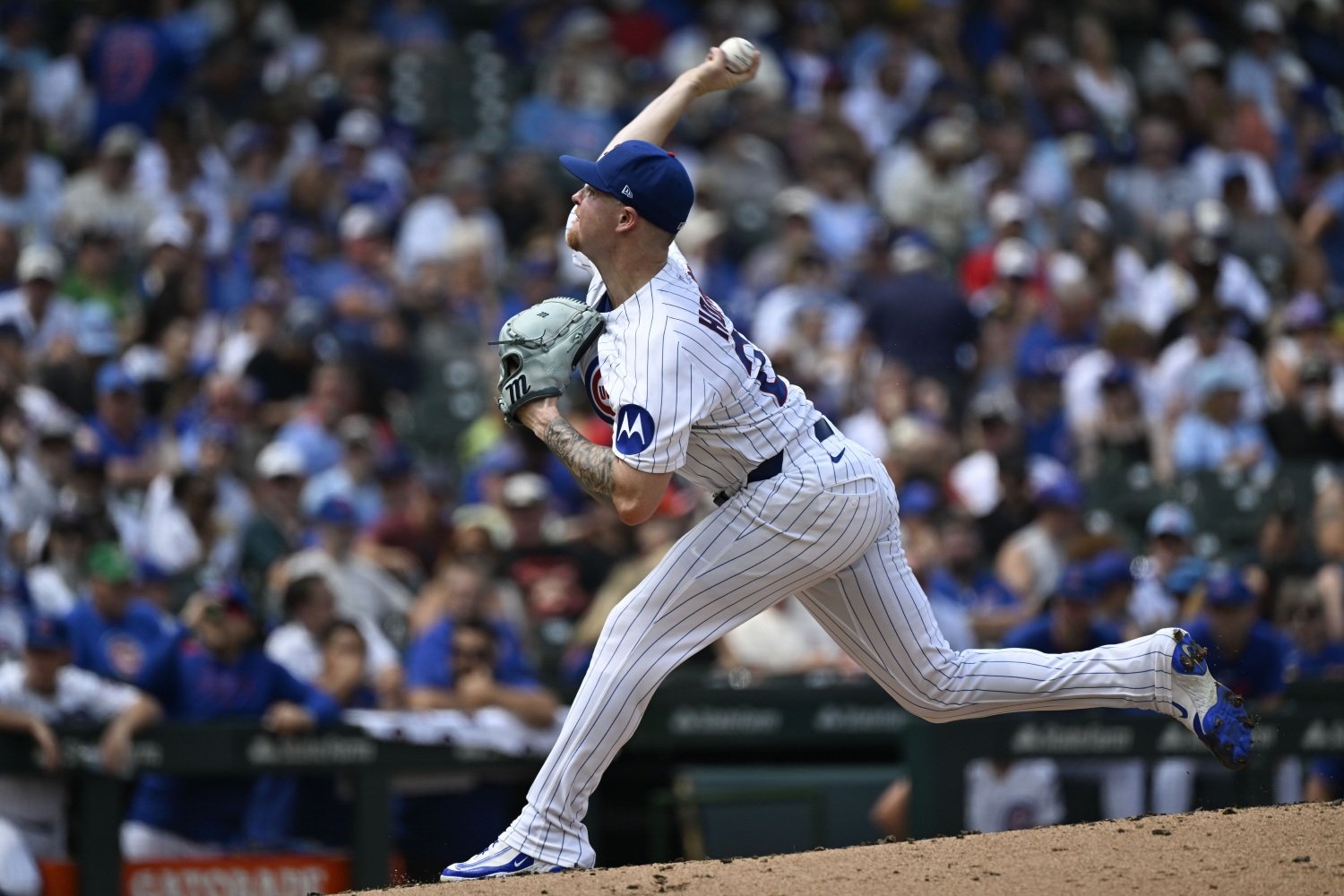 If you're in an optimistic frame of mind, Cade Horton coming down with a blister isn't the worst news. The Cubs have been trying to keep his workload closely managed, but even so, Horton has already surpassed 115 innings pitched this year. That's after throwing just 88 1/3 in his first pro season of 2023, and 34 1/3 last year before being shut down with arm trouble. He should be in position to pitch as many as 140 innings this year without causing harm, but that number's already right around the corner. With Javier Assad having made a successful return from the injured list and Jameson Taillon set to do the same Monday night, moving Horton to the injured list for the rest of August might be the right thing for his long-term future and the club's roster management conundrums. Assad was optioned to Triple-A Iowa earlier Monday, but not even the relatively short-term plans actually include him being stashed there. Nudging Horton aside and embracing a rotation of Shota Imanaga, Matthew Boyd, Colin Rea, Assad and Taillon (with reinforcement from Ben Brown) makes a certain kind of sense. Let's be realistic, though: most Cubs fans are (understandably) not up to much optimism right now. The realist's slant on this news is much more grim. With the team embarking on a long stretch without off days to alleviate stress on the pitching staff, losing Horton could fracture the entire structure of that group. More to the point, Horton has been an indispensable part of that staff ever since he arrived. Entering Monday, the Cubs were 11-5 in his outings this year. In the time since his debut, they're 37-31 in games he doesn't pitch. Horton was their talisman. Though Boyd and Imanaga have been more consistent, Horton has been just as important—and since the All-Star break, he's been their best overall starter. With Horton sidelined and the offense suffocated by Freddy Peralta and the Brewers, Milwaukee cruised to victory in the first game of Monday's twinbill. That didn't change anything important in the division race, which the Brewers will win fairly easily. However, the loss brought the Cubs down to 70-54, which means that they'll need to play above-.500 baseball the rest of the way to reach 90 wins. Their fight, now, should be for the top Wild Card spot, and winning 90 games will almost certainly be required to grab that position. Without Horton, though, they could end up scrambling just to hold onto playoff position. Things are getting much more precarious than the team's fans hoped they would become, back in May or June. Maybe Horton won't even be forced to miss a start. He might be ok to pitch, on a weekly basis, and just need to make adjustments to his pitch mix (maybe his curveball particularly exacerbated this issue, for instance) or tolerate the pain involved. Maybe the blister will be treatable and non-recurring. For that matter, maybe Taillon and Assad will step into their spots in the rotation and win games at the same rate Horton was, on the strength of their own performances and an offensive resurgence. Right now, though, the future of the 2025 Cubs is suddenly much murkier. Horton was one player they were ill-prepared to lose, after having already lost trade acquisition Michael Soroka almost as soon as they got him. We won't know more for a few days. but the balance of this series just became more important—not because there's any hope of catching Milwaukee, but because that team is good enough to keep beating the Cubs all week and leave the team on the fringes of the playoff picture by the weekend. Without Horton, the stability the team might hope to establish thereafter will be harder to find.
 -
Image courtesy of © David Banks-Imagn Images Give Nico Hoerner credit. He's a consistent hitter, not just from year to year but from week to week and month to month. Right now, many hitters in the Cubs lineup every day are in fairly severe slumps, but Hoerner can't be thus accused. He's batting .293/.340/.376 for the season, and a hilariously similar .293/.340/.380 since June 1. He's batting .330 (although virtually without power) since the All-Star break. Many fans will also be tempted to heap an extra layer of praise on Hoerner for one column on his stat sheet, in particular: his strikeout rate. Hoerner has been an elite contact hitter for almost his whole career, but he's taking that to a new level this year. He's fanned just 36 times in 477 plate appearances, a 7.5% clip that only Luis Arraez has outdone. When Hoerner swings at pitches in the zone, he makes contact 94.5% of the time, an eye-popping career-best number, and he also touches the ball almost 75% of the time when he chases outside the zone, according to Statcast. Here's the thing: at a certain point, there are diminishing returns on that level of contact skill. Unlike Arraez (who averages 62.6 mph on his swings), Hoerner (68.4 mph bat speed) is capable of creating some measure of damage when he swings. As long as he remains this locked in on simply meeting the ball, though, he's taking that danger away from himself. Hoerner swings at the first pitch in about 25% of his plate appearances. That's reasonably patient, but he could (and should) be even more so. He goes to a more tilted, defensive swing when he gets to two strikes, and fouls the ball off a lot in those counts, but before then, he's one of the least likely hitters in the league to hit a foul ball. Only three players put a higher percentage of their zero- and one-strike swings in play than does Hoerner: Chandler Simpson, Ernie Clement, and Mookie Betts. Simpson is the fastest player in baseball, which is why that approach (at least kind of) works for him. Clement hits the ball in the air a lot, especially to the pull field, so it works for him, too. Betts is having a rough season, weakened by a virus he contracted in the spring. When he's right, though, he, too, gets lots of value out of making so much contact because so much of it is toward the wall to his pull field. That's not Hoerner. He sprays the ball, and he hits grounders and line drives. Thus, his contact rate (and especially his in-play rate) is too high, at least for his current approach. If he's going to put the ball in play this reliably when he swings, he needs to swing less. The Brewers' Sal Frelick is a great model. He's batting .296/.358/.416 this year, on largely similar underlying numbers (contact rate within and outside the zone; chase rate; bat speed and exit velocities) to Hoerner's. What's the difference? Frelick swings at about 44% of pitches; Hoerner swings at almost 49% of them. Frelick only swings at the first pitch 20% of the time. In other words, he's giving himself chances to draw walks, or to get mistakes he can hammer. Hoerner, more anxious to avoid the strikeout, is making more outs instead of fewer; they're just outs on balls in play. He's also losing access to power, even if his power is fairly limited, anyway. This has been a perennial problem for Hoerner, and it's hard to harbor much hope that it will change at age 28, roughly 2,700 plate appearances into his big-league career. However, if Hoerner wants to earn the trust of Craig Counsell at the top of the batting order (and if he wants to be a better engine for the Chicago offense, there or elsewhere on the lineup card), this is what has to change. He's swinging too much, given how often those swings result in underwhelming contact. He's been a useful hitter, but he can be a much better one by being more willing to whiff—or just by forcing opposing pitchers to throw him an extra strike or two. View full article
-
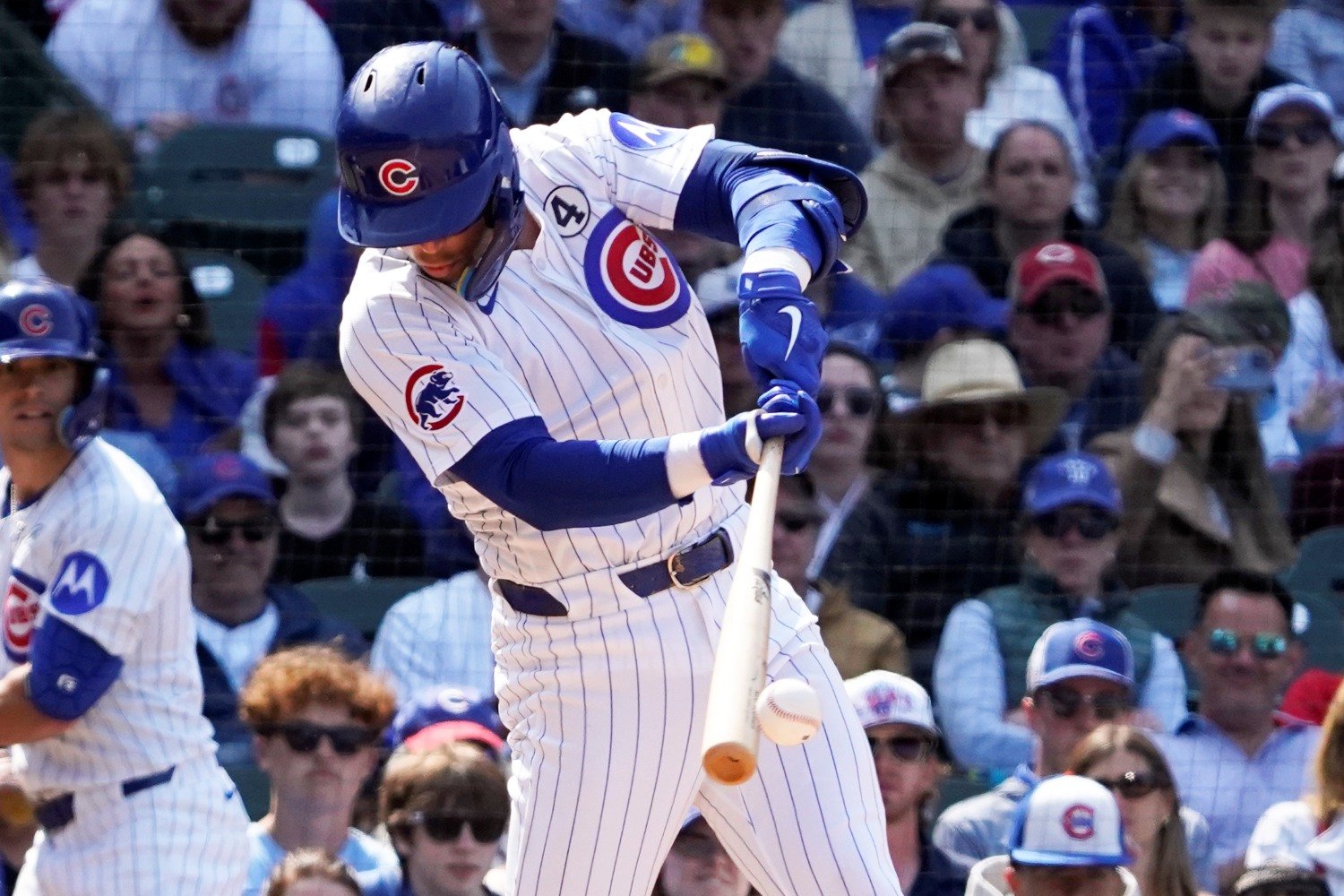 Give Nico Hoerner credit. He's a consistent hitter, not just from year to year but from week to week and month to month. Right now, many hitters in the Cubs lineup every day are in fairly severe slumps, but Hoerner can't be thus accused. He's batting .293/.340/.376 for the season, and a hilariously similar .293/.340/.380 since June 1. He's batting .330 (although virtually without power) since the All-Star break. Many fans will also be tempted to heap an extra layer of praise on Hoerner for one column on his stat sheet, in particular: his strikeout rate. Hoerner has been an elite contact hitter for almost his whole career, but he's taking that to a new level this year. He's fanned just 36 times in 477 plate appearances, a 7.5% clip that only Luis Arraez has outdone. When Hoerner swings at pitches in the zone, he makes contact 94.5% of the time, an eye-popping career-best number, and he also touches the ball almost 75% of the time when he chases outside the zone, according to Statcast. Here's the thing: at a certain point, there are diminishing returns on that level of contact skill. Unlike Arraez (who averages 62.6 mph on his swings), Hoerner (68.4 mph bat speed) is capable of creating some measure of damage when he swings. As long as he remains this locked in on simply meeting the ball, though, he's taking that danger away from himself. Hoerner swings at the first pitch in about 25% of his plate appearances. That's reasonably patient, but he could (and should) be even more so. He goes to a more tilted, defensive swing when he gets to two strikes, and fouls the ball off a lot in those counts, but before then, he's one of the least likely hitters in the league to hit a foul ball. Only three players put a higher percentage of their zero- and one-strike swings in play than does Hoerner: Chandler Simpson, Ernie Clement, and Mookie Betts. Simpson is the fastest player in baseball, which is why that approach (at least kind of) works for him. Clement hits the ball in the air a lot, especially to the pull field, so it works for him, too. Betts is having a rough season, weakened by a virus he contracted in the spring. When he's right, though, he, too, gets lots of value out of making so much contact because so much of it is toward the wall to his pull field. That's not Hoerner. He sprays the ball, and he hits grounders and line drives. Thus, his contact rate (and especially his in-play rate) is too high, at least for his current approach. If he's going to put the ball in play this reliably when he swings, he needs to swing less. The Brewers' Sal Frelick is a great model. He's batting .296/.358/.416 this year, on largely similar underlying numbers (contact rate within and outside the zone; chase rate; bat speed and exit velocities) to Hoerner's. What's the difference? Frelick swings at about 44% of pitches; Hoerner swings at almost 49% of them. Frelick only swings at the first pitch 20% of the time. In other words, he's giving himself chances to draw walks, or to get mistakes he can hammer. Hoerner, more anxious to avoid the strikeout, is making more outs instead of fewer; they're just outs on balls in play. He's also losing access to power, even if his power is fairly limited, anyway. This has been a perennial problem for Hoerner, and it's hard to harbor much hope that it will change at age 28, roughly 2,700 plate appearances into his big-league career. However, if Hoerner wants to earn the trust of Craig Counsell at the top of the batting order (and if he wants to be a better engine for the Chicago offense, there or elsewhere on the lineup card), this is what has to change. He's swinging too much, given how often those swings result in underwhelming contact. He's been a useful hitter, but he can be a much better one by being more willing to whiff—or just by forcing opposing pitchers to throw him an extra strike or two.
 -
Image courtesy of © David Banks-Imagn Images This is what you want, as a baseball executive. Jed Hoyer tried to spend bigger money and land more established relievers this winter, failing to sign Tanner Scott and bringing in the failed project that was Ryan Pressly. However, through good work by the front office to scour the minor-league free agent market, trade for players who were out of chances in their old homes, and develop existing options, the team now has a strong corps of options to get high-leverage outs when needed and protect leads. Daniel Palencia's emergence as a sturdy relief ace has been not only welcome, but desperately needed. The low-wattage free-agent deal the team gave to Caleb Thielbar has paid huge dividends. They scooped up Brad Keller as a flier on a minor-league deal, and he's become their chief setup man. They also made small trades to acquire Ryan Brasier and Drew Pomeranz in the spring. Once summer came, they upgraded again, this time by dealing for Andrew Kittredge and Taylor Rogers. As I discussed yesterday, with Jameson Taillon and Javier Assad returning to the starting rotation, Ben Brown becomes another potential weapon in short relief. That's eight names. Braiser hasn't been quite trustworthy, and he's fifth on the list for right-handers, so let's consider him a fringy arm and a non-factor. The other seven, though, make up the kind of bullpen teams want to have when they get to October. They can give teams many different looks, which not only makes for uncomfortable at-bats for opponents but gives Craig Counsell myriad matchup choices in the middle and late innings. They also have an element of that overpowering nastiness you want from a playoff pen, especially in the persons of Palencia and Keller. There are two ways pitchers can differ from each other, thereby "giving the other team different looks" within a game. First, there's how you throw. This means handedness, of course, but it also means arm slot and position on the rubber. If possible, forcing a batter to change the release point on which they're trying to lock in from one at-bat to the next is always valuable. The Cubs can do that well, now that they've added Rogers and Kittredge to their mix. Thielbar is a short guy who comes from close to straight over the top, on the third-base side of the rubber. Pomeranz is much taller and works with a classic three-quarters slot. The nice thing about Rogers, in this specific group of lefties, is that he works from a low three-quarters angle. He's as tall as Pomeranz, but doesn't pitch like it. If an opposing lineup has a pocket of lefty batters on whom Counsell wants to make life tough, he can go to Pomeranz one trip through and Rogers the next. Kittredge brings a different dynamic than Keller or Brown, because both of those two are very tall and stay that way through their deliveries. Kittredge stands just 6-foot-1 and works deep into his legs in his delivery, so his release point is much lower than those of his compatriots. It's pretty similar to Palencia's, really, but now, let's look at the other way in which pitchers can offer different looks: what they throw. This is about velocity and pitch mix, but it's also about pitch shape. Rogers brings a whole different set of movement patterns to the mound, relative to Pomeranz and Thielbar. The latter two aren't radically different from one another in this regard, except that Thielbar has more breaking ball variations than Pomeranz does, but remember, they're very different in how they throw. A few chances to discern Pomeranz's curve from his fastball doesn't prepare a batter well at all for the challenge of doing the same thing with Thielbar, at his higher slot but lower release height. The righties vary a bit less in how they throw, but look at how different their stuff profiles are. Brown's four-seamer is all about carry. Keller's is really a high-powered cutter. Kittredge leans mostly on a sinker. Meanwhile, Palencia has a run-ride heater that looks nothing like any of the others'. The relationship of each guy's heater to their main breaking ball is unique, with different tilt and spin differences. There's not much overlap among these seven arms, once you study both ways in which pitchers can change what a hitter sees. If Counsell often had the luxury of handing a lead to this group of arms, the Cubs would be cruising toward the postseason and still nipping hopefully at the heels of the Brewers in the NL Central. Alas, it hasn't gone that way. In only half of the team's 24 games since the break has the bullpen inherited a tie game or a lead (not counting long relief appearances, like Brown's two recent ones behind Assad and Michael Soroka). They haven't been perfect even in those situations, but the fact that the starting rotation and the lineup can't conspire to give them a lead with which to work is much more troubling than any stumbles they've had in terms of holding those leads. The bullpen is the place where the spotlight shines brightest, when the pennant race heats up. Relievers get a disproportionate share of attention in October, and the Cubs have that part of their roster figured out (for the moment). Right now, though, it doesn't matter. They're not playing well enough in the other, larger, more important areas to make their relief depth the kind of advantage that makes a difference. View full article
-
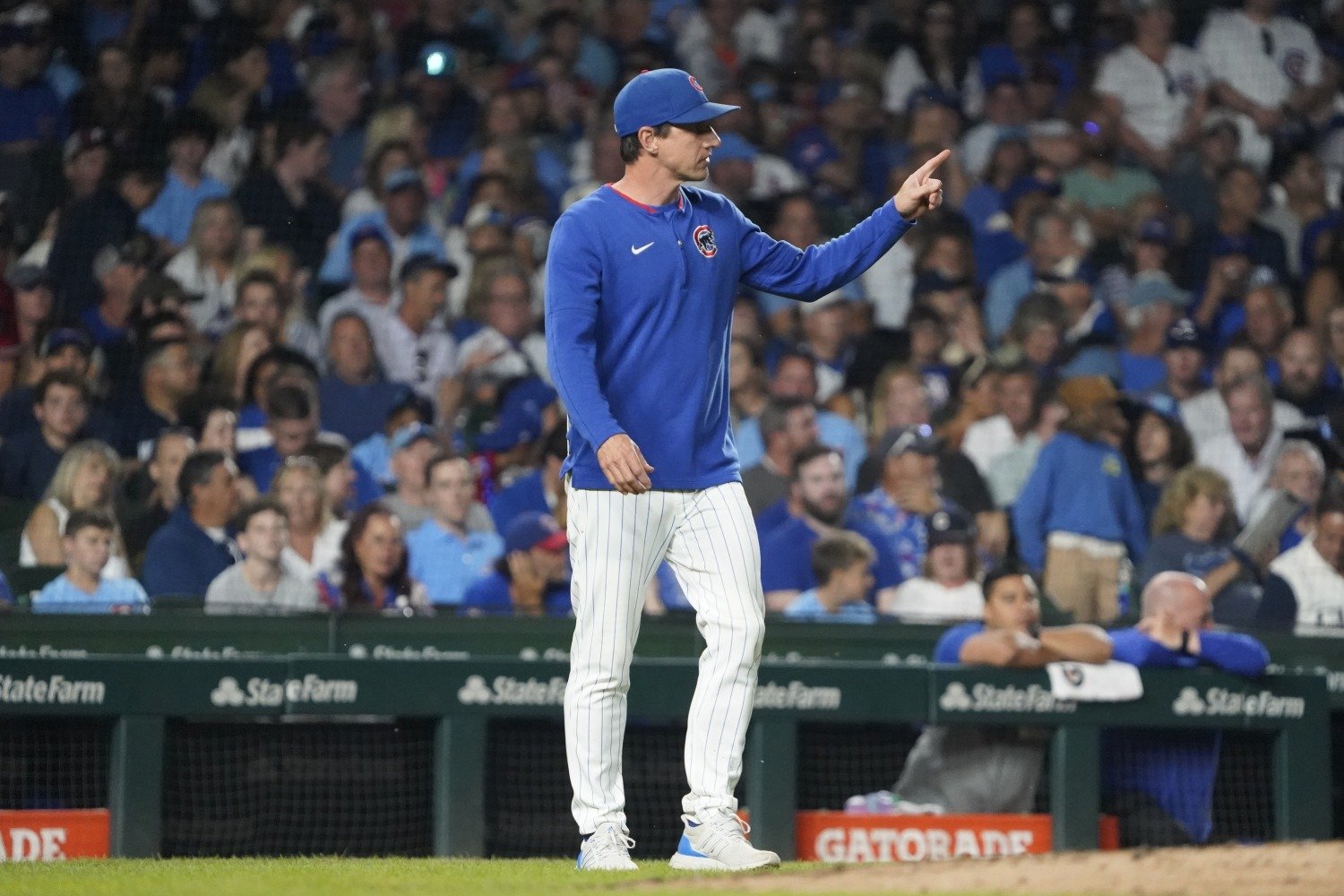 This is what you want, as a baseball executive. Jed Hoyer tried to spend bigger money and land more established relievers this winter, failing to sign Tanner Scott and bringing in the failed project that was Ryan Pressly. However, through good work by the front office to scour the minor-league free agent market, trade for players who were out of chances in their old homes, and develop existing options, the team now has a strong corps of options to get high-leverage outs when needed and protect leads. Daniel Palencia's emergence as a sturdy relief ace has been not only welcome, but desperately needed. The low-wattage free-agent deal the team gave to Caleb Thielbar has paid huge dividends. They scooped up Brad Keller as a flier on a minor-league deal, and he's become their chief setup man. They also made small trades to acquire Ryan Brasier and Drew Pomeranz in the spring. Once summer came, they upgraded again, this time by dealing for Andrew Kittredge and Taylor Rogers. As I discussed yesterday, with Jameson Taillon and Javier Assad returning to the starting rotation, Ben Brown becomes another potential weapon in short relief. That's eight names. Braiser hasn't been quite trustworthy, and he's fifth on the list for right-handers, so let's consider him a fringy arm and a non-factor. The other seven, though, make up the kind of bullpen teams want to have when they get to October. They can give teams many different looks, which not only makes for uncomfortable at-bats for opponents but gives Craig Counsell myriad matchup choices in the middle and late innings. They also have an element of that overpowering nastiness you want from a playoff pen, especially in the persons of Palencia and Keller. There are two ways pitchers can differ from each other, thereby "giving the other team different looks" within a game. First, there's how you throw. This means handedness, of course, but it also means arm slot and position on the rubber. If possible, forcing a batter to change the release point on which they're trying to lock in from one at-bat to the next is always valuable. The Cubs can do that well, now that they've added Rogers and Kittredge to their mix. Thielbar is a short guy who comes from close to straight over the top, on the third-base side of the rubber. Pomeranz is much taller and works with a classic three-quarters slot. The nice thing about Rogers, in this specific group of lefties, is that he works from a low three-quarters angle. He's as tall as Pomeranz, but doesn't pitch like it. If an opposing lineup has a pocket of lefty batters on whom Counsell wants to make life tough, he can go to Pomeranz one trip through and Rogers the next. Kittredge brings a different dynamic than Keller or Brown, because both of those two are very tall and stay that way through their deliveries. Kittredge stands just 6-foot-1 and works deep into his legs in his delivery, so his release point is much lower than those of his compatriots. It's pretty similar to Palencia's, really, but now, let's look at the other way in which pitchers can offer different looks: what they throw. This is about velocity and pitch mix, but it's also about pitch shape. Rogers brings a whole different set of movement patterns to the mound, relative to Pomeranz and Thielbar. The latter two aren't radically different from one another in this regard, except that Thielbar has more breaking ball variations than Pomeranz does, but remember, they're very different in how they throw. A few chances to discern Pomeranz's curve from his fastball doesn't prepare a batter well at all for the challenge of doing the same thing with Thielbar, at his higher slot but lower release height. The righties vary a bit less in how they throw, but look at how different their stuff profiles are. Brown's four-seamer is all about carry. Keller's is really a high-powered cutter. Kittredge leans mostly on a sinker. Meanwhile, Palencia has a run-ride heater that looks nothing like any of the others'. The relationship of each guy's heater to their main breaking ball is unique, with different tilt and spin differences. There's not much overlap among these seven arms, once you study both ways in which pitchers can change what a hitter sees. If Counsell often had the luxury of handing a lead to this group of arms, the Cubs would be cruising toward the postseason and still nipping hopefully at the heels of the Brewers in the NL Central. Alas, it hasn't gone that way. In only half of the team's 24 games since the break has the bullpen inherited a tie game or a lead (not counting long relief appearances, like Brown's two recent ones behind Assad and Michael Soroka). They haven't been perfect even in those situations, but the fact that the starting rotation and the lineup can't conspire to give them a lead with which to work is much more troubling than any stumbles they've had in terms of holding those leads. The bullpen is the place where the spotlight shines brightest, when the pennant race heats up. Relievers get a disproportionate share of attention in October, and the Cubs have that part of their roster figured out (for the moment). Right now, though, it doesn't matter. They're not playing well enough in the other, larger, more important areas to make their relief depth the kind of advantage that makes a difference.
 -
Sorry! When I write late at night, I write *weird*.
-
Image courtesy of © Dan Hamilton-Imagn Images There are two stories, here. The temptation is to focus primarily on one of them, because it's more urgent and also more fun. Owen Caissie is coming to the big leagues, a fortnight after the Chicago Cubs elected not to include him in a deadline deal to upgrade their starting pitching. They'll add a fairly thunderous left-handed bat to their lineup, albeit one whose viability in the majors has not yet been tested. With Kyle Tucker and Pete Crow-Armstrong each in prolonged power slumps and Seiya Suzuki becoming increasingly inconsistent, there are at-bats to be had—because there's a profound need for this addition. Caissie coming to the majors, then, is like the news telling you that the Thwaites Ice Shelf has collapsed, and Miami has just 24 hours to evacuate—right when Taylor Swift is about to host a listening party for her new album in South Beach. (Please, don't freak out. Neither of these things are true. Don't get cocky about Thwaites; that's gonna happen and it's gonna be bad. But it's another day's crisis. Swift's album, presumably, will be every day's solution for the foreseeable future.) It's urgent, and it's also sexy. You want to know everything, and you want to obsess over the ramifications, even though there's also a real element of risk... you know what, I'm getting carried away. You get the point. We will, I promise, talk about the glacier-turned-tidal wave heading straight for Taylor Swift that is Owen Caissie. First, though, I want to make sure we talk a bit about Miguel Amaya. He's a lot more like a species of coral that went extinct, which will be reported on NPR and get a tiny little blurbicle on the World News page (but not the front page) of the New York Times's website. It's very sad, and it profoundly matters, but the temptation is not to talk about it—to let the urgent outstrip the important and to reach for positivity in a world of gloom and doom. Let's resist that particular temptation. Baseball needs a third signal. When Amaya hit that slow chopper toward shortstop and headed for first base at a dead sprint, he surely hoped to be 'safe', and to be sure, the umpire would have been wrong to call him 'out'. Amaya hustled hard for that infield single, and not for his own glory. The game was on the line. It was the first time Amaya had gotten to take the field with his big-league teammates in almost three months, and the foundering Cubs needed a win, and they were only up 2-0 and there was a rally on, if he could just leg out that hit. He did. But in the moment when Amaya's left foot hit first base, and in the moment just afterward when the call was made, he was anything but 'safe'. It's an odd form of relief (and not yet a very settled one; we'll see whether something more severe emerges upon closer examination after swelling subsides) that X-rays were negative and that the early diagnosis was an ankle sprain. In real time, it looked worse. Amaya stepped on the base, and an invisible land mine exploded. He was lifted off the ground by some spasm of pain and fear and the body's reflexive self-protection so strong that he vaulted into the air and nearly flipped as he fell, landing basically on his shoulder. Weapons of war are no subjects for jokes, so understand that I mean it when I say that watching him was very much like seeing someone's body respond to the massive force of an explosion. It looked involuntary; it looked like the air underneath him was bouncing him off the sky like a mini-hoop basketball above its bed. It looked like his career would end in a heap behind first base at Rogers Centre. 'Safe' was a cruel joke of a word to characterize the play, even if it was technically accurate. Amaya has been through the professional wringer. He signed with the team more than a decade ago, in July 2015, but he couldn't hit even in Rookie ball his first two seasons. He finally got untracked in 2018, and played fairly full, successful seasons that year and in 2019. He was knocking on the door of the majors, at least enough to merit being added to the 40-man roster and shielded from the Rule 5 Draft. Then, COVID hit. Amaya did get to go to the alternate training site, but he didn't see game action that year. In 2021, he needed Tommy John surgery on his right arm. In 2022, he suffered a Lisfranc fracture in his left foot—the same lower leg he injured Wednesday. In 2023, the towering incompetence of Tucker Barnhart's Cubs tenure forced the team to call Amaya up and let him ride the bench quite a bit. From 2020-23, during his years of being eligible to be optioned to the minors, Amaya got all of 144 games and 538 plate appearances under his belt. That's all part of this story, because it highlights how cruel the game can be. Amaya survived those career shocks, and he survived having an OPS around .500 at midseason last year, because he's tough, adaptable, and talented. He entered this season hoping to prove that last year's second half was a step forward he could sustain, and he was doing a tremendous job—until he strained his oblique in May. Now, one game into his return after a long and maddening absence, he's had the game taken away from him again. Maybe it really is "only" an ankle sprain, but if his reaction was any gauge, it could still be the kind that ends his season. This has become, improbably and tragically, another lost season in the unlucky career of Amaya. His teammates and his coaches love him. His absence will be felt, and if this injury affects his ability to lay claim to a major chunk of the playing time at catcher next year, it could be that he never gets another chance as good as the one that danced before him for much of the last year, but never stayed comfortably within reach for long. Alright, now, let's talk about Caissie. Reports emerged late Wednesday night that he would come up to (presumably) replace Amaya. Craig Counsell only had to spend one day worrying about playing with a three-catcher positional roster. Now, though, he has to answer even harder questions: How can Caissie find important playing time, to continue to develop and begin to adjust to big-league stuff, while the team also chases a playoff berth? Where does he fit? To answer that, it's time to get a bit more familiar with Caissie. Most of those reading this already have a passing familiarity with him, but the scouting report is roughly thus: A big, left-handed Canadian outfielder, capable of playing either corner but not (except in emergencies) center field. Tons of raw power. It's not at the top end of the scale, but Caissie swings fast and can hit the ball hard, including over 450 feet when he attacks a pitch and catches it out front. In the minors, he's even hit for a solid average, because simply hitting the ball hard on a consistent basis allows one to find hits fairly often against the inferior defenders and worse positioning that prevail in the minors. His big weakness, besides a dearth of defensive value, is strikeout vulnerability. Caissie has fanned in 28.2% of his trips to the plate at Triple A. That's trended sharply down recently, but then again, Caissie has amassed over 930 plate appearances at that level since the start of last season. You'd expect him to be figuring out the league and demonstrating that he needs a new challenge, by now, and while he's done that (he's batting .292/.393/.573 for the Iowa Cubs this year), he hasn't answered the major questions about whether his shaky bat-to-ball skills will allow him to get to his power in games against better hurlers and defenses, in bigger parks and with bigger strike zones to cover. It's vaguely possible the Cubs are calling up Caissie just because they're in Toronto, and it should be easier to get him through customs and into Canada for the one game left on this road trip. Amaya's loss leaves a hole shaped more like Moisés Ballesteros than like Caissie, and when the team has needed stopgaps before, they've turned to Ballesteros. For now, though, assume Caissie really is coming up to join the team for the rest of this season. In that case, you have to figure he'll play, and play fairly often. Prospects of his caliber don't get called up for bench duty and observation; nor should they. In all likelihood, Caissie will work his way slowly into the mix, by spelling some of the team's struggling sluggers. He can't take over for Pete Crow-Armstrong in center field, but his presence as a power source might make it easier for Counsell to rest Crow-Armstrong in favor of Willi Castro. Meanwhile, there's no reason Caissie can't play for two or three days at a time in favor of Ian Happ (.192/.295/.378 in his last 200 plate appearances), Tucker (four extra-base hits, just one of them a homer, since July 1) and Seiya Suzuki (.226/.331/.403 since July 1, and with just a .300 OBP for the season against righties), giving each of them a chance to catch their breath and/or make needed changes. Starting with Tuesday's game, the Cubs are in the midst of a stretch during which they'll play 23 games in 23 days. They have a doubleheader Monday and just one day off between now and Sept. 4. Castro is a valuable resource for resting Crow-Armstrong, Matt Shaw, Dansby Swanson and Nico Hoerner, but Caissie introduces the possibility of substantially replacing Tucker, Suzuki or Happ on any given day. What kind of production can we fairly expect from him the rest of the way? Well, projection systems offer room for cautious optimism. The ZiPS model, published at FanGraphs and curated by Dan Szymborski, projects him to hit .242/.320/.383, which sounds underwhelming but would be a material upgrade over what Happ, Suzuki or Tucker (factoring in the platoon advantage, in Suzuki's case) have given the team lately. PECOTA, powered by Baseball Prospectus, forecasts an even more encouraging .257/.321/.421. This is not an instant star, but it would be enough to bolster a struggling lineup during an overcrowded segment of their schedule. We can try to answer the question of what to expect differently, too. There are 12 batters with at least 300 plate appearances either in the majors or at Triple A who fit a series of criteria I applied to metrics tracked in Robert Orr's app, showing hitters' approach, their ability to drive the ball in the air to the pull field, and the quality of their contact more broadly. These are all hitters who avoid chasing too much; make at least a tolerable amount of contact when they swing within the zone; and hit the ball very hard, including hitting it in the air enough to create lots of expected value, but who also whiff a lot and don't pull the ball in the air at as high a rate as one would like. Four of the 12 have played mostly in the minors this year: Hao-Yu Lee Gabriel Rincones Luis Campusano Caissie The other eight are big-leaguers: Bryan Reynolds Josh Bell Fernando Tatis Jr. George Springer Mike Trout James Wood Matt Olson Juan Soto For the most part, these are highly productive sluggers, and it would be great if Caissie could match their output. That's unlikely, of course. It's a lot harder to make this list when facing major-league hurlers than when facing minor-league ones. It's a good snapshot, though, of what kind of player he's been and what fans might hope to see him develop into, even down the stretch this year. One more way to shape expectations, a bit less rosily, is to look at the scouting grades on Caissie's tools on FanGraphs. That site has always been a bit lower on him than the rest of the prospect industry, worrying (very fairly) that his swing-and-miss will get in the way of establishing himself as a regular at the highest level. Three other players are in the same range in terms of present hit tool grade as Caissie, and (like Caissie) also have above-average present game power. They are: Heriberto Hernandez Orelvis Martinez Samuel Basallo That's a pretty exciting group, too. Martinez is having a nightmarish setback of a season, but Basallo (two years younger than the very young Caissie, who just turned 23 last month and is already a seasoned Triple-A veteran, and also a catcher) is one of the top prospects in baseball. Hernandez, meanwhile, might offer the best lens through which to view what's possible from Caissie the rest of the way. He maintained a double-digit walk rate all the way up the ladder in the minors, and has seen that dip below 9% in the bigs. However, he's batting .299/.354/.507 for the Marlins, with seven home runs in limited action. Losing Amaya means not only the setback of a beloved player no longer being part of the team the rest of the way, but no margin for error when it comes to catcher injuries. Since the team already cut Jon Berti to make room for Amaya's return, they're a bit of a strange puzzle when it comes to the bench. Caissie, though, is a nice consolation for the injury. If Counsell is willing to mix him in, even if it offends one or more of the veteran sluggers, Caissie can help this team reach the postseason, and be more dangerous there. It's just a matter of finding time for him to learn, and of accepting the huge risk involved in giving him that time. View full article
-
(5).png.35717dcc172a89faee78d4b06ae5e87d.png) There are two stories, here. The temptation is to focus primarily on one of them, because it's more urgent and also more fun. Owen Caissie is coming to the big leagues, a fortnight after the Chicago Cubs elected not to include him in a deadline deal to upgrade their starting pitching. They'll add a fairly thunderous left-handed bat to their lineup, albeit one whose viability in the majors has not yet been tested. With Kyle Tucker and Pete Crow-Armstrong each in prolonged power slumps and Seiya Suzuki becoming increasingly inconsistent, there are at-bats to be had—because there's a profound need for this addition. Caissie coming to the majors, then, is like the news telling you that the Thwaites Ice Shelf has collapsed, and Miami has just 24 hours to evacuate—right when Taylor Swift is about to host a listening party for her new album in South Beach. (Please, don't freak out. Neither of these things are true. Don't get cocky about Thwaites; that's gonna happen and it's gonna be bad. But it's another day's crisis. Swift's album, presumably, will be every day's solution for the foreseeable future.) It's urgent, and it's also sexy. You want to know everything, and you want to obsess over the ramifications, even though there's also a real element of risk... you know what, I'm getting carried away. You get the point. We will, I promise, talk about the glacier-turned-tidal wave heading straight for Taylor Swift that is Owen Caissie. First, though, I want to make sure we talk a bit about Miguel Amaya. He's a lot more like a species of coral that went extinct, which will be reported on NPR and get a tiny little blurbicle on the World News page (but not the front page) of the New York Times's website. It's very sad, and it profoundly matters, but the temptation is not to talk about it—to let the urgent outstrip the important and to reach for positivity in a world of gloom and doom. Let's resist that particular temptation. Baseball needs a third signal. When Amaya hit that slow chopper toward shortstop and headed for first base at a dead sprint, he surely hoped to be 'safe', and to be sure, the umpire would have been wrong to call him 'out'. Amaya hustled hard for that infield single, and not for his own glory. The game was on the line. It was the first time Amaya had gotten to take the field with his big-league teammates in almost three months, and the foundering Cubs needed a win, and they were only up 2-0 and there was a rally on, if he could just leg out that hit. He did. But in the moment when Amaya's left foot hit first base, and in the moment just afterward when the call was made, he was anything but 'safe'. It's an odd form of relief (and not yet a very settled one; we'll see whether something more severe emerges upon closer examination after swelling subsides) that X-rays were negative and that the early diagnosis was an ankle sprain. In real time, it looked worse. Amaya stepped on the base, and an invisible land mine exploded. He was lifted off the ground by some spasm of pain and fear and the body's reflexive self-protection so strong that he vaulted into the air and nearly flipped as he fell, landing basically on his shoulder. Weapons of war are no subjects for jokes, so understand that I mean it when I say that watching him was very much like seeing someone's body respond to the massive force of an explosion. It looked involuntary; it looked like the air underneath him was bouncing him off the sky like a mini-hoop basketball above its bed. It looked like his career would end in a heap behind first base at Rogers Centre. 'Safe' was a cruel joke of a word to characterize the play, even if it was technically accurate. Amaya has been through the professional wringer. He signed with the team more than a decade ago, in July 2015, but he couldn't hit even in Rookie ball his first two seasons. He finally got untracked in 2018, and played fairly full, successful seasons that year and in 2019. He was knocking on the door of the majors, at least enough to merit being added to the 40-man roster and shielded from the Rule 5 Draft. Then, COVID hit. Amaya did get to go to the alternate training site, but he didn't see game action that year. In 2021, he needed Tommy John surgery on his right arm. In 2022, he suffered a Lisfranc fracture in his left foot—the same lower leg he injured Wednesday. In 2023, the towering incompetence of Tucker Barnhart's Cubs tenure forced the team to call Amaya up and let him ride the bench quite a bit. From 2020-23, during his years of being eligible to be optioned to the minors, Amaya got all of 144 games and 538 plate appearances under his belt. That's all part of this story, because it highlights how cruel the game can be. Amaya survived those career shocks, and he survived having an OPS around .500 at midseason last year, because he's tough, adaptable, and talented. He entered this season hoping to prove that last year's second half was a step forward he could sustain, and he was doing a tremendous job—until he strained his oblique in May. Now, one game into his return after a long and maddening absence, he's had the game taken away from him again. Maybe it really is "only" an ankle sprain, but if his reaction was any gauge, it could still be the kind that ends his season. This has become, improbably and tragically, another lost season in the unlucky career of Amaya. His teammates and his coaches love him. His absence will be felt, and if this injury affects his ability to lay claim to a major chunk of the playing time at catcher next year, it could be that he never gets another chance as good as the one that danced before him for much of the last year, but never stayed comfortably within reach for long. Alright, now, let's talk about Caissie. Reports emerged late Wednesday night that he would come up to (presumably) replace Amaya. Craig Counsell only had to spend one day worrying about playing with a three-catcher positional roster. Now, though, he has to answer even harder questions: How can Caissie find important playing time, to continue to develop and begin to adjust to big-league stuff, while the team also chases a playoff berth? Where does he fit? To answer that, it's time to get a bit more familiar with Caissie. Most of those reading this already have a passing familiarity with him, but the scouting report is roughly thus: A big, left-handed Canadian outfielder, capable of playing either corner but not (except in emergencies) center field. Tons of raw power. It's not at the top end of the scale, but Caissie swings fast and can hit the ball hard, including over 450 feet when he attacks a pitch and catches it out front. In the minors, he's even hit for a solid average, because simply hitting the ball hard on a consistent basis allows one to find hits fairly often against the inferior defenders and worse positioning that prevail in the minors. His big weakness, besides a dearth of defensive value, is strikeout vulnerability. Caissie has fanned in 28.2% of his trips to the plate at Triple A. That's trended sharply down recently, but then again, Caissie has amassed over 930 plate appearances at that level since the start of last season. You'd expect him to be figuring out the league and demonstrating that he needs a new challenge, by now, and while he's done that (he's batting .292/.393/.573 for the Iowa Cubs this year), he hasn't answered the major questions about whether his shaky bat-to-ball skills will allow him to get to his power in games against better hurlers and defenses, in bigger parks and with bigger strike zones to cover. It's vaguely possible the Cubs are calling up Caissie just because they're in Toronto, and it should be easier to get him through customs and into Canada for the one game left on this road trip. Amaya's loss leaves a hole shaped more like Moisés Ballesteros than like Caissie, and when the team has needed stopgaps before, they've turned to Ballesteros. For now, though, assume Caissie really is coming up to join the team for the rest of this season. In that case, you have to figure he'll play, and play fairly often. Prospects of his caliber don't get called up for bench duty and observation; nor should they. In all likelihood, Caissie will work his way slowly into the mix, by spelling some of the team's struggling sluggers. He can't take over for Pete Crow-Armstrong in center field, but his presence as a power source might make it easier for Counsell to rest Crow-Armstrong in favor of Willi Castro. Meanwhile, there's no reason Caissie can't play for two or three days at a time in favor of Ian Happ (.192/.295/.378 in his last 200 plate appearances), Tucker (four extra-base hits, just one of them a homer, since July 1) and Seiya Suzuki (.226/.331/.403 since July 1, and with just a .300 OBP for the season against righties), giving each of them a chance to catch their breath and/or make needed changes. Starting with Tuesday's game, the Cubs are in the midst of a stretch during which they'll play 23 games in 23 days. They have a doubleheader Monday and just one day off between now and Sept. 4. Castro is a valuable resource for resting Crow-Armstrong, Matt Shaw, Dansby Swanson and Nico Hoerner, but Caissie introduces the possibility of substantially replacing Tucker, Suzuki or Happ on any given day. What kind of production can we fairly expect from him the rest of the way? Well, projection systems offer room for cautious optimism. The ZiPS model, published at FanGraphs and curated by Dan Szymborski, projects him to hit .242/.320/.383, which sounds underwhelming but would be a material upgrade over what Happ, Suzuki or Tucker (factoring in the platoon advantage, in Suzuki's case) have given the team lately. PECOTA, powered by Baseball Prospectus, forecasts an even more encouraging .257/.321/.421. This is not an instant star, but it would be enough to bolster a struggling lineup during an overcrowded segment of their schedule. We can try to answer the question of what to expect differently, too. There are 12 batters with at least 300 plate appearances either in the majors or at Triple A who fit a series of criteria I applied to metrics tracked in Robert Orr's app, showing hitters' approach, their ability to drive the ball in the air to the pull field, and the quality of their contact more broadly. These are all hitters who avoid chasing too much; make at least a tolerable amount of contact when they swing within the zone; and hit the ball very hard, including hitting it in the air enough to create lots of expected value, but who also whiff a lot and don't pull the ball in the air at as high a rate as one would like. Four of the 12 have played mostly in the minors this year: Hao-Yu Lee Gabriel Rincones Luis Campusano Caissie The other eight are big-leaguers: Bryan Reynolds Josh Bell Fernando Tatis Jr. George Springer Mike Trout James Wood Matt Olson Juan Soto For the most part, these are highly productive sluggers, and it would be great if Caissie could match their output. That's unlikely, of course. It's a lot harder to make this list when facing major-league hurlers than when facing minor-league ones. It's a good snapshot, though, of what kind of player he's been and what fans might hope to see him develop into, even down the stretch this year. One more way to shape expectations, a bit less rosily, is to look at the scouting grades on Caissie's tools on FanGraphs. That site has always been a bit lower on him than the rest of the prospect industry, worrying (very fairly) that his swing-and-miss will get in the way of establishing himself as a regular at the highest level. Three other players are in the same range in terms of present hit tool grade as Caissie, and (like Caissie) also have above-average present game power. They are: Heriberto Hernandez Orelvis Martinez Samuel Basallo That's a pretty exciting group, too. Martinez is having a nightmarish setback of a season, but Basallo (two years younger than the very young Caissie, who just turned 23 last month and is already a seasoned Triple-A veteran, and also a catcher) is one of the top prospects in baseball. Hernandez, meanwhile, might offer the best lens through which to view what's possible from Caissie the rest of the way. He maintained a double-digit walk rate all the way up the ladder in the minors, and has seen that dip below 9% in the bigs. However, he's batting .299/.354/.507 for the Marlins, with seven home runs in limited action. Losing Amaya means not only the setback of a beloved player no longer being part of the team the rest of the way, but no margin for error when it comes to catcher injuries. Since the team already cut Jon Berti to make room for Amaya's return, they're a bit of a strange puzzle when it comes to the bench. Caissie, though, is a nice consolation for the injury. If Counsell is willing to mix him in, even if it offends one or more of the veteran sluggers, Caissie can help this team reach the postseason, and be more dangerous there. It's just a matter of finding time for him to learn, and of accepting the huge risk involved in giving him that time.
There are two stories, here. The temptation is to focus primarily on one of them, because it's more urgent and also more fun. Owen Caissie is coming to the big leagues, a fortnight after the Chicago Cubs elected not to include him in a deadline deal to upgrade their starting pitching. They'll add a fairly thunderous left-handed bat to their lineup, albeit one whose viability in the majors has not yet been tested. With Kyle Tucker and Pete Crow-Armstrong each in prolonged power slumps and Seiya Suzuki becoming increasingly inconsistent, there are at-bats to be had—because there's a profound need for this addition. Caissie coming to the majors, then, is like the news telling you that the Thwaites Ice Shelf has collapsed, and Miami has just 24 hours to evacuate—right when Taylor Swift is about to host a listening party for her new album in South Beach. (Please, don't freak out. Neither of these things are true. Don't get cocky about Thwaites; that's gonna happen and it's gonna be bad. But it's another day's crisis. Swift's album, presumably, will be every day's solution for the foreseeable future.) It's urgent, and it's also sexy. You want to know everything, and you want to obsess over the ramifications, even though there's also a real element of risk... you know what, I'm getting carried away. You get the point. We will, I promise, talk about the glacier-turned-tidal wave heading straight for Taylor Swift that is Owen Caissie. First, though, I want to make sure we talk a bit about Miguel Amaya. He's a lot more like a species of coral that went extinct, which will be reported on NPR and get a tiny little blurbicle on the World News page (but not the front page) of the New York Times's website. It's very sad, and it profoundly matters, but the temptation is not to talk about it—to let the urgent outstrip the important and to reach for positivity in a world of gloom and doom. Let's resist that particular temptation. Baseball needs a third signal. When Amaya hit that slow chopper toward shortstop and headed for first base at a dead sprint, he surely hoped to be 'safe', and to be sure, the umpire would have been wrong to call him 'out'. Amaya hustled hard for that infield single, and not for his own glory. The game was on the line. It was the first time Amaya had gotten to take the field with his big-league teammates in almost three months, and the foundering Cubs needed a win, and they were only up 2-0 and there was a rally on, if he could just leg out that hit. He did. But in the moment when Amaya's left foot hit first base, and in the moment just afterward when the call was made, he was anything but 'safe'. It's an odd form of relief (and not yet a very settled one; we'll see whether something more severe emerges upon closer examination after swelling subsides) that X-rays were negative and that the early diagnosis was an ankle sprain. In real time, it looked worse. Amaya stepped on the base, and an invisible land mine exploded. He was lifted off the ground by some spasm of pain and fear and the body's reflexive self-protection so strong that he vaulted into the air and nearly flipped as he fell, landing basically on his shoulder. Weapons of war are no subjects for jokes, so understand that I mean it when I say that watching him was very much like seeing someone's body respond to the massive force of an explosion. It looked involuntary; it looked like the air underneath him was bouncing him off the sky like a mini-hoop basketball above its bed. It looked like his career would end in a heap behind first base at Rogers Centre. 'Safe' was a cruel joke of a word to characterize the play, even if it was technically accurate. Amaya has been through the professional wringer. He signed with the team more than a decade ago, in July 2015, but he couldn't hit even in Rookie ball his first two seasons. He finally got untracked in 2018, and played fairly full, successful seasons that year and in 2019. He was knocking on the door of the majors, at least enough to merit being added to the 40-man roster and shielded from the Rule 5 Draft. Then, COVID hit. Amaya did get to go to the alternate training site, but he didn't see game action that year. In 2021, he needed Tommy John surgery on his right arm. In 2022, he suffered a Lisfranc fracture in his left foot—the same lower leg he injured Wednesday. In 2023, the towering incompetence of Tucker Barnhart's Cubs tenure forced the team to call Amaya up and let him ride the bench quite a bit. From 2020-23, during his years of being eligible to be optioned to the minors, Amaya got all of 144 games and 538 plate appearances under his belt. That's all part of this story, because it highlights how cruel the game can be. Amaya survived those career shocks, and he survived having an OPS around .500 at midseason last year, because he's tough, adaptable, and talented. He entered this season hoping to prove that last year's second half was a step forward he could sustain, and he was doing a tremendous job—until he strained his oblique in May. Now, one game into his return after a long and maddening absence, he's had the game taken away from him again. Maybe it really is "only" an ankle sprain, but if his reaction was any gauge, it could still be the kind that ends his season. This has become, improbably and tragically, another lost season in the unlucky career of Amaya. His teammates and his coaches love him. His absence will be felt, and if this injury affects his ability to lay claim to a major chunk of the playing time at catcher next year, it could be that he never gets another chance as good as the one that danced before him for much of the last year, but never stayed comfortably within reach for long. Alright, now, let's talk about Caissie. Reports emerged late Wednesday night that he would come up to (presumably) replace Amaya. Craig Counsell only had to spend one day worrying about playing with a three-catcher positional roster. Now, though, he has to answer even harder questions: How can Caissie find important playing time, to continue to develop and begin to adjust to big-league stuff, while the team also chases a playoff berth? Where does he fit? To answer that, it's time to get a bit more familiar with Caissie. Most of those reading this already have a passing familiarity with him, but the scouting report is roughly thus: A big, left-handed Canadian outfielder, capable of playing either corner but not (except in emergencies) center field. Tons of raw power. It's not at the top end of the scale, but Caissie swings fast and can hit the ball hard, including over 450 feet when he attacks a pitch and catches it out front. In the minors, he's even hit for a solid average, because simply hitting the ball hard on a consistent basis allows one to find hits fairly often against the inferior defenders and worse positioning that prevail in the minors. His big weakness, besides a dearth of defensive value, is strikeout vulnerability. Caissie has fanned in 28.2% of his trips to the plate at Triple A. That's trended sharply down recently, but then again, Caissie has amassed over 930 plate appearances at that level since the start of last season. You'd expect him to be figuring out the league and demonstrating that he needs a new challenge, by now, and while he's done that (he's batting .292/.393/.573 for the Iowa Cubs this year), he hasn't answered the major questions about whether his shaky bat-to-ball skills will allow him to get to his power in games against better hurlers and defenses, in bigger parks and with bigger strike zones to cover. It's vaguely possible the Cubs are calling up Caissie just because they're in Toronto, and it should be easier to get him through customs and into Canada for the one game left on this road trip. Amaya's loss leaves a hole shaped more like Moisés Ballesteros than like Caissie, and when the team has needed stopgaps before, they've turned to Ballesteros. For now, though, assume Caissie really is coming up to join the team for the rest of this season. In that case, you have to figure he'll play, and play fairly often. Prospects of his caliber don't get called up for bench duty and observation; nor should they. In all likelihood, Caissie will work his way slowly into the mix, by spelling some of the team's struggling sluggers. He can't take over for Pete Crow-Armstrong in center field, but his presence as a power source might make it easier for Counsell to rest Crow-Armstrong in favor of Willi Castro. Meanwhile, there's no reason Caissie can't play for two or three days at a time in favor of Ian Happ (.192/.295/.378 in his last 200 plate appearances), Tucker (four extra-base hits, just one of them a homer, since July 1) and Seiya Suzuki (.226/.331/.403 since July 1, and with just a .300 OBP for the season against righties), giving each of them a chance to catch their breath and/or make needed changes. Starting with Tuesday's game, the Cubs are in the midst of a stretch during which they'll play 23 games in 23 days. They have a doubleheader Monday and just one day off between now and Sept. 4. Castro is a valuable resource for resting Crow-Armstrong, Matt Shaw, Dansby Swanson and Nico Hoerner, but Caissie introduces the possibility of substantially replacing Tucker, Suzuki or Happ on any given day. What kind of production can we fairly expect from him the rest of the way? Well, projection systems offer room for cautious optimism. The ZiPS model, published at FanGraphs and curated by Dan Szymborski, projects him to hit .242/.320/.383, which sounds underwhelming but would be a material upgrade over what Happ, Suzuki or Tucker (factoring in the platoon advantage, in Suzuki's case) have given the team lately. PECOTA, powered by Baseball Prospectus, forecasts an even more encouraging .257/.321/.421. This is not an instant star, but it would be enough to bolster a struggling lineup during an overcrowded segment of their schedule. We can try to answer the question of what to expect differently, too. There are 12 batters with at least 300 plate appearances either in the majors or at Triple A who fit a series of criteria I applied to metrics tracked in Robert Orr's app, showing hitters' approach, their ability to drive the ball in the air to the pull field, and the quality of their contact more broadly. These are all hitters who avoid chasing too much; make at least a tolerable amount of contact when they swing within the zone; and hit the ball very hard, including hitting it in the air enough to create lots of expected value, but who also whiff a lot and don't pull the ball in the air at as high a rate as one would like. Four of the 12 have played mostly in the minors this year: Hao-Yu Lee Gabriel Rincones Luis Campusano Caissie The other eight are big-leaguers: Bryan Reynolds Josh Bell Fernando Tatis Jr. George Springer Mike Trout James Wood Matt Olson Juan Soto For the most part, these are highly productive sluggers, and it would be great if Caissie could match their output. That's unlikely, of course. It's a lot harder to make this list when facing major-league hurlers than when facing minor-league ones. It's a good snapshot, though, of what kind of player he's been and what fans might hope to see him develop into, even down the stretch this year. One more way to shape expectations, a bit less rosily, is to look at the scouting grades on Caissie's tools on FanGraphs. That site has always been a bit lower on him than the rest of the prospect industry, worrying (very fairly) that his swing-and-miss will get in the way of establishing himself as a regular at the highest level. Three other players are in the same range in terms of present hit tool grade as Caissie, and (like Caissie) also have above-average present game power. They are: Heriberto Hernandez Orelvis Martinez Samuel Basallo That's a pretty exciting group, too. Martinez is having a nightmarish setback of a season, but Basallo (two years younger than the very young Caissie, who just turned 23 last month and is already a seasoned Triple-A veteran, and also a catcher) is one of the top prospects in baseball. Hernandez, meanwhile, might offer the best lens through which to view what's possible from Caissie the rest of the way. He maintained a double-digit walk rate all the way up the ladder in the minors, and has seen that dip below 9% in the bigs. However, he's batting .299/.354/.507 for the Marlins, with seven home runs in limited action. Losing Amaya means not only the setback of a beloved player no longer being part of the team the rest of the way, but no margin for error when it comes to catcher injuries. Since the team already cut Jon Berti to make room for Amaya's return, they're a bit of a strange puzzle when it comes to the bench. Caissie, though, is a nice consolation for the injury. If Counsell is willing to mix him in, even if it offends one or more of the veteran sluggers, Caissie can help this team reach the postseason, and be more dangerous there. It's just a matter of finding time for him to learn, and of accepting the huge risk involved in giving him that time. -
Image courtesy of © Rick Scuteri-Imagn Images Reese McGuire survived the reinstatement of Miguel Amaya from the injured list this week. Instead of cutting McGuire, the Cubs designated Jon Berti for assignment. For now, at least, the team will carry three catchers in their 13-man pool of position players. Barring something unforeseen that forces them to take a different tack, the hope seems to be that they can keep all three around until September. At that point, they'll be able to add another position player to their roster, while still retaining the three backstops. If that seems like a lot of temporary roster ossification in the name of holding onto McGuire (who's batting .235/.250/.459), it is, but there's a reason for that. With Amaya on the shelf, McGuire and Kelly formed not only a respectable offensive tandem at the game's most defense-first position (other than pitcher), but one of the most formidable impediments to opponents advancing on the bases of any team in the league. They haven't merely been good; they've been elite. Baseball Reference offers a table showing the number of Stolen Base Opportunities (SBO) against a catcher, defined as any plate appearance in which a runner was on first or second with an empty base in front of them. We might reasonably call that stat, instead, Advancement Opportunities, because there are other ways (balks, wild pitches, passed balls, and so on) than steals to move up, but we can leave the label as it is. We're going to use it only as a rough-hewn denominator. The same page also offers totals of Runner Bases Added (RBA). This is the total number of bases taken against a catcher via steal, passed ball or wild pitch. Finally, there's Runner Kills (RK), which is the number of runners the catcher threw out on the bases. These stats are also tabulated at the team level. To give a sense of the context of these numbers, the median teams in the league have allowed 159 (the Rangers) and 153 (the Guardians) Runner Bases Added. The Marlins are worst in the league; they've allowed runners to take 223 bases against them. The Royals are the best, at 104—although that might change, because they traded defensive whiz Freddy Fermin to San Diego last month. The median teams (the Athletics and Giants) have 32 Runner Kills, with the White Sox leading the way with 45 and the Angels bringing up the rear at 19. The Cubs are, for the season, second-best in baseball at preventing Runner Bases Added, at 113. They're great at stifling the running game, but it's not just deterring and cutting down basestealers. The team's catchers have also been superb at blocking balls in the dirt and shortening secondary leads for opposing runners. Only the Royals have them beat in that department. Chicago is just fifth in Runner Kills, at 41, but the four teams in front of them have allowed an average of 170.5 Runner Bases Added. One sure way to rack up Runner Kills is to be somewhat bad at stopping the running game; teams start getting more aggressive and the number of outs rises, but not as fast as the number of advancements. A good way to quickly estimate the efficiency of a catching corps (and their batterymates, who also play a major role, of course) in containing runners, then, is to find the number of Runner Kills per Base Added. The Cubs lead the league in that metric, pretty easily. They're at 0.36; the closest team to them is the Phillies, at 0.30. Let's talk about the individuals involved, though, because their specialties are different, and Amaya's reintroduction is an interesting wrinkle. There are 99 catchers who have been behind the plate for at least 100 Stolen Base Opportunities this year, including all three Cubs. If we use that threshold to eliminate guys with tiny samples that make their numbers meaningless, it's easy to derive rate stats for RBA and RK. Simply put: what percentage of SBOs yield an advancement, whether it be via steal or something else? As it turns out, the average in that area is 10%. What percentage of SBOs result in a runner being thrown out, via back-pick, caught stealing, or a thwarted attempt to advance on an errant pitch? That figure is about 2%. Those are your baselines. Of those 99 catchers, only Fermin, Hayden Senger of the Mets, and Korey Lee of the White Sox have held runners to a lower Advance Rate than Kelly—and then only by tiny margins. Kelly roughly halves the rate at which runners advance, relative to the average catcher; his Advance Rate is 5%. Both Amaya (8%) and McGuire (9%) are also better than average, but this is Kelly's superpower. The nine wild pitches and three passed balls in his huge volume of time behind the plate are extraordinarily low numbers; that's why he's also rated as an above-average blocker in Statcast's Catcher Blocking Runs metric. In that same pool, though, no other catcher in baseball has a higher Kill Rate than McGuire's 5%. Kelly and Amaya are each about average in that regard, at 2%, but (whether purely because of circumstance, or because his sheer arm strength scares them less, or because he has more balls get just a bit away from him) runners do test McGuire—and he makes them pay. His 14 RK have come in 301 SBO. The other four catchers with 14 RK have gotten there in an average of 738 SBO. McGuire's framing has been solid, too. His role with the pitching staff is important, just as Kelly's and Amaya's are. Holding onto all three of these guys makes sense, because slowing the trip around the bases as well as any other team in the league has helped the Cubs keep opponents' run totals down throughout a long season in which they've battled several pitching injuries and a month or so in which their offense has left little margin for error. Bringing back Amaya could partially alleviate that lack of scoring. However, Kelly and McGuire were already doing an unimpeachable job of helping the team stay afloat even while not scoring much—and while Amaya is good at the same things, he's not quite on the level of the two teammates he's rejoining in the catching rotation. View full article
-
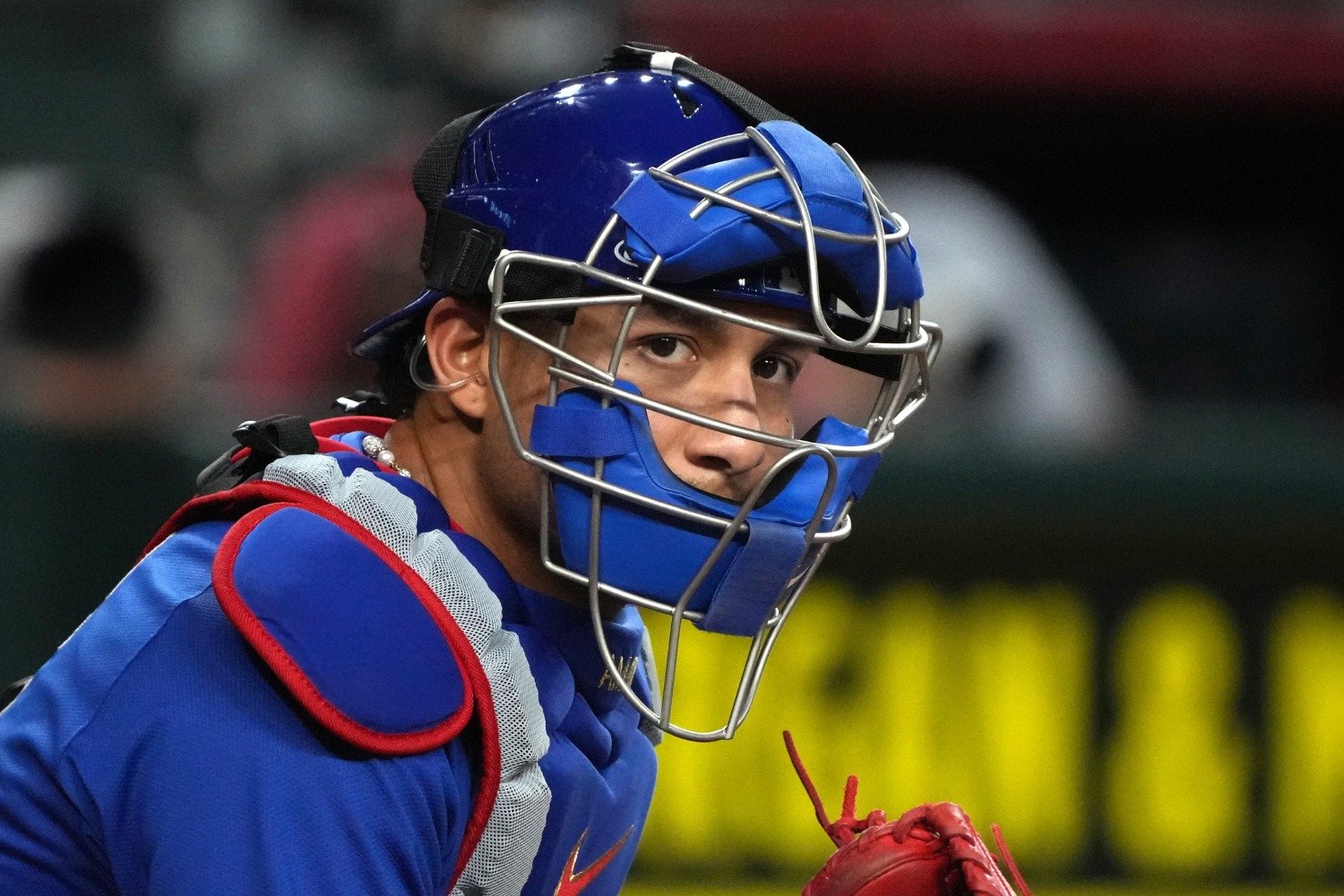 Reese McGuire survived the reinstatement of Miguel Amaya from the injured list this week. Instead of cutting McGuire, the Cubs designated Jon Berti for assignment. For now, at least, the team will carry three catchers in their 13-man pool of position players. Barring something unforeseen that forces them to take a different tack, the hope seems to be that they can keep all three around until September. At that point, they'll be able to add another position player to their roster, while still retaining the three backstops. If that seems like a lot of temporary roster ossification in the name of holding onto McGuire (who's batting .235/.250/.459), it is, but there's a reason for that. With Amaya on the shelf, McGuire and Kelly formed not only a respectable offensive tandem at the game's most defense-first position (other than pitcher), but one of the most formidable impediments to opponents advancing on the bases of any team in the league. They haven't merely been good; they've been elite. Baseball Reference offers a table showing the number of Stolen Base Opportunities (SBO) against a catcher, defined as any plate appearance in which a runner was on first or second with an empty base in front of them. We might reasonably call that stat, instead, Advancement Opportunities, because there are other ways (balks, wild pitches, passed balls, and so on) than steals to move up, but we can leave the label as it is. We're going to use it only as a rough-hewn denominator. The same page also offers totals of Runner Bases Added (RBA). This is the total number of bases taken against a catcher via steal, passed ball or wild pitch. Finally, there's Runner Kills (RK), which is the number of runners the catcher threw out on the bases. These stats are also tabulated at the team level. To give a sense of the context of these numbers, the median teams in the league have allowed 159 (the Rangers) and 153 (the Guardians) Runner Bases Added. The Marlins are worst in the league; they've allowed runners to take 223 bases against them. The Royals are the best, at 104—although that might change, because they traded defensive whiz Freddy Fermin to San Diego last month. The median teams (the Athletics and Giants) have 32 Runner Kills, with the White Sox leading the way with 45 and the Angels bringing up the rear at 19. The Cubs are, for the season, second-best in baseball at preventing Runner Bases Added, at 113. They're great at stifling the running game, but it's not just deterring and cutting down basestealers. The team's catchers have also been superb at blocking balls in the dirt and shortening secondary leads for opposing runners. Only the Royals have them beat in that department. Chicago is just fifth in Runner Kills, at 41, but the four teams in front of them have allowed an average of 170.5 Runner Bases Added. One sure way to rack up Runner Kills is to be somewhat bad at stopping the running game; teams start getting more aggressive and the number of outs rises, but not as fast as the number of advancements. A good way to quickly estimate the efficiency of a catching corps (and their batterymates, who also play a major role, of course) in containing runners, then, is to find the number of Runner Kills per Base Added. The Cubs lead the league in that metric, pretty easily. They're at 0.36; the closest team to them is the Phillies, at 0.30. Let's talk about the individuals involved, though, because their specialties are different, and Amaya's reintroduction is an interesting wrinkle. There are 99 catchers who have been behind the plate for at least 100 Stolen Base Opportunities this year, including all three Cubs. If we use that threshold to eliminate guys with tiny samples that make their numbers meaningless, it's easy to derive rate stats for RBA and RK. Simply put: what percentage of SBOs yield an advancement, whether it be via steal or something else? As it turns out, the average in that area is 10%. What percentage of SBOs result in a runner being thrown out, via back-pick, caught stealing, or a thwarted attempt to advance on an errant pitch? That figure is about 2%. Those are your baselines. Of those 99 catchers, only Fermin, Hayden Senger of the Mets, and Korey Lee of the White Sox have held runners to a lower Advance Rate than Kelly—and then only by tiny margins. Kelly roughly halves the rate at which runners advance, relative to the average catcher; his Advance Rate is 5%. Both Amaya (8%) and McGuire (9%) are also better than average, but this is Kelly's superpower. The nine wild pitches and three passed balls in his huge volume of time behind the plate are extraordinarily low numbers; that's why he's also rated as an above-average blocker in Statcast's Catcher Blocking Runs metric. In that same pool, though, no other catcher in baseball has a higher Kill Rate than McGuire's 5%. Kelly and Amaya are each about average in that regard, at 2%, but (whether purely because of circumstance, or because his sheer arm strength scares them less, or because he has more balls get just a bit away from him) runners do test McGuire—and he makes them pay. His 14 RK have come in 301 SBO. The other four catchers with 14 RK have gotten there in an average of 738 SBO. McGuire's framing has been solid, too. His role with the pitching staff is important, just as Kelly's and Amaya's are. Holding onto all three of these guys makes sense, because slowing the trip around the bases as well as any other team in the league has helped the Cubs keep opponents' run totals down throughout a long season in which they've battled several pitching injuries and a month or so in which their offense has left little margin for error. Bringing back Amaya could partially alleviate that lack of scoring. However, Kelly and McGuire were already doing an unimpeachable job of helping the team stay afloat even while not scoring much—and while Amaya is good at the same things, he's not quite on the level of the two teammates he's rejoining in the catching rotation.
 -
Image courtesy of © David Banks-Imagn Images Although he made one mistake too many and gave up a back-breaking three-run home run Tuesday night, Javier Assad looked much the way he has for most of his big-league career. That was encouraging, because although he does it in a style somewhat nervous-making and uncommon in the modern game—scattering hits and walks even when he's having success, keeping runners off of home plate but not always off of any of the other bases—Assad has been a very effective pitcher over the years. Assad is up to 298 career innings, with a 3.47 ERA. On the other hand, the man who relieved him in the Cubs' series-opening loss to the Blue Jays has a 5.04 ERA, in barely half as much big-league time. It's too soon to give up on Ben Brown (who, after all, pitched four innings of one-run ball in relief of Assad), but not too early to start planning his move to short relief. In fact, with Jameson Taillon slated to return either this weekend or during next week's five-game, four-day fight with the division-leading Brewers, Brown should be ticketed for that role as soon as possible. It's not just that he has only two reliable pitches. That's never ideal, for a starter, and Brown's changeup has been so lousy that he truly is a two-pitch guy, but other pitchers do survive with that particular limitation. Rather, the problem with Brown—the reason he's been crushed this season, and why he needs to move away from starting games and pacing himself—is that his two-pitch combo only plays up when they're each thrown in the upper ends of the velocity ranges he can reach with them. Against the knuckle-curve Brown throws at an average of 87 miles per hour, opponents have a .410 weighted on-base average (wOBA) when the pitch is below 87 and a .240 when it's above 87. Against his fastball (which averages 95.8 mph), they have a .393 wOBA when it's below 97 and a .362 when it's above it. Even the latter differential, which sounds small, is really quite large. Because he's thrown few four-seamers over 97 while working as a starter this year, the sample size there is small, and some batted-ball luck is getting the better of him. He's much better at missing bats when he gets up to 97 or higher, and all 10 of the home runs he's allowed on heaters this year came on pitches under 97. Part of the issue is that Brown has a relatively straight fastball, so every tick takes on disproportionate importance. Even a pitch without very good movement can avoid getting hit hard if it's in the upper 90s, but anything close to average velocity will get hammered because it's just not visually fooling hitters and they have time to get the barrel to it. However, another factor is location. Here's where the fastballs on which Brown has given up hard contact this year have been located. That probably doesn't surprise you. Middle-middle fastballs tend to get hit hard, and overwhelmingly, when he's getting hit hard, it's because he's throwing the ball there. Now, here's where he gets whiffs with the fastball. Again, nothing counterintuitive, but there was at least a bit of a factor you couldn't guess in advance. High fastballs miss bats, but for some pitchers, it's the ability to locate that high heater to the glove side that makes it work. Not Brown. His whiffs cluster in and above the top, arm-side corner of the zone, on the inner part of the plate to a righty and the outer part to a lefty. To be his best self, he needs to consistently land the fastball there. Here's where Brown throws his heaters at less than 95 mph this year. You can easily imagine why these pitches are getting blasted. He's on the right side of the plate more often than not, but a little lower than you'd want. More troublingly, he's also over on the glove side of the dish almost as often, and never above the belly button when he is. That's not going to work, at the lower end of Brown's velocity register. He doesn't have the wiggle or the hop on his heat to live there. Here's where Brown throws fastballs at 95-96. The command is a lot better in this range. It seems as though, when you see Brown dip below 95, he's tired and likely to be misfiring altogether, whereas if he's in this 95-96 band, he's merely pacing himself. The location won't make up for the shortcomings in movement, but at least he's not leaving the ball out over the plate. What about when he's between 96 and 97? I'm not showing you movement, just location, but it's in this band (when he's starting) where he tends to get the liveliest movement on his heater. That's good, but the inability to stay out of the middle of the plate is bad. In his current role, this is the sweet spot, but you want something more from him—something that combines being hard to hit on a raw stuff basis and landing where he needs it to, in order to get whiffs and avoid barrels. How about when he's throwing 97 and above? It's not just velocity that protects his fastball when it's sizzling. The way his arm works when he cuts loose at that level also tends to send the ball sailing a bit, riding and staying on the outer edge to a lefty, and the inner one to a righty. I'm not even going to waste time showing you where he has the most success and the most trouble with his curve. It's what you'd expect: down and away from a righty good, middle of the plate bad. Here's where his curves land when he throws that pitch less than 87 mph. And here's where they go when he throws harder than 87. Night and day. Now, a couple of factors deserve to be mentioned, so they can also be considered. Firstly, there are reasons why a pitcher might add or subtract consciously, based on intended location, especially with the breaking ball. If you want to steal a strike with a curve when a hitter is hunching on the fastball, bigger (and slower) can be better, for instance. Second, what 97 and above look like from Brown when he's throwing 80 pitches in an outing might be totally different than what they look like when he's throwing 18 of them. His heater might really straighten out on him, in a bad way, when he gets up to 98 or 99. However, these heatmaps show us something: When Brown works with conviction and finds his best velocity, his pitches tend to end up in favorable places, as well as having more sheer stuff to them. That makes him a superb candidate for the transition to short relief—especially because he hasn't found the success the team was hoping for in his work as a starter. Shota Imanaga, Matthew Boyd and (when he does re-join the roster) Taillon are locked in as starters for this Cubs team. Assad, Colin Rea and Cade Horton (the latter constrained not by the quality of his appearances but by the fact that the team will manage his workload down the stretch) are all in line for starts, too. Losing Michael Soroka almost right away hurt, but the Cubs still have enough starter options to move Brown to the bullpen for good—a luxury they didn't enjoy until now. Not every struggling starter is a good candidate for the big boosts we sometimes see when pitchers pivot to short relief, but Brown's strengths, weaknesses and idiosyncrasies make him an exceptional one. Given the way his stuff works (and the specific ways it works better when he can crank things up to maximum effort), Brown should be an integral part of the team's bullpen by the time their Wild Card Series matchup rolls around. View full article
-
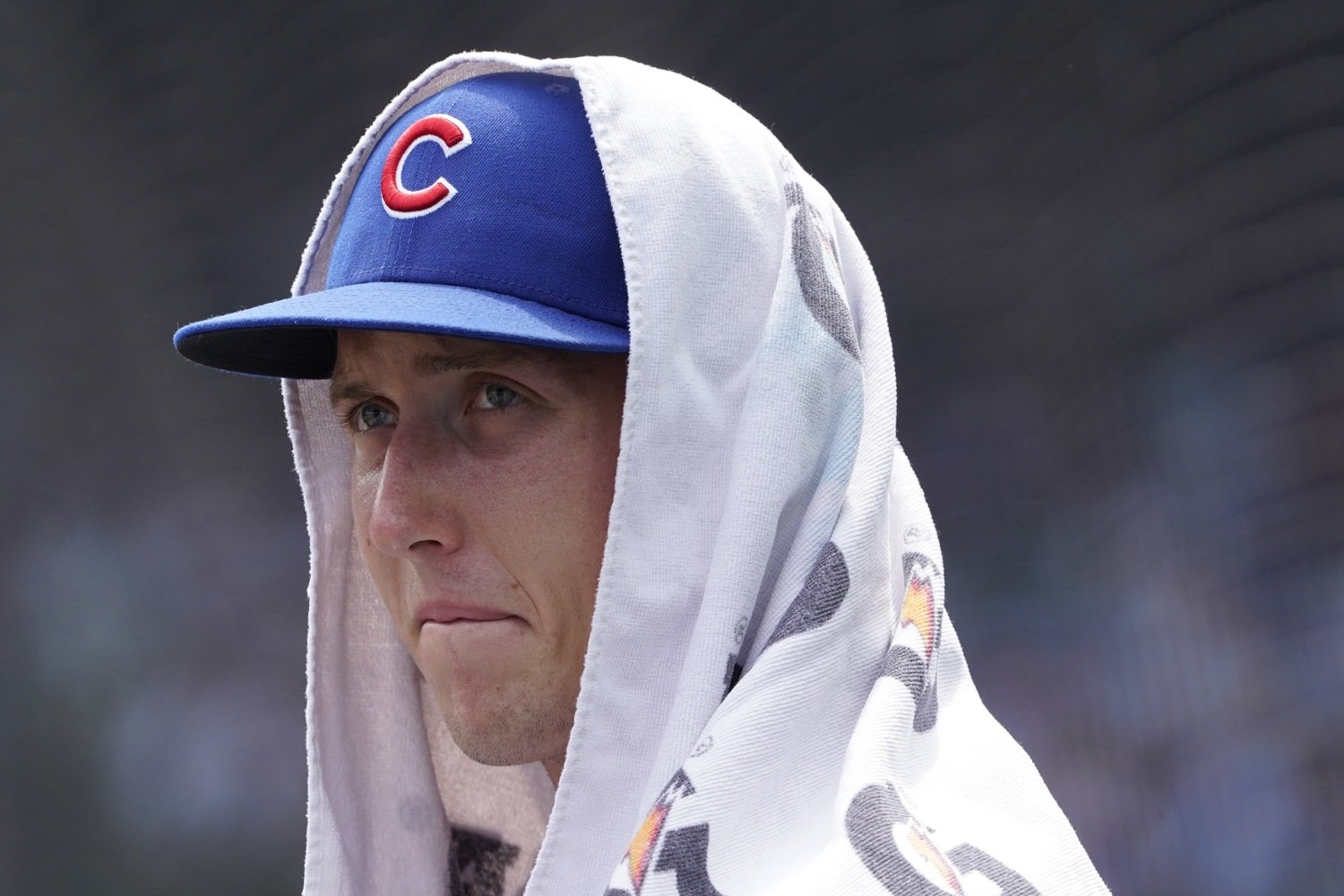 Although he made one mistake too many and gave up a back-breaking three-run home run Tuesday night, Javier Assad looked much the way he has for most of his big-league career. That was encouraging, because although he does it in a style somewhat nervous-making and uncommon in the modern game—scattering hits and walks even when he's having success, keeping runners off of home plate but not always off of any of the other bases—Assad has been a very effective pitcher over the years. Assad is up to 298 career innings, with a 3.47 ERA. On the other hand, the man who relieved him in the Cubs' series-opening loss to the Blue Jays has a 5.04 ERA, in barely half as much big-league time. It's too soon to give up on Ben Brown (who, after all, pitched four innings of one-run ball in relief of Assad), but not too early to start planning his move to short relief. In fact, with Jameson Taillon slated to return either this weekend or during next week's five-game, four-day fight with the division-leading Brewers, Brown should be ticketed for that role as soon as possible. It's not just that he has only two reliable pitches. That's never ideal, for a starter, and Brown's changeup has been so lousy that he truly is a two-pitch guy, but other pitchers do survive with that particular limitation. Rather, the problem with Brown—the reason he's been crushed this season, and why he needs to move away from starting games and pacing himself—is that his two-pitch combo only plays up when they're each thrown in the upper ends of the velocity ranges he can reach with them. Against the knuckle-curve Brown throws at an average of 87 miles per hour, opponents have a .410 weighted on-base average (wOBA) when the pitch is below 87 and a .240 when it's above 87. Against his fastball (which averages 95.8 mph), they have a .393 wOBA when it's below 97 and a .362 when it's above it. Even the latter differential, which sounds small, is really quite large. Because he's thrown few four-seamers over 97 while working as a starter this year, the sample size there is small, and some batted-ball luck is getting the better of him. He's much better at missing bats when he gets up to 97 or higher, and all 10 of the home runs he's allowed on heaters this year came on pitches under 97. Part of the issue is that Brown has a relatively straight fastball, so every tick takes on disproportionate importance. Even a pitch without very good movement can avoid getting hit hard if it's in the upper 90s, but anything close to average velocity will get hammered because it's just not visually fooling hitters and they have time to get the barrel to it. However, another factor is location. Here's where the fastballs on which Brown has given up hard contact this year have been located. That probably doesn't surprise you. Middle-middle fastballs tend to get hit hard, and overwhelmingly, when he's getting hit hard, it's because he's throwing the ball there. Now, here's where he gets whiffs with the fastball. Again, nothing counterintuitive, but there was at least a bit of a factor you couldn't guess in advance. High fastballs miss bats, but for some pitchers, it's the ability to locate that high heater to the glove side that makes it work. Not Brown. His whiffs cluster in and above the top, arm-side corner of the zone, on the inner part of the plate to a righty and the outer part to a lefty. To be his best self, he needs to consistently land the fastball there. Here's where Brown throws his heaters at less than 95 mph this year. You can easily imagine why these pitches are getting blasted. He's on the right side of the plate more often than not, but a little lower than you'd want. More troublingly, he's also over on the glove side of the dish almost as often, and never above the belly button when he is. That's not going to work, at the lower end of Brown's velocity register. He doesn't have the wiggle or the hop on his heat to live there. Here's where Brown throws fastballs at 95-96. The command is a lot better in this range. It seems as though, when you see Brown dip below 95, he's tired and likely to be misfiring altogether, whereas if he's in this 95-96 band, he's merely pacing himself. The location won't make up for the shortcomings in movement, but at least he's not leaving the ball out over the plate. What about when he's between 96 and 97? I'm not showing you movement, just location, but it's in this band (when he's starting) where he tends to get the liveliest movement on his heater. That's good, but the inability to stay out of the middle of the plate is bad. In his current role, this is the sweet spot, but you want something more from him—something that combines being hard to hit on a raw stuff basis and landing where he needs it to, in order to get whiffs and avoid barrels. How about when he's throwing 97 and above? It's not just velocity that protects his fastball when it's sizzling. The way his arm works when he cuts loose at that level also tends to send the ball sailing a bit, riding and staying on the outer edge to a lefty, and the inner one to a righty. I'm not even going to waste time showing you where he has the most success and the most trouble with his curve. It's what you'd expect: down and away from a righty good, middle of the plate bad. Here's where his curves land when he throws that pitch less than 87 mph. And here's where they go when he throws harder than 87. Night and day. Now, a couple of factors deserve to be mentioned, so they can also be considered. Firstly, there are reasons why a pitcher might add or subtract consciously, based on intended location, especially with the breaking ball. If you want to steal a strike with a curve when a hitter is hunching on the fastball, bigger (and slower) can be better, for instance. Second, what 97 and above look like from Brown when he's throwing 80 pitches in an outing might be totally different than what they look like when he's throwing 18 of them. His heater might really straighten out on him, in a bad way, when he gets up to 98 or 99. However, these heatmaps show us something: When Brown works with conviction and finds his best velocity, his pitches tend to end up in favorable places, as well as having more sheer stuff to them. That makes him a superb candidate for the transition to short relief—especially because he hasn't found the success the team was hoping for in his work as a starter. Shota Imanaga, Matthew Boyd and (when he does re-join the roster) Taillon are locked in as starters for this Cubs team. Assad, Colin Rea and Cade Horton (the latter constrained not by the quality of his appearances but by the fact that the team will manage his workload down the stretch) are all in line for starts, too. Losing Michael Soroka almost right away hurt, but the Cubs still have enough starter options to move Brown to the bullpen for good—a luxury they didn't enjoy until now. Not every struggling starter is a good candidate for the big boosts we sometimes see when pitchers pivot to short relief, but Brown's strengths, weaknesses and idiosyncrasies make him an exceptional one. Given the way his stuff works (and the specific ways it works better when he can crank things up to maximum effort), Brown should be an integral part of the team's bullpen by the time their Wild Card Series matchup rolls around.
 -
Image courtesy of © Kamil Krzaczynski-Imagn Images In the days leading up to the 2025 MLB trade deadline, Cubs fans talked almost constantly about the chances that the team would acquire a frontline starting pitcher controllable beyond 2025. In a summer trade market that featured only mid-tier rental starters, the jewels of a potential deadline bazaar were Washington's MacKenzie Gore; Miami's Edward Cabrera and Sandy Alcántara; and Minnesota's Joe Ryan. The Cubs themselves focused on various high-end players with team control beyond this year, too, but ultimately, they acquired four players (Willi Castro, Andrew Kittredge, Taylor Rogers and Michael Soroka) who will all become free agents this fall. None of the four quasi-aces named above were dealt at all by the end of July, so the Cubs were not alone in finding the price tags on each (especially Gore and Cabrera, on whom they had the most active discussions) exorbitant. Chicago also checked in on controllable relief aces Jhoan Duran and Mason Miller, who were traded, but didn't come close to acquiring either flamethrower, sources familiar with their deadline discussions said. Interestingly, though, teams who talked to the Cubs about players (all six of the names above, as well as some others) under team control through either 2027 or 2028 came away with the impression that the team was assigning little value to those years. There are multiple reasons why a team might feel that way, including the baseline injury risk for all pitchers, the nature of even high-end relievers as long-term assets, and the specific medical histories of a few of the arms in question, but one high-ranking front office member with another team felt that the uncertainty of labor relations between the league and the players union played a role in their thinking. Behind the scenes, the threat of a lockout that could curtail or distort the 2027 season (and the promise of a salary cap for which the owners intend to fight, which is why a lockout appears so likely) is a constant talking point, and it did color some trade talks throughout the league last month. "We just felt, if we're going to move this player, the return has to reflect the fact that they're under control at a below-market price [through those seasons]," said the source, who spoke on the condition of anonymity because they are not authorized to discuss details of trade conversations. They went on to say that the Cubs' counteroffers and the tenor of their expressed interest "didn't seem to acknowledge how valuable those years are." The source said neither the possibility of a lockout nor the uncertainty about the financial landscape of the game beyond 2027 was directly discussed, and could only speculate about the Cubs' motivations in discounting those seasons more heavily than the would-be selling team did, but they had a specific sense that the term of team control in question was being weighed differently by the two clubs. A source briefed on the Cubs' internal discussions said the specter of a lockout was not explicitly named as a reason to reduce offers or hold hard lines on any given players, but that "uncertainty about the system" beyond 2027 was a consideration. At first, this might seem to clash with the idea expressed by GM Carter Hawkins in the wake of the trade deadline. "Teams are trying to find that guy that can lock down the eighth or ninth inning, but that also costs a lot. That costs a lot of future wins," Hawkins said in a post-deadline interview with ESPN. "We have a responsibility to the 2025 Cubs but also the 2032 Cubs. That’s not always popular in the moment, but it’s decisions we have to make." Hawkins, though, was talking about weighing the present against the future—in the context of players, like top Cubs prospects Owen Caissie, Moisés Ballesteros, Kevin Alcántara, Jaxon Wiggins and more, who will be under extremely low-cost team control through at least 2028 and can't become free agents until at least the fall of 2031. In the eyes of the team, those players' value will be relatively unaffected by any disruption to 2027 and by the possibility of changes to payroll caps or competitive-balance measures under whatever new Collective Bargaining Agreement is implemented thereafter. By contrast, for players who will hit free agency after either the 2027 or 2028 seasons and who might have hefty salaries for those years even via arbitration, the implications of even a partial reduction of the 2027 season or of changes to payroll and draft compensation rules could be hugely significant. It's fair, perhaps, to view the Cubs as valuing the 2025 and 2026 teams as very important; the 2029-32 teams as very important; and players whose pivotal contributions might come in 2027 and 2028 as somewhat harder to assess. The particular construction of this team might have led them in that direction especially forcefully. They were never all-in on 2025, but they're very much all-in on the two-year window comprising this year and next. After next year, Ian Happ, Seiya Suzuki, Nico Hoerner, Matthew Boyd, Jameson Taillon and Carson Kelly are all due to hit free agency. Dansby Swanson, 32 next February, is under contract through 2029, but is likely to have to move to second base by 2027. Shota Imanaga's contract contains a complicated option on which the Cubs must make a decision this fall, but is likely to end up being in a Cubs uniform through 2027. Imanaga turns 32 on Sept. 1, though. Justin Steele is under team control through 2027, too, but his future is entirely uncertain after his Tommy John surgery in April. Pete Crow-Armstrong, Michael Busch, Matt Shaw, Miguel Amaya, Cade Horton and Daniel Palencia are the long-term core of this team, all under control at least through 2029 and all looking like solid contributors. With so much uncertain beyond 2026, though, the Cubs took a cautious approach at the trade deadline. They intend to try to win this year, and next, but they elected to remain extremely nimble and to maximize organizational depth for at least one more acquisition period. This winter, it will be interesting to see whether their decisions about pursuing Kyle Tucker in free agency and otherwise loading up for the final year of the Happ-led veteran group are as colored by the looming questions about the years thereafter as their activity at this trade deadline appears to have been. View full article
-
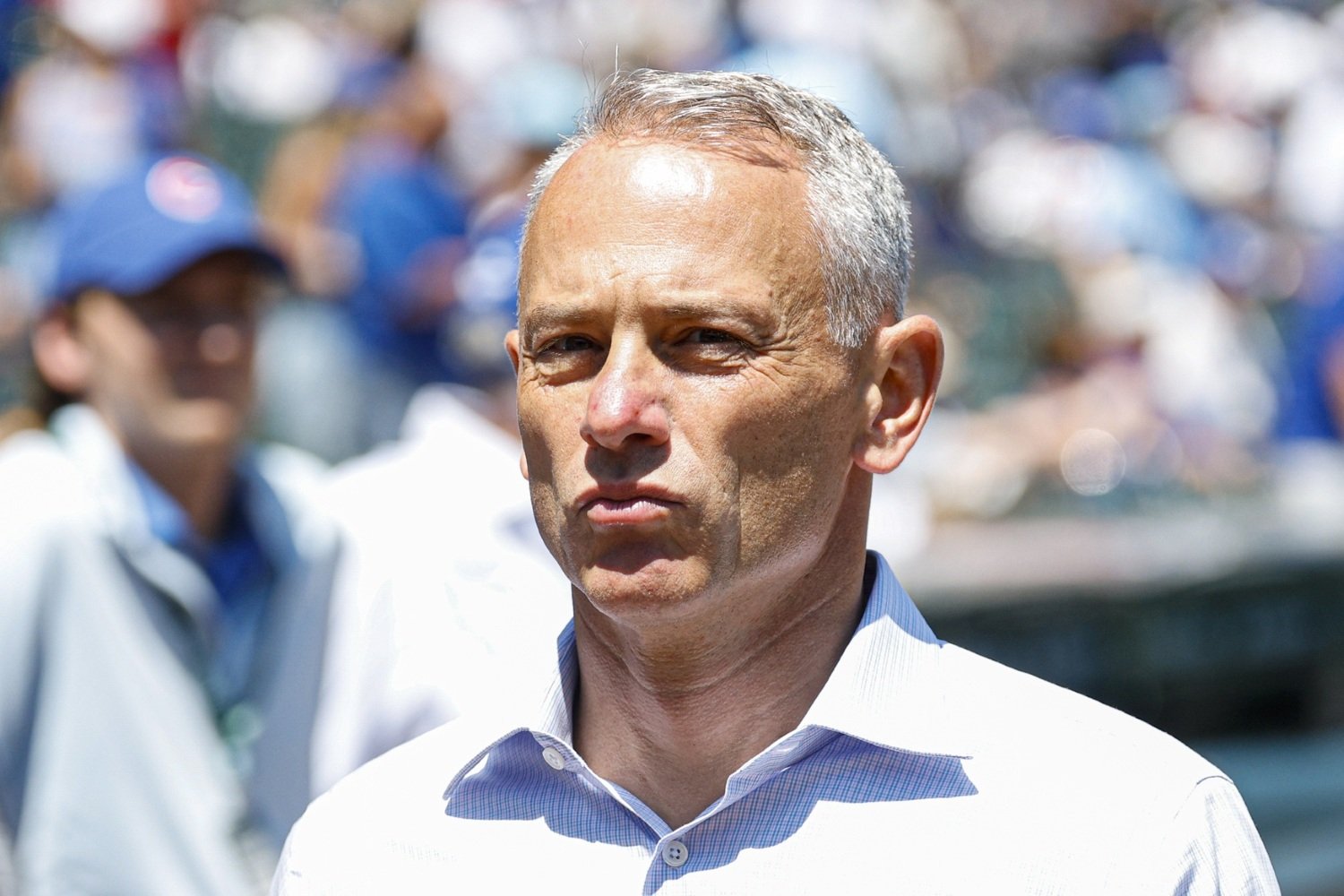 In the days leading up to the 2025 MLB trade deadline, Cubs fans talked almost constantly about the chances that the team would acquire a frontline starting pitcher controllable beyond 2025. In a summer trade market that featured only mid-tier rental starters, the jewels of a potential deadline bazaar were Washington's MacKenzie Gore; Miami's Edward Cabrera and Sandy Alcántara; and Minnesota's Joe Ryan. The Cubs themselves focused on various high-end players with team control beyond this year, too, but ultimately, they acquired four players (Willi Castro, Andrew Kittredge, Taylor Rogers and Michael Soroka) who will all become free agents this fall. None of the four quasi-aces named above were dealt at all by the end of July, so the Cubs were not alone in finding the price tags on each (especially Gore and Cabrera, on whom they had the most active discussions) exorbitant. Chicago also checked in on controllable relief aces Jhoan Duran and Mason Miller, who were traded, but didn't come close to acquiring either flamethrower, sources familiar with their deadline discussions said. Interestingly, though, teams who talked to the Cubs about players (all six of the names above, as well as some others) under team control through either 2027 or 2028 came away with the impression that the team was assigning little value to those years. There are multiple reasons why a team might feel that way, including the baseline injury risk for all pitchers, the nature of even high-end relievers as long-term assets, and the specific medical histories of a few of the arms in question, but one high-ranking front office member with another team felt that the uncertainty of labor relations between the league and the players union played a role in their thinking. Behind the scenes, the threat of a lockout that could curtail or distort the 2027 season (and the promise of a salary cap for which the owners intend to fight, which is why a lockout appears so likely) is a constant talking point, and it did color some trade talks throughout the league last month. "We just felt, if we're going to move this player, the return has to reflect the fact that they're under control at a below-market price [through those seasons]," said the source, who spoke on the condition of anonymity because they are not authorized to discuss details of trade conversations. They went on to say that the Cubs' counteroffers and the tenor of their expressed interest "didn't seem to acknowledge how valuable those years are." The source said neither the possibility of a lockout nor the uncertainty about the financial landscape of the game beyond 2027 was directly discussed, and could only speculate about the Cubs' motivations in discounting those seasons more heavily than the would-be selling team did, but they had a specific sense that the term of team control in question was being weighed differently by the two clubs. A source briefed on the Cubs' internal discussions said the specter of a lockout was not explicitly named as a reason to reduce offers or hold hard lines on any given players, but that "uncertainty about the system" beyond 2027 was a consideration. At first, this might seem to clash with the idea expressed by GM Carter Hawkins in the wake of the trade deadline. "Teams are trying to find that guy that can lock down the eighth or ninth inning, but that also costs a lot. That costs a lot of future wins," Hawkins said in a post-deadline interview with ESPN. "We have a responsibility to the 2025 Cubs but also the 2032 Cubs. That’s not always popular in the moment, but it’s decisions we have to make." Hawkins, though, was talking about weighing the present against the future—in the context of players, like top Cubs prospects Owen Caissie, Moisés Ballesteros, Kevin Alcántara, Jaxon Wiggins and more, who will be under extremely low-cost team control through at least 2028 and can't become free agents until at least the fall of 2031. In the eyes of the team, those players' value will be relatively unaffected by any disruption to 2027 and by the possibility of changes to payroll caps or competitive-balance measures under whatever new Collective Bargaining Agreement is implemented thereafter. By contrast, for players who will hit free agency after either the 2027 or 2028 seasons and who might have hefty salaries for those years even via arbitration, the implications of even a partial reduction of the 2027 season or of changes to payroll and draft compensation rules could be hugely significant. It's fair, perhaps, to view the Cubs as valuing the 2025 and 2026 teams as very important; the 2029-32 teams as very important; and players whose pivotal contributions might come in 2027 and 2028 as somewhat harder to assess. The particular construction of this team might have led them in that direction especially forcefully. They were never all-in on 2025, but they're very much all-in on the two-year window comprising this year and next. After next year, Ian Happ, Seiya Suzuki, Nico Hoerner, Matthew Boyd, Jameson Taillon and Carson Kelly are all due to hit free agency. Dansby Swanson, 32 next February, is under contract through 2029, but is likely to have to move to second base by 2027. Shota Imanaga's contract contains a complicated option on which the Cubs must make a decision this fall, but is likely to end up being in a Cubs uniform through 2027. Imanaga turns 32 on Sept. 1, though. Justin Steele is under team control through 2027, too, but his future is entirely uncertain after his Tommy John surgery in April. Pete Crow-Armstrong, Michael Busch, Matt Shaw, Miguel Amaya, Cade Horton and Daniel Palencia are the long-term core of this team, all under control at least through 2029 and all looking like solid contributors. With so much uncertain beyond 2026, though, the Cubs took a cautious approach at the trade deadline. They intend to try to win this year, and next, but they elected to remain extremely nimble and to maximize organizational depth for at least one more acquisition period. This winter, it will be interesting to see whether their decisions about pursuing Kyle Tucker in free agency and otherwise loading up for the final year of the Happ-led veteran group are as colored by the looming questions about the years thereafter as their activity at this trade deadline appears to have been.
 -
Image courtesy of © David Banks-Imagn Images When Pete Crow-Armstrong struggles, it's tempting to assume that swinging too much is to blame. Swinging too much is the fundamental vulnerability in his game—his biggest weakness. It's why he runs lowish on-base percentages even when relatively hot and why he's been a scar in the middle of the lineup card for the last 10 days (.091/.118/.121 in August) and a low-key problem for much longer than that (two walks in the last 30 days, .285 OBP since June 1). Here's the thing: during his current slump, Crow-Armstrong is actually swinging less than he has at any time since he first unlocked his talent in full this spring. It sure looks like Crow-Armstrong is aware of the need to swing a bit less, and like he's trying. A bit of newfound patience (relatively speaking) worked like a charm back in April; it launched him on the torrid stretch that had so many talking seriously about his MVP candidacy. This time, though, he's just plunging to new lows in terms of production, just as he reduces his swing rate. One reading of that data set might be: Crow-Armstrong has to get back to being himself at the plate. Maybe he just needs to cut it loose and swing at everything, after all. Is it just time to show the donkey the snake? In a word: no. Crow-Armstrong's problem isn't confidence or approach, except in the same way that it has always been (somewhat) the latter. He's in trouble because of a mechanical flaw that he can't seem to shake. Back in the first half of July, I spoke to Crow-Armstrong about his superb season and the unexpected power binge he'd been on for (by then) almost three months. However, we also talked about an unfortunate bit of grit in the well-built machine of his swing: a creeping tendency to overstride. That created two main problems for him: He was too often late on the fastball, trying but failing to work around a longer front side. Because he could sense that timing problem, he was more prone to chasing spin and offspeed stuff—mostly subconsciously, he was trying to hit what he could be on time for, which wasn't often the thing he really wanted to hit. It probably won't shock you, then, to read that as Crow-Armstrong sinks into a slump, he's overstriding again (or still; he only very briefly corrected the problem in the middle of last month). Here's what his stance and stride looked like in May, when he was at the peak of his powers. Lately, though, he's less spread-out in the box. That change might have been a conscious one, trying to stay balanced and athletic even as the grind of a long season starts to leaden his legs. Unfortunately, he's not managing that more upright, compact starting point well; he's striding too far. Perhaps finding that the stride length is difficult to correct, Crow-Armstrong is getting even more aggressive with his swing. His solution to the problem of a longer swing (not as Statcast measures it, but in the way hitters actually feel and must plan the movement) is to use the extra energy his stride creates to swing faster, and (since a flatter bat path was also a symptom he mentioned last month, when the stride is too long) to exaggerate the tilt in his stroke right from the beginning. That's not an entirely unreasonable attempt at problem-solving. No less a luminary than Branch Rickey believed "the overstriding hitter cannot be corrected," and while that's an outdated notion 80 years after Rickey first said it, there's a kernel of truth to it. Fixing this particular mechanical issue within a season, absent a prolonged reset (think a full series on the bench, as the team has done with Miguel Amaya, Seiya Suzuki and Matt Shaw at various points over the last two years, or a sojourn to Iowa, as the team has done with both Shaw and Crow-Armstrong himself), is hard to do. Crow-Armstrong put lots of early work into trying, but it doesn't seem to have worked. Finding an alternative—using his freakish athleticism to generate his best bat speed ever, since the start of July—is creative, and even admirable. Alas, it comes with its own problems, and it doesn't quite solve the basic ones it's meant to address. It ameliorates them, a bit, but it doesn't eliminate them. For instance, no amount of bat speed can make up for not feeling like you can get to that heater, and the problem with the overstrider is that they feel that extra length and can't always get started on time. Here are the rates at which Crow-Armstrong has swung at fastballs (four-seamers, sinkers and cutters); his whiff rate on those swings; and his average contact point, relative to his own body on those swings, by month. Month Swing Rate Whiff Rate Contact Point (in.) April 59.0% 23.7% 26.5 May 56.5% 34.2% 28.6 June 60.1% 31.8% 29.3 July 55.7% 34.6% 30.9 August 49.1% 25.9% 32.9 When Crow-Armstrong is swinging at fewer than half of the fastballs he sees, something is wrong. Yes, he's actually making more contact, and the idea that he's late on those swings is belied by the fact that he's catching the ball farther out in front. But the real message of these data is: Crow-Armstrong is mostly on time for the fastball, but only when he gets started early enough to swing at all. He's not doing that often enough, given who he is and how his game works. That's the problem a faster bat can't solve. It can get you to the ball, even the heater, and do it out in front, but it can't give you the quicker trigger you lost when you fell into the habit of the overstride. Now, here's the problem the faster bat actually introduces, against heaters: Crow-Armstrong is hitting the top of the fastball a lot. This often shows up looking like nothing more than bad luck. Here's a line drive, caught by the second baseman, where you can tell yourself a story about Crow-Armstrong simply being snakebitten. MTZxNFJfWGw0TUFRPT1fQmdkVEFGeFdCd3NBV1ZJSEFnQUhCRlFEQUFNREFsZ0FDbEVGQmdRQVV3QldCUXBX.mp4 There is a bit of luck in this mix, of course. But that out is also a factor of Crow-Armstrong's change in mechanics and timing. Notice, early in that swing, that exaggerated tilt he's putting on the bat path, trying to make up for the way the longer stride tends to flatten him out. Against fastballs, though, to get there on time, he has to accelerate the barrel late in his swing, which means flattening out, anyway. His top hand takes over and he rolls over, the way you're probably more accustomed to seeing hitters do on soft stuff. Here's another example, from this weekend. cU82NHpfV0ZRVkV3dEdEUT09X0QxQUFCUVlGVXdBQUR3QUZYd0FIVUFCU0FGaFFCVlVBQmwwTUNGSUVDUUJWVVZZSA==.mp4 That's another hard-hit ball, but it's also another playable ball for the second baseman on a heater in the middle of the zone. When Crow-Armstrong was right, he crushed that pitch in the air. Right now, his attempts to work around a mechanical problem have him hitting it low and right at the defense. Breaking balls and offspeed offerings are a different story, but within the same anthology. Here's the same chart I gave above, but for his approach against those softer pitches by month. I've added one extra column. Month Swing Rate Whiff Rate Contact Point (in.) Bat Speed April 63.2% 22.4% 35.9 68.0 May 67.7% 32.0% 40.7 69.8 June 64.4% 25.4% 42.0 68.5 July 66.0% 29.9% 43.8 72.0 August 58.5% 36.8% 39.1 73.2 Aha! Ok, several things. First of all, you won't find many good hitters who swing more on soft stuff than on fastballs, and you won't find many hitters of any kind who whiff less on soft stuff than on heaters, but that's how Crow-Armstrong usually works. This month, though, while his whiff rate on fastballs has come down, he's missing much more often against everything else. There's no clear contact point problem here, but there's an interesting question afoot. Look at that new column at the far right. Crow-Armstrong's bat has been faster even against fastballs the last two months, but the magnitude of his increase is much larger against breaking stuff. That, itself, is interesting. That he's swinging much faster but making contact deeper this month is even more so. Crow-Armstrong is actually making later swing decisions against breaking balls and offspeed stuff, lately. He's just not making materially better ones, because he's more than a small adjustment away from chaining together enough good takes to cash them in for walks, and he's not in a position to profit much from getting ahead in counts while he's so off, mechanically. He's waiting longer, then swinging faster, and when his eyes and hands see spin, he's doing the opposite of what he's been doing on fastballs. Here's an example. cU82NHpfV0ZRVkV3dEdEUT09X0JsVlFYQVVFWGxjQUFGc0xCd0FIVlZCUkFGa0ZBbEVBQXdFQVZnUUdDUVpkQXdNQQ==.mp4 That's the kind of pitch he often hammered earlier this year; he'd put a cousin of that same low, swooping swing on the ball and yank it on a high arc into the right-field seats. Right now, though, there are a couple of problems. First, that longer stride puts him a bit off-balance. It's harder for him to get down through that ball while maintaining barrel control. He's swinging faster, which only exacerbates the trouble, because more speed means less accuracy—at least when your arms are this extended and your legs are locked into place by the length of that stride. Second, instead of that top-hand takeover we see on fastballs, Crow-Armstrong keeps the bottom hand in control and retains that exaggerated tilt throughout his swing on soft stuff lately. That's the right way to get the timing right on those pitches, but it's putting him below the ball a lot. His launch angle against fastballs is substantially down from his season average since the All-Star break; his launch angle against everything else is substantially up. That's why he's producing more low-value contact, in addition to swinging and missing more often on non-heaters. How Crow-Armstrong fixes any of this is, of course, the important question. The answer likely lies in getting rid of that early, exaggerated bat tilt, and giving in to a bit more flatness. He could try widening his stance anew, to force his body to cut down the stride that is causing all of these downstream problems, but since he was aware of that stride issue five weeks ago, we can safely assume that he's already considered that. It's more likely that he and the team will continue to try anything that incrementally reduces that stride length and gets his swing started earlier with more consistency. Mainly, he needs to feel good about his ability to attack the fastball again. Everything else flows from there. His first half might have set an unreasonable standard for his second, but he can still be a much more dangerous hitter over the final seven weeks—if he has the physical and mental stamina to keep making good adjustments and keep solving problems. View full article
-
What's Broken in Pete Crow-Armstrong's Swing, and How to Fix It
Matthew Trueblood posted an article in Cubs
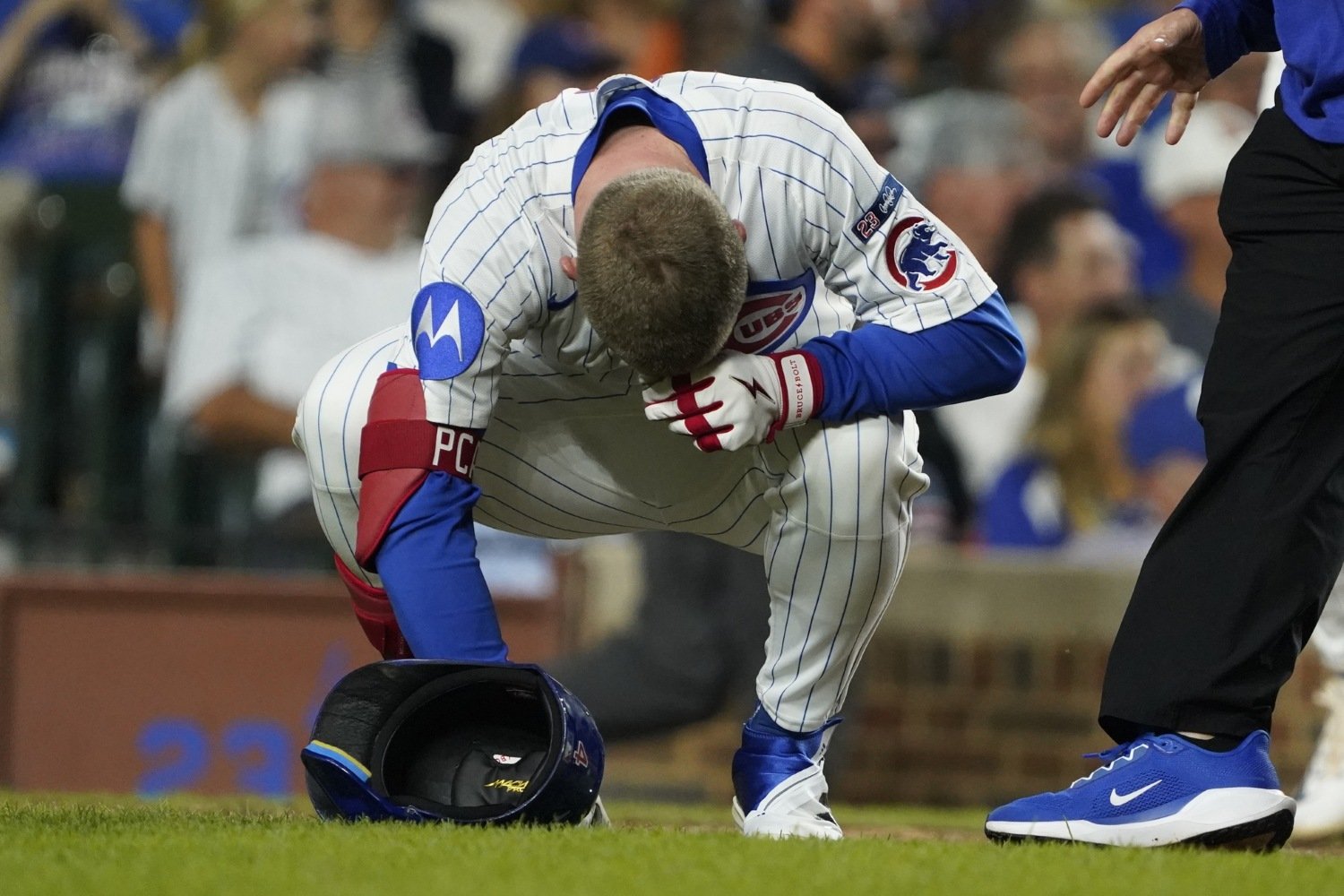 When Pete Crow-Armstrong struggles, it's tempting to assume that swinging too much is to blame. Swinging too much is the fundamental vulnerability in his game—his biggest weakness. It's why he runs lowish on-base percentages even when relatively hot and why he's been a scar in the middle of the lineup card for the last 10 days (.091/.118/.121 in August) and a low-key problem for much longer than that (two walks in the last 30 days, .285 OBP since June 1). Here's the thing: during his current slump, Crow-Armstrong is actually swinging less than he has at any time since he first unlocked his talent in full this spring. It sure looks like Crow-Armstrong is aware of the need to swing a bit less, and like he's trying. A bit of newfound patience (relatively speaking) worked like a charm back in April; it launched him on the torrid stretch that had so many talking seriously about his MVP candidacy. This time, though, he's just plunging to new lows in terms of production, just as he reduces his swing rate. One reading of that data set might be: Crow-Armstrong has to get back to being himself at the plate. Maybe he just needs to cut it loose and swing at everything, after all. Is it just time to show the donkey the snake? In a word: no. Crow-Armstrong's problem isn't confidence or approach, except in the same way that it has always been (somewhat) the latter. He's in trouble because of a mechanical flaw that he can't seem to shake. Back in the first half of July, I spoke to Crow-Armstrong about his superb season and the unexpected power binge he'd been on for (by then) almost three months. However, we also talked about an unfortunate bit of grit in the well-built machine of his swing: a creeping tendency to overstride. That created two main problems for him: He was too often late on the fastball, trying but failing to work around a longer front side. Because he could sense that timing problem, he was more prone to chasing spin and offspeed stuff—mostly subconsciously, he was trying to hit what he could be on time for, which wasn't often the thing he really wanted to hit. It probably won't shock you, then, to read that as Crow-Armstrong sinks into a slump, he's overstriding again (or still; he only very briefly corrected the problem in the middle of last month). Here's what his stance and stride looked like in May, when he was at the peak of his powers. Lately, though, he's less spread-out in the box. That change might have been a conscious one, trying to stay balanced and athletic even as the grind of a long season starts to leaden his legs. Unfortunately, he's not managing that more upright, compact starting point well; he's striding too far. Perhaps finding that the stride length is difficult to correct, Crow-Armstrong is getting even more aggressive with his swing. His solution to the problem of a longer swing (not as Statcast measures it, but in the way hitters actually feel and must plan the movement) is to use the extra energy his stride creates to swing faster, and (since a flatter bat path was also a symptom he mentioned last month, when the stride is too long) to exaggerate the tilt in his stroke right from the beginning. That's not an entirely unreasonable attempt at problem-solving. No less a luminary than Branch Rickey believed "the overstriding hitter cannot be corrected," and while that's an outdated notion 80 years after Rickey first said it, there's a kernel of truth to it. Fixing this particular mechanical issue within a season, absent a prolonged reset (think a full series on the bench, as the team has done with Miguel Amaya, Seiya Suzuki and Matt Shaw at various points over the last two years, or a sojourn to Iowa, as the team has done with both Shaw and Crow-Armstrong himself), is hard to do. Crow-Armstrong put lots of early work into trying, but it doesn't seem to have worked. Finding an alternative—using his freakish athleticism to generate his best bat speed ever, since the start of July—is creative, and even admirable. Alas, it comes with its own problems, and it doesn't quite solve the basic ones it's meant to address. It ameliorates them, a bit, but it doesn't eliminate them. For instance, no amount of bat speed can make up for not feeling like you can get to that heater, and the problem with the overstrider is that they feel that extra length and can't always get started on time. Here are the rates at which Crow-Armstrong has swung at fastballs (four-seamers, sinkers and cutters); his whiff rate on those swings; and his average contact point, relative to his own body on those swings, by month. Month Swing Rate Whiff Rate Contact Point (in.) April 59.0% 23.7% 26.5 May 56.5% 34.2% 28.6 June 60.1% 31.8% 29.3 July 55.7% 34.6% 30.9 August 49.1% 25.9% 32.9 When Crow-Armstrong is swinging at fewer than half of the fastballs he sees, something is wrong. Yes, he's actually making more contact, and the idea that he's late on those swings is belied by the fact that he's catching the ball farther out in front. But the real message of these data is: Crow-Armstrong is mostly on time for the fastball, but only when he gets started early enough to swing at all. He's not doing that often enough, given who he is and how his game works. That's the problem a faster bat can't solve. It can get you to the ball, even the heater, and do it out in front, but it can't give you the quicker trigger you lost when you fell into the habit of the overstride. Now, here's the problem the faster bat actually introduces, against heaters: Crow-Armstrong is hitting the top of the fastball a lot. This often shows up looking like nothing more than bad luck. Here's a line drive, caught by the second baseman, where you can tell yourself a story about Crow-Armstrong simply being snakebitten. MTZxNFJfWGw0TUFRPT1fQmdkVEFGeFdCd3NBV1ZJSEFnQUhCRlFEQUFNREFsZ0FDbEVGQmdRQVV3QldCUXBX.mp4 There is a bit of luck in this mix, of course. But that out is also a factor of Crow-Armstrong's change in mechanics and timing. Notice, early in that swing, that exaggerated tilt he's putting on the bat path, trying to make up for the way the longer stride tends to flatten him out. Against fastballs, though, to get there on time, he has to accelerate the barrel late in his swing, which means flattening out, anyway. His top hand takes over and he rolls over, the way you're probably more accustomed to seeing hitters do on soft stuff. Here's another example, from this weekend. cU82NHpfV0ZRVkV3dEdEUT09X0QxQUFCUVlGVXdBQUR3QUZYd0FIVUFCU0FGaFFCVlVBQmwwTUNGSUVDUUJWVVZZSA==.mp4 That's another hard-hit ball, but it's also another playable ball for the second baseman on a heater in the middle of the zone. When Crow-Armstrong was right, he crushed that pitch in the air. Right now, his attempts to work around a mechanical problem have him hitting it low and right at the defense. Breaking balls and offspeed offerings are a different story, but within the same anthology. Here's the same chart I gave above, but for his approach against those softer pitches by month. I've added one extra column. Month Swing Rate Whiff Rate Contact Point (in.) Bat Speed April 63.2% 22.4% 35.9 68.0 May 67.7% 32.0% 40.7 69.8 June 64.4% 25.4% 42.0 68.5 July 66.0% 29.9% 43.8 72.0 August 58.5% 36.8% 39.1 73.2 Aha! Ok, several things. First of all, you won't find many good hitters who swing more on soft stuff than on fastballs, and you won't find many hitters of any kind who whiff less on soft stuff than on heaters, but that's how Crow-Armstrong usually works. This month, though, while his whiff rate on fastballs has come down, he's missing much more often against everything else. There's no clear contact point problem here, but there's an interesting question afoot. Look at that new column at the far right. Crow-Armstrong's bat has been faster even against fastballs the last two months, but the magnitude of his increase is much larger against breaking stuff. That, itself, is interesting. That he's swinging much faster but making contact deeper this month is even more so. Crow-Armstrong is actually making later swing decisions against breaking balls and offspeed stuff, lately. He's just not making materially better ones, because he's more than a small adjustment away from chaining together enough good takes to cash them in for walks, and he's not in a position to profit much from getting ahead in counts while he's so off, mechanically. He's waiting longer, then swinging faster, and when his eyes and hands see spin, he's doing the opposite of what he's been doing on fastballs. Here's an example. cU82NHpfV0ZRVkV3dEdEUT09X0JsVlFYQVVFWGxjQUFGc0xCd0FIVlZCUkFGa0ZBbEVBQXdFQVZnUUdDUVpkQXdNQQ==.mp4 That's the kind of pitch he often hammered earlier this year; he'd put a cousin of that same low, swooping swing on the ball and yank it on a high arc into the right-field seats. Right now, though, there are a couple of problems. First, that longer stride puts him a bit off-balance. It's harder for him to get down through that ball while maintaining barrel control. He's swinging faster, which only exacerbates the trouble, because more speed means less accuracy—at least when your arms are this extended and your legs are locked into place by the length of that stride. Second, instead of that top-hand takeover we see on fastballs, Crow-Armstrong keeps the bottom hand in control and retains that exaggerated tilt throughout his swing on soft stuff lately. That's the right way to get the timing right on those pitches, but it's putting him below the ball a lot. His launch angle against fastballs is substantially down from his season average since the All-Star break; his launch angle against everything else is substantially up. That's why he's producing more low-value contact, in addition to swinging and missing more often on non-heaters. How Crow-Armstrong fixes any of this is, of course, the important question. The answer likely lies in getting rid of that early, exaggerated bat tilt, and giving in to a bit more flatness. He could try widening his stance anew, to force his body to cut down the stride that is causing all of these downstream problems, but since he was aware of that stride issue five weeks ago, we can safely assume that he's already considered that. It's more likely that he and the team will continue to try anything that incrementally reduces that stride length and gets his swing started earlier with more consistency. Mainly, he needs to feel good about his ability to attack the fastball again. Everything else flows from there. His first half might have set an unreasonable standard for his second, but he can still be a much more dangerous hitter over the final seven weeks—if he has the physical and mental stamina to keep making good adjustments and keep solving problems.
 -
Image courtesy of © David Banks-Imagn Images Suddenly, you can't make a mistake to Matt Shaw. He's not just coming along slowly, anymore; he's breaking out. Shaw is batting .328/.349/.770 in 63 plate appearances since the All-Star break, and he looks to be turning a corner with seven weeks left in his rookie campaign. In fact, importantly, he's literally turning a corner more often. About three weeks ago, @Jason Ross detailed the fact that Shaw had opened up his batting stance and was subtly better oriented to both cover the whole zone and get the barrel around the ball. Our foremost Shaw scholar, Jason wrote this within that piece: He was right at the time, and the games since have borne that out for everyone to see. Jason has been a Shaw believer all along, and there was a longer and tougher stretch than anyone wanted to see in which Shaw's huge leg kick and the team's failure to prepare him for what a successful big-league hitter really has to be conspired to make him a dreadful hitter. Near the end of that piece, though, Jason made a declaration that has also been borne out gorgeously since: "I think this is finally it. He's putting it all together; each of those little tweaks have made him a much better hitter." Here's how he's turned out to be right. Yes, the key for Shaw was always to pull the ball. The big question, though, was how he'd ever do so, with a stride that still cut him off pretty badly, even after the adjustment to open his initial stance. The big leg kick and the shy, kid-trying-not-to-be-noticed closed stance that he started the year with utterly precluded getting around the ball and driving it to left field; he didn't have the time or the bat speed to do it. As a reminder, here's what Shaw's stance and stride looked like in his first taste of the majors. Look at the angles his feet are creating, and look at the purple dot that signifies his average contact point. That's not going to yield any consistent ability to pull the ball. Shaw came back after a sojourn in Iowa and looked better for chunks of June, as we saw him reduce that leg kick (making it harder for opposing pitchers to mess with his timing) and start to move toward the plate, covering it better. He's also catching the ball a bit farther in front of himself in this image, which is important. Still, most of the time, it felt like he was out of space to get the barrel to the ball by the time he found it, but at least this version of Shaw was capable of getting to both inside and outside pitches. Now, here's what Shaw's stance, stride and contact point look like in August. As Jason had already told you, his stance is more open. The stride still takes him into the pitch a bit, which helps him cover the plate—but it's no longer working against his power at all, because look at that beautiful purple dot way out in front of home plate. Shaw's biggest difference, since the All-Star break, isn't even the physical changes he's made in setup or orientation; it's in timing. If you start early enough to get all the way through the hitting zone and catch the ball out front, like this, the long stride and the still-unconventional setup Shaw uses works. You stay cut-off through much of a swing like this one, but if your plan is to attack the ball way out in front, you'll find the ability to extend your arms and accelerate the barrel just in time to whang the ball off into the left-field corner. Even when a pitcher goes to a breaking ball, if they miss their location and you stay back just enough, you can backspin it out to left-center. Sonny Gray found out about Shaw's evolving capacity there the hard way, Sunday night. NHlNRzhfV0ZRVkV3dEdEUT09X0FGSUNVbE1EQWxBQUNRTUxVZ0FIQmdBRUFBQUhCd2NBVVZBSEFBRUVCQUZYVkZGZQ==.mp4 He's so committed to this approach (and having such success with it, by starting early and being on time, out front) that Shaw has become a dead pull hitter since the break. In fact, looking at his spray chart, you might be forgiven for asking: "Hey, didn't the Cubs trade away Isaac Paredes?" It reads like a typical development arc, on an impressively accelerated timeline: Shaw came into the league letting the ball travel and thinking about the opposite field, but as he's cleaned up his mechanics and gotten more confident, he's also gone to get the pitch farther out front—and he's no longer trying to be the modern, conventional hitter. He's swinging flat through the zone, but by getting to the ball early, he's ensuring that he can pull it. Lifting it is just a matter of knowing more about how pitchers will attack him and being more ready for the way big-league pitchers' stuff works. When you actually watch Shaw hit, though, it doesn't evoke Paredes. He's quite a bit more like some of the sluggers of the 1980s, whose swings were flat like his and who got to their power by being very intentional about it. One exemplar is Brian Downing, the catcher-turned-outfielder who cracked 275 big-league homers after finding his power quite late in his career. Like Shaw, Downing was just 5-foot-10, and his listed weight is just 170 pounds. (In reality, Downing played most of his career closer to 190, which makes him a fair comp to Shaw's listed 185 pounds.) Downing wasn't considered small by the standards of his era, as Shaw might be by the standards of this one, but his power was similarly surprising—and, similarly, it absolutely all came from his dedication to being early and pulling the ball. There's a more fun comp to throw on him, though. The other guy I can't stop thinking about, as I watch Shaw go on this tear and find himself as a hitter, is Ryne Sandberg. Sandberg didn't come up as a slugger. He came to bat almost 1,400 times in his first two seasons with the Cubs, playing mostly at third base at ages 22 and 23. He hit a total of 15 home runs and slugged .361 in those seasons. Then, in 1984—well, you know what happened. He suddenly smacked 19 homers, to go with 36 doubles and 19 triples. The big secret—the key change: he started pulling the ball. A lot. It's tempting to imagine that the dead-pull hitter is an inelegant modern invention, created by sabermetric coneheads to optimize everyone. That's half-true, at most. Henry Aaron's career changed radically when he decided to begin pulling the ball more consistently. Reggie Smith blossomed into a star when he learned that he couldn't go back through the box with the inside pitch and find any success in the majors. Sandberg, Downing and dozens of others have hewed out great careers by tapping into more power, because they realized that pulling the ball isn't an ignoble, one-dimensional plan. It's the result of a good, well-rounded process at the plate. Sandberg also made some changes to his setup in 1984, relative to 1982 and 1983. The biggest changes, though, were to how he started his hands and what he sought to do at the plate. Shaw is doing the same things, now. As the modern game compels players to do, he's compressing three years of the Hall of Famer's development into a handful of months. That doesn't mean he'll become a Hall of Famer, himself, but it's a clear step toward stardom—or at least a consistent level of quality on the infield. Shaw's long-term future might be at second base, as Sandberg's was. His medium-term future is certainly as a more important offensive player, further up the lineup card than he's been even over the last month. Right now, though, it's the short-term future that matters most—the present, even. If Shaw can sustain this surge, it might be the key to the Cubs' success for the balance of the season. View full article
-
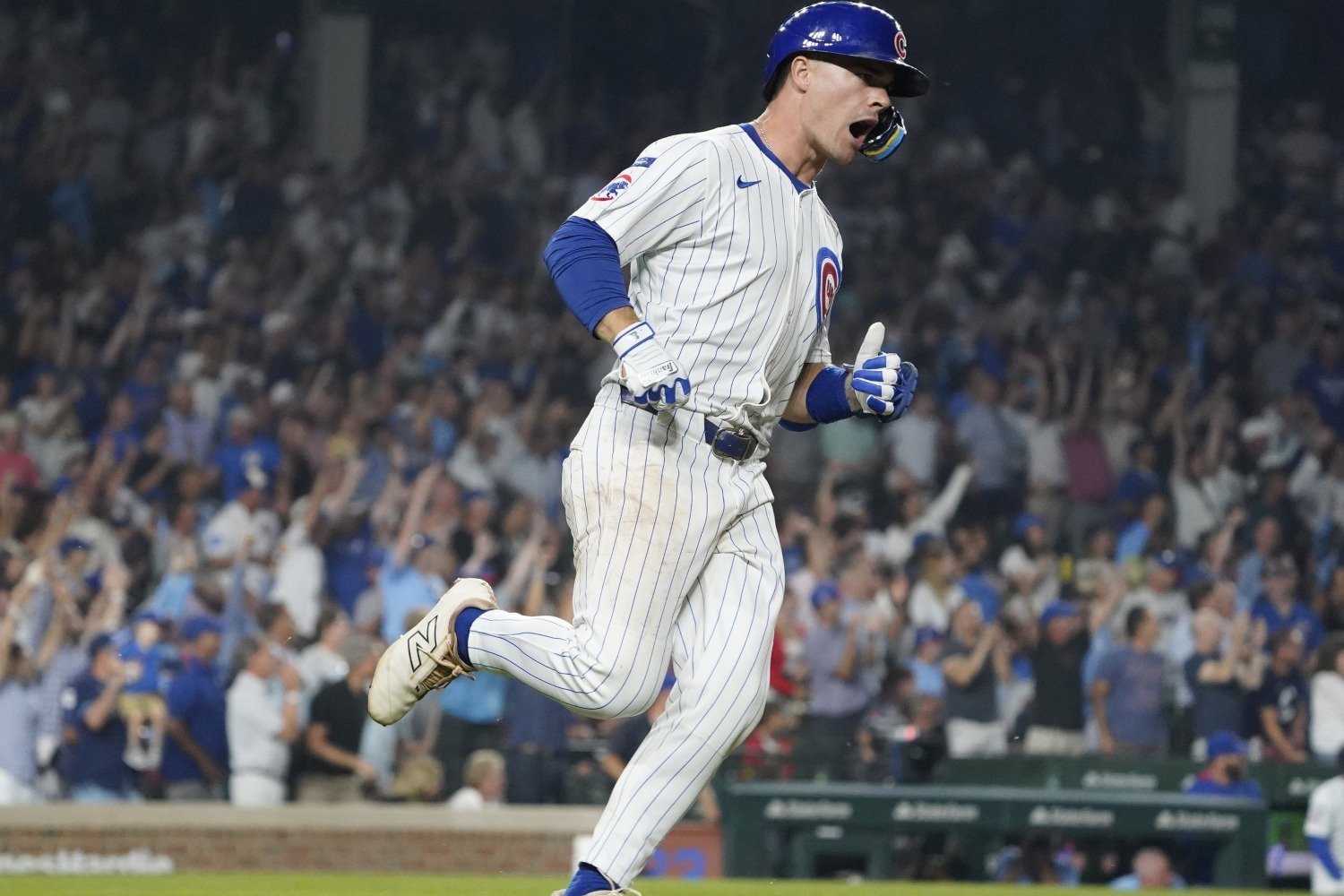 Suddenly, you can't make a mistake to Matt Shaw. He's not just coming along slowly, anymore; he's breaking out. Shaw is batting .328/.349/.770 in 63 plate appearances since the All-Star break, and he looks to be turning a corner with seven weeks left in his rookie campaign. In fact, importantly, he's literally turning a corner more often. About three weeks ago, @Jason Ross detailed the fact that Shaw had opened up his batting stance and was subtly better oriented to both cover the whole zone and get the barrel around the ball. Our foremost Shaw scholar, Jason wrote this within that piece: He was right at the time, and the games since have borne that out for everyone to see. Jason has been a Shaw believer all along, and there was a longer and tougher stretch than anyone wanted to see in which Shaw's huge leg kick and the team's failure to prepare him for what a successful big-league hitter really has to be conspired to make him a dreadful hitter. Near the end of that piece, though, Jason made a declaration that has also been borne out gorgeously since: "I think this is finally it. He's putting it all together; each of those little tweaks have made him a much better hitter." Here's how he's turned out to be right. Yes, the key for Shaw was always to pull the ball. The big question, though, was how he'd ever do so, with a stride that still cut him off pretty badly, even after the adjustment to open his initial stance. The big leg kick and the shy, kid-trying-not-to-be-noticed closed stance that he started the year with utterly precluded getting around the ball and driving it to left field; he didn't have the time or the bat speed to do it. As a reminder, here's what Shaw's stance and stride looked like in his first taste of the majors. Look at the angles his feet are creating, and look at the purple dot that signifies his average contact point. That's not going to yield any consistent ability to pull the ball. Shaw came back after a sojourn in Iowa and looked better for chunks of June, as we saw him reduce that leg kick (making it harder for opposing pitchers to mess with his timing) and start to move toward the plate, covering it better. He's also catching the ball a bit farther in front of himself in this image, which is important. Still, most of the time, it felt like he was out of space to get the barrel to the ball by the time he found it, but at least this version of Shaw was capable of getting to both inside and outside pitches. Now, here's what Shaw's stance, stride and contact point look like in August. As Jason had already told you, his stance is more open. The stride still takes him into the pitch a bit, which helps him cover the plate—but it's no longer working against his power at all, because look at that beautiful purple dot way out in front of home plate. Shaw's biggest difference, since the All-Star break, isn't even the physical changes he's made in setup or orientation; it's in timing. If you start early enough to get all the way through the hitting zone and catch the ball out front, like this, the long stride and the still-unconventional setup Shaw uses works. You stay cut-off through much of a swing like this one, but if your plan is to attack the ball way out in front, you'll find the ability to extend your arms and accelerate the barrel just in time to whang the ball off into the left-field corner. Even when a pitcher goes to a breaking ball, if they miss their location and you stay back just enough, you can backspin it out to left-center. Sonny Gray found out about Shaw's evolving capacity there the hard way, Sunday night. NHlNRzhfV0ZRVkV3dEdEUT09X0FGSUNVbE1EQWxBQUNRTUxVZ0FIQmdBRUFBQUhCd2NBVVZBSEFBRUVCQUZYVkZGZQ==.mp4 He's so committed to this approach (and having such success with it, by starting early and being on time, out front) that Shaw has become a dead pull hitter since the break. In fact, looking at his spray chart, you might be forgiven for asking: "Hey, didn't the Cubs trade away Isaac Paredes?" It reads like a typical development arc, on an impressively accelerated timeline: Shaw came into the league letting the ball travel and thinking about the opposite field, but as he's cleaned up his mechanics and gotten more confident, he's also gone to get the pitch farther out front—and he's no longer trying to be the modern, conventional hitter. He's swinging flat through the zone, but by getting to the ball early, he's ensuring that he can pull it. Lifting it is just a matter of knowing more about how pitchers will attack him and being more ready for the way big-league pitchers' stuff works. When you actually watch Shaw hit, though, it doesn't evoke Paredes. He's quite a bit more like some of the sluggers of the 1980s, whose swings were flat like his and who got to their power by being very intentional about it. One exemplar is Brian Downing, the catcher-turned-outfielder who cracked 275 big-league homers after finding his power quite late in his career. Like Shaw, Downing was just 5-foot-10, and his listed weight is just 170 pounds. (In reality, Downing played most of his career closer to 190, which makes him a fair comp to Shaw's listed 185 pounds.) Downing wasn't considered small by the standards of his era, as Shaw might be by the standards of this one, but his power was similarly surprising—and, similarly, it absolutely all came from his dedication to being early and pulling the ball. There's a more fun comp to throw on him, though. The other guy I can't stop thinking about, as I watch Shaw go on this tear and find himself as a hitter, is Ryne Sandberg. Sandberg didn't come up as a slugger. He came to bat almost 1,400 times in his first two seasons with the Cubs, playing mostly at third base at ages 22 and 23. He hit a total of 15 home runs and slugged .361 in those seasons. Then, in 1984—well, you know what happened. He suddenly smacked 19 homers, to go with 36 doubles and 19 triples. The big secret—the key change: he started pulling the ball. A lot. It's tempting to imagine that the dead-pull hitter is an inelegant modern invention, created by sabermetric coneheads to optimize everyone. That's half-true, at most. Henry Aaron's career changed radically when he decided to begin pulling the ball more consistently. Reggie Smith blossomed into a star when he learned that he couldn't go back through the box with the inside pitch and find any success in the majors. Sandberg, Downing and dozens of others have hewed out great careers by tapping into more power, because they realized that pulling the ball isn't an ignoble, one-dimensional plan. It's the result of a good, well-rounded process at the plate. Sandberg also made some changes to his setup in 1984, relative to 1982 and 1983. The biggest changes, though, were to how he started his hands and what he sought to do at the plate. Shaw is doing the same things, now. As the modern game compels players to do, he's compressing three years of the Hall of Famer's development into a handful of months. That doesn't mean he'll become a Hall of Famer, himself, but it's a clear step toward stardom—or at least a consistent level of quality on the infield. Shaw's long-term future might be at second base, as Sandberg's was. His medium-term future is certainly as a more important offensive player, further up the lineup card than he's been even over the last month. Right now, though, it's the short-term future that matters most—the present, even. If Shaw can sustain this surge, it might be the key to the Cubs' success for the balance of the season.
 -
Image courtesy of © Jeff Curry-Imagn Images I hadn't taken a true, all-tools-down vacation since baseball writing became my full-time job in November 2023. After the trade deadline, though, my family and I had a long-scheduled week away in the northernmost reaches of our home state—and, since our home state is Minnesota, the northernmost reaches of the country. It took a day or so to feel any easing of the urge to check scores and second-guess managerial moves, but only that long. Thus, I spent the last week playing cards with nieces and nephews, working on my backflip off the water trampoline, and hiking long trails in a fruitless but delightful quest to spot a moose. I also sat down for long stretches with baseball, but baseball as Roger Angell relayed it. I was attached to the world just long enough to wonder why Craig Counsell went to Caleb Thielbar for a second straight day in the eighth inning on Aug. 2, when Gunnar Henderson made him pay with a game-winning homer. Why didn't Counsell go to fresher-armed newcomer Taylor Rogers? I asked myself the question, then contented myself with the fact that it was beyond my control or comment, and turned back to my coffee. Since then, I've been largely unplugged. Coming back, I can't say I'm surprised to find the Cubs lagging even further behind the Brewers than when I left. The 2025 Cubs are good, even if bum luck in the injury department and a prolonged offensive nonaplegia have made them look less so of late. They're scraping out enough wins to stay comfortably in playoff position. The 2025 Brewers are, simply, one of those teams made of special cloth. What they're doing should look familiar to Cubs fans. They have a trifle less power, but they're very much the 2016 Cubs in secondhand jeans. The Cubs were 4-4 while I was (mostly) beyond their reach, and while their two months' worth of water-treading is understandably frustrating, it's also admirable. They're bobbing and weaving and staving off the Padres, even after San Diego was much more aggressive at the trade deadline. They'll probably hold onto the top Wild Card position, at worst. The real bad news for Cubs fans all came from Milwaukee, because the Brewers were 8-0 between my last two bylines. They're down their two best, most prodigious young players, and somehow, that doesn't matter. Their two best active hitters are a 28-year-old rookie they signed as a minor-league free agent and a draft bust plucked from the farm system of the worst team in baseball largely because his salary balanced the one the Brewers needed to offload due to low morale, and somehow, that doesn't matter. The Brewers won two or three games while I was gone that would be the best win of the season even for these Cubs. There's just something in the air up at The Ueck. No matter. Saturday night was a vital sign, a sudden spasm of the formidable muscles of this offense, and Chicago is suddenly one Sunday night win from having taken two series out of three since the deadline passed. Just as importantly, Jameson Taillon, Miguel Amaya and Javier Assad are all on the verge of readiness to join the team, one that has missed them fiercely in their respective absences. Yes, the Cubs are 67-49 even though Assad has yet to pitch for them this year, but Ben Brown's -2.0 Win Probability Added almost all could have been eliminated if Assad were healthy enough to start the season in the rotation. They're just not as dangerous (36-28) since Amaya went down as they were when he was active (31-21), and they've struggled to replace Taillon in the rotation, too; they're 18-14 since he went down at the end of June. Add those three to the mix, jettison Reese McGuire (whom Counsell has barely trusted at all over the last three weeks and who has a .250 OBP for the season) and send Brown to Triple-A Iowa for quick re-outfitting as a short reliever, and this team should begin to hum again. Kyle Tucker is a problem, habitually early, off-balance and too flat in his bat path, and Pete Crow-Armstrong's lack of plate discipline has become a glaring problem, but the team's depth will carry them forward from here. Cold hitters will warm up. Better health is on the horizon. Better still, for this particular team, is to have the vague notion of outside help deleted from the ticker. I love the final two months of the baseball season, because it ceases to be about uncertain evaluations or breathless rumors. The story, every night, is on the field—sometimes in Chicago, or wherever the Cubs travel; sometimes on the scoreboard, wherever they keep the Brewers tally; and sometimes in Iowa, but always on the field. For the Cubs to win anything worth taking, Matthew Boyd and Michael Busch have to execute better than they did Friday night, when they gave the Cardinals extra outs multiple times. Thielbar and Andrew Kittredge have to be the consistently strong middle relievers they're capable of being, and Counsell has to use them a bit more judiciously to make that easier. (Perhaps Rogers is a key to that, but so, too, could Brown be.) The offense has to get going again, and that's no longer a question of having any more of a catalyst added to their midst (Willi Castro should be an adequate one, especially with Matt Shaw rounding into form as his first season unfolds) or of Counsell needing to rearrange his lineup card. The hitters will hit, or not. The pitchers will execute, or not. The fielders will make plays, or not. And we all get to enjoy (or excruciate over) that binary. What the team's prolonged flirtation with .500 has cost them is their margin for error. With the Brewers coming to Wrigley Field for five games next week, they could yet catch the Crew, but it's very unlikely. They're now fighting to hold onto the right to host a Wild Card Series, and that fight will be a hard one. Not since mid-June has the club seemed to be fully in touch with its talent. That will have to change. If it does, though, they can be every bit as dangerous as they could have been from the front of the pack. There are 46 games left to play before the postseason, and the Cubs can get there by winning just half of them—but all the joy and merit of the campaign will lie in the pursuit of something more than that. The national spotlight has rightly swung from the North Side of Chicago northward. The freedom, if you're the party left in the cold spot where the light once shone, lies in the fact that you're now competing not for others' attention, but for your own satisfaction and success on your own terms. View full article
-
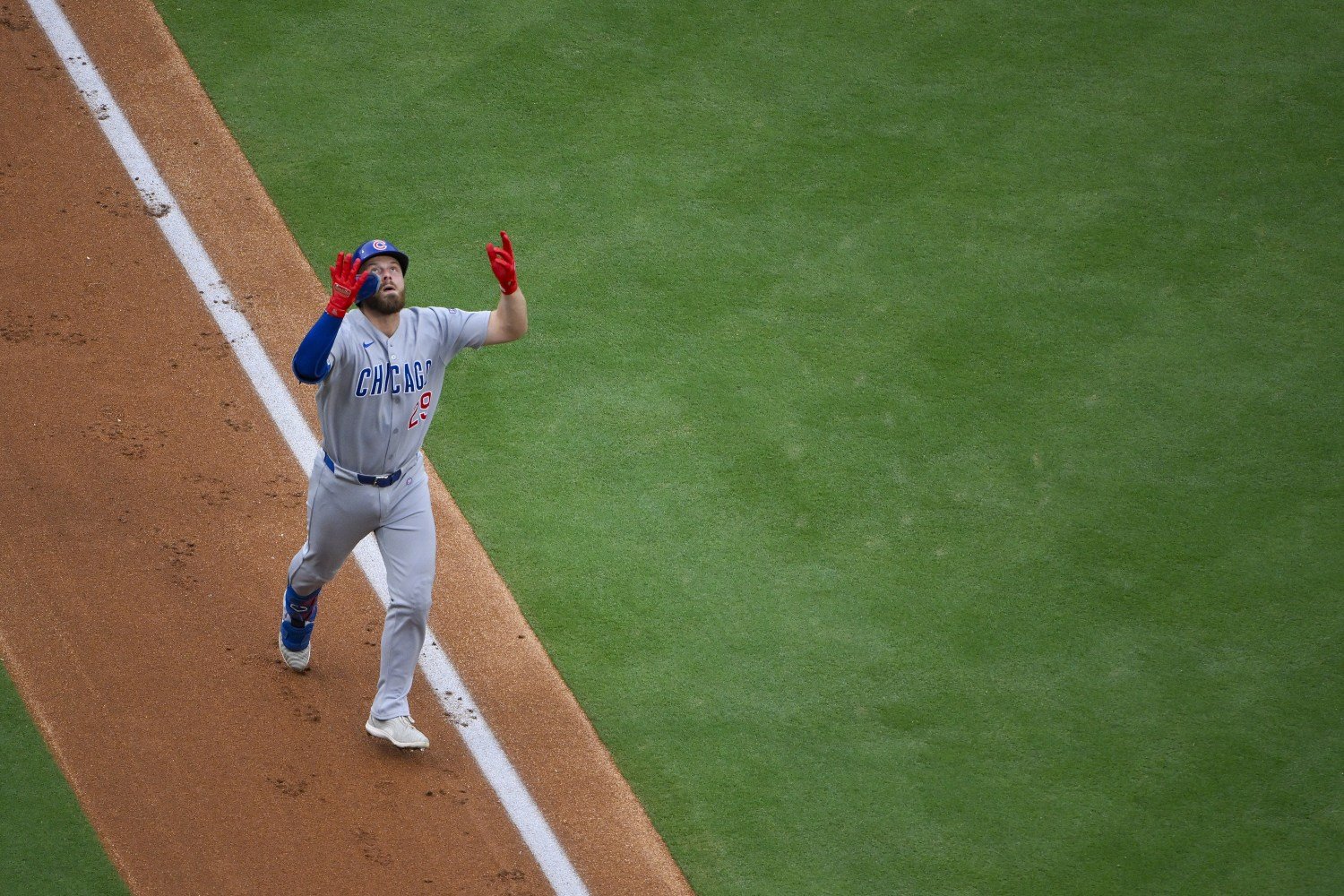 I hadn't taken a true, all-tools-down vacation since baseball writing became my full-time job in November 2023. After the trade deadline, though, my family and I had a long-scheduled week away in the northernmost reaches of our home state—and, since our home state is Minnesota, the northernmost reaches of the country. It took a day or so to feel any easing of the urge to check scores and second-guess managerial moves, but only that long. Thus, I spent the last week playing cards with nieces and nephews, working on my backflip off the water trampoline, and hiking long trails in a fruitless but delightful quest to spot a moose. I also sat down for long stretches with baseball, but baseball as Roger Angell relayed it. I was attached to the world just long enough to wonder why Craig Counsell went to Caleb Thielbar for a second straight day in the eighth inning on Aug. 2, when Gunnar Henderson made him pay with a game-winning homer. Why didn't Counsell go to fresher-armed newcomer Taylor Rogers? I asked myself the question, then contented myself with the fact that it was beyond my control or comment, and turned back to my coffee. Since then, I've been largely unplugged. Coming back, I can't say I'm surprised to find the Cubs lagging even further behind the Brewers than when I left. The 2025 Cubs are good, even if bum luck in the injury department and a prolonged offensive nonaplegia have made them look less so of late. They're scraping out enough wins to stay comfortably in playoff position. The 2025 Brewers are, simply, one of those teams made of special cloth. What they're doing should look familiar to Cubs fans. They have a trifle less power, but they're very much the 2016 Cubs in secondhand jeans. The Cubs were 4-4 while I was (mostly) beyond their reach, and while their two months' worth of water-treading is understandably frustrating, it's also admirable. They're bobbing and weaving and staving off the Padres, even after San Diego was much more aggressive at the trade deadline. They'll probably hold onto the top Wild Card position, at worst. The real bad news for Cubs fans all came from Milwaukee, because the Brewers were 8-0 between my last two bylines. They're down their two best, most prodigious young players, and somehow, that doesn't matter. Their two best active hitters are a 28-year-old rookie they signed as a minor-league free agent and a draft bust plucked from the farm system of the worst team in baseball largely because his salary balanced the one the Brewers needed to offload due to low morale, and somehow, that doesn't matter. The Brewers won two or three games while I was gone that would be the best win of the season even for these Cubs. There's just something in the air up at The Ueck. No matter. Saturday night was a vital sign, a sudden spasm of the formidable muscles of this offense, and Chicago is suddenly one Sunday night win from having taken two series out of three since the deadline passed. Just as importantly, Jameson Taillon, Miguel Amaya and Javier Assad are all on the verge of readiness to join the team, one that has missed them fiercely in their respective absences. Yes, the Cubs are 67-49 even though Assad has yet to pitch for them this year, but Ben Brown's -2.0 Win Probability Added almost all could have been eliminated if Assad were healthy enough to start the season in the rotation. They're just not as dangerous (36-28) since Amaya went down as they were when he was active (31-21), and they've struggled to replace Taillon in the rotation, too; they're 18-14 since he went down at the end of June. Add those three to the mix, jettison Reese McGuire (whom Counsell has barely trusted at all over the last three weeks and who has a .250 OBP for the season) and send Brown to Triple-A Iowa for quick re-outfitting as a short reliever, and this team should begin to hum again. Kyle Tucker is a problem, habitually early, off-balance and too flat in his bat path, and Pete Crow-Armstrong's lack of plate discipline has become a glaring problem, but the team's depth will carry them forward from here. Cold hitters will warm up. Better health is on the horizon. Better still, for this particular team, is to have the vague notion of outside help deleted from the ticker. I love the final two months of the baseball season, because it ceases to be about uncertain evaluations or breathless rumors. The story, every night, is on the field—sometimes in Chicago, or wherever the Cubs travel; sometimes on the scoreboard, wherever they keep the Brewers tally; and sometimes in Iowa, but always on the field. For the Cubs to win anything worth taking, Matthew Boyd and Michael Busch have to execute better than they did Friday night, when they gave the Cardinals extra outs multiple times. Thielbar and Andrew Kittredge have to be the consistently strong middle relievers they're capable of being, and Counsell has to use them a bit more judiciously to make that easier. (Perhaps Rogers is a key to that, but so, too, could Brown be.) The offense has to get going again, and that's no longer a question of having any more of a catalyst added to their midst (Willi Castro should be an adequate one, especially with Matt Shaw rounding into form as his first season unfolds) or of Counsell needing to rearrange his lineup card. The hitters will hit, or not. The pitchers will execute, or not. The fielders will make plays, or not. And we all get to enjoy (or excruciate over) that binary. What the team's prolonged flirtation with .500 has cost them is their margin for error. With the Brewers coming to Wrigley Field for five games next week, they could yet catch the Crew, but it's very unlikely. They're now fighting to hold onto the right to host a Wild Card Series, and that fight will be a hard one. Not since mid-June has the club seemed to be fully in touch with its talent. That will have to change. If it does, though, they can be every bit as dangerous as they could have been from the front of the pack. There are 46 games left to play before the postseason, and the Cubs can get there by winning just half of them—but all the joy and merit of the campaign will lie in the pursuit of something more than that. The national spotlight has rightly swung from the North Side of Chicago northward. The freedom, if you're the party left in the cold spot where the light once shone, lies in the fact that you're now competing not for others' attention, but for your own satisfaction and success on your own terms.

(5).png.35717dcc172a89faee78d4b06ae5e87d.png)