


RandallPnkFloyd
-
Posts
533 -
Joined
-
Last visited
Content Type
Profiles
Joomla Posts 1
Chicago Cubs Videos
Chicago Cubs Free Agent & Trade Rumors, Notes, & Tidbits
2026 Chicago Cubs Top Prospects Ranking
News
2023 Chicago Cubs Draft Picks
Guides & Resources
2024 Chicago Cubs Draft Picks
The Chicago Cubs Players Project
2025 Chicago Cubs Draft Pick Tracker
2026 Chicago Cubs Draft Tracker: Picks & Bonuses
Blogs
Events
Forums
Store
Gallery
Everything posted by RandallPnkFloyd
-
Image courtesy of © Matt Marton-Imagn Images From the outset, the outfield seemed like the most settled unit for the 2025 Chicago Cubs. The trio of Ian Happ, Pete Crow-Armstrong, and Kyle Tucker was going to be a tough one to move (barring injury), with Seiya Suzuki ready to step in for work as a fourth outfielder. This, naturally, led to some questions as to the future of two of the team's top prospects, Owen Caissie and Kevin Alcántara. Between the two, Caissie began to make an urgent case for himself as the temperature climbed. Turning in a 142 wRC+ and some massive power figures (.277 ISO) with Iowa, the banging on the big-league door became rather loud as the summer progressed. Despite some trade chatter in connection with controllable pitching, the team held on to Caissie and called him up earlier this month. To date, Caissie has gotten work across eight games at the major-league level. Three of those have been as a pinch-hitter, one (his debut) was as a designated hitter, and three came in relief of Kyle Tucker during his "reset." As the early results across his first 20 plate appearances have been solid (115 wRC+, .211 ISO), the fans' clamor for regular duty has become more pointed. However, that same question persists: when and where do you play him? It's actually not a particularly difficult question to answer. All three starting outfielders are healthy, with the weekend series in Anaheim showcasing a return to form for Tucker and (to an extent) Crow-Armstrong. That leaves two options. Either you're playing him in left in relief oHapp, or you're rolling him out as a DH, to get Suzuki a reset of his own. In the latter's case, however, the process is still manifesting—as it always has. It's something of a flawed process, in that Suzuki is likely far too patient at the plate, but it's a process, nonetheless. The hope is that luck starts falling his way with a little more regularity, and you take the occasional strikeout looking in favor of the on-base and power output he was demonstrating earlier in the year. That leaves just one option. Anecdotally, there's been a bit of a weird thing transpiring on the Marquee Network broadcasts and social media at large: they keep declaring that Ian Happ is starting to round into form. The issue with that line of thinking is that, at this point, it remains unequivocally false. Happ's full-season numbers are the worst he's turned in since 2021. He's at a wRC+ of just 103, with a slash that reads .226/.330/.380. He's been almost entirely propped up by his walk rate (13.4%) since the start of the year, with the slug dissolving in a way that we haven't seen at any point during his career; a .154 ISO represents a career low, by 15 points. Couple that with baserunning concerns wrought by an apparent speed decline, and one starts to wonder how the veteran continues to draw regular work over Caissie. His glove is an asset in left field, but that's not a defense-first position. The very notion of a resurgent Happ is an exercise in drawing your preferred endpoints. After an atrocious (.179/.304/.333) July, he's been markedly better in August (.217/.353/.333), but notice that the righthand column hasn't moved. No one was especially happy with the way he'd hit through the end of June (.241/.331/.403), but he was better then than he's been in either month since. Happ's own confidence in a return to form sounds as rooted in his manager having assured him he'll play as in any key adjustments. That state of affairs can't last, though. Not when you've got such massive upside in Caissie, and so little left in Happ. Everything with Caissie is in the smallest of samples, so far. But the offensive output has been solid, with plenty of room for growth. The strikeout rate is high (25.0%), but he's compensated well with the power output (that .211 ISO) courtesy of a 14.3% barrel rate and a 74.7 MPH average swing speed. Even better is the fact that he runs well—his 27.8 ft/sec sprint speed checks in just slightly behind Suzuki and Willi Castro—while providing steady defense in his own right. Happ and Suzuki pose similar dilemmas, when evaluating them as candidates to lose time to Caissie. Both are overly patient hitters in the midst of pretty intense struggles. However, Happ's power output remains fairly limited, on top of his other shortcomings being demonstrated. If Suzuki gets right, the upside is higher—and his recent track record gives us more reason to believe that’s possible. He's also a righty batter, whereas Happ (a switch-hitter who's better as a lefty) overlaps with Caissie more in a profile sketch. As we know what the upside is and we know what the swing data says Caissie can provide, there is only thin justification to run Happ out in left field over the youngster. Caissie's defensive chops have closed the gap on his veteran teammate, too. It's time to take a chance on the rookie. View full article
-
Image courtesy of © David Banks-Imagn Images What a long and strange year it's been for the Chicago Cubs. Perhaps for Seiya Suzuki more than anyone. Just about everywhere you look on the stat sheet, you're bound to find a new career benchmark for the Cubs' designated hitter, at least in the underlying metrics. His barrel rate (18.1 percent), average exit velocity (92.0), and hard-hit rate (50.0) each represent the top mark of his career to date, and some by a fairly wide margin. He's been able to jump his isolated power by more than 40 points off his previous career-high (.241), parlaying that contact quality into strong results to the pull side (24.6 Pull AIR%). And yet, something feels entirely off with Suzuki at this point in the year. His batting average sits at just .245. His on-base percentage is at .318. Those are both career-lows, and not by a small margin. His wOBA, despite the heavy increase on the power side, has dropped more than 20 points off what he turned in in 2024 (.343). Things have only gotten worse since the All-Star break, too. Thus far in the second half, Suzuki is hitting only .181, reaching base at a mere .315 clip, and has a wRC+ of 75 to his name. His ISO has fallen by nearly 200 points off his first half output, checking in at just .086 as of this writing. His wOBA is only .274, representing an even 90-point drop from the first half figure. There are a few factors in the shape of batted ball trends that are likely contributing to such an intense decline from what looked like a career-season type of trajectory in the first half. But, as much of this doesn't really jive with what we should be seeing given the under-the-hood components, there are also some that are not quite as tangible in their ability to explain. Outcomes come first, as there's certainly a luck component here for Suzuki; his BABIP alone is indicative of a player running into some brutal fortune. After a .300 average on balls in play prior to the break, Suzuki's second half BABIP sits just .227. It's not Kyle Tucker bad (.203 BABIP), but it's still one of the 22 worst figures thus far in half No. 2. Keeping with the batted ball concept, much of that can likely be attributed to a higher volume of groundballs. His 40.3 GB% isn't drastic, but it's a roughly 13 percent increase from his first half figure. His line drive rate, specifically, has worn the brunt of that shift, as it's fallen by about 10 percent on its own. In a somewhat simplified sense, line drive contact drives BABIP, while it's hard to combat the groundball side in that regard. So, determining why the luck seems to have evaporated for Suzuki isn't a particularly difficult task. Navigating why it's happening, though, isn't quite as simple; there isn't necessarily a specific thing within the approach that represents a defining issue. At least, not with any certainty. Off-speed pitches have been the source of a chunk of Suzuki's groundball contact in the last two months. He made groundball contact against that pitch type 50 percent of the time in July and is at over 71 percent in August. The problem with that analysis is that, in July, it was the pitch type at which he swung at with the lowest frequency, and in the two years prior to '25, it represented his lowest output of groundball contact. So, while he's swinging at a great deal of off-speed in August and turning in a high volume of groundballs as a result, we can't state with any level of confidence that his offensive downturn is purely because of those offerings. The zone itself could offer some insight. The following is Suzuki's zone profile in terms of Swing% from the season's first half: And here's the second half: It's obviously a lower volume of pitches overall, but the rates in the lower areas of the zone are higher in certain respects. Conventional wisdom tells us it's harder to elevate pitches down in the zone, so it's only natural that a higher rate of swings in those lower areas are going to sap Suzuki of some of his ability to lean into that Pull AIR% jump that was such a primary factor in his first half success. But, it's not as if those rate increases are across the board. They only exist in certain areas within that lower portion of the zone. Again, we're not really gaining any level of certainty here. Instead, our surest answer might just lie in his overall approach to each plate appearance. Earlier this month, we examined Suzuki's potential role in the Cubs' collective decline on the offensive side of the ball. There wasn't anything that allowed us to discern he was doing anything differently that contributed to the struggle of the group. But, being himself was also a problem in a broad sense. That remains the case here. If anything, it's actually gotten worse. Suzuki's first half swing rate checked in at 42.3 percent, while his chase rate came in at 27.7 percent. Each of those are some of the lowest percentages in all of baseball, leaving Suzuki as one of the more patient hitters in the game. In the second half, you're looking at a Swing% of 37.0 and a swing rate outside the zone of 19.7 percent. So, he's gotten more patient and in a pretty serious regard. The result has been more contact, particularly inside of the zone. His Z-Contact% is actually up about seven percent (92.4) in the second half. However, that's in conjunction with a contact rate outside of the zone that has fallen almost 13 percent (63.6 percent down to 50.8 percent between the two halves). What's happening speaks to what we discussed in looking at Suzuki as part of the bigger picture of the team's lineup: he's pinning himself down by limiting his own opportunities. In that previous piece, we discussed run value. Specifically, run value in leverage spots. Taking leverage out of the equation this time, this is where Suzuki falls from a visual standpoint: The only area in which Suzuki demonstrates any sort of aggression is over the heart of the plate. Even a slight expansion of the zone leans much heavier on the take side. That leaves him devoid of opportunities to create additional offensive value to a rather serious extent. A -16 run value on the edges of the plate is indicative of a player far too patient. Not only is he not serving as a beneficiary of borderline calls, his continued to refusal to expand the zone even slightly is impossible to ignore as a factor in these second half struggles. There's just no margin for error when you're living exclusively over the heart of the plate and nowhere else. So, while there are some factors we can consider in matters of pitch type and the zone, the overall approach remains the only one which we can deploy with any certainty in explaining this particular period of struggle for Seiya Suzuki. Unfortunately, it being a factor so embedded in his game at this point means it's unlikely to change. And you never want a player's approach to get markedly worse. But, there's also such a thing as being too patient. We've seen it often with Suzuki, but we've never seen it occur with his power potential quite this high. As he's gotten more patient, he's demonstrated the power less frequently. It's a problem, and as pitchers have adjusted to his new life as a pull-side power wizard in 2025, he's thus far failed to adjust in turn. View full article
-
Seiya Suzuki's Burdensome Approach is Manifesting More Than Ever
RandallPnkFloyd posted an article in Cubs
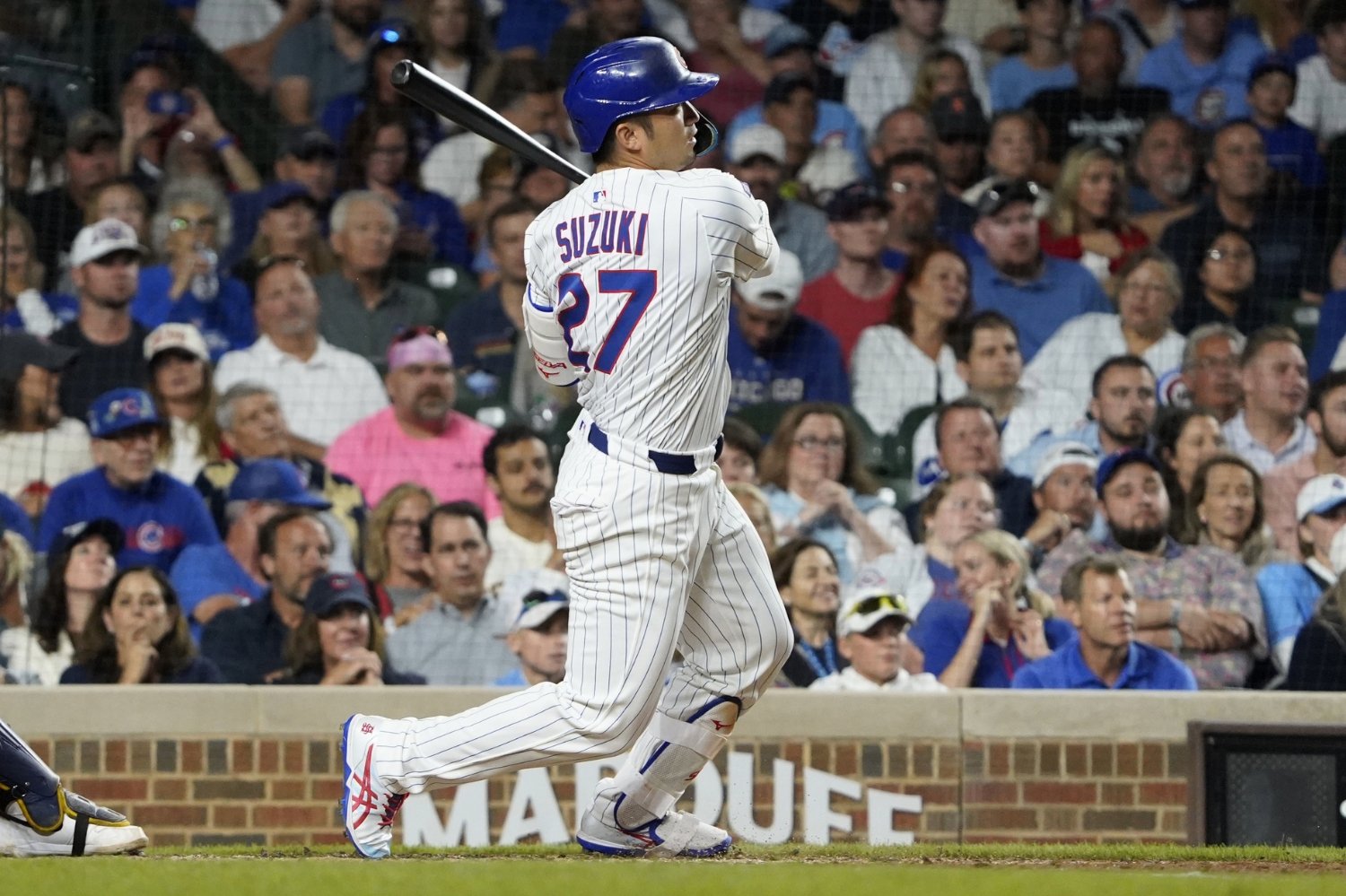 What a long and strange year it's been for the Chicago Cubs. Perhaps for Seiya Suzuki more than anyone. Just about everywhere you look on the stat sheet, you're bound to find a new career benchmark for the Cubs' designated hitter, at least in the underlying metrics. His barrel rate (18.1 percent), average exit velocity (92.0), and hard-hit rate (50.0) each represent the top mark of his career to date, and some by a fairly wide margin. He's been able to jump his isolated power by more than 40 points off his previous career-high (.241), parlaying that contact quality into strong results to the pull side (24.6 Pull AIR%). And yet, something feels entirely off with Suzuki at this point in the year. His batting average sits at just .245. His on-base percentage is at .318. Those are both career-lows, and not by a small margin. His wOBA, despite the heavy increase on the power side, has dropped more than 20 points off what he turned in in 2024 (.343). Things have only gotten worse since the All-Star break, too. Thus far in the second half, Suzuki is hitting only .181, reaching base at a mere .315 clip, and has a wRC+ of 75 to his name. His ISO has fallen by nearly 200 points off his first half output, checking in at just .086 as of this writing. His wOBA is only .274, representing an even 90-point drop from the first half figure. There are a few factors in the shape of batted ball trends that are likely contributing to such an intense decline from what looked like a career-season type of trajectory in the first half. But, as much of this doesn't really jive with what we should be seeing given the under-the-hood components, there are also some that are not quite as tangible in their ability to explain. Outcomes come first, as there's certainly a luck component here for Suzuki; his BABIP alone is indicative of a player running into some brutal fortune. After a .300 average on balls in play prior to the break, Suzuki's second half BABIP sits just .227. It's not Kyle Tucker bad (.203 BABIP), but it's still one of the 22 worst figures thus far in half No. 2. Keeping with the batted ball concept, much of that can likely be attributed to a higher volume of groundballs. His 40.3 GB% isn't drastic, but it's a roughly 13 percent increase from his first half figure. His line drive rate, specifically, has worn the brunt of that shift, as it's fallen by about 10 percent on its own. In a somewhat simplified sense, line drive contact drives BABIP, while it's hard to combat the groundball side in that regard. So, determining why the luck seems to have evaporated for Suzuki isn't a particularly difficult task. Navigating why it's happening, though, isn't quite as simple; there isn't necessarily a specific thing within the approach that represents a defining issue. At least, not with any certainty. Off-speed pitches have been the source of a chunk of Suzuki's groundball contact in the last two months. He made groundball contact against that pitch type 50 percent of the time in July and is at over 71 percent in August. The problem with that analysis is that, in July, it was the pitch type at which he swung at with the lowest frequency, and in the two years prior to '25, it represented his lowest output of groundball contact. So, while he's swinging at a great deal of off-speed in August and turning in a high volume of groundballs as a result, we can't state with any level of confidence that his offensive downturn is purely because of those offerings. The zone itself could offer some insight. The following is Suzuki's zone profile in terms of Swing% from the season's first half: And here's the second half: It's obviously a lower volume of pitches overall, but the rates in the lower areas of the zone are higher in certain respects. Conventional wisdom tells us it's harder to elevate pitches down in the zone, so it's only natural that a higher rate of swings in those lower areas are going to sap Suzuki of some of his ability to lean into that Pull AIR% jump that was such a primary factor in his first half success. But, it's not as if those rate increases are across the board. They only exist in certain areas within that lower portion of the zone. Again, we're not really gaining any level of certainty here. Instead, our surest answer might just lie in his overall approach to each plate appearance. Earlier this month, we examined Suzuki's potential role in the Cubs' collective decline on the offensive side of the ball. There wasn't anything that allowed us to discern he was doing anything differently that contributed to the struggle of the group. But, being himself was also a problem in a broad sense. That remains the case here. If anything, it's actually gotten worse. Suzuki's first half swing rate checked in at 42.3 percent, while his chase rate came in at 27.7 percent. Each of those are some of the lowest percentages in all of baseball, leaving Suzuki as one of the more patient hitters in the game. In the second half, you're looking at a Swing% of 37.0 and a swing rate outside the zone of 19.7 percent. So, he's gotten more patient and in a pretty serious regard. The result has been more contact, particularly inside of the zone. His Z-Contact% is actually up about seven percent (92.4) in the second half. However, that's in conjunction with a contact rate outside of the zone that has fallen almost 13 percent (63.6 percent down to 50.8 percent between the two halves). What's happening speaks to what we discussed in looking at Suzuki as part of the bigger picture of the team's lineup: he's pinning himself down by limiting his own opportunities. In that previous piece, we discussed run value. Specifically, run value in leverage spots. Taking leverage out of the equation this time, this is where Suzuki falls from a visual standpoint: The only area in which Suzuki demonstrates any sort of aggression is over the heart of the plate. Even a slight expansion of the zone leans much heavier on the take side. That leaves him devoid of opportunities to create additional offensive value to a rather serious extent. A -16 run value on the edges of the plate is indicative of a player far too patient. Not only is he not serving as a beneficiary of borderline calls, his continued to refusal to expand the zone even slightly is impossible to ignore as a factor in these second half struggles. There's just no margin for error when you're living exclusively over the heart of the plate and nowhere else. So, while there are some factors we can consider in matters of pitch type and the zone, the overall approach remains the only one which we can deploy with any certainty in explaining this particular period of struggle for Seiya Suzuki. Unfortunately, it being a factor so embedded in his game at this point means it's unlikely to change. And you never want a player's approach to get markedly worse. But, there's also such a thing as being too patient. We've seen it often with Suzuki, but we've never seen it occur with his power potential quite this high. As he's gotten more patient, he's demonstrated the power less frequently. It's a problem, and as pitchers have adjusted to his new life as a pull-side power wizard in 2025, he's thus far failed to adjust in turn.
 -
Image courtesy of © Benny Sieu-Imagn Images It wouldn't be an overreaction to declare that the Chicago Cubs have been one of the worst offensive teams in Major League Baseball since the start of July. In fact, it'd be a rather objective observation, at least from a pure run production standpoint. Since July 1, the Cubs rank 21st in the league runs scored, with 146. They're at 4.4 runs per game over that stretch. Their power has waned, with a .169 isolated power number that ranks only 15th (despite sitting fourth for all of 2025, at .184). Their contact quality has cratered, with a Hard-Hit% (38.1) that sits 27th over that stretch. They're still reaching base at a reasonable clip (.316 on-base percentage), but the other issues have prevented them from doing anything of value with such a consistent presence on the basepaths. Woes with runners in scoring position run at the center of what has driven the team's run production into the ground; a .230 average in such situations ranks 23rd since the start of last month. It's not so much that they're striking out, but more so that they're failing to create meaningful contact in those moments. They have a fly ball rate of about 38 percent and a groundball rate of roughly 44 percent with runners in scoring position, both of which sit inside of the league's 13-highest rates. Compound those contact trends with one of the league's lowest hard contact rates, and you sort of have your answer as to why that has represented such an issue in the last six or so weeks. There hasn't been a shortage of culprits in sapping the life out of a team that had been so good at the plate for the first three months of the year, either. It certainly doesn't help that the majority of the lineup has lost a grip on their approach. But when you look at a player like Seiya Suzuki, you get a sense of just how bad things have gotten for this Cubs lineup on a game-to-game basis. Or do you? As the premise above states, there's a sharp difference between what the eye test has to offer and what reality actually exists on the field. Suzuki's case is intensely reflective of that contrast, especially if you're ready to put some of the issues since the start of July on his shoulders. In certain respects (read: power), Suzuki is having his best season as a member of the Cubs. While a 129 wRC+ checks in as only his second-best campaign after a 137 mark in 2024, he's been able to tap into the pull side to really unleash his power. As of this writing, Suzuki has .258 ISO brought to fruition largely by a Pull AIR% that sits 10 points higher than any figure he'd turned in previously (25.6). And while we should be basking in the emergence of the kind of power bat that the Cubs were lacking in previous years, there simply has not been enough production in between the displays of power to offer something consistent from a middle-of-the-order bat. At the same time, there are myriad factors beneath the surface. Many of them are not even identifiable at this rate and those same factors still contest what the eye test might tell us. That doesn't mean we can't try. The first failure of the eye test exists within the approach. Suzuki is, obviously, one of the more patient hitters in the league, with a swing rate that ranks within the 21 lowest in the league (41.4 percent). A natural byproduct of that is more called strikes and deep counts with little margin for error. Suzuki ranks 17th in the league in called strike rate (20.1 percent), and, anecdotally, we've seen Suzuki take a called strike three more times than any of us could possibly hope to count. It's a trend that feels more present as the team has struggled to score runs. There's certainly a tradeoff there if you're able to parlay that patience into walks and impact contact. Since the start of July, Suzuki has done the former; his 10.0 percent walk rate actually exceeds his mark for the season (9.6 percent). Not much has changed in terms of the overall discipline, though. He's expanded the zone with slightly more regularity, but the plate discipline numbers remain fairly similar to what he turned in prior to July 1. He's still somehow he's lost some juice on the impact side, however. The explanation for this is not quite clear. Suzuki turned in a .283 ISO across the first three months of the season. Since the top of July, it's just 179. That's a massive dip without a clear-cut explanation. The pitch types at which Suzuki is swinging have fluctuated all year in a way that isn't new. And his zone profile looks quite similar between the stretch through June 30 and the one since. All of this is to say that the approach has remained fairly steady with only minor blips. You could make an argument that Suzuki's patience is a flaw inherent in his game when it runs too far, but it's not a contributing factor within this recent stretch. We'll circle back to this concept, though. Eye test failure No. 2 lives around the perception that Suzuki is part of the team's issues with runners in scoring position. Since July 1, the Cubs have the second-lowest hard-hit rate in the sport (25.8 percent). Their wRC+ as a team with RISP is a mere 81, which ranks 25th. But this isn't a problem to which Suzuki is contributing. Since that same point in time, Suzuki has hit .269 and reached base at a .394 clip in RISP situations. Both figures trail only Nico Hoerner among the team's regulars. Further, he's been identical in terms of his strikeout and walk rates (18.2 percent). There are issues with his contact, including a line drive rate under 10 percent, but the outcomes have actually been completely fine. In fact, in Statcast's Run Value, Suzuki trails only Kyle Tucker in value tied to leverage spots. And here's where we return to the approach: This is where we might find one possible criticism of Suzuki in that he has gathered the majority of his value in pitches over the heart of the plate. He's been able to capitalize on that sweet spot, but less so when confronted with the edges of the plate (or, in this case, the shadow). Given that, it stands to reason that Suzuki could benefit from a more consistent expansion of the zone. Worst case scenario, you strike out whiffing instead of looking, which is the same outcome that we often see from Suzuki in a random plate appearance anyway. But this is a broader concept than anything that might be revealed since the start of July. As such, what this does is support the idea that any flaw within his game does tend to exist within his patience. Discipline can serve as a bridge too far in creating offensive production, and we've seen Suzuki run into poor outcomes wrought by that patience. At the same time, this doesn't lend itself to the idea that Suzuki is a fixture within the problem of the Cubs offense at large since the start of July. If anything, he's stayed the course. Which means that we're not looking at a version of Seiya Suzuki that is hurting the Cubs during this recent stretch. He's liable to be a, well, liability at any point during the year. More often than not, you take the overwhelming patience because of the outcomes he's shown capable of providing. But, the completely regular version of Suzuki isn't a player that is going to help the Cubs to a quick turnaround. The meticulousness won't allow it. View full article
-
Is Seiya Suzuki Actually Driving Down the Cubs' Run Production?
RandallPnkFloyd posted an article in Cubs
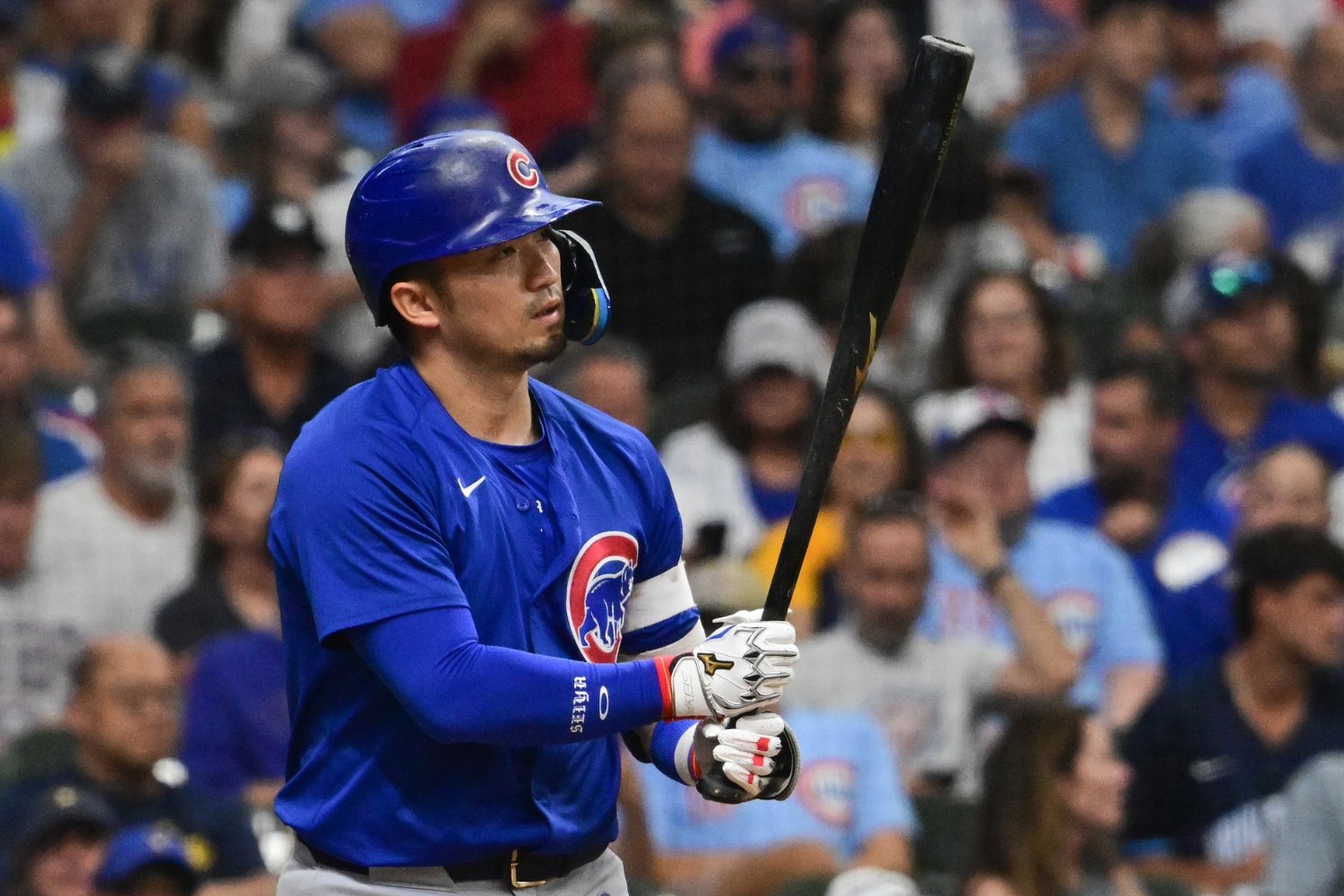 It wouldn't be an overreaction to declare that the Chicago Cubs have been one of the worst offensive teams in Major League Baseball since the start of July. In fact, it'd be a rather objective observation, at least from a pure run production standpoint. Since July 1, the Cubs rank 21st in the league runs scored, with 146. They're at 4.4 runs per game over that stretch. Their power has waned, with a .169 isolated power number that ranks only 15th (despite sitting fourth for all of 2025, at .184). Their contact quality has cratered, with a Hard-Hit% (38.1) that sits 27th over that stretch. They're still reaching base at a reasonable clip (.316 on-base percentage), but the other issues have prevented them from doing anything of value with such a consistent presence on the basepaths. Woes with runners in scoring position run at the center of what has driven the team's run production into the ground; a .230 average in such situations ranks 23rd since the start of last month. It's not so much that they're striking out, but more so that they're failing to create meaningful contact in those moments. They have a fly ball rate of about 38 percent and a groundball rate of roughly 44 percent with runners in scoring position, both of which sit inside of the league's 13-highest rates. Compound those contact trends with one of the league's lowest hard contact rates, and you sort of have your answer as to why that has represented such an issue in the last six or so weeks. There hasn't been a shortage of culprits in sapping the life out of a team that had been so good at the plate for the first three months of the year, either. It certainly doesn't help that the majority of the lineup has lost a grip on their approach. But when you look at a player like Seiya Suzuki, you get a sense of just how bad things have gotten for this Cubs lineup on a game-to-game basis. Or do you? As the premise above states, there's a sharp difference between what the eye test has to offer and what reality actually exists on the field. Suzuki's case is intensely reflective of that contrast, especially if you're ready to put some of the issues since the start of July on his shoulders. In certain respects (read: power), Suzuki is having his best season as a member of the Cubs. While a 129 wRC+ checks in as only his second-best campaign after a 137 mark in 2024, he's been able to tap into the pull side to really unleash his power. As of this writing, Suzuki has .258 ISO brought to fruition largely by a Pull AIR% that sits 10 points higher than any figure he'd turned in previously (25.6). And while we should be basking in the emergence of the kind of power bat that the Cubs were lacking in previous years, there simply has not been enough production in between the displays of power to offer something consistent from a middle-of-the-order bat. At the same time, there are myriad factors beneath the surface. Many of them are not even identifiable at this rate and those same factors still contest what the eye test might tell us. That doesn't mean we can't try. The first failure of the eye test exists within the approach. Suzuki is, obviously, one of the more patient hitters in the league, with a swing rate that ranks within the 21 lowest in the league (41.4 percent). A natural byproduct of that is more called strikes and deep counts with little margin for error. Suzuki ranks 17th in the league in called strike rate (20.1 percent), and, anecdotally, we've seen Suzuki take a called strike three more times than any of us could possibly hope to count. It's a trend that feels more present as the team has struggled to score runs. There's certainly a tradeoff there if you're able to parlay that patience into walks and impact contact. Since the start of July, Suzuki has done the former; his 10.0 percent walk rate actually exceeds his mark for the season (9.6 percent). Not much has changed in terms of the overall discipline, though. He's expanded the zone with slightly more regularity, but the plate discipline numbers remain fairly similar to what he turned in prior to July 1. He's still somehow he's lost some juice on the impact side, however. The explanation for this is not quite clear. Suzuki turned in a .283 ISO across the first three months of the season. Since the top of July, it's just 179. That's a massive dip without a clear-cut explanation. The pitch types at which Suzuki is swinging have fluctuated all year in a way that isn't new. And his zone profile looks quite similar between the stretch through June 30 and the one since. All of this is to say that the approach has remained fairly steady with only minor blips. You could make an argument that Suzuki's patience is a flaw inherent in his game when it runs too far, but it's not a contributing factor within this recent stretch. We'll circle back to this concept, though. Eye test failure No. 2 lives around the perception that Suzuki is part of the team's issues with runners in scoring position. Since July 1, the Cubs have the second-lowest hard-hit rate in the sport (25.8 percent). Their wRC+ as a team with RISP is a mere 81, which ranks 25th. But this isn't a problem to which Suzuki is contributing. Since that same point in time, Suzuki has hit .269 and reached base at a .394 clip in RISP situations. Both figures trail only Nico Hoerner among the team's regulars. Further, he's been identical in terms of his strikeout and walk rates (18.2 percent). There are issues with his contact, including a line drive rate under 10 percent, but the outcomes have actually been completely fine. In fact, in Statcast's Run Value, Suzuki trails only Kyle Tucker in value tied to leverage spots. And here's where we return to the approach: This is where we might find one possible criticism of Suzuki in that he has gathered the majority of his value in pitches over the heart of the plate. He's been able to capitalize on that sweet spot, but less so when confronted with the edges of the plate (or, in this case, the shadow). Given that, it stands to reason that Suzuki could benefit from a more consistent expansion of the zone. Worst case scenario, you strike out whiffing instead of looking, which is the same outcome that we often see from Suzuki in a random plate appearance anyway. But this is a broader concept than anything that might be revealed since the start of July. As such, what this does is support the idea that any flaw within his game does tend to exist within his patience. Discipline can serve as a bridge too far in creating offensive production, and we've seen Suzuki run into poor outcomes wrought by that patience. At the same time, this doesn't lend itself to the idea that Suzuki is a fixture within the problem of the Cubs offense at large since the start of July. If anything, he's stayed the course. Which means that we're not looking at a version of Seiya Suzuki that is hurting the Cubs during this recent stretch. He's liable to be a, well, liability at any point during the year. More often than not, you take the overwhelming patience because of the outcomes he's shown capable of providing. But, the completely regular version of Suzuki isn't a player that is going to help the Cubs to a quick turnaround. The meticulousness won't allow it.
 -
Image courtesy of © Patrick Gorski-Imagn Images As we come upon the completion of Dansby Swanson's third full season as a member of the Chicago Cubs, we know enough about certain areas of his offensive game to draw firm conclusions. The most sweeping observation about Swanson as a hitter is that there is a month-to-month variance in his performance. He's prone to incredibly torrid stretches of play that are quickly wiped out by the time he spends on the opposite end of the spectrum. Much of his inherent streakiness is borne out of a need to dial in on fastballs as a foundational component in his success. When he manages the zone and has a keen eye in matters of pitch type, he finds success. When he doesn't, he's generally expanding the zone in favor of only that pitch or just loses his grip on it altogether. We're currently seeing a version of Dansby Swanson that is entirely of the latter variety. Swanson's 2025 has been a disappointment on that side of the ball, even by his modest standards. His slash includes an average of .250, an on-base percentage of .297, and a slugging percentage of .415. His strikeout rate, at 28.0 percent, is the highest of his career, while a 6.6 percent walk rate represents his lowest. He's managed just enough power (.165 ISO) to stay relevant in a stat like wOBA (.308), but he's very obviously being pinned down by a bit of a mess in the approach department. It's something that's very easily reflected in his strikeout and walk numbers alone, on a month-to-month basis: March/April: 29.1 K%, 6.7 BB% May: 23.4 K%, 9.9 BB% June: 25.0 K%, 5.8 BB% July: 32.7 K%, 5.1 BB% August: 36.0 K%, 0.0 BB% Since May, the strikeout rate has been steadily increasing while the walk rate has decreased. Say whatever you want about a smaller sample through ten days in August (as of this writing), the fact that Swanson has yet to draw a walk in the month speaks to the absence of control he's been able to demonstrate over the strike zone the longer the year has worn on. It's not a complicated puzzle to solve, either. Swanson has been aggressive to a fault. Here is his swing rate between the months in 2025: Swanson is at a 58 percent swing rate this month. That's the highest of any Cub and three points higher than even Pete Crow-Armstrong. Worse yet, Swanson's chase habits have spun out of control: Like the swing rate, the chase rate has risen steadily over the course of the season. His current August rate, at 36.8, trails only Willi Castro among regulars and is 10 points higher than Crow-Armstrong. When you're sitting that far ahead of Crow-Armstrong, the actual poster child for aggression at the plate, in swings and chase, there's a rather serious problem developing. Earlier in the year, we noted that Swanson was dialing in on fastballs to the point where he was expanding the zone in pursuit of them. He recognized fastball out of the hand, and it didn't matter where it was landing in the zone. He was swinging either way. That's not entirely what's happening this time around, as Swanson is swinging at nearly 80 percent of off-speed pitches. It's one thing to be dedicated to a specific pitch type to a fault, but another entirely to ramp up the aggression on a pitch whose flavor doesn't historically lend itself to positive outcomes for the individual hitter. Where this is really biting Swanson is in the RISP game. The Cubs, as a collective, have been rather bad with runners in scoring position lately. It's one of the primary factors in driving their offense into the ground and leading to this gap with Milwaukee in the National League Central standings. But Swanson has been an affront to the lineup in such situations. Among regulars, only Crow-Armstrong and Seiya Suzuki have more plate appearances with runners in scoring position than Swanson's 129. His slash in those moments is .174/.227/.261. His wRC+ is a mere 33. The only names below him on the overall leaderboard in the latter department are ones like Gage Workman, Jon Berti, Nicky Lopez, and... Colin Rea. It certainly doesn't help—and is very much indicative of the problem at large—that his strikeout rate balloons to 33.3 in those 129 opportunities (five points higher than Crow-Armstrong, for what it's worth). Last week, we discussed the problems permeating the Cubs' lineup in matters of the approach. A handful of key hitters have been losing their grip on their own respective approaches, leading to a sharp decline in quality contact. The difference is that Dansby Swanson has never really had a grasp of it this year. We wrote about strikeout numbers piling up in April. The issues there have only compounded and created a spiral from which Swanson has never given himself an opportunity to emerge. That doesn't inspire a lot of confidence that it can be fixed before the regular season's end. With the other regulars, there's at least a baseline to which they can return. Swanson's baseline now exists as a distant memory which not only leaves him as a sustained weak link in the lineup barring a significant change, but a possibly untenable presence in it beyond the remainder of this season. View full article
-
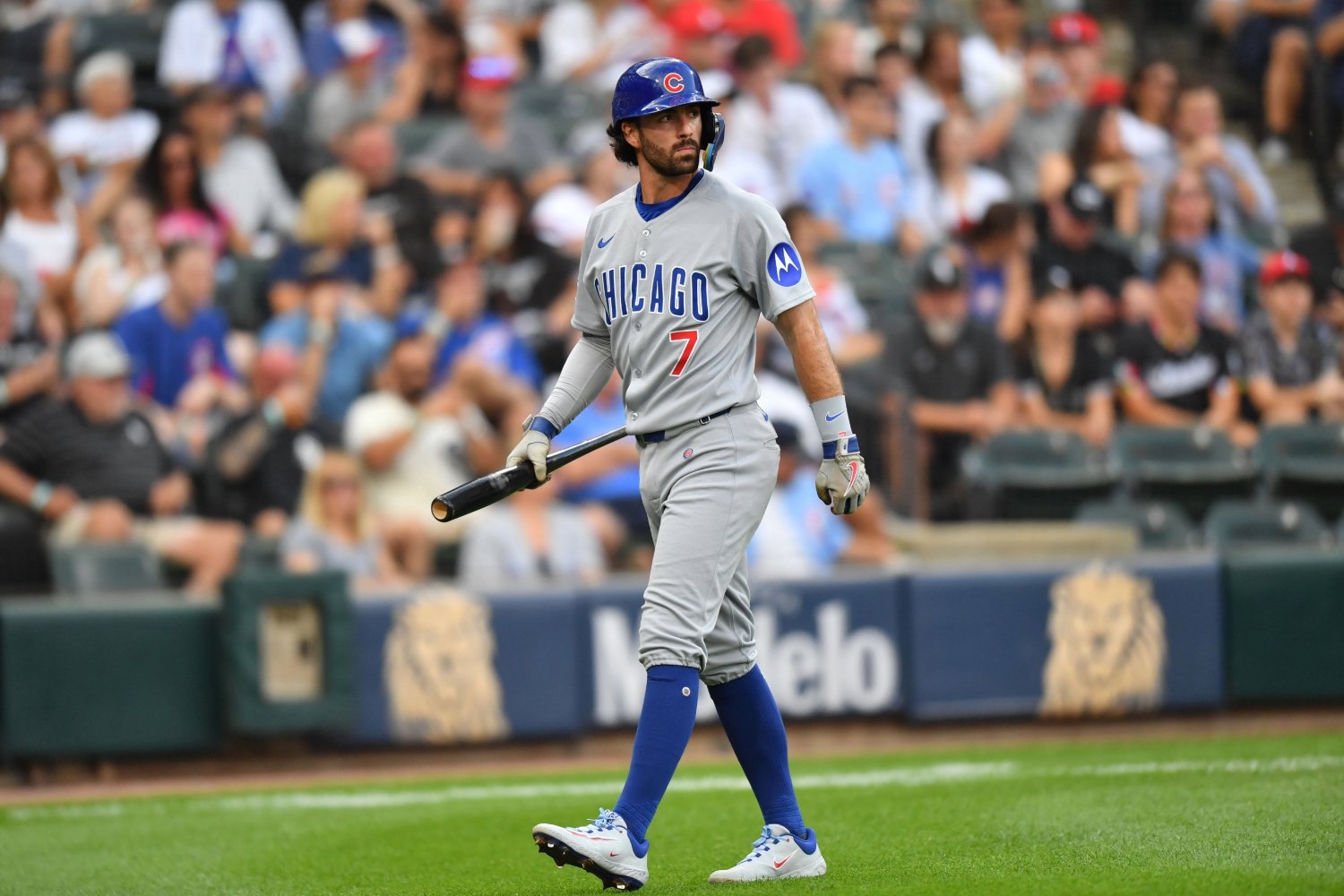 As we come upon the completion of Dansby Swanson's third full season as a member of the Chicago Cubs, we know enough about certain areas of his offensive game to draw firm conclusions. The most sweeping observation about Swanson as a hitter is that there is a month-to-month variance in his performance. He's prone to incredibly torrid stretches of play that are quickly wiped out by the time he spends on the opposite end of the spectrum. Much of his inherent streakiness is borne out of a need to dial in on fastballs as a foundational component in his success. When he manages the zone and has a keen eye in matters of pitch type, he finds success. When he doesn't, he's generally expanding the zone in favor of only that pitch or just loses his grip on it altogether. We're currently seeing a version of Dansby Swanson that is entirely of the latter variety. Swanson's 2025 has been a disappointment on that side of the ball, even by his modest standards. His slash includes an average of .250, an on-base percentage of .297, and a slugging percentage of .415. His strikeout rate, at 28.0 percent, is the highest of his career, while a 6.6 percent walk rate represents his lowest. He's managed just enough power (.165 ISO) to stay relevant in a stat like wOBA (.308), but he's very obviously being pinned down by a bit of a mess in the approach department. It's something that's very easily reflected in his strikeout and walk numbers alone, on a month-to-month basis: March/April: 29.1 K%, 6.7 BB% May: 23.4 K%, 9.9 BB% June: 25.0 K%, 5.8 BB% July: 32.7 K%, 5.1 BB% August: 36.0 K%, 0.0 BB% Since May, the strikeout rate has been steadily increasing while the walk rate has decreased. Say whatever you want about a smaller sample through ten days in August (as of this writing), the fact that Swanson has yet to draw a walk in the month speaks to the absence of control he's been able to demonstrate over the strike zone the longer the year has worn on. It's not a complicated puzzle to solve, either. Swanson has been aggressive to a fault. Here is his swing rate between the months in 2025: Swanson is at a 58 percent swing rate this month. That's the highest of any Cub and three points higher than even Pete Crow-Armstrong. Worse yet, Swanson's chase habits have spun out of control: Like the swing rate, the chase rate has risen steadily over the course of the season. His current August rate, at 36.8, trails only Willi Castro among regulars and is 10 points higher than Crow-Armstrong. When you're sitting that far ahead of Crow-Armstrong, the actual poster child for aggression at the plate, in swings and chase, there's a rather serious problem developing. Earlier in the year, we noted that Swanson was dialing in on fastballs to the point where he was expanding the zone in pursuit of them. He recognized fastball out of the hand, and it didn't matter where it was landing in the zone. He was swinging either way. That's not entirely what's happening this time around, as Swanson is swinging at nearly 80 percent of off-speed pitches. It's one thing to be dedicated to a specific pitch type to a fault, but another entirely to ramp up the aggression on a pitch whose flavor doesn't historically lend itself to positive outcomes for the individual hitter. Where this is really biting Swanson is in the RISP game. The Cubs, as a collective, have been rather bad with runners in scoring position lately. It's one of the primary factors in driving their offense into the ground and leading to this gap with Milwaukee in the National League Central standings. But Swanson has been an affront to the lineup in such situations. Among regulars, only Crow-Armstrong and Seiya Suzuki have more plate appearances with runners in scoring position than Swanson's 129. His slash in those moments is .174/.227/.261. His wRC+ is a mere 33. The only names below him on the overall leaderboard in the latter department are ones like Gage Workman, Jon Berti, Nicky Lopez, and... Colin Rea. It certainly doesn't help—and is very much indicative of the problem at large—that his strikeout rate balloons to 33.3 in those 129 opportunities (five points higher than Crow-Armstrong, for what it's worth). Last week, we discussed the problems permeating the Cubs' lineup in matters of the approach. A handful of key hitters have been losing their grip on their own respective approaches, leading to a sharp decline in quality contact. The difference is that Dansby Swanson has never really had a grasp of it this year. We wrote about strikeout numbers piling up in April. The issues there have only compounded and created a spiral from which Swanson has never given himself an opportunity to emerge. That doesn't inspire a lot of confidence that it can be fixed before the regular season's end. With the other regulars, there's at least a baseline to which they can return. Swanson's baseline now exists as a distant memory which not only leaves him as a sustained weak link in the lineup barring a significant change, but a possibly untenable presence in it beyond the remainder of this season.
 -
Image courtesy of © David Banks-Imagn Images There's something fairly... agonizing about watching a team endure a stretch like the one in which the Chicago Cubs find themselves currently mired in. They've spent the 2025 campaign as one of the league's best offensive teams, yes. But. the days since the All-Star break have shown another, more intolerable side of what it looks like when offensive ineptitude strikes. The full-season leaderboard has the Cubs living among the elite. They're second in runs scored (581), third in wOBA (.330), and third in isolated power (.186). Their strikeout rate (20.3 percent), walk rate (8.8 percent), and baserunning acumen (7.6 BsR) all sit in the league's top 10. At 23.9 fWAR, no team has gotten more total value out of their position player group than the Cubs have this year. July 20 represented something of a shift for many of the team's regulars, however. That date, in itself, does not bear any special significance. But, it was as close as we could come to an inflection point for when this team started to struggle to score runs. Consider where the team stands over that two-ish week stretch. They're 21st in the league in runs scored (59 or 2.8 per game), 19th in on-base percentage (.311), and 24th in wOBA (.303). They've slipped to middle-of-the-road in each of their strikeout rate (23.0 percent) and walk rate (8.4 percent) while sitting 24th in ISO (.135). Where the team has made their hay for the whole season — at least when the offense is humming — is largely in the approach. They have one of the league's lowest chase rates (30.3 percent) against the fourth-highest in-zone swing rate (69.9 percent). Only five teams make contact at a higher rate than the Cubs (78.6 percent). They haven't made particularly hard contact, but they haven't had to. Instead, they traded bat speed for competitive swings and efficiency in squaring up contact. It was an idea we explored back at the beginning of June. At that point, you weren't going to find a Cub near the top of the bat speed leaderboard. But, the team was generating more squared-up contact than 26 of the teams in Major League Baseball. This is what that leaderboard looks like for the whole year to date, with the x-axis representing bat speed and the y-axis showcasing squared-up contact: This is just a visual of the same idea; slow (and short) swings that create quality contact courtesy of their ability to be selective at the plate. Since July 20, though, that ability to generate such contact with any regularity has disappeared: The Cubs' bats remain slow, but they've lost their way in squaring up the baseball. The source of why, however, is something of a mystery. The team has actually cut their chase rate (29.7) and bumped their zone swing rate ever-so-slightly (70.1). They're making slightly less contact (77.0), but it's a negligible difference. Where there's a stark contrast is in the quality of contact. Even the Cubs' modest 39.7 Hard-Hit% from the full year is down to 35.9; only Houston has a lower rate over this stretch than the Cubs. That's not nothing. All of that information does lend itself to a fairly simple explanation as to why these struggles are occurring. Roughly 80 percent of the team's contact has been a groundball or a fly ball. When you compound that with pretty soft contact overall, you're not going to find a lot of batted ball luck. The Cubs are at a .293 BABIP over this stretch. That part is clear-cut. How this is happening, however, represents a different question entirely. The approach hasn't really changed, but they've been stripped of any sort of efficiency in the type of contact they're making. This is the part where we break from the collective and start to look at the biggest culprits of the team's recent offensive woes. Here is where the Cubs sit as individuals in matters of bat speed and squared-up contact: The important thing isn't so much the individual numbers but the fact that almost everyone is at or above the average threshold in matters of squared-up contact. Dansby Swanson toeing the line and Ian Happ residing below it are not surprising considering the stretches we've seen each work through this year. Nor is Pete-Crow Armstrong given lack of contact against a high volume of swings. You kind of just have to take that for what it is at this point. For the most part, though, that's a number of Cubs faring well in creating efficient contact. It's also a stark contrast the the past couple of weeks: Note how much that horizontal red line shifted between the two visuals. Nico Hoerner continues to thrive in the efficient contact game. Kyle Tucker continues to generate something in the midst of struggles (though his inability to elevate is worthy of a separate discussion). Willi Castro has been in Chicago for five minutes. So, basically with the exception of Happ working his way to something respectable in efficiency, the party is really transpiring below that line, with mediocre outcomes for a number of different Cubs: Michael Busch, Carson Kelly, Seiya Suzuki, Crow-Armstrong, and Swanson. That this is the particular group is hardly a surprise for anyone watching the Cubs over these last two weeks. Busch is at a 28 wRC+ since July 20. Suzuki is at 42. Kelly and Swanson check in at 82 and 64, respectively. Crow-Armstrong is generating positive outcomes when he does make contact (sort of an issue lately), though, so he won't factor too much in the discussion here. Let's talk about the rest of that group: Busch's full-season swing rate (46.9 percent) is up 50.3 percent in this more recent stretch. His contact has shrunk from 75.9 percent to 68.8 while the whiff rate has jumped from 11.3 percent to 15.7. Suzuki has taken sort of the opposite approach. His swing rate over the last two weeks is down to just 36.1 (down from 41.6), and his contact rate is down about three percent, at 74.0. Kelly looks mostly similar, but he's been swinging at off-speed pitches at a higher rate the last two weeks. That's the pitch type against which he generates the least amount of quality contact. Swanson is a whole mess. His 35.4 chase rate is up nearly eight percent from his full-season rate, while his whiff rate has ballooned about five percent in its own right to 19.2 percent. There isn't a whole lot redeemable happening there. That all tells us that, above all, these approaches are a mess. Busch has expanded his zone at a higher rate and lost that sense of maturity as a hitter that we watched him develop since the start of last year. Suzuki has represented the inverse in becoming too patient. Kelly has a pitch type issue and Swanson has a *gestures broadly at everything* issue. The bad news is that juxtaposing this with the other problems manifesting within the Cubs lineup (Tucker's struggles with elevation, Crow-Armstrong swinging at just about everything even more than usual, etc.) is going to lead to the current stretch in which we see. The good news is that these problems appear to be entirely fixable. It's a reevaluation of the approach that's needed. Of course, the other bad news is that multiple hitters need to revamp their approaches effectively at the same time in order for the Cubs to rebound from this two-week period. Offenses ebb and flow over the course of a major league season. It's a natural part of the game. In this case, though, it's going to require the majority of the Cubs lineup to enhance their own individual situations in order to get back to the flow part of the adage. View full article
-
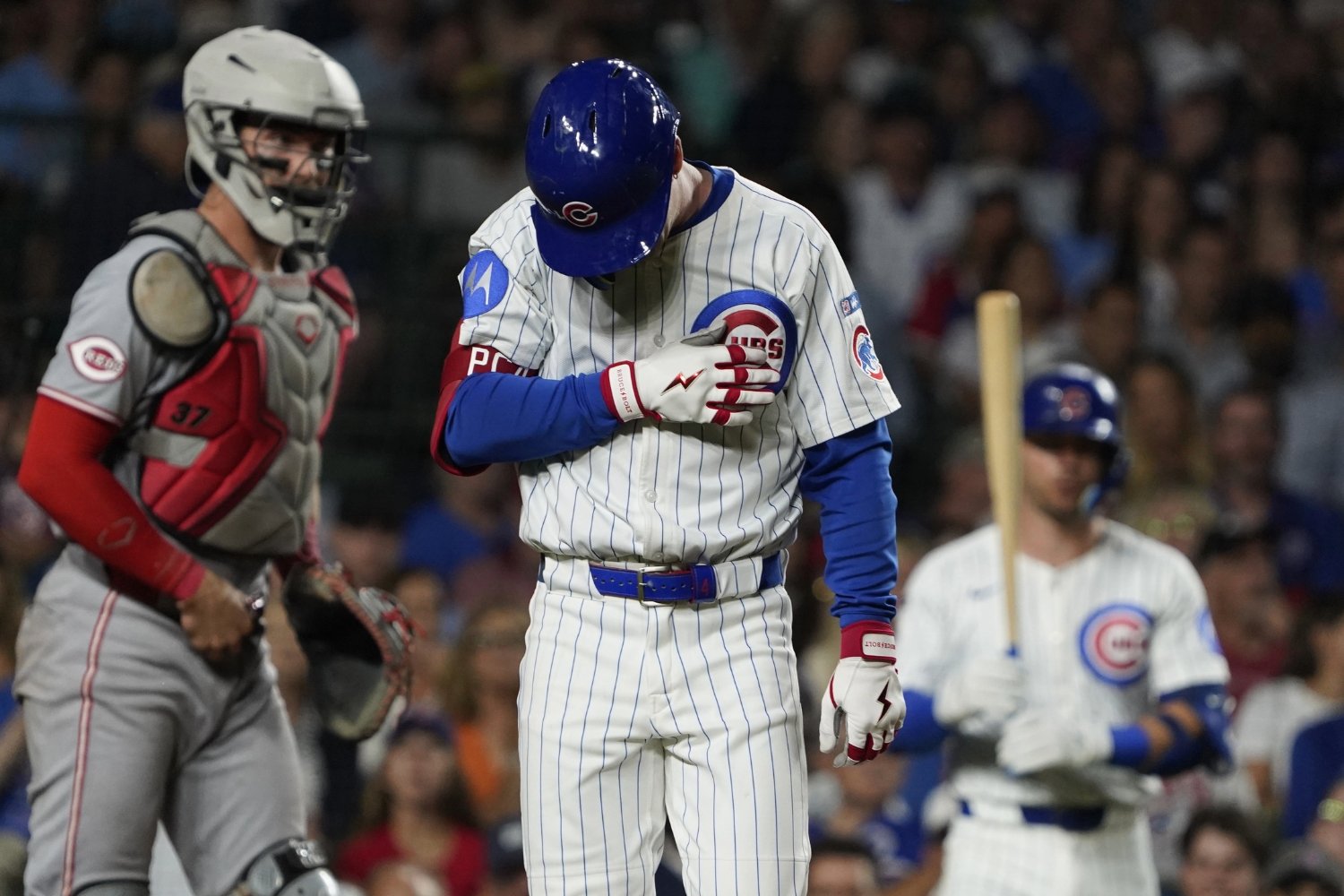 There's something fairly... agonizing about watching a team endure a stretch like the one in which the Chicago Cubs find themselves currently mired in. They've spent the 2025 campaign as one of the league's best offensive teams, yes. But. the days since the All-Star break have shown another, more intolerable side of what it looks like when offensive ineptitude strikes. The full-season leaderboard has the Cubs living among the elite. They're second in runs scored (581), third in wOBA (.330), and third in isolated power (.186). Their strikeout rate (20.3 percent), walk rate (8.8 percent), and baserunning acumen (7.6 BsR) all sit in the league's top 10. At 23.9 fWAR, no team has gotten more total value out of their position player group than the Cubs have this year. July 20 represented something of a shift for many of the team's regulars, however. That date, in itself, does not bear any special significance. But, it was as close as we could come to an inflection point for when this team started to struggle to score runs. Consider where the team stands over that two-ish week stretch. They're 21st in the league in runs scored (59 or 2.8 per game), 19th in on-base percentage (.311), and 24th in wOBA (.303). They've slipped to middle-of-the-road in each of their strikeout rate (23.0 percent) and walk rate (8.4 percent) while sitting 24th in ISO (.135). Where the team has made their hay for the whole season — at least when the offense is humming — is largely in the approach. They have one of the league's lowest chase rates (30.3 percent) against the fourth-highest in-zone swing rate (69.9 percent). Only five teams make contact at a higher rate than the Cubs (78.6 percent). They haven't made particularly hard contact, but they haven't had to. Instead, they traded bat speed for competitive swings and efficiency in squaring up contact. It was an idea we explored back at the beginning of June. At that point, you weren't going to find a Cub near the top of the bat speed leaderboard. But, the team was generating more squared-up contact than 26 of the teams in Major League Baseball. This is what that leaderboard looks like for the whole year to date, with the x-axis representing bat speed and the y-axis showcasing squared-up contact: This is just a visual of the same idea; slow (and short) swings that create quality contact courtesy of their ability to be selective at the plate. Since July 20, though, that ability to generate such contact with any regularity has disappeared: The Cubs' bats remain slow, but they've lost their way in squaring up the baseball. The source of why, however, is something of a mystery. The team has actually cut their chase rate (29.7) and bumped their zone swing rate ever-so-slightly (70.1). They're making slightly less contact (77.0), but it's a negligible difference. Where there's a stark contrast is in the quality of contact. Even the Cubs' modest 39.7 Hard-Hit% from the full year is down to 35.9; only Houston has a lower rate over this stretch than the Cubs. That's not nothing. All of that information does lend itself to a fairly simple explanation as to why these struggles are occurring. Roughly 80 percent of the team's contact has been a groundball or a fly ball. When you compound that with pretty soft contact overall, you're not going to find a lot of batted ball luck. The Cubs are at a .293 BABIP over this stretch. That part is clear-cut. How this is happening, however, represents a different question entirely. The approach hasn't really changed, but they've been stripped of any sort of efficiency in the type of contact they're making. This is the part where we break from the collective and start to look at the biggest culprits of the team's recent offensive woes. Here is where the Cubs sit as individuals in matters of bat speed and squared-up contact: The important thing isn't so much the individual numbers but the fact that almost everyone is at or above the average threshold in matters of squared-up contact. Dansby Swanson toeing the line and Ian Happ residing below it are not surprising considering the stretches we've seen each work through this year. Nor is Pete-Crow Armstrong given lack of contact against a high volume of swings. You kind of just have to take that for what it is at this point. For the most part, though, that's a number of Cubs faring well in creating efficient contact. It's also a stark contrast the the past couple of weeks: Note how much that horizontal red line shifted between the two visuals. Nico Hoerner continues to thrive in the efficient contact game. Kyle Tucker continues to generate something in the midst of struggles (though his inability to elevate is worthy of a separate discussion). Willi Castro has been in Chicago for five minutes. So, basically with the exception of Happ working his way to something respectable in efficiency, the party is really transpiring below that line, with mediocre outcomes for a number of different Cubs: Michael Busch, Carson Kelly, Seiya Suzuki, Crow-Armstrong, and Swanson. That this is the particular group is hardly a surprise for anyone watching the Cubs over these last two weeks. Busch is at a 28 wRC+ since July 20. Suzuki is at 42. Kelly and Swanson check in at 82 and 64, respectively. Crow-Armstrong is generating positive outcomes when he does make contact (sort of an issue lately), though, so he won't factor too much in the discussion here. Let's talk about the rest of that group: Busch's full-season swing rate (46.9 percent) is up 50.3 percent in this more recent stretch. His contact has shrunk from 75.9 percent to 68.8 while the whiff rate has jumped from 11.3 percent to 15.7. Suzuki has taken sort of the opposite approach. His swing rate over the last two weeks is down to just 36.1 (down from 41.6), and his contact rate is down about three percent, at 74.0. Kelly looks mostly similar, but he's been swinging at off-speed pitches at a higher rate the last two weeks. That's the pitch type against which he generates the least amount of quality contact. Swanson is a whole mess. His 35.4 chase rate is up nearly eight percent from his full-season rate, while his whiff rate has ballooned about five percent in its own right to 19.2 percent. There isn't a whole lot redeemable happening there. That all tells us that, above all, these approaches are a mess. Busch has expanded his zone at a higher rate and lost that sense of maturity as a hitter that we watched him develop since the start of last year. Suzuki has represented the inverse in becoming too patient. Kelly has a pitch type issue and Swanson has a *gestures broadly at everything* issue. The bad news is that juxtaposing this with the other problems manifesting within the Cubs lineup (Tucker's struggles with elevation, Crow-Armstrong swinging at just about everything even more than usual, etc.) is going to lead to the current stretch in which we see. The good news is that these problems appear to be entirely fixable. It's a reevaluation of the approach that's needed. Of course, the other bad news is that multiple hitters need to revamp their approaches effectively at the same time in order for the Cubs to rebound from this two-week period. Offenses ebb and flow over the course of a major league season. It's a natural part of the game. In this case, though, it's going to require the majority of the Cubs lineup to enhance their own individual situations in order to get back to the flow part of the adage.
 -
Willi Castro is the Ultimate Problem-Solver for 2025 Chicago Cubs
RandallPnkFloyd posted an article in Cubs
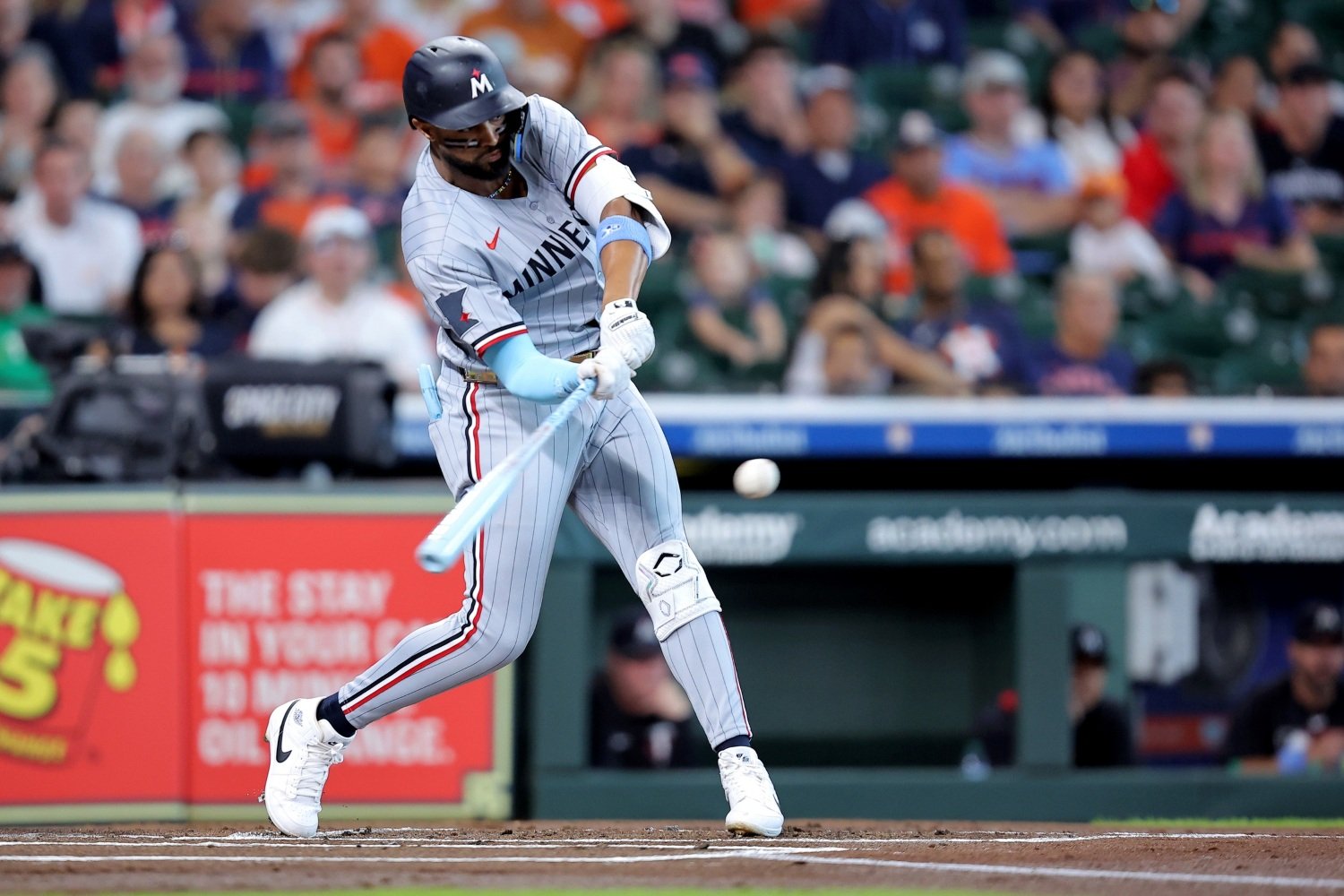 The Chicago Cubs have had 17 players record at least five plate appearances in 2025. Of those 17, eight fall below the threshold of a 100 wRC+ that signifies average performance. Two of those eight are starters (Dansby Swanson, Matt Shaw), and next on the list is Moisés Ballesteros, who has all of 20 plate appearances to his name. It probably isn't too difficult an exercise to predict the next five names you'd see on that list. Two of the five are no longer in the organization (Gage Workman and Nicky Lopez). Another (Vidal Bruján) is in limbo, after the Cubs designated him for assignment earlier this week. That leaves Justin Turner and Jon Berti. Across those five players, you're looking at 204 plate appearances for the year. The average wRC+? About 42. Even if you wanted to isolate it specifically to the three who have been on the roster most of the year, you're still looking at a 51 aggregate wRC+. This is all to say that the Cubs' bench has been, objectively, quite bad in. Catcher is obviously an entirely different conversation, as Carson Kelly, Miguel Amaya, and Reese McGuire have averaged a 126 wRC+ in an occasionally ambiguous timeshare. But as far as those who do most of their work in fair territory, it's been difficult to rationalize the playing of any of the team's bench players. Luckily, to this point, Craig Counsell hasn't been forced into using his bench all that much. In any case, enter Willi Castro. Aside from a bopper like Eugenio Suárez, Castro represented perhaps the most appealing position player for the Cubs ahead of the 2025 deadline, especially when you consider the context of the roster. It's not as if the team had many spots where they had flexibility to upgrade. They were set across the infield, set behind the plate, and set at three of the four infield spots. Matt Shaw's first-half struggles with the stick provided one of the only lanes for a potential upgrade. Even there, though, it was sort of Suárez or bust, as the third base market didn't feature much upside beyond him. Castro, though, represents exactly the type of player that this roster needs: a versatile bench piece who brings actual value with the bat. With Minnesota this year, Castro has appeared at six different positions (seven, if you want to include the single inning he pitched). His positional totals on the infield read: 224 innings at second base, 74 innings at third, and 26 at shortstop. Across the three outfield spots, he's gone for 252 innings in left field and 156 in right, with just one inning in center. It may be worth noting, however, that he received a much more sizable chunk of time last year at the two spots where he appeared the least for the Twins this year. In 2024, Castro was at short for over 460 innings and spent over 200 in center. That Minnesota chose to roll him out on fewer occasions at those two spots speaks to his defensive shortcomings at the two premium positions. His Fielding Run Value at shortstop for his career (1,123 innings) reads -3, while his FRV in center (594.2 innings) checks in at -2. Ultimately, neither position is where we'll see Castro ply his trade for the Cubs with any sort of frequency, given the presence of Dansby Swanson('s glove) and Pete Crow-Armstrong at the two spots, respectively. That lends some clarity as to how Castro could best be utilized in this lineup. A central concept for Craig Counsell will be to run Castro out at third base. While Shaw has ascended since the All-Star break, Counsell has shown he likes to give his rookie the occasional off day, depending on the matchup. With Castro as a switch-hitter, there's plenty of potential for him to get in on the action as a left-handed complement to Shaw. It wouldn't be a traditional platoon, but could prove a solid setup. What you lose on the defensive side—though Castro was a much better defender there in the two years before this—you get back at the plate. While Castro doesn't offer as much impact as a lefty swinger, his keen approach has resulted in an 11.5% walk rate in 2025, so you're getting some value on the on-base side. In terms of starting potential, there's also an argument to be made for regular work in left field. If the eye test wasn't enough to know about Ian Happ's lackluster production vs. southpaws, his 104 wRC+ and .122 isolated power certainly are. Castro stands as a contrast, offering a 131 wRC+ and .222 ISO against such pitchers. Counsell has already shown a willingness to move Happ down in the lineup based on production, so it stands to reason that he'd be willing to do so in matchup plays. Those are two very different scenarios that offer very clear opportunities for Castro to work his way into the lineup. And those are just the starting versions. There are a number of ways to get creative, besides. Either of the above scenarios late in the game? Maybe Castro gives you a better shot at a desirable outcome. A pinch-running situation? Castro has nine steals (14 in 2024). An unfavorable Dansby Swanson matchup during one of Swanson's periods of offensive turmoil? Castro might give you a little more there, too, even if that one (wherein you hit him for Swanson, have him take over at the keystone, and flip Nico Hoerner over to shortstop) might be a stretch. The beauty of a player like Castro is that you can insert him almost anywhere, at any point, and receive competence in return. That's exactly what the Cubs have lacked out of their bench all year. In Castro, they not only acquired competence, but gained the chance to spread it just about everywhere.
 -
Image courtesy of © Erik Williams-Imagn Images The Chicago Cubs have had 17 players record at least five plate appearances in 2025. Of those 17, eight fall below the threshold of a 100 wRC+ that signifies average performance. Two of those eight are starters (Dansby Swanson, Matt Shaw), and next on the list is Moisés Ballesteros, who has all of 20 plate appearances to his name. It probably isn't too difficult an exercise to predict the next five names you'd see on that list. Two of the five are no longer in the organization (Gage Workman and Nicky Lopez). Another (Vidal Bruján) is in limbo, after the Cubs designated him for assignment earlier this week. That leaves Justin Turner and Jon Berti. Across those five players, you're looking at 204 plate appearances for the year. The average wRC+? About 42. Even if you wanted to isolate it specifically to the three who have been on the roster most of the year, you're still looking at a 51 aggregate wRC+. This is all to say that the Cubs' bench has been, objectively, quite bad in. Catcher is obviously an entirely different conversation, as Carson Kelly, Miguel Amaya, and Reese McGuire have averaged a 126 wRC+ in an occasionally ambiguous timeshare. But as far as those who do most of their work in fair territory, it's been difficult to rationalize the playing of any of the team's bench players. Luckily, to this point, Craig Counsell hasn't been forced into using his bench all that much. In any case, enter Willi Castro. Aside from a bopper like Eugenio Suárez, Castro represented perhaps the most appealing position player for the Cubs ahead of the 2025 deadline, especially when you consider the context of the roster. It's not as if the team had many spots where they had flexibility to upgrade. They were set across the infield, set behind the plate, and set at three of the four infield spots. Matt Shaw's first-half struggles with the stick provided one of the only lanes for a potential upgrade. Even there, though, it was sort of Suárez or bust, as the third base market didn't feature much upside beyond him. Castro, though, represents exactly the type of player that this roster needs: a versatile bench piece who brings actual value with the bat. With Minnesota this year, Castro has appeared at six different positions (seven, if you want to include the single inning he pitched). His positional totals on the infield read: 224 innings at second base, 74 innings at third, and 26 at shortstop. Across the three outfield spots, he's gone for 252 innings in left field and 156 in right, with just one inning in center. It may be worth noting, however, that he received a much more sizable chunk of time last year at the two spots where he appeared the least for the Twins this year. In 2024, Castro was at short for over 460 innings and spent over 200 in center. That Minnesota chose to roll him out on fewer occasions at those two spots speaks to his defensive shortcomings at the two premium positions. His Fielding Run Value at shortstop for his career (1,123 innings) reads -3, while his FRV in center (594.2 innings) checks in at -2. Ultimately, neither position is where we'll see Castro ply his trade for the Cubs with any sort of frequency, given the presence of Dansby Swanson('s glove) and Pete Crow-Armstrong at the two spots, respectively. That lends some clarity as to how Castro could best be utilized in this lineup. A central concept for Craig Counsell will be to run Castro out at third base. While Shaw has ascended since the All-Star break, Counsell has shown he likes to give his rookie the occasional off day, depending on the matchup. With Castro as a switch-hitter, there's plenty of potential for him to get in on the action as a left-handed complement to Shaw. It wouldn't be a traditional platoon, but could prove a solid setup. What you lose on the defensive side—though Castro was a much better defender there in the two years before this—you get back at the plate. While Castro doesn't offer as much impact as a lefty swinger, his keen approach has resulted in an 11.5% walk rate in 2025, so you're getting some value on the on-base side. In terms of starting potential, there's also an argument to be made for regular work in left field. If the eye test wasn't enough to know about Ian Happ's lackluster production vs. southpaws, his 104 wRC+ and .122 isolated power certainly are. Castro stands as a contrast, offering a 131 wRC+ and .222 ISO against such pitchers. Counsell has already shown a willingness to move Happ down in the lineup based on production, so it stands to reason that he'd be willing to do so in matchup plays. Those are two very different scenarios that offer very clear opportunities for Castro to work his way into the lineup. And those are just the starting versions. There are a number of ways to get creative, besides. Either of the above scenarios late in the game? Maybe Castro gives you a better shot at a desirable outcome. A pinch-running situation? Castro has nine steals (14 in 2024). An unfavorable Dansby Swanson matchup during one of Swanson's periods of offensive turmoil? Castro might give you a little more there, too, even if that one (wherein you hit him for Swanson, have him take over at the keystone, and flip Nico Hoerner over to shortstop) might be a stretch. The beauty of a player like Castro is that you can insert him almost anywhere, at any point, and receive competence in return. That's exactly what the Cubs have lacked out of their bench all year. In Castro, they not only acquired competence, but gained the chance to spread it just about everywhere. View full article
-
Did Jed Hoyer Earn His Extension According To His Own Criteria?
RandallPnkFloyd posted an article in Cubs
 When the Chicago Cubs announced a multi-year extension for president of baseball operations Jed Hoyer on Monday, my initial reaction was... "sure." That was followed by "okay," which was succeeded by "fine." In short, it was a fairly muted reaction. Judging by the lack of acute polarization across social media from a fan base that always finds ways to deeply meet each end of the emotional spectrum upon any move from the franchise, it sort of speaks to the magnitude of the move. Or, perhaps, the lack thereof. It's a move that ultimately signals that Tom Ricketts and the ownership group are satisfied with the work Hoyer has turned in since 2020, with the team doing enough thus far in 2025 to merit a longer runway with which to continue to work. Lacking the candor of his predecessor, Theo Epstein, Hoyer's word salad-y defense of apparently constant payroll constraints was enough to compensate for the absence of a postseason appearance since his promotion. Not that there haven't been victories for Hoyer within the organization. It was the Hoyer-led front office that acquired Pete Crow-Armstrong while he was plying his trade in A ball. They signed Seiya Suzuki and Shota Imanaga. They acquired a post-hype Michael Busch and a present-hype Kyle Tucker (sans extension at present, of course). To say it's been a mixed bag, though, would be appropriately euphemistic. It's been entirely imperfect and entirely underwhelming, given the aforementioned lack of playoff success. We don't need to rehash that here, however; Matt Trueblood already covered the basics in his initial writeup of the news. As a chief of baseball ops, your game is winning. Hoyer hasn't done enough, so we can state with a certain level of objectivity that he has not succeeded in the role. What is worth exploring, though, is whether Hoyer has, in fact, found success by his own standards, and in his own words. Let's start with a softball from his initial press conference: That particular quote was in reference to the 2020 group. That team still featured many of the important names from the championship squad of 2016. We know how things unfolded the following season. By the end of that winter, Kyle Schwarber was non-tendered. Each of Anthony Rizzo, Kris Bryant, and Javier Báez was traded during the 2021 campaign. Of those from the organization's last (technical) postseason appearance, only Ian Happ and Nico Hoerner remain. Each player signed a three-year extension in 2023. It's unclear whether those were the players to whom Hoyer was referring. My assumption, however, is that he was talking more about extending the very guys he ended trading instead. Failing to extend (and instead trading away) multiple franchise icons didn't get his tenure off to the greatest of starts. Schwarber has gone on to thrive in subsequent stops, and while none of the other three remotely reached the same heights they did on the North Side, those initial comments still stand as an indicator of some failure from the jump. Here's another, more striking quote, from that same press conference: This is the big one, because this has been the driver of seemingly every decision Hoyer has made atop the Cubs' front office. Budget constraints notwithstanding, Hoyer has constantly erred on the side of playing things conservatively. Maintaining an eye on the present and the future simultaneously is a difficult needle to thread, but it's never felt like the present was as much of a priority as the future. Under Hoyer, the Cubs have regularly chosen to avoid the big move or the notable free-agent signing. Before Kyle Tucker, there was an apprehension in making the big trade that many of their big-market counterparts are more willing to execute. Opportunities were there, though. It was that the Cubs were content to let those opportunities pass, in the name of not even risking mortgaging the future. And such failure isn't isolated to the "big" moves. There has been a consistent struggle to build on the margins that has left the Cubs in a sort of purgatory for much of the last five years. What Hoyer has done, however, is keep that other eye on the future. Under his supervision, the team has seen improvements in the draft (Matt Shaw, Cade Horton) and in the pitching infrastructure. It's not that Hoyer alone is responsible for this, but his leadership has certainly been a factor in some of the more foundational components of organizational operations. The proverbial needle hasn't quite been threaded, but success in one arena is better than success in zero arenas, I suppose. And lastly, here are a few bits from his comments last winter: (Prior to the Kyle Tucker trade) (Still pre-Kyle Tucker trade) (Post Kyle Tucker trade) On one hand, there's a lot of earnest success here. Hoyer said, straight up, that the team wasn't interested in marginal improvements. He very much proved that in acquiring an elite hitter in Tucker, who has come as advertised for almost all of 2025. At the same time, it's also an imperfect measure. If we wanted to get cynical, we could point out that he essentially ignored the margins in filling out the rest of the roster on the positional side. Handing the third base job to Shaw and bringing in the likes of Justin Turner and Vidal Bruján for bench jobs doesn't jibe with a Tucker acquisition in matters of actually building out a contending roster. I'd never call something like trading for Kyle Tucker a half-measure. It's obviously not. I'm just pointing out the words as Hoyer said them. The Tucker deal fit the criteria of a "hard" deal that Hoyer described in the middle quote. Parting with Cam Smith after he thrived almost immediately upon his selection in the 2024 MLB Draft couldn't have been easy. It was, however, necessary, and a sharp deviation from the type of conservative activity we'd seen from Hoyer in the years prior. If we're taking his words at face value, though, he did accomplish what he set out to do: set the Cubs up for an exciting future and exciting present (and here it's probably worth noting that signing Kyle Tucker long-term would go a long way toward solidifying those comments). The outset of Jed Hoyer's tenure likely wouldn't be deemed a success by his own criteria. He jettisoned multiple franchise icons despite an interest in retaining "some" of them (and we have to assume he was referring to some of that core group rather than a Happ or a Hoerner). As it progressed, though, we might be able to make a case for it. He's helped position the organization into solid standing for the medium-term future. The system remains in good shape, and the infrastructure is more robust than it was, particularly on the pitching side. But he hasn't threaded that needle. We've heard about the needle more frequently than any other talking point from the Cubs' president. Compounding present winning with future winning. By that criteria alone, it's hard to outright justify Hoyer's new deal, from his perspective or our own.
 -
Image courtesy of © Kamil Krzaczynski-Imagn Images When the Chicago Cubs announced a multi-year extension for president of baseball operations Jed Hoyer on Monday, my initial reaction was... "sure." That was followed by "okay," which was succeeded by "fine." In short, it was a fairly muted reaction. Judging by the lack of acute polarization across social media from a fan base that always finds ways to deeply meet each end of the emotional spectrum upon any move from the franchise, it sort of speaks to the magnitude of the move. Or, perhaps, the lack thereof. It's a move that ultimately signals that Tom Ricketts and the ownership group are satisfied with the work Hoyer has turned in since 2020, with the team doing enough thus far in 2025 to merit a longer runway with which to continue to work. Lacking the candor of his predecessor, Theo Epstein, Hoyer's word salad-y defense of apparently constant payroll constraints was enough to compensate for the absence of a postseason appearance since his promotion. Not that there haven't been victories for Hoyer within the organization. It was the Hoyer-led front office that acquired Pete Crow-Armstrong while he was plying his trade in A ball. They signed Seiya Suzuki and Shota Imanaga. They acquired a post-hype Michael Busch and a present-hype Kyle Tucker (sans extension at present, of course). To say it's been a mixed bag, though, would be appropriately euphemistic. It's been entirely imperfect and entirely underwhelming, given the aforementioned lack of playoff success. We don't need to rehash that here, however; Matt Trueblood already covered the basics in his initial writeup of the news. As a chief of baseball ops, your game is winning. Hoyer hasn't done enough, so we can state with a certain level of objectivity that he has not succeeded in the role. What is worth exploring, though, is whether Hoyer has, in fact, found success by his own standards, and in his own words. Let's start with a softball from his initial press conference: That particular quote was in reference to the 2020 group. That team still featured many of the important names from the championship squad of 2016. We know how things unfolded the following season. By the end of that winter, Kyle Schwarber was non-tendered. Each of Anthony Rizzo, Kris Bryant, and Javier Báez was traded during the 2021 campaign. Of those from the organization's last (technical) postseason appearance, only Ian Happ and Nico Hoerner remain. Each player signed a three-year extension in 2023. It's unclear whether those were the players to whom Hoyer was referring. My assumption, however, is that he was talking more about extending the very guys he ended trading instead. Failing to extend (and instead trading away) multiple franchise icons didn't get his tenure off to the greatest of starts. Schwarber has gone on to thrive in subsequent stops, and while none of the other three remotely reached the same heights they did on the North Side, those initial comments still stand as an indicator of some failure from the jump. Here's another, more striking quote, from that same press conference: This is the big one, because this has been the driver of seemingly every decision Hoyer has made atop the Cubs' front office. Budget constraints notwithstanding, Hoyer has constantly erred on the side of playing things conservatively. Maintaining an eye on the present and the future simultaneously is a difficult needle to thread, but it's never felt like the present was as much of a priority as the future. Under Hoyer, the Cubs have regularly chosen to avoid the big move or the notable free-agent signing. Before Kyle Tucker, there was an apprehension in making the big trade that many of their big-market counterparts are more willing to execute. Opportunities were there, though. It was that the Cubs were content to let those opportunities pass, in the name of not even risking mortgaging the future. And such failure isn't isolated to the "big" moves. There has been a consistent struggle to build on the margins that has left the Cubs in a sort of purgatory for much of the last five years. What Hoyer has done, however, is keep that other eye on the future. Under his supervision, the team has seen improvements in the draft (Matt Shaw, Cade Horton) and in the pitching infrastructure. It's not that Hoyer alone is responsible for this, but his leadership has certainly been a factor in some of the more foundational components of organizational operations. The proverbial needle hasn't quite been threaded, but success in one arena is better than success in zero arenas, I suppose. And lastly, here are a few bits from his comments last winter: (Prior to the Kyle Tucker trade) (Still pre-Kyle Tucker trade) (Post Kyle Tucker trade) On one hand, there's a lot of earnest success here. Hoyer said, straight up, that the team wasn't interested in marginal improvements. He very much proved that in acquiring an elite hitter in Tucker, who has come as advertised for almost all of 2025. At the same time, it's also an imperfect measure. If we wanted to get cynical, we could point out that he essentially ignored the margins in filling out the rest of the roster on the positional side. Handing the third base job to Shaw and bringing in the likes of Justin Turner and Vidal Bruján for bench jobs doesn't jibe with a Tucker acquisition in matters of actually building out a contending roster. I'd never call something like trading for Kyle Tucker a half-measure. It's obviously not. I'm just pointing out the words as Hoyer said them. The Tucker deal fit the criteria of a "hard" deal that Hoyer described in the middle quote. Parting with Cam Smith after he thrived almost immediately upon his selection in the 2024 MLB Draft couldn't have been easy. It was, however, necessary, and a sharp deviation from the type of conservative activity we'd seen from Hoyer in the years prior. If we're taking his words at face value, though, he did accomplish what he set out to do: set the Cubs up for an exciting future and exciting present (and here it's probably worth noting that signing Kyle Tucker long-term would go a long way toward solidifying those comments). The outset of Jed Hoyer's tenure likely wouldn't be deemed a success by his own criteria. He jettisoned multiple franchise icons despite an interest in retaining "some" of them (and we have to assume he was referring to some of that core group rather than a Happ or a Hoerner). As it progressed, though, we might be able to make a case for it. He's helped position the organization into solid standing for the medium-term future. The system remains in good shape, and the infrastructure is more robust than it was, particularly on the pitching side. But he hasn't threaded that needle. We've heard about the needle more frequently than any other talking point from the Cubs' president. Compounding present winning with future winning. By that criteria alone, it's hard to outright justify Hoyer's new deal, from his perspective or our own. View full article
-
 In the Chicago Cubs' final game before the All-Star break, Craig Counsell put his emerging first baseman in the top spot in the lineup. In the two games immediately coming out of it, Michael Busch was there once again. It's likely not a permanent solution; Counsell's need to rotate new faces in leadoff has more to do with Ian Happ's struggles than a desire to inject others into the role. But, the skill set Busch flashed last year has evolved into something entirely capable of handling such duty for as long as the Cubs might need. Busch's success in 2025 has unfolded in a very broad context but has come as the result of specific developments. Most notably, his ability to manage an approach and control the strike zone was something that became increasingly evident during his rookie year in '24. He's really dialed in that component of his game this year, though, which @Matthew Trueblood examined earlier this month. It's the approach that has served as the driver of Busch's success. "Success", in this case, is the reveal of an all-around hitter in a way that we maybe didn't anticipate last year. He's leading the team in average (.288) & wRC+ (159), is second in on-base percentage (.376), and is third in isolated power (.262). The same component keying his success this year (the approach) is the same one that could sustain a stint in the leadoff spot for however long the Cubs need. Ian Happ was able to exist at the team's top hitter purely on the merits of his own approach. However, the approach by which Happ lives manifests itself differently than that of Michael Busch. Happ relies on pure patience to create an on-base presence. His modest power has shrunk even more in '25 while his baserunning has regressed in a number of respects. What's impressive about Busch, though, is that he's able to utilize his approach to do some of the same things Happ does while, at the same time, offering much more upside. Happ's pitches per plate appearance this year is at 4.12, which ranks 30th in the league. Busch is at 4.01 P/PA (48th). For context, league average (per 600 plate appearances) is 3.86. Busch's overall swing rate (46.5 percent) and chase rate (27.6 percent) each check in about three percent higher than Happ. The difference in contact rate, however, is marginal. Busch's 77.0 Contact% comes in just about one percent behind Happ. Where the two hitters differ is in their ability to parlay that approach into something of value. When Busch has the chase rate tamped down, he's become increasingly dangerous: It's not a complicated concept. When the chase rate is down, Busch's overall value, reflected here by wOBA, is up. In those moments where he starts to expand the zone, then the value goes down. It's a clear trend. Not an uncommon one, mind you, but one which Busch has been able to maximize by limiting those moments of zone expansion. Happ, however, doesn't experience quite the same trend: This isn't so much an argument that Busch is a better hitter (or a better leadoff candidate) than Happ. Objectively, he's certainly the former. He could, ultimately, be the latter. Rather, the purpose is to showcase the difference between the two. Busch is able to incorporate his approach into a steady offensive output, both in power and contact. Happ, however, relies on his walk rate to prop up his output given the regression he's experienced in a handful of areas. In matters of the role itself, though, it's less about Happ and more about what Busch has been able to become in a short time for the Cubs. He improved the approach over the year in 2024. From May on last year, he was able to drop the strikeout rate but saw uneven outcomes. This year, he's spinning the patience into sustained outcomes. Because of that, Busch becomes an ideal candidate in the leadoff spot for the Cubs right now. We're not even talking about the sample, which is only three games (as of this writing). We're talking about skill set. Busch is able to provide much of the same on-base quality that Happ can, with only a slight decrease in the walks game. Where he compensates in his ability to create offense off the approach. Busch led off two of his three starts with a homer. That speaks to what he can provide in the role, for however long he serves it.
 -
Image courtesy of © David Banks-Imagn Images In the Chicago Cubs' final game before the All-Star break, Craig Counsell put his emerging first baseman in the top spot in the lineup. In the two games immediately coming out of it, Michael Busch was there once again. It's likely not a permanent solution; Counsell's need to rotate new faces in leadoff has more to do with Ian Happ's struggles than a desire to inject others into the role. But, the skill set Busch flashed last year has evolved into something entirely capable of handling such duty for as long as the Cubs might need. Busch's success in 2025 has unfolded in a very broad context but has come as the result of specific developments. Most notably, his ability to manage an approach and control the strike zone was something that became increasingly evident during his rookie year in '24. He's really dialed in that component of his game this year, though, which @Matthew Trueblood examined earlier this month. It's the approach that has served as the driver of Busch's success. "Success", in this case, is the reveal of an all-around hitter in a way that we maybe didn't anticipate last year. He's leading the team in average (.288) & wRC+ (159), is second in on-base percentage (.376), and is third in isolated power (.262). The same component keying his success this year (the approach) is the same one that could sustain a stint in the leadoff spot for however long the Cubs need. Ian Happ was able to exist at the team's top hitter purely on the merits of his own approach. However, the approach by which Happ lives manifests itself differently than that of Michael Busch. Happ relies on pure patience to create an on-base presence. His modest power has shrunk even more in '25 while his baserunning has regressed in a number of respects. What's impressive about Busch, though, is that he's able to utilize his approach to do some of the same things Happ does while, at the same time, offering much more upside. Happ's pitches per plate appearance this year is at 4.12, which ranks 30th in the league. Busch is at 4.01 P/PA (48th). For context, league average (per 600 plate appearances) is 3.86. Busch's overall swing rate (46.5 percent) and chase rate (27.6 percent) each check in about three percent higher than Happ. The difference in contact rate, however, is marginal. Busch's 77.0 Contact% comes in just about one percent behind Happ. Where the two hitters differ is in their ability to parlay that approach into something of value. When Busch has the chase rate tamped down, he's become increasingly dangerous: It's not a complicated concept. When the chase rate is down, Busch's overall value, reflected here by wOBA, is up. In those moments where he starts to expand the zone, then the value goes down. It's a clear trend. Not an uncommon one, mind you, but one which Busch has been able to maximize by limiting those moments of zone expansion. Happ, however, doesn't experience quite the same trend: This isn't so much an argument that Busch is a better hitter (or a better leadoff candidate) than Happ. Objectively, he's certainly the former. He could, ultimately, be the latter. Rather, the purpose is to showcase the difference between the two. Busch is able to incorporate his approach into a steady offensive output, both in power and contact. Happ, however, relies on his walk rate to prop up his output given the regression he's experienced in a handful of areas. In matters of the role itself, though, it's less about Happ and more about what Busch has been able to become in a short time for the Cubs. He improved the approach over the year in 2024. From May on last year, he was able to drop the strikeout rate but saw uneven outcomes. This year, he's spinning the patience into sustained outcomes. Because of that, Busch becomes an ideal candidate in the leadoff spot for the Cubs right now. We're not even talking about the sample, which is only three games (as of this writing). We're talking about skill set. Busch is able to provide much of the same on-base quality that Happ can, with only a slight decrease in the walks game. Where he compensates in his ability to create offense off the approach. Busch led off two of his three starts with a homer. That speaks to what he can provide in the role, for however long he serves it. View full article
-
Is Ian Happ a Victim of Circumstance or Stuck in a Mechanical Spiral?
RandallPnkFloyd posted an article in Cubs
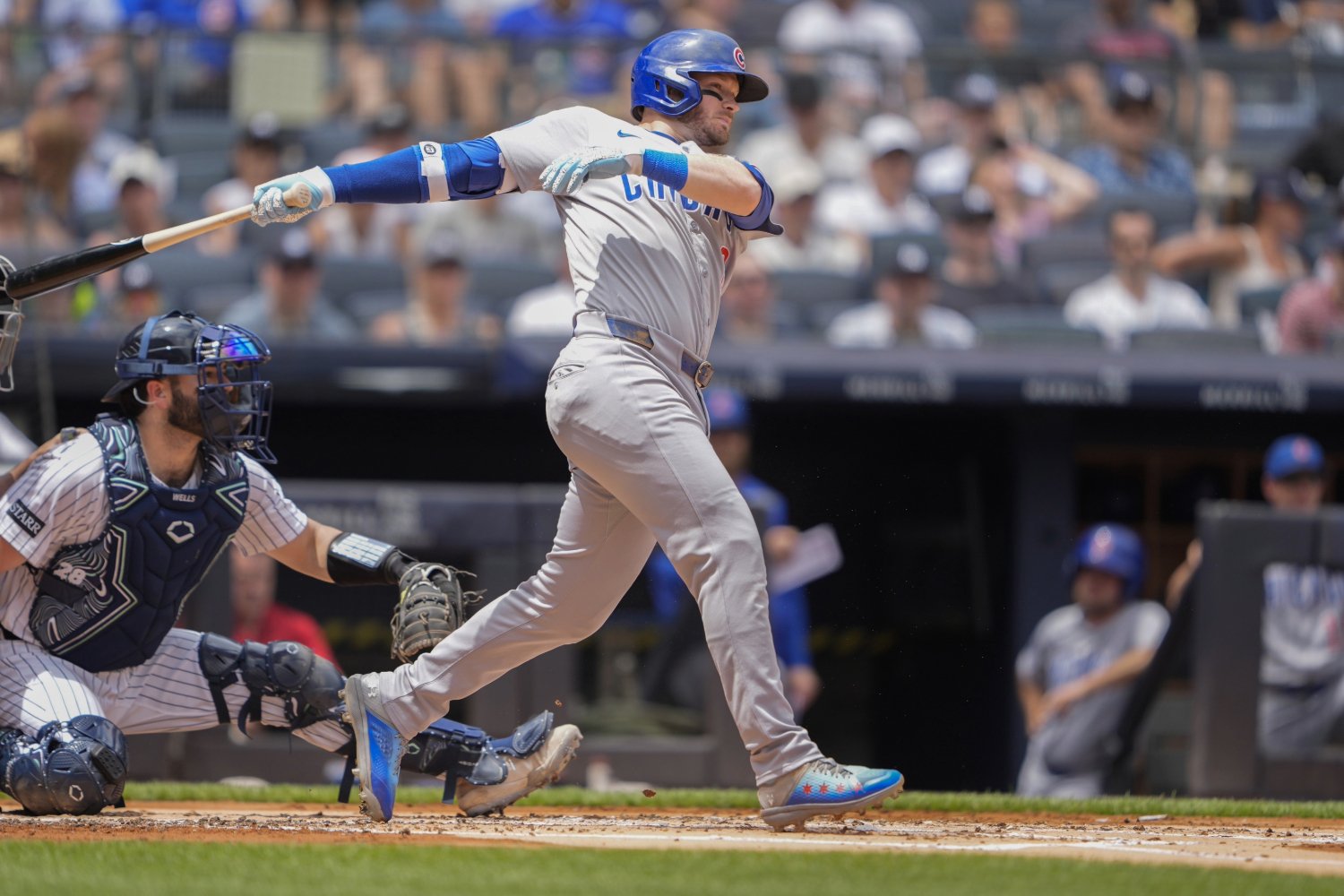 In an ideal world, Ian Happ represents the ideal leadoff hitter for the 2025 Chicago Cubs. Past iterations of Happ have indicated a player with consistent output, combining upper-tier plate discipline with competence on the basepaths. Even with modest power and limitations in the steals game, the on-base presence alone should be a boon for the bulk of the guys hitting behind him. Except, that hasn't been the case this year. A strong March & April aside, Happ is enduring his worst season since 2021. He's turned in a .312 wOBA, a 102 wRC+, and a slash line that goes .228/.326/.375. His isolated power sits at just .147. And those numbers include a legitimate power surge in June that saw Happ hit nine homers and post a .274 ISO. This, of course, doesn't even include the baserunning situation, where Happ has showcased legitimate regression. The situation has become untenable enough that Craig Counsell removed him from the top spot in the lineup for the three games prior to the All-Star break. In a vacuum, though, the numbers aren't particularly terrible. They're passable, really. If you were getting a .330-ish OBP and occasional power, you'd be happy enough with that considering the successes the Cubs have seen up and down the lineup. Instead, there's an issue in that the numbers have actually gotten worse as the season has worn on: If it weren't outright concerning, it would read as something actually fascinating. Happ started the year much the same as he generally has in years prior. His approach drove his production and allowed him to land as a technically-above-average bat (by wRC+) in March & April. If prior seasons were any indication, the power would come as the temperature warmed up. That very much did, but only while everything else fell off. Except the approach, that is, as Happ has been able to deploy his keen eye to prop up his numbers into something even remotely serviceable. Some of this can just read as the nature of baseball. It ebbs, it flows, and it eventually evens out. At first blush, that could almost be the case, especially when you look at the BABIP column. However, the fact that performance trends don't look terribly favorable for Happ pulling himself out of this anytime soon does register as legitimately worrisome: Essentially, all you're getting at this point, in terms of actual production, is derived from the patience. Happ has maintained his ability to tamp down the swing rates and generate walks. But, he also isn't parlaying that patience into anything of value, other than the occasional walk. From here, we confront a couple of different issues in evaluating what the remainder of Happ's 2025 looks like. The first is simply examining how much of what we've seen from Happ can be attributed to bad luck versus some other element that is stifling his production. The expected statistics (xBA, xwOBA) do indicate Happ should be better than we've seen. We could also use the BABIP numbers to determine that. However, even those don't serve Happ on their own when you consider individual months. The xBA was at .225 and .235, respectively, in May & June, while the xwOBA checked in at .301 in May. We can broadly state, however, that Happ's production should be better based on the majority of the expected metrics. Another issue is Happ's nature as a switch hitter. Rather than look for issues in one swing, you're looking for issues in two. Not only that, but you're looking at different pitcher tendencies depending on handedness. It's a much more complex investigation than you might find with a hitter of one-handedness. And that's where things start to get really messy. Take, for example, Happ's attack angle. Swinging as a lefty, it's been intensely consistent this year: His right-handed swing, however, offers something entirely different: Happ's making contact at deeply different angles depending on the handedness in which he's operating. At the same time, even the swing path itself is prone to bouts of inconsistency in a different way. Here's Happ's swing path when swinging right-handed: That's a marginal change to begin with, but it's also stabilized as the season has worn on. You're getting a consistent swing path from Happ against lefties. Then, you look at the other side of the plate: It presents something entirely erratic but also something that makes a certain degree of sense. The inconsistency in the mechanics offers a possible explanation for why you're seeing so much variance in different aspects of Happ's game in '25. Not that there's clear-cut correlation, but the months with a flatter swing (April & June) from the left side of the plate, for example, offered higher barrel rates than the other two. His month of steepest attack angles (June) gave him his highest quality of contact from the right. Again, we're not necessarily seeing correlation, but it does offer at least some semblance of an explanation as to why Happ's been all over the map from a production standpoint, and neither side of the plate has been immune to it. There hasn't been a marked enough change in the approach in a given month to lead us to believe anything other than a mechanic issue could be the source of Happ's unfortunate luck. Sure, we could point to his emphasis on swinging at fastballs in June as a reason for his power output there, but that also doesn't offer up explanation for everything else happening underneath the surface across the months of data we've seen to this point. It's a soft conclusion to reach without correlation. But, considering just how all over the spectrum the batted ball types and the outcomes have been this year, a mechanical issue is really all we have to go off at this point. Which is why it probably makes sense for Craig Counsell to consider leaving Happ out of the top spot coming out of the break in favor of a more stable option, at least until he's able to regain some consistency on the mechanical side.
 -
Image courtesy of © Gregory Fisher-Imagn Images In an ideal world, Ian Happ represents the ideal leadoff hitter for the 2025 Chicago Cubs. Past iterations of Happ have indicated a player with consistent output, combining upper-tier plate discipline with competence on the basepaths. Even with modest power and limitations in the steals game, the on-base presence alone should be a boon for the bulk of the guys hitting behind him. Except, that hasn't been the case this year. A strong March & April aside, Happ is enduring his worst season since 2021. He's turned in a .312 wOBA, a 102 wRC+, and a slash line that goes .228/.326/.375. His isolated power sits at just .147. And those numbers include a legitimate power surge in June that saw Happ hit nine homers and post a .274 ISO. This, of course, doesn't even include the baserunning situation, where Happ has showcased legitimate regression. The situation has become untenable enough that Craig Counsell removed him from the top spot in the lineup for the three games prior to the All-Star break. In a vacuum, though, the numbers aren't particularly terrible. They're passable, really. If you were getting a .330-ish OBP and occasional power, you'd be happy enough with that considering the successes the Cubs have seen up and down the lineup. Instead, there's an issue in that the numbers have actually gotten worse as the season has worn on: If it weren't outright concerning, it would read as something actually fascinating. Happ started the year much the same as he generally has in years prior. His approach drove his production and allowed him to land as a technically-above-average bat (by wRC+) in March & April. If prior seasons were any indication, the power would come as the temperature warmed up. That very much did, but only while everything else fell off. Except the approach, that is, as Happ has been able to deploy his keen eye to prop up his numbers into something even remotely serviceable. Some of this can just read as the nature of baseball. It ebbs, it flows, and it eventually evens out. At first blush, that could almost be the case, especially when you look at the BABIP column. However, the fact that performance trends don't look terribly favorable for Happ pulling himself out of this anytime soon does register as legitimately worrisome: Essentially, all you're getting at this point, in terms of actual production, is derived from the patience. Happ has maintained his ability to tamp down the swing rates and generate walks. But, he also isn't parlaying that patience into anything of value, other than the occasional walk. From here, we confront a couple of different issues in evaluating what the remainder of Happ's 2025 looks like. The first is simply examining how much of what we've seen from Happ can be attributed to bad luck versus some other element that is stifling his production. The expected statistics (xBA, xwOBA) do indicate Happ should be better than we've seen. We could also use the BABIP numbers to determine that. However, even those don't serve Happ on their own when you consider individual months. The xBA was at .225 and .235, respectively, in May & June, while the xwOBA checked in at .301 in May. We can broadly state, however, that Happ's production should be better based on the majority of the expected metrics. Another issue is Happ's nature as a switch hitter. Rather than look for issues in one swing, you're looking for issues in two. Not only that, but you're looking at different pitcher tendencies depending on handedness. It's a much more complex investigation than you might find with a hitter of one-handedness. And that's where things start to get really messy. Take, for example, Happ's attack angle. Swinging as a lefty, it's been intensely consistent this year: His right-handed swing, however, offers something entirely different: Happ's making contact at deeply different angles depending on the handedness in which he's operating. At the same time, even the swing path itself is prone to bouts of inconsistency in a different way. Here's Happ's swing path when swinging right-handed: That's a marginal change to begin with, but it's also stabilized as the season has worn on. You're getting a consistent swing path from Happ against lefties. Then, you look at the other side of the plate: It presents something entirely erratic but also something that makes a certain degree of sense. The inconsistency in the mechanics offers a possible explanation for why you're seeing so much variance in different aspects of Happ's game in '25. Not that there's clear-cut correlation, but the months with a flatter swing (April & June) from the left side of the plate, for example, offered higher barrel rates than the other two. His month of steepest attack angles (June) gave him his highest quality of contact from the right. Again, we're not necessarily seeing correlation, but it does offer at least some semblance of an explanation as to why Happ's been all over the map from a production standpoint, and neither side of the plate has been immune to it. There hasn't been a marked enough change in the approach in a given month to lead us to believe anything other than a mechanic issue could be the source of Happ's unfortunate luck. Sure, we could point to his emphasis on swinging at fastballs in June as a reason for his power output there, but that also doesn't offer up explanation for everything else happening underneath the surface across the months of data we've seen to this point. It's a soft conclusion to reach without correlation. But, considering just how all over the spectrum the batted ball types and the outcomes have been this year, a mechanical issue is really all we have to go off at this point. Which is why it probably makes sense for Craig Counsell to consider leaving Happ out of the top spot coming out of the break in favor of a more stable option, at least until he's able to regain some consistency on the mechanical side. View full article
-
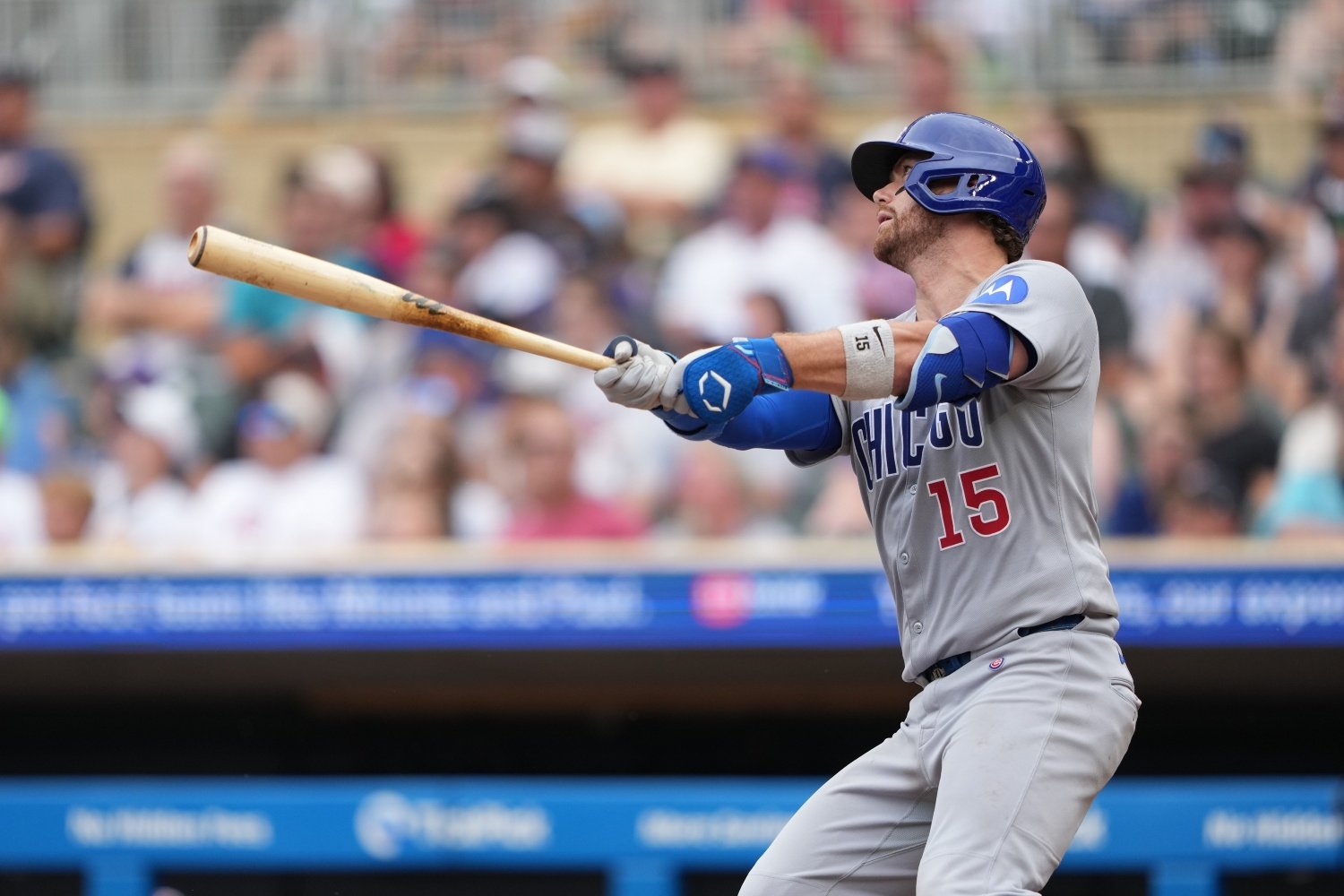 Carson Kelly's start to 2025 was going to be sustainable. The Chicago Cubs catcher spent March and April hitting .360, reaching base at a clip over .500, and providing absolutely massive power numbers, to the tune of a .480 isolated power figure. He struck out only six times (9.0 K%) against 15 walks (22.4 BB%) and checked in at an absurd 260 wRC+. Forget catchers: Kelly's start had him as effectively the top overall offensive player (minimum of 50 plate appearances) through the first month of the year. A dropoff was expected, and for a hitter with a career .307 wOBA and 93 wRC+, you figured it would more closely resemble a cliff face than a rolling hill. But even with that expectation in place, a drop to a .203/.292/.328 line and 79 wRC+ in May stung. It got worse in June, as Kelly turned in a .232/.283/.286 line and 63 wRC+. The power vanished almost entirely, as he went for a .125 and .054 ISO in the two months, respectively. It also wasn't difficult to figure out just why it happened. It wasn't simple regression, wherein Kelly was doing some of the same things and running into some hard luck. Instead, it came due to increased aggression on his part. Kelly's chase rate rose from 17.0% through April to 23.5% in May. With that, his contact rate sagged from 83.6% in the first month to 79.2% in May. On its own, that wouldn't set off alarm bells, if it didn't carry the contact quality along with it. But as the chase went up and the contact went down, the hard-hit rate cratered. Kelly went from a hard-hit rate of roughly 60% in the first month-plus to just 30.8% in May. His BABIP dropped nearly 70 points as a result. So while regression was always going to be in the cards, the path back was reasonably clear: recover the good process he'd discovered in the early going, in terms of both approach and mechanics at the plate. It doesn't happen often, but things in baseball can sometimes work out the way they're (logically) supposed to. If Kelly could get his plate discipline back in order, then perhaps he could find his way to being a regular contributor at the plate again—especially since he was pressed into increased service due to Miguel Amaya's long-term absence with an oblique strain. That's exactly what's happened since the start of July. While there were marginal improvements in the plate discipline game in June, it wasn't until July that Kelly was really able to round back into form. In a way, it's almost entirely on the strength of his Chase%: Kelly's chase rate in July is just 11.9%. Unsurprisingly, the rest of the contact trends have come along with it. His 88.9% contact rate tops the Cubs this month, and his hard-hit rate is back to a touch over 48%. Kelly also has his walk rate (14.3%) back above his strikeout rate (8.6%) this month. Even working off a small sample (and with the contact rate coming in higher than we'd expect), there's a clear correlation between Kelly's discipline and his ability to make high-value contact. There isn't much more nuance than that. Kelly isn't feasting off one particular pitch type; he has individual months of whiff against offspeed more than breaking pitches or months of harder contact off both offspeed and breaking than against fastballs. It's simply a matter of reining in his swing, in order to make solid contact within the strike zone. Even if he's due for a slight regression in the second half of this month (his .333 BABIP reads a touch high), there's a certain simplicity in Kelly's ability to create offensive value that should allow him to continue to do so down the stretch—provided he keeps it steady in matters of the approach.
 -
Image courtesy of © Jordan Johnson-Imagn Images Carson Kelly's start to 2025 was going to be sustainable. The Chicago Cubs catcher spent March and April hitting .360, reaching base at a clip over .500, and providing absolutely massive power numbers, to the tune of a .480 isolated power figure. He struck out only six times (9.0 K%) against 15 walks (22.4 BB%) and checked in at an absurd 260 wRC+. Forget catchers: Kelly's start had him as effectively the top overall offensive player (minimum of 50 plate appearances) through the first month of the year. A dropoff was expected, and for a hitter with a career .307 wOBA and 93 wRC+, you figured it would more closely resemble a cliff face than a rolling hill. But even with that expectation in place, a drop to a .203/.292/.328 line and 79 wRC+ in May stung. It got worse in June, as Kelly turned in a .232/.283/.286 line and 63 wRC+. The power vanished almost entirely, as he went for a .125 and .054 ISO in the two months, respectively. It also wasn't difficult to figure out just why it happened. It wasn't simple regression, wherein Kelly was doing some of the same things and running into some hard luck. Instead, it came due to increased aggression on his part. Kelly's chase rate rose from 17.0% through April to 23.5% in May. With that, his contact rate sagged from 83.6% in the first month to 79.2% in May. On its own, that wouldn't set off alarm bells, if it didn't carry the contact quality along with it. But as the chase went up and the contact went down, the hard-hit rate cratered. Kelly went from a hard-hit rate of roughly 60% in the first month-plus to just 30.8% in May. His BABIP dropped nearly 70 points as a result. So while regression was always going to be in the cards, the path back was reasonably clear: recover the good process he'd discovered in the early going, in terms of both approach and mechanics at the plate. It doesn't happen often, but things in baseball can sometimes work out the way they're (logically) supposed to. If Kelly could get his plate discipline back in order, then perhaps he could find his way to being a regular contributor at the plate again—especially since he was pressed into increased service due to Miguel Amaya's long-term absence with an oblique strain. That's exactly what's happened since the start of July. While there were marginal improvements in the plate discipline game in June, it wasn't until July that Kelly was really able to round back into form. In a way, it's almost entirely on the strength of his Chase%: Kelly's chase rate in July is just 11.9%. Unsurprisingly, the rest of the contact trends have come along with it. His 88.9% contact rate tops the Cubs this month, and his hard-hit rate is back to a touch over 48%. Kelly also has his walk rate (14.3%) back above his strikeout rate (8.6%) this month. Even working off a small sample (and with the contact rate coming in higher than we'd expect), there's a clear correlation between Kelly's discipline and his ability to make high-value contact. There isn't much more nuance than that. Kelly isn't feasting off one particular pitch type; he has individual months of whiff against offspeed more than breaking pitches or months of harder contact off both offspeed and breaking than against fastballs. It's simply a matter of reining in his swing, in order to make solid contact within the strike zone. Even if he's due for a slight regression in the second half of this month (his .333 BABIP reads a touch high), there's a certain simplicity in Kelly's ability to create offensive value that should allow him to continue to do so down the stretch—provided he keeps it steady in matters of the approach. View full article
-
Image courtesy of © Matt Marton-Imagn Images If you've followed this space at any point within the last year, you know I have struggled to balance my opinion of Ian Happ. I've made a habit of questioning the overall offensive toolbox and, occasionally, bringing passive opposition to his defensive reputation. While I've come to understand his value to the lineup at large—and developed a rather complimentary stance on his defense—I've returned to a familiar headspace for much of 2025 in pondering another facet of Happ's game: baserunning. Happ, quite obviously, is not a burner out of the leadoff spot, but he works atop the lineup because of his approach. His 12.8% walk rate sits in the top 20 among qualifying hitters, and he's enough of a fixture on the bases as a result that he ranks in the top 25 in the league in runs scored (53). At the same time, there are some signs that he's no longer able to run the bases at the level you hope for from a catalyst atop the lineup card. This isn't about steals. Happ has turned in 27 combined steals over the last two seasons, but hadn't reached double-digit swipes in any season before. Instead, our focus is on the concept of baserunning as a skill. Speed is a helpful component within the larger context of the skill, but it's not the sole one. It is worth noting, however, that Happ is showing up a little bit slower in 2025. While never returning to the 28.8 feet-per-second speed of his first big-league appearance back in 2017, Happ has generally remained respectable in that department. In the years since, he's undergone the typical, slow loss of a step or two, down to 27.9 ft/sec in 2024. This year, however, Happ is at 27.2 ft/sec. It's not a dramatic dip in terms of the raw number, but it does represent a decrease all the same. So if your eyes are telling you what mine are (that Ian Happ looks slower), it's because he technically is. But then there's the more value-centered side of things. The age of analytics has wrought a number of different ways in which we can evaluate the ability of a baserunner. Unfortunately for Happ, none of them are ringing too positive thus far in 2025. We can start with FanGraphs's Base Running tool, BsR. BsR considers factors like extra bases taken or outs made on the bases and spins them into the metric indicating runs above or below average. Happ started out rough in this area (-1.8 in 2017) but has fallen above average in every other season in the big leagues (2020 notwithstanding). Last year's number came in at 1.2, which matched his 2023 output. This year, however, Happ sits at -3.0 BsR. Among 157 qualifying position players, that figure checks in as one of the 10 worst in that area. For additional context, Michael Busch and Kyle Tucker each feature slower sprint speeds than Happ. However, Busch is at -1.6 (17 spots higher than Happ as a first baseman) and Tucker's 4.5 has him in the top five. The context with each player differs, of course; Tucker is notable for being an upper-tier baserunner with sensational instincts. But BsR alone is indicative of exactly the issue we're discussing with Happ. Statcast employs multiple ways in which to evaluate baserunners. For our purposes, there's the more specific Extra Bases Taken (measured in run value via Runner Runs) and Baserunning Run Value (which does incorporate steals to soak up more context and is measured in Baserunning Runs). The purpose of including both is a desire to evaluate Happ's value in navigating the basepaths while also exploring the more comprehensive angle through Baserunning Run Value. Extra Bases Taken includes 298 baserunners in its Runner Runs leaderboard. At -3, Happ ranks 292nd and features the second-worst value listed. In fact, If you wanted to isolate such a list to just the Cubs over the last three seasons, Happ's -3 in 2025 ranks 27th out of 27 names listed. He was at 1 and sitting 12th and 14th in each of 2023 and 2024, for some context as to how steep the drop has been. Factoring in the steals via the Baserunning Run Value doesn't particularly help matters, either. He's still at -3, ranking 219 out of 224, and presents -4 stolen bases versus the average. So whether the steals are factored in or not, Ian Happ is very visibly not ranking favorably among his peers in the baserunning aspect of the sport. Statcast does break down the value a player creates or destroys on the bases into their propensity to advance and their skill at avoiding extra outs, which can tell us where Happ is succeeding and failing. He's 4-for-5 on steal attempts, for instance, so why is the framework down on his base-stealing? Simple: he's on base so much that the system is faulting him for not running more. At 0.6%, his Attempt Rate when on base in a steal opportunity situation is very low. He's been 2 (non-)outs better than average in terms of outs created, which is to say, not running much has spared the Cubs him running into a few outs. However, he's been 6 bases shy of an average runner's expected number of thefts. On balance, then, he's missing four bases he ought to have taken. When it comes to the running aspect on balls in play, there seem to be two problems. Yes, he's a bit slower than he used to be, but he's done well at getting secondary leads. The second problem he's encountering is not reading balls off the bats of his teammates and breaking aggressively enough, at times. This is a ball on which you just have to score, and the Statcast framework docks Happ himself about 0.8 runs for not having done so. The way the ball was hit, it was sure to drop, and Happ got a clean break. He was just insufficiently confident and didn't get up to speed the way he still can and should have. TkE5RDVfWGw0TUFRPT1fVndsUkJnVUFVQUVBWEFaVUJBQUhVQVZTQUZoWFZ3Y0FVMWNDQndjQUNRVldCUUpR.mp4 Now, this system also has some blind spots, and you can make a fine case that Happ has been better than it would paint him. Here's a play on which he was docked 0.2 runs for not advancing to third, but on which any runner needs to go just halfway from first to second until it drops. Then, assuming the fielders scoop it cleanly, there's really no time to advance. Whatever the system looks at to estimate the expectations that a runner would advance, it's being too harsh on Happ here. ZU44ZzNfWGw0TUFRPT1fQkFKU0J3WlZVRkFBREZjR0F3QUhVZzVWQUZoUUJWY0FBVndIVXdWWEFnQmNVUVlF.mp4 Like many technological solutions we come up with for measurement problems, this one can be a bit overconfident. That can push numbers to the ends of a spectrum where you actually want most values to cluster in the middle. Maybe it's best to consult Baseball Prospectus's Deserved Runs on the Bases (DRB), which has Happ at... -0.2 runs for the season. That, perhaps, is a fairer evaluation. Is he adding value? No. But he probably isn't removing it, either. After all, Happ has scored 36.3% of the time after reaching base this year. The league average is 30.9%. Some of the reasons why he's not advancing on hits or stealing bases is that he's often along for the ride on homers. He's scoring at the 32nd-highest rate of 155 qualifying hitters, so even if he's not creating value by pushing the envelope, he's doing a baserunner's most important job: getting home safely. Ultimately, though, the aim here was to look at whether the data supports the eye test. The eyes are telling us that Ian Happ looks slow. The numbers say the same thing. At this point, it's more of a hindrance on a situational level (runners on and a ground ball in play from Happ, as an example). But considering that the power comes in waves and the on-base is supported by his approach, one does wonder how much such a trend could lead to the diminution of Happ as a viable leadoff candidate. We're probably not close to that yet, but these trends are, at least, worth monitoring. View full article
-
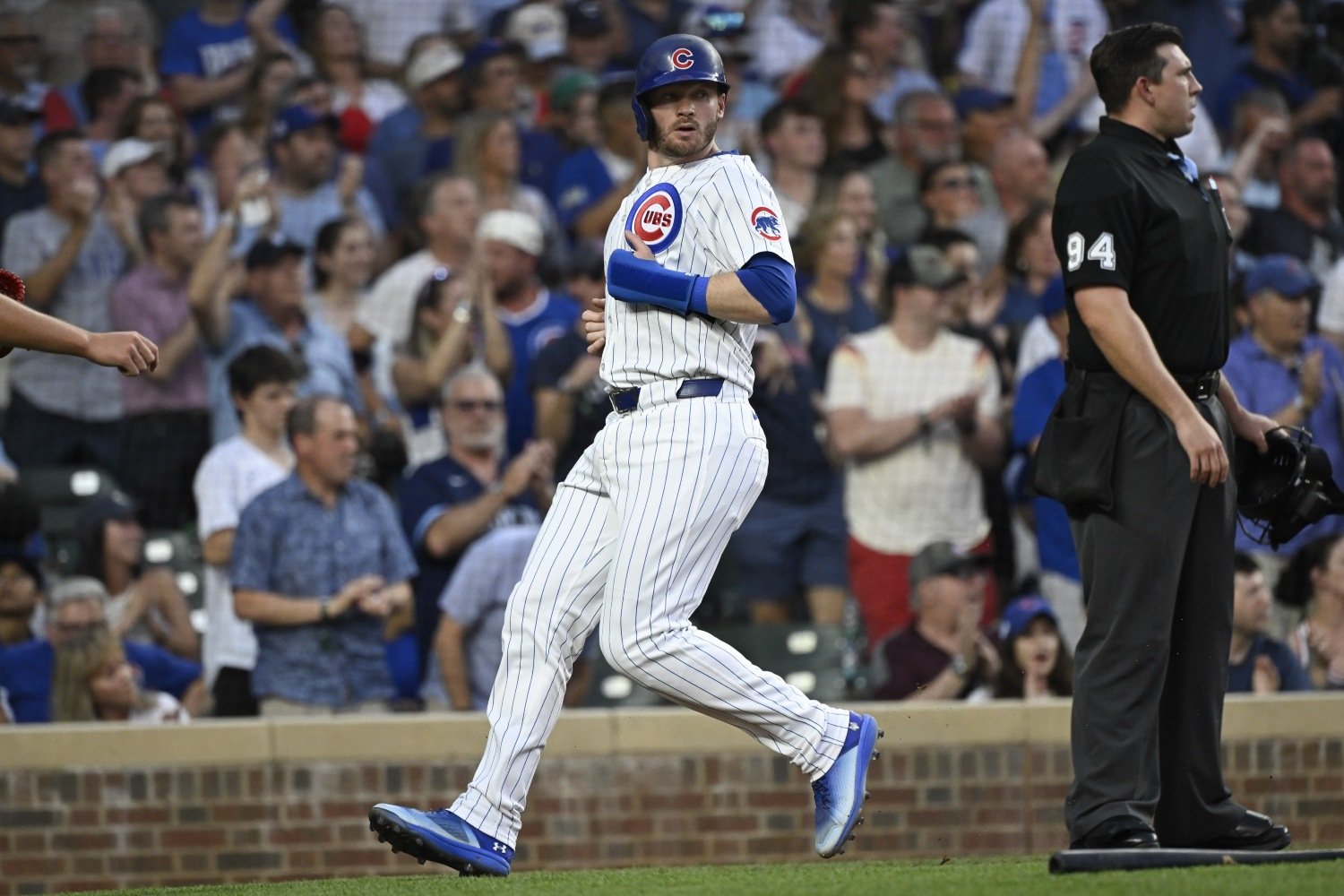 If you've followed this space at any point within the last year, you know I have struggled to balance my opinion of Ian Happ. I've made a habit of questioning the overall offensive toolbox and, occasionally, bringing passive opposition to his defensive reputation. While I've come to understand his value to the lineup at large—and developed a rather complimentary stance on his defense—I've returned to a familiar headspace for much of 2025 in pondering another facet of Happ's game: baserunning. Happ, quite obviously, is not a burner out of the leadoff spot, but he works atop the lineup because of his approach. His 12.8% walk rate sits in the top 20 among qualifying hitters, and he's enough of a fixture on the bases as a result that he ranks in the top 25 in the league in runs scored (53). At the same time, there are some signs that he's no longer able to run the bases at the level you hope for from a catalyst atop the lineup card. This isn't about steals. Happ has turned in 27 combined steals over the last two seasons, but hadn't reached double-digit swipes in any season before. Instead, our focus is on the concept of baserunning as a skill. Speed is a helpful component within the larger context of the skill, but it's not the sole one. It is worth noting, however, that Happ is showing up a little bit slower in 2025. While never returning to the 28.8 feet-per-second speed of his first big-league appearance back in 2017, Happ has generally remained respectable in that department. In the years since, he's undergone the typical, slow loss of a step or two, down to 27.9 ft/sec in 2024. This year, however, Happ is at 27.2 ft/sec. It's not a dramatic dip in terms of the raw number, but it does represent a decrease all the same. So if your eyes are telling you what mine are (that Ian Happ looks slower), it's because he technically is. But then there's the more value-centered side of things. The age of analytics has wrought a number of different ways in which we can evaluate the ability of a baserunner. Unfortunately for Happ, none of them are ringing too positive thus far in 2025. We can start with FanGraphs's Base Running tool, BsR. BsR considers factors like extra bases taken or outs made on the bases and spins them into the metric indicating runs above or below average. Happ started out rough in this area (-1.8 in 2017) but has fallen above average in every other season in the big leagues (2020 notwithstanding). Last year's number came in at 1.2, which matched his 2023 output. This year, however, Happ sits at -3.0 BsR. Among 157 qualifying position players, that figure checks in as one of the 10 worst in that area. For additional context, Michael Busch and Kyle Tucker each feature slower sprint speeds than Happ. However, Busch is at -1.6 (17 spots higher than Happ as a first baseman) and Tucker's 4.5 has him in the top five. The context with each player differs, of course; Tucker is notable for being an upper-tier baserunner with sensational instincts. But BsR alone is indicative of exactly the issue we're discussing with Happ. Statcast employs multiple ways in which to evaluate baserunners. For our purposes, there's the more specific Extra Bases Taken (measured in run value via Runner Runs) and Baserunning Run Value (which does incorporate steals to soak up more context and is measured in Baserunning Runs). The purpose of including both is a desire to evaluate Happ's value in navigating the basepaths while also exploring the more comprehensive angle through Baserunning Run Value. Extra Bases Taken includes 298 baserunners in its Runner Runs leaderboard. At -3, Happ ranks 292nd and features the second-worst value listed. In fact, If you wanted to isolate such a list to just the Cubs over the last three seasons, Happ's -3 in 2025 ranks 27th out of 27 names listed. He was at 1 and sitting 12th and 14th in each of 2023 and 2024, for some context as to how steep the drop has been. Factoring in the steals via the Baserunning Run Value doesn't particularly help matters, either. He's still at -3, ranking 219 out of 224, and presents -4 stolen bases versus the average. So whether the steals are factored in or not, Ian Happ is very visibly not ranking favorably among his peers in the baserunning aspect of the sport. Statcast does break down the value a player creates or destroys on the bases into their propensity to advance and their skill at avoiding extra outs, which can tell us where Happ is succeeding and failing. He's 4-for-5 on steal attempts, for instance, so why is the framework down on his base-stealing? Simple: he's on base so much that the system is faulting him for not running more. At 0.6%, his Attempt Rate when on base in a steal opportunity situation is very low. He's been 2 (non-)outs better than average in terms of outs created, which is to say, not running much has spared the Cubs him running into a few outs. However, he's been 6 bases shy of an average runner's expected number of thefts. On balance, then, he's missing four bases he ought to have taken. When it comes to the running aspect on balls in play, there seem to be two problems. Yes, he's a bit slower than he used to be, but he's done well at getting secondary leads. The second problem he's encountering is not reading balls off the bats of his teammates and breaking aggressively enough, at times. This is a ball on which you just have to score, and the Statcast framework docks Happ himself about 0.8 runs for not having done so. The way the ball was hit, it was sure to drop, and Happ got a clean break. He was just insufficiently confident and didn't get up to speed the way he still can and should have. TkE5RDVfWGw0TUFRPT1fVndsUkJnVUFVQUVBWEFaVUJBQUhVQVZTQUZoWFZ3Y0FVMWNDQndjQUNRVldCUUpR.mp4 Now, this system also has some blind spots, and you can make a fine case that Happ has been better than it would paint him. Here's a play on which he was docked 0.2 runs for not advancing to third, but on which any runner needs to go just halfway from first to second until it drops. Then, assuming the fielders scoop it cleanly, there's really no time to advance. Whatever the system looks at to estimate the expectations that a runner would advance, it's being too harsh on Happ here. ZU44ZzNfWGw0TUFRPT1fQkFKU0J3WlZVRkFBREZjR0F3QUhVZzVWQUZoUUJWY0FBVndIVXdWWEFnQmNVUVlF.mp4 Like many technological solutions we come up with for measurement problems, this one can be a bit overconfident. That can push numbers to the ends of a spectrum where you actually want most values to cluster in the middle. Maybe it's best to consult Baseball Prospectus's Deserved Runs on the Bases (DRB), which has Happ at... -0.2 runs for the season. That, perhaps, is a fairer evaluation. Is he adding value? No. But he probably isn't removing it, either. After all, Happ has scored 36.3% of the time after reaching base this year. The league average is 30.9%. Some of the reasons why he's not advancing on hits or stealing bases is that he's often along for the ride on homers. He's scoring at the 32nd-highest rate of 155 qualifying hitters, so even if he's not creating value by pushing the envelope, he's doing a baserunner's most important job: getting home safely. Ultimately, though, the aim here was to look at whether the data supports the eye test. The eyes are telling us that Ian Happ looks slow. The numbers say the same thing. At this point, it's more of a hindrance on a situational level (runners on and a ground ball in play from Happ, as an example). But considering that the power comes in waves and the on-base is supported by his approach, one does wonder how much such a trend could lead to the diminution of Happ as a viable leadoff candidate. We're probably not close to that yet, but these trends are, at least, worth monitoring.
 -
 We live in the golden era of Chicago Cubs baseball, such as it is. The organization hasn't known prolonged, uninterrupted success for (say) a decade at any point since World War II, but they've come closest in the period since Theo Epstein and Jed Hoyer took over at the end of 2011. Mostly, that run of success has been fueled by position players. Position players were the cornerstones of the team's rebuild. They drafted position players in the first round for their first four years in the organization. They traded Andrew Cashner for Anthony Rizzo, then extended both Rizzo and Starlin Castro, but they didn't extend Jake Arrieta. Arrieta, of course, is one example of a pitcher achieving breakout stardom in a Cubs uniform during this era. Jon Lester is an example of the team going and getting a star who defined their competitive window on the mound. Justin Steele is the rare win for the team when it comes to homegrown pitching. All of them, however, are starters. The team hasn't churned out its own high-octane, high-caliber relievers at the rate that other teams have—and certainly, those guys haven't had star or staying power. That is to say, the collective of Cub fans likely spends a lot of time fawning over other teams' relief pitchers, and closers, in particular. The Emmanuel Clase class. The Edwin Díaz dais. The Josh Hader type. Sure, the Cubs have had guys of a recent vintage capable of putting the clamps on a ballgame, but rarely has it been someone with real electricity. When it has, it's generally a past-their-prime-but-still-at-least-mildly-effective version of someone, like Craig Kimbrel. Adbert Alzolay was that guy, but only for a moment, between injuries. Daniel Palencia has a chance to put an end to that waiting and, subsequently, such fawning. Armed with a triple-digit fastball, Palencia has nailed down the closer job for the 2025 Cubs. What was Ryan Pressly's role passed right through the hands of Porter Hodge, following the former's massive struggles to start the year. Hodge's injury passed it over to Palencia, and virtually nothing he's done in the ninth inning gives us reason to think his job security is in doubt for the foreseeable future. The stuff, on its own, is worthy of emotional investment. Palencia relies almost exclusively on the fastball and slider, heavily favoring the heat. The four-seamer ranks 29th in FanGraphs's Stuff+ (110) among 173 qualifying relievers, while the slider (119) sits 16th among that same group. For the uninitiated, the Stuff+ model measures the physical characteristics of a pitch. Suffice to say, where Palencia lands—courtesy of his running fastball and that vertically-active slider—is quite good: The nature of Palencia's breakout is not only due to his ability to generate strikeouts. He's certainly doing that; his 28.7% strikeout rate ranks 32nd among that reliever group. But opposing hitters are also finding it difficult to get the barrel on a baseball. His minuscule 2.7 percent barrel rate tells that story. So when you're not getting a save that looks like this... ...you're getting one that looks like this: But even beyond the statistical aspects of it, there's the excitement factor explored at the top. Palencia is increasingly becoming the type of arm where you know the game is over. His energy alone is enough to bury a hitter, before he even deploys one of his above-average offerings. It's the type of presence in the ninth that Cub fans have been pining for for quite some time. Baseball Reference has a handy little tool that lists the players who have occupied each role each year, throughout an organization's history. The Cubs' closer column is quite an adventure. You've got converted starters (Ryan Dempster, Kerry Wood), stopgaps during periods of organizational turmoil (Kevin Gregg), electric pitchers wrought with volatility (Carlos Marmól), and plenty of other archetypes. It's a grab bag. I've been alive since 1990. On only four occasions, since then, have the Cubs had the same closer for three consecutive years: Randy Myers from 1993 to 1995; Dempster from 2005 to 2007; Marmól from 2010 to 2012; and Héctor Rondón from 2014 to 2016. If we're going to continue to use that year as a benchmark, then you're looking at 25 different names over 35 years. It's not just that the Cubs haven't had a long-term closer; the nature of relievers is such that sustainability is rare. They've barely strung together consecutive seasons of the same name in the ninth. At no point in recent memory have the Cubs had someone like Palencia. They've had closers, yes. Some good closers, even. But Daniel Palencia is a narrative shift for the Chicago Cubs. He could be their first long-term closer (in a true sense) since Marmól, and the first one who didn't make sweat pour from your armpits since Lee Smith. Acquired from the Athletics in 2021, Palencia's development has come almost entirely within the Cubs organization. He possesses a pair of elite pitches and brings an aura and a burly frame that enhances them even further. With team control through 2031, he's the type of pitcher at the back end of ballgames that this team has lacked over the last few decades. It took a stroke of (mis)fortune to get him there, but it's hard to imagine an outcome more worth it—both on a day-to-day level and on a broader, organizational one.
 -
Image courtesy of © David Banks-Imagn Images We live in the golden era of Chicago Cubs baseball, such as it is. The organization hasn't known prolonged, uninterrupted success for (say) a decade at any point since World War II, but they've come closest in the period since Theo Epstein and Jed Hoyer took over at the end of 2011. Mostly, that run of success has been fueled by position players. Position players were the cornerstones of the team's rebuild. They drafted position players in the first round for their first four years in the organization. They traded Andrew Cashner for Anthony Rizzo, then extended both Rizzo and Starlin Castro, but they didn't extend Jake Arrieta. Arrieta, of course, is one example of a pitcher achieving breakout stardom in a Cubs uniform during this era. Jon Lester is an example of the team going and getting a star who defined their competitive window on the mound. Justin Steele is the rare win for the team when it comes to homegrown pitching. All of them, however, are starters. The team hasn't churned out its own high-octane, high-caliber relievers at the rate that other teams have—and certainly, those guys haven't had star or staying power. That is to say, the collective of Cub fans likely spends a lot of time fawning over other teams' relief pitchers, and closers, in particular. The Emmanuel Clase class. The Edwin Díaz dais. The Josh Hader type. Sure, the Cubs have had guys of a recent vintage capable of putting the clamps on a ballgame, but rarely has it been someone with real electricity. When it has, it's generally a past-their-prime-but-still-at-least-mildly-effective version of someone, like Craig Kimbrel. Adbert Alzolay was that guy, but only for a moment, between injuries. Daniel Palencia has a chance to put an end to that waiting and, subsequently, such fawning. Armed with a triple-digit fastball, Palencia has nailed down the closer job for the 2025 Cubs. What was Ryan Pressly's role passed right through the hands of Porter Hodge, following the former's massive struggles to start the year. Hodge's injury passed it over to Palencia, and virtually nothing he's done in the ninth inning gives us reason to think his job security is in doubt for the foreseeable future. The stuff, on its own, is worthy of emotional investment. Palencia relies almost exclusively on the fastball and slider, heavily favoring the heat. The four-seamer ranks 29th in FanGraphs's Stuff+ (110) among 173 qualifying relievers, while the slider (119) sits 16th among that same group. For the uninitiated, the Stuff+ model measures the physical characteristics of a pitch. Suffice to say, where Palencia lands—courtesy of his running fastball and that vertically-active slider—is quite good: The nature of Palencia's breakout is not only due to his ability to generate strikeouts. He's certainly doing that; his 28.7% strikeout rate ranks 32nd among that reliever group. But opposing hitters are also finding it difficult to get the barrel on a baseball. His minuscule 2.7 percent barrel rate tells that story. So when you're not getting a save that looks like this... ...you're getting one that looks like this: But even beyond the statistical aspects of it, there's the excitement factor explored at the top. Palencia is increasingly becoming the type of arm where you know the game is over. His energy alone is enough to bury a hitter, before he even deploys one of his above-average offerings. It's the type of presence in the ninth that Cub fans have been pining for for quite some time. Baseball Reference has a handy little tool that lists the players who have occupied each role each year, throughout an organization's history. The Cubs' closer column is quite an adventure. You've got converted starters (Ryan Dempster, Kerry Wood), stopgaps during periods of organizational turmoil (Kevin Gregg), electric pitchers wrought with volatility (Carlos Marmól), and plenty of other archetypes. It's a grab bag. I've been alive since 1990. On only four occasions, since then, have the Cubs had the same closer for three consecutive years: Randy Myers from 1993 to 1995; Dempster from 2005 to 2007; Marmól from 2010 to 2012; and Héctor Rondón from 2014 to 2016. If we're going to continue to use that year as a benchmark, then you're looking at 25 different names over 35 years. It's not just that the Cubs haven't had a long-term closer; the nature of relievers is such that sustainability is rare. They've barely strung together consecutive seasons of the same name in the ninth. At no point in recent memory have the Cubs had someone like Palencia. They've had closers, yes. Some good closers, even. But Daniel Palencia is a narrative shift for the Chicago Cubs. He could be their first long-term closer (in a true sense) since Marmól, and the first one who didn't make sweat pour from your armpits since Lee Smith. Acquired from the Athletics in 2021, Palencia's development has come almost entirely within the Cubs organization. He possesses a pair of elite pitches and brings an aura and a burly frame that enhances them even further. With team control through 2031, he's the type of pitcher at the back end of ballgames that this team has lacked over the last few decades. It took a stroke of (mis)fortune to get him there, but it's hard to imagine an outcome more worth it—both on a day-to-day level and on a broader, organizational one. View full article
-
Image courtesy of © Dennis Lee-Imagn Images The more we progress into July, the closer we get to the Chicago Cubs making a move to fortify what should be a playoff roster. While starting pitching will (and should) grab much of the focus, there's also the matter of shoring up the positional side of things. Whether it's someone to hold down third base while Matt Shaw sorts what's left of his offensive development or a bat for the bench, it's likely that we'll see at least one new face step into the lineup before August rolls around. Willi Castro is a player who could, technically, serve either of the above roles. It's a bit more of a stretch to say he's the type of player that could supplant Shaw for the remainder of 2025, however. Such a role might be better left to someone like Eugenio Suárez. Instead, Castro is exactly the type of player whom the Cubs should be coveting to shore up their bench. It's no secret that the Cubs haven't gotten much out of their depth in 2025 (with the exception of the catcher spot, where both Carson Kelly and Reese McGuire have thrived). Jon Berti appeared only 10 times in June, and many of those were as a pinch-hitter or pinch-runner. Vidal Bruján made the same number of appearances but was even less impactful, given that many of those were late-inning pinch-run appearances that didn't even get him time in the field. One (or both) might not be long for the roster. Such conditions put a lot of pressure on the team's regulars to maintain production without much of a blow in between longer stretches. Enter Castro. The potential for a starting bat at third base notwithstanding, Castro has the ability to raise the floor of the Cubs' reserves considerably. He offers versatility similar to Berti's or Bruján's; he's logged time at second base, shortstop, third base, and each of the corner outfield positions in 2025. But he also comes with vastly more offensive upside. He's evolved into an everyday player for the Minnesota Twins, almost never at the same position on consecutive days. Of course, an acquisition like Castro comes with certain caveats—the first being whether his team would even be willing to move him. The Twins are not currently in playoff position. As of this writing, they're 12.5 games back in the American League Central. At the same time, they're only four back in the Wild Card race. While their volume of injuries in their starting rotation is problematic, it's possible they're less inclined to sell than we might instinctively assume. They've had some torrid stretches, mixed in with the underwhelming ones, and moving an essential component of their roster (like Castro) would signal the start of a sale. He is a free agent after the season, though, so any prolonged struggle in July could eliminate this as a potential hurdle. That brings us to the second caveat: the quality of Castro's defense. Yes, Castro can play virtually every position on a baseball field. But of the five positions at which he's appeared this year, he's only been average at two of them, and only by certain metrics. Fielding Bible has him at -2 Runs Saved at second, -1 at third, and -2 at shortstop, the latter of which has come in a sample of only 25 1/3 innings. Statcast goes -1, -3, and -2 in Outs Above Average at the three positions, respectively. Where he has found success is on either side of the outfield grass. While Fielding Bible has him at -1 in either of left and right, Statcast has him at 0 OAA in left and 1 OAA in right. So you're going to get a little more stability at those positions than you might on the infield. It's important to note, however, that Castro does have a historical precedent for being quite a bit better with the glove than he has been in 2025. With the exception of shortstop (where he was considerably worse across a larger sample), he was above-average at every position in each of the two previous years. The good news is that Castro wouldn't be poised to play either of the middle infield positions with any level of consistency. You're talking about an occasional fill-in for Nico Hoerner or Dansby Swanson. He's proven he can hang at third and is steady in the corners. Such a reality would allow him to step into a role similar to that of Berti or Bruján, with far more to offer at the plate. That's the important distinction between Castro and his versatile contemporaries currently floating around the Cubs' bench. Castro's at a 123 wRC+ this year, contributing a .267 average, a .353 on-base percentage, and a .167 isolated power to the cause in Minnesota. That's an exponential upgrade to what the Cubs have out of their reserve players at present, to say nothing of the fact that the versatility Castro brings to the field is something he also brings to the lineup. He has at least 18 plate appearances in every spot in the order that isn't the leadoff or the cleanup. He switch-hits. He'd be an entire Swiss Army knife for Craig Counsell to have at his disposal on either side of the ball. There's some obvious context to consider as it relates to Castro, particularly in terms of the Twins' desire to compete and what the Cubs might pursue elsewhere in order to address their lineup. The two teams may not come together, if the Twins pursue a playoff berth or the Cubs are working on another front. But it's hard to argue against the prospect of Castro in this lineup. View full article
-
MLB Trade Deadline: Is Willi Castro an Ideal Fit for Chicago Cubs?
RandallPnkFloyd posted an article in Cubs
 The more we progress into July, the closer we get to the Chicago Cubs making a move to fortify what should be a playoff roster. While starting pitching will (and should) grab much of the focus, there's also the matter of shoring up the positional side of things. Whether it's someone to hold down third base while Matt Shaw sorts what's left of his offensive development or a bat for the bench, it's likely that we'll see at least one new face step into the lineup before August rolls around. Willi Castro is a player who could, technically, serve either of the above roles. It's a bit more of a stretch to say he's the type of player that could supplant Shaw for the remainder of 2025, however. Such a role might be better left to someone like Eugenio Suárez. Instead, Castro is exactly the type of player whom the Cubs should be coveting to shore up their bench. It's no secret that the Cubs haven't gotten much out of their depth in 2025 (with the exception of the catcher spot, where both Carson Kelly and Reese McGuire have thrived). Jon Berti appeared only 10 times in June, and many of those were as a pinch-hitter or pinch-runner. Vidal Bruján made the same number of appearances but was even less impactful, given that many of those were late-inning pinch-run appearances that didn't even get him time in the field. One (or both) might not be long for the roster. Such conditions put a lot of pressure on the team's regulars to maintain production without much of a blow in between longer stretches. Enter Castro. The potential for a starting bat at third base notwithstanding, Castro has the ability to raise the floor of the Cubs' reserves considerably. He offers versatility similar to Berti's or Bruján's; he's logged time at second base, shortstop, third base, and each of the corner outfield positions in 2025. But he also comes with vastly more offensive upside. He's evolved into an everyday player for the Minnesota Twins, almost never at the same position on consecutive days. Of course, an acquisition like Castro comes with certain caveats—the first being whether his team would even be willing to move him. The Twins are not currently in playoff position. As of this writing, they're 12.5 games back in the American League Central. At the same time, they're only four back in the Wild Card race. While their volume of injuries in their starting rotation is problematic, it's possible they're less inclined to sell than we might instinctively assume. They've had some torrid stretches, mixed in with the underwhelming ones, and moving an essential component of their roster (like Castro) would signal the start of a sale. He is a free agent after the season, though, so any prolonged struggle in July could eliminate this as a potential hurdle. That brings us to the second caveat: the quality of Castro's defense. Yes, Castro can play virtually every position on a baseball field. But of the five positions at which he's appeared this year, he's only been average at two of them, and only by certain metrics. Fielding Bible has him at -2 Runs Saved at second, -1 at third, and -2 at shortstop, the latter of which has come in a sample of only 25 1/3 innings. Statcast goes -1, -3, and -2 in Outs Above Average at the three positions, respectively. Where he has found success is on either side of the outfield grass. While Fielding Bible has him at -1 in either of left and right, Statcast has him at 0 OAA in left and 1 OAA in right. So you're going to get a little more stability at those positions than you might on the infield. It's important to note, however, that Castro does have a historical precedent for being quite a bit better with the glove than he has been in 2025. With the exception of shortstop (where he was considerably worse across a larger sample), he was above-average at every position in each of the two previous years. The good news is that Castro wouldn't be poised to play either of the middle infield positions with any level of consistency. You're talking about an occasional fill-in for Nico Hoerner or Dansby Swanson. He's proven he can hang at third and is steady in the corners. Such a reality would allow him to step into a role similar to that of Berti or Bruján, with far more to offer at the plate. That's the important distinction between Castro and his versatile contemporaries currently floating around the Cubs' bench. Castro's at a 123 wRC+ this year, contributing a .267 average, a .353 on-base percentage, and a .167 isolated power to the cause in Minnesota. That's an exponential upgrade to what the Cubs have out of their reserve players at present, to say nothing of the fact that the versatility Castro brings to the field is something he also brings to the lineup. He has at least 18 plate appearances in every spot in the order that isn't the leadoff or the cleanup. He switch-hits. He'd be an entire Swiss Army knife for Craig Counsell to have at his disposal on either side of the ball. There's some obvious context to consider as it relates to Castro, particularly in terms of the Twins' desire to compete and what the Cubs might pursue elsewhere in order to address their lineup. The two teams may not come together, if the Twins pursue a playoff berth or the Cubs are working on another front. But it's hard to argue against the prospect of Castro in this lineup.
