


Cubs Video
For about two full seasons, Drew Pomeranz was a steady-as-they-come major-league starter. Then came the struggles that resulted in a bullpen transition, where he spent another two years as one of the more dominant relief arms the game had to offer. Then came the injuries; then more injuries. Four years of injuries and subsequent minor-league deals later, Pomeranz is emerging as an important component of the 2025 Chicago Cubs.
The sustainability of that importance, however, is a matter of some debate.
Through eight appearances (7 2/3 innings), Pomeranz has yet to allow a run. His command has been excellent, with a 7.1% walk rate that is the lowest since he entered the league in 2011. Strikeouts are down from his previous work as a reliever, but still holding above his overall career average (28.6%). It's the underlying stuff, though, that is much more fascinating.
In terms of sustainability, the top things you look for are generally contact rate, contact quality, batting average on balls in play, and strand rate. Even with those tools, though, it's hard to tell what's what when you're looking at a pitcher who has yet to allow a run as he nears double-digit appearances.
Opposing hitters are swinging at pitches from Pomeranz exactly half the time. They're making contact at a 76.9% rate and posting a reasonable 37.5% hard-hit rate. They've managed a BABIP of just .150, with Pomeranz (obviously) sitting at a 100% strand rate. Given a somewhat high volume of contact juxtaposed with brutal batted-ball luck on the part of the opposition, one imagines regression is on the way.
But that's not necessarily the source of any apprehension. Pomeranz has induced an expected batting average of just .181, and an expected ERA of 3.17. By being able to manage the quality of contact and generate a lot of flyballs, he can survive a profile slightly light on swing-and-miss. Instead, the bigger concern lies within the usage:
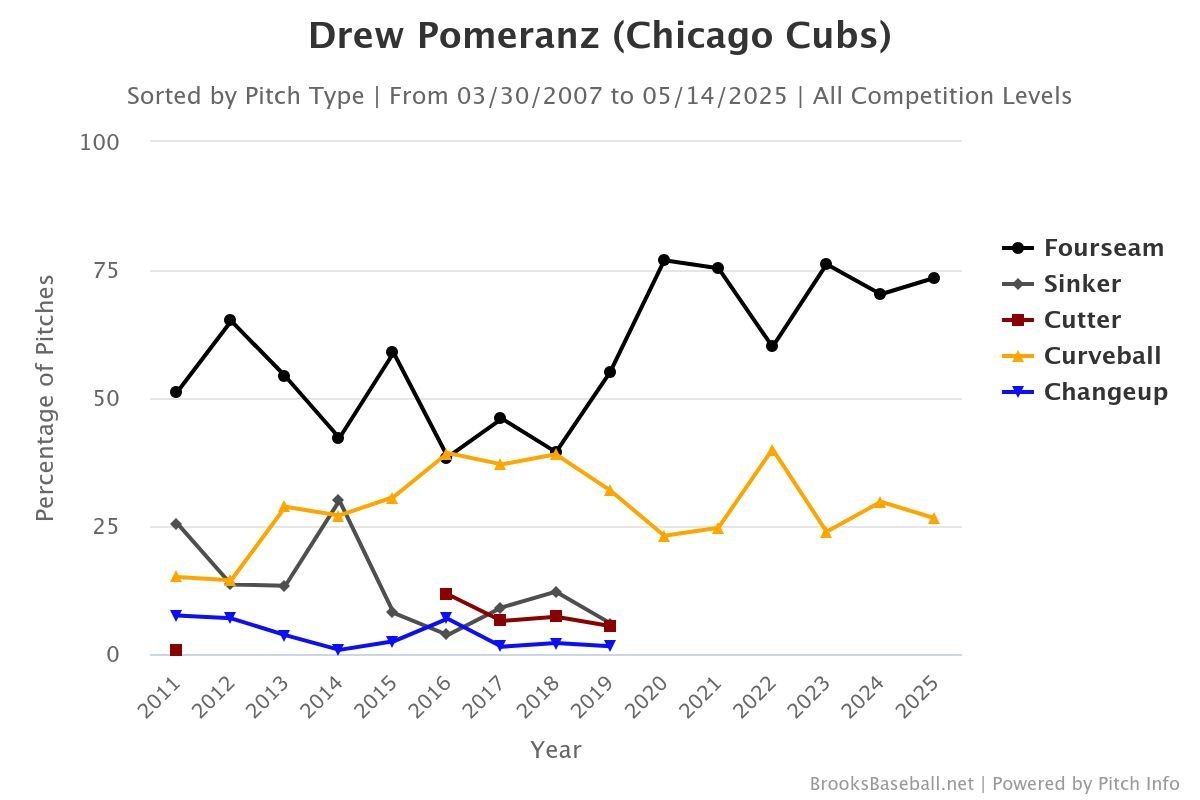
When Pomeranz made the transition to the bullpen, he became a two-pitch guy. That's not at all an uncommon scenario for relievers. But the 70/30 split works better if a pitcher works at a higher velocity level than Pomeranz does.
While Pomeranz has been able to generate swings on the knuckle-curve, he's not getting the results you'd hope from that pitch. It got lots of whiffs during his stint in the minors, but in the big leagues, he's yet to get even one swing and miss on it. He's also throwing it outside the strike zone almost 74 percent of the time in the majors. Obviously, with a pitch like that, part of the objective is to not hit the zone. But you need to mix it in there at least on occasion, to garner swings to get the whiff side activated. Again, that was happening in the minors, but it hasn't translated to the bigs so far.
His movement profile is really illustrative:

There's too little consistency in his curveball movement. That's why he's leaned harder on the heat and missed no bats with the hook since coming to the majors with the Cubs.
It's that idea, alone, that has me a little bit apprehensive about how long this success can last. He, of course, has a track record of success—especially on the relief side. The movement from his fastball will help him remain effective. Perhaps he's able to regain some confidence in the breaking pitch. That would certainly serve him in factoring into not only this bullpen, but high-leverage situations. Until then, it's a middle-relief game.






Recommended Comments
There are no comments to display.
Create an account or sign in to comment
You need to be a member in order to leave a comment
Create an account
Sign up for a new account in our community. It's easy!
Register a new accountSign in
Already have an account? Sign in here.
Sign In Now