


Matthew Trueblood
-
Posts
2,481 -
Joined
-
Last visited
-
Days Won
2
Content Type
Profiles
Joomla Posts 1
Chicago Cubs Videos
Chicago Cubs Free Agent & Trade Rumors, Notes, & Tidbits
2026 Chicago Cubs Top Prospects Ranking
News
2023 Chicago Cubs Draft Picks
Guides & Resources
2024 Chicago Cubs Draft Picks
The Chicago Cubs Players Project
2025 Chicago Cubs Draft Pick Tracker
2026 Chicago Cubs Draft Tracker: Picks & Bonuses
Blogs
Events
Forums
Store
Gallery
Everything posted by Matthew Trueblood
-
Since the All-Star break, the team's formerly All-Star-caliber shortstop has looked a bit more like his All-Star self. Can the good times last? And if so, is this team alive and kicking, after all? Image courtesy of © Kamil Krzaczynski-USA TODAY Sports For nearly a year, Dansby Swanson's bat looked dead. From Aug. 1, 2023 through the recess for the All-Star break last month, Swanson batted .212/.286/.368. In 570 plate appearances, he struck out 26 percent of the time, walked 8.8 percent of the time, and hit 18 home runs. It was a very long stretch of futility for a player who turned 30 right in the middle of that stretch, over the offseason. There were no guarantees he would ever be especially useful at the plate again. That could still turn out to be true. We're only 69 plate appearances into the second half of this season, and there's all kinds of noise in the data. However, it sure looks like Swanson got healthy, inspired, or otherwise fueled up over the four-day break last month. He's a whole different hitter since the start of baseball's unofficial second half. He's hitting .317/.391/.400 over this span. His walk rate is up to 11.6%, and his strikeout rate is down to 20.3%. He hasn't yet homered, but hits are everywhere for Swanson over the last three weeks. In the first half, he hit far too many ground balls, and also too many high pop flies. The trouble spots in the graphic above are the big gray bars just south of 0 degrees of launch angle, which mean he was hitting a lot medium-speed, routine ground balls; and the pale salmon bar just above 30 degrees, which means he was hitting a lot of fly balls that were almost threatening, but not quite. Here's the same chart for the admittedly tiny sample he's accumulated since the break. Those easy grounders are almost nonexistent, lately. His high liners and low fly balls are better-struck. And see that cluster of deep blue, way below the equator in terms of launch angle? It's not how you'd want to try making a living, but those slowly hit balls straight into the ground are often viciously difficult to convert into outs. Swanson has four infield hits on such balls already in the second half, and sometimes, the difference between a strikeout and even this ostensibly unpromising contact can be night and day. Dansby Chop.mp4 Indeed, Swanson has made far more contact since the break, and part of that is being willing to adapt his swing and his approach, rather than try to blast away on every swing. Mostly, though, the promise lies in the fact that Swanson seems to have figured out how to time up his upper and lower halves better. Consider two 0-1 sliders, 11 months apart, both thrown to Swanson at Great American Ballpark in Cincinnati. Last September, he pulled off the ball, got it off the end of his bat, and flied out lazily. This is typical of a lot of his contact over the final two months of that season, and throughout the first half of 2024. Not So Good Last Year.mp4 Now, here's how he looked at the tail end of this July. Same pitch, different swing, very different result. Dansby Drive.mp4 Swanson waits a bit longer to transfer his weight in his lower half, and is more balanced when he does so. Meanwhile, his hands stay closer to his body much longer, and then he fires. This is a swing that can adapt much better to various pitch types and locations. It doesn't lend the hitter as high a maximum possible exit velocity, but that's fine. Here, let's isolate the crucial moment, for easy comparison. Each of these stills are when the ball is about 10 feet from home plate. The image on the left is a hitter who's worried about being on time, so he's cheating everywhere. The front hip is leaking open more, and he's on his front foot. The hands are way out there, trying to get extended--but really, just trying not to get jammed, should the pitch be a sinker inside. The one on the right is a hitter who's trusting his bat speed. He's actually going to contact the ball just as far out in front as the one on the left; he's just going to be far more under control as the barrel accelerates. Swanson probably isn't totally fixed, just yet. This change to his timing and posture is positive, but it won't turn him into a superstar. However, it's the change he's been needing to make for months, and it could well mark the turning of a corner. Swanson still has the physical tools to be a .750 OPS guy. The challenge is being consistent enough, in both pitch selection and these finer points of the movements of hitting, to translate that ability into production. For a long time, Swanson was unable to meet that challenge, and the Cubs' offense is one (uninspiring) thing when he's thus mired. When he's doing what he's doing lately, though, that offense is an entirely different thing, and the Cubs are an entirely different team. The team desperately needs its star shortstop to keep those hands close and quick. View full article
-
Is It Even Possible to Catch Cubs Rookie Pete Crow-Armstrong Stealing?
Matthew Trueblood posted an article in Cubs
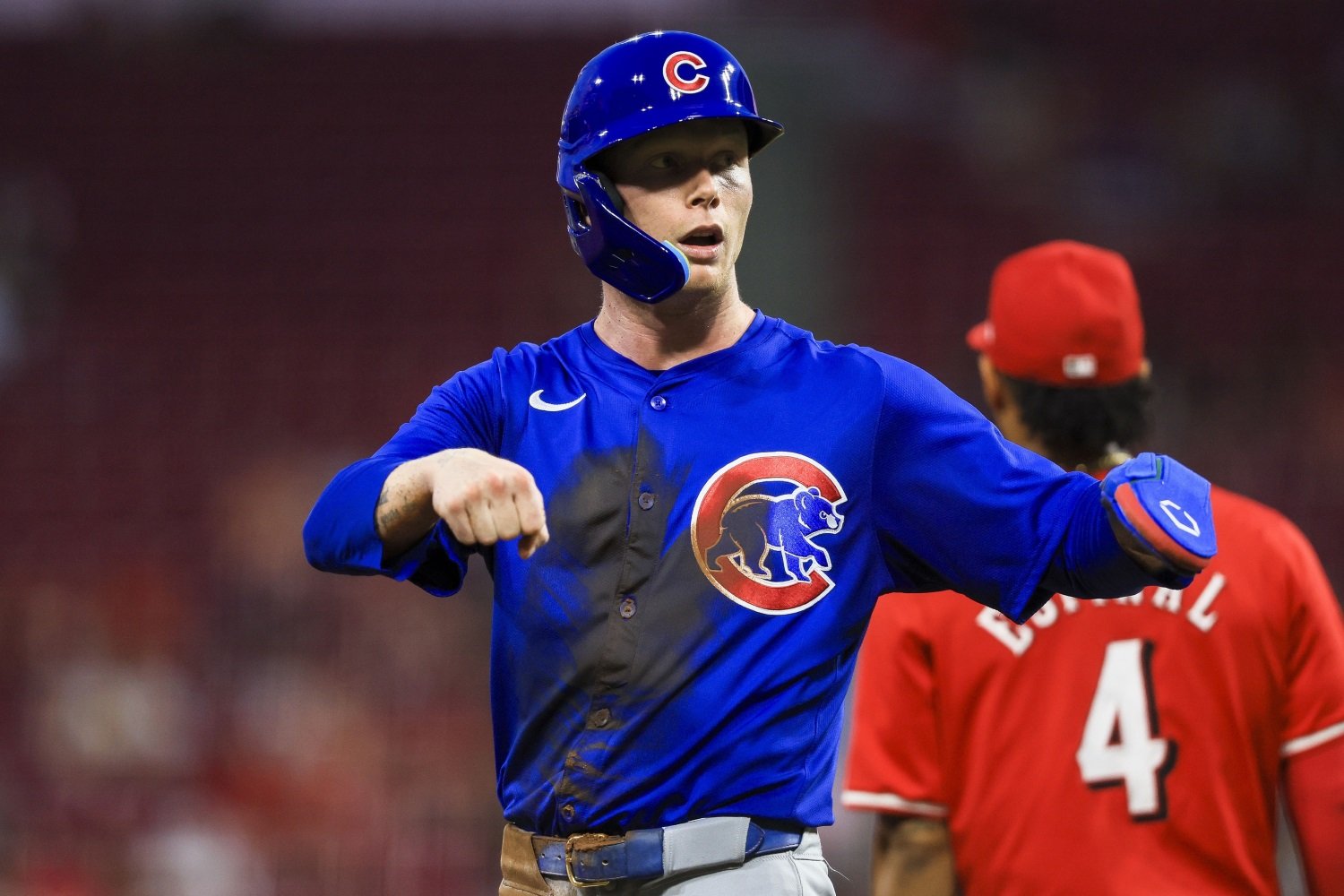 If the season ended today, Pete Crow-Armstrong would be tied for the fourth-most stolen bases in a season by a player who was not caught stealing during that campaign. He's 21-for-21; the only guys who have gone whole seasons with more steals and no times caught are Chase Utley (23, 2009), Alcides Escobar (22, 2013), and Trea Turner (30, just last season). Obviously, that's cheating a bit, because the rules have changed and bases are bigger, and those two things have made stealing bases easier. It's also cheating because teams used to allow (or even force) fast runners to go more often, decades ago, making it almost impossible to get through a season without being thrown out. You were supposed to run until they started nabbing you. And finally, it's unfair because it's perfectly possible Crow-Armstrong will be thrown out before the season ends, anyway. Or is it? Last year, it was possible to catch Crow-Armstrong stealing. In fact, it happened 10 times, between Triple-A and the big leagues. Two of those were in the majors. One was a busted play on a would-be steal of home with runners at the corners. Here's the other one. Got Him.mp4 Stealing bases is a skill. It requires exceptionally good technique, although the rigors of the discipline are less stern in the age of the pitch timer. Stealing third is an especially tricky skill, too, because the throw down to that base is shorter for the opposing catcher, and because the angle you want to take from your lead off of second base toward the base is a bit different than the one you create when you take off from first and are heading into second. The count of your strides and the timing of your slide should be different going to third. As you can see above, last year, Crow-Armstrong didn't have those skills. He also just wasn't a very good slider, period. A good headfirst slide is, more than most fans realize, more of a launch than a dive. You don't want to hit the dirt too soon, too far from the base, both because that sudden friction will slow you down much more than gliding low above the ground and because the moment your chest or midsection hits the dirt, you lose all ability to adjust your direction or avoid a tag. In the air, you have more options. Crow-Armstrong, above, slid hard and early, hit the dirt too hard too soon, plowed into his own dislodged helmet, and was unable to change his path to the base. It was his first series as a big-leaguer. We should be gentle. But he lacked technique. This year, though, he's mastered the rudiments. He's taking aggressive, bouncing leads, and his jumps are making most steal attempts non-events. Opponents are trying stuff, but it's mostly not working. Few of his steals have even been close plays. Let's take a look at those few, to see what we can learn. Let's start back at third base, again. Almost.mp4 This one is almost proof that you could, theoretically, throw out even the skilled-up Crow-Armstrong. He gets a solid jump, but the Phillies aren't quite caught by surprise, and he slides much more efficiently, maintaining his speed all the way to the bag, but it's still pretty darn close. Look how much the ball beat him by. But, the fact that the ball beat him by this much and he was still safe tells you something, too. Firstly, wow, is Crow-Armstrong fast, and that better headfirst slide lets him decelerate much more smoothly into the base, such that a tagger has to be incredibly quick. The shorter distance on the throw helps, but the timing of the play makes it hard to aim that throw low and slightly to the inside of the base, where it would optimally be. The catcher has to throw to a moving target and knows an errant throw means a run. Most throws to third are chest- or shoulder-high like this, and right on the line, out of a conservatism that won't work against Crow-Armstrong. Here, though, they come even closer. Ohhh I Dunno.mp4 The pitch takes Curt Casali nicely into his throw, and Matt Chapman positions his body beautifully for a quick tag. The throw is slightly inside the line, although still higher than you'd put it if you had all day to get it off. Crow-Armstrong's jump was just too good. He had them beaten before the ball even got to Casali. Because of his sheer speed and the frequency with which he gets such great jumps, teams have tried to anticipate and thwart him. Here, the Cardinals tried an increasingly common tactic throughout the league, with Pedro Pages getting into position to throw before the pitch is even thrown. The thing is, doing that makes it harder to catch the ball. Tried to Set Him Up.mp4 Another, more traditional approach is the pitchout. Could've, Maybe.mp4 Maybe in some near-future version of the game in which the old fundamentals are more carefully observed, that play will work again. Pitchouts are shockingly rare these days, though, and it shows. Hunter Greene didn't look comfortable throwing the ball there, and Luke Maile didn't make a good throw. If he had, the Reds could have retired Crow-Armstrong. Here's the proof of that. If that throw is a bit higher--if it can be caught on the fly by Jonathan India, right on that same line--the tag is on Crow-Armstrong's leg before his hand reaches the base. In the real world, though, the throw got to India on a short hop, and his glove was going up instead of down when he caught it. He had no chance to get it back down before Crow-Armstrong reached the base. Teams are doing everything they can come up with against Crow-Armstrong, but his speed is elite and his baserunning nous has caught up to it. It's almost impossible to catch him now. He stole 10 bases without being caught in Triple-A, in addition to 21 in the majors, and he swiped three bases in as many tries in Cactus League play. He's stolen 34 bases without all that close a call this year. It's definitely possible, though. Crow-Armstrong can still be thrown out. Here's how we know. Def Could've.mp4 They had him! This was Crow-Armstrong's first big-league steal of the season, and it could have stopped this discussion before it began. Jeff McNeil just had to not trip over the base on the way to the throw. The throw was on the money, and it had Crow-Armstrong dead to rights. That's not to say it would have been an easy play. McNeil would have caught the ball right above the base, and had to reach out to get Crow-Armstrong before he reached the bag. It was a very makeable play, though. This is just the final wild card of the new version of the game. There's the fact that catchers are selected for framing pitches, rather than throwing; there's the inability to throw over more than once or twice to hold runners, and the way each throw emboldens and empowers them; there's the incredible speed of a player like Crow-Armstrong; and then there's the big old base, which not only makes it easier to reach and hold the bag upon arrival but can pose a hazard to an inattentive fielder. He can be caught, but these attempts to see how it would happen only underscore how unlikely it is on any given try. Crow-Armstrong should keep running; it's vital to the Cubs' efforts to stay dangerous and balanced all the way to the bottom of the batting order.
 -
We know, as of about a year ago, that it was possible. But some things have changed. Image courtesy of © Katie Stratman-USA TODAY Sports If the season ended today, Pete Crow-Armstrong would be tied for the fourth-most stolen bases in a season by a player who was not caught stealing during that campaign. He's 21-for-21; the only guys who have gone whole seasons with more steals and no times caught are Chase Utley (23, 2009), Alcides Escobar (22, 2013), and Trea Turner (30, just last season). Obviously, that's cheating a bit, because the rules have changed and bases are bigger, and those two things have made stealing bases easier. It's also cheating because teams used to allow (or even force) fast runners to go more often, decades ago, making it almost impossible to get through a season without being thrown out. You were supposed to run until they started nabbing you. And finally, it's unfair because it's perfectly possible Crow-Armstrong will be thrown out before the season ends, anyway. Or is it? Last year, it was possible to catch Crow-Armstrong stealing. In fact, it happened 10 times, between Triple-A and the big leagues. Two of those were in the majors. One was a busted play on a would-be steal of home with runners at the corners. Here's the other one. Got Him.mp4 Stealing bases is a skill. It requires exceptionally good technique, although the rigors of the discipline are less stern in the age of the pitch timer. Stealing third is an especially tricky skill, too, because the throw down to that base is shorter for the opposing catcher, and because the angle you want to take from your lead off of second base toward the base is a bit different than the one you create when you take off from first and are heading into second. The count of your strides and the timing of your slide should be different going to third. As you can see above, last year, Crow-Armstrong didn't have those skills. He also just wasn't a very good slider, period. A good headfirst slide is, more than most fans realize, more of a launch than a dive. You don't want to hit the dirt too soon, too far from the base, both because that sudden friction will slow you down much more than gliding low above the ground and because the moment your chest or midsection hits the dirt, you lose all ability to adjust your direction or avoid a tag. In the air, you have more options. Crow-Armstrong, above, slid hard and early, hit the dirt too hard too soon, plowed into his own dislodged helmet, and was unable to change his path to the base. It was his first series as a big-leaguer. We should be gentle. But he lacked technique. This year, though, he's mastered the rudiments. He's taking aggressive, bouncing leads, and his jumps are making most steal attempts non-events. Opponents are trying stuff, but it's mostly not working. Few of his steals have even been close plays. Let's take a look at those few, to see what we can learn. Let's start back at third base, again. Almost.mp4 This one is almost proof that you could, theoretically, throw out even the skilled-up Crow-Armstrong. He gets a solid jump, but the Phillies aren't quite caught by surprise, and he slides much more efficiently, maintaining his speed all the way to the bag, but it's still pretty darn close. Look how much the ball beat him by. But, the fact that the ball beat him by this much and he was still safe tells you something, too. Firstly, wow, is Crow-Armstrong fast, and that better headfirst slide lets him decelerate much more smoothly into the base, such that a tagger has to be incredibly quick. The shorter distance on the throw helps, but the timing of the play makes it hard to aim that throw low and slightly to the inside of the base, where it would optimally be. The catcher has to throw to a moving target and knows an errant throw means a run. Most throws to third are chest- or shoulder-high like this, and right on the line, out of a conservatism that won't work against Crow-Armstrong. Here, though, they come even closer. Ohhh I Dunno.mp4 The pitch takes Curt Casali nicely into his throw, and Matt Chapman positions his body beautifully for a quick tag. The throw is slightly inside the line, although still higher than you'd put it if you had all day to get it off. Crow-Armstrong's jump was just too good. He had them beaten before the ball even got to Casali. Because of his sheer speed and the frequency with which he gets such great jumps, teams have tried to anticipate and thwart him. Here, the Cardinals tried an increasingly common tactic throughout the league, with Pedro Pages getting into position to throw before the pitch is even thrown. The thing is, doing that makes it harder to catch the ball. Tried to Set Him Up.mp4 Another, more traditional approach is the pitchout. Could've, Maybe.mp4 Maybe in some near-future version of the game in which the old fundamentals are more carefully observed, that play will work again. Pitchouts are shockingly rare these days, though, and it shows. Hunter Greene didn't look comfortable throwing the ball there, and Luke Maile didn't make a good throw. If he had, the Reds could have retired Crow-Armstrong. Here's the proof of that. If that throw is a bit higher--if it can be caught on the fly by Jonathan India, right on that same line--the tag is on Crow-Armstrong's leg before his hand reaches the base. In the real world, though, the throw got to India on a short hop, and his glove was going up instead of down when he caught it. He had no chance to get it back down before Crow-Armstrong reached the base. Teams are doing everything they can come up with against Crow-Armstrong, but his speed is elite and his baserunning nous has caught up to it. It's almost impossible to catch him now. He stole 10 bases without being caught in Triple-A, in addition to 21 in the majors, and he swiped three bases in as many tries in Cactus League play. He's stolen 34 bases without all that close a call this year. It's definitely possible, though. Crow-Armstrong can still be thrown out. Here's how we know. Def Could've.mp4 They had him! This was Crow-Armstrong's first big-league steal of the season, and it could have stopped this discussion before it began. Jeff McNeil just had to not trip over the base on the way to the throw. The throw was on the money, and it had Crow-Armstrong dead to rights. That's not to say it would have been an easy play. McNeil would have caught the ball right above the base, and had to reach out to get Crow-Armstrong before he reached the bag. It was a very makeable play, though. This is just the final wild card of the new version of the game. There's the fact that catchers are selected for framing pitches, rather than throwing; there's the inability to throw over more than once or twice to hold runners, and the way each throw emboldens and empowers them; there's the incredible speed of a player like Crow-Armstrong; and then there's the big old base, which not only makes it easier to reach and hold the bag upon arrival but can pose a hazard to an inattentive fielder. He can be caught, but these attempts to see how it would happen only underscore how unlikely it is on any given try. Crow-Armstrong should keep running; it's vital to the Cubs' efforts to stay dangerous and balanced all the way to the bottom of the batting order. View full article
-
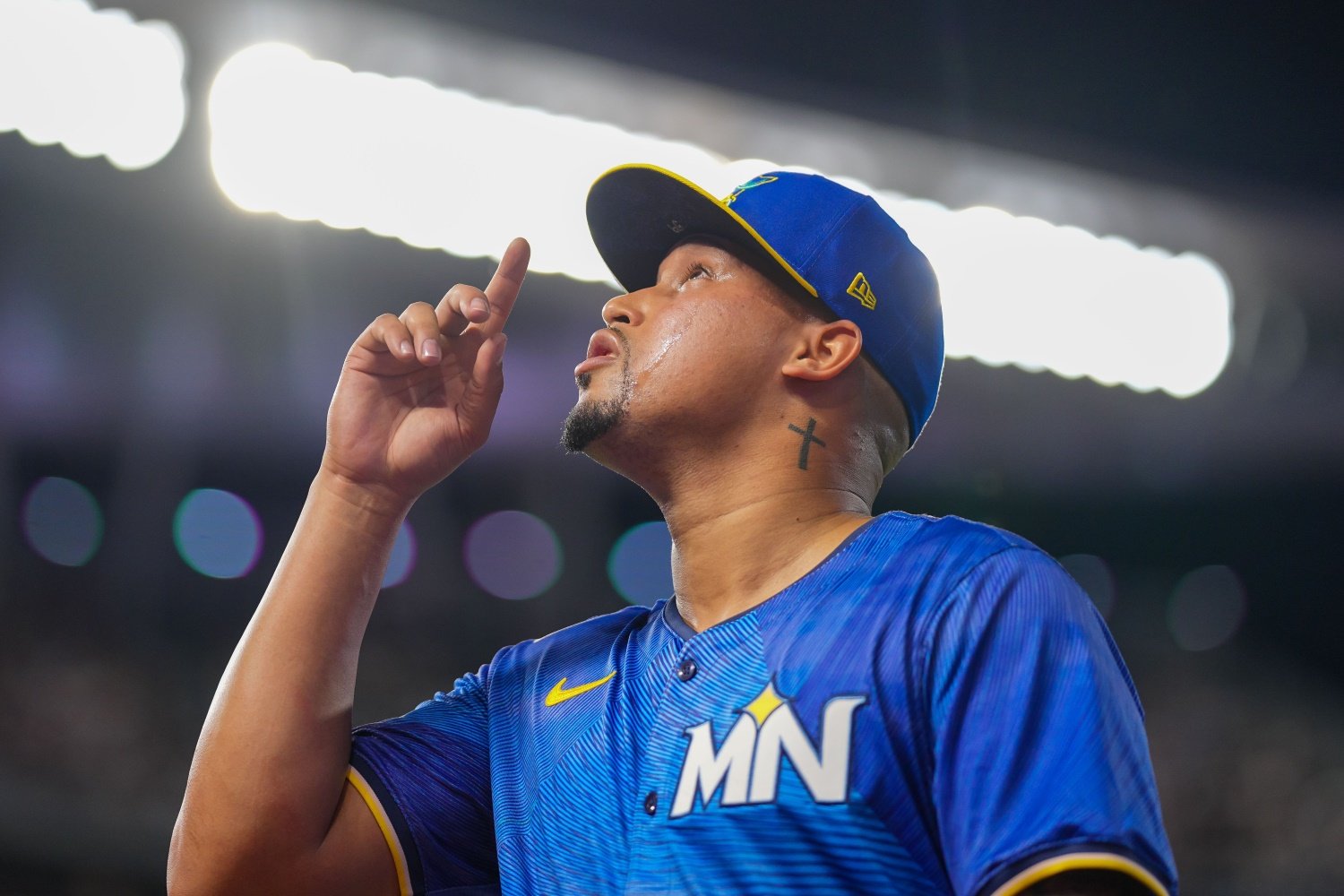 It's not too early to start thinking about the 2025 Chicago Cubs. In fact, that's what the team should be spending the balance of the 2024 season doing. Their recent promotion of Matt Shaw, James Triantos, and Kevin Alcántara to Triple-A Iowa shows that they're doing just that, and if they want to think a little more concretely about it, they can closely watch their opponents this week: the Minnesota Twins. We're already a year or two into the slow deflation of the local TV rights bubble in baseball. Bally Sports has been a disastrous partnership for the league, but the cliff over which several teams' rights contracts have careened was coming, either way. Several teams have been limited in their spending power recently by the loss of part of the revenue to which they'd become accustomed from that source, but the Twins are one of the most acutely affected--and that will remain true this coming winter. Minnesota re-signed in a semi-emergency move with Bally Sports North early this year, but they're not going to be back on that platform in 2025. Already, too, their payouts from Bally have declined. Their revenue streams are thinning and the Pohlad family, who owns the team, have given strict orders for a long-term cap on payroll. This is a fairly recent development, though. That's important, because right before that cutback went into effect, the team's front office spent rather handsomely. Carlos Correa is on a long-term deal with the team. So is Pablo López. Byron Buxton still has a few years left on his own long-term deal. That's in addition to a fistful of players who are due to start getting paid pretty well via arbitration in 2025, and the cumulative effect is that the team will need to find ways to cut payroll this winter. Enter the Cubs, who need to think flexibly about how to add high-end talent to their organization. Pairing up with a team in the Twins' position in trade can help them accomplish that in one of two ways: Acquiring a player who would otherwise be unavailable, but whom their current team can't afford to retain; or Taking on a bad contract that gives that team some spending power back, and getting a valuable prospect in the process. Buxton and Correa are probably off-limits, and the complexity of moving and valuing either of their contracts would be prohibitively difficult. López is getting a big raise next year, but he's the Twins' ace and they value him too much to let him go. There are, however, three players who stand out as good trade candidates. Ryan Jeffers At 27, Jeffers is battling through a very difficult season. He's a catcher who takes his duties seriously and acquits himself behind the plate, but he's not a plus defender. At his best, his value has been bat-first, but this year, he's a mess at bat. The timing is bad for the player and the team, because he gained arbitration eligibility this past winter. He's making $2.43 million this year, and that number will go up next season. If the Cubs are open to a project at a relatively low cost, Jeffers figures to be available this winter, and while he's good enough to earn a tender even from the payroll-limited Twins, his surplus trade value will be low--and the team will be motivated to realize it. Christian Vázquez The other catcher for the Twins this year is the man the Cubs tried to outbid the Twins for two winters ago. Minnesota ended up shelling out $30 million over three years for Vázquez, and there's still one year of eight-figure obligation left after this campaign ends. The respected veteran and defensive specialist could be a great fit for the Cubs next year, whether they stick with Miguel Amaya or try to move on to Moises Ballesteros. The Twins need to move one of Vázquez and Jeffers, and if it be the former, it would be a pure salary dump. The Cubs would even need to get more net value in the trade. Normally, that kind of deal just doesn't happen, but the Twins need to get something done. Jhoan Durán We saved the best--or at least the most intriguing--for last. Durán is due to become arbitration-eligible this winter, and because he throws a million miles per hour and has racked up an impressive number of saves in his young career, he'll get expensive in a hurry. Nor is he clearly the Twins' relief ace at this point, given the impressive progress of Griffin Jax. This acquisition, of course, would be costly, but if you're among those who have dreamed about Mason Miller at all this year, bend a thought toward Durán. If the Twins are sufficiently enticed, they'll be happy to let a high-octane relief weapon go, given the needle they need to thread financially. The Cubs need to fill one or more need this winter via free agency, but they'll also need to fill some via trade. The Twins are a promising partner. There might not be a perfect fit, but there are plenty of possible ones to explore.
 -
This winter will bring change to the Cubs roster. They'll need to be opportunistic and aggressive. One team with whom they might need to get together on a move will occupy the visitor's clubhouse at Wrigley Field for another two days. Image courtesy of © Brad Rempel-USA TODAY Sports It's not too early to start thinking about the 2025 Chicago Cubs. In fact, that's what the team should be spending the balance of the 2024 season doing. Their recent promotion of Matt Shaw, James Triantos, and Kevin Alcántara to Triple-A Iowa shows that they're doing just that, and if they want to think a little more concretely about it, they can closely watch their opponents this week: the Minnesota Twins. We're already a year or two into the slow deflation of the local TV rights bubble in baseball. Bally Sports has been a disastrous partnership for the league, but the cliff over which several teams' rights contracts have careened was coming, either way. Several teams have been limited in their spending power recently by the loss of part of the revenue to which they'd become accustomed from that source, but the Twins are one of the most acutely affected--and that will remain true this coming winter. Minnesota re-signed in a semi-emergency move with Bally Sports North early this year, but they're not going to be back on that platform in 2025. Already, too, their payouts from Bally have declined. Their revenue streams are thinning and the Pohlad family, who owns the team, have given strict orders for a long-term cap on payroll. This is a fairly recent development, though. That's important, because right before that cutback went into effect, the team's front office spent rather handsomely. Carlos Correa is on a long-term deal with the team. So is Pablo López. Byron Buxton still has a few years left on his own long-term deal. That's in addition to a fistful of players who are due to start getting paid pretty well via arbitration in 2025, and the cumulative effect is that the team will need to find ways to cut payroll this winter. Enter the Cubs, who need to think flexibly about how to add high-end talent to their organization. Pairing up with a team in the Twins' position in trade can help them accomplish that in one of two ways: Acquiring a player who would otherwise be unavailable, but whom their current team can't afford to retain; or Taking on a bad contract that gives that team some spending power back, and getting a valuable prospect in the process. Buxton and Correa are probably off-limits, and the complexity of moving and valuing either of their contracts would be prohibitively difficult. López is getting a big raise next year, but he's the Twins' ace and they value him too much to let him go. There are, however, three players who stand out as good trade candidates. Ryan Jeffers At 27, Jeffers is battling through a very difficult season. He's a catcher who takes his duties seriously and acquits himself behind the plate, but he's not a plus defender. At his best, his value has been bat-first, but this year, he's a mess at bat. The timing is bad for the player and the team, because he gained arbitration eligibility this past winter. He's making $2.43 million this year, and that number will go up next season. If the Cubs are open to a project at a relatively low cost, Jeffers figures to be available this winter, and while he's good enough to earn a tender even from the payroll-limited Twins, his surplus trade value will be low--and the team will be motivated to realize it. Christian Vázquez The other catcher for the Twins this year is the man the Cubs tried to outbid the Twins for two winters ago. Minnesota ended up shelling out $30 million over three years for Vázquez, and there's still one year of eight-figure obligation left after this campaign ends. The respected veteran and defensive specialist could be a great fit for the Cubs next year, whether they stick with Miguel Amaya or try to move on to Moises Ballesteros. The Twins need to move one of Vázquez and Jeffers, and if it be the former, it would be a pure salary dump. The Cubs would even need to get more net value in the trade. Normally, that kind of deal just doesn't happen, but the Twins need to get something done. Jhoan Durán We saved the best--or at least the most intriguing--for last. Durán is due to become arbitration-eligible this winter, and because he throws a million miles per hour and has racked up an impressive number of saves in his young career, he'll get expensive in a hurry. Nor is he clearly the Twins' relief ace at this point, given the impressive progress of Griffin Jax. This acquisition, of course, would be costly, but if you're among those who have dreamed about Mason Miller at all this year, bend a thought toward Durán. If the Twins are sufficiently enticed, they'll be happy to let a high-octane relief weapon go, given the needle they need to thread financially. The Cubs need to fill one or more need this winter via free agency, but they'll also need to fill some via trade. The Twins are a promising partner. There might not be a perfect fit, but there are plenty of possible ones to explore. View full article
-
- 1
-

-
- byron buxton
- jhoan duran
- (and 5 more)
-
The Cubs' incumbent right fielder isn't one, really, and they have 30 million reasons to spend the final several weeks of this season getting a good look at the player who will man that spot in 2025. Image courtesy of © Jay Biggerstaff-USA TODAY Sports Though it wasn't quite for the reasons one might have hoped, during Cody Bellinger's absence in the wake of cracking his ribcage running into the wall early this season, Pete Crow-Armstrong gained a foothold as the team's regular center fielder. Meanwhile, and for much more exciting reasons, Michael Busch established himself as the team's everyday first baseman. Therefore, after Bellinger returned late in May (and once the lineup found its equilibrium again), a new arrangement emerged. The two youngsters mostly held onto their spots, and Bellinger slotted in most often as... the right fielder. From Jun. 4 through the day on which Bellinger broke a finger and was lost for another three weeks, the Cubs played 33 games. In 17 of them, Seiya Suzuki started in right field, but in 14 others, he started at DH, and he made one start in left field. For a stretch from Jun. 22 through Jul. 3, Bellinger made eight of the 11 starts in right field. Once Bellinger got hurt again, the experiment ended, but it could be on the verge of beginning again now. While Kyle Hendricks is the consummate teammate and tries not to spread blame when things go against him, he was evidently frustrated by Suzuki's failure to catch a very catchable ball in his last difficult outing. He's not the first Cubs pitcher to feel thus victimized, by a long shot; Suzuki really doesn't seem to be capable of playing an MLB-caliber right field. Too many balls fall in, somewhere between routine and truly difficult and closer to the former. Bellinger is going to be the answer at that position for 2025, not just because Crow-Armstrong and Busch have locked down his other two obvious positions, but because he's younger and better out there than Suzuki. Right now, he's not capable to retaking the spot. His finger is still bothering him when he tries to throw hard, according to Craig Counsell, so he'll remain in the DH spot at least for this week's series against the Twins. Suzuki, for his own part, is out of the lineup Monday night, with neck soreness. Whenever Bellinger is back to full strength, though, he's the logical choice to play right field, with Suzuki and his formidable bat sliding to DH on as permanent a basis as everyone's health permits. The last time the team was even in position to kick around these considerations, Christopher Morel was still a complicating factor. Playing either Bellinger or Suzuki at DH meant leaving Morel at third base, where his defense was untenable. The injury to Bellinger temporarily solved that problem for them, in a bad way. Then, the Morel-for-Isaac Paredes trade permanently addressed it, in a positive way. With Paredes locked in at third base, the DH spot is wide open for Suzuki, and Bellinger can settle in as a right fielder, where he's less likely to get hurt than in center and a superior defensive option to Suzuki. On Monday night, Mike Tauchman takes Suzuki's place in the outfield. Tauchman, too, is a better defender than Suzuki, but he's purely a stopgap solution. As soon as Tuesday night, we could see Suzuki back in right field. With Bellinger's digits healing, though, the countdown to the end of Suzuki's tenure in that spot should very much be on. View full article
-
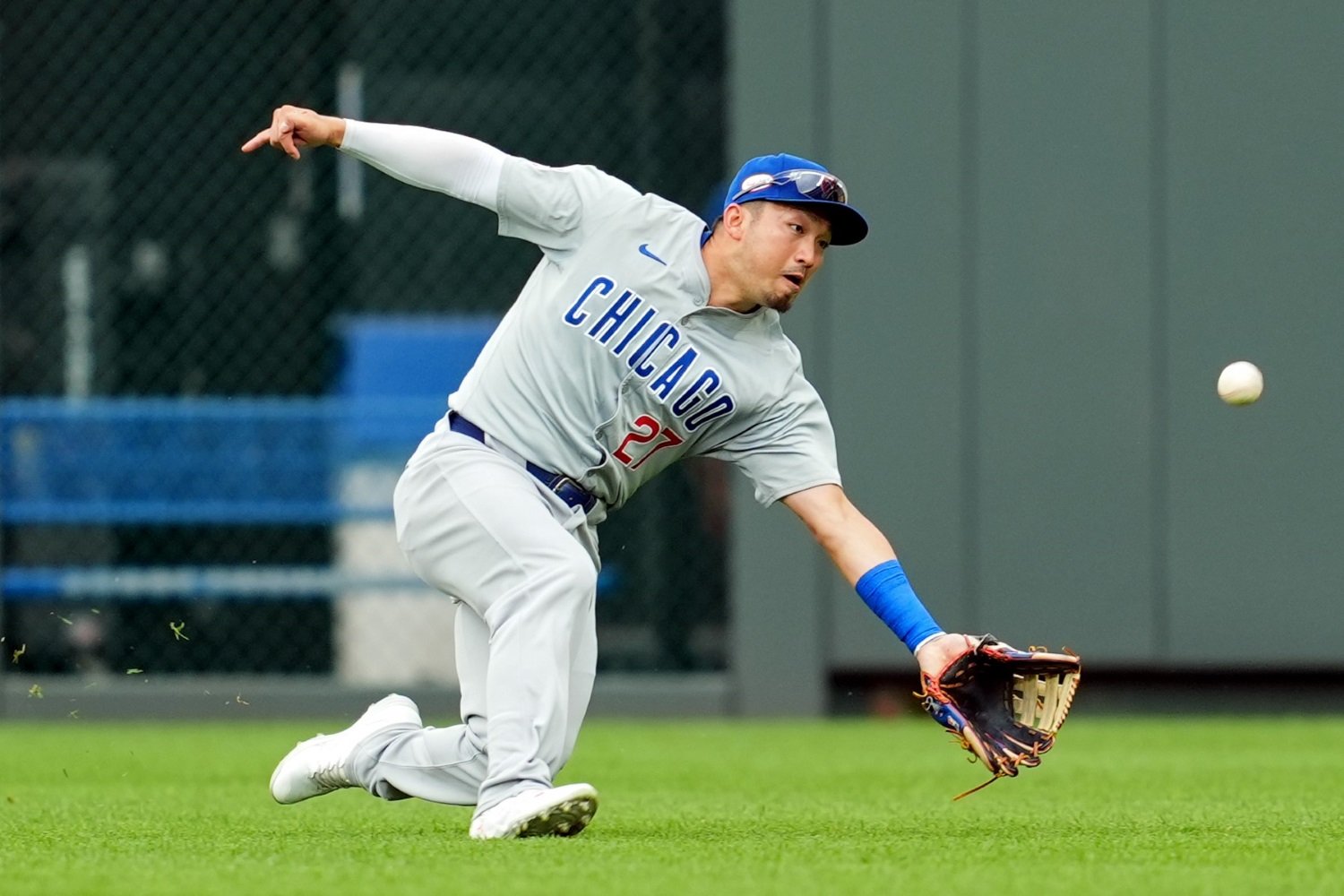 Though it wasn't quite for the reasons one might have hoped, during Cody Bellinger's absence in the wake of cracking his ribcage running into the wall early this season, Pete Crow-Armstrong gained a foothold as the team's regular center fielder. Meanwhile, and for much more exciting reasons, Michael Busch established himself as the team's everyday first baseman. Therefore, after Bellinger returned late in May (and once the lineup found its equilibrium again), a new arrangement emerged. The two youngsters mostly held onto their spots, and Bellinger slotted in most often as... the right fielder. From Jun. 4 through the day on which Bellinger broke a finger and was lost for another three weeks, the Cubs played 33 games. In 17 of them, Seiya Suzuki started in right field, but in 14 others, he started at DH, and he made one start in left field. For a stretch from Jun. 22 through Jul. 3, Bellinger made eight of the 11 starts in right field. Once Bellinger got hurt again, the experiment ended, but it could be on the verge of beginning again now. While Kyle Hendricks is the consummate teammate and tries not to spread blame when things go against him, he was evidently frustrated by Suzuki's failure to catch a very catchable ball in his last difficult outing. He's not the first Cubs pitcher to feel thus victimized, by a long shot; Suzuki really doesn't seem to be capable of playing an MLB-caliber right field. Too many balls fall in, somewhere between routine and truly difficult and closer to the former. Bellinger is going to be the answer at that position for 2025, not just because Crow-Armstrong and Busch have locked down his other two obvious positions, but because he's younger and better out there than Suzuki. Right now, he's not capable to retaking the spot. His finger is still bothering him when he tries to throw hard, according to Craig Counsell, so he'll remain in the DH spot at least for this week's series against the Twins. Suzuki, for his own part, is out of the lineup Monday night, with neck soreness. Whenever Bellinger is back to full strength, though, he's the logical choice to play right field, with Suzuki and his formidable bat sliding to DH on as permanent a basis as everyone's health permits. The last time the team was even in position to kick around these considerations, Christopher Morel was still a complicating factor. Playing either Bellinger or Suzuki at DH meant leaving Morel at third base, where his defense was untenable. The injury to Bellinger temporarily solved that problem for them, in a bad way. Then, the Morel-for-Isaac Paredes trade permanently addressed it, in a positive way. With Paredes locked in at third base, the DH spot is wide open for Suzuki, and Bellinger can settle in as a right fielder, where he's less likely to get hurt than in center and a superior defensive option to Suzuki. On Monday night, Mike Tauchman takes Suzuki's place in the outfield. Tauchman, too, is a better defender than Suzuki, but he's purely a stopgap solution. As soon as Tuesday night, we could see Suzuki back in right field. With Bellinger's digits healing, though, the countdown to the end of Suzuki's tenure in that spot should very much be on.
 -
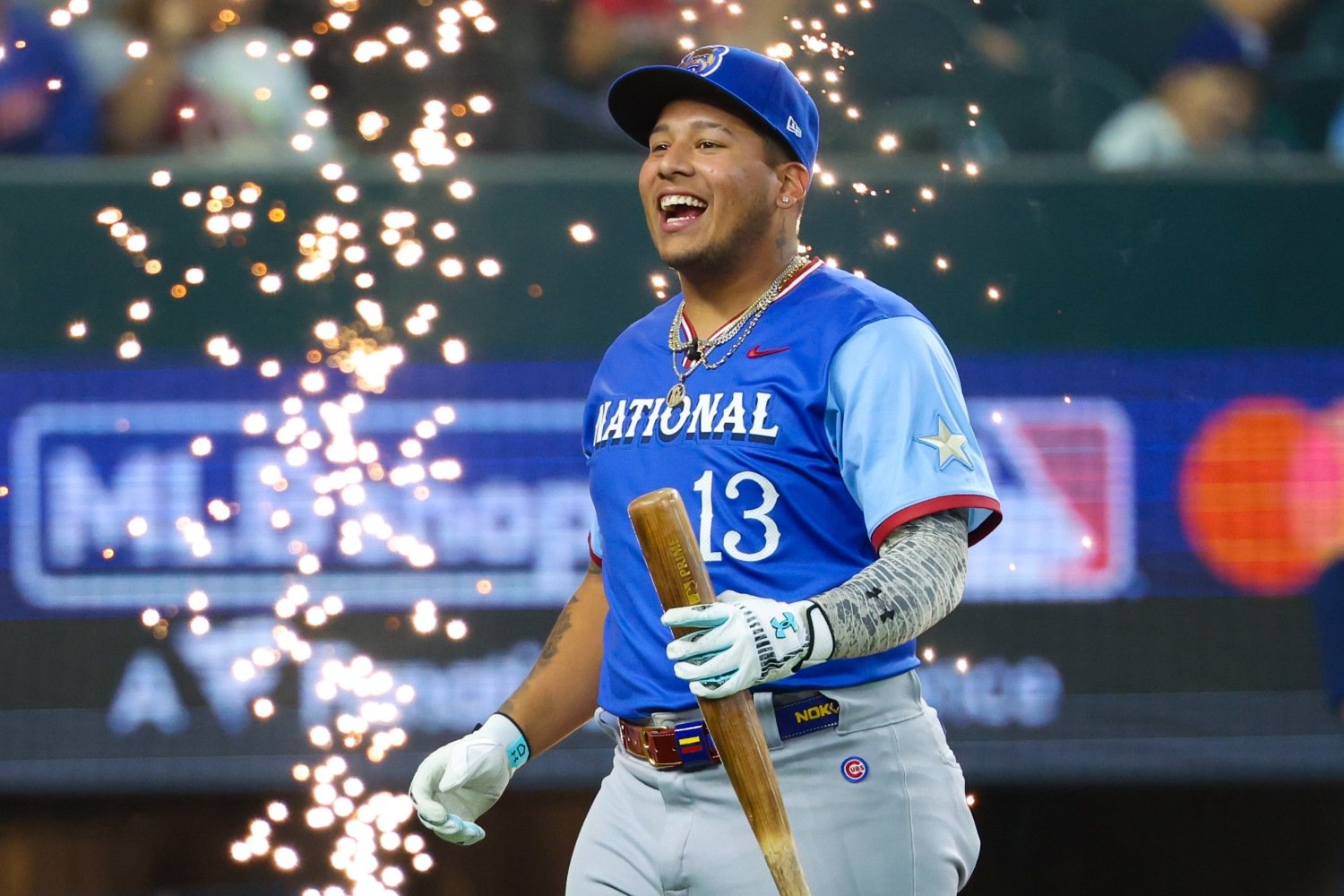 Lately, the Cubs are in the bad habit of having their best offensive prospects stall out in the upper levels of their farm system. It's not a problem exclusive to them; it's part of how being a top prospect works. Still, they need to start getting those players over the hump, not only onto the big-league roster, but into the everyday lineup as solid or better regulars. At the moment, the players who seem to stand the best chance of doing that are (in any order you choose) Kevin Alcántara, Moises Ballesteros, Owen Caissie, Matt Shaw, and James Triantos. Sunday evening, Tommy Birch of the Des Moines Register reported that Alcántara, Shaw, and Triantos are getting a bump from Double-A to the Cubs' top farm club, where they'll join Ballesteros and Caissie in the lineup. All five of these players have, at some time this year, appeared on one or more top-100 prospects list for the league, and now they're all as close as they can get to the majors. Though teams have batted-ball and plenty of other data on players at all levels of their farm systems, the promotion of these three means we'll get our first look at publicly available Statcast info for them. Ballesteros and Caissie, though, have already played a considerable amount of ball in front of those cameras. What have we learned about them in that process? Owen Caissie Given aggressive level assignments ever since he was acquired in the Yu Darvish trade, Caissie has spent the whole season at Iowa, even though he didn't turn 22 until Jul. 8. He's a tall, lanky left-handed slugger, and on his way up the ladder, power has been his calling card. He put up some terrifying top-end exit velocities in Tennessee, and got the feel of pulling the ball in the air well enough to slug .515 in the pitcher-friendly Southern League last year. However, Caissie also struck out at a cartoonish rate at each of his previous stops in the minors, He fanned in 31.2% of his plate appearances at Tennessee last year. That's a very boom-or-bust profile, and although he did get to a modicum of power and draw plenty of walks, the odds weren't necessarily in his favor. Joey Gallo struck out at a similar rate in his age-20 season in the upper minors, but Gallo slugged .100 better than Caissie did. He needed to unlock even more pop in order to be a viable big-league prospect while punching out so often. Instead, early this year, Caissie began concertedly trying to make more contact, at the expense of his light-tower power. For the season, he has a 27.6% strikeout rate, which still isn't good, given the relative weakness of Triple-A pitching and the relative smallness of Triple-A strike zones. However, he's walking 12.7% of the time, and hitting enough line drives to run another in what has been a career of very high BABIPs. Overall, his batting line is .278/.375/.452. He's thriving there, just as he did in Double-A. You could choose to view this as evidence that Caissie is ready to do damage in the majors right now, but it's not that simple. His average exit velocity is 89.4 miles per hour. Isolate the balls in the most productive launch-angle range, and it's 91.8. His 90th-percentile exit velocity is 107 miles per hour, and 42% of his batted balls top 95 miles per hour. All of that would rate as thoroughly unremarkable, and even discouraging, for a hitter who strikes out as much as Caissie does in the big leagues--and that's before accounting for the change in the quality of pitching between Triple-A and MLB. Caissie could sort through all of this and come out the other side with high-end power skills, but the trend arrows aren't even pointing in the right direction at the moment. Caissie's six hardest-hit balls of this season all came before the midpoint of May. He hasn't shown the ability to reach even 110 MPH off the bat since Jun. 21, and again, unless he learns to make much more contact, he's going to need to hit the ball at least that hard with some regularity. He's not pulling the ball with authority in the air with any substantial consistency right now, which is especially worrisome. Moises Ballesteros Because he's spent more than half his season to date in Tennessee, Ballesteros has a more limited sample of Statcast-covered Triple-A data from which to draw any conclusions. We'll be more brief, and more circumspect. In 139 plate appearances with Iowa, he's batting .279/.331/.457, with five home runs. He doesn't walk nearly as much as Caissie does, but he also has a strikeout rate around 21%. So far, Ballesteros has shown no ability to handle advanced left-handed pitching, but against righthanders, the stocky lefty slugger is raking. His 90th-percentile exit velocity is lower than Caissie's, and their average EVs are nearly identical, but that's what we should expect. Caissie is the slugger. Ballesteros has superior bat-to-ball skills, including hitting more line drives. Caissie's weighted sweet-spot exit velocity is a paltry 83.1 MPH; Ballesteros's is a robust 91.2. Adding three right-hitting top prospects to these two lefties figures to make the inconsistent Iowa lineup much more formidable down the stretch. In a perfect world, maybe they would all matriculate from there to dominating at Wrigley Field in the near future. In this deeply broken one, it's more likely that two of them become trade bait, two are derailed by injuries or the difficulty of the game, and only one becomes a meaningful long-term Cubs contributor. So far, Ballesteros looks more likely than Caissie to be one of the success stories, even if it be as a valuable trade chip, but it'll be interesting to see how the long-levered Canadian adjusts down the stretch. Meanwhile, Shaw, Triantos, and Alcántara will allow us some new insights into their own futures.
 -
On Sunday night, news broke that three of the Cubs' top five or six position-player prospects were being promoted from Double-A Tennessee to Triple-A Iowa, Two other top bats in the system will be waiting there to welcome them. Image courtesy of © Kevin Jairaj-USA TODAY Sports Lately, the Cubs are in the bad habit of having their best offensive prospects stall out in the upper levels of their farm system. It's not a problem exclusive to them; it's part of how being a top prospect works. Still, they need to start getting those players over the hump, not only onto the big-league roster, but into the everyday lineup as solid or better regulars. At the moment, the players who seem to stand the best chance of doing that are (in any order you choose) Kevin Alcántara, Moises Ballesteros, Owen Caissie, Matt Shaw, and James Triantos. Sunday evening, Tommy Birch of the Des Moines Register reported that Alcántara, Shaw, and Triantos are getting a bump from Double-A to the Cubs' top farm club, where they'll join Ballesteros and Caissie in the lineup. All five of these players have, at some time this year, appeared on one or more top-100 prospects list for the league, and now they're all as close as they can get to the majors. Though teams have batted-ball and plenty of other data on players at all levels of their farm systems, the promotion of these three means we'll get our first look at publicly available Statcast info for them. Ballesteros and Caissie, though, have already played a considerable amount of ball in front of those cameras. What have we learned about them in that process? Owen Caissie Given aggressive level assignments ever since he was acquired in the Yu Darvish trade, Caissie has spent the whole season at Iowa, even though he didn't turn 22 until Jul. 8. He's a tall, lanky left-handed slugger, and on his way up the ladder, power has been his calling card. He put up some terrifying top-end exit velocities in Tennessee, and got the feel of pulling the ball in the air well enough to slug .515 in the pitcher-friendly Southern League last year. However, Caissie also struck out at a cartoonish rate at each of his previous stops in the minors, He fanned in 31.2% of his plate appearances at Tennessee last year. That's a very boom-or-bust profile, and although he did get to a modicum of power and draw plenty of walks, the odds weren't necessarily in his favor. Joey Gallo struck out at a similar rate in his age-20 season in the upper minors, but Gallo slugged .100 better than Caissie did. He needed to unlock even more pop in order to be a viable big-league prospect while punching out so often. Instead, early this year, Caissie began concertedly trying to make more contact, at the expense of his light-tower power. For the season, he has a 27.6% strikeout rate, which still isn't good, given the relative weakness of Triple-A pitching and the relative smallness of Triple-A strike zones. However, he's walking 12.7% of the time, and hitting enough line drives to run another in what has been a career of very high BABIPs. Overall, his batting line is .278/.375/.452. He's thriving there, just as he did in Double-A. You could choose to view this as evidence that Caissie is ready to do damage in the majors right now, but it's not that simple. His average exit velocity is 89.4 miles per hour. Isolate the balls in the most productive launch-angle range, and it's 91.8. His 90th-percentile exit velocity is 107 miles per hour, and 42% of his batted balls top 95 miles per hour. All of that would rate as thoroughly unremarkable, and even discouraging, for a hitter who strikes out as much as Caissie does in the big leagues--and that's before accounting for the change in the quality of pitching between Triple-A and MLB. Caissie could sort through all of this and come out the other side with high-end power skills, but the trend arrows aren't even pointing in the right direction at the moment. Caissie's six hardest-hit balls of this season all came before the midpoint of May. He hasn't shown the ability to reach even 110 MPH off the bat since Jun. 21, and again, unless he learns to make much more contact, he's going to need to hit the ball at least that hard with some regularity. He's not pulling the ball with authority in the air with any substantial consistency right now, which is especially worrisome. Moises Ballesteros Because he's spent more than half his season to date in Tennessee, Ballesteros has a more limited sample of Statcast-covered Triple-A data from which to draw any conclusions. We'll be more brief, and more circumspect. In 139 plate appearances with Iowa, he's batting .279/.331/.457, with five home runs. He doesn't walk nearly as much as Caissie does, but he also has a strikeout rate around 21%. So far, Ballesteros has shown no ability to handle advanced left-handed pitching, but against righthanders, the stocky lefty slugger is raking. His 90th-percentile exit velocity is lower than Caissie's, and their average EVs are nearly identical, but that's what we should expect. Caissie is the slugger. Ballesteros has superior bat-to-ball skills, including hitting more line drives. Caissie's weighted sweet-spot exit velocity is a paltry 83.1 MPH; Ballesteros's is a robust 91.2. Adding three right-hitting top prospects to these two lefties figures to make the inconsistent Iowa lineup much more formidable down the stretch. In a perfect world, maybe they would all matriculate from there to dominating at Wrigley Field in the near future. In this deeply broken one, it's more likely that two of them become trade bait, two are derailed by injuries or the difficulty of the game, and only one becomes a meaningful long-term Cubs contributor. So far, Ballesteros looks more likely than Caissie to be one of the success stories, even if it be as a valuable trade chip, but it'll be interesting to see how the long-levered Canadian adjusts down the stretch. Meanwhile, Shaw, Triantos, and Alcántara will allow us some new insights into their own futures. View full article
-
- 1
-
-
- moises ballesteros
- owen caissie
- (and 3 more)
-
After a few tough starts coming out of the All-Star break, the left-handed workhorse looked much better Sunday night against the Cardinals. Notably, though, he still didn't look like last year's version of himself. Image courtesy of © David Banks-USA TODAY Sports It might be time to fully kill the notion that Justin Steele is a two-pitch pitcher. From the midpoint of 2022 through the end of last season, that was essentially the case, and Steele was one of the best pitchers in baseball, anyway. His cutter (or four-seamer; we can wade back into that in a moment) and slider combined to comprise 95.9% of all the pitches he threw over that period. He made a case for himself as a Cy Young Award candidate in 2023, based almost completely on those two offerings. As everyone said all along, though, it's very hard to succeed as a starting pitcher in MLB with just two pitches powering everything, for two reasons. One is obvious and intuitive: hitters learn how to spot and sit on one pitch or the other. When there are only two options on the menu, it's much easier to distinguish them. Three-, four-, and five-pitch arsenals are increasingly common, because pitchers want to be unpredictable and inscrutable to an opposing batter. The other reason is the one driving the intriguing metamorphosis gripping Steele right now, though. It's equally simple, but we think about it much less: Throwing a pitch consistently, across not just days or weeks or months but years, is very hard. Steele's two best pitches aren't as good right now as they were a year ago. As Steele evolved from a hurler with several pitches but no clear plan of attack into the cutter-slider monster he became in 2022, his fastball was the embodiment of the growth and change. It was classified as a four-seamer by most algorithms, and in most quarters, it has continued to be, but in the second half of that season and throughout 2023, it was much more like a cutter. With significant gloveside movement and a lack of rising, riding action relative to almost any four-seamer in the game, it was hard to label it any other way. This year, that's not so. Seeing the whole scatterplot of movement for the pitch in each span helps contextualize the change, but if you want to zoom in and consider a single datum, each of the more prominent blue dots in the center of the clusters represents the average movement of the pitches in that sample. Steele's heater (whatever you call it) has lost about an inch and a half of cutting action and gained about two and a half inches of ride. It's very much what it was early in 2022, again: a cut-ride four-seamer. The thing is, that wasn't the best version of Steele's fastball. That's why he changed it in the first place. With more backspin and less cut on the pitch, Steele is throwing more heaters in the strike zone, and particularly in the meat of the zone. As you would guess, this change has made the results on the pitch worse, though not disastrous. Steele has seen a major degradation in his ground-ball rate, and the fastball movement and location is a major culprit there. Batters are whiffing at the heater at about the same rate, and they still don't often blast it, but they make solid contact with it far more often than in the past. His slider has eroded a bit, too. Without a big alteration in velocity or spin rate, he's lost a few inches of sweep and a couple of inches of drop. It's still a fine seam-shifted wake-fueled slider, but it's a bit less special than it was at many points over the two previous campaigns. Steele has lost ground balls he was getting with the slider, too, and unlike the fastball's regression toward something normal, the slider's loss of movement has cost him some whiffs. However, he's made it come out as a wash, for the most part, by landing the pitch in the zone more often. Obviously, there's risk in throwing more breaking balls with a bigger piece of the strike zone, as Steele is now doing. Yet, he hasn't paid for it much, yet. He's only given up three homers on the slider this season, and opponents have just a .428 OPS against the offering. He's getting substantially more called strikes with the pitch, making up for some lost whiffs and balancing out hard contact allowed when hitters do swing. Despite materially worse movement and questionable location on each of his two pitches, Steele has gutted his way to a 3.33 ERA and peripherals that match that number. How? Well, if you were a two-pitch pitcher and your two pitches each got worse, what would you do about it? Here's Steele's whole pitch break chart for 2023: And here's the same chart for this year: You can see the same changes to the blue and green clusters we already reviewed in close-up fashion, but zoomed out this way, you can also see something else: more of the other colors, in the second image. Steele has thrown each of his sinker, his changeup, and his curveball more times than he did all last year, in 12 fewer starts and 65 fewer innings. None of the three is about to supplant the two offerings that still dominate his approach. Remember that 95.9% number from the previous season and a half? Steele still uses the fastball and slider 89.4% of the time, combined. Yet, each pitch has made just enough progress to have an impact, when he utilizes it properly. The sinker has considerably more arm-side run than it did in the past, so he's still getting ground balls with it but isn't risking a meatball every time he tries to do so. He's killing spin better with the changeup, so it runs a hair more and retains the heavy action he found with it last year. He still can't throw the change in the zone often enough for it to be more than a surprise attack, but he has started landing the curve in the zone, with tighter spin and a bit less loop, such that he's able to steal more strikes when batters can't pull the trigger and still gets grounders when they do. Again, he won't push his way to another season of Cy Young votes with any of these three pitches, but there's no guarantee that the previous versions of his fastball/cutter and slider are ever coming back. For now, at least, he needs to find ways to get outs and keep hitters on the defensive with pitches other than those two, and he's doing it this year. It might be under duress, and he might still be a worse pitcher than he was before 2024, but Steele is a more well-rounded and creative moundsman today than he was then. Sunday night was a good example of how it can all come together. View full article
-
How Cubs Ace Justin Steele is Weathering a Storm Within His Pitch Mix
Matthew Trueblood posted an article in Cubs
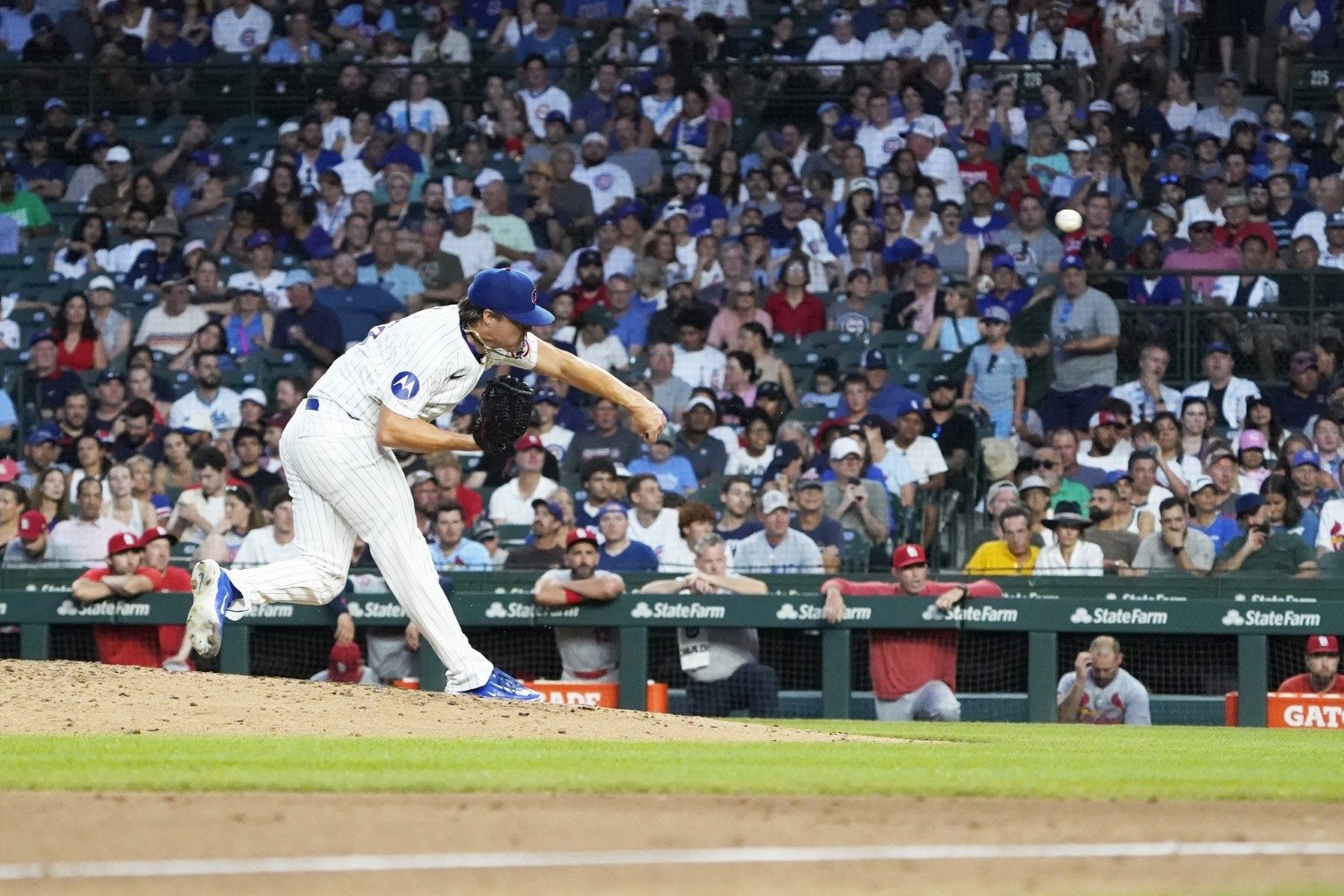 It might be time to fully kill the notion that Justin Steele is a two-pitch pitcher. From the midpoint of 2022 through the end of last season, that was essentially the case, and Steele was one of the best pitchers in baseball, anyway. His cutter (or four-seamer; we can wade back into that in a moment) and slider combined to comprise 95.9% of all the pitches he threw over that period. He made a case for himself as a Cy Young Award candidate in 2023, based almost completely on those two offerings. As everyone said all along, though, it's very hard to succeed as a starting pitcher in MLB with just two pitches powering everything, for two reasons. One is obvious and intuitive: hitters learn how to spot and sit on one pitch or the other. When there are only two options on the menu, it's much easier to distinguish them. Three-, four-, and five-pitch arsenals are increasingly common, because pitchers want to be unpredictable and inscrutable to an opposing batter. The other reason is the one driving the intriguing metamorphosis gripping Steele right now, though. It's equally simple, but we think about it much less: Throwing a pitch consistently, across not just days or weeks or months but years, is very hard. Steele's two best pitches aren't as good right now as they were a year ago. As Steele evolved from a hurler with several pitches but no clear plan of attack into the cutter-slider monster he became in 2022, his fastball was the embodiment of the growth and change. It was classified as a four-seamer by most algorithms, and in most quarters, it has continued to be, but in the second half of that season and throughout 2023, it was much more like a cutter. With significant gloveside movement and a lack of rising, riding action relative to almost any four-seamer in the game, it was hard to label it any other way. This year, that's not so. Seeing the whole scatterplot of movement for the pitch in each span helps contextualize the change, but if you want to zoom in and consider a single datum, each of the more prominent blue dots in the center of the clusters represents the average movement of the pitches in that sample. Steele's heater (whatever you call it) has lost about an inch and a half of cutting action and gained about two and a half inches of ride. It's very much what it was early in 2022, again: a cut-ride four-seamer. The thing is, that wasn't the best version of Steele's fastball. That's why he changed it in the first place. With more backspin and less cut on the pitch, Steele is throwing more heaters in the strike zone, and particularly in the meat of the zone. As you would guess, this change has made the results on the pitch worse, though not disastrous. Steele has seen a major degradation in his ground-ball rate, and the fastball movement and location is a major culprit there. Batters are whiffing at the heater at about the same rate, and they still don't often blast it, but they make solid contact with it far more often than in the past. His slider has eroded a bit, too. Without a big alteration in velocity or spin rate, he's lost a few inches of sweep and a couple of inches of drop. It's still a fine seam-shifted wake-fueled slider, but it's a bit less special than it was at many points over the two previous campaigns. Steele has lost ground balls he was getting with the slider, too, and unlike the fastball's regression toward something normal, the slider's loss of movement has cost him some whiffs. However, he's made it come out as a wash, for the most part, by landing the pitch in the zone more often. Obviously, there's risk in throwing more breaking balls with a bigger piece of the strike zone, as Steele is now doing. Yet, he hasn't paid for it much, yet. He's only given up three homers on the slider this season, and opponents have just a .428 OPS against the offering. He's getting substantially more called strikes with the pitch, making up for some lost whiffs and balancing out hard contact allowed when hitters do swing. Despite materially worse movement and questionable location on each of his two pitches, Steele has gutted his way to a 3.33 ERA and peripherals that match that number. How? Well, if you were a two-pitch pitcher and your two pitches each got worse, what would you do about it? Here's Steele's whole pitch break chart for 2023: And here's the same chart for this year: You can see the same changes to the blue and green clusters we already reviewed in close-up fashion, but zoomed out this way, you can also see something else: more of the other colors, in the second image. Steele has thrown each of his sinker, his changeup, and his curveball more times than he did all last year, in 12 fewer starts and 65 fewer innings. None of the three is about to supplant the two offerings that still dominate his approach. Remember that 95.9% number from the previous season and a half? Steele still uses the fastball and slider 89.4% of the time, combined. Yet, each pitch has made just enough progress to have an impact, when he utilizes it properly. The sinker has considerably more arm-side run than it did in the past, so he's still getting ground balls with it but isn't risking a meatball every time he tries to do so. He's killing spin better with the changeup, so it runs a hair more and retains the heavy action he found with it last year. He still can't throw the change in the zone often enough for it to be more than a surprise attack, but he has started landing the curve in the zone, with tighter spin and a bit less loop, such that he's able to steal more strikes when batters can't pull the trigger and still gets grounders when they do. Again, he won't push his way to another season of Cy Young votes with any of these three pitches, but there's no guarantee that the previous versions of his fastball/cutter and slider are ever coming back. For now, at least, he needs to find ways to get outs and keep hitters on the defensive with pitches other than those two, and he's doing it this year. It might be under duress, and he might still be a worse pitcher than he was before 2024, but Steele is a more well-rounded and creative moundsman today than he was then. Sunday night was a good example of how it can all come together.
 -
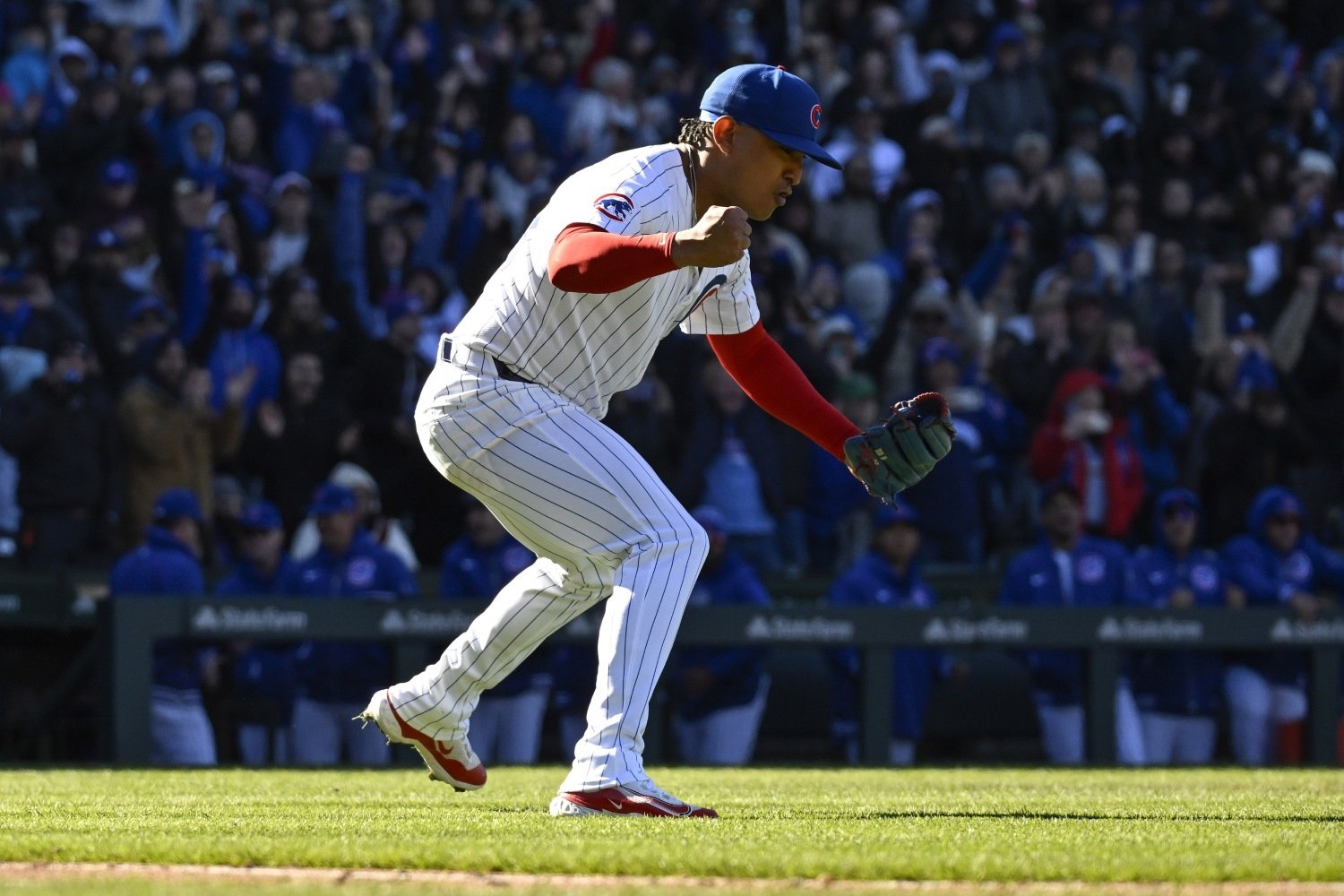 Baseball is cruel. It's not the sport's fault; it's part of life. Still, it punches you in the gut sometimes, when a player who deserves so many good things and has been so steadfastly denied them takes yet another of fate's blows. Adbert Alzolay, who has been out since May with an arm injury that always sounded ominous, will have to undergo arm surgery in the coming days. Second opinions await, but one of the operations being considered is Tommy John surgery, so the range of possibilities doesn't include any good ones. Relentlessly positive, energetic, and a joy to watch at his briefly-achieved best, Alzolay was star-crossed during his rise through the Cubs system, dealing with his share of injuries then. The reprieve he received from the gods of tendons and ligaments last year proved how good he can be, but the joy couldn't last. Alzolay's cataclysmic struggles (while pitching, in all likelihood, through the very injury that will now require a surgical repair) early on were a crippling blow to the Cubs bullpen, but losing him altogether felt like the fatal one. They didn't stabilize the relief corps until the season was essentially lost, due mostly to injuries to Alzolay, Julian Merryweather, and Yency Almonte. The saddest, most unhappy news here is that the injury probably effectively ends Alzolay's time with the Cubs organization. He's already on the 60-day injured list, and can shelter there the rest of the season, but that list is inactivated during the offseason, and players with long-term injuries have to be placed back onto the 40-man roster. The Cubs can't do that for Alzolay. They face a looming roster crunch this winter, and if they're remotely serious about winning in 2025, they will make moves that exacerbate that, rather than ones that alleviate it. They can't dedicate a spot to a player who is unlikely to help them at all next season, throughout a winter in which they need and intend to be active. Other teams, with other players who have achieved more and proved their ability for longer, work out multi-year deals in situations like these, so a player can be paid and retained while they rehab, then get paid considerably more when they come back the following season. It's unlikely that such an arrangement will be feasible for this combination of team and player. At some point early in the offseason, the Cubs will have to waive or designate Alzolay for assignment, and he's very, very likely to be claimed by a team for whom 2025 is more of a rebuilding season. This isn't the ending Alzolay's time with the Cubs deserved. He's been a great citizen of the team, a supportive teammate and an ambassador to the fans. He's been a downright dominant relief pitcher, too, albeit only for a few months. Unfortunately, the gods of tendons and ligaments don't care what players or teams deserve.
 -
The erstwhile fist-pumping closer will undergo surgery this month and miss a large chunk of 2025. The Cubs can't spare his roster spot all winter. Image courtesy of © Matt Marton-USA TODAY Sports Baseball is cruel. It's not the sport's fault; it's part of life. Still, it punches you in the gut sometimes, when a player who deserves so many good things and has been so steadfastly denied them takes yet another of fate's blows. Adbert Alzolay, who has been out since May with an arm injury that always sounded ominous, will have to undergo arm surgery in the coming days. Second opinions await, but one of the operations being considered is Tommy John surgery, so the range of possibilities doesn't include any good ones. Relentlessly positive, energetic, and a joy to watch at his briefly-achieved best, Alzolay was star-crossed during his rise through the Cubs system, dealing with his share of injuries then. The reprieve he received from the gods of tendons and ligaments last year proved how good he can be, but the joy couldn't last. Alzolay's cataclysmic struggles (while pitching, in all likelihood, through the very injury that will now require a surgical repair) early on were a crippling blow to the Cubs bullpen, but losing him altogether felt like the fatal one. They didn't stabilize the relief corps until the season was essentially lost, due mostly to injuries to Alzolay, Julian Merryweather, and Yency Almonte. The saddest, most unhappy news here is that the injury probably effectively ends Alzolay's time with the Cubs organization. He's already on the 60-day injured list, and can shelter there the rest of the season, but that list is inactivated during the offseason, and players with long-term injuries have to be placed back onto the 40-man roster. The Cubs can't do that for Alzolay. They face a looming roster crunch this winter, and if they're remotely serious about winning in 2025, they will make moves that exacerbate that, rather than ones that alleviate it. They can't dedicate a spot to a player who is unlikely to help them at all next season, throughout a winter in which they need and intend to be active. Other teams, with other players who have achieved more and proved their ability for longer, work out multi-year deals in situations like these, so a player can be paid and retained while they rehab, then get paid considerably more when they come back the following season. It's unlikely that such an arrangement will be feasible for this combination of team and player. At some point early in the offseason, the Cubs will have to waive or designate Alzolay for assignment, and he's very, very likely to be claimed by a team for whom 2025 is more of a rebuilding season. This isn't the ending Alzolay's time with the Cubs deserved. He's been a great citizen of the team, a supportive teammate and an ambassador to the fans. He's been a downright dominant relief pitcher, too, albeit only for a few months. Unfortunately, the gods of tendons and ligaments don't care what players or teams deserve. View full article
-
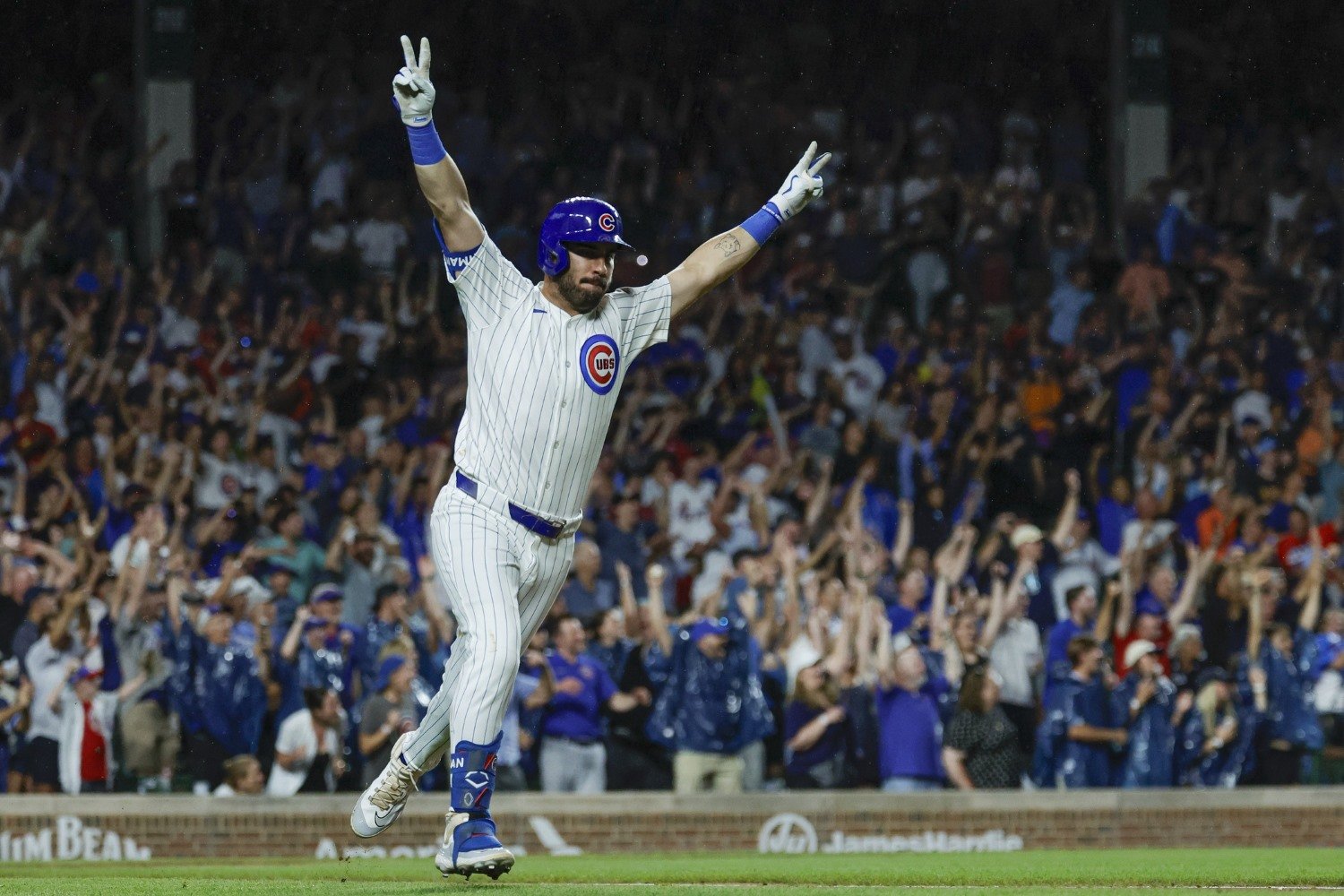 Ice has run through Mike Tauchman's veins every time he's gotten a chance to come up with a big play for the Chicago Cubs over the last year and a half. He hit a walkoff home run against the White Sox in June, and he walked off the Cardinals on a double Thursday night, but those aren't the only examples. He hit a now-forgotten three-run homer to tie the game in Boston on Sunday Night Baseball back in April, lost to memory because the team went on to lose that game and spiral downward in the standings. Last year, Tauchman had a game-tying double against Devin Williams in Milwaukee in early July, the famous walkoff catch against the Cards in St. Louis at the end of that month, and a game-winning eighth-inning homer in Queens in August. He's a machine in big moments, reserving his power for them but not getting antsy and swinging so big as to give away an at-bat because of the stakes. It's impossible not to respect Tauchman, and difficult not to love him. He's gone through a lot to find this moment of stability and success in the game, and he's making the most of it, for his hometown team. That said, of course, he's also soon to turn 34 years old, and though he has two more years of team control, the Cubs have to decide this winter whether to tender him a contract to retain him. It's a tough call, because they hope to have an even stronger roster next year, and there was already a squeeze for playing time in the outfield. All of those reasons explain why many were surprised when Jed Hoyer didn't just trade Tauchman at the deadline Tuesday. He didn't, though, so now the team has two more months to rehearse fitting him correctly in with Pete Crow-Armstrong (for whom he was pinch-hitting when he played hero Thursday night), Cody Bellinger, Seiya Suzuki, and Ian Happ. There's pressure from below, because Owen Caissie and Kevin Alcántara are informally scheduled to be contributors next season, if they're ever to become such for the Cubs. There's also a need to keep playing and assessing Crow-Armstrong. Still, keeping Tauchman feels a little bit like a statement by Hoyer, especially in light of Thursday. If he's your fourth or fifth outfielder, your roster is in awfully good shape. The Cubs need to make sure not to close out and commit to too many roles for next season, because they're still one really good hitter short of a full-fledged contender's lineup, but the one carved out for Tauchman right now isn't going to be the role for that player anyway. The risk of carrying Tauchman forward, beyond the few million dollars that would be required to keep him via arbitration, lies in his age. This season showed the Cubs the danger of committing too much to a grizzled veteran, when Yan Gomes's game fell out from under him almost overnight. That could happen to Tauchman, too. The team likes Tauchman a lot, though. So does its manager. It might well be worth keeping him, not only past the deadline but this winter, and planning to have a clutch, OBP-focused player penned into a bench spot to begin the year. Someone just needs to ensure that the team doesn't grow too attached to him to cut bait, should he come out next spring looking too old to be helpful.
 -
Another walkoff hit. Another moment improbably extending another summer's fun. This guy is too good to be true. Is he too good to lose this winter? Image courtesy of © Kamil Krzaczynski-USA TODAY Sports Ice has run through Mike Tauchman's veins every time he's gotten a chance to come up with a big play for the Chicago Cubs over the last year and a half. He hit a walkoff home run against the White Sox in June, and he walked off the Cardinals on a double Thursday night, but those aren't the only examples. He hit a now-forgotten three-run homer to tie the game in Boston on Sunday Night Baseball back in April, lost to memory because the team went on to lose that game and spiral downward in the standings. Last year, Tauchman had a game-tying double against Devin Williams in Milwaukee in early July, the famous walkoff catch against the Cards in St. Louis at the end of that month, and a game-winning eighth-inning homer in Queens in August. He's a machine in big moments, reserving his power for them but not getting antsy and swinging so big as to give away an at-bat because of the stakes. It's impossible not to respect Tauchman, and difficult not to love him. He's gone through a lot to find this moment of stability and success in the game, and he's making the most of it, for his hometown team. That said, of course, he's also soon to turn 34 years old, and though he has two more years of team control, the Cubs have to decide this winter whether to tender him a contract to retain him. It's a tough call, because they hope to have an even stronger roster next year, and there was already a squeeze for playing time in the outfield. All of those reasons explain why many were surprised when Jed Hoyer didn't just trade Tauchman at the deadline Tuesday. He didn't, though, so now the team has two more months to rehearse fitting him correctly in with Pete Crow-Armstrong (for whom he was pinch-hitting when he played hero Thursday night), Cody Bellinger, Seiya Suzuki, and Ian Happ. There's pressure from below, because Owen Caissie and Kevin Alcántara are informally scheduled to be contributors next season, if they're ever to become such for the Cubs. There's also a need to keep playing and assessing Crow-Armstrong. Still, keeping Tauchman feels a little bit like a statement by Hoyer, especially in light of Thursday. If he's your fourth or fifth outfielder, your roster is in awfully good shape. The Cubs need to make sure not to close out and commit to too many roles for next season, because they're still one really good hitter short of a full-fledged contender's lineup, but the one carved out for Tauchman right now isn't going to be the role for that player anyway. The risk of carrying Tauchman forward, beyond the few million dollars that would be required to keep him via arbitration, lies in his age. This season showed the Cubs the danger of committing too much to a grizzled veteran, when Yan Gomes's game fell out from under him almost overnight. That could happen to Tauchman, too. The team likes Tauchman a lot, though. So does its manager. It might well be worth keeping him, not only past the deadline but this winter, and planning to have a clutch, OBP-focused player penned into a bench spot to begin the year. Someone just needs to ensure that the team doesn't grow too attached to him to cut bait, should he come out next spring looking too old to be helpful. View full article
-
If they'd so chosen, the team could have held onto their best relief pitcher at the deadline and tendered him a contract to keep him this winter. That they took a deal that felt uninspiring might be more telling that we thought. Image courtesy of © Katie Stratman-USA TODAY Sports At first blush, my thought about the trade that sent Mark Leiter Jr. to the Yankees in exchange for Jack Neely and Ben Cowles was that the Cubs might have been better off just skipping it. As I wrote on deadline day, it's relatively easy to discern why most of the league doesn't value Leiter and the things he does well as highly as the Cubs do. That explains why their return for Leiter was so light, but doesn't tell us why the team still felt the move was worth making. In a vacuum, that's still true, and it's fair to criticize the trade itself as selling too low. Leiter could have been under team control two more seasons, if the Cubs had chosen to go that route, so there wasn't an impetus urgent enough to make trading him for so little a wise move on its own. However, when we widen the lens to examine the whole organizational depth chart and the entirely of their deadline activity, the potential wisdom of the move comes into view. Here's one way to look at this: In the Nate Pearson trade, the Cubs gave up Josh Rivera and Yohendrick Pinango. Those two combined for nearly 500 plate appearances for the Double-A Tennessee affiliate this year, with Pinango in the outfield and Rivera playing a lot on the infield. Pinango is a slightly better prospect; Rivera doesn't look like he'll hit enough to play regularly in the big leagues. Still, the team needed to replace Rivera, because he was a polished player from a top college program and a mature presence on an infield full of prospects. The next day, of course, the team included both Hunter Bigge and Ty Johnson in the Christopher Morel-for-Isaac Paredes trade. Bigge had already pitched a few innings for the big-league bullpen this year. Paredes directly replaced Morel, and dramatically improved the team in the process, but the organization needed a replacement for Bigge, too. Obviously, there's no real urgency to replace either Rivera or Bigge, but it's pretty clear that the front office took seriously a self-incepted mandate: Do not degrade the 2025 Cubs in the process of trying to improve that team, or the few after it. How is trading Leiter not anathema to that? Well, it depends on how much they believe in their ability to create another Leiter--and how they balanced his value against the combined value of the two roles they backfilled by moving him. On Baseball America's ranking of the roughly 90 prospects traded in July, Bigge and Neely were right next to each other, at Nos. 36 and 37. That's how neatly their future values match, and because Neely doesn't need to be added to the 40-man roster until November, the team also bought itself a roster spot in that swap, if only for a matter of days or weeks. Bigge might be a hair more advanced, but based purely on their fastball and slider shapes and the fact that his size makes it easier to generate the same velocity, it's easy to end up higher on Neely. Either way, the replacement is a perfect one. Cowles didn't have the pedigree coming out of college that Rivera did, but he's been a better hitter during his time at Double-A than Rivera has. He's old for the level; that's one problem. He's also due to be added to the 40-man roster or exposed to the Rule 5 Draft this fall; that's another problem. Just before the trade, though, he was injured on a hit-by-pitch, and it sounds perfectly possible that he won't play again this season. Therein lies the key to this. Cowles has had a solid season, but given the age-versus-level concerns and this injury that will deny everyone six or eight more weeks of looks, there's no way--there's no way--Cowles will be taken in the Rule 5, after which he would need to be kept on the active MLB roster all season. The utility of this kind of player lies almost solely in their being optionable depth, just like the last hurler in the bullpen. So, really, the Cubs bought a small upgrade from Rivera to Cowles, and won't have to use a roster spot on him this winter. He'll go into next year in something like the role Luis Vázquez has had this year at Triple-A Iowa, whether or not Vázquez is back in the same role. If we cancel things out that way, we're left with the following as a holistic deadline accounting for the Cubs: IN: Isaac Paredes, Nate Pearson OUT: Christopher Morel, Mark Leiter Jr., Yohendrick Pinango, Ty Johnson The heavy implication here is that the Cubs are higher on the future of Pearson than on that of Leiter--or at least that they're roughly even. The numbers each has compiled the last couple of years don't really support that stance, but these are relief pitchers, and numbers over any given sample rarely provide a reliable prediction of numbers over the ensuing sample. Pearson's ability to throw 102 miles per hour gives him a higher ceiling, and the Cubs believe they can fix his command enough to come closer to reaching it. Again, the upgrade from Morel to Paredes is huge, for the 2025-27 Cubs. Morel is under one more year of control after that, and he could improve from where he is now more than Paredes is likely to. In the window the Cubs hope will open next spring, though, Paredes will be a reliably better player. To get from Morel to him, the Cubs effectively gave up Pinango and Johnson, and that's a pretty low price for a fine item--even before you give them a discount for getting fractionally more roster flexibility in the transaction set. It's impossible to fully evaluate this deadline right now, but not because we need to wait and see how all the players involved perform. Whether the Cubs can fix Pearson matters. Whether Paredes can sustain his excellence in such a different environment matters, too. What makes it imperative that we wait a while to assess things, though, is the looming offseason. Add these moves together, and there's more flexibility and upside flowing through the organization for the next few years. That will only matter if the moves turn out to have empowered the front office, rather than paralyzing them. View full article
-
- 1
-
-
- ben cowles
- nate pearson
- (and 5 more)
-
Widening the Lens to Understand Cubs Deadline Moves Better
Matthew Trueblood posted an article in Cubs
 At first blush, my thought about the trade that sent Mark Leiter Jr. to the Yankees in exchange for Jack Neely and Ben Cowles was that the Cubs might have been better off just skipping it. As I wrote on deadline day, it's relatively easy to discern why most of the league doesn't value Leiter and the things he does well as highly as the Cubs do. That explains why their return for Leiter was so light, but doesn't tell us why the team still felt the move was worth making. In a vacuum, that's still true, and it's fair to criticize the trade itself as selling too low. Leiter could have been under team control two more seasons, if the Cubs had chosen to go that route, so there wasn't an impetus urgent enough to make trading him for so little a wise move on its own. However, when we widen the lens to examine the whole organizational depth chart and the entirely of their deadline activity, the potential wisdom of the move comes into view. Here's one way to look at this: In the Nate Pearson trade, the Cubs gave up Josh Rivera and Yohendrick Pinango. Those two combined for nearly 500 plate appearances for the Double-A Tennessee affiliate this year, with Pinango in the outfield and Rivera playing a lot on the infield. Pinango is a slightly better prospect; Rivera doesn't look like he'll hit enough to play regularly in the big leagues. Still, the team needed to replace Rivera, because he was a polished player from a top college program and a mature presence on an infield full of prospects. The next day, of course, the team included both Hunter Bigge and Ty Johnson in the Christopher Morel-for-Isaac Paredes trade. Bigge had already pitched a few innings for the big-league bullpen this year. Paredes directly replaced Morel, and dramatically improved the team in the process, but the organization needed a replacement for Bigge, too. Obviously, there's no real urgency to replace either Rivera or Bigge, but it's pretty clear that the front office took seriously a self-incepted mandate: Do not degrade the 2025 Cubs in the process of trying to improve that team, or the few after it. How is trading Leiter not anathema to that? Well, it depends on how much they believe in their ability to create another Leiter--and how they balanced his value against the combined value of the two roles they backfilled by moving him. On Baseball America's ranking of the roughly 90 prospects traded in July, Bigge and Neely were right next to each other, at Nos. 36 and 37. That's how neatly their future values match, and because Neely doesn't need to be added to the 40-man roster until November, the team also bought itself a roster spot in that swap, if only for a matter of days or weeks. Bigge might be a hair more advanced, but based purely on their fastball and slider shapes and the fact that his size makes it easier to generate the same velocity, it's easy to end up higher on Neely. Either way, the replacement is a perfect one. Cowles didn't have the pedigree coming out of college that Rivera did, but he's been a better hitter during his time at Double-A than Rivera has. He's old for the level; that's one problem. He's also due to be added to the 40-man roster or exposed to the Rule 5 Draft this fall; that's another problem. Just before the trade, though, he was injured on a hit-by-pitch, and it sounds perfectly possible that he won't play again this season. Therein lies the key to this. Cowles has had a solid season, but given the age-versus-level concerns and this injury that will deny everyone six or eight more weeks of looks, there's no way--there's no way--Cowles will be taken in the Rule 5, after which he would need to be kept on the active MLB roster all season. The utility of this kind of player lies almost solely in their being optionable depth, just like the last hurler in the bullpen. So, really, the Cubs bought a small upgrade from Rivera to Cowles, and won't have to use a roster spot on him this winter. He'll go into next year in something like the role Luis Vázquez has had this year at Triple-A Iowa, whether or not Vázquez is back in the same role. If we cancel things out that way, we're left with the following as a holistic deadline accounting for the Cubs: IN: Isaac Paredes, Nate Pearson OUT: Christopher Morel, Mark Leiter Jr., Yohendrick Pinango, Ty Johnson The heavy implication here is that the Cubs are higher on the future of Pearson than on that of Leiter--or at least that they're roughly even. The numbers each has compiled the last couple of years don't really support that stance, but these are relief pitchers, and numbers over any given sample rarely provide a reliable prediction of numbers over the ensuing sample. Pearson's ability to throw 102 miles per hour gives him a higher ceiling, and the Cubs believe they can fix his command enough to come closer to reaching it. Again, the upgrade from Morel to Paredes is huge, for the 2025-27 Cubs. Morel is under one more year of control after that, and he could improve from where he is now more than Paredes is likely to. In the window the Cubs hope will open next spring, though, Paredes will be a reliably better player. To get from Morel to him, the Cubs effectively gave up Pinango and Johnson, and that's a pretty low price for a fine item--even before you give them a discount for getting fractionally more roster flexibility in the transaction set. It's impossible to fully evaluate this deadline right now, but not because we need to wait and see how all the players involved perform. Whether the Cubs can fix Pearson matters. Whether Paredes can sustain his excellence in such a different environment matters, too. What makes it imperative that we wait a while to assess things, though, is the looming offseason. Add these moves together, and there's more flexibility and upside flowing through the organization for the next few years. That will only matter if the moves turn out to have empowered the front office, rather than paralyzing them.
 -
 It's easy (though often inaccurate, even in itself) to estimate how many home runs will be gained or lost by a batter in the transition from one home park to another. That binary is dangerous, though, because it's more than a superficial oversimplification, and because the broader actual spectrum of possibilities also shifts some other dynamics that need to be accounted for. Isaac Paredes will hit fewer home runs at Wrigley Field than he did at Tropicana Field, but the non-homers won't all turn into outs--and he might just get more hits in the bargain. First, keep in mind that many balls that don't quite become home runs in a given park (especially down either foul line) become doubles, rather than outs. Paredes's first hit in a Cubs uniform is an example. It was hit down the line in Cincinnati, and though the same batted ball would have cleared the notched wall in Tampa Bay, this one banged off the wall, never giving the defense a chance to do anything with it. That two-bagger was worth less than a home run, to be sure, but it's worth about two-thirds of what a home run is--and again, there was never any real chance of it being anything other than a double. Not every ball will be so decisive, but the threat Paredes poses forces defenses to think about how to align themselves to take away those doubles down the line, too. This year, while he was in Tampa Bay, we've seen left fielders play him fairly close to the line, but shallow. Of the 139 right-handed batters who have seen at least 1,000 pitches this year, Paredes ranks 122nd in average starting depth for opposing left fielders, at 299 feet. Teams guard the line a little bit against him, but they don't play especially deep. He doesn't hit the ball hard enough to force them to play any deeper, and often, when he does get into one, it's going over the fence anyway. That was true at Tropicana Field, at least. And at Tropicana Field, the short porch down the left-field line also made the left fielder's job easier, in general. The ball couldn't get very deep in the corner; the corner just didn't get very deep. It's hard to defend that cluster of batted balls along the line, but fielders cheated that way and stayed shallow enough to cut off a lot of his hard-hit balls down there, holding him to singles, like this: Verdugo Holds Him.mp4 Sometimes, their sound positioning can even allow them to take away would-be doubles, like this: Margot Robs Him.mp4 That all works nicely, at parks with neat, shallow corners; a little foul territory down the lines; and/or padding on the walls. With that well behind you, though, everything changes a bit. Defending out to 355 feet in the corner is a different animal. Because of Wrigley's shallow left-center power alley, a left fielder can cheat toward the line even more--but they have to play deeper. If they don't, they risk having the ball fly right over their heads, like this: Flew Him.mp4 Again, at Tropicana Field, the risk associated with that kind of play is virtually nil. Most balls Paredes hits over the head of a left fielder there leave the park, and those that don't can't go very far. That same ball at Wrigley kicks off the bricks at the right edge of the well, though, and the trailing runner (who started the play at first base) scores, instead of having to stop at third. With no runners on base, the fielder's positioning probably changes nothing about that play. It ends up a double, either way. In broad strokes, however, the fielder has to play deeper, because plenty of balls that were homers at the Trop will be deep into the well at Wrigley, and you can't go into that corner at anywhere near full speed. It's a danger to your health, and it invites a ricochet right past you if you don't get to the ball before it gets to the wall. Once they make that adjustment, though, the bill comes due. Paredes isn't one-dimensional. His power is all to left field, and mostly right down the line, but he makes a lot of contact, and that includes plenty of batted balls that look like this. Dropped In.mp4 This ball fell in, but that's because Milwaukee's (now Cincinnati's) Joey Wiemer was playing the way a left fielder will often have to at Wrigley: deeper, guarding the long corner at Miller Park. Paredes will find a few more singles in his new home park, because the left fielder will have to give up more shallow balls and line drives toward the gaps in order to defend the tough corner toward which he hits so many of his batted balls. It's fair to note that Paredes's profile takes a hit from this move, but the danger of overstating that impact is enormous. Moreover, it's easy to miss the fringe benefits he'll realize. In the Statcast Era (a phrase which we can treat as a bit less ludicrous, now; we're in its 10th year), Kris Bryant has the most batted balls into the 15-degree spray angle wedge starting at the left-field line by any Cubs hitter in a season, at 84. That was in his MVP campaign. Paredes wears Bryant's number and plays Bryant's position. He won't win an MVP award, but he's going to easily eclipse Bryant in the number of balls he sends screaming toward the left-field corner at Wrigley. He already has 86 such batted balls this year, and he had 99 of them last year. It might not yield as many homers as if he concentrated his power stroke on left-center instead of left field, but Paredes will find plenty of hits in his new home. There might even be a few new ones out there.
 -
Much has been made of the fit (or lack thereof) between the Cubs' top trade-deadline acquisition and his new home park. He might hit a few fewer home runs in his new digs, but Wrigley Field figures to create more problems for defenses than for Isaac Paredes. Image courtesy of © Katie Stratman-USA TODAY Sports It's easy (though often inaccurate, even in itself) to estimate how many home runs will be gained or lost by a batter in the transition from one home park to another. That binary is dangerous, though, because it's more than a superficial oversimplification, and because the broader actual spectrum of possibilities also shifts some other dynamics that need to be accounted for. Isaac Paredes will hit fewer home runs at Wrigley Field than he did at Tropicana Field, but the non-homers won't all turn into outs--and he might just get more hits in the bargain. First, keep in mind that many balls that don't quite become home runs in a given park (especially down either foul line) become doubles, rather than outs. Paredes's first hit in a Cubs uniform is an example. It was hit down the line in Cincinnati, and though the same batted ball would have cleared the notched wall in Tampa Bay, this one banged off the wall, never giving the defense a chance to do anything with it. That two-bagger was worth less than a home run, to be sure, but it's worth about two-thirds of what a home run is--and again, there was never any real chance of it being anything other than a double. Not every ball will be so decisive, but the threat Paredes poses forces defenses to think about how to align themselves to take away those doubles down the line, too. This year, while he was in Tampa Bay, we've seen left fielders play him fairly close to the line, but shallow. Of the 139 right-handed batters who have seen at least 1,000 pitches this year, Paredes ranks 122nd in average starting depth for opposing left fielders, at 299 feet. Teams guard the line a little bit against him, but they don't play especially deep. He doesn't hit the ball hard enough to force them to play any deeper, and often, when he does get into one, it's going over the fence anyway. That was true at Tropicana Field, at least. And at Tropicana Field, the short porch down the left-field line also made the left fielder's job easier, in general. The ball couldn't get very deep in the corner; the corner just didn't get very deep. It's hard to defend that cluster of batted balls along the line, but fielders cheated that way and stayed shallow enough to cut off a lot of his hard-hit balls down there, holding him to singles, like this: Verdugo Holds Him.mp4 Sometimes, their sound positioning can even allow them to take away would-be doubles, like this: Margot Robs Him.mp4 That all works nicely, at parks with neat, shallow corners; a little foul territory down the lines; and/or padding on the walls. With that well behind you, though, everything changes a bit. Defending out to 355 feet in the corner is a different animal. Because of Wrigley's shallow left-center power alley, a left fielder can cheat toward the line even more--but they have to play deeper. If they don't, they risk having the ball fly right over their heads, like this: Flew Him.mp4 Again, at Tropicana Field, the risk associated with that kind of play is virtually nil. Most balls Paredes hits over the head of a left fielder there leave the park, and those that don't can't go very far. That same ball at Wrigley kicks off the bricks at the right edge of the well, though, and the trailing runner (who started the play at first base) scores, instead of having to stop at third. With no runners on base, the fielder's positioning probably changes nothing about that play. It ends up a double, either way. In broad strokes, however, the fielder has to play deeper, because plenty of balls that were homers at the Trop will be deep into the well at Wrigley, and you can't go into that corner at anywhere near full speed. It's a danger to your health, and it invites a ricochet right past you if you don't get to the ball before it gets to the wall. Once they make that adjustment, though, the bill comes due. Paredes isn't one-dimensional. His power is all to left field, and mostly right down the line, but he makes a lot of contact, and that includes plenty of batted balls that look like this. Dropped In.mp4 This ball fell in, but that's because Milwaukee's (now Cincinnati's) Joey Wiemer was playing the way a left fielder will often have to at Wrigley: deeper, guarding the long corner at Miller Park. Paredes will find a few more singles in his new home park, because the left fielder will have to give up more shallow balls and line drives toward the gaps in order to defend the tough corner toward which he hits so many of his batted balls. It's fair to note that Paredes's profile takes a hit from this move, but the danger of overstating that impact is enormous. Moreover, it's easy to miss the fringe benefits he'll realize. In the Statcast Era (a phrase which we can treat as a bit less ludicrous, now; we're in its 10th year), Kris Bryant has the most batted balls into the 15-degree spray angle wedge starting at the left-field line by any Cubs hitter in a season, at 84. That was in his MVP campaign. Paredes wears Bryant's number and plays Bryant's position. He won't win an MVP award, but he's going to easily eclipse Bryant in the number of balls he sends screaming toward the left-field corner at Wrigley. He already has 86 such batted balls this year, and he had 99 of them last year. It might not yield as many homers as if he concentrated his power stroke on left-center instead of left field, but Paredes will find plenty of hits in his new home. There might even be a few new ones out there. View full article
-
With the trade deadline past, the Cubs have a locked-in, veteran-laden starting rotation with which to navigate the final two months of a lost season. The best approach would be to start spreading out their appearances. Image courtesy of © Jay Biggerstaff-USA TODAY Sports For reasons individual and collective, idiosyncratic and big-picture, there's almost no reason not to lengthen the starting rotation to six starting pitchers for the balance of the 2024 season. The Chicago Cubs are not going to the playoffs, and their focus needs to be on how to ensure that they do get there in 2025. Six starting slots, rather than five, will set them up best for the long term. With no urgent competitive impetus to push Kyle Hendricks out the door, the team should keep him slotted into their rotation for the rest of the year. Given that Hendricks is aging and he no longer seems to be capable of consistently pitching to his former standards, though, it would be nice to give him extra rest for as long as the team continues to count on him. Just as importantly, to keep him without impeding the development of young pitchers (like top prospect Cade Horton and current injured-list inhabitants Jordan Wicks, Ben Brown, and Hayden Wesneski), the team needs to make sure a spot is opened up for one or more of those guys, even while keeping Hendricks in the fold. By no means is it only Hendricks or the young arms not currently in the rotation who could benefit from a restructuring of the rotation, though. Shota Imanaga is still acclimating to MLB and its tighter schedule for starting pitchers. He hasn't thrown more than 159 innings in any season since the pandemic. He's already at 110 this season, and he'll turn 31 years old in September, so it makes sense to lengthen the rotation and let him ease his way up toward the same innings range. He can always try to push back up to 170 innings (the number he accumulated in 2019) and beyond next year, when the extra mileage should have much more value to the team. Javier Assad has already thrown 95 innings this year, despite missing time with a flexor strain. Jameson Taillon is 32 years old and missed the start of the season with back trouble. Justin Steele is 29 and as important as any individual player on the team to its future success. All three will be better off throwing a few fewer innings (or at least making a couple fewer starts, with more rest in between; they might make up the innings by working deeper into games) the rest of the way, in terms of keeping them healthy and ready to pitch at their best next season. Drew Smyly's months spent in the bullpen and on the injured list have eliminated any risk that he would hit his innings pitched bonus thresholds, so it wouldn't cost the team any money to add him to the rotation down the stretch, if none of the young arms get healthy enough to join the five incumbents or if someone gets hurt. The switch to six starters might also take some pressure off the bullpen, or make it easier to program and schedule reliever appearances. Greater regularity and routine in the pen will help the key arms in what the team hopes is its long-term bullpen stay healthy. There's only one thing a six-man rotation probably wouldn't do, and that's help the team win more games--but maybe that only makes it more appealing. It's unpleasant to think about it this way, but the Cubs need to lose some games the rest of the way. It's ugly, but that's the state of affairs. The collective bargaining agreement gives the other four teams in the NL Central an extra draft pick every year. It punishes the Cubs more severely for signing free agents to whom qualifying offers have been extended, and it compensates the other four teams more robustly when they lose such players. It gives those teams more money to spend in international free agency than the Cubs get. It punishes teams (of which, in the Central, the Cubs are the only club ever likely to be one) who spend beyond the competitive-balance tax threshold, and then escalates those punishments if they stay above that threshold for multiple seasons. Well, the Cubs need to surpass the threshold next season, and they probably will need to stay above it for a few years. They're about to go through a cycle in which, in the name of getting back to winning more games than they lose and making the playoffs on a regular basis, they will have to lean into the cruel fangs of the CBA. The Brewers, Reds, Cardinals, and Pirates are going to add a lot more amateur talent to their organizations from 2026 through 2028, at the very least, than the Cubs will. This year, while they're already flung low and the circumstances (not only their own record being lousy, but two of the teams with lousier ones being shut out of next year's Draft Lottery, by rule, in the Athletics and White Sox) are favorable for it, the Cubs need to pile up some losses and hope they land a pick in the top three or four in next year's Draft. That can't mean actively tanking, of course. Even talking about there being motivation to tank feels cynical and sad. But after a trade deadline at which they didn't trade some valuable low-grade contributors who seemed like easy ones to move (Taillon, Mike Tauchman, etc.), they do have to find ways to make sure they don't pointlessly surge to an 80-win finish. That would be the worst-case scenario for this team. If they're picking 13th again next season, they've failed miserably, and they're going to struggle to sustain whatever success they can cobble together in the years ahead. A six-man rotation will keep arms fresh and powder dry for next year, when the games will matter much more. It might cost the Cubs a win or two, but that's actually a good thing. It might even be urgently necessary. View full article
-
Six-Man Rotation Makes Most Sense for Cubs Over Final Two Months
Matthew Trueblood posted an article in Cubs
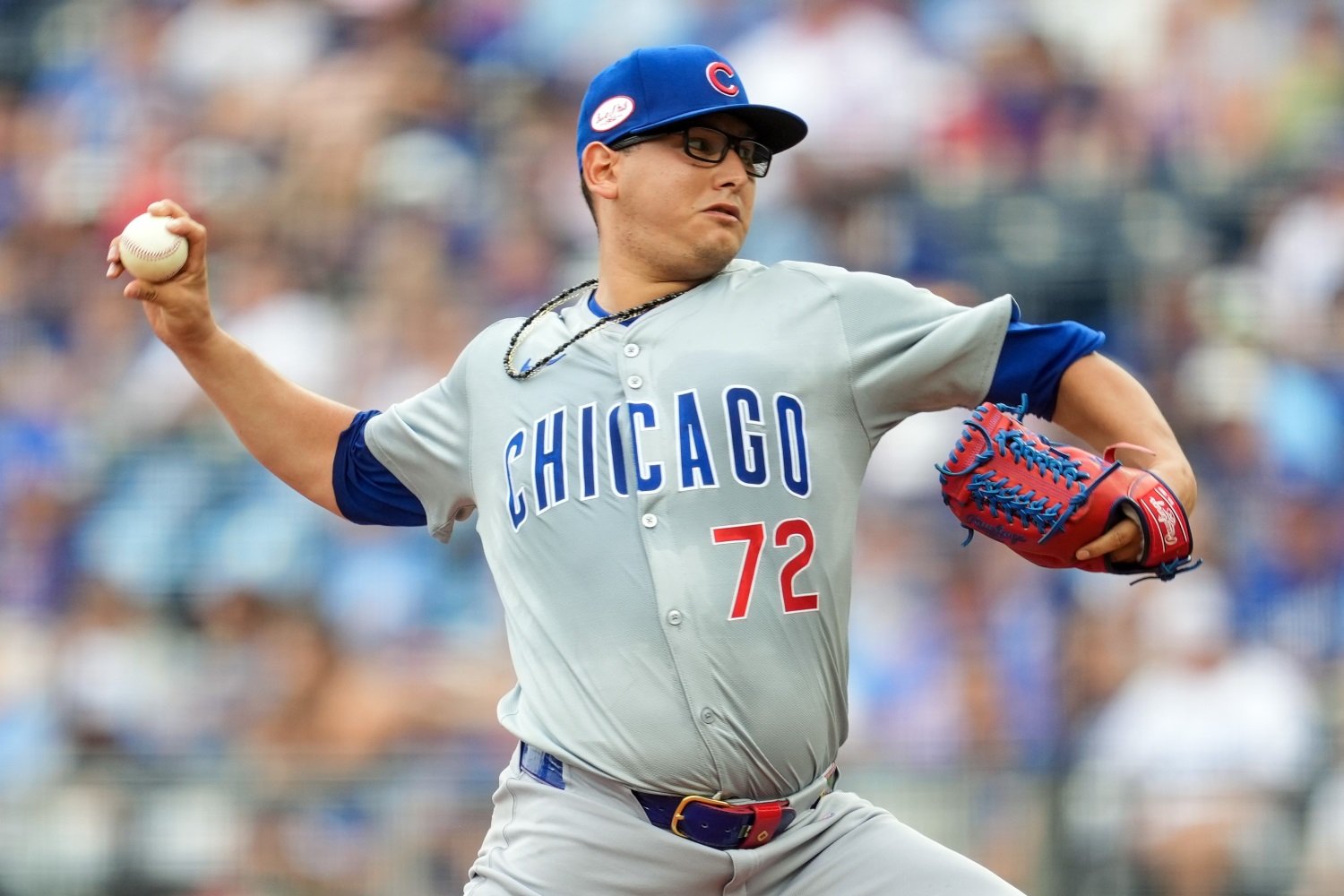 For reasons individual and collective, idiosyncratic and big-picture, there's almost no reason not to lengthen the starting rotation to six starting pitchers for the balance of the 2024 season. The Chicago Cubs are not going to the playoffs, and their focus needs to be on how to ensure that they do get there in 2025. Six starting slots, rather than five, will set them up best for the long term. With no urgent competitive impetus to push Kyle Hendricks out the door, the team should keep him slotted into their rotation for the rest of the year. Given that Hendricks is aging and he no longer seems to be capable of consistently pitching to his former standards, though, it would be nice to give him extra rest for as long as the team continues to count on him. Just as importantly, to keep him without impeding the development of young pitchers (like top prospect Cade Horton and current injured-list inhabitants Jordan Wicks, Ben Brown, and Hayden Wesneski), the team needs to make sure a spot is opened up for one or more of those guys, even while keeping Hendricks in the fold. By no means is it only Hendricks or the young arms not currently in the rotation who could benefit from a restructuring of the rotation, though. Shota Imanaga is still acclimating to MLB and its tighter schedule for starting pitchers. He hasn't thrown more than 159 innings in any season since the pandemic. He's already at 110 this season, and he'll turn 31 years old in September, so it makes sense to lengthen the rotation and let him ease his way up toward the same innings range. He can always try to push back up to 170 innings (the number he accumulated in 2019) and beyond next year, when the extra mileage should have much more value to the team. Javier Assad has already thrown 95 innings this year, despite missing time with a flexor strain. Jameson Taillon is 32 years old and missed the start of the season with back trouble. Justin Steele is 29 and as important as any individual player on the team to its future success. All three will be better off throwing a few fewer innings (or at least making a couple fewer starts, with more rest in between; they might make up the innings by working deeper into games) the rest of the way, in terms of keeping them healthy and ready to pitch at their best next season. Drew Smyly's months spent in the bullpen and on the injured list have eliminated any risk that he would hit his innings pitched bonus thresholds, so it wouldn't cost the team any money to add him to the rotation down the stretch, if none of the young arms get healthy enough to join the five incumbents or if someone gets hurt. The switch to six starters might also take some pressure off the bullpen, or make it easier to program and schedule reliever appearances. Greater regularity and routine in the pen will help the key arms in what the team hopes is its long-term bullpen stay healthy. There's only one thing a six-man rotation probably wouldn't do, and that's help the team win more games--but maybe that only makes it more appealing. It's unpleasant to think about it this way, but the Cubs need to lose some games the rest of the way. It's ugly, but that's the state of affairs. The collective bargaining agreement gives the other four teams in the NL Central an extra draft pick every year. It punishes the Cubs more severely for signing free agents to whom qualifying offers have been extended, and it compensates the other four teams more robustly when they lose such players. It gives those teams more money to spend in international free agency than the Cubs get. It punishes teams (of which, in the Central, the Cubs are the only club ever likely to be one) who spend beyond the competitive-balance tax threshold, and then escalates those punishments if they stay above that threshold for multiple seasons. Well, the Cubs need to surpass the threshold next season, and they probably will need to stay above it for a few years. They're about to go through a cycle in which, in the name of getting back to winning more games than they lose and making the playoffs on a regular basis, they will have to lean into the cruel fangs of the CBA. The Brewers, Reds, Cardinals, and Pirates are going to add a lot more amateur talent to their organizations from 2026 through 2028, at the very least, than the Cubs will. This year, while they're already flung low and the circumstances (not only their own record being lousy, but two of the teams with lousier ones being shut out of next year's Draft Lottery, by rule, in the Athletics and White Sox) are favorable for it, the Cubs need to pile up some losses and hope they land a pick in the top three or four in next year's Draft. That can't mean actively tanking, of course. Even talking about there being motivation to tank feels cynical and sad. But after a trade deadline at which they didn't trade some valuable low-grade contributors who seemed like easy ones to move (Taillon, Mike Tauchman, etc.), they do have to find ways to make sure they don't pointlessly surge to an 80-win finish. That would be the worst-case scenario for this team. If they're picking 13th again next season, they've failed miserably, and they're going to struggle to sustain whatever success they can cobble together in the years ahead. A six-man rotation will keep arms fresh and powder dry for next year, when the games will matter much more. It might cost the Cubs a win or two, but that's actually a good thing. It might even be urgently necessary.
 -
In his first season with the Cubs, the erstwhile slugger dramatically decreased his strikeout rate by adopting an extreme two-strike approach. Less obviously, though, he's also become extreme in another dimension of situational hitting. On balance, being a left-handed hitter is an advantage in baseball. You start a step or two closer to first base, so if you have speed, it's a bit easier to collect infield hits. More importantly, most pitchers are right-handed, so you'll carry the platoon advantage more often. In compensation for those edges, their downsides (that you'll usually hit more of your ground balls to the right side, where it's hard to collect infield hits, and that you see same-handed pitchers infrequently enough to make the task even more difficult) are easy to live with. If you really wanted to, though, you could try to neutralize even those disadvantages. The obvious way is by becoming a switch-hitter, which plenty of players do. The great difficulty there is in cultivating two different swings, and in getting used to seeing the ball clearly from two different angles relative to the plate. Bellinger is a little late in life to try that, but lately, he's embarked on a different plan: cultivating two different swings based on the handedness of opposing pitchers, without having to learn to hit from a new batter's box. It starts with approach. Against righties, Bellinger looks for the ball up, trying to crush it. His strike zone is vertical, like the movement pattern most pitchers use when facing opposite-handed batters. He'll expand high or low if he's fooled, but he keeps the plate 17 inches wide--or less, depending on the situation. Against lefties, though, he's more horizontal in the way he attacks, and less likely to chase high or low but a bit more so to swing at a ball (especially) off the inside edge. There's a swing path adjustment that comes with that approach, too. Bellinger takes more level hacks against lefties, but harder, more damage-focused ones against righties. As a result, he hits more line drives against same-handed pitchers, which is unusual--but he gives up a lot of his high-end exit velocities in the process. More of his contact is square vertically, but in on the handle or out on the end of the bat against lefties, relative to when he faces righties. Those changes also beget a different set of outcomes in terms of spray angle. Against righties, Bellinger is a dead pull hitter. He's unafraid to mishit it in the air or on the ground, because he'll often scald the ball enough to sneak it through the infield with that swing, and he can clear the right-field fence even when he doesn't catch it flush, because of the greater aggressiveness of his swing. Against lefties, by contrast, he needs to use the whole field. He lets the ball travel more and gives his flares and liners a greater chance to fall in for hits, by making the defense cover a wider swath. It's all working. Since the start of last season, in total, Bellinger is batting .292/.345/.482, and his splits are the opposite of what you'd expect. Against lefties, he's hitting .332/.371/.538, fueled by a superb BABIP rooted in the approach described above. He doesn't draw many walks with his swing and approach against lefties, but he still gets to a fair amount of power. Against righties, meanwhile, he's at .273/.334/.455. His numbers against righties are far worse than they were during the most successful phase of his career, pre-pandemic and pre-injury derailments with the Dodgers. Then again, before joining the Cubs, he was a .232/.311/.432 career hitter against lefties. This change has benefited him, and allowed him to become a productive hitter again, even though it's a more difficult and less glamorous way to play than his MVP form from a previous life. Bellinger will be one of the most important Cubs to watch down the stretch, because a hot finish could still position him to consider opting out at the end of the World Series. That possibility feels remote, but his performance still has major implications for the future, because if he is around, the Cubs will need him to keep being a solid, matchup-proof bat in the heart of their lineup in 2025. View full article
-
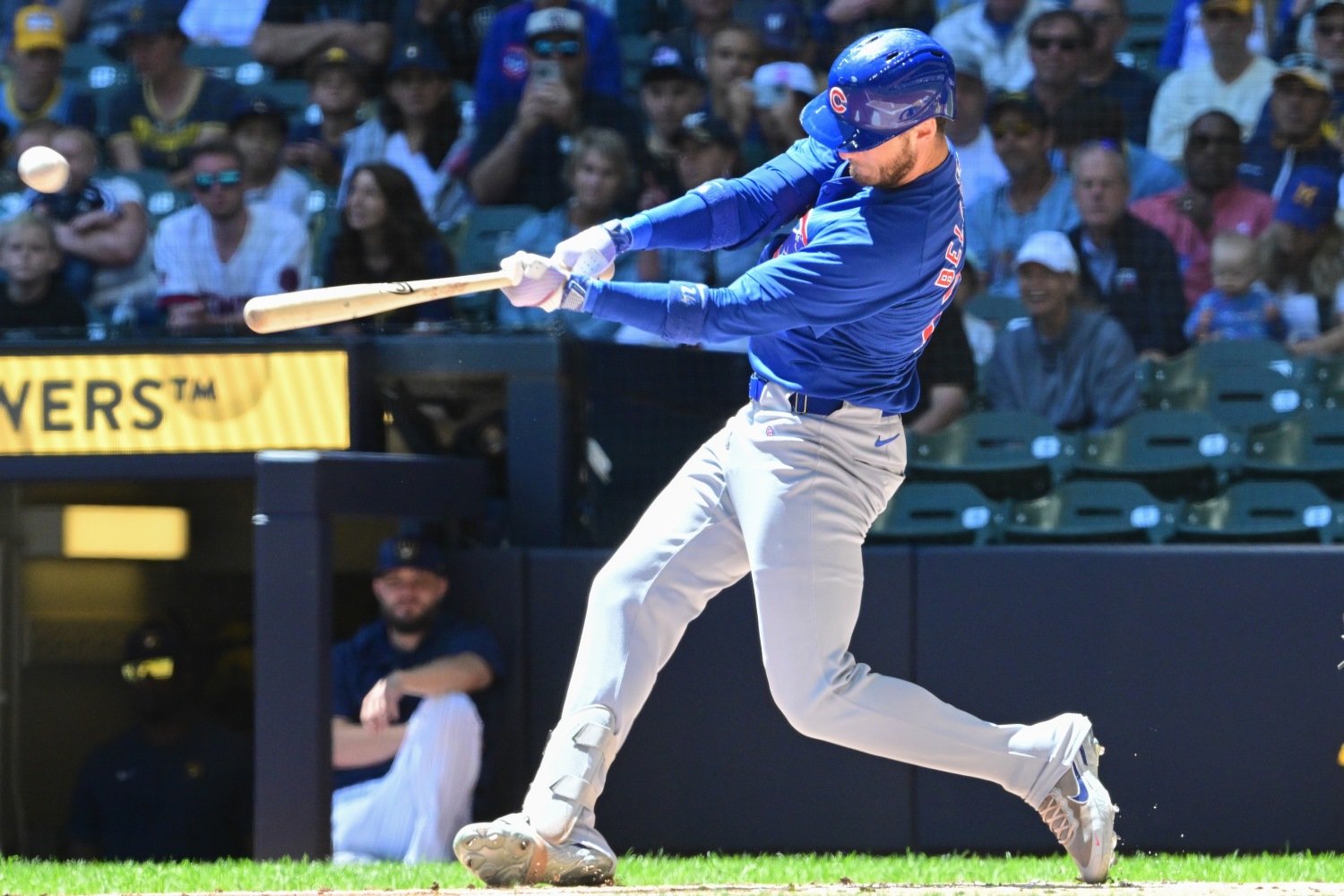 On balance, being a left-handed hitter is an advantage in baseball. You start a step or two closer to first base, so if you have speed, it's a bit easier to collect infield hits. More importantly, most pitchers are right-handed, so you'll carry the platoon advantage more often. In compensation for those edges, their downsides (that you'll usually hit more of your ground balls to the right side, where it's hard to collect infield hits, and that you see same-handed pitchers infrequently enough to make the task even more difficult) are easy to live with. If you really wanted to, though, you could try to neutralize even those disadvantages. The obvious way is by becoming a switch-hitter, which plenty of players do. The great difficulty there is in cultivating two different swings, and in getting used to seeing the ball clearly from two different angles relative to the plate. Bellinger is a little late in life to try that, but lately, he's embarked on a different plan: cultivating two different swings based on the handedness of opposing pitchers, without having to learn to hit from a new batter's box. It starts with approach. Against righties, Bellinger looks for the ball up, trying to crush it. His strike zone is vertical, like the movement pattern most pitchers use when facing opposite-handed batters. He'll expand high or low if he's fooled, but he keeps the plate 17 inches wide--or less, depending on the situation. Against lefties, though, he's more horizontal in the way he attacks, and less likely to chase high or low but a bit more so to swing at a ball (especially) off the inside edge. There's a swing path adjustment that comes with that approach, too. Bellinger takes more level hacks against lefties, but harder, more damage-focused ones against righties. As a result, he hits more line drives against same-handed pitchers, which is unusual--but he gives up a lot of his high-end exit velocities in the process. More of his contact is square vertically, but in on the handle or out on the end of the bat against lefties, relative to when he faces righties. Those changes also beget a different set of outcomes in terms of spray angle. Against righties, Bellinger is a dead pull hitter. He's unafraid to mishit it in the air or on the ground, because he'll often scald the ball enough to sneak it through the infield with that swing, and he can clear the right-field fence even when he doesn't catch it flush, because of the greater aggressiveness of his swing. Against lefties, by contrast, he needs to use the whole field. He lets the ball travel more and gives his flares and liners a greater chance to fall in for hits, by making the defense cover a wider swath. It's all working. Since the start of last season, in total, Bellinger is batting .292/.345/.482, and his splits are the opposite of what you'd expect. Against lefties, he's hitting .332/.371/.538, fueled by a superb BABIP rooted in the approach described above. He doesn't draw many walks with his swing and approach against lefties, but he still gets to a fair amount of power. Against righties, meanwhile, he's at .273/.334/.455. His numbers against righties are far worse than they were during the most successful phase of his career, pre-pandemic and pre-injury derailments with the Dodgers. Then again, before joining the Cubs, he was a .232/.311/.432 career hitter against lefties. This change has benefited him, and allowed him to become a productive hitter again, even though it's a more difficult and less glamorous way to play than his MVP form from a previous life. Bellinger will be one of the most important Cubs to watch down the stretch, because a hot finish could still position him to consider opting out at the end of the World Series. That possibility feels remote, but his performance still has major implications for the future, because if he is around, the Cubs will need him to keep being a solid, matchup-proof bat in the heart of their lineup in 2025.
 -
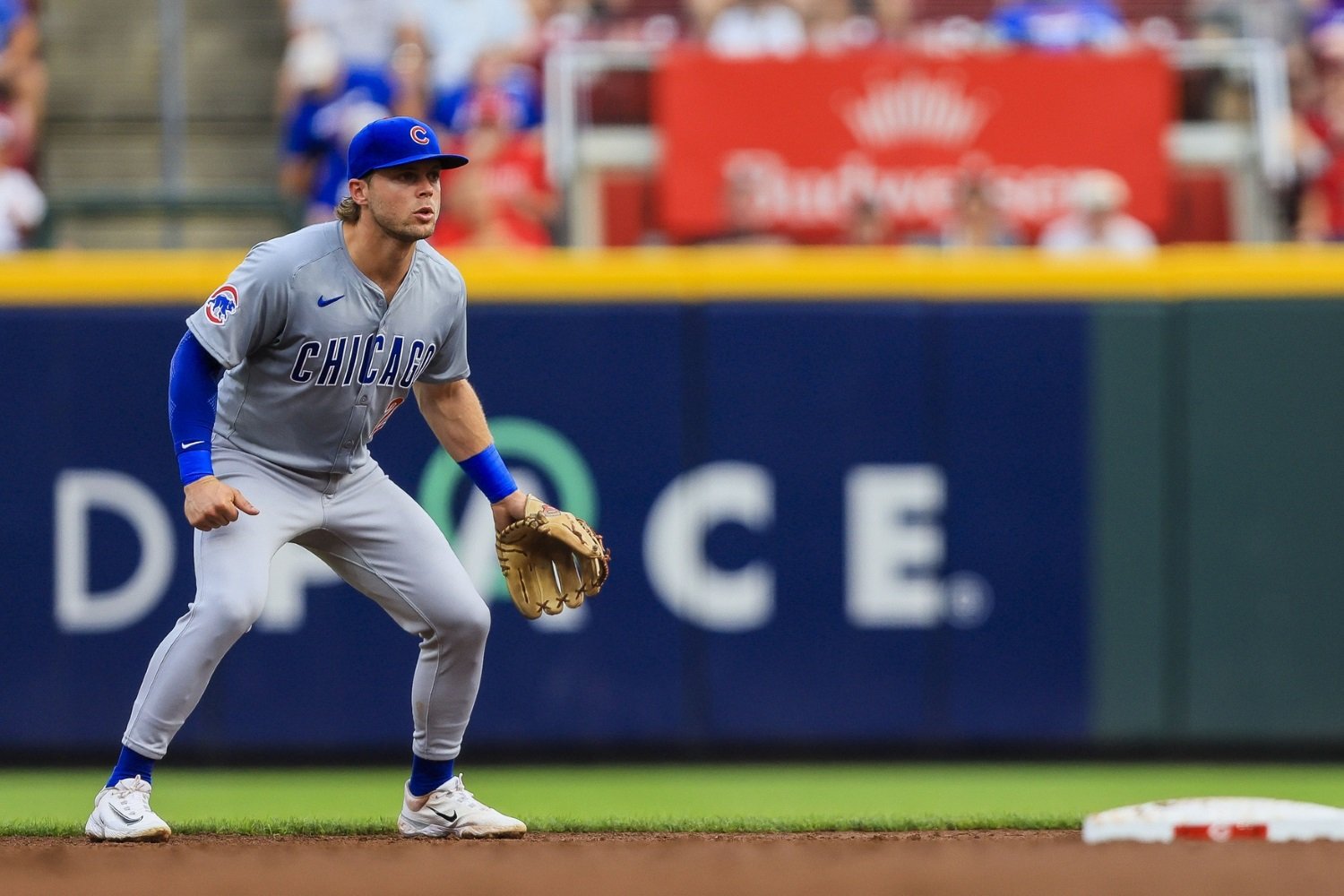 The late-developing theme, as the trade deadline passed Tuesday evening, was a lot of teams shrinking from prices they perceived as too high for controllable players who might have changed hands, and a few last-second price drops on the part of semi-desperate sellers. The Cubs were concertedly non-desperate, so they stood pat for the afternoon, after cashing in Mark Leiter Jr. for two low-ceiling prospects who will need to be placed on the 40-man roster this fall to stay in the organization. Other, much splashier moves briefly flared up into the realm of possibility, but the Cubs and their would-be trade partners couldn't match up, partially because of the similarity of the timelines on which they each want to win. Thus, the team held on not only to Jameson Taillon, Nico Hoerner, and their other high-priced stars, bur also to their small battery of theoretically desirable relievers. The team is still under the competitive-balance tax threshold in projected 2024 payroll, and they still have all the players who looked like potentially key contributors to their 2025 roster. We can start to pencil players into various roles for that season, now, but it can wait for an evening. Tuesday night saw Ethan Roberts activated in the stead of Leiter, while Isaac Paredes made his team debut and Miles Mastrobuoni was optioned to Triple-A Iowa. Though it was (for some fans) a reluctant turn, the attention shifted from the tantalizing rumor mill to the real business and pleasure of the game. Justin Steele, who never came close to being traded as things turned out, took the mound to continue establishing himself as an ace. The team doesn't enjoy a high-stakes or exciting present, but their future looks brighter, thanks to the trade for Paredes. The pitching staff will see some new faces and some protracted trials for players still getting their feet wet in the majors over the final two months, and the team can try some of the things that didn't come together Tuesday again in the offseason. Until then, the game gets the spotlight back, and as fun as rumors can be, it's a bit of a relief to have them out of the way for a while. Specifically, the Cubs tried to trade for a controllable hitter who would have added an impact bat at a key position, not just in 2024 but well beyond. The cost turned out to be prohibitive, though, so that vital but very difficult task will again be the front office's top priority this fall. It should be slightly easier then, because they should have a few more options. The areas of opportunity at this deadline were mostly for teams ready to act as decisive sellers of players who will be free agents this winter. The Cubs weren't in such a situation, and elected not to push the issue by forcing a move involving Hoerner or Taillon. Each of those guys will have trade value this winter, too, if they elect to pursue it. They didn't feel they were getting offers that reflected the value of their medium-term team control, so they moved on to big swings that didn't quite connect. Hopefully, the rest of the season puts them in position not to need such a moonshot in the offseason, or at the next trade deadline.
 -
The Cubs explored some big moves in the runup to the 2024 MLB trade deadline, but no second major transaction came to fruition. Still, they used this week to make a major pivot and upgrade their present and medium-term future. Image courtesy of © Katie Stratman-USA TODAY Sports The late-developing theme, as the trade deadline passed Tuesday evening, was a lot of teams shrinking from prices they perceived as too high for controllable players who might have changed hands, and a few last-second price drops on the part of semi-desperate sellers. The Cubs were concertedly non-desperate, so they stood pat for the afternoon, after cashing in Mark Leiter Jr. for two low-ceiling prospects who will need to be placed on the 40-man roster this fall to stay in the organization. Other, much splashier moves briefly flared up into the realm of possibility, but the Cubs and their would-be trade partners couldn't match up, partially because of the similarity of the timelines on which they each want to win. Thus, the team held on not only to Jameson Taillon, Nico Hoerner, and their other high-priced stars, bur also to their small battery of theoretically desirable relievers. The team is still under the competitive-balance tax threshold in projected 2024 payroll, and they still have all the players who looked like potentially key contributors to their 2025 roster. We can start to pencil players into various roles for that season, now, but it can wait for an evening. Tuesday night saw Ethan Roberts activated in the stead of Leiter, while Isaac Paredes made his team debut and Miles Mastrobuoni was optioned to Triple-A Iowa. Though it was (for some fans) a reluctant turn, the attention shifted from the tantalizing rumor mill to the real business and pleasure of the game. Justin Steele, who never came close to being traded as things turned out, took the mound to continue establishing himself as an ace. The team doesn't enjoy a high-stakes or exciting present, but their future looks brighter, thanks to the trade for Paredes. The pitching staff will see some new faces and some protracted trials for players still getting their feet wet in the majors over the final two months, and the team can try some of the things that didn't come together Tuesday again in the offseason. Until then, the game gets the spotlight back, and as fun as rumors can be, it's a bit of a relief to have them out of the way for a while. Specifically, the Cubs tried to trade for a controllable hitter who would have added an impact bat at a key position, not just in 2024 but well beyond. The cost turned out to be prohibitive, though, so that vital but very difficult task will again be the front office's top priority this fall. It should be slightly easier then, because they should have a few more options. The areas of opportunity at this deadline were mostly for teams ready to act as decisive sellers of players who will be free agents this winter. The Cubs weren't in such a situation, and elected not to push the issue by forcing a move involving Hoerner or Taillon. Each of those guys will have trade value this winter, too, if they elect to pursue it. They didn't feel they were getting offers that reflected the value of their medium-term team control, so they moved on to big swings that didn't quite connect. Hopefully, the rest of the season puts them in position not to need such a moonshot in the offseason, or at the next trade deadline. View full article

