


Cubs Video
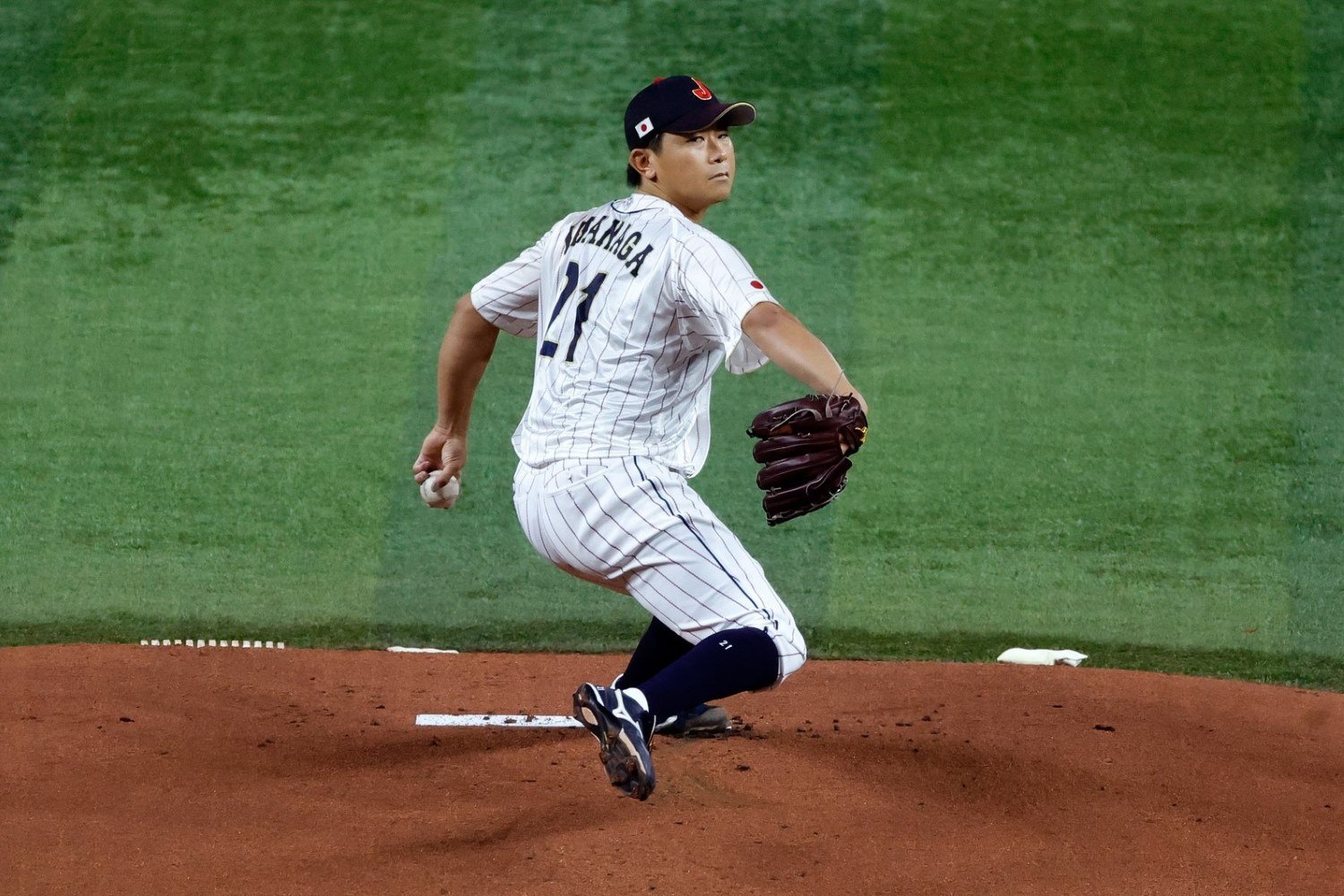
Late Tuesday night, Jon Heyman tweeted a sketch of the details on the deal between the Cubs and left-handed starter Shota Imanaga, which is still not official but should become so Wednesday.
Shota Imanaga Cubs deal is complicated and includes player/team options and escalators that could boost it to way up to $80M. Guarantee suggested to be somewhere around $30M for two years by @JimBowdenGM @jonmorosi 1st said $15M/year
— Jon Heyman (@JonHeyman) January 10, 2024
Jim Bowden of The Athletic offered a similar (though equally incomplete) outline.
According to club source #Cubs deal with Imanaga is something close to 2 yrs 30 can grow to 4 yrs 60 and can even reach 80 m with multiple opt outs ...deal is Very Complicated. Player/Team Options/Escalators…etc but thats the general ball park agreement
— Jim Bowden⚾️? (@JimBowdenGM) January 10, 2024
In short, the deal reflects the real concerns teams had about Imanaga as they got more information about his shoulder (which was operated on in late 2020) and the prognosis for long-term durability there. There's an important distinction to be drawn, there, between those concerns about long-term commitments and the idea that Imanaga is damaged goods.
Just last winter, we saw this play out on a much larger and more familiar scale. Multiple teams flinched at the finish line of deals with Carlos Correa because of a plate in his lower leg that they believed could hobble him in his 30s. Correa ended up with a deal that included multiple team options and guaranteed him only $200 million, as opposed to the $350 million and $315 million the Giants and Mets, respectively, had first put on the table. The concern there wasn't present inability to perform, though. If it had been, Correa would have ended up signing for far, far less money. Rather, the sticking point with both scuttled deals was disagreement about how much a team should discount a player from the value they would otherwise have because of a projected health issue.
Longer ago but, perhaps, more directly comparably, the Dodgers signed Kenta Maeda to an eight-year deal when he came over from Japan prior to 2016. Because of concerns about his elbow, Maeda only got $3 million in guaranteed salary for each season of that deal, but he could earn more than $10 million more each year if he stayed fully healthy and in the starting rotation. The contract only guaranteed him $25 million, but he made roughly $52.7 million over its span, even with the pandemic season forcing everyone to take prorated shares of their official salaries and despite Tommy John surgery robbing him of his entire 2022 campaign. Maeda pitched just over 866 innings over the life of the deal, but when he was on the mound, he was very, very good.
Imanaga's situation falls somewhere between those two cases on the spectrum. His asking price wasn't knocked down as much as Maeda's was, although one team never in the center of the reported mix for him felt so emboldened by the collective unease within the last week that they waded in with a one-year offer attached only to a vesting option, and they were not immediately rebuffed. However, while Correa's issue only shortened his deal from 13 years to six, the 30-year-old Imanaga will end up with just two years of guaranteed money. After that, this deal will include options for both parties, and it could incorporate some incentives, too.
If his shoulder were in pristine condition, Imanaga would have successfully commanded a nine-figure deal, given the current market for starting pitchers with upside. There are legitimate concerns about how his approach will translate to MLB, but the team can work with him to make his repertoire work just fine Stateside. Far more intractable are worries about his arm holding up, but again, that doesn't mean that it's currently in tatters. This is where the gap between our knowledge of MLB and NPB pitchers becomes important. Were Imanaga already in MLB when he underwent his surgery three years ago, we would all have a clearer understanding of the exact nature of that injury, and it would surprise no one that the fact of that injury affected his market.
On the other hand, Carlos Rodon had shoulder surgery in 2019, and he signed for $162 million last winter. We can confidently say, then, that Imanaga's health record diminished his market, and that that has left the Cubs with a somewhat complex contract and an uncertain asset in the person of their new No. 2 starter. Nonetheless, he's an exciting addition, and this deal appears to limit risk for the team while allowing the player to preserve some upside in his own right.
Do you expect the Cubs to pursue another starter after signing Imanaga? Let's discuss that, and other questions that leap to mind in the wake of the team's first substantial move of the winter.





Recommended Comments
Create an account or sign in to comment
You need to be a member in order to leave a comment
Create an account
Sign up for a new account in our community. It's easy!
Register a new accountSign in
Already have an account? Sign in here.
Sign In Now