Matthew Trueblood
-
Posts
2,479 -
Joined
-
Last visited
-
Days Won
2
Content Type
Profiles
Joomla Posts 1
Chicago Cubs Videos
Chicago Cubs Free Agent & Trade Rumors, Notes, & Tidbits
2026 Chicago Cubs Top Prospects Ranking
News
2023 Chicago Cubs Draft Picks
Guides & Resources
2024 Chicago Cubs Draft Picks
The Chicago Cubs Players Project
2025 Chicago Cubs Draft Pick Tracker
2026 Chicago Cubs Draft Tracker: Picks & Bonuses
Blogs
Events
Forums
Store
Gallery
Everything posted by Matthew Trueblood
-
Ben Brown's Most Important Adjustment Isn't Either of His New Pitches
Matthew Trueblood posted an article in Cubs
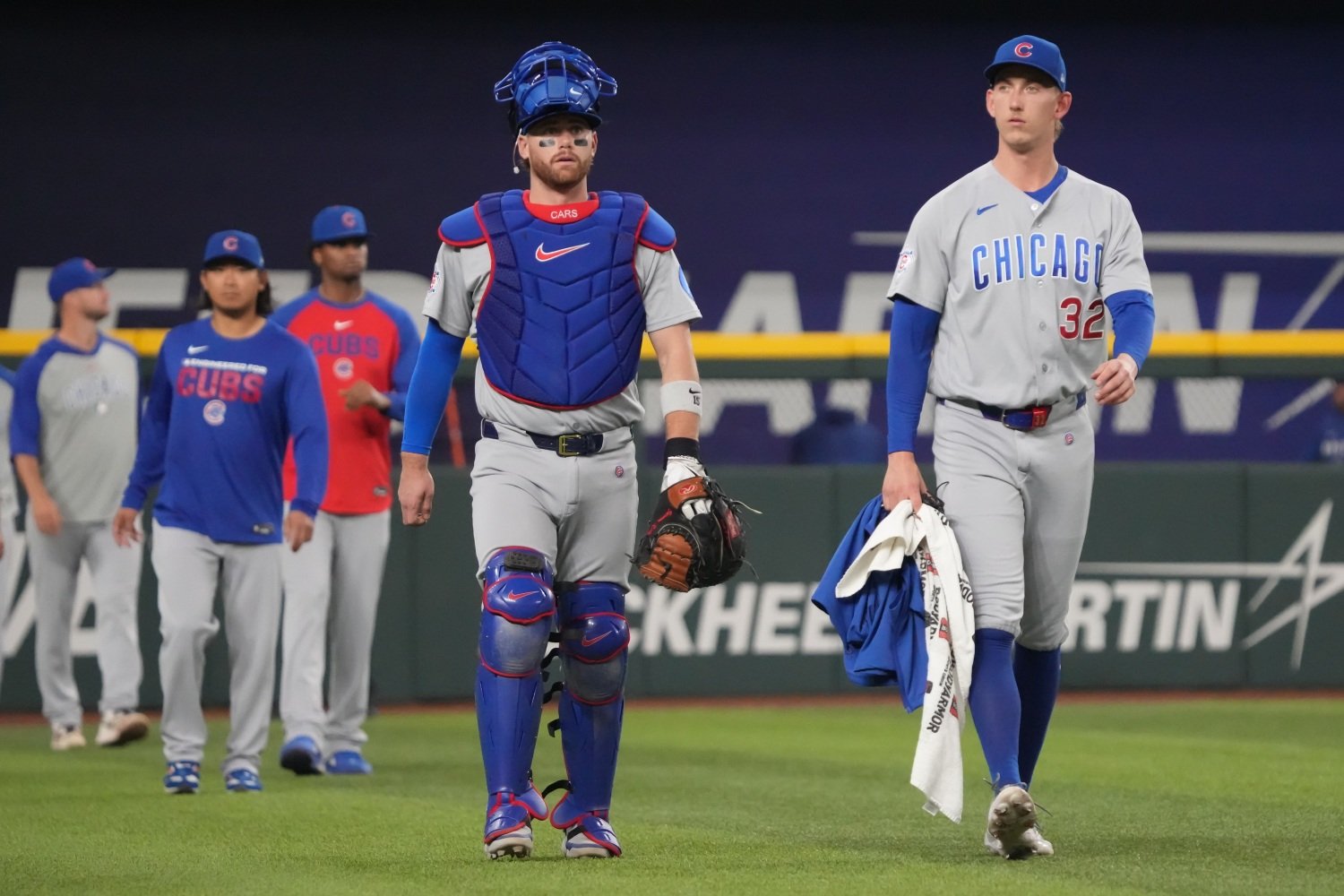 Ben Brown will start for the Cubs Thursday evening at one of the more successful attractions on The Battery, a suburban entertainment district in the northwest suburbs of Atlanta. It's his second turn in the starting rotation since the team lost left-hander Matthew Boyd to a torn meniscus in his knee, and Brown will be hoping to play stopper, opposite future Hall of Famer Chris Sale. The Cubs are in danger of losing five games in a row; their last win came in Brown's last start. In that outing, Brown managed four scoreless, hitless innings against the Texas Rangers, though he did issue one walk. Working on three days' rest after spending most of the season in the bullpen, he threw 46 pitches. Presumably, this time around, he will have a longer leash, and he might need to pace himself more. Normally, that would spell trouble for Brown. His fastball has sat comfortably around 96.5 miles per hour this season, which is where he's always needed it to be in order to find success. The shape of his heater has always been pretty much what a hitter would expect, based on his high three-quarter arm slot, so the only ways for him to avoid getting hurt on the pitch were to locate well and to throw very hard. For almost no pitcher is there a bigger difference between throwing 95 and throwing 98 than for Brown, as we've known him dating back to 2024. There's also his limited arsenal to consider. For most of his career, Brown has functionally been a two-pitch pitcher. He's tinkered with a cutter, a slider and multiple flavors of changeup, but he's only ever been able to rely on his four-seamer and a sharp (though short) knuckle-curve. Starting has tended to strain his capacity for fooling hitters with only two options at his disposal. Everything is different, now. That doesn't mean the results will follow, or that Brown is now set up to enjoy a long run of success as a starter, but to the hard questions posed by those past problems, Brown now has pretty robust answers. First, let's tackle that dead-zone fastball problem. The solution there (if, indeed, it turns out to be one): lower the arm angle, and change the profile. Arm Angle Pitch Type 2025 Apr. 2026 May 2026 Four-Seamer 44.1 42.6 39 Curveball 46.5 45.1 42.8 Kick-Change 42.7 41.5 37.3 Sinker - 41.7 40.7 From last year to this year, Brown made one slight downward move in his arm angle. Since the season began, he's made another. You can see the progression, below, in the way his arm works at release. A lower slot has meant a bit less carry on his four-seamer, but it's also given his curveball a bit more depth. The kick-change he's developed has more depth on it than it would from the higher slot, too. His sinker can run to the arm side more. The change takes his fastball slightly out of the dead zone, but more importantly, it frees up his arm to work more naturally. His other pitches have improved because of the tweak. That, of course, also answers the other problem. Brown's sinker is exclusively a weapon against righties, giving him two different heaters to work two different lanes horizontally and three different levels of vertical movement to force the hitter to cover a bigger zone. The kick-change is used exclusively against lefties, and it, too, rounds out his arsenal just enough. The fleshing-out of each as part of his attack has been made possible by the change in his arm angle. Brown's command and variety of shapes still aren't good enough for him to succeed as a starter without throwing hard, but the mechanical changes he's made appear to have helped him maintain his velocity better. The Cubs need to stop suffering losses to their rotation, but for the moment, there's reason to hope that they've found another good solution at the back end of it. Brown has shown more adaptability over the last several months, as he's discovered the limits of the simple, unrefined approach he used in the past, and he's been healthy enough to implement some new things. They're working.
 -
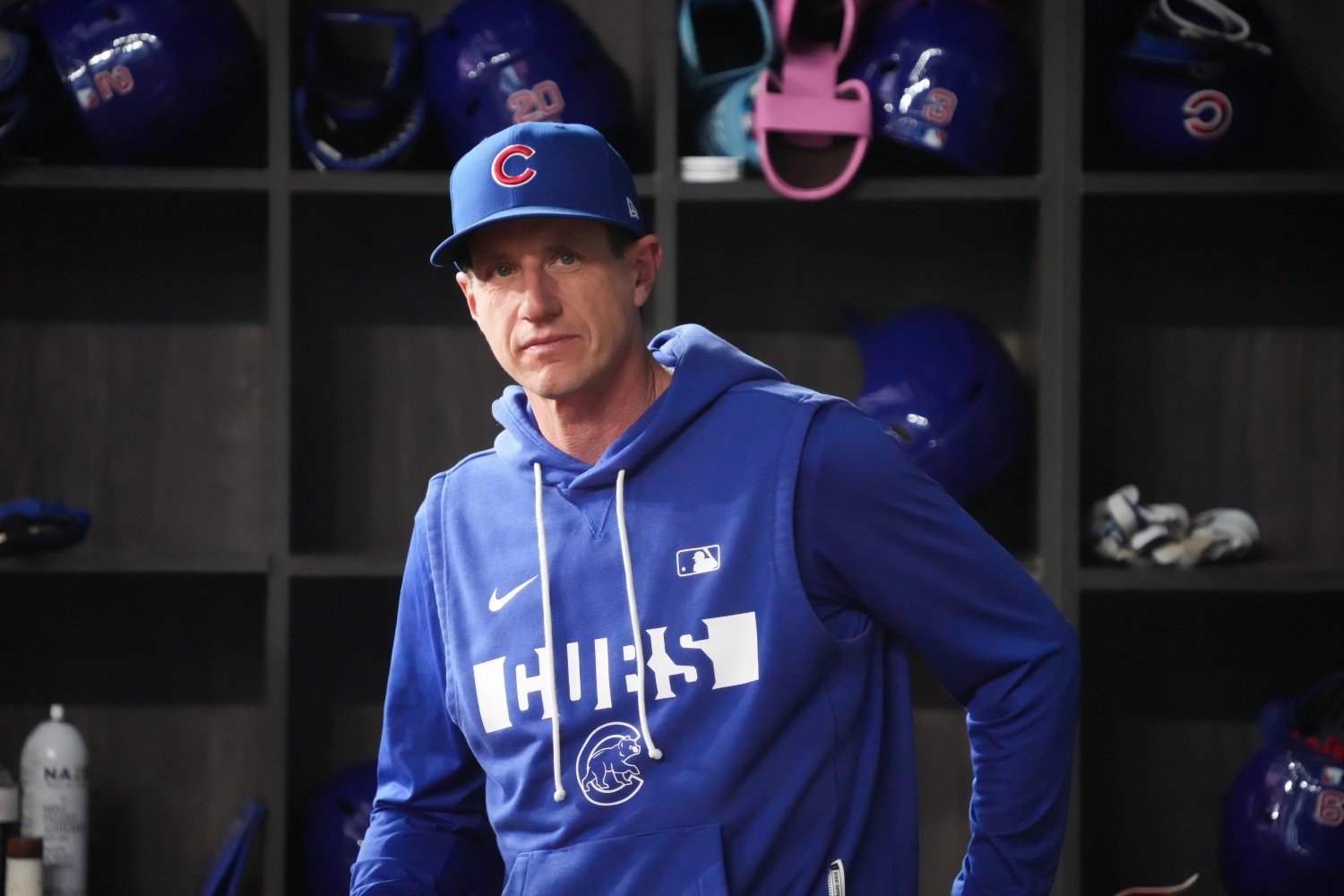 The numbers are a bit deceiving. The Cubs entered their series in Smyrna, Georgia Tuesday night with the third-most runs per game in the league so far this season, but that doesn't feel like an accurate depiction of the quality of their lineup. They've benefited, within one quarter of the campaign, from seeing a few teams overwhelmed by pitching problems. They've benefited, too, from loud hot streaks by Nico Hoerner and Ian Happ. They were a bit over their skis. Over the last three days, though, they've been exposed—and, of course, suffered disproportionately, just as they thrived disproportionately at other points. Alex Bregman hit a very timely home run to give the team a short-lived lead Tuesday night, but they eventually lost, 5-2, and Bregman's homer was the only hit they mustered. They're struggling. Since hitting his last home run on April 21, Nico Hoerner is batting .205/.280/.274. Dansby Swanson is 6-for-39 in May, with just one extra-base hit, and his walk rate has tapered off, too. Bregman entered Tuesday with a .661 OPS for the season, and Pete Crow-Armstrong's is on the wrong side of .700, too. Those four players will be in the lineup just about every day, though, as much for their defense and intangibles as for their bats. When they flounder the way they have of late, therefore, Craig Counsell has to look for ways to make up for them. On Tuesday night, that took the form of a second start behind the plate this year for Moisés Ballesteros. When Ballesteros catches, Michael Conforto can serve as the designated hitter, putting both of them in the lineup without taking out any of Happ, Seiya Suzuki or Michael Busch. It's a way to trade some run prevention for run production, and given the way Miguel Amaya is playing, it's a reasonable thing to try. Unfortunately, Ballesteros is hitting a bit below his best, too. He's 2-for-30 in May and hitless in his last 21 at-bats. He hit into tough luck Tuesday night in the shadows of the freeway, next to the outlet mall, with a 106-MPH lineout and a 107-MPH fielder's choice, but both were playable because they were hit too low. Worse, he's still looking like a shaky defensive catcher, struggling to navigate tough spots for his pitchers; framing poorly; and wasting challenges early in the game, as he did in the bottom of the first Tuesday. Conforto is the offensive bright spot for the team right now. He probably won't produce power all season to match the binge he's been on lately, but hitting the ball hard is just part of his early success. He's also dramatically reduced his swing rate this year, leading to a walk rate over 18%. Last season (and throughout his long career), Conforto maintained roughly a 45% overall swing rate, with good discipline outside the zone. This season, though, he's ratcheted that all the way up. His chase rate (the percentage of pitches outside the zone at which he swings) is all the way down to 16.4%, without a concomitant loss of swing rate inside the zone. His overall swing rate is down to 39%. He's honed his swing to catch the barrel within the zone, and isn't worrying about whiffs on the rare occasions when he does chase. The slightly smaller zone this year, thanks to the implementation of ABS, has been a boon to Conforto. He won't be able to sustain his extraordinary plate discipline, either, but he should be able to hold onto enough of it to keep getting on base well. That makes it very tempting, for Counsell, to look for ways to get both Conforto and Ballesteros into the lineup at the same time. There just isn't a good one. Conforto is a markedly worse defender in each outfield corner than Happ or Suzuki, and anyway, those two are impending free agents who rightfully want to be in the lineup every day. Politically and logistically, the only viable way to play both Conforto and Ballesteros regularly is to have Ballesteros get some reps behind the plate. Gambits like that don't often pay off, and this one didn't on Tuesday. Counsell might continue trying it from time to time, though—at least until one or two of his four slumping stars get going again. Managers have to make tradeoffs, and the Cubs might have to give up a few extra runs as they fight to score more consistently in the weeks ahead.
 -
Image courtesy of © Raymond Carlin III-Imagn Images The numbers are a bit deceiving. The Cubs entered their series in Smyrna, Georgia Tuesday night with the third-most runs per game in the league so far this season, but that doesn't feel like an accurate depiction of the quality of their lineup. They've benefited, within one quarter of the campaign, from seeing a few teams overwhelmed by pitching problems. They've benefited, too, from loud hot streaks by Nico Hoerner and Ian Happ. They were a bit over their skis. Over the last three days, though, they've been exposed—and, of course, suffered disproportionately, just as they thrived disproportionately at other points. Alex Bregman hit a very timely home run to give the team a short-lived lead Tuesday night, but they eventually lost, 5-2, and Bregman's homer was the only hit they mustered. They're struggling. Since hitting his last home run on April 21, Nico Hoerner is batting .205/.280/.274. Dansby Swanson is 6-for-39 in May, with just one extra-base hit, and his walk rate has tapered off, too. Bregman entered Tuesday with a .661 OPS for the season, and Pete Crow-Armstrong's is on the wrong side of .700, too. Those four players will be in the lineup just about every day, though, as much for their defense and intangibles as for their bats. When they flounder the way they have of late, therefore, Craig Counsell has to look for ways to make up for them. On Tuesday night, that took the form of a second start behind the plate this year for Moisés Ballesteros. When Ballesteros catches, Michael Conforto can serve as the designated hitter, putting both of them in the lineup without taking out any of Happ, Seiya Suzuki or Michael Busch. It's a way to trade some run prevention for run production, and given the way Miguel Amaya is playing, it's a reasonable thing to try. Unfortunately, Ballesteros is hitting a bit below his best, too. He's 2-for-30 in May and hitless in his last 21 at-bats. He hit into tough luck Tuesday night in the shadows of the freeway, next to the outlet mall, with a 106-MPH lineout and a 107-MPH fielder's choice, but both were playable because they were hit too low. Worse, he's still looking like a shaky defensive catcher, struggling to navigate tough spots for his pitchers; framing poorly; and wasting challenges early in the game, as he did in the bottom of the first Tuesday. Conforto is the offensive bright spot for the team right now. He probably won't produce power all season to match the binge he's been on lately, but hitting the ball hard is just part of his early success. He's also dramatically reduced his swing rate this year, leading to a walk rate over 18%. Last season (and throughout his long career), Conforto maintained roughly a 45% overall swing rate, with good discipline outside the zone. This season, though, he's ratcheted that all the way up. His chase rate (the percentage of pitches outside the zone at which he swings) is all the way down to 16.4%, without a concomitant loss of swing rate inside the zone. His overall swing rate is down to 39%. He's honed his swing to catch the barrel within the zone, and isn't worrying about whiffs on the rare occasions when he does chase. The slightly smaller zone this year, thanks to the implementation of ABS, has been a boon to Conforto. He won't be able to sustain his extraordinary plate discipline, either, but he should be able to hold onto enough of it to keep getting on base well. That makes it very tempting, for Counsell, to look for ways to get both Conforto and Ballesteros into the lineup at the same time. There just isn't a good one. Conforto is a markedly worse defender in each outfield corner than Happ or Suzuki, and anyway, those two are impending free agents who rightfully want to be in the lineup every day. Politically and logistically, the only viable way to play both Conforto and Ballesteros regularly is to have Ballesteros get some reps behind the plate. Gambits like that don't often pay off, and this one didn't on Tuesday. Counsell might continue trying it from time to time, though—at least until one or two of his four slumping stars get going again. Managers have to make tradeoffs, and the Cubs might have to give up a few extra runs as they fight to score more consistently in the weeks ahead. View full article
-
Image courtesy of © Jerome Miron-Imagn Images In every start he's had against right-handed opposing pitchers this year, Alex Bregman has slotted in between two left-handed hitters, or between one lefty and one switch-hitter. In theory, that should punish whichever manager is trying to outguess Craig Counsell that day for any effort to get a left-on-left matchup with the likes of Michael Busch or Moisés Ballesteros, or to turn around Ian Happ to what has historically been his weaker side. Bregman, sitting in the middle, should get an advantageous matchup. Reality was never that well-suited to theory in this regard. Bregman has very narrow platoon splits for his career, and though he hammered them last year, he'd been pedestrian against lefties for the previous few seasons. This year, he's getting on base against them at a .400 clip, but he's only slugging .325—hardly the kind of punishment one is looking to dole out when a team wants to turn to a matchup guy for lefties on either side. Of the nine walks he's drawn, two have been intentional, when the other team decided they were fine with him being on base and elected not to risk having him beat them. More troubling, though, is the fact that Bregman has struggled mightily against right-handed pitching so far. He's batting just .227/.301/.336 in those same-handed platoon showdowns, which is most of the reason for an ugly .661 OPS in the first 5% of his five-year deal with the Cubs. He's not hitting for power. He's not hitting much, at all. Admittedly, there's a little bit of real cause for concern beneath the surface. Bregman's bat speed is down about 1 MPH this year. That's not a glaring issue, in a vacuum, because it's still at a level where many hitters succeed, and he's never been dependent on bat speed, anyway. He's also much slower afoot, with a sprint speed starting to reach positively plodding levels, and it's not fun to watch when Ballesteros and Bregman end up on the bases at the same time. On balance, though, Cubs fans would be fine with that—if only they (and especially Bregman) were on a bit more often. Most of the numbers would tell you not to worry, and if you're taking a far-sighted perspective, you shouldn't. What makes Bregman special at the plate is his command of the strike zone, and he's still chasing at an exceptionally low rate. What makes him special is his ability to hit the ball squarely and cleanly, on a line, and he's still doing that at a healthily above-average clip, too. So, why has he been so unproductive? Bregman is hitting a few more ground balls. He's whiffing a bit more. And his swing isn't producing the pulled fly balls that made him just dangerous enough to force pitchers to throw him lots of slightly less bangable balls, which he would then deposit into the outfield for singles and doubles. The cause of all these symptoms is the same: he's seeing a crazy number of breaking balls. This is the breakdown of pitch percentage by pitch type group and season for Bregman's whole career, but you can subdivide it in any of several ways and end up in the same place. Last month, he saw more breaking balls than he had in all but two or three previous months of his career. This month, it's much higher: he's seeing more breaking pitches than fastballs. It's true if you break things down by handedness. It's true if you break them down by count. Bregman is simply getting a steady diet of breaking stuff, and it's affecting his profile. As good as Bregman is, even he can't consistently square up sliders, without being unready for the fastball. As he always has, he's running great batted-ball numbers and an exceptionally low whiff rate on heaters, but much worse numbers on breaking balls. It's just that breaking balls suddenly make up a much larger share of the pitches he sees, so the bad things that happen when he goes to pitch his signature swing on a fastball and gets a breaking ball instead are piling up, while fewer of the good things that happen when he gets what he's looking for are there to counterbalance it. The dynamic of hitting between lefties so often could be part of the issue. For most of his career, Bregman has batted in lineups loaded with righty bats, so maybe pitchers are trying some new things against him in the rhythm of a different kind of order. It's more likely, though, that they're seeing his slightly reduced bat speed and attacking it. While your first instinct might be to guess that bat speed helps one hit fast pitches, what it really does is to let one make later decisions. Bregman is still making good ball-strike decisions, but as his bat slows down, it gets harder for him to wait long enough to deliver the barrel to stuff that bends, without being too late on the stuff that's hard and straight. That doesn't mean any of this is permanent. The rate at which the league has thrown him breaking balls over the last two weeks is surely unsustainable. It has something to do with the teams the Cubs have happened to face; it has something to do with what he's looked like on those pitches. He'll make an adjustment in the cage, and the team will face some pitchers who don't like their breaking ball as much, and it will level out. For now, though, Bregman has a real challenge on his hands. The league is assailing him with pitches that aren't his preferred targets. He'll have to figure out how to make them stop, or to profit from their refusal to do so. View full article
-
Alex Bregman is Taking the Brunt of a Barrage of Breaking Balls
Matthew Trueblood posted an article in Cubs
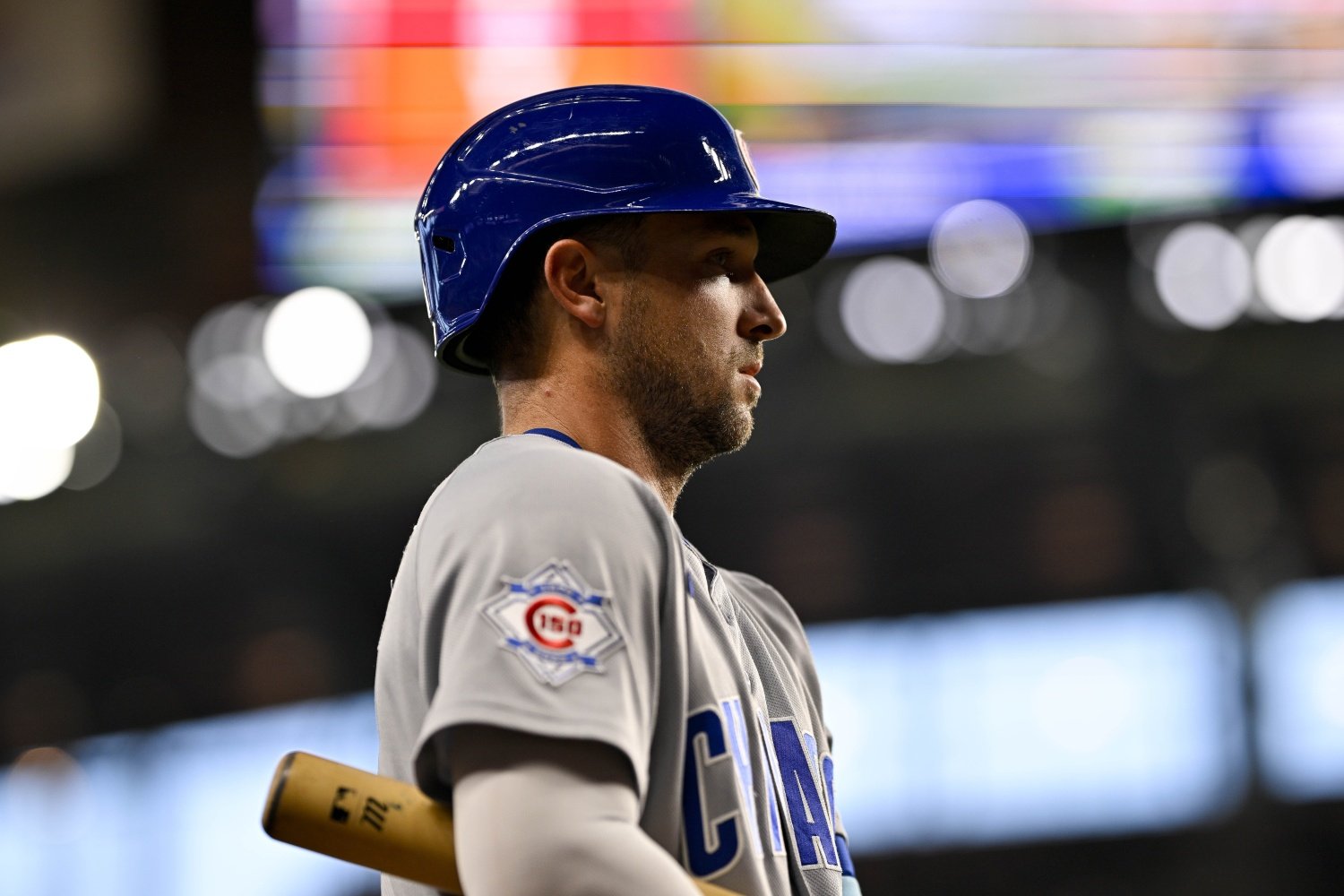 In every start he's had against right-handed opposing pitchers this year, Alex Bregman has slotted in between two left-handed hitters, or between one lefty and one switch-hitter. In theory, that should punish whichever manager is trying to outguess Craig Counsell that day for any effort to get a left-on-left matchup with the likes of Michael Busch or Moisés Ballesteros, or to turn around Ian Happ to what has historically been his weaker side. Bregman, sitting in the middle, should get an advantageous matchup. Reality was never that well-suited to theory in this regard. Bregman has very narrow platoon splits for his career, and though he hammered them last year, he'd been pedestrian against lefties for the previous few seasons. This year, he's getting on base against them at a .400 clip, but he's only slugging .325—hardly the kind of punishment one is looking to dole out when a team wants to turn to a matchup guy for lefties on either side. Of the nine walks he's drawn, two have been intentional, when the other team decided they were fine with him being on base and elected not to risk having him beat them. More troubling, though, is the fact that Bregman has struggled mightily against right-handed pitching so far. He's batting just .227/.301/.336 in those same-handed platoon showdowns, which is most of the reason for an ugly .661 OPS in the first 5% of his five-year deal with the Cubs. He's not hitting for power. He's not hitting much, at all. Admittedly, there's a little bit of real cause for concern beneath the surface. Bregman's bat speed is down about 1 MPH this year. That's not a glaring issue, in a vacuum, because it's still at a level where many hitters succeed, and he's never been dependent on bat speed, anyway. He's also much slower afoot, with a sprint speed starting to reach positively plodding levels, and it's not fun to watch when Ballesteros and Bregman end up on the bases at the same time. On balance, though, Cubs fans would be fine with that—if only they (and especially Bregman) were on a bit more often. Most of the numbers would tell you not to worry, and if you're taking a far-sighted perspective, you shouldn't. What makes Bregman special at the plate is his command of the strike zone, and he's still chasing at an exceptionally low rate. What makes him special is his ability to hit the ball squarely and cleanly, on a line, and he's still doing that at a healthily above-average clip, too. So, why has he been so unproductive? Bregman is hitting a few more ground balls. He's whiffing a bit more. And his swing isn't producing the pulled fly balls that made him just dangerous enough to force pitchers to throw him lots of slightly less bangable balls, which he would then deposit into the outfield for singles and doubles. The cause of all these symptoms is the same: he's seeing a crazy number of breaking balls. This is the breakdown of pitch percentage by pitch type group and season for Bregman's whole career, but you can subdivide it in any of several ways and end up in the same place. Last month, he saw more breaking balls than he had in all but two or three previous months of his career. This month, it's much higher: he's seeing more breaking pitches than fastballs. It's true if you break things down by handedness. It's true if you break them down by count. Bregman is simply getting a steady diet of breaking stuff, and it's affecting his profile. As good as Bregman is, even he can't consistently square up sliders, without being unready for the fastball. As he always has, he's running great batted-ball numbers and an exceptionally low whiff rate on heaters, but much worse numbers on breaking balls. It's just that breaking balls suddenly make up a much larger share of the pitches he sees, so the bad things that happen when he goes to pitch his signature swing on a fastball and gets a breaking ball instead are piling up, while fewer of the good things that happen when he gets what he's looking for are there to counterbalance it. The dynamic of hitting between lefties so often could be part of the issue. For most of his career, Bregman has batted in lineups loaded with righty bats, so maybe pitchers are trying some new things against him in the rhythm of a different kind of order. It's more likely, though, that they're seeing his slightly reduced bat speed and attacking it. While your first instinct might be to guess that bat speed helps one hit fast pitches, what it really does is to let one make later decisions. Bregman is still making good ball-strike decisions, but as his bat slows down, it gets harder for him to wait long enough to deliver the barrel to stuff that bends, without being too late on the stuff that's hard and straight. That doesn't mean any of this is permanent. The rate at which the league has thrown him breaking balls over the last two weeks is surely unsustainable. It has something to do with the teams the Cubs have happened to face; it has something to do with what he's looked like on those pitches. He'll make an adjustment in the cage, and the team will face some pitchers who don't like their breaking ball as much, and it will level out. For now, though, Bregman has a real challenge on his hands. The league is assailing him with pitches that aren't his preferred targets. He'll have to figure out how to make them stop, or to profit from their refusal to do so.
 -
You're absolutely right, and that's gonna be the subject of another piece on Rea I'm working on. There are at least two key changes at play.
-
Image courtesy of © Matt Marton-Imagn Images If Colin Rea pitches six innings Tuesday night in the northwest suburbs of Atlanta, he'll reach 650 for his career. That's not exactly a significant milestone, in the historical context of the big leagues. It's remarkable, however, because Rea is less than two months shy of his 36th birthday, and almost exactly half of his career frames have come in the last two years. On May 13, 2024, Rea threw an unremarkable quality start: 6 innings, 3 earned runs, 1 walk, 5 strikeouts against the Pirates. To that point in his career, 'unremarkable' had been a pretty good encapsulation of Rea. He'd finally gotten some traction in the majors the previous year, with the Brewers, but before that, injuries had slowed his long ascent to the majors—so much so that he spent time pitching in Japan before coming back and finding a new toehold Stateside. He finished the night with 323 1/3 innings pitched in the majors, over the nearly 13 full years since he was drafted in June 2011, and a 4.56 ERA. Since then, though, Rea has spent almost all his time in the starting rotation of either Milwaukee or the Cubs. No, that wasn't quite the plan, in either place, but one way or another, Rea keeps being needed—and he keeps meeting the need. Over the last two years, 'quality' has been the word that best defines him, and there's nothing unremarkable about his career, anymore. In addition to doubling his career volume in his mid-30s, he's posted a 4.21 ERA in the last 320-plus frames. Born Jul. 1, 1990, Rea is the oldest possible person who could be listed at age 35 for this season at Baseball Reference; the baseball age convention is to give the player's age on June 30 of the season in question. If he were born one day earlier, he'd be listed as 36, instead. Nonetheless, he has more innings pitched since the start of his age-33 season (365, since 2024) than he had before that. More importantly, he's become so established that it's relatively easy to see him pitching another 350 innings or more—something that would have been almost unthinkable when he turned 33, in the middle of a 2023 season in which he was an up-and-down swing man for the Brewers. Among pitchers whose age-33 season came in 2005 or later, 34 have pitched at least 700 innings from that point to the end of their career. Mostly, though, those are long-time stars and potential Hall of Famers. Max Scherzer, Justin Verlander, Zack Greinke and Roy Halladay are on the list. So are slightly lesser workhorses like Adam Wainwright, Tim Hudson and Mark Buehrle. There are several guys who pitched that much because that's just what you did back then—soak up innings at the back of a rotation throughout your mid-30s: Aaron Harang, Kyle Lohse, Ryan Dempster, Jeremy Guthrie. Only six of those hurlers actually pitched more after the start of their age-33 campaign than they did before it. Two guys (Jose Contreras and Hiroki Kuroda) pitched more in MLB after 33 than before, but they'd had long careers in Cuba and Japan, respectively, before coming to the United States. The main six—the six pitchers of this century whom we might call real comps for Rea, if he can turn in another couple of seasons like his last three—are: Chris Bassitt Rich Hill Derek Lowe Miles Mikolas Charlie Morton Ryan Vogelsong Two of these guys (Hill and Morton) are heroes of the player development revolution; they became stars late in careers that started out seemingly doomed by injury trouble or extreme hittability. Unlike them, though, Rea has no high-spin curveball story, and no multi-year, eight-figure contracts await him. Bassitt was in the same draft class as Rea, but is 16 months his senior, which means he's listed as two years older than Rea. Like Rea, he was a late-round pick, but unlike Rea, he gained a modicum of prospect buzz and reached the bigs on a normal trajectory; he was waylaid almost solely by injuries. Morton and Lowe each pitched fairly big numbers of innings before turning 33; they just stuck around long enough to be more voluminous in their old age than in their younger days. Bassitt and Mikolas had each thrown more than 500 innings before their age-33 seasons, so even though Bassitt shares that draft history with Rea and Mikolas went overseas like Rea did, each was much more established much earlier than Rea was. Remember, at the beginning of his age-33 campaign, Rea had only amassed 279 innings in the bigs. That really only leaves Ryan Vogelsong as a true match for what Rea went through, and what he might hope to achieve. Vogelsong is a fascinating case, too. He had some injuries—you really can't end up on this kind of list without some—but that wasn't his main problem. His main problem was that he was bad. After being a fifth-round pick in 1998, Vogelsong pretty quickly proved he was too good for the minors, but he wasn't good enough for the majors in any of his first seven seasons there. At almost the same age Rea did, though, he went to Japan, and he came back as something a whole lot like what Rea is now. Vogelsong came back from NPB to the team who had initially drafted him: the Giants. With them, from ages 33-37, he had a 3.89 ERA and pitched almost 800 innings. He was even useful (and occasionally heroic) in the postseason, en route to the team's 2012 and 2014 World Series rings. Baseball Prospectus still runs a regular feature called the Vogelsong Awards, honoring players who weren't in their annual preview book but end up having a significant impact in the majors. Rea hasn't ever been quite as good as Vogelsong was in 2011 and 2012, but he's already showing more staying power than Vogelsong did. At age 35, Vogelsong went over a cliff. His velocity dipped from 91-92 MPH to 89-90, and the rest of his stuff couldn't make up for the loss. Rea, by contrast, is sitting just under 94 MPH in average velocity, virtually exactly where he was last year and harder than he'd ever thrown before that. He's also using seven different pitches, including a slider and a splitter that each miss bats at above-average rates. In a perfect world, the Cubs would have Rea working in long relief. We know that for sure, because they came into the season planning on that. It was never all that likely to stay that way for long, though, and now, it looks like Rea will be in their rotation all season. He should be. He's earned it. And if he keeps doing this much longer, he'll be the best virtually anonymous late-blooming pitcher in recent memory. It's not enough to earn him a chapter in the next book about tech in baseball or to make his grandkids ultra-rich, but Rea is a shining example of persistence, resiliency, and having your best years just when everyone else is hanging them up. View full article
-
 If Colin Rea pitches six innings Tuesday night in the northwest suburbs of Atlanta, he'll reach 650 for his career. That's not exactly a significant milestone, in the historical context of the big leagues. It's remarkable, however, because Rea is less than two months shy of his 36th birthday, and almost exactly half of his career frames have come in the last two years. On May 13, 2024, Rea threw an unremarkable quality start: 6 innings, 3 earned runs, 1 walk, 5 strikeouts against the Pirates. To that point in his career, 'unremarkable' had been a pretty good encapsulation of Rea. He'd finally gotten some traction in the majors the previous year, with the Brewers, but before that, injuries had slowed his long ascent to the majors—so much so that he spent time pitching in Japan before coming back and finding a new toehold Stateside. He finished the night with 323 1/3 innings pitched in the majors, over the nearly 13 full years since he was drafted in June 2011, and a 4.56 ERA. Since then, though, Rea has spent almost all his time in the starting rotation of either Milwaukee or the Cubs. No, that wasn't quite the plan, in either place, but one way or another, Rea keeps being needed—and he keeps meeting the need. Over the last two years, 'quality' has been the word that best defines him, and there's nothing unremarkable about his career, anymore. In addition to doubling his career volume in his mid-30s, he's posted a 4.21 ERA in the last 320-plus frames. Born Jul. 1, 1990, Rea is the oldest possible person who could be listed at age 35 for this season at Baseball Reference; the baseball age convention is to give the player's age on June 30 of the season in question. If he were born one day earlier, he'd be listed as 36, instead. Nonetheless, he has more innings pitched since the start of his age-33 season (365, since 2024) than he had before that. More importantly, he's become so established that it's relatively easy to see him pitching another 350 innings or more—something that would have been almost unthinkable when he turned 33, in the middle of a 2023 season in which he was an up-and-down swing man for the Brewers. Among pitchers whose age-33 season came in 2005 or later, 34 have pitched at least 700 innings from that point to the end of their career. Mostly, though, those are long-time stars and potential Hall of Famers. Max Scherzer, Justin Verlander, Zack Greinke and Roy Halladay are on the list. So are slightly lesser workhorses like Adam Wainwright, Tim Hudson and Mark Buehrle. There are several guys who pitched that much because that's just what you did back then—soak up innings at the back of a rotation throughout your mid-30s: Aaron Harang, Kyle Lohse, Ryan Dempster, Jeremy Guthrie. Only six of those hurlers actually pitched more after the start of their age-33 campaign than they did before it. Two guys (Jose Contreras and Hiroki Kuroda) pitched more in MLB after 33 than before, but they'd had long careers in Cuba and Japan, respectively, before coming to the United States. The main six—the six pitchers of this century whom we might call real comps for Rea, if he can turn in another couple of seasons like his last three—are: Chris Bassitt Rich Hill Derek Lowe Miles Mikolas Charlie Morton Ryan Vogelsong Two of these guys (Hill and Morton) are heroes of the player development revolution; they became stars late in careers that started out seemingly doomed by injury trouble or extreme hittability. Unlike them, though, Rea has no high-spin curveball story, and no multi-year, eight-figure contracts await him. Bassitt was in the same draft class as Rea, but is 16 months his senior, which means he's listed as two years older than Rea. Like Rea, he was a late-round pick, but unlike Rea, he gained a modicum of prospect buzz and reached the bigs on a normal trajectory; he was waylaid almost solely by injuries. Morton and Lowe each pitched fairly big numbers of innings before turning 33; they just stuck around long enough to be more voluminous in their old age than in their younger days. Bassitt and Mikolas had each thrown more than 500 innings before their age-33 seasons, so even though Bassitt shares that draft history with Rea and Mikolas went overseas like Rea did, each was much more established much earlier than Rea was. Remember, at the beginning of his age-33 campaign, Rea had only amassed 279 innings in the bigs. That really only leaves Ryan Vogelsong as a true match for what Rea went through, and what he might hope to achieve. Vogelsong is a fascinating case, too. He had some injuries—you really can't end up on this kind of list without some—but that wasn't his main problem. His main problem was that he was bad. After being a fifth-round pick in 1998, Vogelsong pretty quickly proved he was too good for the minors, but he wasn't good enough for the majors in any of his first seven seasons there. At almost the same age Rea did, though, he went to Japan, and he came back as something a whole lot like what Rea is now. Vogelsong came back from NPB to the team who had initially drafted him: the Giants. With them, from ages 33-37, he had a 3.89 ERA and pitched almost 800 innings. He was even useful (and occasionally heroic) in the postseason, en route to the team's 2012 and 2014 World Series rings. Baseball Prospectus still runs a regular feature called the Vogelsong Awards, honoring players who weren't in their annual preview book but end up having a significant impact in the majors. Rea hasn't ever been quite as good as Vogelsong was in 2011 and 2012, but he's already showing more staying power than Vogelsong did. At age 35, Vogelsong went over a cliff. His velocity dipped from 91-92 MPH to 89-90, and the rest of his stuff couldn't make up for the loss. Rea, by contrast, is sitting just under 94 MPH in average velocity, virtually exactly where he was last year and harder than he'd ever thrown before that. He's also using seven different pitches, including a slider and a splitter that each miss bats at above-average rates. In a perfect world, the Cubs would have Rea working in long relief. We know that for sure, because they came into the season planning on that. It was never all that likely to stay that way for long, though, and now, it looks like Rea will be in their rotation all season. He should be. He's earned it. And if he keeps doing this much longer, he'll be the best virtually anonymous late-blooming pitcher in recent memory. It's not enough to earn him a chapter in the next book about tech in baseball or to make his grandkids ultra-rich, but Rea is a shining example of persistence, resiliency, and having your best years just when everyone else is hanging them up.
 -
Image courtesy of © Raymond Carlin III-Imagn Images This might sound a bit joyless, at first, but lately, I find myself trying to catch Pete Crow-Armstrong lacking. It's become a pet project for me. I watch any single to center field against the Cubs several times. Each morning, I refresh Crow-Armstrong's page on Baseball Savant to see what new points have been added to the peculiar pointillist masterpiece that is Statcast's chart of balls hit toward him, with catch probability estimated based on the hang time of the ball and the distance Crow-Armstrong would have had to cover to get to the ball. I want to know: is it possible to hit a ball that any other center fielder could catch, but which Crow-Armstrong can't? It sounds a little silly, because (as we've already documented) Crow-Armstrong has made a couple of misplays this season. He misplayed a sinking liner during the first week of the season. He misplayed a ball at the wall during the Cubs' trip to Dodger Stadium. But we know those were just hiccups. As if to neatly confirm that, he's made the play on near-identical balls hit his way on other occasions this year. It's possible to be (very slightly) more reliable than Crow-Armstrong in catching routine fly balls, but it's his incredible range extension and the jumps he's using to beat every ball to its spot that make him special. I'm trying to figure out whether there is, in effect, any weak point in the phalanx he forms in the Cubs outfield. You've probably heard it said, by some broadcaster or other, that if a certain outfielder didn't make a play, it was impossible to make. Andruw Jones had that reputation. So did Willie Mays. Like the apocryphal story of an umpire telling a whiny pitcher that if he'd thrown a strike, Ted Williams would have swung at it, there are a handful of center fielders in the game's history of whom it's been said that if they didn't get there, it was an ironclad, unquestionable hit. In addition to Jones and Mays, Tris Speaker and Devon Whyte enjoyed that reputation. Broadly speaking, it was earned, in all cases. That doesn't mean it wasn't exaggerated, though. It almost certainly was. The halo effect often leads us to imagine that someone doing 97% of what's humanly possible is really touching or busting that 100% threshold. Jones, for sure, would sometimes be caught flat-footed on sinking line drives in front of him, and at other times, he'd be victimized by balls hit over his head. (He played way too shallow, even for his era.) Great defenders end up being remembered for their highlights, rather than their foibles, and anyway, the balls that separate a superb player from a nigh-supernatural one don't look like mistakes. They look like innocuous hits—balls they couldn't have done anything about. We can quantify defense much better than we used to, though. We can find those hang times and distances to cover on every ball hit toward a fielder, and Statcast can feed that into their model and tell us where the boundaries of possibility lie. Last summer, Crow-Armstrong made one catch the system thought had a 0% Catch Probability, so we already know he pushes that limit. But how consistent is he? Aren't there some balls falling in at the edges of his range that he could, theoretically, have gotten to? Don't get mad, but the answer is: yes, and no. Already, though, I think that means Crow-Armstrong is doing something extraordinary and historic. Here's a ball that caught my eye and raised my suspicions. TzA0bm9fWGw0TUFRPT1fRHdrSFZsTURWMU1BWFFSUVV3QUhCd0pYQUFNTVZWZ0FVRlJRQ0FCVUJBRlNBbFFB.mp4 Yes, that's a line drive, and yes, Crow-Armstrong was shaded toward left-center, but we've seen him run down balls at least a bit like this one. Was his jump even a half a second slow? Did he fail to accelerate all the way through the catchpoint? Was there a chance missed? Well, Statcast says no. This hit didn't register as having any catch probability assigned to Crow-Armstrong, and on a closer watch, I'm forced to admit that if there was a failure here, it was one of location: either Shota Imanaga throwing a ball there to Nolan Arenado, or Crow-Armstrong being set up where he was before the pitch. Besides, the elements were against him. Here's the first frame after the switch from the center-field camera to the one high and behind home plate on the play. I've put a square around the ball's position at that moment and a dot where it will land. This is a hard-hit ball, but it's both knocked down and pushed toward right field by the wind, in addition to slicing that direction because of its spin. Crow-Armstrong got a great jump, really, but he's 10 feet from the ball when it lands, which was the responsible way to play it, given the only read he could have gotten off the bat. He probably could have gotten much closer to catching it, but I don't think he could have caught it, and the truth of the art of outfield defense is that you occasionally have to play the angles, rather than trying to catch every single ball hit your way. For great outfielders, those plays are rare, but they do happen—especially outdoors, on windy days. Here's the other play from the first 10 days of this month that had me checking things. a0R2Tm5fWGw0TUFRPT1fVjFVRUFGd0JYMUFBWGdFQ1VRQUhVZ0FDQUZrTlVGUUFCVklBVlFzRkFGVURCd1lD.mp4 This one feels more like a limitation, right? You can see Crow-Armstrong balk just a bit off the bat. First, then, I checked whether he was caught unprepared when the pitch was thrown. Not so, though. Here's the Gameday 3D animation of Crow-Armstrong and Bleday at (essentially) the instant of contact. The center fielder timed his hop correctly; he was slightly in the air (and on his way down) as the ball passed through the hitting zone. (By the way, how cool is it that we can do this now?!) Crow-Armstrong does take a false turn, though. When Bleday makes contact, he initially turns his left shoulder back and takes a half-dropstep with his left leg. All weekend, it seemed, Bleday hit the ball hard to that very part of the park, and Crow-Armstrong might have been caught anticipating solid contact that didn't come. It takes him a split-second to get his momentum moving forward, instead. By the time the ball falls, you can certainly convince yourself that he should have been able to get there, with a better jump. He's much closer to this one than to the Arenado ball, and his jump was clearly worse. So the question becomes: was a better jump possible? Could any other outfielder have made this play better? Here's one piece of what looks, at first, like damning evidence. It's from a Marlins-White Sox game on the other side of Chicago, last season. b0daOERfWGw0TUFRPT1fVUFCU0JsWlZWd0lBWGxFTFZnQUhDUVVDQUZrQVUxY0FCRkJYQlZCVUFsVUJBd3RW.mp4 That's a heck of a catch, by Dane Myers—now of the Reds, as it happens. But Statcast didn't even rate it as overwhelmingly impressive. It gave a 95% catch probability on the ball. Yet, it didn't ding Crow-Armstrong at all for not catching the Bleday bloop. His catch probability on it was 0%, as far as the model is concerned. First, let me explain that briefly. I picked the above catch by Myers because it was the only ball since the start of 2025 that fit the same contact constraints as Bleday's (a 77-79 MPH exit velocity, a 33-35° launch angle) and was hit to center field, but which was hit as shallow or shallower than Bleday's. It's not hard to see that the wind played with both balls. Without wind (and with truer batted-ball spin), most balls hit like this travel an extra 10-20 feet, which makes them relatively easy to catch. These two are good foils for each other. They were hit relatively high, but they weren't really pop-ups, and they weren't hit hard enough to go a long way, but they were clearly over the infield. Conditions kept each from flying very far, though. Already, these are extreme plays, in terms of where the ball ended up relative to what the outfielder could reasonably have hoped to read off the bat. Two things separate the two plays in important ways. First, Tim Elko's flyout to Myers hung in the air a hair longer. Its hang time was 5.0 seconds, which is a lot of time to run under a ball. Bleday's wasn't much less, but slightly so. That left Crow-Armstrong with less time to make up for that misstep off the bat. Secondly, though, Crow-Armstrong was playing deeper than he usually does on his play. With two outs in the ninth inning of a game that wasn't especially close, and with a batter in the box who'd showed good power in the series, he was 326 feet from home plate when the pitch was thrown. Myers was only 318 feet from home when Edward Cabrera threw his pitch to Elko last year. One could pick nits with the Cubs' positioning, perhaps, but it seems like Crow-Armstrong was in a smart spot, in general. On this particular ball, it just left him with zero margin for error. The combination of these two factors means Myers had a good 15 feet on Crow-Armstrong, before accounting for Crow-Armstrong not getting a clean first step on the ball. It's not such a wonder, then, that two similar balls produced Statcast estimates at extreme ends of the catch probability spectrum. Here's the crazy takeaway: Crow-Armstrong could have caught this ball. That's true, even though Statcast absolutely would have regarded it as uncatchable, anyway. He could have drawn an earlier bead on the ball, but misreading the contact is almost a necessary part of this unusual piece of contact. Were the stakes higher, however, he probably would have dived for it—and he might have had a play. It's getting very, very hard to find balls Crow-Armstrong can't catch that are (in any realistic sense) catchable. That doesn't mean he's perfect. But as we've discussed before, he's pushing the boundaries of defensive possibilities. Hitting the ball to center field just isn't a viable option for Cubs opponents. Crow-Armstrong is, in some sense, a fulfillment of the hype attached to so many generational center fielders before him. He might force us to reconsider what the position can be. View full article
-
If Pete Crow-Armstrong Doesn't Get There, It Wasn't Catchable
Matthew Trueblood posted an article in Cubs
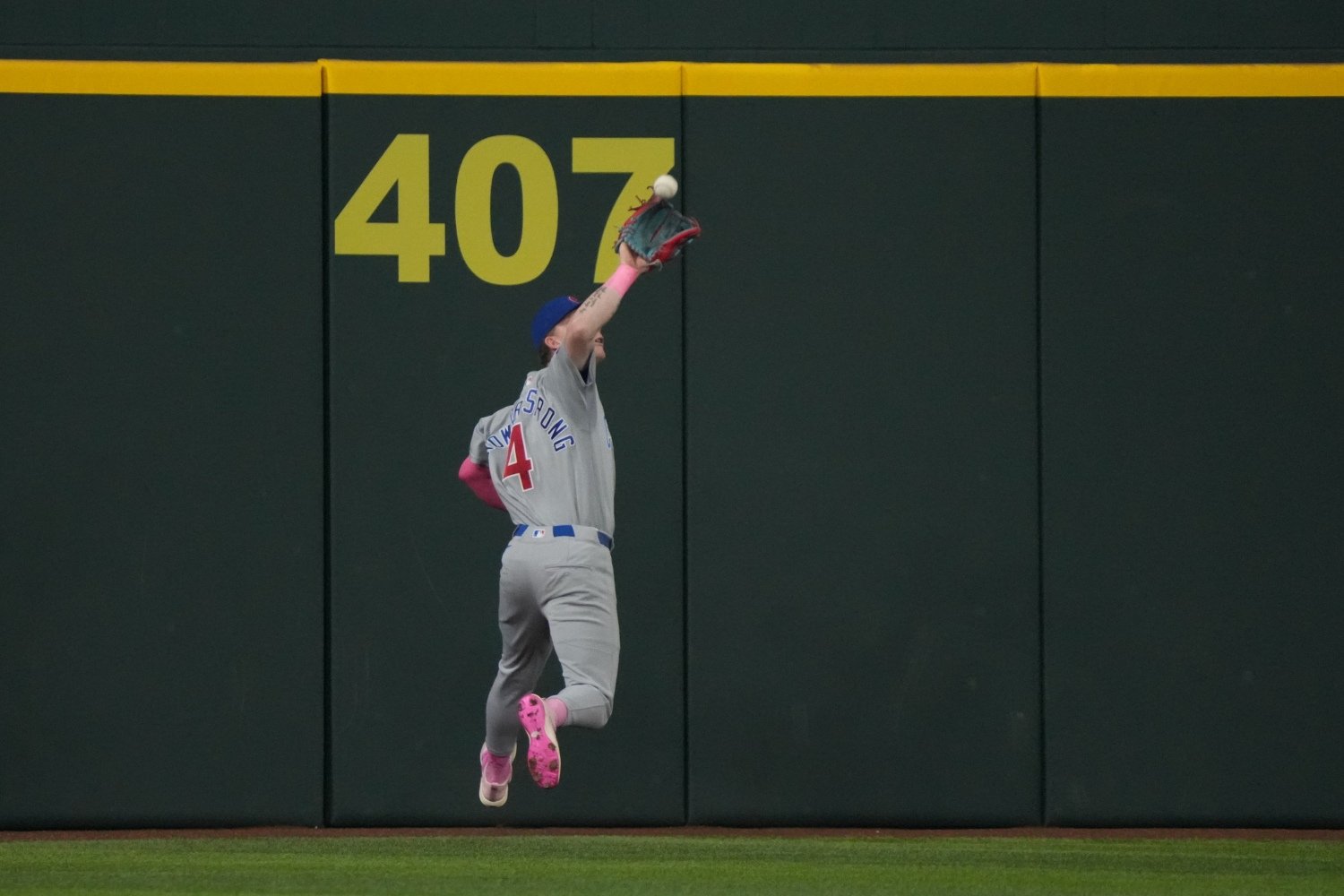 This might sound a bit joyless, at first, but lately, I find myself trying to catch Pete Crow-Armstrong lacking. It's become a pet project for me. I watch any single to center field against the Cubs several times. Each morning, I refresh Crow-Armstrong's page on Baseball Savant to see what new points have been added to the peculiar pointillist masterpiece that is Statcast's chart of balls hit toward him, with catch probability estimated based on the hang time of the ball and the distance Crow-Armstrong would have had to cover to get to the ball. I want to know: is it possible to hit a ball that any other center fielder could catch, but which Crow-Armstrong can't? It sounds a little silly, because (as we've already documented) Crow-Armstrong has made a couple of misplays this season. He misplayed a sinking liner during the first week of the season. He misplayed a ball at the wall during the Cubs' trip to Dodger Stadium. But we know those were just hiccups. As if to neatly confirm that, he's made the play on near-identical balls hit his way on other occasions this year. It's possible to be (very slightly) more reliable than Crow-Armstrong in catching routine fly balls, but it's his incredible range extension and the jumps he's using to beat every ball to its spot that make him special. I'm trying to figure out whether there is, in effect, any weak point in the phalanx he forms in the Cubs outfield. You've probably heard it said, by some broadcaster or other, that if a certain outfielder didn't make a play, it was impossible to make. Andruw Jones had that reputation. So did Willie Mays. Like the apocryphal story of an umpire telling a whiny pitcher that if he'd thrown a strike, Ted Williams would have swung at it, there are a handful of center fielders in the game's history of whom it's been said that if they didn't get there, it was an ironclad, unquestionable hit. In addition to Jones and Mays, Tris Speaker and Devon Whyte enjoyed that reputation. Broadly speaking, it was earned, in all cases. That doesn't mean it wasn't exaggerated, though. It almost certainly was. The halo effect often leads us to imagine that someone doing 97% of what's humanly possible is really touching or busting that 100% threshold. Jones, for sure, would sometimes be caught flat-footed on sinking line drives in front of him, and at other times, he'd be victimized by balls hit over his head. (He played way too shallow, even for his era.) Great defenders end up being remembered for their highlights, rather than their foibles, and anyway, the balls that separate a superb player from a nigh-supernatural one don't look like mistakes. They look like innocuous hits—balls they couldn't have done anything about. We can quantify defense much better than we used to, though. We can find those hang times and distances to cover on every ball hit toward a fielder, and Statcast can feed that into their model and tell us where the boundaries of possibility lie. Last summer, Crow-Armstrong made one catch the system thought had a 0% Catch Probability, so we already know he pushes that limit. But how consistent is he? Aren't there some balls falling in at the edges of his range that he could, theoretically, have gotten to? Don't get mad, but the answer is: yes, and no. Already, though, I think that means Crow-Armstrong is doing something extraordinary and historic. Here's a ball that caught my eye and raised my suspicions. TzA0bm9fWGw0TUFRPT1fRHdrSFZsTURWMU1BWFFSUVV3QUhCd0pYQUFNTVZWZ0FVRlJRQ0FCVUJBRlNBbFFB.mp4 Yes, that's a line drive, and yes, Crow-Armstrong was shaded toward left-center, but we've seen him run down balls at least a bit like this one. Was his jump even a half a second slow? Did he fail to accelerate all the way through the catchpoint? Was there a chance missed? Well, Statcast says no. This hit didn't register as having any catch probability assigned to Crow-Armstrong, and on a closer watch, I'm forced to admit that if there was a failure here, it was one of location: either Shota Imanaga throwing a ball there to Nolan Arenado, or Crow-Armstrong being set up where he was before the pitch. Besides, the elements were against him. Here's the first frame after the switch from the center-field camera to the one high and behind home plate on the play. I've put a square around the ball's position at that moment and a dot where it will land. This is a hard-hit ball, but it's both knocked down and pushed toward right field by the wind, in addition to slicing that direction because of its spin. Crow-Armstrong got a great jump, really, but he's 10 feet from the ball when it lands, which was the responsible way to play it, given the only read he could have gotten off the bat. He probably could have gotten much closer to catching it, but I don't think he could have caught it, and the truth of the art of outfield defense is that you occasionally have to play the angles, rather than trying to catch every single ball hit your way. For great outfielders, those plays are rare, but they do happen—especially outdoors, on windy days. Here's the other play from the first 10 days of this month that had me checking things. a0R2Tm5fWGw0TUFRPT1fVjFVRUFGd0JYMUFBWGdFQ1VRQUhVZ0FDQUZrTlVGUUFCVklBVlFzRkFGVURCd1lD.mp4 This one feels more like a limitation, right? You can see Crow-Armstrong balk just a bit off the bat. First, then, I checked whether he was caught unprepared when the pitch was thrown. Not so, though. Here's the Gameday 3D animation of Crow-Armstrong and Bleday at (essentially) the instant of contact. The center fielder timed his hop correctly; he was slightly in the air (and on his way down) as the ball passed through the hitting zone. (By the way, how cool is it that we can do this now?!) Crow-Armstrong does take a false turn, though. When Bleday makes contact, he initially turns his left shoulder back and takes a half-dropstep with his left leg. All weekend, it seemed, Bleday hit the ball hard to that very part of the park, and Crow-Armstrong might have been caught anticipating solid contact that didn't come. It takes him a split-second to get his momentum moving forward, instead. By the time the ball falls, you can certainly convince yourself that he should have been able to get there, with a better jump. He's much closer to this one than to the Arenado ball, and his jump was clearly worse. So the question becomes: was a better jump possible? Could any other outfielder have made this play better? Here's one piece of what looks, at first, like damning evidence. It's from a Marlins-White Sox game on the other side of Chicago, last season. b0daOERfWGw0TUFRPT1fVUFCU0JsWlZWd0lBWGxFTFZnQUhDUVVDQUZrQVUxY0FCRkJYQlZCVUFsVUJBd3RW.mp4 That's a heck of a catch, by Dane Myers—now of the Reds, as it happens. But Statcast didn't even rate it as overwhelmingly impressive. It gave a 95% catch probability on the ball. Yet, it didn't ding Crow-Armstrong at all for not catching the Bleday bloop. His catch probability on it was 0%, as far as the model is concerned. First, let me explain that briefly. I picked the above catch by Myers because it was the only ball since the start of 2025 that fit the same contact constraints as Bleday's (a 77-79 MPH exit velocity, a 33-35° launch angle) and was hit to center field, but which was hit as shallow or shallower than Bleday's. It's not hard to see that the wind played with both balls. Without wind (and with truer batted-ball spin), most balls hit like this travel an extra 10-20 feet, which makes them relatively easy to catch. These two are good foils for each other. They were hit relatively high, but they weren't really pop-ups, and they weren't hit hard enough to go a long way, but they were clearly over the infield. Conditions kept each from flying very far, though. Already, these are extreme plays, in terms of where the ball ended up relative to what the outfielder could reasonably have hoped to read off the bat. Two things separate the two plays in important ways. First, Tim Elko's flyout to Myers hung in the air a hair longer. Its hang time was 5.0 seconds, which is a lot of time to run under a ball. Bleday's wasn't much less, but slightly so. That left Crow-Armstrong with less time to make up for that misstep off the bat. Secondly, though, Crow-Armstrong was playing deeper than he usually does on his play. With two outs in the ninth inning of a game that wasn't especially close, and with a batter in the box who'd showed good power in the series, he was 326 feet from home plate when the pitch was thrown. Myers was only 318 feet from home when Edward Cabrera threw his pitch to Elko last year. One could pick nits with the Cubs' positioning, perhaps, but it seems like Crow-Armstrong was in a smart spot, in general. On this particular ball, it just left him with zero margin for error. The combination of these two factors means Myers had a good 15 feet on Crow-Armstrong, before accounting for Crow-Armstrong not getting a clean first step on the ball. It's not such a wonder, then, that two similar balls produced Statcast estimates at extreme ends of the catch probability spectrum. Here's the crazy takeaway: Crow-Armstrong could have caught this ball. That's true, even though Statcast absolutely would have regarded it as uncatchable, anyway. He could have drawn an earlier bead on the ball, but misreading the contact is almost a necessary part of this unusual piece of contact. Were the stakes higher, however, he probably would have dived for it—and he might have had a play. It's getting very, very hard to find balls Crow-Armstrong can't catch that are (in any realistic sense) catchable. That doesn't mean he's perfect. But as we've discussed before, he's pushing the boundaries of defensive possibilities. Hitting the ball to center field just isn't a viable option for Cubs opponents. Crow-Armstrong is, in some sense, a fulfillment of the hype attached to so many generational center fielders before him. He might force us to reconsider what the position can be.
 -
TRADE: Cubs Acquire Athletics Right-Hander Tyler Ferguson for Cash
Matthew Trueblood posted an article in Cubs
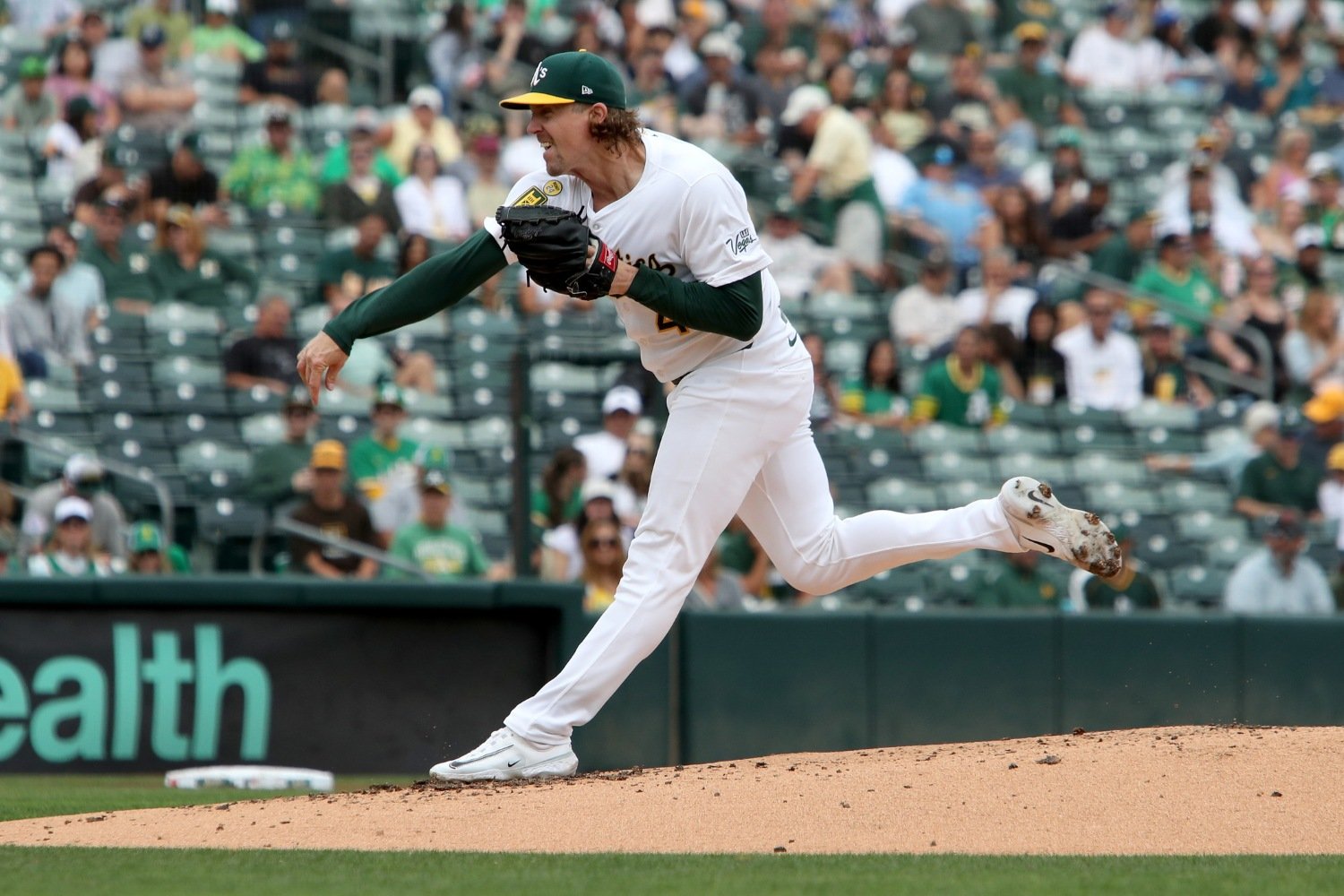 As midseason pickups who cost nothing but cash considerations go, Tyler Ferguson is a reasonably interesting one. He's a low-slot right-handed pitcher with a mid-90s fastball, a sweeper that can flash above-average, and a cutter and sinker that can play well when located well. He's 32 years old, but still has one minor-league option remaining. He was a college teammate of Dansby Swanson at Vanderbilt. Of course, pitchers don't get to age 32 with fewer than two years of cumulative big-league service time without having warts. Ferguson is reasonably interesting, but the Athletics—hardly a team awash in high-end arms—designated him for assignment a few days ago. He's prone to walks, and his stuff seems unlikely to consistently miss bats in a compressed strike zone. The Cubs traded for him because they thought he might be claimed before he got to them on the waiver wire, but they had to give up virtually nothing because he's never been a good big-league relief pitcher for an extended period. Why was this transaction worthwhile, then? It's pretty simple: the Cubs are desperate. With Javier Assad moving into the rotation to replace the injured Matthew Boyd, the team was an arm short. They're very short on pitchers whom they trust in the majors who can also be optioned to the minors, as exemplified by the fact that they had to designate Corbin Martin for assignment in the wake of his poor outing Wednesday night. They've already called up multiple pitchers they had hoped to stash at Triple-A Iowa a bit longer. If one more starter gets hurt, they'll have little choice but to stretch Ben Brown back out to work as a modified starter. If they get back an injured reliever or two, they could quickly face a roster crunch and lose some of their depth. They needed a pitcher with at least a modicum of upside who can still be sent to Iowa as needed; Ferguson fits the bill. For a team currently 26-12, the Cubs will have to answer a lot of tough questions over the coming weeks. They're nowhere near as securely placed in the driver's seat of the NL Central as they appear, because of the injuries piling up and the fragility that threatens their staff. Ferguson is unlikely to be this year's Tyson Miller or Drew Pomeranz, but he's worth a shot. It's only fair to note that pitchers like him—a low arm slot, feel for spin, average-plus velocity—often prove malleable, and that Tommy Hottovy and company have had success with such hurlers before. The team will, at least, hope he can give them five or six outs when needed while they try to get healthier and manage the workloads of their uninjured arms.
 -
Image courtesy of © Dennis Lee-Imagn Images As midseason pickups who cost nothing but cash considerations go, Tyler Ferguson is a reasonably interesting one. He's a low-slot right-handed pitcher with a mid-90s fastball, a sweeper that can flash above-average, and a cutter and sinker that can play well when located well. He's 32 years old, but still has one minor-league option remaining. He was a college teammate of Dansby Swanson at Vanderbilt. Of course, pitchers don't get to age 32 with fewer than two years of cumulative big-league service time without having warts. Ferguson is reasonably interesting, but the Athletics—hardly a team awash in high-end arms—designated him for assignment a few days ago. He's prone to walks, and his stuff seems unlikely to consistently miss bats in a compressed strike zone. The Cubs traded for him because they thought he might be claimed before he got to them on the waiver wire, but they had to give up virtually nothing because he's never been a good big-league relief pitcher for an extended period. Why was this transaction worthwhile, then? It's pretty simple: the Cubs are desperate. With Javier Assad moving into the rotation to replace the injured Matthew Boyd, the team was an arm short. They're very short on pitchers whom they trust in the majors who can also be optioned to the minors, as exemplified by the fact that they had to designate Corbin Martin for assignment in the wake of his poor outing Wednesday night. They've already called up multiple pitchers they had hoped to stash at Triple-A Iowa a bit longer. If one more starter gets hurt, they'll have little choice but to stretch Ben Brown back out to work as a modified starter. If they get back an injured reliever or two, they could quickly face a roster crunch and lose some of their depth. They needed a pitcher with at least a modicum of upside who can still be sent to Iowa as needed; Ferguson fits the bill. For a team currently 26-12, the Cubs will have to answer a lot of tough questions over the coming weeks. They're nowhere near as securely placed in the driver's seat of the NL Central as they appear, because of the injuries piling up and the fragility that threatens their staff. Ferguson is unlikely to be this year's Tyson Miller or Drew Pomeranz, but he's worth a shot. It's only fair to note that pitchers like him—a low arm slot, feel for spin, average-plus velocity—often prove malleable, and that Tommy Hottovy and company have had success with such hurlers before. The team will, at least, hope he can give them five or six outs when needed while they try to get healthier and manage the workloads of their uninjured arms. View full article
-
Image courtesy of © Patrick Gorski-Imagn Images It would have been presumptuous to get grumpy with the baseball gods when Cade Horton went down with a torn UCL early last month. That's the cost of doing business, especially when a team leans on pitchers with long injury histories. Relatedly, neither the Cubs nor their fans could justifiably claim to be surprised when Justin Steele suffered a setback later in April, pushing off his return from a second elbow reconstruction for what could be months. That, too, is in the normal run of things. You're allowed to be a little bit mad at Dame Mutability now, though. She's been very unkind to the Cubs this year, and dealt by far her cruelest blow Wednesday. The Cubs announced that Matthew Boyd will have to undergo surgery for a torn meniscus in his knee, after suffering the injury while sitting down to play with his young children at home. That's just unfair. Boyd is one of the great people in the game, and his career has been pockmarked by plenty of injuries, already. Now, the Cubs could be without his services until late summer, or even for the balance of the season, and the injury he suffered has nothing to do with baseball itself. The loss puts the Cubs in a brutal predicament when it comes to their starting rotation, too. With Horton gone for the year and Steele's return now in doubt, they're down to Edward Cabrera, Shota Imanaga, Jameson Taillon, Colin Rea, and Javier Assad in terms of available starters. Top prospect Jaxon Wiggins has tantalizing stuff, but his lack of command renders him unready for the majors right now—and besides, his own arm has been hurting him this spring. Injuries in the bullpen (and his skill set, which has always better placed him there, anyway) have forced Ben Brown to morph into a true reliever. Jordan Wicks has a 9.53 ERA in four Triple-A starts. No more help is coming from within for a while. The team is operating without a safety net, and there are real reasons to worry about the durability of Cabrera, Imanaga and Taillon. For now, the team is playing tremendously well. Jed Hoyer's offseason efforts to add depth to the pitching staff are paying reasonably good dividends. The team could have spent more for better reinforcements in (especially) the bullpen, but they're still sorting through some usable options in the relief corps. Trent Thornton was a savvy January pickup. Corbin Martin and Ryan Rolison were similarly solid moves, and Collin Snider could prove to be another one when the time comes. Eventually, though, this team will need help from beyond the current boundaries of the organization. Boyd's injury guarantees that the Cubs' top priority come July will be some kind of help for the starting rotation. It could take many forms, but one way or another, the team will have to explore the trade market. In the meantime, the club had better hope no more major injuries come. Their margin for error is gone. View full article
-
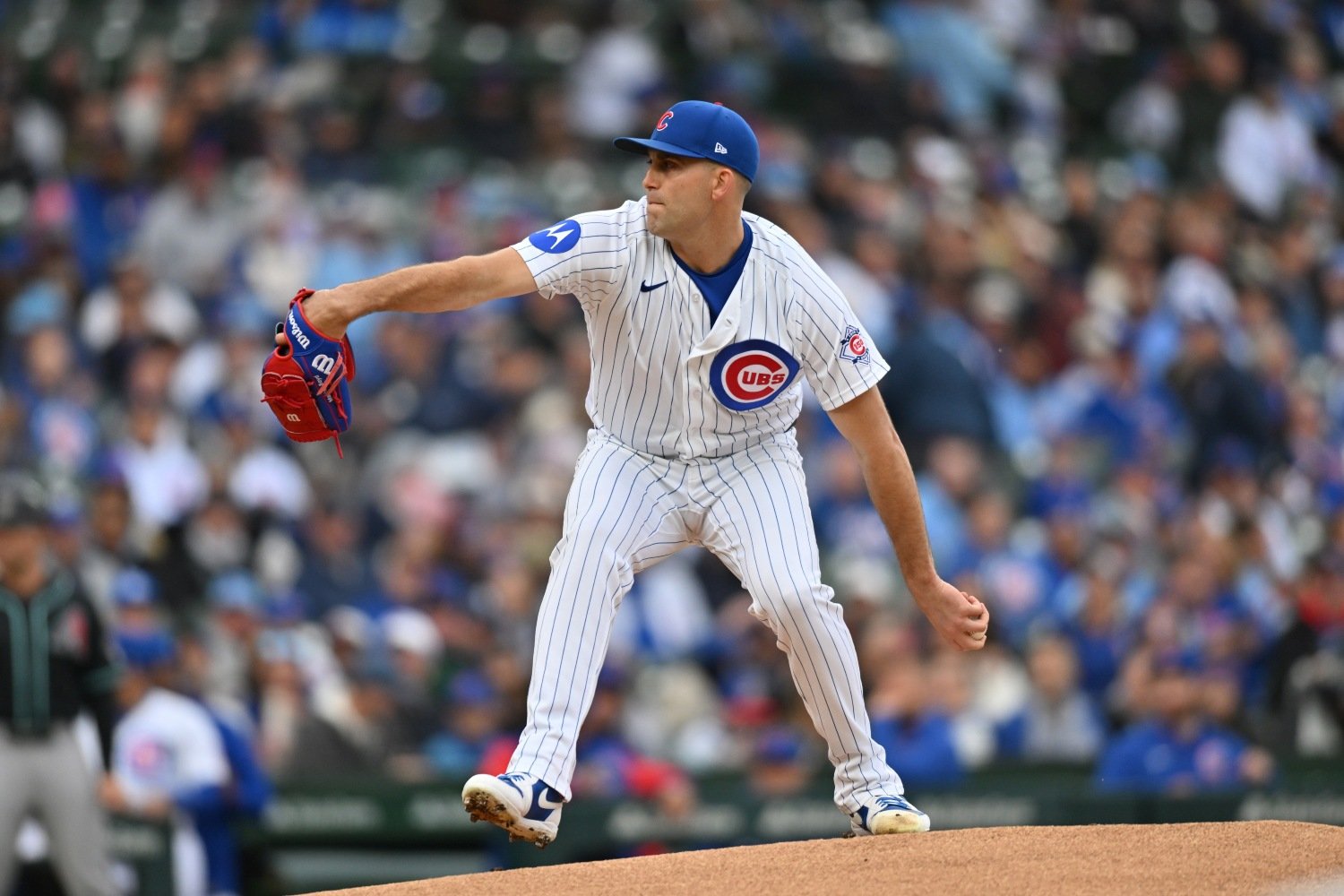 It would have been presumptuous to get grumpy with the baseball gods when Cade Horton went down with a torn UCL early last month. That's the cost of doing business, especially when a team leans on pitchers with long injury histories. Relatedly, neither the Cubs nor their fans could justifiably claim to be surprised when Justin Steele suffered a setback later in April, pushing off his return from a second elbow reconstruction for what could be months. That, too, is in the normal run of things. You're allowed to be a little bit mad at Dame Mutability now, though. She's been very unkind to the Cubs this year, and dealt by far her cruelest blow Wednesday. The Cubs announced that Matthew Boyd will have to undergo surgery for a torn meniscus in his knee, after suffering the injury while sitting down to play with his young children at home. That's just unfair. Boyd is one of the great people in the game, and his career has been pockmarked by plenty of injuries, already. Now, the Cubs could be without his services until late summer, or even for the balance of the season, and the injury he suffered has nothing to do with baseball itself. The loss puts the Cubs in a brutal predicament when it comes to their starting rotation, too. With Horton gone for the year and Steele's return now in doubt, they're down to Edward Cabrera, Shota Imanaga, Jameson Taillon, Colin Rea, and Javier Assad in terms of available starters. Top prospect Jaxon Wiggins has tantalizing stuff, but his lack of command renders him unready for the majors right now—and besides, his own arm has been hurting him this spring. Injuries in the bullpen (and his skill set, which has always better placed him there, anyway) have forced Ben Brown to morph into a true reliever. Jordan Wicks has a 9.53 ERA in four Triple-A starts. No more help is coming from within for a while. The team is operating without a safety net, and there are real reasons to worry about the durability of Cabrera, Imanaga and Taillon. For now, the team is playing tremendously well. Jed Hoyer's offseason efforts to add depth to the pitching staff are paying reasonably good dividends. The team could have spent more for better reinforcements in (especially) the bullpen, but they're still sorting through some usable options in the relief corps. Trent Thornton was a savvy January pickup. Corbin Martin and Ryan Rolison were similarly solid moves, and Collin Snider could prove to be another one when the time comes. Eventually, though, this team will need help from beyond the current boundaries of the organization. Boyd's injury guarantees that the Cubs' top priority come July will be some kind of help for the starting rotation. It could take many forms, but one way or another, the team will have to explore the trade market. In the meantime, the club had better hope no more major injuries come. Their margin for error is gone.
 -
Image courtesy of © Matt Marton-Imagn Images In literature, there are three archetypal conflicts: man vs. man, man vs. nature, and man vs. self. Baseball is just literature in cleats, and over the course of 162 games, every team enters all three types of conflicts. Obviously, much of the early season is spent navigating ugly weather, which becomes true again late in October, but even in between, there is heat and rain and wind to manage—and besides, 'nature' is not only weather, in this case. One must also survive the game itself, with its demanding, explosive movements and the entropy they inflict on the players who execute them. So, for instance, the Cubs' recent hot streak is a bit impressive, simply because they've done it after having lost Cade Horton for the year after elbow surgery; with their top four relievers varying flavors of unavailable; and with Matthew Boyd missing time with a bicep strain. The more obvious conflict in baseball is man vs. man. Every night, there's another team trying to take your precious chance for a win away, and you have to fight them off a majority of the time to be calledf a successful team. We define goodness and greatness in baseball by wins and losses, and those are assigned on a zero-sum basis. When you're pitching, someone is in the box trying to ruin your day with a big hit. This week, for some reason, that's almost always been JJ Bleday. The Reds outfielder opened the scoring both Monday and Tuesday with solo homers, and on Wednesday night, he stroked the game-tying single in the top of the ninth, as things fell apart for the Cubs. Opponents are ruthless, too. Slightly midjudge your proximity to the wall, as Seiya Suzuki did while hauling in Elly De La Cruz's sacrific fly immediately after Bleday's game-tying hit, and you might end up slumped against the barrier as an extra runner streaks home. It's ruthless—not because humans are inherently so, but because sports are where we've agreed that a certain rules-bounded ruthlessness is acceptable, and even admirable. For teams who get very, very good at handling both the man vs. nature and the man vs. man conflicts, though, man vs. self becomes the defining fight. Baseball offers many ways to beat oneself, physically and mentally, and the higher your aims, the more likely you are to succumb to one of those pitfalls. That was certainly on display Wednesday night, as the team improbably pulled out the win to extend their streak to seven wins in all games and 14 straight at Wrigley Field. Their last loss at home came on one of those man-vs.-self days: Matt Shaw messed up the footwork while playing first base; Caleb Thielbar made a bad throw Shaw couldn't handle; the go-ahead run scored; and then, in the bottom of that 11th inning, Seiya Suzuki swung foolishly at a 3-1 pitch with a chance to win, popping out instead. It looked like Wednesday might be a loss of similar shape. Corbin Martin didn't have it, which happens to many a middling middle reliever. In the modern game, good relievers are defined less by whether they can flash decent command of overpowering stuff (because almost all of them can) than by whether they can do so consistently, and Martin has yet to pass that test. He entered with a 4-2 lead, looking for a save, because the Cubs have had to rush Daniel Palencia back from his lat strain and aren't yet willing to use him in back-to-back games. Instead of shutting the door, though, Martin quickly gave up a solo home run and two singles. He fell behind in the count, and he left pitches in the middle of the zone when he needed to avoid falling even further behind. His was a man-vs.-self conflict, but for the Cubs, it was also a matter of man vs. nature: Craig Counsell was managing against the grind of the season and the injuries his team has already suffered, by withholding Palencia. Hoby Milner came on to try to put out the fire, but in a moment eerily reminiscent of Thielbar's folly four weeks earlier, he botched an effort to field a sacrifice bunt. Looking to take down the lead runner, he didn't get the ball cleanly on his first attempt to transfer it from glove to hand, and his throw was late, putting the Cubs in big trouble. As we've already discussed, the Reds pushed across three runs in the wake of that mistake, seizing a two-run lead. Milner did an admirable job on the whole, though. Things could have gotten much worse. They almost finished beating themselves in the bottom of the ninth, but instead, they beat themselves—as in, soared above their own foibles through a sheer exercise of talent. After Michael Busch was retired to lead off the inning, both Carson Kelly and Pete Crow-Armstrong swung at 3-1 pitches well outside the zone—truly dreadful swing decisions. Kelly fouled his pitch off, though, and then did so with another, closer offering. On the seventh pitch of the at-bat, Graham Ashcraft (whom Kelly was seeing for a second night in a row) made a mistake with a cutter, and Kelly was able to line a single to right field. Crow-Armstrong whiffed on his 3-1 pitch, and left himself with no choice but to chase a strike-to-ball slider Ashcraft executed well on 3-2. In a laugh-out-roar moment of brilliance, though, Crow-Armstrong hammered that pitch on a line to left field, just clearing the high wall and finding the basket in left-center field, where Wrigley Field remains the most hitter-friendly park in the majors. The wind was blowing in Wednesday night, but the video board in left-center not only blocks that wind, but invites it to curl backward on the other side of it. Thus, Crow-Armstrong's drive got a bit of help from nature, instead of being resisted by it. Even Statcast (which doesn't account for the windscreen or curl, but solely for dimensions) says it would only have been a homer at Wrigley. The game was tied; the ballpark was a madhouse. The rest of the way, a win felt almost certain. That's an insane pitch to hit the way Crow-Armstrong hit it. He's an exceptionally talented player, but in that moment, he was also showing an extraordinary force of will—to conquer his own frustrating mistake with an otherwise impossible feat of acuity and explosiveness. That's how the Cubs' current streak feels, in a nutshell. In the bottom of the 10th, Craig Counsell (sensibly) had Miguel Amaya pinch-hit for Michael Conforto against Reds lefty Brock Burke, but (much less sensibly) then had Amaya lay down a sacrifice bunt to move Nico Hoerner to third base with the winning run. The Reds responded (sensibly) by intentionally walking Alex Bregman, but then (much less sensibly) they also intentionally walked Seiya Suzuki with two outs, loading the bases for Busch. That move by Terry Francona traded the expected batting average of Suzuki (even against a lefty, not higher than .280) for the on-base percentage of Busch (even against a lefty, not lower than .290) as the chances he would lose the game then and there. It was a gaffe; the other man helped the Cubs a bit. Lately, this is how it goes. The Cubs have been getting help, instead of hindrance, from opponents at some crucial junctures. They've been getting help, instead of hindrance, from nature at just the right moments. But those forces are still fighting against them more often than with them, so the team must spend most of its time finding ways to win the battles against themselves. Just when it looks like they've beaten themselves (in a bad way), they find ways to outdo themselves, instead. Such a run can't last forever, so savor it. Crow-Armstrong's game-tying homer Wednesday felt even more miraculous than Busch's slightly earlier tying shot Tuesday or Conforto's walkoff homer Monday. Though Martin stumbled Wednesday night, Ryan Rolison and Trent Thornton have pitched key innings and collected wins in relief this week. The Cubs planned for their battle with the nature of the arm, so they're deeper than they would have been in any of the past several years when facing a similar onslaught of injuries. They've also collected a group of players they feel they can trust in big moments and amid adversity, and players with the raw talent to make up for their mistakes. It's a winning formula. There are harder days and some losses ahead, but the team has already shown that they have the right stuff to overcome opponents of several kinds—even the ones in the mirror. View full article
-
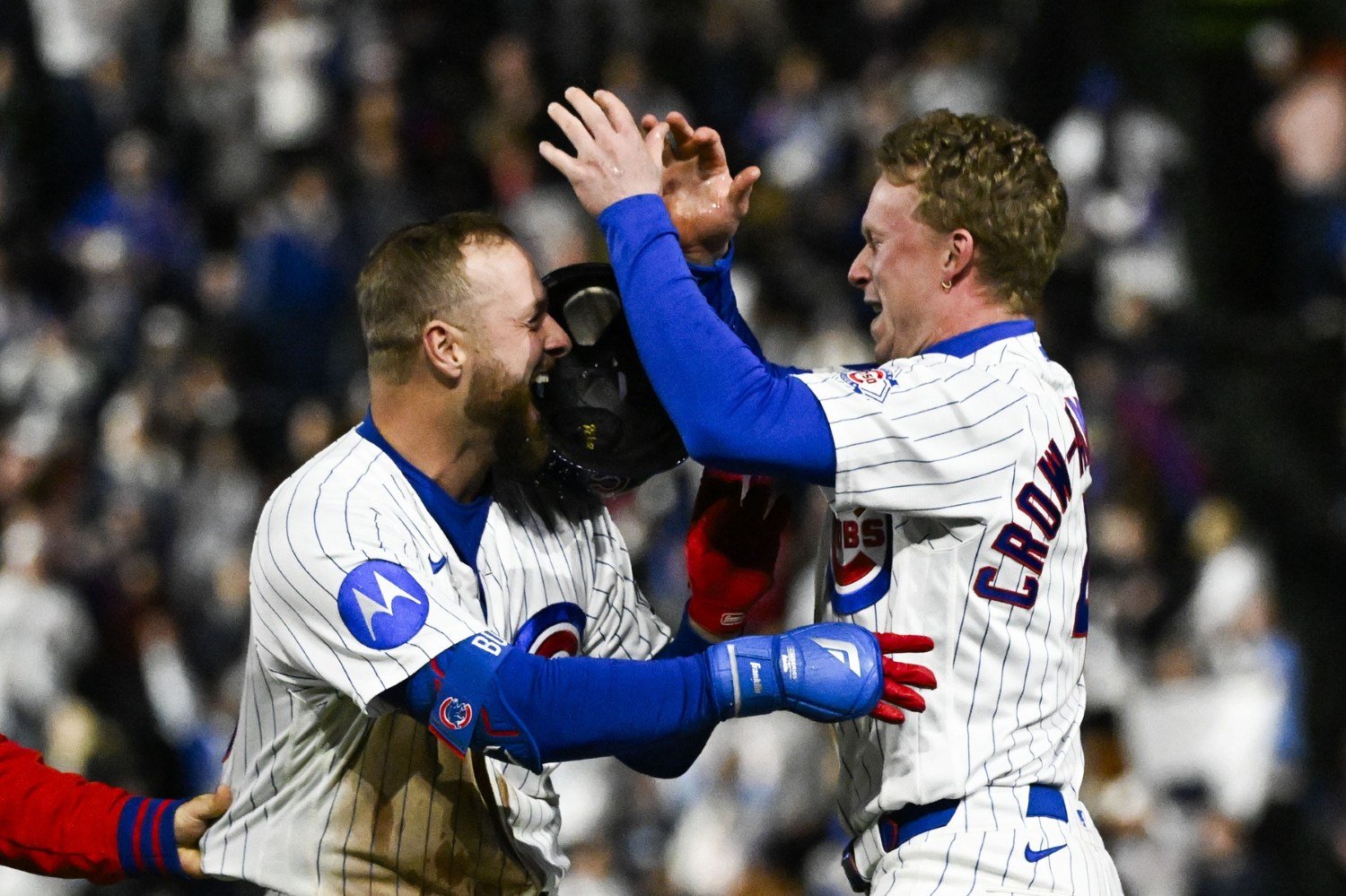 In literature, there are three archetypal conflicts: man vs. man, man vs. nature, and man vs. self. Baseball is just literature in cleats, and over the course of 162 games, every team enters all three types of conflicts. Obviously, much of the early season is spent navigating ugly weather, which becomes true again late in October, but even in between, there is heat and rain and wind to manage—and besides, 'nature' is not only weather, in this case. One must also survive the game itself, with its demanding, explosive movements and the entropy they inflict on the players who execute them. So, for instance, the Cubs' recent hot streak is a bit impressive, simply because they've done it after having lost Cade Horton for the year after elbow surgery; with their top four relievers varying flavors of unavailable; and with Matthew Boyd missing time with a bicep strain. The more obvious conflict in baseball is man vs. man. Every night, there's another team trying to take your precious chance for a win away, and you have to fight them off a majority of the time to be calledf a successful team. We define goodness and greatness in baseball by wins and losses, and those are assigned on a zero-sum basis. When you're pitching, someone is in the box trying to ruin your day with a big hit. This week, for some reason, that's almost always been JJ Bleday. The Reds outfielder opened the scoring both Monday and Tuesday with solo homers, and on Wednesday night, he stroked the game-tying single in the top of the ninth, as things fell apart for the Cubs. Opponents are ruthless, too. Slightly midjudge your proximity to the wall, as Seiya Suzuki did while hauling in Elly De La Cruz's sacrific fly immediately after Bleday's game-tying hit, and you might end up slumped against the barrier as an extra runner streaks home. It's ruthless—not because humans are inherently so, but because sports are where we've agreed that a certain rules-bounded ruthlessness is acceptable, and even admirable. For teams who get very, very good at handling both the man vs. nature and the man vs. man conflicts, though, man vs. self becomes the defining fight. Baseball offers many ways to beat oneself, physically and mentally, and the higher your aims, the more likely you are to succumb to one of those pitfalls. That was certainly on display Wednesday night, as the team improbably pulled out the win to extend their streak to seven wins in all games and 14 straight at Wrigley Field. Their last loss at home came on one of those man-vs.-self days: Matt Shaw messed up the footwork while playing first base; Caleb Thielbar made a bad throw Shaw couldn't handle; the go-ahead run scored; and then, in the bottom of that 11th inning, Seiya Suzuki swung foolishly at a 3-1 pitch with a chance to win, popping out instead. It looked like Wednesday might be a loss of similar shape. Corbin Martin didn't have it, which happens to many a middling middle reliever. In the modern game, good relievers are defined less by whether they can flash decent command of overpowering stuff (because almost all of them can) than by whether they can do so consistently, and Martin has yet to pass that test. He entered with a 4-2 lead, looking for a save, because the Cubs have had to rush Daniel Palencia back from his lat strain and aren't yet willing to use him in back-to-back games. Instead of shutting the door, though, Martin quickly gave up a solo home run and two singles. He fell behind in the count, and he left pitches in the middle of the zone when he needed to avoid falling even further behind. His was a man-vs.-self conflict, but for the Cubs, it was also a matter of man vs. nature: Craig Counsell was managing against the grind of the season and the injuries his team has already suffered, by withholding Palencia. Hoby Milner came on to try to put out the fire, but in a moment eerily reminiscent of Thielbar's folly four weeks earlier, he botched an effort to field a sacrifice bunt. Looking to take down the lead runner, he didn't get the ball cleanly on his first attempt to transfer it from glove to hand, and his throw was late, putting the Cubs in big trouble. As we've already discussed, the Reds pushed across three runs in the wake of that mistake, seizing a two-run lead. Milner did an admirable job on the whole, though. Things could have gotten much worse. They almost finished beating themselves in the bottom of the ninth, but instead, they beat themselves—as in, soared above their own foibles through a sheer exercise of talent. After Michael Busch was retired to lead off the inning, both Carson Kelly and Pete Crow-Armstrong swung at 3-1 pitches well outside the zone—truly dreadful swing decisions. Kelly fouled his pitch off, though, and then did so with another, closer offering. On the seventh pitch of the at-bat, Graham Ashcraft (whom Kelly was seeing for a second night in a row) made a mistake with a cutter, and Kelly was able to line a single to right field. Crow-Armstrong whiffed on his 3-1 pitch, and left himself with no choice but to chase a strike-to-ball slider Ashcraft executed well on 3-2. In a laugh-out-roar moment of brilliance, though, Crow-Armstrong hammered that pitch on a line to left field, just clearing the high wall and finding the basket in left-center field, where Wrigley Field remains the most hitter-friendly park in the majors. The wind was blowing in Wednesday night, but the video board in left-center not only blocks that wind, but invites it to curl backward on the other side of it. Thus, Crow-Armstrong's drive got a bit of help from nature, instead of being resisted by it. Even Statcast (which doesn't account for the windscreen or curl, but solely for dimensions) says it would only have been a homer at Wrigley. The game was tied; the ballpark was a madhouse. The rest of the way, a win felt almost certain. That's an insane pitch to hit the way Crow-Armstrong hit it. He's an exceptionally talented player, but in that moment, he was also showing an extraordinary force of will—to conquer his own frustrating mistake with an otherwise impossible feat of acuity and explosiveness. That's how the Cubs' current streak feels, in a nutshell. In the bottom of the 10th, Craig Counsell (sensibly) had Miguel Amaya pinch-hit for Michael Conforto against Reds lefty Brock Burke, but (much less sensibly) then had Amaya lay down a sacrifice bunt to move Nico Hoerner to third base with the winning run. The Reds responded (sensibly) by intentionally walking Alex Bregman, but then (much less sensibly) they also intentionally walked Seiya Suzuki with two outs, loading the bases for Busch. That move by Terry Francona traded the expected batting average of Suzuki (even against a lefty, not higher than .280) for the on-base percentage of Busch (even against a lefty, not lower than .290) as the chances he would lose the game then and there. It was a gaffe; the other man helped the Cubs a bit. Lately, this is how it goes. The Cubs have been getting help, instead of hindrance, from opponents at some crucial junctures. They've been getting help, instead of hindrance, from nature at just the right moments. But those forces are still fighting against them more often than with them, so the team must spend most of its time finding ways to win the battles against themselves. Just when it looks like they've beaten themselves (in a bad way), they find ways to outdo themselves, instead. Such a run can't last forever, so savor it. Crow-Armstrong's game-tying homer Wednesday felt even more miraculous than Busch's slightly earlier tying shot Tuesday or Conforto's walkoff homer Monday. Though Martin stumbled Wednesday night, Ryan Rolison and Trent Thornton have pitched key innings and collected wins in relief this week. The Cubs planned for their battle with the nature of the arm, so they're deeper than they would have been in any of the past several years when facing a similar onslaught of injuries. They've also collected a group of players they feel they can trust in big moments and amid adversity, and players with the raw talent to make up for their mistakes. It's a winning formula. There are harder days and some losses ahead, but the team has already shown that they have the right stuff to overcome opponents of several kinds—even the ones in the mirror.
 -
Image courtesy of © David Frerker-Imagn Images Ryan Rolison isn't overwhelming opposing batters. He's fanned 10 of them in 8 2/3 innings, but he only averages 94.3 miles per hour with his fastball. Hitters have made contact on 88.2% of the pitches they've swung at against Rolison. Yet, he's been devastatingly effective. That he's struck out 28.6% of his opponents doesn't match the whiff rate on swings. Nor does his overall stuff profile support his sparkling advanced stats. Does anything explain it? Or is this just a nice, half-accidental stretch from a fungible reliever, doomed to end quickly and sourly? You'll never go broke betting on the latter, when a journeyman has a hot streak like Rolison's recent one. But let me make a different case. In some ways, the 2026 season poses new and painful challenges for big-league pitchers, and solving the problems the league has thrown at them is a vital part of being a successful arm this year. Rolison is an exemplar of the ways the Cubs are well-suited to the changes to the strike zone—and, therefore, he might have more staying power than you'd think. The strike zone is smaller this year than it's been in a long time. It shrank last year, when the league tightened tolerances at the edges of the zone in its feedback for umpires on their ball-strike calls, but it's shrunk even more this season with the implementation of the ABS challenge system. As a result, the league's average walk rate is up to 9.5%. Virtually the entire change in the zone is in its vertical dimensions. The top of the zone has come down significantly, which comes with specific implications for pitchers with certain stuff profiles. There's a bit of extra risk, for instance, in having a high-carry four-seam fastball, because you might miss above that new, lower top railing. Yet, if you don't have exceptional rising action on your heater, it had better have some other unusual characteristic. Otherwise, hitters (guarding a smaller zone than in the past, after all) will hit you hard. Thus, pitchers need to have either more velocity or more unexpected wiggle on their fastballs than they needed to have even one year ago. Rolison has actually added ride to his fastball this year, along with about 1.5 MPH. That doesn't leave him missing the zone high, though, because he had below-average rise before. Now, his induced vertical break (IVB) on the four-seamer is 15.0 inches, which is lively but not uncontrollable. More importantly, that fastball has cutting action, relative to what a hitter expects out of the hand. The cut-ride shape is part of what first hooked the Cubs on Rolison; they've always loved that trait. Once Rolison shows hitters a fastball that flirts with the edges of the zone, he can also attack them with his array of breaking stuff, which tunnels off the heater nicely. Specifically, he can land the curve and the slider in the zone consistently, and more of the time, hitters aren't ready for it. The difference in vertical movement between Rolison's fastball and his curve has stretched to over 32 inches this year, thanks to a slightly higher arm slot. But by targeting the two pitches differently, he puts both in the zone, instead of missing high with one and low with the other. The curve isn't earning Rolison whiffs, but he's getting quite a few called strikes with it. bGJ3NFdfWGw0TUFRPT1fQWdSV1VGRUZWMVFBV2xGUUFnQUhBMWNIQUZnTlZWSUFVVkVGVTFBQkJGRldBd29B.mp4 The unique horizontal movement on Rolison's fastball makes him relatively hard to square up. The ability to throw that pitch and two breaking balls for strikes even in a compressed zone makes him hard to outguess. This is Rolison's new formula for success—but it's not new to the Cubs. Public intellectual Nassim Nicholas Taleb wrote one of his several books about the concept of antifragility. Some things, Taleb wrote, are robust: they survive big changes well. Other things are fragile: they break easily when shocks come. The thrust of Taleb's tome, though, was that a third class of things exists. Antifragile entities don't just survive major changes; they thrive on them. Seismic shifts make them stronger and better, instead of either damaging them or leaving them unaffected. Relatively few things in the world are genuinely antifragile, but the Cubs' long-held pitching paradigm might just be one of them. The rest of the league has spent at least a decade maximizing their high-low movement differentials and chasing whiffs, but they've done it with their targets set on a strike zone that no longer exists. The new one is better-suited to teams who try to produce weak contact and fill up the zone, with unusual fastball shapes and enough movement on secondary pitches to coax bad swing decisions in an environment that makes swing decisions easier. That's what the Cubs have been doing, all this time. Rolison isn't the only example of this. He's just a salient one, at this particular moment. Chicago has lots of pitchers who work that way, from (alas, currently injured) stars Justin Steele and Cade Horton to the guys they've collected just as proactively but with less fanfare, like Caleb Thielbar and Daniel Palencia. Horizontal movement and the ability to steal strikes without chasing whiffs is the wave of the future. The Cubs have been riding it since everyone thought it was a thing of the past. View full article
-
How Ryan Rolison Explains the Universe (Kind of) (For Now)
Matthew Trueblood posted an article in Cubs
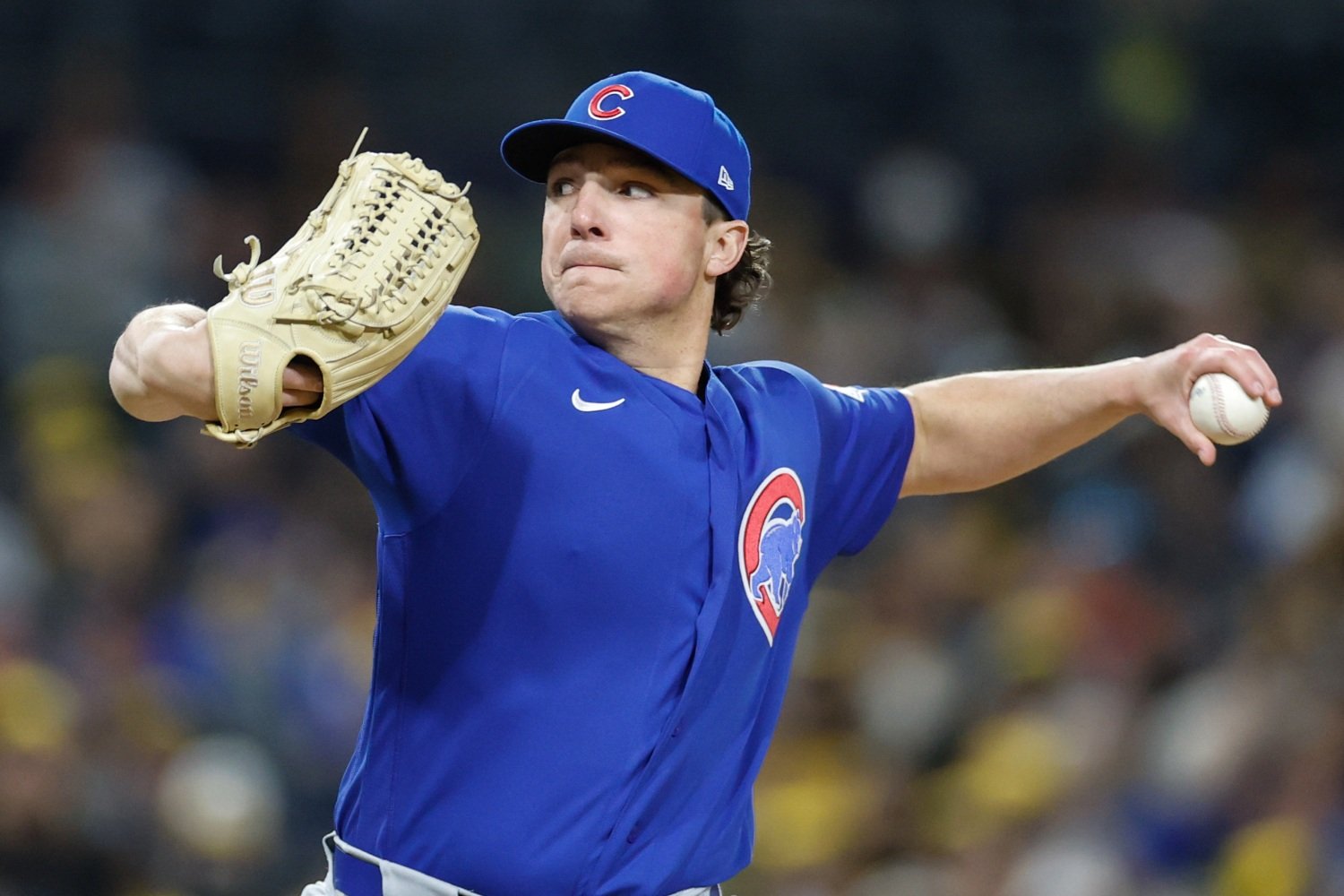 Ryan Rolison isn't overwhelming opposing batters. He's fanned 10 of them in 8 2/3 innings, but he only averages 94.3 miles per hour with his fastball. Hitters have made contact on 88.2% of the pitches they've swung at against Rolison. Yet, he's been devastatingly effective. That he's struck out 28.6% of his opponents doesn't match the whiff rate on swings. Nor does his overall stuff profile support his sparkling advanced stats. Does anything explain it? Or is this just a nice, half-accidental stretch from a fungible reliever, doomed to end quickly and sourly? You'll never go broke betting on the latter, when a journeyman has a hot streak like Rolison's recent one. But let me make a different case. In some ways, the 2026 season poses new and painful challenges for big-league pitchers, and solving the problems the league has thrown at them is a vital part of being a successful arm this year. Rolison is an exemplar of the ways the Cubs are well-suited to the changes to the strike zone—and, therefore, he might have more staying power than you'd think. The strike zone is smaller this year than it's been in a long time. It shrank last year, when the league tightened tolerances at the edges of the zone in its feedback for umpires on their ball-strike calls, but it's shrunk even more this season with the implementation of the ABS challenge system. As a result, the league's average walk rate is up to 9.5%. Virtually the entire change in the zone is in its vertical dimensions. The top of the zone has come down significantly, which comes with specific implications for pitchers with certain stuff profiles. There's a bit of extra risk, for instance, in having a high-carry four-seam fastball, because you might miss above that new, lower top railing. Yet, if you don't have exceptional rising action on your heater, it had better have some other unusual characteristic. Otherwise, hitters (guarding a smaller zone than in the past, after all) will hit you hard. Thus, pitchers need to have either more velocity or more unexpected wiggle on their fastballs than they needed to have even one year ago. Rolison has actually added ride to his fastball this year, along with about 1.5 MPH. That doesn't leave him missing the zone high, though, because he had below-average rise before. Now, his induced vertical break (IVB) on the four-seamer is 15.0 inches, which is lively but not uncontrollable. More importantly, that fastball has cutting action, relative to what a hitter expects out of the hand. The cut-ride shape is part of what first hooked the Cubs on Rolison; they've always loved that trait. Once Rolison shows hitters a fastball that flirts with the edges of the zone, he can also attack them with his array of breaking stuff, which tunnels off the heater nicely. Specifically, he can land the curve and the slider in the zone consistently, and more of the time, hitters aren't ready for it. The difference in vertical movement between Rolison's fastball and his curve has stretched to over 32 inches this year, thanks to a slightly higher arm slot. But by targeting the two pitches differently, he puts both in the zone, instead of missing high with one and low with the other. The curve isn't earning Rolison whiffs, but he's getting quite a few called strikes with it. bGJ3NFdfWGw0TUFRPT1fQWdSV1VGRUZWMVFBV2xGUUFnQUhBMWNIQUZnTlZWSUFVVkVGVTFBQkJGRldBd29B.mp4 The unique horizontal movement on Rolison's fastball makes him relatively hard to square up. The ability to throw that pitch and two breaking balls for strikes even in a compressed zone makes him hard to outguess. This is Rolison's new formula for success—but it's not new to the Cubs. Public intellectual Nassim Nicholas Taleb wrote one of his several books about the concept of antifragility. Some things, Taleb wrote, are robust: they survive big changes well. Other things are fragile: they break easily when shocks come. The thrust of Taleb's tome, though, was that a third class of things exists. Antifragile entities don't just survive major changes; they thrive on them. Seismic shifts make them stronger and better, instead of either damaging them or leaving them unaffected. Relatively few things in the world are genuinely antifragile, but the Cubs' long-held pitching paradigm might just be one of them. The rest of the league has spent at least a decade maximizing their high-low movement differentials and chasing whiffs, but they've done it with their targets set on a strike zone that no longer exists. The new one is better-suited to teams who try to produce weak contact and fill up the zone, with unusual fastball shapes and enough movement on secondary pitches to coax bad swing decisions in an environment that makes swing decisions easier. That's what the Cubs have been doing, all this time. Rolison isn't the only example of this. He's just a salient one, at this particular moment. Chicago has lots of pitchers who work that way, from (alas, currently injured) stars Justin Steele and Cade Horton to the guys they've collected just as proactively but with less fanfare, like Caleb Thielbar and Daniel Palencia. Horizontal movement and the ability to steal strikes without chasing whiffs is the wave of the future. The Cubs have been riding it since everyone thought it was a thing of the past.
 -
Craig Counsell Only Trusts One of His Catchers Right Now
Matthew Trueblood posted an article in Cubs
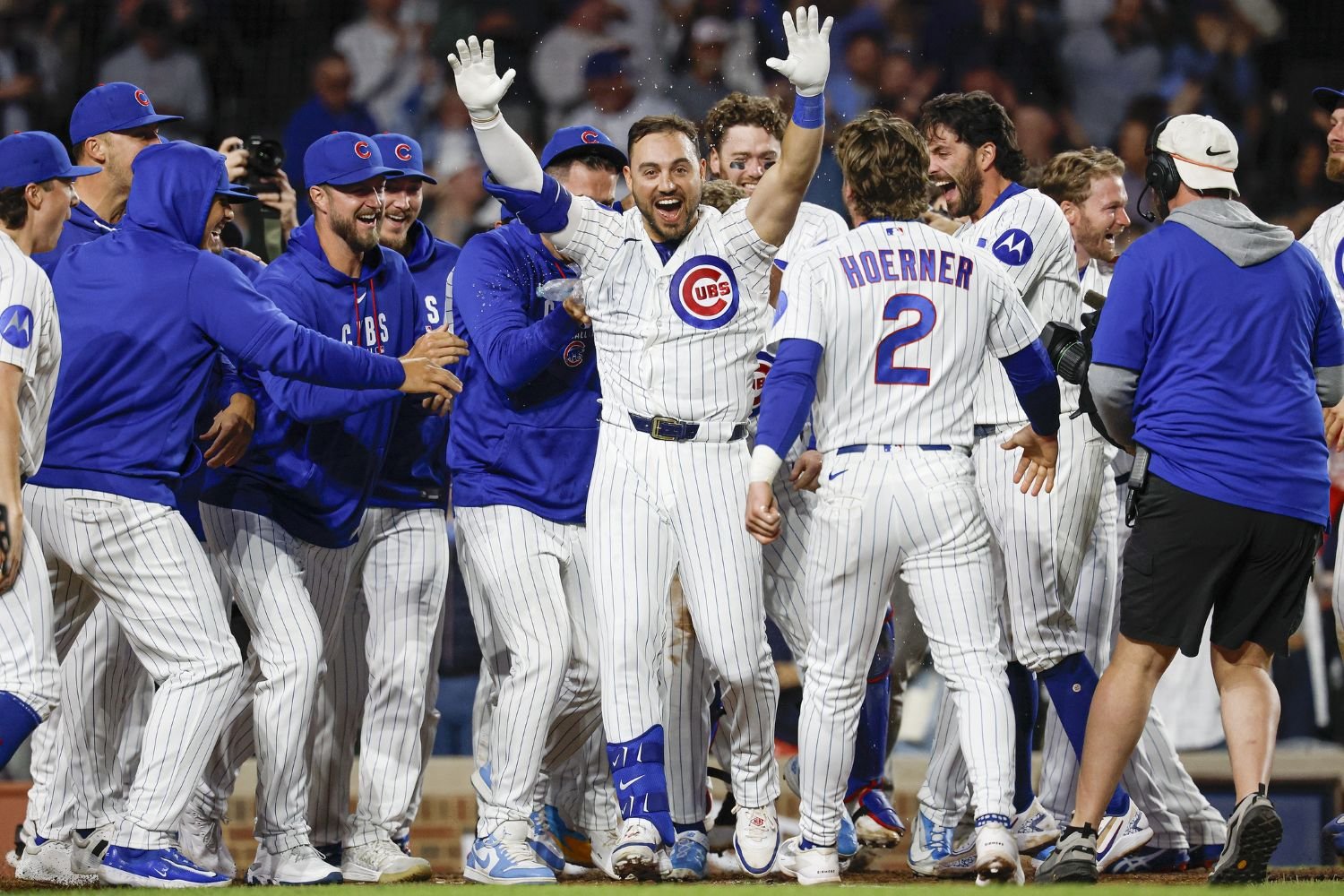 With the game on the line Monday night, Craig Counsell placed his trust in Carson Kelly—not because he gave them the best chance for a game-breaking hit, but because there would be more outs left to get, either way. It looked like a decision that might cost the Cubs the game, but the team pulled it out, after all, so the only major takeaway from the sequence is what it revealed about where Counsell's mind runs as he considers his current roster. The bases were loaded with two outs in the bottom of the eighth inning, with the Cubs trailing 4-3. Graham Ashcraft was on the mound for the visiting Reds. Counsell had a choice. Kelly's place in the batting order was due, but left-handed batter Michael Conforto was still available on the bench. Ashcraft is a nightmare of a matchup for Kelly, given the former's stuff and the latter's swing path. Conforto, however, is a good option against what Ashcraft throws. Specifically, the big Reds righty was using a cutter that sat around 97.5 MPH Monday night, with good carry—12 inches of induced vertical break (IVB). He also throws a slider that sits just above 90 MPH, playing off that cutter. Here are the run values per 100 pitches seen for both of the hitters Counsell had available for that moment since the start of 2025, on offerings fitting those criteria from right-handed hurlers. Conforto: 1.39 Kelly: -2.10 Given an average at-bat lasting four pitches, that means that Conforto was likely to be worth about 0.14 runs more than Kelly in that moment. If you take a little air out of that to account for the pinch-hit penalty (whereby most players perform worse when pinch-hitting than they do the rest of the time), we can all it 0.10 runs. That sounds small; it isn't. Managers design entire gameplans around the chance to increase their run expectancy by 0.1 runs in late, close situations. In reality, of course, runs will either score or not, but the results we see are the result of each side making dozens of choices to nudge the probabilities in their direction. A 0.1-run boost in an at-bat that had a Leverage Index of 7.91 (according to FanGraphs) is astronomical; it's a no-brainer to pursue that. Counsell didn't pull the trigger on the move, though. Kelly struck out on three sliders from Ashcraft, looking thoroughly overmatched, and the Reds had escaped the jam with the lead intact. In a vacuum, that's a managerial blunder. In a broader context, though, it's easy to understand. You just have to put yourself in Counsell's mindset—which is to say, you have to trust Kelly a lot more than Miguel Amaya behind the plate, and you have to badly want days off to be full days off for the latter. Whether Kelly or Conforto had batted (and whether or not they had delivered), the Reds had one turn left to try to add to their four runs. Counsell had to think a bit about the cost of pinch-hitting Conforto for Kelly there, because if he did so, his bench would be depleted, and Amaya would have to catch whatever was left of the game. That's a potential problem, for two reasons: Counsell clearly trusts Kelly much more as a defensive catcher right now, in addition to leaning into the veteran's second straight strong start at the plate. Kelly has caught 186 innings this season; Amaya has only caught 116. When the season began, it looked like the two would share time pretty evenly. Already, Kelly has seized as regular a starting gig as almost any catcher enjoys in the modern game. With high-leverage defensive outs left to get, Counsell would prefer his stronger backstop be in there. Monday's was the fourth of 10 straight games for the Cubs, and the midpoint of a seven-game homestand sandwiched between two demanding road trips. Days off are precious, and any player who gets one at a demanding position (like catcher) is best served if they get the full day. Using Amaya to finish out the game would have compromised his rest, in the middle of a rough schedule patch. Thus, Counsell chose to let Kelly try to collect the key hit. The strategy failed, but thanks to a great at-bat by Pete Crow-Armstrong to lead off the bottom of the ninth, the other reason why it made sense to withhold Conforto came tidily into view. Counsell was able to take down right-hitting Matt Shaw (who had pinch-run for Moisés Ballesteros) and send up Conforto against the Reds' Emilio Pagán, with two outs in the bottom of the ninth. This was actually a much lower-leverage situation. With nobody on base and two down, the odds of scoring were poor; the game was likely to go to extra innings. Pinch-hitting Conforto was a pronouncement of real faith in his hitting ability, even in the pinch, because the team needed him to spark a game-winning rally to make the move worth it. If he'd been retired (or even if he'd reached, but been stranded), the Cubs would have started the bottom of the 10th with a much slower runner on second base than Shaw would have been if he'd simply made the last out of the ninth. It looks like a bit of a paradox, on the part of Counsell—like he should have trusted Conforto in the eighth, if he was going to trust him in the ninth. That Conforto hit the walkoff homer to cash in a longshot bet isn't what redeems or explains the move, though. Rather, it's the question of Kelly vs. Amaya, and of managing rest during what looks like a trying segment of the schedule. We know much more about how Counsell views his roster and his team's progress through this season now than we did in the middle of the eighth inning last night. The signals were subtle, but real. More importantly, of course, we also have new evidence to incorporate as the team moves forward: that Kelly really does get overmatched by many tough righties, but also that Conforto still has meaningful pop left in his bat, and that Kelly's defensive value to the team is worth deploying him at times when it seems not to make sense, just as it's worth doing so with Crow-Armstrong during his slumps at the plate.
 -
Image courtesy of © Kamil Krzaczynski-Imagn Images With the game on the line Monday night, Craig Counsell placed his trust in Carson Kelly—not because he gave them the best chance for a game-breaking hit, but because there would be more outs left to get, either way. It looked like a decision that might cost the Cubs the game, but the team pulled it out, after all, so the only major takeaway from the sequence is what it revealed about where Counsell's mind runs as he considers his current roster. The bases were loaded with two outs in the bottom of the eighth inning, with the Cubs trailing 4-3. Graham Ashcraft was on the mound for the visiting Reds. Counsell had a choice. Kelly's place in the batting order was due, but left-handed batter Michael Conforto was still available on the bench. Ashcraft is a nightmare of a matchup for Kelly, given the former's stuff and the latter's swing path. Conforto, however, is a good option against what Ashcraft throws. Specifically, the big Reds righty was using a cutter that sat around 97.5 MPH Monday night, with good carry—12 inches of induced vertical break (IVB). He also throws a slider that sits just above 90 MPH, playing off that cutter. Here are the run values per 100 pitches seen for both of the hitters Counsell had available for that moment since the start of 2025, on offerings fitting those criteria from right-handed hurlers. Conforto: 1.39 Kelly: -2.10 Given an average at-bat lasting four pitches, that means that Conforto was likely to be worth about 0.14 runs more than Kelly in that moment. If you take a little air out of that to account for the pinch-hit penalty (whereby most players perform worse when pinch-hitting than they do the rest of the time), we can all it 0.10 runs. That sounds small; it isn't. Managers design entire gameplans around the chance to increase their run expectancy by 0.1 runs in late, close situations. In reality, of course, runs will either score or not, but the results we see are the result of each side making dozens of choices to nudge the probabilities in their direction. A 0.1-run boost in an at-bat that had a Leverage Index of 7.91 (according to FanGraphs) is astronomical; it's a no-brainer to pursue that. Counsell didn't pull the trigger on the move, though. Kelly struck out on three sliders from Ashcraft, looking thoroughly overmatched, and the Reds had escaped the jam with the lead intact. In a vacuum, that's a managerial blunder. In a broader context, though, it's easy to understand. You just have to put yourself in Counsell's mindset—which is to say, you have to trust Kelly a lot more than Miguel Amaya behind the plate, and you have to badly want days off to be full days off for the latter. Whether Kelly or Conforto had batted (and whether or not they had delivered), the Reds had one turn left to try to add to their four runs. Counsell had to think a bit about the cost of pinch-hitting Conforto for Kelly there, because if he did so, his bench would be depleted, and Amaya would have to catch whatever was left of the game. That's a potential problem, for two reasons: Counsell clearly trusts Kelly much more as a defensive catcher right now, in addition to leaning into the veteran's second straight strong start at the plate. Kelly has caught 186 innings this season; Amaya has only caught 116. When the season began, it looked like the two would share time pretty evenly. Already, Kelly has seized as regular a starting gig as almost any catcher enjoys in the modern game. With high-leverage defensive outs left to get, Counsell would prefer his stronger backstop be in there. Monday's was the fourth of 10 straight games for the Cubs, and the midpoint of a seven-game homestand sandwiched between two demanding road trips. Days off are precious, and any player who gets one at a demanding position (like catcher) is best served if they get the full day. Using Amaya to finish out the game would have compromised his rest, in the middle of a rough schedule patch. Thus, Counsell chose to let Kelly try to collect the key hit. The strategy failed, but thanks to a great at-bat by Pete Crow-Armstrong to lead off the bottom of the ninth, the other reason why it made sense to withhold Conforto came tidily into view. Counsell was able to take down right-hitting Matt Shaw (who had pinch-run for Moisés Ballesteros) and send up Conforto against the Reds' Emilio Pagán, with two outs in the bottom of the ninth. This was actually a much lower-leverage situation. With nobody on base and two down, the odds of scoring were poor; the game was likely to go to extra innings. Pinch-hitting Conforto was a pronouncement of real faith in his hitting ability, even in the pinch, because the team needed him to spark a game-winning rally to make the move worth it. If he'd been retired (or even if he'd reached, but been stranded), the Cubs would have started the bottom of the 10th with a much slower runner on second base than Shaw would have been if he'd simply made the last out of the ninth. It looks like a bit of a paradox, on the part of Counsell—like he should have trusted Conforto in the eighth, if he was going to trust him in the ninth. That Conforto hit the walkoff homer to cash in a longshot bet isn't what redeems or explains the move, though. Rather, it's the question of Kelly vs. Amaya, and of managing rest during what looks like a trying segment of the schedule. We know much more about how Counsell views his roster and his team's progress through this season now than we did in the middle of the eighth inning last night. The signals were subtle, but real. More importantly, of course, we also have new evidence to incorporate as the team moves forward: that Kelly really does get overmatched by many tough righties, but also that Conforto still has meaningful pop left in his bat, and that Kelly's defensive value to the team is worth deploying him at times when it seems not to make sense, just as it's worth doing so with Crow-Armstrong during his slumps at the plate. View full article
-
Image courtesy of © Patrick Gorski-Imagn Images This has been a strange spring for Matthew Boyd. He missed a chunk of Cubs camp to join Team USA for the World Baseball Classic, but returned after pool play so he could prepare for the honor and duty of starting on Opening Day. Unfortunately, the Nationals had a good plan against him that day, and he struggled mightily. He looked better the next time out, against the Angels, striking out 10 in 5 2/3 innings, but then he hit the injured list with a triceps strain and lost three weeks. Since re-joining the rotation, he's been uneven. He entered Sunday's start against the Diamondbacks with a 7.00 ERA for the season. In a solid win to extend the Cubs' winning streak to five, Boyd brought that ERA down to 6.00. He pitched six innings of two-run ball, allowing four hits and a walk but striking out five. It was a great way to reassert his place at (or near) the top of the team's rotation, made all the more welcome by the news that Justin Steele won't be back as soon (or, we might fairly speculate, as strong) as previously hoped. Chicago won't go far without a strong season from Boyd, and Sunday brought some evidence that he can step into the breach and be the stopper (or, in this case, the perpetuator) the team needs him to be. Specifically, the changeup was a reliable, even devastating weapon. Boyd threw 35 of them, the highest single-outing total of his Cubs tenure, and it worked wonders. Diamondbacks hitters whiffed on seven of 18 swings against it and watched another seven sail by for called strikes. The change earned Boyd three of his five punchouts and eight total outs, but Arizona didn't collect a hit against it. Some of that can be chalked up to working against a team that leans heavily on switch-hitters and some veteran right-handed bats, but another key consideration is this: Boyd will have to pitch backward more this year. That's not because his stuff is down, though his fastball is sitting much more at 91-92 than the 93-94 he often had early in starts last year. He threw at least 95.0 MPH 81 times last regular season, getting as high as 96.9. So far this season, he's only touched 95.0 four times, and never gotten above 95.3. Velocity isn't the whole story with Boyd, especially because he changes speeds so well with his changeup, curveball and slider. Hitters have to respect those much slower offerings, so they can't take full advantage of a heater that lacks elite heat. Rather, the reason why Boyd might need to pitch off the changeup more is his fastball's location. Boyd likes to use that four-seamer to ride the top rail of the strike zone, inducing chases and whiffs by forcing hitters to stretch their strike zone vertically in both directions. Last season, 45.6% of Boyd's fastballs were between 2.8 feet and 4.0 feet above the ground when they crossed the plate, just above the league's average. This season, that number is nearly 60%, in a small sample. As we've discussed, though, the top of the strike zone has come down. That's a problem for Boyd, and pitchers like him. He needs hitters to climb the ladder with him, both to set up his softer stuff and to get the ball above their barrels. He doesn't have elite carry on his fastball, nor overpowering velocity. He gets value from the way his low arm slot flattens out the approach angle of a high fastball, and the way it thus tantalizes and thwarts a hitter. But look what's happened to pitches in the aforementioned height zone, under ABS standardization (and the umpires' responses thereto). A much higher percentage of those balls are now above the zone, or close enough thereto that batters need not chase them. That's made it hard for Boyd either to get quick outs or put away hitters there, or to set opponents up for a change of eye level using that pitch. Working backward might be the best and only salve, for now. If Boyd can establish the bottom edges of the zone and/or get hitters behind in the count with his slow stuff, he can speed them up and fool them with the high fastball afterward. That was always one option, but because of the aforementioned lack of velocity or extreme raw movement, it was never a great one. Now, it might be the way he needs to go for a while. On Sunday, at least, he showed he can be that flexible and clever, but more adjustments lie ahead. View full article
-
Matthew Boyd Found Something Important in First Quality Start of 2026
Matthew Trueblood posted an article in Cubs
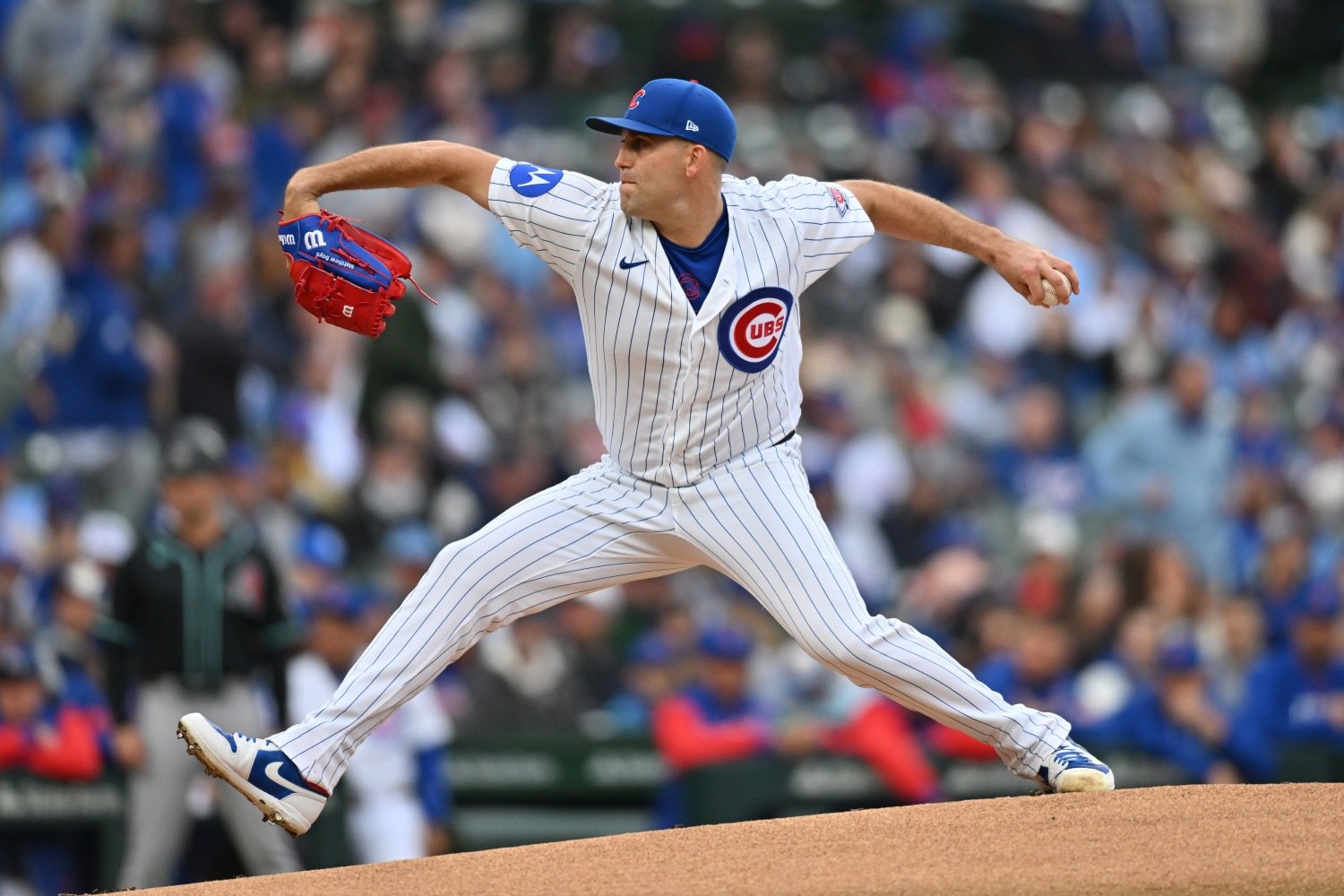 This has been a strange spring for Matthew Boyd. He missed a chunk of Cubs camp to join Team USA for the World Baseball Classic, but returned after pool play so he could prepare for the honor and duty of starting on Opening Day. Unfortunately, the Nationals had a good plan against him that day, and he struggled mightily. He looked better the next time out, against the Angels, striking out 10 in 5 2/3 innings, but then he hit the injured list with a triceps strain and lost three weeks. Since re-joining the rotation, he's been uneven. He entered Sunday's start against the Diamondbacks with a 7.00 ERA for the season. In a solid win to extend the Cubs' winning streak to five, Boyd brought that ERA down to 6.00. He pitched six innings of two-run ball, allowing four hits and a walk but striking out five. It was a great way to reassert his place at (or near) the top of the team's rotation, made all the more welcome by the news that Justin Steele won't be back as soon (or, we might fairly speculate, as strong) as previously hoped. Chicago won't go far without a strong season from Boyd, and Sunday brought some evidence that he can step into the breach and be the stopper (or, in this case, the perpetuator) the team needs him to be. Specifically, the changeup was a reliable, even devastating weapon. Boyd threw 35 of them, the highest single-outing total of his Cubs tenure, and it worked wonders. Diamondbacks hitters whiffed on seven of 18 swings against it and watched another seven sail by for called strikes. The change earned Boyd three of his five punchouts and eight total outs, but Arizona didn't collect a hit against it. Some of that can be chalked up to working against a team that leans heavily on switch-hitters and some veteran right-handed bats, but another key consideration is this: Boyd will have to pitch backward more this year. That's not because his stuff is down, though his fastball is sitting much more at 91-92 than the 93-94 he often had early in starts last year. He threw at least 95.0 MPH 81 times last regular season, getting as high as 96.9. So far this season, he's only touched 95.0 four times, and never gotten above 95.3. Velocity isn't the whole story with Boyd, especially because he changes speeds so well with his changeup, curveball and slider. Hitters have to respect those much slower offerings, so they can't take full advantage of a heater that lacks elite heat. Rather, the reason why Boyd might need to pitch off the changeup more is his fastball's location. Boyd likes to use that four-seamer to ride the top rail of the strike zone, inducing chases and whiffs by forcing hitters to stretch their strike zone vertically in both directions. Last season, 45.6% of Boyd's fastballs were between 2.8 feet and 4.0 feet above the ground when they crossed the plate, just above the league's average. This season, that number is nearly 60%, in a small sample. As we've discussed, though, the top of the strike zone has come down. That's a problem for Boyd, and pitchers like him. He needs hitters to climb the ladder with him, both to set up his softer stuff and to get the ball above their barrels. He doesn't have elite carry on his fastball, nor overpowering velocity. He gets value from the way his low arm slot flattens out the approach angle of a high fastball, and the way it thus tantalizes and thwarts a hitter. But look what's happened to pitches in the aforementioned height zone, under ABS standardization (and the umpires' responses thereto). A much higher percentage of those balls are now above the zone, or close enough thereto that batters need not chase them. That's made it hard for Boyd either to get quick outs or put away hitters there, or to set opponents up for a change of eye level using that pitch. Working backward might be the best and only salve, for now. If Boyd can establish the bottom edges of the zone and/or get hitters behind in the count with his slow stuff, he can speed them up and fool them with the high fastball afterward. That was always one option, but because of the aforementioned lack of velocity or extreme raw movement, it was never a great one. Now, it might be the way he needs to go for a while. On Sunday, at least, he showed he can be that flexible and clever, but more adjustments lie ahead.
 -
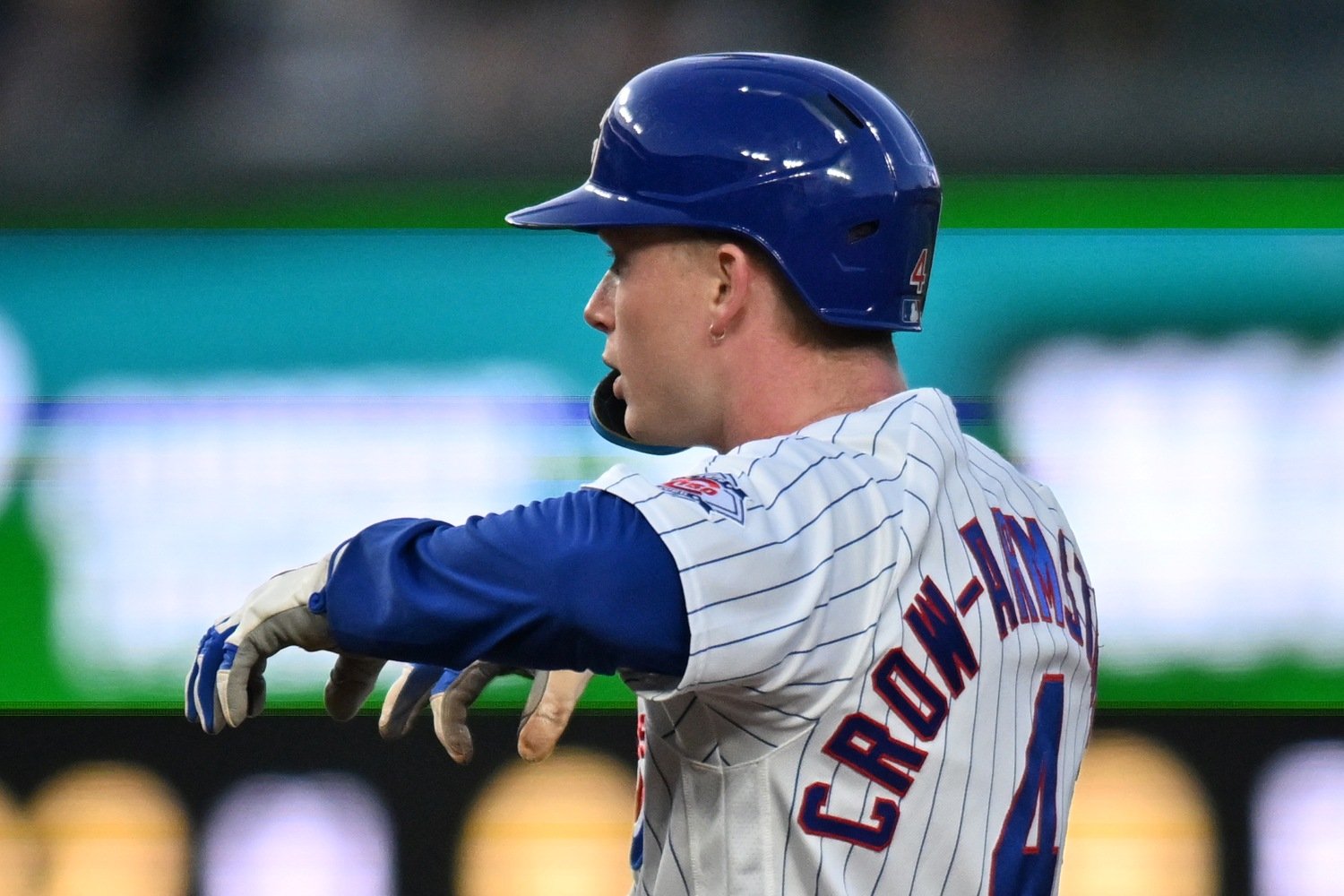 Offensively, it's been an uneven start to the season for Pete Crow-Armstrong. He's batting .241/.307/.362, even after a torrid road trip to Los Angeles and San Diego. As we've discussed multiple times, he's gotten ever-so-slightly more patient this season, which has led to more walks, but he's also striking out more, and he didn't get his swing calibrated well enough to produce his usual power until this weekend, when he hit his second and third homers of the year against the Padres. Something else happened in San Diego, too, though. For the first time all year, an opposing player challenged a called ball against Crow-Armstrong. The Padres lost that challenge, and Crow-Armstrong eventually drew a walk, but finally, someone actually challenged a call on him. OTdQM1FfWGw0TUFRPT1fQmxSVlhGd0dWUXNBQ3dSVUFBQUhBbFZRQUZrQVZGSUFVMUJYVlFJTUFBSlRBd0VI.mp4 It might seem unsurprising that the free-swinging Crow-Armstrong is relatively unimpacted by the advent of ABS, but the stats say he should have been more affected. According to Baseball Savant's ABS Leaderboard, opponents should have challenged roughly five times against him by now, winning three of them. The only qualifying hitter with a bigger difference between the rate at which opponents should have challenged them and the rate at which they've actually done so is the Rockies' Troy Johnston. Lots of times, this year, the Cubs' star outfielder has taken pitches on the very edge of the zone; watched them be called a ball; and gotten a reprieve from an opposing catcher who was either otherwise occupied, insufficiently confident in the pitch they'd just caught, or unwilling to risk losing a challenge on the rare take by an exceptionally aggressive hitter. OTdQM1FfVjBZQUhRPT1fQkFoWlVsMVdBRmNBRHdRRFh3QUhDRkpYQUFNRkJnTUFWbEFNQWdzTkJGWUdBRmRR.mp4 This is a good example of the first of those means of escape from a challenge and an overturned call. With the runner going, the catcher's focus moved to making a throw, and he wasn't sure enough that the pitch he'd caught was a strike to issue a challenge on the non-call. Other times, the situation in which Crow-Armstrong took a borderline pitch isn't high-leverage enough to warrant a challenge. He gets away with one, because he's taking a pitch in the right situation to do so. WnhxdjlfWGw0TUFRPT1fVUFKU1hBSlhCMUFBQ0ZVRlVnQUhCQThBQUFCVFdnSUFBVjBGQWdjREFBRlRBQWRm.mp4 Sometimes, multiple things are happening at once. The league is likely to arrive, eventually, at a mutual understanding whereby players don't challenge often in games that aren't close late, like this one. Early in at-bats, that goes double. But the fact that Crow-Armstrong squares to bunt and that the catcher is again distracted by baserunners has something to do with the non-challenge, too. WERaNVhfWGw0TUFRPT1fVlFJREJnVUZVd0VBV2dGVUF3QUhBZ0VDQUFNQVVWUUFDbGNFVXdzTlV3QlZBUU5T.mp4 Those little qualifiers and mitigating factors can't explain away everything, though. Statcast's 4.9 expected challenges for Crow-Armstrong is the product of a probabilistic model. In truth, opponents have had a whopping 18 reasonable opportunities to challenge, and by my count, 11 of those were actually strikes. Some of those, inevitably, came in important situations and/or leverage counts, where it's quite clear that the catcher should have tapped their head. NHlLcTZfWGw0TUFRPT1fQVFKWlZ3SUFBQUlBQ1ZWVEJBQUhCdzRGQUZoUlVGY0FCVjBGQkFNQkNWVlNCQU5T.mp4 Is that non-challenge a product of undue timidity, or did the Pirates just not realize that pitch found the corner? One way to answer that is by looking at another, very similar instance. WU9WZ2dfWGw0TUFRPT1fQWxkV0JnQUVWUU1BQ2xZRlZBQUhBRkJWQUZnTUIxWUFWQVFEQ0ZFQlZ3SmRCQXRV.mp4 With the bases loaded and two outs in a close game, even a 0-0 pitch is a high-leverage one. Oyster Analytics's model for assessing challenge decisions says the Phillies should have challenged even if they thought they were just on the wrong side of a coin flip here; the actual pitch location should have given them roughly a 65% confidence level. Ok, here's the twist: this isn't actually a Pete Crow-Armstrong issue. I mean it is, but in another way, it isn't. This year, a recent trend toward fewer strikes being called on the outer edge of the zone to lefties has accelerated. Roughly 15 years ago, one of the pernicious little problems the game faced was a strike zone that bulged weirdly off the plate for lefty batters. Now, strangely, things have almost tipped the other way. Umpires are calling fewer strikes than they should on the outside corner—and on the inside corner, to righties. The called strike rate on takes on the third-base edge of home plate has plummeted. WU9WQVdfVjBZQUhRPT1fVndjRkFsZFNCQVlBQ1ZNQUFnQUhWVkFBQUZrRFZBUUFBd0ZYQXdBSEFsY0RBd1pl.mp4 To his credit, though, Crow-Armstrong has responded in the rational way to this change in the state of play. He swung at over 63% of the pitches he saw in the three Shadow zones along the outside edge of the plate last season, according to Statcast. This year, that number is under 50%. This is where his extra walks are coming from. He's getting help, to draw them, because umpires should have called a fistful of extra strikes, and (failing that) catchers should have challenged and won a few of those strikes, anyway. It's not quite luck, though, because the zone's shrinkage is a structural reality of the game this year. Crow-Armstrong has made the right adjustment to suit that. It shouldn't be working quite as well as it has, and he needs to keep adjusting, but swinging less at pitches on the fringes of the zone is a good thing, especially for the often hyper-aggressive Crow-Armstrong. His opponents are likely to stop going so easy on him soon, but now that his swing is back online, he won't need that help as much, anyway.
 -
Image courtesy of © Patrick Gorski-Imagn Images Offensively, it's been an uneven start to the season for Pete Crow-Armstrong. He's batting .241/.307/.362, even after a torrid road trip to Los Angeles and San Diego. As we've discussed multiple times, he's gotten ever-so-slightly more patient this season, which has led to more walks, but he's also striking out more, and he didn't get his swing calibrated well enough to produce his usual power until this weekend, when he hit his second and third homers of the year against the Padres. Something else happened in San Diego, too, though. For the first time all year, an opposing player challenged a called ball against Crow-Armstrong. The Padres lost that challenge, and Crow-Armstrong eventually drew a walk, but finally, someone actually challenged a call on him. OTdQM1FfWGw0TUFRPT1fQmxSVlhGd0dWUXNBQ3dSVUFBQUhBbFZRQUZrQVZGSUFVMUJYVlFJTUFBSlRBd0VI.mp4 It might seem unsurprising that the free-swinging Crow-Armstrong is relatively unimpacted by the advent of ABS, but the stats say he should have been more affected. According to Baseball Savant's ABS Leaderboard, opponents should have challenged roughly five times against him by now, winning three of them. The only qualifying hitter with a bigger difference between the rate at which opponents should have challenged them and the rate at which they've actually done so is the Rockies' Troy Johnston. Lots of times, this year, the Cubs' star outfielder has taken pitches on the very edge of the zone; watched them be called a ball; and gotten a reprieve from an opposing catcher who was either otherwise occupied, insufficiently confident in the pitch they'd just caught, or unwilling to risk losing a challenge on the rare take by an exceptionally aggressive hitter. OTdQM1FfVjBZQUhRPT1fQkFoWlVsMVdBRmNBRHdRRFh3QUhDRkpYQUFNRkJnTUFWbEFNQWdzTkJGWUdBRmRR.mp4 This is a good example of the first of those means of escape from a challenge and an overturned call. With the runner going, the catcher's focus moved to making a throw, and he wasn't sure enough that the pitch he'd caught was a strike to issue a challenge on the non-call. Other times, the situation in which Crow-Armstrong took a borderline pitch isn't high-leverage enough to warrant a challenge. He gets away with one, because he's taking a pitch in the right situation to do so. WnhxdjlfWGw0TUFRPT1fVUFKU1hBSlhCMUFBQ0ZVRlVnQUhCQThBQUFCVFdnSUFBVjBGQWdjREFBRlRBQWRm.mp4 Sometimes, multiple things are happening at once. The league is likely to arrive, eventually, at a mutual understanding whereby players don't challenge often in games that aren't close late, like this one. Early in at-bats, that goes double. But the fact that Crow-Armstrong squares to bunt and that the catcher is again distracted by baserunners has something to do with the non-challenge, too. WERaNVhfWGw0TUFRPT1fVlFJREJnVUZVd0VBV2dGVUF3QUhBZ0VDQUFNQVVWUUFDbGNFVXdzTlV3QlZBUU5T.mp4 Those little qualifiers and mitigating factors can't explain away everything, though. Statcast's 4.9 expected challenges for Crow-Armstrong is the product of a probabilistic model. In truth, opponents have had a whopping 18 reasonable opportunities to challenge, and by my count, 11 of those were actually strikes. Some of those, inevitably, came in important situations and/or leverage counts, where it's quite clear that the catcher should have tapped their head. NHlLcTZfWGw0TUFRPT1fQVFKWlZ3SUFBQUlBQ1ZWVEJBQUhCdzRGQUZoUlVGY0FCVjBGQkFNQkNWVlNCQU5T.mp4 Is that non-challenge a product of undue timidity, or did the Pirates just not realize that pitch found the corner? One way to answer that is by looking at another, very similar instance. WU9WZ2dfWGw0TUFRPT1fQWxkV0JnQUVWUU1BQ2xZRlZBQUhBRkJWQUZnTUIxWUFWQVFEQ0ZFQlZ3SmRCQXRV.mp4 With the bases loaded and two outs in a close game, even a 0-0 pitch is a high-leverage one. Oyster Analytics's model for assessing challenge decisions says the Phillies should have challenged even if they thought they were just on the wrong side of a coin flip here; the actual pitch location should have given them roughly a 65% confidence level. Ok, here's the twist: this isn't actually a Pete Crow-Armstrong issue. I mean it is, but in another way, it isn't. This year, a recent trend toward fewer strikes being called on the outer edge of the zone to lefties has accelerated. Roughly 15 years ago, one of the pernicious little problems the game faced was a strike zone that bulged weirdly off the plate for lefty batters. Now, strangely, things have almost tipped the other way. Umpires are calling fewer strikes than they should on the outside corner—and on the inside corner, to righties. The called strike rate on takes on the third-base edge of home plate has plummeted. WU9WQVdfVjBZQUhRPT1fVndjRkFsZFNCQVlBQ1ZNQUFnQUhWVkFBQUZrRFZBUUFBd0ZYQXdBSEFsY0RBd1pl.mp4 To his credit, though, Crow-Armstrong has responded in the rational way to this change in the state of play. He swung at over 63% of the pitches he saw in the three Shadow zones along the outside edge of the plate last season, according to Statcast. This year, that number is under 50%. This is where his extra walks are coming from. He's getting help, to draw them, because umpires should have called a fistful of extra strikes, and (failing that) catchers should have challenged and won a few of those strikes, anyway. It's not quite luck, though, because the zone's shrinkage is a structural reality of the game this year. Crow-Armstrong has made the right adjustment to suit that. It shouldn't be working quite as well as it has, and he needs to keep adjusting, but swinging less at pitches on the fringes of the zone is a good thing, especially for the often hyper-aggressive Crow-Armstrong. His opponents are likely to stop going so easy on him soon, but now that his swing is back online, he won't need that help as much, anyway. View full article
-
Image courtesy of © Denis Poroy-Imagn Images Coming into this season, the weakness of the Cubs' bench was a glaring problem. Little was expected of Michael Conforto or Dylan Carlson, but with Seiya Suzuki starting the year on the injured list, the team was compelled to hope for at least some amount of help from each. Because Craig Counsell didn't trust Carlson, he instead moved Matt Shaw into an outfield role, which forced the team to carry Scott Kingery for the first few weeks of the campaign. Of Shaw himself, no one knew quite what to expect. His rookie season was so uneven and so pockmarked by big changes in mechanics and approach that projecting his offense was difficult, and he had lost his regular defensive home when the team signed Alex Bregman. Kingery and Carlson are gone, now, but the former has been replaced with Nicky Lopez, who's just Scott Kingery in a mirror. He, too, is a glove-over-bat utility infielder whose glove is merely good, not great. He, too, is a quasi-local product. He just happens to bat left-handed. Suzuki is back and has taken nicely to a restored home in right field, while rookie Moisés Ballesteros has been terrific as the DH. That's slightly reduced the role of Shaw and significantly reduced what the team is asking of Conforto, which is for the best. However, Counsell has tried hard to keep finding regular playing time for Shaw, and the sophomore is rewarding his manager's proactive show of faith. He's ironed out some of his early wrinkles in the outfield, still taking shaky routes but making most of the plays asked of him thanks to good jumps and his above-average speed. Lately, he's also been called upon more often on the dirt. Nagging injuries for Alex Bregman and Dansby Swanson have prompted Counsell to slot Shaw in at third and second base, where he's much more comfortable. In Wednesday's final game of a road trip to face the Dodgers and Padres, Shaw started at second, with Nico Hoerner moving to shortstop to fill in for Swanson. He and Conforto were the catalysts of a key victory, as they continue to play better than was expected. Shaw collected three hits against the Padres; Conforto had a double and scored twice, including the go-ahead run in the top of the sixth. Shaw is the big story, though. He, too, had a double, his sixth of the year. Then, in the top of the eighth, he got just enough of a Jason Adam fastball that caught just too much of the upper third of the zone. Often, when a player hits a high heater a long way, we say they got on top of the ball. That couldn't have been less true in Shaw's case: he clipped the ball with a 41° launch angle, arcing high down the left-field line. Because he caught it flush enough to hit it 101.2 miles per hour, though, it carried just beyond the reach of Padres left fielder Nick Castellanos and into the stands for a homer. ek13cW9fWGw0TUFRPT1fVXdjRFZ3VldBbGNBQ3dNQVVBQUhCUUJmQUFOVVZnY0FCMU1OVWxZTVVnc0RCQWRR.mp4 In that swing, one can glimpse a lot of what this season has been for Shaw. He got a good pitch to hit and made solid contact. He's still somewhat constrained by below-average bat speed, which has gotten even worse this year, and all three of his homers on the young season have been hit down the lines and just barely gotten out. Yet, he's increased the loft in his swing and his approach, which has given him slightly more consistency in adjusting to and producing against tough pitchers. Last season, we never saw a version of Shaw who could both collect hits to the center of the diamond and the opposite way and turn around mistakes for power. The combination of his mechanics, his pitch selection and and his timing never permitted that. This season, he's increased the tilt in his swing and is working to catch the ball out front more when he's able to anticipate the pitch type. That combination has made him a more complete hitter. Shaw still has much to work on, and he's gotten pretty lucky en route to his nice-looking numbers so far. However, he's made genuine improvements, too. If he can even settle in at the levels suggested by his preseason projections and his expected stats for this year (something like .270/.335/.400), the Cubs will gladly take it. On Wednesday, the emergence of that version of Shaw made the telling difference in what ended up a one-run win. View full article