


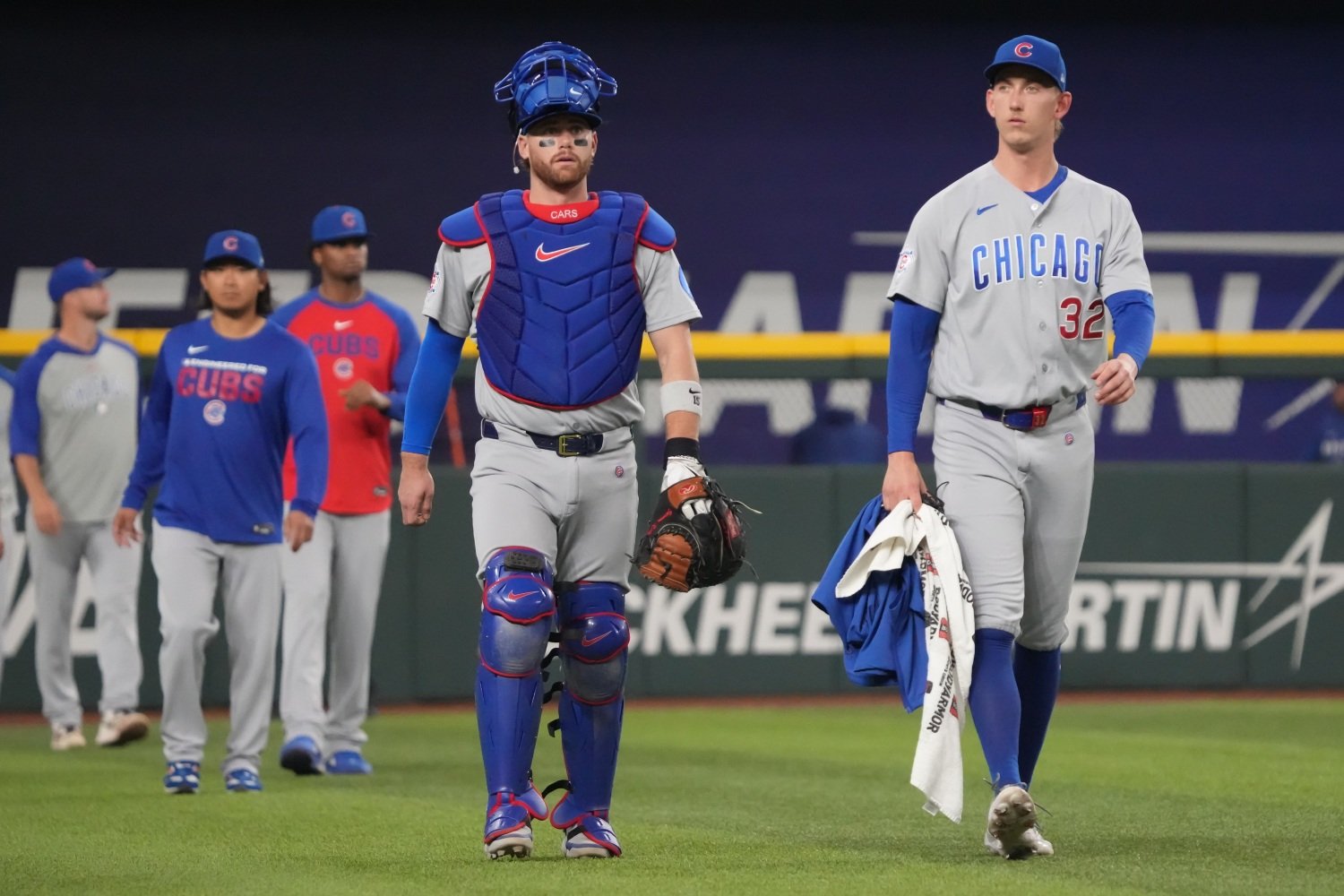
Cubs Video
Ben Brown will start for the Cubs Thursday evening at one of the more successful attractions on The Battery, a suburban entertainment district in the northwest suburbs of Atlanta. It's his second turn in the starting rotation since the team lost left-hander Matthew Boyd to a torn meniscus in his knee, and Brown will be hoping to play stopper, opposite future Hall of Famer Chris Sale. The Cubs are in danger of losing five games in a row; their last win came in Brown's last start.
In that outing, Brown managed four scoreless, hitless innings against the Texas Rangers, though he did issue one walk. Working on three days' rest after spending most of the season in the bullpen, he threw 46 pitches. Presumably, this time around, he will have a longer leash, and he might need to pace himself more.
Normally, that would spell trouble for Brown. His fastball has sat comfortably around 96.5 miles per hour this season, which is where he's always needed it to be in order to find success. The shape of his heater has always been pretty much what a hitter would expect, based on his high three-quarter arm slot, so the only ways for him to avoid getting hurt on the pitch were to locate well and to throw very hard. For almost no pitcher is there a bigger difference between throwing 95 and throwing 98 than for Brown, as we've known him dating back to 2024.
There's also his limited arsenal to consider. For most of his career, Brown has functionally been a two-pitch pitcher. He's tinkered with a cutter, a slider and multiple flavors of changeup, but he's only ever been able to rely on his four-seamer and a sharp (though short) knuckle-curve. Starting has tended to strain his capacity for fooling hitters with only two options at his disposal.
Everything is different, now. That doesn't mean the results will follow, or that Brown is now set up to enjoy a long run of success as a starter, but to the hard questions posed by those past problems, Brown now has pretty robust answers. First, let's tackle that dead-zone fastball problem. The solution there (if, indeed, it turns out to be one): lower the arm angle, and change the profile.
| Arm Angle | |||
| Pitch Type | 2025 | Apr. 2026 | May 2026 |
| Four-Seamer | 44.1 | 42.6 | 39 |
| Curveball | 46.5 | 45.1 | 42.8 |
| Kick-Change | 42.7 | 41.5 | 37.3 |
| Sinker | - | 41.7 | 40.7 |
From last year to this year, Brown made one slight downward move in his arm angle. Since the season began, he's made another. You can see the progression, below, in the way his arm works at release.
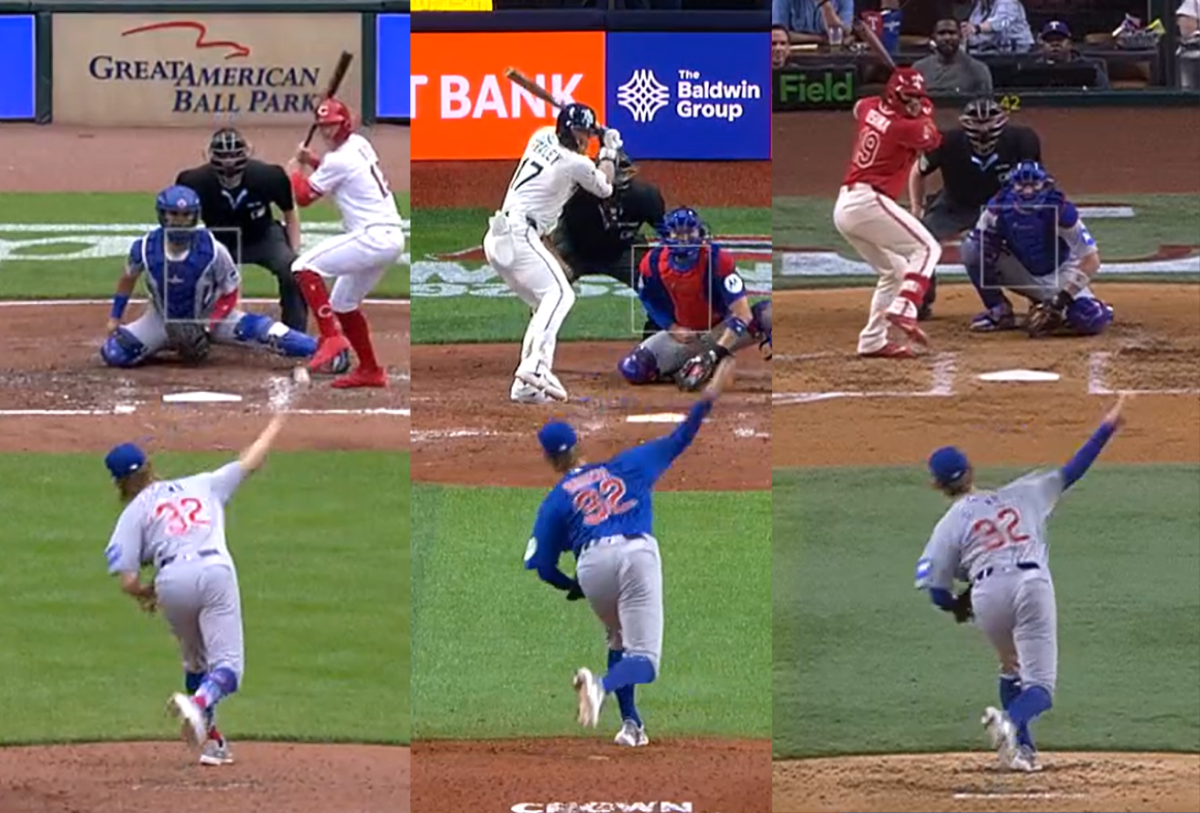
A lower slot has meant a bit less carry on his four-seamer, but it's also given his curveball a bit more depth. The kick-change he's developed has more depth on it than it would from the higher slot, too. His sinker can run to the arm side more. The change takes his fastball slightly out of the dead zone, but more importantly, it frees up his arm to work more naturally. His other pitches have improved because of the tweak.
That, of course, also answers the other problem. Brown's sinker is exclusively a weapon against righties, giving him two different heaters to work two different lanes horizontally and three different levels of vertical movement to force the hitter to cover a bigger zone. The kick-change is used exclusively against lefties, and it, too, rounds out his arsenal just enough. The fleshing-out of each as part of his attack has been made possible by the change in his arm angle.
Brown's command and variety of shapes still aren't good enough for him to succeed as a starter without throwing hard, but the mechanical changes he's made appear to have helped him maintain his velocity better. The Cubs need to stop suffering losses to their rotation, but for the moment, there's reason to hope that they've found another good solution at the back end of it. Brown has shown more adaptability over the last several months, as he's discovered the limits of the simple, unrefined approach he used in the past, and he's been healthy enough to implement some new things. They're working.






Recommended Comments
There are no comments to display.
Create an account or sign in to comment
You need to be a member in order to leave a comment
Create an account
Sign up for a new account in our community. It's easy!
Register a new accountSign in
Already have an account? Sign in here.
Sign In Now