


Cubs Video
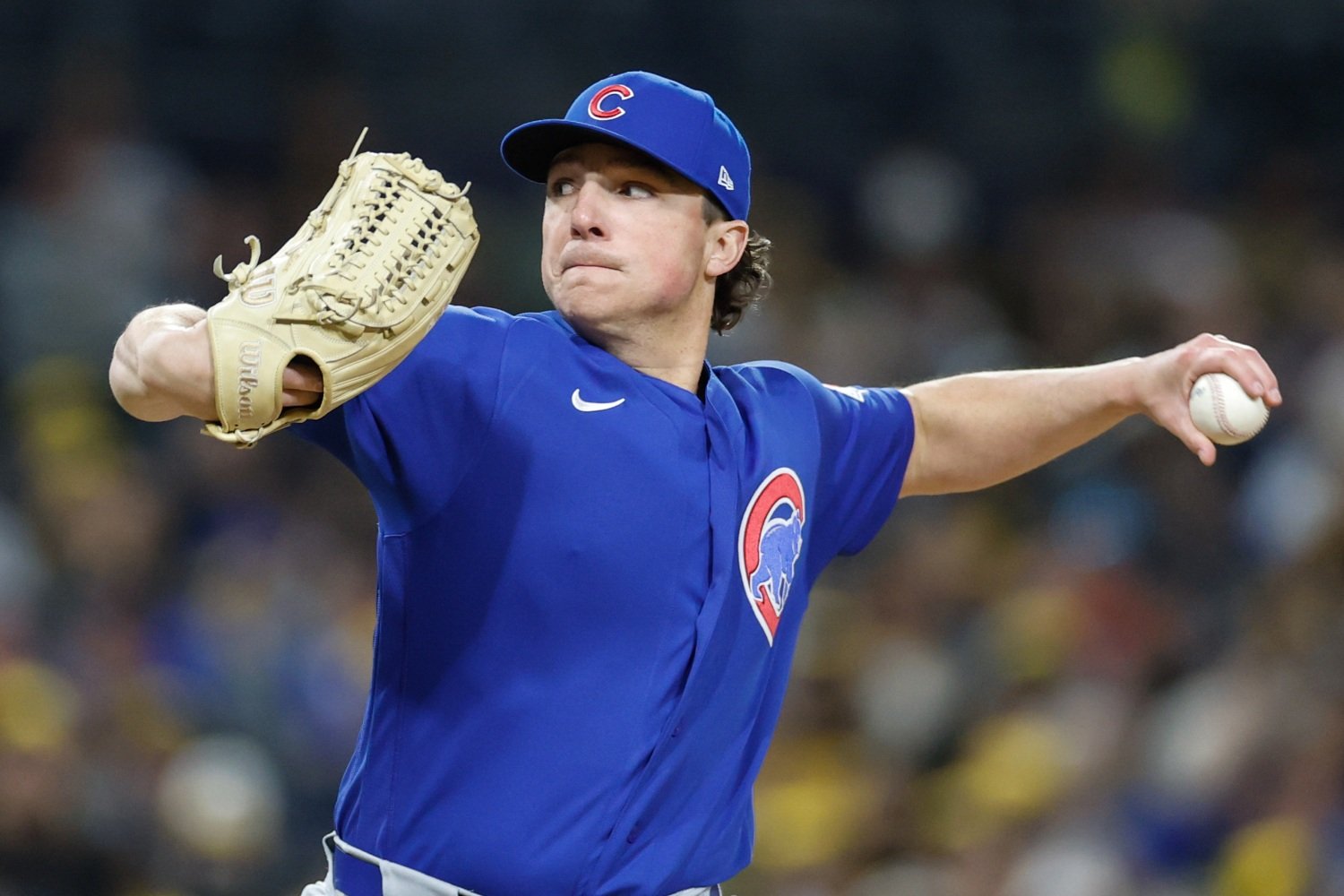
Ryan Rolison isn't overwhelming opposing batters. He's fanned 10 of them in 8 2/3 innings, but he only averages 94.3 miles per hour with his fastball. Hitters have made contact on 88.2% of the pitches they've swung at against Rolison. Yet, he's been devastatingly effective. That he's struck out 28.6% of his opponents doesn't match the whiff rate on swings. Nor does his overall stuff profile support his sparkling advanced stats. Does anything explain it? Or is this just a nice, half-accidental stretch from a fungible reliever, doomed to end quickly and sourly?
You'll never go broke betting on the latter, when a journeyman has a hot streak like Rolison's recent one. But let me make a different case. In some ways, the 2026 season poses new and painful challenges for big-league pitchers, and solving the problems the league has thrown at them is a vital part of being a successful arm this year. Rolison is an exemplar of the ways the Cubs are well-suited to the changes to the strike zone—and, therefore, he might have more staying power than you'd think.
The strike zone is smaller this year than it's been in a long time. It shrank last year, when the league tightened tolerances at the edges of the zone in its feedback for umpires on their ball-strike calls, but it's shrunk even more this season with the implementation of the ABS challenge system. As a result, the league's average walk rate is up to 9.5%. Virtually the entire change in the zone is in its vertical dimensions. The top of the zone has come down significantly, which comes with specific implications for pitchers with certain stuff profiles.
There's a bit of extra risk, for instance, in having a high-carry four-seam fastball, because you might miss above that new, lower top railing. Yet, if you don't have exceptional rising action on your heater, it had better have some other unusual characteristic. Otherwise, hitters (guarding a smaller zone than in the past, after all) will hit you hard. Thus, pitchers need to have either more velocity or more unexpected wiggle on their fastballs than they needed to have even one year ago.
Rolison has actually added ride to his fastball this year, along with about 1.5 MPH. That doesn't leave him missing the zone high, though, because he had below-average rise before. Now, his induced vertical break (IVB) on the four-seamer is 15.0 inches, which is lively but not uncontrollable. More importantly, that fastball has cutting action, relative to what a hitter expects out of the hand. The cut-ride shape is part of what first hooked the Cubs on Rolison; they've always loved that trait.
Once Rolison shows hitters a fastball that flirts with the edges of the zone, he can also attack them with his array of breaking stuff, which tunnels off the heater nicely. Specifically, he can land the curve and the slider in the zone consistently, and more of the time, hitters aren't ready for it.
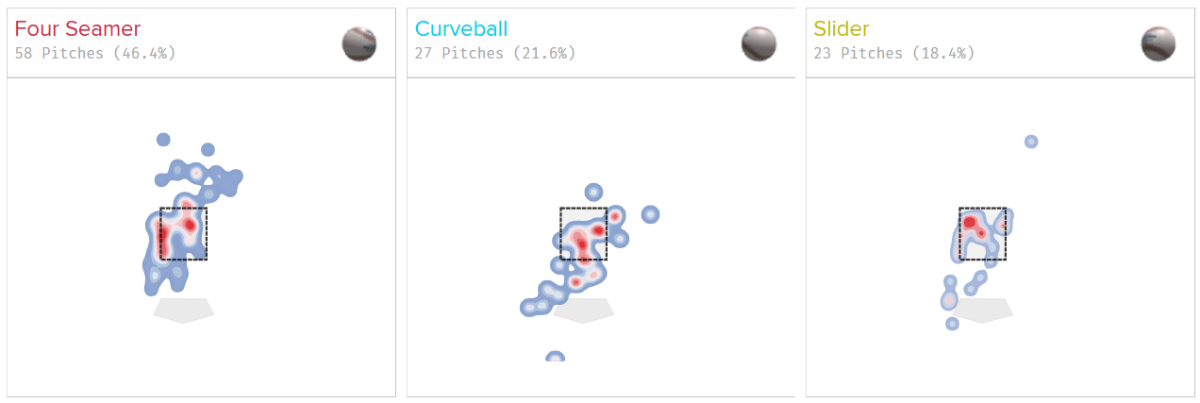
The difference in vertical movement between Rolison's fastball and his curve has stretched to over 32 inches this year, thanks to a slightly higher arm slot. But by targeting the two pitches differently, he puts both in the zone, instead of missing high with one and low with the other. The curve isn't earning Rolison whiffs, but he's getting quite a few called strikes with it.
The unique horizontal movement on Rolison's fastball makes him relatively hard to square up. The ability to throw that pitch and two breaking balls for strikes even in a compressed zone makes him hard to outguess. This is Rolison's new formula for success—but it's not new to the Cubs.
Public intellectual Nassim Nicholas Taleb wrote one of his several books about the concept of antifragility. Some things, Taleb wrote, are robust: they survive big changes well. Other things are fragile: they break easily when shocks come. The thrust of Taleb's tome, though, was that a third class of things exists. Antifragile entities don't just survive major changes; they thrive on them. Seismic shifts make them stronger and better, instead of either damaging them or leaving them unaffected. Relatively few things in the world are genuinely antifragile, but the Cubs' long-held pitching paradigm might just be one of them.
The rest of the league has spent at least a decade maximizing their high-low movement differentials and chasing whiffs, but they've done it with their targets set on a strike zone that no longer exists. The new one is better-suited to teams who try to produce weak contact and fill up the zone, with unusual fastball shapes and enough movement on secondary pitches to coax bad swing decisions in an environment that makes swing decisions easier. That's what the Cubs have been doing, all this time.
Rolison isn't the only example of this. He's just a salient one, at this particular moment. Chicago has lots of pitchers who work that way, from (alas, currently injured) stars Justin Steele and Cade Horton to the guys they've collected just as proactively but with less fanfare, like Caleb Thielbar and Daniel Palencia. Horizontal movement and the ability to steal strikes without chasing whiffs is the wave of the future. The Cubs have been riding it since everyone thought it was a thing of the past.
Do you approve of the job Craig Counsell is doing as Cubs manager?

Follow North Side Baseball For Chicago Cubs News & Analysis



-
 1
1


Recommended Comments
There are no comments to display.
Create an account or sign in to comment
You need to be a member in order to leave a comment
Create an account
Sign up for a new account in our community. It's easy!
Register a new accountSign in
Already have an account? Sign in here.
Sign In Now