


RandallPnkFloyd
-
Posts
513 -
Joined
-
Last visited
Content Type
Profiles
Joomla Posts 1
Chicago Cubs Videos
Chicago Cubs Free Agent & Trade Rumors, Notes, & Tidbits
2026 Chicago Cubs Top Prospects Ranking
News
2023 Chicago Cubs Draft Picks
Guides & Resources
2024 Chicago Cubs Draft Picks
The Chicago Cubs Players Project
2025 Chicago Cubs Draft Pick Tracker
2026 Chicago Cubs Draft Tracker: Picks & Bonuses
Blogs
Events
Forums
Store
Gallery
Everything posted by RandallPnkFloyd
-
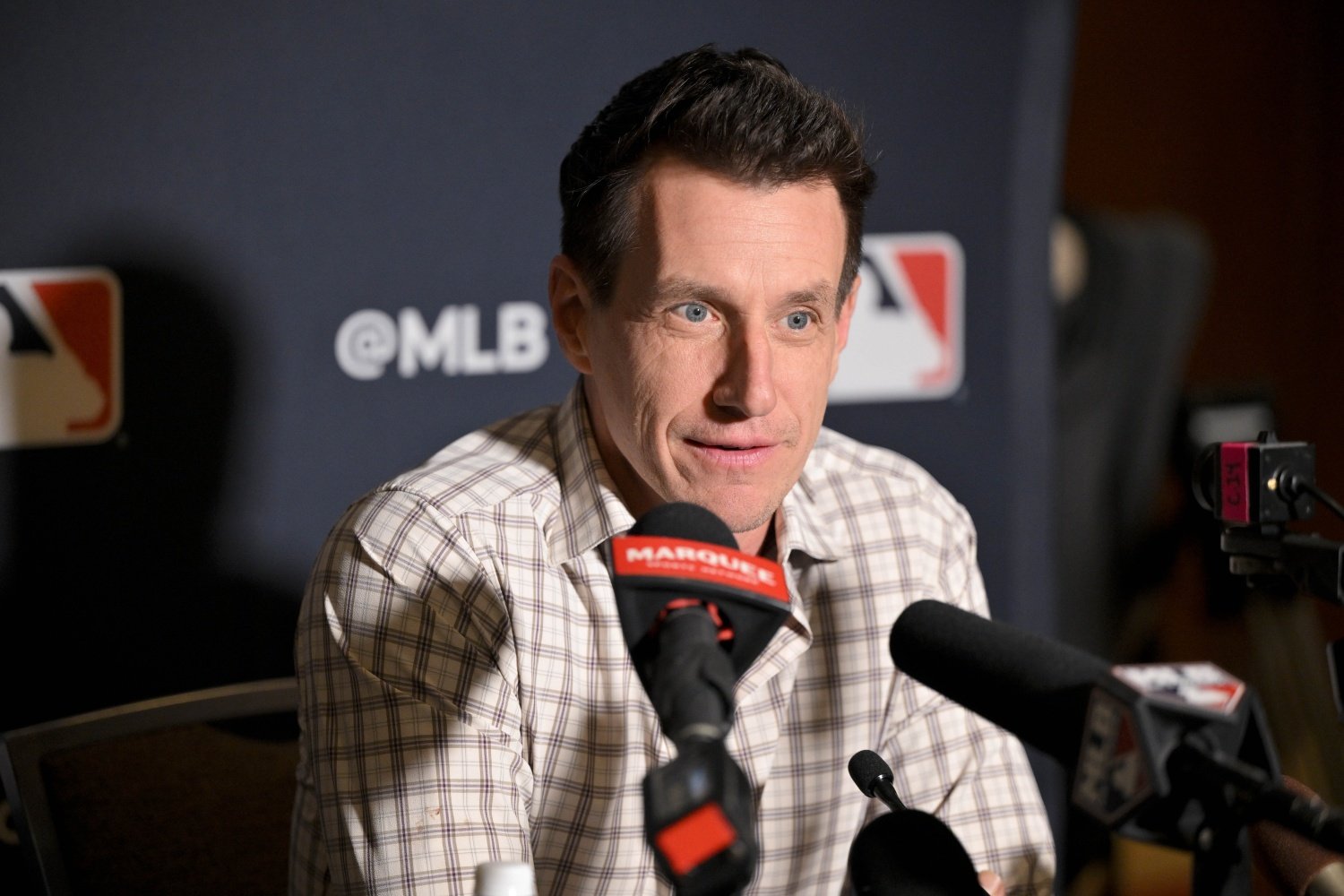 A common refrain surrounding the Chicago Cubs is that they still have plenty of work to do this offseason. That's objectively, true. We’ve heard their name in connection with a couple of arms, and it isn’t a stretch to see them acquiring an additional position player to lengthen the bench. There is certainly work to be done, and we should expect them to do it. But what if they don’t? Let’s pretend, for a moment, that the worst-case scenario unfolds. This is a world in which the Cubs are done. Maybe they add a reclamation arm or two. They scoop up a bench guy on a minor-league deal, at best. They’re certainly improved at this juncture, regardless. A National League Central contender, though, requires a bit more stretching of the imagination—especially when measuring them against the Milwaukee Brewers. Right now, the Brewers are the team to which the Cubs should be compared. The Cincinnati Reds remain interesting, given their additions to the pitching staff and a solid young core. But they need to prove it, the same way the Cubs do. Pittsburgh could prove to be a threat on some level, given their strength at the front of the rotation. Again, though, we haven’t seen that yet. The Brewers rule the Central. As such, it’s that group against which we should be measuring. While the Cubs have been able to generate some positive buzz with their winter, the same can’t necessarily be said of their rivals out of Milwaukee. The Crew lost Willy Adames to free agency, traded closer Devin Williams to the New York Yankees, and let some of their rotation depth reach free agency. But even with the additions of Kyle Tucker, Eli Morgan, and Carson Kelly, can we say beyond the shadow of a doubt that the Cubs are a better team than the Brewers? It's tough to say that, after finishing 10 games back of them in 2024. Milwaukee featured a top-six offense last year in terms of run production, utilizing exceptional on-base skills and efficient baserunning to compensate for a lack of power. Adames led the way in the power game while adding 21 steals of his own. They’ll suffer a bit there without him. Again, though, this isn’t a team that makes their bones with power hitting. They’ll take a walk and then run you into the ground, without a real need for power. They’ll also get a full season out of Garrett Mitchell, a returning Christian Yelich, and a post-breakout Jackson Chourio. If Rhys Hoskins can get a bit more batted-ball luck, he should compensate for some of the power lost in Adames’s departure. Regardless, though, they have lots of ways to beat you—lots of weapons: Brice Turang, Joey Ortiz, etc. Because of that, it’s very difficult to automatically declare this Cubs offense ready to surpass that of the Brewers, even with Tucker’s addition. Don’t get it twisted, though. The Tucker trade is a massive one for the Cubs. It’s almost impossible to overstate. He should, ideally, provide them with more power than they've gotten from any one hitter in several years, and another on-base threat. With Pete Crow-Armstrong showing positive signs in the second half of 2024 and the potential for Matt Shaw to be a full-time big-leaguer from the jump in 2025, there’s potential for the Cubs to hang in the get-on-base-and-steal game that the Brewers have perfected. The question is whether they can also outslug the Crew. The Brewers ranked only 18th in ISO last season (.155), but the Cubs were also a few spots behind them, at 21st (.151). Does the Adames subtraction work in conjunction with the Tucker addition to at least flip them? It seems possible. Throw in a fully healthy Seiya Suzuki in the DH spot and a definitely-for-real breakout from Miguel Amaya, and the potential is there. The possibility exists that the Tucker addition alone pushes the Cubs past Milwaukee on that side of the ball. Given how much the Crew excelled in their brand of offensive baseball, however, the only comfortable declaration to make is that the gap has narrowed. One advantage the Cubs did have over their rivals last year was in the starting pitching game. Chicago sat sixth in starting ERA (3.77) and ninth in ERA- (94). The Brewers, meanwhile, were 17th in starting ERA (4.09) and 16th in ERA- (99). Milwaukee has since lost Frankie Montas and Joe Ross, but they acquired Nestor Cortes and are primed to welcome Brandon Woodruff back into the mix. That gives them a front five of Freddy Peralta, Woodruff, Aaron Civale, Tobias Myers, and Cortes. Aaron Ashby and DL Hall look to be first in line for spot starts. That’s a strong starting group that should be improved, with depth that is high on upside, even if the ability to eat innings is still in question. Compare that to the Cubs. Justin Steele, Shota Imanaga, Jameson Taillon, Javier Assad, and Matthew Boyd figure to be the starting five on Opening Day, barring another frontline addition. Jordan Wicks and Ben Brown are the next men up, with Caleb Kilian and/or Cade Horton lurking if they can stay healthy and clear some developmental hurdles. The Cubs feature three starters who finished inside the top 50 in fWAR in 2024. Milwaukee has two, with the addition of Cortes. Woodruff was very much in that group in his last full season, as well. Of any phase, this is the most difficult one to separate. The apparent desire for the Cubs to add another starter before winter’s end could prove to be the separator. It isn’t as close on the relief side, however. The Brewers featured the second-best bullpen ERA last year (3.11), while the Cubs sat 12th (3.81). Not bad, considering the latter’s early-season woes in relief. Milwaukee held an edge virtually everywhere in the relief game, with the exception of strikeouts. But are they due for regression, following a year in which their opposing BABIP was just .266 and they stranded 78.1 percent of baserunners? Especially given some lackluster velocity & batted-ball trends? That's to say nothing of trading away their all-world closer. If there’s an argument in favor of the Crew here, it’s that they have a bit clearer a picture as far as their relief corps goes. We know the group should run deep. Trevor Megill, Jared Koenig, Joel Payamps, Bryan Hudson, Nick Mears, and Elvis Peguero should comprise a healthy portion of their ‘pen. Abner Uribe, Connor Thomas, and the aforementioned Hall should also be heavily involved. The Cubs are set to roll with Porter Hodge, Nate Pearson, Tyson Miller, and Eli Morgan, before you get into a bunch of question marks. Luke Little? Julian Merryweather? Ethan Roberts? Rob Zastryzny? Intrigue, sure. Reliability, not so much. The defensive aspect will be intriguing for both groups. The Cubs should be improved in the outfield, courtesy of Tucker’s addition (and, by extension, Suzuki’s continued subtraction). The middle infield is still elite. Michael Busch played an excellent first base in the second half. There’s almost no way they can be worse at third base, given that Christopher Morel won’t be manning the spot for half the season. As such, you really have to like the Cubs here. Milwaukee has an elite outfield, a very good second baseman, and an excellent backstop in William Contreras. They’re below average at first, lost their well-above-average-before-2024 shortstop, and have similar questions to what the Cubs have at third (without the benefit of “it can’t get any worse”). As buoyed as they were by their outfield play—and could very well be again in ’25—this is one area where the Cubs could be better. It's important to note that everything at this point in the offseason is an on-paper comparison. We haven’t seen new additions suit up for either team, with each side still likely to see another move or three before we hit the middle of February. But if the season was to start tomorrow, who would we consider to have the edge? The gap has narrowed on the offensive side, and maybe even flipped in the Cubs’ favor. But we saw too much good out of Milwaukee and too much average from the Cubs last year to make a firm declaration of Chicago's superiority. Starting pitching looks to be a dead heat. The Crew have the advantage in relief, courtesy of their clarity, while the Cubs have the defensive edge given their infield configuration. It’s close. The Cubs have drawn the gap to something more reasonable, but there’s still plenty of time for them to take the upper hand before the games start to matter.
 -
If the season started tomorrow, who would have the inside track to the division title? Image courtesy of © Jerome Miron-Imagn Images A common refrain surrounding the Chicago Cubs is that they still have plenty of work to do this offseason. That's objectively, true. We’ve heard their name in connection with a couple of arms, and it isn’t a stretch to see them acquiring an additional position player to lengthen the bench. There is certainly work to be done, and we should expect them to do it. But what if they don’t? Let’s pretend, for a moment, that the worst-case scenario unfolds. This is a world in which the Cubs are done. Maybe they add a reclamation arm or two. They scoop up a bench guy on a minor-league deal, at best. They’re certainly improved at this juncture, regardless. A National League Central contender, though, requires a bit more stretching of the imagination—especially when measuring them against the Milwaukee Brewers. Right now, the Brewers are the team to which the Cubs should be compared. The Cincinnati Reds remain interesting, given their additions to the pitching staff and a solid young core. But they need to prove it, the same way the Cubs do. Pittsburgh could prove to be a threat on some level, given their strength at the front of the rotation. Again, though, we haven’t seen that yet. The Brewers rule the Central. As such, it’s that group against which we should be measuring. While the Cubs have been able to generate some positive buzz with their winter, the same can’t necessarily be said of their rivals out of Milwaukee. The Crew lost Willy Adames to free agency, traded closer Devin Williams to the New York Yankees, and let some of their rotation depth reach free agency. But even with the additions of Kyle Tucker, Eli Morgan, and Carson Kelly, can we say beyond the shadow of a doubt that the Cubs are a better team than the Brewers? It's tough to say that, after finishing 10 games back of them in 2024. Milwaukee featured a top-six offense last year in terms of run production, utilizing exceptional on-base skills and efficient baserunning to compensate for a lack of power. Adames led the way in the power game while adding 21 steals of his own. They’ll suffer a bit there without him. Again, though, this isn’t a team that makes their bones with power hitting. They’ll take a walk and then run you into the ground, without a real need for power. They’ll also get a full season out of Garrett Mitchell, a returning Christian Yelich, and a post-breakout Jackson Chourio. If Rhys Hoskins can get a bit more batted-ball luck, he should compensate for some of the power lost in Adames’s departure. Regardless, though, they have lots of ways to beat you—lots of weapons: Brice Turang, Joey Ortiz, etc. Because of that, it’s very difficult to automatically declare this Cubs offense ready to surpass that of the Brewers, even with Tucker’s addition. Don’t get it twisted, though. The Tucker trade is a massive one for the Cubs. It’s almost impossible to overstate. He should, ideally, provide them with more power than they've gotten from any one hitter in several years, and another on-base threat. With Pete Crow-Armstrong showing positive signs in the second half of 2024 and the potential for Matt Shaw to be a full-time big-leaguer from the jump in 2025, there’s potential for the Cubs to hang in the get-on-base-and-steal game that the Brewers have perfected. The question is whether they can also outslug the Crew. The Brewers ranked only 18th in ISO last season (.155), but the Cubs were also a few spots behind them, at 21st (.151). Does the Adames subtraction work in conjunction with the Tucker addition to at least flip them? It seems possible. Throw in a fully healthy Seiya Suzuki in the DH spot and a definitely-for-real breakout from Miguel Amaya, and the potential is there. The possibility exists that the Tucker addition alone pushes the Cubs past Milwaukee on that side of the ball. Given how much the Crew excelled in their brand of offensive baseball, however, the only comfortable declaration to make is that the gap has narrowed. One advantage the Cubs did have over their rivals last year was in the starting pitching game. Chicago sat sixth in starting ERA (3.77) and ninth in ERA- (94). The Brewers, meanwhile, were 17th in starting ERA (4.09) and 16th in ERA- (99). Milwaukee has since lost Frankie Montas and Joe Ross, but they acquired Nestor Cortes and are primed to welcome Brandon Woodruff back into the mix. That gives them a front five of Freddy Peralta, Woodruff, Aaron Civale, Tobias Myers, and Cortes. Aaron Ashby and DL Hall look to be first in line for spot starts. That’s a strong starting group that should be improved, with depth that is high on upside, even if the ability to eat innings is still in question. Compare that to the Cubs. Justin Steele, Shota Imanaga, Jameson Taillon, Javier Assad, and Matthew Boyd figure to be the starting five on Opening Day, barring another frontline addition. Jordan Wicks and Ben Brown are the next men up, with Caleb Kilian and/or Cade Horton lurking if they can stay healthy and clear some developmental hurdles. The Cubs feature three starters who finished inside the top 50 in fWAR in 2024. Milwaukee has two, with the addition of Cortes. Woodruff was very much in that group in his last full season, as well. Of any phase, this is the most difficult one to separate. The apparent desire for the Cubs to add another starter before winter’s end could prove to be the separator. It isn’t as close on the relief side, however. The Brewers featured the second-best bullpen ERA last year (3.11), while the Cubs sat 12th (3.81). Not bad, considering the latter’s early-season woes in relief. Milwaukee held an edge virtually everywhere in the relief game, with the exception of strikeouts. But are they due for regression, following a year in which their opposing BABIP was just .266 and they stranded 78.1 percent of baserunners? Especially given some lackluster velocity & batted-ball trends? That's to say nothing of trading away their all-world closer. If there’s an argument in favor of the Crew here, it’s that they have a bit clearer a picture as far as their relief corps goes. We know the group should run deep. Trevor Megill, Jared Koenig, Joel Payamps, Bryan Hudson, Nick Mears, and Elvis Peguero should comprise a healthy portion of their ‘pen. Abner Uribe, Connor Thomas, and the aforementioned Hall should also be heavily involved. The Cubs are set to roll with Porter Hodge, Nate Pearson, Tyson Miller, and Eli Morgan, before you get into a bunch of question marks. Luke Little? Julian Merryweather? Ethan Roberts? Rob Zastryzny? Intrigue, sure. Reliability, not so much. The defensive aspect will be intriguing for both groups. The Cubs should be improved in the outfield, courtesy of Tucker’s addition (and, by extension, Suzuki’s continued subtraction). The middle infield is still elite. Michael Busch played an excellent first base in the second half. There’s almost no way they can be worse at third base, given that Christopher Morel won’t be manning the spot for half the season. As such, you really have to like the Cubs here. Milwaukee has an elite outfield, a very good second baseman, and an excellent backstop in William Contreras. They’re below average at first, lost their well-above-average-before-2024 shortstop, and have similar questions to what the Cubs have at third (without the benefit of “it can’t get any worse”). As buoyed as they were by their outfield play—and could very well be again in ’25—this is one area where the Cubs could be better. It's important to note that everything at this point in the offseason is an on-paper comparison. We haven’t seen new additions suit up for either team, with each side still likely to see another move or three before we hit the middle of February. But if the season was to start tomorrow, who would we consider to have the edge? The gap has narrowed on the offensive side, and maybe even flipped in the Cubs’ favor. But we saw too much good out of Milwaukee and too much average from the Cubs last year to make a firm declaration of Chicago's superiority. Starting pitching looks to be a dead heat. The Crew have the advantage in relief, courtesy of their clarity, while the Cubs have the defensive edge given their infield configuration. It’s close. The Cubs have drawn the gap to something more reasonable, but there’s still plenty of time for them to take the upper hand before the games start to matter. View full article
-
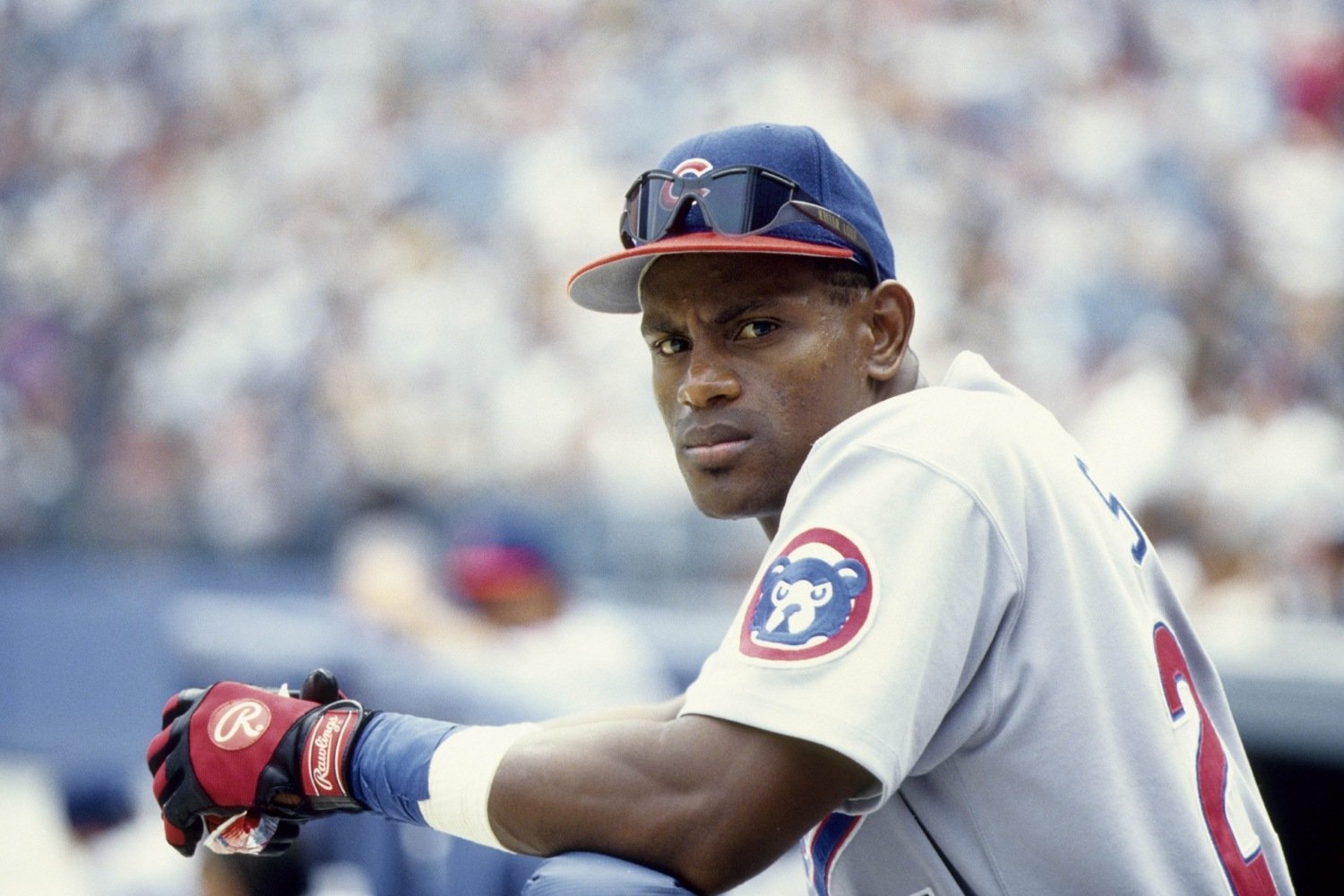 As we approach the end of December, there’s still work to be done for the 2025 Chicago Cubs roster. But it’s hard to label what’s unfolded thus far this winter as anything less than a success. In terms of the current team, you’ve got the addition of the legitimate star the team has lacked for a handful of years. From an organizational standpoint, the resolution to a decades-long dispute with former star Sammy Sosa covers a different portion of the spectrum entirely. I’ve long labeled Sammy Sosa as my favorite baseball player of all time. I am a child of the 1990s, so it’s not that hard to figure out. While the standoff between the team and one of its icons probably didn’t need to happen, there’s plenty to reckon with now that he appears set to come back into the organizational fold. Matt Trueblood covered some of these aspects–from Sosa as a questionable teammate to Sosa as a questionable person–in his initial writeup of the news. Given those factors and my proximity to the current state of the Cubs, I have also (somewhat naturally) pushed Sosa down into the very depths of my mind. But news of his apology and the subsequent invitation to next month’s Cubs Convention had me going down a rabbit hole of sorts. Just as Sosa has been painted with a broad brush in terms of his career narrative in a way that others from the Steroid Era haven’t, this also feeds into some overgeneralization from a purely statistical standpoint. My purpose here is to unwind some of that confusion. We have plenty of time to discuss the human components of Sammy Sosa. A dive into the numbers, though, illustrates a very different player than you probably remember, on either side of that 1998 season that turned out to such a hinge between two disparate halves of a career. The overgeneralization associated with Sosa’s career output lies in the power. The ’98 home run chase and the successive 60-plus home run seasons obviously skew things. He went for 66 in 1998, before rattling off totals of 63, 50, 64, and 49 in the four years after. He rounded out his Cubs career with totals of 40 and 35 in 2003 and 2004, respectively. He hit 545 as a Cub, finishing more than 30 ahead of Ernie Banks in 2,500-ish fewer at-bats. It’s the power that we remember, and it’s the power that skews the narrative. Because Sosa wasn’t solely a power guy. His talent was incandescent and irrepressible from a very young age, which is why he was a big-league regular at age 20. However, like most players who came up that young back then, he took a long time to figure out the majors, struggling through multiple seasons with Texas and the White Sox before landing with the Cubs in 1992. It wasn’t until 1993 that the breakout transpired. Even in those previous years with the Rangers and Sox, Sosa had flashed dynamic tendencies, both as a power hitter and as a base stealer. In 1990, he hit 15 homers (.171 ISO) and swiped 32 bags. It took another three years before his real breakout manifested, but even then, his first legitimately strong year came in the form of a 30/30 campaign. In 1993, he hit 33 homers and stole 36 bases, finishing among the top 15 in each category. The caveat with that first big year was that he also featured one of the highest K% marks (21.1) and one of the lowest BB% (5.9) among 150 qualifying players. In the two years that followed, Sosa went 20/20 and, once again, 30/30. He hit 25 and stole 22 in just 105 games in the strike-shortened 1994 season, before turning in 36 bombs and 34 bags in ’95. He bumped up the on-base dramatically in each year, courtesy of increased batted-ball luck in 1994 and a spike in his walk rate the following season. It’s that 1995 season that should attract particular interest, though. There is perhaps no point in his career where Sosa was as complete a player as he was that season. An All-Star and Silver Slugger receiving MVP votes, Sosa produced a slash of .268/.340/.500, while finishing with what would be the first of six different 5+ WAR seasons. By that measure, he was one of the 16 best position players in the sport. He followed that with another 5+ WAR campaign in ’96 (in only 124 games), driven by 40-home-run power, before “struggling” to a 36-homer, 22-steal ’97 season. From 1990 to 1997, Sosa slashed .257/.309/.473. He hit 203 home runs and stole 192 bases. He ranked 44th out of 424 qualifying position players in fWAR. Given some of the other well-rounded talent that emerged from the 1990s, it’s tough to call him elite in the all-around sense, but there was a very, very good baseball player emerging there. Of course, the years that followed were where things started to get murky, courtesy of the substances he now apologizes for using. That doesn’t mean that Sosa didn't do interesting things beyond his power explosion in 1998, however. He and then-Cubs hitting coach Jeff Pentland overhauled his swing ahead of the ’98 season, in order to cover the zone more effectively, cutting strikeouts and giving him the capacity to hit to all fields. The development bore at least some responsibility for his 66-homer campaign that year. Between 1998 and 2001, Sosa’s walk rate increased each year, topping out at over 16 percent in ’01. He was top 10 in hits across the 1998 to 2004 seasons; he became a more complete hitter. There’s a conversation to be had that isn’t entirely dissimilar to the one we’ve formed around Barry Bonds—that he didn’t even really need the juice. He was already a very good baseball player, even a great one. While it’s obviously not quite to the extent of Bonds’s situation, given the stronger and more sustained prior output on Bonds’s part, the reality is that Sosa wasn’t purely a power hitter. Nor was he only a power hitter because of PEDs. There were multiple tools in his toolbox, and a commitment to the art of hitting that I hope we can realize more now that he’s reentered the Chicago sports zeitgeist. I think those are the conversations that are worth exploring. PEDs have shifted the discussion to the idea that Sosa was overrated or “actually bad.” Either one is, of course, objectively untrue. There’s a lot to unpack now that Sammy Sosa is back in the fold. Some of those conversations—especially as we dig into the stuff that isn’t necessarily about on-field performance—are likely to be uncomfortable. Those conversations matter. But we’ll also be talking about Sosa heavily from a statistical perspective. This gives us an opportunity to examine what made Sosa such a force within the Chicago sports landscape. It certainly wasn’t just about the power, or whatever chemicals helped him augment it.
 -
Yes, Sammy Sosa used performance-enhancing drugs. No, he was not made by them. Image courtesy of © RVR Photos-Imagn Images As we approach the end of December, there’s still work to be done for the 2025 Chicago Cubs roster. But it’s hard to label what’s unfolded thus far this winter as anything less than a success. In terms of the current team, you’ve got the addition of the legitimate star the team has lacked for a handful of years. From an organizational standpoint, the resolution to a decades-long dispute with former star Sammy Sosa covers a different portion of the spectrum entirely. I’ve long labeled Sammy Sosa as my favorite baseball player of all time. I am a child of the 1990s, so it’s not that hard to figure out. While the standoff between the team and one of its icons probably didn’t need to happen, there’s plenty to reckon with now that he appears set to come back into the organizational fold. Matt Trueblood covered some of these aspects–from Sosa as a questionable teammate to Sosa as a questionable person–in his initial writeup of the news. Given those factors and my proximity to the current state of the Cubs, I have also (somewhat naturally) pushed Sosa down into the very depths of my mind. But news of his apology and the subsequent invitation to next month’s Cubs Convention had me going down a rabbit hole of sorts. Just as Sosa has been painted with a broad brush in terms of his career narrative in a way that others from the Steroid Era haven’t, this also feeds into some overgeneralization from a purely statistical standpoint. My purpose here is to unwind some of that confusion. We have plenty of time to discuss the human components of Sammy Sosa. A dive into the numbers, though, illustrates a very different player than you probably remember, on either side of that 1998 season that turned out to such a hinge between two disparate halves of a career. The overgeneralization associated with Sosa’s career output lies in the power. The ’98 home run chase and the successive 60-plus home run seasons obviously skew things. He went for 66 in 1998, before rattling off totals of 63, 50, 64, and 49 in the four years after. He rounded out his Cubs career with totals of 40 and 35 in 2003 and 2004, respectively. He hit 545 as a Cub, finishing more than 30 ahead of Ernie Banks in 2,500-ish fewer at-bats. It’s the power that we remember, and it’s the power that skews the narrative. Because Sosa wasn’t solely a power guy. His talent was incandescent and irrepressible from a very young age, which is why he was a big-league regular at age 20. However, like most players who came up that young back then, he took a long time to figure out the majors, struggling through multiple seasons with Texas and the White Sox before landing with the Cubs in 1992. It wasn’t until 1993 that the breakout transpired. Even in those previous years with the Rangers and Sox, Sosa had flashed dynamic tendencies, both as a power hitter and as a base stealer. In 1990, he hit 15 homers (.171 ISO) and swiped 32 bags. It took another three years before his real breakout manifested, but even then, his first legitimately strong year came in the form of a 30/30 campaign. In 1993, he hit 33 homers and stole 36 bases, finishing among the top 15 in each category. The caveat with that first big year was that he also featured one of the highest K% marks (21.1) and one of the lowest BB% (5.9) among 150 qualifying players. In the two years that followed, Sosa went 20/20 and, once again, 30/30. He hit 25 and stole 22 in just 105 games in the strike-shortened 1994 season, before turning in 36 bombs and 34 bags in ’95. He bumped up the on-base dramatically in each year, courtesy of increased batted-ball luck in 1994 and a spike in his walk rate the following season. It’s that 1995 season that should attract particular interest, though. There is perhaps no point in his career where Sosa was as complete a player as he was that season. An All-Star and Silver Slugger receiving MVP votes, Sosa produced a slash of .268/.340/.500, while finishing with what would be the first of six different 5+ WAR seasons. By that measure, he was one of the 16 best position players in the sport. He followed that with another 5+ WAR campaign in ’96 (in only 124 games), driven by 40-home-run power, before “struggling” to a 36-homer, 22-steal ’97 season. From 1990 to 1997, Sosa slashed .257/.309/.473. He hit 203 home runs and stole 192 bases. He ranked 44th out of 424 qualifying position players in fWAR. Given some of the other well-rounded talent that emerged from the 1990s, it’s tough to call him elite in the all-around sense, but there was a very, very good baseball player emerging there. Of course, the years that followed were where things started to get murky, courtesy of the substances he now apologizes for using. That doesn’t mean that Sosa didn't do interesting things beyond his power explosion in 1998, however. He and then-Cubs hitting coach Jeff Pentland overhauled his swing ahead of the ’98 season, in order to cover the zone more effectively, cutting strikeouts and giving him the capacity to hit to all fields. The development bore at least some responsibility for his 66-homer campaign that year. Between 1998 and 2001, Sosa’s walk rate increased each year, topping out at over 16 percent in ’01. He was top 10 in hits across the 1998 to 2004 seasons; he became a more complete hitter. There’s a conversation to be had that isn’t entirely dissimilar to the one we’ve formed around Barry Bonds—that he didn’t even really need the juice. He was already a very good baseball player, even a great one. While it’s obviously not quite to the extent of Bonds’s situation, given the stronger and more sustained prior output on Bonds’s part, the reality is that Sosa wasn’t purely a power hitter. Nor was he only a power hitter because of PEDs. There were multiple tools in his toolbox, and a commitment to the art of hitting that I hope we can realize more now that he’s reentered the Chicago sports zeitgeist. I think those are the conversations that are worth exploring. PEDs have shifted the discussion to the idea that Sosa was overrated or “actually bad.” Either one is, of course, objectively untrue. There’s a lot to unpack now that Sammy Sosa is back in the fold. Some of those conversations—especially as we dig into the stuff that isn’t necessarily about on-field performance—are likely to be uncomfortable. Those conversations matter. But we’ll also be talking about Sosa heavily from a statistical perspective. This gives us an opportunity to examine what made Sosa such a force within the Chicago sports landscape. It certainly wasn’t just about the power, or whatever chemicals helped him augment it. View full article
-
They've carved a niche for a player they believe in. Now, they have to let him fill it on a permanent basis. Image courtesy of © Cody Scanlan/The Register / USA TODAY NETWORK There was a point (roughly a week ago) where it looked like the Chicago Cubs might have to rely on multiple prospects to serve as an all-important “X-factor” for 2025. That term, of course, refers to a specific component of the roster that could yield important production despite not being one of the “faces” of the roster. With very few obvious offensive choices on the market, there was a possibility that the team would have to rely on the likes of Matt Shaw, Owen Caissie, Moises Ballesteros, and Kevin Alcántara to bolster an offense prone to stretches of ineptitude. Within the last week, however, that line of thought has shifted. The addition of Kyle Tucker is massive. It also likely slows down the timelines of each of Caissie and Alcántara. Signing Carson Kelly to join Miguel Amaya behind the dish does the same for Ballesteros. While the offense could stand a bit of further supplementation (as just an abstract note), the team is now in a position where the “X-factor” label now applies to only one of those marquee prospects: Matt Shaw. The Cubs had eight players appear for at least one inning at third base in 2024. Isaac Paredes is now a member of the Houston Astros (having replaced Christopher Morel when the two were traded for one another). Patrick Wisdom is headed overseas to play in the KBO. David Bote signed a minor-league deal with the Los Angeles Dodgers. Nick Madrigal is a free agent, after being non-tendered. Of those who logged time at the hot corner, only Michael Busch, Miles Mastrobuoni, and Luis Vazquez remain in the organization. Busch is locked into the opposite end of the infield, while neither Mastrobuoni nor Vazquez projects to be more than a utility piece off the bench. That's a very long way of saying that this is Shaw’s job to lose. He enters the new campaign as a consensus Top-25-ish prospect, set to fill what now stands as a complete vacancy. Barring a signing of someone like Yoán Moncada or a surprise trade for Alec Bohm, you’re looking at Shaw as the top guy in 2025, with Rule 5 pick Gage Workman and the aforementioned utility options giving him support off the bench. Shaw’s hit-to-all-fields, quality-contact, efficient-speed skillset could make him a boon to an offense that could use a little bit of extra everything. Nevertheless, it’s a risky venture to install a prospect from Day 1 of a season. You’re hoping adjustments can be made on the fly, to prevent any kind of up-and-down scenario, while also keeping an eye toward optimism that they can be a key contributor. Hence the idea of an “X-factor.” In Shaw’s case, this presents us with an interesting discussion. On one hand, you’re going to compare him (somewhat naturally) to what was a very strong rookie class last season. Many of those top first-year names had the opportunity to suit up with the big club from the jump, with the risk inherent in the decision largely paying off for both contending clubs and non-contending ones. The other side of this is the runway. You obviously want to give Shaw room to struggle, grow, and learn, without it becoming a detriment to your team. What does that look like, sample size-wise? Opening Day 2024 featured 23 rostered players who were considered to be among the top prospects in their respective organizations. Ten of those 23 were on a major-league roster for the first time. Mileage varied on those who stuck around, but of the top 10 rookie finishers in fWAR, only Jackson Merrill and Jackson Chourio made their big-league debuts at the season’s outset. The remainder of the top names in that regard—including such prospects as Colton Cowser, Masyn Winn, and Joey Ortiz—had received at least a cup of coffee in the previous season. To compare Shaw to any individual situation from last year, in terms of context, would be imperfect. There is nary a spot in the multiverse where Jackson Chourio (after his pre-debut extension) wasn’t going to be on the Milwaukee roster on Opening Day. The San Diego Padres took a leap on Merrill more out of necessity than anything, given an obscene lack of outfield depth—only for him to absolutely explode as a shortstop-turned-center fielder. Neither represents a parallel situation to that of Shaw beyond prospect pedigree (and even then, it doesn’t entirely work; they were prospects of a slightly higher caliber). Ultimately, though, it can be interesting to see that comparison directly within the second part of the above discussion. You have a handful of first-year guys coming off a very successful freshman campaign. What could they teach us about the runway that Shaw could or should get? Here are six of the top seven rookies from last year in fWAR and their wRC+ by individual month (plate appearances in parenthesis). The only exclusion is the New York Yankees’ Austin Wells, given how different the positional context is for a catcher: Player Mar./Apr. May June July August Sept. J. Merrill (SD) 98 (110) 86 (89) 176 (108) 90 (90) 164 (109) 156 (87) C. Cowser (BAL) 182 (86) 70 (95) 92 (84) 162 (82) 106 (122) 117 (92) J. Chourio (MIL) 68 (106) 51 (68) 144 (80) 143 (88) 156 (121) 123 (110) M. Winn (STL) 120 (94) 121 (85) 87 (113) 101 (115) 127 (123) 69 (107) L. Butler (OAK) 88 (77) 11 (32) 13 (29) 241 (98) 146 (103) 115 (100) J. Ortiz (MIL) 125 (78) 167 (88) 110 (85) 22 (63) 79 (100) 102 (97) I’m painting with a very broad brush here, both in terms of using a comprehensive metric and stripping all other context (injury, roster, etc.). But the mixture is interesting. You have a handful of guys who started out hot (Cowser, Winn, Ortiz) and those who stumbled (Chourio, Butler). Merrill was largely fine early, before exploding during the summer months. Regardless of additional factors and when their adjustment transpired, each of these names finished as one of the top rookies in the sport last year. And only Butler was sent down for any extended period (roughly a month from May to June). For a fun (and still overly generalized) comparison, here are Shaw’s month-to-month splits (since minor-league splits aren’t available on FanGraphs, I’m just going to roll with OPS, courtesy of Baseball-Reference, for the sake of ease; Shaw was in Double-A from the start through July. Aug. 4 was his last game prior to his promotion to Iowa.): Player April May June July August September Matt Shaw .810 (75) .683 (119) .901 (97) 1.061 (59) .852 (93) 1.011 (80) Shaw came out hot in April and needed to adjust in May at a level (Double A) in which he had only 70 plate appearances the year before. The same was true in August. He was solid after the promotion, but took off in September once he’d settled into it. If we’re going to glean anything from Shaw’s OPS throughout the year, it’ll probably feature about the same level of overgeneralization as the names above. It’s a good thing I’m not trying to prove any point other than this: if you’re going to give Shaw a look, he needs the runway. Whether it’s a matter of a hot start and then an adjustment by opposing pitchers; a slow start with the adjustment needed from his debut; or any other combination of a stretch, if you’re giving him the look, then he should get the full look. Four of the six players above were on playoff teams. The Athletics’ offense was probably more potent than you realized. Only Winn played for a team with poor offensive production across the board. Regardless, each team above was willing to let things play out through various stretches (save Butler’s brief demotion). Shaw is set to fill a position of need. For that reason alone, he has the opportunity to be an X-factor for this team in the way that each of the above names was. Cowser & Ortiz did it from the jump. Merrill rounded into form as the year went on. Chourio needed a little bit of extra time before the breakout manifested. Each offense, though, had the pieces around them to survive while the adjustments took place. With Tucker now rostered and the DH spot potentially keeping Seiya Suzuki healthy enough to realize his offensive upside, they should be led by a couple of high-quality bats and a collection of solid (if unspectacular) ones. As such, that same type of infrastructure should be in place to allow Shaw the necessary time to adjust, whenever it comes. And given how long the Cubs rode out Christopher Morel’s brutal defense at third base, we have no reason to think that he won’t be given a long stretch over which to prove his mettle. View full article
-
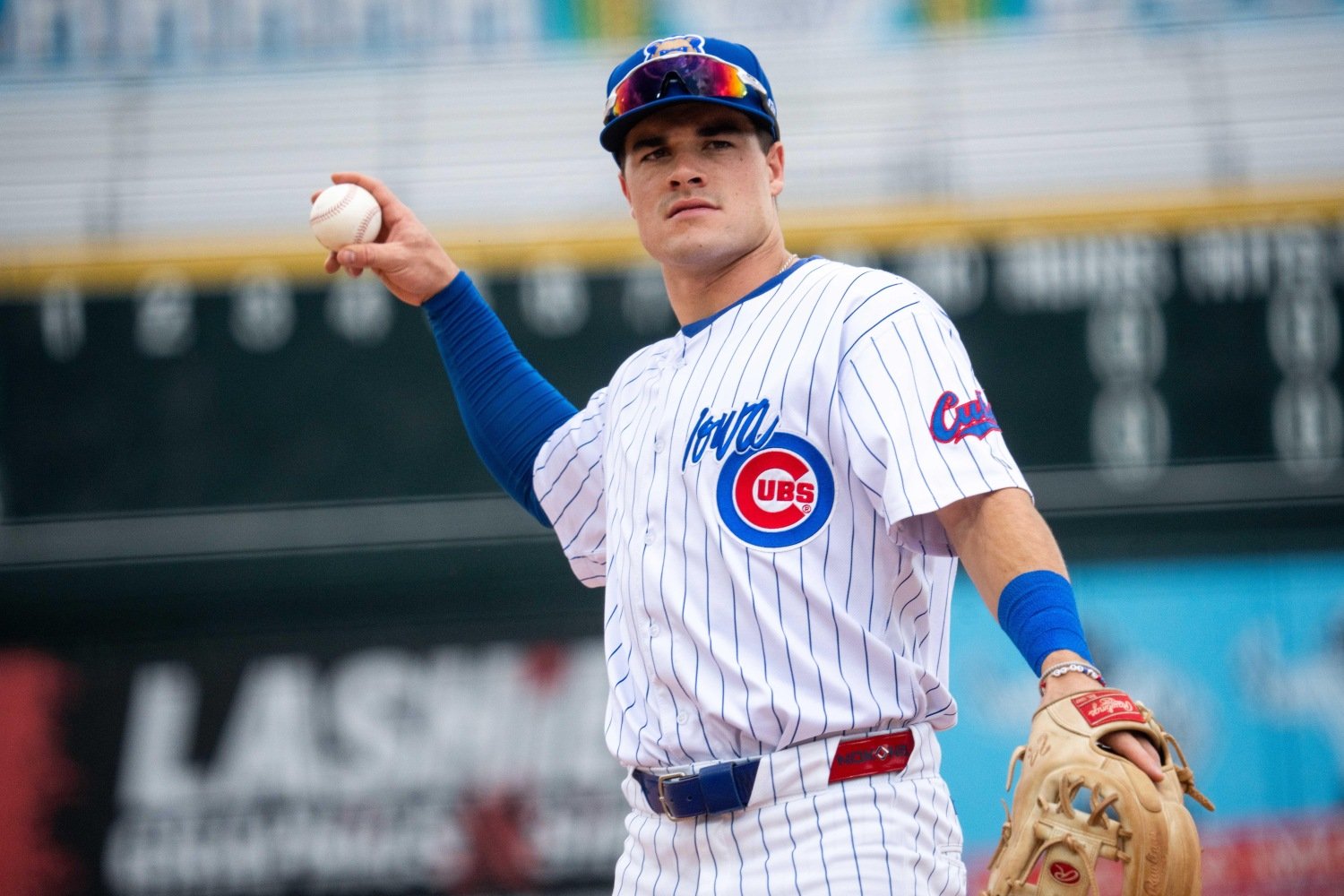 There was a point (roughly a week ago) where it looked like the Chicago Cubs might have to rely on multiple prospects to serve as an all-important “X-factor” for 2025. That term, of course, refers to a specific component of the roster that could yield important production despite not being one of the “faces” of the roster. With very few obvious offensive choices on the market, there was a possibility that the team would have to rely on the likes of Matt Shaw, Owen Caissie, Moises Ballesteros, and Kevin Alcántara to bolster an offense prone to stretches of ineptitude. Within the last week, however, that line of thought has shifted. The addition of Kyle Tucker is massive. It also likely slows down the timelines of each of Caissie and Alcántara. Signing Carson Kelly to join Miguel Amaya behind the dish does the same for Ballesteros. While the offense could stand a bit of further supplementation (as just an abstract note), the team is now in a position where the “X-factor” label now applies to only one of those marquee prospects: Matt Shaw. The Cubs had eight players appear for at least one inning at third base in 2024. Isaac Paredes is now a member of the Houston Astros (having replaced Christopher Morel when the two were traded for one another). Patrick Wisdom is headed overseas to play in the KBO. David Bote signed a minor-league deal with the Los Angeles Dodgers. Nick Madrigal is a free agent, after being non-tendered. Of those who logged time at the hot corner, only Michael Busch, Miles Mastrobuoni, and Luis Vazquez remain in the organization. Busch is locked into the opposite end of the infield, while neither Mastrobuoni nor Vazquez projects to be more than a utility piece off the bench. That's a very long way of saying that this is Shaw’s job to lose. He enters the new campaign as a consensus Top-25-ish prospect, set to fill what now stands as a complete vacancy. Barring a signing of someone like Yoán Moncada or a surprise trade for Alec Bohm, you’re looking at Shaw as the top guy in 2025, with Rule 5 pick Gage Workman and the aforementioned utility options giving him support off the bench. Shaw’s hit-to-all-fields, quality-contact, efficient-speed skillset could make him a boon to an offense that could use a little bit of extra everything. Nevertheless, it’s a risky venture to install a prospect from Day 1 of a season. You’re hoping adjustments can be made on the fly, to prevent any kind of up-and-down scenario, while also keeping an eye toward optimism that they can be a key contributor. Hence the idea of an “X-factor.” In Shaw’s case, this presents us with an interesting discussion. On one hand, you’re going to compare him (somewhat naturally) to what was a very strong rookie class last season. Many of those top first-year names had the opportunity to suit up with the big club from the jump, with the risk inherent in the decision largely paying off for both contending clubs and non-contending ones. The other side of this is the runway. You obviously want to give Shaw room to struggle, grow, and learn, without it becoming a detriment to your team. What does that look like, sample size-wise? Opening Day 2024 featured 23 rostered players who were considered to be among the top prospects in their respective organizations. Ten of those 23 were on a major-league roster for the first time. Mileage varied on those who stuck around, but of the top 10 rookie finishers in fWAR, only Jackson Merrill and Jackson Chourio made their big-league debuts at the season’s outset. The remainder of the top names in that regard—including such prospects as Colton Cowser, Masyn Winn, and Joey Ortiz—had received at least a cup of coffee in the previous season. To compare Shaw to any individual situation from last year, in terms of context, would be imperfect. There is nary a spot in the multiverse where Jackson Chourio (after his pre-debut extension) wasn’t going to be on the Milwaukee roster on Opening Day. The San Diego Padres took a leap on Merrill more out of necessity than anything, given an obscene lack of outfield depth—only for him to absolutely explode as a shortstop-turned-center fielder. Neither represents a parallel situation to that of Shaw beyond prospect pedigree (and even then, it doesn’t entirely work; they were prospects of a slightly higher caliber). Ultimately, though, it can be interesting to see that comparison directly within the second part of the above discussion. You have a handful of first-year guys coming off a very successful freshman campaign. What could they teach us about the runway that Shaw could or should get? Here are six of the top seven rookies from last year in fWAR and their wRC+ by individual month (plate appearances in parenthesis). The only exclusion is the New York Yankees’ Austin Wells, given how different the positional context is for a catcher: Player Mar./Apr. May June July August Sept. J. Merrill (SD) 98 (110) 86 (89) 176 (108) 90 (90) 164 (109) 156 (87) C. Cowser (BAL) 182 (86) 70 (95) 92 (84) 162 (82) 106 (122) 117 (92) J. Chourio (MIL) 68 (106) 51 (68) 144 (80) 143 (88) 156 (121) 123 (110) M. Winn (STL) 120 (94) 121 (85) 87 (113) 101 (115) 127 (123) 69 (107) L. Butler (OAK) 88 (77) 11 (32) 13 (29) 241 (98) 146 (103) 115 (100) J. Ortiz (MIL) 125 (78) 167 (88) 110 (85) 22 (63) 79 (100) 102 (97) I’m painting with a very broad brush here, both in terms of using a comprehensive metric and stripping all other context (injury, roster, etc.). But the mixture is interesting. You have a handful of guys who started out hot (Cowser, Winn, Ortiz) and those who stumbled (Chourio, Butler). Merrill was largely fine early, before exploding during the summer months. Regardless of additional factors and when their adjustment transpired, each of these names finished as one of the top rookies in the sport last year. And only Butler was sent down for any extended period (roughly a month from May to June). For a fun (and still overly generalized) comparison, here are Shaw’s month-to-month splits (since minor-league splits aren’t available on FanGraphs, I’m just going to roll with OPS, courtesy of Baseball-Reference, for the sake of ease; Shaw was in Double-A from the start through July. Aug. 4 was his last game prior to his promotion to Iowa.): Player April May June July August September Matt Shaw .810 (75) .683 (119) .901 (97) 1.061 (59) .852 (93) 1.011 (80) Shaw came out hot in April and needed to adjust in May at a level (Double A) in which he had only 70 plate appearances the year before. The same was true in August. He was solid after the promotion, but took off in September once he’d settled into it. If we’re going to glean anything from Shaw’s OPS throughout the year, it’ll probably feature about the same level of overgeneralization as the names above. It’s a good thing I’m not trying to prove any point other than this: if you’re going to give Shaw a look, he needs the runway. Whether it’s a matter of a hot start and then an adjustment by opposing pitchers; a slow start with the adjustment needed from his debut; or any other combination of a stretch, if you’re giving him the look, then he should get the full look. Four of the six players above were on playoff teams. The Athletics’ offense was probably more potent than you realized. Only Winn played for a team with poor offensive production across the board. Regardless, each team above was willing to let things play out through various stretches (save Butler’s brief demotion). Shaw is set to fill a position of need. For that reason alone, he has the opportunity to be an X-factor for this team in the way that each of the above names was. Cowser & Ortiz did it from the jump. Merrill rounded into form as the year went on. Chourio needed a little bit of extra time before the breakout manifested. Each offense, though, had the pieces around them to survive while the adjustments took place. With Tucker now rostered and the DH spot potentially keeping Seiya Suzuki healthy enough to realize his offensive upside, they should be led by a couple of high-quality bats and a collection of solid (if unspectacular) ones. As such, that same type of infrastructure should be in place to allow Shaw the necessary time to adjust, whenever it comes. And given how long the Cubs rode out Christopher Morel’s brutal defense at third base, we have no reason to think that he won’t be given a long stretch over which to prove his mettle.
 -
 Roughly a year ago, the Chicago Cubs were without a few things: A first baseman. A third baseman. A star. (Cash! Jobs! Hope! Wait.) Coming into this winter, we thought two out of the three had been settled. The emergence of Michael Busch and the (re-)addition of Isaac Paredes appeared to settle the corners for at least the next handful of years, even if the star had to wait. Now, though, the Cubs have a star. Alas, it came at the expense of some of that corner infield stability that they were able to finally realize, with Paredes now a member of the Houston Astros. I doubt you’ll find anyone with a grievance to air about it. In fact, I imagine most are downright chuffed at surrendering that third-base stability in the name of a Kyle Tucker addition. Regardless of the excitement there, however, the reality is that the Cubs now must return to the drawing board and fill their third-base vacancy anew. The broad assumption is that the job will eventually land with top prospect Matt Shaw. The Tucker trade—specifically, the subtraction of Paredes—appears to have made a Nico Hoerner trade less likely. This leaves just one infield spot available for Shaw’s impending breakthrough. He appeared at the spot more than 60 times in 2024, likely due to the Cubs having an eye on that very scenario playing out. It’s the most likely scenario, regardless of what the rest of the winter looks like. Contingencies are important, though. While Shaw will likely get the bulk of the opportunity to run out as the team’s Opening Day third sacker, there remains a possibility that the team examines a shorter-term option on the trade front or via free agency in case they’d like Shaw to get a touch more seasoning in Iowa to start the year. Neither market offers an abundance of enticing options, at least outside of an unrealistic Alex Bregman pursuit. But given that the team isn’t necessarily looking for someone to hold down the fort beyond 2025, there’s an old friend from across town who could maybe, perhaps do the job: Yoán Moncada. It wasn’t so long ago that Moncada was one of the game’s most intriguing prospects. Though we haven’t seen him at his best since 2019, it stands to reason that the former Boston Red Sox signee out of Cuba represents an intriguing stopgap at the position. Moncada’s upside has always been tantalizing. It’s why he was a centerpiece of the Chris Sale trade back in 2016. His 2019 season (wherein he finished with a .367 OBP, .233 ISO, and 139 wRC+) lends credence to such intrigue. While he was still an above-average hitter as recently as 2021, the power never really manifested that way again. Nevertheless, there’s still an approach there, as Moncada has cut his whiff rate and maintained a steady on-base rate in the subsequent years. In a Cub-specific context, the switch-hitting Moncada could provide value against right-handed pitching in particular. His career wRC+ against righties sits at 110, with an ISO of .180 and a walk rate at an even 10.0%. He’s made hard contact at a rate eight percent higher than against lefties (38.2 percent). Last year’s Cubs third basemen ISO’d .135 (25th), walked just 6.5 percent of the time (29th), and made hard contact at a 28.1 percent clip against right-handed pitching. Nor is it as if Moncada’s unplayable against southpaws. The strikeout, walk, and related on-base figures are all pretty similar. Ultimately, you’re sacrificing some power, but not much else. It’s a skill set that wouldn’t at all be out of place in the Cubs’ lineup. It could be an asset, even. That’s also to say nothing of his defense. Moncada has long been a solid defender, posting a Fielding Run Value of 6 and Outs Above Average of 8 for his career at third base. His worst full season in either metric came in at -1 (both in 2023), indicating that you’re getting at least average defense at the spot. Given how long the Cubs ran Christopher Morel out at third base last year, one imagines that the stability he provides on that side of the ball would be a welcome one for as long as he’s needed. Of course, you’d have to be foolish to throw out the ‘stability’ word in relation to Moncada, given how the health aspect of his game has gone in recent years. FOX Sports notes 19 different injuries since the start of the 2018 season. While not all required a trip to the Injured List, his game totals since 2021 read 144, 104, 92, and 12. That, my friends, is a significant caveat to attach to an argument in favor of signing anyone. If your goal is stability—even (or especially) as a contingency—it wouldn’t be prudent to rely too much on Moncada's ability to stay on the field, let alone perform at a level that would exceed that of Shaw while the latter makes his adjustment to the big-league level. I do, though, think that the right deal would make Moncada a good fit as a member of the 2025 Chicago Cubs. A one-year pact with a motivated player who could provide steady, solid play at a position of need isn’t an unwise investment. A risk? Yes. An unfounded one? Not even a little bit. It's slightly, pleasingly reminiscent of the gamble the team took on Cody Bellinger two winters ago. You’re not moving Michael Busch. Gage Workman isn’t getting a starting run. Shaw is the option at this point. And while it’s very likely that he’s on the cusp of breaking through to the top level, you can’t punt any alternative routes in favor of that sole solution. This is a 29-year-old player likely looking to rebuild some value, in hopes of getting a multi-year deal next winter. If you’re looking to give some breathing room to Shaw, Moncada represents just that—plus some upside.
 -
Look, signing the rakishly handsome wayward former star derailed by injuries worked once. Maybe it's worth another roll. Image courtesy of © Rick Scuteri-Imagn Images Roughly a year ago, the Chicago Cubs were without a few things: A first baseman. A third baseman. A star. (Cash! Jobs! Hope! Wait.) Coming into this winter, we thought two out of the three had been settled. The emergence of Michael Busch and the (re-)addition of Isaac Paredes appeared to settle the corners for at least the next handful of years, even if the star had to wait. Now, though, the Cubs have a star. Alas, it came at the expense of some of that corner infield stability that they were able to finally realize, with Paredes now a member of the Houston Astros. I doubt you’ll find anyone with a grievance to air about it. In fact, I imagine most are downright chuffed at surrendering that third-base stability in the name of a Kyle Tucker addition. Regardless of the excitement there, however, the reality is that the Cubs now must return to the drawing board and fill their third-base vacancy anew. The broad assumption is that the job will eventually land with top prospect Matt Shaw. The Tucker trade—specifically, the subtraction of Paredes—appears to have made a Nico Hoerner trade less likely. This leaves just one infield spot available for Shaw’s impending breakthrough. He appeared at the spot more than 60 times in 2024, likely due to the Cubs having an eye on that very scenario playing out. It’s the most likely scenario, regardless of what the rest of the winter looks like. Contingencies are important, though. While Shaw will likely get the bulk of the opportunity to run out as the team’s Opening Day third sacker, there remains a possibility that the team examines a shorter-term option on the trade front or via free agency in case they’d like Shaw to get a touch more seasoning in Iowa to start the year. Neither market offers an abundance of enticing options, at least outside of an unrealistic Alex Bregman pursuit. But given that the team isn’t necessarily looking for someone to hold down the fort beyond 2025, there’s an old friend from across town who could maybe, perhaps do the job: Yoán Moncada. It wasn’t so long ago that Moncada was one of the game’s most intriguing prospects. Though we haven’t seen him at his best since 2019, it stands to reason that the former Boston Red Sox signee out of Cuba represents an intriguing stopgap at the position. Moncada’s upside has always been tantalizing. It’s why he was a centerpiece of the Chris Sale trade back in 2016. His 2019 season (wherein he finished with a .367 OBP, .233 ISO, and 139 wRC+) lends credence to such intrigue. While he was still an above-average hitter as recently as 2021, the power never really manifested that way again. Nevertheless, there’s still an approach there, as Moncada has cut his whiff rate and maintained a steady on-base rate in the subsequent years. In a Cub-specific context, the switch-hitting Moncada could provide value against right-handed pitching in particular. His career wRC+ against righties sits at 110, with an ISO of .180 and a walk rate at an even 10.0%. He’s made hard contact at a rate eight percent higher than against lefties (38.2 percent). Last year’s Cubs third basemen ISO’d .135 (25th), walked just 6.5 percent of the time (29th), and made hard contact at a 28.1 percent clip against right-handed pitching. Nor is it as if Moncada’s unplayable against southpaws. The strikeout, walk, and related on-base figures are all pretty similar. Ultimately, you’re sacrificing some power, but not much else. It’s a skill set that wouldn’t at all be out of place in the Cubs’ lineup. It could be an asset, even. That’s also to say nothing of his defense. Moncada has long been a solid defender, posting a Fielding Run Value of 6 and Outs Above Average of 8 for his career at third base. His worst full season in either metric came in at -1 (both in 2023), indicating that you’re getting at least average defense at the spot. Given how long the Cubs ran Christopher Morel out at third base last year, one imagines that the stability he provides on that side of the ball would be a welcome one for as long as he’s needed. Of course, you’d have to be foolish to throw out the ‘stability’ word in relation to Moncada, given how the health aspect of his game has gone in recent years. FOX Sports notes 19 different injuries since the start of the 2018 season. While not all required a trip to the Injured List, his game totals since 2021 read 144, 104, 92, and 12. That, my friends, is a significant caveat to attach to an argument in favor of signing anyone. If your goal is stability—even (or especially) as a contingency—it wouldn’t be prudent to rely too much on Moncada's ability to stay on the field, let alone perform at a level that would exceed that of Shaw while the latter makes his adjustment to the big-league level. I do, though, think that the right deal would make Moncada a good fit as a member of the 2025 Chicago Cubs. A one-year pact with a motivated player who could provide steady, solid play at a position of need isn’t an unwise investment. A risk? Yes. An unfounded one? Not even a little bit. It's slightly, pleasingly reminiscent of the gamble the team took on Cody Bellinger two winters ago. You’re not moving Michael Busch. Gage Workman isn’t getting a starting run. Shaw is the option at this point. And while it’s very likely that he’s on the cusp of breaking through to the top level, you can’t punt any alternative routes in favor of that sole solution. This is a 29-year-old player likely looking to rebuild some value, in hopes of getting a multi-year deal next winter. If you’re looking to give some breathing room to Shaw, Moncada represents just that—plus some upside. View full article
-
Kyle Tucker Shifts The Entire Narrative Around Jed Hoyer & The Cubs
RandallPnkFloyd posted an article in Cubs
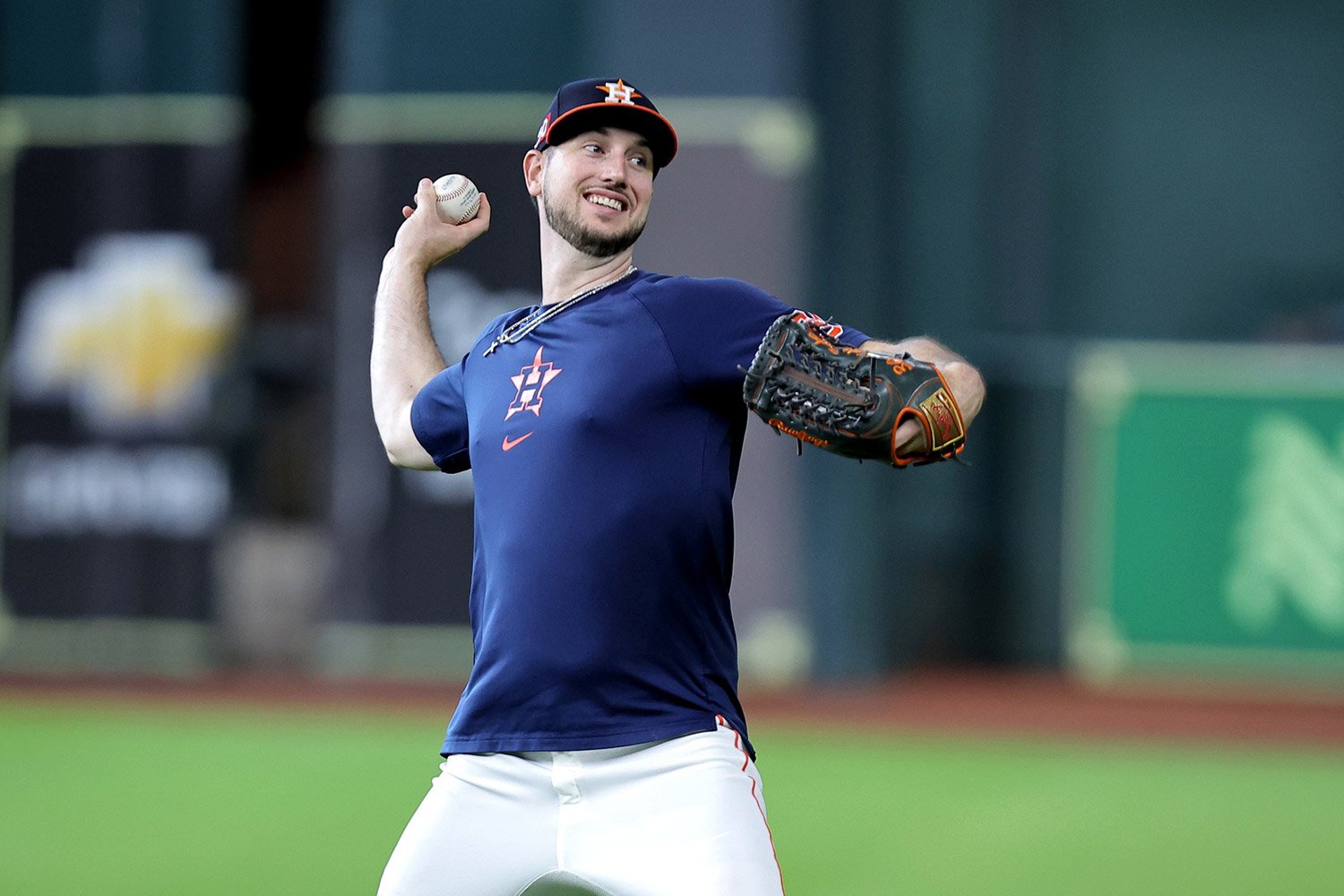 Friday’s trade for Kyle Tucker certainly changes things. Kyle Tucker is an elite baseball player. Since 2021, only a dozen players have been worth more fWAR than Tucker’s 19.1. Only nine feature a better wRC+ than Tucker’s 145. His K% (15.1) is among the 30 best out of more than 300 qualifying players over that time. His BB% (11.3) is in the top 40. His ISO (.247) is in the ten best, while his on-base percentage (.362) is in the top 20. He’s also stolen 80 bases and has been well above average on the defensive side. There is almost nothing that transpires between the white lines in which Kyle Tucker does not excel. Even in their success at the end of the 2010s, the Cubs didn’t have a player of this caliber. Sure, players like Anthony Rizzo, Kris Bryant, and Javíer Báez each possessed the capability of performing at an elite level. And there was a certain level of sentimental value associated with them. However, none of them were considered genuinely elite players over such a stretch as Tucker has in the last handful of seasons. This is an objectively extraordinary baseball player who now gets to play half of his games at Wrigley Field. My purpose here wasn’t necessarily to wax poetic over the Cubs’ newest addition. That’s a natural byproduct of the caliber of player we’re talking about here. Instead, there’s a worthy conversation about the narrative shift that this presents for the Cubs. An increasingly large segment of the Cub fan collective has been critical of the conservative nature of the organization’s Jed Hoyer-led front office. Even one such as me, who has self-exiled from social media, can still find this across various other media. It’s the prevailing criticism and one that made it seem as if this offseason would be yet another one of improving on the margins without instituting meaningful change to shift fortunes in 2025. While a singular trade can’t overhaul an entire narrative, this one does as much to rehabilitate the front office's perception as any individual could. What the Cubs had to give up wasn’t nothing. Isaac Paredes was supposed to be one of the steadier bats for ’25. Hayden Wesneski is projected to be a valuable arm, given his versatility. Cam Smith was a wildly exciting offensive talent for his short time in the system. Acquiring a top-tier player requires a certain level of discomfort. It’s that very discomfort that we did not feel Hoyer & Co. could accept in pursuit of meaningful improvement. But the Cubs were in a situation where almost no collection of players & prospects would be deemed “too much” in a trade for someone like Kyle Tucker. He changes the construction of this lineup from likely middling to possessing a certain level of potential. Instead of needing all of the pieces to come together at once for offensive success to occur, the complementary bats can thrive in their complementary roles. One player doesn’t make a team, but this one player should help the infrastructure around him to maximize their respective skill sets. Even with the offseason still in its relative infancy, the narrative surrounding this lineup changes immediately for the better. It's won all around for the team itself and the people responsible for its construction. At least from a narrative standpoint. And while there is logic in staying measured and not going in on any one season, certain things still have to happen for the front office to shed that negative perception and move in the direction of Jed Hoyer’s heralded “next great Cubs team.” It will require additional sacrifice, whether in terms of finances or prospects. There are additional steps here. What happened on Friday was important. What happens next isn’t any less.
 -
If you’ve followed my writing in this space for any stretch of time, you know that I’ve been clamoring for offensive impact since the jump. Over the last handful of years, the Chicago Cubs have been led by a collection of good baseball players. A group of hitters that serve largely as complementary bats but without a true catalyst to lead them. And it’s the source of a somewhat unquantifiable amount of their stretches of offensive ineptitude. Image courtesy of © Erik Williams-Imagn Images Friday’s trade for Kyle Tucker certainly changes things. Kyle Tucker is an elite baseball player. Since 2021, only a dozen players have been worth more fWAR than Tucker’s 19.1. Only nine feature a better wRC+ than Tucker’s 145. His K% (15.1) is among the 30 best out of more than 300 qualifying players over that time. His BB% (11.3) is in the top 40. His ISO (.247) is in the ten best, while his on-base percentage (.362) is in the top 20. He’s also stolen 80 bases and has been well above average on the defensive side. There is almost nothing that transpires between the white lines in which Kyle Tucker does not excel. Even in their success at the end of the 2010s, the Cubs didn’t have a player of this caliber. Sure, players like Anthony Rizzo, Kris Bryant, and Javíer Báez each possessed the capability of performing at an elite level. And there was a certain level of sentimental value associated with them. However, none of them were considered genuinely elite players over such a stretch as Tucker has in the last handful of seasons. This is an objectively extraordinary baseball player who now gets to play half of his games at Wrigley Field. My purpose here wasn’t necessarily to wax poetic over the Cubs’ newest addition. That’s a natural byproduct of the caliber of player we’re talking about here. Instead, there’s a worthy conversation about the narrative shift that this presents for the Cubs. An increasingly large segment of the Cub fan collective has been critical of the conservative nature of the organization’s Jed Hoyer-led front office. Even one such as me, who has self-exiled from social media, can still find this across various other media. It’s the prevailing criticism and one that made it seem as if this offseason would be yet another one of improving on the margins without instituting meaningful change to shift fortunes in 2025. While a singular trade can’t overhaul an entire narrative, this one does as much to rehabilitate the front office's perception as any individual could. What the Cubs had to give up wasn’t nothing. Isaac Paredes was supposed to be one of the steadier bats for ’25. Hayden Wesneski is projected to be a valuable arm, given his versatility. Cam Smith was a wildly exciting offensive talent for his short time in the system. Acquiring a top-tier player requires a certain level of discomfort. It’s that very discomfort that we did not feel Hoyer & Co. could accept in pursuit of meaningful improvement. But the Cubs were in a situation where almost no collection of players & prospects would be deemed “too much” in a trade for someone like Kyle Tucker. He changes the construction of this lineup from likely middling to possessing a certain level of potential. Instead of needing all of the pieces to come together at once for offensive success to occur, the complementary bats can thrive in their complementary roles. One player doesn’t make a team, but this one player should help the infrastructure around him to maximize their respective skill sets. Even with the offseason still in its relative infancy, the narrative surrounding this lineup changes immediately for the better. It's won all around for the team itself and the people responsible for its construction. At least from a narrative standpoint. And while there is logic in staying measured and not going in on any one season, certain things still have to happen for the front office to shed that negative perception and move in the direction of Jed Hoyer’s heralded “next great Cubs team.” It will require additional sacrifice, whether in terms of finances or prospects. There are additional steps here. What happened on Friday was important. What happens next isn’t any less. View full article
-
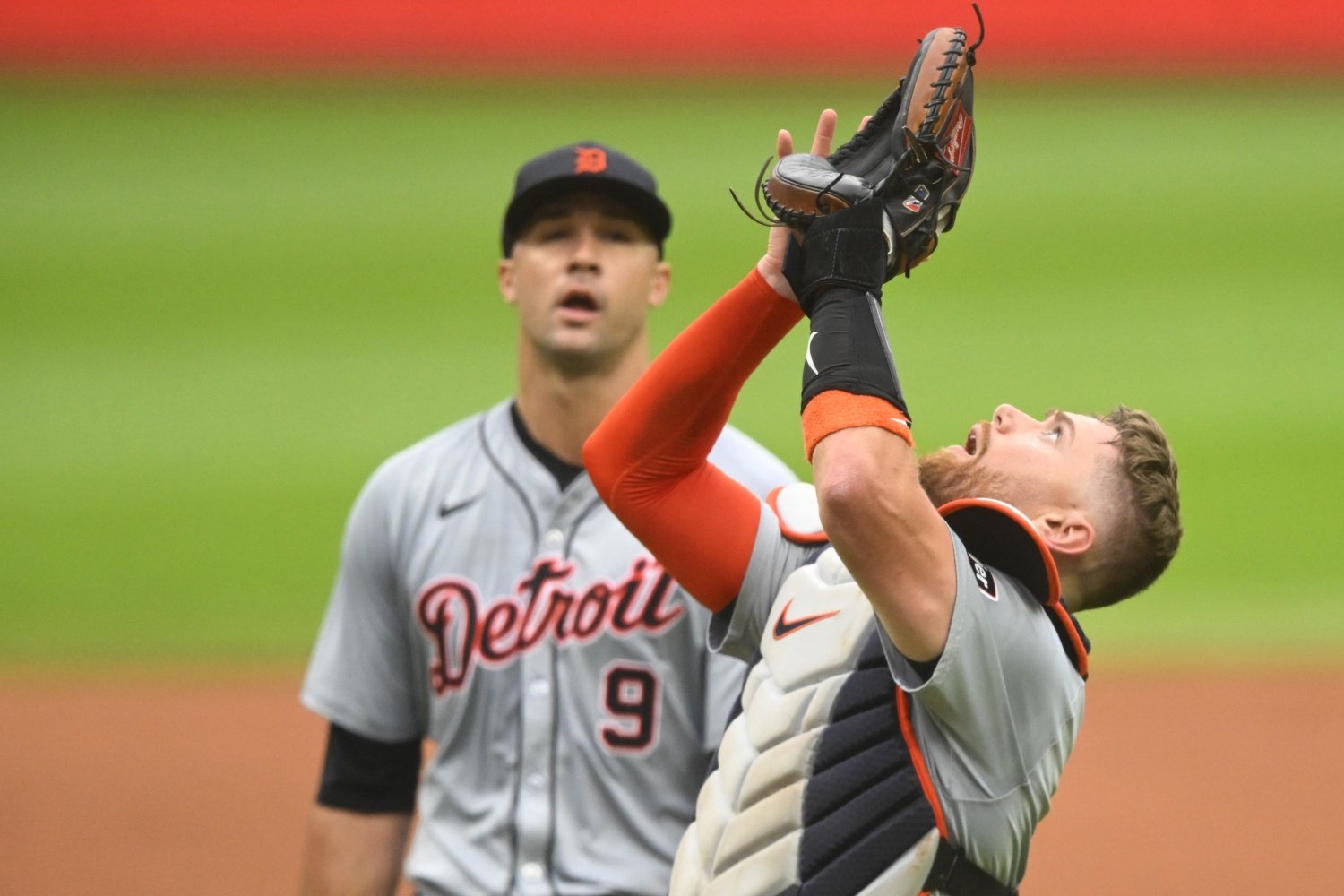 As the offseason got underway, we knew that the free-agent options behind the dish were slim pickings, both in terms of volume and overall appeal. The path to a signing quickly grew even narrower, with Travis d’Arnaud, Kyle Higashioka, and Danny Jansen each finding homes within the last couple of weeks. This left Carson Kelly the most desirable of the options on the market. The Cubs were able to quickly nail him down in the early hours of this week’s festivities in Dallas. While there are obviously areas of impact to which the team should seek to add throughout the roster, the signing of Kelly—or whichever of the above names would have hypothetically signed—is a crucial one for the 2025 Cubs, on a couple of different fronts. As things stood, the Cubs were prepared to roll into the new year with Miguel Amaya entrenched as the No. 1 backstop. He was to be followed by Matt Thaiss who, with any luck, would’ve been supplanted at some point during the year by Moises Ballesteros. But the former offers very little with the bat and we’re not quite sure where Ballesteros’s glove is going to be in the short term. The current construction offered too much uncertainty. Enter Kelly. From a defensive standpoint, it’s very possible that he was actually the best the market had to offer. Matt Trueblood looked at various options earlier today, with Kelly grading out as the most comprehensive catcher the market had to offer. Baseball Prospectus’s CDA metric had Kelly (1.8) 19th out of 65 catchers with at least 200 innings, trailing only Kyle Higashioka among available options and ahead of names like d’Arnaud, Jansen, and Amaya. Where he really excels is where Amaya doesn’t: controlling the running game. His Throwing Runs figure of 2.0 put him in the top six among that group of catchers, and his SRAA (swipe rate above average) puts him in the top seven. While Amaya showcased some defensive growth last year, a wholly solid defensive catcher who compensates in perhaps Amaya’s most problematic aspect is the perfect supplement. The other area in which Kelly will be a suitable no. 2 is on the offensive side of the ball. Despite Amaya’s improvements, the Cubs needed a complementary offensive catcher for two reasons. Reason 1: We don’t know how sustainable Amaya’s second-half breakout actually is quite yet. Reason 2: Amaya has notable reverse splits regardless. The Cubs needed a stable offensive presence who hits lefties well. Kelly is that. Kelly has gone for a 117 wRC+ against southpaws for his career (against 71 vs. right-handed pitching), with a .348 OBP and .207 ISO among the numbers. He’s not an overall upgrade, given that he’s only gone for a cumulative wRC+ of at least 99 in three of the last six years, but he’ll provide exactly the type of support that the team needed to add to Amaya in the short-term. There's also a bit of harmony in the way they each attack pitches, and the pitch shapes that do and don't work against them. Just for one example: Since the start of 2023, Kelly has a brutal .254 xwOBA on high fastballs in the zone, but Amaya's is a solid .343. On anything in the lower third of the zone, by contrast, Kelly's xwOBA is .314, against Amaya's .272. There are matchups the team should be able to play to maximize production from these two, above and beyond handedness. The possibility exists that Kelly not only supplements Amaya in 2025, but surpasses him. Such a sequence of events could throw the longer-term outlook behind the plate out of whack. That’s me being excited about the skill set as a supplement and a bit pessimistic on Amaya’s 2024 second half, and, as such, is not our concern at present. On paper, in the meantime, it’s sort of the ideal move for the current construction of this roster.
 -
The Chicago Cubs made perhaps their most necessary move right at the outset of the Winter Meetings on Monday, as it was reported that the team was close to a contract with catcher Carson Kelly. Image courtesy of © David Richard-Imagn Images As the offseason got underway, we knew that the free-agent options behind the dish were slim pickings, both in terms of volume and overall appeal. The path to a signing quickly grew even narrower, with Travis d’Arnaud, Kyle Higashioka, and Danny Jansen each finding homes within the last couple of weeks. This left Carson Kelly the most desirable of the options on the market. The Cubs were able to quickly nail him down in the early hours of this week’s festivities in Dallas. While there are obviously areas of impact to which the team should seek to add throughout the roster, the signing of Kelly—or whichever of the above names would have hypothetically signed—is a crucial one for the 2025 Cubs, on a couple of different fronts. As things stood, the Cubs were prepared to roll into the new year with Miguel Amaya entrenched as the No. 1 backstop. He was to be followed by Matt Thaiss who, with any luck, would’ve been supplanted at some point during the year by Moises Ballesteros. But the former offers very little with the bat and we’re not quite sure where Ballesteros’s glove is going to be in the short term. The current construction offered too much uncertainty. Enter Kelly. From a defensive standpoint, it’s very possible that he was actually the best the market had to offer. Matt Trueblood looked at various options earlier today, with Kelly grading out as the most comprehensive catcher the market had to offer. Baseball Prospectus’s CDA metric had Kelly (1.8) 19th out of 65 catchers with at least 200 innings, trailing only Kyle Higashioka among available options and ahead of names like d’Arnaud, Jansen, and Amaya. Where he really excels is where Amaya doesn’t: controlling the running game. His Throwing Runs figure of 2.0 put him in the top six among that group of catchers, and his SRAA (swipe rate above average) puts him in the top seven. While Amaya showcased some defensive growth last year, a wholly solid defensive catcher who compensates in perhaps Amaya’s most problematic aspect is the perfect supplement. The other area in which Kelly will be a suitable no. 2 is on the offensive side of the ball. Despite Amaya’s improvements, the Cubs needed a complementary offensive catcher for two reasons. Reason 1: We don’t know how sustainable Amaya’s second-half breakout actually is quite yet. Reason 2: Amaya has notable reverse splits regardless. The Cubs needed a stable offensive presence who hits lefties well. Kelly is that. Kelly has gone for a 117 wRC+ against southpaws for his career (against 71 vs. right-handed pitching), with a .348 OBP and .207 ISO among the numbers. He’s not an overall upgrade, given that he’s only gone for a cumulative wRC+ of at least 99 in three of the last six years, but he’ll provide exactly the type of support that the team needed to add to Amaya in the short-term. There's also a bit of harmony in the way they each attack pitches, and the pitch shapes that do and don't work against them. Just for one example: Since the start of 2023, Kelly has a brutal .254 xwOBA on high fastballs in the zone, but Amaya's is a solid .343. On anything in the lower third of the zone, by contrast, Kelly's xwOBA is .314, against Amaya's .272. There are matchups the team should be able to play to maximize production from these two, above and beyond handedness. The possibility exists that Kelly not only supplements Amaya in 2025, but surpasses him. Such a sequence of events could throw the longer-term outlook behind the plate out of whack. That’s me being excited about the skill set as a supplement and a bit pessimistic on Amaya’s 2024 second half, and, as such, is not our concern at present. On paper, in the meantime, it’s sort of the ideal move for the current construction of this roster. View full article
-
As was largely expected, Juan Soto’s destination for 2024 and beyond was revealed on the eve of the Winter Meetings. With Soto now set to play his home games in Queens, the rest of the league can get busy on what should be a fairly active week. Image courtesy of © Ken Blaze-Imagn Images The Chicago Cubs, specifically, were never in on Juan Soto. It’s a hideous truth—he’s exactly the type of player that a team in this market, with this notable an offensive need, should have written a blank check for—but one to which we collectively resigned ourselves some time ago. Nevertheless, the signing does bear significant ramifications on the organization, both in the short and the long term. The first affected party is the most obvious: Cody Bellinger. The New York Yankees have reportedly long been hot for the Cubs’ outfielder/first baseman. Now that they have a glaring hole in their lineup wrought by Soto’s departure, he is perhaps the easy candidate to slide in as a new left-handed bat. With an existing void at first base and now one in the outfield, they are the team that could utilize him in the most effective ways, with Bellinger's power likely to benefit from playing half his games at Yankee Stadium. We’ve heard that the Cubs have shopped Bellinger heavily to date this offseason. But we’ve also been cautioned that the return could be minimal. Dumping Bellinger for the sole sake of creating payroll flexibility and giving a clearer path to some of your upper-minors bats isn’t entirely logical on its own, given the safety net he provides for the Pete Crow-Armstrong-Michael Busch-Seiya Suzuki portion of the roster. But it stands to reason that the Cubs could have gained a bit of leverage—on the Yankees, or on someone else—in the wake of Soto’s Mets signing. The team won't trade Bellinger unless they see a way that it can make them better; maybe the number of possible deals that satisfy that criterion just got larger. There’s also a similar angle here that provides a challenge for the Cubs. We don’t have a deep-rooted knowledge of other bats who could be had on the trade market. But with the organization seemingly preferring that route of adding talent to the roster, does this create competition for the Cubs in their own pursuit of an offensive upgrade? This component of the fallout is far murkier given that lack of knowledge, but it’s possible that the same leverage the Cubs might’ve gained in attempting to trade Cody Bellinger now exists elsewhere when they go asking. Ultimately, the transactional components of the Soto fallout run pretty deep. The markets have been largely busy on the pitching side thus far in the offseason (save the Willy Adames deal), but this was seen as the move that would open things up on the positional side. Whether it’s a trade of Bellinger or some other maneuver, we should expect some activity there that both involves and impacts the Cubs in the coming days. At the same time, we shouldn’t underestimate the impact this has on 2025. The Mets were a surprise contender in the run they were able to make in ’24. They’re not a surprise anymore, and are even less so with the Soto addition. That means you’re looking at the Mets, Philadelphia Phillies, and Atlanta as surefire contenders in the National League. Washington could make some inroads toward contention with supplements to their young roster. Out west, you’ve got the Los Angeles Dodgers, San Diego Padres, and Arizona Diamondbacks, with the Giants also lurking. This is to say nothing of the NL Central, with Milwaukee the established contender and both Cincinnati and Pittsburgh on their way. This creates a massively complicated playoff picture on paper—one that could very well create a sense of urgency for Jed Hoyer and the front office that might not've been there before. Sure, the expanded Wild Card Series has opened up additional postseason opportunities. That picture runs so deep that the onus is now on the front office to not only make marginal improvements to the roster, but genuinely meaningful ones. Does Hoyer have that in his arsenal? We’ve heard buzz of potential trade talks and various activity. But Soto’s return to the National League puts the Cubs in a position where they have to pursue meaningful changes, which is a good thing for us, I suppose. However, it will also push Hoyer & Co. beyond their typical comfort zone. Of course, the Bellinger aspect comes first. Whether it’s the Yankees, Phillies, or any of the handful of other teams we've heard connected with them, one imagines that the Cubs will pivot to immediately pursuing their desired move in the coming days. But the impact runs far deeper in terms of the quality of additions made to the Cubs’ own roster in the impending stretch of time. It’s created a challenge for the organization to generate an actual presence in a massively crowded National League. Can they rise to it? View full article
-
 The Chicago Cubs, specifically, were never in on Juan Soto. It’s a hideous truth—he’s exactly the type of player that a team in this market, with this notable an offensive need, should have written a blank check for—but one to which we collectively resigned ourselves some time ago. Nevertheless, the signing does bear significant ramifications on the organization, both in the short and the long term. The first affected party is the most obvious: Cody Bellinger. The New York Yankees have reportedly long been hot for the Cubs’ outfielder/first baseman. Now that they have a glaring hole in their lineup wrought by Soto’s departure, he is perhaps the easy candidate to slide in as a new left-handed bat. With an existing void at first base and now one in the outfield, they are the team that could utilize him in the most effective ways, with Bellinger's power likely to benefit from playing half his games at Yankee Stadium. We’ve heard that the Cubs have shopped Bellinger heavily to date this offseason. But we’ve also been cautioned that the return could be minimal. Dumping Bellinger for the sole sake of creating payroll flexibility and giving a clearer path to some of your upper-minors bats isn’t entirely logical on its own, given the safety net he provides for the Pete Crow-Armstrong-Michael Busch-Seiya Suzuki portion of the roster. But it stands to reason that the Cubs could have gained a bit of leverage—on the Yankees, or on someone else—in the wake of Soto’s Mets signing. The team won't trade Bellinger unless they see a way that it can make them better; maybe the number of possible deals that satisfy that criterion just got larger. There’s also a similar angle here that provides a challenge for the Cubs. We don’t have a deep-rooted knowledge of other bats who could be had on the trade market. But with the organization seemingly preferring that route of adding talent to the roster, does this create competition for the Cubs in their own pursuit of an offensive upgrade? This component of the fallout is far murkier given that lack of knowledge, but it’s possible that the same leverage the Cubs might’ve gained in attempting to trade Cody Bellinger now exists elsewhere when they go asking. Ultimately, the transactional components of the Soto fallout run pretty deep. The markets have been largely busy on the pitching side thus far in the offseason (save the Willy Adames deal), but this was seen as the move that would open things up on the positional side. Whether it’s a trade of Bellinger or some other maneuver, we should expect some activity there that both involves and impacts the Cubs in the coming days. At the same time, we shouldn’t underestimate the impact this has on 2025. The Mets were a surprise contender in the run they were able to make in ’24. They’re not a surprise anymore, and are even less so with the Soto addition. That means you’re looking at the Mets, Philadelphia Phillies, and Atlanta as surefire contenders in the National League. Washington could make some inroads toward contention with supplements to their young roster. Out west, you’ve got the Los Angeles Dodgers, San Diego Padres, and Arizona Diamondbacks, with the Giants also lurking. This is to say nothing of the NL Central, with Milwaukee the established contender and both Cincinnati and Pittsburgh on their way. This creates a massively complicated playoff picture on paper—one that could very well create a sense of urgency for Jed Hoyer and the front office that might not've been there before. Sure, the expanded Wild Card Series has opened up additional postseason opportunities. That picture runs so deep that the onus is now on the front office to not only make marginal improvements to the roster, but genuinely meaningful ones. Does Hoyer have that in his arsenal? We’ve heard buzz of potential trade talks and various activity. But Soto’s return to the National League puts the Cubs in a position where they have to pursue meaningful changes, which is a good thing for us, I suppose. However, it will also push Hoyer & Co. beyond their typical comfort zone. Of course, the Bellinger aspect comes first. Whether it’s the Yankees, Phillies, or any of the handful of other teams we've heard connected with them, one imagines that the Cubs will pivot to immediately pursuing their desired move in the coming days. But the impact runs far deeper in terms of the quality of additions made to the Cubs’ own roster in the impending stretch of time. It’s created a challenge for the organization to generate an actual presence in a massively crowded National League. Can they rise to it?
 -
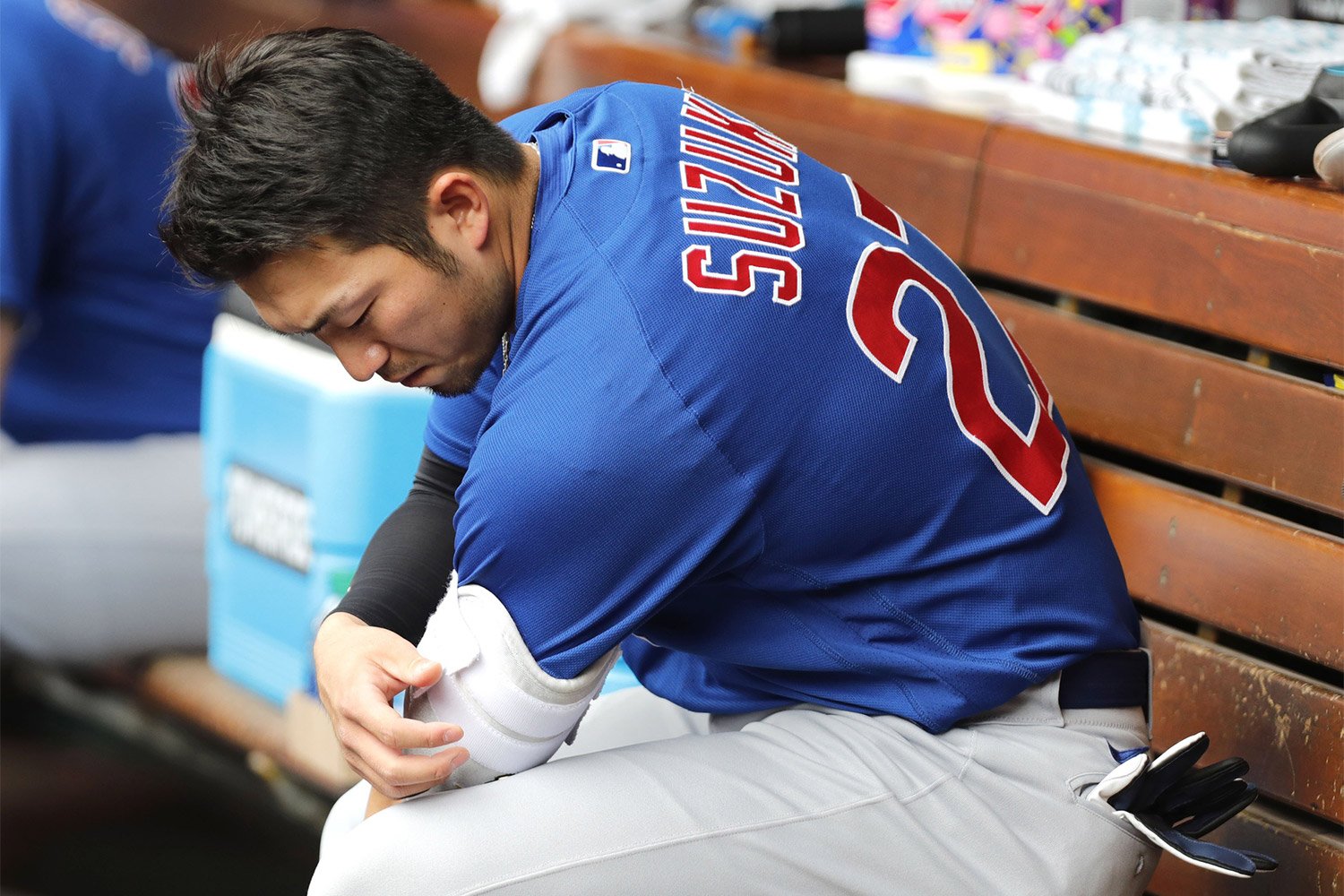 Earlier this week, Joel Sherman dropped a rather wild nugget into his argument that the New York Yankees should pursue Cody Bellinger even if they do, in fact, sign Juan Soto. Sherman reported that in addition to the Chicago Cubs’ shopping of Bellinger, they’re also pursuing a trade of fellow outfielder Seiya Suzuki. It’s important to note that the Cubs are shopping both but not aiming to trade both. It seems like an either/or to reallocate funds toward improvements elsewhere on the roster. Our friend, Brett Taylor, over at Bleacher Nation, shared his incredulity at the idea on Thursday. With respect to Suzuki, he noted both the offense provided for a team starved for offense and the more abstract concept of what this means for the intentioned pipeline the Cubs are attempting to create between Japan and the organization. While the offseason is still young, there was a point in it where I had talked myself into a trade of Seiya Suzuki as a logical one for the Cubs. My line of thinking there was primarily borne out of concern over his defense & playability in right field, which increased exponentially over the year. The Cubs aren’t a team that has appeared too keen on deploying a DH-only type of player. Given their logjam in the lineup, there was some degree of sense in it. I have since talked myself out of it in a significant way. Seiya paced the Cubs in wRC+ (138), OPS+ (also 138), on-base percentage (.366), and tied Ian Happ for the team lead in ISO (.199) among regulars. He finished 91st percentile in HardHit% while falling in the five lowest swing rates and ten lowest chase rates among qualifying position players. I’ve talked about the need for impact in this lineup. The combination of approach, contact quality, and, ultimately, impact via the ISO metric is simply something you don’t move on from in the name of financial savings. Especially given that the savings wouldn’t be all that significant. While Bellinger carries a $27.5 million tag in 2025 & $25 million in ’26, Suzuki is on the books for $19 million each of the next two years. Even if you’re limiting your roster flexibility by having him serve primarily as the team’s designated hitter, his offensive value alone likely exceeds what you end up paying him. There’s a chance such a situation also keeps him healthier over longer stretches, too, which could, logically, lead to even greater heights on the offensive side of the ball. This, of course, lands in contrast to Bellinger’s situation. In terms of wRC+, Bellinger finished fifth on the team (behind even Mike Tauchman) and saw his ISO drop by almost 60 points from 2023 to 2024 (.161). The emergence of Michael Busch as the everyday first baseman and Pete Crow-Armstrong as the everyday center fielder presses Bellinger into right-field duty. He’s an obvious upgrade over Suzuki on the defensive side, but his bat doesn’t necessarily profile to feature the type of impact you’d like from the position. To say nothing of the opportunity to upgrade the lineup in that particular spot, barring an unforeseen move from someone we expect to be on the 2025 roster. There’s nowhere else to add that isn’t already occupied (catcher doesn’t count, given the lack of desirable options). And even that is in addition to having someone like Owen Caissie banging on the door of the big-league level. None of this is to dispel any value that Cody Bellinger does bring. He’s a wonderful contingency in the event of injury or struggles to either Busch or Crow-Armstrong, in addition to the defensive stability he offers in right field. But the idea that the Cubs are determined to move one of these two contracts sits as absurd to me. I’ve accepted the fact that for the Cubs to make the additions their roster requires—whether in the lineup or on the bump—they’re going to have to move a little bit of money around. It’s incomprehensible that this team in this market needs to do so, but that’s just the reality of how ownership and the front office operate. So, moving a little bit of money is a necessity given the… context. The concept of choosing between Cody Bellinger & Seiya Suzuki to generate more payroll flexibility is almost stranger, though. Unless the team legitimately wants to clear themselves of the idea of a singular DH and maintain roster versatility in totality, there doesn’t appear to be an argument here. While not nonexistent, Bellinger’s impact pales compared to what Suzuki’s bat offers. Given that the Cubs need that skill set in their lineup specifically, the merits of exploring a trade for either one of them simply do not exist. It’s Bellinger and not Suzuki.
 -
Even if the Cubs need to create more payroll flexibility, trading Seiya Suzuki is a bad way to get there. Image courtesy of © David Kohl-Imagn Images Earlier this week, Joel Sherman dropped a rather wild nugget into his argument that the New York Yankees should pursue Cody Bellinger even if they do, in fact, sign Juan Soto. Sherman reported that in addition to the Chicago Cubs’ shopping of Bellinger, they’re also pursuing a trade of fellow outfielder Seiya Suzuki. It’s important to note that the Cubs are shopping both but not aiming to trade both. It seems like an either/or to reallocate funds toward improvements elsewhere on the roster. Our friend, Brett Taylor, over at Bleacher Nation, shared his incredulity at the idea on Thursday. With respect to Suzuki, he noted both the offense provided for a team starved for offense and the more abstract concept of what this means for the intentioned pipeline the Cubs are attempting to create between Japan and the organization. While the offseason is still young, there was a point in it where I had talked myself into a trade of Seiya Suzuki as a logical one for the Cubs. My line of thinking there was primarily borne out of concern over his defense & playability in right field, which increased exponentially over the year. The Cubs aren’t a team that has appeared too keen on deploying a DH-only type of player. Given their logjam in the lineup, there was some degree of sense in it. I have since talked myself out of it in a significant way. Seiya paced the Cubs in wRC+ (138), OPS+ (also 138), on-base percentage (.366), and tied Ian Happ for the team lead in ISO (.199) among regulars. He finished 91st percentile in HardHit% while falling in the five lowest swing rates and ten lowest chase rates among qualifying position players. I’ve talked about the need for impact in this lineup. The combination of approach, contact quality, and, ultimately, impact via the ISO metric is simply something you don’t move on from in the name of financial savings. Especially given that the savings wouldn’t be all that significant. While Bellinger carries a $27.5 million tag in 2025 & $25 million in ’26, Suzuki is on the books for $19 million each of the next two years. Even if you’re limiting your roster flexibility by having him serve primarily as the team’s designated hitter, his offensive value alone likely exceeds what you end up paying him. There’s a chance such a situation also keeps him healthier over longer stretches, too, which could, logically, lead to even greater heights on the offensive side of the ball. This, of course, lands in contrast to Bellinger’s situation. In terms of wRC+, Bellinger finished fifth on the team (behind even Mike Tauchman) and saw his ISO drop by almost 60 points from 2023 to 2024 (.161). The emergence of Michael Busch as the everyday first baseman and Pete Crow-Armstrong as the everyday center fielder presses Bellinger into right-field duty. He’s an obvious upgrade over Suzuki on the defensive side, but his bat doesn’t necessarily profile to feature the type of impact you’d like from the position. To say nothing of the opportunity to upgrade the lineup in that particular spot, barring an unforeseen move from someone we expect to be on the 2025 roster. There’s nowhere else to add that isn’t already occupied (catcher doesn’t count, given the lack of desirable options). And even that is in addition to having someone like Owen Caissie banging on the door of the big-league level. None of this is to dispel any value that Cody Bellinger does bring. He’s a wonderful contingency in the event of injury or struggles to either Busch or Crow-Armstrong, in addition to the defensive stability he offers in right field. But the idea that the Cubs are determined to move one of these two contracts sits as absurd to me. I’ve accepted the fact that for the Cubs to make the additions their roster requires—whether in the lineup or on the bump—they’re going to have to move a little bit of money around. It’s incomprehensible that this team in this market needs to do so, but that’s just the reality of how ownership and the front office operate. So, moving a little bit of money is a necessity given the… context. The concept of choosing between Cody Bellinger & Seiya Suzuki to generate more payroll flexibility is almost stranger, though. Unless the team legitimately wants to clear themselves of the idea of a singular DH and maintain roster versatility in totality, there doesn’t appear to be an argument here. While not nonexistent, Bellinger’s impact pales compared to what Suzuki’s bat offers. Given that the Cubs need that skill set in their lineup specifically, the merits of exploring a trade for either one of them simply do not exist. It’s Bellinger and not Suzuki. View full article
-
The Chicago Cubs signing of Matthew Boyd is not a complicated one to evaluate. Until it is. Image courtesy of © Kamil Krzaczynski-Imagn Images An offseason that began with aspirations of signing Max Fried quickly dissolved into collectively talking ourselves into a member of the middle tier of starters. Even with a mindset of frugality, though, the signing of Matthew Boyd came as a bit of a surprise, given the minuscule sample in which he’s garnered success in recent years. Nevertheless, he does project to at least raise the floor of the starting five. The Cubs needed some stability in their rotation. They appear to have gotten it. Now that Boyd is in tow, the projected rotation includes Justin Steele, Shota Imanaga, Jameson Taillon, Javier Assad, and Boyd. With that in mind, it is, again, not complicated. But suppose it becomes more so. Let’s say the Cubs sign an additional starter. They decide to open the wallet just slightly wider than the current millimeter and pursue an additional free-agent arm. Or, perhaps more enticing, someone like Ben Brown, Cade Horton or Brandon Birdsell latches onto a starting gig. From there, things start to get a little dicey for both the Cubs’ newest addition and one of the holdovers. I am, of course, talking about Boyd and Javier Assad. Because if the Cubs do pursue an additional arm, it puts them in a situation where you’re looking at those two as the competitors for the fifth slot in the rotation. Not that this would be a bad thing. Too many starters is, after all, a good problem that the Cubs have distanced themselves from in recent years. A breakout from someone like Brown or Birdsell would also serve as a net positive, even at the expense of either your newly-signed starter or last year’s emergent righty. But should either scenario come to fruition, what would be the best course for the Cubs? Painting the situation as simply as possible, you’re doing one of two things. Assad or Boyd moving to the bullpen, while the other stays in the starting mix is one. Assad being sent to Iowa (he has two remaining optionable years) is another. In short, though, it’s playing into a “who stays & who goes?” type of quandary—but not nearly as dramatic as it sounds. Given that the Boyd signing was made for the sake of stability, a choice between the two is likely to come down to something similar. In that sense, Assad likely represents the better option of the two, based on his 2024. The first time through the order, opposing hitters managed an OPS of .801 against Assad. That figure dropped to .732 the second time through before falling still further at .717 the third time. Notably, the slug side of that drops even more rapidly over the course of each round through the order. It's an imperfect measurement to use, given the smaller sample at the back end and some of Assad’s wavering strikeout and walk trends through multiple trips through the order. At the same time, it’s a stark contrast from even Boyd’s first two. Opposing hitters went for a .558 OPS the first time before launching up to a .740 figure the second time. It does fall back down to below the first time upon a third trip, but he only threw six innings in working a third time, against Assad’s 27. Even through the first two trips, though, Assad looks more favorable. His K% fell (22.6 to 16.3), but so did his BB%, if only slightly (9.6 to 8.9). Boyd, meanwhile, had the slight dip on the K% side while doubling his BB% between the first two trips (5.6 to 10.0). The WHIP jumped by almost 0.70, while Assad’s fell by 0.37. At the same time, it wasn’t as if limited turns through the order have stifled Assad as a reliever. He has a 3.18 ERA with identical walk rates and a slight uptick in strikeouts. Boyd’s 21 innings as a reliever feature a 1.71 ERA, but a sharp increase in BB%. Obviously, though, the Cubs would not have signed Boyd at all if they thought Assad was better than him, outright. Nor do modern pitcher evaluations, centered as they are on grades of specific offerings and their interplay with one another, favor Assad in that showdown. More than suggesting that Assad would be better than Boyd and that he should get that gig if the two are left in a tussle for the fifth starting job, the above probably just urges us to think of Assad as a candidate to be sent back to Iowa as a starter, rather than retained by the parent club and shifted to the bullpen. That role, instead, should go to Hayden Wesneski. For what it’s worth, FanGraphs currently projects Assad for more time out of the gate than Boyd, tagging him with 16 percent of the starts on the bump to Boyd’s 14. Baseball Prospectus has them each at 14. Both sides, however, have some relief time for Assad and none for Boyd at present. That makes more sense, since Assad is younger and has been healthier in the past. At present, though, this isn’t an issue. Both project to be members of the 2025 Chicago Cubs rotation. I said it wasn’t complicated from the outset and, at this very moment, it remains uncomplicated. But should a breakout occur (positive) or an additional arm find his way into the organization (also positive), things could get a little messy between these two guys in particular. It might not be a prolonged issue, given that you always need more arms than you have, but should this become a dilemma, we can see how it would be most likely to break. View full article
-
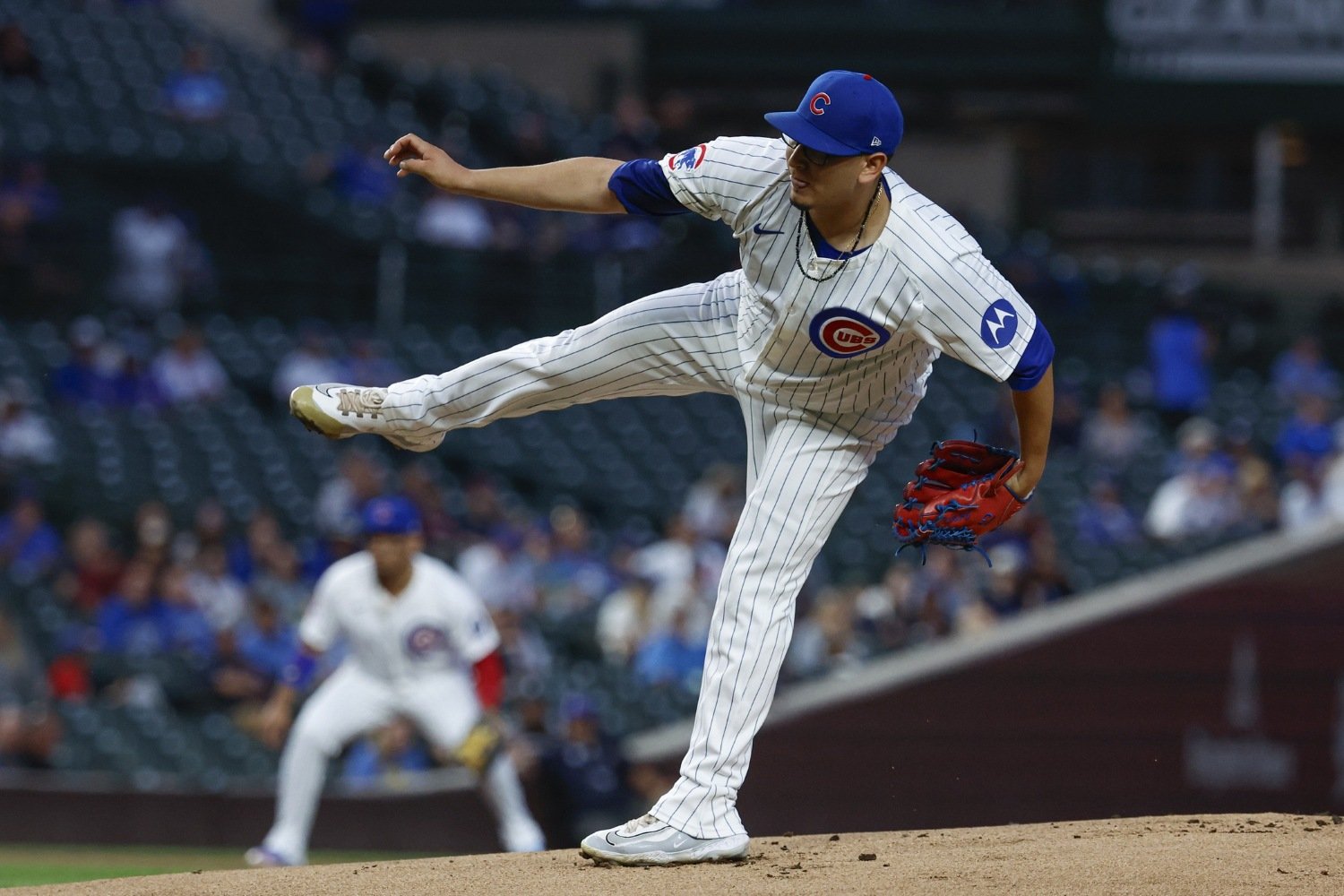 An offseason that began with aspirations of signing Max Fried quickly dissolved into collectively talking ourselves into a member of the middle tier of starters. Even with a mindset of frugality, though, the signing of Matthew Boyd came as a bit of a surprise, given the minuscule sample in which he’s garnered success in recent years. Nevertheless, he does project to at least raise the floor of the starting five. The Cubs needed some stability in their rotation. They appear to have gotten it. Now that Boyd is in tow, the projected rotation includes Justin Steele, Shota Imanaga, Jameson Taillon, Javier Assad, and Boyd. With that in mind, it is, again, not complicated. But suppose it becomes more so. Let’s say the Cubs sign an additional starter. They decide to open the wallet just slightly wider than the current millimeter and pursue an additional free-agent arm. Or, perhaps more enticing, someone like Ben Brown, Cade Horton or Brandon Birdsell latches onto a starting gig. From there, things start to get a little dicey for both the Cubs’ newest addition and one of the holdovers. I am, of course, talking about Boyd and Javier Assad. Because if the Cubs do pursue an additional arm, it puts them in a situation where you’re looking at those two as the competitors for the fifth slot in the rotation. Not that this would be a bad thing. Too many starters is, after all, a good problem that the Cubs have distanced themselves from in recent years. A breakout from someone like Brown or Birdsell would also serve as a net positive, even at the expense of either your newly-signed starter or last year’s emergent righty. But should either scenario come to fruition, what would be the best course for the Cubs? Painting the situation as simply as possible, you’re doing one of two things. Assad or Boyd moving to the bullpen, while the other stays in the starting mix is one. Assad being sent to Iowa (he has two remaining optionable years) is another. In short, though, it’s playing into a “who stays & who goes?” type of quandary—but not nearly as dramatic as it sounds. Given that the Boyd signing was made for the sake of stability, a choice between the two is likely to come down to something similar. In that sense, Assad likely represents the better option of the two, based on his 2024. The first time through the order, opposing hitters managed an OPS of .801 against Assad. That figure dropped to .732 the second time through before falling still further at .717 the third time. Notably, the slug side of that drops even more rapidly over the course of each round through the order. It's an imperfect measurement to use, given the smaller sample at the back end and some of Assad’s wavering strikeout and walk trends through multiple trips through the order. At the same time, it’s a stark contrast from even Boyd’s first two. Opposing hitters went for a .558 OPS the first time before launching up to a .740 figure the second time. It does fall back down to below the first time upon a third trip, but he only threw six innings in working a third time, against Assad’s 27. Even through the first two trips, though, Assad looks more favorable. His K% fell (22.6 to 16.3), but so did his BB%, if only slightly (9.6 to 8.9). Boyd, meanwhile, had the slight dip on the K% side while doubling his BB% between the first two trips (5.6 to 10.0). The WHIP jumped by almost 0.70, while Assad’s fell by 0.37. At the same time, it wasn’t as if limited turns through the order have stifled Assad as a reliever. He has a 3.18 ERA with identical walk rates and a slight uptick in strikeouts. Boyd’s 21 innings as a reliever feature a 1.71 ERA, but a sharp increase in BB%. Obviously, though, the Cubs would not have signed Boyd at all if they thought Assad was better than him, outright. Nor do modern pitcher evaluations, centered as they are on grades of specific offerings and their interplay with one another, favor Assad in that showdown. More than suggesting that Assad would be better than Boyd and that he should get that gig if the two are left in a tussle for the fifth starting job, the above probably just urges us to think of Assad as a candidate to be sent back to Iowa as a starter, rather than retained by the parent club and shifted to the bullpen. That role, instead, should go to Hayden Wesneski. For what it’s worth, FanGraphs currently projects Assad for more time out of the gate than Boyd, tagging him with 16 percent of the starts on the bump to Boyd’s 14. Baseball Prospectus has them each at 14. Both sides, however, have some relief time for Assad and none for Boyd at present. That makes more sense, since Assad is younger and has been healthier in the past. At present, though, this isn’t an issue. Both project to be members of the 2025 Chicago Cubs rotation. I said it wasn’t complicated from the outset and, at this very moment, it remains uncomplicated. But should a breakout occur (positive) or an additional arm find his way into the organization (also positive), things could get a little messy between these two guys in particular. It might not be a prolonged issue, given that you always need more arms than you have, but should this become a dilemma, we can see how it would be most likely to break.
 -
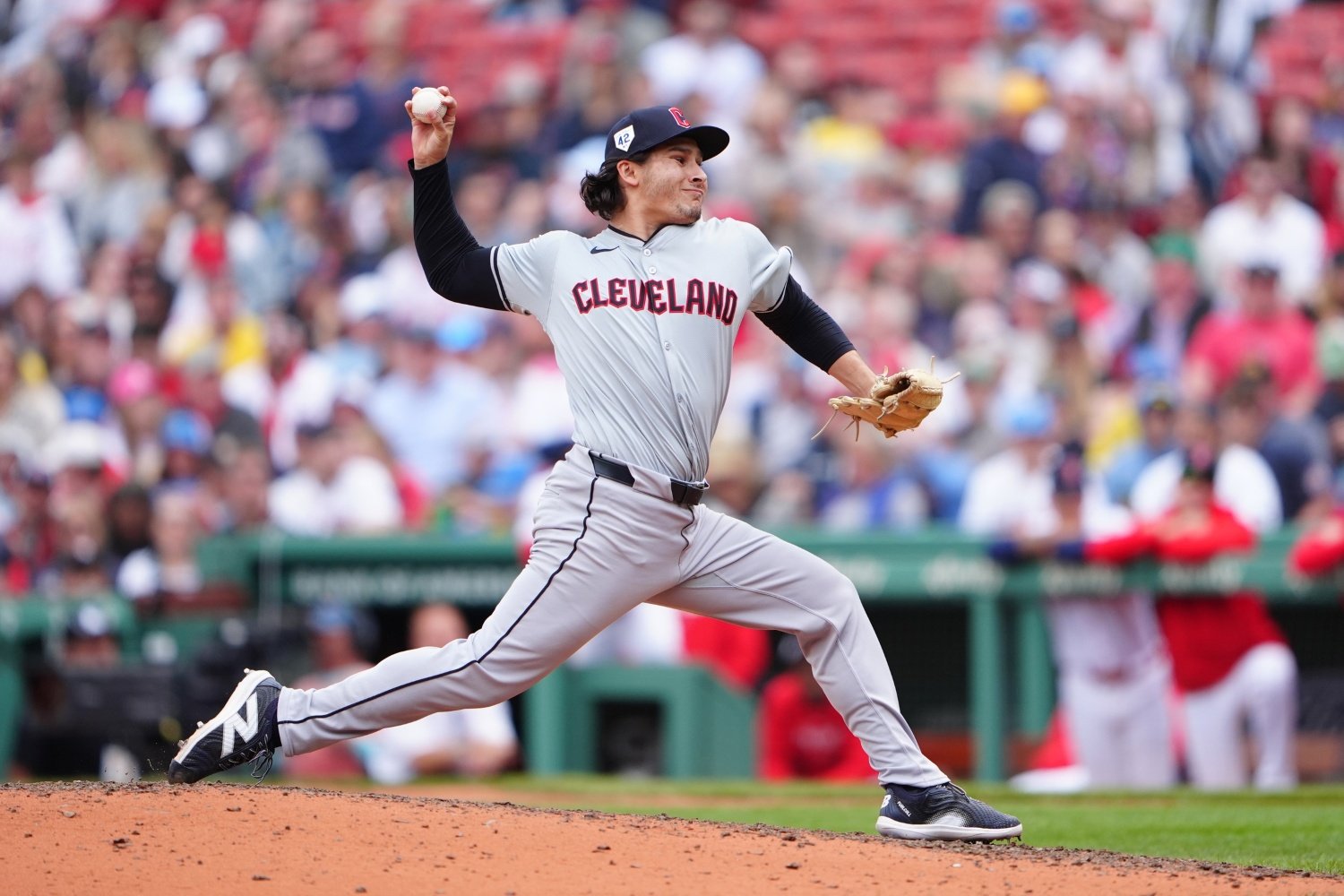 On Wednesday, the Chicago Cubs made the first of what I imagine will be multiple moves in order to bolster their big-league bullpen. While the team has had success in playing off upside or nabbing reclamation types, this season demonstrated that there’s a certain amount of reliability needed from the jump. Enter Eli Morgan. Matt Trueblood’s rapid writeup on the move features two important things. The first is a breakdown of Morgan’s skill set, including his arsenal and his penchant for recording outs without overpowering stuff. The second, though, is a present depth chart in various leverage situations. Matt sorted Morgan as a lock for medium leverage situations. That got my wheels turning as to what Morgan’s ultimate role with the Cubs could look like. This is primarily due to the fact that Morgan spent 2024 almost exclusively in low-leverage opportunities. Of his 42 innings this year, 31 2/3 of them came in such situations. Compare that to nine innings in medium-leverage spots and just 1 1/3 in high-leverage opportunities. It’s difficult to compare samples across the three, given the massive disparity in volume, but Morgan was most effective in medium leverage, based on numbers alone. Therein, he pitched to a 1.94 FIP & 0.78 WHIP, while stranding 57.1 percent of baserunners. He walked only one hitter in those nine innings and surrendered his lowest rate of hard contact in any of the three situations, at a mere 7.4 percent. In low-leverage situations, he ran a 3.45 FIP and 0.92 WHIP. It strains credulity to throw in the rest of the numbers, given the already imperfect comparison we’re making here, so I’m not going to include those. Nor the high-leverage stuff. The point is, Morgan showed he had the chops to hang in medium-leverage situations, even if he was being deployed primarily in those of the low-leverage variety in the deeper, better Cleveland pen. So with the Cubs, should we expect something similar? In 2024, Cub pitchers ranked third in Major League Baseball in low-leverage ERA (2.31), 17th in K% (23.0), and 11th in BB% (7.8). They were also able to minimize hard contact (30.1 Hard%) and, as such, able to maintain a strong LOB%, at 89.5 percent (5th). Interestingly, the Cubs performed nearly identically across the board in medium leverage situations. They were 11th in ERA (4.17), 23rd in K% (21.6), and 10th in BB% (7.5), with very similar Hard% (30.2) & LOB% (71.4). Either would largely appear to be able to fall directly into Morgan’s wheelhouse. His ability to minimize quality contact and strand runners makes him an asset in exactly those situations. He walks noticeably fewer opponents than the average reliever. At the same time, one naturally wonders if an acquisition from a bullpen as dominant as Cleveland’s could end up with an expanded role with a group that doesn’t run quite as deep. After all, the Cubs sat 20th in high-leverage ERA and featured the league’s second-highest walk rate in such situations (11.5%). If we expand Morgan’s high leverage experience to his career splits (23.2 IP), it looks pretty interesting. It features a .229 opposing average and a 1.06 WHIP that is his best individual figure among the three scenarios for his 265 career innings. Of course, it also features a strand rate of -23.3 percent, a 6.34 FIP, and a 29.4 Hard%. Which is why it’s open-and-shut as to Morgan’s role. An exercise such as this – as in discussing bullpen construction – might seem silly when the calendar hasn’t even flipped to December yet. But Morgan’s skill set is extremely clear, as is his role. This is a move pursued in the name of stability. The Cubs clearly have a desire to get reliable pieces in, rather than relying heavily on their previous strategy of “throwing some names at the wall and seeing what sticks.” We shouldn’t expect to see Eli Morgan in high-leverage situations, regardless of what his Cleveland relief corps pedigree might tempt us to think. But there’s a certain stability he’ll bring here that will allow the Cubs to get to those high-leverage spots more efficiently. Of course, who those high-leverage arms will be is part of the mystery of the 2025 bullpen for the time being.
 -
In adding a nice extra piece to his bullpen, Jed Hoyer took an important step forward. Now, the question is where to put that piece, amid the puzzle he's working on. Image courtesy of © Gregory Fisher-Imagn Images On Wednesday, the Chicago Cubs made the first of what I imagine will be multiple moves in order to bolster their big-league bullpen. While the team has had success in playing off upside or nabbing reclamation types, this season demonstrated that there’s a certain amount of reliability needed from the jump. Enter Eli Morgan. Matt Trueblood’s rapid writeup on the move features two important things. The first is a breakdown of Morgan’s skill set, including his arsenal and his penchant for recording outs without overpowering stuff. The second, though, is a present depth chart in various leverage situations. Matt sorted Morgan as a lock for medium leverage situations. That got my wheels turning as to what Morgan’s ultimate role with the Cubs could look like. This is primarily due to the fact that Morgan spent 2024 almost exclusively in low-leverage opportunities. Of his 42 innings this year, 31 2/3 of them came in such situations. Compare that to nine innings in medium-leverage spots and just 1 1/3 in high-leverage opportunities. It’s difficult to compare samples across the three, given the massive disparity in volume, but Morgan was most effective in medium leverage, based on numbers alone. Therein, he pitched to a 1.94 FIP & 0.78 WHIP, while stranding 57.1 percent of baserunners. He walked only one hitter in those nine innings and surrendered his lowest rate of hard contact in any of the three situations, at a mere 7.4 percent. In low-leverage situations, he ran a 3.45 FIP and 0.92 WHIP. It strains credulity to throw in the rest of the numbers, given the already imperfect comparison we’re making here, so I’m not going to include those. Nor the high-leverage stuff. The point is, Morgan showed he had the chops to hang in medium-leverage situations, even if he was being deployed primarily in those of the low-leverage variety in the deeper, better Cleveland pen. So with the Cubs, should we expect something similar? In 2024, Cub pitchers ranked third in Major League Baseball in low-leverage ERA (2.31), 17th in K% (23.0), and 11th in BB% (7.8). They were also able to minimize hard contact (30.1 Hard%) and, as such, able to maintain a strong LOB%, at 89.5 percent (5th). Interestingly, the Cubs performed nearly identically across the board in medium leverage situations. They were 11th in ERA (4.17), 23rd in K% (21.6), and 10th in BB% (7.5), with very similar Hard% (30.2) & LOB% (71.4). Either would largely appear to be able to fall directly into Morgan’s wheelhouse. His ability to minimize quality contact and strand runners makes him an asset in exactly those situations. He walks noticeably fewer opponents than the average reliever. At the same time, one naturally wonders if an acquisition from a bullpen as dominant as Cleveland’s could end up with an expanded role with a group that doesn’t run quite as deep. After all, the Cubs sat 20th in high-leverage ERA and featured the league’s second-highest walk rate in such situations (11.5%). If we expand Morgan’s high leverage experience to his career splits (23.2 IP), it looks pretty interesting. It features a .229 opposing average and a 1.06 WHIP that is his best individual figure among the three scenarios for his 265 career innings. Of course, it also features a strand rate of -23.3 percent, a 6.34 FIP, and a 29.4 Hard%. Which is why it’s open-and-shut as to Morgan’s role. An exercise such as this – as in discussing bullpen construction – might seem silly when the calendar hasn’t even flipped to December yet. But Morgan’s skill set is extremely clear, as is his role. This is a move pursued in the name of stability. The Cubs clearly have a desire to get reliable pieces in, rather than relying heavily on their previous strategy of “throwing some names at the wall and seeing what sticks.” We shouldn’t expect to see Eli Morgan in high-leverage situations, regardless of what his Cleveland relief corps pedigree might tempt us to think. But there’s a certain stability he’ll bring here that will allow the Cubs to get to those high-leverage spots more efficiently. Of course, who those high-leverage arms will be is part of the mystery of the 2025 bullpen for the time being. View full article
-
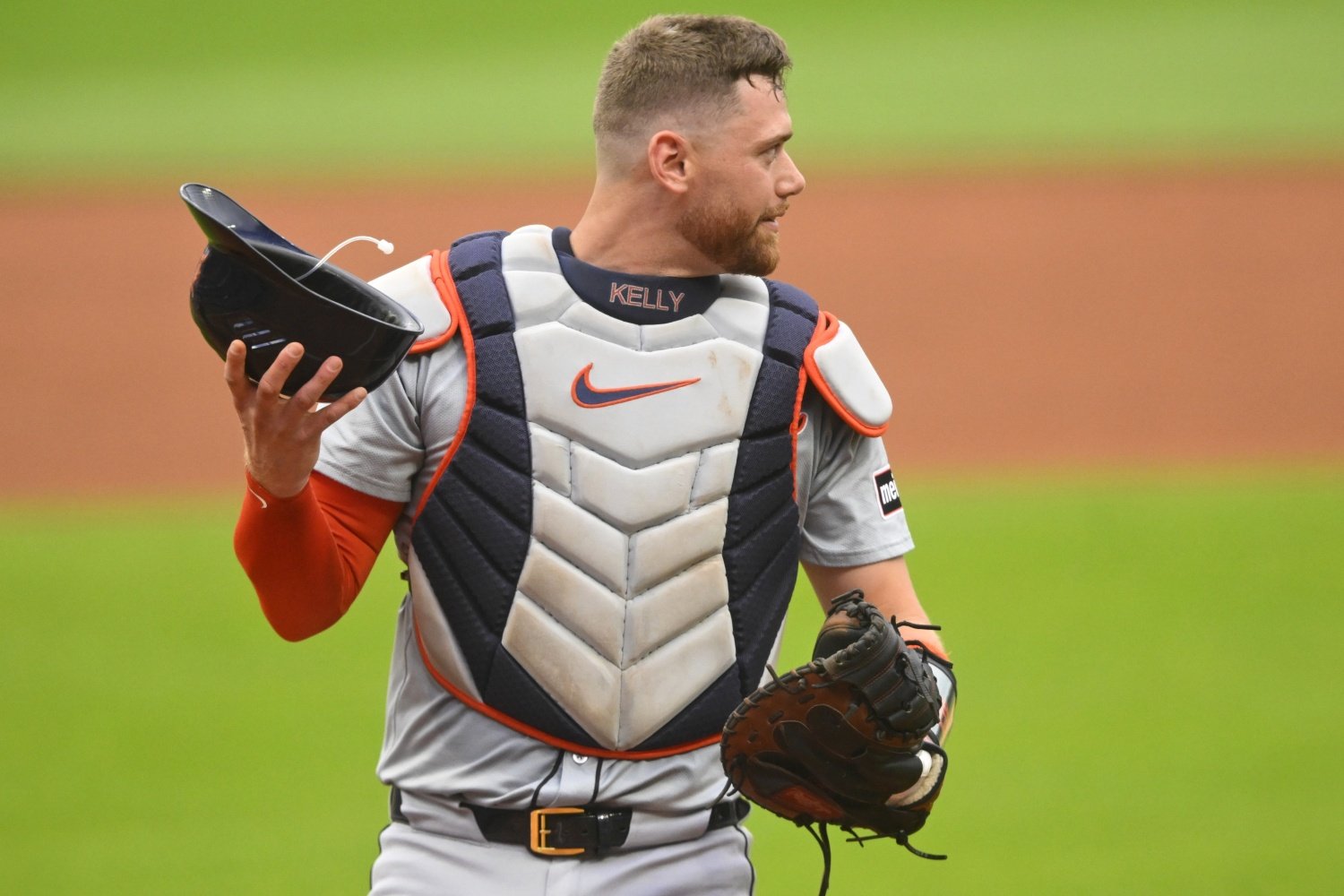 If there’s a guarantee this winter for the Chicago Cubs, it's this: they will make an addition behind the plate. Look no further than the current projected depth charts at major outlets to see how ineluctable this is. Behind Miguel Amaya, FanGraphs projects Moises Ballesteros for 24 percent of the time at catcher and Pablo Aliendo at nine. Baseball Prospectus has Ballesteros at 30 behind Amaya’s 70 percent share. I point this out because it’s humorous, but it is also direct evidence of the absence of a catcher on the current roster beyond Amaya. The Cubs rode out a trio of catching options in 2024, to supplement their prospective full-time backstop in Amaya. Yan Gomes started things out, before his absence of offense became too burdensome to bear. Tomás Nido’s time ran out following injury and a sudden rise from Christian Bethancourt, resulting in his release. Bethancourt, in turn, was outrighted off the 40-man roster at season’s end and elected free agency. And, so, the Cubs are left solely with Amaya. Despite reports of a deadline pursuit of Logan O’Hoppe, it’s difficult to see the Cubs pursuing a starting-caliber catcher on the trade market this winter. Catchers with significant value on both sides of the ball are so few and far between that those that have one are reluctant to part with them. As such, any boost behind the dish will likely come more in the form of 'supplementation' via free agency. 'Supplementation' likely translates to “defensive stability with merely occasional offense.” As such, it’s not a particularly inspiring group. With Travis d’Arnaud already off the market, there’s one fewer valuable defensive backstop with occasional offensive production. The remaining names are certainly recognizable, given that all but one of the 20-plus options available are at least 30 years of age and have been around for a minute in myriad capacities. But despite a high volume of options, we can likely narrow it down to just a few. The ideal backup can supplement Amaya from not only a defensive standpoint, but an offensive one. You want someone who either features the opposite split or is relatively split-neutral, in order to avoid dropoff or redundancy on Amaya's off days. Because of that, we can eliminate a handful of names almost immediately. I won’t list them all, but they include the likes of Luke Maile, Omar Narvaez, Max Stassi, and Reese McGuire. Jacob Stallings, too, for while he’s coming off his best offensive season, he also played half his games in Colorado last year. When you work to eliminate those types and those who are simply too old to garner serious consideration, you really arrive at exactly four reasonably interesting names: Kyle Higashioka, Elías Díaz, Danny Jansen, and Carson Kelly. The four are listed in order of age, with Higashioka the oldest at 35 years old. Díaz follows at 34, with each of Jansen & Kelly sitting at 30. Interestingly, they’re also somewhat clustered together in terms of their defensive quality. Baseball Prospectus’s comprehensive catching metric, Catcher Defensive Adjustment (CDA), has Higashioka (3.1), Díaz (2.1), and Kelly (1.8) ranked in succession at 12th, 13th, and 14th. That’s among catchers with at least 500 innings. Mind you, all three sit higher than 29th-rated Miguel Amaya (-2.6). Any other way you look at it, none of the four stand out in any particular regard. Higashioka and Díaz each rate a little better as framers, while Jansen has the worst throwing metrics out of the four. Ultimately, though, any defensive difference between this group would almost serve as something of a wash. Which means that the offensive supplement is going to be a key component the Cubs should earnestly prioritize. There’s still something of a mystery to be solved with respect to Amaya’s offensive profile. While a revamped approach led to a second-half rise on that side of the ball, he still finished with stark reverse splits, turning in a 101 wRC+ against right-handed pitching and a paltry 30 against southpaws. So again, you’re looking for the complement here. Either someone split-neutral or—perhaps preferably—a lefty-masher. The “masher” term being relative here. Higashioka, who had a really nice offensive season as he stole the starting gig in San Diego this year, is extremely split-neutral. He wRC+’d 103 vs. left-handed pitching and 105 against righties. There is a slight favor of hitting lefties throughout his career, though, as those marks have come in at 94 and 76, respectively. I think there is a reasonable case to be made coming off the best offensive season of his career. But one does have to wonder about how much the inherent risk in even a backup catcher of that age would undermine such a case, especially given how the Cubs just watched Yan Gomes flame out in real time. If we’re eliminating Higashioka on the basis of aging curves, we’re probably eliminating Díaz due to redundancy. While he’s had some nice power seasons, he’s generally been a below-average hitter with splits that mirror Amaya’s in their reversal. He was pretty neutral through 2021, but after a dramatic swing toward lefty-mashing in 2022, Díaz flew way the other way. His wRC+ against left-handers is just 53 in each of the last two seasons, compared to 94 against the other handedness. Despite the midseason rumors of a Cubs pursuit, it’s tough to see that being reignited this winter given such a trend. Which brings us to our two Illinois natives: Kelly & Jansen. If the ideal split is the goal, then Kelly’s your guy. He’s at a 117 wRC+ for his career against left-handed pitching against 77 vs. the other side. Jansen does, though, sit more in league with Higashioka in terms of his neutrality (103 vs. 93, respectively). Kelly has flashed offensive upside and is coming off his best offensive season in just about every respect. Jansen has more of a sustained track record but coming off, arguably, his worst. But given the age and the potential compliment to Amaya, one imagines that one of our two latter options here would serve as the most appealing for Jed Hoyer’s front office. The possibility of a trade certainly exists. But you’re probably not making such a move unless you’re really trying to push Amaya. Here, you give him the opportunity to stake his claim coming off that second half while supplementing him in a much more effective way than you did last year. All while giving the Moises Ballesteros-Pablo Aliendo contingent more time to develop within the system. It’s mildly humorous that within a Cubs team that needs to add impact to their roster, adding complimentary catcher is also seemingly just as paramount as anything else they could do.
 -
One of these guys could be the next David Ross—a hero of a backup backstop. Another could be a manager, like, tomorrow. Image courtesy of © David Richard-Imagn Images If there’s a guarantee this winter for the Chicago Cubs, it's this: they will make an addition behind the plate. Look no further than the current projected depth charts at major outlets to see how ineluctable this is. Behind Miguel Amaya, FanGraphs projects Moises Ballesteros for 24 percent of the time at catcher and Pablo Aliendo at nine. Baseball Prospectus has Ballesteros at 30 behind Amaya’s 70 percent share. I point this out because it’s humorous, but it is also direct evidence of the absence of a catcher on the current roster beyond Amaya. The Cubs rode out a trio of catching options in 2024, to supplement their prospective full-time backstop in Amaya. Yan Gomes started things out, before his absence of offense became too burdensome to bear. Tomás Nido’s time ran out following injury and a sudden rise from Christian Bethancourt, resulting in his release. Bethancourt, in turn, was outrighted off the 40-man roster at season’s end and elected free agency. And, so, the Cubs are left solely with Amaya. Despite reports of a deadline pursuit of Logan O’Hoppe, it’s difficult to see the Cubs pursuing a starting-caliber catcher on the trade market this winter. Catchers with significant value on both sides of the ball are so few and far between that those that have one are reluctant to part with them. As such, any boost behind the dish will likely come more in the form of 'supplementation' via free agency. 'Supplementation' likely translates to “defensive stability with merely occasional offense.” As such, it’s not a particularly inspiring group. With Travis d’Arnaud already off the market, there’s one fewer valuable defensive backstop with occasional offensive production. The remaining names are certainly recognizable, given that all but one of the 20-plus options available are at least 30 years of age and have been around for a minute in myriad capacities. But despite a high volume of options, we can likely narrow it down to just a few. The ideal backup can supplement Amaya from not only a defensive standpoint, but an offensive one. You want someone who either features the opposite split or is relatively split-neutral, in order to avoid dropoff or redundancy on Amaya's off days. Because of that, we can eliminate a handful of names almost immediately. I won’t list them all, but they include the likes of Luke Maile, Omar Narvaez, Max Stassi, and Reese McGuire. Jacob Stallings, too, for while he’s coming off his best offensive season, he also played half his games in Colorado last year. When you work to eliminate those types and those who are simply too old to garner serious consideration, you really arrive at exactly four reasonably interesting names: Kyle Higashioka, Elías Díaz, Danny Jansen, and Carson Kelly. The four are listed in order of age, with Higashioka the oldest at 35 years old. Díaz follows at 34, with each of Jansen & Kelly sitting at 30. Interestingly, they’re also somewhat clustered together in terms of their defensive quality. Baseball Prospectus’s comprehensive catching metric, Catcher Defensive Adjustment (CDA), has Higashioka (3.1), Díaz (2.1), and Kelly (1.8) ranked in succession at 12th, 13th, and 14th. That’s among catchers with at least 500 innings. Mind you, all three sit higher than 29th-rated Miguel Amaya (-2.6). Any other way you look at it, none of the four stand out in any particular regard. Higashioka and Díaz each rate a little better as framers, while Jansen has the worst throwing metrics out of the four. Ultimately, though, any defensive difference between this group would almost serve as something of a wash. Which means that the offensive supplement is going to be a key component the Cubs should earnestly prioritize. There’s still something of a mystery to be solved with respect to Amaya’s offensive profile. While a revamped approach led to a second-half rise on that side of the ball, he still finished with stark reverse splits, turning in a 101 wRC+ against right-handed pitching and a paltry 30 against southpaws. So again, you’re looking for the complement here. Either someone split-neutral or—perhaps preferably—a lefty-masher. The “masher” term being relative here. Higashioka, who had a really nice offensive season as he stole the starting gig in San Diego this year, is extremely split-neutral. He wRC+’d 103 vs. left-handed pitching and 105 against righties. There is a slight favor of hitting lefties throughout his career, though, as those marks have come in at 94 and 76, respectively. I think there is a reasonable case to be made coming off the best offensive season of his career. But one does have to wonder about how much the inherent risk in even a backup catcher of that age would undermine such a case, especially given how the Cubs just watched Yan Gomes flame out in real time. If we’re eliminating Higashioka on the basis of aging curves, we’re probably eliminating Díaz due to redundancy. While he’s had some nice power seasons, he’s generally been a below-average hitter with splits that mirror Amaya’s in their reversal. He was pretty neutral through 2021, but after a dramatic swing toward lefty-mashing in 2022, Díaz flew way the other way. His wRC+ against left-handers is just 53 in each of the last two seasons, compared to 94 against the other handedness. Despite the midseason rumors of a Cubs pursuit, it’s tough to see that being reignited this winter given such a trend. Which brings us to our two Illinois natives: Kelly & Jansen. If the ideal split is the goal, then Kelly’s your guy. He’s at a 117 wRC+ for his career against left-handed pitching against 77 vs. the other side. Jansen does, though, sit more in league with Higashioka in terms of his neutrality (103 vs. 93, respectively). Kelly has flashed offensive upside and is coming off his best offensive season in just about every respect. Jansen has more of a sustained track record but coming off, arguably, his worst. But given the age and the potential compliment to Amaya, one imagines that one of our two latter options here would serve as the most appealing for Jed Hoyer’s front office. The possibility of a trade certainly exists. But you’re probably not making such a move unless you’re really trying to push Amaya. Here, you give him the opportunity to stake his claim coming off that second half while supplementing him in a much more effective way than you did last year. All while giving the Moises Ballesteros-Pablo Aliendo contingent more time to develop within the system. It’s mildly humorous that within a Cubs team that needs to add impact to their roster, adding complimentary catcher is also seemingly just as paramount as anything else they could do. View full article
- 2 replies
-
- 2
-

-
- carson kelly
- elias diaz
- (and 3 more)
-
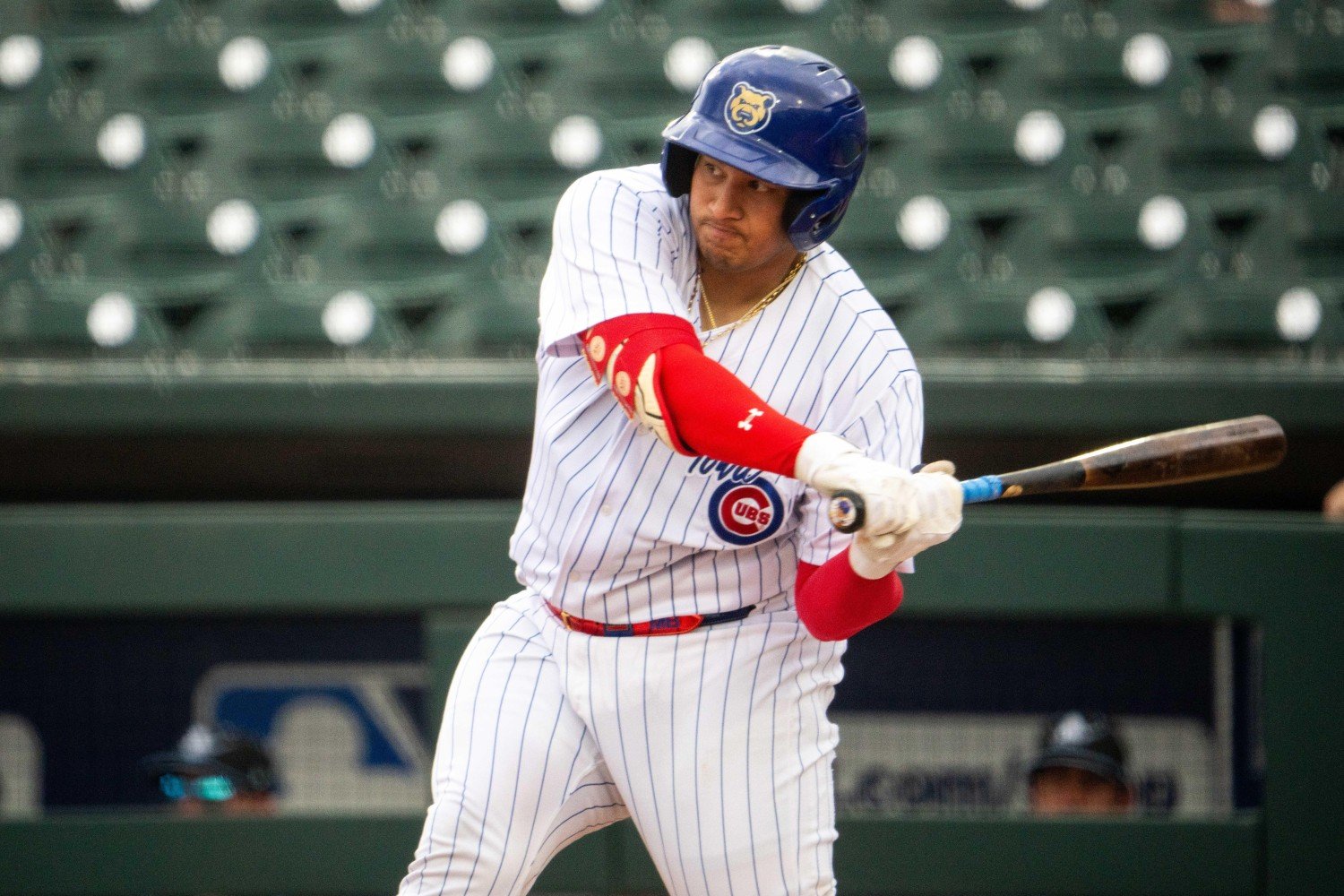 The Arizona Fall League came to its official close over the weekend, with the Salt River Rafters besting Surprise in Saturday’s championship game. Unfortunately for the Chicago Cubs’ contingent, the Mesa Solar Sox didn’t factor into the end of things. They were left out of even a chance to compete for a spot in the title game following a 14-16 record in the fall slate. For our purposes, though, the win-loss outcomes were never of paramount importance. This was all about seeing what the Cubs had in this year’s class of prospects. It was a group that fell a bit more under-the-radar than usual (Moises Ballesteros notwithstanding), but we can glean at least a little bit about names to keep an eye on moving forward. Starting with the marquee name, though, Ballesteros did not disappoint across his 93 AFL plate appearances. The Cubs’ no. 4 prospect (according to MLB Pipeline) turned in a .317/.376/.557 line that included four doubles and five homers. His continued work behind the plate was, no doubt, of particular interest for the Cubs, as they determine if and when he could be starting back there at Wrigley. While the team will likely pursue at least a timeshare option to pair with Miguel Amaya, there’s little doubt that Ballesteros at least has the offensive chops to break through in the not-too-distant future. He does plan to play winter ball in Venezuela before the spring, however. There may not have been a bigger riser for the Cubs this fall than Jonathon Long (no. 30). The bat-first corner prospect was one of Mesa’s top performers throughout much of the fall season, particularly in the power game. His slash included a .338 average and .425 on-base percentage, while also being supported by six home runs, four doubles, and a triple. He did strike out 20 times in 87 PAs, but compensated well between the power and an impressive 11 walks. While his positional future remains a question, his offensive profile is a tantalizing one coming out of the AFL. Ben Cowles is one spot ahead of Long in the MLB Pipeline rankings, but didn’t experience quite the same level of success as his positional counterparts this fall. His OBP fell under .300, while he hit only .213 across 84 PAs. Ultimately, his output in the fall season was fairly in line with his offensive profile. Sort of solid, but unspectacular. Where he showcased his value was in his versatility, which should keep him plenty relevant, even coming off an underwhelming stretch of games. While the Cubs were largely successful on the positional side this fall, they didn’t experience quite the same level of success on the mound. Grant Kipp got off to a strong start, with multiple three-inning scoreless outings. He battled command issues (10 walks) and scuffled to an ERA north of 5.00 when it was all said and done. A mixed bag, to be sure, but some positives early on. Command was a common struggle across the board for the Cubs’ group of arms. Luis Rujano walked nine in nine innings, and Sam Thoresen walked 10 in only six. If it wasn’t command in balls and strikes, it was command in location within the zone. Shane Marshall, for example, walked only four in seven innings, but also allowed 15 hits (including three home runs). Each of Rujano and Thoresen finished with ERAs of at least 7.00, while Marshall’s sat above 14.00. If we’re looking for genuine positives from the contingent of Chicago hurlers, it’s likely in the form of Vince Reilly. The Grand Canyon University product performed well back home, striking out nine hitters in 9 2/3 innings of work. He was largely able to keep baserunners at bay in a way that his Cub comrades were not, pitching to a 3.72 ERA that paced the group. His arsenal is an interesting to watch take shape, given that he’s only been a part of the system since March. In a minuscule sample of pitches captured by Statcast cameras in some of the AFL parks, Reilly showed a fastball at 92-94 miles per hour and both a slider and a changeup in the mid- to upper 80s with good depth. There’s never too much one can glean from the Arizona Fall League. It’s primarily a chance to get a look at some recent draftees or signees, and lacks a bit of the name recognition that we saw just a few years ago. Nonetheless, getting some of these lesser-known names in front of our faces for a few weeks isn’t a bad thing. It’s unlikely we’ll see any of these names at Wrigley early on in 2025, but the AFL at least afforded Cubs brass a chance to get a look at individual skill sets and start to think about future roles as they begin the process of building out their organization for next year.
 -
Several Cubs prospects finished a month-long autumn showcase last week in Arizona. Let's put a wrap on things. Image courtesy of © Cody Scanlan/The Register / USA TODAY NETWORK The Arizona Fall League came to its official close over the weekend, with the Salt River Rafters besting Surprise in Saturday’s championship game. Unfortunately for the Chicago Cubs’ contingent, the Mesa Solar Sox didn’t factor into the end of things. They were left out of even a chance to compete for a spot in the title game following a 14-16 record in the fall slate. For our purposes, though, the win-loss outcomes were never of paramount importance. This was all about seeing what the Cubs had in this year’s class of prospects. It was a group that fell a bit more under-the-radar than usual (Moises Ballesteros notwithstanding), but we can glean at least a little bit about names to keep an eye on moving forward. Starting with the marquee name, though, Ballesteros did not disappoint across his 93 AFL plate appearances. The Cubs’ no. 4 prospect (according to MLB Pipeline) turned in a .317/.376/.557 line that included four doubles and five homers. His continued work behind the plate was, no doubt, of particular interest for the Cubs, as they determine if and when he could be starting back there at Wrigley. While the team will likely pursue at least a timeshare option to pair with Miguel Amaya, there’s little doubt that Ballesteros at least has the offensive chops to break through in the not-too-distant future. He does plan to play winter ball in Venezuela before the spring, however. There may not have been a bigger riser for the Cubs this fall than Jonathon Long (no. 30). The bat-first corner prospect was one of Mesa’s top performers throughout much of the fall season, particularly in the power game. His slash included a .338 average and .425 on-base percentage, while also being supported by six home runs, four doubles, and a triple. He did strike out 20 times in 87 PAs, but compensated well between the power and an impressive 11 walks. While his positional future remains a question, his offensive profile is a tantalizing one coming out of the AFL. Ben Cowles is one spot ahead of Long in the MLB Pipeline rankings, but didn’t experience quite the same level of success as his positional counterparts this fall. His OBP fell under .300, while he hit only .213 across 84 PAs. Ultimately, his output in the fall season was fairly in line with his offensive profile. Sort of solid, but unspectacular. Where he showcased his value was in his versatility, which should keep him plenty relevant, even coming off an underwhelming stretch of games. While the Cubs were largely successful on the positional side this fall, they didn’t experience quite the same level of success on the mound. Grant Kipp got off to a strong start, with multiple three-inning scoreless outings. He battled command issues (10 walks) and scuffled to an ERA north of 5.00 when it was all said and done. A mixed bag, to be sure, but some positives early on. Command was a common struggle across the board for the Cubs’ group of arms. Luis Rujano walked nine in nine innings, and Sam Thoresen walked 10 in only six. If it wasn’t command in balls and strikes, it was command in location within the zone. Shane Marshall, for example, walked only four in seven innings, but also allowed 15 hits (including three home runs). Each of Rujano and Thoresen finished with ERAs of at least 7.00, while Marshall’s sat above 14.00. If we’re looking for genuine positives from the contingent of Chicago hurlers, it’s likely in the form of Vince Reilly. The Grand Canyon University product performed well back home, striking out nine hitters in 9 2/3 innings of work. He was largely able to keep baserunners at bay in a way that his Cub comrades were not, pitching to a 3.72 ERA that paced the group. His arsenal is an interesting to watch take shape, given that he’s only been a part of the system since March. In a minuscule sample of pitches captured by Statcast cameras in some of the AFL parks, Reilly showed a fastball at 92-94 miles per hour and both a slider and a changeup in the mid- to upper 80s with good depth. There’s never too much one can glean from the Arizona Fall League. It’s primarily a chance to get a look at some recent draftees or signees, and lacks a bit of the name recognition that we saw just a few years ago. Nonetheless, getting some of these lesser-known names in front of our faces for a few weeks isn’t a bad thing. It’s unlikely we’ll see any of these names at Wrigley early on in 2025, but the AFL at least afforded Cubs brass a chance to get a look at individual skill sets and start to think about future roles as they begin the process of building out their organization for next year. View full article
-
I’m not typically the kind of person who is super engaged when Jed Hoyer speaks. It generally winds up in the same word salad-y, improve-on-the-margins end of the spectrum as the last time he spoke. Image courtesy of © David Banks-Imagn Images However, one small moment from the GM Meetings stands out as notable as it relates to the Chicago Cubs’ “first baseman of the future.” Of Michael Busch, Hoyer said: “Because we now know he can play first, he doesn’t have to work on it. He can move around a little bit. But the expectation is he’s playing first.” There was plenty else thrown in there with respect to Busch’s defensive development at the position, all of which was deservedly complementary. But that very small note of it all is of great interest to me. Because this was something I had already thought about. When the Cubs acquired Busch, I initially waxed poetic for long stretches about which position would best suit him. It was an entirely futile exercise, as the team plugged him into first base from the jump. But let’s not be too quick to forget that Busch does have at least some experience at other spots. The Los Angeles Dodgers gave him time at second, third, and left as a member of their system. I’m not sure how much any other position was considered despite the Cubs having a longer-term need at the hot corner at the time of the trade. Regardless, the defensive returns were likely better than anyone could have imagined in his first full year at the position. From 2021 to 2023, Busch spent exactly 22 games at first, 17 of which were starts. With the Cubs in 2024, it was 142 games (130 starts). Not only did he adjust well, he skyrocketed. Only seven regulars at the position finished with a better Fielding Run Value (1) than Busch, and only eight were better than him in Outs Above Average (2). For that reason, I’m not even remotely suggesting the Cubs casually bump Busch from the spot and turn him into some type of super-utility player. Nor am I saying the Cubs should go out and sign Pete Alonso and slide Busch over to the keystone. Let him continue his growth at the position. At the same time, what if we injected just a little bit of versatility into his game as a treat? The Cubs need to add impact offense. While they have a handful of needs on the mound, we have also seen how lacking an offensive catalyst in your lineup can turn a couple of sluggish games at the dish into extended runs of ineptitude. The glaring issue – aside from ponying up for what it could cost to acquire the archetype needed – is the team’s lack of flexibility as far as the roster goes. On paper, the infield is locked in (once Nico Hoerner returns from injury). The outfield is locked in. Barring a trade of someone like Cody Bellinger or even Ian Happ, it’s going to be difficult for the team to find space for what they need. So, instead of suggesting, I’m simply wondering. I wonder if they could sign someone like Alonso to split time at first and DH while Busch slides over for the former situations. I wonder if Busch’s rapid development makes them think he could handle second base and allow them to become more comfortable trading Nico Hoerner and/or some of their infield prospect depth in pursuit of an arm. I wonder if the team would be willing to upgrade on the infield and move Busch around a couple of times a week if it meant upgrading the offense in any meaningful way. You know, a pseudo-super-utility role. None of those scenarios are likely as they are written. Pete Alonso isn’t likely to accept a role as even a part-time DH, let alone as part of a regular split. The team isn’t likely to move Busch full-time or with any kind of regularity. This is why I’m not suggesting but merely wondering. The team’s lack of flexibility on a roster that needs at least one upgrade of significance lends itself to such queries. While I absolutely believe Jed Hoyer when he says that the organization views Michael Busch as a first baseman moving forward, we shouldn’t outright dismiss the idea of a bit of positional versatility. Because there’s value in that from an overall roster construction standpoint but also a winter transaction one. Perhaps it leaves them with just a bit more flexibility than they appear to have at present. Again, we’re speaking in outlandish ideas here. But until Actual Moves come to fruition, it’s kind of all we have. View full article
