


Cubs Video
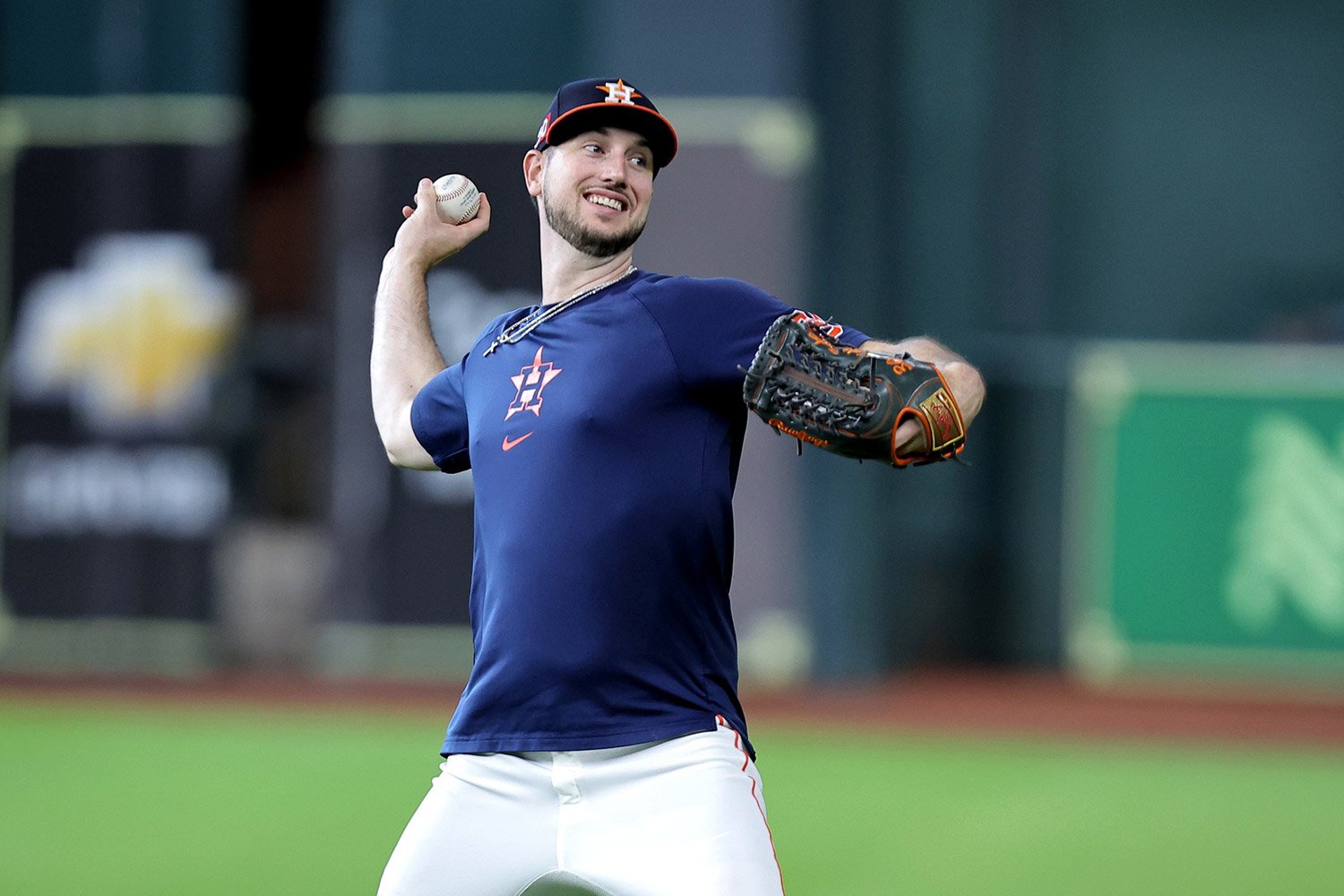
Friday’s trade for Kyle Tucker certainly changes things.
Kyle Tucker is an elite baseball player. Since 2021, only a dozen players have been worth more fWAR than Tucker’s 19.1. Only nine feature a better wRC+ than Tucker’s 145. His K% (15.1) is among the 30 best out of more than 300 qualifying players over that time. His BB% (11.3) is in the top 40. His ISO (.247) is in the ten best, while his on-base percentage (.362) is in the top 20. He’s also stolen 80 bases and has been well above average on the defensive side. There is almost nothing that transpires between the white lines in which Kyle Tucker does not excel.
Even in their success at the end of the 2010s, the Cubs didn’t have a player of this caliber. Sure, players like Anthony Rizzo, Kris Bryant, and Javíer Báez each possessed the capability of performing at an elite level. And there was a certain level of sentimental value associated with them. However, none of them were considered genuinely elite players over such a stretch as Tucker has in the last handful of seasons. This is an objectively extraordinary baseball player who now gets to play half of his games at Wrigley Field.
My purpose here wasn’t necessarily to wax poetic over the Cubs’ newest addition. That’s a natural byproduct of the caliber of player we’re talking about here. Instead, there’s a worthy conversation about the narrative shift that this presents for the Cubs.
An increasingly large segment of the Cub fan collective has been critical of the conservative nature of the organization’s Jed Hoyer-led front office. Even one such as me, who has self-exiled from social media, can still find this across various other media. It’s the prevailing criticism and one that made it seem as if this offseason would be yet another one of improving on the margins without instituting meaningful change to shift fortunes in 2025. While a singular trade can’t overhaul an entire narrative, this one does as much to rehabilitate the front office's perception as any individual could.
What the Cubs had to give up wasn’t nothing. Isaac Paredes was supposed to be one of the steadier bats for ’25. Hayden Wesneski is projected to be a valuable arm, given his versatility. Cam Smith was a wildly exciting offensive talent for his short time in the system. Acquiring a top-tier player requires a certain level of discomfort. It’s that very discomfort that we did not feel Hoyer & Co. could accept in pursuit of meaningful improvement.
But the Cubs were in a situation where almost no collection of players & prospects would be deemed “too much” in a trade for someone like Kyle Tucker. He changes the construction of this lineup from likely middling to possessing a certain level of potential. Instead of needing all of the pieces to come together at once for offensive success to occur, the complementary bats can thrive in their complementary roles. One player doesn’t make a team, but this one player should help the infrastructure around him to maximize their respective skill sets. Even with the offseason still in its relative infancy, the narrative surrounding this lineup changes immediately for the better.
It's won all around for the team itself and the people responsible for its construction. At least from a narrative standpoint. And while there is logic in staying measured and not going in on any one season, certain things still have to happen for the front office to shed that negative perception and move in the direction of Jed Hoyer’s heralded “next great Cubs team.” It will require additional sacrifice, whether in terms of finances or prospects. There are additional steps here.
What happened on Friday was important. What happens next isn’t any less.





.thumb.JPG.19c99ddd60a76edf810c77d321439828.JPG)


Recommended Comments
Create an account or sign in to comment
You need to be a member in order to leave a comment
Create an account
Sign up for a new account in our community. It's easy!
Register a new accountSign in
Already have an account? Sign in here.
Sign In Now