Matthew Trueblood
-
Posts
2,479 -
Joined
-
Last visited
-
Days Won
2
Content Type
Profiles
Joomla Posts 1
Chicago Cubs Videos
Chicago Cubs Free Agent & Trade Rumors, Notes, & Tidbits
2026 Chicago Cubs Top Prospects Ranking
News
2023 Chicago Cubs Draft Picks
Guides & Resources
2024 Chicago Cubs Draft Picks
The Chicago Cubs Players Project
2025 Chicago Cubs Draft Pick Tracker
2026 Chicago Cubs Draft Tracker: Picks & Bonuses
Blogs
Events
Forums
Store
Gallery
Everything posted by Matthew Trueblood
-
And that 'all' probably includes the man himself. Image courtesy of © Kamil Krzaczynski-Imagn Images There is a sizable, well-meaning contingent of Cubdom who would have you believe that Seiya Suzuki has been secretly elite, for a while now. Some of them are in the pockets of Big Wind At Wrigley—which is to say, they (rightly) took note of the extreme quiddities of the weather patterns at the Friendly Confines last year and (less rightly) believe that that masked a breakout whereby Suzuki stepped forward and became one of the league's best hitters. Others are just devout observers of park- and league-adjusted rate stats for offense, which scored Suzuki as 21, 28, and 36 percent better than average in his first three big-league seasons, respectively. I appreciate where those folks are coming from, because amid what has been a frustrating and protracted rebuild, there's always a risk that a team's best players will take perverse, misplaced blame for the failures of their franchise. Suzuki has been, inarguably, the best Cubs hitter of the last three seasons. It's not his fault that the team failed to build a total roster within which he would have been a sufficient linchpin for the lineup, or to add players who could push him down the offensive pecking order (until this winter, of course). It would be grossly unfair for Suzuki to be treated as the problem with teams who would not even have had winning records, if not for his contributions. Pumping up his accomplishments shields us against that danger. Here's the thing, though: At a deeper level, examining all aspects of his process and then zooming out to view his topline results, Suzuki has not been the caliber of hitter his biggest boosters would have you believe him to be. Counting numbers don't always tell the truth, and they never tell the whole truth, but it's true that he only hit 21 home runs in 582 plate appearances last year, setting a new Stateside career high. Yes, Wrigley might have dampened his power slightly, but he also had some process issues to iron out. He's been very good, all along. He was not, in any season from 2022-24, good enough to be the best hitter in a championship-caliber lineup. Ironically, just as the team acquired a player who removed the pressure for him to be that kind of hitter, that's exactly what he's become in 2025. Whether Suzuki can keep this up is impossible to say, but what he's doing so far is legitimate. It's elite, in a way he'd never been before. In 2023, Robert Orr of Baseball Prospectus created a hitting metric called SEAGER. It's a backronym that pays homage to the foremost practitioner of the skills it rewards, Corey Seager. The stat itself is a compound measurement. It first maps the expected value of a swing or a take for all pitch locations, based on the outcomes hitters see when they do swing at given offerings (and, of course, on the likelihood that a given pitch would be called a strike if not swung at). Then, it evaluates each of a hitter's swing decisions. The first number it tabulates, then, is the percentage of a hitter's good swing decisions were takes on pitches on which the expected value of a swing would have been negative—versus, of course, the good decisions that stem from pouncing on hittable offerings. So, whatever the percentage of good decisions that come on takes is, SEAGER uses it as an index of selectivity at the plate. Next, the model calculates the percentage of pitches with a positive expected swing value at which a hitter didn't swing. This is labeled their "Hittable Pitch Take %". To find a player's SEAGER score, you just subtract their Hittable Pitch Take rate from their Selectivity score. A higher SEAGER score is better, then, and usually, anything over 25 puts you in elite company. Last year, Aaron Judge led the majors with a 26.5 SEAGER. Here are some key metrics for Suzuki in all four of his seasons in MLB, including one of the two major inputs for SEAGER and SEAGER itself. Season Hittable Pitch Take % Zone Contact % Contact % Over Expected SEAGER 2022 38.2 87.6 4.7 18 2023 35.4 86.1 3.9 19 2024 36.6 85.2 -5 18.7 2025 29.7 78.5 -5.3 26.8 Suzuki has always been plenty selective. What he's needed to, ever since he arrived in the league, is find a better way to cover hittable pitches—not just the strike zone, but the sections thereof where a hitter has to do damage in order to thrive in the American majors. Lo, and behold: he's done that this year. Specifically, he's gone from average or worse in terms of letting hitter-friendly pitches sail by to being in the 92nd percentile. He still knows how to tell a strike from a ball; his chase rate outside the zone is actually down this year. He's just getting a whole lot more assertive within the zone. I included the middle two columns as a way to understand how he's doing so much with so many hittable pitches this year. This early in any season, no one should trust a hitter's change in numbers if they've achieved an improvement without a sacrifice. If a guy has 100 great plate appearances in which they haven't had any negative indicators, that's not a permanent change; that's a hot streak. Suzuki, however, has traded some contact to get himself geared up and more attacking in his sweet spots. As you can see from the Contact Above Expected column (which compares a hitter's actual contact rate to what we'd expect, based on the quality of pitches they swing at), he began to make that change last year, but he wasn't really ready to accept more swing-and-miss within the strike zone. As a result, he did less damage than he might have. This year, he's showed up with some subtle adjustments in place, ready to demonstrate a different level of commitment to being an attacking, dangerous offensive player. Firstly, he's moved a bit closer to the plate. Here's what his stance, stride, and contact point looked like in the second half of 2023. He's never really been one to get cheated, when he swings, but even late in his second season in the majors, Suzuki was waiting to see the ball a fractional moment longer, which pushed his contact point deeper than might have been ideal—both relative to home plate, and relative to his own body. He was not much for going and getting the ball. Here's what Suzuki looked like at bat in 2024. In this particular way, little changed. This season, though, Suzuki has moved a bit closer to the pitcher, and a bit closer to the plate. It's not enough to even spot on TV, but in a game where a sliver of a difference in where the bat finds the ball can matter a great deal, the change is important. It's not just about where he's setting up, though. Suzuki's contact point is about 3 inches farther from his own body than it was in the past. He's getting on top of the plate more, and because he hits from a slightly more spread-out base, he's been able to get even more aggressive with his stride. He's catching the ball out where there's more power to be found. That he whiffs more in the process shouldn't surprise you; that's the nature of this tradeoff. But it's very much a worthwhile trade. That small move toward the plate has helped a great deal, because of the approach Suzuki has taken this spring. He's noticed, over the years, that pitchers felt they could bully him and set him up inside (often with sinkers down and in, which he would too often foul off, but not exclusively in that way), then go away and either freeze him or draw a flailing, reaching swing. He had a very general, middle-middle approach last year, and because opposing pitchers don't make enough mistakes to turn that into an especially fruitful approach, he created only as much power as their slips permitted. This year's Suzuki is laying off that pitch inside, for the most part. He knows where pitchers want to live against him, and he's in position—physically and mentally—to make them die there, instead. Because he's closer to that outer third, and because he's swinging more aggressively and getting the bat head out there, Suzuki's pull rate has risen sharply, even as he focuses more of his swings on the outer half. He's lifting the ball more often, because his only grounders now are the balls on which he's a hair too early, and therefore rolls over. Anything he times better is still likely to be pulled, but in the air. He's not swinging quite as fast this year, and that might remain true from now on. Set to turn 31 later this summer, his bat speed might be in for irreversible (if gentle) decline. It doesn't really matter, though. With a better-organized approach, Suzuki is making higher-value contact even amid a slight diminution in swing speed. Orr also created a statistic called Damage Rate, which gives the percentage of batted balls by a hitter that meet a slightly more rigorous standard for expected power than the one offered by (say) Baseball Savant, which uses Barrel Rate for the same purpose. Season Damage% 90th Percentile Exit Velocity Pulled Fly Ball % 2022 22.6 104.8 3.5 2023 23.2 106.3 5.9 2024 30.6 106.8 6.5 2025 33.3 108.5 8.8 Having Kyle Tucker alongside him in the lineup has certainly helped Suzuki find a few more pitches to hit. He's made significant and valuable changes independent of that, though. It's not just better weather that has allowed him to hit six home runs early this year. It's a full-scale change of approach that has taken him from good to great in several categories. He was a great hitter the last three years. Now, he's inarguably more dangerous than ever. View full article
-
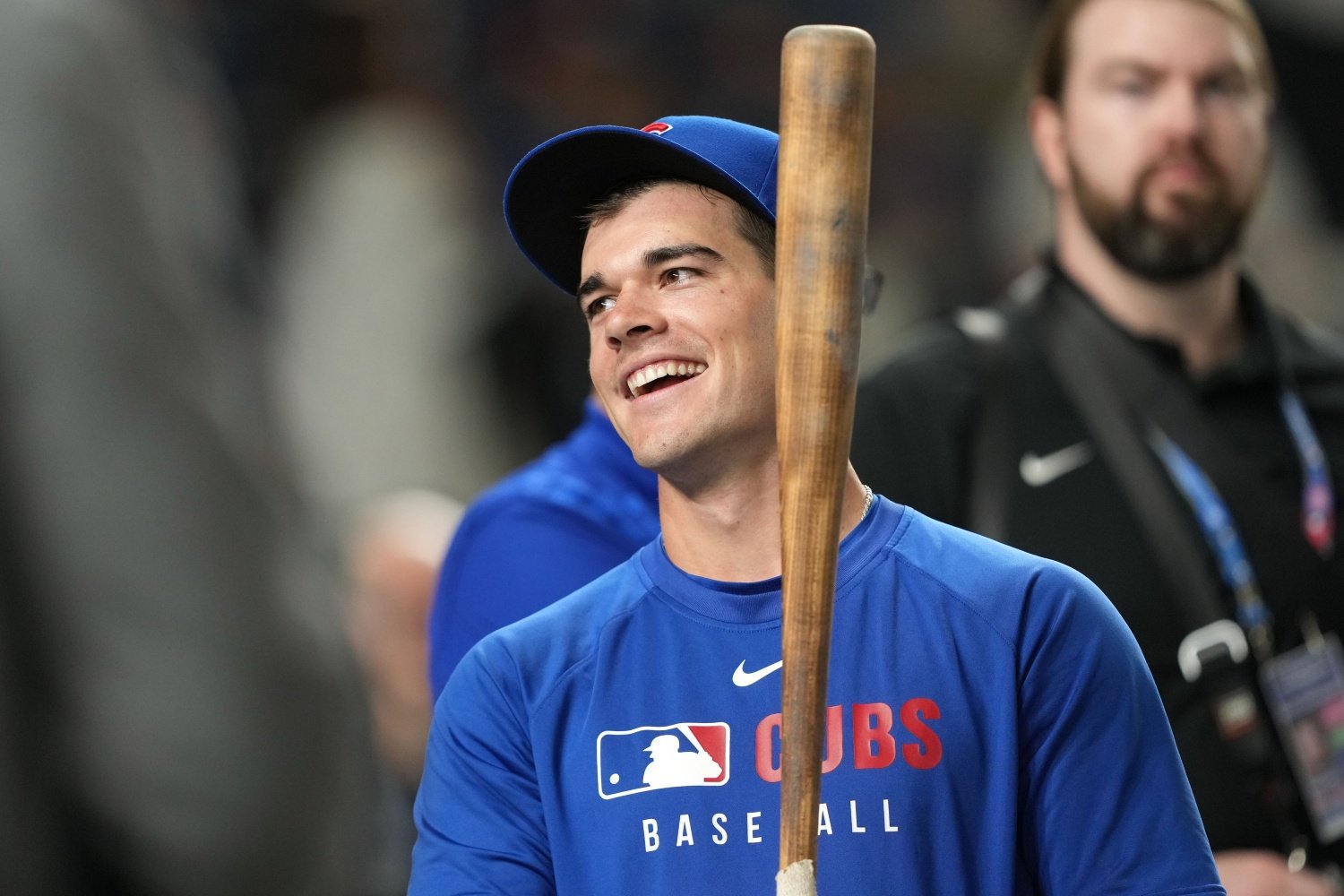 Look, this is just a bit of silliness for a Monday morning. But I figure we might as well have some fun, while we're all here. I woke up with a rather humdrum line of poetry in my head and decided to humdrum it all the way out into a full poem. Here it is: Matt Shaw had far too long a stride at bat. He hunched and lunged whene'er he swung—fell flat. A trip to D’Moines will do him good, I think. Without him, though, Chicago’s armor’s chinked. A lineup hole, a question mark, and that Is not just ‘cause they’ve mounted lousy stats. Were this the org they truly ought to be, Their youth would be a surer strength—a key. This problem any oracle could’ve told. On fact’ry lines, you oughtn’t break the mold. Farm systems are, perhaps, outdated terms. When th'industry’s high-tech fires so fiercely burn. A fairer sport—a poet’s—Shaw’s would be, But you can’t mass-produce the bumble bee.
 -
Yes, I considered calling this a Shawnet. Image courtesy of © Darren Yamashita-Imagn Images Look, this is just a bit of silliness for a Monday morning. But I figure we might as well have some fun, while we're all here. I woke up with a rather humdrum line of poetry in my head and decided to humdrum it all the way out into a full poem. Here it is: Matt Shaw had far too long a stride at bat. He hunched and lunged whene'er he swung—fell flat. A trip to D’Moines will do him good, I think. Without him, though, Chicago’s armor’s chinked. A lineup hole, a question mark, and that Is not just ‘cause they’ve mounted lousy stats. Were this the org they truly ought to be, Their youth would be a surer strength—a key. This problem any oracle could’ve told. On fact’ry lines, you oughtn’t break the mold. Farm systems are, perhaps, outdated terms. When th'industry’s high-tech fires so fiercely burn. A fairer sport—a poet’s—Shaw’s would be, But you can’t mass-produce the bumble bee. View full article
-
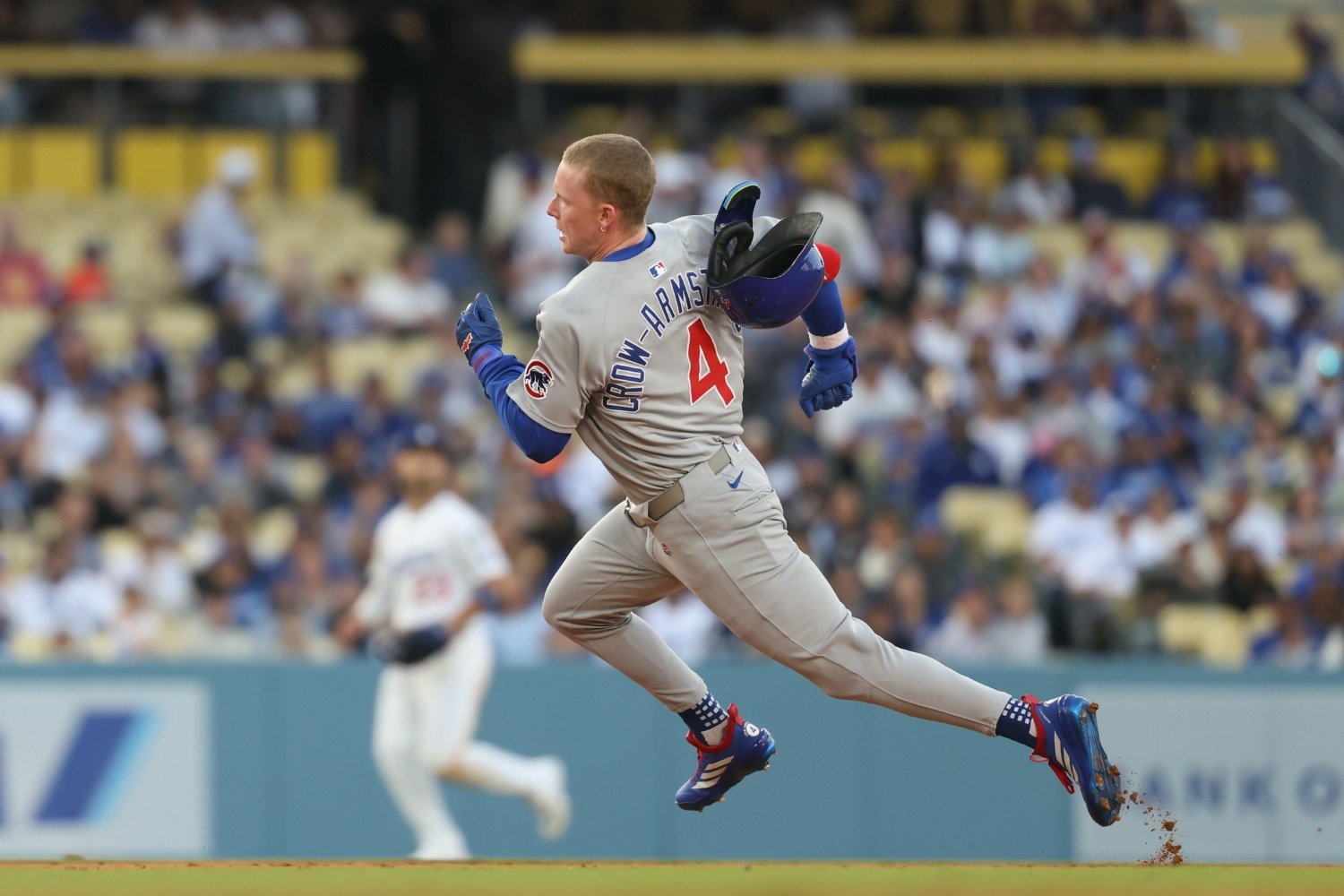 Over the weekend, MLB.com reporter Mark Feinsand reported that the Cubs and center fielder Pete Crow-Armstrong have had discussions "about an extension worth roughly $75 million." He later issued a clarification to that tweet, stating that the deal would only have reached that range if all the options involved had been exercised. That's an important clarification, indeed, because the difference between a pre-arbitration extension that guarantees $75 million and one that can merely max out there is often the difference between a house and a housefly. In this case, according to sources familiar with the proposal, the truth is closer to the latter. The Cubs control Crow-Armstrong's services through 2030. A deal that begins next year would have to cover five years of team control before eating into his free agency, and that is the most important reason to expect the two sides to move closer together on a deal over time. While the shape of this particular deal never fully came into focus, a source said the general structure would likely have resembled this: 2026: $1 million 2027: $2 million 2028: $4 million 2029: $8 million 2030: $16 million Add a signing bonus (likely around $5 million), and that would have secured around $36 million for Crow-Armstrong through the years for which he's assured of being under team control. The real crux of the deal, though, would be the years thereafter. Sources said Crow-Armstrong would stand to make somewhere between $20 million and $25 million per year for what would otherwise be his first two free-agent years, were a deal to come to fruition. The Cubs, however, aren't yet ready to guarantee those seasons, which would be his age-29 and age-30 campaigns. So far, Crow-Armstrong's lack of a coherent approach at the plate has stunted his development, even as he's racked up value by being one of the best defenders and baserunners in the league. While there remains (in the team's eyes) a real risk that he won't hit enough to stick in the starting lineup, they're wary of committing to those years, when his defense could also be starting to slip. Let's sketch this out. If both of those seasons were guaranteed, it would push the value of the deal as high as $80 million. In reality, though, the Cubs were offering two team options, with a buyout similar to the size of the signing bonus, which likely meant that the guaranteed money in the deal was around $40 million. 2031: $22 million ($6 million buyout) 2032: $24 million ($2 million buyout) If you're part of Crow-Armstrong's camp, that deal is not especially appealing. It does ensure that he makes generational money over the course of his career, but severely caps him in terms of ceiling. One source speculated that guaranteeing the first year of what would be free agency and adding a similar team option for 2033 could be an effective compromise. In that case, we'd be talking about a deal with a floor around $65 million and the chance to reach nine figures. Again, though, the Cubs aren't ready to take that much bigger leap, especially if it means moving more of the total money toward the front end of the deal. Even as they've given him a wide runway and an opportunity to prove himself as anywhere from the next Andrew McCutchen to the next Kevin Kiermaier, they harbor quiet concerns that his extremely aggressive approach will hamper his offensive output throughout his career. Each side has some degree of interest in a deal to keep Crow-Armstrong with the Cubs well into the 2030s. Right now, they're not especially close to agreeing on the terms of such a deal, but as Crow-Armstrong settles into his job and shows increasingly encouraging flashes of offensive competence, that possibility becomes more like a reality. The fact that the Cubs control him for what could easily be the first 1,000 games of his career gives them ample leverage. Crow-Armstrong's leverage, meanwhile, is the fact that his tools could permit him to blossom into one of the best players in the game—rapidly tripling his reasonable asking price. The Cubs have to decide how long to wait him out before taking a step toward him in talks, to avoid suddenly finding him much harder to sign when they most want to.
 -
The Cubs and their young center fielder have discussed a long-term deal, but so far, the gap between them is significant. In this particular case, however, there's plenty of reason for hope that common ground will eventually materialize. Image courtesy of © Kiyoshi Mio-Imagn Images Over the weekend, MLB.com reporter Mark Feinsand reported that the Cubs and center fielder Pete Crow-Armstrong have had discussions "about an extension worth roughly $75 million." He later issued a clarification to that tweet, stating that the deal would only have reached that range if all the options involved had been exercised. That's an important clarification, indeed, because the difference between a pre-arbitration extension that guarantees $75 million and one that can merely max out there is often the difference between a house and a housefly. In this case, according to sources familiar with the proposal, the truth is closer to the latter. The Cubs control Crow-Armstrong's services through 2030. A deal that begins next year would have to cover five years of team control before eating into his free agency, and that is the most important reason to expect the two sides to move closer together on a deal over time. While the shape of this particular deal never fully came into focus, a source said the general structure would likely have resembled this: 2026: $1 million 2027: $2 million 2028: $4 million 2029: $8 million 2030: $16 million Add a signing bonus (likely around $5 million), and that would have secured around $36 million for Crow-Armstrong through the years for which he's assured of being under team control. The real crux of the deal, though, would be the years thereafter. Sources said Crow-Armstrong would stand to make somewhere between $20 million and $25 million per year for what would otherwise be his first two free-agent years, were a deal to come to fruition. The Cubs, however, aren't yet ready to guarantee those seasons, which would be his age-29 and age-30 campaigns. So far, Crow-Armstrong's lack of a coherent approach at the plate has stunted his development, even as he's racked up value by being one of the best defenders and baserunners in the league. While there remains (in the team's eyes) a real risk that he won't hit enough to stick in the starting lineup, they're wary of committing to those years, when his defense could also be starting to slip. Let's sketch this out. If both of those seasons were guaranteed, it would push the value of the deal as high as $80 million. In reality, though, the Cubs were offering two team options, with a buyout similar to the size of the signing bonus, which likely meant that the guaranteed money in the deal was around $40 million. 2031: $22 million ($6 million buyout) 2032: $24 million ($2 million buyout) If you're part of Crow-Armstrong's camp, that deal is not especially appealing. It does ensure that he makes generational money over the course of his career, but severely caps him in terms of ceiling. One source speculated that guaranteeing the first year of what would be free agency and adding a similar team option for 2033 could be an effective compromise. In that case, we'd be talking about a deal with a floor around $65 million and the chance to reach nine figures. Again, though, the Cubs aren't ready to take that much bigger leap, especially if it means moving more of the total money toward the front end of the deal. Even as they've given him a wide runway and an opportunity to prove himself as anywhere from the next Andrew McCutchen to the next Kevin Kiermaier, they harbor quiet concerns that his extremely aggressive approach will hamper his offensive output throughout his career. Each side has some degree of interest in a deal to keep Crow-Armstrong with the Cubs well into the 2030s. Right now, they're not especially close to agreeing on the terms of such a deal, but as Crow-Armstrong settles into his job and shows increasingly encouraging flashes of offensive competence, that possibility becomes more like a reality. The fact that the Cubs control him for what could easily be the first 1,000 games of his career gives them ample leverage. Crow-Armstrong's leverage, meanwhile, is the fact that his tools could permit him to blossom into one of the best players in the game—rapidly tripling his reasonable asking price. The Cubs have to decide how long to wait him out before taking a step toward him in talks, to avoid suddenly finding him much harder to sign when they most want to. View full article
-
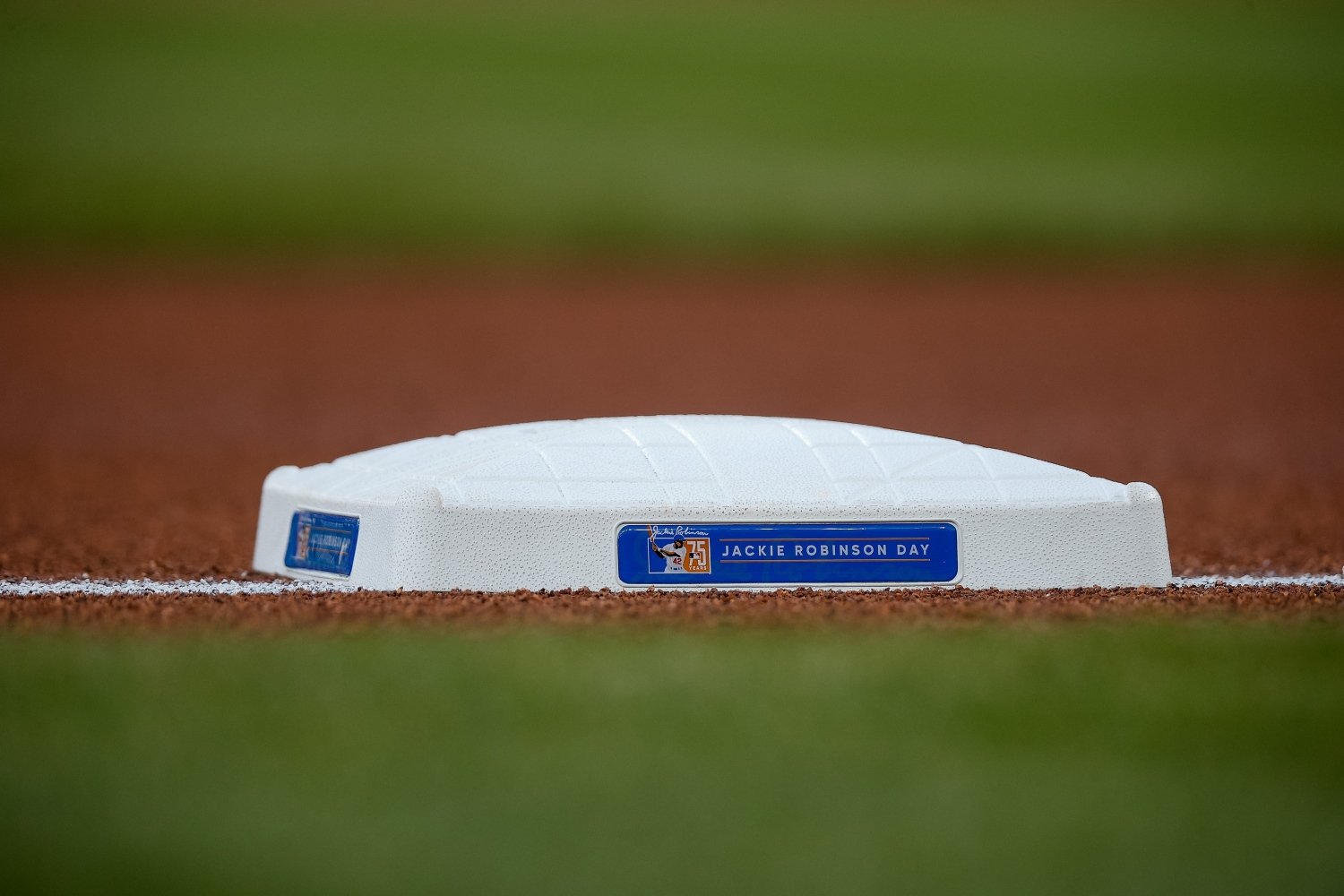 Four score minus two years ago, a few brave people (with hundreds of thousands at their backs and millions standing shoulder-to-shoulder in their path) brought forth upon this continent the first worthwhile version of the United States of America. Jackie Robinson took the field for the Brooklyn Dodgers that day, breaking what had been a six-decade color barrier for entry into Major League Baseball. Robinson, a former Army officer who made a stand against segregation on the Texas base where he served during World War II, was an acutely self-aware symbol of the nascent 20th-century Civil Rights Movement. At various times in the decades since then, biographers and orthogonal narrators of that moment have downplayed that fact, preferring to cast Robinson as someone who just wanted to play his beloved game without fetter or restriction. He did want that equality of opportunity, but not in some boyish, vapid way, and not just because he had a deep competitive fire. By the time Robinson and Branch Rickey set fire to the official barrier between MLB and the Negro Leagues, the fire of the Civil Rights Movement had been burning for a handful of years. It wasn't just Robinson who spoke up and fought successfully against segregation during World War II, but he had a certain level of privilege and leverage: he was serving domestically, not in combat, and his excellent educational background (he was raised in an integrated Pasadena, California, and attended UCLA) made him much more difficult to cast as a troublemaker or to browbeat than many other servicepeople of color were. When the Allies defeated the Nazis (for the moment) in May 1945 and then mercilessly crushed Japan with the atomic bombings of Hiroshima and Nagasaki in August, huge waves of soldiers returned from battlefields where they and their fellows had been wounded, tortured, killed, or traumatized by the violence they themselves had had to inflict, in order to stay alive or complete a mission on which they were told the fate of their beloved Republic hinged. A great many of those soldiers, Black and White alike, came home disillusioned and resentful. The way the Armed Services themselves treated divisions of different colors was intentionally disparate. White soldiers got better weapons, better assignments, better supplies, and far, far more respect. At times, Black soldiers—and not a few White ones, watching it all happen—felt that they were fighting to preserve a country built on lip service to ideals it was betraying even as it demanded they put their lives in peril. When all those soldiers came home, the disparity in the opportunities and the aid that awaited them was just as wide. It was galvanizing, for Black communities beginning to be empowered by the Great Migration and the roots they'd put down over the previous generation in places more like Pasadena than like Shreveport, La. It was also eye-opening, for many White people who had previously held segregationist, racist views or had failed to grasp the profundity of the rot at the root of the American flower. Robinson was not uniquely talented, among the greats of the Negro Leagues. He was not a happy accident—a "lucky us" scouting find by Rickey and the Dodgers. He was not just a ballplayer, though even he sometimes used that oversimplification as a shield to keep the (literal) haters at bay. He was the result of a monthslong pressure campaign by local and national groups in favor of racial progress, involving coordinated letter-writing; a rising tide of editorials and opinion columns in even White-owned newspapers, from even White columnists; and boycotts. He was carefully chosen for his background as a part of that movement, having won a court-martial after being arrested for refusing to move to the back of a military transport bus. He was chosen for his commitment to nonviolence and for his refusal to compromise on the question of his own qualifications or humanity. He was the tip of the spear that would be shoved into the heart of Jim Crow, inch by inch, by Rosa Parks, Malcolm X, Martin Luther King Jr., Fannie Lou Hamer, John Lewis, and millions more over the ensuing three decades. He was also a beneficiary of the time being right. Seeing the widespread disrespect and maltreatment that befell even heroes of battles on which hung the question of the survival of American democracy made many see the dark hypocrisy at the heart of their country. Spending a decade fighting (not, at first, with weapons and troops, but fighting straight through, from 1935 or so through the end of the war) the Nazis and their atrocious, vile extermination campaign against so many innocent civilians threw the sins of American racism into such sharp relief that it could no longer be ignored. Yes, therefore, Robinson was a DEI hire. That is, unequivocally, a good thing, and the clearest illustration of the need for such hires that can be offered. He was an exceptionally qualified applicant for a job long held by players who were much worse than him, sheltered from competition with him by systematic racism. He brought diversity, equality and inclusion into the workplace, not diminishing meritocracy in the process, but introducing real meritocracy for the first time in the history of that workplace. It's important to say these things now, because the United States has sagged badly since gaining all the ground that Robinson helped begin claiming 80 years ago. America has never been what it claimed to be, and for some, that illegitimizes it entirely. For others, inexcusably but truly, it's not a problem, because they never wanted America to be what it claimed to be, anyway. A plurality of us live in the middle. We believe that what America aspires to—not what Thomas Jefferson or George Washington (let alone Andrew Jackson or Richard Nixon) aspired to, but what the country has stood for in a broad sense over almost two and a half centuries—is worthwhile. We believe that its failure to even come especially close to that goal is unacceptable, but not in such a way as to make continuing to pursue that goal unworthy. The United States has never met its own standards for success. The American dream has yet to be realized. Until this date in 1947, though, the country didn't even try—not really, not hard enough. Beginning with the movements and efforts that culminated in that day, though, we did try, and try hard, for a long time. The results weren't good enough, because "good enough", like the American dream itself, is perhaps something only to be chased, and never to be grasped. However, looking back over the last 78 years—to Parks on the bus in Montgomery, Alabama, and to Lewis and King on the bridge in Selma; to Harry Truman following Rickey's lead by desegregating the military, and the Supreme Court following it by desegregating the nation's schools; to movements that gave rise to generations of genuinely empowered Black thinkers, artists, and businesspeople; to Barack Obama in Grant Park in 2008—it's impossible to conclude that there wasn't progress. It's impossible not to believe that that progress was worthwhile, and hard for me not to conclude that there is hope yet for the country Robinson brought forth upon the diamond in 1947. Yet, we're surrounded by urgent indicators that all that progress is in jeopardy. The Department of Defense, newly led by a coalition dedicated to erasing that progress and the hope it infused in so many, tried to remove Robinson's story from before he became a sports hero, because they know how much power lies in the connection between his service (and the racism he faced therein) and his later barrier-breaking, given the way World War II stirred the movement. Corporations, including MLB, are being bullied and cowed into either doing away with DEI initiatives or pretending they matter less than they do, all on the urgent and diametrically dishonest premise that DEI damages meritocracy, rather than being its only reliable set of guiding principles in a multicultural world. Abraham Lincoln, himself a deeply flawed man with no stainless racial record, faced a moment like this. He stood astride a country that was fracturing and falling apart, because (in two very different ways) its two halves could no longer live with the lies they had told each other to make the union work in the first place. Lincoln himself saw right through the Declaration of Independence, to its hidden agendas and crucial elisions. Still, he knew that the best hope for the future of his people—even the ones in the opposing uniforms—was to re-establish that the United States was "conceived in liberty, and dedicated to the proposition that all men are created equal." He knew that promise had not been delivered upon, and he knew it would be a long time before it would be, but he believed it was worth persisting in the pursuit. Now, as then, we find ourselves facing a test of "whether any nation so conceived and so dedicated can long endure." It's not a hopeful moment. When Lincoln resorted to those words, he was standing amid a battlefield still pockmarked by pools of blood. It's comforting, though, to remember that while Lincoln came just 80 years after Jefferson and his Declaration, Robinson came just 80 years after Lincoln. Robinson was the first beacon of light in a generation of it—of shining, surging hope, and huge victories. He's the first symbol of America making a more serious, informed, earnest dedication to its founding ideals, and although those ideals now seem as much in danger as they did in the days just before Gettysburg or D-Day, Robinson's legacy is the reminder that we have already come a long way, and that bravely pushing forward against resistance can take us even further. The last two decades, with a bit less bloodshed than the Civil War or World War II on the parts of American soldiers, have done plenty to open the eyes and the minds of Americans. That hopeful plurality with which I identified myself above is better able to see and name the things they're fighting for, and the things they're fighting against, than such pluralities could have been at any previous moment of American history. Ultimately, that only matters if we all here dedicate ourselves to the great task remaining before us. Today, when you turn on a baseball game and everyone is wearing Jackie Robinson's 42, consider the gravity of that symbol, but remember that it's a mere echo of the real moment that mattered. Robinson, whose most famous bit of wisdom was that we only matter if we leave a mark on one another, would surely want you to see his mark on the backs of so many players and think about how you can leave your own.
 -
There's always what we say, and what we mean, and a gap between the two; what we mean to do, and what we really do, and a gap between the two. We all have a habit of saying what we mean to do, but what we really do tends to align with what we meant but wouldn't say. Image courtesy of © Isaiah J. Downing-Imagn Images Four score minus two years ago, a few brave people (with hundreds of thousands at their backs and millions standing shoulder-to-shoulder in their path) brought forth upon this continent the first worthwhile version of the United States of America. Jackie Robinson took the field for the Brooklyn Dodgers that day, breaking what had been a six-decade color barrier for entry into Major League Baseball. Robinson, a former Army officer who made a stand against segregation on the Texas base where he served during World War II, was an acutely self-aware symbol of the nascent 20th-century Civil Rights Movement. At various times in the decades since then, biographers and orthogonal narrators of that moment have downplayed that fact, preferring to cast Robinson as someone who just wanted to play his beloved game without fetter or restriction. He did want that equality of opportunity, but not in some boyish, vapid way, and not just because he had a deep competitive fire. By the time Robinson and Branch Rickey set fire to the official barrier between MLB and the Negro Leagues, the fire of the Civil Rights Movement had been burning for a handful of years. It wasn't just Robinson who spoke up and fought successfully against segregation during World War II, but he had a certain level of privilege and leverage: he was serving domestically, not in combat, and his excellent educational background (he was raised in an integrated Pasadena, California, and attended UCLA) made him much more difficult to cast as a troublemaker or to browbeat than many other servicepeople of color were. When the Allies defeated the Nazis (for the moment) in May 1945 and then mercilessly crushed Japan with the atomic bombings of Hiroshima and Nagasaki in August, huge waves of soldiers returned from battlefields where they and their fellows had been wounded, tortured, killed, or traumatized by the violence they themselves had had to inflict, in order to stay alive or complete a mission on which they were told the fate of their beloved Republic hinged. A great many of those soldiers, Black and White alike, came home disillusioned and resentful. The way the Armed Services themselves treated divisions of different colors was intentionally disparate. White soldiers got better weapons, better assignments, better supplies, and far, far more respect. At times, Black soldiers—and not a few White ones, watching it all happen—felt that they were fighting to preserve a country built on lip service to ideals it was betraying even as it demanded they put their lives in peril. When all those soldiers came home, the disparity in the opportunities and the aid that awaited them was just as wide. It was galvanizing, for Black communities beginning to be empowered by the Great Migration and the roots they'd put down over the previous generation in places more like Pasadena than like Shreveport, La. It was also eye-opening, for many White people who had previously held segregationist, racist views or had failed to grasp the profundity of the rot at the root of the American flower. Robinson was not uniquely talented, among the greats of the Negro Leagues. He was not a happy accident—a "lucky us" scouting find by Rickey and the Dodgers. He was not just a ballplayer, though even he sometimes used that oversimplification as a shield to keep the (literal) haters at bay. He was the result of a monthslong pressure campaign by local and national groups in favor of racial progress, involving coordinated letter-writing; a rising tide of editorials and opinion columns in even White-owned newspapers, from even White columnists; and boycotts. He was carefully chosen for his background as a part of that movement, having won a court-martial after being arrested for refusing to move to the back of a military transport bus. He was chosen for his commitment to nonviolence and for his refusal to compromise on the question of his own qualifications or humanity. He was the tip of the spear that would be shoved into the heart of Jim Crow, inch by inch, by Rosa Parks, Malcolm X, Martin Luther King Jr., Fannie Lou Hamer, John Lewis, and millions more over the ensuing three decades. He was also a beneficiary of the time being right. Seeing the widespread disrespect and maltreatment that befell even heroes of battles on which hung the question of the survival of American democracy made many see the dark hypocrisy at the heart of their country. Spending a decade fighting (not, at first, with weapons and troops, but fighting straight through, from 1935 or so through the end of the war) the Nazis and their atrocious, vile extermination campaign against so many innocent civilians threw the sins of American racism into such sharp relief that it could no longer be ignored. Yes, therefore, Robinson was a DEI hire. That is, unequivocally, a good thing, and the clearest illustration of the need for such hires that can be offered. He was an exceptionally qualified applicant for a job long held by players who were much worse than him, sheltered from competition with him by systematic racism. He brought diversity, equality and inclusion into the workplace, not diminishing meritocracy in the process, but introducing real meritocracy for the first time in the history of that workplace. It's important to say these things now, because the United States has sagged badly since gaining all the ground that Robinson helped begin claiming 80 years ago. America has never been what it claimed to be, and for some, that illegitimizes it entirely. For others, inexcusably but truly, it's not a problem, because they never wanted America to be what it claimed to be, anyway. A plurality of us live in the middle. We believe that what America aspires to—not what Thomas Jefferson or George Washington (let alone Andrew Jackson or Richard Nixon) aspired to, but what the country has stood for in a broad sense over almost two and a half centuries—is worthwhile. We believe that its failure to even come especially close to that goal is unacceptable, but not in such a way as to make continuing to pursue that goal unworthy. The United States has never met its own standards for success. The American dream has yet to be realized. Until this date in 1947, though, the country didn't even try—not really, not hard enough. Beginning with the movements and efforts that culminated in that day, though, we did try, and try hard, for a long time. The results weren't good enough, because "good enough", like the American dream itself, is perhaps something only to be chased, and never to be grasped. However, looking back over the last 78 years—to Parks on the bus in Montgomery, Alabama, and to Lewis and King on the bridge in Selma; to Harry Truman following Rickey's lead by desegregating the military, and the Supreme Court following it by desegregating the nation's schools; to movements that gave rise to generations of genuinely empowered Black thinkers, artists, and businesspeople; to Barack Obama in Grant Park in 2008—it's impossible to conclude that there wasn't progress. It's impossible not to believe that that progress was worthwhile, and hard for me not to conclude that there is hope yet for the country Robinson brought forth upon the diamond in 1947. Yet, we're surrounded by urgent indicators that all that progress is in jeopardy. The Department of Defense, newly led by a coalition dedicated to erasing that progress and the hope it infused in so many, tried to remove Robinson's story from before he became a sports hero, because they know how much power lies in the connection between his service (and the racism he faced therein) and his later barrier-breaking, given the way World War II stirred the movement. Corporations, including MLB, are being bullied and cowed into either doing away with DEI initiatives or pretending they matter less than they do, all on the urgent and diametrically dishonest premise that DEI damages meritocracy, rather than being its only reliable set of guiding principles in a multicultural world. Abraham Lincoln, himself a deeply flawed man with no stainless racial record, faced a moment like this. He stood astride a country that was fracturing and falling apart, because (in two very different ways) its two halves could no longer live with the lies they had told each other to make the union work in the first place. Lincoln himself saw right through the Declaration of Independence, to its hidden agendas and crucial elisions. Still, he knew that the best hope for the future of his people—even the ones in the opposing uniforms—was to re-establish that the United States was "conceived in liberty, and dedicated to the proposition that all men are created equal." He knew that promise had not been delivered upon, and he knew it would be a long time before it would be, but he believed it was worth persisting in the pursuit. Now, as then, we find ourselves facing a test of "whether any nation so conceived and so dedicated can long endure." It's not a hopeful moment. When Lincoln resorted to those words, he was standing amid a battlefield still pockmarked by pools of blood. It's comforting, though, to remember that while Lincoln came just 80 years after Jefferson and his Declaration, Robinson came just 80 years after Lincoln. Robinson was the first beacon of light in a generation of it—of shining, surging hope, and huge victories. He's the first symbol of America making a more serious, informed, earnest dedication to its founding ideals, and although those ideals now seem as much in danger as they did in the days just before Gettysburg or D-Day, Robinson's legacy is the reminder that we have already come a long way, and that bravely pushing forward against resistance can take us even further. The last two decades, with a bit less bloodshed than the Civil War or World War II on the parts of American soldiers, have done plenty to open the eyes and the minds of Americans. That hopeful plurality with which I identified myself above is better able to see and name the things they're fighting for, and the things they're fighting against, than such pluralities could have been at any previous moment of American history. Ultimately, that only matters if we all here dedicate ourselves to the great task remaining before us. Today, when you turn on a baseball game and everyone is wearing Jackie Robinson's 42, consider the gravity of that symbol, but remember that it's a mere echo of the real moment that mattered. Robinson, whose most famous bit of wisdom was that we only matter if we leave a mark on one another, would surely want you to see his mark on the backs of so many players and think about how you can leave your own. View full article
-
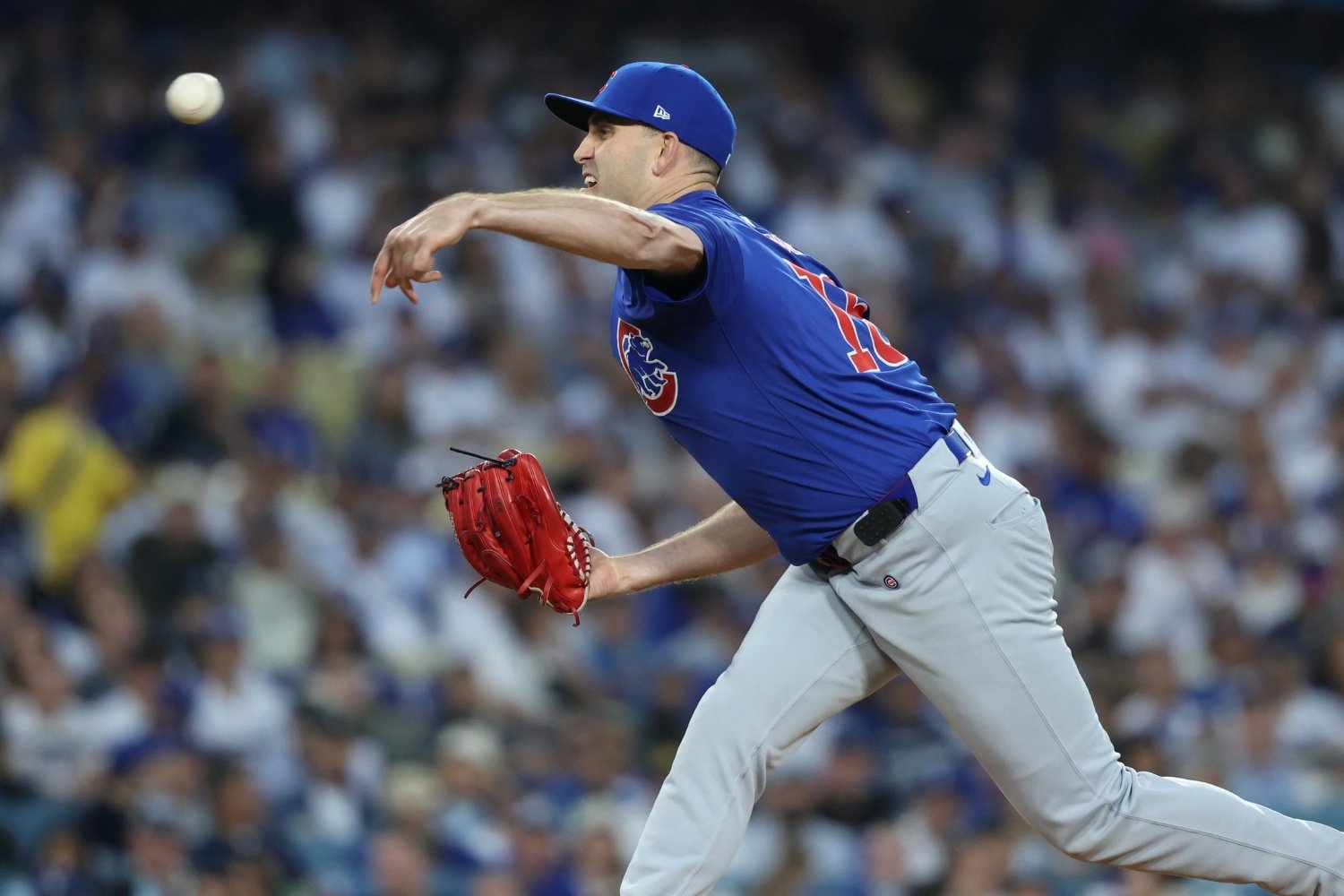 First things first, no one throws harder than ever at 34 years old, but here's Matthew Boyd, throwing harder than ever at 34. His 93.1 mph average fastball velocity is a full tick faster than he was throwing last year, and 0.5 mph better than his previous career high, achieved in both 2017 and 2022. Whether he'll be able to hold onto that heat for a whole season is a fair question with mostly pessimistic answers, but he's throwing hard—especially for a lefty whose profile has always depended more on things other than velocity, anyway. That brings us to the things other than his fastball, which are even more impressive feats of late-career engineering. Here's a snapshot of Boyd's arsenal from 2024, which was broadly in keeping with the way it looked for most of his career to that point: As I wrote over the winter, that did mark a slight departure from the past in a couple of ways. Boyd's slider had unusual two-plane depth last year; he threw his changeup more often, especially when behind in counts; and he'd rarely used the sinker to right-handed batters the way he did in 2024. Broadly speaking, though, this is what he is: a funk-over-firepower southpaw whose breaking balls always kept him around. Note that the slider is in the velocity range where most pitchers' curves live, and that the changeup is hovering arounf 81 mph here. Now, here's what we've seen from Boyd in 2025: The fastball velocity stands out, but so does the fact that the slider velo came with it—while the change got even slower. He's now pulling the string on opposing hitters to the tune of a 14-mph speed differential. A bit paradoxically, that leads to less swing-and-miss, because hitters do have a chance to adjust when the gap is that large and make contact, but that contact is less dangerous than ever. Meanwhile, the slider is easier to command, and that fastball plays up tremendously. Extra velocity is always valuable, but the tighter shape of this slider and the way Boyd has improved the spin efficiency on his fastball have helped his whole mix improve in ways that run deeper. Here's what a right-handed batter saw from Boyd in 2024, taking the average trajectory of each of the pitches he used regularly against righties last year. Obviously, his curveball popped out of the hand in a way batters could readily spot. That wasn't necessarily bad; that pitch is meant to confuse and freeze a hitter to induce a called strike. However, you can also see the way his slider differed in early flight from his other three offerings, and the way his changeup tended to fall off the line on which he threw his fastball before the commitment point for a hitter (shown here in pink). Here's what a righty sees in 2025: Partially because of the change to his slider movement, and partially because he's letting his fastball ride more (high and away from righties), all three of his main weapons against opposite-handed batters now tunnel gorgeously. He's not using the sinker or curve nearly as much this year, at least so far, but that's been a feature, not a bug. Hitters have a much tougher task in identifying his stuff. Here, by contrast, is what lefties saw in 2024. And here's what they're seeing this year: No such gains in deception from this side. What Boyd seems to have discovered, at an advanced age, is that while he has to fool righty batters in order to avoid giving up damage to them, his funky angle and his raw stuff is good enough to beat lefties. That's liberating; it has allowed him to shape his primary pitches with the way they tunnel to righties at the forefront. Boyd will start Wednesday in San Diego, the second time he'll have to navigate the dangerous Padres lineup in this first month of the 2025 campaign. It's a tall order, and the pressure on him has increased in the wake of Justin Steele's season-ending elbow surgery. Boyd, however, is equal to the task. He, too, will spend some part of this season on the injured list, but until that time comes, he looks capable of being a very good mid-rotation starter. His blend of power and finesse has never been more nimble, and while he's not throwing all-new stuff, his arsenal has been transformed by a little bit of added velocity, some new locations, and a small change in how each of his old, familiar offerings interacts with the others.
 -
Somehow, the Cubs have completed the trifecta of late-blooming lefties with the most impressive in the set. We all know the injury bug will bite him, but like Natasha Bedingfield in a vampire movie, thus far, he's unbitten—and unhitt...en? Look, I'm sorry. Please read this anyway. Image courtesy of © Kiyoshi Mio-Imagn Images First things first, no one throws harder than ever at 34 years old, but here's Matthew Boyd, throwing harder than ever at 34. His 93.1 mph average fastball velocity is a full tick faster than he was throwing last year, and 0.5 mph better than his previous career high, achieved in both 2017 and 2022. Whether he'll be able to hold onto that heat for a whole season is a fair question with mostly pessimistic answers, but he's throwing hard—especially for a lefty whose profile has always depended more on things other than velocity, anyway. That brings us to the things other than his fastball, which are even more impressive feats of late-career engineering. Here's a snapshot of Boyd's arsenal from 2024, which was broadly in keeping with the way it looked for most of his career to that point: As I wrote over the winter, that did mark a slight departure from the past in a couple of ways. Boyd's slider had unusual two-plane depth last year; he threw his changeup more often, especially when behind in counts; and he'd rarely used the sinker to right-handed batters the way he did in 2024. Broadly speaking, though, this is what he is: a funk-over-firepower southpaw whose breaking balls always kept him around. Note that the slider is in the velocity range where most pitchers' curves live, and that the changeup is hovering arounf 81 mph here. Now, here's what we've seen from Boyd in 2025: The fastball velocity stands out, but so does the fact that the slider velo came with it—while the change got even slower. He's now pulling the string on opposing hitters to the tune of a 14-mph speed differential. A bit paradoxically, that leads to less swing-and-miss, because hitters do have a chance to adjust when the gap is that large and make contact, but that contact is less dangerous than ever. Meanwhile, the slider is easier to command, and that fastball plays up tremendously. Extra velocity is always valuable, but the tighter shape of this slider and the way Boyd has improved the spin efficiency on his fastball have helped his whole mix improve in ways that run deeper. Here's what a right-handed batter saw from Boyd in 2024, taking the average trajectory of each of the pitches he used regularly against righties last year. Obviously, his curveball popped out of the hand in a way batters could readily spot. That wasn't necessarily bad; that pitch is meant to confuse and freeze a hitter to induce a called strike. However, you can also see the way his slider differed in early flight from his other three offerings, and the way his changeup tended to fall off the line on which he threw his fastball before the commitment point for a hitter (shown here in pink). Here's what a righty sees in 2025: Partially because of the change to his slider movement, and partially because he's letting his fastball ride more (high and away from righties), all three of his main weapons against opposite-handed batters now tunnel gorgeously. He's not using the sinker or curve nearly as much this year, at least so far, but that's been a feature, not a bug. Hitters have a much tougher task in identifying his stuff. Here, by contrast, is what lefties saw in 2024. And here's what they're seeing this year: No such gains in deception from this side. What Boyd seems to have discovered, at an advanced age, is that while he has to fool righty batters in order to avoid giving up damage to them, his funky angle and his raw stuff is good enough to beat lefties. That's liberating; it has allowed him to shape his primary pitches with the way they tunnel to righties at the forefront. Boyd will start Wednesday in San Diego, the second time he'll have to navigate the dangerous Padres lineup in this first month of the 2025 campaign. It's a tall order, and the pressure on him has increased in the wake of Justin Steele's season-ending elbow surgery. Boyd, however, is equal to the task. He, too, will spend some part of this season on the injured list, but until that time comes, he looks capable of being a very good mid-rotation starter. His blend of power and finesse has never been more nimble, and while he's not throwing all-new stuff, his arsenal has been transformed by a little bit of added velocity, some new locations, and a small change in how each of his old, familiar offerings interacts with the others. View full article
-
NEWS: Justin Steele to Undergo Elbow Surgery, Miss Rest of Season
Matthew Trueblood posted an article in Cubs
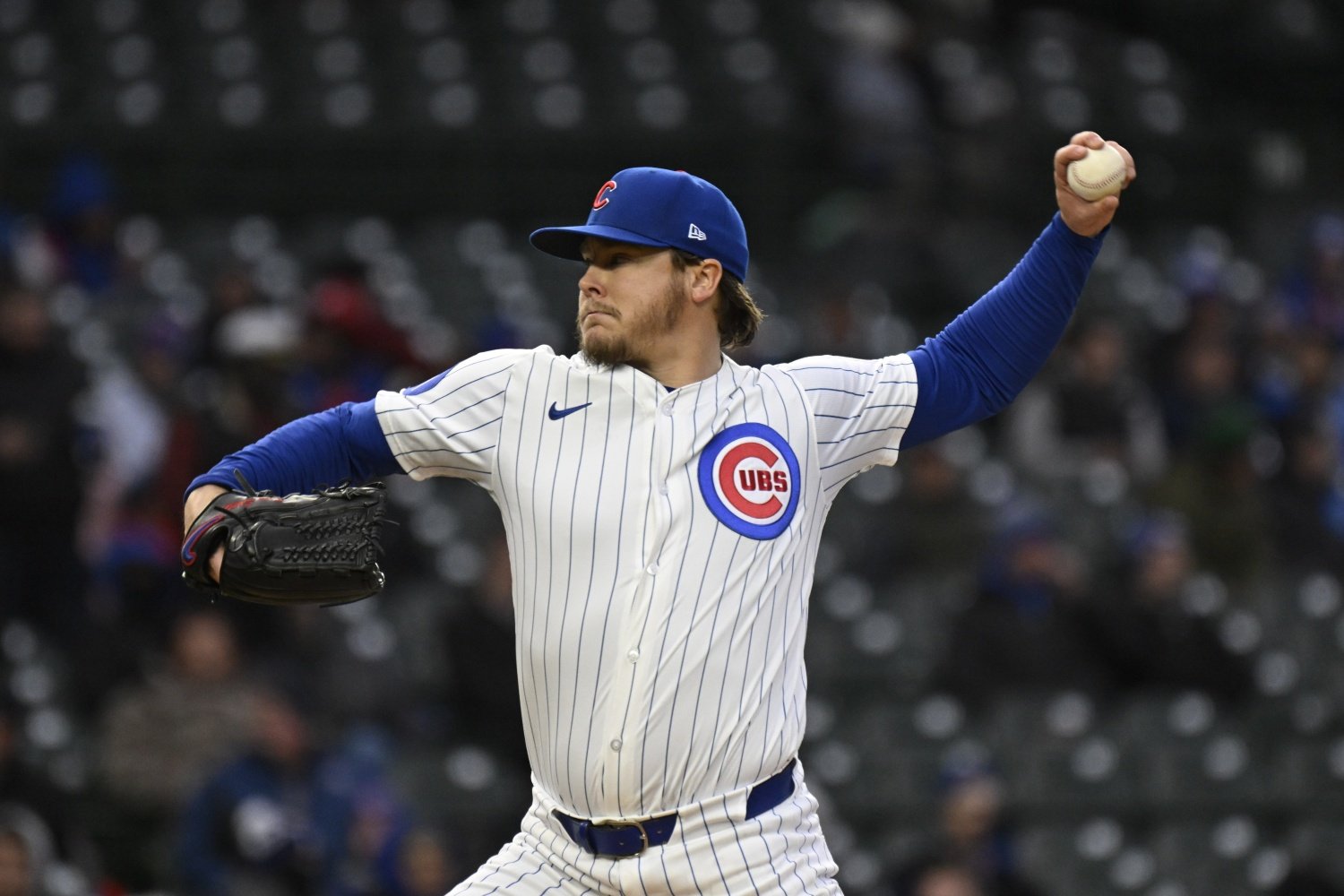 Like Death, Tommy John surgery (and its cousin, the internal brace procedure that performs the same reconstruction but permits slightly faster healing) can be put off, but once you're on its cosmic to-do list, your box will eventually be checked. So it went for Justin Steele, who weathered an elbow flareup in the summer of 2023 and the fall of last year but couldn't quite escape the maw of the beast a third time this spring. Whether it will be possible to perform the slightly preferable version of the operation isn't yet clear, but that will affect only his availability for early next year. Earlier this weekend, the news broke that Steele was seeking a second opinion, which is rarely a good sign. That opinion concurred with the first, as it usually does. He's pitched with damage in the elbow ever since the forearm strain that shelved him in June 2023, but it worsened over time. The best efforts of both team and player were probably doomed all along; the ulnar collateral ligament can't heal while you're still pitching. The Cubs knew that Steele's elbow was a ticking time bomb, even more than most pitchers' are. It's why they worked so hard to amass extra pitching depth this winter, and why they were bitterly disappointed when a trade for now-Phillies lefty Jesús Luzardo fell through due to the Marlins balking at the medical report on outfield prospect Owen Caissie. It's why the team signed Colin Rea, whom they knew might not make the Opening Day rotation but would be needed somewhere along the way, and why they were in touch with veterans Lance Lynn and Kyle Gibson earlier this spring. They've been quietly managing Steele over the last eight months, if not the last 20. Now, though, they've lost that slow-motion battle with the inevitable, and they're very likely to look outside the organization for rotation reinforcement—not now, perhaps, but before the trade deadline at the end of July. The Marlins could be back in their sights, as Sandy Alcántara has returned from his own elbow surgery with his stuff largely intact. Caissie is off to a strong start at Triple-A Iowa, but unlike Luzardo, Alcántara is too rich a prize to even hope to pry loose with Caissie alone. He could be part of a package, after another month or so of proving himself healthy, and the Marlins have proved themselves willing to deal early in the season during their current rebuild. but the odds are that such a deal would involve a second high-caliber prospect, as well. While they wait for the rest of the market (Dylan Cease? Pablo López? Others?) to develop, the Cubs will lean on the balance of their veteran rotation, and a bit of increased pressure accrues on rehabbing young arm Javier Assad. Cade Horton, who was bound to step up in a situation like this at some stage, could get his call sooner than first hoped. The team did its best to prepare for this, but just as you can't dodge a thousand anvils, you can't truly prepare for when it lands on your toe—or your best arm.
 -
The Cubs moved around under this particular anvil for as long as they could, but ultimately, the whole sky was anvils. Their ace lefty will hit the surgeon's slab and return no sooner than the beginning of next season. Now what? Image courtesy of © Matt Marton-Imagn Images Like Death, Tommy John surgery (and its cousin, the internal brace procedure that performs the same reconstruction but permits slightly faster healing) can be put off, but once you're on its cosmic to-do list, your box will eventually be checked. So it went for Justin Steele, who weathered an elbow flareup in the summer of 2023 and the fall of last year but couldn't quite escape the maw of the beast a third time this spring. Whether it will be possible to perform the slightly preferable version of the operation isn't yet clear, but that will affect only his availability for early next year. Earlier this weekend, the news broke that Steele was seeking a second opinion, which is rarely a good sign. That opinion concurred with the first, as it usually does. He's pitched with damage in the elbow ever since the forearm strain that shelved him in June 2023, but it worsened over time. The best efforts of both team and player were probably doomed all along; the ulnar collateral ligament can't heal while you're still pitching. The Cubs knew that Steele's elbow was a ticking time bomb, even more than most pitchers' are. It's why they worked so hard to amass extra pitching depth this winter, and why they were bitterly disappointed when a trade for now-Phillies lefty Jesús Luzardo fell through due to the Marlins balking at the medical report on outfield prospect Owen Caissie. It's why the team signed Colin Rea, whom they knew might not make the Opening Day rotation but would be needed somewhere along the way, and why they were in touch with veterans Lance Lynn and Kyle Gibson earlier this spring. They've been quietly managing Steele over the last eight months, if not the last 20. Now, though, they've lost that slow-motion battle with the inevitable, and they're very likely to look outside the organization for rotation reinforcement—not now, perhaps, but before the trade deadline at the end of July. The Marlins could be back in their sights, as Sandy Alcántara has returned from his own elbow surgery with his stuff largely intact. Caissie is off to a strong start at Triple-A Iowa, but unlike Luzardo, Alcántara is too rich a prize to even hope to pry loose with Caissie alone. He could be part of a package, after another month or so of proving himself healthy, and the Marlins have proved themselves willing to deal early in the season during their current rebuild. but the odds are that such a deal would involve a second high-caliber prospect, as well. While they wait for the rest of the market (Dylan Cease? Pablo López? Others?) to develop, the Cubs will lean on the balance of their veteran rotation, and a bit of increased pressure accrues on rehabbing young arm Javier Assad. Cade Horton, who was bound to step up in a situation like this at some stage, could get his call sooner than first hoped. The team did its best to prepare for this, but just as you can't dodge a thousand anvils, you can't truly prepare for when it lands on your toe—or your best arm. View full article
-
The Cubs' young center fielder has a .549 OPS this season, and a .639 for his career. He's a mess at the plate. If someone, anyone, will teach him to swing less, though, he could become an eight-win player overnight. Image courtesy of © Matt Marton-Imagn Images It's rarely this simple, even for the exceptionally talented big-league ballplayer. Baseball is complicated, and the interaction between the best hitters and pitchers alive is endlessly complex, heaped with layers of adjustments and counter-adjustments; cues and red herrings; incredibly fast and precise physical movements; and a neverending mental game. Even in extreme cases, it's rarely as simple as saying, "Swing less, and your whole life will change." If Pete Crow-Armstrong just swings less, his whole life will change. He's done every important thing there is to do, en route to true baseball superstardom, except learn not to swing all the time. The good news is that if he checks that final box, all the pieces of a truly terrorizing force are here. Crow-Armstrong could become, very quickly, the 2019 version of Cody Bellinger, or a left-handed version of peak Andrew McCutchen. The bad news is that there's no evidence that he's ready to make that change. Two batted balls from Tuesday's game against the Rangers illustrate just how close to a breakout Crow-Armstrong really stands. In the second inning, he lined a first-pitch slider from Patrick Corbin into center field for a single. In the eighth, he laced a single to left on a 2-0 count against Hoby Milner, driving in two runs and sealing the Cubs' 10-6 win. Each of those balls came on a swing of at least 78 mph in bat speed, according to Statcast. They had 11° and 10° launch angles, respectively, and each had a 96 mph exit velocity. Crow-Armstrong had never hit a ball with those parameters before: a bat speed in excess of 78 mph (one of them came on a swing north of 81 mph), a launch angle between 5° and 15°, and an exit speed below 97 mph. In this game, alone, he hit two. That's noteworthy, because that type of batted ball is rare throughout the league. Since the start of 2023, here are the only 11 batters to meet those criteria on 10 or more batted balls: Giancarlo Stanton: 16 Julio Rodríguez: 13 Elly De La Cruz: 12 Oneil Cruz: 12 Manny Machado: 11 Luis Robert Jr.: 11 Yordan Alvarez: 11 Austin Riley: 11 Ronald Acuña Jr.: 10 Jorge Soler: 10 Vladimir Guerrero Jr.: 10 As it happens, this is also a pretty good list of the players in the league with the most raw power. It's not quite that, because Shohei Ohtani and Aaron Judge are missing, but we're in that neighborhood. Sure, Crow-Armstrong has only done it twice, but another way to say that is that Crow-Armstrong has done it twice this week, something only Guerrero can also say. Let's pause and unpack what these batted balls indicate, though, because I'm sure it's a bit strange to see a maximum exit velocity on a selection of hits for study, especially since using that produced a list of such fearsome sluggers. Here's the thing: If you swing that hard (well in excess of the league-average bat speed, which is somewhere south of 72 mph) and hit the ball on that kind of trajectory (a low line drive), you're almost always going to hit it harder than 97 mph. To have a swing that registers somewhere near 80 mph not produce a triple-digit exit speed, you have to mishit the ball, and almost no one is mishitting the ball when they hit a 10° line drive. Crow-Armstrong belongs to the group that does that, though. He's added a tick of bat speed this year—not as much as it might have appeared after a handful of games, but enough to be average, with plenty of upside, He swings faster than he used to, and can swing as fast as almost anyone when he really cuts it loose. He also has a swing designed to lift the ball. Four hundred thirty big-league hitters have registered at least 50 batted balls Statcast labeled "Squared Up" since the start of 2024. Those are batted balls where the actual exit velocity was at least 80% of the maximum possible exit velocity, given the speed of the hitter's swing and the incoming pitch. In that cohort, Crow-Armstrong ranks in the 91st percentile for average launch angle on Squared-Up balls, at 21°. Ahead of him are the most power-focused, fly ball-oriented hitters in the league: Judge, Matt Wallner, Kyle Tucker, Eugenio Suárez, Max Muncy, and so on. The leader of the entire pack, Cubs fans will be unsurprised to hear, is Patrick Wisdom. That's the kind of hitter Crow-Armstrong has designed himself to be. While he might still not have elite bat speed, he can sometimes access it, and even when he doesn't, his swing is geared to allow him to hit home runs when he gets the ball on the sweet spot. Alas, right now, he doesn't do that especially well. Here's a scatterplot of the 200 hitters who have taken the most swings so far this season in the big leagues, showing their average bat speed and the rate at which they square the ball up, on a per-swing basis. I chose the other two players highlighted here for good reasons, but ignore them for the moment. As you can see, Crow-Armstrong is close to average on both axes. That's kind of a miracle, really, given how much he swings. It's a testament to his raw talent—his "feel to hit," as scouts used to say. Look just below his name, and you'll see the face of Cubs teammate Ian Happ. Inarguably, Happ is a better hitter than Crow-Armstrong, but this year, Crow-Armstrong is both generating the same bat speed and squaring the ball up more often than Happ. There's no question which of these players is more talented. It's just that Happ works walks that keeps him more valuable than Crow-Armstrong. Now, let's talk about Jackson Merrill and Kerry Carpenter, because they're exemplars of just how limitless Crow-Armstrong's ceiling is. As you can see, Carpenter and Crow-Armstrong have basically identical bat speed. Merrill's is a hair better, but not substantially. What each of them do meaningfully better than Crow-Armstrong is not swing harder, but meet the ball more cleanly—and they do it by being more selective. Neither Carpenter nor Merrill is a truly patient hitter, by any means. Since the start of 2024, Carpenter has swung at 70.8% of pitches inside the zone and 32.2% of those outside it. Merrill is even more extreme, swinging at 77.2% of strikes and 35.7% of would-be balls. Crow-Armstrong, though, is even wilder. He swings a hair less within the zone than does Merrill (75.1%), but he's chased 41.1% of non-strikes since the start of last year. There's no way to work around plate discipline that poor and get to all of one's power. Crow-Armstrong just puts himself into too many bad counts, and puts too many borderline pitches in play, to boot. Despite the similar bat speed and the fact that Crow-Armstrong is using a similar approach to both Merrill's and Carpenter's in terms of bat path and how to launch, the results could not be more different. Focusing solely on the plate appearances that end in contact (and thus, sparing Crow-Armstrong the penalty he should suffer for walking so infrequently), and using expected weighted on-base average on contact (xwOBACon, the stat created so that people who make jokes about how bad acronyms are taking over baseball could finally be right), Merrill is at .515. Carpenter owns a whopping .591. Crow-Armstrong's figure is .305. He's making fairly anemic, undangerous contact, despite both bat speed and a bat path that give him every chance to emerge as one of the game's most dynamic hitters. He might need another tweak to his stance and swing. The leg kick he implemented last summer, to such fanfare and with such great results, is gone again this season, and he does a very poor job of staying back from his more spread-out stance. He taps his toe and goes, and he often seems off-balance or unable to really decide about whether to swing; his body demands that he flail at everything. As you can see, there's some inevitable balance created by being more spread-out. I've included the black line in each image to show the change in distance and angle from center of mass to his average contact point. Compared even to late last year, after he'd slid deeper into the batter's box and adopted the leg kick, Crow-Armstrong is making contact closer to his own body this spring. That means he's more under control through the hitting zone, which (since we know he's only gained bat speed) can only be counted as a good thing. To wit, his whiff rate on swings is down from 29.9% last year to 23.2% in 2025. He just has to swing less. A change to his stance could help with that. Some kind of carrot-and-stick incentive system could, too, perhaps. It's incredible, though, how simple everything is where Crow-Armstrong is concerned. Every other bad hitter in the league is two really good adjustments from even being decent. Crow-Armstrong, one of the league's very worst hitters, is one adjustment from being downright great. He'll either learn to swing less, and win an MVP award by decade's end, or never do so, and lose his job by season's end. View full article
-
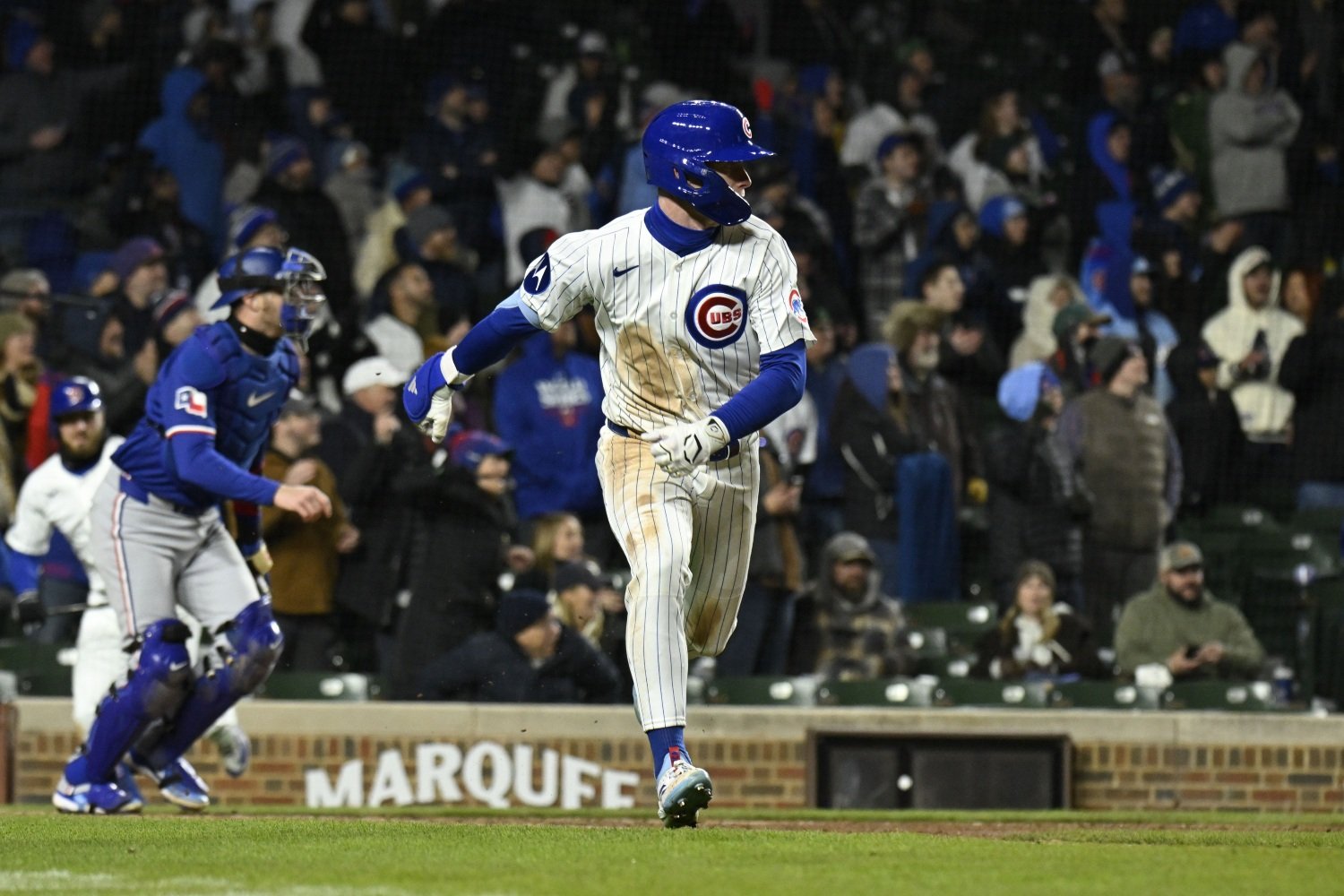 It's rarely this simple, even for the exceptionally talented big-league ballplayer. Baseball is complicated, and the interaction between the best hitters and pitchers alive is endlessly complex, heaped with layers of adjustments and counter-adjustments; cues and red herrings; incredibly fast and precise physical movements; and a neverending mental game. Even in extreme cases, it's rarely as simple as saying, "Swing less, and your whole life will change." If Pete Crow-Armstrong just swings less, his whole life will change. He's done every important thing there is to do, en route to true baseball superstardom, except learn not to swing all the time. The good news is that if he checks that final box, all the pieces of a truly terrorizing force are here. Crow-Armstrong could become, very quickly, the 2019 version of Cody Bellinger, or a left-handed version of peak Andrew McCutchen. The bad news is that there's no evidence that he's ready to make that change. Two batted balls from Tuesday's game against the Rangers illustrate just how close to a breakout Crow-Armstrong really stands. In the second inning, he lined a first-pitch slider from Patrick Corbin into center field for a single. In the eighth, he laced a single to left on a 2-0 count against Hoby Milner, driving in two runs and sealing the Cubs' 10-6 win. Each of those balls came on a swing of at least 78 mph in bat speed, according to Statcast. They had 11° and 10° launch angles, respectively, and each had a 96 mph exit velocity. Crow-Armstrong had never hit a ball with those parameters before: a bat speed in excess of 78 mph (one of them came on a swing north of 81 mph), a launch angle between 5° and 15°, and an exit speed below 97 mph. In this game, alone, he hit two. That's noteworthy, because that type of batted ball is rare throughout the league. Since the start of 2023, here are the only 11 batters to meet those criteria on 10 or more batted balls: Giancarlo Stanton: 16 Julio Rodríguez: 13 Elly De La Cruz: 12 Oneil Cruz: 12 Manny Machado: 11 Luis Robert Jr.: 11 Yordan Alvarez: 11 Austin Riley: 11 Ronald Acuña Jr.: 10 Jorge Soler: 10 Vladimir Guerrero Jr.: 10 As it happens, this is also a pretty good list of the players in the league with the most raw power. It's not quite that, because Shohei Ohtani and Aaron Judge are missing, but we're in that neighborhood. Sure, Crow-Armstrong has only done it twice, but another way to say that is that Crow-Armstrong has done it twice this week, something only Guerrero can also say. Let's pause and unpack what these batted balls indicate, though, because I'm sure it's a bit strange to see a maximum exit velocity on a selection of hits for study, especially since using that produced a list of such fearsome sluggers. Here's the thing: If you swing that hard (well in excess of the league-average bat speed, which is somewhere south of 72 mph) and hit the ball on that kind of trajectory (a low line drive), you're almost always going to hit it harder than 97 mph. To have a swing that registers somewhere near 80 mph not produce a triple-digit exit speed, you have to mishit the ball, and almost no one is mishitting the ball when they hit a 10° line drive. Crow-Armstrong belongs to the group that does that, though. He's added a tick of bat speed this year—not as much as it might have appeared after a handful of games, but enough to be average, with plenty of upside, He swings faster than he used to, and can swing as fast as almost anyone when he really cuts it loose. He also has a swing designed to lift the ball. Four hundred thirty big-league hitters have registered at least 50 batted balls Statcast labeled "Squared Up" since the start of 2024. Those are batted balls where the actual exit velocity was at least 80% of the maximum possible exit velocity, given the speed of the hitter's swing and the incoming pitch. In that cohort, Crow-Armstrong ranks in the 91st percentile for average launch angle on Squared-Up balls, at 21°. Ahead of him are the most power-focused, fly ball-oriented hitters in the league: Judge, Matt Wallner, Kyle Tucker, Eugenio Suárez, Max Muncy, and so on. The leader of the entire pack, Cubs fans will be unsurprised to hear, is Patrick Wisdom. That's the kind of hitter Crow-Armstrong has designed himself to be. While he might still not have elite bat speed, he can sometimes access it, and even when he doesn't, his swing is geared to allow him to hit home runs when he gets the ball on the sweet spot. Alas, right now, he doesn't do that especially well. Here's a scatterplot of the 200 hitters who have taken the most swings so far this season in the big leagues, showing their average bat speed and the rate at which they square the ball up, on a per-swing basis. I chose the other two players highlighted here for good reasons, but ignore them for the moment. As you can see, Crow-Armstrong is close to average on both axes. That's kind of a miracle, really, given how much he swings. It's a testament to his raw talent—his "feel to hit," as scouts used to say. Look just below his name, and you'll see the face of Cubs teammate Ian Happ. Inarguably, Happ is a better hitter than Crow-Armstrong, but this year, Crow-Armstrong is both generating the same bat speed and squaring the ball up more often than Happ. There's no question which of these players is more talented. It's just that Happ works walks that keeps him more valuable than Crow-Armstrong. Now, let's talk about Jackson Merrill and Kerry Carpenter, because they're exemplars of just how limitless Crow-Armstrong's ceiling is. As you can see, Carpenter and Crow-Armstrong have basically identical bat speed. Merrill's is a hair better, but not substantially. What each of them do meaningfully better than Crow-Armstrong is not swing harder, but meet the ball more cleanly—and they do it by being more selective. Neither Carpenter nor Merrill is a truly patient hitter, by any means. Since the start of 2024, Carpenter has swung at 70.8% of pitches inside the zone and 32.2% of those outside it. Merrill is even more extreme, swinging at 77.2% of strikes and 35.7% of would-be balls. Crow-Armstrong, though, is even wilder. He swings a hair less within the zone than does Merrill (75.1%), but he's chased 41.1% of non-strikes since the start of last year. There's no way to work around plate discipline that poor and get to all of one's power. Crow-Armstrong just puts himself into too many bad counts, and puts too many borderline pitches in play, to boot. Despite the similar bat speed and the fact that Crow-Armstrong is using a similar approach to both Merrill's and Carpenter's in terms of bat path and how to launch, the results could not be more different. Focusing solely on the plate appearances that end in contact (and thus, sparing Crow-Armstrong the penalty he should suffer for walking so infrequently), and using expected weighted on-base average on contact (xwOBACon, the stat created so that people who make jokes about how bad acronyms are taking over baseball could finally be right), Merrill is at .515. Carpenter owns a whopping .591. Crow-Armstrong's figure is .305. He's making fairly anemic, undangerous contact, despite both bat speed and a bat path that give him every chance to emerge as one of the game's most dynamic hitters. He might need another tweak to his stance and swing. The leg kick he implemented last summer, to such fanfare and with such great results, is gone again this season, and he does a very poor job of staying back from his more spread-out stance. He taps his toe and goes, and he often seems off-balance or unable to really decide about whether to swing; his body demands that he flail at everything. As you can see, there's some inevitable balance created by being more spread-out. I've included the black line in each image to show the change in distance and angle from center of mass to his average contact point. Compared even to late last year, after he'd slid deeper into the batter's box and adopted the leg kick, Crow-Armstrong is making contact closer to his own body this spring. That means he's more under control through the hitting zone, which (since we know he's only gained bat speed) can only be counted as a good thing. To wit, his whiff rate on swings is down from 29.9% last year to 23.2% in 2025. He just has to swing less. A change to his stance could help with that. Some kind of carrot-and-stick incentive system could, too, perhaps. It's incredible, though, how simple everything is where Crow-Armstrong is concerned. Every other bad hitter in the league is two really good adjustments from even being decent. Crow-Armstrong, one of the league's very worst hitters, is one adjustment from being downright great. He'll either learn to swing less, and win an MVP award by decade's end, or never do so, and lose his job by season's end.
 -
The Cubs' frontline lefty has now been shelved with one arm problem or another in three consecutive seasons. This is likely to be his longest absence of the three, and it's a major problem for the surging North Siders. Image courtesy of © Matt Marton-Imagn Images The Cubs placed lefthander Justin Steele on the 15-day injured list Wednesday, with elbow tendinitis. It's the second time in seven months that he's landed there with that very ailment, after he missed the first half of September 2024. Steele was also shelved with a forearm strain in June 2023, not to mention the hamstring strains that stole significant stretches of his 2021 and 2024 campaigns or the back trouble that ended his 2022 early. Steele is a tenacious competitor, and so far, the arm-related injuries have been the ones that kept him out the shortest time. However, durability has been the biggest question mark about his value since before he even debuted, and has remained so throughout his career. As he's sidelined for the second time in such a short window with tendinitis, it feels unlikely that he'll be back as soon this time as he was last year. Tendinitis can vary widely and idiosyncratically in severity, and the median time missed with this injury over the last nine big-league seasons is just 17 days. However, that number is artificially lowered by the fact that some players (Brad Hand in 2022; Julian Merryweahter in 2020) were hurt so late in the season that there wasn't much time left to miss. This diagnosis led to so much trouble for Tyler Glasnow and Rob Zastryzny last summer that it ended each of their seasons. There's also some evidence that Steele has been dealing with this all spring, and that the Cubs knew about it. Firstly, of course, there's his significantly diminished velocity—including a further loss of heat in his most recent start, despite good results against the Rangers Monday night. Secondly, though, flash back to Sunday. When Ben Brown had to leave the game after four crummy innings against the Padres, Craig Counsell had a two-run cushion and 15 outs left to get. He didn't turn to Colin Rea, despite the fact that Rea hadn't pitched in the previous five days. On Monday night, by contrast, Rea came in and got the final six outs after Steele's strong seven-inning start. It sure feels as though the team knew Steele wasn't at 100 percent, and that they kept Rea ready in case they needed length behind or in place of Steele even in that game. It's unsurprising to get this news, then, because of what we've seen from Steele both very recently and throughout his career, and because of the way the team has been behaving. That doesn't make it less emergent a situation, though. Rea figures to step right into Steele's rotation spot, and the team will hope to get Javier Assad back by the end of the month, but at his best, Steele is better than either of those hurlers. If Steele is out for something closer to six weeks than to three, this time, there's always the risk of further attrition in the rotation, and it will be harder to replace Brown if he continues to look unequal to the task of starting games in the majors. This also takes a huge bite out of whatever hopes the team might have had to move to a six-man rotation as their schedule fills in. Fortunately, they still have ample off days for the balance of April and May, but if Steele isn't back by June, the team will need to find ways to get their starters the rest they need amid a heavy slate. Cade Horton was always part of the plans for this season, but the team doesn't want to make that call until they have to. That they're already down two key starters in the majors and prospect Brandon Birdsell leaves the team thinner than they'd hoped to be. This is part of why they talked to still-available veterans Lance Lynn and Kyle Gibson last month. A trade could patch a hole in their rotation before one even fully opens, but only if the team can stay healthy and in a strong competitive position for the next several weeks. With Steele landing on the shelf already, the odds of that appear to have taken a hit. View full article
-
 The Cubs placed lefthander Justin Steele on the 15-day injured list Wednesday, with elbow tendinitis. It's the second time in seven months that he's landed there with that very ailment, after he missed the first half of September 2024. Steele was also shelved with a forearm strain in June 2023, not to mention the hamstring strains that stole significant stretches of his 2021 and 2024 campaigns or the back trouble that ended his 2022 early. Steele is a tenacious competitor, and so far, the arm-related injuries have been the ones that kept him out the shortest time. However, durability has been the biggest question mark about his value since before he even debuted, and has remained so throughout his career. As he's sidelined for the second time in such a short window with tendinitis, it feels unlikely that he'll be back as soon this time as he was last year. Tendinitis can vary widely and idiosyncratically in severity, and the median time missed with this injury over the last nine big-league seasons is just 17 days. However, that number is artificially lowered by the fact that some players (Brad Hand in 2022; Julian Merryweahter in 2020) were hurt so late in the season that there wasn't much time left to miss. This diagnosis led to so much trouble for Tyler Glasnow and Rob Zastryzny last summer that it ended each of their seasons. There's also some evidence that Steele has been dealing with this all spring, and that the Cubs knew about it. Firstly, of course, there's his significantly diminished velocity—including a further loss of heat in his most recent start, despite good results against the Rangers Monday night. Secondly, though, flash back to Sunday. When Ben Brown had to leave the game after four crummy innings against the Padres, Craig Counsell had a two-run cushion and 15 outs left to get. He didn't turn to Colin Rea, despite the fact that Rea hadn't pitched in the previous five days. On Monday night, by contrast, Rea came in and got the final six outs after Steele's strong seven-inning start. It sure feels as though the team knew Steele wasn't at 100 percent, and that they kept Rea ready in case they needed length behind or in place of Steele even in that game. It's unsurprising to get this news, then, because of what we've seen from Steele both very recently and throughout his career, and because of the way the team has been behaving. That doesn't make it less emergent a situation, though. Rea figures to step right into Steele's rotation spot, and the team will hope to get Javier Assad back by the end of the month, but at his best, Steele is better than either of those hurlers. If Steele is out for something closer to six weeks than to three, this time, there's always the risk of further attrition in the rotation, and it will be harder to replace Brown if he continues to look unequal to the task of starting games in the majors. This also takes a huge bite out of whatever hopes the team might have had to move to a six-man rotation as their schedule fills in. Fortunately, they still have ample off days for the balance of April and May, but if Steele isn't back by June, the team will need to find ways to get their starters the rest they need amid a heavy slate. Cade Horton was always part of the plans for this season, but the team doesn't want to make that call until they have to. That they're already down two key starters in the majors and prospect Brandon Birdsell leaves the team thinner than they'd hoped to be. This is part of why they talked to still-available veterans Lance Lynn and Kyle Gibson last month. A trade could patch a hole in their rotation before one even fully opens, but only if the team can stay healthy and in a strong competitive position for the next several weeks. With Steele landing on the shelf already, the odds of that appear to have taken a hit.
 -
Through 13 games, the Cubs' major offseason acquisition is paying off in spades. If he keeps this up, he could—fairly easily—end up having the most prolific power season by any hitter for the North Siders in the Statcast Era. Image courtesy of © Matt Marton-Imagn Images I still chuckle a little bit each time I type "the Statcast Era," but there's a bit less irony in it than before. We're up to 10 full seasons over which every (or very nearly every) batted and pitched ball has been tracked by Statcast. We have 10 years of exit velocities, launch angles, spin rates and sprint speeds. Thus, there's a real era defined by this technology, rather than a few years' worth of data. We can, with a straight face, start using Statcast numbers in historical contexts. In those aforementioned 10 years, the Cubs have only had three batters top 50 Barrels—the batted balls that blend exit velocity and launch angle in a way that yields hits most of the time and extra bases a plurality of the time—in a single season: Javier Báez, 2018: 56 Kyle Schwarber, 2019: 55 Kris Bryant, 2016: 53 That's pretty puny, honestly. The Cubs are dramatically underrepresented in that regard, league-wide. There have been 197 player-seasons of at least 50 Barrels, an average of about 20 per year throughout the game. Aaron Judge holds the record, naturally, with 106 Barrels in 2022—nearly double the highest total any Cub has posted. Judge (105), Shohei Ohtani (103) and Juan Soto (91) all had gaudy totals of them last year, too. The Cubs have not had that caliber of slugger, even in their World Series-winning peak season. Kyle Tucker could change that, and push the highest Cubs entry on that single-season Barrels leaderboard from a tie for 111th (where Báez's best year stands) toward the top 50. Already, he's cranked 9 such batted balls this season, including one that died only at the wall Monday night, when hitting a home run was impossible. He nearly defied Wrigley's fiercest anti-offense measures; that's how impressive his power has been. Technically, Tucker is on pace to break Judge's record for Barrels in a season. It's very safe to assume he won't maintain that torrid clip. However, the chances that he'll eclipse Báez seem to be superb. His approach changes last year and (already) this spring indicate increasing commitment to hitting for power. If he merely stays healthy, he seems like a lock to get to 65 Barrels or more. The weather at the Friendly Confines could decide whether or not he reaches milestone numbers of positive outcomes. (He would, for instance, be the first left-handed batter in over a century to hit 40 or more home runs for the Cubs.) The elements can't blunt the indicators of a great process at the plate, though, and Tucker is proving himself to be a breed of hitter the team just hasn't had since Derrek Lee's peak—and perhaps longer than that. Statcast records will still feel strange to talk about for a while. By now, though, we should be able to take them seriously enough to acknowledge what they're saying. Right now, the numbers are saying that Tucker is on a level of power production his team hasn't enjoyed from anyone in this era—be it that of Statcast, Theo Epstein and Jed Hoyer, or that of the Ricketts family's ownership. In that sense, he's a test of a kind that has never been offered to that ownership group before. View full article
-
Can Kyle Tucker Break the Cubs Record for Statcast-Recorded Barrels?
Matthew Trueblood posted an article in Cubs
 I still chuckle a little bit each time I type "the Statcast Era," but there's a bit less irony in it than before. We're up to 10 full seasons over which every (or very nearly every) batted and pitched ball has been tracked by Statcast. We have 10 years of exit velocities, launch angles, spin rates and sprint speeds. Thus, there's a real era defined by this technology, rather than a few years' worth of data. We can, with a straight face, start using Statcast numbers in historical contexts. In those aforementioned 10 years, the Cubs have only had three batters top 50 Barrels—the batted balls that blend exit velocity and launch angle in a way that yields hits most of the time and extra bases a plurality of the time—in a single season: Javier Báez, 2018: 56 Kyle Schwarber, 2019: 55 Kris Bryant, 2016: 53 That's pretty puny, honestly. The Cubs are dramatically underrepresented in that regard, league-wide. There have been 197 player-seasons of at least 50 Barrels, an average of about 20 per year throughout the game. Aaron Judge holds the record, naturally, with 106 Barrels in 2022—nearly double the highest total any Cub has posted. Judge (105), Shohei Ohtani (103) and Juan Soto (91) all had gaudy totals of them last year, too. The Cubs have not had that caliber of slugger, even in their World Series-winning peak season. Kyle Tucker could change that, and push the highest Cubs entry on that single-season Barrels leaderboard from a tie for 111th (where Báez's best year stands) toward the top 50. Already, he's cranked 9 such batted balls this season, including one that died only at the wall Monday night, when hitting a home run was impossible. He nearly defied Wrigley's fiercest anti-offense measures; that's how impressive his power has been. Technically, Tucker is on pace to break Judge's record for Barrels in a season. It's very safe to assume he won't maintain that torrid clip. However, the chances that he'll eclipse Báez seem to be superb. His approach changes last year and (already) this spring indicate increasing commitment to hitting for power. If he merely stays healthy, he seems like a lock to get to 65 Barrels or more. The weather at the Friendly Confines could decide whether or not he reaches milestone numbers of positive outcomes. (He would, for instance, be the first left-handed batter in over a century to hit 40 or more home runs for the Cubs.) The elements can't blunt the indicators of a great process at the plate, though, and Tucker is proving himself to be a breed of hitter the team just hasn't had since Derrek Lee's peak—and perhaps longer than that. Statcast records will still feel strange to talk about for a while. By now, though, we should be able to take them seriously enough to acknowledge what they're saying. Right now, the numbers are saying that Tucker is on a level of power production his team hasn't enjoyed from anyone in this era—be it that of Statcast, Theo Epstein and Jed Hoyer, or that of the Ricketts family's ownership. In that sense, he's a test of a kind that has never been offered to that ownership group before.
 -
Quietly, the Cubs dedicated themselves this winter not only to getting better, but to being more situation-proof. Monday night's frigid frenzy on the bases demonstrated the value of that endeavor. Image courtesy of © Matt Marton-Imagn Images With the air heavy and cold and the wind rushing down Kenmore Avenue to defend the left-field wall like a relief battalion in battle, the Cubs knew no one was hitting the ball out of the park Monday night. Justin Steele let the visiting Rangers take the mightiest swings they could muster, and Texas did register seven hard-hit balls against him, but most of that came on the ground—which was just as well, because nothing they put in the air went anywhere. Kevin Pillar and Wyatt Langford hit flies in the early frames that had Pete Crow-Armstrong and Ian Happ tracking back on the ball, only to veer slightly in at the last second, several steps shy even of the warning track. By the time Adolis García hit a ball squarely enough to even momentarily spook anyone, in the sixth inning, the whole stadium was in on the joke. Happ started at a sharp angle toward the wall in left-center, then ended up coming in a step as he corralled the ball. Not only did the Rangers fail to find extra bases against Steele, but they came nowhere near such a dangerous hit. Stopping the opponent from scoring is just one half of the battle, though. The Cubs have gotten a good amount of power on this young season, but they wouldn't be able to count on any for themselves Monday night. Unlike Texas, they did benefit from a certain kind of slugging, as Michael Busch landed a double down the left-field line and laced a triple into the right-field corner, but they didn't wait for those outcomes or depend on them. Right after Busch's double, Dansby Swanson laid down a rare sacrifice bunt, and then Miguel Amaya swatted a ball to the big part of the park for a sacrifice fly. It was the perfect way to play that situation. That was just the tip of the iceberg, though, and the Cubs stayed in the floe—er, flow—thereafter. Whenever they reached first base, they were predators, as hungry and as ruthless as polar bears. Nate Eovaldi couldn't hold them, and Kyle Higashioka couldn't punish their boldness. They stole five bases, on a night when many teams would have hesitated to let their players run for fear of injuries. As the game unfolded, it became increasingly clear that nights like Monday were part of Jed Hoyer and Craig Counsell's vision when they built this season's roster. Rather than power-dependent bench pieces like Patrick Wisdom, Trey Mancini, or Garrett Cooper, the team has exceptionally athletic ones, in Jon Berti and Gage Workman. Berti stole two bases as a lineup replacement for Nico Hoerner, and Happ, Crow-Armstrong and Seiya Suzuki each took one, too. After that outburst, the Cubs are tied atop the big-league leaderboard with 21 steals this year. They've only been caught once. The Rangers are above-average in steals this season, too, but only attempted one Monday night—and when they did, Amaya threw out Josh Smith at second. In the past, the team settled for loosely mimicking flexibility in their formula for scoring, by having contact-oriented but one-dimensional players Nick Madrigal and Mike Tauchman in the mix. They believe, with Kyle Tucker and Berti joining the existing crew, they now have more ways to score, rather than merely more ways to tell a story about scoring. They were proactive and aggressive, too, about adding Quintin Berry and Jose Javier as their new base coaches, with the express purpose of getting better at stealing bases. Increasingly, teams believe a variation of the old axiom about pitching, but turned to a new purpose: Stealing bases is not dangerous to good ballplayers. Stealing bases while tired is dangerous to good ballplayers. In other words, when there is pressure, stress, or fatigue at work, running the bases becomes a high-risk business. If carefully managed and planned for, though, the running game can be executed without undue risk, even in lousy conditions. That's part of why Berti was in for Hoerner, and Workman for Matt Shaw Monday night. The Cubs knew they would be trying to use their legs to make up for the weather, and they wanted fresh players they could install specifically for that duty. Be it the long ball or small ball, the Cubs will take what opponents are not strong or smart enough to deny them. That has not always been true over the last several years. In fact, it hasn't been true of any Cubs team since 2016. That's not to say that they are an especially serious World Series contender in 2025—they can't match that team for raw talent—but it's telling. Monday night was a statement win, because it was proof of the concept that these Cubs are more complete and better prepared than recent iterations. View full article
-
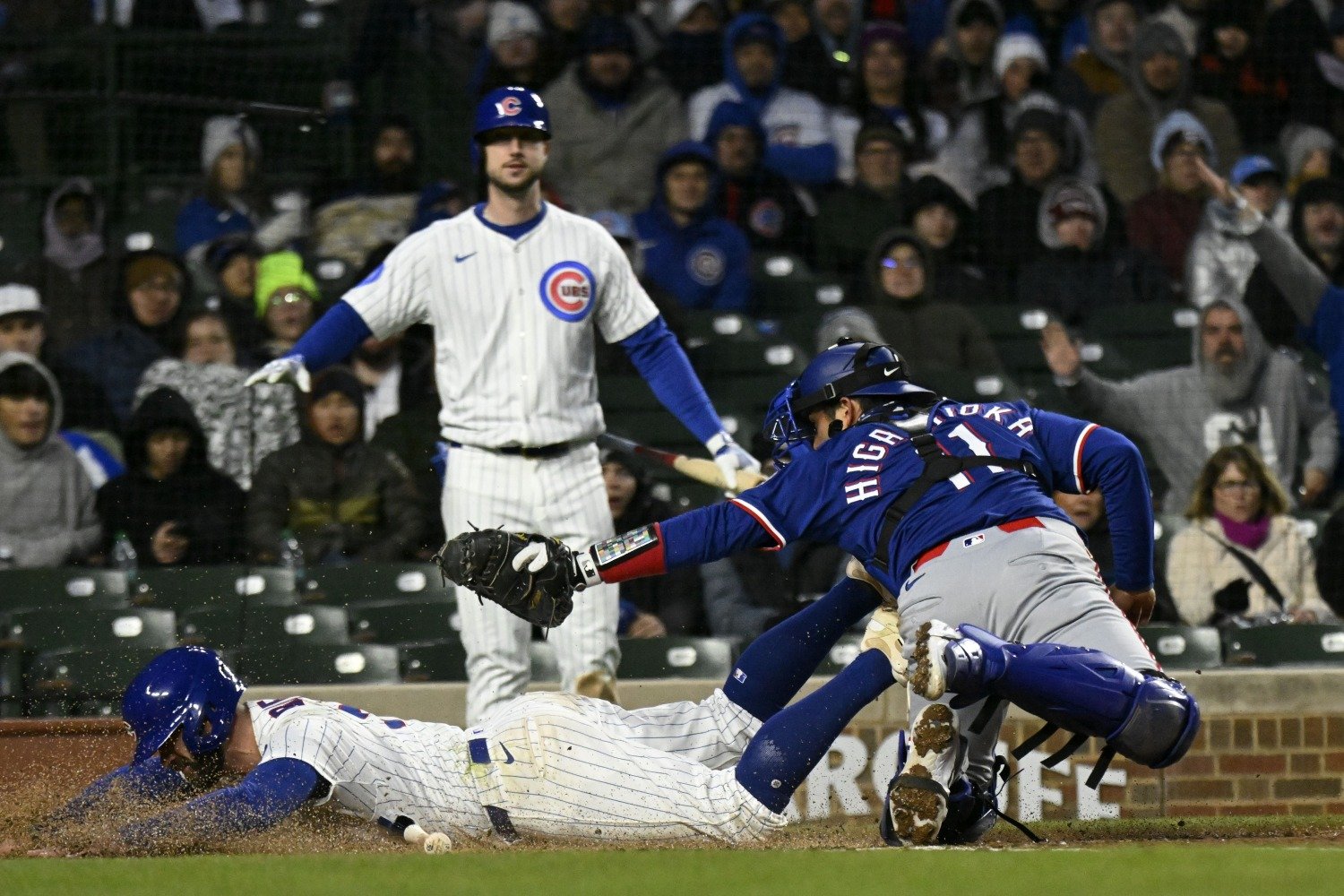 With the air heavy and cold and the wind rushing down Kenmore Avenue to defend the left-field wall like a relief battalion in battle, the Cubs knew no one was hitting the ball out of the park Monday night. Justin Steele let the visiting Rangers take the mightiest swings they could muster, and Texas did register seven hard-hit balls against him, but most of that came on the ground—which was just as well, because nothing they put in the air went anywhere. Kevin Pillar and Wyatt Langford hit flies in the early frames that had Pete Crow-Armstrong and Ian Happ tracking back on the ball, only to veer slightly in at the last second, several steps shy even of the warning track. By the time Adolis García hit a ball squarely enough to even momentarily spook anyone, in the sixth inning, the whole stadium was in on the joke. Happ started at a sharp angle toward the wall in left-center, then ended up coming in a step as he corralled the ball. Not only did the Rangers fail to find extra bases against Steele, but they came nowhere near such a dangerous hit. Stopping the opponent from scoring is just one half of the battle, though. The Cubs have gotten a good amount of power on this young season, but they wouldn't be able to count on any for themselves Monday night. Unlike Texas, they did benefit from a certain kind of slugging, as Michael Busch landed a double down the left-field line and laced a triple into the right-field corner, but they didn't wait for those outcomes or depend on them. Right after Busch's double, Dansby Swanson laid down a rare sacrifice bunt, and then Miguel Amaya swatted a ball to the big part of the park for a sacrifice fly. It was the perfect way to play that situation. That was just the tip of the iceberg, though, and the Cubs stayed in the floe—er, flow—thereafter. Whenever they reached first base, they were predators, as hungry and as ruthless as polar bears. Nate Eovaldi couldn't hold them, and Kyle Higashioka couldn't punish their boldness. They stole five bases, on a night when many teams would have hesitated to let their players run for fear of injuries. As the game unfolded, it became increasingly clear that nights like Monday were part of Jed Hoyer and Craig Counsell's vision when they built this season's roster. Rather than power-dependent bench pieces like Patrick Wisdom, Trey Mancini, or Garrett Cooper, the team has exceptionally athletic ones, in Jon Berti and Gage Workman. Berti stole two bases as a lineup replacement for Nico Hoerner, and Happ, Crow-Armstrong and Seiya Suzuki each took one, too. After that outburst, the Cubs are tied atop the big-league leaderboard with 21 steals this year. They've only been caught once. The Rangers are above-average in steals this season, too, but only attempted one Monday night—and when they did, Amaya threw out Josh Smith at second. In the past, the team settled for loosely mimicking flexibility in their formula for scoring, by having contact-oriented but one-dimensional players Nick Madrigal and Mike Tauchman in the mix. They believe, with Kyle Tucker and Berti joining the existing crew, they now have more ways to score, rather than merely more ways to tell a story about scoring. They were proactive and aggressive, too, about adding Quintin Berry and Jose Javier as their new base coaches, with the express purpose of getting better at stealing bases. Increasingly, teams believe a variation of the old axiom about pitching, but turned to a new purpose: Stealing bases is not dangerous to good ballplayers. Stealing bases while tired is dangerous to good ballplayers. In other words, when there is pressure, stress, or fatigue at work, running the bases becomes a high-risk business. If carefully managed and planned for, though, the running game can be executed without undue risk, even in lousy conditions. That's part of why Berti was in for Hoerner, and Workman for Matt Shaw Monday night. The Cubs knew they would be trying to use their legs to make up for the weather, and they wanted fresh players they could install specifically for that duty. Be it the long ball or small ball, the Cubs will take what opponents are not strong or smart enough to deny them. That has not always been true over the last several years. In fact, it hasn't been true of any Cubs team since 2016. That's not to say that they are an especially serious World Series contender in 2025—they can't match that team for raw talent—but it's telling. Monday night was a statement win, because it was proof of the concept that these Cubs are more complete and better prepared than recent iterations.
 -
Though it's nice to (nominally) have a hard thrower in the starting rotation, the Cubs can't afford to keep using their slender righthander in that role if he's unable to consistently execute either of his important offerings. Image courtesy of © David Banks-Imagn Images Through three appearances, there have been flashes of brilliance from Ben Brown. Overall, though, the righty has failed to prove he can consistently throw strikes or effectively locate his sharp curveball. The resulting line—11 runs, with 9 walks, 2 home runs allowed and just 15 strikeouts in 62 batters faced over 11 2/3 innings—is as messy as his outings have looked, and while his stuff remains tantalizing, his spot in the team's starting rotation is necessarily becoming imperiled. Brown was all over the place in the first inning Sunday, giving up three runs to the Padres because of three walks and a hit batter. The visitors struggled to make high-quality contact on that first look at Brown, who can throw in the upper 90s and pairs his riding heater with a devastating breaking ball when he's right. With just a bit of bad luck and all that bad command, though, Brown put his team in an early hole. The Cubs offense took him off the hook, with a five-run outburst of their own in the bottom half of the frame and another two tallies on a second-inning home run by Kyle Tucker. Brown never truly found his feel, though, and worked the game right back into high-stress territory. He narrowly avoided damage after allowing back-to-back hits to begin the third, but in the fourth, he had no such luck. The chance for it wasn't even there. Brown got the first two San Diego hitters out in that frame, only to surrender a single and a home run on the third looks Manny Machado and Jackson Merrill had gotten at him during the game. Machado lined a first-pitch fastball. Merrill watched a curveball sail far above the zone, then hit a 1-0 curve that limped into the very heart of the zone out of the park. Brown was lucky to escape the inning without further damage: he threw just as bad a curve to Xander Bogaerts with a 2-1 count and another runner on base, but Bogaerts flied out lazily to Tucker in right. After four innings and 79 pitches, Craig Counsell was compelled to go to his bullpen, not by Brown's raw pitch count but by the extent to which the Padres had figured him out. That forced the Chicago bullpen to cover 15 outs against the relentless and talented Padres lineup, and the relief corps was not equal to the task. Single runs against Caleb Thielbar in the sixth and Porter Hodge in the eighth tied the game, as the Cubs offense failed to capitalize on the early opportunity they created by getting into the Padres bullpen quickly for a third straight day. A lone run against Ryan Pressly in the ninth won the game for San Diego. The inefficiency of their starter, despite working with a big lead, pushed Counsell's pitching staff to its breaking point. Against righties, Brown sprayed the fastball, missing the outside edge too often and struggling to find the top edge of the zone. Since hitters could set their sights lower on the heater, the curve was not especially deceptive. Against lefties, he looked even more uncomfortable, and the misses—especially up and down, and especially with the curve—were even more pronounced. He was in the middle of the zone with the breaking ball far more often than is viable, especially for a pitcher without a deep arsenal of other stuff to keep hitters off that pitch. That's not to say that there were no causes for optimism on the day. Brown threw two changeups, both to left-handed batters, and while one had the middle of the plate, both clearly fooled the opponent and set up strikeouts on the fastball. He'll need to locate the change with some consistency in order to be effective with it, but since he's had so little success locating the two pitches he trusts, anyway, he might as well give it a more robust chance. He also continues to show good vertical movement on the fastball. His change in arm slot this year makes sense, given the arsenal to which he's committed. The questions are: Can he throw enough strikes from that altered angle to make the stuff play? Is the change making it harder for him to work that changeup in as a tertiary weapon? Those questions will take considerable time to answer, though, and Brown might not have much of that precious commodity to spare. Javier Assad is up to four innings in extended spring training in Arizona. He could be ready to return from the oblique strain that disrupted his ramp-up early in spring training before the end of April. It was already a mild surprise that Brown won the fifth starting job over Colin Rea, who has pitched well when called upon in relief. Meanwhile, Cade Horton had a very encouraging first start in Iowa. Baseball has a name for two-pitch hurlers without good command, be it a dearth of precision in location or a lack of consistent execution and movement: Reliever. Brown's stuff is exciting, but so far, he's shown only intermittent signs of the ability to either stay healthy or perform at the standard demanded of big-league starters. Barring a rapid improvement in multiple facets, Brown is unlikely to stick in the rotation much longer. View full article
-
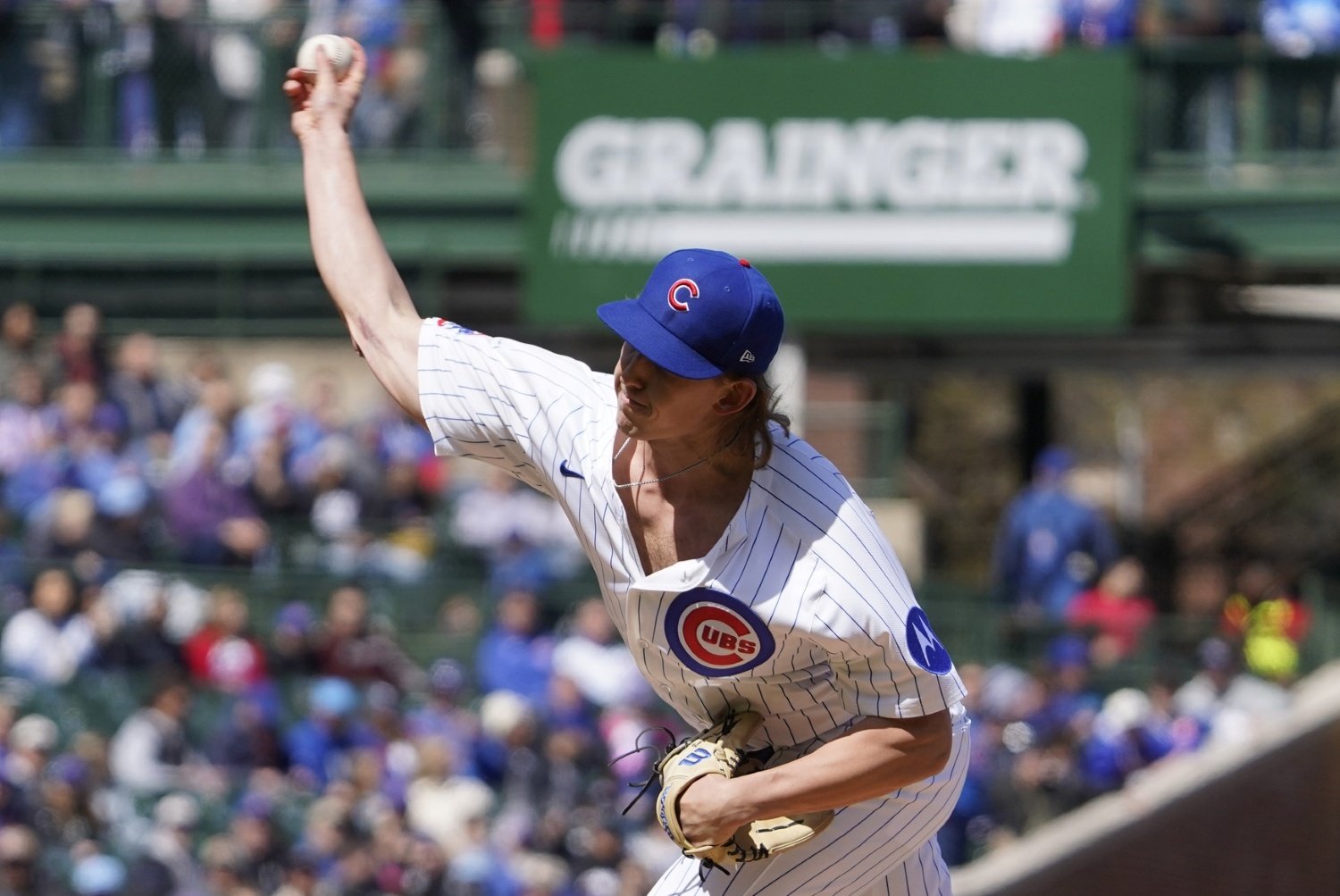 Through three appearances, there have been flashes of brilliance from Ben Brown. Overall, though, the righty has failed to prove he can consistently throw strikes or effectively locate his sharp curveball. The resulting line—11 runs, with 9 walks, 2 home runs allowed and just 15 strikeouts in 62 batters faced over 11 2/3 innings—is as messy as his outings have looked, and while his stuff remains tantalizing, his spot in the team's starting rotation is necessarily becoming imperiled. Brown was all over the place in the first inning Sunday, giving up three runs to the Padres because of three walks and a hit batter. The visitors struggled to make high-quality contact on that first look at Brown, who can throw in the upper 90s and pairs his riding heater with a devastating breaking ball when he's right. With just a bit of bad luck and all that bad command, though, Brown put his team in an early hole. The Cubs offense took him off the hook, with a five-run outburst of their own in the bottom half of the frame and another two tallies on a second-inning home run by Kyle Tucker. Brown never truly found his feel, though, and worked the game right back into high-stress territory. He narrowly avoided damage after allowing back-to-back hits to begin the third, but in the fourth, he had no such luck. The chance for it wasn't even there. Brown got the first two San Diego hitters out in that frame, only to surrender a single and a home run on the third looks Manny Machado and Jackson Merrill had gotten at him during the game. Machado lined a first-pitch fastball. Merrill watched a curveball sail far above the zone, then hit a 1-0 curve that limped into the very heart of the zone out of the park. Brown was lucky to escape the inning without further damage: he threw just as bad a curve to Xander Bogaerts with a 2-1 count and another runner on base, but Bogaerts flied out lazily to Tucker in right. After four innings and 79 pitches, Craig Counsell was compelled to go to his bullpen, not by Brown's raw pitch count but by the extent to which the Padres had figured him out. That forced the Chicago bullpen to cover 15 outs against the relentless and talented Padres lineup, and the relief corps was not equal to the task. Single runs against Caleb Thielbar in the sixth and Porter Hodge in the eighth tied the game, as the Cubs offense failed to capitalize on the early opportunity they created by getting into the Padres bullpen quickly for a third straight day. A lone run against Ryan Pressly in the ninth won the game for San Diego. The inefficiency of their starter, despite working with a big lead, pushed Counsell's pitching staff to its breaking point. Against righties, Brown sprayed the fastball, missing the outside edge too often and struggling to find the top edge of the zone. Since hitters could set their sights lower on the heater, the curve was not especially deceptive. Against lefties, he looked even more uncomfortable, and the misses—especially up and down, and especially with the curve—were even more pronounced. He was in the middle of the zone with the breaking ball far more often than is viable, especially for a pitcher without a deep arsenal of other stuff to keep hitters off that pitch. That's not to say that there were no causes for optimism on the day. Brown threw two changeups, both to left-handed batters, and while one had the middle of the plate, both clearly fooled the opponent and set up strikeouts on the fastball. He'll need to locate the change with some consistency in order to be effective with it, but since he's had so little success locating the two pitches he trusts, anyway, he might as well give it a more robust chance. He also continues to show good vertical movement on the fastball. His change in arm slot this year makes sense, given the arsenal to which he's committed. The questions are: Can he throw enough strikes from that altered angle to make the stuff play? Is the change making it harder for him to work that changeup in as a tertiary weapon? Those questions will take considerable time to answer, though, and Brown might not have much of that precious commodity to spare. Javier Assad is up to four innings in extended spring training in Arizona. He could be ready to return from the oblique strain that disrupted his ramp-up early in spring training before the end of April. It was already a mild surprise that Brown won the fifth starting job over Colin Rea, who has pitched well when called upon in relief. Meanwhile, Cade Horton had a very encouraging first start in Iowa. Baseball has a name for two-pitch hurlers without good command, be it a dearth of precision in location or a lack of consistent execution and movement: Reliever. Brown's stuff is exciting, but so far, he's shown only intermittent signs of the ability to either stay healthy or perform at the standard demanded of big-league starters. Barring a rapid improvement in multiple facets, Brown is unlikely to stick in the rotation much longer.
 -
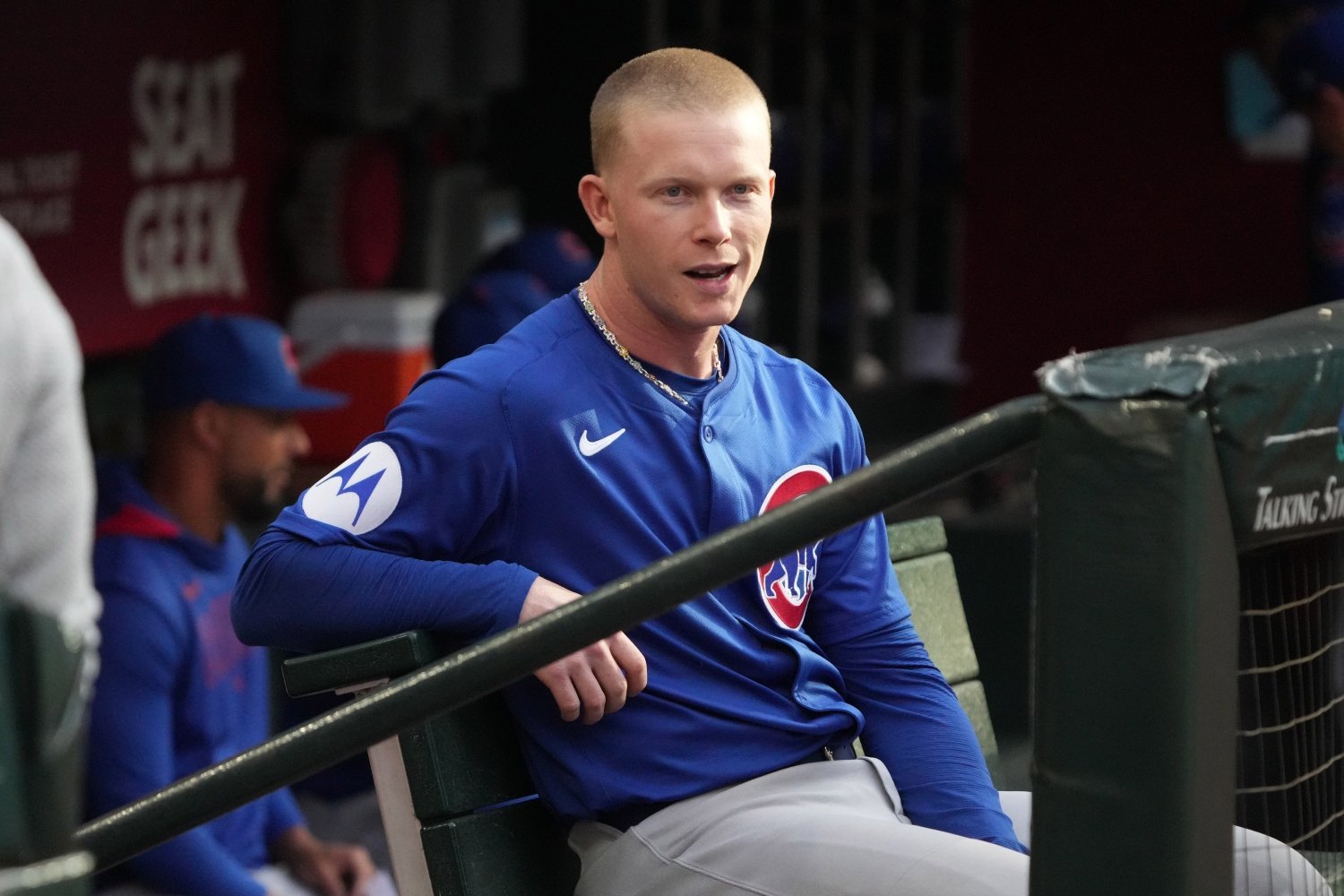 I don't need to tell you that Pete Crow-Armstrong made an incredible throw to notch an outfield assist while the Cubs were in Arizona last weekend. You've probably barely stopped talking about it. It was a marvelous play, a combination of several things that make the young outfielder special all rolled up into one moment: athleticism, competitiveness, ambition, technique. Wasn't it marvelous? Here's the thing: You and I might not be thinking about the same play. It was this play, from Saturday's Cubs win, that drew most of the oohs and ahhs in its aftermath. MDRPV3JfWGw0TUFRPT1fQlFZQ1ZWWlJBbFFBWFFZQ1VnQUhBUWRmQUZsVFZGVUFCUUVCVlFGVFZBSlZCd29B.mp4 There's good reason for all the hoopla, too. Don't attend solely to the throw itself. Look at the hyperathletic way Crow-Armstrong set himself up for it, starting with the high kick of his left leg just before he makes the catch. That got his crow hop going before Josh Naylor was even allowed to leave second base. This isn't just sensational athleticism, in the form of exceptional accuracy on a quick release and a live-armed, whippy throw. It's also technical excellence. He lined himself up perfectly, got his body in motion before catching the ball and knew how to transfer all that energy to the right places, in the right order. However, I'm talking about the throw Crow-Armstrong made Sunday, even as the horse was leaving the barn and the Diamondbacks were completing a comeback to hand the Cubs a deflating loss. V0F3ZFpfVjBZQUhRPT1fVUFWUlUxTUZYd1VBWEFjQ1hnQUhCMVZVQUZsVFZWUUFBQWNGQ0ZCWEFGSlhVZ01F.mp4 It's less visually arresting than the throw that nabbed Naylor. Because it came on a single by a pitcher pulled off the opposing bench, to take down a second runner after one insurance run had already come home, the vibes around it are much less thrilling. As a pure baseball play, though, I want to make the case that it was even more remarkable. Crow-Armstrong started this play 307 feet from home plate, and was shaded slightly toward right-center field. I would argue that he should have been playing even shallower, but the modern orthodoxy is to play about 325 feet from the plate (a bit deeper, in a cavernous center field like Chase Field's), and the Cubs probably didn't have any kind of scouting report on Ryne Nelson as a hitter. To be safe, he was well-positioned by guarding the opposite-field gap and being at a shallow but respectful depth. However, the ball Nelson punched through the infield (just past the reach of the drawn-in Dansby Swanson) was very much the kind of hit you should expect from a pitcher. It had an initial exit velocity of almost 90 miles per hour, but because it was hit practically straight down, it had taken a few high, lazy bounces and was into its dribbler era by the time it got to the outfield grass. It wasn't truly back up the middle, either, but a fair distance to the left of second base, with some sidespin that seemed to keep it rolling and skipping toward left-center. The production crew did us no favors on this play, on either team's broadcast. In fairness to them, though, it probably looked like a fairly easy two-run single. They did the series of quick cuts that is customary on such a play: Center-field camera shows the pitch and initial contact. Cut to high camera behind home plate, where we see the ball elude Swanson. Quick cut to show us the lead runner scoring. Back to the panoramic view, to find Crow-Armstrong fielding and throwing. Quick cut back to the plate for the close-up on the second runner. When the truck uses that sequence, they read the play as unlikely to yield high drama, other than the rising action of runs crossing the dish. If they'd thought Crow-Armstrong would have a play on Eugenio Suárez, they'd have stuck with Shot No. 4 much longer, panning downward to the plate or cutting later to an angle that would help us see if the runner would be safe or out. Neither broadcast's producer, in other words, properly accounted for Crow-Armstrong's warp-speed ballet. He sprinted in and across (few outfielders are truly great at charging ground-ball singles, but even the ones who are usually struggle when they have to come in at a true diagonal like this one), picked the ball cleanly, turned his shoulders against his direction of movement to set himself and fired the ball practically on the run. As was true when he nailed Naylor, he was lethally accurate. This broad genre of play happens several times a year: outfielder throws out runner trying to score from second on single. Under all the relevant circumstances, though—given all the ground Crow-Armstrong had to cover and the way the ball just died on its way to the outfield—it's an extraordinary achievement within its category. Crow-Armstrong has been uneven so far, on the young season and across his career. Defensively, however, he's increasingly dazzling, not only creating value with raw athleticism but demonstrating daring and polished skills that other outfielders can't match. The play he made on Sunday, while not enough to keep the Cubs in the game, is perhaps the best example of that to date.
 -
Before it fades too far into the rearview to be visible on the receding horizon, let's talk about the extraordinary play the Cubs' center fielder made Sunday, albeit in a lost cause. Image courtesy of © Rick Scuteri-Imagn Images I don't need to tell you that Pete Crow-Armstrong made an incredible throw to notch an outfield assist while the Cubs were in Arizona last weekend. You've probably barely stopped talking about it. It was a marvelous play, a combination of several things that make the young outfielder special all rolled up into one moment: athleticism, competitiveness, ambition, technique. Wasn't it marvelous? Here's the thing: You and I might not be thinking about the same play. It was this play, from Saturday's Cubs win, that drew most of the oohs and ahhs in its aftermath. MDRPV3JfWGw0TUFRPT1fQlFZQ1ZWWlJBbFFBWFFZQ1VnQUhBUWRmQUZsVFZGVUFCUUVCVlFGVFZBSlZCd29B.mp4 There's good reason for all the hoopla, too. Don't attend solely to the throw itself. Look at the hyperathletic way Crow-Armstrong set himself up for it, starting with the high kick of his left leg just before he makes the catch. That got his crow hop going before Josh Naylor was even allowed to leave second base. This isn't just sensational athleticism, in the form of exceptional accuracy on a quick release and a live-armed, whippy throw. It's also technical excellence. He lined himself up perfectly, got his body in motion before catching the ball and knew how to transfer all that energy to the right places, in the right order. However, I'm talking about the throw Crow-Armstrong made Sunday, even as the horse was leaving the barn and the Diamondbacks were completing a comeback to hand the Cubs a deflating loss. V0F3ZFpfVjBZQUhRPT1fVUFWUlUxTUZYd1VBWEFjQ1hnQUhCMVZVQUZsVFZWUUFBQWNGQ0ZCWEFGSlhVZ01F.mp4 It's less visually arresting than the throw that nabbed Naylor. Because it came on a single by a pitcher pulled off the opposing bench, to take down a second runner after one insurance run had already come home, the vibes around it are much less thrilling. As a pure baseball play, though, I want to make the case that it was even more remarkable. Crow-Armstrong started this play 307 feet from home plate, and was shaded slightly toward right-center field. I would argue that he should have been playing even shallower, but the modern orthodoxy is to play about 325 feet from the plate (a bit deeper, in a cavernous center field like Chase Field's), and the Cubs probably didn't have any kind of scouting report on Ryne Nelson as a hitter. To be safe, he was well-positioned by guarding the opposite-field gap and being at a shallow but respectful depth. However, the ball Nelson punched through the infield (just past the reach of the drawn-in Dansby Swanson) was very much the kind of hit you should expect from a pitcher. It had an initial exit velocity of almost 90 miles per hour, but because it was hit practically straight down, it had taken a few high, lazy bounces and was into its dribbler era by the time it got to the outfield grass. It wasn't truly back up the middle, either, but a fair distance to the left of second base, with some sidespin that seemed to keep it rolling and skipping toward left-center. The production crew did us no favors on this play, on either team's broadcast. In fairness to them, though, it probably looked like a fairly easy two-run single. They did the series of quick cuts that is customary on such a play: Center-field camera shows the pitch and initial contact. Cut to high camera behind home plate, where we see the ball elude Swanson. Quick cut to show us the lead runner scoring. Back to the panoramic view, to find Crow-Armstrong fielding and throwing. Quick cut back to the plate for the close-up on the second runner. When the truck uses that sequence, they read the play as unlikely to yield high drama, other than the rising action of runs crossing the dish. If they'd thought Crow-Armstrong would have a play on Eugenio Suárez, they'd have stuck with Shot No. 4 much longer, panning downward to the plate or cutting later to an angle that would help us see if the runner would be safe or out. Neither broadcast's producer, in other words, properly accounted for Crow-Armstrong's warp-speed ballet. He sprinted in and across (few outfielders are truly great at charging ground-ball singles, but even the ones who are usually struggle when they have to come in at a true diagonal like this one), picked the ball cleanly, turned his shoulders against his direction of movement to set himself and fired the ball practically on the run. As was true when he nailed Naylor, he was lethally accurate. This broad genre of play happens several times a year: outfielder throws out runner trying to score from second on single. Under all the relevant circumstances, though—given all the ground Crow-Armstrong had to cover and the way the ball just died on its way to the outfield—it's an extraordinary achievement within its category. Crow-Armstrong has been uneven so far, on the young season and across his career. Defensively, however, he's increasingly dazzling, not only creating value with raw athleticism but demonstrating daring and polished skills that other outfielders can't match. The play he made on Sunday, while not enough to keep the Cubs in the game, is perhaps the best example of that to date. View full article
-
The Cubs lefty has a unique arsenal, but as he adjusts to the reality of diminishing velocity, he's been forced to tweak it. His early struggles show the problems that come with embracing change. Image courtesy of © Ed Szczepanski-Imagn Images Over his first three starts of 2025, Justin Steele has averaged just 91.1 miles per hour on his cutter—the famous "Mississippi fastball" Steele thinks of as a four-seamer, but which still moves more like a cutter more often than not. He's losing velocity; that's not up for debate. Learning to pitch with less heat is an unavoidable part of finding success into one's 30s, though, and since Steele will turn 30 this July, it's hardly a surprise that he's having to do so. We've talked, over the last year, about how he tried to weather this storm by using the offerings differently, and by leaning back into the three other pitches he knows: the curveball, the changeup, and the sinker. There's one more noticeable change he's made, which I've touched on in the past but want to flesh out here. This is the scatterplot showing Steele's movement by pitch type for 2023, courtesy of FanGraphs. This was (unless we haven't yet seen it at all) Peak Steele. This guy still sat at 92 mph on that cutting fastball, and often touched 95. This was the Cy Young Award vote-getting version of him. I placed a marker around the center of his cluster of heaters, to give us a rough focal point for them. That was his fastball shape that year, and it was basically one offering. Pitchers often have slightly more angular scatterplots of movement for each pitch type, roughly matching their arm angle, but Steele's special skill is imparting spin and using seam effects to achieve movement his arm slot can't produce. That's why he's always been so tough to square up, for opposing batters. It's also been part of the engine for his slider's deceptiveness. Here's the same chart for 2024. You can see multiple changes here, most of which I've discussed at length in the pieces to which I linked above. The slider, for instance, is tighter and more consistent, and not necessarily in a good way. The fastball shape is especially compelling, though. This time, I've placed two markers, because I want us to notice the way the blob of his movement has both shifted position and changed shape. In 2024, to start using more of the zone and stay ahead of hitters who were zeroing in on his less zippy pitch mix, Steele started throwing two fastballs that (while not quite fully distinct) are different in intent and location. He's thrown more true four-seamers, with backspin and true carry toward the top of the zone to his arm side, and he's continued to throw the cutting, dippier version to the glove side of the zone. He's showing such good command of both pitches (and still that natural wrinkle that hitters can't account for) that it shows up as one continuous pitch, but there's been a change. Now, here's his 2025 plot. It's early yet, and much can change. When I look at this, though, I see those fastballs starting to become even more distinct, with Steele trying for a bit more arm-side movement on a subset of them and then still bearing down to steer others in on the hands of right-handed batters. The danger, there, is that every tiny adjustment (mental, physical, positional, or a mixture thereof) you make to facilitate some run on a fastball slightly compromises your ability to achieve cut on a fastball. Steele's arm angle has dipped very slightly this year, which doesn't necessarily matter; it's not a major shift. Sometimes, though, a pitcher's arm angle dipping just a bit implies that they're having a harder time getting to their consistent, desired release point at the same angle they've always used, and in Steele's case (whether it's happening for that reason or because of intentional manipulations aimed at utilizing multiple shapes), it's led to more fastballs that carry, rather than cutting, even to the glove side. At 91 miles per hour, those fastballs can get hit hard. Just as importantly, the more of them there are, the more confidently hitters will start to distinguish the fastball from the slider. As we've seen this year, when righty batters can find any way to sit on or identify Steele's slider, they can do a lot of damage against it. One way to see this visually is to consider the relationship between the spin axes on Steele's pitches and the movement they actually achieve. He's very good at achieving unexpected movement, of the kind a hitter struggles to see and predict. With just a tiny change in arm angle, hand position, or body position at release, though, a pitcher can lose the fine command of that relationship. Here's the comparison between Steele's spin-based movement expectation and his actual movement for 2024. Even though he doesn't throw with an over-the-top arm action, Steele has always gotten behind the ball and imparted backspin on the ball like a higher-slot guy. Hitters see that and expect a fairly straight four-seamer, but because of Steele's grip and his release angle, the pitch usually cuts more than the spin would imply. His slider, naturally, drops less but sweeps more than the hitter expects, even if they can pick up the spin difference out of the hand. Here's the same comparison chart for 2025, to date. Remember, these bars reflect the frequency of movement in each of the indicated directions, not the magnitude of that movment. So, this isn't showing (for instance) that Steele is getting more two-plane movement on his slider; it's just showing that getting that true sideways veer is a bit less common. The fastball is our focus, though. Look at how much more often he's imparting spin that implies just a bit more arm-side run, this year. If he were actually achieving cutting action as often as in the past, that would be more than ok: it would make his stuff devastating. In reality, though, that's not only not happening, but is basically impossible. If a pitcher starts to spin it in a direction that indicates a bit more run and a bit less carry or cut, even if they have seam-shifted wake on their side, they're going to achieve a bit less cut and a bit more carry when they were hunting cut. For Steele, that's going to mean more effectiveness high and to his arm side—but less command to the glove side, where that pitch really sets up his slider. If hitters know the fastball will straighten out on him a bit when he tries to work to his glove side, and if his slider tends toward sweeper shape a bit less often, he's getting much more hittable. This doesn't all have to come from Steele trying to cleave his fastball into two pitches, either. Some of it might be about his efforts to bring along the sinker and the changeup, each of which require a bit more extension and/or pronation from his arm—exactly the opposite of the things he's trying to achieve when he throws the cutterish heater. It might be possible for Steele to smooth all this out. As he gets better and better feel for the sinker and the change, he might be better able to stay in his mechanics properly for the fastball and slider. He might learn to manage this delicate manipulation of his pitches better as he goes. For now, though, he's in the middle of a fairly inevitable, dangerous adjustment period. It's not easy to succeed at 91 mph in the majors these days, even with left-handedness and funky shapes on your side. Steele is being forced to thread a needle, and he's not yet deft at it. Whether he can become so will be a huge question for the balance of this season, and beyond. View full article
-
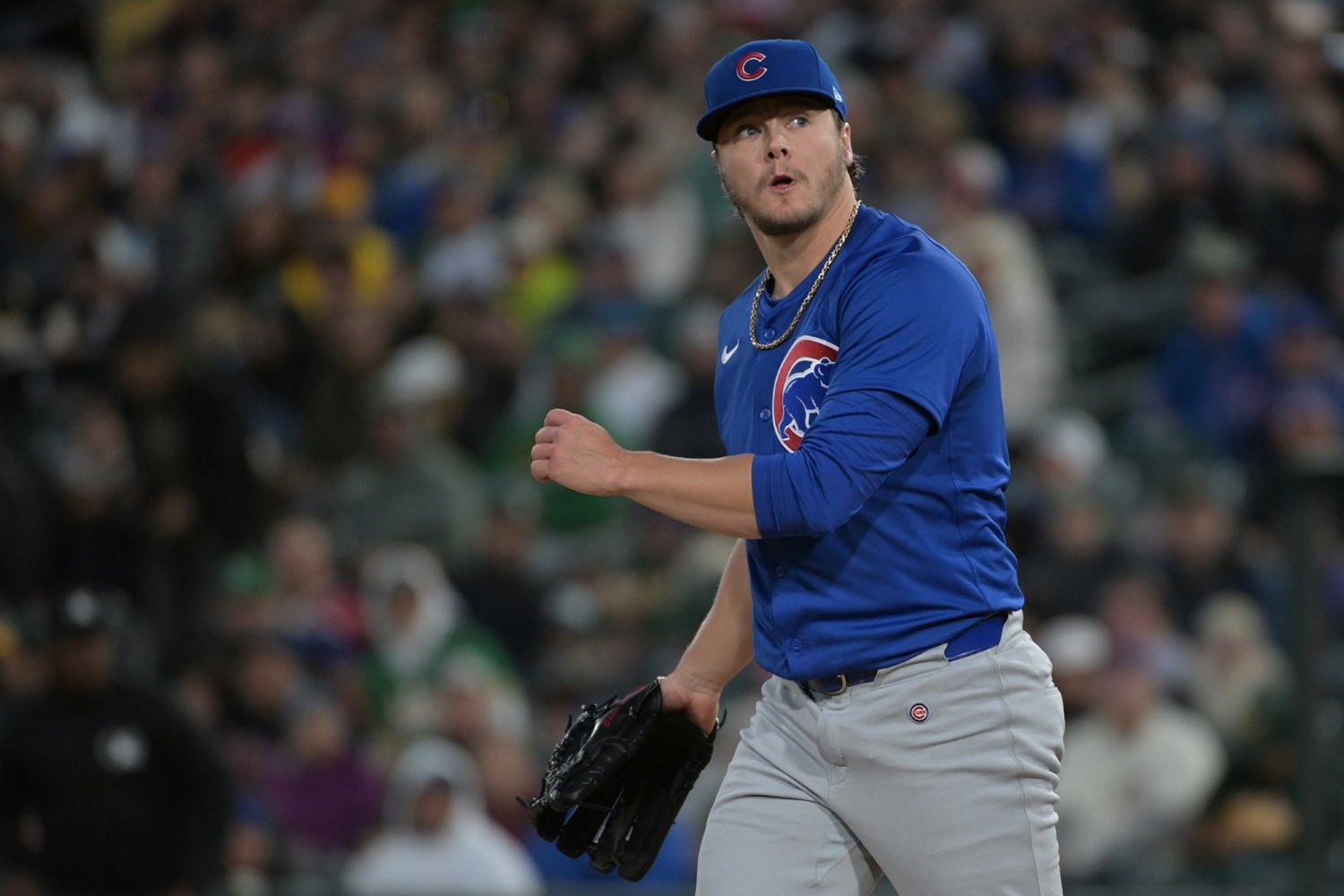 Over his first three starts of 2025, Justin Steele has averaged just 91.1 miles per hour on his cutter—the famous "Mississippi fastball" Steele thinks of as a four-seamer, but which still moves more like a cutter more often than not. He's losing velocity; that's not up for debate. Learning to pitch with less heat is an unavoidable part of finding success into one's 30s, though, and since Steele will turn 30 this July, it's hardly a surprise that he's having to do so. We've talked, over the last year, about how he tried to weather this storm by using the offerings differently, and by leaning back into the three other pitches he knows: the curveball, the changeup, and the sinker. There's one more noticeable change he's made, which I've touched on in the past but want to flesh out here. This is the scatterplot showing Steele's movement by pitch type for 2023, courtesy of FanGraphs. This was (unless we haven't yet seen it at all) Peak Steele. This guy still sat at 92 mph on that cutting fastball, and often touched 95. This was the Cy Young Award vote-getting version of him. I placed a marker around the center of his cluster of heaters, to give us a rough focal point for them. That was his fastball shape that year, and it was basically one offering. Pitchers often have slightly more angular scatterplots of movement for each pitch type, roughly matching their arm angle, but Steele's special skill is imparting spin and using seam effects to achieve movement his arm slot can't produce. That's why he's always been so tough to square up, for opposing batters. It's also been part of the engine for his slider's deceptiveness. Here's the same chart for 2024. You can see multiple changes here, most of which I've discussed at length in the pieces to which I linked above. The slider, for instance, is tighter and more consistent, and not necessarily in a good way. The fastball shape is especially compelling, though. This time, I've placed two markers, because I want us to notice the way the blob of his movement has both shifted position and changed shape. In 2024, to start using more of the zone and stay ahead of hitters who were zeroing in on his less zippy pitch mix, Steele started throwing two fastballs that (while not quite fully distinct) are different in intent and location. He's thrown more true four-seamers, with backspin and true carry toward the top of the zone to his arm side, and he's continued to throw the cutting, dippier version to the glove side of the zone. He's showing such good command of both pitches (and still that natural wrinkle that hitters can't account for) that it shows up as one continuous pitch, but there's been a change. Now, here's his 2025 plot. It's early yet, and much can change. When I look at this, though, I see those fastballs starting to become even more distinct, with Steele trying for a bit more arm-side movement on a subset of them and then still bearing down to steer others in on the hands of right-handed batters. The danger, there, is that every tiny adjustment (mental, physical, positional, or a mixture thereof) you make to facilitate some run on a fastball slightly compromises your ability to achieve cut on a fastball. Steele's arm angle has dipped very slightly this year, which doesn't necessarily matter; it's not a major shift. Sometimes, though, a pitcher's arm angle dipping just a bit implies that they're having a harder time getting to their consistent, desired release point at the same angle they've always used, and in Steele's case (whether it's happening for that reason or because of intentional manipulations aimed at utilizing multiple shapes), it's led to more fastballs that carry, rather than cutting, even to the glove side. At 91 miles per hour, those fastballs can get hit hard. Just as importantly, the more of them there are, the more confidently hitters will start to distinguish the fastball from the slider. As we've seen this year, when righty batters can find any way to sit on or identify Steele's slider, they can do a lot of damage against it. One way to see this visually is to consider the relationship between the spin axes on Steele's pitches and the movement they actually achieve. He's very good at achieving unexpected movement, of the kind a hitter struggles to see and predict. With just a tiny change in arm angle, hand position, or body position at release, though, a pitcher can lose the fine command of that relationship. Here's the comparison between Steele's spin-based movement expectation and his actual movement for 2024. Even though he doesn't throw with an over-the-top arm action, Steele has always gotten behind the ball and imparted backspin on the ball like a higher-slot guy. Hitters see that and expect a fairly straight four-seamer, but because of Steele's grip and his release angle, the pitch usually cuts more than the spin would imply. His slider, naturally, drops less but sweeps more than the hitter expects, even if they can pick up the spin difference out of the hand. Here's the same comparison chart for 2025, to date. Remember, these bars reflect the frequency of movement in each of the indicated directions, not the magnitude of that movment. So, this isn't showing (for instance) that Steele is getting more two-plane movement on his slider; it's just showing that getting that true sideways veer is a bit less common. The fastball is our focus, though. Look at how much more often he's imparting spin that implies just a bit more arm-side run, this year. If he were actually achieving cutting action as often as in the past, that would be more than ok: it would make his stuff devastating. In reality, though, that's not only not happening, but is basically impossible. If a pitcher starts to spin it in a direction that indicates a bit more run and a bit less carry or cut, even if they have seam-shifted wake on their side, they're going to achieve a bit less cut and a bit more carry when they were hunting cut. For Steele, that's going to mean more effectiveness high and to his arm side—but less command to the glove side, where that pitch really sets up his slider. If hitters know the fastball will straighten out on him a bit when he tries to work to his glove side, and if his slider tends toward sweeper shape a bit less often, he's getting much more hittable. This doesn't all have to come from Steele trying to cleave his fastball into two pitches, either. Some of it might be about his efforts to bring along the sinker and the changeup, each of which require a bit more extension and/or pronation from his arm—exactly the opposite of the things he's trying to achieve when he throws the cutterish heater. It might be possible for Steele to smooth all this out. As he gets better and better feel for the sinker and the change, he might be better able to stay in his mechanics properly for the fastball and slider. He might learn to manage this delicate manipulation of his pitches better as he goes. For now, though, he's in the middle of a fairly inevitable, dangerous adjustment period. It's not easy to succeed at 91 mph in the majors these days, even with left-handedness and funky shapes on your side. Steele is being forced to thread a needle, and he's not yet deft at it. Whether he can become so will be a huge question for the balance of this season, and beyond.